
Tag: handcycling

  • Masters Makes It a Triple, Bound for Rio Paralympics in Handcycling

    Masters Makes It a Triple, Bound for Rio Paralympics in Handcycling

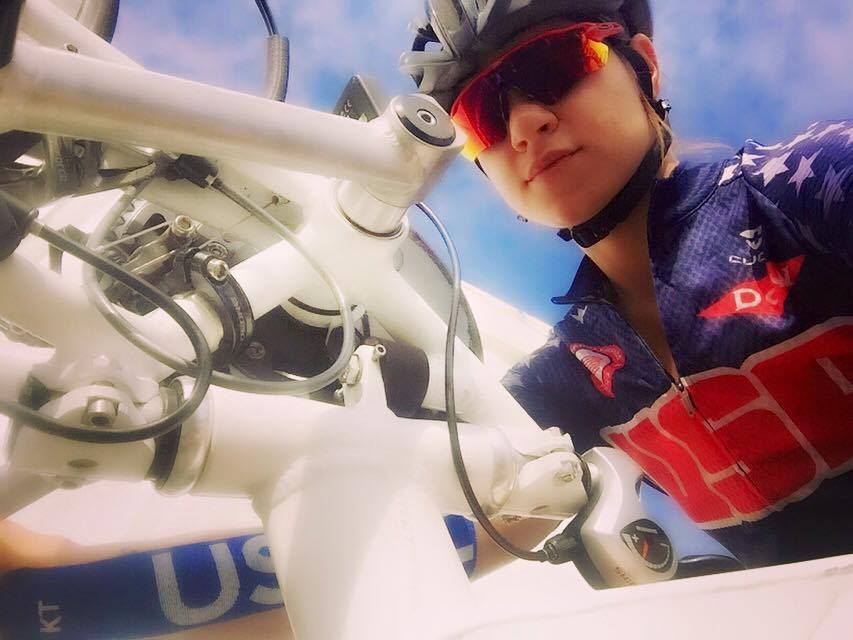
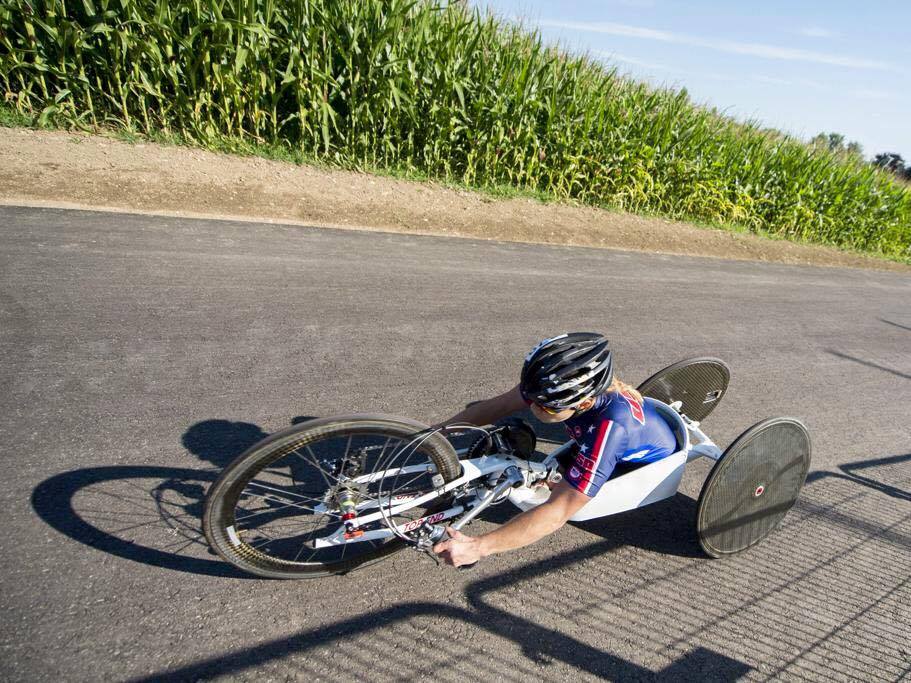
    Three sport Paralympic athlete, Oksana Masters training for handcycling for the 2016 Rio Summer Paralympics taking place in September. (Photo: Oksana Masters USA Facebook)
    Multi-sport Paralympic athlete Oksana Masters training for handcycling in anticipation of the Rio 2016 Summer Paralympics, which will be held in September. (Photo: Oksana Masters/Facebook)

    Not many individuals have the opportunity to represent the U.S. at the Olympics. Even fewer have had the opportunity to do so three times. And fewer still in three different sports. By the closing ceremony of this year’s 2016 Summer Paralympics in Rio de Janerio, which kick off Sept. 7, U.S. Paralympic rower-turned-skier-turned-cyclist Oksana Masters will have accomplished all of the above and potentially podium in all three sports.

    The road to Rio for Masters, however, was not like the smooth paved streets she now occasionally finds herself cycling on as she preps for the 2016 Paralympic games. Born in Ukraine with birth defects believed to have been caused by Chernobyl, Masters spent the first 7 1/2 years of her life in several orphanages before being adopted by Gay Masters, an American speech pathologist. At the time of her adoption, Masters was severely underweight. Gay brought the malnourished child back to the U.S. and moved to Louisville, Ky., when Masters was a teenager, according to the Associated Press.
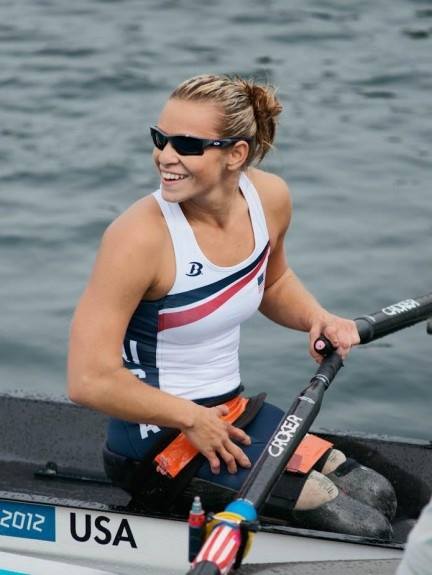
    Three sport Paralympic athlete, Oksana Masters who rowed to a bronze medal along with Rob Jones (not shown) during the 2012 London Summer Paralympic games. (Photo: Oksana Masters USA Facebook)
    Oksana Masters rowed to a bronze medal along with Rob Jones (not shown) at the 2012 London Summer Paralympic games. (Photo: Oksana Masters/Facebook)

    In the years that followed, Masters didn’t just adapt, she thrived. She began competing seriously in rowing and in 2012, qualified for the London Summer Paralympics, where she and her U.S. teammate Rob Jones took bronze in the trunk-and-arms mixed double sculls. That same year she was featured in ESPN The Magazine’s Body Issue. Also in 2012, she was also approached by one of the coaches for the U.S. Paralympic Nordic Ski team.

    While rowing had been a part of her life for 11 years, due to issues with her back, Masters decided to trade in her oars for skis in 2013. She took up sit skiing, and the 2014 Winter Games in Sochi, Russia, became her new focus.

    By the end of the 2013/2014 ski season, Masters not only qualified for Sochi in cross-country skiing and biathlon, she came away with two medals: silver in the 12-kilometer cross-country and bronze in the 5 k cross-country sit-ski events. There in Sochi, the notion of cycling first crossed her mind.

    “One of our teammates for the U.S., she was a sit skier, her summer sport was hand cycling and she really liked the tradeoff [between skiing and cycling],” Masters, now 27, explained in a recent phone interview from Champagne, Ill. “I originally would be doing rowing, but my body is not able to do that motion right now and I wanted to maintain a fitness level and she spoke really highly of [cycling].”

    By the end of the winter, Masters decided to give cycling a try. With only a couple months of training under her belt, she qualified for the 2014 UCI Para-cycling Road World Championship team and raced to fourth place in both the road race and time trial. After another successful ski season, she spent all of last summer cycling and once again qualified for the 2015 UCI Para-cycling Road World Championships and took bronze in the H5 road race. Eventually, what began as just a way of staying in shape for skiing became her third Paralympic sport.

    “One of the things I was lacking in skiing was race tactics and how to race,” Masters said. “Rowing didn’t have any of that because you’re in your own lane and you can just put your head down and hammer home. Skiing, there’s a lot more to it than going hard. So cycling was kind of like a way to stay in shape in the summer and learn more about racing. Then it just somehow led into going to Rio.”
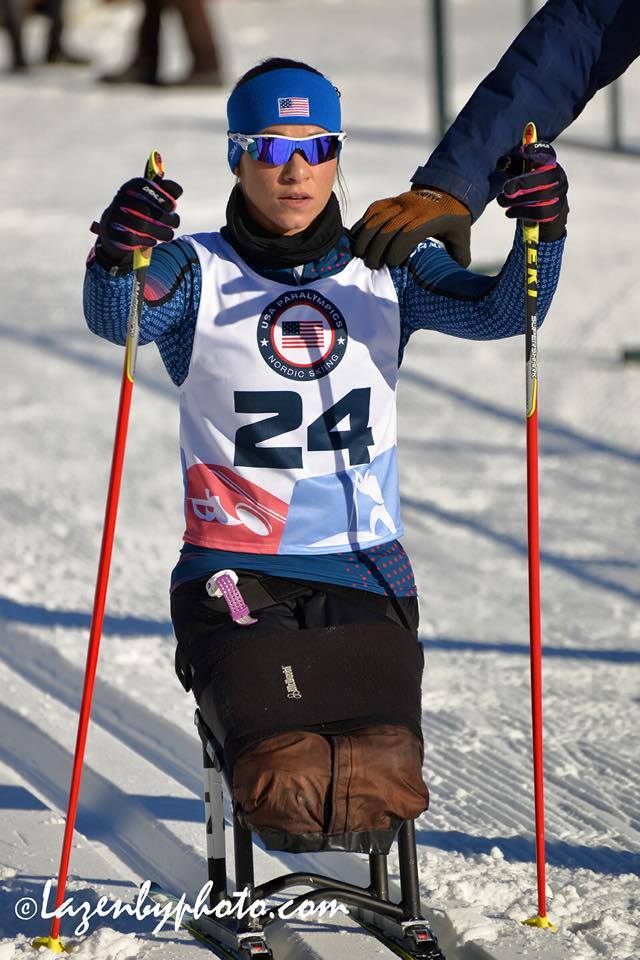
    Three sport Paralympic athlete, Oksana Masters competing for the U.S. Paralympics Nordic A-team in Craftsbury, Vt. (Photo: Oksana Masters USA Facebook/John Lazenby/Lazenbyphoto.com)
    Oksana Masters competing at 2016 U.S. Paralympic Nordic nationals in Craftsbury, Vt. (Photo: John Lazenby/Lazenbyphoto.com)

    Nowadays, Masters trains for cycling in Champagne, Ill., as well as Colorado Springs, Colo., with her coach, Mike Creed, a U.S. Paralympic cycling coach, at the Colorado Olympic Training Center.

    Undefeated in cross-country races last season and the two-time International Paralympic Committee (IPC) Overall World Cup champion, Masters remains on the U.S. Paralympic Nordic Skiing A-team and plans to compete this upcoming winter.

    “I’m really excited to be cycling and to see what cycling can bring out for my skiing as well,” she said. “With this heat, I  also cannot wait for winter.”

    To prepare for skiing, Masters will work with U.S. Paralympic Nordic Head Coach Eileen Carey. Though the triple-sport Paralympian has spent most of her summer focusing on cycling, she said she’s excited to get back to skiing.

    “The biggest challenge in athletes competing in multiple sports at a high level is being able to balance the calendar and making sure that they are able to have the opportunities they need to achieve their goals in both sports,” Carey wrote in an email to FasterSkier. “Based on what their individual goals are, we make big efforts to accommodate their schedules in other sports in a way that allows them to maximize their time on snow.”

    According to Carey, for sit-skiers such as Masters and Tatyana McFadden and Aaron Pike (both also competing in Rio in wheelchair track and field), competing at a high level in multiple sports is a good thing.

    “I think for sit skiers especially, doing two sports can work to their advantage,” she wrote. “There are so many possibilities of overuse injuries when you are using primarily your upper body.  Doing a sport that uses a different motion can provide variety that I think is really important for both sports.  We have seen Tatyana McFadden and Aaron Pike, who both compete in wheelchair racing, achieve personal bests in races just weeks after winter when they were doing no specific training in their racing chairs.  There are certainly challenges in balancing two sports, but we see it as a competitive advantage and structure our program in that way.”

     “Skiing, there’s a lot more to it than going hard, so cycling was kind of a way to stay in shape in the summer and learn more about racing. Then it just somehow led into going to Rio.” — Oksana Masters, 27, three-time U.S. Paralympian

    After trials in June and early July in Charlotte, N.C., Masters was one of 18 athletes named to the U.S. Cycling Team for Rio. Team qualification involved a time trial in which both upright cyclists and handcyclists competed against each other — Masters a part of the handcycling group. With the time trial behind her, her goals for the Games are unfettered by the pressure to podium.

    “I just want to finish with the pack,” she said. “I would love to bring home a medal and I totally believe that I can I would just be happy if I finished with the pack though. I’m not going to put the pressure of going for the gold right now.”

    For Masters, it’s not so much the medal, but the opportunity to once again represent the U.S., this time in another new sport.

    “I haven’t even had time to focus on what I’m looking forward to, just not getting my butt kicked,” Masters said. “It’s going to be a good challenge and I’m really looking forward to being able to represent the U.S. Paralympic team and to be able to represent it in more than one sport. I feel very, very, very humbled and thankful to have that opportunity and I’m really excited to show the versatility of any athlete.”

    Sochi Winter Paralympian Oksana Masters qualified for the 2016 Summer Paralympics in hand cycling early last month. They will be her third consecutive Paralympics (she rowed in London in 2012, raced biathlon and nordic in Sochi in 2014, and will hand cycle in Rio next month.) (Photo: Oksana Masters/Facebook)
    Sochi Winter Paralympian Oksana Masters qualified for the 2016 Summer Paralympics in cycling early last month. This will be her third consecutive Paralympics (she rowed in London in 2012, raced biathlon and nordic in Sochi in 2014, and will hand cycle in Rio next month.) (Photo: Oksana Masters/Facebook)
  • After London Paralympics, Dana Could Aim for Sochi

    After London Paralympics, Dana Could Aim for Sochi

    U.S. Paralympian Alicia Dana competing in a criterion in Greenville, S.C., earlier this summer. In late June, Dana, 43, made the Paralympic team and will be traveling to London later this month for the 2012 Summer Games from Aug. 29-Sept. 9. The Putney native also made the U.S. Paralympics Nordic Skiing Development Team earlier this year. (Courtesy photo)

    Like most athletic children of a certain era in Putney, Vt., Alicia Dana grew up cross-country skiing. She learned the ropes from the legendary John Caldwell, a Putney School coach who went on to lead the U.S. Ski Team, and took up racing at an early age.

    It wasn’t long until Dana, formerly Brelsford, developed an affinity for other sports as well. By the time she was 16, she had competed at two cycling nationals and become a repeat contender at cross-country Junior Nationals. The next year, however, an accident changed her life.

    At age 17, Dana fell out of a tree and was paralyzed from the waist down. Twenty-six years later, she’s still in a wheelchair, but has greater athletic aspirations than ever before.

    In less than two weeks, she’s headed to London for her first Paralympic Games. Dana, 43, is one of eight women on the U.S. cycling team and one of three competing in handcycling with a recumbent bike.

    “I remember as a kid dreaming, ‘Wouldn’t it be great to go to the Olympics someday?’ but I feel like that was a completely different me back then, able-bodied and not having any idea what was in store for me in life,” Dana said in a phone interview on Aug. 3.

    She laughed as she thought about her current self, a paraplegic with an 8-year-old daughter, preparing for the Paralympics. As a child, she could not have fathomed it.

    What’s even more, Dana could potentially make the 2014 Winter Paralympics as well if she sticks with skiing.

    Last season, she jumped back into sit-ski racing in earnest, starting with a gold and a bronze at U.S. nationals in Rumford, Maine. From there, she earned a trip to the International Paralympic Committee (IPC) World Cups in Minneapolis and Cable, Wis., where she represented the U.S. and used her new custom sit-ski.

    Dana represented the U.S. at the IPC World Cups in Cable, Wis., and Minneapolis from Jan. 26-Feb. 2. With four top 10’s, she was consistently the top American female and landed a spot on the U.S. Paralympic Nordic Development Team this season. (Courtesy photo)

    In the Midwest, Dana finished seventh twice and placed ninth in two other races, and was consistently the top U.S. woman. Her results spoke for themselves, and in late June, U.S. Paralympic Nordic Skiing selected Dana to its development squad.

    According to High Performance Director John Farra, Dana met the team’s “emerging” or development criteria by finishing better than 25 percent back in one of the World Cup events.

    She made the D-team with Kristy Vaughn and Augusto Perez, and could potentially elevate herself to the national team’s A- or B- standards, which currently provides a higher level of support to six others.

    In an email, Farra described the program as fluid and wrote, “athletes can be advanced at any time up to the National Team (given they meet criteria), and in addition, we can choose to invest in anyone we want for any particular project (camp or competition) based on their commitment, performance, & potential.”

    Given what he’s seen in Dana so far, he thinks she could reach the next tier. Before she won a national title in the 6-kilometer distance event last January and placed third in the preceding 5 k, Dana had not skied yet that winter. In fact, she hadn’t planned on racing in Rumford.

    An email from her coach at Northeast Passage, an adaptive-sports program out of the University of New Hampshire, brought the championships to her attention.

    “I came across one of the emails that [Cathy Thompson] had sent, that nationals were that week,” Dana said. “I was like, Oh my God, I’ve gotta go to nationals!”

    It wasn’t before the reality of logistics set in. A single mom who lived several hours from Maine, Dana needed to make arrangements for her daughter, Willa. She also had to figure out how to get there, where to stay, and whether it was all worth it.

    Her good friend Amy Caldwell, who was already in Rumford at the time, convinced her it was.

    “I remember talking to her on the phone and she was like, ‘Get up here, just come!’ ” Dana said. “It was a combination of her encouragement and John Farra; he was going to be there so I suddenly realized there’s more structure to this whole thing … sounds like there could be some good competition and I should really just go and check it out.”

    Getting Back on the Bike

    About six months earlier in the summer of 2011, Dana had a similar internal conversation and ended up competing at the U.S. Paralympics Road Cycling Nationals in Augusta, Ga. It was her first time back on the handcycling scene since taking nearly a decade off to raise her daughter. A national criterion champion in 2001, she had her daughter a few years later, when handcycling became an Olympic sport in 2004.

    When Dana returned to racing last year after going through a divorce, she had the same bike – which by now was painfully outdated.

    “It was the biggest race of the year, and I got totally, totally creamed by everybody,” she said. “I remember thinking, ‘OK, now I know what the competition is and what I need to do,’ and it motivated me to really start training. I decided to take the next year and just train as hard as I could.”

    That summer, her bike was later stolen when she got a flat and had to leave it on the side of the road. Public outcry in newspaper articles and on websites led to the bike’s return about a week later, but by then, the Putney community had already helped Dana raise some $10,000 dollars for a new one.

    She used that money and a few grants from nonprofits like the Challenged Athletes Foundation and the Northeast Disabled Athletic Association to buy an $11,000-dollar Carbonbike designed by a handcyclist in Switzerland. The man who sold her the bike, Ken Bestine from Bike-On.com, offered to coach Dana informally, and the two worked together for a few months.

    This past April, Dana tested her training at a cycling race in Montreal, where she made the U.S. team standard in a time trial. Suddenly, she was on the national cycling squad and faced the possibility of making the Paralympics a few months later.

    Her national-team status and accompanying funding allowed her to hire a coach, and she chose Jim Cunningham from Greenville Cycle Center in South Carolina, who has worked with able-bodied and disabled athletes across the country. After a month of training with him, Dana and her housemate drove to Augusta in late June for another shot at the U.S. road cycling championships and a trip to London.

    “There was one slot that was still open for all the women Paracyclists across all the different categories,” Dana said. “So I was, in a sense, competing with all the blind athletes, the amputee athletes, and managed to get the fastest time.”

    One woman, Muffy Davis, beat her in the 19 k time trial, but Davis had prequalified. About 4 ½ minutes back, Dana averaged nearly 20 miles per hour.

    “I had thought that I had a pretty decent race, but I had no idea really where I stood,” Dana recalled. “We went to that event that evening where they were going to announce the team and I convinced myself that I hadn’t made it, but we went anyway, like, ‘Oh, I’ll have a good attitude, cheer people on and it’ll be fun to see who gets to go.’ … Next thing I know my name’s being announced as a member of the team. It was pretty awesome. I was surprised and just utterly flabbergasted, like, ‘Wow, I can’t believe I did this.’ ”

    With the Paralympics on the horizon from Aug. 29 to Sept. 9, Dana wasn’t sure what to expect. She didn’t watch the London Olympics over the last two weeks because she doesn’t have television. A weeklong U.S. team-training camp, which started Sunday in Buellton, Calif., would likely bring her up to speed.

    The newest member on the team, Dana was excited to meet her teammates and get a feel for how things worked. On Sept. 5, she’ll compete in her first Paralympic event: the women’s individual time trial at Brands Hatch, a raceway venue in Kent, England, about a 45-minute drive from London.

    Unsure how long the time trial would be, Dana said they are typically between 15 and 19 kilometers. She’ll also compete in the road race on Sept. 7, which she expected to be between 30 and 40 kilometers. If all went well, she might race the team relay on the 8th, but she was unsure of the selection process.

    Dana was also recovering from pressure sores, a common and serious ailment among active people in wheelchairs, especially those without feeling below the waist.

    “It’s been kind of a hard month for some different reasons,” she said. “I had a cold and flu and then I got a couple of pressure sores on my rear end from riding so much. … They will heal up eventually, but it’s a real inconvenience because I’m going to be traveling a lot in the next month and a half.

    “It definitely limits my ability to just function in my everyday life and that’s hard,” she added. “I’m just getting up to train and go to essential appointments and the rest of the time, lie down or I have a standing frame that allows me to be in a standing position, so it’s a real pain.”

    An unemployed single mom, she’s had to balance this and full-time training with taking care of her daughter, who’s out of school for the summer. Most recently, Dana had to explain to her 8-year-old why she had to leave for California and then England.

    Fortunately, Dana said she has great friends and a community that fully supports her.

    “That’s a real energy boost,” she said.

    Alicia Dana of Northeast Passage and Putney, Vt., races to victory on her old sit-ski in the women’s 6 k at 2012 U.S. nationals on Jan. 7 in Rumford, Maine.

    All things considered, she’d love to make the podium at the Paralympics, but had no idea what the international competition was like.

    “I know for our team … Davis [is] definitely faster than me, so I’m not looking to get a gold medal,” Dana said. “It would be awesome to get a medal and I think I must at least have potential for that because that was part of their criteria when they chose the team members.”

    To prepare, she aimed to heal up and stick with her training plan, watch her nutrition, rest and recovery, and keep a positive attitude. Once she gets there, she’ll try to race as she normally would, focusing on her climbing strengths and strategies without getting wrapped up in what others were doing.

    Similar qualities got her on the U.S. Paralympic Nordic Team. According to Farra, he promised to leave Dana alone until after the Paralympics to let her concentrate on cycling. Come mid-September, she expected to attend a ski-team training camp in Lake Placid.

    “Clearly she is a natural athlete who knows how to push the limits and can handle the suffering that comes along with a difficult endurance sport,” Farra wrote. “We were very impressed with her results at the USA World Cups, and we are excited to see how far she can take her skiing.”

    Dana said he’s already hinted at Sochi.

    “Farra’s been holding out some carrots for me in that direction,” she said. “He wants me to set my sights on that so we’ll see.”

    Her success so far has kept her dreaming.

    “Doing well enough to go to the World Cup and doing well enough at the World Cup to realize, ‘Oh, well, there might be something in this for me,’ it’s just fed my interest and motivation,” she said. “It’s exciting, it’s great. Who would’ve thought, a 43-year-old single mom could have an athletic career ahead of her?”

    .