Tag: Harald Wurm

  • Four-Year Ban For Wurm, Who Admits Doping; Used Cobalt to Boost Performance

    Four-Year Ban For Wurm, Who Admits Doping; Used Cobalt to Boost Performance

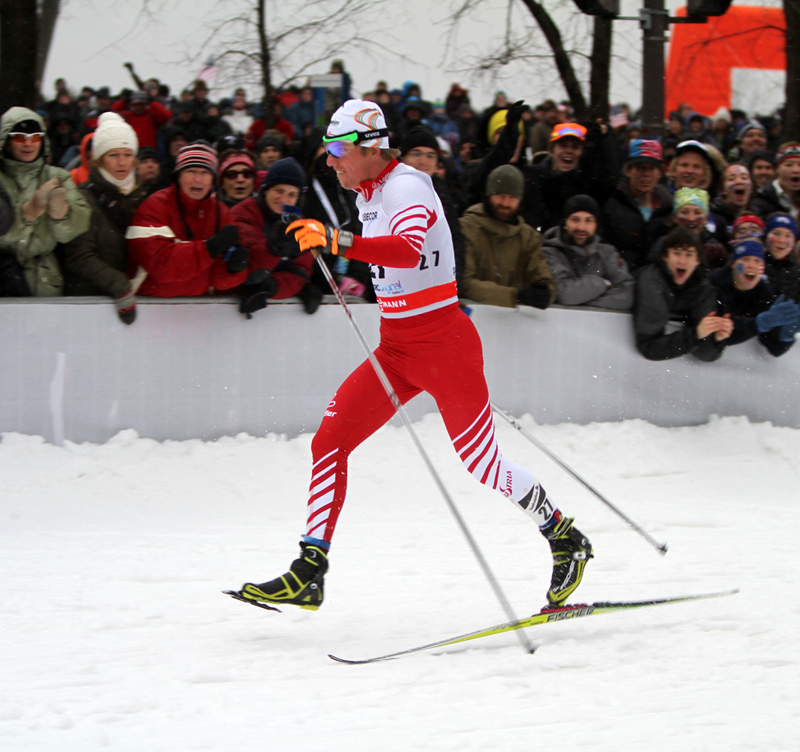
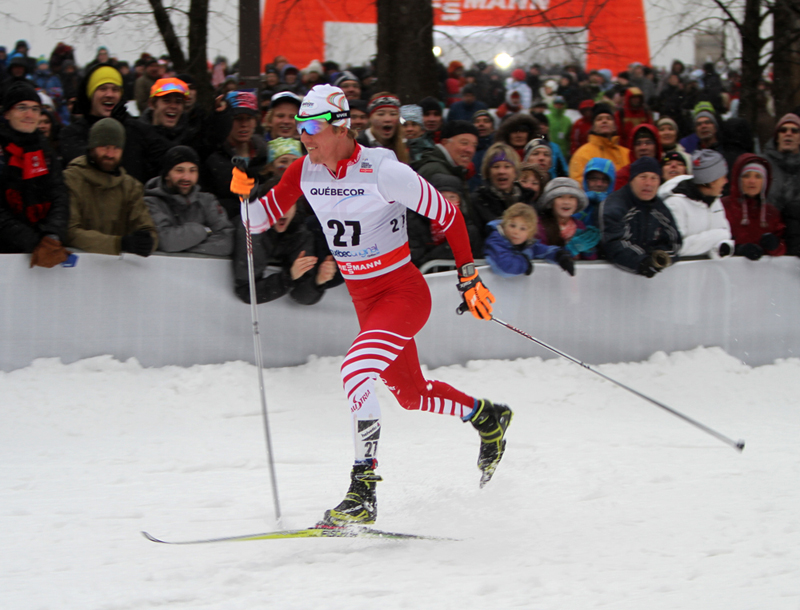
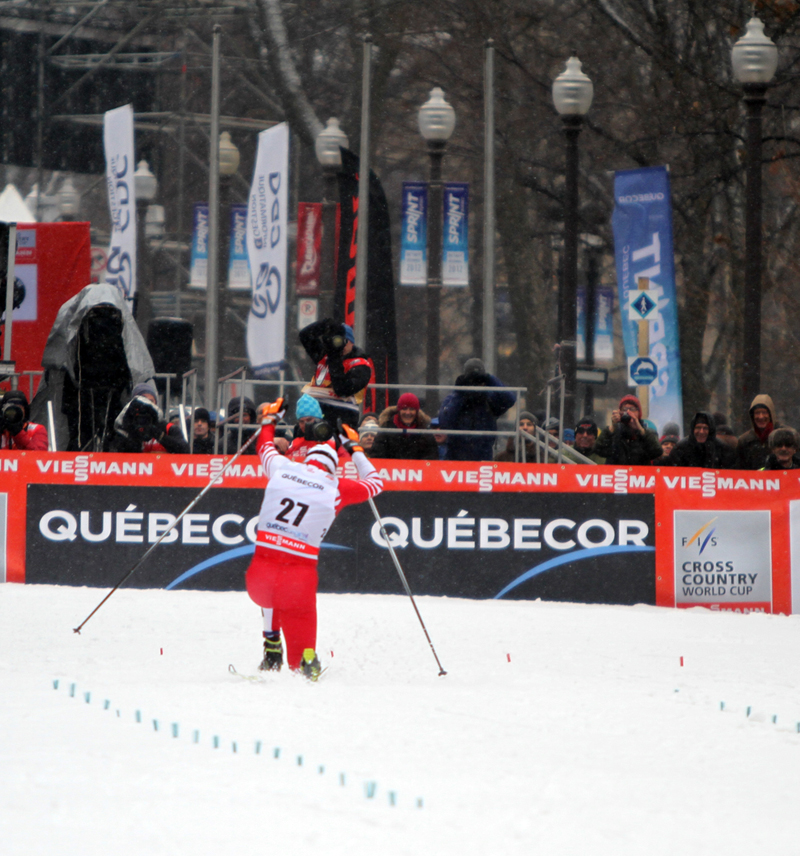
    Austrian skier Harald Wurm was a crowd favorite at the December, 2012, World Cups in Canada, where he finished a sprint heat despite breaking a binding off his ski.
    Austrian skier Harald Wurm was a crowd favorite at the December, 2012, World Cups in Canada, where he finished a sprint heat despite breaking a binding off his ski.

    Austrian skier Harald Wurm has finally received his sentence from Austrian anti-doping officials, after being under investigation since September and receiving a provisional suspension before the 2015-2016 race season began.

    At the end of his hearing this week, Wurm was suspended from competition for four years. According to the Austrian newspaper Salzburger Nachrichten, Wurm confessed to doping.

    “I have used banned substances for myself,” he said.

    Wurm is a former Under-23 World Champion and competed in two Olympics. Now 31 years old, he also admitted that this would be the end of his career.

    Other careers are also in the balance. With Wurm’s teammate and reported best friend Johannes Dürr testing positive for EPO at the 2014 Olympics, Austrian coaches struggled to maintain their credibility over doping issues. Gerald Heigl, the head coach of the cross-country ski team, temporarily stepped down when the Wurm investigation started, but was then reinstated.

    Worm’s four-year suspension was for two violations: first for using cobalt, a substance which is banned when taken as an infusion or injection of over 50 ml over a six-hour period; second, for blood manipulation.

    Cobalt boosts blood’s oxygen-carrying capacity by stimulating erythropoietin gene expression through a pathway called the hypoxia induction factor (HIF), according to the World Anti-Doping Agency, which is funding a project to further examine the method’s effects on performance. Cobalt was specifically added to the WADA Prohibited List as of January 2015, while other substances with similar effects, like xenon and Argon, were added in September 2014.

    Cobalt can be injected or taken orally. A 2005 article in the British Journal of Sports Medicine noted that oral doses of 30 mg/kg of body weight could increase the production of red blood cells. Overuse of cobalt can lead to kidney and heart problems, as well as changes in thyroid function. It has a half-life of less than an hour in the body.

    “It has been known that cobalt increases erythropoiesis in experimental animals,” Dr. Wolfgang Jelkmann of the University of Lübeck, Germany, and Dr. Carsten Lundby of the University of Zürich, Switzerland, wrote in a 2011 paper in Blood Journal. “Cobalt is a very potent inducer of Epo transcription. Indeed, the international Epo unit (IU) was originally defined as the dose eliciting the same erythropoiesis stimulating response in rats as 5 μmol of cobaltous chloride.”

    The initial police investigation in September had found a hemoglobin meter, used to monitor blood parameters. The distribution of performance-enhancing substances is illegal in Austria. Wurm settled the criminal charges by paying a fine of 2,000 Euros, the Associated Press reported.

  • Former U23 Champion Wurm Under Investigation for Blood Doping by Austrian Police

    Former U23 Champion Wurm Under Investigation for Blood Doping by Austrian Police

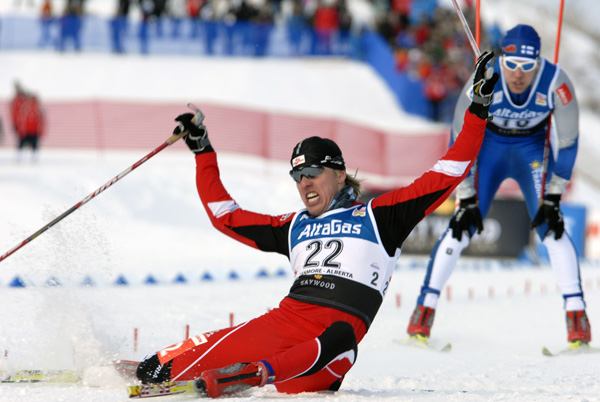
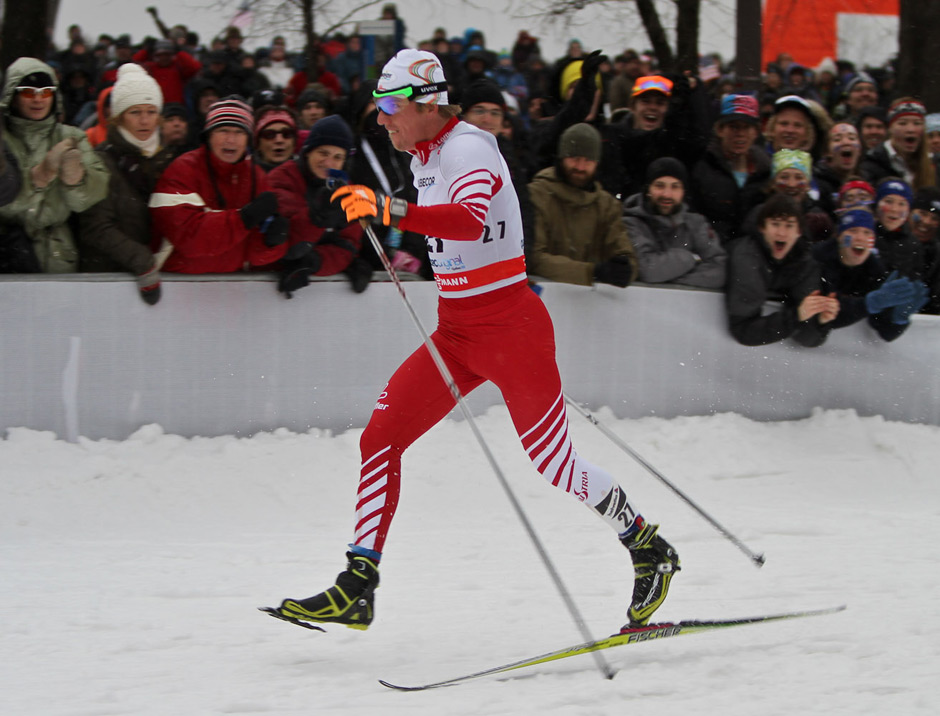
    Harald Wurm of Austria finished 15th in the skate sprint World Cup in Canmore in 2008 (pictured here), and eighth in the same event in 2012. (Photo: Patrick Sinnott)
    Harald Wurm of Austria finished 15th in the skate sprint World Cup in Canmore in 2008 (pictured here), and eighth in the same event in 2012. (Photo: Patrick Sinnott)

    Austrian cross-country skier Harald Wurm is the target of a criminal investigation about doping, according to Austrian news sources.

    Wurm, a 31-year-old who was the U23 World Champion in the sprint back in 2006, represented Austria in the 2006 and 2014 Olympics. He has four individual World Cup top-10’s to his name, most recently in the pre-Olympic World Cup in Sochi in 2013.

    Wurm has not commented on the situation. As of Monday the Austrian Ski Federation (ÖSV) had been aware of the scandal, but not officially informed by authorities. It appears that the investigation is headed by police, not the national anti-doping agency (NADA).

    “NADA has been informed about the case and is in close cooperation with the investigating authorities,” spokesman David Müller told the media, according to Der Standard, a prominent independent newspaper based in Vienna.

    In Austria, distributing performance-enhancing drugs is an illegal activity subject to anti-fraud laws. That’s why the police seem to be leading the investigation in this case.

    Prosecutors have not publicly commented on the case. The fact that an investigation is ongoing was leaked by an anonymous letter to the Tiroler Tageszeitung newspaper.

    A crash in the quarterfinals of the sprint in Quebec City in 2012 ripped Wurm's binding off his ski. He finished the lap regardless, earning him claps from the crown.
    A crash in the quarterfinals of the World Cup sprint in Quebec City in 2012 ripped Wurm’s binding off his ski. He finished the lap regardless, earning him cheers from the crowd.

    ÖSV Sport Director Hans Pum told Oberösterreichische Nachrichten that there had been searches of Wurm’s house, and that Wurm had taken a lawyer.

    “It is in our interest that everything is cleared up,” he said. “If it turns out that is there been something, then it is the same as in the past, and we will crack down.”

    For his part, Markus Gandler, the director for cross-country skiing of the ÖSV, told Oberösterreichische Nachrichten that he was “waiting for results”.

    Oberösterreichische Nachrichten reported that a hemoglobin meter had been found, but wrote that this was not evidence of doping. If more materials are found, however, Wurm may be in trouble. The World Anti-Doping Agency code prohibits possession of blood transfusions or any other method to increase the oxygen carrying capacity of blood.

    International Ski Federation (FIS) rules, meanwhile, clearly prohibit possession of any “prohibited method”, according to its 2015 anti-doping code.

    Furthermore, FIS can implement no-start prohibitions if athletes’ blood tests show unusual profiles, according to repeated data collected as part of the Athlete Biological Passport program. Thus the implication of finding a hemoglobin meter is that an athlete may be checking to see whether their hemoglobin levels rise to a level that would suggest doping, or trying to make sure that doesn’t happen.

    Nevertheless, no further reports have emerged showing that Wurm posesses other banned materials, nor has he apparently had a positive doping test. ÖSV officials have said that Wurm is insisting that he can easily clear the allegations.

    Ugly History

    Austrian skiing had been beginning to emerge from the shadow of a huge doping scandal at the 2006 Olympics. There – where Wurm competed – materials for blood transfusions were also found in a raid on athletes’ living quarters; Wurm’s teammates Johannes Eder, Martin Tauber, Juergen Pinter, and Roland Diethart were banned for life by the International Olympic Committee (IOC).

    “If you consider that there were syringes and blood bags lying on the bedside tables in the apartment and blood-soaked handkerchiefs . . . that the haemoglobin metre had been used 59 times in 10 days and you have huge differences between the levels being measured, and that these differences arose just before and just after tests in competitions, you can draw your own conclusions. Multiple athletes were infusing blood from multiple sources.”

    -Thomas Bach, then the chairman of the IOC Disciplinary Committee and now the IOC President, speaking to media at the time.

    Devices for measuring hemoglobin levels were part of those materials. It’s worth noting that the Austrian skiers were tested at the 2006 Olympics, but never found positive for any prohibited substance. Instead, they had been using blood transfusions to increase how much oxygen their blood could carry. And they had been using the hemoglobin meters to make sure that their levels did not exceed those stipulated in FIS’s no-start rules.

    Thus, the fact that Wurm possessed the same type of tool to measure hemoglobin brings up unpleasant memories for Austrian skiing.

    Though nearly 10 years have passed since Torino, doping has not completely receded after the four skiers, plus two biathletes and 14 officials, received bans.

    Johannes Dürr finished the 2014 Tour de Ski in third place, and placed eighth in the Olympic 30 k before being caught using EPO. (Photo: Fischer/Nordic Focus)
    Johannes Dürr finished the 2014 Tour de Ski in third place, and placed eighth in the Olympic 30 k before being caught using EPO. (Photo: Fischer/Nordic Focus)

    At the 2014 Olympics, again one of Wurm’s teammates was caught: Johannes Dürr, who admitted to using recombinant erythropoetin (EPO), a blood-doping drug, for months before the Games and said he had passed 14 blood tests.

    Dürr said that he had obtained EPO himself. And in July, Austrian prosecutors dropped their case against Dürr, concluding that he had not distributed EPO to other athletes. While his ban from sport remains, he thus avoided criminal charges.

    The latest scandal could have big consequences: after the Dürr case, the head of the ÖSV, Peter Schröcksnadel, threatened several times to eliminate the entire cross-country ski program, since it does not seem capable of keeping itself clean.

    Gandler has also thought about retiring. If Wurm is found guilty of doping, even without help from coaches, team doctors, or others within the national team or federation, it would be tough for Gandler to maintain credibility as the head of the program.

    Finally, Wurm was sponsored by Seefeld 2017, the Austrian venue hosting FIS World Championships in two years time. Austrian snow sports is certainly hoping that any association with a doping athlete will not tarnish their event.

    At the moment the Austrian Ski Federation has not suspended Wurm, even provisionally, because evidence of doping has not yet been confirmed and they wish to allow him due process.

    However, cross-country head coach Gerald Heigl said that Wurm has dropped preparations for the season with the national team, and will attempt to “clear up” the situation in the next few days.

    Gandler, Heigl, and biathlon coach Alfred Eder (who has coached the national team before moving to Belarus for the 2014-2015 season, but has returned to Austria to coach his son, Olympic relay medalist Simon Eder) were all among the 14 officials banned by the Austrian Olympic committee after Torino. But they were reinstated in 2009.

    Dürr, too, looks like he is hoping for redemption: Oberösterreichische Nachrichten reports that according to rumors, he is thinking about legally challenging his lifetime ban and/or competing without the support of the national federation.

  • Austrian Showmanship Delights Québec Crowd

    QUEBEC CITY — In a Cool Runnings moment, an Austrian athlete finished his sprint race in Québec City on Saturday despite breaking one of his skis.

    A full minute after Norwegian Eirik Brandsdal won the day’s second quarterfinal heat, 28-year-old Harald Wurm rounded the last corner onto the homestretch. He was riding his sole remaining ski after breaking the other crashing into a Polish athlete–and, to the delight of the crowd, Wurm was scootering himself towards the finish with his right boot.

    After a theatrical lunge for the line, Wurm was rewarded with a time 75 seconds slower than Brandsdal’s (in a three-minute race). But perhaps most importantly, his finish secured him 27th place out of the 30 athletes in the quarterfinals, based on the strength of his preliminary time.

    Wurm’s command of the English language was limited (though to be fair, certainly stronger than FasterSkier’s knowledge of German), but he said he was trying to put on “a little bit of a show for the peoples here.”

    “Very good fun,” he added. “And I hope the next race is better.”

    Harald Wurm (AUT) heads up the homestretch in Quebec City (Photo: FlyingPointRoad.com)
    Wurm successfully crosses the finish line.
    Striding out…
  • Hamilton Knocked Down in Semis, Cutting American Chances Short

    The narrow course set up on the streets of Milan, Italy delivered yet another exciting World Cup day of racing on Sunday in the team sprint event. For the American duo of Simi Hamilton and Andy Newell, however, it was unfavorably so. Coming into the exchange zone on the third leg of the semifinal, Austria I’s Harald Wurm pushed Hamilton, sending him to the ground and ruining the Americans’ chances of advancing to the finals. The US wound up in 19th overall.

    Through the early exchanges, the duo had been skiing well, and on Newell’s second leg, he was in second place, battling with Norway and Sweden at the front of the pack.

    Milan’s tight quarters left room for little maneuverability, and the three men wound up tangling with each other before the end of the leg, and dropped several positions.

    “We were banging into each other too much, and we dropped back because of that, which sucked,” said Newell to FasterSkier’s Topher Sabot following his race.

    Nonetheless, both Hamilton and Newell said they felt good physically, and were not out of the running until the push sent Hamilton to the ground.

    Hamilton and Wurm were skating even with each other coming into the exchange zone, but needed to swap positions in order to tag off to their respective teammates.

    “I was trying to get to the opposite side to tag,” Hamilton said. “I was just trying to throw in a couple moves to get ahead to Andy, and he reached over and just shoved me down.”

    As Hamilton scrambled back to his feet, Newell backed up to try to meet him halfway. By the time Newell got the tag and started his third and final leg, the Americans were far off the pace.

    Newell threw down a hard effort to bring them back in contention, and managed to pick considerable time back up on the pack, but spent a valuable energy doing so. When the group accelerated in the last stretch, he couldn’t respond.

    “When people started cranking on the last 300 meters, it was pretty hard to get going, because I’d just spent so much energy catching the pack,” said Newell.

    There’s no telling what would have happened had Hamilton been in the Austrian’s way. Overall, Hamilton thought there was room for improvement in his tag-off ability, but both he and Newell remarked after racing that their speed was physically there, especially since the pace was relatively controlled early on.

    “It was pretty relaxed…through the first and the second legs,” said Newell.

    At the conclusion of the semifinal, U.S. Ski Team Head Coach Chris Grover spoke with the jury to determine whether a protest would accomplish anything. After reviewing video of the exchange with the jury, which showed Wurm pushing Hamilton from a distance at the end of the straightaway, he decided not to protest. Austria was instead issued a sanction.

    “My goal was to see if there was any chance they’d relegate our guys to the final as an eleventh team,” said Grover. After watching the replay, the jury decided not to move the Americans on.

    “I wasn’t out to see anyone get sanctioned, I more wanted to see our guys get a shot,” Grover explained.

    All six lucky losers that finished outside the top two in each heat came from the other, faster semifinal on Sunday. Grover said the jury decided that the Americans’ chances of moving on in the absence of the push hadn’t been great, as they were already well outside the front of the pack at the time.

    “If you look at all the places where, if you said, ‘My guy got pushed here, my guy got tripped there, his pole broke there,’ in a team sprint, you’d end up moving four teams up every time,” conceded Grover.

    Though he hadn’t spoken to the Austrian team, Grover said he didn’t believe the push was malicious in intent. The Austrians claimed they had simply been trying to maneuver around Hamilton and avoid an accident on the way to positioning for the tag-off.

    “Whatever it was, it knocked Simi out,” said Grover, adding that he was mainly disappointed that his athletes had been stripped of their shot to fight for first or second and advance.

    Men’s results.

    * * *

    Though Newell and Hamilton suffered from bad sprint luck, Sunday marked an historic day for North American women. Americans Kikkan Randall and Jessie Diggins placed second to Sweden, while Canada’s Chandra Crawford and Perianne Jones joined them on the podium in third.

    USA II, composed of Ida Sargent and Sadie Bjornsen, were the only other North Americans to compete in the team sprint. Their day was cut short in the semifinal, and they wound up 14th overall, but both women skied comfortably in the mix of the lead pack early on. They ended up drifting off the pace towards the end, but certainly held their own.

    Bjornsen, who is still in the recovery phase of a series of holiday illnesses, said their failure to move up was less a matter of keeping up and more to do with having next to no room to maneuver around.

    “Down at the bottom [of the course] I was coasting, but couldn’t go anywhere. It was three people wide,” said Bjornsen. “[With passing], you take the chance of taking someone out… Kikkan has mad skills for being able to get around.”

    Sargent added that the pace wasn’t exceptionally fast. This made it easier for her to keep up, but again, “it was just impossible to pass out there,” she said.

    “Every time I’d go on the outside, someone would see me coming and they’d step out,” Sargent continued. “That was really frustrating… It was right there, but I couldn’t get that last little bit.”

    Other than the frustration of a narrow course, the pair was encouraged by the fact that they felt fast on their skis.

    “I felt a lot better than yesterday,” said Sargent. “I think I needed a little more time off the plane. Being with a pack is always good for me, because I relax into it.”

    Sargent was unable to advance past the qualifier in Saturday’s individual freestyle sprint, and had fun in the “roller derby”-like race environment in the team sprint. There were plenty of crashes in the semifinals, but Sargent and Bjornsen were able to steer clear of them.

    Bjornsen missed out on making the heats on Saturday by mere slivers of a second, and used the head-to-head racing on Sunday as an opportunity to continue building her World Cup repertoire.

    “It’s just nice to ski with a pack, and get practice for one day when I make the heats!” said Bjornsen.

    She added that the exchange-zone experience was valuable. “You can lose a lot of places in exchanges,” said Bjornsen, who thought several of the tags between herself and Sargent could have gone better. Finding the right speed in the exchange zone, she explained, was “the magic” to capitalizing on the most chaotic aspect of team sprinting.

    Though Bjornsen said she’s feeling much healthier these days, Grover thought she was still missing her final gear, and is hopeful Bjornsen will keep getting faster through the rest of the season.

    “She just needs to get a couple more races under her belt and start rebuilding her race fitness,” said Grover.

    Overall, the repeated success on the women’s side for the US this winter has him looking forward to what is to come.

    “It’s been a fun start to the year,” Grover said. “Hopefully we keep it rolling.”

    Women’s results.

  • Team 19: Austria

    Austria

    2009-2010 Nations Cup Ranking: 20th (229 pts)

    2010-2011 Nations Cup Ranking: 19th (295 pts)

    Men: 14th (162 pts)

    Women: 18th (133 pts)

    2011/2012 World Cup Team

    Men

    Bernhard Tritscher

    Women

    Katerina Smutna


    What You May Have Missed Last Season

    Austria made modest gains on the World Cup scene last year due mostly to one man – Bernhard Tritscher. The speedy Austrian had style, rocking a fluorescent yellow headband in his breakout rookie World Cup season, collecting 85 World Cup points, all in skate sprints.

    Similar to a lot of young sprinters, 23 year old Tritscher has serious qualifying speed, picking up five top 15 qualifying results, including a surprising qualifying win during the skate sprint in Toblach, Italy, on the Tour de Ski before dropping to 11th on the day.

    Tritscher also paired up with Austrian A-Team member Harald Wurm to finish 4th in the Dusseldorf team sprint, out-gunning the Russians second team of Nikita Kruikov and Andrey Parfenov to the line.

    As for the Austrian women, Katerina Smutna was the only game in town. She was fairly consistent in sprinting, but she took a step backwards in her results. Smutna regularly qualifies quickly, but last season she couldn’t seem to manage to turn her spot in the rounds into top 10 or even top 20 results.

    Nevertheless, she is consistent, picking up points in 14 World Cup races, but never making the next step. She failed to record a single top 10 this season, which crushed any chance at doing much better than her 43rd place in the World Cup overall.

    What You Need To Know for This Season

    Tritscher has plenty of skate speed, but can’t really classic sprint – he failed to qualify in the kick-and-glide technique. He contested only one classic sprint, in Oberhof, Germany, during the Tour de Ski finishing 38th.

    The Austrian men have nicknamed themselves ‘The Machines’ and have been releasing training videos on YouTube, as well as doing some solid mountain biking.

    As well, Tritscher and Smutna won the ‘Sk8 the Ring’ rollerski race on an auto-racing track in Salzberg, Austria, in September against some solid competition. Tritscher’s finishing straight move was even compared to Petter Northug, no small complement (or insult, depending on your view of the Norwegian).

    Also, this winter Austria is hosting the first Youth Winter Olympic Games, in historical Innsbruck, Austria.

    While the Austrian cross country ski program is by now so far removed from the scandal, it is worth mentioning that the ongoing Walter Mayer saga finally came to an end, with the dishonored coach being sentenced to a jail term of 15 months.

    Who You Should Watch

    Bernhard Tritscher could easily be a force this season. He’s part of the next wave of the sprint generation that includes rising stars such as Italian Federico Pellegrino and Canadian Len Valjas, and he has skate speed to burn.

    While a sophomore slump isn’t out of the question for the classic-impaired Austrian, his earned experience on the World Cup last season should be a boost for the upcoming campaign, as well as his long-term prospects.

    Oh, and Tritscher has been doing some light strength work in the off-season – other skiers might want to watch out.