From the FasterSkier archive — posts syndicated from athletes’ and coaches’ own blogs between 2004 and 2012, kept online as published. Current coverage is at fasterskier.com.

Tag: Hartland Community 4 Youth and Families

  • The Power of Skiing Starts with Lifting Up Others: Ideas on Donating this Season

    The Power of Skiing Starts with Lifting Up Others: Ideas on Donating this Season

    What a year. In the spirit of optimism, we want to highlight a few non-profits worthy of your consideration when thinking of buying gifts this holiday season. We know the wonder cross-country skiing provides. Gliding through the woods, no noise, totally connected. Silent sports fuel us. Why not support organizations lifting kids up and sharing the wealth that is skiing. 
     

    Spirit North: Canada based and supporting Indigenous youth. Founded by Beckie Scott, a former champion cross-country skier, the organization speaks to the values of empowerment. Among some of their offerings, Spirit North engages Indigenous youth in cross-country skiing, mountain biking, cross-country running, and canoeing.

    “Spirit North is a national charitable organization that uses land-based activities to improve the health and well-being of Indigenous youth, empowering them to become unstoppable in sport, school and life.”

    You can donate to Spirit North here.


    Skiku: Skiku and NANANordic remain cornerstones for wellness in many rural and urban communities in Alaska. What the program is best known for is providing cross-country ski instruction for week-long blocks. Community schools are then entrusted with housing and maintaining ski gear accessible to local youth. The program has expanded and offers running camps during non-snow months.

    Below is a list of places involved with Skiku’s skiing efforts:
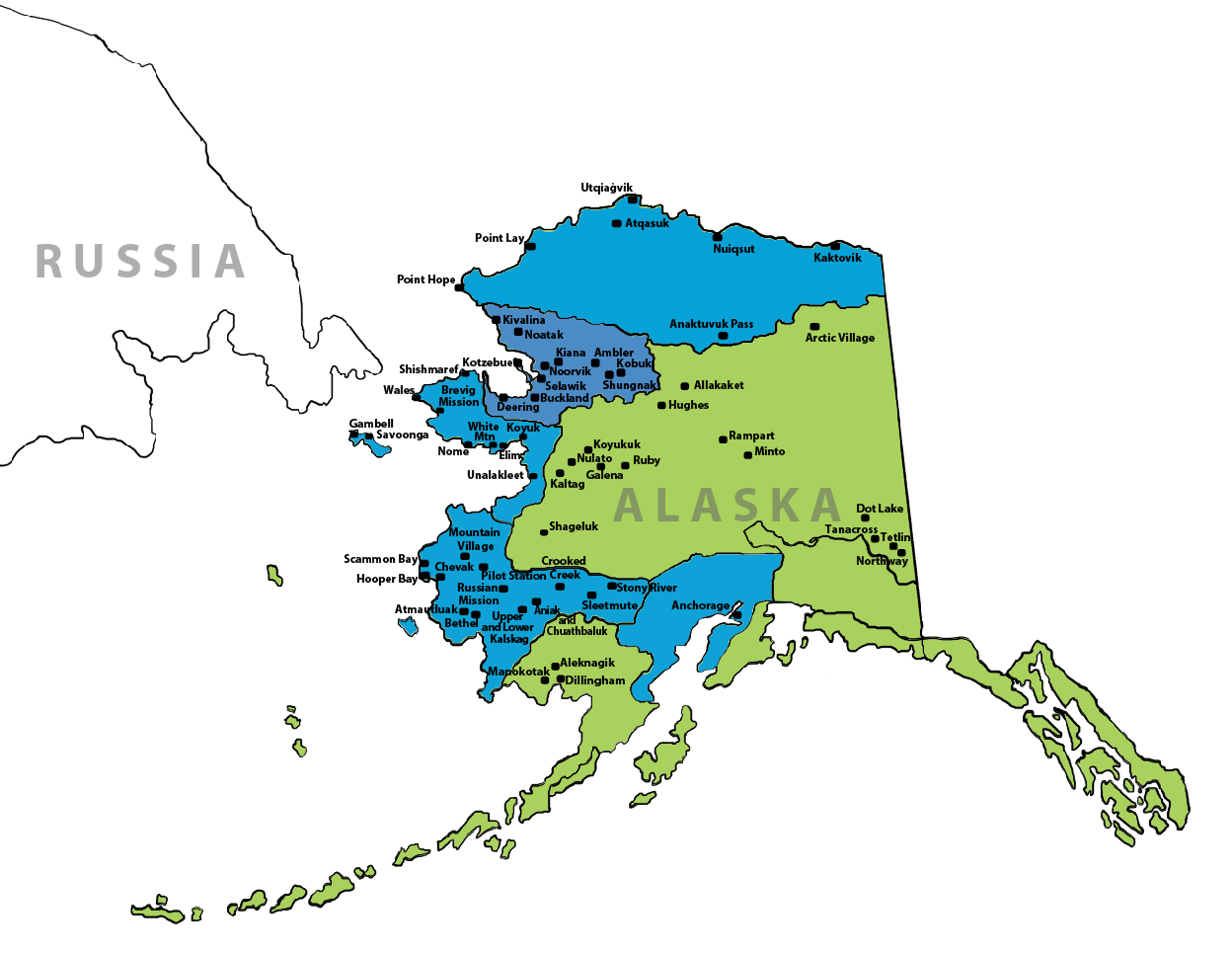
    “Where We Ski:

    Upper Kuskokwim Region: Aniak, Chuathbaluk, Crooked Creek, Sleetmute, Stony River, Upper Kalskag, Lower Kalskag

    Bering Straits Region:  Brevig Mission, Elim, Gambell, Golovin, Koyuk, Nome, Savoonga, Shishmaref, Unalakleet, Wales, White Mountain

    Lower Yukon & Kuskokwim Region: Atmautluak, Bethel, Chevak, Hooper Bay, Mountain Village, Pilot Station, Russian Mission, Scammon Bay

    NANA region:  Ambler, Buckland, Deering, Kiana, Kivalina, Kobuk, Kotzebue, Noatak, Noorvik, Selawik, Shungnak

    North Slope Region: Anaktuvuk Pass, Atqasuk, Kaktovik, Nuiqsut, Point Hope, Point Lay, Utqiaġvik (Barrow), Wainwright

    Interior Region: Arctic Village, Allakaket, Dot Lake, Galena, Hughes, Kaltag, Koyukuk, Minto, Northway, Rampart, Ruby, Shageluk, Tanacross

    Bristol Bay Region: Aleknagik, Dillingham, Manokotak

    Southcentral Region: Anchorage, Chugiak/Eagle River, Mat-Su Valley”

     You can donate to Skiku here.
     

    Hartland Community 4 Youth and Families: This Salt lake City non-profit provides sports, tutoring, and stewardship programs for the city’s underserved youth. We profiled Hartland this past July in FasterSkier.

    The leader of the organization is Gilberto “Juan” Rejón Magana- a passionate and committed advocate. We described his work this way in our feature: 

    “What’s important about Magana’s work is its longitudinal scope: His organization supports youth from kindergarten to high school with the end goal of matriculating in college.” 

    You can donate to Hartland Community 4 Youth and Families here. 
     

    Share Winter Foundation: Another organization we featured this off-season was Share Winter and their CEO Constance Beverley. As we noted then, “Share Winter is a non-profit focused solely on providing access to snowsports to a more diverse community of children.” 

    Share Winter seeks to benefit kids interested in cross-country skiing, alpine skiing, or snowboarding. In Share Winter’s own words, they are “working to improve the lives, health, and fitness of youth through winter sports.”

    Share Winter grantees include the Bridger Ski Foundation, Central Cross Country Skiing and their Nordic Rocks program, and the New England Nordic Ski Association. 

     You can donate to Share Winter here. 
     

    Challenged Athletes Foundation (CAF) Idaho: CAF provides financial assistance to create access to outdoor recreation for individuals with physical challenges, particularly in the area of equipment grants. CAF Idaho is embarking on a new model with their adaptive ski program, recently hiring a cross country ski coach, Wilson Dippo, whose aim is to get kids in Idaho and from the surrounding Intermountain West out on skis and recreating in the outdoors year round. Their message is this:

    “Idahoans of all abilities have the right to practice, play, perform, and compete at their best. So let’s hike, bike, swim, ski, skate, move—and keep breaking barriers.We’ll unite through sport and drive Idaho forward.”

    You can donate to CAF here. All donations up to $25,000 will be matched by a private donor this holiday season, helping your gift reach more adaptive athletes. 


    No Excuses Unlimited: No Excuses Unlimited provides training and racing grants for Paralympic level athletes, fostering development of athletes bound for international racing. This includes travel expenses and adaptive equipment. Your donation goes directly to the athletes to help with the high monetary cost of elite level training and competition. 

    You can donate to No Excuses Unlimited here. 

    We understand this is not an exhaustive list of worthy organizations. Please feel free to present worthy organizations in the comments below.

  • A Vision and a Difference in Salt Lake City

    A Vision and a Difference in Salt Lake City

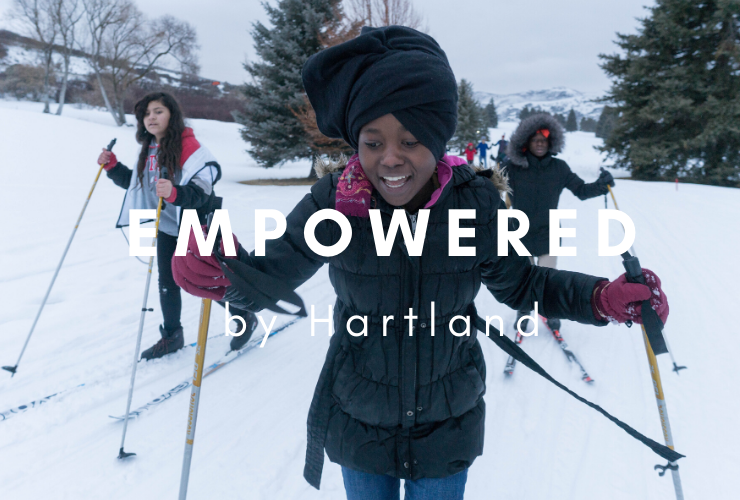
    Hartland Community 4 Youth and Families get the kids out on snow with the Utah Nordic Alliance. (Photo: Peter Vordenberg)

    This is a two-part series exploring how some students in the Salt Lake City area are exposed to cross-country skiing through the good work of community members. Part-one features Gilberto “Juan” Rejón Magana of Hartland Community 4 Youth and Families, a non-profit serving disadvantaged youth. Part-two explores how the Utah Nordic Alliance, local teacher Rose Kjesbo, and dedicated colleagues teamed up to get kids on snow. All photos from part-one are from Peter Vordenberg, he is a board member of  Hartland Community 4 Youth and Families.


    ***


    Gilberto “Juan” Rejón Magana emigrated from Mexico and identifies as indigenous is one voice of an emerging and more diverse Salt Lake City. That voice has resonated as Magana, who moved to SLC thirty years ago, has been elevating the “underserved, at-risk and underrepresented population, including people who have refugee and immigrant backgrounds or identify as Latino/a” for more than a generation.

    What’s important about Magana’s work is its longitudinal scope: His organization supports youth from kindergarten to high school with the end goal of matriculating in college. Magana founded Hartland Community 4 Youth and Families (HC4YF) and it recently began its sixth year as a non-profit. 

    Magana, however, has been a community advocate for twenty-five years. His journey began when he settled into the Hartland apartment complex nearly two decades ago. The apartments were a tapestry of languages as it became a place where immigrants and refugees put down their SLC roots.   

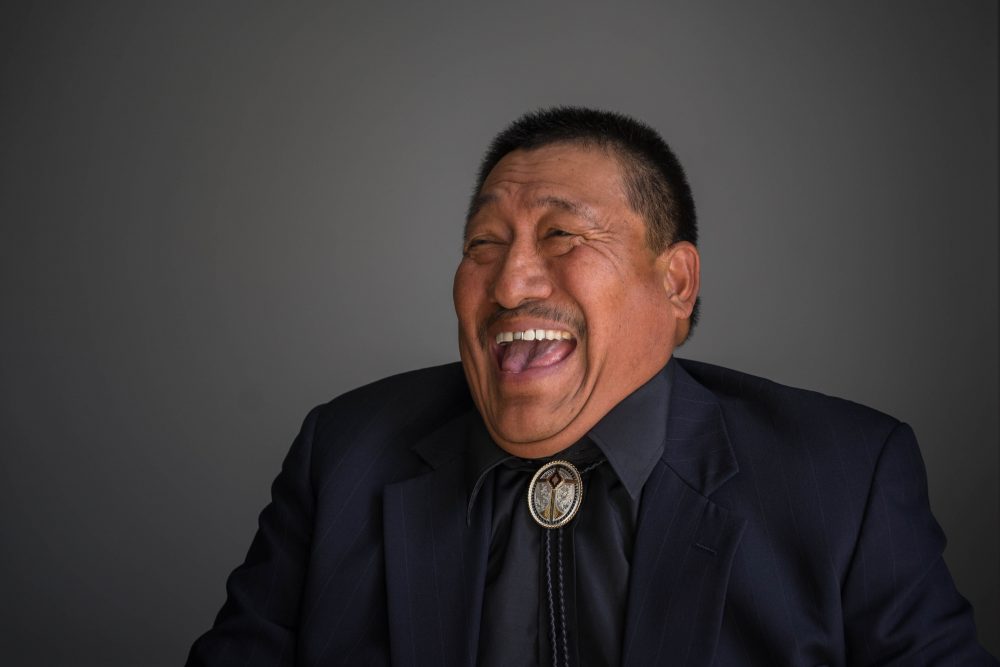
    Gilberto “Juan” Rejón Magana, Executive Director/Coach at Hartland Community 4 Youth and Families. (Photo: Peter Vordenberg)

    “I had to learn a lot about different cultures,” said Magana. “But I found that there was a connection with my culture and the rest of the cultures at Hartland, that my own culture was very old also. African cultures and others have something similar. That was we all eat, that we all know how to plant, build up the soil, and do stuff like that. But for all new Americans coming in, everything was totally new here.”

    Magana said he learned how divisive cultural misunderstandings can be when his young daughter’s bike was taken. He had purchased a used bike and fixed it up for her. One day while riding around the neighborhood she set the bike aside for a few minutes and returned to find the bike gone. 

    “We looked for it and on the third day a child rode into the community with the bike,” Magana said. “I recognized it and I say ‘hey, that bike is my daughter’s, I need you to give it back’. The kid spoke little English and was of Sundanese descent – if he did understand what I was saying then he played like he did not understand English.”

    The boy claimed the bike was his. Randomly, an older man walked by who spoke Sundanese. He helped convey to the boy that he had stolen the bike and if he did not surrender it, Magana would call the police. 

    “But by then, I am learning that this child did not know he was stealing,” recalled Magana. “This child was coming from a refugee camp where they were living and he had no schooling. It was one big community and if a toy showed up, everybody played with it and then after 10 hours the ball was in the corner somewhere out there and nobody’s name was on it. They kept sharing, it went around the camp. This is what happened when the child saw the bicycle parked there, he thought somebody was finished using it or playing with it. He jumped on it and he passed it onto his brother, and to another brother, and to his cousin and so it went that way. That is what I learned, the child did not know he was stealing.”

    Magana resolved to purchase a bike for the boy and also to address some of the toxic elements he observed around Hartland; gang recruiting, drugs and alcohol, and prostitution. 

    The interaction with the Sudanese boy became a catalyst for his life’s work. Magana began small as he organized a soccer team with one underlying premise, team members had to be attending school and in good standing at school. “They complied and I had to comply,” Magana said. 

    Like many urban centers, Salt Lake is becoming more diverse. According to estimates from the United States Census Bureau, SLC’s 2019 population was 200,567 people. Seventy-three percent identify as “white alone”, 2.3 percent as black or African American alone, 1.4 percent as American Indian or Alaska Native alone, 5.4 percent as Asian alone, 1.5 percent as Native Hawaiian and Other Pacific Islander alone, 4.4 percent as Two or More Races, and 21.6 percent Hispanic or Latino. 

    Through a socio-economic lens, the Census Bureau estimates that nearly 18 percent of the city’s population lives in poverty. There is a need for empowerment in the region when considering those on the periphery. 

    Magana’s level of compliance to his original promise to the community’s children bordered on the tenuous position of over-promising and potentially under-delivering. He over-delivered. Organizing soccer also meant assisting with homework, literacy, and navigating the myriad reasons why marginalized and disadvantaged kids would either not attend or perform poorly at school. Word spread of the change going on at Hartland. Magana networked with other like-minded non-profits, educational institutions like the University of Utah, and businesses who valued the work going on at Hartland. 

    “The unique thing is I get to work with those that nobody usually wants to work with,” Magana said. “Then suddenly everyone wants to work with us because the kids are smart, they learn quickly, and they are genuine. Now we have children that are applying for scholarships for them to go to college because that is the goal.” 

    Now, five years after becoming a non-profit, HC4YF has a core mission “to provide a pathway to college for Salt Lake County’s at-risk and underserved youth.”

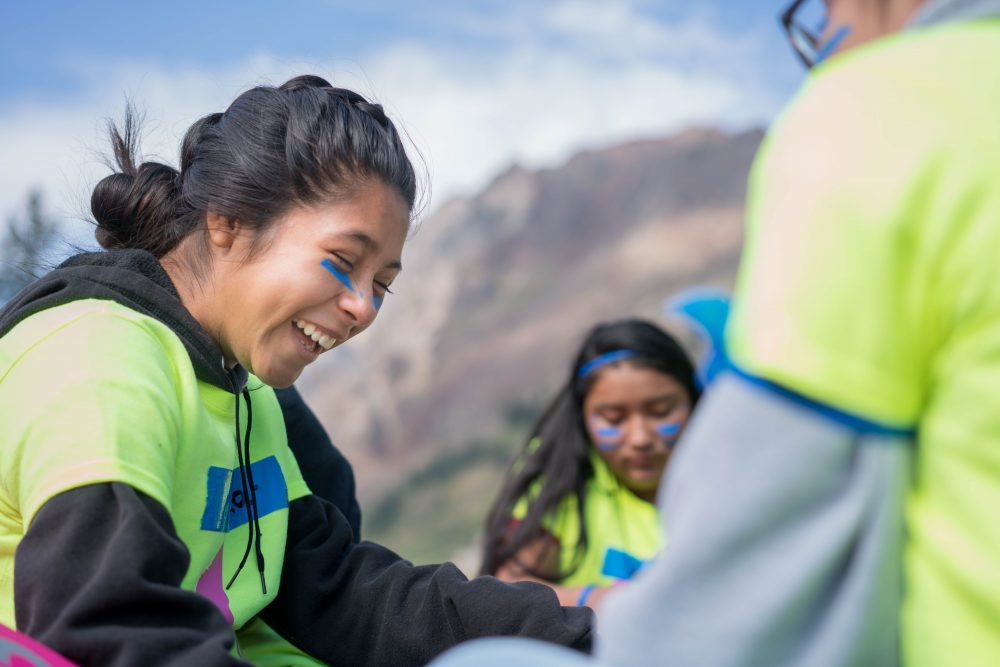
    HC4YF has at its core a desire to see their children attend college. (Photo: Peter Vordenberg)

    HC4YF’s path to college is fused with environmental stewardship projects along the Jordan River, opportunities for older students to serve as mentors, and sports like soccer, snowshoeing, biking, hiking, and climbing to build confidence and provide structure. Sports offerings also include skiing. HC4YF has partnered with Utah based She Jumps to take the organization’s female participants alpine skiing at Alta. They have also begun coordinating with the Utah Nordic Alliance to provide cross-country ski gear and lessons. 

    The sports, tutoring, stewardship programs all facilitated by HC4YF are a means to further each participant’s education as Magana and others maintain a simple mantra of personal accountability. 

    “Our dialogue is as simple as can be,” said Magana. “When our children come to join our soccer club, they must be going to school. They must be there on time. They must do their homework. They must hand it in. And none if this does not happen, the teacher jumps into action. They send me a text about the homework, the kid gets pulled out of soccer training and they do their homework or read, whatever it was they needed to do. We focus on what we can control and what we can help is to do what we are doing. We stay in school. We keep focused, we go from kindergarten to elementary from elementary to middle school and onward. There is space for everyone in our program.”


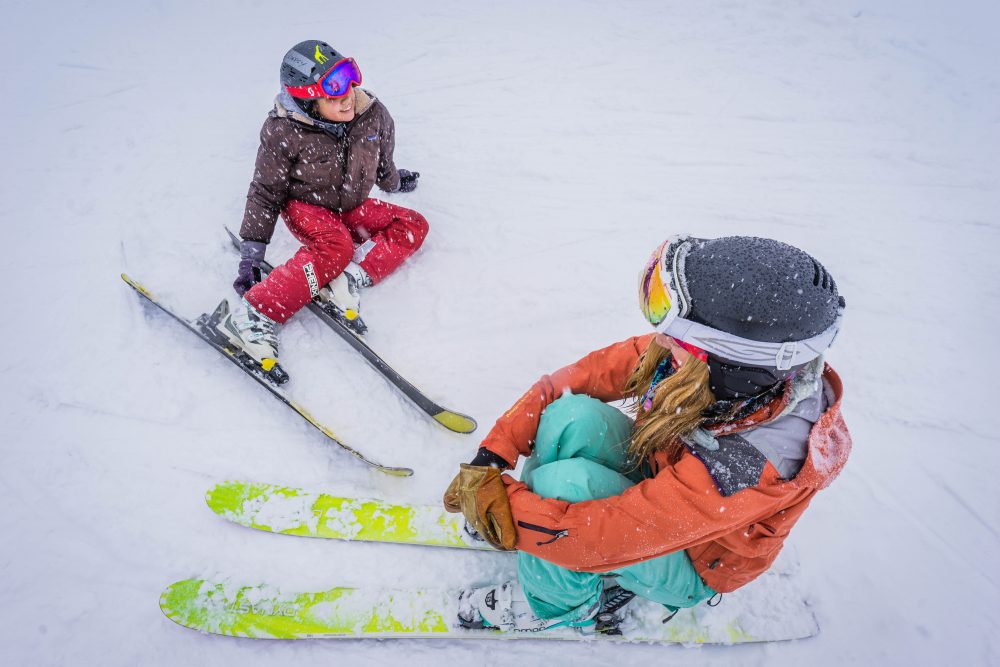
    She Jumps and HC4YF have partnered to get girls on snow. (Photo: Peter Vordenberg)