From the FasterSkier archive — posts syndicated from athletes’ and coaches’ own blogs between 2004 and 2012, kept online as published. Current coverage is at fasterskier.com.

Tag: Hatcher Pass

  • Elite Programs Ramp Up for Modified Training

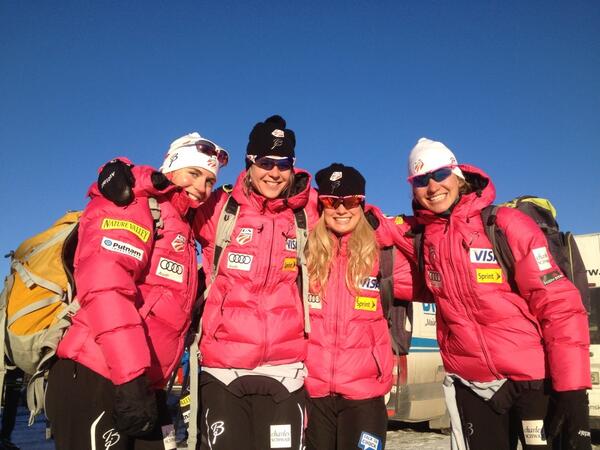
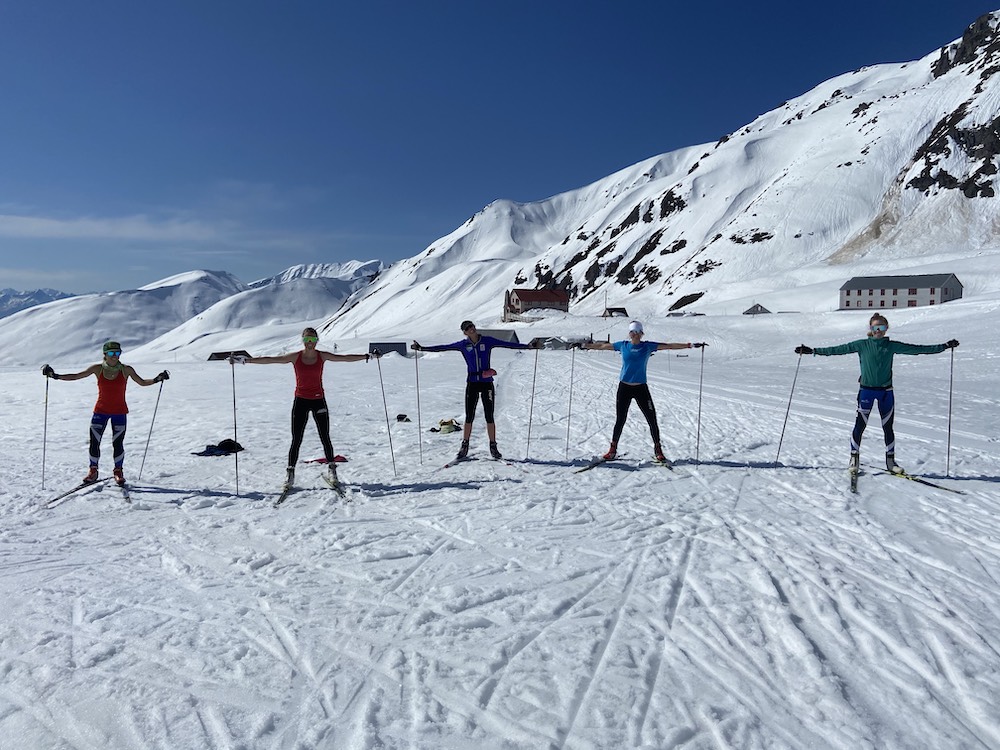
    From left, APU athletes Rosie Frankowski, Sadie Bjornsen, Hailey Swirbul, Becca Rorabaugh, and Caroline Brisbois maintain a healthy distance while skiing at Hatcher Pass on May 13, 2020. (photo credit: ?)
    From left, APU athletes Rosie Frankowski, Sadie Bjornsen, Hailey Swirbul, Becca Rorabaugh, and Caroline Brisbois demonstrate a healthy distance while skiing at Hatcher Pass on May 13, 2020. (Photo: Courtesy Sadie Bjornsen)

    Although the training cycle has officially begun, it decidedly has a different vibe and look. Adding some complexity to our short-term new normal are a crosshatch of state, county, and city regulations as it relates to mitigating the community spread of Covid-19. The core question elite cross-country ski programs are asking is this: How can we most responsibly promote safe and effective training for their athletes? 

    (The United States Olympic & Paralympic Committee (USOPC) has released a document titled Return to Training Considerations Post-COVID-19  This document provides useful information for organizations reopening.)

    FasterSkier reached out to four programs in the U.S. — the Craftsbury Green Racing Project (CGRP), Stratton Mountain School’s SMS T2 team, SVSEF’s Gold Team, and Alaska Pacific University Nordic Ski Center’s Elite Team to gauge how athletes can train within the context of their regional social distancing guidelines. The answers are complex. And as each respondent stated, no one single person or group has all the right answers other than to stay informed and err on the side of safety. 

    Craftsbury Green Racing Project

    Head CGRP coach Pepa Miloucheva responded to our query. Craftsbury’s team is located in Northeastern Vermont, a rural and isolated region. When Miloucheva responded on May 8, the Craftsbury Outdoor Center remained closed to the public. Along with key staff, those GRP athletes and coaches that live on campus year-round continued to be in residence. This group includes coaches and athletes from the ski, biathlon, and rowing teams. 

    “Most of us that didn’t go anywhere this spring have been in strict isolation since March — no store trips or anywhere else. Skiers and biathletes live in the same house, their food is ordered through the center, athletes cook in the house and do train together, but still try not to be in more than 2-3 people groups,” explained Miloucheva.

    Several athletes were home with their families. Among them were Akeo Maifled-Carucci and Caitlin Patterson — both had been with their respective families in Bozeman, Montana. They returned to Craftsbury in mid-May. Miloucheva wrote that returning athletes will be quarantined for two weeks before they are allowed to move into team housing and join group practices.

    “We do not share any buildings use with the rest of the center staff and if any work-related interactions are only by keeping a safe distance, wearing masks, and following all safety rules and regulations. This said, honestly we don’t have much of those really, we pretty much just interact between ourselves right now.”

    Gold Team

    Sun Valley and surrounding Blaine County, Idaho were early Covid-19 hot spots. Since early March, community members there have been acutely aware of grim realities of community spread. Since then, the caseload has leveled off. 

    According to Chris Mallory, Gold Team head coach, his core unit of skiers have not had group training sessions for the past two months. However, with the canceled racing in March, Mallory said several of his athletes extended their on-snow training north of their home base in town. Like many adapting to the modified season, high volume was the trend for March and April training.

    “It was unfortunate the race season got cut short, but it allowed for two months of big volume to finish out the season,” Mallory emailed. “So we’re starting up training a little later than normal this year and for now, coaches are directing workouts remotely. We’re looking to get programming going closer to normal in June, but some things will be structured differently.”

    Mallory explained that training group size will be kept below 10 athletes and the norm of committing in a team van will be held off for the near future. 

    “So we won’t have big cross-team training sessions for a while, unfortunately. We’ll also pick training locations such as Trailheads which are off the beaten path or sections of the bike path which see less traffic for rollerskiing, so physical distancing can be easier to achieve.  We might have a partner gym opening up in a week which will allow for some strength training to occur for our Gold Team, but we’re also putting some effort into creating an outdoor strength area outside the Lake Creek ski hut as well.” 

    SMST2
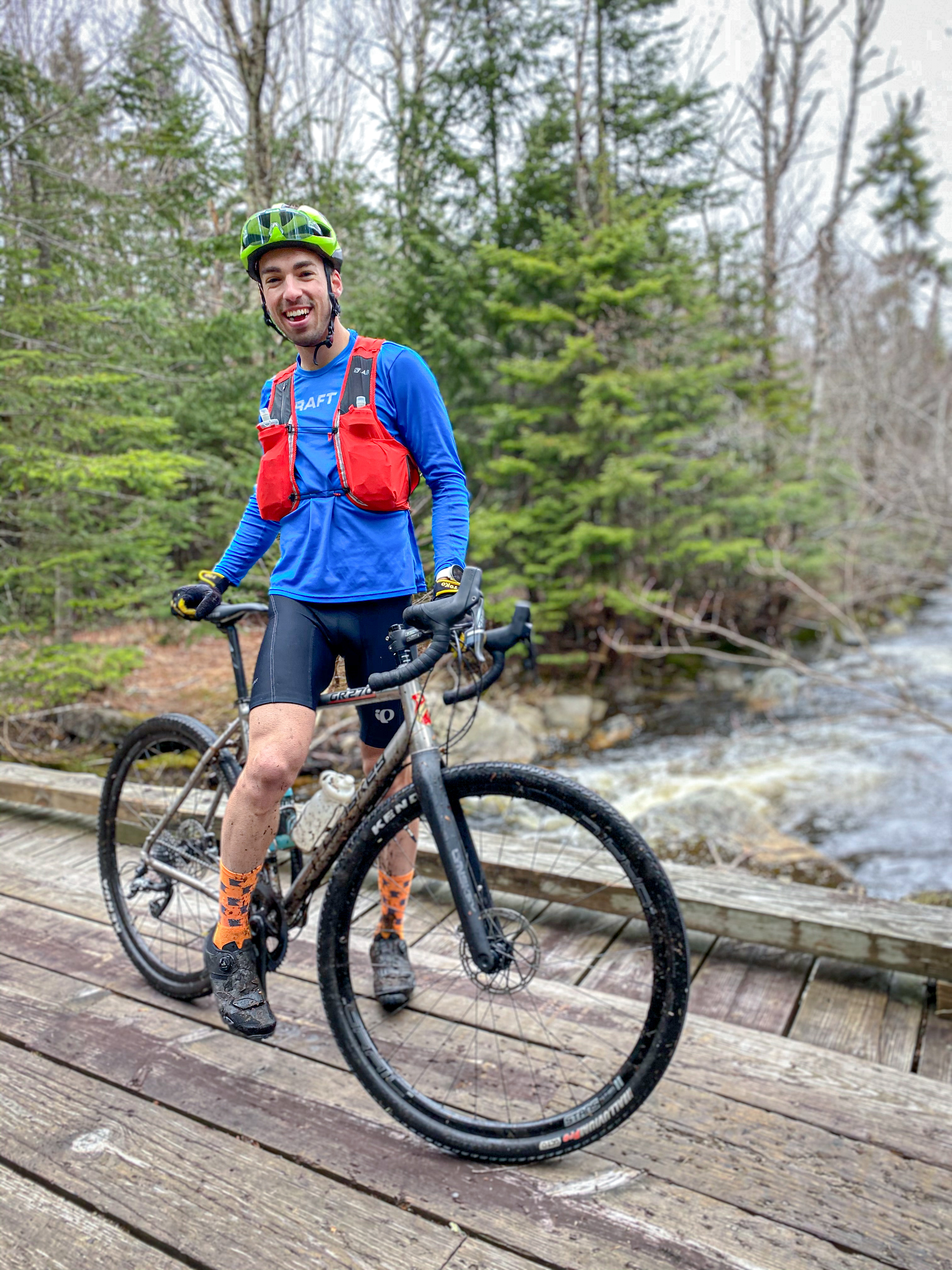
    SMST2 skier Ian Torchia on a recent VT. ride. (Photo: Courtesy Ian Torchia)

    Nestled in southern Vermont, the Stratton Mountain School offers an idyllic campus for the SMST2 team. This spring, as the pandemic and its accompanying restrictions unfolded, the state-mandated that both residents and non-residents traveling into Vermont must self-quarantine for 14 days. That rule was recently extended until June 15.

    Some SMST2 athletes are currently out of state, while others, like Ian Torchia, have remained in the Stratton area since the end of the season. Ben Ogden and new SMST2 skier Bill Harmeyer returned to their Vermont homes to remotely finish out the academic year at the University of Vermont.  

    “Initially we were thinking where do you want to be for a two-week self-quarantine,” Patrick O’Brien, SMST2’s head coach said in a call. “Thankfully we also thought about where do people want to be for an extended period of time this spring. And many people already had plans in place — knowing we may be in this for a longer period of time than we were thinking at the beginning of March.”

    As June approaches, O’Brien explained that he too has begun defining how training will look, and how to best integrate athletes into specific training groups. 

    “First and foremost in my mind is what can we legally do, what can we responsibly do, and what are the creative solutions that we can come up with? And understanding again that no one here has a crystal ball; we can look at models, we can look at forecasts, we can monitor the situation but it is going to be a moving target,” said O’Brien. “So really what we are trying to do is find a balance. We are trying to be fully compliant and very safe and cautious and also monitor the situation locally.”

    Harmeyer, who had been self-quarantined in Burlington, drove to Stratton recently to begin his full-time training. Due to his limited exposure while in Burlington, he was allowed to integrate with a small training group. Ben Saxton, on the other hand, recently flew back to Vermont from the Midwest. According to O’Brien, he is self-quarantining for the required 14 day period.

    For the time being, O’Brien envisions training groups organized around pods – another word he used interchangeably for families. Athletes living together will be considered training pods where they are able to be in close proximity to one another. O’Brien acknowledged this arrangement will be closely monitored and reassessed. 

    “We need to track and see what seems responsible for group training, but again we want to make sure people are safe and healthy and if we operate in these small groups, and everyone in that group is a ‘family member’, then we know that they are OK to go out and do stuff together. What we want to do is be creative in our approach to these challenges, but really we want to be reasonable.”

    Although Vermont’s shelter-in-place order was extended to June 15, it currently allows for outdoor exercise.

    “Every challenge presents an opportunity,” O’Brien said. “We are not going to jump on a plane and go to a bunch of different training camps. That doesn’t prevent us from having high-quality training locally. It presents an opportunity. And reaffirms a model of working together and training together.”

    Alaska Pacific University Nordic Ski Center

    Anchorage is typically a very good place to be a cross-country skier. While so much else has changed in the world this spring, this fact has remained a reassuring constant for the athletes of the Alaska Pacific University Nordic Ski Center (APUNSC) Elite Team, as well as the greater Anchorage ski community. There was seasonal weather, both snow and cold, in the second half of this winter, leading to a sea-level snowpack that lingered well into April. Trail grooming is performed by a nonprofit group, Nordic Skiing Association of Anchorage, that relies on voluntary donations rather than mandatory trail passes while grooming on public land, so grooming continued unabated through March and into late April. And public health-wise, Alaska’s isolation, coupled with a relatively aggressive early response, has led to, so far, consistently low COVID-19 numbers throughout the state, currently the lowest gross numbers of any state and the third-lowest per-capita infection rate behind Hawaii and Montana.
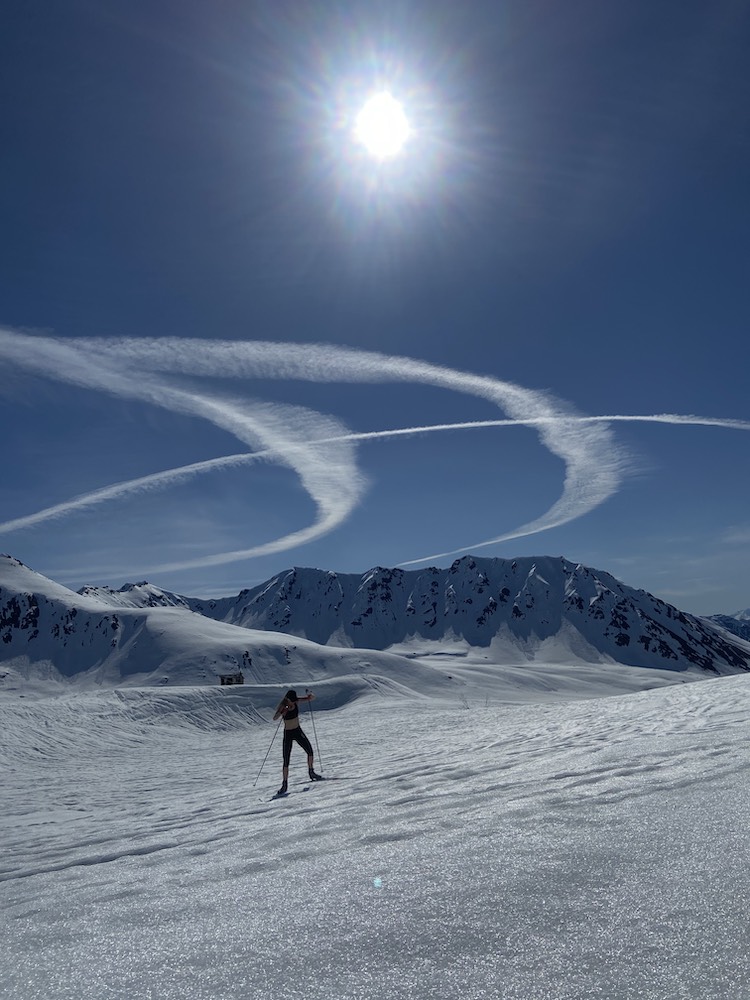
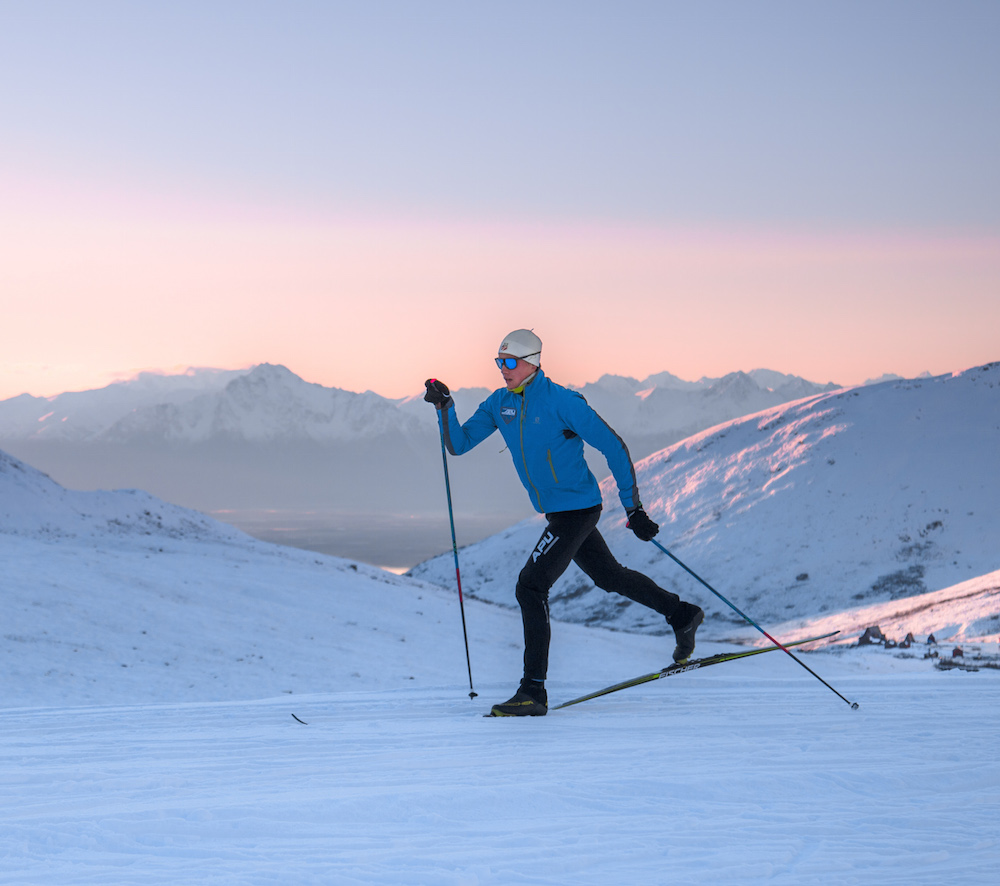
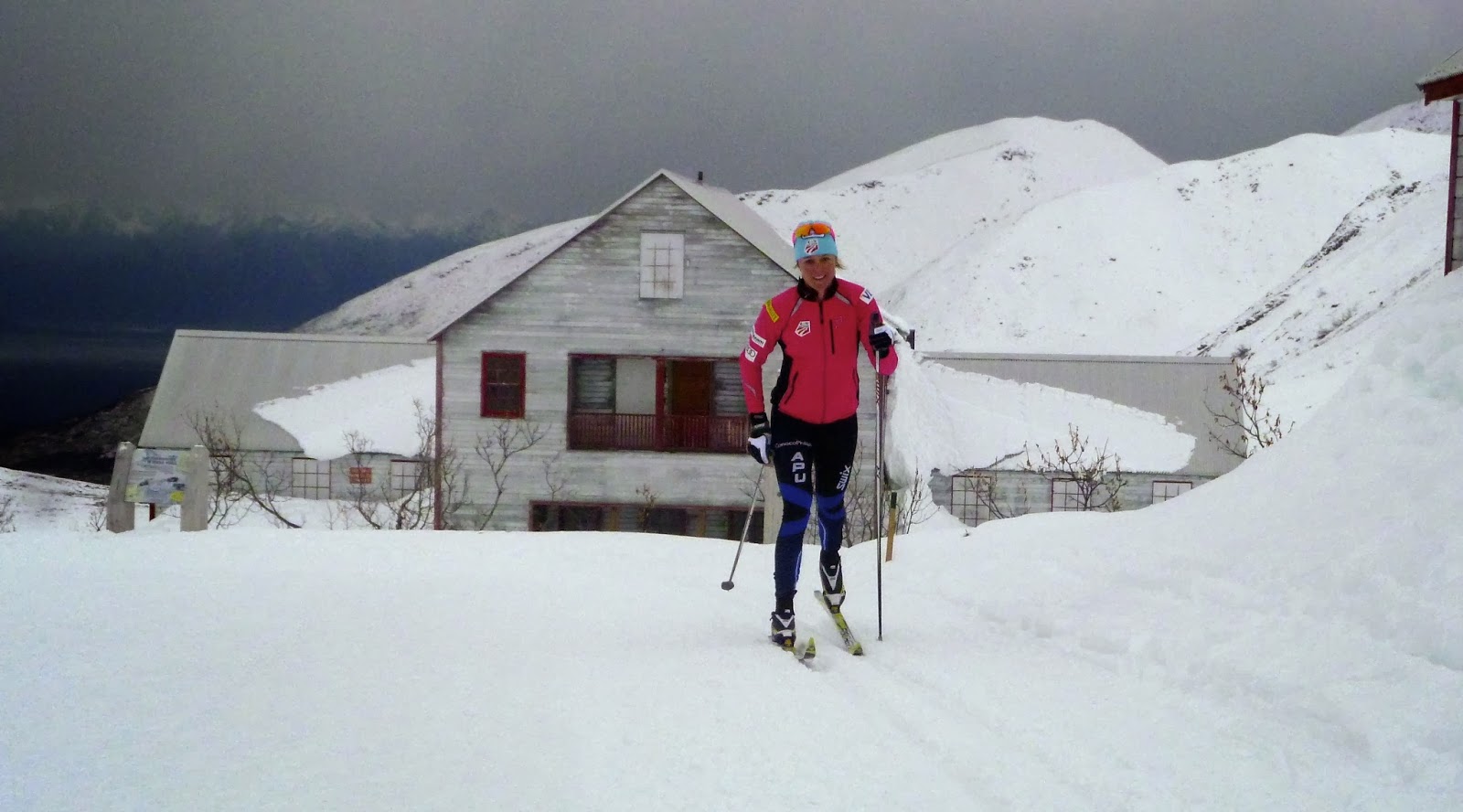
    Hailey Swirbul (APU/USST) skis at Hatcher Pass on May 13, 2020. (photo credit: ?)
    Hailey Swirbul (APU/USST) skis at Hatcher Pass on May 13, 2020. (photo credit: Sadie Bjornsen)

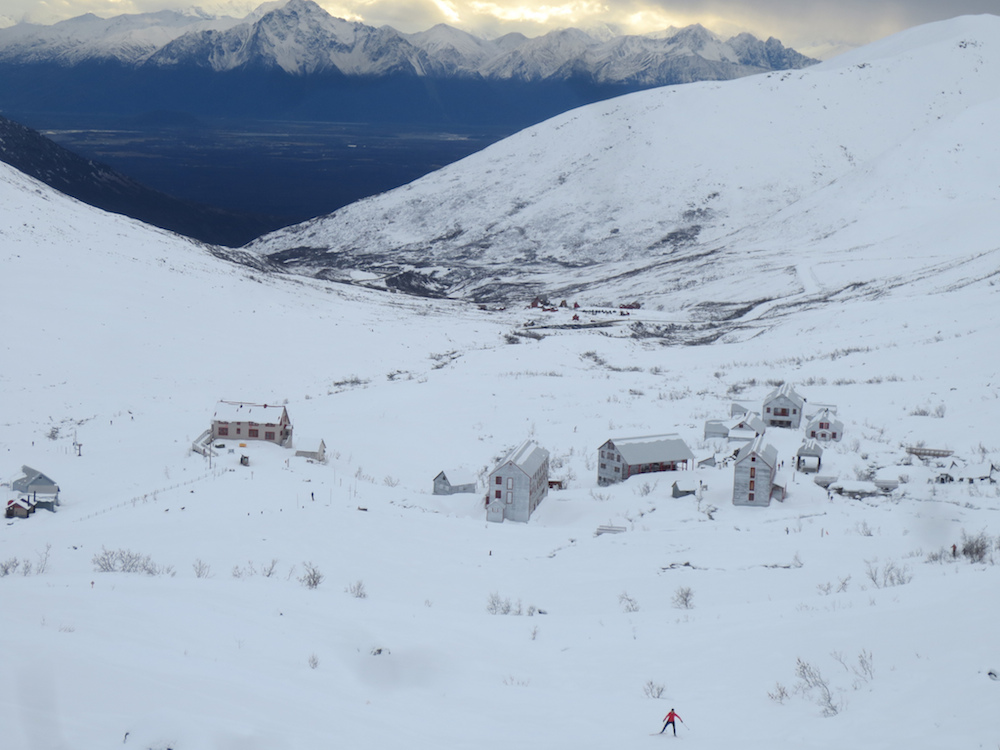
    Put it all together, and APU athletes were enjoying groomed skiing at sea level through April 23, with world-class crust skiing coming on line around the time the in-town ski season was winding to a close. (Any April training happened unofficially and in smaller groups, in deference to both the overall training schedule and health mandates in effect at that time. Although a group of four APU athletes did hunker down together in the APU Ski House starting in mid-March, forming a de facto family unit and training group in which half the people were a member of the U.S. Ski Team.) A 75-minute drive away, fellow nonprofit Mat-Su Ski Club has been grooming the trails at Independence Mine, in the Hatcher Pass area, since last October 5… and with a snowpack that currently measures around four feet, is still going. It’s hard to prove a negative, but APU skiers currently enjoy ready access to what are likely the only groomed nordic trails on the entire continent right now.

    Here’s Erik Flora – longtime Alaska Pacific University Nordic Ski Center head coach, sometime trail groomer, and consistently an archetypal do-it-all coach – with a recent email giving an official update on the APU Elite Team:

    We have learned that the logistics of keeping our athletes safe while following COVID-19 state mandates has been at the forefront of the APUNSC program. Our core is based around health and wellness, and the safety of our program members is our top priority at all times, similar to other ski communities. APUNSC has had an advantage of having trails and snow on the mountains minutes from our doors to continue training, even in times of quarantine.

    “Nordic Ski Center Elite training program began on May 1. We were fortunate that State of Alaska quarantine and social distancing mandates began to lessen at the beginning of May, allowing the Elite Team to be able to begin training in smaller groups outside in the mountains. The Elite team wore face mask or buffs and kept the mandated 6-10 ft separation while outdoors. 

    “At first, groups of 20 were allowed to hit the trails with a mandated 6-10 feet of separation for active workout sessions. We wore masks when training and avoided crowded parking lots and trailheads where we could. 

    “Once phase 2 [of state health mandates] hit a week ago, it allowed now the entire Elite Team to be able to head into the mountains to train and ski. Hatcher Pass has been an area where Crust Skiing is at its best with longer days and blazing sunshine. The grooming has been incredible thanks to the work of Nordic Ski Club of Anchorage and the Mat-Su Ski club. The Elite athletes still uphold the 6-10 ft separation when training. The athletes are happy to be together as a team again, and with that comes the responsibility to treat allowances with respect and not take it for granted. We are living and training as athletes in a time where our community could fall back to strict quarantine.  

    “We’ve stayed away from indoor training as a team in gyms, as not only is the safety of our team top priority, but the team has excelled in their own in-home conditioning and in getting outside to hit the trails. Only if necessary, for some athletes rehabbing, will we recommend using an indoor gym for conditioning and training.  

    “APU Nordic Ski Center typically runs 3 elite training camps [each summer] on Eagle Glacier at the Thomas Training Facility outside of Girdwood, Alaska. We will revisit whether Glacier camps will resume based on the climate of COVID-19 Adjustments.”

    (For any Outside readers salivating over the prospect of May skiing and thinking of booking a cheap plane ticket north, please note that a 14-day quarantine requirement remains in effect for anyone traveling into Alaska from out of state, and that Alaska State Parks is likely to plow the road up to Independence Mine in early June.)

  • Early Season at Hatcher Pass: A Photo Essay

    Early Season at Hatcher Pass: A Photo Essay

    Skiers are framed by cow parsnip on the groomed trails at Hatcher Pass, above Palmer, Alaska, Oct. 6, 2019. (all photos: Gavin Kentch)
    Skiers are framed by cow parsnip in front and mountains behind on the groomed trails at Hatcher Pass, above Palmer, Alaska, on Oct. 6, 2019. (all photos: Gavin Kentch)

    HATCHER PASS, above Palmer, Alaska — The phrase “early season skiing” tends to evoke several things for your average skier: Dark. Cold. Rock skis. November. And so on. Think a training opportunity to be endured as much as enjoyed.

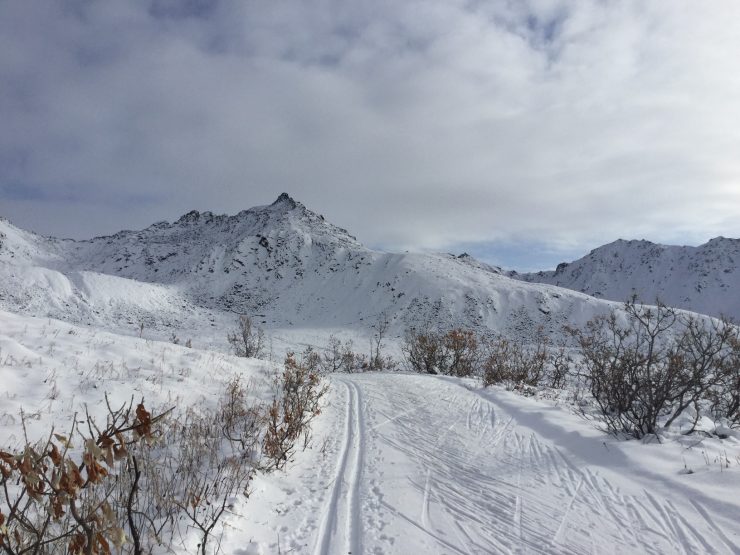
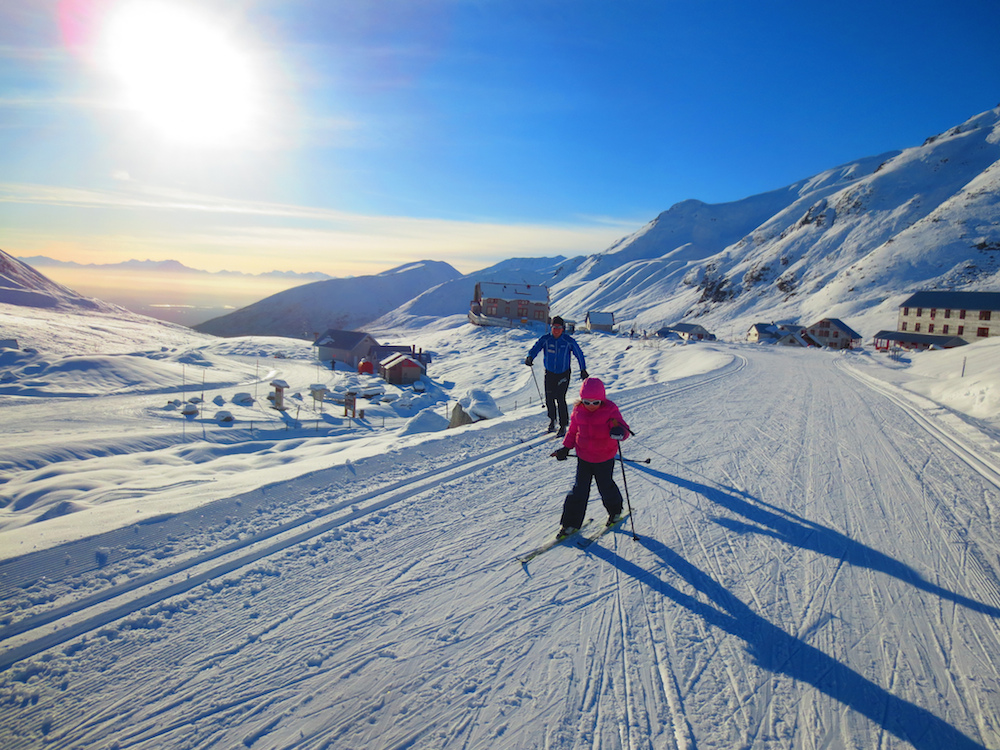
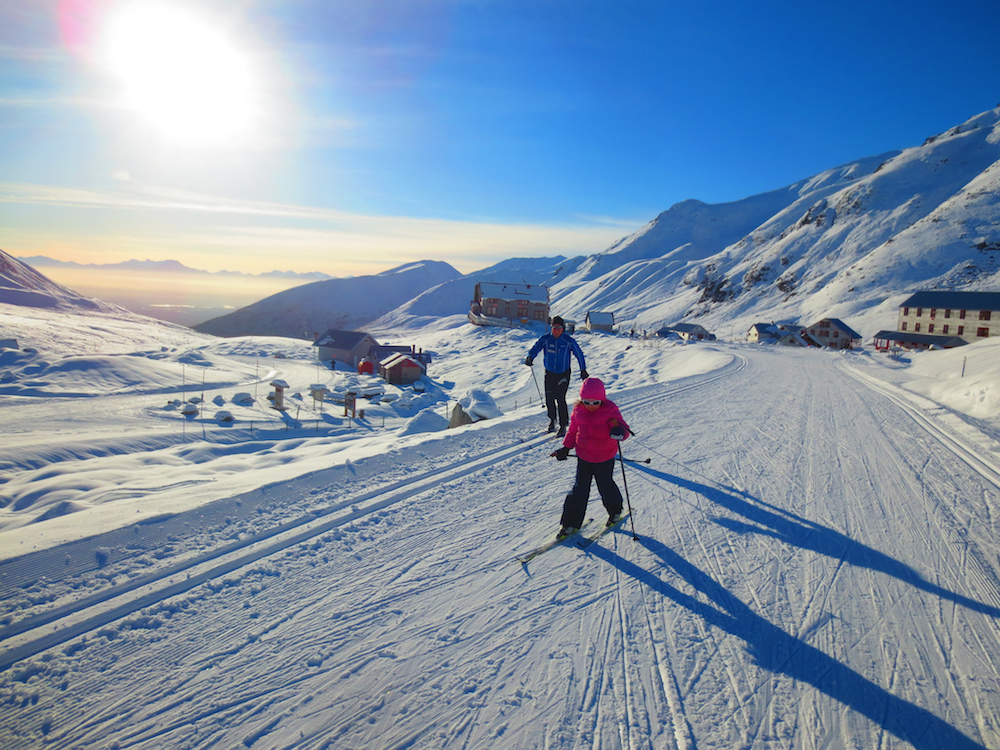
    Happily enough, none of these things was in evidence Sunday morning at Hatcher Pass, elev. 3,500′, in Independence Mine State Historical Park in the Talkeetna Mountains above Palmer, Alaska. The sun was out. The views were expansive. The tracks were set; the coverage was good. It was literally Extra Blue conditions for classic skiing, with air temps in the 20s. No one could remember ever being this warm at Independence Mine for early-season skiing. Oh, and it was October 6.

    As snowfall flirted with webcams over the past week, and the Mat–Su Ski Club moved its equipment into place and announced potential plans for the season’s first grooming depending upon accumulation, local skiers passed around weather reports like samizdat.

    Then, Sunday morning, following roughly 10″ snowfall over the past few days, the pilgrimage to an area once described as like “skiing through an Old West ghost town turned collectible Christmas village” began. The parking lot filled with vehicles bearing themed plates expressing a love for moving across snow, whether on skis or dogsled runners. SKI4VR. XCMOM. IDT105. (An Iditarod Finisher license plate with the IDT prefix is available only upon presentation of one’s Iditarod Trail Committee finisher number to the Alaska DMV.)

    A range of jackets and drinkbelts accumulated at the unofficial drop spot in the middle of the mine loop, the universal sign of a bevy of skiers out training somewhere nearby. There were many branded jackets, with Alaska as a common theme: Alaska Winter Stars, Alaska Pacific University, Alaska Nordic Racing, University of Alaska Anchorage, Team Alaska.

    The skiers present had roughly the qualifications you would expect for a group of athletes logging a 2-hour on-snow OD over hilly terrain on October 6. The juniors had Besh Cup podium finishes and Junior Nationals starts for Team Alaska; the seniors had SuperTour wins and national championships and World Cup and Olympic starts; the masters had Birkie age group wins and Masters World Championships medals. The median age was somewhere south of 25; the median VO2Max, somewhere north of 50; the SPF of the sunscreen, at least 30. And everyone, young or old, training or touring, was smiling very, very broadly as they made their way around the historic gold mine buildings.

    Then eventually, as morning stretched into afternoon, the sky turned first scumbled, then leaden. A light snow began to fall. It was time to go home.

    Whether winter is already upon you, or is just a glimmer of hope somewhere on the horizon, please enjoy these pictures from opening day at Hatcher Pass.

    Full disclosure, the author donates to the Mat–Su Ski Club each year to help support trail grooming.

  • Alaska Racing Returns with Scenic Race to the Outhouse

    Alaska Racing Returns with Scenic Race to the Outhouse

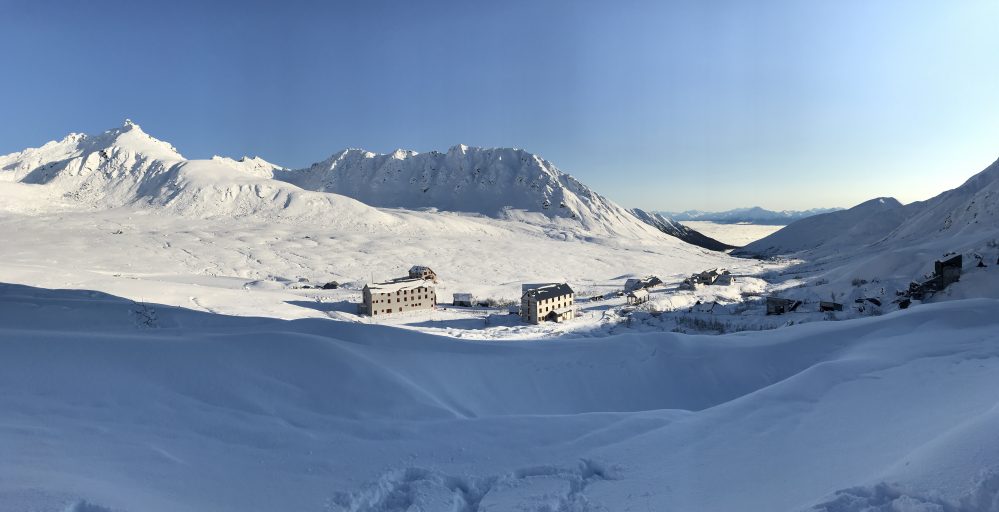
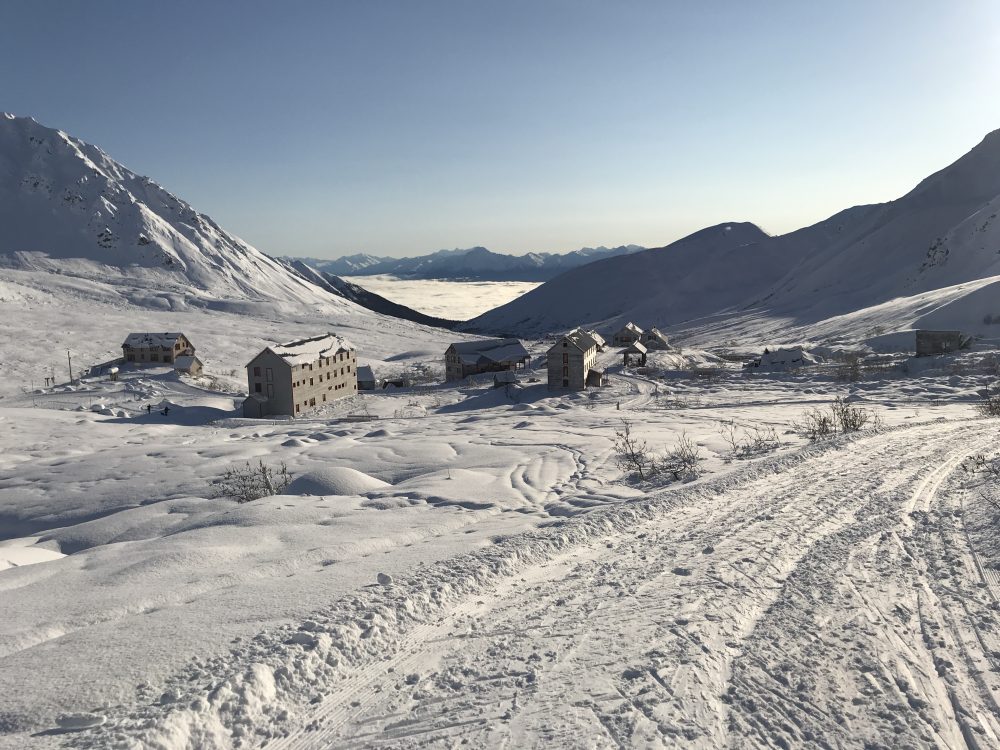
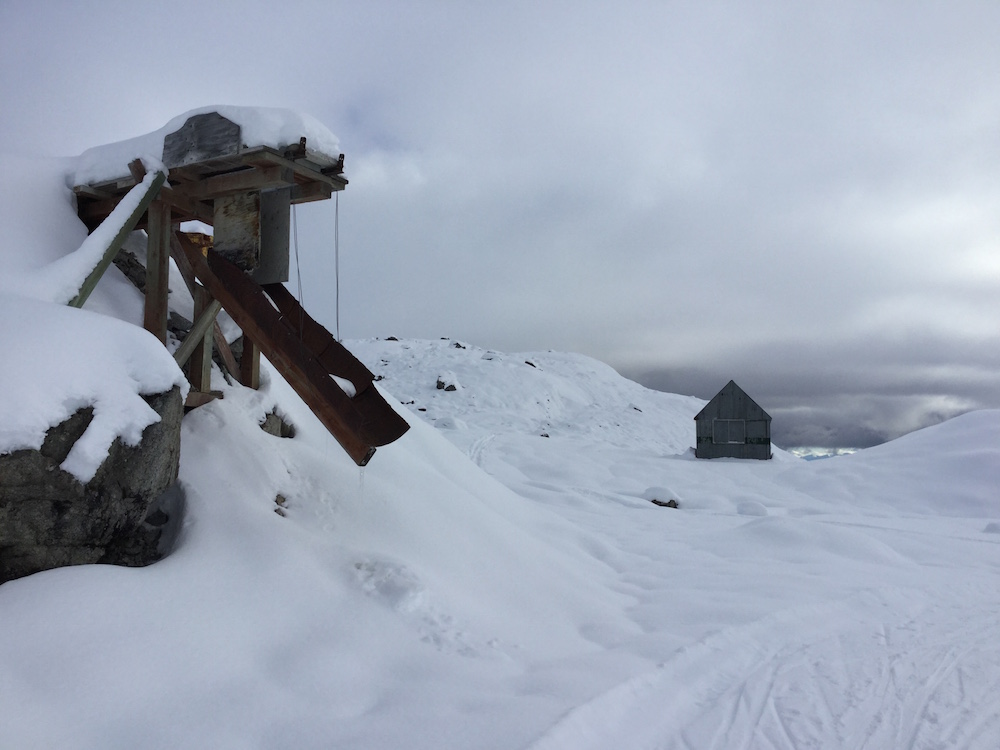
    The historic mine buildings and valley are blanketed in 3-4 feet of early-season snow up at Hatcher Pass above Palmer, Alaska. (Photo: Ed O’Connor)

    HATCHER PASS, above Palmer, Alaska — Thank you Ullr for the early-season weather and snow!

    The 2017/2018 ski season started for me on Sept. 30 with an overnight trip to the Snowbird Glacier in the Talkeetna Mountains above Palmer. The Mat-Su Ski Club (MSSC) started grooming the trails around Independence Mine in Hatcher Pass State Park in mid-October.

    The current Hatcher Pass scene

    Since then there have been two distinct categories of weather and skiers. The weather at the mine has been either dumping snow (there is presently one to three feet of base in the mine area) or out of the fog and into the sun temperature inversion (I can see Russia from here). The skiers up there show up in sticker-clad rocket boxes and matching uniforms, or have a decade’s worth of state park parking passes on their cracked windshield and dog hair matted to their ski jackets. Early season in Hatcher Pass is the story of two drastically different worlds, depending on if you go there midweek or on the weekend.

    On a typical early season weekend in Hatcher Pass, the approximately 75-car parking lot will be overflowing with a confirmed 90-plus vehicles. Team vans, Suburbans and an impressive display of rocket box-topped Subarus with ski-themed vanity license plates all compete for spots to park.

    Once on the trail, the distinctive colors of the team uniforms are seen in the blues of APU (Alaska Pacific University), the green and gold of UAA (University of Alaska Anchorage), the red of AWS (Alaska Winter Stars), yellow of ANR (Alaska Nordic Racing), and the light purple of the USST (U.S. Ski Team).

    If you want a free lesson on how to be a better skier, just look around. You will see the best technique, the hardest training, and some of the finer nuances of being a skier. Lines of no-poled skiers are doing drills. Elite racers are zipping past you doing intervals.  Elite racers are zipping past you doing over-distance. Junior club skiers are building jumps. Sometimes the weather up there on the weekend requires you to shed layers and think about UV protection in November in Alaska. Sometimes the weather up there on the weekend requires emergency midday grooming and specialized vision enhancers to let you see the trail. Let it be known that the who’s who of competitive skiing commutes from Anchorage to Hatcher Pass on the weekend for good early-season skiing. The vibe on the trails at Independence Mine is that you are part of a rich ski community and leaves no doubt that you are in the right place at the right time.

    Looking down from near the high point of Saturday’s Race to the Outhouse at Hatcher Pass, Alaska. (Photo: Ed O’Connor)

    On a typical early season weekday in Hatcher Pass I can show up at a leisurely mid-morning time and likely get the best and closest parking spot just a few meters away from where I can put my skis on. The only other person out there drives an older minivan that surprisingly made the climb up the mountain. This guy wears jeans when he skis, which are a good match to his equipment. The flashiest part of anyone’s uniform is the brightly colored cotton bandana tied loosely around his wrist.

    If you want a free lesson in what it means to be a skier, just look around. The vacancy of the mountain allows you to internalize your motivations and identify your biomechanics. Making another trip to the high point of the trail makes you feel as mighty as the mountain peaks that surround you.

    On a midweek day in Hatcher Pass, you may find yourself talking out loud to the dog about kick wax and then laughing when you agree with her that it’s not the wax but the operator. Oftentimes over the last week or two the lower elevations have been entombed in a dense fog that you can drive up and out of into a sunny winter wonderland and think, “WOW!  Does anybody else know how nice it is up here?” Almost as often the drive up has been so perilous due to fresh snowfall you have genuine concern if you will be able to make it back down the hill safely.

    The midweek vibe on the trails is that you are grateful and lucky to be in the right place at the right time.  

    The 2017/2018 American race season begins

    The Race to the Outhouse #1 was held at Independence Mine State Historical Park this past Saturday morning, Nov. 4. Once again, it is believed to be the first cross-country ski race in the U.S. this winter, and the first ski race on natural snow anywhere on the continent.

    The race was held under partly cloudy skis and temperatures in the mid-20 degrees Fahrenheit. The one-lap, 5-kilometer mass start course featured an excellent base of natural snow, with nearly 200 meters of elevation gain through the scenic and historic gold mine area now overseen by the Alaska State Parks system.

    Of the estimated 150-200 skiers enjoying the trail Saturday morning, it was the Mat-Su Valley residents who made up the bulk of the start list.  A total of 13 people participated in the Race to the Outhouse #1 in a mass start skate event followed by a mass start classic event.

    Peter Brewer, 25, of Chugiak, Alaska, won the skate race in a time of 13:08. Aubrey LeClair, a student at West Anchorage High School who skis with APU, was the fastest overall woman despite competing in classic technique, with a time of 17:54. My ego was boosted by placing third overall, but I very easily could have gotten 23rd had some of the competitive spectators entered the event.

    Looking down at the fog below. (Photo: Ed O’Connor)

    Scott Horn, a recently retired Jackson Hole Resort employee,  traveled all the way from Jackson Hole, Wyoming, and raced in the event, “chasing early season snow to Alaska,” he said.

    Brewer, the race winner, was asked about his favorite trail, about the contrast between Hatcher Pass midweek and on the weekends, and about what he wants to do next month. He said his favorite trail is “Beach Lake Trails at Chugiak because that is where I went to high school.” As for midweek versus weekends, he observed, “For now I am a weekend warrior and only get to ski Hatcher Pass on the weekend.” And looking ahead, Brewer said, “Next month my twin brother Kenny and I are going to focus on speed by doing three- to four-minute Level 4 workouts in preparation for Besh Cups.”

    LeClair, meanwhile, says that her “favorite trails are Independence Mine because this place is so pretty, and Eagle Glacier because I can ski in the summer.” And, “I remember the last two weekends being very sunny and pretty up here, but when I came up here on a Wednesday it was a blizzard.” And finally, “Next month I want to be able to ski in Anchorage.” (Less than 24 hours after LeClair’s comment, Anchorage saw four inches of snow at Kincaid Park on the western edge of town.)

    If you are in the figurative or literal ice fog of the lowlands, go up.  What you find when you get there could be a ski race, might be a community of nordic ski racers, or perhaps a private ski resort.  One thing for certain is that if you go Hatcher Pass during the early season, you will know what day of the week it is.  

    — Gavin Kentch contributed

    Results

    * * *

    Author Jeff Kase is a devoted volunteer member of the Mat-Su Ski Club and a frequent groomer. He was up late Friday night grooming the trails for Saturday morning’s race. Ski racing in the Mat-Su Valley continues later this month with the Alaska Nordic Cup series between UAA and University of Alaska Fairbanks, and next month with the Mat-Su Ski Club’s flagship event, the Icicle Double on Dec. 30-31.

  • Alaskans Revel in October Skiing at Hatcher Pass, Birch Hill

    Alaskans Revel in October Skiing at Hatcher Pass, Birch Hill

    Alaska Pacific University’s Luke Jager strides it out at Hatcher Pass, above Palmer, Alaska, on Oct. 19, 2017. (Photo: Ophira Group)

    Note: We’re seeking submissions for this year’s “Where The (Skiable) White Stuff Is” early snow report. If you know where there’s November or even October skiing in the U.S. or Canada, please write us with details (When does it open or how long has it been open? How many groomed kilometers are there? Is there snowmaking? Any special events planned, like American Thanksgiving camps? Anything else we should know?) and original photos at info@fasterskier.com with the subject line: “Fall Skiing”. Deadline for submissions is Nov. 3.

    ***

    HATCHER PASS, above Palmer, Alaska — Winter is in the eye of the beholder, but whatever you’re looking for to mark the skier’s favorite season, this spot at 3,500 feet in the Talkeetna Mountains probably has it.

    Seven kilometers of groomed trails? Check. Literally Extra Blue conditions? Check. A nearby lodge with a fireplace serving up hot chocolate and sweeping mountain views? Check. Fresh snowfall, gorgeous alpine vistas, and a side dose of Alaskan mining history? All of the above. Judging by the cars in the parking lot this weekend, there are plenty of skiers in southcentral Alaska who are ready for winter to be upon us.

    Skiing through the historic mine buildings at Hatcher Pass on Oct. 18. (Photo: Gavin Kentch)

    Skiing at Hatcher Pass began in earnest roughly ten days ago, when the cold rains of October finally turned to snow up high. When the weekend of Oct. 14 dawned sunny and gorgeous, the pilgrimage was on, with skier-set classic tracks throughout the area by Saturday afternoon. Formal grooming followed on Monday morning, courtesy of the Mat-Su Ski Club. Alaska Pacific University (APU) skiers have been making the trek out to the Matanuska–Susitna Valley, roughly an 80-minute drive from Anchorage, most days since (including Sadie Bjornsen, Erik Bjornsen, Reese Hanneman, and Eric Packer, among others). For the APU Elite Team, the #roadtopyeongchang runs through Hatcher Pass, whether skiing or getting a jump on ski testing.

    The ca. 2 k, 200-meter-elevation-gain continuous climb (so, not exactly FIS-legal) from the lower parking lot to the highest point on the current course doesn’t hurt for training, either. No word if the climb popularly known for the last four years as “Sochi Hill” has been renamed for the current Olympic cycle, though.

    Old mining equipment borders the ski trails at Hatcher Pass on Oct. 18. (Photo: Gavin Kentch)

    But Hatcher Pass isn’t just a superb early-season training venue. It’s also a truly lovely place to spend time. John Updike famously wrote of Fenway Park that it was “a lyric little bandbox of a ballpark,” a description that lends itself surprisingly well to the central-mine area that the ski trails wend through. In that vein, University of Alaska Anchorage English professor and local masters skier Shannon Gramse later set the scene by describing the historic mine buildings and detritus left over from the area’s early-20th-century mining heyday, then wrote, “Imagine skiing through an Old West ghost town turned collectible Christmas village.” By any standard, Hatcher Pass is a very special place.

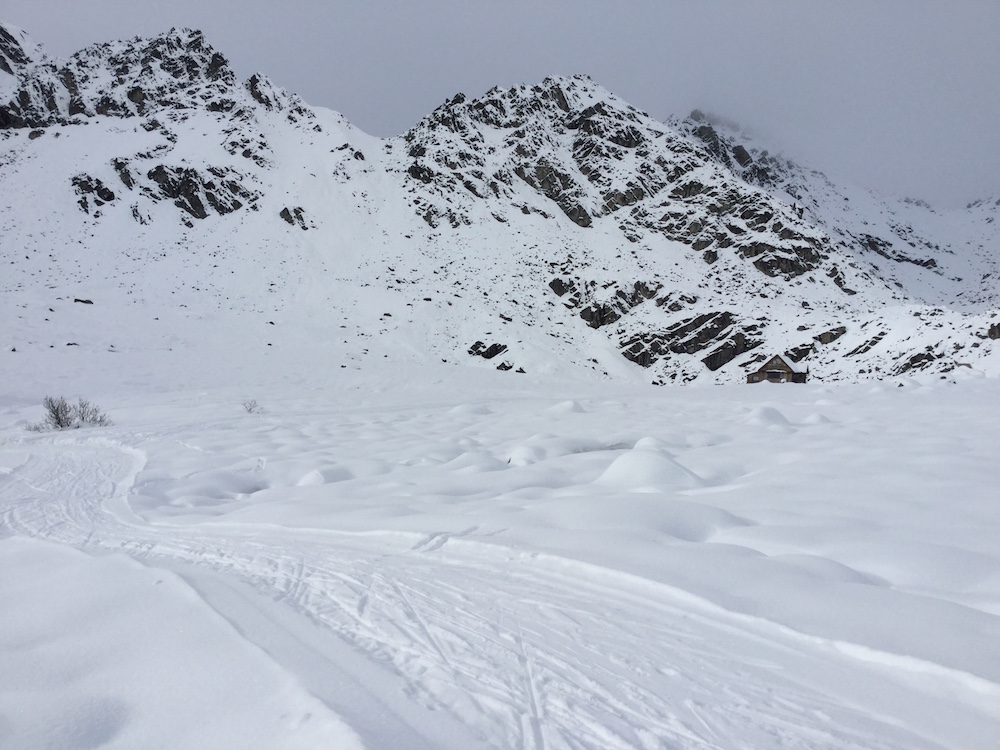
    Mountain views from the groomed trails at Hatcher Pass on Oct. 18. (Photo: Gavin Kentch)

    This year’s Oct. 16 start to grooming at Hatcher Pass was “one day later than average,” Mat-Su Ski Club board member Ed Strabel told former FasterSkier reporter Nat Herz, now of the Alaska Dispatch News.

    Three hundred miles to the north, winter is also right on schedule at Birch Hill Ski Area in Fairbanks. Longtime area race director John Estle (who was also chief of competition for some of the last FIS World Cup races held in this country, in 1984, as well as head coach of the U.S. Ski Team from 1990–1993, as well as having a role in pretty much anything involving skiing in interior Alaska in the last 35 years) wrote in an email on Thursday, “The ground is frozen, we’ve had 3″-4″ of snowfall, and the groomers have rolled a few k’s of trails.”

    In a follow-up note to FasterSkier, Estle clarified that this date for the first grooming was “about average” for Fairbanks. “It’s on the early end of average for the past few years, but right in the long-term average which is October 15-25. But that is an anecdotal average with no scientific basis.”

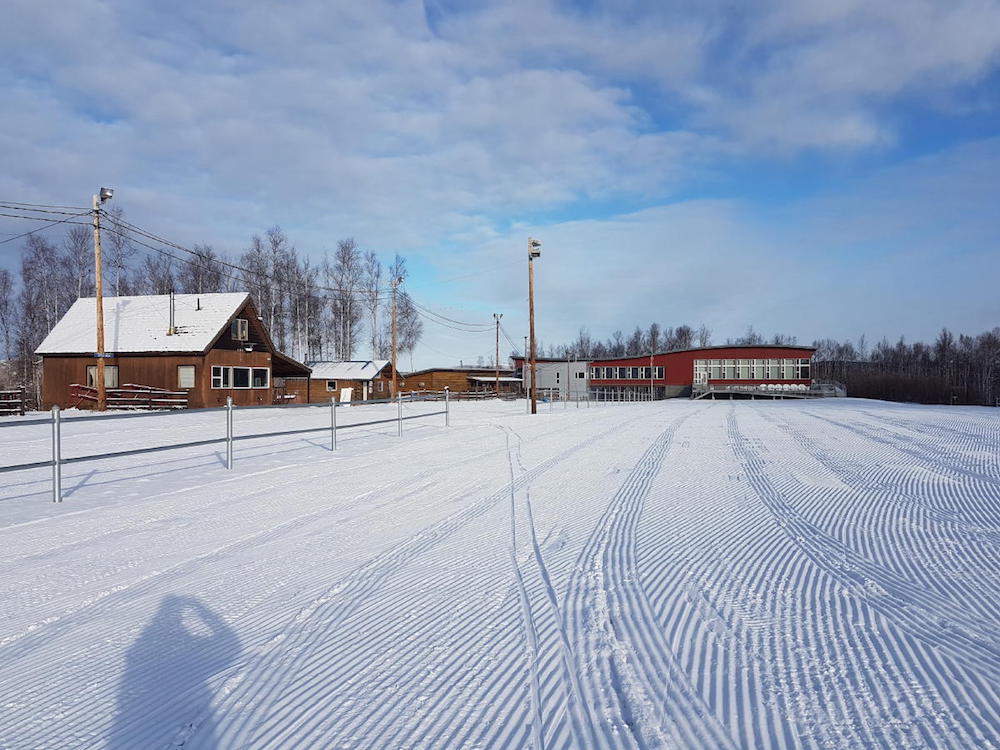
    The stadium at Birch Hill Ski Area in Fairbanks, Alaska, on Oct. 19, 2017. (Photo: John Estle)

    (It should be noted that Estle’s sense of anecdata is close to unassailable, given his knowledge of Fairbanks skiing over the past four decades.)

    Current trail conditions for Birch Hill should be available here soon. Current conditions for Hatcher Pass (and some other areas as well) may be found here.

    The Mat-Su Ski Club plans to hold its season-opening race, the Race to the Outhouse #1, on Nov. 4. It would potentially be the first ski race in this country of winter 2017/2018… except that Fairbanks has set the first race of the Wednesday Night Race Series for Nov. 1. At least in Alaska, winter is upon us.

    ***

    Reminder: Send us the snow/grooming report and other relevant information concerning your favorite ski spot. If there’s skiing in November, we want to hear about it! Email info@fasterskier.com with the subject line “Fall Skiing” by Nov. 3.

  • Alaska REG Recap: Into the Wild

    Alaska REG Recap: Into the Wild

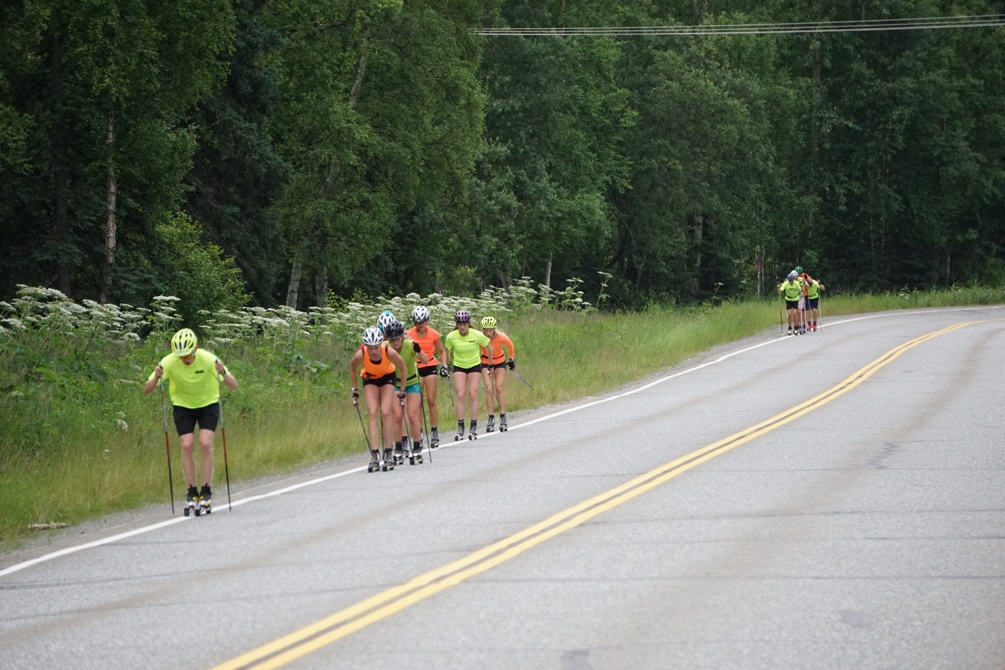
    The Alaska REG participants near the start of the Hatcher Pass Road climb during their final session of the 2017 Alaska REG camp, held July 12-16 in Anchorage and Palmer. (Photo: Alasdair Tutt)

    The following Regional Elite Group (REG) camp recap was submitted by NSCF-FXC Interim Head Coach Alasdair Tutt. FasterSkier encourages coaches and athletes from any regional offseason camps (dryland or on-snow, in the U.S., Canada or abroad) to submit their own recaps and photos to info@fasterskier.com. The Western and Eastern REG camps took place last month in Utah and Vermont, respectively.

    ***

    On July 12, 16 athletes gathered at Hillside Ski Area in Anchorage for the 2017 Alaska REG camp, kicking off five days of testing and training. The first day was in Anchorage before heading north to Palmer for the remainder of the camp.

    The camp was led by U.S. Ski Team Development Coach Bryan Fish who was joined over the week by Ja Dorris and Stan Carrick of Alaska Nordic Racing (ANR), Eric Strabel and Sam Sterling of Alaska Pacific University (APU), Jan Buron of Alaska Winter Stars (AWS), and Alasdair Tutt of Nordic Ski Club of Fairbanks – Fairbanks XC (NSCF-FXC).

    Addison Gibson (ANR) on course during the agility time trial where she posted the fastest time of the day. (Photo: Bryan Fish)

    The first test was the infamous Gasline time-trial uphill run, a regular test for the Anchorage-based teams and previous REG camps. The course saw the athletes wind up beside an alpine run before appearing out onto the road overlooking the sea. The fastest times were set by Ti Donaldson and Kendall Kramer, both of the NSCF-FXC program. That afternoon, athletes were led through a strength workout by Bryan at the Alaska Pacific University gym.

    Day 2 brought the agility test at Colony Middle School in Palmer and with it some of the more exciting and competitive testing of the camp. The fastest combined times (best two of three) were set by Addison Gibson (ANR) and Donaldson.

    That afternoon, our grand plans for bounding drills were mostly foundered by a huge lightning storm that came in over Hatcher Pass that had us running back to the cabin to find a river where the lawn had once been, now occupied by a moose cow and two calves.

    It was game on for some head-to-head double pole sprints just below the Government Peak Recreation Area trails in Fishhook, Alaska. Athletes raced in a king’s court format both up and downhill. (Photo: Alasdair Tutt)

    On the third day, we had much better luck with our weather and a double-pole time trial was on the menu as our final test of the camp. Over a 970-meter course on Mountain Trails Road, the athletes were sent to chase down their best performances leading to three athletes being separated by only one second each. The best times were again set by Kramer and Donaldson of Fairbanks. That afternoon we braved the growing afternoon traffic with a rollerski up Hatcher Pass Road with some technique work at key points along the road.

    Some highlights of the remainder of the camp were: an over-distance workout on the Reed Lakes Trail, where athletes were fortunate enough to avoid several brown bears in the vicinity who were harassing hikers (or being harassed), a critical viewing of the new Spiderman movie in which we decided Spiderman exhibited a great example of how the Central Governor Theory could be applied in a superhero scenario, and a final day classic rollerski up the Hatcher Pass Road.

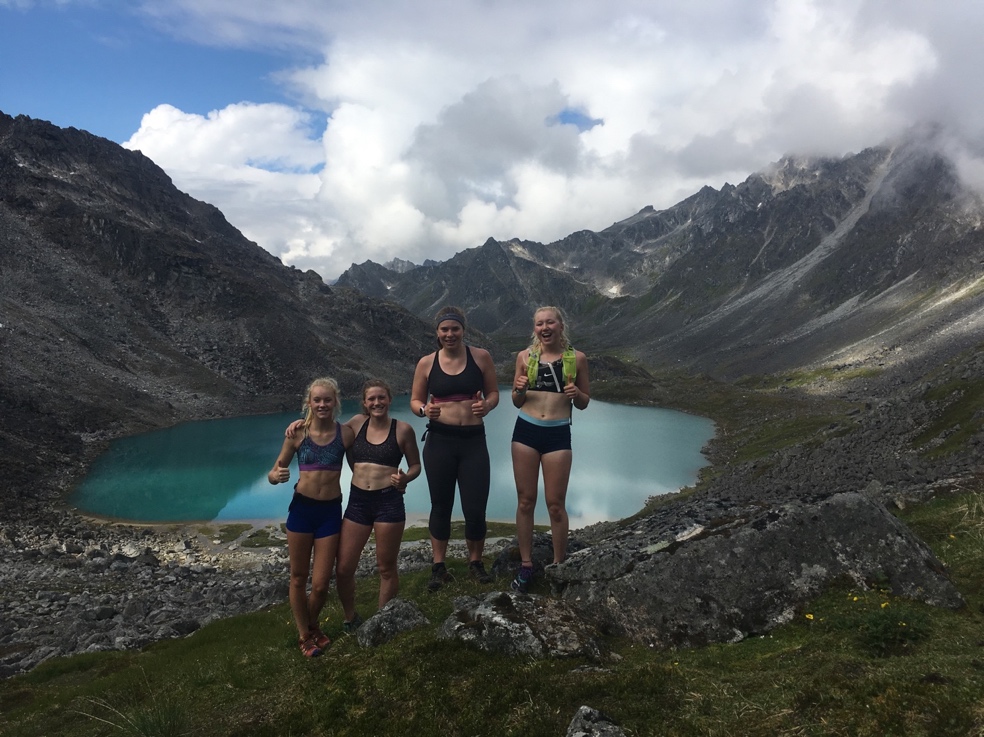
    Four REG skiers at Upper Reed Lake in the Hatcher Pass area during an over-distance workout on the second-to-last day of the 2017 Alaska REG camp earlier this month. (Photo: Alasdair Tutt)
  • U.S. Thanksgiving Camp Guide: Where The (Skiable) White Stuff Is

    U.S. Thanksgiving Camp Guide: Where The (Skiable) White Stuff Is

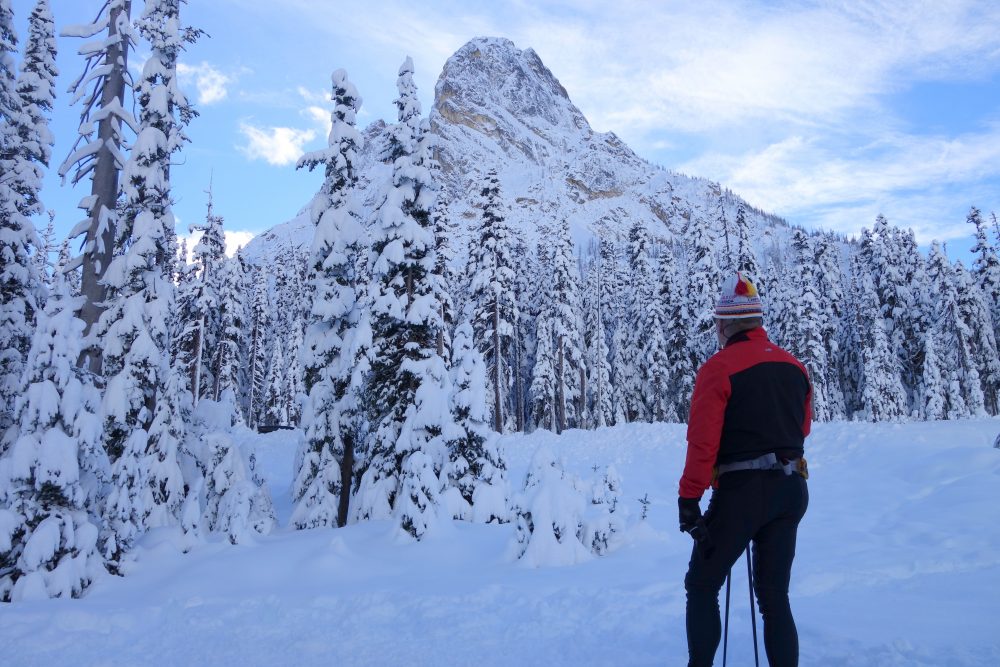
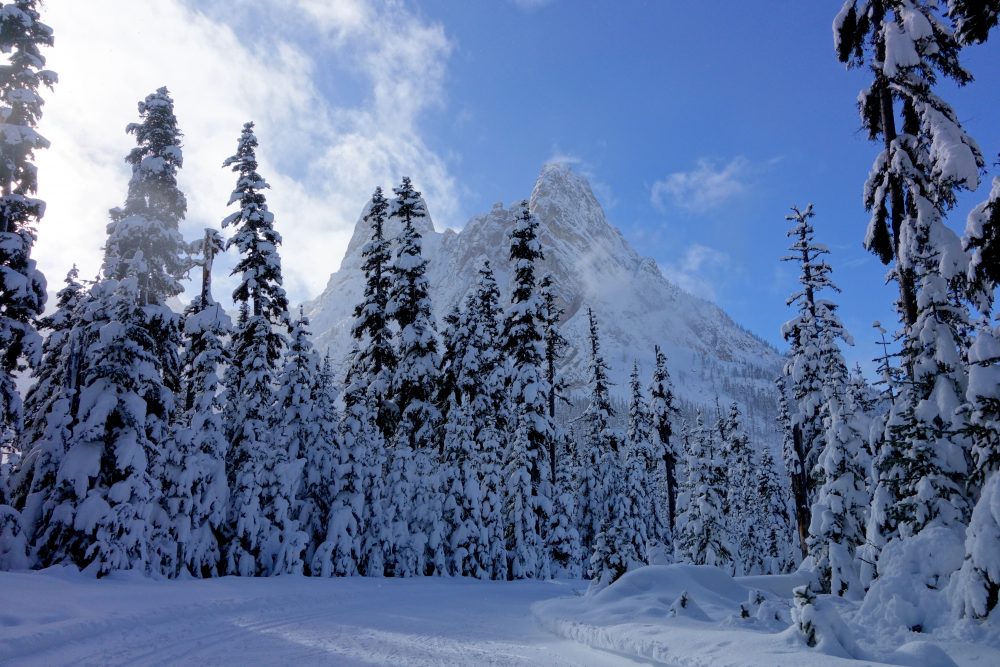
    Skiing under Liberty Bell, Washington Pass, Nov., 2016. (Courtesy photo)
    Skiing under Liberty Bell on Washington Pass in November, 2016. (Methow Trails courtesy photo)

    Natural snow is where it’s at, unless there’s none to be found. In high-elevation places like West Yellowstone, Mont., (roughly 6,600 feet above sea level) and Crested Butte (nearly 9,000 feet), November skiing is almost always a given — which is why those venues have hosted Thanksgiving-week ski camps for 16 to 30+ years. And they are again this year, while looking to the skies and weather forecasts in hope of more snow — much more.

    While there are only two well-known Thanksgiving camps currently being held in the U.S., there are dozens of other places around the country you can likely go skiing. We did our best to present some of the most dependable options, so at the very least you can plan a future trip on snow this time next year. No offense to the in-laws, but wouldn’t you rather be skiing on Thanksgiving? Stay tuned for our Canadian early skiing edition, and feel free to share your favorite November ski spot in the comments section below.

    ***

    What: Yellowstone Ski Festival

    Where: West Yellowstone, Montana

    A rendezvous point at the Rendezvous Ski Trails in West Yellowstone, Mont., during last year's Yellowstone Ski Festival. (Photo: YSF)
    A rendezvous point at the Rendezvous Ski Trails as seen last year in West Yellowstone, Mont., during the 2015 Yellowstone Ski Festival. (Photo: 2015 courtesy photo)

    Website: http://www.skirunbikemt.com/yellowstone-ski-festival.html

    When: Tuesday, Nov. 22 – Saturday, Nov. 26, 2016

    How many years running: Over 30 years. “It started with Drew Barney, Torbjorn Karlsen and Dick Hunt back in the 1980s as a Fall Camp, offering clinics for coaches and citizen racers looking to improve their technique,” West Yellowstone Ski Education Foundation Program Director Moira Dow explained. “Over the years, the camp grew into one of the top training camps available to the cross-country ski community.”

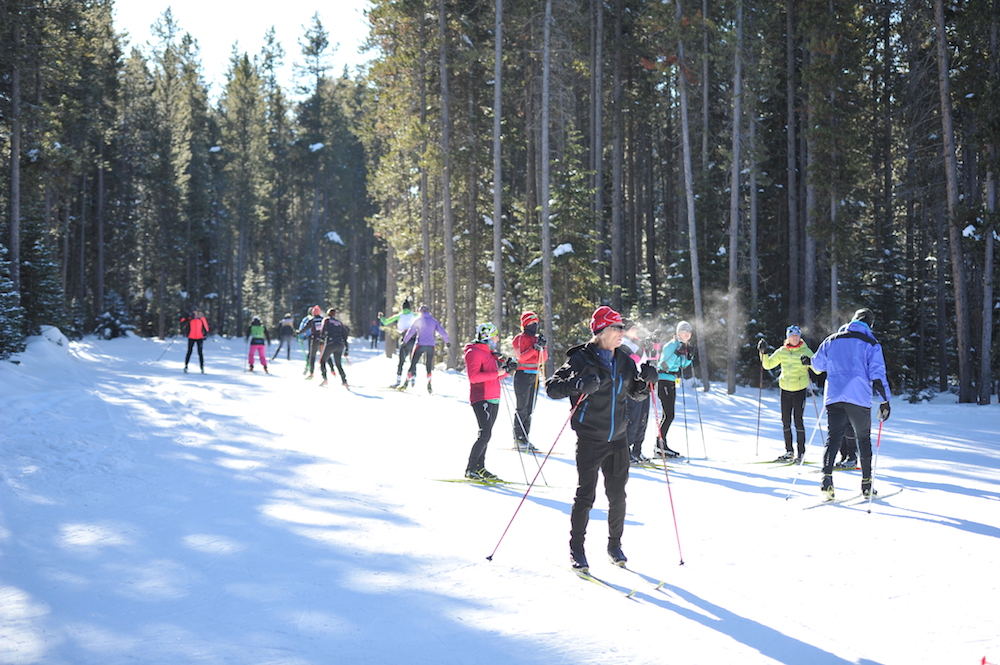
    Skiers at the trailhead of the Rendezvous Ski Trails in West Yellowstone, Mont., on Monday, Nov. 21. (Photo: FBD)
    Skiers at the trailhead of the Rendezvous Ski Trails in West Yellowstone, Mont., on Monday, Nov. 21, 2016. (Photo: FBD)

    Target audience: Open to the public and all levels of skiers.

    Anticipated participation: Around 2,500. “We think it might be a little bit lower this year because of the late snow and the lack of the SuperTour,” Dow noted. “Last year we had a lot. We had really really early snow last year. Around 3,500 in years past.”

    Advance reservation required? Yes for clinics and races. Online registration only. “The competitive events and the clinics all require you to be pre-registered, but all the evening events are open to the public,” Dow said.

    Trail pass rates: $55 for the month of November for adults. $26 for kids, which is 10 and under. Day passes are $12 and $6

    Grooming report: Approx. 20-25 k groomed as of Monday, Nov. 21.

    More details | Webcam

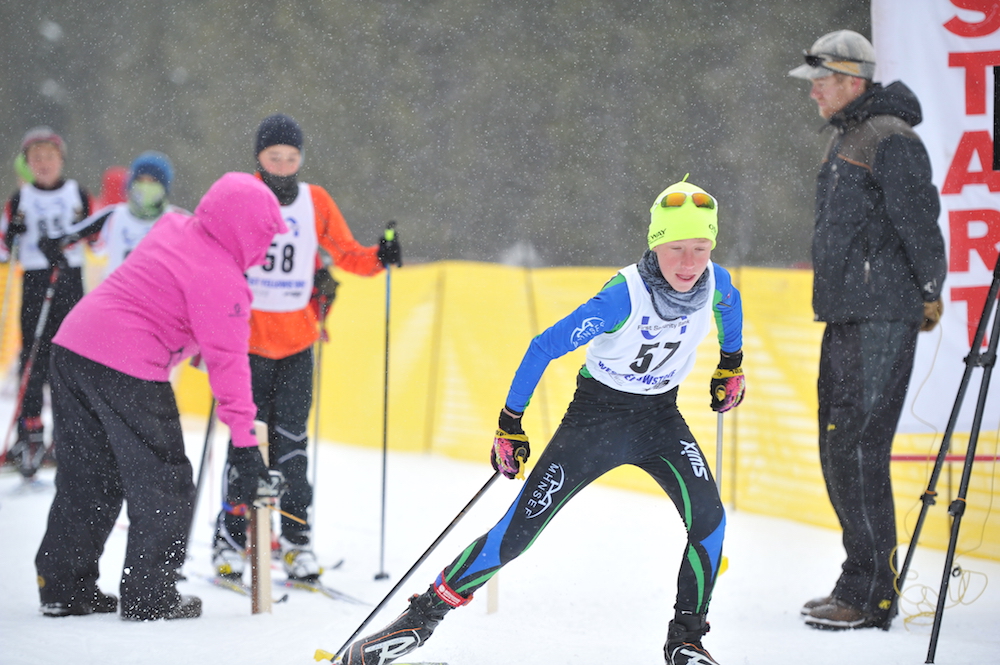
    A young skier darts out of the start at the Yellowstone Ski Festival last year in West Yellowstone, Mont. (Photo: YSF)
    A young skier darts out of the start at last year’s Yellowstone Ski Festival in West Yellowstone, Mont. (Photo: 2015 courtesy photo)

    What makes this camp unique?

    “Good, early, reliable snow,” Dow said.

    “Also it’s a place where skiers from all across the country, juniors to seniors to masters, come together,” she added. “… And as a junior, that’s pretty unique to get to be able to do that. And also to see all the equipment from vendors and see wax clinics. To have all of the elements in one spot is one of the most unique things about this camp.

    “We’re a tiny town out in the middle of nowhere,” she continued. “Our ability to put on such a big event, is, in my opinion, probably one of the most unique aspects of our camp. We are almost entirely volunteer run. The fact that the people who run the festival have little to no experience cross-country skiing, but put on these races, is just flabbergasting to me. It’s pretty incredible.”

    Special events: See website for complete lineup of clinics and more, including:

    • Presentation:  Wildlife photographer Tom Murphy
    • Yellowstone Historic Center presents The Ski Hero Soldiers of Yellowstone
    • Whiskers, Whiskey, and Waxing featuring whiskey tasting samples from Willie’s Distillery of Ennis, MT
    • Branch Beer Bash:  Micro and craft beer tasting
    • Presentation:  Kaatsu Training by Doug Barnard
    • Winter Wildlands Alliance Backcountry Film Festival
    • Women, Wine, and Waxing
    • Keynote speaker Ruff Patterson
    • Yellowstone Ski Festival Social

    — Gabby Naranja

    ***

    What: Crested Butte Nordic Thanksgiving Camp

    Where: Crested Butte, Colorado

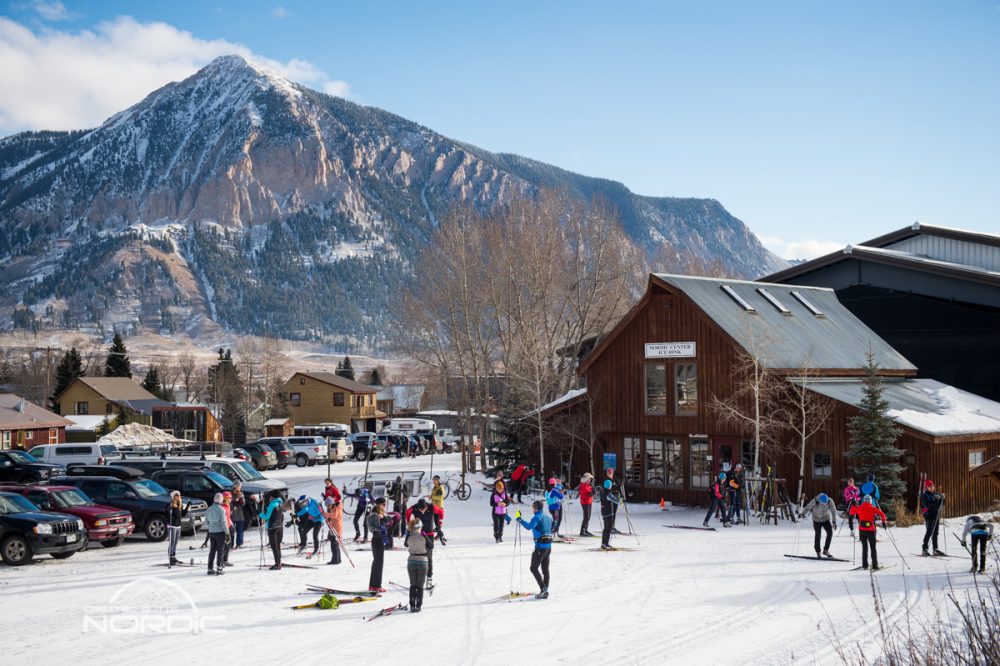
    Crested Butte Nordic Center: Pretty much right downtown. (Courtesy photo)
    The downtown-based Crested Butte Nordic Center. (2015 courtesy photo)

    Website: https://cbnordic.org/thanksgivingnordicskicamp/

    When: Wednesday, Nov. 23, to Sunday, Nov. 27, 2016

    How many years running: 16 as an official, organized camp: “In case of a low-snow year, like our current situation, we have a low-snow venue called Lily Lake and that’s up on Kebler Pass which is six miles West of town,” said Drew Holbrook, marketing director for Crested Butte Nordic.

    Skiing at Lily Lake in Crested Butte, Colo., on Nov. 18, 2016. (Photo: CB Nordic/Facebook video)
    Skiing at Lily Lake in Crested Butte, Colo., on Nov. 18, 2016. (Photo: CB Nordic/Facebook video)

    The road up to Kebler Pass is maintained by the county. Individuals or groups can drive up to the pass, but carpooling is encouraged when the low-snow option is in play.

    “We have vans to shuttle people up to try and minimize traffic and congestion — it’s kind of like a similar situation in terms of people (but not as and because not quite as many people) as driving up on the South Plateau outside West Yellowstone, so we shuttle people up there. For the people taking clinics we shuttle them all up in vans.”

    The Lily Lake area receives 600 inches of annual snowfall and no trail pass is required. As of Nov. 18, Lily Lake had received nearly six inches of snow.

    The Nordic Center located in town is also prepared for low snow, according to Holbrook. “Just in the last three years we have had the trail right next to the Nordic Center in town, called Ruthie’s Run, homologated re-engineered. So it’s seeded with grass, it is mowed and basically we can groom that with literally six inches of snow or so. It’s kind of interesting because it snows a lot more up on Kebler Pass at Lily Lake, it might snow two feet up there and only six inches in town, but it’s easier to actually groom on Ruthie’s down in town if we get the snow. Lily Lake is on Forest Service property, so we have to wait until there is a foot of snow before we are allowed to groom up there.”

    Crested Butte Thanksgiving Camp - Not just for Big people. (Courtesy photo)
    Crested Butte Thanksgiving Camp: not just for big people. (2015 courtesy photo)

    Target audience: All ages and abilities. New skiers are encouraged to come try the sport out.

    Anticipated participation: Holbrook expects 60 participants for the clinics offered. A round-robin classic “refresher” will be held Thursday, Nov. 25, with full-day clinics on the 26th and 27th.

    Advance reservation required? Strongly encouraged. “For the clinics it is best to sign up ahead of time,” Holbrook said. “We never get too many people signing up until it starts snowing, but they do fill up. You might get lucky the morning of and come into the Nordic Center and sign up and get a spot, no guarantees.”

    Trail pass rates: $20/day, skiers 17 & younger ski free. $150 for a 10-punch transferable pass.

    Grooming report: Lily Lake is receiving snow. The low-snow option looks more than promising.

    What makes this camp unique? “One thing that makes it unique, Lily Lakes is a great locals’ place to ski,” Holbrook said. “It’s pristine and scenic. And of course, its great skiing from the Nordic Center in town, too. There is plenty of room on the trails for everybody, you are not getting swarmed by people and not being able to do your workout. It’s easy to get in a good ski.”

    Special events: 

    • Ski Free Day: Wednesday, Nov. 23 at the Crested Butte Nordic Center
    • Crested Butte Mountain Resort “Donation Day”. Donate some money, you decide the amount, and ski with a little help from gravity at the downhill area. All proceeds support the Crested Butte Snowsports Foundation
    • Round-robin refresher clinic: Thursday, Nov. 24
    • U16 Junior Training Camp: Nov. 25-27
    • Alley Loop Race Series (Race #1) 5 k & 10 k skate
    • Winter Kick-Off Party (Saturday night): Fundraiser for Crested Butte Nordic, tickets $25/adult,$15/children. (Author’s note: Crested Butte throws fun parties.)

    — Jason Albert

    ***

    NOT CAMPS, PER SE, BUT YOU’RE PROBABLY WONDERING ABOUT:

    ALASKA

    Fairbanks

    Birch Hill Ski Area, in Fairbanks, is probably the most reliable spot in North America for groomed early-season skiing. This is the venue that once held a FIS race on Nov. 2. Temperatures are reliably cold, and any snow that falls tends to stay. The Nordic Ski Club of Fairbanks grooms approximately 35 k of trails at Birch Hill. The trails are meticulously maintained in summer, if not manicured, and are justly renowned for their ability to provide good skiing after mere inches of snowfall.

    University of Alaska Fairbanks skier Alex Eckert skis in the Alaska Nordic Cup in Fairbanks, Alaska, on Nov. 19, 2016. (Photo: Max Kaufman)
    University of Alaska Fairbanks skier Alex Eckert racing in the Alaska Nordic Cup FIS races in Fairbanks, Alaska, on Nov. 19, 2016. (Photo: Max Kaufman)

    Birch Hill again held FIS races on the recent weekend of Nov. 19-20. It had snowed approximately 5″ total in Fairbanks this winter by that point. Weekend racers – and there were hundreds of them, from kindergarteners without poles to the APU Elite Team – skied on trails that had been packed and dragged to create a base of approximately 2″. There were admittedly some leaves and dirt showing through in places – but, crucially, it was leaves, not rocks. Most skiers in the FIS/USSA class of the weekend’s races competed on their prior-generation, few-years-old race skis.

    Locals consistently described the conditions, which led half the APU Elite men’s team to make the trek north from Fairbanks for the weekend, as among the worst mid-November conditions in living memory.

    Anchorage and nearby

    Under normal conditions, as measured by a 30-year average, Anchorage around Thanksgiving is a nordic nirvana. There are at least 40 kilometers of groomed trails at Kincaid Park, on the west edge of town, and another 16 k at Hillside, on the east edge of town. (16 k are lit at Kincaid, and 8 k are lit at Hillside.) The two ski areas are connected by a network of dozens of kilometers of additional trails (also groomed, or at least snowmachine dragged), ranging from moose-dense forest to urban greenbelt, including the Coastal Trail, which runs along the shores of the Pacific Ocean for most of its 15 k. You can ski from Hillside up into the Chugach Front Range, and from the frontcountry into true backcountry. Around 20 miles out of town to the north, Beach Lake has another 20 k of groomed trails (nine of them lit). 40 miles to the south, Girdwood boasts a growing trail network of around 10 k total, including a competition-level 5 k loop. All trails are open 24/7, and there is no trail fee for any of them.
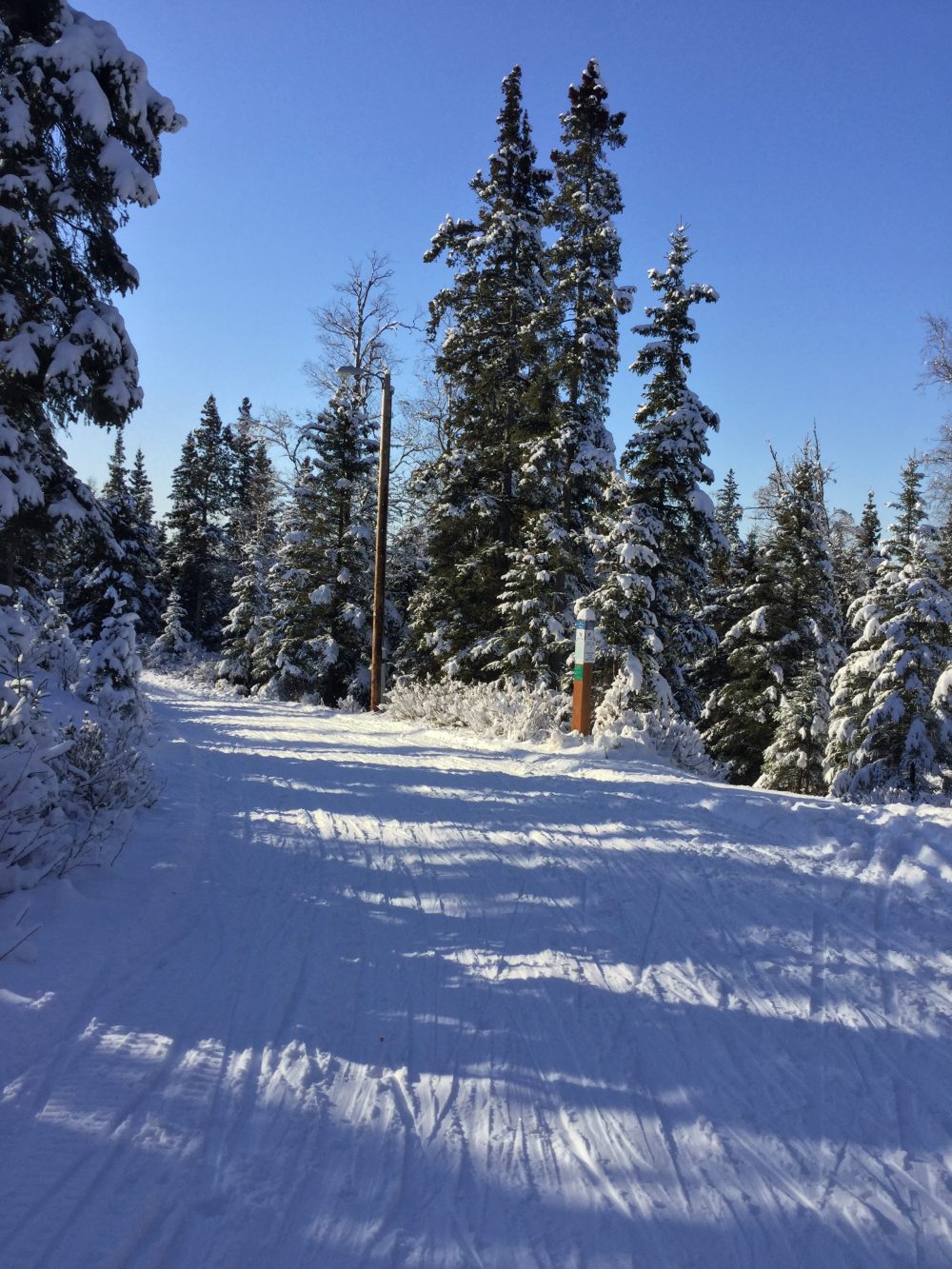
    Hillside ski trails in Anchorage, Alaska, on Oct. 22, 2016, before the rains came. (Current conditions are far worse.) (Photo: Gavin Kentch)
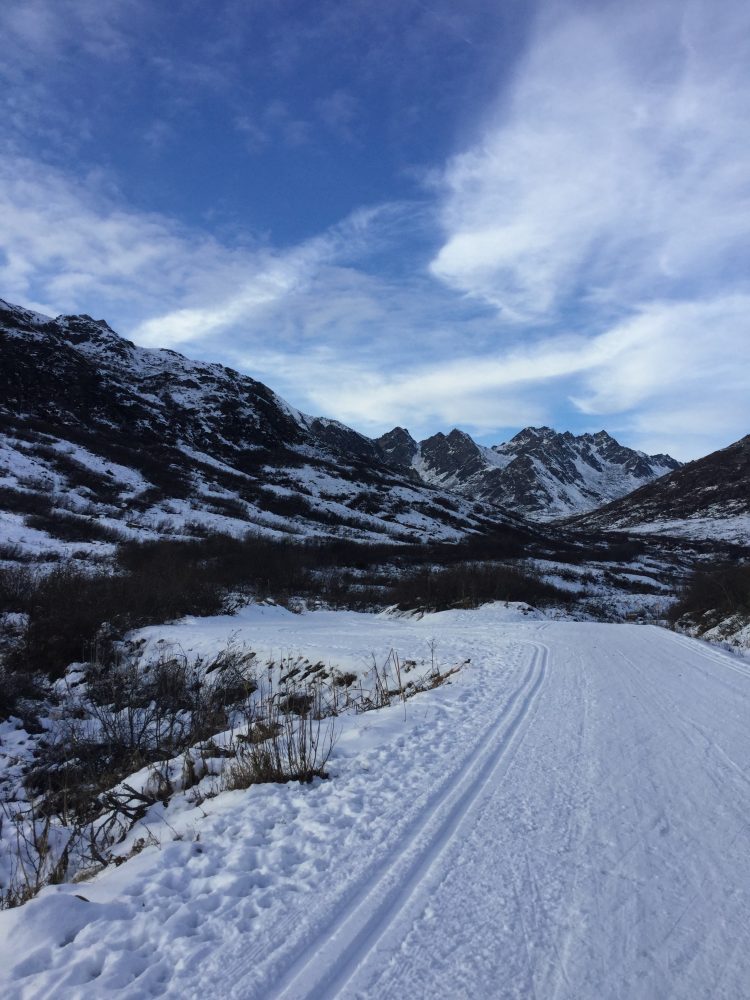
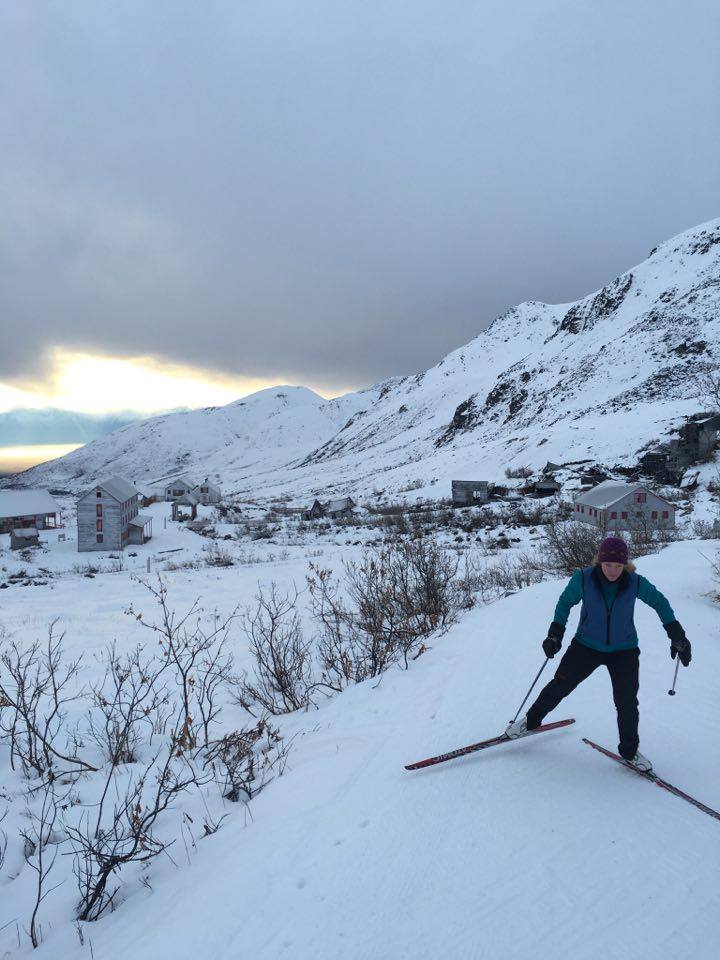
    Hillside ski trails in Anchorage, Alaska, on Oct. 22, 2016, before the rains came. (Current conditions are far worse.) (Photo: Gavin Kentch)

    Judging from the last three winters, however, Anchorage sadly simply cannot be recommended as a viable option for Thanksgiving snow in these days of climate change. While all three winters saw the first snowfall in October or early November, and some period of good skiing immediately thereafter, all three gave way to wind and rain by Thanksgiving week. As of the weekend of Nov. 19-20, 2016, Anchorage has no natural snow on the ground at Kincaid, a 1-2″ base of bulletproof sheet ice at Hillside, and skritchy skiing on a local golf course. On the bright side, the trail running is amazing (bring your Icebugs), and the nordic skating is world class.

    Kincaid has limited snowmaking capabilities, which are capable of covering a loop of as much as 3-4 k centered around the main stadium area. (This is where over 95 percent of Anchorage ski races have occurred over the last two winters.) The Nordic Skiing Association of Anchorage (NSAA) turned the snowguns on briefly on Nov. 16, then again on Nov. 18. Recent cold temperatures have allowed them to operate continuously since. NSAA stated on Sunday morning that there were no trails open for skiing yet, but that they were “getting closer” to opening the first loop and had reached the stage where the PistenBully was starting to move snow around. A loop of approximately 2 k was opened amidst single-digit temperatures on Thanksgiving morning, Nov. 24.

    In a recent email to FasterSkier, NSAA Program Manager Tamra Kornfield addressed the possibility of, for example, guaranteeing skiable snow by Thanksgiving in exchange for attracting skiers and generating user fees. Kornfield wrote, “The theory of trail fees has been discussed for many years, but currently our ski trails are on Municipal Park land, and we cannot charge to access these parks. However, I can say that the snowmaking system was designed to extend the ski season, not create it from scratch, so I do foresee doing more to fundraise for this great expense that has now saved the last two ski seasons.”

    Mat-Su Valley

    Archangel Road above Palmer, Alaska, on Nov. 4, 2016 (current conditions are better than this). (Photo: Gavin Kentch)
    Archangel Road above Palmer, Alaska, on Nov. 4, 2016 (current conditions are better than this). (Photo: Gavin Kentch)

    The Matanuska–Susitna Valley, approximately one hour outside of Anchorage on a major highway (call it up to 90 minutes to the ski areas discussed here), has been described on this website as having “the season of winter that starts in the fall and ends in the spring.” That’s pretty fair.

    The Mat-Su Ski Club, including the redoubtable Ed Strabel and sometime FasterSkier contributor Jeff Kase, typically groom 7 k of Bill Spencer-designed trails at Government Peak Recreation Area (to be expanded as soon as next summer), 7.5 k (one-way) on Archangel Road, and 5 to 10 k at Hatcher Pass. Archangel Road hosted one of the last North American ski races of 2015/2016 and one of the first of 2016/2017. Hatcher Pass is a truly special place, as the groomed trails wend their way past the historic buildings of an old gold mine nestled in a bowl in the Talkeetna Mountains. “Imagine skiing through an Old West ghost town turned collectible Christmas village,” local Master and English professor Shannon Gramse once wrote in these pages.

    Skiing at Hatcher Pass, above Palmer, Alaska, on Nov. 20, 2016. (Photo: Nat Herz)
    Skiing at Hatcher Pass, above Palmer, Alaska, on Nov. 20, 2016. (Photo: Nat Herz)

    As of Nov. 19, Government Peak (a one-hour drive one-way from central Anchorage), which is at a lower elevation than the other two areas, did not have enough snow to ski on. Archangel Road (75-minute drive) had a base of approximately 4-5″, but it is bulletproof hardpack that should provide a reliable base until spring. The Mat-Su Ski Club has been grooming there several times a week, and the skiing is good to superb. The Mat-Su Ski Club also groomed Hatcher Pass (90-minute drive) over the weekend.

    Trail fees and current conditions

    All trails described in this article are open 24/7. None of the trails charges a trail fee or requires a pass. Alaska skiers tend to make voluntary yearly donations in lieu of a trail pass. Donations are gratefully accepted by the Nordic Skiing Association of Anchorage, Mat-Su Ski Club, and Nordic Ski Club of Fairbanks.

    Here are trail maps for the Anchorage, Mat-Su, and Fairbanks trails.

    For the best information on current trail conditions, including formal grooming reports when available: Anchorage (official NSAA and user-generated), Mat-Su, and Fairbanks.

    — Gavin Kentch

    WASHINGTON

    Then there are the possible Northwest options for early season skiing, including the well-known:

    Bluebird on Washington Pass, Nov., 2016. (Courtesy photo)
    Bluebird day on Washington Pass in November 2016. (Methow Trails courtesy photo)

    Methow Valley

    “I giggle about the current skiing up at Washington Pass which is a the top of the North Cascades Highway,” said Kristen Smith, marketing director for Methow Trails based in Winthrop, Washington. “What they have groomed is almost exactly one mile or a 1.6-kilometer loop. It goes out to the Washington Pass overlook, which is stunningly gorgeous. I mean the whole ski is the most beautiful, their probably can’t be a place anywhere in the world that has more beautiful scenery than this, on this little loop.”

    Smith explained the loop is being groomed for skate and classic. “It’s a handful of super-dedicated locals who do the grooming completely on their own and you don’t pay to ski there,” Smith said.

    But here’s the important beta: call or check online before you head to the Methow or think you might ski at the top of Washington Pass. The Washington Department of Transportation is closing the pass temporarily due to possible hazardous weather and avalanche conditions as of Monday, Nov. 21.

    Skiing at Washington Pass, Nov., 2016. (Courtesy photo)
    Skiing at Washington Pass, Nov., 2016. (Courtesy photo)

    “It will not mean a loss of skiing,” Smith explained in the event the pass is closed for the season. “If the gate is closed farther down on the road to Washington Pass, they will start to groom different areas that we can still access. So to get the snowfall that is expected, they will start to groom just start to groom a bit lower, but bigger loops than what we have up there at Washington Pass. If we are really lucky we will get a big snowfall here on the valley floor and then Mehto Trails who I work for, we will start grooming our system. And we are all set and ready to go the moment we get six inches of snow we will start grooming our trails here.

    Where: Washington Pass/Methow Valley, Washington

    Website: www.methowtrails.org, www.wsdot.wa.gov/traffic/passes/northcascades

    Elevation: 5477 ft / 1669 m

    (As of Monday, Nov. 21)

    Temperature/weather: Not Available

    Conditions: Pass is closed. SR 20, the North Cascades Highway, is closed from milepost 134 to milepost 171 due to impending weather and potential increasing avalanche hazard.

    Restrictions Eastbound: Pass Closed

    Restrictions Westbound: Pass Closed

    — Jason Albert

    EAST-COAST SNOW? 

    While they’re often among the last to get on natural snow, let’s throw eastern skiers a bone. Wintry conditions exist in New England and northeastern New York. While we can’t list them all (and are obviously unable to cover all the open nordic centers across the country), here are a couple weather-dependent options in this region’s “North Country”.

    Snow guns roar at Gore Mountain's Ski Bowl in North Creek, N.Y., on Monday morning, Nov. 21, 2016. (Photo: Mike Pratt)
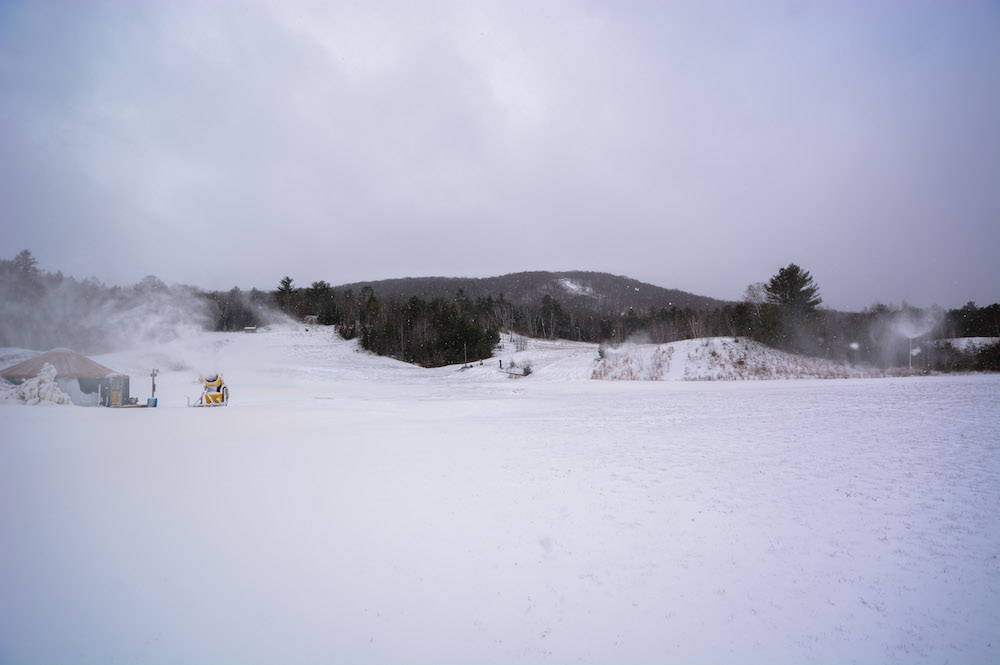
    Snow guns a’blazing at Gore Mountain’s Ski Bowl in North Creek, N.Y., on Monday morning, Nov. 21, 2016. (Photo: Mike Pratt)

    Gore Mountain Ski Bowl

    According to general manager Mike Pratt, Gore Mountain in North Creek, N.Y., expects to open its newly homologated ski bowl on Friday, Nov. 25. Gore’s new 4.24-kilometer trail network includes 3.19 k of trails with snowmaking.

    “We should have quite a bit of terrain for an opening weekend,” Pratt wrote in an email, adding that they’re hoping for trails A, B, C, and G, which would amount to a total of 2.3 k. “The open stadium could accommodate more lanes if needed, but next week’s weather will ultimately determine how much terrain is available.”

    This Friday through Sunday at the Ski Bowl, the Hudson United Race Team (HURT) is holding a three-day ski camp for its junior members.  Skiers of all ages not associated with the club can buy a day pass and ski on the trails as well.

    “We set up this camp as a way to highlight what Gore has been doing,” HURT coach David Kvam explained.

    Craftsbury

    Then there’s the Craftsbury Outdoor Center, the Northeast Kingdom’s iconic ski center. Although the ski trails were dry as of Nov. 18, the forecast has potential. According to Craftsbury’s Marketing Director Sheldon Miller, the National Weather Service issued a winter storm warning for six to eight inches of snow by the end of Monday. Asked about snowmaking, Miller replied, “We’re looking for cold and dry for snowmaking, but there’s definitely some potential this week. We do need 28 [Fahrenheit] at a minimum, but colder is always better.”

    With overnight temperatures forecast for low to mid 20s Sunday through Thursday, the weather looks inclined to support snowmaking.

    Craftsbury has Masters’ Camps planned for Dec. 1-4 and and 8-11. More info: http://www.craftsbury.com/skiing/ski-camps-and-group-sales/masters-camps/

    Prospect Mountain

    Elsewhere, Prospect Mountain in southern Vermont received snow. According to their conditions page, they’re closed, but Zach Caldwell posted this photo montage on Sunday:

    Great first ski of the season at Prospect Mountain in Woodford, VT. Lots of smiles all around.

    A photo posted by @caldwell_sport on Nov 20, 2016 at 1:50pm PST

    According to Prospect Mountain Nordic’s Facebook page, Prospect opened Monday after receiving 26 inches of snow, the most in Vermont and Northeastern New York.

    As of Tuesday, Prospect reported more than 28 inches of packed powder. Current conditions

    Mt. Van Ho

    A skier skates on freshly groomed powder at Mt Van Hoevenberg last Sunday, Nov. 20, in Lake Placid, N.Y. (Courtesy photo)
    A skier skates on fresh powder at Mt Van Hoevenberg last Sunday, Nov. 20, in Lake Placid, N.Y. (Courtesy photo)

    In Lake Placid, N.Y., Mt. Van Hoevenberg reported “beautiful packed powder” and 30 kilometers of skiing open on a 7-inch base. Current conditions

    Josie's Cabin, Mt. Van Hoevenberg's ski-to destination, will be open for Thanksgiving. (Courtesy photo)
    Josie’s Cabin, Mt. Van Hoevenberg’s ski-to destination, will be open for Thanksgiving. (Courtesy photo)

    “The Olympic Cross Country ski trails of Mt Van Hoevenberg have been graced with just under two feet of snow in the last few days,” nordic program manager Kris Cheney-Seymour wrote in an email. “We have a little over 30k of trails groomed very good skiing.  Classic tracks are set on varied terrain.”

    The lodge is open with rentals and a snack bar for Thanksgiving, along with Josie’s Cabin, a “ski-to destination.” and a ski-to destination

    “Upgrades over the last two summers on the famous Ladies 5k have allowed for the earliest opening of this trail in our history,” Seymour continued. “Our 5k homologated loop will be the primary course for the upcoming 2017 Junior National Championships hosted here this March.”

    — Peter Minde & Alex Kochon

    ***

    WE WANT PHOTOS! Share your Thanksgiving week ski photos with us by emailing info@fasterskier.com (please note when and where they were taken). We’ll post our favorites to Instagram, and if you’d like to share a firsthand trail report from your favorite spot or nordic center, do so in the comments below!

  • Racing Resumes in America with the Race to the Outhouse #1

    Racing Resumes in America with the Race to the Outhouse #1

    Overall winner Scott Patterson (APU) distances himself from the field on a snowy day on Archangel Road, near Hatcher Pass, Alaska, in the Race to the Outhouse #1. (Photo: Sam Sterling)By Jeff Kase

    There was an Alaska State Parks ranger with his lights on parked at the bottom of the switchback that leads up the hill to the trailhead and parking lot. The ranger had been turning cars around since the early morning because of a crime that was being investigated. The usual mischief of graffiti, shooting signs, or motorized vehicles in a non-motorized use area would not normally close the road, so I suspected something was afoot.

    A few days later, the Alaska Dispatch News published an article titled, “Brothers Kidnapped, Shot, Left for Dead in Hatcher Pass; Anchorage Man Charged.” (Both brothers survived.) It is scary to think about this kind of violence happening in a place where healthy, peaceful people congregate to recreate, but what was really on my mind was the fact that the Mat-Su Ski Club had groomed the night before, and since the ranger had been turning people away all morning, there was untouched corduroy just waiting for the road to open and people to go ski it.  

    The corduroy was the result of a late-October snowstorm that blanketed southcentral Alaska with 4 to 24 inches of fresh snow. The skiers rejoiced as nearly every trail across the land was groomed and skiable. While most people were thoroughly enjoying this early season dump, some mountain travelers were caught unexpectedly on the far side of the mountain.

    A distress call came from one such group of multi-fortunate mountaineers. Fortunate because of the improved glacier skiing they encountered, but unfortunate because of the extreme difficulty in traveling back home through snow-covered boulders, steep terrain, intermittent visibility, and the unexpected return of a long-dormant medical problem. The request for assistance was the excuse I needed to drop everything, call my most trusted, prepared, and physically fit friends, and hit the trail on skis at 1 a.m. By 5 a.m. we found them surviving but miserable in a snow cave. After some dry clothes and hot drinks we were all in much better spirits.  

    Snow in October is good, but how good? In Canada, Frozen Thunder officially opened Saturday, Oct. 22, after an estimated 400 truckloads of snow were distributed onto a 1.3-kilometer loop at the Canmore Nordic Centre in Alberta. The U.S. Ski Team wrapped up its final dryland training camp of the season in Park City, Utah, on Oct. 31.

    On Oct. 22, a skier had posted about Anchorage on a local trails forum, “Good snow cover on all Hillside trails” and “Quite a few people out there breaking in the season.” While here in the Mat-Su Valley a post on the same website from a day earlier accurately depicted the situation: “The road up to Independence Mine has not been plowed – not passable. When DOT plows, we will move equipment up there and groom.” The grooming report posted the morning of Nov. 5, the day of my first race of the year, read as follows: “Better than expected. I scratched the ice in the skate lanes. My prediction is moderate to good skiing for the first 100 people.”

    Women’s winner Maggie Meeds (APU) skis away from author Jeff Kase in the Race to the Outhouse #1. (Photo: screenshot from Sam Sterling video)Saturday, Nov. 5, saw the Race to the Outhouse #1, hosted by the Mat-Su Ski Club. It is believed to be the first ski race of the 2016/2017 winter in this country, and the season’s first ski race on natural snow anywhere in North America.

    The morning of race day was cold enough for me to want to wear long underwear. (In the official results, Race Director Ed Strabel described conditions as “18 Degrees, light snowfall on packed powder/ice.”) The trailhead parking lot was nearly full of Subarus and vans topped with Rocket Boxes. I recognized many faces, and there was no mistaking the sea of blue uniforms from the Alaska Pacific University (APU) ski team.

    I signed the entry form with a lobster-mitted hand and received bib #9. The 6-7 k race course is an out-and-back loop on an old mining road that is wide enough for tracks on both sides and skaters to pass in between without inconvenience. There is a bit of an extended incline near the turnaround area that allows skiers to get their heart rates up, but most of the trail is fairly flat and good for gliding.

    Scott Patterson and Maggie Meeds won the skate race. Ryan Brickford and Elizabeth Mars won the classic race.

    Despite what the results show, I may have been the biggest winner of the day. I stood on the start line with World Cup contender Scott Patterson (APU), who incorporated this race into his three-hour workout and afterwards wrote that he “felt like [the race was] a good way to shake out some faster muscles and lay down the law on some juniors and masters.”

    In an email to FasterSkier, Patterson explained that the low-key race was a spontaneous addition to his training schedule, and a welcome intermezzo to his scheduled OD. “Although it wasn’t on my training plan, the race up Archangel [Road] provided a fun opportunity to mix in some variety to a somewhat monotonous overdistance workout,” Patterson wrote. “I tried to convince a few of the other APU Elite Team guys to jump in with me, but lingering effects from a hard bounding interval set the day before kept them all away. … I took things relatively chill after pulling away as I enjoyed the time on snow with a little more pop in my skate then might otherwise be found in a 3-hour workout. It was nice to get some more early-season skiing after Anchorage’s snow had melted into ice.”

    Patterson expressed confidence in his training and looked forward to the race season ahead.

    “With regards to training and the upcoming season, I think my fall and summer have gone quite well. I put in large volume while having fun, avoiding injury, managing to stay healthy, and racing quite a few running races. Right now I am looking to sharpen up a bit and then move right into the SuperTours. I will be starting the year domestically but will be looking to try and get a SuperTour overall spot and a world championship berth with the idea to be racing world cups and world championships from nationals through Spring Series.”

    I may be the biggest winner today because I only got beat by one girl (and a high-school girl at that). I often measure the success of my race by how many women ski faster than me, and one is a better than normal result.

    When FasterSkier asked Maggie Meeds, 17, who attends South Anchorage High School and trains with APU, about her race, she responded, “It was really fun. I went out hard in the beginning, and I V2-ed basically the whole thing up to the top, and then the downhill was pretty easy; I just glided the whole way down. It was really fun.”

    APU and U.S. Ski Team members (l to r) Sadie Bjornsen, Rosie Brennan and Kikkan Randall cheer for skier Gavin Kentch (APU) in the Race to the Outhouse #1. (Photo: Sam Sterling)Meeds added that she had won running races before, but not a ski race, and that her big goals for the winter include winning a ski race in the Anchorage high-school race season.

    All doubt was removed about my “winning it” status as I skied a cooldown lap first in front of and then behind the APU Women’s Elite Team, including Kikkan Randall, Sadie Bjornsen, Chelsea Holmes, and Becca Rorabaugh.

    Depending on where you are when you read this article, Winter is coming? Or Winter is Here!

    Racing continues in the Mat-Su Valley with the Icicle Double, a two-day ski race at Government Peak Recreation Area on Dec. 31, 2016, and Jan. 1, 2017. Cash prizes for the top three finishers in each gender from the two-day 30 k race (30 k classic and then 30 k skate, lowest combined time wins) will be $300, $200, and $100 for first through third places. Shorter distances are also available.

    Results

  • Masters Minds: Early Season in Southcentral Alaska

    Masters Minds: Early Season in Southcentral Alaska

    Most years, skiers of all ages find their snow legs again at Independence Mine. Here five-year-old Scout Gramse edges M1 racer Dylan Watts (October 2013) (Photo:  Shannon Gramse/APU)
    Most years, skiers of all ages find their snow legs again at Independence Mine State Historical Park in Alaska. Here, 5-year-old Scout Gramse edges M1 racer Dylan Watts in Oct. 2013. (Photo: Shannon Gramse/APUNC)

    Masters from around the world, we want to hear from you! FasterSkier is seeking dedicated masters contributors from various clubs and regions, including any and all skiers who aren’t quite pro or collegiate skiers anymore (or ever — as we know how many catch the bug later in life!) Whatever your level of skiing, if you can write, please do! 

    Submit camp or training recaps or announcements to info@fasterskier.com with the subject line “Masters Minds”. Articles can be informal, first-person accounts or written from an observatory standpoint with thoughts from others, like below.

    ***

    Part of the joy and the pain and, ultimately, the poetry of a lifetime of skiing is how the sport focuses one’s attention on natural processes that are both cyclical and unpredictable. This year Southcentral Alaska caught its first real snow on Oct. 20, and early season skiing has been great, but not in the usual ways or places.

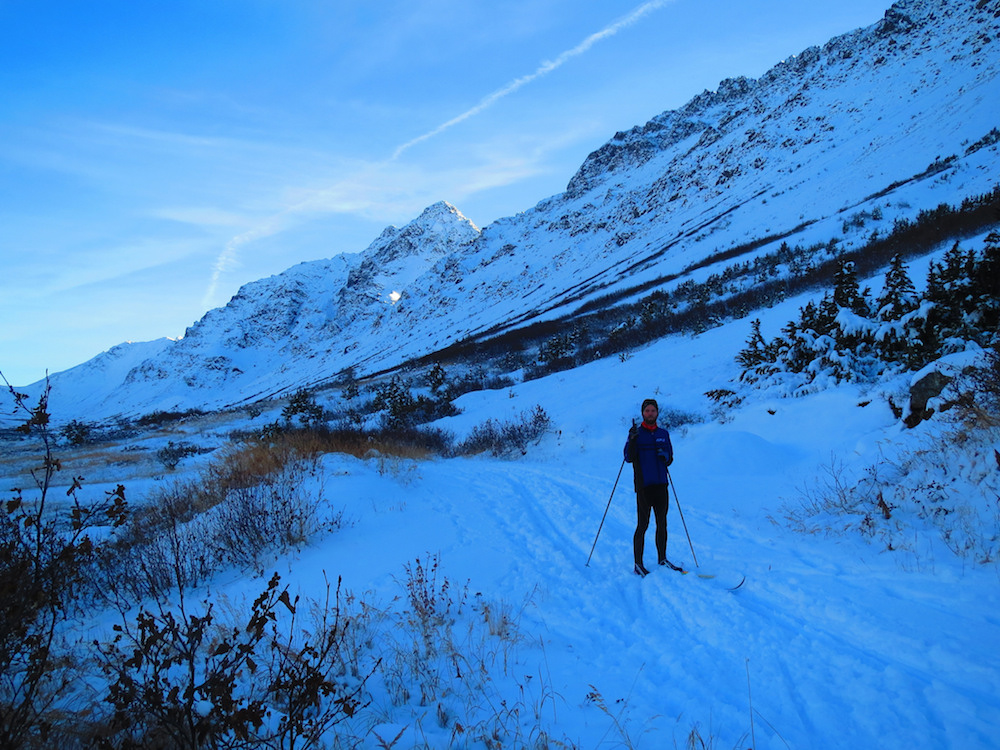
    First grooming honors go to the Nordic Ski Association of Anchorage, who, thanks to extensive summer trail work and an innovative approach with a light homemade drag pulled by an ATV, miraculously transformed a scant four inches into fine skiing at the Hillside Park in Anchorage. A few more inches fell higher up, in Chugach State Park, where early-season skiers along Powerline Pass witnessed a pair of grizzly bears fighting over a dead bull moose.

    Skiing has also been good south of Anchorage in the resort town of Girdwood, where a beautiful and challenging new 5 k system winds among stately hemlocks in a spectacular mountain valley. Completely absent from the scene, however, has been Southcentral Alaska’s traditional go-to early season hotspot, Hatcher Pass, which has missed the region’s minimal early snow thus far. Nonetheless, as if by habit, masters’ minds and talk have turned frequently of late to this special place.

    Completely absent from the scene, however, has been Southcentral Alaska’s traditional go-to early season hotspot, Hatcher Pass, which has missed the region’s minimal early snow thus far.  

    There must be many spectacular snow bowls high in Alaska’s Talkeetna Mountains, where remnant Pacific storm systems (usually!) roll like slow breakers into jagged peaks and arctic chill, but only one such wonderland, Hatcher Pass, is accessible via a plowed road, and it is a goldmine. And an actual gold mine.

    It's not Hatcher Pass, but he'll take it. Shannon Gramse begins a new ski season in Chugach State Park on October 21, 2014. Skiers shared this valley with a pair of brown bears feasting on a bull moose. (Courtesy photo)
    It’s not Hatcher Pass, but he’ll take it. Shannon Gramse begins a new ski season in Chugach State Park on October 21, 2014. Skiers shared this valley with a pair of brown bears feasting on a bull moose.


    The surrounding mountains are born of the Castle Mountain Fault, a major geological fracture the access road crosses, much lower, as it begins to climb through the canyon of the Little Susitna River, but the road itself owes its existence to Robert Hatcher’s discovery of gold in the area in 1906 and the subsequent development of Independence Mine, in its heyday a vibrant industrial complex served by miles of tunnels and over 200 employees, some of whom took advantage of the area’s excellent skiing, both for fun and transportation.

    Independence Mine closed in 1951 but the skiing continued, with skiers often staying in the abandoned buildings. In the late 1960s Hap Wurlitzer opened the incomparable Hatcher Pass Lodge about one kilometer below the mine complex, and the onetime mine manger’s house, built in 1936 for the Stoll family, also served for a time in the 1970s as a skiers’ inn.

    In 1974 the mine was placed on National Register of Historical Places, and since 1980 the buildings and surrounding 270 acres comprise Independence Mine State Historical Park. Grand plans for enormous ski resorts at Hatcher Pass have never materialized, thankfully. Today, thanks to incredible grooming by the Mat-Su Ski Club, skiing is hotter than ever. Early-season skiing at Independence Mine is easily among the best in America and a beloved southcentral Alaskan fall ritual.

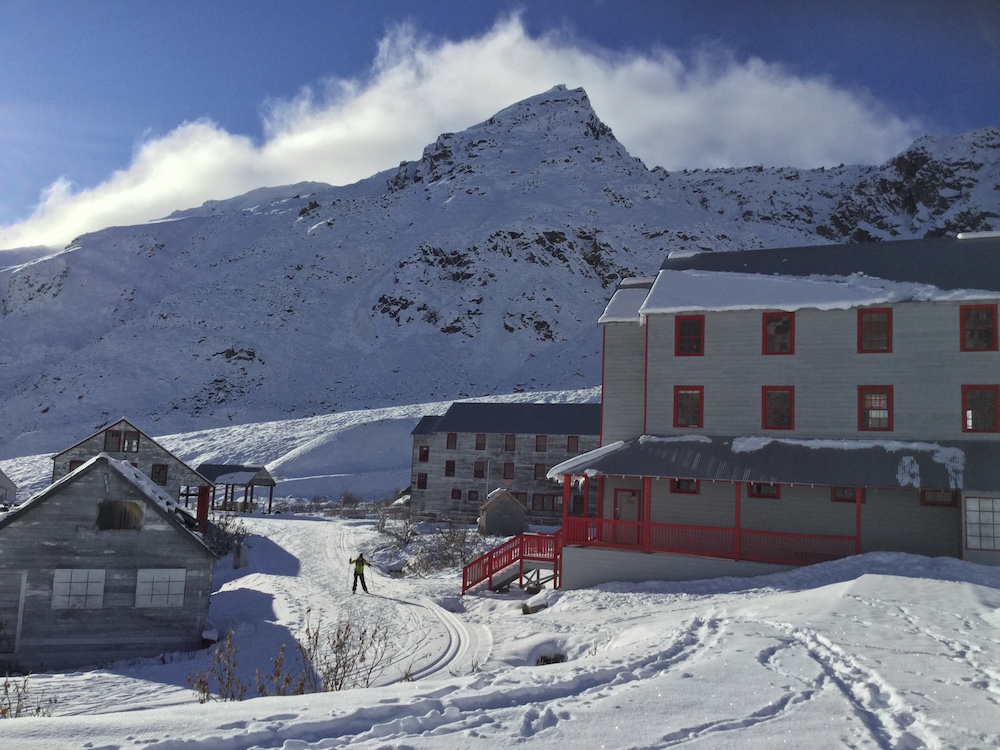
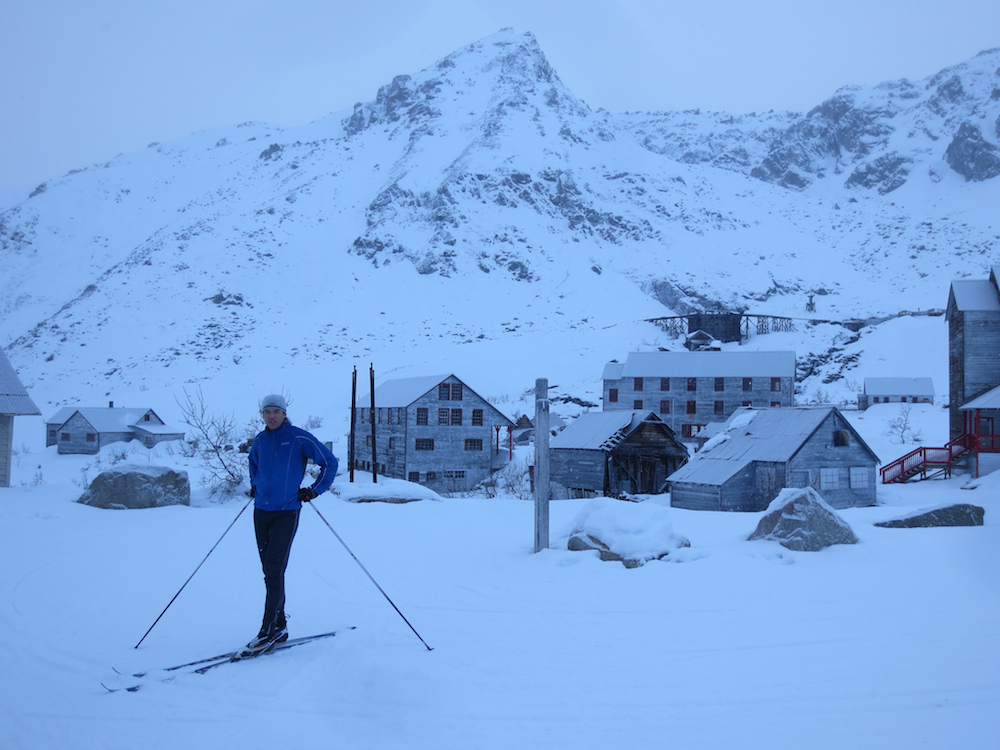
    The 800-foot climb from Hatcher Pass Lodge at the end of the road up to the historic mine seems an important part of that ritual for many Alaskan masters and a good gauge of fall fitness, if a bit of a rough welcome back to snow. At the mine, three interconnected loops totaling several kilometers, zero meters of which are horizontal, weave amid clapboard buildings, the mess hall, offices and machine shops, dormitories, all painted silver with red trim, some three stories tall, many with covered porches, and fascinating ruins, including crumbling mine car trestles, waterways, and enormous generators.  Imagine skiing through an Old West ghost town turned collectible Christmas village.

    Imagine skiing through an Old West ghost town turned collectible Christmas village.

    Skiing at Independence Mine is typically excellent season-long, but it’s busiest in the fall, as many area skiers take the opportunity for an early start on challenging terrain.

    A typical early-season skiing scene: APUNSC Master Travis Rector pauses while skiing Independence Mine in October 2013.
    A typical early-season skiing scene: APUNSC Master Travis Rector pauses while skiing Independence Mine in October 2013.


    Longtime Alaska Pacific University Nordic Center (APUNC) Masters coach Dylan Watts advises, “You can normally add three to four weeks to your ski session if you’re willing to make the drive. This makes it ideal for getting a feel for the snow and skis again. Plus the kilometer-long uphill right at the start really gives a boost to your fitness. After a few weekends skiing up and down you can feel an improvement both in confidence and ability on the skis as well as improved strength and stamina.  The area also offers a variety of consistent grades both on straights and turns all within a compact area, making it ideal for working on different techniques and skills.  It really is an ideal place if you’re looking to build form and fitness on cross-country skis.”

    Mike Truskowski, M5 racer, middle-school teacher and coach, adds: “To make things even more interesting, there is no place to hide from your friends, so everyone can see how you’re doing.  Just when you think that you’re skiing a good loop, watch out behind you: That person calling ‘Hup ’ could be an Olympic skier, a national champion, or just your buddy who worked harder than you this last summer.”

    That buddy might be M4 racer and Anchorage optometrist Jim Falconer who also enjoys the challenge and the area’s special beauty: “A ski at Independence Mine in October usually marks the beginning of the ski season for me.  After the season’s first significant snow in the mountains, it’s an almost spiritual experience to go up there and ski in that environment — it feels like another world.  And since it’s mostly up and down without much in the way of flat terrain, skiing there is a real test of the fitness you are carrying into the ski season from your summer training.”

    Independence Mine as seen from the top of the groomed trail system in November 2013.
    Independence Mine as seen from the top of the groomed trail system in November 2013.

    According to Mat-Su Ski Club President Ed Strabel, over the past nine years, grooming at Independence mine has begun on a mean date of Oct. 13. Strabel, father of Mount Marathon champion Eric Strabel, and his ski club colleagues are passionate about spinning frequent heavy snowfalls into set tracks and corduroy.

    “Our dedicated all volunteer, unpaid groomers do most of the grooming at night to give the snow time to setup before the skiers arrive,” Strabel says. “While our tracked ATV’s are vastly superior to a snowmachines for grooming, big snowfalls (over 12 inches) are a challenge and the trail will be a bit punchy because we can’t get the pounds per square inch of a PistenBully.  Wind can also be a big headache because we don’t have a six-way blade to take out drifts.  Last year we had a 30″ snowfall followed by high winds.  The whole area was almost featureless.”

    But such devotion isn’t  completely altruistic: “All our groomers are skiers, too, and we want to ski also,” he adds, “The toughest part our volunteer groomers have to cope with, other than getting a groomer unstuck, is resisting the urge to grab our skis and go skiing on our handy work immediately after we finish grooming.”

    While it’s true that the light can be flat, the weather awful, the kick waxing weird, skiing at Independence Mine is always an exceptional experience. On a clear day, the views and surrounding  mountains are mind-bendingly beautiful. The old mine is interesting in any weather. Maybe best of all, those first few weekends back on skis up there are in many ways a reunion, or re-formation, of our community, from masters to kids to Olympians, and everyone is smiling.

    While it’s true that the light can be flat, the weather awful, the kick waxing weird, skiing at Independence Mine is always an exceptional experience.

    When asked via email what he thinks about when he thinks about skiing Independence Mine, Coach Watts’ answer is perhaps evocative enough and instructive enough to quote in full and call it good:

    “For me I really like the uniqueness of skiing at a historic hard rock mine. Skiing around the old buildings, it is hard not to let the mind reflect on the history of the mine, the miles of tunnels dug with great labor chasing gold. Kick, glide, kick, glide.  The process that put that gold in place. Keep the arms pumping. On to the history and future of resource development in Alaska. Dance off the feet as you herring bone the steep hill. Then on to the beauty of the peaks all around. Watch the plowed-up snow in the corner. The ubiquitous of petroleum products on every person out skiing: clothing, skis, wax, boots.  Tuck lower.  Watching people ski up as I fly down the hill. They look fit.  How nice to see the whole family out skiing. Must be the first day on skis for them.  Kick up some spray at the bottom to show off a little. Back to kick, glide, kick, glide.  It is pretty easy to have three hours of hard skiing fly by and let the mind mediate, wonder, and marvel at the world and life on it.”

    ***

    About the Author: Shannon Gramse is a longtime member of APU Nordic Ski Center’s Masters Program. When he’s not skiing, he’s thinking about skiing while being a father and a husband and a professor at the University of Alaska Anchorage.

  • 7 Things You Didn’t Know About Sadie Bjornsen (Birthday Edition)

    7 Things You Didn’t Know About Sadie Bjornsen (Birthday Edition)

    U.S. women in Beitostolen, including Rosie Brennan, Sadie Bjornsen, Jessie Diggins and Sophie Caldwell (Photo: Holly Brooks)
    Several of the U.S. women in Beitostølen, Norway, including (from left to right) Rosie Brennan, Sadie Bjornsen, Jessie Diggins, and Sophie Caldwell (Photo: Holly Brooks/Twitter)

    To get you excited for 2013/2014 racing season, we asked some of the skiers you’ll be reading about from the U.S. and Canadian national teams to tell us seven things about themselves that most people don’t know. To top off the randomness, we also posed a couple questions related to skiing (well, sort of) and the life of a pro athlete.

    Athlete: Sadie Bjornsen

    Team: U.S. Ski Team (third season); Alaska Pacific University (APU)

    Age: 24 (today!)

    Hometown: Winthrop, Wash.

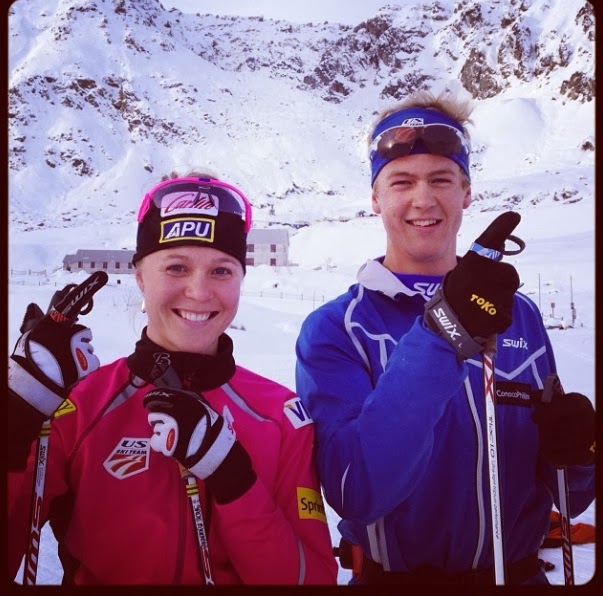
    Sadie Bjornsen and her younger brother Erik with their "Wax Ring" prizes after winning an Alaska Pacific University time trial earlier this month at Hatcher Pass near Anchorage, Alaska. (Photo: http://sadiebjornsen.blogspot.com) http://sadiebjornsen.blogspot.com/2013/11/the-final-countdown.html
    Sadie Bjornsen and her younger brother Erik with their “Wax Ring” prizes after winning an Alaska Pacific University time trial earlier this month at Hatcher Pass near Anchorage, Alaska. (Photo: sadiebjornsen.blogspot.com)

    7 Things:

    1. I take full-time school, and have for the past three years while I race. I am expecting to graduate at some point this year 🙂
    2. I grew up vegetarian until I started traveling to Europe for racing and got sick of eating “fried cheese” that was served to me.
    3. I have an older sister (1.5 years older) – she lives in Seattle and was a skier in her past life
    4. I travel with a frog stuffed animal and his name is Jasper
    5. I have a French boyfriend – and that is where I will spend Christmas this winter, in Meribel, France… first Christmas not at home.
    6. At one point in my life I set the 100-meter World Record on skis…. although I am not sure anyone tried it outside of the US.
    7. Cross Country skiing is new to my family in this generation. My mom grew up in Minnesota, but drove snowmobiles and worked on a farm. My dad was a backcountry and alpine skier.

    Bonus Round:

    • First races of the season? Tomorrow, Beito Classic 10k [in Beitostølen, Norway]
    • Go-to mantra or motto: “Mind is master, body is servant.”
    • What do you miss most while on the road (besides family and friends)? My closet. I love variation in outfits, and that is the hardest part about the traveling circus!
    • Best part about being a pro athlete: Testing your ability to accomplish something you set your mind to. There are so many speed bumps along the way, but perseverance and determination are something you have to test every day as a pro athlete. I love that nothing is given, nothing is “pre-determined.” Every day you have to test your ability, test if you are willing to reach that goal!
    • 3 travel essentials: Ear plugs, my journal, Cold-FX
    • Go-to travel meal or food: PB&J
    • Song that you could listen to non-stop: “What is Love” by Haddaway
    • Song you wouldn’t mind never hearing again: “Gangnum Style”
    Sadie Bjornsen at Hatcher Pass. (Photo: http://sadiebjornsen.blogspot.com/2013/11/the-final-countdown.html
    Sadie Bjornsen striding out at Hatcher Pass near Anchorage, Alaska. (Photo: sadiebjornsen.blogspot.com)

    ***

    See also: Sophie Caldwell