Tag: heart rate zones

  • How to Go Easy (and Why): An Introduction to the Polarized Training Model

    How to Go Easy (and Why): An Introduction to the Polarized Training Model

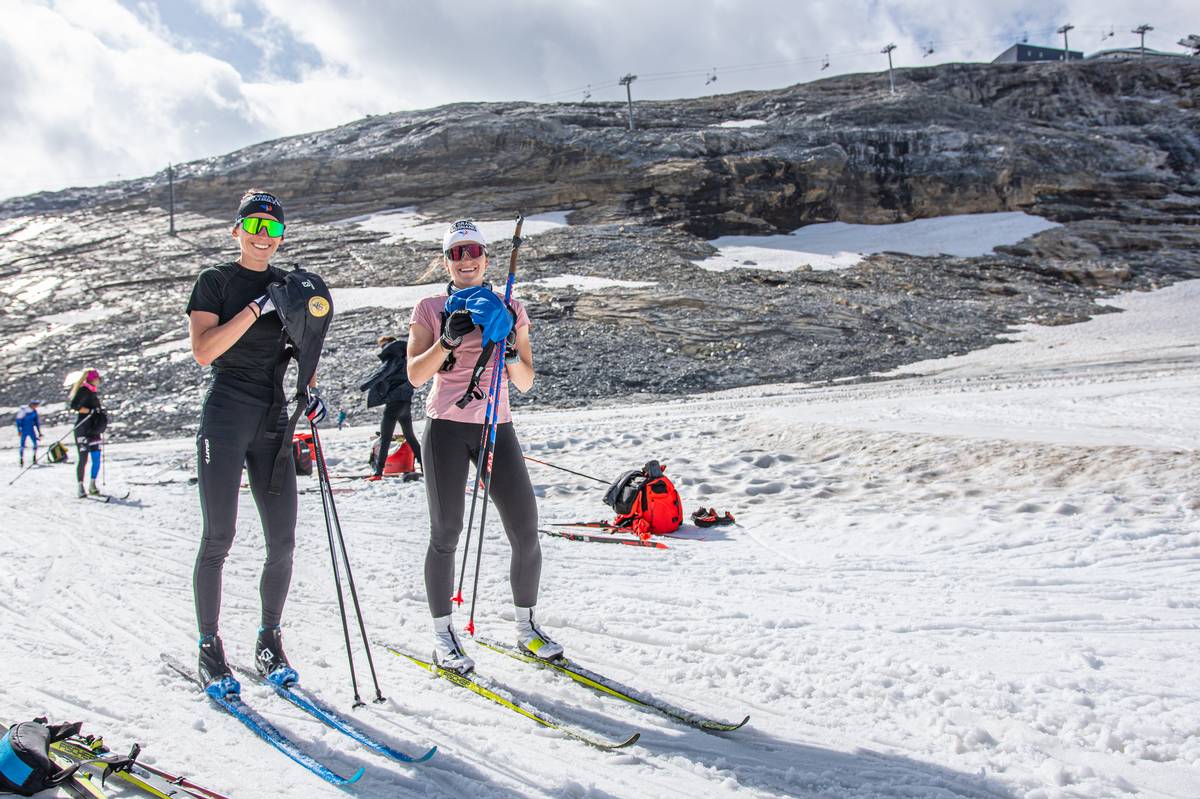
    French skiers Delphine Claudel and Lena Quintin stop to refuel during a training camp on the Glacier de la Grande Motte near Tignes, FRA. (Photo: NordicFocus)

    I grew up playing soccer. Every practice was hard. “No pain, no gain,” and all of that. By tenth grade, I was burned out and quit. 

    I started rock climbing. Every day at the crag was about pushing your limits. This was before indoor gyms or any concept of training other than doing as many pull ups as possible. I plateaued, got frustrated, and quit. 

    Then I had a go at running. I read some books, but skipped the training methodology parts and cherry picked the workouts. Every run was hard. Every interval was done to exhaustion. I plateaued, got frustrated, and quit. 

    Then I got into cycling. I began to hear of “easy” rides. I knew pros who rode around for four or five hours at such a pedestrian pace that they were talking the whole time. ‘How insanely boring!’ I thought. ‘Where’s the fun in that?’ So I went hard every time because it’s more fun. And guess what? I plateaued, got frustrated, and quit.

    Fortunately, I didn’t learn my lessons the really hard way – through injury – but I still learned them the really stupid way –  by throwing away any potential I might have had. 

    You can’t go hard all of the time. It’s as simple as that (at least on paper).

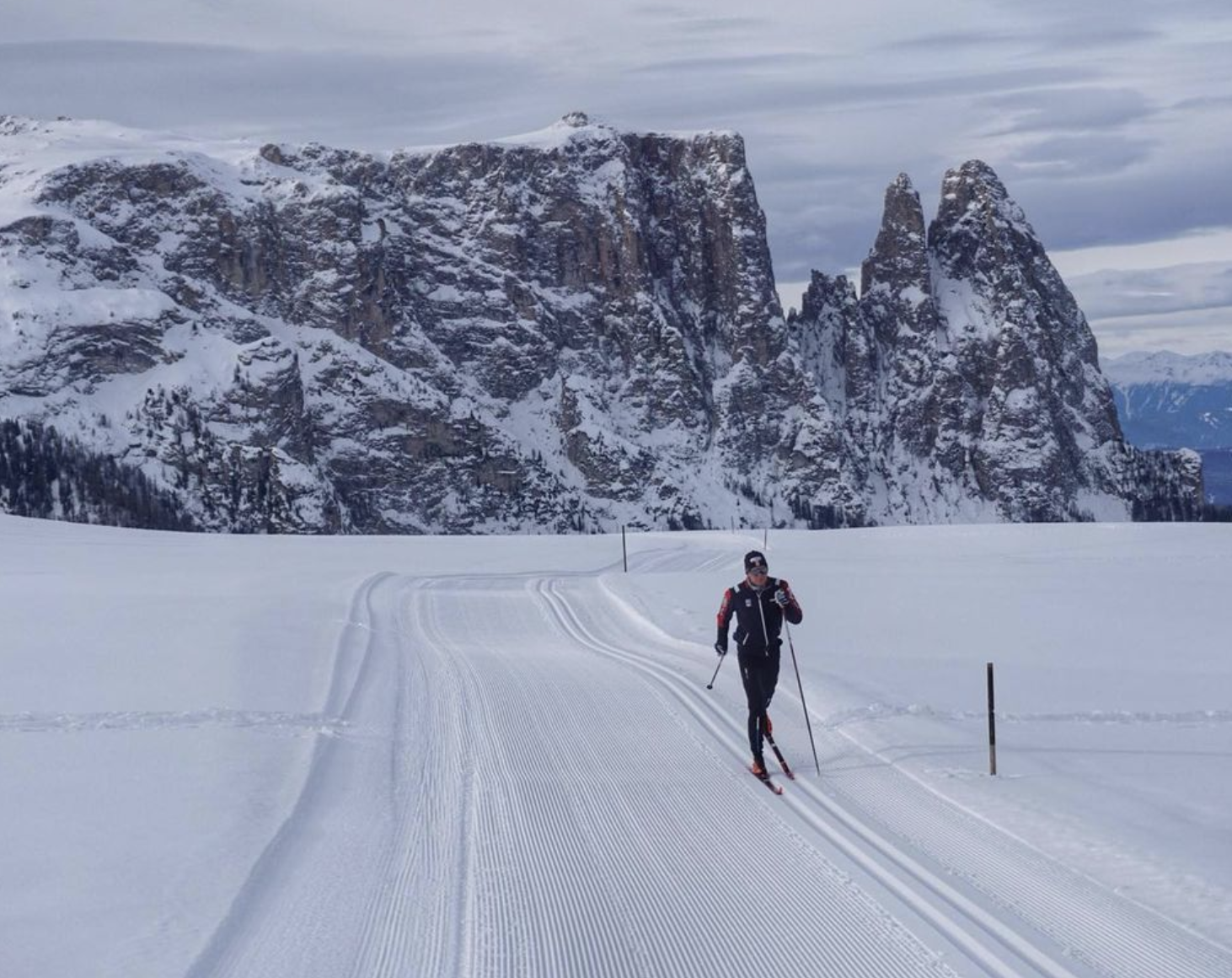
    Scott Patterson enjoying a training day in Seiser Alm, ITA in January 2021. (Photo: Caitlin Patterson / Instagram @scottgpatterson)

    The Basics of Polarized Training

    Make your easy days easy and your hard days hard. 


    That is the backbone of a Polarized Training model. I had no problem making my hard days hard–they were all hard days after all. Full gas. Gun to tape. But in hindsight, I realize how depleted and chronically fatigued I was. I thought that was the desired effect, but it meant my training became less and less productive. 

    It’s the easy days that are actually the hard part.

    First: I hear your inner dialogue. “Who wants to go easy? It’s unproductive. It’s a waste of precious time. It looks lame on Strava.” But the science says everyone should want to go easy. Metabolic efficiency is the name of the game.

    If hard workouts train the engine to create more horsepower, then the easy sessions improve the gas mileage. 

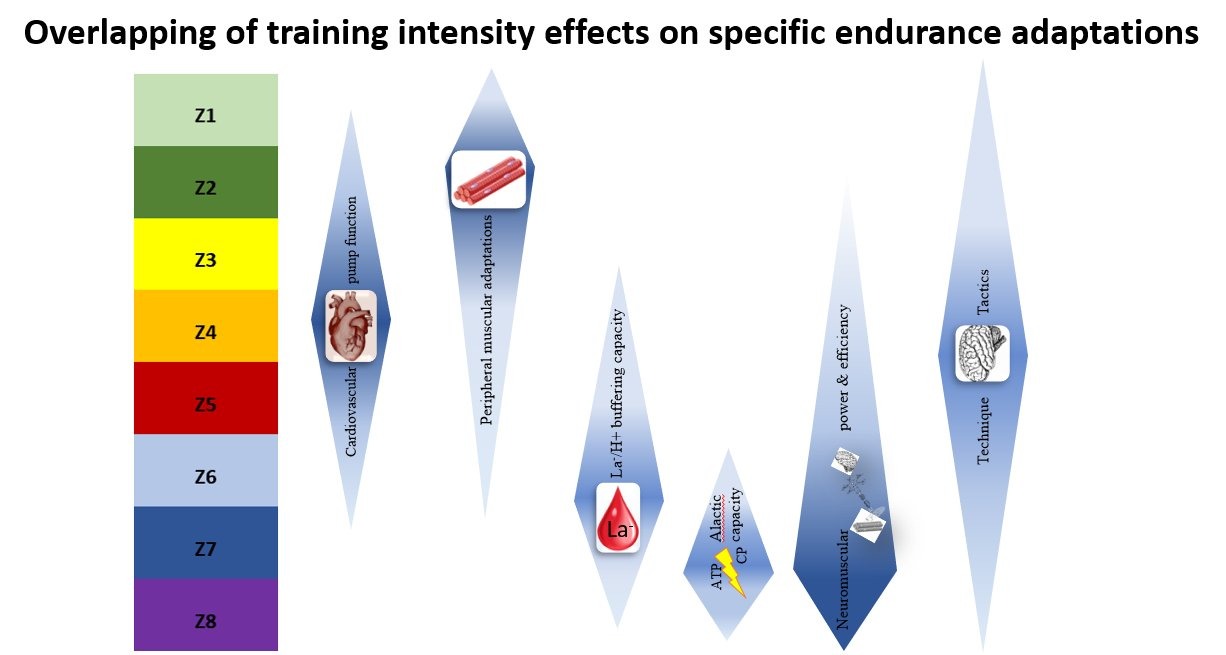
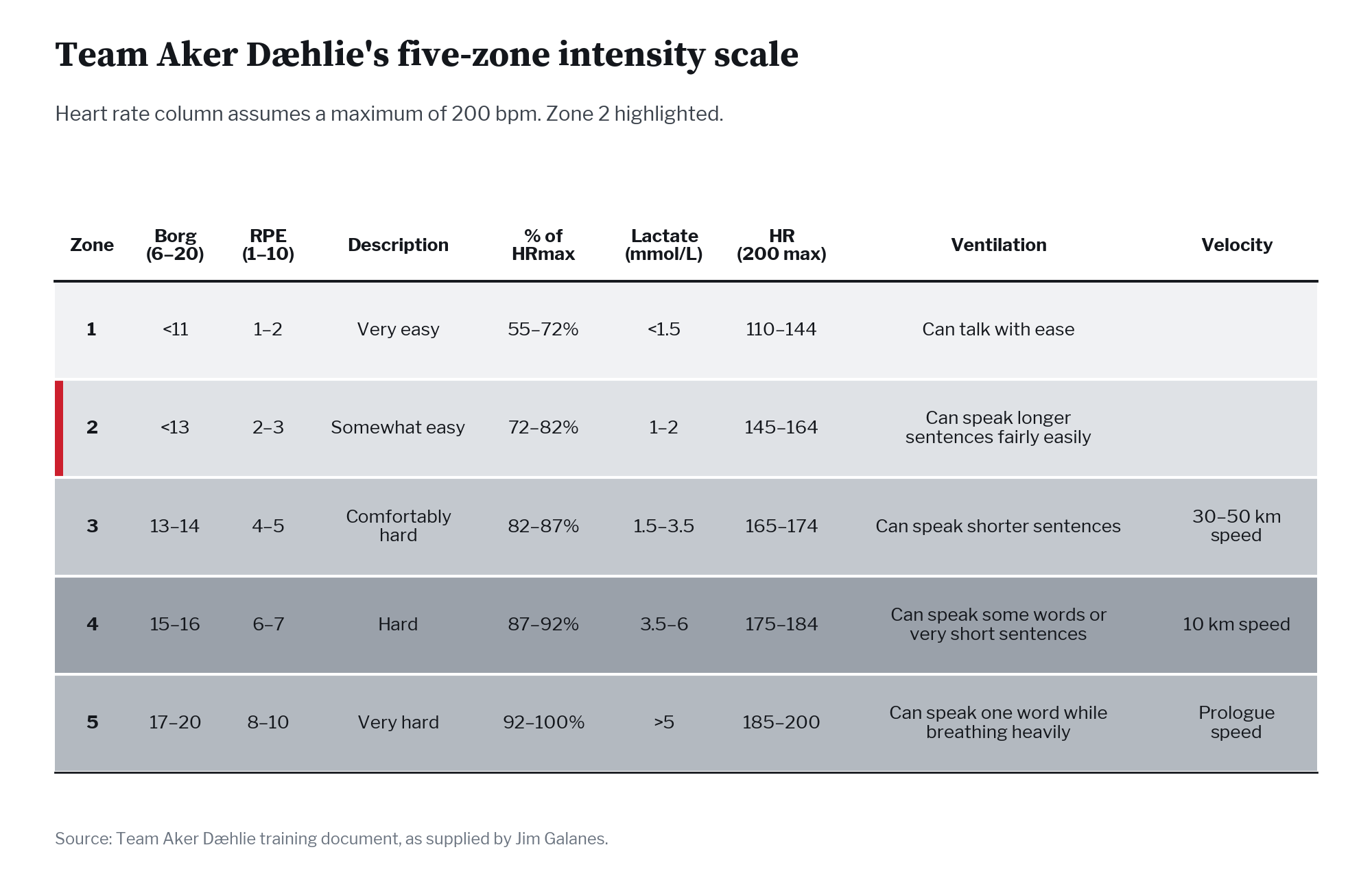
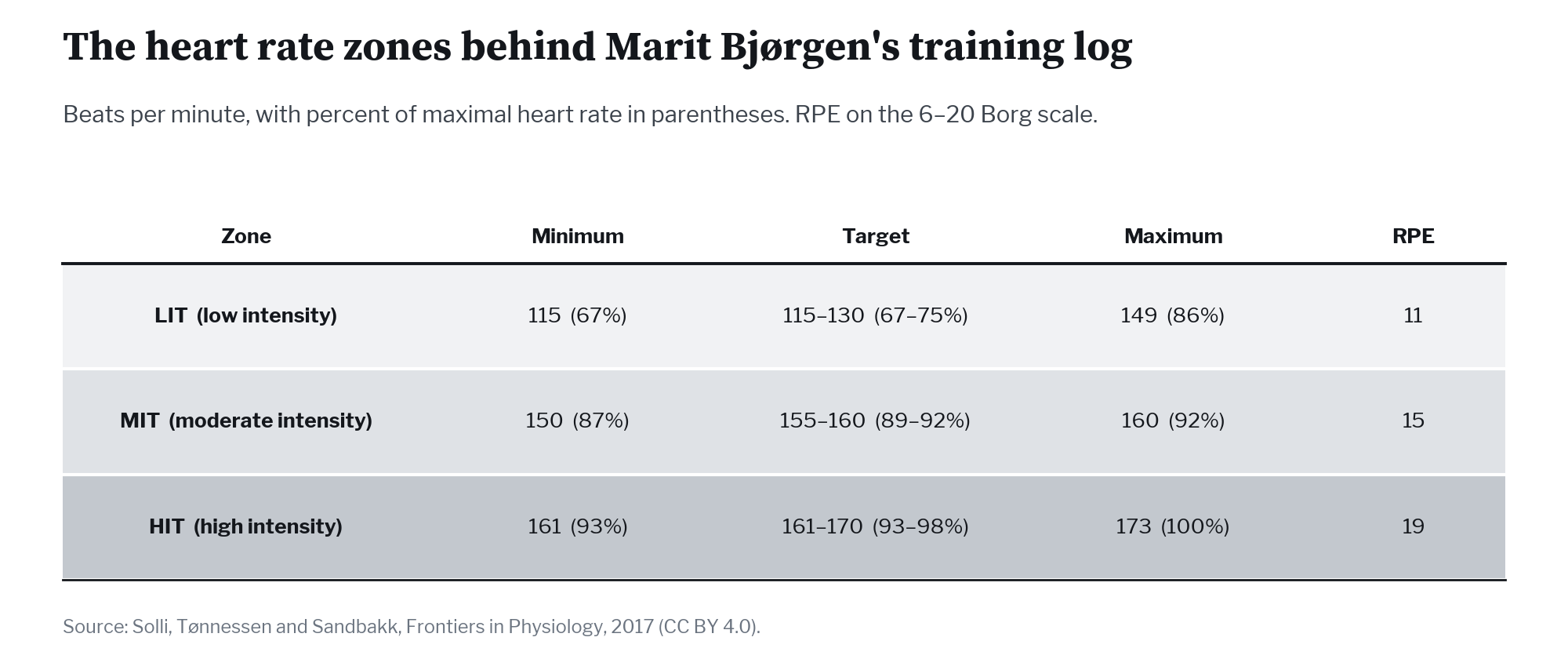
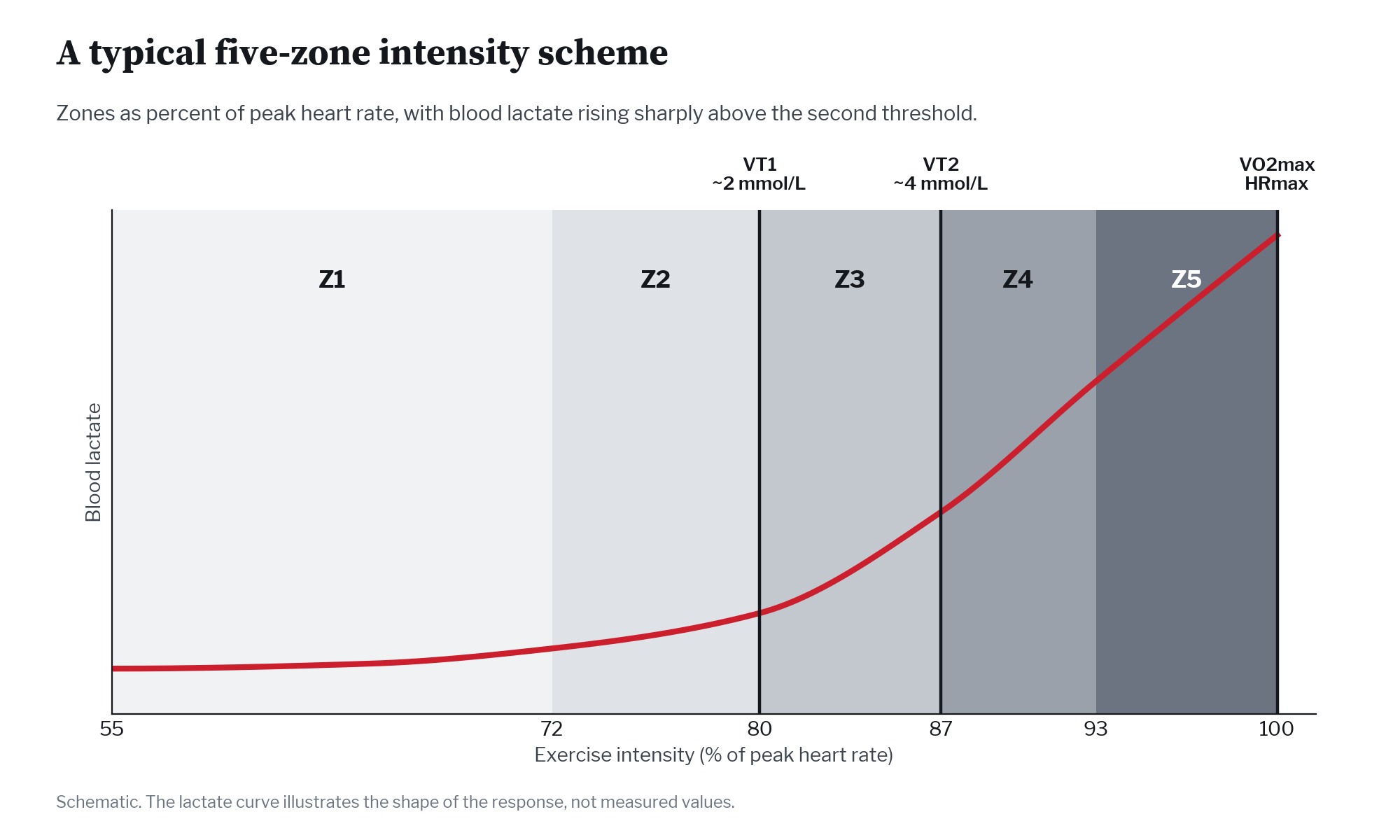
    Secondly: let’s define easy. Training intensity is commonly split into five zones. (Some systems use three and others use seven, but I’ll be referring to a five zone system.) Zones 1, and especially 2, define the ranges of easy. Heart rate is the typical metric, especially for cross country skiers and runners, while cyclists typically use power. 

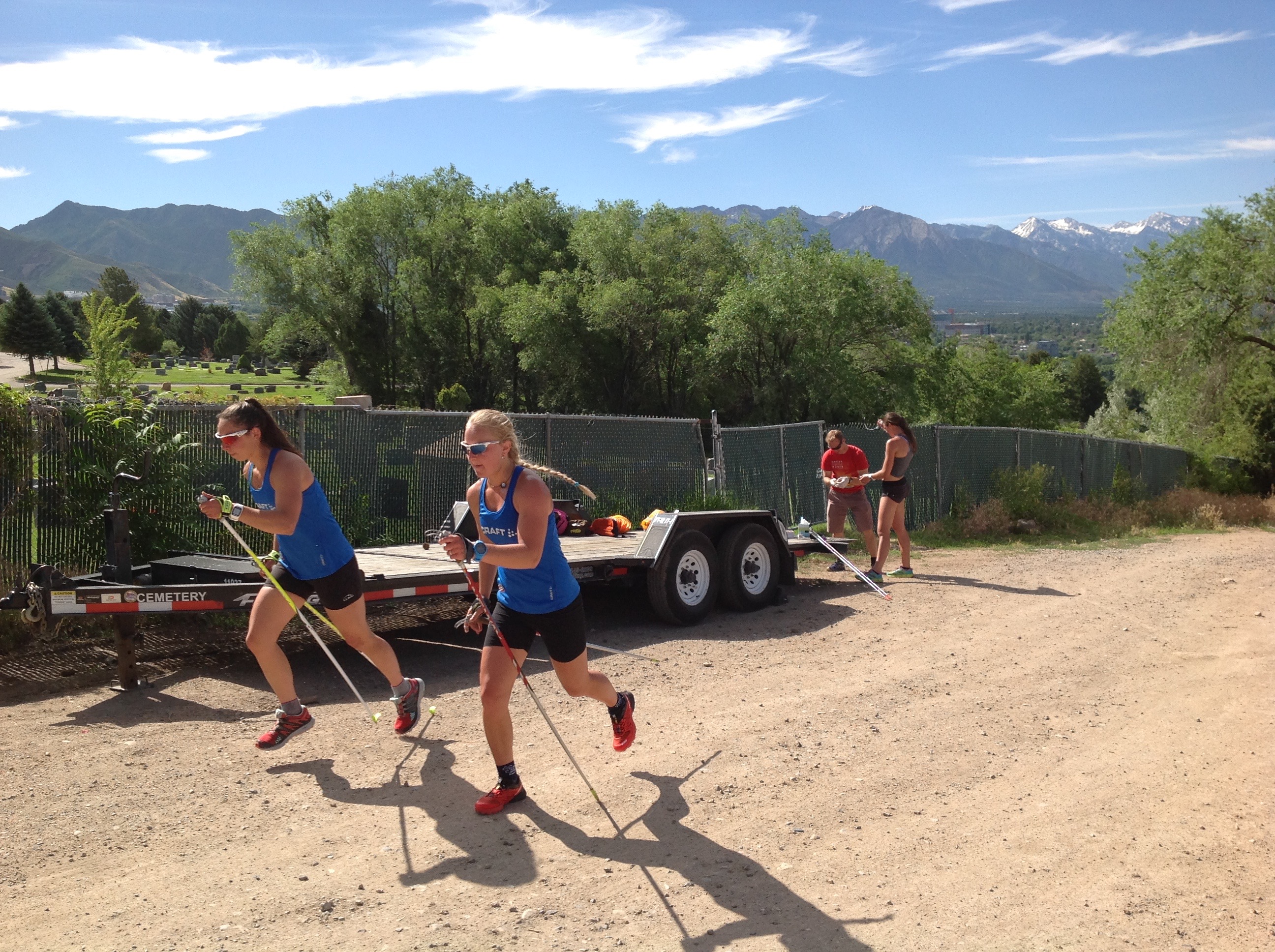
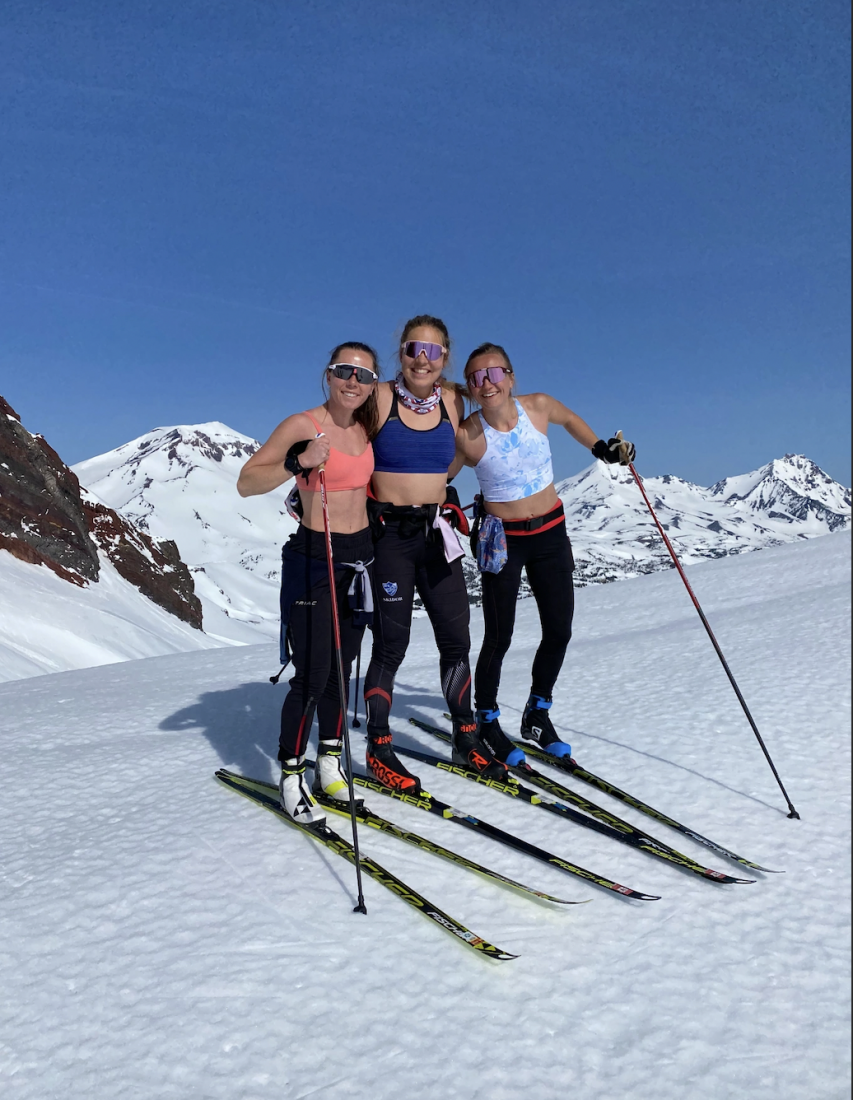
    SMS T2 athletes Lauren Jortberg, Lina Sutro, and Alayna Sonnesyn find bluebird conditions for a crust ski up Broken Top near Bend, OR in May. (Photo: SMS T2 Blog)

    Identifying Your Easy Zones

    The theoretically simple method for establishing heart rate zones is to work backwards from your maximum heart rate where each zone represents a percentage of the max. The challenge is that there’s very little agreement on how to best calculate one’s max heart rate without actually experiencing it. 

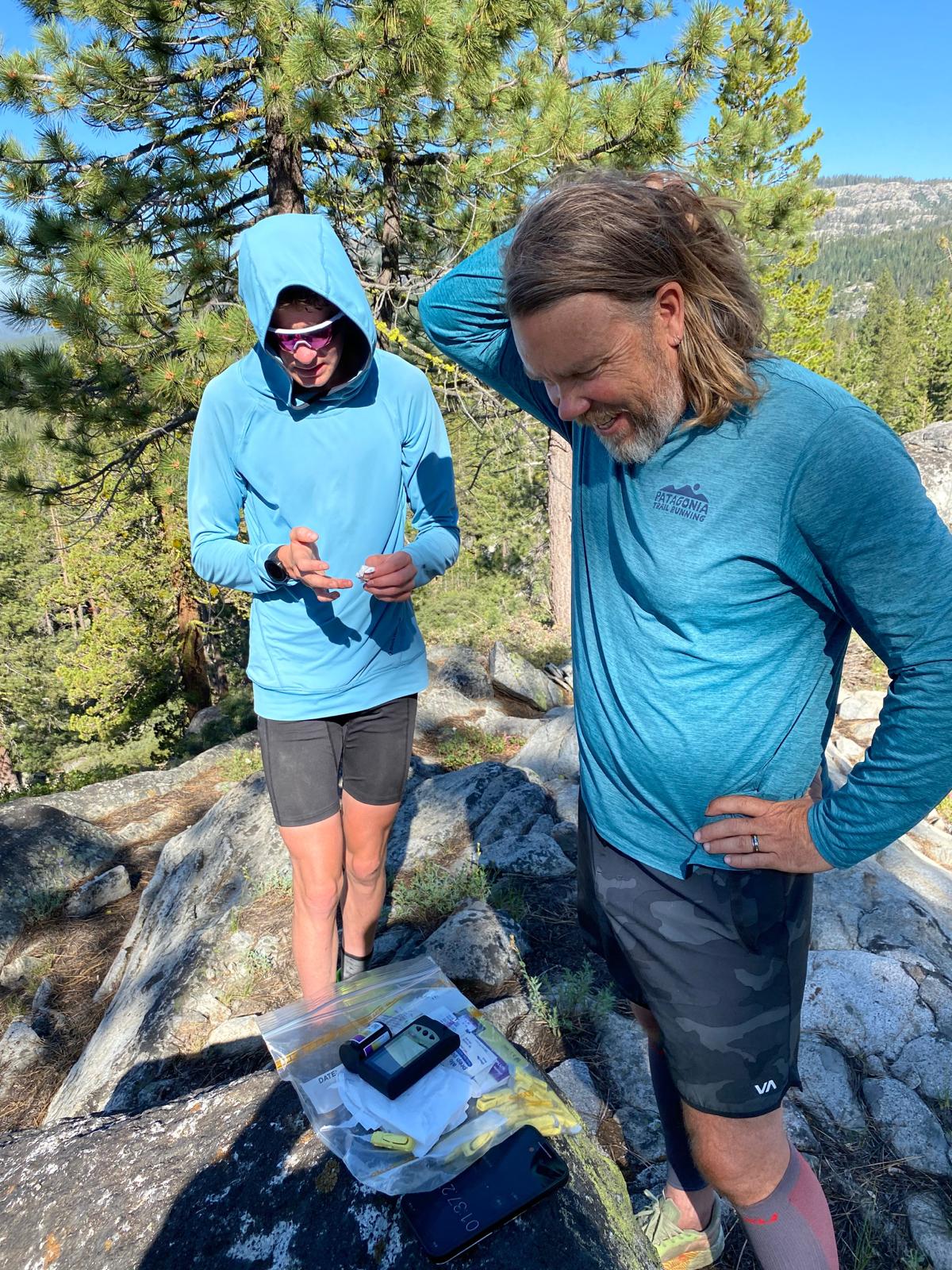
    A more accurate method is to undergo a lactate threshold test, where heart rate zones are calculated based on the amount of lactate measured in the bloodstream. More accurate, but more difficult to conduct, and not universally accessible.

    So how can we determine what is easy and what is too hard? 

    In an effort to keep easy easy, I’m going to define it as conversational pace. You should be able to talk in complete sentences without having to… pause… to take in… more air… to finish your sentence. This is mediocre science and not especially objective, but with some practice, it’s not difficult to find that upper limit of talkability. 

    If you’re a numbers person, you can likely conduct your own ramp test where – after a warm up period – you progressively increase speed/effort while reciting poetry or singing along to what’s in your AirPods. Mark the heart rate where you lose the rhythm, and that’s a decent estimate of your upper limit for Zone 2.

    Your new goal on easy days will be to keep your heart rate below this threshold, not necessarily at this level. For those accustomed to pushing the pace on every session, slowing down enough to keep your heart rate in the appropriate zones might feel like a big adjustment. There’s no real way around it – you’ll need to buy in, and trust the process/science. Maybe use it as an excuse to get out with a training buddy who is generally slower than you and give the whole “pedestrian pace, talking the whole time” thing a go.

    Worst comes to worst, you give it an honest try and decide you prefer to just go hammer, then go back to your old ways. That’s the beauty of being a recreational athlete – at the end of the day, we’re just pursuing hobbies we find rewarding and enjoyable. 

    * A note for Strava users: don’t rely too much on the Relative Effort number. As a metric of intensity over time, it seems optimized to capture long, hard efforts like an hour-long tempo run where your heart rate stays high for the entire hour. It doesn’t handle intervals very well since the rest periods sort of cancel out the high intensity efforts. 

    For example, Strava gave 60 points to a 55 minute tempo run with an average heart rate of 158; however, an 57 minute interval session (9x600m on the track) with an average heart rate of 147 only got 35 points. To me, both sessions were equally hard, but the tempo run scored 25 points higher. 

    Strava does allow you to use your perceived exertion in place of heart rate for calculating Relative Effort. When I enabled this override, the tempo run scored an 87 while the track workout got a 147. (My easy efforts aren’t affected much.) Personally, I’ve found the Relative Effort score, along with the weekly log and Fitness and Freshness, far more useful (and accurate?) with this tweak. Here’s a deeper dive into that black hole.

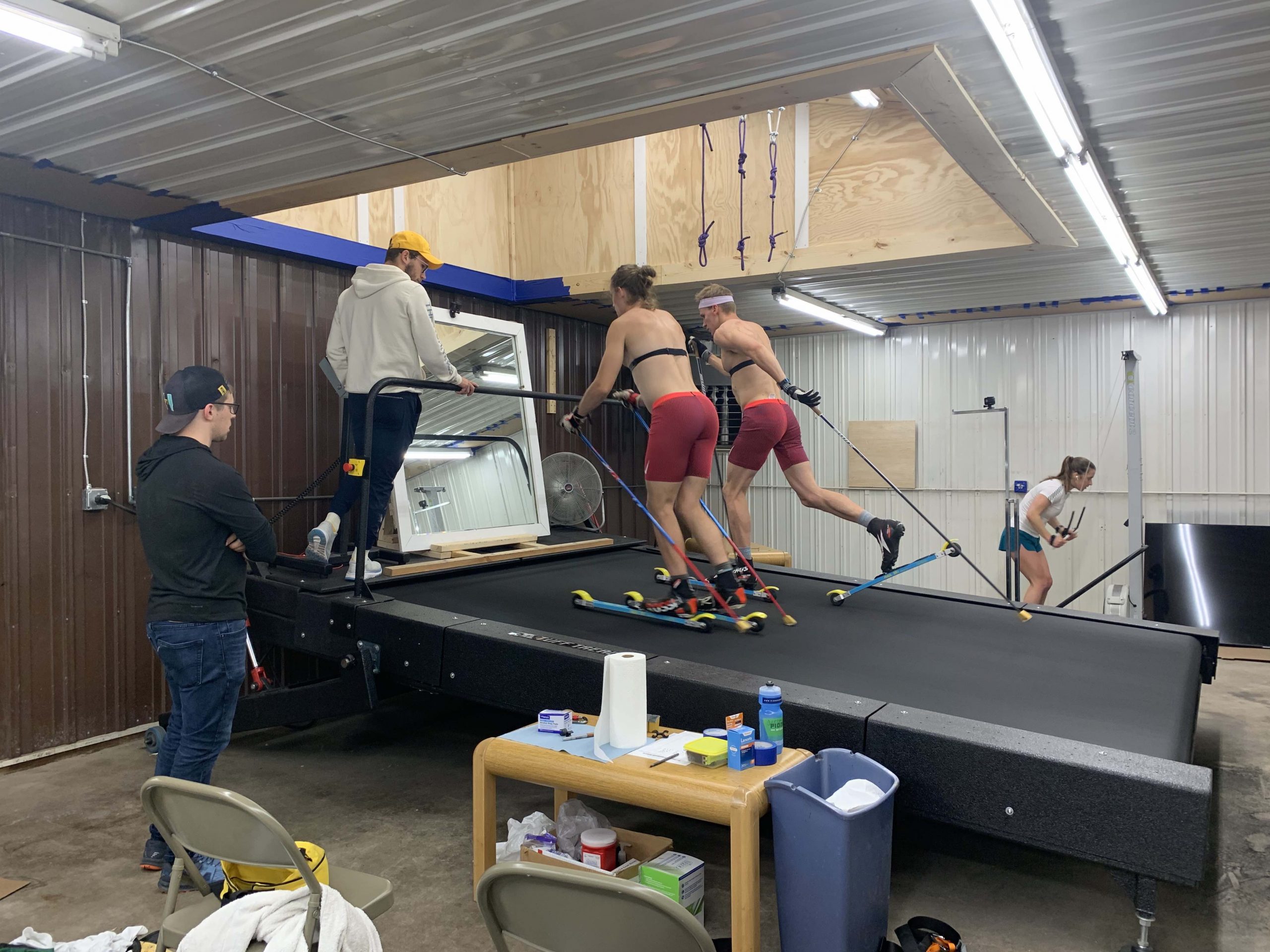
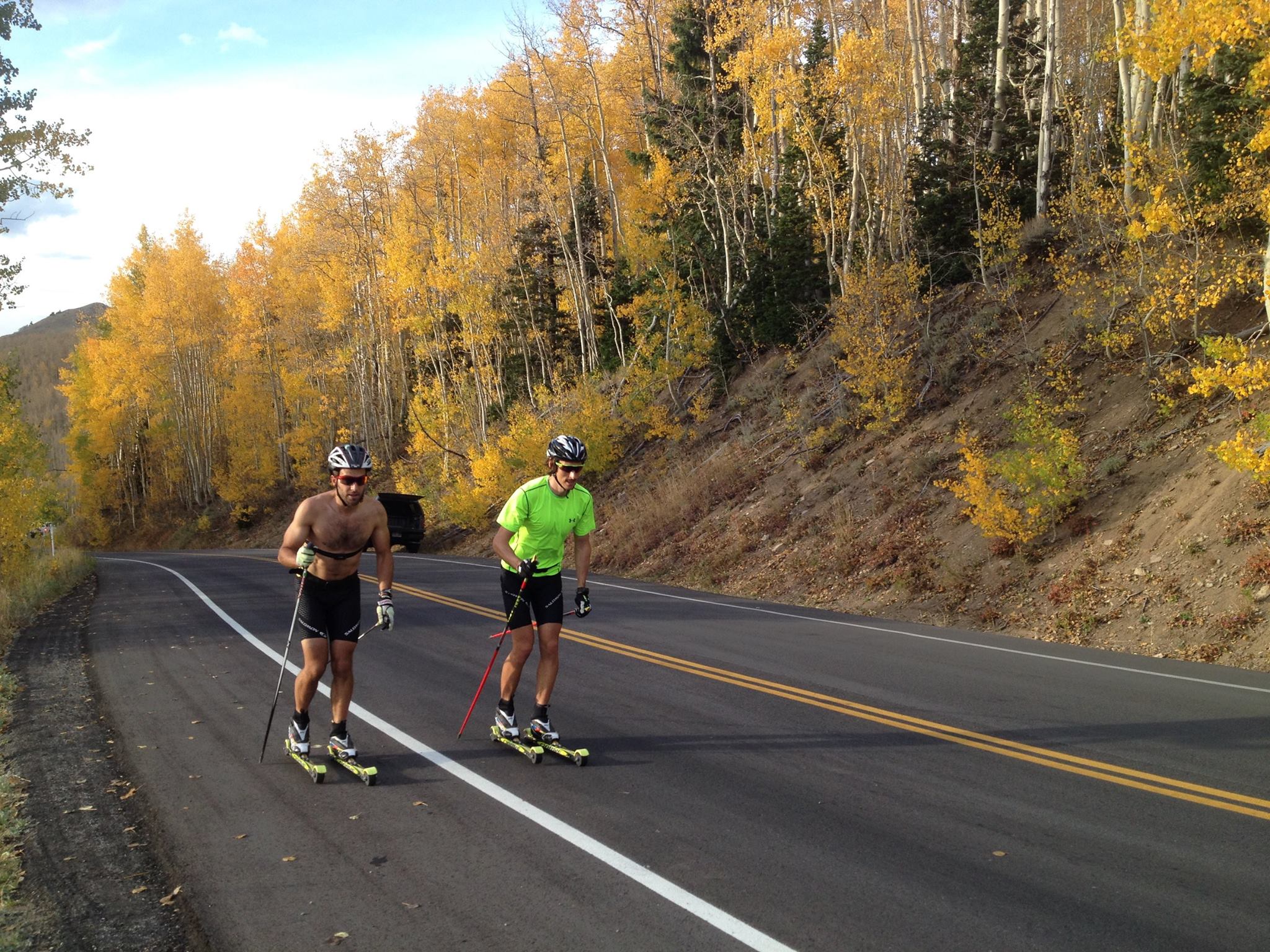
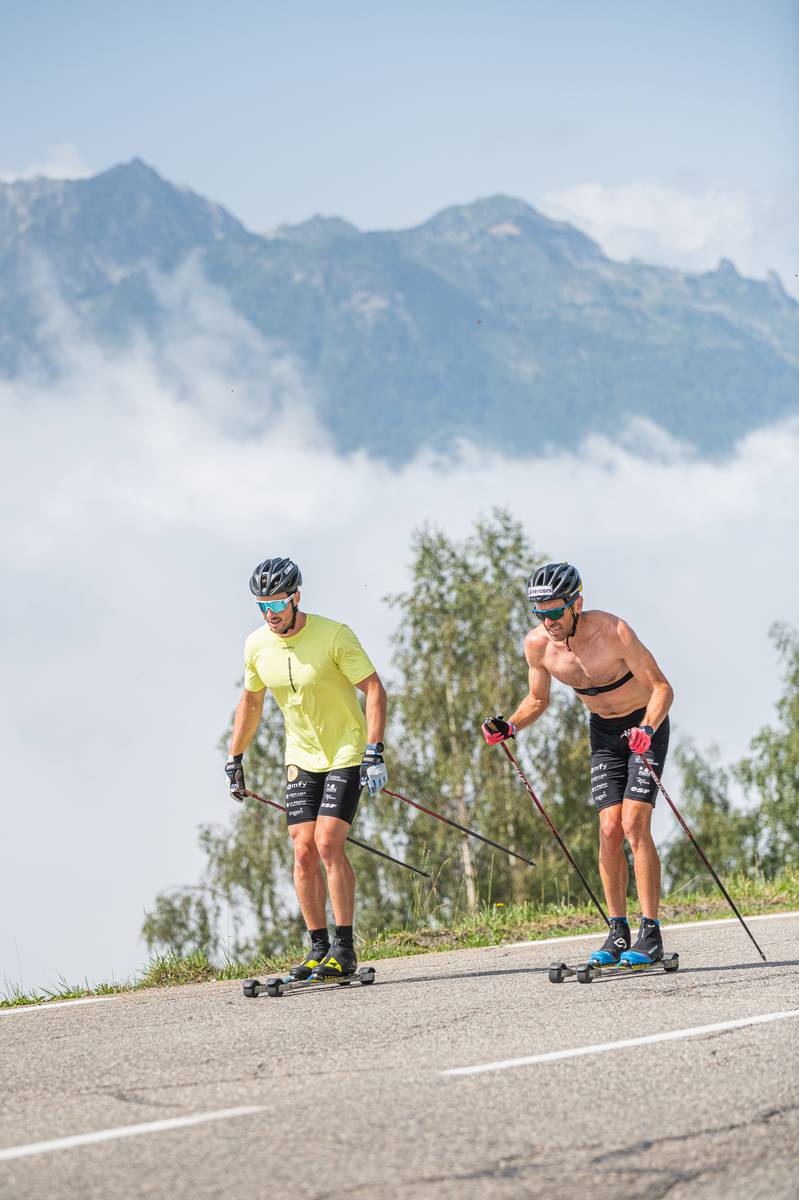
    French athletes Lucas Chanavat (left) and Maurice Magnificat (right) out for a rollerski during a training camp in Tignes. (Photo: NordicFocus)

    The Purpose of Polarized Training

    Now we can talk about why the easy is important. 

    Stress + rest = growth/adaptation/strength/speed. That is the basic formula. Our bodies are designed to adapt to load, but we have to give ourselves the opportunity to make those adaptations. Too much volume or intensity and the body will stop absorbing. Not enough recovery and the body will stop adapting. Best case, your performance plateaus. Worst case, you get injured. 

    The Krebs Cycle. The stuff of High School nightmares. But the essence of the endurance athlete. The Krebs Cycle is the pathway by which our bodies put gas in the tank. It is the process by which our mitochondria – magical little intracellular thingies – convert carbohydrates, fats, and proteins into the specific energy required by muscles to contract. In oversimplified terms, the more efficient the mitochondria are, the faster and longer we can go. And it appears that the best way to train mitochondrial efficiency is with training in Zone 2. (If you want to seriously nerd out, this podcast with Dr Iñigo San Millán, perhaps the Father of Zone 2,  is a deep dive in a submarine to depths of the ocean.)

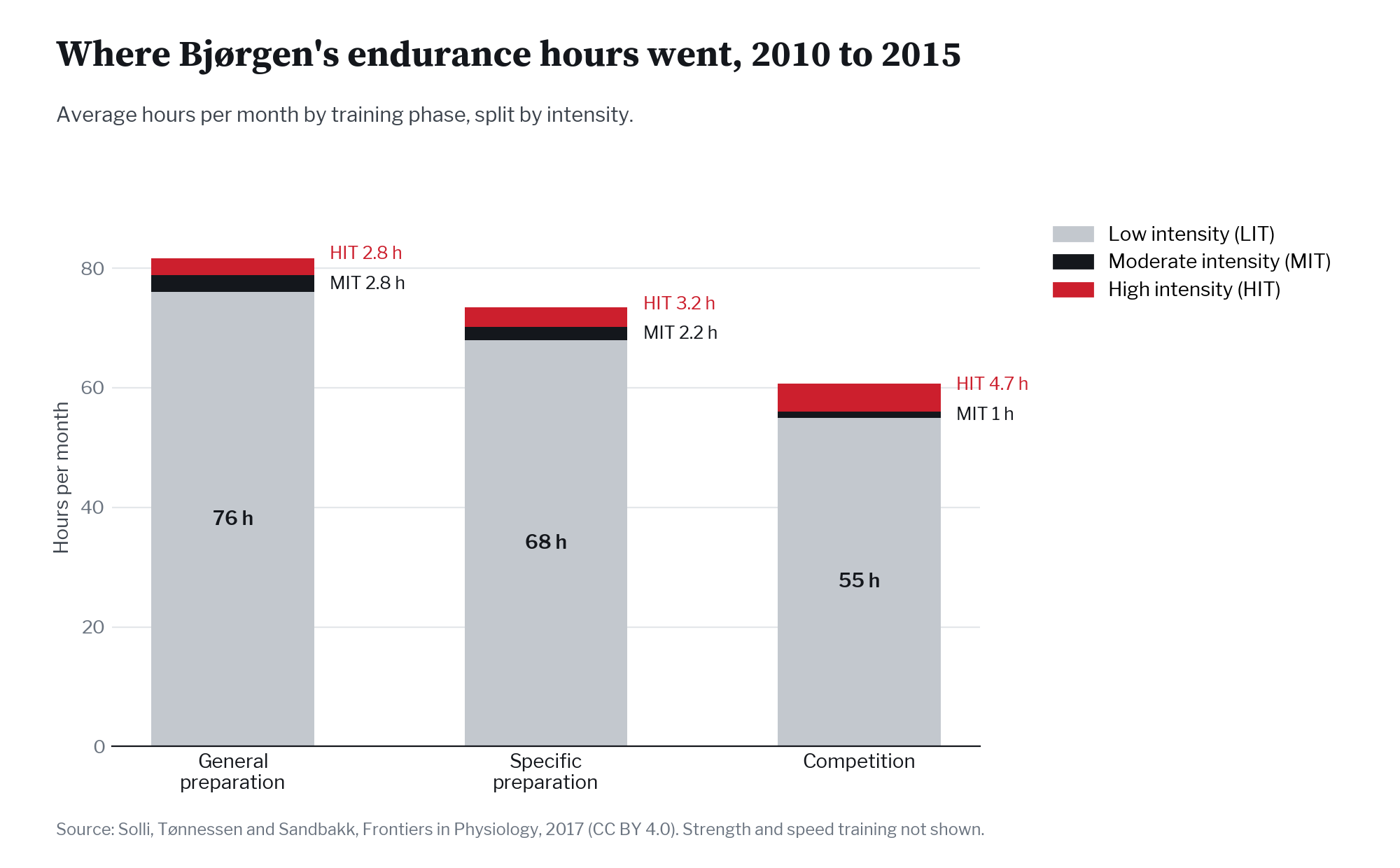
    The easy/Zone 2 is considered so important that it typically makes up 70-80% of elite athletes’ training volume. The other 20-30% is hard (high Zone 3, Zone 4, and rarely into Zone 5). For the athlete who doesn’t have all day, every day to train, that means you only get a couple of hard sessions per week. Keep the rest easy.

    Some that’s hard, lots that’s easy – that’s the essence of putting Polarized Training into practice.


    Example Training Plan Template

    Monday Easy short or Rest if needed
    Tuesday Hard long
    Wednesday Strength/core maintenance
    Thursday Hard short (intervals) 
    Friday Easy short or Rest if needed
    Saturday Easy long OR Hard long AND Sunday is Easy
    Sunday AM: Hard short (intervals) + PM strength/core maintenance


    My training template is based on my work schedule and typical life obligations. I’ve given myself a max of three hard sessions a week with one of them longer (2-3 hrs ride or mountain run–the fun stuff!) and the others around an hour of intervals. My strength/core maintenance sessions typically fall into the easy category and don’t require much recovery (no delayed onset muscle soreness). But my schedule is also very flexible. If I’m tired, I can move a hard session to another day or skip it that week. If I get too busy or stressed, then I can modify the program without too much frustration.

    I’m fortunate that I can train/play seven days a week, as long as I’m recovering adequately. However if your schedule only allows for training three days a week, you can still apply the basic formula and have one hard day and two easy days.

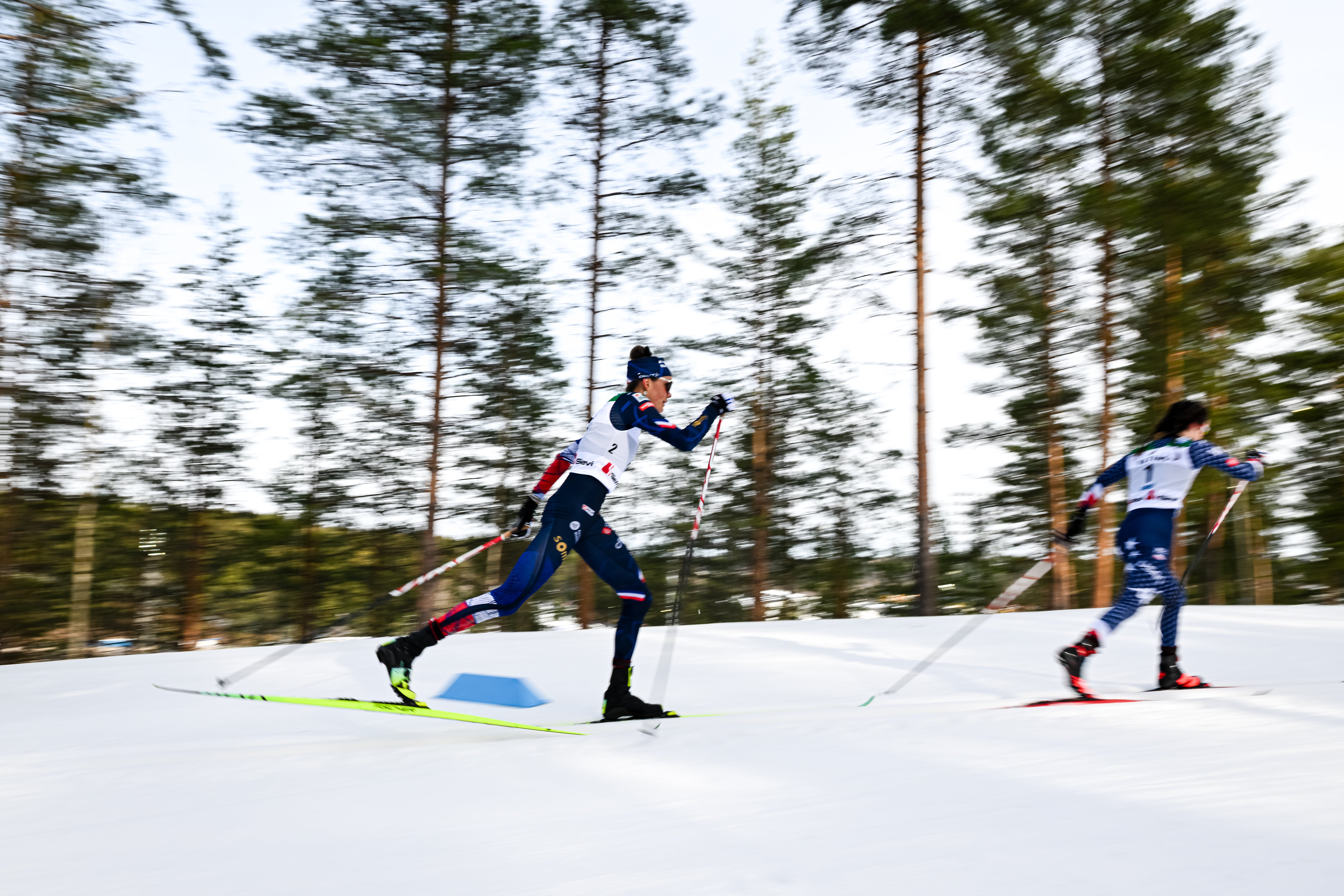
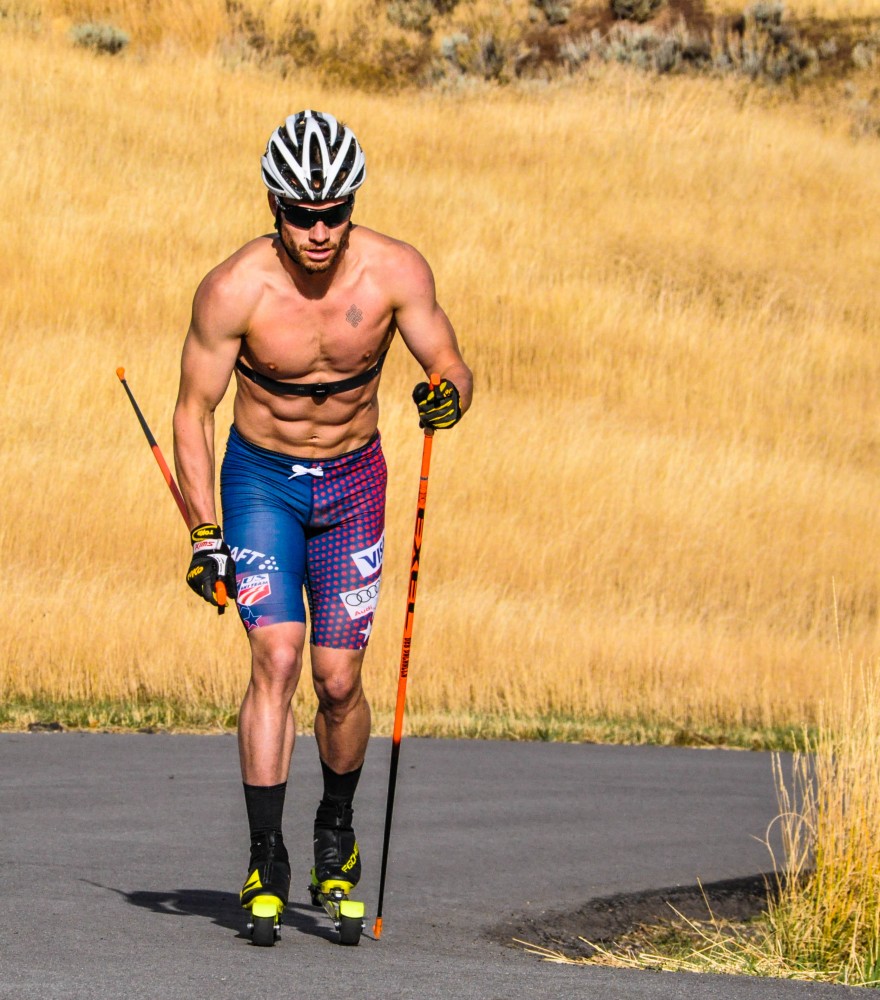
    Richard Jouve doublepoles up an incline during a team training camp in Tignes, FRA. (Photo: NordicFocus)

    For some of you, this may be common sense and describe how you’ve been training for years. For others, this is quite a departure from your norm and will take a concerted effort to implement. But whether your goal is optimal performance or staying healthy for years to come, investing in a polarized plan, and especially leaning into the Zone 2 work, will pay dividends.

    Lastly, I think any discussion about training principles/plans needs to have the overriding theme ofpush yourself, but be kind to yourself’.

    Be flexible. Training plans aren’t written in stone. Don’t beat yourself up if work, family, weather, fatigue, or lack of motivation keeps you from your intended workout. Take a walk, play with the kids, lie down on the sofa—whatever it takes to reset and be ready for another day. One workout will not make or break, but constant self-criticism will sink the ship.

  • Buying a GPS/HRM Sport Watch – The Basics

    Buying a GPS/HRM Sport Watch – The Basics

    U.S. Ski Team A-Team member Simi Hamilton during a 15 k classic ski in Soldier Hollow at the USST’s annual training camp in Park City, Utah, which ran this year from Oct. 17 until Oct. 31. (Photo: Matt Whitcomb)

    The functions are many on our wrist-worn data collecting training tools. And in some ways, the putative cause for that post-training bliss might be the very data stored on that GPS/HRM device when uploaded to your training analysis app. Maybe you notched a PR, or simply logged 10,000 feet of vertical gain during that offseason ski tour. Or … you simply like pinpointing precisely where your heart rate spiked during that pre-Birkie time trial. 

    Whatever your fancy, these watches marketed towards backcountry adventurers, endurance athletes, and training log devotees provide data for real-time feedback and week to week, month to month, and annual progression trends when it comes to training. 

    Like many commodities in the outdoor sport industry, brand loyalty can be divisive. The bottom line is that many companies make high functioning and reliable wrist-worn devices to track distance and speed with GPS and collect heart rate data. These devices come in many flavors; some geared more towards runners, and others towards those who demand an altitude reading and GPS waypoints for mountain navigation.  

    Andy Newell, founder of Nordic Team Solutions and longtime World Cup skier, had this to say about using a GPS/HRM watch for cross-country ski training.  

    “I use a HR monitor but almost never use any GPS function,” Newell wrote about how he uses his sport watch. “All I need is a watch that can time and let me know how many minutes I am in each zone. I turn off the GPS because then I don’t need to charge the watch as often. If I’m in the backcountry I just use an app like Gaia. I think for the most part elite xc skiers do not use GPS too often with their ski training because resistance is such a huge variable on snow and can even be variable on the roads depending on the conditions. It’s the same reason why skiers log our training in hours and minutes rather than miles or kilometers like a cyclist or runner.” 

    We asked Newell to query his collegiate group of skiers training in Bozeman, MT. this summer about what type of device they use and the basics about their functionality. Before we expand the discussion, here are the results. 

    What Type of heart rate monitor do you use? Please indicate brand and model

    • Suunto Spartan sport
    • Garmin Premium HR Monitor-Soft Strap
    • Garmin Fenix 5s plus watch with latest Triathlon strap
    • Garmin Forerunner 735xt
    • Polar strap with Apple watch
    • Suunto Ambit 3 peak and sport
    • Garmin HRM-Run (HRM4)

    In your opinion what is the best function of the watch? i.e. heart rate, GPS, multi sport, heart rate zone guidelines.

    • Heart rate and GPS
    • Heart Rate
    • The watch features many different types of sports and activities, it can track HRV, and it has the ability to be fully customized to fit the needs of most any athlete.
    • Very easy display to look at interval time and heart rate.
    • Multi sport
    • The best function of my watch (Suunto Spartan) is that it monitors my sleep. I am able to see my average resting heart rate, the amount of hours I have slept and how many of those hours were ‘deep sleep.’ This is a tool that helps me monitor my recovery from training load.
    • Heart rate and GPS

    Do you download and look at your heart rate data? Yes or No. If yes, please indicate how you use that data. i.e. Keep track of interval data, race data, keep a training log.

    • Yes, to see time at each level and how quickly I recover.
    • I will look at my max and average HRs for interval sessions/races and put them in my training log. I also record a morning HR in my log, but take it by hand. I typically do not download and look at the graphs, though.
    • Yes I look to see what my max heart rate is and my average heart rate at the end of the workout.
    • Yes I look at what levels I was skiing at during the session
    • Yes. I use that data to determine if I was in the proper zone for specific workouts. I also record my Max HR during races and time trials in my training log, out of curiosity, taking the conditions into consideration, but to see how hard I push myself.
    • No, I haven’t in the past but I’ve started to now. I usually just look after the workout to see how hard I was working and if that correlates with how I was feeling. I’m still trying to understand it all 🙂

    If your watch could do something super rad that it currently does not do… what would that be?

    • Have music downloaded on it.
    • Dispense peanut M&Ms.
    • Be somehow able to measure lactate.
    • My watch does everything I need it to do so I would have to go with voice commands.
    • I would want it to show my current speed which it does not.
    • Play music/connect to Bluetooth headphones.
    • My watch is super sick already!! Not sure if I have any ideas.

    As Newell stated, if a watch has HRM capabilities and the ability to time duration in each specific heart rate training zone, you should be good to go. The GPS features come in handy if you want data on distance traveled, total ascent or descent, and speed. Or if you tend to be the type of athlete that mixes adventuring with traditional “training”, the GPS can be a precision navigation device. As a basic yet functional training tool, GPS is not a necessary condition. However, if you don’t mind charging your watch more often, the added bonus of GPS data is a nice feature: it allows for proper analysis of pacing strategy during training or racing. 

    “Both are nice info to have, but the main focus today is duration,” Øyvind B. Sandbakk explained about having athletes collect data on kilometers skied or duration of the training session. Sandbakk is the managing director at the Centre for Elite Sports Research at the Norwegian University of Science and Technology (NTNU) in Trondheim and the head of research and development at the Norwegian Olympic Sports Centre (Olympiatoppen).

    Like Newell’s athletes, we also asked Sandbakk what feature he would like to see incorporated into sport watches.

    “From normal sport watches they use GPS for speed in a given terrain, and heart rate for indications of metabolic intensity,” wrote Sandbakk. “Ideally, we should also have integrated Inertial movement units (IMUs) in the future, that can detect what sub-technique they use and temporal patterns (cycle rate and length). This would also allow us to indicate the external power they are using (watts).”

    Style options are many for GPS/HRM watches. The mainstays of the industry are Polar, Garmin, and Sunnto. You can add Apple, Coros, and Fitbit among others to the list. It’s worth taking time to determine your budget and desired features. For backcountry skiers/mountaineers, the added bonus of a barometer is nice for more accurate altitude readings. That comes at a cost. Which reminds us that these watches can be expensive.

    A basic HRM can be found in the $50-$60 range. Adding in a GPS and more functionality can push the wrist-bling into the $250-$300 range. Add in features like a thermometer, safety and tracking, and music storage to name a few and it’s easy to launch into the $400-$600 stratosphere.

    For runners, having built in GPS is handy for speed and pacing data. For trail running specifically, here is how Carbondale based FasterSkier writer Rachel Perkins uses her sports watch.

    “I pay a lot more attention to mileage and vertical gain than I do during the ski season, but I rely mostly on HR for pacing since mile splits are pretty irrelevant,” Perkins said. “On roads, I rarely pay attention to HR just because pace and effort are so much more directly correlated.”

    When considering a watch, the standard is to shy away from relying on an optical sensor HRM. The optical sensor sits on the underside of the watch and makes direct contact with the wrist. There are four different sorts of slot games in the world of online gambling. Indian o nline slots include everything from simple three-reel games based on the earliest slot machines to multi-payline and progressive slots with tons of extra features and ways to win. Take a look at the best slots in India here for an overview of each. Even with technological advances, optical sensors still do not rival the accuracy of using a traditional chest strap to measure heart rate. (Trail Runner Magazine ran a solid story on why optical HRMs still struggle with accuracy.)

    “But here’s the big problem—the errors are not consistent,” David Roche wrote in Trail Runner about the inconsistent readings from wrist positioned optical HRM sensors. “If it was always 5% low or 5% high, we could use that information (you’re probably having flashbacks to the accuracy v. precision distinction from high-school science class). Instead, it’s all over the place, and since 5% is an average, sometimes it might read 190 or something that makes an athlete write a panicked entry in their training log.

    “It’s kind of like Michael Cohen testimony. First it says one thing, then it says another, so even if it’s right one time, how can you trust it? In this analogy, I’m not sure if I’m CSPAN or Alexandria Ocasio-Cortez.”

    Political preferences aside, not wearing a chest strap is handy, but for accuracy, the chest strap is the way to go.

    If you are looking for a new sports watch and in need a deep dive review, D.C. Rainmaker is the best place to start

    The imagination can run wild when considering the possibilities of collecting data from our sport watches and becoming a more efficient and stronger skier. The type of IMU datasets Sandbakk hopes for may appear sooner than we think in the exploding marketplace for wearable fitness technology. But for now, if you are just entering the market and want specific heart rate data with no GPS functionality, a basic HRM may be all you need to track your training and improve. For parents shelling out cash for that motivated high school athlete, that might leave more money for new ski boots if that teen is hitting their growth spurt.