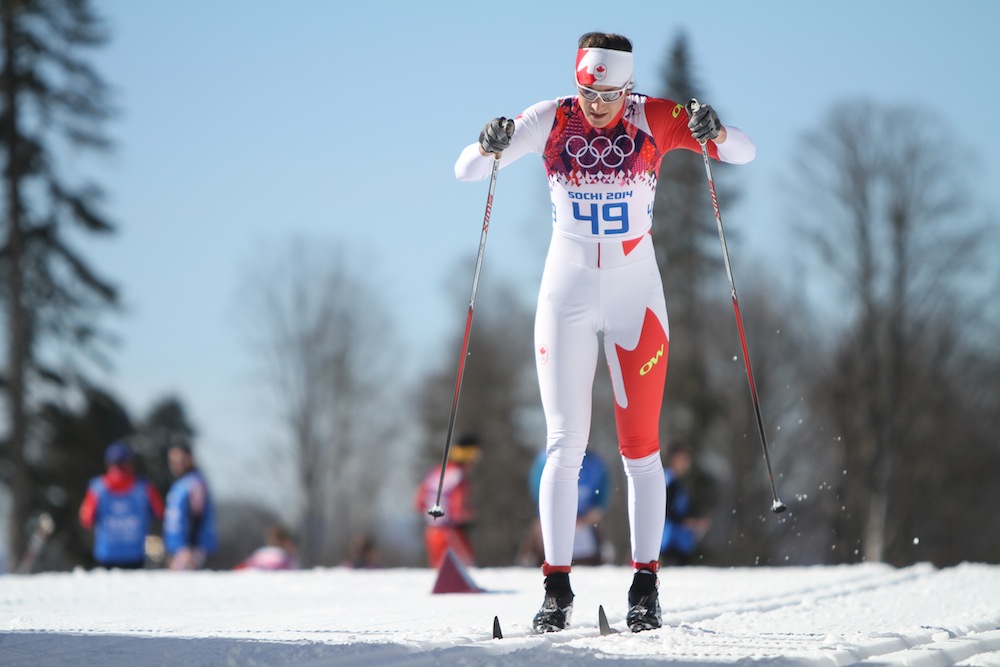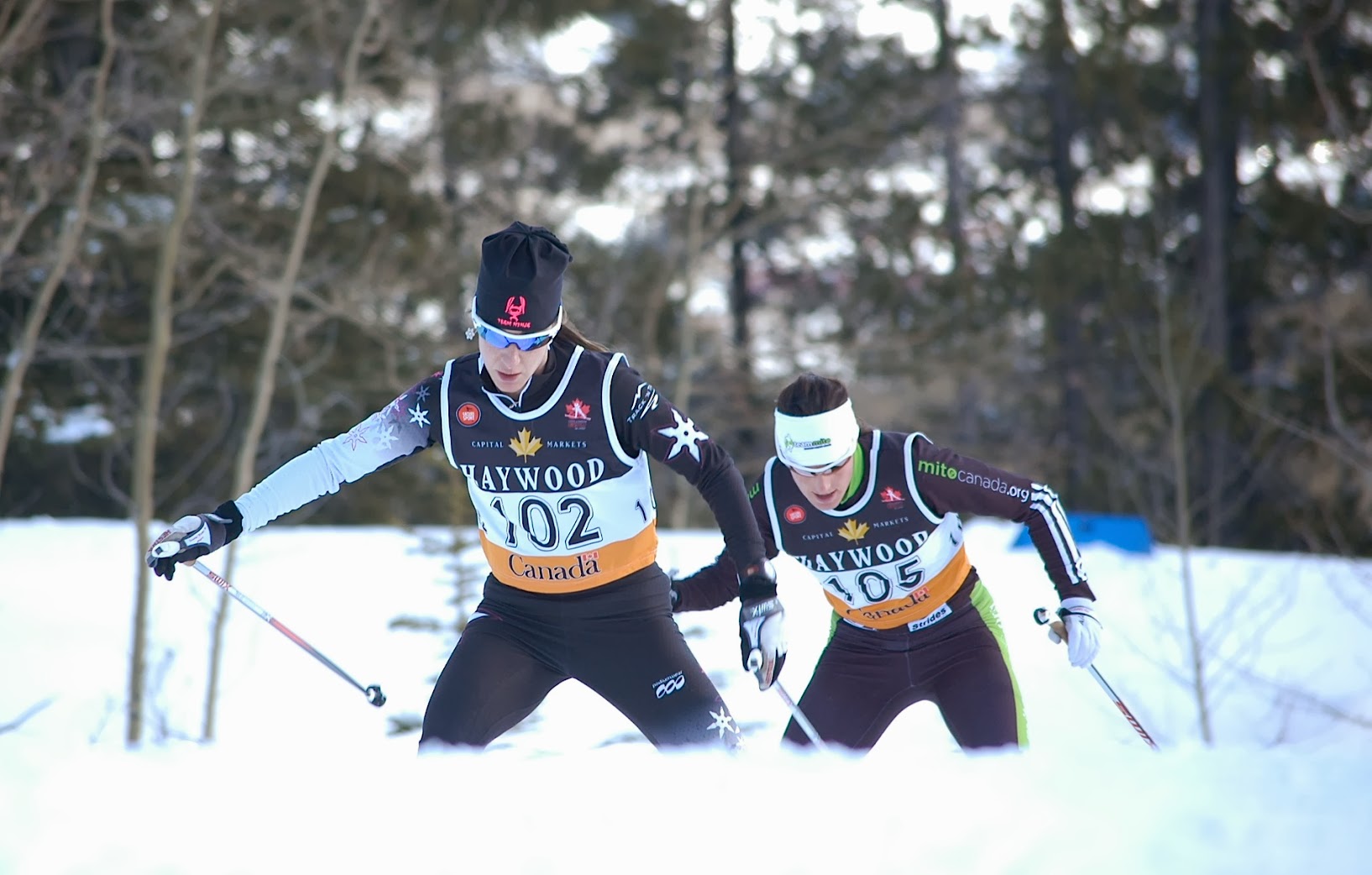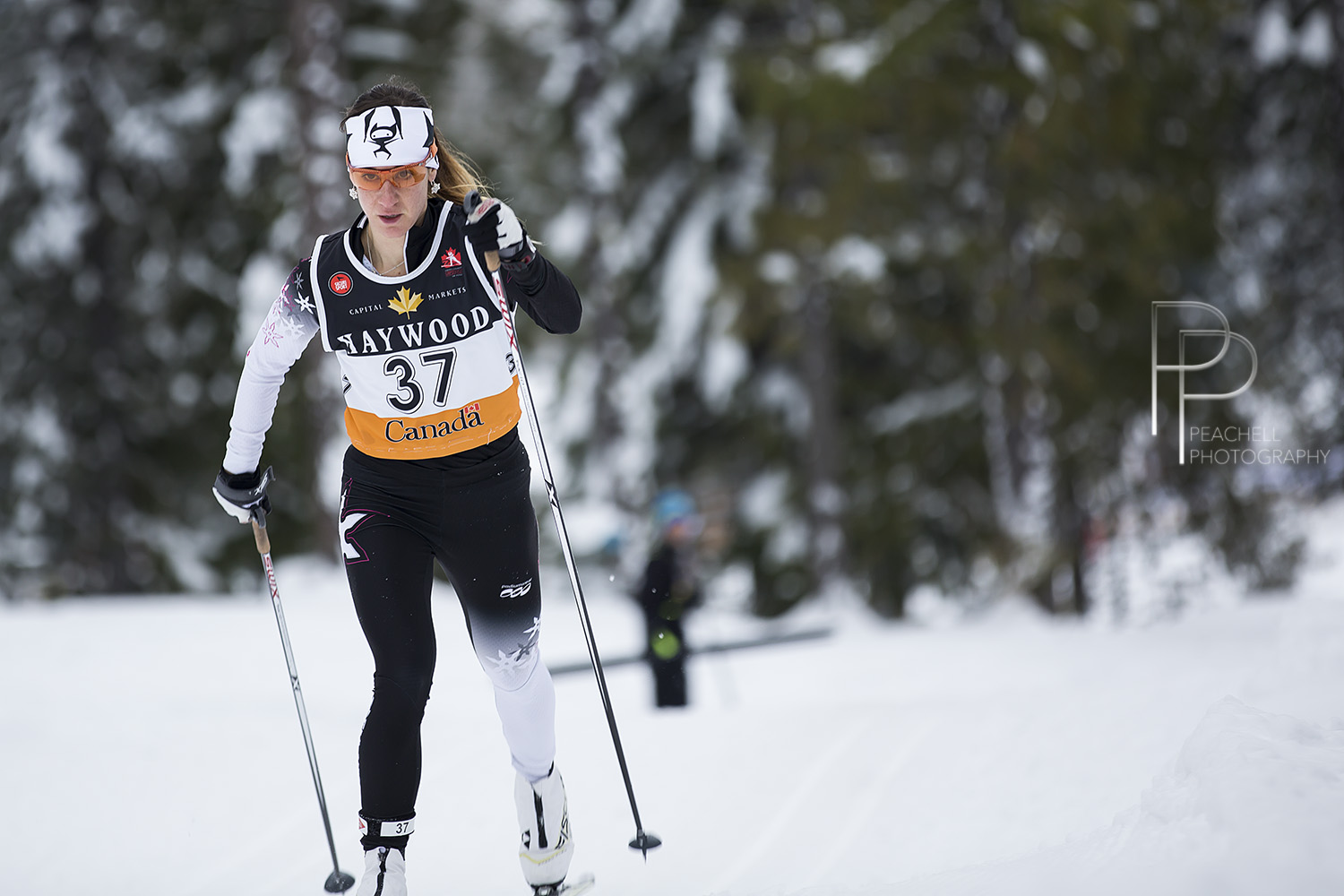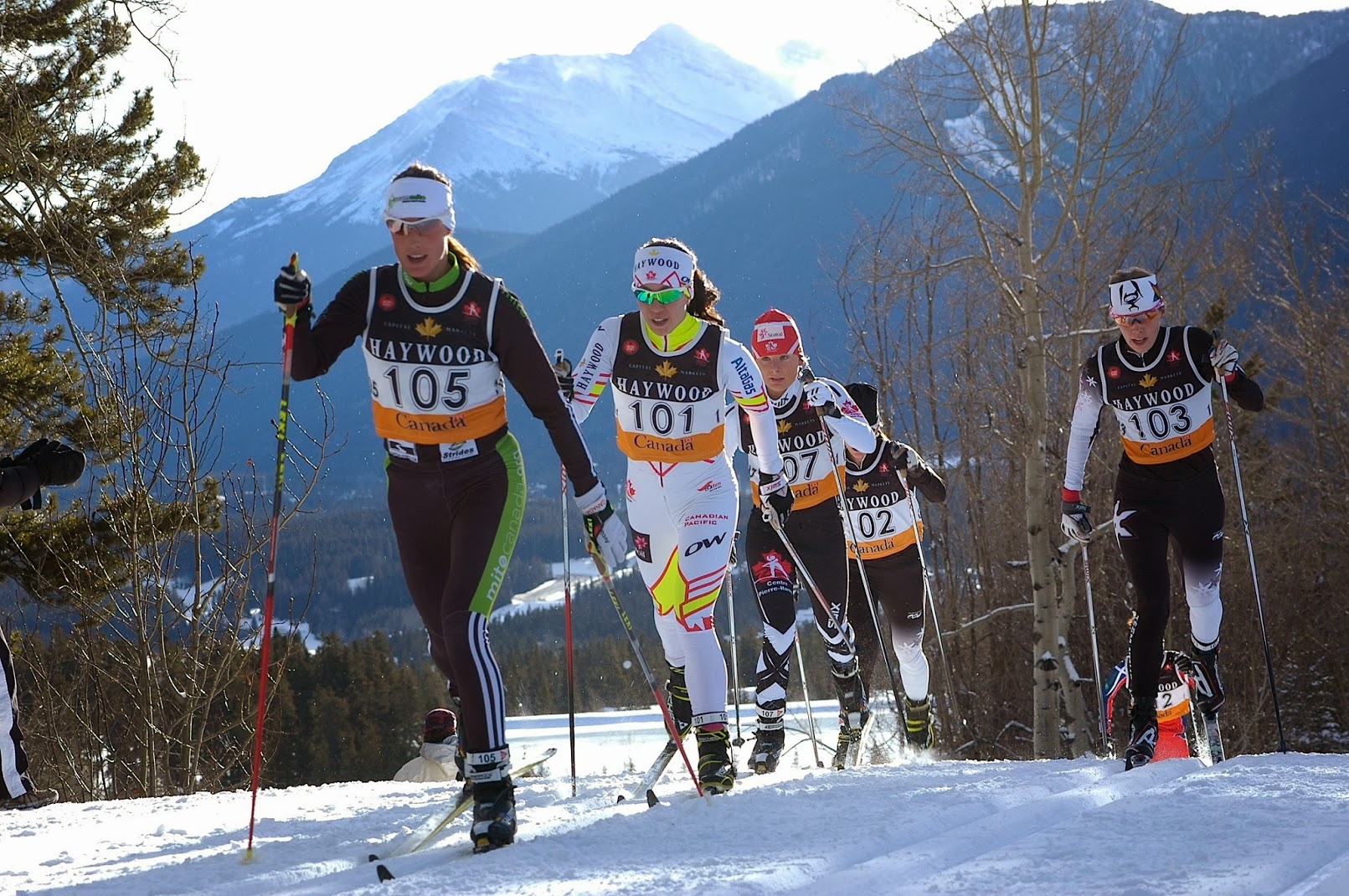
Tag: Heidi Widmer

  • Bjørgen Says She’s Done: The Latest on XC Retirements

    Bjørgen Says She’s Done: The Latest on XC Retirements

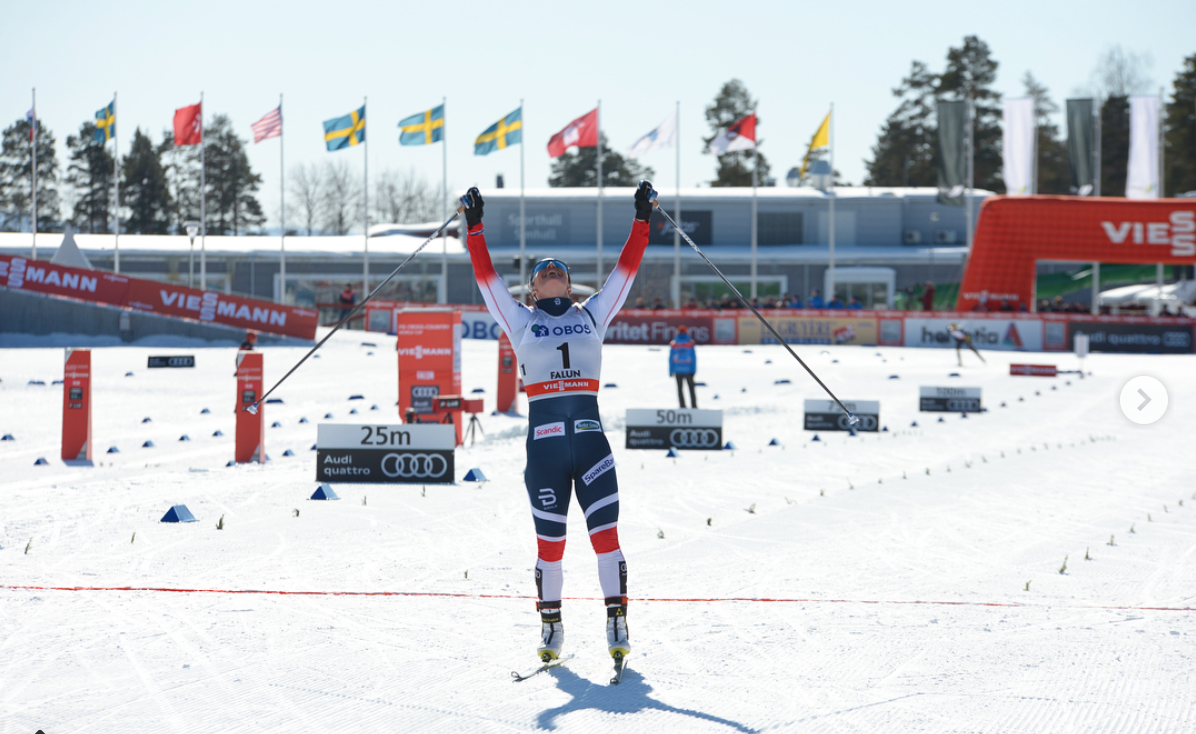
    Norway’s Marit Bjørgen celebrates her overall win in the last race of 2018 World Cup Finals, the 10 k freestyle pursuit,  on March 18 in Falun, Sweden. Bjørgen officially announced her retirement from skiing last Friday, April 6. (Photo: Svenska Skidspelen/Instagram)

    You’ve probably heard the news by now: Marit Bjørgen, the Norwegian queen of cross-country skiing, has decided to retire. The 38 year old made the announcement a week ago after winning the first race of Norwegian nationals, the 5-kilometer classic, on April 6.

    “In reality it has been a long process,” she told NRK that day, according to a translation. “I had almost decided before the competitive season started. I feel that I lack the motivation and desire required to be right there in the top. I also have a little boy at at home, who is beginning to understand more and more, that I’d like to spend time with. That time I can never have again. It’s also a little frightening. This is been half of my life. This is emotional.”

    The most decorated Winter Olympian of all time across all sports with 15 medals, five of which came at the 2018 Olympics in PyeongChang (two golds, a silver, and two bronze), Bjørgen closed her season on Saturday, April 7 with a second-place finish behind teammate Ragnhild Haga in the national 30 k freestyle in Alta, Norway.

    In all, Bjørgen accumulated 114 individual World Cup wins, 184 World Cup podiums, 18 World Championship gold medals (and 26 total at world champs), and eight Olympic golds in five Olympics, according to an International Ski Federation (FIS) press release.

    “I’m proud of what I’ve achieved in my career, but I’ve also been privileged to have been able to win top-level sports,” Bjørgen said in Norwegian team press release. “I am very much thankful to amazing team friends, teammates, coaches, medical team, service team, managers and the whole support crew that have been around me. You have a great deal of credit for my results.”
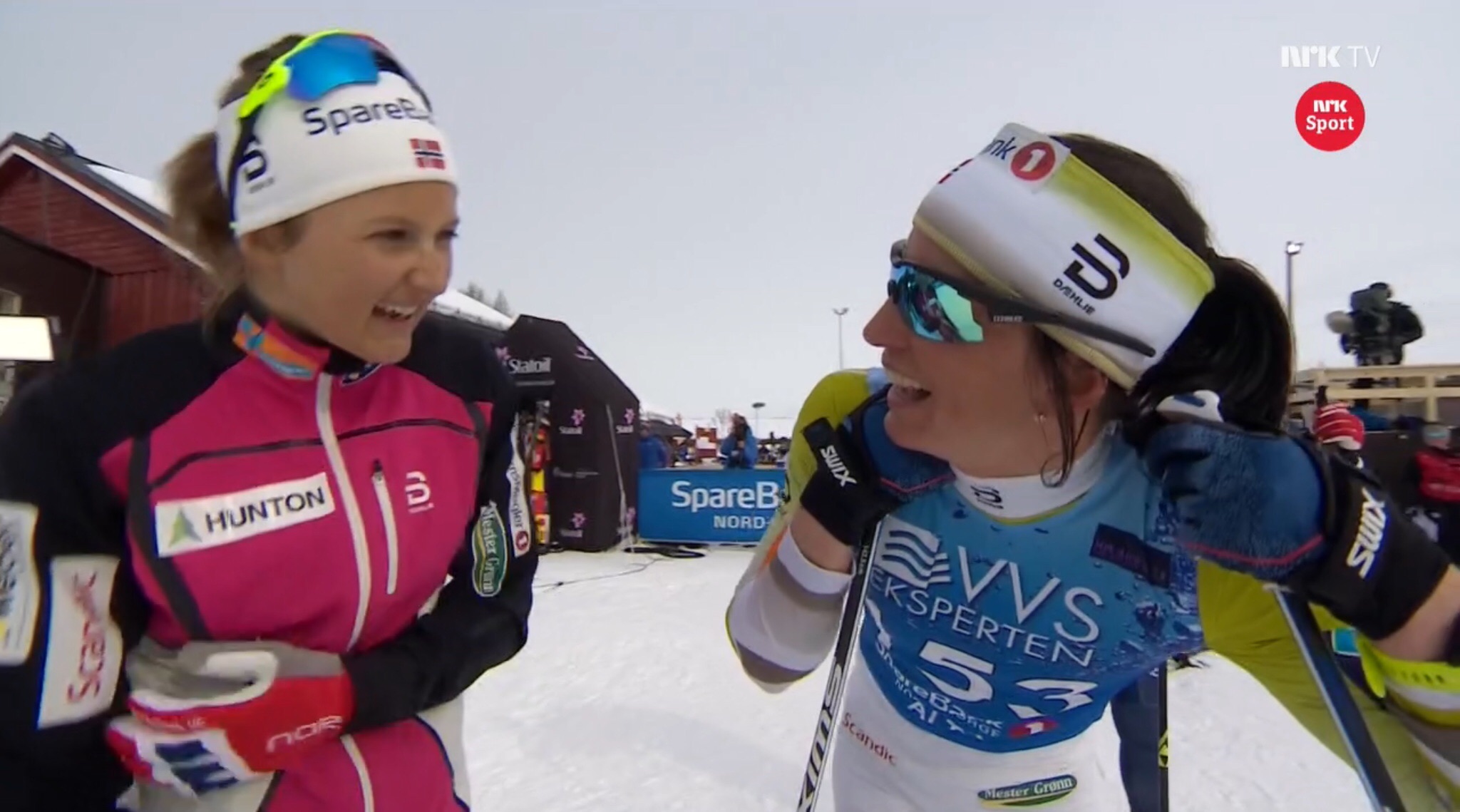
    Teammates Marit Bjørgen (r) and Ingvild Flugstad Østberg after placing first and second, respectively, in the women’s 5 k classic at Norwegian nationals in Alta on April 6. (Screenshot: NRK broadcast)

    Norway’s head coach Vidar Løfshus described Bjørgen as a “team captain” who was “always there for the girls,” according to an interview with NRK.

    He added that she was also a valuable coaching consult.

    “For me, she’s been a good sparring partner; when tough things happening internally, I often call Marit,” Løfshus said, according to a translation. “Now there will be one less coach in my team. There are a lot of good coaches in the association, but … [none that have] won so many medals. She knows more about cross country skiing then I do, Sju, Ole and Roar combined, almost.

    “We can’t let a woman like that disappeared through the back door,” he said of his desire to keep Bjørgen involved with the team. “But now we’re gonna let her exhale and enjoy her time with [her son] Marius and [partner] Fred Børre. She has not had enough time for that. And after that I know she will contribute again.”

    Bjørgen shared emotional moments with her teammates at nationals.

    “She has been a role model to me for many many years,” Ingvild Flugstad Østberg told NRK.

    “One day has to be the last,” Heidi Weng said. “We’ve had a lot of fun with Marit. She’s a legend. She has been the security blanket and the mother in the team.  It’s frustrating not to have mommy at the starting line, someone to joke around with and calm your nerves. Someone who is supportive.”

    Who else is on our list of notable cross-country retirements so far? (For our biathlon list, which should also include the additions of Norway’s Ole Einar Bjørndalen and Emil Hegle Svendsen, click here.)
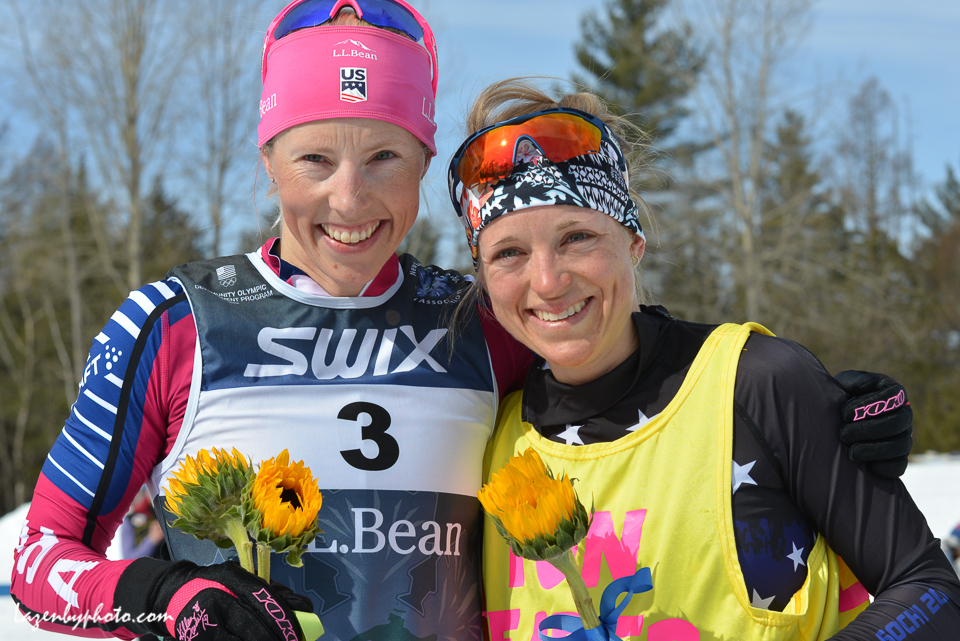
    Kikkan Randall (l) and Liz Stephen after the last race of their professional careers, the 30 k classic mass start at 2018 U.S. Distance Nationals in Craftsbury, Vt. (Photo: John Lazenby/Lazenbyphoto.com)

    From the U.S., we have U.S. Ski Team members Kikkan Randall and Liz Stephen, who said ‘so long’ to international racing, while another team veteran Andy Newell told FasterSkier that he plans to continue racing, but apart from the national team and likely outside of the World Cup circuit.

    Former national-team members Noah Hoffman and Kris Freeman have also announced their retirements from professional skiing. On the domestic side, Annie Hart has stated this was the last season of her ski career as she plans to begin law school.

    There has been talk of a few of Canada’s World Cup Team members retiring, but the only one FasterSkier has confirmed so far is Graeme Killick.

    Zina Kocher, a 2006, 2010 and 2014 Olympic biathlete who came out of retirement to make a bid for the 2018 Olympics in cross-country skiing, has stated that it’s really over this time after her comeback season.

    “As I reflect on the last 16 years that I trained full-time and competed at an international level I’m flooded with a lot of memories,” Kocher, 35, wrote in a blog post last week. “If someone had told me when I started biathlon in ’98 that I would be a ‘lifer’ (aka someone who does the sport & can’t give it up till they’re an old veteran in their 30’s), I would have laughed and said ‘yea right’. But here I am, finally saying goodbye!”

    Michael Somppi, of the Alberta World Cup Academy, is also retiring after 16 years of competitive skiing. Somppi, 29, a former member of Canada’s senior development team, won three national titles and World Cup start rights as Canada’s NorAm overall leader at the end of the 2014/2015 season.

    “I didn’t accomplish everything I wanted to in my ski career, but I am really proud of all that I did accomplish,” Somppi wrote in a blog post on Sunday. “I feel I got all I could out of myself given the circumstances I faced and the system I worked in.  Thinking back to when I started out ski racing in high school, I am amazed how far I’ve come.  ‘Started at the bottom, now we here!’  I picked up racing late and was never the most talented.  I worked hard with extreme motivation and focus to become one of the top skiers in Canada.”

    Heidi Widmer, a Swiss-Canadian skier, is also calling it a career, as is Switzerland’s Gianluca Cologna, the 27-year-old younger brother of Dario Cologna.

    “One of the highlights of my career was certainly the team sprint with my brother Dario at the Olympic Winter Games in Sochi,” Gianluca wrote in a Facebook post announcing his retirement, according to a translation. “We reached the 5th place and could take home an [Olympic] diploma. It was not only a highlight because of the 5th rank, but also because our parents were there to witness it live. I never dreamed of anything like that when I was a little boy.”
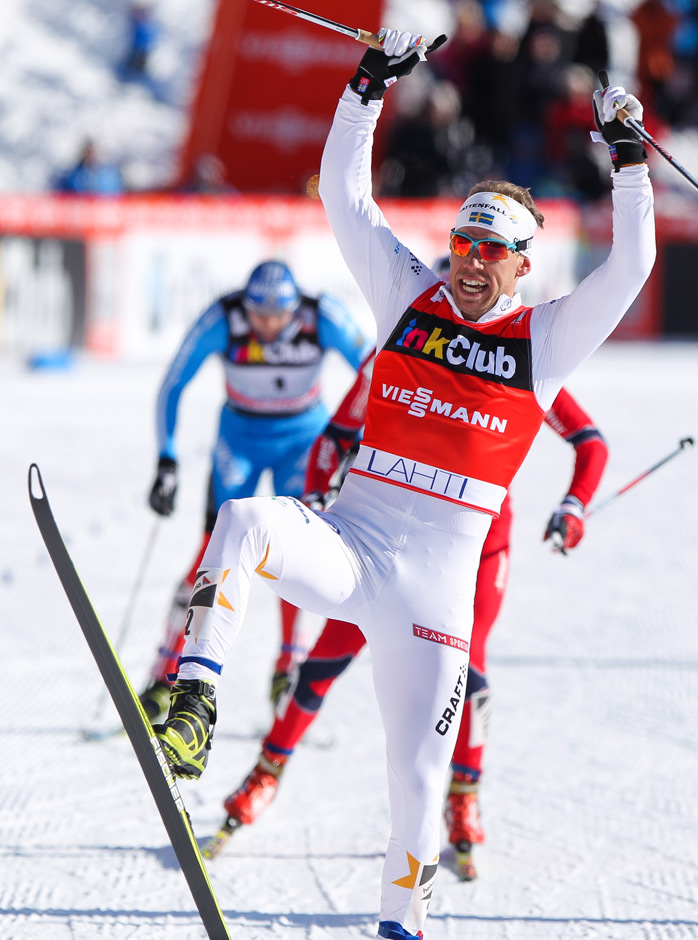
    Sweden’s Emil Jönsson celebrates a 2013 World Cup victory in Lahti, Finland. (Photo: Fischer/NordicFocus)

    The Swedish team is seeing the exit of Anna Haag, Emil Jönsson and Martin Johansson. Haag, 31, won gold with the Swedish women’s relay at the 2014 Olympics in Sochi, Russia, and has four medals from the last three Olympics. Jönsson, 32, Haag’s longtime partner and an internationally renowned sprinter, earned two Olympic bronze medals in 2014.

    From Finland, four-time World Championships gold medalist Aino-Kaisa Saarinen is stepping away from competitive skiing at age 39.

    “I have done this 20 years, what I really wanted, and I have raced my goals and even more,” Saarinen told FasterSkier after the last race of World Cup Finals in Falun, Sweden. “This skiing family is the thing what I’m going to miss the most, and of course, I love the competitions. I don’t know any other job where you can feel so high and so low, so, maybe those are the feelings right now, what I’m going to really miss the most.”

    Poland’s 35-year-old Justyna Kowalczyk, a two-time Olympic champion and two-time World Champion, has announced her retirement as well.

    Then there’s Aurore Jean, 32, who became the second French woman to reach the cross-country World Cup podium with a second-place skate-sprint finish in 2013.

    And last but not least (for now), we have heard news of Russia’s Alexander Legkov — the controversial 2014 Olympic champion who was not allowed to compete at this year’s Games because of Russia’s systematic doping in Sochi — officially retiring.

    “You have all been with me in the course of many years of my professional career and I truly love you all,” the 35-year-old Legkov said at a sports tournament in Khanty-Mansiysk, Russia, on April 6, according to the Russian News Agency. “… I will see all of you later, not at international tournaments, but perhaps at domestic tournaments or marathon. I am announcing the end of my international sports career.”

    At the Sochi Games, Legkov won the 50 k freestyle mass start and took bronze with his teammates his the men’s 4 x 10 k relay. He ended his ski-racing career on March 3 in Rybinsk, Russia, where he placed fourth in the 50 k freestyle Demino Skimarathon.

    Stay tuned for more retirement announcements as they are made public.
  • World Cup Windup: Switzerland

    World Cup Windup: Switzerland

    Switzerland’s Dario Cologna celebrates third in at the top of the final climb in the last stage of the 2017 Tour de Ski on Sunday in Val di Fiemme, Italy. (Photo: Fischer/NordicFocus)

    Welcome to World Cup Windup, where we check in with the top-10 teams from last year’s FIS Cross Country World Cup tour before the season starts with the Ruka Triple in Kuusamo, Finland, on Nov. 24.

    SWITZERLAND

    Overall in Nations Cup Last Year: Sixth

    Women’s Ranking 2016/2017: Seventh

    Men’s Ranking 2016/2017: Seventh

    Who’s Back:

    Olympic gold medalist Dario Cologna, who finished seventh in last year’s World Cup standings and third in the Tour de Ski; Nathalie Von Siebenthal, eighth in the Tour de Ski; Laurien Van Der Graaf and Jovian Hediger, with two sprint top-10’s each; Nadine Faehndrich, third in the U23 standings; Seraina Boner, the long-distance queen who helped the Swiss women finish seventh in the World Championships relay, and Toni Livers, also sometimes a marathon racer but also with a World Cup top-ten last season; Jason Rueesch, Jonas Baumann, and Curdin Perl, who teamed up with Cologna for fourth place in the World Championships relay.

    Who’s Missing:

    Switzerland’s Nathalie von Siebenthal racing the second-fastest third leg split in the women’s 4 x 5 k relay at 2017 World Championships on March 2 in Lahti, Finland. Her team finished seventh.

    No notable retirements.

    Pre-Season Results:

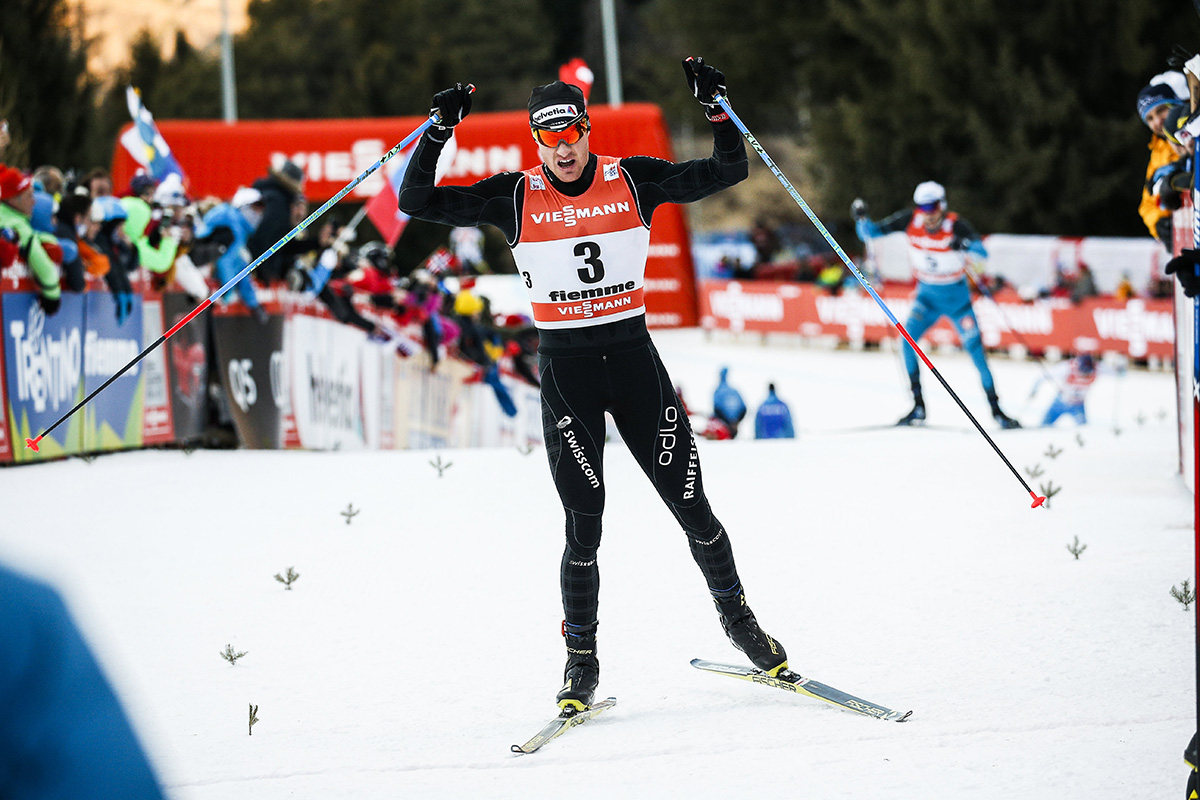
    The Swiss team strutted their stuff on home soil in Davos earlier this month, with Dario Cologna winning a distance race against the Italian and German teams and Laurien Van Der Graaf picking up a win in the sprint.

    Cologna also finished third behind Evgeny Belov and Sergey Ustiugov in a 10 k skate in Gällivare, Sweden, and Nathalie Von Siebenthal finished fifth in the 5 k skate. One day later, Cologna was fifth in a 15 k classic behind a Russian podium sweep. Then on Sunday, Nadine Faendrich made the sprint final where she finished sixth.

    Best Social Media Presence:

    On Dario Cologna’s Facebook page, he posted all summer a series of nine videos of the “Cologna Challenge”, a series of sometimes-humorous competitions between himself and his brother Gianluca Cologna.

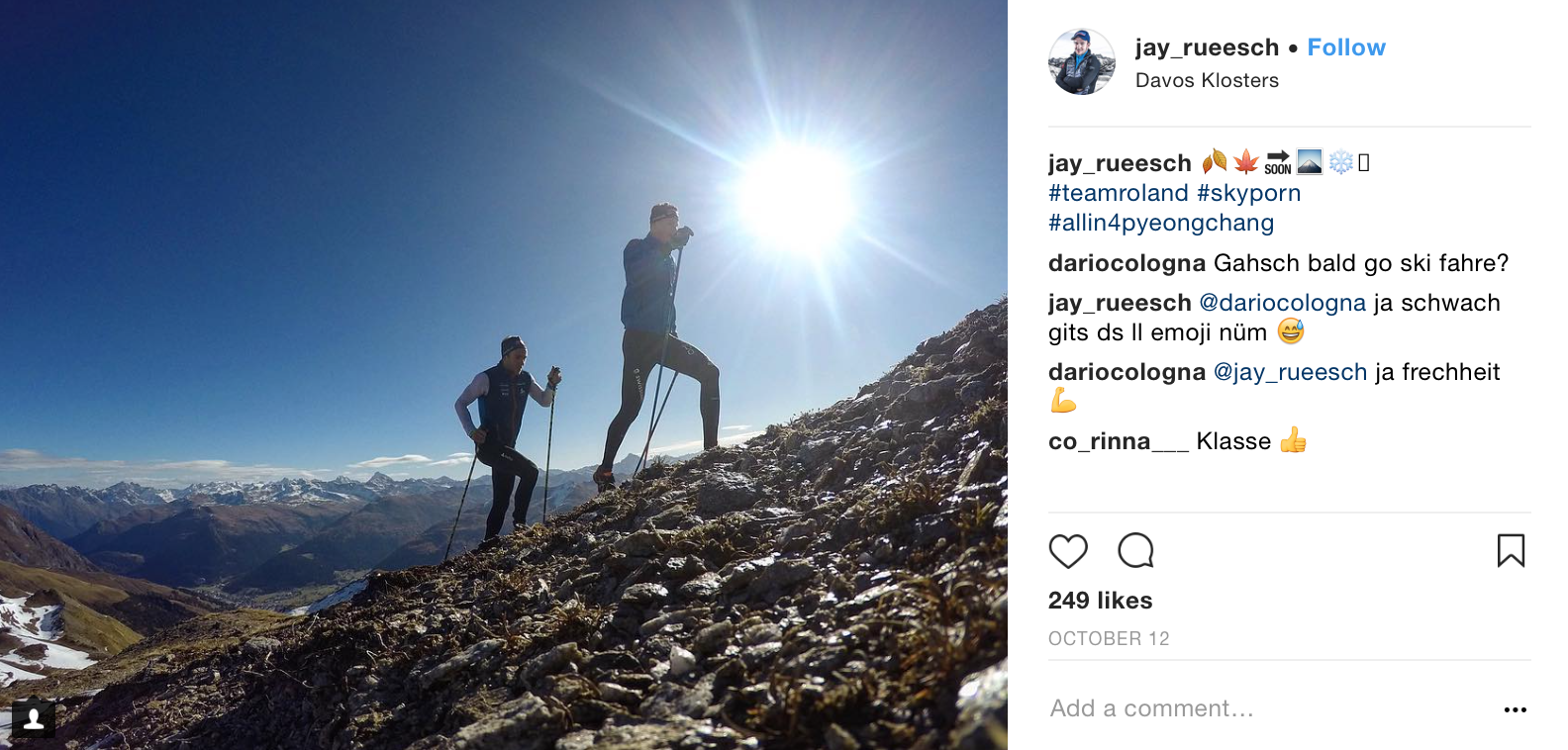
    On the men’s team, Jason Rüesch also has a great Instagram feed.

    Nadine Faehndrich occasionally posts training videos on her Facebook page. Of the three women who scored World Cup points last season, only Laurien Van Der Graaf is on Instagram.

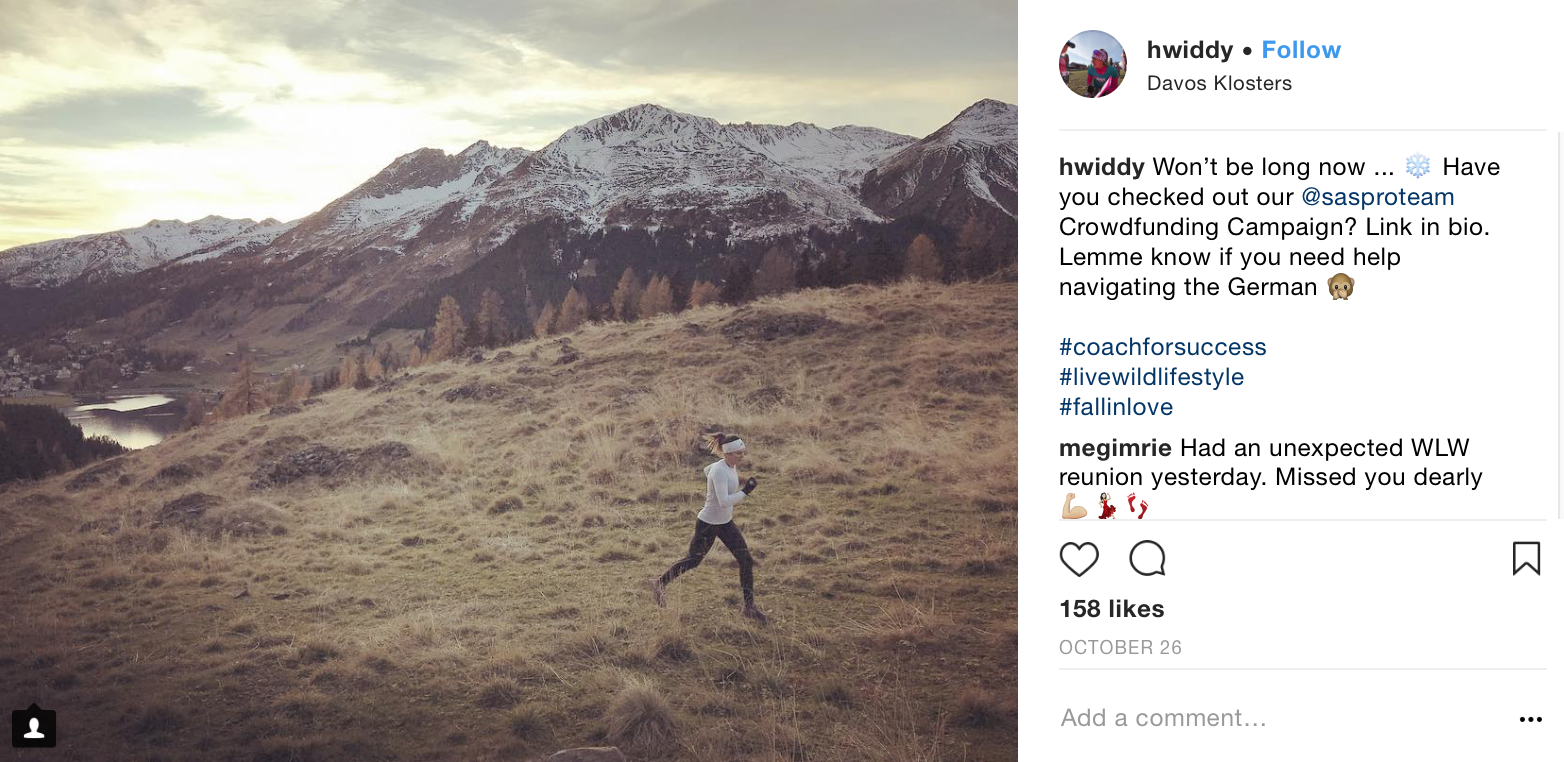
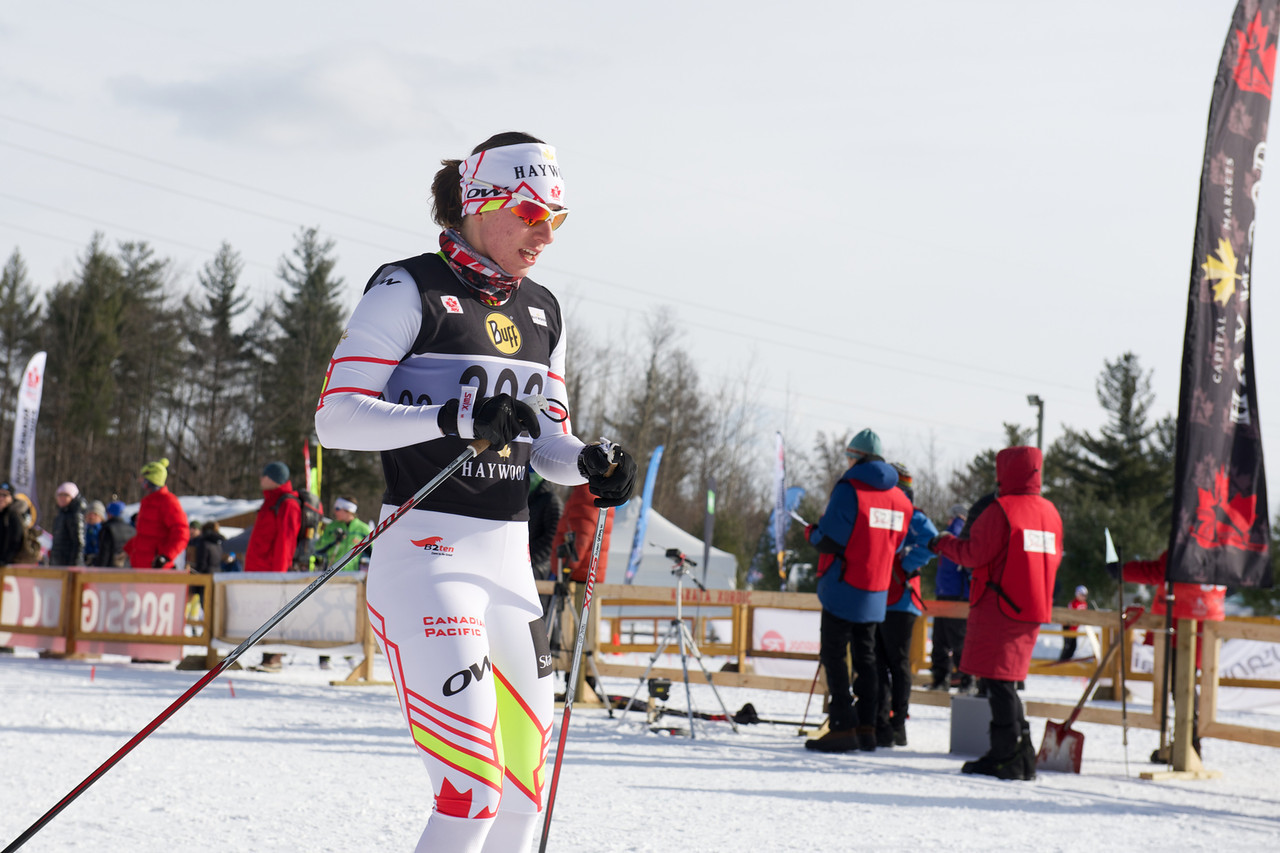
    And of course, there’s also Swiss-Canadian Heidi Widmer, who is a member of the SAS Pro Team.

  • Wednesday Workout: Mindfulness with Heidi Widmer

    Wednesday Workout: Mindfulness with Heidi Widmer

    Heidi Widmer relaxes in Val Verzasca in Ticino, Switzerland. The Swiss-Canadian skier shares tips for how to use mindfulness to improve athletic performance. (Courtesy photo)

    Swiss-Canadian skier Heidi Widmer found herself on a tough stretch of road, she recently wrote on her blog. The road in question was a huge hill outside of Torsby, Sweden. To get up it four times, she “embraced the grind”. “The moments where I feel like I juiced the most potential, are the ones where my thoughts and actions were dedicated to executing the task at hand,” the 26-year-old Banff native wrote.

    One of the ways she works towards getting that potential is practicing mindfulness. The term is is something of a bandwagon these days, with numerous apps and other monetized incentives to be more mindful.

    But more simply, mindfulness just means being fully present in the moment and aware of oneself. According to the Merriam-Webster dictionary, it’s “the practice of maintaining a nonjudgmental state of heightened or complete awareness of one’s thoughts, emotions, or experiences on a moment-to-moment basis; also :  such a state of awareness.”

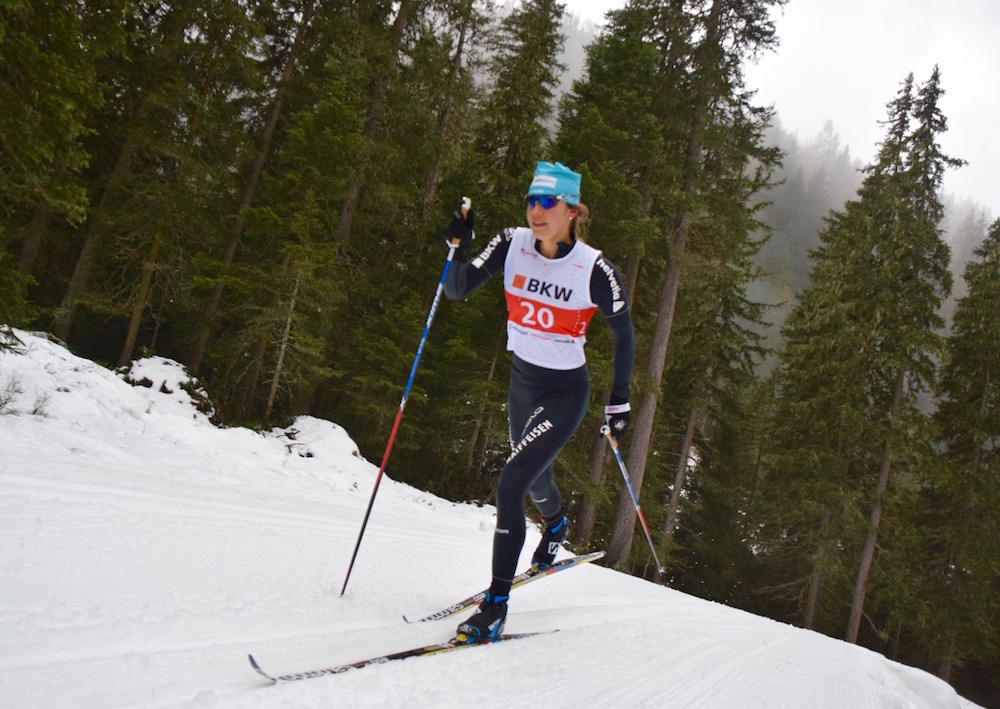
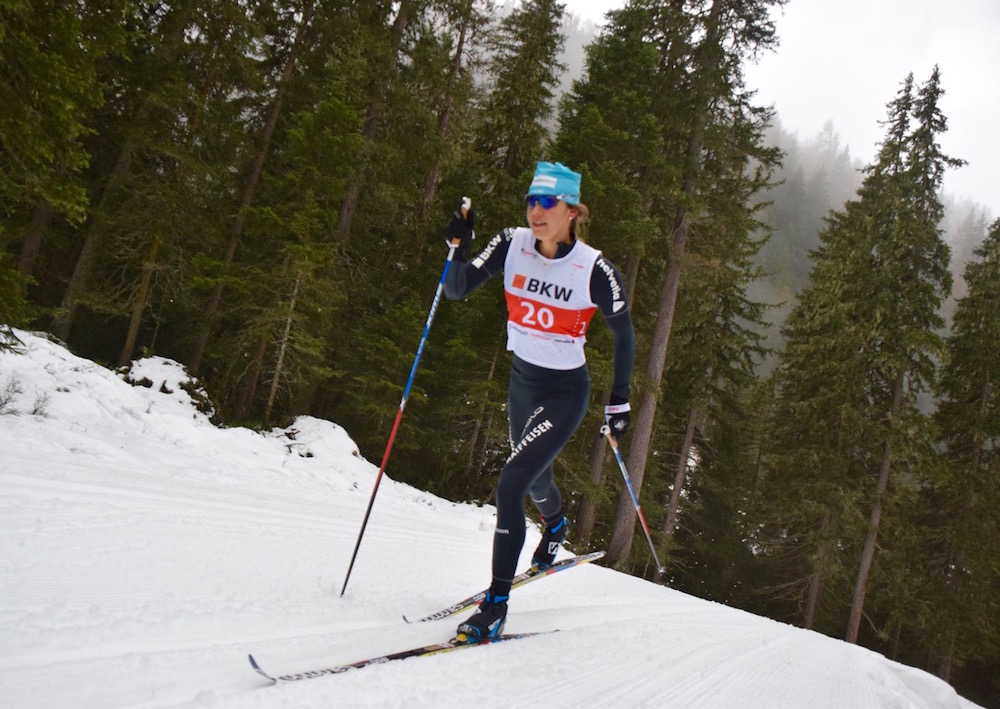
    Heidi Widmer, who lives and trains in Switzerland, racing in a classic preseason race in Davos, Switzerland, in 2016. (Photo: NORDIC-ONLINE.CH)

    Widmer first started paying attention to mindfulness as a system of thought when she was in crisis.

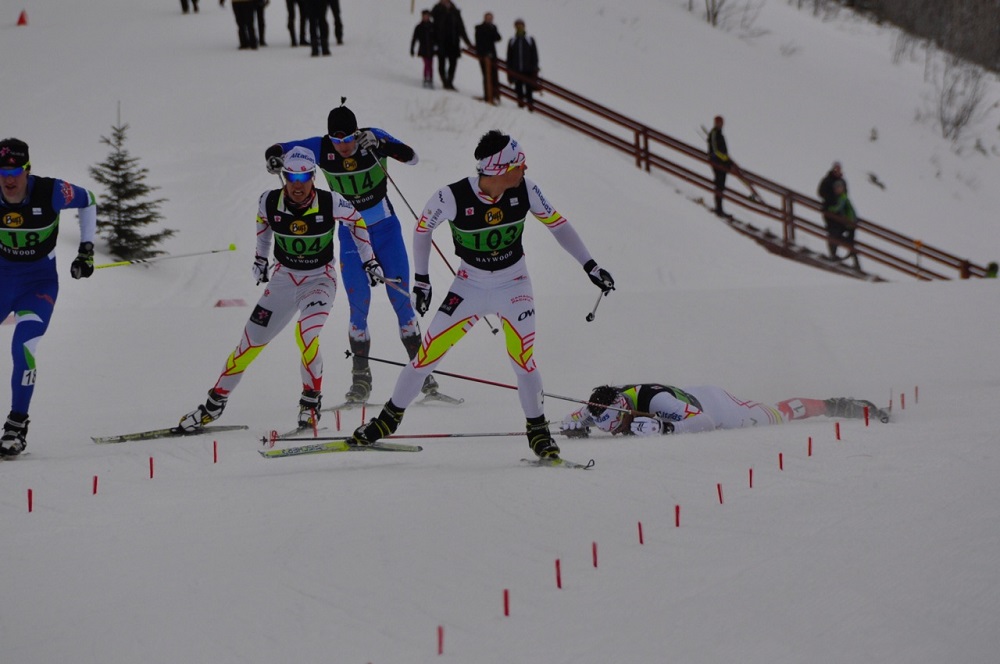
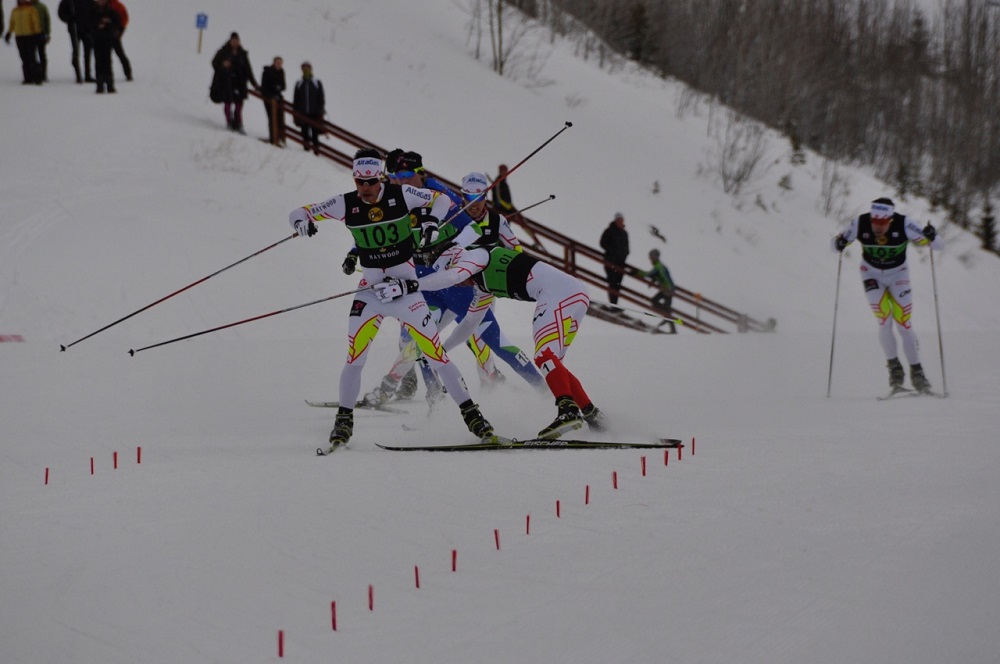
    In 2013, she collided with fellow Canadian racer Andrea Dupont in a NorAm sprint in Thunder Bay, Ontario, and got a concussion. Later that year she crashed while rollerskiing and concussion symptoms returned. She ended up taking several weeks off training.

    “When I had a concussion (both in the fall of 2010 and again in 2013), I listened to mindfulness videos on YouTube,” Widmer wrote in an email. “Those were stressful and uncertain times for me, because I didn’t know what was causing my symptoms nor how to get better. The videos helped guide a mindfulness practice to relax and recover. So, I guess that’s how I first showed interest in mindfulness and meditation.”

    Fast-forward through 2014 — when she became an Olympian — and the subsequent years, where she moved to Switzerland, claimed her dual nationality, joined the Swiss National Team, and is now part of a long-distance pro team, SAS ProTeam.

    Swiss-Canadian skier Heidi Widmer finds a quite place in Switzerland’s Valle Verzasca. (Courtesy photo)

    Mindfulness still helps.

    “Using mindfulness helps me create a mindset that is focused, open to learn and expand,” Widmer explained. “In training, that could transfer into focusing on technique, going out to push out some intervals or letting yourself go to enjoy a mountain run. For racing, it clears up space in my mind to focus in on the race at hand and creates a better body awareness. I have learned that by observing my thoughts, body language, how I am feeling and my response to different training inputs, for example, is not just important for me as an athlete, but as a person. It slows the time down and breaks the bigger goals into smaller moments.”

    Many athletes will have worked on one or more of those goals in different ways. For Widmer, doing some simple, calming breathing exercises every day helps. She took us through some of the steps to getting our own mindfulness routine going.

    • Figure out what works for you. “I’ve had a couple of different recordings, where you sit there and listen with headphones,” Widmer wrote of her initial explorations into mindfulness. “Some of them are done lying down and they’re these guided meditations or mindfulness. I think they work well, but I have found even more benefit from being the initiator and the evaluator. I am observing where my thoughts are going (or not going for that matter) instead of it being a guided process… There are so many options online and apps available, but if it’s a daily practice that you’re after, just try sitting in a comfortable position in a private space and just breathe. No head phones, turn your phone off and if you’re on a mountain or near the ocean, all the better.”
    • It doesn’t have to be high-tech. “Nowadays, I work with sport psychologist John Coleman, and we talk a lot about incorporating daily practice and energy management,” Widmer explained. “There are a lot of videos and apps (friends speak highly of ‘Headspace’), but the most valuable and accurate representation of how I’m feeling is just counting my breaths, no technology needed. It’s very transportable and versatile.”
    • Widmer’s five-minute go-to: “Each even number is a breath in, and the odd numbers are a breath out. I count from zero up to ten and then back down again. Deep belly breaths through my nose, observing my thoughts and always ending with a smile.”
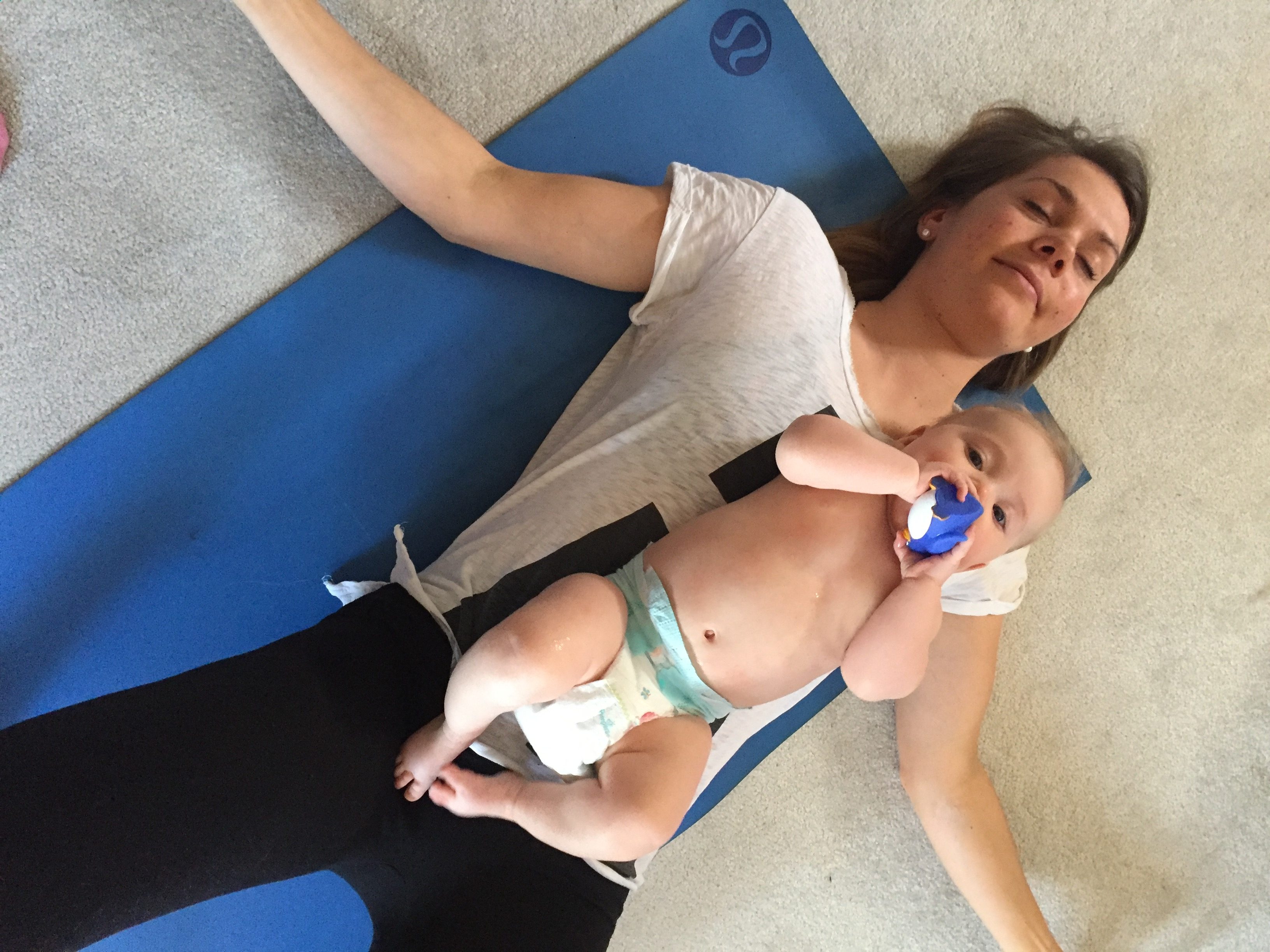
    Don’t be afraid to let others in on your mindfulness routine, says Heidi Widmer, pictured here with her niece Evia. (Courtesy photo)
    • Make it a routine. “Doing it at a similar time and place each day helps create a patterned habit,” Widmer wrote. “I’m no expert, monk or yogi, but I am the weird girl who embraces sitting by herself in the morning to breathe. I try to do it first thing in the morning for about five minutes.”
    • Don’t hide. Rather than letting interactions with other people rip you out of your habits, get them familiar with your routine, too. Out of the universe of things people do, they probably won’t think it’s that weird. “It is definitely difficult to keep a schedule at training camps or when I was in Canada and my niece was the only thing I wanted to concentrate on — She is THAT cute,” Widmer wrote. “However, filling people in on what your doing (as in teammates, coach, family or friends) helps to keep me on track. It’s the same with incorporating any habit. The more you do it, the easier it becomes.”
    • Even on busy days, stay on track. “If there are days (eg. travel days or tight living quarters at training camps) when I am flustered and just forget to do it in the morning, I get to the end of the day and think ‘whoa, cray. Where did the day go?’” Widmer wrote. “Having those few minutes in the morning to just sit, and be still is so powerful. Acknowledging if I am focused, calm and energised or if I have low energy or don’t feel great in training. Observation is the key.”
  • Widmer Waits for World Cup Window, Shines With Swiss Status

    Widmer Waits for World Cup Window, Shines With Swiss Status

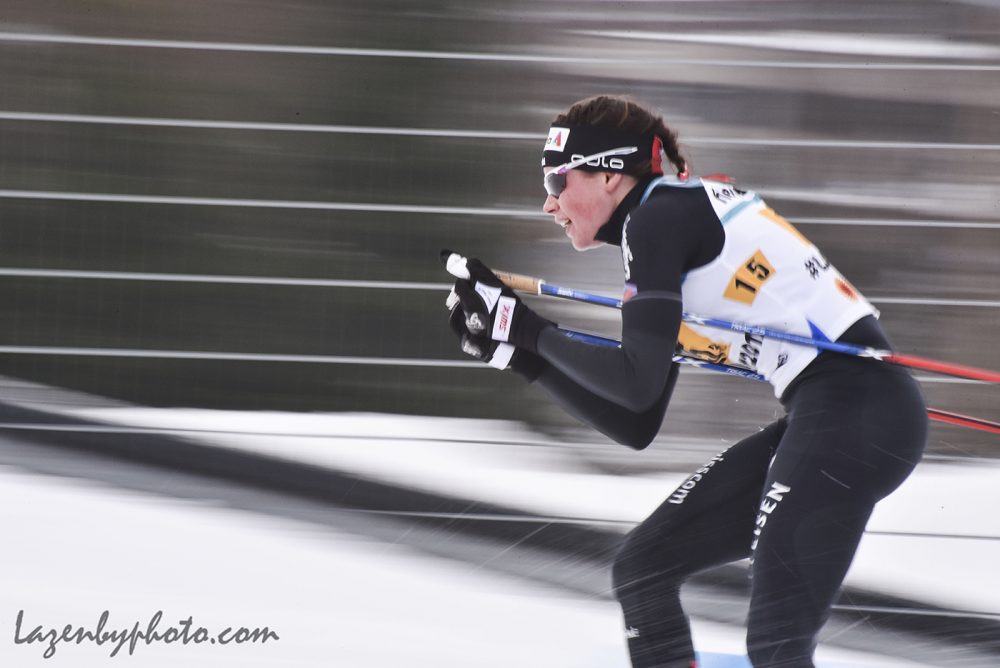
    Heidi Widmer, who lives and trains in Switzerland, racing to 15th in the women's 8 k classic preseason race on Nov. 19 in Davos, Switzerland. (Photo: NORDIC-ONLINE.CH)
    Heidi Widmer, who lives and trains in Switzerland, racing to 15th in the women’s 8 k classic preseason race on Nov. 19 in Davos, Switzerland. (Photo: NORDIC-ONLINE.CH)

    In 2015, Swiss-Canadian skier Heidi Widmer moved from Canada to Switzerland. In 2016, she moved between the World Cup and the lower-tier Alpen Cup. Now she’s trying to figure out what’s next, while left rueing the difference that four-tenths of a second can make.

    Widmer, now 25, skied strongly throughout the 2013/2014 season. She represented Canada in three races at the Sochi Olympics, won her first Canadian national championship, and won the season-long NorAm sprint title (Canada’s Continental Cup). But 2014/2015 was in many ways a step back for Widmer; her results suffered, and she failed to earn World Cup or World Championship starts.

    Heidi Widmer, a former Alberta World Cup Academy and Canadian national team member, racing a skate sprint at 2014 Canadian Olympic trials. (Photo: Angus Cockney)“I was under recovered” throughout that season, Widmer told FasterSkier in May 2015, “and when your body is run down, it leads to other problems such as low iron and ferritin as well as sickness.”

    Widmer was not re-named to the Canadian national team, but wanted to continue with high-level racing. Thanks to a Swiss-born father, and a sympathetic ally in coach Christian Flury (currently in Switzerland, but formerly with Widmer’s Canadian club, the Alberta World Cup Academy), Widmer successfully embarked on the process of using her dual citizenship to begin racing for Switzerland.

    Positive results soon followed. Widmer gained World Cup starts at several weekends in the 2015/2016 season, qualifying for the heats in two out of five freestyle sprints she entered. She consistently placed in the teens on the Alpen Cup, and on the podium in Swiss Cup races. The move to trade the red-and-white maple leaf for the white-and-red Swiss cross seems to have served her well.

    But vexillology aside, her most recent results are still somewhat vexing. Widmer finished 32nd in last Sunday’s skate sprint qualifier in Davos, 0.39 seconds away from making the heats and earning World Cup points. (Sprinting can be a cruel mistress: Widmer’s 32nd in qualifying placed her ahead of, among many others, Norway’s Heidi Weng, Ida Ingemarsdotter of Sweden, and American Kikkan Randall. All three have World Cup sprint wins on their résumés. Randall and Ingemarsdotter have World Championships sprint medals.)

    Objectively speaking, that’s almost nothing, the difference between 5.95 seconds back from the qualifying winner, Jonna Sundling, and 6.34 seconds back. The literal blink of an eye. Less time than it takes a Major League fastball to reach home plate. But when it comes to World Cup-level racing, tiny margins can have a big impact.

    “It’s really hard to say now” whether or not start rights for this year’s Tour de Ski are in her future, Widmer told FasterSkier in an in-person interview shortly after her qualifying effort. “Had I qualified today it would have been an easy decision, but who knows.”

    Widmer added that she had “no idea, to be honest,” where she would be racing this coming weekend.

    “I usually play my season one step in front of the other,” she said. “My first priority is to process today and if I am granted the opportunity and the privilege next weekend in La Clusaz for the relay I would be super stoked; I know that we want to start a team in the relay there so that is unfortunately not in my hands. If I don’t go there then I will be in Goms [Switzerland] again for COC Cup [Europa Cup], which is also super-good competition. So yeah … those decisions are above my reach. And then hopefully a Tour de Ski start.”

    Widmer was disappointed with her result in Davos, but clear-eyed about the implications of 0.39 seconds at this level of competition. “[I] had really good feeling in my legs today,” she said in Davos. “I lacked that last little [bit]. 99.9 percent was there, but I lost a little; a little snap was missing. So I need to be really happy with what I put on the line today, but obviously super disappointed at the same time.”

    She continued, “It’s the name of the game that we sign ourselves up for that all the ladies here are obviously super strong, and to know it can go one way” or the other. “Last year,” Widmer recalled, she was “so close on the other side of the fence in 29th qualifying … and I think there were more ladies on the start line this year, and that’s what we want to see.”

    Stepping back to consider her season as a whole, Widmer was pleased that her training “has been really good.”

    Heidi Widmer (c) with Swiss skiers Nathalie von Siebenthal (l) and Christa Jäger after rollerski intensity on Stelvio Pass in Switzerland in June 2013. (Courtesy photo)She added that she has found a challenging and complementary training group in her fellow Swiss skiers.

    “I can say confidently that I have never trained so hard in my life and never challenged myself so much. Training with Nadine Fähndrich and Nathalie von Siebenthal is an incredible opportunity, those girls train really hard and have an incredible work ethic and professional take on the game. … We are all completely different personalities and we gel together really well. I think we challenge each other in ways that the other person can’t take the lead in and vice versa.”

    In November, Widmer was getting in some early racing on farmed snow in Davos. She said at the time that her performance was “FAR off the mark!” and that “the fitness is not where it should be.” By early December, things had come around somewhat, and Widmer was winning the season’s first Swiss Cup race in Goms, posting the top qualifying time by 1.79 seconds in a three-minute sprint. But then came last weekend in Davos, and those missing 0.39 seconds.

    “We want it to be a close game,” Widmer graciously told FasterSkier immediately after her just-short qualifying effort, “because we always – we all work so hard to be here.”

  • Widmer Punches Her Ticket to Swiss National Team

    Widmer Punches Her Ticket to Swiss National Team

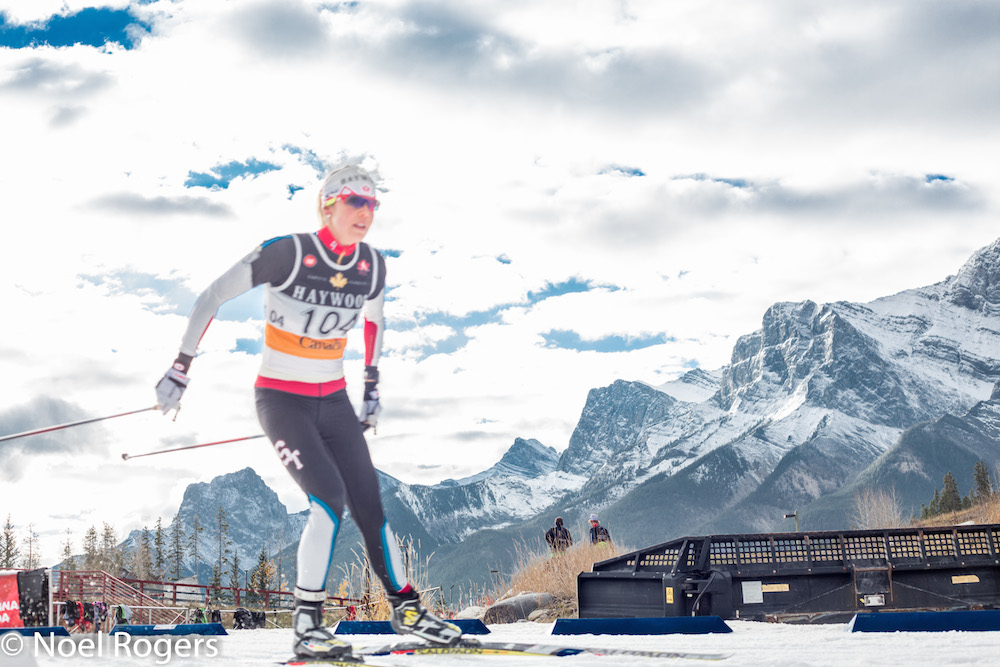
    Heidi Widmer racing to ninth in the women's freestyle distance race at Frozen Thunder on Oct. 27 in Canmore, Alberta. (Photo: Noel Rogers/Bow Valley Photography)
    Heidi Widmer racing to ninth in the women’s freestyle distance race at Frozen Thunder in October in Canmore, Alberta. (Photo: Noel Rogers/Bow Valley Photography)

    Canadian cross country skier Heidi Widmer had a pretty good 2014: just before turning 23 at the end of February, she represented her country at her first Olympic Games in Sochi, Russia. A few weeks later she won her first national championship, in the 10 k skate in Corner Brook, Newfoundland, and clinched the NorAm sprint title as well as second place in the NorAm overall standings.

    Things seemed to be going great guns, but Widmer didn’t have such a stellar 2015: she was sick, suffered from low iron, and didn’t have good enough results at Canadian trials races to make early- or mid-season World Cup tours. She also didn’t get to compete at World Championships.

    Widmer had a trump card in her pocket, one that gives her more options than the average athlete: she is a dual citizen. With a Swiss passport, she had already spent a month in Switzerland in the summer of 2013 training in Davos. That was partly facilitated by Christian Flury, a Swiss coach who had worked at Alberta World Cup Academy, Widmer’s club, for two seasons. In 2013, Flury was coaching the Swiss U24 team and talked to FasterSkier about development in the country.

    Thanks partly to the ties she had forged earlier, Widmer decided mid-winter to spend some time training in Davos and get her European racing fix with the Swiss at some OPA Cup competitions. She later rejoined the Canadians for her only World Cups on the year, finishing 58th in a sprint in Lahti, Finland.

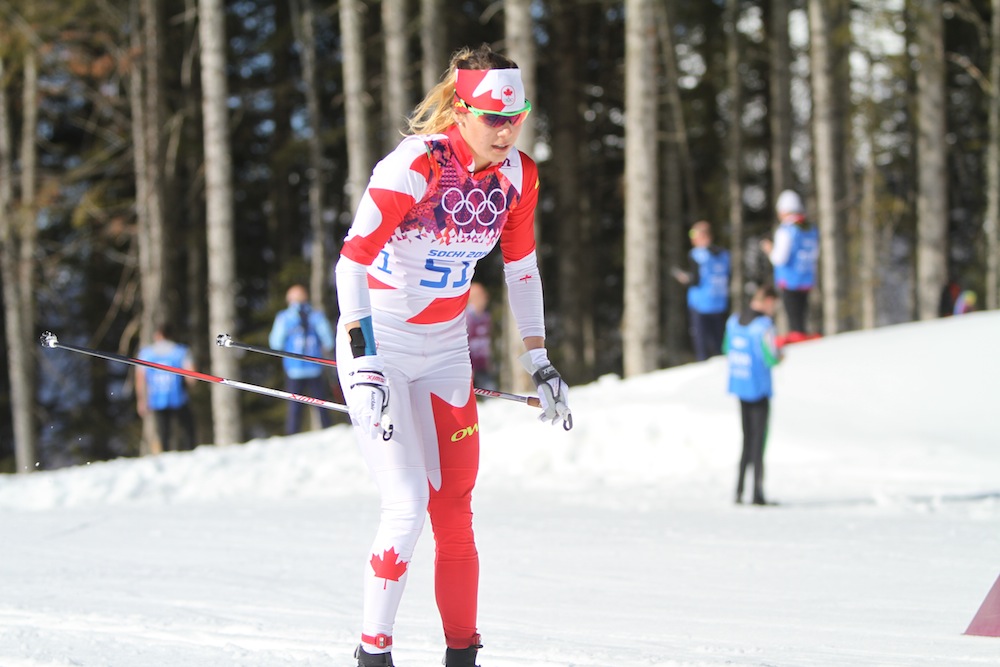
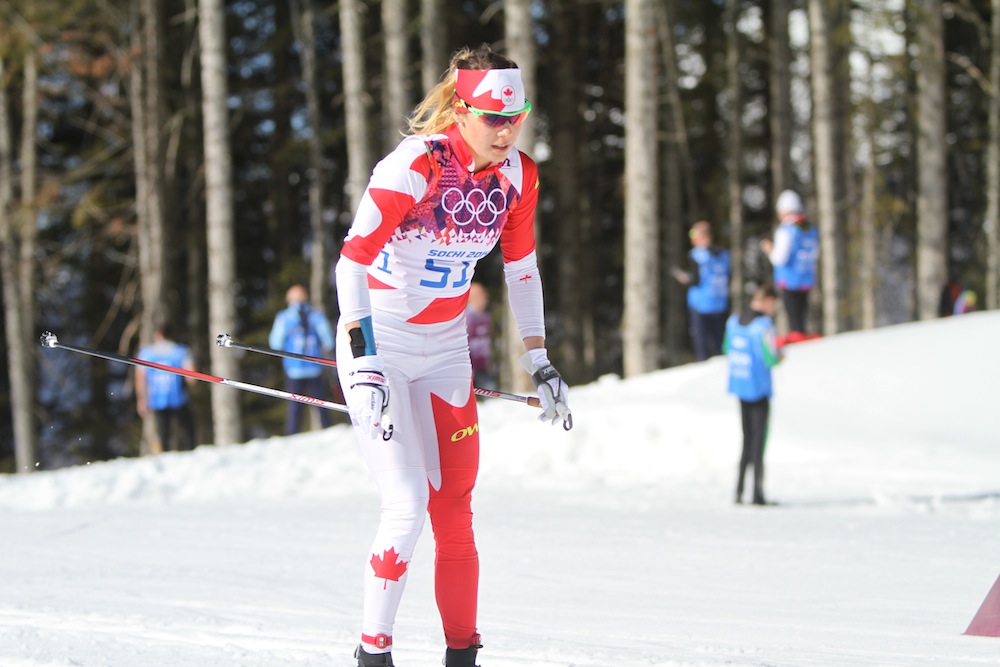
    Heidi Widmer racing to 57th in the 10 k classic individual start at the 2014 Olympics in Sochi, Russia.
    Heidi Widmer racing to 57th in the 10 k classic individual start at the 2014 Olympics in Sochi, Russia.

    Widmer was not re-named to the Canadian national team, and instead found that she had an option with the Swiss. Flury, a coach she enjoyed working with before, is now helping out with the senior national team. After thinking long and hard, she has decided to move to Switzerland and compete there, hoping that the change will also help her rebound from a tough training and racing year.

    We caught Widmer over email as she prepares for her move.

    FasterSkier: You wrote on your blog that your season was pretty disappointing. Have you figured out any of the things that might have contributed to you missing your performance goals?

    Heidi Widmer: It is never easy to pin point exactly one thing, but my poor performance was likely linked to a combination of many factors. I was under recovered and when your body is run down, it leads to other problems such as low iron and ferritin as well as sickness.

    FS: You knew Christian Flury from when he was the coach in Canmore, but will he be involved in your training at all in Davos?

    HW: Christian Flury is a huge part of my transition to the Swiss team. He is coaching the World Cup team now and will be involved in my training as well as Bärti Manhart.

    FS: What is it like to think about training with a totally different training plan, and maybe even training philosophy?

    HW: Exciting! Having trained and raced with the Swiss team in the past, there are more similarities than differences between Canadian and Swiss philosophies, but I am excited to work together with the coaches to establish a philosophy we can agree on and for me to have new input and and a refreshing perspective. It feels so nice to be welcomed into a team that is excited to have you! Once I made the decision to accept the position, it was a huge weight off my shoulders and a lot of positive energy running through my veins.

    FS: How long did it take you to make that decision, once you realized it was a possibility?

    HW: Definitely a hard decision but it all comes down to what would make me happy, laughing, challenged and healthy. My body and mind needed a lot of time to rest and recharge with friends and family, doing the things I love. I spoke with professionals that I trusted (physiologist, nutritionist, doctors, psychologist, coaches, therapists etc.) to make sure I answered all my questions before moving forward. I wanted to make sure I had confidence and answers before taking a leap to another Federation. I spent some time on the beach in Mexico and contemplated it in the surf. I was super lucky to have a couple great gals (surf coach Emily Harris and biathlete turned student Megan Imrie) in Mexico to have a ridonculous amount of fun with and take the weight off of a decision. When you find something that makes you happy – there is no wrong decision!

    FS: Is the team doing anything to help you get set up in Davos? Is it stressful to think about moving, finding housing, etc?

    HW: They’ve been more than awesome. I will have a place to stay that Christian has setup for the first month and then search for some housing once I’m there. The moving part is surprisingly cleansing! I didn’t think I had that much stuff, but four boxes of clothing to give away later…. Feels good to get rid of excess stuff. Moving across the ocean makes you really frugal in what you actually need and what is just sitting in your closet. The stress only comes when I realize I won’t be able to bring the espresso machine my brother (Phil) and I own. I will survive.

    FS: What about paperwork? Is there a lot of bureaucracy, or  will FIS rules let you compete for Switzerland immediately?

    HW: The Swiss Ski federation (namely Hippolyt Kemp and Simone Lüthi) was extremely supportive and responsive since day 1 and the process is underway. I have submitted my Swiss passport copy as well as for my dad showing his birthplace and written a ‘letter or request’. That is all from my end, and Swiss Ski will take it from there. The FIS rules should let me compete right away for Switzerland (a different rule when you don’t have blood relation to a Swiss national) as well as in 2018 if the opportunity exists. But I don’t have direct control of that! Let’s just say it will officially be official when I’m at the start line in a Swiss race suit. I’ll focus on the training and the process in the meantime!

  • NorAm Preview: All About Racing the Best in Canada, and the U.S.

    NorAm Preview: All About Racing the Best in Canada, and the U.S.

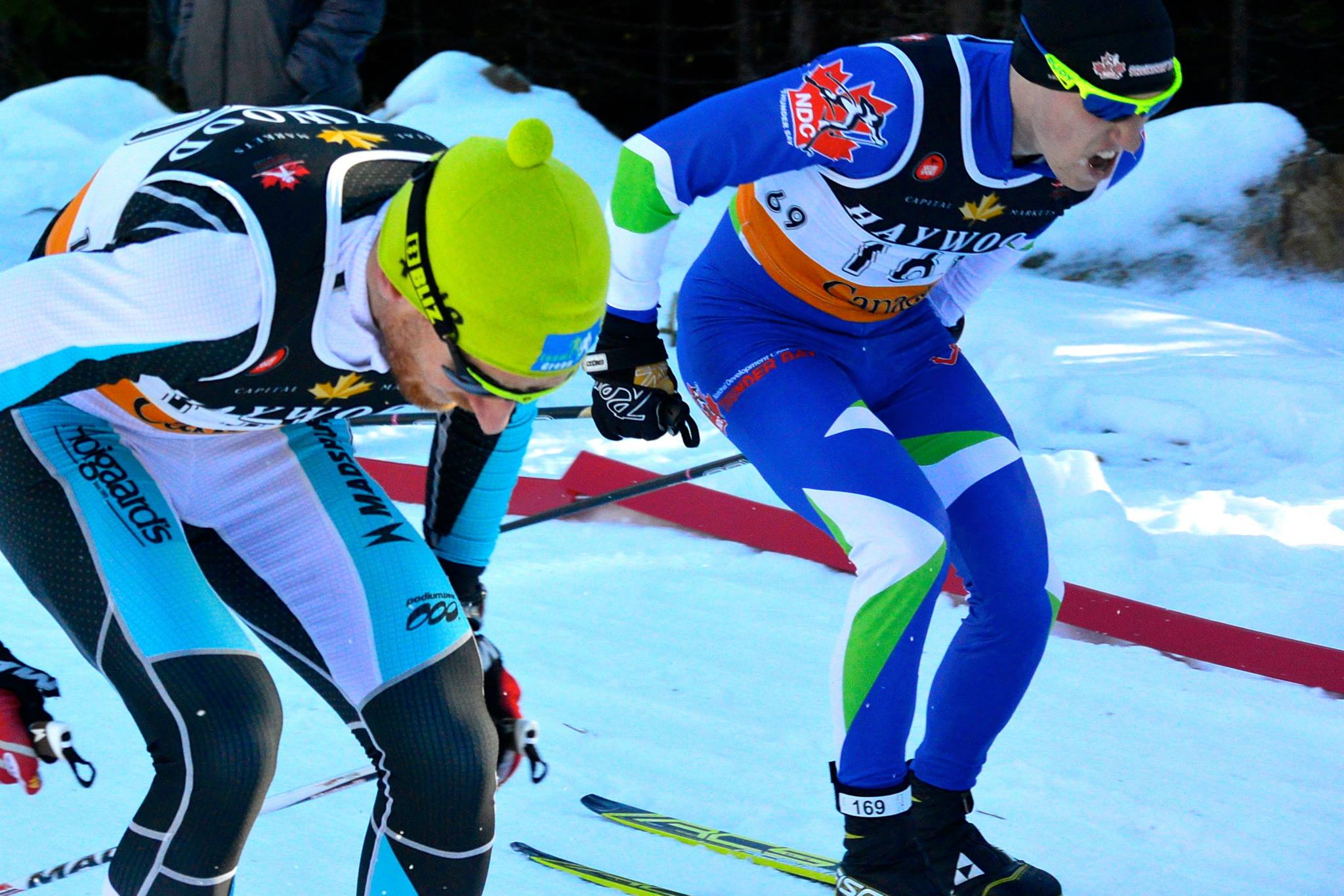
    American Brian Gregg (l) and Canadian Andy Shields of the Thunder Bay National Development Centre ski alongside each other in the 11 k classic individual start last weekend at the NorAm opener in Rossland, B.C. Gregg went on to place fifth and Shields was 12th. (Photo: FRESH cafe & apres/Facebook)
    American Brian Gregg (l) and Canadian Andy Shields of the Thunder Bay National Development Centre ski alongside each other in the 11 k classic individual start last weekend at the NorAm opener in Rossland, B.C. Gregg went on to place fifth and Shields was 12th. (Photo: FRESH cafe & apres/Facebook)

    While the opening weekend of the U.S. Super Tour marked the start of the North American race season in late November, Canada’s NorAm circuit kicked off last weekend in Rossland with two classic distance races, held despite challenging conditions and a lack of snow.

    The second stop of the NorAm circuit was originally scheduled for Whistler this Friday and Saturday, but once again, warm weather and insufficient snow led the races to be moved further inland to Sovereign Lake in Vernon, British Columbia, better known as Silver Star.

    This season, the NorAm will visit six venues, wrapping up at the Lappe Nordic Centre in Thunder Bay, Ontario, for Canadian Ski Nationals. The circuit attracts many of the most competitive Canadian and American domestic cross-country skiers, juniors and seniors alike, all trying to earn their stripes and log top results in an effort to get to Europe.

    Canadians Alysson Marshall and Heidi Widmer, teammates at the Alberta World Cup Academy (AWCA) in Canmore, Alberta, and on the national development team — also based in Canmore, started the winter off with strong results at the SuperTour opener in West Yellowstone, Mont. Marshall won the first sprint of the season, and Widmer placed second.

    In the 10 k freestyle the next day, Widmer again broke into the top 10 with a ninth-place finish, and Marshall finished 17th.

    Patrick Stewart-Jones (AWCA), Bob Thompson (Thunder Bay NDC), Michael Somppi (AWCA/NST D-team), and Andy Shields (AWCA) were among several Canadians racing in West Yellowstone. There, Shields made the sprint A-final, but finished sixth after breaking a pole. In the 15 k, Stewart-Jones led the Canadians in 17th. 

    One week later, Stewart-Jones emerged as the winner of the classic sprint in Bozeman — the second SuperTour stop in Montana. Marshall placed fifth in the women’s A-final, and the next day in the 10 k classic mass start, she finished 14th, just ahead teammate Dahria Beatty (AWCA/NST U23) in 15th. In the men’s 15 k classic mass start, Somppi was the top Canadian man 13th.

    Rossland’s opening NorAm races challenged organizers with difficult conditions, but quality racing still took place thanks to the hard work of the staff and volunteers. Warm weather and rain previously wreaked havoc on the snow, but below-freezing temperatures last weekend made for hard-packed, icy conditions for the two distance races. Leading up to the races, organizers ruled the course unsafe for a sprint and added another classic distance race to the schedule instead.

    Yukon's Annah Hanthorn racing to third on the opening day of the 2014/2015 NorAm season, in the women's 7.5 k classic in Rossland, B.C.  (Photo: FRESH cafe & apres/Facebook)
    Yukon’s Annah Hanthorn racing to third on the opening day of the 2014/2015 NorAm season, in the women’s 7.5 k classic in Rossland, B.C. (Photo: FRESH cafe & apres/Facebook)

    Marshall swept both races, as did American Kris Freeman. Somppi hit the podium in third in last Saturday’s 11 k classic, and was again the top Canadian in fourth in the following 15 k classic. Andrea Dupont (Rocky Mountain Racers) placed second to Marshall in the 7.5 k sprint on Day 1, and junior Annah Hanthorn (Yukon Territory Ski Team) placed third, then second in the women’s 11 k on Day 2.

    Following an Olympic year, there have been some shifts in the key Canadian players: Dasha Gaiazova, Amanda Ammar and Zoe Roy were three of the nation’s top women last season and retired this spring. Graham Nishikawa, the reigning overall men’s NorAm leader, has re-committed his focus to guiding Canadian Para-Nordic teammate Brian McKeever at International Paralympic Committee (IPC) World Cups and 2015 World Championships.

    Many of the top athletes are aiming for top results in order to qualify for later World Cups, U23 and Junior World Championships, and potentially senior World Championships in Falun, Sweden.

    “Making the transition from domestic to World Cup racing is what everyone on the development team is trying to achieve, me included,” Somppi wrote in an email. “Experience is certainly helpful. The more international racing you do, the more comfortable you get with it and the better you perform.”

    Women to Watch 

    Alysson Marshall at the 2014 Canadian Eastern Championships in Cantley, Quebec. (Photo http://shootstories.smugmug.com/Canadian-Eastern-Championships/i-TdxGVQW
    Alysson Marshall at the last season’s Canadian Eastern Championships in Cantley, Quebec. (Photo: Canadian Eastern Championships)

    Heidi Widmer (AWCA/NST D-team) – With last year’s overall NorAm cup winner Emily Nishikawa starting her season in Europe on the World Cup, Widmer is one favorite in the running for an overall NorAm title this season.

    The 23-year-old Sochi Olympian already has a podium under her belt from West Yellowstone, where she also posted the fastest women’s qualifying time in the sprint. In late October before the season officially started, she qualified fourth in the Frozen Thunder classic sprint among U.S. Ski Team members and other top Canadians, and then edged Nishikawa in the distance skate to finish ninth.

    Alysson Marshall (AWCA/NST D-team) — In six races so far this season, Marshall, 26, has won half of them. Marshall and Widmer have already been battling back and forth; neither has beaten the other in consecutive races this season (although Widmer did not race in Bozeman or Rossland). Marshall, 26, has been consistent in distance and sprinting, a critical asset in the run the overall NorAm title. Last season, she finished third in the NorAm standings behind Nishikawa and Widmer, respectively.

    Dahria Beatty (AWCA/NST U23 team) – One of the youngest threats on the circuit, Beatty, 20, is a first-year senior who proved as early as the Frozen Thunder classic sprint that she’s able to ski with the best. There in October in Canmore, she qualified second behind former Olympian Perianne Jones.

    Andrea Dupont (Rocky Mountain Racers) – After finishing fifth overall in the 2013/2014 NorAm (behind Ammar in fourth), this 34-year-old distance veteran is looking to lift herself to World Cup starts.

    A sprint specialist, Dupont stressed in an email the importance of dominant qualifiers, while adding that racing well in the heats and advancing throughout each round is important as well. But more than anything else, she wants better qualifiers than last season.

    “It isn’t enough to just get into the heats in Canada; you have to win the qualifier here if you want to have a chance of qualifying in Europe,” she explained.

    Despite her sprinting preference and sickness early in the season, Dupont claimed second place in Rossland’s 7.5 k classic race.

    Cendrine Brown (CNEPH/U23) – This 21-year-old member of the Pierre-Harvey Training Centre (CNEPH) in Quebec, made the junior-national team last season and competed at U23 World Championships in Val di Fiemme, Italy.

    This year, after focusing on speed to improve her sprinting, Brown has already recorded fourth- and sixth-place finishes in Rossland, and will continue to shoot for another U23 World Championships in Almaty, Kazakhstan. The first three NorAm weekends serve as trials for Canada’s U23 and World Junior teams.

    Brittany Webster (AWCA) — A two-time Olympian and veteran to high-level racing, Webster, 27, started her season off in 15th in the Bozeman classic sprint. She didn’t race in Rossland, but Webster has been busy this offseason; competing in her first off-road triathlon World Championships, where she won the amateur division.

    Also this fall, she launched a pursu.it crowd-funding campaign in September and has raised over $19,500 to help cover the cost of what she anticipates to be an expensive international race season.

    Men to Watch

    Michael Somppi (AWCA/NST D-team) racing in the Frozen Thunder classic sprint on Oct. 24. (Photo: Angus Cockney)
    Michael Somppi (AWCA/NST D-team) racing in the Frozen Thunder classic sprint on Oct. 24. (Photo: Angus Cockney)

    Michael Somppi (AWCA/NST D-team) – Third overall in the NorAm last season; Somppi, 26, is eager to build on his past performances. For now, he’s focused on superb racing before the end of December.

    At this point in my ski career, I’m 26 and if I want a shot at being a World Cup competitor I need to be able to podium at home,” Somppi wrote in an email. “So every time I step on the start line I’m looking to finish on the podium.”

    He was the top Canadian in both classic distance races in Rossland last weekend, claiming a bronze medal in the 11 k classic and finishing fourth in the 15 k.

    Raphaël Couturier (CNEPH/U23) – In August, Couturier, 21, was the only Canadian not part of the World Cup Team invited to come down from Quebec to train with the team at a dryland camp in Stratton, Vt. He ranked fifth overall in the NorAm last year, and has started the season in seventh and 10th in Rossland.

    Patrick Stewart-Jones (AWCA) – Wrapping up the 2013/2014 NorAm season in sixth overall, Stewart-Jones, 23, will be looking to improve his placing. Last winter, he posted some of his best results of the season at Canadian Olympic Team trials in Janaury (where he was third in the freestyle sprint and sixth in the 15 k classic), and was able to race at U23 World Championships as well as Scandinavian Cups in Latvia and Estonia.

    In six races, he has two top 10’s: one win and an eighth-place finish in the 11 k classic last weekend.

    Knute Johnsgaard (Independent) – Likely one of the biggest dark horses at the beginning of this season, Johnsgaard spends most of his training hours without company in the Yukon.

    Despite his training partner leaving for school, having limited time with his coach, and developing his own training plan with the help of Graham Nishikawa, Johnsgaard is confident in his training, the work he has done and how it will translate on the tracks.

    “I’m always really focused and motived to just get out and go by myself,” he explained. “It’s a little lonely sometimes but I don’t need anybody to ‘push’ me.”

    Johnsgaard, 22, added he likes being off the radar and not having anyone knowing how his training is going. To that end, he joked that he’s won every single time trial he’s done this year. He’s hoping to continue this streak and claim victories at NorAm races.

    Andy Shields (Thunder Bay NDC) – Last season, Shields finished ninth overall on the NorAm, yet his early season results indicate he’s had a successful summer of training that could put him closer to the top overall this time around. So far, the 23 year old has posted two sixth-place results: first in the West Yellowstone sprint and also in the 15 k classic last weekend.

    Wild Cards

    World Cup Academy teammates Kevin Sandau (NST D-team), Jesse Cockney (B-team), and Graeme Killick (B-team) were among the most competitive on the NorAm circuit last season, finishing second, fourth and seventh overall, respectively. Cockney and Killick earned Olympic spots for Sochi based on the mid-season NorAm races and all three have started their seasons on the World Cup in Europe.

    In an email, Sandau described his excitement to race on the World Cup and some of his expectations: “Davos is a very unique race and I think it plays well with my strengths with it being a longer distance and a course with longer climbs than most other world cups,” the 26 year old wrote. After some tuneup FIS races in Switzerland earlier this month, he placed 70th in the 15 k classic last weekend in Davos.

    “At the end of the day it really is the final result that counts, but more than anything I want to cross that line and just have that feeling of it being the perfect race,” he wrote.

    Multiple-time Paralympic gold medalist, Brian McKeever races to 13th in the Rossland NorAm 11 k classic on Dec. 13. (Photo: FRESH cafe & apres/Facebook)
    Multiple-time Paralympic gold medalist, Brian McKeever races to 13th in the Rossland NorAm 11 k classic on Dec. 13. (Photo: FRESH cafe & apres/Facebook)

    Last year’s overall NorAm leader, Graham Nishikawa is backing away from domestic racing to fulfill his commitments to the Para-Nordic Tea, although he confirmed he would take part in one or two NorAms to prepare for IPC World Cups. Despite the races not being his focus, Nishikawa, 31, is a potential treat if he makes it to the start line.

    His younger sister Emily matched him as the women’s overall NorAm winner last season. She is currently racing on the World Cup, where she posted a career-best 29th last weekend in Davos.

    “The major difference between racing on the World Cup and domestically is the depth of the field,” Emily Nishikawa explained in an email. “If you lose a few seconds, you will lose a few places as well. This probably won’t happen when racing domestically because the field is just that much smaller.”

    Annah Hanthorn and Maya MacIsaac-Jones, both 19-year-old juniors, finished third and fifth respectively in last weekend’s 7.5 k classic (and Hanthorn was second in the following 11 k classic). Then there’s always Perianne Jones, a perennial World Cup staple, who could make NorAm waves should she return to Canada.

    Already, it’s shaping up to be another exciting year of racing. Some athletes are most competitive in distance races, others sprinting, and a myriad of possible contenders can take the victory on any given day. Stay tuned for NorAm updates via the Continental Cup blog: http://blogs.fasterskier.com/continentalcup

    2014/2015 NorAm Schedule 

    • Dec. 13-14: Rossland NorAm opener (and U23/Junior World Trials 1): 7.5/11 k classic & 11/15 k classic
    • Dec. 19-20: Vernon freestyle interval start & classic sprint at Sovereign Lake (U23/Junior World Trials 2)
    • Jan. 8-11: Duntroon 15/30 k skiathlon, classic sprint, 10/15 k freestyle (U23/Junior World Trials 3)
    • Jan. 15-18: Western Canadian Championships in Canmore: 10/10 k classic, freestyle sprint, classic mass start
    • Jan. 30-Feb. 1: Eastern Canadian Championships in Cantley: freestyle sprint/prologue, 10/15 k freestyle, 15/20 k classic mass start
    • March 14-21: Canadian Ski Nationals in Thunder Bay: freestyle team sprint, 5/10 k freestyle, 10/15 k classic, 30/50 k freestyle mass start

    — Alex Kochon contributed reporting

  • Weekend Roundup: Goodbye Ruka and West, Hello Rest of 2014/2015

    Weekend Roundup: Goodbye Ruka and West, Hello Rest of 2014/2015

    Ida Sargent racing to a career-best fifth in Saturday's classic sprint at the World Cup opener in Kuusamo, Finland. She placed 51st in the 10 k classic the next day. (Photo: Fischer/Nordic Focus)
    Ida Sargent racing to a career-best fifth in the classic sprint at the World Cup opener last Saturday in Kuusamo, Finland. She placed 51st in the 10 k classic the next day. (Photo: Fischer/Nordic Focus)

    Ruka and West came and went like the went, but the biathletes are just getting things going in Östersund, Sweden. The 2014/2015 International Biathlon Union (IBU) World Cup season kicked off Sunday with the mixed relay, where the U.S. pulled out its best performance in the last several years in seventh.

    And Susan Dunklee, Annelies Cook, Tim Burke, and Lowell Bailey were just 17 seconds off fourth.

    “I don’t remember our exact place here last year, but we definitely weren’t that close to a podium finish,” Burke said. “We were in it all the way until the end. It gives us good confidence going forward.”

    The men get after it again in Östersund on Wednesday in the 20-kilometer individual race, starting at 17:15 CET (11:15 a.m. EST). The women’s 15 k individual will be held Thursday at the same time.

    But before we launch into more biathlon, then more cross-country World Cup in Lillehammer, Norway (with three days of action Friday through Sunday) and SuperTour stop No. 2 in Bozeman, Mont., here’s what happened in the last week — starting with West Yellowstone on Friday, Nov. 28.

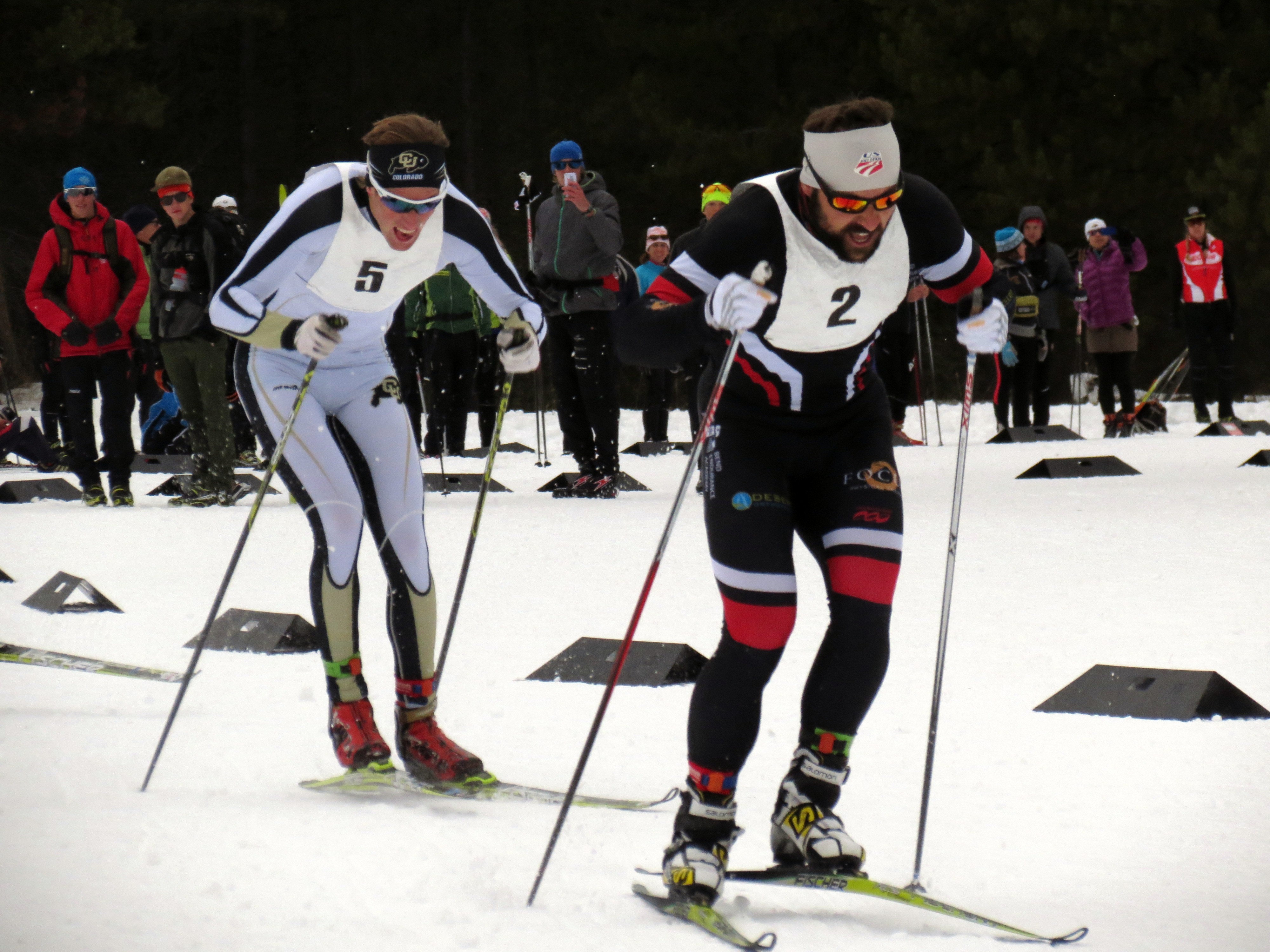
    Dakota Blackhorse-von Jess of Bend Endurance Academy pushes in front of the University of Colorado's Mads Stroem during the A-final of the SuperTour men's skate sprint in West Yellowstone, Mont. (Photo: Toko)
    Dakota Blackhorse-von Jess holds off Mads Strøm during the A-final of the SuperTour men’s skate sprint in West Yellowstone, Mont. (Photo: Toko)

    Things got a little stalled on Day 1 at the Rendezvous Trails with timing, but at the end of the day, Dakota Blackhorse-von Jess and Alysson Marshall emerged as the definite winners.

    “West Yellowstone’s a hard place,” Blackhorse-von Jess said of the early-season race, after edging the University of Colorado’s Mads Strøm by 0.9 seconds in the men’s skate sprint. “I’m tired, everybody’s tired.”

    Then there were two Canadian women that dominated the women’s sprint: Marshall in first and Heidi Widmer in second, teammates on the Alberta World Cup Academy and Canadian National Development Team. Marshall won the 1.5 k final by a boot length.

    Day 2 saw Rosie Brennan outlast 17-year-old Katharine Ogden in the women’s 10 k individual start, and the win meant everything to her after facing some tough times this summer. In the men’s 15 k, Matt Gelso put himself in contention for domestic World Cup starts in just over a month with a nearly 10-second win over Brian Gregg.

    The International Ski Federation (FIS) Cross-Country and Nordic Combined World Cup seasons also got rolling last weekend at the Ruka venue in Kuusamo, Finland. There, Ida Sargent was the biggest thing going for North America after a career-best fifth in the classic sprint — the U.S. Ski Team’s first race of the season. The next day, Sadie Bjornsen skied to 17th to lead the Americans in the opening 10 and 15 k distance races.

    “Finland loves Ida Sargent and I know that Ida loves Finland!” former U.S. Ski Team member Holly Brooks wrote on Facebook. “So impressed w/ @sadzarue who skis fast & studies hard! Currently presenting senior thesis while racing WC in NOR!”

    Alex Harvey put down two top-15 performances for Canada, including seventh in the 15 k classic, and teammate Devon Kershaw wasn’t far behind him in 14th on Sunday. Canadian development-team member Emily Nishikawa struck a career-best World Cup result in Europe, placing 38th in the 10 k.

    Noah Hoffman did not finish a race for the first time in his career after crashing hard off the trail and into a fence with slightly less than 2 k remaining in the 15 k. After seeking immediate medical attention, he learned he broke his fibula, according his blog post, and headed home to the U.S. on Monday for further evaluation.

    Also in Ruka, the NoCo guys got after it in the large-hill individual competition and team sprint, where Bryan Fletcher led the U.S. in 17th on Day 1 and was 13th with brother Taylor Fletcher on Sunday.

    U.S. SuperTour Opener, West Yellowstone, Mont.

    Friday’s freestyle sprint: men’s report | women’s report

    Saturday’s 10/15 k freestyle: women’s report | men’s report

    Photo Gallery: race photos

    FIS Cross Country World Cup, (Ruka) Kuusamo, Finland

    Saturday’s classic sprint: U.S. report | Canadian report | international women’s report | international men’s report

    Sunday’s 10/15 k classic: Canadian report | U.S. report | international men’s report | international women’s report

    Hoffman’s injury: In his words | Initial report

    IBU World Cup, Östersund, Sweden

    Sunday’s mixed relay: France wins | U.S. report | Canadian report

    FIS Nordic Combined World Cup, (Ruka) Kuusamo, Finland

    Saturday’s large hill/10 k: recap

    Sunday’s team sprint: recap

  • Canadian Women Dominate SuperTour Sprint; Bender Narrowly Claims Third

    Canadian Women Dominate SuperTour Sprint; Bender Narrowly Claims Third

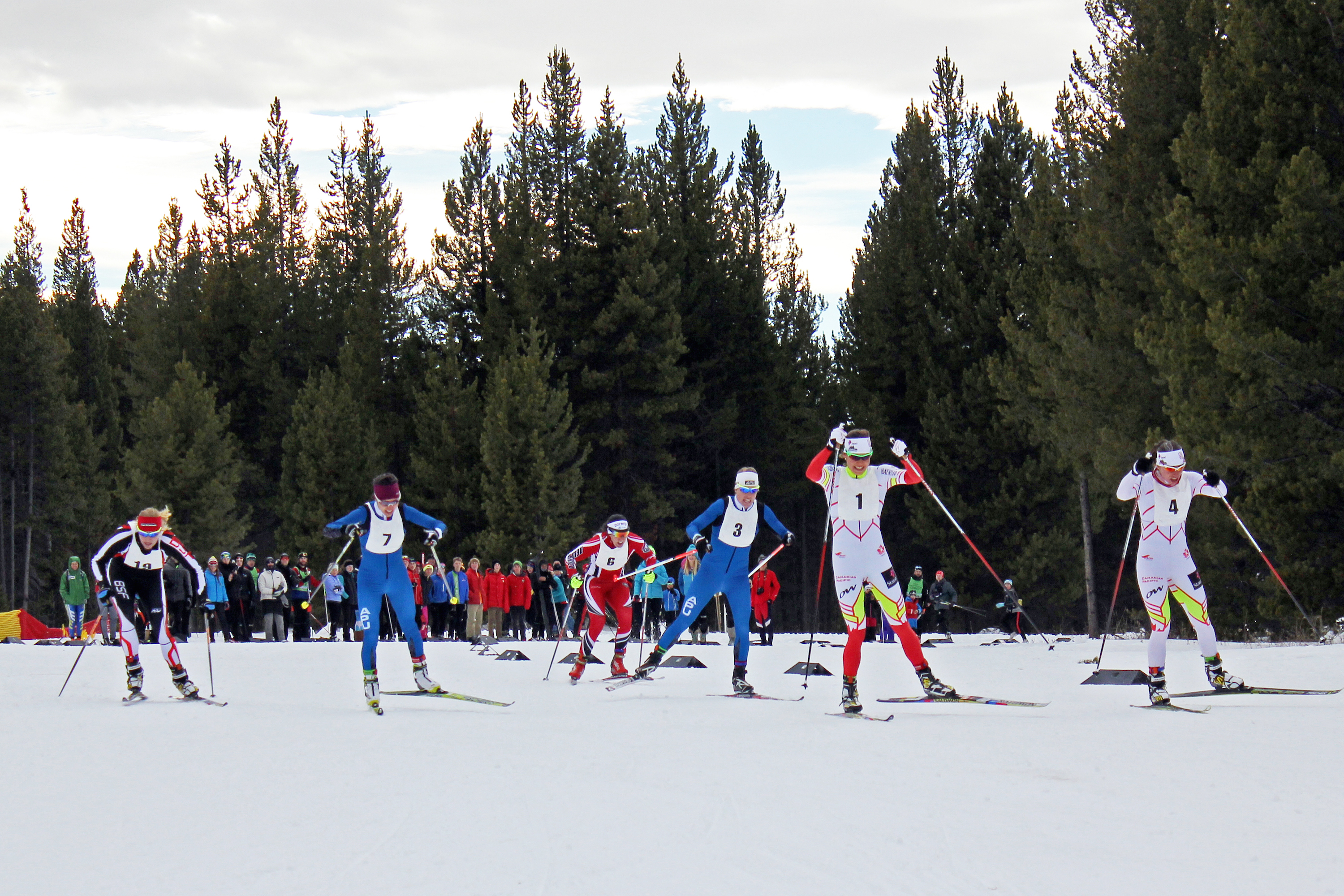
    Alyson Marshall (AWCA/NST) in bid four and Heidi Widmer (AWCA/NST) in bib one lead (from l-r) Rosie Brennan (APU), Eva Severrus (UNM), Chelsea Holmes (APU) and Jennie Bender (BSF) in the women's A-final of the 2014 West Yellowstone SuperTour freestyle sprint. Marshall won the event with Widmer and Bender finishing second and third.
    Alysson Marshall (AWCA/NST) in bib 4 and Heidi Widmer (AWCA/NST) in bib 1 lead (from l-r) Rosie Brennan (APU), Eva Severrus (UNM), Chelsea Holmes (APU) and Jennie Bender (BSF) in the women’s A-final of the 2014 West Yellowstone SuperTour freestyle sprint. Marshall won the event with Widmer and Bender finishing second and third.

    WEST YELLOWSTONE, Mont. — Alysson Marshall had plenty of opportunities to practice her finishing lunge in Friday’s SuperTour freestyle sprint in West Yellowstone.

    The Canadian National Development Team member, who skis for the Alberta World Cup Academy (ACWA) in Canmore, Alberta, barely earned an automatic qualifying spot in her quarterfinal after outlunging Stratton Mountain School (SMS) T2 skier Erika Flowers for second place in the heat.

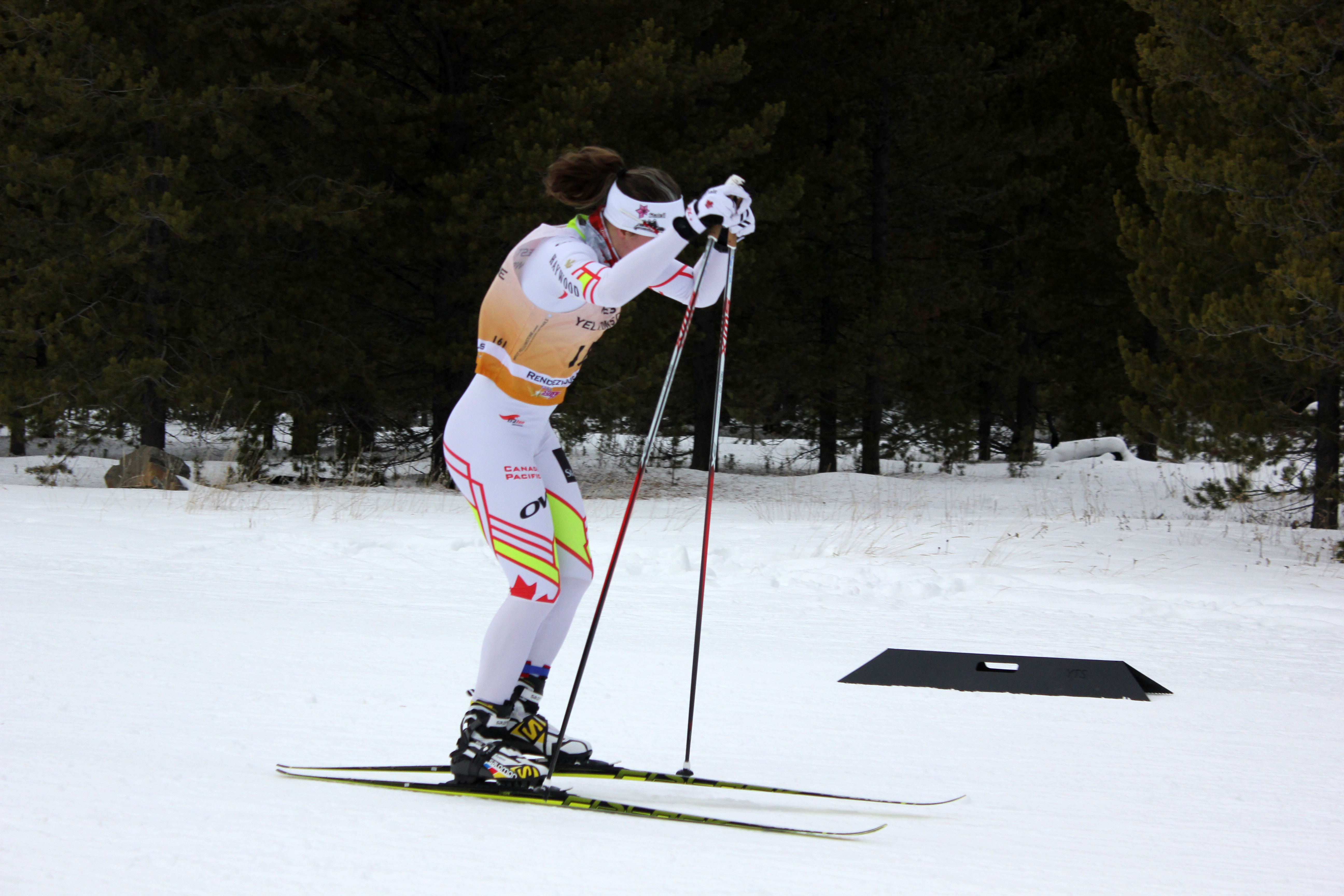
    Alysson Marshall (AWACA/NST) racing to a 4th place finish in the qualification round of Friday's SuperTour freestyle sprint in West Yellowstone, Mont. Marshall went on to win the event.
    Alysson Marshall (AWACA/NST) racing to a fourth place finish in the qualification round of Friday’s SuperTour freestyle sprint in West Yellowstone, Mont. Marshall went on to win the event.

    In the semifinal, Marshall was neck-and-neck with University of New Mexico’s Eva Severrus, but was able to eke out a position in the A-final despite finishing in fourth behind her competitor. Both Severrus and Marshall earned the lucky loser positions as their times were faster than the second semifinal’s third-place finisher, Becca Rorabaugh of Alaska Pacific University (APU).

    When it came to the last heat of the day, Marshall positioned herself in third for most of the A-final. When she reached the finishing stretch into the stadium, however, she surged past APU’s Chelsea Holmes to go head-to-head with fellow AWCA and Canadian national team member Heidi Widmer. As the two approached the finish, Marshall did what she had been doing all day and lunged for the win.

    Her practice paid off as she edged Widmer by 0.28 seconds.

    “In sprint races, I tend to get stronger as it goes on, so I felt good in the final and had enough in the final kick,” Marshall said.

    Marshall, who has competed in both the Canadian and international World Cup circuits, said that the result was an indication that she was on the right track for her season goals. While she considered Friday’s sprint a warmup and acknowledged that anyone in the A-final could have nabbed the top spot, she said that her win was a confidence boost that would serve her well in future races.

    Just a boot length behind Marshall, Widmer lost steam in the finishing stretch of the 1.5-kilometer race.

    “I felt really strong but I’m a little disappointed that I lost in that little finishing stretch there… It’s nice to have it under the belt and get into the rhythm of ski racing,” the 2014 Olympian said after finishing the A-final.

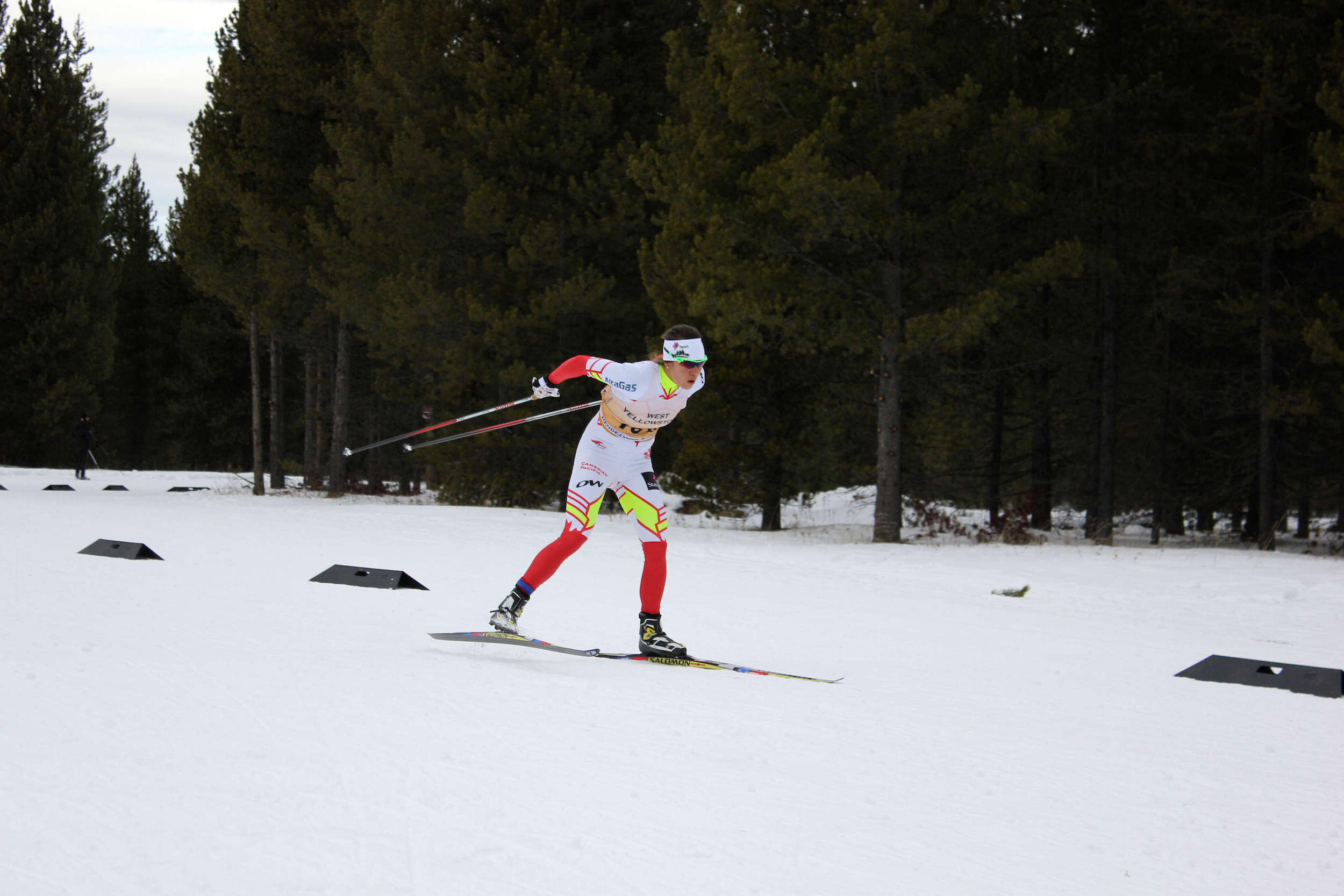
    Heidi Widmer (AWCA/NST) racing to a first place finish in Friday's SuperTour freestyle sprint qualification round. She finished second in the A-final behind teammate Alysson Marshall.
    Heidi Widmer (AWCA/NST) racing to a first place finish in Friday’s SuperTour freestyle sprint qualification round. She finished second in the A-final behind teammate Alysson Marshall.

    Widmer started the day with a strong finish in the qualification round, where she placed first ahead of Annie Pokorny (SMST2) and Rosie Brennan (APU), who were second and third, respectively.

    The qualification result propelled Widmer throughout the heats as she won both her quarterfinal and semifinal by healthy margins.

    Like Marshall, Widmer said that the result added to her confidence but had no concrete significance regarding her season goals – racing on the World Cup and skiing at the 2015 World Championships in Falun, Sweden.

    Despite the significance of the race, Widmer said the American competition was refreshing, as Canadian sprint heats are often only competitive in the final.

    “It is always good to practice skiing in the heats… getting used to that kind of stuff, especially when we can come down to the states and ski in more competitive heats,” she said. “In Canada we have great skiers, but often it won’t really come together until the final, so we won’t have a competitive heat until the final.”

    Two-time U.S. National sprint champion Jennie Bender (Bridger Ski Foundation), agreed, saying that the competition, especially in the A-final, was “stacked.”

    Bender, who finished in third position as the top American, fought back after 17th in qualification to handily win her quarterfinal and semifinal.

    Once in the A-final, Bender said that it was one most competitive heats she has ever raced, with all six women jostling for a strategic position the entire 1.5 k.

    “It was fun and awesome, but scary because you’re in self-preservation mode and you’re trying to hold your line,” she explained. “That was one of the closest finals I’ve had in a long time — just five of us right there.”

    Bender, who was in fifth as the skiers crested the final hill into the stadium, looked to find an opening in which she could make her move.

    All that was open between the five skiers was a gap to her far right. Although she had to use precious time to place herself into the opening, Bender explained that she believed it was better than the alternative of sitting in behind another athlete.

    “You pick [an opening] and you go for it, there’s no time to really jump in behind anyone in my opinion,” she said.

    Jennie Bender (BSF) was the first American in Friday's SuperTour freestyle sprint in West Yellowstone, Mont. She finished the day 3rd overall.
    Jennie Bender (BSF) was the first American in Friday’s SuperTour freestyle sprint in West Yellowstone, Mont. She finished the day 3rd overall. (Photo: Toko)

    Bender was happy with her third-place finish, but acknowledged that she needed to improve if she wanted to accomplish her season goal of making World Championships.

    “I have high expectations for myself, and this is what I wanted to do,” she said. “So, a podium’s good – it’s okay, but it’s not first.”

    Just five-hundredths of a second behind Bender was Holmes, positioned in second before Marshall and Bender passed her in the finishing stretch.

    Holmes, who qualified in seventh and is traditionally a stronger distance skier, said she was excited to perform well in sprinting and explained that it was a testament to the work she has put into her training the past year.

    She said that what set her apart from much of Friday’s field was her ability to climb the final hill into the stadium.

    Her teammate, Brennan was also in the hunt for a position on the podium. The 2014 national champion in the classic sprint was a favorite for the top spot and skied both a strong quarterfinal and semifinal to make her way into the A-final.

    Brennan said that she was happy with her fifth-place finish and explained it was a victory in itself that she was racing Friday because of the many difficulties she has dealt with in the previous months.

    Rounding out the A-final was Severrus, a Slovenian who skis for University of New Mexico. She finished sixth, 1.8 seconds behind Marshall.

    Despite the high spirits of the SuperTour racers, there were several organizational issues that caused the day to be longer than planned.

    As skiers prepared for their second round of heats, several coaches, including Sun Valley’s Rick Kapala and Stratton’s Patrick O’Brien noticed that the semifinal lists were incorrectly ordered. While the issue was eventually fixed, racing was postponed, leaving skiers in the cold wind while they waited for their start order.

    The incorrect order of the men’s semifinal would soon become the least of the organizers’ worries as it was soon discovered that they had incorrectly placed Hailey Swirbul (Aspen Valley Ski Club) into one of the women’s semifinals.

    Swirbul had placed fourth in the quarterfinal, 3.03 seconds behind Flowers, but the results read that Swirbul had instead finished ahead of Flowers.

    Flowers and several other members of SMST2 alerted organizers of the mishap, but it wasn’t until Swirbul herself came forward that the timers reversed the placement and gave Flowers a position in the semifinal.

    When all was said and done, the schedule was delayed by more than 40 minutes.

    Flowers said she understood that mistakes happen and explained that the best ski racers are the ones who can work past such setbacks.

    “There are a million things that can affect you on race day and that’s just something you have to be prepared for,” Flowers said after placing fifth in the B-final for 11th overall. “The best racers are the ones who can roll with it and that’s always something I can work on so this was good practice of that. It’s frustrating but everyone’s trying to make the best outcome. I think ultimately it worked out even if it added some delays.”

    Other athletes were equally as graceful, with Marshall joking that the delays had made her “ready for lunch.” She explained that her key to staying warm and snappy during such a long waiting period was to do a signature running shuffle — a move that often draws the laughter of her teammates.

    The SuperTour women will continue competition Saturday with a 10 k freestyle individual start.

    — Colin Gaiser contributed reporting

    Women’s 1.5 k freestyle sprint results

    Saturday’s 10/15 k freestyle start list

  • Sargent, Newell Climb to Top in Frozen Thunder Classic Sprint (with Photo Gallery)

    Sargent, Newell Climb to Top in Frozen Thunder Classic Sprint (with Photo Gallery)

    Andy Newell racing to his second Frozen Thunder classic sprint victory in three years on Friday at the Canmore Nordic Centre in Canmore, Alberta. Runner-up Dakota Blackhorse-von Jess won last year. (Photo: Pavlina Sudrich)
    Andy Newell (r), of the U.S. Ski Team and Stratton Mountain School (SMS) T2 Team, racing to his second Frozen Thunder classic sprint victory in three years on Friday at the Canmore Nordic Centre in Canmore, Alberta. Runner-up Dakota Blackhorse-von Jess (in second) won last year. Matthias Inniger of Switzerland was third overall and Kris Freeman (Team Freebird) was fourth. (Photo: Pavlina Sudrich)

    There are a couple things one can count on at the Canmore Nordic Centre, including solid tracks and quality snow, even in October. At the first unofficial sprint of the North American season on Friday morning, more than 120 racers found both for the Frozen Thunder classic sprint, and organizers added what could be a new tradition to the mix: a zero-elimination format.

    Sounds chaotic? It worked, according to American Dakota Blackhorse-von Jess of the Bend Endurance Academy in Oregon.

    “It was a great format — worked out far better than I could possibly have imagined,” he wrote in an email after the race. “Gets everyone the chance to race with like-speed people and … experience the stress of a full sprint day. Great opportunity for all that ran like clockwork. … Fantastic event.”

    Blackhorse-von Jess and another American Ida Sargent (U.S. Ski Team/Craftsbury Green Racing Project) posted the top men’s and women’s qualifying times, respectively, beating out their competition on the 1.6-kilometer course by more than 2 seconds apiece.

    Frozen Thunder organizers opted for what they called the “knock-in sprints,” or King’s Court format, ranking all 122 racers — men and women combined — by qualifying times and seeding them in four-person heats for the first of three rounds.

    The top two in each heat of round 1 moved up; the last two moved down a heat. The format repeated for round 2 to put the most competitive skiers at the top of round 3, allowing all participants to race all three rounds.

    Matthias Inniger of Switzerland bringing it home for third overall and Kris Freeman (Team Freebird) on his way to fourth in the Frozen Thunder classic sprint on Friday. (Photo: Pavlina Sudrich)
    Matthias Inniger of Switzerland bringing it home for third overall and Kris Freeman (Team Freebird) on his way to fourth in the Frozen Thunder classic sprint on Friday. (Photo: Pavlina Sudrich)

    Blackhorse-von Jess won his first two heats, topping U.S. Ski Team and SMST2 Team member Andy Newell in round 2, but Newell had the edge in the final round 3 for the overall win. Blackhorse-von Jess placed second, Switzerland’s Mathias Inniger took third, and Kris Freeman (Team Freebird) was fourth.

    “It kind of felt like each heat was a final since nobody wants to move down a bracket so we had to push each hard each round,” Newell wrote in an email. “There were a lot of fast skiers here but we North Americans are all pretty good buddies so it was definitely a friendly fight out there. We’ve all trained with each other a bit this off season and want everyone to kick ass over season.”

    In terms of tactics, he added that it depended on how fast your skis were.

    “We all agreed to use kick wax this year to make it an even playing field and only waxed with low flour [sic] wax,” Newell wrote. “For me the tactic was to push hard on the uphills to try to break it up a bit. We were all on klister and the snow was sugary but still great racing conditions.”

    The course was two laps, for a total of two uphills.

    “One is a decent climb and the other is a pretty short one,” Newell explained. “The reason we have double poled here in the past is because it’s kind of a downhill finish which can be faster in the skate skis. But I think it worked out well this year with everyone on klister.”

    According to Blackhorse-von Jess, the heats were an opportunity to get back into the swing of racing.

    “With the fastest (and the best skiers in North America) all there, you have to push every time. And starting in the fastest quarter and moving on into the fastest semi means do-or-die for making the final, so there’s no sandbagging all day,” he wrote. “I don’t know why I was so fast qualifying, really. [My coach] Ben [Husaby] helped me make some major changes to my classic technique this year, which has made obvious improvements off the snow so it’s not surprising it’s helped on the snow. But who knows. It’s a training day for everyone and while I’m encouraged by the day, I don’t think anyone can read overmuch into the crystal ball based on today.”

    Canadian World Cup Team member Devon Kershaw led the Canadians as the top man in the second-fastest final round, beating out Jess Cockney, of the Alberta World Cup Academy (AWCA), Lenny Valjas (Canadian World Cup Team), and American Ben Saxton (SMST2).

    “Not the best day ever for me, but not the worst,” Kershaw wrote on Instagram. “Thanks to all that made it possible (CCC, volunteers, all the racers & staff).”

    Ida Sargent (U.S. Ski Team/CGRP) leads Perianne Jones (Canadian NST) in round 2. The two went on to place first and second among women in the Frozen Thunder classic sprint on Friday. (Photo: Angus Cockney)
    Ida Sargent (U.S. Ski Team/CGRP) leads Perianne Jones (Canadian NST) in round 2. The two went on to place first and second among women in the Frozen Thunder classic sprint on Friday. (Photo: Angus Cockney)

    Sargent raced three junior men in round 1, finishing third behind Reed Godfrey of the Alberta Ski Team (AST) and Caelan McLean (Yukon Ski Team). She then met two junior men and Canadian National Team member Perianne Jones in round 2.

    There, she placed second behind Samuel Greer (NDC Thunder Bay), whom she outlasted in the first round, and Jones took third. Sargent advanced to the last round with Godfrey, Geer and another junior man, Tate Macdonald (AST), and beat them all for a resounding overall victory.

    “The format was definitely funky but they did a great job pulling it off and I thought it ran really smoothly,” Sargent wrote in an email. “At first I thought it was a weird idea but then it ended up being fun and I had to go as hard as I could every single round rather than being able to ski a little conservatively through the early rounds. On the World Cup, every heat is 100% so this was great training.”

    Her goal was to push as hard as possible each round, and with a downhill double-pole finish (in which she got passed at least once in previous rounds), she made a point to go even harder over the tops of each hill to get a sizable lead before the finish.

    “I’m happy to be feeling good right now,” she wrote. “I don’t consider this part of the season yet and I’m just psyched to have had a fun and hard effort on snow.”

    Jones was third in the second-fastest, coed round 3, after McLean and Thomas Manktelow (AST), respectively.

    “I’ve never done rounds like that before, but it was really fun, and good for us to go hard every round,” Jones wrote in an email. “North American sprinting (especially for the women, and especially in Canada) has turned into a bit of a cake walk in the first couple rounds before putting the hammer down in the final — which is the worst thing for development because once you get to the World Cup there’s no lolly-gagging.”

    Dahria Beatty (AWCA) placed third among the women, finishing ahead of fourth-place woman Heidi Widmer (AWCA/Canadian NST) in the final round. 

    Angus Foster (Big Thunder Nordic) was the top junior man in 21st overall, followed by Pearce Hanna (Rocky Mountain Racers) and David Askwith (Georgian Bay).

    Maya MacIssac-Jones (RMR) was the top junior woman, followed by Katherine Stewart-Jones (Nakkertok) and Katie Weaver (Hollyburn).

    “I’d say best Frozen Thunder Race ever,” Jones concluded. “It was sunny and warm, and CCC and Zone 4 (Dan Roycroft) somehow managed to make the day go incredibly smoothly running 96 heats — 1 every 30 seconds. I have to admit I was skeptical about the format, but the race ran like a well-oiled machine, and was a ton of fun.”

    “Snow was incredible, as always,” Blackhorse-von Jess wrote. “They do an amazing job there and it got a lot more traffic this year with all the racers and it held up awesome.”

    Distance racers will have a chance to strut their stuff at Frozen Thunder on Monday at the 10/15 k freestyle individual start at 9 a.m. Mountain time.   

    Results: Qualifying | Heats

    Check out dozens of photos from the first unofficial race of the season, the Frozen Thunder classic sprint, in Canmore, Alberta, courtesy of Angus Cockney, Jess Cockney’s father.

  • 5 Peaks Trail Running in Canmore: A Who’s Who of Nordic Racers

    5 Peaks Trail Running in Canmore: A Who’s Who of Nordic Racers

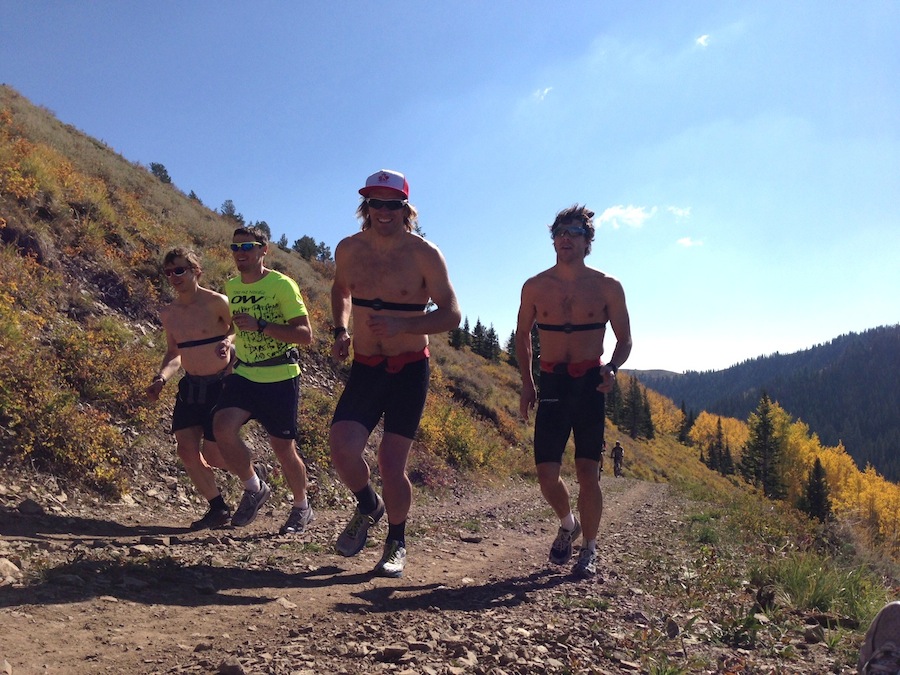
    The Canadian men during a dryland camp in Park City, Utah. From left to right: development-team members Kevin Sandau and Mike Somppi, and World Cup athletes Devon Kershaw and Alex Harvey.
    Kevin Sandau, Michael Somppi, and Devon Kershaw (l-c) competed in the second installment of the 5 Peaks Race Series in Camore, Alberta June 14, 2014. Here they are pictured training with Alex Harvey (r) in Park City ,Utah in 2012.

    On June 14th, the 5 Peaks Trail Running Series came to Canmore for the second installment of central Alberta’s race series. Consistent with the usual 5 Peaks format, the event consisted of an “enduro” distance and a “sport” distance, both 12 k and 8 k, respectively. But unlike your average 5 Peaks race, this event featured Olympians.

    Devon Kershaw, of the Canadian World Cup Team and the Alberta World Cup Academy (AWCA) and teammate Jess Cockney (AWCA – NST B) took two of the podium steps on the day, finishing first in 51:14 and third in 53:17, respectively. Kevin Sandau (AWCA – NST Dev) rounded out the skiers in the top five of the enduro category with a fourth place finish in 53:55.

    “It was definitely a hard race,” Kershaw told the The Cragand Canyon, who pushed the pace and ran off the front of the pack right from the start.

    Cockney ran just behind Sandau and fellow AWCA skier Michael Somppi for most of the race, setting “a strong climbing rhythm” and pacing himself on the descents. He passed his teammates to take his spot on the podium with about 1.5 k to go.

    Cockney was happy with his performance and felt that he “dug deep,” even though he prefers road running races to trail events.

    “My preference is definitely to run road races as there’s no confusion about what pace to stick to or any descents to throw off my rhythm, but it’s good to switch it up and be uncomfortable with a new challenge,” he wrote in an email.

    Sandau, who had not ran a trail running race in a number of years, also compared the race to the road running events that he is more familiar with.

    “That was my first trail run in a long time, such a different feeling than road racing. The climbs are hard and doesn’t feel like I need to run my legs off. It was hard so I was happy with the race,” he wrote.

    Noting Kershaw’s dominance right of the start, Sandau ran just behind teammate Graeme Killick (AWCA – NST B) until Killick took a wrong turn-off around 2 k into the event. From there, Sandau kept his position just ahead of Cockney until he “lost steam” at the 10 k mark and was passed.

    While Killick, Cockney, and Kershaw made a good showing for the male Olympic skiers in the Enduro category, Heidi Widmer (AWCA – NST Dev) represented the women in the 8 k distance, posting a blistering speed of 39:27, almost three minutes ahead of the next competitor.

    With the 8 k and 12 k races starting at the same time, Widmer ran with the 12 k runners until her turn-off, where the race became a practice in pacing for her.

    Widmer really enjoyed the loop but was kept on her toes having not ran the course pre-race.

    “The course was great! I had a general idea of where it went but hadn’t run the loop until the race. There was a long descent mid race that went to the bottom of the Georgetown trail which is essentially as low as you can get on the nordic centre trails. When I was sprinting down that hill, all I was thinking was ‘oh brother, I have to come all the way back up this,’ so the next bit of the race really hurt,” Widmer wrote.

    5 Peaks Trail Running Series – Central Alberta Race #2 Results

  • Babikov Back in Canada, Winning Nationals; Widmer Tops Women’s 10 k

    Babikov Back in Canada, Winning Nationals; Widmer Tops Women’s 10 k

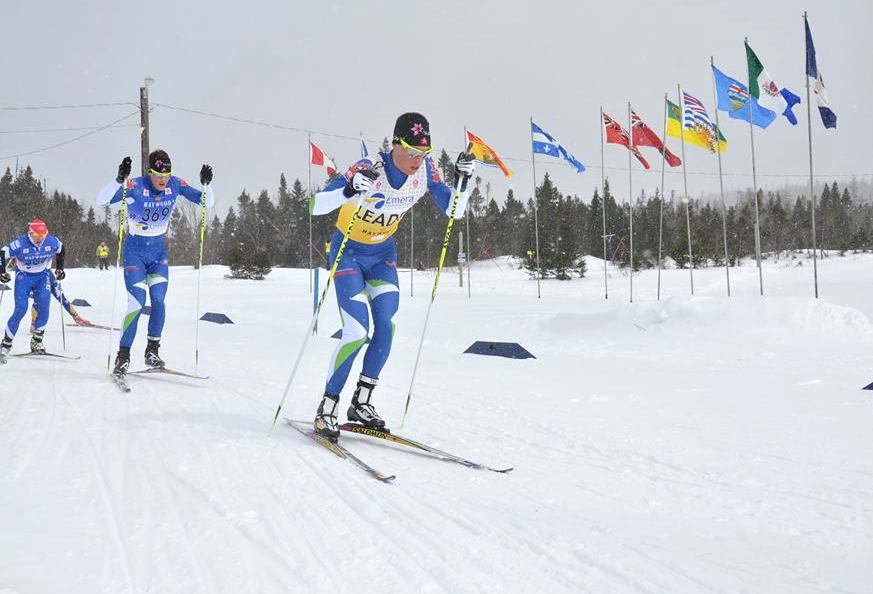
    Scott Hill (NDC Thunder Bay/NST) racing to his second-straight individual junior title at Canadian Nationals on Tuesday in the 15 k freestyle in Corner Brook, Newfoundland.
    Scott Hill (NDC Thunder Bay/NST) in the leader’s bib racing to his second-straight individual junior title at Canadian Nationals on Tuesday in the 15 k freestyle in Corner Brook, Newfoundland. (Photo: Emilie Stewart-Jones)

    CORNER BROOK, Newfoundland — Five days after Canadian Ski Nationals started at Blow Me Down Trails, the  third races of the week took place Tuesday with the 10- and 15-kilometre freestyle interval starts.

    Upon checking out the course profiles before arriving in Newfoundland, the image of Tuesday’s race course was strikingly simple. It went up. It went down. With the exception of a short, flat section around the stadium and a quick up-and-down loop at the end, the course was pretty much one big uphill followed by a descent back to the stadium. Men raced four 3.75 k loops and women three 3.3 k laps, going not quite as high on the hill as the men.

    With regards to conditions, the one thing that’s been consistent this week with weather is the ridiculously strong winds, and Tuesday was no exception to this trend. Blowing snow challenged racers with some solid headwinds at points on the course in temperatures around -9 degrees Celsius.

    But even with the headwinds it was a quick race. World Cup veteran Ivan Babikov led the charge, winning the senior men’s 15 k in at just over 35 minutes, typical of the top times one might see on a tough World Cup 15 k course.

    When the snow cleared (more of a figure of speech: it’s still blowing snow outside), here’s who stood with Babikov at the top of the podium:

    Senior Women: Heidi Widmer

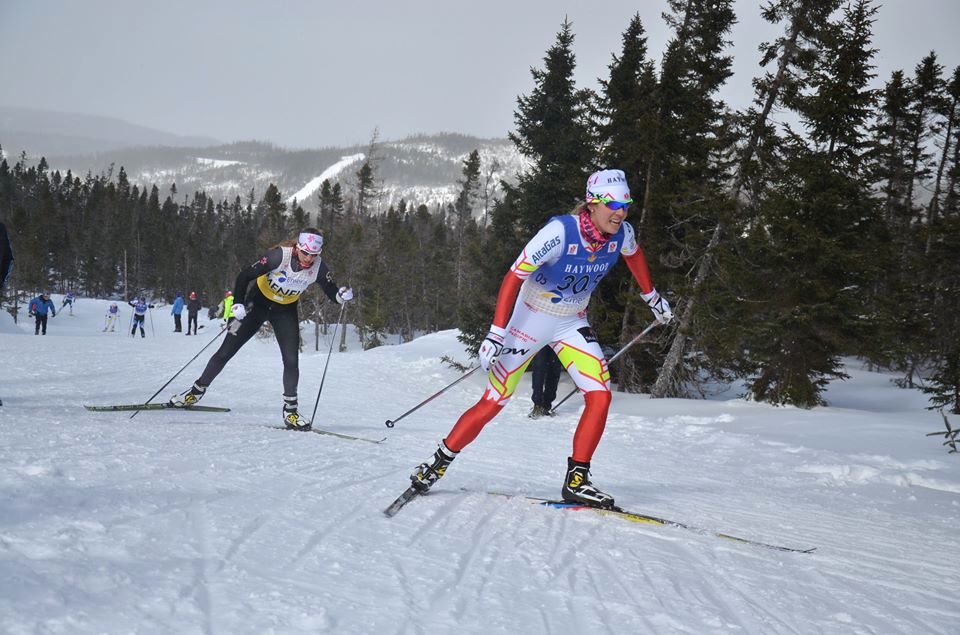
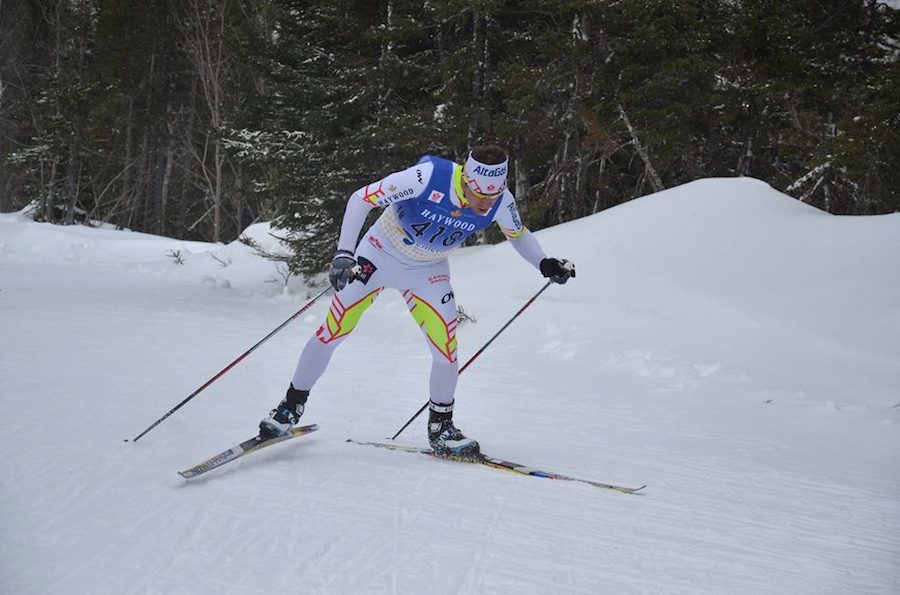
    Heidi Widmer (front) racing to a victory in the open women's 10 k freestyle on Tuesday at Canadian Nationals in Corner Brook, Newfoundland.
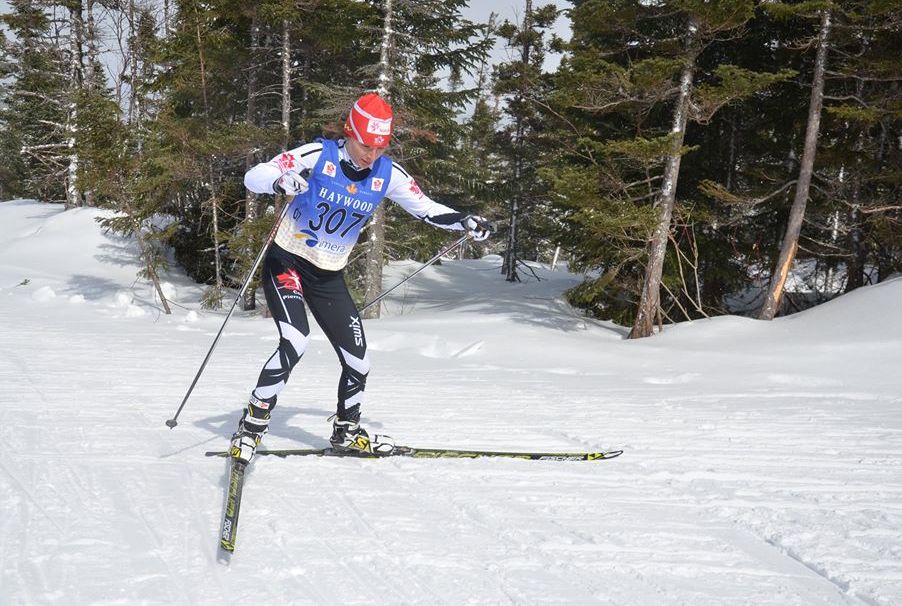
    Heidi Widmer (front) racing to a victory in the open women’s 10 k freestyle on Tuesday at Canadian Nationals in Corner Brook, Newfoundland. (Photo: Emilie Stewart-Jones)

    Last fall, Widmer, of the Alberta World Cup Academy (AWCA) and Canadian Senior Development Team (NST) dealt with the effects of a concussion following a rollerski crash. She stayed focused through the setbacks and managed to put down some solid results throughout the ski season, qualifying for the U23 World Championships and first Olympics in her final year as a U23.

    1. Did you have a particular focus going into today’s event? 

    “To be present in the moment. Just like Pooh Bear in the ‘Tao of Pooh’. Great read.”

    2. Before you knew your result were you happy with today’s race? 

    “I had a great time, had good skis and pushed my limits. So I would be happy with my efforts either way. It is even better when that aligns with a win!”

    3. Imagine that it is your birthday and you get to choose whatever meal you want. What’s the main course and what’s for dessert? 

    “It depends where I’m celebrating — whatever the locals are doing and what is in season! Hopefully it’s Mexican style. For dessert, chocolate cake with chocolate mousse and strawberry filling. Vanilla ice cream on the side.”

    Open Women’s 10 k Freestyle Top 10

    1. Heidi Widmer (AWCA/NST) 0:26:16.2
    2. Dasha Gaiazova (World Cup Team) +8.1
    3. Chisa Obayashi (Madshus Japan) +31.3
    4. Amanda Ammar (Team Ninja) +45.6
    5. *Anne-Marie Comeau (CNEPH/NST) +48.3
    6. Alysson Marshall (AWCA/NST) +57.7
    7. Emily Nishikawa (AWCA/NST) +58.4
    8. Cendrine Browne (CNEPH/NST)  +1:06.5
    9. Dahria Beatty (AWCA/NST)  +1:11.8
    10. Katherine Stewart-Jones (Nakkertok) +1:12.4

    *Top junior

    Senior Men: Ivan Babikov

    Ivan Babikov (Canadian World Cup Team) racing to a victory in his first race at 2014 Canadian Nationals, two days after his last World Cup race, in the in Tuesday's 15 k freestyle in Corner Brook, Newfoundland. (Photo: Emilie Stewart-Jones)
    Ivan Babikov (Canadian World Cup Team) racing to a victory in his first race at 2014 Canadian Nationals, two days after his last World Cup race, in Tuesday’s 15 k freestyle in Corner Brook, Newfoundland. (Photo: Emilie Stewart-Jones)

    A World Cup veteran, Babikov, 33, is fresh off the World Cup Finals in Falun, Sweden, after finishing up there in 23rd in the 15 k freestyle pursuit on Sunday. A consistent performer at international races, he really adds to the level of competition here in Newfoundland.

    1. Did you have a particular focus going into today’s event?

    “Tried to stay awake today with the jet lag from my return from Europe. I worked to keep the speed up through the four laps. I hadn’t skied the course beforehand so I just focused on checking things out the first lap and then pacing based on that.”

    2. Before you knew your result were you happy with today’s race?

    “A win is a win, and racing back in Canada is always fun. It’d be nice to have some more World Cups over here.”

    Imagine that it is your birthday and you get to choose whatever meal you want. What’s the main course and what’s for dessert?

    “My wife makes really good Russian fried potatoes — kinda like french fries but healthy — and fried chicken. Something chocolatey for desert, like chocolate cake.”

    Men’s 15 k Freestyle Top 10 

    1. Ivan Babikov (World Cup Team) 35:24.1
    2. Graham Nishikawa (Para-Nordic Team/NST) +18.4
    3. Michael Somppi   (AWCA/NST) +26.0
    4. Andy Shields (NDC Thunder Bay) +51.1
    5. Jesse Cockney (AWCA/NST) +1:12.4
    6. Raphaël Couturier (CNEPH/NST) +1:15.0
    7. Kevin Sandau (AWCA/NST) +1:21.3
    8. Russell Kennedy (AWCA) +1:32.1
    9. *Scott Hill (NDC Thunder Bay)  +1:32.7
    10. Frédéric Touchette (Laval) +1:39.3

    * Top junior

    Junior Women: Anne-Marie Comeau 

    Anne-Marie Comeau, 17, racing to a junior women's victory in the open 10 k freestyle at Canadian Nationals on Tuesday in Corner Brook, Newfoundland.
    Anne-Marie Comeau, 17, racing to a junior women’s victory in the open 10 k freestyle at Canadian Nationals on Tuesday in Corner Brook, Newfoundland. (Photo: Emilie Stewart-Jones)

    Hailing from the Pierre-Harvey National Training Centre (CNEPH) and National Junior Team (NST), Comeau, 17, is part of a strong contingent of junior women from Quebec who are making a mark on the Canadian ski scene. With European racing experience already under her belt and two years as a junior, next season, she’ll be one to watch at Junior World Championships.

    1. Did you have a particular focus going into today’s event?

    “Going into the race I was just thinking about going as hard as I could.”

    2. Before you knew your result were you happy with today’s race?

    “Yes! I felt good during the race and had fun.”

    3. Imagine that it is your birthday and you get to choose whatever meal you want. What’s the main course and what’s for dessert?

    “Chicken shish kabobs for dinner and maple syrup pudding for dessert.”

    Junior Women’s 10 k Freestyle Top 5

    1. Anne-Marie Comeau (CNEPH/NST) 27:04.5
    2. Dahria Beatty (AWCA/NST) +23.5
    3. Katherine Stewart-Jones (Nakkertok Nordique) +24.1
    4. Jennifer Jackson (NDC Thunder Bay/NST) +41.2
    5. Frédérique Vézina (CNEPH) +42.3

    Junior Men: Scott Hill

    Hill is already on a winning streak this week, making it 2-for-2 in the first couple races. In an effort to showcase some of the other top skiers in the junior men’s category, this reporter interviewed Tuesday’s runner-up Evan Palmer Charrette.

    Check out Sunday’s report for Hill’s interview.

    Evan Palmer-Charrette (NDC Thunder Bay/NST), the second junior in the open men's 15 k freestyle on Tuesday at Canadian Nationals in Corner Brook, Newfoundland.
    Evan Palmer-Charrette (NDC Thunder Bay/NST), the second junior in the open men’s 15 k freestyle on Tuesday at Canadian Nationals in Corner Brook, Newfoundland. (Photo: Emilie Stewart-Jones)

    Charrette, of Thunder Bay in northern Ontario, trains with the National Development Centre in his hometown and is also part of the National Junior Team. A well-known junior on the NorAm circuit, he’s working towards his goal of racing internationally and one day making the World Cup team.

    1. Did you have a particular focus going into today’s event?

    “Big focus today was pacing and really getting long glides, especially on the uphills in the offset.”

    2. Before you knew your result were you happy with today’s race?

    “Absolutely. Pacing was great and the body came together today. I’ve been having some trouble with compartment syndrome in my shins, and with illness last week; these didn’t effect me today.”

    3. Imagine that it is your birthday and you get to choose whatever meal you want. What’s the main course and what’s for dessert?

    “Pad Thai for the main course and a chocolate milkshake for desert.”

    Junior Men’s 15 k Freestyle Top 5

    1. Scott Hill (NDC Thunder Bay/NST) 36:56.8
    2. Evan Palmer-Charrette (NDC Thunder Bay/NST) +12.4
    3. Colin Foley (CVTC) +26.4
    4. Alexis Dumas (Quebec Ski Team) +1:03
    5. Benjamin Wilkinson-Zan (NDC Thunder Bay/NST) +1:39.3

    Complete results

    ***

    About the Author: A Canadian cross-country ski racer with the Alberta World Cup Academy, Zeke spends most of his time in Canmore, Alberta, but calls Cantley, Quebec, his home. He thinks that you can learn a lot about a person from their goals — his is to ski really fast on the Winter Olympic race course in 2018. Unfortunately he is not competing at 2014 Canadian Nationals on account of an injury. Check out his blog: zekewilliams1.blogspot.ca.

  • Canadian Women Stand Together, Reflect on Olympic Experience

    Canadian Women Stand Together, Reflect on Olympic Experience

    The Canadian women's team before the Closing Ceremony in Sochi, Russia: (from left to right) Heidi Widmer, Perianne Jones, Amanda Ammar, Brittany Webster, Emily Nishikawa (Photo: Emily Nishikawa)
    The Canadian women’s team before the Closing Ceremony in Sochi, Russia: (from left to right) Heidi Widmer, Perianne Jones, Amanda Ammar, Brittany Webster, Emily Nishikawa (Photo: Emily Nishikawa)

    KRASNAYA POLYANA, Russia — One by one, the four Canadian women in the 30-kilometer freestyle mass start last Saturday, their final race of the Olympics, walked away from the finish line and into the media corrals, assembling as a unit to be interviewed.

    Without watching the race, one might’ve guessed they missed the relay; that’s how much of a team these women appeared to be.

    Two were teammates on the Alberta World Cup Academy and Canadian Senior Development Team: Emily Nishikawa and Heidi Widmer, both in their first Olympics.

    The other two were independent racers, Amanda Ammar, 28, of Team Ninja, and Brittany Webster, 26, of Team Mito.

    All had finished within seven places of one another in the 30 k finale, with Webster notching the top result of 46th and Widmer, the youngest on the team at 22, placing 52nd. (On Friday, Widmer turned 23.)

    Without the team’s three World Cup sprinters in Perianne Jones, Dasha Gaiazova and Chandra Crawford in the race, the group provided a glimpse of the future of Canadian women’s skiing.

    Each had taken different roads to get there — Nishikawa and Widmer more traditionally through the Olympic Team Trials in January, and Ammar and Webster through an appeals process soon after the trials. The latter two, both former national-team members, were in their second Olympics since semi-retiring from the sport a few years ago. Ammar cited injuries and burnout; Webster had gone to the 2010 Vancouver Games but did not compete, then in 2011, decided her slip in results stemmed from a lack of enjoying the sport.

    Ammar returned to racing in late 2011, Webster in 2012.

    Come the next Winter Olympics, here they were, with two newcomers in Nishikawa, 24, and Widmer as teammates.

    Several members of the Canadian Olympic cross-country ski team get the perfect photo opp at the Olympic rings in Krasnaya Polyana, Russia. (From left to right): Perianne Jones, Amanda Ammar, Heidi Widmer, Brittany Webster, and Emily Nishikawa. (Photo: Emily Nishikawa)
    Several members of the Canadian Olympic cross-country ski team get the perfect photo opp at the Olympic rings in Krasnaya Polyana, Russia. (From left to right): Perianne Jones, Amanda Ammar, Heidi Widmer, Brittany Webster, and Emily Nishikawa. (Photo: Emily Nishikawa)

    Together, the team had its best results of 11th in the classic team sprint with Jones and Gaiazova, 14th in the 4 x 5 k relay with Jones, Gaiazova, Nishikawa, and Webster, and a top individual result of Jones’ 23rd in the freestyle sprint, just ahead of Gaiazova in 25th.

    The 30 k wasn’t a personal best for any of the Canadians, but it was a capstone in their respective careers.

    Aside from her result of 49th, Ammar called it her most memorable part of the Sochi Games.

    “I’m so proud of these girls — I mean 30 k is so hard,” she said, fighting tears while looking at her teammates. “I know we were all a little terrified, maybe, excited, but anyone who does this race is a hero in my eyes.”

    Of her teammates, Ammar said she started the fastest and paid the price. Webster and Nishikawa passed her, and like Widmer, Ammar said that gave her motivation to push harder.

    “A 30 k is just an abundance of walls and when you’re going to hit it you never know,” she said.

    Webster said it was funny because the ended up within places of one another, but didn’t ski together. Only Ammar changed her skis, which she called “a mistake.”

    “They got slower, but so did everyone else’s, I felt like,” Webster said.

    Widmer was hoping the competitor she was skiing with would go in for a fresh pair.

    “I was secretly like, ‘Please change, please change. OK, we’re not changing, we’re gonna do it,’” she recalled. “But my skis were fast, so I was like ‘If they change, I’ll change,’ but mine were faster so I was like … ‘Maybe I’ll just go chill.’ ”

    Widmer went on to beat Croatia’s Vedrana Malec by nearly two seconds in what she called a “slow-motion sprint” to the finish. She had been skiing with Kazakhstan’s Tatyana Ossipova in front of her and Malec behind her for most of the race.

    “The last 5 k, the Kazakh broke me and the [Croatian] chick passed me on the last uphill, and then I passed her back,” Widmer said. “I was like, ‘I will stay in front of her if it’s the last thing I do,’ so that was the sole victory.”

    The four women laughed together, snapped a group photo and hung out under the sunny and warm skies. They were in no rush, despite being indescribably tired.

    After finishing 33 seconds behind Webster in 47th, Nishikawa reflected on her first Olympics.

    “From the start of my first race, the pursuit was an incredible feeling — ‘Oh my God, I’m an Olympian!’ ” Nishikawa said. “It was just really cool to realize, ‘Oh, I’m here,’ and I had a great race that day. I’ve had an incredible time here, so I’m incredibly fortunate and just feel incredibly grateful that I had the opportunity to get three Olympic races in.”

    “The two words that stick out right now are how proud I am and how inspired I am that you get to represent your country and then you get to race against the best in the world,” Widmer said. “That has inspired you to be that much better, come back stronger.”

    Webster praised her teammates after spending three weeks with them at a hotel in the valley town of Rosa Khutor. “It’s been nice to become close to everyone and feel like … for the first time in my entire ski career, I feel we have a great team,” she said. “I’ve never really felt that before.”

    The Post-Olympic Period

    After the Games, some team members, like Gaiazova, went home.

    According to Cross Country Canada, Widmer will join other NorAm leaders, including Andrea Dupont and Alysson Marshall, in the March World Cups, which start this weekend in Lahti, Finland. Jones is the lone woman on the Canadian World Cup team who will be racing there, and Cendrine Browne was also called up for the races based on her results at U23 World Championships.

    While Gaiazova could not be reached for comment, she tweeted on Feb. 23, the day after the 30 k: “Really sad to be going home instead of the World Cup races in Scando. Such is life… @cccski good luck to those racing!!!”

    Head coach Justin Wadsworth said Gaiazova wanted to leave after she was done racing at the Olympics.

    “We did tell her that she’s not welcome on the rest of the World Cup,” he said. “She broke all our team policies and code of conduct.”

    After Gaiazova placed 44th in the 10 k classic, her second of four races at the Olympics, Wadsworth said she had “been out partying” the night before.

    “We had talked about it at our Olympic briefing, that there’s no partying at the Olympic Games [before your races are over],” Wadsworth said, adding that Cross Country Canada had the paperwork to back that contract up. “She’s appealing it.”

    On Feb. 17, Crawford tweeted that she was on her way back to Canmore.

    Since the beginning of the season, there have been indications that this would likely be the last Olympics for Jones, Gaiazova, and Crawford, although when each plans to retire has not been publicly laid out.

    “I will definitely race ’til 2015 at World Champs in Falun,” Crawford told FasterSkier more than a year ago. “It’s just set in my mind as a for sure, but I’ll probably reevaluate after the Olympics the feasibility of another quadrennial.”

    Gaiazova said she’d make a decision after Sochi.

    “When I ski race, I put my 100-percent effort into it, and as long as I’m able to do that and as long as there’s desire and determination I think I would be thrilled and honored to continue,” she said around the same time. “And if my priorities shift and something else comes up or for whatever reason I’m not able to perform at 100 percent then, you know, you sort of reevaluate and see if you want to commit to more.”

    — Seth Adams contributed reporting

    Lahti skate sprint start list

  • Webster 42nd in 10 k Classic as Canadians Struggle Through Slush

    Webster 42nd in 10 k Classic as Canadians Struggle Through Slush

    Dasha Gaiazova (Canadian World Cup Team) racing to 44th in Thursday's 10 k classic individual start at the 2014 Olympics in Sochi, Russia.
    Dasha Gaiazova (Canadian World Cup Team) racing to 44th in Thursday’s 10 k classic individual start at the 2014 Olympics in Sochi, Russia.

    FasterSkier’s coverage is made possible through the generous support of Rudy Project.

    SOCHI, Russia — It’s not every Winter Olympics that athletes have to deal with temperatures soaring above 12 degrees Celsius and racing in slush.

    Three of four of the Americans wore either T-shirts or sleeveless tops in the women’s Olympic 10-kilometer classic individual start, and while the Canadians were in white (as opposed to the black U.S. suits), it was still hot out there.

    Slushy snow during the womem's 10 k classic individual start on Thursday at the 2014 Olympics in Sochi, Russia.
    Mashed-potato-like snow during the womem’s 10 k classic individual start on Thursday at the 2014 Olympics in Sochi, Russia.

    Brittany Webster started to cramp a kilometer or so into the two-loop race, with the first half around on the upper part of the trails at the Laura Cross-Country Ski Center and the second lap down a roughly two-minute descent, and then back up again.

    “It was a total battle with my mind,” Webster said after placing 42nd, the best result of four Canadian women.

    “I felt good off of the start and then one minute in you’re like, ‘Oh man,’ and then you see people kind of skiing away and you can’t keep up with them. It’s hard not to think, ‘I wonder what’s gonna happen for the rest of the race. Oh my god, I’ve only done 2 k and I’m already cramping!’ You just have to play a mind game and basically say, ‘Stop! No! Look where you are; concentrate on that climb.’ ”

    Once she got through the first half of the race, the 26-year-old Toronto native started to feel better on the long downhill.

    “I think I was able to breathe it out and not create as much lactate on the shorter [climbs] which made it a lot better,” Webster said. “The conditions, too, it was a little hard to stay on my feet. I crashed twice, one just randomly going up an uphill. Both of them were in the back of the course over there, definitely the safer parts of the course, but it happens in these conditions. It’s thick, it’s soupy, but I really find it fun out there.”

    Webster also wasn’t complaining about the 12 degree Celsius temperatures and accompanying sun. But she said it was difficult to determine whether she drank too much or too little sports drink that led to the cramping.

    Canada's Brittany Webster racing in the women's pursuit at the Olympics in Sochi, Russia.
    Canada’s Brittany Webster racing in the women’s pursuit at the Olympics in Sochi, Russia.

    After Webster finished 3:23.2 minutes behind the race winner, Poland’s Justyna Kowalczyk (who won in 28:17.8), Dasha Gaiazova was another 6 seconds back in 44th.

    Gaiazova had started 30 seconds ahead of American Ida Sargent, and Sargent caught her quickly. The two skied together for much of the race, yo-yoing back and forth as Gaiazova carried more speed through the downhills and Sargent took the lead up the final long ascent back toward the stadium. Sargent ended up beating her to the line and ended up 34th, nearly 32 seconds ahead.

    “It was definitely a very difficult one for me, but at the same time I don’t do many 10 k’s,” Gaiazova said in the second race of her second Olympics. “The last one I did was in Lenzerheide at the Tour de Ski and that was awful.”

    There, in Switzerland on New Year’s Day, she placed 59th of 63.

    “I didn’t have many expectations today, just wanted to really push it,” Gaiazova said. “I’m relatively happy. I wish I could’ve been a little faster maybe on the downhills and the flatter sections, I’m not used to pushing so much. I’m used to glide and relax.”

    While Gaiazova said she could’ve used more glide, Canadian head coach Justin Wadsworth suggested that was not the way to go on this course and in these conditions.

    “Everyone’s gonna be on klister and there’s only so much speed you can find with klister, especially in these conditions,” he said. “I think if you make the choice to go light on kick, I don’t know what you’re thinking, but you better be ready to tough it out with your arms because there’s a lot of climbs. In some ways, I think it almost becomes more of a who’s ready to suffer and slog it out.”

    Gaiazova and Heidi Widmer were two of the team’s sprinters in the distance race. The Canadian national team brought three distance skiers to the Olympics — Webster, Amanda Ammar and Emily Nishikawa —  but Nishikawa recently came down with a cold.

    Ammar placed 55th (+4:31) and Widmer was another 13.1 seconds back in 57th in her second race of her Olympic debut.

    “It was hard today; I’m struggling at these Olympics,” Ammar said in her second Olympics since the 2006 Games. “I had a tough lead-in with my skis getting all broken and a lot of stress leading up to the Games so i’m just trying to do the best I can and push the best I can and I did that today, but I think the results will not please me when I see them.”

    Ammar said her skis were damaged in transit while flying into St. Petersburg when the flight company put her ski bag in an elevator and “taco-ed” her bag. Fischer helped her repair four of them, she said.

    “Already it’s a tough course and then you add the hot weather and the slow conditions and it makes for a mentally tough day for sure,” she said.

    Heidi Widmer (Canadian Senior Development Team) racing to 57th in Thursday's 10 k classic individual start at the 2014 Olympics in Sochi, Russia.
    Heidi Widmer (Canadian Senior Development Team) racing to 57th in Thursday’s 10 k classic individual start at the 2014 Olympics in Sochi, Russia.

    “It’s a tough race for them and obviously they’re not in the world-leading shape,” Wadsworth said of Webster, Ammar and Widmer. “But I like the effort that Brittany and Amanda and Heidi put out there today. It’s not easy skiing towards back of the pack and having no confidence. I’ve been there and it sucks.

    “I’m concerned for the focus of some of our women’s team,” he added. “We are at the Olympics and there are a lot of people working hard for them, as well as a lot of resources that have gone into them. I hope all our women are giving it their all, and preparing as best they can for each race. That’s all I ask.”

    Widmer, 22, who filled in for Nishikawa, said she’s had some tough moments in her first Olympics, but tried to keep them in perspective throughout Thursday’s race.

    “I feel pretty defeated, but these are the kind of races you think about in the summer and you’re like … ‘When I go back there I’m gonna train that much harder and that much smarter to make improvements,’ ” she said. “Looking up the last hill and being like, ‘Next time I do this it’s gonna seem that much easier. Every little failure you make is an opportunity to improve on it.’ ”

    For Widmer, who specializes in skate sprints, she tried to think about being as smooth as possible and efficient with where she expended her energy.

    “I had a pretty good idea that I would be able to start this race,” she said. “It’s really, really unfortunate that Em Nish came down with a cold. She is the princess, I should stay, queen of classic 10 k’s … but she’s making a smart decision taking care of her body first. I’m just lucky that I had a chance to start the Olympics and just absorbing as much as possible.”

    Two days ago after placing 43rd in the skate-sprint qualifier, Widmer said she tried to FaceTime her parents on her phone during her cool down. Without a wireless connection at the venue, she gave up on it for the time being, and put her phone in her pocket.

    “Running around the athletes village … I heard it in my pocket and then I saw them all in their sleeping gowns up in the middle of the night and I just broke down crying,” Widmer said. “Our sports psych explained it as your pyramid of support, so the stronger and wider that base of support is the stronger your summit of the pyramid is going to be.”

    Thinking back to seeing her parents, two brothers and her sister and their significant others and her dog, she recalled: “They’re the best … Those are the kind of things that really put it in perspective.”

    Results

  • How Webster, Ammar Earned Additional Spots on Canada’s Olympic Team

    How Webster, Ammar Earned Additional Spots on Canada’s Olympic Team

    Amanda Ammar (Team Ninja) leads Brittany Webster (Highland Trailblazers) in the 15 k skiathlon on Jan. 12 at 2014 Canadian Olympic Trials in Canmore, Alberta. (Photo: Angus Cockney)
    Amanda Ammar (Team Ninja) leads Brittany Webster (Mito Canada) in the 15 k skiathlon on Jan. 12 at 2014 Canadian Olympic Trials in Canmore, Alberta. (Photo: Angus Cockney)

    Editor’s Note: With the Olympic Games set to kick off in earnest with the Opening Ceremony on Friday night (Moscow Time Zone, 9 hours ahead of EST), the Canadian National Cross-Country Team is ready to go in the mountain village of Krasnaya Polyana, where it’s been training for the last few days. This article explains how their team grew by two just a few weeks before the Olympics, and shortly after the official nomination.

    ***

    On Jan. 14, Cross Country Canada (CCC) nominated 11 athletes to its 2014 Olympic squad: a roster that included seven prequalified World Cup skiers, plus an additional two men and two women.

    Over the next week, teams like the U.S. also announced their Olympic picks, with the U.S. nordic team opting to use 14 of its 17 allotted quota spots. Nations that chose not to fill their quotas for various reasons, limited support-staff accreditation being one of them, gave countries like Canada the option to bring more athletes.

    By Jan. 23, the CCC appeals process was in its final stages regarding the selection of its own team — a policy designed to ensure member athletes get fair treatment when it comes to decisions that “may include, but are not limited to, carding, contract matters, harassment, selection and discipline,” according to the document.

    Amanda Ammar (Team Ninja) racing to third in the Black Jack NorAm 10 k classic individual start on Dec. 15 in Rossland, B.C. (Photo: Shelley Peachell/Peachell Photography, http://peachellphotography.com/)
    Amanda Ammar (Team Ninja) racing to third in the Black Jack NorAm 10 k classic individual start on Dec. 15 in Rossland, B.C. (Photo: Shelley Peachell/Peachell Photography)

    Two former national-team members who narrowly missed the Olympic cut based on their  Canadian Points List (CPL) standings after Olympic Team Trials — Brittany Webster (Mito Canada) and Amanda Ammar (Team Ninja) — stepped forward.

    “If an athlete is not satisfied with the decision of a selection committee in any of our selections, they can appeal internally within Cross Country Canada,” CCC High Performance Director Thomas Holland explained on the phone. “They go to the president, he [sends it to] another panel to hear the appeal.”

    With the Olympics three weeks away and a panel typically having up to 21 days to hold a hearing, CCC rejected one of the appeals because of the short time frame, Holland explained. In that instance, athletes can go to Sport Dispute Resolution Centre of Canada (SDRCC) to have their appeal reconsidered.

    “That’s what Amanda Ammar did,” Holland said. “So then you basically have a hearing for both sides and there’s an arbitrator who decides the case.”

    Based on CCC’s published criteria, which stated it could take up to 12 athletes to the Olympics, Webster was the first one in the door after CCC accepted her appeal.

    “The criteria was a little ambiguous on one point, so she made a case internally to appeal,” Holland explained. “It was all friendly fire anyway. She brought that case forward for the ambiguity in the criteria, which was really looking at the second-place finish [at Olympic Trials].”

    Reviewing Olympic Trials

    The team’s selection process consisted of a prequalification stage at the World Cup level, followed by a series of NorAm races in early January in Canmore, Alberta, which doubled as trials. In addition to the seven World Cup athletes that prequalified, CCC planned to take four more athletes from the results of those trials: a male and female sprinter, and a male and female distance skier.

    For three out of the four disciplines, the decision was clear.

    Heidi Widmer of the Alberta World Cup Academy (AWCA) and National Senior Development Team (NST) won the second freestyle sprint after placing second in the first one to Chandra Crawford, of the World Cup Team and Team Ninja, who had prequalified.

    Jesse Cockney (AWCA/NST) placed second and first, respectively, in the two freestyle sprints, and Graeme Killick (AWCA/NST) finished second in the 10 k classic race by just 1.5 seconds and then dominated the skiathlon a few days later.

    As a result, Widmer, Cockney and Killick were all named to their first Olympic team two days after the trials, along with Emily Nishikawa (AWCA/NST), who won the women’s 10 k classic race by 54 seconds. She went on to place sixth in the 15 k skiathlon, more than 2 minutes behind Ammar as the winner.

    Emily Nishikawa (101) follows Brittany Webster (105) in the women's 15 k skiathlon at Canadian Olympic Team Trials on Jan. 12 in Canmore, Alberta. Nishikawa placed sixth in the final race of the trials, securing her spot at the 2014 Sochi Olympics from Feb. 7-23. Webster took second after winner Amanda Ammar (102). (Photo: Angus Cockney)
    Brittany Webster (105) leads Emily Nishikawa (101) in the women’s 15 k skiathlon at Canadian Olympic Team Trials on Jan. 12 in Canmore, Alberta. Nishikawa placed sixth in the final race of the trials, securing her spot at the 2014 Olympics. Amanda Ammar (102) won, and Webster placed second. (Photo: Angus Cockney)

    Ammar had placed sixth in the 10 k classic, 1:50 behind Nishikawa. Webster placed second in both of those races.

    Going into the trials, the general consensus among athletes was that winning one of the races was necessary to have a chance at nomination. Nishikawa was named to the team based on her CPL points for the two races better than Ammar’s, topping her by a single point, according to Ammar’s Facebook page. CPL points are the Canadian equivalent of USSA/FIS points.

    After the Olympic team was announced, both Ammar and Webster filed appeals with CCC with separate arguments.

    Ammar stated that the CPL-based selection process was flawed and additionally, that Canada wouldn’t fill its distance starts at the Olympics with the athletes already nominated to the team, with four sprinters among five women. She argued that, had Nishikawa placed fifth in the skiathlon (versus sixth), the points for the skiathlon would have been better because of Nishikawa’s strong point profile, which would’ve boosted Ammar’s points. The CPL scoring system considers only the seed points of the top-five finishers in each race to determine the race points.

    Webster, on the other hand, could have been nominated to the team based on Olympic qualifying standards.  According to CCC’s Nomination Procedures for the 2014 Olympics, an athlete does not explicitly need to win one of the trials races to be selected. In fact, a key component of qualification is having the best points between two trials races.

    “If there are two race winners, the ranking list based on the athlete’s sum total of the designated distance races … will decide the top ranked athlete for the purpose of selection,” the document states.

    Through the end of the trials on Jan. 12, Webster’s points for those races were higher than those of both Nishikawa and Ammar. That, paired with additional Olympic quota spots granted to Canada on Jan. 24, supported Webster’s grounds for nomination.

    Holland said the whole process, including Ammar’s appeal to an outside governing entity, moved quickly — and involved other athletes, such as Para-Nordic Team veteran and 2010 Olympian Brian McKeever, who “started to appeal and for various reasons withdrew that appeal,” Holland explained.

    While McKeever could not be reached for comment, Holland said McKeever, who won the 15 k classic at trials, brought up his case after more athletes were being considered for additional quota spots.

    “He felt that he had a better ranking so why wouldn’t he be considered,” Holland said. “Once an outside appeal committee jumps in, the decision can get very messy because other athletes can come forward and say, ‘What about me?’ We made that case very clear. Anyways, we’re past it, we’ve got our team, and we’re happy to move forward.”

    The entire process started shortly after trials, and with team-naming deadlines looming for both the national and Sochi Olympic committees, Holland said the panel had to move quickly.

    “Sometimes you have to do this within hours,” he said. “That’s why it happened fast and that’s why we have an appeals process that allows for that. It moves pretty quick and these aren’t just hearsay, these are things where we have to put forward a case and put facts on the table.”

    Reacting, Moving Forward

    Once CCC acknowledged it could take up to 13 athletes to the Olympics, both Webster and Ammar received notice on Jan. 24 that they would be named to the team, according to Ammar.

    “I found out on Friday at 6 a.m.,” Ammar said. “So it was a very long, exciting day.”

    When she first discovered she didn’t make it, Ammar said, “Like a normal athlete, I just cried.”

    Frank Ammar cheering for his daughter Amanda Ammar (Team Ninja) on the final day of the Canadian Olympic Team Trials in Canmore, Alberta. A week and a half after the trials, Amanda was named to her second Olympic team. (Photo: Angus Cockney)
    Frank Ammar cheering for his daughter Amanda Ammar (Team Ninja) on the final day of the Canadian Olympic Team Trials in Canmore, Alberta. A week and a half after the trials, Amanda was named to her second Olympic team. (Photo: Angus Cockney)

    The one-point margin was what got her.

    “I mean if it was something huge, then I would have gotten over it, but luckily my dad doesn’t take really no for an answer, and he’s like, ‘Nope, nope, we’re fighting this, nope, we are fighting this,’ and he talked to my old coach, and they’re like, ‘Oh yeah, we more than have a case here, this shouldn’t be an issue.’ So we went forward, and there was a lot of people behind me and supporting me throughout this whole thing.”

    A 2006 Olympian, Ammar, who turned 28 on Thursday, stepped away from skiing for two seasons (from 2009-2011) and came back to it with the help of her boyfriend and coach, Chris Butler. She had been derailed by injuries and dealt with pains in her back and foot as recently as last fall. The NorAm leader at the end of last season, she had the opportunity to start this winter over in Europe. She declined, resolving to rehab her injuries and train more at home to peak for Olympic trials.

    “It feels deserving, it feels amazing, it feels exciting,” Ammar said of being named to her second Olympics. “I have never felt so strong in my whole career. Taking that time away and coming back and training the way I believed to be the best, and staying true to myself and doing my own things as an independent racer has never been more fun and more rewarding. When I hit those start lines at trials this year, I knew there was nothing more I could have done, and there was nothing more in my way.”

    Eight years ago, the Olympics came as a bit of a surprise.

    “I wanted to go to world juniors, and I wanted to be fit, and I ended up making the Olympics — sweet,” she said.

    This time around, she revived and reinvented herself.

    “I came back from so much,” she said. “I came back from an eating disorder, I came back from a back injury, I came back from food allergies, I came back from overtraining, I came back from sleep problems. It was so hard, and I put it out there — I made it real — I said, ‘I want to make Sochi,’ and I just went for it.”

    A member of the 2010 Olympic team, Webster, 26, has also returned to the sport. Four years ago at the Games in Vancouver, B.C., she was initially too sick to race and did not start as a result.

    “[The team] wanted to fly me back to Calgary so I could go back, and in their words, ‘Rest up for a day or two’ and then start training again, but not be around the Olympic environment,” Webster said. “They were going to fly me back for the team relay and the 30 k skate, and for me, it made a little more sense to stay in place and try to recover as best as I could.

    “I had a fever, a sinus infection, a sore throat, and I wasn’t really fit to fly, so I decided instead to stay with my parents at their condo, and that didn’t fly well,” she continued. “So that was basically the end of the story.”

    After taking some time off after the 2010 Olympic season, Webster renewed her zest for racing, making it to World Championships last year in Val di Fiemme, Italy, where sickness knocked her out for all but two of the competitions.

    “I think that if I’m healthy and fit and feeling the way I do now, I can definitely pull out a good race,” Webster said. “What that is on the World Cup or Olympic scene, I have no idea. I would love to think that it’s a top 30, but I really haven’t had a lot of experience stepping on the start line in a good mindset and … healthy in a championship like this, so that would be like the ideal circumstance. In order to get there, I just have to stay happy and healthy and really just enjoy the whole process.”

    Earlier this week, Webster and Ammar flew to Sochi to join their team in the mountain village of Krasnaya Polyana, where all the nordic events will be held. On Saturday, On Saturday, Webster, Ammar and Nishikawa will represent Canada in the women’s 15 k skiathlon, the first race of six women’s events at the 2014 Olympics.

    “I came back from so much … It was so hard, and I put it out there — I made it real — I said, ‘I want to make Sochi,’ and I just went for it.”  — Amanda Ammar

    Accreditation

    In terms of staffing, Canadian Head Coach Justin Wadsworth wrote in an email that they will  have three coaches, seven wax technicians, a team doctor, osteopath, two massage therapists, physiologist, and Holland as the team leader in Russia. Of the 16, all but four (the doctor, osteopath, physiologist, and one masseuse) are accredited, which grants access to the venue and certain restricted areas.

    Canada worked with Australia to bolster its accredited staff. According to Holland, the relationship between the two national teams started before the World Cup races in Sochi a year ago.

    “It is simply an arrangement where we [work] their skis in exchange for accreditation,” he wrote. “Works for both nations. Every Games we are short on accreds for techs.”


  • Notes & Quotes: Four Americans, One Canadian in Top 20 at Toblach Skate Sprint (Updated)

    Kikkan Randall racing to 15th in Saturday's World Cup 10 k classic individual start in Toblach, Italy. (Photo: FlyingPointRoad.com/NNF)
    Kikkan Randall racing to 15th in Saturday’s World Cup 10 k classic individual start in Toblach, Italy. On Sunday, she placed fifth in the 1.3 k freestyle sprint. (Photo: FlyingPointRoad.com/Proceeds go to the National Nordic Foundation)

    Note: This article has been updated to include quotes from U.S. Ski Team Head Coach Chris Grover, Kikkan Randall, Simi Hamilton, Andy Newell, and Alaska Pacific University coach Erik Flora.

    TOBLACH, Italy — Of the 18 North Americans that competed in Sunday’s 1.3-kilometer freestyle sprints at the Toblach World Cup, nine made the rounds: six Americans and three Canadians.

    Kikkan Randall led the U.S. Ski Team in the women’s qualifier, clocking the fourth-fastest time behind qualifying winner Ingvild Flugstad Østberg of Norway, who completed the course in 2:55.07. Randall was 3.3 seconds off the pace, and three other U.S. women joined her in the qualifying top 30: Sophie Caldwell (in 19th), Jessie Diggins (21st) and Holly Brooks (27th).

    Canada’s Perianne Jones and Dasha Gaiazova made it in 28th and 30th, respectively.

    Simi Hamilton (U.S. Ski Team) in Sunday's World Cup 1.3 k freestyle sprint in Toblach, Italy. (Photo: FlyingPointRoad.com/NNF)
    Simi Hamilton (U.S. Ski Team) in Sunday’s World Cup 1.3 k freestyle sprint in Toblach, Italy. (Photo: FlyingPointRoad.com/NNF)

    Andy Newell was the top North American qualifier in the men’s sprint, advancing in eighth — 1.46 seconds behind qualifying winner Jovian Hediger of Switzerland, who clocked 2:36.56. Teammate Simi Hamilton was one-hundredth of a second behind in ninth.

    The top 30 men all came within four seconds of the leader, and included Canada’s Alex Harvey in 22nd (+3.14).

    Onto the quarterfinals, Randall was the lone North American to move on, winning her quarterfinal by 0.25 seconds of Maiken Caspersen Falla, a Norwegian that would advance with her all the way to the final.

    Randall went on to win her semifinal as well, topping Østberg and Falla by 0.15 seconds and 0.16 seconds, respectively. In the final, the three squared off against another Norwegian, Marit Bjørgen, who relied on fast skis and energy-saving tactics to win overall, beating out Germany’s Denise Herrmann by 0.43 seconds, then Østberg and Falla, who placed third and fourth. Randall finished fifth, after missing out on the slipstream toward the finish.

    FasterSkier was on site for the last World Cup weekend before the Olympics, and while Gerry Furseth caught up with most of the North Americans, he wasn’t able to get everyone (and a couple technical difficulties prevented some from making it to print). Below is a compilation of notes and quotes from Sunday’s sprint.

    5. Kikkan Randall (U.S. Ski Team):

    “It was a strong day all around. Unfortunately in the final round when it really counted didn’t quite execute the strategy as well as I would have liked. Feelings were still good, but I tried to make a move and didn’t commit to it enough and then I found myself getting sucked up at the end there.

    “Today was great to go through all four rounds, the feelings are really good. I did a strong qualification; it was a pump up for me. I felt really strong. It’s a different course in Sochi so things are still looking really good.”

    Click here to read more.

    14. Simi Hamilton (U.S. Ski Team): Third in his quarterfinal, 0.39 seconds behind Sweden’s Emil Jönsson in first and 0.17 seconds behind Switzerland’s Joeri Kindschi, who advanced in second. At the back of the pack early, Hamilton moved to second by the second of three climbs, skiing even with Jönsson up front over the top. Freeskating into the finish, Hamilton was the odd man out in the final sprint to the line.

    “I felt like I skied well in the qualification. I didn’t feel fully 100% sparky, but felt strong and skied relaxed. It was a really fun course, kind of unusual course.

    “Quarterfinal was a little frustrating, got off to a bad start, made up some good ground. Kind of a spilt second decision at the top of the second hill, when Emil and I were right together. He kind of shut it down right at the top and I thought my best option was to push really hard but they got the draft off me. I felt really strong and had a good effort today. I feel like things are definitely feeling good for the progression towards the sprint in Sochi in 12 days.”

    Andy Newell (U.S. Ski Team) in Sunday's World Cup 1.3 k freestyle sprint in Toblach, Italy. (Photo: FlyingPointRoad.com/NNF)
    Andy Newell (U.S. Ski Team) in Sunday’s World Cup 1.3 k freestyle sprint in Toblach, Italy. (Photo: FlyingPointRoad.com/NNF)

    17. Andy Newell (U.S. Ski Team): Fourth in his quarterfinal, missing out on third by 0.01 seconds to Italy’s Federico Pellegrino. Despite being within 0.45 seconds of the heat’s winner, Norway’s Pal Golberg, neither Newell nor Pellegrino advanced. Leading early and within the top three heading toward the finish, Newell fell behind on the final corner as others — like Pellegrino — took advantage of the slingshot.

    “I felt good, but it wasn’t a great result. I felt fine in qualification and felt like I skied a pretty good heat tactically. I tried to tuck in and position to slingshot on the downhill, but I just couldn’t quite get the speed. I am not the best slingshotted, you know, I’m pretty light so in the end it had to come down to the lanes, which wasn’t great either. It was not a great tactical race, but the good news is  … the sprint course isn’t very much like Sochi. Sochi is another minute long and much more climbing, which I think is good.”

    19. Sophie Caldwell (U.S. Ski Team): Fourth in her quarterfinal, 0.75 seconds behind Herrmann in first. Slovenian finalist Katja Visnar advanced in second and Finland’s Anne Kyllönen took third (+0.33).

    Sophie Caldwell (U.S. Ski Team) in Sunday's World Cup 1.3 k freestyle sprint in Toblach, Italy. (Photo: FlyingPointRoad.com/NNF)
    Sophie Caldwell (U.S. Ski Team) in Sunday’s World Cup 1.3 k freestyle sprint in Toblach, Italy. (Photo: FlyingPointRoad.com/NNF)

    20. Alex Harvey (Canadian World Cup Team): Fourth in his quarterfinal, 0.76 seconds behind Jönsson in first and 0.37 seconds behind Hamilton in third. Hanging in the middle of the pack for most of the race, Harvey couldn’t quite make up ground in the final straightaway on the three frontrunners, Jönsson, Kindschi and Hamilton, respectively.

    25. Dasha Gaiazova (Canadian World Cup Team): Fifth in her quarterfinal, 3.13 seconds behind Østberg in first. Sweden’s Ida Ingemarsdotter advanced in second, and Norway’s Heidi Weng made the semifinals with a fast-enough time in third (+0.4). Germany’s Lucia Anger was fourth (+1.3), and Gaiazova finished 0.95 seconds ahead of Diggins in sixth.

    “It was a challenging course for me; it is not for me. It seems like whenever we have to do laps around the stadium, I struggle finding my speed on the flats and the long downhills. So I was happy today qualifying, I qualified in 30th and was really happy I did.  I had a crazy cool heat, lots of strong skiers in my heat and it went a lot better than my qualifier so I am happy.”

    28: Jessie Diggins (U.S. Ski Team): Sixth in her quarterfinal, 4.08 seconds behind Østberg in first, and 3.68 seconds behind Weng, who advanced in third.

    29. Holly Brooks (U.S. Ski Team): Sixth in her quarterfinal, 8.98 seconds behind Randall in first.

    “I kind of got gapped right at the start, hesitated at one point so as not to crash … and just got gapped right from the start, and you have to be in there for all the drafts. I feel like I skied the heat by myself, which was unfortunate, but I’m happy to have qualified because it’s a really competitive sprint field, all the sprinters are here and they have their top game getting ready for Sochi, so I have to be happy with it.”

    30. Perianne Jones (Canadian World Cup Team): Sixth in her quarterfinal, 1.56 seconds behind Herrmann in first and 0.81 seconds behind Caldwell in fourth. In third behind Kyllönen and Caldwell down the backside of the second hill, Jones fell behind over the top of the third-and-final climb. There, Herrmann attacked and took the lead, leaving everyone else chasing her to the finish.

    “I wanted to get a good start and [it] was just a tricky course because there’s so many corners and so much happening, I kind of lost my position coming up over the bump there. If I could do it again that’s what I’d go back and do.

    “Despite the result, I think this is the best I’ve felt all year. It’s coming, just little by little. I have to be patient. It’s just really good timing to be feeling the best right now.” 

    33. Ida Sargent (U.S. Ski Team): Missed qualifying by 0.55 seconds.

    34. Chandra Crawford (Canadian World Cup Team): Missed qualifying by 0.7 seconds.

    “My weekend did not meet my goals. I wanted to do the 10 k and get top-30 in the sprint, but I didn’t do that either. It was really fun out there though, so fast, the course was awesome. I visualized it about a 100 times and sometimes I do that and I still feel like I am in the dream and kind of attack the second half better.

    “Sochi is here, another week, so it’s really a good time to not over think it, get excited, stay positive until crossing the finish line at the Olympics.  All I can do now is stay in a positive state of mind and go for it.”

    35. Torin Koos (U.S. Olympic Team/Bridger Ski Foundation): Missed qualifying by 0.46 seconds.

    “I think it was pretty OK … It’ll be better for me when it’s a four-minute qualification. Obviously I wanted to get in the rounds, but I think the body is coming around I did some heavy training the last couple weeks so I think it feels pretty good for that.  

    “I’m looking forward to Sochi, should be a good challenge. That’s why I was doing a little bit more of the heavy training to get ready for the Sochi hill and the longer qualification. I think it’s going to be about four minutes, which is about 40 percent longer than here.” 

    37. Sadie Bjornsen (U.S. Ski Team): 1.45 seconds from the top 30.

    “It wasn’t great. I haven’t been doing any speed workouts for five weeks now so I was learning to get back into the groove today. You have to start somewhere and figure it out and so today I was learning some stuff for sure.

    “Today was a little disappointing, but we’re jumping into the next thing. You can’t focus on anything too long. You just figure out what you can do better.”

    38. Heidi Widmer (Alberta World Cup Academy/Canadian Senior Development Team): 1.89 seconds from the top 30.

    “It’s already over, it’s too bad. It was really fun. I risked in some spots and I was pretty squirrely in other spots, but overall I gave it my best shot and came up a little bit short, but I was super close and that just gets you all the more motivated for Sochi.” 

    41. Caitlin Gregg (Team Gregg/Madshus): 3.96 seconds from the top 30.

    “It’s quite a big difference; I can win the domestic sprints, the qualifiers at least, pretty handily, but it’s just another world on this level. I would say most of my sprints are distance pace for 1 k. I’m definitely a distance skier.” 

    47. Jesse Cockney (Alberta World Cup Academy/Canadian Senior Development Team): 1.3 seconds from the top 30.

    “It was frustrating … I felt strong, felt like I skied it well. I did everything I could.

    “Goals are still to fight for medals [at the Olympics]. It’s been my goal my whole life.”

    60. Devon Kershaw (Canadian World Cup Team): 3.76 seconds from the top 30.

    “Yesterday in the 15 k, I actually felt really good I just didn’t have a few of the pieces you need to be skiing fast and today I was horrendous, just really flat, no jam in the muscles, a bit tired from the training camp obviously, and just not where near where I needed to be qualifying.

    “I felt like I was skiing fairly well technically, I just did not have any power in the muscles and that is not good on a sprint qualifier.

    “You want to have better feelings, but I felt really good during the distance race yesterday.  Results aside, I have been feeling really good in training … The Olympics are 16 days long and if you keep your focus and you keep your shoulders down and your head up there are a lot of opportunities for one or two great races. So I still feel good. It’s not my first rodeo, it’s my third Olympics so I know what to expect and the feelings in the body have been better aside from today.”

    64. Lenny Valjas (Canadian World Cup Team): 5.13 seconds from the top 30.

    “Not as good as I wanted, but I felt OK skiing so I’m happy about that. I’m not in as much pain as I was.”

    On his knee after taking a month off the World Cup to rehab it following surgery this summer:

    “Just a ton of pain under the patella. I’m having a lot of trouble skating and twisting. It’s just a lot of pain we’re trying to manage. … We’re doing lots of strength, and I’m still giving it a good shot. I’ll be back, I’m just off a plane. I felt good skiing and I know the fitness was there [at home] in Canmore. It was good to clear the system here and I’m excited to race [in Sochi].” 

    Chris Grover (U.S. Ski Team head coach):

    “We had a few breakthroughs on some athletes out there. For us I’d say was kind of just an average sprint day. I have a feeling that the team is still a little bit flat after coming down from Seiser Alm [Italy], and I expect when we’re in Sochi, we’re going to be able to start fresh on all cylinders.

    “We had our usual qualifiers in there. Andy Newell, Simi Hamilton, Kikkan, Jessie, Sophie, and it was cool to see Holly Brooks get in there. I believe those may have been her first World Cup sprint points of the year so it’s always nice to have another athlete get in there. Overall on the weekend I was really excited about the breakthrough performance by Erik Bjornsen in yesterday’s 15k classic. Those were his first World Cup points and to do so by going in there and ending up 18th really shows, I think, what his future potential is. He’s going to be a very accomplished World Cup skier here in a few years.
    “It was of course exciting to have so many athletes in the top 22 yesterday. Six athletes in the top 22. Really solid classic day for us. I think overall the team is feeling a little bit of, perhaps, some fatigue and perhaps some flatness after coming down from altitude. There’s other teams here that are in the same situation but I know that everybody has a good plan going to the games to be, to really get that spark back by the time we start competing in Sochi.” 

    Erik Flora, Alaska Pacific University Elite Coach:

    “It was good, a solid day. I think Kikkan looked like she was skiing really well today. A little bit of tactical thing there in the finish. Holly qualified, so that was really good. Sadie, a little bit mixed today. An okay day.

    “I think we’re in a great place coming in to Sochi. The most important thing today is that all the ladies were running strong. You could see it when they were climbing, they are all in a great place, so really good prep for Sochi.” 

    — Matt Voisin and Peggy Hung contributed reporting

    Results: Women | Men

  • Bjornsen Top North American with 17th on Snowy Day at U23 Championships; Widmer 30th

    Erik Bjornsen, 15 k Classic, 2014 U23 World Championships
    Erik Bjornsen (U.S. Ski Team) strides to 17th place in the 15 k at the 2014 U23 World Championships in Val di Fiemme, Italy. (Photo: flyingpointroad.com/NNF)

    Satisfied, yet unfulfilled was the sentiment of the North Americans who competed in the 2014 U23 World Championship 10 k and 15 k individual classic races at Val di Fiemme, Italy on Thursday. With fresh snow falling on the challenging course of Lago di Tesero, the best U23 skiers from North America put their best efforts forward in an attempt to make their mark on the international stage. While they were able to conquer the challenging conditions with ease, both the U.S. and Canadian squads had mixed performances, with five skiers between the two teams breaking into the top 30.

    The best result of the day came from American Erik Bjornsen (U.S. Ski Team/APU) who finished 17th in the men’s 15 k individual classic.
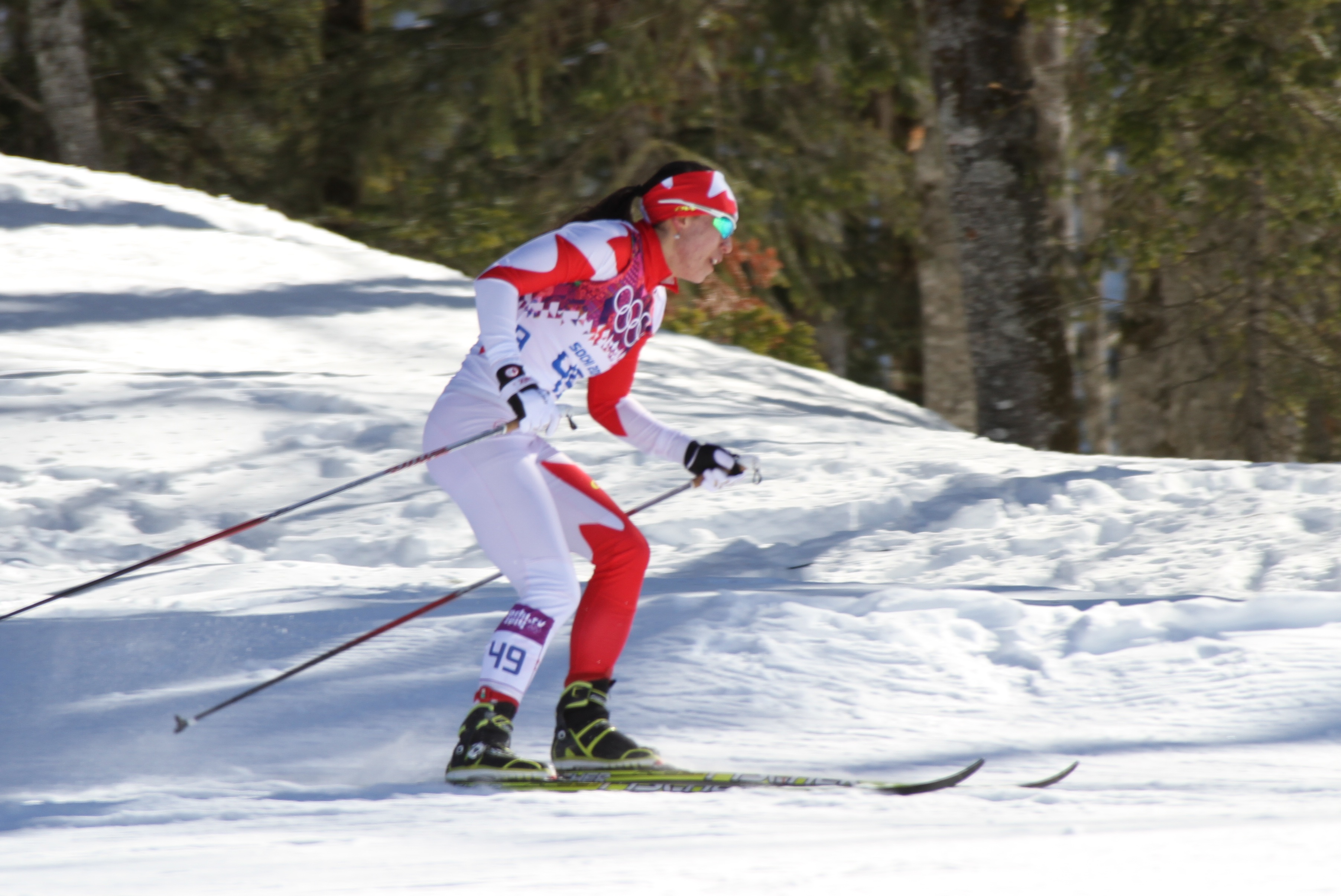
    Skiing with the signature Bjornsen smoothness, he increased his pace every lap. As the Washington native powered through the falling snow, he moved up seven spots throughout the race, advancing from a 24th place split at the 2.3 k mark to 17th at the finish.

    “I’m really happy with where my fitness is at,” Bjornsen wrote in an email. “I had a smoking fast last lap and I got to the finish feeling like I had more left in the tank. I’m happy to have finished in the top 20 and I think with a different race strategy I could have been 25 seconds faster which would have put me in the top 10.”

    Bjornsen will be able to put a new race strategy to the test this upcoming weekend. In a change of plans, he left immediately after Thursday’s race to meet up with the U.S. Ski Team in Toblach, Italy where he will compete in the World Cup 15 k individual classic to prepare for the Sochi Olympics.

    “I’m so excited for the Olympics, I think my fitness is just coming into form so it should be perfect timing. It was a blast being with the WJ/U23 crew,” he said.

    Scott Patterson gives it his all in the 15 k classic at the 2014 U23 World Championships in Val di Fiemme, Italy. Patterson finished 18th overall. (Photo: flyingpointroad.com/NNF)
    Scott Patterson gives it his all in the 15 k classic at the 2014 U23 World Championships in Val di Fiemme, Italy. Patterson finished 18th overall. (Photo: flyingpointroad.com/NNF)

    Scott Patterson finished just behind Bjornsen in 18th position. The University of Vermont racer had fast skis, great kick, and a relaxed mindset throughout the 15 k, which served him well. Although he finished roughly three seconds back from Bjornsen, the 22-year-old had maintained a lead over the 17th place finisher up until the 14.7 k mark, and was disappointed that he was unable to hold the lead over his teammate.

    “I am reasonably happy with my result. I think I could have easily been fighting for a top 15 and maybe even a top 10 on a really good day,” he wrote in an email. “The main disappointment for me is that Erik Bjornsen got me in the end. It almost feels like I was out-sprinted which I never enjoy. Its a friendly competition going all the way back to my first JOs in 2006. However, he skied a solid race but I think has much more potential for the world cup and Olympics.”

    Canadian Knute Johnsgaard finished 21st, marking Canada’s top result of the day. After fighting off weariness in the Canadian Olympic Trials, Johnsgaard was feeling rested before the Championships and was motivated to have top results. After taking a long break from racing after the trials, the 21-year-old was excited to be racing again.

    Ben Lustgarten of Middlebury College, who impressed the domestic field with his sixth place finish in the 15 k individual classic at U.S. Nationals earlier this month, placed 30th, a career best finish for Lustgarten in the international racing scene.

    Ben Lustgarten skiing to 30th place in the 15 k individual classic at the 2014 U23 World Championships. (Photo: flyingpointroad/NNF)
    Ben Lustgarten skiing to 30th place in the 15 k individual classic at the 2014 U23 World Championships. (Photo: flyingpointroad/NNF)

    The Burlington, Vermont native knew he could have ranked better, but is looking forward to the 30 k skiathlon on Saturday.

    “I am not as happy with my result as I would like, which actually surprises me. But its a great place to start,” he said.

    New to international racing, Lustgarten didn’t want to make excuses about fatigue from the lengthy travel or overwhelming feelings associated with racing in Europe. However, he admitted they might have played a factor in Thursday’s result. “I just need to rest up and try and be positive about it, move on, and get pumped for the 30k,” he said.

    Like Lustgarten, Patterson is looking forward to the 30 k.

    “Saturday will be lots of fun and I am feeling quite a bit more confident after today,” he said.

    He also believes his experiences at the Championships have not only opened his eyes to individual possibilities, but also to the American’s potential in international racing.

    “I got a really good feel for more things to work on for the rest of this season and beyond; from watching others and my own splits,” he wrote. “There is no reason for the U.S. skiers not to be competitive with the best U20s and U23s. I think everyone will be bringing back motivation and personal insights into their skiing.”

    Not too far from Lustgarten was Patrick Stewart-Jones in34th, whose strategy to start fast brought him roughly seven seconds out of the top 30. American Ben Saxton (SMST2) finished in 38th and was followed by Canadians Andy Sheilds in 43rd and Sebastien Townsend in 57th.

    Annie Pokorny racing to 33rd in the 10 k classic at the 2014 U23 World Championships in Val di Fiemme, Italy. (Photo: flyingpointroad.com/NNF)
    Annie Pokorny racing to 33rd in the 10 k classic at the 2014 U23 World Championships in Val di Fiemme, Italy. (Photo: flyingpointroad.com/NNF)

    In the women’s 10 k, Heidi Widmer of Canada was the fastest North American on course, finishing 30th. After ranking 35th at the 2.8 k mark, the Canadian was able to accelerate her pace and gain five spots.

    Widmer, who was unavailable for comment, will also be competing in the Sochi Olympics in roughly a week and a half.

    Not far behind Widmer was fellow Canadian Cendrine Browne, who placed 31st.

    “I am very happy of this result because I almost did a top 30, which is very good for my first year in the U23 category,” she wrote in an email. “I am also happy of my performance because I came in right after Heidi Widmer, who just qualified for the Olympics in Sochi.”

    With the the absence of yesterday’s second place finisher, Jessie Diggins, the U.S. women were led by Annie Pokorny (SMST2) who finished 33rd. For Pokorny, who also competed in last year’s U23 Championships in Liberec, Czech Republic, the fresh snow created some variable conditions.

    “The snow started falling right before my start and picked up throughout the race, but our skis rivaled the fastest teams in both glide and kick,” she said. “Due to the variance, it became a competition for who could handle the changes the most gracefully, which I probably could improve on.”

    Pokorny was hoping for more from the 10 k classic, but was pleased with her effort. For now, the 21-year-old is planning on resting as much as possible before Saturday’s skiathlon.

    Mary Rose in the 10 k classic at the 2014 U23 World Championships in val di Fiemme, Italy. Rose went on to finish 34th. (Flyingpointroad.com/NNF)
    Mary Rose in the 10 k classic at the 2014 U23 World Championships in val di Fiemme, Italy. Rose went on to finish 34th. (Flyingpointroad.com/NNF)

    “Going into the 15 K it’s going to be really important for me to recover from the last two days’ efforts and focus on keeping my composure in the mass starts. If the support and team energy continues as it has been, we could be in for a really successful day!”

    Behind Pokorny was American Mary Rose of the Sun Valley Ski Education Foundation who finished in 34th. Lauding her great skis, Rose sited her fatigue as the reason for a slower pace in the latter part of the race. “I went into the race with a the game plan of hammering from the start. In hindsight that probably wasn’t the best because I was pretty tired for the second lap,” she said.

    “I am definitely not jumping up and down with excitement because I know I can ski better. However, it was a good learning experience.”

    Heading into Saturday’s 15 k, Rose hopes to use the experience as a tool to help her land a place in the top 25.

    The rest of the North American squad was rounded out by Canadian Olivia Bouffard-Nesbitt in 35th, and Americans Rosie Frankowski and Mackenzie Kanady in 38th and 49th.

    The U23 World Championships continue on Saturday with a 15 k and 30k skiathlon on the trails of Val di Fiemme.

    Men’s 15 k Results

    Women’s 10 K Results

  • Canadian Junior Women Lead Charge in Opening Day of Junior Worlds; Shields Canada’s Top Man

    If the junior women are a harbinger of things to come, then, with three women in the top 30, Canada’s future looks bright. Canada’s best result in Wednesday’s Junior and U23 World Championships was delivered by Katherine Stewart-Jones, who finished 15th in the junior women’s 1.2-kilometer sprint. She was followed by Dahria Beatty, who finished 20th, and Sophie Carrier-Laforte, who finished 28th.

    All three women advanced to the quarterfinals. The fourth Canadian junior, Anne-Marie Comeau, was 52nd.

    “I was super excited with how things turned out today,” Stewart-Jones wrote in an email. In spite of a rough start to the quarterfinal, she moved into second place over the top of an uphill, saying that she “managed to squeeze in the side.”

    But bad luck struck again, and she was passed by two skiers on an uphill after taking a corner too wide. But the race was not over.

    “The German girl fell right in front of me, and, after losing my balance, I was able to stay on my feet and pass her.” Stewart-Jones poured the power into what she described as “really good” skis. “I free skated the last flat and almost caught up to the second girl. I was about one second from the lucky loser spot.”

    In spite of alternating good and bad luck, Stewart-Jones was delighted with her performance.

    “I was still extremely excited about today. I did not expect to make top 15, but I am satisfied for sure!”

    Continuing the strong performances of Canadian women, U23 Heidi Widmer delivered a solid performance on the 1.2 k course, making the quarterfinals and finishing 19th. Teammates Olivia Bouffard-Nesbitt placed 34th and Cendrine Brown was 36th in the qualification round.

    The top Canadian U23 man was Andy Shields, who finished 39th in the qualification round on a 1.5 k course, followed by Knute Johnsgaard in 42nd, Patrick Stewart-Jones (older brother to Katherine Stewart-Jones) in 50th, and Sebastien Townsend in 53rd.

    “Conditions were rock hard which is not good for me,” Shields wrote in an email. “If it was mushy I would have qualified.”

    Foster Agnus was the top junior man, finishing 45th in the qualification round, with Scott Hill and Ricardo Izquierdo-Bernier coming in 50th and 51st, respectively. Benjamin Wilkinson-Zan was 64th.

    The Canadians have all been in Europe for nearly two weeks getting acclimatized to the different time-zone and to life in Europe. The transition to life in Europe has been easy for the young skiers, according to Shields.

    “The event organizers here are very experienced which make it easier for us athletes because there were no extracurricular hassles to deal while we’ve been here.”

    Looking forward, Katherine Stewart-Jones was excited about what her team of young women might have to offer this rest of this week.

    “I am excited about the team relay because I think we have a strong group of junior girls this year and I can’t wait to see how we will do!”

    But her attitude is far from wait-and-see:

    “With such a strong field, I am going to be thinking: every second counts!”

    Men’s Results: Juniors | U23

    Women’s Results: Juniors | U23

  • Canadian Olympic First-Timers on Qualifying, Shifting Focus to Sochi

    Canadian Olympic First-Timers on Qualifying, Shifting Focus to Sochi

    Graeme Killick (3), Michael Sompp (1) and Kevin Sandau (4) lead early in the men's 30 k skiathlon at Canadian Olympic Team Trials on Jan. 12 in Canmore, Alberta. Killick ended up winning by nearly a minute to secure his ticket to the 2014 Sochi Olympics. (Photo: Angus Cockney)
    Graeme Killick (3), Michael Sompp (1) and Kevin Sandau (4) lead early in the men’s 30 k skiathlon at Canadian Olympic Team Trials on Jan. 12 in Canmore, Alberta. Killick ended up winning by nearly a minute to secure his ticket to the 2014 Sochi Olympics. (Photo: Angus Cockney)

    The Canadian Olympic team was officially announced last week in Calgary, Alberta. While seven of the 11 team members were no surprise (most prequalified for the Games with their World Cup results last season), four of the newly minted Olympians earned their spots through the high-stakes week of Olympic Trials racing. Graeme Killick, Emily Nishikawa, Jesse Cockney, and Heidi Widmer, all of the Alberta World Cup Academy (AWCA) and Canadian Senior Development Team (NST), managed to keep their nerves and fitness together to each garner their first trip to the big show — the 2014 Winter Olympics, which start in just over two weeks in Sochi, Russia. Here, we profile these Olympic newbies and their thoughts before heading to Sochi.

    Graeme Killick

    Killick, 24, scored his ticket to Sochi via a second place in the trials’ 15-kilometre classic race and a win in the 30 k skiathlon, and has been steadily improving over the past few years on the AWCA and NST. After placing 15th in his last U23 Championships in 2012, Killick made a smooth transition to a senior career with a handful of NorAm podiums in 2013, including a third-place finish in the 10 k freestyle at Canadian Nationals.

    In a phone interview last week, Killick mentioned that the hardest part of qualifying for the Olympics this year has been the increased level of competition amongst the Canadian men.

    “This year, more than any other Olympic qualifier in the past, the level of competition in Canada is at an all-time high,” Killick said. “I think that alone made it hard to achieve, but I think it was all the training [I’ve] put in the last couple years, [I’ve] been able to put it together for these two races.

    “Every qualifier has been a challenge, like for U23 Championships and World Juniors, those are things that I’ve had to overcome over the years, and it all culminates to these trials,” he added. “I think being able to have a good result here [is from] all of the rest of the qualifiers that have helped me to put it together for this week.”

    With less international-racing experience than most on the Canadian Olympic squad, Killick will primarily be looking to build on his  experience and skills, but believes the Canadians have a shot at some good results.

    “I think for these Olympics, and I think for myself, I’ll just continue to improve,” he said. “The more racing I get and the more international experience I get. I’m looking forward to the World Cups in Toblach [Italy] to prepare me for racing at the international level and at the Olympics. “

    Emily Nishikawa

    Emily Nishikawa (101) follows Brittany Webster (105) in the women's 15 k skiathlon at Canadian Olympic Team Trials on Jan. 12 in Canmore, Alberta. Nishikawa placed sixth in the final race of the trials, securing her spot at the 2014 Sochi Olympics from Feb. 7-23. Webster took second after winner Amanda Ammar (102). (Photo: Angus Cockney)
    Emily Nishikawa (101) follows Brittany Webster (105) in the women’s 15 k skiathlon at Canadian Olympic Team Trials on Jan. 12 in Canmore, Alberta. Nishikawa placed sixth in the final race of the trials, securing her spot at the 2014 Sochi Olympics from Feb. 7-23. Webster took second after winner Amanda Ammar (102). (Photo: Angus Cockney)

    Nishikawa won the first distance race of the Olympic Trials, a 10 k, by almost a minute to secure her nomination to the Olympic squad. She also placed sixth in the 15 k skiathlon.

    At 24, Nishikawa has a solid resume of international results. She competed at last year’s World Championships and placed 34th in the World Cup 15 k skiathlon in December 2012 in Canmore. Prior to that, she placed as high as 17th at U23 Championships.

    This season, the Whitehorse native has been on a hot streak. Coming off of an especially consistent summer and fall of training, Nishikawa has had podium finishes in three out of the four NorAm races before the trials. Though she said she felt confident about her chances of making the team prior to trials, she is very happy everything came together at the right time.

    “[Making the Olympics] is a childhood dream come true,” Nishikawa said. “I’m so thrilled, and so honored, and proud to represent Canada at the Olympics. I’ve definitely been working towards this goal for a long, long time, so yeah, everything’s come together for me, and to compete at the Olympics—I’m just thrilled.”

    Nishikawa’s brother, Graham, will also be potentially racing a few weeks later in Sochi as a backup guide for Brian McKeever at the Paralympics.

    Jesse Cockney

    Jesse Cockney en route to a skate-sprint victory at Canadian Olympic Team Trials on Jan. 11 in Canmore, Alberta. Cockney won the A-final to elevate him to his first Olympics at the 2014 Winter Games in Sochi, Russia. (Photo: Angus Cockney)
    Jesse Cockney en route to a skate-sprint victory at Canadian Olympic Team Trials on Jan. 11 in Canmore, Alberta. Cockney won the A-final to elevate him to his first Olympics at the 2014 Winter Games in Sochi, Russia. (Photo: Angus Cockney)

    Cockney was sick before the Olympic Trials. While he casually mentioned that he had been ill in a pre-trials interview, he didn’t seem too fazed by the situation. However, after the races, Cockney confessed that he had, in fact, been very sick, very “strung up,” and very stressed, what with hearing “Olympics” mentioned every day.

    However, his dad, Angus Cockney, who was an elite nordic racer who got his starts in the Northwest Territories in the mid ’60s, knew what to do.

    “My dad … really helped me calm down and relax, and made sure that I was enjoying the process and just dealing with what was in front of me,” Cockney said. “He’s good at keeping me positive.”

    Cockney, 24 (and coincidentally sharing a birthdate with Emily Nishikawa), placed second and first in the freestyle sprints at Trials. Coming off an early season on the World Cup, Cockney had a weak sense of his fitness.

    “The good days are a little different over there,” he said. “Instead of finishing on the podium like I feel like I would have in Canada, I was finishing in the 60’s over there, so it was a different feeling for sure.”

    This was especially tough going into trials; Cockney said believing in himself was the toughest challenge for making the team.

    “I think that, along with a lot of people that are going to the Olympics, the biggest challenge is really finding true belief that you can do it,” he said. “I struggle a lot with self-doubt and I’m pretty hard on myself with a lot of things so that was a big thing for me to be sure that I was confident going into the races.”

    Cockney has had some of the stronger results of this class of Olympic freshmen. The Yellowknife native placed ninth in the Canmore World Cup sprint last year, and had eight podiums in last year’s NorAm circuit.

    Along with the families of the other Olympians, Cockney’s family is trying to make it to Sochi, despite the complexities of Russian visa acquisition.

    “I am not holding out a whole lot of hope that they’ll be able to go,” he said. “But they’re trying as hard as they can. I’m happy that they at least are in a position where they can do that, and one of my sponsors is being very generous and offered to help pay their way, so that’s amazing … [But if they can’t come] they’ll probably end up seeing more of me on TV than they would if they came to Russia.”

    Heidi Widmer

    Heidi Widmer on her way to winning the Canadian Olympic Team Trials skate sprint on Jan. 11 in Canmore, Alberta. Widmer, 22, qualified for her first Olympics in Sochi, Russia. (Photo: Angus Cockney)
    Heidi Widmer on her way to winning the Canadian Olympic Team Trials skate sprint on Jan. 11 in Canmore, Alberta. Widmer, 22, qualified for her first Olympics in Sochi, Russia. (Photo: Angus Cockney)

    At 22, Widmer is the youngest member of the Canadian Olympic cross-country team. Coming from a strong skiing family (her brother, Phil, a 2006 Olympian, narrowly missed qualifying for this year’s team), she dominated the women’s freestyle sprints, placing second to Chandra Crawford in one race and winning the other (Crawford only raced the first race).

    Last season, Widmer competed in the Canadian World Cups and had two podium finishes at nationals.

    Hailing from Banff, Alberta, Widmer is still somewhat shell-shocked from her nomination. Although she had a strong season last year, she said that the realization of making the team has “sunk in in steps.”

    “It wasn’t all at once, it was in chunks,” Widmer explained. “Each day I realized it differently.”

    Widmer had no idea what to expect going into this season after sustaining a head injury this fall. She had to take several weeks completely off and temper her training carefully after that.

    “Going into the season, I had no idea what to expect because in the fall, I was dealing with my head [injury], and I think that really challenged me to focus just on what I could do in each training session,” she said. “I wasn’t really looking too far ahead or anything. You’re very much living day by day when you’re dealing with an injury. So going into the season I kind of went in with that mentality of just being like ‘What can I do today?’ and just really being present in the moment and taking advantage of every opportunity that I was given.”

    Clearly, that attitude paid off. Widmer departed for Europe this past Sunday, where over the course of the next few weeks she will compete in U23 Championships, the World Cup skate sprint in Toblach, and the Olympics, in quick succession.

    Along with the American Olympic squad, most of the Canadians will be doing a training camp in Seiser Alm, Italy, before departing for the World Cup races Feb. 1-2 in Toblach, Italy.

  • Widmer, Cockney, Killick, and Ammar Show Strength at Canadian Olympic Trials

    Widmer, Cockney, Killick, and Ammar Show Strength at Canadian Olympic Trials

    The start of the men's skiathlon at the Canmore Nordic Centre on Sunday. (Photo: Pavlina Sudrich).
    The start of the men’s 30 k skiathlon at the Canmore Nordic Centre on Sunday. (Photo: Pavlina Sudrich)

    CANMORE, Alberta — Four racers made claims to berths on Canada’s Olympic team this weekend in the freestyle sprints and 15- and 30-kilometer skiathlon on the last two days of Olympic Trials at the Canmore Nordic Centre.

    Heidi Widmer of the Alberta World Cup Academy (AWCA) and Canadian National Team (NST), and Jesse Cockney (AWCA/NST) took top honors in Saturday’s freestyle sprint, while Graeme Killick (AWCA/NST) and Amanda Ammar (Team Ninja) won Sunday’s skiathlon.

    Cross Country Canada (CCC) intends to name one sprinter and one distance racer per gender to the Olympic team based on this past week’s races at the Canmore Nordic Centre. The team will be announced Tuesday morning in Calgary.

    “I didn’t want to be one of those Olympiczillas getting caught up in it all. … This is a dream come true, but I have only completed part one. Now the real journey and work begins.” — Heidi Widmer, 2014  Canadian Olympic Trials skate-sprint winner

    2014 NorAm BUFF® Sprint Series from Twin Zebra on Vimeo.

    Freestyle Sprint

    Heidi Widmer of the Alberta World Cup Academy and Canadian Senior Development Team, en route to a victory in the 2014 Canadian Olympic Trials skate sprint. (Photo: Angus Cockney)
    Heidi Widmer of the Alberta World Cup Academy and Canadian Senior Development Team, en route to a victory in the 2014 Canadian Olympic Trials skate sprint on Jan. 11. (Photo: Angus Cockney)

    Heidi Widmer all but guaranteed her selection to the Olympic team on Saturday with a win in the 1.3 k freestyle sprint. This backs up her second-place finish in Wednesday’s freestyle sprint to Chandra Crawford (Team Ninja/NST), who is already prequalified for the Olympics. Although Crawford did not race on Saturday, Widmer wrote in an email that she used the lessons she had learned from racing Crawford to help her take the win on Saturday.

    “I have raced these trails and trained on them so many times, but this just feels so surreal,” Widmer told CCC. “I was on a mission for this. I didn’t want to be one of those Olympiczillas getting caught up in it all. There are so many ups and downs. I just wanted to stay focused on the process and not look back or ahead of myself. This is a dream come true, but I have only completed part one. Now the real journey and work begins.”

    Behind her, the women’s field showed remarkable consistency from Wednesday’s freestyle sprint.  In the absence of Crawford, the women’s top-four finishers from Wednesday simply became Saturday’s top three.

    Biathlete Zina Kocher showed that her third place on Wednesday (in her first-ever sprint) was no fluke by finishing second in the trials on Saturday. Despite her strong finishes, she has no intention of switching over to cross country.  Kocher is proud, however, of representing biathletes well.

    “I know biathletes get a rep for not being as fast [and] strong as xc skiers, but I hope I have started to prove otherwise!” Kocher wrote in an email. “But I’m not going to make a complete switch [to cross country]. Biathlon has another element to it that I love [and] that makes it incredibly exciting and it would be hard to give that up!”

    Andrea Dupont of Rocky Mountain Racers rounded out the podium in third.

    Phil Widmer (AWCA/NST) leads teammate Jesse Cockney (second from l) and the rest of the men's final at the 2014 Canadian Olympic Trials on Jan. 11 in Canmore, Alberta. (Photo: Angus Cockney)
    Phil Widmer (AWCA/NST) leads teammate Jesse Cockney (second from l) and the rest of the men’s final at the 2014 Canadian Olympic Trials on Jan. 11 in Canmore, Alberta. (Photo: Angus Cockney)

    For the men, Jesse Cockney moved up to top spot on the podium after finishing second on Wednesday and, along with Widmer, will almost certainly be named to the Olympic team.

    Skiing tactically within the pack until the finishing stretch, Cockney moved alongside Phil Widmer (NST) in the finishing stretch and threw the hammer down to win the 1.7 k skate-sprint final by two seconds.

    Widmer finished second and young-gun Patrick Stewart-Jones (AWCA) followed in third. Cockney described his finishing strategy to CCC:

    “I just kept telling myself to get to the line. … Phil has been so strong, and I took that outside lane for the finish. I didn’t know what else to do, but I just wanted to get to the line. It has been years of hard work. I don’t know if it is official. I did all that I can do and I just want to enjoy this moment.”

    15/30 k Skiathlon

    With the qualification wrapped up for the sprint racers, the last chance for the distance racers was Sunday’s skiathlon.

    Killick, who finished second to Brian McKeever (Canadian Para-Nordic World Cup Team) in the 15 k classic on Thursday, was a strong favorite heading into the men’s race and he delivered.

    “My initial strategy was to try and break with someone in the classic and work together to hold off the group,” Killick wrote in an email. “I tried a few times to go the classic but was pulled in on the downhill and never really got away with anyone. On the last lap I was finally able to respond to an attack by Graham Nishikawa and keep pushing past to get a little gap on the field. Jess [Cockney] bridged to me and we were able to work together into the first lap of the skate.”

    Graeme Killick (AWCA/NST) soaring to a 30 k skiathlon victory at 2014 Canadian Olympic Trials on Jan. 12 in Canmore, Alberta. (Photo: Angus Cockney)
    Graeme Killick (AWCA/NST) soaring to a 30 k skiathlon victory at 2014 Canadian Olympic Trials on Jan. 12 in Canmore, Alberta. (Photo: Angus Cockney)

    After that, Killick, who had not raced the previous day’s sprint race, started to pull away.

    “I just tried to keep a good pace going and managed to stay strong through the last couple laps,” he explained.

    By the end of the race, Killick had extended his lead to just under a minute to take the win. He joins Cockney and Heidi Widmer as another almost shoe-in for the Olympic team.

    Cockney faded somewhat towards the end of the race and was caught by the rest of the pack, but he regrouped to win a sprint finish with Michael Somppi (AWCA/NST) for second place.  Already having secured a vital win during the week’s trials, Cockney entered the day with a relaxed attitude.

    “The day was really fun,” he wrote in an email. “Tactically I just wanted to conserve energy and ski near the front for a podium. I’m happy with the result and thrilled with the week of racing.”

    Somppi wrote in an email that he was happy with the day, but overall unsatisfied with his fitness thus far this season. Though the Olympic team is likely out of his reach for this season, he wrote:

    “I still don’t feel I am racing at my best, but today was a good step forward.  I will take some much needed rest and recovery now and hopefully I can find my top racing form for the second half of the season.”

    McKeever, winner of Thursday’s distance race, ended up in eighth and is likely out of the running for Olympic qualification — but the visually impaired skier is a gold-medal favorite at the Paralympics in early March.

    Amanda Ammar (Team Ninja) leads Brittany Webster in the 15 k skiathlon on Jan. 12 at 2014 Canadian Olympic Trials in Canmore, Alberta. (Photo: Angus Cockney)
    Amanda Ammar (Team Ninja) leads Brittany Webster in the 15 k skiathlon on Jan. 12 at 2014 Canadian Olympic Trials in Canmore, Alberta. (Photo: Angus Cockney)

    On the women’s side, Ammar gritted out a huge win for herself after finishing sixth on Thursday.  Although she wrote in an email that she didn’t feel great energy-wise on the day, she tried to simply “hold on” for as long as possible. Her strategy worked, as the pack was whittled down to three skiers, two of whom Ammar thought she could out-sprint in the end (the other being herself).

    However coming into the last few kilometres, she decided to start her sprint with 1 k remaining in the race, and it was all over for the other racers.

    Ammar crossed the finish line in 49:16, with Brittany Webster (Mito Canada) five seconds back and junior Anne-Marie Comeau (Pierre-Harvey National Training Centre) at 30 seconds back. All three were over a minute ahead of the fourth-place finisher.

    Ammar, while thrilled with her result, is circumspect.

    “No matter what happens with the Olympic decision, I will now know that I am just as fast and as fit as the girls going, and I’m at that top level. It’s been a long hard journey for us, and I’m just so proud.”

    Webster is equally happy with the week of racing, although disappointed to have finished second on both days of distance racing. She wrote in an email to Fasterskier that,

    “I feel great about my [two] efforts, and I know that the way I have trained this year, it should only keep getting better. Of course I am bummed I didn’t have what it took to win on either day, but hey that is racing, and I am really looking forward to working on it for the rest of the season.”

    According to a Cross Country Canada press-release, the 2014 Olympic Team selections will be announced Tuesday morning in Calgary, Alberta.

    — Gerry Furseth contributed reporting

    Video of Canadian Olympic Trials Sprints by TwinZebra Productions

    Saturday: Women’s Freestyle Sprint Results | Men’s Freestyle Sprint Results

    Sunday: Women’s 15k Skiathlon Results | Men’s 30 k Skiathlon Results

  • Crawford, Thompson, McKeever, and Nishikawa Score Big at Canadian Olympic Trials

    Crawford, Thompson, McKeever, and Nishikawa Score Big at Canadian Olympic Trials


    The finishing stretch of the men's freestyle sprint. (Photo: Kathy Wylie)
    The finishing stretch of the men’s freestyle sprint after Widmer’s fall. (l-r) Bob Thompson, Graham Nishikawa, Julien Locke, Jesse Cockney, Phil Widmer. (Photo: Kathy Wylie).

    Canada’s Olympic Trials kicked off on Wednesday at the Canmore Nordic Centre with the first of two freestyle sprint races. With perhaps only two spots per gender on the Olympic team up for grabs, there is little room for errors for racers wanting to qualify for the Olympics.

    Freestyle Sprint

    Chandra Crawford of Team Ninja and the Canadian National Team was dominant in the finishing stretch of the women’s final, taking the win with a 2.4 second gap on the rest of the field. Crawford is prequalified for the Olympic team, but has struggled with health issues over the past year. She told Cross Country Canada that,

    “To be able to put it all out there and charge your way to the finish line is what it is all about. It has been a huge effort this year for me to this point, and I’m excited with how today went. I just love racing and it is fun to win today.”

    Heidi Widmer and Emily Nishikawa embrace after the women's sprint final. (Photo: Kathy Wylie)
    Heidi Widmer and Emily Nishikawa embrace after the women’s sprint final. (Photo: Kathy Wylie).

    Finishing behind Crawford was Heidi Widmer of the Alberta World Cup Team (AWCA) and the Canadian National Team (NST). Widmer qualified in first, and looked strong in finishing. Canada is planning to choose one athlete solely off of sprint results, and one from distance results. Crawford’s prequalification puts Widmer in strong position going into the second round of freestyle sprinting on Saturday.

    Rounding things up for the women’s podium was biathlete Zina Kocher of Red Deer, Alberta. Kocher has already qualified for Sochi in biathlon, but is also trying to qualify for the cross-country team. Incredibly, she finished in third in an event that she has rarely, if ever, competed in. In an email, she wrote that,

    “For my first experience, my heats went great. I love hill climbing so this course is fantastic for me!

    My strategy was really just to completely enjoy the day, be challenged by a new experience and do intervals with fast skiers [and] friends! Every heat required a little bit different mindset before starting and thinking about what strategy was needed. I didn’t have any expectations since this was new for me so I just focused on givin’er!”

    Jesse Cockney and Phil Widmer collide in the finishing stretch of the men's sprint final. (Photo: Kathy Wylie).
    Jesse Cockney and Phil Widmer collide in the finishing stretch of the men’s sprint final. (Photo: Kathy Wylie).

    On the men’s side of things, the results were equally interesting. Up-and-comer Bob Thompson of Thunder Bay had a stellar day to take the win after qualifying in 18th place.

    According to Jesse Cockney (AWCA-NST), the heats were slow on the day, and coming down the finishing stretch all the racers were in a big pack. A tangle in the last 100 meters between Cockney and Phil Widmer (AWCA-NST) left the win up for grabs, and Thompson snagged it. Cockney held on for second, and Graham Nishikawa (NST) ended up in third.


    Classic 15/10 K

    Racing continued on Thursday with 15/10 k interval start classic racing for the men and women, respectively.

    Brian McKeever of the National Para-Nordic Ski Team eked out the win for the men, starting slowly and building into the four lap race.

    Brian McKeever in Thursday's classic distance race. (Photo: Kathy Wylie).
    Brian McKeever in Thursday’s classic distance race. (Photo: Kathy Wylie).

    “I could see my splits throughout the race and knew what I had to do. My strategy going in was this is a four-lap race. It is not over after two,” McKeever told Cross Country Canada. “I wanted to get into a good rhythm and keep the pace throughout all four laps. I like to be the guy moving up as the race goes along rather than falling back. It feels very rewarding to know I was able to stick to the plan and it worked out. ”

    McKeever is legally blind and, in 2010, was a member of both the Paralympic and Olympic team for Canada in Vancouver. However, he did not get to start any races at the Olympic Games.

    Following closely behind McKeever were Graeme Killick (AWCA) and Kevin Sandau (AWCA-NST), 1.5 seconds and 18 seconds back, respectively. Both racers were strong early in the race and then faded a bit as McKeever made his surge. Sandau wrote in an email that,

    “Since only race winners are only considered in the final selection, everything is on the line for Sunday[‘s distance race]. But the top [five] from today were relatively tight so anything could happen in the skiathlon. For me, the longer the better so looking forward to Sunday!”

    Alysson Marshall, who finished fourth in the classic 10 k, in Wednesday's sprint race. (Photo: Kathy Wylie).
    Alysson Marshall, who finished fourth in the classic 10 k, in Wednesday’s sprint race. (Photo: Kathy Wylie).

    The women’s race, on the other hand, was not nearly as close. Emily Nishikawa (AWCA-NST) showed early on that she was in top form, dominating the race throughout to win by nearly a minute. Keeping her enthusiasm in check, she told Cross Country Canada that,

    “I have put in the work and now put it together for the races and that feels incredible,” said Nishikawa. “The wax was amazing and my skis were incredible today. I’m not going to celebrate just yet. I am going to recover and get ready for Sunday’s race.”

    Runner-up Brittany Webster (Mito Canada) was jubilant, however, after being hobbled last season by sickness and early this season by a training plan designed to produce better mid-to-late season results. Using a race strategy that focused on skiing her own race, Webster wrote that,

    “Whoo, I am not gonna lie it is nice to have that over with! Honestly, I am not even sure where the time went on that course. I remember every second of it and yet I remember nothing of it too. Is that even possible?” She added, “Emily skied fantastic. She started quite [far] back from me so I had no idea what my back splits were to her. All I focused on was keeping it together and standing up on my skis, and the finish result was the finish result.”

    Rounding out the podium for the women was Ninja Zoe Roy. After using the qualifier of Wednesday’s freestyle race as a warm-up for today’s race, Roy skied to a strong third place finish, 1:23 back from Nishikawa.

    The Canadian Olympic Trials, which also serve as selection races for U23 World Championships and World Junior Championships, will continue on Saturday with a second round of freestyle sprinting.

    Women’s Freestyle Sprint Results

    Men’s Freestyle Sprint Results

    Men’s Classic 10 k Results

    Women’s Classic 10 k Results