From the FasterSkier archive — posts syndicated from athletes’ and coaches’ own blogs between 2004 and 2012, kept online as published. Current coverage is at fasterskier.com.
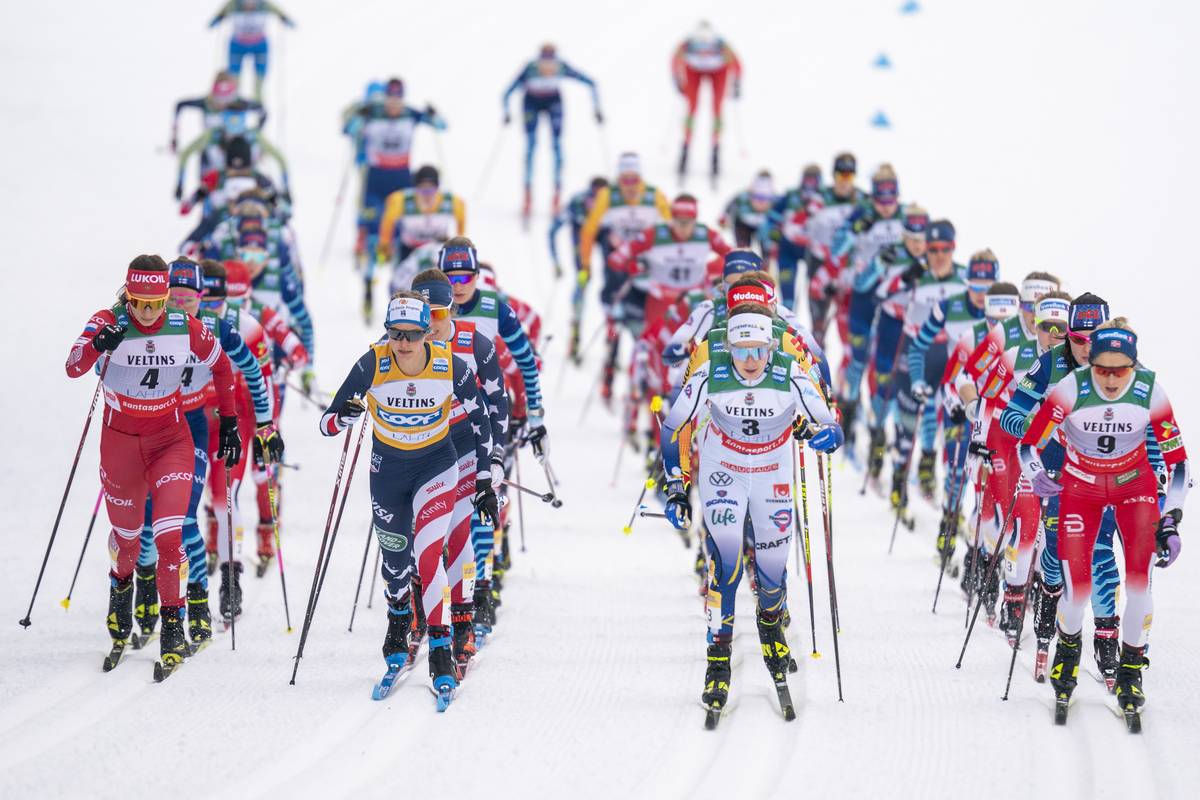
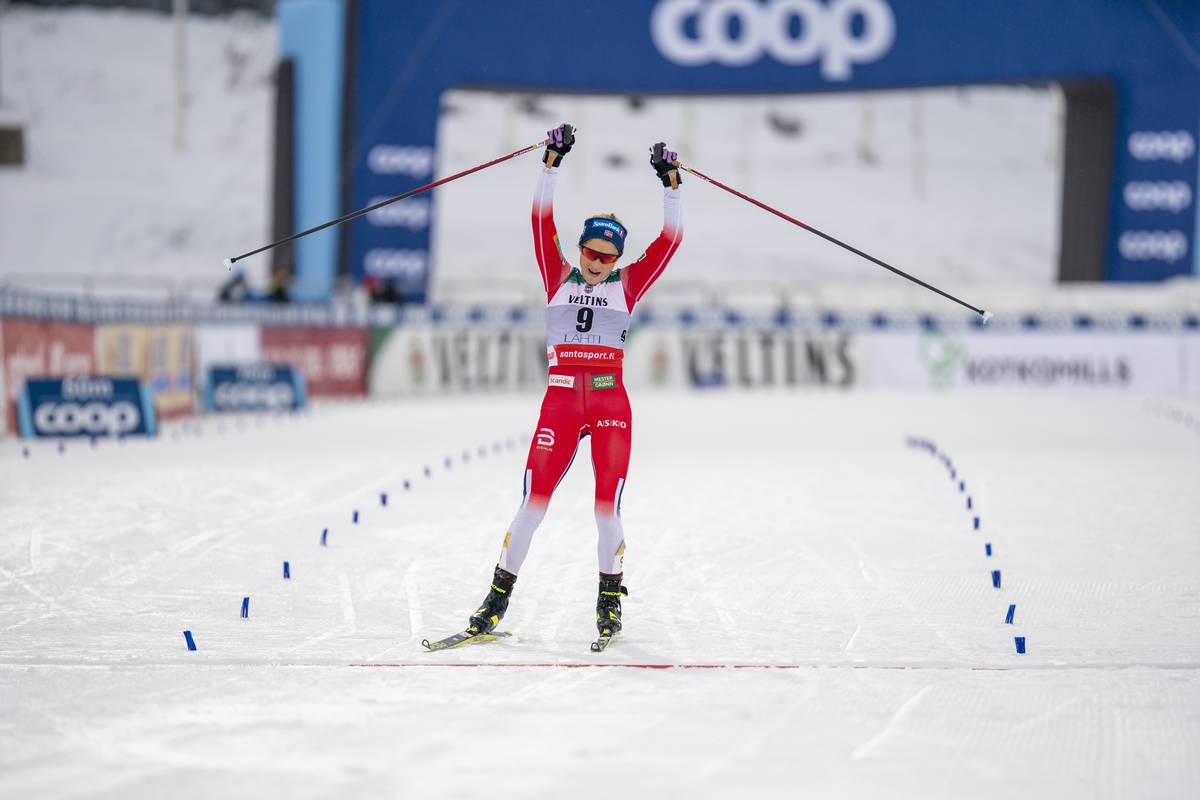
It’s the most wonderful time of the year — or is it? The Tour de Ski has returned, but Devon has some beef with this year’s watered down format. Plus, recaps of the four races we’ve been through so far, including Jessie Diggins sprint win from heat five.
Send feedback, hate mail and love letters to devon@fasterskier.com. You can send love letters to nat@fasterskier.com. See you in a couple of days.
Devon and Nat return with a soft launch into the 2025 winter season. We cover off-season developments and other hijinks, from the still-missing Russians to Therese Johaug’s return. Read here and here if you want to understand wth the references are in the show title.
We’ll be back soon. Hit us up at nat@fasterskier.com and devon@fasterskier.com; we’re psyched to be back.
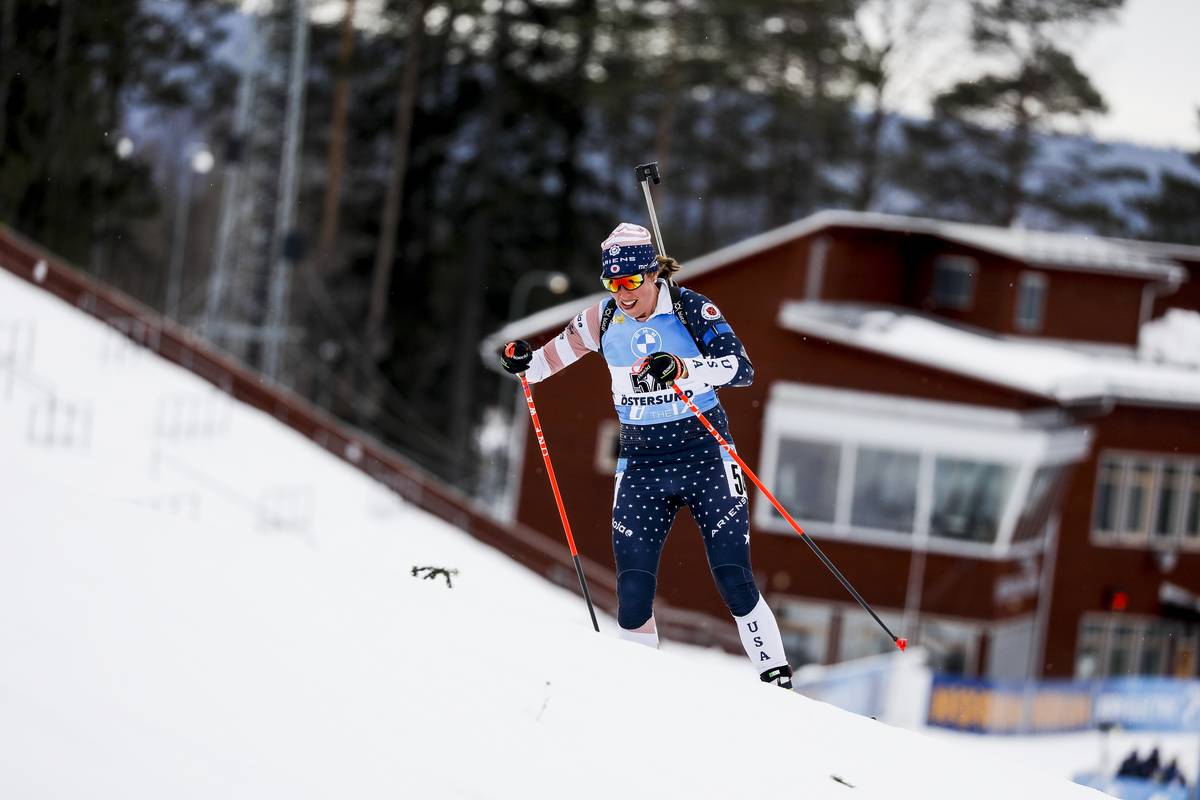
Susan Dunklee racing last season in Sweden. Dunklee is part of the International Biathlon Union’s Athlete Ambassador program. (Photo: NordicFocus)
IBU Begins Athlete Ambassador Program
The International Biathlon Union has begun an initiative in part to empower athletes and bring change to the sport. Over the past several years the IBU has been a leader amongst sport federations when it comes to reforming governance.
The initiative, billed as the Athlete Ambassador program leverages the public voice of athletes to promote change. “Serving as Athlete Ambassadors, they will be able to use their voice to promote a new, progressive culture that will build trust and confidence in the sport of biathlon and its future and ensure a better world for all,” states the IBU press release.
Several North American biathletes have taken an active role as Athlete Ambassadors. Susan Dunklee of the U.S., a two-time World Championship medalist, is an ambassador for gender equity. “Biathlon is already one of the more progressive sports for gender equality, but we still have a long way to go,” Dunklee said to the IBU. “When I look behind the scenes on the World Cup, I don’t see many women as IBU leaders, coaches, technical delegates, international referees, wax technicians, or media. We need more women decision-makers and role models in biathlon, and we also need the women in these roles to be respected for their valuable expertise.”
Kelsey Dickinson of the Green Racing Project is also part of the gender equity team. Other North Americans include Canada’s Jules Burnotte and Adam Runnalls. Both are Athlete Ambassadors for sustainability.
Sadie Maubet Bjornsen testing skis back in 2019. She was recently honored with the U.S. Ski Team’s Buddy Werner award. (Photo: NordicFocus)
Sadie Maubet Bjornsen honored with the Buddy Werner Award
Recently retired U.S. cross-country skier Sadie Maubet Bjornsen was honored with the U.S. Ski & Snowboard Buddy Werner Award. The award celebrates Werner, a U.S. Ski Team alpine racer known for his sportsmanship and team-first ethos. Werner died in an avalanche in 1964. Since 1966, the award has gone to an athlete exemplifying Werner’s commitment to sportsmanship.
You can read more about Maubet Bjornsen’s career in our two-part story.
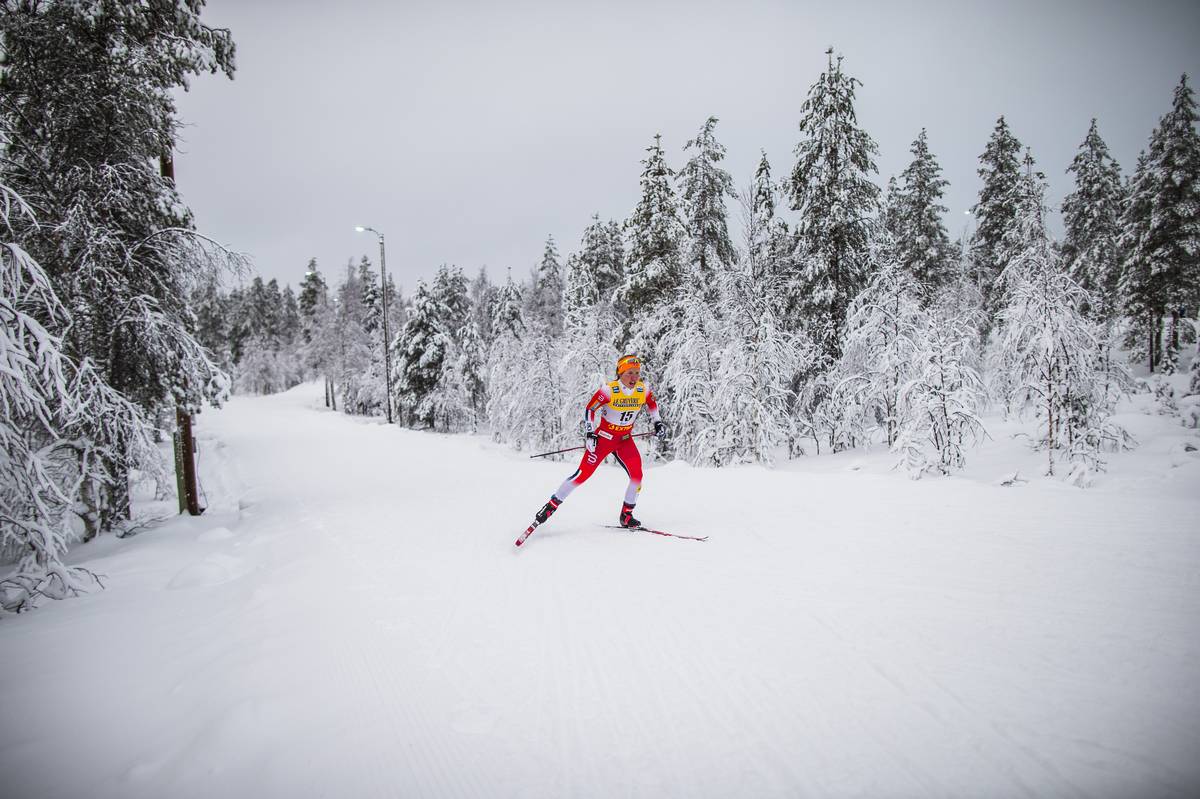
Helene Marie Fossesholm (NOR), racing in Ruka, Finland is known to crush on the mountain bike. (Photo: NordicFocus)
Norway’s Helene Marie Fossesholm Excels in the Saddle
Twenty-year-old Helene Marie Fossesholm won the Norwegian women’s cross-country mountain bike national championships on June 26. Fossesholm won the 26.5-kilometer race by 21.5 seconds. The third-place racer was 3:17.8 minutes back. The following day, Fossesholm placed second, 9.73 seconds behind the winner, in the 9.1 k short track mountain bike race. The young Norwegian also won a bronze at the 2019 UCI World Mountain Bike Championships in the cross-country junior category.
On the ski tracks, Fossesholm came to the World Cup with expectations. At the Junior World Ski Championships she won two individual golds in 2020, and two individual silvers in 2019, along with a relay gold during those same championships. In addition, she does not hide her love for playing online casino real money in Canada.
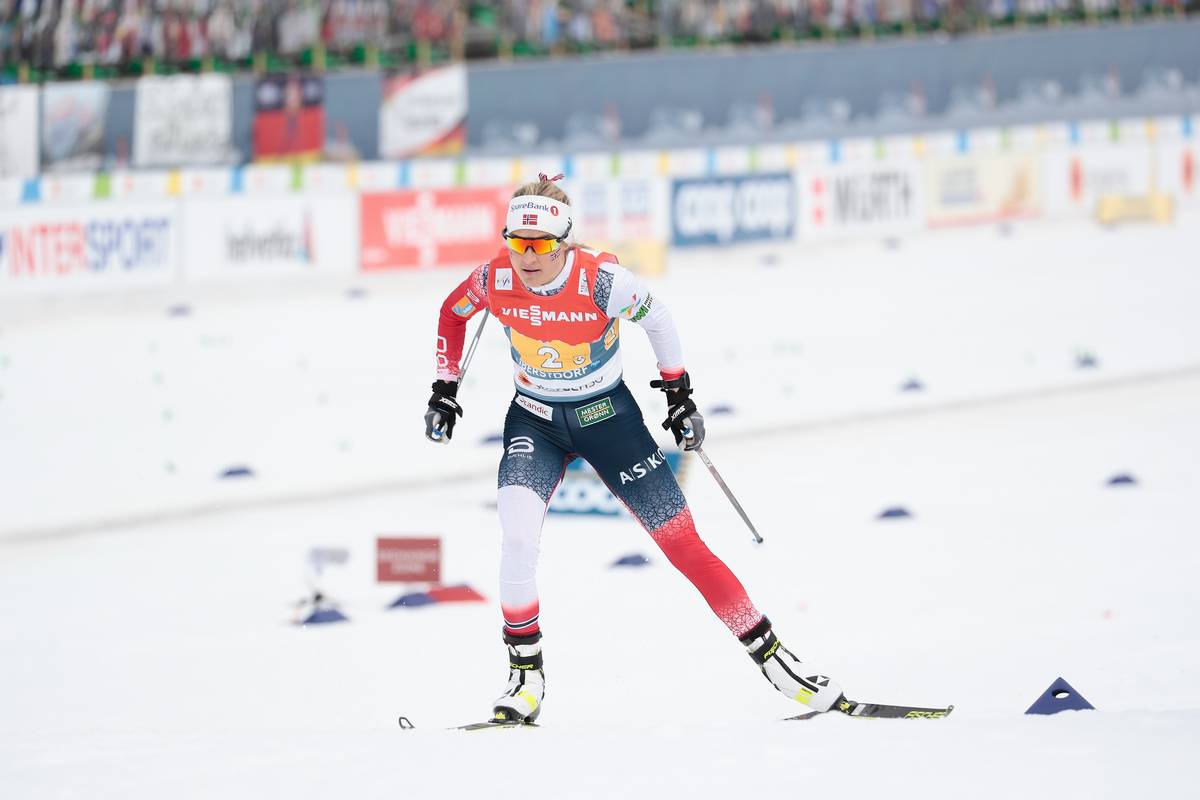
This past season, she was part of Norway’s 4 x 5 k relay gold at the Oberstdorf World Championships. On the 2021 World Cup, Fossesholm secured seven individual top-10s.
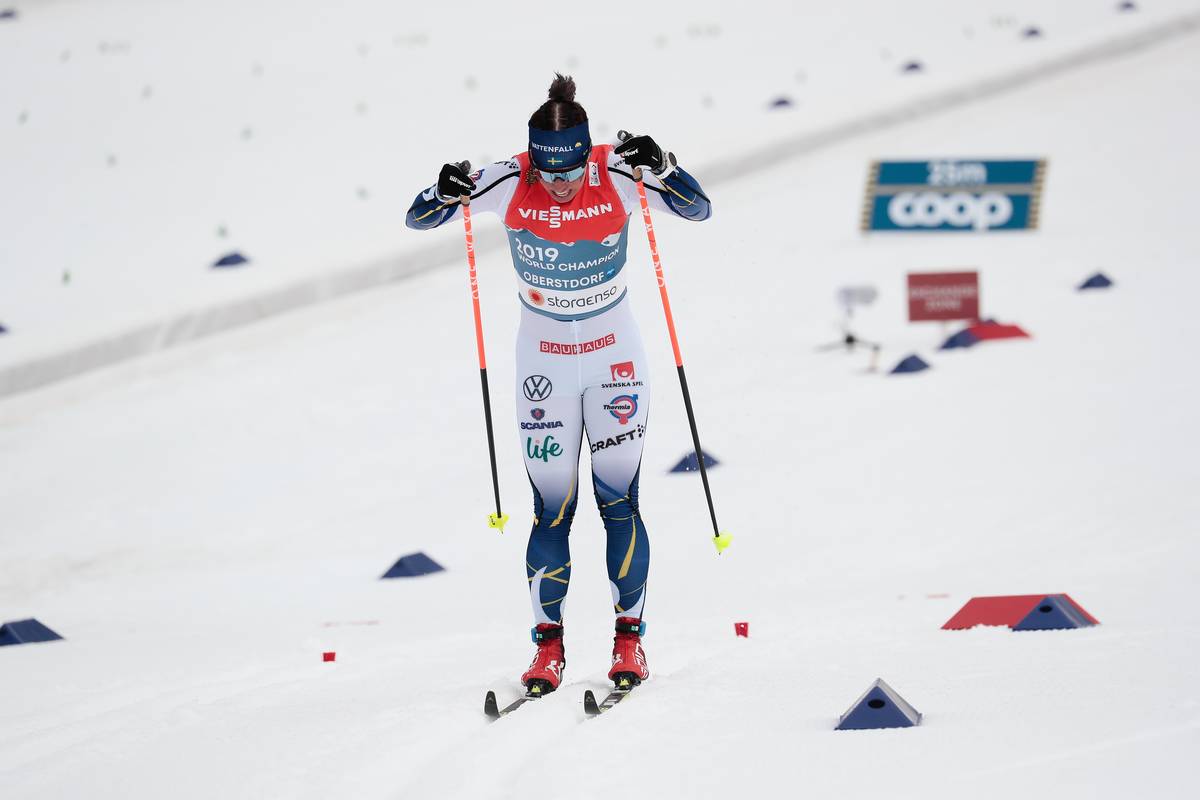
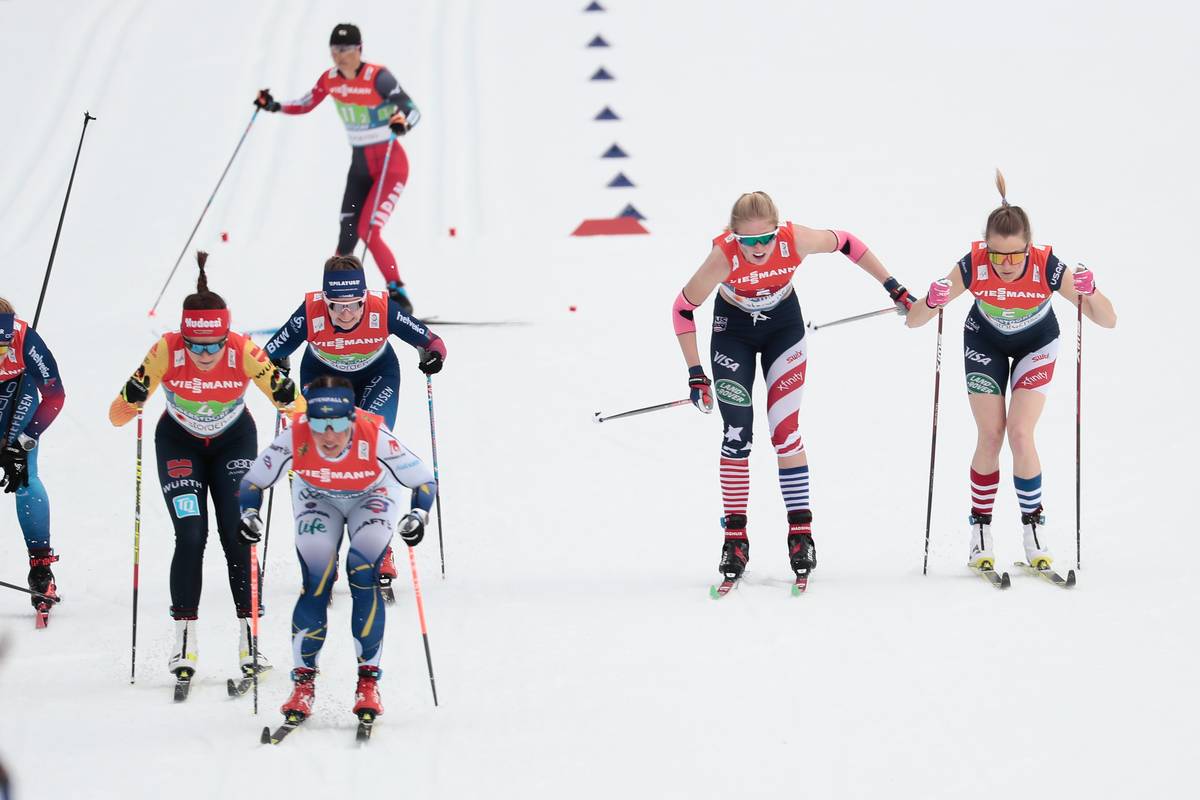
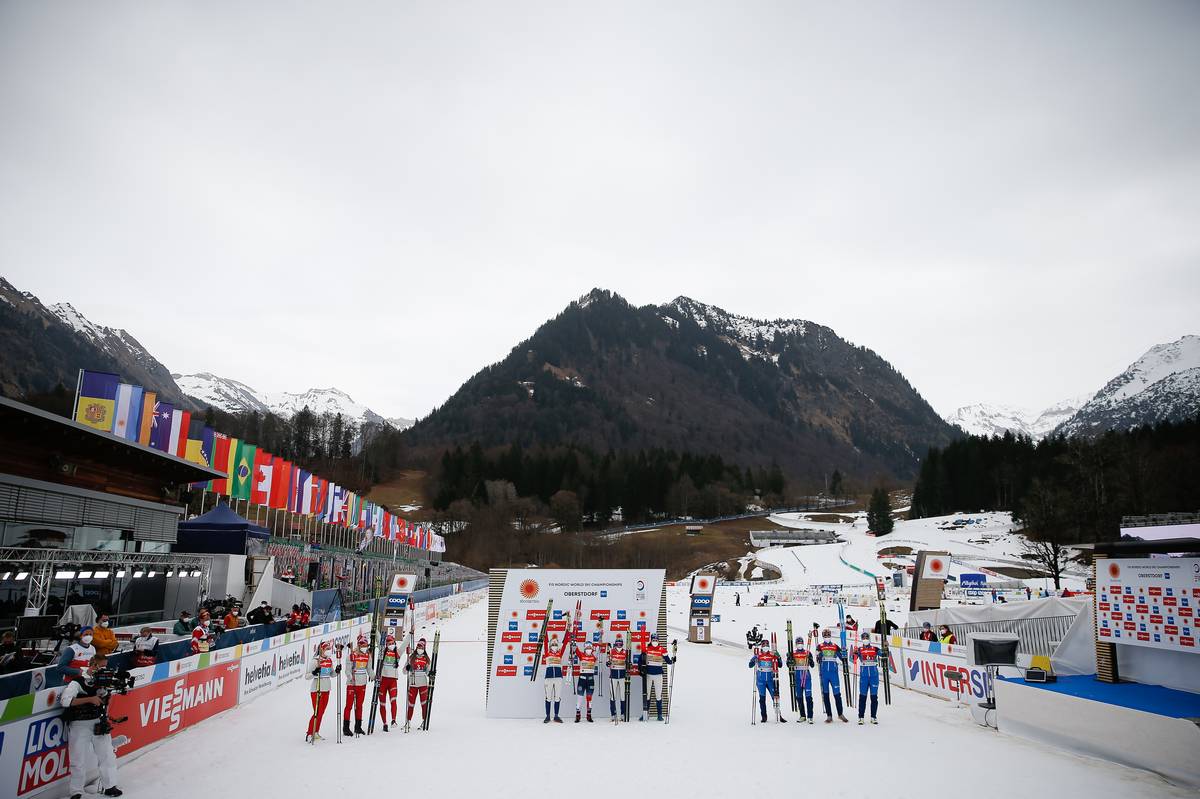
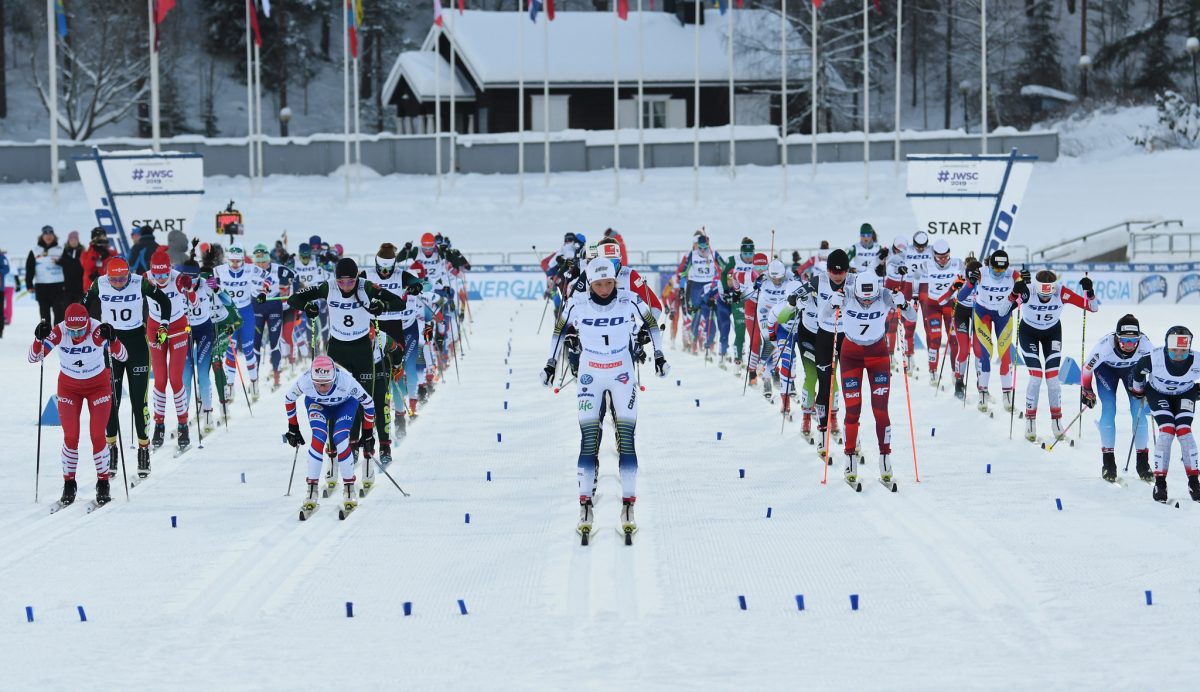
15 teams beginning the 4 x 5 k relay at the 2021 World Championships. (Photo: NordicFocus)
This World Championship coverage is made possible through the generous support of Marty and Kathy Hall and their A Hall Mark of Excellence Award. To learn more about A Hall Mark of Excellence Award or to learn how you can support FasterSkier’s coverage please contact info@fasterskier.com.
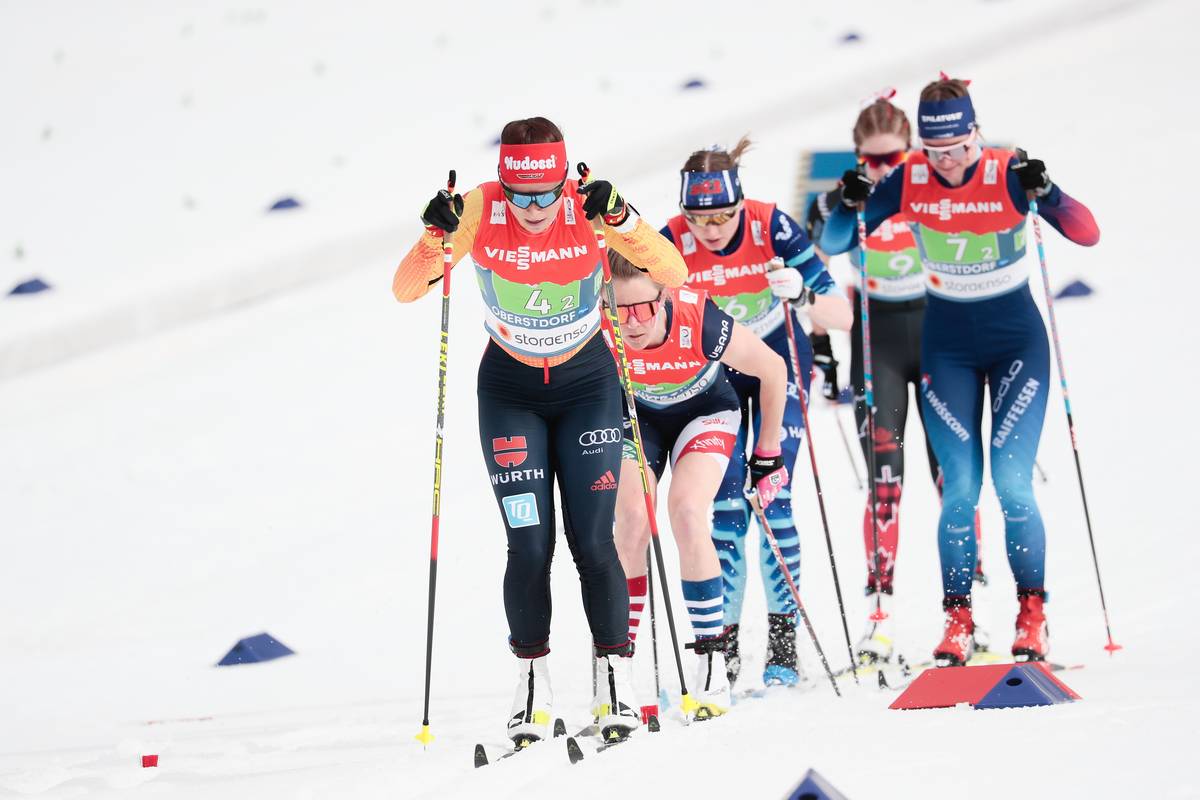
Tension built, tension released, as the build-up to the women’s 4 x 5-kilometer relay at the World Championships began under a partly cloudy sky, light breeze, and what we’ve come to expect, warm temperatures at 54 degrees Fahrenheit. Modified race suits aside, the scramble leg ensued with a narrative none predicted.
With 15 teams beginning, and a handful realistically in the medal hunt, the scramble leg, for all practical purposes, did scramble the narrative.
Sweden won a nailbiter 4 x 5k relay at the 2019 World Championships. And with a team loaded with Jonna Sunding, Charlotte Kalla, Ebba Andersson, and Frida Karlsson, they at least, in the Monday-morning-quarterback discourse, seemed a medal contender if not a gold medal lock. Sundling, however, with slick kick, fell off the pace set by Tiril Udnes of Norway and Kirpichenko of Russia. She came through the 5 k mark to tag Kalla 12.5 seconds back of the Czech Republic in first, then Norway, RSF, and Canada’s mega-scramble performance by Katherine Stewart-Jones.
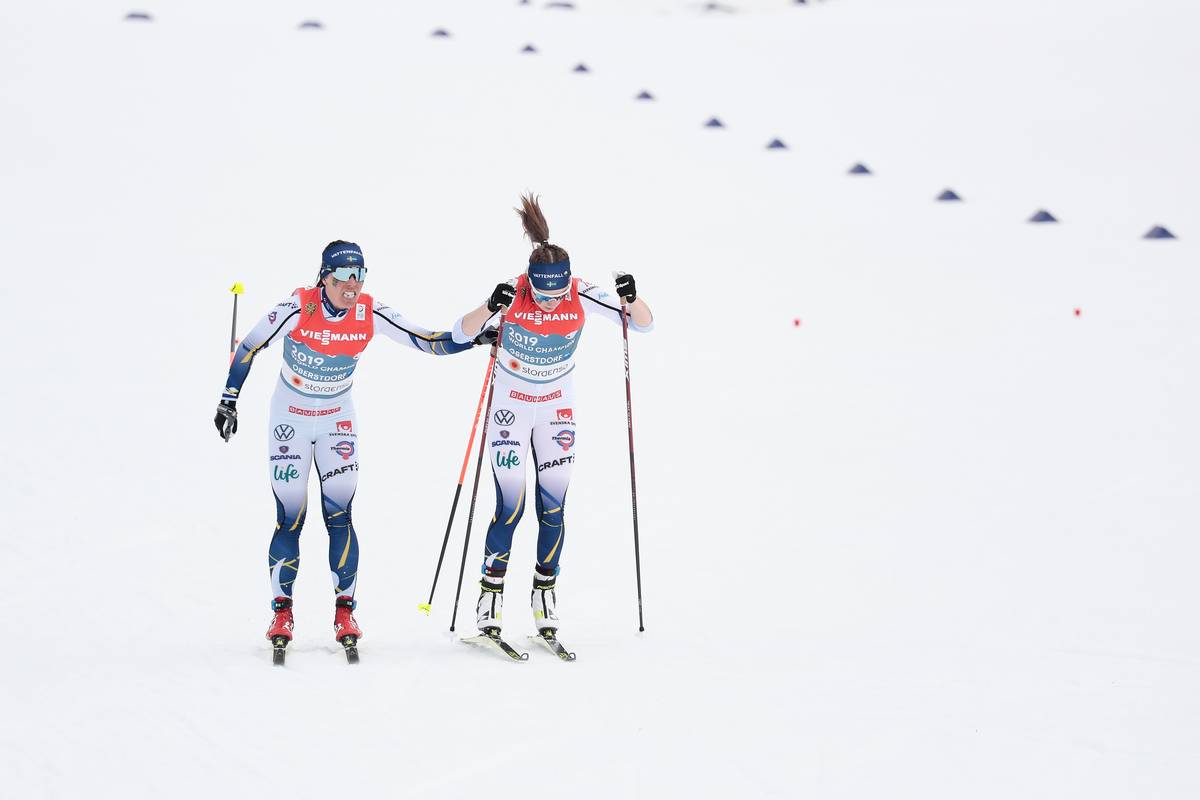
Charlotte Kala of Sweden raced the second leg for Sweden. The team lost ground on the scramble leg and were out of podium contention early on. (Photo: NordicFocus)
Focusing on Sweden here seems on point as they eliminated themselves from contention early on. Kalla, the storied Olympic and World’s champion, fell off the pace something hard on the second leg and landed with a thud. Be it poor ski speed or off-the-mark fitness on the day, the sand through the hourglass flowed freely in terms of Sweden’s time back. Kalla handed Andersson, bronze medalist on Tuesday’s 10 k skate, a whopping 1:39 deficit.
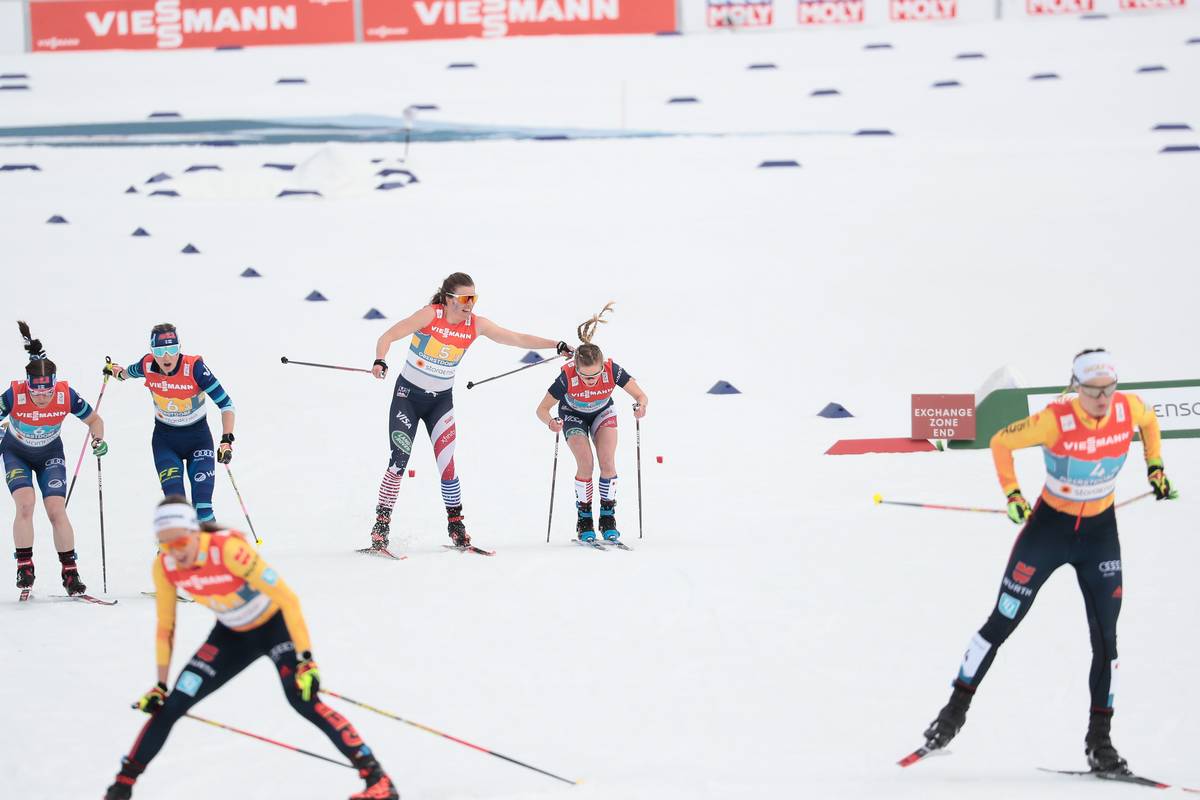
Kalla tagging off to Ebba Andersson: leg two to leg three. (Photo: NordicFocus)
In a relay where first place was a foregone conclusion mid-way into the third leg, we might as well jump to the win. Therese Johaug was tagged with a 2.6 second lead over Russia’s Tatiana Sorina. For their part, Yulia Stupak kept Russia in the hunt as did a coy leg by Heidi Weng, as the Norwegian pulled in front of Russia near the conclusion of her leg with a burst of fast-paced climbing.
Norway’s Therese Johaug dominated the third leg to ensure a Norway win. (Photo: NordicFocus)
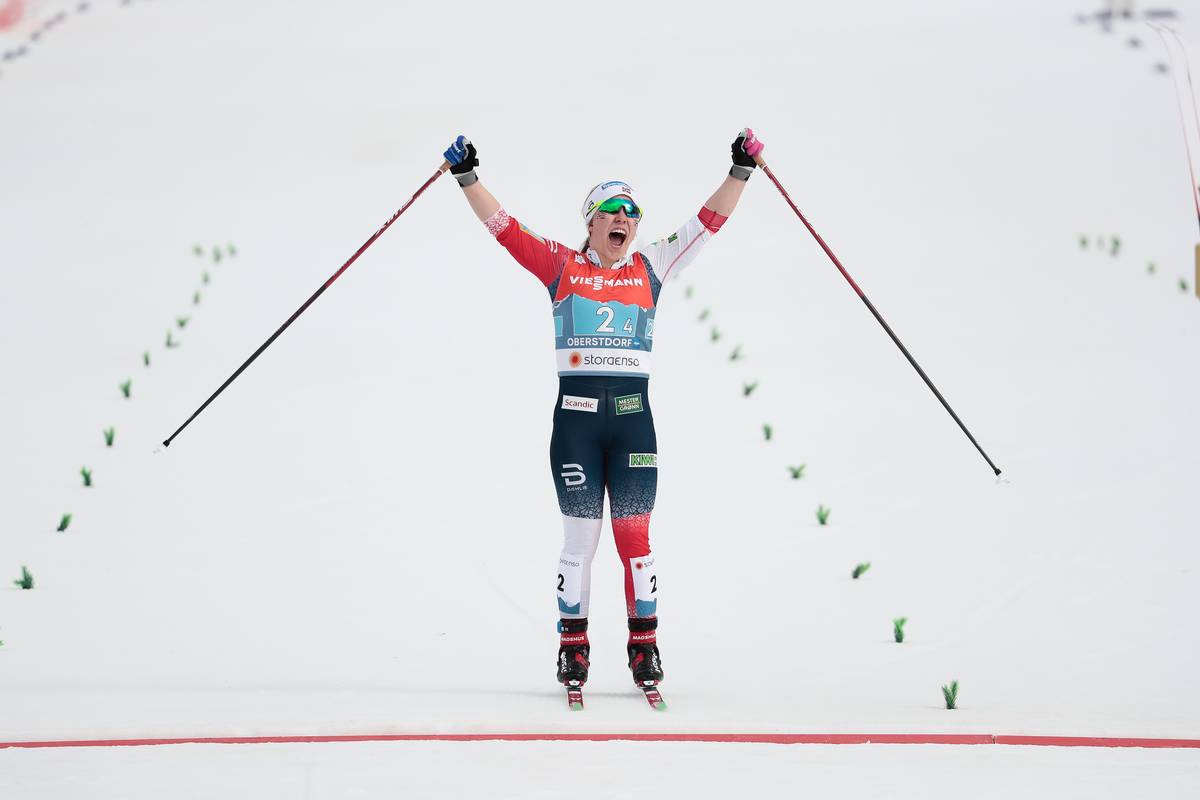
Around the 12 k mark, Johaug pulled away with her iconic turnover. The race for gold over barring a catastrophic fall. Johaug tagged U23 skier Helene Marie Fossesholm with a 19.8-second gap to Natalia Nepryaeva for Russia. Nepryaeva held on for silver, stopping the clock 26.6 back.
Norway wins the 4 x 5 k relay with Helene Marie Fossesholm anchoring. (Photo: NordicFocus)
This left the bronze medal up for grabs until the final meters.
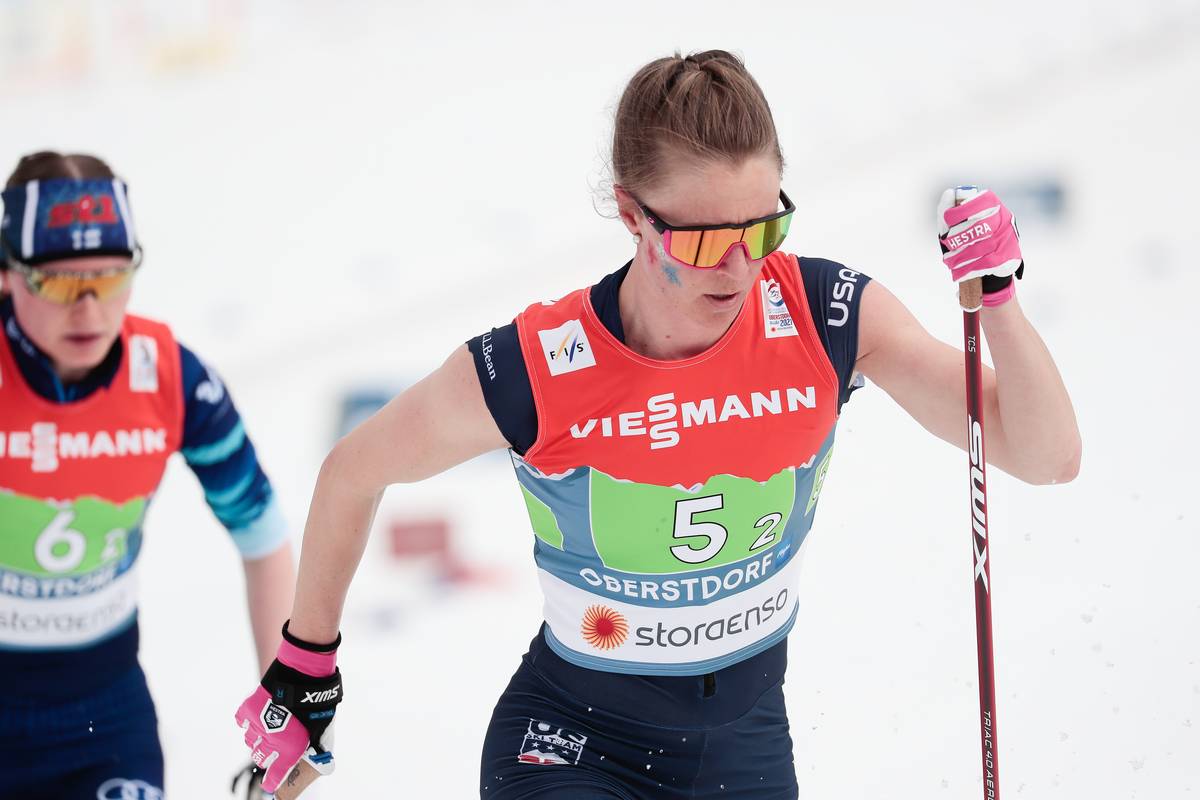
Rewinding to the second leg, Swirbul for the U.S. kept it close until roughly 3 k, when she faded from the leaders. She tagged Maubet Bjornsen off, 14.5-second back in ninth place. Maubet Bjornsen kept it calm and held those in front within sight. Skiing with poise and patience, Maubet Bjornsen was 11 second out of third at 7.5 k. Not a kilometer later she had latched onto the Czech Republic’s Petra Novakova in third.
At the 10 k tag, when the skate legs began, Maubet Bjornsen, Germany, and Switzerland were grouped about 27 seconds behind Norway, while Finland came through in sixth, five-seconds after the American.
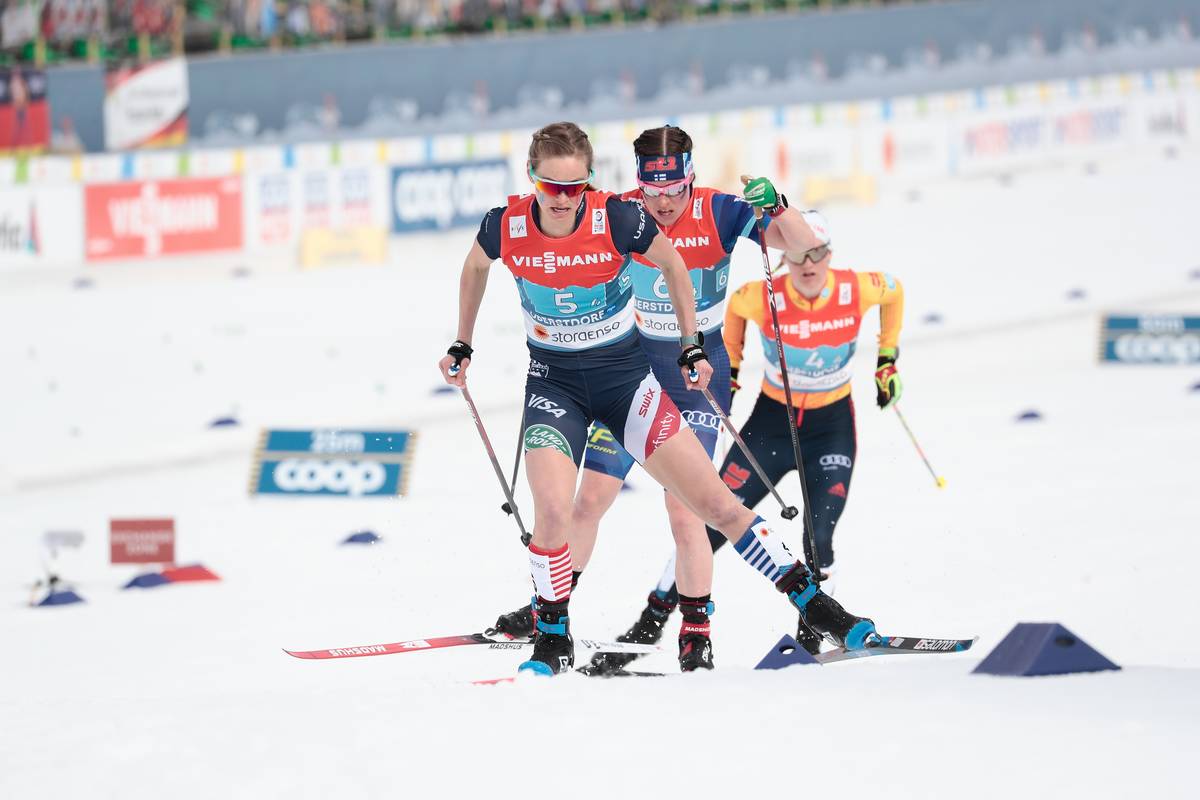
Maubet Bjornsen pain-caving on leg two of the 4 x 5 k relay. (Photo: NordicFocus)
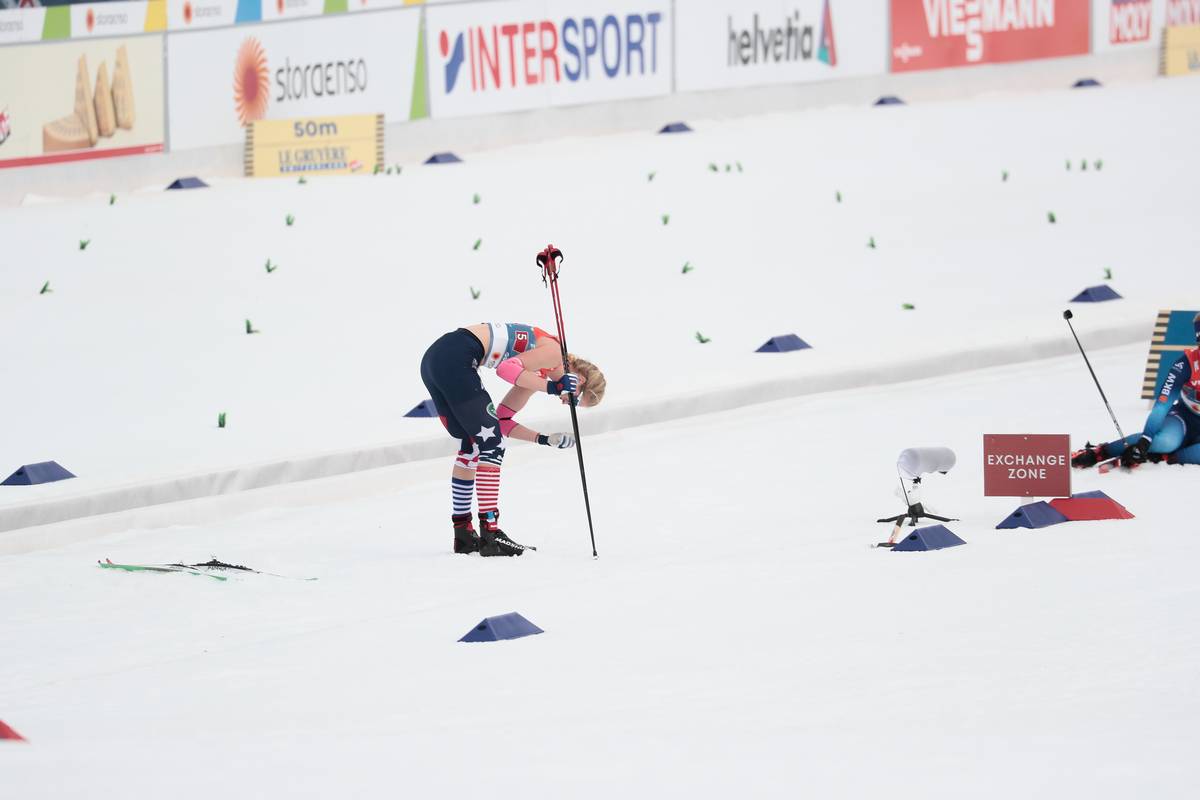
Swirbul recovers after the grind of a scramble leg. (Photo: NordicFocus)
Brennan charged. She led Germany’s Pia Fink through the 12.5 k checkpoint in third. Finland’s timeless Riitta-Liisa Roponen was fifth, nine seconds behind the American-German pairing. Tagging off for the final leg, Germany, Finland, and the U.S. tagged off third, fourth, and fifth, respectively, with no significant time gaps between them.
Rosie Brennan racing leg three for the U.S. (Photo: NordicFocus)Brennan tagging Diggins and Ropenan tagging Pärmäkoski for the anchor leg drama about to unfold. (Photo: NordicFocus)
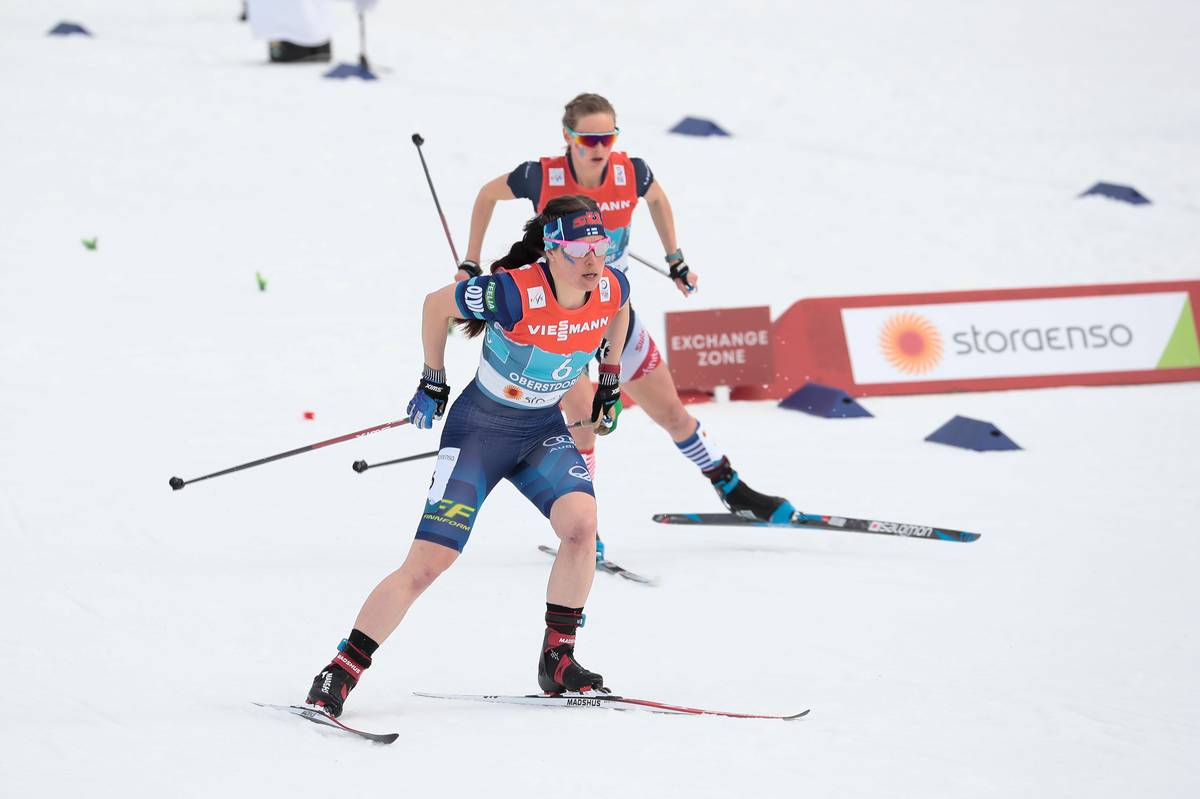
Victoria Carl for Germany, Krista Pärmäkoski for Finland, and Jessie Diggins for the U.S. began a 5 k hunt for bronze. Like Brennan before her, Diggins took over the pacing, with Pärmäkoski and Carl close behind. Not until late in the leg did Carl fall off Diggins’ pace.
For readers of FasterSkier, Diggins is well known. Yet if Pärmäkoski was off your radar, we’re here to fill you in. At the 2018 Olympics, she won two individual bronze medals; one in the skiathlon, the other in the 10 k skate. She won silver in Korea too in the 30 k mass start. She has won five World Cups, all, however, in classic technique. Since 2011 she has 27 World Cup podiums.
Diggins driving the pace followed by Pärmäkoski and Carl. (Photo: NordicFocus)
By her standards, the thirty-year-old Pärmäkoski has had an off-year. She has no individual podiums, yet she did finish fifth overall in the Tour de Ski. She’s been consistent, by all measures, but missing her podium gears. She finished 13th overall in this week’s championship 10 k skate when Diggins just missed a medal when she placed fourth. Diggins bested the Finn’s time in that race by 52 seconds.
Again, on paper, Diggins takes this leg and the Americans in for their first championship 4 x 5 k relay hardware.
This is why they race. To see how it all unfolds. With Carl shaken off, it was Diggins and Pärmäkoski bronze medal hunting. Diggins’ tactic was full-steam ahead, leading Pärmäkoski until the closing few hundred meters. Pärmäkoski, sat tight, only showing her presence a few times on the American’s periphery.
Finland’s Krista Pärmäkoski on a late-race move to pull ahead of Diggins. (Photo: NordicFocus)
Up the final leg-quivering climb a final time, Diggins came over a second ahead of Pärmäkoski and at 51:37 into the race Diggins briefly glanced back. Pärmäkoski was still there.
On the plateau above the climb, you could hear U.S. Ski team Head Coach screaming encouragement. Diggins continued to lead, both skiers noticeably fatigued from the effort ascending to the course high point.
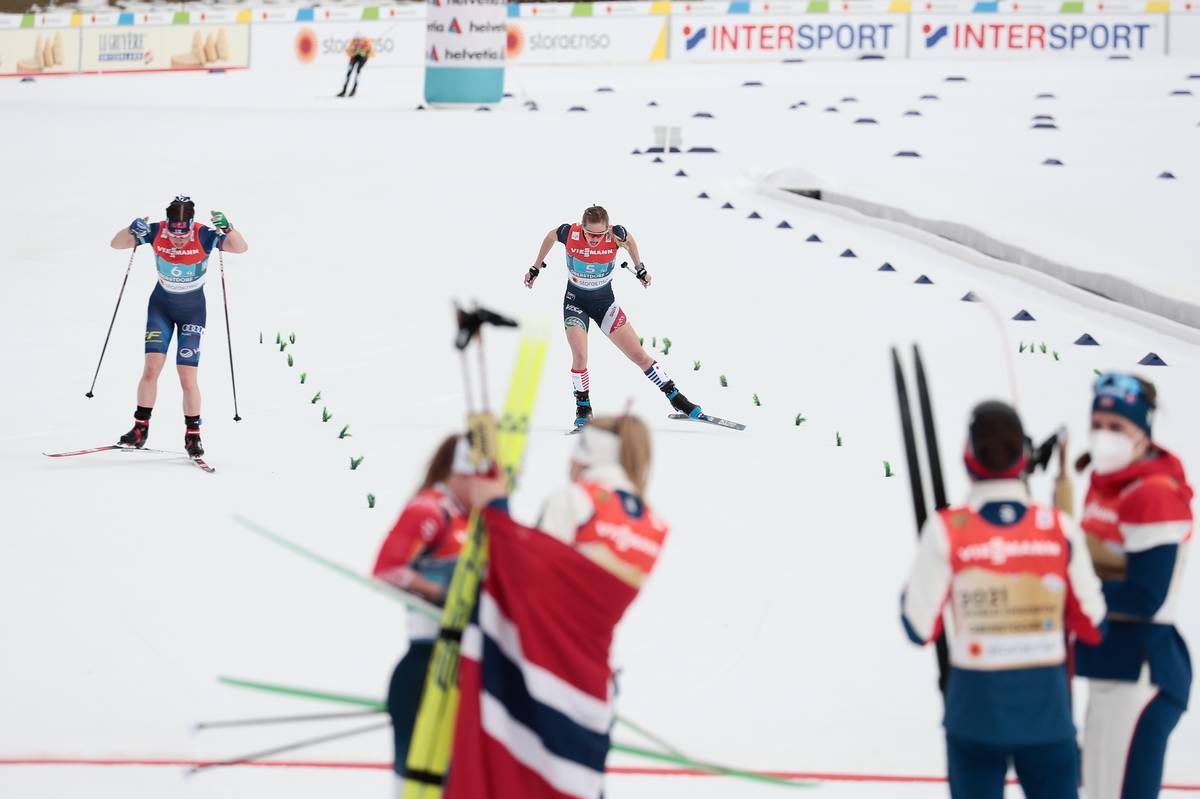
Working and tucking down the sinuous and technical downhill, the two skiers mirrored one another. In a furious pace heading into the final short climb before the stadium, Pärmäkoski revealed herself directly to the side of Diggins. Pärmäkoski carried her speed and passed Diggins and led up the final buckling climb. Pärmäkoski descended first and entered the final straight with a four-meter gap. Pärmäkoski V2ed, Diggins pushed with a few free skate pulses and tried to eke out more speed as she too V2ed to the line.
Met by her Finnish squad, Pärmäkoski closed out for bronze (+46.2) with the U.S. in fourth (+47.0).
Down to the wire: Krista Pärmäkoski and Jessie Diggins (l-r). (Photo: NordicFocus)With the advantage down the straight, Pärmäkoski closes in for third, while Diggins takes fourth. (Photo: NordicFocus)
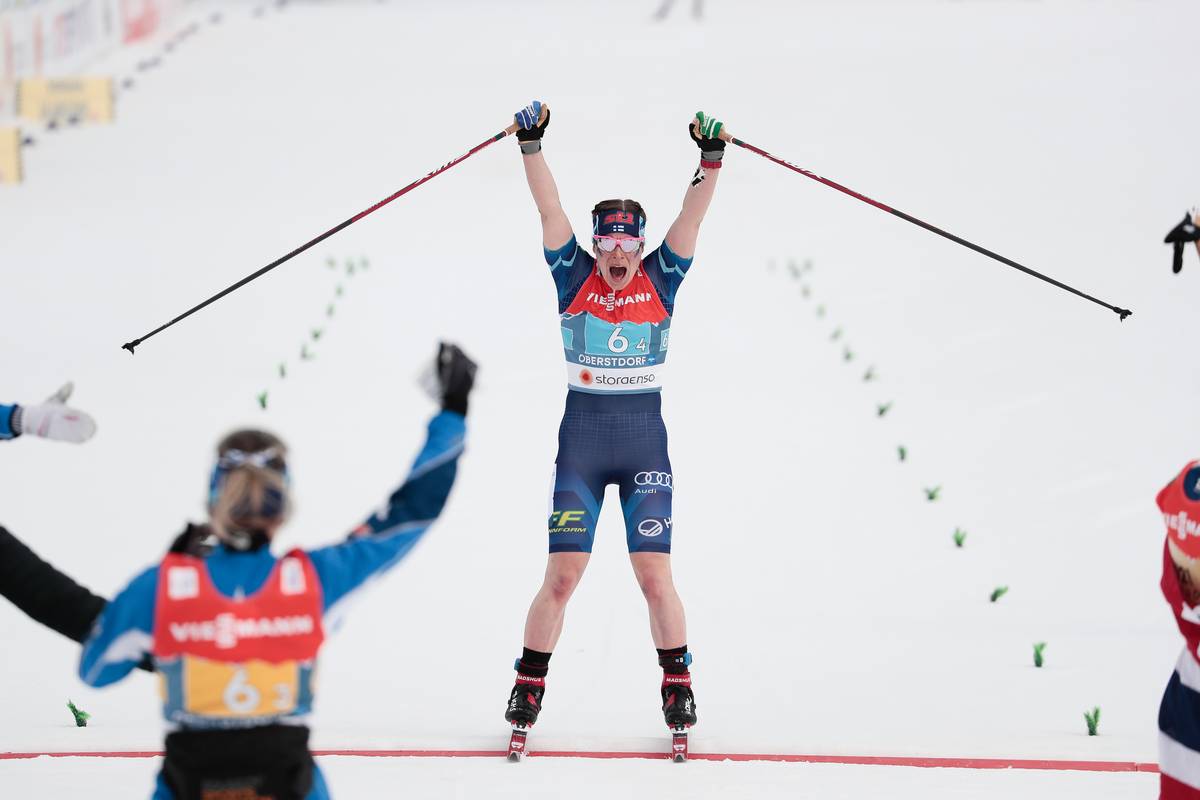
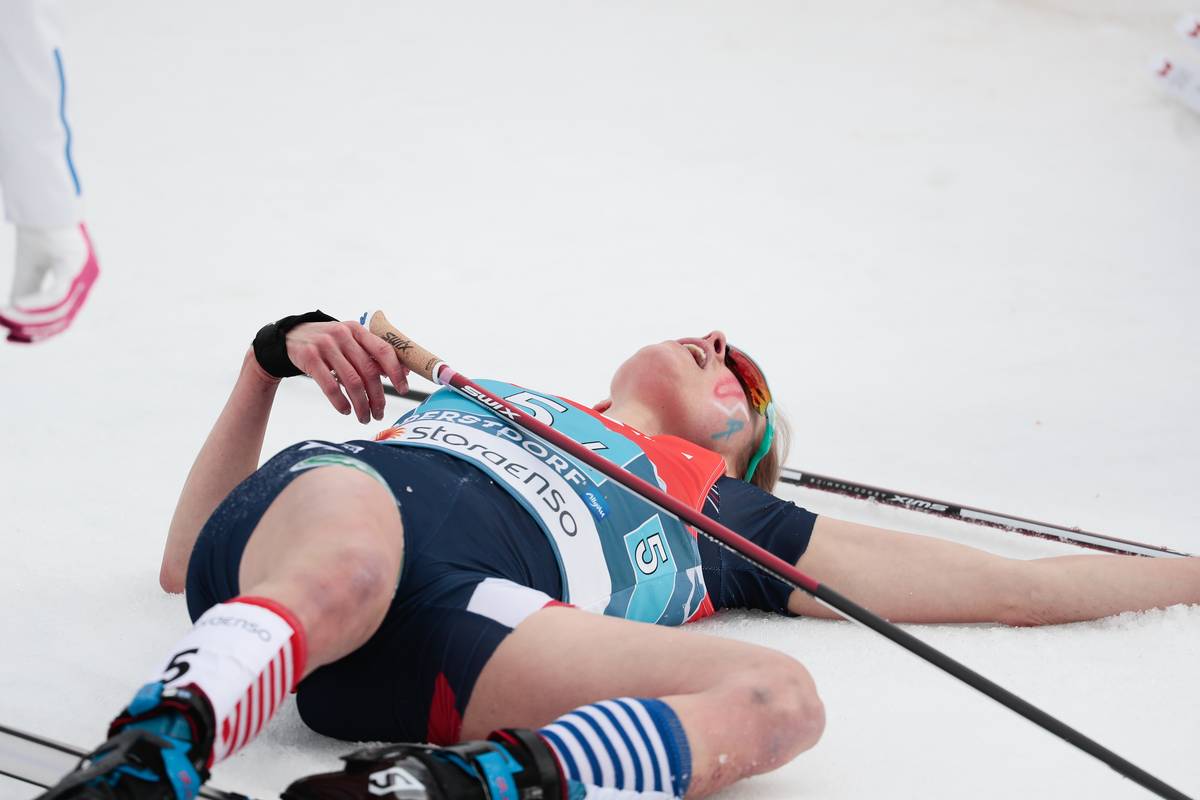
Pärmäkoski and pure emotion crossing the line. (Photo: NordicFocus)No more to give: Jessie Diggins after crossing the finish line in the 4 x 5 k relay. (Photo: NordicFocus)
The racing, if anything, was great. Down to the wire, it went, just falling on the favorable side for Finland in the medal count. If fans want solid racing regardless of the outcome, they got it. With the heavy task of shouldering U.S. hopes in the relay, Swirbul kept them in it, Maubet Bjornsen, Brennan, and Diggins sparked dreams of biting down on the elusive medal.
It was Swirbul’s first opportunity to be a part of a championship relay team at the senior level. “I was really proud I’m so proud to be part of it I don’t, it’s a weird feeling because we’re expected to feel sad with getting fourth place but I feel really proud of this team,” she told the U.S. Ski Team after the race.
For Maubet Bjornsen, in what is likely her final season of World Cup racing, she spoke of an unrivaled legacy in U.S. women’s 4 x 5 k relay’s that has come ever so close to the championship podium.
Maubet Bjornsen, pictured second here, during the women’s 4 x 5 k relay. (Photo: NordicFocus)
“For sure that the relays are the highlights of why I am still ski racing and I think it’s so cool to see everybody just give every bit that they can,” Maubet Bjornsen said to the USST. “Of course we’re shooting for medal and for about six championships in a row we know that it’s possible, if we get all the ducks lined up. “But you know, part of the game is getting those ducks lined up. And that’s how you keep coming back and fighting. For sure we are fit enough and if we get all those ducks running, man we’re coming for the world.”
At one point this season, Brennan wore the yellow bib as the overall leader of the World Cup. She adds another level of depth to a loaded U.S. team. “The relay is the race we have all been looking forward to and had some big goals around that event,” Brennan wrote in an email. “It was another hot day with really soft conditions. This is a team of gritty girls and a team that likes to lay it all out there. We skied that way today and tried our best to play our cards right. It is certainly bittersweet to be so close to that podium and not get there, but when everyone skis with that much grit, there isn’t much else you can do. I am personally a bit disappointed with my leg. I believe I am capable of a bit more than I showed today. It was surprisingly hard to get away from people with a significant draft in effect. My best card was to grind away from the others, so that’s what I did and I am disappointed I couldn’t have been more effective. This is the closest we have been to the goal of a podium and for that I am proud. I know if we keep showing up and trying, we will find our way there.”
All in: Diggins. (Photo: NordicFocus)
Diggins remains the face and spirit of a squad continually knocking on the podium door after four legs of relaying racing. In her post race comments, she explained race strategy is hardwired.
“I played the only part I had and I knew I had to ski like twice as hard as the girls that were with us,” said Diggins to the USST. “I did my absolute damnedest to drop them in the only place that I thought we could. I’m really proud of that…, Yeah it’s heartbreaking to come that close to a medal and know that fitness wise, we are so there. And I think that’s what’s really encouraging about this because that’s the only part that we can really control is coming into World Championships, knowing that our fitness is there, our minds are there, our tactics are there, and most importantly that we’re gritty enough.
“And we definitely are. So I think, for me, when you look at things we can control is how we skied that race. I’m so proud of it. That was an absolute championship performance from every single member of this team and not just from the people who were racing but people who weren’t racing. It’s heartbreaking to come that close and know that we’re there but also that’s, that’s part of the sport.”
The U.S women have placed fourth in World Championship relays in 2013, 2015, 2017, and 2021. If the U.S.’s white whale remains the relay medal, it’s a big ocean out there. Tactics and fitness profiles will be analyzed. But, roughly 12 months from now when the Beijing Olympics go down, the relay socks will be pulled up and 4 x 5 k relay medal dreams will begin anew. Today, Finland gets the well-deserved podium spot.
Same as it ever was – Therese Johaug with the off the front win. (Photo: NirdicFocus).
In case you missed the discussion on the Devon Kershaw podcast, the Norwegian team made its World Cup return today in Lahti, Finland after nearly two months of training and competing domestically. As predicted, neither their form nor racing gears have not been from this decision. The women in red went 1-2-3 in the 7.5/7.5-kilometer skiathlon, led by powerhouse Therese Johaug who notched her third consecutive win in the event and third career skiathlon win on the tracks in Lahti. Her total of nine career skiathlon wins is a women’s record, surpassing Johaug’s former teammate and one of the most decorated skiers of all time, Marit Bjørgen.
In her usual style, Johaug took command from the start, skiing away from the pack displaying remarkable precision in her technique and metronomic tempo, stopping the clock at 37:45.1.
Therese Johaug drives the pace during the classic leg of the Lahti skiathlon. (Photo: NordicFocus)
As has been remarked before, with the lack of spectators and commentary overlaying the live stream, it’s hard not to be struck by the intensity of the athletes’ breathing. As they kicked, glided, and skated six laps of the 2.5 k course, their lungs pumped at a rate and effort that seemed impossible to sustain. Yes, Johaug had a gap to the chasers from early on, but like the others, her rapid breathing made it abundantly clear that she did not simply walk away with the victory.
“It was so fun to be on the World Cup again,” Johaug told FIS after the finish. “It has been a long time since I was in Kuusamo [for the opening World Cup races in Ruka, FIN], so it’s really good to race here and see all the people in the cross country family again.”
Unlike the teams coming off a two-week break following the Tour de Ski, the Norwegian squad made a quick turnaround from their National Championships, which wrapped up just five days ago in Trondheim. Today’s skiathlon is the second this week that Johaug has raced and won. In fact, with only minimal rearrangement for the second and third spots, the podiums in the two events were identical.
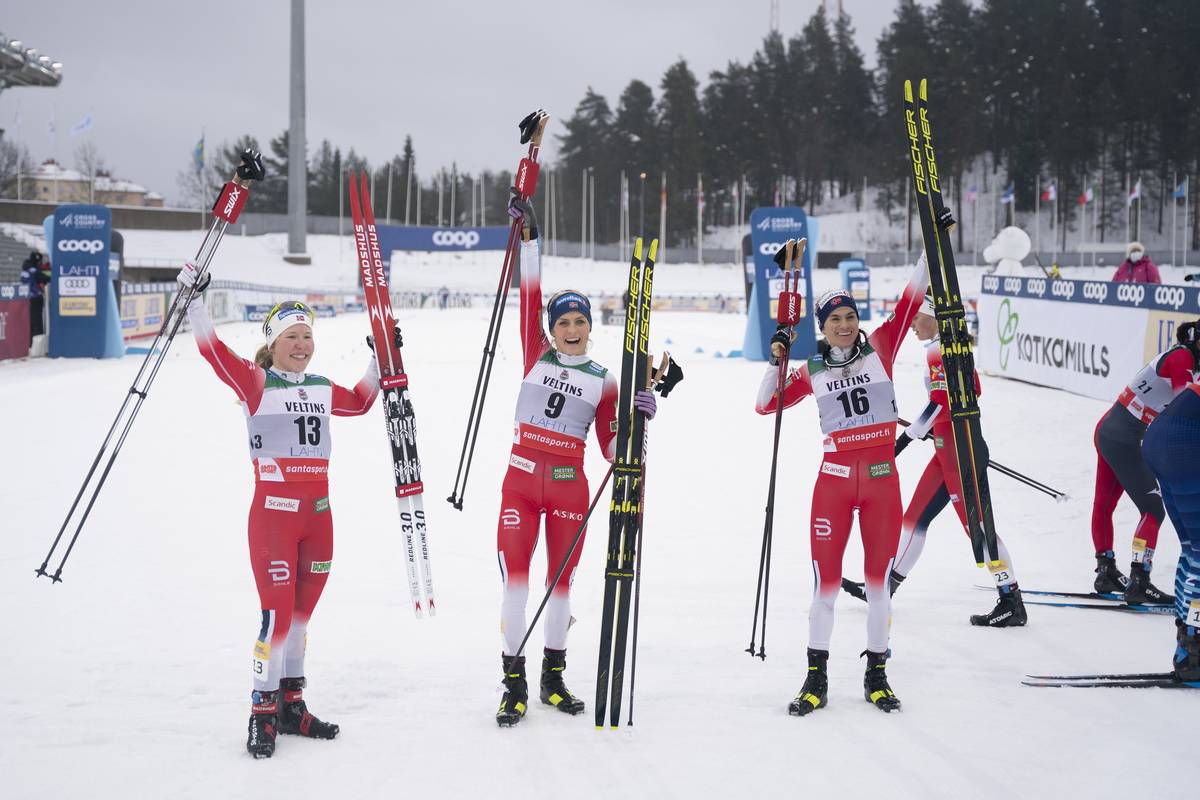
The women’s 15 k skiathlon podium in Lahti, Finland: Helene Marie Fossesholm (NOR) second, Therese Johaug (NOR) first, and Heidi Weng (NOR) third, (l-r). (Photo: NordicFocus)
“My shape has been really good, now and the last weekend. Today, I know that I was starting in the line, so I knew to take it a little bit easy in the first lap and then go hard from the second and the third. I felt really strong today, and of course, I had to do all the job alone, and especially then, it’s really good to stand on top of the podium.”
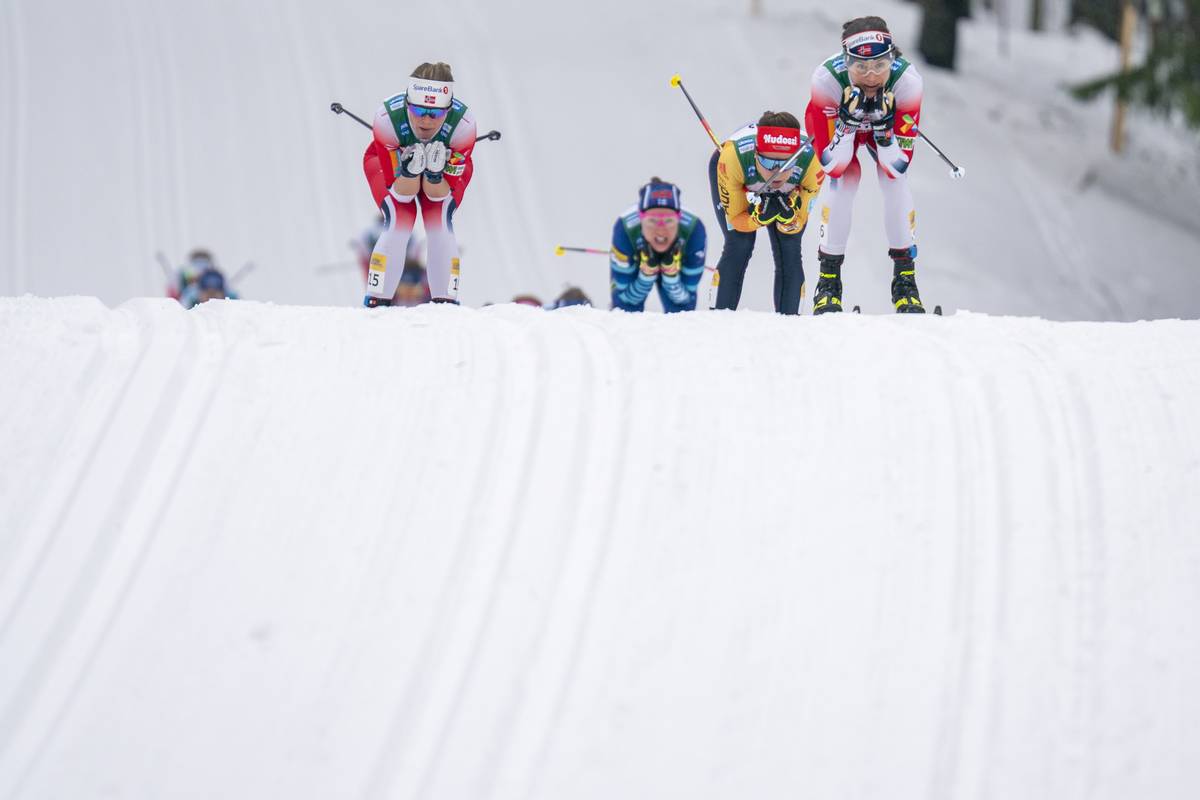
Norway’s Heidi Weng and Helene Marie Fosseholm – lead the chasers during the skiathlon in Lahti, Finland. (Photo: NordicFocus)
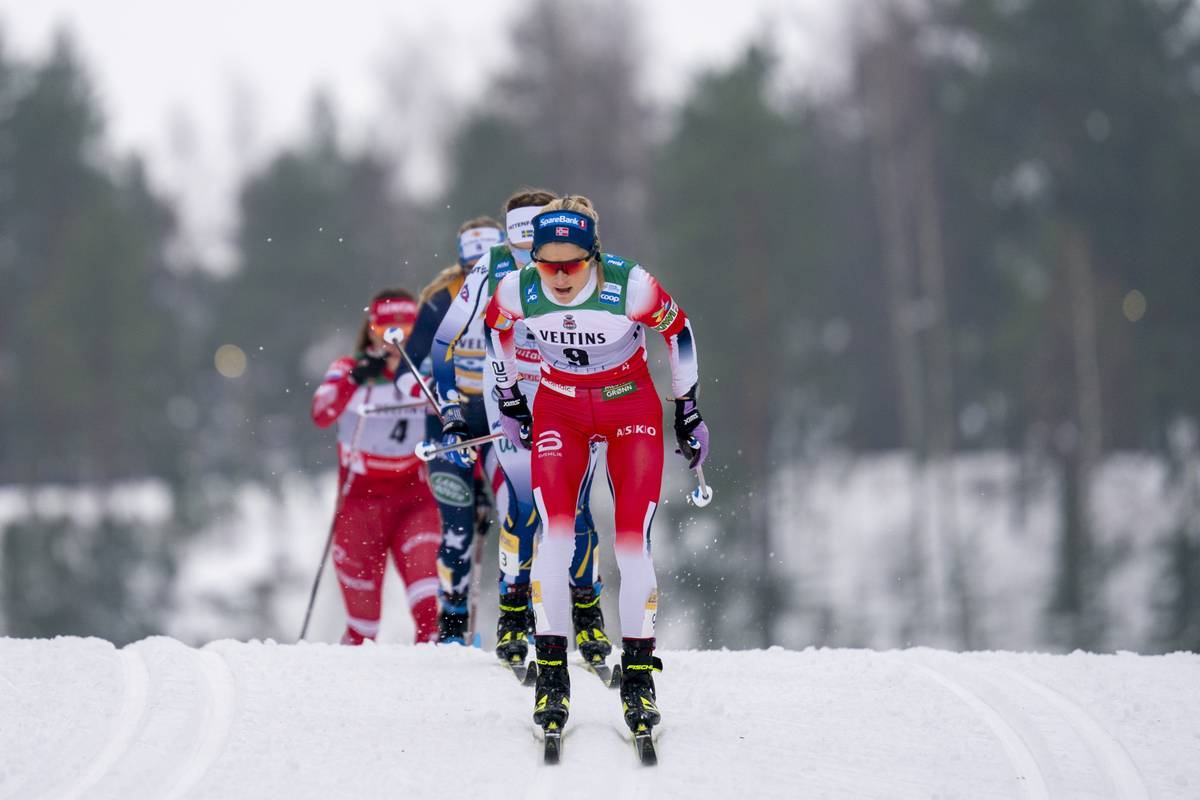
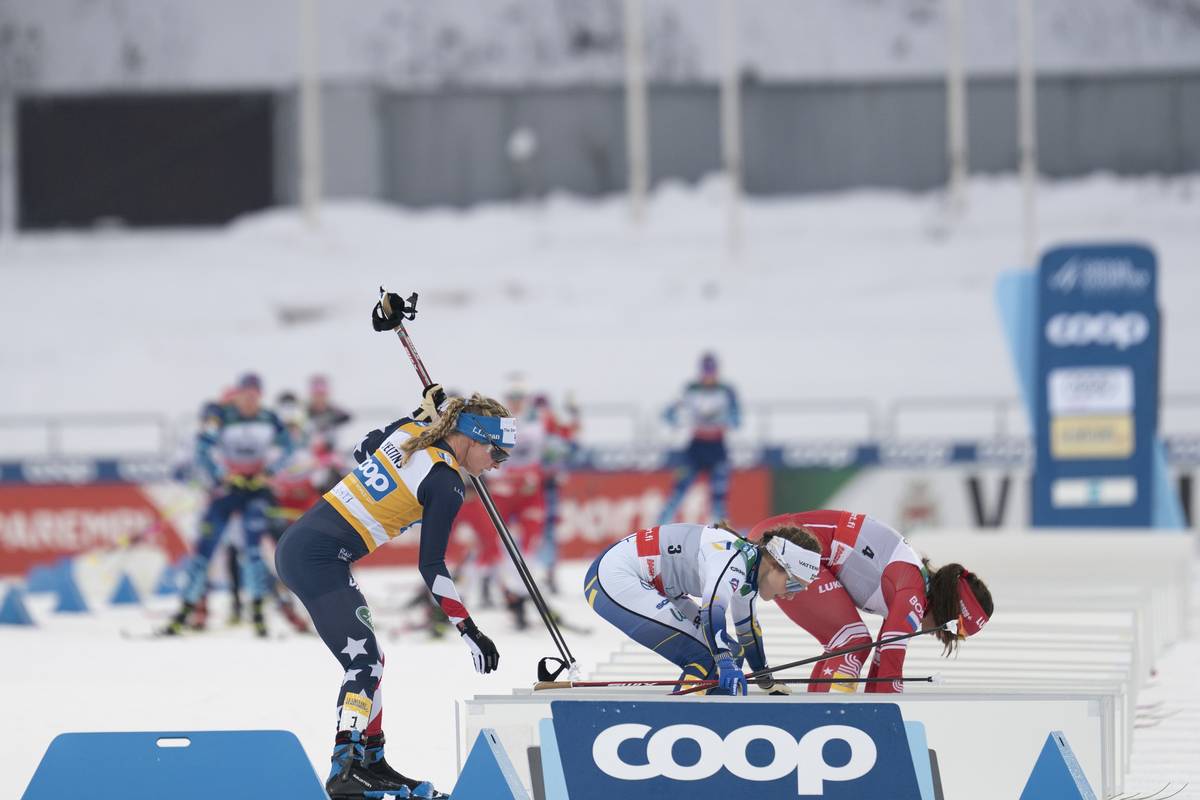
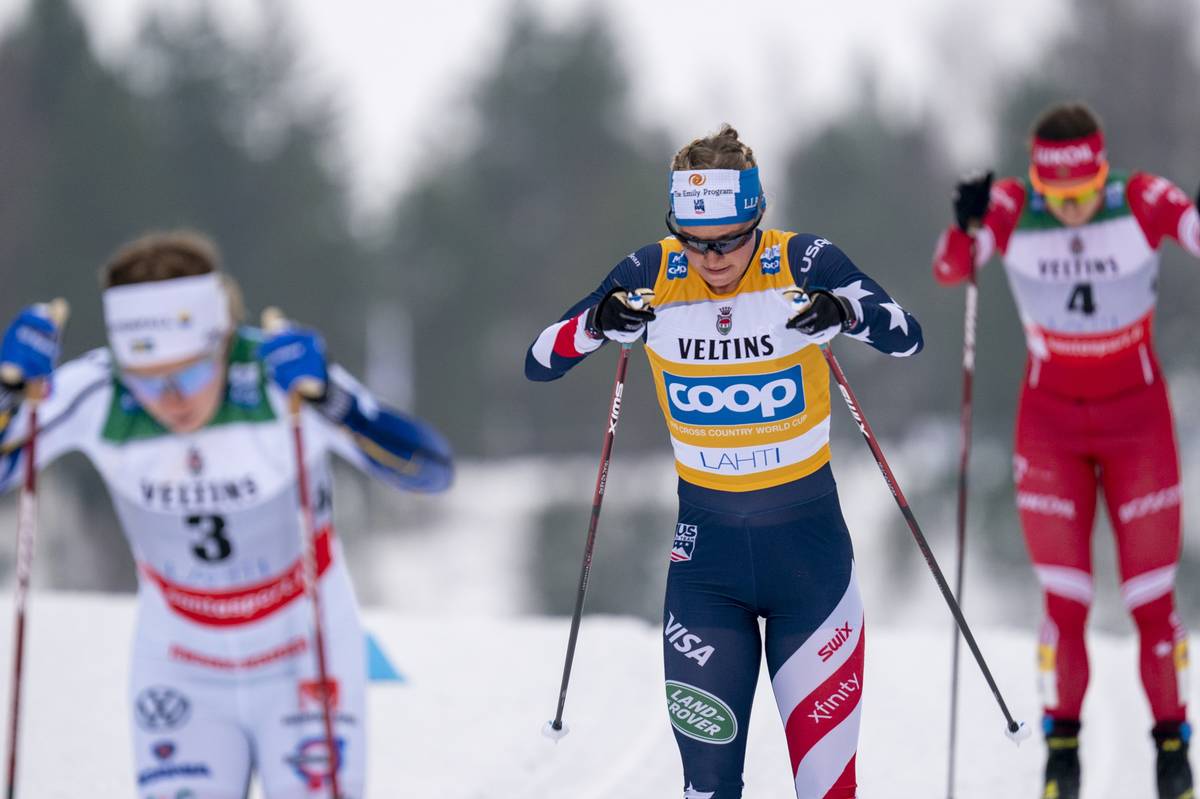
Perhaps the more interesting race to watch unfold happened behind Johaug. When the Norwegian began to pull away in her second classic lap, a small chase pack emerged in her wake, containing Russia’s Natalia Nepryaeva, Sweden’s Ebba Anderson, and Jessie Diggins in stars, stripes, and the yellow overall World Cup leader bib. Diggins striding was strong and confident, as she tucked in behind the other two racers, entering the exchange zone at 7.5 k on their tails and smoothly switching into her skate skis and poles.
The eventual second and third-place finishers, Helene Marie Fossesholm of Norway followed by teammate Heidi Weng apex a corner during the skate leg. (Photo: NordicFocus)
As the first skate lap unfolded, Norway’s Helene Marie Fosseholm and Heidi Weng began to ski off the front of the second group of chasers, which contained names like Olympic champion in the Skiathlon Charlotte Kalla of Sweden and bronze medalist Krista Pärmäkoski of Finland. Wearing the red World Cup distance leader bib, Rosie Brennan also sat comfortably in this group.
Though only 29-years-old, Weng is a veteran compared to Fosseholm, who is only 19. Her results this season indicate she is a name to get to know; she finished 6th overall in the Ruka Triple, and proceeded to earn four podiums during her subsequent time racing on home turf, including a Johaug-like victory in the 10 k skate last week during the Norwegian National Championships, winning by a margin of over 30 seconds. Johaug did not contest this event.
By the 10 k mark, Fosseholm and Weng had caught the group of Andersson, Nepryaeva, and Diggins. The Russian began to fall off the pace, but Diggins was not about to follow suit. The women skated as a unit through the next lap, never separated by more than a second or two.
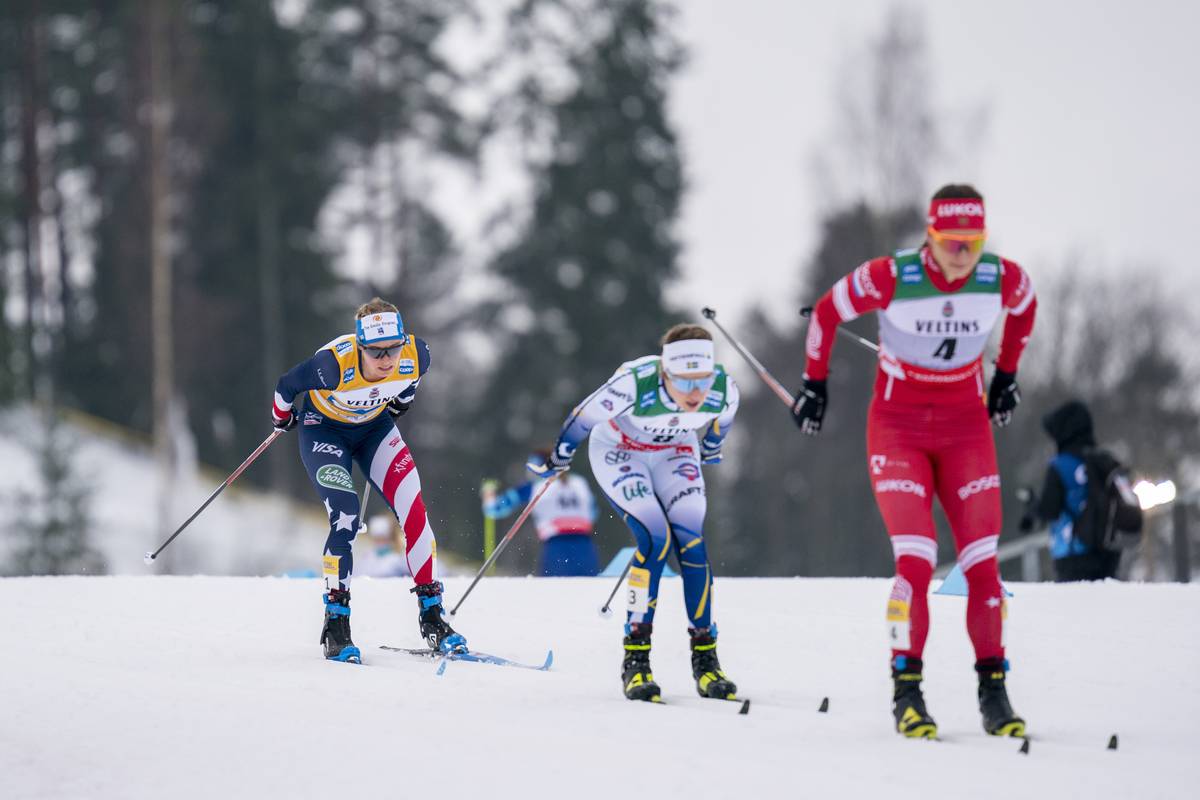
Jessie Diggins (USA) skiing behind Sweden’s Ebba Andersson and Russia’s Natalia Nepryaeva on Saturday’s 15 k skiathlon in Lahti, Finland. (Photo: NordicFocus)Jessie Diggins (USA) at the ski exchange 7.5 k into the women’s skiathlon alongside Ebba Andersson of Sweden and Natalia Nepryaeva of Russia. (Photo: NordicFocus)
As they left the stadium for their final lap, Fosseholm made a surge, testing her mettle against her more seasoned pursuers. With just over a kilometer to go, she had nearly a seven-second gap, which dissolved much faster than it was formed.
Andersson, Weng, and Diggins powered through the back half of the lap, steadily closing in on Fosseholm. Aerial shots showed the women charging up the final climb, still able to jump skate after nearly 40 minutes of exertion. They V2’ed over the top of the climb, all cylinders firing as they dropped back toward the stadium, around a couple of tight curves and toward the lanes.
Fosseholm could be seen taking nervous glances over her shoulder, knowing the other women had zeroed in their sights and there was no room for error. Luckily for Fosseholm, she had maintained enough real estate to enter the lanes with a clear path to second place (+28.1).
Behind her, it was still anyone’s game. Weng was first into the lanes, but Andersson was by her side and charging, Diggins just behind. With a furious throw of boots at the line, Weng snagged the third spot on the podium (+29.6) with Andersson centimeters behind in fourth (+29.7) and Diggins in 5th (+30.1).
Yellow bibbed Jessie Diggins double poles during the first leg of the 7.5 k / 7.5 k skiathlon. (Photo: NordicFocus)
In a post race interview, Diggins shared insights into the conditions in Lahti and how bomber kick on klister allowed her to ski what she identifies as one of her best classic races on the World Cup. With suboptimal glide in skate, Diggins had to shift her tactics so she could stay in the draft of those in front of her and ultimately left a final slingshot around Andersson and Weng to fight for the podium just out of reach.
“I was excited to dare greatly and try to stay with Johaug as long as possible, just to see and to really push it… In the skate half, it was nice to have those girls to work with. I had to keep adjusting my strategy as I realized how our glide stacked up to their glide. I had to keep changing it around, and I played the only card I had, tactically speaking. It didn’t really work, but it was the only thing I could do in the situation that I was in. I was really proud of that and I think I skied as smart of a race as possible.”
Jessie Diggins leaves everything on the course to finish 5th in the 15-kilometer skiathlon in Lahti, Finland. (Photo: NordicFocus)
Diggins also discussed the team recovery camp in Seiser Alm, Italy, how she manages the balance of increased media attention with training and recovery and her desire to support meaningful causes like the Emily Program, and how “new blood” on the World Cup squad re-energizes the veteran members of the American team.
Maintaining her position in the second group of chasers, Brennan skied to 11th place (+1:07.6), ending her race just ahead of Kerttu Niskanen in a photo finish.
In focus and red bibbed as the World Cups leading distance skier, Rosie Brennan near the start of the 15 k skiathlon in Lahti, Finland. (Photo: NordicFocus)
“It’s always hard to know how the body is going to bounce back from an event like the Tour de Ski,” wrote Brennan in an email after the race. “As a result, I decided to start controlled and then see what I had when I switched to skating. I felt much stronger in classic than I have all season and as a result maybe should have been more aggressive in the classic leg, but hindsight is always 20/20. After the transition to skate, my muscles struggled a bit, but I found better movements and strength as the skate portion went on. There wasn’t much space to move in the skate portion and I feel I missed some moves that I shouldn’t have, but had a strong final climb to move up a bit. In all, I feel this race was a really good step in the right direction for me as I am now focused on preparation for the World Championships.”
Rosie Brennan finishes strong in the chase pack for 11th place in the 15-kilometer skiathlon in Lahti, Finland. (Photo: NordicFocus)
A quick look to the overall World Cup ranks. With today’s results, Diggins remains at the top of the overall leaderboard with 991 points and also ties Brennan for the top spot in the distance standings with 401 points. Brennan remains in second place overall with 824 points, followed by Russia’s Yulia Stupak with 802 points.
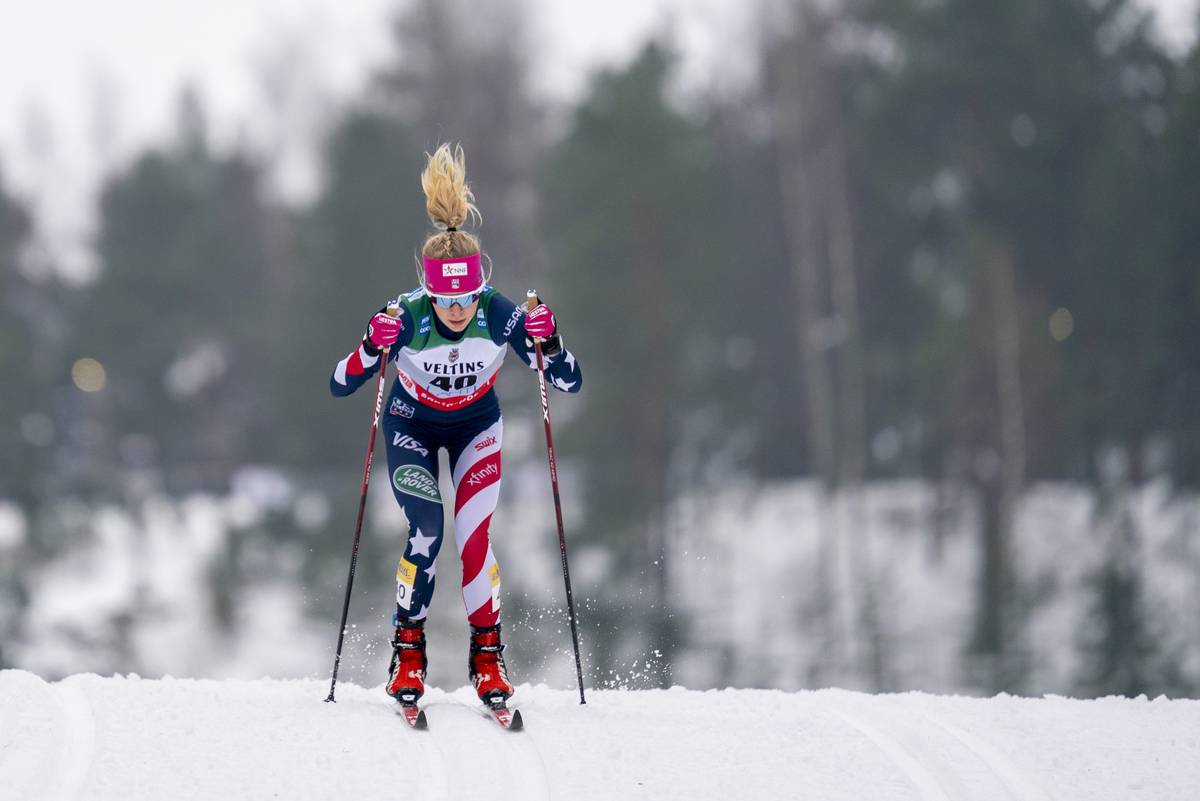
In her first World Cup start, Sophia Laukli (USA) skis to 33rd in the Lahti, Finland skiathlon. (Photo: NordicFocus)
Also for the U.S., Sophia Laukli in her first World Cup start raced to 33rd (+3:54.8). Laukli is a member of the US Cross Country D-Team and is a sophomore at Middlebury College in Vermont. Caitlin Patterson was the next American in 37th (+4:33.8), Julia Kern 40th (+6:31.3), and Alayna Sonnesyn 43rd (+6:41.1). Forty-eight skiers finished the race.
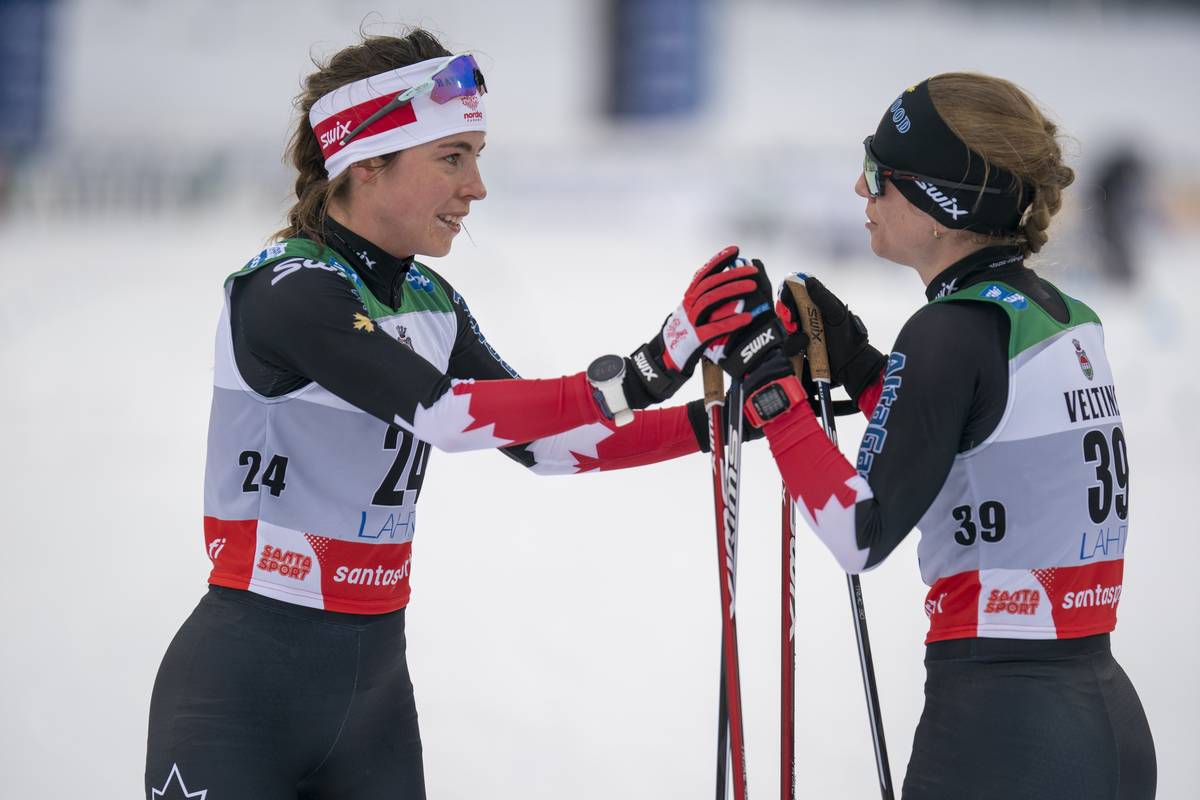
This was Canada’s first World Cup appearance this season. Two athletes scored points, Katherine Stewart-Jones in 24th (+3:23.5) and Cendrine Browne in 27th (+3:44.9). Laura Leclair skied to 44th (+6:41.7).
Sturla Holm Lægreid (NOR) crushed his competitors in the IBU biathlon World Cup opener on Saturday and earned his first World Cup victory. On Sunday, turbo junior Helene Fossesholm (NOR) posted the second-fastest time of the day in the 10-kilometer pursuit at the FIS Nordic World Cup opener.
“It hasn’t quite sunk in yet. I never imagined I would win,” Lægreid said after his race, which took place in in Kontiolahti (FIN).
The 23-year-old dominated the 20-kilometer individual competition, shooting clean at the range and dropping his competitors on the course, winning the by nearly 20 seconds.
“First, the coaches said I was even with Tarjei (Bø) and Johannes (Thingnes Bø), and then I was in the lead. It was insane to get those,” Lægreid said.
The IBU season opener was only his fifth World Cup competition. Last winter, Lægreid won the silver medal at the IBU European Championships in Minsk (BLR) on March 1. He was then named to the national team for the World Cup in Nove Mesto (CZE) on March 6 and 8, where he finished 13 and 15. The next week, he was 10 and 11 at the World Cup in Kontionlahti, which were the last World Cup events of the 2019-20 season. In April, Lægreid was named to the Norwegian A-Team.
Sturla Holm Lægreid (NOR) won the IBU world cup opener in Kontiolahti (FIN) om Saturday, his first World Cup victory and his 5th World Cup race so far in his career. Photo: Nordic Focus
Meanwhile, just a few hours north of Kontiolahti, the FIS cross-country World Cup kicked off the 2020-21 season with a three-day mini tour in Ruka (FIN), where turbo junior Helene Marie Fossesholm capped the weekend with her very first top-three World Cup finish.
The 19-year-old posted the second fastest stage time in the 10km pursuit, just eight-tenths of a second shy of first place.
After placing 38th in the sprint on Friday, Fossesholm finished 9th in the 10-kilometer classic race on Saturday. Combined, the two first races left her in 15th place for the pursuit on Sunday, starting nearly a minute and half behind the leader. But pushing relentlessly through the brutal course, she worked her way up to sixth place overall.
“I’m super content with my effort today, and particularly with how I paced myself. I managed to hold back just a little out of the gate, which was key on this course. There is a hard hill in the first kilometer that will cost you if you are too eager at the start, but I skied smart and was able to stay strong the whole way,” Fossesholm says after her race.
“But I have to admit I’m a little annoyed that I was less than a second from having the fastest time of the day,” the ambitious junior adds.
Be warned.
19-year-old Helene Marie Fossesholm (NOR) posted the 2nd-fastest time in the 10-kilometer pursuit that capped off the 3-day mini tour at the FIS World Cup opener in Ruka (FIN) on Sunday. Photo: Nordic Focus
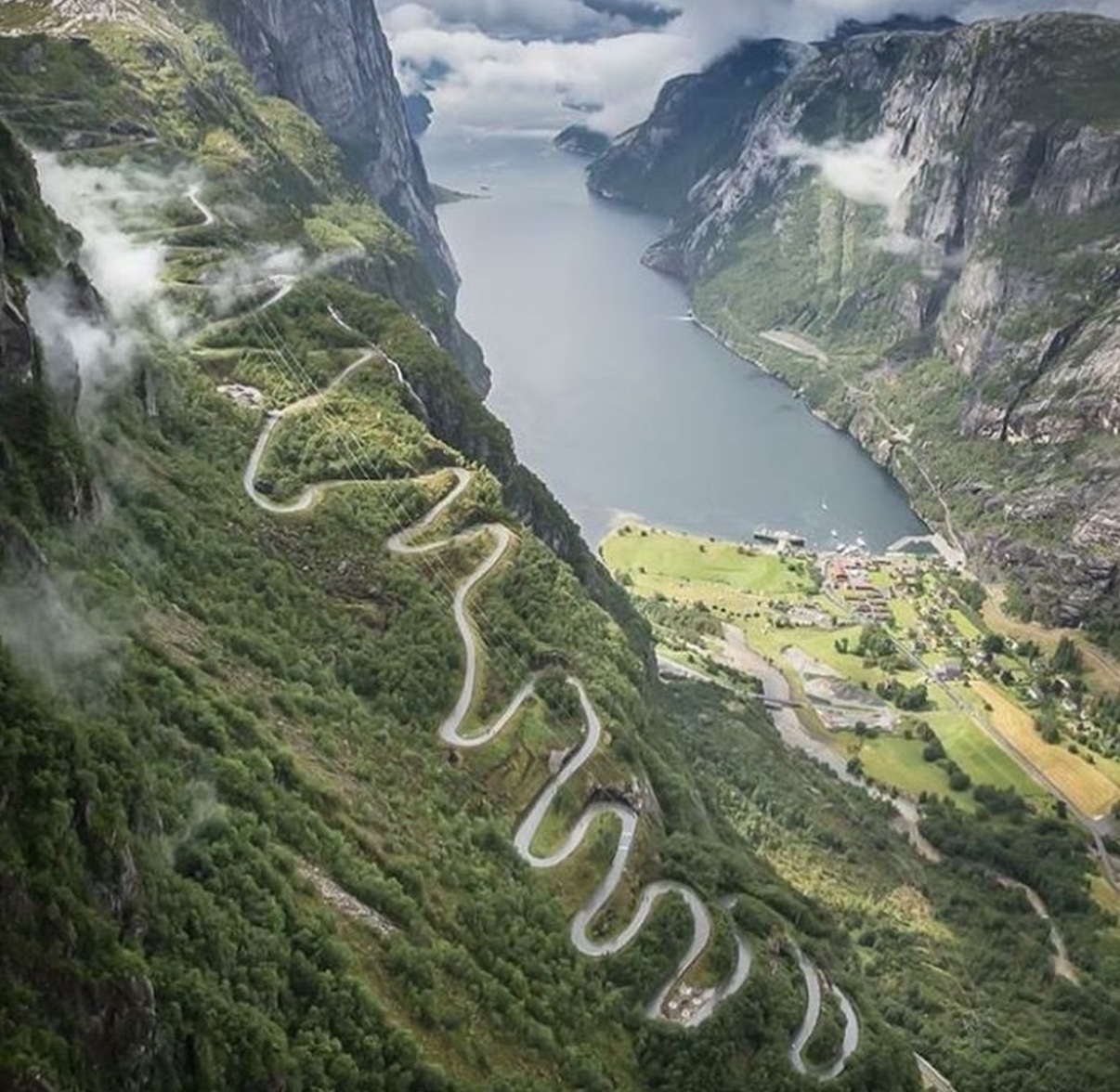
The sinuous Lysebotn Opp rollerski course. (Photo: Blink 2020 screenshot)
Times are what they are. Precautions are the name of the game. This year’s Blink Festival in Norway played to a reduced field and limited spectators due to COVID precautions. Some races, as will be noted, included modified race rules to limit close contact between athletes.
Lysebotn Opp – 06/08
The Lysebotn Opp is perhaps the marquee event. It features lovely fjord views and a grueling 7.5-kilometer uphill skate switchbacking up a mountainside. In normal years, the Lysebotn Opp is a mass start event. This year, however, it was an individual start affair.
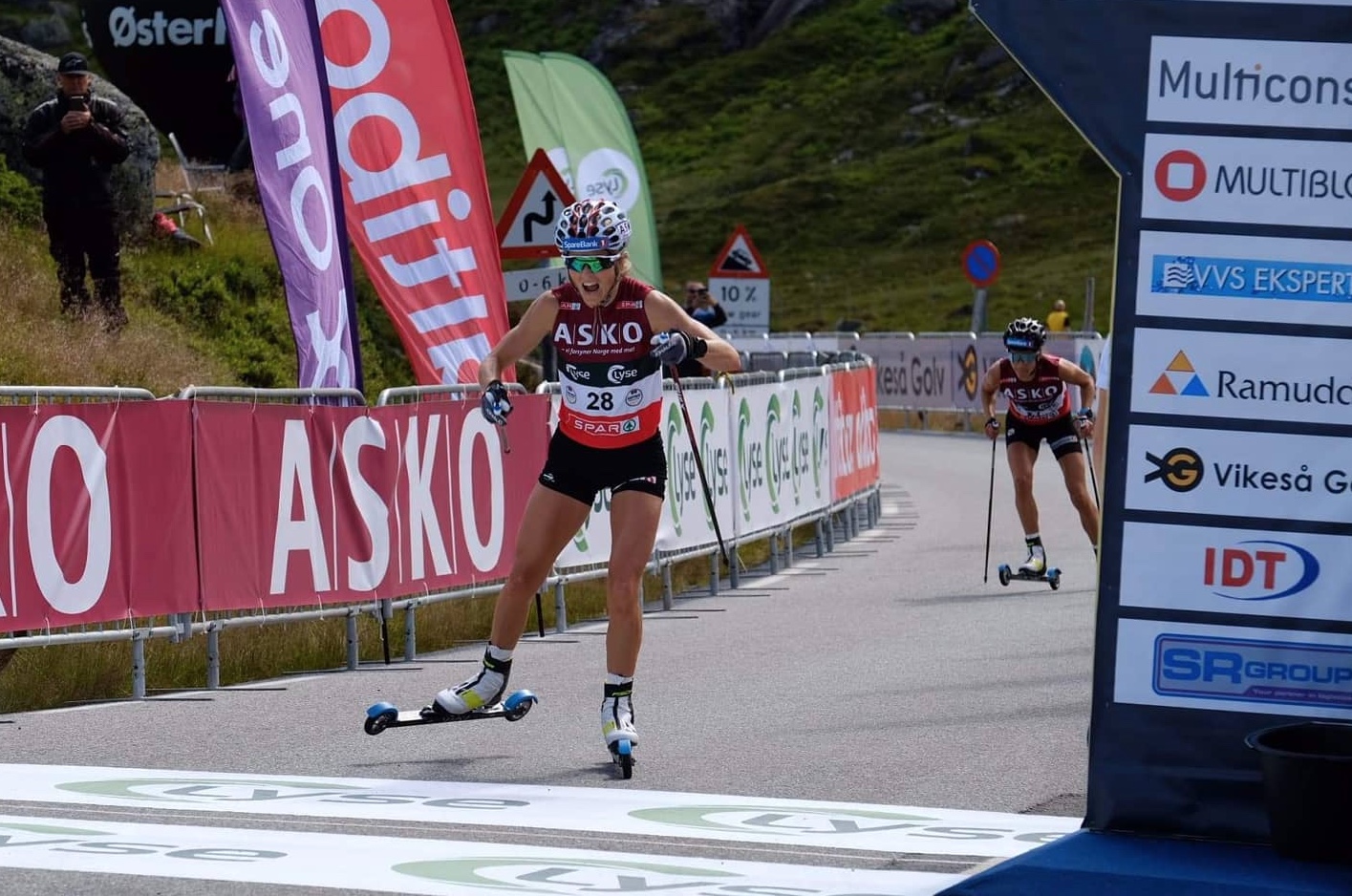
Therese Johaug won the women’s event in 33:11 minutes. Heidi Weng placed second (+00:34), and Helene Marie Fossesholm was third (+02:20). All three skiers are from Norway with Johaug and Weng seasoned veterans with Fossesholm an upstart 19 year old relatively new to the elite level scene. Fossesholm won two individual golds at the 2020 Junior Worlds winning both the 5 k classic and the 15 k mass start skate. According to FIS, she has competed in three World Cups and notched a fifth place in last season’s 10 k mass start skate in Falun.
For the men, Norway’s Simen Hegstad Krüger won in 29:25. Hans Christer Holund was third (+01:02), and Håvard Moseby third (+01:21). Moseby, the relative unknown on the podium is 21 and placed third in the 2020 U23 Worlds 30 k mass start skate.
Therese Johaug (bib 28) winning the 2020 Lysebotn Opp. (Photo: 2020 Blink Festival FB page)
Skate Sprint – 07/08
The second day of cross-country racing featured a skate sprint. For those used to larger fields and six-skier-deep heats, things looked a bit different. This was head-to-head racing, two racers per heat, as skiers advanced to the finals. Racers were required to remain in their respective lanes throughout the race which resulted in no drafting.
Norwegian sprinter Maiken Caspersen Falla won the day with Mathilde Skjærdalen Myhrvold placing second overall. Myhrvold lost the final by 1.4 seconds. Myhrvold is 22 years old and has raced two World Cups, both in Norway.
Kristine Stavås Skistad (21) placed third overall. She lost to Falla in the second semi in a photo-finish.
Johannes Høsflot Klæbo did as he does: win sprints. The star of the show placed first in the final, 1.5 seconds in front of second place GjøranTefre. At 25, Tefre raced nine World Cups last year with his best result an eighth place in Oberstdorf’s classic sprint. Klæbo has won the last four World Cup sprint titles. Erik Valnes placed third overall. He lost out to Tefre in the second semi by 0.1 seconds.
In the individual start 10 k classic, run on a 2.5 k closed loop, Tiril Udnes Weng won in 24:57.9 minutes. Fossesholm raced to second place, 3.9 seconds back, with Johaug in third (+12.1).
Klæbo took the crown in the men’s 15 k classic over a field that featured some of Norway’s top distance talent. He won in 35:08.9, just 0.2 seconds ahead of Moseby, who was second overall in the Lysebotn Opp. Daniel Stock was third (+2.1).
If you are looking for more, as in the view-from-the-comfort-of-home experience, Norwegian broadcaster NRK has archived the 2020 Blink Festival races. You can find a menu of races here.
Helen Marie Fossesholm of Norway taking the junior women’s 15 k mass start skate. (Photo: Doug Stephen)
Wednesday in Oberwiesenthal, Germany World Juniors continued with a 15 k mass start skate for the women.
Junior Women’s 15 k Mass Start Skate
Norway’s Helene Marie Fossesholm (18) won her second race of these championships by taking the mass start skate in 35:55.6 minutes. Fossesholm also won the 5 k interval start classic race on Monday. Poland’s Izabela Marcisz placed second 1:09.3 back. Marcisz also won a bronze in the 5 k classic. Switzerland’s Siri Wigger skied herself into third (+1:10.6). The theme continues, this was Wigger’s second 2020 championship medal, after placing third in the skate sprint.
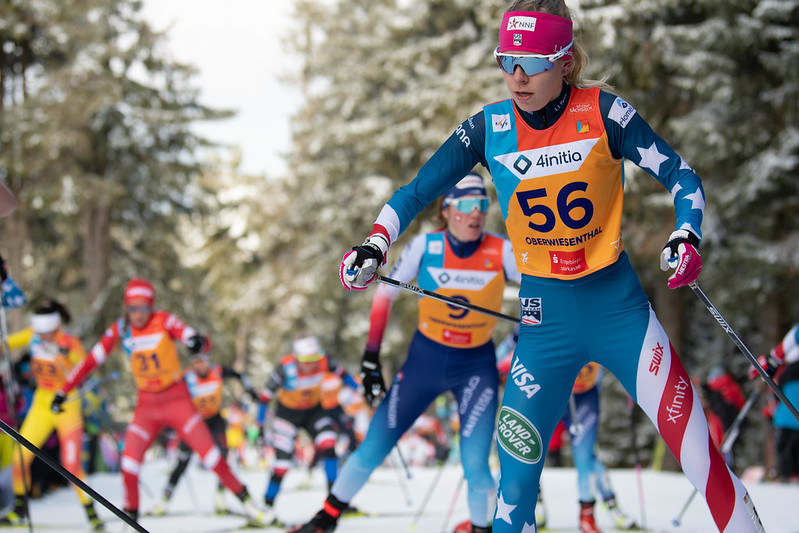
Sophia Laukli (bib 56) skied to 5th overall in the junior women’s 15 k mass start skate. (Photo: Doug Stephen)
Starting in bib 56, layered well back at the start, was Sophia Laukli (Middlebury) for the U.S. Laukli (19), in her first Junior Worlds, moved up in the pack to place fifth overall (+1:26.5).
Novie McCabe (MVNST) skied to ninth (+1:33.0) for her best individual Junior World’s result. Mccabe placed 10th in last year’s championship 15 k classic in lahti, Finland. Kendall Kramer (Fairbanks Nordic) was 24th (+2:54.5), and Sydney Palmer-Leger (SVSEF) did not finish.
Novie McCabe on her way to 9th overall in the 15 k mass start skate. (Doug Stephen)
Interview with U.S. Ski Team Coach Bernie Nelson
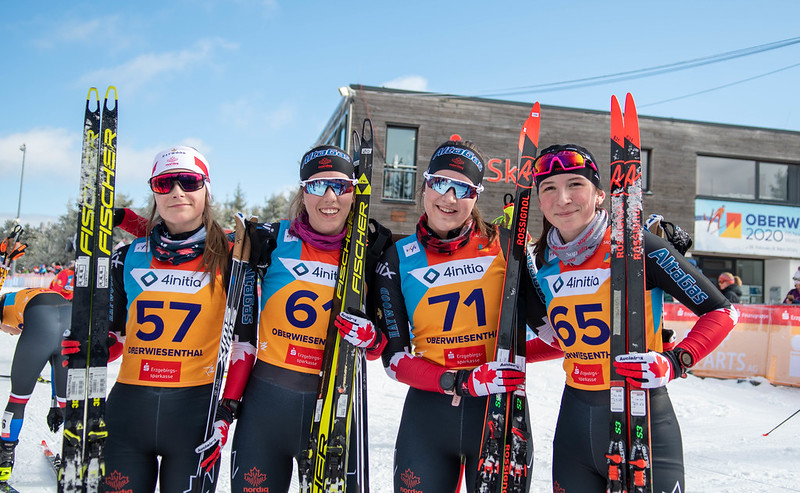
Liliane Gagnon (Skibec Nordique) was the top finisher for Canada in 34th (+3:38.2). Jasmine Drolet (Blackjack Nordic Club) followed close behind in 36th (+3:39.0). Benita Peiffer (Whistler Nordic) placed 49th (+4:43.2), and Elizabeth Elliott (Revelstoke Nordic) skied to 51st (+4:39.1).
From left to right: Canada’s Jasmine Drolet, Elizabeth Elliott, Benita Peiffer, and Liliane Gagnon. (Photo: Doug Stephen)
The junior men raced a 30 k mass start skate Wednesday with Norway’s Iver Tildhelm Andersen winning in a time of 1:13:39.0. Anderson medlaed in last year’s Junior World’s, placing third in the 10 k skate.
Second place went to Germany’s Friedrich Moch who crossed the line 9.4 seconds back. Moch also placed second in Monday’s 10 k classic. Third place went to Martin Kirkeberg Mørk of Norway, who was 32.8 seconds off the winning pace.
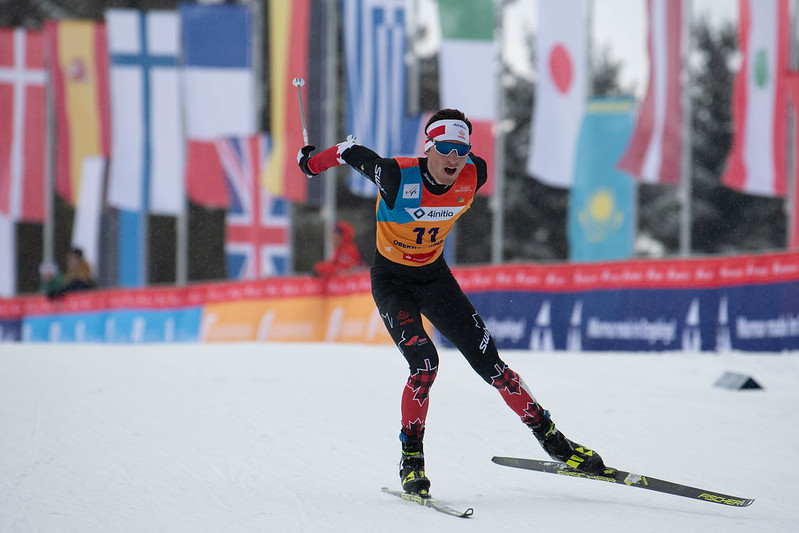
Remi Drolet of Canada skiing to 4th overall at the Junior World’s 30 k mass start skate. (Photo: Dough Stephen)
Scrolling not so far down on the results sheet to places fourth and fifth, respectively, added some excitement for North America; Remi Drolet (Black Jack Nordic) of Canada placed fourth overall (+43.2), and Gus Schumacher (AWS) of the U.S. fifth (+56.1). For Drolet, this was a Junior World’s career best result – he placed seventh in last year’s Junior World’s 30 k mass start skate.
At 25 k Wednesday, Drolet was positioned sixth overall, 19.4 seconds back on the then leading Moch. He was in a group with Mørk, and Italy’s Davide Graz. Roughly four seconds ahead was Schmacher as their carrot. By 28.8 k, Schumacher had faded slightly, as Drolet moved into fourth.
Schumacher won Monday’s 10 k classic, and with Wednesday’s fifth, nearly matches his fourth place in the 2019 Junior World’s 30 k mass start classic.
Gus Schumacher (bib 1), leading the 30 k mass start skate at the 2020 Junior Worlds. (Photo: Doug Stephen)
Thomas Stephen (Foothills Nordic) of Canada, placed 17th (+3:35.8), Xavier McKeever (Foothills Nordic) 32nd (+5:43.3), and Michael Murdoch (Whistler Nordic) 45th (+8:23.5).
For the U.S., Luke Jager placed 19th (+3:46.1), Johnny Hagenbuch (SVSEF) 20th (+3:49.2), and Zanden McMullen (APU) 35th (+6:03.3).
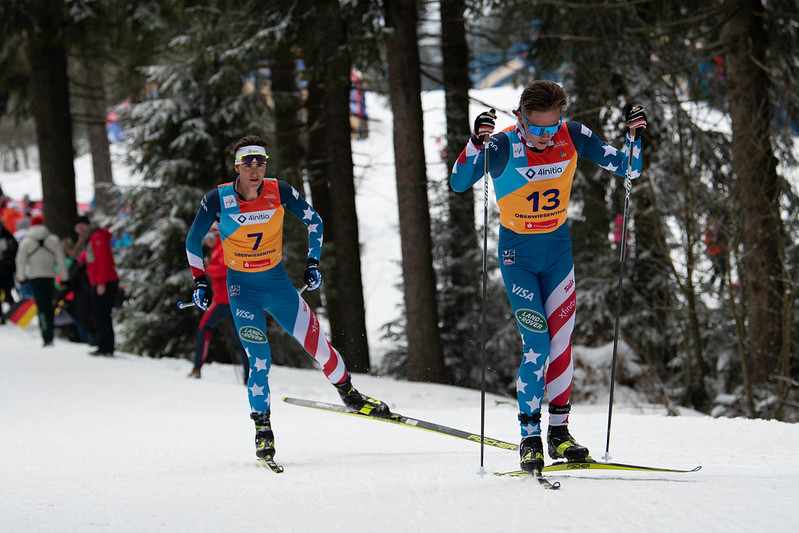
Luke Jager (bib 13) and Johnny Hagenbuch (bib 7), during the junior men’s 30 k mass start skate. (Photo: Doug Stephen)
Thomas Stephen skiing to 17th overall in the Junior World’s 30 k mass start skate. (Photo: Doug Stephen)
These events conclude individual racing for the juniors at these World Championships.
Calling it like it was: fir trees draped in fog and the colorful hues of Junior Worlds Lycra a deep contrast to the pervasive monochromatic snow and forest. This was the backdrop for World Junior’s freestyle sprint day in Oberwiesenthal, Germany. Keeping things real for several North Americans, expectations were high as the core, for example, of the U.S. team is riddled with potential podiums.
For the North American women, three skiers qualified for the heats in the 1.2 skate sprint: Novie McCabe (U.S./MVNT) qualified in 19th (+7.62), Elizabeth Elliott (CAN/Revelsoke Nordic) 27th (+9:05), and Benita Peiffer (CAN/Whistler Nordic) 30th (+9.58).
Norway’s Helene Marie Fossesholm, the day’s fastest qualifier. (Photo: Doug Stephen)
The fastest qualifier on the day was Norway’s Helene Marie Fossesholm in 2:28.53. According to FIS, Fossesholm has raced two individual World Cups. She placed fifth in Falun’s 10 k skate mass start, and 18th in Lillehammer’s 15 k skiathlon. Both races were this season.
Fossesholm advanced to the final’s but placed fifth, 2.62 seconds off the win. Sweden’s Louise Lindstrom, the day’s 11th fastest qualifier, won in 2:33.41. Poland’s Izabela Marcisz was second (+0.47), and Switzerland’s Siri Wigger third (+1:07).
Sweden’s Louise Lindstrom with the win. (Photo: Doug Stephen)
Sweden’s Louise Lindstrom was the day’s 11th fastest qualifier and the unexpected winner. (Photo: Doug Stephen)
McCabe placed fifth in the fourth quarterfinal to finish 22nd overall. The eighteen-year-old from Washington’s Methow Valley remained in contact with the quarterfinal’s leaders when she came to a stop to avoid a skier merging into her path on a short but critical climb. There, she lost vital time.
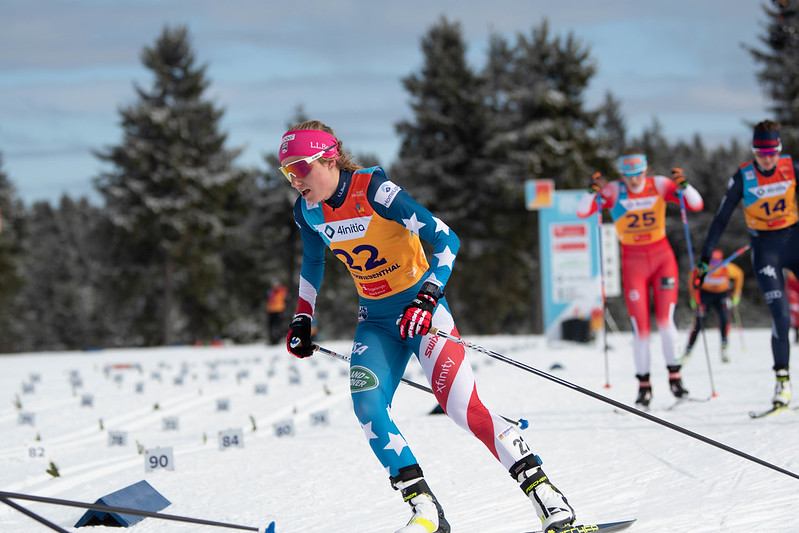
Novie McCabe during qualification on Saturday’s World Junior’s skate sprint. (Photo: Doug Stephen)
Novie McCabe during her World Junior’s skate sprint quarterfinal. She was the 19th fastest qualifier, and placed 22nd overall. (Photo: Doug Stephen)
Elliott placed 23rd after placing fifth in the third heat, while Peiffer was 25th overall. Peiffer was fifth in the first quarterfinal.
Also for the U.S., Sydney Palmer-Leger (SVSEF) skied to 49th, Callie Young (Dartmouth) 54th, and Mara McCollor 73rd (Minneapolis Ski Club).
For Canada Liliane Gagnon (Skibec Nordique) placed 39th, and Molly Miller (Black Jack Ski Club) 42nd.
The women’s podium from the 10 k skate in Beitostølen, Norway. Therese Johaug( c) won, Heidi Weng (l) placed second and Helene Marie Fossesholm (r) placed third. (Photo: Aleks Tangen)
Sunday in Beitostølen, Norway the nation’s opening national races concluded with a women’s 10-kilometer freestyle race. The conditions remained as they have for the past few days — near freezing.
The top-three spots were secured by the same skiers who took first through third in Saturday’s 10 k classic: Therese Johaug won in 21:48.0, Heidi Weng placed second (+31.3), and Helene Marie Fossesholm, at 18 years old, placed third (+32.8).
Caitlin Patterson during the Beitostølen, Norway 10 k skate. (Photo: Aleks Tangen)
U.S. Ski Team member Caitlin Patterson skied to 13th overall (+1:33.5). Julia Kern, also of the U.S. Ski Team, was 21st (+2:14.9), and Rosie Frankowski (APU) was 40th (+3:06.1). The World Cup begins next Friday in Ruka, Finland.
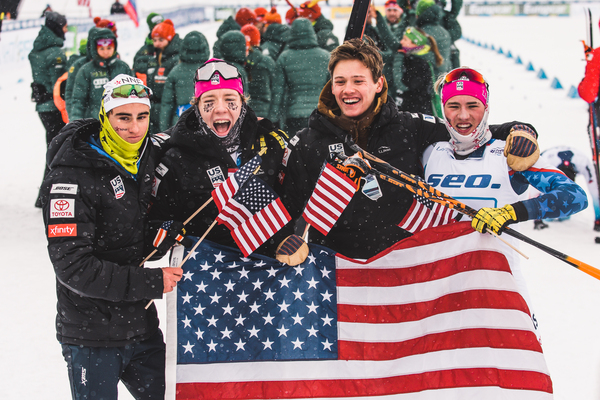
The U20 World Juniors 4 x 5 k relay first place team from the U.S, (l-r) Johnny Hagenbuch, Ben Ogden, Luke Jager, and Gus Schumacher. (Photo: JWSC2019 / Mikaela Takala)
2019 U23 World Ski Championships in Lahti, Finland 4 x 3 k and 4x 5 k relay
In a historic first for the U.S., the U20 men’s team won the 4 x 5-kilometer relay today in Lahti, Finland at the 2019 World Junior Ski Championships. Luke Jager skied the first classic leg for the U.S., Ben Ogden skied the second classic, Johnny Hagenbuch skied the first initial skate leg and Gus Schumacher raced the anchor leg.
The foursome won in a time of 45:34.7 minutes, and beat second-place Russia by 3.8 seconds.
Russia’s team was comprised of Egor Trefilov, Andrey Kuznetsov, Yaroslav Egoshin, and Alexander Terentev.
Germany’s team of Jakob Milz, Florian Knopf, Anian Sossau, and Friedrich Moch took third finishing 6.3 seconds behind.
For Canada, Remi Drolet , Sam Hendry, Xavier McKeever, and Thomas Stephen skied to 11th (+2:29.7).
In the 4 x 3.3 k U20 women’s race, Norway’s Kristin Austgulen Fosnaes, Astrid Stav, Helene Marie Fossesholm, and Kristine Stavås Skistad won at the line in 35:24.7 minutes.
Russia’s Anastasia Faleeva, Kristina Kuskova, Veronika Stepanova, and Anna Grukhvina were a close second, stopping the clock 1.0 seconds back.
Louise Lindström, Frida Karlsson, Tilde Baangman, and Lin Svahn for Sweden placed third (+33.3).
The U.S. team of Mara McCollor, Kendall Kramer, Sydney Palmer-Leger and Novie McCabe skied to fourth place, 40.5 seconds back.
For Canada, Anne-Marie Petitclerc, Jasmine Drolet, Anna Pryce, and Molly Miller placed 11th, 3:01.4 minutes behind.
FIS Cross Country World Cup Ulricehamn, Sweden 10/15 k freestyle
In what is his skiing canvas, the 15 k freestyle, France’s thirty-two-year-old Maurice Manificat won his first World Cup of the season in Ulricehamn, Sweden today in 34:55.4 minutes. It was a tight race in that Norway’s Simen Hegstad Krüger Simen Hegstad Krüger who placed second finished 1.1 seconds back. Teammate Didrik Tønseth was third (+8.7).
Canada’s Alex Harvey was the best placed North American in ninth (+31.4). Lenny Valjas skied to 57th (+2:32.1), and Bob Thompson 77th (+4:16.6).
For the U.S., Scott Patterson finished 35th (+1:26.5), David Norris 53rd (+2:11.3), Ben Lustgarten 64th (+3:04.7).
Norway’s Therese Johaug kept her distance win streak alive at eight wins in eight starts on the World Cup this season. She won the women’s 10 k skate race in 25:48.2 minutes, with teammate Astrid Uhrenholdt Jacobsen in second, 22.8 seconds back. Third place went to Sweden’s Ebba Andersson, 24.9 seconds behind.
The U.S. Ski Team’s Jessie Diggins skied to fourth place (+38.3), while teammate Sadie Bjornsen was 15th (+1:25.1). Caitlin Paterson (CGRP) had her best World Cup result of the season, skiing to 23rd (+1:49.9). Rosie Brennan (APU) placed 28th (+2:03.2), and Rosie Frankowski 42nd (+2:28.0).
Dahria Beatty was the only Canadian entered. She finished 56th (+3:54.7).
In the women’s 10 k pursuit, Italy’s Dorothea Wierer won in a time of 29:20.1 after skiing two penalties (1+0+0+1). Second place went to Germany’s Laura Dahlmeier, who finished 6.0 seconds after Wierer after one missed shot (0+0+1+0). Saturday’s third place went to another Italian, Lisa Vittozzi, who finished 16.2 seconds behind the winner after tying Wierer’s shooting score.
Clare Egan led the way for the U.S., racing to 11th (+1:31.9) after skiing two penalties (0+0+0+2).
“I’m really happy with my race today,” Egan wrote in an email. “The wind and altitude are always a challenge here, but I took my time on the range and capitalized on the fast glide of my skis to save energy on course. I made a costly and dumb mistake on my last shot but still came away with my second-best career result. I’ll take what I learned from today and go for it again tomorrow in the mass start! Can’t wait!”
Joanna Reid was the next American to finish, placing 29th (+2:55.2) after three missed shots (1+0+0+2).
For Canada, Rosanna Crawford finished 34th (+3:30.8) after skiing five penalties (2+1+1+1) and her teammate Megan Bankes finished 39th (+3:37.1) with five misses (1+0+3+1). Also skiing for Canada, Sarah Beaudry placed 46th (+5:07.5), also with five penalties (4+0+1+0).
In the men’s 12.5 k pursuit, Norway’s Johannes Thingnes Bø
won in a time of 31:33.7 after skiing three penalties (1+1+0+1). France’s Antonin Guigonnat raced to second place, 34.8 seconds behind with one missed shot (0+0+1+0). The third and final podium spot on Saturday went to France’s Quentin Fillon Maillet, who skied two penalties (1+0+0+1) and finished 40.6 seconds back from the winning time.
Sean Doherty for the U.S. placed 47th (+4:39.1, 3+2+1+0). Jake Brown was lapped and was not given an official time.
For Canada, Jules Burnotte skied to 54th (+5:42.8, 1+3+1+1), and Scott Gow 55th (+6:39.7, 4+0+2+3).
Canada’s Antoine Briand (CNEPH) was the fastest qualifier on the day in 3:14.71 minutes and won the men’s final. Dominique Moncion-Groulx (Nakkertok) placed second in the final, with Ben Saxton (SMS T2) in third.
Saxton was the second fastest qualifier, with Oliver Hamel (CNEPH) third fastest.
For the women, Sophie Caldwell (USST/SMS T2) scorched the qualifier in 3:40.44 minutes with Jessica Yeaton (APU/Australian National Team) qualifying in second (3:50.49). Dartmouth’s Katharine Ogden qualified third (3:51.79).
Caldwell went on to win the final in 3:37.06, with Yeaton in second and Kelsey Phinney (SMS T2) in third.
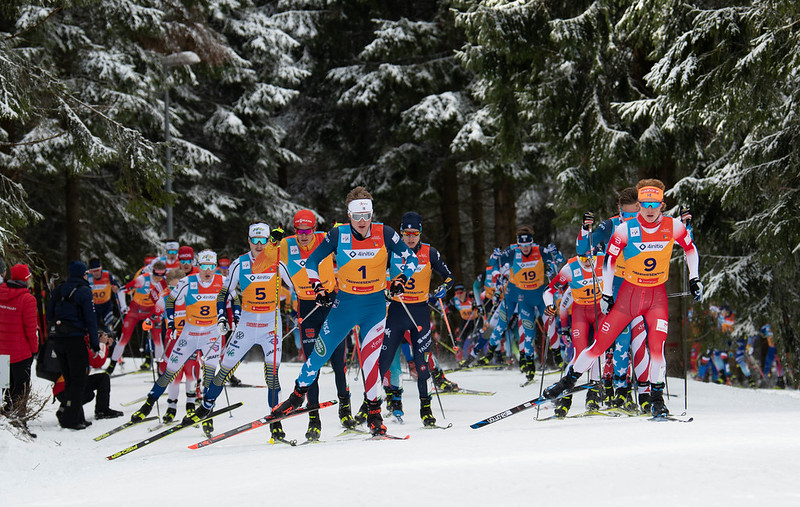
Gus Schumacher leading the pack with teammate Ben Ogden (pink hat) and Canada’s Sam Hendry (left) in the draft — during the U20 30 k classic mass start at World Juniors in Lahti, Finland. (Photo: Doug Stephen)
The mass start classic races for the U20 athletes at the 2019 World Junior World Ski Championships dawned on another crisp, bordering on a frigid day in Lahti, Finland. A scroll through the results makes clear the day was strong for North Americans as the U20 men raced a 30-kilometer classic mass start, the women a 15 k classic mass start.
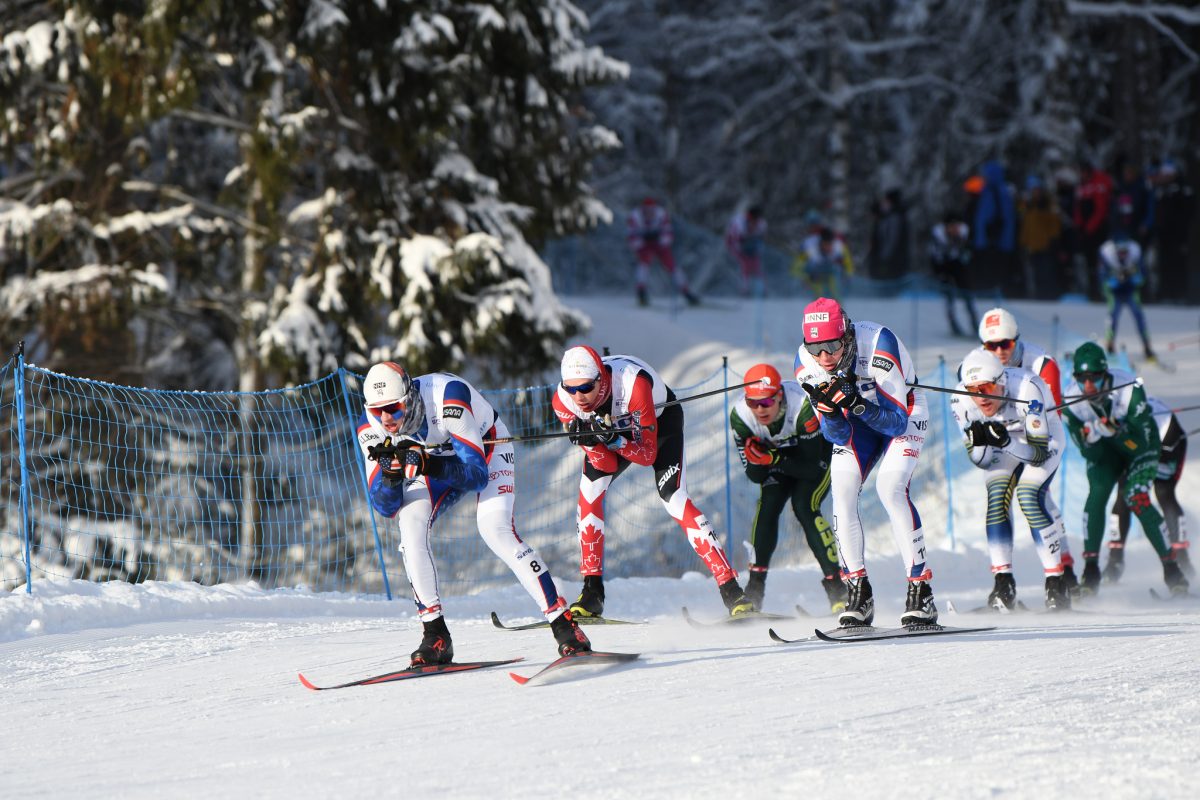
In the men’s race, the six laps around the 5 k course which climbed a total of 193 meters each circuit, the top-15 skiers were separated by 17 seconds at the finish. The tight front-pack racing meant there were moments when the U.S. sported four skiers pacing the sharp end of the race.
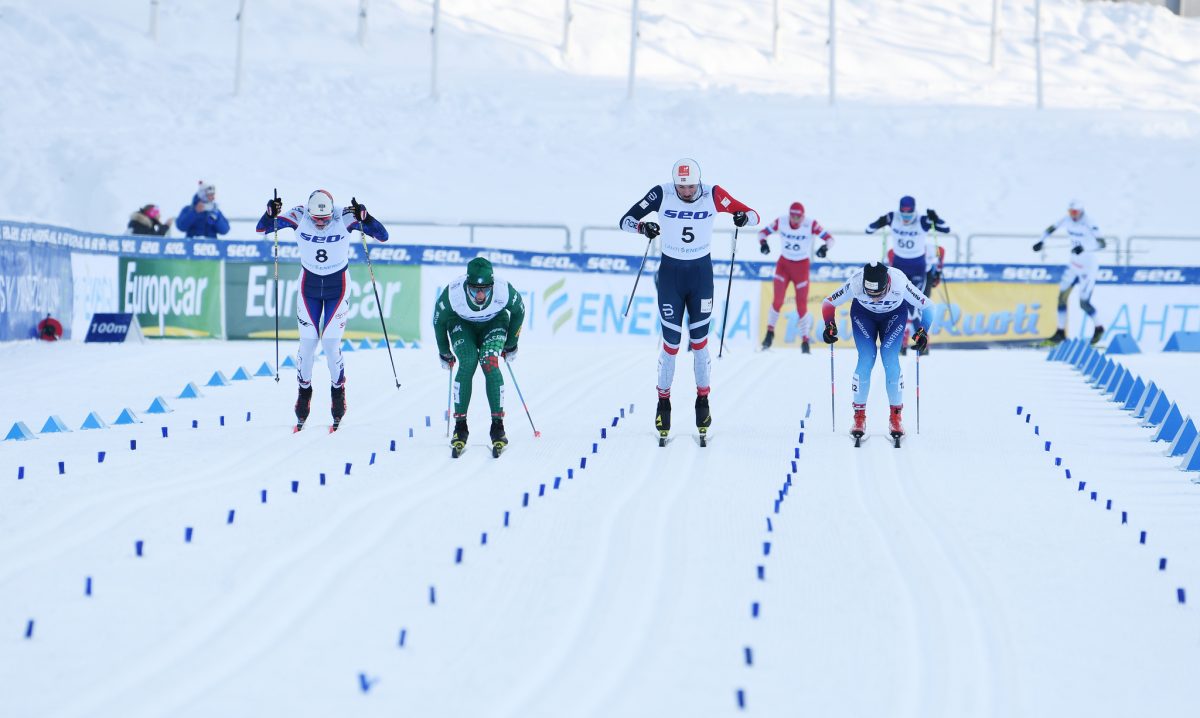
Gus Schumacher skiing for the U.S. placed fourth in a four-skier sprint at the line to finish 0.7 seconds behind the winner Luca DelFabbro of Italy. Del Fabbro won in a time of 1:15:16.7 hours. Norway’s Haavard Moseby placed second (+0.4), and Switzerland’s Cyril Faehndrich third (+0.5).
On the far left, Gus Schumacher in the podium mix down the stretch in the U20 30 k classic mass start at World Juniors in Lahti, Finland. (Photo: Doug Stephen)
Canada’s Remi Drolet skied to seventh overall 6.4 seconds back.
“Going into the race, the strategy was to stay relaxed and save as much energy as possible over the thirty kilometres,” Drolet emailed. “The plan was to get near the front, avoid mishaps, and be ready for when the speed increased and the pack was strung out.”
Actualizing the strategy in terms of mishaps was another story on Drolet’s journey to seventh place.
“Overall, I am very happy with how I skied today,” Drolet continued. “I executed my plan quite well and was able to stay calm and ski well even when I was involved in a collision and lost both of my skis. I had a lot of fun out there, and it was incredible to race against the best juniors in the world in some of the best conditions for classic skiing.
“Going into the championships and into this race, I was really hoping to achieve a top 10 result. In the first two races, I had decent results but was not quite there. It was encouraging, however, that I was improving everyday, and the second half of the skate race was quite good for me. I also knew that the 30-kilometre classic race would likely be my best, and I showed up to the start line ready to leave everything I had out on the track. It certainly felt great when I crossed the finish line knowing I had achieved this goal!”
Canada’s Remi Drolet after his seventh place in the U20 30 k classic mass start at World Juniors in Lahti, Finland. (Photo: Doug Stephen)
For the U.S., Ben Ogden finished 10th (+9.0), Luke Jager 13th (+14.9), and Johnny Hagenbuch 17th (+25.6).
Sam Hendry of Canada raced to 20th (+44.6), Tom Stephen, at sixteen years old placed, 23rd (+1:07.3), and Pierrick Sarthou 46th (+6:32.2).
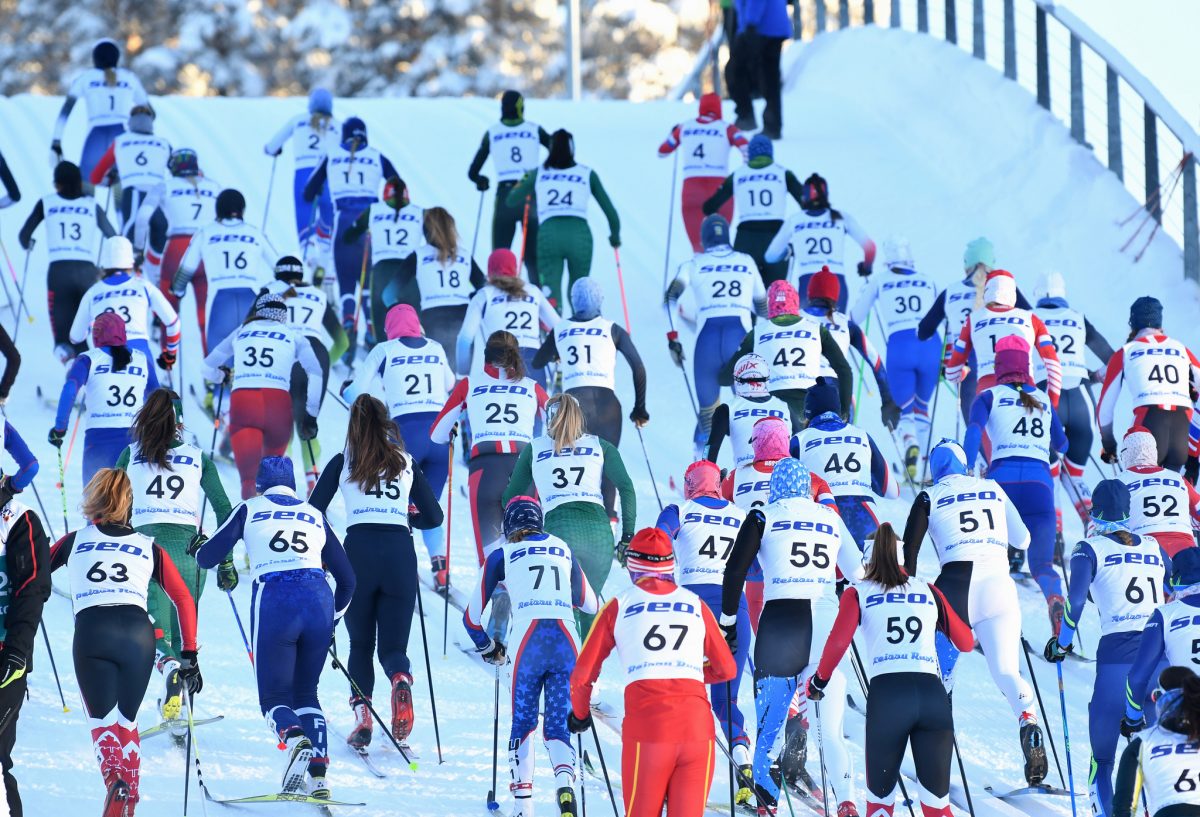
Start of the U20 Worlds 15 k classic mass start in Lahti, Finland. The winner Frida Karlsson is in bib 1. (Photo: Doug Stephen)
Sweden’s nineteen-year-old Frida Karlsson won the U20 women’s 15 k classic mass start race in a time of 40:45.3 minutes. Helene Marie Fossesholm of Norway was second (+52.1), and Finland’s Anita Korva was third (+58.1).
This was Karlsson’s second win of these championships after taking the U20 5 k skate race on Tuesday. Karlsson was also the fastest qualifier in last Sunday’s classic sprint – she placed fifth overall.
Kendall Kramer, a sixteen-year-old U18 skier for the U.S. was the top-North American in the U20 women’s race placing fourth (+1:30.7).
In perhaps the most earnest and down-to-earth post-race comment FasterSkier has received to date (Kendell’s comments were handwritten), the sixteen year old from Fairbanks, AK. explained the 15 k mass start was a new venture which suited her skiing style.
“This was my first 15 k I’ve ever done so going into the race I was extremely clueless and nervous about feeds, how aggressive the Scandos would be, how to race etc… but I think the slip-free kick job the techs gave me and my knack for throwing elbows and maintaining my spot which really aided me staying out of trouble early on, which set me up for a comfortable position to ride my 4th place into the finish,” Kendall wrote about her race experience.
Kendall Kramer on her way to fourth place in the U20 15 k classic mass start at World Juniors in Lahti, Finland. (Photo: Doug Stephen)
Kramer’s keen eye during the race played into her in-the-moment decision making when it came to how to ski the course.
“It was all hills and with the slow snow the flats weren’t even flats. I mostly decided to how to take every part of the course by seeing how the older girls in front of me reacted to it,” wrote Kendall.
U.S. teammate Novie McCabe at 17 years old is a U18 skier skiing up at these Junior Worlds. McCabe finished 10th (+2:19.0) after starting the day in bib 71, way back in the pack of seventy starters. (One skier did not start.)
“Starting in the back was definitely a bit of a challenge,” McCabe told FasterSkier in the mixed zone. “I thought of it as I had to be patient for sure at the start. But it was also better than I thought it would be going up that first hill. I was able to hop in the outside and get up right out of the start and seeing more numbers in the 30s and 40’s and so I was like ‘oh, that wasn’t that bad’. I kept on trying to work my up and trying to stay calm and patient. There were a few crashes and some of the front girls came back. I ended up skiing in a group with one of the girls who ended up crashing and I tried to hang with her.
The U20 women’s 15 k classic mass start at the Junior World Championships in Lahti, Finland. Way way back, bib 71, that’s Novie McCabe. (Photo: Doug Stephen)
“The group got smaller and I knew it was sixth through 12th I think, and I just tried to hang in there. My skis were really fast and I had really good kick so that was really helpful. I just tried to hang in there on the hills and get the best rest that I could. Then on the last part I was trying to hang with the girl ahead of me and I ended up crashing on the last corner, but it was really quick and I just tried to hop up and tuck in behind the ninth-place girl, and ended up hanging in there and finishing 10, it as a really fun race.”
Novie McCabe (bib 71) on her way to 10th place in the U20 15 k classic mass start at World Juniors in Lahti, Finland. (Photo: Doug Stephen)
For the U.S., Mara McCollor finished 24th (+3:58.3), and Sophie Mazzoni 48th (+6:19.9).
Jasmine Drolet was the top Canadian finisher in 36th (+4:51.4), followed by Anne-Marie Petitclerc in 40th (+5:07.6), and Anna Pryce in 46th (+6:07.2).
Gus Schumacher skiing to sixth place in the U20 10 k skate during the 2019 Junior Worlds in Lahti, Finland. (Photo: Doug Stephen).
FIS Junior World Ski Championships Lahti, Finland 5 k/10k Freestyle Interval Start
Tuesday in Lahti, Finland was as Finland should be: squeaky-snow-cold and cross-country ski racing on offer.
Eighteen-year-old Gus Schumacher broke through for the U.S. and placed sixth overall in the U20 men’s 10-kilometer freestyle. Schumacher was the 95th starter of 102 finishers on the day. His sixth place finish was consistent with his 1.1k, 5k, and 6.6k splits where he was ranked 5th, 6th, and 7th respectively. Schumacher stopped the clock in 23:19.3 minutes, 44.4 seconds behind the winning mark.
The Lahti championships are Schumacher’s second Junior Worlds. His sixth place is his best individual result. He was part of the second place 4 x 5 k U20 relay last year in Goms, Switzerland.
“I was most nervous about hitting it right and doing the right pacing and making sure I can have the best race that know I can,” Schumacher told FasterSkier over the phone. “I approached it as just a new race almost. We have done a fair amount of watching old world cups and world championships that were on the exact same courses here. It was definitely hard to reflect on that because none of them were exactly 10 k. And obviously those athletes are quite a bit stronger than we are. And the snow is different.”
Schumacher extracted what he needed from the videos. Imprinted in his mind before his 10 k start were enough visuals to quell the nerves and provide a path to fast clean skiing.
“We watched that and I felt like I got an idea for what the body movements looked like of those guys,” Schumacher said. “I thought about how that would feel for me and I thought about the other middle distance skate races I have done this year –which is actually a fair amount between early season time trials.”
Schumacher executed his plan. He dialed back the initial effort, stayed in control, and systematically revved the engine.
“I went out and tried for at least the first five minutes to go a little easier, because I think that is the high risk time, the very beginning,” said Schumacher. “I tried to go out and keep it consistent and as I started to get into it, I started to ramp it up a little more and really try to make the most of the recovery. Which wasn’t a lot, but enough that I could put my head in between my knees on the downhill and I could tell myself that 15 seconds of high speed downhill is helping me. And I could get my breath down a little bit and I was ready for the next hill.”
His run at the podium came up just 17 seconds short. But with his plan executed, the Anchorage based skier had no regrets when reflecting on Tuesday’s race effort.
“I definitely wanted to be top-10, but I felt like and still feel like a medal is in sight,” Schumacher said. At 18, he still has one more year of eligibility in the U20 ranks.
“For sure satisfied with this race, it felt like a good result and it was one of my better races. And I am happy with how it played out and also thinking about how I can hit the 30 k and do the most I can do.”
France’s Jules Chappaz won the race in a time of 22:34.9 after skiing the fastest splits at 5 k and 6.1 k. Sunday’s classic sprint winner, Russia’s Alexander Terentev, placed second (+21.0), and Norway’s Iver Tildheim Andersen in third (+27.2).
Canada placed two skiers in the top-31. Remi Drolet finished in 20th (+1:14), Samuel Gary Hendry 21st (+1:15.9), Thomas Stephen 31st (+1:36.8). Xavier McKeever skied to 44th (+2:04.6).
For the U.S., Zanden McMullen placed 32nd (+1:40.6), Johnny Hagenbuch 34th (+1:46.3), and Noel Keeffe 58th (+2:45.7).
Sweden’s Frida Karlsson winning the U20 5 k skate at Junior World Ski Championships in Lahti, Finland. (Photo: Doug Stephen)
Sweden’s Frida Karlsson won the U20 5 k skate in 12:50.6 minutes. Norway’s Helene Marie Fossesholm placed second 11 seconds back, with Finland’s Anita Korva in third (+19.8).
“It was fun to ski today. I just wanted to have my revenge”, Karlsson told race organizers after the race. Karlsson had qualified first on Sunday’s U20 classic sprint but placed fifth in the overall.
U.S. skier Kendall Kramer post U20 5 k skate at Junior World Ski Championships in Lahti, Finland. (Photo: Doug Stephen)
The best placed North American was U.S. skier Kendall Kramer who finished in 15th (+55.6) place. Also for the U.S., Sydney Palmer-Leger was 20th (+1:04.9), Novie McCabe 29th (+1:20.8), and Waverly Gebhardt 65th (+2:28.8).
Canada’s Anna Pryce (bib 22) and Jasmine Drolet (bib 20) finishing the U20 5 k skate at Junior World Ski Championships in Lahti, Finland. (Photo: Doug Stephen)
Anna Pryce was the top Canadian in 43rd (+1:36.5). Teammates Molly Miller skied to 50th (+1:52.9), Isobel Hendry 58th (+1:57.1), and Jasmine Drolet 67th (+2:35.7).