
From the FasterSkier archive — posts syndicated from athletes’ and coaches’ own blogs between 2004 and 2012, kept online as published. Current coverage is at fasterskier.com.

Tag: hemoglobin

  • For Anti-Doping Administrators, a Constant Battle Requiring Creativity & Strong Leadership

    For Anti-Doping Administrators, a Constant Battle Requiring Creativity & Strong Leadership

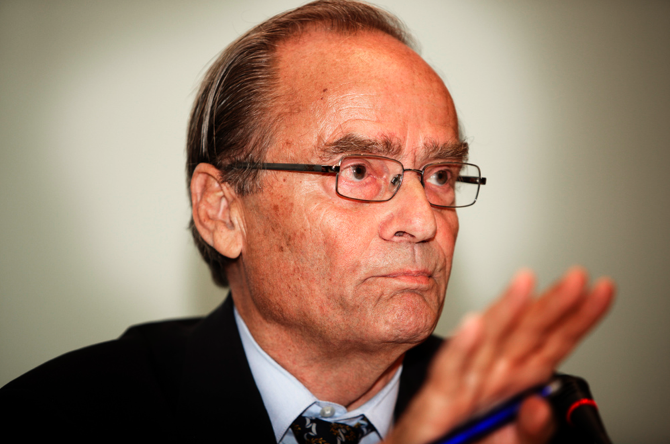
    Professor Arne Ljungqvist, Lord in Waiting to His Majesty the King of Sweden. (Photo: Tine Harden/Playthegame.org)

    Note: For more on Professor Ljungqvist’s fight against doping in Sweden, and its effect on Scandinavian sport culture, you can read our companion piece, also published this morning.

    STOCKHOLM, Sweden – Professor Arne Ljungvist has been fighting doping since the 1970’s, when he began with the Swedish Athletics Association and the International Association of Athletics Federations (IAAF). These days, he has retired from his day job – researching cancer and other medical topics at the prestigious Karolinska Institute – and holds two others: the head of the International Olympic Committee (IOC) Medical Commission, and the vice presidency of the World Antidoping Agency (WADA).

    In the intervening decades, doping rose to seemingly absurd levels, but Ljungqvist believes that in some sports, performance-enhancing drugs are no longer so prevalent.

    “You can see it,” he told FasterSkier. “In measurable sport, you can see the difference. In no [Olympic] throwing event in London would the gold medalist been on the podium in Seoul 24 years ago. It’s incredible. So it’s been cleaned up.”

    But that doesn’t mean that the problem is gone – it is an ever-evolving, ever-escalating battle between dopers and administrators. In some ways, the efforts by people like Ljungqvist are still the same as they were in the 1960’s, when one of the biggest jobs was simply determining which substances ought to be banned. Administrators have always been trying to catch up with dopers, tests always lagging behind the discovery of new performance-enhancing substances and methods.

    And as they have lost patience, perhaps, the game has changed. Recognizing that they won’t be able to test every athlete for every possible performance-enhancing method at every potentially important time, administrators have in recent years embraced “non-analytical” cases where there is no positive test for a banned substance. This tool for catching cheaters was showcased last month when Lance Armstrong was stripped of his seven Tour de France titles, based mostly on the words of other cyclists.

    With these changes and challenges in mind, FasterSkier asked Ljungqvist and Staffan Sahlström, a longtime ally of the professor’s, a few questions about sports today in a long interview at the offices of International Doping Tests and Management (IDTM), a company which Sahlström founded here in Stockholm.

    No-Start Rules and Biological Passports

    The International Ski Federation (FIS) was one of the first federations to try to nail dopers without an actual positive test. One of the main goals of endurance athletes who dope is to raise the capacity of their blood to carry oxygen. For a long time, there was no test for erythropoietin (EPO), the main drug used to do so. Then, too, dopers learned to reinject their own blood back into their veins, which was hard to detect. So the federation got creative.

    “FIS felt that they had problems with blood doping, and the Finnish incident proved that they were right,” Ljungqvist said, referring to the scandal that disqualified six Finns from FIS World Championships in 2001. “And the way they tried to stop it in the absence of detection was to institute this no-start rule, to say that if you had too-high blood counts you couldn’t compete because it would be dangerous to your health.”

    The rule, which stated that no skier could start a race if their hemoglobin tested higher than 16.5 g/dl for women or 18.5 g/dl for men, was designed to detect the symptoms of blood doping, if not the actual substances or transfused blood itself. To the public, FIS explained that having too-thick blood was dangerous, which was true, but not the real purpose of the rule.

    The rule did work, if its goal was to lower competitors’ hemoglobin levels before they raced. In 2006, U.S. skiers Leif Zimmerman and Kikkan Randall had to wait five days before re-testing and competing in the Torino Games. At the 2010 Olympics, Maine-based New Zealand racer Ben Koons encountered the same problem.

    According to Ljungqvist and many others – such as the aforementioned three, who say their hemoglobin levels had nothing to do with doping – it wasn’t a good solution.

    “I don’t like that,” he said of the FIS policy. “I think they were covering themselves under a false argument. And I told them that many times – that there is no proof, and particularly the individual, probably, some are born with different levels. This is a bad excuse. They were trying to combat doping with a false argument. That’s ethically doubtful.”

    Not only is hemoglobin likely under some degree of genetic control, but it can also be affected by living at altitude (which can train the body to carry more oxygen in the blood) or even by dehydration. Plus, the rule didn’t actually catch all the cheaters. Ljungqvist pointed out that Armstrong, for instance, had repeatedly taken saline infusions to dilute his blood when he knew he would be tested.

    “They notify the skiers by just putting up a message in the lockerroom, which says, you are due for your blood sampling at nine o’clock,” Sahlström explained to get at the rule’s shortcomings. “So you have a notification and even though you are observed during your notification, the bad guys could do something. And the levels are just below – a little bit too little below. So they achieved something, but it is a false excuse.”

    FIS has expanded the concept, however, into something called an “athlete biological passport.” The idea is that by tracking markers like hemoglobin through time, administrators will have some idea of an athlete’s natural levels, and if they dope, the changes will show up in tests even if the substance itself does not. Last season, FIS administered 1,432 out-of-competition tests as part of its biological passport program.

    “I think it’s well worth trying, and it’s a good idea,” Ljungqvist said of the passport concept. “We’ll see if it works. It has already been used – the International Cycling Union has been doing it, IAAF did it just before London, and they banned a few athletes based on passport information. The more sophisticated, the more detailed you can make the passport, the better.”

    As part of his role with WADA, Ljungqvist has watched the agency adopt the program itself. Next week, he’ll take part in discussions about whether WADA can expand the passport to include endocrinology data, which could help detect steroid and hormone use – as well as other future methods that athletes haven’t even tried yet. For the first time, Ljungqvist hopes, maybe administrators will be one step ahead of dopers, rather than the other way around.

    “Maybe we will finally have a good identification of the athlete’s biochemistry,” he said. “That will also be helpful when it comes to detecting gene doping, so it’s a good path to follow.”

    Strong Leadership for Clean Sport

    In the fallout from the Armstrong scandal, many clean athletes have to wonder: how do I know that the playing field is level, and that the system is working, if Lance Armstrong could get by for so long without being caught?

    That, say Ljungqvist and Sahlström, depends on a lot of things, sport and country among them. But in the U.S., athletes shouldn’t be too worried, Ljungqvist believes. He remembers what happened at the Sydney Olympics in 2000, when it came out that U.S. athletes had tested positive for banned substances, but the cases had been swept under the rug by the U.S. Track and Field federation and the United States Olympic Committee (USOC). At the time, Ljungqvist publicly states that the Americans had failed to do their jobs.

    “I got a direct call from the responsible people at the White House, the drug czar, who told me that they understood our problems in Sydney,” he said. “I had criticized them and it had come out in the United States newspapers. So they said, please, calm down, if you can, and we’ll do something. And they did. They created USADA.”

    Recently, Ljungqvist says, USADA has done an admirable job tackling the rampant doping in Olympic sports (professional sports are, of course, another matter). He cited first the BALCO investigation, and then the Armstrong affair, as cases where the agency laid out meticulous cases against high-profile athletes and didn’t seem hampered by political pressure.

    “They were very thorough, very serious, and very professional,” Ljungqvist said. “They are cleaning up sport in the United States. But it shows that the system had been bad… this goes back to the late 1990’s and early 2000’s. They weren’t doing the job. Marion Jones is another example – tested hundreds of times, at the wrong times.”

    The turnaround was due to something that hasn’t happened in every country: the antidoping agency was separated from any organizations that might have an interest in the outcome, like the government or the national Olympic Committee. One reason that the U.S. system had been so bad, Ljungqvist implied, was that it had been enforced by two organizations which had a vested interest in U.S. athletes winning medals, and so had some incentive to avoid banning star performers.

    “I think that one of the answers [to the doping problem] is the independence of the organizations that are handling different cases,” Sahlström said. “And then it should be discussed, what is being independent? I can question being independent in some countries.”

    He would know, because IDTM handles doping tests for various federations around the world. The company started based on the pair’s out-of-competition testing program in Sweden; the IAAF asked, can you do this internationally? Since then, Sahlström  has assembled a network of doping control officers around the globe. And different countries, he says, sometimes have different ideas of what a doping agency should do.

    Then there’s the question of who is leading national agencies and international federations. Travis Tygard of USADA has gotten a lot of press lately, as have International Cycling Union President and Vice President Pat McQuaid and Hein Verbruggen. While Tygard attacked a popular American hero, the UCI leaders quietly protected a system of doping in their sport. People have called for the resignation of all three, for various reasons: Armstrong reporters are furious at what Tygard has done, while fans of pure sport are disappointed in the spinelessness of the UCI.

    “It’s difficult to be the governing body – you have to run the sport,” Sahlström admitted. “If you are not strong as Professor Ljungqvist has been in the IAAF, and if you have weak leadership that says, okay, we need to protect our athletes because they are our asset and they can’t be found doped and we will lose sponsorships, or TV rights, et cetera, then that’s something that we should be looking into.”

    Whether it’s at the USOC, USSA, USADA, or FIS, athletes have to rely on their leaders – and that’s a big question. It’s made tougher, Sahlström said, because most of these high-level administrators keep their jobs for a long time – sometimes decades. The lines can blur after such long relationships, he suggested, and administrators can bow under the pressure from athletes and coaches to ignore problems with doping.

    “If you have a fairly closed family like the professional cyclists, they all know each other,” Ljungqvist said. “Sports-wise, it’s a small group. It’s easy to organize something and people protect each other.”

    In insular sports such as cycling, Sahlström agreed, it’s a tougher problem.

    “For leaders to start to clean out something, it takes some courage, and I’m not sure that every leader today has that,” he said. “Who are the leaders? Are they strong enough? If there are leaders who have been part of an old regime, I’m not accusing anyone, but if you have been in that area, then no. If you come into a federation with new eyes and ears you can say, okay, something has to be done. But if you have been part of it, you would be biased.”

    Should American skiers be worried, though? Of course no sport is perfect. But as Americans, the athletes should trust USADA, the pair said. And as skiers – well, at least it’s not cycling.

    “The confidence in the system, I wouldn’t doubt it,” Ljungqvist said.

  • September Edition: This Month In Journals

    September Edition: This Month In Journals

    FasterSkier is starting a new, once-a-month series looking at new research in the field of sports science. Periodically, we’ll flip through some of the world’s best peer-reviewed medical journals and summarize, in plain English, studies that we think will be of interest to skiers. Here’s our first installment – enjoy!

    * Those dopers who claim that their blood measurements were funny because they just did a really hard workout might actually have a point. A team of Australian researchers showed in a paper in the International Journal of Sports Medicine that hemoglobin mass (Hb Mass) does, in fact, increase after an endurance race effort.

    Blood. Image via creative commons.

    Back in 2008, a German group led by Dr. Nicole Prommer at the University of Bayreuth suggested in Medicine and Science in Sports and Exercise that Hb Mass, which unlike the Hemoglobin concentration (Hb) measurement used in biological passport programs by anti-doping organizations is not influenced by fluctuations in blood and plasma volume, should be used in anti-doping efforts.

    But the Australian team followed up on previous work done since 2008 and put 18 sub-elite triathletes through their paces in an Ironman, and then compared them to 8 control athletes who hadn’t done the race. They found that the racers’ Hb Mass increased by 3.2 % from before the race to directly afterwards, while the control subjects showed no significant change.

    Noting that this increase corresponds to the illicit benefit of the infusion of one bag of blood, the researchers discouraged WADA from including Hb Mass in their biological passport program, at least until further work can be done to determine how long the effect lasts after a hard effort.

    More information: Gough, C.E., Eastwood, A., Saunders, P.U., Anson, J.M., and Gore, C.J., (2012) Spurious Hb Mass increases following exercise. International Journal of Sports Medicine 33:691-695.

    * In the September 1 issue of the British Medical Journal, a team of researchers from several Boston-area hospitals and medical schools published a meta-analysis (review of past studies) of the effects of progestin-only contraception on the risk of thrombosis, a condition in which a blood clot forms in a vein or artery; 300,000 Americans die from venous thrombosis each year. As FasterSkier reported last summer, the use of hormonal birth control appears to have an indirect, if not necessarily direct, impact on athletic performance in female skiers. In addition, U.S. star Kikkan Randall suffered a scary run-in with Deep Vein Thrombosis (DVT), which she attributed to her use of birth control.

    creative commons/flickr user Anna.

    As the Boston team wrote, when hormonal birth control became available in the 1960’s, the corresponding increase in thrombosis incidence was pinned on estrogen, the first of two hormonal elements in the typical birth control pill (progestin being the other). Over the last 50 years, pills have gradually decreased in their estrogen concentration, and the types of synthetic estrogen and progestin used in birth control have also changed. It has been assumed that progestin-only pills, which were put on the market beginning in the 1970’s, carried a smaller risk of thrombosis.

    But as FasterSkier found last summer, there hasn’t been much in the way of controlled, high-quality testing on this issue. The team led by Drs. Simon Mantha of the Lahey Clinic and Jeffrey Zwicker of Beth Israel and the Harvard Medical School encountered a similar problem. A search using terms like “progestin”, “progesterone”, and “thromboembolism” in the top three scientific search engines returned over 2,000 papers, but after screening, only eight addressed the question of progestin and thrombosis.

    Not a single one of the studies was randomized, one of the cornerstones of strong scientific and medical research, to compare outcomes for women taking the progestin and those in a control group. Instead, all eight studies used existing groups of patients. Five of the eight studies were case-control, taking patients with known outcomes (thrombosis, no thrombosis) and looking back at their histories to examine the cause. The other three studies were cohort studies, which take groups of patients with known risk factors (for example, progestin vs. not) and then examing the prevalence of a disease (for example, thrombosis) going forward.

    The Boston team then effectively combined all of the women in the various studies and ran a global test, determining that the relative risk factor for thromboembolism (either venous or pulmonary) for progestin-only users compared to the general population was 1.03, deemed an insignificant risk (this would mean that progestin users would have a three percent greater chance than the general population of developing thrombosis). Interestingly, the relative risk factor for women using an injectable progestin (rather than a pill of IUD) was 2.67.

    Mantha and Zwicker’s team concluded that the lack of increased risk might be due to the fact that progestin-only “mini-pills” contain much lower doses of the hormone than do the more common combined estrogen-progestin pills. But they also called for more studies, saying that the small amount of research on this subject could mean that some studies were biased.

    More information: Mantha, S., Karp, R., Raghavan, V., Terrin, N., Bauer, K.A., and Zwicker, J.I., (2012) Assessing the risks of venous thromboembolic events in women taking progestin-only contraception: a meta-analysis. British Medical Journal 345:4944.

    * Do girls drop out of sports more frequently than boys, and when children or teenagers of either gender quit athletics, why is it? These are a few of the questions addressed by Dr. Jose Francisco Guzman of the University of Valencia and Dr. Kieran Kingston of the University of Wales in a recent paper in the European Journal of Sports Science.

    Following a group of 857 Spanish children ages 11 to 19, all of whom participated in some kind of organized sports, for 19 months, the researchers tried to determine why athletes quit using a model called “self-determination theory.” They looked at how self-motivated the athletes were, how they perceived sports to impact their studies, and how satisfying they found athletics, among other metrics, and pooled athletes by age and gender.

    They found that there was a correlation between an athlete’s level of motivation and their perception of how their sport might hamper their studies; taking it one step further, the researchers guessed that motivated athletes were less likely to consider athletics a drawback to their academic success. Regardless, they found that this combination led athletes to stay in their sports longer.

    Interestingly, the team saw that dropout rate did not change significantly with age or gender, and concluded that their model could be applied generally to assess and predict how many children would stay in sport.

    More information: Guzman, J.F., and Kingston, K., (2012) Prospective study of sport dropout: a motivational analysis as a function of age and gender. European Journal of Sports Science 12:431-442.

    * Summer may be basically over, but a study published in the October issue of the European Journal of Applied Physiology suggests a way for athletes to better cope with heat during training: pre-cooling. But was does that mean? If you’re running a race in the summer, do you have to sit in an ice bath before hitting the start line?

    Because heat stresses the body in many ways and can athletic performance, previous research had suggested preemptively cooling the body to try to curb heat stress. A paper by researchers at Charles Sturt University in Australia, led by Dr. Geoffrey Minett, examined various durations of pre-cooling and their effects not only on athletic performance but also on neuromuscular function.

    The Australians used eight subjects in their study, all men in their mid-20’s who were club-level athletes in team sports. At roughly 91 ºF and 33 % relative humidity, the men were asked to perform two 35-minute exercise sessions separated by 15 minutes of rest. Each session included both maximal sprints and “shuttle running” intervals of 50 seconds, with jogging and walking recovery in between, measuring how far the athletes ran in each 50-second interval.

    Each subject did the workout three times, with randomly assigned pre-cooling treatments: either no cooling, ten minutes of cooling, and twenty minutes of cooling. The treatment itself was complex and comprehensive: an iced towel over the head, neck and shoulders, dunking the hands in cold water up to the wrists, placing ice packs on the thighs, and wearing an ice vest.

    The treatments did have their desired effect. Core body temperature was significantly lower in the 20-minute pre-cooled group compared to the others, and that effect lasted the entire workout. Other physiological variables, such as heart rate and blood pH or glucose levels, were unaffected. Muscles, however, also showed the benefits of pre-cooling: the maximum voluntary contractions (MVC), in this case the force applied by the right knee extensor in response to an electric stimulus, were higher both mid- and post-exercise in the pre-cooled athletes.

    All of this led to performance increases for the 20-minute pre-cooling treatment. The times of the maximal sprints in the second bout of a session declined more drastically in athletes having only the control (8.82 %) or ten-minute (6.95 %) pre-cooling treatment, whereas the 20-minute pre-cooled athletes declined a modest 6.09 % during the second bout. Distances covered during the shuttle-running portion of the workout were significantly higher for the 20-minute athletes as well.

    The researchers concluded not only that pre-cooling was beneficial, but that the dose was important: ten minutes of the treatment did not produce the same performance increase shown by twenty minutes of cooling.

    More information: Minett, G.M., Duffield, R., Marino, F.E., Portus, M., (2012) Duration-dependent response of mixed-method pre-cooling for intermittent-sprint exercise in heat. European Journal of Applied Physiology 112:3655–3666.

    * Publishing in the same journal online ahead of the print edition, ew: score one for icky science. In an attempt to understand why athletes so often exhibit signs of asthma or general bronchial constriction, a Madrid-based research team looked at what the athletes coughed up. Sputum!

    Lead author Dr. Beatriz Sastre of the IIS-Fundacion Jimenez-Dıaz Immunology Department and five Spanish colleagues rounded up 68 subjects, divided between athletes and non-athletes and asthmatics and non-asthmatics; the athletes were Spain’s Olympians from 2008. All the subjects were put through breathing “challenges”, which meant chemically inducing a constricted airway. Between the asthmatic and non-asthmatic athletes, the researchers actually didn’t find any difference in inflammation of the airways.

    In the sputum samples, the researchers found that athletes had expelled more bronchial skin cells – meaning that there were injuries to their airways that left them spewing tissue. They also tested the presence of several kinds of white blood cells, finding that healthy control subjects expelled fewer of three different kinds of white cells (eosinophils, neutrophils, and basophils) than athletes and asthmatics; athletes showed higher levels of neutrophils and basophils than even asthmatic non-athletes. Basophils, for example, initiate inflammation.

    Given the lack of inflammation difference between asthmatic and non-asthmatic athletes, and the fact that athletes seem to have more epithelial airway injuries and also more white blood cells which promote inflammation, the study concludes that exercise can induce airway difficulties in all athletes – even the best-trained ones.

    More information: Sastre, B., Fernandez-Nieto, M., Rodriguez-Nieto, M.J., Aguado, E., Sastre, J., and del Pozo, V., (2012) Distinctive bronchial inflammation status in athletes: basophils, a new player. European Journal of Applied Physiology

  • Is Live High, Train Low Dead? Not a Chance, Says Stray-Gundersen – It’s Just Hard

    Living in the mountains and training closer to sea level is still probably the most effective way to execute “Live High, Train Low,” rather than using artificial altitude, for instance by living in a tent.

    “We have recently hypothesized that the optimal approach to altitude training would be to acclimatize to altitude, but train as close to sea level as possible thereby maximizing running speed and maintaining aerobic fitness,” Drs. Jim Stray-Gundersen and Benjamin Levine wrote in a landmark 1992 paper in the International Journal of Sports Medicine.

    The pair, who then worked at the University of Texas, were trying to answer the question of whether altitude training was truly beneficial. That same year, for example, they published a paper showing that an equivalent training schedule by groups of elite runners at altitude and at sea level had very similar effects; training at altitude didn’t seem to confer any significant benefit.

    “Let’s say you go to Mount Everest,” Stray-Gundersen told FasterSkier in an interview this week. “Your red cell mass will increase, no ands, ifs, or buts about it. It’s really high. But it’s also so high that you can’t train properly for any kind of sport where you need to function at sea level. So one of the questions is, what is that right altitude where you can maintain sea-level conditioning, but high enough so that most of your athletes are going to end up getting a robust increase in red cell mass?”

    Stray-Gundersen says in “hypoxic” conditions (when less oxygen than usual is reaching muscle tissues, such as when an athlete is breathing thin, high-altitude air), the human body adapts by producing more of the hormone erythropoietin, which controls the production of oxygen-carrying red blood cells. Training at altitude theoretically confers a benefit because when an athlete returns to sea level, oxygen levels are back to normal, but the blood still has that increased ability to transport it.

    What Levine and Stray-Gundersen discovered in that seminal study – which has been cited in peer-reviewed journals almost 150 different times – was an elegant, if not always practical, solution to the problem of how to get an athlete’s blood to carry more oxygen without the potential compromises that come with high-altitude training: live at altitude, but train closer to sea level. There is no one perfect altitude. You need two.

    “We had four weeks of living at 8,000 feet and coming down to 4,000 feet,” Stray-Gundersen said of that initial study. “And that was compared to sea level athletes, and then a group of athletes that lived at 8,000 feet and also trained around 8,000 feet. And it’s clear that we had a robust increase in red cell production with living high. But it was only the high-low group that showed performance enhancements, and that’s because they were able to get training in and around the 4,000 foot range.”

    The researchers called their technique “Live High, Train Low” (LHTL), and it has been supported in many other studies – and gained enough recognition to fuel the sale of do-it-yourself altitude tents to athletes looking to gain a physiological edge.

    “If you get an increase in red cell mass, then you will enjoy an increase in performance,” Stray-Gundersen said. “That’s how blood doping works, and we just developed a method to be able to do that by living up in the mountains.”

    Not everyone agrees. While many studies support their conclusions, many don’t – including two papers by a joint Swiss and Danish research group this spring.

    Don’t Forget the Placebo

    The two papers, which were headed by Drs. Christoph Siebenmann and Carsten Lundby of the University of Zurich and by Dr. Nikolai Nordsborg of the University of Copenhagen, were both based off of a study using elite cyclists to assess LHTL at a training center in the Jura mountains of France.

    Unlike the vast majority of researchers who had investigated LHTL, this team used a double-blind design, which is the gold standard for scientific research. It had been difficult to use a double-blind design in studies using natural altitude: athletes knew whether they were living in the mountains or at sea level, and so did researchers.

    In the new study, the scientists used artificial rather than natural altitude. By having all of their 16 test subjects sleep in rooms at a training center and then adjusting the oxygen content of each room, they were able to conceal from the athletes whether they were in a “control” room, at the natural altitude of 1,135 meters (about 3700 feet), or in an “altitude” room which simulated 3,000 meters (almost 10,000 feet). Only the lead researcher knew which athletes were assigned where; even the on-the-ground staff did not know, eliminating bias at another level.

    The cyclists lived in the treatments for four weeks, during which time they were told to train normally, outside, at the natural 1,135 meters of elevation. They were required to stay in their rooms at least 16 hours per day, or more if they chose.

    What Lundy and his colleagues found was that the athletes living the LHTL lifestyle did not increase their red blood cell mass or the erythropoietin levels in their urine, and that group did not see greater improvement in the tests and time trials they performed on stationary bikes and trainers than their control group counterparts.

    “I was surprised and frustrated,” Lundby told several news outlets.

    But even if the Danes didn’t get the result they were expecting, they have taken their data and run with it.

    “Scientifically speaking, altitude training has no effect,” Nordsborg told ScienceNordic, a website covering scientific advances in Nordic countries. “Neither the ability to cycle far or the ability to sprint is improved on average.”

    Lundby’s group did see changes in the athletes: for instance, the entire group of 16 averaged a one percent increase in VO2Max, which was marginally significant statistically (the result had a six percent chance of occurring randomly; five percent is the standard cutoff when assessing significance). They also saw a five percent improvement in time trial performance, although this result was not statistically significant.

    Based on these improvements, and the fact that the two groups did not differ from one another, the scientists concluded that the placebo effect was at work.

    “The study shows that the individual cyclist’s motivation has an incredibly large effect on his performance,” Norsborg told ScienceNordic. “If he expects to perform better because he has slept in air with low oxygen levels, he will perform better – on average 1-2 percent.”

    Their assertion was that because all of the subjects believed that the could be in the LHTL treatment, they were more motivated and trained better, or that they had psychologically tricked themselves into believing that they were receiving some benefit.

    It’s About Individuals

    Stray-Gundersen, who now works with the U.S. Ski Team, isn’t so sure – and frankly, the supposed improvements that the Danes are championing as the placebo effect aren’t so large or significant that they seem to make a big splash.

    Instead, Stray-Gundersen asserts, Lundby and his colleagues failed to find a significant effect of LHTL for the same reason that many groups before had failed: it’s hard to do it right.

    “I think that maybe the best thing to say about Christian’s study is that they weren’t living in a situation that was sufficient to stimulate erythropoesis,” he said. “However [their treatments] worked, it really wasn’t enough to get an increase in performance or red cell mass. And frankly, if they didn’t get an increase in red cell mass, then we’re not surprised that they didn’t get an increase in performance – so in some ways, their data are consistent with [our] idea.”

    He offered several reasons why the study may have found no effect. First of all, it used a small group of athletes – just ten cyclists in the LHTL group and six in the placebo group. Response to altitude is highly individual, and with such a small sample size, it could have been easy to miss an effect.

    “Some people, if they go to 2,000 meters and spend four weeks there, they get the increase in red cell mass,” Stray-Gundersen said. “Not all that many people respond there. Other people might have to go to 2,500 meters, or others to 3,000 meters for four weeks… it could have happened that among the subjects that they recruited they didn’t get many who happened to respond to the combination of natural and artificial altitude that they provided.”

    This was supported by the papers themselves, which charted the changes in different metrics for individual athletes. With red blood cell mass, for example, six of the LHTL athletes showed an increase after four weeks, while four did not; two of the placebo athletes did, while four did not.

    Siebenmann and his colleagues mentioned this in their paper.

    “[There is] considerable interindividual variation in the response to LHTL, which is supported further by other studies reporting that the increase in serum EPO during prolonged exposure to high altitude is variable by a factor greater than 40,” the scientists wrote. “It thus appears that in LHTL studies, the presence of an effect on [red blood cell mass] crucially depends on the random composition of the subject groups. This may… explain the lack of an increase in [red blood cell mass] in the present study.”

    One thing that everyone agrees on is that more work should be done, with larger groups of athletes – and that the implications of the study include a warning that altitude training works differently for different athletes.

    “While some earlier studies indicate that LHTL may stimulate erythropoiesis in some athletes, our results demonstrate that this response is not certain in all subjects, which is probably explained by different individual responses to hypoxia,” Siebenmann and his group wrote.

    And there was evidence that the treatment was beginning to work: at the end of four weeks, the LHTL group had a significantly higher reticulocyte count than the control group. Reticulocytes are immature red blood cells that don’t have a nucleus. So although the LHTL athletes didn’t actually have more red blood cells, they were beginning to develop them.

    How High, For How Long?

    So: there’s no magic number for the amount of elevation needed to produce those red blood cells. And the issue is complicated by research groups using different protocols, particularly with the advent of artificial altitude chambers, where subjects in different studies spend various amounts of time living in the hypoxic conditions.

    Even though he said that most people respond with increased erythropoietin production at 3,000 meters, Stray-Gundersen pointed out that his studies have been at natural altitude, where the athletes are living high for 20 or 22 hours per day, rather than at artificial altitude where they spend less time in the hypoxic environment. He didn’t believe that there was any intrinsic difference between the two types of hypoxia, but did suggest that it may be more difficult to find an effect with a smaller proportion of the day spent at altitude.

    “Any time you’re using the artificial altitude, you’re in it for less than the 24 hours out of the day,” Stray-Gundersen said. “And the body reacts very quickly. When you go out into sea level again, the body turns off whatever systems it had turned on by being in hypoxia. So what happens is that I think it takes longer, it takes higher, and it maybe takes a longer proportion of the day being in these artificial environments.”

    And then there’s the issue of the length of a high-low training camp. Four weeks was the duration of both Levine and Stray-Gundersen’s original study, and of the Danish-Swiss study. But that number came about mostly by chance, Stray-Gundersen said.

    “The reason we picked four weeks in the first place is because that was about as long as we thought someone could stay at an altitude camp,” he explained. “If you look at elite athletes, if you send them somewhere for three weeks or more, they end up complaining and they want to go home and all that stuff. Very often the most you can get someone’s attention is for two weeks.”

    Two weeks, however, is not enough. An Australian research group has particularly focused on testing LHTL over shorter periods, from ten days to three weeks.

    “We conclude that in elite female road cyclists, 12 nights of exposure to normobaric hypoxia (2650 m) is not sufficient to either stimulate reticulocyte production or increase haemoglobin mass,” Dr. Michael Ashenden and his colleagues wrote in a 1999 paper in the European Journal of Applied Physiology. In that same issue, they reported that male athletes spending 23 nights at 3,000 meters did not show an increase in red blood cell mass.

    Initially, Stray-Gundersen and Levine weren’t sure if four weeks would be enough. If they hadn’t found significant results, they would have increased their study’s duration to six weeks. But with the wealth of studies showing that shorter periods of LHTL don’t produce results, four weeks seems to be close to ideal.

    “You put that all together and you think that four weeks at 2,500 meters for at least 20 out of 24 hours, that’s probably the kind of hypoxic dose that you need to stimulate red cell mass,” Stray-Gundersen said. “There have been a lot of people trying to figure out what the minimal dose is to get away with. Well, that’s sort of the wrong question.”

    Overall, the scientist didn’t seem concerned about the press garnered by the Danes’ denial of his method.

    “I don’t think that you can say that just because their study didn’t show anything, that you can automatically throw out everything else, or that it obviously doesn’t work and it’s just a placebo effect,” he said. “The literature is full of studies that haven’t shown the kind of responses that we have, and it’s usually because they haven’t been high enough or for long enough. And then there are other studies that have replicated our results when they do live high enough and long enough.”

    DIY Altitude Is Tough

    One takeaway message from the Lundby’s study: it’s hard to nail down exactly the best way to do LHTL, and doing it right can be difficult.

    “Spend the money on other, less complicated training camps,” Lundy suggested to the British newspaper Globe and Mail.

    As Stray-Gundersen explained, the use of artificial altitude doesn’t make LHTL any easier. That might serve as a warning to athletes and teams who have invested in altitude tents to try to reap the benefits of the training technique.

    “If [a tent] can be used correctly, then it can be effective,” he said. “But I would say that ninety percent of the time, they aren’t used in the right way. Most of the time when athletes buy these things, they don’t get the results that they’re after, for a whole slew of reasons.”

    First, he said, many athletes fail to check to see whether the tents are actually maintaining the oxygen levels and saturation they are looking for. Then, they often don’t check their hemoglobin mass before and after they use the tent, so they can’t be certain that they are getting a benefit.

    But perhaps more than that, Stray-Gundersen said, it takes a lot of willpower to spend sufficient amounts of time in an altitude tent – both in terms of hours per day, and the long four weeks his group has shown are required to get any sort of physiological benefit.

    “A typical experience is that somebody gets a tent, they’re sleeping in it overnight, or even from 7 p.m. to 7 a.m., so they have 12 hours in it – but then they want to, I don’t know, take a trip to visit their parents over a weekend,” Stray-Gundersen said. “And then all of a sudden they’re out of that environment for 48 hours, and that kind of stops the whole process and they go back to the beginning.”

    And then there’s psychological stress.

    “Even if some of [athletes] are getting better, it’s really hard to spend the majority of your life for a period of time in a big plastic bag,” he laughed, before turning serious. “So there’s a psychological stress or cost to using these things, and to some extent that effect of that stress on your training and performance may be enough to negate whatever benefit you have from an increase in hemoglobin mass.”

    For athletes looking to do LHTL on their own, Stray-Gundersen had the same warnings that he did for his fellow researchers. Using natural altitude – living in the mountains – is probably a more sure-fire way to gain red blood cells. And if you use artificial altitude? Be careful.

    “In most athletes hands, they don’t have sufficient help or advice, and I think they mostly end up being ineffective,” Stray-Gundersen concluded.