From the FasterSkier archive — posts syndicated from athletes’ and coaches’ own blogs between 2004 and 2012, kept online as published. Current coverage is at fasterskier.com.

Tag: high performance

  • Nordiq Canada hiring Development Coach for the National Ski Team

    Nordiq Canada hiring Development Coach for the National Ski Team

    Position Title: Development Coach, National Ski Team (NST), Olympic

    Location: Canada

    About Nordiq Canada

    Nordiq Canada is the national governing body for both cross-country and Para Nordic skiing. We lead, support, and inspire world-class performances and lifelong participation in these sports nationwide.

    The Opportunity

    Reporting to the High-Performance Director and working within a collaborative high-performance environment, the primary responsibility of the Development Coach will be to lead and oversee the Development Team program. Development Team athletes have been identified as having strong potential for transitioning from junior racing to international excellence.

    As a contributing member of the Nordiq Canada coaching staff, this position will involve organizing and leading training camps and competitive opportunities, providing enhanced services and support, and ensuring optimal functioning of Development Team athletes in their DTEs, including alignment with their IAPPs.

    This is an exciting opportunity to contribute to one of Canada’s leading winter sport organizations and to work alongside world-class athletes, coaches, and support staff in pursuit of sustained international excellence.

    Key Responsibilities

    • Provide support, oversight and technical expertise on the Yearly Training Program (YTP), daily program planning, delivery, and athlete gap mitigation to identified athletes and their coaches.
    • Check in regularly with athletes and coaches to ensure training is progressing, and athlete accountability measures are fulfilled.
    • Contribute to a culture of excellence, openness and growth.
    • Work in collaboration with experts in their respective fields.
    • Maintain a high level of scientific rigour in all processes, ensuring performance-based decision making and optimizing athlete health and wellness.
    • Lead projects and work plans with respect to gap analysis, the Podium Pathway and the Gold Medal Profile.
    • Assist the HPD in annual report writing and presentations.
    • Lead and oversee competitive opportunities such as World Juniors, international junior camps, and Nordiq Canada camps.
    • Attend all meetings as required or requested by the HPD and CEO.
    • Assist the HPD in program development, direction and philosophy.

    Skills & Requirements

    • Experience coaching and connecting with young and developing athletes.
    • Experience leading competition trips and travel with teams, provincially and domestically.
    • Strong technical skiing ability, including the capacity to analyze and communicate areas for technical improvement and efficiency.
    • Competency in assessing and interpreting sport science testing and data.
    • Must be physically fit and capable of testing skis as well as training with athletes on some of their easy sessions.
    • Ability to contribute to a positive and professional team environment in and outside of competitive settings.
    • Excellent interpersonal, time management, and communication skills.
    • Detail and task oriented, goal driven, a strategic and tactical thinker and planner.
    • Bilingualism (English/French) considered a strong asset.
    • Valid driver’s license.

    Working Conditions

    This position requires approximately eight (8) weeks of travel domestically and internationally for training camps, athlete visits and competition opportunities annually.

    How to Apply

    Interested candidates are invited to submit a resume and cover letter to: bscott@nordiqcanada.ca

    Application deadline: June 22, 2026, or until the position is filled.

    Please include your name and “Development Coach NST” in the subject line. Only candidates selected for an interview will be contacted.

    Nordiq Canada is committed to employment equity and encourages applications from all qualified candidates. Preference will be given to Canadian citizens and permanent residents.
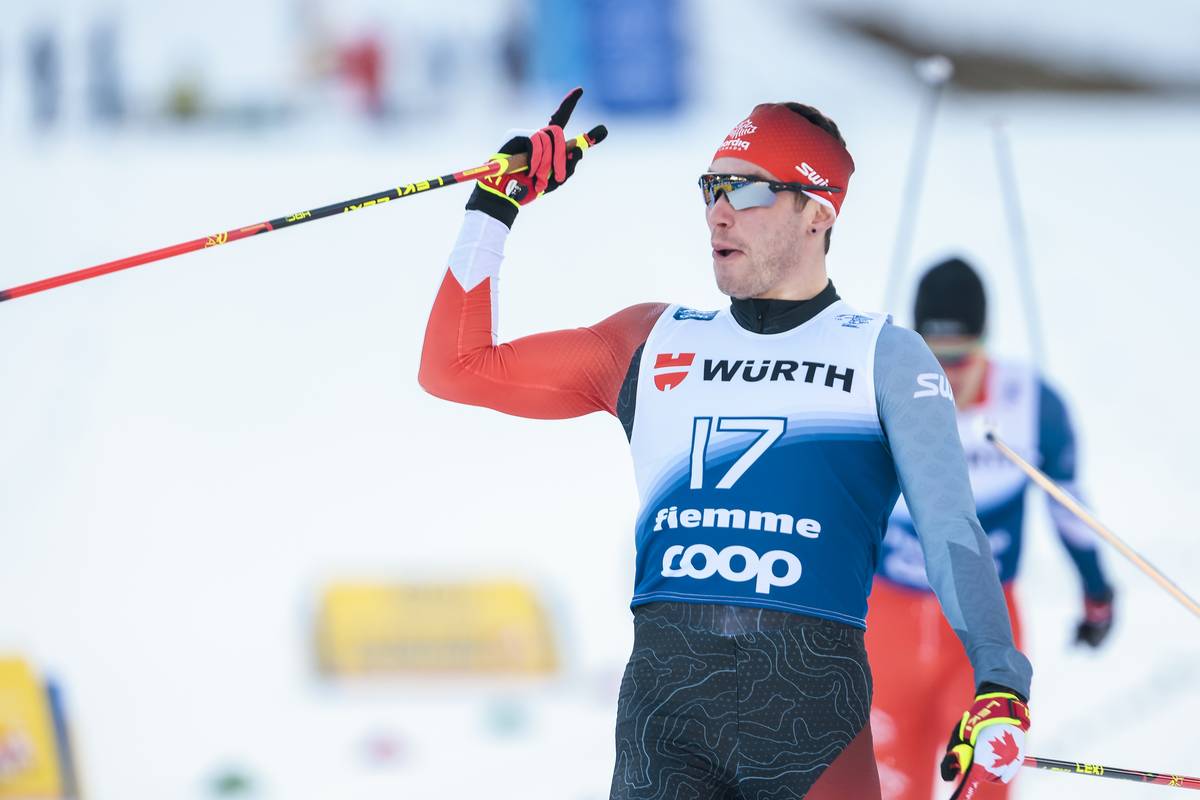
    Antoine Cyr qualified for his first sprint finals during Stage 5 of the 2023 Tour de Ski, and the first for a Canadian since Alex Harvey in 2018. (Photo: Nordic Focus).

    Version française

    Intitulé du poste : Entraîneur de développement, Équipe nationale de ski (ENS), Olympique

    Lieu : Canada

    À propos de Nordiq Canada

    Nordiq Canada est l’organisme national de tutelle du ski de fond et du ski nordique paralympique. Nous encourageons, soutenons et inspirons des performances de classe mondiale ainsi qu’une pratique de ces sports tout au long de la vie à l’échelle nationale.

    L’offre

    Sous la responsabilité du directeur de la haute performance et au sein d’un environnement collaboratif axé sur la haute performance, la principale responsabilité de l’entraîneur de développement sera de diriger et de superviser le programme NexGen et l’équipe de développement junior.

    En tant que membre à part entière du personnel d’entraînement de Nordiq Canada, ce poste impliquera d’organiser et de diriger des stages d’entraînement et des compétitions, de fournir des services et un soutien améliorés, et de veiller au fonctionnement optimal des athlètes de l’équipe de développement dans le cadre de leurs programmes de développement (DTE), y compris l’alignement avec leurs plans de développement individuels (IAPP).

    Il s’agit d’une opportunité passionnante de contribuer à l’une des principales organisations de sports d’hiver du Canada et de travailler aux côtés d’athlètes, d’entraîneurs et de personnel de soutien de classe mondiale dans la poursuite d’une excellence internationale durable.

    Responsabilités clés

    • Fournir un soutien, une supervision et une expertise technique concernant le YTP, la planification quotidienne des programmes, leur mise en œuvre et l’atténuation des lacunes des athlètes identifiés et de leurs entraîneurs.
    • Effectuer des bilans réguliers avec les athlètes et les entraîneurs pour s’assurer que l’entraînement progresse et que les mesures de responsabilisation des athlètes sont respectées.
    • Créer et soutenir une culture d’excellence, d’ouverture et de croissance.
    • Travailler en collaboration avec des experts dans leurs domaines respectifs.
    • Maintenir un haut niveau de rigueur scientifique dans tous les processus, en garantissant une prise de décision fondée sur la performance et en optimisant la santé et le bien-être des athlètes (toutes disciplines confondues).
    • Diriger des projets et des plans de travail concernant l’analyse des lacunes, le parcours vers le podium et le profil de la médaille d’or.
    • Assister le HPD dans la rédaction du rapport annuel et les présentations.
    • Diriger et superviser les opportunités de compétition telles que les Championnats du monde juniors, les camps internationaux juniors et les camps de Nordiq Canada.
    • Assister à toutes les réunions requises ou demandées par le HPD et le PDG.
    • Assister le HPD dans l’orientation et la philosophie du programme.

    Compétences et exigences

    • Expérience en tant qu’entraîneur auprès de jeunes athlètes et d’athlètes en développement.
    • Expérience en tant qu’entraîneur au niveau provincial et national.
    • Compétences en matière d’évaluation et d’interprétation des tests et des données issus des sciences du sport.
    • Doit être en bonne condition physique et capable de tester des skis ainsi que de s’entraîner avec les athlètes lors de certaines de leurs séances faciles.
    • Capacité à contribuer à un environnement d’équipe positif et professionnel, tant dans le cadre de la compétition qu’en dehors.
    • Excellentes compétences interpersonnelles, en gestion du temps et en communication.
    • Souci du détail et de l’exécution des tâches, orienté vers les objectifs, esprit stratégique et tactique, et sens de l’organisation.
    • Le bilinguisme (anglais/français) est considéré comme un atout majeur.
    • Permis de conduire valide.

    Conditions de travail

    Ce poste nécessite environ huit (8) semaines de déplacements nationaux et internationaux par an pour des stages d’entraînement, des visites d’athlètes et des compétitions.

    Comment postuler

    Les candidats intéressés sont invités à envoyer leur CV et leur lettre de motivation à : bscott@nordiqcanada.ca

    Date limite de candidature : 22 juin 2026, ou jusqu’à ce que le poste soit pourvu.

    Veuillez indiquer votre nom et « Entraîneur de développement NST » dans l’objet de votre message. Seuls les candidats retenus pour un entretien seront contactés.

    Nordiq Canada s’engage en faveur de l’équité en matière d’emploi et encourage toutes les candidatures de personnes qualifiées. La préférence sera donnée aux citoyens canadiens et aux résidents permanents.
  • Nordiq Canada Seeks Assistant Coach for National Ski Team Olympic Program

    Nordiq Canada Seeks Assistant Coach for National Ski Team Olympic Program


    Nordiq Canada is hiring an Assistant Coach for its National Ski Team (NST) Olympic program, with the successful candidate stepping into a high-performance role supporting Canada’s top cross-country skiers on the World Cup, at World Championships, and at the Olympic Games.

    Reporting to the Head Coach, the Assistant Coach will help plan, coordinate, and deliver coaching support for NST A and B athletes, with occasional responsibility for leading training camps and managing competitive periods on the World Cup circuit. The position is based in Canada and requires extensive domestic and international travel.

    Key Responsibilities

    • Assist with the planning, coordination, and execution of training camps, competitions, and international tours for NST A and B athletes.
    • Provide technical, tactical, and race-day coaching support.
    • Contribute to athlete monitoring, performance analysis, and training feedback.
    • Support ski preparation, waxing operations, and equipment management as required, including serving as a technician for athletes when needed.
    • Collaborate with Integrated Support Team (IST) providers including physiologists, strength and conditioning coaches, sport science, medical, and mental performance staff.
    • Assist with logistics, travel coordination, and operational planning.
    • Uphold a culture of excellence, professionalism, accountability, respect, and athlete wellness.
    • Comply with Nordiq Canada’s Safe Sport policies and commitments.

    Skills & Requirements

    • Experience coaching World Cup athletes, either individually or on the World Cup circuit.
    • Experience on the World Cup circuit as a coach or athlete.
    • Competency in assessing and interpreting sport science testing and data.
    • Must be physically fit and capable of testing skis as well as training with athletes on some of their easy sessions.
    • Excellent interpersonal, time management, and communication skills.
    • Detail- and task-oriented; a strategic and tactical thinker and planner.
    • Ability to coach Sprint format technical and tactical capacities considered an asset.
    • Bilingualism (English/French) considered a strong asset.
    • Valid driver’s license.

    How to Apply

    Interested candidates should submit a resume and cover letter to bscott@nordiqcanada.ca, with their name and “Assistant Coach NST” in the subject line.

    Application deadline: June 12, 2026, or until the position is filled.

    Nordiq Canada is committed to employment equity and encourages applications from all qualified candidates. Preference will be given to Canadian citizens and permanent residents.

  • ‘You Can Just Feel the Energy,’ Wadsworth Says of CCC’s Renewed Coaching Emphasis

    ‘You Can Just Feel the Energy,’ Wadsworth Says of CCC’s Renewed Coaching Emphasis

    Cross Country Canada coaches Justin Wadsworth (l) and Louis Bouchard will continue to lead the Canadian cross-country ski team at the national and World Cup levels. (Photo: Cross Country Canada/Twitter)
    Cross Country Canada’s Justin Wadsworth (l) and Louis Bouchard will share coaching duties on the World Cup Team while mentoring less-experienced Canadian coaches on the World Cup circuit for the 2015/2016 season. (Photo: Cross Country Canada/Twitter)

    Canada is getting back to its roots. A year after Cross Country Canada (CCC) hired Norwegian Olympic gold medalist Tor-Arne Hetland to co-coach its World Cup Team, the national governing body is once again emphasizing homegrown coaches at the highest level of skiing.

    And although national-team head coach Justin Wadsworth is technically American, he might as well be considered Canada’s own after leading its team and living in Canmore, Alberta, since 2010.

    “Besides me, I think we’ll just try to work with Canadians,” Wadsworth said with a laugh on the phone on Thursday.

    This season, the 46-year-old California native is at the helm again and is prepared to share World Cup coaching duties with Louis Bouchard, Alex Harvey’s personal coach and head coach of the Pierre-Harvey Training Centre in Quebec. Wadsworth and Bouchard have worked together on the Canadian World Cup Team for the last five years.

    In addition to the duo, a select crew of training centre and potentially club coaches will be called upon in 2015/2016 to assist on the World Cup circuit as well, Wadsworth explained. The idea is to give them elite-level experience and form a pool of strong coaches to draw from nationwide.

    “We really feel like one coach, like myself or Louis, with the addition of a younger coach [at each World Cup] will fill in nicely and really promote the coaching system that we talked about a lot,” Wadsworth said.

    Tor-Arne Hetland, Swiss sprint coach from 2010-2014, at the 2014 Sochi Olympics in Russia. (Photo: FIS) http://www.fis-ski.com/cross-country/news-multimedia/news/article=tor-arne-hetland-nor-become-world-cup-team-coach-for-canada.html
    Tor-Arne Hetland, Swiss sprint coach from 2010-2014, at the 2014 Sochi Olympics in Russia. (Photo: FIS)

    In a press release on Tuesday, CCC announced its “integrated national coaching structure,” with an emphasis on developing coaches within its own borders. The organization did not renew Hetland’s one-year contract.

    “If we truly want to put Canada’s cross-country ski athletes on the Olympic podium in 2018 and 2022, then I believe it is critical at this time to put the Canadian system in the hands of coaches that are living and embedded in our training centres across the country,” CCC High Performance Director Tom Holland said in a press release.

    “Tor-Arne brought many great qualities and technical savvy to our program,” Holland added. “In looking at the long-term goals of Olympic medals in 2018 and beyond, we felt that a Canadian-based program brings greater stability and synergies in coaching philosophy and sport science approaches – and, ultimately, a stronger platform to breed medal-winning performances from our current- and next-generation high-performance athletes.”

    Wadsworth explained that in the aftermath of the 2014 Sochi Olympics, in which the Canadians missed the wax in multiple races and did not reach the podium, the timing wasn’t right to implement this kind of coaching system.

    “I think it’s a lot brighter,” Wadsworth said of the atmosphere within CCC this year compared to last spring. “Not just because we got medals at a major championship, but I think this renewed vision … you can feel the energy there.”

    And it’s not necessarily because of the money, either. Last year, CCC’s budget took about a $300,000-dollar hit in the wake of the Olympics, and Wadsworth estimates they could be down another hundred-thousand dollars or more this season. Next week, CCC will present to Own The Podium — one of its main sources of government funding — and while the outcome of those meetings is to be determined, Wadsworth said CCC is losing one if its major sponsors: Statoil.

    “Definitely the pie has shrunk a little bit and we have to be more cautious with the money we have, which is sometimes a good thing … you have to spend your money more wisely,” he said. “We’re definitely not going to have an increased budget, that’s for sure, it’ll probably be slightly decreased.”

    Regardless, spirits remain significantly higher than the beginning of 2014/2015 from Wadsworth’s standpoint.

    “After the Olympics, I was so beat down by that experience and the fallout of it, I didn’t have the energy to build up the system and I wasn’t sure I was going to continue in April and May last year,” he said.

    In the aftermath of some coaching moves last spring, Wadsworth became the national-team head coach tasked with bridging the gap between the Canada’s development skiers and World Cup athletes. He’ll do more of that this year, with a more explicit goal of better reaching out to smaller hotbeds for skiers, such as Whitehorse, Yukon, and share training or technique knowledge with clubs in those areas.

    “I’m going to try to be a little bit more available for helping any coaches that are interested…” he explained.

    Before last year, Wadsworth had been on the road, away from home, nearly 200 days each winter, and he needed a change — specifically less travel. Last season, Wadsworth estimated he traveled half that amount and anticipates he will only travel two days more in 2015/2016 while trading off on the World Cup with Bouchard.

    “Traveling is part of being a ski coach,” Wadsworth said. “Part of what I gained from last year was gaining a bit of focus and energy back.”

    “Part of what I gained from last year was gaining a bit of focus and energy back.” — Justin Wadsworth, Canadian World Cup and national team head coach

    With a new physiologist and new psychologist on CCC’s Integrated Sports Team, he added that “the energy sharing and idea sharing” is at an all-time high. The addition of less experienced coaches, as well as wax technicians (to work alongside seasoned staff members), on the World Cup will require athletes to adapt, but now is the time to focus on coaching, he said.

    Canadian National Team Head Coach Justin Wadsworth works on offset with development skier Jenn Jackson. (Photo: Pavlina Sudrich)
    Canadian National Team Head Coach Justin Wadsworth (l) works on offset with development skier Jenn Jackson in 2013. (Photo: Pavlina Sudrich)

    “You get so focused on one thing in the program and World Cup success and I think some of [these domestic coaching priorities] in particular fell through to the side,” Wadsworth said. “It’ll be open to more than just training-centre coaches; there are key club coaches that have produced athletes [as well] … In the meetings that we have coming up next week, we really need to start figuring out the balance … and who’s going to be able to travel where and get the experience to right people.”

    For Wadsworth, who was driving back to Canmore on Thursday after a three-day trip in Sweden with head wax tech Yves Bilodeau, he tentatively plans to be in Europe before the first World Cup in Kuusamo, Finland, and for the start of Period I. Bouchard will take over the second part of that period, then Wadsworth will be back with the team at the end of December for the Tour de Ski. He’ll return again for the mid-February World Cups in Falun, Sweden, before an “exploratory trip” to South Korea — the site of the 2018 Olympics — with Bouchard. Both will subsequently return home for the Tour du Canada, the final World Cups, in March.

    “Louis and I [have] a great relationship and great communication,” Wadsworth said. “I think that working relationship now is almost stronger than ever.

    “Tor-Arne’s done a lot of good things for our team and led the team well, but we really needed to get back to a Canadian model,” he added.

    On Wednesday, news of Hetland being hired to coach the Norwegian national team spread to the Scandinavian press. According to Langrenn, he will move from Davos, Switzerland, to Trondheim, Norway, this fall.

    “I think I have gained enough experience internationally to come home to Norway,” Hetland said, according to a translation. “Now I’m ready for my biggest challenge as a coach.”

    Hetland, Wadsworth and Bouchard worked alongside one another throughout last season and at 2015 World Championships, where Harvey earned two individual medals in Falun.

    “I think [Tor-Arne] ended up where he probably would have in a year or so,” Wadsworth said.

  • Cross Country Canada’s President Richard Lemoine Resigns, Elections This Weekend: ‘I Was Asked Not to Run’

    Cross Country Canada’s President Richard Lemoine Resigns, Elections This Weekend: ‘I Was Asked Not to Run’

    Former CCC President Richard Lemoine (Photo: Richard Lemoine/LinkedIn)
    CCC President Richard Lemoine stepped down from his volunteer position on the Board of Directors two weeks ago. (Photo: LinkedIn)

    After this weekend, there’s going to be a new president/chairman of Cross Country Canada’s Board of Directors after Richard Lemoine stepped down from the volunteer position a few weeks ago.

    “I was asked not to run,” Lemoine explained on the phone Tuesday from Mississauga, Ontario, where he works as a partner with the chartered accounting firm, Lemoine Hyland LLP.

    Acting chair Jim McCarthy, Lemoine’s predecessor who served four consecutive years (two terms) as CCC president/chair from 2008 until 2012, said on the phone Tuesday that Lemoine’s resignation was “not really anticipated, but it happened.”

    “There was a difference of opinions as to how CCC should move forward and he felt he didn’t want to continue under those circumstances,” McCarthy added.

    President of the board since 2012, Lemoine said he chose to resign rather than not be reelected for a second term by CCC’s division chairs and board members at their Annual General Meeting (AGM), an open board meeting, this weekend in Canmore, Alberta. He’ll be in attendance, however, but will no longer hold a position on the board.

    “It really came down to where the board should have influence,” Lemoine said. “We’re a policy board and the model … some people think we should be running under is the Carver model, which has been described as nose in, fingers off.”

    He explained that this system, also known as policy governance, as “something that’s loved by executive directors, but I believe at the end of the day the board is going to be held accountable so they should be more knowledgeable and involved in the day-to-day process.”

    Accountability arrived front and center after the Sochi Olympics, a time in which CCC’s decision makers looked at their athletes’ results and lack of medals and decided it was time for change. In April, CCC hired Tor-Arne Hetland, a Norwegian Olympic gold medalist and former Swiss sprint coach, to help head up its World Cup Team.

    Lemoine said he advocated developing a stronger, domestic-coaching model, while acknowledging there were two sides to any decision and adding, “It’s not a decision for the board to take, but from a policy point of view, we need to make sure that we are preparing our domestic coaches for the top coaching positions.”

    But he and CCC’s Executive Director Davin MacIntosh often did not see eye to eye, Lemoine said.

    MacIntosh wrote in an email that he declined to comment.

    “There have been a number of areas of tension between Davin and I,” Lemoine said. “He was not pleased when I was proclaimed president.”

    There was a fundamental disagreement over what constitutes policy decisions — which the board should oversee — and operations decisions— which the executive director is responsible for, he explained.

    “Certainly post-Sochi I didn’t think the hard questions were being asked,” he added. “For example, I look at what the U.S. has been able to do over the last four years, converting athletes to the World Cup… and I look at that and say we could do better.”

    Yes, Canada’s seen unprecedented success in recent years, Lemoine said, but the nation’s athlete-feeder pipeline is dwindling.

    “We came out of our high-performance meeting this April not being able to fill our spots for training centres and having to decide to stop supporting the Callaghan Valley Training Centre as there weren’t enough athletes to go around,” he said. “Certainly the depth of talent is not what we want it to be … We are generally seeing a drop in retention rates of our athletes once they graduate from high school.”

    He pushed for Canada to fill its World Cup quota and bring the next tier of the best domestic racers over to Europe. With that comes costs, and likely struggles, but Lemoine pointed out that’s how Canada’s Olympic gold medalist Beckie Scott got her start — getting crushed by the competition.

    “You send them to Europe, you support them right, give them the best chances you can, and they see what the difference is,” Lemoine said. “We know our skiers are skiing slower than their European counterparts.”

    When it came to hiring coaches or restructuring the staff, Lemoine said, “that’s definitely getting past to where the board should be.” But he did look at the athlete-development system on the whole, and ask what direction it was trending in.

    “In my opinion we had a horrible Olympics; seventeenth was our best finish,” he said. “So you then ask the question, I like to quote Einstein: [insanity is] if you do ‘the same thing over and over again and expect different results’… Don’t come back with the same team because something’s gotta change. That’s where our executive director thought I was crossing the line.”

    Two weeks ago, Lemoine said the provincial and territorial directors met to consider the situation before the AGM on June 14.

    “They sided with Davin and decided it would be best if I stepped down,” Lemoine said.

    While CCC presidents can run for back-to-back two year terms, McCarthy is the only one who has held the position for four years, Lemoine said. At the request of the provincial chairs, Lemoine agreed to step aside rather than stay at the helm until this coming Sunday, when he would have likely been officially voted out.

    “I know all  of these people; I am going to stay involved in the sport,” he said. “I’m going to be the chief of competition at this year’s trials races for World Juniors/U23 Championships. I would have nothing to gain other than saying it’s going to protect my reputation a little bit … the sport is more important. I learned a long time ago that it’s all about the athletes.”

    According to McCarthy, who served as CCC Ontario chair before becoming president in 2008, he’s known Lemoine for “a dozen years” and observed, “he’s a pretty strong-minded character, works hard, has his own vision of things.”

    “I would have nothing to gain other than saying it’s going to protect my reputation a little bit … the sport is more important. I learned a long time ago that it’s all about the athletes.” — Richard Lemoine, President/Chair of Cross Country Canada’s Board of Directors from 2012-2014

    “The two of us worked well together, but occasionally clashed and … that’s what Richard’s about — he’s made a big contribution,” McCarthy said. “Like all volunteer organizations, it depends inordinately on a relatively small number of volunteers that put out.”

    At the end of the day, however, and on what McCarthy called an ongoing basis, “the executive director is more important to the operations of CCC than the board chairman.”

    In the last few weeks since Lemoine resigned, McCarthy has been filling in as chair, but said he would not be up for another term as president. As of June 4, no candidates had been nominated for the position, but McCarthy said they could be chosen and subsequently elected this weekend. Candidates do not have to be current members of the nine-person board.

    Lemoine’s involvement with CCC dates back to more than a decade ago, where he remains treasurer of the CCC Ontario board. From 2003-2004, he served as a director-at-large under CCC’s former structure and chaired the marketing committee from 2003 until 2005. That year, the structure of the board changed, and Lemoine went on to run three times to be a director-at-large from 2006 to 2009. He didn’t win, but was ultimately appointed to the board after his third failure, he said.

    “Oddly after being rejected three times as a director at large, the same people acclaimed me as president,” he said. “Dave Rees who was also acclaimed as president in 2006 also failed to win a position as a director-at-large at a previous AGM.”

    McCarthy explained that the board is made up of nine people: a chairman, six directors-at-large, one director representing the chairs of the provincial and territorial divisions, and an athlete director, “preferably an active athlete who tries to represent that perspective.” The divisions meet once a year, and the board meets three times annually, including at the AGM. They also check in via monthly phone meetings.

    The board hires and oversees an executive director who’s responsible for the day-to-day running of the organization. The executive director reports to the board “usually by monthly meetings, usually by telephone,” McCarthy said. MacIntosh was hired by CCC in 2009 and will retain his position in the immediate future, McCarthy said.

    Asked about the level of stress within the organization the last few months since the start of a new Olympic cycle, McCarthy said, “I’d say it’s pretty close to the same level of stress [as usual]. Everybody in this business is pretty passionate. People develop strong viewpoints of how things should be done.”