From the FasterSkier archive — posts syndicated from athletes’ and coaches’ own blogs between 2004 and 2012, kept online as published. Current coverage is at fasterskier.com.

Tag: Hilde Fenne

  • Bye Bye Biathlon: Many Retirements After 2018 Olympic Season

    Bye Bye Biathlon: Many Retirements After 2018 Olympic Season

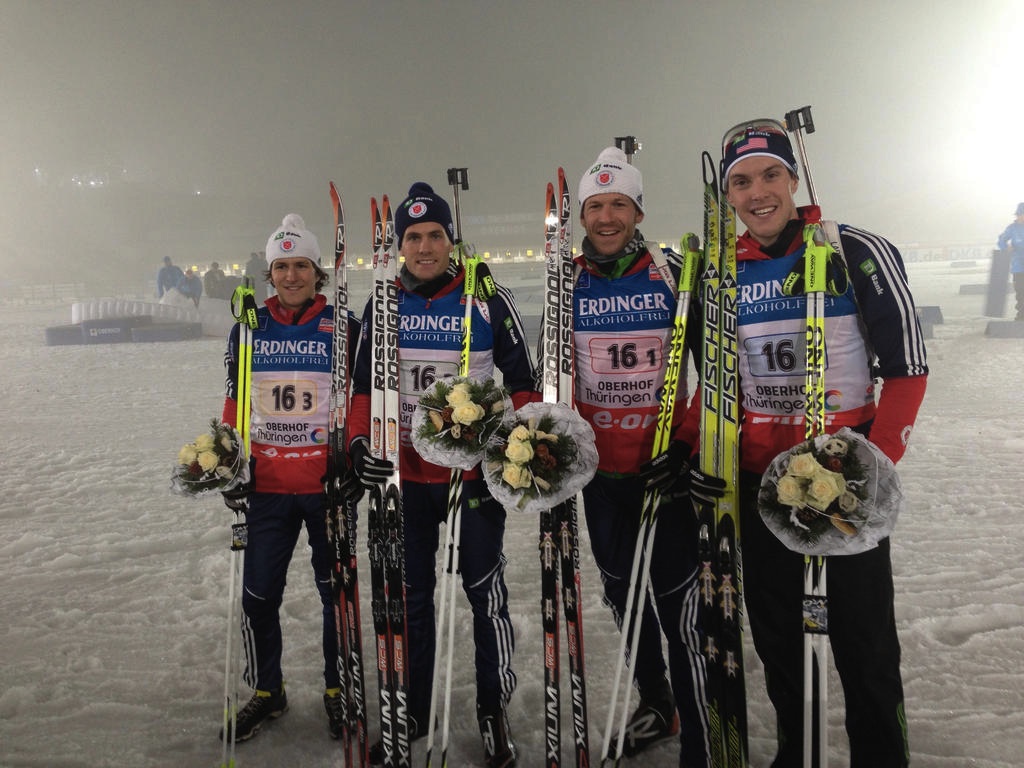
    Russell Currier, Tim Burke, Lowell Bailey, and Leif Nordgren after a fifth-place relay finish in the IBU World Cup relay in Oberhof, Germany, in 2013. Currier, Burke, and Bailey are all retiring. (Photo: USBA.)

    With the 2018 Olympics come and gone, many of biathlon’s athletes are calling it quits. Here’s a roundup of who you won’t see on the World Cup next season – and who’s still on the fence about their future.

    USA

    2017 Word Champion Lowell Bailey has long planned to retire after the 2018 season, and now that time has come. His first World Junior Championships was in 1999 and he got his first World Cup start in 2002. He raced 2003 World Championships before taking a break to go to the University of Vermont, before returning and competing in the 2006, 2010, 2014, and 2018 Olympics. His eighth-place finish in the 20 k individual at the 2014 Games are the best ever by an American biathlete. Bailey is the Executive Director of the Crosscut Mountain Sports Center in Bozeman.
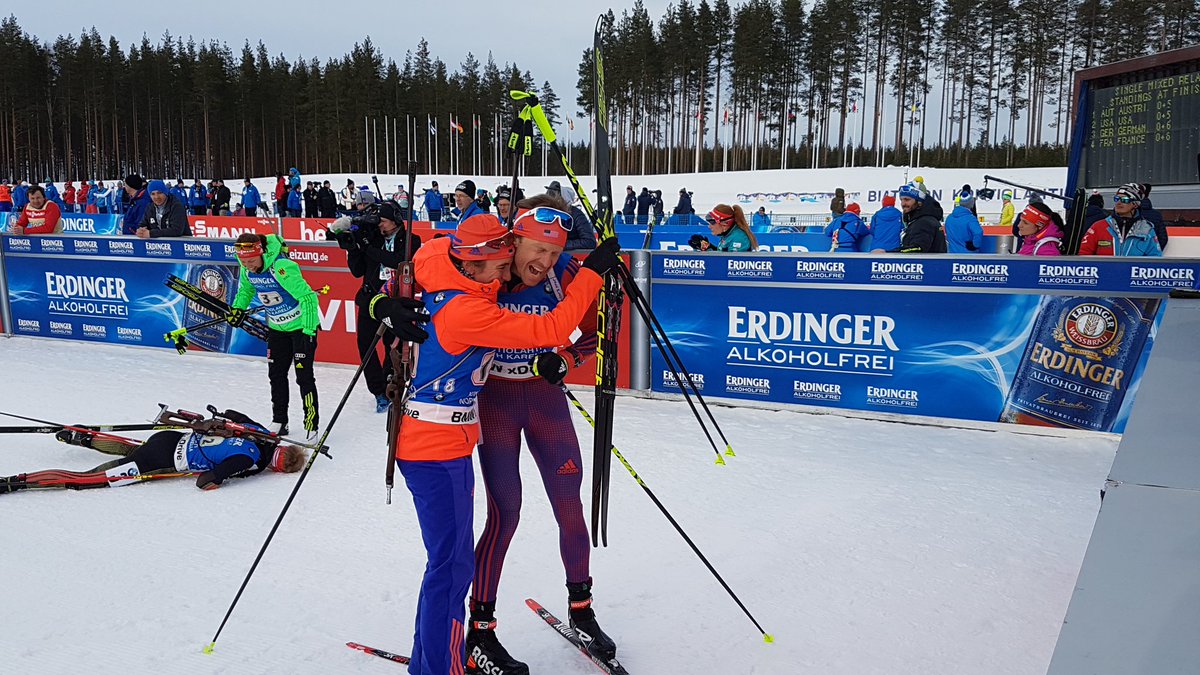
    Susan Dunklee and Lowell Bailey celebrate after finishing second in the World Cup single mixed relay in Kontiolahti, Finland, in 2017. Austria won the competition. Bailey is retiring and Dunklee is undecided as to whether she will continue racing. (Photo: IBU/Twitter)

    “I told myself this morning that I just wanted to go out on a high note,” he told FasterSkier in Oslo after leading off a U.S. relay team that finished seventh, in his last World Cup race. “I wanted to go out with a good result. And, I’m really happy to have shot clean in standing, clean from the clip in my last stage as a World Cup biathlete. That feels good. I’ll always remember that — that I went out with a clean stage.”

    Longtime teammate and 2013 World Championships silver medalist Tim Burke will also retire. Burke has six World Cup podiums to his name including that silver medal, and led the World Cup partway through the 2009-2010 season. Burke started racing internationally at 2000 Junior World Championships, and made his first senior World Championships in 2004. Like Bailey, he is a four-time Olympian.

    “It’s weird, I don’t honestly I don’t know if it’s truly hit me,” he said after the Oslo relay. “It might take weeks… I think it’s going to take a long time for all to settle in and for me to really reflect back on my career. Yeah, it’s a lot of emotion.” Burke says that his post-biathlon plans are not yet certain.
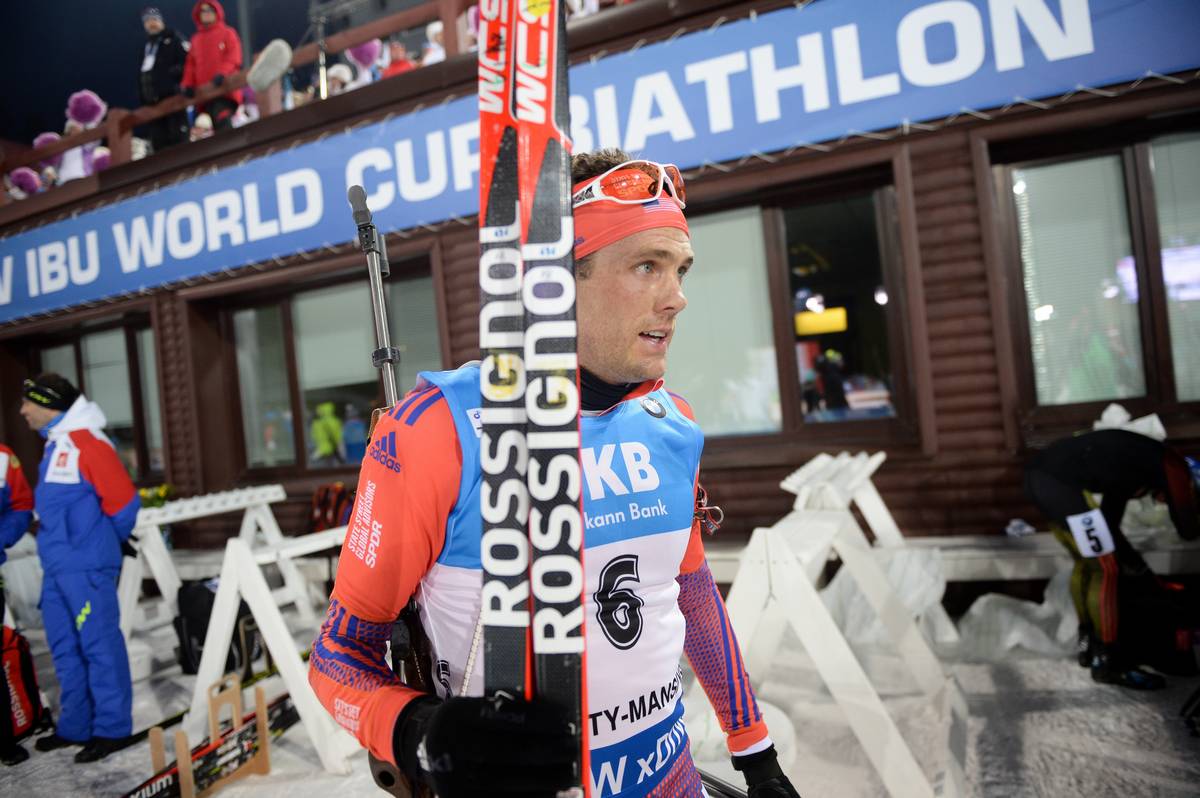
    Tim Burke after placing sixth in a World Cup pursuit in Khanty-Mansiysk, Russia, in 2016. (Photo: USBA/NordicFocus)

    Also retiring is Russell Currier, an off-and-on member of the national team and the Maine Winter Sports Center (now the Outdoor Sports Institute). Currier had two sixth-place World Cup results in 2012, and is a four-time World Championships team member. Since his World Cup debut in 2009, he has contributed to many U.S. relay efforts. He also competed at the 2014 Olympics, with a top finish of 49th, and was a member of the 2018 Olympic team though he did get any starts in PyeongChang.

    “USBA nationals will be officially be the last race of my biathlon career,” Currier wrote in an email to FasterSkier this week.

    The women’s team likely won’t see three retirements, and will thus have some more stability than the men’s crew, but there is more uncertainty regarding the women’s roster. Clare Egan wrote in an email this week that she was “Undecided!” about whether to continue racing. And in Oslo, after finishing third in the pursuit which was her last World Cup of the season, Susan Dunklee said the wasn’t sure if she would keep competing. “Ask me again in a month,” she said.

    Canada

    Julia Ransom retired in Oslo, as the 25-year-old is planning a career in dentistry and has many years of school ahead of her. “It’s just a good time for my partner and I to kind of move on,” she said after crossing the line in her final World Cup, the pursuit, hand in hand with teammate Rosanna Crawford.. “And it does feel right. It feels right.”
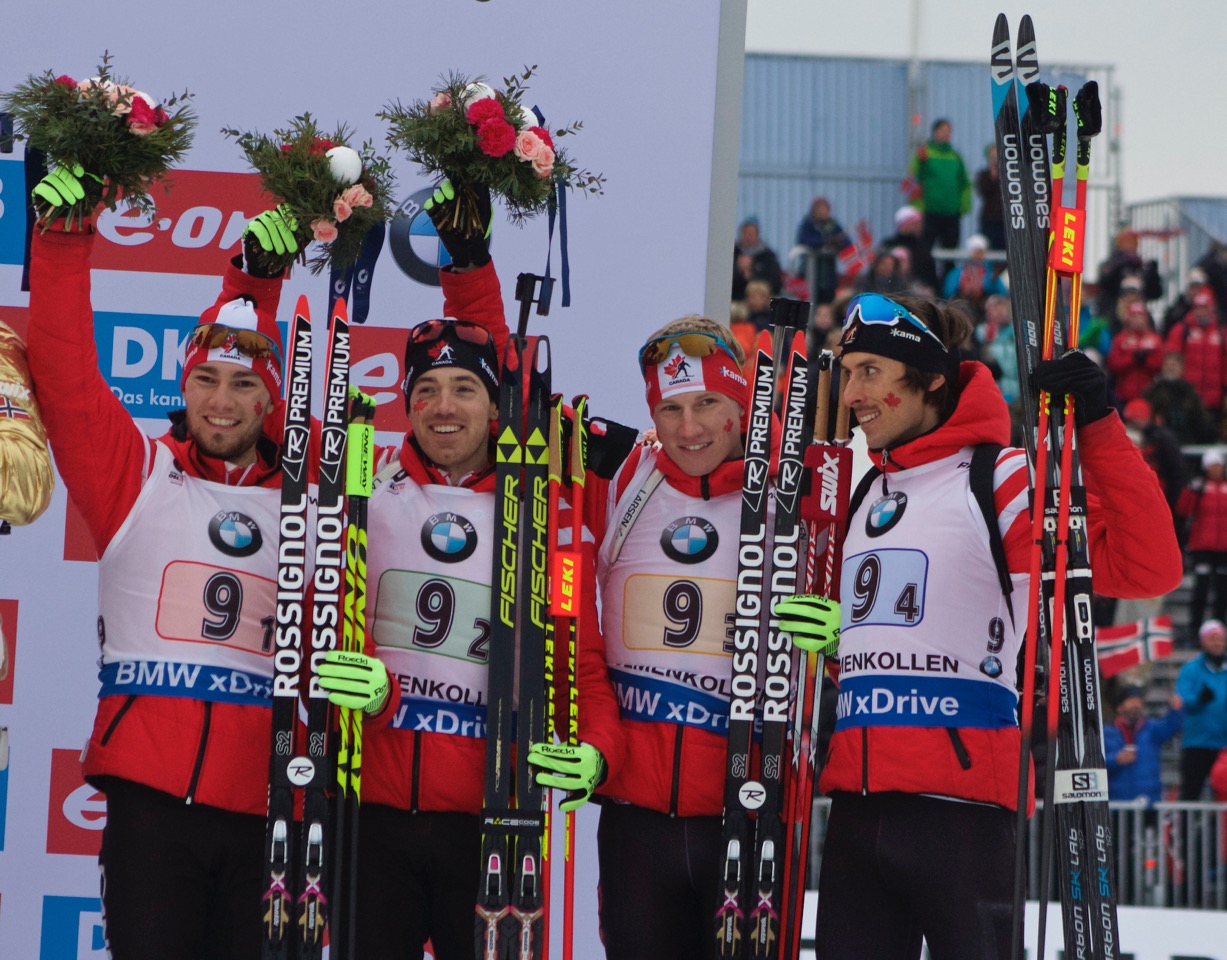
    The Canadian men’s team (l-r) Christian Gow, Nathan Smith, Scott Gow, and Brendan Green celebrate bronze in the men’s 4 x 7.5 k relay at 2016 World Championships in Oslo, Norway. Both Green and Smith are undecided on their future plans. (Photo: JoJo Baldus)

    Ransom scored two top-ten finishes at 2014 World Juniors, and made her first senior World Championships team in 2015. This season she had two top-ten World Cup finishes, and went to the Olympics in PyeongChang, where she finished 28th in the pursuit.

    She is the only one from the Canadian team who is definitely retiring, but quite a few of her teammates are on the fence and there could be huge turnover on the team depending on what they decide. That includes Rosanna Crawford and Brendan Green, even though Crawford finally bagged her first World Cup podium this season.

    “We’re not 100% sure yet,” Green said after the relay in Oslo. “Both Rosanna and I will sit on it a little bit over the spring. We will reevaluate a little bit and see what other opportunities arise. I think we both still love to race and train, and if we continue down that path I know we will still be motivated. But as of right now I’m not sure.”

    2015 World Championships silver medalist Nathan Smith – who was also, along with Green, Christian Gow, and Scott Gow, part of a bronze-medal relay at 2016 World Championships – is also unsure. He missed most of the 2016-2017 season with health issues and though he returned to the World Cup and the Olympics this year, did not perform up to his own expectations. 
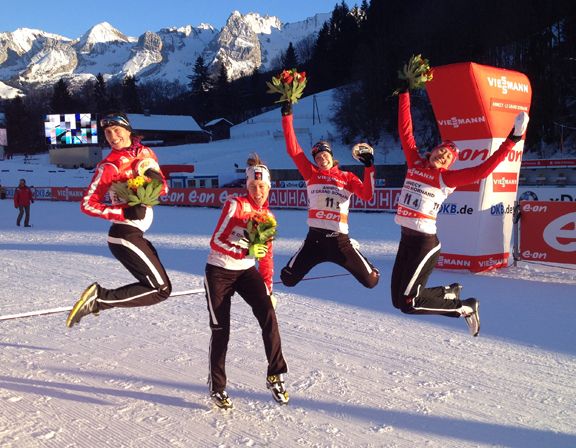
    Rosanna Crawford, Megan Imrie, Megan Tandy, and Zina Kocher celebrate a fourth-place World Cup relay finish in Annecy, France, in 2014. Crawford and Tandy may not keep racing after this season; Imrie retired in 2014 and Kocher in 2016. (Photo: Matthias Ahrens)

    “I’m kind of waiting to see what happens with Biathlon Canada,” Smith wrote in an email this week. “I think some very difficult years are coming for the organization, unfortunately. That will play a big part in my, and I’m sure many other athletes’, decisions. Of course, I’m also not looking to have a continuation of the health problems over the last two seasons, which made competing at the highest level really difficult. So I will be keeping a close eye on how my body is reacting to training. If it’s still not coming around that would certainly not encourage me to continue either.”

    2010, 2014, and 2018 Olympian Megan Tandy also struggled with health issues this winter, and is likewise not sure what her future holds.

    “Originally it was my intention to retire after this season, however it was literally my worst season ever!” she wrote in an email. “I was sick more in the past 6 months than in the past two years. Anyways,  I have taken some time since the Olympics to followup about my health and to consider options for next season. I want to race a final season – one where I feel good and can put up a good fight (not necessarily results dependant, I just want to leave this sector of my life feeling like I gave it all I got), but a lot of things will need to fall into place for that to be realistic: sponsor support, coaching opportunities during the training season, and my health of course.”

    Poland
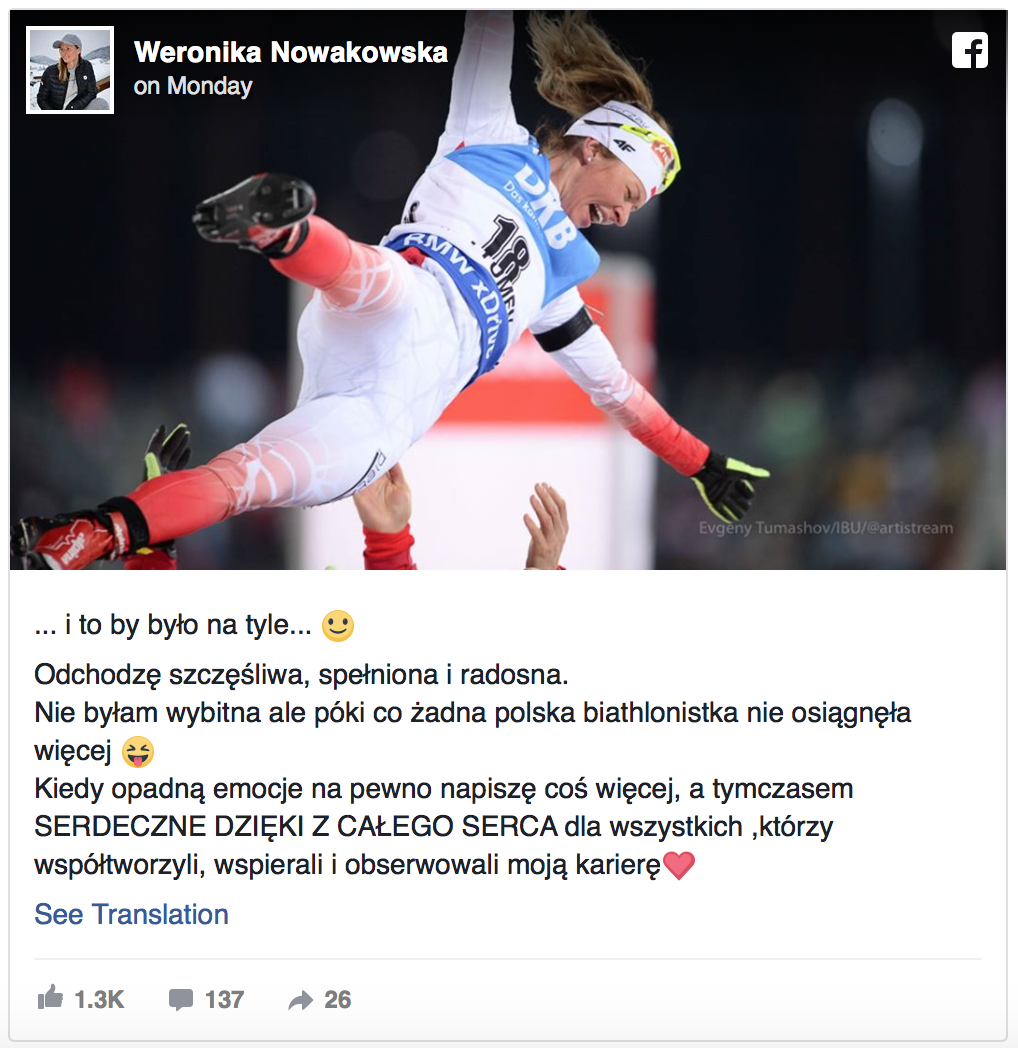
    Weronika Nowakowska is calling it a career. The 31-year-old picked up two World Cup podiums in the 2015 season before taking a break from competition to give birth to twins. She made a successful return this season and represented Poland in PyeongChang, with a top finish of 21st in the individual. She also had sixth- and fourth-place finishes on the World Cup this year and contributed to four different top-eight relay efforts, including one at the Olympics.

    “I leave happy, fulfilled and cheerful,” she wrote on her Facebook page, according to a translation. “I was not outstanding, but so far no Polish biathlete has done better”

    France

    Back in Oslo, French star Marie Dorin Habert ended her career. Dorin Habert – then simply Marie Dorin – competed in her first senior World Championships in PyeongChang in 2009, where she had a top individual finish of 18th and was part of the bronze-medal relay team. Fast forward and she had racked up a sprint bronze at the 2010 Olympics, seven World Cup wins, ten more World Championships relay medals, and four individual gold, one silver, and one bronze medal at World Championships, four of which were from the 2016 edition where she did not finish a single race without a medal.
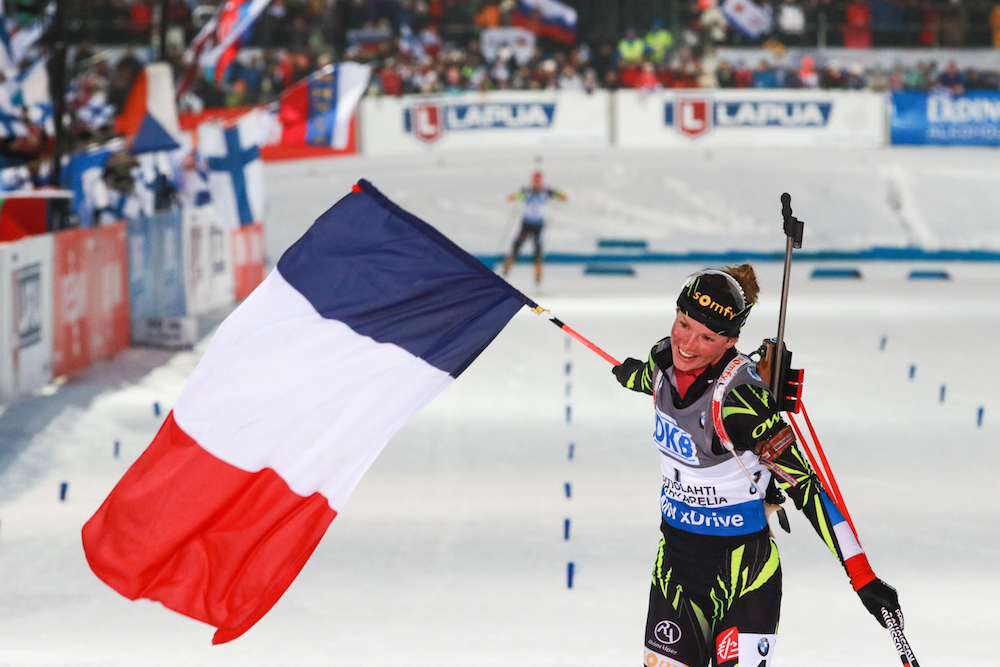
    France’s Marie Dorin Habert celebrates her second win in as many races at 2015 IBU World Championships, after taking gold in the 10 k pursuit in Kontiolahti, Finland. (Photo: Kontiolahden Urheilijat/Jarno Artika)

    She found herself back in PyeongChang for the 2018 Olympics, where, despite a frustrating season until then, she was fourth in the sprint, bronze in the women’s relay, and gold in the mixed relay.

    “It’s so nice to end this way, to share it with all of the team, and the beautiful sun, and all the French people,” Dorin Habert said after winning the women’s relay in Oslo along with her teammates. “It’s a wonderful day for me. I would like to thank a lot, well, everyone, for being there in the biathlon family. I’m really happy to have this career, and I’m really happy for everything.”

    Jean Guillaume Beatrix he told is also retiring. Beatrix was a World Junior Champion in 2009, before going on to be a five-time World Championships team member and a 2014 Olympic bronze medalist in the pursuit. He was part of three silver- and one bronze-medal winning men’s relay teams at World Championships. But this season, he did not perform well enough to make a very competitive French team for the 2018 Olympics. His retirement was “a decision precipitated by my results”, L’Equipe, according to a translation.

    Czech
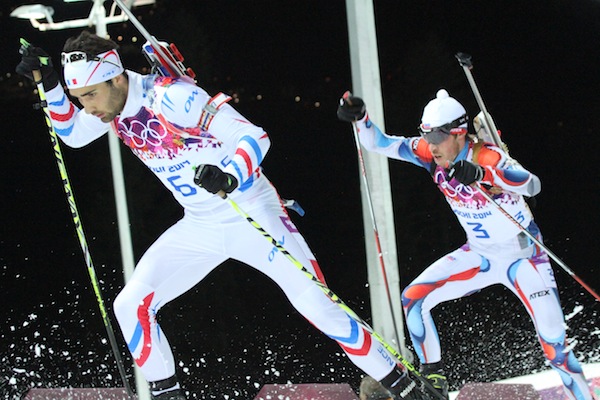
    France’s Martin Fourcade leading Jaroslav Soukup of the Czech Republic during the men’s Olympic 12.5 k pursuit at the 2014 Olympics.

    Jaroslav Soukup, the bronze medalist in the sprint at 2012 World Championships, where he was also part of the silver-medal mixed relay team, is retiring. Later in 2012, he suffered a horrendous accident while biking, including open fractures in his arm and neck and back injuries. By 2014, he made it back and won the same medals at the Olympics that he had at World Championships two years before: bronze in the sprint and silver in the mixed relay. Soukup qualified for the 2018 Olympics but only competed in the relay, which finished seventh. He had one World Cup top-30 this season.

    Norway

    Hilde Fenne, a staple of the Norwegian women’s team, retired after the last race of the season in Tyumen, Russia. Fenne never found breakout success as an individual; she had three top-15 finishes in her career. But she was an integral part of the women’s team and contributed to numerous World Cup relay podiums, as well as the gold-medal winning women’s relay at 2013 World Championships in Nove Mesto, Czech Republic.
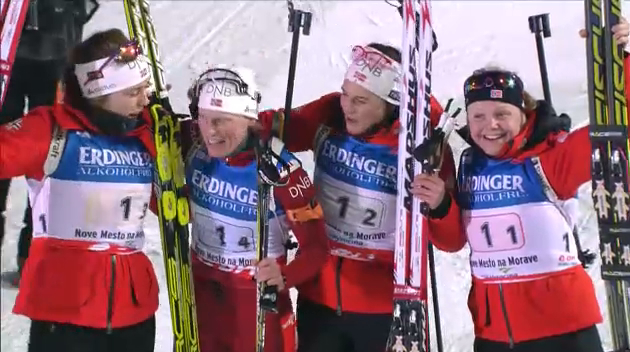
    The Norwegian women’s relay celebrates its second-ever World Championships title after winning the 4 x 6 k event in Nove Mesto, Czech Republic. From left to right: Synnøve Solemdal, Tora Berger, Ann Kristin Flatland and Hilde Fenne.

    In that final race, her teammates wrote her name on their cheeks. “She has been a very important piece for me,” teammate Synnøve Solemdal told NRK, almost in tears. “We have stayed in a lot of hotel rooms together. I’m going to miss her very much.”

    On the men’s side, there is uncertainty as to whether some veterans will stick with racing or not. One is Ole Einar Bjørndalen, who was left off Norway’s Olympic team, who for the first time since 1992 this season. And yet, the 44-year-old has not stated that he will retire, and some who know him are speculating that he may try to stick it out one more year and go out with better results than he saw this season.

    Also with no stated plans is Emil Hegle Svendsen. Bjørndalen is the winningest athlete in World Cup history; Svendsen is number four. He won the World Cup overall title in 2010, and is a four-time Olympian. He won gold in the individual in 2010 and in the mass start in 2014, after which he suffered a total collapse anchoring the Norwegian men’s relay. In the past seasons he has been off and on, and he has only won two races since then. But this season he showed flashes of brilliance, and he was third in the mass start at the 2018 Olympics as well as anchoring the silver medal men’s relay and mixed relays.
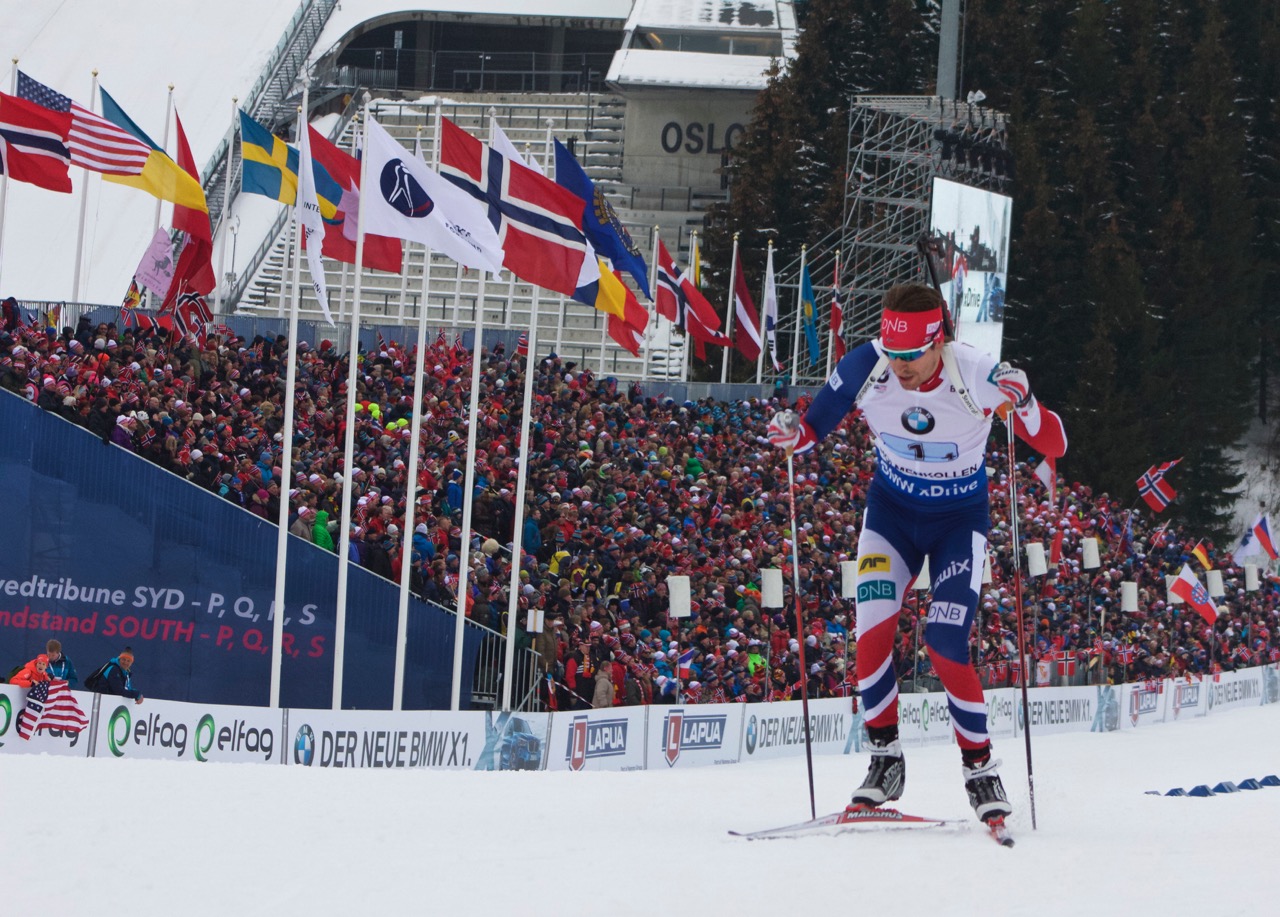
    Emil Hegle Svendsen of Norway leaves the stadium in the 2016 Holmenkollen World Cup as thousands of his countrymen cheer him on. Svendsen has not officially announced his plans for next season. (Photo: JoJo Baldus)

    “What Emil has done is absolutely fantastic,” teammate Tarjei Bø – who won the overall World Cup the year after Svendsen – told NRK two weeks ago. “He has won everything, and in addition done it several times, and he has come back again and again after being down. He has had a fantastic career and I hope he continues.”

    Finland

    She just won the overall World Cup crystal globe, but Kaisa Makarainen is not sure whether she will continue racing. In several previous years she had already discussed potentially retiring, but now she is reportedly waiting to think it over more as well as to discuss with the new team staff. U.S. Biathlon Women’s Coach Jonne Kahkonen, himself a Finn, was just announced as the new Head Coach for Finland.

    Germany

    Florian Graf, an athlete who finished as high as fourth on the World Cup in 2013 but has more recently been racing on the IBU Cup, is calling it quits at age 29.

    Several other top athletes are suspected to be considering retiring, but there hasn’t been much on the record discussion by them. Stay tuned.
  • Sunday Rundown: Harvey Wins World Champs Gold in Lahti; PyeongChang + Vasaloppet (Updated)

    Sunday Rundown: Harvey Wins World Champs Gold in Lahti; PyeongChang + Vasaloppet (Updated)

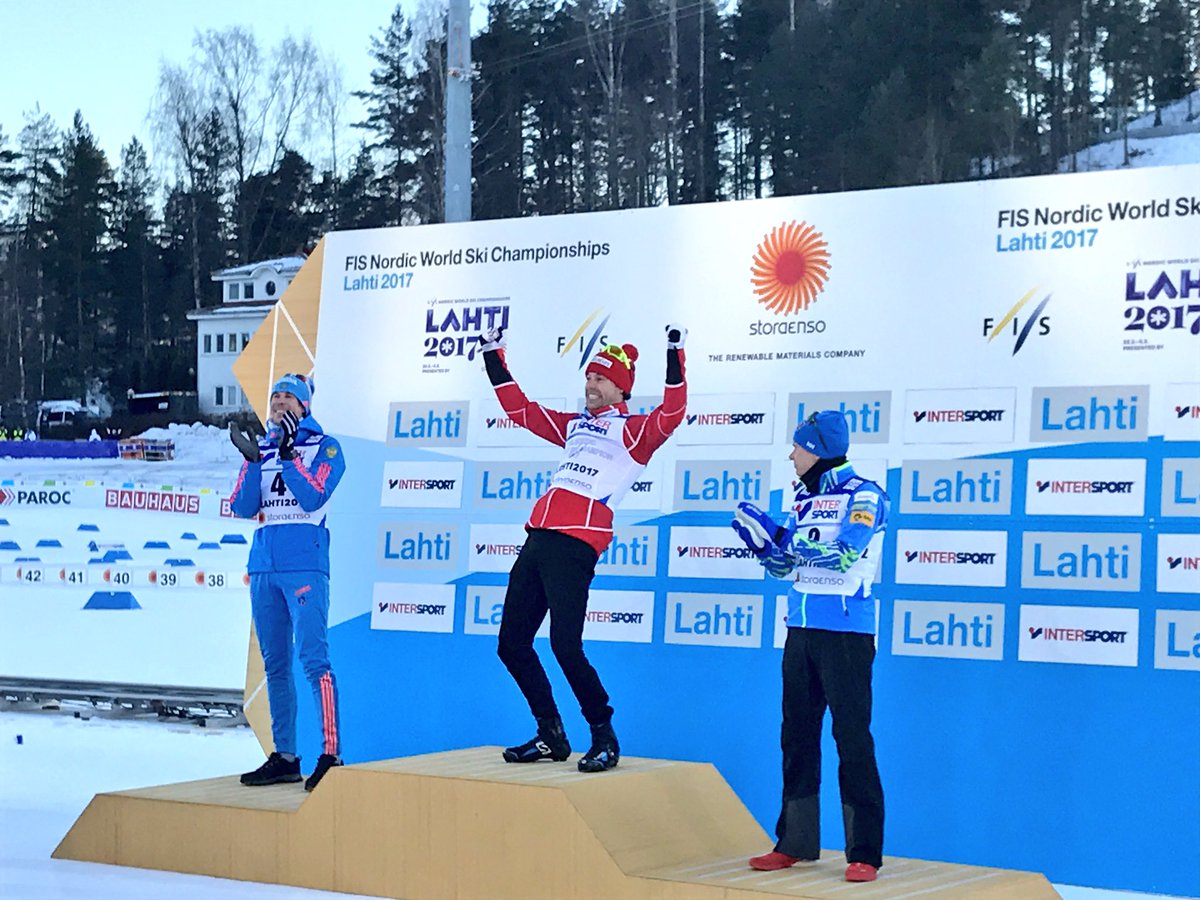
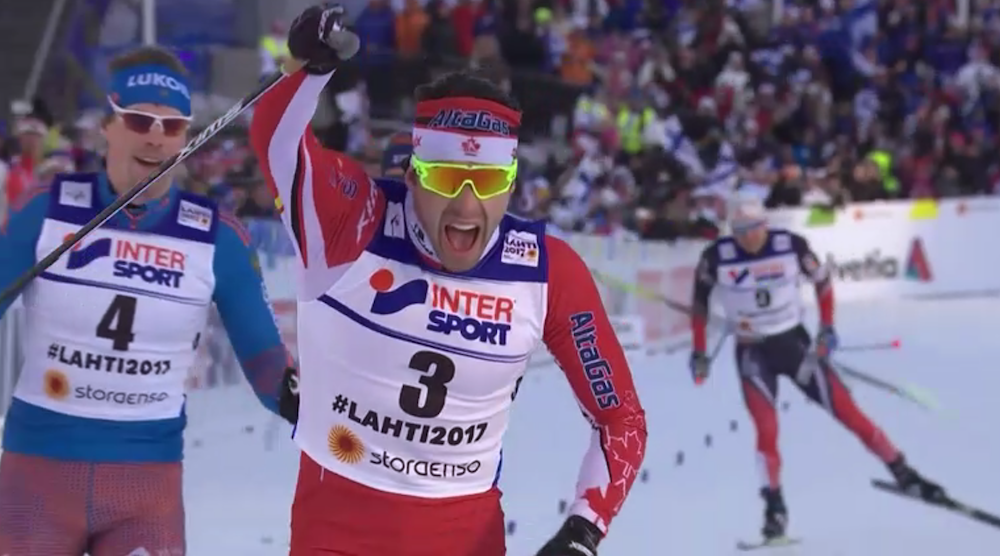
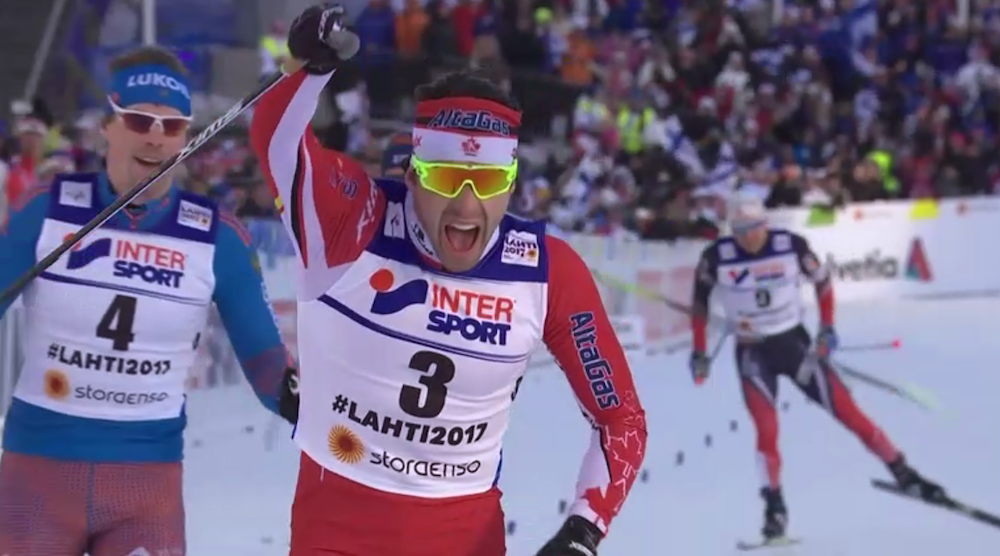
    Canada’s Alex Harvey (3) celebrates his win in the men’s 50 k freestyle mass start, his first individual gold medal at a World Championships, on Sunday at 2017 Nordic World Championships in Lahti, Finland. He beat Russia’s Sergey Ustiugov (l) by 0.6 seconds while Norway’s Sjur Røthe (9) can be seen coming in for sixth place, behind (not pictured) Finland’s Matti Heikkinen, Great Britain’s Andrew Musgrave and Norway’s Martin Johnsurd Sundby, respectively. (Photo: NBC Sports screenshot)

    FIS Nordic World Championships (Lahti, Finland): Men’s 50 k freestyle mass start

    After a week of missing out on the medals at 2017 Nordic World Championships, Canada’s Alex Harvey, a four-time World Championships medalist from 2011, 2013 and 2015, achieved his first individual gold medal in the final race of this year’s World Championships in Lahti, Finland.

    Harvey, 28, won the men’s 50-kilometer freestyle mass start in a drag race to the finish. Entering the final descent into the stadium with Norway’s Martin Johnsrud Sundby and Russia’s Sergey Ustiugov, Harvey rode his fast skis past both of them then had the most finishing kick in the final straightaway for a 0.6-second victory. He finished in 1:46.28.9 hours, while Ustiugov followed him across the line in second and Finland’s Matti Heikkinen from behind for third (+1.4), after passing Sundby around the outside of the last corner.

    Canada’s Alex Harvey (c) celebrates gold in the men’s 50 k freestyle mass start on Sunday at 2017 Nordic World Championships in Lahti, Finland, with Russia’s Sergey Ustiugov (l) and Finland’ Matti Heikkinen (r) joining him on the podium in second and third, respectively. (Photo: Cross Country Canada/Twitter)

    Sundby appeared to miss a pole plant soon after Heikkinen passed him and let off the pace a few meters before the finish. That’s where Great Britain’s Andrew Musgrave continued to accelerate and took fourth place, 2.9 seconds behind Harvey and 0.1 seconds ahead of Sundby in fifth. Norway’s Sjur Røthe followed another 0.4 seconds back in sixth, Switzerland’s Dario Cologna was seventh (+8.9), Norway’s Petter Northug eighth (+12.3), France’s Maurice Manificat ninth (+13.4), and Norway’s Hans Christer Holund 10th (+14.3).

    “I had really good skis,” Harvey said in a post-race interview with FIS. “I knew if I came into the corner in second place, that was the optimal position. So I was able to fight hard and hit that last corner in second and slingshot by Martin along the flat and then that was good after that.”

    “This is the best race of my life, for sure,” he added. “So I’m really happy.”

    Tad Elliott (Ski Club Vail) led the Americans in 27th (+3:16.8). Noah Hoffman (U.S. Ski Team) finished 50th (+8:53.1) and Kyle Bratrud (CXC Team) did not finish.

    Canada started four men, with Devon Kershaw finishing 38th (+5:45.5), Graeme Killick 43rd (+7:04), and Knute Johnsgaard in 55th (+12:03.3).

    For Harvey, the medal is his fifth at three World Championships and his first individual gold after winning the classic team sprint with Kershaw in 2011.

    Results

    ***

    IBU World Cup (PyeongChang, South Korea): Men’s and women’s relays

    Between the men’s and women’s relays on Sunday at the International Biathlon Union (IBU) World Cup in PyeongChang, South Korea, Canada had two teams in the top eighth, with its men’s team finishing seventh in the 4 x 7.5 k and women’s team eighth in the 4 x 6 k. Behind them, the U.S. men finished 10th and U.S. women 14th.

    France won the men’s relay by 33.8 seconds over Austria, using a total of 10 spare rounds but avoiding the penalty lap. Martin Fourcade anchored France to the win in 1:12:09.5 hours, after Jean-Guillaume Béatrix initially tagged them in first, his older brother Simon Fourcade raced them into second with near-perfect shooting (using just one spare to clean), and Simon Desthieux picked off one more place to give Fourcade a 16-second lead for the final leg.

    Austria achieved second place with Lorenz Wäger, Simon Eder, Julian Eberhard, and Dominik Landertinger combining for zero penalties and nine spares.

    Norway finished third (+45.4) with Vetle Sjåstad Christiansen, Ole Einar Bjørndalen, Vegard Gjermundshaug, and Henrik L’Abée-Lund. They had one penalty on Gjermundshaug’s third leg, and used a total of eight spares.

    Canada’s Christian Gow, Scott Gow, Nathan Smith, and Brendan Green finished seventh (+3:03.1) with zero penalties and nine spares. After Christian tagged his older brother Scott in ninth, Scott raced them into sixth place before Smith slipped four places to 10th at the final exchange. On the final leg, Green raced them into seventh, requiring two spares to clean.

    The Americans finished about nine seconds later in 10th (+3:12.8) with Lowell Bailey, Leif Nordgren, Paul Schommer, and Sean Doherty combining for zero penalties and nine spares, just like Canada. Bailey had originally put them in second at the first exchange, Nordgren dropped to seventh, then Schommer to 13th, before Doherty finally brought them back to 10th out of 24 teams.

    In the women’s relay, Germany pulled off a 22.8-second win over Norway, with one penalty and eight spares. Nadine Horchler put Germany in third at the first exchange, then Maren Hammerschmidt raced them into first by the race’s halfway point. From there, Denise Herrmann, a former cross-country World Cup regular, had to ski a penalty lap and tagged off in second, 13.5 seconds out of first. With teammate Laura Dahlmeier sitting out the relay, Franziska Hildebrand anchored Germany to the win in 1:07:35.6 after she used just one spare to clean.

    Norway placed second with Kaia Wøien Nicolaisen, Hilde Fenne, Tiril Eckhoff, and Marte Olsbu accumulating one penalty and 11 spares. Olsbu beat out the Czech Republic’s Gabriela Koukalová by one-tenth of a second at the finish, as the Czechs placed for third (+22.9), with Jessica Jislová, Eva Puskarčíková, Lucie Charvátová, and Koukalová (with a total of one penalty and nine spares).

    Canada took eighth (+1:34) with Rosanna Crawford, Julia Ransom, Megan Tandy, and Emma Lunder. Crawford tagged in second at the first exchange, Ransom slipped one place to third, Tandy lost another place to tag in fourth, and Lunder ultimately anchored them to eighth.

    The U.S., with Clare Egan, Susan Dunklee, Joanne Reid, and Maddie Phaneuf, finished 14th (+3:08.3) with one penalty and 10 spares. After Egan had a penalty on the first leg, Dunklee skied the fastest second leg to move the team from 19th to 14th, then Reid put them in 11th by the final exchange. Twenty-one teams competed in the women’s race.

    Results: Men | Women

    ***

    Ski Classics 90 k Vasaloppet (Sälen to Mora, Sweden)

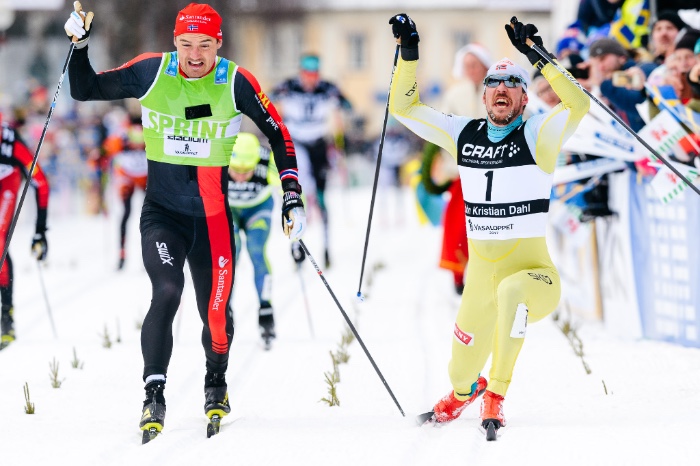
    John Kristian Dahl (r) of Team United Bakeries outlunges Ski Classics sprint leader Andreas Nygaard (r) of Team Santander for the win in Sunday’s 90 k Vasaloppet in Mora, Sweden. (Photo: Visma Ski Classics)

    [UPDATED] In Sunday’s 93rd annual 90-kilometer Vasaloppet from Sälen to Mora, Sweden, the ninth event of the Ski Classics series, John Kristian Dahl (Team United Bakeries) outlasted Andreas Nygaard (Team Santander) by one-tenth of a second for the win in 3:57:18.1 hours. The race came down to a five-way fight for first, with Stian Hoelgaard (Team Leaseplan) finishing 0.6 seconds back in third. The top 15 men were all within 21.7 seconds of the podium, and Brian McKeever, a member of Canada’s Para Nordic Ski Team, placed 20th (+2:31.1).

    “It has been a fight all day,” Dahl said, according to a Ski Classics press release. Three days ago, he had been unsure about starting the Vasaloppet following a back injury. “I was tired already after 30 k and had to let go of the lead group, but I fought my way back taking it step by step and hill by hill.”

    In the women’s race, Britta Johansson Norgren (Lager 157 Ski Team) broke away from the field to win by 1:37.9 minutes in 4:19.43.4.

    Astrid Øyre Slind (Team United Bakeries) finished second, and Sara Lindborg (Team Serneke) placed third, 9 minutes and 4.2 seconds behind Norgren. Kateřina Smutná (Team Santander) dropped out of the race about halfway through.

    “I am very tired but also so happy to win today,” Norgren said, according to the press release. “It felt pretty easy until Oxberg [Sweden] with 30 k to go, but then it got really tough and I had to fight all the way to the finish.”

    It was Norgren’s first Vasaloppet win after placing second the last three years. She increased her lead in the overall Ski Classics to 215 points over Smutná, while Tord Asle Gjerdalen continues to lead the men’s overall standings ahead of his Santander teammate Nygaard, who is 349 points behind in second place. Gjerdalen did not race Sunday’s Vasaloppet.

    Results

  • Thursday Rundown: Ruhpolding and Soldier Hollow (Updated)

    Thursday Rundown: Ruhpolding and Soldier Hollow (Updated)

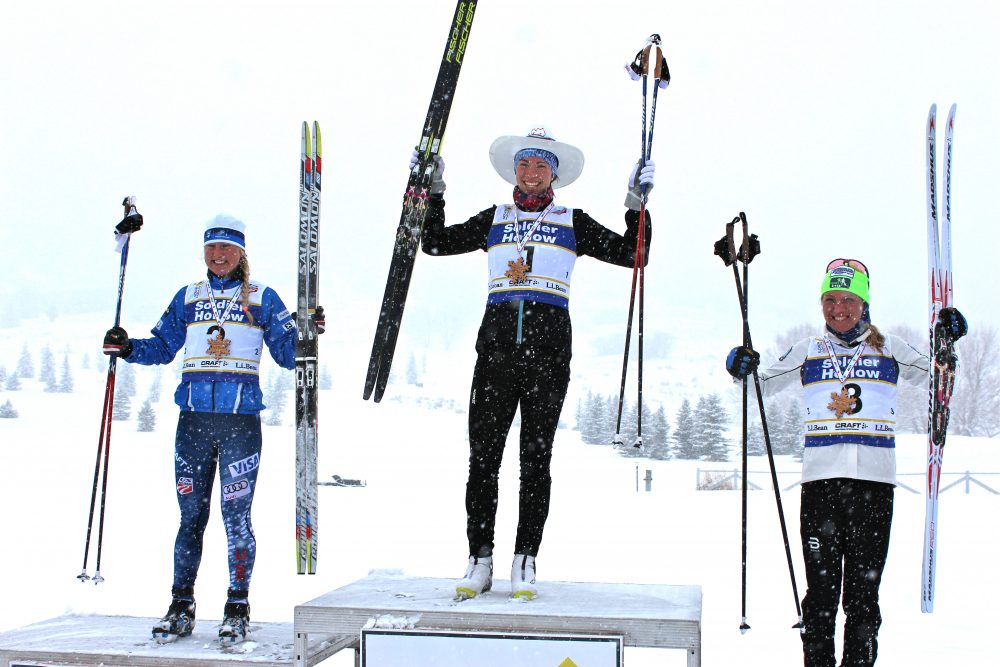
    The women's freestyle-sprint prologue podium on Thursday, the final day of 2017 U.S. Cross Country Championships at Soldier Hollow in Midway, Utah. Canada's Dahria Beatty (AWCA/NST U25 Team) took first, Hannah Halvorsen (Sugar Bowl Academy/USST) second, and Caitlin Gregg (Team Gregg) third.
    The women’s freestyle-sprint prologue podium on Thursday, the final day of 2017 U.S. Cross Country Championships at Soldier Hollow in Midway, Utah. Canada’s Dahria Beatty (AWCA/NST U25 Team) took first, Hannah Halvorsen (Sugar Bowl Academy/USST) second, and Caitlin Gregg (Team Gregg) third.

    U.S. Cross Country Championships (Soldier Hollow): Freestyle-sprint prologue

    [UPDATED] One and done. That was the case Thursday for the U.S. Cross Country Championship’s freestyle sprint at Soldier Hollow (SoHo) where only a qualifier was held to determine the final standings — no heats were contested. With just-under-freezing temps and a light snow falling, the men set off at 15-second intervals.

    The men’s podium was an all-Canadian affair as they swept the top-three positions. Jess Cockney of the Canadian World Cup B-team placed first in 3:15.20. Julien Locke of the Alberta World Cup Academy (AWCA) and Canadian National U25 Team skied to second (+2.69), his AWCA/U25 Team teammate Knute Johnsgaard was third (+2.72).

    The top American skier was Alaska Pacific University’s Logan Hanneman in fourth (+3.37). The second-fastest U.S. skier was Sun Valley Ski Education Education Foundation (SVSEF) Gold Team skier Cole Morgan (+5.03). Morgan was the sixth-fastest athlete overall. The third American and seventh overall was John Hegman (+5.71) also of the SVSEF Gold Team.

    The women’s skate sprint also featured a preliminary with no heats. Canada’s Dahria Beatty (AWCA/NST U25 Team) placed first in 3:13.60. Sugar Bowl Academy and U.S. Ski Team Development Team member Hannah Halvorsen was second (+3.15), and Team Gregg’s Caitlin Gregg third (+4.80). The third-fastest American was APU’s Chelsea Holmes (+7.24) who finished sixth overall.

    The national championship week at Soldier Hollow has concluded.

    Men’s Results | Women’s Results

    ***

    IBU World Cup (Ruhpolding, Germany): 4 x 6 k women’s relay

    [UPDATED: includes quotes from Canada’s Rosanna Crawford and Americans Susan Dunklee and Maddie Phaneuf]

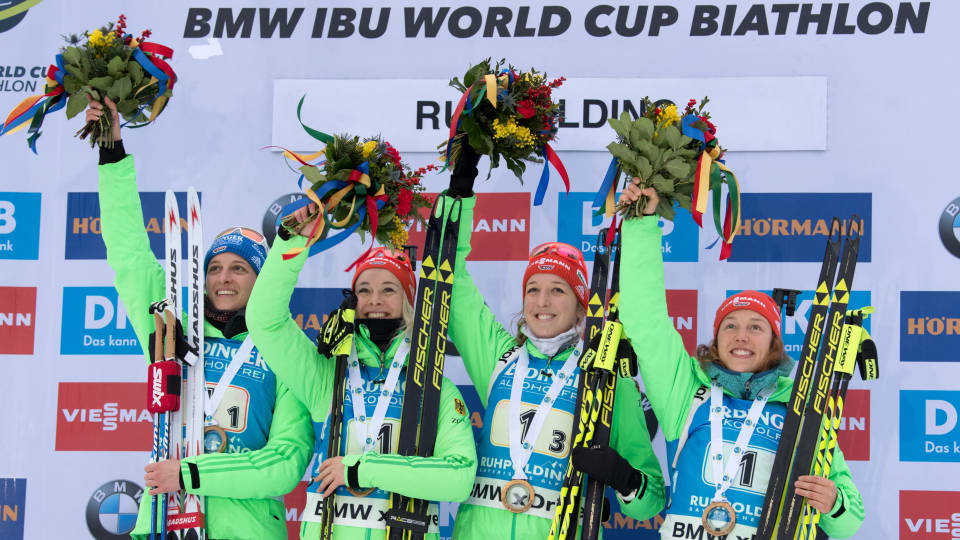
    The women’s 4 x 6-kilometer relay in Ruhpolding, Germany, came down to the very end, with Germany’s Laura Dahlmeier holding off France’s Celia Aymonier and Norway’s Marte Olsbu to the finish. Dahlmeier secured the win in the first women’s relay of 2017, crossing the line in 1:09:53, just 3.5 seconds ahead of Aymonier and 4.5 ahead of Olsbu.

    The Germans used six spare rounds and avoided the penalty lap for the victory, with Dahlmeier lifting them from fifth at the final exchange to first at the finish.

    While both Aymonier and Olsbu cleaned both shooting stages without any spares, Dahlmeier had to use one on the final standing stage. She had to pass Olsbu twice to secure the victory.

    “I wanted to slowly pull myself up to her, not over-pace, and have enough energy left for the next climb,” Dahlmeier recalled in a post-race interview with Germany’s ARD. “At some point I knew we had the top equipment today. If I’m ahead for the last downhill then I will bring the win home.”

    The German women's 4 x 6 k relay team, with (from left to right) Vanessa Hinz, Maren Hammerschmidt, Franziska Preuss, and Laura Dahlmeier after winning Thursday's IBU World Cup at home in Ruhpolding, Germany. (Photo: IBU)
    The German women’s 4 x 6 k relay team, with (from left to right) Vanessa Hinz, Maren Hammerschmidt, Franziska Preuss, and Laura Dahlmeier after winning Thursday’s IBU World Cup at home in Ruhpolding, Germany. (Photo: IBU)

    She teamed up with Vanessa Hinz, Maren Hammerschmidt and Franziska Preuss for the win. It was Preuss’s first race back after a long break due to illness. While she said she was “very nervous”, Preuss cleaned her prone stage and used two spares to clean standing.

    On the second leg, Hammerschmidt and Fenne tangled on a downhill turn. The came through the exchange in second and fourth, respectively, behind Ukraine’s Anastasiya Merkushyna (who brought her team from 10th to first by the race’s halfway point).

    “Thankfully, it still worked out fine in the end,” Hammerschmidt told ARD.

    France took second, using a total of seven spares and no penalties, with Anais Chevalier, Justine Braisaz, Anais Bescond, and Aymonier, respectively.

    Norway had near-flawless shooting all around with just one spare, used by third-leg skier Tiril Eckhoff, who teamed up with Kaia Wøien Nicolaisen, Hilde Fenne and Olsbu for third place.

    The Norwegians held off Ukraine by 4.3 seconds for the final spot on the podium.

    Canada placed 10th (+3:00.6), using just three spares and no penalties, with Megan Tandy, Rosanna Crawford, Emma Lunder, and Julia Ransom. Crawford elevated the team to eighth after the second leg, but they slipped two spots over the third and fourth legs.

    “We had a great shooting day today, and some really fast skis,” Crawford said, according to a Biathlon Canada press release. “I think with just three spares for the whole team, our expectations should be quite a bit higher, but this year the ski speed seems to be below where we usually are.”

    The U.S. women finished 17th (+5:08.2), with 11 spare rounds and no penalties, with Susan Dunklee, Maddy Phaneuf, Clare Egan, and Joanne Reid. Dunklee started the team off and raced to 11th at the first exchange, then they slipped back to 16th and finally 17th at the finish out of 23 teams.

    “I enjoy the extra challenge of starting at the back of a mass start,” Dunklee said, according to a US Biathlon press release. “I’m good at weaving through crowds and it’s incredibly satisfying to pass lots of people.”

    “Shooting on Point 2 is exactly where I wanted to be at that point in the race, and I felt comfortable there,” she added.

    Dunklee tagged to Phaneuf, who, in her first World Cup race of the season, used two spare rounds to clean 10 targets.

    “I’m happy to have the opportunity to be racing on the World Cup again,” Phaneuf told US Biathlon. “Today’s race went OK, the shooting was average for me and the skiing was tough. The atmosphere here in Ruhpolding is so amazing, so that made the racing very exciting. I’m looking forward to race the sprint on Saturday. Huge shoutout to the wax techs and staff for some fast skis and support.”

    “It was wonderful to finally put together a full women’s team and we look forward to improving upon today’s performance in the coming weeks,” Dunklee added.

    Results

  • France’s Dorin Habert and Fourcade Dominate Single Mixed Relay; Canada 12th, U.S. 16th

    France’s Dorin Habert and Fourcade Dominate Single Mixed Relay; Canada 12th, U.S. 16th

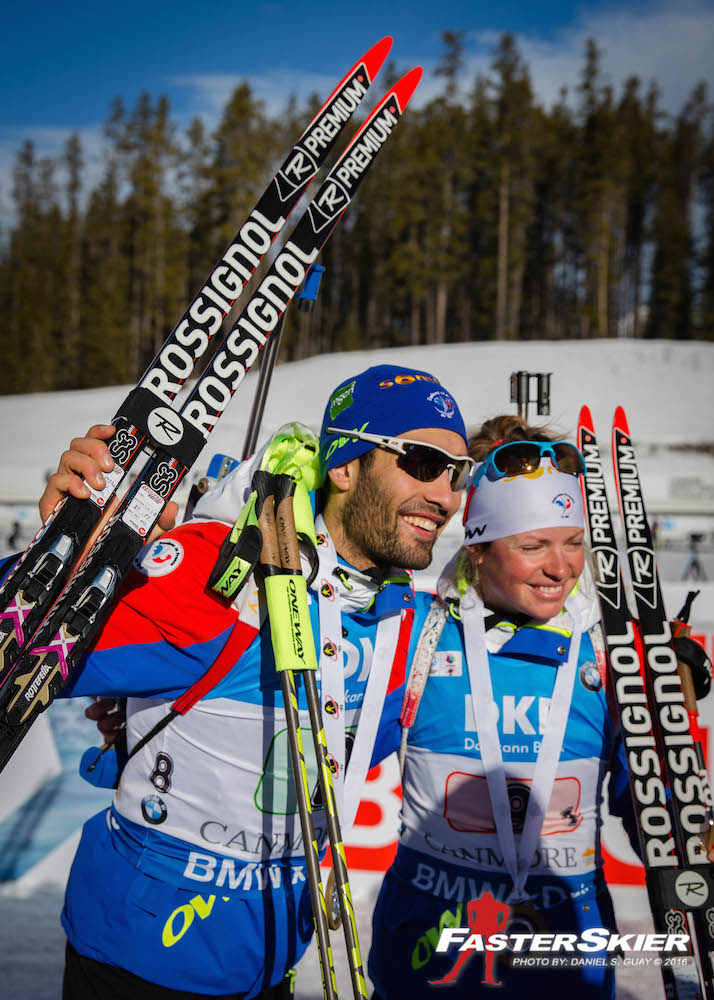
    Teammates in the single mixed relay on Sunday, France's Martin Fourcade and Marie Dorin Haber after winning the first of two relays on the last day of the IBU World Cup in Canmore, Alberta. (Photo: Daniel S. Guay)
    Teammates in the single mixed relay on Sunday, France’s Martin Fourcade and Marie Dorin Haber after winning the first of two relays on the last day of the IBU World Cup in Canmore, Alberta. (Photo: Daniel S. Guay)

    France was determined to win the International Biathlon Union (IBU) World Cup 13.5-kilometer single mixed relay on Sunday in Canmore, Alberta, using their best athletes with men’s overall World Cup leader Martin Fourcade and Marie Dorin Habert, who ranks third in the women’s standings. And they succeeded in convincing fashion, finishing first in 37:58.0 minutes, with four spares and no penalties.

    The first time the new race format was on the calendar this season at the World Cup in Östersund, Sweden, the French duo of Dorin Habert and Martin’s older brother Simon Fourcade thought they had won the race, but because Fourcade had not fired a shot during the competition the team was slapped with a four-minute penalty, putting them back to 21st place.

    On Sunday morning, France made no such mistakes and didn’t leave the other teams any chance in nearly a start-to-finish victory. Dorin Habert took the lead out of the arena, stayed there for most of her leg and tagged narrowly in first place, before both Fourcade and Dorin Habert expanded their lead on the next three legs with good shooting and fast skiing. Fourcade put an exclamation mark on the victory by sprinting into the finish despite knowing he had a comfortable lead of more than half a minute on the final loop.

    “It was a really exciting race. I like these kind of short races. I tried to be as strong as Martin, it’s an honor to run with him,” Dorin Habert said at the post-race press conference. “It was in our head before the competition to win, but this is biathlon and everything can happen on the [shooting range].

    “I tried to train the finish, I think that was a good opportunity,” Fourcade explained during the press conference. “But I actually didn’t compete the full last loop,” he added with a smile. “I only did for some parts, the ones in front of the TV.”

    “Today I was satisfied even if I needed two extra shots, two too much,” Fourcade later told the IBU in an interview. “It was a good competition for both of us.”

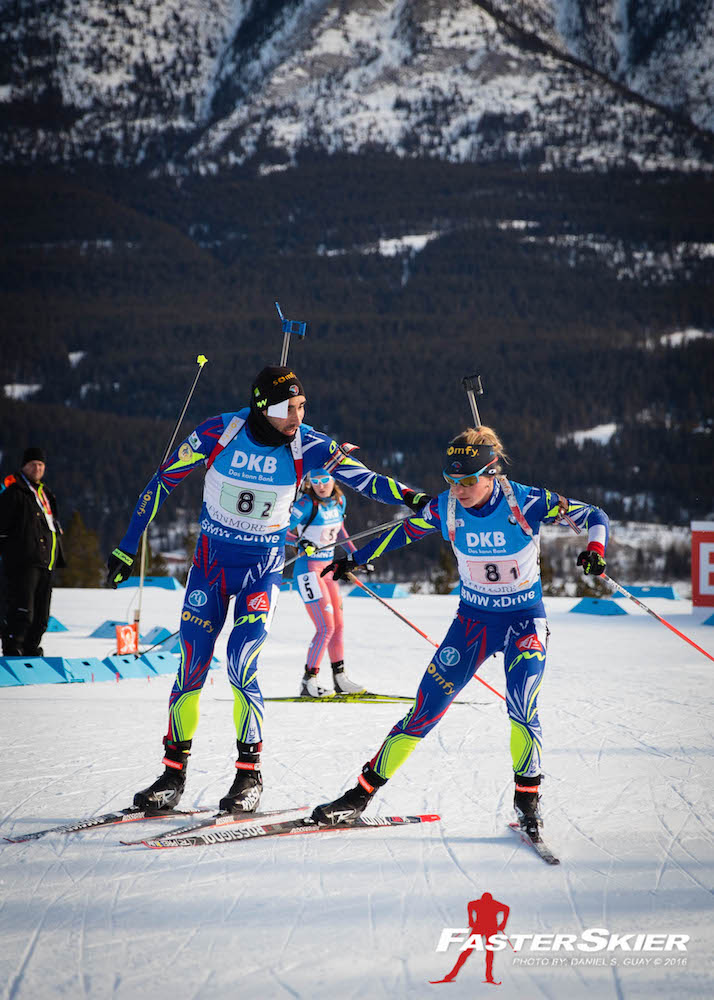
    France's Martin Fourcade (l) tags teammate Marie Dorin  Habert for her the third of four legs in the single mixed relay at the IBU World Cup in Canmore, Alberta. They ended up winning by 45 seconds. (Photo: Daniel S. Guay)
    France’s Martin Fourcade (l) tags teammate Marie Dorin Habert for her the third of four legs in the single mixed relay at the IBU World Cup in Canmore, Alberta. They ended up winning by 45 seconds. (Photo: Daniel S. Guay)

    Second place went to the Austrian duo Lisa Therese Hauser and Simon Eder, 45.2 seconds back, with eight spares and no penalties. It was Hauser’s first World Cup podium.

    Norway’s Hilde Fenne and Lars Helge Birkeland secured the third spot on the podium, 55.3 seconds back, with seven spares and no penalties. Birkeland defended his lead on the final loop, coming into the finish two seconds ahead of Russia’s Olga Podchufarova, who teamed up with Alexey Volkov to finish fourth (+57.3), with no penalties and just two spares.

    New since the 2014/2015 season and only held for the third time at the World Cup level on Sunday, the single mixed format was established by the IBU to have another action-packed event and give “smaller” biathlon nations a shot at the podium. For some countries, it presented an opportunity to start a team event. It is not yet a part of Biathlon World Championships or Olympic Games.

    “The single mixed relay is interesting for smaller nations, because they maybe don’t have five women and five men who can compete with the top, but maybe one or two,” Canadian head coach Matthias Ahrens told German TV broadcaster ZDF in an interview before the race. “Then you can use those in the mixed or single mixed relay, thereby potentially getting a chance to reach the podium, which worked pretty well for us at the season-opening in Östersund [where Canada placed second].”

    On Sunday, some teams, such as France — though not an example for a “small” biathlon nation — Austria and Latvia (in eighth place), made use of that by putting their best racers in the event. Other teams decided to focus on the “normal” mixed relay, with two women and two men on each team, that followed later on Sunday in Canmore.

    The single mixed relay features the shortest loops in biathlon, with the athletes skiing a 1.5-kilometer loop between each shooting stage, then immediately exchanging after the standing shooting. After the female team member starts and shoots one prone and one standing stage, she exchanges to her male teammate, then the woman gets tagged again to ski the third leg (six kilometers total), and the man closes out on the fourth anchor leg racing an additional 1.5 k after the final standing shooting, which adds up to the odd 13.5 k distance. The athletes are allowed to use three spare rounds per shooting like in a normal relay, and the penalty lap is also shortened to 75 meters (usually 150).

    Thus the whole race is extremely fast-paced, and rather resembles a cross-country team sprint than a traditional biathlon or cross-country relay.

    “This was a new start for me in the World Cup, because I never did a single mixed relay before,” Fourcade said at the press conference. “I already did it a lot during the show competitions like Schalke [World Team Challenge in late December] or Moscow or Tyumen [Race of Champions, another invitational at the end of the season]. I really love that. But it was different today … with the pressure of the World Cup… I think the single mixed relay is really good for biathlon.”

    “The single mixed relay is a super fun race format, but you really have to shoot well to have a chance,” U.S. Biathlon’s Annelies Cook wrote in an email.

    “Certain abilities are demanded, especially ‘shooting efficiency,’ ” Ahrens told ZDF. “That means you need athletes who, first of all, can shoot well and hit, but also shoot very fast.”

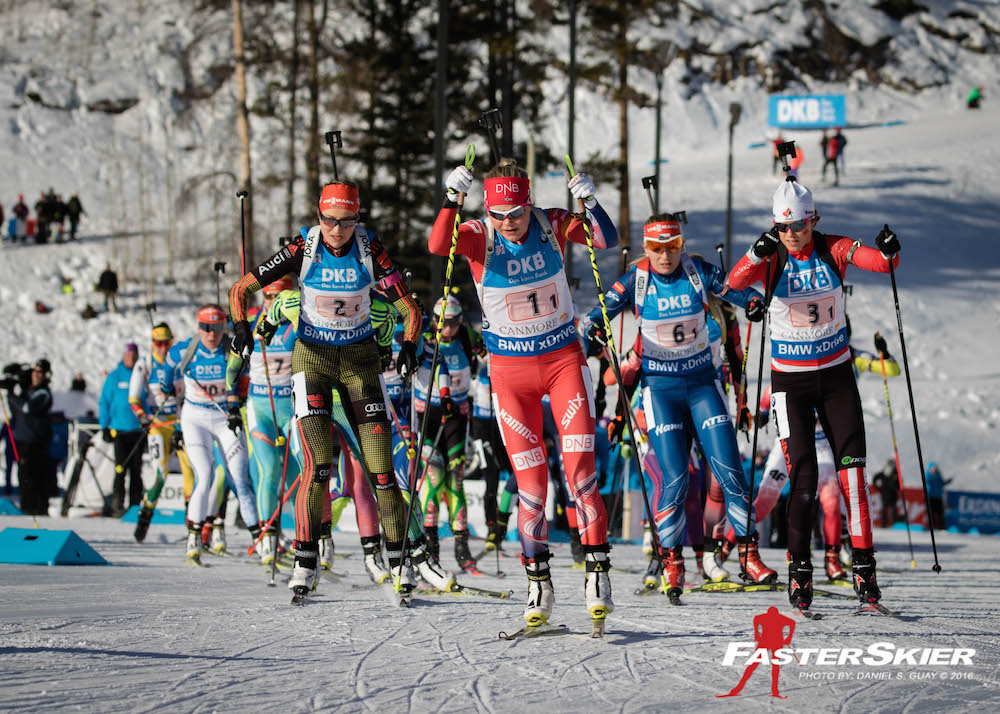
    Germany's Luise Kummer (2), Norway's Hilde Fenne (1) and Canada's Julia Ransom (3) early in the single mixed relay at the IBU World Cup in Canmore, Alberta. Norway went on to place third, Germany seventh and Canada finished 12th. (Photo: Daniel S. Guay)
    Germany’s Luise Kummer (2), Norway’s Hilde Fenne (1) and Canada’s Julia Ransom (3) early in the single mixed relay at the IBU World Cup in Canmore, Alberta. Norway went on to place third, Germany seventh and Canada finished 12th. (Photo: Daniel S. Guay)

    Conditions on Sunday were good throughout the race, with calm winds and the sun shining in the Canadian Rocky Mountains, after the athletes had struggled with snowfall and strong gales in the previous days.

    “I think we were all satisfied to know that it would be fair and beautiful conditions. It’s the [kind of] biathlon we love,” Fourcade said in an interview with the IBU.

    “Today was the best snow conditions of the week. There was a light wind, but it seemed pretty consistent,” Canada’s Nathan Smith wrote in an email.

    France steadily expanded its lead throughout the race. At the first exchange, Dorin Habert tagged Fourcade in first, just 0.4 seconds ahead of Sweden. Fourcade slightly expanded that lead to 6.5 seconds over Russia in second place by the next exchange, and then Dorin Habert cleaned both shooting stages on her second leg to balloon the gap to 50.1 seconds over Norway in second. Essentially, Fourcade just needed to go through the motions on his last leg to lock up first.

    Before the final shooting, Germany’s Erik Lesser had been in second place behind Fourcade. But unable to clean his targets and running out of spares, Lesser incurred a penalty lap and ended up seventh (+1:29.6), as teams passed him with better shooting. Lesser and teammate Luise Kummer combined for one penalty and eight spares.

    This brought back some painful memories from the first time a single mixed relay was held in a year ago in February 2015  in Nove Mesto, Czech Republic. Lesser and Kummer had been in the lead before the final shooting, then Lesser slipped into fourth with a penalty.

    After Sunday’s race, suffice to say Lesser wasn’t happy.

    “Does anyone still want to see that? I don’t!” Lesser quipped when the interviewer in the mixed zone asked him to take a look at a replay of his targets in the final shooting stage. “It really doesn’t matter where those [shots] went, I just didn’t hit, fired four really poor shots,” he added after taking a glance at the fairly close misses. “If Mark [Kirchner, men’s head coach] wants to chew me out for that, I hard-earned it.”

    “On the first spare I was already thinking, ‘Oh great, this is going the same way as last year,’ ” Lesser continued. “On the second leg I struggled, I tried to keep the others at bay on the course so they would not catch up, but I somehow didn’t move well, got tense on the shooting range, and then the misses happened. I am completely annoyed, mega-disappointed… This is the World Cup level, so you should also be able to hit with tired legs.”

    Kummer used four spares and was also disappointed, but didn’t pin the blame on Lesser.

    “A [single mixed] relay is comprised of two people, everything has to work out, and that mistake can happen to everybody,” she told ZDF. “You are always happy yourself to get through [a relay shooting stage] unscathed, so that shouldn’t be a problem…. I still think it’s a very exciting competition for the spectators, very fast-paced exchanges. It doesn’t have the same standing as a relay or mixed relay yet, but one can see that it is developing.”

    Lesser’s troubles allowed Austria’s quick-shooting Eder to pass him and secure second place, after he and Hauser had been just outside the podium ranks for most of the race.

    “I am really happy about this podium today. It’s my first one. I dreamed about it, and today it worked,” the 22-years-old Hauser told reporters at the press conference. “My shooting was not so good especially in prone. Simon and I are both fast shooters and also good shooters, but today it was not the best.”

    “I felt great on the course, I always could keep up or even close gaps,” Hauser added in an Austrian Ski Federation press release. “On the shooting range I let the stress get to me a little bit, that caused the spares. But of course I am overjoyed by the podium finish.”

    “The first turn did not go according to plan on the shooting range. I had problems with my ski poles and used too many spares,” Eder, 32, said in the press release. “But the second turn went all the better, I could really push the tempo also on the shooting range. Finally we have a place on the podium also in a mixed relay.”

    In the absence of their usual stars that are skipping the North American World Cups in the leadup to 2016 World Championships at home in Oslo, the Norwegians still reached the podium with Fenne and Birkeland, who both improved on their second legs to move from seventh at the first exchange to third at the finish. (Birkeland also won the first single mixed race of the season, though with Kaia Woeien Nicolaisen as his partner.)

    “I am not sure why, we just always try to do good races,” Fenne said during the post-race press conference when asked why Norway seems to do so well in the single mixed relay. She added that the coaching staff picked the lineups for Sunday, so she didn’t know why she was put on the single mixed relay instead of the four-person mixed relay.

    Canada 12th, U.S. 16th 

    Representing Canada at home in Canmore, Julia Ransom, who is competing in her first full World Cup season, teamed up with veteran Nathan Smith, who raced to second in the Östersund single mixed relay with Rosanna Crawford.

    Canada's Nathan Smith (behind) coming through the exchange zone to tag teammate Julia Ransom during single mixed relay at the IBU World Cup in Canmore, Alberta. (Photo: Daniel S. Guay)
    Canada’s Nathan Smith (behind) coming through the exchange zone to tag teammate Julia Ransom during single mixed relay at the IBU World Cup in Canmore, Alberta. (Photo: Daniel S. Guay)

    This time, the Canadians ended up nearly two minutes off the podium in 12th (+1:54.3), with 10 spares and no penalties.

    On her first leg, Ransom used one spare round in her first prone, but then required all three spares in standing to narrowly avoid a penalty lap.

    “It was hard, very hard,” Ransom said in a Biathlon Canada press release. “I haven’t done that format before. I felt that one for sure. This is the first time I’ve done a relay with Nathan so it was lot of fun for me, and a great experience.

    “I was bouncing around at the start and maybe nerves got to me a little bit because I didn’t know what to expect,” she added. “The techs just told me to ‘reel it in.’ ”

    After the first 1.5 k, she tagged Smith 47.0 seconds behind in 19th of 23 teams. On his first leg, Smith cleaned prone without any spares and only required one spare in standing to keep his distance to the top, handing off to Ransom 49.2 seconds back in 11th.

    “We unfortunately fell back pretty early in the race. Julia had some difficulty in the range,” Smith wrote in an email to FasterSkier. “The time lost loading spares is even more penalizing when the loops are so short. The format itself is pretty fun to race, and quite a bit different from traditional races. It’s almost more like two races back to back with a little break. It suits my quick shooting speed really well.”

    Ransom cleaned her next prone stage as she had done repeatedly in recent weeks, but with two more spares in standing, she lost a minute to the top.

    Still in 11th when he received the tag, Smith again hit all targets in his prone stage, but required three spares in his last standing to avoid the penalty lap, approximately holding his gap to the leaders.

    “Other than my last standing my [two relay] legs went really well. Prone felt amazing. Probably almost the best ever. Just fast, easy and accurate,” Smith wrote. “I ended up battling a lot with [Latvia’s] Rastorgujevs. He surprised me by matching my shooting speed. He’s always one of the fastest out there. It was too much for me to hang on to on the last lap.”

    “It was my best race this week. The legs felt a lot better today. Not amazing, but quite good until that last lap,” Smith said in the team press release. “One of the toughest things to do is race at home with the pressure we put on ourselves with our friends and family watching all the volunteers we know out here. I obviously wanted to peak here and do well but there are so many factors that come into play. It was a great experience racing at home that we’ll be able to take with us.”

    For the U.S., Cook teamed up with Leif Nordgren. In Östersund, their teammates, Clare Egan and Sean Doherty finished 15th in the single mixed relay. This time, the Americans finished in the same range in 16th place (+3:20.1), with one penalty and 14 spares.

    Annelies Cook (US Biathlon) during one of her two standing stages in Sunday's single mixed relay at the IBU World Cup in Canmore, Alberta. She teamed up with Leif Nordgren to place 16th. (Photo: Daniel S. Guay)
    Annelies Cook (US Biathlon) during one of her two standing stages in Sunday’s single mixed relay at the IBU World Cup in Canmore, Alberta. She teamed up with Leif Nordgren to place 16th. (Photo: Daniel S. Guay)

    After using just one spare in her first prone stage, Cook incurred a penalty in her first standing stage, quickly disappearing out of the focus of the TV cameras, tagging Nordgren in 20th, about 1:05 behind the leaders.

    “I felt good on skis and was in the mix, but I had a hard time holding back in the skiing and was probably breathing too hard to shoot well in standing,” Cook wrote in an email. Her course time ranked seventh fastest of the first-leg skiers. “My penalty in standing took us too far from the top to have contact.”

    Nordgren needed two spare rounds in prone and another one in standing, losing about another 30 seconds to the top teams on his leg (+1:41.3) as he tagged Cook in 18th.

    “This format is for sure a little different than a typical relay,” Nordgren explained in an email. “The pace is usually fast right from the start, and because the loops are so short it really puts all the focus on the shooting since its hard to really break away on such a short loop. It’s nice to have that difference, but you really have to be on top of your game in the shooting to be competitive.”

    On her second leg, Cook again emerged from prone with just one spare, but needed another three spare rounds to clean her final standing stage and avoid another penalty. When she exchanged back to Nordgren, the U.S. was 3:04.7 out of first in 20th.

    “The race does feel like a cross country sprint. But what makes it hard is knowing that you still have to hit targets, and finding the balance between all out sprinting and going just at the level where you can manage to hit your targets is tricky,” Cook wrote. “I just tried to make up time lost on the range by catching up on skiing as best as I could. There were a few of us together each lap, so it felt like a competition between that group of people.

    “I had a hard time holding back because I really love sprinting, and that probably kept me from hitting in standing,” she added. “That put Leif on a position where he had to try and chase people down. He did a really good job of that and I was proud of him for catching people in the last loop.”

    On the anchor leg, Nordgren mirrored his performance from his first round, again requiring two spares in prone and one in standing, but only lost 15 more seconds to the leaders and leapt to 16th by overtaking Romania, Slovenia, Belarus and Finland.

    “Today neither Annelies nor I really had a great day on the range so we had a hard time to stay with the top teams,” Nordgren concluded. “The tracks were in perfect shape today which is always nice. Our techs did a great job to give us fast material, but we weren’t able to put it to good use.”

    Staying Warm

    In the exchange zone, several teams could be seen using spinning bikes to keep warm and stay loose during their race breaks while their teammate was out on the course, something the Norwegians pioneered for the single mixed relay in Östersund, though the Americans and Canadians opted for a traditional warmup.

    “I just ran around to keep warm,” Cook wrote. “It’s not a big break and we don’t have a team bike. But running was totally fine for me.”

    “During the break both of us just opted to jog around, being that it’s such a short race, it’s more important to stay warm any way possible,” Nordgren wrote. “Today was the first day in a several that the wind was pretty low, so that made staying warm a little easier.”

    “I just jogged around while Julia was doing her second leg,” Smith explained in his email. “I considered using a spin bike but decided it would be best to practice like at World Champs.”

    Moving on to Presque Isle

    Nathan Smith (Biathlon Canada) during Sunday's single mixed relay at the IBU World Cup in Canmore, Alberta. He teamed up with Julia Ransom to place 12th. (Photo: Daniel S. Guay)
    Nathan Smith (Biathlon Canada) during Sunday’s single mixed relay at the IBU World Cup in Canmore, Alberta. He teamed up with Julia Ransom to place 12th. (Photo: Daniel S. Guay)

    The IBU World Cup now moves east to Presque Isle, Maine, with sprints for the women and men on Thursday, followed by pursuit races on Friday, and traditional relays on Saturday (men) and Sunday (women).

    “Today was the best I’ve felt in a couple weeks. I hope my shape continues to return to normal through Presque Isle,” Smith wrote.

    While Smith continues to work to hold his own in the overall World Cup standings (he’s currently 19th), the rest of Canada’s A-team, those pre-qualified for World Championships, will skip the Presque Isle World Cup and train in Canmore until Feb. 22, according to Crawford. That includes Crawford, Ransom, Sarah Beaudry, Brendan Green, Scott Gow, Christian Gow, and Macx Davies.

    Smith and a women’s contingent of Emma Lunder, Zina Kocher, Audrey Vaillancourt, and Erin Yungblut will head to Maine, and after those races, the Canadian team will select its fourth woman for World Championships.

    “I think we’re … looking forward to racing next week on home soil in Presque Isle,” Nordgren wrote on behalf of the U.S. team. “I haven’t raced there for about 5 years, so it will be fun to be back!”

    In the four-person mixed relay that followed Sunday afternoon, the U.S. notched a team-best fourth with Susan Dunklee, Hannah Dreissigacker, Tim Burke, and Lowell Bailey, while Canada tied its previous best of sixth, with Crawford, Beaudry, Davies, and Green. Stay tuned for a separate report.

    Note: Presumably due to a software bug, the IBU’s competition analysis report for the single mixed relay contained erroneous ranks for data such as course and shooting times, with higher numbers than the 23 teams that started in this race, so no such information was used for this article.

    Results

    Photos

  • Mäkärainen Tops Pokljuka Mass Start for Second Win of Season; Dunklee 22nd

    Mäkärainen Tops Pokljuka Mass Start for Second Win of Season; Dunklee 22nd

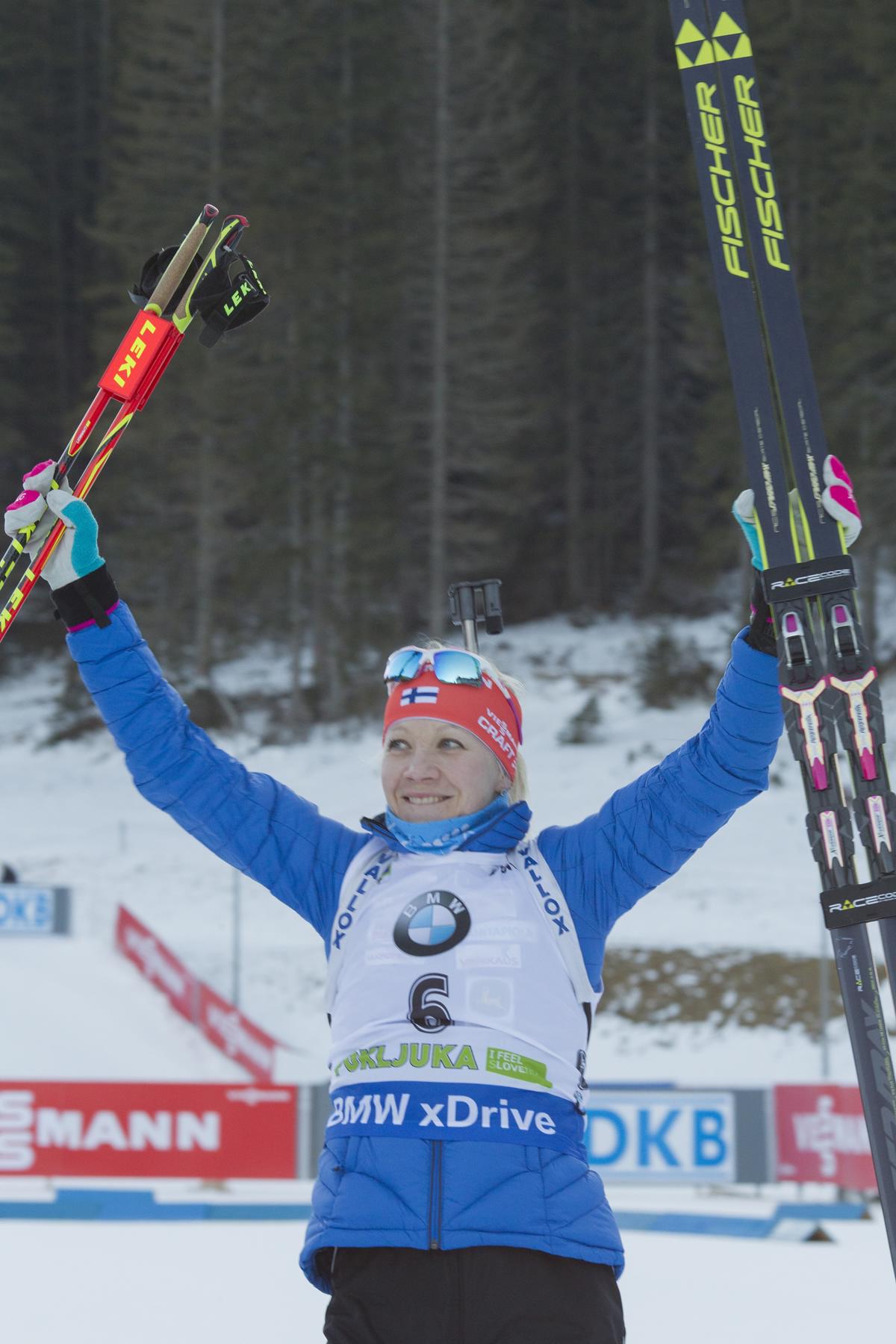
    Finland's Kaisa Mäkäräinen celebrates her second IBU World Cup victory of the 2015/2016 season on Sunday at the 12.5 k mass start in Pokljuka, Slovenia. (Photo: Fischer/NordicFocus)
    Finland’s Kaisa Mäkäräinen celebrates her second IBU World Cup victory of the 2015/2016 season on Sunday at the 12.5 k mass start in Pokljuka, Slovenia. (Photo: Fischer/NordicFocus)

    “I know I will probably feel tired, but everyone else in the race will be exhausted from the past month so that shouldn’t be a big problem,” US Biathlon’s Susan Dunklee predicted in an email to FasterSkier on Friday.

    Several other athletes had echoed this feeling of really looking forward to a break, including France’s Marie Dorin Habert and Germany’s Laura Dahlmeier, winners of the IBU World Cup races last Friday and Saturday, respectively.

    A bit of mental and physical exhaustion toward the end of a long stretch of eight races was evident in the women’s 12.5-kilometer mass start race on Sunday afternoon. Even athletes who had already been highly successful this season skied slower and shot more misses than usual. At least one woman seemed to be at the top of her game: Finland’s Kaisa Mäkäräinen.

    After achieving third place in Saturday’s pursuit, the two-time Overall World Cup champion improved on that by winning the mass start in 34:40.2 minutes.

    Despite a penalty lap in the first prone shooting, which set her back to 20th place, with her skiing strength as the fastest athlete on the course and three-consecutive clean stages thereafter (1+0+0+0), Mäkäräinen was able to close the gap to the leaders again.

    On the final loop, she managed to distance herself from the Czech Republic’s Gabriela Soukalová and Russia’s Olga Podchufarova, two athletes who cleaned the entire four-stage race.

    “When I had one penalty in the first prone, I thought the day would not be that good,” Mäkäräinen said in the post-race press conference. “But I decided it would be my last mistake for this competition!”

    On the third loop, she had come back to the top of the field and was skiing in a small group with Soukalová and her Czech teammate Veronika Vítková. Both strong skaters with the eventual fifth- and seventh-fastest course times, they nonetheless had no chance to keep up with Mäkäräinen when she decided to push the tempo.

    She came first into the final shooting and fired before the others had reached their positions, hitting all her targets, and left the stage 4 seconds ahead of Soukalová in second. On the last loop, she almost tripled that lead until the finish.

    Soukalová finished second, 11.8 seconds back, and Podchufarova placed third, 27.7 seconds after Mäkäräinen. Vítková was fourth, 12.5 seconds off the podium, with her only miss in the final stage.

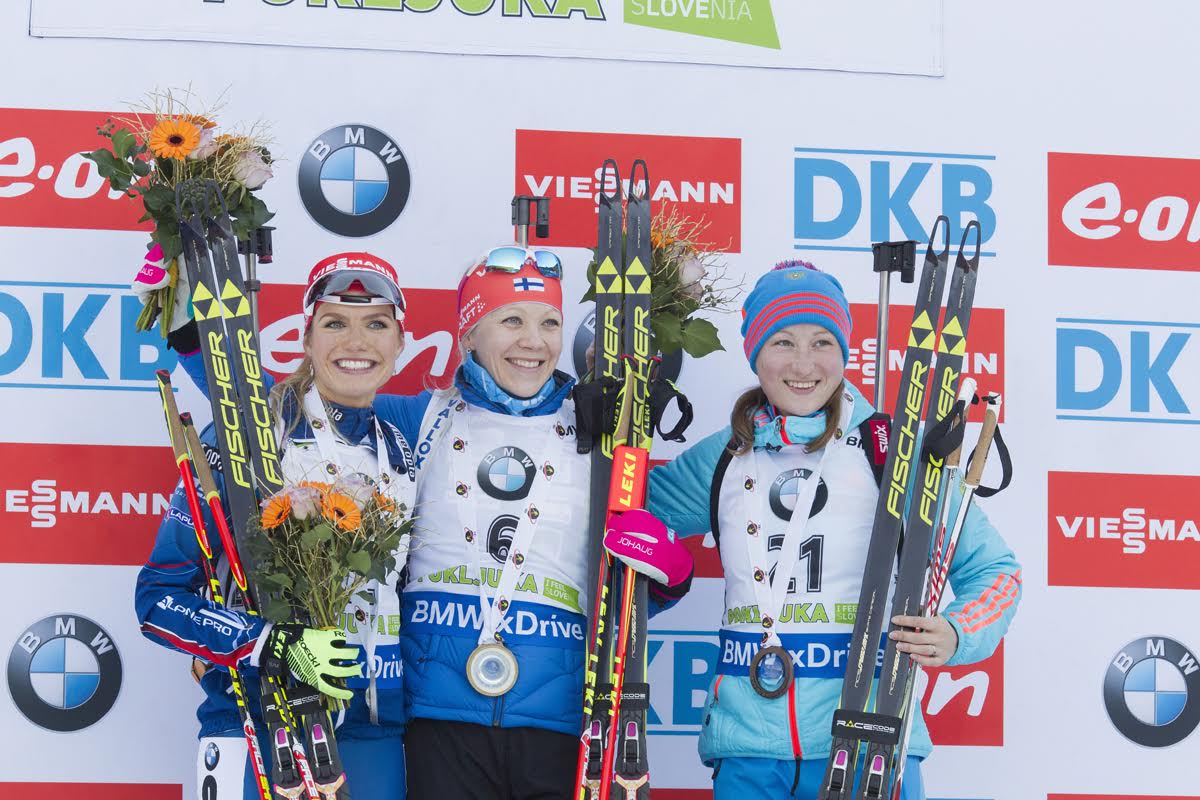
    The women's IBU World Cup mass start podium in Pokljuka, Slovenia: with Finland's winner Kaisa Mäkäräinen (c), runner-up Gabriela Soukalova (l) of the Czech Republic, and Russia's Olga Podchufarova (r) in third. (Photo: Fischer/NordicFocus)
    The women’s IBU World Cup mass start podium in Pokljuka, Slovenia: with Finland’s winner Kaisa Mäkäräinen (c), runner-up Gabriela Soukalova (l) of the Czech Republic, and Russia’s Olga Podchufarova (r) in third. (Photo: Fischer/NordicFocus)

    For Mäkääainen, the win was her 17th in an IBU World Cup and her second one of the season.

    Asked in an English interview with German TV broadcaster ZDF if the improved shooting was most likely reason for her recent successes, Mäkäräinen said, “Probably. It seems like all the women are shooting really well, and skiing times are more and more close to each other, so I cannot do that much on the course even if I feel strong. So I also need to shoot well.”

    “I now plan to go home to Joensuu [Finland] to spend time with my family, with my parents,” Mäkäräinen said when asked about her plans for the holiday break.
    “I think the first week is a little more easy, and then I will start preparing for Oberhof [Germany, the site of the next World Cup races Jan. 6-10].”

    Runner-up Soukalová was satisfied with her result, commenting in the press conference about the race and about Pokljuka in general, the site where she achieved her first World Cup victory.

    “I am so happy, I was feeling that I lost energy from yesterday,” Soukalová said. “My teammate Veronika Vítková was helping me on the track. Pokljuka is my favorite destination, I would like to continue to be on the podium here.”

    After Vítková had shot a miss in the final shooting, Podchufarova was still able to overtake her to grab the final spot on the podium. It was the Russian’s first World Cup podium, and while this result might have been unexpected to outside observers, she believed she executed her game plan well.

    “I am not surprised. I had a certain plan before the competitions, and everything went according to the plan,” Podschufarova said at the press conference. “I was almost the last one at the start, as I was trying to take it slowly and save my energy for the final loops.”

    Susan Dunklee (US Biathlon) placed sixth in the IBU World Cup sprint on Friday in Pokljuka, Slovenia. (Photo: Fischer/NordicFocus)
    Susan Dunklee (US Biathlon) placed sixth in the IBU World Cup sprint on Friday, Dec. 18, in Pokljuka, Slovenia. (Photo: Fischer/NordicFocus)

    Podchufarova added that she expects this result will also help her team, since this was the first podium for the Russian women this season.

    “I think it’s because of the last preparation period, it was hard for us to start,” she said. “With this podium, things will get easier as the pressure will be off.”

    At the halfway mark, 22-year-old Norwegian Hilde Fenne had been in the lead, after creating a little gap to a larger chase group. But in the first standing, she missed three of five shots and lost almost a minute in the penalty laps. She finished in 16th place with four penalties  (0+0+3+1), 1:40.2 minutes back from Mäkääainen.

    Austria’s Lisa Theresa Hauser, also 22, was one of four athletes in the women’s field to clean all four shooting stages, but could not quite keep up with the fastest skiers on Sunday, coming in eighth place (+1:08.7) to tie her career best.

    “Four times zero, that’s amazing. The mass start seems to be my race,” Hauser told Austrian TV broadcaster ORF. “I am almost surprised it worked so well today because the last two days were quite hard. Today I even could improve on the track during the course of the race. I am super happy. Now I can really enjoy the holidays.”

    Dunklee was the lone North American to qualify for the mass start as the best athlete outside of the top-25 due to her results in the preceding two races (sixth in the sprint and 10th in the pursuit) in Pokljuka. She finished 22nd (+2:29.5) after missing four targets throughout the mass start( 1+0+1+2).

    Starting out of the ninth row in bib 26, Dunklee initially attempted to improve her position on the first round, but broke or lost a ski pole early in the first loop. After recording a miss in the first prone, she exited the penalty loop in 22nd place, already 31.9 seconds behind the leaders.

    After the second loop and a clean second prone shooting, she improved to 16th and 38.4 seconds behind. She skied a strong third loop with the 11th-fastest course time, but a miss in the first standing prevented her from moving up more, as she fell back 30 more seconds to 19th place.

    Then in the final shooting, Dunklee had two more penalties, almost doubling her time back behind the leaders to 2:11.6 in 22nd place. She kept that position to the finish, only losing a bit more time to Mäkäräinen.

    New Women’s World Cup Leader is The Old One

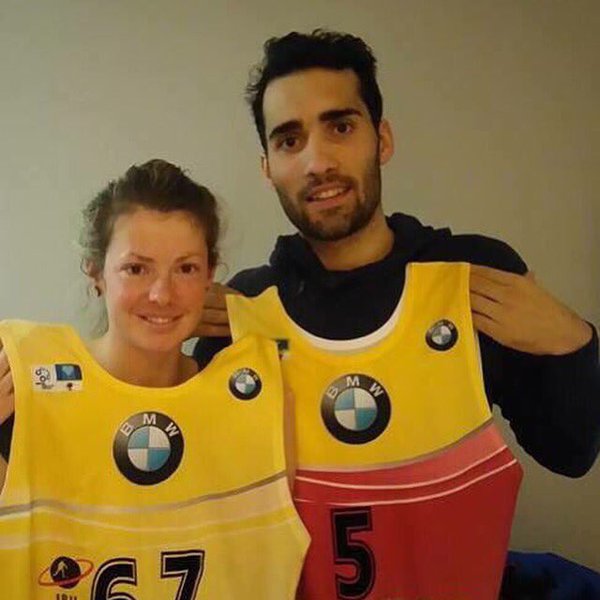
    Martin Fourcade tweeted the following photo on Saturday of him and French teammate Marie Dorin Habert holding up the overall World Cup leader's bibs: "This does not happen every day!" he wrote. (Photo: Martin Fourcade/Twitter)
    Martin Fourcade tweeted the following photo on Saturday of him and French teammate Marie Dorin Habert holding up the overall World Cup leader’s bibs: “This does not happen every day!” he wrote. (Photo: Martin Fourcade/Twitter)

    On Saturday evening, a proud World Cup leader Martin Fourcade posted a picture on Twitter that showed himself and teammate Dorin Habert both holding up the “yellow bibs” of the Overall World Cup score leaders, with the caption “this does not happen every day!”

    While Fourcade was able to defend his position on Sunday, Dorin Habert, who had said in a press conference after the pursuit that she hoped, “I won’t wear it just for one competition,” didn’t get her wish granted after finishing seventh on Sunday.

    When the World Cup resumes in Oberhof next month, Soukalová will be the woman in yellow again, leading the overall standings with 359 points to Dorin Habert’s 345. After eight competitions, Germany’s Franziska Hildebrand is in third place (307), while Mäkäräinen moved up to fourth (278).

    “This is really good motivation for me,” Soukalová said. “I know that the season will be long. We will have a lot of competitions, and girls are very strong. We will see.”

    Dunklee improved to 27th place in the World Cup standings with 97 points, and Biathlon Canada’s Rosanna Crawford, the other North American in the top 30, ranks 29th with 91 points.

    Results

  • Berger Anchors Norway to Second-Ever World Championships Relay Title

    Berger Anchors Norway to Second-Ever World Championships Relay Title

    The Norwegian women's relay celebrates its second-ever World Championships title after winning the 4 x 6 k event on Saturday in Nove Mesto, Czech Republic. From left to right: Synnøve Solemdal, Tora Berger, Ann Kristin Flatland and Hilde Fenne.
    The Norwegian women’s relay celebrates its second-ever World Championships title after winning the 4 x 6 k event on Saturday in Nove Mesto, Czech Republic. From left to right: Synnøve Solemdal, Tora Berger, Ann Kristin Flatland and Hilde Fenne.

    What does it feel like to have Tora Berger breathing down your neck? Ask Andrea Henkel of Germany, Ukraine’s Olena Pidhrushna or Italian Karin Oberhofer, who started the final leg of Friday’s 4 x 6-kilometer relay less than 40 seconds ahead of her.

    Norway’s 31-year-old anchor, Berger had already racked up three world titles in the last week at the International Biathlon Union (IBU) World Championships in Nové Město na Moravě, Czech Republic. She was flawless in Wednesday’s 15 k individual, defending her 2012 victory without a single miss, and seemed to be no reason she couldn’t do it again on Friday.

    Fourth at the exchange thanks to teammate Synnøve Solemdal, who skied the fastest third leg to elevate the team from 13th, Berger left the stadium 38.6 seconds behind Henkel in first. One kilometer later, Pidhrushna was about seven seconds down on Henkel, and Oberhofer was another 23 seconds back.

    And then there was Berger, who shot clean on the prone to move within 21 seconds of Pidhrushna in the lead. Henkel had to use one spare round, but remained close to the Ukrainian, trailing by 1.4 seconds while Oberhofer cleaned to leave the stadium in third, 10.7 seconds behind.

    As Henkel pushed to the front, Berger did the same from the fourth position, overtaking Oberhofer by 3.5 k and moving to third. Barbora Tomesova of the Czech Repubic followed close behind, stepping on Berger’s pole and ripping it out of her hand. The Norwegian remained calm, took a few no-pole strides and received another near the top of the long incline. She didn’t lose any ground, and if anything, set herself up for a solid last stage.

    Despite using one spare on the standing stage, Berger ended up clocking the seventh-fastest range time in the range and left the stadium in third, just 2.3 seconds behind Oberhofer, who had cleaned again. Pidhrushna was just 1.3 seconds back in second after using one spare, and Henkel, who used two spare rounds, fell to fourth nearly 16 seconds back.

    Berger didn’t waste any time and took the lead with a fast-and-furious V1 up the gradual 2-kilometer grind. A Norwegian coach put his hand over his mouth as he watched from the stadium. Could Berger hold it?

    Then it became apparent; her contenders couldn’t keep up. With 1 k remaining, Pidhrushna trailed by 3.5 seconds. The deficit grew to seven seconds with half a kilometer to go. Oberhofer was five seconds down, then 10 seconds behind Berger before the final push to the finish.

    There, Berger skied uncontested to the win in 1:08.11. For Norway, which included Hilde Fenne and Ann Kristin Flatland, it was the second women’s relay victory ever and first since 2004. For Berger, it was her fourth gold at a single World Championships, which put her on par with Norway’s retired great, Liv Grete Skjelbreid Poirée. Back in 2004, Poirée also won four gold medals at Biathlon World Championships. And Berger has one more race remaining: Sunday’s 12.5 k mass start.

    “I was just trying to do my best,” Berger said in a press conference about her simple-yet-effective game plan. “I never dreamed of this as I was driving to Nove Mesto. Whatever happens Sunday will only be a bonus.”

    Seven seconds behind, Pidhrushna brought home silver for Ukraine (which included Juliya Dzhyma, Vita Semerenko and Valj Semerenko). Valj Semerenko put the team into contention on the third leg after cleaning her standing stage and boosting the team to first. She and Germany’s Laura Dahlmeier switched leads over the next two kilometers and were the first through the exchange with Italy’s Michela Ponza.

    After bringing Italy (with Dorothea Wierer and Nicole Gonteier) from fourth to first earlier in the leg, Ponza helped her team notch bronze for its first World Championships relay medal. It was her first medal at worlds as well.

    “I am the oldest one up here … it is a dream come true,” Ponza said at the press conference. “All of my colleagues made a great race. … I want to thank everyone who believed in us. This is a good moment for Italian biathlon.”

    Overall, the Norwegians made fewer than 80 percent of their shots (compared to Ukraine’s 88.9 percent and Italy’s 90.9 percent), using nine spare rounds and skiing a penalty loop on the first leg. Ukraine had no penalties and used five spare rounds, and Italy used just four spares.

    “I was sure today that the last shooting and the last loop would be important,” Pidhrushna said. “I had a spare round but the others did too, so I told myself that this was a chance. That last loop was quite crazy.”

    Russia placed fourth (+29.0) after being an early contender. Three of their seven used spares came on the third leg with Ekaterina Shumilova after she cleaned the prone. Germany finished 30.9 seconds behind in fifth after using 11 spare rounds, three of which came from Henkel.

    Women’s relay results