From the FasterSkier archive — posts syndicated from athletes’ and coaches’ own blogs between 2004 and 2012, kept online as published. Current coverage is at fasterskier.com.
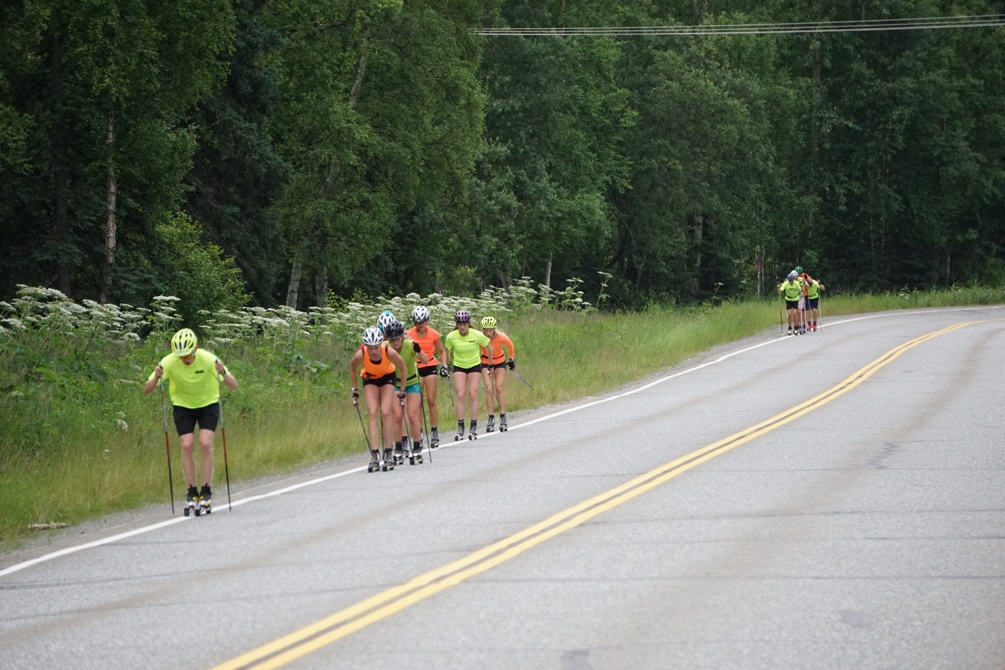
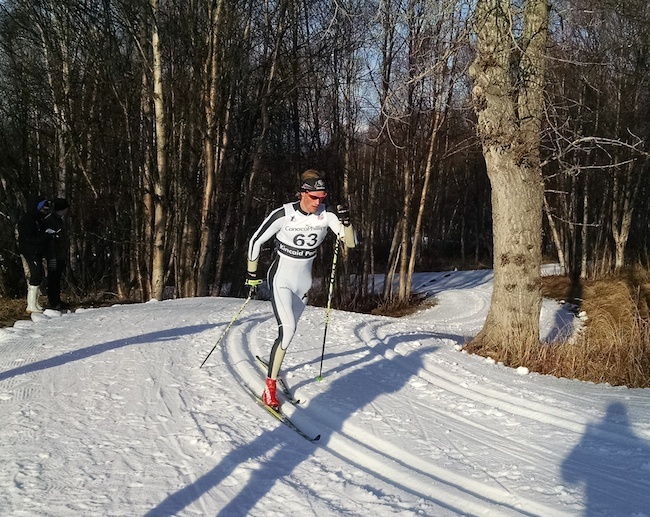
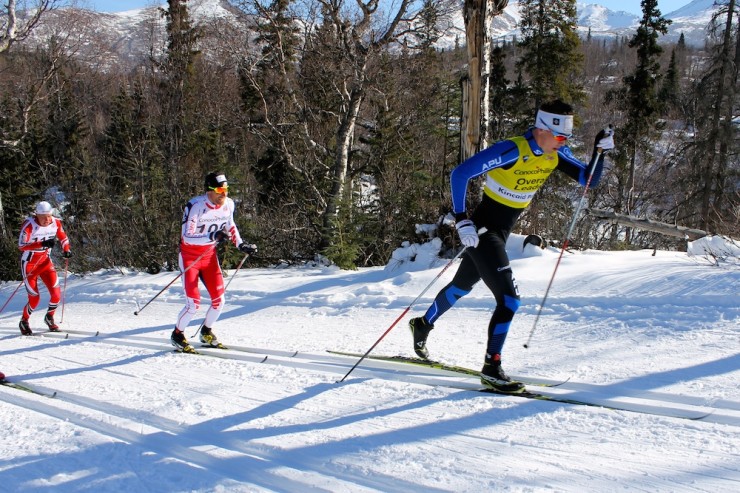
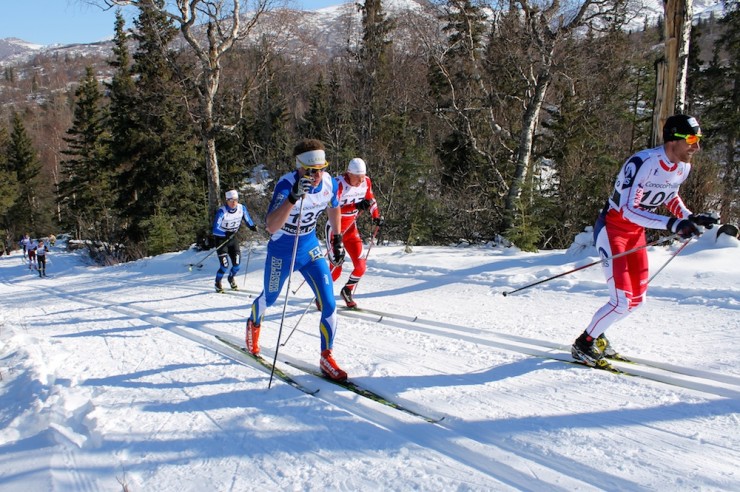
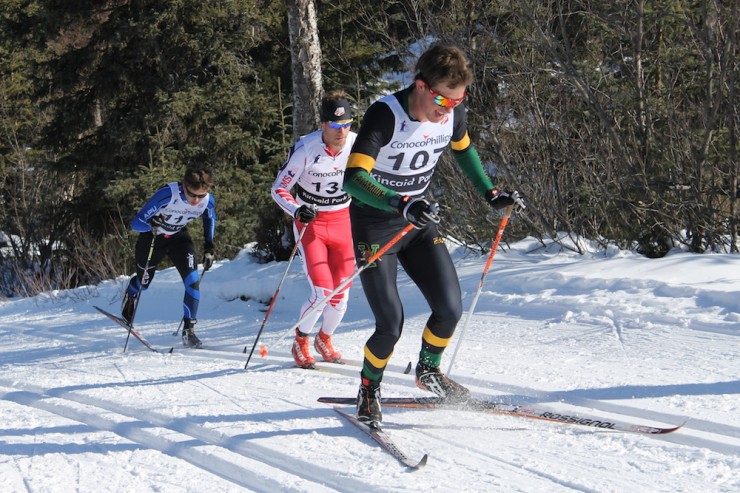
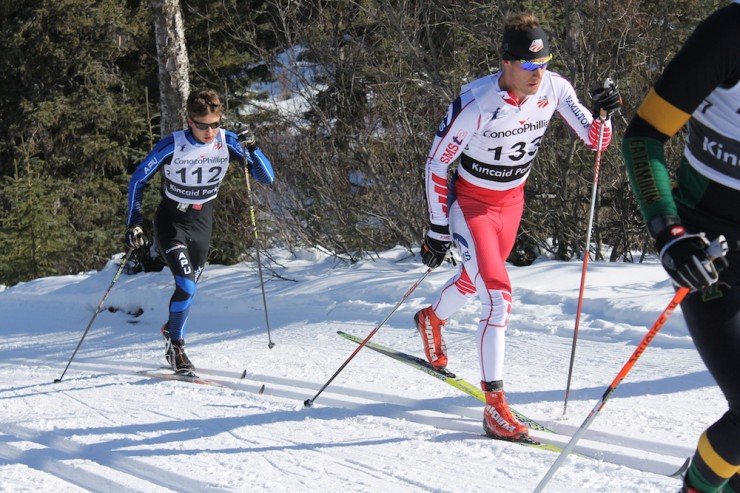
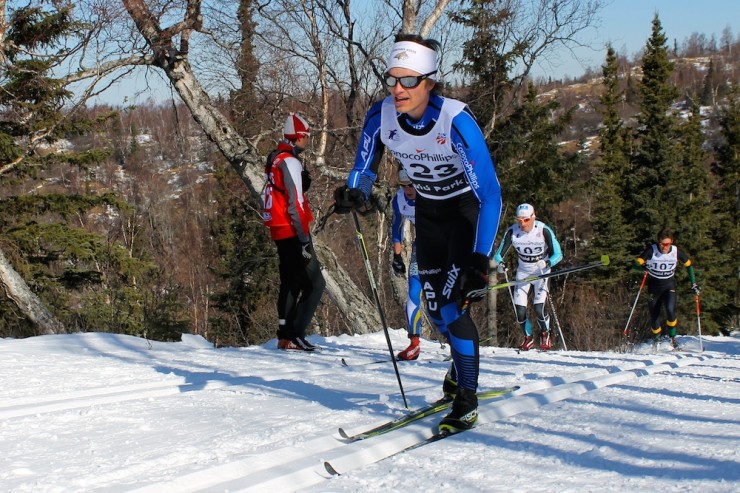
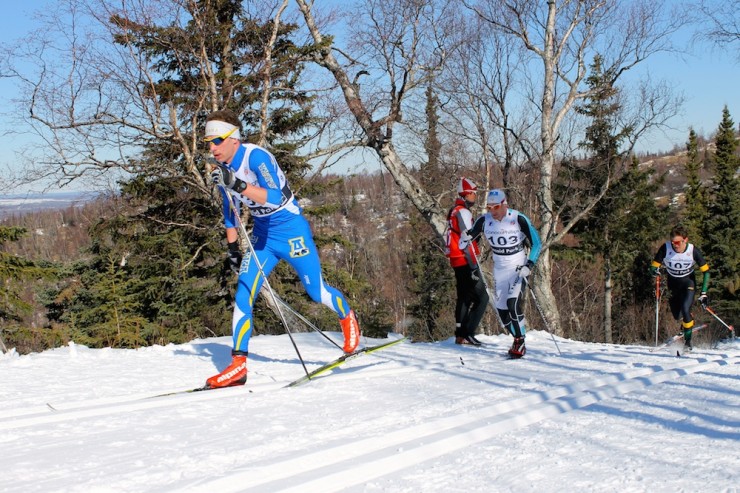
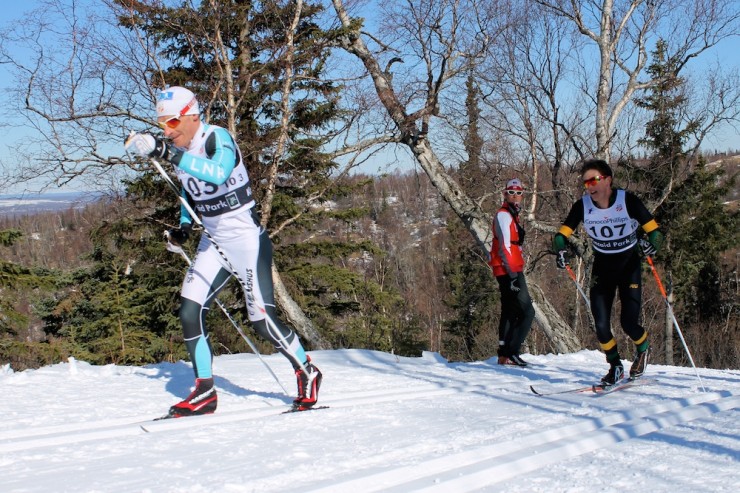
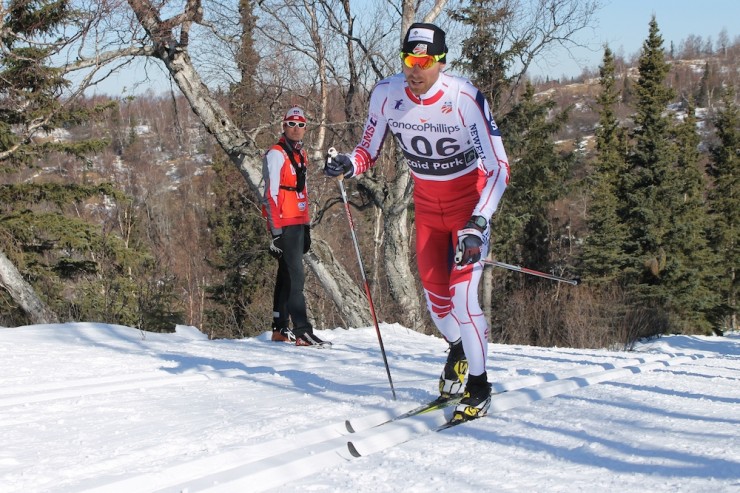
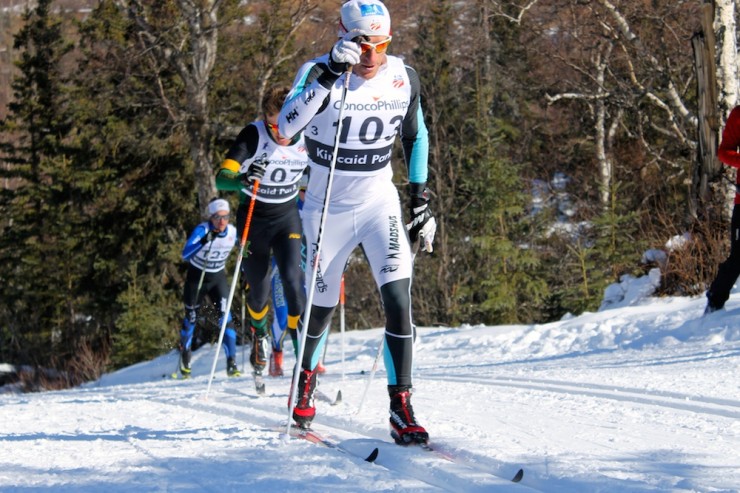
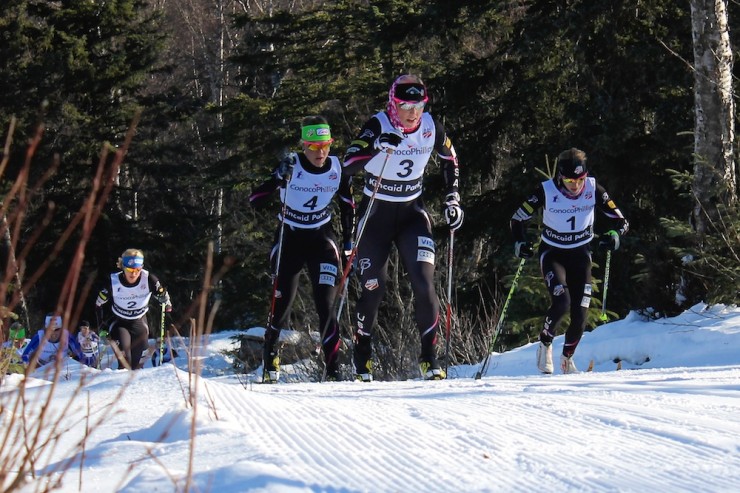
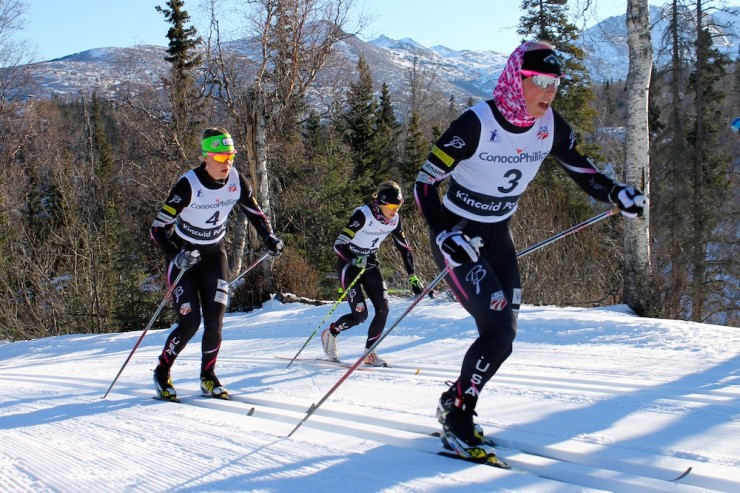
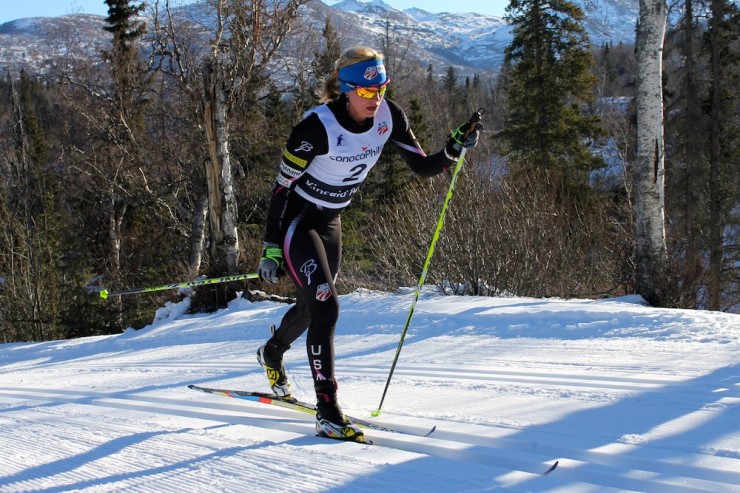
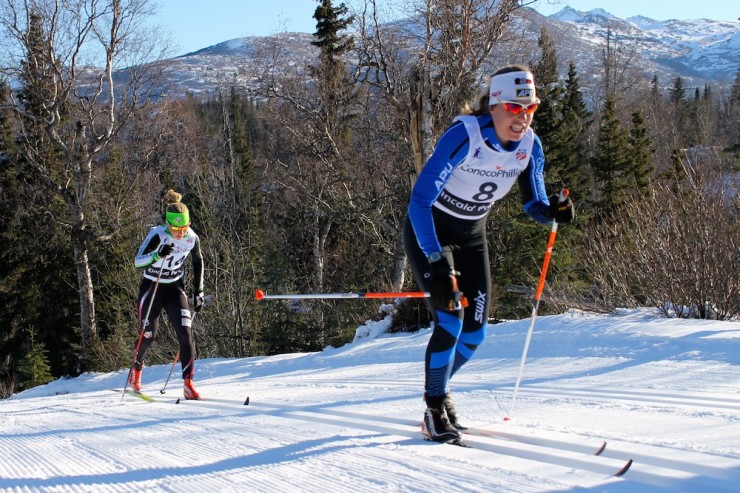
The Alaska REG participants near the start of the Hatcher Pass Road climb during their final session of the 2017 Alaska REG camp, held July 12-16 in Anchorage and Palmer. (Photo: Alasdair Tutt)
The following Regional Elite Group (REG) camp recap was submitted by NSCF-FXC Interim Head Coach Alasdair Tutt. FasterSkier encourages coaches and athletes from any regional offseason camps (dryland or on-snow, in the U.S., Canada or abroad) to submit their own recaps and photos to info@fasterskier.com. The Western and Eastern REG camps took place last month in Utah and Vermont, respectively.
***
On July 12, 16 athletes gathered at Hillside Ski Area in Anchorage for the 2017 Alaska REG camp, kicking off five days of testing and training. The first day was in Anchorage before heading north to Palmer for the remainder of the camp.
The camp was led by U.S. Ski Team Development Coach Bryan Fish who was joined over the week by Ja Dorris and Stan Carrick of Alaska Nordic Racing (ANR), Eric Strabel and Sam Sterling of Alaska Pacific University (APU), Jan Buron of Alaska Winter Stars (AWS), and Alasdair Tutt of Nordic Ski Club of Fairbanks – Fairbanks XC (NSCF-FXC).
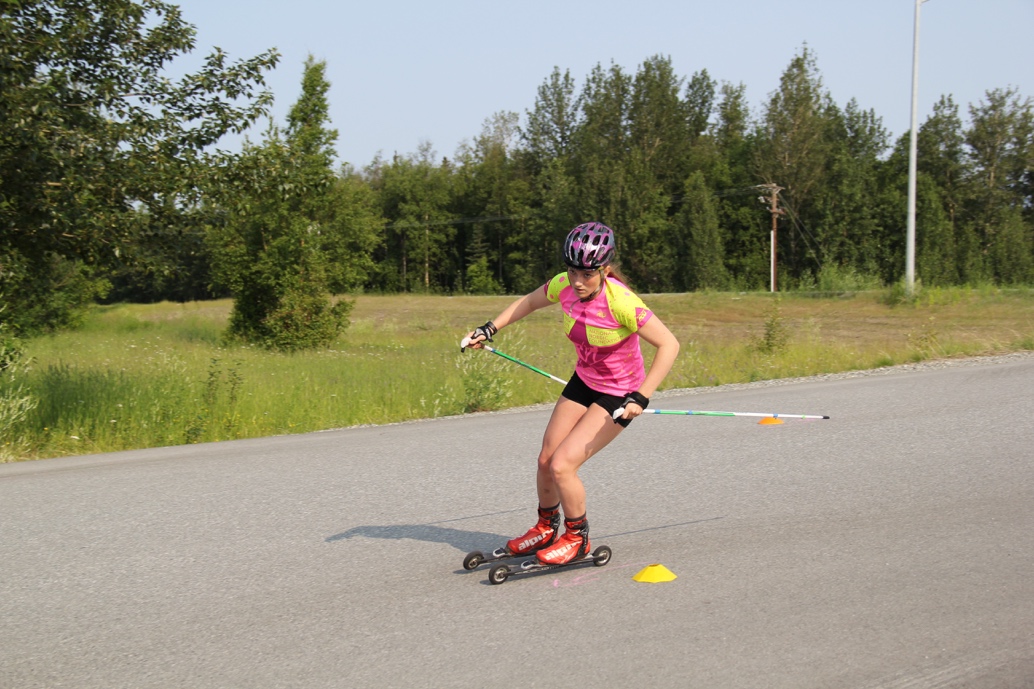
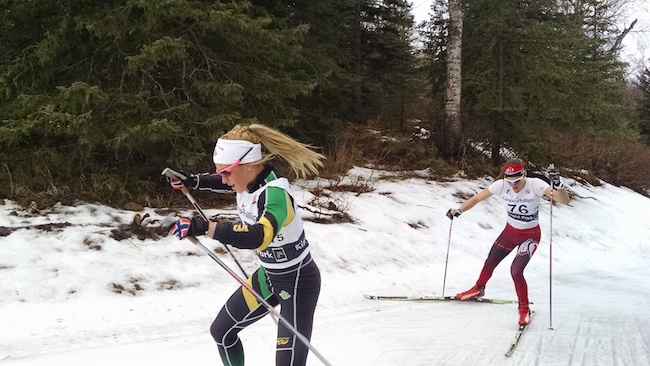
Addison Gibson (ANR) on course during the agility time trial where she posted the fastest time of the day. (Photo: Bryan Fish)
The first test was the infamous Gasline time-trial uphill run, a regular test for the Anchorage-based teams and previous REG camps. The course saw the athletes wind up beside an alpine run before appearing out onto the road overlooking the sea. The fastest times were set by Ti Donaldson and Kendall Kramer, both of the NSCF-FXC program. That afternoon, athletes were led through a strength workout by Bryan at the Alaska Pacific University gym.
Day 2 brought the agility test at Colony Middle School in Palmer and with it some of the more exciting and competitive testing of the camp. The fastest combined times (best two of three) were set by Addison Gibson (ANR) and Donaldson.
That afternoon, our grand plans for bounding drills were mostly foundered by a huge lightning storm that came in over Hatcher Pass that had us running back to the cabin to find a river where the lawn had once been, now occupied by a moose cow and two calves.
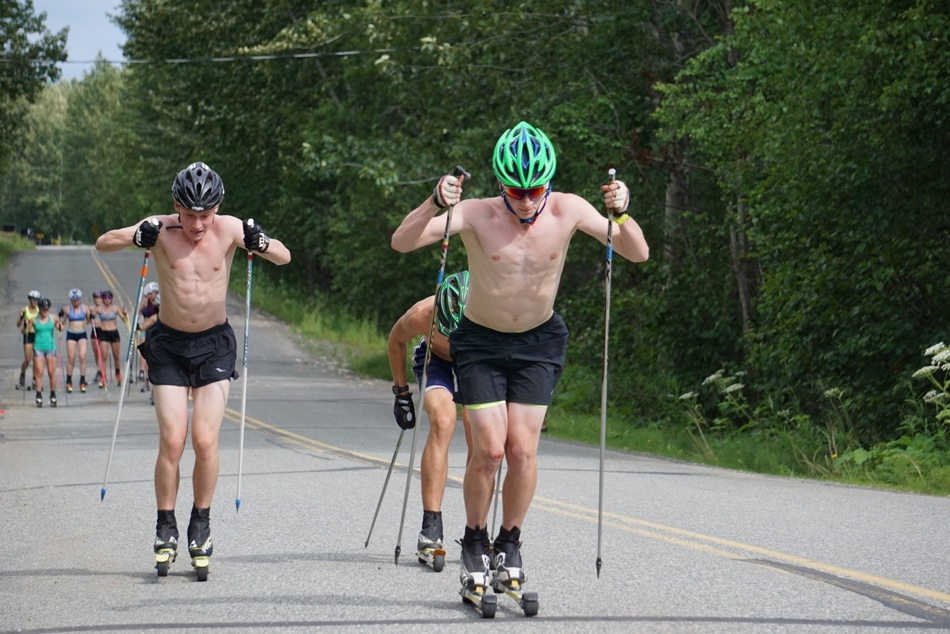
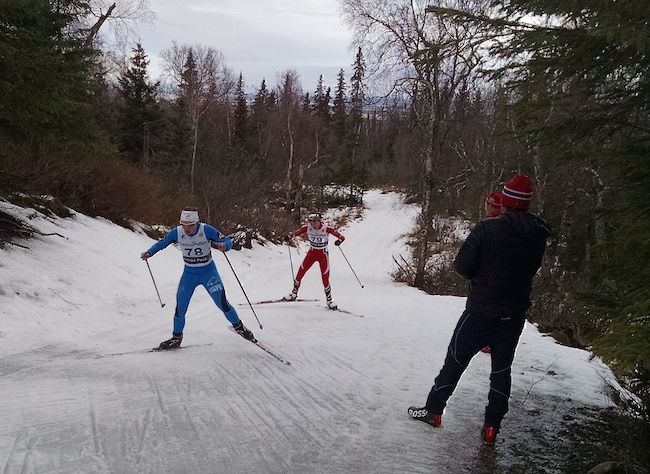
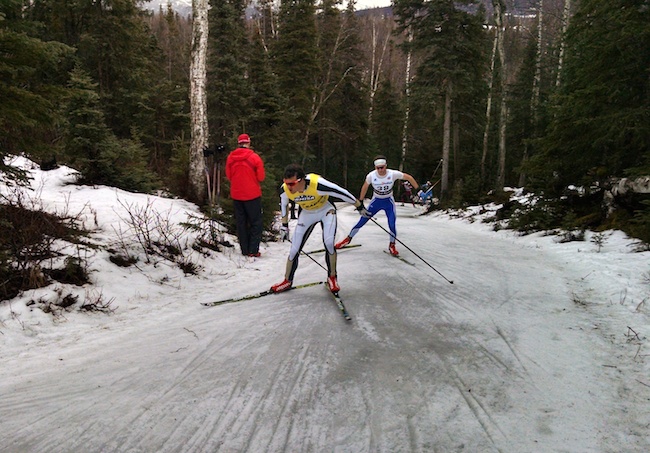
It was game on for some head-to-head double pole sprints just below the Government Peak Recreation Area trails in Fishhook, Alaska. Athletes raced in a king’s court format both up and downhill. (Photo: Alasdair Tutt)
On the third day, we had much better luck with our weather and a double-pole time trial was on the menu as our final test of the camp. Over a 970-meter course on Mountain Trails Road, the athletes were sent to chase down their best performances leading to three athletes being separated by only one second each. The best times were again set by Kramer and Donaldson of Fairbanks. That afternoon we braved the growing afternoon traffic with a rollerski up Hatcher Pass Road with some technique work at key points along the road.
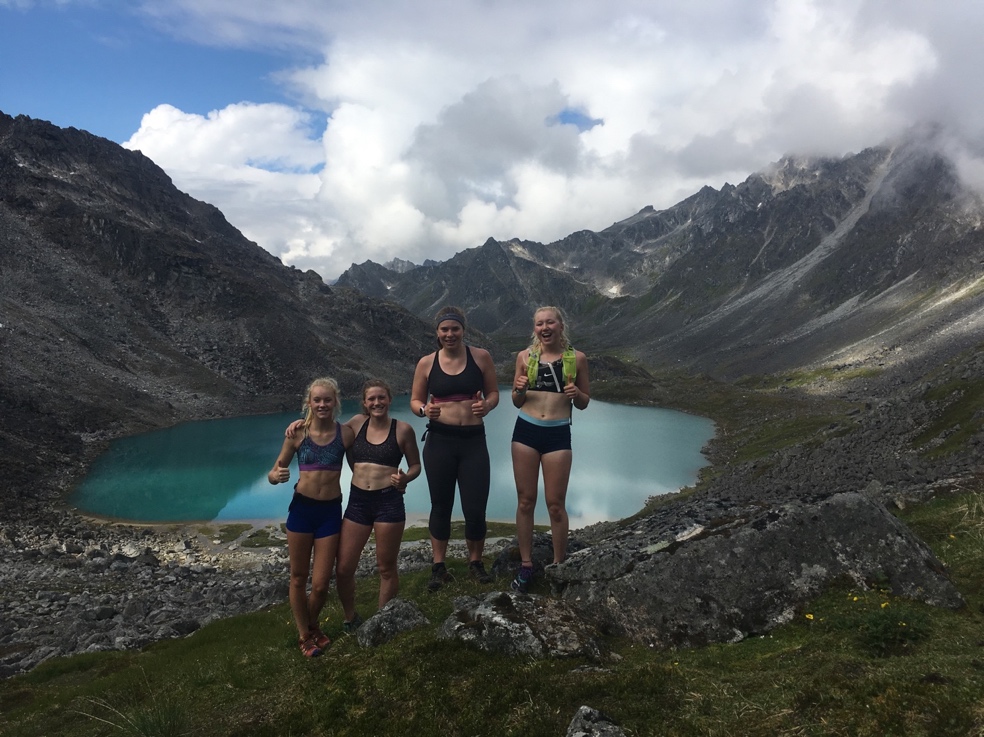
Some highlights of the remainder of the camp were: an over-distance workout on the Reed Lakes Trail, where athletes were fortunate enough to avoid several brown bears in the vicinity who were harassing hikers (or being harassed), a critical viewing of the new Spiderman movie in which we decided Spiderman exhibited a great example of how the Central Governor Theory could be applied in a superhero scenario, and a final day classic rollerski up the Hatcher Pass Road.
Four REG skiers at Upper Reed Lake in the Hatcher Pass area during an over-distance workout on the second-to-last day of the 2017 Alaska REG camp earlier this month. (Photo: Alasdair Tutt)
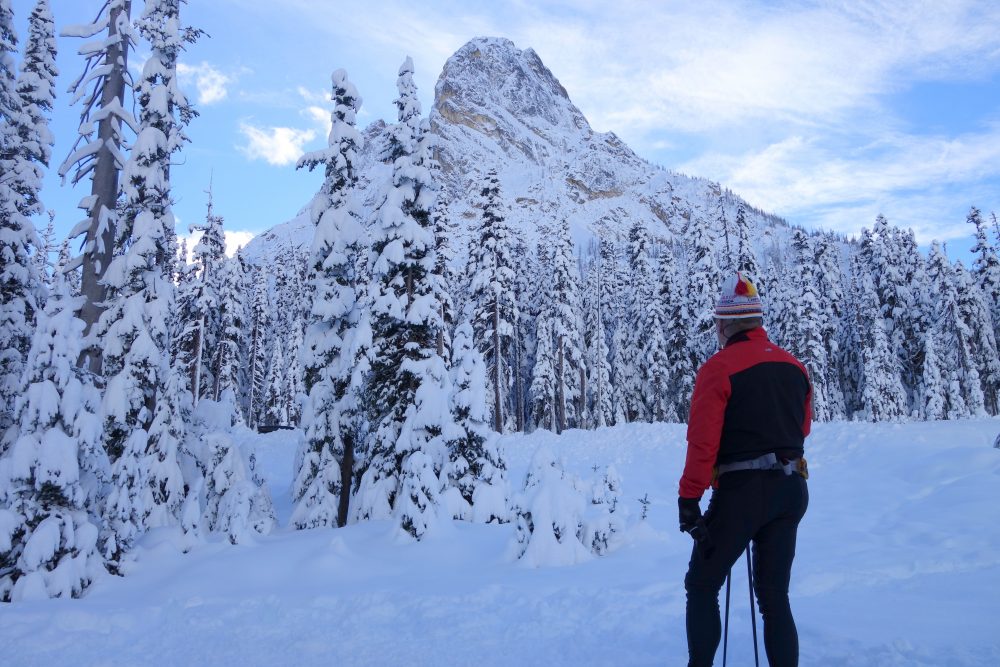
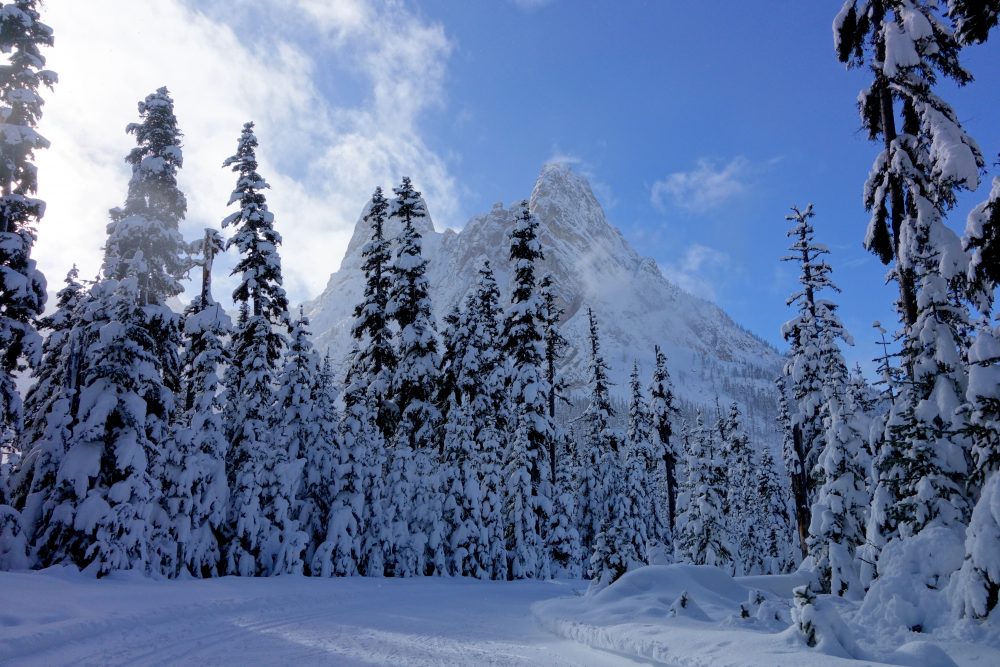
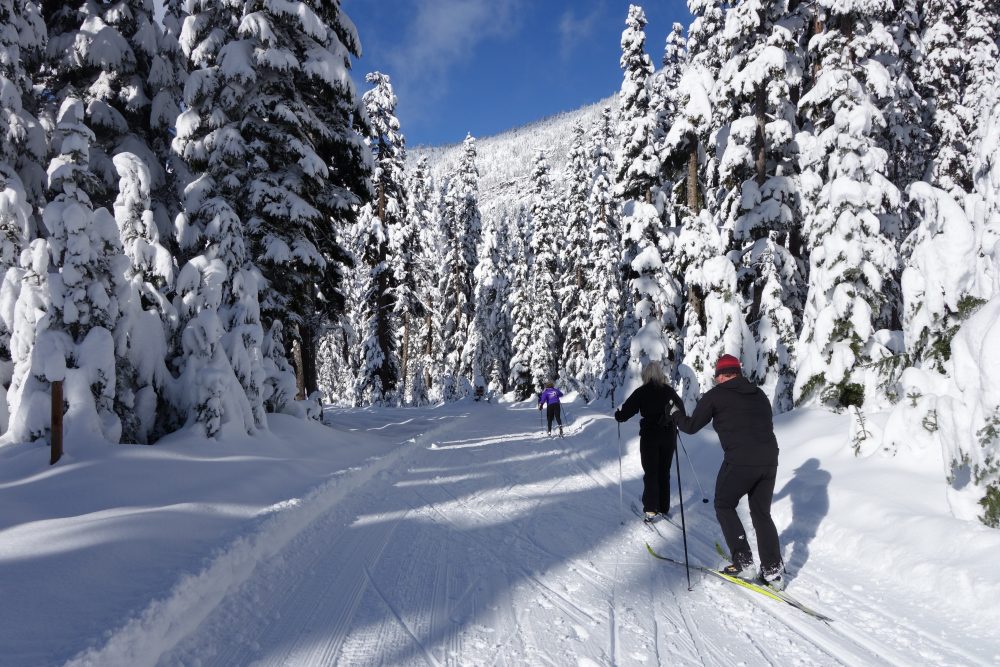
Skiing under Liberty Bell on Washington Pass in November, 2016. (Methow Trails courtesy photo)
Natural snow is where it’s at, unless there’s none to be found. In high-elevation places like West Yellowstone, Mont., (roughly 6,600 feet above sea level) and Crested Butte (nearly 9,000 feet), November skiing is almost always a given — which is why those venues have hosted Thanksgiving-week ski camps for 16 to 30+ years. And they are again this year, while looking to the skies and weather forecasts in hope of more snow — much more.
While there are only two well-known Thanksgiving camps currently being held in the U.S., there are dozens of other places around the country you can likely go skiing. We did our best to present some of the most dependable options, so at the very least you can plan a future trip on snow this time next year. No offense to the in-laws, but wouldn’t you rather be skiing on Thanksgiving? Stay tuned for our Canadian early skiing edition, and feel free to share your favorite November ski spot in the comments section below.
***
What: Yellowstone Ski Festival
Where: West Yellowstone, Montana
A rendezvous point at the Rendezvous Ski Trails as seen last year in West Yellowstone, Mont., during the 2015 Yellowstone Ski Festival. (Photo: 2015 courtesy photo)
How many years running: Over 30 years. “It started with Drew Barney, Torbjorn Karlsen and Dick Hunt back in the 1980s as a Fall Camp, offering clinics for coaches and citizen racers looking to improve their technique,” West Yellowstone Ski Education Foundation Program Director Moira Dow explained. “Over the years, the camp grew into one of the top training camps available to the cross-country ski community.”
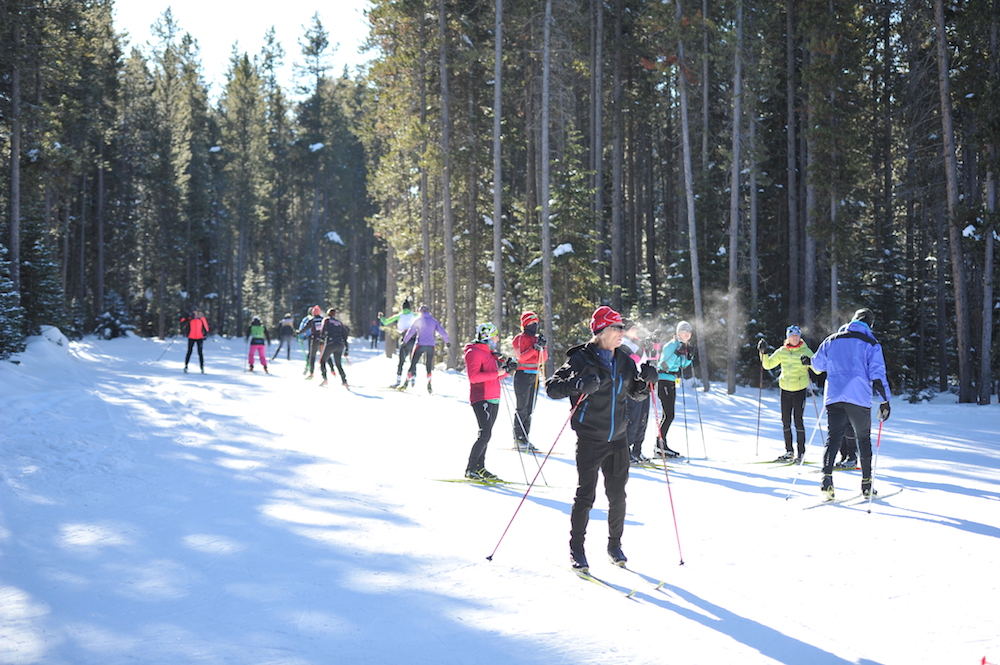
Skiers at the trailhead of the Rendezvous Ski Trails in West Yellowstone, Mont., on Monday, Nov. 21, 2016. (Photo: FBD)
Target audience: Open to the public and all levels of skiers.
Anticipated participation: Around 2,500. “We think it might be a little bit lower this year because of the late snow and the lack of the SuperTour,” Dow noted. “Last year we had a lot. We had really really early snow last year. Around 3,500 in years past.”
Advance reservation required? Yes for clinics and races. Online registration only. “The competitive events and the clinics all require you to be pre-registered, but all the evening events are open to the public,” Dow said.
Trail pass rates: $55 for the month of November for adults. $26 for kids, which is 10 and under. Day passes are $12 and $6
Grooming report:Approx. 20-25 k groomed as of Monday, Nov. 21.
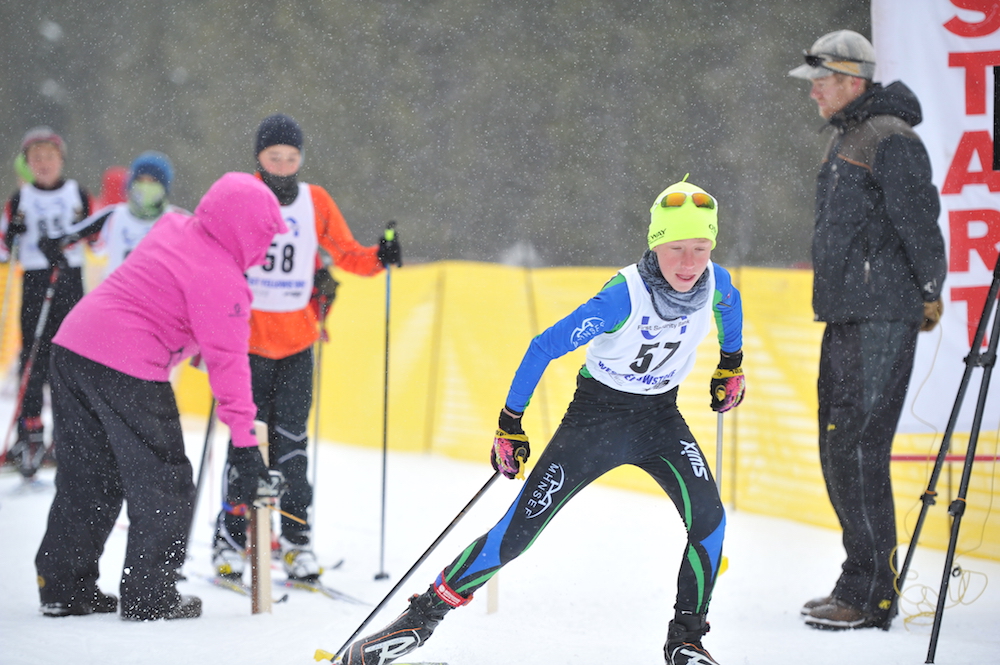
A young skier darts out of the start at last year’s Yellowstone Ski Festival in West Yellowstone, Mont. (Photo: 2015 courtesy photo)
What makes this camp unique?
“Good, early, reliable snow,” Dow said.
“Also it’s a place where skiers from all across the country, juniors to seniors to masters, come together,” she added. “… And as a junior, that’s pretty unique to get to be able to do that. And also to see all the equipment from vendors and see wax clinics. To have all of the elements in one spot is one of the most unique things about this camp.
“We’re a tiny town out in the middle of nowhere,” she continued. “Our ability to put on such a big event, is, in my opinion, probably one of the most unique aspects of our camp. We are almost entirely volunteer run. The fact that the people who run the festival have little to no experience cross-country skiing, but put on these races, is just flabbergasting to me. It’s pretty incredible.”
Special events: See website for complete lineup of clinics and more, including:
Presentation: Wildlife photographer Tom Murphy
Yellowstone Historic Center presents The Ski Hero Soldiers of Yellowstone
Whiskers, Whiskey, and Waxing featuring whiskey tasting samples from Willie’s Distillery of Ennis, MT
Branch Beer Bash: Micro and craft beer tasting
Presentation: Kaatsu Training by Doug Barnard
Winter Wildlands Alliance Backcountry Film Festival
Women, Wine, and Waxing
Keynote speaker Ruff Patterson
Yellowstone Ski Festival Social
— Gabby Naranja
***
What: Crested Butte Nordic Thanksgiving Camp
Where: Crested Butte, Colorado
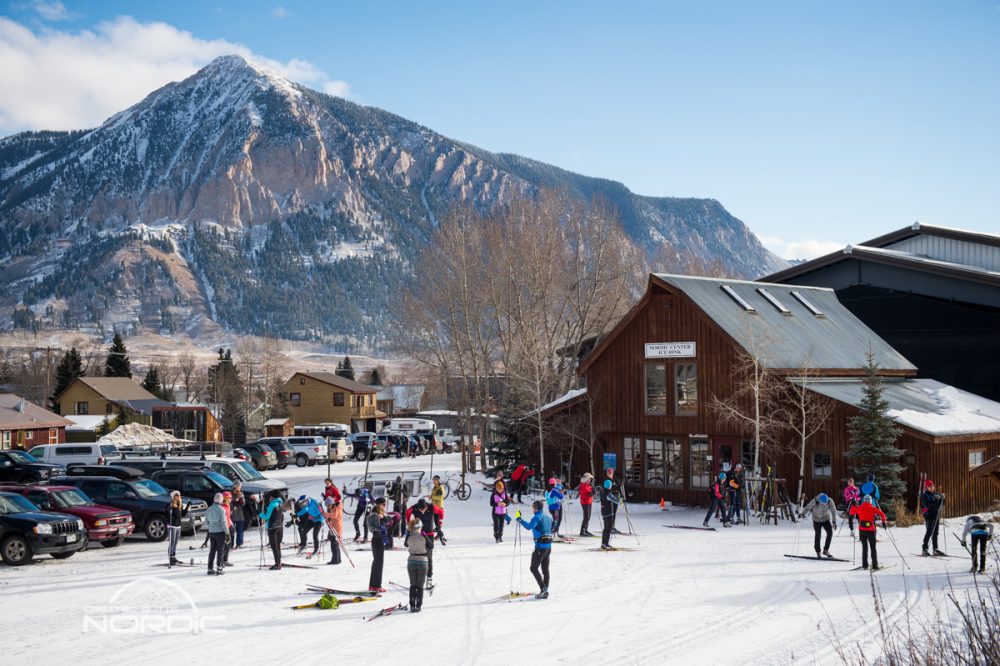
The downtown-based Crested Butte Nordic Center. (2015 courtesy photo)
When: Wednesday, Nov. 23, to Sunday, Nov. 27, 2016
How many years running: 16 as an official, organized camp: “In case of a low-snow year, like our current situation, we have a low-snow venue called Lily Lake and that’s up on Kebler Pass which is six miles West of town,” said Drew Holbrook, marketing director for Crested Butte Nordic.
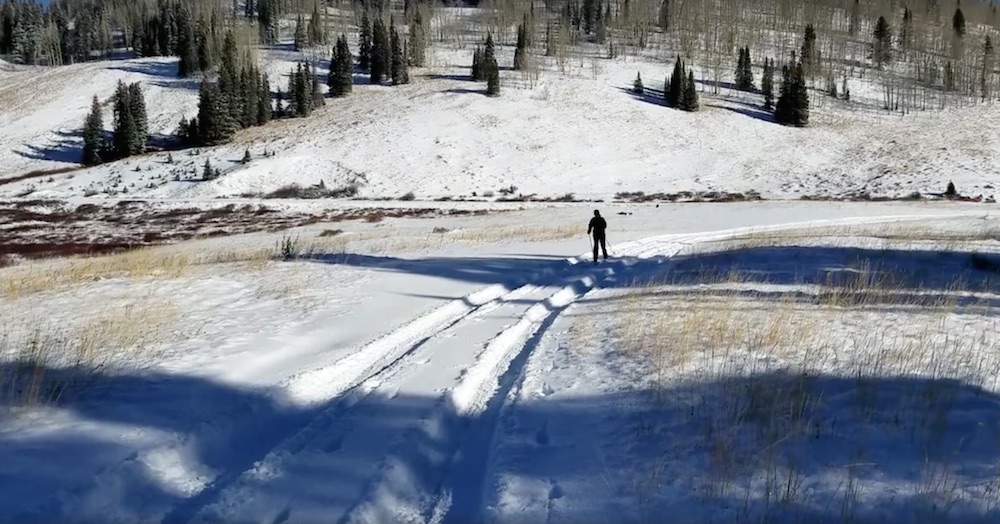
Skiing at Lily Lake in Crested Butte, Colo., on Nov. 18, 2016. (Photo: CB Nordic/Facebook video)
The road up to Kebler Pass is maintained by the county. Individuals or groups can drive up to the pass, but carpooling is encouraged when the low-snow option is in play.
“We have vans to shuttle people up to try and minimize traffic and congestion — it’s kind of like a similar situation in terms of people (but not as and because not quite as many people) as driving up on the South Plateau outside West Yellowstone, so we shuttle people up there. For the people taking clinics we shuttle them all up in vans.”
The Lily Lake area receives 600 inches of annual snowfall and no trail pass is required. As of Nov. 18, Lily Lake had received nearly six inches of snow.
The Nordic Center located in town is also prepared for low snow, according to Holbrook. “Just in the last three years we have had the trail right next to the Nordic Center in town, called Ruthie’s Run, homologated re-engineered. So it’s seeded with grass, it is mowed and basically we can groom that with literally six inches of snow or so. It’s kind of interesting because it snows a lot more up on Kebler Pass at Lily Lake, it might snow two feet up there and only six inches in town, but it’s easier to actually groom on Ruthie’s down in town if we get the snow. Lily Lake is on Forest Service property, so we have to wait until there is a foot of snow before we are allowed to groom up there.”
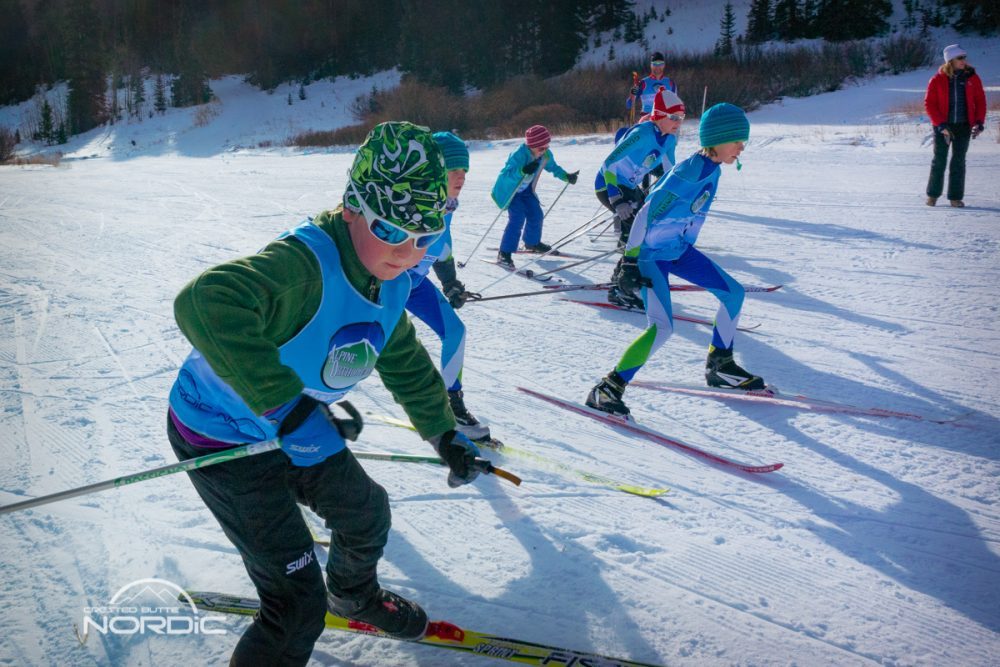
Crested Butte Thanksgiving Camp: not just for big people. (2015 courtesy photo)
Target audience: All ages and abilities. New skiers are encouraged to come try the sport out.
Anticipated participation: Holbrook expects 60 participants for the clinics offered. A round-robin classic “refresher” will be held Thursday, Nov. 25, with full-day clinics on the 26th and 27th.
Advance reservation required? Strongly encouraged. “For the clinics it is best to sign up ahead of time,” Holbrook said. “We never get too many people signing up until it starts snowing, but they do fill up. You might get lucky the morning of and come into the Nordic Center and sign up and get a spot, no guarantees.”
Trail pass rates: $20/day, skiers 17 & younger ski free. $150 for a 10-punch transferable pass.
Grooming report: Lily Lake is receiving snow. The low-snow option looks more than promising.
What makes this camp unique? “One thing that makes it unique, Lily Lakes is a great locals’ place to ski,” Holbrook said. “It’s pristine and scenic. And of course, its great skiing from the Nordic Center in town, too. There is plenty of room on the trails for everybody, you are not getting swarmed by people and not being able to do your workout. It’s easy to get in a good ski.”
Special events:
Ski Free Day: Wednesday, Nov. 23 at the Crested Butte Nordic Center
Crested Butte Mountain Resort “Donation Day”. Donate some money, you decide the amount, and ski with a little help from gravity at the downhill area. All proceeds support the Crested Butte Snowsports Foundation
Round-robin refresher clinic: Thursday, Nov. 24
U16 Junior Training Camp: Nov. 25-27
Alley Loop Race Series (Race #1) 5 k & 10 k skate
Winter Kick-Off Party (Saturday night): Fundraiser for Crested Butte Nordic, tickets $25/adult,$15/children. (Author’s note: Crested Butte throws fun parties.)
— Jason Albert
***
NOT CAMPS, PER SE, BUT YOU’RE PROBABLY WONDERING ABOUT:
ALASKA
Fairbanks
Birch Hill Ski Area, in Fairbanks, is probably the most reliable spot in North America for groomed early-season skiing. This is the venue that once held a FIS race on Nov. 2. Temperatures are reliably cold, and any snow that falls tends to stay. The Nordic Ski Club of Fairbanks grooms approximately 35 k of trails at Birch Hill. The trails are meticulously maintained in summer, if not manicured, and are justly renowned for their ability to provide good skiing after mere inches of snowfall.
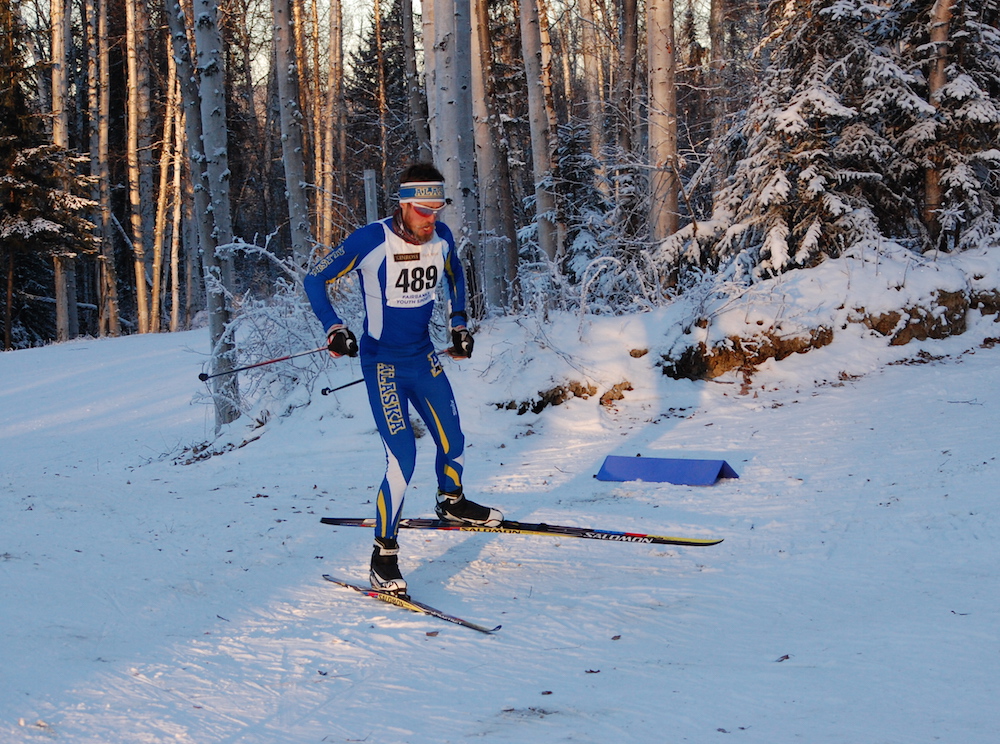
University of Alaska Fairbanks skier Alex Eckert racing in the Alaska Nordic Cup FIS races in Fairbanks, Alaska, on Nov. 19, 2016. (Photo: Max Kaufman)
Birch Hill again held FIS races on the recent weekend of Nov. 19-20. It had snowed approximately 5″ total in Fairbanks this winter by that point. Weekend racers – and there were hundreds of them, from kindergarteners without poles to the APU Elite Team – skied on trails that had been packed and dragged to create a base of approximately 2″. There were admittedly some leaves and dirt showing through in places – but, crucially, it was leaves, not rocks. Most skiers in the FIS/USSA class of the weekend’s races competed on their prior-generation, few-years-old race skis.
Locals consistently described the conditions, which led half the APU Elite men’s team to make the trek north from Fairbanks for the weekend, as among the worst mid-November conditions in living memory.
Anchorage and nearby
Under normal conditions, as measured by a 30-year average, Anchorage around Thanksgiving is a nordic nirvana. There are at least 40 kilometers of groomed trails at Kincaid Park, on the west edge of town, and another 16 k at Hillside, on the east edge of town. (16 k are lit at Kincaid, and 8 k are lit at Hillside.) The two ski areas are connected by a network of dozens of kilometers of additional trails (also groomed, or at least snowmachine dragged), ranging from moose-dense forest to urban greenbelt, including the Coastal Trail, which runs along the shores of the Pacific Ocean for most of its 15 k. You can ski from Hillside up into the Chugach Front Range, and from the frontcountry into true backcountry. Around 20 miles out of town to the north, Beach Lake has another 20 k of groomed trails (nine of them lit). 40 miles to the south, Girdwood boasts a growing trail network of around 10 k total, including a competition-level 5 k loop. All trails are open 24/7, and there is no trail fee for any of them.
Hillside ski trails in Anchorage, Alaska, on Oct. 22, 2016, before the rains came. (Current conditions are far worse.) (Photo: Gavin Kentch)
Judging from the last three winters, however, Anchorage sadly simply cannot be recommended as a viable option for Thanksgiving snow in these days of climate change. While all three winters saw the first snowfall in October or early November, and some period of good skiing immediately thereafter, all three gave way to wind and rain by Thanksgiving week. As of the weekend of Nov. 19-20, 2016, Anchorage has no natural snow on the ground at Kincaid, a 1-2″ base of bulletproof sheet ice at Hillside, and skritchy skiing on a local golf course. On the bright side, the trail running is amazing (bring your Icebugs), and the nordic skating is world class.
Kincaid has limited snowmaking capabilities, which are capable of covering a loop of as much as 3-4 k centered around the main stadium area. (This is where over 95 percent of Anchorage ski races have occurred over the last two winters.) The Nordic Skiing Association of Anchorage (NSAA) turned the snowguns on briefly on Nov. 16, then again on Nov. 18. Recent cold temperatures have allowed them to operate continuously since. NSAA stated on Sunday morning that there were no trails open for skiing yet, but that they were “getting closer” to opening the first loop and had reached the stage where the PistenBully was starting to move snow around. A loop of approximately 2 k was opened amidst single-digit temperatures on Thanksgiving morning, Nov. 24.
In a recent email to FasterSkier, NSAA Program Manager Tamra Kornfield addressed the possibility of, for example, guaranteeing skiable snow by Thanksgiving in exchange for attracting skiers and generating user fees. Kornfield wrote, “The theory of trail fees has been discussed for many years, but currently our ski trails are on Municipal Park land, and we cannot charge to access these parks. However, I can say that the snowmaking system was designed to extend the ski season, not create it from scratch, so I do foresee doing more to fundraise for this great expense that has now saved the last two ski seasons.”
Mat-Su Valley
Archangel Road above Palmer, Alaska, on Nov. 4, 2016 (current conditions are better than this). (Photo: Gavin Kentch)
The Matanuska–Susitna Valley, approximately one hour outside of Anchorage on a major highway (call it up to 90 minutes to the ski areas discussed here), has been described on this website as having “the season of winter that starts in the fall and ends in the spring.” That’s pretty fair.
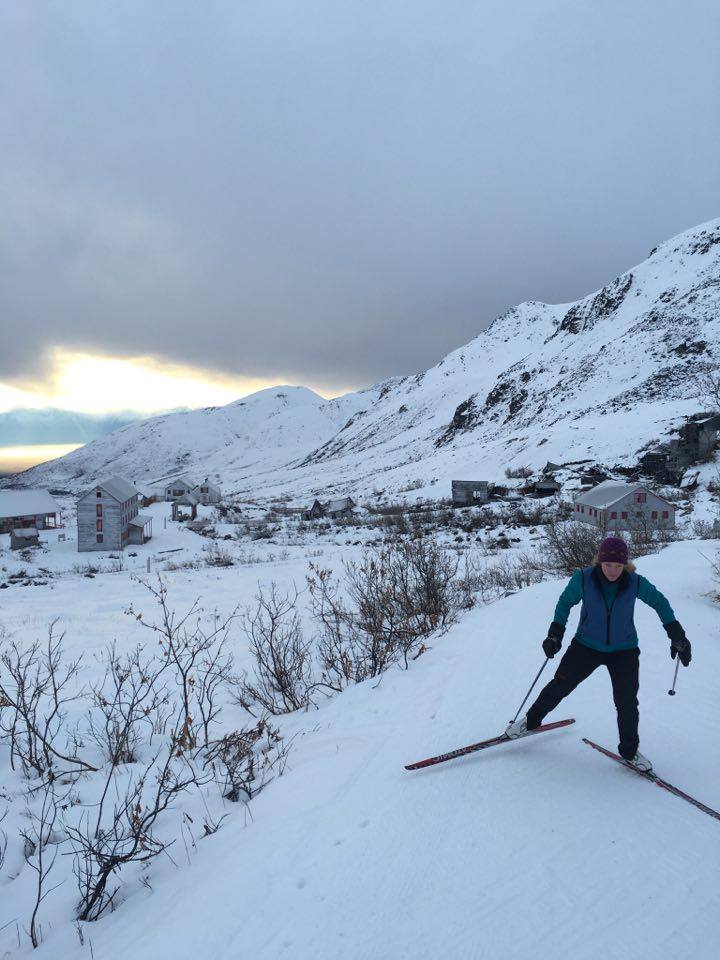
The Mat-Su Ski Club, including the redoubtable Ed Strabel and sometime FasterSkier contributor Jeff Kase, typically groom 7 k of Bill Spencer-designed trails at Government Peak Recreation Area (to be expanded as soon as next summer), 7.5 k (one-way) on Archangel Road, and 5 to 10 k at Hatcher Pass. Archangel Road hosted one of the last North American ski races of 2015/2016 and one of the first of 2016/2017. Hatcher Pass is a truly special place, as the groomed trails wend their way past the historic buildings of an old gold mine nestled in a bowl in the Talkeetna Mountains. “Imagine skiing through an Old West ghost town turned collectible Christmas village,” local Master and English professor Shannon Gramse once wrote in these pages.
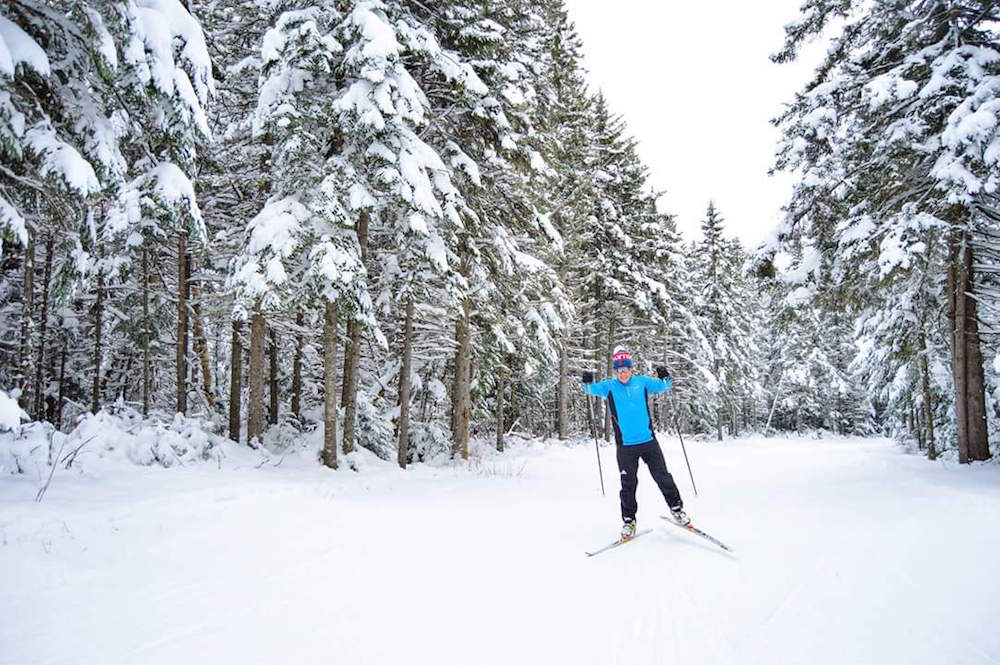
Skiing at Hatcher Pass, above Palmer, Alaska, on Nov. 20, 2016. (Photo: Nat Herz)
As of Nov. 19, Government Peak (a one-hour drive one-way from central Anchorage), which is at a lower elevation than the other two areas, did not have enough snow to ski on. Archangel Road (75-minute drive) had a base of approximately 4-5″, but it is bulletproof hardpack that should provide a reliable base until spring. The Mat-Su Ski Club has been grooming there several times a week, and the skiing is good to superb. The Mat-Su Ski Club also groomed Hatcher Pass (90-minute drive) over the weekend.
For the best information on current trail conditions, including formal grooming reports when available: Anchorage (official NSAA and user-generated), Mat-Su, and Fairbanks.
— Gavin Kentch
WASHINGTON
Then there are the possible Northwest options for early season skiing, including the well-known:
Bluebird day on Washington Pass in November 2016. (Methow Trails courtesy photo)
Methow Valley
“I giggle about the current skiing up at Washington Pass which is a the top of the North Cascades Highway,” said Kristen Smith, marketing director for Methow Trails based in Winthrop, Washington. “What they have groomed is almost exactly one mile or a 1.6-kilometer loop. It goes out to the Washington Pass overlook, which is stunningly gorgeous. I mean the whole ski is the most beautiful, their probably can’t be a place anywhere in the world that has more beautiful scenery than this, on this little loop.”
Smith explained the loop is being groomed for skate and classic. “It’s a handful of super-dedicated locals who do the grooming completely on their own and you don’t pay to ski there,” Smith said.
But here’s the important beta: call or check online before you head to the Methow or think you might ski at the top of Washington Pass. The Washington Department of Transportation is closing the pass temporarily due to possible hazardous weather and avalanche conditions as of Monday, Nov. 21.
Skiing at Washington Pass, Nov., 2016. (Courtesy photo)
“It will not mean a loss of skiing,” Smith explained in the event the pass is closed for the season. “If the gate is closed farther down on the road to Washington Pass, they will start to groom different areas that we can still access. So to get the snowfall that is expected, they will start to groom just start to groom a bit lower, but bigger loops than what we have up there at Washington Pass. If we are really lucky we will get a big snowfall here on the valley floor and then Mehto Trails who I work for, we will start grooming our system. And we are all set and ready to go the moment we get six inches of snow we will start grooming our trails here.
Conditions: Pass is closed. SR 20, the North Cascades Highway, is closed from milepost 134 to milepost 171 due to impending weather and potential increasing avalanche hazard.
Restrictions Eastbound: Pass Closed
Restrictions Westbound: Pass Closed
— Jason Albert
EAST-COAST SNOW?
While they’re often among the last to get on natural snow, let’s throw eastern skiers a bone. Wintry conditions exist in New England and northeastern New York. While we can’t list them all (and are obviously unable to cover all the open nordic centers across the country), here are a couple weather-dependent options in this region’s “North Country”.
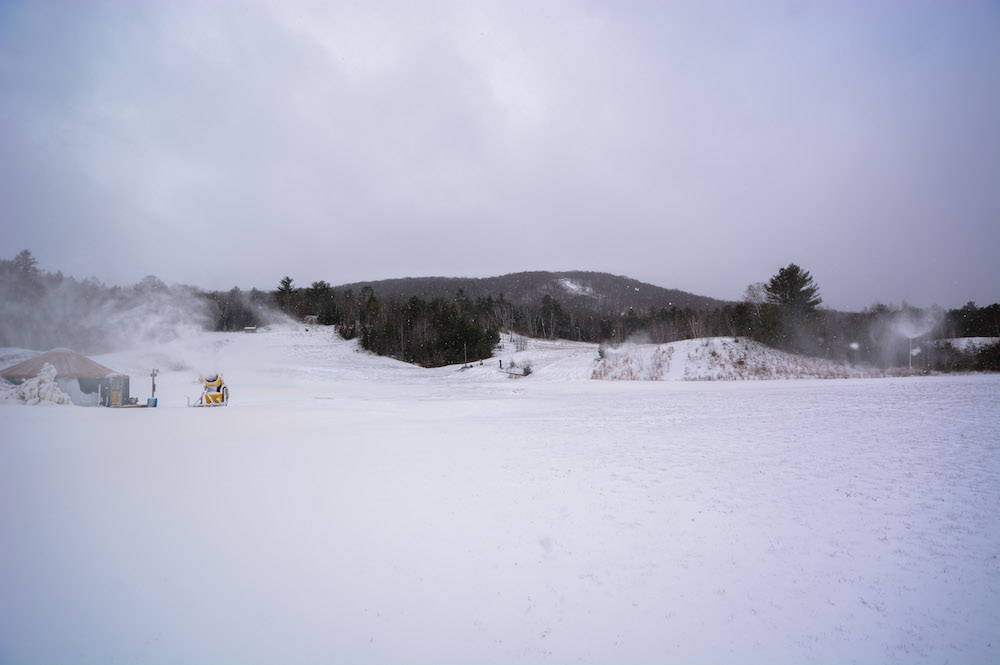
Snow guns a’blazing at Gore Mountain’s Ski Bowl in North Creek, N.Y., on Monday morning, Nov. 21, 2016. (Photo: Mike Pratt)
Gore Mountain Ski Bowl
According to general manager Mike Pratt, Gore Mountain in North Creek, N.Y., expects to open its newly homologated ski bowl on Friday, Nov. 25. Gore’s new 4.24-kilometer trail network includes 3.19 k of trails with snowmaking.
“We should have quite a bit of terrain for an opening weekend,” Pratt wrote in an email, adding that they’re hoping for trails A, B, C, and G, which would amount to a total of 2.3 k. “The open stadium could accommodate more lanes if needed, but next week’s weather will ultimately determine how much terrain is available.”
This Friday through Sunday at the Ski Bowl, the Hudson United Race Team (HURT) is holding a three-day ski camp for its junior members. Skiers of all ages not associated with the club can buy a day pass and ski on the trails as well.
“We set up this camp as a way to highlight what Gore has been doing,” HURT coach David Kvam explained.
Craftsbury
Then there’s the Craftsbury Outdoor Center, the Northeast Kingdom’s iconic ski center. Although the ski trails were dry as of Nov. 18, the forecast has potential. According to Craftsbury’s Marketing Director Sheldon Miller, the National Weather Service issued a winter storm warning for six to eight inches of snow by the end of Monday. Asked about snowmaking, Miller replied, “We’re looking for cold and dry for snowmaking, but there’s definitely some potential this week. We do need 28 [Fahrenheit] at a minimum, but colder is always better.”
With overnight temperatures forecast for low to mid 20s Sunday through Thursday, the weather looks inclined to support snowmaking.
Elsewhere, Prospect Mountain in southern Vermont received snow. According to their conditions page, they’re closed, but Zach Caldwell posted this photo montage on Sunday:
As of Tuesday, Prospect reported more than 28 inches of packed powder. Current conditions
Mt. Van Ho
A skier skates on fresh powder at Mt Van Hoevenberg last Sunday, Nov. 20, in Lake Placid, N.Y. (Courtesy photo)
In Lake Placid, N.Y., Mt. Van Hoevenberg reported “beautiful packed powder” and 30 kilometers of skiing open on a 7-inch base. Current conditions
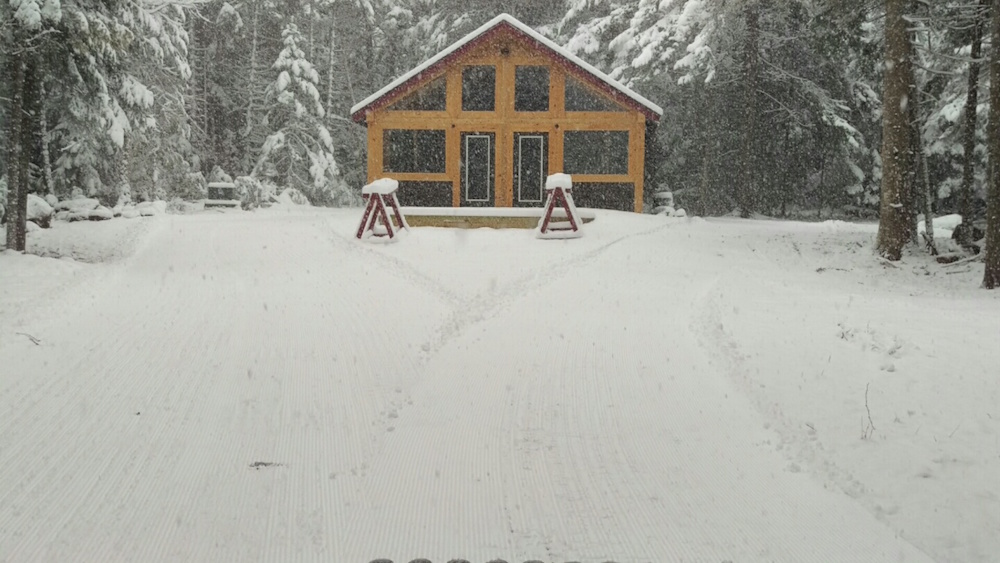
Josie’s Cabin, Mt. Van Hoevenberg’s ski-to destination, will be open for Thanksgiving. (Courtesy photo)
“The Olympic Cross Country ski trails of Mt Van Hoevenberg have been graced with just under two feet of snow in the last few days,” nordic program manager Kris Cheney-Seymour wrote in an email. “We have a little over 30k of trails groomed very good skiing. Classic tracks are set on varied terrain.”
The lodge is open with rentals and a snack bar for Thanksgiving, along with Josie’s Cabin, a “ski-to destination.” and a ski-to destination
“Upgrades over the last two summers on the famous Ladies 5k have allowed for the earliest opening of this trail in our history,” Seymour continued. “Our 5k homologated loop will be the primary course for the upcoming 2017 Junior National Championships hosted here this March.”
— Peter Minde & Alex Kochon
***
WE WANT PHOTOS! Share your Thanksgiving week ski photos with us by emailing info@fasterskier.com (please note when and where they were taken). We’ll post our favorites to Instagram, and if you’d like to share a firsthand trail report from your favorite spot or nordic center, do so in the comments below!
University of Colorado’s Mads Stroem on his way to victory in the 7.5 k classic race at Kincaid Park, part of the University of Alaska Anchorage Invitational held last week. (Photo: Tim Whiton)
After a three-week break of racing after the University of New Mexico Invitational in Red River and the University of Colorado Invitational in Steamboat Springs, the Rocky Mountain Intercollegiate Ski Association (RMISA) shifted gears to sea level and the University of Alaska Invitational and this year’s RMISA Championships. The UAA Invite was originally scheduled to be held at Girdwood, but a lack of snow and an abundance of cold rain moved all four of the final RMISA races to Anchorage.
“Seven days ago at this time, we didn’t have hardly any snow on the ground and we were in the middle of three days of steady rain,” the UAA team wrote on their blog this weekend. “We’d scrapped our original plan to race our first two (of four) races on the new Girdwood racing trail because there was no snow at all in Girdwood. Not even a thin film of ice. Just brown dirt and gray rocks. Skis hardly glide on that kind of surface.”
Cambria McDermott of Montana State, who would eventually finish eighth, leading Emilie Cedervaern in the interval-start 5 k skate held at Hillside. (Photo: Tim Whiton)
Despite the wet weather that greeted most teams on Saturday’s arrival, races began on Monday, Feb. 23, at the Hillside Nordic trails with 5- and 10-kilometer skate races for women and men respectively. The course was fully saturated with some standing water, dirt, and icy uphills. Using the Spencer loop as the beginning of the course, racers faced a challenging climbing section for roughly two kilometers before a slow, grinding descent past the start, and two kilometers of short, steep uphills and downhills before the finish.
As much of the season has gone, the University of Colorado’s duo of Mads Strøm and Rune Ødegård paced the men’s field. Ødegård won the 10 k in 25:18.6, after starting slowly and speeding up on the second lap, with Strøm nipping University of Utah’s Niklas Persson by two-tenths of a second in 25:26.4. The rest of the men’s top ten was over thirty seconds back, but tightly bunched together despite the tough conditions and hilly course.
Race winner Rune Oedegaard of the University of Colorado leads Michael Fehrenbach of University of Alaska Fairbanks in the 10 k skate at Hillside. Fehrenbach placed 16th. (Photo: Tim Whiton)
In the women’s 5 k race, University of New Mexico’s Emilie Cedervärn led New Mexico to the team win over Utah. Cedervärn won in 14:46.9 to Utah’s Veronika Mayerhofer’s 14:58.9 and New Mexico’s Eva Severrus’ 15:11.5. Much of the women’s top ten was strung out, finishing less than a minute out of the lead.
After the first day of racing, the University of Utah led the University of Colorado by eight points.
With the skate races finished, it was obvious the Hillside courses would not allow for another day of racing. With a return of freezing temperatures Monday evening, the trails turned to a sheet of ice and Tuesday’s races were tentatively postponed to Wednesday with the prospect of shifting even to Thursday depending on how Kincaid park, the site of the weekend’s RMISA Championships looked in the morning.
Conditions at Kincaid Park were not always ideal, but organizers and racers made the best of things. (Photo: Tim Whiton)
Luckily, Kincaid did manage (mostly) to freeze over night. The traditional stadium remained under water so the courses focused on short 2.2 k loops starting and finishing in the biathlon stadium and racing resumed on Wednesday morning with five and seven and a half kilometer classic races. Despite aggressive grooming, the course was mostly chunked ice and sugar, resulting in fast times and challenging conditions.
In the women’s race, Cedervärn made it two wins in a row in a time of 15:50 by beating Mayerhofer, who had started wearing the yellow discipline leader bib. Mayerhofer’s 15:57.8 put her in front of teammate Sloan Storey’s 16:01.9 and UAA’s Manon Locatelli’s 16:06.1. The top four women were clearly in a league of their own, with a gap of 25 seconds between Locatelli and fifth-place Kathrin Schratt of UAA. However, after that it was again close racing for the women, with places five through nine separated by less than nine seconds.
Storey’s third place finish was the only time in four days of racing in Alaska that an American skier stood on the podium in an RMISA race.
Macjenzie Kanady of University of Alaska Anchorage, who finished seventh, and runner-up Veronika Mayerhofer of the University of Utah in the 5 k skate at Hillside. (Photo: Tim Whiton)
The men’s race saw the same top three from Monday’s race, but with a small shift. Strøm and Ødegård used some fine classic skiing to distance themselves, once again, from the men’s field. Strøm won in 20:22.2 and Ødegård finished second in 20:33.5. Persson finished third again in 20:57.4, just ahead of Clement Molliet of UAA. Places five through 18 were separated by only 35 seconds, making for some tight and exciting racing. Interestingly, four of the men’s top 10 raced the steep uphills on skate skis and double poling. Moritz Madlener of Denver University led the four in seventh place, while Montana State University’s threesome of Forest Mahlen, Erik Axelsson, and Martin Muan finished close together in 8th and tied for 10th respectively.
After the two races of the UAA Invitational, the University of Utah won the team competition on the nordic side with 351 points to the University of Colorado’s 319. University of New Mexico rounded out the top three teams with 299 points. Combined with alpine, Utah took overall top honors.
CU’s Rune Oedegaard racing to second place in the 10 k skate at Kincaid Park as part of RMISA Championships. (Photo: Tim Whiton)
After a training day at Kincaid on Thursday marked by late morning grooming that left the track soft and sugary, RMISA regional championships commenced on Friday with 5/10 k skate races. Thankfully, the Kincaid groomers did incredible work which, coupled with overnight lows around 15 degrees, made for a first and fast track. The extensive work allowed for an increase in track length to 3.7 k with several short, steep climbs and limited rest.
Strøm made quick work of the challenging three lap course and stormed to a nearly twenty second victory in 22:49.3 over his teammate Ødegård’s second place 23:08.1. One second behind was Denver University’s Dag Frode Trollebø. Just as in the classic race on Wednesday, places four through 17 were separated by 35 seconds. The women’s race saw domination by New Mexico’s Cedervärn and Severrus. Cedervärn won the lap and a half course in 13:40.5 ahead of Severrus in 13:49.3 and Colorado’s Petra Hyncicova’s 13:51.1.
Unfortunately, Anchorage, as it has much of the year, did not see very cold temperatures and come Saturday morning the track was soft and quickly turned into a loose mealy ice. Nevertheless, great racing occurred on the same courses at Kincaid with 15/20 k classic mass start races.
The women raced first on a slightly longer course and the lead pack of seven stayed tightly bunched through about halfway despite some aggressive skiing. Early on the third lap, Cedervärn made a hard push on the steep climbs, breaking apart the field, and dropping everyone except Utah’s Mayerhofer. Despite a gritty chase, Mayerhofer lost time on the final lap and Cedervärn won in 42:35.3 with Mayerhofer in 42:59. UAA’s Locatelli finished strong in third in 43:10.8.
Mads Stroem of the University of Colorado was the RMISA Champion in the 10 k skate at Kincaid Park in Anchorage. (Photo: Tim Whiton)
The men’s race, despite the end result, was quite different and more exciting than any other race this season.
A large pack 11 formed on the first of six laps and stayed bunched together through four laps. Several skiers made hard pushes to get off the front and ski away, but the fast conditions, lack of long uphills, and strong drafting made the chase pack very strong. Aku Nikander of New Mexcio was aggressive in covering many of the attacks and Ødegård of Colorado also brought the race back together several times.
Ultimately, the race came down to the last lap with Colorado’s Ødegård and Strøm attacking the uphills and creating some separation. Nikander continued to fight and managed to solidify a podium spot partway through the lap by closing down the gap several times. The three were together in the last climb, but the CU boys made a gap on the final downhill and rise into the stadium, distancing Nikander by two seconds at the finish.
In the last hundred meters, Ødegård, visibly tiring from pushing the pace hard for the last two laps, was overtaken at the line by Strøm by three tenths of a second. The men finished in a blistering 50:20 for the over-21 kilometers. The rest of the men’s top ten was within 45 seconds of the lead.
With final scores for RMISA Championships tabulated, Colorado won the nordic standings with 337 points to New Mexico’s 324 and Utah’s 295; CU also took the overall title, this time over New Mexico.
The Western schools are looking forward to heading east shortly for NCAA’s. After racing at sea-level for a week, the RMISA skiers are psyched for some fast skiing and ready to see how the other divisions are skiing. Mostly though, they are all hoping for some cold snow and extra blue skiing, something not seen out west yet this season!
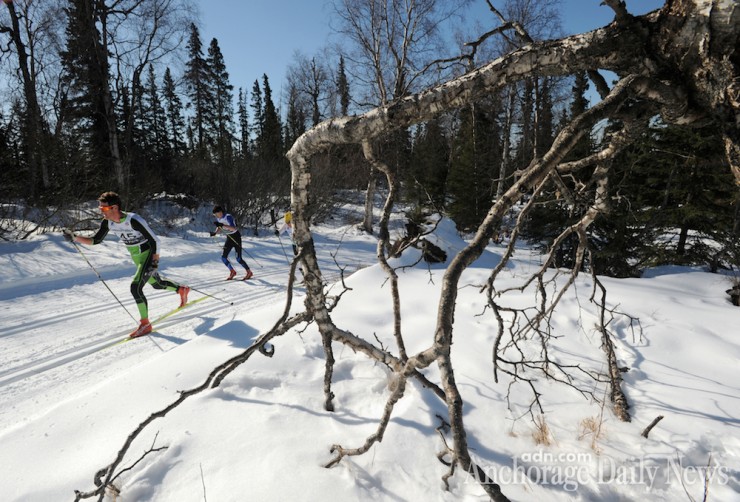
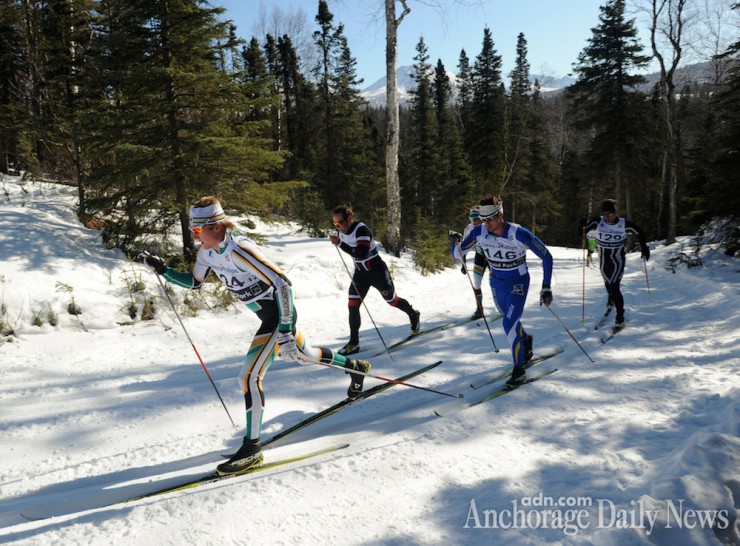
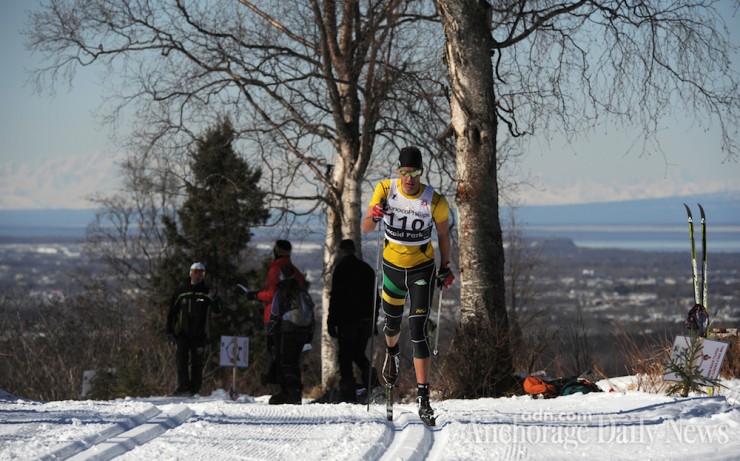
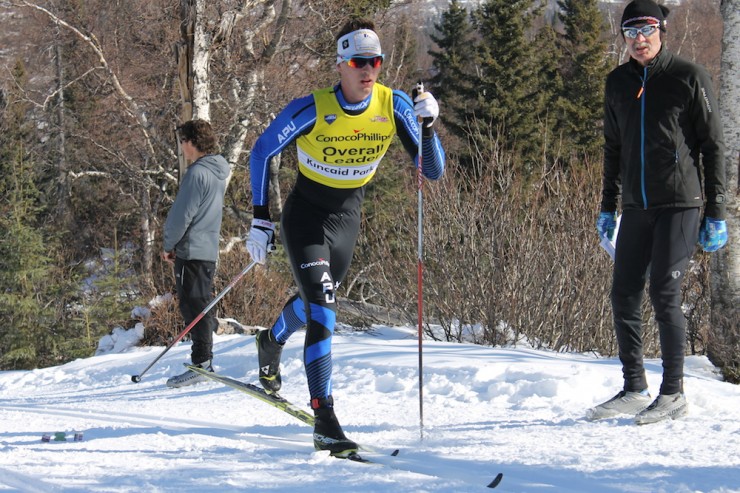
ANCHORAGE, Alaska — A look back at the men’s 50-kilometer classic mass start at U.S. Distance Nationals last Friday, March 28, with the focus on the frontrunners of the five-lap race.
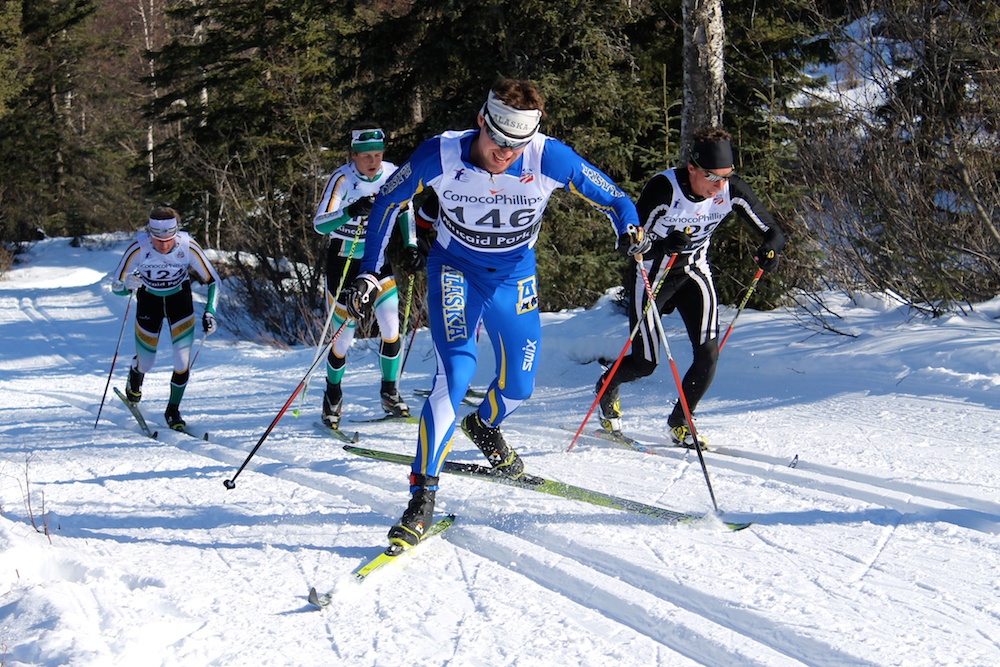
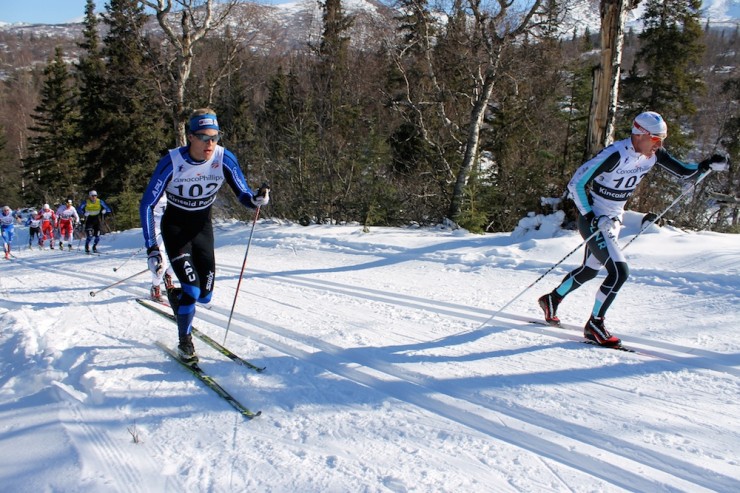
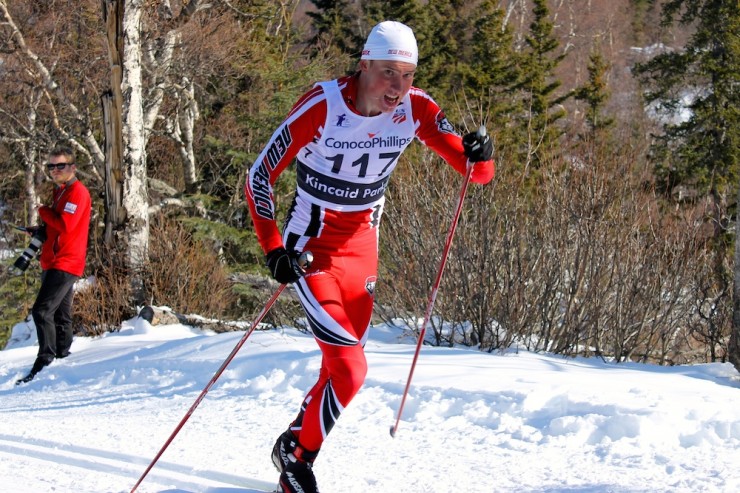
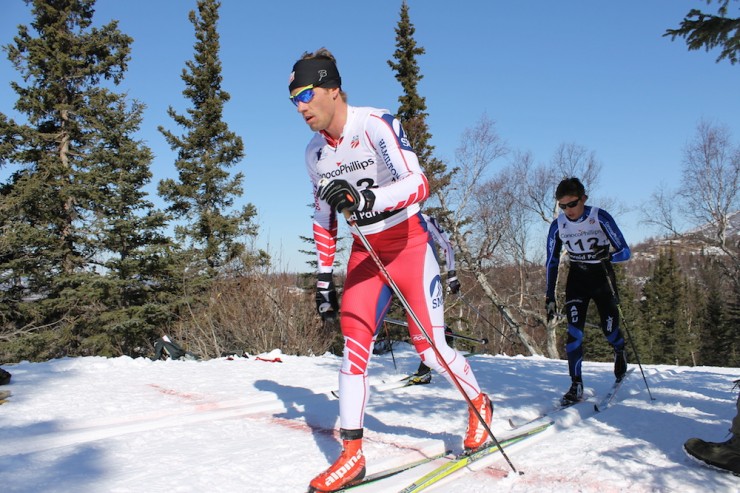
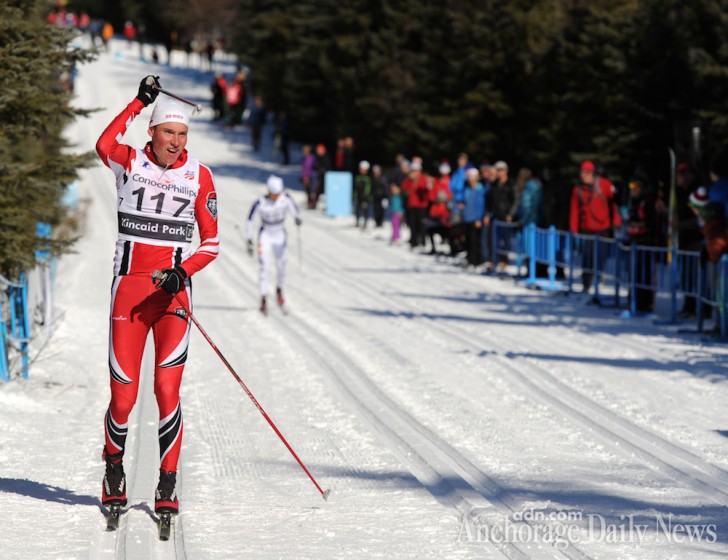
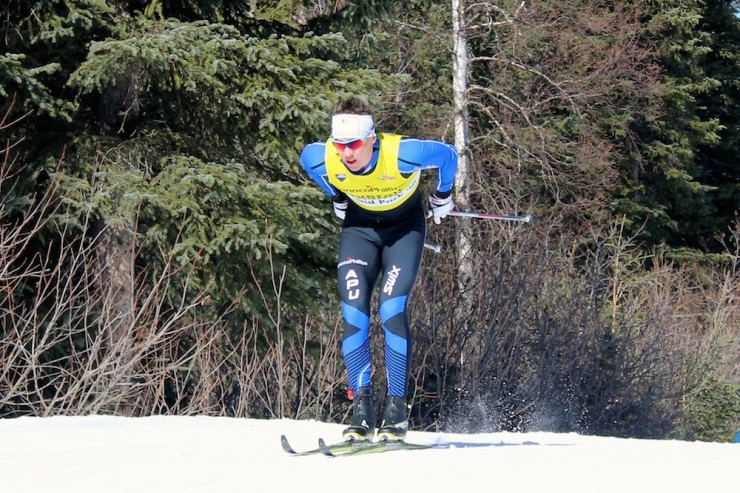
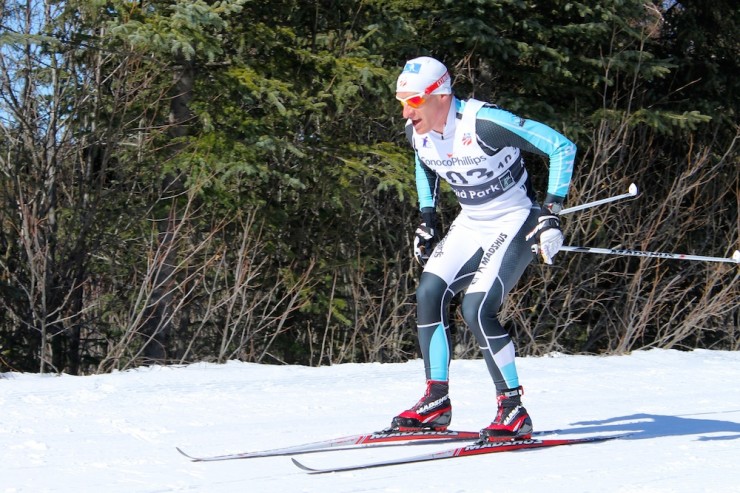
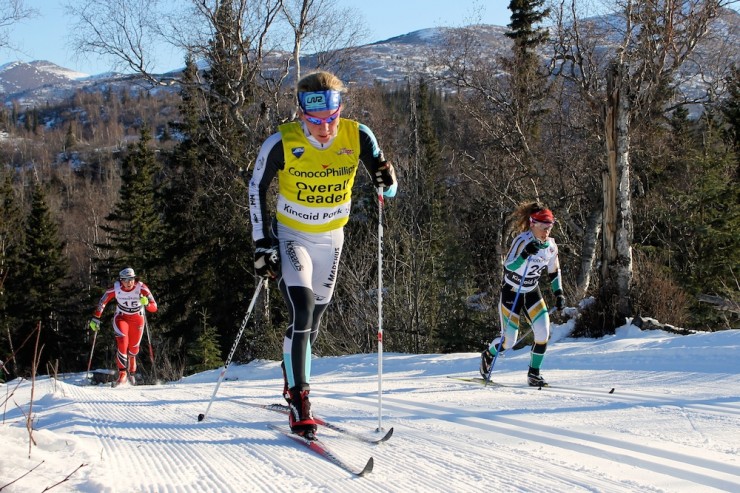
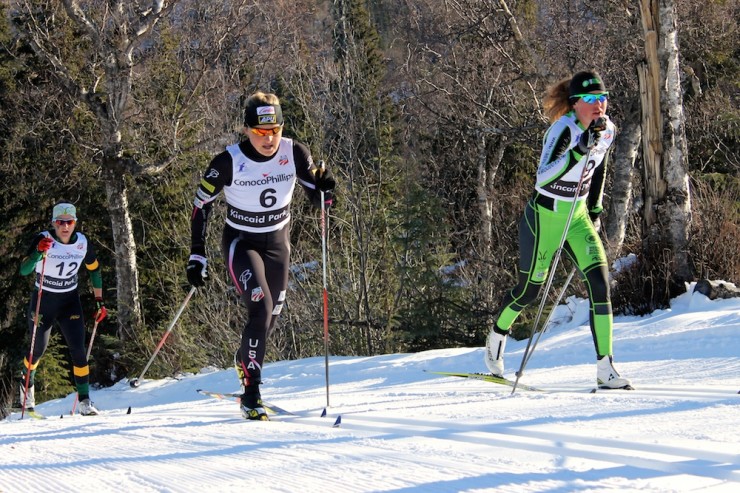
Erik Bjornsen (APU/USST) leads the pack early in the men’s 50 k classic mass start at U.S. Distance Nationals at Hillside in Anchorage, Alaska.
2014 U.S. Distance Nationals 50 k classic mass start at Hillside trails in Anchorage, Alaska
2014 U.S. Distance Nationals 50 k classic mass start at Hillside trails in Anchorage, Alaska
2014 U.S. Distance Nationals 50 k classic mass start at Hillside trails in Anchorage, Alaska
2014 U.S. Distance Nationals 50 k classic mass start at Hillside trails in Anchorage, Alaska
2014 U.S. Distance Nationals 50 k classic mass start at Hillside trails in Anchorage, Alaska
2014 U.S. Distance Nationals 50 k classic mass start at Hillside trails in Anchorage, Alaska
2014 U.S. Distance Nationals 50 k classic mass start at Hillside trails in Anchorage, Alaska
2014 U.S. Distance Nationals 50 k classic mass start at Hillside trails in Anchorage, Alaska
2014 U.S. Distance Nationals 50 k classic mass start at Hillside trails in Anchorage, Alaska
2014 U.S. Distance Nationals 50 k classic mass start at Hillside trails in Anchorage, Alaska
2014 U.S. Distance Nationals 50 k classic mass start at Hillside trails in Anchorage, Alaska
2014 U.S. Distance Nationals 50 k classic mass start at Hillside trails in Anchorage, Alaska
2014 U.S. Distance Nationals 50 k classic mass start at Hillside trails in Anchorage, Alaska
2014 U.S. Distance Nationals 50 k classic mass start at Hillside trails in Anchorage, Alaska
2014 U.S. Distance Nationals 50 k classic mass start at Hillside trails in Anchorage, Alaska
2014 U.S. Distance Nationals 50 k classic mass start at Hillside trails in Anchorage, Alaska
2014 U.S. Distance Nationals 50 k classic mass start at Hillside trails in Anchorage, Alaska
2014 U.S. Distance Nationals 50 k classic mass start at Hillside trails in Anchorage, Alaska
2014 U.S. Distance Nationals 50 k classic mass start at Hillside trails in Anchorage, Alaska
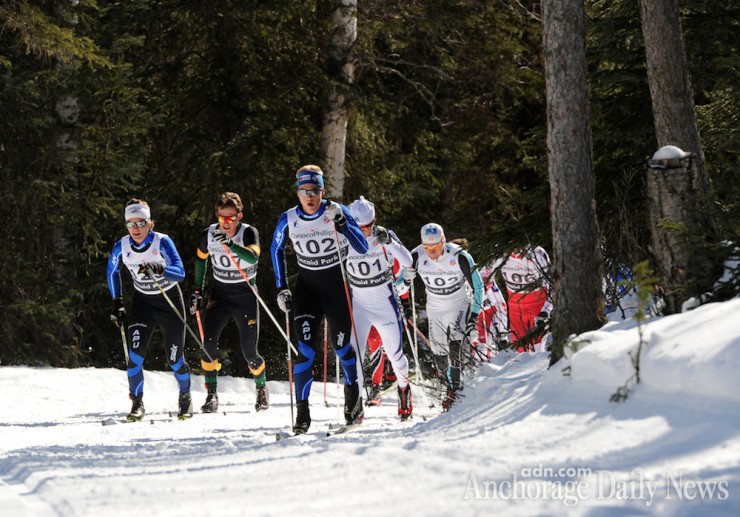
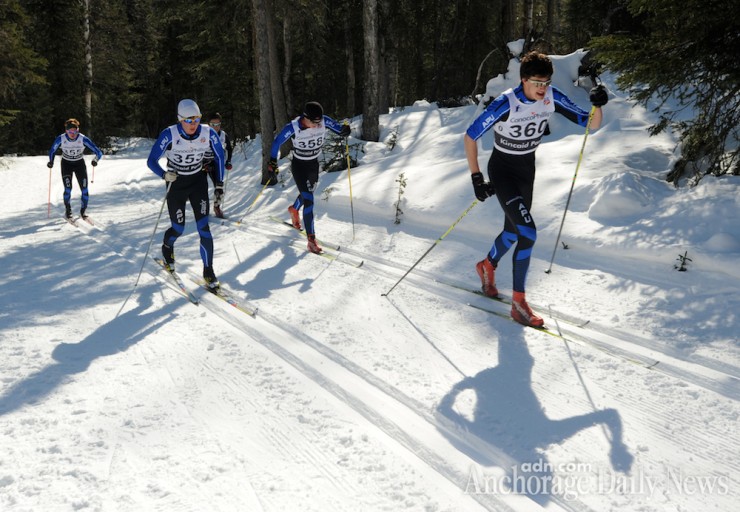
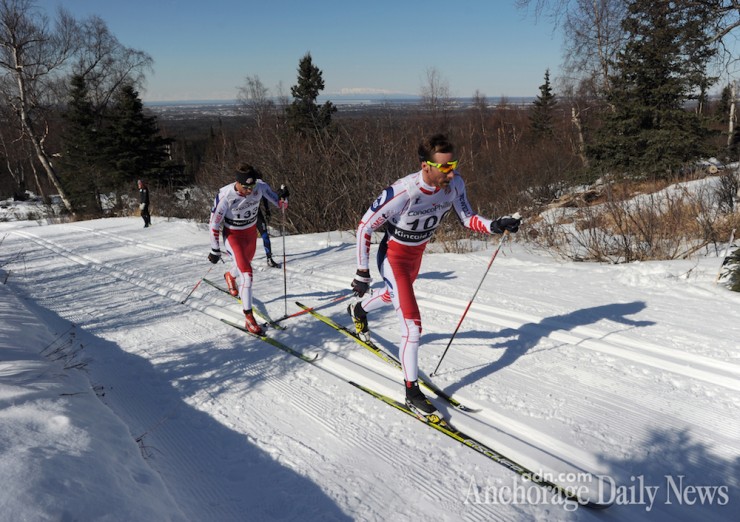
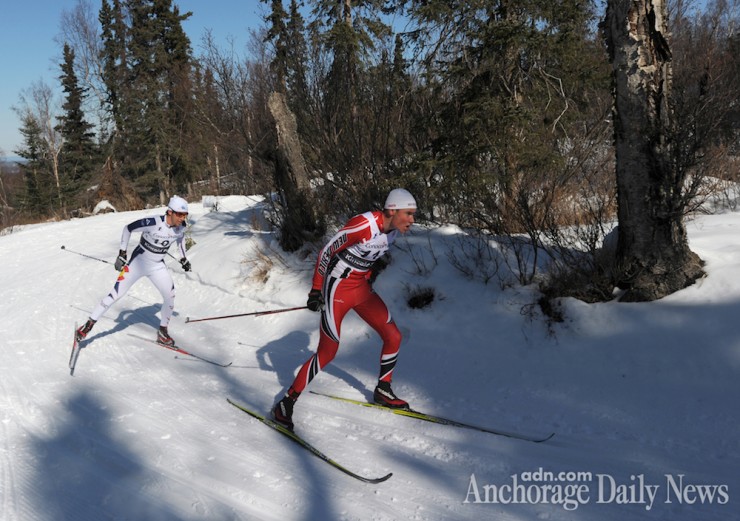
Skiers tackle a hill on the Spencer Loop in the men’s 50 k classic at U.S. Distance Nationals in Anchorage, Alaska.
(Photo: Erik Hill/Anchorage Daily News)
Lukas Ebner (University of Alaska-Anchorage)
2014 U.S. Distance Nationals 50 k classic mass start at Hillside trails in Anchorage, Alaska
2014 U.S. Distance Nationals 50 k classic mass start at Hillside trails in Anchorage, Alaska
2014 U.S. Distance Nationals 50 k classic mass start at Hillside trails in Anchorage, Alaska
2014 U.S. Distance Nationals 50 k classic mass start at Hillside trails in Anchorage, Alaska
2014 U.S. Distance Nationals 50 k classic mass start at Hillside trails in Anchorage, Alaska
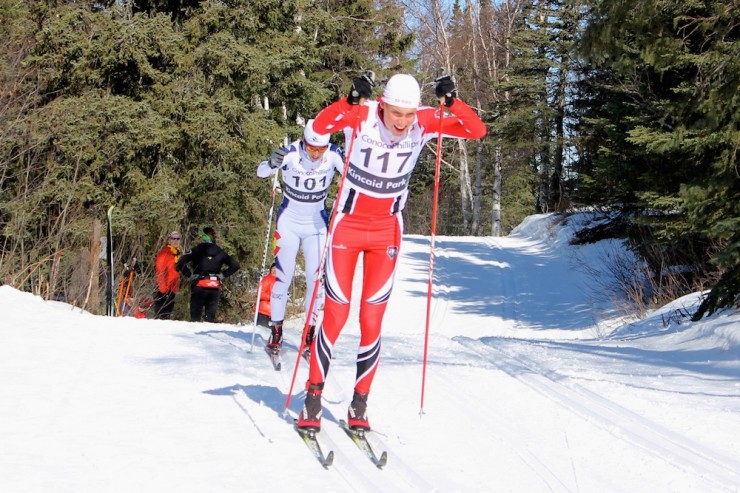
Four APU juniors in the men’s 30 k classic race at U.S. Distance Nationals in Anchorage, Alaska.
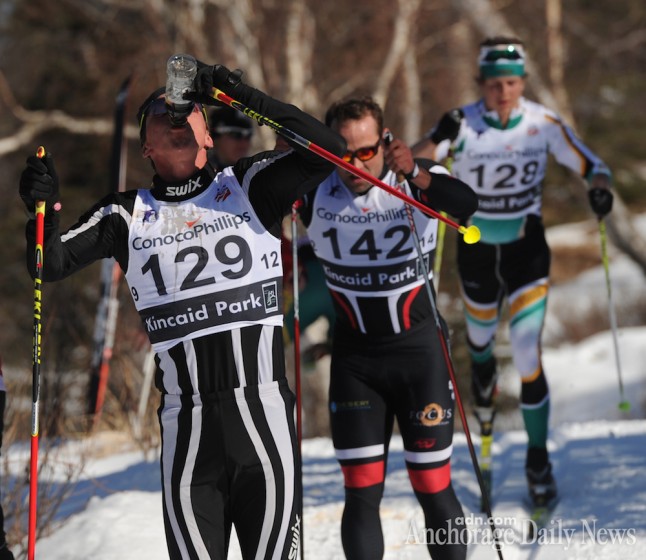
Christian Otto gulps down a feed while Dakota Blackhorse-von Jess (142) and Adam Martin (128) follow in the men’s 50 k classic at U.S. Distance Nationals in Anchorage, Alaska.
2014 U.S. Distance Nationals 50 k classic mass start at Hillside trails in Anchorage, Alaska
2014 U.S. Distance Nationals 50 k classic mass start at Hillside trails in Anchorage, Alaska
2014 U.S. Distance Nationals 50 k classic mass start at Hillside trails in Anchorage, Alaska
2014 U.S. Distance Nationals 50 k classic mass start at Hillside trails in Anchorage, Alaska
2014 U.S. Distance Nationals 50 k classic mass start at Hillside trails in Anchorage, Alaska
2014 U.S. Distance Nationals 50 k classic mass start at Hillside trails in Anchorage, Alaska
2014 U.S. Distance Nationals 50 k classic mass start at Hillside trails in Anchorage, Alaska
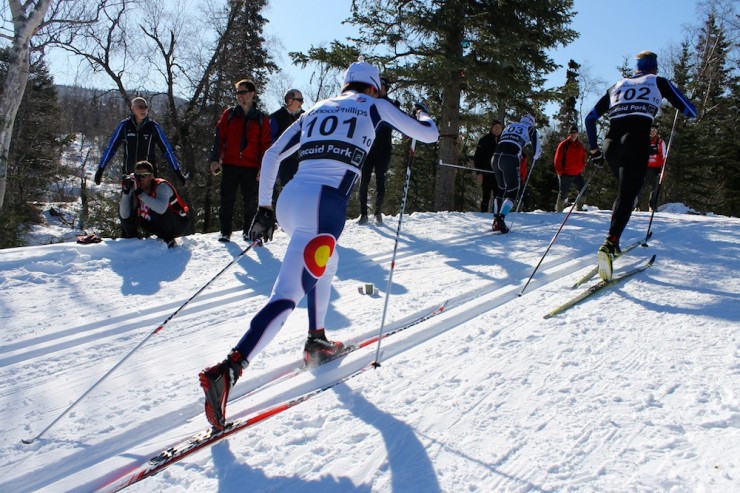
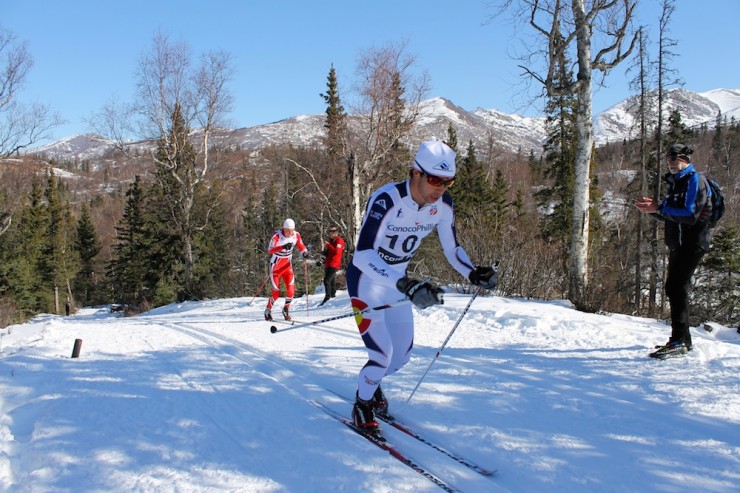
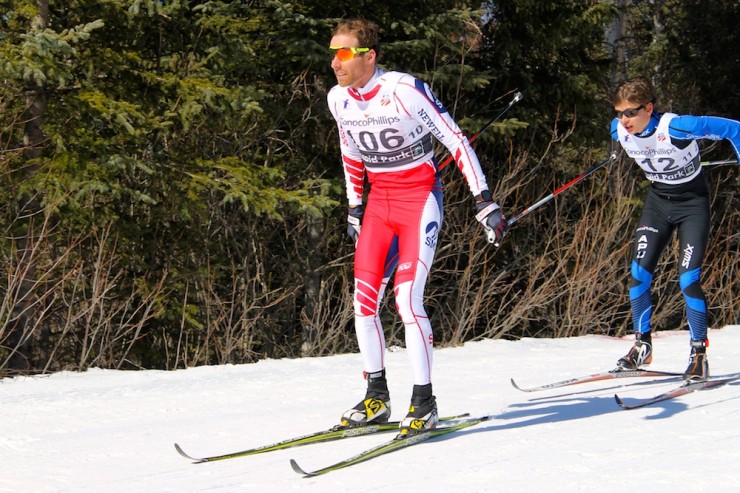
Teammates on the U.S. Ski Team and Stratton Mountain School T2 Team, Andy Newell leads Simi Hamilton on one of several hills on the Spencer Loop in the 50 k classic at U.S. Distance Nationals in Anchorage, Alaska.
Finland’s Aku Nikander (r) of the University of New Mexico leads Noah Hoffman of the U.S. Ski Team around a corner on the Spencer Loop during the final lap of the men’s 50 k classic race at the U.S. Distance Nationals at Hillside in Anchorage, Alaska, in 2014.
2014 U.S. Distance Nationals 50 k classic mass start at Hillside trails in Anchorage, Alaska
Finland’s Aku Nikander (r) of the University of New Mexico leads Noah Hoffman of the U.S. Ski Team around a corner on the Spencer Loop during the final lap of the men’s 50 k classic race at the U.S. Distance Nationals at Hillside in Anchorage, Alaska.
2014 U.S. Distance Nationals 50 k classic mass start at Hillside trails in Anchorage, Alaska
2014 U.S. Distance Nationals 50 k classic mass start at Hillside trails in Anchorage, Alaska
2014 U.S. Distance Nationals 50 k classic mass start at Hillside trails in Anchorage, Alaska
Finland’s Aku Nikander (University of New Mexico) celebrates his win in the 50 k classic mass start at U.S. Distance Nationals on Friday in Anchorage, Alaska. He beat Noah Hoffman (SSCV/Team HomeGrown/USST) by 9 seconds after the two skied together for essentially the entire race.
2014 U.S. Distance Nationals 50 k classic mass start at Hillside trails in Anchorage, Alaska
2014 U.S. Distance Nationals 50 k classic mass start at Hillside trails in Anchorage, Alaska
2014 U.S. Distance Nationals 50 k classic mass start at Hillside trails in Anchorage, Alaska
2014 U.S. Distance Nationals 50 k classic mass start at Hillside trails in Anchorage, Alaska
Simi Hamilton racing to seventh
2014 U.S. Distance Nationals 50 k classic mass start at Hillside trails in Anchorage, Alaska
2014 U.S. Distance Nationals 50 k classic mass start at Hillside trails in Anchorage, Alaska
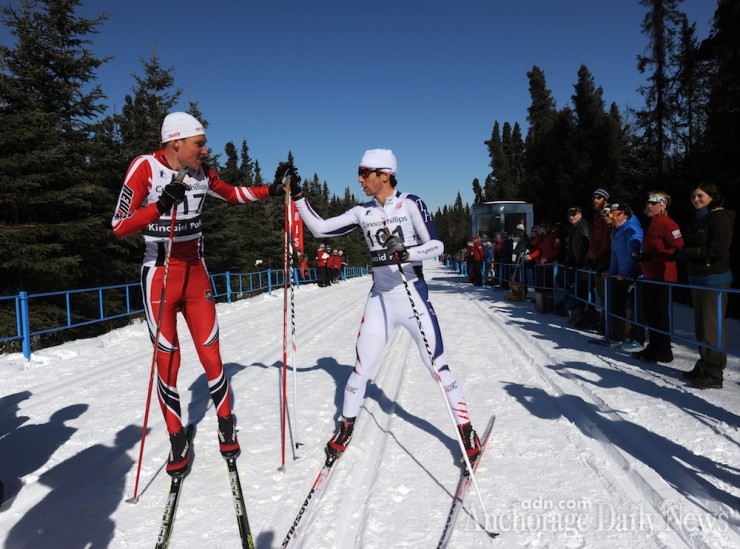
Winner Aku Nikander of the University of New Mexico (l) and runner-up and first American Noah Hoffman of the U.S. Ski Team congratulate each other after finishing the men’s 50 k classic race at U.S. Distance Nationals on Friday.
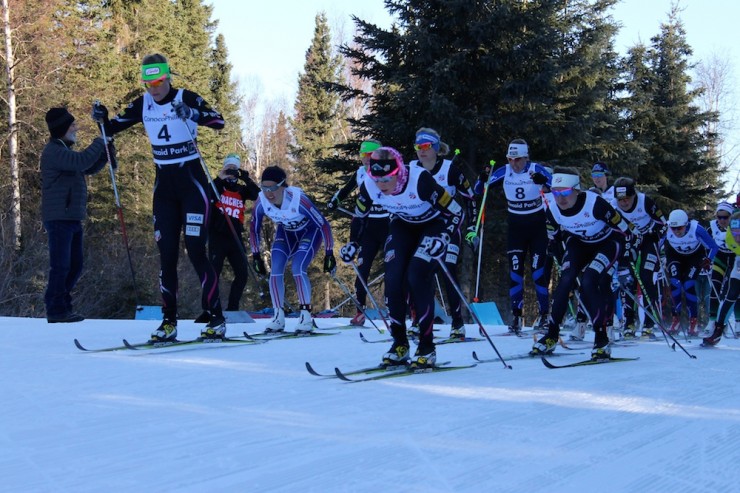
ANCHORAGE, Alaska — Scenes from the front of the pack during the women’s three-lap, 30-kilometer classic mass start at U.S. Distance Nationals last Friday at Hillside trails.
2014 U.S. Distance Nationals 30 k classic mass start at Hillside trails in Anchorage, Alaska
2014 U.S. Distance Nationals 30 k classic mass start at Hillside trails in Anchorage, Alaska
2014 U.S. Distance Nationals 30 k classic mass start at Hillside trails in Anchorage, Alaska
2014 U.S. Distance Nationals 30 k classic mass start at Hillside trails in Anchorage, Alaska
2014 U.S. Distance Nationals 30 k classic mass start at Hillside trails in Anchorage, Alaska
2014 U.S. Distance Nationals 30 k classic mass start at Hillside trails in Anchorage, Alaska
2014 U.S. Distance Nationals 30 k classic mass start at Hillside trails in Anchorage, Alaska
2014 U.S. Distance Nationals 30 k classic mass start at Hillside trails in Anchorage, Alaska
2014 U.S. Distance Nationals 30 k classic mass start at Hillside trails in Anchorage, Alaska
2014 U.S. Distance Nationals 30 k classic mass start at Hillside trails in Anchorage, Alaska
2014 U.S. Distance Nationals 30 k classic mass start at Hillside trails in Anchorage, Alaska
2014 U.S. Distance Nationals 30 k classic mass start at Hillside trails in Anchorage, Alaska
2014 U.S. Distance Nationals 30 k classic mass start at Hillside trails in Anchorage, Alaska
2014 U.S. Distance Nationals 30 k classic mass start at Hillside trails in Anchorage, Alaska
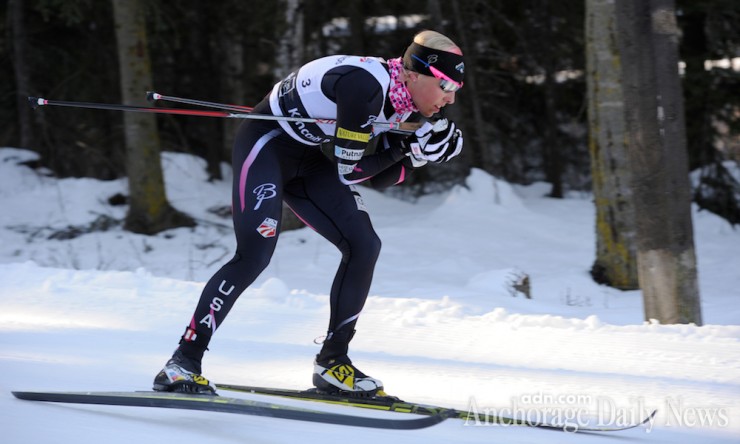
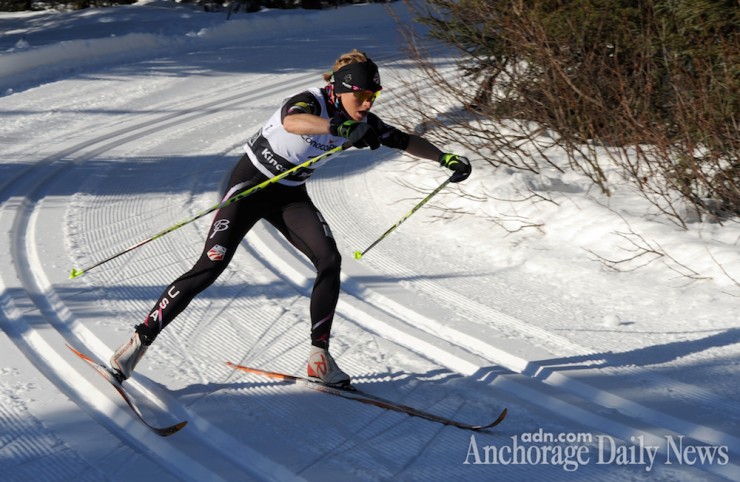
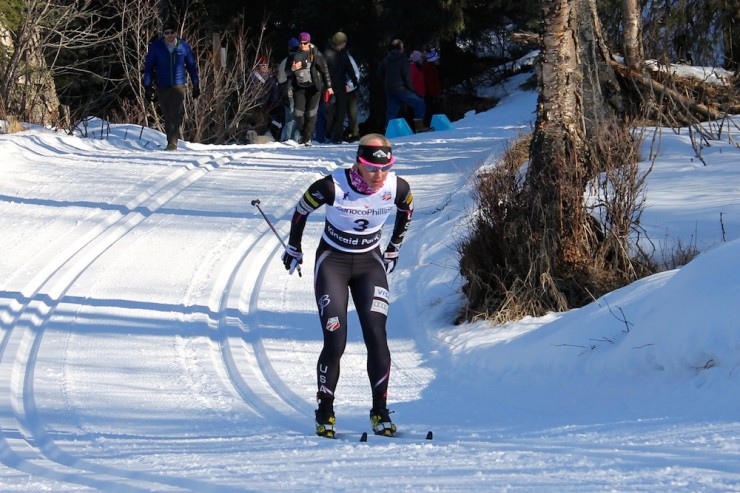
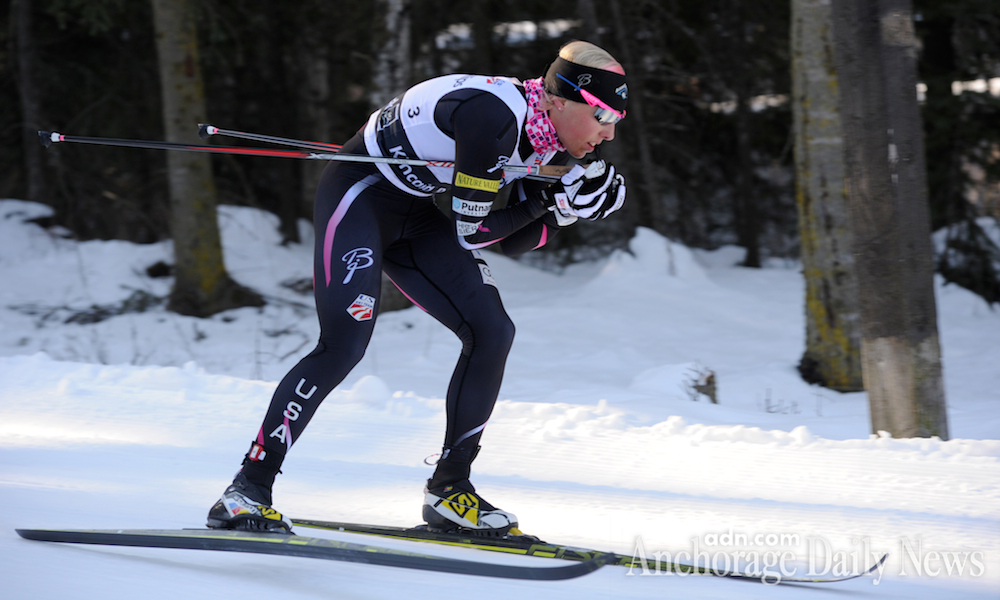
Kikkan Randall (APU/USST) racing to third in the women’s 30 k classic mass start at U.S. Distance Nationals. Randall led early in the three-lap race, taking the $100 bonus as the first to crest the high point of the course around 5.5 k.
2014 U.S. Distance Nationals 30 k classic mass start at Hillside trails in Anchorage, Alaska
2014 U.S. Distance Nationals 30 k classic mass start at Hillside trails in Anchorage, Alaska
2014 U.S. Distance Nationals 30 k classic mass start at Hillside trails in Anchorage, Alaska
2014 U.S. Distance Nationals 30 k classic mass start at Hillside trails in Anchorage, Alaska
2014 U.S. Distance Nationals 30 k classic mass start at Hillside trails in Anchorage, Alaska
2014 U.S. Distance Nationals 30 k classic mass start at Hillside trails in Anchorage, Alaska
2014 U.S. Distance Nationals 30 k classic mass start at Hillside trails in Anchorage, Alaska
2014 U.S. Distance Nationals 30 k classic mass start at Hillside trails in Anchorage, Alaska
2014 U.S. Distance Nationals 30 k classic mass start at Hillside trails in Anchorage, Alaska
2014 U.S. Distance Nationals 30 k classic mass start at Hillside trails in Anchorage, Alaska
IMG_5724
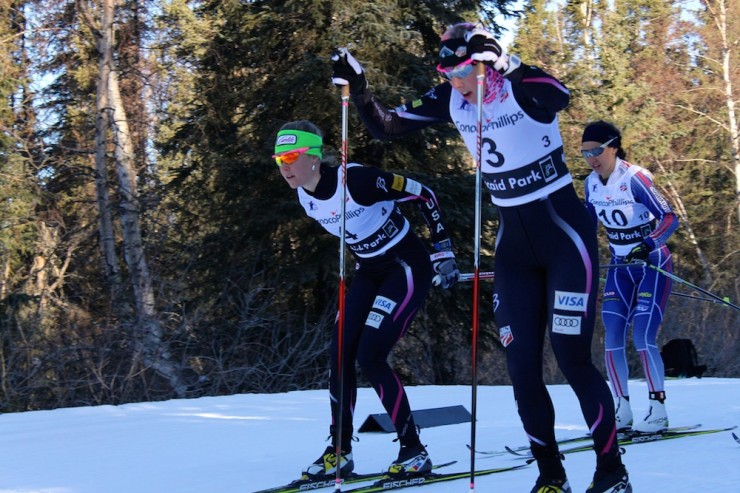
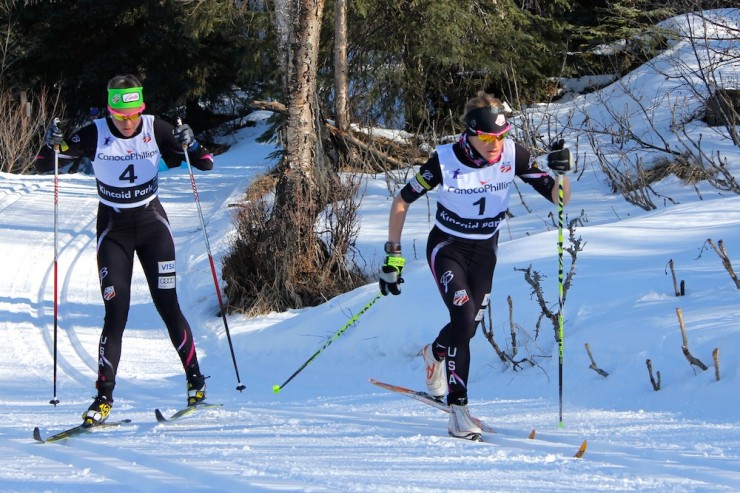
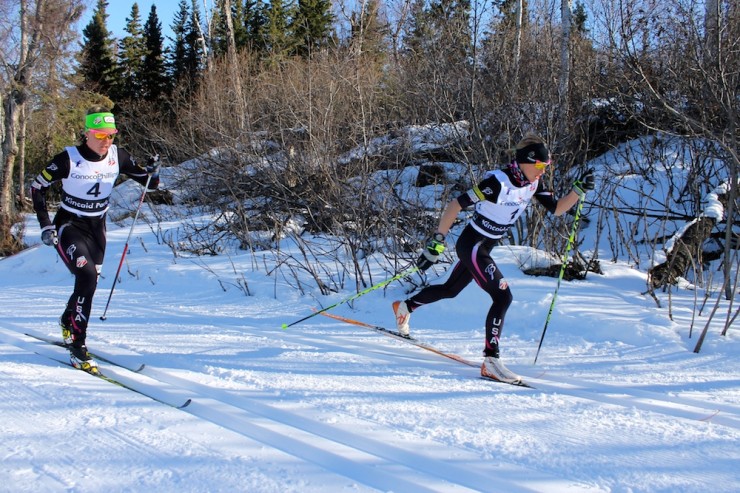
Sadie Bjornsen leads Liz Stephen in 2014 U.S. Distance Nationals 30 k classic mass start at Hillside trails in Anchorage, Alaska
2014 U.S. Distance Nationals 30 k classic mass start at Hillside trails in Anchorage, Alaska
2014 U.S. Distance Nationals 30 k classic mass start at Hillside trails in Anchorage, Alaska
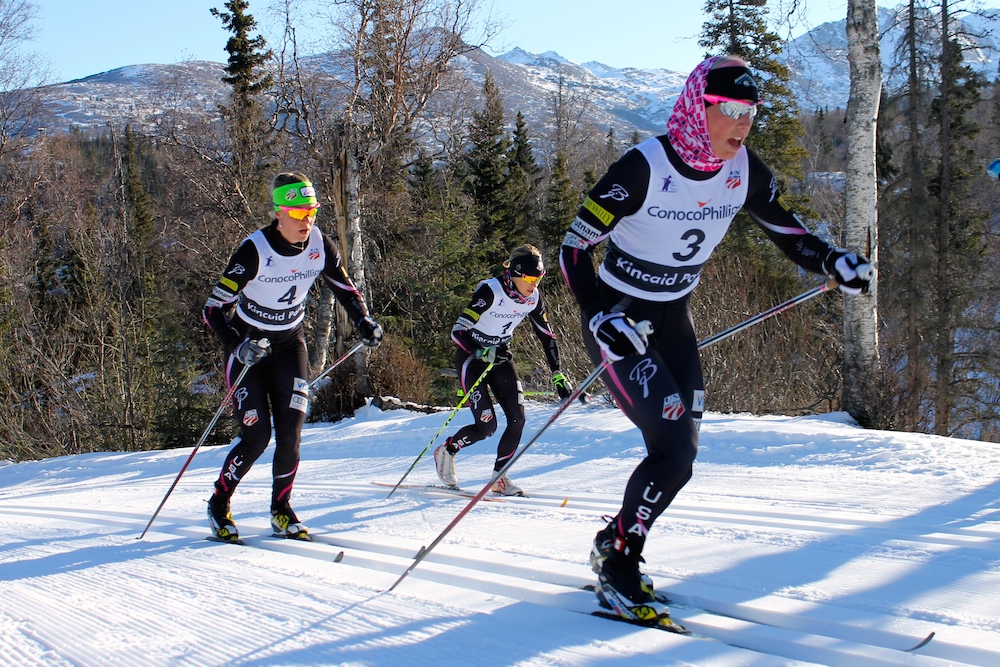
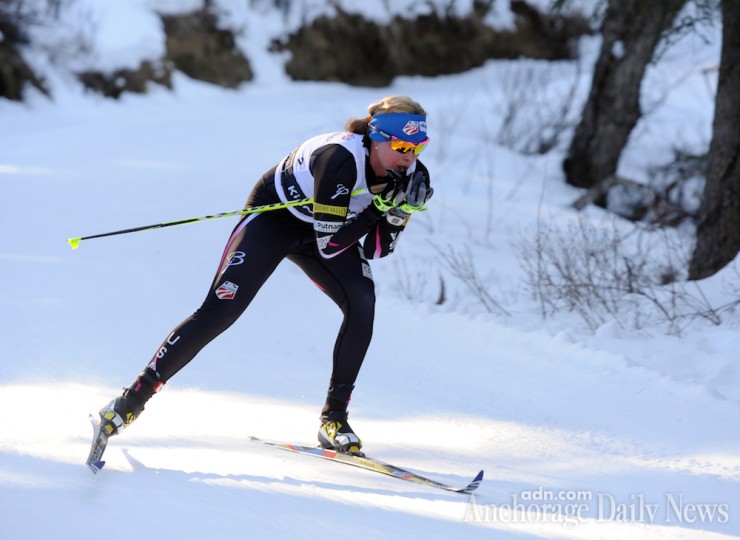
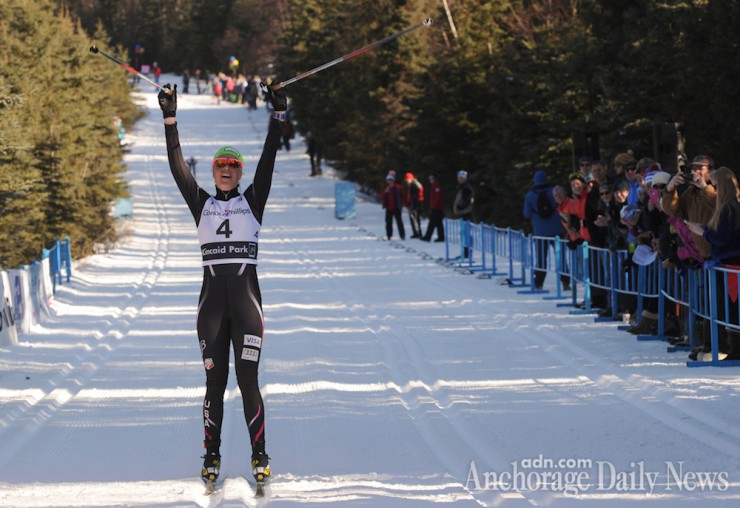
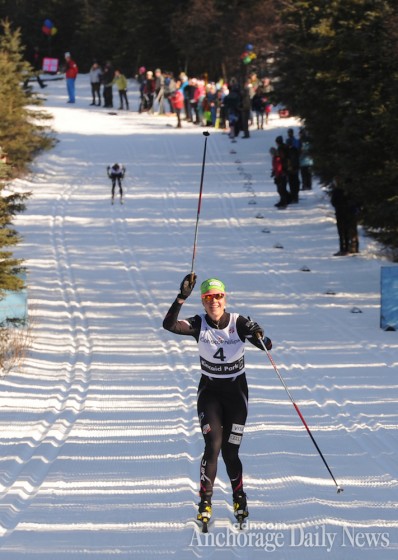
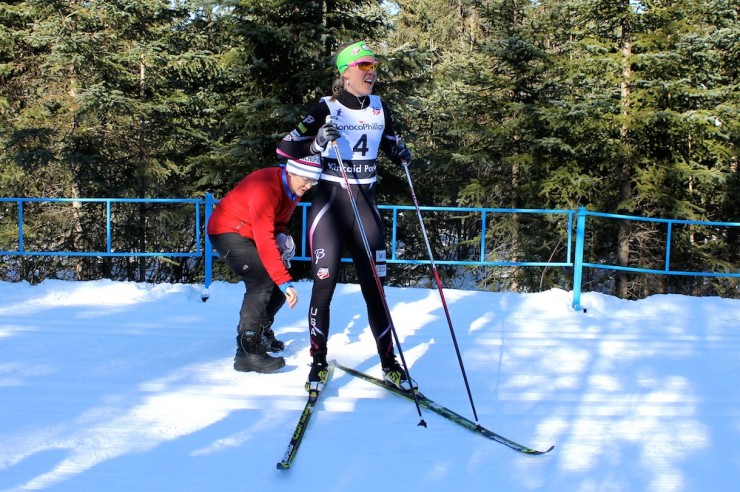
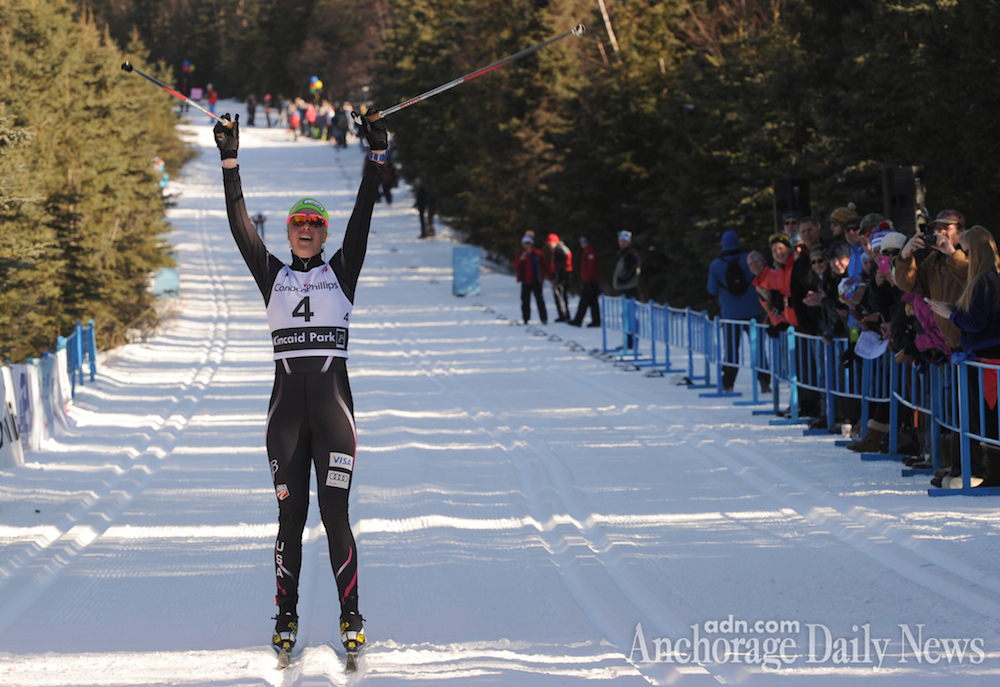
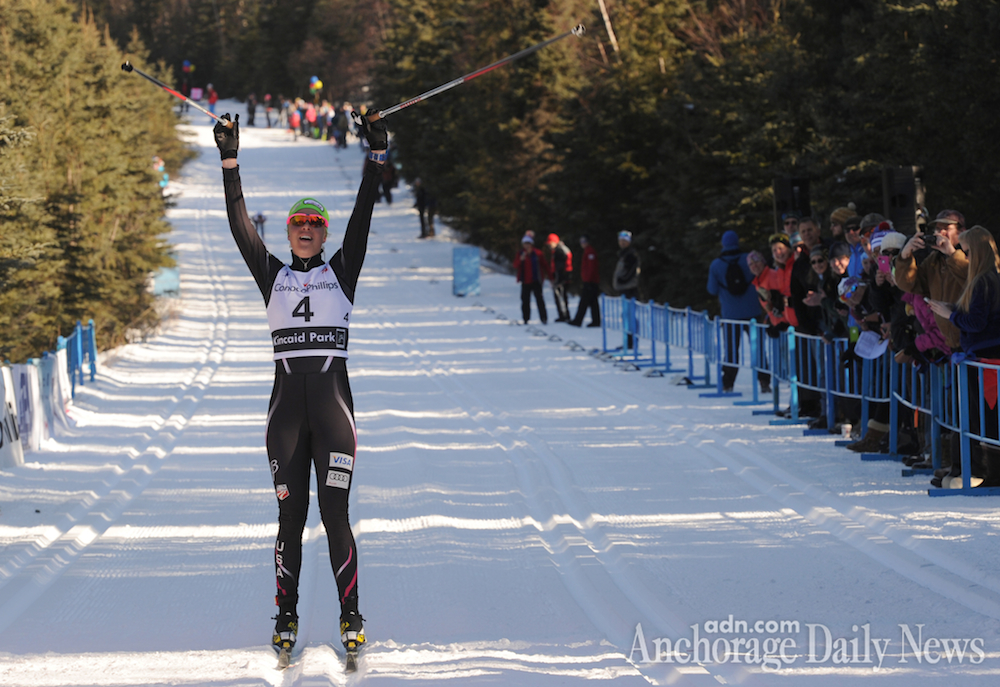
Sadie Bjornsen (APU/USST) celebrates her third national title and first of U.S. Distance Nationals in the women’s 30 k classic mass start on Friday at Hillside trails in Anchorage, Alaska. She dropped USST teammate Liz Stephen in the final kilometers to do so.
2014 U.S. Distance Nationals 30 k classic mass start at Hillside trails in Anchorage, Alaska
2014 U.S. Distance Nationals 30 k classic mass start at Hillside trails in Anchorage, Alaska
2014 U.S. Distance Nationals 30 k classic mass start at Hillside trails in Anchorage, Alaska
2014 U.S. Distance Nationals 30 k classic mass start at Hillside trails in Anchorage, Alaska
2014 U.S. Distance Nationals 30 k classic mass start at Hillside trails in Anchorage, Alaska
2014 U.S. Distance Nationals 30 k classic mass start at Hillside trails in Anchorage, Alaska
2014 U.S. Distance Nationals 30 k classic mass start at Hillside trails in Anchorage, Alaska
Sadie Bjornsen (APU/USST) celebrates her third national title and first of U.S. Distance Nationals in the women’s 30 k classic mass start on Friday at Hillside trails in Anchorage, Alaska. She dropped USST teammate Liz Stephen in the final kilometers to do so. (Photo: Erik Hill/Anchorage Daily News)
Editor’s Note: This is the first of two race reports on Friday’s classic mass starts, the final races of the season at U.S. Distance Nationals. Please bear with us for the men’s report, as this FasterSkier has a flight to catch.
ANCHORAGE, Alaska — Liz Stephen was having a bit of an inward battle on Friday at the last day of U.S. Distance Nationals in the last women’s race of the season.
Like always, the 27-year-old U.S. Ski Team (USST) member, known as a hill climber and distance skier, really wanted to win the 30-kilometer classic mass start. But as the three-lap race around Spencer Loop at Hillside on the southeast side of the city played out, Stephen started to realize she was going to have to beat Sadie Bjornsen to do so.
“I was secretly hoping Sadie was gonna win this race,” Stephen said afterward of Bjornsen, a member of both Alaska Pacific University (APU) and the USST. “I had a feeling a few days ago this was going to be her day.”
Neither had won an individual race at the weeklong Spring Series in Anchorage. Another one of their teammates, Kikkan Randall (APU/USST) had dominated the two earlier events: the 10 k freestyle and classic sprint. On the third day, the first of U.S. Distance Nationals, Randall anchored APU to another victory in the 4 x 5 k mixed relay. While the 30 k classic might not be her strongest event, it was hard to bet against Randall at home on Day 4.
So as the 30 k unfolded, Randall started off by leading to the top of the longest-and-largest hill known as Wall Street (with 87 meters, or 285 feet, of climb) around 5 1/2 k. She grabbed the first of two $100-dollar primes at the summit in doing so, and went on to follow Bjornsen into the 10 k checkpoint 0.8 seconds back in second.
Another USST member Jessie Diggins, also of the Stratton Mountain School (SMS) T2 Team, was third at 10 k, 2.4 seconds behind Bjornsen, and Stephen was almost even with her in fourth.
By lap two, Stephen opted to go big — rather than wonder what could’ve been if she didn’t try — and attacked at the bottom of the multi-tiered climb up Wall Street, the high point of the course around 950 feet above sea level. The move worked, initially, as Stephen took the second money bonus over the top and gapped Bjornsen and Randall slightly by 16 k.
Bjornsen later said Stephen exposed her weakness on the steepest part of the course.
“These hills are really good for me because I can stride out quite well, but the top of Wall Street is too steep for me and so I have to run and that’s not what I’m good at,” she said. “I think Liz figured out pretty quickly that’s where she could make time on us. Every time she went there, she came around us and just started hammering.”
Trailing Stephen by a few seconds at the top, Bjornsen met her own crossroads and decided to push forward in pursuit. She left Randall in doing so and caught Stephen on a series of climbs on the second half of the course.
“I tried to make a break and I had a little bit of space, but Sadie was able to close it,” Stephen recalled. “We both kind of looked at each other, like, yeah, these girls [Randall and Diggins] are coming back so we gotta go. … I’m terrified when I’m on a downhill and Jessie’s on my tail. The whole time we were like we cannot ever let up on these downhills, these two are gonna work together and come back on us.”
For the next 12 or so kilometers, Stephen and Bjornsen stuck together, with Stephen leading through 20 k by 2.4 seconds. Randall came through another 18 seconds back in third, followed by Diggins 11.6 seconds later. The fifth-consecutive USST member, Ida Sargent (Craftsbury Green Racing Project) was another 25.4 seconds back at 20 k.
“We were just pushing so hard out there, making sure nobody was catching us,” Bjornsen said. “You always go into this race, the last race of the season like, ‘Oh, I hope we don’t go as hard as we can the whole time because I’m so tired,’ but when it comes down to it, it’s always more fun to do that anyway.”
By the time the third lap came around on a sunny morning with temperatures rising rapidly from the teens at the start (and no ski changes allowed), Stephen continued to lead Bjornsen up and down the backside of Wall Street into the last set of kicker climbs. There, Bjornsen made her move, dropping Stephen and racing down into the stadium in first, at least 15 seconds ahead of Stephen.
“You always go into this race, the last race of the season like, ‘Oh, I hope we don’t go as hard as we can the whole time because I’m so tired,’ but when it comes down to it, it’s always more fun to do that anyway.” — Sadie Bjornsen, 30 k classic champion
The race turned out to be about 31.5 k, long enough to Bjornsen to extend her gap to 29.1 seconds at the finish. The 24-year-old Washington native, who’s lived in Anchorage for the last several years, won her third national title and first at Spring Series in 1:35:58.1 in front of a hometown crowd. Stephen placed second, and Randall notched another podium in third, 2:08.8 behind Bjornsen.
Last year at Spring Series in Truckee, Calif., Bjornsen podiumed in four individual events (placing second in the 10 k classic and third in the skate prologue, skate sprint and hill climb). At 2013 U.S. nationals in Midway, Utah, she won both the skate sprint and 20 k classic mass start.
This race, at home on the trails APU she trains on (when she’s not racing the World Cup circuit overseas), was essentially made for her, which was ironic, because a lot of people previously wrote her off as a sprinter.
Not APU, and not Stephen.
“This is probably one that I’m going to remember most for the season, this and Holmenkollen, to do well in a 30 k because I feel like it’s the hardest race,” Bjornsen said. “I was told when I was young that I was only a sprinter. Since joining APU I’ve realized I may be more of a distance skier than a sprinter and, you know, I prefer that. I always want to sprint, but distance skiing is so fun for me.”
Stephen said she had fun skiing with Bjornsen, who worked the flats and downhills, and Stephen would help on the climbs.
“I think we were pretty good team out there,” Stephen said.
Kikkan Randall (APU/USST) racing to third in the women’s 30 k classic mass start at U.S. Distance Nationals. Randall led early in the three-lap race, taking the $100 bonus as the first to crest the high point of the course around 5.5 k. (Photo: Erik Hill/Anchorage Daily News)
Diggins made the most of her fast skis and downhill skills to catch Randall on the third lap and finish 7.8 seconds behind Randall in fourth.
“I felt like I needed to go out in the beginning of the race and set a good hard pace and see if I could hold it,” Randall said. “It went pretty well for the first half of the race, and then going up the major climbs on that second lap, these guys picked up the pace and I started to hit the wall a little bit. Things started to cramp a lot on that last lap.”
Before that point, she remembered watching Stephen and Bjornsen pull away on final climbs on the second lap — first by five seconds, then 10 seconds.
“I was really trying to stay on the horse and try to get back in that group but they started to pull out of sight,” she said. “Jessie caught me on the downhill, but then it was great because her and I could work together. She was a little faster on the flats and downhills and when we started climbing again, I felt like I need to ski my own pace. I was able to pull back a little bit, then it was like, it’s the end of the season, it’s the end of the race, just kind of ski as hard as you can up the hills.”
After falling once when someone rode over her ski from behind, then getting tangled behind a crash involving Becca Rorabaugh (APU) within the first 3 k, Sargent skied alone for most of the race — at least 26 k, she estimated.
“I finally pulled my way up to the front on the Spencer Loop the first time and they really went for it going over the top,” Sargent recalled. “I wasn’t feeling great at that point so a little gap opened up over the top … and once a gap opens up, it’s just really hard to make it back.”
Sixteen seconds ahead of Rorabaugh in fifth at 10 k, Sargent maintained her gap on those behind her with a 14-second cushion to Caitlin Gregg (Team Gregg/Madshus) at 20 k.
“I tried to split it up into little bits, like, OK I’m gonna get up that hill,” Sargent said. “Once I settled into a pace, it felt really good. I think it would’ve been more fun to ski with people, but it was a good, different challenge. Thirty k has always been a tough distance for me — it’s pretty long — so I’m happy to have been able to hold it in there.”
She held onto fifth, finishing 41.5 seconds after Diggins. The USST swept the top six, with Sophie Caldwell (SMST2) edging Gregg by 1.5 seconds for sixth. Stratton put four in the top nine with Annie Pokorny notching eighth and Erika Flowers taking ninth, 16.4 seconds ahead of Caitlin Patterson (CGRP) in 10th.
“We were just talking about how all of us have different strengths and how this summer we want to pinpoint where each of us can help the others get better at everything so we can all move up as a team,” Stephen said. “It’s fun because we all have something that’s really strong that somebody else doesn’t have.”
“I certainly felt like today the caliber is the highest it’s ever been for one of these races,” Randall said. “I know these guys can ski really well on the Word Cup so it’s like, you know you’ve got to bring you’re A-game on a day like this.”
“It’s really fun to come out and race on these hills we always train on and end things on a good way at home,” she added.