From the FasterSkier archive — posts syndicated from athletes’ and coaches’ own blogs between 2004 and 2012, kept online as published. Current coverage is at fasterskier.com.
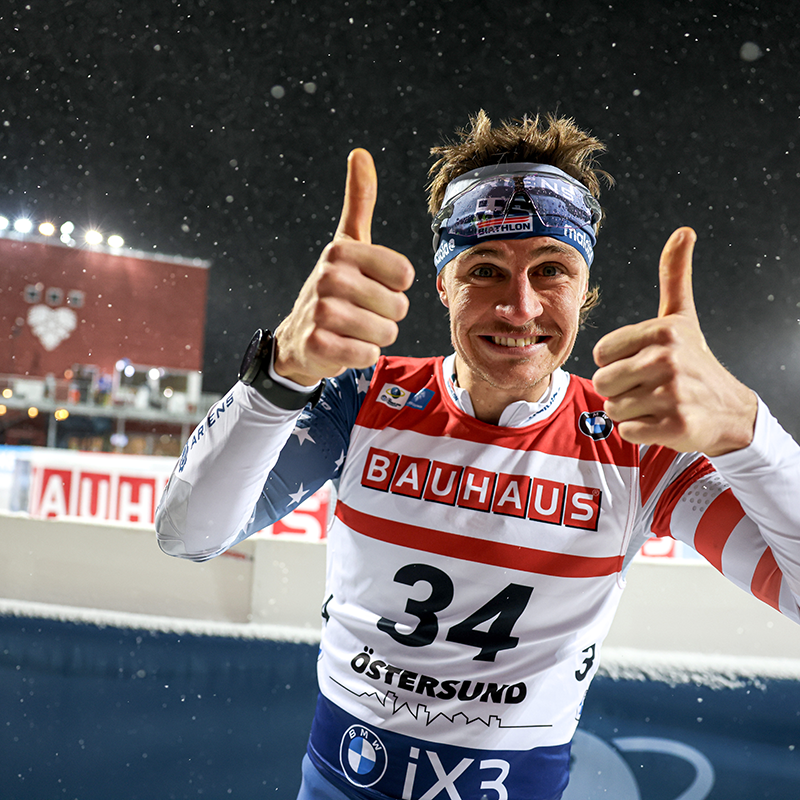
At the first biathlon World Cup races of the 2025/26 season, the biathlon stadium is perched above the small city of Östersund, which is set on a lake. Wind gusts off the lake, pulsing through the stadium. The races take place under the lights, at night – which isn’t saying much. Because in December in northern Sweden, ‘night’ begins at three in the afternoon, when what little sun there might’ve been throughout the day slips below the horizon. It’s in the evenings that the wind is usually at its strongest. The conditions the racers zero their rifles at before the race are rarely the same conditions they find when they come back to the range during the race. Athletes watch the small, red flags in the range, seeing which way they’re moving, deciding whether or not to shift their sights a few clicks, compensating for the changes that happened while the racers skied the course that serpentines up, down, around a 180-degree turn, and back into the stadium where the music plays and the home crowd cheers. Ayyy! As the Swedes hit their targets. A diluted Ney for each Swedish miss.
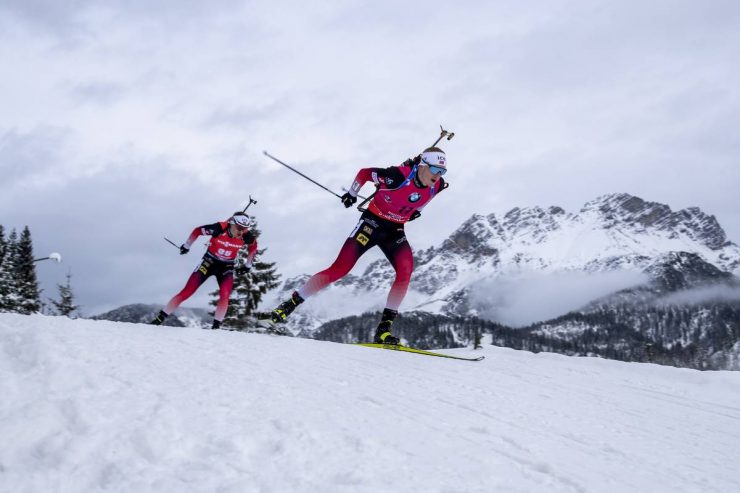
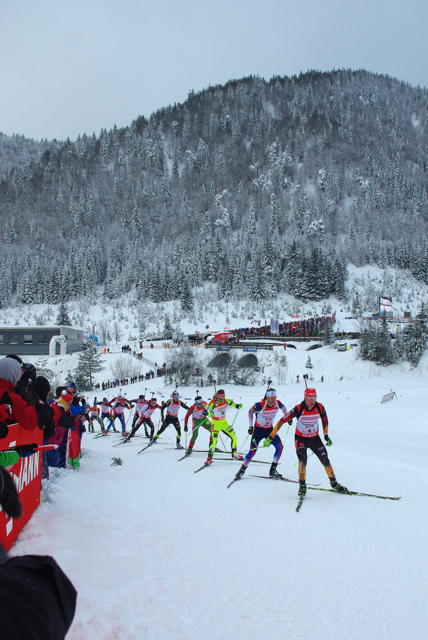
The mixed relay at the opening stop, Oestersund (SWE), of the 2025/26 IBU World Cup Biathlon season. (Photo: Manzoni/NordicFocus)
Over eight days, the best biathletes in the world raced 10 times. Maybe it was the arduous schedule, or the bit of sharpness that an Olympic year adds, but the Ostersund races didn’t feel like the first of the season. It felt like a break had never happened.
One question lingering from the off-season was answered quickly: What would Norwegian biathlon look like without the Boe Brothers? The dominant duo of Johannes Thingnes and Tarjei Boe – owners of eight Olympic medals – retired at the end of the 2024/25 season. Leaving what one would assume would be a major hole in the program. But when the Norwegian men came out and won the men’s 4 x 7.5km relay at Ostersund, the Norwegian’s roster depth became clear.
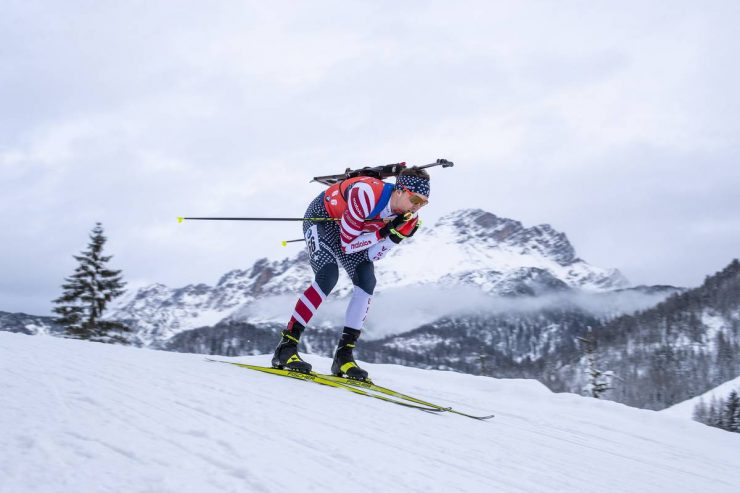
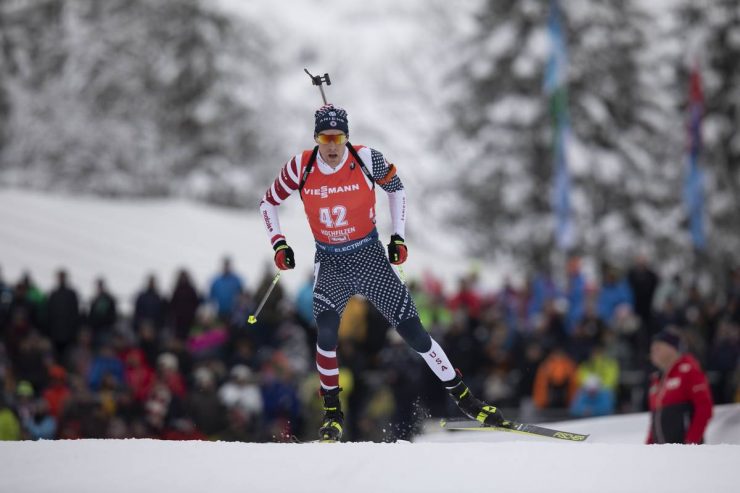
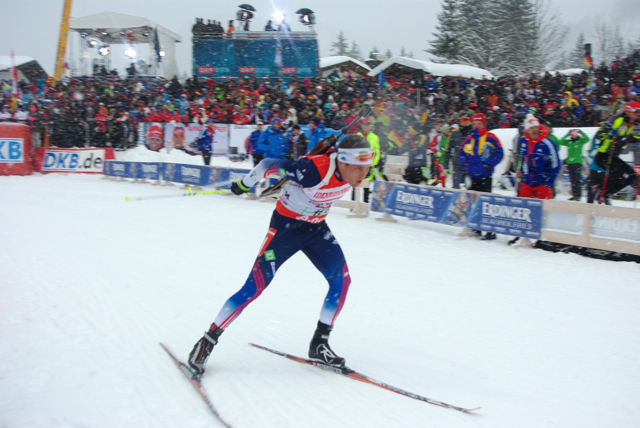
Campbell Wright (USA) during the IBU World Cup Biathlon Men’s Relay in Östersund (SWE). (Photo: Manzoni/NordicFocus)
The men’s relay saw a top result from the U.S. men, as well. Paul Schommer, Campbell Wright, Maxime Germain and Sean Doherty finished fifth, one of the best men’s relay finishes ever for Team USA. The next day, at the mixed relay, Germain, Wright, Chloe Levins and Deedra Irwin placed sixth – which is the best finish for a U.S. mixed relay since 2021.
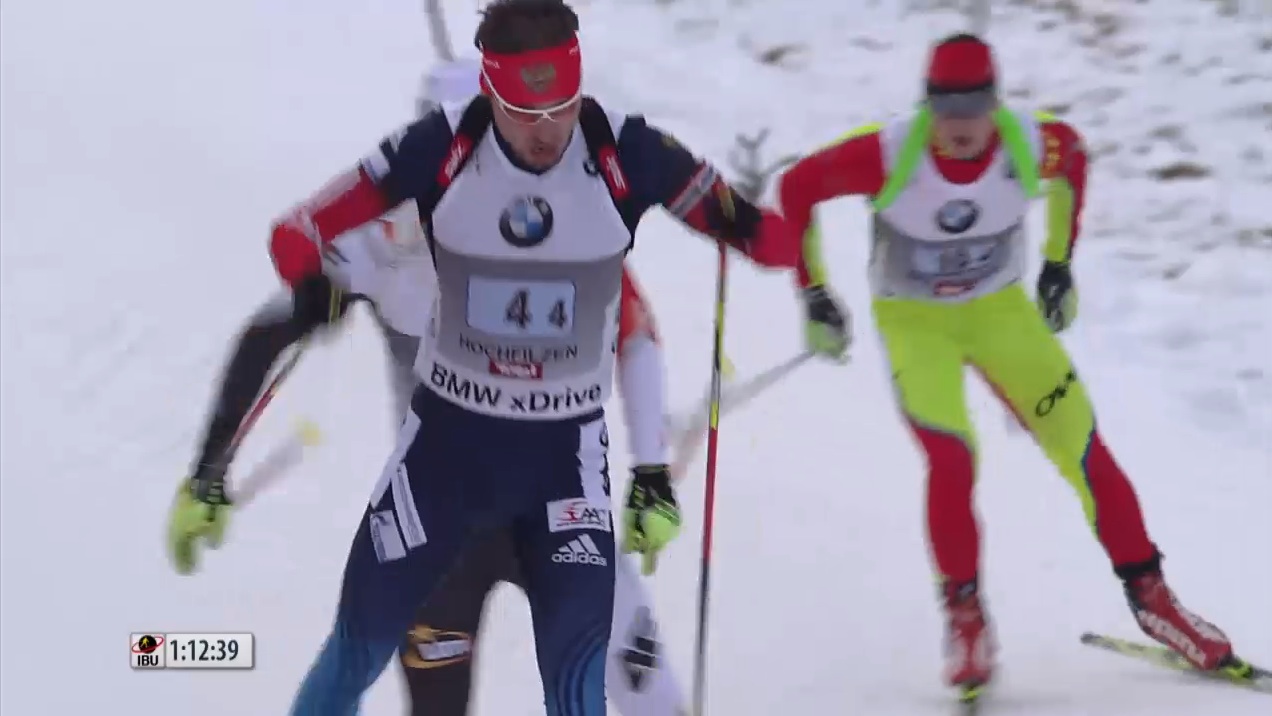
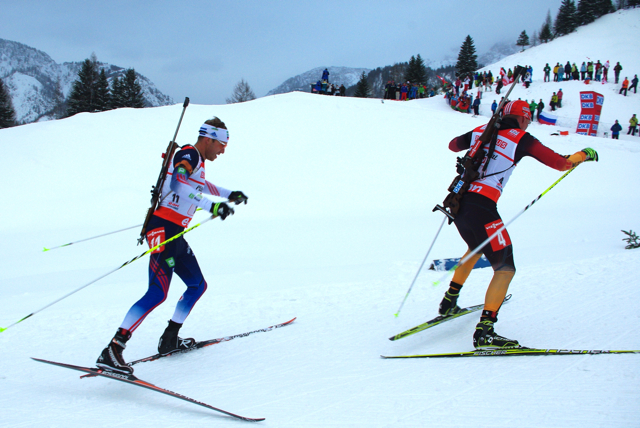
Artem Tyshchenko (UKR) and Paul Schommer (USA), (l-r) during the Men’s Relay in Oestersund (SWE). (Photo: Manzoni/NordicFocus)
Germain and Wright continued to build on their early-week momentum, with Germain placing 11th in the sprint. In the pursuit, Wright hit all 20 targets for the first time in his career and moved up from 18th to 6th. Wright is coming off a stellar 2024/25 season, where he podiumed twice at World Championships, becoming the first American to do so.
Throughout the week, there were highs: Suvi Minkkinen of Finland won her first World Cup sprint. The Norwegian men placed four in the top five in the 20km individual, solidifying their capabilities as a team sans-Boes. And as always in biathlon, some lows: Eric Perrot of France missed his final shot in the pursuit, a devastating moment that cost him the lead. He finished fifth.
Racing wrapped up in Sweden, and teams flew to Austria. In Hochfilzen, a less rigorous racing schedule awaits: sprint, pursuit, and then a men’s and a women’s relay. A few more hours of daylight await, too.
Dorothea Wierer of Italy: winner of the 7.5 k sprint in Hochfilzen, Austria and wearer of the IBU World Cup leader’s bib. (Photo: NordicFocus)
Friday began the weekend series of IBU World Cup racing in Hochfilzen, Austria. The women and men raced the 7.5-kilometer and 10 k sprint, respectively.
For the women, Italy’s Dorothea Wierer won in 21:26.5 while missing a single target. She began and ends the day wearing the yellow bib as the World Cup overall leader. Norway’s Ingrid Landmark Tandrevold placed second (+5.9; 0+0), and Russia’s Svetlana Mironova third (+18.3; 0+1). It was Mironova’s first World Cup podium.
Emma Lunder of Canada during the women’s 7.5 k sprint in Hochfilzen, Austria. (Photo: NordicFocus)
Canada’s Emma Lunder was the top North American in 58th (+2:01.5; 1+2). Teammates Sarah Beaudry finished 65th (+2:17.5; 0+1), Megan Bankes 86th (+3:09.; 3+1), and Nadia Moser 102nd (+4:44.1).
For the U.S. team, Clare Egan raced to 66th (+2:19.4; 0+2), Emily Dreissigacker 71st (+2:24.4; 1+1), Joanne Reid 87th (+3:10.7; 1+3), and Susan Dunklee 95th (+3:43.8; 2+4).
U.S. Biathlon’s Clare Egan, during the women’s 7.5 k sprint in Hochfilzen, Austria. (Photo: NordicFocus)
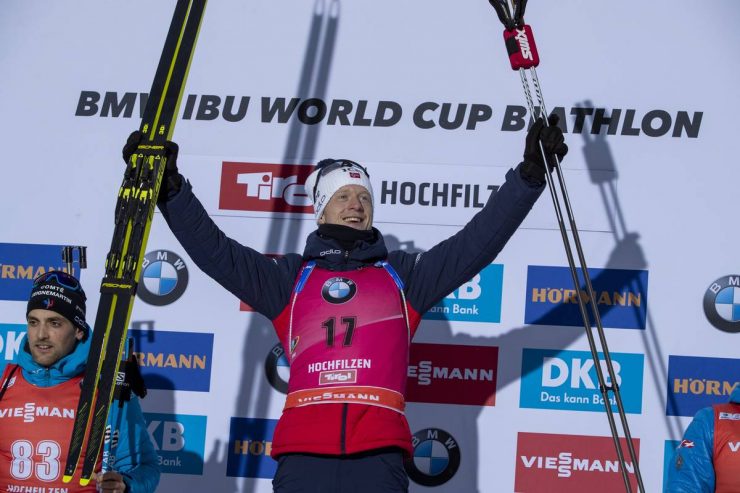
Johannes Thingnes Bø of Norway took the men’s 10 k sprint win; his second individual victory of the season. Bø was last year’s overall winner. Friday he stopped the clock in 25:07.8 with a single missed target. The win gives Bø the overall World Cup’s yellow bib – Martin Fourcade of France, began the race as the overall leader. He finished 10th on Friday.
Johannes Thingnes Bø of Norway skiing for the win during Friday’s 10 k sprint in Hochfilzen, Norway. (Photo:NordicFocus)
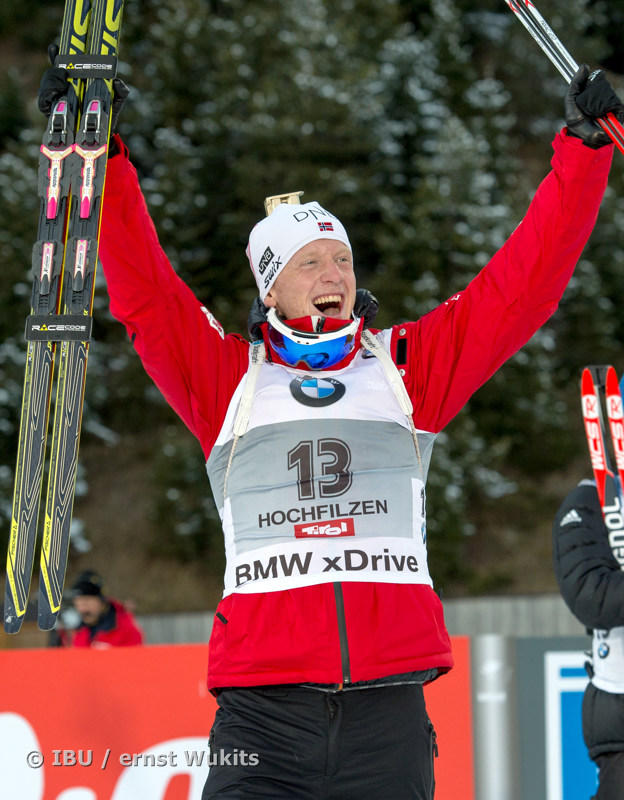
Johannes Thingnes Bø claimed the yellow bib as the leader of the IBU Wold Cup in Hochfilzen, Austria on Friday. (Photo: NordicFocus)
France’s Simon Desthieux finished 7.8 seconds back in second place. He too missed only one target. And Russia’s Alexander Loginov shot clean for third place, 14.6 seconds behind.
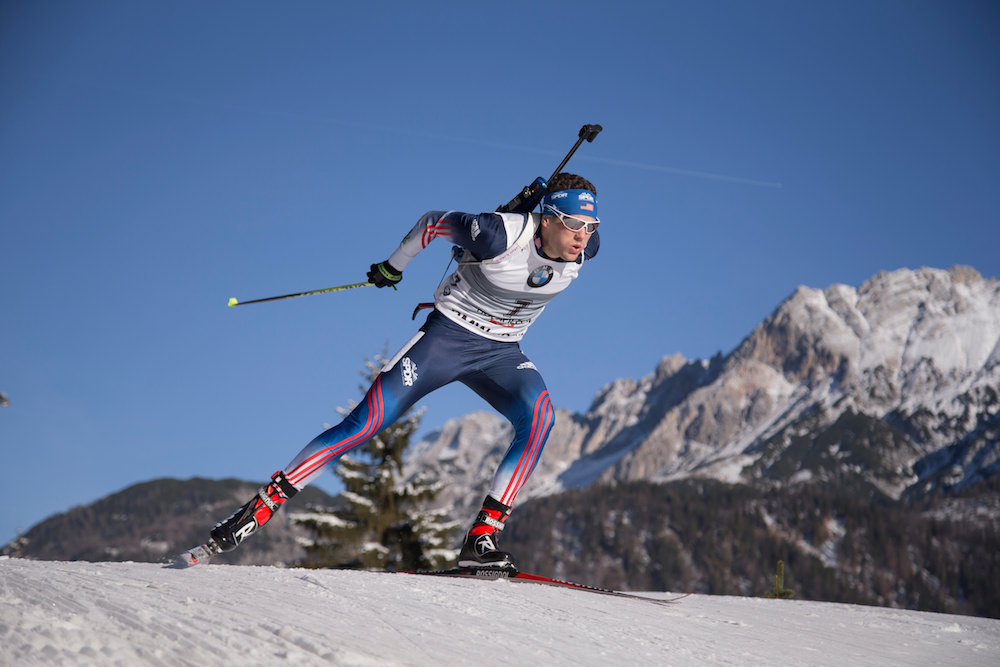
Sean Doherty of U.S. Biathlon placed 35th overall (+1:32; 0+1) as the top North American. Leif Nordgren was 44th (+1:40.8; 0+1), Alex Howe 74th (+2:27.5;1+1), and Travis Cooper 99th (+3:53.3; 2+1).
Sean Doherty during the men’s 10 k sprint in Hochfilzen, Austria. (Photo: NordicFocus)
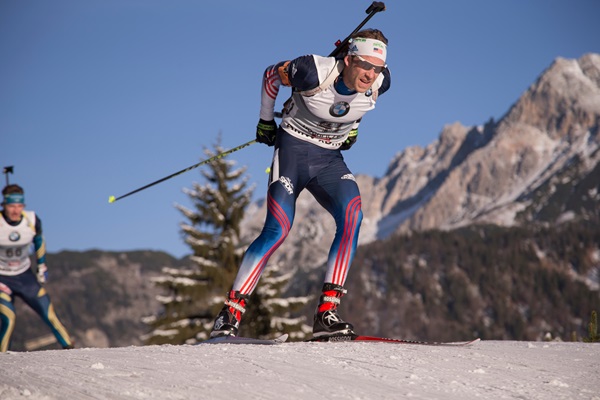
Leif Nordgren, during the men’s 10 k sprint in Hochfilzen, Austria. (Photo: NordicFocus)
Scott Gow of Canada was 61st (+2:12.1; 1+1), Jules Burnotte 65th (+2:14.6;1+2), Aidan Millar 93rd (+3:08.8;4+0), and Christian Gow did not start.
Canada’s Scott Gow, during the men’s 10 k sprint in Hochfilzen, Austria. (Photo: NordicFocus)
Racing continues in Hochfilzen tomorrow with the women’s 4 x 6 k relay and men’s 12.5 k pursuit. Both Doherty and Nordgren qualified for the pursuit.
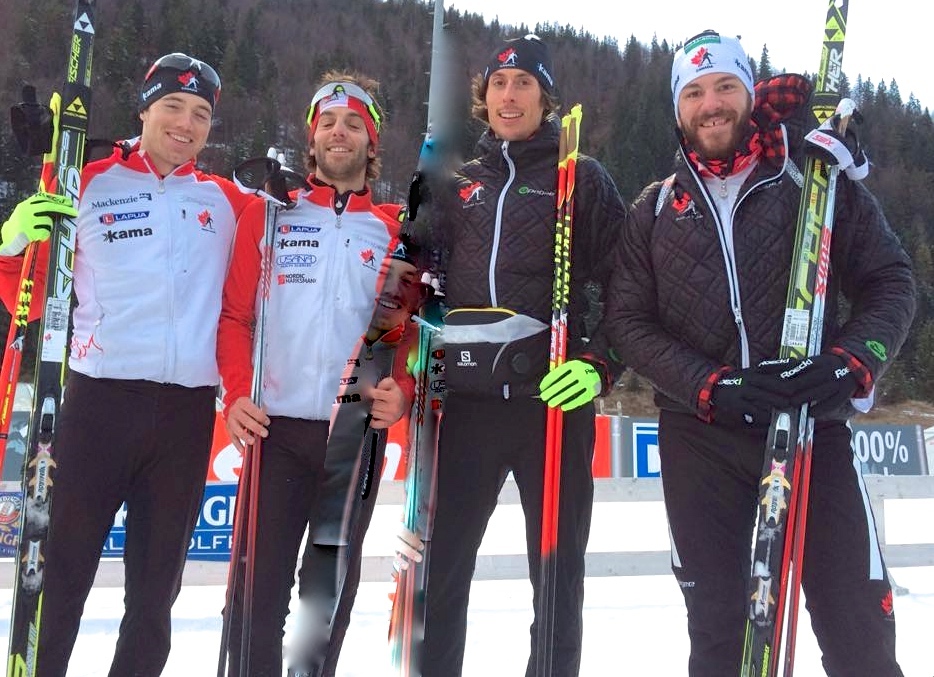
The Canadian men’s 4 x 7.5 k relay, which tied a team-best sixth on Saturday at the IBU World Cup in Hochfilzen, Austria. From left to right, Nathan Smith, Scott Perras, Brendan Green, and Marc-Andre Bedard. (Courtesy photo)
Note: This article has been updated to include quotes from Canadian national-team head coach Matthias Ahrens.
Just a couple steps from the podium on Saturday, the Canadian men’s 4 x 7.5-kilometer relay team was pretty psyched to get flowers — and chocolate, and a “sweet medal,” and cash, according to third-leg Marc-André Bédard.
They had been in the hunt for sixth, which tied each of their career bests in the team event and was worthy of the flower ceremony, since the first leg of Saturday’s IBU World Cup relay in Hochfilzen, Austria.
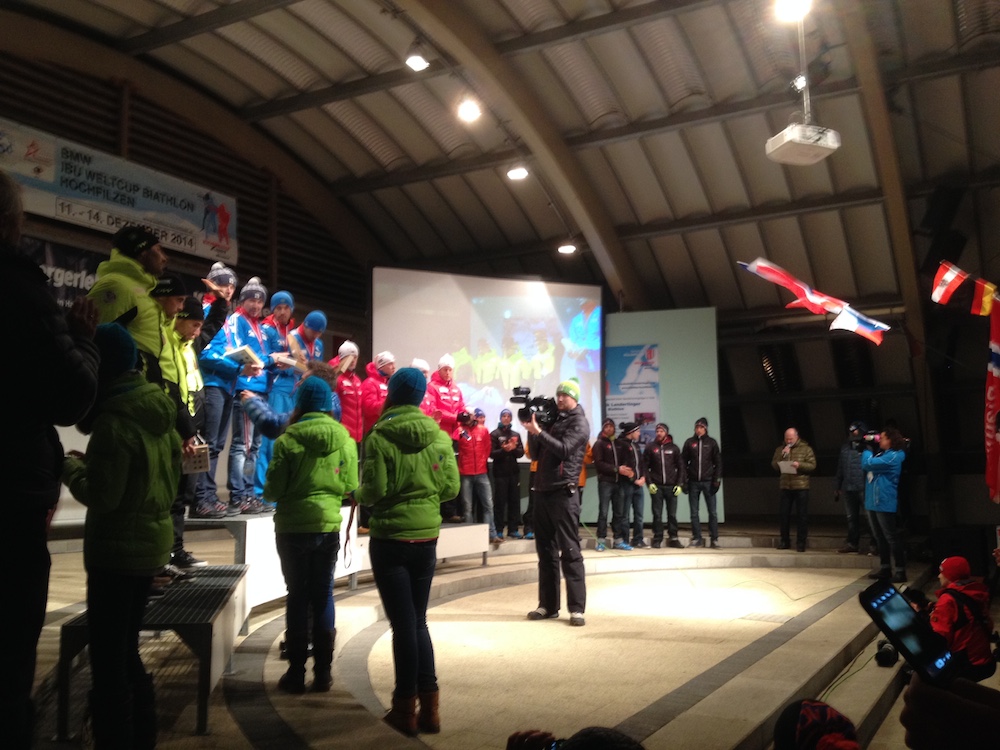
The Hochfilzen World Cup men’s relay awards ceremony on Saturday night, with Canada (far right) in sixth. (Photo: Matthias Ahrens)
Temperatures were colder than Friday’s sprint, their skis seemed to be running great, and by the first exchange, the Canadians were well on their way to the top-eight Nathan Smith thought they were capable of on a given day.
Saturday turned out to be especially impressive, Smith explained.
“After yesterday’s disappointing showing for our team in the sprint I was unsure of what to expect today,” Smith wrote in an email, referring to his 44th-place finish, which led the Canadian men in Friday’s 10 k sprint. Teammate Brendan Green was 49th, Bédard placed 82nd and Scott Perras was 100th.
On Saturday, they tagged off in that order.
Smith started first in the 24-team field and found himself drifting toward the back of the pack — farther than he would have liked. After his first shooting, where he had to use three spare rounds, he was 21st, nearly 37 seconds behind Sweden and Italy in the lead. France and Russia hovered a few seconds behind in third and fourth, and the Americans — with Lowell Bailey leading off — ranked ninth, 14.5 seconds back, after Bailey missed one prone.
In an email, Bailey in bib 20 explained he started six rows back, based on the IBU’s new start rules, which he considered “a significant disadvantage for teams with higher bib numbers.”
“I was able to make it up into the top five during the first loop but it was definitely tough starting with bib 20,” he wrote in an email. “I disagree with the change and I think it gives the lower bib numbers an advantage that they didn’t have with the previous format. That being said, I was able to work my way through the field, but it took a lot of effort and I expended a lot of needless energy trying to pass.”
While Bailey was satisfied with his shooting, using one spare on each stage, Smith was stressing over prone.
“I was pretty worried in prone,” Smith wrote. “I’m not sure exactly what went wrong there, but it felt exactly the same as the prone in [Friday’s] sprint. I knew I was feeling good skiing though so I just tried to ski hard and hopefully catch some teams off guard that were skiing in groups.”
By the second stage, the Canadian was up to 12th with a clean bout. He went on to post the fastest course time of his leg on his third-and-final lap.
“I felt strong and tried to make up time on the second half of the course where all the climbing is,” Smith explained. “My last lap felt amazing. I passed a lot of people and it was actually ranked 1st for that leg. I had hoped to put Brendan in a slightly better position, but given 3 extra, I’m pretty happy that the deficit was only 25 seconds.”
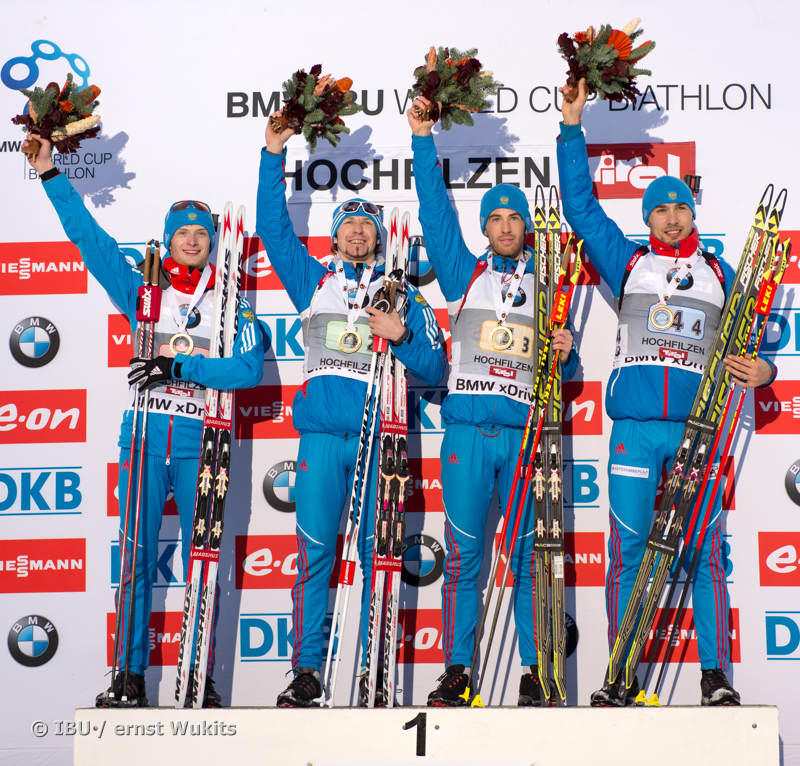
Russia won the men’s relay on Saturday at the IBU World Cup in Hochfilzen, Austria. From left to right: Maxim Tsvetkov, Timofey Lapshin, Dmitry Malyshko, and Anton Shipulin. (Photo: IBU/Ernst Wukits)
Smith tagged Green in seventh, 25.7 behind Friday’s sprint winner, Johannes Thingnes Bø of Norway in first — who missed one in prone. France’s Simon Fourcade cleaned to put his team 12 seconds back in second, and Ukraine tagged in third (+14.4) after 10-for-10 shooting from Dmytro Pidruchnyi.
The U.S. slipped to 15th during Bailey’s leg as a result of less-than-ideal skis, second-leg Tim Burke explained.
“I knew right away when I saw Lowell’s race that he was having a problem with skis,” Burke wrote after his team placed 14th overall. “Unfortunately, I did not have time to change my skis and we were using the same grind. The temperature dropped more than we thought at race time and the snow really dried out. We simply ended up on too big of a grind.”
Heading out 56 seconds behind the leaders, Burke remained hopeful that he could pick a few teams off. He ended up using two spares in prone and another in standing.
“I definitely made a mistake in prone when I tried to push the pace a little too much and ended up pulling the last two shots,” he wrote. “After standing I ways able to pick up a few spots on the last loop but we were still far from where we should have been after two legs.”
Meanwhile, Green cleaned both stages for Canada to improve to sixth. He led Italy’s Dominik Windisch, who started a second behind him, on his first lap. The two entered the range together, and despite Windisch using one spare, they left together as well.
“I was able to work off him for my second lap and relax a little bit more in certain areas before standing,” Green explained. “I knew my skiing should be decent if worked with him so I didn’t try and do anything too heroic on course and more just tried to settle into a solid pace.”
After his standing stage, Green was up to sixth, 39 seconds behind Russia’s Timofey Lapshin up front. Lapshin and Norway’s Emil Hegle Svendsen both cleaned standing to leave the range together, and France’s Jean Guillaume Beatrix used one spare to fall slightly off the pace, eight seconds back in third. Windisch missed three and dropped to ninth.
On the long climb back up to the stadium, Svendsen led Beatrix and Lapshin, while Austria’s Simon Eder tried to close the 12-second gap in fourth. Germany’s Andreas Birnbacher trailed by another 12 seconds in fifth — 14.7 seconds ahead of Green.
“I always feel a ton of pressure during relay races,” Green reflected. “But last year we had multiple strong relay performances where we were contending at the front of the race, so I’m sure those experiences helped me out today…
“When setting up the next teammate for the tag, it’s ideal if you can tag them with other nations close by so they have people to work with skiing,” he added. “If that scenario works out, perfect, but if not that’s fine, and we’re always doing our best to tag as close to the lead as possible.”
Green handed off to Bédard in sixth, 50 seconds behind Norway and France, neck-and-neck for first, and 24 seconds behind Germany in fifth. Russia tagged off 7.8 seconds back in third, and the U.S. came through in 11th, 1:55 behind the leaders.
Upon receiving the tag, Bédard — the team’s newest member and the only one not to experience sixth place in the relay in Antholz, Italy, last January (former national-team member J.P. LeGullec scrambled in that race) — he focused on keeping his cool and trying not to lose too much ground.
“It was a bit lonely during the first 2 laps but I tried to go as hard as I could knowing that it would be super short,” Bédard wrote.
He used one spare in prone and three in standing to slip one place to seventh behind Italy’s Thomas Bormolini after his second stage.
“On the final lap I took extra time on the range to clear my targets and the Italian came back strong cleaning his, so I had to fight back 8-10 seconds,” Bédard explained. “I got to him pretty fast. I felt good so I attacked right away but he kept up to me and we ended up together.”
Bédard and Bormolini entered the final exchange at the same time, 1:56.4 behind Russia. After Dmitry Malyshko cleaned, Russia remained the definitive race leader heading into the final leg, more than 17 seconds ahead of Norway’s Lars Helge Birkeland in second. Birkeland used five spares — two in prone and three standing to account for half of Norway’s 10 total spares at the end of the day.
France’s Simon Desthieux, who missed two standing, trailed Birkeland by 0.7 seconds through the tag zone in third.
Russia’s Anton Shipulin laps several teams en route to a 20-second victory for the Russian men’s team in Saturday’s 4 x 7.5 k relay in Hochfilzen, Austria.
At the front of the race, it was all about chasing Russia with anchor leg Anton Shipulin ultimately cleaning both stages to bring it home. France’s Martin Fourcade and Norway’s Tarjei Bø duked it out for second, with Fourcade missing one prone and Bø missing three standing to drop to third.
Then there was Austria and Germany, some 35 seconds behind Russia after prone and 48 seconds back after standing, racing for fourth.
“The gaps were quite big when I started,” Canada’s anchor, Perras wrote. “My race was all about getting into the prize ceremony. I couldn’t even see 4th or 5th.”
He missed two prone and three standing for five total spares — half of what Canada ended up with.
“In prone I shot a bit slow. I threw my first spare round down range to try and leave the range with Italy,” Perras explained.
Italy’s Christian Martinelli used one spare in prone to exit the range 15 second ahead of him. Perras made up that time on the second lap and entered the range with him, then reclaimed sixth. While Perras missed three that bout and Martinelli missed two, Perras left the range 22 seconds ahead.
Canada’s anchor Scott Perras pushing for sixth in the finishing straight of Saturday’s IBU World Cup 4 x 7.5 k men’s relay in Hochfilzen, Austria.
“I had no idea how close Italy was to me or any team for that matter,” Perras explained of his last lap. “I fought the whole way. I was fighting for my teammates out there.”
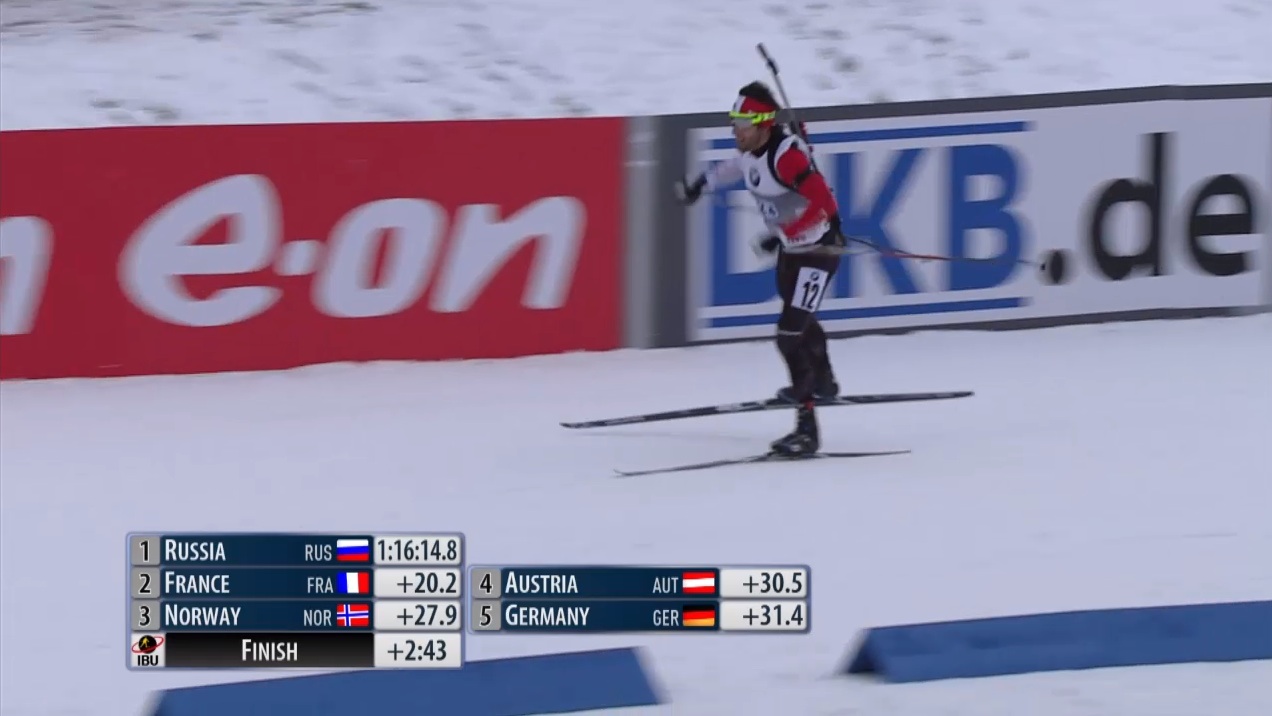
He secured sixth to match the team’s best from Antholz, finishing 2:55.4 behind Russia, which won in 1:16:14.8 after using just one spare round. Fourcade cleaned standing and outsprinted Bø by 7.7 seconds to lock up silver for France (0+4), 20.2 seconds behind Russia, and Norway took third (0+10).
Dominik Landertinger cleaned prone and used one spare in standing to finish fourth for Austria (0+7), 30.5 behind Russia, and Germany’s Simon Schempp also cleaned the first stage then missed one standing to finish 0.9 seconds later in fifth for his team (0+9).
“Matching a top finish is always a must, we obviously want to get better and better,” Bédard wrote. “But it was great to be [in] the flower ceremony.”
“I think we are happy to get back there so early in the year,” Perras explained. “It sets the bar for the whole team. It makes everyone want to work harder, coaches, wax techs and athletes to repeat or better days like today.”
In an email, Canada’s national-team head coach Matthias Ahrens called their performance “solid … especially in the shooting range taking the opportunity of other team’s weaknesses,” he wrote in an email. “This was an important result for our team in building confidence towards their individual races. This also applies for our women’s team who had a decent result [11th] with 2 young athletes, one being a junior in her first [World Cup] race.”
While the Canadian men ended the day with zero penalties and 10 spares, the Americans, which were lapped during Russell Currier’s anchor leg, ended up with four penalties and 14 spares.
After Burke tagged Leif Nordgren in 11th, Nordgren used three spares and had to ski a penalty loop on his first stage, then slipped to 12th. In standing, he used all three spares again and had three more penalty loops to leave the range in 17th.
He tagged Currier in 17th, nearly five minutes behind the leaders. Currier went on to use two spares in prone and one in standing before being pulled on his last lap.
“We are not reading too much into this result as a team,” Burke wrote. “We know we are far better than what we showed today. In one way, at least everything went wrong for us on the same day.”
“I think we are capable of a podium,” Bailey noted. “The field is incredibly strong on the men’s side this year and a few small mistakes make a big difference on the results list. If we are perfect, we have a chance at the podium.
“Tomorrow is a new day,” he added. On Sunday, Burke and Bailey will start 13th and 17th, respectively in the pursuit. Nordgren, who also qualified, will head out 51st of 60 men.
Smith and Green will also be hunting for a top 30 after starting in 44th and 49th, respectively.
American Susan Dunklee on her way to 29th in Friday’s 7.5 k sprint at the IBU World Cup in Hochfilzen, Austria. Dunklee missed one prone and one standing. (Photo: USBA/NordicFocus)
No skiing? No sweat, according to US Biathlon’s Susan Dunklee.
Earlier this week, after leaving the first IBU World Cup venue in Östersund, Sweden, Dunklee and her team found the skiing in conditions in Hochfilzen, Austria, well — non-existent. Organizers were working on transporting snow great distances to hold the race.
“Considering how uncertain we were last week about whether these races would happen, the organizers have done a fantastic job,” Dunklee wrote on Friday. “They brought in all the necessary snow for a nice clean 2.5 km loop.”
But before that, the U.S. skiers prepped with some trail running.
“We did some running when we first arrived since the ski loop wasn’t ready yet and it was beautiful up in the mountains,” Dunklee explained in an email. “The great thing about not having natural snow is that the hiking trails are all still open so we got to explore more than usual.”
Dunklee’s an avid hiker, so that worked for her. Come Friday, when a 2.5-kilometer loop was ready to go for the women’s and men’s 7.5- and 10-k sprints, so was she.
“I feel like I already have all the pieces I need to be earning top tens,” she explained. “I am starting the season with top-end ski speed, a huge improvement from last year. I’ve been consistently hitting higher percentages of targets in practice than ever before.”
On Friday, she missed one prone and one standing for 80-percent shooting: not perfect, but something she made up for with the 11th-fastest course time. Dunklee finished 29th overall, 1:29.3 behind Finnish winner Kaisa Mäkäräinen.
“So far I have had solid results but nothing big,” Dunklee wrote. “I am a little disappointed it hasn’t come together for me yet, but the season is young.”
“I feel like I already have all the pieces I need to be earning top tens. … So far I have had solid results but nothing big.” — Susan Dunklee (US Biathlon) after placing 29th in Friday’s 7.5 k sprint
Finland’s Kaisa Mäkäräinen after winning the IBU World Cup pursuit last Sunday in Östersund, Sweden. Five days later, she repeated with a sprint victory in Hochfilzen, Austria. (Photo: IBU/NordicFocus)
For Mäkäräinen, Friday’s victory was her second straight after she topped the Östersund pursuit last Sunday. The defending IBU World Cup champion started 23rd and missed one in prone, but cleaned standing and consistently posted the fastest loop times to take the win in 20:55.6. Italy’s Karin Oberhofer cleaned for second, 10.4 seconds back, and as the 15th starter, her time remained ahead of Mäkäräinen until the last lap. But it gave Mäkäräinen a time to beat.
“I felt good on the first loop and the second loop, but I do not know where I got that power on the last loop,” Mäkäräinen told the IBU, referring to her illness earlier in the week. “My legs were feeling really tired … The sickness this week did not affect me on the shooting range, but it did on the tracks. I was not able to do my normal training all week, just a lot of slow skiing.”
She was pleased with her shooting, even with a penalty.
“I am quite happy and a bit surprised to win. My level is quite high now, so that helped me,” she said.
Norway’s Tiril Eckhoff in bib 18 was primed to take the lead from Oberhofer heading into the last stage before missing one, her only penalty of the day. She fell off the pace to place third, almost 20 seconds after Oberhofer and 29.9 seconds behind Mäkäräinen.
For Oberhofer, 29, who was fourth in the sprint at the Sochi Olympics last winter, it was her first individual podium.
“I trained a lot, hoping that maybe I might get to the podium at least once,” Oberhofer told the IBU. “In the last loop, I just concentrated on the tracks, did my best and it turned out good.”
While Dunklee will start 1:29 back from Mäkäräinen in Sunday’s 10 k pursuit, she predicted she’d have opportunities to move up with seven women starting within seven seconds ahead of her.
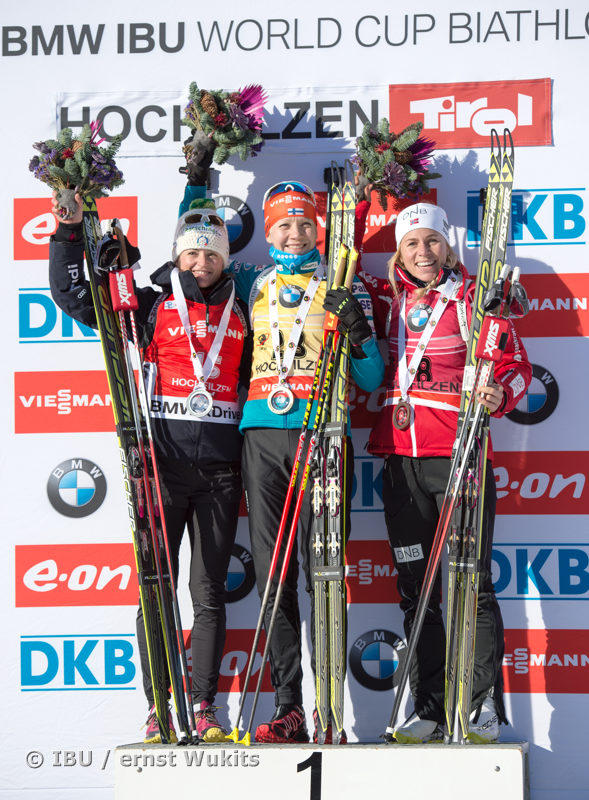
The women’s podium after the Hochfilzen World Cup 7.5 k sprint on Friday, with Finland’s Kaisa Mäkäräinen (c) in first, Italy ‘s Karin Oberhofer (l) in second, and Norway’s Tiril Eckhoff in third. (Photo: IBU/Ernst Wukits)
Five seconds behind her, Canada’s Rosanna Crawford will head out 34th, 1:34 behind Mäkäräinen, based on Friday’s result.
“Today was a tough day on the skis for me,” Crawford wrote in an email. “Right from the start I just didn’t feel I had that snap I needed and it warmed up quite a bit right before start which made for suction on the skis. On my last loop I just didn’t have the same energy I had last week. But you can’t expect to be fast all the time.”
The top Canadian in 34th, Crawford cleaned prone and missed one standing. She was pleased to shoot 90 percent — especially considering it was “blustery” during zero, then calm, then windy again during the race, she explained.
“I made a pretty big correction, so I was happy that I hit them all [on the first stage],” she said. “I seem to be having a lot of one misses so far this year, but 90% is still good.”
After fresh snow arrived Thursday, Crawford described the course as packed and fast — until the sun hit it on Friday afternoon. “[Then] things really slowed down,” she wrote.
The lone Canadian woman to advance to the pursuit in the top 60 (Megan Heinicke was 61st, Sarah Beaudry placed 63rd in her World Cup debut, Audrey Vaillancourt was 66th, and Zina Kocher finished 82nd), Crawford was hoping for a top 30 in the pursuit.
“For Sunday, hopefully I will be feeling better on the skis and able to move up some positions. The goal is to stay in the points,” she wrote.
Before that, she’ll race in the women’s 4×6 k relay on Saturday morning with Heinicke, Beaudry and Vaillancourt.
“I think if we each have a good leg that a top 10 is possible,” Crawford wrote. “Right now Audrey and Megan are just getting over a cold, I’m not skiing like I would like to be and it’s Sarah Beaudry’s first World Cup, so the focus will be some good shooting on all parts.”
“You can’t expect to be fast all the time.” — Rosanna Crawford (Biathlon Canada) after placing 34th on Friday
While Heinicke missed three (1+2) to finish 2:39.2 behind the winner, Beaudry, 20, who earned her World Cup starts last weekend in Canmore, Alberta, had a single standing penalty.
“Sarah had a great day on the range today, and I am sure things slowed down a lot by the time she hit the course [after starting 94th],” Crawford explained. “It’s always really exciting to be with someone who it’s their first World Cup, they bring so much energy to the team! Sarah is a blast to have around!”
Vaillancourt also missed one (1+0) and Kocher finished with five penalties (3+2).
American Annelies Cook qualified for the pursuit in 50th (+2:04.9) with a single prone miss.
“After a rough start in Östersund, I had to reevaluate my training a bit,” she explained in an email. “Clearly, I am lacking the high-end speed and lactate tolerance that I need to have to keep up on the World Cup. It’s easy to look back and try to figure out what went wrong, but it can be hard to let it go and just focus on what you can control. So that is what I am trying to do now.”
“It’s easy to look back and try to figure out what went wrong, but it can be hard to let it go and just focus on what you can control.” — Annelies Cook (US Biathlon), 50th on Friday
Cook added that she’s been working on speed, and since placing 79th in last weekend’s sprint and missing out on the following pursuit, she did some intervals and pushed as hard as she could on Friday.
“I am glad I can race in the pursuit and get one more hard session under my belt,” she wrote. “I have to say, I was actually pretty sore today … I must be getting old! But I felt good once I started to race. But I can’t hold on to that speed for the entire race yet, which is frustrating. I was really happy to clean standing after missing prone because that is one of my demons. I told myself I had to relax and I was going to clean, luckily it worked.”
While the Americans are one woman short for the relay, Cook and Dunklee will race on Sunday.
“It’s another opportunity to push hard, to ski with other girls and to challenge myself in the shooting range. Plus, it’s fun!” Cook wrote.
The third U.S. woman, Hannah Dreissigacker placed 78th on Friday (+3:12.7) with three penalties — one prone and two standing. Last weekend, she was 81st in the Östersund sprint.
Tim Burke racing to 13th in the men’s 10 k sprint at the IBU World Cup on Friday in Hochfilzen, Austria. (Photo: USBA/NordicFocus)
Note: This article has been updated to include comments from Canada’s Nathan Smith.
Tim Burke knows you have to get a little weak in the knees to achieve the performance of a lifetime. Or something like that.
Friday’s IBU World Cup 10-kilometer sprint in Hochfilzen, Austria, wasn’t exactly that race for the U.S. biathlete — he’s had plenty of top 10s and top 15s in his career — but it was headed in that direction.
“One of my big goals this year is to really try to attack every race and give myself the best chance I can to get on the podium,” Burke said on the phone after Friday’s race.
As the seventh starter of 105 men on an unusual 2.5 k loop (shorter because of Hochfilzen’s lack of snow; racers had to ski two uninterrupted loops between the first and second stages), Burke started fast and tried to hold it the pace throughout the three-lap race.
He ended up cleaning prone and hitting every target but his last in standing.
That was the one he wanted back — but he also acknowledged that he pushed himself to the brink.
“I came into that last stage really gassed; I definitely went all out after the start,” Burke said.
After organizers trucked in snow to hold the races, conditions were fast and solid on a just-above freezing, sunny afternoon. According to Burke, he experienced good conditions and no wind during his race. It was just a matter of fatigue when it came to the last stage.
“After the third and fourth shot, I was starting to shake a little bit and couldn’t really hold it together for that last shot,” he said. “I feel like right now in men’s biathlon, it’s so competitive that there are always a bunch [of guys] who are going to take a gamble, and I realize that to get the podium now, I really need to get right to the edge and sometimes over the edge, and that’s the way I want to start every race.”
That’s also the way he finished it. Glad to have just 2.5 k to go on his last lap, Burke crossed the line in Burke fourth. He would eventually end up 13th.
“Even after the miss, I still thought I could be up there in the top-ten today,” he said. “Normally at this range, you see a lot of penalties because it’s a challenging approach to the range.”
Johannes Thingnes Bø celebrates his 10 k sprint win at Friday’s IBU World Cup in Hochfilzen, Austria. (Photo: IBU/Ernst Wukits)
After the start, racers headed straight down into the valley before turning around for a long grind back to the top. Burke said that type of “gradual climbing” was what suited him best. To his surprise, several others hit most of their targets as well. The top four — Norway’s Johannes Thingnes Bø, Germany’s Simon Schempp and Andreas Birnbacher, and Austria’s Dominik Landertinger, respectively — all cleaned.
At the end of the day, Burke knew his one miss probably cost him the podium, but he continued to focus on the positives and was pleased he took the risk. His course time ranked ninth-fastest overall.
“I’m really happy with my ski speed right now; I think it’s probably my strongest start ski-speed wise that I’ve ever had,” he said.
Burke finished 39.6 seconds behind Bø, who took the lead from fellow Norwegian Emil Hegle Svendsen, who started second, after starting 13th and quickly cleaning prone. Hegle cleaned as well, but missed one standing and gradually fell farther behind the 21-year-old Bø, who notched the fastest course time.
Bø finished in 24:34.9, beating Schempp by 14.3 seconds for the win on Day 1 of the second World Cup of the season. Birnbacher was 17.9 seconds back in third, and Landertinger finished 22.5 seconds after Bø in fourth. He edged Slovenia’s Jakov Fak by 0.4 seconds, and Bø’s older brother, Tarjei, cleaned for sixth (+26.7).
In fact, sixth through eighth place finished with perfect shooting. France’s Martin Fourcade was seventh (+27.8) and Russia’s Dmitriy Malyshko eighth (+29.2). Svendsen, the overall World Cup leader, placed ninth (+30.9) with a single miss.
Friday’s sprint finishes determine the start order and time back for Sunday’s 12.5 k pursuit.
“I stayed really close today, only 39 seconds back and I’ll start in a big group of guys,” Burke explained. “It should be an exciting race. I think a lot of guys will be contending for the podium.”
Lowell Bailey (US Biathlon) racing to 17th in Friday’s 10 k sprint at the IBU World Cup in Hochfilzen, Austria. (Photo: USBA/NordicFocus)
Burke’s teammate Lowell Bailey also landed in the top 20 for the U.S. on Friday, cleaning and tying Bulgaria’s Krasmir Anev for 17th, 57.6 seconds behind the winner.
On Saturday, Bailey, Burke, Leif Nordgren, and Russell Currier will team up — in that order — in the men’s 4×7.5 k relay. “Anything can happen for sure,” Burke said.
Nordgren placed 51st on Friday (+2:19) to qualify for the pursuit, with a single miss in prone. Currier was just outside the top-60 needed to qualify, finishing 61st with three penalties — two prone and one standing.
Nathan Smith led the Canadians in 44th with three misses as well — two prone, one standing, and 1:57 behind the winner. Brendan Green placed 49th with two prone penalties (+2:13.9).
In an email, Smith explained more than half of their team came down with a cold in Östersund.
“I felt tired and on the edge during the travel day Monday. Thankfully I managed to turn things around and feel good again,” he wrote. “My prone just plain did not feel very solid. I fought for the shots but they didn’t come easily. Standing was pretty good but my first shot, which missed, I pulled a little early.”
Smith felt better about his skiing. I felt like today could have been a top-20 ski time but I didn’t quite make it,” he said. “Usually I feel better race to race, so maybe on Sunday I’ll be there.”
In Sunday’s pursuit, he’ll aim for a top 30, and “with an amazing race, perhaps top 20,” he said. “I’m farther back than I’d hoped.”
In an email, Green explained he was frustrated to open with two misses.
“My shots throughout that bout were consistently high but I think that’s something I should be able to work through going into [Saturday],” he wrote. “Standing felt solid with a nice rhythm which I’m happy with.”
Struggling with back pain since the start of the season in Sweden, Green explained that it wasn’t quite 100 percent, but it hadn’t kept him from doing any of his planned workouts this week, either.
“The travel day from Sweden was hard on it but I’ve been able to get daily treatments here which are definitely helping it from getting any worse,” he wrote. “I’m hoping that over Christmas I’ll be able to spend time with my physio and sort things out to a more manageable level again. Hopefully I won’t have too many issues with the rest of the season in the new year.”
As for how he felt skiing on Friday, he wrote that it was “slowly starting to come along. I’m definitely disappointed with my start to the season thus far and with my form, but I know there is the potential there for a lot more and hopefully I will get a glimpse of that soon. The course seemed to hold up fairly well and although we had to ski a double 2.5km loop after prone the race still went by pretty fast.”
In Saturday’s relay, Smith will start for the first time, followed by Green, Marc-André Bédard, and Scott Perras. On Friday, Bedard placed 82nd with three misses (2+1) and Perras was 100th with six penalties (3+3).
“I’ve never been anything but 3rd or 4th leg,” Smith wrote, “so it’s going to be a new experience for sure! I want to tag Brendan off in a position where he can be right in there with the lead pack. A good result right now for where we’re at is top 8.”
“I know we’ll all be focused on doing our job during each leg of the relay and racing to the best we can,” Green wrote. “We’ll see at the end of the day how we stack up against other nations.”
U.S. scramble leg Lowell Bailey (second from r) racing in the pack of Saturday’s 4 x 7.5 k relay at the IBU World Cup in Hochfilzen, Austria. The U.S. men went on to place 11th.
HOCHFILZEN, Austria – Speaking after he finished the third leg of the World Cup 4 x 7.5 k relay on Saturday, Jeremy Teela was prophetic about what would happen, even though he had tagged off in sixth.
“Any time you have Lowell [Bailey] and Tim [Burke] in start positions one and two for a relay, they might come in first place and tag off, and you might come in tenth,” he said. “You just go for it. It’s a relay and yeah, you want to be safe, but not too safe.”
The U.S. men certainly went for it today, and the team was in podium position for much of Bailey and Burke’s legs over the first half of the competition. The name of the game was to shoot well and be ready to attack – and even a few spare rounds here or there did not set them back too far. For instance, Bailey used one spare in standing, but moved from seventh coming out of the range to third when he tagged off to Burke.
“I went out of standing with a 10-second gap to close, so I really pushed on the first part of the loop, and I just didn’t quite have it on that last climb, but I tried to keep Tim within contact,” he said. “I would have liked to clean, but at the end I was able to get out and shoot that extra round quickly and get back up with the leaders, so I was happy with that.”
For his part, Burke stayed right in that spot until his own standing stage, when he used two spare rounds and then had an unfortunate mishap with a pole, dropping it as he picked it up from the shooting mat. He had to turn around as he skied off, retrieve the pole, and then try to catch up to the leaders. It didn’t work as well as it had for Bailey, and he was left skiing his last loop alone as Ole Einar Bjørndalen of Norway hammered away at the lead.
US Biathlon’s Tim Burke pushing as the second legs of the U.S. men’s relay at the IBU World Cup in Hochfilzen, Austria. The Americans went on to place 11th.
The two spares? Those weren’t too much of a problem. As it happened, much of the field struggled on that stage, with many spare rounds used by everyone. In the midst of that second leg, the snow really started to come down on the course.
“I was really happy to hear that,” Burke said of the clangs of bullet not meeting target. “The mats were pretty snowy and slippery. So that wasn’t the easiest. But it wasn’t windy or anything. It could have been a lot worse.”
Bjørndalen, for instance, also used two. It was the pole that bothered Burke more than anything.
“It’s something that – I’ve never done that before,” he said. “That cost me getting a ride with that group, which would have been key. The way the course is, you kind of go down for half of it and then turn around when you hit the bottom really rested after being in the draft. So that was tough. I managed to limit the damage.”
Teela used two spares as well, and kept the team in sixth place although he struggled to keep up on the final loop.
“The relay felt good, but it’s a short race, and I kind of died,” he explained. “I need to get a little bit stronger to be able to push harder.”
The big question mark was Leif Nordgren, the team’s usual anchor leg who sat out the sprint because he’s been feeling sick.
“Leif is back to anchor,” Burke said after he finished his own leg. “We’ll see – he’s been more or less on bed rest all week. Maybe he’ll be super rested, you never know with those things!”
Lowell Bailey (l) follows Germany’s Daniel Boehm during the first leg of the men’s relay at the IBU World Cup in Hochfilzen, Austria.
Teela, too, seemed to have confidence.
“Normally, in the past, before Leif came on strong, I used to be the anchor,” he said. “But Leif has really come along and he’s super fast with a really good kick.”
Nordgren, in all honesty, probably did better than you might expect for someone who just two days ago was going on a short jog, which was at that point a victory. He hasn’t been training much, but skied the 14th-fastest anchor leg. He also used two spare rounds in each shooting stage.
“Race went okay for me considering,” Nordgren wrote in an email. “I’ve been sick all week, today was my second time on skis all week, so I wasn’t expecting too much. I could tell though in the last kilometer or so though that I hadn’t trained at all. I am really disappointed to have let the team slip so far down after the great races put together by the other three. But that’s how it was today.”
Neither his shooting nor his skiing were among his best in relay performances, but one alone may have kept the U.S. in the top six.
“This is one of the closest relays I can remember, with 11 teams only 1:25 behind the leaders, that’s how high the level of the field is now,” Nordgren wrote. “I know that we’ll be in better shape getting closer and closer to the Olympics, so I’m excited to see what future relays bring this season.”
As it was they finished 11th, but at the back of a sprint finish which also included eighth-place Switzerland. They were 25 seconds out of the top six.
Throughout the race, the team had just tried to stay smart. Part of that came on the shooting range.
“I tried to stay in my own shooting and do my own thing even though people shoot really fast in that last stage,” Bailey said.
“A good day means you’re sleeping when you’re shooting,” Teela said, agreeing with the sentiment that staying calm was key. “You’re not thinking. Once you wake up from your shooting sleep slumber, things go wrong. Once your brain gets involved, it can cause problems. So it was normal good shooting for me. I just did the thing I’ve been doing for 18 years.”
The other part of the stay-smart strategy was not to lead. And so that’s why you could see Bailey sitting in second place for much of the first and second loops of the course.
“I tried to just hang with the person I was with,” he said. “I tried to stay in second. I felt like going into the lead with some of the headwinds wasn’t a good advantage. I could save some energy by drafting a little bit. So that’s why the pace was really slow in the first lap. I probably could have pushed ten seconds but I don’t think it would have gotten me much. You always have to make that decision in the first leg.”