From the FasterSkier archive — posts syndicated from athletes’ and coaches’ own blogs between 2004 and 2012, kept online as published. Current coverage is at fasterskier.com.

Tag: holmenkollen 50 k freestyle

  • Saturday Rundown: NCAA Champs; Holmenkollen 50 k; Kontiolahti Relays

    Saturday Rundown: NCAA Champs; Holmenkollen 50 k; Kontiolahti Relays

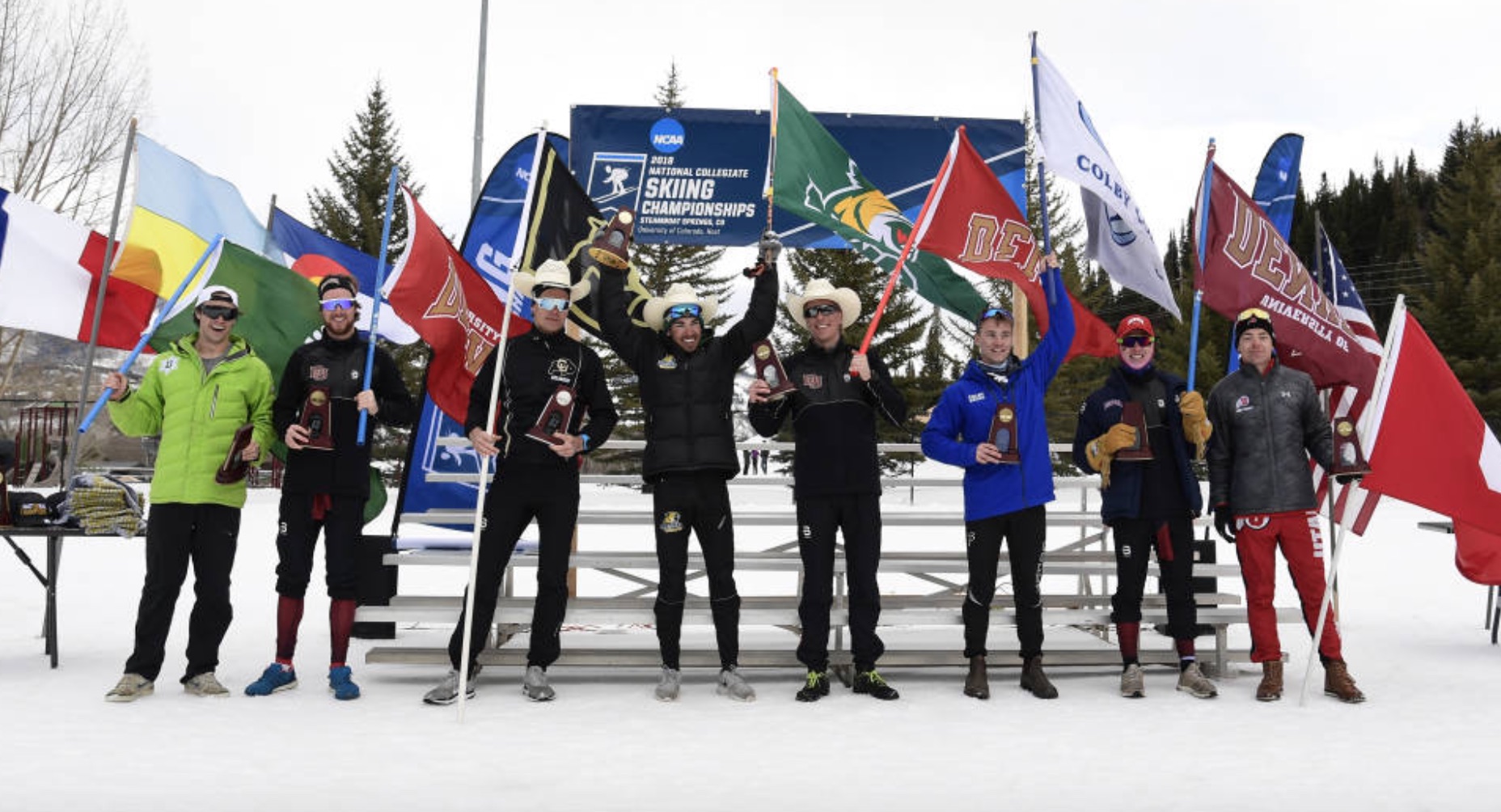
    The top finishers in the men’s 20 k freestyle mass start at 2018 NCAA Skiing Championships in Steamboat Springs, Colorado, with Northern Michigan University’s Ian Torchia (c) in first. (Photo: Dartmouth Sports/Clarkson Creative)

    NCAA Skiing Championships (Steamboat Springs, Colorado): 15/20 k freestyle mass starts

    On the fourth and final day of NCAA Skiing Championships at Howelsen Hill in Steamboat Springs, Katharine Ogden skied to her second-straight national title, Ian Torchia became an NCAA champion and the University of Denver (DU) won its 24th NCAA National Championship.
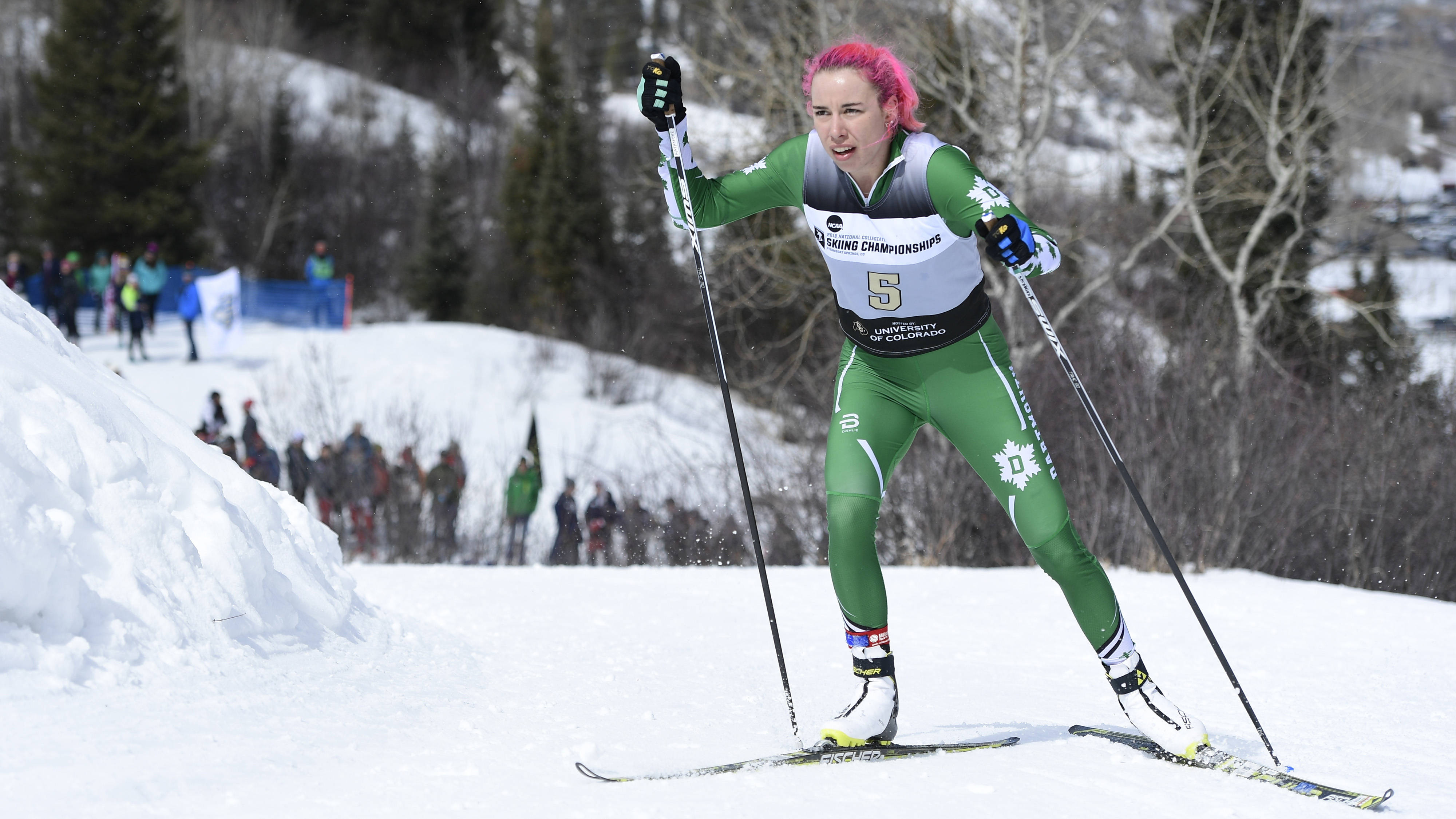
    Dartmouth freshman Katharine Ogden racing to her second-straight victory of the 2018 NCAA Skiing Championships in Steamboat Springs, Colorado. She won Saturday’s 15 k freestyle mass start by more than 38 seconds. (Photo: Dartmouth Sports/Clarkson Creative)

    Ogden, a Dartmouth College freshman, raced to a 38.4-second victory in the women’s 15-kilometer mass start, finishing in 43:22.0 minutes for her second win in as many races at 2018 NCAA Championships. She won the 5 k classic on Thursday and with her win on Saturday, she became the first Dartmouth skier in 56 years to win two national titles in the same year, according to a Dartmouth press release.

    On the second of three laps, Ogden broke away early with close to 10 k to go. According to the press release, she had a “quick fall” near the end of the second lap, but that didn’t derail her as she had time to grab sunglasses from Dartmouth men’s coach Brayton Osgood and a Dartmouth Lone Pine flag before the finish.

    At this year’s championships, Ogden’s two titles are accompanied by victories from Dartmouth men’s alpine skiers Brian McLaughlin (who won the giant slalom) and Tanguy Nef (who won the slalom). This marked only the second time that Dartmouth’s Big Green won four individual titles in a single NCAA Championships; that also occurred 61 years ago.

    “Katharine absolutely wanted this one, and she really likes to win,” Dartmouth Director of Skiing and Women’s Nordic Head Coach Cami Thompson Graves said in the press release. “She wasn’t about to let a fall slow her down, she has such a great competitive fire. But she also showed her playful side grabbing Brayton’s glasses and smiling all the way to the finish line!”

    Hailey Swirbul of the University of Alaska Anchorage placed second and Linn Eriksen (DU) reached the podium in third (+46.3). Denver had three in the top 10 with Jasmi Joensuu in ninth and Taeler McCrerey in 10th. Also landing in the top 10 for All-American honors were Guro Jordheim of the University of Utah in fourth, Emma Tarbath (Montana State University) in fifth, Petra Hyncicova of the University of Colorado Boulder (CU) in sixth, Christina Rolandsen (CU) in seventh, and Lauren Jortberg (Dartmouth) in eighth.

    Torchia, an Northern Michigan University (NMU) junior and U.S. Ski Team Development Team member, became the seventh NCAA champion in NMU Wildcats nordic skiing history, according to an NMU press release. Fredrick Schwenke was the Wildcats’ last nordic champion; he won the 2015 NCAA Championships 20 k classic.

    Torchia drew bib 1 for Saturday’s 20 k freestyle mass start and crossed the finish line first in 54:21.0, just 2 seconds ahead of CU’s Alvar Alev. Eivind Kvaale (DU) finished just four seconds back in third, and Denver had three in the top seven with Dag Frode Trollebø in fourth and Lars Hannah in seventh. Darmouth’s Cal Deline placed fifth, Zane Fields of Colby College finished sixth, and the 20 k freestyle’s 2017 NCAA champion Martin Bergström (Utah), who also won Thursday’s 10 k classic, placed eighth.  CU’s Petter Reistad and Sondre Bollum finished ninth and 10th, respectively.

    In the team standings, Denver beat Colorado by 41 points for the overall win with a total of 604 points between the nordic and alpine events at this year’s championships. Dartmouth placed third, 114.5 points behind Colorado, and Utah was another 63 points back in fourth.

    According to a DU press release, Denver has won at least one national championship in each of the last five athletic seasons (skiing: 2013/14, 2015/16, 2017/18; hockey: 2016-17; men’s lacrosse 2014/15), joining only Stanford on the list of schools that have done so in the last five seasons. (Oregon, West Virginia, Penn State, Oklahoma, Ohio State and Florida could potentially join that list later this year.)

    “It feels incredible,” said DU head coach Andy LeRoy said in the press release. “I am so happy for all of our athletes, they’ve been training all week and all season and to do it in Steamboat in front of our crowd is special.”

    Results: Women | Men| Team 

    Photos

    ***

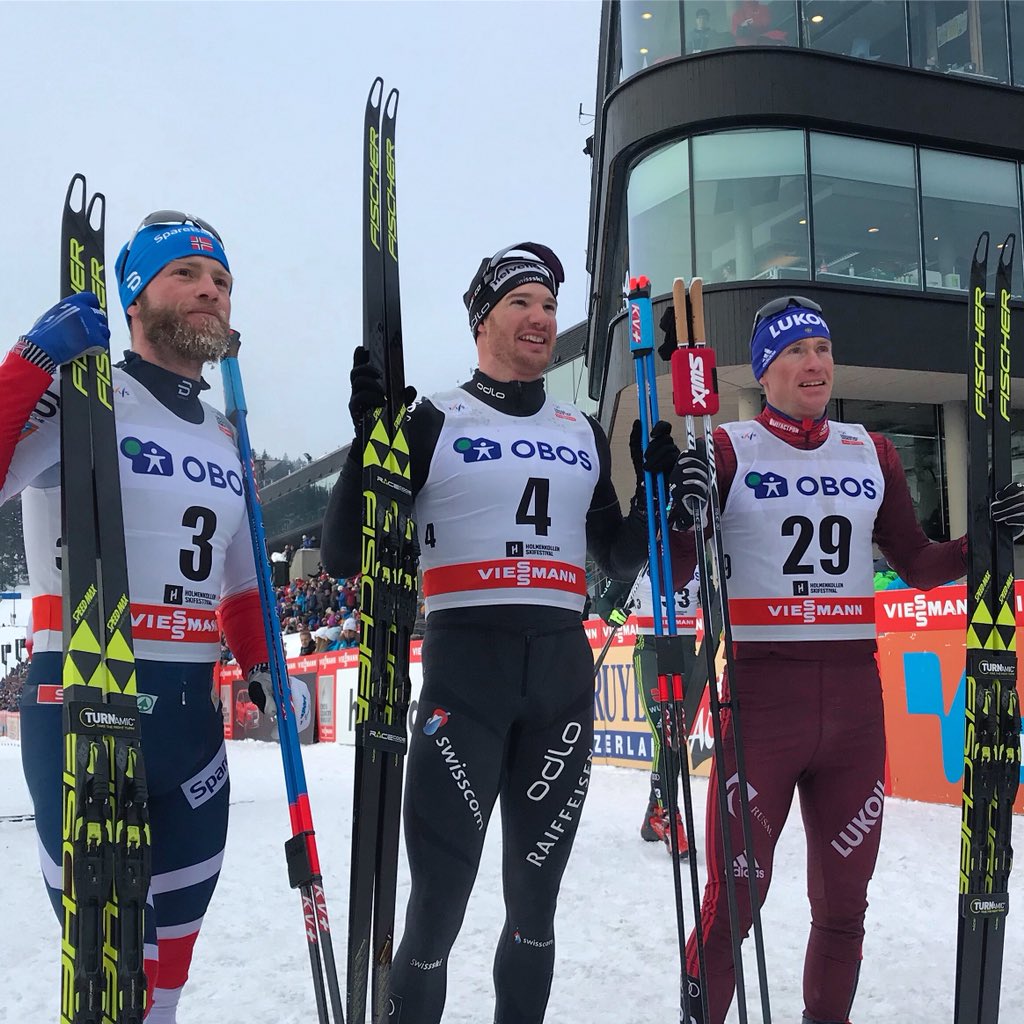
    The Holmenkollen men’s 50 k freestyle mass start podium on Saturday at the World Cup in Oslo, Norway, with Switzerland’s Dario Cologna (c) in first, Norway’s Martin Johnsrud Sundby (l) in second, and Russia’s Maxim Vylegzhanin (r) in third. (Photo: FIS Cross Country/Twitter)

    FIS Cross Country World Cup (Oslo, Norway): Men’s 50 k freestyle mass start

    Full report

    A four-time Olympic champion, Dario Cologna of Switzerland won his first 50-kilometer World Cup race on Saturday, topping the podium in the famous Holmenkollen 50 k freestyle mass start after outlunging Norway’s Martin Johnsrud Sundby (who won the event last year) for the win in 2:01:48.1. Sundby finished one-hundredth of a second behind for second place, ahead of Russia’s Maxim Vylegzhanin, who was 1.1 seconds back in third in his first World Cup race since November of last year.
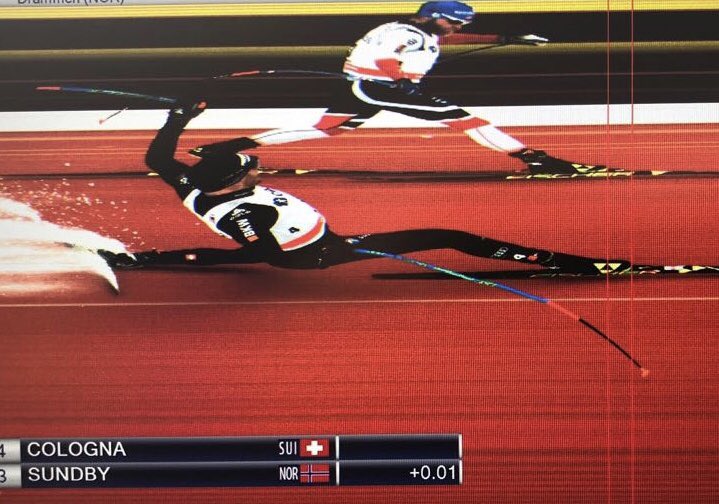
    The photo finish for first between Switzerland’s Dario Cologna (near) and Norway’s Martin Johnsrud Sundby at the Holmenkollen 50 k freestyle mass start on Saturday in Oslo, Norway. Cologna got it by 0.01 seconds. (Photo: FIS Cross Country/Twitter)

    Norway’s Sjur Røthe came out on top in a race for fourth (+4.2), ahead of Russia’s Denis Spitsov in fifth (+4.4) and his Norwegian teammate Hans Christer Holund in sixth (+4.5). Great Britain’s Andrew Musgrave followed in seventh (+15.1), Germany’s Florian Notz placed eighth (+25.9) and Canada’s Alex Harvey finished ninth (+32.4), ahead of France’s Robin Duvillard in 10th (+33.5).

    Scott Patterson led the U.S. in 16th (+56.3) coming off an 11th place in the 50 k classic mass start at last month’s Olympics, and Canada’s Devon Kershaw finished in the points in 28th (+3:43.6). Just outside the top 30, Canada’s Graeme Killick finished 34th (+4:55.1).

    Also for the U.S, David Norris placed 38th (+6:19.7), Paddy Caldwell was 46th (+8:12.3), Noah Hoffman 49th (+10:27.9), Kevin Bolger 52nd (+12:44.2), and Simi Hamilton did not finish.

    Canada’s fourth man in the race, Andy Shields finished 47th (+8:13.6).

    Results

    ***

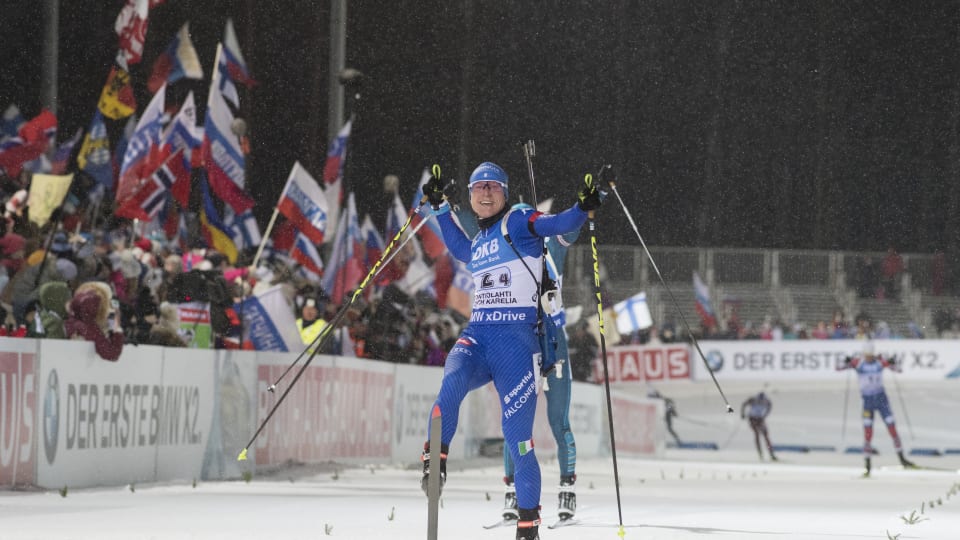
    Italy’s Lukas Hofer celebrates his team’s win in Saturday’s mixed relay at the IBU World Cup in Kontiolahti, Finland. (Photo: IBU/Biathlonworld)

    IBU World Cup (Kontiolahti, Finland): Single mixed relay & mixed relay

    (Note: This rundown has been updated to include comments from Christian Gow and Sean Doherty.)

    In the last single mixed relay and mixed relay of the International Biathlon Union (IBU) World Cup season, France and Italy came out on top, with France winning the two-person single mixed relay and Italy taking first in the coed mixed relay.
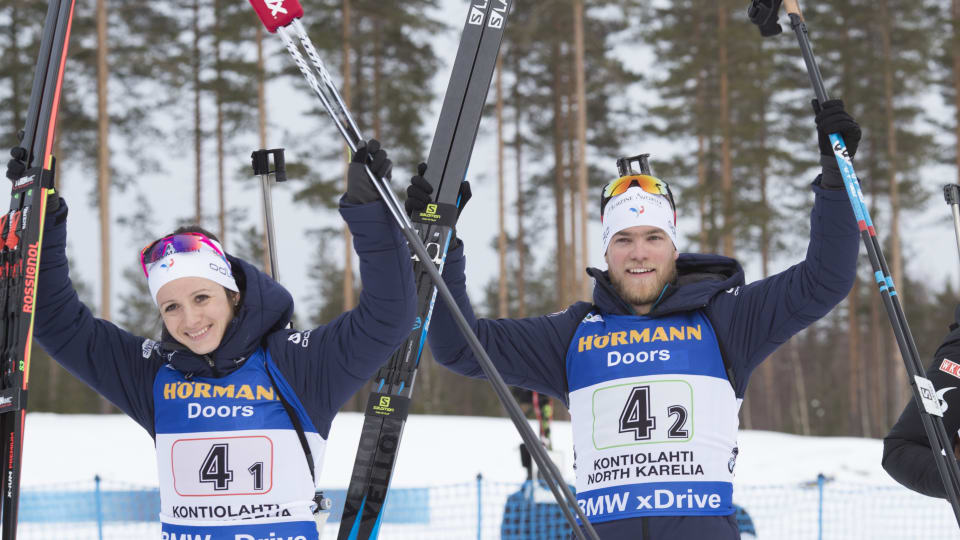
    France’s Anaïs Chevalier and Antonin Guigonnat after winning Saturday’s single mixed relay at the IBU World Cup in Kontiolahti, Finland. (Photo: IBU/Biathlonworld)

    France’s Anaïs Chevalier and Antonin Guigonnat combined for zero penalties and six spares to finish first in the single mixed relay in 33:29.1 minutes. Guigonnat as the team’s anchor secured the win by just 2.4 seconds over Austria’s Julian Eberhard while Norway’s Johannes Thingnes Bø finished 4.4 seconds back for third.

    Chevalier put France in fifth after the first leg, 15.5 seconds behind Ukraine’s Iryna Varvynets in first. Guigonnat used just one spare on his first leg to move them into fourth, 9.2 seconds back while Norway led at the second exchange. On Chevalier’s second leg, she shot clean in both stages to lead through the final exchange, with Ukraine skiing just 6.2 seconds back in second.

    On the final leg, Guigonnat used two spares and stayed out of the penalty lap, keeping the team in first through the finish. Eberhard skied the second-fastest course time on that leg to elevate Austria (with Lisa Theresa Hauser) from fourth at the tag to second place at the finish, and Bø skied all the way up from eighth to third place for Norway (with Marte Olsbu) with the fastest course time.

    Ukraine’s Artem Tyschenko used just one spare but slipped to fourth with the 11th-ranked course time on that leg, as he finished 10.8 seconds behind Norway.

    Behind Russia in fifth and Italy in sixth, Canada placed seventh (+23.8) with Rosanna Crawford and Christian Gow. The duo combined for zero penalties and six spares, and put themselves in third place early in the race. Crawford skied them into third on the first leg, using just two spares and tagging Gow 7.4 seconds out of first.

    Gow went on to take the lead after cleaning prone without any spares, and he cleaned standing as well but slipped back to third while Bø took the lead. Gow tagged Crawford in third, 8.9 seconds behind Norway in first.

    “I didn’t think too much about being tagged in third,” Gow recalled in an email to FasterSkier. “It was exciting for sure, but I let it fade to the background so that I could focus on my job both on the track and in the range.  It was great to leave prone in first place! It was also surprising, but it was a good place to be in.

    “My skiing was ok today,” he continued. “It is a really challenging and demanding race format that we don’t get a lot of practice with.  I was sick after the Olympic Games and only finally coming around the past couple days.  The Sprint race was horrendous for me, so today was much better than that. In the range I just focussed on myself and trusted my shooting.  I tried my best not to get caught up in the race going on around me and it worked to my benefit.”

    Crawford then slipped to seventh and 21 seconds back with three prone spares, but avoided the penalty lap, and Gow held onto seventh through the finish, using just one spare and skiing the eighth-fastest course time on that leg.

    “We are both happy with this result,” Gow wrote. “I think that we are both looking at the 23 second gap to first and thinking that if things had worked out just a bit better we could be there.  It can be both exciting and frustrating to be that close to the podium.  We know we can do it, it’s just a matter of putting it together on the right day. We are happy with 7th, but hungry for more.”

    Susan Dunklee and Lowell Bailey finished 14th for the U.S., 1:13.0 out of first with one penalty and 14 spares. The penalty came on Dunklee’s first leg during her standing stage, after she had cleaned prone without any spares. She tagged Bailey in 14th and he brought them up to 11th, using three spares on that leg, then Dunklee came through the final exchange in 13th after using four spares to clean. Bailey lost one place on the final leg, using four spares but staying out of the penalty lap.

    Twenty-six teams competed in the single mixed relay, compared to 23 in the mixed relay that followed.
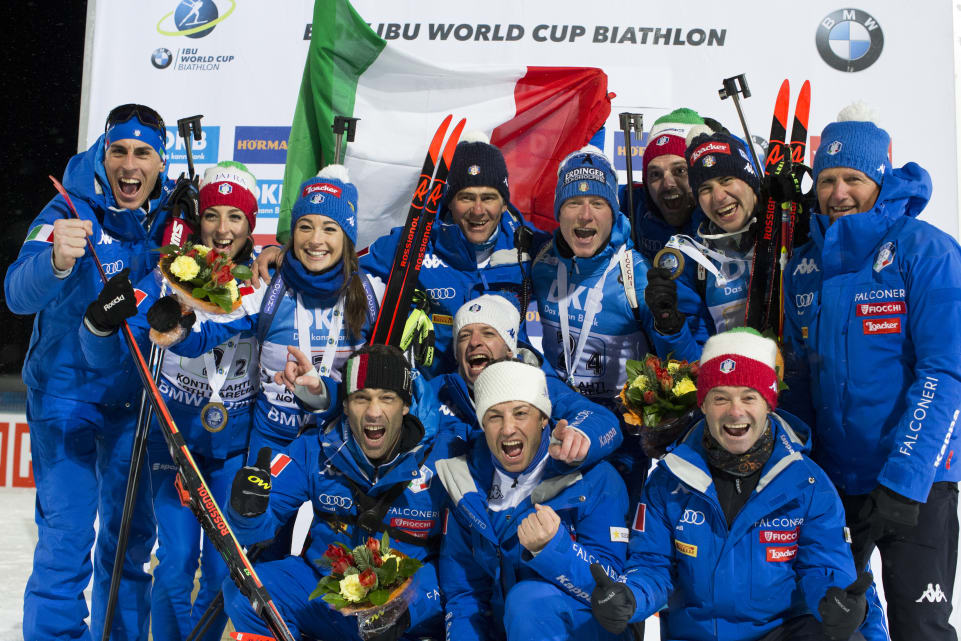
    Team Italia celebrates its win in the IBU World Cup mixed relay on Saturday in Kontiolahti, Finland, with its relay members Dorothea Wierer, Lisa Vittozzi, Dominik Windisch, and Lukas Hofer. (Photo: IBU/Biathlonworld)

    In Saturday’s 2 x 6 + 2 x 7.5 k mixed relay, Italy nabbed a 1.5-second victory over Ukraine in 1:15:08.3. Dorothea Wierer, Lisa Vittozzi, Dominik Windisch, and Lukas Hofer — the same Italian team that took bronze in the mixed relay at last month’s Olympics, although in a different order — combined for the win with one penalty and 13 spares.

    Ukraine, with Anastasiya Merkushyna, Vita Semerenko, Artem Pryma, and Dmytro Pidruchnyi, had zero penalties and just three spares throughout the whole race. For the second-straight relay on Saturday, Norway placed third (+9.1) with Synnøve Solemdal, Tiril Eckhoff, Henrik L’Abée-Lund, and Tarjei Bø totaling zero penalties and nine spares.

    Italy’s lone penalty came in Vittozzi’s second leg, but it didn’t derail the team as it improved from sixth to fifth with Vittozzi, who skied the third-fastest course time on that leg. She tagged Windisch 6.8 seconds out of first, and Windisch, who had anchored the team in the Olympics, took the lead by the final exchange after using two spares to clean. Hofer left the exchange just 3.3 seconds ahead of Norway’s Bø but used just one spare and skied the second-fastest anchor leg to finish first, beating his rivals up Kontiolahti’s infamous climb known as “The Wall”. Ukraine’s Pidruchnyi also shot clean with a single spare and clocked the fastest anchor leg to move his team from fourth to second place. Bø lost one place and finished third after using one spare as well and skiing the third-fastest anchor leg.

    Russia followed in fourth, France fifth, Sweden sixth, Germany seventh, Austria eighth, and the U.S. ninth (+2:48.4). The U.S. team, with Clare Egan, Joanne Reid, Tim Burke, and Sean Doherty, had one penalty and 11 spares. Egan cleaned her first prone but had to ski a penalty lap after her standing stage, tagging Reid in 17th, 58.7 seconds out of first.

    Reid used three spares on the second leg and moved up to 13th by the second exchange, and Burke used three spares as well to pick off one more place and tag Doherty in 12th. Doherty skied the eighth-fastest anchor leg and used two spares to clean to put the team in ninth at the finish.

    “I don’t consider two spares to be anything special, but today it was enough to make up some ground,” Doherty wrote in an email to FasterSkier.”I felt strong skiing, more like myself which is fun even if it’s a little late in the season. We had very good skis which always helps. I have done quite a few laps on this course over the years so the lines and transitions are pretty refined, so that is where I made time on the course.

    “I am happy with my leg. I enjoyed my little battle for 9th,” he continued. “I can’t speak too much for the other members of the relay tonight but I think 9th is a solid effort.”

    Canada finished 17th (+4:34.9) with Emma Lunder, Julia Ransom, Scott Gow, and Brendan Green combining for one penalty and 13 spares. Lunder put them in 12th at the first exchange and Ransom skied up to 10th, but Scott Gow had a penalty on his standing stage to drop to 16th. Green lost one more place on the last leg despite only requiring two spares.

    Results: Single mixed relay | Mixed relay

  • Late-Season Calculations Play into World Cup Strategies: Harvey Improves to Top 6 Overall, Hoffman Goes for Points

    Late-Season Calculations Play into World Cup Strategies: Harvey Improves to Top 6 Overall, Hoffman Goes for Points

    Start of men's Holmenkollen 50 k. Photo: Fischer/Nordic Focus
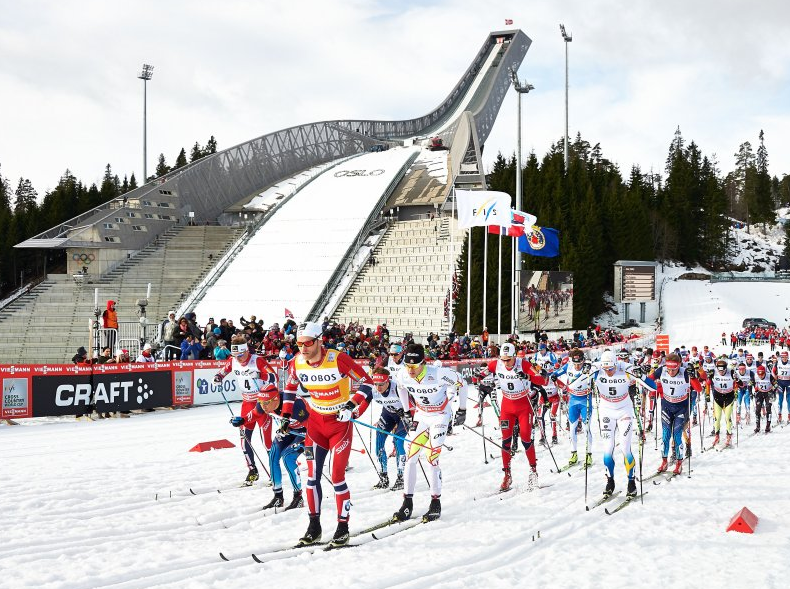
    Start of the men’s 50 k freestyle mass start at Holmenkollen on Saturday in Oslo, Norway, with Alex Harvey (3) trailing overall World Cup leader Martin Johnsrud Sundby (yellow bib). (Photo: Fischer/Nordic Focus)

    It would’ve been easy to just stop in Saturday’s 50-kilometer freestyle mass start — the ultimate distance race of the World Cup season.

    Canada’s Alex Harvey wasn’t having the best go at it, with slick skis for the first two of six laps that put him back near 46th.

    “I just couldn’t do anything on the climbs, and lost a lot of position and time,” Harvey said in a post-race interview.

    If he could do it all over again, the 25-year-old Quebec native said he would have switched skis after the first lap — a move which would’ve cost him about 40 seconds and likely left him skiing alone. Trailing the pack at the end of the first lap, Harvey decided he didn’t want to risk it and continued with the group, bypassing the transition. He then had to tough it out for another 8.3 k until his next opportunity to change after the second lap.

    From there, with a new pair, the race really began for Harvey and became somewhat of a personal test to see what he was capable of.

    He picked off 32 places over the next 33 kilometers to place 14th, 3:56.2 behind Sweden’s Daniel Richardsson, who won in 2:07:29.5. The race strung out into a battle between the top three just over halfway through. Norway’s Martin Johnsrud Sundby solidified second, 8.2 seconds back, and Russia’s Alexander Legkov placed third, six seconds later.

    While Sundby was trying to seal the deal for both the World Cup overall and distance titles, Harvey said the pace was pretty relentless throughout the 50 k, with Sundby and Legkov going for the sprint bonuses on every lap.

    Harvey didn’t worry about those; he was more focused on finishing strong enough to maintain a prime position in the overall World Cup standings.

    “It cost a lot when you go for [those bonuses],” Harvey said. “You saw it with Danny Richardson — he’s the one that went for the least amount of points between Legkov and Sundby.  I think that is why Sundby ended up not winning is because of all of the points he got early on … I wasn’t planning on going for the points.”

    Fourteenth was good enough to put the Canadian sixth in the overall World Cup standings, just nine points behind Sweden’s Calle Halfvarsson in fifth. Harvey is currently fifth in the distance rankings with three more races to go, one sprint and two distance races at World Cup Finals later this week.

    “It was a good race for me” Harvey said of the 50 k. “Just unfortunate that I couldn’t be more in it from the beginning.”

    Two other Canadians in the race did not finish: Devon Kershaw and Graeme Killick. According to a Cross Country Canada press release, Kershaw struggled with his skis, like Harvey, and dropped out after the second lap. Killick stayed in the race for 42 k, but “didn’t have the body to finish.”

    Noah Hoffman led the American men in 29th, finishing seven minutes after Richardsson.

    Relying on a different strategy than Harvey, Hoffman, who’s currently 30th in the World Cup distance standings and 33rd overall, aimed for bonus points more than anything. He was second at the first preem and sixth at the second one for a total of 17 points (points are awarded to the top 10 at a given sprint preem).

    “There is no doubt that that is the easiest way to score World Cup points is to take those bonus points,” Hoffman said on Saturday. “I have had several people that have questioned that strategy and usually say, ‘You blew yourself up,’ which I clearly did blow myself up, but I scored more points than Alex did today and Alex finished 14th.”

    The 24-year-old Colorado native started to feel the effects of his fast-and-furious efforts at the second preem.

    “When I crossed the preem line at the second preem, I think I said to myself, ‘I’m not positive I can finish this race,’ ” he said. “I was worried that I was not going to be able to finish and therefore lose the points that I had earned. I knew I was in trouble.”

    He changed skis after the first and second laps, like most of his competitors, but said the race was mostly decided by five men that started to go on the second lap, calling it one of the most-strung out World Cup race he’s ever seen.

    “Over seven minutes to 30th, seven-minute spread to the points is incredible,” he said.

    While his strategy kept him from sticking with the leaders, Hoffman stood by it.

    “I feel like it was the right call given the circumstances, given how close I am to the Red Group and that Red Group is the standard for A-team for the U.S. Ski Team,” he said, looking ahead to next season. “I needed to go score as many points as possible and I think I did that.”

    Three other Americans placed in the top 60, with Erik Bjornsen in 51st, Simi Hamilton in 54th and Reese Hanneman in 56th. Andy Newell and Sylvan Ellefson did not finish.

    Results

  • Kershaw Cracks Top 30 for Canada, Babikov 33rd, Harvey DNF in Holmenkollen

    Kershaw Cracks Top 30 for Canada, Babikov 33rd, Harvey DNF in Holmenkollen

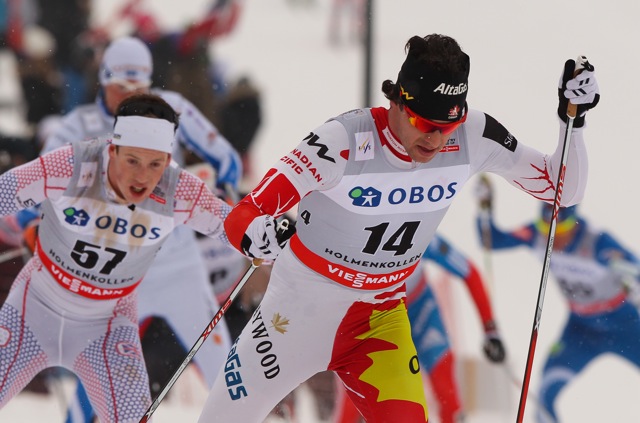
    Canadian Alex Harvey leads Andrew Musgrave of Great Britain in Saturday's 50 k freestyle mass start at the World Cup in Holmenkollen, Oslo, Norway. Harvey stopped after the fourth of six laps and did not finish, and Musgrave placed 56th of 60. (Photo: Fischer/Nordic Focus)
    Canadian Alex Harvey leads Andrew Musgrave of Great Britain in Saturday’s 50 k freestyle mass start at the World Cup in Holmenkollen, Oslo, Norway. Harvey stopped after the fourth of six laps and did not finish, and Musgrave placed 56th out of 60. (Photo: Fischer/Nordic Focus)

    No matter how you sliced it, Holmenkollen was never going to be a cakewalk. Marked by a relentless, three-kilometer climb out of the start, you had better be feeling good from the beginning if you wanted to finish well in the World Cup 50 k freestyle mass start in Oslo, Norway.

    And your skis better be fast. The Canadian men struggled with both on Saturday, working hard to stay with a group for six strenuous 8.3 k loops. None kept contact for the duration, and Devon Kershaw led the group in 29th, 5:43.7 back from Russian winner Alexander Legkov.

    In his first time back in the individual top 30 since the Davos World Cup on Feb. 16, Kershaw wasn’t thrilled with his result. It was a good finish after skiing in the top 30 and 40 for much of the race, but it wasn’t what he was looking for.

    Canadian World Cup Team member Devon Kershaw (l) leads Japan's Akira Lenting up one of several climbs in the World Championships 15 k freestyle individual start on Feb. 27 in Val di Fiemme, Italy. Kershaw went on to place 33rd.
    Canadian Devon Kershaw (l) leads Japan’s Akira Lenting up one of several climbs at World Championships during the 15 k freestyle individual start on Feb. 27 in Val di Fiemme, Italy. Kershaw went on to place 33rd that day.

    “Wow, that was hard,” Kershaw wrote in an email. “Our skis were pretty slow so that made it doubly tough. Ah well, the body felt pretty good – for this year anyway.”

    Canada’s World Cup veteran and last year’s overall World Cup runner-up, Kershaw, 30, has been dealing with stomach issues since early this year. It led him to a disappointing World Championships, after which he sat out some races before last Wednesday’s World Cup classic sprint in Drammen, Norway. There, he placed 49th.

    At this point, Kershaw wrote that he’s looking forward to his last week of racing then taking a “big/good ol’ rest.” The World Cup Finals start Wednesday with a classic sprint in Stockholm, Sweden, and continue next weekend in Falun. Kershaw and his teammates Ivan Babikov, Lenny Valjas and Alex Harvey all made the top 50 to qualify.

    Babikov – who skied with Kershaw for most of Saturday’s 50 k – is also feeling the strain of the season. Sick before World Championships, Babikov recovered for a career-best fourth in the 15 k freestyle in Val di Fiemme, Italy, but did not finish the 50 k classic mass start. After the 1 ½-weeklong event, Babikov traveled home to Canmore, Alberta, picked up another cold and tried to kick it before Holmenkollen.

    The 32-year-old finished 33rd on Saturday, 6:53.4 back. It was hardly his best result in cross-country’s ultimate distance race, but it wasn’t his worst either. At last year’s Holmenkollen 50 k classic, Babikov did not finish. Kershaw placed 10th and teammate Alex Harvey was 29th.

    “I feel happy that I finished,” Babikov said. “Holmenkollen’s always tough, but today conditions were really slow and skis were really slow, and it was really hard to fight.”

    At the same time, with so many spectators lining the course, he said it was hard to drop out. Many were grilling outside tents and makeshift camps they had set up for the occasion, which made it a little smoky and the snow slightly dirty in those spots, but Babikov said it was all part of the experience.

    “That’s the funnest it gets for a 50 k,” Babikov said. “Holmenkollen is the best way to do it. It’s super tough and probably the hardest, but it’s also probably the funnest. Such a great spirit.”

    Babikov worked with Kershaw throughout, starting with him in the pack and sticking within 30 seconds of the leaders – minus some frontrunner surges – for the first half of the race. By 30 k, Babikov and Kershaw were still hanging in the mid 30s, while Harvey had slipped back from the mid 20s to join them.

    After the fourth lap at 33.3 k, Harvey stopped racing because of lower-back pains, which have plagued him in long distances before. Babikov tried to hang with Kershaw, but lost him before the last lap.

    “I was skiing with Kershaw all the way and we were changing [leads],” he said. “Because I’ve been sick last week and barely skied I think maybe it kind of kicked in after the fifth lap. I started cramping really bad and I couldn’t keep going at the same pace so I had to dial it down to finish. It was hard to fight. After that I basically skied by myself.”

    Even though their skis weren’t ideal, conditions were inevitably slow with some fresh snow on top of a dry base, he explained.

    “It’s always really weird conditions in Holmenkollen,” Babikov said. “It’s always a challenge to find the wax. Maybe it’s our skis, we never maybe test for that snow, I don’t know, but it’s always been tough for us.”

    According to Canadian head coach Justin Wadsworth, his small staff had limited time to test skis on the new powder with nordic combined racing before.

    “The skis were not the best today, but this was the same for many teams it seemed,” Wadsworth wrote in an email. “I think our skis were fine around the stadium, but not so much out on the rest.”

    In a Cross Country Canada press release, he racked up the team’s overall performance as a “rough day,” but it wasn’t because they weren’t physically and mentally prepared.

    “Sometimes it is frustrating when the bodies feel good, but you just don’t get the result,” Wadsworth said.

    Harvey was disappointed not to finish, but reasoned it was the best decision given his race schedule next week.

    “Any time you don’t finish a race, it’s one of the hardest things, for me at least, to take as an athlete,” Harvey said. “I was just thinking about the fact that we’re racing four days from now and it’s four races over a five-day period.”

    Skiing with the lead group for several laps, Harvey realized how hard he was working to do so. The pace wasn’t too bad, other people were breathing hard, but his slower skis on the downhill made for a lot of work on the flats. Two laps in, his back started to cramp for the third time this season (after the Tour de Ski 35 k and Lahti World Cup 15 k).

    “My back started hurting from pushing hard and I was just also not having a great day,” Harvey said. “The third lap, my back was cramping pretty badly and I was already pretty much outside the points and I knew it wasn’t going to get better, it was going to get only worse, so I just pulled the plug to try to save something for the Final.”

    Typically, Harvey’s back issue – which stems from tight hip flexors pulling at his lower back – has been more problematic in classic races that involve a lot of striding. It doesn’t come up until at least 10 k in, so in places like Lahti, he just pushed through the final five kilometers.

    “You can tough it out when there’s 12 minutes left, but when there’s another hour to go it’s a bit different,” Harvey said. “It’s better than last year, but it’s always something that can be haunting me. It’s always close.”

    Also racing for Canada, Alberta World Cup Academy teammates Graeme Killick placed 55th and Michael Somppi was 57th. Jess Cockney did not finish after getting lapped on the second loop.

    Harvey was 27th after using one of five possible ski changes at the halfway point. Asked how he felt about the added distance skiers had to cover if they switched skis (which took about 25 seconds) – new to World Cup 50 k’s – Harvey said it was good for anyone but the leaders, who had to pick up the pace to stay in front.

    “For us in the pack, it makes it somewhat easier because those guys up front bursting, they have to recover after from such a hard effort,” he said. “You’ve got to know that they’re going to chill. They can’t keep going that pace the whole way.”

    Results