From the FasterSkier archive — posts syndicated from athletes’ and coaches’ own blogs between 2004 and 2012, kept online as published. Current coverage is at fasterskier.com.

Tag: Howelsen Hill

  • 2024 NCAA Preview: New Talent and Stubborn Traditions in Steamboat Springs

    2024 NCAA Preview: New Talent and Stubborn Traditions in Steamboat Springs

    Defending Champions,  University of Utah, became the first team in modern NCAA Championships history to win four consecutive titles at the 2023 NCAA Ski Championships in Lake Placid, New York. Their nordic team led the way. (Photo: (c) 2023 Nancie Battaglia)

    When the best collegiate athletes in the United States gather for the 2024 NCAA Ski Championships, they will head to the nation’s oldest ski area, Howelsen Hill, for one of the longest continuously run championship events in the country. The NCAA is the most staid competitive circuit in US Skiing history, and continues to serve as an incubator of North American ski-talent. The best young skiers in the country will be racing in Steamboat Springs this week. Yet, in 2024, they are competing at a 70 year old championship that seems oddly behind the times.

    The out-of-sync quality of NCAA skiing is defined by two facts of life at the Championships:

    (1) Combined nordic and alpine team scoring—crowning a National Champion uses combined totals from nordic and alpine racing (even long after the idea of crowning a “ski-meister” has been left far behind).

    (2) No Sprint racing—the 2024 NCAA Championship will consist of a 7.5 k skate individual start on Thursday, and 20 k Classic Mass Start on Saturday. That format leaves many of the country’s best sprinters without a shot to compete for a collegiate championship despite their discipline’s established importance at senior levels of the sport.

    In an odd way, the stubbornness of the NCAA to change has slid into a really healthy spot as the nature of the college field changes. In the not-too-distant past, young American skiers with international potential would forego college skiing altogether; now, the Stifel U.S. Ski Team has begun embracing the training resources and financial backing that college teams provide. As a result, more skiers at the NCAA Championships than ever before are tied to national ski programs—primarily the United States and Canada—and the fields at the Championships have grown increasingly competitive.

    In turn, the NCAA Championships have also shrunk from being the be-all and end-all of the college skiing experience. A quick glance at the 2024 US Cross-Country National Championships results shows that it has become a kind of de-facto open college event with pro teams and promising junior skiers mixed in, offering a championship-level race in the middle of the season, rather than at the traditional conclusion…and with sprint races too! In the interim between US Nationals and NCAAs, college skiers are expanding far beyond their NCAA circuits as well. Nearly every skier representing the USA at World U23/Junior Ski Championships this year came from a college program, or will be joining one in the near future. Expanded American and Canadian rosters at World Cups in North America (Canmore and Minneapolis) leaned particularly heavily on college athletes. Canadian and American college athletes didn’t waste those World Cup opportunities, skiing to multiple top 30 finishes.

    So, what exactly is this NCAA Championships in Steamboat Springs this week? Well, it’s always been about the skiers competing, and the ways they’ve helped to define what NCAAs are, and are not. Out amid the forecasted light snow—on a course that climbs, climbs, climbs some more, and then punches with a series of fast, fun downhills—will be skiers concluding a long season. With the idiosyncrasies in the NCAA championship format, this won’t be a definitive conclusion. Most of these skiers have found that elsewhere, anyway. Regardless,  NCAAs will be a celebration,as skiers join up with a grand old tradition uniquely woven within other threads of American life—growing up, and growing alongside teammates and competitors through competition, in that old rite of passage that is the college experience.

    Watch the 2024 NCAA Ski Championships HERE

    Ben Ogden (UVM) celebrates back-to-back NCAA titles in style at Soldier Hollow in 2022. (Photo: Tobias Albrigtsen / @untraceableg)
    Women’s Field—Eastern Skiers Challenge Utah’s Dominance

    Full 2024 NCAA Field Announced HERE

    Last year’s NCAA Championships in Lake Placid saw a clean sweep from University of Utah’s Novie McCabe in the 5 k Freestyle and 20 k Classic race. McCabe has since graduated and moved to join the Alaska Pacific University Nordic Center (APU) program, but her wins perpetuated a trend that has a good chance to continue in 2024—the University of Utah winning the Women’s NCAA Championships. 2020 was the last time a UU skier didn’t take the top step in the Women’s race when Finnish skier Evelinna Piipo took the win for the University of Denver (the second race at that year’s NCAA Championship was canceled due to the COVID-19 pandemic). Since then, Sydney Palmer-Leger swept 2021 NCAAs at Jackson, New Hampshire, before McCabe claimed her first NCAA title at Soldier Hollow in 2022 in the 5 k Classic, and then finished second to her teammate Sophia Laukli who took that year’s 20 k Freestyle win.

    Novie McCabe (UU) winning the women’s 5 k Classic during the 2022 NCAA Championships in Soldier Hollow, Utah. (Photo: Tobias Albrigtsen /@untraceableg)

    McCabe and Laukli have since graduated, leaving Palmer-Leger the only current champion in this week’s field. Palmer-Leger is still a contender in nearly every race she starts, and has proven so throughout the Rocky Mountain Interscholastic Ski Association (RMISA) season. She’ll be joined for UU by Norwegian Karianne Dengerud who, earlier this year, won the US Nationals Freestyle Sprint at Soldier Hollow, and has been a consistent presence in the top ten throughout the season in the West. Rounding out the UU squad will be freshman Nina Schamberger who brings more experience to the Howelsen course than any typical first-year. Schamberger grew up in nearby Leadville, Colorado. Despite battling a back injury this season, has shown her potential to ski with nearly anyone in the field when she’s healthy.

    Beyond the UU squad, the Western region will also bring Montana State’s Tilde Baangman as a top contender. The Swedish-born Baangman burst out of the gate this season, taking a surprise win in the 10 k Classic at US Nationals. She has won numerous Western region races this season, and enters the championship weekend as half of a strong duo from the Montana State Bobcats alongside teammate Kate Oldham. A Junior, Oldham will be making her first NCAA experience; like Schamberger, Oldham brings plenty of experience racing in Steamboat having grown up in Carbondale, Colorado skiing with Aspen Valley Ski and Snowboard Club.

    Other skiers to watch from the Western contingent include the University of Colorado duo of Hanna Abrahamsson (who finished runner-up in last year’s 20 k classic in Lake Placid )and Anna-Maria Dietze (who won the NCAA 7.5 k skate race that was held earlier this year on the Howelsen Hill course). The University of Alaska-Fairbanks will also field the persistently strong pair of Mariel Pulles and Kendall Kramer. Pulles finished top 10 in both of last year’s NCAA Championship races, while Kendall Kramer has had a season highlighted by a second place in a close-fought 20 k Freestyle race at US Nationals, World Cup starts in Minneapolis where she took 36th place in the 10 k skate, and a win earlier this year in the 10 k Classic at the University of Utah invitational.

    At last year’s NCAAs, the top performer emerging from the Eastern Interscholastic Ski Association (EISA) Carnival circuit was the University of New Hampshire’s Jasmine Lyons, who took second in the 5 k Freestyle race. Lyons, though, is not participating in this year’s NCAA Championships, and without her presence, the East won’t have a skier on the start line in Steamboat Springs with a prior top five finish in an NCAA Championship race; however, that shouldn’t serve to diminish the Eastern region’s potential. At national and international-level racing this season, skiers from Dartmouth, the University of Vermont, Bowdoin, and Middlebury have scored historic results for college and country, and often done so in the same fields as their Western Region counterparts. The stand-outs in that respect are two skiers: UVM’s Haley Brewster, and Dartmouth’s Ava Thurston.
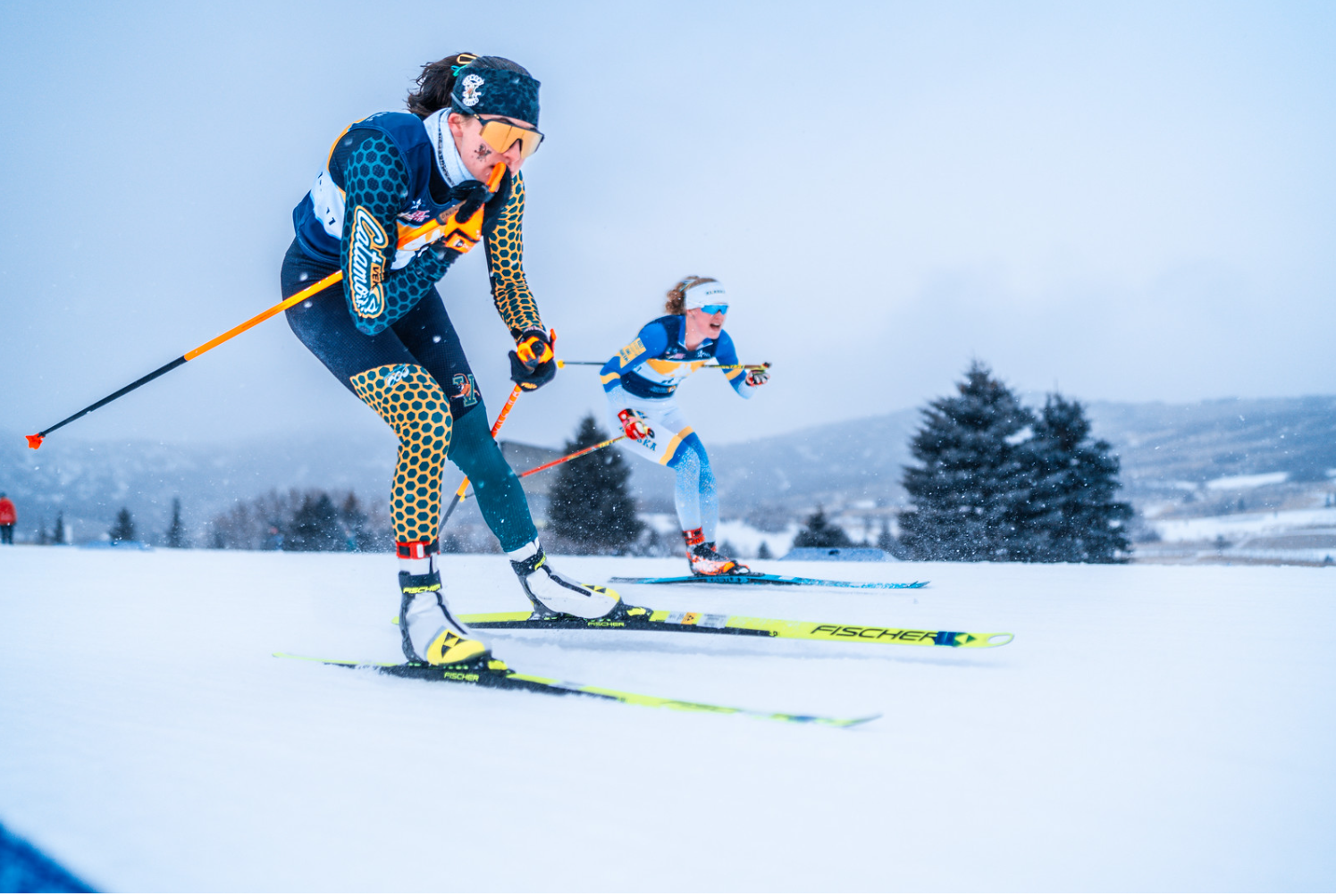
    Haley Brewster (UVM) during the 2024 US Nationals 20 k Freestyle Mass Start race. Brewster made a decisive move late in the race to claim her first career NCAA Championship. (Photo: Tobias Albrigsten / @untraceableg)

    Brewster has experienced a whirlwind of successes this season, starting with her first National Championship win in the 20 k Freestyle Mass Start in January. A trio of Eastern Carnival wins started off her collegiate season before she traveled to Planica, Slovenia to compete for the US at U23 World Ski Championships. There, she and Novie McCabe featured in the lead pack of the 20 k Freestyle Mass Start. Brewster pushed the final kilometer to take a U23 World Championship silver medal, highlighting a week for her in which she never finished outside the top 15 across all competitions. Her success translated to the senior World Cup circuit a week later in Minneapolis where she scored her first World Cup points by taking 25th in the 10 k Freestyle. A Junior at UVM, she has yet to finish in the top ten at an NCAAs race in her career, but with a resume that’s been completely re-written in recent months, the former Ski and Snowboard Club of Vail skier will be considered a favorite in Steamboat Springs.

    Ava Thurston follows Brewster in a similar vein. In the EISA Carnival field this year, Thurston has been reliably near the top of the field, and is coming off of winning the 20 k Classic at the Middlebury Carnival Regional Championships. The Dartmouth sophomore has also had a frenetic couple of months, highlighted by a consistently strong week at Junior World Ski Championships where she finished seventh in the 20 k Freestyle Mass Start, and then a Minneapolis Sprint qualifier where she finished just a second off the heats in 40th place. Thurston placed 10th in the 5 k Freestyle and seventh in the 20 k Classic at last year’s NCAAs. With a stellar season leading into this year’s championship, she will be a favorite to challenge closer to the podium. Alongside Thurston, the Dartmouth Ski Team will also field Jasmine Drolet who finished just behind Thurston in last year’s 20 k Classic, and Emma Reeder who makes her NCAA debut in Steamboat Springs.

    The EISA sends an impressive degree of depth among its qualified racers. Among those standouts is Emma Crum who has featured in the top 10 consistently at Carnivals all season and leads a full contingent of Bowdoin Polar Bears to Steamboat Springs alongside Jordan Grialou and Morgan Richter. The University of New Hampshire, with a full team of Lucina Anderson, Hattie Barker, and Lea Stabaek Wenaas will also look to compete, while Middlebury’s Shea Brams has also proved a top distance classic skier, with a win most recently in a 15 k Classic Mass Start at the Dartmouth Carnival.

    Rounding out the Women’s field is the Central Division, sending a contingent highlighted by Michigan Tech’s Anabel Needham. The Houghton, Michigan native previously took a podium at NCAAs in 2022’s 5 k Classic, and is coming off a season in which she posted consistently strong results at U23 World Ski Championships in Planica, Slovenia, and won the 7.5 k Freestyle race at Central regionals two weeks ago. Needham took third in that weekend’s 20 k Classic race, won by Merle Richter, who highlights the Northern Michigan University (NMU) team at NCAAs this year. Richter has shown particular prowess in the 20 k Classic, adding an earlier Central Region win at NMU’s home meet. She’ll likely add some Midwestern flair to the lead pack in the Steamboat Springs race, and represents a good chance for NMU to score its first Women’s NCAA Championship since 2007 when it swept the championships with Lindsay Williams and Lindsey Weier.

    With an all-distance NCAAs program—and last year’s champion gone—the Women’s races will feature a bevy of competitors capable of winning on the right day. That’s a testament to the strength and depth of a field: Olympians, World Junior Championships medalists, and more will make the Steamboat Springs course a particularly interesting variable in determining who emerges as NCAA champion.
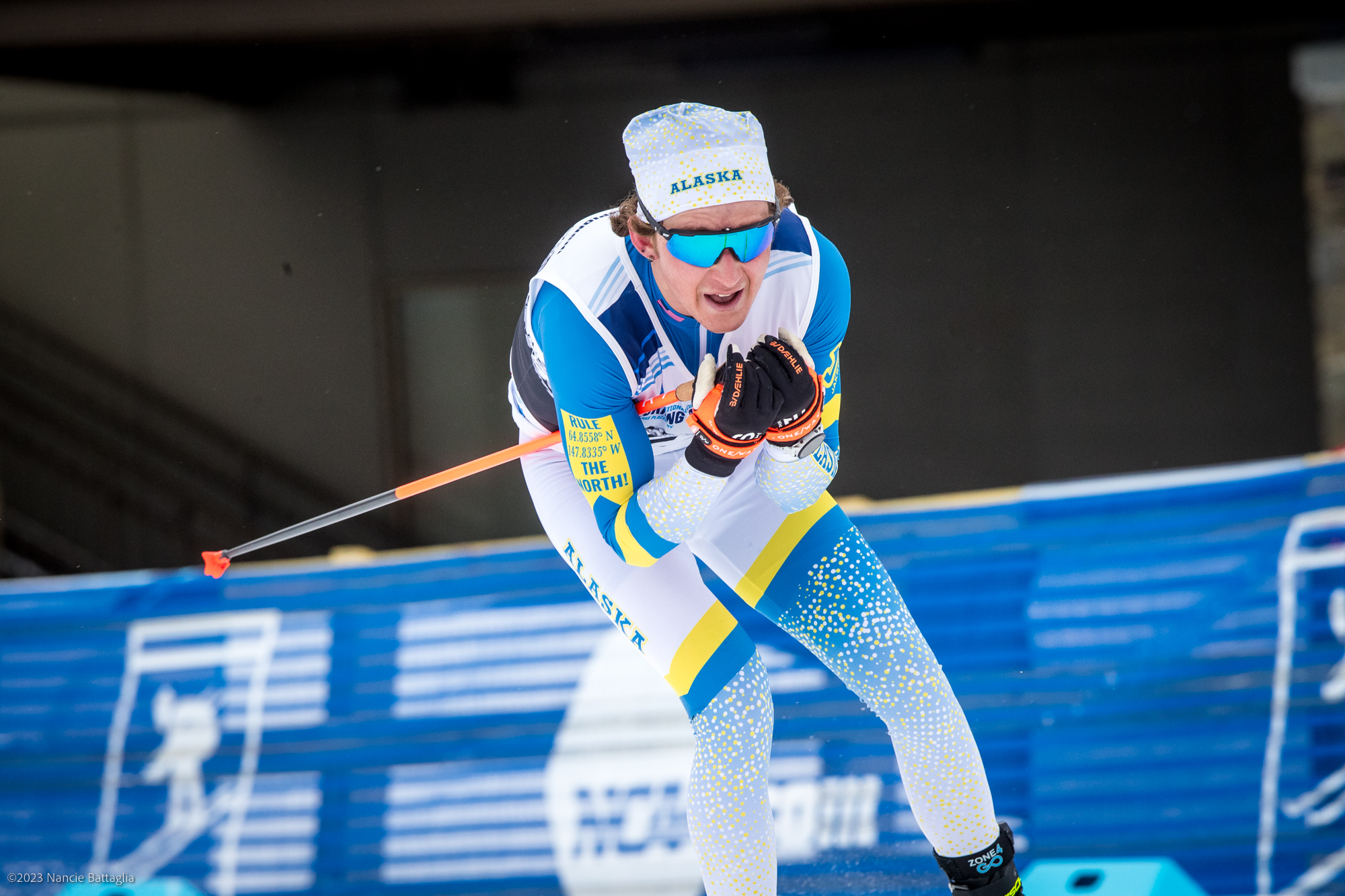
    Joe Davies (UAF) during his NCAA Championship performance in the 10 k Freestyle in Lake Placid, New York in 2023. Davies delivered a dominant performance, 25 seconds ahead of second place John Steel Hagenbuch (Dartmouth). Davies now skis for the University of Utah. (Photo: (c) 2023 Nancie Battaglia)
    Men’s Field—Returning and Ascendent Champions in Steamboat

    Full 2024 NCAA Field Announced HERE

    In contrast to the Women’s field, the Men’s field in Steamboat Springs is deep with skiers who already have earned places on NCAA podiums. Both of last year’s NCAA champions will be looking to add to their collegiate accomplishments, and a select few who found the podium last year will be looking to capture the title of NCAA Champions.

    First among the returning champions is 2023 Lake Placid 10 k Freestyle champion, Joe Davies. The British/Canadian University of Utah Junior won last year as a member of the University of Alaska-Fairbanks team. Davies has followed up his NCAA triumph with a season that’s shown his wide range of talents as a skier. At US Nationals in January, he skied to a pair of second place finishes in the week’s distance races. Davies also had a phenomenal performance at the Minneapolis World Cup where he finished 16th in the 10 k Freestyle for Great Britain. Davies is also coming off a win in the 7.5 k Freestyle at RMISA Regionals in Bozeman, indicating that he is poised to defend his NCAA skate title.

    The other individual champion at last year’s NCAAs was Canadian Remi Drolet from Harvard University, who won the 2023 20 k Classic Mass Start. Drolet has followed that campaign with an EISA Carnival season in which he never finished off the podium lending credence to his versatility and continued presence at the front of the NCAA field. The nature of his win last season at Lake Placid—reeling back an attack by John Steel Hagenbuch late in the 20 k Classic Mass Start—will be an indicator of the Canadian’s experience and poise as he looks to add to his NCAA total in Steamboat Springs.
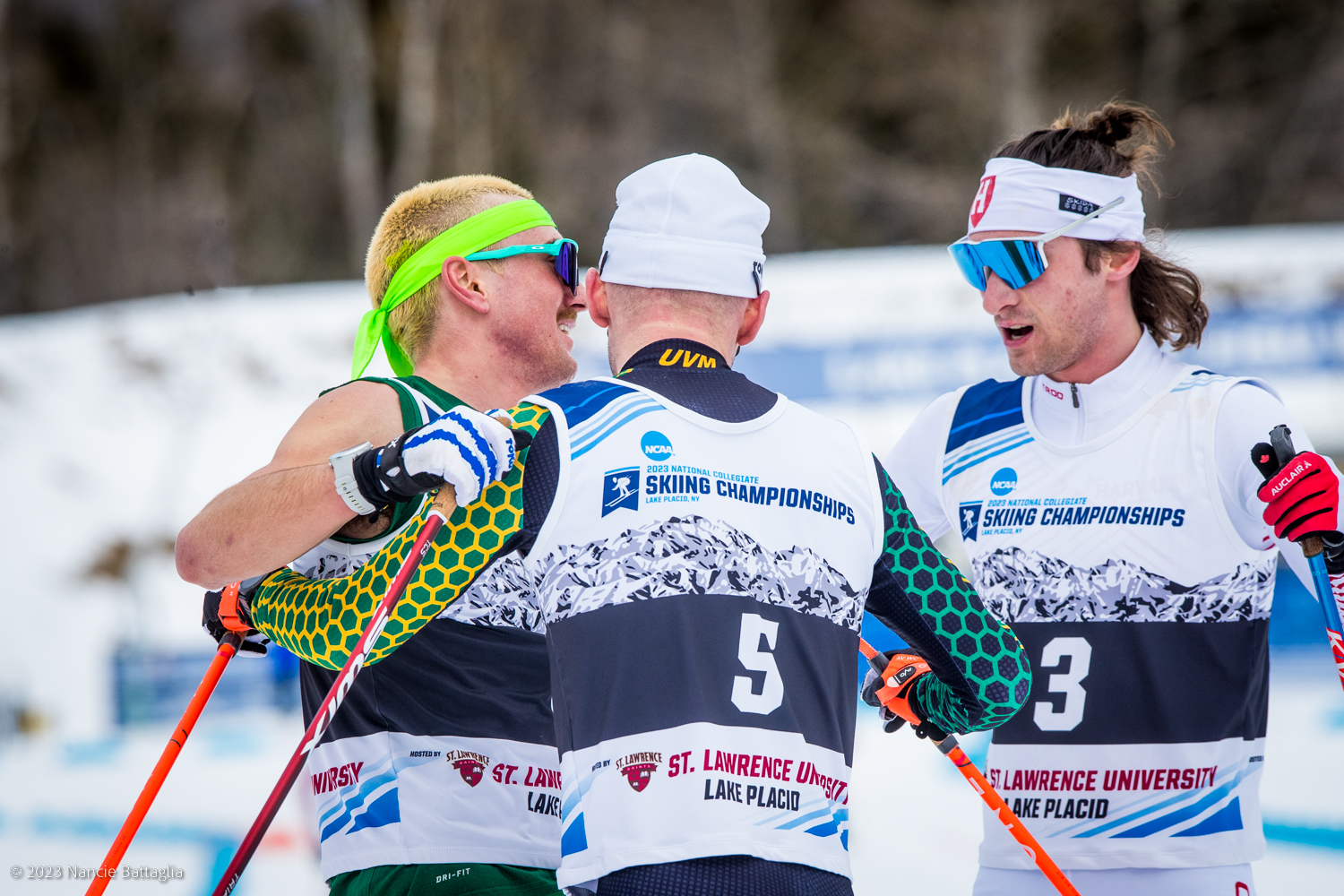
    John Steel Hagenbuch (Dartmouth) and 20 k classic champion Remi Drolet (Harvard) in Lake Placid last year. Both return to the NCAA Ski Championships in Steamboat Springs, Colorado on Thursday. Photo: ( (c) 2023 Nancie Battaglia)

    At the top of the list of contenders outside the defending champions will be Hagen buch, a Dartmouth junior who comes to Steamboat Springs with the clearest goal out of any other skier: pick up one place from last year. Hagenbuch was runner-up to both Davies in the 10 k Freestyle and Drolet in the 20 k Classic, and since has bolstered his credentials to be considered the all-out favorite in the Men’s field. Hagenbuch has won every collegiate race he has entered this season, a feat last completed by the University of Vermont’s Ben Ogden on his way to sweeping the 2022 NCAA Championships in Soldier Hollow. In December, Hagenbuch skied to a World Cup 13th place in Ostersund in a 10 k Freestyle race. Then, at US Nationals, he made a move 15 k into the 20 k Freestyle Mass Start that led to his winning by over a minute. He then proceeded to open up U23 World Junior Ski Championships with a bronze medal in the Freestyle Sprint, and rounded out his latest trip to the World Cup with a 30th place in the 10 k Freestyle at Minneapolis. National Champion, U23 World Championship medalist: NCAA Champion seems like the natural next title that Hagenbuch is looking to add to his resume. He’ll get his chance in Steamboat Springs.

    There is another already-NCAA-champion, the University of Colorado’s Magnus Boee, who swept the Championships in 2021 at Jackson, New Hampshire. three years later, Boee has remained a persistent presence at the front of collegiate race fields. He most recently finished just 0.3 seconds behind Joe Davies in the RMISA 7.5 k Freestyle regional championship race in Bozeman. Boee will also benefit from skiing on his “home” course, as Colorado hosts the championships in Steamboat. That home-field advantage may also benefit the other Buffaloes NCAA qualifier, Will Koch, who found the podium in the 20 k Classic at Howelsen Hill earlier this season, and was a US Nationals winner in the Freestyle Sprint in January.

    One more Colorado skier—this one from the University of Denver—will also come to Steamboat Springs in pursuit of an NCAA title. Andreas Kirkeng won the 10 k Classic race at US Nationals in January. Since then, has won every RMISA classic race excepting a 10 k Classic at the University of Utah Invitational. That run includes a pair of wins in 20 k Classic Mass Starts: one at Howelsen Hill, and one at Regionals two weeks ago. With those results, the Norwegian will be clearly looked at to set the pace in Saturday’s race in Steamboat Springs.

    Davies’ teammates at the University of Utah will also add to the presence of red and white Utes suits in the races. Frenchmen, Tom Mancini has been a consistent top five performer in RMISA races this season, and Vermont native Brian Bushey scored a win in the 7.5 k Freestyle race at his home meet before going on to be a top performer for the US at U23 World Ski Championships in Planica, Slovenia in February.

    Meanwhile, another of Hagenbuch’s rivals on the EISA circuit this year has been his Dartmouth teammate, Jack Lange. A sophomore, Lanbe posted a top ten finish at his first NCAA Championships in the Lake Placid 20 k last year, and this season has been the number two in Dartmouth’s 1-2 punch at the top of Carnivals alongside Hagenbuch. More recently, he was the top US Junior male throughout World Junior Ski Championships, taking ninth in the 20 k Freestyle and 20th in the 10 k Classic race. 
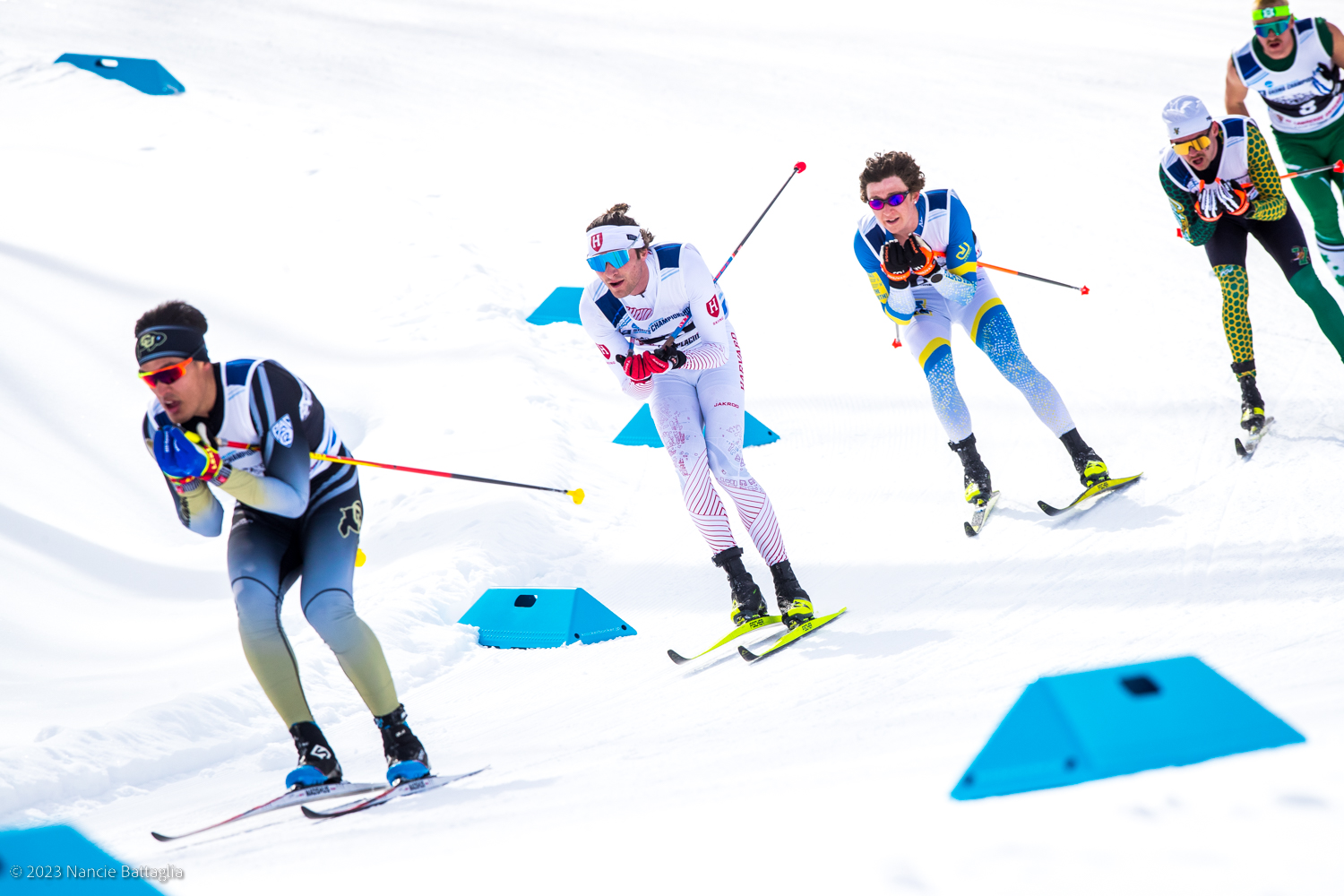
    Magnus Boee (CU) leads a pack including fellow NCAA Champions Remi Drolet (Harvard) and Joe Davies (UU) at Lake Placid in 2023. All three will be in Steamboat Springs, Colorado for the 2024 NCAA Championships; (Photo: (c) 2023 Nancie Battaglia)

    Others in the mix worth noting include University of Denver’s Florian Knopf who had a remarkably consistent season on the RMISA season prior having never finished outside the top five across skate, classic, distance, and sprint races. Leading the Central region will be Skylar Patten, a freshman from Michigan Tech, who recently swept the Central Regional Championships in a 7.5 k Freestyle and 20 k Classic race. There will also be plenty of sprint talent testing their limits as distance racers. That includes former US Nationals sprint winner Kristoffer Karsrud from Northern Michigan University. It also includes Colby College’s Jack Young, who is the only skier in the field—apart from top contenders Davies and Hagenbuch—with a top 30 on the World Cup this season. Young finished 23rd in the Canmore Classic Sprint in February.

    In races filled with NCAA experience, the Men’s competitions promise to come down to who combines all the complex ski-race factors—skis, wax, fitness, course dynamics, and the ability to deal with Steamboat’s high altitude. Regardless, there will be many skiers eager to etch their names onto a great American ski tradition, the NCAA Championships at Howelsen Hill.

  • NoCo ‘Adrenaline Junkie’ Since Age 6, Bryan Fletcher Retires

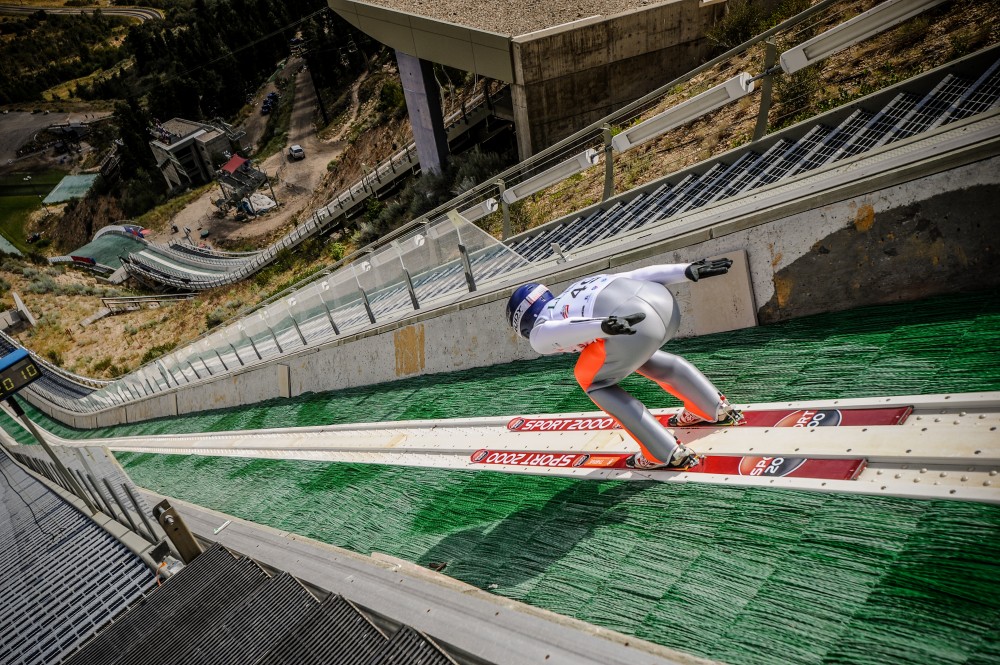
    American Bryan Fletcher after jumping to 18th on the 109-meter normal hill at the 2018 Olympics in PyeongChang, South Korea. He went on to finish 17th in the 10 k later in the day. (Photo: FlyingPointRoad)

    At age 31, Bryan Fletcher estimates he’s dedicated 25 years to the sport of nordic combined. He has been a U.S. national team member for the past 11 years and maintains that first time he flew off a jump on skis occurred at the ripe age of 4. Before that, and before his first steps, Fletcher’s exposure to skiing came from the viewpoint of a child carrier on his father’s back.

    For the first time since his initial national-team naming in 2006, Fletcher’s full-time work will no longer revolve around nordic combined. As of this spring, the U.S. Nordic Combined veteran has retired from World Cup competition, as have a few other internationally notable nordic-combined skiers.

    For any athlete who has devoted as much time as Fletcher, retirement rarely means complete severance from the sport. From the onset of his career, nordic combined (NoCo) served as more than just an athletic pursuit for Fletcher. It was also in a way, a lifeline.

    ***

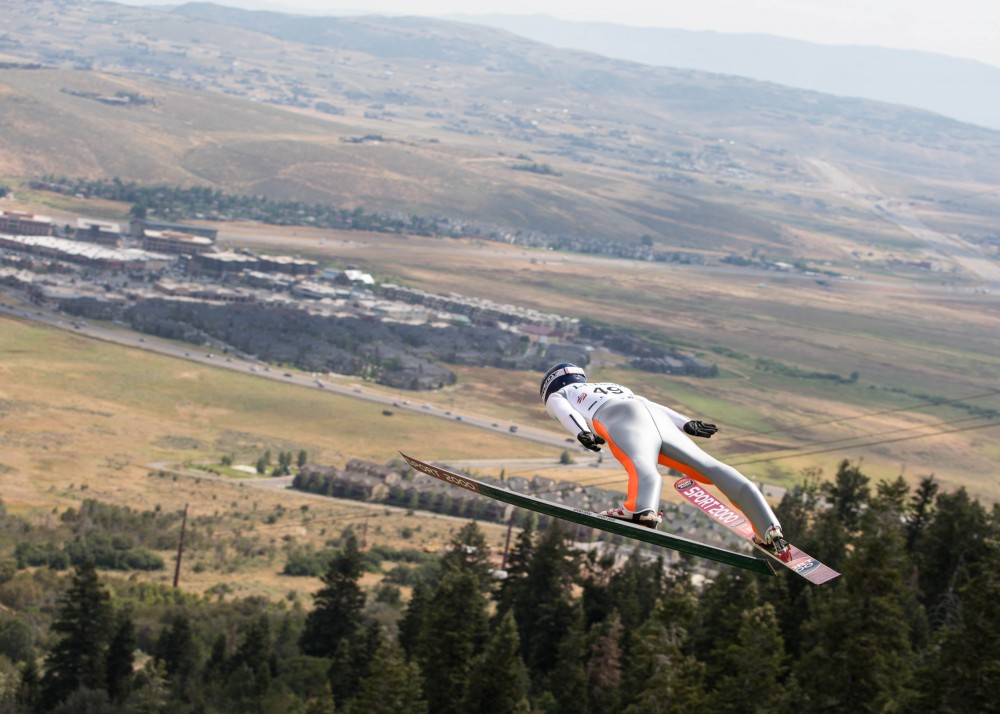
    Bryan Fletcher (U.S. Nordic Combined) at the 2016 U.S. Ski Jumping and Nordic Combined Large Hill Championships in Park City, Utah. (Photo: USSA/Tyler Tate/T Squared Action Sports)

    When he was 6 years old, Fletcher made a special request to his parents. At the time, he was a self-proscribed “adrenaline-junkie kid” living in Steamboat Springs, Colorado — a well-known ski town that is also home to the country’s historical ski jumping venue, Howelsen Hill. Fletcher had heard that his hometown was hosting a “learn-to-ski-jump day” for kids his age.

    Naturally, he wanted to attend.

    But even if Fletcher’s 6-year-old self self showed a fearless gall and a desire to jump, his parents had other reasons to feel nervous about signing him up. His health. Three years earlier, he had been diagnosed with acute lymphoblastic leukemia (ALL)-

    A type of cancer in which the body’s bone marrow overproduces lymphocytes (a type of white blood cell), ALL’s symptoms can range from pain in the bones and joints to fatigue and fever. To treat his condition, Fletcher completed regular chemotherapy sessions three hours away in Denver, Colorado. Some sessions left him without hair.

    “I think it’s very easy for young kids, especially going through cancer, to be pretty down in the dumps and not really get to feel like they’re a normal kid,” Fletcher told FasterSkier on the phone earlier this month. “I don’t know how or why, but I guess I begged my parents enough to sign me up for that learn-to-ski-jump day.”

    With some persuasion, he convinced his parents to let him partake in the event. Instantly, Fletcher was hooked, prompting him to join Steamboat’s youth ski-jumping program. Eventually, he found his way to the cross-country trails and began participating in the youth NoCo program at the Steamboat Springs Winter Sports Club.

    “I think they saw the smile on my face and were like, ‘Holy cow, how are we going to tell him that he can’t do this?’ ” Fletcher recalled of the first time he tried ski jumping.

    NoCo became what Fletcher referred to as the “perfect distraction” from his chemotherapy sessions and childhood cancer. In Denver, he adhered to everything his doctors recommended, especially if it meant getting back to Steamboat, skiing and jumping sooner.

    “I think it was, in hindsight, a great motivator for me,” Fletcher said of his early days in the sport.

    ***

    U.S. Nordic Combined’s 2011/2012 team members (from left to right) Bill Demong, Bryan Fletcher and Taylor Fletcher with head coach Dave Jarrett at Soldier Hollow in Midway, Utah. (Photo: USSA)

    From then on, Nordic Combined became inextricably intertwined with his life, both on the hill and at home. His younger brother, Taylor Fletcher, who was four years younger, also picked up NoCo, and the two shared practices and passion for the sport.

    “Both he and I are fighters, but … he’s always had to work for it a little bit harder than I did,” Taylor said on the phone this month. “That’s what drove him to become as good as he was.”

    When Bryan was a freshman at the Winter Sports School in Park City, Utah, he was selected to be a forejumper for the 2002 Winter Olympics.

    “This honor further solidified my goals and ambitions to become a world-class athlete,”  Bryan wrote on his website. 

    Just two years after his high-school graduation, Bryan earned a spot on the U.S. Ski Team. He was 20 years old. One year later, he qualified for his first World Championships in Sapporo, Japan, racing to 40th in the sprint.

    Six months after his 22nd birthday, Bryan claimed his first Continental Cup podium: third place in an individual large hill/10-kilometer Gundersen at Soldier Hollow near Park City. He competed at his second World Championships in 2009, walking away with two individual top-30 performances (30th in the large hill/10 k and 22nd in the normal hill/10 k).

    By the third competition weekend of the 2010/2011 World Cup season, Bryan had achieved his first individual top 10, placing eighth in the normal hill/10 k in Ramsau, Austria.

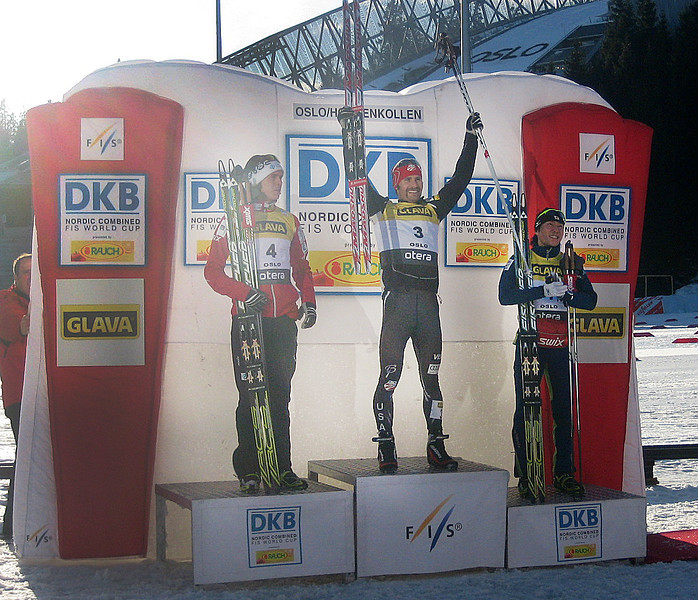
    Bryan Fletcher on the top of the podium in at the 2012 Nordic Combined World Cup in Oslo, Norway. (Photo: Margo Christiansen/USSA)

    But it was the following season, in 2011/2012, that Fletcher really found his form. At the 2012 Holmenkollen World Cup in Oslo, Norway, he became the fifth American to win a Nordic Combined World Cup with a victory in the large hill/10 k. In that season alone, he also finished in the top 10 seven other times.

    “That was kind of a pivotal point,” Fletcher said of his Holmenkollen win. “It was a reinforcing result. … I was like, ‘OK, I do belong here at the top of a World Cup and I have a future in the sport … all the sacrifices and work you’ve put into it are worth it.”

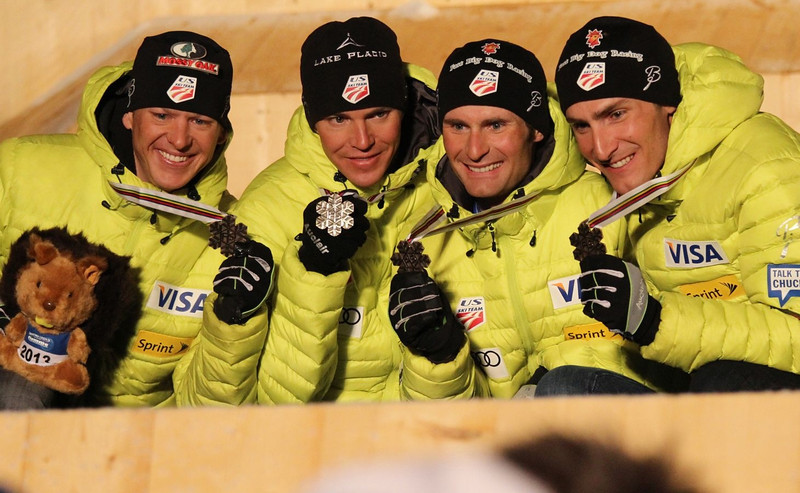
    Bryan once again made the team for 2013 World Championships in Val di Fiemme, Italy, where he and his teammates Billy Demong, Todd Lodwick and his brother Taylor raced to bronze in the 4 x 5 k team event.

    “That was just solid teamwork and great performances by all,” Bryan said. “A happy moment in the career.”

    From left to right: Todd Lodwick, Billy Demong, Bryan Fletcher, and Taylor Fletcher with their bronze medals from the team event at the 2013 Nordic Combined World Championships in Val di Fiemme, Italy. (Photo: Fiemme2013)

    Twelve years after his cameo forerunning appearance at the 2002 Salt Lake Olympics, Bryan found himself at the top of another Olympic jumping hill — this time wearing the Team USA race suit. He had qualified for the 2014 Olympics in Sochi, Russia, where he went on to finish 22nd in the large hill/10 k and 26th in the normal hill/10 k.

    Over the next four years, he would qualify for two more World Championship teams as well as the 2018 Olympics in PyeongChang, South Korea. On top of those achievements, he’d accumulate 10 more individual top-10 World Cup finishes, including two seventh-place results this past winter.

    In PyeongChang, Bryan placed 17th in both individual races: the large hill and normal hill/10 k Gundersen starts.

    “I went into PyeongChang wanting to have a lot of fun, obviously wanting to fight for a medal, and to put my best foot forward,” Bryan explained. “I put together probably some of my best performances on the jump hill I’ve had in several years. Unfortunately my cross-country wasn’t quite as strong as I’d hoped for, but I still felt like I put everything I had in the training going into it.”

    ***

    When it comes to his work, Bryan is all about giving his all, which is one reason he chose to retire from World Cup competitions. It is also one of the reasons why he is not immediately transitioning into coaching, despite his close connection to the sport for so many years.

    inhalers online

    “I am the type of guy who likes to do things 100 percent,” Bryan explained. “The sport is always growing and the level is always rising, and I just felt like I wasn’t going to be able to give the sport all the effort that I needed to give it to be successful [as an athlete]. So I decided that 2018 was the year that I would retire and I would move into finishing my academic career and start a new journey.”

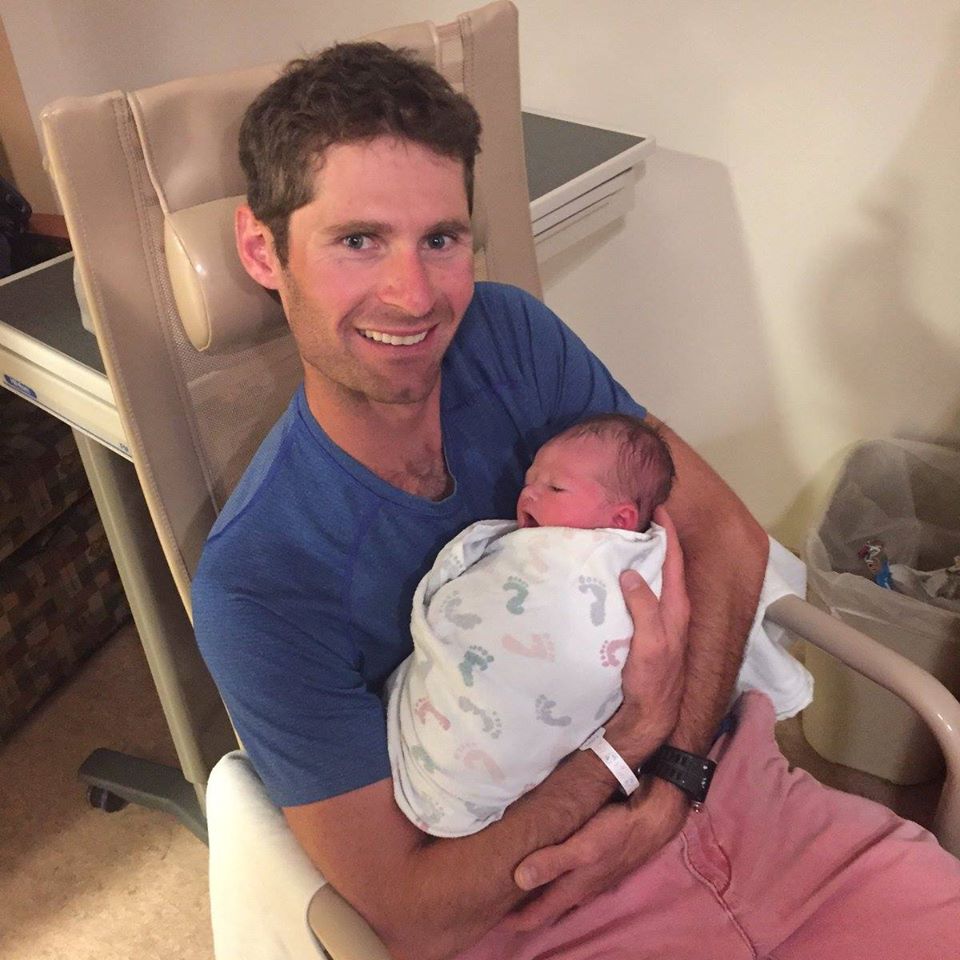
    Bryan Fletcher holding his newborn, Ellery Ardene Fletcher. Fletcher and his wife Nikki welcomed their baby girl on Aug. 29, 2016. (Photo: USSA Nordic)

    His new journey will involve finishing school and spending more time with his wife and 20-month-old daughter, Ellery. Through online courses, he has been working toward a degree in health education and promotion (with an emphasis on health science), which he aims to complete by next year. Graduate school has popped into his mind, as well as the idea of becoming a physician assistant.

    Though coaching may have seemed like the ideal professional avenue for an athlete like Fletcher, the U.S. team veteran sees value in spacing himself from the team before getting too deeply involved.

    “I think that going into coaching is really easy, especially to go straight from your athletic career, but you don’t have that time to expand your knowledge,” he said. “For a number of years, coaching was how I wanted to stay involved in the sport. I’ve since changed that idea.”

    Instead, he hopes to enhance his knowledge of athletics and health science before working with athletes. The idea is to not only allow himself to develop more, but give the current U.S. NoCo team time to develop as well.

    “When you come back to a sport so fresh out of retirement, it’s easy to focus on the same problems that you had as an athlete,” Fletcher explained. “But those issues may not be necessarily what the other athletes are struggling with or what they need to work on.

    inhalers online

    “On our team, we have some athletes that are great jumpers and we also have some athletes that are great cross-country skiers, but we don’t have particularly many of both right now,” he continued. “I think we just need to take some time to let those athletes develop in a new environment. That way you’re not just coaching the strong skiers to be strong skiers and the best jumpers to be the best jumpers, but instead allowing them to find strength in the opposite areas.”

    Though he himself was 20 years old when he joined the team, by the end of his career, most of Fletcher’s teammates were almost a decade younger than him. While the team energy in recent years was one that left him admittedly needing “more naps”, he also sees the younger pool of athletes as an opportunity to foster a new team dynamic for American nordic combined.

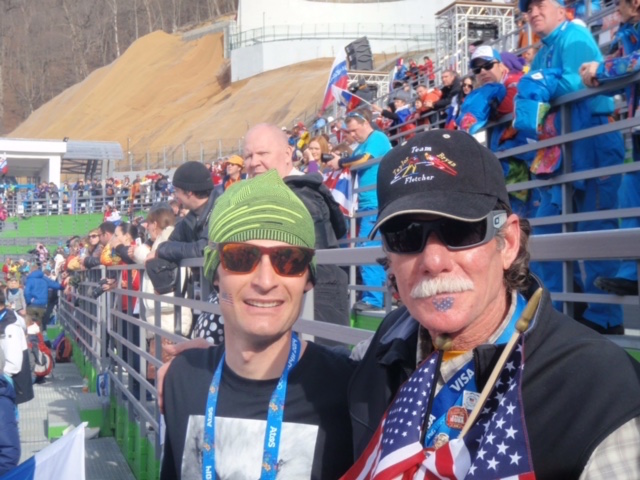
    Bryan Fletcher with his father at the 2014 Winter Olympics in Sochi, Russia: “The biggest lesson I ever learned from my dad was not only how to ski but how to enjoy every single day on skis.”

    “As the younger athletes come up, we have to let them create their own culture and be accommodating of it,” Fletcher said. “I think the way I can have the biggest impact on the team is not by jumping immediately into coaching, but instead taking some time away from the team to broaden my knowledge base and skill sets in different areas. Then several years from now, I can return to the team with a new attitude and new approach and add something different.”

    For the time being, his involvement with NoCo will remain at the administrative level. He was recently elected to Team USA’s Athletes’ Advisory Council and will serve a four-year term on the board of directors.

    Even so, his presence at practice sessions will be missed.

    “It’s going to be weird,” Taylor said of his brother’s departure from the team. “He was always the very level-headed leader.”

    As Taylor, a three-time Olympian, steps into the primary NoCo team-veteran role, Bryan was sage in his advice to those who will continue to hit the trails and the hill.

    “Just have a plan in place, especially when you start to think that you’re heading down that road of retirement,” Bryan said. “I think it’s really easy to kind of get stuck and not know what you want to do, so just make sure that you kind of have some sort of idea, some kind of stepping stone to go forward.”

    Bryan Fletcher flying at the 2016 U.S. Ski Jumping Championships at Utah Olympic Park in Park City, Utah. (Photo: USSA/Tyler Tate/T Squared Action Sports)

  • Thursday Rundown: Ogden, Bergström NCAA Champs; Kontiolahti Men’s Sprint

    Thursday Rundown: Ogden, Bergström NCAA Champs; Kontiolahti Men’s Sprint

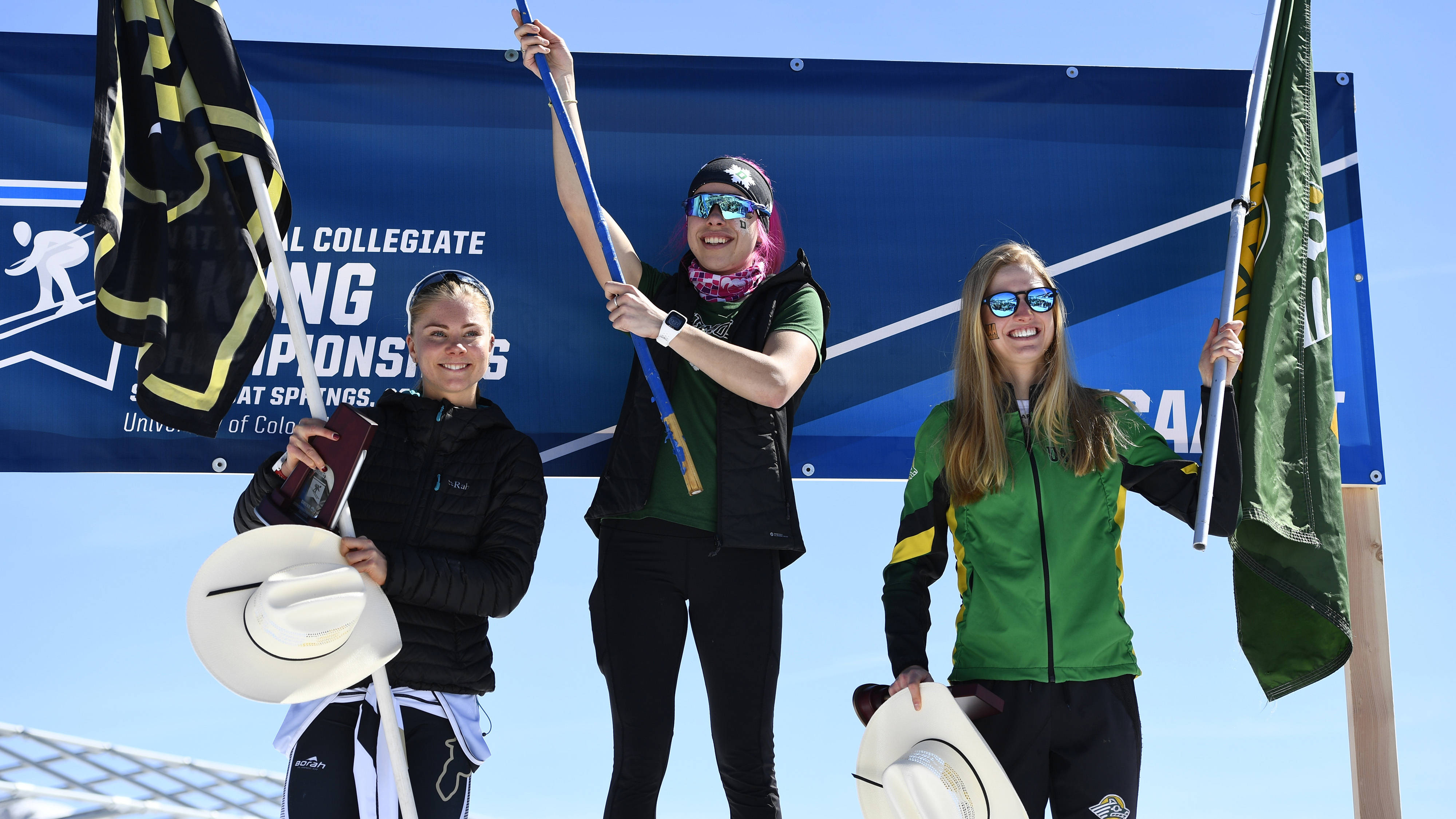
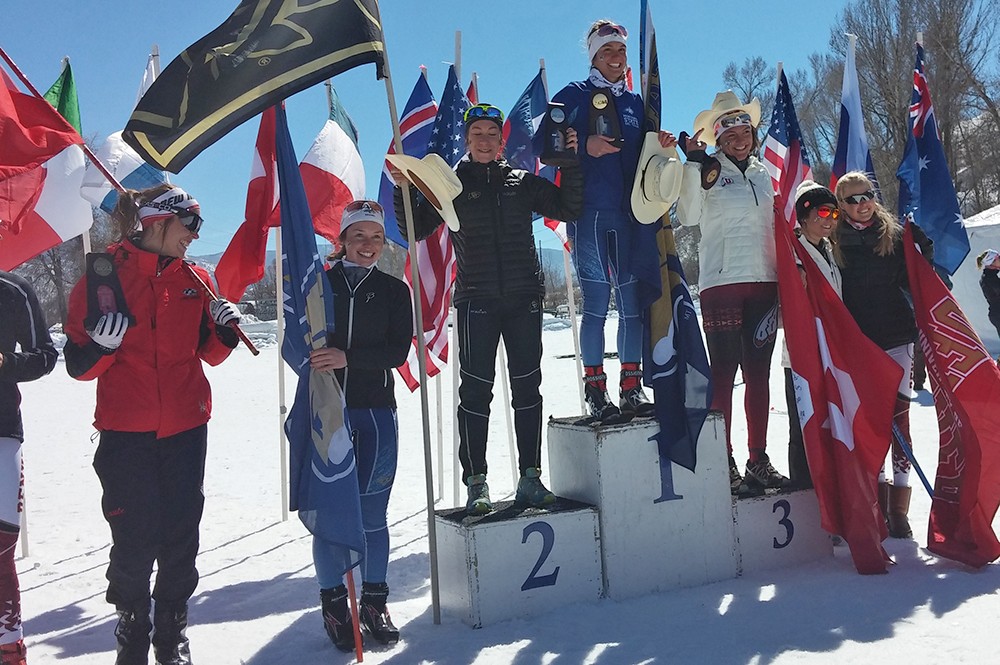
    The women’s 5 k classic podium at 2018 NCAA Skiing Championships in Steamboat Springs, Colorado, with Dartmouth’s Katharine Ogden (c) in first, Colorado’s Anne Siri Lervik (l) in second, and University of Alaska Anchorage’s Hailey Swirbul (r) in third. (Photo: Clarkson Creative/DartmouthSports.com)

    On the first day of NCAA Skiing Championships at Howelsen Hill in Steamboat Springs, Dartmouth College freshman Katharine Ogden and University of Utah senior Martin Bergström were crowned champions in the women’s 5-kilometer and men’s 10 k classic races, respectively.

    Ogden won the women’s individual-start race by a whopping 46.9 seconds, finishing in 14:47.2 minutes to become Dartmouth’s first female cross-country skier to win an NCAA title, according to a Dartmouth press release. Anne Siri Lervik of the University of Colorado Boulder (CU) placed second and Hailey Swirbul, of the University of Alaska Anchorage (UAA) and a two-time individual medalist at this year’s Junior World Championships, placed third (+51.0).

    “There isn’t much more to say about Katharine’s performance today other than she absolutely crushed it!” said Dartmouth Director of Skiing and Women’s Nordic Head Coach Cami Thompson Graves, according to the Dartmouth press release. “It was such a treat to watch her perform so well.”

    Martin Bergström (University of Utah) after winning his third-straight NCAA Skiing Championships title with a win in the 10 k classic on Thursday in Steamboat Springs, Colorado. (Photo: University of Utah)

    CU, this year’s NCAA Championships host, had three women in the top 11 with last year’s classic champion Petra Hyncicova placing sixth and Christina Rolandsen finishing 11th.

    The CU Buffs took the lead in the team standings on Thursday by nine points over the University of Denver (DU). Utah is currently 41 points back in third, Dartmouth moved up to fourth, and the University of Vermont, which led after Wednesday’s Day 1 alpine races, slipped to fifth.

    In the men’s race, Bergström, who won both races at last year’s NCAA Championships, posted an 8.5-second victory over CU’s Petter Reistad with a winning time of 27:37.1. Dag Frode Trollebø of DU placed third (+14.7) ahead of his DU teammate Eivind Kvaale in fourth (+38.9). On his 22nd birthday, Ian Torchia, of Northern Michigan University and the U.S. Ski Team Development Team, was the top American finisher in fifth (+46.2).

    Alpine slalom races will take place on Friday, while NCAA Championships will conclude with 15/20 k freestyle mass starts on Saturday.

    Results: Women | Men

    Team results (through Day 2 of 4)

    ***

    IBU World Cup (Kontiolahti, Finland): Men’s 10 k sprint

    First, a little geography lesson. Kontiolahti, Finland, is only about 100 kilometers from the Russian  border, so most of the International Biathlon Union (IBU) World Cup (and World Championships) events held there attract a mostly Russian crowd.

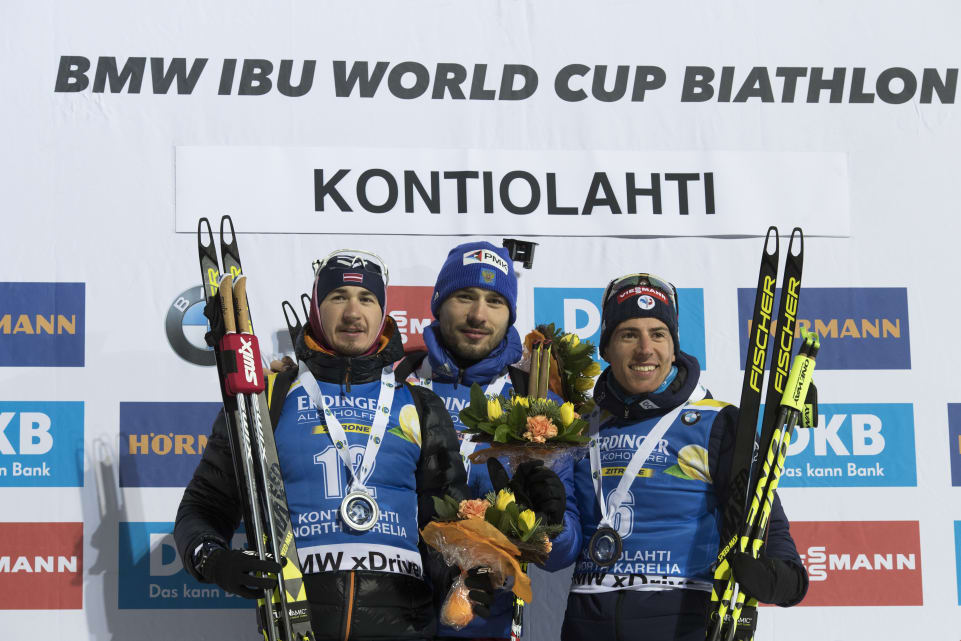
    The men’s 10 k sprint podium at the IBU World Cup in Kontiolahti, Finland, with Russia’s Anton Shipulin (c) in first, Latvia’s Andrejs Rastorgujevs (l) in second, France’s Quentin Fillon Maillet (r) in third. (Photo: IBU/Biathlonworld)

    And here’s a little more background: Russia’s Anton Shipulin showed up for Thursday’s IBU World Cup in Kontiolahti raring to go after having been barred from last month’s Winter Olympics in PyeongChang, South Korea.

    So Shipulin hadn’t raced since Jan. 21 in Antholz, Italy. The International Olympic Committee’s decision to ban him from the 2018 Games went public on Jan. 23.

    Back in action in Kontiolahti, in front of Russian fans, Shipulin delivered a 5.8-second win in the men’s 10-kilometer sprint, shooting clean and finishing in 23:51.6.  It was the 31 year old’s third non-relay podium of the season and first World Cup win of 2017/2018, and he did so on a relatively moderate evening by Kontiolahti standards (at -6 degrees Celsius, or 21 Fahrenheit) with a “stiff breeze” on the range, according to an IBU press release.

    “I felt very good on the tracks and shooting and today it was enough to win,” Shipulin told the IBU. “I am very happy about this … all of the Russian fans gave me a lot of support on the tracks.”

    Latvia’s Andrejs Rastorgujevs tied his career best in second place, after shooting a perfect 10-for-10 as well. He acknowledged his mom and women in general after the race.

    “This is very important for my team,” Rastorgujevs told the IBU. “I would also like to congratulate all of the ladies and especially my mom on International Women’s Day.”

    France’s Quentin Fillon Maillet also shot clean to place third (+17.3) for his third non-relay World Cup podium of the season.

    Fillon Maillet was one of the earliest starters in bib 6 yet held off Norway’s Johannes Thingnes Bø, the 30th starter, by 1.7 seconds for the last spot on the podium. Bø had been a race leader after cleaning prone but missed two standing targets (0+2) to slip out of contention and into fourth at the finish (+19.0).

    Germany’s Olympic sprint champion, Arnd Peiffer placed fifth (+27.4) with one miss (0+1), and France’s Simon Desthieux finished sixth (+28.3) with one prone penalty (1+0), and Germany took seventh and eighth with Erik Lesser (+30.6; one penalty) and Simon Schempp (+32.0; two penalties), respectively. Italy had two in the top 10 with Lukas Hofer in ninth (+35.2; one penalty) and Dominik Windisch in 10th (+38.3; one penalty).

    Lowell Bailey of the U.S. posted his best sprint result of the season in 16th (+48.4) after cleaning prone and missing one standing target (0+1). After starting 22nd, he recorded the 13th- and 14th-fastest overall shooting and range times, respectively, and 23rd-ranked course time.

    After the Olympics, Bailey returned home to Lake Placid, N.Y., for a brief training block. Despite a hefty amount of travel over the last week and a half, he explained in an email that he felt good in his first race back.

    “I felt better than I have for most of the season.  Sometimes that can happen.  I guess that’s the part of the unpredictability of biathlon,” Bailey wrote of Thursday’s race. “The conditions were great today; hard tracks and calm winds on the range.  There was a bit of wind, but compared to the three weeks in South Korea, it seemed pretty tame.

    “Shooting felt solid today,” he added. “That missed shot in standing was sooo close, but not close enough!”

    Overall, Bailey stated that he was happy with his performance and looking forward to the rest of the races in Kontiolahti.

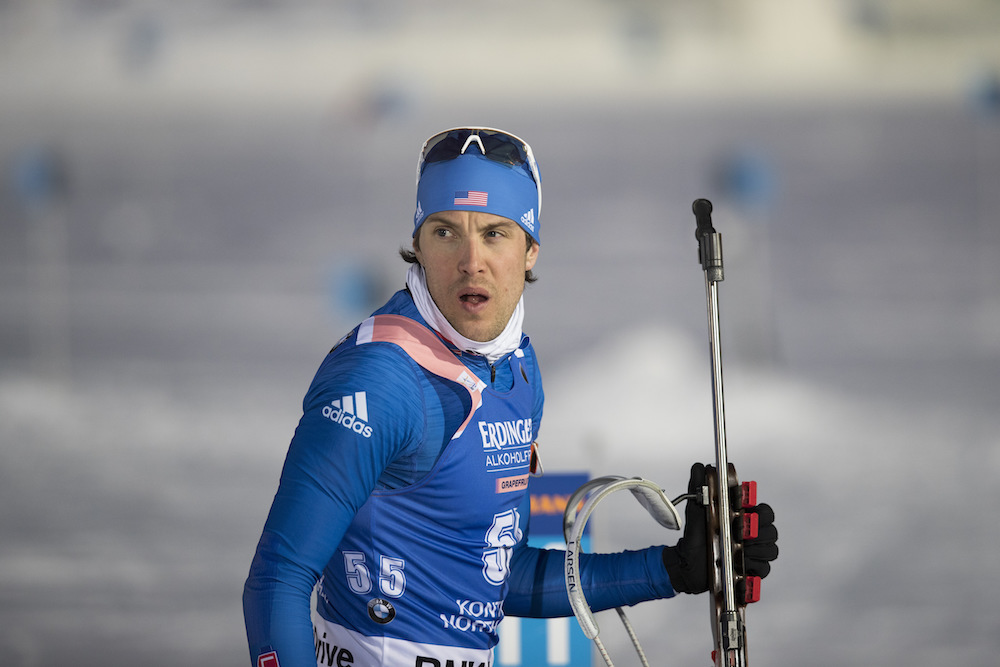
    Leif Nordgren (US Biathlon) raced to 17th for his best result in three seasons on Thursday in the men’s 10 k sprint at the IBU World Cup in Kontiolahti, Finland. (Photo: USBA/NordicFocus)

    His teammate Leif Nordgren finished just one place behind him in 17th (+49.9) for his best result in three years. A later starter in bib 55, Nordgren also cleaned prone and missed one standing (0+1) with the fifth-fastest shooting time and seventh-fastest range time. Overall, his course time ranked 28th out of 100 finishers. Nordgren’s individual career best on the World Cup is 16th in a sprint in February 2015. He has finished 17th three times; the last time was in a pursuit in March 2015.

    Brendan Green shot clean to lead the Canadian team in 34th (+1:29.5). American Sean Doherty followed in 35th (+1:29.7) with three penalties (1+2), and Tim Burke placed 38th (+1:36.1) for the U.S., also with three misses (1+2).

    In his World Cup debut, American Alex Howe finished 68th (+2:23.1) with two misses (1+1).

    Canada’s Christian Gow finished 79th (+2:47.4) with two penalties (1+1), and Scott Gow was 86th (+3:01.7) with three misses (1+2).

    This year’s Kontiolahti World Cup does not include a pursuit race. The women’s 7.5 k sprint is scheduled for Friday at 11:45 a.m. EST in Kontiolahti, and the single mixed relay and mixed relay will follow on Saturday. Racing in Kontiolahti will conclude with men’s and women’s mass starts.

    Results

  • NCAA Champs Day 1: Strøm Makes CU History; Miller Nabs Individual Win for MSU

    NCAA Champs Day 1: Strøm Makes CU History; Miller Nabs Individual Win for MSU

    Note: FasterSkier is seeking photos from the nordic races at 2016 NCAA Skiing Championships. Please email info@fasterskier.com with photos of top finishers or for more info.

    ***

    Two juniors, one from Montana State University (MSU) and the other from the host team, the University of Colorado-Boulder (CU), claimed the ultimate collegiate titles on Thursday at 2016 NCAA Skiing Championships in Steamboat Springs, Colo.

    It was the first of two days of nordic racing at Howelsen Hill, and Anika Miller (MSU) and Mads Strøm (CU) emerged as the individual winners in the 5- and 10-kilometer freestyle races, respectively.

    The women's 5 k freestyle podium on the first day of nordic racing at 2016 NCAA Skiing Championships in Steamboat Springs, Colo. Anika Miller (MSU) placed first, Petra Hyncicova (CU) finished second and Utah's Sloan Storey took third. (Photo: MSUBobcats.com)
    The women’s 5 k freestyle podium on the first day of nordic racing at 2016 NCAA Skiing Championships in Steamboat Springs, Colo. Anika Miller (MSU) placed first, Petra Hyncicova (CU) finished second and Utah’s Sloan Storey took third. (Photo: MSUBobcats.com)

    Miller led four Bobcats in the top 10, winning the women’s 5 k freestyle individual start in 13:06.1. Her teammate, Cambria McDermott, placed fourth, 9.4 seconds back.

    “When I finished, I had no idea how I’d done actually until my teammates jumped on me and were screaming,” Miller told NCAA.com. “I had no idea. I just started crying.”

    A native of McCall, Idaho, Miller bested second-place finisher Petra Hyncicova (CU) by 7.9 seconds for the win, becoming the first MSU skier to win an individual title since 1978, when Dan Brelsford (now the director of skiing) won the slalom race, according to an MSU press release. She is also the first female skier to win an individual title for MSU.

    Just one-tenth of a second behind Hyncicova, Sloan Storey (University of Utah) reached the final step of the podium in third.

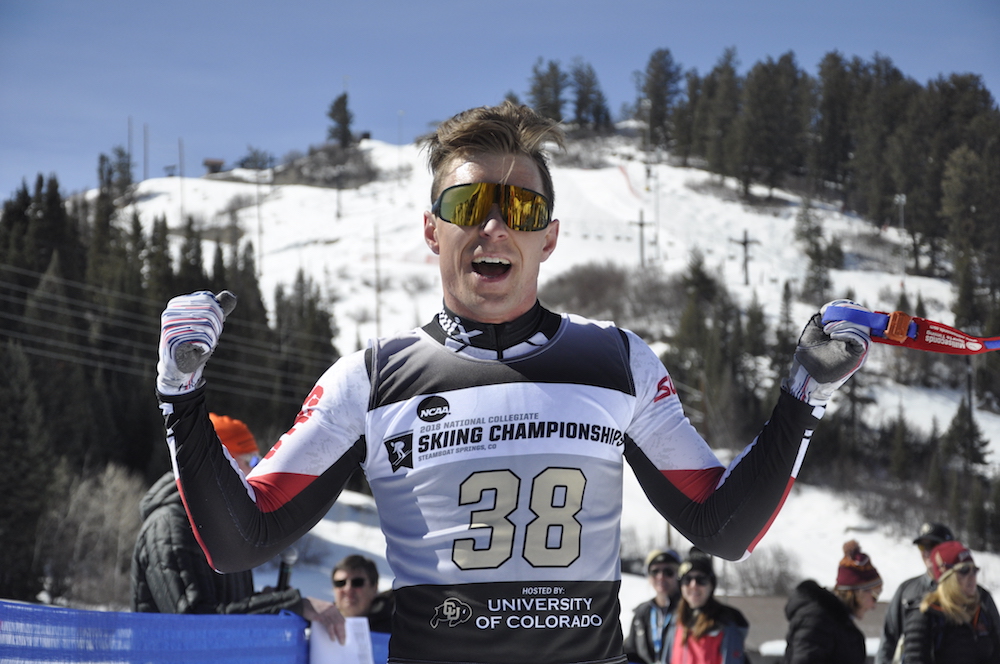
    An NCAA champion in 2014, Strøm achieved his second freestyle title in the men’s 10 k freestyle on Thursday in 22:06.8. His time proved to be 10.6 seconds faster than runner-up Ian Torchia of Northern Michigan University (NMU). Denver University’s Moritz Madlener placed third (+19.8).

    For Strøm, the win was his fifth in a row and seventh total this season, according to a CU press release.

    “It feels awesome, it feels amazing,” the 24-year-old Norwegian told CUBuffs.com.  “For ten months this has been my goal and to accomplish my goal is amazing. I was so nervous. I knew there was going to be a mass crowd out. I just had to find good skis, good pacing, and push it as hard as possible. It was definitely the best win of the year. Pulling it off when it matters the most is great.”

    Mads Strøm of the University of Colorado-Boulder celebrates his win in the men's 10 k freestyle on Thursday at 2016 NCAA Championships in Steamboat Springs, Colol. (Photo: Jamie Schwaberow/NCAA via CUBuffs.com)
    Mads Strøm of the University of Colorado-Boulder celebrates his win in the men’s 10 k freestyle on Thursday at 2016 NCAA Championships in Steamboat Springs, Colol. (Photo: Jamie Schwaberow/NCAA via CUBuffs.com)

    Strøm explained he had to “push it all the way to the end,” so hard that he was physically ill across the line.

    “I was so tired in the end,” he added. “As soon as I crossed the finish line, I had to lie down.”

    With his seventh win, Strøm is the winningest male nordic skier in CU history. He exceeded the amount of wins of Per Kare Jakobsen (who won six races in 1989) and Ove Erik Tronvoll (six in 1999). It was also the 89th individual win by a Buff, the most of any school in NCAA history, the CU release stated.

    For women’s runner-up Hyncicova, a 21-year-old sophomore from the Czech Republic, second stood as her best result of the season and matched her career best.

    “It was so hard, but it was really nice in the end. I didn’t hope for getting second, so it’s really nice,” Hyncicova told CUBuffs.com.  “I really didn’t have any idea what I was hoping for. In each race you want to win, but I didn’t expect that I would win here because I was always around fifth [place] this season.  I went to Romania a couple of weeks ago [for U23 World Championships], so I was really tired and didn’t feel that great.

    “I was really nervous before the start,” she added. “But once I saw everyone here — the alpine’s and everyone who cheered for us — I was like, ‘Yes I have to do it. I have to do it for the team.’ ”

    Team Standings (through 4 races):

    1. Montana State: 282
    2. Utah: 264
    3. Denver: 263
    4. Colorado: 214.5
    5. Vermont: 154
    6. New Mexico: 139.5
    7. Dartmouth: 126
    8. Alaska Anchorage: 124
    9. Northern Michigan: 122
    10. Middlebury: 81

    “I feel somewhat relieved but happy,” CU Nordic coach Bruce Cranmer said.  “Compared to racing, coaching is way more stressful.  You are worried about everyone and getting the right wax. I am still trying to calm down. I get so fired up.

    “Mads did great,” Cranmer added. “The guy that got second [Torchia] is one of the top U.S. [skiers] that went to World Juniors. [Mads] was on really good form before he got here, so I had high expectations without trying to get too caught up.

    “As for Petra, we were hoping for a top five finish. That is we thought she was capable of.  … For her to finish in second is awesome. … She does really well in skating.”

    Late last month, Torchia led the U.S. junior men in Romania with his top individual result of the week in 15th in the 15 k freestyle. It was his second-best at Junior Worlds since placing 11th last year in the 20 k skiathlon.

    Following Torchia in second, Northern Michigan had three in the top 10 with Adam Martin in fourth (+28.4) and Jake Brown in ninth (+56.1).

    “We knew that if we had a good day, all three of those guys were capable of winning and we just didn’t know which one,” said NMU Head Coach Sten Fjeldheim told NCAA.com. “We weren’t shocked or surprised that they’re all in the top 10, but you never know at altitude.”

    The base elevation of Steamboat Springs’ Howelsen Hill is about 6,700 feet.

    Through four events (two cross-country and two alpine) at 2016 NCAA Championships, Montana State leads the team standings with 282 points and Utah is second with 264. Denver is a close third, with 263 points after two days of racing. With a win and second-place finish on Thursday, CU moved into fourth in the standings, with 214.5 points.

    MSU’s previous team best was seventh, which it achieved last year with 259 points. The University has already exceeded that total at the halfway point of the championships. Racing wraps up Saturday with 15/20 k classic mass starts.

    “The momentum definitely helps our mindset, but the bottom line is we’ve got to go out and race the same way that we race everyday. That’s the way to succeed,” MSU Head Coach Matthew Johnson told NCAA.com. “Trying to mix it up and change it for the championship isn’t going to go well. Coming in with too much excitement isn’t going to go well, but skiing like we’re in the lead and skiing like we’re champions is going to do well for us.”

    5/10 k freestyle results | with splits

    Top 10 men: 

    1. Mads Strøm (CU) 22:06.8
    2. Ian Torchia (NMU) +10.6
    3. Moritz Madlener (DU) +19.8
    4. Adam Martin (NMU) +28.4
    5. Sawyer Kesselheim (MSU) +28.6
    6. Petter Reistad (CU) +35.1
    7. Nick Hendrickson (DU) +40.6
    8. Lars Hannah (DU) +50.1
    9. Jake Brown (NMU) +56.1
    10. Jack Hegman (UVM) +56.9

    Top 10 women:

    1. Anika Miller (MSU) 13:06.1
    2. Petra Hyncicova (CU) +7.9
    3. Sloan Storey (Utah) +8.0
    4. Cambria McDermott (MSU) +9.4
    5. Emilie Cedervaern (UNM) +12.8
    6. Natalia Mueller (Utah) +13.1
    7. Taeler McCrerey (DU) +13.4
    8. Linn Eriksen (DU) +13.6
    9. Ane Johnsen (CU) +14.7
    10. Mary Kate Cirelli (UVM) +17.5