|

|

|
|
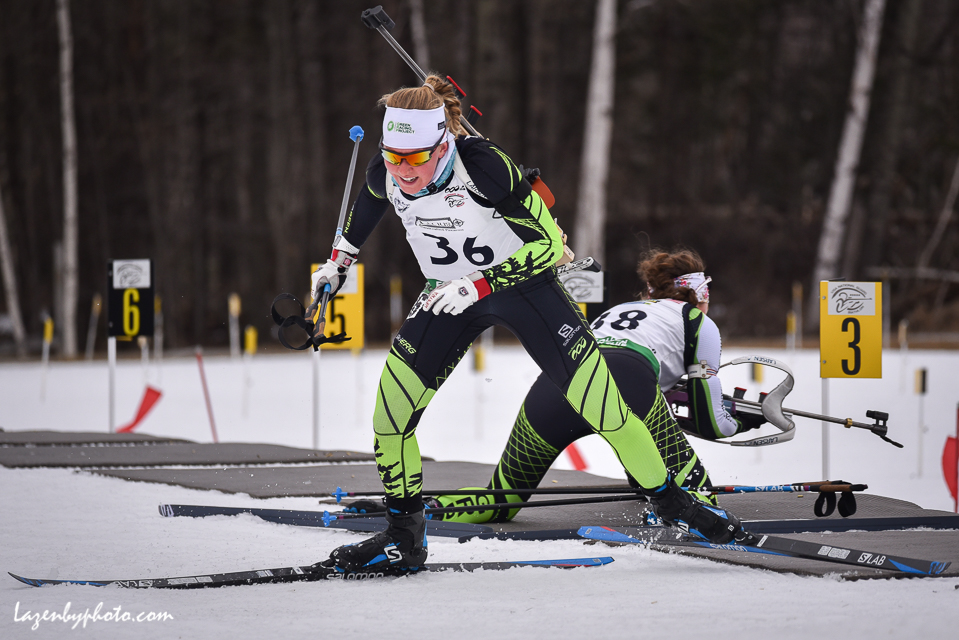
On Thanksgiving, it’s worth celebrating a breakthrough moment. When wins and podiums become quotidian, perhaps the luster wears over time. Sports fans love the breakthrough — the moment it first comes together for an athlete. In biathlon, the moving parts are many. The fitness, the pacing, the skis, the steady mental state on the range, the breathing, the shooting, the wind flags, and the targets falling — they all must align.
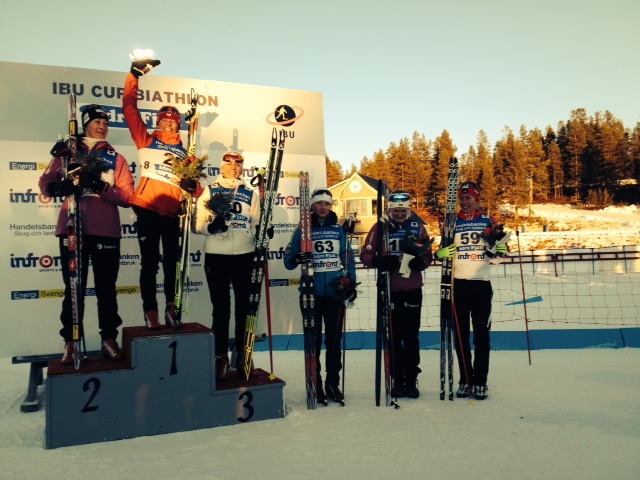
Kelsey Dickinson, 26, of the Craftsbury Green Racing Project and a U.S. Biathlon Team member had one of those performances. In Sjusjøen, Norway today the breakthrough came for Dickinson with a second place in the first IBU Cup race of the season: a 7.5-kilometer sprint. The IBU Cup ranks just below the World Cup for international caliber biathlon races.
Her second place was 6.6 seconds back from the winning time posted by Norway’s Karoline Erdal who won in 26:21.4. This was Dickinson’s best IBU Cup result to date. She missed two targets, both in standing.
Happy Thanksgiving.

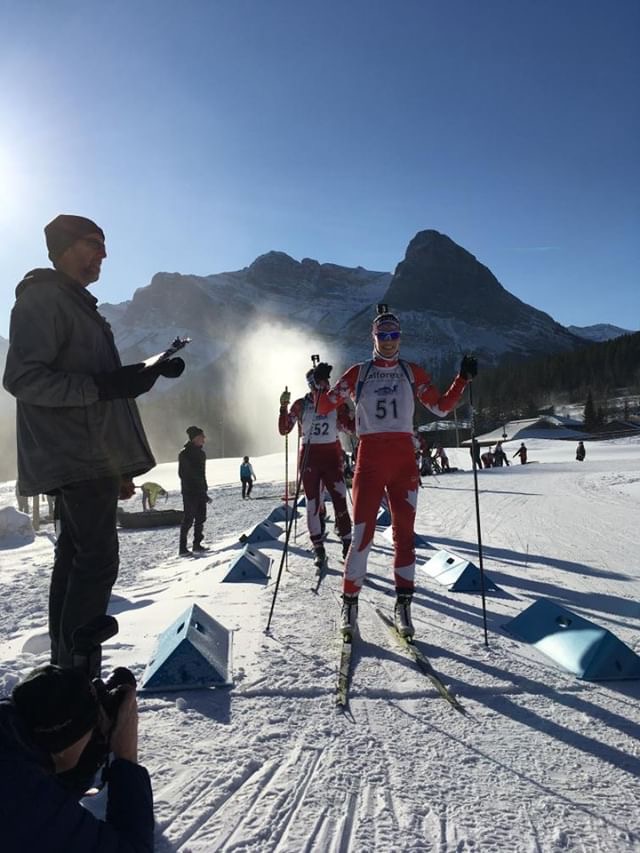
Thursday in Canmore, Alberta day two of Biathlon Canada’s selection trials featured a sprint, with the men racing a total of 10-kilometers, the women 7.5 k.
Nathan Smith of Canada’s Senior National team placed first for the men in a time of 24:02.7 minutes. Smith missed one shot prone and cleaned standing. Christian Gow, winner of the trial’s Tuesday sprint, placed a close second (+4.2). Gow missed a single shot shooting prone and shot clean during his standing stage. Aidan Millar (Team R.A.D.) skied to third (+35.7) after missing two shots — one each in prone and standing.
With limited snow, the course is absent a penalty lap — male athletes were penalized 22 seconds per miss.
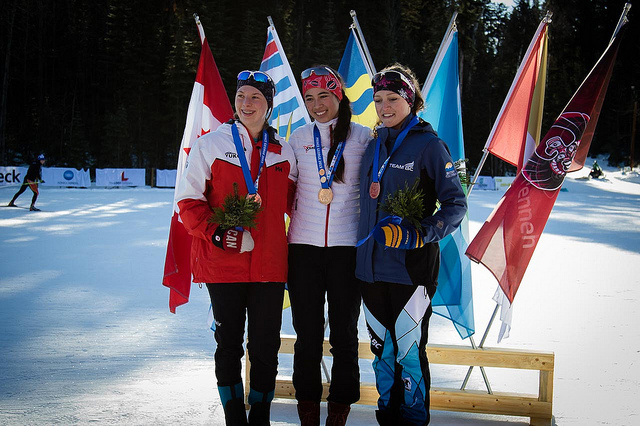
Megan Tandy, also part of Canada’s Senior National Team, won the women’s sprint in 21:17.5 minutes after cleaning her prone stage and missing one shot standing. Tandy placed second in Tuesday’s sprint.
Teammate Rosanna Crawford improved on Tuesday’s result, when she placed third, to take second (+5.7). Nadia Moser skiing for Biathlon Yukon, finished third (+21.2). Moser missed one shot in both prone and standing.
The women were penalized 22 seconds for each missed shot.
The selection trials will help determine Canada’s teams on the IBU World Cup, Ibu Cup and IBU Junior Cup for the first race period beginning the end of November. To date, only Scott Gow and Crawford pre-qualified for the 2018/2019 IBU World Cup.

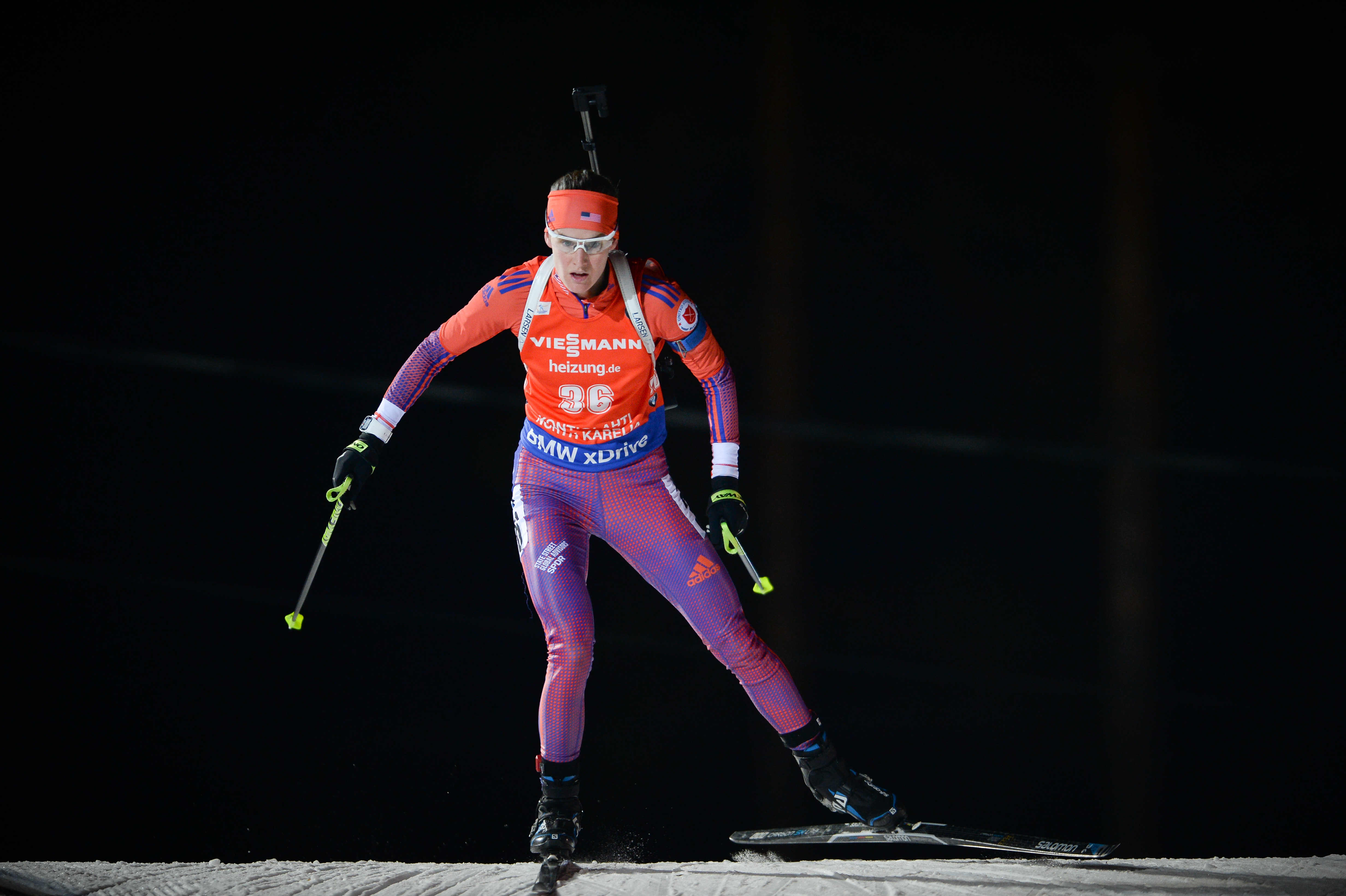
Last week U.S. Biathlon’s Rollerski Team trials concluded at Soldier Hollow (SoHo) outside Midway, Utah. Along with the trials this summer in Jericho, Vermont, the SoHo results helped determine any remaining U.S. roster spots for the opening races on the IBU World Cup.
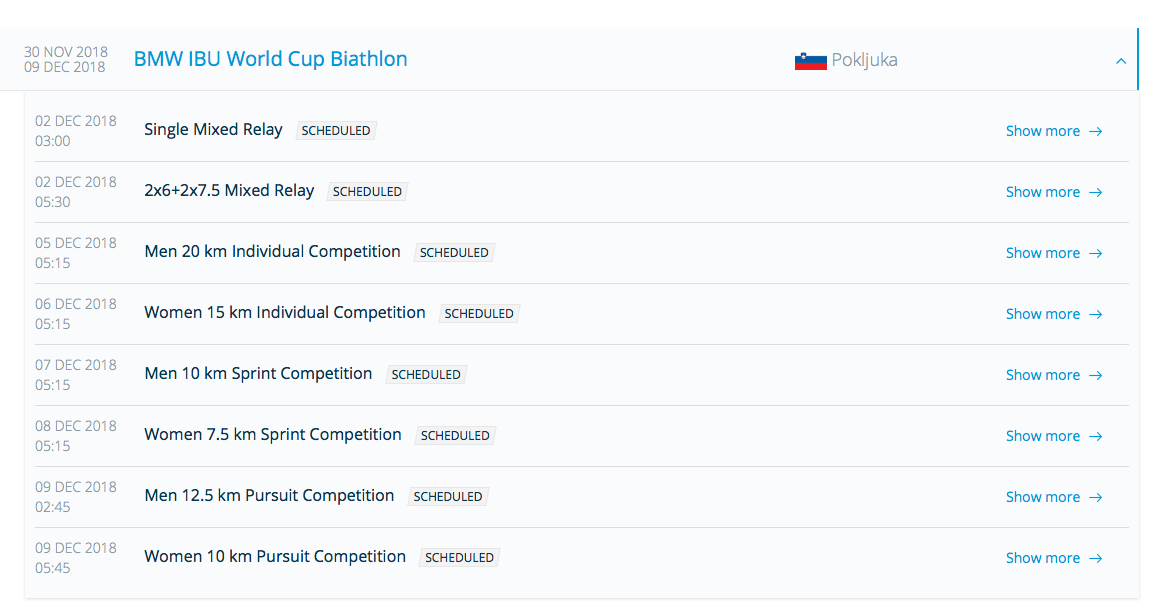
On Monday, Nov. 5th, U.S. Biathlon announced it’s World Cup team for the first round of races in Pokljuka, Slovenia beginning Nov. 30th.
For the women, Susan Dunklee, Clare Egan, and Joanne Reid all pre-qualified based on last season’s results. Emily Dreissigacker was named to the team on Monday. The women’s World Cup team has three start spots per race in Pokljuka. According to Monday’s announcement, coaches will determine which athletes get specific starts at a later date.
After the Pokljuka races, only three U.S. women will travel to Nove Mesto, Czech Republic, the host of this season’s second IBU World Cup .
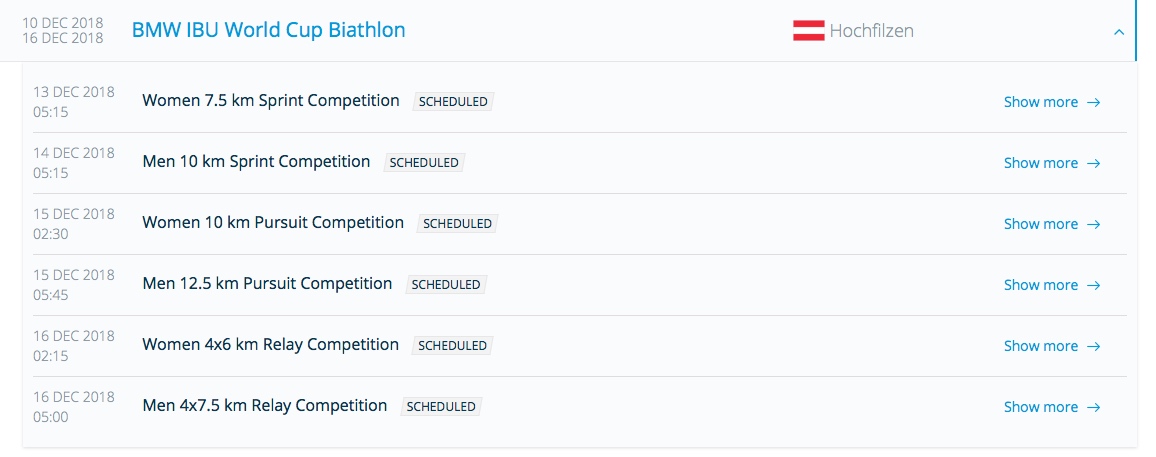
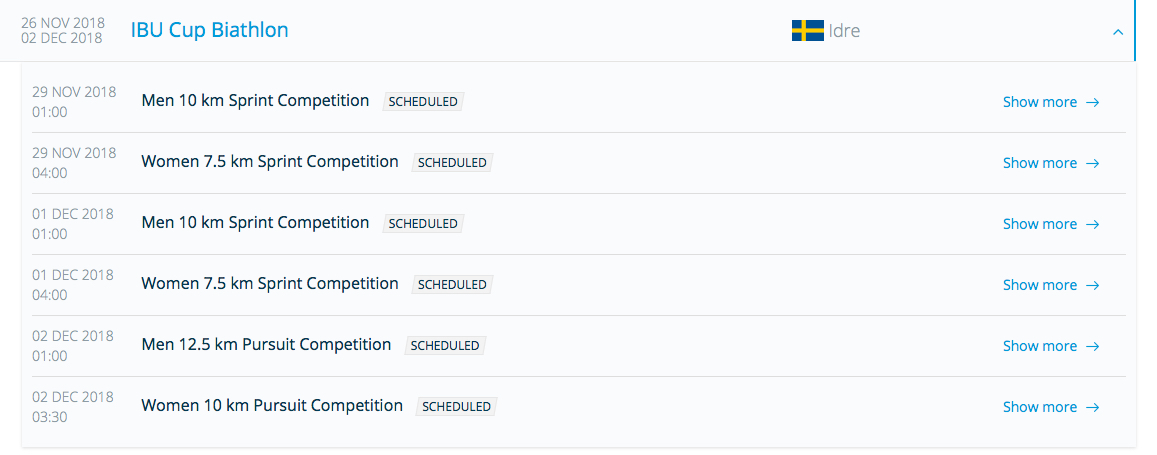
The fourth biathlete will head to Ridnaun-Val Ridanna, Italy to race the second weekend of IBU Cup on Dec. 10-16. (The IBU Cup’s first weekend of racing will take place in Idre, Sweden on Nov. 26-Dec. 2).
Leif Nordgren and Sean Doherty both pre-qualified for the men’s opening World Cup races. The men’s side has four start spots in Pokljuka. Along with Nordgren and Doherty, Paul Schommer and Travis Cooper have been named to the first World Cup team roster.
Cooper’s path to Pokljuka will include a stop at the IBU Cup races in Idre. According to U.S. Biathlon, Cooper must first race in Sweden in order to earn his qualification for the IBU World Cup. Max Durtschi will travel to Pokljuka as a reserve athlete.
IBU Cup Teams
The SoHo and Jericho rollerski trials also served as a springboard to the second series of IBU Cups in Ridnaun-Val Ridanna, Italy. Hallie Grossman, Deedra Irwin, and Kelsey Dickinson were named as U.S. athletes for those races. They will be joined by one member of the women’s IBU World Cup team racing in Pokljuka.
The men also have four start spots at the second IBU Cup. Durtschi, Alex Howe, Jake Brown, and Vasek Cervenka have been named to the team for the Ridnaun-Val Ridanna, Italy competitions.
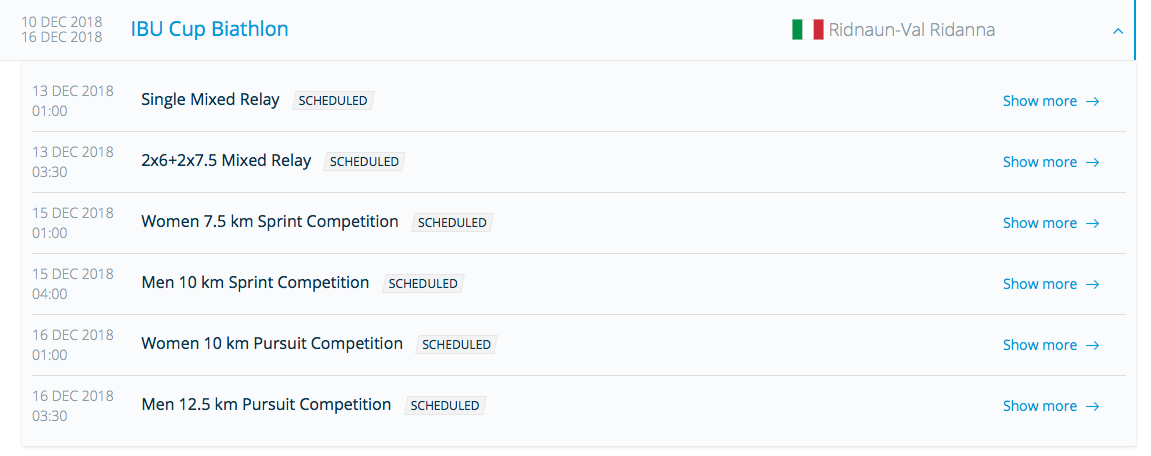
Below is the schedule for the first two IBU World Cup and IBU Cup races.

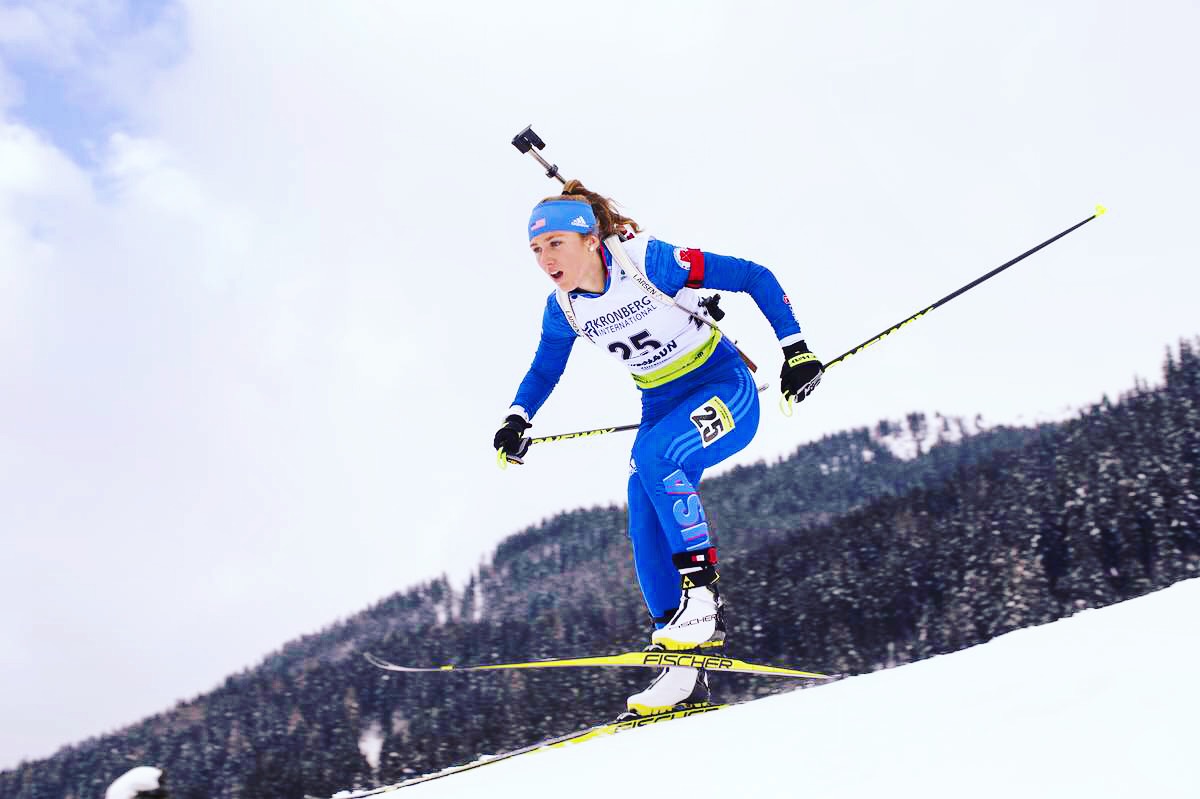
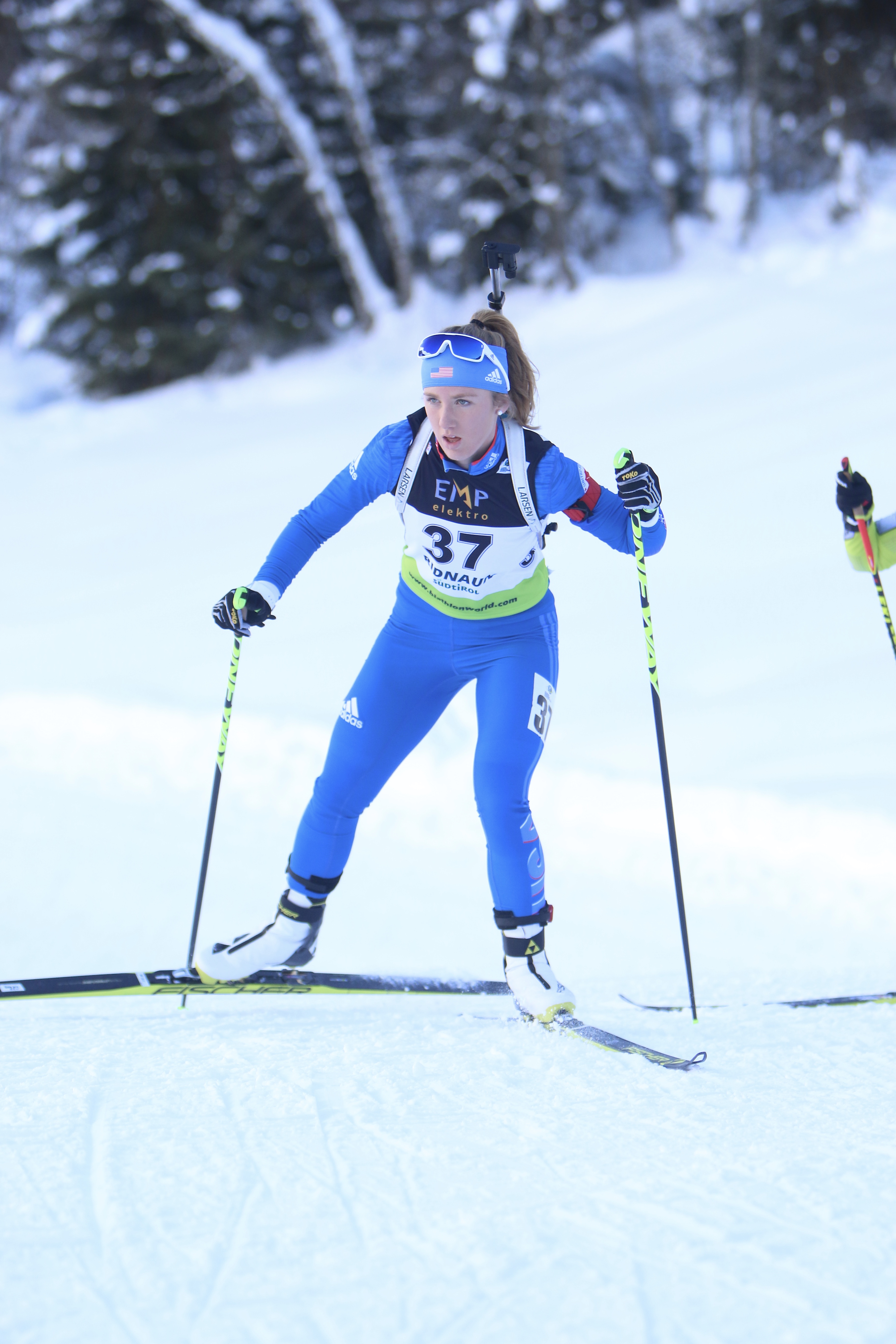
In an effort to showcase the North Americans competing at this week’s International Biathlon Union (IBU) 2018 Youth and Junior World Championships in Otepää, Estonia, we asked those qualifying athletes several questions about themselves — actually, we had them fill in the blanks. Here we have 19-year-old Chloe Levins, who is representing the United States at her first Junior World Championships. She previously represented the U.S. at Youth World Championships, including a fourth-place finish in the pursuit last season. Levins also made the short list of the U.S. Olympic Team and competed on the IBU Cup as part of Olympic Trials.
On Thursday, Levins placed sixth to lead her team in the junior women’s 12.5 k individual (+3:37.4 with three penalties).
***
“My full name is Chloe Levins but you can call me Chlo.
I was raised in Vermont, and I learned to ski by following my three older siblings.
I spent the time before Worlds in school at Middlebury College.
The most memorable workout I did in the last training year to prepare for this was skiing with my coach. He doesn’t ski often, so it’s really special when he chooses to ski with me.
One thing I’m working on this season to improve my biathlon is (and probably always will be) my patience.
This is my first time in Estonia and fourth year racing internationally, and so far it’s been real winter with temperatures in the single digits (F) and falling snow.
One difference I’ve noticed between Estonia and the United States is the lack of fruit.
One of the things I’m most excited about for World Junior Championships in Otepää is experiencing a new world-class venue.
One race I’m especially targeting there is the next one.
Watching the Olympics in the leadup to my own races was hard to do at school. One of the most memorable moments of the Games was when Jessie Diggins overtook Stina Nilsson to earn US Women’s XC Skiing their first ever Olympic medal. I want to ski like Jessie, because she skis with more heart than anyone I’ve ever seen.
At Worlds, I really hope I can practice speaking German with my friends from Deutschland.
My favorite thing at the breakfast where we are staying is the lemon ginger tea.
Before this trip, if you said “Estonia”, the first thing I’d think of would have been the cold temperatures.
Now that I’m here, I’m pretty sure something I’ll always remember will be the cold temperatures.
If I had a totally free day here and didn’t have to worry about race fitness or training, I’d still spend it on skis.
The best way to follow me on social media is on Instagram @chlolevins or SnapChat @chlevins.”
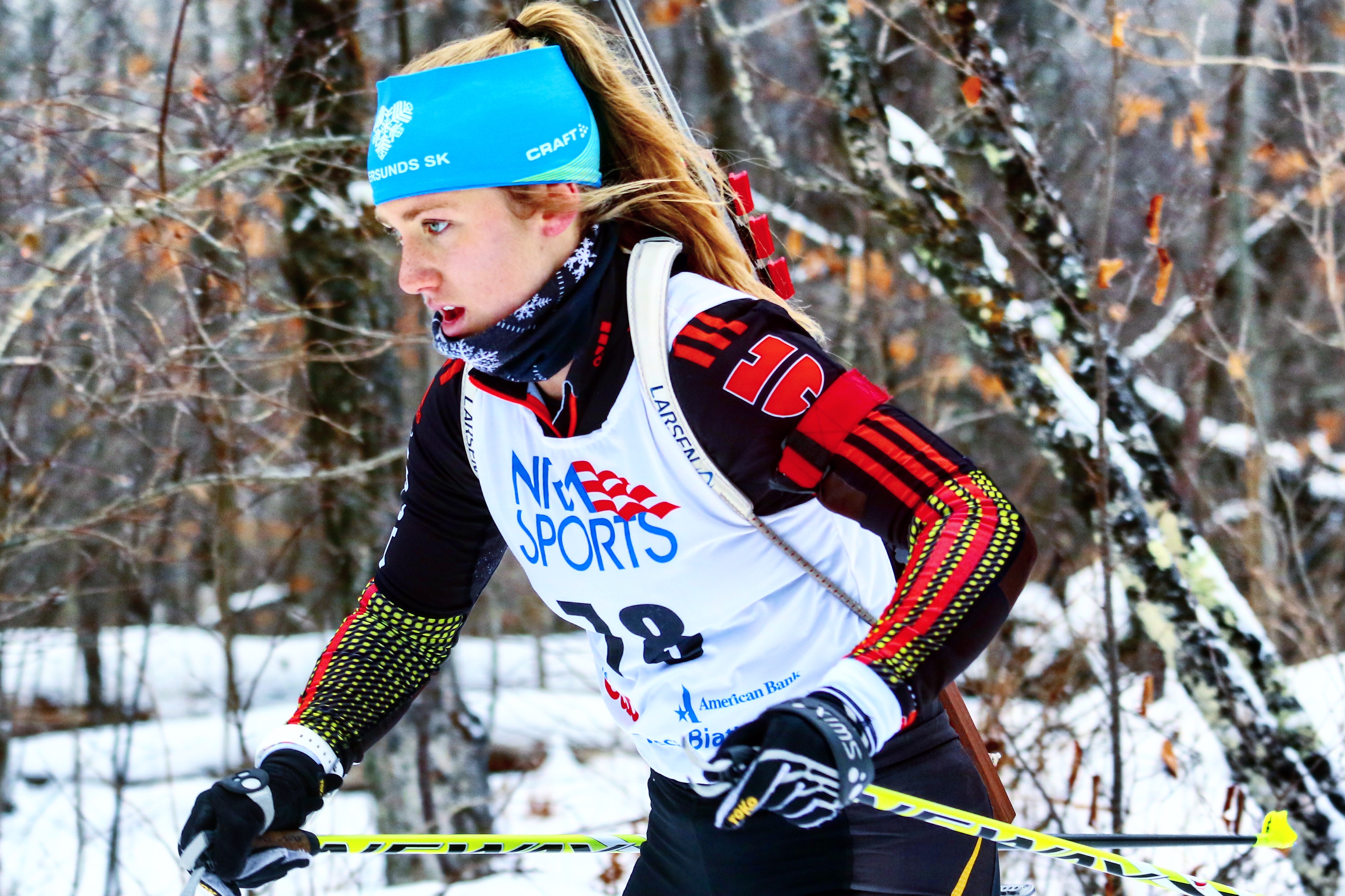

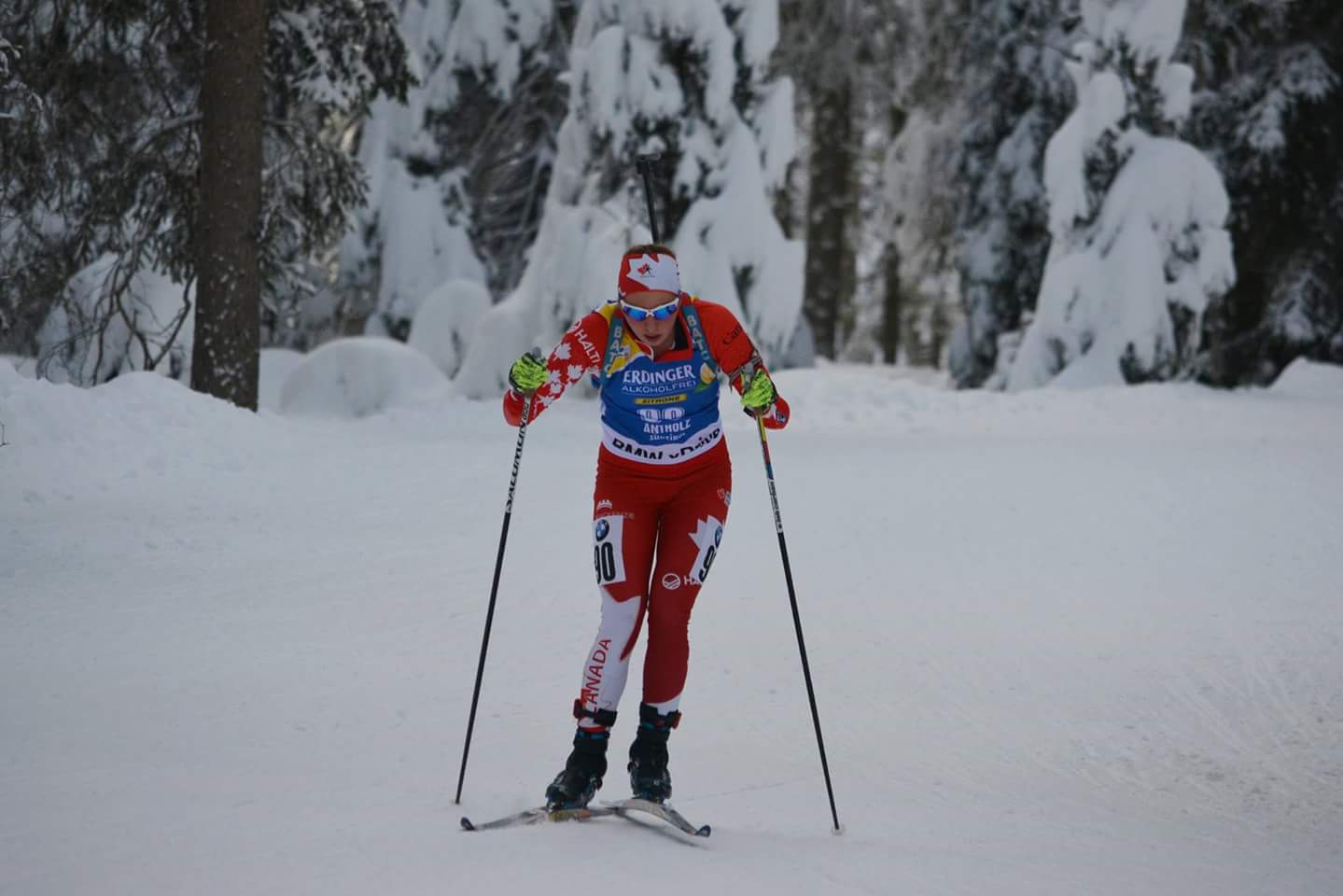
In an effort to showcase the North Americans competing at this week’s International Biathlon Union (IBU) 2018 Youth and Junior World Championships in Otepää, Estonia, we asked those qualifying athletes several questions about themselves — actually, we had them fill in the blanks. Here we have 20-year-old Nadia Moser, who is representing Canada at her second Junior World Championships. Moser started her season with four weekends worth of IBU Cup racing, and also got her first World Cup start in Antholz, Italy, where she finished 85th in the 10 k sprint.
On Thursday, Moser placed eighth in the junior women’s 12.5 k individual (+4:18.9 with three penalties) for her first top 20 in a non-relay event at Junior Worlds.
***
“My full name is Nadia Moser but you can call me Nadia.
I was born in Edmonton, Alberta, and raised in Atlin, British Columbia and Whitehorse, Yukon, and I learned to ski at… I don’t know exactly the age but I was pretty little.
I spent the time before Worlds training in Canada and Europe.
The windiest workout I did in the last training year to prepare for this was hiking to the top of Grotto Mountain on my own.
One thing I’m working on this season to improve my biathlon is ski technique.
This is my second time in Estonia and third year racing internationally, and so far it’s been interesting.

One difference I’ve noticed between Estonia and the Canada is the landscape here is much flatter than Canmore.
One of the things I’m most excited about for World Youth/Junior Championships in Otepää is all of the races! I can’t target just one!
Watching the Olympics in the leadup to my own races was super exciting and inspiring. One of my favourite moments of the Games was watching Simon Schempp and Martin Fourcade sprint for the gold in the mass start.
I want to be like any super speedy animal, maybe a cheetah, because it would really help to be fast on race day.
At Worlds, I really hope I can chat/make friends with someone from any other country and ask them how they like racing in Estonia.
My favorite thing at the breakfast where we are staying is oatmeal/granola.
Before this trip, if you said “Estonia”, the first thing I’d think of would have been fish jello, because last year there was fish jello at the hotel I stayed at here (in Otepää).
Now that I’m here, I’m pretty sure something I’ll always remember will be fish jello.
If I had a totally free day here and didn’t have to worry about race fitness or training, I’d spend it exploring the science centre in Tartu.
The best way to follow me on social media is on Instagram @nadihaamoser.”

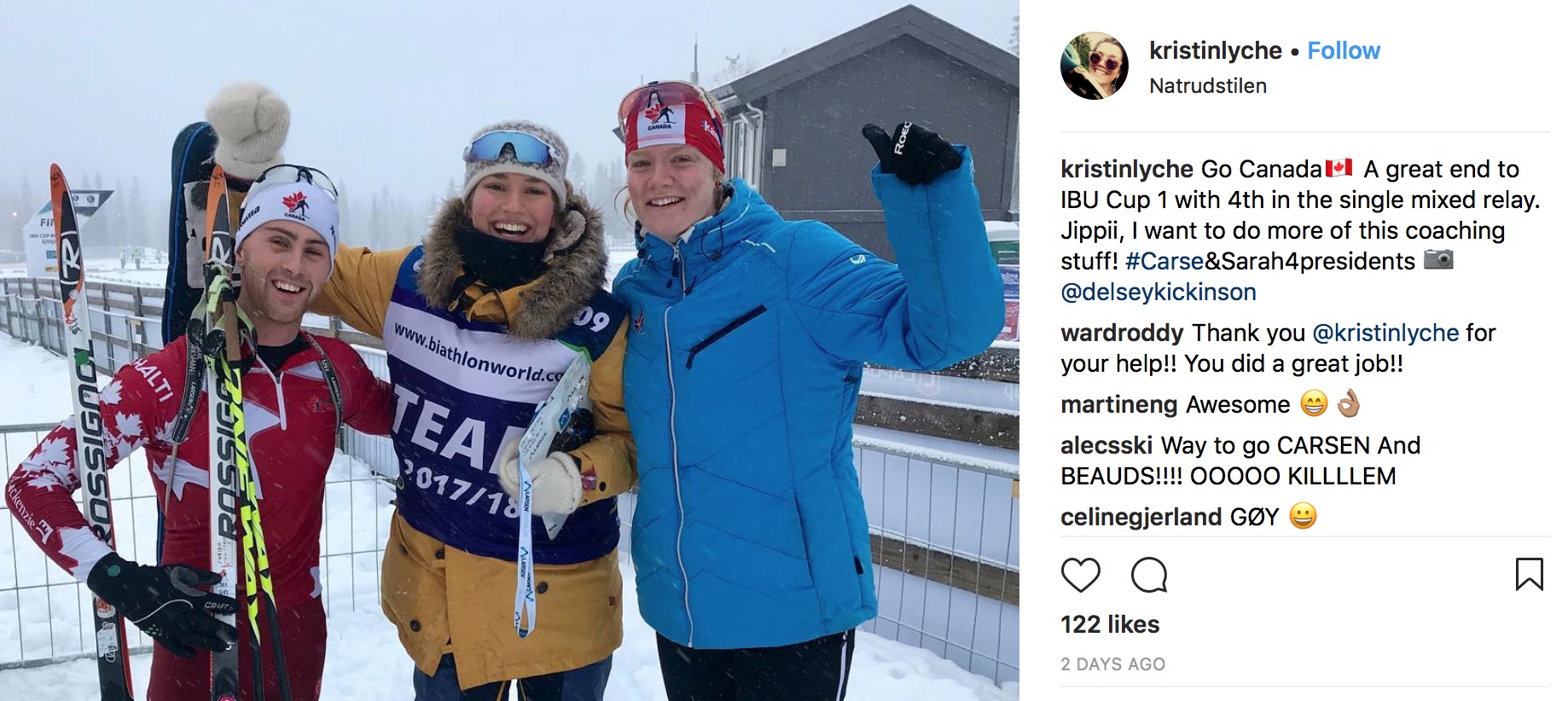
Three Canadians and one American competed at last week’s International Biathlon Union (IBU) Cup opener in in Sjusjøen, Norway, with Canada’s Emma Lunder posting an individual top 20 and her teammates Sarah Beaudry and Carsen Campbell teaming up to place fourth in the single mixed relay on Sunday, Nov. 26.
In an email, Biathlon Canada High Performance Director Roddy Ward explained that Canada did not send its full IBU Cup team to the season-opening races, as IBU Cup #1 was not part of the national team’s plan.
“Current [national team] athletes were sanctioned to race, at their own expense, if they felt it would prepare them better for the season,” Ward wrote.
That created some additional legwork for those three athletes, as well as fellow national-team members Scott and Christian Gow and Brendan Green, who arrived in Europe on Nov. 12 to race at Norwegian trials Nov. 18-19 in Sjusjøen.
“Scott Gow was in charge of booking accommodations for everyone, and we ended up in an awesome little cabin in the woods quite close to the venue [in Sjusjøen],” Lunder, a 26-year-old Senior National Team member, wrote in an email. She and Campbell, of the National “Z” Team, arrived in Europe on Nov. 16 in an effort to get some early season racing in as well.
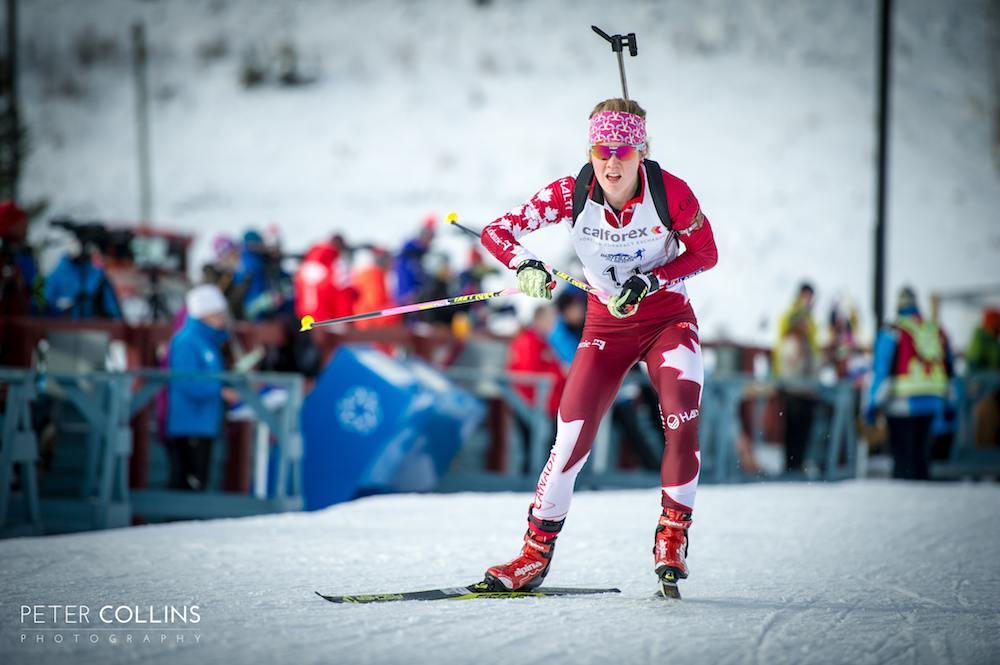
“I also wasn’t sure whether I’d qualify for [World Cup] or IBU Cup from our Canadian trials, so just having the trip booked was some security for me, knowing that no matter what happened with trials, the next goal was to go and perform well in Sjusjoen which definitely helped me feel less pressure at trials,” added Lunder, who earned one of two remaining women’s spots on Canada’s World Cup team based on her results at team trials earlier this month in Canmore, Alberta.
On Thursday, Nov. 23, Lunder placed 19th in the IBU Cup’s opening 7.5-kilometer sprint. After that, she headed to Östersund, Sweden, to prepare for the first World Cup of the season. In Östersund, she was part of Canada’s team that placed 15th in the mixed relay on Sunday.
“Emma had a solid first race considering travel,” Ward noted of her IBU Cup performance. “The plan was for Emma to go early and race one IBU Cup before heading to Ostersund. 19th was definitely a good showing but I believe we’ll see more from Emma this season.”
Lunder wrote that she was pleased with her sprint result on Thursday, especially considering the weather, which she described as “extreme fog and also a lot of wind.”
“During our zero the coaches couldn’t even use their scopes – they closed the range so coaches could run down, grab the paper that had been shot at, and then athletes made corrections off of that,” Lunder reflected. “I was happy that through all of it I was quite relaxed, even thought it was a very different situation than I’m normally used to pre-race!”
With three penalties, two in her prone shooting stage and another in standing (2+1), Lunder finished 2:18.5 behind Russia’s Uliana Kaisheva, who won in 21:49.8 with clean shooting (0+0).
“Of course I hoped to hit a few more targets, but I think given the conditions I did an okay job,” Lunder wrote. “My skiing felt pretty strong, and it was nice to get the season started in a low-stress environment.”
Norway’s Thekla Brun-Lie placed second in that race (+41.9; 0+1), and Russia had two on the podium with Olga Iakushova in third (+1:18.8; 0+1). In fact, Russia had four in the top five in the women’s opening sprint.
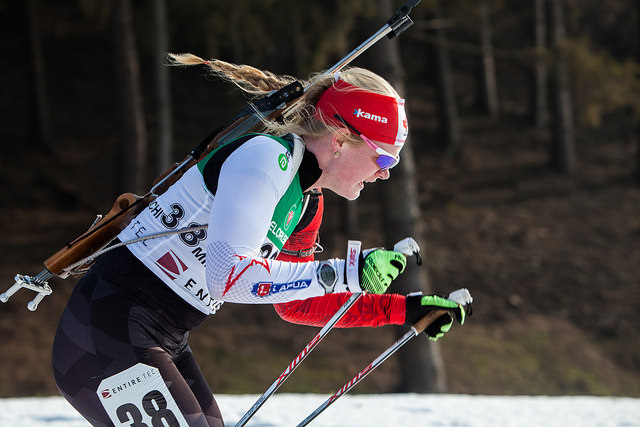
Beaudry, who will be starting her season on Canada’s IBU Cup team, finished 49th (+3:57.1) with five penalties (4+1). American Kelsey Dickinson placed 76th (+6:05.0) with six penalties (3+3), out of 97 women.
“My first sprint just wasn’t so great,” Beaudry, a 23-year-old Senior National Team member, wrote in an email. “I didn’t have a great zero and found it pretty hard to see in the fog and missed 4 prone and then crashed in the penalty loop. … I was happy with my effort and got to shake out the early season jitters in some challenging conditions.”
Thursday kicked off with the men’s 10 k sprint, in which Campbell, also of Canada’s IBU Cup team, finished 35th with one penalty (0+1), out of 128 men. His time was 2:00.1 minutes behind French winner Emilien Jacquelin, who won in 25:26.1 with one standing miss as well (0+1). Jacquelin won by 5.7 seconds over Germany’s Johannes Kuehn, who placed second after skiing three penalty laps (0+3). Russia’s Alexey Slepov placed third (+8.1) with one miss in each stage (1+1).
Two days later on Saturday, Nov. 25, it was back to more sprinting for the men and women. Beaudry raced to 23rd in the women’s 7.5 k sprint (+1:15.5) with a single standing miss (0+1) and Dickinson finished 86th (+3:56.6) with three penalties (1+2). Campbell placed 76th in the men’s 10 k sprint (+3:21.3) with four penalties (2+2).
“I am happy with my second sprint,” Beaudry wrote. “I felt really good skiing but I think there is still room for improvement as the season goes on. I was also pretty happy with my shooting except kinda pissed that my miss was my last shot.”
“Sarah’s second sprint was very strong,” Ward noted. “Time back from leader was very good. Sarah made big gains this offseason and I know she’s happy with it but looking for more. Carsen had a good first race and then struggled in the 2nd race. Carsen has been looking solid all fall and I’d like to see him score some top 20 results.”
Germany’s Denise Herrmann won the women’s sprint in 20:43.9 with two penalties (1+1). Austria’s Katharina Innerhofer hit all 10 of her targets (0+0) to place second (+4.0), and Brun-Lie shot clean as well to reach the podium for the second-straight race, this time in third (+15.8).
Norway went 1-2 in the men’s sprint with World Cup biathlete Tarjei Bø beating Fredrik Gjesbakk by 23.7 seconds in 23:00.1. Both had one standing miss (0+1), and Russia’s Eduard Latypov shot clean to finish third (+31.2).
On Sunday, while Lunder was racing the mixed relay in Östersund, Beaudry and Campbell raced to fourth in the single mixed relay in Sjusjøen, missing the podium by 13.2 seconds and finishing 1:10.9 out of first. Together, they used five spares and avoided the penalty loop (0+5).
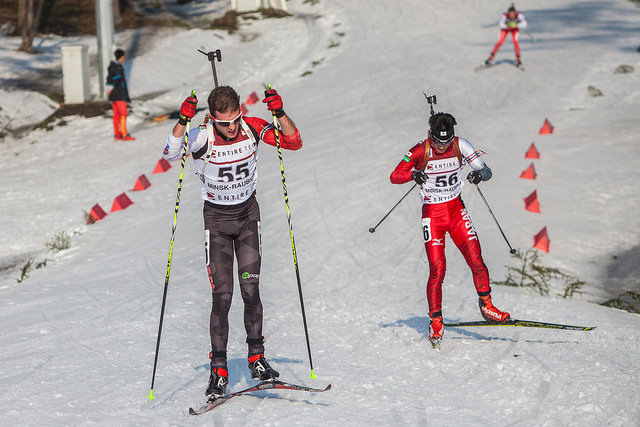
“Carsen and I definitely put together a really strong relay and had some really good shooting which is key in the single mixed relay,” Beaudry wrote.
She used three total spares to clean, two of which were in her first prone stage. Campbell used two spares: one in each of his prone stages.
“I was very happy with my shooting today,” wrote Campbell, who turns 23 on Dec. 9. “My standing was as close to perfect as I have ever done and I made it through the prone with no major issues. I was near the front for the whole race so I felt a lot of pressure not to blow the good work Sarah had put down. It was nice to see that I was able to handle it without cracking.
“Hopefully we get the chance to try again in Lenzerheide, I think we could make the podium,” he added, referring to the next IBU Cup in Switzerland, which opens Dec. 8 with relays.
Ward explained that a relay podium was a realistic goal for Beaudry and Campbell.
“Single mixed is a bit of a different race and hard to completely compare to traditional race distances,” Ward wrote. “Sarah was born for this race, she has unbelievable speed in short distance and is a quick and accurate shooter. Carsen is also great in the range and can hold his own on course. I knew in the weeks leading up that they had a shot at the podium, and they were close.”
France’s Julia Simon and Antonin Guigonnat won the single mixed relay after leading from the first leg. Despite Guigonnat having to ski one penalty lap on the last leg, they won by 36.7 seconds in 37:33.1, with one penalty and seven spares (1+7). Sweden, with Elisabeth Hoegberg and Tobias Arwidson, placed second with no penalties and five spares (0+5), and Austria captured third place (+57.7) with Innerhofer and David Komatz (1+9).
“My plan since the summer has been to come here to get the bugs out and be ready to go 100% by Lenzerheide,” Campbell explained. “Having a good relay today was a bonus! My sprints need some work but that’s why I’m here. Overall I’d say IBU Cup 1 has been a success for me and I’m excited for the next one!”
“With last season being a really hard year for me I definitely went into the season nervous,” Beaudry explained. “I didn’t have any specific expectations I was just hoping for better feelings then last year. Considering I already have had a better IBU cup race result then last season and my best relay result on the IBU cup, I can say I am happy with how the season is starting.
“This trip to race the IBU cup 1 was on our own and I definitely owe a big thanks to Carsen and Emma for organizing it all and letting me tag along last minute, as well as our Norwegian friend Kristin Lyche for hosting, coaching and taking care of us here in Norway,” Beaudry wrote, referring to a Norwegian friend whom they spent several months training with in Canmore this summer.
Lyche housed Beaudry upon her arrival in Sjusjøen, and Lunder and Campbell moved from their cabin rental to Lyche’s place on Nov. 23.
“And to the Italian team for waxing my skis all week,” Beaudry added. “Going to races without an official team can definitely be a little more challenging but I think it has been super beneficial and I am really happy that I came to Norway.”
“I had contacted the Italian team back in the fall,” Lunder explained, “and when Sarah Beaudry booked her trip last minute after trials, they also agreed to support her which was great. The race skis they prepared for me for Thursday’s sprint were really, really fast, so I was extremely grateful to them! … Overall it wasn’t as stressful as I expected to organize our own trip, and I would plan on doing something similar again next year if need be!”
IBU Cup 1 results:
Day 3 relays: Single mixed | Mixed
https://www.instagram.com/p/Bbraua1gBZQ/?taken-by=emmalunds

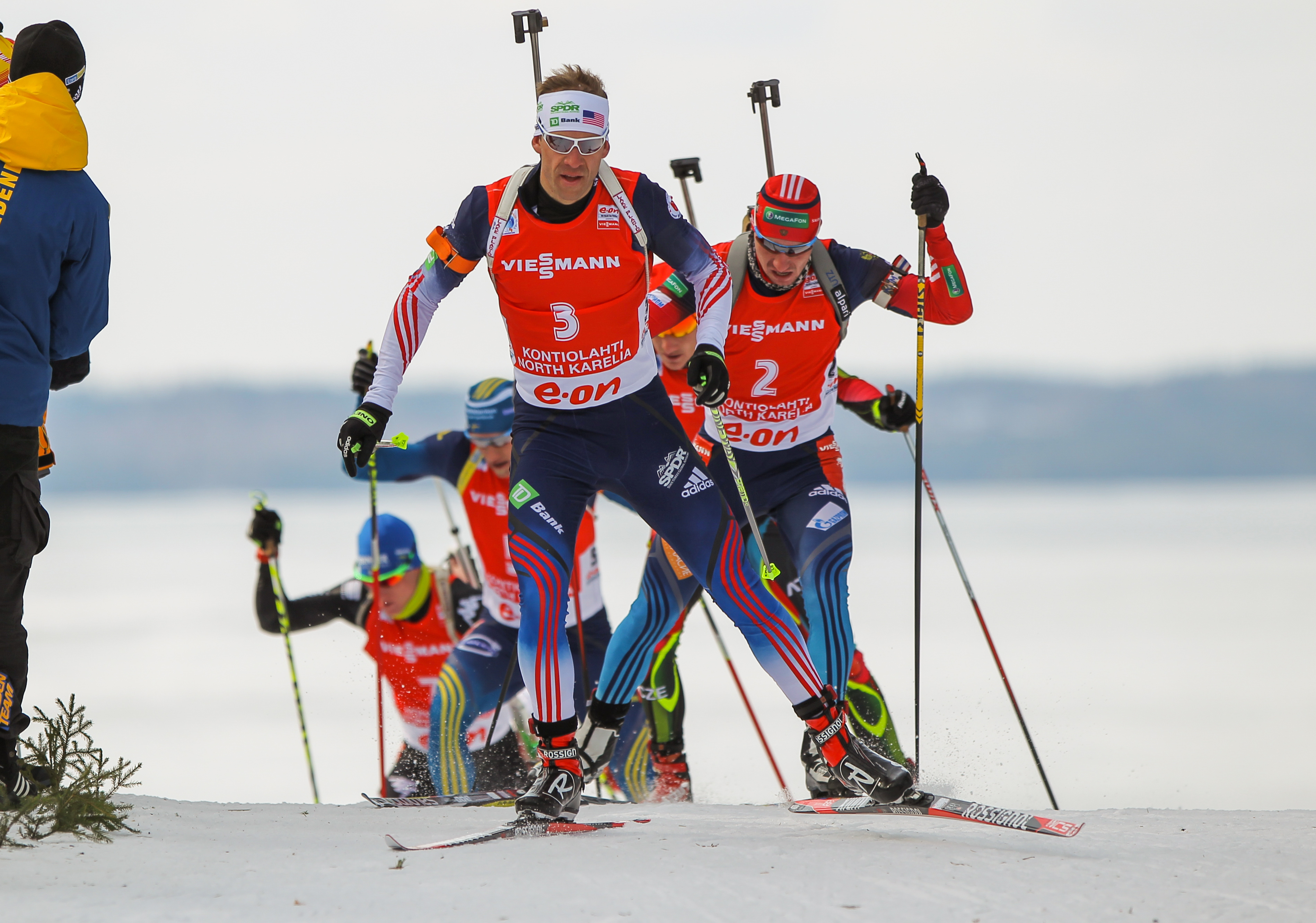
The Russian rosters for January competition will include two names not seen in a while: Irina Starykh and Alexander Loginov. Both are returning to international competition after serving suspensions for using the blood-doping drug erythropoietin (EPO).
Starykh has been named to the IBU Cup team. The next stage of competitions are in Martell, Italy, starting on January 5, 2017.
Starykh was initially suspended in January, 2014, in the run-up to the 2014 Olympics. At the time, she was the top Russian woman on the World Cup and had just notched an individual podium. She was also a key member of the Russian relay team. Starykh failed an out-of-competition test in December 2013 month along with teammate Ekaterina Iourieva.
2013-2014 had been a breakout season for her so far. When asked how she had improved so much by a Russian news service, Sports.ru, she replied in December 2013, “When I found out that I was [named to train] in [Vladimir] Korolkevich’s group- I decided to fully trust the coach… he was building my training and I believed that I would approach the winter season in good condition.”
Korolkevich coached several other athletes who have been implicated in doping. That includes Iourieva – who has now been caught three different times and is banned until 2021 – and Olga Vilukhina, expected to be one of the two athletes under investigation by the International Olympic Committee for doping violations in Sochi.
Starykh initially received a two-year ban. When the International Biathlon Union (IBU) re-tested some old samples a few months later, however, they found additional evidence of EPO use. The IBU extended her ban to three years.
Starykh returned to national-level competitions in December, finishing fifth and sixth in Russian Cup races. A Russian sports website noted, however, that these results did not actually qualify her for the IBU Cup team according to objective criteria.
Loginov competed in the IBU Cup competitions in Obertilliach, Austria, in December, finishing fourth in the 20 k individual. That’s the same venue where he won the individual race at World Junior Championships in 2013.
Loginov was caught in the same re-testing scheme that earned Starykh her extra year of suspension. His sample from November, 2013, tested positive for EPO when a new method was used several months later. The suspension was announced in November, 2014, and was for two years, plus retroactive disqualification of results between November 2013 and 2014.
Loginov said at his anti-doping hearing that the drug had been included in a medication he took to treat prostatitis. But the IBU’s hearing panel rejected this claim on multiple grounds.
The press release from the Russian Biathlon Union announcing the men’s team for international competition in January did not specify whether he would compete on the World Cup or the IBU Cup.

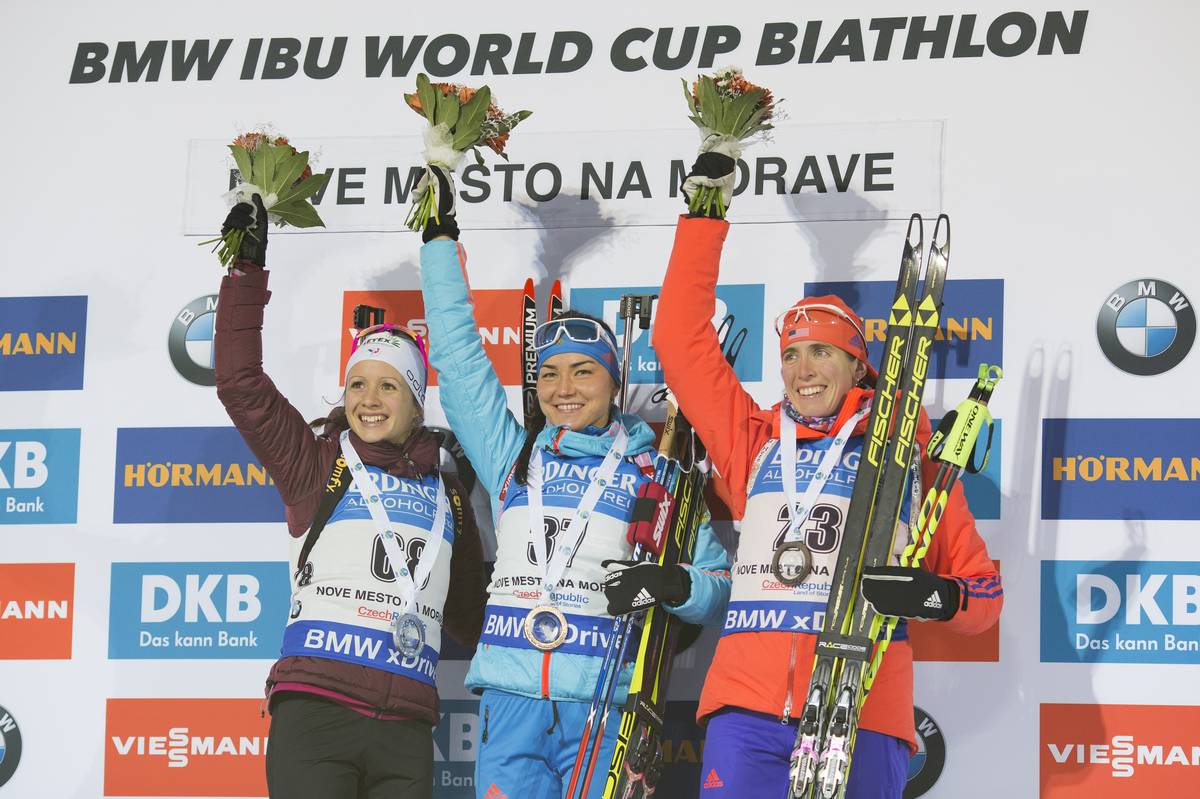
The United States Biathlon Association (USBA) has announced its World Cup and IBU Cup rosters for the second period of racing.
The women’s World Cup team will remain the same, with Susan Dunklee leading the way. Dunklee earned her first podium of the season on Friday in Nove Mesto, Czech Republic. After several top finishes she is ranked 11th overall on the World Cup. She is joined by Clare Egan, who had a top finish of 30th this season in the pursuit in Östersund, Sweden. In addition Joanne Reid, who finished 29th in the individual in Östersund, will stay on tour.
The men’s World Cup team is led by Lowell Bailey, who notched a top-ten in the Nove Mesto pursuit. As a result of Bailey’s consistency, he is currently ranked ninth in the overall rankings. He is joined by Tim Burke, who finished 16th in the Östersund individual, and Russell Currier, whose best mark of the season is 54th in the same race. Those three formed the World Cup squad for the first period of racing. Finally, 2014 Olympian Sean Doherty will join them after recovering from a bout of mono that kept him off the international circuit in December. And Leif Nordgren is qualified for the campaign but is still nursing a broken toe.
In addition to the World Cup team, USBA also named a roster for the second-tier IBU Cup based on trials held at Mount Itasca, Minnesota, on December 15-19.
Women:
Maddie Phaneuf (Old Forge, N.Y.)
Emily Dreissigacker (Morrisville, Vt./Craftsbury Green Racing Project)
Hallie Grossman (Craftsbury Green Racing Project, Vermont)
Siena Ellingson (Minnetonka, Minn.)
Men:
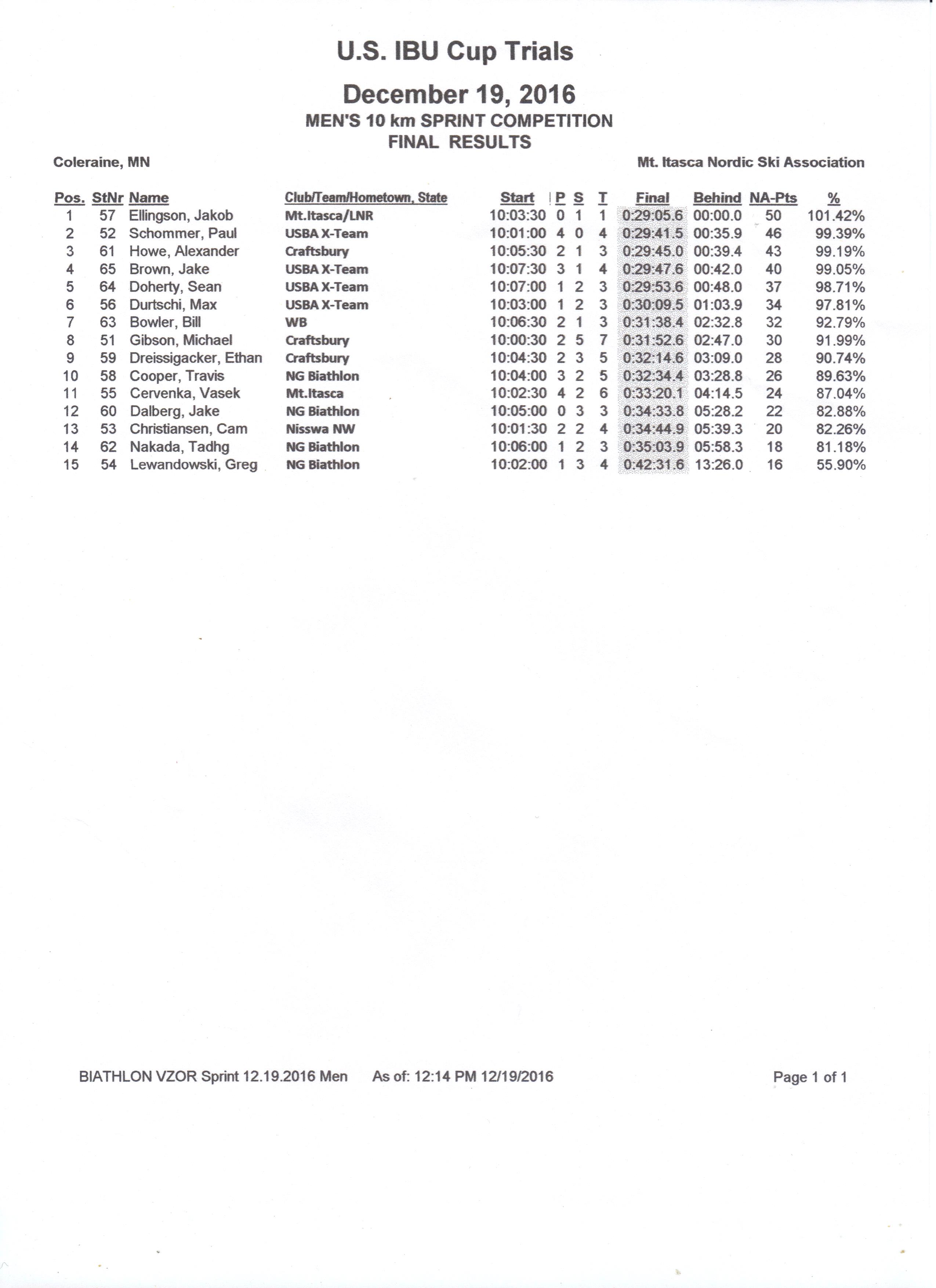
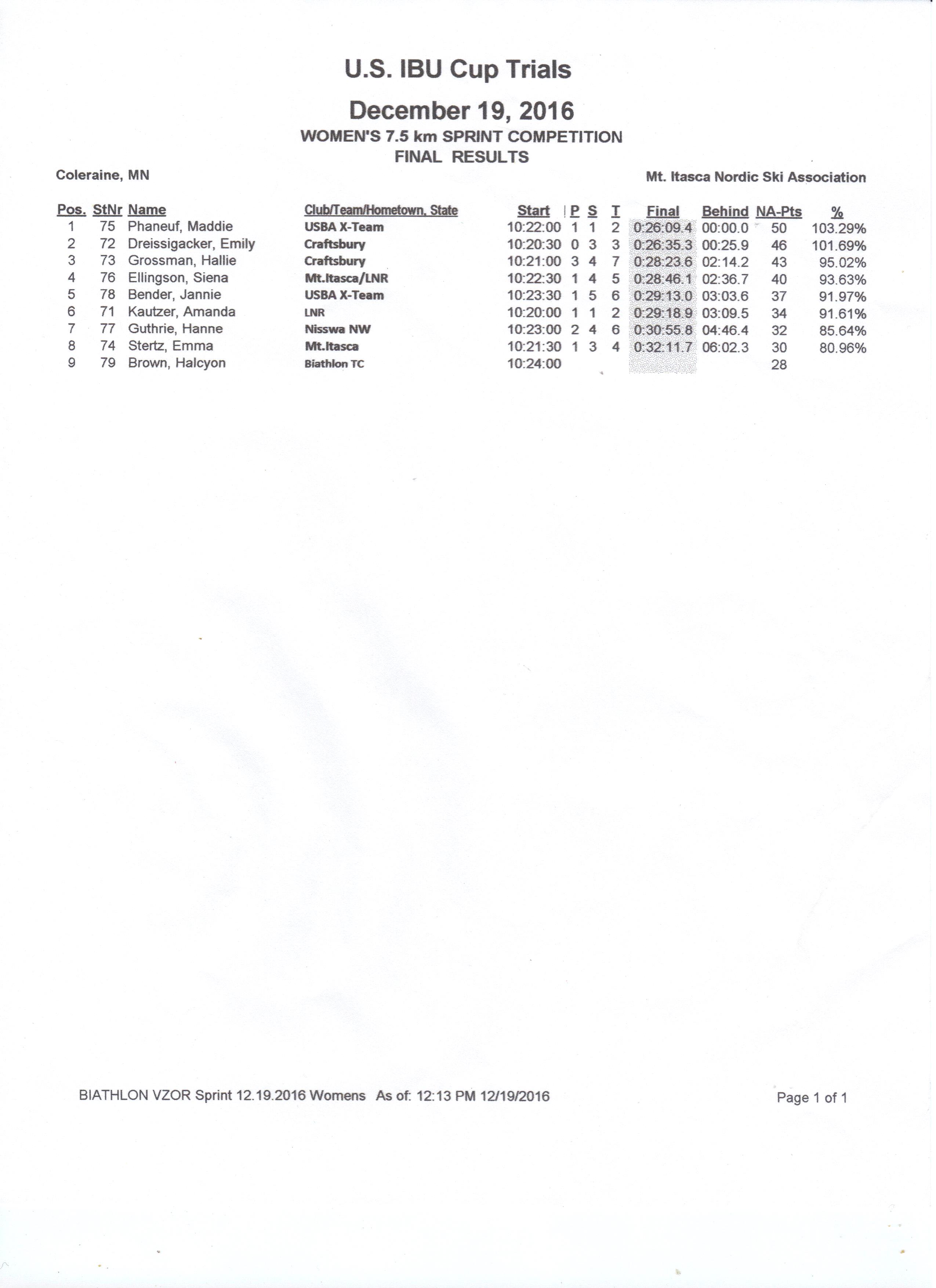
In the opening sprint at Mount Itasca, Schommer won a 1.5-second victory over Howe, with Durtschi just one more second back. Both Schommer and Howe had two penalties and Durtschi just one. Then in the women’s sprint, Phaneuf had a single penalty to collect a 37.3-second win over Dreissigacker, who had missed two shots. Siena Ellingson was third, +43.8 with one penalty.
In the mass start at Mount Itasca, Schommer won again over Howe, this time by 29.8 seconds. Doherty, there for the races but pre-qualified for the World Cup campaign, finished third, +30.8. Perhaps most noteworthy, Phaneuf was the only competitor, male or female, to clean all four shooting stages, and as a result picked up a huge win over Dreissigacker, crossing the line two minutes and 56 seconds ahead of her closest rival. That’s in part because Dreissigacker had six penalties. N ext across the line was third-place Grossman (+3:13.7) with seven missed shots.
Then in the final sprint competition Jakob Ellingson had just a single penalty for some of the best shooting of the day. As a result he got the men’s win by 35.9 seconds over Schommer, who missed four shots. Howe was third (+39.4), thanks to three penalties. Phaneuf completed her clean sweep of the women’s races by picking up a 25.9-second win over Dreissigacker, with two penalties to Dressigacker’s three. Grossman was again on the podium in third despite seven penalties (+2:14.2).
December 15 men’s & women’s sprints

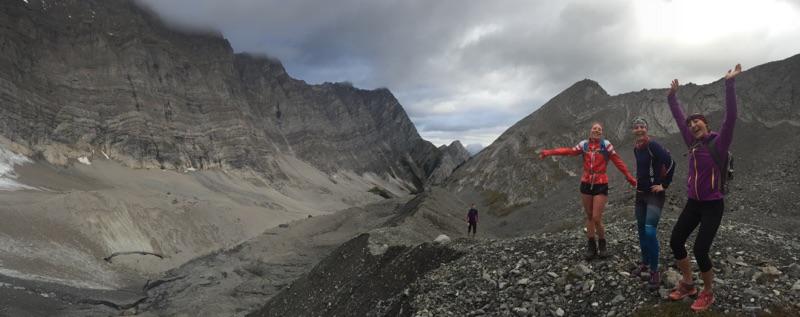
Welcome to “17 Questions for 2017”, where we are catching up with American and Canadian national-team members before the beginning of the winter season.
***
Last year Canadian biathlete Nadia Moser finished 19th in the sprint and 24th in the pursuit at Youth and Junior World Championships, earning her a nod for Biathlon Canada’s 2022 squad, a team of junior development athletes.
But at just 19 years old, the Yukon native has already taken steps this season towards the senior ranks. In Biathlon Canada’s team trials for determining the World Cup and IBU Cup teams, Moser had finishes of sixth and seventh in a pair of sprints in Canmore, giving her a roster spot for the IBU Cup this December.
On Thursday she teamed up with her Biathlon Alberta Training Center teammate Carsen Campbell to finish 18th in the IBU Cup single mixed relay in Ridnaun, Italy.
1. Biggest change in your life in the last five or so months since the ski season ended?
I’ve stopped carpooling to almost every training session since I moved into a new place that is walking distance from the Nordic Centre.
2. Biggest change in your training?

We focused a little more on ski technique this summer, other than that not much has been different.
3. Major areas of improvement you’ve seen so far?
I think that my shooting accuracy has improved quite a lot over the summer. I seem to be hitting many more targets than usual.
4. Whom you’ve been working closest with this offseason (coaches or training partners)?
My fellow female teammates.
5. Best trip in the last five months (and why)?
I’m going to have to say going back home to visit my family in July. It’s always nice to go back home and relax after a couple hard weeks of training.
6. Favorite cross-training?
I really enjoy swimming, even if it’s just doing laps in the pool.
7. Favorite non-athletic activity or pastime this summer?
Drawing is something I really like to do when I have down time. It’s especially great to finally finish a drawing that I’ve been working for far longer than anticipated.
8. Song that was your jam this summer?
Pretty much whatever was on the radio that wasn’t Shawn Mendes.
9. All-time favorite race moment?
I can’t say I have one particular race moment that stands out so far.
10. First thing you pack in your bag when you leave for Europe?
My race suit and ski boots.
11. Venue/event you’re most excited to visit this season?
I’m still new to the whole European racing scene so pretty much anywhere I get to race in Europe will be super exciting.
12. Who will win the World Cup title this year?
I have no idea. There are too many athletes to choose from.
13. Biggest sacrifice you feel you’ve made choosing this career path?
Probably that I can’t do certain other activities, like downhill skiing, as much as I would like to for fear of injuring myself before an important event. Also not being able to get post secondary school over with right away.
14. If you could change one thing about your sport, what would it be?
I wish no one would feel the need to take performance enhancing drugs. It would also be quite nice if cold hands weren’t a constant problem in any temperature below 0 Celsius.
15. What did you have for breakfast this morning?
Berries with cereal, greek yogurt, and milk.
16. In 5 years, I’ll be ____?
Probably still training in Canmore.
17. In 50 years, I’ll be ____?
No clue, I don’t quite plan that far ahead.
Welcome to “17 Questions for 2017″, where we are catching up with American and Canadian national-team members before the beginning of the winter season.
***
A standout junior skier from Sun Valley, Idaho, Max Durtschi took a break from snow sports to focus on cycling – winning two national titles and competing on first a continental pro team and then, for two years, on Leopard-Trek’s European squad. But after retiring from bike racing in 2014, he came back to the snow. While working on a neuroscience degree at Dartmouth College, Durtschi decided to pick up biathlon.
He was identified as a potential major talent by the U.S. biathlon team in 2014. Now 26 years old, Durtschi is currently a member of USBA’s “X” team.
1. Biggest change in your life in the last five or so months since the ski season ended?
Would either be taking “Cellular and Molecular Neurobiology” this spring at school or dealing with a pretty nasty illness this summer.
2. Biggest change in your training?
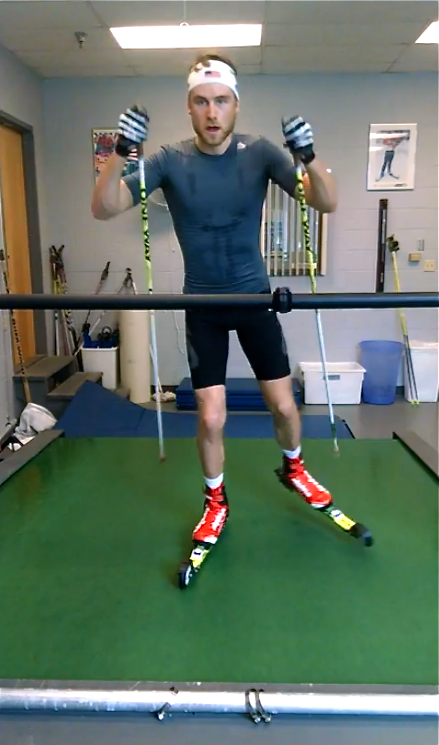
We have done a good bit of plyometric work this summer, which is productive for a slow twitch guy like me.
3. Major areas of improvement you’ve seen so far?
I have seen a big jump up in my shooting and ski technique. Gaining upper body and core strength has helped a lot of technique work come together.
4. Whom you’ve been working closest with this offseason (coaches or training partners)?
Sean Doherty – that’s my guy. We have a great group here though, Tim Burke, Lowell Bailey, and Leif Nordgren are true professionals and great role models for us younger guys.
5. Best trip in the last five months (and why)?
I enjoy getting over to Burlington, VT in the summer. That is a neat place.
6. Favorite cross-training?
Ski erg. No, just kidding. I really like good hiking adventures in the Adirondacks.
7. Favorite non-athletic activity or pastime this summer?
Being on the lake – on a boat, paddle board, for a concert, grilling, etc .
8. Song that was your jam this summer?
Hmmm – I love a lot of different types of music. I will say this, setting “Ecstasy of Gold” by Ennio Morricone as the morning alarm has been a theme during the harder weeks this summer. That will get you out of bed.
9. All time favorite race moment?
A lot of good memories both on skis and the bike. I would say last year’s IBU Cup in Nove Mesto was a cool biathlon experience – fog, rain, big stadium, and a lot of fans drinking heavily at 10 am.
10. First thing you pack in your bag when you leave for Europe?
Slippers help hotels feel like home. Also, don’t be forgetting the power adapter. Having access to electricity makes the trip go smoothly.
11. Venue/event you’re most excited to visit this season?

You know, I absolutely love traveling around Europe and seeing different venues. However, if I could get back to Sun Valley, Idaho (where I grew up) that would be pretty dang special.
12. Who will win the men’s and women’s World Cup titles this year?
Let’s go with the French double of Fourcade and Dorin-Habert.
13. Biggest sacrifice you feel you’ve made choosing this career path?
Starting in high school I don’t see home much. But after a bit, being away starts feeling like home…
14. If you could change one thing about your sport, what would it be?
Handling a firearm in the middle of winter can get really cold on the fingers, but then, my hands are always too hot anyway. Not sure if I would change much at all.
15. What did you have for breakfast this morning?
Oatmeal with the fruits and nuts. Fiber makes the world go around.
16. In 5 years, I’ll be ____?
I had better have finished college by then…
17. In 50 years, I’ll be ____?
Probably hiking up some damn mountain.. But you know “outlive the bastards” as Edward Abbey once said.
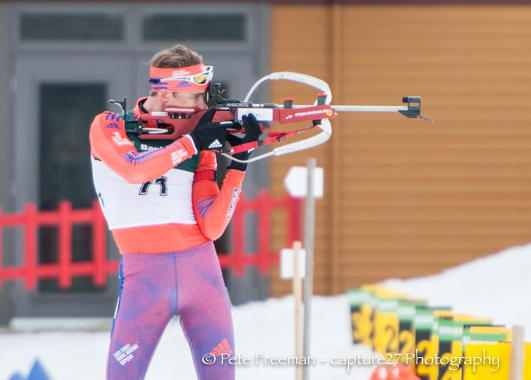

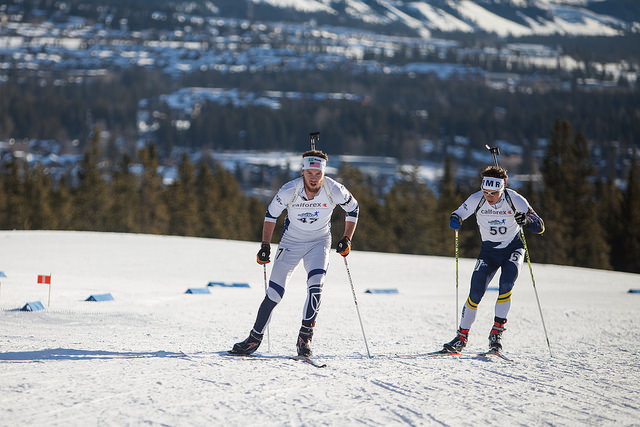
It was the last Friday in February and U.S. biathlete Casey Smith was training in Canmore, Alberta. The Canadian venue was about to host the first of several IBU Cup races, the second-tier circuit of the International Biathlon Union.
After a season which he described as a learning process, but lacking any spectacular results, the first-year member of the U.S. National Team was excited to be racing against international competition but on more or less home turf.
“In Europe I didn’t really have any outstanding races, I would say,” he said in an interview on Tuesday. “I was really looking forward to racing in Canmore because it’s almost like a home course. I spent a month there in November, and in years past I’ve spent a lot of time there too.”
Smith, who is based at the Maine Winter Sports Center, had already been cruising the trails and was doing his final race prep before the initial sprint race to be held Saturday. Part of race prep entails thinking about how, technically, to ski each section of the course: uphills, downhills, terrain and corners.
“There was a downhill corner that I had been sliding into to check my speed and then stepping the rest of the way around,” he said. “I decided to try to step all the way through the turn to see if it was faster.”
With snow conditions as they were – all manmade snow, with a layer of sugary corn snow on top of an icy, hard, frozen base – that turned out to be a dangerous move.
“As I was going around the corner, my skis just slipped out from underneath me, like when you’re falling on an ice skating rink,” he remembered. “The trail was all manmade snow, so it was kind of built up and the hill dropped away from the trail. I flew off the trail and down about four meters into a tree. I was flying through the air and the first thing I hit was the tree, on my back. It was like I was standing up and down in the air as I hit it.”
Smith was knocked unconscious by the impact and woke up to his friend Ethan Dreissigacker, who had been following him around the course, standing over him asking if he was okay.
The answer? No. As medical staff and paramedics came to the scene (including Smith’s mother, who was there as a coach but has also been an EMT for years), it was obvious that he needed to be moved to nearby Calgary, and fast.
It sounds like a routine now when Smith lists off the injuries the doctors eventually catalogued.
“I broke all by two of the ribs on my left side and one rib on my right side,” he begins. “I broke my shoulder blade in multiple places. On my back there’s little bones [called transverse processes] that stick off the side of your spine. I broke seven of those. Nothing into the spinal column luckily. I punctured my left lung.”
Smith would not be competing in the IBU Cup. Instead, he spent 11 days in the hospital and another three outside of it in Calgary before finally being able to head home to Winthrop, Washington, to recuperate.
“I’m home in Washington now, so it’s pretty nice to just relax and recover here,” he said.
Looking back, it seems obvious that the corner was dangerous – the race organizers have apparently since put up a snowfence on the downhill where Smith crashed – but at the time, it didn’t seem like anything unusual.
“There’s lots of corners on any ski course where you could potentially go flying off,” Smith said. “So I don’t really know. The day before I had skied around that corner and kind of glanced off the trail and thought, ‘wow, it would suck to go off the trail there, it’s a long way down and not a lot to stop you.’ But I didn’t think twice about it.”
Tracy Lamb, a former biathlete and national team coach who is now the director of the U.S. Olympic Training Center in Chula Vista, California, was the Technical Delegate for the competitions.
“Let me just say how concerned I have been about Casey’s recovery and how glad I am to know that he has been making good progress,” Lamb wrote in an email. “I am also grateful for the care he was given in Canada and very glad that his mother was there to be with him. Course safety is a priority for every organizing committee in Biathlon. Extra steps were and are taken to safeguard against athlete accidents. This was truly an unfortunate accident.”
Smith had his rifle on his back at the time of the crash, and says it’s hard to whether that added to the list of injuries or not.
“My rifle stock is snapped in half,” he said. “We don’t know if the rifle helped or hurt me more. I’d like to think it helped me in kind of absorbing some of the impact, by breaking the stock, and acted as almost something of a back brace so I didn’t curl around the tree as much when I hit it. But who knows.”
While most of his injuries have a six- to eight-week recovery time, and Smith is already walking for ten or fifteen minutes at a time “slower than I’d walk with my 80-year-old grandpa,” he plans to return to biathlon. Six weeks will likely not be enough time to get back to training speed, is the message he has been given.
“For the lung, that’s one of the more major things,” he explained. “It had some pretty bad bruising and a tear. Obviously you use your lungs a lot in an endurance sport. So that could be up to six months maybe. But it depends on how quickly it heals. You just kind of go with the flow.”
Before the crash, Smith was working his way up the U.S. biathlon ladder. As part of his position on the national team, he had spent several weeks in Lake Placid this summer.
“That was really beneficial, first of all just for having the national team coaches to give me lots of insight and pick up on details,” he said. “And also just being around Tim [Burke] and Lowell [Bailey] and training with those guys some. They know what they’re doing. It’s beneficial being at that higher level and having it at your fingertips to soak in everything.”
Smith’s top international finish this season was 43rd in an IBU Cup pursuit in Ridnaun, Italy. With a little more international racing under his belt and the kind of experience he had in Lake Placid over the summer, Smith is certain he’ll be back at biathlon soon – as soon as is responsibly possible.
“I don’t want to push it too much so I overdo it before I’m recovered, but I’m definitely planning on making a full recovery, coming back to biathlon, and getting better,” he said.

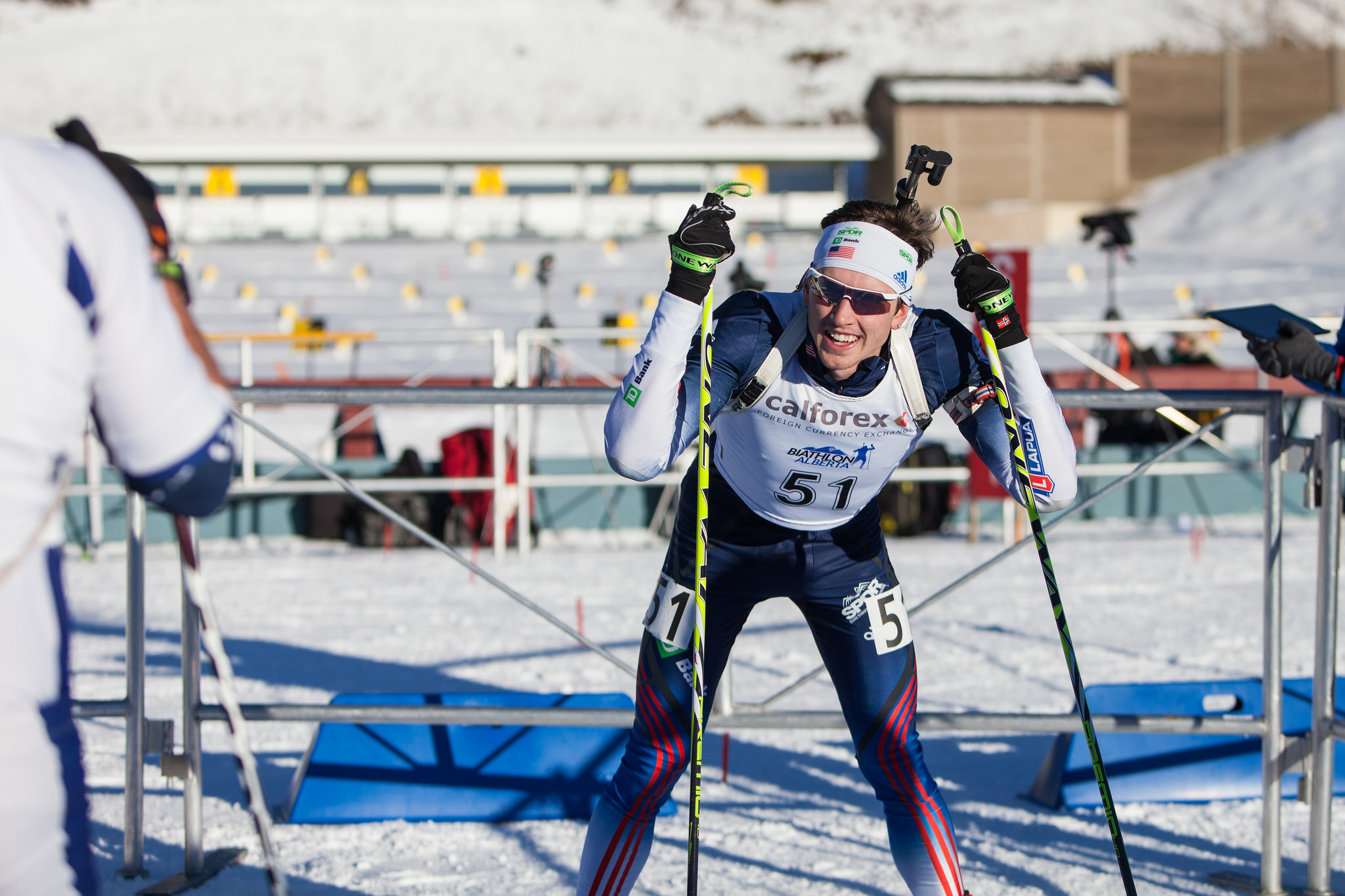
After a four-race trials series in Mount Itasca, Minnesota, the United States Biathlon Association (USBA) has named its squad for IBU Cup racing for January, 2015.
Maddie Phaneuf (Maine Winter Sports Center/USBA “X” Team) and Casey Smith (Maine Winter Sports Center/USBA “B” Team) won the trials series.
Sean Doherty (USBA “X” Team) was pre-qualified for the January IBU Cups after earning, but then declining, a spot on the World Cup squad for the first period of racing. Doherty at that point decided to train and focus on the middle portion of the season, including World Youth and Junior Championships. Doherty swept all four races in the trials series.
Kelsey Dickinson (Maine Winter Sports Center/USBA Development Team), Clare Egan (Craftsbury Green Racing Project/USBA “X” Team), and Wynn Roberts (National Guard Biathlon) earned discretionary nominations based on results through the fall and early winter.
Dickinson won the sprint on Day 1 of trials; Phaneuf the sprint on Day 2 and the mass start on Day 3; and Egan the sprint on the final day of competition. Only the results from the first day of competition have been posted online so far.
In addition, Russell Currier (Maine Winter Sports Center/USBA “B” Team) will move down from the World Cup circuit. Currier failed to break into the top 60 in three weeks of competitions in Sweden, Austria, and Slovenia.
Notably, that leaves a World Cup squad of only three men (Tim Burke, Lowell Bailey, and Leif Nordgren) and three women (Susan Dunklee, Hannah Dreissigacker, and Annelies Cook). All six have scored World Cup points so far this season, but it means that neither team will be able to field a relay at the first race weekend of 2015 in Oberhof, Germany.
After that, some athletes from the IBU Cup may be moved up to the World Cup according to their team selection procedures based on initial IBU Cup results.
“The quick answer is that we have an option to bring athletes up from the IBU Cup for the World Cup in Ruhpolding, and will for sure have a full team in Antholz,” USBA CEO Max Cobb wrote in an e-mail to FasterSkier, referring to the second and third weekends of World Cup racing in January. “We updated our selection procedures and you can check that out on our website.”

Some of the U.S. Ski Team members are starting to feel like themselves again, even after a couple crashes took Kikkan Randall and Sophie Caldwell out of contention in Sunday’s freestyle-sprint semifinals at the World Cup in Davos, Switzerland.
“It was a bummer to fall because the feelings were a lot stronger today,” Randall said after placing ninth. “I was just really happy that I felt more like myself today. You don’t realize how bad you were feeling until you start to feel good again.”
“I was just thinking, ‘Oh God, am I ever going to get back there this year, and how long is it going to take?’ ” Caldwell said after ending up 11th. “I’ve just taken big steps the last two weekends, and that helps a ton with my confidence.”
Liz Stephen placed 12th on Saturday in the 10 k freestyle in Davos, 4.9 seconds out of the top 10.
“Each weekend is a little bit of a step forward for me and that’s a fun way to go about it,” Stephen said. “I didn’t race as well as I possibly could have to get a top ten, so I’m happy with the way it ended up.”
Two Canadians made it into the heats on Sunday — Lenny Valjas and Jesse Cockney — and ended up 18th and 29th, respectively, which coach Tor-Arne Hetland found both promising and disappointing.
“When you’re starting in the heats, you want to be in the final,” he said.
“It feels awesome to finally get into the heats again,” Cockney stated after his first time in the World Cup top-30 since two seasons ago in Canmore, Alberta.
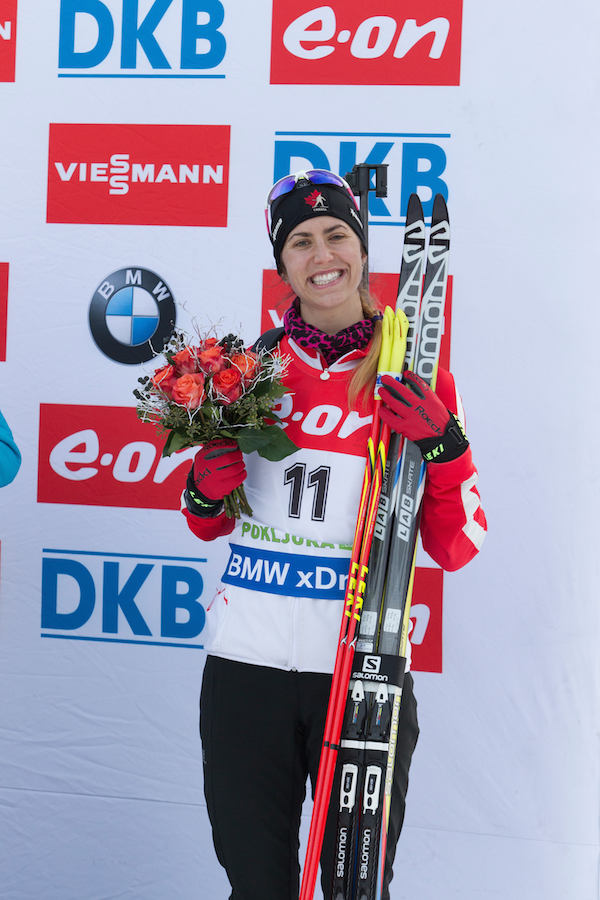
Then there was Rosanna Crawford, a Canadian biathlete who racked up four of her best IBU World Cup results over the last week. Following her fifth-place finish in the pursuit in Hochfilzen, Austria, two weekends ago, she placed fourth in the next race: the 7.5 k sprint in Pokljuka, Slovenia. The next day, on Saturday, Crawford was seventh in the pursuit, then capped the weekend with 12th in the mass start to put herself a best-ever eighth in the overall World Cup.
“I am really happy with where I am heading into the Christmas break, only one race that wasn’t in the top 16,” she wrote in an email.
Her Biathlon Canada teammate Nathan Smith, also made the top-30 overall World Cup cutoff for the mass start, and in his second-ever time racing that format, he placed ninth.
“Mass starts are a lot different than pursuits. It’s nice to get one under my belt now and I hope to do a few more this season, too,” Smith reflected. “I’m very happy … and it’s a perfect way to cap off a strong trimester. It gives me extra motivation to rest up and train over the Christmas break.”
On Saturday, Canada’s Megan Heinicke rose from 41st to 14th in the pursuit.
“I kept that little voice in my head that was telling me this was an awesome race pretty quiet because I know how fast everything can change,” Heinicke explained. “I didn’t really believe it until after the last standing.”
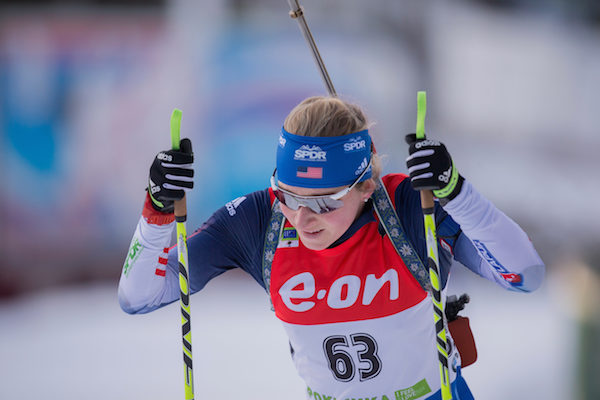
US Biathlon’s Hannah Dreissigacker tallied a career-best 17th in the Pokljuka sprint, just ahead of teammate Susan Dunklee in 19th.
“Biathlon is so weird,” Dreissigacker said. “When things go badly, it’s so hard, and it’s hard to imagine that they would ever be good. And then a week later, somehow everything just goes much better. It’s such a roller coaster like that.”
At the IBU Cup in Obertilliach, Austria, Canada’s Scott Gow found his way onto the podium in the 10 k sprint last Friday, Audrey Vaillancourt was seventh in the women’s sprint that day, and Julia Ransom recorded a career-best seventh in the sprint last Wednesday. That same day, Gow’s younger brother Christian was “ecstatic” after placing eighth in the men’s sprint. To start the series off, Emma Lunder placed 10th in the 15 k individual last Tuesday, followed by Ransom in 11th.
“The whole Canadian team is only going to build on this momentum,” Ransom predicted in an email that day.
At the Nordic Combined World Cup in Ramsau, Austria, the U.S. placed fifth in the 4 x 5 k team event, and Billy Demong as the sole American to qualify for Sunday’s individual competition finished 32nd.
The NorAm made its second stop in Sovereign Lake, British Columbia, where 20-year-old Dahria Beatty of the Alberta World Cup Academy (AWCA) and Canadian U23 team won the women’s 15 k freestyle interval start and American Kris Freeman won the men’s 30 k by more than 1 1/2 minutes over Brian Gregg.
The day before, on Friday, Olivia Bouffard-Nesbitt (Rocky Mountain Racers) edged Alysson Marshall in the women’s classic sprint, and Patrick Stewart-Jones (AWCA) dominated the men’s sprint.
“I’m racing among a group of super strong and talented girls who I respect a lot, so I try to learn from them during the races, but I also try not to be intimated,” Bouffard-Nesbitt wrote in an email. “I didn’t leave anything out there today, I just went for it!”
FIS Cross-Country World Cup, Davos, Switzerland
Saturday: 10/15 k freestyle individual starts men’s report | women’s report | U.S. report | Canadian report
Sunday: 1.3 k freestyle sprints women’s report | men’s report | U.S. report | Canadian report
IBU World Cup, Pokljuka, Slovenia
Thursday: women’s 7.5 k sprint report | U.S. report
Friday: men’s 10 k sprint report
Saturday: 10/12.5 k pursuits women’s report | men’s report
Sunday: 12.5/15 k mass starts men’s report | women’s report
IBU Cup, Obertilliach, Austria
Dec. 16: 15/20 k individual report
Dec. 17: 7.5/10 k sprints report
Friday: 7.5/10 k sprints report
Saturday: mixed relay recap
Nordic Combined World Cup, Ramsau, Austria
Saturday’s team event & Sunday’s individual recap
NorAm #2: Sovereign Lake, Vernon, British Columbia
Friday: 1.2/1.4 k classic sprints report
Saturday: 15/30 k freestyle interval start report
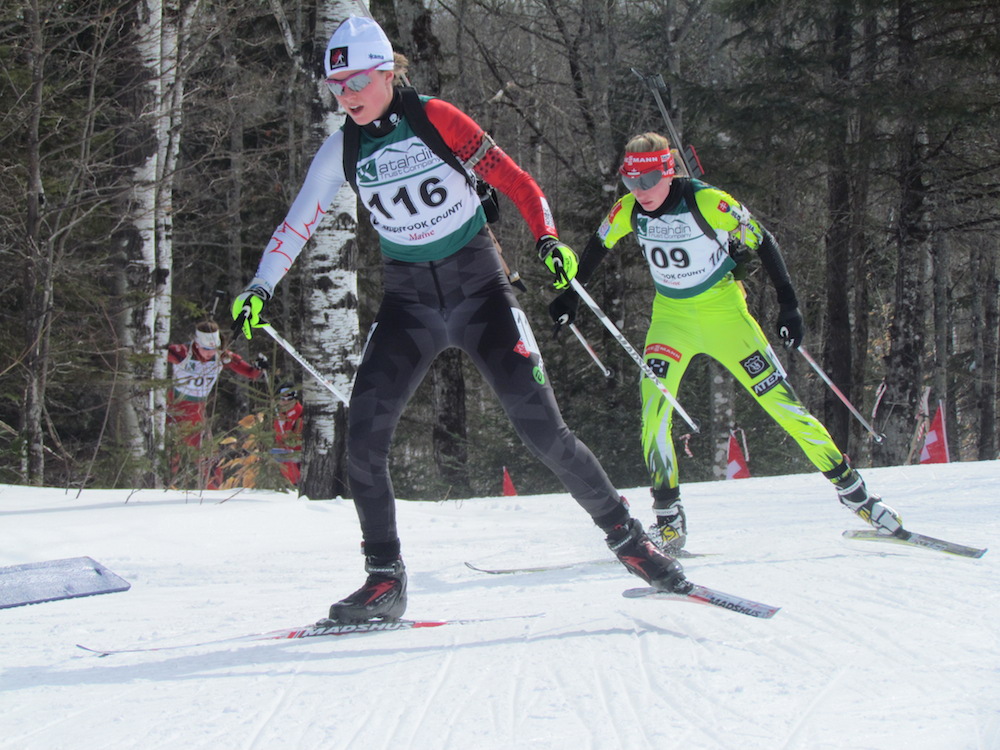
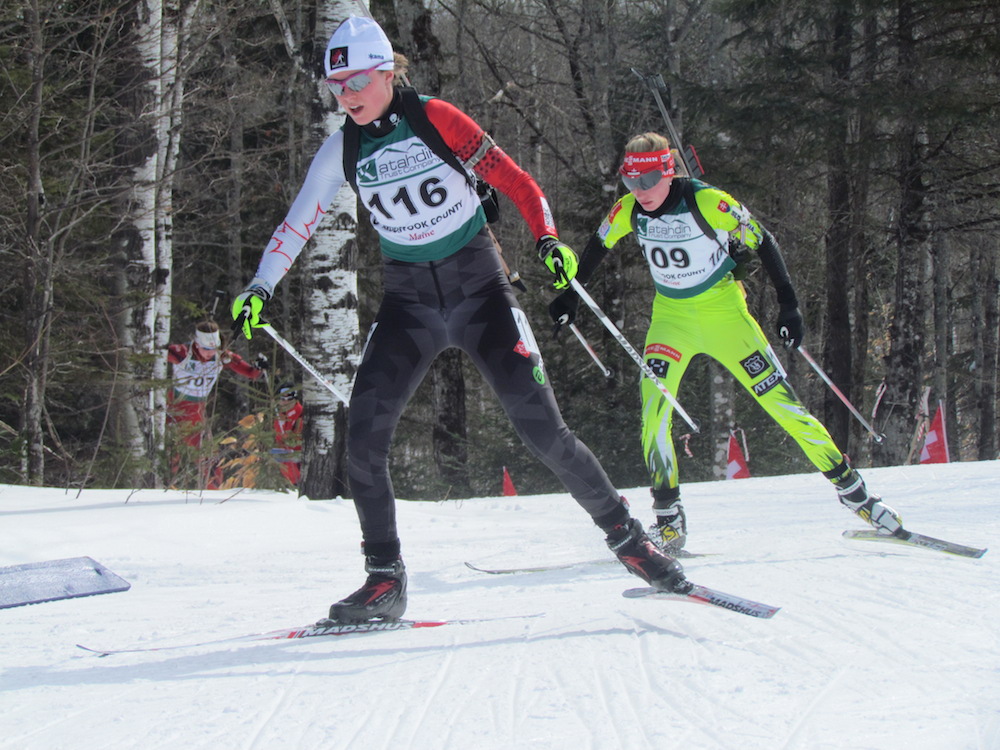
(Note: This article has been updated to include comments from Christian Gow, who placed eighth on Wednesday in the men’s 10 k sprint.)
Canada’s Julia Ransom had wanted a top 10 — at least that’s what she wrote in an email on Tuesday after her first IBU Cup race of the season, the 15 k individual in Obertilliach, Austria.
And don’t get her wrong, she was pleased with 11th, which remained her best-ever result on the international circuit. But she couldn’t help but feel like she was close.
On Wednesday, Ransom, 21, of the Biathlon Alberta Training Center broke through in seventh with clean shooting in the women’s 7.5 k sprint in Obertilliach.
Tenth after the first stage, she improved to sixth with perfect shooting through the second stage. On the final lap, she posted the 15th-fastest course time to finish seventh, 46.3 seconds behind Italy’s Frederica Sanfilippo, who won in 20:40.4. The top-four women all cleaned.
“I am really excited with a 7th but more so with being so close to the podium,” Ransom wrote. “I wouldn’t change anything with shooting but I am going to work on finding every spare second on the course for Friday’s race [also a 7.5 k sprint].”
Ransom explained that her shooting lifted her to the career best, in which she spent the time on quality shots.
“I knew that I was in the mix for the top positions, but didn’t expect 3rd to tenth to be so close!” she wrote. “Made for a very exciting day. I crossed the finish line almost shocked… I think this may have been the first clean race I have ever had on the IBU cup circuit!
“At this point I know that a podium is within reach,” she added. “After that, a top 30 World Cup will be my next goal. For now, I am just going to focus on enjoying the races, mountains and sunshine.”
Ransom led teammates Audrey Vaillancourt in 41st (0+1), Emma Lunder in 64th (3+0), and Zina Kocher in 73rd (2+4).
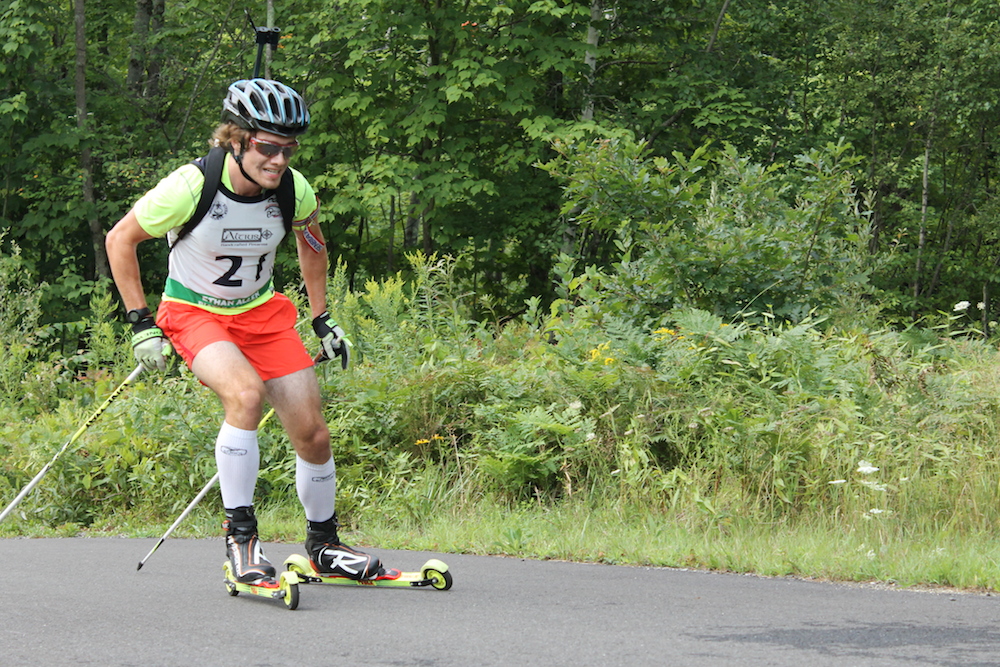
In the men’s 10 k sprint, 21-year-old Christian Gow finished eighth to lead the Canadians. His older brother Scott Gow was 11th.
With a single prone penalty, Christian finished 35.8 seconds behind France’s Baptiste Jouty, who won in 25:53.8. Just two men in the top 10 cleaned: Germany’s Benedikt Doll in second and Tomas Vojik of the Czech Republic in 10th.
“I am ecstatic with the race today,” Christian wrote in an email. “Yesterday’s race gave me the confidence that I could achieve my dream goal of top 10, or maybe even top 5. However, I still wasn’t sure exactly how I would stack up since it is such a different race format … To finish in 8th place was incredible for me, and to see how close I am to the podium has brought even more purpose and excitement to my biathlon career.”
Before this week, his previous IBU Cup best was 31st.
“Since I haven’t raced at the international level since last February, it was hard to know how I would stack up against a strong field,” Christian explained. “I decided that if I finished the race and felt like I skied well, and shot up to my own standards, that I would be happy regardless of the placing.”
His season-long goal was a top 15, although “before I could worry about that I had to see if I was even in good enough shape to achieve that sort of result,” he wrote. “I was extremely happy with my first race. It was an incredible feeling to see just how close I am getting to the top of the field.”
After Wednesday’s race, his goals are a little loftier. “My ultimate goal for the season is to place top 3,” Christian wrote.
Scott Gow cleaned prone and had two standing misses to finish 0.2 seconds behind Vojik and 37.3 seconds back from Jouty.
“I am very happy with today’s race and have positives with yesterday’s race,” Scott said after placing 52nd with six penalties in the 20 k individual.“Yesterday I suffered with some bad shooting in 2 bouts which held me back, but I had decent skiing and otherwise good shooting to take away as a positive. Today was significantly better with great skiing, and decent shooting.
“My goals for today were to ski consistently and focus on shooting. I would say I accomplished my goals skiing and in prone shooting,” he added.
Teammate Macx Davies shot clean to finish 40.6 seconds back in 15th, and Carsen Campbell placed 59th with two penalties (1+1).
Scott noted that his brother, who led the Canadian men’s team on Tuesday in 18th, “is performing very well … He has been training hard all year and it is paying off for him. He was good on skis today and had good shooting bouts which put him up with the top IBU athletes. If he keeps it up he will have a very strong season this year,” Scott said.
“For the next two races my goal is to maintain good skiing and increase my shooting percentage,” he added. “If I can accomplish both of those goals then I believe I can see myself on the podium. The team is excited about having a strong mixed relay, and it will be important to execute my goals that day in particular to make sure our relay can have a great result.”
The IBU Cup continues in Obertilliach with men’s and women’s sprints on Friday and a mixed relay on Saturday.

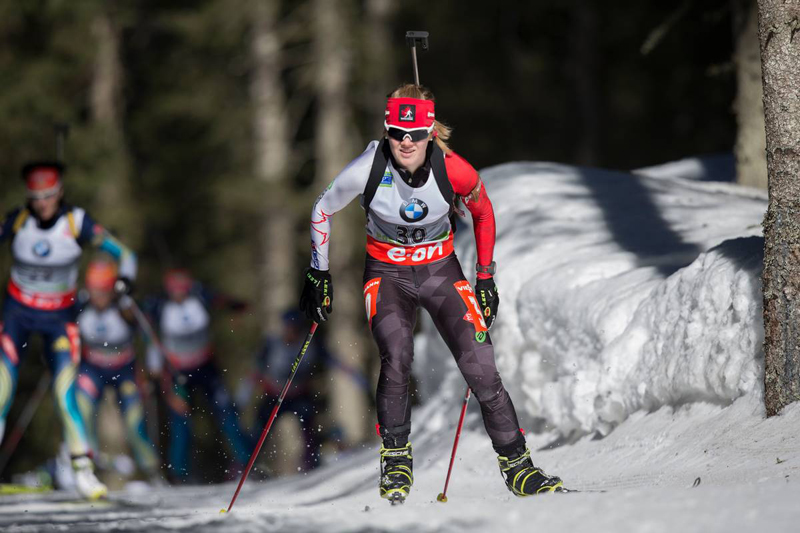
After a week of witting and waiting, the IBU Cup competitions in central Europe finally got started on Tuesday with 15 and 20 k individual competitions in Obertilliach, Austria.
The circuit kicked off late November in Beitostølen, Norway. Races were scheduled to continue in Martell, Italy, but a lack of snow forced them to cancel. For team Canada, that was a bummer. They had flown over specifically for the Martell races, and were forced to hang out and train until added make-up races in Obertilliach started this week.
“It was definitely nice to be racing today!” Canadian biathlete Emma Lunder wrote in an e-mail to FasterSkier. “I think our whole IBU team has been chomping at the bit to get our first races in, and I’m pretty pumped that it was so successful for me today. We’ve had just over a week of training in Obertilliach – I traveled to Europe knowing I’d be here for the whole 2 weeks, so it was nice to go into the tour knowing where we’d be.”
In the 15 k, she led Canada with a tenth-place finish. Teammate Julia Ransom was close behind in 11th. With one and two penalties, respectively, they finished about two minutes behind race winner Tina Bachmann of Germany.
“Shooting was definitely the key to my race today,” Lunder wrote. “It was an individual race, and I haven’t raced 15 k yet this season. The course here is quite challenging. One long downhill, but besides that a lot of climbing, and working every flat section, so I knew it was going to be a tough ski. I hadn’t anticipated it being quite so tough, and I was really feeling my legs after the second lap. With three to go, I just concentrated on every push being technically efficient, but especially honed in on my range focus.”
Lunder explained that the team has been working with Ferreol Cannard, a former French team biathlete, since they’ve been in Europe.
“I think having a fresh perspective can really help athletes, especially when you’ve got a week before the races,” she wrote. “His focus for us has been aimed towards shooting, and not ever throwing a shot away. I’ve really enjoyed working with him, and I hope the Canadian team can in the future.”
Ransom agreed that Cannard was important to her success in her first European race of the season.
“I had a new perspective on some of my weaknesses and had time to nail them down before today,” she wrote in an e-mail. “I was pleased with my shooting and couldn’t wait to get skiing fast. My goal for this week is a top 10 and after today’s performance, I am feeling confident that it’s within reach!”
Another motivator and confidence-booster? Watching their Biathlon Alberta Training Center teammate Sarah Beaudry have her World Cup debut this past weekend in Hochfilzen, Austria. Beaudry used a clean prone stage to help the Canadian women’s relay team to 11th place.
“Emma, Sarah, myself, and our other team mate Erin [Yungblut] train together every day,” Ransom wrote. “I would say that we are a perfect mix of different strengths that all compliment each other and better each other’s weaknesses. I was so proud to watch Sarah race in Hochfilzen… Solid day for her. We have known each other longer than we haven’t so I have seen the whole Beaudry spectrum! To follow up her World Cup debut AND Rosanna’s 5th place with Emma and I placing 10th and 11th was a perfect start to the first tour. The whole Canadian team is only going to build on this momentum and I am betting on a podium this season.”
Also for Canada, Zina Kocher placed 43rd with six penalties, and Audrey Vaillancourt 49th with five penalties.
In the 20 k, Christian Gow led the team in 18th place, 2:46 behind winner Vitaliy Kilchytskyy of Ukraine, with three penalties for Kilchytskyy’s one. His brother Scott Gow finished 52nd, Carsen Campbell 62nd, and Macx Davies 68th.

The International Biathlon Union (IBU) holds a congress every two years, where member federations can vote on rule changes, the location of future championship events, and Executive Board membership.
This year’s congress was scheduled for Kiev, Ukraine, but has since been moved to St. Wolfgang, Austria. It’s slated for 4-8 September.
Rule Changes
A number of rule and organizational changes have been proposed, many of which are spurred by recent developments in the sport or particular incidents from the last season. There are too many proposals to completely catalogue, but here’s a smattering of the highlights.
Delayed and Halted Competitions
Biathlon suffered from a number of cancellations and mid-race halts in the last season. The women’s field had it particularly rough, with a pursuit race in Östersund, Sweden, canceled after the first three shooting stages were completed due to high wind – and then later in the season a relay in Antholz, Italy, called off mid-race when heavy fog rolled in and obscured the targets.
Races at the Sochi Olympics were also delayed for days due to fog.
The Executive Board is offering up an amendment stating that races called off after the third shooting bout, for a four-stage race, or the third leg of a relay, will be scored based on standings at the time of the cancellation. Currently, no results are recorded in this situation, but the board believes that ¾ finished is close enough to award racers World Cup points.
In individual-start events, clearly this solution is not possible as only part of the field would have started or finished.
Cancellations also reduce the number of events which go into World Cup or discipline total scores. In the case of the Individual format and mixed relay, there are only a handful of competitions in a season – perhaps three. What if two are canceled? Does the winner of the sole race held become a discipline champion? The board is proposing that at least two events must be scored for a discipline trophy to be awarded.
They are also proposing to add “to decide if the competition can be started or has to be rescheduled” to the official list of duties for the competition jury.
Finally, the Executive Board has submitted a revision to clarify that delays cannot be appealed to competition juries. In other words: the decision is final.
Race Formats
A common goal of endurance sport bodies is to try to come up with new, spectator-friendly competition formats to generate excitement about their sports. We’ve seen a surge in city sprints and skiathlons in cross country, along with the proposal of an uphill-downhill race.
In biathlon, the goal is the same. The Executive Board is pushing a new relay format: a single mixed relay where one woman and one man from each team ski twice, on shorter loops and a 75 meter penalty loop. The format was tested in Oslo last year as an extra, non-points event at the final World Cup weekend, and had very mixed reviews.
Nevertheless, the Executive Board is proposing adding it as a format at all levels of competition. It is currently slated for its World Cup debut in Nove Mesto, Czech Republic, in February.
In addition, they propose changing the penalty for missed shots in the individual format from 60 to 45 seconds of added time in the youth category, in order to make races more closely-contested. In senior racing, individual races are 15 km for women and 20 km for men. In the youth category, they are just 12.5 km for men and 10 km for women; a 60-second shooting penalty gives the format a different balance and focus between skiing and shooting when the ski courses are so much shorter.
Complaints about U-26 Championships and Nations Cup Scores
A variety of national federations complained about how race organization was affecting their athletes.
Several proposals focused on the Open European Championships, which are restricted to competitors under the age of 26. Points from the event nevertheless count towards the IBU Cup total score. This age limitation is distasteful to serveral federations – Lithuania complained that since it consisted only of younger competitors, it was difficult to market, while Ukraine and Belarus complained that it was unfair to their older competitors not to be allowed to compete at the event.
Both federations submitted proposals to change the structure of the event and in some way either partially or completely remove the age restrictions. The Executive Board has endorsed this concept.
China filed for a rule change of how Nations Cup scores are calculated. Some smaller countries do not travel to every World Cup weekend because of budget constraints, and China argues that this puts them at a disadvantage in terms of scoring Nations Cup points. Furthermore, there is geographic inequality – an underfunded team from Europe nevertheless has a good chance to travel to World Cups, which are, most seasons, entirely in Europe, compared to a team from another continent for whom travel is much more expensive.
The Chinese federation’s proposal appears to be to take only the country’s best day of Nations Cup scoring from the season’s worth of Sprint competitions, then add it to the best day of scoring from an Individual competition, and the best relay result, instead of having a cumulative total based on all of the competitions of these three formats. “From the rule perspective, the IBU should give more opportunities to developing countries and weak countries,” the federation wrote as an explanation.
New Junior IBU Cup
The Executive Board is proposing the creation of a new winter competition circuit: the Junior IBU Cup. The IBU Cup is a second-tier circuit organized the same way as the World Cup. This allows high-level international competition between all of the countries competing in biathlon, instead of merely regional racing opportunities for up-and-coming athletes.
The board would like to see the same opportunities afforded to junior racers. So they propose up to four race weekends per season with similarly-organized competitions open only to juniors. The last weekend would serve as an Open Junior Championships.

Executive Board and Committee Votes
Every four years, the President position is up for election. This is one of those years, so much of the hype about the Congress has centered around that race. Incumbent Anders Besseberg from Norway is up against Dr. Jim Carrabre, a U.S.-based Canadian doctor who has held the post of IBU Vice President of Medical Issues for years, and Russia’s Alexander Tikhonov, a many-time World Champion who served as the organization’s First Vice President in the mid-2000’s.
A full list of nominees up for other committees and positions is available from the IBU website.
One of the other hotly contested races will be for First Vice President. The position has been held by Sergey Kushchenko, a Russian who has been a loyal advisor to Mikhail Prokhorov and also serves as CEO of the Russian Biathlon Union. He’s been on the board of directors of the New Jersey Nets.
Kushchenko will not seek re-election, and four men are vying for the post: Russia’s Victor Maygurov, Sergey Bulygin of Belarus, Olle Dahlin of Sweden, and Volodymyr Brynzak of Ukraine. All are the leaders or second-in-command of their respective national federations.
There is also competition for the posts of Vice President for Marketing and Vice President for Development, although several other incumbents are running unopposed. The Technical Committee is up for election as well. 15 nominees are vying for 10 spots, including United States Biathlon Association CEO Max Cobb, who is the current chairman, and Noel Charchuk of Canada.
Venue Votes
Federations will also get to vote on the location of 2019 World Championships. The nominated venues are Nove Mesto, Czech Republic, which hosted in 2013; Antholz, Italy; Khanty-Mansiysk, Russia, which last hosted in 2011; and Östersund, Sweden.
Two national federations have also applied to host the next Congress in 2016: Moldova nominated the city of Chisinau, while Russia nominated Khanty-Mansiysk.

If you look at Brendan Green’s competition record, it has a big gap in it. The last World Cup the 2010 Olympian competed in was Oslo, 2012 – after which he slipped a disc in his back and had to take about a year to recover, with multiple surgeries.
But this fall, Green in back in action, first easing on to the second-tier IBU Cup circuit. He started off strong in Idre, Sweden, shooting clean to place ninth in the first (and most competitive) race in Idre, Sweden. Most years, this would have earned him a promotion directly onto the World Cup – which is where Green needs to be if he wants to complete his qualification criteria for the Sochi Olympics.
This year, though, everyone in Canada has upped their game for the Olympics, and teammate Nathan Smith placed second in that race; Marc-Andre Bedard also tied for ninth. It was a banner day for Biathlon Canada. Green stayed on the IBU Cup.
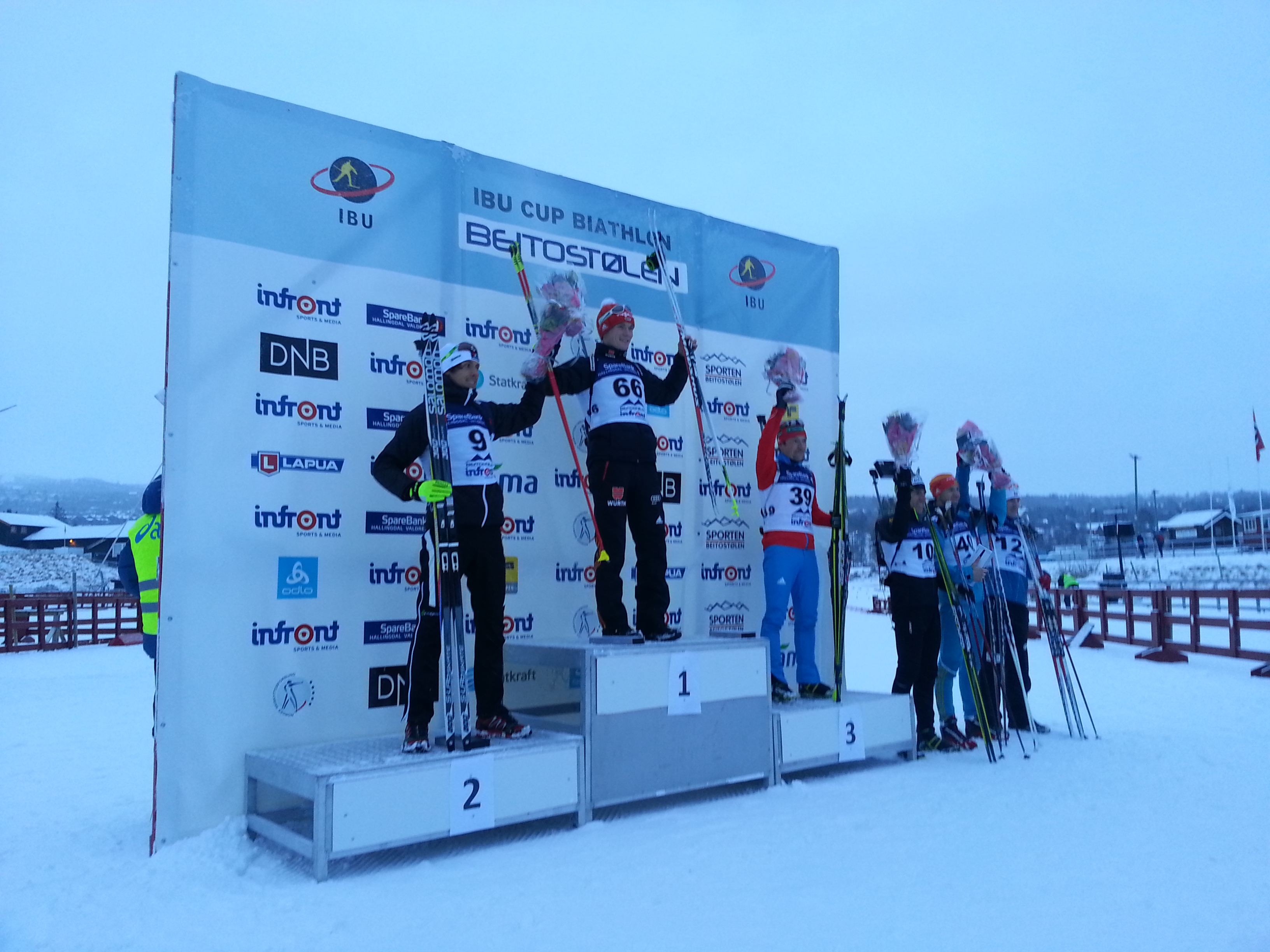
But he’s not discouraged, and he came back strong today in Beitostolen, Norway, by placing second in the 20 k individual race to Benedikt Doll of Germany. Green limited himself to just one penalty, which is important in this format where each missed shot is penalized by a minute of added time.
“The wind here has been super extreme all week leading up to today, to the point where the range was closed on Wednesday for our training because it was too windy,” Green wrote in an e-mail to FasterSkier. “We tried to shoot yesterday but gave up after a couple of clips because it was impossible to hit anything, and more or less a waist of time. Fortunately today the wind had died down so shooting conditions were perfect.”
Doll, though, was in a class of his own, winning by almost a minute and a half despite also accruing one penalty.
While Green was hugely helped by a strong finish – he cleaned the all-important final standing stage and had some of the fastest loop times on the third and fourth loops – he didn’t know it at the time.
“I was an early starter being bib #9, so I didn’t have too much information to go off of,” Green said. “It was a pretty lonely race for me so I just tried to focus on consistent skiing and putting together a good shooting race. When I just had 1 miss after three bouts I knew the potential was there for a good result. My last standing shooting went perfect and from there I just tried to maintain a solid pace to the finish and crossed my fingers that my time would hold up!”
Aside from Green’s excellent result, Canada had already been having a good weekend. Up on the World Cup, JP Le Guellec placed fourth in the individual, narrowly missing the podium, and Smith a career-best 16th. According to Green, the momentu the team was feeling after that first weekend of IBU Cup racing, where five athletes were in the top ten, did not dissipate when the team split up between the IBU and World Cup circuits.
“I think as a team we’re feeling pretty confident and it was great to watch JP throw down an awesome result on the World Cup yesterday,” he wrote.
The podium on the IBU Cup doesn’t help Green directly with his Olympic qualification criteria, but it does stoke the fire for his inclusion.
“In terms of Olympic qualification, I’m unable to meet any criteria with my IBU Cup results, but they definitely help build confidence,” Green wrote. “Ultimately I would like to be racing on the World Cup, but I’m doing my best to make the most of the racing opportunities I’m given. When I think back to where I was with my injury at this point last year I wasn’t able to ski yet. I’ve come a long long ways since then, so I have to be pretty happy about that and am grateful to be back in the game!”
Also competing for Canada, Scott Gow placed 20th with two penalties, his younger brother Christian 31st, Macx Davies 62nd, and Bedard 69th. The sole American competitor, Jay Hakkinen, placed 50th with four penalties.
In the women’s 15 k, Lanny Barnes of the United States placed 18th with two penalties, 3:48 behind Olga Podchufarova of Russia. For Canada, Audrey Vaillancourt placed 34th, Claude Godbout 42nd, and Julia Ransom 62nd.
The Canadians had a feeling that their team was improving a lot over the course of the last training year. But by all accounts, even the coaching staff wasn’t quite fully prepared for the results of today’s IBU Cup sprints in Idre, Sweden.
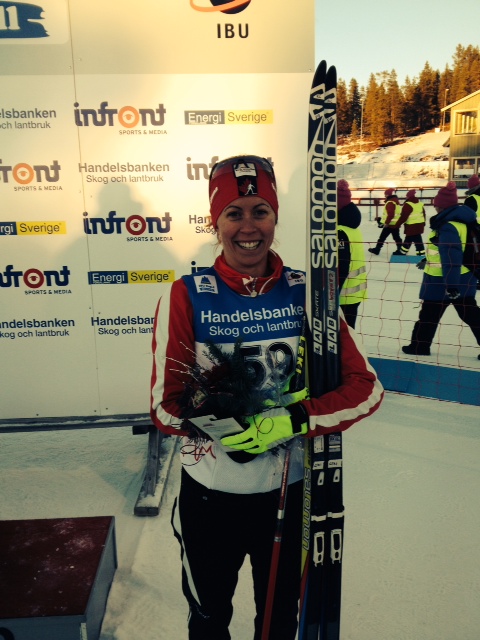
The headline: Nathan Smith second in the men’s 10 k, just 3.9 seconds away from the win. He was one of three men and two women in the top ten. Two more in the top 20. In total, six athletes shooting clean.
One day into the 2013-2014 season, Canada is leading the IBU Cup nations standings, ahead of Norway, Russia, and Germany. Sure, it’s not the World Cup, but the second-tier circuit, which is organized in the same way, is nothing to scoff at – there were 140 men and 107 women toeing the start line today. If a country can’t do well where developing athletes typically compete, it doesn’t bode well for the future of the program.
Plus, there’s the fact that these will be the most competitive races of the year for the circuit, with many teams using them to select World Cup teams. The top twenty was packed with athletes with Olympic and World Championships credentials. Timofey Lapshin, the Russian who edged Smith, has two World Cup podiums; the winner of the women’s race, Weronika Nowakowska-Ziemniak of Poland, is a 2010 Olympian who had a seventh-place World Cup result last season.
“To your question of whether I was expecting this, from our in training season performance testing and latest trial races we had good indications the we were on the right track, but since we are quite isolated in North America it is quite difficult to put a perspective to this until you race internationally again,” Canadian head coach Matthias Ahrens wrote in an e-mail to FasterSkier. “I am super happy about both races, especially great performances in shooting as a team overall, but also the skiing is showing that we are on the right track.”
In many ways the top performances came from athletes who have something to prove as they head into the Olympic qualification season. Take Smith. The 28-year-old had made his first World Championships appearance in 2008, and also represented Canada in the 2011, 2012, and 2013 editions. But last year, after lackluster results in the first two weeks of World Cup racing, he was moved back down to the IBU Cup.
“Last year was extremely frustrating for me,” Smith wrote in an e-mail. “Although I still got to race a few World Cups, I ended up pretty much being the extra relay guy a lot of the time because our team only has three men’s starts. Relays are a nice bonus but ultimately biathlon is mostly an individual sport. Luckily I managed to make some national team criteria at my very last chance (World Championships relay) where I basically had my only great performance of the year.”
That leaves him at a major disadvantage for Olympic qualifying. The most surefire way to make Canada’s Olympic team is to have two top-16 or three top-30 World Cup results. Two men have already fulfilled those requirements (Jean Philippe Le Guellec and Scott Perras), while several others (Brendan Green and Scott Gow) are partway through. Athletes have until the Christmas break to get those results on the World Cup, after which point qualifying is kicked back to trials races in Canmore for any remaining spots. Team size will be four men and four women.
“Nathan has been on fire over the past few weeks, his skiing has been very strong,” Canadian coach Roddy Ward told FasterSkier. “Today he skied like he has been and also put together a clean race. He has been very motivated and focused in his training this year and it has paid off for him.”
Smith is looking good now, both in the Idre sprint and at previous trials races in Canmore to qualify for this trip. But that leaves him just three weeks to get his two or three results on the World Cup. And there’s a catch: Canada has only three quota spots for men. With Le Guellec and Perras taking two of them, only one more man will have the chance to try to achieve their Olympic qualification on the circuit this fall.
That seems to have been a powerful force driving the team to go faster and shoot straighter.
“The remaining Olympic spots that are up for grabs are definitely a big motivator,” Smith wrote. “Judging by our team’s shooting I think the pressure is being handled really well. For myself, I’m managing the pressure a lot better than a year ago.”
With his second-place finish, Smith nabbed the remaining men’s spot and will try to make the most of it in the next few weeks.
“In the spring I had time to reflect on what I had done the previous few years and decided that if I wanted a change in results I would also have to have a different approach to training,” he wrote. “I really tried to focus on quality and working on specific skills. Already halfway through the summer I knew that things were going in the right direction through testing, team time trials, and just general training… In the last few team races my skiing has been excellent so I had a lot of confidence in that going to Europe. But still, you never really know, so theres always some doubt.“
The next Canadian, Marc-Andre Bedard, tied for seventh; he is another former World Cup and World Championships competitor who did not see World Cup action last season. Just two seconds behind him in ninth was Green, who sat out last season with a back injury. Gow placed 13th with one penalty.
Yet even though the men are competing against each other – intensely – for World Cup and Olympic spots, they were supportive of one another’s results. Team spirit doesn’t seem to be a casualty of the cutthroat competition, in fact, maybe just the opposite.
“I’m also really happy for Nathan, he totally deserves those results and I’m excited to see him try to get his Olympic criterias on the World Cup!” Bedard wrote in an e-mail. “(If they let him of course!!!) (they better ;))”
Bedard also made another comment on the team’s cohesion in explaining why his results seem to be on the upswing this fall.
“I’m finally feeling supported by my coach and teammates and I was really excited to race against the world with my new dry land season with all the changes is done for the last six months,” he explained. “I’ve always needed a few weeks of racing before I was actually able to turn it on and I think today is a really good sign for what might happen this year. I’m hoping I’m progressing still and will be able to actually hurt myself in the next few weeks. Today felt pretty easy so with a good result on a really strong and deep field, it sounds good!”
Although the team will also compete in Idre tomorrow, coaches ultimately made the choice of World Cup athletes based off of today’s race, and Smith got the nod. Biathlon Canada High Performance Director Chris Lindsay acknowledged that the men hadn’t made it easy for them to pick just one, but the entire coaching staff pointed out that the increasing competition within the program is a benefit for all.
“It is clear our men’s team is extremely competitive, which had led to improvements through the training year,” Ward said. “We saw that in the results today.”
Competing a few hours later, the Canadian women’s team took the momentum and ran with it.
“The girls and I were really inspired by the guys performances before our race,” Megan Imrie wrote in an e-mail. “They’d all killed it! If they could do it, so could I.”
Imrie, coming back from her own lackluster season last year that saw her take a midwinter detour home to Manitoba to rest, recover, and decide how to approach biathlon from that point forward, hit the circuit again with a bang. She placed sixth with clean shooting, over a minute behind Nowakowska-Ziemniak but only 23 seconds behind second-place Fanny Welle-Strand Horn of Norway.
“I committed to working every possible place on the course and was extremely focused on the range,” Imrie said of her race. “I was a bundle of nerves going to the start. But I stuck to the basics. In the words of Simon Whitfield, just chop wood and carry water. I’m relieved I’m coming back okay from last year. I’ve worked hard and stayed healthy. Now I’m feeling privileged to enjoy racing again.”
Just behind her was 2010 Olympic teammate Megan Heinicke in seventh place. The pair, like Smith, earned the nods for the next period of World Cup racing and will travel to Ostersund, Sweden, with Smith and Rosanna Crawford. Imrie and Heinicke both need a single additional top-30 result on the World Cup to complete their Olympic qualification.
Crawford is pre-qualified for Sochi, but raced the Idre openers anyway. She finished 35th with three penalties.
“The girls were also impressive with Megan I, Megan H and Audrey [Vaillancourt, who placed 16th] cleaning,” Ward said. “Rosanna had been dealing with a number of injuries lately so I was just happy to see her ski form was solid. The next few weeks should be good very for her. Megan I has been incredible this training year with self monitoring her training and recovery – she has made some wise decisions that has kept her healthy and progressing.”
Several younger Canadians also competed, with Macx Davies placing 84th in the men’s race and Julia Ransom 58th in the women’s race. Claude Godbout, a senior, placed 50th ahead of Ransom.
“Even that it is only one race and the first race of the season, it should give everybody great confidence into the next races, be it on the World Cup or the IBU Cup,” a happy Ahrens concluded.
Note: This is the second of two pieces based on an interview with Biathlon Canada’s High Performance Director, Chris Lindsay, from earlier this spring. The first focused on a difficult funding situation with Own The Podium.

There was a time when biathlon in Canada was a big deal – and it wasn’t that long ago. The very first year that women’s biathlon was contested in the Olympics, in Albertville in 1992, Myriam Bédard won a bronze medal. Two years later, in Lillehammer, she was a double gold medalist in the 7.5 k sprint and the 15 k individual. But while Bédard is still inspiring to a generation of young biathletes, particularly those in her native Quebec, the sport took a dive in the conscience of the average Canadian.
It’s not because the athletes aren’t good; last year, three different Canadians had multiple top-tens on the World Cup. At the 2010 Olympics on home turf, Jean Philippe Le Guellec placed sixth in the sprint and had two more top-20’s, producing a wave of excitement. But none of the team members had been medal favorites, and none took home any hardware – and as Canada’s cross country team has shown, titles and medals go a long way towards building support.
But regardless of funding issues, the team has been making do with a small base of athletes, and 2012 showed significant improvements compared to the previous World Cup season. FasterSkier talked to Biathlon Canada’s High Performance Director, Chris Lindsay, about the challenges of his job. The following interview has been edited and condensed.
FasterSkier: Biathlon Canada has a lot more members than its U.S. equivalent. Would you say that participation is one of your strong points?
Chris Lindsay: We have pretty good regional representation, which has worked out well when the goals have been to promote the sport of biathlon within Canada. We have programming going on across the country which leads to development of clubs, development of ranges and coaching programs and officiating programs. Our ability to create clubs and coaches, and our officiating program – we have a very built-out system, where we are very good at creating everything that you need in order to have people that do biathlon.
FS: Canada has had a lot of medal-winning performances at the youth and junior level recently. Is this connected to the strength of the provinces and clubs?
CL: We tend to do very well at the youth level, and have some success at the junior level. But we don’t have a focus on how to take a good junior and turn them into a great senior. That is the remaining piece of our global challenge.
FS: So what happens to those youth and junior medalists?
CL: When those athletes convert into seniors, we see just an abnormal recession in their ability to compete. I’m not sure whether it’s that our athletes get worse – I don’t think they get worse – but they don’t accelerate their development the way that everyone else seems to. And this is one of the big things that we track: internationally, what do you need to be doing at World Juniors to eventually turn into a medalist later on down the line? We’re seeing a significant difference in the pattern of success in Canadian athletes compared to the international standard. And that’s one of my big jobs, is to try to address that.
FS: What are you doing?
CL: We’ve identified a few areas. [Juniors] are going for a single peak season, they’re only going for one race. What we’ve done, particularly with our women, in the past five years is that as soon as we have someone who is a top junior we would immediately put them on the World Cup all year. Instead of a single-peaking season you’re now expected to perform at a relatively high level the entire season, and even with that increase of intensity they are still expected to peak at the World Championships and Olympics, and our athletes just weren’t able to cut it. .
FS: What about the transition from smaller junior races to bigger senior ones, like World Championships in Ruhpolding this year, and all of the travel?
CL: [World Juniors is] a pretty big show compared to what they are used to, but it’s manageable. They will have been to bigger cross country ski races, or track meets. But [as a senior] the difference is that you go to Ruhpolding, Oslo, or Khanty, or any of these insane circuses where everything is different, and everything is a greater stress level, and the young athletes have simply not been exposed to this enough in order to get over that level of distraction.
FS: So how do you prepare them for that?
CL: One of the strategies is that we basically don’t send our top juniors or even our first or second-year seniors to the World Cup or the World Championships unless we have to in order to maintain Olympic qualification. We know they’re not going to perform. What are we teaching them if they go and they come in fighting for 90th place? Or at the World Championships they’re fighting for 130th place?
FS: Is that why there has been a larger focus on the IBU Cup tours recently?
CL: This year was the first year that we really put a lot of effort into the IBU Cup, and obviously it paid off. Well – we had success. If it paid off, we’ll see in three years. Going forward, we are trying to put the right athletes at the right competitions at the right time in order to give them the best opportunity possible. When I see athletes like Yolaine Oddou, or Nathan Smith, or even Scott Gow, they need to have some exposure to the World Cup at different times. But they also need to be in a position where they’re hungry to win. Finishing in the top 16 constantly on the IBU Cup is that kind of positive reinforcement that they need, and once they are able to show that they can pull off a full season of decent results on the IBU Cup level, then they are ready to go have a prolonged exposure on the World Cup.
FS: So would you leave roster spots unfilled if you didn’t think athletes were ready?
CL: I know I’m unpopular in Canada for saying this, but if we don’t have four men and four women who are performing on the World Cup – and I would suggest performance starts at 40th place, or at least a reasonable expectation of 40th place, I mean, you’ll always have days when it’s just not happening. – then I don’t have a problem with losing World Cup starting positions, as we did with the men. The reality is that we went down.
FS: That’s kind of incredible, considering that the results by Brendan Green and Jean Philippe Le Guellec were so strong this season.
CL: I don’t think we went down necessarily because our athlete were worse, I think it was quite a successful season, but we didn’t have the support from our third and fourth athletes, and that’s why we ended up losing a spot. With the women, we earned our way up to four spots, but I don’t actually expect that we will execute all of those spots. There are more relays this year which is a complicating factor, so we’re going to have to have more people around, but if we don’t have a need for that fourth person, I’d much rather have them drive for 2 ½ hours after the relay in order to go and do an individual race or a sprint race on the IBU Cup, because I think it’s better practice for them than coming in 90th.
FS: Canada had some great finishes on the IBU Cup. Did that help with sponsors at all?
CL: We came off the IBU Cup season this year with six medals, and the athletes who won those medals were able to make a fair amount of money off of the IBU, and we got a lot of notoriety. And my firm belief is that it’s better to have a medal-winner when you’re going around trying to get money from people, rather than someone who is finishing in 80th. I don’t think it matters so much to the potential sponsor pool whether they are winning medals at the World Cup or the IBU Cup. It’s a good athlete to invest in and people want to invest in winners.
FS: Did you see an increase in visibility after the 2010 Games?
CL: I think that the experience of the 2010 Games for the sports that were able to produce medal-winners, was that we didn’t necessarily see a dramatic increase in participation, but we saw a targeted increase in participation, where we became an option for sporty athletic people who may already be predisposed to doing well. They maybe didn’t see that opportunity before.
FS: And that was important for the endurance sports?
CL: Well, kids are getting lazier these days, and also there’s just more choices available. 30 years ago, what did you do in the winter? In Canada, you either cross country skied or you played hockey or did curling. Now with the explosion of the alpine and freestyle sports – and video games – there’s a lot more to choose from. We need sport heroes to prove that you can excel in extremely difficult sports.