From the FasterSkier archive — posts syndicated from athletes’ and coaches’ own blogs between 2004 and 2012, kept online as published. Current coverage is at fasterskier.com.
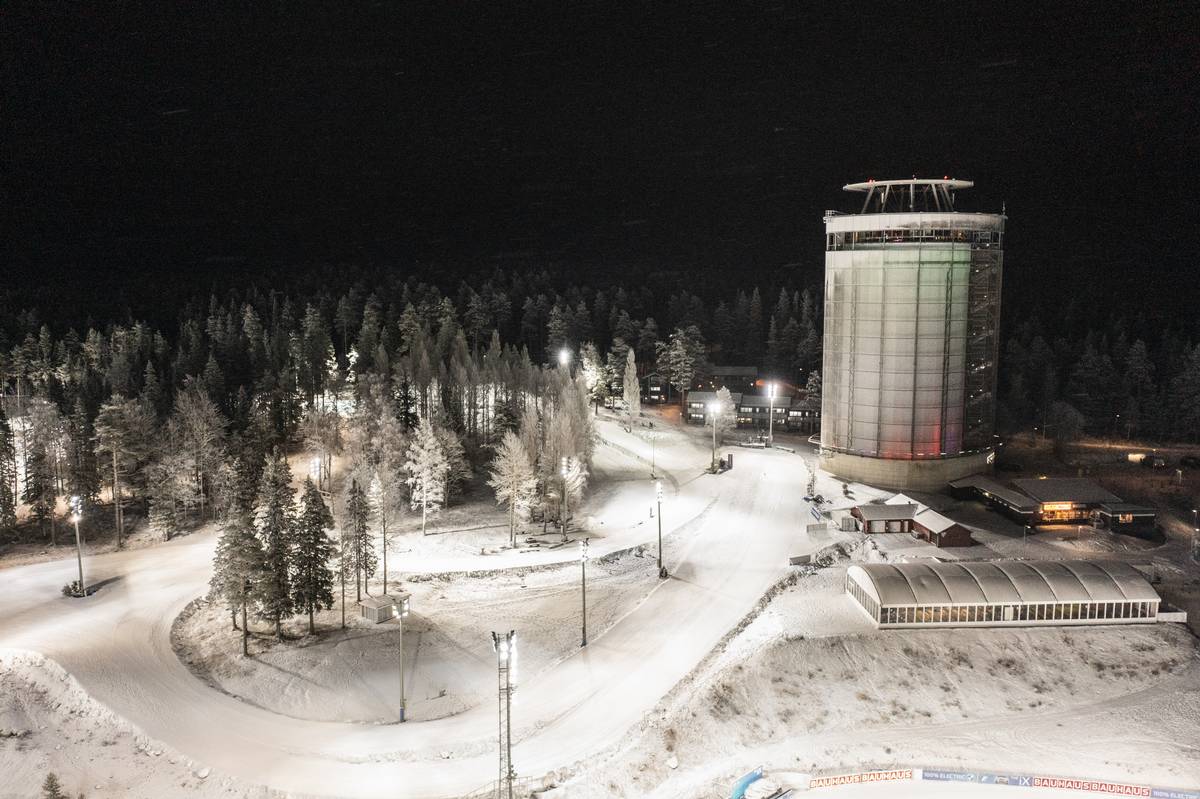
At the first biathlon World Cup races of the 2025/26 season, the biathlon stadium is perched above the small city of Östersund, which is set on a lake. Wind gusts off the lake, pulsing through the stadium. The races take place under the lights, at night – which isn’t saying much. Because in December in northern Sweden, ‘night’ begins at three in the afternoon, when what little sun there might’ve been throughout the day slips below the horizon. It’s in the evenings that the wind is usually at its strongest. The conditions the racers zero their rifles at before the race are rarely the same conditions they find when they come back to the range during the race. Athletes watch the small, red flags in the range, seeing which way they’re moving, deciding whether or not to shift their sights a few clicks, compensating for the changes that happened while the racers skied the course that serpentines up, down, around a 180-degree turn, and back into the stadium where the music plays and the home crowd cheers. Ayyy! As the Swedes hit their targets. A diluted Ney for each Swedish miss.
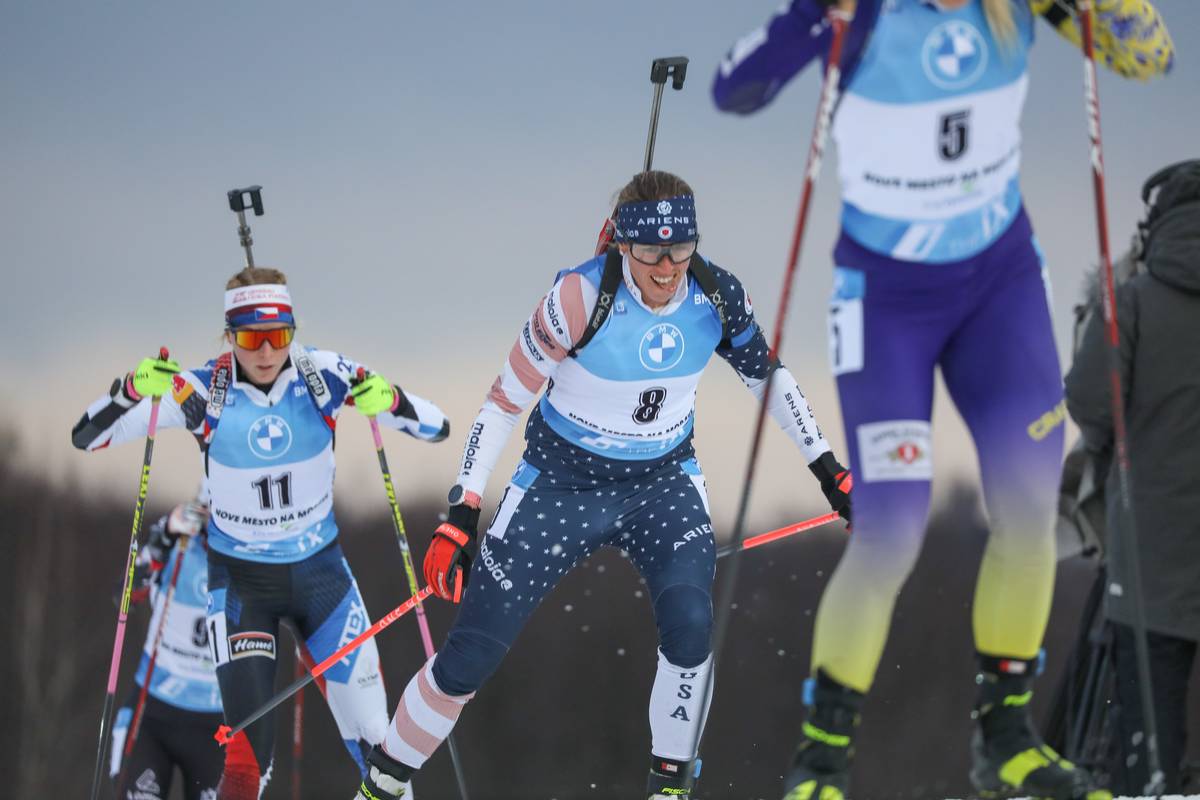
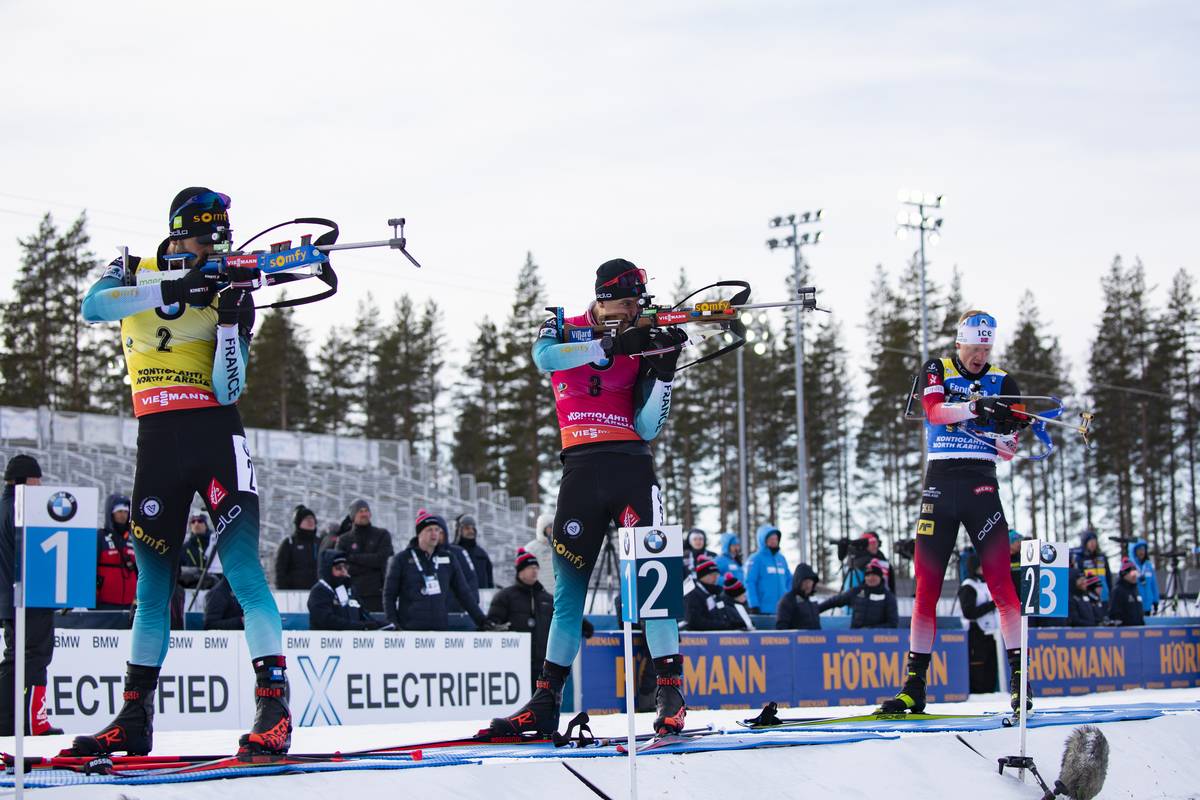
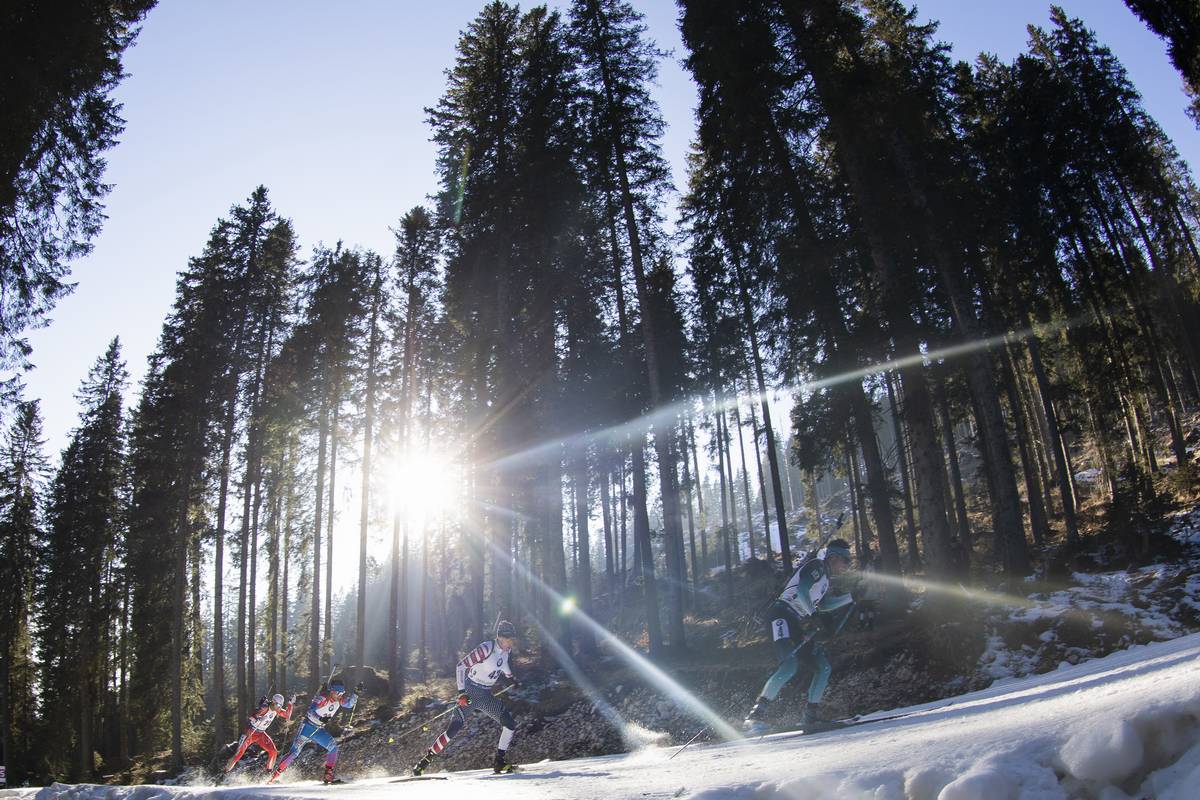
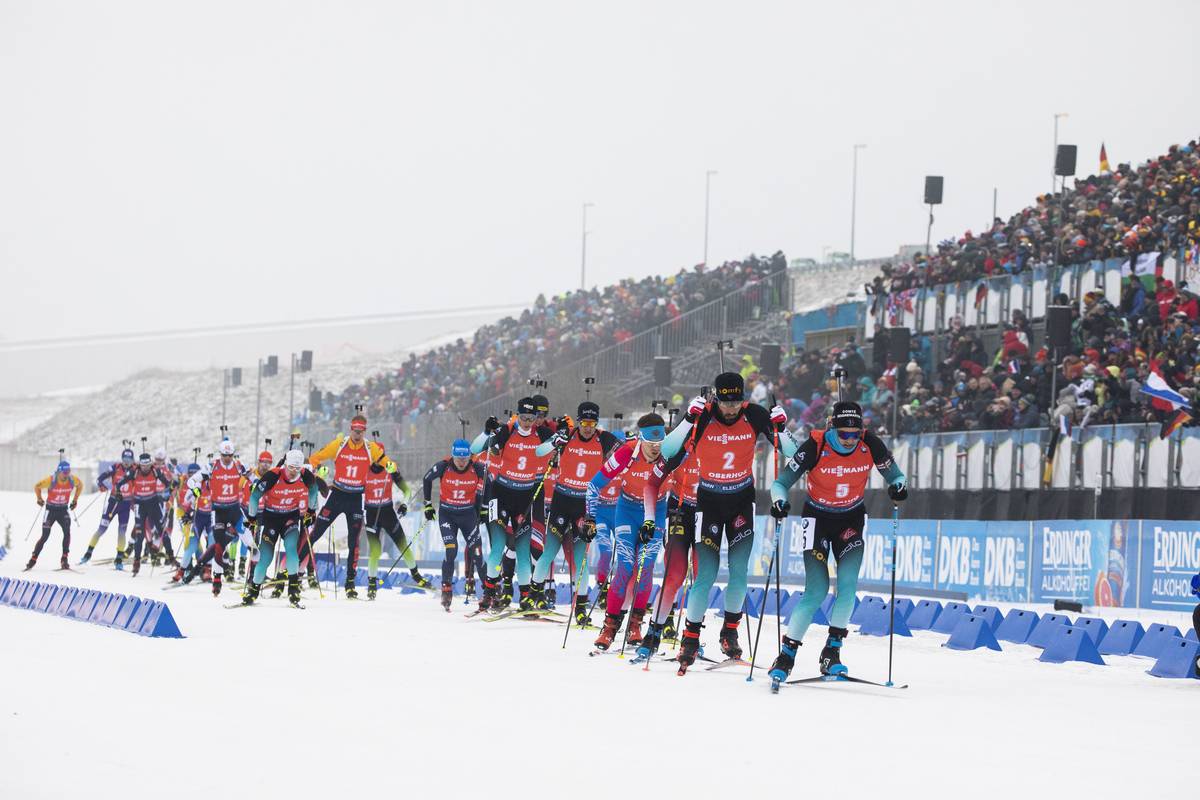
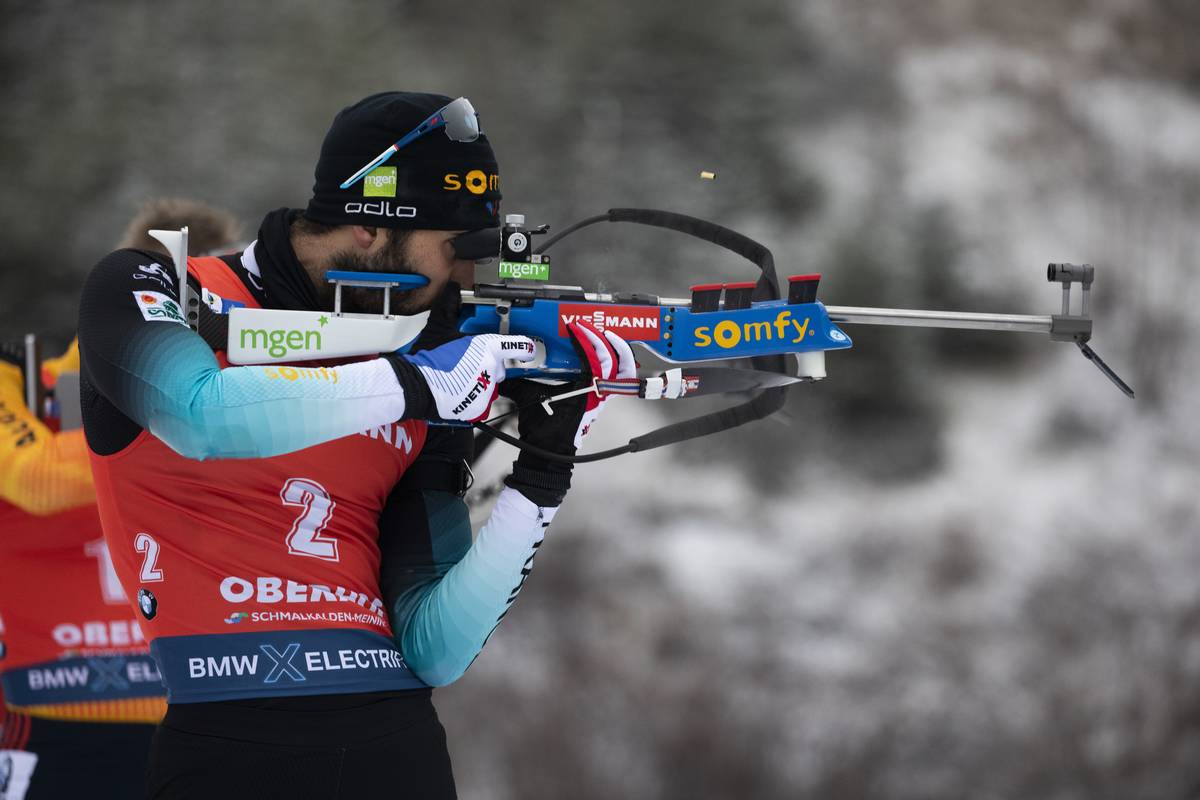
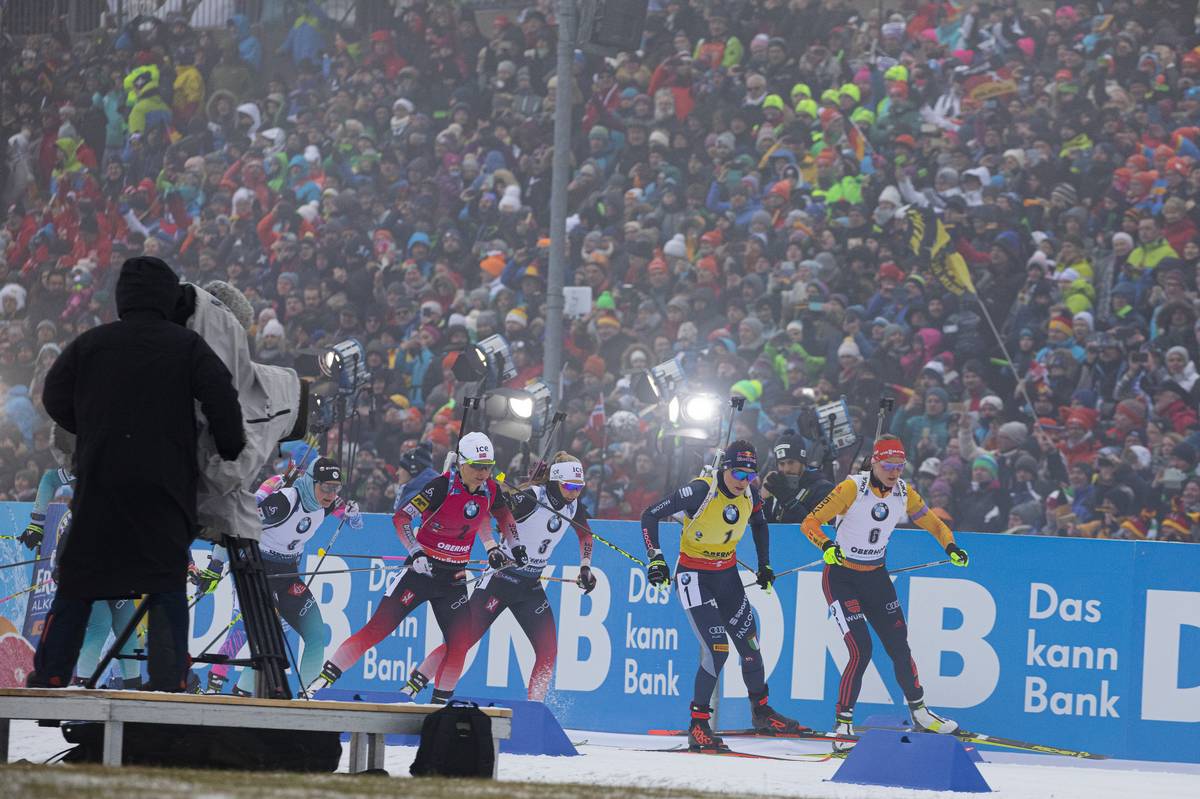
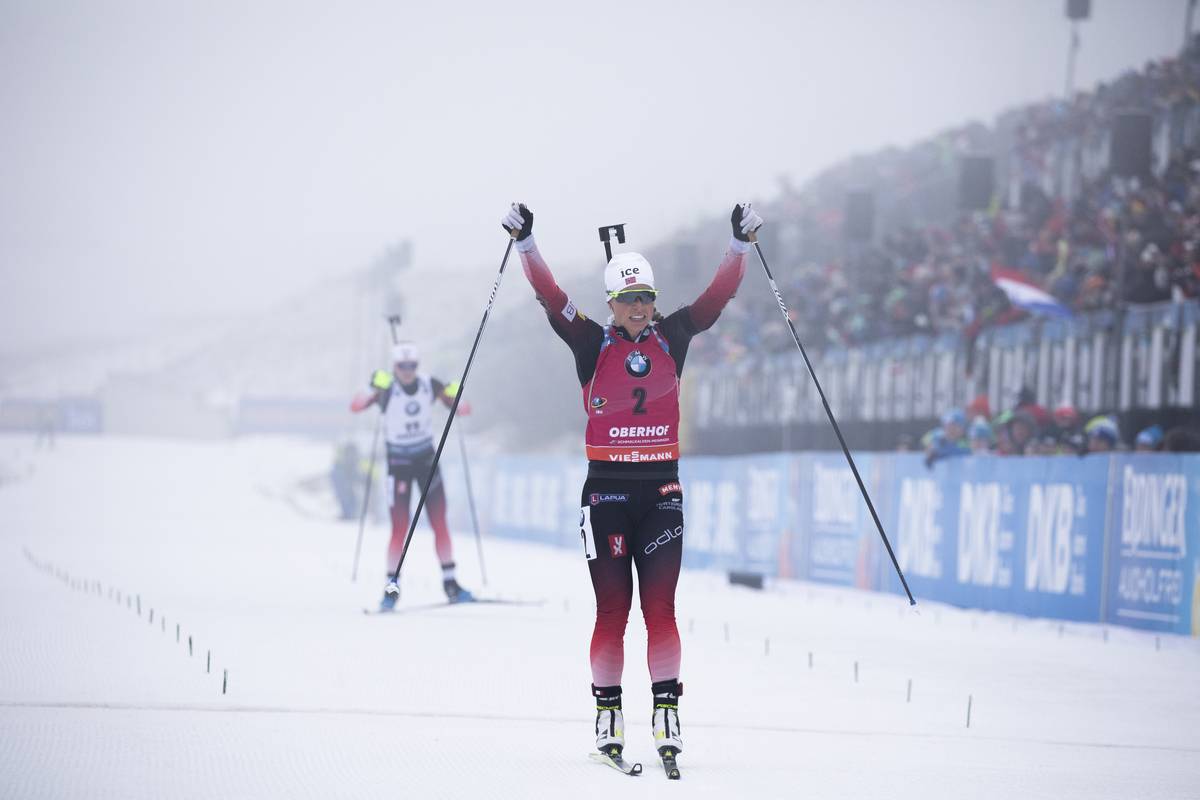
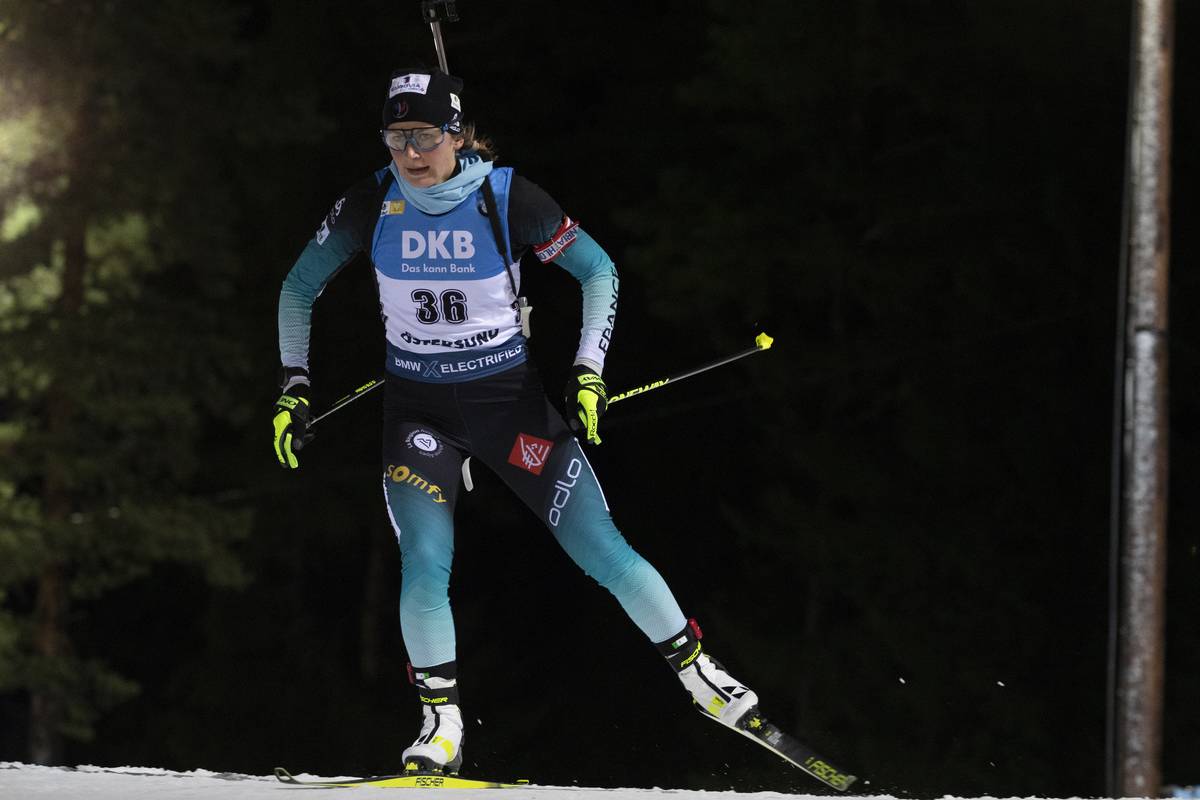
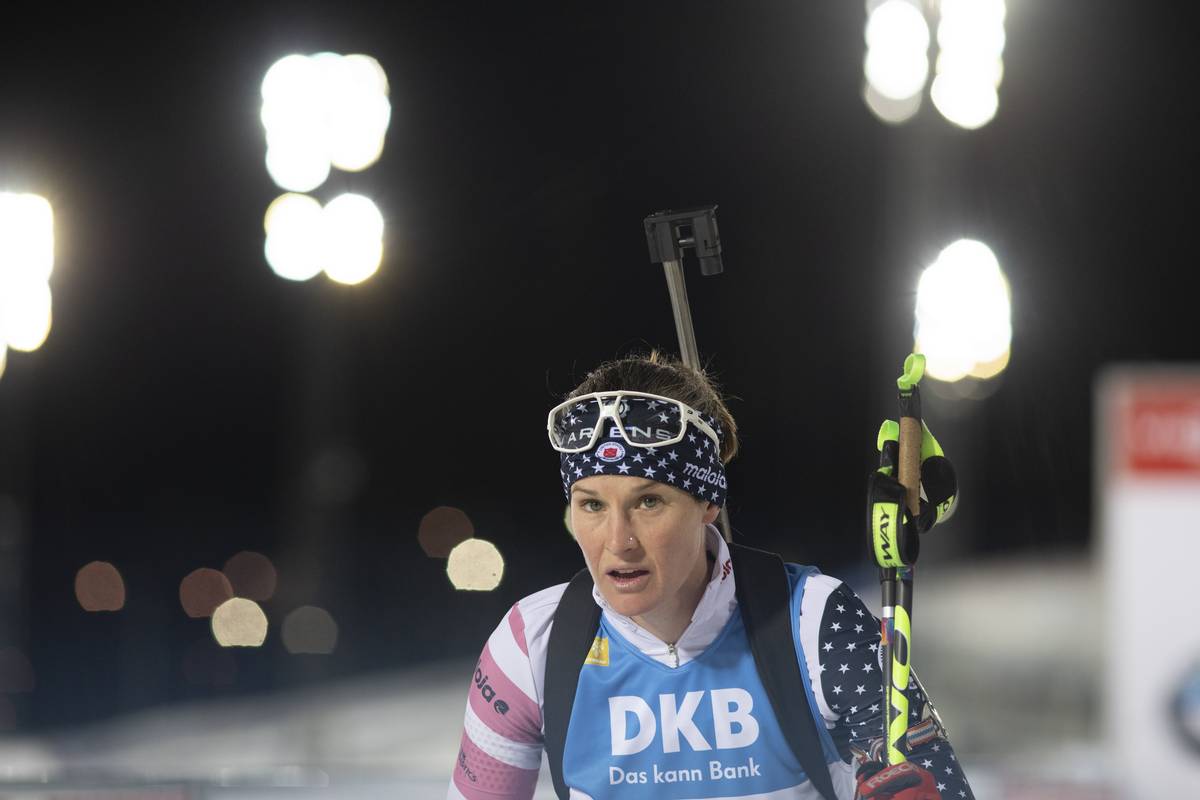
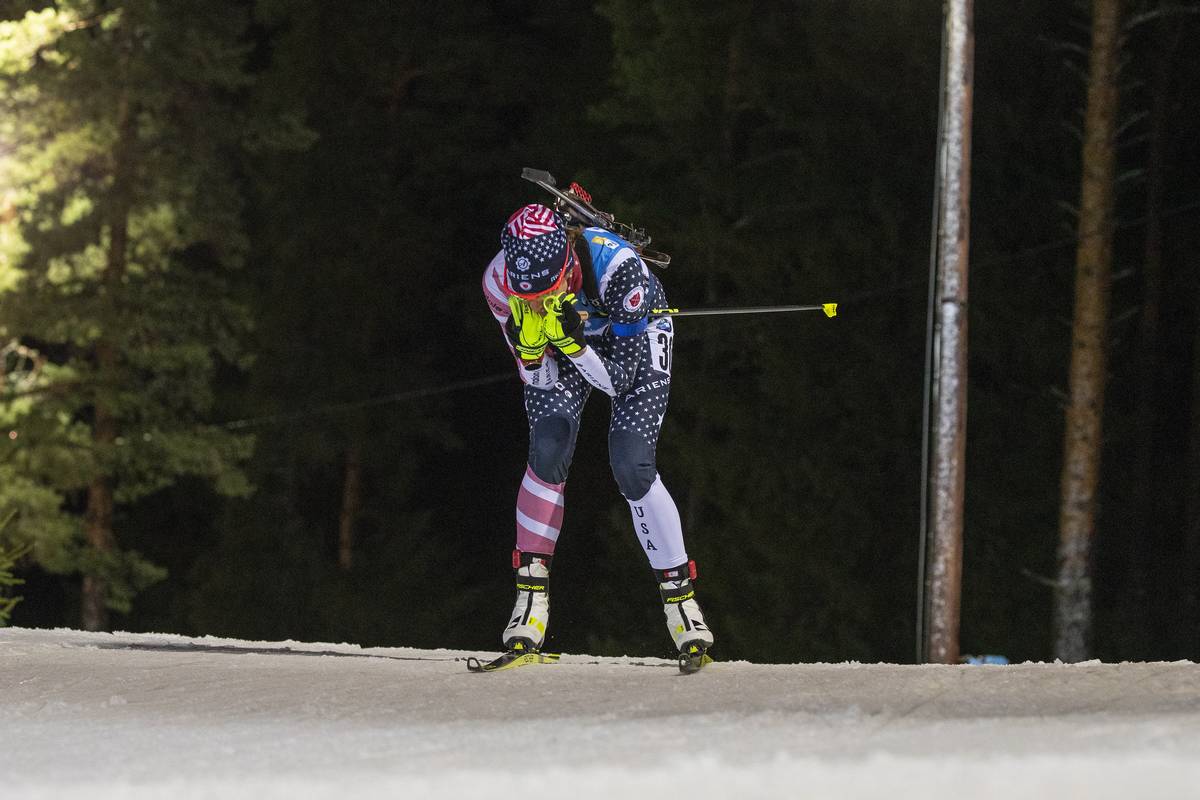
The mixed relay at the opening stop, Oestersund (SWE), of the 2025/26 IBU World Cup Biathlon season. (Photo: Manzoni/NordicFocus)
Over eight days, the best biathletes in the world raced 10 times. Maybe it was the arduous schedule, or the bit of sharpness that an Olympic year adds, but the Ostersund races didn’t feel like the first of the season. It felt like a break had never happened.
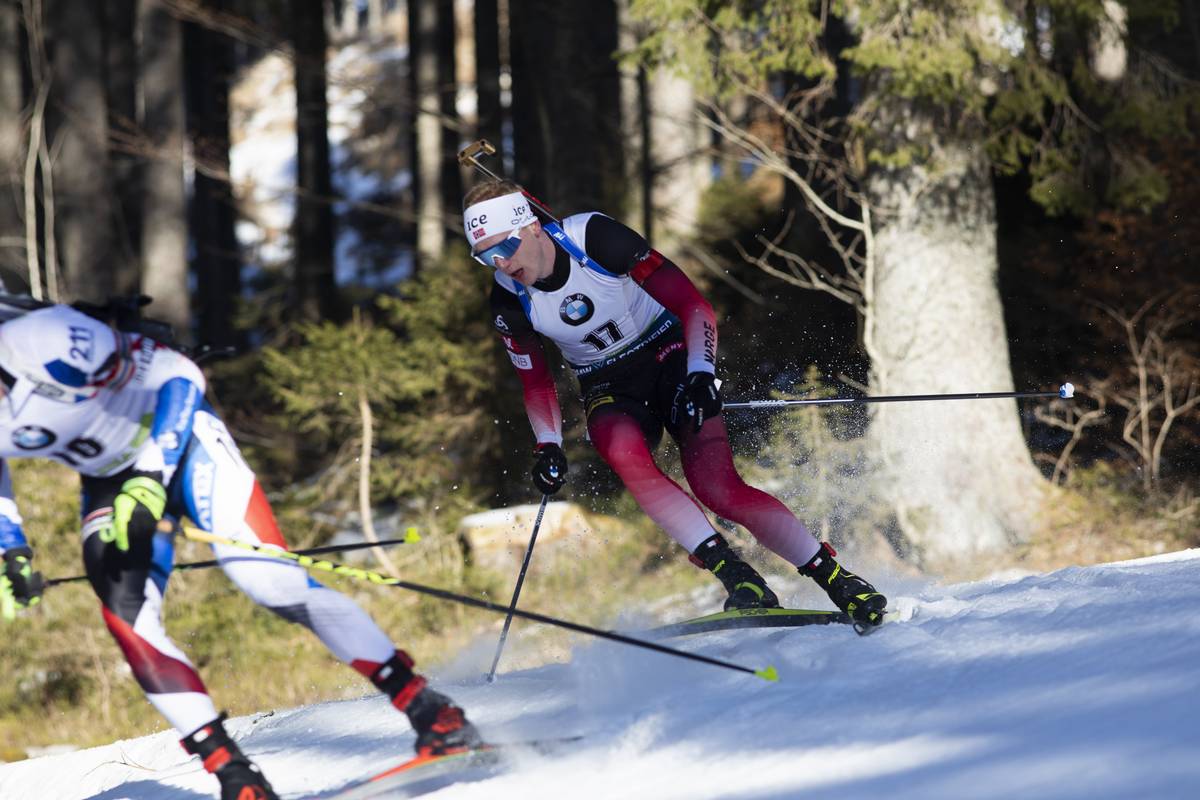
One question lingering from the off-season was answered quickly: What would Norwegian biathlon look like without the Boe Brothers? The dominant duo of Johannes Thingnes and Tarjei Boe – owners of eight Olympic medals – retired at the end of the 2024/25 season. Leaving what one would assume would be a major hole in the program. But when the Norwegian men came out and won the men’s 4 x 7.5km relay at Ostersund, the Norwegian’s roster depth became clear.
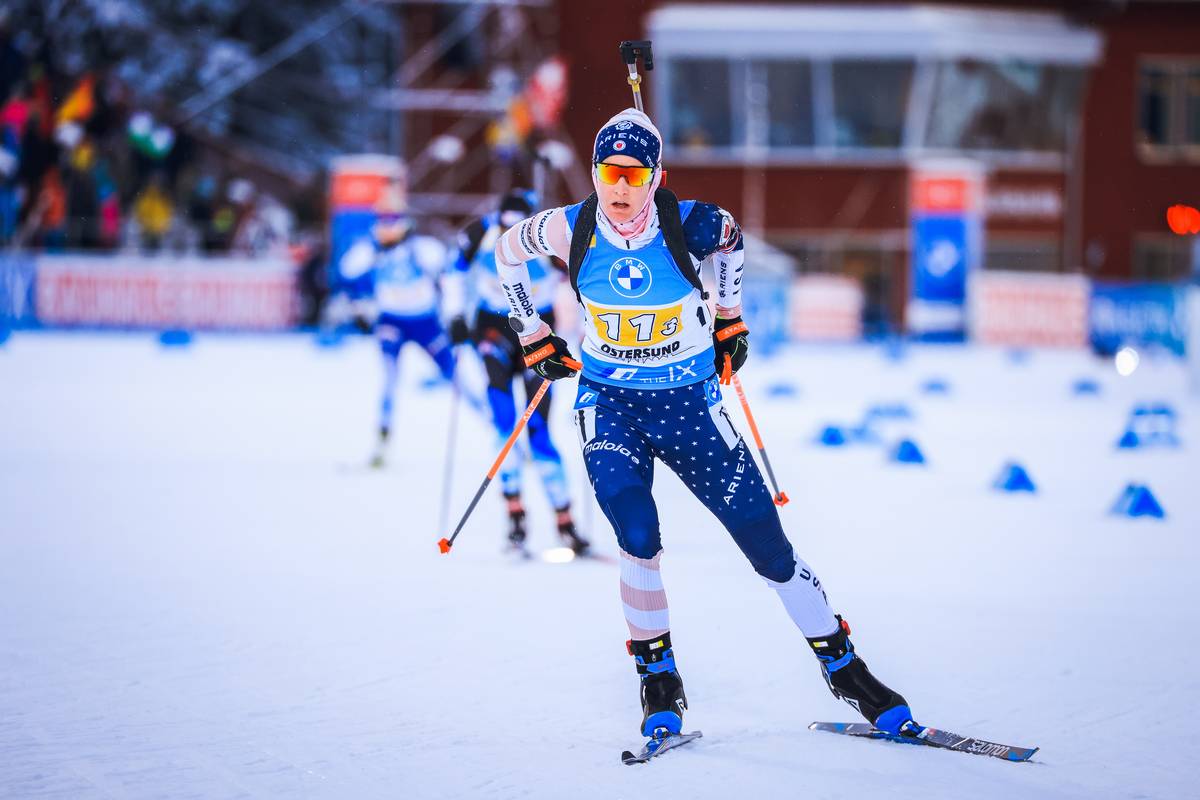
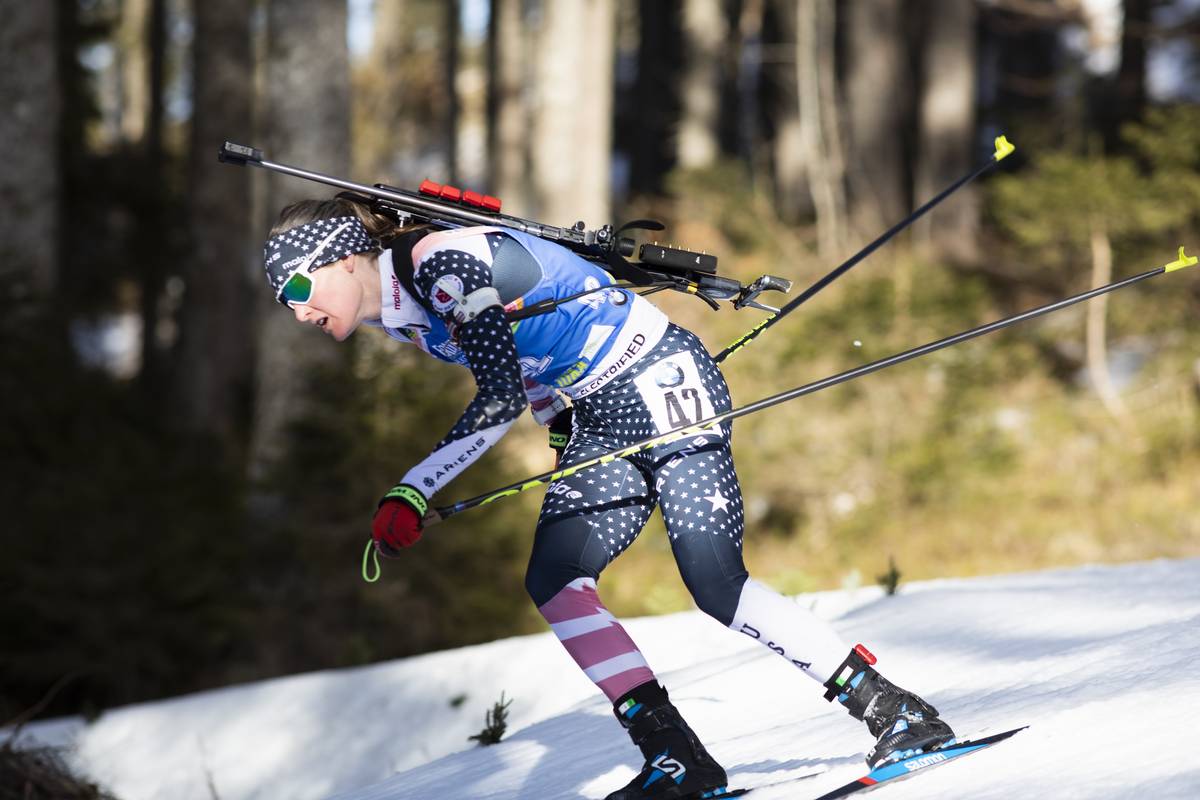
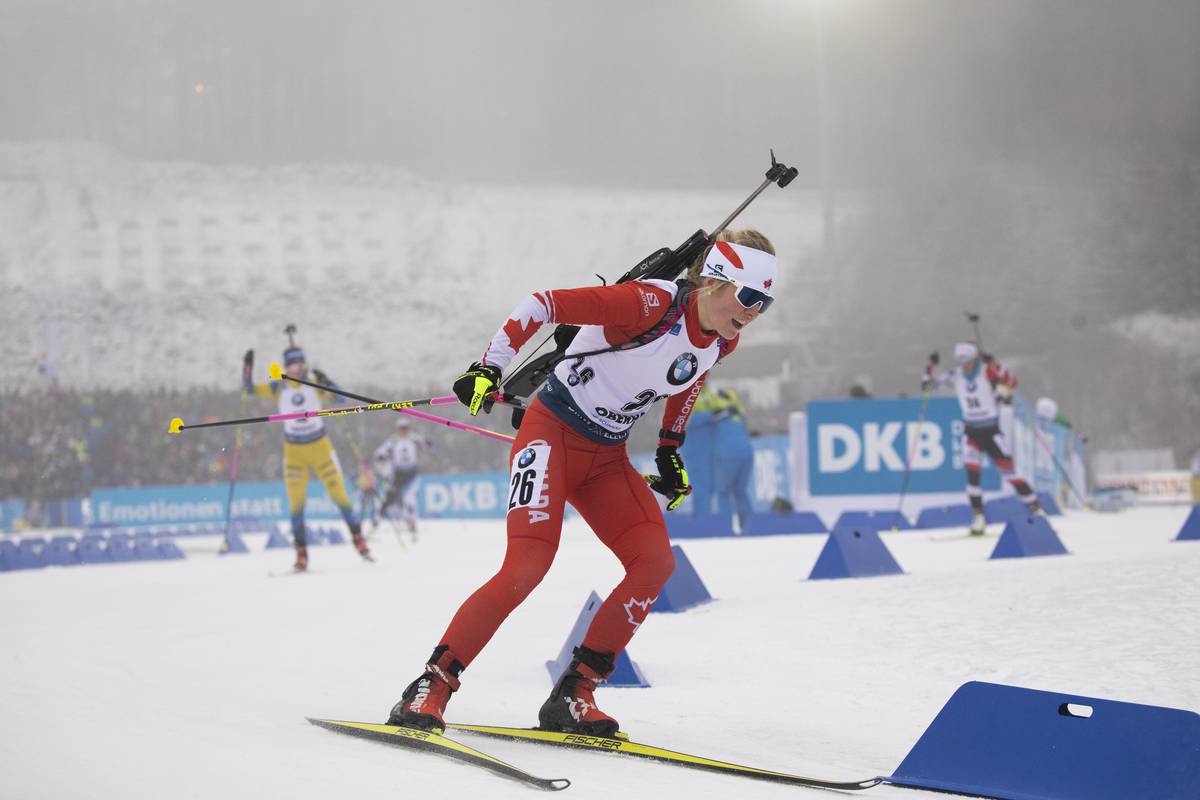
Campbell Wright (USA) during the IBU World Cup Biathlon Men’s Relay in Östersund (SWE). (Photo: Manzoni/NordicFocus)
The men’s relay saw a top result from the U.S. men, as well. Paul Schommer, Campbell Wright, Maxime Germain and Sean Doherty finished fifth, one of the best men’s relay finishes ever for Team USA. The next day, at the mixed relay, Germain, Wright, Chloe Levins and Deedra Irwin placed sixth – which is the best finish for a U.S. mixed relay since 2021.
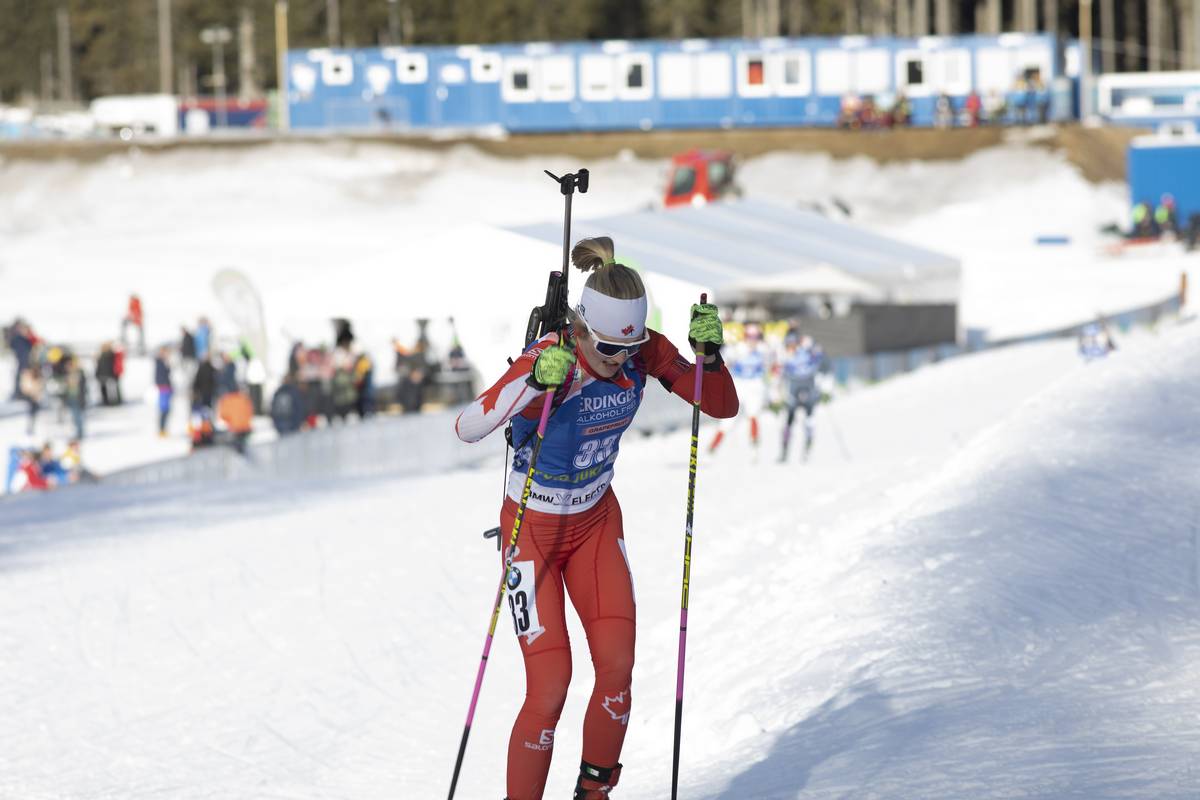
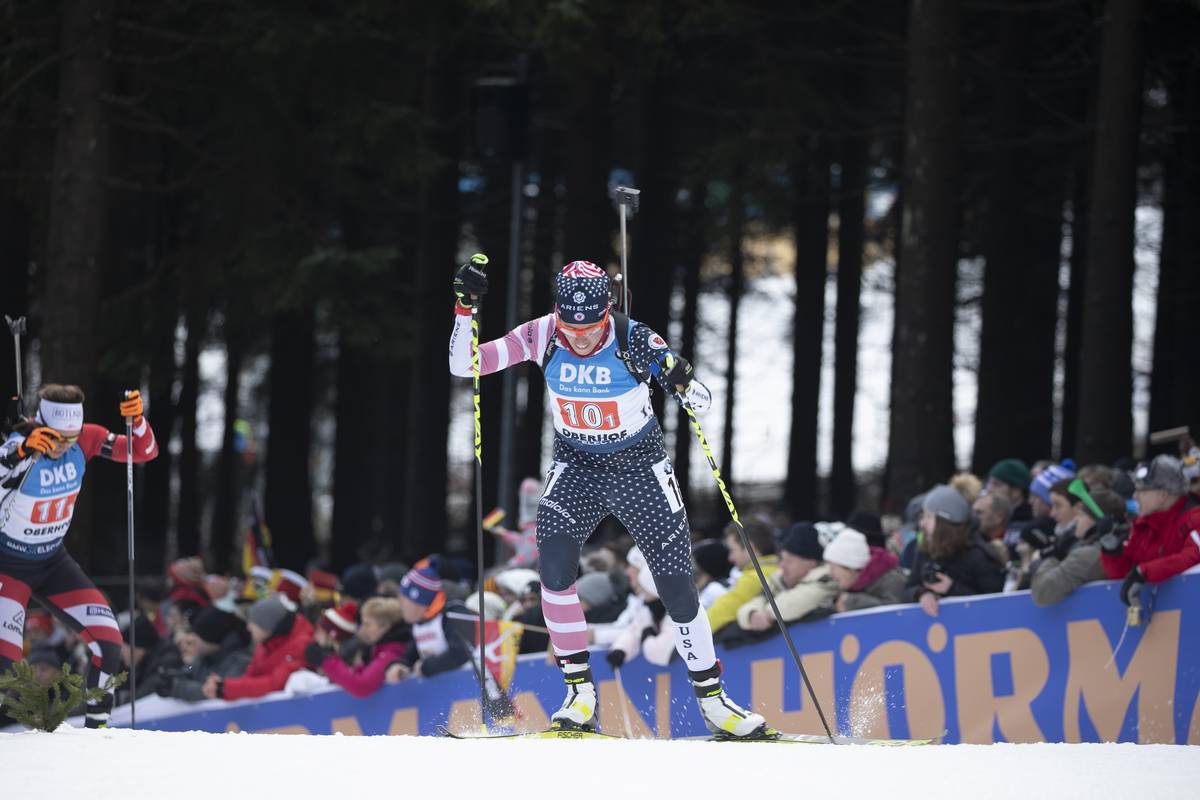
Artem Tyshchenko (UKR) and Paul Schommer (USA), (l-r) during the Men’s Relay in Oestersund (SWE). (Photo: Manzoni/NordicFocus)
Germain and Wright continued to build on their early-week momentum, with Germain placing 11th in the sprint. In the pursuit, Wright hit all 20 targets for the first time in his career and moved up from 18th to 6th. Wright is coming off a stellar 2024/25 season, where he podiumed twice at World Championships, becoming the first American to do so.
Throughout the week, there were highs: Suvi Minkkinen of Finland won her first World Cup sprint. The Norwegian men placed four in the top five in the 20km individual, solidifying their capabilities as a team sans-Boes. And as always in biathlon, some lows: Eric Perrot of France missed his final shot in the pursuit, a devastating moment that cost him the lead. He finished fifth.
Racing wrapped up in Sweden, and teams flew to Austria. In Hochfilzen, a less rigorous racing schedule awaits: sprint, pursuit, and then a men’s and a women’s relay. A few more hours of daylight await, too.
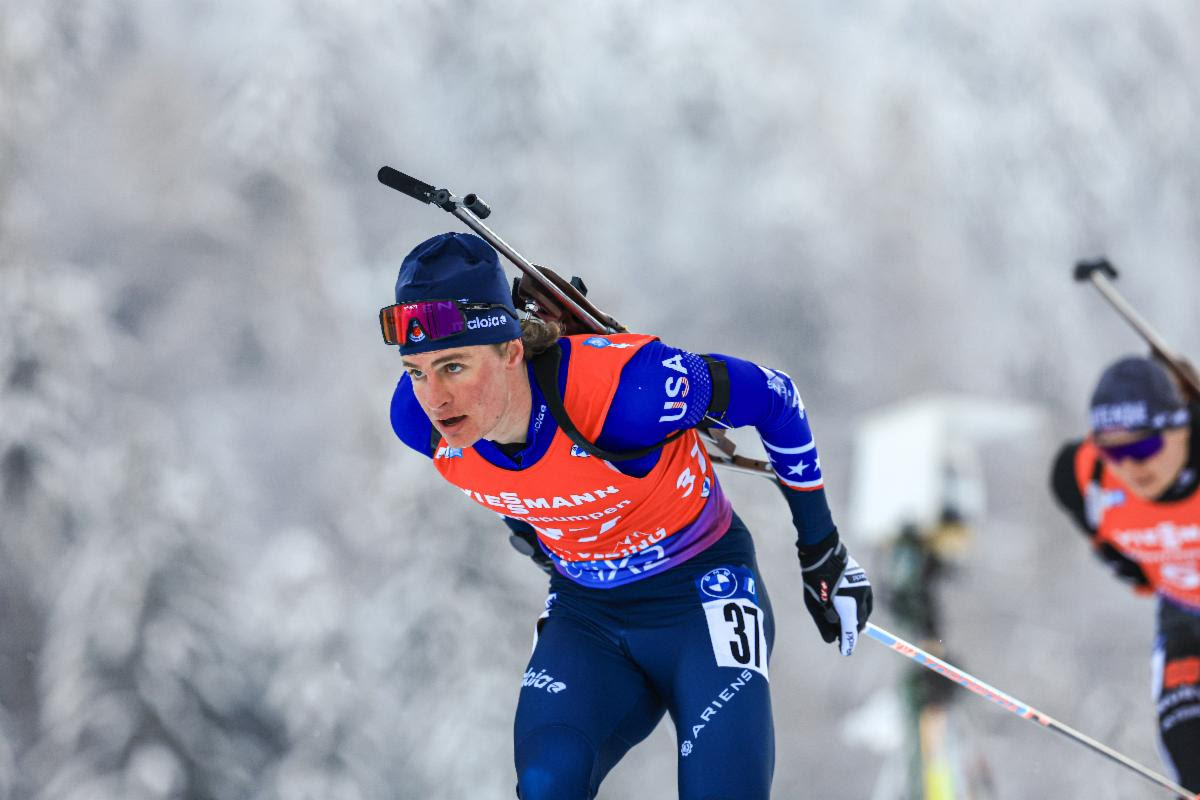
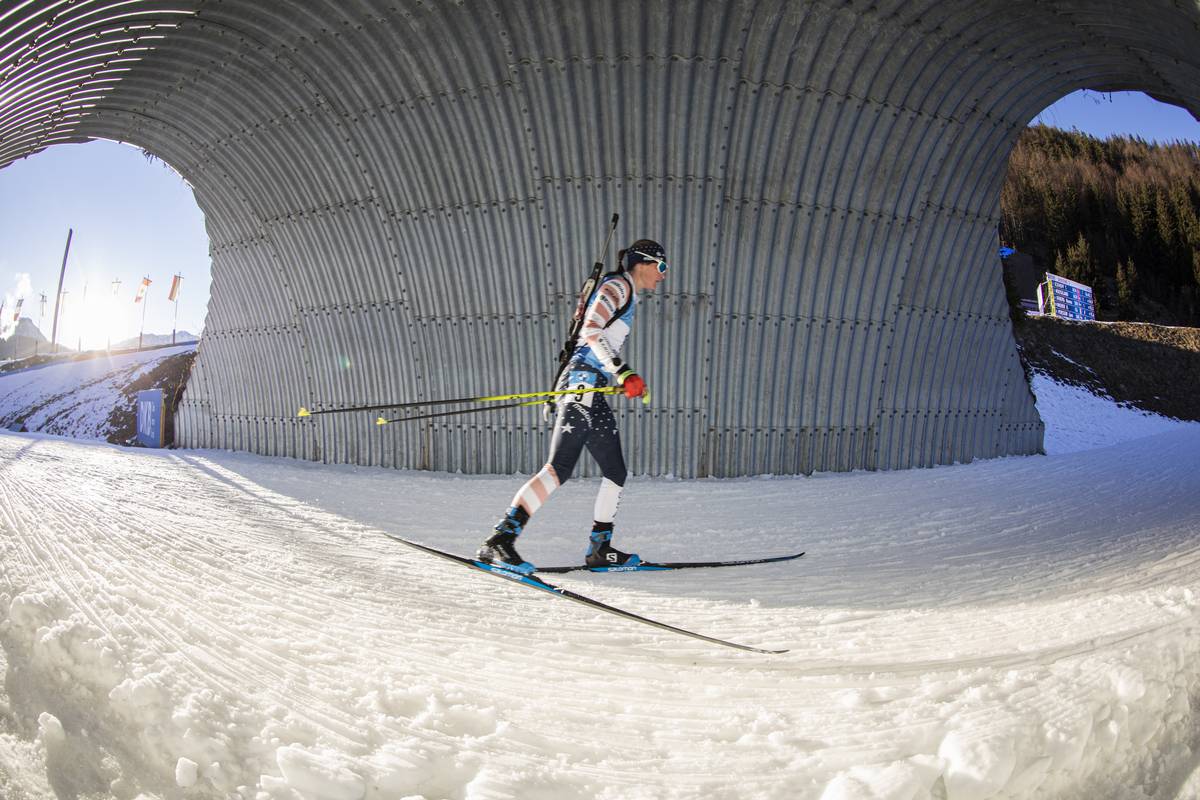
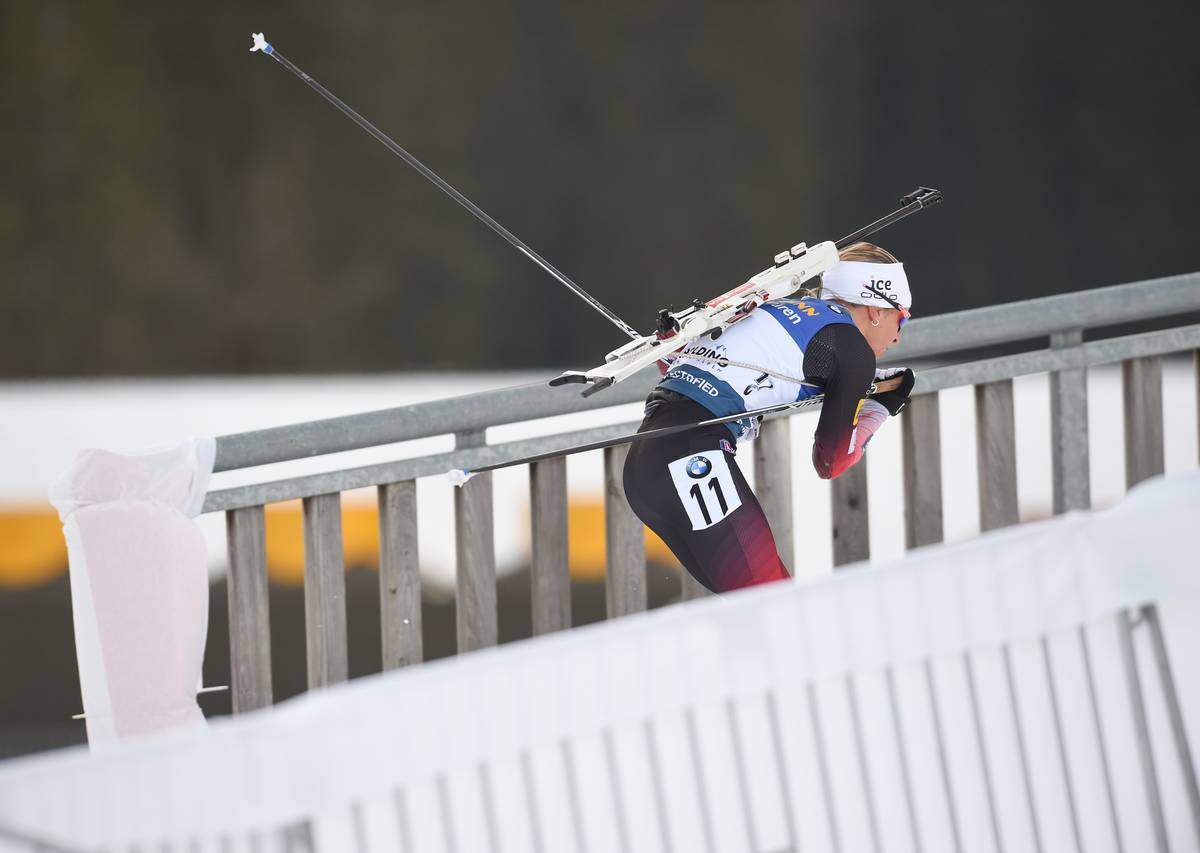
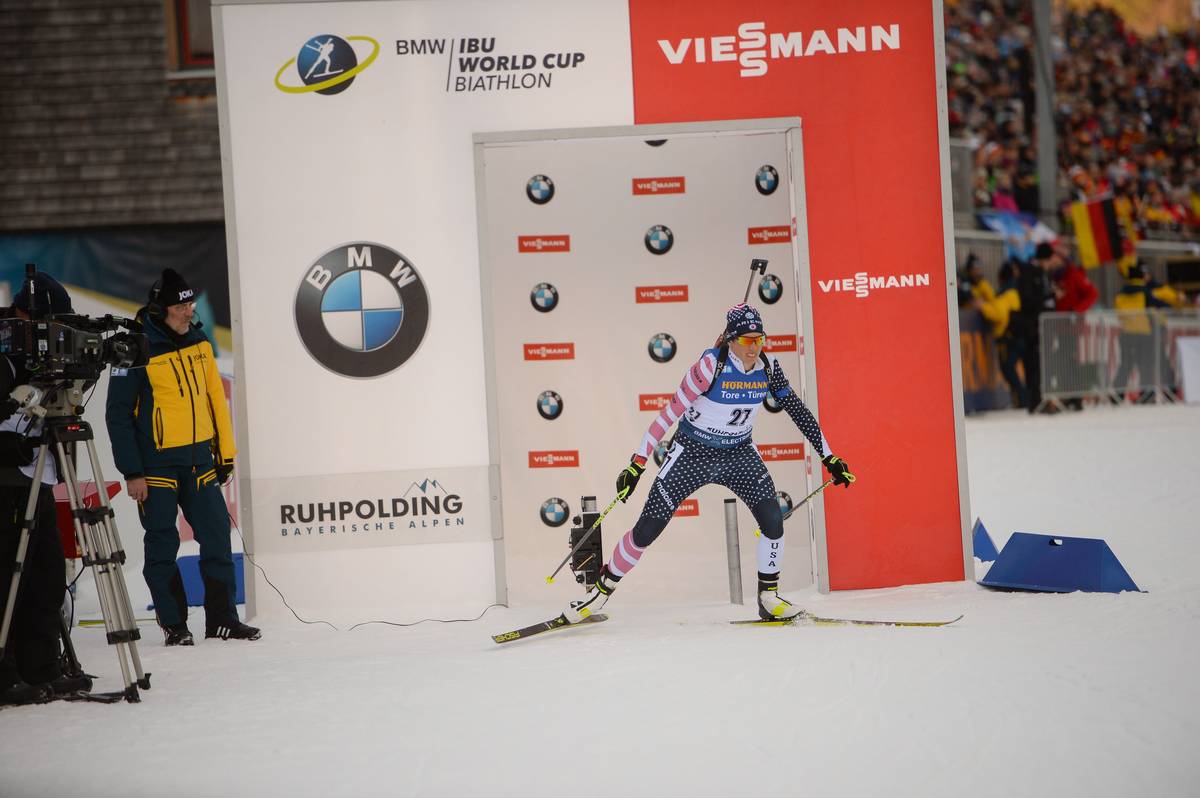
Campbell Wright (USA) finished a career best 12th in the IBU World Cup Biathlon Sprint in Ruhpolding, Germany. (Photo: Manzoni/NordicFocus)
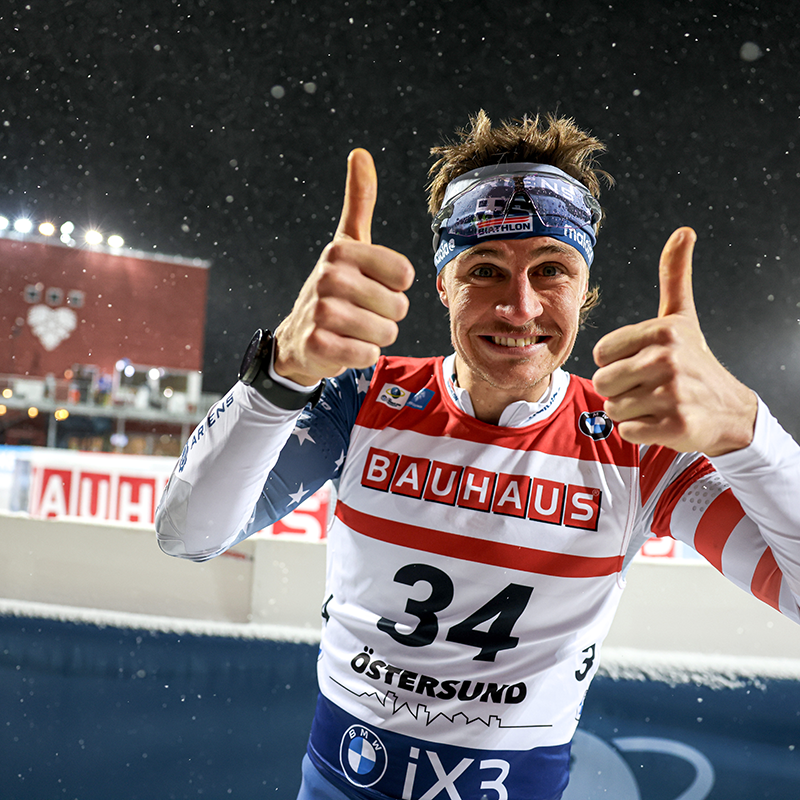
Campbell Wright (Wanaka, NZL/U.S. Biathlon) raced to a World Cup personal best 12th place in the men’s 10km sprint in Ruhpolding, Germany, his second race of the weekend. With only one miss in standing, Wright crossed the finish line just 0.9 seconds behind Philipp Horn of Germany.
“I’m feeling really good on the skis,” said Wright. “Great contrast from Oestersund when I was 100th ski time, so good progression. Just loving it.”
Wright was +50.1 behind the sprint victor, Vetle Christiansen of Norway, who shot clean. Christiansen was joined on the podium by Tommaso Giacomel of Italy and Norwegian teammate Tarjei Boe. Feeding off the energy from his stellar relay leg on Thursday, Wright was able to re-write his previous World Cup personal best 15th from the 2021/22 season in Antholz, Italy.
“Campbell had a really smart race today,” said U.S. Biathlon Team Head Coach Armin Auchentaller. “On the first loop he had Tarjei Boe in front of him and we kept telling him to stay in the draft, which allowed him to save energy for the second loop, where he had one of the best course times. He stayed relaxed and did a good job on the range with a fast shooting time. I am very proud of him.”
Jake Brown (Saint Paul, MN/Craftsbury Green Racing Project) skied to 57th, shooting clean in prone and missing just one target in standing. Brown will race with Wright in tomorrow’s pursuit. Vincent Bonacci (Salt Lake City, UT/Team Crosscut) hit nine of ten targets and finished in 66th. Sean Doherty (Center Conway, NH/National Guard Biathlon) did not start in the sprint.
Racing will kick off tomorrow with Deedra Irwin (Pulaski, WI/Army World Class Athlete Program) racing in the women’s 10km pursuit set to begin at 6:30 ET/12:30 CET. Wright and Brown will follow suit in the men’s 12.5km pursuit at 8:45 ET/2:45 CET. For information on how to watch, visit usbiathlon.org/how-to-watch. For spectator resources, visit usbiathlon.org/spectator-resources.
About U.S. Biathlon
As the Olympic sports organization centered around the sport of biathlon, the United States Biathlon Association, known as U.S. Biathlon, is recognized by the International Biathlon Union (IBU) and the U.S. Olympic and Paralympic Committee (USOPC) as the national federation for biathlon in the United States. Founded in 1980, U.S. Biathlon exists to support and encourage the development of biathlon in the United States, to work with biathlon clubs and regional centers around the country to organize training and competition from the grassroots to elite level, and to prepare athletes for international competition. U.S. Biathlon staffs and finances the U.S. Biathlon national and junior national teams and is a 501 c (3) non-profit organization. For more information, visit usbiathlon.org.
Deedra Irwin (Pulaski, WI/Army World Class Athlete Program) raced to a World Cup-best eighth place in the women’s 7.5km sprint, kicking off the first-ever World Cup in Lenzerheide, Switzerland. She landed just one spot off her career-best seventh place from the 2022 Olympics in Beijing, an historic finish for U.S. Biathlon.
“Emil and Armin really helped me put together a good ski plan for the race the past couple of days, and I really felt confident on the range all week,” said Irwin. “Fede, Gio and the wax team gave me amazing skis today. Honestly, we’ve all been saying it since Östersund that I have all the puzzle pieces and just had to fit them all together on the same day. Today was that day. It was a perfect team effort from everyone to keep me motivated and working the course from start to finish!”
Shooting a perfect 10/10, Irwin crossed the line only 13 seconds behind Germany’s Franziska Preuss and +1.12.6 off the leader, Justine Braisaz-Bouchet of France, who also shot clean. Braisaz-Bouchet was joined on the podium by Norway’s Ingrid Tandrevold and Italy’s Lisa Vittozzi.
Coming into the sprint race in Lenzerheide, Irwin’s World Cup personal best was a 14th in the sprint in Otepää, Estonia during the 2021/22 season. Jumping six spots to rewrite her personal best as eighth, reiterated Irwin’s place as a top contender amongst the women as they head into the pursuit on Saturday.
“I am really looking forward to the pursuit,” added Irwin. “I’ve never started this far up before and I’m ready to keep the momentum going.”
Team USA also had a World Cup personal best from Grace Castonguay (Jackson, NH/Ethan Allen Biathlon Club) with a 74th place finish in her second-ever World Cup start. Jackie Garso (Lake Clear, NY/Craftsbury Green Racing Project) finished in 80th. Kelsey Dickinson (Winthrop, WA/Craftsbury Green Racing Project) did not race in the sprint.
Looking to feed off the energy of Irwin’s result, the U.S. Biathlon men’s team will race in the 10km sprint tomorrow at 8:15 EST/02:15 CET. Live stream is available at eurovisionsports.tv/ibu/.
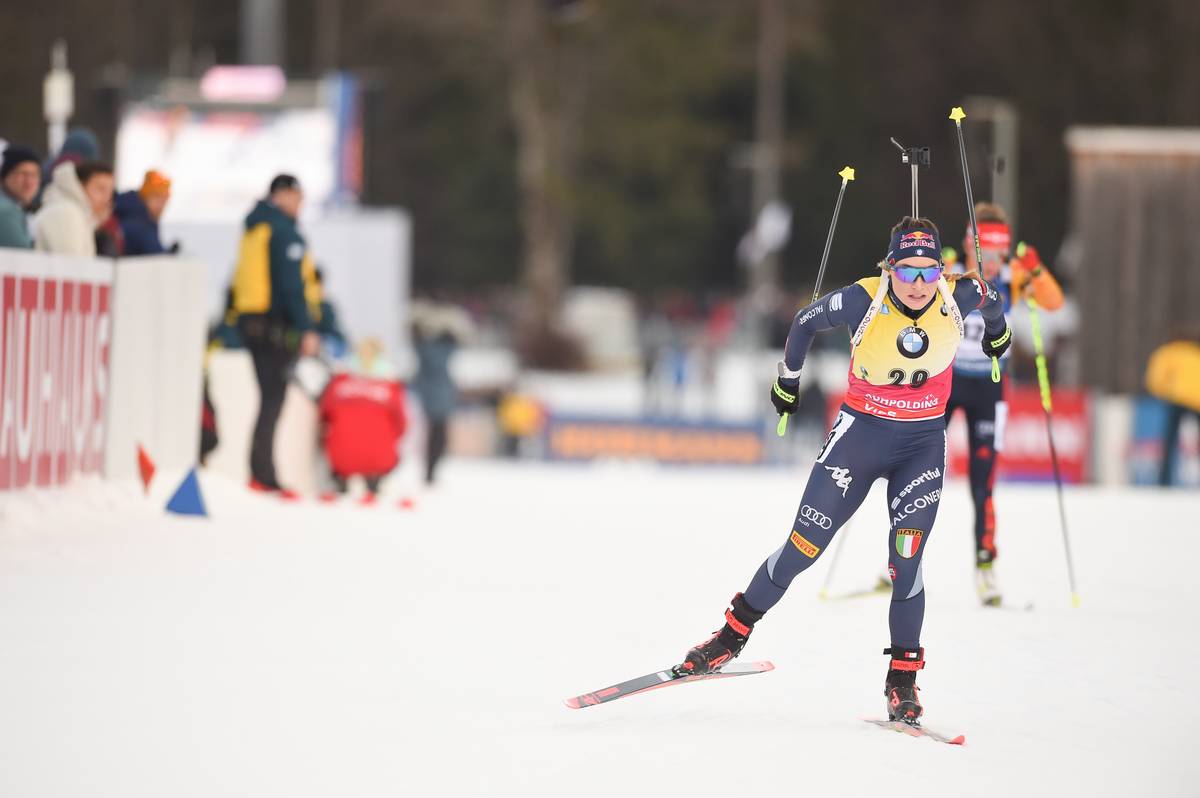
Deedra Irwin (USA) competes in the IBU World Cup Biathlon Lenzerheide, Switzerland. (Photo: Manzoni/NordicFocus)
Östersund, Sweden hosted the opening IBU World Cup weekend as it has on many occasions. (Photo: NordicFocus)
The sport’s governing body joins a UN campaign to fight climate change, and save Biathlon too.
***
Östersund, Sweden markets itself as Vinterstaden (The Winter City), a reputation it earned a century ago when the Nordic Games – the precursor to our modern Winter Olympics – were moved there from snowlessStockholm in 1905 and 1913. The International Biathlon Union (IBU) routinely puts Östersund at the very beginning of its world cup calendar, as it did this year (starting Nov. 26th).
At a time when watching the world’s best compete on a ribbon of white against a backdrop of brown and green has become all-too-common, the IBU puts its faith in Östersund to have natural snow and have it early. Östersund this season, however, was covered in just a dusting in early November, with mixed precipitation in the forecast. Weather models predicted that the venue would probably have snow when the World Cup came to town – probably.
That qualifier is new for Östersund, and with attention alreadyfocused on the massive snowmaking operation required for next February’s Olympics in Beijing, the 2021-2022 Biathlon calendar is marked all the way through with a reality that the winter climate the sport relies upon is changing. And in response to that change, the IBU has decided to make a change too.
On November 3rd, the IBUannounced that it has joined the UN’s Race to Zero climate campaign. In doing so, it joined forty-six other signatories including the International Olympic Committee, and becomes the first international winter sports governing body to meet the UN’s strictest criteria for non-state actors to fight climate change.
The Race to Zero campaign is part of the UN’s strategy to meet the Paris Agreement’s goal to halve global emissions by 2030 andlimit global warming to 1.5 degrees centigrade. The IBU’s commitment is part of the UN’s Sports for Climate Action program, which hopes to spur sports organizations to act as leaders in the“climate neutrality journey.” The list of signatories to the program’s non-binding pledge of sustainability is long, ranging from global brands such as the English Premier League to local races you may find outside your backdoor like Grandma’s Marathon in Duluth.
To join the Race to Zero the IBU was required to develop a specific plan and reporting process to reach 50% reduction in Greenhouse gas (GHG) emissions by 2030, and eliminate GHG emissions by 2050 (defined as “Climate Positive”). This includes requirements to plan, meet certain time intervals to act on that plan, and report publicly.
Joining the UN’s campaign builds upon the IBU’s pre-existing sustainability strategy – with the sport staking its very existence on limiting climate change. The strategy, adopted in 2019, calls for even faster action than the UN, looking “to become climate neutral by 2030, and climate positive by 2034,” beating the UN’s timeline by sixteen years.
Clare Egan (USA) competes in the IBU World Cup in Östersund, Sweden. (Photo: NordicFocus)
So how does the IBU plan to get there? Their sustainability strategy addresses topics that have joined technique talk and tales of past racing glory as common water cooler talk for those of us in the Nordic community the last few years. Eliminating fluorocarbons, and the persistentPFAs they’re known to leech into the snow, is a top priority. The largest change comes from the largest source of GHG’s though – the emissions from travel and transport of an entire circuit of athletes, coaches, media, wax technicians, and fans – around Europe and the world.
To address this, the IBU is implementing a carbon management program that pairs two points of emissions; 1) the IBU’s own infrastructure and 2) the venues the IBU uses for world cups.
Starting this season, the IBU is starting to convert their fleet of vehicles to electric and partnering with world cup venues to make sure that their energy and waste disposal systems are not contributing GHG’s to the atmosphere. In the short-term the IBU is investing in carbonoffsets for any venues that can’t immediately meet zero emissions requirements, but will need to convert outright by 2030 to meet the “no offsets” requirement of the Race to Zero.
Biathlon is a sport born of innovation, its very existence the pairing of an ancient mode of transportation with the weaponry of an industrial age. To survive in a time of climate crisis, it’s staked itself on constructing a strategy with the same thoughtful action it takes to slow one’s heart in the flash of a moment. When it heads to the north of Sweden in a few weeks to begin a new season full of hope in a place that defines itself as a season – Vinterstaden – it will come armed not only with a .22 on the back of its athletes, but a plan to hit the targets that will allow it to exist as a sport in a world that’s sustainable for all – from Europe to Beijing, and back here in North America too.
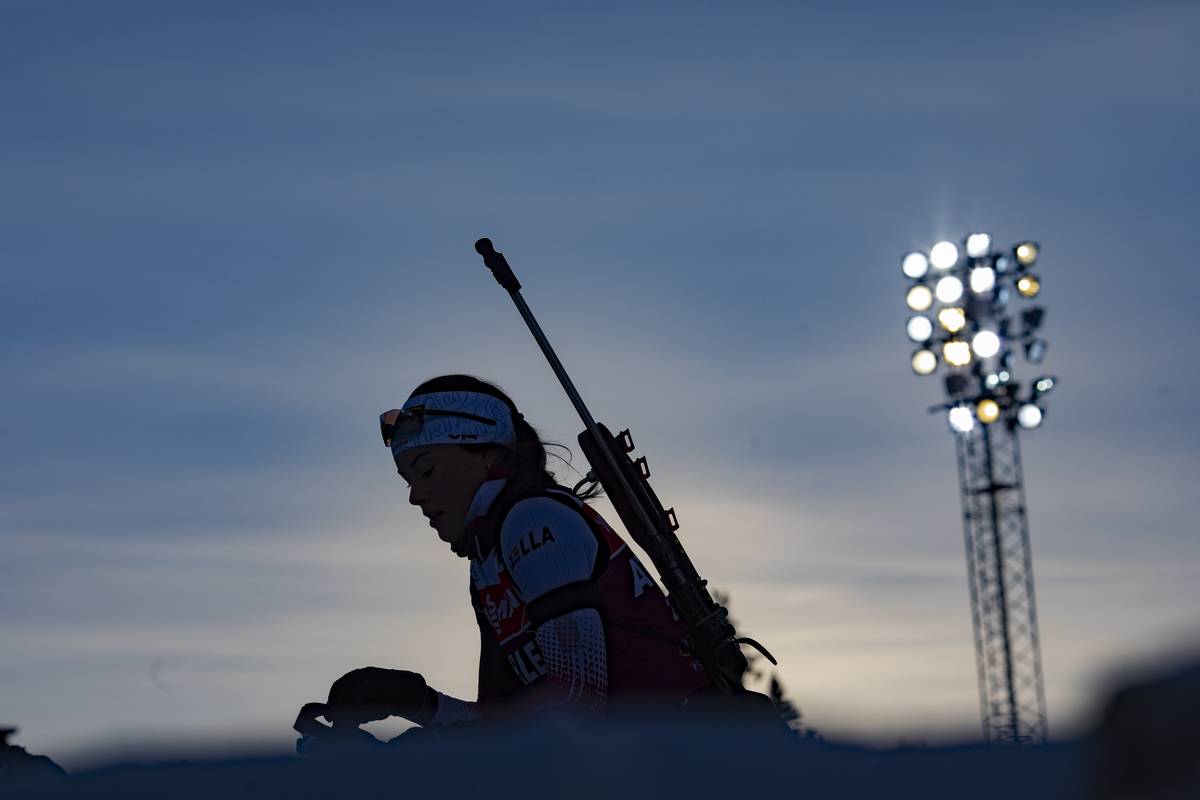
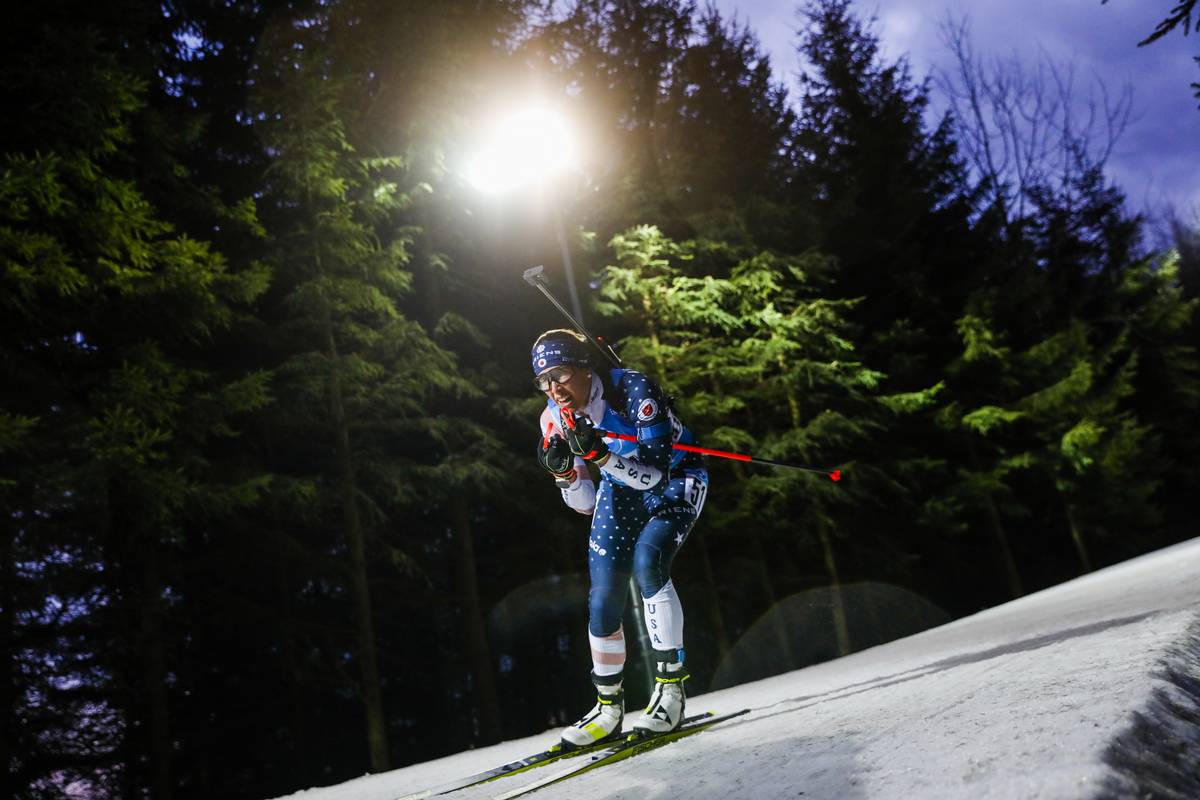
A biathlete competes under the lights on the tracks of Östersund, Sweden. (Photo: NordicFocus)
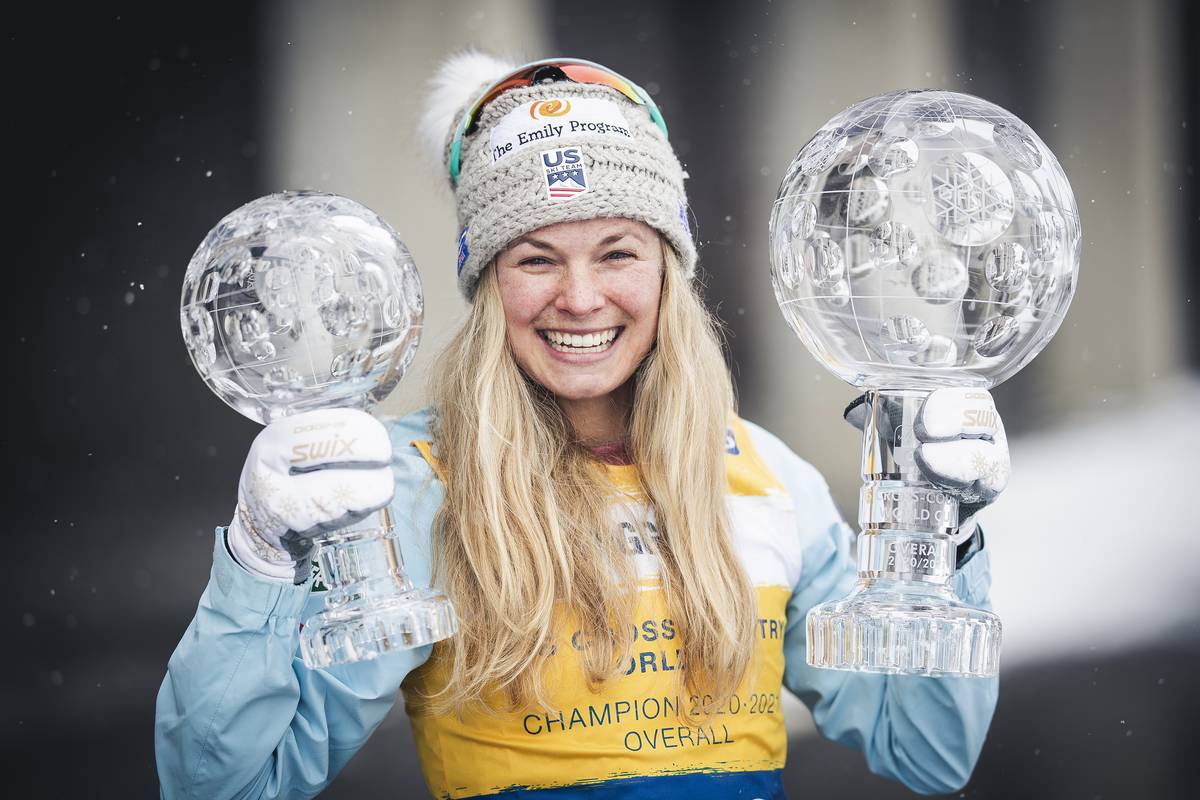
Jessie Diggins: 2021 World Cup crystal globe winner – overall and distance. (Photo: NordicFocus)
The long-awaited “how to watch” article is here. I hear you — the season is a week away. What took so long?
Simply put, negotiating contracts with the various agencies that film and produce World Cup coverage is a complicated process. Olympic Channel announcer Chad Salmela used the word “cumbersome” to explain the process through which NBC secures the rights to these broadcasts. Cumbersome is not ideal when it comes to small niche sports that are not bringing in the same type of viewership or revenue as a sport like American football.
How this impacts this article: currently, no cross country or biathlon events are listed on PeacockTV. Until this week, the Davis U.S. Cross Country Ski Team Communications Director Tom Horrocks did not have conclusive information from NBC on scheduling. Similarly, Preston Noon who handles IT and Membership for the US Biathlon Association (USBA) did not receive a watch schedule from the Olympic Channel until last week, and NBC remains in flux. In short, it has taken us so long to present this information because we simply haven’t had it.
While last season, almost every cross country event could be watched through NBC’s PeacockTV streaming platform, this year will look a bit different. Events will be streamed live on either PeacockTV or on a new independent streaming site, Ski and Snowboard Live. Some weekends, races will be available on both platforms. An in-progress calendar indicating which streaming platform will feature each World Cup venue can be found here.
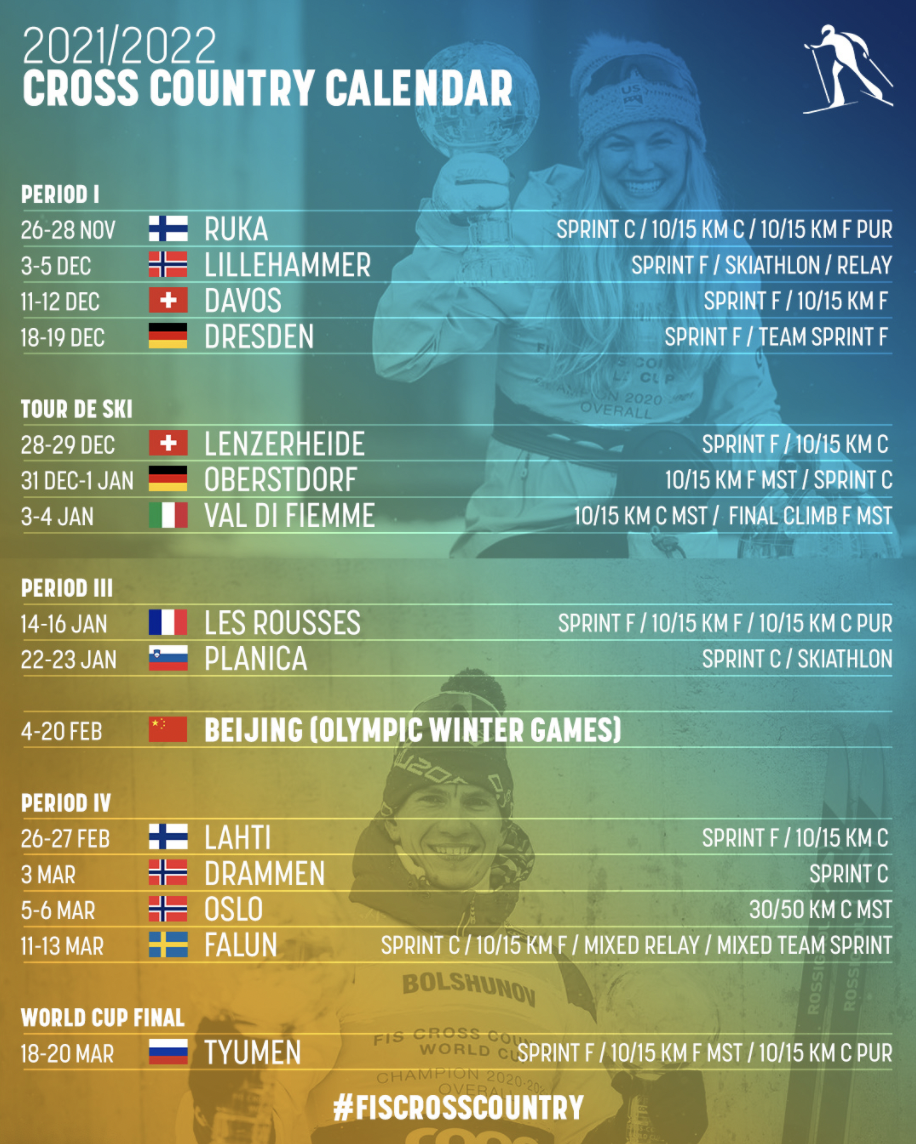
The 2021-22 FIS Cross Country events calendar. Click to enlarge. (Photo: Instagram @fiscrosscountry)
For example, the opening mini-tour in Ruka, FIN which begins next Friday, November 26th at 6:30 am Eastern can be streamed on both Peacock or Ski and Snowboard Live, however, the Lillehammer World Cup beginning December 3rd is only available on Ski and Snowboard Live. Based on the information available so far, these races will be a livestream only with no commentary.
Post-script update: After publication, U.S. Ski and Snowboard received information from NBC that all cross-country World Cup events will be available on PeacockTV. At this point, theNBC broadcasts will not include commentary, however, there will be English commentary on Ski & Snowboard Live.
As the Beijing Games grow nearer, we will run a separate article on viewing, which may require an additional subscription to access the Olympic Channel.
A premium subscription to Peacock TV is $4.99 per month plus an additional $5 per month for add-free viewing. If you are a customer of XFinity or COX, you have access to PeacockTV at no additional cost. On Ski and Snowboard Live, you have the option to either purchase a pass for a specific weekend of events for $2.99, or to subscribe for the whole season for $74.99. Subscribers also receive access to downhill, slalom, snowboard, and freestyle skiing events.
You can also expect timely individual race coverage and analysis from FasterSkier’s race reporting team as well as colorful commentary from our Canadian friend in Norway, Devon Kersaw. We hope this content enhances your experience as a fan of the sport.
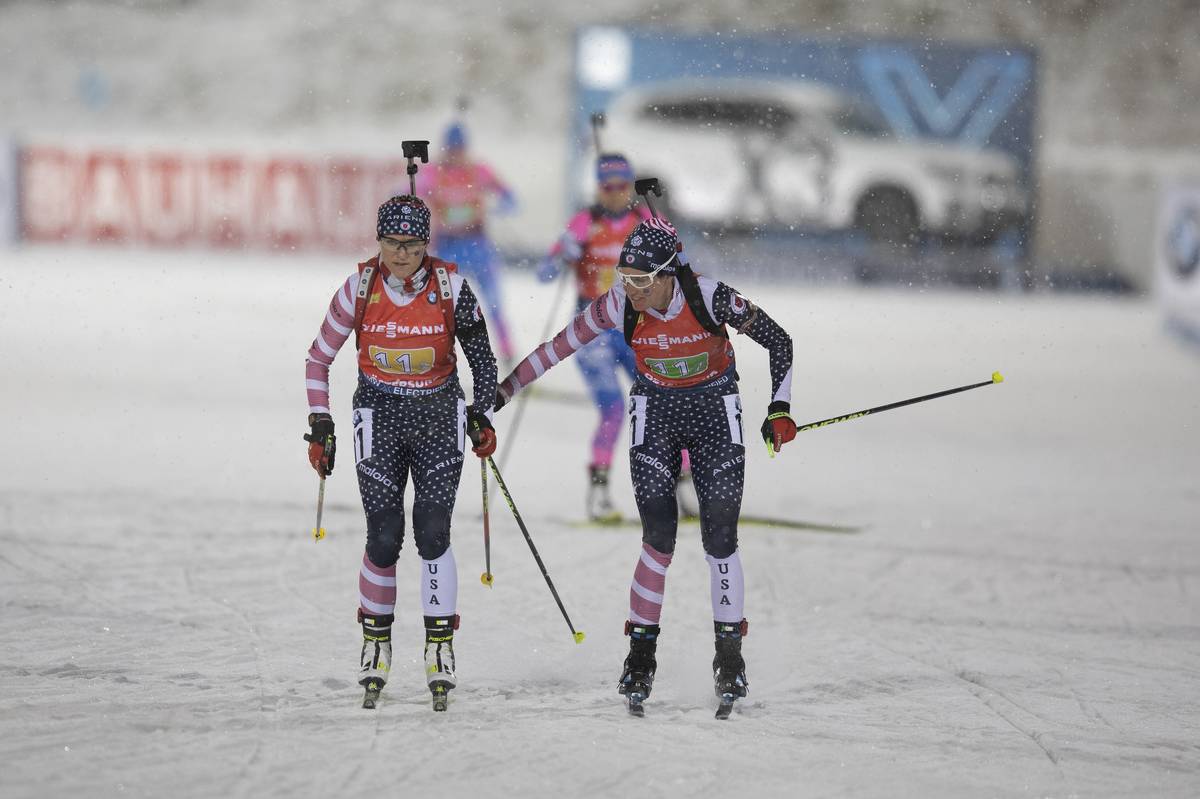
Clare Egan tagging Joanne Reid during the IBU World Cup 4 x 5 k relay in Östersund, Sweden. (Photo: NordicFocus)
On the biathlon side, at least the first four World Cup stops will be featured on the Olympic. This calendar begins in Östersund, SWE on November 27th and ends in Annecy, FRA on December 19th. These events will be streamed live with commentary; Salmela confirmed that he has been hired to call each of the events in Period 1.
(Read about the IBU’s plans to improve fan experience here.)
To view the Olympic Channel, you’ll need a subscription to a separate streaming service like Hulu Live TV or YouTubeTV. The cost of these platforms varies.
There you have it! As more information becomes available, we will provide updates to keep readers abreast of any changes or insights. In the meantime, see you here on Friday, November 26th for the opening cross country sprint races in Ruka!
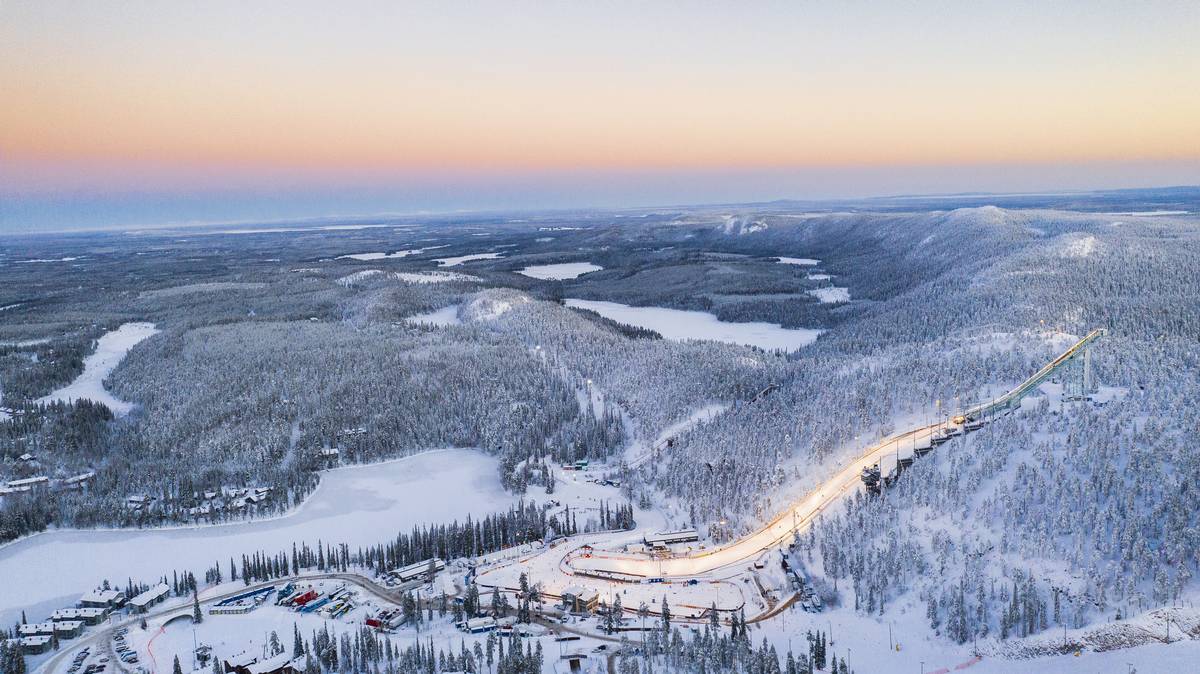
The Ruka, Finland racing/jumping complex. (Photo: NordicFocus)
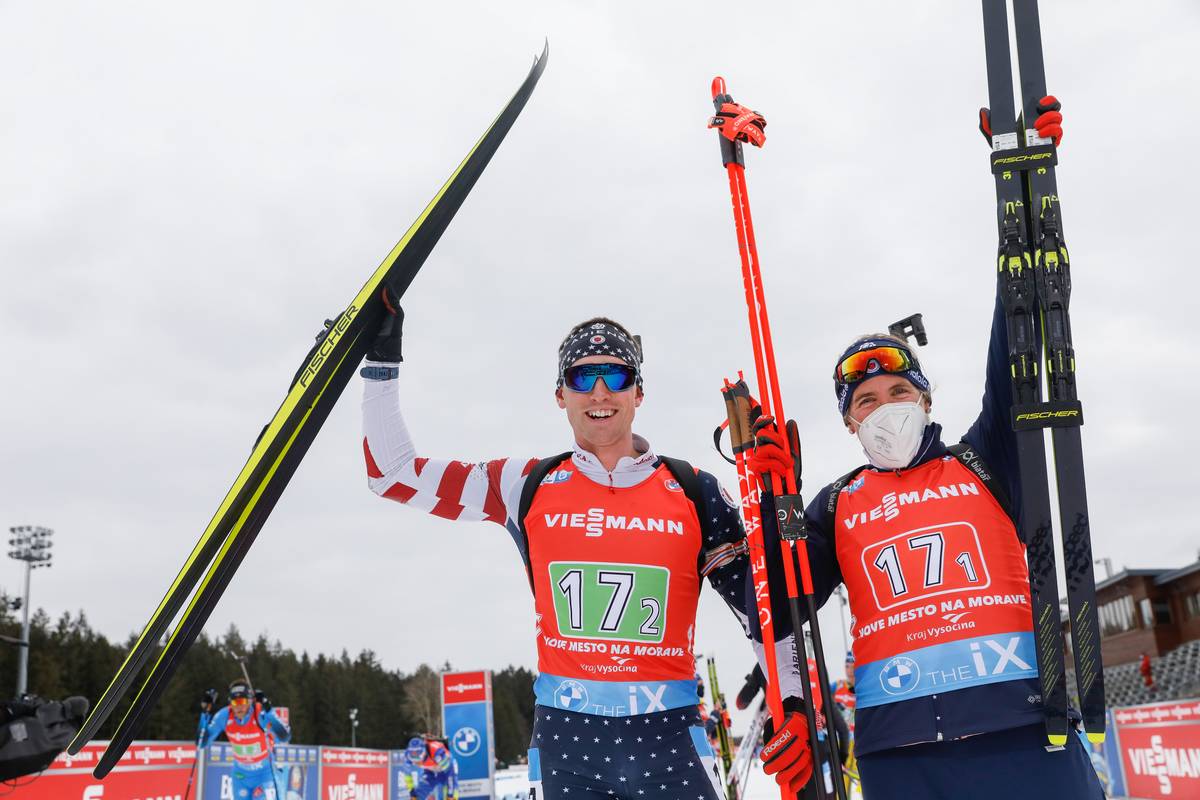
Sean Doherty (USA), and Susan Dunklee (USA), (l-r) took third in Sunday’s single mixed relay. (Photo: NordicFocus)
NOVE MESTO, Czech Republic (March 14, 2021) – Susan Dunklee (Barton, Vt.) and Sean Doherty (Center Conway, N.H.) combined to give the United States its first medal in the single mixed relay since 2017 as the BMW IBU World Cup wrapped up two weeks of competition in Nove Mesto on Sunday. Dunklee was part of the previous podium appearance as well when she teamed up with Lowell Bailey for a silver medal four years ago.
Dunklee led the pack after a perfect first prone stage with Switzerland’s Elisa Gasparin and Sweden’s Linn Persson right behind. With the wind swirling, Dunklee needed three spares to get through the standing stage of the opening leg and made the first exchange with Doherty in sixth place, but just 11.8 seconds off the lead.
“My single mixed relay strategy is to take some risk on the shooting range,” Dunklee said. “I think that’s the only way to create an opportunity in this race format.”
Doherty brought the team back with just one spare used on the second leg and tagged off to Dunklee in third position, 16.6 seconds off the pace. Dunklee went clean again from prone and needed one spare in standing to bring the team neck-and-neck with Norway at the final exchange.
On the anchor leg, Doherty used one spare round in prone and another spare in standing to secure the bronze medal for Team USA, as he crossed the line 26.1 seconds back of winner Sweden., who edged Norway by 1.5 seconds at the finish.
“Sean performed under very high pressure in that last standing stage,” added Dunklee. “He did an amazing job keeping his focus on his own task and not thinking about the top guys who were breathing down his neck.”
“I am incredibly happy to be third today,” said Doherty. “We were able to shoot well and keep ourselves in contention. I just tried to stick to my own plan and not get over-excited. But I will say when I left the range, then I got excited. I am very proud to share the podium with Susan and proud of the team effort it took to put us there today.”
Earlier in the day, the U.S. mixed relay foursome of Clare Egan (Cape Elizabeth, Maine), Joanne Reid (Grand Junction, Colo.), Jake Brown (Saint Paul, Minn.) and Leif Nordgren (Hinesburg, Vt.) finished sixth in the 25-team field with seven spare rounds and 2:26.4 off the winning pace set by Norway.
“Clare gave me a great starting spot with a lot of teams within striking distance,” said Reid of her second leg. “I tried to play to my strengths, which are climbs, and just hold onto the group on flats. That let me pass quite a few people on the first lap in the climb and come into prone fairly high up.”
Reid’s fast and clean shooting from prone launched the team up to fifth position.
“From there I just tried to hold fast, power through standing, and hold onto the teams in front to give Jake, who has been on fire this week on skis, someone to ski with,” added Reid. “Both Jake and Leif came through in their legs in spades. Not an easy feat up front with great skiers and solid shooters.”
Norway won the mixed relay event with just four spare rounds and more than a minute ahead of both Italy and Sweden.
The final IBU World Cup event begins Friday in Oestersund, Sweden, with sprints, pursuit and mass start events on the docket.
Susan Dunklee (USA) racing to 8th pace in today’s pursuit. (Photo: NordicFocus)
NOVE MESTO, Czech Republic (March 13, 2021) – Susan Dunklee (Barton, Vt.) has become the second U.S. female biathlete to meet the standards set for early qualification to the 2022 U.S. Olympic team at the end of the season. Early qualification is available for up to two athletes who meet the standards of the U.S. Biathlon selection procedures, in this case, two top-12 finishes at an IBU World Cup race during the 2020-21 season. With her second eighth-place finish in as many days at the BMW IBU World Cup in Nove Mesto on Saturday, Dunklee joined teammate Clare Egan (Cape Elizabeth, Maine) who met the standards with two top-10 performances in December.
A day after finishing eighth in the women’s 7.5-kilometer sprint, Dunklee again came in eighth in the 10km pursuit, with one penalty on the shooting range and a time that was 1 minute, 12.9 seconds behind winner Tiril Eckhoff of Norway.
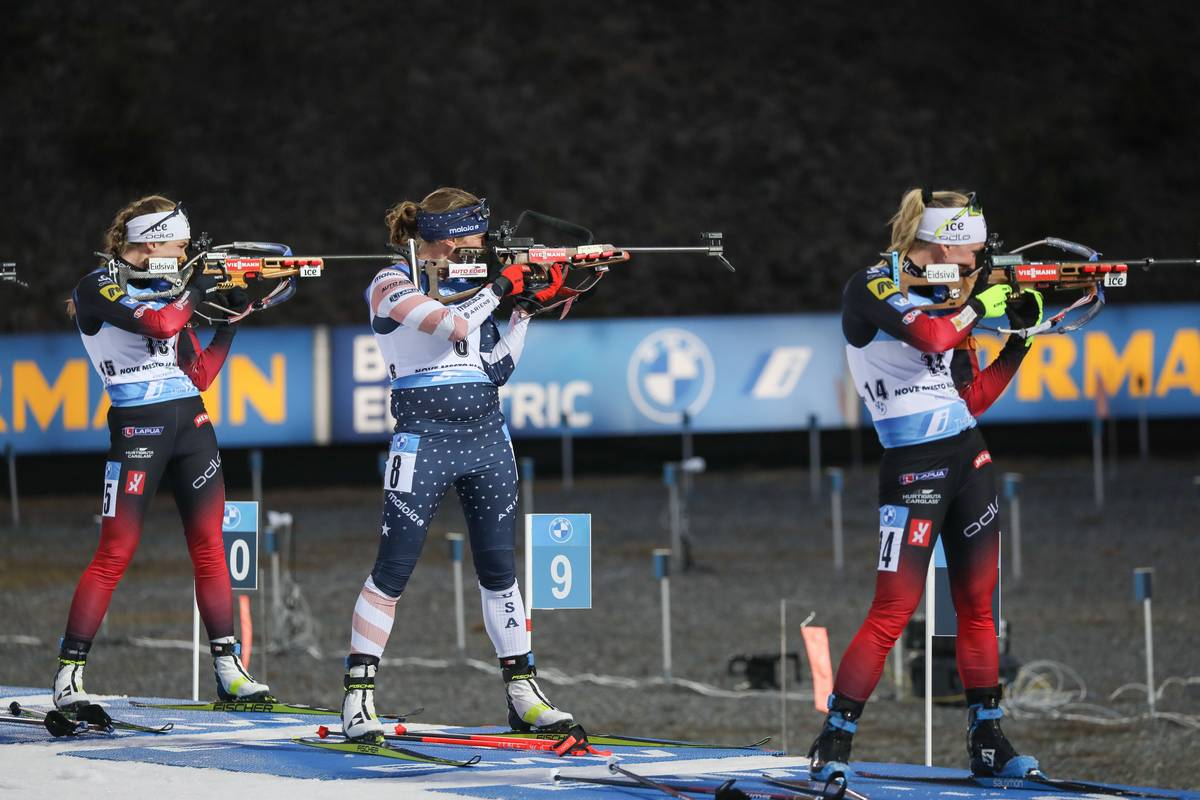
Dunklee (center) on the range during Saturday’s race. (Photo: NordicFocus)
“I’ve been struggling most of the winter with my ski speed and for the first time in my career I’ve felt like I’m out of my league on the World Cup,” said Dunklee. “I really missed the feeling of being ‘in the mix’ on any given day. This week I feel good and able to hang on near the front. I’m not sure why my ski speed is coming into form so late in the season, but I am very happy about it. Nove Mesto has many special memories for me, and the amazing women’s relay last week added some positive energy. Of course, we all miss the amazing spectators this year.”
Egan, Dunklee’s Olympic teammate in 2018, finished 42nd in Saturday’s pursuit, 3:53.1 back with four penalties. Dzinara Alimbekava of Belarus was runner-up to Eckhoff as she shot clean and was 34.6 seconds back. The bronze medalist in the women’s pursuit was Germany’s Franziska Preuss who was 40.2 seconds behind Eckhoff with two penalties.
In the men’s 12.5km pursuit, Sean Doherty (Center Conway, N.H.) came in 35th (+4:14.0/+4) and Jake Brown (Saint Paul, Minn.) finished 53rd (+4:21.1/+5). Quentin Fillon Maillet of France took the gold in 28:46.7 with two penalties, followed by Norway’s Johannes Thingnes Boe (+8.0/+2) and France’s Emilien Jacquelin (+14.6/+1).
The penultimate IBU World Cup of the season wraps up Sunday in Nove Mesto with the mixed relay events. Egan, Brown, Joanne Reid (Grand Junction, Colo.) and Leif Nordgren (Hinesburg, Vt.) will represent the U.S. in the mixed relay starting at 5:25 a.m. EDT, while Dunklee and Doherty will team up for the single mixed relay at 8:45 a.m. EDT. Both races will be live on Peacock. Full broadcast schedule.
Susan Dunklee racing to 8th in Nové Město’s sprint. (Photo: NordicFocus)
USBA Press Release
NOVE MESTO, Czech Republic (March 12, 2021) — American Susan Dunklee(Barton, Vt.) was one of 14 competitors to shoot clean in the 103-woman field during Friday’s women’s 7.5-kilometer sprint at the BMW IBU World Cup in Nove Mesto. Her marksmanship earned Dunklee her first top-10 finish of the season in an individual race as she stopped the clock 37.2 seconds behind winner Tiril Eckhoff of Norway, who took the gold medal despite a standing penalty on the shooting range.
Just a week removed from finishing 83 places lower — at the same distance and the same venue — Dunklee chalks it all up to the uniqueness of biathlon.
“There’s a reason biathlon is such a compelling sport to follow,” said Dunklee. “It’s dramatic and the unpredictability adds to its appeal. We did two identical races one week apart: the same format, the same course, and the same competitors. Last week I placed 91st and this week I placed 8th. I didn’t try any less hard last week or approach this week with any more professionalism. Variation is part of the sport. We love it because it is challenging. The highs are that much sweeter after overcoming the lows.”
Dunklee’s 8th place qualified her to start Saturday’s 10 k pursuit. (Photo: NordicFocus)
With Friday’s performance, Dunklee qualified to race in Saturday’s women’s 10km pursuit along with teammate Clare Egan (Cape Elizabeth, Maine) who finished under the top-60 pursuit cutoff in 43rd place, 1:34.7 back of Eckhoff with two penalties in standing.
Cleare Egan racing in Nové Město. ‘(Photo: NordicFocus)
Denise Herrmann of Germany shot clean to claim second place in Friday’s sprint, 6.1 seconds back, while the also clean-shooting Dorothea Wierer of Italy finished third, 10.5 seconds behind Eckhoff. Other American finishers were Joanne Reid (Grand Junction, Colo.) in 67th (+2:12.4/+3) and Deedra Irwin (Pulaski, Wis.) in 77th (+2:30.5/+2).
Dunklee and Egan will be joined in the pursuit races by Sean Doherty (Center Conway, N.H.) and Jake Brown (Saint Paul, Minn.) on the men’s side. The men’s 12.5km race begins at 8:45 a.m. Eastern, with the women’s 10km pursuit to follow at 11:30 a.m. Both races will be live on Peacock. Full broadcast schedule.
Clare Egan is 19th overall on the IBU World Cup. (Photo: NordicFocus)
Clare Egan of the U.S. Biathlon team has wowed this season.
Through December and most of January, Egan popped steady and consistent reults on the IBU World Cup. Currently, she is ranked 19th on the IBU World Cup, ceding two spots to the top-ranked North American, Canada’s Emma Lunder in 17th.
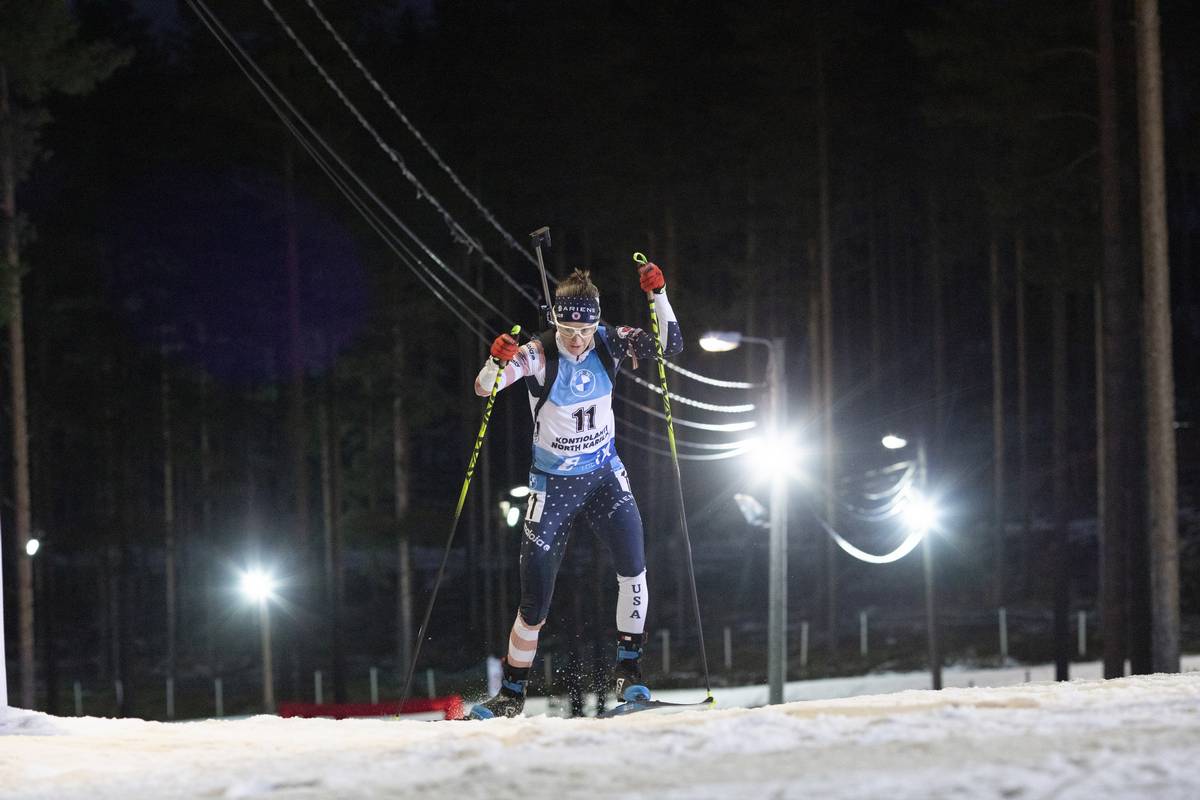
Clare Egan racing the individual in, Kontiolahti, Finland. (Photo:NordicFocus)Under the lights, Clare Egan racing the Dec. 3 sprint on IBU World Cup in Kontiolahti, Finland. (Photo: NordicFocus)
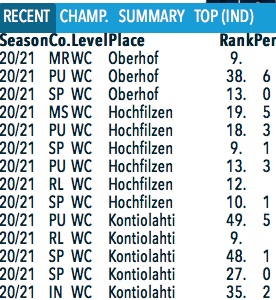
Highlights of her season thus far are a 10th in a Hochfilzen, Austria sprint, 13th in a Hochfilzen pursuit followed by a ninth place in another Hochfilzen sprint. (Due to Coivd-19, the IBU calendar has scheduled several back to back race weeks at the same venue.)
Most recently in Oberhof, Germany during the first week of racing at the venue, Egan was 13th in the sprint.
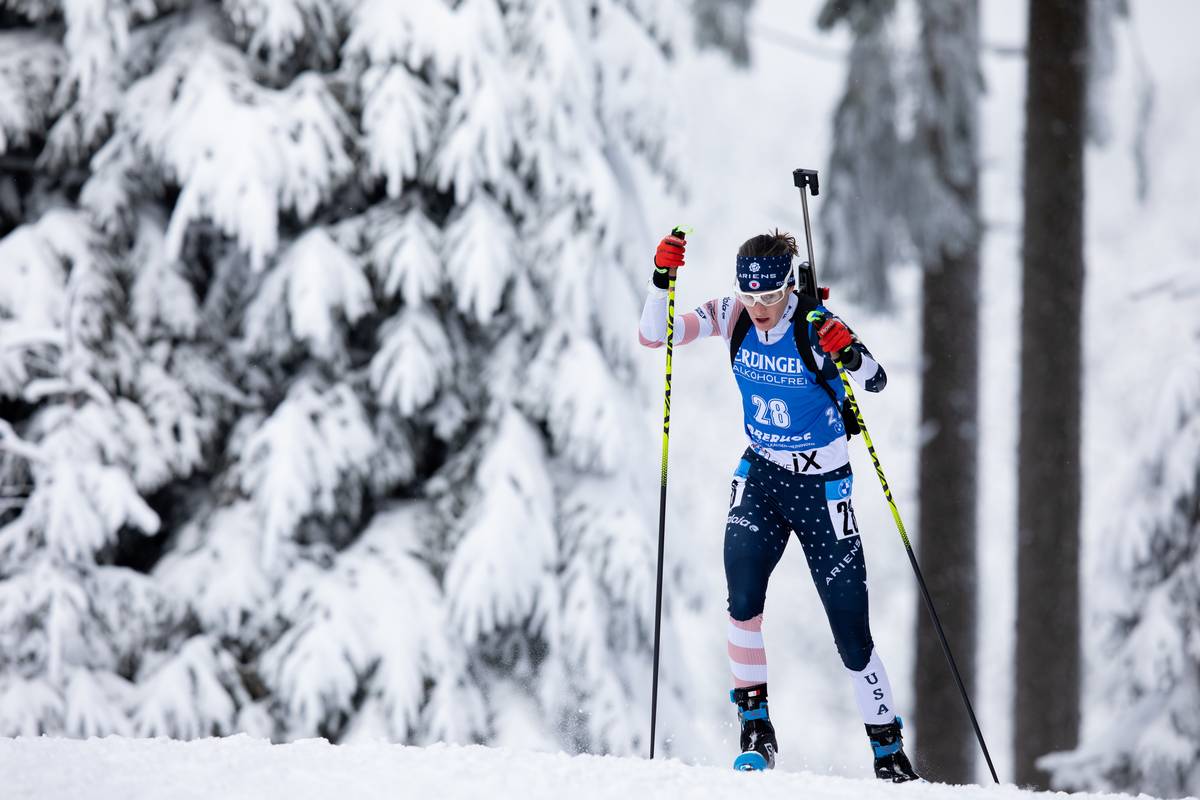
Focusing on the target in Oberhof, Germany during the pursuit. (Photo: NordicFocus)Clare Egan during the Oberhof, Germany sprint in which she placed 13th. (Photo: NordicFocus)
She is ranked 14th overall in the sprint standings, 26th in the pursuit, and 19th in the mass start.
Racing continues on the IBU World Cup on January 13th with the men’s 10 k sprint. You can also view the IBU World Cup on Peacock.TV and the Olympic Channel with Chad Salmella commentating.
Egan’s World Cup results for the current season. (Biathlonworld.com)
We have covered Egan before here at FS. Here are a few links of interest.
Egan on our Nordic Nation Podcast discussing life during the pandemic.
The Executive Board (EB) of the International Biathlon Union today announced that four World Cup events will take place in the first trimester of the 2020/21 season as planned. However, in order to minimise travel and protect athlete and stakeholder safety they will be hosted in just two venues. The competition dates and disciplines remain unchanged. The EB also agreed that the 14th Ordinary IBU Congress will be held virtually and the adjusted IBU Cup season programme was published.
With the adjusted calendar, the BMW IBU Biathlon World Cup will kick off in Kontiolahti (FIN) as scheduled but then remain there for another week for the second World Cup event, before the circuit travels to Hochfilzen (AUT) for the third and fourth World Cup events. Originally, Östersund (SWE) and Annecy-Le Grand Bornand (FRA) had been scheduled to host two of these World Cup events. But, following consultations with the Organising Committees, relevant National Authorities and the IBU Medical Advisory Group, the EB and the organisers agreed reducing the number of stops on the circuit would protect participant health and minimise travel challenges.
IBU Secretary-General Niklas Carlsson said:
“We are pleased that we are able to provide four World Cup events for our athletes and fans this year. We are though of course disappointed that we will not be visiting each of the four venues we had planned. It was a tough choice and we thank our organisers for their understanding and cooperation to come to this decision, which is accepted by all parties involved. The plan we have agreed on means we can host four World Cup events but at the same time reduce the health and logistical risks that come from travelling and venue changes.”
Before making the decision, the IBU worked with the World Cup Organising Committees, their National Federations and broadcasters, to evaluate the travel options and budget implications for hosting the events under the IBU’s COVID-19 event regulations, as well as the availability of each venue for hosting multiple events. The EB also decided to guarantee financial support for all organisers – both those who are holding additional events under the new programme and those who are not planned to host a World Cup event any longer under the new schedule. Any decision regarding if, and how many, spectators will be allowed to attend the events will depend on the national health authorities’ regulations in place for each venue in connection with the IBU Covid-19 event guidelines.
The EB confirmed the IBU World Championships Biathlon will take place on 09-21 February 2021 in Pokljuka (SLO). A decision regarding the schedule for the BMW IBU World Cups in January 2021 will be taken in October 2020 and the schedule for the World Cups in February and March 2021 will be decided in November 2020.
After the delay of the IBU Cup season 2020/2021, which was announced earlier this month, the adjusted calendar for the IBU Cup has now been agreed. Under the same principle of minimised travel, the series will feature three stops in Arber (GER), Brezno-Osrblie (SVK) and Ridnaun (ITA) with five event weeks. The Open European Championships will be held in Duszniki-Zdroj (24-31 January) as scheduled.
The EB agreed to support regional events in all recently defined IBU regions in which mainly neighbouring countries compete. Offering a reasonable number of competitions for youth and junior athletes was of high importance following the EB’s decision earlier this month to cancel all IBU Junior Cup events for the 2020/21 season and the Junior Open European Championships.
IBU President Olle Dahlin said:
“Biathlon, like all sports, is facing challenges we have never faced before. While disappointing, we have to accept that changes to our original plans are absolutely necessary. But by working together with all biathlon stakeholders, we have been able to find solutions that prioritise the health of our biathlon family and at the same time maximise the number of events that can take place. We believe that the plan we have developed has achieved that. We have kept the same number of World Cup events for the first trimester and ensured that all levels of biathlon will be served with international competitions next season. There is a lot for our athletes and fans to look forward to.
“We will continue to follow expert medical guidance and implement carefully considered safety measures at all our events. We remain flexible to changes but we are greatly looking forward to the new season beginning.”
The 14th Ordinary IBU Congress, originally scheduled for 13-15 November in Prague (CZE), will now be held virtually on the same dates.
The EB also received an update from the IBU fluor working group. The Board agreed to reconvene on the matter in the next weeks immediately when further field test reports of the Fluorine Tracker, the test device which scans the skis, have been received.
A year ago Martin Fourcade was coming off the worst showing of his career, a cataclysm of a season leaving everyone who follows the sport scratching their heads. While he had two victories and another podium by Christmas, something was apparently wrong; his results declined after New Year’s and he wasn’t on the podium again for the rest of the season. He skipped the North American leg of the World Cup, raced World Champs, where it was especially egregious when he failed to medal, and then called it quits, missing the season finale at Holmenkollen. His actual results: twelfth in the overall rankings at the end of the year (after missing six races), and besides the already mentioned three podiums, he finished top ten in all but three races that he started.
Kontiolahti, Finland was the final race of the season and the final career win for Martin Fourcade. (Photo: Nordic Focus)
What would have been a respectable season for just about anyone else was rock bottom for Fourcade. His showing that year is further contrasted by Johannes Thingnes Bø’s near perfection, winning 16 of 25 races en route to winning the overall title and each of the four discipline Crystal Globes. Bø’s year, however, can only be described as Fourcadeian, because what Bø did in the 2018-19 season was what was expected of Martin Fourcade every year he competed. Winning, all the time, second place being a disappointing race. Fourcade was the overwhelming favorite every time he lined up for a race. Fourcade owned the World Cup like no one else ever has.
Kontiolahti, Finland:
Martin Fourcade (FRA) and Johannes Thingnes Bø (NOR IBU world cup biathlon, pursuit. (Photo: NordicFocus)
Kontiolahti, Finland:
Martin Fourcade (FRA) and, Johannes Thingnes Bø (NOR). (Photo: NordicFocus)
Fourcade made his World Cup debut in 2008, where he finished 61st in a Sprint. It was the only World Cup he raced that year. The following season he was promoted and raced the whole season. His results weren’t extraordinary, but he was only 20 years old, and did make it to the podium once as the third leg on France’s relay team, and he finished the year 24th on the overall ranking. He started the 2009-10 season relatively quietly but had a series of top tens on the World Cup leading up to the Olympics. He had a mediocre showing in the first three races, but in the mass start, the last race, Fourcade took his first podium at the highest level with a silver medal at the Olympics.
Martin Fourcade (FRA) celebrating a medal-winning performance at the Olympics in Whistler
It’s a spectacular race to watch. Fourcade starts with bib 16, and in maybe 200 meters he’s at the front. He leads coming into the first shooting stage, misses twice, putting him 50 seconds behind, and watching it on TV you wouldn’t expect to get a glimpse of him again until he crossed the finish line. After the second lap, he shoots clean but is still in 28th (out of 30). The camera stays with the leaders. There’s a group of nine or so at the front and the chase is strung out. A kilometer and a half later there’s an intermediate time check and the camera lingers at the top of the climb, and then suddenly Fourcade blasts into view, hammering almost at a jump skate where everyone around him is in a controlled V1, and Fourcade’s in roughly 16th place and has cut his deficit almost in half, and by the time they get to the range he’s made contact with the lead group. He shoots slow but shoots clean, and the gap is at 22 seconds. He brings it down to 14 coming into the last shooting stage, where later on in his career he would build a reputation for clutch performance, but not this time, he misses once, and leaves the penalty loop in fifth place and an impossible 26 seconds back. But now it’s a ski race and Fourcade takes no prisoners. He blows by fourth-place without even turning his head, and it takes him maybe 500 more meters to get to third, drops him immediately, and he’s got a medal secure but he keeps charging. Somehow he passes second place too and has his eyes on gold, but he runs out of trail before he can catch up and just misses the top step of the podium.
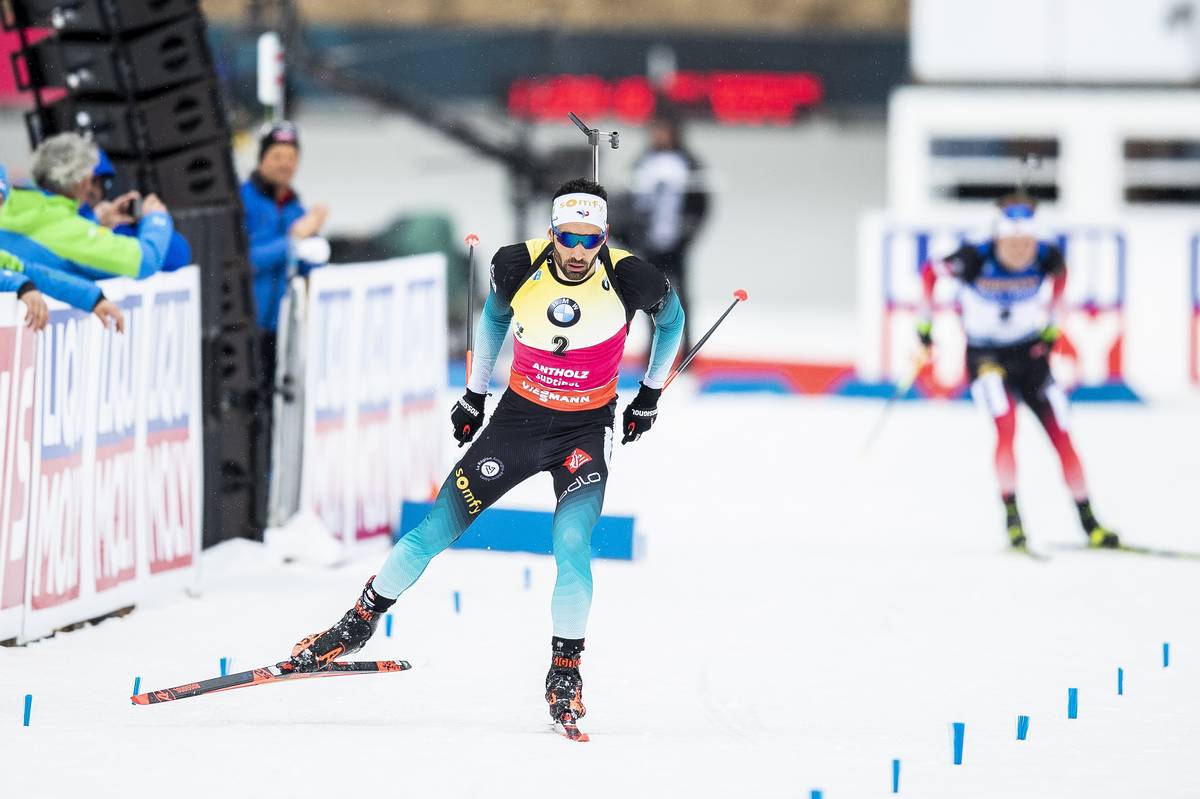
Martin Fourcade (FRA) leads Quentin Fillon Maillet (FRA) during the men’s pursuit in Ruhpolding, 2019. (Photo: NordicFocus)
So began Fourcade’s stranglehold on the biathlon world. He won his first little Crystal Globe that year in the Pursuit discipline, along the way taking three World Cups in a row. He was third overall the following season, and the year after, 2011-12, he won his first of seven consecutive overall titles.
Once there is enough popular consensus for an athlete to be proclaimed the GOAT (greatest of all time) of their sport, they get entrenched in that position and it becomes difficult to have a conversation about someone else surpassing them. An example, suggesting that LeBron James may have passed Michael Jordan as the best basketball player ever is pretty much heretical. This exists in biathlon too. We have a colossus of the sport in Ole Einar Bjørndalen, the most decorated male Winter Olympian ever, and ask just about anyone who knows anything about the sport and they’ll tell you he’s the best ever. His nickname is the ‘King of Biathlon’, after all. With that being said, you heard it here first: Fourcade was better than
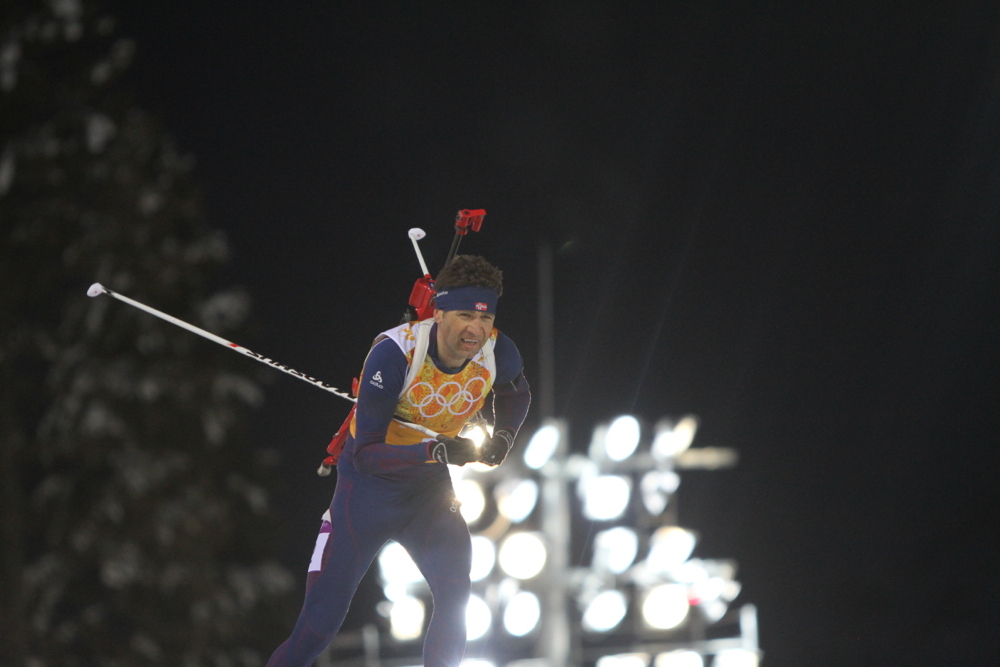
Ole Einar Bjørndalen out on the trails at the 2014 Olympics, where he trounced the decades-younger competition.
Nordic sports are resistant to analytics by nature. (The statisticalskier.com stuff republished on FasterSkier this year is the only time I’ve ever seen any sort of real statistical analysis of ski racing.) Without a ton of statistics outside of win tallies, it can be difficult to assess athletes from different eras, and as far as Bjørndalen and Fourcade, taking a head-to-head of the races they were both in is probably not the best comparison, because Bjørndalen was damn near geriatric when Fourcade started winning.
But I’m going to go ahead and use what stats I can. (Note the totals listed do not include any relay results.) So let’s start with overall Crystal Globes. In 24 seasons, Bjørndalen had six overall titles and seven top-threes; in 12 seasons, Fourcade had seven overall titles and two more podiums.* (25% wins and 54% podiums for Bjørndalen; 58% wins and 75% podiums for Fourcade.) A percentage comparison may seem unfair because Bjørndalen raced into his forties while Fourcade retired at 31, athletic prime, but regardless, in half as many seasons Fourcade won more Crystal Globes. And if we factor in discipline titles it’s even more outrageously in Fourcade’s favor. Bjørndalen has twenty discipline titles; Fourcade has 26.† And Fourcade accomplished something Bjørndalen never did when he swept every discipline title in 2013. That’s five Crystal Globes in one season. And he did it three more times after that. If instead, we look at individual World Cup races (this includes all World Cups, World Champs, and the Olympics), Bjørndalen holds the IBU record with 95 wins and 179 total podiums in 421 starts. Fourcade is second all-time with 83 wins and 150 podiums in 243 starts. (Bjørndalen: 12% and 43%; Fourcade: 34% and 62%). If he kept racing for another season or two Fourcade stood a very good chance of passing Bjørndalen.
And for emphasis, again: Martin Fourcade was on the podium in 62% of his starts.
We can also compare results at major championships, given that those are usually assigned more weight than the World Cup. So, Bjørndalen raced 69 races at World Championships, collecting 11 gold medals and 26 podiums; Fourcade, in 36 starts, garnered 11 golds and 18 podiums. (16% and 38% for OEB, 31% and 50% for MF.)‡ At the Olympics, Bjørndalen has 5 golds and 9 podiums in 19 races; Fourcade has 4 golds and 6 podiums in 12 races. (OEB: 26% and 47%; MF: 33% and 50%.) I’m calling this one a draw; while Fourcade was on the podium more often, Bjørndalen deserves some commendation for getting medals well beyond his fortieth birthday, and also note that Bjørndalen stepped up his game at the Olympics, while Fourcade pretty much stayed consistent (though Fourcade was much better than Bjørndalen at World Champs).
Martin Fourcade (FRA) – IBU world championships biathlon, mass start, Antholz (ITA). (Photo: NordicFocus)
The long and short of it all is that Fourcade won more than Bjørndalen in a career that spanned half as much time. Comparing the two men’s achievements, Fourcade was better on the World Cup, achieving a consistency Bjørndalen never quite had and was just as successful at World Champs and the Olympics. Bjørndalen racked up more hardware due to his seemingly supernatural longevity, but peak Fourcade was an unstoppable force of a caliber the sport had not yet seen.
Martin Fourcade should be remembered as the most dominant biathlete to ever compete. He won the 2013 World Cup by 400 points. On a regular basis, he had such a big lead in the overall standings his Crystal Globe would be wrapped up weeks before the end of the season. He held the yellow bib for two and a half years straight from 2012 to 2014. He won in every discipline and rarely had bad days (and even then he was still good). Nobody was ever surprised when the last lap of a race turned into a formality after Fourcade entered the range with a thirty-second lead and shot clean, administering the coup de grace for anyone who thought they had a chance, Fourcade pumping his fist in the air before he put his rifle on his back, the final lap now his victory lap, carrying the Tricolour across the line. Though let’s be honest, he could’ve missed the last shot and he still would have won. If he missed twice, maybe he could be beaten. He was the strongest skier on the World Cup and one of the best shooters.§
Martin Fourcade (FRA) – IBU World Championships Biathlon, pursuit men, Antholz, Italy. (Photo: NordicFocus)
So this was Fourcade’s final season, though he didn’t announce it until March 13, in the middle of what would be his last race weekend. As a fan, it was, without a doubt, the best season since I started following the sport. Fourcade had triumphantly returned to form, though for the first time in a long time (disregarding last year) somebody was actually skiing faster than Fourcade. Bø took the first race, Fourcade took the second. Bø then won four of the next five. Then Fourcade won four in a row. Each of them had held the yellow bib twice by mid-January. Each had a gold at World Champs, with Bø’s coming on the last race, and then he won the next three World Cups, ending with the Sprint in Kontiolahti, edging Fourcade in second.
After the pursuit, there should have been three more races but the season was cut short for Coronavirus and who knows what would have happened because it was so close between the two of them. Fourcade didn’t control his own fate going into that last race; if Fourcade won Bø needed fourth to take the overall. And fourth is what he got. The final tally: 913 points for Bø, 911 for Fourcade. So Fourcade didn’t get the crystal globe but he won the last race of his career, skiing into the hauntingly empty grandstands in Kontiolahti, the place where he’d won his first World Cup ten years prior to the day, after characteristically leaving the range with an insurmountable lead, the fairytale ending to the greatest career we’d ever seen, made complete with a podium sweep for France. As his successor, Fourcade leaves Johannes Thingnes Bø who, at 26, is certainly the best male biathlete on the planet, and perhaps well on his way equaling Fourcade’s seven consecutive big Crystal Globes. But for now, au revoir to Martin Fourcade, the best there ever was, the rightful King of Biathlon.
Martin Fourcade (FRA) – IBU world championships biathlon, individual. (Photo: NordicFocus)
Martin Fourcade (FRA) – IBU world championships biathlon, individual. (Photo: NordicFocus)
*I’m not counting either athlete’s first season, when they competed in two and one World Cup races, respectively. I am counting Bjørndalen’s last and Fourcade’s second to last, when they both missed a significant number of races.
† I suppose I need to mention that the Pursuit didn’t exist until 1996 and the Mass Start wasn’t around until 1998, Bjørndalen’s fifth and seventh seasons. So while that’s ten fewer opportunities for a discipline title, it’s unlikely he would have won any of those even if they had existed, given his other results from that time. His first Pursuit Globe came in 2000 and his first Mass Start in 2003.
‡ The IBU holds World Championships every year except for Olympic years. There’s usually a significant lag between when a new event is added to the IBU rulebook and World Championships, and its inclusion on the Olympic program, so the IBU has hosted a standalone ‘World Championship’ for those events in Olympic years. For instance, the Mass Start did not make it onto the Olympic program until 2006, so there was only a Mass Start World Championship in 2002. More recently, the mixed relay was not contested at the 2010 Olympics, so there was a single World Championship event held during the final World Cup weekend (kind of like how the 50k/30k at Spring Series are National Championship events while the other races are plain old Super Tours). Some sources don’t count these as World Championships, instead of listing them just as World Cups, but I’m including them in my World Championship medal count here.
§ It goes without saying that the best skier/best shooter would be the best biathlete, but there’s a little more nuance than that, and this is probably the reason Fourcade was ultimately better than Bjørndalen. Both were the best skiers of their time, but the gap between Bjørndalen and whoever was number two, skiing-wise, was just astronomical, while Fourcade did occasionally get out skied. (Remember, Bjørndalen once won a cross-country World Cup and had a couple other podiums. Fourcade, if you’re curious, did score points in a cross-country World Cup, finishing 22nd in a 10k in 2015.) But Fourcade consistently shot over 90% during his career, while Bjørndalen was usually mid-80s. Hence why, in this writer’s opinion, Bjørndalen had considerably more success in Sprints, which favor strong skiing, than the Individual, which is much more of a ‘shooter’s race’. So basically what I’m saying is if Bjørndalen had just shot a little better, he might have won every Crystal Globe for twenty years straight.
The traveling IBU World Cup roadshow stops in Pokljuka, Slovenia this week and began the individual races. The women’s 15 k individual ran on Friday. The individual race format places a heightened premium on clean shooting; each missed shot amounts to an automatic minute penalty.
Tiril Eckhoff of Norway had been dominating the circuit recently. Yet, Friday, she fell in the standings to place an uncharacteristic 18th. In first place was former German cross-country skier Denise Herrmann. It was Herrmann’s first win of the season and her second podium. She won in 41:33.4 with no misses on the range. Sweden’s Hannah Öberg was second (+59.2; 0+1+0+0) and France’s Anais Bescond third (+1:15.7; 0+0+0+0).
Denise Herrmann of Germany celebrating the 15 k individual win in Pokljuka, Slovenia. (Photo: NordicFocus)
Two North Americans raced into the top-10. Clare Egan for the U.S. had a career-best race in the individual format with a sixth place. Egan shot clean and stopped the clock 2:10.4 back. Prior to Friday’s result, Egan’s best performance in the 15 k individual had been a 22nd at the 2017 World Championships in Hochfilzen, Austria. Last weekend, Egan placed 16th in Ruhpolding, Germany’s 10 k pursuit. And at this same venue a bit over a year ago in Pokljuka, Egan placed sixth in the 10 k pursuit.
Clare Egan of the U.S. during the women’s 15 k individual in Pokljuka, Slovenia. Egan placed 6th. (Photo: NordicFocus)
Post-race interview with Clare Egan
Emma Lunder of Canada finished in 10th, 3:06.8 back while shooting 1+0+0+0. This was Lunder’s second top-10 of the season. She placed 7th in Oberhof’s sprint. Both Lunder and Egan qualified for Sunday’s 12.5 k mass start competition. The top-25 women in the overall IBU standings auto-qualify. Egan and Lunder fell outside that criteria, but qualified due to their results in Friday’s individual race.
Canada’s Emma Lunder racing to 10th in the women’s 15 k individual in Pokljuka, Slovenia. (Photo: NordicFocus)
For the U.S., Joanne Reid was 45th (+6:11.3; 0+0+1+1), Susan Dunklee 55th (+7:04.2; 1+2+1+1), and Emily Dreissigacker 84th (+10:12.7; 1+0+1+2).
Canada’s Nadia Moser finished in 79th (+9:30.6; 1+2+0+1), Megan Bankes 80th (+9:46.2; 1+1+0+3), and Emily Dickson 83rd (+10:07.4; 1+1+1+1).
On Thursday in Pokljuka, Johannes Thingnes Bø, on leave from the race scene for the first part of racing during the second trimester to be home for the birth of his first child, was back in play. Last week, in the absence of the Norwegian phenom that is Bø, France’s Martin Fourcade reclaimed the World Cup’s overall yellow leader’s bib.
Johannes Thingnes Bø on his way to winning the men’s 20 k individual in Pokljuka, Slovenia. (Photo: NordicFocus)
Fourcade’s leader status might be tenuous. The two superstars went 1-2 on Thursday with Bø taking the win in 47:54.3 with no misses. Fourcade finished second, 11.4 seconds back while also shooting clean. France’s Fabien Claude placed third (+25.6; 0+0+0+0).
Martin Fourcade of France remains in the overall leader’s bib after his second place in Pokljuka’s 20 k individual. (Photo: NordicFocus)
For Canada, Scott Gow raced to 26th (+3:36.7; 0+1+0+1). Christian Gow was 41st (+5:20.0; 0+2+0+0), Jules Burnotte 88th (+8:39.1; 1+2+1+1), and Aidan Millar 107th (+13:27.7; 2+2+0+3).
Scott Gow (CAN) railing a corner during the 20 k individual in Pokljuka, Slovenia. (Photo: NordicFocus)
Leif Nordgren was the top American in 27th. Nordgren finished 3:38.3 minutes back after shooting 1+1+0+0. Jake Brown placed 52nd (+5:54.9; 2+1+0+0), Sean Doherty 74th (+7:28.8; 1+0+1+3), and Paul Schommer 85th (+8:32.9; 2+0+0+2).
Mid-week, the IBU World Cup circus moved to Ruhpolding, Germany. The women raced a 7.5-kilometer sprint and saw Norway’s Tiril Eckhoff take the win and snag the yellow overall World Cup leader’s bib from Italy’s Dorothea Wierer. Eckhoff now leads Wierer by a scant three points in the overall standings. This was Eckhoff’s fifth individual win of the 2019-2020 season.
Norway’s Tiril Eckhoff racing for the win during the Ruhpolding, Germany sprint. With the win, Eckhoff secured the overall IBU World Cup leader’s bib. (Photo: NordicFocus)
Eckhoff won Wednesday’s sprint in 18:55.5, while shooting clean. Sweden’s Hanna Öberg was second (+29.7; 0+0), with Weirer in third (+36.8; 0+0).
Dorothea Wierer (ITA) placed third in Ruhpolding’s sprint. (Photo: NordicFocus).
The U.S. had two athletes in the top-30. Susan Dunklee placed 25th (+1:34.0; 1+0), and Clare Egan 28th (+1:40.9; 0+1). Also for the U.S., Deedra Irwin skied to 79th (+3:01.8; 0+2), and Hallie Grossman 93rd (+4:00.6; 2+1).
Susan Dunklee was the top North American in 25th during Wednesday’s sprint in Ruhpolding, Germany. (Photo: NordicFocus)
Canada’s Emma Lunder placed 53rd (+2:14.0; 1+0), Megan Bankes 82nd (+3:08.4; 1+1), Sarah Beaudry 94th (+4:01.3; 2+0), and Nadia Moser 104th (+5:18.0; 2+3).
The top-60 biathletes qualified for Sunday’s 10 k pursuit in Ruhpolding. Racing continues on Thursday for the men with a 10 k sprint.
With the weekend closed out in Oberhof, Germany and the start of the second IBU World Cup trimester underway it’s time for, thank you Seth Meyer, … a closer look.
The men’s mass start in Oberhof. (Photo: NordicFocus)
Norway’s male biathlon ringer, Johannes Thingnes Bø, was on the sideline for the weekend. Prior to the Oberhof stop, he had worn the yellow bib as the IBU World Cup overall leader. Post-Oberhof, it was time for a change. A small change really in the big perspective of challengers. France’s Martin Fourcade leaves Oberhof donning yellow, a color he has been well acquainted with in the past.
Martin Fourcade, here in the Oberhof mass start, won the race and seized the overall leader’s bib. (Photo: NordicFocus)
Fourcade’s overall lead is the result of a two win weekend. He won the 10 k sprint on Friday and followed that with a win Sunday in the 15 k mass start. In four shooting rounds during the mass start, Fourcade went 0+1+0+1 to win in 41:01.4. No North Americans qualified for the race.
Fourcade was also part of the French 4 x 7.5 k relay team that placed second on Saturday. Norway won that race, with neither Bø brother racing. Germany placed third. The U.S. team of Sean Doherty, Leif Nordgren, Paul Schommer, and Jake Brown skied to 12th overall. Canada’s Jules Burnotte, Scott Gow, Aidan Millar, and Christian Gow were 14th out of 26 teams.
Kaisa Makarainen from Finland won the 10 k mass start in 39:58.9 after missing a single target in her first bout of shooting. Otherwise, she shot clean. Norway’s Tiril Eckhoff placed second (+30.2; 0+0+3+1), and Marte Olsbu Roeiseland third (+35.0; 1+0+1+1).
Emma Lunder of Canada during the women’s mass start in Oberhof, Germany. Lunder was 15th overall. (Photo: NordicFocus)
Canada’s Emma Lunder continued her strong skiing with a 15th place (+2:14.8; 0+2+4+1). Susan Dunklee of the U.S. raced to 21st (+2:56.3; 0+3+1+4).
Susan Dunklee of the U.S. during the women’s 4 x 6 k relay. Dunklee placed 21st in Sunday’s mass start. (Photo: NordicFocus)
This brings us to the women’s overall standings on the IBU World Cup circuit. Italy’s Dorothea Wierer, with 390 points, wears the leader’s bib. The Italian placed fourth in the mass start, over a minute out, and had five misses total on the range. Eckhoff is second overall with 381 points.
A television camera takes Justine Braisaz (FRA), Tiril Eckhoff (NOR), Ingrid Landmark Tandrevold (NOR), Dorothea Wierer (ITA), Denise Herrmann (GER) in focus, (l-r) during the women’s Oberhof mass start. (Photo: NordicFocus)
In the women’s 4 x 6 k relay contested on Saturday, Norway won in a total time of 1:14:11.5 hours shooting 0+11. The U.S. team of Susan Dunklee, Clare Egan, Hallie Grossman, and Emily Dreissigacker were 12th (+4:33.8; 1+12). Canada’s Sarah Beaudry, Emily Dickson, Nadia Moser, and Emma Lunder placed 20th, as they were eventually lapped. Twenty-three teams began the race.
Justine Braisaz (FRA) skiing to victory in the Östersund, 15 k individual. (Photo: NordicFocus)
The women contested the 15-kilometer individual race in Östersund, Sweden on Thursday. As the IBU World Cup gets into gear, the French are proving to be podium top-step magnets. (Martin Fourcade won the men’s 20 k individual race on Wednesday.)
Justine Braisaz won in 42:35.1 minutes while missing two targets in her first shooting stage, otherwise she shot clean. Ukraine’s Yuliia Dzhima was second (+11.1; 0+0+0+0), and France’s Julia Simon third (+17.7; 0+0+0+2).
Clare Egan (USA) during the IBU World Cup 15 k individual in Östersund. (Photo:NordicFocus)
Clare Egan was the top American in 35th (+4:13.8; 0+2+0+2). Susan Dunklee was 73rd (+7:09.7; 1+3+0+3), Emily Dreissigacker 83rd (+8:15.5; 0+2+1+1), while Joanne Reid did not start.
For Canada, Nadia Moser placed 88th (+9:03.7; 1+2+2+3), Sarah Beaudry 92nd (+9:25.8; 2+1+2+1), and Emma Lunder did not start.
Racing continues on Saturday in Östersund with the men’s 4 x 7.5 k relay. The women race a 4 x 6 k relay on Sunday.
Bodensteiner Hired on with the Utah Olympic Legacy Foundation
Luke Bodensteiner left U.S. Ski & Snowboard as Chief of Sport on July 15, he was named the Soldier Hollow General Manager and Chief of Sport Development on July 17. Bodensteiner’s new positions are under the Utah Olympic Legacy Foundation umbrella.
As part of his duties, Bodensteiner will oversee daily operations at the Soldier Hollow (SoHo) venue. According to the July 17 press release announcing the hire, SoHo came under Utah Olympic Legacy Foundation direction back in 2016.
“I’m thrilled to be joining an organization that’s accomplishing so much in Olympic and Paralympic sport, and which has established such a unique and powerful legacy,” said Bodensteiner in the press release. “I feel very fortunate to be joining the effort at a time when the UOLF is moving aggressively to establish a leading edge winter sport culture in Utah, for the benefit of our communities, our youth, and our state’s long-term ambitions in winter sport.”
Bodensteiner’s position of Chief of Sport Development extends across all aspects of the Utah Olympic Legacy Foundation, not only cross-country skiing and biathlon. These include ice skating disciplines at the Olympic Oval, and summer facilities for freestyle skiing at the Utah Olympic Park. During the winter, the Utah Olympic Park houses a bobsled/luge track and ski jumps. The jumps can accommodate summertime jumping.
Canmore out of the Running to Host IBU World Cups for Three to Four Years
Megan Tandy (bib 51) racing in Canmore. (Photo: Matthias Ahrens)
After hosting IBU World Cup biathlon events in Canmore, Canada this past February, the Canmore Nordic Centre has been informed it will not be considered for future biathlon World Cups for the next three to four years.
Originally built to host the 1988 Winter Olympics, the Nordic Centre is need of updating to meet the IBU’s host site standards. According to a CBC News article, the venue has asked the provincial government for $13 million to modernize the facility and update the firing range.
In the article, Ken Davies, the chair of the Alberta Event Hosting Society, said the province missed the deadline for allocating the money to update the venue.
Currently, it appears the provincial government has set the nordic centre’s upgrades as low priority.
“While we recognize that Canmore Nordic Centre has a long-standing tradition of hosting World Cup biathlon ski events, $13 million in upgrades is a significant cost that must be measured against other pressing government priorities,” Jess Sinclair, press secretary to Minister of Environment and Parks, said according to the CBC article.
Borders Commission: An Independent Panel Chartered by the USOPC
This week, the Borders Commission released its 113 page report on reforming the United States Olympic and Paralympic Committee (USOPC). The USOPC was formally known as the USOC. The Borders Commission was organized to examine how the USOPC should reform.
If you follow Olympic sport in the U.S., the cultural norms and values as practiced at the grassroots, club, elite, and the highest bureaucratic levels have been questioned in recent years. The brave athletes who revealed sexual abuse in elite gymnastics are among the voices who have championed the reform movement. They remain a catalyst for the Borders Commision’s work.
The USOPC remains under the reform-minded microscope. Enter the Borders Commission. The recommendations in the newly released report are widespread.
The report states that an athlete first approach is paramount. “The USOPC and the NGBs and their Paralympic equivalents alike, must course correct, placing athletes and their well-being, at the center of all considerations and business operations,” states the report on page 31.
Other recommendations include modifying the USOPC Board to include better athlete representation, providing broader access to health care and mental health services for athletes, and more athlete-centric funding models. It is by all measures a comprehensive report aimed at creating cultural norms at all levels of sport that protect and support athletes.
“The USOPC has already made significant progress to strengthen protections and empower athletes, and we are grateful for the Borders Commission’s diligent and extensive work to ensure that progress continues,” said USOPC Chair Susanne Lyons according to the press release. “We look forward to reviewing the full report and taking appropriate actions to implement and reinforce meaningful reforms to create a culture and environment where athletes can achieve both personal well-being and competitive success.”
USOPC CEO Sarah Hirshland is quoted as recognizing that a cultural shift is due.
“As we remain laser-focused on prioritizing and supporting the needs of athletes and NGBs, we must set clear standards of organizational excellence and hold ourselves and all member organizations accountable,” said USOPC CEO Hirshland. “With changes to governance and personnel, policies and procedures – and most importantly, culture – we are a very different organization than we were one year ago, but we have more work to do. We remain committed to that reform process and will share information about additional actions we are taking as a result of these recommendations. We are grateful to the entire Commission for their dedication and hard work over these past months.”
Clare Egan on the range during the women’s 5 k super sprint at the USBA National Championships. (Photo: John Lazenby/lazenbyphoto.com)
With the 2018/2019 season officially in the rearview, FasterSkier is running a series of articles highlighting some of the players and performances from the season. This honor goes to the outstanding North American biathlete on the international circuit.
About ten seconds into the IBU TV interview with U.S. biathlete Clare Egan that follows, her first statement regarding her then career-best World Cup Result – a sixth place in Pokljuka, Slovenia’s 10-kilometer pursuit – she unabashedly reveals the raw and simple joy of realizing the payoff for her hard work.
“I really worked hard for this, and I am psyched,” Egan emphatically declared. Watching the interview, it’s hard not to be drawn right into her emotional high.
At thirty-one-years-old, Egan is realizing the goods after fastidiously developing her biathlon specific skills since picking up the sport after college in 2013. This season she was the 18th ranked biathlete in the IBU World Cup overall standings. In the sprint overall which included nine races total, she was ranked 14th overall. Ratchet up a few spots to 11th overall in the pursuit standings and Egan clearly had more reasons than her early season sixth place in Pokljuka to remain positive.
With results littered with numerous top-20’s, Egan’s season-long stats reveal her ski speed was an asset.
“I am frankly amazed with my skiing,” Egan wrote in an email to FasterSkier after her sixth place in Slovenia. “I knew I was in great shape, but this week my ski times were 11, 6 and today 1st.”
Egan never slowed down.
Along with her skiing, Egan improved her shooting accuracy too. Overall, she shot with 81 percent accuracy this season compared to 74 percent in 2018. Specifically, in standing, Egan bumped from 64 percent accuracy in 2018 to 76 percent accuracy by the close of this season.
Egan saved her best for last. In the season’s final race, a mass start in Oslo, she earned her first career World Cup podium with a third place. She missed a single shot, and that went down during her fourth shooting bout, to finish 10.4 seconds out of first.
All season long, her presence on the ski loop and shooting range spoke to the depth of the U.S. women’s team and the possibilities for more to come.
Clare Egan crossing the line in Oslo for third place in the 12.5 k mass start. (Photo: ARD screenshot)
Clare Egan crossing the line in Oslo for third place in the 12.5 k mass start. (Photo: ARD screenshot)
IBU World Cup Oslo, Norway 12.5 k Mass Start
More on this later. Clare Egan of US Biathlon scored a third place in the holy grail of venues: Holmenkollen. This is Egan first podium on the IBU World Cup.
The event was the 12.5 k mass start, which involves the top-30 athletes from the Oslo series of races. Egan was 10.2 seconds out of first after shooting 0+0+0+1 on the range.
Below is are the top finishers for Sunday’s mass start. Canada’s Emma Lunder placed 28th (+2:53.3 2+1+2+2).
Sunny skies at the 2019 IBU World Cup women’s 7.5 k sprint in Oslo, Norway. (Photo: biathlonworld.com screenshot)
The IBU World Cup resides in Oslo this week. The women began the racing with the 7.5-kilometer sprint on Thursday.
The podium rundown goes like this: Slovakia’s Kuzmina Anastasiya shot 1+0 to win in 19:56.2, Germany’s Franziska Preuss placed second (+21.2, 0+0), with Paulina Fialkova of Slovakia in third (+25.1, 0+0).
This was Kuzmina’s fifth win at Holmenkollen and secured her the IBU sprint overall title.
Canada’s Emma Lunder was the top North American in ninth place. Lunder clean both shooting bouts and was 49.0 seconds behind the winning time. This was a career best individual result for Lunder on the IBU World Cup.
Norway’s Marte Olsbu Røiseland was today’s winner in the 7.5 k sprint at Soldier Hollow near Midway, Utah. (Photo: boathlonworld.com screenshot)
IBU World Cup Soldier Hollow (Midway), Utah women’s 7.5 k Sprint
The name itself carries with it a reputation for high heart rates. Nestled on the East slope of Utah’s Wasatch Mountains, Soldier Hollow (SoHo), the sight of this week’s IBU World Cup races, features tracks well above 5,000 feet in altitude. Junior and senior skiers understand that a hard effort at SoHo come with a mandatory lactic acid tax.
Not since 2002 at the Salt Lake Olympics has the storied venue hosted an international World Cup level (cross-country or biathlon) race.
On Thursday, under overcast skies and amidst a venue overlooking a snowy Heber Valley, the women began the SoHo biathlon festivities with a 7.5-kilometer sprint.
Norway’s Marte Olsbu Røiseland won the race in a time of 19:47.6 minutes. The 7.5 k sprint features two shooting bouts, prone then standing, and Røiseland cleaned both on her way to the win. Following in second place 11.5 seconds back was Kaisa Mäkäräinen of Finland. Mäkäräinen missed one target in standing. Germany’s Franziska Hildebrand took the third podium spot while she cleaned on the range to stop the clock in 21.4 seconds behind Røiseland ‘s winning time.
Clare Egan of the U.S. led the way for North American biathletes in 21st (+1:34.1, 0+1). Also for the U.S., Susan Dunklee raced to 45th (+2:35.8, 0+3), and Joanne Reid 52nd (+2:45.5, 1+1).
Rosanne Crawford was the top Canadian in 24th. Crawford shot clean to finish 1:39.0 back. Sarah Beaudry was 55th (+2:53.3), Emma Lunder 56th (+2:56.3, 1+2), and Megan Bankes 76th (+4:39.5, 3+1).
Eighty-three athletes finished the sprint.
Racing continues tomorrow in SoHo with the men’s 10 k sprint.