From the FasterSkier archive — posts syndicated from athletes’ and coaches’ own blogs between 2004 and 2012, kept online as published. Current coverage is at fasterskier.com.
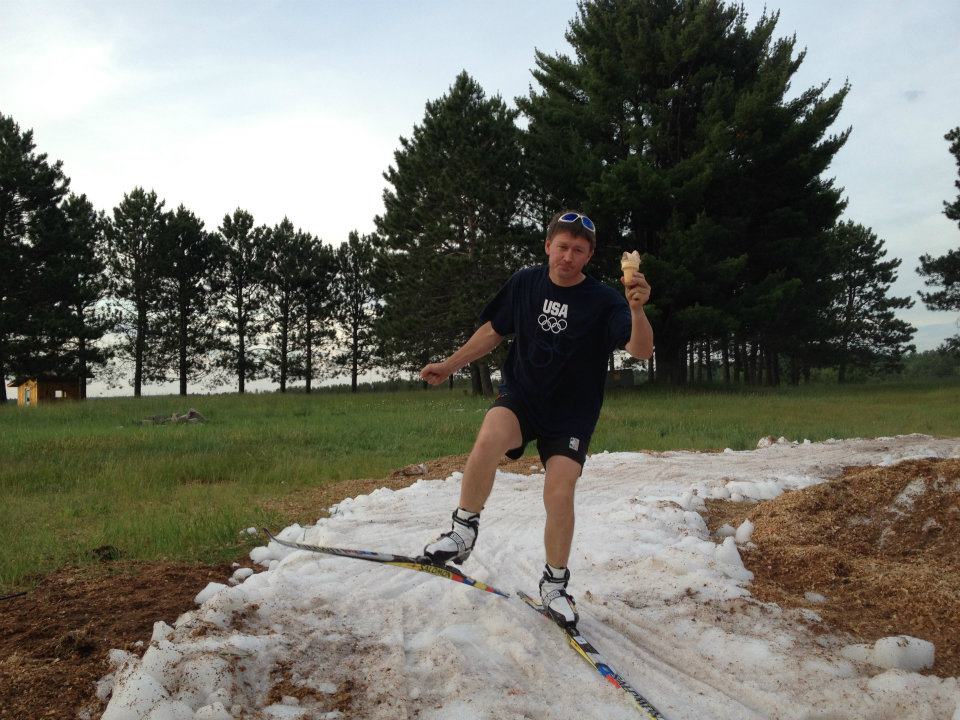
Igor Badamshin enjoying some offseason, on-snow time and ice cream. Badamshin was the CXC head coach before passing away of a heart attack in January 2014. The following article written a year later is a tribute to him. (Photo: cxcnewsfeed.wordpress.com)
The following “Masters Minds” submission comes from Charlie Dee of Central Cross Country (CXC) and the American Birkebeiner Board of Directors. Dee wrote this tribute about CXC’s late coach Igor Badamshin in January.
***
Sitting inside for the the negative wind chills in the upper Midwest, instead of skiing, I’m ruminating on last year … the incredible contrast of two days I had on snow, as well as the anniversary of the coach’s death who made the good day possible.
Early January a year ago, I was warming up before the Sisu Marathon on the ABR Trails in Ironwood, Mich., when I noticed the course reversed the usual direction of “Pit Point Loop.” That got rid of a very steep downhill with a nice run-out, replacing it with a more gradual downhill ending in a 90-degree turn at the bottom.
CXC masters skier and ABSF board member Charlie Dee with one of his grandsons. (Photo: Facebook)
Tucking confidently and stepping through the turn at full speed, I thought to myself, “This is going to give some people problems.” By the time I went through it a few k’s into the race, I became “some people.” There was a huge berm on the outside, with an ice rut on the inside. I did a full-tilt-boogie, 9.9 out of 10, yard-sale fall.
I couldn’t even remember the last time I had fallen in a race. Twenty minutes later in the “Hautanen Highlands” section, a series of short but quite steep down-hills with sharp turns at the bottom offered the same scenario, conditions I’ve handled flawlessly many times in the past. But the previous fall was in my head; I was so worried about falling that I slipped on every damn one of them: five falls in less than 5 k, six overall.
In response to the first few I let out the usual self-loathing curses, including asking the universe to do to me what I always want to do with my wife or Susan Sarandon. By the fourth one, I was just laughing. A very deliberate classic skier came by me several times when I was on the ground, only to be passed by me before the next tragedy. On the first fall he asked, “You OK?” On the second, “You again? Too bad.” On the third, “Again??!!!”
A Gu pack tore off my bib, and my energy drink bottle took so many nose dives into berms that the insulated opening that had never failed me before, even in single digits, froze up at 28 degrees Fahrenheit. The only good news was no broken bones or equipment.
The next day I wanted to get part of my drive home to Milwaukee out of the way early, before precipitation set in, so I skied at Minocqua Winter Park. The conditions looked perfect for anything; I decided on classic skis and headed out to the “Lake Marie” loops.
Until last year I only classic skied when skating was impractical, such as after a big snow dump. But following a couple Central XC Skiing Masters clinics with Igor Badamshin, the former Russian Olympian and World Cup skier, I started writing a series of technique articles with him for Silent Sports Magazine, an upper-Midwest publication.
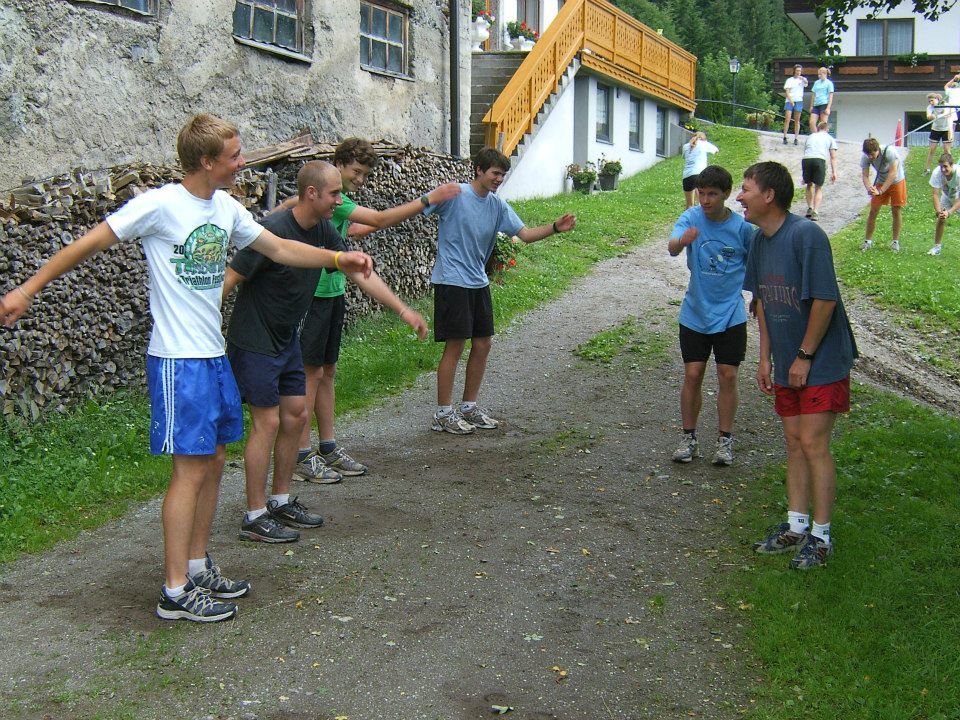
Igor Badamshin (right) laughing through technique work with (from left) Alex Howe, Dylan McGuffin, and other athletes on a junior training camp. (Photo: Martina Howe)
Igor was the best coach I ever had in any sport: high school, college, post-college. I learned quickly from Igor the basics of classic skiing that had eluded me in the decades I had been primarily skating: how to kick by rolling off my toes with a supple foot, transfer weight and move my unweighted-ski forward quickly, resulting in actual glide rather than a bouncing thrash.
It all came together on the Lake Marie trail. There was excellent, deep snow, mid-20’s, the tracks were firm with no debris, and instead of the predicted freezing rain, the sun popped through and set off a bluebird sky.
The hills in this section are not intense, but I stayed in the tracks, skiing up all of them in places where in the past my pathetic technique would force me to move out of the tracks and herringbone.
The stiffness in my back and soreness in my glutes and hips from all the falls the day before simply dissipated in my euphoria. I was classic skiing, and unlike my previous classic outings, my ankles didn’t bark nor my lower back ache.
Two-and-a-quarter hours later, sheathing my skis, I thought, “Old clumsy dog, new tricks — thanks, Igor.”
Just a week later, driving home from a movie with my wife, I got the shocking call: “Igor had a heart attack and died on the Birkie trail today.”
He was 47 and, from all outward appearances, in good health. What a loss to the skiing community.
Every time I’ve been on rollerskis or real boards since then, I think of Igor, check my technique and smile.
Charlie Dee of the American Birkebeiner Board of Directors (Photo: ABSF)
In 1972, Charlie Dee started skiing, but his ski-passion took a quantum leap when he taught a year in Denmark and travelled repeatedly to Norway to ski. A decade later as Fulbright Roving Scholar of American Studies in Norway, he lectured – and skied – throughout the country.
Charlie taught in the English and History Departments for 33 years at Milwaukee Area Technical College, was a faculty union leader, published articles on both politics and sports, had his own radio talk show in Milwaukee followed by a TV gig as a talking head on a weekly news commentary show, was a monthly op-ed columnist for the old Milwaukee Journal and has served on several non-profit boards.
Always an activist, Charlie co-founded the Wisconsin Nordic Network in 1997, the organization that raises money for high school athletes to participate in the Korteloppet. He’s a member of six different ski clubs, writes about skiing for Silent Sports magazine and has a burning desire to stay free enough from injuries to become a Birch-Legger eventually.
In addition to skiing, Charlie enjoys vegetable gardening, cooking, canoeing, kayaking, biking and playing with his twin grandsons. He is married with two adult sons.
***
Masters Minds series: Are you a masters skier who loves your club? Submit camp or training recaps or announcements to info@fasterskier.com with the subject line: “Masters Minds”. Articles can be first-person accounts or written from an observatory standpoint with comments from others.
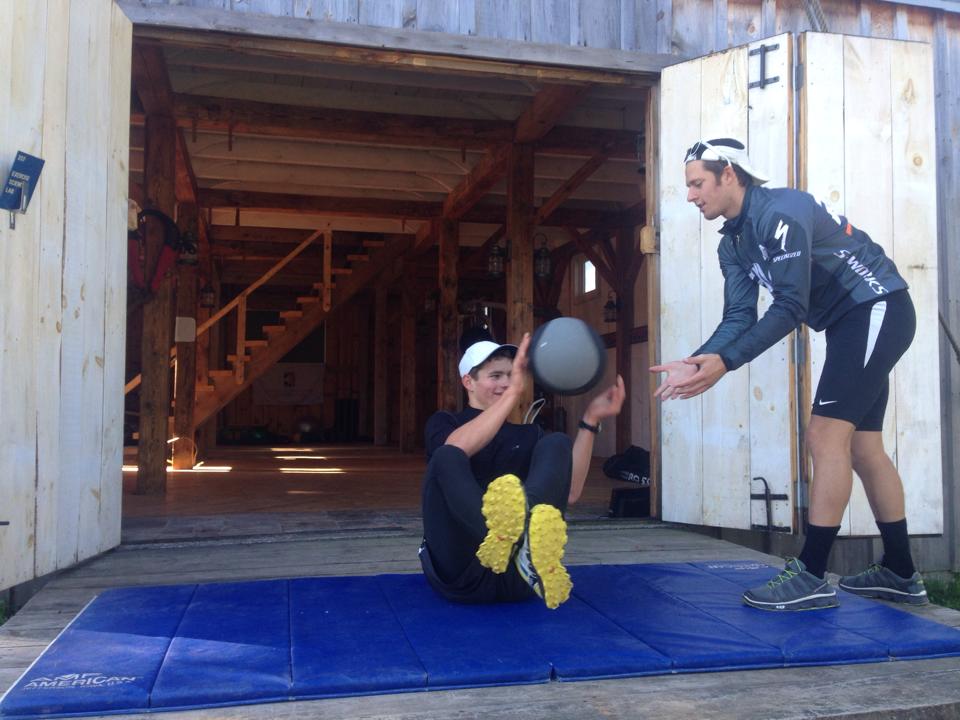
The newly appointed CXC Team Head Coach Andy Keller (r) works on strength with postgrad Scott Harrison outside a barn near Cable, Wis. (Photo: CXC Skiing/Facebook)
Three years ago, Andy Keller was a college kid looking for an internship toward his exercise-science degree at Michigan Tech. He knew a girl, who knew Jason Cork, and he used the connection to land an apprenticeship at the Central Cross Country (CXC) Ski Association in Cable, Wis.
At the time, Cork was heading up the CXC Team, which executive director Yuriy Gusev established in 2006 to support promising skiers striving for top national and international performances. Keller, who grew up just outside Minneapolis in Chanhassen, Minn., became Cork’s intern assistant.
Andy Keller started as an intern, then an assistant, and finally a junior coach before being promoted to CXC Team head coach this month, following the departure of Bill Pierce. (Photo: CXCnewsfeed.wordpress.com)
Months later, before Keller began his senior year, Gusev offered him a job.
“I said, ‘I kind of want a degree so I’ll talk to you in a little less than a year,’ ” Keller reflected on the phone last week.
He skied for four seasons at Michigan and graduated in 2012, then asking Gusev if there was still a spot for him. There was, though Keller’s job title and responsibilities changed three times before he officially got started, he said.
First, he was hired as sport-development manager, tasked with connecting CXC to youth clubs and high-school programs in the Midwest. Then, CXC’s assistant coach Gus Kaeding left to head the Stratton Mountain School (SMS) elite team in Vermont. Cook needed an assistant, and CXC’s board decided Keller would be it.
“Then there was a little bit of [difference] with coaching styles and athletes on the team, so Bill [Pierce] got brought on to work alongside Igor [and] I took more of a dedicated role to the junior program,” Keller said of last season. “This year started off the same way … I was focused more on the junior program.”
For the next several months, Badamshin oversaw the program and Pierce worked as the elite head coach. In late January, Badamshin died unexpectedly of a heart attack while skiing the Birkie trail between Cable and Hayward, Wis. He was 47, and his passing left CXC and the surrounding community stunned.
“A guy that works his ass off and is willing to do anything for his program … his passion truly lied with working with athletes,” Keller reflected. “[I] was just trying to carry on his legacy — inspiring kids to ski and getting them excited to be out there. If there’s one thing he was good at, it was definitely that, and also carrying on his work ethic. The guy wouldn’t complain. He’d be out there skiing 50 k and waxing…
“There was definitely big shoes to fill when he passed away,” CXC Team’s new head coach continued. “As I’ve come through, I’ve been working under a ton of coaches; my philosophy is I can always learn something. When I was interning under Jason and Gus that was what I loved to do — learning and listen.”
“There was definitely big shoes to fill when [Badamshin] passed away. … As I’ve come through, I’ve been working under a ton of coaches; my philosophy is I can always learn something.” — Andy Keller, CXC Team Head Coach as of September 2014
Keller Becomes Head Coach
That’s right, Keller, in his third season as a CXC coach, was recently promoted to head of its elite team following Pierce’s decision to accept a job in Colorado (he’s becoming nordic director of the Snow Mountain Ranch YMCA near Winter Park this fall) earlier this month.
But “elite” is a term Gusev and several other U.S. nordic directors like to stay away from: it’s about development and helping athletes reach their higher-competition goals. The CXC Team became Team Vertical Limit in 2009 as part of a sponsorship deal, and a year later it had 18 athletes, including a couple Olympians (Garrott Kuzzy and Caitlin Compton — now Caitlin Gregg).
The New: 2014/2015 CXC Team
CXC Team:
Cory Ellertson
Bjorn Batdorf
Bill Bowler
Chris Pappathopoulos
Hilary Patzer
Andrew Brown
Scott Johanik
Natalia Naryshkina (lives in Russia, plans to compete in western SuperTours and U.S. nationals)
Postgrads: (living in Cable this fall/winter)
Scott Harrison
Sam Boardman
College Summer Residency Group:
Nichole Bathe (University of Alaska Fairbanks)
Nicolette Reker (now at Winona State University, competing for CXC Team)
Tom Bye (Postgrad last year, now at Michigan Tech)
Thomas Kendrick (Michigan Tech)
Will Frielinghaus (St. Lawrence University)
Seth Mares (Gogebic Community College, plans to transfer to Michigan Tech)
International Training Partner:
Leandro Lutz (living in Cable this fall, plans to travel to Europe for international races in an attempt to qualify for World Championships; may stay in Cable and race U.S. circuit)
The CXC Team currently has eight members, most of which will be focused on top-10 results in Midwest marathons to attract sponsors. In addition, Keller is overseeing two postgrads, about 10 juniors and an international guest skier.
“All the coaches agreed, the team needs to get back to the roots of developing athletes,” Gusev explained on the phone. “You would have never called our team the CXC Elite Team, it just came later when this word became very popular.
“We always see our team as a development tool for that higher step,” he added. “We don’t see this team as full of stars, but we want to have a team open to athletes of that level. If it can help them great … It’s just like having a child: at some point you need to let them go and see if they can stand on their feet.”
Considering that, Gusev is encouraged by the direction his program is headed, especially with a homegrown coach at the helm.
“It’s exciting to see somebody who went through the original pipeline and became a coach,” he said. “And that’s a goal from the time he applied from an internship.”
Still, the last few weeks — and months — have been busy at CXC, to say the least. Following Badamshin’s passing, Gusev said the organization interviewed a couple people to hire in his absence, but ultimately, Pierce and Keller stepped up and said they could handled the added responsibilities without another coach.
“It was probably more emotional for some of us, but you just move on,” Gusev said. “The programs needed to move on as well and … we had to adjust right away.”
It didn’t take long for everyone to get back “in the groove,” he added. Pierce continued to serve as head coach and Keller as his assistant and junior coach.
Last Friday, Keller drove 300 miles southeast to Madison to test about 10 juniors at a weekend camp at CXC’s administrative headquarters. The group meets about once a month in various places, holding camps with other Midwest clubs, like Loppet Nordic Racing (LNR), May through December, Keller said.
He also helps host monthly CXC master’s camps, and while he’s not scheduled for every single one, he led a recent camp under Pierce’s guidance earlier this month.
“I made Andy run over half the sessions, and I watched him and helped him a little bit,” Pierce said. Then he told him and the rest of CXC about his decision to leave.
“I saw it coming,” Keller reflected. “Bill did talk to me as he found out more about the new position he was taking.”
In Cable, where Keller lives in a condo on the Telemark property, he spent the summer working with six athletes in CXC’s new college summer residency program, which Pierce initiated.
“That overlapped with what you would call our team now, more of a marathon team,” Keller said of his previous and current responsibilities, coaching juniors and now seniors as well. “The athletes that we’ll have competing on the SuperTour is relatively small.”
Those skiers include two postgrads from LNR — Scott Harrison and Sam Boardman — who plan to live and train full time in Cable this fall and winter. Their main races include western SuperTours, U.S. nationals, and the Midwest Junior National qualifiers .
“We don’t see this team as full of stars, but we want to have a team open to athletes of that level. … It’s just like having a child: at some point you need to let them go and see if they can stand on their feet.” — CXC Executive Director Yuriy Gusev
With an overall emphasis on regional competitions, CXC is looking to assemble the best skiers in the Midwest.
The Old: What happened to last season’s CXC Team?
Not returning: Karl Nygren, Eric Wolcott, Dmitriy Ozerski (was flying back-and-forth from Russia for races)
With a single returner from last year’s CXC Team (college skier Tom Bye), Keller explained what happened:
“When Igor [Badamshin] took over there was little bit of communication issues … a little bit of discontent,” he said. Athletes like Karl Nygren, who might have had as many as five coaching changes in seven years, ultimately decided to leave the program.
“If there’s anything the program needs is some stability,” Keller said.
“As the coach now, I’d love to build the program back up to how it was when I interned,” he said, referencing past CXC standouts like Jessie Diggins, Caitlin Gregg, Brian Gregg, and Jennie Bender. “…That was the year they won the NNF Cup so that’s the level I’d like to bring it back to.”
One of Gusev’s priorities is hiring another coach focused on sport development to further connect CXC with grassroots organizations and schools throughout the central U.S. Looking at the big picture, it’s about promoting the sport and coaching development. In the long run, CXC is hoping that will translate into athlete retention.
“Regardless whether the athletes come to us directly or not … it’s a matter of whether we have consistent, easy to follow progressions, like soccer does or swimming does,” Gusev said of two sports he considers domestic successes in the U.S. “[Those sports outline the] steps to high school, college and beyond, which doesn’t exist really in cross-country skiing. We have all the pieces in place, and we can communicate that to parents.”
For Keller, his goal is to help grow the base and competitive nature of skiers in the Midwest, which includes Illinois, Indiana, Iowa, Kansas, Michigan, Minnesota, Missouri, Nebraska, North Dakota, Ohio, South Dakota, and Wisconsin.
“It’s where I grew up,” he said. “[We’re] trying to make the Midwest more of a ski powerhouse, and that’s definitely happening. We’re developing athletes, but we’re having a hard time getting them to stay around.”
He counted eight skiers in elite programs outside their region, including Jessie Diggins (SMST2), Anne Hart (SMST2), Ben Saxton (SMST2), Gordon Vermeer (Craftsbury Green Racing Project), and Rosie Frankowski (Alaska Pacific University).
“It seems like everybody wants to go somewhere else and I’ve got to figure out why,” Keller said. “I think the level of support CXC gives is among the best … It’s just we’re not in the mountains and we don’t have a glacier to [train on]…
“The Midwest might not be the most sexy training site as a Sun Valley or something like that,” he continued. “… [But] it’s not that we’re not producing the athletes.”
“It seems like everybody wants to go somewhere else and I’ve got to figure out why. I think the level of support CXC gives is among the best … It’s just we’re not in the mountains and we don’t have a glacier to [train on]…” — Keller
In terms of coaching styles, Keller said he gained a lot from working with Cork, Kaeding, Pierce, and Badamshin.
Coach Igor Badamshin having some fun on a few patches of snow. Photo is titled “Snowflakes, ice cream and Igor,” by former CXC Team elite coach Bill Pierce. Badamshin was the CXC program head coach until his unexpected death in January 2014. (Photo: cxcnewsfeed.wordpress.com)
“I’d hope I’d be maybe as analytical [as Cork],” he said. “I’m hoping I can be half as enthusiastic and motivating as Igor … I try to pull from all those guys and find out what works for myself and what doesn’t fit my personality. I would say I’m relatively soft-spoken and sometimes it’s a little bit harder for me to put myself out there. I hope I’ve gotten better at that.”
When it comes to managing athletes, Pierce will continue to write training plans for those that started with him at the beginning of the season, including Cory Ellertson, Chris Pappathopoulos, Andrew Brown, and Scott Johanik.
Keller said he’ll take on those that joined the team more recently and will be in Cable the next several months: the two postgrads and guest skier Leandro Lutz from Brazil, who plans to travel to Europe to try to qualify for 2015 World Championships.
As for coaching and waxing for 18 or so skiers throughout the season, Keller said that working alongside other Midwest clubs at races, especially at main events like U.S. nationals, should help. And not all the athletes will compete at the same events, given their varied focuses — from marathons to junior-qualifying races.
At the same time, Keller said he’s looking forward to having an assistant or some kind of helper in the future. Gusev said the new hire would largely help with junior camps.
In the last month since Pierce’s decision, he said he’d been working with Keller on the transition and will continue to offer assistance beyond his final day at the end of September.
CXC Team’s fall/winter crew during a recent workout in Cable, with postgrads Scott Harrison and Sam Boardman, and guest skier Leandro Lutz from Brazil, who will be joining the team for the next couple months. (Photo: CXC Skiing/Facebook)
“I’ve basically given [Keller] my daily responsibilities,” Pierce said earlier this month. That included even the little stuff, like “teaching him how to smooth out a trail and pick rocks and seeds.”
“There’s definitely a lot to catch up on as far as ski selection and things like that,” Keller observed. “Working with Rossignol, getting in contact with those guys, getting up to speed with things Bill might’ve taken care of as far as a team aspect and getting [ready] to compete.”
He’s also tasked with attracting sponsors through top results in Midwest marathons.
“We’ll do fine with that,” he said of his mostly marathon-focused team. “Our postgrads have goals of trying to make World Juniors … definitely a big one is qualifying for Junior Nationals and trying to make top-20 [there]. The goals for the marathon team is being on the podium or top 10 … that should be no problem.”
He’d also like to bring the CXC Team back to an “elite, elite” team, he said, by recruiting recent graduates.
CXC Para Nordic Team member Steve Baskis training with U.S. Paralympics Nordic Program in the ski tunnel in Torsby, Sweden, earlier this month. (Photo: CXC Skiing/Facebook)
According to Gusev and CXC’s mission statement, the 2,000-member organization has four straightforward goals: to build its base, promote the sport, achieve competitive success, and create partnerships through collaborations. The way he sees it, member athletes are part of that as well.
“[The CXC Team] athletes are in a community to be motivation to adult athletes at clinics, to be role models and whatever else comes with it,” Gusev said. “With competitive excellence, we hope to get them to the level [of someone like Garrott Kuzzy or Tad Elliott, who made the U.S. Ski Team]. We hope the athletes that come through our program will eventually contribute to international success…”
Emerging Adaptive Team
CXC is also focused on building its adaptive program under coach Andrew Poffenberger, another Minnesota native who skied as a junior and studied health fitness at Gustavus Adolphus College in St. Peter, Minn.
Augusto “Goose” Perez (sit-skier, cancer survivor, 2014 Paralympian)
John Oman (standing athlete, 2014 Paralympian)
“Emerging Talent” Program:
“People who have tried nordic skiing on several occasions and show promise, interest in competition, and commitment to the sport,” Poffenberger wrote. “This is an area where I am looking to grow in the next few months as people turn their attention from fall sports to winter.”
Junior Para Development: Focused on youth development and coaches interested in instructing adaptive skiers in high schools. “Our annual coaches clinic and certification will include a few sessions on adaptive nordic skiing for those interested this year,” he wrote.
This year, the CXC Para Team has expanded to include five elite athletes, four of which went to the 2014 Sochi Paralympics: Aaron Pike, Travis Dodson, Augusto “Goose” Perez, and John Oman. Its fifth member, Steve Baskis, a blind athlete and veteran, recently joined the U.S. Paralympics Nordic Team at an on-snow camp in Sweden.
Poffenberger also works with three “emerging talent” adaptive skiers — those “who have tried nordic skiing on several occasions and show promise, interest in competition, and commitment to the sport,” he explained in an email.
In addition, he coaches about four or five junior-development skiers, athletes that “can sit ski for 10 to 15 k in a session,” Gusev said. “Andrew’s done an amazing job with them.”
“Ideally we would like to mirror the development structure of able-bodied skiing,” Poffenberger explained. “Possibly the most important component of that structure is youth development. If we expect to be competitive at the highest level, we need to start developing young athletes.”
Among their efforts: CXC has submitted a proposal to include adaptive nordic at the Wisconsin state meet.
“We are also seeking out coaches who are willing and able to coach adaptive nordic skiing at the high school level,” he added.
Last week, Poffenberger attended a conference with The United States Association of Blind Athletes at the Olympic Training Center in Colorado Springs.
“I love working with these athletes because they have perspective of the entire picture, and don’t let small things stand in their way,” he said, now in his second season with the team.
“I hope we can keep having more and more individuals like [Poffenberger and Keller] that get involved with a sport as a profession,” Gusev said. “They understand the way athletes move from one stage to another stage and it’s easier for them to communicate with athletes at the younger level what expectations are. That’s really the goal.”
Igor Badamshin (right) laughing through technique work with (from left) Alex Howe, Dylan McGuffin, Ethan Dreissigacker, Will Anderson, and Sam Marshall, at a summer training camp in Austria. Photo: Martina Howe.
Almost ten days ago now, the U.S. ski community lost one of its most valued members: Igor Badamshin, who died of a heart attack while out skiing.
“He was in an area that he really enjoyed, and he skied on the Birkie trail, and it was a beautiful day,” CXC Executive Director Yuriy Gusev told FasterSkier. “He loved classic skiing, and so he was out classic skiing. And he had come to that area to help his friends with an event.”
Although Badamshin was born in the Soviet Union and even represented them in the Olympics, it was arguably the United States where he had the biggest impact on skiing. Badamshin worked hard to establish grassroots skiing in two separate regions, starting at Gunstock Nordic in New Hampshire before moving to CXC.
Badamshin originally came to the U.S. with his wife, Nina Gavrilyuk, and settled near Gunstock, where they began coaching.
“Igor moved to the US with Nina and [their daughter] Jenia when I was in 8th grade,” Craftsbury Green Racing Project athlete and Gilford, NH, native Alex Howe wrote in an e-mail to FasterSkier (he also published on his blog).
“At the beginning it was hard for them to start coaching because of the language barrier,” Howe explained. “Nina was very quiet and got her point across slowly. Igor would just say whatever he was thinking even if the sentence had little to no meaning in English. On one occasion in particular Igor misplaced the word ‘sheet’ with the word ‘shit.’ He looked around the club house confused as to why everyone was laughing when he asked, ‘Where is the shit of paper?’ in a thick Russian accent! All he wanted to do was look at the interval times from that afternoon.”
Despite the language confusion, it was clear that Badamshin and Gavrilyuk were excellent coaches, as the Gunstock team began to rack up top finishes. Howe and his older sister Katrina were on the roster, as well as Dylan McGuffin, Sam Evans-Brown, the Stark family. Their athletes often packed the roster of New England’s team to junior national championships, and many later packed the startlists in college races as well.
Badamshin (center) and Howe (right) get ready for a parade. Photo: Martina Howe.
“Igor and Nina were a perfect balance for each other,” Howe remembered. “Nina would run the serious part of the practice and Igor was there at the end to make sure we all got enough games and jokes in for the day.”
At the Eastern Cup race this weekend, the New England Nordic Ski Association held a moment of silence for Badamshin.
After establishing Gunstock as one of the top clubs in the east, Badamshin left to spread his gospel to the Midwest (Gavrilyuk still coaches at Gunstock). He began a relationship with CXC as soon as the program started an elite team in 2007.
“First he was just a volunteer and played a role as the CXC High Performance Advisor,” Gusev said. “He helped a lot – he came and spent some time with Bryan Fish and myself, and he had all this experience. We didn’t have any experience working with athletes in a program of that level. So he came to camps and would sit down with us and talk about training. He would give advice to Bryan about how to design a training plan.”
Gusev called Badamshin instrumental in developing both the senior and junior performance programs at CXC, as well as helping the other coaches gain experience and skill. In the seven years since, the organization has grown and grown – and Badamshin was part of it all.
“There was no project that would be impossible for him,” Gusev said. “He was so motivated for everyone to take these things on. It will be hard to replace, that’s for sure.”
But as Howe had alluded to, it wasn’t his experience or his training plans that made him so beloved. It wasn’t just that he made athletes fast. It was that he was just a fun guy to be around.
Life With Igor
“He was like Blades of Glory on roller blades. He could do all sorts of gymnastics that would surprise the heck out of you. He spent a whole day making Russian dumplings for team dinner once by scratch that were unbelievable. Starting to get sick? Take a shot of Vodka. Cant sleep? Take a shot of Vodka. Have a hangover? Probably should drink move Vodka. (I’m just kidding about the last one.) He will beat you in arm wrestling. He will put weights on your feet, tell you to ski, and you will do it, because although it may have been lost in translation, there is a sparkle behind those eyes that is trying to tell you something. Igor will be missed by many, and I hope that everyone will remember to live life with vigor”— Jennie Bender, Bridger Ski Foundation, CXC alum
“He was the best with typical American teenagers,” Gusev marveled. “Juniors just loved working with him. He could connect so well, better than anyone I’ve ever seen. And he loved it, it was his biggest passion.”
“The youngest kids would always ask to play ‘pancake,’ which consisted of Igor flipping them in the air and catching them, while the older kids would try to best him in his famous wrestling matches,” Howe remembered of his early days at Gunstock “I always felt like Igor and I got along right from the get go.”
And for Howe in particular, Badamshin provided a motivating training partner. In general, Gusev said, Badamshin didn’t talk about his past: athletes might not realize that he owned a World Championships medal in the relay, or placed fifth in individual races at World Championships not once, but twice.
Yet he was obviously a great athlete, and still relished playing at one sometimes.
“All the memories that I have of training when I was a junior are filled with adventures with Igor,” Howe wrote. “He was always there to push me to train harder, while keeping every practice fun. Igor didn’t always ski around every loop with me, but it always seemed like he would show up at the top of the biggest downhills with a big grin on his face daring me to race him down the hill. On days where the other guys didn’t show up to practice he would jump right into any interval session to push me, even if he had just worked all day pulling old snow-making pipes down the alpine slope for next years snow-making system.”
So when Badamshin left New England, it was a tough loss. Gusev doesn’t remember it seeming too hard for his new employee to relocate, but then again, it’s not like Badamshin would admit it if it had been.
Badamshin and Gavrilyuk at a Bill Koch League Festival in New England. Photo: Martina Howe.
“I never spoke with him about whether it was easy or not,” Gusev said. “But he enjoyed what we had for him to do here, that’s all I can say. He never shared, if he had some challenges, he wouldn’t talk about it with many people. He would just smile. He was a very interesting individual in that regard.”
Badamshin may have been getting older, but nothing had changed. Jessie Diggins, now a U.S. Ski Team member and World Champion who trains with Stratton Mountain School’s T2 team, got her start as a junior with CXC.
“He always lead by example, and wasn’t afraid to do the entire interval set right alongside his athletes,” Diggins said of Badamshin.
“He could show the elite athletes up any day of the week,” Jennie Bender, another former CXC athlete now at Bridger Ski Foundation, agreed.
Gusev also praised his ability to explain ski technique to athletes of any level.
“He had a very special way of explaining things, especially to kids,” he said. “It was simple, simple but really conveyed what he was trying to explain, even with really complex things. That really worked for all of our athletes, from juniors to masters skiers and elite athletes.”
Finally, training with Igor was never boring because the plan was just a little bit different than that of most American coaches.
“His experience came from the coaches that he worked with, taking the things that he felt were really beneficial to him as an athlete,” Gusev said. “He never had the same workout twice. He could have had you do 20 level two two-minute interval workouts, but none of them would be the same. I think that’s very special. You have to make training very interesting and exciting so that it’s something athletes are looking forward to.”
Russian Recollections When the Russian website skisport.ru published a notice of Badamshin’s death, dozens of commenters weighed in. Here’s a sampling of their (translated) thoughts.
“We saw him at the last American Birkie, and he was so open, friendly, cheerful, and young … try not to forget …” — Vladimir Kochetov
“This is very sad… I am opening my notebook and looking at the autograph he signed for me in 1993. What a vivid memory!” — Nikolay Grafov
“Igor was an open, friendly, and responsive guy! Let him remain that way in our memory.” — Oleg Petrov
After helping to get the CXC elite team started, he also worked with the CXC Academy, a junior program. It was an obvious and perfect fit. Badamshin now had an entirely new set of juniors to joke around with, impress, and make fast.
“It was fun to see him coach the juniors because he was absolutely perfect for the job – full of energy, smiles, fun ways to make a ski entertaining while still getting his technique or training points across,” Diggins wrote in an e-mail. “I remember him teaching the juniors a fun ‘Russian jumping game’ at an REG camp, and then of course he’d throw himself right into the game, laughing and trying to out-do the juniors.”
When Fish left to join the U.S. Ski Team coaching staff, Igor took over the reins of the elite team as head coach for the 2012-2013 season.
“Igor had a great playful sprit, which drew him to the juniors more than to the Elite squad,” Bender wrote in an e-mail to FasterSkier. “However, as one who enjoys that in a fellow human being, his energy was a valued addition that year.”
Naturally gregarious herself – the tagline on her website is “I cannot be contained” – Bender continued to flourish under Badamshin’s coaching and skied to her first national championship, in the classic sprint.
But it was not so much the training as the playing that bring her the best memories of Badamshin.
“I used to pretend box with Jason Cork before races to get amped up,” Bender wrote. “We would try to jab at each other below the neck, and I’d usually lose because Jason has got a quick punch, but it always made me laugh and get in a good mindset. When Igor became the elite coach, at one race I tried to get him to pretend box with me too. He knocked my nose by accident and it started bleeding right before a race… He felt bad but it was pretty funny.”
For most of Badamshin’s friends, this loss is unimaginable.
It is for Howe, too – who felt like he already lost Badamshin once.
“For a long time after Igor left for CXC I felt a bit betrayed by him,” Howe admitted. “I thought he would never be able to move somewhere and have as much fun as he did training with me. In hindsight I know that it was not me that provided the fun. Igor could make every minute into an entertaining one and could turn any situation into a game.”
The second time is even more painful.
“I have missed my training partner over the past years and miss him even more now,” Howe wrote. “He was phenomenal as a coach, inspirational as a person, and irreplaceable as a friend.”
Epilogue: Gusev and CXC are creating an “Igor Badamshin Fund” to help young athletes achieve their international racing dreams. Donations towards Igor Badamshin Fund can be mailed to CXC Skiing, P.O. Box 930442, Verona, WI 53593 with “IB Fund” on the memo line. Gusev explains it like this: “We’re trying to establish a fund in his name to help young talented athletes with scholarships to compete at the U18 Championships in Europe and World Junior Championships. We thought, what would be the most in keeping with his loves? That would be something he would enjoy.”
Jennie Bender (CXC) while training for the 2012 Telemark Forest Mountain Bike Race in Cable, Wis. Upon discovering she had both Lyme disease and mono, she wasn’t able to compete in the 28.5-mile race on July 14. (CXC courtesy photo)
The symptoms started at a July training camp with Central Cross Country (CXC) in northern Wisconsin. The runner-up from last year’s SuperTour series, Jennie Bender, 24, wasn’t feeling well.
For two to three days at a time, she’d experience bouts of nausea. Then her neck felt sore, along with her jaw and teeth. One night, she tossed and turned with cold chills, and feared that she’d wake up a leper. The next day, she pushed on with her team during dryland training. Bender didn’t know what was wrong, but was sure she’d muscle through it.
Things got worse. Bender’s eyes started to get puffy and dry, she felt an unusual frequency of headaches, and finally, fatigue set in.
She went to the doctor and learned she had Lyme disease, a bacterial infection caused by a tick bite. When Bender called back for more information, they told her she also had mononucleosis, a viral infection commonly known as mono. She cried at first, but the second diagnosis made her laugh out loud.
“Like … seriously? You’re just messin … ” Bender recalled in a blog entry.
Left with one option, she chose to rest.
“I have never had either before,” Bender wrote in an email to FasterSkier. “So I had to stop cold turkey for a solid month [starting July 21], which needless to say was not easy. My legs felt like Jello and I had a lot of practice sitting.”
While absorbing all this during her three-hour drive back to Minneapolis, Bender had a bit of a scare. About 2 ½ hours in, she started singing to herself. That wasn’t the scary part.
“Suddenly I realized my speech was slow, and I couldn’t formulate my words very well,” she wrote on her blog. “My upper lip was also curling up in an abnormal way as I spoke (to myself), and I was trying to figure out if this was in my head, or actually happening. It lasted about 5-8 minutes, then slowly started to change back. This was followed by brief leg and forearm/hand tingling.”
Jennie Bender working out during a CXC training camp earlier this summer at Telemark Resort in Cable, Wis. (CXC photo)
She called several friends, which were doctors, and they advised that she go to the emergency room. She did so at 5 p.m. on a Saturday, and seven hours later, left the ER with little information.
“They concluded I didn’t have a tumor, or MS, or a slew of other worst case scenarios,” Bender wrote. “I keep thinking, what if they DID find something like that? My first reaction was that I would have had a better excuse than Mono for not doing the strength test during camp. Then, I would have freaked the heck out. Probably run around the hospital naked looking for that sheet cake to ape throw at bystanders.”
Since then, Bender has run through a roller coaster of emotions this offseason. She’s hated Facebook at times for photos of people training and been frustrated with herself for working out too soon. After making the podium at both U.S. and Canadian nationals last season, she’s had to reconsider her goals this year and be her biggest advocate in achieving them.
“This whole process has been a learning experience of how to trust myself,” she wrote. “After numerous blood tests, the Dr (correction many Drs) couldn’t tell me when to train or when not to, and neither could a coach. I was the only one who knew how I felt. I had to cancel many camps, convince people I shouldn’t do races or events, change my diet, disregard my yearly training plan, and change my mindset.
“I have no doubt in my mind. I will come back just as strong,” she added. “And I will be ready to slay. Just a speed bump.”
***
Here is the rest of FasterSkier’s interview with Bender, who is picking up the intensity in Canmore, Alberta:
Bender scrambling up the East End of Rundle (also known as EEOR) with former teammate Sara Hewitt (not shown) in Canmore, Alberta. (Courtesy photo / jenniebender.com)
FasterSkier: How’s Canmore?
Jennie Bender: I arrived in Canmore [Oct.] 11th to hang out with [former CXC teammate] Sara Hewitt before the team arrived on the 13th. We started skiing the 14th around the rolled out loop, and the snow has been holding on thus far. We had a warm spell with rain and I thought it was a goner, but it’s doing OK.
The team started out the week getting used to the altitude, so we have been doing mostly distance, but [Wednesday] the men started intensity, which will be the theme of the rest of the camp. The mens team up here consists of Eric Wolcott, Karl Nygren, Adam Martin, and Doug Debold, and they are looking really strong. Last year our woman’s team was a force, and now this year I have a feeling the men are going to shine.
FS:How’s your recovery and transition back to training been?
JB: I have been working on technique a lot this summer, and it really feel like I have made some improvements. I just need to transfer them to on snow. [New CXC head coach] Igor [Badamshin], along with some other positive influences, have opened my eyes to some big changes.
Technique wise, I am working on relaxing into the motions more. I muscle a lot of skiing, and I would like to take advantage of natural movement more so than in the past. … When I am healthy, I will do intensity. That should be soon.
FS:How long were you on medications?
JB: The doctors told me to take two weeks of antibiotics, but I heard so many horror stories from fellow friends and athletes who have had Lyme before, that I requested three weeks. I think I caught it early, but I don’t know if I picked it up in June or July. I don’t remember finding a tick on me, it was sort of ironic because I was the most paranoid athlete at camp towards tick prevention. Warning to others, Deet does not ward off ticks, only Permethrin, which can’t be sprayed on skin.
“I actually was just going to slow ride the race because I felt bad about skipping it,” Bender wrote on her blog. “Then I finally put together that I probably shouldn’t. Yes, it was actually a decision that was stressing me out, and not an obvious ‘No F-ing way’ for the normal, logical brain. You would be surprised how many hopeful ‘Are you going to race still?’ that I received.”
FS: How did you spend the rest of the summer?
JB: I had to miss the CXC altitude camp in Colorado, so I went to Vermont to visit home in late August and early September. There, I had a few setbacks, trained, then had to rest again. I would think I was easing into it, then realized just how little reserve to recover I had in me.
When I came back to Minnesota end of September, I finally started to get in some consistent training. Now I am here in Canmore, which feels really good. I still haven’t done much intensity, and of course picked up a slight cold right when I was going to lay it on, but I have been rolling with the punches thus far … so I just have to deal.
FS: What’s your outlook for the season ahead?
JB: My goals are still the same. I just have plan A, B, and bah humbug C. I want to race in the Canmore and Quebec World Cups, I want to race well at Nationals in Soldier Hollow, and I want to race spring in Europe. We’ll see how far my stubbornness and new technique gets me.
Through all of this, I have learned and reiterated three important things. 1) It’s important to know how to make yourself happy and laugh on your own. That being said, those who reach out to you when you start to fall off the map really mean a lot. 2) This summer, I have had the least amount of structure given to me since high school. Igor has urged us to know how to lead our own way, and at first I fought it, but now I understand its importance. You are your best coach, and confidence is key. 3) Every great athlete needs to have a setback story, so I am hoping this is mine, and now I can move on and ski fast.
CXC teammates Jennie Bender and Nichole Bathe pose in front of Telemark Resort during a workout on Friday in Cable, Wis. While Bathe is new to the senior team, Bender is a seasoned veteran with multiple SuperTour wins and podiums at U.S. and Canadian nationals last season. (CXC photo)
Note: This is the fourth preview in a quick-and-dirty series on U.S. elite teams. We asked coaches to send their 2012/2013 rosters and tell us what’s new for the coming season. We will be publishing additional reports over the next few weeks. Teams are presented in no particular order.
Team: Central Cross Country, known as CXC Team
Coaches: Igor Badamshin (head coach), Andy Keller (assistant)
Karl Nygren, Doug DeBold and Eric Wolcott of the CXC Team during a workout at Telemark Resort on Friday in Cable, Wis. (CXC photo)
Roster: Karl Nygren, Brian Gregg, Doug Debold, Adam Martin, Eric Wolcott;
Jennie Bender, Caitlin Gregg, Nichole Bathe
Who’s new: Debold returns to the squad after placing third in classic sprint qualifier at 2012 U.S. nationals in Rumford, Maine, where he finished eighth overall. Bathe, 17, is moving up from CXC’s development ranks after being one of the leading Americans on the J1 Scando trip last season, placing eighth in a sprint in Estonia. Another 17-year-old former junior racer for CXC, Martin posted a 12th-place sprint finish on the J1 Scando trip.
Who’s missing: “We have several athletes that are not back on the team,” CXC Executive Director Yuriy Gusev wrote in an email. Among them are Jessie Diggins, who was recently promoted to the U.S. Ski Team’s A-team and decided to join the new Stratton Mountain School (SMS) Elite Team. Santi and Carolyn Ocariz rollerskied across the country and moved west to join XC Oregon, and Canadian Sara Hewitt also left CXC.
Former head coach Jason Cork also parted ways to accept the U.S. Ski Team men’s coach position. That followed the departure of CXC’s assistant coach Gus Kaeding, who is heading up the new SMS Elite Team.
Gusev wrote that CXC has been transitioning this spring, making Badamshin head coach after three years with the junior development team. Anticipating the departure of certain athletes, CXC made sure to support juniors like Bathe and Martin last year similar to how they worked with Diggins over the last two years.
Gusev added that they decreased the roster size to provide more athlete support, especially at international competitions.
“The most notable [skier] we’ll miss this year is Jessie Diggins,” Gusev wrote. “Athletes have to do what is the best for them and we 100% support their decision. We had similar situations in the past with Matt Liebsch and Tad Elliott. It’s about athletes and we need to support what is the best for their performance. We are proud that we played important role in getting those athletes where they are right now.”
Top results last season:
According to Gusev, CXC tallied:
Bender working out during a CXC training camp on Friday at Telemark Resort in Cable, Wis. (CXC photo)
• 80 top-three finishes in World Cup, US SuperTour and major marathon races
• 31 wins in US SuperTour and major marathon races
• 10 top-30 results in World Cup Races (by Jessie Diggins)
• 5 top-10 ranked skiers ranked in U.S.
• 5 skiers in the top-three of each gender in SuperTour final standings
• 4 national championship titles
• 3 skiers in the top three in the women’s freestyle sprint at US Nationals
• 2 top-10 World Cup results (Diggins)
• A silver medal in World Cup team sprint (Diggins with Alaska Pacific University’s Kikkan Randall)
Coach’s comment: After two summer training camps at Telemark Resort in Cable, Wis., Gusev complimented the team’s working atmosphere.
“There are few changes with training and workouts compared to the past, but the athletes are responding well to them and eager to try different ideas,” he wrote.
The Central Cross Country Ski Association (CXC) is pleased to announce the expansion of its Athlete Development Program. Beginning in the spring of 2011, CXC will be offering full support to America’s top junior skiers through the addition of an Elite Development Team. Selected junior skiersThose selected juniors for the Elite Development Team will train side-by-side with CXC’s top senior athletes throughout the year at camps held around the United States, and will continue to working with their local clubs and coaches during the time between camps. The ultimate goal will be to merge our senior and junior programs, excelling in development while maintaining a high level of racing excellence. The programs will be coached by CXC Elite Team coach Jason Cork, Elite Development coach Gus Kaeding, and Junior Development coach Igor Badamshin.
CXC Junior Development Team is led by Igor Badamshin. Igor is a former Olympian and bronze medal winner at World Championships. Since Igor has taken lead of the Junior Development Program, it has more than doubled in participants. Further junior program expansion will allow juniors to work more closely with CXC Elite Team members to foster development towards national and international success. Currently, the CXC Junior Development Team has 15 members with some of the top juniors from around the Midwest. Those juniors represent nine different ski clubs, come together for monthly training camps and races. Igor has established additional outreach programs in Wausau and Minocqua, Wisconsin, exposing over 50 junior skiers in the surrounding areas to year-round training.
“It’s great to see so much interest in cross-country ski racing. It couldn’t be done without the support of their coaches and clubs. CXC has provided over $12,000 in scholarships to offset training camp and coaching expenses to committed, talented athletes. CXC’s Community Olympic Development Program [CODP] is a great mechanism for talent identification and we will see proof of that in the upcoming year.” − Igor Badamshin, CXC Junior Development Team Coach
Starting in the spring of 2011, CXC will provide 100% support for qualifying athletes to cover training, coaching, camps and racing expenses associated with the CXC Junior Elite Development Team. CXC will encourage club/school coaches of participating athletes to attend training camps, and bring along any other top athletes from their programs. CXC will subsidize the coach’s expenses as well during those these training camps.
“We are committed to taking this large step in order to provide the best opportunity to each of the most talented junior athletes. These athletes will now have every opportunity towards athletic excellence on the national and international level. Jessie Diggins is a great example within our current program. Jessie has been an inspiration for us to make this happen and we hope to develop a dozen of athletes of similar caliber so they can push each other to the next level!” – Yuriy Gusev, CXC Executive and Athletic Director
This year CXC is making a commitment to fully support two juniors to compete at the U.S. National Championships in Rumford, ME. These two athletes qualified to receive this support by showing outstanding performance last season at the Junior World Championships and Junior Olympics.
Tentative qualification criteria to receive full Junior Development Team support from CXC will be up to 3 athletes per gender subject to application:
· J2 – Top 3 finish at JO’s
· J1 – Top 3 finish at JO’s or top 10 finish at J1 Scando Trip
· OJ – Top 3 finish at JO’s or Top 30 finish at Junior World Championships
The CXC Junior Development Team will continue be open to juniors that do not qualify for the Elite Development Team by utilizing the current criteria based on the current and program fee structure.
Big changes to the team roster and the coaching staff are this spring’s news for the Central Cross-Country Ski Association (CXC). 18 athletes and three coaches will comprise the 2011 team for one of North America’s largest and fastest-growing clubs.
Vacating the post of head coach that he held since the formation of CXC in 2006, Bryan Fish has accepted a position with the US Ski Team (USST) as Continental Cup coach. Jason Cork will be stepping in to fill this void, bringing his experience with Durango Nordic Ski Club, Michigan Tech University, and recent J1 and World Junior Championships coaching staffs to the job. Gus Kaeding, a former CXC athlete, will be stepping up as the team’s elite development coach this season.
Under Bryan Fish, CXC sent its first athlete to the Olympics in Garrott Kuzzy
Olympian and CXC athlete Garrott Kuzzy is optimistic about the changes in coaching staff, saying “I see the changes as positive, all the way around; we’ve now got three great coaches, four if you include Igor Badamshin, instead of just one.”
Turnover among athletes is similarly high. A notable loss to the team comes with the departure of Rebecca Dussault, who along with her husband has taken an internship position at an organic farm in Colorado for the year and is pregnant with her third child, due January 19. Also leaving the team are decorated skiers Kristina Owen, Kelly Chaudoin and Audrey Weber.
The men’s team will be headed by Kuzzy, who will continue to work with CXC after a parallel stint with the USST. Notable newcomers include Santiago Octariz, who represented University of Wisconsin-Green Bay last year as the lone NCAA All-American from the central region, and Tad Elliott, a National Champion and U23 World Championships team member. (Elliott raced for CXC’s marathon squad last year; this year he will be a full member.)
Filling out the remaining spots on the men’s team are Brian Gregg, Karl Nygren, Eric Wolcott, Matt Liebsch, Bryan Cook, Andre Watt, Ben Lannin, and Doug DeBold.
Caitlin Compton and Bryan Cook do a strength workout Photo: CXC
There is an Olympian among the CXC women as well, as Minneapolis resident Caitlin Compton joins the roster. Other new additions are former University of Vermont standout Jennie Bender and Canadian Brooke Gosling. Maria Stuber, who had six top-5 SuperTour results in 2010, returns for another year with the squad, as will JoJo Winters and Melissa Schwartz. Jessie Diggins will be joining the squad full-time this year following her high school graduation.
The roster is an impressive hybridization of veteran and newcomer. “It’s going to be an ideal mix of skiers. I can’t wait to start working with our ‘new additions’—some of the strongest skiers on the circuit,” says Kuzzy, “The vets will have more to learn from them than they will from us!”
The CXC association has enjoyed rapid growth and huge success since it was founded only four short years ago. The program now encompasses not only the elite Vertical Limit team but juniors, masters, and educational opportunities.
The team’s schedule is structured such that athletes participate in a ten- to fourteen-day camp every few weeks and train at home over the weeks between camps. CXC is currently in the midst of their first summer training camp of the season, located in the Saint Croix Valley of Minnesota.