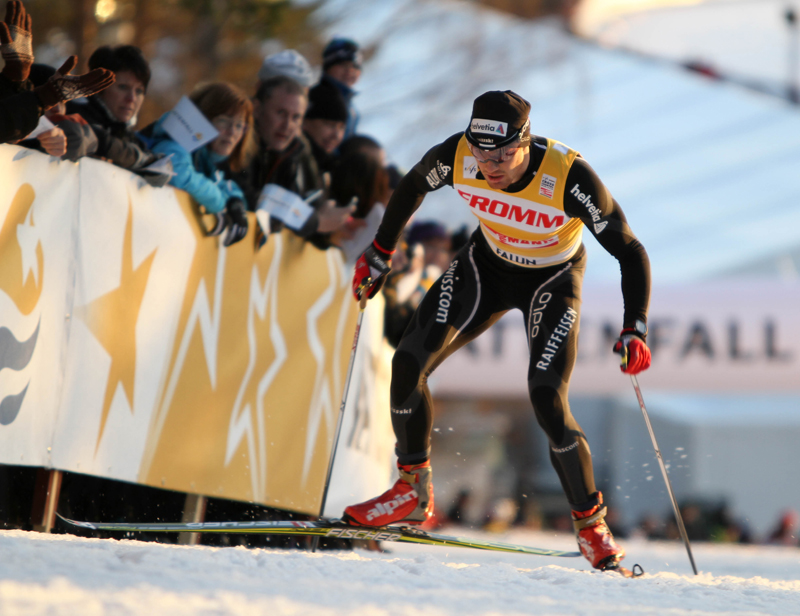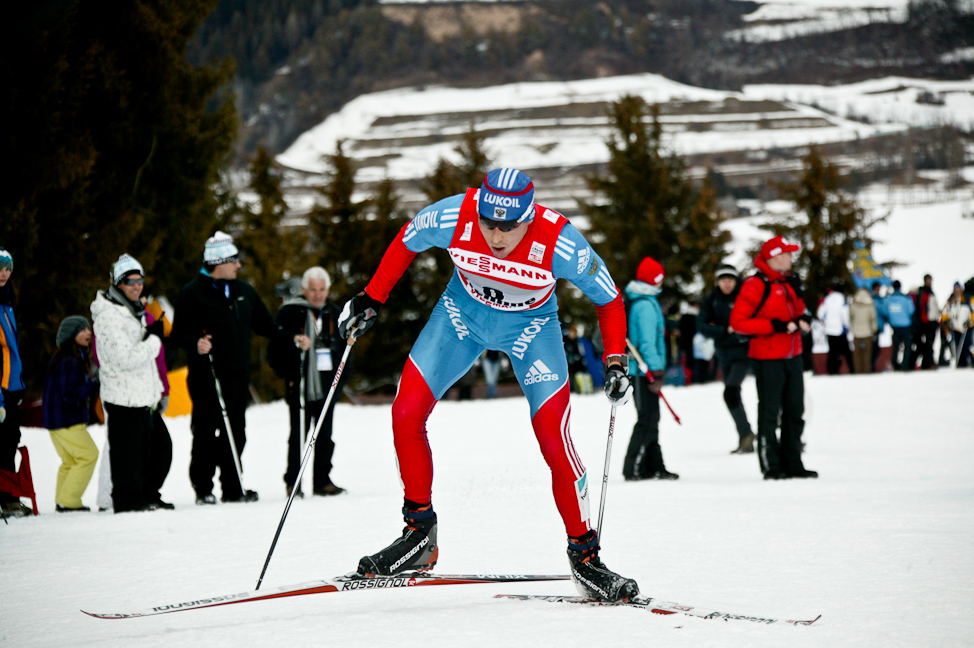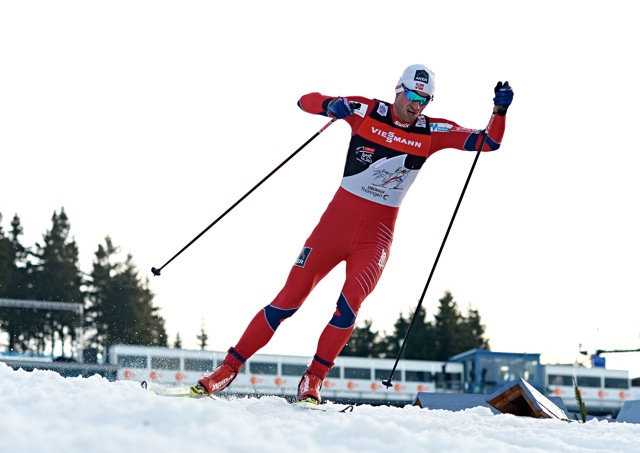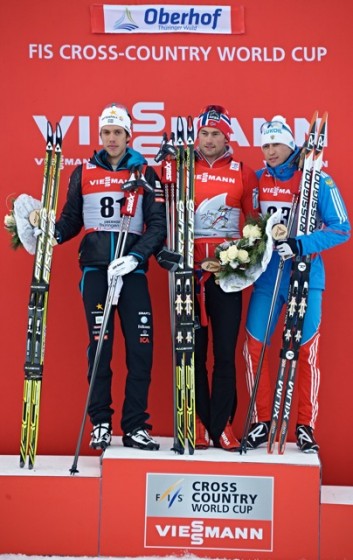
Tag: Ilia Chernousov

  • More Than Medals: Clean Sport in the ‘Icarus’ Era (Op-Ed)

    More Than Medals: Clean Sport in the ‘Icarus’ Era (Op-Ed)

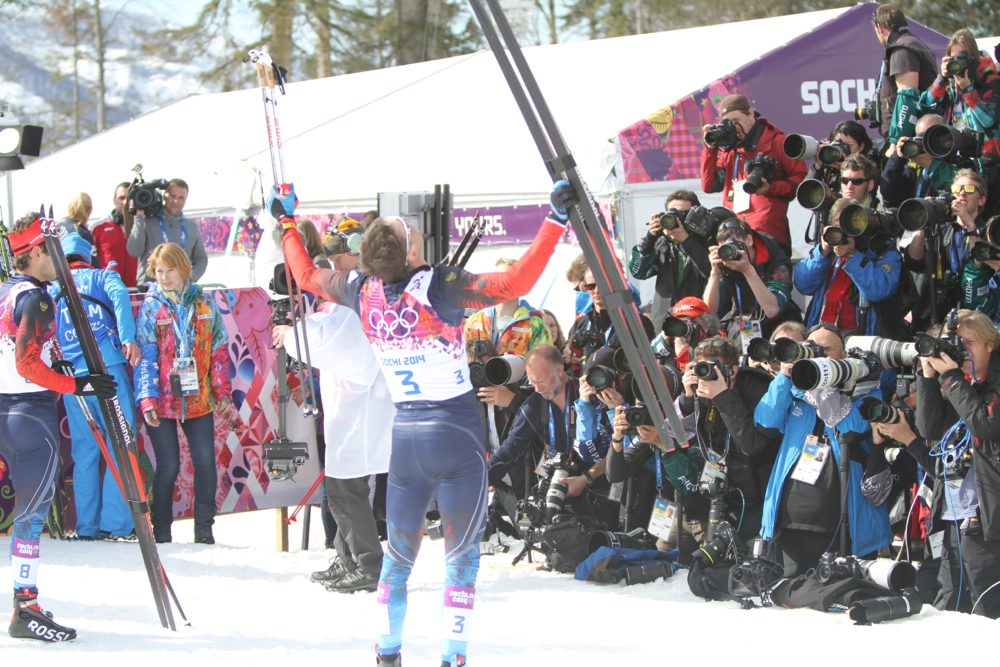
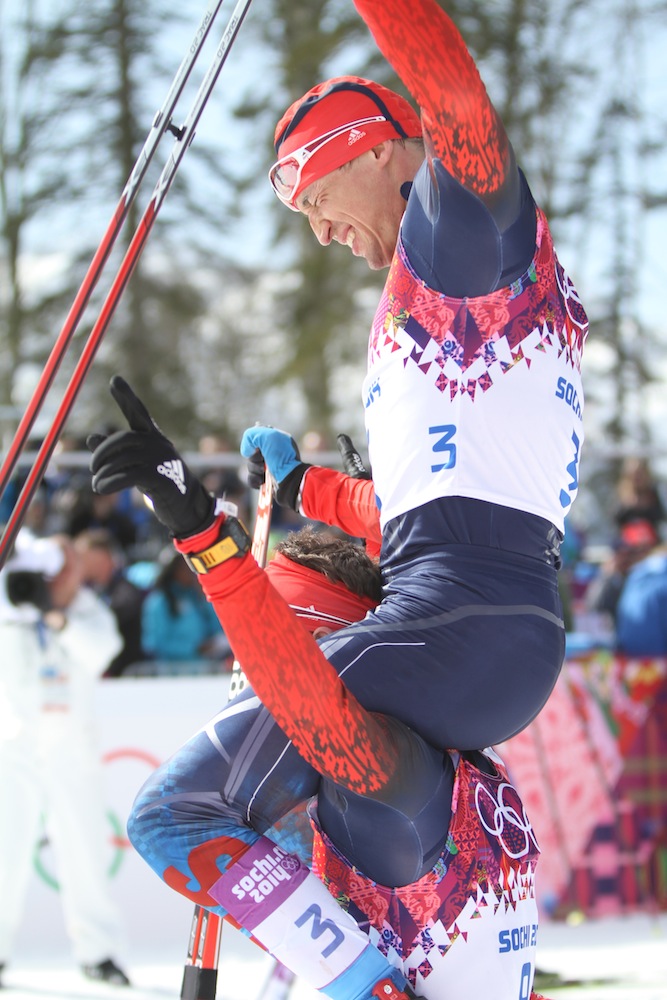
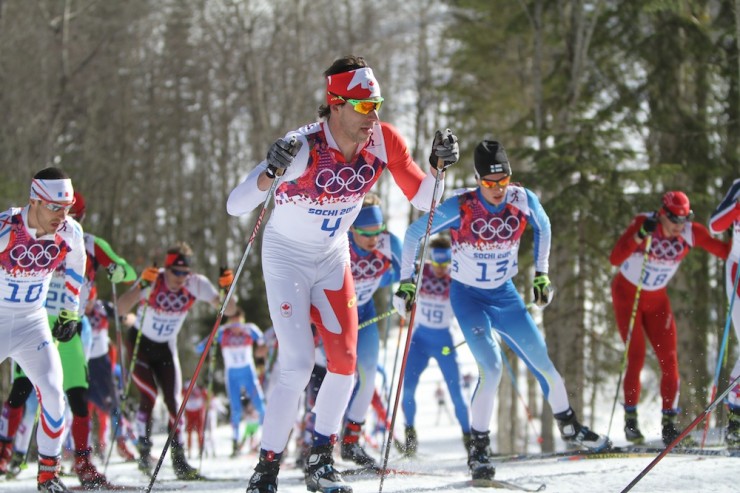
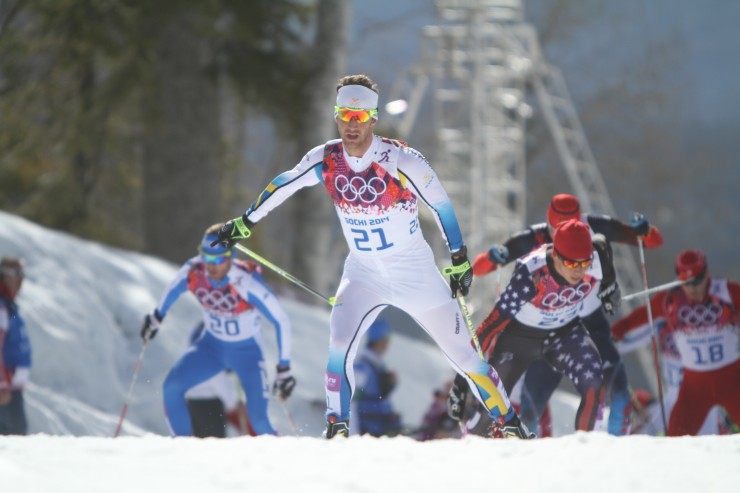
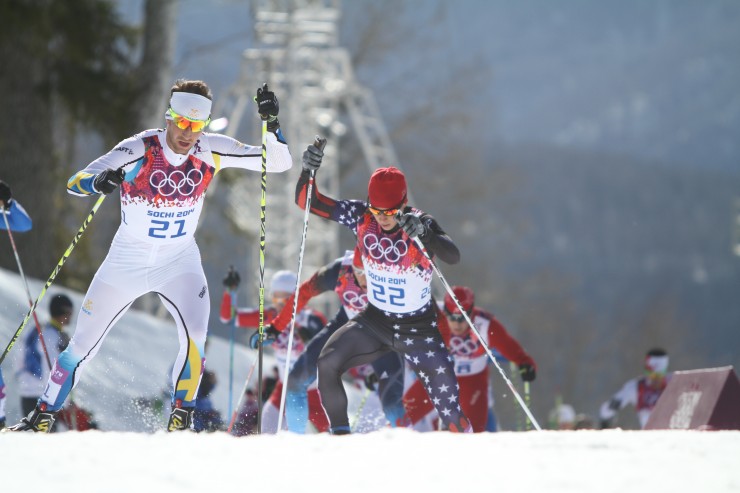
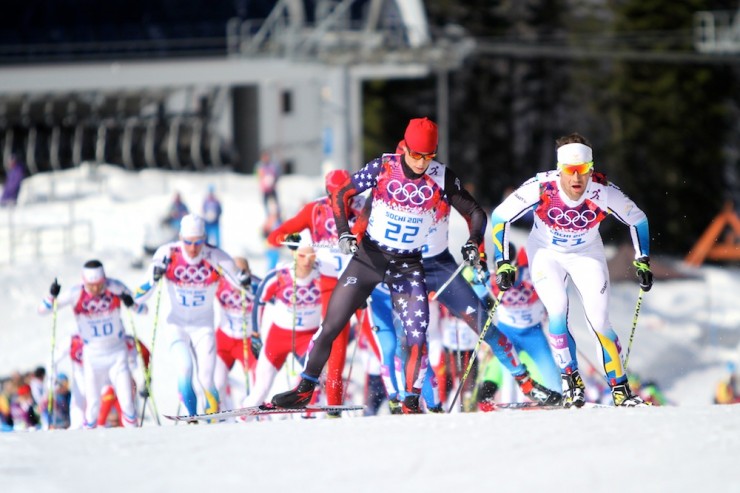
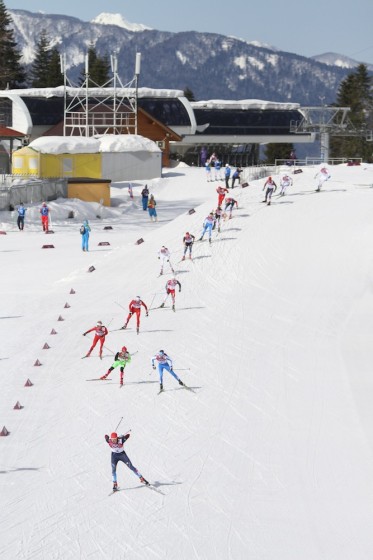
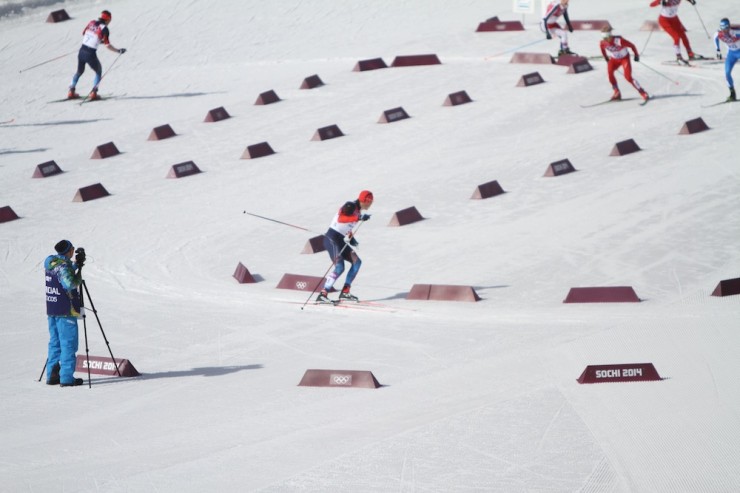
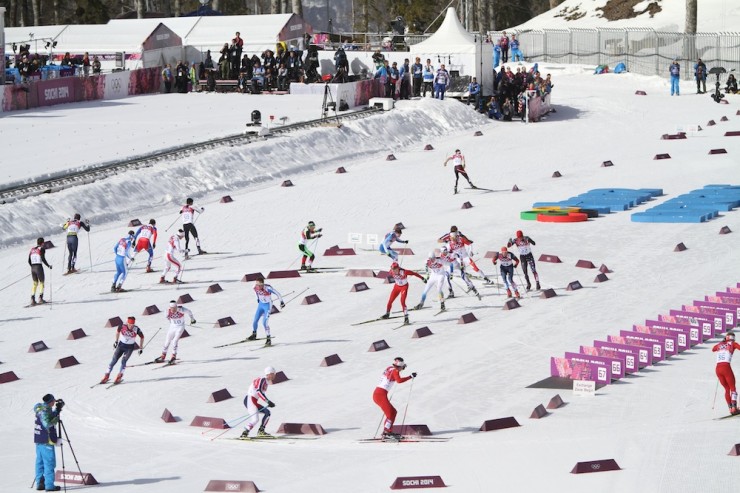
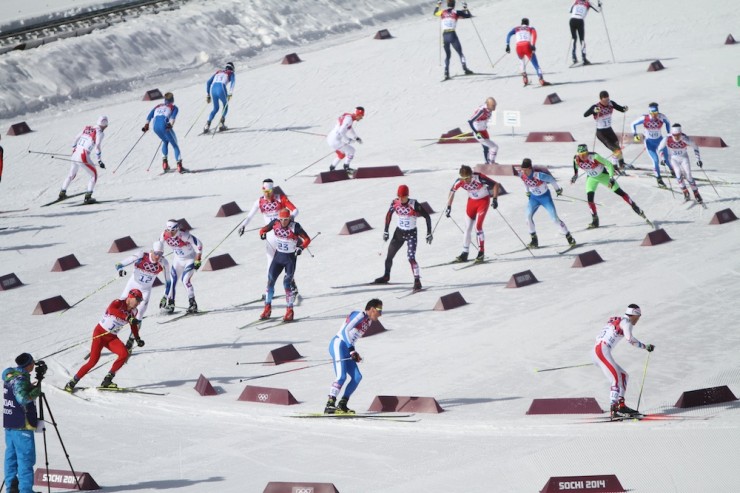
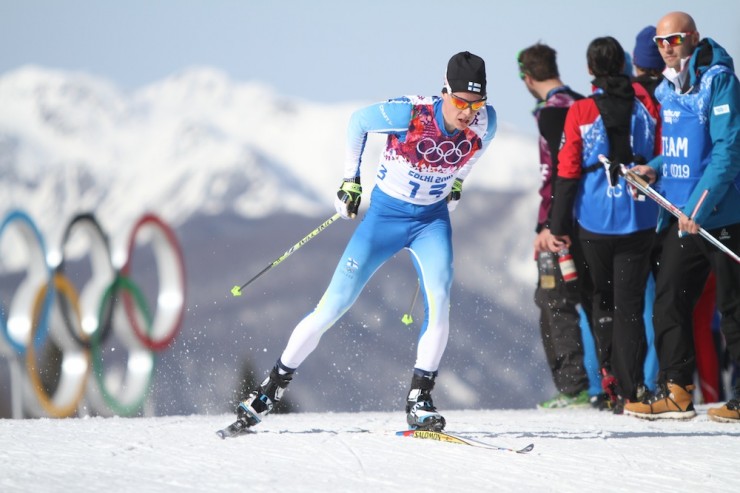
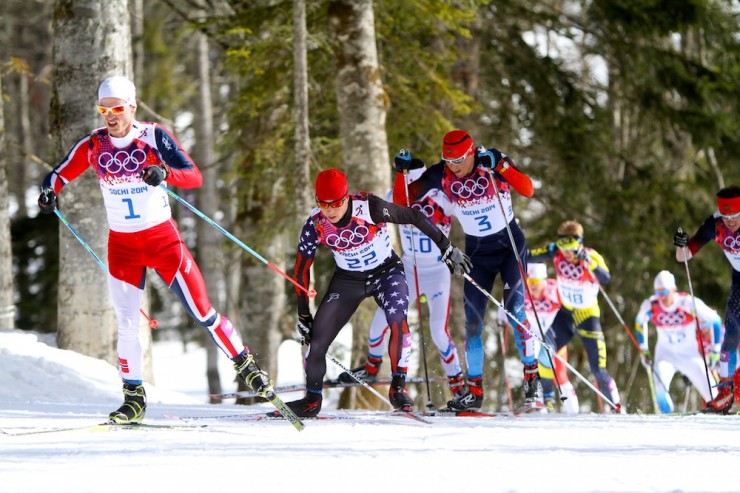
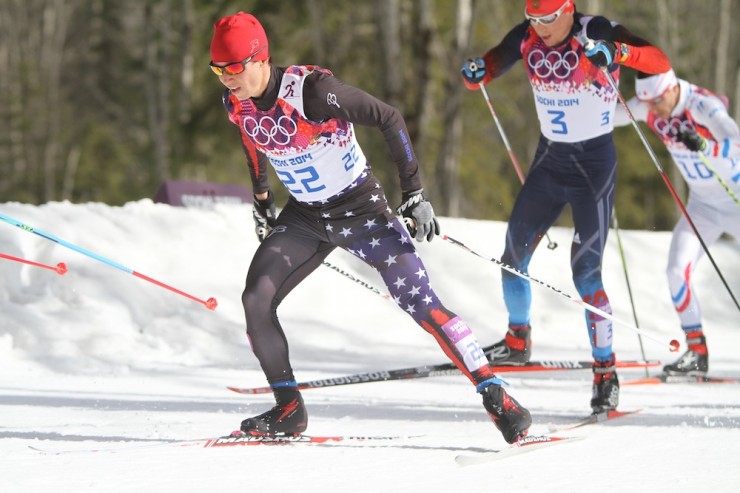
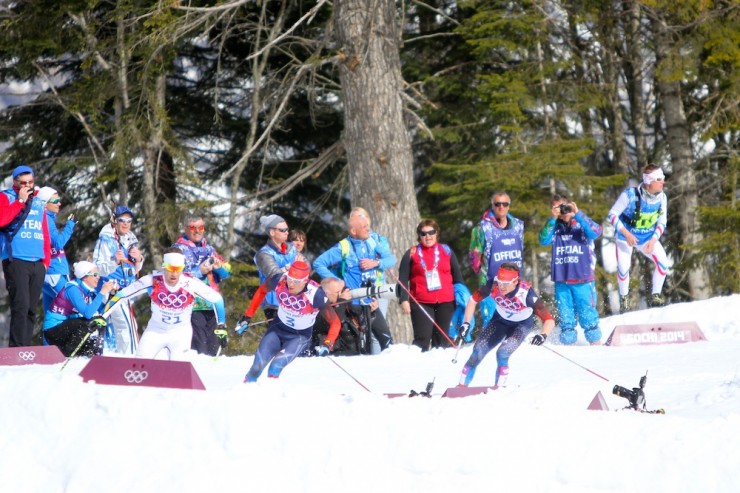
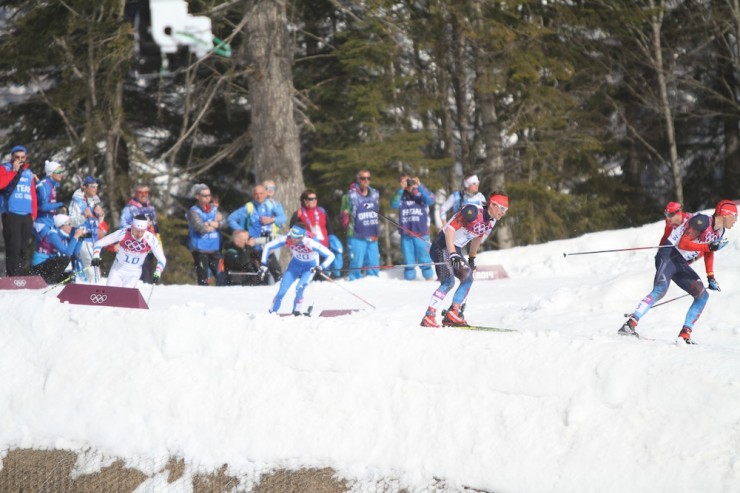
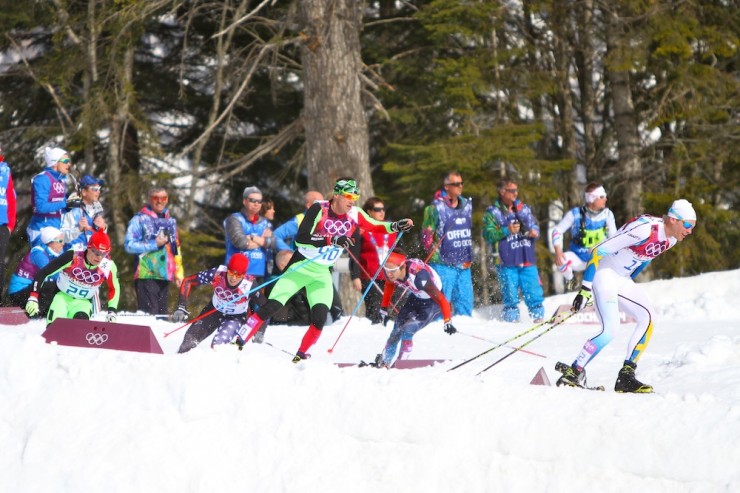
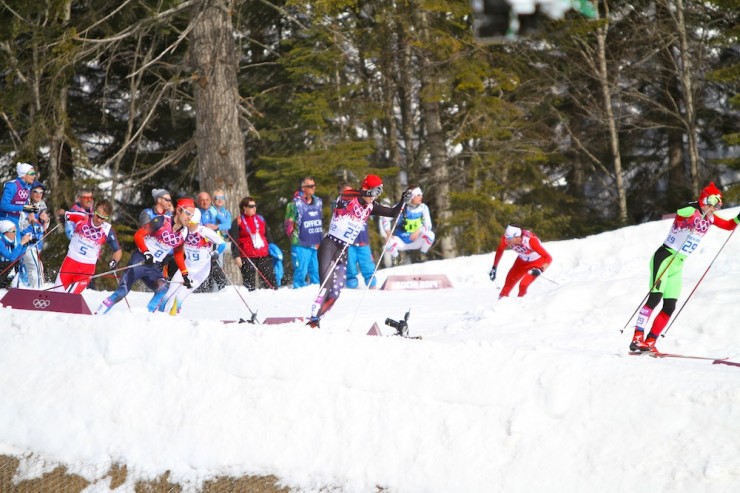
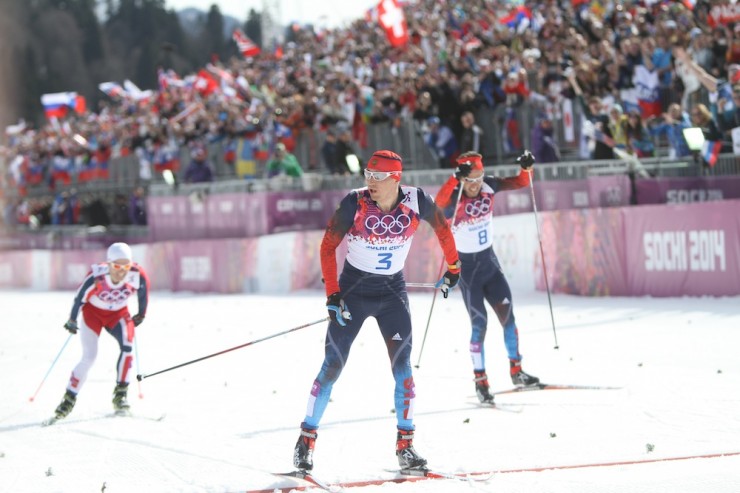
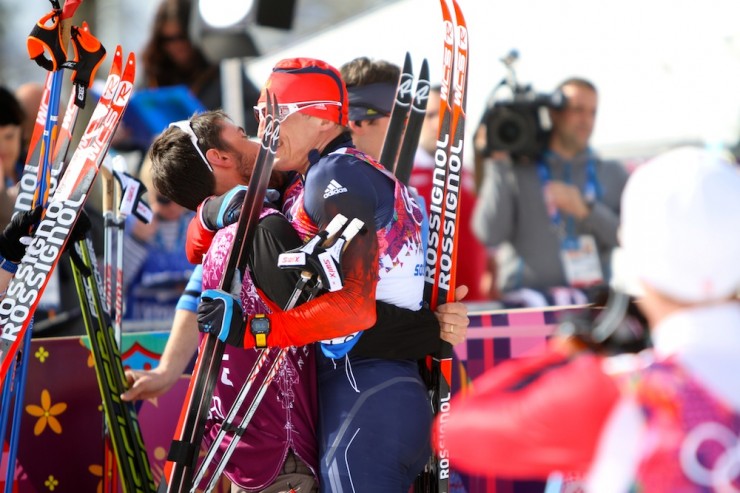
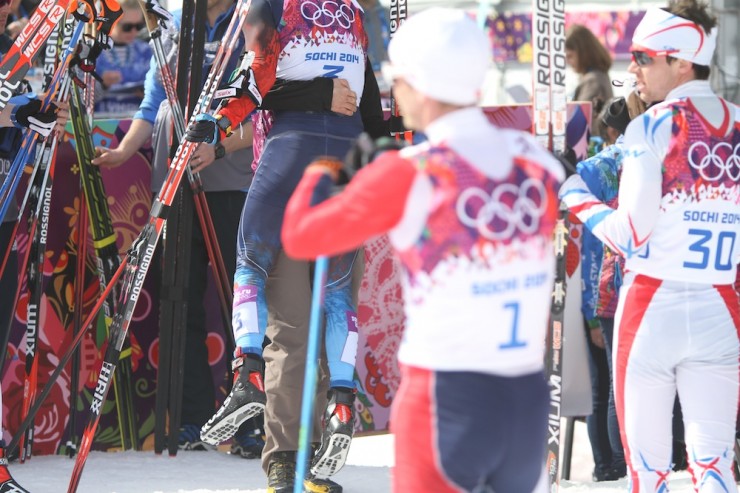
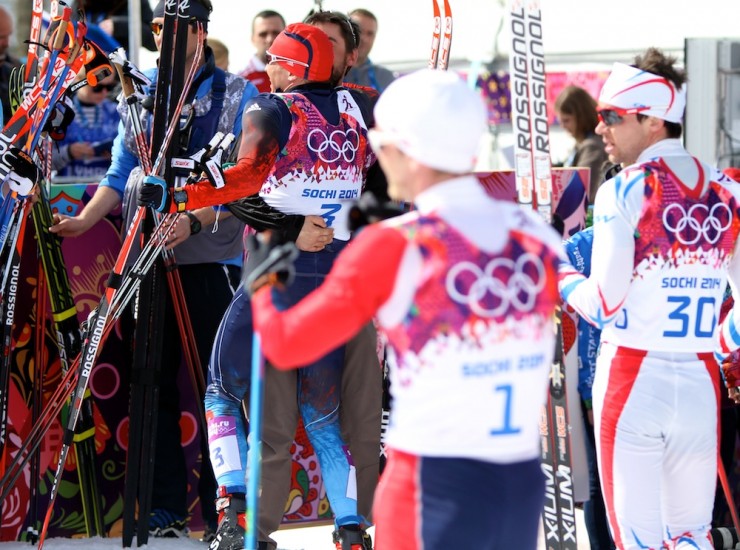
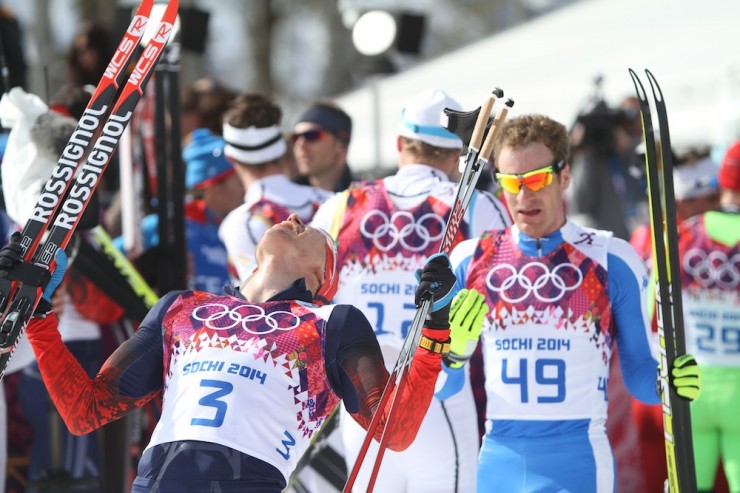
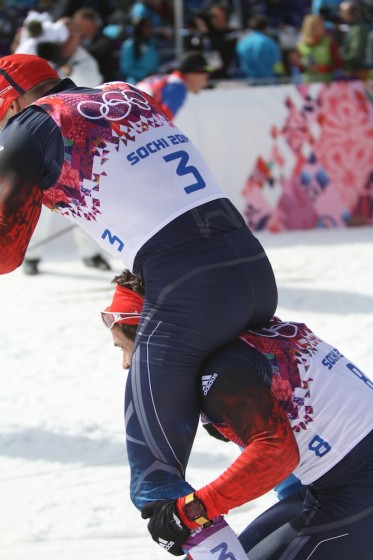
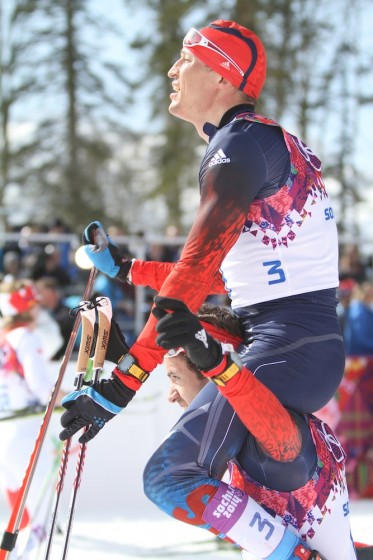
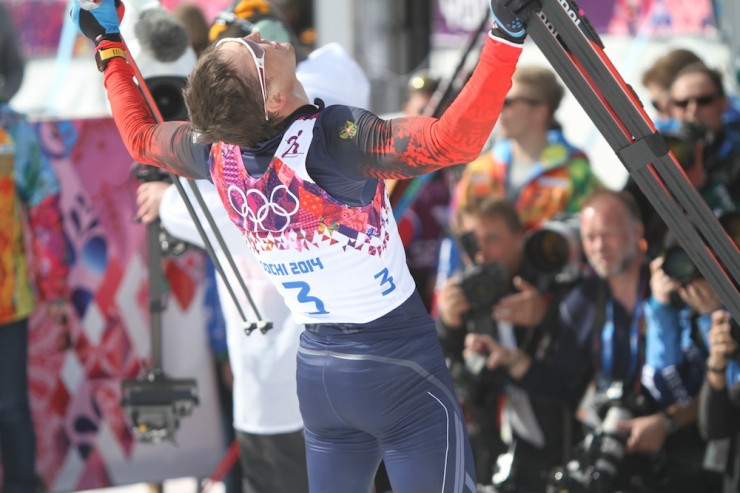
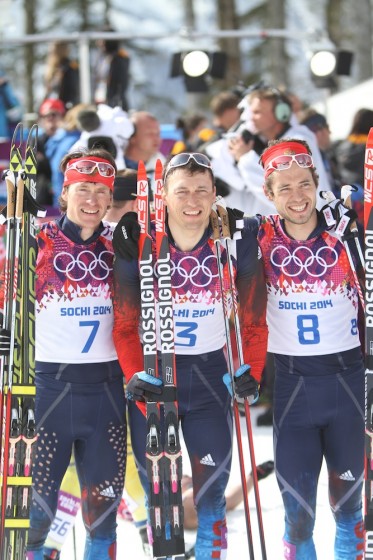
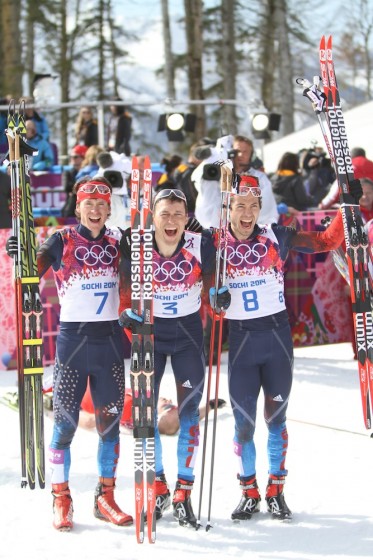
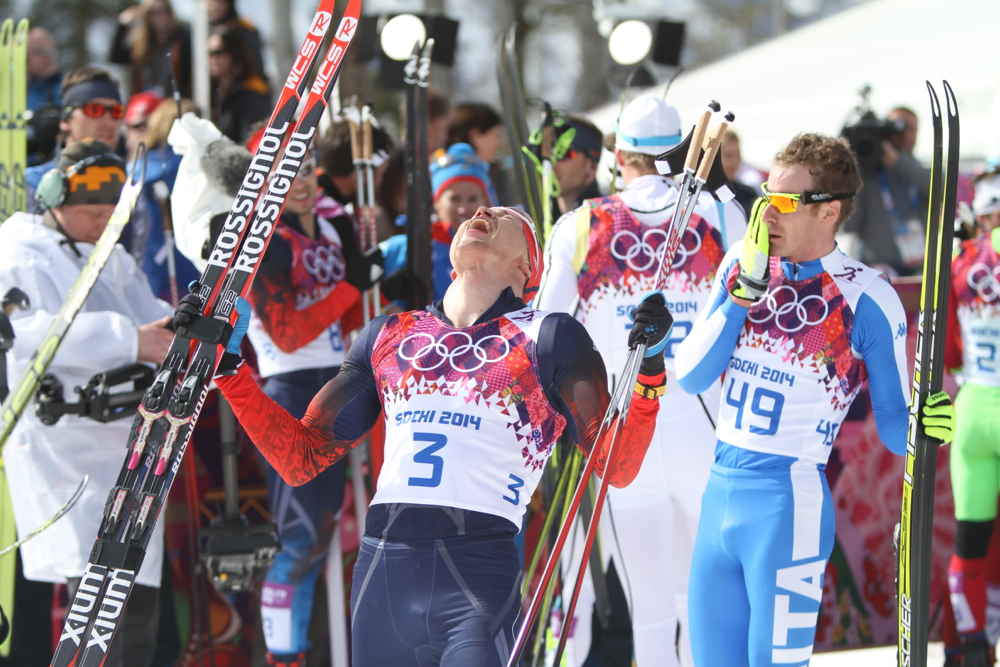
    Russia’s Alexander Legkov (3) after winning Olympic gold in the men’s 50 k freestyle mass start at the 2014 Winter Olympics in Sochi, Russia. Russia’s anti-doping director at the time, Grigory Rodchenkov stated that he switched out Legkov’s anti-doping sample for a vial of clean urine collected previously. The International Olympic Committee stripped Legkov of his gold medal and banned him from future Olympics, but the Court of Arbitration for Sport overturned those sanctions in February 2018.

    Editor’s Note: The following thoroughly cited opinion piece, prompted by the 2017 ‘Icarus’ documentary, was written by Maks Zechel, a 20-year-old Canadian cross-country skier who spent the 2017/2018 race season training abroad with Team Asker in Norway. Zechel is a regular contributor at FasterSkier, with his ongoing series: “Closing the Gap”.

    ***

    February 23, 2014

    Sochi: a home Olympics and the opportunity of a lifetime. Russia, despite being one of the strongest skiing nations in the world, has no individual medals in cross-country skiing leading into the final race of the championships. As the athletes shuffle nervously in the tracks before the 50 k mass start, the pressure on the Russian men can be felt even by me, watching on TV from home.

    Putin is in the stands. It’s just a ski race, but how much more than that is at stake?

    “The Moscow Laboratory operated, for the protection of doped Russian athletes, within a State-dictated failsafe system” (McLaren 1)

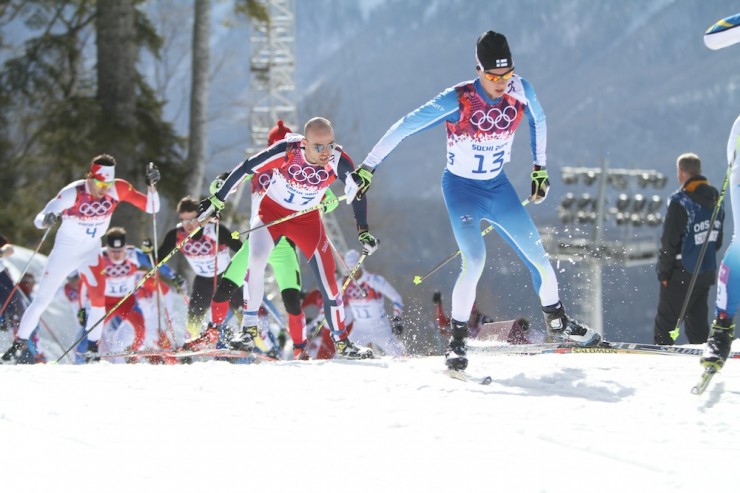
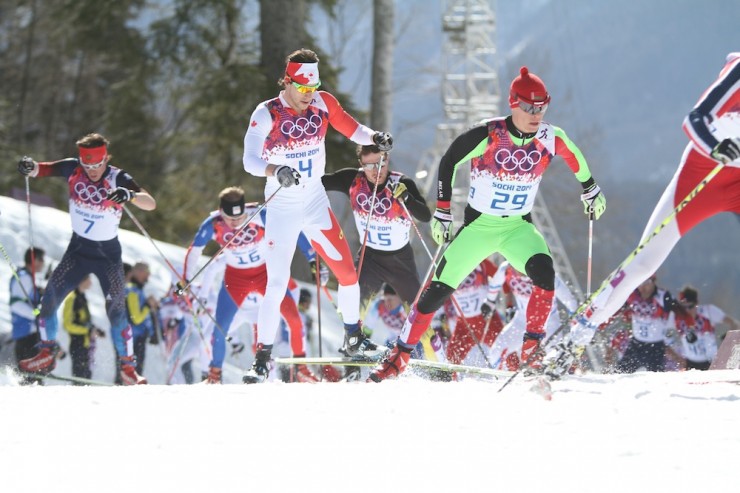
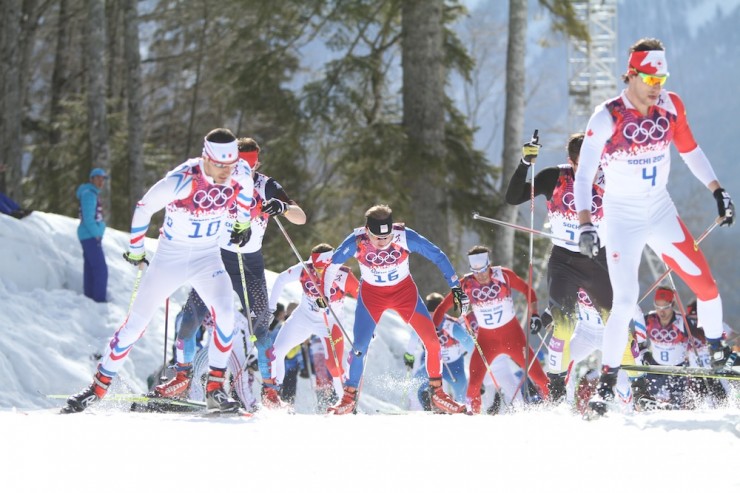
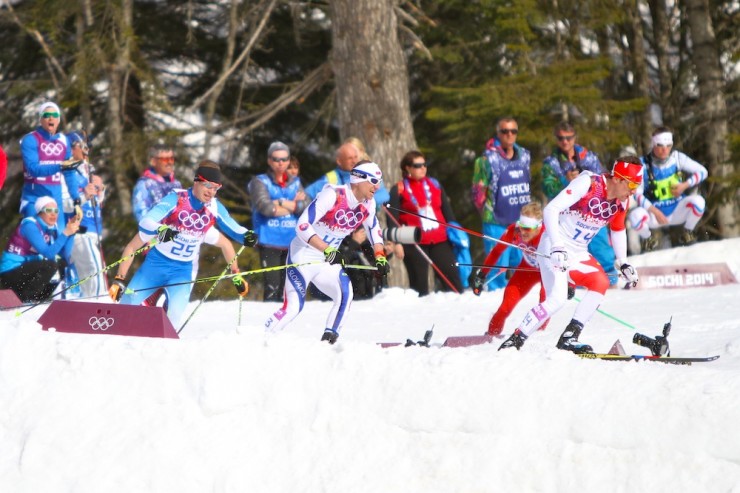
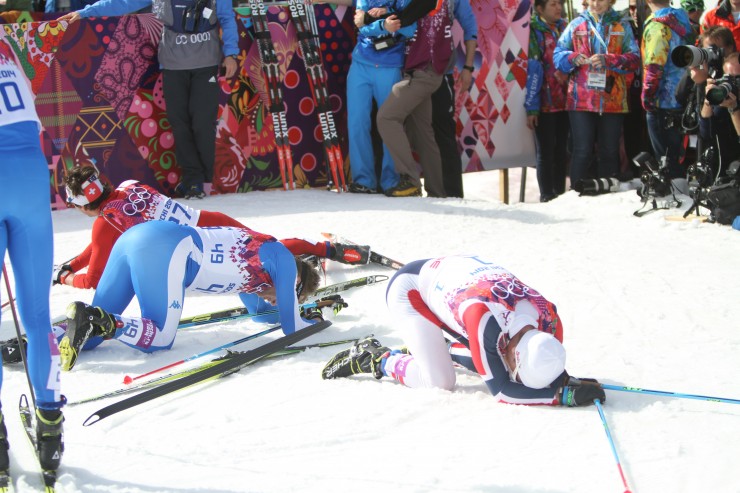
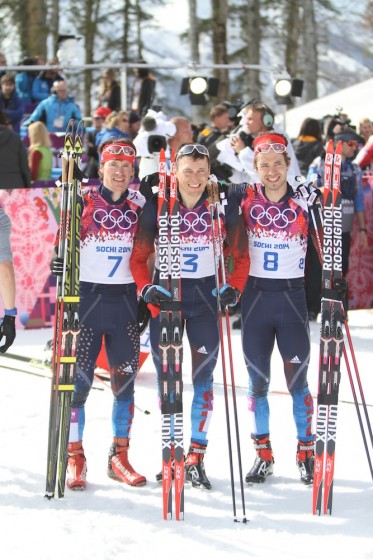
    A sunny day, a roaring home crowd. Alexander Legkov is in a world of his own as he absolutely destroys himself over the final climb, skiing with the passion that it takes in all sports to win an Olympic medal. Russian flags waving everywhere, the crowd is absolutely deafening as Legkov adds his first Olympic gold to his already legendary career. Maxim Vylegzhanin and Ilia Chernousov lunge across the line behind him, with Chernousov having given every last bit of himself to outsprint Norway’s Martin Johnsrud Sundby to complete the Russian podium sweep on home soil. A dream come true.

    “The Sochi Laboratory operated a unique sample swapping methodology to enable doped Russian athletes to compete at the Games” (McLaren 1)

    When you ski with your teammates in front of your friends and family at home, you ski with a fire that is otherwise difficult to find. The presence of those who know you makes you feel guilty if you do not perform to your very best, you are pushed to keep up to those that your mind refuses to admit defeat against, and your own potential reaches new heights when your teammates accomplish something great. There is no cover of anonymity with which to hide the secrets behind your performance, because these people know what it took, and did not take, to get you to where you are.

    “A pre-selected group of Russian athletes competing at Sochi were protected by the Sochi sample swapping methodology” (McLaren 67)

    Despite the whispers of corruption surrounding Russia’s Olympic team, I cheered for those three skiers, who did the nigh-impossible and pushed their bodies as hard as anyone else to make their country proud. I do not know what exactly went into achieving that medal, but I do know that the incredible display of effort and the tears of happiness falling from Legkov’s face as he was raised onto his teammate’s shoulders, were very real.

    “After he became laboratory director, and in furtherance of his responsibility to improve Russian sport performance by covering up doping, Dr. Rodchenkov developed a steroid cocktail optimized to avoid detection” (McLaren 49)

    I first dreamt of going to the Olympics when I was 11 years old. This dream sparked an inner drive of mine that has lasted almost a decade, and I like to think that it will never extinguish. Sometimes, I wonder what lights that same flame in children around the world. In most countries, I like to think that many experience moments like mine: a motivation flourished from watching the passion of the Olympics, being inspired by older siblings, or being born with the need to be the first kid through the school doors when the bell rings for recess.

    “The steroids were dissolved in alcohol 
 The solution was then swished in the mouth in order to be absorbed by the bucal membrane and then spit out 
 the detection window for the steroids in the cocktail would not exceed 3-5 days” (McLaren 49-50)

    In parts of the world where fewer children are fortunate enough to make the decision to pursue a sport just because they are inspired, I wonder what brings them to those future championships. Is their talent used out of joy or out of the need to provide for those without the same athletic abilities? Was their talent exploited at a young age as a way for a country to show its dominance? Were they given a choice: to follow their dreams and do what they love by the prescribed method, or to not follow their heart at all?

    I think about the lengths that I would go to support my family if they depended on me, and suddenly the way that I pursue sport seems insignificant, a trivial lifestyle “earned” through right of birth. Being born to these opportunities makes it all the more important to not waste them. My great-grandfather used to say, “if you’re going to do something, then you may as well do it right”, and those are words that I attempt to live by. To me, that means clean sport.

    But clean sport is now more at risk than it has been in decades. Once an already colossal task of catching individual dirty athletes, we are now facing an extensive doping regime, backed by an entire government.

    “[B]y the time of the Olympic Games in London, many of Russia’s top athletes were using the cocktail” (McLaren 51)

    When faced with the enormity of the Russian state-sponsored doping system, it is no longer adequate to simply prosecute individual athletes. A large part of the problem when it comes to justly dealing with the system that made it possible for Russian athletes to cheat, is that WADA and the IOC are pitted against the entirety of the Russian government. It is not the USA and Canada versus Russia, or any other country versus Russia; it is two sporting entities, independent of any particular country, against the full power of the Russian government.

    “The Ministry of Sport directed, controlled and oversaw the manipulation of athlete’s analytical results or sample swapping, with the active participation and assistance of the FSB [Russian Federal Security Service], CSP [Center of Sports Preparation of National Teams of Russia], and both Moscow and Sochi Laboratories” (McLaren 1)

    “… Deputy Minister of Sport, Yuri Nagornykh, was appointed in 2010 by Executive Order of then Prime Minister, Vladimir Putin” (McLaren 10)

    The state-run doping program organized for the Sochi Olympics was not just about sport, it was politically motivated, overseen by President Putin himself. This sets Russia apart from previous doping scandals, such as that of the Finnish cross-country ski team in 2001, where doping operations were concentrated to a select number of skiers and their coaches. When the truth was uncovered about their national heroes, Finland, in complete shock, took steps to recover from the international disgrace that its ski team had brought upon them (Andrews). Iivo Niskanen and Krista PÀrmÀkoski have proven that it is possible for a great skiing nation to recover from such a disaster and win clean, paving the way for the next generation of Finnish skiers.

    “ 
 this Article would prohibit altering identification numbers on a Doping Control form during Testing, breaking the B bottle at the time of B Sample analysis, or altering a Sample by the addition of a foreign substance” (“World Anti-Doping Code” 21)

    The situation we see today is different. After the exposure of irrefutable evidence confirming state-sponsored doping and the covering up of doping evidence in Russia, it came as a disappointment to many when the Court of Arbitration for Sport (CAS) annulled the sanctions imposed by the IOC on 28 Russian athletes.

    The evidence of coverups and doping are clear, but the CAS ruling was that “the evidence collected was found to be insufficient to establish that an anti-doping rule violation (ADRV) was committed by the athletes concerned” (“Media Release”). The evidence may be adequate to find Russia guilty of state-sponsored doping, but it is not enough to build a case against each individual athlete. This is likely because of the destruction and tampering of drug tests and results by Russian “anti”-doping personnel and Article 10.5.1.2 of the World Anti-Doping Code, which states that, if the “detected Prohibited Substance came from a Contaminated Product, then the period of Ineligibility shall be, at a minimum, a reprimand and no period of Ineligibility, and at a maximum, two years Ineligibility” (“World Anti-Doping Code” 64).

    But if the evidence is inadequate, then why are some Russian athletes still facing penalties? Alexander Legkov and Sergey Ustiugov were both unable to compete at the PyeongChang Olympics, but Ustiugov can still race on the World Cup, while Legkov cannot. Evidence against athletes like Legkov proves that they were in some way a part of the state-sponsored doping program, but it is difficult to legitimately sentence them when evidence proving exactly what they have done has been tampered with or destroyed. Athletes like Ustiugov have not been proven to be a part of Russian doping operations, but have violated Article 2.1 of the World Anti-Doping Code through their association with people who are a part of it. This article states that “Athletes and other Persons must not work with coaches, trainers, physicians or other Athlete Support Personnel who are Ineligible on account of an antidoping rule violation 
 Prohibited association need not involve any form of compensation. (“World Anti-Doping Code” 24).

    Sport in Russia will never be fair until Russia takes responsibility for their crimes against clean sport. Whereas Finland bore the weight of what their athletes had done in 2001, and ensured that it would never happen again, the Russian government has more at stake than a few drugged athletes. When doping is politically motivated and backed by the state, I do not think it is possible to solve the issue through sanctions by sporting bodies such as WADA and the IOC alone. Until the Russian government is pushed by other nations to take an interest in ensuring that sports in Russia are clean, the problem can never be completely resolved.

    Until substantial action is taken, we will continue to be caught up in a stalemate of “partial blanket bans” and other half-measures. When imposed on a level of command that is too low in the Russian doping system, these actions cannot bring about the outright eradication of doping that we seek. Are sports a high enough priority for entire countries to impose sanctions on the Russian government until they answer for their crimes against clean sport? Or will doping be protected by other political motivations that keep Russia inseparable from the rest of the world? The scope of the Russian government’s involvement in doping is far beyond the reach of traditional sporting sanctions.  

    “Clean sport is dead” — Jim Walden, lawyer of Dr. Grigory Rodchenkov (Panja and PĂ©rez-Peña).

    The sporting world no longer holds its breath in anticipation of change. An uncertain future exists for clean sport, but even more disconcerting is the stagnation in which we now settle. With the anti-doping world left spinning its tires in frustration, where does that leave athletes for whom a future of fair play is too late?

    Icarus, 2017 documentary film, debuted Aug. 4, 2017 on Netflix (Photo: Wikipedia)

    In his dramatic documentary, Icarus, director Bryan Fogel convinced many sports fans that clean athletics, despite the improvement of anti-doping efforts over the years, is a hopeless pursuit. Fogel’s documentary was key to bringing the extent of systematic doping in Russia into the public eye.

    In Icarus, Fogel takes anti-doping research to a personal level: after years of training as a high-level (amateur) cyclist, he spends a full year preparing for the “Haute Route” amateur cycling event, while following a doping program. This was prescribed to him by Dr. Grigory Rodchenkov (the former director of Russia’s Anti-Doping Center, turned whistleblower, who is now under the witness protection program in the U.S.).

    Fogel routinely took a cocktail of PEDs (Performance Enhancing Drugs), under the careful guidance of Dr. Rodchenkov, and saw massive improvements in his power output ratings on the bike in less than a year. Having placed 14th in the seven-day Haute Route event the previous year, while racing clean, it seemed clear that Fogel would be a strong contender for the win.

    He ended up finishing the unbelievably hard event in a far worse position than when he raced clean. From an athlete’s perspective, this does not surprise me. I understand that there are countless elements involved in producing an incredible athletic performance at a set time and place. Fogel’s reaction was different; visibly depressed, he talked of how sobering it was to realize that, no matter what he did, he could never be as great as his cycling heroes. This is a delusional conclusion, one that is biased by his dreams (influenced by growing up with Lance Armstrong as a hero) of becoming a better cyclist.

    In these turbulent times for clean sport, it is important for athletes to remember that there are many aspects to training and competing, aside from other athletes cheating, that they can control. Living in Norway has taught me that there is a lot more to skiing fast than just being fit, and that applies to all sports.

    Drugs don’t magically make you a fast skier, just like a high VO2 max score doesn’t make you a competitive World Cup skier. There are many elements to cross-country skiing that have a far bigger effect on a skier’s ability to ski fast than drugs do. If skiing were purely about fitness, aerobic machines like Hans Christer Holund would beat skiers with a lower VO2 max, like Petter Northug and Finn HĂ„gen Krogh, without contest. Divergent technique revolutions, like those brought to us by pioneering skiers such as Petter Northug and Johannes HĂžsflot KlĂŠbo, show us just how many ways there are to win a ski race.

    In his reaction to not becoming a better cyclist even while doping, Bryan Fogel shows what he is: a film director with a remarkable story to tell. As most people would, he takes his failures in sport and attributes them to his personal characteristics; he feels he is simply not good enough at a genetic level. While not everyone will reach their athletic dreams, true failure occurs only when you stop trying after the first attempt. When athletes make changes to their training, it is rare to see dramatic results in the following competition season. Some things will never yield improvements, while other things take a few years of consistent work before they take effect. In the highly competitive world of cross-country skiing in Norway, many skiers go unnoticed down the results list for years, they are seen as average, before suddenly rocketing to incredible new heights seemingly out of nowhere. That is the nature of how training, competition, and life stress the body and mind over a prolonged period of time. To take a one-year snippet of an athlete’s life and make broad conclusions about sport is naive.  

    An otherwise brave and instructive self-experiment that helped uncover the scope of how doping continues to mar the sporting world uncontestedly, Fogel’s conclusion of his doping experiment sends the wrong message to the audience viewing Icarus. The message he sends is that only extremely gifted humans can become great athletes. This personal look into how his experiences have affected him make his documentary engaging and dramatic, something that the genre normally lacks for your average movie audience. The devastation that Fogel portrays in this realization hits viewers hard and the movie adopts an “apocalyptic” tone from that point on. The worldwide end of clean sport is confirmed with Rodchenkov’s exposĂ© of Russian state-sponsored doping and the footage of him escaping Russia with his life in danger. Icarus uncovers frightening realities that affect the sports we love, but the film also incites new dangers to the culture surrounding sport.

    Although accurate in their severity, the events at the end of Icarus doom its audience to pessimism against the current world of sports. This acts as fuel for ungrounded accusations against successful athletes by uninformed viewers. When a complicated issue arises, people quickly try to make sense of it by looking for a distinction between good and evil. By making an issue seem black and white, anyone can have a strong opinion about it, because the choosing of sides is based on your morals. You are either against doping, or you support it. Unfortunately, the issue is not so simple, but this type of inflamed, unschooled “debate” is perfect advertising for a film such as Icarus.

    When making conclusions about an issue, it is our duty to question how someone else’s portrayal of events is affecting our opinion and to keep ourselves informed. FasterSkier Editor-at-Large Chelsea Little is an example of the brave reporting and investigating that it takes to keep organizations such as WADA and the IOC held accountable. We owe it to journalists like Chelsea, who sacrifice countless hours of their personal lives to enlighten us about the issues that affect us the most, to simply read their vital research. We must take the facts from the sources available to us, and add our own informed debate to the world of sport, because angry, baseless commentary are what keep humanity from moving forward.

    Most Olympic athletes…would favour lifetime bans for doped athletes. IOC President, Thomas Bach, himself an Olympic champion, has publicly indicated a personal preference for life bans, but has correctly noted that the legal order, particularly in relation to human rights issues, will not permit such automatic sanctions, for first offences. Nor does the Code. The IOC itself has lost an appeal before CAS in respect of an IOC rule providing for the automatic exclusion of any doped athletes from Olympic competition in the Olympic Games next following the imposition of even a first doping sanction. (Pound, et al. 63)

    It is our responsibility as athletes to represent all of those that have helped us and to lead by example. We can start with the atmosphere that we create amongst our fellow athletes. The culture of discrimination and groundless accusations against clean, Eastern-European athletes, or any successful athlete in endurance sports, has to stop. The “blame game” has some of the same ill-effects on our sport that we are trying to prevent by fighting against doping. Remember how ashamed Canadians felt when Ben Johnson, our “Olympic champion hero”, was caught for doping? Now imagine the irreversible damage that would have been done if he had been falsely accused. By telling young athletes that anyone doing something impressive — something that we could not imagine ourselves doing — is doping, teaches young athletes that no matter how hard they work, they will never become greater than their biggest dreams.

    “The problems of the world cannot possibly be solved by skeptics or cynics, whose horizons are limited by the obvious realities. We need men [people] who can dream of things that never were, and ask why not.” — John F. Kennedy (“J.F.K. in Ireland”)

    Teach young people to dream outside the realms of what they see as possible, and they will get there via the path you set them.

    Athletes have the power to make more of a difference than just complaining about the flaws of their sport. Sports are visually flashy and exciting to an audience, and athletes are celebrated around the world for their raw fight against the limits of the human body. The hero-status of athletes gives them a sphere of influence greater than that of other members of society who work equally hard, or harder, in the goal of helping people.

    The playing field of sport will never be equal for every child born on earth, when some athletes fight past obstacles far greater than the trials of sport, just to get to the start line. If we are lucky enough to be living the life of an athlete, it is not enough just to win medals.

    Endurance sports may not get the same extent of attention as soccer, football, or basketball, but the popularity of these sports has elevated some athletes to leadership roles from which athletes from smaller sports can learn. Take LeBron James, one of the greatest basketball players of all time, who has recently come under fire for his comments regarding President Trump. Some feel that his place in society is to play basketball and entertain, not to comment on political events, but he has decided that his popularity gives him a greater responsibility than just playing sports:

    “I mean too much to society [to ‘shut up and dribble’] … I mean too much to the youth, I mean too much to so many kids that feel like they don’t have a way out and they need someone to help lead them out of the situation they’re in.” — LeBron James (Conway)

    As a Canadian, the opportunity that I have to pursue cross country skiing is a selfish privilege. I have the chance to use sport to meet new people, to inspire, and to use my experiences and influences to create a better world around me. Otherwise, I am just a lucky individual, riding on the support of those that I do little to help, enjoying what I have been given and doing little to share my wealth. I work hard at what I do, but to think that I am an inspiration to others simply through my existence would be incredibly pretentious. Athletes can gloat in their athletic prowess, or they can use their abilities to promote the joy of sport, health of body and mind, and the hard work involved in reaching a goal.

    Good leadership is to rise and accept challenges even with the possibility of failure. Leaders show their true qualities, and that shows others that they can only achieve success by being their honest selves. Leaders show that there are no shortcuts.

    My heart breaks every time that one of my idols is suspected of cheating. It doesn’t hurt because it’s unfair; it hurts because I saw myself in their footsteps, and every time they succeeded, I saw that I could, too. Our dreams scare us because they seem impossible from where we currently stand. When I look at my heroes, I see my future; they are living my dreams, proving them possible. My dreams are crushed when one of my favourite athletes is caught for doping, because that tells me that I am not good enough to be great. Some say that we watch the Olympics to witness the impossible happen, but I watch the Olympics to see the people who started off where I am accomplish the things that seem impossible to me now.

    Despite the damning evidence against Russian sport as a whole, I refuse to believe that every Russian athlete is doping for the same reasons that I refuse to believe that the majority of top cross-country skiers are doping. It must be remembered that skiers are people, and the vast majority of people who have grown up surrounded by the positive and welcoming culture that exists in cross-country skiing around the world, do not become cheaters. Even in Norway, where skiing culture is on a much bigger scale than that of North America, it remains a community of people who love being outside year-round, exploring the world around them and the limits of their bodies.

    We must keep sport a positive and safe space for people to grow into compassionate citizens of the world. Clean sport isn’t important just so that medals are handed out to the rightful winners; sport must remain possible for real people everywhere, because when doping is left unchecked, sport loses all significance as a tool to inspire, bring people together, and make the world a better place.

    March 2, 2011
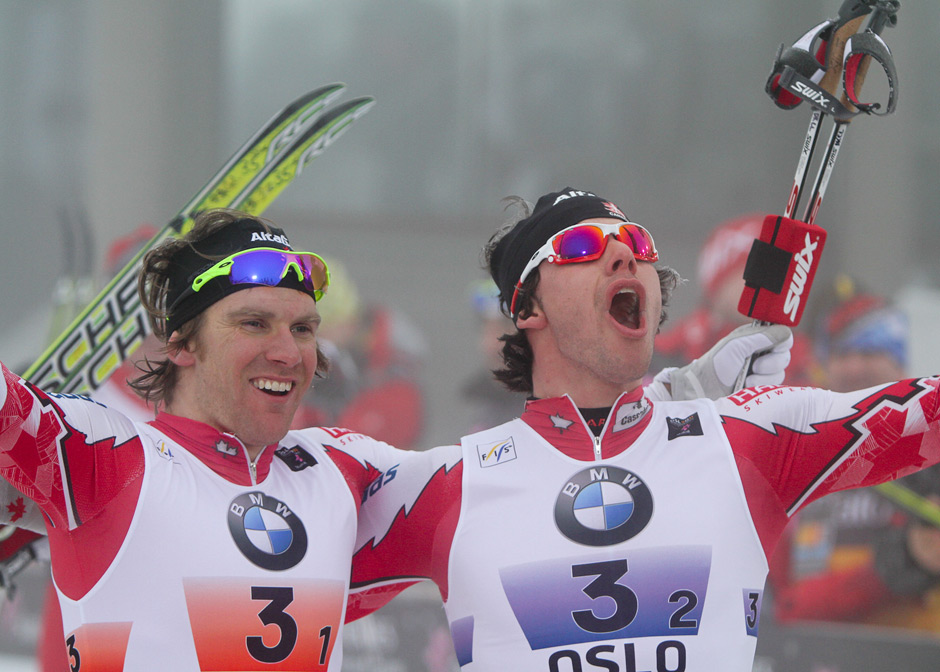
    Alex Harvey (r) and Devon Kershaw (l) celebrating their World Championships gold in 2011 in Oslo.

    My heart pounds in my chest. Adrenaline courses through my body as my ungainly 13-year old legs run chaotically down the front steps. The slam of the door behind me pierces the stillness of the heavy evening air, but to my ears the whole world is alive in celebration. The rush of blood in my ears is deafening as I relive the race in my head. Alex passing Hattestad — shushing the crowd across the line –raising his arms in disbelief — Devon and Alex playing air guitar on their skis — walking before the massive crowd to the top step of the podium — WORLD CHAMPIONS! … The excitement settles into a glow that becomes an immovable rock of confidence in my chest. I start to notice where I am, running aimlessly to the top of a grassy hill above the trees. I smile as I look down to where I came from: “Yes”, I think, “I can do it, too.”

    ***

    Works Cited

    Further Reading:

    Chelsea Little:

    FasterSkier spreadsheet showing skiers mentioned in the McLaren Report:

    McLaren Reports Part 1 and 2:

    IC Report:

    CAS rulings media release:

    CAS dismissal of Russian athletes’ appeal:

    CBS News 60 Minutes interview with Grigory Rodchenkov:

    IOC Code of Ethics:

    Icarus, documentary directed by Bryan Fogel (available on Netflix)

  • Legkov Joins Russian Sprint Team After Disappointing Season

    Legkov Joins Russian Sprint Team After Disappointing Season

    Alexander Legkov after winning the Olympic 50 k in 2014. He didn't have that feeling often in the 2015 season.
    Alexander Legkov after winning the Olympic 50 k in 2014. He didn’t have that feeling often in the 2015 season.

    After founding a renegade training group based in Switzerland with Ilia Chernousov as a partner and Reto Burgermeister and Isabelle Knaute as coaches, Russian ski star Alexander Legkov is now on his own, named to Russia’s sprint group but “with his own training plan.”

    Legkov has been one of Russia’s distance stars for years, and in 2014 won the 50 k skate race at the Olympic Games. He raced lightly last season, with no standout early-season results; he had the 15th-fastest isolated pursuit time in the Lillehammer World Cup mini-tour, and placed 28th in the 15 k skate in Davos, Switzerland.

    After Christmas, in a field that lacked the top Norwegians and Swedes, he finished fourth and seventh in distance races in Rybinsk, Russia. That earned him only one individual start at World Championships: 14th place in the 15 k skate.

    Life got hard after the Olympic victory, Legkov told Russian newspaper Gazeta this spring. For four years, he had simply put aside problems with his household and his personal life, and focused only on training and racing. After the gold medal he wanted to spend more time as a normal human being, but it caught up with him quickly.

    “It turned out that to live a normal life – it was really hard,” he said, according to a translation. “Just a disaster. I respect the people who live like that. After all, how does your day usually unfold in professional sports? You eat, work out, come for a massage, go out for the second training session. Everything is very simple. But in real life there is nothing simple. Over the last year, I realized it very well.”

    Legkov bought a house. He loves cars, hunting, and fishing, and indulged in them. He mused about how the top Norwegians seem to have a good time, and still ski fast. Europeans live a “more confident life” compared to “gloomy” Russians, he said. He was amazed that the Norwegians could multi-task and still win races.

    “If it does work turn out in sport, they will find themselves in another case,” he said of the foreigners. “In Russia we have this more difficult, especially with athletes. Imagine a person trained 10-15 years. God forbid, they didn’t win something. They are thrown out like a fledgling bird. Life is a cruel thing, no matter if you are a champion or not. Maybe that’s why we athletes have such a gloomy demeanor. And foreigners have this positive and cheerful outlook on life because it’s easier, although [Dario] Cologna is also a workaholic. He, too, has only one thing in the head – sport. He won’t look for more. With Northug it’s a little different.”

    In the early years of his collaboration with Knaute and Burgermeister, there was immense pressure on Legkov and teammate Ilia Chernousov to perform. The idea of the splinter group was approved by the Ministry of Sport, but not the ski federation. Internal politics were intense. Since it was at that point unheard of for Russian skiers to work with foreign trainers, every mis-step was seen as a justification to cut him from the national team.

    “He won, and the Russian behind him also started in the Tour de Ski,” Knaute told FasterSkier in 2012 of a situation when Chernousov was forced to drop to the Continental Cup to prove himself again. “But if he hadn’t won, he wouldn’t have started.”

    Last season, Chernousov began training with the Norwegian coach Vegard Bitnes. He is staying on that track this season.

    Reportedly, Legkov came to the decision to leave Burgermeister’s group himself. Although he is a distance skier, he will be training primarily with the sprint group. His new training partner will be, instead of Chernousov, Sergey Turyshev, who was not named to any of the Russian national teams and finished 37th in the World Cup distance standings last season.

    “I hope that the training will not be alone,” Legkov told the TASS Russian News Agency. “Sergey Turyshev, which also specializes in distance races, already expressed a desire to work with me. I want to believe that in this matter all goes well. As for the work on the speed, there won’t be any problems.”

    Legkov is clear that although the 2014-2015 season didn’t go well, he is not finished as a skier.

    “Friends, I always hear them say, after the Olympics, isn’t it better to leave at the peak?” he told Gazeta. “And start doing some other thing and learn? You’re just playing for time. It is unknown what your results will be after this triumph. But I cannot give up the sport. This is me, and I haven’t run out yet.

    “Regarding Northug and Cologna I want to say one more thing,” he continued. “They are the stars of skiing. But when I give myself to the maximum training, I can deal with them. It’s just that this year turned out differently.”

  • Gregg Skates to Third, Brooks Fifth in Switzerland’s Engadin (with Videos)
    Gregg Skates to Third, Brooks Fifth in Switzerland’s Engadin (with Videos)
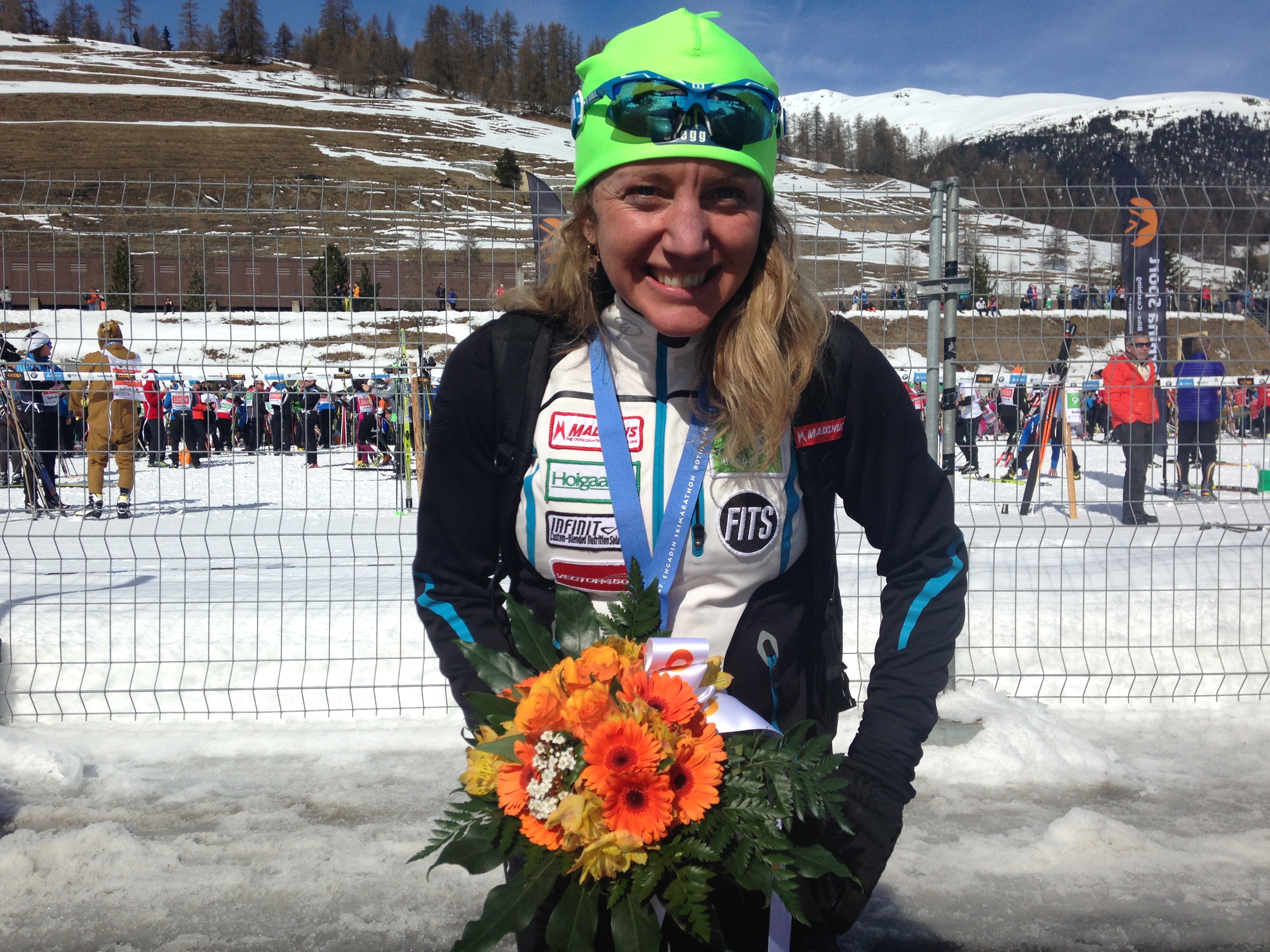
    American Caitlin Gregg (Team Gregg/Madshus) placed third at the 2015 Engadin Skimarathon on Sunday. (Photo: Inge Scheve)
    American Caitlin Gregg (Team Gregg/Madshus) placed third at the 2015 Engadin on Sunday, a 42 k freestyle marathon from Maloja to S-chanf, Switzerland. (Photo: Inge Scheve)

    S-CHANF, Switzerland — Coming off a bronze medal at Nordic World Championships, American Caitlin Gregg (Team Gregg/Madshus) finished third in Sunday’s Engadin Skimarathon 42-kilometer freestyle from Maloja to S-chanf, Switzerland, just 7.6 seconds out from the win, which France’s Anouk Faivre Picon seized in 1:39:35.3.

    Russia’s Ilia Chernousov won the men’s race by one-tenth of a second over France’s Robin Duvillard in 1:34:50.

    Picon won the sprint finish, 0.8 seconds ahead last year’s Engadin champion Riita-Liisa Roponen of Finland. Gregg placed third and France’s Aurelie Dabudyk was 1:41.7 back in fourth. Two-time U.S. Olympian Holly Brooks (Team Santander) finished fifth (+1:53.3).

    “My skis were awesome,” Gregg told FasterSkier after the race. “I felt so good in the race, and I’m so ready for the World Cups in Oslo next week.”

    Gregg, who finished the Engadin Skimarathon for the first time, was surprised about the level of competition.

    “The race was super aggressive from the start. The men come in on you all over, and it makes the whole thing really crazy,” she said, adding that it was difficult to keep track of where her opponents stood.

    “I got to the hills by St Moritz, and I saw an opening, so I made a jump there and just kept hammering to get by as many guys as I could,” she explained.

    Ropenen got a gap on Gregg, who also didn’t notice that Picon had passed her.

    “The girls got cut off all the time, and during the sprint to the finish, about fifty guys swarmed around us,” Gregg said.

    Caitlin Gregg (third from l) on the podium in third at the 2015 Engadin 42 k freestyle marathon in S-chanf, Switzerland. Two Americans made the flower ceremony, with Holly Brooks in fifth (second from right). France's Anouk Faivre Picon won the women's race, and Finland's Riita-Liisa Roponen was third. (Photo: Fast Big Dog)
    Caitlin Gregg (third from l) on the podium in third at the 2015 Engadin 42 k freestyle marathon in S-chanf, Switzerland. Two Americans made the flower ceremony, with Holly Brooks in fifth (second from right). France’s Anouk Faivre Picon won the women’s race, and Finland’s Riita-Liisa Roponen was third. (Photo: Fast Big Dog)

    “It’s brutal out there for the women,” Brooks said, adding that she hopes the organizers will consider establishing a separate women’s wave to make the competition more fair.

    The remains of the brutal battles were evident to the waves following the elite: the race course was littered with broken poles, baskets and equipment debris from start to finish.

    The pile grew throughout the morning as more marathon racers descended on the track. In total, more than 13,300 skiers participated in the 47th Engadin Skimarathon, making the Swiss race the third-largest Engadin event on record.

    Chernousov, who now lives near the Engadin finish in S-chanf with his wife Selina Gasparin of the Swiss biathlon team, secured a home victory in the men’s race. He won the photo finish over Duvillard by 0.1 seconds, while Switzerland’s Roman Furger was third 0.9 seconds back. Another Swiss skier Jason Rueesch, was just 0.2 seconds off the podium in fourth.

    Brian Gregg (Team Gregg/Madshus) was the top American man in 24th, 26 seconds behind the winner. David Norris of Alaska Pacific University (APU) placed 32nd (+40.2), Sun Valley’s Miles Havlick was 35th (+51.5) and APU’s Tyler Kornfield finished 61st (+6:21.2).

    In the women’s race, Canada’s Karen Messenger placed 29th (+24:34.2).

    The battle of the FIS Marathon Cup

    With fifth place in the Engadin Skimarathon, Brooks is back in the FIS Marathon Cup leader bib with one race remaining.

    “I accomplished one goal today, and that was to take back the red bib, but I’m not so happy with my race,” Brooks said. “I’m not in top shape, and I definitely feel that I haven’t raced much at altitude. Once we hit the hills at St Moritz, it was so hard to follow.”

    With fifth place in the Engadin, Brooks has 455 points in the overall FIS Marathon Cup and is now just 4 points ahead of Tatiana Mannima of Estonia with only one race to go in the race series. Mannima placed 11th on Sunday, 6:15.4 behind the winner. She is 47 points ahead of Dabudyk, who’s currently third overall. The final event is the 50 k freestyle Ugra Marathon on April 11 in Khanty-Mansiysk, Russia.

    “It all comes down to that race in Russia now, and it’s over a month until we race,” Brooks said, adding that she was next headed to Norway for the Norwegian Birkebeiner and potentially some other races to stay focused until the Ugra.

    Petr Novak, who was 29th on Sunday, is still leading the overall 2015 FIS Marathon Cup. With 404 points for the season, Novak has a comfortable gap on Benoit Cahuvet of France in second place with 347 points and Sergio Bonaldi of Italy in third place with 229 points.

    Results: Women | Men

  • Pellegrino Takes it to Norwegians in Tour de Ski Skate Sprint

    Pellegrino Takes it to Norwegians in Tour de Ski Skate Sprint

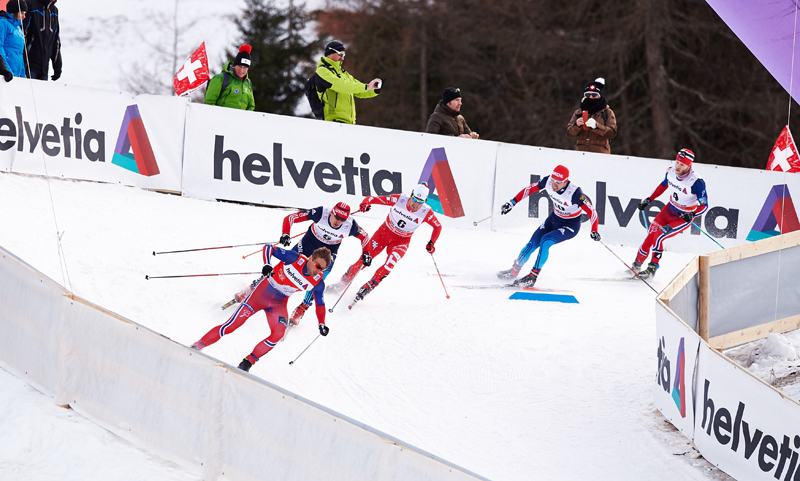
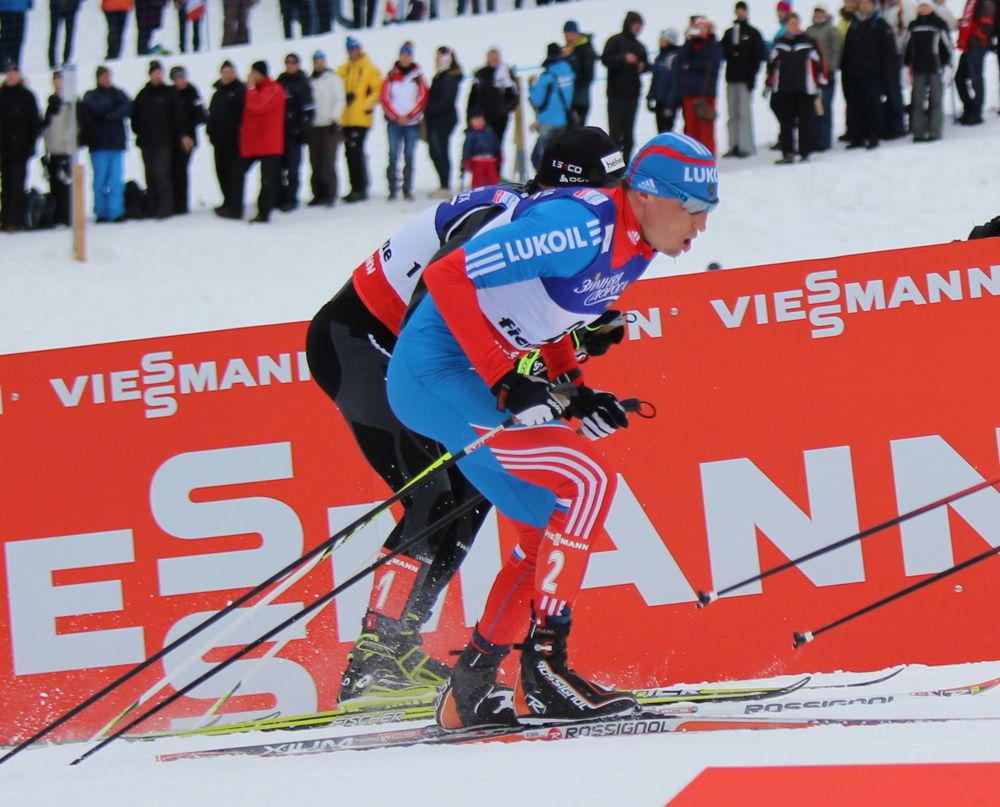
    Petter Northug (NOR), Evgeniy Belov (RUS), Federico Pellegrino (ITA), Ilia Chernousov (RUS), Martin Johnsrud Sundby (NOR), (l-r) attack the tricky corner just after the highpoint during the first lap of the finals in Val Mustair, Switzerland. (photo: Fischer/Nordic Focus)
    Petter Northug (NOR), Evgeniy Belov (RUS), Federico Pellegrino (ITA), Ilia Chernousov (RUS), Martin Johnsrud Sundby (NOR), (l-r) attack the tricky corner just after the highpoint during the first lap of the finals in Val Mustair, Switzerland. (photo: Fischer/Nordic Focus)

    Italy’s Federico Pellegrino repeated what he did in the Davos World Cup before Christmas: he destroyed the Norwegians in the Tour de Ski sprint final in Val MĂŒstair, Switzerland.

    “Today, one of my big dreams has come true: to beat Petter (Northug) in the sprint final,” Pellegrino said to reporters after the race.

    The swift Italian beat Tour de Ski (TDS) leader Petter Northug of Norway as well as defending overall TDS champion Martin Johnsrud Sundby in increasingly challenging conditions.

    “I feel I am in a great shape,” Pellegrino said in a press conference. “I was focused on Petter and I forgot about Martin. In the last curve before the finishing straight I had a good speed and I could keep it to the finish and win.”

    As the day progressed the course got both icy and chewed up, especially in the turns.

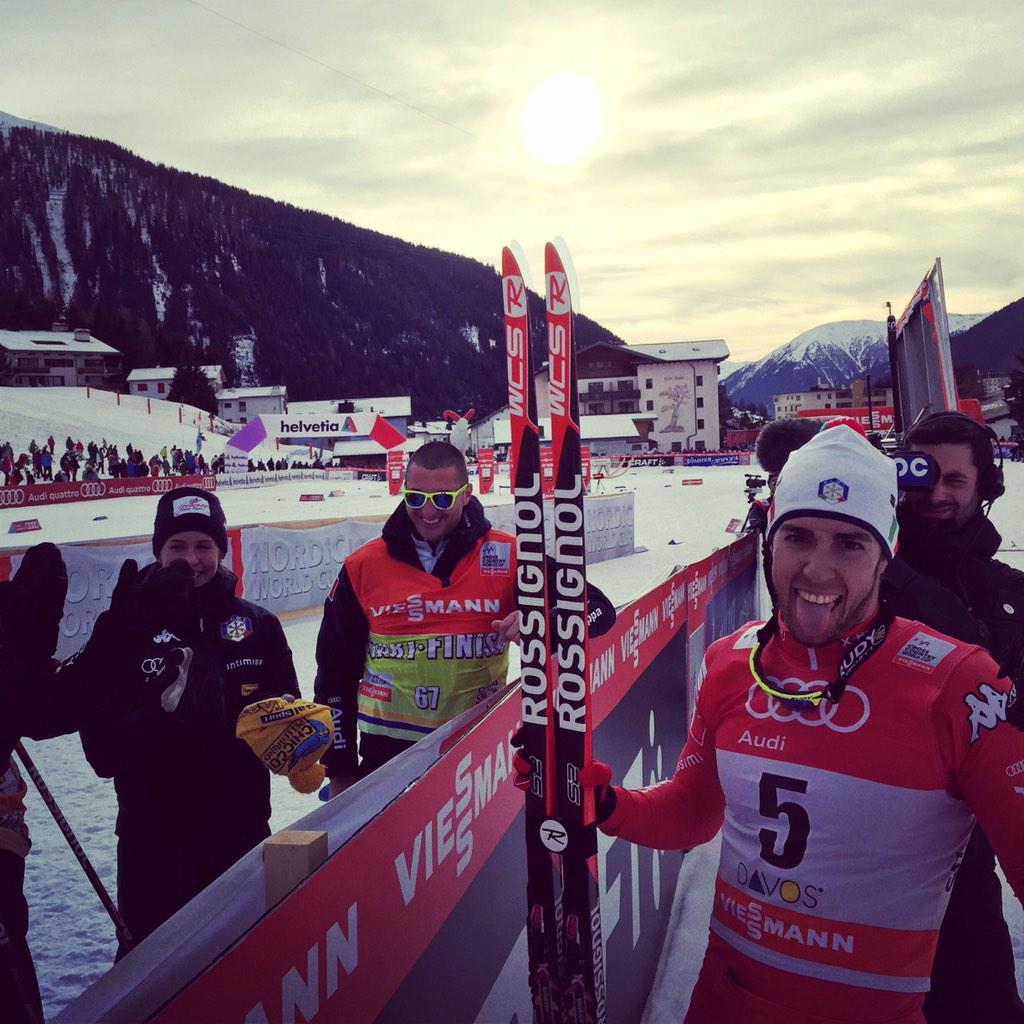
    Federico Pellegrino (r) after his first World Cup victory, in the 1.4 k skate sprint in Davos, Switzerland, in December. (Photo: FIS Cross Country/Twitter)
    Federico Pellegrino (r) after his first World Cup victory, in the 1.4 k skate sprint in Davos, Switzerland, in December. (Photo: FIS Cross Country/Twitter)

    On the top from the first heat 

    Pellegrino was sixth in the qualifier, where Northug had the fastest time. But from there on, Pellegrino won every heat. First he beat Russia’s Evgeney Belov in the quarterfinals after a controlled effort pulling into first on the final meters. In the process, he knocked hometown favorite Dario Cologna out of the race.

    In the semifinal, Pellegrino beat both Sundby and Northug after a tactically perfect run.

    In fact, Northug made the final by the skin of his teeth, advancing as a lucky loser after finishing third in the semifinal behind Pellegrino and Sundby.

    In the final, Northug showed that he learned from the close call in the semifinal, and opened aggressively from the start. Sundby, however, hung out in the back on the first lap along with Sweden’s Calle Halfvarsson, one of the other overall contenders. But unlike Halfvarsson, and later Ilia Chernousov of Russia, Sundby advanced on the second lap, creating a large gap to the Swede and the Russian.

    By the end of the second lap, Sundby was first approaching finish line, in front of Northug, while Pellegrino came like a bullet from behind and beat both of them in a thriller finish.

    Nothing determined overall

    At the end of the day, Northug now has a 25-second buffer to Sundby in second place in the overall Tour de Ski.

    “With a 10k classic on the schedule tomorrow, it’s even likely that Martin takes the overall lead,” Northug said in the press conference, noting that he hardly feels that the overall victory is in sight. “I will use my position as best I can, and hopefully go out somewhere close to Martin in the long-distance pursuit that follows. At least not too far behind him.”

    There are still four stages to go, and the last stage up the alpine hill Alpe Cermis in Val di Fiemme, Itlay, has been an Achilles heel for the strong Norwegian as long as the Tour has been around.

    “Winning the overall Tour de Ski is not that likely,” Northug said. “I’ve started the final stage with fantastic leads before and still made a fool of myself year after year. So I have to try again.”

    Harvey’s Missed Opportunity 

    Canadian Alex Harvey hurt his own chances in the quarterfinals. After a slow start, Harvey moved up on the second lap and looked like a for sure second place, behind Halfvarsson who had an impressive gap on the rest of the heat. Harvey was surging toward the finish line, but forgot to get the full picture and narrowly lost the position to Halfvarsson’s teammate Andersson, who slid into second place.

    The move cost Harvey not only the semi final, but also 40 bonus seconds in the overall TDS.

    Results

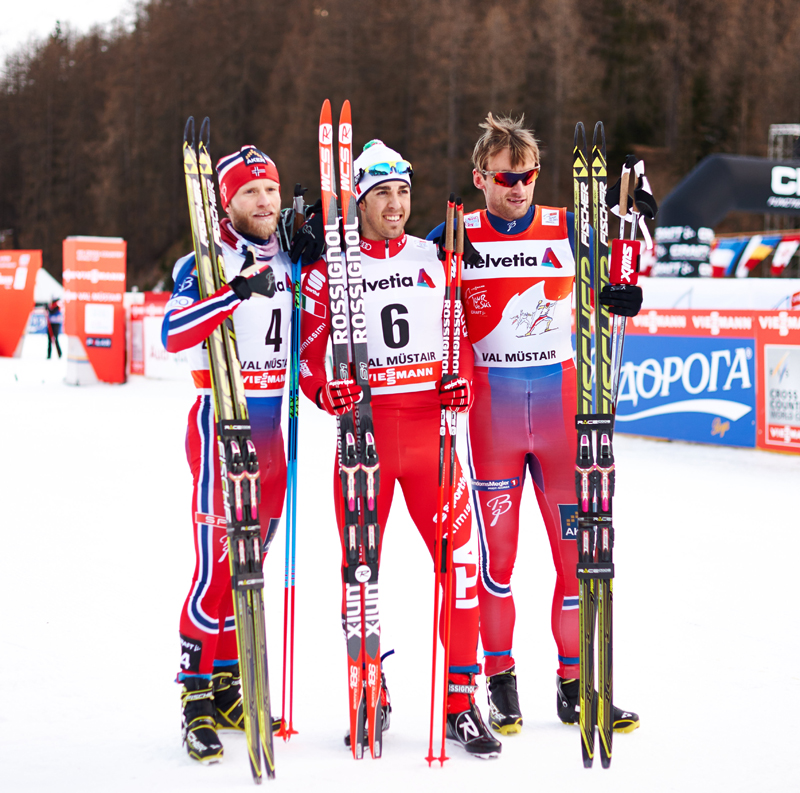
    Martin Johnsrud Sundby (NOR), Federico Pellegrino (ITA) and Petter Northug (NOR), (l-r) take the men's podium in Val Mustair (SUI). (photo: Fischer/Nordic Focus)
    Martin Johnsrud Sundby (NOR), Federico Pellegrino (ITA) and Petter Northug (NOR), (l-r) take the men’s podium in Val Mustair (SUI). (photo: Fischer/Nordic Focus)
  • Photo Gallery: Olympic 50 k Mass Start

    Photo Gallery: Olympic 50 k Mass Start

    FasterSkier’s coverage is made possible through the generous support of Swix.

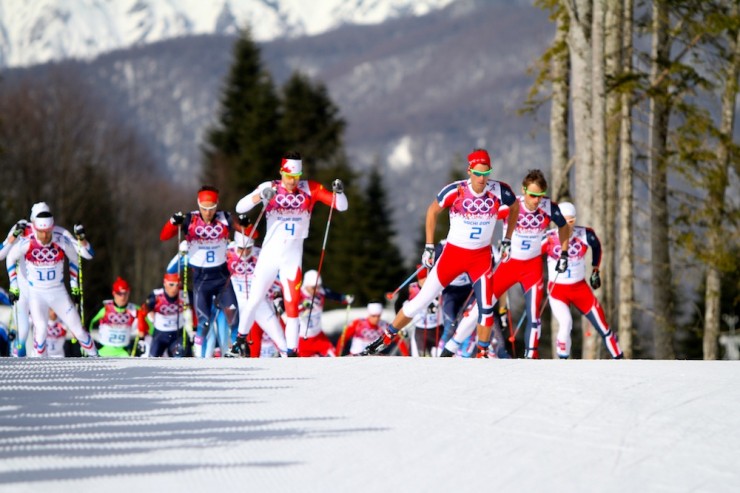
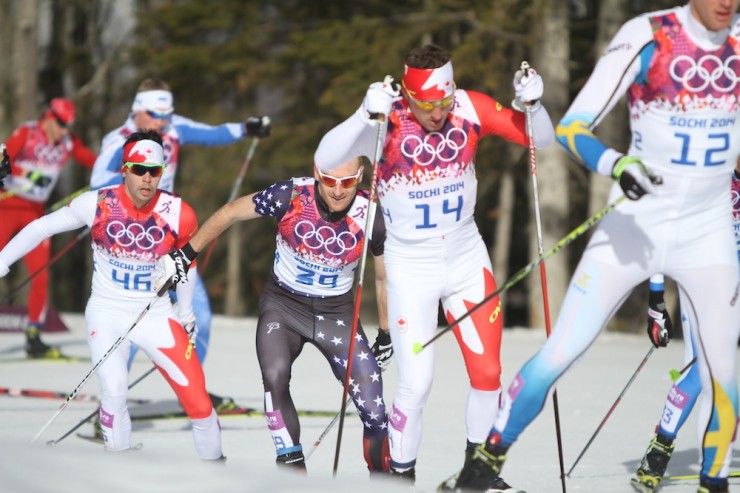
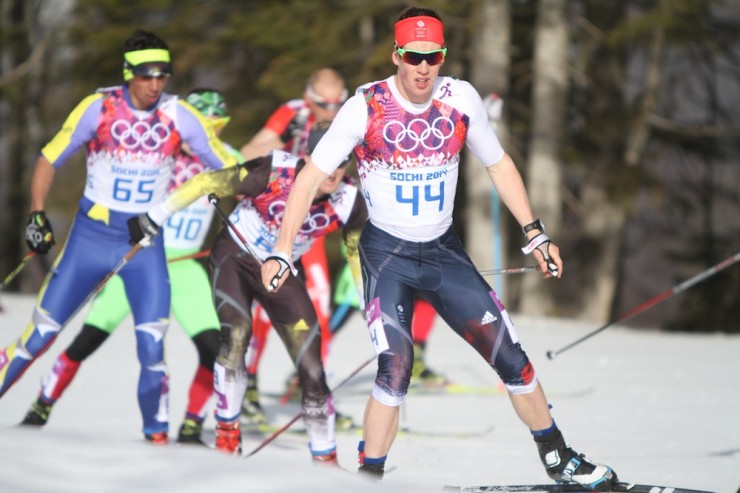
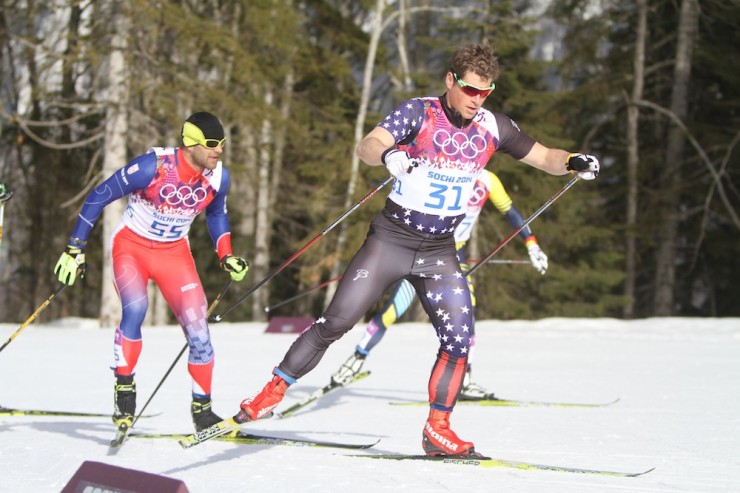
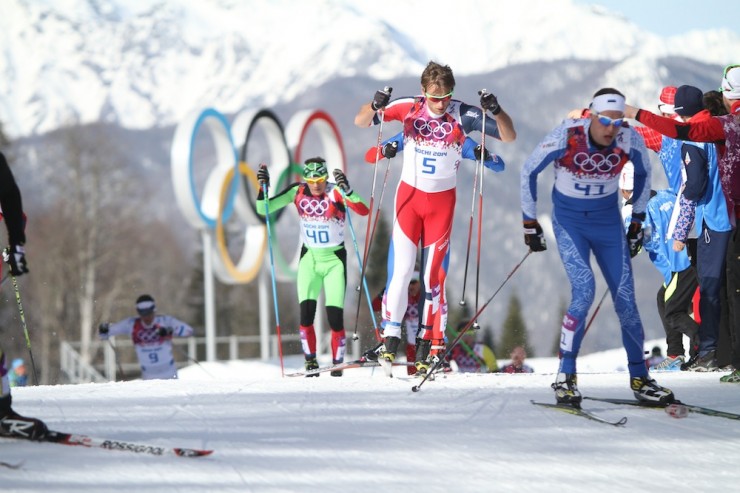
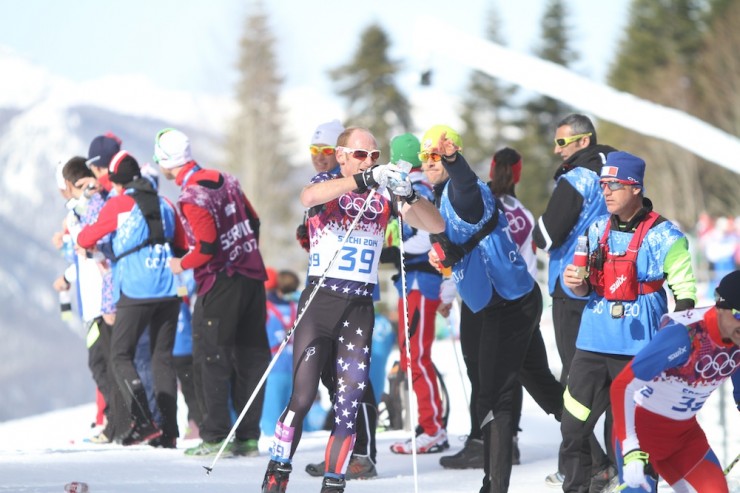
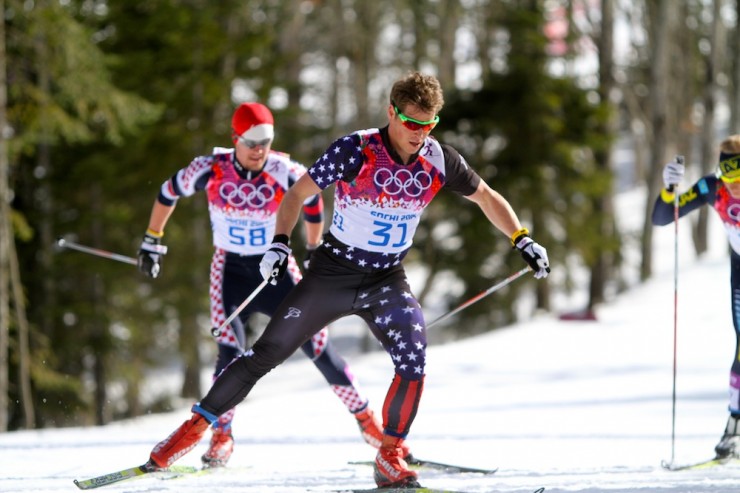
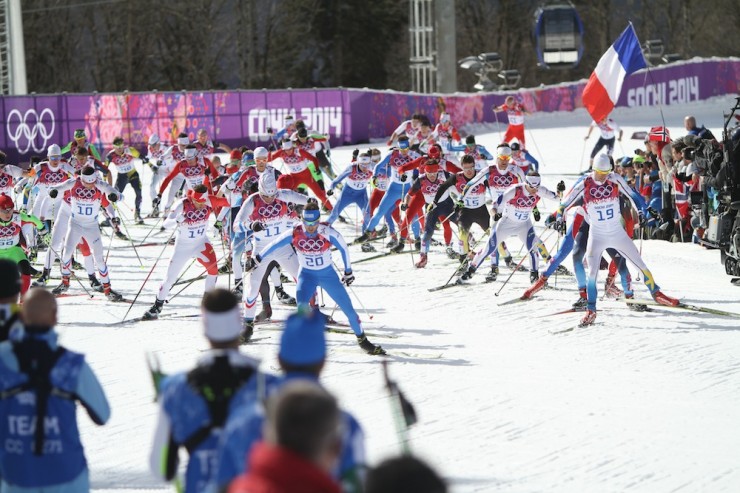
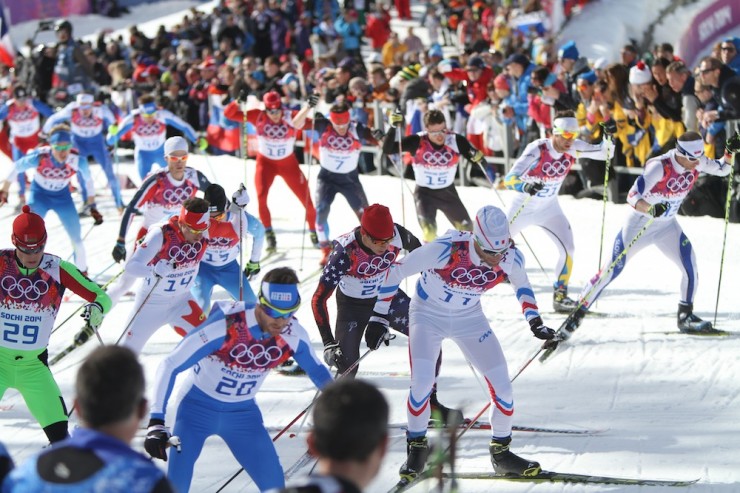
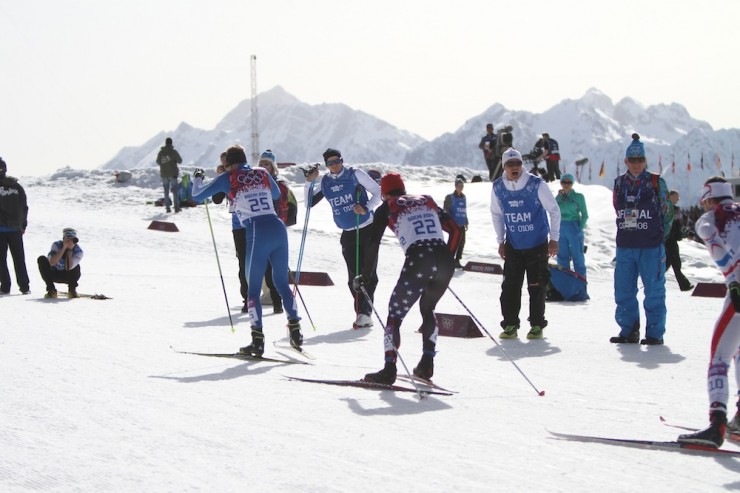
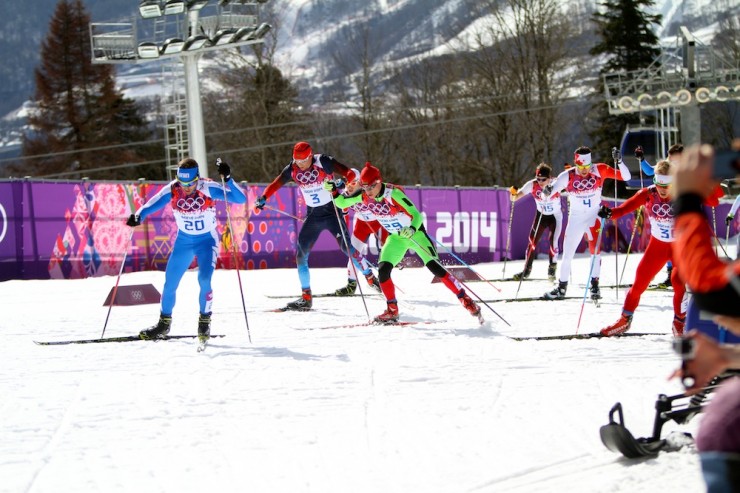
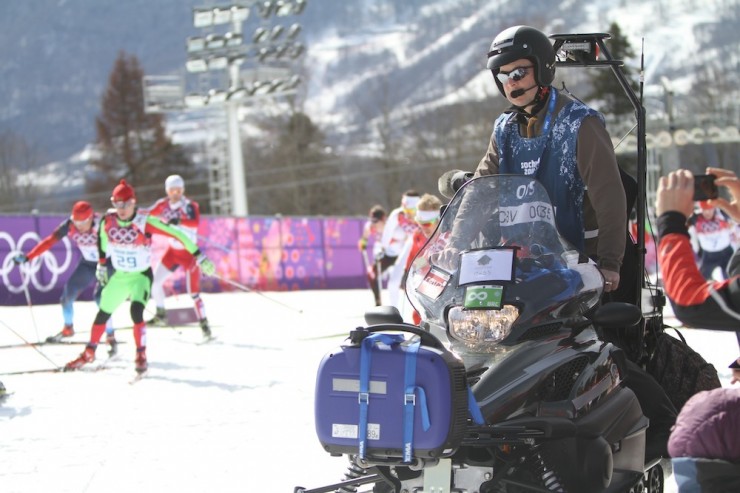
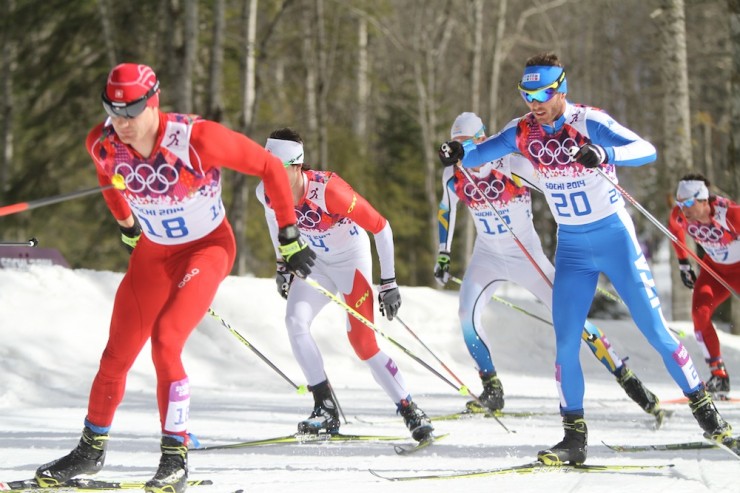
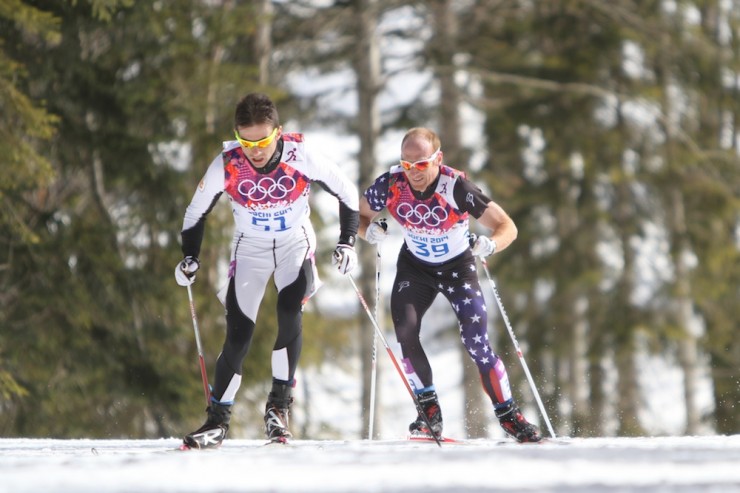
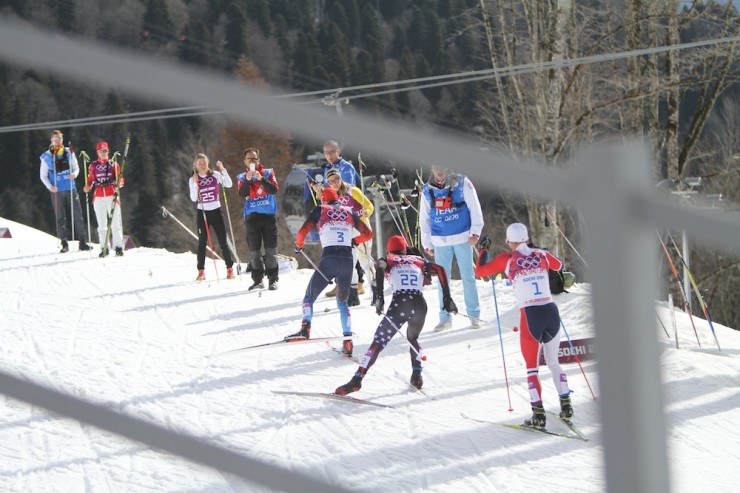
    KRASNAYA POLYANA, Russia — Want to see how long Noah Hoffman was leading the Olympic men’s 50-kilometer freestyle mass start on Sunday, the final day of the Olympics, and how Russia pulled off the medal sweep? Check out this (mostly in order) play-by-play in photos. Read the story here.

    Start list (for bib numbers)

  • Tears from Northug As He Claims Second Overall World Cup Title

    Tears from Northug As He Claims Second Overall World Cup Title

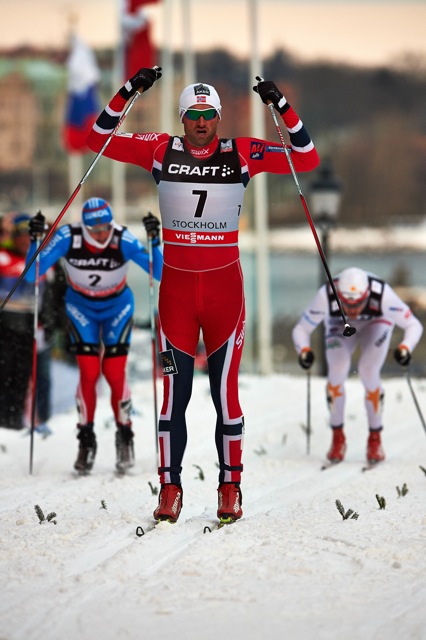
    Petter Northug celebrates his classic sprint victory in Stockholm on Wednesday.  (Photo: Fischer/Nordic Focus)
    Petter Northug (NOR) began and ended his World Cup Finals campaign in Stockholm and Falun, Sweden, with victory, and his win in the 15 k pursuit on Sunday secured his claim on the overall World Cup crystal globe. Photo: Fischer/Nordic Focus.

    He won the mini tour. He won the BMX trophy drive. He won the overall World Cup.

    “We’re going to let loose and do something fun tonight, but whatever that is, I still don’t know,” Petter Northug (NOR) said after finishing the 15 k freestyle pursuit on Sunday.

    You can hardly blame him. Northug completed an astonishing reversal in the season standings, finding late winter form and motivation to take his second overall World Cup title, his first since the 2010.

    With this victory at World Cup Finals, Northug becomes only the second Norwegian to take more than one overall title. He’s still shaded by BjĂžrn DĂŠhlie’s six triumphs, but Northug is in rare company.

    Leading into Sunday’s 15 k freestyle pursuit the question on everyone’s lips asked what Northug’s tactics would be. Would he try to keep the chasing pack away, or would he be caught and have to sprint for the finish?

    A yawning gap separated Northug from his closest competitor in the Falun mini tour on the start line; Maxim Vylegzhanin (RUS) started 30.5 seconds after Northug.

    Northug wasn’t concerned about Vylegzhanin.

    In prerace interviews he indicated to FIS that “I don’t care much about Maxim Vylegzhanin. I have to keep Legkov and Cologna behind.”

    Realistically, neither had a chance to overthrow Northug. Cologna started 1:20 behind the Norwegian. Indeed, Northug had gone as far to say that he would cancel his holiday if he lost it.

    “I’ll go on a camping trip in Falun,” Northug said to Aftenbladet after being asked what he’d do if he lost. “I don’t think that’s very pleasant.”

    Legkov, the closest to Northug in the overall, started 1:47 back. Barring a spectacular implosion, the title was Northug’s for the taking.

    Judging by Northug’s start, it appeared his tactic would be to slot in behind Vylegzhanin and pace himself to the finish. Northug came out of the starting gate sluggishly, without his characteristic spark.

    At the first 1.4 k checkpoint the clock revealed another story. Northug passed the mark in 3:47.7, with Vylegzhanin coming through 32 seconds later. The Norwegian had started in earnest.

    Further back, Martin Johsrud Sundby (NOR) had already latched onto Eldar RĂžnning, whom had started third, 40 seconds behind Northug.

    RÞnning, the classic specialist, was already leaking time. After the first 3.6 k loop, the race began to take shape. RÞnning faded, and Vylegzhanin formed an elite group of chasers containing Sundby and Finn Hagen Krogh (NOR), whom had already eaten up a significant margin after starting 54.4 seconds behind Northug.

    The chase was on, but the spirit of the chasers might have dampened after one lap through the stadium when they found themselves 39.8 seconds down to a determined Northug.

    As the chase group approached the uphill spectators were treated to some theatrics by Vylegzhanin when he took a drink from a coach and face planted after he poled between his legs. Perhaps World Cup racers are more human than we suppose. That misfortune effectively ended Vylegzhanin’s fight for a mini-tour podium. Seeing the Russian lying on the track behind them, Sundby and Krogh ratcheted up the pace and left the Russian for dead.

    Northug passed the 5 k mark in 12:38.5, coaxing his 83 kilograms up the long uphill. Half a minute later Sundby and Krogh roared past in hot pursuit of their teammate, taking 8 seconds out of Northug’s lead in the steep pitch.

    Northug’s overall rivals hadn’t made the necessary inroads to pose a real threat, with Cologna and Legkov passing the 5 k mark over 90 seconds down.

    It appeared the real drama would be if Northug could hold off his teammates. Sundby and Krogh were clearly hunting Northug, and if they didn’t have the same race suit on you’d have hardly thought they were Norwegian. Northug wasn’t getting any favors. Yet for all of Sundby’s and Krogh’s advances on the uphill, their downhill track craft muted their climbing prowess.

    Northug conceded seconds on the climbs but stabilized the losses on the downhill, taking advantage of the untidy snowplowing of his teammates.

    As they came into the stadium for the second time, a huge group had formed 1:36.7 behind Northug, led by Legkov. Even if the overall appeared out of his reach, the fight for second place between he and Cologna was on.

    As Northug crested the big hill again, Sundby and Krogh had sight of their teammate, only 24.9 seconds back at the 8.6 k mark.

    Vylegzhanin passed through in damage control after his fall, 1:10 behind Northug, while the pack led by Legkov and Ilia Chernousov (RUS) came through 1:26.9 seconds down.

    In the chasing pack Krogh took charge and tried to close those final meters to Northug, but the tall Norwegian was doing just enough to keep the chasers at bay. At the 12.2 k mark Northug had 14.9 seconds to play with in the final 3.7 kilometers of the season.

    Out of the stadium Northug grimaced up the last hills and swooped into the stadium, while Sundby and Krogh attacked each other behind.

    A few quick glances over his shoulder, and Northug knew he had done it. He cruised into the stadium and took his time towards the finish while Krogh and Sundby lit up the afterburners to fight for second place.

    In the end Northug stuck his toe across the line only 0.7 seconds ahead of Krogh, who got the better of Sundby in the end. Northug finished in a time of 35:48.3.

    In the end Northug’s margin of victory in the overall flattered to deceive, with a 180-point margin over Legkov by virtue of the 200 points awarded the Falun mini tour victor.

    Northug afterward was unexpectedly emotional.

    “It’s really fun to do it,” Northug told the NRK.. “It’s not simple to win the World Cup; many of my competitors prioritize the overall over world championships, and that is huge.”

    With Ja Vi Elsker, the Norwegian national anthem, playing over the loudspeakers as he raised the second crystal globe of his career, tears welled in his eyes. The jubilant champion felt relief after the pressure of the last two weeks.

    “It feels a little like I’ve stolen the overall title,” he said. “It has been a fantastic season. I won an individual world championships gold, additionally in an individual start, and the world cup overall. I’m very satisfied.”

    Even the head of the Norwegian ski federation Vidar LĂžfshus expressed his admiration.

    “We came here to win the crystal globe, and we did it,” he told the NRK. “Both the support crew and the athletes have done a great job.”

    Northug leaves Falun with a hefty payday and a new BMW. But you won’t see him driving it, as he’s donated the vehicle to charity.

    It was Northug’s day, but he wasn’t the only one with something to celebrate.

    Like RÞnning the day before, Krogh delivered one of his best results of the season to take second place in the mini tour. He also posted the fastest time on the day in 34:54.6.

    “On a good day I can deliver a good result,” Krogh said to the NRK. “In the future I will deliver more consistent results than this year. I am prepared to train a lot to be even better next year.”

    Sundby was third and Legkov fourth in a time of 35:05.5 and 35:14.7 respectively.

    In the final analysis Legkov fell just short of his first overall World Cup title, but he can take consolation in claiming the distance world cup, winning the Tour de Ski, and improving upon two successive seasons where he finished the season fifth in the overall rankings. If his career arc continues on the same trajectory, he’ll be a contender for the overall next year.

    Northug topped the prize money list for the season, earning himself a substantial payday of 212,500 CHF. Legkov and Cologna were second and third, padding their bank accounts with 165,625 CHF and 136,250 CHF respectively.

    Norway took the Nations Cup competition with a 14,208 points. Russia accrued 9,130 points for second place, and Sweden third with 6,352 points.

    Results

  • Legkov Wins Grueling Oslo 50k to Take Overall World Cup Lead

    Legkov Wins Grueling Oslo 50k to Take Overall World Cup Lead

    Alexander Legkov (RUS), shown here skiing at World Championships, claimed a meaningful victory in the Oslo 50 k on Saturday, besting Martin Johnsrud Sundby (NOR) on his home course by 1.2 seconds.
    Alexander Legkov (RUS), shown here skiing at World Championships, claimed a meaningful victory in the Oslo 50 k on Saturday, besting Martin Johnsrud Sundby (NOR) on his home course by 1.2 seconds.

    When suffering is in order, the mind is almost more important than the body in determining the outcome of a race.

    On Saturday in Oslo, Norway, Alexander Legkov (RUS) triumphed on Holmenkollen’s notoriously brutal track, persevering through vicious pace changes, 2,000 meters of climbing, and warm, wet conditions.

    “I feel great,” Legkov said afterwards. “It is a big victory for me after not so good World Championships. My plan was to control the pace and to save some energy for the final lap and attack in the stadium. It worked perfect and I had great skis as well.”

    Legkov cross the line with his typical Russian reserve, belying the gravity of the moment. A win at Holmenkollen can make a career; for Legkov this achievement adds to a breakthrough season with an overall victory in the Tour de Ski and the top spot in the overall World Cup rankings before the finals in Stockholm and Falun, Sweden.

    No longer a nearly-man, the stuttering Legkov of old has been replaced by an athlete that rises to the big occasion. His win at Holmenkollen is representative of his progression as a ski racer as he showed patience and bottomless stamina to overthrow the favorites.

    The story line going into the competition was the presumed showdown between Dario Cologna (SUI) and Petter Northug (NOR), who were separated by a mere 23 points in the World Cup overall ranking.

    In addition to the drama in the fight for the overall, the course designers added a few novel hijinks designed to disrupt the rhythm of the race. Athletes were allowed five ski exchanges instead of the usual three, and the decision to take new skis typically cost them between 20 and 30 seconds with the addition of a few extra meters before the pit.

    What’s more, the rhythm of the race was affected by critical bonus sprints on each lap, which rewarded top athletes at each preem with precious World Cup points. And with Johan Olsson’s World Championship solo victory fresh in the minds of top competitors, the pack was less willing to cede too much of gap to breakaway attempts.

    When the race got underway on the fabled course, Anders Soedergren (SWE) and a unknown Norwegian continental cup skier named Simen Sveen broke away in the first few kilometers and left the pack trailing in their wake. As they passed the 8.3 k mark they had 20 seconds in hand. The chasing pack never let the gap grow more than that, with the evergreen World Cup veteran Giorgio Di Centa (ITA) hauling them back.

    By 14.2 k the two frontrunners had been absorbed, and the Russian duo of Chernousov and Legkov took up the donkey work, with Noah Hoffman (USA) making a notable appearance at the front of the pack.

    Favorites Cologna and Northug didn’t much away, both opting to slide into the pack and stay relatively close to the front to monitor pace changes.

    At the second of six 8.3 k laps most of the field elected to change skis, and Remo Fischer (SUI) and Curdin Pearl (SUI) pushed on, with the stocky Belarussian Michail Semenov tucked in just behind. One might have thought that the Swiss duo was employing team tactics to help Dario Cologna’s chances, but Cologna himself was the one who dragged the pack back to his teammates, preventing the group from idling into a middling pace.

    While Fischer, Pearl, and Semenov pushed on from the front, Northug began to slip backwards. His positioning in mass starts is usually erratic, but he normally makes a point to stay in the top 20 to cover any surges at the front.

    Not this time. Northug’s body language was labored, and he fell out of the top 30. The overall pace didn’t slacken, boosted by the work of Sjur Roethe (NOR) and Martin Johnsrud Sundby (NOR). Clearly team orders for Norway were every man for himself.

    At the third intermediate sprint Legkov charged in just ahead of Cologna, and Roland Clara (ITA) collected bonus points for third. The bonus points on offer had an obvious affect on the race, as the resulting surges in pace caused some racers to blow up prematurely.

    A group of seven athletes soon began to break away, with a surprising Johannes Duerr (AUS) keeping the pace high. The leaders seemed to sense weakness in the chasing pack and began to drive the screw. Behind them, ragged on Holmenkollen’s punishing slopes, Tord Asle Gjerdalen (NOR) and Northug struggled to close the gap. They had 26 seconds to make up on Duerr, and thanks to Gjerdalen’s ceaseless labors the gap decreased, and by the 31.7 kilometer split they were less than 20 seconds away from joining the front group.

    By the time the leaders came through the stadium and took a well-earned feed, Gjerdalen and Northug were back in it. Now nine men strong, the group went into the exchange zone together and came out as one in no particular hurry.

    Roland Clara kept the pace honest, taking the reins from Duerr all the way to the bonus sprint. The lead changed several times, with Petter Eliassen (NOR) in a sparkling form. Northug, Cologna, and Gjerdalen lingered at the back, and they clearly struggled with the pace. Cologna was the first to break and drifted backwards a few meters at a time with Gjerdalen, though the latter eventually found energy to reconnect with the leading group.

    At the 39.2 k mark it was Eliassen, Legkov, and Sundby in the lead and they weren’t giving much away, their technique smooth and crisp. Behind Roethe began to falter, and with him, Northug.

    Notably, on a hill moving toward the stadium Clara drove the pace and Northug began slipping further back. As they crested the hill Clara looked up to see who was around and saw Northug several meters detached behind him. Instead of pushing on he effectively stood up, and with him, the rest of the leaders. At the 44.6 k mark the leaders had 20.5 seconds on Northug, who was clearly suffering from his earlier effort to regain contact with the lead.

    Eliassen and Legkov weren’t having any of it. They lept to the front, and on the penultimate hill leading into the stadium they strung the group out, making sure that the likes of Gjerdalen and Northug couldn’t make their way back on because of a careless race pace.

    At the 47.5 k mark it was Eliassen driving from the front past the famous Holmenkollen ski jumping hill, with Clara and Legkov lurking just behind.  hey stole a few glances backward to check on the progress of Northug and Gjerdalen, but didn’t up the tempo upon seeing them significantly detached. The difficulty of Holmenkollen’s steep pitches could be read in the weary body language of the front-runners as they entered the steep, wall-like climb out of the stadium.

    The pace slowed at 48.4 kilometers and Ilia Chernousov (RUS), who had remained quietly attached at the back of the pack for most of the race, started to yo-yo, the elastic stretching to breaking as they crested the hill. Sensing weakness, Eliassen and Sundby punched it, with Legkov seemingly comfortable just behind.

    The group stayed together leading into ‘Hellner Bakken,’ the famous climb leading into the stadium, and even Chernousov was able to dig deep and hang on. It was all to play for as they swung round into the stadium, and Eliassena and Sundby led the charge for the line in front of a roaring crowd feverishly waving Norwegian flags.

    Legkov charged to the fore, attacking in a hop skate in the fashion of his beleaguered arch-rival Northug, distancing himself from Sundby and Chernousov. Legkov would never relinquish this gap, and glided in across the line to one of the most notable victories of his career in a time of 2:07.32.9.

    Sundby coasted in just 1.2 seconds behind for an impressive second place, some consolation after a disappointing world championships marred by sickness. His result on Saturday was especially meaningful for him as lives a short way from the course.

    “I can see my house from the highest point of the course at Frognersetern,” Sundby said. “I am training on these courses and it is always special to compete on Holmenkollen. I hoped for victory and wanted to be in front on Helnerbakken. My mind wanted to attack but my body did not respond. I had cramps going from my little thumb to the foot. I thought I would fall back to fifth place. At the end I took second place and I am happy.”

    Third place went to Legkov’s compatriot, Chernousov, whom recovered from some tough moments leading into the stadium to finish in 2:07.34.8.

    “No race on Holmenkollen is a piece of cake and today was not an exception,” Chernousov said. “My second pair of skis was not that fast and I was struggling to follow the guys. I am happy it was Alexander and me on the podium today.”

    Eliassen had to settle for fourth position, a lifetime best, but a tough reward for all the work he did at the front, finishing in 2:07.35.4.

    Roland Clara secured a commendable fifth place in 2:97.35.7. An exhausted Northug limped across the line in sixth position, 42 seconds behind Legkov. The result his fell short of expectations but it was enough for him to leapfrog Cologna in the overall world cup ranking, who had a miserable day and finished down in 19th position, a shocking 3:17.3 off the pace.

    Despite Northug getting the better of Cologna, Legkov’s win moved him into first place in the overall world cup, with Northug a scant 12 points behind in second. Cologna dropped down to third place overall, six points behind Northug.

    Legkov’s seminal victory earned him lasting reknown, the world cup lead, and a meeting with the king of Norway.

    “I am happy to be in the World Cup lead but there are four competitions to go,” Legkov said. “Petter as well as Dario have been in a great shape and it will be difficult to keep the yellow bib until the end of the season.”


    Results

    World Cup Overall Standings 

  • Cologna Pulls a ‘Northug’ for First Win of Season

    Cologna Pulls a ‘Northug’ for First Win of Season

    Switzerland’s Dario Cologna is so quietly consistent it is hard to believe he had not won a World Cup race this season — always in the mix but just off the top of the podium, until today that is.

    Taking a page out of rival Petter Northug’s book, Cologna bided his time in the men’s 30-kilometer skiathlon on the Olympic course in Sochi, Russia, before attacking furiously over the top of the lengthy final climb and opening an insurmountable lead.

    The overall World Cup leader was followed across the line by a quartet of Russians, with Ilya Chernousov besting teammates Alexander Legkov and Maxim Vylegzhanin in a sprint to the line.

    The race played out early on as most men’s mass start races usually  do — a large pack jockeying for position with no one willing to risk an attack.

    The only oddity was seeing Northug leading early. The Norwegian is usually content to let others do the work, but he made his way to the front on several occasions, though he made no move to push the pace except to challenge for the bonus points at four intermediate sprints.

    Cologna must be satisfied with his current set of wheels (the skier with the most xDrive sprint points at the end of the season wins a car) or was focused on the win and less so on total World Cup points.

    He has placed in the top-five nine times this season and came frustratingly close to a victory in Friday’s freestyle sprint, losing out to Northug in a tight battle.

    On the challenging Sochi courses, slowed by new snow, Cologna played his cards to perfection. He was always near the front, but never pushing.

    Dario Cologna (SUI)
    Dario Cologna (SUI) racing at World Cup Finals last year.

    After the equipment change at 15k, the attrition began, with skiers gradually disappearing off the back.

    Four times around a 3.75 k loop meant four times up a grueling climb lasting a solid minute and a half. While the pack compressed somewhat on the descent, each time around a few more found themselves unable to maintain contact.

    As the race moved into the final lap, it was Roland Clara who made the first move. The Italian is decidedly not a sprinter and had little hope of prevailing in a head-to-head battle down the homestretch.

    Clara accelerated, further breaking down the group. He couldn’t get away, however, and Legkov took over on the first pitches of the big hill.

    An excellent climber, Legkov outgunned both Northug and Cologna on the Final Climb in the 2013 Tour de Ski, and while Northug quickly fell out of contention when the pace rose, Cologna would not falter.

    With just 30 meters left in the hill, Cologna came by Legkov with a fury, replicating an oft-employed strategy of Northug’s — sprint early and avoid a stadium run.

    In Sochi, with a significant descent into the stadium, wrapping up a position in the final 400 meters is challenging. Positioning becomes key and the hairpin at the end of backstretch adds another wrinkle.

    The safe thing, therefore, is to get away on the climb, exactly what Cologna attempted.

    A gap of almost 20 meters appeared almost instantly, and short of a crash, Cologna was in no danger of losing his spot.

    Legkov
    Legkov racing in the 2012 Tour de Ski.

    The three Russians came into the homestretch together with Chernousov ultimately gaining the advantage.

    Yet another Russian, Evgeniy Belov, fresh off success at the U23 Championships, placed 5th.

    Clara came across in 8th, just behind Tobias Angerer (GER) and Jean Mark Gaillard (FRA).

    Northug limped across in 12th, 23 seconds back. He expended significant effort fighting for bonus points and may have tried to do too much.

    A commentator for Norwegian Broadcaster NRK, Torgeir Bjorn, speculated that Northug was experimenting with different tactics in preparation for the Olympics.

    Regardless, the day belonged to Cologna

    “I like the last uphill. I skied it already in the sprint [on Friday],” Cologna told FIS news after the race. “I knew I was strong there.”

    Both Chernousov and Legkov sung the praises of a Russian team that put six skiers in the top eleven.

    “Of course we worked as a team, and not just me and Alexander,” Chernousov said at the post-race press conference. “The whole team worked together and really tried to do its best.”

    Chernousov appeared ecstatic on the podium while Legkov was less demonstrative. But he said he was satisfied with third, especially after being sick last week.

    Results

    Of Note

    –       Nikolay Khokhryakov (RUS) placed ninth, a career best for the 28-year-old. He had just seven previous World Cup starts.

    –       Curdin Perl (SUI) was often at the front early in the race and finished 14th.

    –       Andrew Musgrave (GBR), who has had a strong season thus far, struggled to 56th.

    –       The top Swedish skiers were not present.

    –       Legkov patted Northug on the back after one of the intermediate sprints when the Norwegian doubled over with effort. Northug would not tell Norwegian press what the Russian said.

    –       Paul Constantin Pepene picked up the first points of the season for Romania — or point to be accurate. Pepene was 30th.

  • Northug Casually Claims Tour Prologue Opener: ‘I Still Have More’

    Northug Casually Claims Tour Prologue Opener: ‘I Still Have More’

    Norway’s Petter Northug holding his own to win the 2012/2013 Tour de Ski opener on Saturday, the 4 k freestyle prologue in Oberhof, Germany. Northug won the same race last year. (Photo: Fischer/Nordic Focus)

    Starting 95 bibs back in Saturday’s prologue, the first of seven stages in the Tour de Ski, Petter Northug broke down the task ahead of him. Ski faster than everyone. No problem.

    Despite draggy conditions in above-freezing temperatures and a headwind and thick fog to match, the 26-year-old Norwegian did what he needed to do on the 4 k freestyle course, beating Swedish rival Marcus Hellner by 6.1 seconds to win the prologue in 8:28.7 in Oberhof, Germany.

    The men’s Tour de Ski prologue podium on Saturday in Oberhof, Germany: 1. Petter Northug of Norway (c), 2. Marcus Hellner of Sweden (l) and 3. Alexander Legkov of Russia (Photo: Fischer/Nordic Focus)

    And he didn’t even feel that great, or so he said.

    “I did not have the best feeling in the day, so it was good to win and feel that the form is on the way,” Northug told NRK. “The form is going to rise beyond the tour. I still have more to go on than what I showed today.”

    At 1.7 k, Northug sat in seventh, four seconds behind Russian Ilia Chernousov, who ended up fifth in the Tour prologue for the second-straight year. It had been Northug’s plan to hold back early, which he told media before the race. Reasoning he wasn’t in top form, Northug said his goal was to focus on technique and conserve for the final stages.

    Tour de Ski defending champion, Dario Cologna of Switzerland, told NRK he’d believe it when he saw it.

    “He will never be able to take it easy if someone gets ahead of him,” predicted Cologna, who finished fourth, 10.1 seconds behind Northug.

    “When Petter says something, newspapers [are] stupid enough to write it,” Cologna said Saturday.

    Northug had a whole field ahead of him and successfully outdid all his competitors to claim the red leader’s bib heading into Sunday’s 15 k classic pursuit. He won the same stage last year and went on to finish third in the Tour behind Cologna and Hellner, respectively.

    On Saturday, Hellner, who started nearly 15 spots ahead of Northug, was first for some time until the Norwegian crossed the line. Hellner settled for second and considered it a good start.

    “I wasn’t sure of my fitness before the Tour, but I am feeling good,” Hellner said at a post-race press conference. “Tomorrow I will try hard, but classic is not my best so I will see how it goes.”

    Northug also took Saturday’s result as a positive affirmation, adding that it hardly decided the outcome of the nine-day event.

    “I have won just the first stage; nobody will remember it on [the final climb up] Alpe Cermis,” he said. “I am going to take it easy in the first round tomorrow. For sure Dario and others will be strong and will be chasing me. It will be important to find the right spot in the pack.”

    After claiming five bonus seconds on Saturday, Northug will start 11.1 seconds ahead of Hellner in the pursuit, and Alexander Legkov of Russia, who was third, will start 17.2 seconds back.

    On Saturday, Legkov was 7.2 seconds off Northug’s winning time.

    “I felt very good today,” Legkov said at the press conference, adding that the course – not as icy as it was Friday during training – suited him. “I will think about the plan for tomorrow’s pursuit in the evening, but there are many good skiers out there. I have to focus on my skiing tomorrow and find my way out of the pack.”

    For Legkov, the podium was his first in a Tour prologue after he finished fifth overall in last year’s event. Canadian Alex Harvey tied his prologue result from last season in sixth and was 11.3 seconds behind Northug and 0.6 behind Chernousov.

    “For the same result I feel like it cost me a bit less than last year,” Harvey said of feeling smooth on Saturday. “It could be good moving forward. Nobody wins the Tour today nobody loses the Tour today. It’s just a snapshot of who’s in shape at the moment. It’s just good to know that I’m back where I belong in the top ten and it’s good to have good sensations when I’m going hard.”

    Results

  • Olsson, Classic Master of the Moment, Dominates 15 k in Szklarska Poreba

    Olsson, Classic Master of the Moment, Dominates 15 k in Szklarska Poreba

    Johan Olsson (SWE) on his way to victory in the men's 15km classic in Szklarska Poreba (POL). Photo: Fischer/Nordic Focus.

    It isn’t all that common, these days, to see Johan Olsson on the World Cup.

    After a strong start to this season, Olsson took a two-month forced hiatus due to illness. Last year, after the November World Cups he didn’t return to the top level of competition until World Championships in March. In 2010, he skipped the entire month of January to prepare for the Olympics. Injury and illness are sadly par for the course for the tall Swede, who is just a month shy of his 32nd birthday.

    But when Olsson does show up, he gets noticed.

    In Szklarska Poreba, Poland on Sunday, Olsson picked up his third win of this World Cup season in just five individual starts, leading from the very first time check through the finish of the 15 k classic individual-start race.

    Olsson’s victory came in challenging conditions: kickwax was far from straightforward, and athletes’ skis seemed to be either slipping or icing. Some racers ended up herringboning even the more moderate hills on the course, unable to make their skis do the work for them.

    “Conditions were very tough as you can win or lose everything,” Olsson explained. “You can lose a lot of time if you do not have the right skis.”

    That wasn’t a problem for the Swede, however.

    “I had extraordinary skis,” he told FIS after the race. “It was really difficult before the start and I waited as long as I could to pick skis, but I made the right decision and I’m very happy about that.”

    Olsson has now won his last two races, both of which were long, classic affairs; in Nove Mesto, Czech Republic last week, he squeaked out a victory in a 30 k mass start.

    “It feels really, really great today, just like last week,” Olsson said after the race.

    Dario Cologna strides his way to second in Szklarska Poreba (POL). Photo: Fischer/Nordic Focus.

    Second place went to Dario Cologna of Switzerland, who maintained his huge lead in the overall World Cup standings but was unable to touch Olsson today. Cologna also finished second to Olsson a week ago in the Czech Republic, but today the margin of victory was larger, due partly to the interval start. Both skiers showed even pacing; halfway through the race, they were separated by ten seconds, and at the finish the gap was 19.

    “I tried to fight a lot but there was always a ten-second margin,” Cologna said after the race.

    Russians Alexander Legkov and Ilia Chernousov were third and fourth almost a minute behind Olsson. The pair trains on their own under the guidance of Reto Burgermeister, and their joint success today – the next Russian, Maxim Vylegzhanin, was 50 seconds behind them in 13th place – may make the Russian federation more sympathetic to their cause.

    Then again, it might not. In 1947, the Russians convened a meeting of Soviet governments in Szklarska Poreba to decry the Mashall plan, which they described as “the American plan for the enslavement of Europe.” There’s a certain irony that here at the same venue, their most successful skiers were a pair of Russians who train mainly in Switzerland with a Swiss coach and support staff.

    But regardless of what the federation thinks, the two racers were giddy with their success. Legkov may have beaten his teammate, but he noted that the day was truly a success for both of them.

    “Ilia is my friend and I am happy for his good result,” he said. “We will divide the prize money.”

    All of the top finishers praised the Szklaska Poreba venue, which is new to the World Cup circuit. Olsson, for example, said that the change of scenery was refreshing – and that even though the culture is vastly different than his native Sweden, he heard fans screaming his name as he skied past.

    “When you’re in the World Cup circus for ten years as I am, it’s fun to come to a new location,” he said. “The courses here are really good, too, as is the audience.”

    Cologna agreed, and thought that the races would bolster the sport’s fanbase, which has been fueled by Justyna Kowalczyk’s success.

    “It is good to have World Cup in Poland, as cross-country skiing is very popular,” he told FIS. “I like to be competing here. The fans were great and were cheering on everybody.”

    Of note:

    -Alexey Poltoranin of Kazakhstan finished sixth, collecting his first top-ten result since December. It was a good day for the Kazakhs: teammate Sergey Cherepanov finished 11th, the first top-20 result of his World Cup career.

    -Germany’s Franz Goering finished eighth, representing his first top-ten finish in over a year. He last made the cut in Rybinsk, Russia in February 2011.

    -The top Pole was 31-year-old Maciej Kreczmer, who placed 58th, over four minutes behind Olsson.

    -Cologna was the only one of the top-ranked World Cup racers to have a strong race. Second-place Petter Northug did not compete, while third-place Devon Kershaw placed 26th and fourth-place Marcus Hellner 21st.

    Full results

    Men's 15km classic podium in Szklarska Poreba (POL): Dario Cologna (SUI, 2nd place – left), Johan Olsson (SWE, 1st place – middle) and Alexander Legkov (RUS, 3rd place – right). Photo: Fischer/Nordic Focus.
  • Vylegzhanin and Chernousov Lead Dominant Russian Performance in Rybinsk Skiathlon

    Vylegzhanin and Chernousov Lead Dominant Russian Performance in Rybinsk Skiathlon

    Vylegzhanin on his way to victory in Rybinsk, Russia on Sunday in the 30 k skiathlon. Photo: Fischer/Nordic Focus.

    Rybinsk is like Russia’s version of Holmenkollen—perhaps not with quite as many spectators, but its fans were no less enthusiastic about the World Cup this weekend, and turned out in admirable numbers despite the cold to cheer on the national team. On Saturday, Russian skiers fell short of topping the podium in front of the home crowd, but that changed in a big way in the 30 k skiathlon on Sunday. Not only did Russia claim the top two spots, they took four of the top five and nine of the top 12.

    Maxim Vylegzhanin (RUS) delivered victory in Rybinsk, besting teammate Ilia Chernousov by six seconds on the twelve-lap course, and in a photo finish for third, Tobias Angerer (GER) broke up the Russian pack by outsprinting Eugeniy Dementiev (RUS). Petr Sendov (RUS) was 0.6 seconds behind in fifth, adding to Russia’s dominating showing.

    “This victory was very important for me because I couldn’t get to the podium in Rybinsk before,” said Vylegzhanin in a press conference following the race.

    “Something was always wrong either with skis or my shape. This time everything worked perfectly.”

    The Rybinsk crowd. Photo: Fischer/Nordic Focus.

    From the moment the gun went off, Russia pushed the pace. On the second lap, the top ten men were all in blue. In an interview with Skisport.ru after the post-race press conference, Vylegzhanin said that his team definitely used their numbers (15-strong out of 56 competitors) to their advantage, consciously using team tactics to try to break open the race in the classic portion.

    Vylegzhanin’s strategy was to wear his competitors down in the classic leg, as he considers it his stronger discipline. There were four intermediate bonuses available on Sunday, at the 6.5, 11.5, 21.4 and 26.5 k marks. At the sprint preem at the 11.6 k mark, Vylegzhanin was in third behind Konstantin Glavatskikh (RUS) and Dmitriy Japarov (RUS), but the pack wasn’t worn out yet, holding at around 30 skiers strong.

    In the exchange zone at the halfway point, Vylegzhanin had the lead and the front group had diminished to 19. As Kris Freeman (USA) described afterwards, the beginning of the skiathlon played out much faster than usual with the sprint bonuses, which were an added feature this year.

    The pace slowed once the skate leg got underway, and Vylegzhanin hovered in the top 10. The relaxed tempo helped his chances in the end, he told Skisport.ru.

    In the first skate preem at 21.4 k, Saturday’s winner Devon Kershaw (CAN) made a break to win 15 extra points, and continued to ski near the front for the rest of the race.

    Japarov and Italy’s Roland Clara attempted to break away shortly thereafter, but the pack reeled them back in, and as the group came through the stadium for the second to last time, Sedov set the pace, with four other Russians in the front.

    Chernousov made a move to take over on the last uphill before the stadium, but Vylegzhanin reacted, and the two put distance on the rest of the field. Chernousov still led as the stadium came into sight, but Vylegzhanin overtook him on the corner before the final straightaway and won by a six-second margin.

    Vylegzhanin said later that he had not particularly expected Chernousov to be the one to make the break at the end, but thought that everyone probably envisioned the last hill to be the spot where someone would try to make their move. With this in mind, he was ready to react to Chernousov’s surge.

    Vylegzhanin also told the Skisport.ru reporter that, though he was pleased with his first World Cup win of the season, it would have been more meaningful if so many Red Group skiers hadn’t been absent.

    Chernousov described his break as an attempt to repeat a nearly-successful identical move in Saturday’s 15 k, where he was just beat at the line by Kershaw.

    “I was really exhausted in the last three laps and tried to relax and use the same tactics as yesterday in the last uphill,” said Chernousov.

    Though he missed the top spot, the Russian was satisfied with his second podium in Rybinsk this weekend.

    Vylegzhanin and Chernousov put a comfortable gap on the rest of the field, but Angerer fought Demetiev for third, the only non-Russian in the top five. Demetiev’s fourth-place finish on Sunday was his first result back on the World Cup since the end of his two-year doping ban.

    “I’m happy to be on the podium again,” said Angerer. “Rybinsk becomes a very special place for me, I do not really know what is exactly special
 I always feel well here.”

    “I tried to push hard and worked in front together with Roland Clara in the free technique part but at the end the Russians were too strong today.”

    Men’s results.

    Vylegzhanin (r) in front during the classic portion of the skiathlon next to Sergey Turyshev (RUS). Photo: Fischer/Nordic Focus.
  • Kershaw Charges Home For Rybinsk Freestyle Gold

    Kershaw Charges Home For Rybinsk Freestyle Gold

    Devon Kershaw (CAN) sprints down the homestretch to win the Rybinsk 15 k. Photo: FIscher/Nordic Focus.

    For a World Champion like Devon Kershaw, who has hundreds of World Cup starts to his name, there aren’t many personal bests yet to accomplish 10 years into a career. Yet on Saturday in Rybinsk, Russia, he checked another one off the list: his first official World Cup victory.

    The Canuck skied a smart race in the mass start 15 k freestyle, biding his time in the lead pack and making his move in the final few hundred meters. He passed Ilia Chernousov (RUS) around the final corner in the stadium, putting on a decisive gap and finishing 0.9 seconds ahead of the Russian. Tobias Angerer (GER) took third, +1.6 behind Kershaw.

    As the pack crested the final hill and the finish line approached in the final 500 meters, Kershaw said he made a decision to go for the gold.

    “I got to the top of that last climb in third and I looked around and said ‘I’m going to take this one,” he said in a Cross Country Canada press release.

    Kershaw breaking out the air guitar at the podium ceremony. Photo: Fischer/Nordic Focus.

    “I felt so comfortable today in the pack. I just knew at the top of that hill I was going to win. That is a really good feeling.”

    That confidence was helped, no doubt, by his recent string of World Cup podiums, including a third in the Moscow sprint on Thursday and third in the 15 k classic in Otepaa.

    For Chernousov, his second-place showing was his first podium of the season, and he gave the surprising number of Russian ski fans who turned out for the race a reward for braving the cold.

    The temperature was a barely-legal -19C at the start; the men lined up in the chevron employing various bundling methods to stave off frost bite. Most had a combination of neckwarmers, tape and sunglasses covering their faces, so that no inch of bare skin showed through.

    Angerer’s bronze almost didn’t happen for the Germans, as the team had initially decided not to contest the Rybinsk races due to the frigid temperatures.

    “The coaches changed their mind because the athletes wanted to race here and it proved a right decision,” said Angerer.

    Several top athletes were missing from the lineup on Saturday, including current World Cup leader Dario Cologna (SUI) and Norwegian star Petter Northug.

    This was Kershaw’s tenth World Cup medal, but as it was his first international distance gold, Kershaw was thankful to have finally achieved another standard of skiing success.

    “Since I’ve been in the game a while, I know these days don’t happen every time, so it’s good to be able to savor the victory,” said Kershaw in a phone interview after his historic win.

    The 15 k freestyle, at such a relatively short distance, made for an incredibly close mass start race. Not even the two sprint preems at the 6 k and 11 k marks blew the race open. The difference between the lead pack and the entirety of the field was a small number of skiers that fell off the back, even going into the final lap.

    “The race itself was pretty tactical; the pace wasn’t too bad,” said Kershaw. “I didn’t know before, but I was kind of banking on it being a sprint finish, so I tried to save as much energy as I could in case that happened, and it did.”

    Though he conserved energy, he sat in the top six or so for most of the race. The lead position changed hands frequently, and the Russians made their presence known at the front, their blue suits prevalent in shots of the pack from Eurosport’s broadcast.

    Roland Clara (ITA), Alexander Legkov (RUS), Maurice Manificat (FRA) and Tobias Angerer (GER) were among those who took turns in the top spot, but Kershaw and Harvey consistently skied a few paces behind, biding their time.

    The Canadians’ plan before the race began had been to only go for the sprint preems if they were in a decent position to do so, and when they found themselves in a good spot on the third and fifth laps, they went for it. Alex Harvey (CAN) was third at the 6 k, with Kershaw just a second behind in sixth.

    Close quarters. Photo: Fischer/Nordic Focus.

    By the fifth lap, Kershaw had moved up a few places, and put on a surge for second at the 11 k mark, good for twelve extra points.

    “We all talked before and decided if we were near the front, we’d play into them a bit,” said Kershaw. “It just kind of happened on lap three and five.”

    A group of five skiers finally separated from the group on the final downhill, Kershaw in third and Harvey in fifth. By the time they entered the stadium, Kershaw was in second, setting himself up to slingshot around Chernousov on the final corner before the straightaway.

    As he crossed the line with a clear victory, Kershaw went on one ski and pumped the air in triumph, the long-awaited gold finally his.

    Kershaw was quick to emphasize that the team energy amongst the Canadian men played a big role in his historic finish.

    “It’s so corny to talk about it, but team dynamics matter,” said Kershaw.

    Harvey, who’s had his own share of World Cup success this season, was fifth (+5.5), and skied even with Kershaw throughout the shuffling around in the men’s lead pack. Until the last uphill before the finish, Ivan Babikov was skiing right with the other two Canadians, but got tangled up with another skier and ended up in 17th (+13.6).

    “On the last hill I thought we’d have all three in the top five,” said Canadian National Ski Team head coach Justin Wadsworth.

    Canada’s combined effort this winter has brought them a top-five in every single stop on the World Cup this season, including Tour de Ski stages.

    Kershaw celebrating his victory in Saturday's 15 k freestyle. Photo: Fischer/Nordic Focus.

    “To reach the podium in every World Cup discipline and distance is a pretty powerful message,” said Kershaw. “It is a testament to the work our program has done as a whole, the support team we have in place and the great athletes on our entire men’s and women’s team. The work we have all done together is something that I’m most proud of.”

    Wadsworth agreed. “For the whole team it’s a huge boost,” he said. “It’s a clichĂ©â€”â€˜we all win together and lose together’—but everyone on this team is pretty tight. It’s big for the staff, and everyone in Canada, and obviously big for Devon.”

    As the World Cup enters the later part of the winter, Wadsworth noted that his team’s strong results at this point in the year were an improvement from the late-season trend they’d demonstrated in the past.

    “It really gives us some momentum in the last part of the season, which for us has been a stumbling block in the past,” he said. “Hopefully we’ve prepared ourselves for that better.”

    Kershaw now sits in fourth in the overall World Cup standings, only 29 points behind Sweden’s Marcus Hellner, who is not in Rybinsk this weekend.

    Men’s results.

  • Physio’s Unusual Move to Russia Takes Her Inside Legkov’s Renegade Ski Team

    Alexander Legkov racing in the 2012 Tour de Ski.

    In the summer of 2010, Isabelle Knaute found herself in an unusual position. Originally from Germany and a veteran of the Swiss national team staff, the physical therapist was hired by the Russians to work with a small group of skiers.

    “I don’t think there’s ever been a foreign staff member for the Russian team,” star athlete Alexander Legkov told Russian website skirun.ru at the time.

    Knaute, who took five years of Russian in school, had originally met Legkov when a friend of his was injured in France, and Knaute rode to the hospital in an ambulance with him. After the 2010 Olympics, her contract with the Swiss was up, and she “saw the opportunity.”

    Since then, Knaute has taken the position and run with it. Despite repeatedly insisting that she is “not a coach”, she helped Legkov and Ilia Chernousov break away from the rest of the national team and form their own training group. In 2011, former Swiss racer Reto Burgermeister joined the squad as a head coach, and the group is now its own entity.

    The development of an entirely separate team within any national team would be unusual, but it’s particularly surprising in the Russian federation, where the program heads have almost total control over athletes’ day-to-day lives.

    Has it been hard?

    “I don’t stop when I feel that it’s difficult, that’s not me,” Knaute told FasterSkier in an interview at the 2012 Tour de Ski.

    “It Was All on His Back”

    Legkov and Knaute at the finish of the 35 k stage of the Tour de Ski.

    Knaute said that it didn’t take long for Legkov to realize her value in the notoriously closed-in Russian system.

    “In the end of July, 2010 I spoke a little bit with Alexander and Ilia about the system from the Russian coaches,” she explained. “I had worked for ten years with the Swiss guys, and when I saw the philosophy of training in Russia I remembered the philosophy of the Swiss or the Norwegians, which I know because some of my old coaches came from Norway. I thought [laughs] ‘you guys, I think you need to change your system of training a little bit.’”

    At that point, both men had two World Cup podiums to their names, and Legkov had also collected a fourth-place Olympic finish. But based on brilliant junior careers, they were expecting more.

    “Alexander thought that he worked nine years with [the old] training system, and he hadn’t taken a step higher,” Knaute said. “He was at a good level, but he was there, not worse, not better. When I came to the team and spoke a little bit about the philosophy of training, they understood very fast that maybe this is a philosophy they want to explore more.”

    She explained that Legkov approached the federation and discussed whether it would be possible to train on his own. After much hemming and hawing, he received approval, and Legkov and Knaute worked out a training plan. He also asked Chernousov, who he knew only through training camps and racing trips, to come aboard; a couple of second-tier Russians have joined, as well.

    What changed?

    “I come from East Germany, so I know how the system was in the 1980’s,” Knaute said. “I was young, but I know it – and [the Russian system] is not a new system. It is twenty years old, or older. And they had no idea about the gym. Or about fast work, and I think you need that because cross-country is changing.”

    In that first year, Knaute was not technically a coach, and Legkov knew that the brunt of the federation’s criticism would fall on him if the endeavor failed.

    “He thought, okay, I’ll take all the [flack]
 It’s all on his back. When I make mistakes, it’s his problem,” Knaute said.

    And there were problems. Legkov caught swine flu and had to drop out of the 2011 Tour de Ski. He then tried to make up for lost time and overtrained in the second part of the season, leading to a disastrous World Championships in Oslo.

    “I knew Alexander, but I didn’t understand that he wanted more than was possible,” Knaute said. “I didn’t know how to tell him stop. I’m not a trainer, and I’m not a sports scientist at this level, so for me it was a difficult situation.”

    Despite the challenges, however, there were also successes. Chernousov won the Rybinsk 20 k pursuit, podiumed in the pursuit at World Championships, and won the prologue stage of World Cup finals. And before the swine flu debacle, Legkov had won the Kuusamo World Cup mini-tour. On the strength of those performances, the team – because it now was one – got the green light for a second season.

    Splinter Team

    Chernousov in the Tour de Ski.

    In some ways, though, the approval made Knaute’s life harder. The team was okayed by the ministry of sports, not the ski federation (FLGR), and the other coaches weren’t pleased that several star athletes had slipped from their control to be trained by a German therapist. Elena Vyalbe, who was at that time the head of the FLGR, publicly stated that she didn’t want Knaute to have anything to do with the team, which reportedly blindsided the Swiss therapist.

    “The federation doesn’t like it, but they accept it,” Knaute said. “The Russian system, it is maybe not an easy system to understand, but they like control. Control of the athletes. Of everything. So Elena does not like [us].”

    With a season’s-worth of certainty in her pockt, Knaute asked the ministry to hire a head coach.

    “When the minister decided, okay, you will have a team, I understood very quickly that it was impossible for me to do everything,” she explained. “I can’t do the training, the organization, the therapy, and the medical things. It’s impossible.”

    After casting about for ideas, they settled on Burgermeister, a Swiss three-time Olympian. After retiring, Burgermeister had begun coaching the Swiss juniors, but decided to accept the position with the new Russian group.

    Knaute and Burgermeister live in Davos, and the team does most of its training camps in Switzerland – “we know everything there and we have good infrastructure, so it’s easy for us,” Knaute said – although they’ve also worked in Oberhof, Germany, and in the Italian Alps. Training camps last 20 days, after which the athletes have ten days to spend at home in Russia.

    The small group is completely separate from the Russian national team, and shares only race support on the World Cup. They have their own budget, which Knaute must organize.

    “It’s difficult, because I’m not a secretary or an accountant,” she said.

    The group seemed to have an easygoing, friendly dynamic. Knaute described Legkov’s personality as strong, saying he could have a lot of energy, and be high and then low. He loves ice hockey and hunting, and BMW’s.

    “He is crazy about cars,” Knaute said. “I don’t understand it, but he likes speed.”

    Chernousov is “a more relaxed guy,” and Knaute thought that the two were good friends and perfect teammates. Burgermeister, she thought, was a good match for the pair.

    “Reto is quiet – he doesn’t speak too much,” she said. “He is a very thoughtful guy. He is calm, which I think is good for Alexander. I think it helps him a little bit more when he can see, okay, Reto is not nervous, so I don’t have to be nervous. And Reto has a lot of experience because he raced also.”

    The best thing about Burgermeister’s involvement, she said, was that the Swiss veteran could actually train with Legkov and Chernousov, at least during slower workouts.

    “Sometimes in the summer, he tells Alexander, ‘go behind me, you are too fast, do my tempo.’ And Alexander doesn’t like it, of course, but, okay, he went with that.”

    “The Pressure Is Much Higher”

    Legkov and Chernousov behind Dario Cologna at the 20 k mass start in the Tour de Ski.

    Neither Legkov nor Chernousov had a fast start to the 2012 season, and their results at the Sjusjoen and Kuusamo World Cup races didn’t impress either the FLGR or the public. And that, says Knaute, is typical. Now that they have left the fold of the Russian ski system, the standards to which the two men are held have grown much higher.

    As an example, Knaute compared her athletes’ treatment to that of Maxim Vylegzhanin, another Russian star.

    “It seems like Alexander and Ilya are interesting, not popular, but interesting to the other Russians,” she explained. “When Alexander started the season with 11th place, all the newspapers and the internet were saying, oh, Alexander had a bad start. Max was maybe 18th or 19th, and nobody wrote that; what he did was not so interesting. But if Alexander maybe started with a first or second place, 100 percent of the media would have written, oh, Alexander is in good shape too early.”

    The pressure, she said, was enormous. Here’s an exchange from the interview:

    FasterSkier: So the pressure that is on him and Ilya –

    Isabelle Knaute: It is much higher.

    FS: Do they feel that?

    IK: Every day, and in every competition. No joke.

    FS: But there’s no Russian media here right now.

    IK: There’s pressure from the federation.

    In the spring, the team chose – and was partly given – goals for the year, and they have been held to these goals. Every competition, Knaute said, was a test, and if the FLGR did not feel that the athletes had passed, they would be demoted to a lower level. Knaute and Burgermeister were given no say in the federation’s decisions.

    Luckily for Legkov, his season improved after the opening World Cups. He finished seventh in the Kuusamo mini-tour and fifth in the Davos 30 k; then, in the Tour de Ski, he won a 5 k stage, was on the podium in the 35 k point-to-point, and had the fastest time up the final climb.

    Chernousov, however, has faced obstacles from the FLGR, thanks to his early-season results.

    “After Davos, the federation decided, without asking Reto, that Ilia will not go and start in [World Cups in] Slovenia, because he was too bad…He had to go to the Continental Cup,” Knaute said. “The federation made it a very big question for the Tour de Ski. They told us that if he wanted to go in the Tour de Ski, he has to go to the Continental Cup, and he had to win there.”

    So Chernousov went to Austria, and won both a freestyle sprint and a 10 k classic race at a lower-level race.

    “He won, and the Russian behind him also started in the Tour de Ski,” Knaute said. “But if he hadn’t won, he wouldn’t have started.”

    He seemed to have deserved the start, as he ended up tenth overall in the 110 k series. But even performances like these, Knaute said, give the team no more leeway.

    “This is the pressure we have all day, and in all the competitions,” she said. “It’s difficult.”

    He’s No Dope

    Legkov winning the 5 k classic stage of the Tour de Ski.

    And then, of course, there’s the external pressure. For one thing, she said, her racers face extra scrutiny simply because they are Russian.

    “They had a lot of problems, the Russians, with doping,” she said. “We know it. And it’s already – it’s a stereotype.”

    But it’s a stereotype, she said, that shouldn’t be too heavily applied to her athletes.

    “Right now, people can catch him,” she said of Legkov. “When he’s always fast, when nobody can catch him, when he is all the time on the podium, then it’s a legitimate question. But right now he is fifth, he is eleventh. Do you understand what I’m saying? We have a lot of tests, every camp.”

    When Legkov was sick with swine flu and sleeping in her apartment in Davos, she said, doping control arrived to test him.

    But despite her frustration at the attention her athletes get from anti-doping administrators, Knaute understood the reasons for it. She related a joke that Germans tell about Russian skiers, saying that they have two strengths – one being medical.

    “You don’t have this joke in English?” she said.

    Jests aside, Knaute said she was sure that her athlete was clean, and that whatever the rest of the Russian program – or any other program – was doing didn’t concern them.

    “Alexander tells me all the time, I train very hard, and what the other guys are doing is not my problem,” she said. “In his mind, he knows that he is strong. And for him it’s not a question. It’s not interesting, you don’t think about it.”

    Maybe one day, she hoped Legkov and Chernousov would be treated like the other stars of the circuit, and their nationality wouldn’t be an issue.

    “[Northug and Cologna] are much better,” she said. “But on Alexander’s back is written, ‘Russia.’ And for the athletes it’s not fair because they’ve had no positive tests, always negative.”

    Sochi-Bound?

    Despite the difficulties, Knaute hopes to stay with the fledgling team through the Sochi Olympics in 2014. Whether she can do so, she said, depends on how fast the men ski.

    “Results, we need results,” she said.

    She didn’t anticipate the political situation getting any better with the FLGR, but didn’t find the squabbles prohibitive, either.

    “I think that at the moment we are not in a bad way,” she reflected. “Of course, I see that the federation does not want this team, because it’s not comfortable, to have another team besides the national team. I understand this a little bit.”

    Did she know what she was getting herself into when she signed up for the job?

    “If I knew before I started that it would be like this, then maybe [I wouldn’t have come],” Knaute said. “But now I have decided, and I’m going to keep going. [At this point] I’m doing it for myself, too.”

  • Team 3: Russia

    Russia

    2009-2010 Nations Cup Ranking: 3rd (7701 pts)

    2010-2011 Nations Cup Ranking: 3rd (6199 pts)

    Men: 2nd (4422 pts)

    Women: 7th (1777 pts)

    2011/2012 World Cup Team (Best Estimate)

    Men

    Stanislav Volzhentsev

    Maxim Vylegzhanin

    Petr Sedov

    Evgeniy Belov

    Konstantin Glavatsikh

    Ilia Chernousov

    Alexey Petukhov

    Nikolay Morilov

    Dmitriy Japarov

    Nikita Kruikov

    Sergey Shiryaev

    Alexander Panzhinsky

    Sergey Novikov

    Women

    Yulia Tchekaleva

    Anastasia Dotsenko

    Natalia Korosteleva

    Julia Ivanova

    Olga Mikhailova

    Natalja Iljina

    Valentina Novikova

    Svetlana Nikolaeva

    Olga Savialova

    Elena Soboleva


    What You May Have Missed Last Season

    It was impressive just how good the Russian distance skiing men were in 2010-2011 – especially in the last kilometer of racing.

    Maxim Vylegzhanin (L) during World Championships, Oslo 2011

    Alexander Legkov, Maxim Vylegzhanin, Ilia Chernousov, and Petr Sedov were all brilliant last season at various points, and all four finished in the top 20 in the World Cup Overall standings.

    In particular, for the first few weeks of the season it looked like Legkov was going to run away with the Crystal Globe. He finished in the top 10 six times in the first three weekends of racing, including a devastating attack a long way from home in the final day of racing during the mini-tour in Kuusamo, Finland, where he left Marcus Hellner and Dario Cologna standing still.

    And Legkov wasn’t alone in impressing the crowd with his finishing skills – Vylegzhanin did what most possible consider to be impossible, beating Petter Northug to the line at the end of the 30 k skate in La Clusaz, France.

    Joining his more highly-decorated and recognized teammates in the elite group this season was Chernousov, who had his best World Cup season to date. The highlight of Chernousov’s season was his big win on home turf, where he did a fantastic job of reeling in and then dispatching Frenchman Jean-Marc Gaillaird in the 20 k pursuit in Rybinsk, Russia.

    But despite having possibly the strongest team on paper, the Russians had the most devastating relay experience at World Championships in Oslo. After taking the tag in third place, just 20 seconds out of the lead, Legkov exploded spectacularly while skiing the third leg, giving up almost two minutes to the fastest leg time, and dropping the Russians back to seventh.

    On the flip side, while the men were solid except for the World Championships blunder, the Russian women did not impress. For the size of the Russian program, and considering the fact that it’s headed by Elena Vlyabe, who is second on the all-time World Cup wins list (45, or one less than Marit Bjoergen), the Russian women were nothing to write home about.

    Yulia Tchekaleva led the team with her best year on the World Cup to date, while Anastasia Dotsenko was a surprisingly effective sprinter, but just four women scored over one hundered points. The rest were mostly enthusiastic pack filler during the World Cup weekend in Rybinsk, Russia.

    But the Russian women failed to win a World Cup outright all season – even in Rybinsk, where the odds are usually pretty good (just look at all those RUS nation tags on the results list).

    Legkov leading Lukas Bauer during the 50 k classic at the 2010 Vancouver Olympics

    Notably, the Russians had significant quantity – they had 29 men and 29 women score at least one World Cup point. While a lot of those were collected during one three-race weekend in Rybinsk, Russia, it’s still an impressive number.

    What You Need To Know for This Season

    Several strong Russian women are back on the circuit, ready to bang heads with the best in the world.

    Irina Khazova has returned from a year-long break, where she had a baby, and has already put up an impressive second place result in the FIS race last weekend in a 10 k freesytle.

    Natalia Matveeva has returned from a doping ban, and while the formerly speedy sprinter has her eyes set on the home Olympics in Sochi 2014, there is no guarantee she’ll get to go.

    And it’s a good thing the Russian women are receiving reinforcements, as according to her FIS profile, Yulia Tchekaleva, the top female point producer from last season is injured and is currently not active.

    As for the men, Yevgeny Dementiev, also fresh off a two-year doping ban will be allowed to compete for a spot on the national team. The 2006 Olympic gold and silver medalist will be competing against a deep men’s team, and is now 28 years old, but could conceivably be a factor.

    The Russians are also strength training machines, cranking out all kinds of intense weight workouts, while wearing bullet-proof vests. And the lack of snow in Scandinavian isn’t a problem, as they have been working hard on synthetic skiing options.

    Evgeniy Belov (RUS) leading Alex Harvey (CAN) during the Under-23 World Championship pursuit.

    Who You Should Watch

    Holy smokes, the list could be endless, as Elena Soboleva, Konstantin Kuleev, Sergei Ustygov, and Gleb Retivykh all had top 10 finishes at World Junior Championships in Otepaa, Estonia last winter. The Russians always seem to have a home-run prospect in the pipeline, and last season FasterSkier picked break-out star Petr Sedov, who stormed to 20th in the World Cup Overall rankings.

    However, this year FasterSkier is tipping Evgeniy Belov, which is a bit of a no-brainer.

    The strong Russian was the only athlete to stay anywhere close to Canadian Alex Harvey in the Under-23 World Championship pursuit, scored 244 of his own World Cup points in just ten individual World Cup starts, was a member of three World Cup medal-winning 4×10 k relay teams, and to top it all off, is just 21 years old.

  • Russians Rule on the Mordarbacken; Kershaw 22nd

    Since the tail end of the 2011 Tour de Ski, Russia’s star distance skier, Alexander Legkov, has been missing in action. He fell ill with swine flu and couldn’t finish the Tour, then, with an abysmal performance in the relay at World Championships in Oslo, singlehandedly dashed his country’s hopes for a medal in that event.

    While the relay result stung, Legkov’s drought has been balanced by some strong performances by his teammates. There’s Maxim Vylegzhanin, the stalwart who took two silver medals at Worlds, along with Ilia Chernousov, who had a breakout World Cup win in Russia in January, then took bronze in the pursuit in Oslo.

    In Friday’s classic prologue at the World Cup Finals in Falun, Sweden, the story, and the cast of characters, was the same. Legkov was a disappointing 14th, but that was more than outweighed by his three teammates in the top four: Chernousov on top, Vylegzhanin in third, and 20-year-old Evgeniy Belov in fourth. Petter Northug  (NOR), in second place, was the only one who slowed the Russians’ assault on the podium.

    Three North Americans cracked the top 30, with Devon Kershaw (CAN) in 22nd, Alex Harvey (CAN) in 25th, and Kris Freeman (USA) in 30th. On the short 3.3-kilometer men’s course—Chernousov’s time was just under 11 minutes—there’s not much margin for error, and Harvey said his chances at a stronger result went up in smoke two strides in, when he broke a strap on one of his poles.

    He got a new one, but it was too short, and it took some shouting to get it—not what he was looking for at the start of a prologue.

    “You want to have the first k pretty smooth and relaxed,” Harvey said. “I was really bad.”

    The course took the men up and over the brutal Mordarbacken (Swedish for “murder hill”), which climbs 250 vertical feet in just over one kilometer, before rolling back down into the finish.

    The hill is tough enough on its own, but on Friday, its challenge was amplified by four or five inches of soft, new snow that fell before the race. Organizers regroomed the course a couple of hours ahead of the start, but according to Harvey, it didn’t help. There were no tracks going up the hill, making it tough to get grip.

    “Nobody had 100 percent kick, because of the track,” Harvey said. “So you have to deal with it
You have to understand, and live with the fact that your skis are not going to be super-grippy.”

    Even the strongest men on the World Cup, Northug included, were slowed to a near-walk on the Mordarbacken’s steepest pitches, but times were still tight.

    At the one-kilometer mark near the top of the hill, Northug was just nine seconds behind Belov, who was leading. But at that point, the Norwegian was all the way back in 17th.

    Pacing, Harvey said, was crucial.

    “You have to be going fast on the first k, but relaxed,” he said. “If you were smart enough on the first k, you can have energy left in the tank for the last k.”

    Kershaw, Harvey’s teammate, did have plenty left in the tank for the finish—he just didn’t start out hard enough. His phone was switched off after the race, but a message from his Twitter account summed up his feelings.

    “Bummer of a day Hal,” Kershaw wrote. “That makes no sense, but neither did my pacing in today’s prologue. 42nd at 1 k, finished 22nd…Disappointed.”

    Freeman, on the other hand, was a bit faster heading up the climb—he was in 19th at one kilometer, eight seconds out—but he faded slightly going over the top and back down, ending up 32 seconds from Chernousov. He also didn’t answer a phone call, but Chris Grover, the American head coach, noted that the result was the first time Freeman had cracked the top 30 in a prologue—he was 55th in his only other attempt, at the Tour de Ski.

    “”I’m feeling like my shape is better than it was at Worlds or [last weekend],” Freeman said in a press release. “It’s fun to get to the top of a hill and feel like there’s more there, like there’s more to give. I felt like my race was pretty good, and I am hoping for one more top 10 in Falun.”

    As for the top men, Northug’s second place was almost as good as a win, even though he finished just three seconds down on Chernousov. That was because he still managed to put 20 seconds—plus a 10-second time bonus—into his “most dangerous rival” for the World Cup Finals’ overall classification, Switzerland’s Dario Cologna.

    “I am well pleased with my race,” Northug told NRK, the Norwegian broadcaster.

    While the Russians had, by far, the best performance as a team—20-year-old Petr Sedov, in seventh, rounded out the squad’s five finishers—it’s the Norwegians and Swedes that are currently in control of the mini-tour’s overall standings.

    Northug currently leads by 16 seconds over Sweden’s Emil Joensson, with Jesper Modin (SWE) in third, 30 seconds down.

    Chernousov, thanks to the 15 bonus seconds he took for his win on Friday, is the top-ranked Russian, in fifth, but he’s sandwiched between Norwegians: Eldar Roenning in fourth, and Ola Vigen Hattestad in sixth.

    With two distance races remaining, a 20 k pursuit and a 15 k handicap-start freestyle, sprinters like Joensson, Modin, and Hattestad should lose places, while the Russians will likely move up. (Belov is currently 12th, and Vylegzhanin 13th.)

    Time bonuses will be awarded along the course of Saturday’s 20 k, a mass-start race, but regardless, it will be tough for any of the chasers to make up any ground on Northug, who has 30 seconds or more on all the credible challengers.

    Andy Newell (USA), in 15th, is currently the top-ranked North American, but he’ll have a hard time holding on to that spot.

    Harvey, in 19th, has a better shot at moving up, and he said on Friday that the weekend courses suit him. He doesn’t fare well on especially steep climbs in freestyle technique, but Harvey said that the trails in Falun are fairly tame.

    “Other than the Mordarbacken, everything else is rolling terrain,” he said. “I think it’s a good course for me.”

    Link to full results. Link to overall standings.

  • Northug Triumphs in Oslo, Overcomes Harvey Attack

    Northug Triumphs in Oslo, Overcomes Harvey Attack

    Petter Northug celebrates his victory in the 30km pursuit.

    When asked whom he designed the Oslo courses for, the renowned Hermod Björkestöl, responsible for the layouts at the last three Olympics, responded simply “for entertainment.”

    And entertainment, in the form of drama and excitement, was provided in spades as Petter Northug (NOR) overcame a shocking early attack by Alex Harvey, and an impressive late challenge by the Russians to achieve his primary goal for the 2011 World Championships – an individual gold medal.

    Northug took the win in the final 500 meters, besting the Russian duo of Maxim Vylegzhanin and Ilia Chernousov in the men’s 30km pursuit and claiming his fifth career World Championship medal.

    Northug described the race as “my biggest chance to get an individual gold here in Oslo—maybe my biggest dream, and maybe my biggest achievement I can do as a skier in Norway.”

    The excitement didn’t being until well into the race, when Harvey found himself at the front, and decided to go. Coming up the large climb featured on the sprint course, Harvey attacked, and quickly opened up a gap entering the stadium.

    The move, at the 18 kilometer mark was unplanned, and in some respects, accidental.

    Harvey, at the top of the hill, pulls away.

    “I felt really easy in the group and my skis were fast,” Harvey explained. “I didn’t really attack. Everyone switched to offset and I just kept one-skating not too hard, and then I had a gap so then I decided to try to go.”

    Through the stadium Harvey’s teammate Ivan Babikov, skiing well toward the front already, took over and dropped the pace. “I tired to get him a couple more, maybe five seconds more—just go easy at the front, Babikov said.”

    That strategy worked briefly, but the Russians were not going to let the gap grow too big. Vylegzhanin said they were “very concerned” about Harvey’s ability to get away, and expended the energy to minimize the damage.

    The Russians were joined at the front by Italian Roland Clara, and the ever-present Dario Cologna (SUI). The gap reached nearly ten seconds, and the possibility of gold for the 22-year-old Canadian became a reality.

    But the pack started closing just past the 20-kilometer mark, reducing the lead to under seven seconds. Harvey still looked strong, but the chase was moving faster, and with nearly ten kilometers ago, the attack appeared to have failed.

    The next time check, however, proved otherwise. In the course of a kilometer-and-a-half, Harvey stretched the margin to 16 seconds and the game was on.

    “I was just skiing my own pace at the front, opening the gap,” Harvey said. “I was going for the win.”

    An early attack in a mass start is the ultimate gamble. If a skier gets clear, he can avoid the chaos of 15 men fighting for position heading into the final sprint, and more importantly, neutralize the finishing kick of Northug.

    Babikov takes the lead in the stadium and tries to drop the pace.

    Johan Olsson tried such a strategy at the 2010 Olympics, breaking even earlier and gapping the field in the classic portion. He was eventually caught a kilometer before the finish and impressively held on for the bronze.

    Harvey’s fate would not be so kind. His body betrayed him, his inner thighs inexplicably cramping.

    “I stopped skiing basically, he said. It was so bad that he couldn’t ride a flat ski and struggled to keep his feet on the descent from the top of the course.

    He still led coming back into the stadium, but the inevitable was clear. Norwegian Tord Asle Gjerdalen accelerated down the homestretch, Northug hot on his heels, and on the bridge headed back out for the final 3.75 kilometer loop, Harvey was absorbed.

    The race was wide open again, and with trail running out, the last lap featured one attack after another. Devon Kershaw, coming off four podium appearances in the Tour de Ski, charged hard on the biggest climb, a move he later admitted came too early. He held the pace, but couldn’t get clear, and when the race hit the final large hill below the stadium, he was unable to hold on.

    Italian distance specialist Giorgio DiCenta tried his luck next, but he too came up short.

    Gjerdalen leads Northug in the final charge to close the gap on Harvey.

    All this time, Northug was lurking just behind the leaders. Content to sit back through the classic portion, conserving energy, he had been prepared to work to close the gap on Harvey on the fourth lap. It never came to that, and he was able to hold toward the front, relatively free of trouble, without driving the train.

    Toward the top of the hill he finally went. “You don’t want to know what I’m saying to myself in my head—it’s not so kind words—I try to punish myself,” Northug said.

    The last thing he remembers thinking as he attacked? That this may be his only chance at the individual gold.

    He took the lead, but it was hardly vintage Northug. With three-quarters of a kilometer to go from the top of the hill, and the Russians and Marcus Hellner breathing down his neck, Northug had not yet put it away.

    Hellner of all people had no business being at the front. With the Swedish team missing the glide, he was unable to stay in contact on the classic portion of the race. At the transition, he was back in 29th, twenty seconds off the pace.

    It took the fastest skate time of the day to regain contact and be in position to fight for the medals. But he paid a price, and his efforts on the back climb were not enough.

    According to Swedish coach Rickard Grip, after battling to catch up, Hellner didn’t have quite enough to get by into the lead, and he also pointed out that Northug, among others, would be aware of Hellner’s tactic – attack early on that climb and hold to the finish.

    It worked perfectly in the sprint, but said Grip, “it is hard to win with the same type of way – two times in a row
 Northug knows that he really had to keep his eyes open for what Marcus was doing.”

    Northug did just that, spotting Hellner amidst the fray. “I wasn’t worried, but for sure I have my thoughts in my head that he’s not going to beat me one more time here in front of the home crowd,” Northug said. He described such an outcome as “embarrassing,” and was actually happy to see his rival.

    “It was good that Marcus was showing his face
.on the last uphill
that helped for motivation,” said Northug.

    Vylegzhanin (#6) leading the chase.

    His lack of concern for the Swede did not extend to Vylegzhanin. While the Russian is no sprinter—he made a rare sprint start in Drammen, placing 62nd—Northug knows firsthand that Vylegzhanin finishes well at the end of long races. In the La Clusaz 30k in December, Vylegzhanin outlunged Northug at the line for the victory.

    “I saw Vylegzhanin looked stronger,” Northug said. “So I knew that maybe he would be the hardest one to fight with in the end.

    “I have gone through this race in my head now for one year,” Northug continued. “I have been in the situation in training many times—I knew that in this track you have to stay in front, and the attack was also planned in my head.”

    The race flowed along the front of the jumping bleachers, taking the hard 90-degree corner into the backstretch, Northug still leading, and the Norwegain crowd roaring their approval.

    Vylegzhanin stayed strong, and Hellner held position in third. Up the last hill behind the cross-country stands, and around the back, Northug increased his speed again, and finally appeared to have the gap he needed. Hellner, finally spent, could do nothing when Chernousov sped by on the high flat, and limped across in sixth.

    Northug never opened more than a few meters on Vylegzhanin, and had not time to celebrate across the line. He doubled over, skidding to a stop and collapsed in a corner of the finish pen, not to rise for some minutes.

    Northug crosses the line, Vylegzhanin right behind. Chernousov is to the right.

    The Russians meanwhile celebrated their first medals of Championships, Vylegzhanin matching his silver medal performance in the 50k in 2009. Chernousov, on the other hand, made just his second major Championship start, and has just one career World Cup victory to his name.

    “We did our best to beat him,” Vylegzhanin said after the race. “We always try to have some power reserved in the finish in case we can beat him once.” He added with a smile “let’s see later in the Championship.”

    “We know it’s hard to be as good or better as him,” Vylegzhanin said of Northug. “But we are on the case.”

    In the sprint, Northug was polite after the race, congratulating his competitors, but never cracking even the semblance of a smile despite his silver medal. Today he was a different man, saluting the crowd, grinning broadly, as relieved as joyful.

    For the flower ceremony he donned the gold team jacket that thus far only Marit Bjorergen has received.

    “For me,” Northug said, “I knew if I won today it would be maybe easier for me to race the next week in the Championships because I have made my gold.”

    Northug also mentioned that he would have preferred a small group in the skate race. He wasn’t the only one surprised by the large pack.

    The pack early in the classic leg.

    The classic portion of the race looped three times around the five-kilometer course, a route that features 200 meters of total climbing. Despite the large climb, the field did not break up as many expected.

    Said Björkestöl “I was actually surprised. My guess was that on the final round at the top [of the classic course]
there would be 10-15, and there was double.”

    The veteran trail designed speculated that the difficulty of the course may have actually been the issue, explaining, “If it is too tough, they do not dare to go.

    Canadian Devon Kershaw described the classic pace as “dead easy,” and American Noah Hoffman, who spent the first two loops with the lead pack concurred.

    “I think it was slower than the U-23 pursuit,” Hoffman said.

    Kershaw ended the day in ninth, losing a photo finish with Tobias Angerer (GER). Harvey held on for 12th, and Babikov took 15th. Norway, Italy and Canada all finished with three skiers in the top-15.

    “It was great to be a Norwegian today.,” said fifth place finisher Martin Johnsrud Sundby (NOR). “I haven’t seen such team effort in many years.”

    Men’s 30km Pursuit – Results

    Nat Herz contributed reporting

    The race headed up the first hill.
  • Kowalczyk, Chernousov Victorious in Small World Cup Field

    When Justyna Kowalczyk stood at the head of the chevron before the 10 k pursuit Friday morning in Rybinsk, Russia, she must have felt a little bit lonely.

    That’s because no less than 20 of the top 30 women in the current overall World Cup rankings were missing. Kowalczyk’s biggest rival, Marit Bjoergen (NOR) opted to take the weekend off, as did fourth ranked Petra Majdic (SLO), and 6th through 9th, Therese Johaug (NOR), Charlotte Kalla (SWE), Krista Lateenmaki (FIN), and Astrid Jacobsen (NOR).

    With the field reduced, it was Kowalczyk’s day to lose – but she clearly wasn’t going to let that happen, as she crossed the line unchallenged. However, Marianna Longa (ITA) and Aino-Kaisa Saarinen (FIN) made the day interesting, as they stuck to the Polish superstar, never letting her open a huge gap.

    And as soon as the gun went off, it became very clear that the 30 woman pack was not going to be sticking together. Kowalczyk, along with Longa and Saarinen, broke away almost immediately, outclassing the other women on a day with slippery tracks.

    Bonus points were awarded at the 3.9 k mark, and Kowalczyk ate them up, collecting 15, while Saarinen picked up an additional 10, and Longa scooped up the remaining 5.

    Heading into the ski exchange, Kowalczyk and Saarinen stayed tight, with Longa about 8 seconds back, but Saarinen couldn’t handle Kowalczyk’s skate pace, and dropped back quickly. Longa, however, put on a charge, reeling in Saarinen, and then keeping the pace high in an attempt to draw back into the race with Kowalczyk, but the Pole proved too tough.

    Kowalczyk cruised into the finish 9.8 seconds ahead of Longa, while Saarinen finished 20.6 seconds back of the lead.

    The battle for fourth was much tighter, as skate sprinter Arianna Follis (ITA) narrowly beat Riitta-Liisa Roponen (FIN) to the line by less than a second.

    The conditions were difficult – with the temperature hovering around zero degrees Celsius, many of the skiers struggled with grip.

    “I was nervous before the start because the skis did not work well in classic,” said Kowalczyk during a post-race press conference.

    Longa had similar sentiments; “It was slippery today,” she said post-race, “These conditions do not allow for perfect classical skiing.”

    It was perhaps the most encouraging day for Saarinen – after starting her season off with a shoulder injury and missing a large chunk of time, she has been struggling to find her form. Friday was the first World Cup podium of the season for Saarinen, and just before World Championships it has to be taken as a good sign.

    “Now I feel I’m coming back in shape and this is very important in the view of coming World Championship,” she said in a post-race interview.

    Chernousov Takes First World Cup Victory

    At 24 years old, Ilia Chernousov (RUS) still has quite a lot skiing left in his career. But in the 20 k pursuit on Friday, the young Russian put on a show for the fans in Rybinsk, skiing to his first career win.

    Chernousov took the victory in a close sprint over two Frenchmen, Jean-Marc Gaillard and Maurice Magnificat.

    Unlike the women’s race, there was no immediate breakaway, and by the time the men reached the first intermediate sprint for bonus points at 6.4 k, the pack was still tightly bunched. The Russians were in control at the front, and Konstantin Glavatskikh (RUS), Alexander Utkin (RUS) and Alexander Legkov (RUS) earned the first 15, 10, and 5 points respectively.

    Heading into the exchange, a large group of 13 skiers had pulled away, and Italian Giorgio di Centa controlled the first part of the skate leg. As the group headed toward the second intermediate sprint at 13.5 k, several skiers fancied their chances at the extra points, but Gaillard got to the line first to collect 15, while Tobias Angerer (GER) ended up with 10, and Roland Clara (ITA) picked up the remaining 5.

    With the group still tightly bunched, it was headed towards the usual pack sprint finish, until Gaillard put on a move on the second-to-last hill in an attempt to break away. After gaining 20 meters on the field, Gaillard was chased down by Chernousov on the final climb, and as the two came down into the stadium, Chernousov was able to come around Gaillard and finish him off in the sprint to the line.

    Chernousov bested Gaillard by 0.4 seconds, and Magnificat finished third, three seconds back, just ahead of Angerer and di Centa.

    With the win, Chernousov has solidified his spot on the Russian World Championships team.

    “It is my first World Cup victory and the race was very important for me to get qualified for the World Championships,” he said in a post-race press conference. “I had to be in top 6 today for the ticket to Oslo and I made it.”

    While Chernousov’s win is a big one, it does come with an asterisk of sorts – some of the biggest names on the circuit failed to make the trip to Russia. The race was lacking the top three men in the overall World Cup standings, as Dario Cologna (SUI), Petter Northug (NOR), and Lukas Bauer (CZE) were all absent.

    No North American men or women are racing in Rybinsk, as they continue preparations for World Championships.

    FIS World Cup racing continues Saturday in Rybinsk with a freestyle sprint.

    Full Women’s Results – 5 k + k 5 Pursuit

    Full Men’s Results – 10 k + 10 k Pursuit