From the FasterSkier archive — posts syndicated from athletes’ and coaches’ own blogs between 2004 and 2012, kept online as published. Current coverage is at fasterskier.com.

Tag: Instagram

  • The World’s Great Age Begins Anew: Athletes Mark May 1

    The World’s Great Age Begins Anew: Athletes Mark May 1

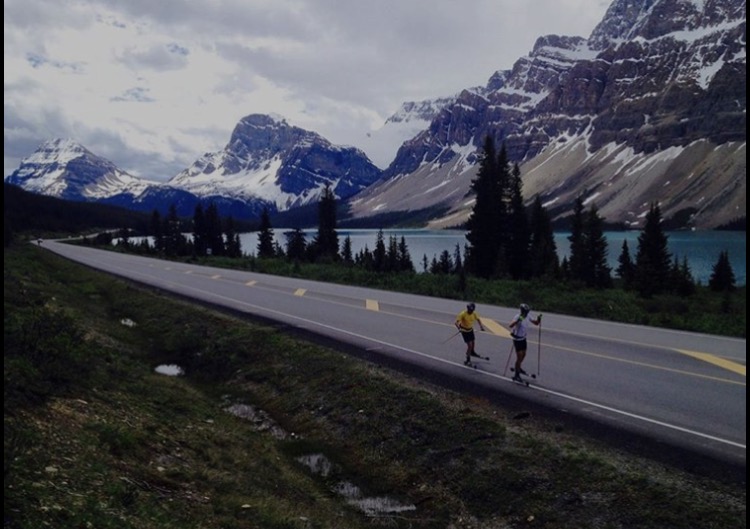
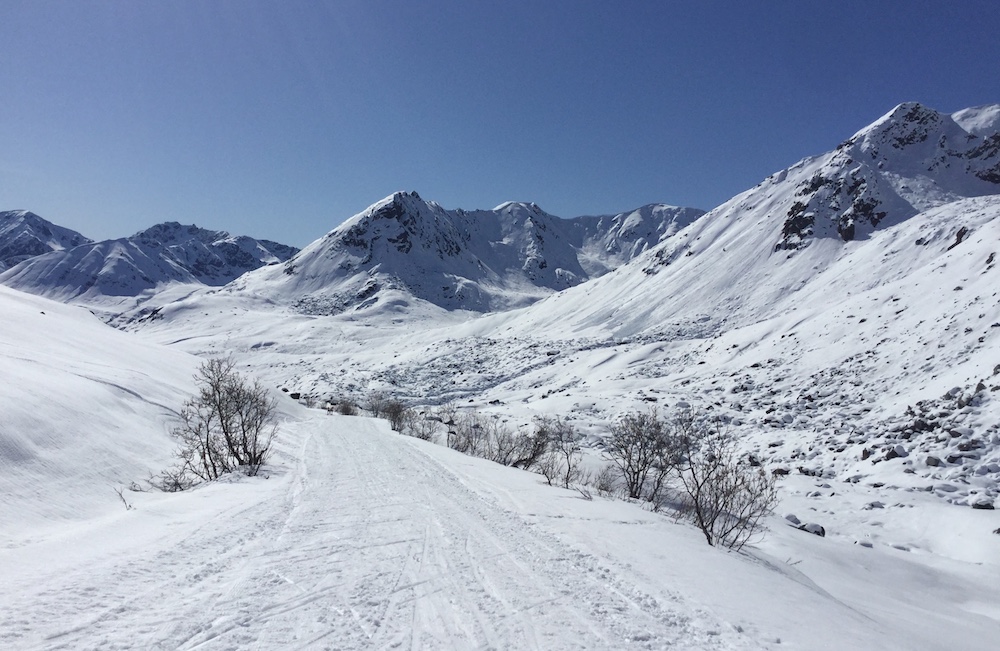
    David Norris (APU) and Luke Jager (University of Utah) (very small skiers on trail in background) ski up Archangel Road, Talkeetna Mountains, Alaska, on May 1, 2019. (photo: Gavin Kentch)
    David Norris (APU) and Luke Jager (University of Utah) (very small skiers on trail in center background) ski up Archangel Road, Talkeetna Mountains, Alaska, on May 1, 2019. (photo: Gavin Kentch)

    If you’re reading this website, you’re probably well aware that the nordic skiing training year begins on May 1. In a sport where most races happen between November and March, and demand of athletes that they repeatedly race to the point of nearly losing consciousness, the preparation for race season had better start a long time before that. As the well-worn, but accurate, saying has it, skiers are made in the summer.

    tretinoin

    Embracing the start of May – either May 1 per se, or a conveniently located Monday a few days on either side of that date – as Skier’s New Year is nothing new. Indeed, here’s Luke Bodensteiner, at the time a struggling Olympic hopeful, in the opening lines of his book Endless Winter: An Olympian’s Journal, describing a training day 26 years ago this week: “Monday, May 3: Salt Lake City, Utah. This is it. Training begins today for the 1994 ski racing season. The focus this year is on the Winter Olympics to be held in Norway in February, but the season won’t end until the final races are over in April. … It isn’t like I ever really stopped training, but now instead of pick-up basketball and soccer, back-country alpine skiing and the odd midnight kayak trip with my roommates, training has to get serious. … My little black wristwatch suddenly rules my day.”

    Or here’s a notably ambitious Cory Smith, in the ur-skier blog “Somewhere Between Obscurity and Oblivion,” writing on April 26, 1999, while acknowledging that he was doing so five days earlier than custom and generic expectation would suggest: “April 26: Yes, I know that it is still April, but I am writing in my May journal. That is because today is the official start of the 1999-2000 training year. To preserve a sense of continuity it is just easier to assume that May is the first month of the year and squeeze a couple extra April days into the month. I hope this doesn’t screw up your crop planting or biological clock or anything. So what did I do to kick off the year? I went for a run. I know, it’s not very exciting, but you have to start somewhere. Besides, I am only supposed to be training 8-12 hours per week this month, so I shouldn’t do too much the first day. But at last I am underway and ready to prepare for an even better winter next year.”

    Or here’s Noah Hoffman, writing on April 30, 2014, in a post entitled, “Start of the Training Year”: “Today was my first scheduled training day of the year. … I started my two hour double pole outdoor roller ski session (Double poling is the only outdoor roller skiing I’m allowed to do right now.) before 7 a.m.” (And here’s the follow-up, from May 1: “I am SORE today! Yesterday was my first real training day of the year. It was all upper body based (with a two hour double pole and strength), and now I can barely lift my arms.”)

    While Instagram has largely replaced blogs (or a book (!)) as the platform of choice, the message has changed far less than the medium: Early May is perpetually a time for new beginnings, new hopes, big plans, and maybe a self-effacing crack about being out of shape or needing to go find one’s rollerskis. Here is a look at how an unscientifically selected group of athletes marked the occasion online, with the only emphasis being on athletes who were posting about new training rather than about new sponsors (corporate sponsors being more characteristic of European skiers than their impoverished American counterparts):

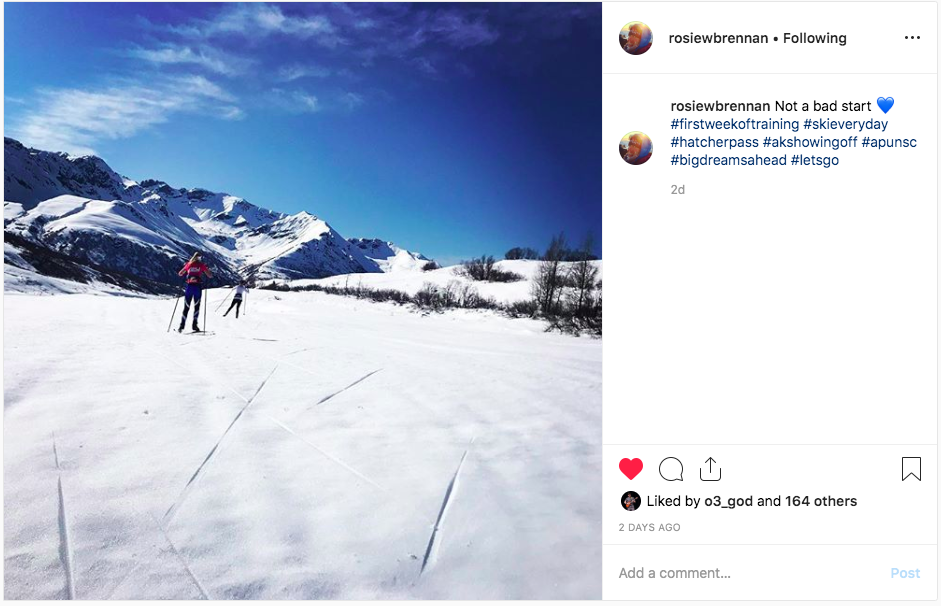
    Rosie Brennan, APU (also Hailey Swirbul and Sadie Bjornsen): Crust skiing in Alaska
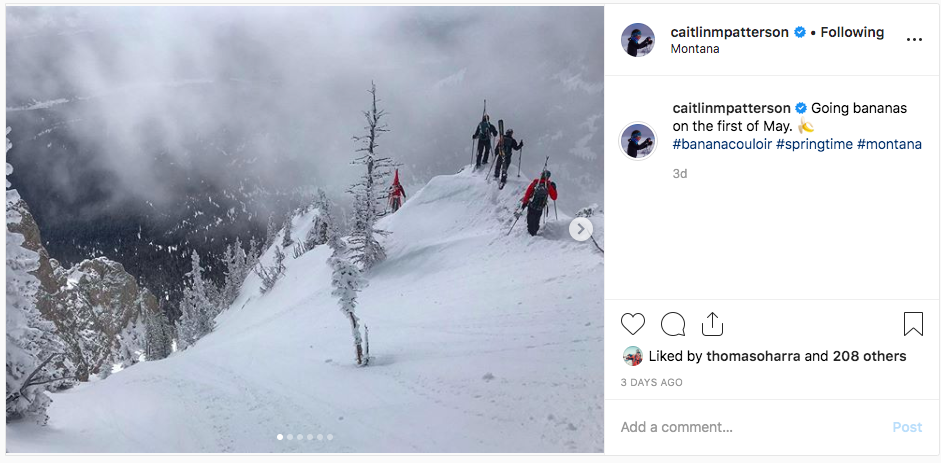
    Caitlin Patterson, Craftsbury Green Racing Project: Backcountry skiing in Montana
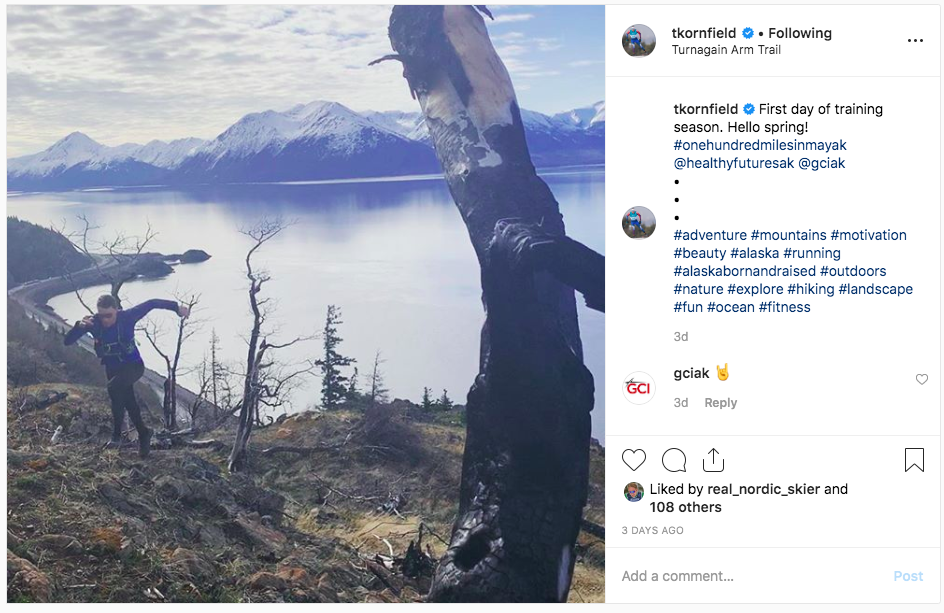
    Tyler Kornfield, APU: Trail running in Alaska
    Caitlin Gregg, Team Gregg/Madshus: Winning a ski race in Iceland

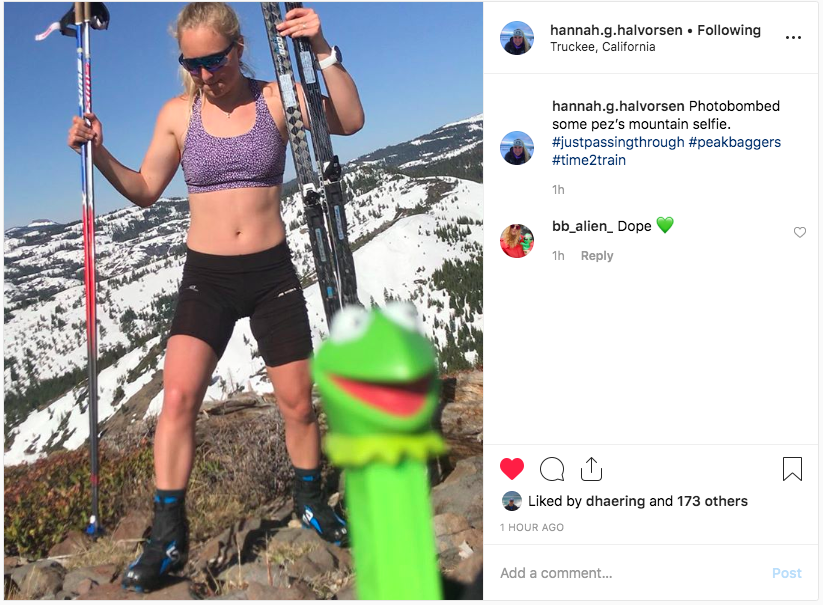
    Hannah Halvorsen, APU: Nordic skiing in California
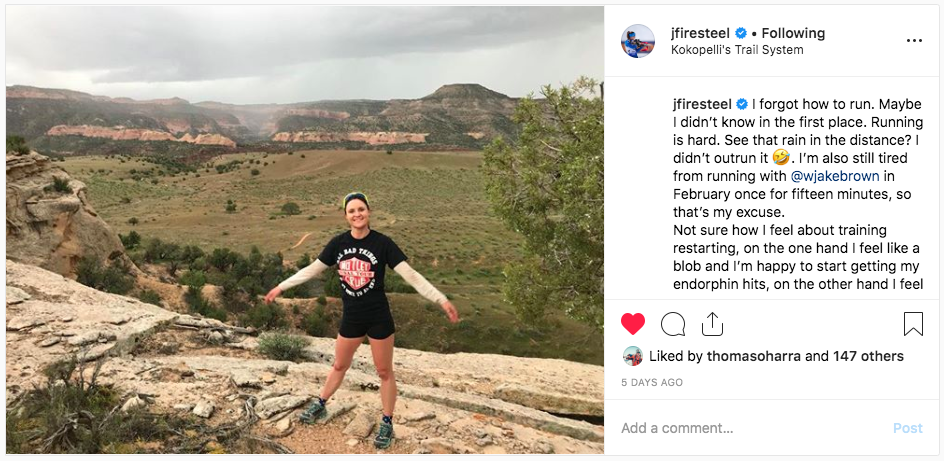
    Joanne Firesteel Reid, U.S. Biathlon A Team: Learning how to run again in Colorado
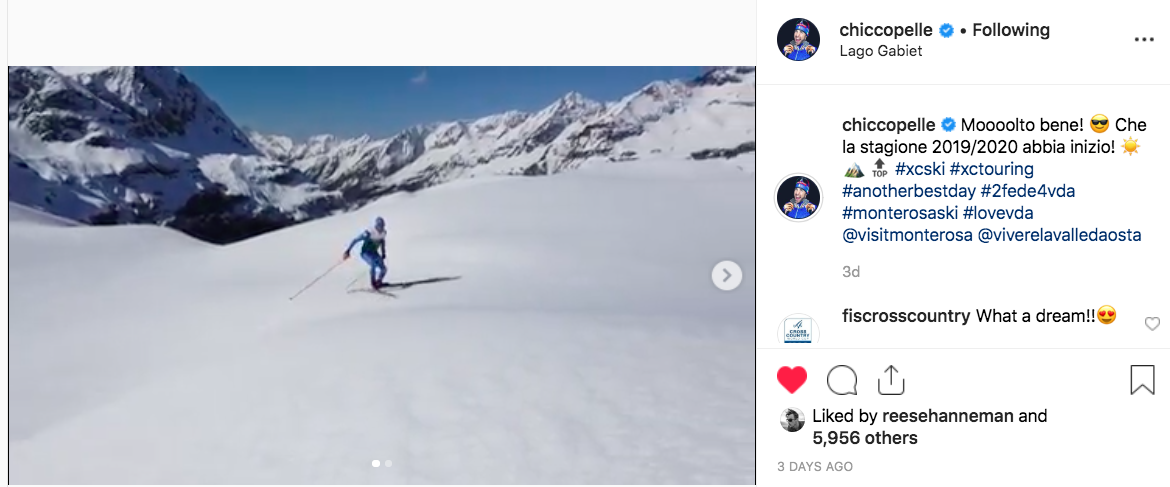
    Federico Pellegrino, Italy: Crust skiing in Italy
    Jonna Sundling, Sweden: Season highlights from 2018/2019

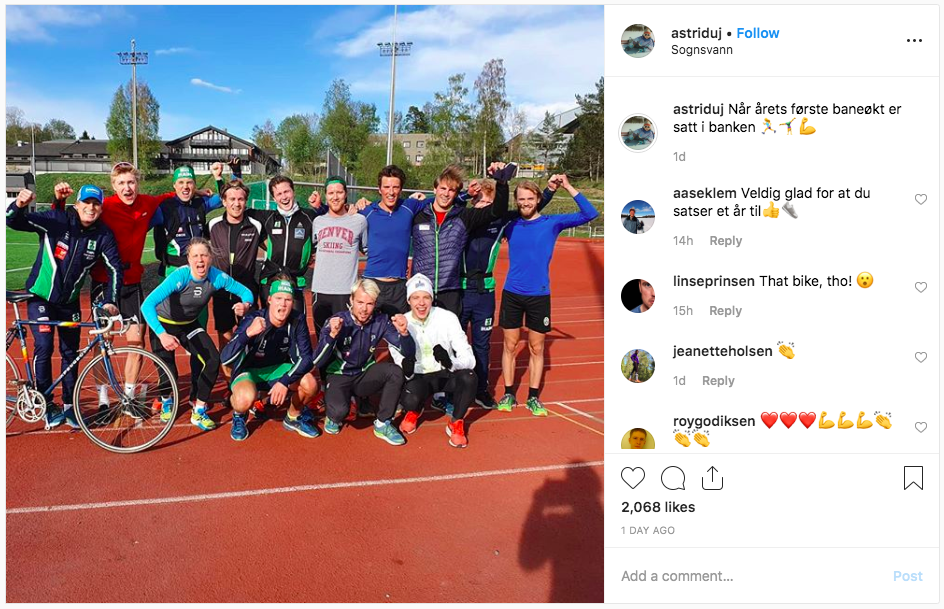
    Astrid Jacobsen, Norway: Logging the year’s first track session
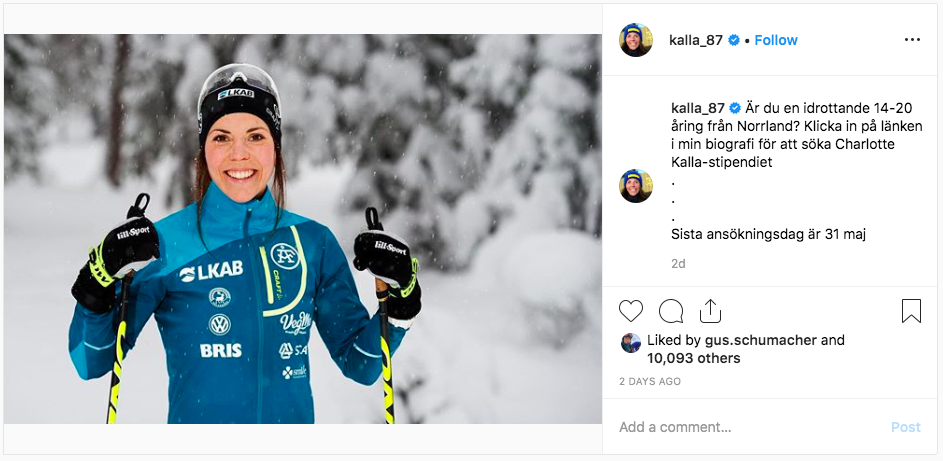
    Charlotte Kalla, Sweden: Announcing her scholarship for local juniors
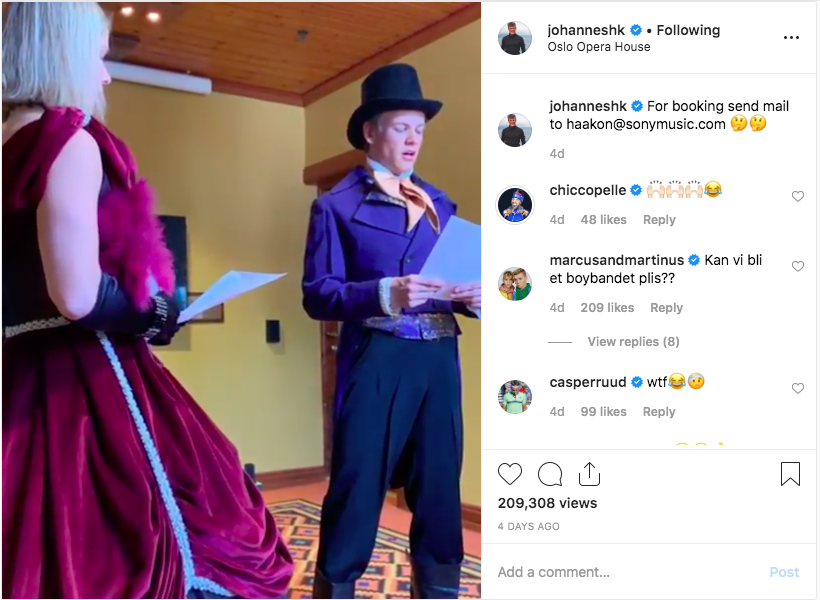
    Johannes Høsflot Klæbo, Norway: Singing light opera
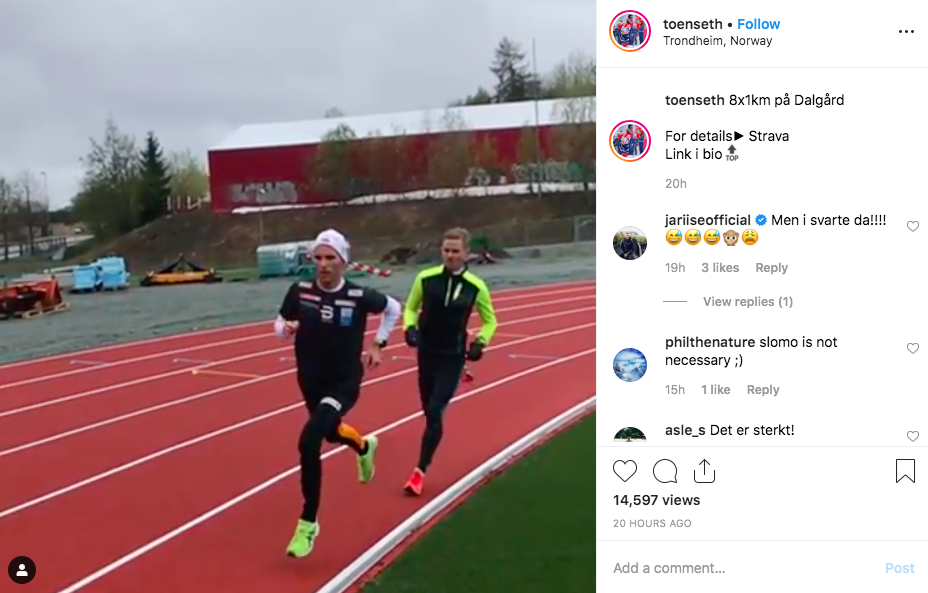
    Didrik Tønseth, Norway: 8 x 1km on the track

    (per Strava link in bio: splits of 3:06, 2:59, 2:56, 2:55, 3:01, 2:59, 2:57, 3:03, with 80-90 seconds recovery. 2:55/km is a 4:42 mile pace, for those of us who measure skiing in km but running in mi. And what were you doing at 8:47 a.m. Saturday morning?)
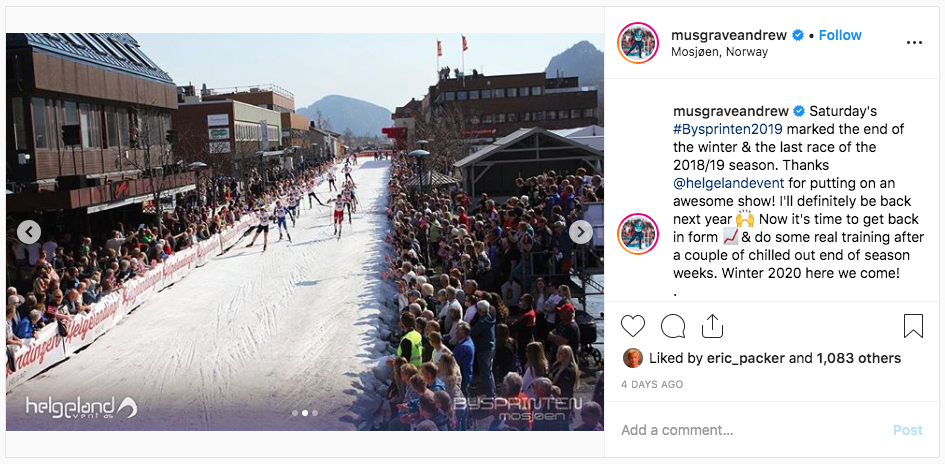
    Andrew Musgrave, Great Britain: City sprint festival in Norway
    … and last but not least:

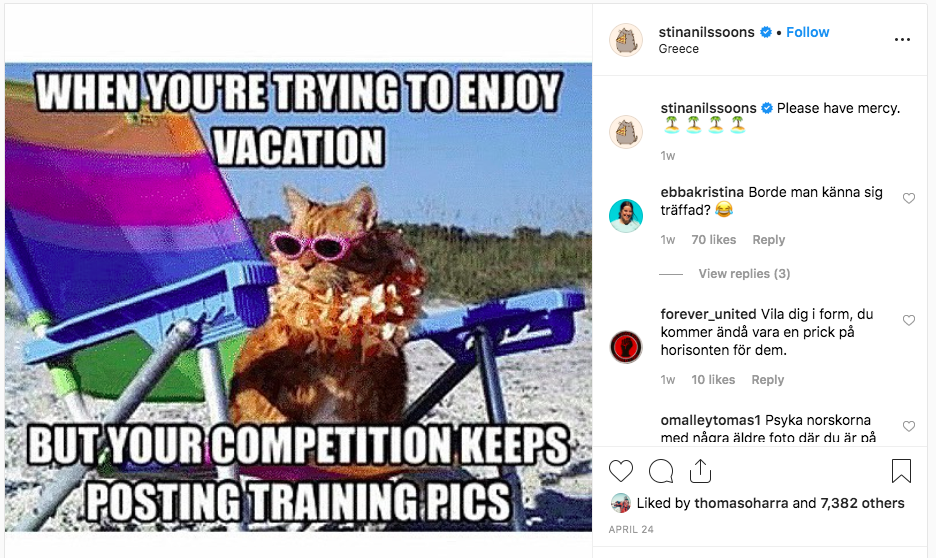
    Honorable mention: Stina Nilsson, Sweden, April 24, sitting on a beach in Greece
  • #fasterskiertakeover: APU’s Eric Packer (@eric_packer) Takes Over FS Instagram

    #fasterskiertakeover: APU’s Eric Packer (@eric_packer) Takes Over FS Instagram


    Right to left: APU’s Tyler Kornfield, SSCV’s Noah Hoffman, APU’s Eric Packer, SSCV Kris Freeman, and DU’s Eivind Romberg Kvaale heading out of the stadium tunnel and toward the finish for the men’s 30-kilometer classic mass start at the 2018 U.S. Cross Country Championships in Anchorage, Alaska. Kornfield won the race, Packer placed second.

    As the title suggest, we are giving away the keys: Eric Packer, long of the Alaska Pacific University Elite Team, will be posting to our instagram account this week.

    If you know Packer, his own IG account can be found here, @eric_packer, you understand he has a fondness for the camera lens.

    He’s a rocket fast skier. But he balances his athletic pursuits by working as an engineer and getting behind the lens. His still photography and videography have captured our attention for years.

    Packer was an obvious choice when it came to sending out a request to take over the @fasterskier Instagram account. Check out the video below. It’s clear, Packer can work both the lens and the editing. If that video does not make you fall in love with the potential of being fit and cruising on skinny skis — then we may not be able to help you.

    On to Instagram with our first #fasterskiertakeover.


  • Green Focuses on Core to Remedy Back and Rev Up for Another Season

    Green Focuses on Core to Remedy Back and Rev Up for Another Season

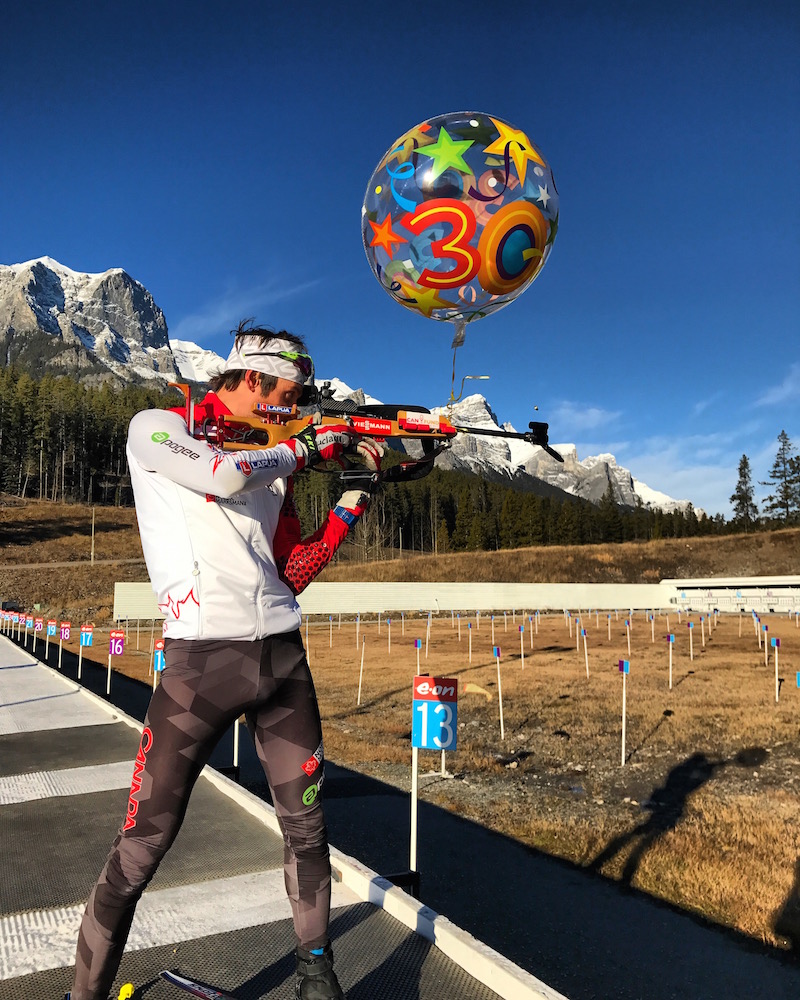
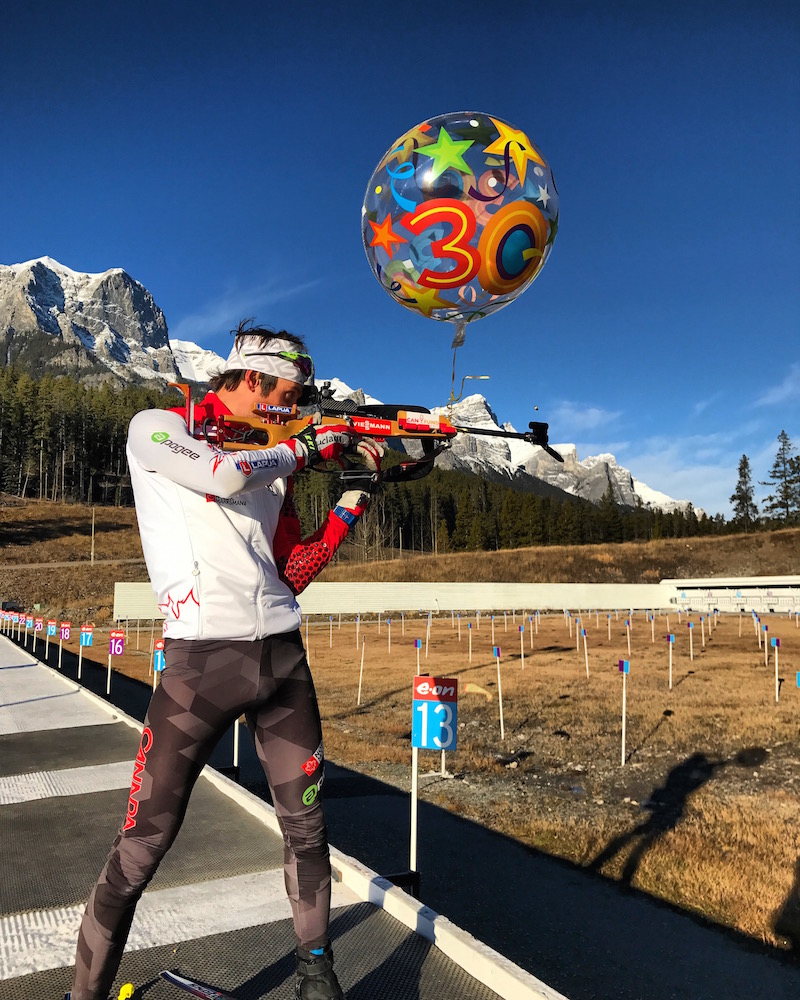
    Brendan Green training in Canmore, Alberta, on his birthday, Nov. 4. (Photo: Rosanna Crawford/Instagram)
    Brendan Green training in Canmore, Alberta, on his birthday last Friday, Nov. 4. (Photo: Rosanna Crawford/Instagram)

    Chiropractor appointments, massage sessions, physical therapy, yoga, you name it and Biathlon Canada ‘Eh!’ team member Brendan Green has probably tried it. After suffering from a herniated disc in his lower back five years ago, undergoing surgery, a re-herniation, and a second surgery, post-surgical treatments had almost become part of Green’s training plan.

    However, the past few winters tested his pain tolerance too far and by the end of last season, Green decided to give both his treatments, and his back, a rest.

    “I was at a bit of a crossroads trying to figure out what to do,” Green, who turned 30 last week, said on the phone from Canmore, Alberta. “So come springtime, I took some time off and gave [my back] time to recover.”

    When Green rejoined Biathlon Canada for training this summer, keeping his back feeling better remained part of the plan. But returning to treatments was not the way Green wanted to go. Instead, deriving inspiration from other athletes and social media, he made a slight change to a another training component: his core.

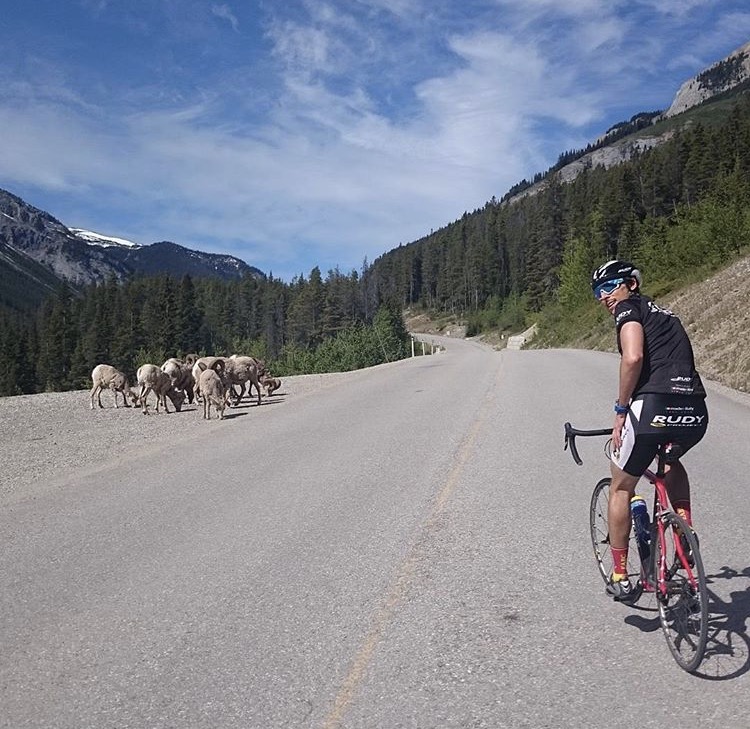
    Biathlon Canada's Brendan Green making friends with some sheep during a road bike in the Rockies this summer. (Photo: Scott Gow)
    Biathlon Canada’s Brendan Green making friends with some sheep during a road bike in the Rockies this summer. (Photo: Scott Gow)

    “I mean, you see [the Norwegian guys] on Instagram and it’s like, holy cow, half that stuff I could probably not even do one rep of,” Green said. “So that got me thinking, if I could really, really strengthen the core, maybe I could strengthen the back.”

    Green began incorporating two extra core circuits a week, each 20-minutes long, relying heavily on physio ball work that targets ski specific motions.

    “My core is exhausted after, but that’s what I want to achieve with this,” Green wrote in an email. “And this summer has actually been one of my better summers in terms of training and not getting sidelined with nerve pain or back problems.”

    Along with more fine-tuned concentration on his core, another novel nuance to Green’s summer training included traveling to the Snow Farm for Biathlon Canada’s first summer training camp in New Zealand.

    “This year, the team decided that one of the goals would be spending more time on snow for the training season,” Green said of the team’s three-week camp in August. “New Zealand is a beautiful country, but also an ideal training set up as well. … [At the Snow Farm] you can eat breakfast and walk out your door and you’re on snow.”

    Earlier in the offseason, Green also attended his men’s team’s second-annual  “ManCamp” in Jasper, Alberta. Green explained that for the past two years, the men’s and women’s national biathlon teams have split training camps in the summer, with the men spending a week in Jasper and the women traveling to Kelowna, British Columbia, for a weeklong “Wine Camp.” 

    “I was at a bit of a crossroads trying to figure out what to do … Come springtime, I took some time off and gave [my back] time to recover… and this summer has actually been one of my better summers in terms of training and not getting sidelined with nerve pain or back problems.” — Brendan Green, Biathlon Canada A (technically, ‘Eh!’) team member

    “Two years ago at World Champs, Nathan [Smith] had a podium, so he had a little more input than normal into some of the early season training camps and Nathan really wanted to go to Jasper, so we thought we’d give it a try,” Green explained. “There’s no shooting range [there], so we leave our rifles at home and we just focus on volume training. There’s lots of good rollerskiing there and it’s fun. Jasper is a good way to start the season.”

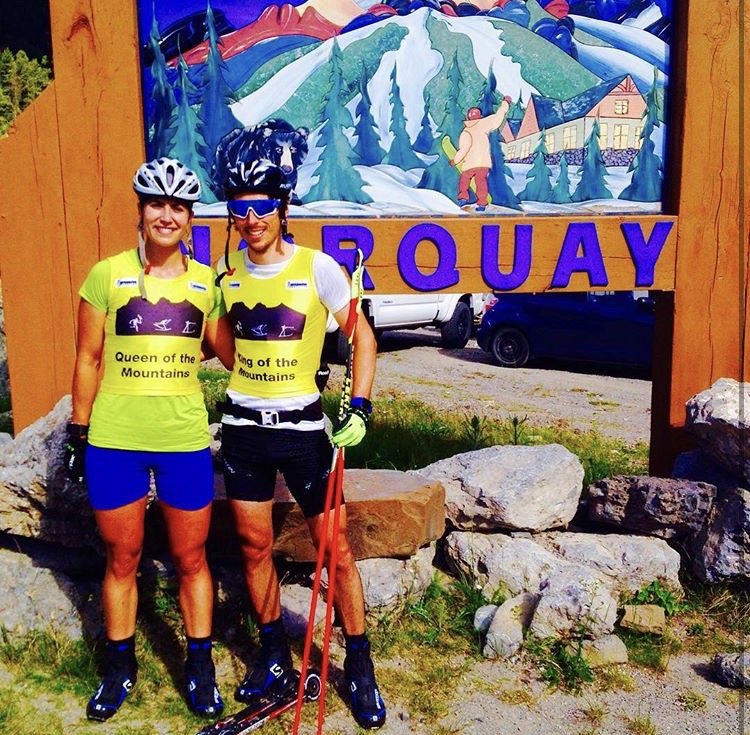
    'King' and 'Queen' of the mountains, Brendan Green (r) with his girlfriend and teammate Rosanna Crawford after Biathlon Canada's summer "testival". (Photo: Matthias Ahrens)
    ‘King’ and ‘Queen’ of the mountains, Brendan Green (r) with his girlfriend and teammate Rosanna Crawford after Biathlon Canada’s summer “testival”. (Photo: Matthias Ahrens)

    Currently competing at Biathlon Canada’s World Cup team-selection trial races at Frozen Thunder in Canmore this week (he is already prequalified for the World Cup), Green is excited about the quickly approaching race season and the prospect of more podiums for his team.

    Last season at 2016 World Championships, he anchored his men’s 4 x 7.5 k relay team to bronze for Canada’s first medal in a team event at a major world championships. On Oct. 28 at Frozen Thunder, Green beat out American Matt Gelso in North America’s first unofficial on-snow race of the season: the 12 k freestyle interval start.

    “In the past, the big names have been a little more solidly consistent — [France’s Martin] Fourcade, [Norway’s Ole Einar] Bjørndalen — but now it seems to be changing up a little more,” he said. “I feel like there’s a lot more podium possibilities or potentials on the horizon. You have to have a good day obviously, but I think it’s within reach.”

    ***

    We asked Green to give our ’17 Questions for 2017′ a go. Here are his responses:

    1. Biggest change in your life in the last five or so months since the ski season ended?

    My longtime teammate Scott Perras retired at the end of last season.  He was a machine and I used to do almost all of my training with him.  It was definitely a change not having him around when I started training again this spring.

    2. Biggest change in your training?

    I’ve taken a different approach to my core strength training, but otherwise no significant changes, just sticking to the plan while trying to put in high quality hours.

    3. Major areas of improvement you’ve seen so far?

    It’s so difficult to say until race season rolls around.  I think I’ve put in good work but we will find out for sure in just a few weeks!

    Biathlon Canada's Brendan Green (r) rollerskiing at his team's “ManCamp" in Jasper, Alberta. (Photo: Matthias Ahrens)
    Biathlon Canada’s Brendan Green (r) rollerskiing at his team’s “ManCamp” in Jasper, Alberta. (Photo: Matthias Ahrens)

    4. Whom you’ve been working closest with this offseason (coaches or training partners)?

    This season the Men’s and Women’s team split off into more separate training groups, so the men’s team has been working closer together as a whole.

    5. Best trip in the last five months (and why)?

    This summer the team did a training camp in New Zealand.  It was a fun change of venue for us and New Zealand has a lot to offer.  It’s a beautiful country.

    6. Favorite cross-training?

    I bought a new mountain bike in the spring which has been fun.  There is lots of great riding around Canmore.

    7. Favorite non-athletic activity or pastime this summer?

    A friend gave me some sourdough starter this spring and since then I’ve been making a few loaves of bread a week.  I’m also always trying to up my espresso-making game.

    8. Song that was your jam this summer?

    I’ve really been digging Trevor Hall lately.

    9. All-time favorite race moment?

    There have been a couple, but winning bronze at last years World Championships was amazing.

    10. First thing you pack in your bag when you leave for Europe?

    Ear plugs. Can’t sleep without them!

    11. Venue/event you’re most excited to visit this season?

    Our World Cup in Antholz, Italy, is always my my favourite stop on tour, but I think the World Championships in Hochfillzen, Austria, will also be exciting.

    12. Who will win the men’s and women’s World Cup titles this year?

    Martin Fourcade and Kaisa Makarainen

    13. Biggest sacrifice you feel you’ve made choosing this career path?

    I live a long ways from where I grew up, so for me definitely time spent with family.  And education.

    14. If you could change one thing about your sport, what would it be?

    Doping.

    15. What did you have for breakfast this morning?

    Sourdough pancakes.

    16. In 5 years, I’ll be ____?

    Hopefully still able to call Canmore home.

    17. In 50 years, I’ll be ____?

    In 50 years I’ll be 80, so in all likelihood there is a pretty good chance I’ll be dead?

  • Wednesday Workout: Crust Cruising with CU’s Petter Reistad

    Wednesday Workout: Crust Cruising with CU’s Petter Reistad

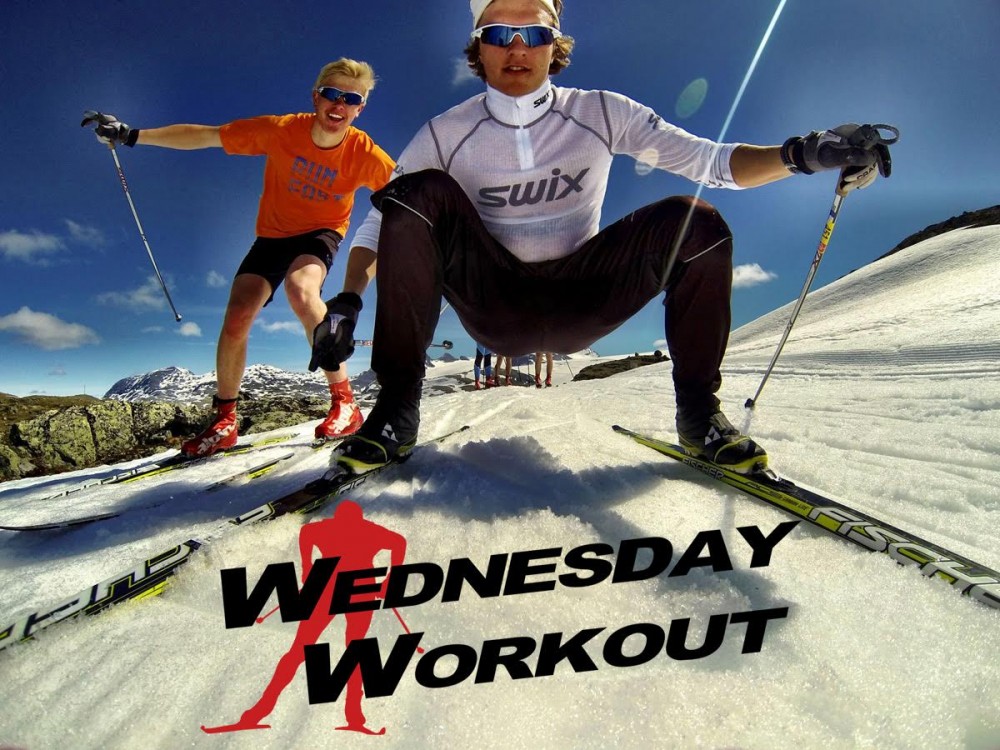
    Petter Reistad (front), who recently finished his freshman season at the University of Colorado-Boulder, crust cruising in 2013 in Sognefjellet, Norway. (Courtesy photo)
    Petter Reistad (front), who recently finished his freshman season at the University of Colorado-Boulder, crust cruising in 2013 in Sognefjellet, Norway. (Courtesy photo)

    Itching for an excuse to say ‘Sayonara’ to scheduled skiing and ‘Hello’ to more impromptu spring-skiing experiences? Look no further as this week, FasterSkier provides an ideal Wednesday Workout for the nordic wanderer, courtesy of Petter Reistad of the University of Colorado-Boulder (CU).

    ***

    Sunscreen, sunglasses and snow. When it comes to spring workouts, it’s not just the freeing feeling of skiing around in Ray-Bans and beach-like weather that makes crust skiing an essential workout for this time of year, it’s also the satisfaction that spontaneous skiing provides after a season of structured ski training.

    Petter Reistad, coming off his freshman season a CU and an All-American in both races at this year’s NCAA Skiing Championships, says the best training plan for the spring is no plan at all.

    “What I like about spring is that you can do what you want, you don’t have to follow a plan anymore,” said Reistad, a 21-year-old from Bærum, Norway, on the phone. “It’s really nice to, instead of following a trail for a 15 k loop, to just go and aim for a mountain. You can ski up [to the top] and then ski [back] downhill where ever you like.” 

    For those lucky enough to have mountains and snow nearby, Reistad’s spring training regimen proposes a simple schedule: Pick a peak and send it.

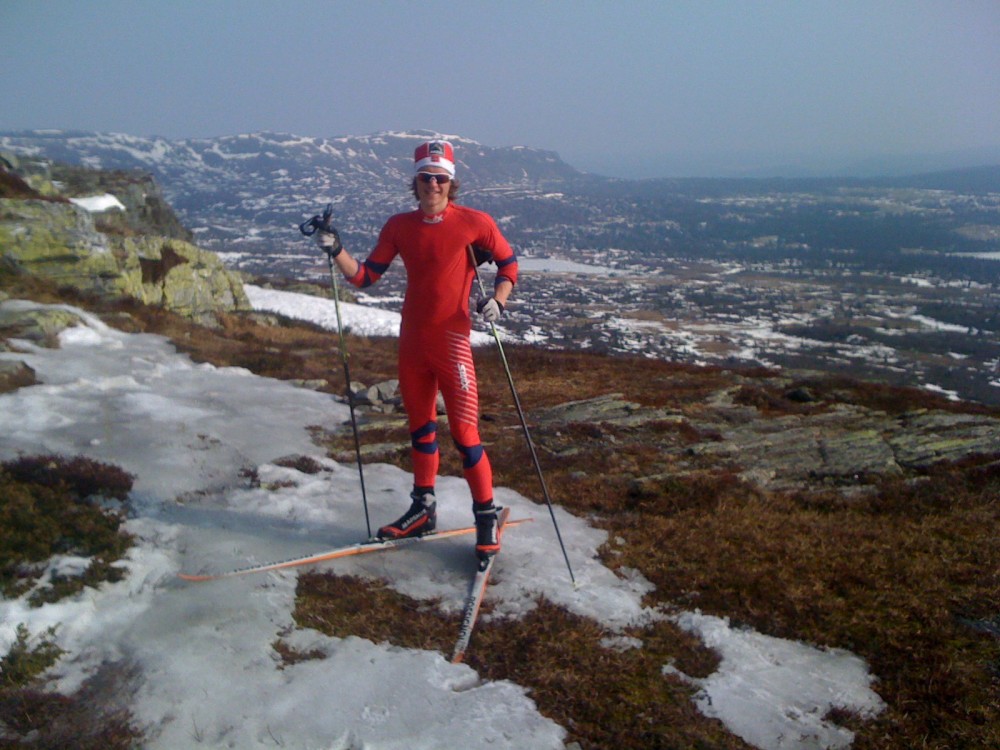
    Petter Reistad (r), taking advantage of the last bit of snow during a crust cruising trip in Skeikampen, Norway back in 2011. (Courtesy Photo)
    Petter Reistad taking advantage of the last bit of snow during a crust-cruising trip in Skeikampen, Norway, back in 2011. (Courtesy photo)

    “Going for a trip like that is a little bit more of an expedition, than just a normal workout,” Reistad said. “But nothing is like being free on skis and the spring crust gives you an awesome opportunity to do so.”

    In terms of snow crust, the spring season also provides the cream of the crop. For Reistad, spending a few spring workouts trekking mountain tops on skis is not only about the novelty of blazing trails where none were before, but also experiencing some of the season’s premium crust-cruising moments.

    “The reason why [this workout] is also a good thing to do in the spring is that during the rest of the season, you have more snow and different cold kinds of snow,” he said. “But in the spring, colder temperatures up in the mountains [combined with] the snow heating up during the day, forms this really nice crust.”

    While Reistad has done plenty of crust skiing in Norway, this year will mark his first adventure cruise on Colorado snow crust. Before making moves for the mountains, however, he plans to first catch up on schoolwork. Predicting that snow will stick around in the Rockies until mid-May, he and a few other CU teammates, including fellow Norwegian, Mads Strøm, who won both men’s nordic races at this year’s NCAA Championships, will set out for Crested Butte, Colo. 

    “It has been a really good year,” Reistad said regarding his first year of college ski racing in the U.S. “I’ve been second in some races this year and I must say, it’s really good to have [Strøm] on the team. Having good teammates is important because you can both train with them and compete even harder with them … it is more fun when you give them something to think about during the race … and I would really like to beat [Strøm] once next season. That’s a goal for next year.”

    Reistad will have that chance next ski season, during his sophomore year and Strøm’s senior year at CU. 

    The Workout

    – Start sometime early in the morning, 7 a.m. seems a solid choice, according to Reistad

    – Spend an undetermined amount of time skiing snow crust

    – Mid-workout, stick a bottle of soda in the snow for later

    – Spend more undetermined amounts of time skiing snow crust

    – Stop and enjoy a cold soda (if you can recall its original location)

    – Re-apply sunscreen and spend a little more time crust cruising before the sun makes the snow too soft to ski on

    Total Workout Time: Depends on when you start and how strong the sunshine is, but Reistad estimates 3-4 hours should do the trick

    Reistad’s Crust-Cruising Checklist

    In order to find freedom within the spring crust cruising workout, Reistad recommends shedding training schedules and sticking to the bare minimum. A few items he suggests as indispensable to a spring ski trip are listed below, followed by the workout itself. 

    1. Sunglasses and Sunscreen: Carrying cases of clothing is less of a priority for the CU skier when it comes to cruising snow crust. “I’m excited because you don’t need that much clothes as in the regular season because it’s just heating up so amazing in the spring,” Reistad said. “So sunglasses and sunscreen are the most important things [to pack] because you get so sunburnt.”
    2. Oranges and Chocolate: Not your average culinary combination, Reistad argues that the mixture of sweet and tangy makes for the most desired treat during a spring trip to the mountains. “In Norway, a very typical thing to eat around this time of year — Easter and spring — is oranges,” he said. “So I will pack some chocolate and some oranges. That’s just a great combo.”
    3. A Bottle of Coke: Share a soda on snow crust. “Nothing is like a cold Coke on a trip like that,” Reistad said. “Make sure to make it cold in the snow in the middle of the trip before drinking it.” 
    4. A Camera Phone: For any cross-country skier looking to make the crust-cruise workout complete, Reistad also says shameless self-promotions on social media make the workout all the more worthwhile. “You should probably bring your phone, too, to make sure to Instagram the whole thing after,” he said. “A trip gets so much better when you can show it off to everyone.” 

    (Ed. note: FasterSkier recommends having a phone with you at all times during workouts in the event of an emergency.)

  • Barbro Kvåle, 22, Breaks Through in Beitostølen Classic Sprint

    Barbro Kvåle, 22, Breaks Through in Beitostølen Classic Sprint

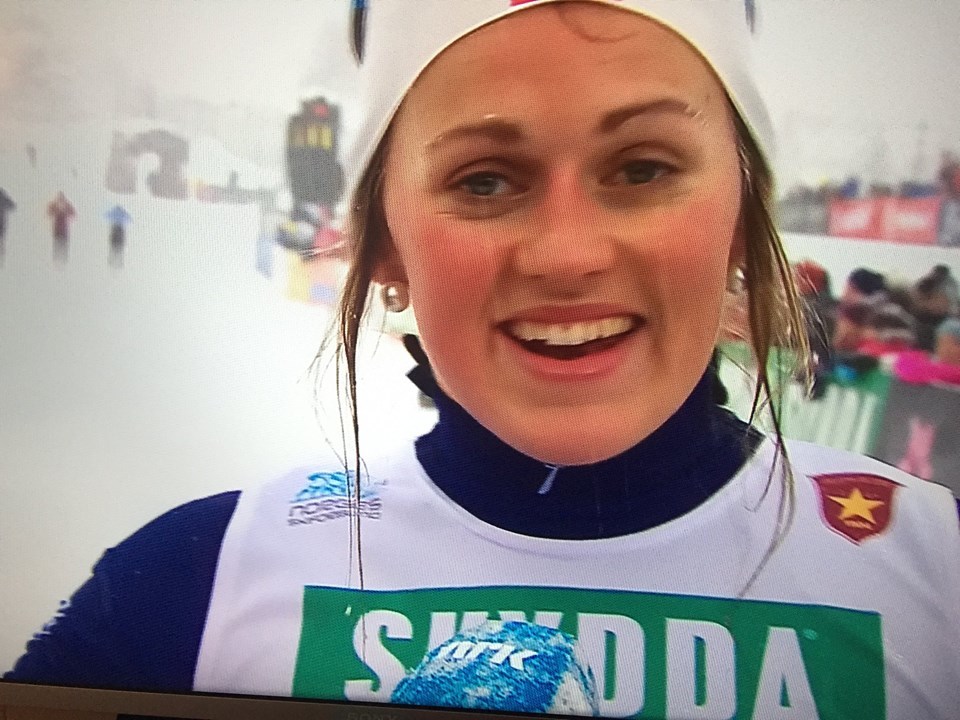
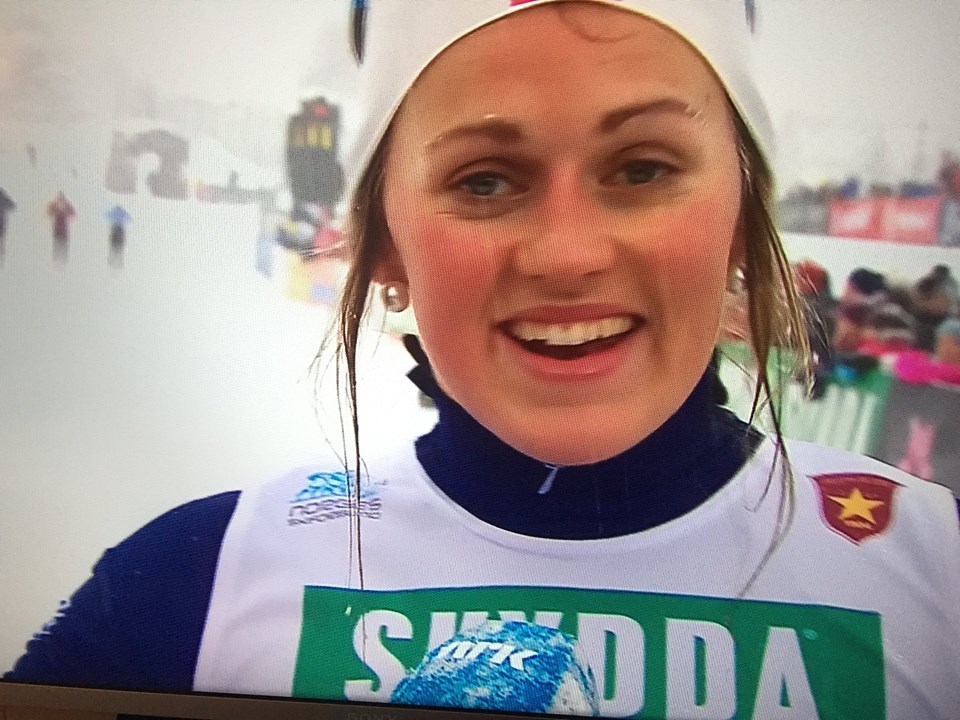
    A stunned Barbro Kvåle after winning Sunday's FIS classic sprint by 0.3 seconds in Beitostølen, Norway.  (Photo: Photo NTG Lillehammer)
    A stunned Barbro Kvåle after winning Sunday’s FIS classic sprint by 0.3 seconds in Beitostølen, Norway. (Photo: Photo NTG Lillehammer)

    Barbro Kvåle, a 22-year-old Norwegian junior world champion in ski orienteering, joined the ranks of national-team stars Therese Johaug and Marit Bjørgen, who won the Beitostølen distances races this weekend. On Sunday, Kvåle, now on Norway’s U23 cross-country team, came from behind to win the women’s 1.2-kilometer classic sprint by three-tenths of a second.

    With meters to go in the final, she passed Norway’s Kari Vikhagen Gjeitnes to seize the early season International Ski Federation (FIS) victory in 2:56.8. Gjeitnes, 29, took second and Kvåle’s best friend Kathrine Harsem was third just 0.2 seconds later.

    “She’s a really laid-back personality,” Harsem said of Kvåle to NRK. “She’s a really good friend, and we can talk about everything, or nothing at all. As a skier, she’s just amazing on the mental level.”

    Norwegian Olympic gold-and-silver medalist Ingvild Flugstad Østberg finished fourth, 0.9 seconds after Kvåle. A previous winner of Beitostølen’s classic sprint (in treacherous conditions), Slovenia’s World Cup sprinter Katja Visnar placed fifth (+4.9), 1 second ahead of Germany’s Victoria Carl.

    Kvåle, who qualified 15th out of 42 women — nearly 6 seconds behind Visnar as the qualifier winner (in  2:48.91) — had never been in a sprint final before, and certainly not with an Olympic champion or World Cup favorite.

    “This was insanely fun. I just wanted to go for it,” Kvåle told NRK. “I know I have a strong sprint finish, but I never imagined that I would actually win.”

    When asked if she could describe the feeling, she simply said, “No.”

    “I know I have a strong sprint finish, but I never imagined that I would actually win.” — Barbro Kvåle, 22-year-old Norwegian U23 team member, after winning Sunday’s classic sprint in Beitostølen

    In her last season as a U23, her larger goals this season involve U23 World Championships in Kazakhstan.

    A member of Norway’s rookie team, she said she’s always playing catchup with the veterans.

    “In all the hard sessions, I’ve gotten beaten,” she told NRK. “But I have come closer and closer in autumn..”

    Asked if this was her biggest win so far, she said: “Yes! Are you crazy?”

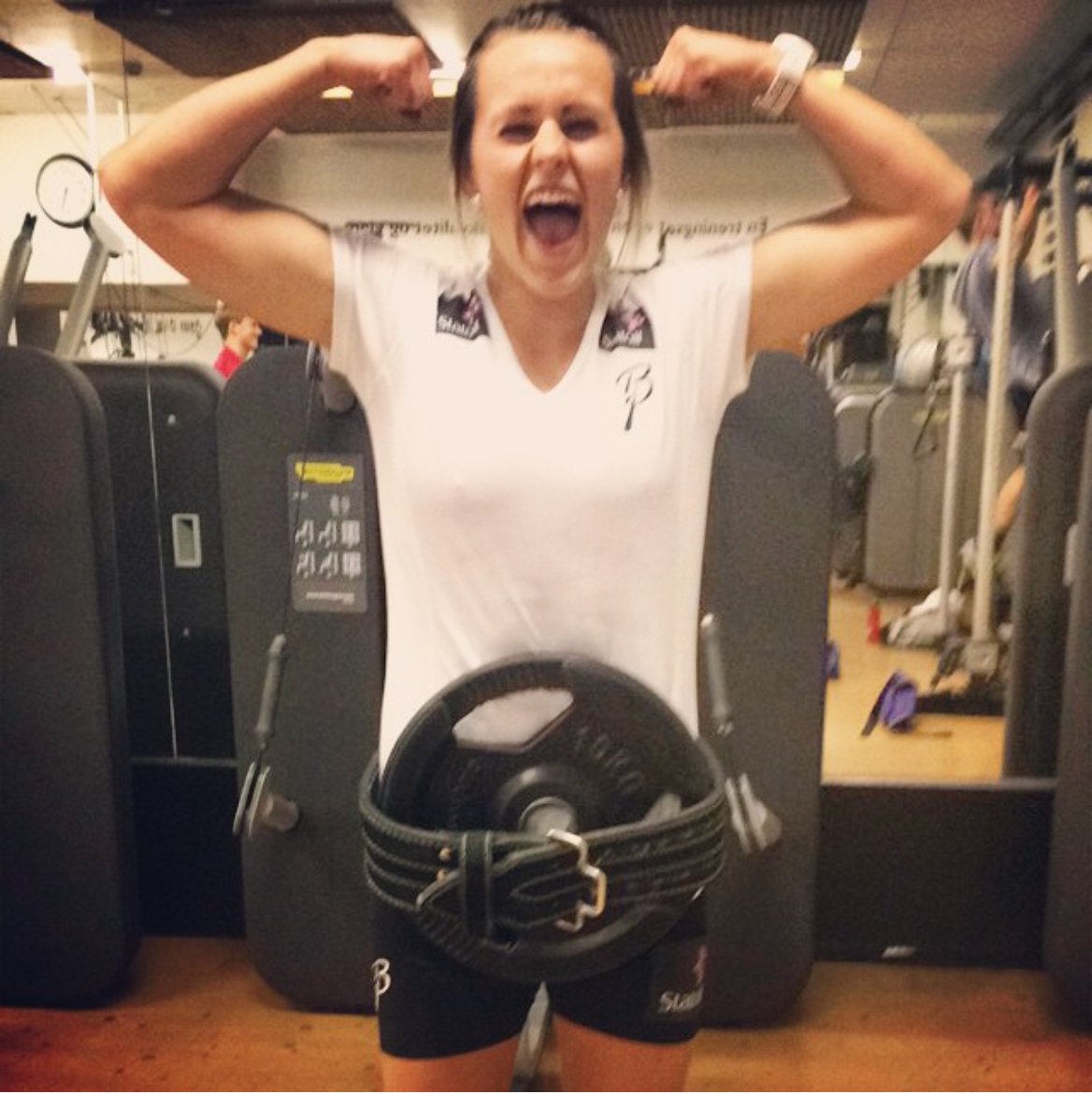
    One of Barbro Kvåle's Instagram selfies from last week. (Photo: Instagram/barbrokvale)
    One of Barbro Kvåle’s Instagram selfies from last week. (Photo: Instagram/barbrokvale)

    Harsem said Kvåle likes putting herself out there on social media.

    “She posts a lot of self-promoting stuff on Instagram and Twitter, which people in general thinks is really stupid. But I kind of like it, because she dares to be herself,” Harsem said. “She’s honest and loyal, not your typical girly-girl. She’s a bit tomboy-ish, and I like that.”

    Østberg, who dominated all the heats and looked like she had the victory in the bag leading the final six women into the stadium, was outsprinted on the final meters. She was less than a second behind Kvåle, but ended up fourth and couldn’t disguise her disappointment.

    “I have to admit that I’m a bit disappointed,” Østberg said. ‘The three other girls were stronger than me. I guess I’m not meant to be on the podium at Beitostølen.”

    She placed fifth in Saturday’s 10 k freestyle — her first FIS race of the season.

    “I haven’t usually been in perfect sprint shape early in the season, so I have to look forward,” Østberg added. “There are new races next week. I will have to try to dig deeper and find that little extra as the season progresses.”

    Results | Complete results