From the FasterSkier archive — posts syndicated from athletes’ and coaches’ own blogs between 2004 and 2012, kept online as published. Current coverage is at fasterskier.com.

Tag: Intermountain

  • The Pros & Cons of League-wide Wax Protocols: Western Clubs Consider the Evolution and Impact (Part 2)

    The Pros & Cons of League-wide Wax Protocols: Western Clubs Consider the Evolution and Impact (Part 2)

    Here are links to earlier installments in this five-part series. The first two parts (part one; part two) spoke to the perspectives of high level wax technicians and industry representatives, while part three focused on the Wisconsin Nordic Ski League. To read the beginning of this article on the wax protocols of Western clubs, part four, click here. 

    Leveling the Playing Field

    In regard to the question of whether the policy widens the gap in equity because of equipment differences, coaches expressed that the opposite has been observed.

    “It probably has a little bit to do with what level we’re talking about,” said Teague. “But certainly, club or high school wise, I’ve only seen it take down one of the barriers of entry to our sport, and decrease costs for both programs and individuals.”

    Speaking on behalf of RMN, Teague added that this removal of barriers has opened up opportunities for smaller clubs, and the support expressed among coaches speaks for itself. 

    “My opinion is – of everybody that’s gone to [a wax protocol], no one has said: ‘That’s a mistake. We’re gonna go back,’” said Teague. “Yes, there is some advantage that can be gained for an athlete or a program that has the capacity to go and invest in a quiver of skis to try and overcome the playing field, but more often than not, what we’re seeing is that small programs, or athletes without a program at all, [such as one of my former skiers who lived on Colorado’s Grand Mesa in the Southwest corner of the state], all of a sudden can be competitive.” 
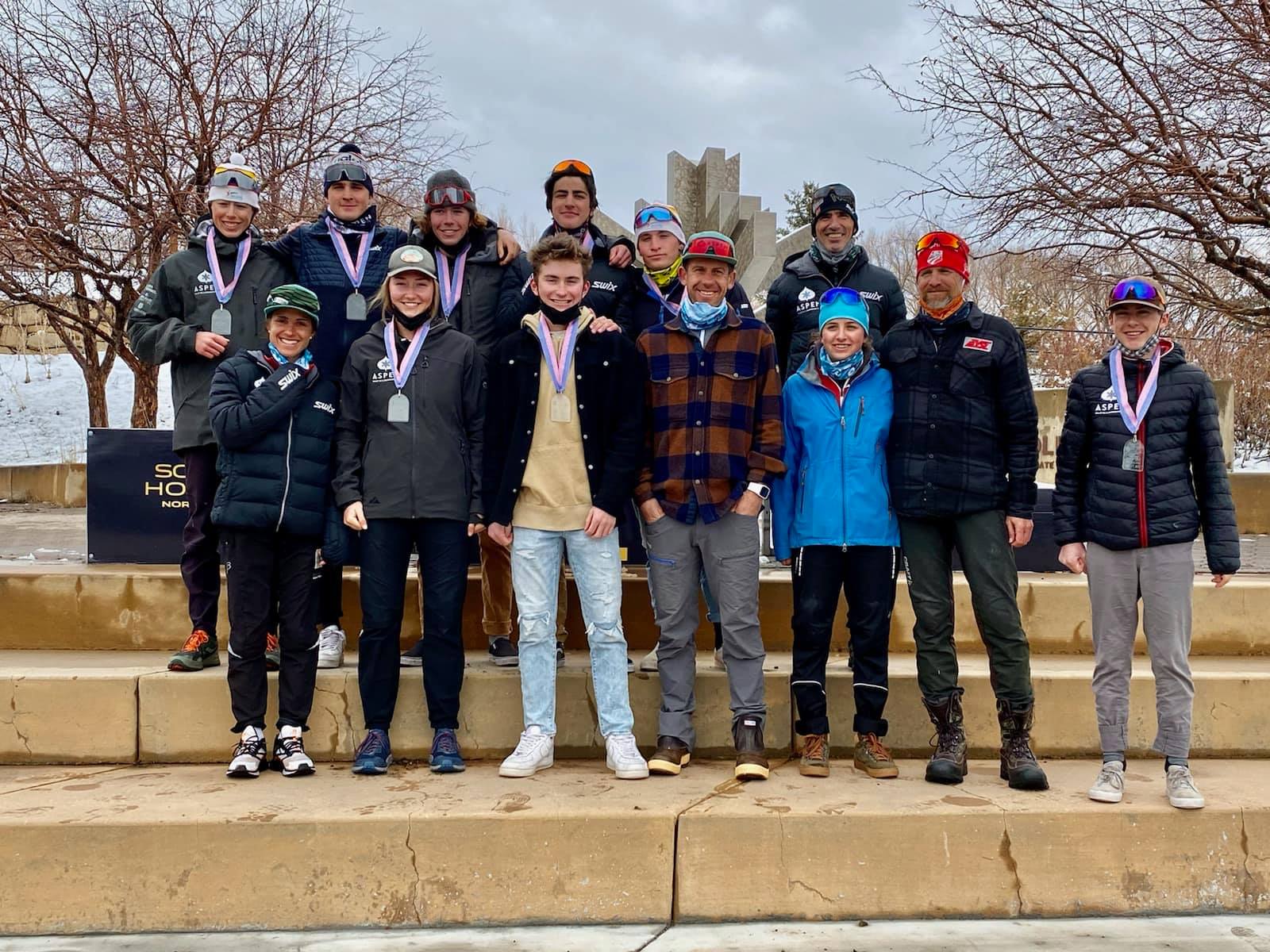
    AVSC nordic athletes compete at the Western Regional Championships, held in Soldier Hollow, UT in place of the 2021 Junior National Championships due to the COVID-19 pandemic. (Photo: Aspen Valley Ski and Snowboard Club)

    This phenomenon could be attributed to the aforementioned power previously held by larger clubs; when glide testing is no longer a priority, perhaps smaller clubs can finally find a seat at the table. 

    “We have 14 clubs in the division,” Kapala said of Intermountain. “Last year, 13 of them placed a kid on the Junior National team. Prior to that, we were running more like seven or eight [clubs]. So what was going on was Sun Valley, Bozeman, Jackson, and to some extent Park City – the bigger clubs – were rolling in, and to put it bluntly, we were steamrolling the small programs. It wasn’t a fair fight. And fortunately, the larger clubs in our division say, ‘Clearly, that’s not good for skiing.’” 

    Kapala spoke specifically of an athlete who hailed from Whitefish, MT, which is “way at the far flung edges of the realm. They’ve gotta drive forever to get to races.”

    This athlete raced for the Glacier Nordic Club under the guidance of head coach Jennie Bender, who he described as “a huge asset and we’re so fortunate to have her come to our division.” Clarifying that Bender is as skilled and capable as any other coach on a wax bench, he acknowledged that she was largely on her own at races with roughly 12 kids. This ratio is not equivalent to the SVSEF team which might have 35 kids with five to seven coaches at a JNQ. 

    “It’s just not a fair fight.”
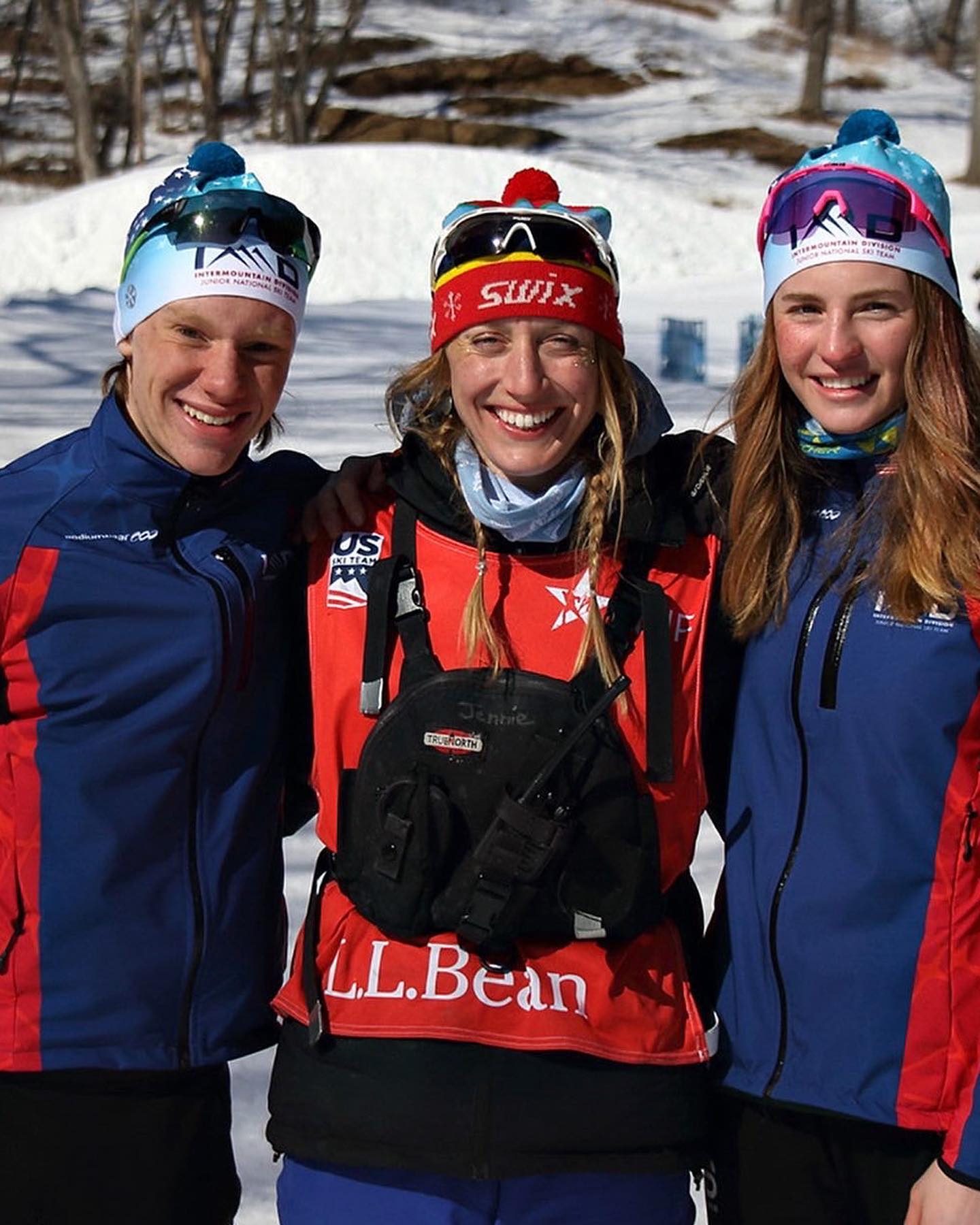
    Glacier Nordic Club head coach Jennie Bender with the two athletes, Jacob Hansen and Maeve Ingelfinger, who earned spots on the 2022 Intermountain Division team at Junior Nationals. (Photo: Glacier Nordic Club)

    Despite less support on the waxing front, the athlete grew into the season and was regularly finishing between fourth and sixth at JNQs, which earned her a spot on the IMD team at Junior Nationals. 

    “So what happens is: we go to JNs, we leverage all of the Intermountain resources on behalf of her and the other kids and what does she do? She’s on the podium. And so our policy afforded her the opportunity to at least be in the conversation to make sure she assuredly got through… she was good enough in that setting of fair and equitable ski service, that – what else was going on? She believed. ‘Oh wow. I’m actually not that far away.’”

    Once this seed was planted, the athlete thrived. In Kapala’s mind, it’s an intangible, but nonetheless vital, component of the development process for that age group.

    “None of this stuff happens in a vacuum, and athlete development is this really, really – I don’t want to say funky – but really nuanced process… This girl has gone from we didn’t even know who she was, to one of the best U16 girls in the country. And I contend that our wax policy, while it wasn’t more important than Jennie’s great coaching, certainly didn’t hurt. She was on a level playing field as level as we can make it in those formative JNQs where she started believing [in herself]. And that’s the whole game.”

    Teague also acknowledged the apples-to-oranges capacity of programs, relating it to his experience with the Australian national team, whom he coached and supported through two World Championships surrounding the 2014 Olympics in Sochi. While Australia now typically partners with the U.S. team on the World Cup for waxing, the capacity of this small program pales in comparison to a robust and well-funded nation like Norway, which has been supported by technician Knut Nystad who was quoted in the first two parts of this series. While Teague emphasized his respect for Nystad’s expertise both as a coach and tech, he felt the understanding club level coaches have of the specific challenges of their leagues might offer a different lens with which to consider these issues. 

    “Knut was my coach [when I was racing collegiately at Denver University], and worked on the Norwegian wax team when I was coaching in Australia. What they were able to do and the testing they were able to do, versus what I could do with Australia – it’s not even comparable. And sometimes we could be competitive with them, but often, they were able to test significantly more. Now, would a waxing protocol make it fair in that situation? Absolutely not. Because they could have every different grind, and a grinder going, and along the continuum.

    “But at the high school level, an AVSC can send four coaches over early to test [glide] wax and at least apply wax on site, rather than make a guess. Whereas [a small program like the Colorado Rocky Mountain School (for whom the author is a former head coach)], or even Battle Mountain where there’s two coaches and 70 or 80 kids, there’s no way they could do that.” 

    An Arms Race for Skis and Grinds

    But what about the arms race for equipment that was cited as a concern in the first two installments of this series? Have these policies induced higher demand to increase the size of an athlete’s fleet of skis? Across the board, the coaches with whom this topic was discussed expressed that this was not a trend that they had observed in the years that a policy has been enforced.
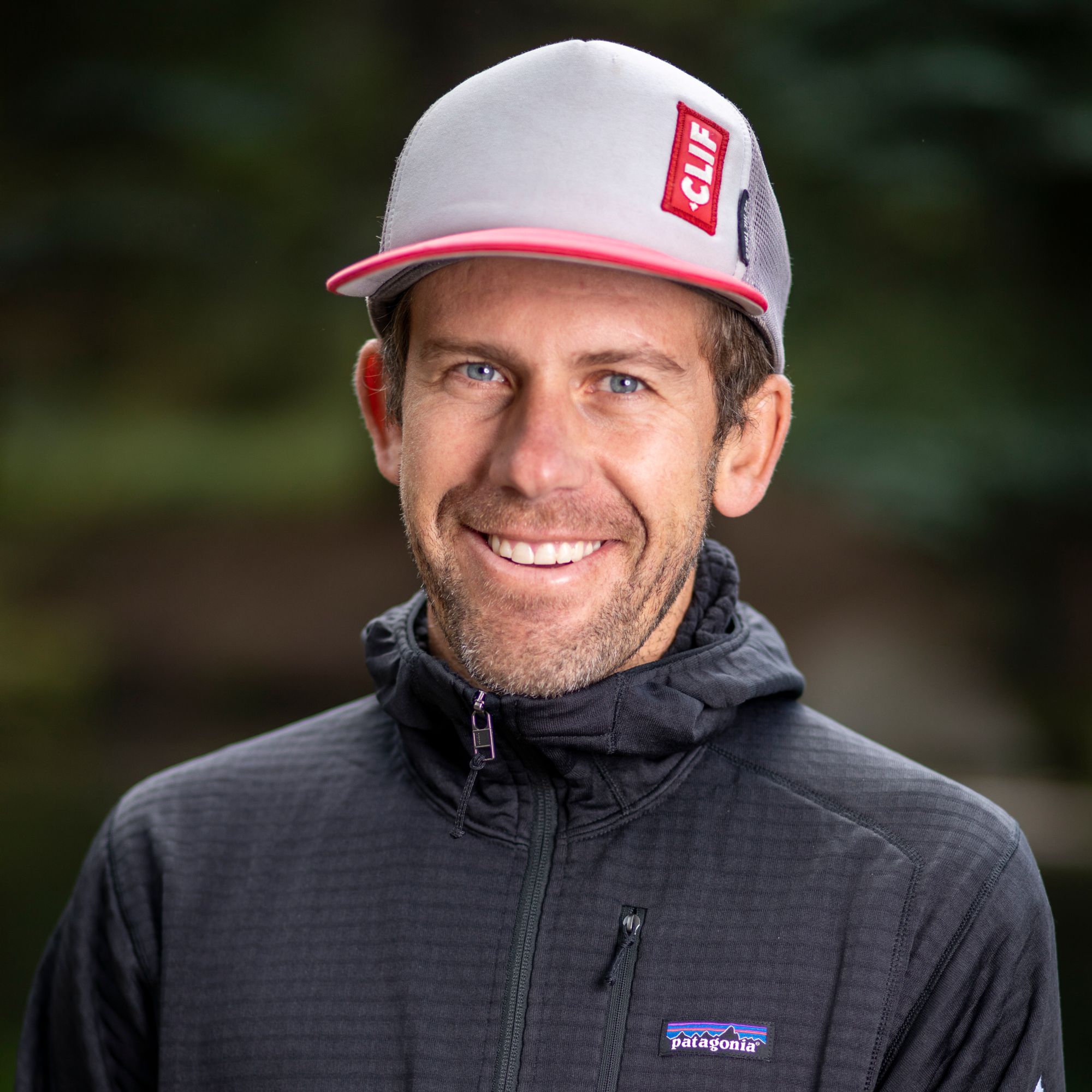
    Aspen Valley Ski and Snowboard Club head coach August Teague provides insights into the evolution and impact of the Rocky Mountain Nordic Wax Protocol. (Photo: teamavsc.org / Matt Power)

    “There are probably exceptions, just like every rule,” said Teague. “But we really aren’t seeing people going out and investing in 30 pairs of skis. We’re still seeing athletes start off with a pair of skate and a pair of classic, and slowly expand upon that fleet.”

    Leonard explained that PNSA coaches are not seeing an increase in ski purchasing either, nor does the level of competition at divisional events necessarily warrant that level of specificity in an athletes ski fleet. 

    “The field density is such at our [JNQs] that the wax is not the deciding factor so much,” Leonard explained regarding clubs in the Pacific Northwest. “And having multiple pairs of skis – most of the kids, I’d say, have one pair of race skate and one pair of race classic and some of the higher-end kids who have been at it a little longer or are a little more involved or or whatever – have a little more means – maybe have a couple pairs of skis that they’re deciding between. But you know, they’re growing kids too, and skis are expensive, so a lot of times it’s sort of like, it’s one pair that fits and one pair that’s a little bit softer from when they were a little smaller a year or two ago. So it’s not such a huge factor.”

    Shift in Focus Toward Structure and Ski Selection

    While programs aren’t seeing athletes rapidly investing in equipment, coaches did observe a shift in focus toward the application and testing of structure on race day.

    “My test fleet, instead of testing glide and structure, is now focused pretty much just on structure at, say, an RMN [race weekend],” Teague explained. “When I show up at Senior Nationals, then I’ve got to be able to test glide and structure and everything else as it unfolds. 

    “So structure has become more and more important. That probably, again, depends a little bit on the level. If we’re talking about high school kids, there are high school kids that ski club and ski high school, who have the ability to get their skis ground every year and have the ability to have skis that are for specific conditions. But for the most part, we’re talking about kids that own one pair of skate skis, or even don’t own a pair of skate skis and rent or borrow them from the program. And they’re getting whatever [base] is on those and then we’re adjusting the structure by hand structures a little bit to try and improve them.”
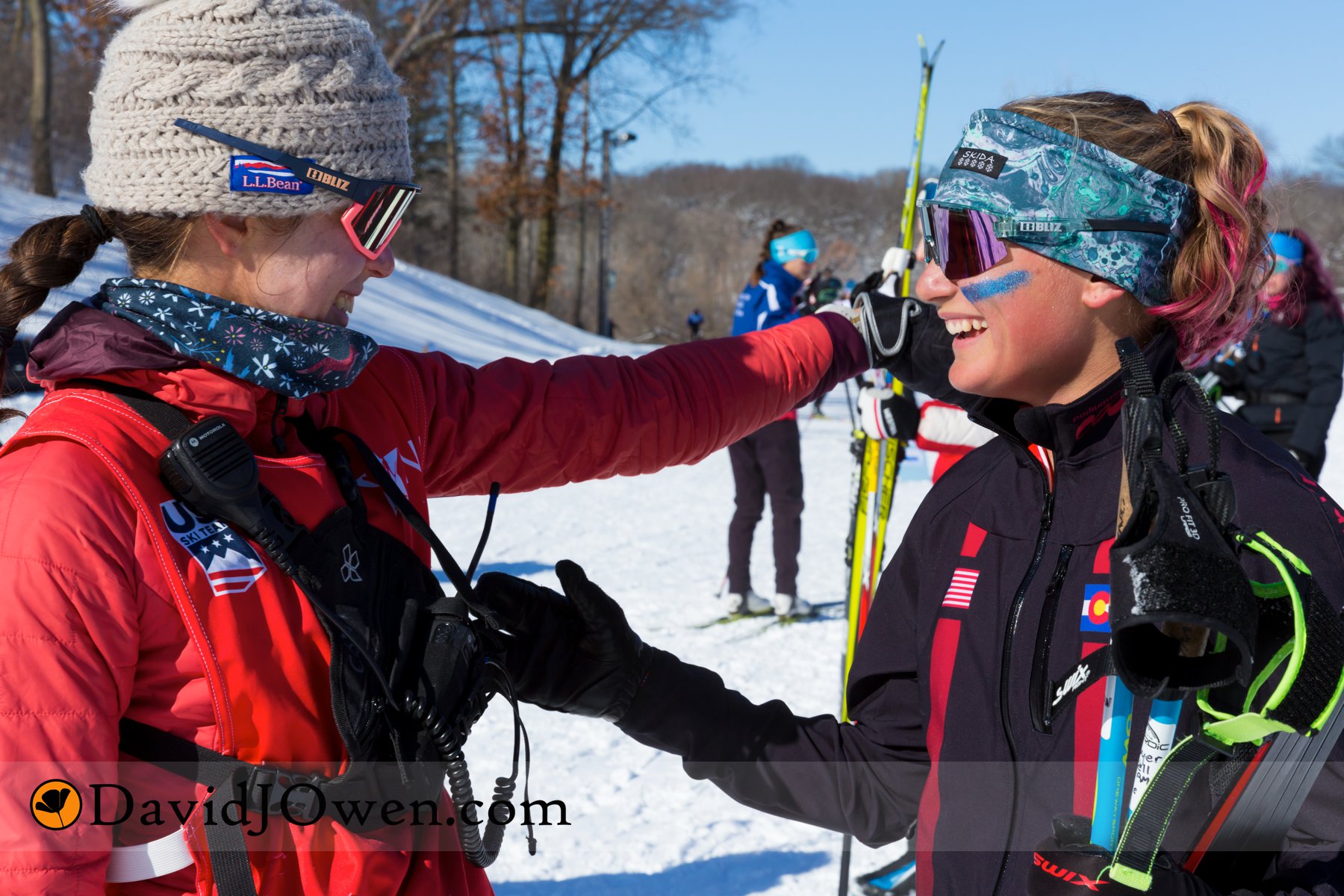
    Crested Butte Nordic Team head coach Molly Susla supports athlete Sawyer Ezzell during the 2022 Junior National Championships in Minneapolis. (Photo: David J Owen Photography)

    Reception of Wax Protocol Among Teams

    As far as how these policies might evolve with time, coaches expressed that the specific brand being used would always be open for discussion, provided that equivalent availability could be guaranteed and cost per gram remained comparable. With the increase in liquid waxes, which might offer versatility on race day without the encumberment of the full glide waxing setup, there may be an evolution that includes more liquid wax options as well. 

    For the time being, coaches expressed that the addition of these protocols has been net-positive, with no member clubs looking to steer the trajectory back toward open waxing. 

    “We’re at least two years through this experiment of running this policy,” said Kapala for IMD. “And I am 100% certain, because I’ve asked… we have 14 clubs that are saying, ‘No way are we going back.’ There is uniform agreement and acceptance of the policy.” 

    In Leonard’s concluding statements, he acknowledged the inherent equipment-based inequity in the sport, while also offering ways to problem solve, and confirming that PNSA has also been well-served by the protocol.

    “You might get beaten at some point by someone who has better skis than you or something like that,” he said. “And when that becomes a factor, you figure out a way to make it work. With the advent of zeros, for instance, suddenly those became a ski that was like – in those conditions, man, you needed to have that. When I was in Alaska, teams were starting to procure fleets of zeros that they could hand out to their kids and maybe rotate through a few kids on a given race day. [Now,] if we have a race coming up that we know is potentially a zero day, we’re working through our community [in the Methow Valley] to grab some zeros for our kids so hopefully, they have a decent option there. 

    “So there are ways to make those things happen and work, and hopefully still remain competitive in the sport. There are a lot of trade-offs with all of it, but people are feeling like, for our division right now, it has been a good decision to go this direction.”
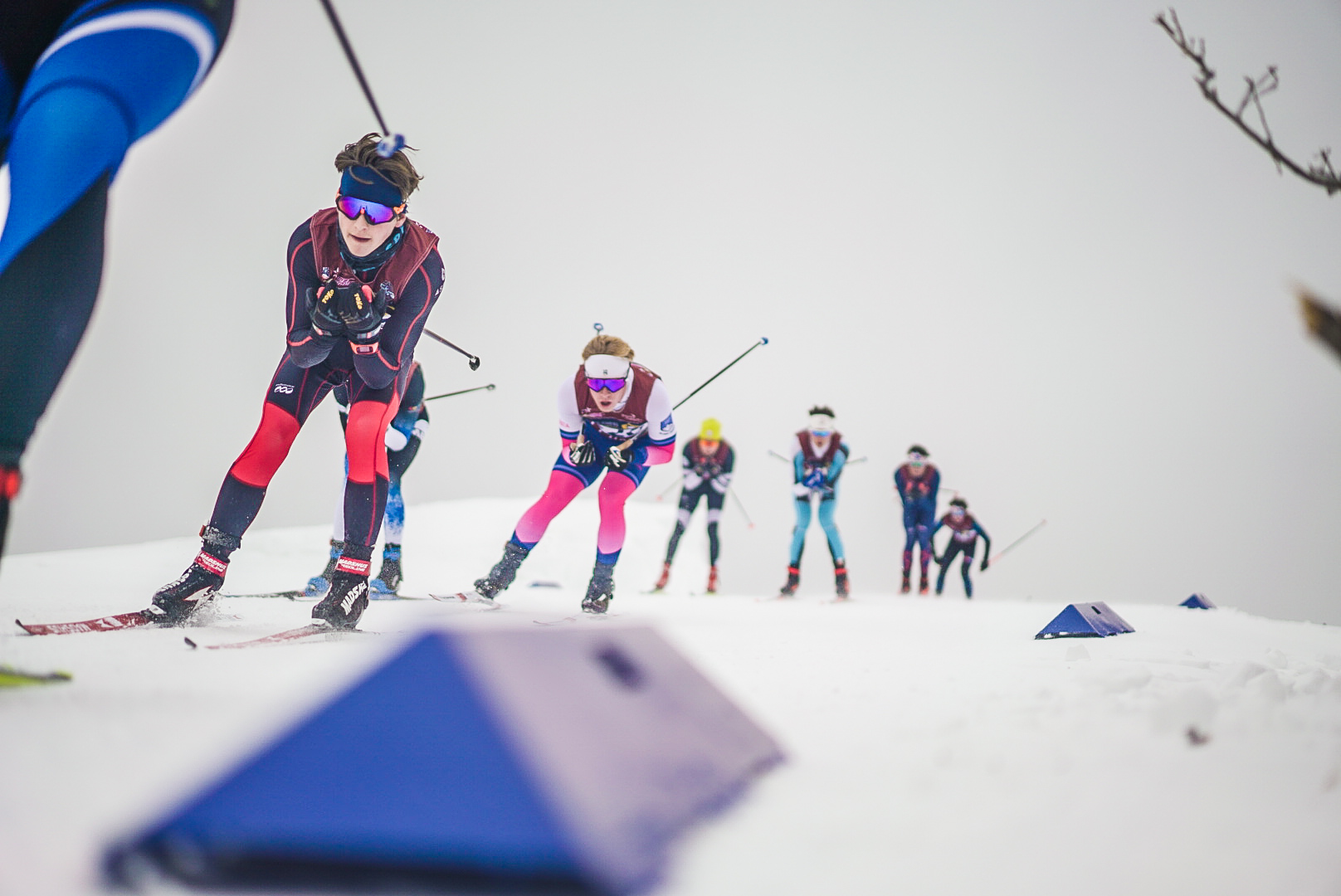
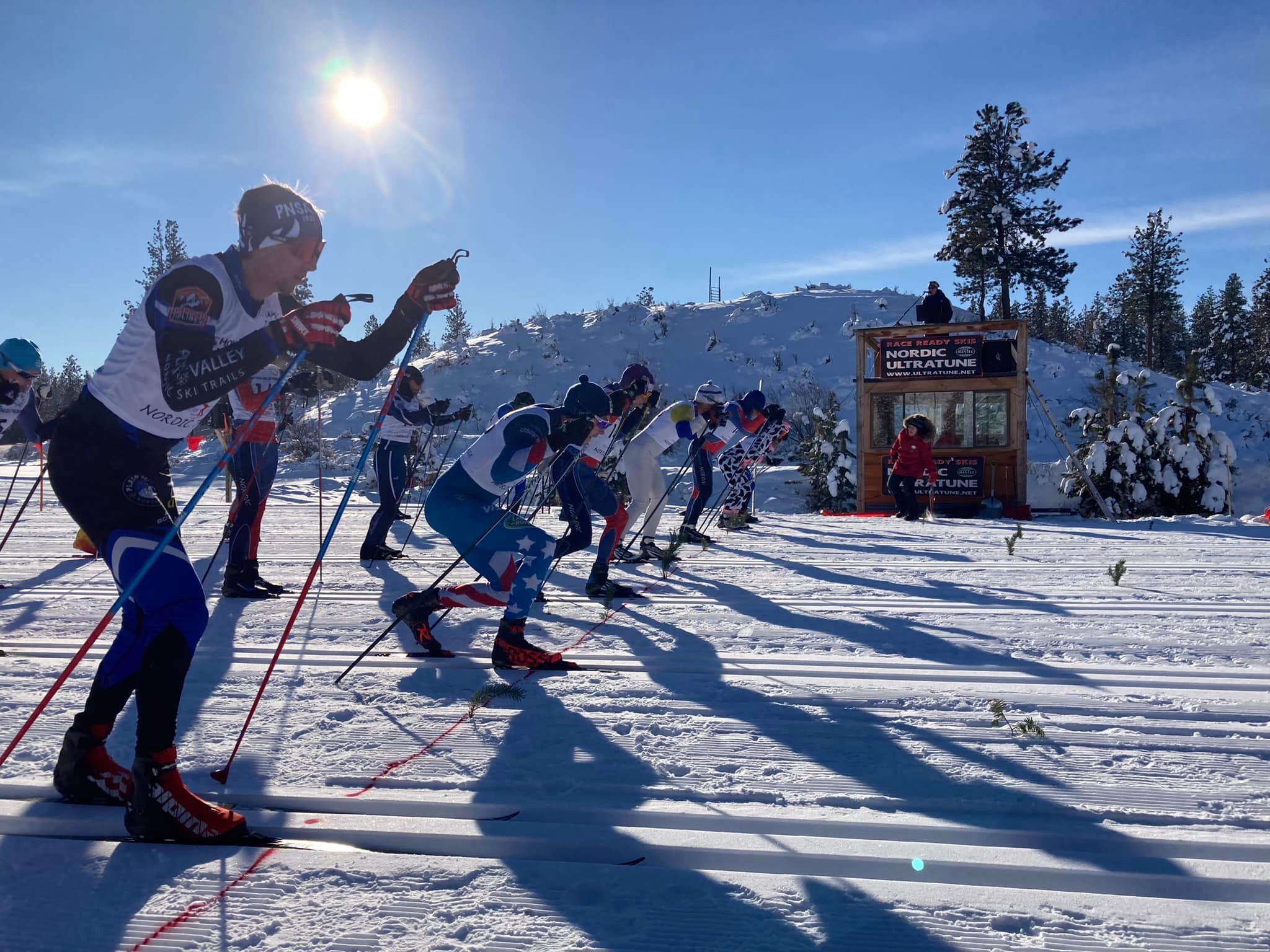
    Junior athletes race during the 2022 U.S. Cross Country Championships in Soldier Hollow, UT. (Photo: Tobias Albrigtsen / @untraceableg)
  • The Pros & Cons of League-wide Wax Protocols: Western Clubs Consider the Evolution and Impact (Part 1)

    The Pros & Cons of League-wide Wax Protocols: Western Clubs Consider the Evolution and Impact (Part 1)

    In speaking with representatives from each of the leagues featured in this series, a few main points rose to the foreground in this discussion: the level of competition matters, how the policy came about matters, and how a program can enhance athlete support holistically by relieving wax-related expenses – measured both in time and dollars – matters. 

    Before jumping into discussions for club level programs across the West, here are the links to view the details of each wax policy specifically: Intermountain Division (IMD); Rocky Mountain Nordic (RMN); Pacific Northwest Ski Association (PNSA)

    Also note that these conversations took place in late-April, prior to further discussions at the U.S. Ski & Snowboard spring congress sessions in May where subsequent conversations among leadership may have occurred. Should significant changes occur, FasterSkier will continue to follow the story. 

    Here are links to earlier installments in this five-part series. The first two parts (part one; part two) spoke to the perspectives of high level wax technicians and industry representatives, while part three focused on the Wisconsin Nordic Ski League. 

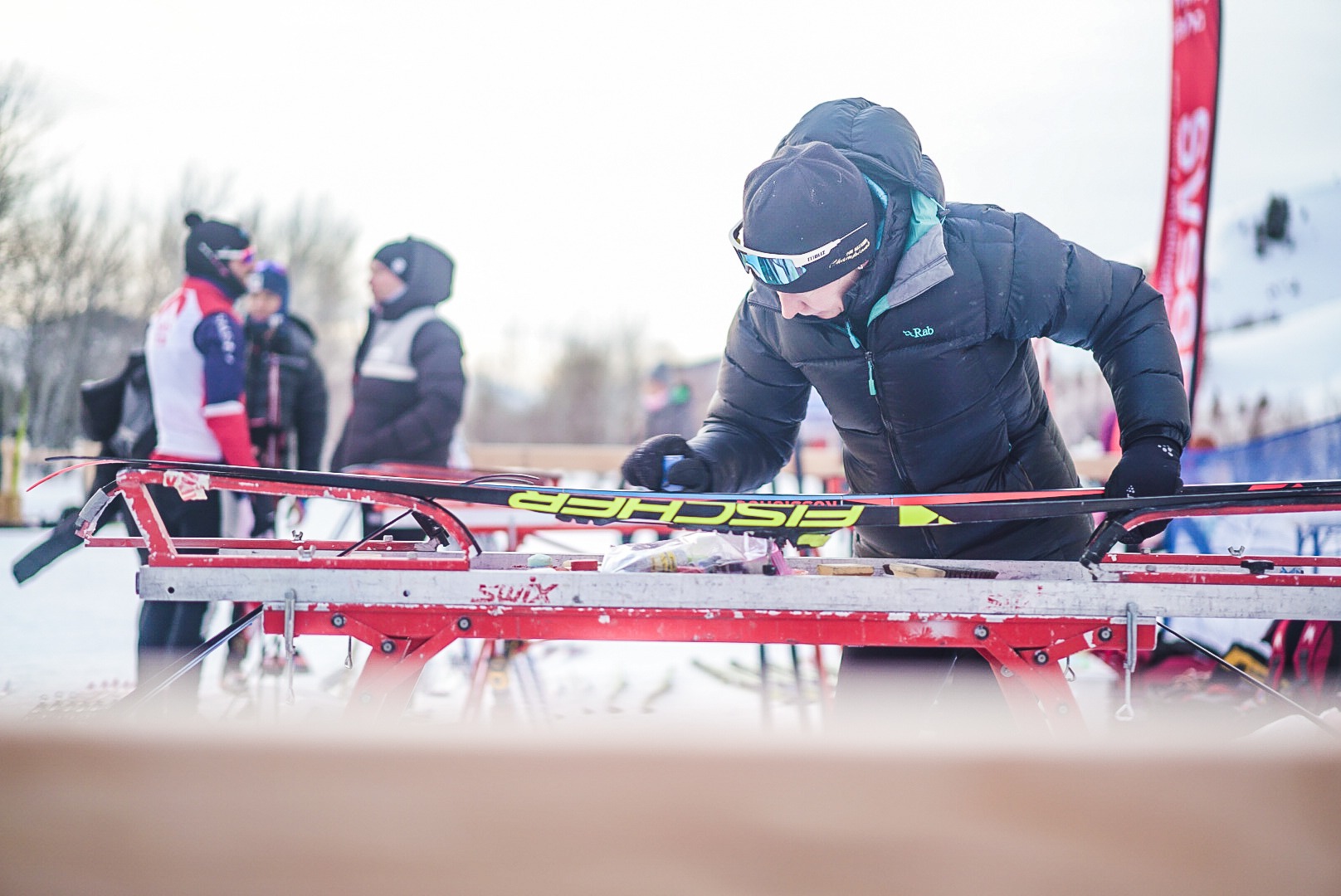
    University of Colorado head coach Jana Weinberger waxes skis for her athletes during an 2022 RMISA/US SuperTour race weekend in Sun Valley. (Photo: Tobias Albrigtsen / @untraceableg)

    The Evolution of Western Club Wax-Protocols 

    There’s a lot to unpack surrounding the impact of wax policies on the sport, and it is not reasonable to project that what makes sense for junior club programs can be extrapolated to the sport as a whole, which includes everything from the recreational level to masters racing to the World Cup. However, as a major player in the U.S. development pathway and a collective that encompasses a large volume of the nation’s athlete base, considering the evolution and impact of wax policies at the club level provides valuable insight into what the objectives and outcomes may be more broadly. 

    Conversations on this subject began long before any official policies were accepted, and their initial aim was to uniformly address the use of fluorocarbons at Junior National Qualifiers (JNQs). With both the health of athletes and coaches, and the inequity of buying power among clubs, the goal was to reduce spending and expensive fluorinated top coats.

    Timelines are now blurred, but long-time Sun Valley Ski Education Foundation Program Director Rick Kapala indicated that Rocky Mountain had perhaps been the division who got the ball rolling. Though the policies have since converged on a single wax call made in advance by host coaches depending on forecasted conditions, Kapala explained that at the onset, Intermountain’s policy was only focused on the elimination of pure fluoros. 

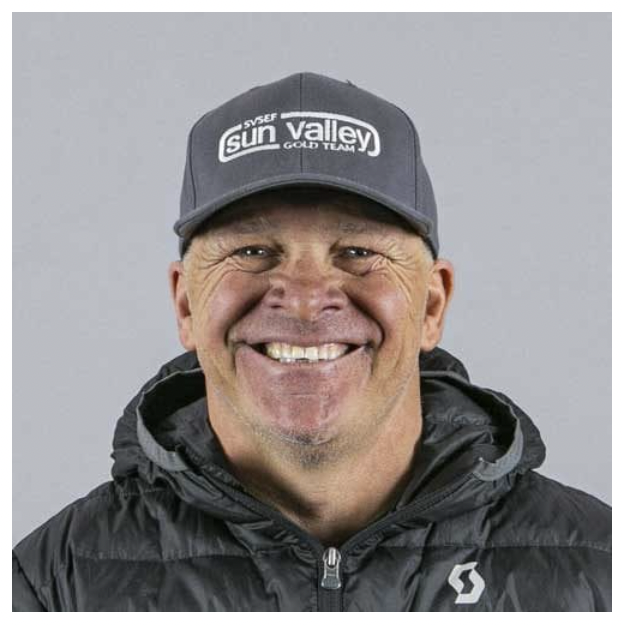
    Long-time SVSEF XC Program Director Rick Kapala explains the evolution and impact of IMD’s wax protocol. (Photo: SVSEF.org)

    “Initially, Intermountain had what we could call ‘wax policy-lite’… Our policy was: you can use any wax as long as it wasn’t pure-fluoro. You can use a high-fluoro, a low-flouro, or non-fluorinated version, and of course, in different brands, that meant different things. But basically, we went for a number of years with a no powder, no liquid and no rub-on policy. And that had some effect on trying to mitigate the arms race, if you will.”

    Executive Director at Methow Valley Ski Education Foundation Pete Leonard explained that the Pacific Northwest Ski Association, for whom he is the Nordic Director, was developed with a similar progression.

    “It initially started in the fluorocarbon era, moving away from powdering skis to just having blocks and liquids – the top coat type of applications – and then to a base paraffin application… I think we had a year of that and then [the policy] went to fluoro-free – the same basic, simple base paraffin called several days out.”

    Further motivation to align policies stemmed from  “cross-pollination” between these three leagues, which with the addition of the California-Nevada Far West division and Alaska, encompass the Western region as defined by U.S. Ski & Snowboard. In particular, these divisions overlap during the Junior National Super Qualifier Event held in January at Soldier Hollow, hence landing on a very similar model.

    “There’s a little bit of a cascade effect, and it’s just simpler for us to match what IMD has,” Leonard explained. 

    Kapala felt strongly that it was important to emphasize that this slow progression happened organically, which he felt was in stark contrast to the Wisconsin Nordic Ski League, where a sponsorship proposal made by a corporate entity included stipulations on waxing at league events. 

    “It’s a wholly different thing when a grassroots community, like a bunch of clubs in a division, promulgates a policy that they think results in the best athletic outcomes,” he said. “And it is very important to differentiate the genesis of a given policy… the order in which you arrive at a policy really informs a lot of the motivations about why you’re doing what you’re doing.” 

    Kapala said IMD would have “given the Heisman” to a wax company that required a policy; however, Swix products have been selected based on trust in the availability for all programs.

    “We settled on Swix without getting into the specifics of brand value,” he said. “I.e., Swix is better than Start, and Start is better than Toko, or whatever – it’s just simply because virtually everybody knew they had enough access to that wax.”  

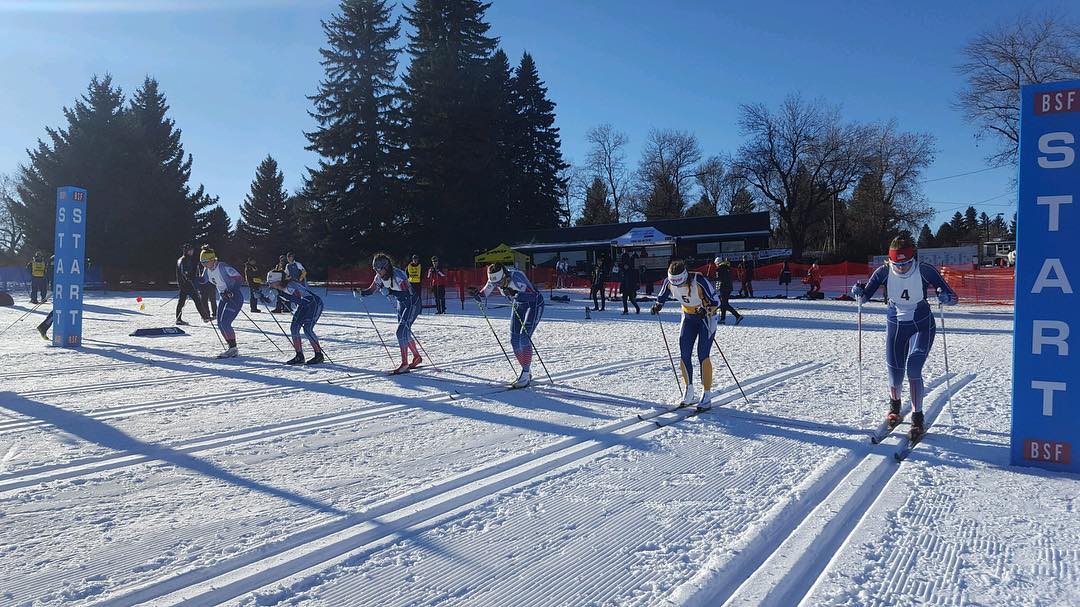
    A scene from the start line of a 2018 Intermountain JNQ in Bozeman, MT. (Photo: Sun Valley Ski Education Foundation Facebook)

    Observed Program Benefits 

    There’s a sizable jump between eliminating fluoros and further reducing a wax box to a small array of products, but Kapala emphasized that these “athletic outcomes” are the central tenet around which discussions regarding changes take place within Intermountain. How does the protocol impact the opportunity and capacity for athletes from clubs of all sizes to be successful on race day and have a positive experience in the sport?

    We’ll start with the impact to a program’s budget, which on its own is a source of inequality among clubs in a given region. Speaking specifically for Intermountain, but also the West more broadly, Kapala pointed out that there are a number of “super clubs” whose financial means and staff power made it hard for smaller clubs to compete in an open wax environment. 

    “They’re usually clubs that are in these mountain towns that are part of [larger] ski foundations or clubs that are multi-discipline, really big clubs. And so they have a lot of administrative function, a lot of underpinning financial security, and so on.”

    He was quick to include SVSEF in that pool, saying cost was not a primary concern when it came to his wax purchasing or race staffing prior to the enactment of IMD’s policy. 

    He went on to explain that within Intermountain, there are six JNQs which are subject to the wax policy, plus an Intermountain opener. However, what he called the “lion’s share” of races, including U.S. Nationals, SuperTours, and any Canadian-based races, remain open wax events where the policy does not apply. Still, with IMD’s policy in place, Kapala said SVSEF has been able to shave $5,000 dollars annually off its spending on wax, equating to a reduction of 30-40%. 

    “The question then is: ‘What am I doing with that $5,000?’” posed Kapala. “Well, what I’m really doing with it now, in my particular case, we have put that money into our merit scholarship program. So instead of me spending money on just making sure I have every wax in the universe in my wax box, I’m actually leveraging those dollars to help kids get to training camps or to go to competitions they wouldn’t normally be able to afford. And that’s huge.” 

    Rather than ignoring the impact this reduction in spending has on the landscape for suppliers, he acknowledged that this could be detrimental, as other clubs are likely reducing their spending by similar percentages. But bringing the focus back to the athletes, he said, “what we’re really spending less of is human capital on things other than coaching.”

    For Kapala, this makes the cost-benefit analysis check out.

    “We think being available to coach kids – that are especially young in their developmental process – at events like JNQs, is actually what the [coaching] game should be all about. So while it’s true that there can be impacts regarding the finances, it is also undoubtedly true that athletic outcomes – true athletic outcomes, the actual ones that we should be concerned about – are actually being serviced way more effectively. And if those two competing interests are both true, we have to pick one. And the one we’re picking is we’re making it more fair for athletes.”

    August Teague supports AVSC alumna Kate Oldham while teching at the 2022 FIS World Junior Ski Championships in Lygna, NOR. (Photo: flyingpointroad.com)

    Speaking for what he has observed within his own program and the Rocky Mountain Nordic division more broadly, August Teague – Cross-country Program Director at the Aspen Valley Ski and Snowboard Club (AVSC) – shared similar sentiments. 

    “I guess the real question to me becomes: ‘What is the purpose of a waxing protocol and at what level and why? And I certainly believe that barriers to entry in sport are a real good reason to have a waxing protocol, and time allocation or time management.”

    Adding specificity to the statement, he said, “The biggest thing that I see is that I can spend more time coaching instead of teching. And there certainly is an argument as to the need for better wax techs both from this country and elsewhere, but I think that’s a separate discussion than the coaching discussion and where my time is best served.”

    While the AVSC nordic program is significantly smaller than that of SVSEF, Teague also noted differences in how his monetary budget is allocated. “We have started to explore structures more than we ever have. So money that was being spent on product is now being spent on different structure devices and/or ways to test that structure.”

    Similarly, Steamboat Winter Sports Club U16/U18/U20 head coach Josh Smullin wrote to FasterSkier that the protocol has supported a safer environment for both coaches and athletes while on the road. In particular, he cited driving – there are roughly 3,200 serious injuries and 600 fatalities on average annually in Colorado – as a place where some relief in the toll on coaches during a race weekend has shown value.

    “It used to be that we coaches were up late waxing,” he explained. “Waking up the next morning to go set up at the venue, and then would drive many hours home after the race. A waxing protocol has helped us to be safer drivers, less sleep deprived, and more present with the athletes.”

    Smullin also commented on ventilation, which remains important for the health of waxers even without fluorinated products.

    “At many of our home clubs we have some sort of ventilated wax facility. We do not have that on the road [while staying in hotels] unless the weather is nice and we are able to wax outside. Regardless of the fluoro ban, [proper] ventilation is healthier for coaches and athletes.”

    Methow Valley Nordic skiers take to the course during the December 2021 Ski Rodeo event. (Photo: Methow Valley Nordic Ski Education Foundation Facebook)

    “Everybody’s got their opinion…” said Leonard on behalf of PNSA. “There’s no overarching study on these things, and costs, and whether there’s a major difference [in ski speed], but I think what is clear to the coaches is that there’s less time spent testing glide products at races and there’s less of an incentive to do that, especially with the calling it [a few days] prior. There’s also more time that they can focus during that weekend on other things, like with the athletes and their preparation, instead of testing wax, waxing skis and leaving [coaching and direct athlete support] right up to the race time.”

    For Leonard, the question of whether the policy widens the gap for skiers based on the quality or condition specificity of their skis was not a priority when it came to identifying how the policy has served PNSA teams. For a club based in the Methow Valley which travels to regional competitions across Oregon and Washington, as well as to the Super Qualifier in Utah, the policy has reduced the toll of travel. 

    “I don’t know that it’s necessarily a parity – it’s really difficult to get that down.. but I think for us, calling the wax several days out just makes it simpler for people, and there is less [equipment and product] to travel with, one less thing to think about when you’re booking hotels, and all those details. It makes it simpler for teams.”

    He said he has also found it quicker and easier to apply structure on race day without the variable of glide wax testing. And without the need to cart around as much product and equipment, getting his athletes’ skis race ready has been “way easier to manage”.

    “Rather than bringing a wax box with several waxes in it, irons, enough benches that you can get your whole team through, scrapers, brushes, etc. – already, you’re packing the van to the ceiling and then, sometimes it’s driving eight hours, or for the Super Q for us, it’s driving four hours to the airport, [hauling our skis and gear through the airport on both ends], then driving another hour-plus to SoHo, and then doing it all again on the way back.”

    Stay tuned for the final installment, where you can read more on leveling the playing field, the arms race (or lack thereof) for skis, and the reception among Western Division coaches.

  • Saturday Rundown: Holmenkollen, Kontiolahti, Jackson, and Lake Placid (Updated x4)

    Saturday Rundown: Holmenkollen, Kontiolahti, Jackson, and Lake Placid (Updated x4)

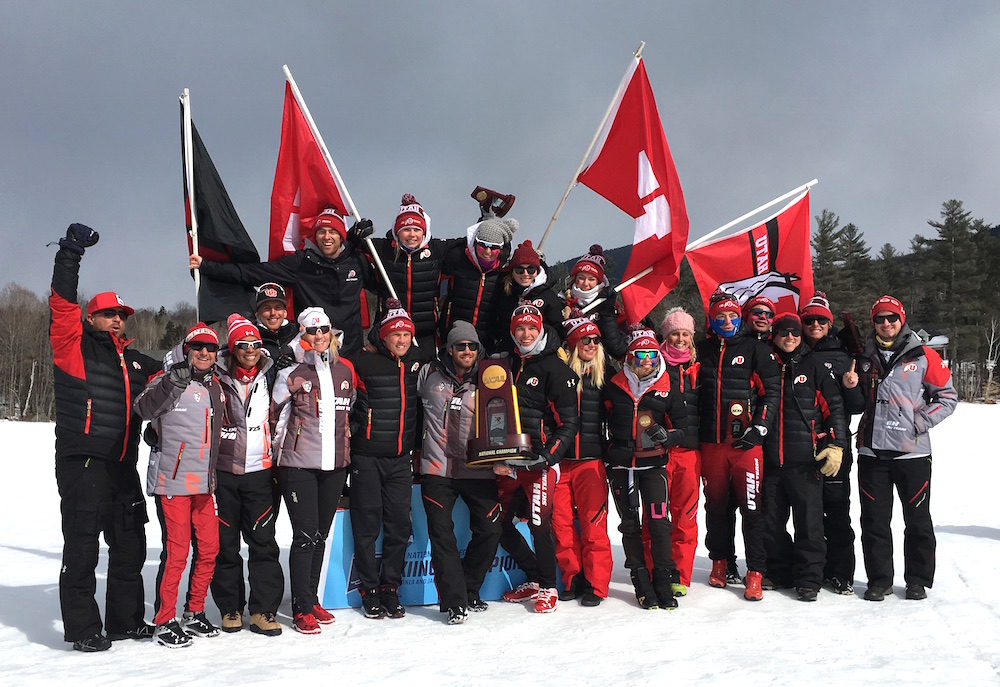
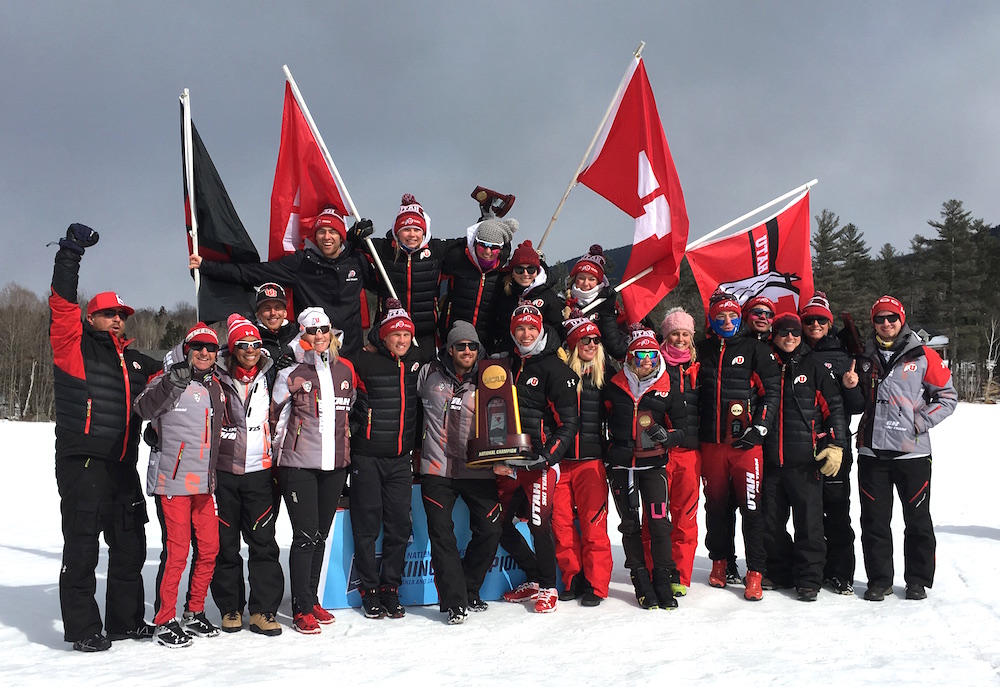
    The University of Utah ski team celebrating its first NCAA title since 2003 on Saturday at 2017 NCAA Skiing Championships in Jackson, N.H. (Photo: Jason Clay/Colorado)

    NCAA Skiing Championships (Jackson, N.H.): 15/20 k freestyle mass starts

    On the final day of the National Collegiate Athletic Association (NCAA) Skiing Championships in northern New Hampshire, the University of Utah pulled out a 16.5-point victory over the University of Colorado-Boulder (and finished 17.5 points ahead of the University of Denver) in the team standings, and the two previous NCAA champions from Thursday’s 5/10 k classic races, Martin Bergström and Petra Hyncicova, achieved their second-straight titles in as many nordic races this week.

    On a frigid Saturday morning in Jackson, N.H., with temperatures just below zero Fahrenheit for the start of the men’s 20 k freestyle mass start, Bergström, a Utah freshman from Sweden, outlasted the University of Colorado’s (CU) Mads Ek Strøm, a Norwegian senior and two-time 2016 NCAA champion, by 0.5 seconds to win his second-straight race in 46:02.8 minutes. Moritz Madlener, a German senior at Denver University (DU), placed third (+0.6). Just behind him CU’s Petter Reistad, of Norway, finished fourth (+1.2), and Dartmouth College’s Fabian Stocek, of the Czech Republic, placed fifth (+1.9).

    While temperatures warmed up to about 1 degree for the women’s 15 k freestyle mass start and the wind picked up to about 15-20 miles per hour, the women raced three laps around the Jackson Ski Touring Center’s race loop and navigated even faster downhills that caused a few crashes.

    Hyncicova used her love for downhills and skate races to capture her second consecutive NCAA title, breaking away with University of Vermont (UVM) junior Alayna Sonnesyn on the second lap. The Czech Republic native and CU junior attacked on the A-climb at the top of the course and won by 21.1 seconds in 39:21.6. Sonnesyn, of Minnesota, bested her third place from Thursday’s 5 k with a second-place finish on Saturday. CU’s Christina Rolandsen, of Norway, finished third (+38.9), ahead of Idaho native Anika Miller of Montana State University (MSU) in fourth (+44.0).

    Utah took fifth and sixth with Merete Myrseth (+1:01.5) and Guro Jordheim (+1:16.1), and had two other men in the top 10 (Martin Mikkelsen in 8th and Kevin Bolger in 10th) to achieve the alpine-nordic team title.

    In the women’s race, the Utes were the only team with all three women in the top 14, with Natalia Müller in 14th (+1:32.1).

    “The turning point of today is when Guro broke a pole, and she was back in the 20’s, and she and Natalia were skiing together,” Utah Director of Skiing Kevin Sweeney said, according to a team press release. “We told them that they had to go and they busted out and made a big move. The men’s results were tremendous, but whether or not we were going to win was based on those guys making the move. It was exceptional athleticism and gutsy performances.”

    The NCAA team title was the 11th for Utah and its first since 2003.

    “I am stunned with the win today,” Sweeney added. “In all my years of coaching, it was one of the most challenging four days of competition. I say that because the weather was incredibly cold and windy, and challenging from both a waxing perspective, as well as visibility and conditions. I know all the teams had to deal with it, but it really beat us up. It took a lot of perseverance and gutsy performances for us to win. We struggled a little bit in the slalom, but they were going for it and came up short.

    “We’ve been crunching numbers and have been able to beat Denver and Colorado by about 30 points on a really good showing during the RMISA season, but didn’t know if we could do it in the championships,” he continued. “Bergström was skiing at a whole new level this week, and Mikkelsen had stepped it up, and I knew Kevin Bolger could get top 10. I was also confident in the women, who have been skiing awesome, so I felt good there. It’s awesome to be able to take this new trophy back to our new ski building.”

    As for those earning All-American status on Saturday with a top-10 finish, Utah had five (Bergström 1st, Myrseth 5th, Jordheim 6th, Mikkelsen 8th, Bolger 10th), Colorado had four (Hyncincova 1st, Strøm 2nd, Rolandsen 3rd, Reistad 4th), Denver had two (Madlener, Dag Frode Trollebø 7th), MSU had two (Miller 4th, Johanna Talihärm 7th), Dartmouth had two (Stocek 5th, Luke Brown 9th), UVM had one (Sonnesyn 2nd), Northern Michigan University (NMU) had one (Adam Martin 5th), the University of Alaska-Fairbanks (UAF) had one (Sarissa Lammers 8th), UNH had one (Lizzie Gill 9th), and Bowdoin had one (Hannah Miller 10th).

    Stay tuned for a more in-depth report with quotes and photos from Saturday’s skate mass starts.

    Results: Men | Women | Team

    ***

    USSA Cross Country Junior Championships (Lake Placid, N.Y.): Freestyle team relays

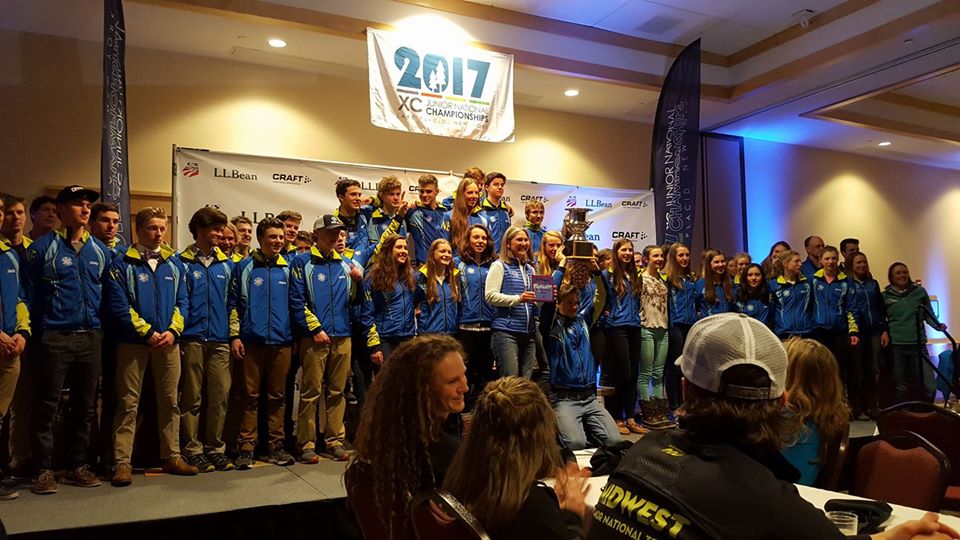
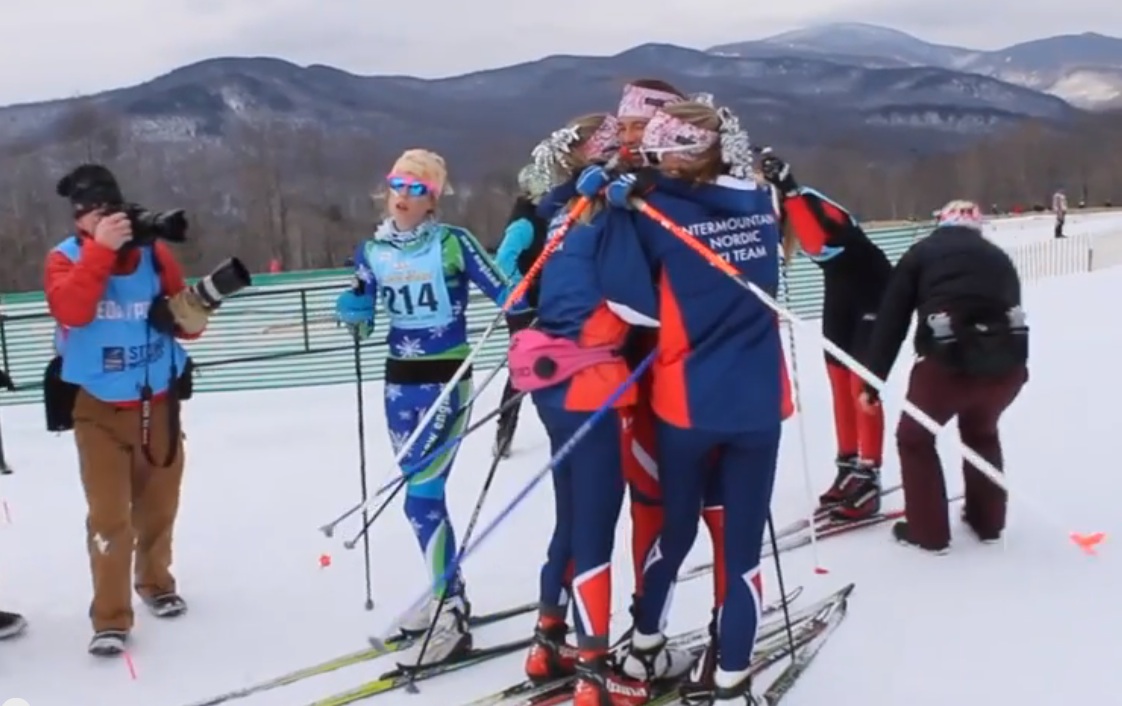
    The 2017 U.S. Junior Nationals Alaska Cup winners, New England, at the awards ceremony on Saturday in Lake Placid, N.Y. (Photo: XCJuniorNationals2017/Facebook)

    [UPDATED] For the final day of 2017 U.S. Junior Nationals in Lake Placid, N.Y., regional divisions formed three-racer teams for the U16, U18 and U20 freestyle relays.

    Intermountain swept the U16 team events with Lane Myshrall, Skylar Patten and Johnny Hagenbuch winning the U16 boys’ relay by 3.6 seconds over the Midwest’s James Schneider, Alexander Nameth and Peter Moore in 23:00.4 minutes. Another 1.1 seconds back, Alaska reached the podium in third (+4.7) with Eli Hermann, Zander McMullen and George Cvancara.

    Intermountain’s U16 girls’ team of Sarah Morgan, Annabel Hagen and Sydney Palmer-Leger posted a 53.7-second victory over New England’s Charlotte Ogden, Anna Lehmann and Abigail Streinz, winning in 26:21.4. The Pacific Northwest finished 18.1 seconds later in third place (+1:29.9) with Fiona Max, Gretta Scholz and Annie McColgan.

    Alaska won the U18 boys’ relay with Luke Jager, Canyon Tobin and Gus Schumacher finishing in 21:42.9, 7.5 seconds ahead of New England’s Elliot Ketchel, Adam Glueck and Ben Ogden in second. The Midwest’s Anders Sonnesyn, Patrick Acton and Luc Golin rounded out the podium in third (+22.2).

    Rocky Mountain topped the U18 girls’ relay with Katja Freeburn, Ezra Smith and Maddie Donovan crossing first in 25:47.3. Just 5.8 seconds back, Intermountain’s Brooke Dunnagan, Anna Gibson and Sofia Schomento placed second, and the Midwest secured third (+16.7) with Margaret McCollor, Luci Anderson and Anja Maijala.

    The U20 men’s relay title went to New England, with Kam Husain, Koby Gordon and Daniel Streinz pulling out a 1.3-second win over Alaska’s Tracen Knopp, Logan Mowrey and Hunter Wonders in 21:53.1. Intermountain followed in third (+8.8) with Eli Jensen, Peter Wolter and Nathan Wells.

    The Midwest came up big in the U20 women’s relay, with Abby Jarzin, Hannah Rudd and Margie Freed finishing 10.1 seconds ahead of New England’s Alexandra Lawson, Mary Kretchmer and Mackenzie Rizio in 25:41.4. Another 1.1 seconds back, Intermountain’s Leah Lange, Maddie Morgan and Marin Coletta placed third (+11.2).

    New England won the Alaska Cup with 325 points, the same point total as Intermountain in second. Alaska placed third in the overall team competition with 295 points, just five points ahead of the Midwest in fourth.

    Results: U16 boys | U16 girls | U18 boys | U18 girls | U20 men | U20 women | Alaska Cup

    ***

    FIS Cross-Country World Cup (Oslo, Norway): Holmenkollen 50 k classic mass start

    (Race report)

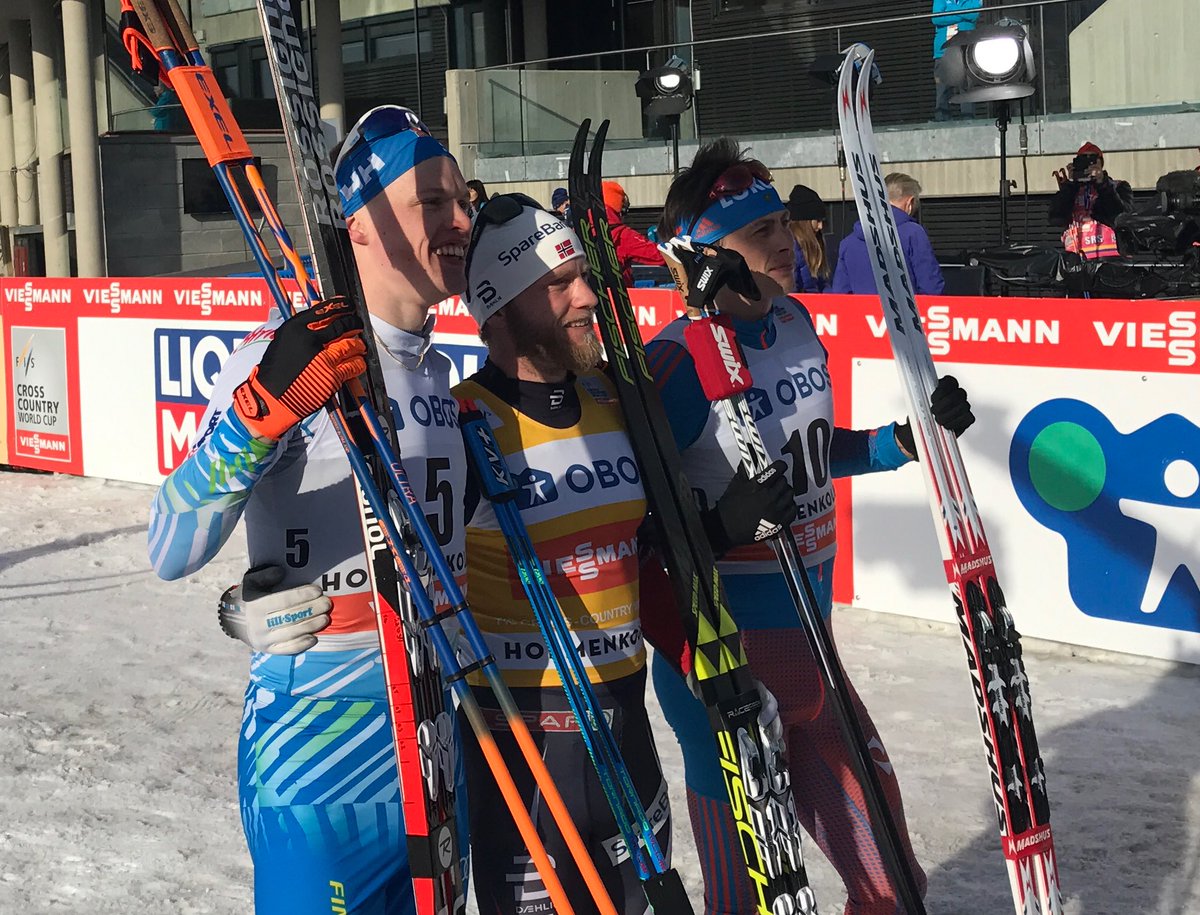
    Left to right: Finland’s Iivo Niskanen, Norway’s Martin Johnsrud Sundby and Russia’s Alexander Bessmertnykh after placing second, first and third, respectively, in the Holmenkollen World Cup men’s 50 k classic mass start on Saturday in Oslo, Norway. (Photo: FIS Cross-Country/Twitter)

    In a historic Holmenkollen, Norway’s Martin Johnsrud Sundby took his second 50 k win in a row, claiming this year’s title in a time of 2:02:59.7 (he won last year’s Holmenkollen in a time of 2:08:41.9). Sundby is now the only male skier to win two consecutive World Cup Holmenkollen 50 k competitions. 

    Crossing behind Sundby in second was Finland’s Iivo Niskanen, 9.9 seconds back from the race winner’s time. In a three-way photo finish, Russian Alexander Bessmertnykh bested Norwegians Niklas Dryhaug, and Sjur Røthe in the lunge to the line, with Bessmertnykh taking third (+1:15.2), Røthe fourth (+1:15.2) and Dryhaug fifth (+1:15.2).

    Canada’s Alex Harvey was just two tenths of a second behind the three-way lunge, finishing in sixth (+1:15.4). Norway’s Christer Hans Holund crossed 2.2 seconds later in seventh (+1:17.2). Three more Russians rounded out the top ten, with Sergey Ustiugov finishing in eighth (+2:35.0), Andrey Larkov two tenths of a second behind in ninth (+2:35.2) and Sergey Turyshev in tenth (+2:42.2).

    The top U.S. skier for the day was Scott Patterson (Alaska Pacific University), earning World Cup points in 28th (+7:18.8). Canada’s Devon Kershaw crossed 33rd (+2:11:59.1) and American David Norris (Alaska Pacific University) finished 35th (+9:56.4).

    Two more Americans competed in Saturday’s Holmenkollen, with Noah Hoffman finishing in 38th (+11:02.6) and Ben Lustgarten 46th (+18:44.7). Canadian Russell Kennedy was the final North American to finish in 47th (+20:16.3).

    Results

    ***

    IBU World Cup Biathlon (Kontiolahti, Finland): Men’s & women’s pursuits

    (Race report)

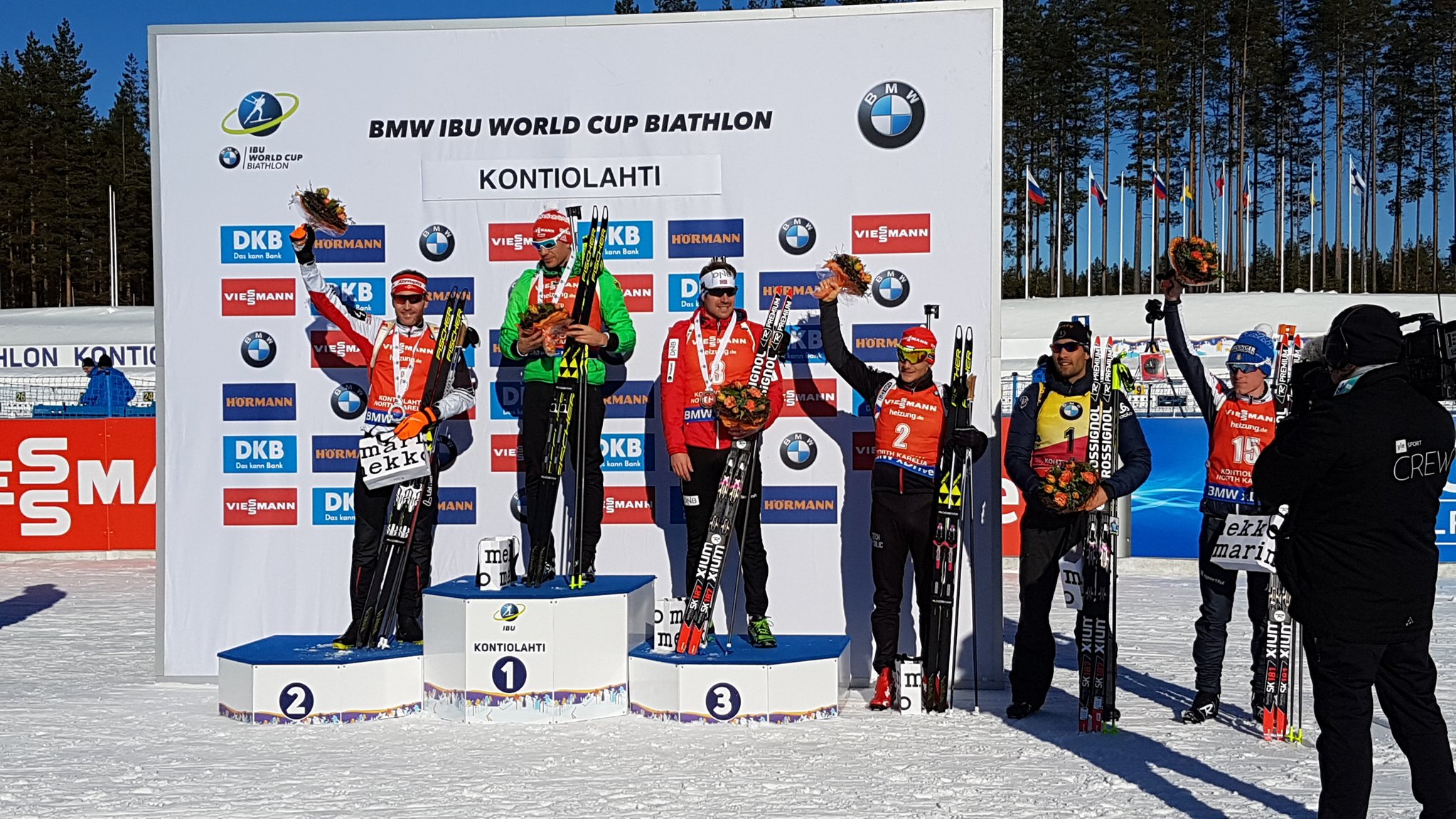
    The IBU World Cup men's podium after the 12.5 k pursuit in Kontiolahti, Finland, where Arnd Peiffer of Germany outsprinted Simon Eder of Austria for the win. (Photo: IBU/Twitter)
    The IBU World Cup men’s podium after the 12.5 k pursuit in Kontiolahti, Finland, where Arnd Peiffer of Germany outsprinted Simon Eder of Austria for the win. (Photo: IBU/Twitter)

    After one day knocked down to the second spot of the podium, it was back to the usual winning ways for Germany’s Laura Dahlmeier in the 10 k pursuit. Dahlmeier caught Norway’s Tiril Eckhoff, who won Friday’s sprint, early in the race after Eckhoff had one penalty in the first prone and second-starter Dahlmeier cleaned. While Eckhoff picked up five more penalties as the race went on, finishing 15th (+1:12.0), Dahlmeier had just one – and cleaned when it counted, on the final shoot with France’s Marie Dorin Habert and the Czech Republic’s Gabriela Koukalova right there with her. Dorin Habert missed one shot and held on to second place (+16.5) despite the penalty loop, while Italy’s Lisa Vittozi picked up her first individual podium in third (+19.9).

    The win secured the overall World Cup title for Dahlmeier, her first. “That makes me really speechless,” she told Germany’s ARD broadcaster. “This is an amazing moment.”

    Susan Dunklee collected four penalties and dropped from fifth place to 14th (+1:02.8) for the United States. Teammates Clare Egan and Joanne Reid finished 45th (+3:24.7) and 52nd (+4:07.0), respectively.

    For Canada, Julia Ransom finished 53rd with three penalties (+4:14.0) and Emma Lunder 58th with four missed shots (+6:20.7).

    Results

    Earlier in the day, Martin Fourcade had started the men’s race in bib one and set out to win the men’s 12.5 k pursuit, but was undone by four errors on the shooting range. No matter: the French biathlete still picked up the World Cup crystal globe for the pursuit discipline after finishing fifth (+25.5 seconds) and now he’s skipping tomorrow’s mixed relays to go be with his wife, who is about to have their second child.

    Capitalizing on Fourcade’s errors were a group of chasers, among whom Arnd Peiffer of Germany managed to shoot 20-for-20. The race came down to a sprint finish between him and Simon Eder  of Austria; Peiffer took a 0.3-second win for his eighth career victory. Emil Hegle Svendsen of Norway finished third, +2.3 seconds, and Andrej Moravec of the Czech Republic fourth, +9.8.

    Besides Peiffer, the only other man in the field to shoot clean was Sean Doherty of the United States. That allowed Doherty to jump from 44th at the start to a season-best 18th (+1:19.5) at the finish, the top result for the American team. Lowell Bailey finished 27th (+1:57.2) and Leif Nordgren 43rd (+3:24.4) with three and four penalties, respectively.

    Christian Gow led Canada with just one penalty and a 37th-place finish (+2:36.0), a big improvement from his 50th-place starting position. Brendan Green placed 50th with three penalties (+4:47.3).

    Results

  • USSA Ends Affiliation With High Plains Division; Western Leaders Ask Why

    USSA Ends Affiliation With High Plains Division; Western Leaders Ask Why

    When members of the USSA Cross Country Sport  Committee head to Park City next week for the annual USSA Congress, they will be deciding the fate of the High Plains division.
    When members of the USSA Cross Country Sport Committee head to Park City next week for the annual USSA Congress, they will be deciding the fate of the High Plains division.

    Before the 2015/2016 season began, the regional cross-country ski associations around America hammered out a deal with the U.S. Ski and Snowboard Association (USSA): they crafted “affiliation agreements” detailing the relationship between geographic divisions and the national governing body.

    Until that point, regional bodies like Central Cross Country (CXC), Intermountain Division (IMD), the New England Nordic Ski Associaion (NENSA), and the Pacific Northwest Ski Association (PNSA) had been organizing much of skiing on their own. They ran USSA-sanctioned races, placed members on USSA committees, and were represented as teams at Junior Nationals. But in terms of day-to-day governance and regional racing, they were their own non-profits and to a large extent their own bosses.

    15 conference calls later, the divisions are still their own nonprofits but are now legally affiliated with USSA.

    Two weeks ago, the chair of the board of the High Plains division got a call from Robert Lazzaroni, the nordic domestic programs director for USSA.

    “He was asking a few questions about High Plains, and just getting a better feel for how our division is laid out and what we’re made up of,” said Rebecca Watson. “How many U14s do we have coming up? How many NRL races do we have? Details like that.”

    Lazzaroni was hired by USSA in August of last year, and the national governing body has been pushing to make additional partnerships with cross-country ski organizations at all levels and gain members in the nordic world.

    It seemed to Watson like Lazzaroni was doing an educational fact-finding mission about a remote division. High Plains includes all of Wyoming except for Jackson Hole (which is part of Intermountain), and also serves some communities in eastern Montana and western South Dakota which are far from their designated divisions’ resources. It is a geographically large region in a sparsely populated part of the country.

    Then an email arrived in Watson’s inbox.

    “About four days later I got an email from Alex [Natt, USSA’s executive vice president and general counsel] saying that they had decided not to renew our affiliation agreement and that we would talk about it at Congress,” Watson said. “That was a little bit of a shock, that it wasn’t going to be renewed. It seemed like they didn’t give me much of a reason for the non-renewal.”

    Since the affiliation agreement system has only been in place for a year, it’s unclear what ending the agreement will mean for Wyoming skiers and teams — other than, as Lazzaroni made clear in a later email to Watson, no High Plains team at Junior Nationals.

    There’s still a chance that High Plains will be an affiliate of USSA next year, because the decision has to be voted on by USSA’s Cross Country Committee.

    “At Congress, there will certainly be a continuation of the discussion on [High Plains],” USSA CEO Tiger Shaw wrote in an email. “This is a constructive and engaging discussion that is fully in flight, and as such it wouldn’t be right for me to comment on anything about it. I want the players to sort it out.”

    Those in the High Plains region are perplexed, and leaders of other divisions concerned.

    “Let me tell you, I have gotten an incredible amount of support from around the nation, from other team leaders and coaches,” Watson said. “It’s been really amazing. I’m just hoping that we can continue to grow the sport, and to make it accessible to everybody. That’s my biggest thing, is access.”

    Like his boss, Lazzaroni did not elaborate on the reasons for the decision.

    “See below the exact wording,” he wrote in an email on Tuesday. “USSA has decided not to renew the Affiliation Agreement with High Plains which would otherwise auto renew effective May 1, 2016. High Plains’ status as a USSA Affiliate will be considered at the USSA Congress later in May.”

    Why Affiliate?

    According to another divisional leader, one of the main purposes of the affiliation agreements were to cover everyone’s legal backs.

    PNSA is one of the few divisions where alpine and cross-country skiing are still integrated under one governing body. The association’s Director of Nordic Alan Watson – no relation to Rebecca – was able to watch the alpine divisions go through the same process a year earlier.

    “One of the things the McKinsey study had pointed out is that there’s no legal relationship between the divisions and USSA – they weren’t really divisions, they were their own nonprofit organizations,” Alan Watson explained. “They thought it would be good to have a contract … My understanding is that one reason to have the affiliation agreements is to protect us against some sort of unfortunate legal repercussions that could happen, but for practical purposes nothing changes.”

    Indeed, once the agreements went into effect, not a lot changed. One main thing, said Rebecca Watson, is that divisions could now purchase liability insurance from USSA at a lower cost.

    There were also agreements about race organization fees and head taxes, the use of the USSA logo, and communication between USSA and the affiliates, for instance about education and coach and official certification. In many cases, regional races now require a USSA membership, which is more affordable thanks in part to initiatives by Shaw and also to agreements worked out by Joey Caterinichio, Lazzaroni’s predecessor who stayed on with USSA this winter despite resigning last summer.

    “Through all 15 or so conference calls, I most definitely got the feel from Tiger [Shaw, the USSA CEO] that he just wanted to have a better understanding of what the divisions were doing and to help grow the sport,” Rebecca Watson said. “That was the biggest thing that he kept saying: ‘I just want to increase membership and help grow the sport and help the health of the divisions.’ ”

    Shaw confirmed as much in an email, writing, “You are correct in that the goals and initiatives of USSA have not changed. We do want to grow membership, enable competition and foster all of our sports. That is core to our mission.”

    FasterSkier obtained a copy of an affiliate agreement from another division, with the source requesting anonymity in order to protect ongoing relations with USSA.

    Screen Shot 2016-05-05 at 3.21.48 PM

    Screen Shot 2016-05-05 at 3.22.35 PM

    Screen Shot 2016-05-05 at 3.22.49 PM

    The agreement had virtually no references to elite racing, results, or the development pipeline: while divisions were responsible for communicating with USSA when they wanted to schedule USSA-sanctioned races, they were also welcome to continue to host non-sanctioned races (i.e., without points) and allow non-members to enter them. Junior Nationals was never mentioned.

    ‘Bottom of the Ranking List’

    When Rebecca Watson asked Lazzaroni for a rationale about why her affiliate agreement was being terminated, however, high performance and the development pipeline seemed to be the focus.

    Watson gave FasterSkier a copy of an email Lazzaroni had sent her (after also sharing it with other divisional leaders and the Sports Committee), and it focuses mainly on junior programming and racing.

    Among his concerns: the division organizes few races, and even fewer that are USSA-sanctioned National Ranking List (NRL) competitions; there are few year-round clubs, and most of the teams are high school teams; and the region finished at the “bottom of the ranking list” at 2016 Junior Nationals.

    With just 584,000 people and few major population centers in Wyoming, it’s not surprising that there are a limited number of ski teams in the state. As for the matter of most of them being high school teams, Watson said that’s partially a matter of logistics.

    “Because of the distances that we have to travel it would be crazy to have two separate race series,” she explained. “I think people can look at that and say that we’re just high school. But we do have both club and high school, it’s just that we try to work it out so that we can do things together.”

    Watson said that High Plains is looking into hosting more NRL races, but that it’s an ongoing challenge in part because of the expense. According to USSA’s website, hosting a USSA race costs $50 dollars, plus a $3 per person head tax up to a maximum of $300 per gender. That’s potentially $650 in cash to hand over. Hosting a FIS race series carries an additional $500 fee.

    Several venues in Wyoming are upgrading their race-hosting abilities, including Watson’s hometown of Laramie and, perhaps most notably, Casper — which is using donated land and pouring more than $700,000 into putting up a state-of-the-art biathlon facility.

    But still, in 2016 the 22-member High Plains team was last in the Junior Nationals Alaska Cup scoring, by a wide margin. They had only one skier hit the top 30: Adam Pickett, who finished 23rd in the U16 5 k and 26th in the U16 sprint.

    Mike Elliott, a head of the Rocky Mountain division and a member of the USSA Cross Country Committee, said that during the affiliation agreement negotiations, he had interpreted some of the top goals of the process to be increasing membership and gaining more non-competitive members.

    The process was not as contentious as it had been for alpine, he said, and everyone seemed to be talking in good faith.

    “That is why I was so surprised at USSA notifying [High Plains] that they were not renewing the affiliation agreement,” he wrote in an email on Thursday. “Judging how the conference calls were handled, I would have thought USSA would have reached out to [High Plains] to offer professional help. There was no notification to the USSA Cross Country Committee that USSA was even thinking about not renewing the affiliation agreement that I am aware of, and I am on the Cross Country Committee.”

    Geography

    Another issue Lazzaroni seemed to have with the division was geography: he told Watson that  one-state divisions don’t make sense.

    “One division should represent more than one state (High Plain represent only Wyoming, minus Jackson Hole). Club, state, division, region, national is the map. AK is clearly a unique geographical situation,” Lazzaroni wrote in the email Watson shared.

    In fact, there are other divisions which represent primarily one state. Great Lakes includes Michigan, Indiana, Kentucky, and Ohio, but almost all of its skiers hail from northern Michigan. It is considered a sub-division of Midwest, also governed by CXC.

    Mid-Atlantic comprises New York, New Jersey, Pennsylvania, Delaware, West Virginia, Maryland and the District of Columbia. But its skiers are almost exclusively from New York.

    The reason for High Plains encompassing primarily one state is partly the size of Wyoming (the organization does also include parts of Montana and South Dakota). The state is roughly 280 miles wide and 360 miles long. Cut out and put together, all of the traditional ski regions of Lazzaroni’s native France would easily fit within the borders of Wyoming.

    “Before [2003] Wyoming was split into four different divisions,” Watson explained. “It made it very dysfunctional within the state. Laramie was with Rocky Mountain, Pinedale with Intermountain, Cody went up to what was Northern, but now no longer exists.”

    High Plains teams do travel to the western Super JNQs; to get to Soldier Hollow, Utah, might be a six-hour drive. Sun Valley, Idaho, is over nine hours from Casper, Wyoming.

    “I was actually on that coaching crew which put forward the initial proposal for [High Plains to exist],” Watson said. “One of main reasons was, geographically, it was impossible to get to the IMD qualifiers. One skier attempted it, and was driving 21 hours in a weekend to and from a qualifier. It was just absurd.”

    In his email to Watson, Lazzaroni suggested that once High Plains no longer exists, Wyoming athletes could choose between “geographically close divisions”: IMD, including Idaho, Montana, Utah, and Jackson Hole, or Rocky Mountain, which comprises Colorado and New Mexico.

    This plan has not yet been sussed out.

    “We have not had any discussions within IMD about what would happen to [High Plains] regarding their participation in other divisions,” IMD Competition Committee member Rick Kapala, also the Cross Country Program Director of the Sun Valley Ski Education Foundation, wrote in an email.

    Furthermore, there was confusion as to why this was surfacing now, rather than last year when several of the first conference calls were dedicated to mapping out regions and divisions.

    “[A goal of the affiliation agreements was] clarification of geographic boundaries for all divisions to include states that may have a limited number of participants,” Elliott wrote. “I do not remember any discussion regarding there were issues about High Plains representing only one state.”

    “Why did we go through all this stuff last summer, and why did nobody say, ‘OK, High Plains, you’re sort of a weak division, you’re on probation?’” Alan Watson asked.

    Another Theory?

    There might be one other factor: Jackson Hole. The town stayed part of IMD, but recently a skier who lived in Pinedale, Wyoming, and skied with Jackson Hole as a J3 (U14) decided to compete in the High Plains junior national qualifiers instead, and thus was able to meet qualification criteria where she would have failed in IMD.

    The idea that this could happen provoked strong reaction.

    “What, if anything, does our non-renewal have to do with the border town issues with Jackson?” Watson asked in her email.

    “We do not believe that offering a way for skiers to qualify to junior national Championship that do not require skiers to train more and to become better skier is the right way,” Lazzaroni replied.

    But others, including Alan Watson, don’t see this as a major issue.

    “One thing that Tiger [Shaw] clearly said is that kids in border towns should be able to choose which division they want to compete in,” the PNSA head said. “Which makes sense to me, because we want kids to want to race.”

    What is clear is that if the Sports Committee follows USSA’s recommendation, there will be no more High Plains division.

    That, Watson believes, would be unfortunate.

    “We took [the state] and were able to join it as one division,” she said. “And it’s been huge for Wyoming skiing. The accessibility to skiing, and to skiing at the national level, has increased so dramatically.”

  • Junior Nationals: Day 4 Classic Relay Photos and Overall Recap Video

    Junior Nationals: Day 4 Classic Relay Photos and Overall Recap Video

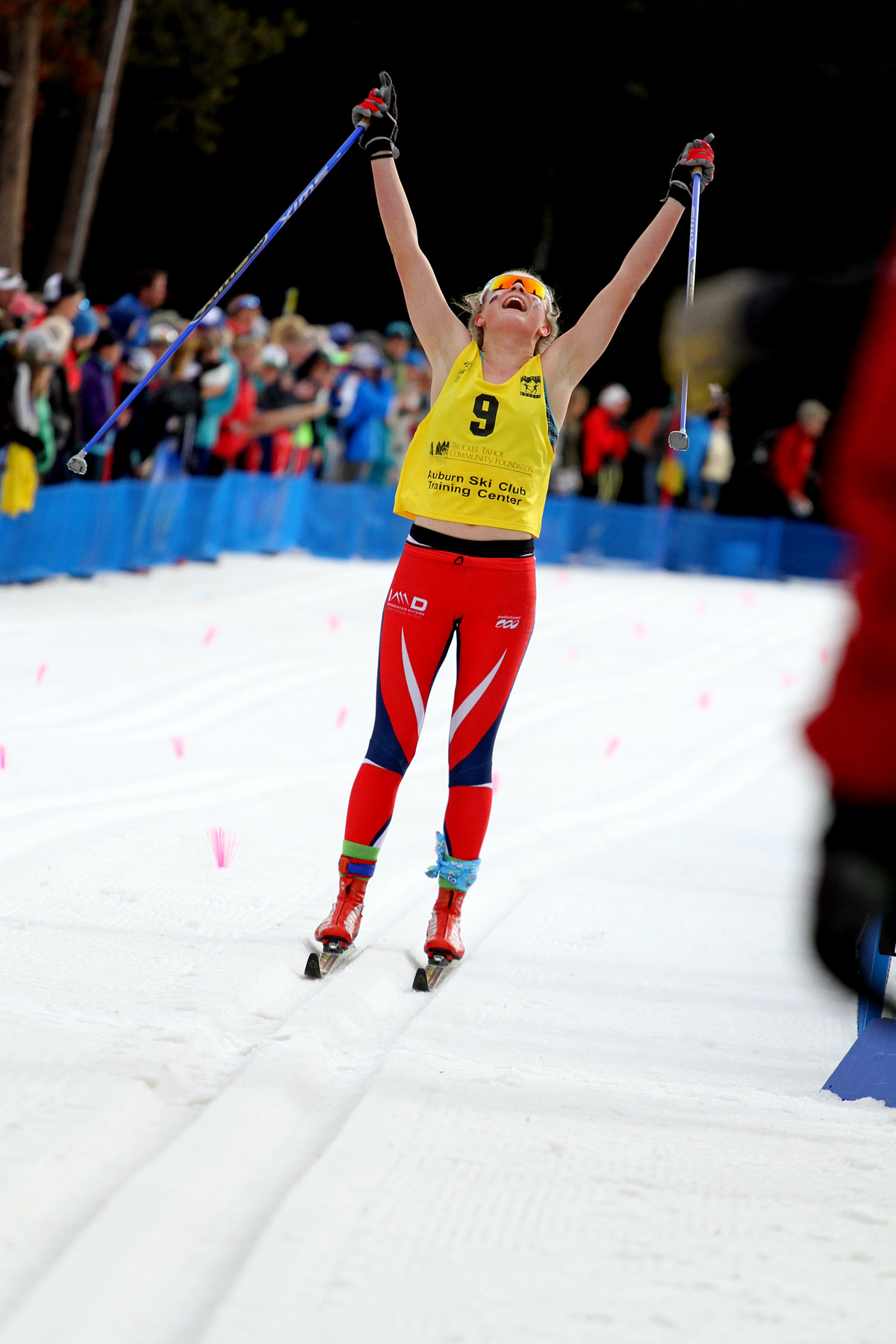
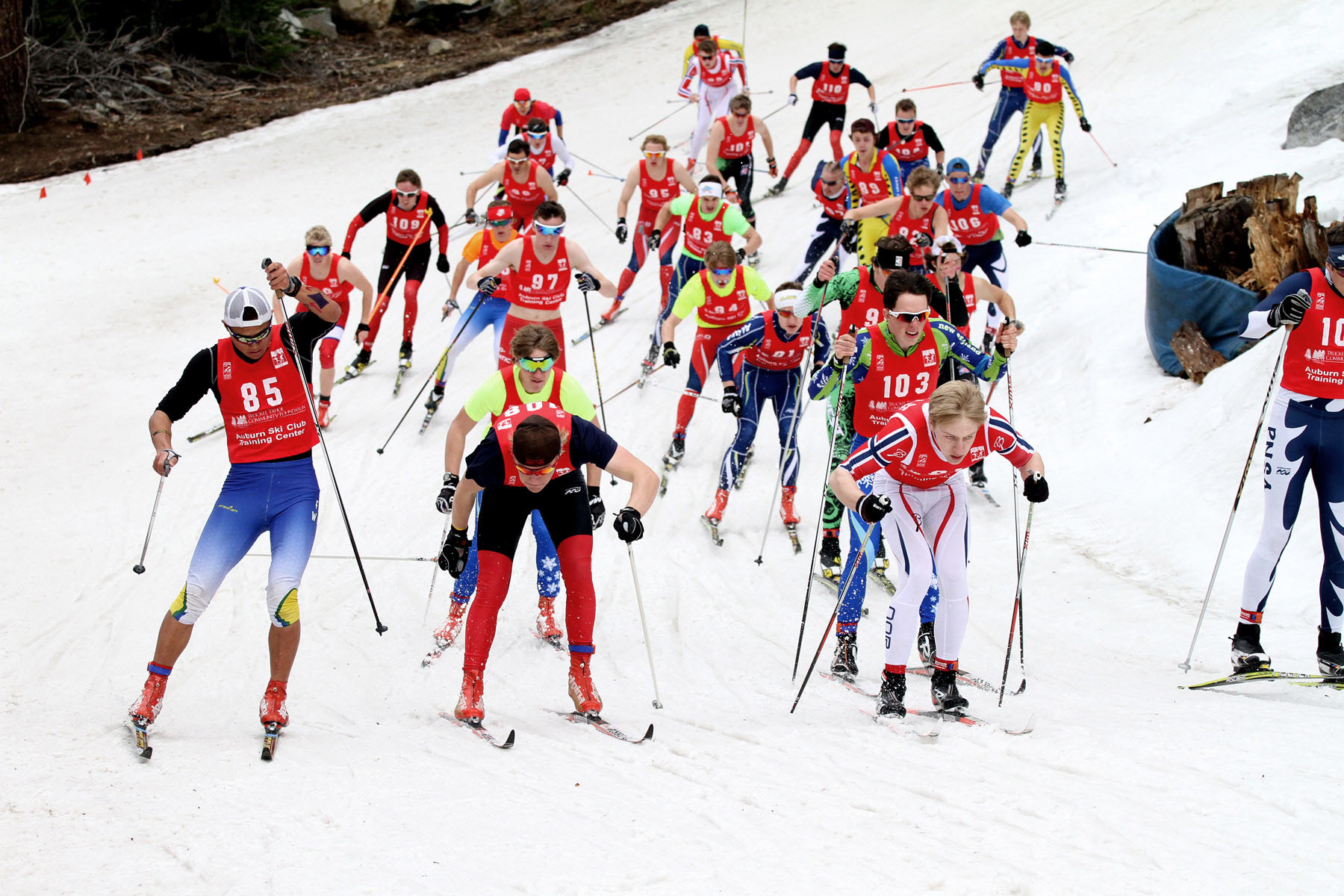
    One of the men's 3 x 2.5 k relays on the last day of 2015 U.S. Junior Nationals at Auburn Ski Club in Soda Springs, Calif. (Photo: Mark Nadell/MacBeth Graphics)
    The U18 men’s 3 x 2.5 k classic relay on the last day of 2015 U.S. Junior Nationals at Auburn Ski Club in Soda Springs, Calif. (Photo: Mark Nadell/MacBeth Graphics) All profits from photo sales will be donated to the National Nordic Foundation.

    The 2015 U.S. Junior Nationals came to a close Saturday with the 3 x 2.5-kilometer classic relays at Auburn Ski Club in Soda Springs, Calif., where New England and Midwest both tallied two relay wins. At the end of the weeklong series of races, New England took the overall team title, the Alaska Cup, by 167 points over Midwest. Intermountain placed third overall, 43 points out of second.

    Complete results

    For more videos, check out the 2015 XC Junior Nationals YouTube channel. Trouble viewing video above? Click here.

    Photos from Saturday’s relays and a complete gallery, courtesy of Mark/Nadell/MacBeth Graphics. All profits from photo sales will be donated to the National Nordic Foundation (NNF).

    On the podium:

    U16 women

    1. Intermountain (Sydney Palmer-Leger, Anna Gibson, Brooke Dunnagan) 24:55.4
    2. Midwest (Erin Moening, Abigail Jarzin, Anna Johnson) +13.7
    3. New England (Gabrielle Vandendries, Kirsten Miller, Mae Chalmers) +15.3

    U16 men

    1. Alaska (Luke Jager, Ti Donaldson, Canyon Tobin) 21:39.6
    2. New England (Adam Glueck, Russell Boswell, Adam Witkowski) +5.3
    3. Rocky Mountain (Noel Keeffe, Wyatt Gebhardt, Nolan Herzog) +24.7

    U18 women

    1. New England (Julia Kern, Leah Brams, Katharine Ogden) 24:44.4
    2. Rocky Mountain (Hailey Swirbul, Taeler McCrerey, Kathleen O’Connell) +1:22.6
    3. Midwest (Racquel Wohlk, Margie Freed, Nicole Schneider) +2:01.0

    U18 men

    1. Midwest (Mackinley Fitzpatrick, Leo Hipp, Zak Katterson) 23:04.2
    2. New England (Gavin McEwen, Koby Gordon, Daniel Streinz) +5
    3. New England (Lance McKenney, Kamran Husain, Henry Harmeyer) +16.5

    U20 women

    1. Midwest (Vivian Hett, Anna French, Caroline Brisbois) 25:59.1
    2. Alaska (Sarissa Lammers, Hannah Stevens, Taryn Hunt-Smith) +24.3
    3. Intermountain (Olivia Ekblad, Aja Starkey, Sophie McDonald) +35.4

    U20 men

    1. New England (Austin Huneck, Benjamin Hegman, Ian Moore) 22:21.3
    2. Intermountain (Sam Wood, Henry Gorman, Karsten Hokanson) +19.1
    3. New England (Parker McDonald, Blaine Ayotte, Nick Gardner) +54.2

    See also: Day 1 skate sprints | Day 2 freestyle individual starts | Day 3 classic mass starts

  • U.S. Nationals Video: Relay Wrap Up

    U.S. Nationals Video: Relay Wrap Up

    Intermountain's U16 women after winning the 3 x 3 k freestyle relay at 2014 Junior Nationals.
    Intermountain’s U16 women after winning the 3 x 3 k freestyle relay at 2014 Junior Nationals.

    STOWE, Vt. — Here is the final video in our four-race recap series from 2014 U.S. Junior Nationals at Trapp Family Lodge, the 3 x 3-kilometer freestyle relays on March 8. Intermountain swept the three-person U16 relays, New England topped the podium in both the U20 men’s and women’s relays, and Alaska got a win in the U18 category.

    For more: Top-10 Recognition | Relay results | Complete results

  • IMD Youth Ski Festival February 22nd-23rd

    Park City Nordic Ski Club is hosting the 2014 Intermountain Nordic Division Youth Ski Festival this February 22nd and 23rd at the Utah Olympic Park in Park City. The event is designed for cross country skiers aged 15 and younger. There will be individual competitions for skate and classic, an awesome terrain park, and many more activities for everyone.

    Tentative Schedule:

    Friday, February 21
    1:00PM-3:00PM – Preview IMDYSF courses at UOP
    3:00PM-5:00PM – Check-in with UOP waiver/payment (UOP)
    5:00PM – Team Leaders Meeting (UOP)

    Saturday, February 22
    9:45AM – Warm up on 1k course
    10:15AM – J6/J5 Boys Skate Mass Start 1k
    10:20AM – J6/J5 Girls Skate Mass Start 1k
    10:45AM – J4 Boys Skate Mass Start 2k
    10:50AM – J4 Girls Skate Mass Start 2k
    11:15AM – J3/J2 Boys Skate Mass Start 3k
    11:20AM – J3/J2 Girls Skate Mass Start 3k
    12:00-3:00PM – Terrain/Obstacle Course, Speed Trap, Discovery Ropes Course, Museum
    5:00PM-8:00PM – Award Banquet and Dance (Jupiter Bowl – Kimball Junction)

    Sunday, February 23
    9:00AM – Classic Distance Interval Start (15 second intervals, boys then girls) J6/J5-1k, J4-2k, J3/J2N-3k
    11:30AM – Coaches Race on the Terrain Event Course
    12:00PM – Lunch and final awards ceremony (UOP)

    IMD Poster
    IMD Youth Festival Entry Form
    IMD Youth Festival Lodging Information

    More information: UTAHOLYMPICLEGACY.COM

  • Junior Nationals: Intermountain Wins Close J1 Girls Relay; Rocky Mountain Boys Prevail

    Junior Nationals: Intermountain Wins Close J1 Girls Relay; Rocky Mountain Boys Prevail

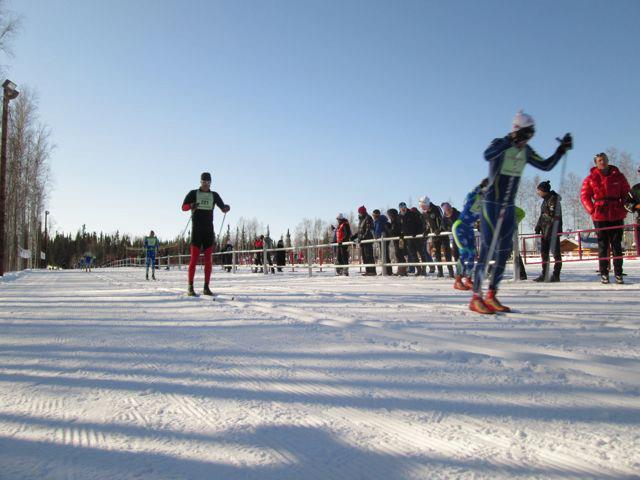
    Intermountain (l) racing for first (and finishing second to Norway) in the J1 boys 3x3.3 k relay on Tuesday at 2013 Junior Nationals in Fairbanks, Alaska. (Photo: facebook.com/pages/JN-2013-Fairbanks/153097771413595)
    Rocky Mountain (front left) racing for first (and finishing second to Norway) in the J1 boys 3×3.3 k relay on Tuesday at 2013 Junior Nationals in Fairbanks, Alaska. (Photo: facebook.com/pages/JN-2013-Fairbanks/153097771413595)

    (Via jn2013fairbanks.us)

    FAIRBANKS, Alaska — Often relay races come down to a drag race on the homestretch.

    Not on Tuesday, however, at the U.S. Cross Country Junior Nationals at Birch Hill Recreation Area.

    Of the six 3 x 3-kilometer classic relays contested for national championships — two each in the Junior 1, J2 and Older Junior divisions — only two were decided by less than 30 seconds and only one was up for grabs on the final straightaway. That race was the girls Junior 1 event, in which Intermountain edged Midwest by 3.7 seconds and Alaska by 4 seconds.

    IM anchor Annika Miller, of McCall, Idaho, passed Nicole Bathe of Midwest shortly after reaching the top of the grueling Sidewinder climb with just over a kilometer remaining.

    “That hurt,” Miller said of the long, gradual climb.

    Then she held off Bathe and a hard-charging Marion Woods of Alaska. Miller hung on after looking back to check on her pursuers’ whereabouts.

    “The uphill finish was just a killer,” Miller said.

    Intermountain won gold in 34:11.5 while Midwest edged Alaska by 0.3 seconds in 34:15.2. Alaska rallied to reach the podium after finishing the first of three legs in 14th place.

    Despite their younger age, the J1 girls proved much more competitive than their OJ counterparts, as remarkably eight of the top nine teams came from the J1 division. Both groups raced at the same time but results were then separated by division.

    Topping all squads was the Norwegian J1 trio of Lotta Weng, Tiril Weng and Lisa Kvamme with a superlative time of 33:07.8. Norway, however, is entered in the guest class and not eligible for placement on the U.S. podium. But the Norwegian girls again showed they are in a class of their own by almost immediately leaving the rest of the field behind.

    The boys J1 race featured a similar situation in that the top American team, Rocky Mountain, was chasing squads from Norway and the Older Junior division.

    Rocky Mountain — with Keegan Swirbul, Evan Weinman and Cal Deline — handled the domestic J1 competition for gold in 28:42.

    “My teammates crushed it. I couldn’t have been handed off in a better spot,” said Deline, who was tagged having a huge lead on New England and just a half-second deficit to Norway’s J1 guest team.

    Deline, wearing a hat with a Swedish flag that he traded for recently in Europe, attempted to catch a ride with Norway’s anchor Mattis Stenshagen.

    “It was an opportunity to try and hang on, but he was going too fast for me,” Deline said.

    Norway was the first J1 team across the line in 28:13. New England placed second among U.S. teams in 29:21 and Alaska earned bronze in 29:35.

    Wednesday is a day reserved for training and rest. The championships resume Thursday at 11:45 a.m. with 1.25-kilometer freestyle sprints.

    Complete results