From the FasterSkier archive — posts syndicated from athletes’ and coaches’ own blogs between 2004 and 2012, kept online as published. Current coverage is at fasterskier.com.
For the first time ever, an American will preside over international governance of a nordic sport. On Tuesday, the International Biathlon Union (IBU) announced that longtime U.S. Biathlon President and CEO Max Cobb has been named the IBU Secretary General. Cobb will finish up his second term on the IBU Executive Board and leave his post as at U.S. biathlon at the end of September, then begin his new role overseeing international competition, governance, and sport development this October.
The appointment of Cobb as IBU Secretary General marks the culmination of a long career in U.S. biathlon in which he has overseen the organization through stark growth in the sport, success on an international scale for U.S. biathletes, and through unique challenges like hosting the 2002 Salt Lake City Olympics, where Cobb served as the chief of competition.
On his new appointment, Cobb said in an email with FasterSkier that, “I am really honored to be selected for this position. The chance to serve the sport I love from a different position is really exciting. [Outgoing Secretary] Niklas Carlsson did a fantastic job and the IBU staff is well-structured and very capable.”
Cobb’s journey to overseeing biathlon is one marked by persistent and carefully thoughtful forward-thinking, along with an enduring connection to the nordic community in the United States. A New Englander through-and-through, Cobb competed at Dartmouth College while taking on leadership roles heading up the College’s Outing Club and Biathlon Club. It was the latter that translated into a career, accepting a job opportunity with the U.S. Biathlon Association in 1989. Founded in 1983, U.S. biathlon was still in its nascent, path-finding stages then, looking to build off the successes it had seen concurrently with U.S. skiing more broadly in the late 1970s and early 1980s. There were flashbulb glimpses that the U.S. could bring the popular discipline of biathlon to a new continent, a bronze in the women’s team relay event at the 1984 World Championships (Holly Beatie, Julie Newman, and Kari Swenson), and an individual silver for Josh Thompson in 1987 (20 k Individual). Without real infrastructure to develop the sport however, U.S. biathlon would have to reset towards the long-term goal of getting more talented athletes, in more places, into the sport before success would come again.
In 1992 Cobb took up that challenge as U.S. Biathlon’s Program Director, and since has been the steady hand guiding the sport between the punctuated successes that usually draw attention. First there was a gold medal at Junior World Championships in 1997 with Jay Hakkinen, then later the World Championship medals – first a silver with Tim Burke in 2013 (20 k Individual), then gold and silver with Lowell Bailey and Susan Dunklee, respectively, in 2017 (20 k Individual and 12.5 k Mass Start), and again a silver with Susan Dunklee in 2020 (7.5 k Sprint). In between, the development of training sites from Soldier Hollow (concurrent with the 2002 Salt Lake City Games) to Fort Kent, Maine (which, tucked away in the most rural corner of a rural state, improbably hosted a World Cup in 2004).
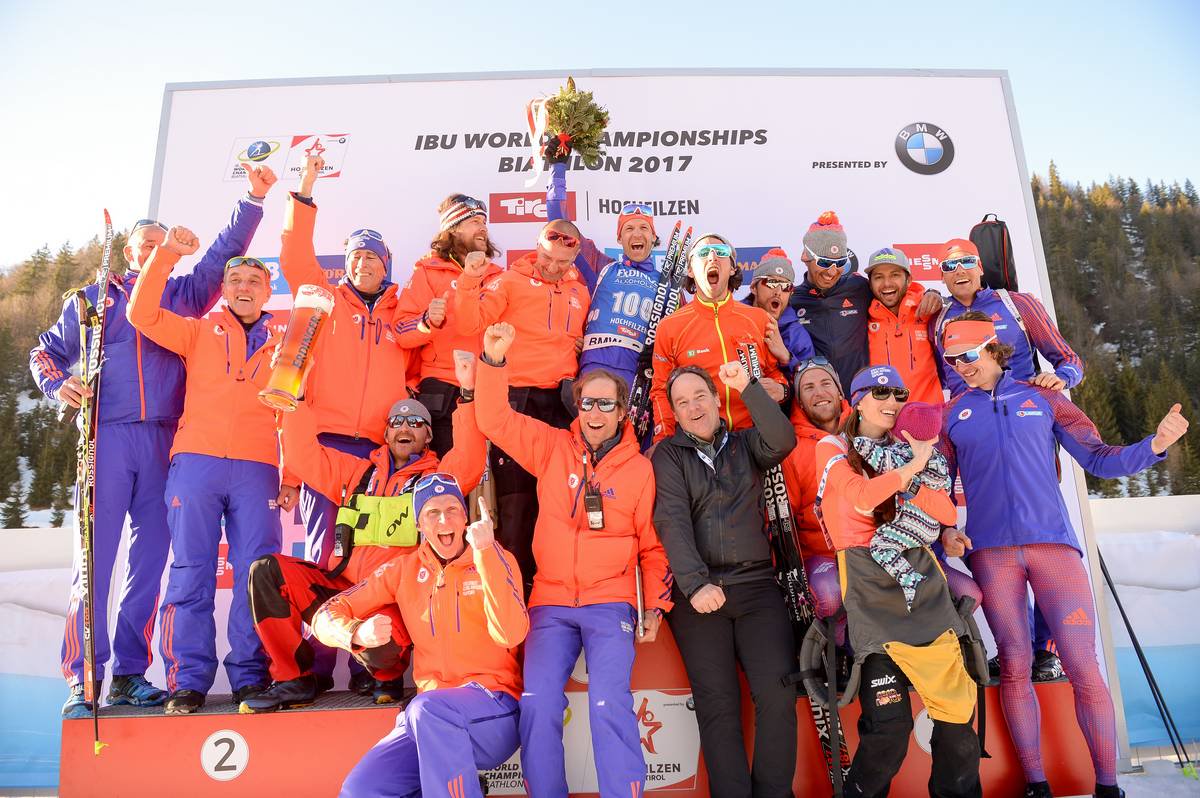
The U.S. Biathlon team and staff celebrate Lowell Bailey’s World Championship gold medal in Hochfilzen in 2017. (Photo: USBA/NordicFocus.com/Twitter)
Those highlights represent a consistent attitude and approach by biathletes across the United States put into sum by their consistent leader, as Cobb reflected, “The biggest take away is challenges can’t keep you from pursuing ambitious objectives. Collaboration, planning and determination to achieve a bold vision often overcomes more than we could ever imagine. Teamwork aligned around a common vision is powerful, but it takes time and constant tending. Today, Americans are regularly bringing home medals – something that seemed impossible three decades ago.”
Now tasked with scaling his approach to an international scale, Cobb sees a different set of challenges which stand in tandem, not separated, from the world’s geopolitics and concerns. “I think the most immediate challenge [this winter] will be the high cost of energy in Europe that will impact every part of international sport; from travel for the athletes to the energy needed to host major events,” said Cobb. His solution follows a pattern he’s already helped develop, with the IBU being on the forefront of sport sustainability – they were the first international winter sports governing body to meet the UN’s planning requirements to go carbon neutral by 2050 last year. “Our sport gives us a platform from which we can help influence millions to live lives that are climate friendly, we all have to act more sustainably in our daily lives and at our events.”
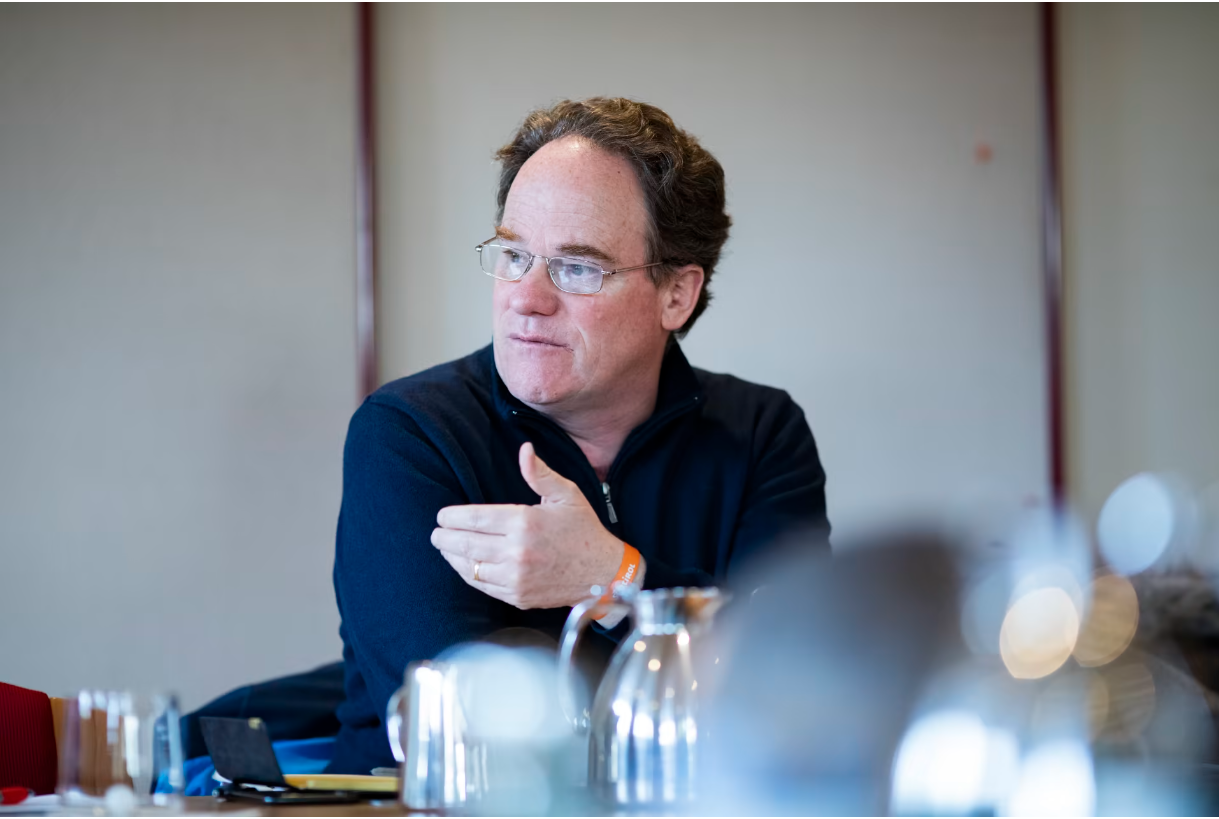
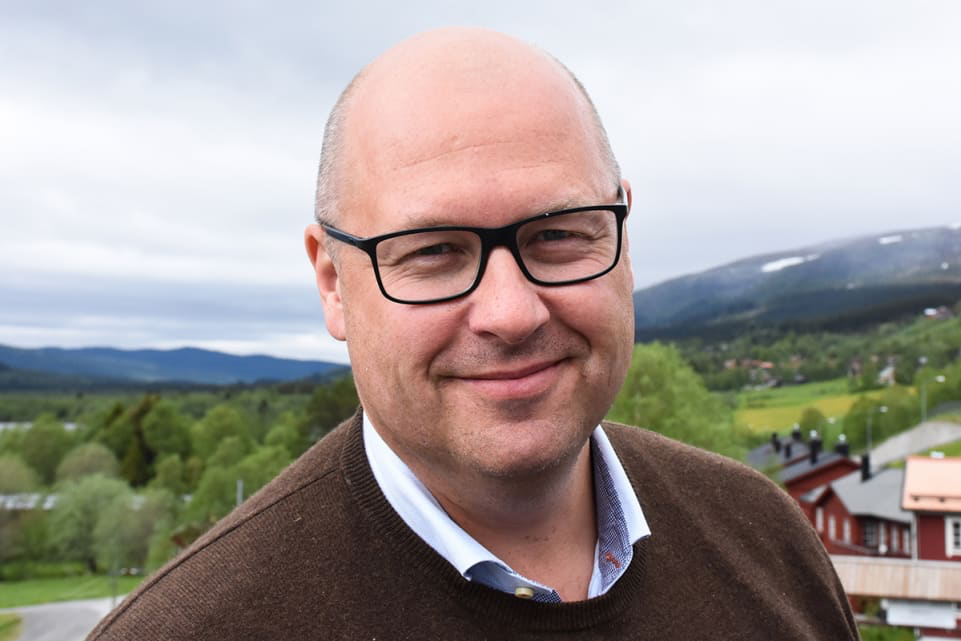
A 2016 photo of Max Cobb, the president and CEO of U.S. Biathlon and newly named IBU Secretary General. (Photo: Nordic Focus)
Cobb is also looking to prioritize confronting the challenge of resource disparity that is inhibiting parity in the sport – a persistent problem across the broader nordic disciplines. “[There’s a] big technology and training gap between the very biggest nations who have armies of ski tech and coaches and middle-sized teams with just a few hard-working staff. As this gap grows it could endanger the diverse set of nations that can win medals, [which] has been a hallmark of international biathlon for many decades.”
In confronting all of the challenges, Cobb said his hope is, “To serve the athletes well, both those in the sport today and those who need a chance to discover the wonderful challenge that [biathlon] is – two opposing disciplines with an unforgiving clock marking every second to the tenth.”
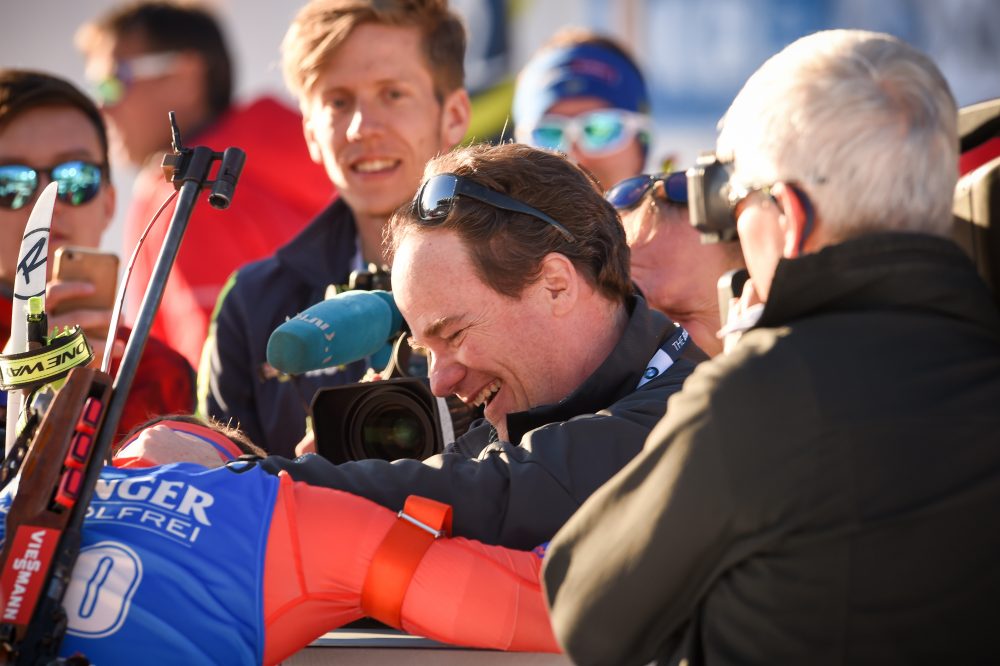
Lowell Bailey (USA) celebrates with Max Cobb after winning the gold in the 20 k indivudual at the 2017 IBU World Championships in Hochfilzen, Austria. (Photo:NordicFocus)
The International Biathlon Union (IBU) remains committed to improving its online and mobile products according to a recent announcement. The IBU, along with the global app and web developer Vincit, claims the new products, “will allow fans to follow competitions in real-time, as well as provide a second-screen experience with user-friendly statistics and insights into competitions, personalized user experience, and top-notch content with images and video.”
More on this in a bit.
Live event streaming or on-demand replays or race highlights play a key role for entities like the International Ski Federation (FIS) and the International Biathlon Union (IBU) to retain and expand their fanbase. Unless you are attending a race, this remains the easiest way for fans to access the elite tier of the sport. It’s the gateway by which many of us become addicted to following biathlon or cross-country skiing.
Over the last decade, watching televised or streamed biathlon compared to cross-country skiing has been far easier. The IBU’s website, biathlonworld.com, once provided unblocked live and full replays of World Cup racing. With the growth of boutique cable and online subscription services, over time, watching these sports has become more restrictive. Today, the landscape in which the IBU announced the future launch of its revamped website and app, for the time being, remains a desert in North America.
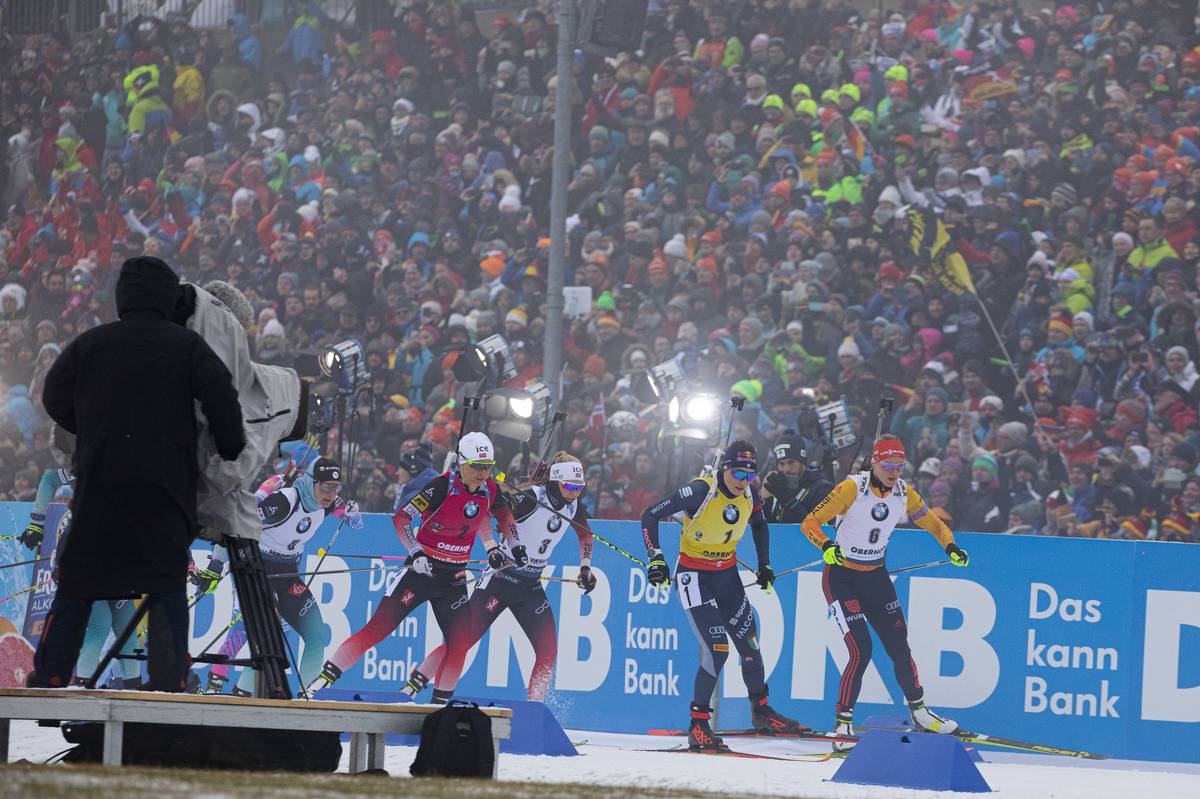
Television cameras at work during the 2020 Oberhof, Germany IBU World Cup. (Photo: NordicFocus)
This past season, watching the biathlon and cross-country live in the U.S. market required a modest subscription to NBC’s Peacock.tv (online) or a subscription to a cable provider offering the Olympic Channel, or Peacock Premium. NBC pulled live coverage of the cross-country World Cup in mid-December from the Olympic Channel, after which only a live feed with no commentary was available on the Peacock.tv website.
During the offseason, without a VPN, watching full replays, highlights, and press conferences from the IBU World Cup is simple – head to biathlonworld.com, click on live broadcasting, and you’ll be redirected to eurovisionsports.tv. The race coverage includes commentary from the stable of excellent British Eurosport commentators. You can also log into a Peacock.tv account for full race replays without commentary.
On the other hand, in the U.S. at least, the cross-country World Cup, absent commentary and featuring the basic live feed, is the available go-to for watching replays without a VPN or working YouTube for an archived race with Norweigan or Swedish commentary.
Both the IBU and FIS present digital platforms, that with some light lifting, allow fans to mine information regarding a race in real-time or parse out post-race data. The FIS digital environment provides real-time splits during races via their “live timing” platform. You can identify specific athletes to follow. Otherwise, it’s nothing elegant, but it serves basic live timing needs. FIS has upped its game in the last two years with higher production value video shorts featuring race highlights, comments from athletes, and lifestyle pieces to enhance the fan experience. The IBU has also offered a similar initiative regarding live splits, and a menu of videos offering a behind-the-scenes look at the sport. For the deep dive into real-time data, absent race video, you must head over to the IBU’s biathlonresults.com.
Both the FIS site and biathlonresults.com allow for searching an array of stats. The IBU’s stats are primarily text and numbers-based. The FIS stats are a mix of graphics, charts, and basic spreadsheets. (Here’s a link to the main FIS general stats menu.) There, you can search and analyze an individual athlete’s stats, or cross-reference up to 10 athletes and compare several categories like victories and top-10s. All this is to say, whether it’s biathlon or cross-country skiing, that it takes a bit of legwork to find useful information regarding a specific race (beyond elapsed time and time back), or an athlete.
Coming off an unsettled Covid plagued race season, who knows what the future holds for production values.
For their part, the IBU claims it is attempting to make the online/smartphone experience better for fans. Part of the IBU’s motivation is codified in what it calls Target 26 – a set of guidelines to improve biathlon’s viability by 2026. In the case of the new app, Target 26 guidelines set forth a deadline for developing a brand-specific app by 2022.
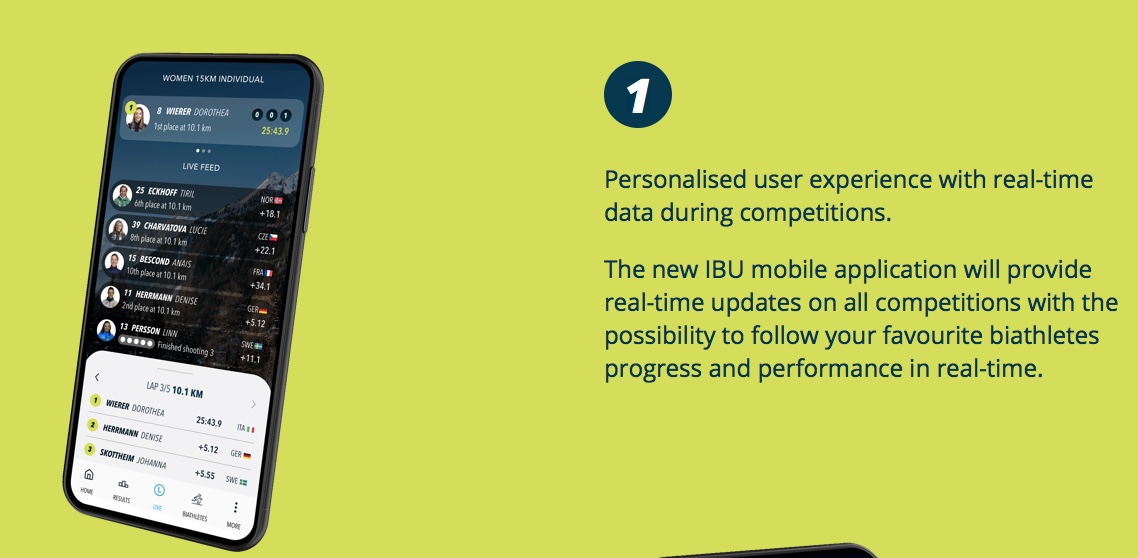
The new app being developed by Vincit provides what the IBU calls a “second screen experience”. This means fans watching a race live on one screen can use their phone – the second screen – for a more personalized user experience. In the event you’re busy and unable to watch the race live, the new IBU app will feature a more dynamic interface allowing users to view a real-time leaderboard featuring elapsed time and that ever-important metric – hits and misses on the shooting range. (Users will also be able to follow their favorite athletes in real-time.) In the case of biathlon, which often proves to be a more unpredictable sport than cross-country skiing, the app should enhance the experience for those on the go or needing that dual-screen experience while watching live.
The new IBU smartphone app should be available this fall. (Photo: screenshot IBU press release)
According to our email correspondence with the IBU, they claim 80% of respondents to their fan surveys in 2020 and 2021 stated they would use an IBU app. The new app, however, will not provide access to a live stream.“The first version of the app won’t provide live video stream of events,” emailed Christian Winkler, the IBU’s Communications Director. “The provision of a live stream depends on the media rights situation in each market. The IBU and its media rights partner Eurovision Sport are currently working on a digital distribution strategy across platforms, especially for markets without a rights holder.”
Along with the real-time enhanced functionality of the proposed stand-alone IBU app, the IBU said the app will provide more detailed information and notifications regarding their competitions. The IBU plans to release an updated version of biathlonworld.com concurrent with the release of the app this fall. This is good news for those looking for more when it comes to nordic sport.
It’s safe to assume the viewing landscape in Europe is driving the IBU’s digital initiative. A February 2021 European Broadcast Union (EBU) report claimed a 7% increase in total hours viewed for the 2021 IBU World Championships. The report attributed that significant jump to increased viewing of the women’s events. The growth in biathlon viewership, in general, mirrors the findings from the most recently concluded 2021 World Championships, as far as winter sports go, biathlon remains popular with viewers. (The IBU and the EBU share an agreement for “free-to-air coverage” of the IBU World Cup – which means viewers within Europe do not need a subscription service to watch events.)
From the data cited above, the trends for viewing the cross-country World Cup from 2018-2019 to 2019-2020 show a decreased overall audience. (Image: screenshot from Nielsen report)
Although not a thorough analysis, FasterSkier glanced at a Nielsen report titled “COOP FIS Cross Country World Cup 2019/20 – TV Media Evaluation Event Summary“. One trend evident after the 2018-2019 season, according to the data above, is the decreased cumulative American viewing audience in 2019/2020. Despite a significant increase in total broadcast time of cross-country events in 2019/2020 within the U.S. compared to the previous year, the cumulative audience decreased markedly.
Here in North America, a daunting issue remains. While the digital environment makes access to highly produced live events and replays easier, we have had setbacks in North America. App or no app, it’s harder to watch live nordic sport without a VPN.
Sweden’s Sebastian Samuelsson training in Nove Mesto (CZE). (Photo: NordicFocus)
With time to spare before the 2021-2022 race season, the International Biathlon Union clarified on Monday their fluoro wax policy. In a press release titled “IBU bans harmful fluor products from biathlon events,” the sport governing body banned the use of C8 fluorinated products. C8 compounds, also known as PFOAs, are eight chain fluorocarbons that have historically been used to enhance ski speed in certain conditions.
The IBU’s stance brings it into compliance with current European regulations regarding compounds containing C8. The IBU’s announcement also brings some clarity to a rather murky year or two when it comes to enforcing a potential ban of fluoro ski waxes.
However, the IBU did not ban fluorinated products outright for the 2021-2022 season. Ski speed products containing C6 fluoros are allowed. (Within the EU, C8 products are not allowed to be produced, sold, or used. C6 compounds are still allowed to be produced, sold, and used in the EU.)
The ban on C8 and permitted use of C6 in IBU sanctioned events will rely on a signed behavior contract by all relevant stakeholders. “To implement the ban, all National Federations and wax companies accredited for an IBU event are required to sign a declaration stating that their teams and staff participating in IBU events will follow the IBU rules and EU / ECHA regulations. Participation in an event without prior consent will not be permitted,” states the press release.
The enforcement of a fluoro ban has been a hotly debated topic the past few years as both the IBU and the International Ski Federation (FIS) floated then repealed a total ban on fluorinated wax, powders, gels, and liquids in the ski-prep process. The Fluoro Tracker, the handheld device in development to detect trace amounts of fluoros in real-time, has been held up due to issues with accurately detecting fluoros. According to the IBU, the Fluoro Tracker will not be introduced until after the upcoming race season.
With no real specifics mentioned, the IBU expressed that it would be enforcing their C8 ban by performing “analyses of materials produced for, or used in, the preparation of skis to confirm compliance with the IBU rules and EU / ECHA regulations. This includes spot checks of materials in use by teams or ski wax companies and individuals at IBU events. Such analyses will be conducted by experts from external and certified laboratories.”
Historically, testing for fluoros on a ski base has involved swabbing the base and sending the sample to a remote lab for analysis. This often involves a multi-day timeline as the sample is shipped, analyzed, and formal results worked up.
In their statement, the IBU claimed it was committed to a total ban on fluoros in the future.
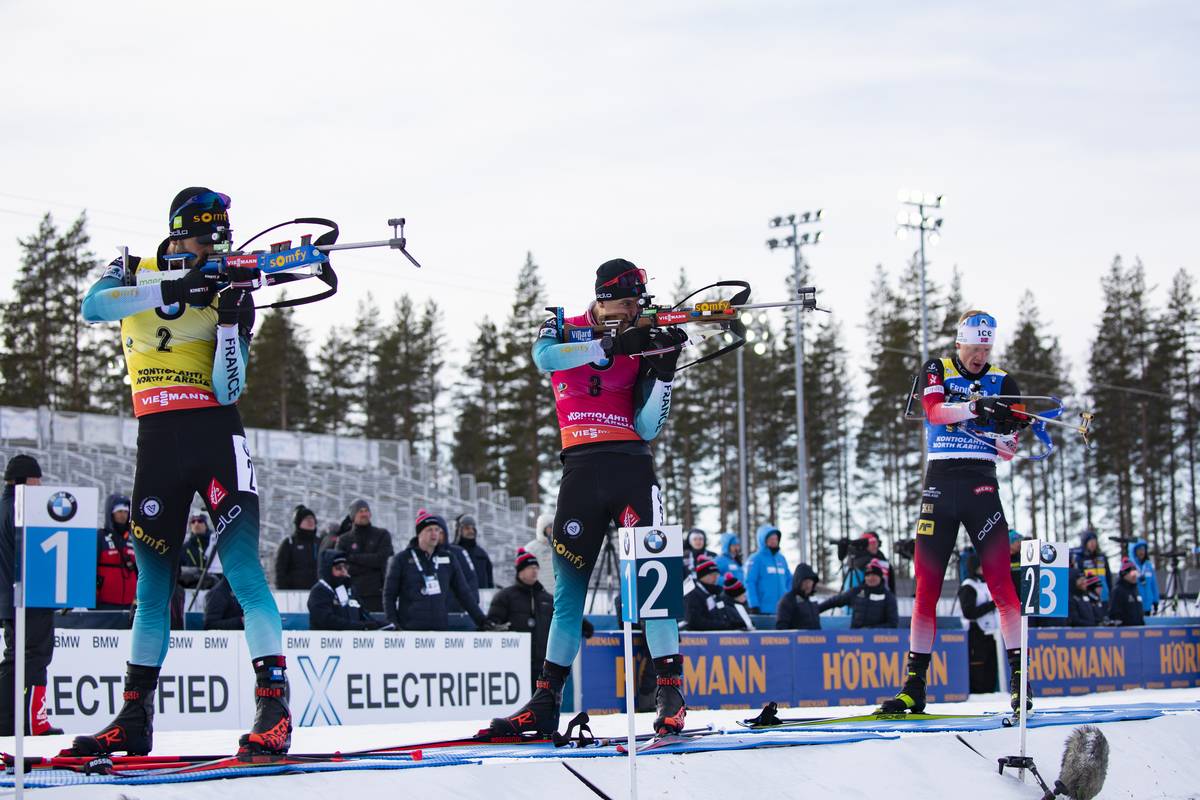
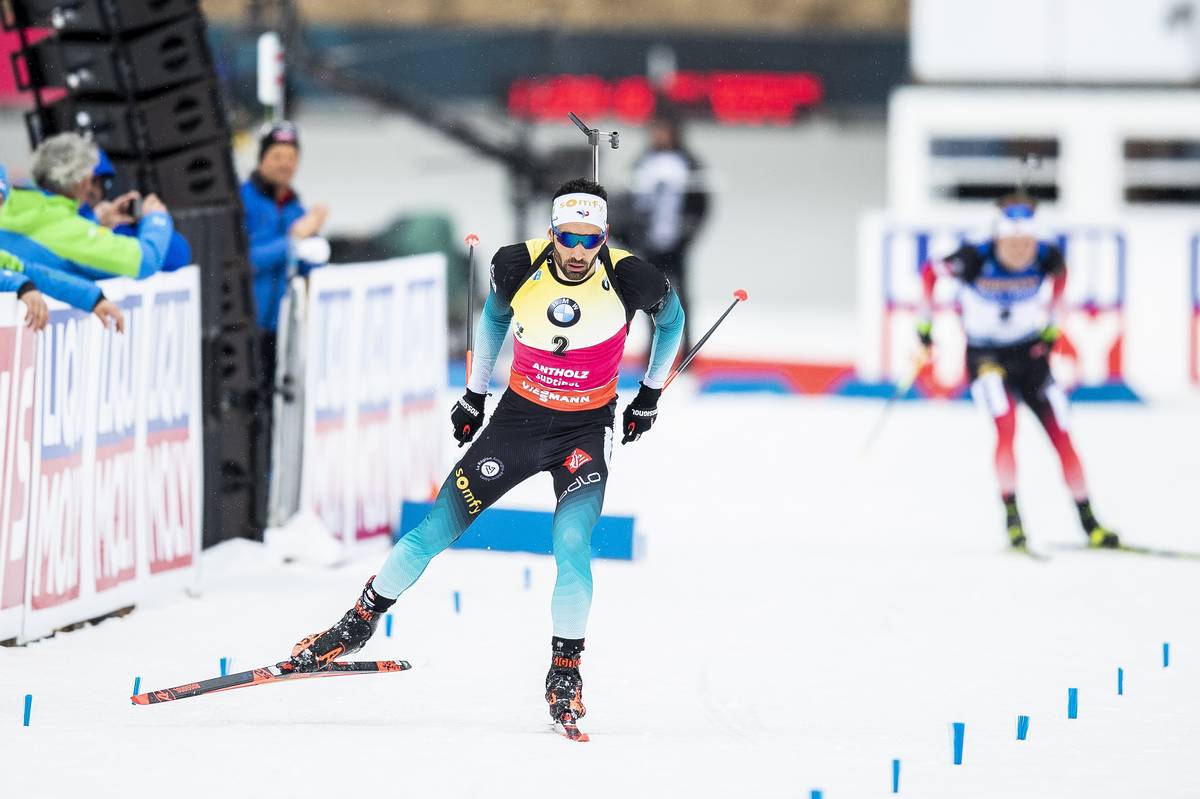
Martin Fourcade (FRA) racing in Kontiolahti, Finland last season. Fourcade has since retired. (Photo: NordicFocus)
The International Biathlon Union announced on Wednesday that as part of their Covid-19 testing protocols, several teams had athletes test positive for the virus. Those positive tests were from Russian, Latvian, and Moldovan biathletes. The IBU stated it was the first of a series of PCR tests to be administered in Kontiolahti, Finland, the first stop of the IBU World Cup. In an email received Thursday morning, the IBU relayed news that athletes from France and Romania also tested positive.
The IBU also claimed in their brief statement that teams have been notified and the affected parties isolated.
This season’s IBU World Cup race schedule has already been modified due to the pandemic. In the past, for example, the IBU’s first race-trimester would include three stops over three weeks. Currently, the IBU plans on holding the first and second week of racing in Kontiolahti to reduce international travel. The second stop, in Hochfilzen, Germany, also includes two weeks of racing, with the intent, again, of minimizing travel during the pandemic.
According to the “IBU Event Guidelines Covid-19”, the following measures must be taken to isolate an infected person.
“ISOLATED SICK PERSONS
Isolation rooms on venue (People that have contact with the isolated, possibly sick persons should have need to wear access to proper protection (masks, eye protection etc.)
Isolation in hotels
Reduce double rooms and use single rooms
Reserve room(s) per nation “
The Team Guide, posted by kontiolahtibiathlon.com, states “special groups”, in this case, athletes and team staff, must present a certificate “of a negative COVID-19 test taken less than 72 hours prior to arrival to Finland, a certificate will be checked at border control by the Finnish Border Guard.”
The “model for entry of special groups” explains those presenting a certified negative test may train, and “no obligatory quarantine” is required. However, the guidelines state “self-isolation highly recommended.”
According to the entry guidelines, a follow up negative test within 72 hours after entry to Finland must also be presented to the proper authorities.
Susan Dunklee (USA), Lisa Theresa Hauser (AUT), Marte Olsbu Roeiseland (NOR), (l-r), racing at the 2020 IBU World Championships mixed relay in , Antholz, Italy.
As coronavirus cases spike worldwide, biathletes are preparing for a modified start to the 2020-2021 World Cup season. The schedule emphasizes less travel than would be the norm on the IBU World Cup circuit. At the end of September, the International Biathlon Union (IBU) announced that the first four races of the winter would be held at two venues. Kontiolahti, Finland, will host the first two events on consecutive weekends, starting 27 November. Hochfilzen, Austria will have two race meets on succeeding weekends, starting 7 December.
In normal times, the schedule would have migrated to three different race sites over the same period of time. Last season, the IBU World Cup held events in Östersund, Sweden, Hochfilzen, Austria, and Annecy-Le Grand Bornard, France during the first trimester.
To continue limiting travel this year, the IBU subsequently revised their schedule to hold events on consecutive weekends at Oberhof in Germany, followed by the regularly scheduled event in Antholz-Anterselva, Italy. The Biathlon World Championships will continue to be held from 9 to 21 February in Pokljuka, Slovenia. The IBU will announce any changes to the third-trimester schedule by the end of November.
We know about the ever-changing nature of Covid-19 trends. For now, Finland is seeing 274.8 covid-19 cases per 100,000 persons, Austria is tallying 990.5 cases per 100,000. Germany, where the IBU World Cup features from 4 January to 17 January, is reporting 559 cases per 100,000; Italy is reporting 935 cases per 100,000 persons. Both France and Germany have reinstituted lockdown measures to slow the spread of disease.
Data aggregated by U.S. states are easier to find than cases per capita for the U.S. as a whole. As an example, New Jersey, where this reporter lives, has 2604 cases per 100,000 persons. This provides some context to how some European governments are mitigated community spread. It also remains uncertain how lockdowns in places where IBU World Cups are scheduled would impact those events.
Lowell Bailey (USA) celebrates with Max Cobb after winning the gold in the 20 k individual at the 2017 IBU World Championships in Hochfilzen, Austria.. (Photo: NordicFocus)
Speaking to FasterSkier earlier in October, Max Cobb, President and CEO of US Biathlon and Executive Board Member of the IBU, reflected on steps the IBU is taking to hold races this winter.
Cobb prefaced the conversation by stating that he was part of the working group that developed the changes. “I’m really satisfied with them,” said Cobb. “It was a sensible decision to make sure we’ve got our procedures down in the first race series before we try and implement it in more than one series at a time. I think it also gives every national federation the opportunity to have their athletes racing closer to home.”
Cobb stressed the IBU’s commitment to a safe racing environment. “If we’re uncomfortable with [covid infection levels], and if our medical advisory group is uncomfortable, then we’ll definitely change plans and cancel if need be.” He added that the IBU has asked their other calendared venues to be prepared in case events need to be relocated.
“Our hope is to be able to, as some other sports have done already, provide an environment in which we’re confident the risk of transmission is very low,” Cobb said. “That testing is robust, and athletes will have a chance to compete. [We are ] really sensitive to regional outbreaks, and obviously we’ll comply 100% with any local requirements.”
In a follow-up email, Cobb detailed the regimen the U.S. team would follow. Team members and staff will be tested for coronavirus before traveling to Europe, and then again 72 hours after arriving in Europe. During the race season, they’ll be tested at least twice per week.
Cobb estimated the cost of coronavirus testing to be approximately $30,000. Some of the testing costs for athletes, however, would be covered by the US Olympic & Paralympic Committee (USOPC) elite athletes’ health insurance.
It’s not just testing though: “Testing is one part of the budget impact but there are a lot more mitigation efforts,” Cobb wrote. “More single rooms, extra rooms, more transportation capacity to allow for distancing, it all adds up to more than $100,000 for the season.”
In an email, biathlon veteran Clare Egan responded to questions about the revised schedule. North American teams are used to long and taxing stints away from home when based in Europe.
“The obvious benefits of reduced travel are reduced fatigue and lower risk of exposure to COVID and other illnesses,” she wrote when asked if less travel would be an advantage for the U.S. squad. “These are the same advantages for everyone. I don’t think it offers me or my team any unique advantages over other teams. Perhaps the Finns and Austrians will feel an advantage being 2 weeks at home.”
Of travel arrangements, Egan wrote, “We will all travel on a charter flight from one venue to the next in order to reduce our exposure even further.”
Clare Egan of the U.S. during the 2020 women’s 15 k individual in Pokljuka, Slovenia. Egan placed 6th. (Photo: NordicFocus)
Egan is prepared for the challenges this season presents. “I feel comfortable traveling,” she said. “In the past few weeks, Europe’s cases have been double those in the U.S. But the worst outbreaks are in places where I will not be traveling. I understand the risks and also the easy ways I can lower my risk of exposure: wearing a mask, social distancing and washing my hands. Elite winter sport athletes like me have been doing this for years so I don’t think my behavior this winter will be that different from the past! I’ve been wearing a mask on planes for a decade.”
Cobb stressed the interdependence of athletes, support staff, and race organizations to ensure the season’s success. “The behavior of everyone matters for the success of the season,” he said. “I think that’s a really interesting sociological state to be in. I’m very optimistic that the athletes and everyone on the teams will behave in a way that lets us have a season. But it will be demanding to do that.”
Martin Fourcade racing last season at the 2020 IBU World Championships. (Photo: Nordic Focus)
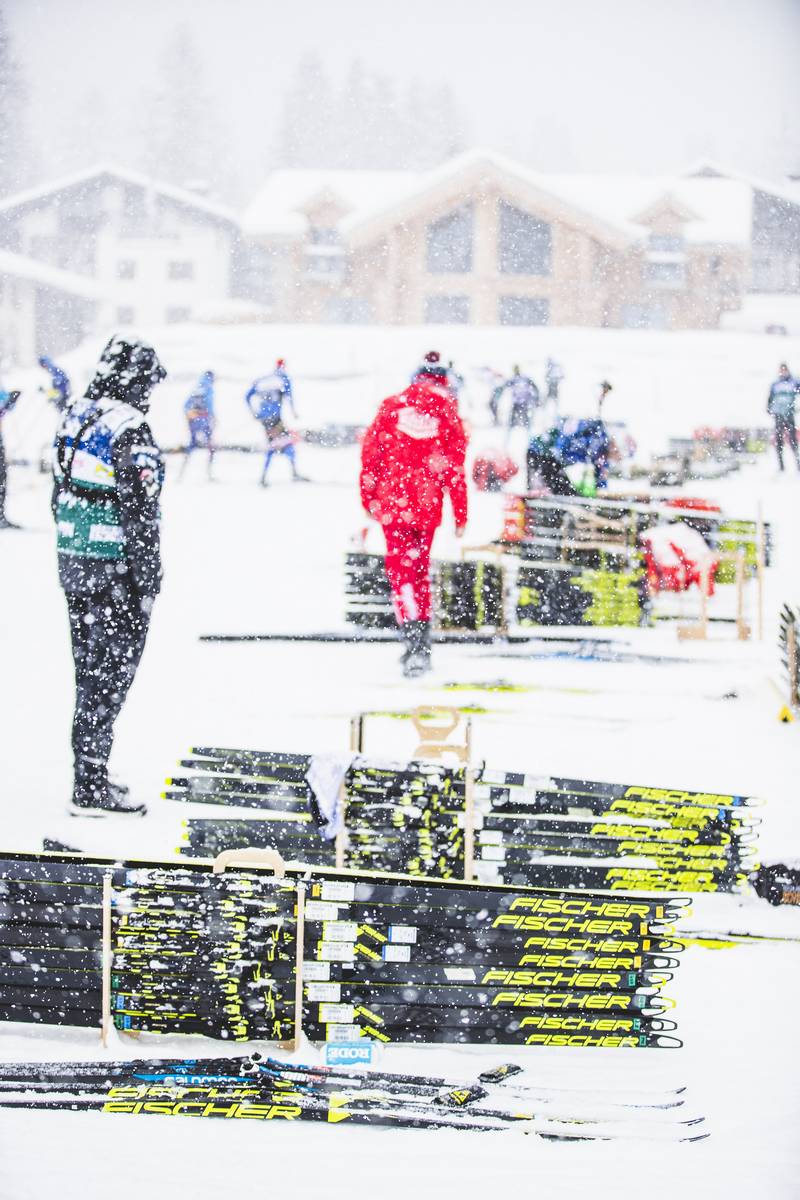
Testing the Fischer fleet in Davos. (Photo: NoridcFocus)
This morning the International Biathlon Union (IBU) and the International Ski Federation announced they were postponing their fluoro wax bans until the 2021-2022 season. The stated reason in the IBU press release was the following: “allow more time to test and refine the Fluorine Tracker device that is currently under development.”
FIS also claimed the device was not ready for use on the World Cup: “Despite the accuracy of the device measurement technology, testing also indicated that there were potential sources of measurement error related to other aspects of the testing system that require further testing and design adjustments to ensure absolutely fair and consistent results for all competitors.”
FIS stated “user error” could cause discrepancies in fluoro readings. Further, they revealed the device required an additional sensor to eliminate false readings caused by different “base materials, structures and base preparations.”
Both the IBU and FIS asserted they remain committed to a fluoro free race circuit in the future. This season, waxes that meet EU guidelines are permitted. Effective July 4, 2020 the EU banned ban the use of of PFOAs, otherwise known as C8, below a 0.025mg/kg limit. The threshold is so low, the chemicals are essentially banned from commercial use. In the ski industry, C8 waxes are considerd to impact speed more readily than their C6 cousins in humid and dirty snow conditions. C6 based fluoro waxes are permitted in Europe.
The Executive Board (EB) of the International Biathlon Union today announced that four World Cup events will take place in the first trimester of the 2020/21 season as planned. However, in order to minimise travel and protect athlete and stakeholder safety they will be hosted in just two venues. The competition dates and disciplines remain unchanged. The EB also agreed that the 14th Ordinary IBU Congress will be held virtually and the adjusted IBU Cup season programme was published.
With the adjusted calendar, the BMW IBU Biathlon World Cup will kick off in Kontiolahti (FIN) as scheduled but then remain there for another week for the second World Cup event, before the circuit travels to Hochfilzen (AUT) for the third and fourth World Cup events. Originally, Östersund (SWE) and Annecy-Le Grand Bornand (FRA) had been scheduled to host two of these World Cup events. But, following consultations with the Organising Committees, relevant National Authorities and the IBU Medical Advisory Group, the EB and the organisers agreed reducing the number of stops on the circuit would protect participant health and minimise travel challenges.
IBU Secretary-General Niklas Carlsson said:
“We are pleased that we are able to provide four World Cup events for our athletes and fans this year. We are though of course disappointed that we will not be visiting each of the four venues we had planned. It was a tough choice and we thank our organisers for their understanding and cooperation to come to this decision, which is accepted by all parties involved. The plan we have agreed on means we can host four World Cup events but at the same time reduce the health and logistical risks that come from travelling and venue changes.”
Before making the decision, the IBU worked with the World Cup Organising Committees, their National Federations and broadcasters, to evaluate the travel options and budget implications for hosting the events under the IBU’s COVID-19 event regulations, as well as the availability of each venue for hosting multiple events. The EB also decided to guarantee financial support for all organisers – both those who are holding additional events under the new programme and those who are not planned to host a World Cup event any longer under the new schedule. Any decision regarding if, and how many, spectators will be allowed to attend the events will depend on the national health authorities’ regulations in place for each venue in connection with the IBU Covid-19 event guidelines.
The EB confirmed the IBU World Championships Biathlon will take place on 09-21 February 2021 in Pokljuka (SLO). A decision regarding the schedule for the BMW IBU World Cups in January 2021 will be taken in October 2020 and the schedule for the World Cups in February and March 2021 will be decided in November 2020.
After the delay of the IBU Cup season 2020/2021, which was announced earlier this month, the adjusted calendar for the IBU Cup has now been agreed. Under the same principle of minimised travel, the series will feature three stops in Arber (GER), Brezno-Osrblie (SVK) and Ridnaun (ITA) with five event weeks. The Open European Championships will be held in Duszniki-Zdroj (24-31 January) as scheduled.
The EB agreed to support regional events in all recently defined IBU regions in which mainly neighbouring countries compete. Offering a reasonable number of competitions for youth and junior athletes was of high importance following the EB’s decision earlier this month to cancel all IBU Junior Cup events for the 2020/21 season and the Junior Open European Championships.
IBU President Olle Dahlin said:
“Biathlon, like all sports, is facing challenges we have never faced before. While disappointing, we have to accept that changes to our original plans are absolutely necessary. But by working together with all biathlon stakeholders, we have been able to find solutions that prioritise the health of our biathlon family and at the same time maximise the number of events that can take place. We believe that the plan we have developed has achieved that. We have kept the same number of World Cup events for the first trimester and ensured that all levels of biathlon will be served with international competitions next season. There is a lot for our athletes and fans to look forward to.
“We will continue to follow expert medical guidance and implement carefully considered safety measures at all our events. We remain flexible to changes but we are greatly looking forward to the new season beginning.”
The 14th Ordinary IBU Congress, originally scheduled for 13-15 November in Prague (CZE), will now be held virtually on the same dates.
The EB also received an update from the IBU fluor working group. The Board agreed to reconvene on the matter in the next weeks immediately when further field test reports of the Fluorine Tracker, the test device which scans the skis, have been received.
The International Biathlon Union posted a press release Friday with the following key take aways. We will post the full press release below.
“The IBU is planning to hold a full BMW IBU World Cup.”
“The IBU Executive Board will meet on 26-27 September to take a decision on whether adjustments need to be made to the planned World Cup programme in the first trimester (November-December 2020).”
“The World Championships Biathlon in Pokljuka (09-21 February 2021 are still scheduled as planned.”
“The Executive Board also agreed that the IBU Youth/Junior World Championships will take place as scheduled on 24 February-7 March 2021 in Obertilliach (AUT).”
“All IBU Junior Cup events for the 2020/21 season and the Junior Open European Championships will be cancelled.”
“IBU Cup events in November and December 2020 will be cancelled and the competition series will officially begin in January 2021.”
“The new competition schedule including the revised venue plan for the IBU Cup will be announced after the Executive Board meeting later this month.”
“The IBU Open European Championship is planned at the original date and venue (Duszniki Zdroj/POL, 24-31 January 2021). The new dates can be found here: https://biathlonresults.com/”
IBU Press Release
The IBU Executive Board (EB) has made adjustments to the upcoming 2020/21 season to protect the health of the athletes and all involved.
The IBU is planning to hold a full BMW IBU World Cup series including the World Championships Biathlon in Pokljuka (09-21 February 2021). The IBU Executive Board will meet on 26-27 September to take a decision on whether adjustments need to be made to the planned World Cup programme in the first trimester (November-December 2020).
The Executive Board also agreed that the IBU Youth/Junior World Championships will take place as scheduled on 24 February-7 March 2021 in Obertilliach (AUT). However, in order to ensure the wellbeing of all involved, it was decided that all IBU Junior Cup events for the 2020/21 season and the Junior Open European Championships will be cancelled.
It was also agreed that the IBU Cup events in November and December 2020 will be cancelled and the competition series will officially begin in January 2021. The new competition schedule including the revised venue plan for the IBU Cup will be announced after the Executive Board meeting later this month. The IBU Open European Championship is planned at the original date and venue (Duszniki Zdroj/POL, 24-31 January 2021). The new dates can be found here: https://biathlonresults.com/
Due to financial and logistical considerations, the IBU cannot guarantee the same very high standards of protective health measures that will be delivered at the BMW IBU World Cup and the other planned events, at the Junior Cups. It was therefore decided that the Junior Cups must be cancelled and the opening of the IBU Cup will be postponed to avoid putting any athletes, teams and officials at risk. The decision was made at this early stage to ensure that the National Federations have enough time to adjust and/or extend their national competition calendars accordingly.
IBU President Olle Dahlin said:
“The IBU recognises that this is a very difficult time for the biathlon family, as it is for all sports. We are working hard to ensure we maximise the number of events we can host while always ensuring that the health and wellbeing of our athletes and all stakeholders is our first priority. We are satisfied with the plan we have developed that will mean biathletes of all levels have access to international competitions next season.
“We are also planning to support regional competitions in which neighbouring countries can compete if health regulations allow. The development of a concept to promote regional competition is one pillar in the IBU development plan and we will look into if and how this can be applied next season.”
The protective health measures planned by the IBU have been developed based on the advice of the expert IBU Medical Advisory Group and will be adjusted as required at events based on the advice of the respective national authorities. The IBU COVID-19 event guidelines can be found here: https://www.biathlonworld.com/about-ibu/inside-ibu/staysafe/
Earlier this month, the website biathlonintegrity.com came online. The site is the digital interface of the Biathlon Integrity Unit, an independent arm of the International Biathlon Union. Part of the Biathlon Integrity Unit’s mandate, according to the website, is to provide a mechanism to “investigate and prosecute violations” as they relate to “integrity related matters in Biathlon, including anti-doping, ethical breaches, betting-related issues and any kind of result manipulation.”
What that means from a practical standpoint is an easy to use portal to locate anti-doping information on WADA doping codes and specific requirements for athletes in the IBU’s Registered Testing Pool which mandates registered athletes abide by specific out-of-competition testing protocols and whereabouts requirements.
The site also provides access to educational materials pertaining to anti-doping, anti-corruption, safeguarding (which entails protecting all biathletes including minors from mental, physical, or sexual abuse), and diversity. Additionally, an easy to find section allows individuals to file a confidential whistleblower report informing the Biathlon Integrity Unit about ethical and/or anti-doping code violations.
“Knock-on Effect” comments from Dick Pound:
Dick Pound, the former head of WADA and current member of the International Committee member made comments on July 15th in an interview with Reuters linking the potential cancellation of the 2021 Tokyo Olympics and the 2022 Beijing Winter Games. The Tokyo Olympics were slated for this summer but were postponed until July 23 to August 8, 2021, due to the ongoing pandemic.
“Taking the political side out of it for the moment say there is a COVID problem in July and August next year in Tokyo, it is hard to imagine there is not going to be a knock-on effect in the same area five months later,” Pound told Reuters.
The summer and winter events pose a quick-turnaround timetable for the IOC. Practically speaking, it is hard to fathom a scenario where the pandemic impacts a summer 2021 global sporting event, like the Summer Olympics, yet does not affect a 2022 Olympics.
In the Reuters piece, Pound posited several scenarios that might impact the 2022 Games. One focused on the pandemic and the notion that a vaccine still would not be readily available by winter 2022. (Beijing is scheduled to host from February 4 – 20.) Further, Pound speculated that some countries who have not curbed the spread of Covid-19 might be banned from travel to China.
Pound went further to draw the current icy relations between China and the U.S. into the mix. Both nations have ramped up their antagonism towards one another. The U. S. withdrew recently from the Who Health Organization (WHO), which the current U.S. administration claims is a tool for Chinese propaganda.
“At least one part of the U.S. is planning an election campaign which is all anti-China,” Pound said to Reuters. “If you are a conspiracy theorist, you might say well, the WHO is strongly influenced by China and they could probably without smirking too much go to a WHO meeting, from which the U.S. will no longer be associated, and say this isn’t positive health.
“At least one part of the U.S. is planning an election campaign which is all anti-China
“If you are a conspiracy theorist, you might say well, the WHO is strongly influenced by China and they could probably without smirking too much go to a WHO meeting, from which the U.S. will no longer be associated, and say this isn’t positive health.
“That is an extreme supposition. There are all kinds of crazy things that could happen.”
Athletes as Guinea Pigs
It was widely reported on July 11th that UK Sport (the United Kingdom’s government agency supporting Olympic and Paralympic sport) was involved with experimenting on athletes to boost performance. The Daily Mail acquired documents revealing that 91 athletes were given the experimental sports drink – called DeltaG – as they trained for the 2012 London Olympics.
The DeltaG drink, according to documents, contained synthetic ketones. When endurance athletes run low on fuel, the body can convert fat to ketones for energy. Some theorize that supplemental synthetic ketones can serve as a complement to the body’s natural fat-to-ketone conversion process, known as ketosis, to further prolong endurance.
The news reports claim that of the 91 athletes testing the substance, 36 experienced adverse side effects.
UK Sport had participating athletes sign waivers absolving UK Sport of any wrongdoing as well as sign an NDA to prevent athletes from leaking information or discussing the covert project.
The Daily Mail also unearthed a document in which UK Sport could not guarantee the substances in DeltaG were WADA compliant.
“UK Sport does not guarantee, promise, assure or represent that use of ketone esters is absolutely World Anti-Doping Code compliant and therefore excludes all responsibility for use of the ketone ester,” was one quoted section of a UK Sport “participant information sheet”.
The Daily Mail wrote the information document also included this verbiage: “WADA might exercise … their rights to regulate … [and] collect blood samples or retrospectively test old samples. This may occur if there were pressure of the media if the concept was to leak. However … ketosis is a temporary physiological state and would be difficult to prove or test with any post-event samples.”
The news report did state that UK Sport notified WADA and UK Anti-Doping before administering the study. At the time, ketones were not on the banned substance list. Ketones remain legal. However, their efficacy and potential for adverse health effects are of concern to some in the sports world.
One twist in the story involved the U.S. military. Internal documents obtained by The Daily Mail claim UK Sport scientists read a science journal piece about the U.S. military experimenting on animals with DeltaG. The U.S. military then linked UK Sport with Oxford University to pilot their own study.
A year ago Martin Fourcade was coming off the worst showing of his career, a cataclysm of a season leaving everyone who follows the sport scratching their heads. While he had two victories and another podium by Christmas, something was apparently wrong; his results declined after New Year’s and he wasn’t on the podium again for the rest of the season. He skipped the North American leg of the World Cup, raced World Champs, where it was especially egregious when he failed to medal, and then called it quits, missing the season finale at Holmenkollen. His actual results: twelfth in the overall rankings at the end of the year (after missing six races), and besides the already mentioned three podiums, he finished top ten in all but three races that he started.
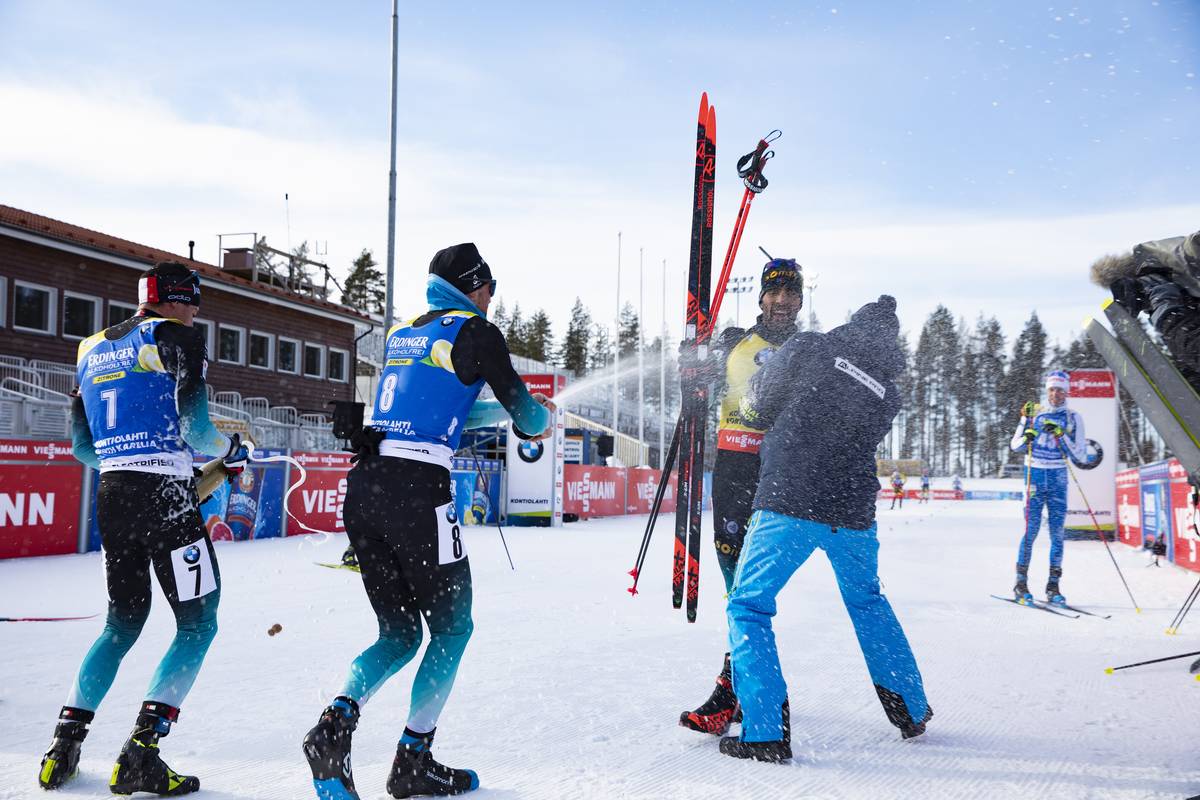
Kontiolahti, Finland was the final race of the season and the final career win for Martin Fourcade. (Photo: Nordic Focus)
What would have been a respectable season for just about anyone else was rock bottom for Fourcade. His showing that year is further contrasted by Johannes Thingnes Bø’s near perfection, winning 16 of 25 races en route to winning the overall title and each of the four discipline Crystal Globes. Bø’s year, however, can only be described as Fourcadeian, because what Bø did in the 2018-19 season was what was expected of Martin Fourcade every year he competed. Winning, all the time, second place being a disappointing race. Fourcade was the overwhelming favorite every time he lined up for a race. Fourcade owned the World Cup like no one else ever has.
Kontiolahti, Finland:
Martin Fourcade (FRA) and Johannes Thingnes Bø (NOR IBU world cup biathlon, pursuit. (Photo: NordicFocus)
Kontiolahti, Finland:
Martin Fourcade (FRA) and, Johannes Thingnes Bø (NOR). (Photo: NordicFocus)
Fourcade made his World Cup debut in 2008, where he finished 61st in a Sprint. It was the only World Cup he raced that year. The following season he was promoted and raced the whole season. His results weren’t extraordinary, but he was only 20 years old, and did make it to the podium once as the third leg on France’s relay team, and he finished the year 24th on the overall ranking. He started the 2009-10 season relatively quietly but had a series of top tens on the World Cup leading up to the Olympics. He had a mediocre showing in the first three races, but in the mass start, the last race, Fourcade took his first podium at the highest level with a silver medal at the Olympics.
Martin Fourcade (FRA) celebrating a medal-winning performance at the Olympics in Whistler
It’s a spectacular race to watch. Fourcade starts with bib 16, and in maybe 200 meters he’s at the front. He leads coming into the first shooting stage, misses twice, putting him 50 seconds behind, and watching it on TV you wouldn’t expect to get a glimpse of him again until he crossed the finish line. After the second lap, he shoots clean but is still in 28th (out of 30). The camera stays with the leaders. There’s a group of nine or so at the front and the chase is strung out. A kilometer and a half later there’s an intermediate time check and the camera lingers at the top of the climb, and then suddenly Fourcade blasts into view, hammering almost at a jump skate where everyone around him is in a controlled V1, and Fourcade’s in roughly 16th place and has cut his deficit almost in half, and by the time they get to the range he’s made contact with the lead group. He shoots slow but shoots clean, and the gap is at 22 seconds. He brings it down to 14 coming into the last shooting stage, where later on in his career he would build a reputation for clutch performance, but not this time, he misses once, and leaves the penalty loop in fifth place and an impossible 26 seconds back. But now it’s a ski race and Fourcade takes no prisoners. He blows by fourth-place without even turning his head, and it takes him maybe 500 more meters to get to third, drops him immediately, and he’s got a medal secure but he keeps charging. Somehow he passes second place too and has his eyes on gold, but he runs out of trail before he can catch up and just misses the top step of the podium.
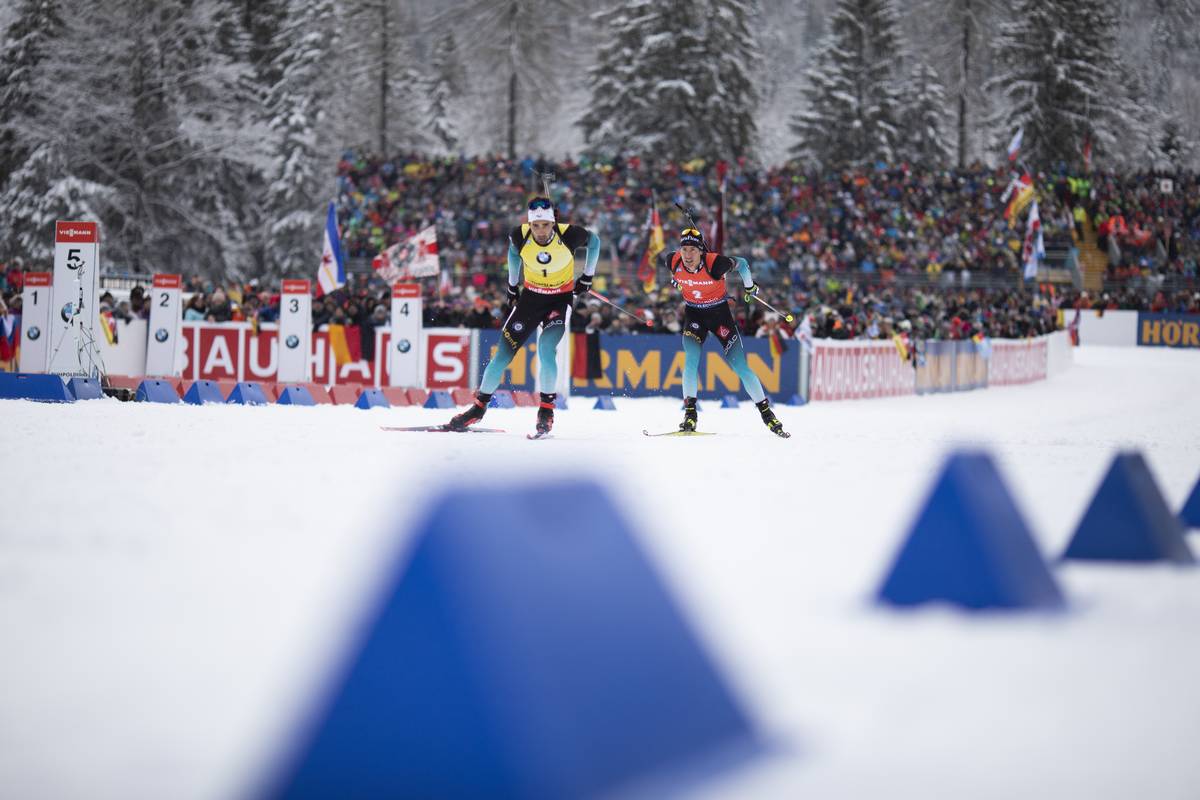
Martin Fourcade (FRA) leads Quentin Fillon Maillet (FRA) during the men’s pursuit in Ruhpolding, 2019. (Photo: NordicFocus)
So began Fourcade’s stranglehold on the biathlon world. He won his first little Crystal Globe that year in the Pursuit discipline, along the way taking three World Cups in a row. He was third overall the following season, and the year after, 2011-12, he won his first of seven consecutive overall titles.
Once there is enough popular consensus for an athlete to be proclaimed the GOAT (greatest of all time) of their sport, they get entrenched in that position and it becomes difficult to have a conversation about someone else surpassing them. An example, suggesting that LeBron James may have passed Michael Jordan as the best basketball player ever is pretty much heretical. This exists in biathlon too. We have a colossus of the sport in Ole Einar Bjørndalen, the most decorated male Winter Olympian ever, and ask just about anyone who knows anything about the sport and they’ll tell you he’s the best ever. His nickname is the ‘King of Biathlon’, after all. With that being said, you heard it here first: Fourcade was better than
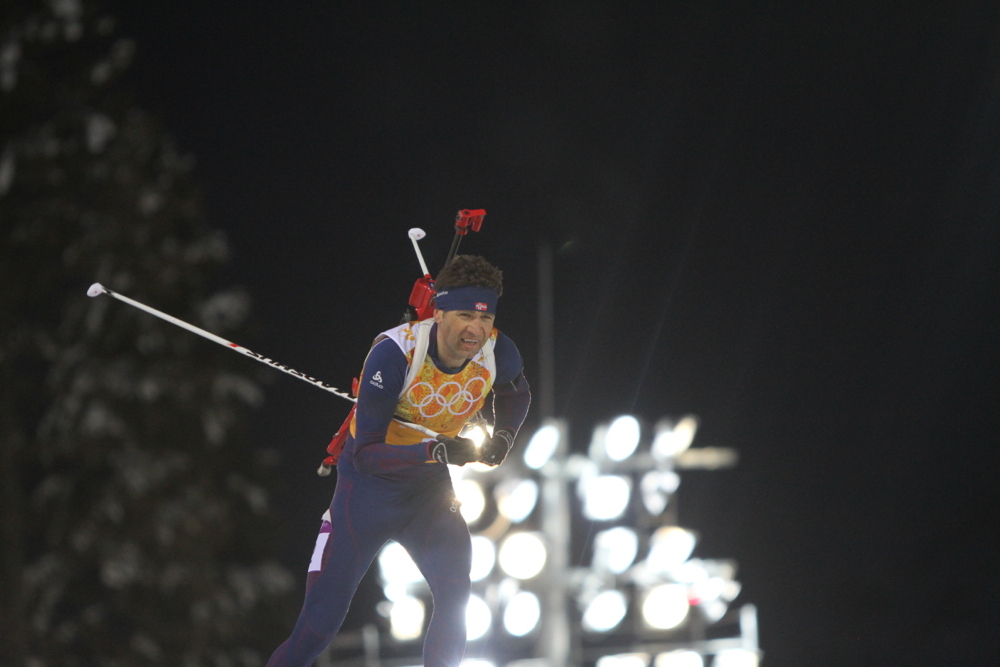
Ole Einar Bjørndalen out on the trails at the 2014 Olympics, where he trounced the decades-younger competition.
Nordic sports are resistant to analytics by nature. (The statisticalskier.com stuff republished on FasterSkier this year is the only time I’ve ever seen any sort of real statistical analysis of ski racing.) Without a ton of statistics outside of win tallies, it can be difficult to assess athletes from different eras, and as far as Bjørndalen and Fourcade, taking a head-to-head of the races they were both in is probably not the best comparison, because Bjørndalen was damn near geriatric when Fourcade started winning.
But I’m going to go ahead and use what stats I can. (Note the totals listed do not include any relay results.) So let’s start with overall Crystal Globes. In 24 seasons, Bjørndalen had six overall titles and seven top-threes; in 12 seasons, Fourcade had seven overall titles and two more podiums.* (25% wins and 54% podiums for Bjørndalen; 58% wins and 75% podiums for Fourcade.) A percentage comparison may seem unfair because Bjørndalen raced into his forties while Fourcade retired at 31, athletic prime, but regardless, in half as many seasons Fourcade won more Crystal Globes. And if we factor in discipline titles it’s even more outrageously in Fourcade’s favor. Bjørndalen has twenty discipline titles; Fourcade has 26.† And Fourcade accomplished something Bjørndalen never did when he swept every discipline title in 2013. That’s five Crystal Globes in one season. And he did it three more times after that. If instead, we look at individual World Cup races (this includes all World Cups, World Champs, and the Olympics), Bjørndalen holds the IBU record with 95 wins and 179 total podiums in 421 starts. Fourcade is second all-time with 83 wins and 150 podiums in 243 starts. (Bjørndalen: 12% and 43%; Fourcade: 34% and 62%). If he kept racing for another season or two Fourcade stood a very good chance of passing Bjørndalen.
And for emphasis, again: Martin Fourcade was on the podium in 62% of his starts.
We can also compare results at major championships, given that those are usually assigned more weight than the World Cup. So, Bjørndalen raced 69 races at World Championships, collecting 11 gold medals and 26 podiums; Fourcade, in 36 starts, garnered 11 golds and 18 podiums. (16% and 38% for OEB, 31% and 50% for MF.)‡ At the Olympics, Bjørndalen has 5 golds and 9 podiums in 19 races; Fourcade has 4 golds and 6 podiums in 12 races. (OEB: 26% and 47%; MF: 33% and 50%.) I’m calling this one a draw; while Fourcade was on the podium more often, Bjørndalen deserves some commendation for getting medals well beyond his fortieth birthday, and also note that Bjørndalen stepped up his game at the Olympics, while Fourcade pretty much stayed consistent (though Fourcade was much better than Bjørndalen at World Champs).
Martin Fourcade (FRA) – IBU world championships biathlon, mass start, Antholz (ITA). (Photo: NordicFocus)
The long and short of it all is that Fourcade won more than Bjørndalen in a career that spanned half as much time. Comparing the two men’s achievements, Fourcade was better on the World Cup, achieving a consistency Bjørndalen never quite had and was just as successful at World Champs and the Olympics. Bjørndalen racked up more hardware due to his seemingly supernatural longevity, but peak Fourcade was an unstoppable force of a caliber the sport had not yet seen.
Martin Fourcade should be remembered as the most dominant biathlete to ever compete. He won the 2013 World Cup by 400 points. On a regular basis, he had such a big lead in the overall standings his Crystal Globe would be wrapped up weeks before the end of the season. He held the yellow bib for two and a half years straight from 2012 to 2014. He won in every discipline and rarely had bad days (and even then he was still good). Nobody was ever surprised when the last lap of a race turned into a formality after Fourcade entered the range with a thirty-second lead and shot clean, administering the coup de grace for anyone who thought they had a chance, Fourcade pumping his fist in the air before he put his rifle on his back, the final lap now his victory lap, carrying the Tricolour across the line. Though let’s be honest, he could’ve missed the last shot and he still would have won. If he missed twice, maybe he could be beaten. He was the strongest skier on the World Cup and one of the best shooters.§
Martin Fourcade (FRA) – IBU World Championships Biathlon, pursuit men, Antholz, Italy. (Photo: NordicFocus)
So this was Fourcade’s final season, though he didn’t announce it until March 13, in the middle of what would be his last race weekend. As a fan, it was, without a doubt, the best season since I started following the sport. Fourcade had triumphantly returned to form, though for the first time in a long time (disregarding last year) somebody was actually skiing faster than Fourcade. Bø took the first race, Fourcade took the second. Bø then won four of the next five. Then Fourcade won four in a row. Each of them had held the yellow bib twice by mid-January. Each had a gold at World Champs, with Bø’s coming on the last race, and then he won the next three World Cups, ending with the Sprint in Kontiolahti, edging Fourcade in second.
After the pursuit, there should have been three more races but the season was cut short for Coronavirus and who knows what would have happened because it was so close between the two of them. Fourcade didn’t control his own fate going into that last race; if Fourcade won Bø needed fourth to take the overall. And fourth is what he got. The final tally: 913 points for Bø, 911 for Fourcade. So Fourcade didn’t get the crystal globe but he won the last race of his career, skiing into the hauntingly empty grandstands in Kontiolahti, the place where he’d won his first World Cup ten years prior to the day, after characteristically leaving the range with an insurmountable lead, the fairytale ending to the greatest career we’d ever seen, made complete with a podium sweep for France. As his successor, Fourcade leaves Johannes Thingnes Bø who, at 26, is certainly the best male biathlete on the planet, and perhaps well on his way equaling Fourcade’s seven consecutive big Crystal Globes. But for now, au revoir to Martin Fourcade, the best there ever was, the rightful King of Biathlon.
Martin Fourcade (FRA) – IBU world championships biathlon, individual. (Photo: NordicFocus)
Martin Fourcade (FRA) – IBU world championships biathlon, individual. (Photo: NordicFocus)
*I’m not counting either athlete’s first season, when they competed in two and one World Cup races, respectively. I am counting Bjørndalen’s last and Fourcade’s second to last, when they both missed a significant number of races.
† I suppose I need to mention that the Pursuit didn’t exist until 1996 and the Mass Start wasn’t around until 1998, Bjørndalen’s fifth and seventh seasons. So while that’s ten fewer opportunities for a discipline title, it’s unlikely he would have won any of those even if they had existed, given his other results from that time. His first Pursuit Globe came in 2000 and his first Mass Start in 2003.
‡ The IBU holds World Championships every year except for Olympic years. There’s usually a significant lag between when a new event is added to the IBU rulebook and World Championships, and its inclusion on the Olympic program, so the IBU has hosted a standalone ‘World Championship’ for those events in Olympic years. For instance, the Mass Start did not make it onto the Olympic program until 2006, so there was only a Mass Start World Championship in 2002. More recently, the mixed relay was not contested at the 2010 Olympics, so there was a single World Championship event held during the final World Cup weekend (kind of like how the 50k/30k at Spring Series are National Championship events while the other races are plain old Super Tours). Some sources don’t count these as World Championships, instead of listing them just as World Cups, but I’m including them in my World Championship medal count here.
§ It goes without saying that the best skier/best shooter would be the best biathlete, but there’s a little more nuance than that, and this is probably the reason Fourcade was ultimately better than Bjørndalen. Both were the best skiers of their time, but the gap between Bjørndalen and whoever was number two, skiing-wise, was just astronomical, while Fourcade did occasionally get out skied. (Remember, Bjørndalen once won a cross-country World Cup and had a couple other podiums. Fourcade, if you’re curious, did score points in a cross-country World Cup, finishing 22nd in a 10k in 2015.) But Fourcade consistently shot over 90% during his career, while Bjørndalen was usually mid-80s. Hence why, in this writer’s opinion, Bjørndalen had considerably more success in Sprints, which favor strong skiing, than the Individual, which is much more of a ‘shooter’s race’. So basically what I’m saying is if Bjørndalen had just shot a little better, he might have won every Crystal Globe for twenty years straight.
Amidst the whirlwind of February racing, news happens beyond the ski tracks. Here are some notable news threads.
It was announced yesterday that the famed Engadin Ski Marathon, to be held on March 8, has been canceled due to concerns related to the coronavirus (also referred to as COVID-19). “The spread of the coronavirus in Europe – with two cases in our vicinity – has left the authorities with no choice but to ban big events like our running events for the next ten days in Southern Bundes,” race organizers posted on FaceBook.
Yesterday, four coronavirus cases had been confirmed in Switzerland. According to the Engadin website, the health ministry in this region of Switzerland had called for the cancellation of all public events. Many skiers have been impacted as the race attracts more than 14,000 participants. It is the second time the Engadin had been canceled in its 51-year history.
Anti-Doping Research:
An interesting research paper on doping in athletics, what we will call track and field, was published on February 25. The article is titled, Prevalence Estimate of Blood Doping in Elite Track and Field Athletes During Two Major International Events, was published in “Frontiers in Physiology: Red Blood Cell Physiology.”
Researchers analyzed blood samples from men and women at the 2011 and 2013 World Athletics Championships. Over three thousand samples were evaluated with 209 countries represented.
Perhaps the most startling finding was the prevalence of blood doping in endurance athletes. According to Table 3 in the article, 15 percent of males (endurance) blood doped at the 2011 World Championships, and 22 percent of females (endurance). According to the findings, a prevalence of 18 percent of all athletes (endurance) blood doped at the 2011 WC, compared to 15 percent in 2013.
Researchers defined “endurance” as the following: “endurance” comprised all athletes competing in running or walking events with distances equal or longer than 800 m while “non-endurance” included all athletes competing in jumps, sprints, throws, and combined events, as well as distances shorter than 800 m.
For transparency, the authors disclosed the research had in part been funded by WADA’s Science Department.
Doping Roundup:
Water is water: frozen or otherwise. Chinese Olympic swimmer and megastar, Sun Yang, was handed an eight-year ban from competition on Friday by the Court for Arbitration for Sport (CAS).
Yang’s case involves an ongoing saga in which Yang’s mother evidently instructed his security guard to destroy blood samples that had been collected at his home in 2018 by antidoping officials. Yang refused to provide a urine sample at the time of the incident.
Yang is the Olympic champion in the 400 and 1500 meter freestyles at the 2012 Games and the 200 freestyle champ at the 2016 Olympics.
Yang has the option to appeal the ruling to the Swiss federal court. The story is relevant considering the length of Yang’s penalty, which WADA claims is proportionate to the anti-doping violation.
Alexander Loginov during the men’s relay at the 2020 IBU World Championships. (Photo: NordicFocus)
The new news is this: on February 22, Italian police raided Loginov’s hotel room. Police confiscated his laptop and mobile phone. Additionally, it has been reported that Loginov’s coach, Alexander Kasperovich, had his laptop and phone taken as evidence. According to news reports, Kasperovich is suspected of using another person’s accreditation for the World Championships.
Loginov claims the raid was prompted by the IBU and carried out by Italian authorities. The IBU claimed it was not given advance notice of the raid. Several Russian news outlets are reporting that Loginov and Kasperovich intend to sue the IBU.
In this episode, we connect with Max Cobb, the CEO of U.S. Biathlon. He also sits on the International Biathlon Union’s (IBU) Executive Board. When we spoke, he had just returned from the IBU’s “historic” Extraordinary Congress which took place from October 18th-20th, in Munich.
A 2016 photo of Max Cobb, the president and CEO of U.S. Biathlon. (Photo: Nordic Focus)
The IBU has been rocked in the recent past by internal mismanagement and doping scandals. Rather than succumb to the inertia associated with systemic change, the IBU has reset and begun reforming. Part of that reform manifested in Munich with the formalization of a new Integrity Code and what is called the Biathlon Integrity Unit.
Cobb discusses some of these changes and how the IBU is evolving for the better.
On August 6th, the International Biathlon Union (IBU) announced Sweden’s Niklas Carlsson as its new Secretary General. At 44-years-old, Carlsson comes to the position with considerable experience in the world of alpine ski racing. According to the IBU press release,Carlsson served as the Secretary-General of the Swedish Ski Federation from 2011-2014. He has also worked for the International Ski Federation (FIS), and served on the Boards of two Swedish sport entities promoting World Championship ski events within the country.
Niklas Carlsson, the new IBU Secretary General. (Photo: Biathlonworld.com)
“I am excited to join the IBU at this thrilling time for the sport and the federation,” Carlsson told the IBU. “I am looking forward to getting to know the biathlon family and will work myself into every detail of this fascinating sport, which I have followed closely in the past. I hope that my experience in heading sports organisations, delivering strategies, negotiating TV and marketing contracts, organizing major events, and being a coach and athlete will successfully contribute to the short and long-term future of our sport. Enhancing the strong foundation biathlon already has, the experienced team in Salzburg and I will deliver the execution of the new Strategic Plan and the implementation of institutional reforms.”
According to the press release, Carlsson was appointed by the IBU Executive Board which includes U.S. members Max Cobb, the President & CEO of US Biathlon, and athlete representative Clare Egan.
“the decision of the FIS Congress 2018 to refer cases to an Independent Doping Panel to comply with the principle of the separation of powers, the Court of Arbitration for Sport Anti-Doping Division (CAS ADD). The CAS ADD will act as an independent first instance for international cases. (FasterSkier ran a piece on the FIS and CAS agreement on June 18.)
“the CAS decision of 15th March, whereby the prohibition of the use of oxygen in-competition for all disciplines is now incorporated in the International Competition Rules (ICR), article 222.7”
This addition to the 2019 FIS Anti-Doping rules relates to a March 15 CAS ruling which can be read in full here. The case involved German alpine skier Stefan Luitz. CAS summarized the case in its ruling. Below is a quoted section from CAS.
“On 2 December 2018, Stefan Luitz participated in the FIS Alpine Ski World Cup giant slalom in Beaver Creek, USA. Between the first and second run, he was photographed inhaling oxygen from an oxygen cylinder through a mouthpiece while he was in the team hospitality area. Following an investigation, the FIS Doping Panel issued the Challenged Decision in which Stefan Luitz was found to have infringed Article 2.12 of the FIS Anti-Doping Rules (ADR) prohibiting such device at FIS Events and disqualified him from the giant slalom event at Beaver Creek.”
FIS claimed Luitz violated Article 2.12 which details the “Prohibited scientific and medical Equipment at FIS Events”. Under Article 2.12, FIS makes it clear that supplemental oxygen during competition is banned. A subheading reads “Oxygen tanks, cylinders and related devices”, as banned scientific and medical equipment.
Luitz appealed the FIS decision.
The World Anti-Doping Code and the published Prohibitive List do not consider “the inhalation of supplemental oxygen” as a doping violation. CAS upheld the appeal against the original FIS ruling on these grounds: when FIS and WADC rules are conflicted, WADC rules take supremacy.
Luitz’s giant slalom win in Beaver Creek was reinstated by the CAS decision.
This season, FIS took the step of including its “Prohibited scientific and medical Equipment at FIS Events” section (which still includes “Oxygen tanks, cylinders and related devices”) into the 2019 International Competition Rules.
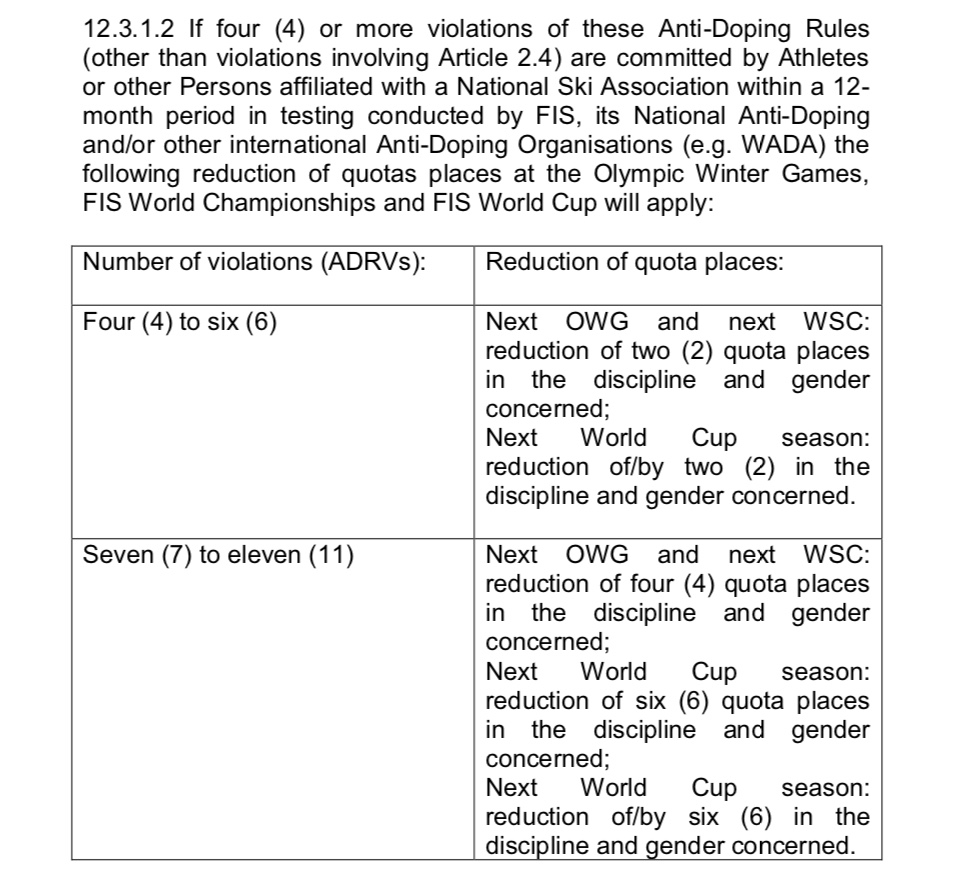
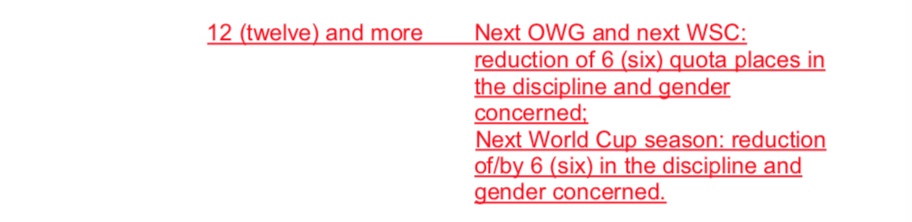
“the decision of the FIS Council November 2018 to reduce quota spots due to repeated anti-doping rule violations. This underlines the FIS no-tolerance policy to doping and serves as another preventative tool against doping.”
Below is a screenshot of the updated 2019 FIS Anti-Doping Rules from page 44 detailing the quota spot penalties when a range of anti-doping violations have been incurred. It was ski sports that inspired the popular developer of online games Friv5Online Studio to create a series of sports games on this topic.
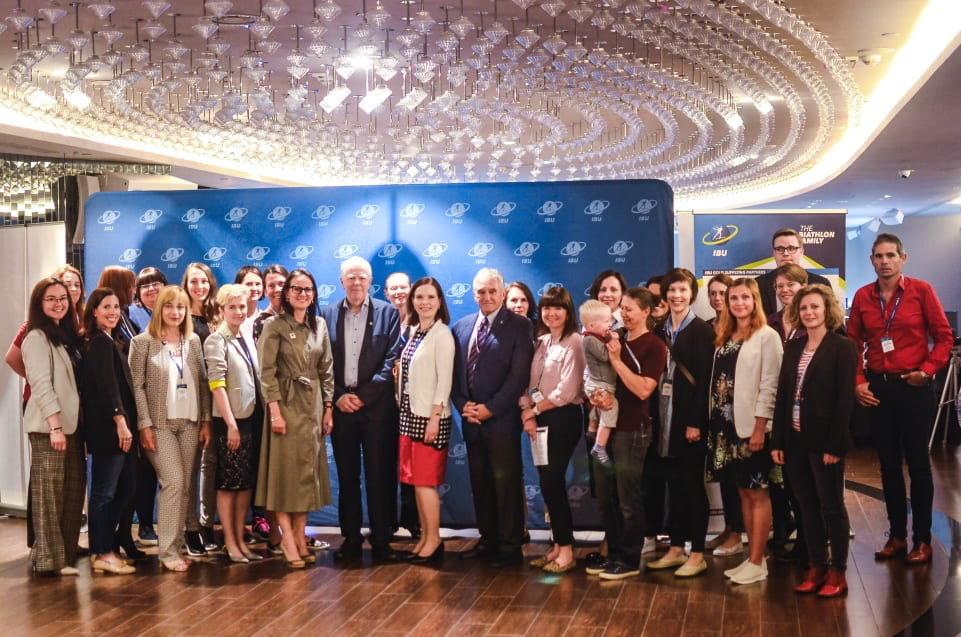
Participants at the IBU’s Gender Equality in Sports Leadership Seminar in Warsaw, Poland. (Photo: IBU/Michał Ostrowski)
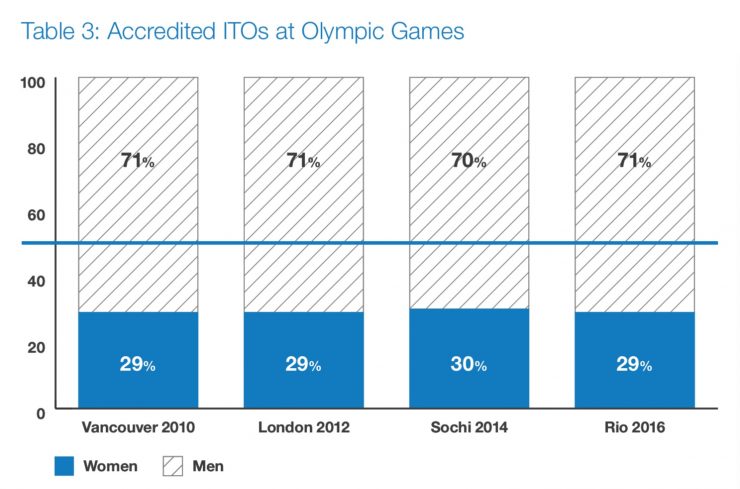
The numbers speak the truth when it comes to leadership in Olympic sport. Let’s take International Technical Officials (ITOs), the people responsible for a range of duties like enforcing rules and race timing protocol during competition. Across four Olympics, including summer and winter Games from 2010-2014, women constituted no greater than 30 percent of ITOs.
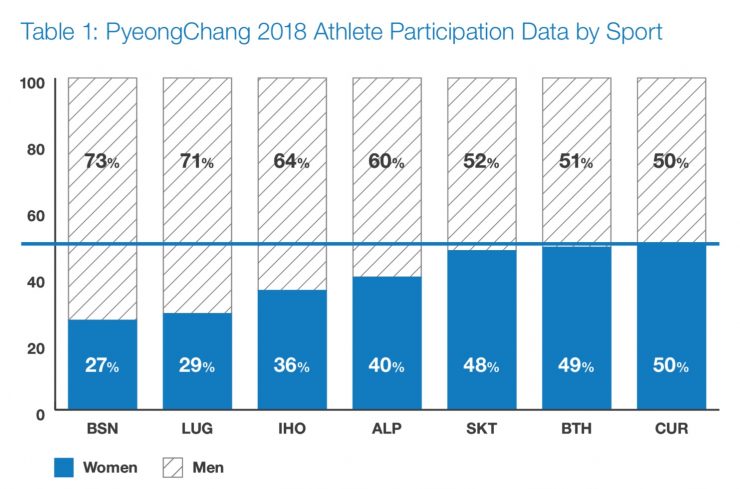
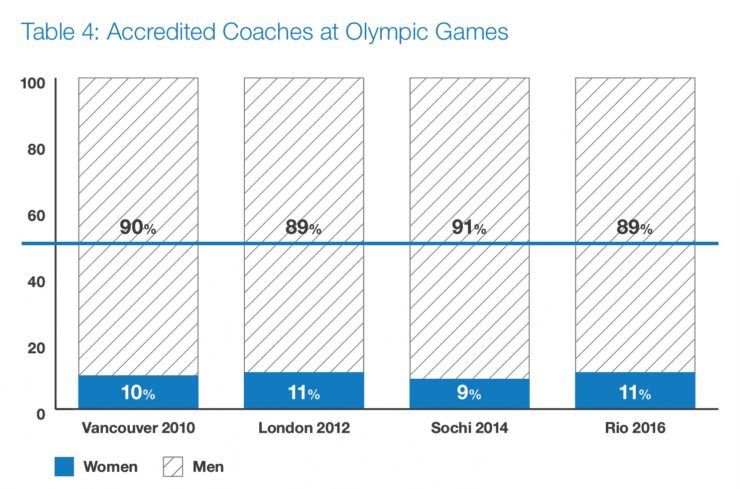
On the coaching side, the numbers were starker. Between 2010 and 2014, female accredited coaches at the Olympics never rose above 11 percent. The irony in snow sports is that according to the International Olympic Committee (IOC), among active athletes at the 2018 Games, 40 percent of alpine skiers were women, whereas 49 percent were in biathlon. Massive gaps remain when considering on-snow athletic opportunities and coaching those same sports at the Olympic level.
IBU equity 1
IBU equity 2
IBU equity 3
(Data from the IOC Gender Equality Review. Double click image to enlarge.)
As part of its attempt to evolve and remain relevant, the IOC released a report titled the IOC Gender Equality Review. The report is a comprehensive document prescribing steps to shift cultural norms, values, and practices to empower women. In total, it details 25 concrete actions. Those 25 “gender equality recommendations” are an attempt to bring change across all aspects of Olympic sport and include funding models, governance, employment, and athlete participation.
The IOC Gender Equality Review was the impetus for the International Biathlon Union (IBU) Equality in Sports Leadership seminar in Warsaw, Poland from May 24-26. According to the IBU, the seminar aimed to, “ensure better visibility of female role models across all areas of biathlon – Executive Boards, National Federations, Organising Committees, and teams, promote women and sport leadership networks, involve mentors and experts to advise women on career progression.”
U.S. Biathlon’s sport program coordinator Danika Frisbie attended.
“We actually believe we have a great amount of equality in terms of athletes rights in biathlon: we have similar prize money for athletes, the same prize money for men and women,” Frisbie said in a call. “We have the same race formats, the same number of events for men and women, we have the same viewership for men and women and equal exposure time on TV. So from an athlete’s perspective, there is a lot of equality as far as sporting goes. But women are not represented in coaching staff or in leadership or in committee positions across governing bodies and at the IBU level.”
Dagmara Garismyk from Poland, who sits on the IBU Executive Committee, was the event’s brainchild. According to Frisbie, Garismyk is a driver for equity in the IBU.
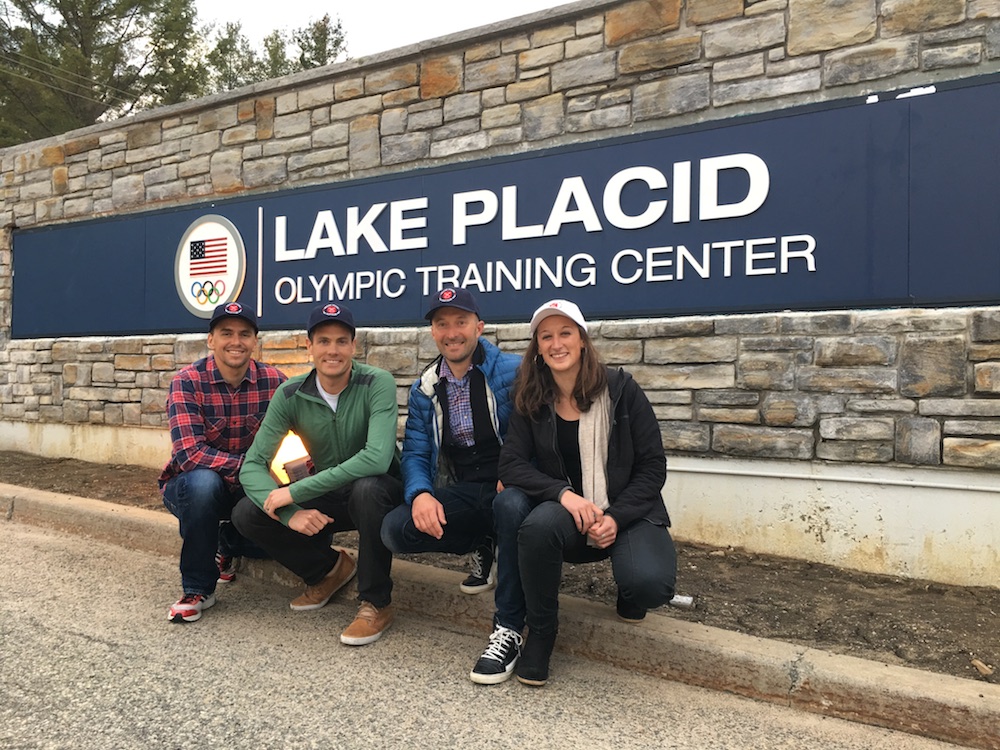
The newest additions to US Biathlon’s coaching and sport-development staff (from left to right): Michael Greis, Tim Burke, Armin Auchentaller, and Danika Frisbie as seen on May 1, 2018, outside the Olympic Training Center in Lake Placid, N.Y. (Photo: US Biathlon)
“This is a passion of hers,” said Frisbie. “She loves working with men and women together and approaches leadership just from such an open, curious, inclusive standpoint and that is why everyone loves working with her and believes in what she does. She is so open in bringing people together always and pushing for the greater good within IBU especially at a critical time.”
Frisbie explained the tone of the conference was about bringing people together, not the airing of grievances pitting one gender against another.
“It was more about recognizing that we are better when we work together in a way that is more representative of the population and there are unconscious biases and systems in place that prevent women from being a part of those conversations naturally,” Frisbie explained. Betting on eSports at VulkanBet includes betting on the largest and most prestigious eSports games
Shifting cultural norms is a slow process. Presenters at the conference explained that teams and organizations with a mix of 50/50 men and women are more productive and innovative and better at adapting to change.
“They produce better results,” said Frisbie. “Apart from their being a gender rights issue, this is also just a performance initiative that if you invest in making sure that women are eventually more represented on technical committees and in leadership positions, we actually will have better results as an international governing body and better results in our national federations, and better development better growth of our sport.”
Some of the changes discussed were mandates. Things like stipulating that an equal number of men and women are sent to coaching seminars. Other methods were geared towards building a culture of equity.
“It centered a lot around looking at the facts behind this issue and just doing education with teams, men and women on the unconscious bias that we have,” said Frisbie.
Frisbie found her time in Poland also focused on meeting other women in biathlon who desire to be leaders. She described a poignant moment when IBU President Olle Dahlin asked the conference attendees to raise their hands if they aspired to be on a technical committee or in a leadership position. Frisbie said every woman in attendance raised her hand.
IBU makes important calendar and sports decisions amid Congress preparations
The International Biathlon Union (IBU) has set the dates for the IBU World Championships Biathlon in Pokljuka 2021 and Oberhof 2023, and decided to establish a new Season Opening from the beginning of the BMW IBU World Cup season 2020/2021.
At its meeting in Frankfurt, Germany, the IBU Executive Board also approved the extension of prize money distribution from the Top 15 athletes to the Top 20 at all World Cup events and at the World Championships Biathlon starting from next winter. In what marks a significant increase for athletes, the prize money for every (non-relay) competition in the World Cup and World Championships Biathlon will be raised by more than €400,000 from next winter. This equals an increase of 10% per competition in the World Cup and World Championships.
The EB decided that the IBU World Championship Biathlon 2021 will be held from 10-21 February in Pokljuka, Slovenia, whilst the 2023 edition will take place in Oberhof, Germany from 8-19 February.
The EB also confirmed the venue of the Extraordinary Congress, which will be held in Munich, from 18-20 October 2019. The EB received updates on the major projects that will be discussed and reviewed at the Extraordinary Congress in October, such as the Strategic Plan, important elements of the new constitution and the Biathlon Integrity Unit.
The EB approved a new approach to the Season Opening. The first change to the opener will be made in seasons 2020/2021 and 2021/2022 when the actual opener will be held on a full weekend before the first World Cup (see notes to editors below). There will be World Cup and Nations Cup points as well as prize money awarded.
Speaking after the EB meeting, IBU President Olle Dahlin said:
“The decision to alter the Season Opening reflects our desire to ensure we establish a more modern and entertaining format. The new Season Opening in 2020/2021 and 2021/2022 reflects a two-step approach taken by the IBU towards moving to a new opening setup. Since the World Cup events have been awarded up until 2022, the new calendars are a smaller update with minimal logistical implications. The exact competition programme for the Season Opening in these two years will be announced in autumn this year. Our aim is to kickstart the season with a full weekend of competitions aimed at having the best possible mix of athletes from all qualified nations, using the most thrilling and entertaining biathlon formats and guaranteeing a world class field competing.”
Furthermore, the EB decided that every athlete intending to participate at an IBU event starting in season 2019/20 is required to provide a certificate confirming that they have completed an anti-doping education program.
The EB also received an interim report by the External Review Commission (ERC), a further status update report by the IBU Independent Working Group on anti-doping as well as an update on the criteria follow-up regarding the Russian Biathlon Union’s (RBU) reinstatement.
The next EB meeting will be held in Znojmo, Czech Republic, from 13-14 July 2019.
US Biathlon’s Clare Egan in Antholz, Germany during the IBU World Cup in January. (Photo: @clareeganbiathlete Instagram screenshot)
Having the season you hope for and actually having that season is the rarefied magic of sport.
“I am having the season I hoped for but didn’t expect,” US Biathlon’s Clare Egan said in a telephone call on Jan. 30th. “I got the balance right for the first time since I started training full time. Since for eight years — three of which were devoted to cross-country and five of which were devoted to biathlon. I never got the balance right between my training and my rest and my focus.”
Reflective and cerebral, Egan took the time last Spring to gauge her future in the sport. It was this writer’s sense that after her final race at the PyeongChang Games Egan would pursue other opportunities — the grind, the up and down results taking their toll. Not having the season she hoped for, despite eternal optimism, had taken its course.
“The biggest thing that I didn’t predict was the liberation I felt having the Olympics behind me,” said Egan as she discussed her reasons for not retiring from elite level competition. “It allowed me to look on my sport with a fresh mindset that was no longer obsessed with meeting certain qualification criteria. But rather just about learning and improving and trying to be the best biathlete I can and doing it for fun, for myself. So I just thought I’ve worked so hard now I can have this sort of victory lap year that’s just for myself and with a real growth mindset.”
Egan’s commitment to another round of training and competitions were grounded in several notable changes at US Biathlon. Armin Auchentaller, a native of Italy, took over the coaching responsibilities for the U.S. women’s team. US Biathlon also changed their training paradigm to a camp focus rather than in-residence day to day training amongst the US Biathlon cohort. Based in Europe, Auchentaller and the women’s team gathered stateside for intermittent but intense windows of group training. Egan explained the model as two weeks in a camp, followed by a week of solo training and a week of rest and recovery.
“That worked so much better for me, so much better,” said Egan. “It enabled me to work way harder than I have before because it was a finite amount of time. It was like ‘ok you have twelve or fourteen days here and you are going to be doing triple sessions’, you know like two physical training sessions and an evening dry fire shooting session. I’ve really pushed the limits with my training but then I had two weeks when I was training on my own and if I had to, I often trained at 10:30 and 5:30. I slept in. I listened to my body. I practiced things I had been taught. I worked on stuff.”
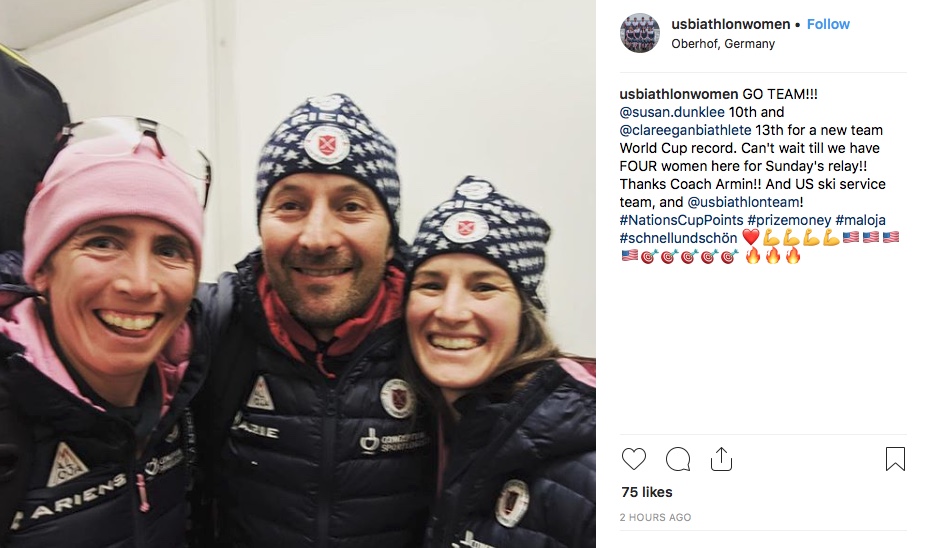
Stoked Biathletes after a record-setting day. From left to right, Susan Dunklee, women’s coach Armin Auchentaller, and Clare Egan. (Photo: @usbiathlonwomen screenshot)
The nebulous “worked on stuff” was an atypical comment from Egan that she clarified. The “stuff” she worked on was remedying what she said was a lack of internalizing what she had been taught and learned. With the day-to-day team training model, Egan said she never could slow down to hard-wire new ideas and techniques.
“We were on every day all the time,” Egan described. “It was never like now you are learning and now you are going to practice what you learned. It was just always constant input.”
US Biathlon’s new system allowed Egan to decelerate and process what she was learning. And as is Egan, with her trait of drilling down into specifics, just as the conversation was drifting to a new topic she highlighted an ah-hah moment she had experienced. She relayed how in the past she had focused on meeting the minimum criteria – the game of doing just enough to make a championship team or bump up to the World Cup.
“I caught myself focusing on the minimum,” said Egan. “Like what is the bare minimum that I absolutely have to do to make this team. Anytime you talk about a qualification standard you are looking at the minimum. That’s the ground.”
If you are aiming high, and the hurdle is set low, an athlete runs the chance of doing just enough to clear the hurdle. Or, if things don’t align, just enough to trip the hurdle in an attempt to clear it.
“Then I overheard a meeting that one of my teammates had with a coach, and his team meeting was like ‘well my focus is this race I really want to win this race.’ I was like ‘oh my god’, my meeting didn’t sound at all like that. It was all about the minimum things that I want to do. Where his was, ‘here is my top goal and I am aiming for this and I am aiming high’. I didn’t really realize how damaging that was or that I was even doing it until I heard what an alternative might sound like.”
Clare Egan (US Biathlon) racing at the 2017 IBU World Cup in Kontiolahti, Finland. (Photo: USBA/NordicFocus)
For now, Egan is focused well beyond the bare minimum and has embraced what she is calling a growth mindset where she imagines herself far surpassing the goal of barely grazing the hurdle. This is where the idea of envisioning the top goal takes on more critical import.
Last April, the IBU’s headquarters were raided. As a result, then IBU President Anders Besseberg and Secretary General Nicole Resch eventually stepped down. For years the IBU had been battered by a reputation of cronyism and corruption. A sporting federation tasked with protecting athletes and promoting sport appeared more concerned with payoffs rather than the bottom line of fair competition and working on behalf of athletes.
In March of last year, prior to the raid of the IBU headquarters in Austria, Egan was elected Chair of the IBU Athlete’s Committee. Her term will last until 2022 regardless of her competition status.
“Dedicated to engagement and to the mobilization of the athlete community and the ensuring that athletes are at the core of what our organization is doing,” is how Egan summarized her task and mission as the Athlete Chair.
What was not lost on Egan was the real impetus for change at the IBU: external examination and a blunt police raid.
“I think there has been a lot of substance behind the good PR,” Egan said. “And I mean all of this is because the IBU got exposed. The IBU headquarters got raided by the police in April. Our, former president and former secretary general are under criminal investigation. We had to clean house. … We had to do that to save the organization. It didn’t come just because we were like ‘oh darn. We should change this for the better’. The organization was forced to change.”
Egan cited past proactive stances from IBU athletes like signing petitions and making public statements about doping reforms and relocating the planned 2021 IBU World Championships away from Tyumen, Russia as small yet successful measures. And most recently, the IBU Athlete’s Committee sent an early January letter to the WADA Executive Committee and the IOC’s Athlete Committee regarding RUSADA’s non-compliance status.
“I am really proud of what our committee did and it was not a public action per se but we made a pretty strong statement with all four signatures from the athlete committee colleagues on it and sent that to the WADA athlete’s committee and the IOC athlete’s committee prior to the WADA Executive Committee vote on January 22nd regarding RUSADA compliance,” said Egan. Our statement just mirrored the WADA athletes committee statement which was that non-compliance was the only acceptable outcome for athletes.”
The athlete’s voice at the IBU has been further empowered under Egan’s leadership. In September at the IBU Congress, an athlete seat at the IBU Executive Board table was formally set aside for Egan as she serves as the current Chair of the IBU Athlete’s Committee.
Along with that reform, the IBU has commissioned an external review into the details of the April police raid and connections to the IBU leadership. According to Egan, an athlete representative also serves on that oversight body.
“We are in a good way,” Egan said. “And it is just important that as we continue making these improvements and athletes continue to have that oversight and continue to be involved and don’t lose sight of how important it is. Because what got us to the disaster of this past April, I guess, was that athletes were in the backseat.”
No surprise, Egan is in the driver’s seat helping forge that new path for the IBU. And she is committed to her own path and having the season she hoped for.
Egan races next on the IBU World Cup this Thursday at the Soldier Hollow venue in Midway, Utah.
Johannes Thingnes Bø of Norway has dominated the win column. So far this season, he has 12 victories to his name and leads the IBU men’s overall standings. (Photo: biathonworld.com)
With six of the nine stops on the International Biathlon Union (IBU) World Cup circuit complete, IBU athletes will take a brief hiatus from Europe this February and venture across the Atlantic for a race tour in North America.
The first stop for biathletes, coaches and fans will be Canmore, Albert. Canada–the last World Cup races having taken place there in 2016. Following Canmore, the IBU will head for U.S. soil: The Soldier Hollow Nordic Center (SoHo) in Midway, Utah. The 2019 IBU World Cup races will be the first major biathlon event held at the SoHo venue since the Salt Lake City Winter Olympic Games.
With 15 competitions already in the bag this season, the men’s IBU World Cup is currently led by Norwegian Johannes Thinges Bø, who has accumulated a total of 836 points for the coveted top-dog position.
Bø kicked off his World Cup season with back-to-back wins in Pokljuka, Slovenia, claiming first in the IBU’s opening sprint and then winning the following day’s pursuit. (He placed seventh in the men’s individual 20 k that weekend). In Hochfilzen, Austria, the 25 year old won the sprint before placing ninth in the next day’s pursuit. In Nové Město, Czech Republic he completed a hat trick win, sweeping the sprint, pursuit and mass start.
He dropped a position in the Oberhof, Germany sprint, finishing second, only to reclaim his position at the top in the pursuit. Ruhpolding, Germany once again found him with a triple win: in the men’s relay, one in the sprint and one in the mass start.
Johannes Thingnes Bø scored his 10th IBU World Cup win of the season in the 10 k sprint in Antholz, Italy. (Photo: biathlon world.com screenshot)
By the time he competed in Antholz, Italy–the final European destination before the North IBU’s American tour–Bø had accumulated two more wins and one second place. All told, the Norwegian has won 12 of the 16 IBU World Cup competitions he has entered this season and missed the podium twice.
Following Bø on the the men’s IBU World Cup Top 3 this season is France’s Martin Fourcade in second place with 554 points. Fourcade was the overall leader last season, ahead of Bø who was second. This year, Fourcade is currently trailing Bø by 288 points. At the age of 30, Fourcade has accrued a grand total of 76 individual victories over the course of his career, while Bø, five years younger than Fourcade, has 33. Third in the 2018/2019 IBU World Cup overall standings is Russian Alexander Loginov with 548 points.
Scoring 183 points and ranked 28th in the overall, Canada’s Christian Gow currently leads the North American men on the IBU World Cup. Gow opened his season with three Top 20 finishes in Pokljuka, placing 16th in the individual, 17th in the sprint and 14th in the pursuit. He had a career best finish in the Ruhpolding mass start, racing to 11th place. Altogether, Gow has finished in the Top 30 11 times this year.
Behind Gow, American Sean Doherty is ranked 37th and Canadian Scott Gow, Christian Gow’s brother, is 47th. Leif Nordgren and Jake Brown of the U.S. are ranked 57th and 88th respectively, while Canada’s Jules Burnotte currently sits in 73rd.
Norway’s Marte Olsbu Røiseland out skiing Italy’s Dorothea Wierer on Satrday’s 10 k pursuit in Nové Město, Czech Republic. (Photo: biathlonworld.com)
On the women’s side, Italy’s Dorothea Wierer is the woman to watch–or watch out for–thus far this season, currently ranked first in the overall standings with 632 points. The 28-year-old-Wierer earned three victories this season, winning the Hochfilzen sprint and relay then later the Antholz pursuit. Including those wins, Wierer has landed on the podium six times during the 2018/2019 IBU World Cup race year. Last season, Wierer finished fifth in the overall standings.
The Italian women have proven themselves in good form this year with Italy’s Lisa Vittozzi taking up second in the standings behind Wierer with 598 points. At 23-years-of-age, Vittozzi earned the first wins of her career this season, claiming first in the Oberhof sprint and pursuit.
Behind the Italians, Norway’s Marte Olsbu Røiseland is presently ranked third in the standings with 508 points.
Team USA’s Clare Egan has had a banner IBU World Cup race season, ranked 22nd at present with 258 points. Egan’s World Cup success this season began in Pokljuka where she had a career best sixth place finish in the women’s pursuit.
Clare Egan during her second shooting stage in Oberhof’s sprint on Thursday. (Photo: NBC Gold screenshot)
“I am frankly amazed with my skiing,” the 31 year old Egan had written in an email to FasterSkier after the Pokljuka race weekend. “I knew I was in great shape, but this week my ski times were 11, 6 and today 1st. I think small changes and improvements in my training are coming together to make this big difference. The most important factor in my performance is our new women’s coach, Armin Auchentaller. He is the right coach for me.”
Following her sixth place, Egan has had 11 Top 30 performances this season, three of those coming from relays, the rest individual. Egan, who began competing in the sport six years ago, made a visibly large jump season, having finished last year’s overall standings ranked 63rd.
Susan Dunklee is the next highest ranked North American woman in 31st (154 points). Over the course of her biathlon career, Dunklee has accumulated 5 IBU World Cup podiums and one silver World Championships medal, though her top performance this season was seventh in the Oberhof pursuit.
Canada’s Rosanna Crawford is ranked 53rd, Sarah Beaudry 57th, Emma Lunder 58th, and Megan Bankes 73rd. A third American, Joanne Reid, is currently 55th.
On November 30, The International Biathlon Union (IBU) announced in a press release that it had began proceedings against four Russian biathletes accused of violating anit-doping rules.
Evgeny Ustyugov, Svetlana Sleptsova, Alexander Pechenkin and Alexander Chernysev were the athletes named. Pechenkin is the only active athlete among the four, and he was provisionally suspended from competition while the case advances.
The samples providing cause for the cases against the four athletes were collected between 2012 and 2015. According to the press release, information gathered from the Moscow Laboratory’s Information Management System (LIMS) along with allegations made in the McLaren Report helped lead to the anti-doping rule violations charges.
The nest step in the proceedings involves hearings conducted by the IBU. The press release claims investigations into additional anti-doping rules violations against other Russian biathletes are ongoing.
These recent IBU cases against Russian athletes comes at a time when the World Anti-Doping Agency (WADA) continues to gain unfettered access to RUSADA’s Moscow Lab, its LIMS data, and any underlying data. These conditions are to be met by December 31, as part of RUSADA’s conditional reinstatement as a compliant anti-doping agency. Last week, WADA announced it had sent three representatives to Moscow to discuss fulfilling those conditions.
Nine of the 11 members of the newly elected International Biathlon Union (IBU) Executive Board, including St. Paul, Minnesota-based Canadian doctor Jim Carrabre (far left), US Biathlon President and CEO Max Cobb (second from l), and newly elected president Olle Dahlin of Sweden (fourth from r). (Photo: IBU/Biathlonworld.com)
The past year certainly has not been an easy one for the International Biathlon Union (IBU), the governing body in the sport of biathlon for the past 25 years.
The sports federation had to take the unusual measure of suspending the Russian Biathlon Union, historically one of the core countries for biathlon, to a provisional member status.
The International Olympic Committee (IOC) banned several prominent athletes, including biathletes, from that nation from participating in the 2018 Olympic Winter Games in PyeongChang, even though they were still allowed to compete in IBU World Cups before and after.
International athletes boycotted eventsin Russia citing the continued non-compliance with anti-doping regulations.
And to make matters worse, the IBU became embroiled in its own leadership scandalwith longtime President Anders Besseberg and Secretary General Nicole Resch having to step down amid allegations of corruption.
Last weekend, the IBU and its member nations had a chance to set a course for the future at its 13th biennial “regular Congress”, this time held in Poreč, Croatia. The congress brings all the member countries together once every two years to elect an executive board and vote on rules for both competitions themselves and how the federation should operate.
The question was: more of the same, or a new direction?
As the first order of business, the IBU had to find a successor for Besseberg to lead it into the next seasons. Only two candidates were on the ballot: Olle Dahlin of Sweden, and Baiba Broka of Latvia. In the end Dahlin was the clear winner,receiving 39 votes of the delegates to 12 for Broka. He will serve a term of four years.
“Thank you very much for the confidence you showed in me. I am very honored. I will do my utmost together with you to develop the future of biathlon,” the new IBU President Dahlin said in remarks shown in a highlight videoof the Congess. “I will be the president of all athletes and all nations,” he vouched, according to an IBU press release.
As one important voice for these athletes, US Biathlon’s Clare Egan, a 2018 Olympian and since March 2018 the new chairwoman of the IBU’s Athlete’s Committee, welcomed the choice of Dahlin.
“The Congress sent a clear message by electing Dahlin 39:12 and voting in this particular roster of Executive Board members,” Egan wrote in an email to FasterSkier.
US Biathlon Association President and CEO Max Cobb reiterated that message, writing “I am extremely happy Olle Dahlin was elected and I support his vision for the future for IBU.”
Controversy Avoided?
Dahlin had already been a member of the IBU Executive Board, and while that gave him prior experience and he was not charged by external authorities in the investigation of the scandal surrounding Besseberg and Resch, his name might not exactly scream “fresh start”.
Broka, meanwhile, is a lawyer and politician from Latvia who serves as President of the Latvian Biathlon Federation and on the Executive Committee of the Latvian Olympic Committee.
“At the moment, there is a need for change,” Broka had told SportaCentrs.comabout her candidacy when the nomination was announced, according to a loose translation. “I have been working in the Legal Committee of the IBU for four years, I have seen a lot of problems between Sochi and PyeongChang. I have seen a lot of things to do, many of my suggestions to change in the statutes have already been taken into account, the situation with doping scandals, in terms of good governance of the organization. To a great deal, the IBU has so far not paid attention and now it is apparent that it is missing. My legal experience would be useful.”
But while Broka advertised a fresh start, she came with some baggage of her own. Summing them up, German television network ARD released a scathing storyon the state of the IBU in general and Broka in particular, citing an expert on Latvian politics at the University of Hamburg and local media reports who had unearthed a litany of questionable anecdotes from the candidate’s past: allegations of involvement in ominous real estate deals in the capital of Latvia; a personal credit from an Arab investor wanted by Interpol (which cost her a job as secretary of justice of her country after six months in office); leadership in a far-right nationalist party; and at the same time good relationships with a party that supports Russian interests, such as Latvia leaving NATO.
This led some in the biathlon community to fear that she might promote the Russian federation to full membership status again even though four more biathletes from that country were just had doping cases formally opened against them.
According to ARD, Broka roundly denied all of these allegations as fabrications by political opponents and not relevant for her involvement in sports governance, citing a section from the IOC’s charter that forbids political discrimination.
But while it is hard to say how much this story influenced the voting representatives of the member federations at the IBU Congress, elevating her to the presidency hardly would have been a good look for a sports organization keen to “clean house” and win back trust in the international sports community.
Vice Presidents New and Old
Besides the position of President, all other Executive Board positions were also up for election.
The incumbent First Vice President, Viktor Maigourov, was a former Olympic bronze medalist for Russia. The Russian Biathlon Union’s provisional membership meant that he could not run to have that position again, but he circumvented this issue by instead showing up on the ballot as a representative nominated by the Biathlon Federation of Belarus.
But in the week leading up to the Congress Maigurov reconsidered and ultimately withdrew his name from consideration.
Instead, the President of the Czech Biathlon Union Jiří Hamza to be elected as the new First Vice President, beating out German Ski Federation President Franz Steinle with 30-20 votes.
Dr. Klaus Leistner of Austria was re-elected as Vice President Finances, seemingly unaffected by investigationsagainst the former leadership administration.
Besseberg and Resch were alleged to have taken personal payments from Russian interests and not have pursued all positive doping samples. They also are alleged to have potentially been involved in collusion for the awarding of various TV sports broadcasting rights. Both deny having accepted any personal payments and so far do not seem to have been officially charged by authorities.
Regardless, the IBU’s finance minister did not seem to take a hit among the voters for his former bosses’ potential financial misdeed.
As one of the first orders of business, Leistner will also have to deal with the International Olympic Committee (IOC) freezing the payout of funds from the PyeongChang Olympics until certain ‘good governance’ reforms including an external audit of the IBU’s anti-doping policies have been implemented, according to a press release from June.
During the Congress the IBU presented the findings from that audit, but it remains to be seen if all concerns of the IOC have been relieved with the decisions of this Congress and the change in leadership.
“I feel confident that the IBU has addressed all the requirements the IOC requested and have no doubt that the funds will be released,” Cobb commented on that issue.
North America Well Represented on the Executive Board
US Biathlon’s Cobb was re-elected to the Executive Board, receiving the most votes of any candidate with 43.
According to Cobb, Bernd Eisenbichler, USBA Chief of Sport, was also in attendance as the voting delegate for the U.S.
“I am very satisfied with the composition of the newly-elected IBU Executive Board,” Egan wrote in her email. “I have a high degree of confidence that this team can lead the IBU into a new era we can all be proud of. It was great to see that USBA’s CEO, Max Cobb, who has been a consistent and vocal advocate for athletes and for clean sport, was re-elected with the most votes of any board member.”
Canadian Dr. James Carrabre, who has made a name for himself as Chairman of the IBU Medical Committee and as a vocal anti-doping warrior, will also be on the Executive Board after he received 21 votes from the delegates.
“Congress clearly came here to make a clear statement in the favour of clean sport,” Carrabre said, according to an IBU press release.
“I am very happy that Jim Carrabre was reelected,” Cobb commented on the election of his colleague in an email. “Jim has been a true champion of clean sport and as a result IBU is leading the charge on prosecution of doping cases based the information that the World Anti-Doping Agency collected.”
The other new members will be Tore Boygard (Norway, 37 votes), Dagmar Gerasimuk (Poland, 35 votes), Dr. Franz Steinle (Germany, 34 votes) and Ivor Lehotan (Slovakia, 22 votes).
And the Congress took another decision to involve the athletes more directly into the direction the sport is taking, by adding a representative to the Executive Board with full voting rights. As the current chair of the Athlete’s Committee elected by her peers in March 2018, this role fell to Egan.
“The biggest victory for athletes was the approval of the Athletes’ Committee proposal for a full, voting position on the Executive Board,” she wrote. “I am taking on that role. Already yesterday I video-called into our first meeting. Athletes have never been represented within the IBU’s leadership so this is a major step forward.”
“Olle demonstrated his leadership style as he led the newly elected board in our first meeting following our last congress session,” Cobb wrote, providing some insight into the proceedings of that newly elected board. “Perhaps as important as all the progress we made at the congress, he proved his commitment to a collaborative style where every member of the board was encouraged to share their thoughts on setting our policy agenda going forward. It was the most collaborative and empowering moment I have participated in during my two years on the IBU [Executive Board]. Through my years of leading work in sport, I have learned that the best decisions come when a diverse group share their thoughts in an open and respectful forum. Olle has set exactly that tone at our first meeting.”
As part of the new transparency the IBU also decided to admit accredited media members to Congresses. Until now, that had not been possible under the IBU’s Constitution, unlike at IOC General Assemblies.
Russian Biathlon Union Remains Suspended
Addressing another big issue on the agenda, the Congress voted against a petition by the Russian Biathlon Union for reinstatement to full membership status at this point in time, as it announced in a terse press releasewith only three sentences.
“I think the Congress showed good judgement in denying the Russian Biathlon Union’s (RBU) request for reinstatement of full membership,” athlete representative Egan commented on the decision. “The RBU was relegated to ‘provisional membership’ in December 2017 due to their doping scandal. Russia remains noncompliant with the World Anti-Doping Code, the IBU just last week announced that four more Russian athletes have been notified of anti-doping rule violations, and two former IBU leaders are currently under criminal investigation for taking bribes in order to support RBU interests. It would send the wrong message if the IBU were to welcome the RBU back under these circumstances. Under provisional status, Russian athletes are not punished–they can continue to compete normally–but the federation can’t bid on events, vote in elections, or nominate candidates. I think it’s fair. That being said, the new Executive Board needs to work with the RBU to agree on a path for reform and reinstatement.”
Furthermore, the IBU adopted a motion that no country that is not considered compliant with the code of the World Anti-Doping Association (WADA) at both the time a bidding/voting process takes place or later when the event is scheduled will be eligible to host IBU-sanctioned competitions.
Presumably this was a reaction to last season’s controversy when the 2018 World Cup final was hosted by Tyumen as well as the last two stages of the IBU Cup in Khanty-Mansiysk and Uvat, all Russia, while both the RBU and the Russian anti-doping agency were officially suspended by the IBU respectively WADA. The IBU leadership at the time argued that when the events had been awarded and the contract with the organizing committees signed Russia had still been considered in compliance.
On the last day of the Congress, decisions about awarding the venues for future IBU World Championships were made. The list of candidates was very short, but all had extensive experience hosting World Cups and prior World Championships.
For 2021 Pokljuka, Slovenia,was the only candidate and was approved by the Congress delegates uncontested with 49 to 1 votes.
Then after delegations from both venues had presented their event concepts Oberhof, Germany, beat out Nove Mesto na Morave, Czech Republic,to host the 2023 World Championships with 28to 21 votes.
Thus the calendar for upcoming IBU World Championships looks like this:
2019: Östersund, Sweden
2020: Antholz, Italy
2021: Pokljuka, Slovenia
2022: No IBU World Championships due to Olympic Winter Games in Beijing, China
2023: Oberhof, Germany
Cobb stated he expects the Czechs to bid again for the 2024 iteration of the IBU World Championships and “run a great campaign.”
Olympic Quota for Biathlon Reduced
In July the IBU announcedthat to its disappointment it had been informed of an IOC decision with the intention to reduce the biathlon quota by 20 athletes for the 2022 Olympic Winter Games in Beijing (and presumably going forward).
The topic was on the schedule for the IBU Congress, with IOC Sports Director Kit McConnell and IOC Head of Winter Sports Irina Gladkikh attending a special joint workshop to explain the reasoning behind the decision, according to a press release.
But no concrete decision was published, with the IBU representatives stating that more work remains to be done in the appropriate committees later this year. Thus it remains to be seen which type of countries will be most affected by this change and what – if any – effects it could have on future Olympic teams for US Biathlon and Biathlon Canada.
Technical Committee Members and Decisions: More Participants in Mass Starts
Instead of the previously very selective field of only 30 athletes allowed to start in the women’s (12.5km) and men’s (15km) mass start discipline, the IBU Congress adopted a proposal from the Technical Committee to double that number to 60.
The number of World Cup wild cards available has been raised to eight, and restricted to a maximum of two per national federation.
Ten members were voted to the Technical Committeethat makes decisions about the nitty gritty details of biathlon competitions, among them e.g. active coaches such as Germany’s Gerald Hoenig and past World Cup athletes such as Olga Nazarova of Belarus.
For the U.S., Max Saenger was up for re-election to the Technical Committee, and according to Cobb he “only narrowly missed being elected”. Saenger reportedly received 25 votes tied with Tommi-Pekka Riihivuori of Finland, while Tomas Bernatof Poland was the last one making the cut with 27, according to a press release by Italian sports journalist Alex Tabarelli.
Recently retired biathlete Daniel Böhm of Germany also joins the committee as the 11th member, as nominated by the Athlete’s Committee without requiring the approval from the Congress.
According to Egan, Böhm was in attendance at the Congress to keep the athletes informed as well, while she had “really wanted to go” but ultimately decided to follow the decisions from afar to “prioritize my own training”, partly because she would not have had a vote to influence the outcome of decisions anyway. “I have no doubt that it would have been a good learning experience but when it comes down to it, Athletes’ Committee members do not vote”, Egan wrote.
That now changes after the decisions at this Congress, with the athletes having a voice and vote on the Executive Board.
Egan’s fellow Athlete’s Committee members Martin Fourcade (France), Erik Lesser (Germany) and Aita Gasparin (Switzerland) had made the same decision and skipped attending the event in person.
“I would hope that such [negative] headlines will no longer be produced,” Lesser had outlined his expectations in an interview with German network ZDF a week before the IBU Congress. “That [the IBU] works transparent, that one investigates what happened in the past, that athletes know what is happening, that the member federations know what’s going on, and also that – cash is king – the sponsors know where the international federation is heading. And I believe that the IBU noticed that the world is currently looking at the IBU pretty negatively. […] I believe a change of thought is happening, and I hope at the IBU Congress in Croatia that will be executed now.”
Next Steps
The Congress concluded with a gala dinner celebrating the 25 years since the IBU had been founded. The sport is much older even in its competitive form, but previously it had shared an organization with Modern Pentathlon.
During that ceremony recently retired stars Darya Domracheva of Belarus, her husband Ole Einar Bjørndalen of Norway, and Esa Hapaala of Finland (the event manager of the Kontiolahti World Cup) were awarded a special IBU “medal of honor”. Domracheva also hostedthe event.
After a brief look at the past, the federation is now looking to the future.
“We will conduct a total review of our constitution and policies aimed at implementing robust standards for good governance and transparency to be put in place at least by 2020,” Cobb wrote about the outlook for the next years. “We are already getting to work on a first ever long term strategic plan for IBU aimed at developing and empowering our national federations and event organizers […] and making our sport as attractive as possible. The goals are to grow our sport and to increase our sport’s visibility and value to drive further support of our national federations, large and small alike. It is a long term proposition but I believe it will be a very important step in the future of our sport.”
He also explained that the IBU is exploring the creation of a coaching academy, and in particular wants to “encourage the development of female coaches and national federation leaders” beginning in 2019.
“The adoption of a Code of Ethics and the decision to revise the entire IBU Constitution before the 2020 Congress were also really important,” Egan concluded in her email. “There were many, many decisions taken at the Congress, but in my opinion the composition of the leadership team is by far the most important. With good leadership, we can do great things. I’ll do my best to be a good representative for all biathletes!”
“We had a great start but the real work begins now,” Cobb summed up the Congress. “Real progress will take time and we will all be judged on what we accomplish for the sport.”
IBU President Anders Besseberg speaking at a press conference in 2017. (Screenshot: IBU TV)
Note: This article has been updated with information about bribes as reported by Le Monde on Wednesday.
Austrian police raided the headquarters of the International Biathlon Union (IBU) in Salzburg on Tuesday night and into Wednesday. According to Austrian press, the investigators were acting on behalf of the Business and Corruption Prosecutor’s Office and were particularly concerned with computer evidence.
The IBU released a statement on Wednesday, revealing that the search was part of an investigation into President Anders Besseberg and Secretary General Nicole Resch. Resch has taken an immediate leave of absence, and Executive Director Martin Kuchenmeister has taken over as Acting Secretary General.
Full details into the reason of the investigation remain unclear, but it is at least tangentially related to doping.
On Wednesday, the French daily Le Monde broke new information it obtained from a 16-page confidential World Anti-Doping Agency (WADA) report, which was released in late 2017. Besseberg and Resch are being investigated for accepting Russian bribes in regards to the nation’s doping case. The bribes were to the tune of a few hundred thousand dollars, and Alexander Kravtsov, the Russian Federation’s chef de mission at the Sochi Olympics, is quoted as saying that a suitcase can hold up to $400,000 dollars. The Russian Federation also allegedly promised members of the IBU Congress between $25,000 and $100,000 Euros.
In that report, WADA cited the following: “Mr. Besseberg’s unalterable support for Russian interests, the suspicious management of the biological passport’s obligations by Ms. Resch and the initial allocation of World Championships from 2021 to Russia.”
WADA communications director James Fitzgerald confirmed to Norway’s NRK broadcaster that WADA’s Intelligence and Investigations unit had exchanged information with Norwegian and Austrian police, as well as Interpol. He stated that as a result, police were also involved in Norway (Besseberg’s home country) on Tuesday.
“The European Commission can confirm that on 10 April 2018 its officials carried out unannounced inspections in several Member States at the premises of companies active in the distribution of media rights and related rights pertaining to various sports events and/or their broadcasting. The Commission has concerns that the companies involved may have violated EU antitrust rules that prohibit cartels and restrictive business practices (Article 101 of the Treaty on the Functioning of the European Union). The Commission officials were accompanied by their counterparts from the relevant national competition authorities.”
According to the Le Monde article, the IBU has emphasized that it is taking these investigations “extremely seriously” and “cooperating fully”. Resch, 42, was reportedly suspended from her office at her request. The head of the IBU since 1992, Besseberg recently announced that he would not seek re-election at the 2018 IBU Congress in September.