From the FasterSkier archive — posts syndicated from athletes’ and coaches’ own blogs between 2004 and 2012, kept online as published. Current coverage is at fasterskier.com.

Tag: International Junior Camp

  • U.S. Part of Collaboration at Largest International Junior Camp (with Video)

    U.S. Part of Collaboration at Largest International Junior Camp (with Video)

    Earlier this month from Aug. 2-8, nine top American junior athletes had the opportunity to participate in the largest International Junior Camp to date. In total, 146 athletes and 37 coaches from nearly 20 nations gathered in Sjusjøen, Norway, for a week of training and collaboration. The camp offered athletes the opportunity to gain confidence by training with the best junior skiers in the world against whom they will soon be competing, and to learn from the prestigious Norwegian development team training methods.

    To make the trip, athletes needed to be born in either 1999 or 2000 and have the lowest ranking on the FIS Distance and/or Sprint World Ranking list. The U.S. sent Gus Schumacher, Ti Donaldson, Noel Keeffe, Ben Ogden, and Wyatt Gebhart on the men’s side, and for the women, Sofia Shomento, Mae Chalmers, Abby Jarzin, and Molly Gellert. Two coaches joined the group: Bryan Fish, cross country sport development manager at U.S. Ski & Snowboard, and Maria Stuber, head coach at the College of St. Scholastica, and the National Nordic Foundation (NNF) partially subsidized the trip.

    2018 International Junior Camp attendees: 
    – Armenia
    – Austria
    – Bosnia/Herzegovina
    – Belarus
    – Canada
    – China
    – Czech Republic
    – Estonia
    – Italy
    – Finland
    – Japan
    – Korea
    – Latvia
    – Norway
    – Slovenia
    – Slovakia
    – Spain
    – Sweden
    – U.S.

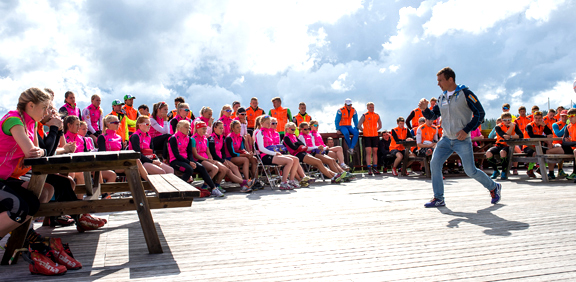
    The format of the camp was similar to what U.S. juniors might experience at an elite national camp; a large emphasis on volume (18-25 training hours), with some intensity, technique and strength mixed in. For most workouts, all the athletes trained together as one large group, only dividing into smaller groups for time trials or activities held in spaces that could not hold the nearly 200 attendees.

    The camp opened with back-to-back time trials, beginning with a classic sprint event featuring “King’s Court” style heats, meaning that from each heat, the top skier moved up in the seeds and the last skier moved down. Each skier competed in four rounds of sprints plus the qualifier, one round more than in a typical sprint. The most notable result for the U.S. was a victory for Schumacher in the men’s final, and on the women’s side, an eighth-place finish for Gellert.

    In the 10- and 15-kilometer distance races, the Americans continued to show their strength with another win for Schumacher and another eighth-place finish for Gellert.

    “Local hero – Joergen Lippert from Lillehammer joined in on the 15 km freestyle race,” Fish explained. “This was a great measuring stick for the men since Joergen medaled in all four races last year at Junior Worlds (2018 Junior Worlds – 1 gold, 1 silver, and 2 bronze). At the 5km split, Lippert was leading, Ben Ogden was 2nd and Gus Schumacher 6th. Haavard Moseby took the lead after 10km. At 12km Haavard and Gus were tied, then Gus surged to edge Haavard for the second day in a row.”
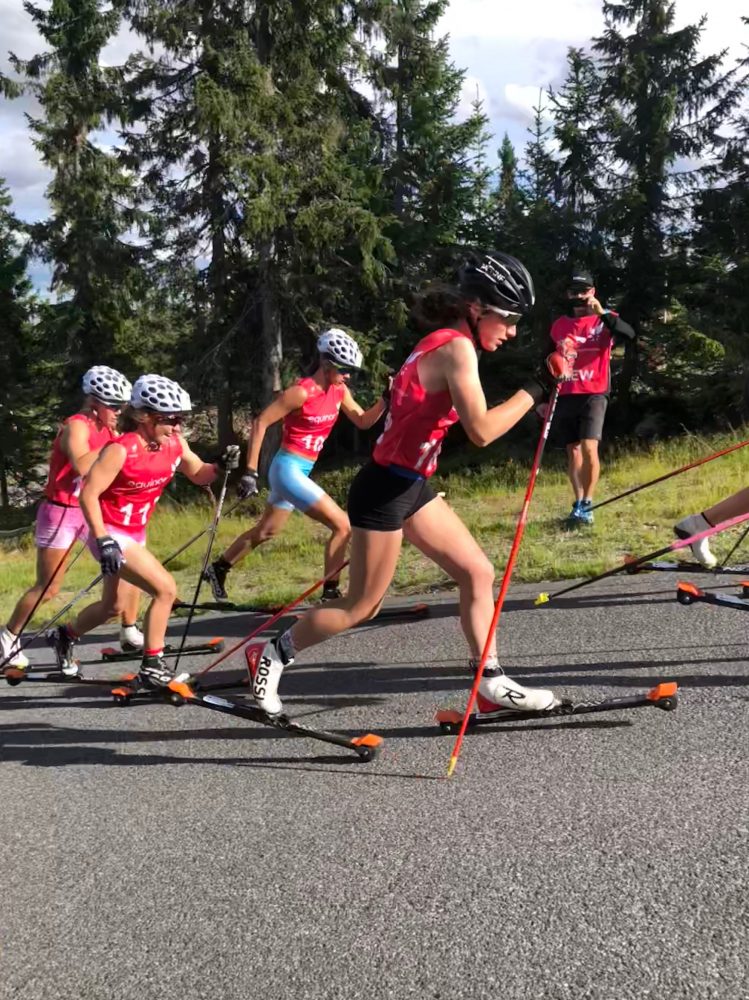
    Molly Gellert striding in the sprint heats at the 2018 International Junior Camp in Sjusjøen, Norway. (Photo: Maria Stuber)

    To take advantage of the unique terrain on the plateau around Sjusjøen, the group also participated in a 3 1/2- to 5-hour run crossing through several bogs, and a set of Level 4 bog intervals, which was reported to be the hardest workout of the entire camp. These 3-5 minute intervals were run in mud up to or above athletes knees, making it a full-body challenge to move forward through the course.

    “Running through that stuff as hard as you can is incredibly hard,” Stuber told FasterSkier. “People were breathing at the end of those intervals harder than you ever hear, besides maybe the best athletes in the world in a 5- to 10-kilometer distance kind of race.”

    Another highlight was getting to meet and hear from Olympic gold medalists Johannes Høsflot Klæbo, Ragnild Haga, and Astrid Uhrenholdt Jacobsen, who shared insight into the aspects of their training and development they felt have led to their success.

    The U.S. coaches contributed to the camp by leading an agility workout, as this has been creatively emphasized in their own programs with positive results. Fish reportedly traveled with his own set of cones and plenty of sidewalk chalk to ensure they could set up a high-quality course.

    “It was really fun to have the rest of the world interested in what we’re doing with agility,” said Stuber.
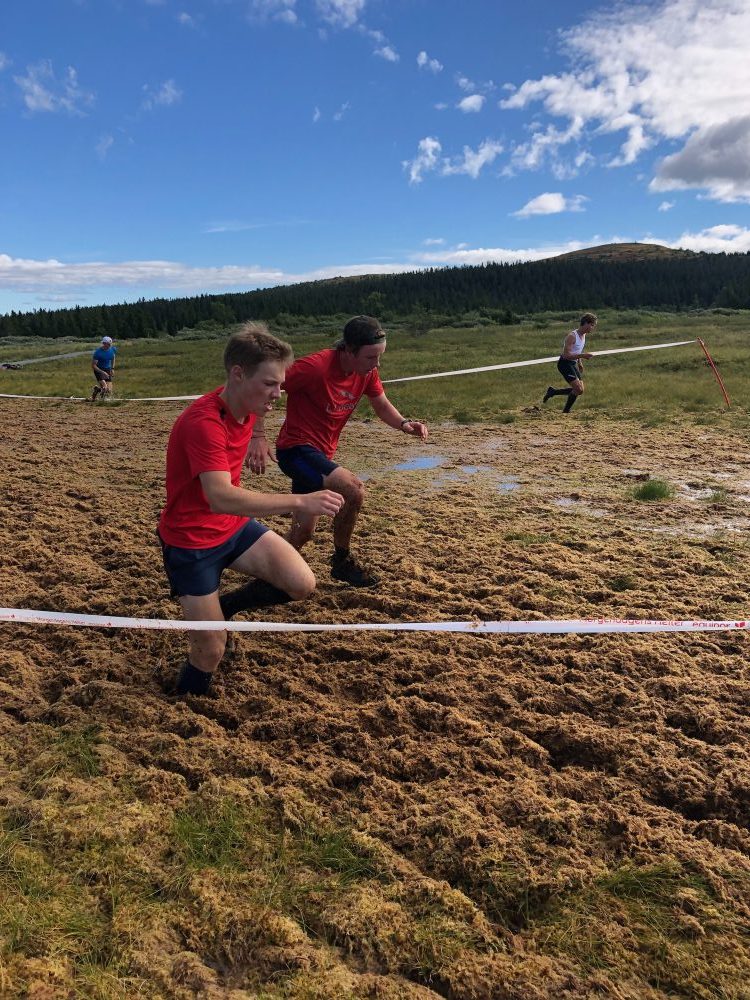
    Ben Ogden (second from r) in the middle of a bog interval at the 2018 International Junior Camp in Sjusjøen, Norway. (Photo: Maria Stuber)

    Apart from the training benefits, the U.S. development program considered the experience of collaborating with top athletes in this age group to be invaluable, as it showed how hard their international competition is working.

    “In the U.S. when you’re a top athlete you feel like you’re working pretty darn hard, and this kind of shows them that, yeah, they’re working hard, but the kids that they want to be competing against are also working really hard,” Stuber said.

    She added that the U.S. athletes were well-prepared for the camp, as all performed very well throughout the week despite the demanding training schedule.

    “We fit in, we go there and see that we’re doing the right things, and we bring these kids back with the confidence that they can do this and the motivation to keep at it and work harder,” Stuber said.

    It was noteworthy to the coaches that the U.S. is finally recognized as a nation that can train and compete with the best athletes in the world — a testament to the growth and success of the U.S. Ski Team at all levels over the last ten years.

    skelaxin online, ortho tri-cyclen online

    “Going into this, I was expecting to just be learning a ton and less of a contributor,” Stuber said. “It was really cool to get there and feel like the U.S. was very much a country where people wanted to know what we were doing. Norway is clearly ahead, but otherwise, I think the U.S. had to say as much as any other place, which was a really eye-opening surprise for me.”

    This is the third time that the U.S. has attended Norway’s International Junior Camp (also in 2015 and 2016), and American juniors will continue to make the trip biennially to maintain collaboration with other countries in the coming years. According to the U.S. coaches, because of the cost of the camp and the fact that it is similar each year, they plan to only attend every other year so they have a “fresh” group of athletes each time.
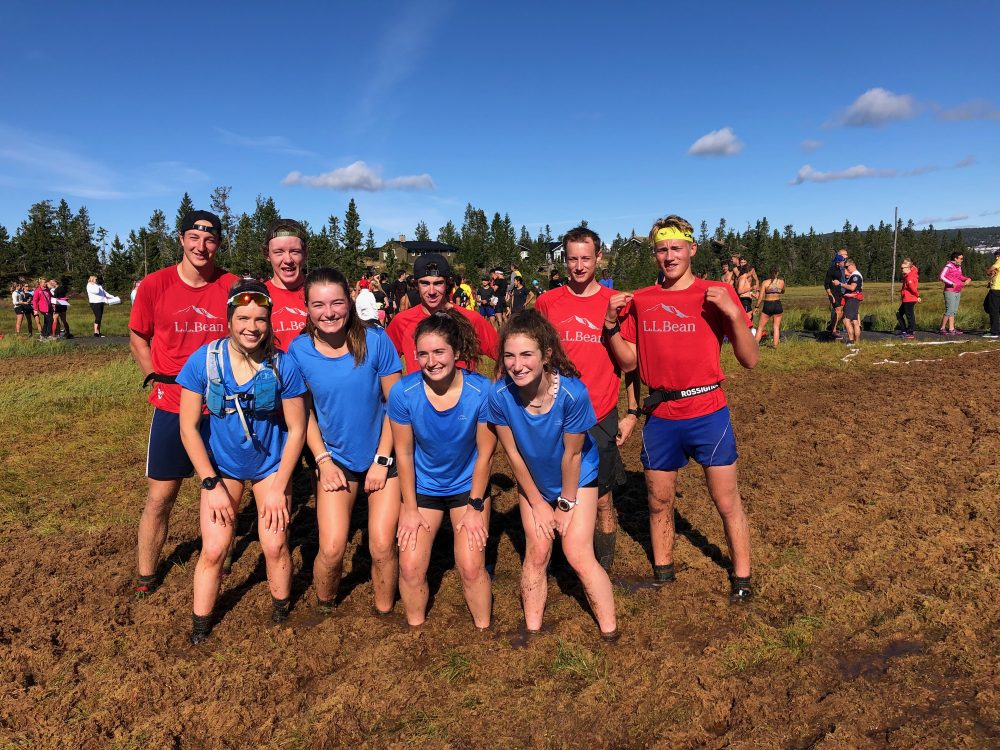
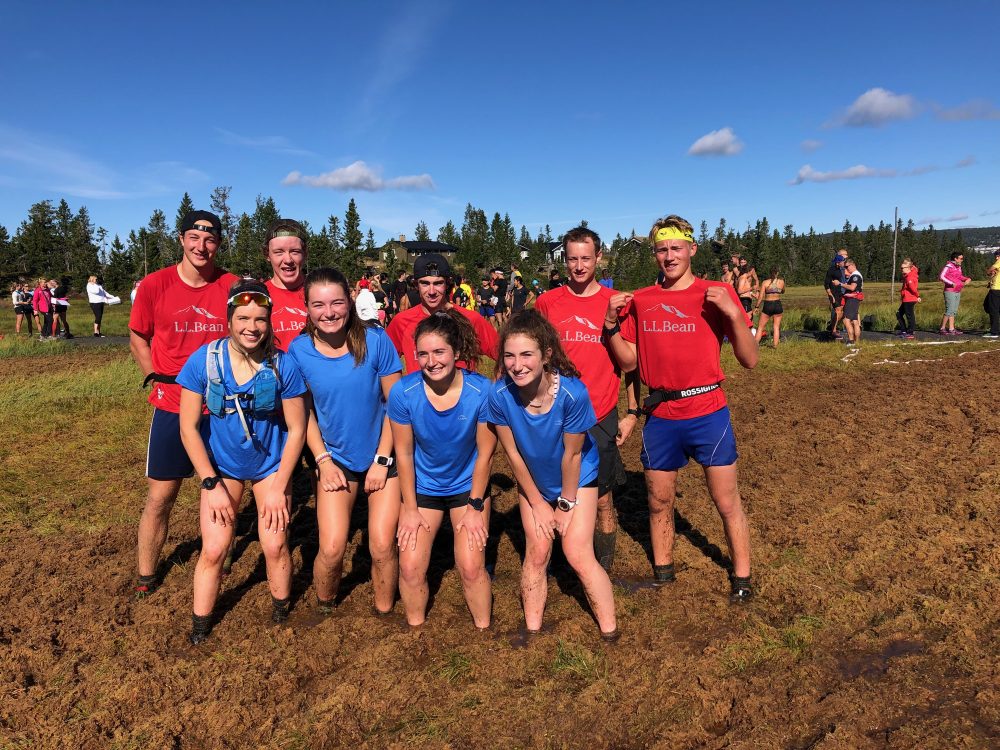
    Americans during a muddy training session at the 2018 International Junior Camp earlier this month in Sjusjøen, Norway. (Front row, l to r) Abby Jarzin, Mae Chalmers, Sophie Shomento, Molly Gellert, and Noel Keeffe. (Back row, l to r) Ben Ogden, Wyatt Gebhart, Ty Donaldson, Gus Schumacher. (Photo: Maria Stuber)
  • The Perfect Balance: Norway’s Student/Pro-Athlete Astrid Jacobsen Does It All

    The Perfect Balance: Norway’s Student/Pro-Athlete Astrid Jacobsen Does It All


    Note: Seventeen-year-old U.S. juniors Hailey Swirbul, of the Aspen Valley Ski and Snowboard Club, and Hannah Halvorsen, of the Sugar Bowl Academy, interviewed Norwegian 2007 World Champion Astrid Uhrenholdt Jacobsen and collaborated on the above video. The two recently returned from the International Junior Camp in Oslo and Sjusjøen, Norway, which included 15 nations: Finland, Sweden, Norway, France, Italy, Austria, South Korea, Slovenia, Belarus, Latvia, Lithuania, Estonia, Czech Republic, Canada, and the U.S. Swirbul wrote and submitted the following recap of Jacobsen’s group presentation.

    ***

    In the cross-country ski nation of Norway, it would be impossible for National Ski Team members to commit to anything besides full-time skiing, right? Wrong. Astrid Uhrenholdt Jacobsen, 28, member of the Norwegian Women’s National Team, is pushing that proposition aside. The skier is currently the only one of 10 women on the national team taking classes, choosing to “take a break from being an athlete and also prepare for life after skiing” by balancing full-time medical school with her full-time ski career.

    “Studying and being an athlete is a good combination, it just takes dedication,” Jacobsen said.

    As a junior, Jacobsen attended a school that prioritized academics and chose nordic skiing as more of a hobby. However, in a presentation to 135 juniors (ages U18 to U20) at the recent International Junior Camp in Sjusjøen, Norway, she noted that she focused on mastering technique while remembering to train with “high quality.”

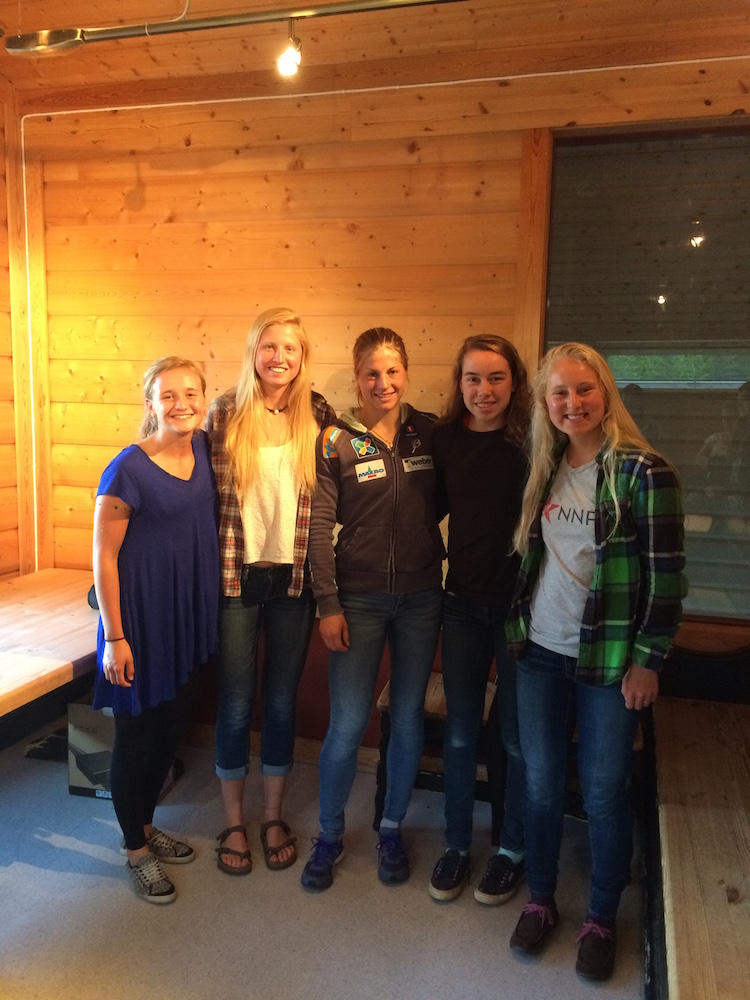
    Four U.S. juniors at the International Junior Camp with Norway's Astrid Jacobsen, who presented to the camp in Sjusjøen, Norway. From left to right: Alayna Sonnesyn, Hailey Swirbul, Jacobsen, Katharine Ogden, and Hannah Halvorsen. (Photo: Hailey Swirbul)
    Four U.S. juniors at the International Junior Camp with Norway’s Astrid Jacobsen, who presented to the camp in Sjusjøen, Norway. From left to right: Alayna Sonnesyn, Hailey Swirbul, Jacobsen, Katharine Ogden, and Hannah Halvorsen. (Photo: Hailey Swirbul)

    “I worked so hard with things that were my biggest weakness,” Jacobsen said.

    Her focused training led her to become a two-time junior world champion in Kranj, Slovenia (2005/2006). The following season at age 19, Jacobsen won her first World Championships title in the classic sprint in in Sapporo, Japan. In 2009, she suffered a career-altering mountain bike crash, in which she fractured both elbows, her jaw, and broke her back. She was told that she might not be able to ski again, but within eight months, Jacobsen finished seventh in the classic sprint at the Vancouver Olympics.

    “You will struggle, you will fall … You will feel all of the work is for nothing, but it will always turn out in the end,” Jacobsen said.

    While recovering from her bike crash, Jacobsen spent three months in a back brace and was confined to strict rehabilitation to regain movement in her body. Last season, she dislocated her shoulder in a rollerski accident, and directed her energy during that rehab toward studying to become a doctor.

    “Instead of feeling like a failure, I felt like I did something,” she said of her schooling. “It is another thing that I love to do.”

    Last season, after being accused of not fully committing to her athletic career, Jacobsen took courses “secretly,” rationalizing that she’s fastest when she is most relaxed and happy as a student-athlete. She enrolled in classes that didn’t require attendance, and told her teammates about her studies after a few months of school.

    “[My teammates] were surprised when they saw I was able to pull off a full-time school in addition to skiing fast last winter,” Jacobsen said. “In a way I think I proved both athletes and coaches wrong.”

    At 2015 World Championships in Falun, Sweden, she captured two medals: silver in the skiathlon and gold in the four-person relay.

    Jacobsen attributed her ability to balance school, skiing and a social life to her “flexible mind.”

    “I am really quick to change my plan,” Jacobsen said. “You need to be a bit flexible towards training plans for it to work.”

    During the school year, Jacobsen cuts back on both traveling and social events to manage her schedule, and reminds herself of the importance of eating, drinking and sleeping properly to maintain a healthy mind and body. That mindset allows her to have time to chase multiple dreams and appreciate the long-term picture.

    “I love skiing, but it is not my life,” Jacobsen said. “I don’t feel like everything is falling apart even when it’s not going so well.”

    The World Cup skier of ten years has learned that “preparation is key,” she said. Before an important race, she enjoys relaxing reading or watching short movies. She always makes a race execution plan, and suggests to “keep reminding yourself of what you do well” and to remember your past successes as an athlete.

    To this skier, even the slightest improvement, academically or athletically, is a win. Her advice to young athletes?

    “I just want young athletes to think what they want, now and for the future, and make choices that will bring them there,” she said. “Hard work is required for success in all arenas, not just sport.”

  • Wednesday Workout: The Triple ‘S’ (Skate Sprint Simulation) with the International Junior Camp

    Wednesday Workout: The Triple ‘S’ (Skate Sprint Simulation) with the International Junior Camp

    This week, 17-year-old Hailey Swirbul, a member of the Aspen Ski and Snowboard Club and one of nine American skiers invited to the International Junior Camp in Norway, shares a workout from that very camp, taking place Aug. 6-14 in Norway.  It’s called the Triple ‘S’, which stands for Skate Sprint Simulation, and involves a prologue, sprint heats and an epilogue on a 1.5-kilometer loop. Athletes completed this workout on Monday

     in Sjusjøen, and Swirbul captured the sprint simulation in the above video.

    ***

    1. Warmup: Since the simulation represents a race effort, warm up like you would a sprint race. This is an ideal opportunity to experiment with different warmups to find out what works best for you.

    International Junior Camp participant and sprinter Hannah Halvorsen (Sugar Bowl Academy) suggests:

    – Play your favorite song to get you pumped for the workout!

    – 20 minutes of L1 [Level 1] easy skiing on the course to learn the turns and downhills of the track.

    – One lap of the course in Level 2 – Fast enough to get a feel for which techniques to use in different terrain, but still easy enough to keep your heart rate fairly low.

    *Bathroom break!*

    – One lap of the course in Level 3 with specific focus on transitioning terrain.

    – One lap of the course with 30-40 second speeds in the most important and valuable sections (over the tops of hills, carrying speed into hills, etc.)

    – 3 or 4 sprints on the finishing stretch.

    – Jump around, plyos, run with poles, and when it’s time, smile and dance your way to the start line!

    2. Prologue: After warming up well, it is time for the prologue, or qualifier. Each skier starts at 15-second intervals and skis one lap of the sprint course to determine the start positions in the heats. It is important to give 100-percent effort to give yourself the best advantage for the heats.

    • Then take a 15-minute active recovery break

    3. Heats: The six fastest skiers from the prologue will be in heat 1, the next six in heat 2, and so on. The first two skiers from each heat (with the exception of heat 1) will move up to the higher ranked heat in the next round of sprints, while the last two skiers from each heat move to a lower ranked heat. Ski aggressively and push yourself to win your heat. Separate each of the sprints with a 15-minute active break period.

    International Junior Camp participant Katharine Ogden (Stratton Mountain School) says: “Don’t worry about offending people. When you are skiing aggressively, it not only helps your own skiing tactics, but it helps your competitors improve their skiing, so everybody wins in this situation!”

    4. Epilogue: In the same start order and format as the prologue, complete one final sprint loop, trying to ski smoothly and improve your time from your prologue.
    5. Cool Down: Finish the workout with 15-minutes of easy skating.

  • Videos from the U.S. International Junior Camp in Norway

    Videos from the U.S. International Junior Camp in Norway

    Americans with the International Junior Camp in Oslo, Norway, trying with Norwegian ski team members at the Statoil Headquarters in Holmenkollen. (Photo: Bryan Fish)
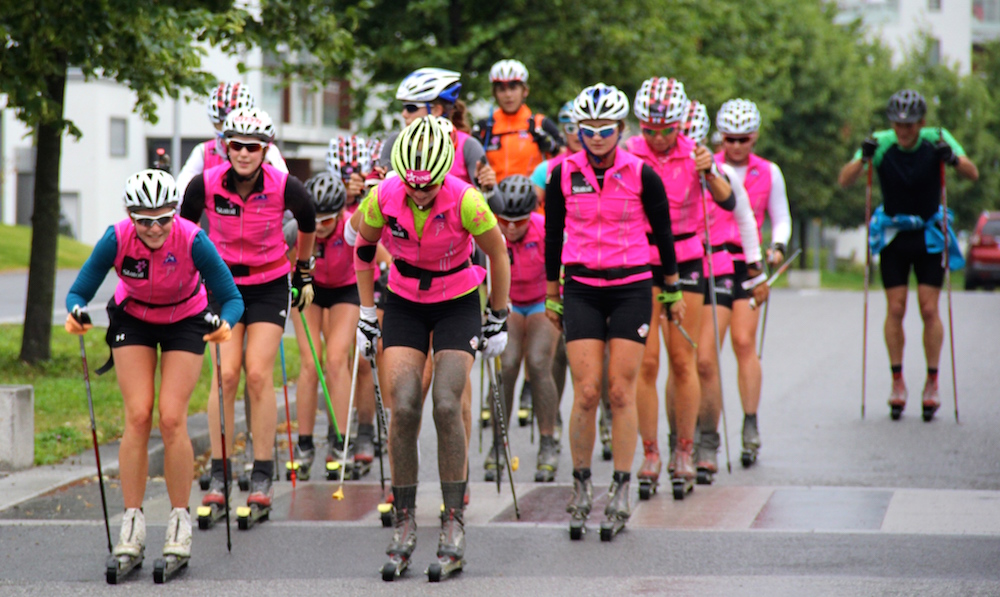
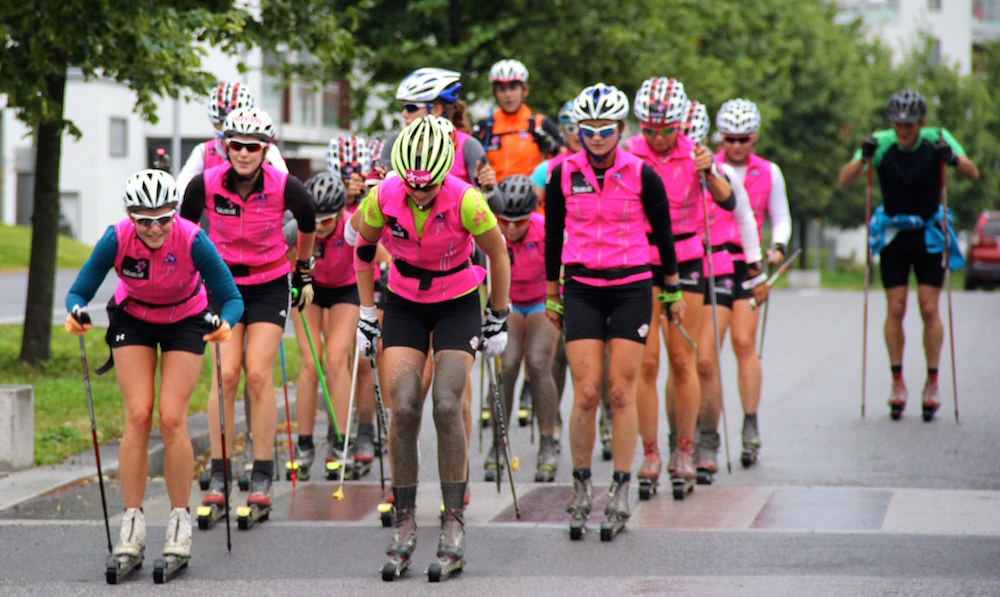
    American and Norwegian juniors the International Junior Camp in Oslo, Norway, mix it up during a muddy rollerski at the Statoil Headquarters in Holmenkollen. (Photo: Bryan Fish)

    There’s a new junior camp in town — specifically in Norway — for a select group of American cross-country prospects, and Hailey Swirbul of the Aspen Valley Ski and Snowboard Club has been documenting the first few days of action.

    In June, the National Nordic Foundation (NNF) announced it was funding new initiative, to send top U18 and U20 athletes from the International Ranking List to the the International Junior Camp, where they would be amongst 135 others from 15 different nations. Swirbul, 17, was one of five U.S. women invited and nine athletes in total. The NNF covered more than 60 percent of the cost of the weeklong camp for each of its athletes.

    While these teenagers are living it up in Norway from Aug. 6-14, Swirbul produced the following videos:

    Pre-camp in Torsby, Sweden

    https://www.youtube.com/watch?v=YCac5_QJj9o

    Day 1, Oslo, Norway

    https://www.youtube.com/watch?v=6MUBu-yKUCA

    Day 2, Oslo

  • NNF Funds International Junior Camp

    NNF Norway camp

    (Press release)

    SALT LAKE CITY, Utah – Consistent with its mission of supporting athletic excellence in developing U.S. Nordic athletes, the National Nordic Foundation announced financial support for a new junior camp for rising cross country skiers. Happening August 6 – 14, 2015, the International Junior Camp includes athletes selected from the a National Ranking List, as well as criteria set by coaches at the USSA congress. Camp participants include:

    WOMEN:
    Katharine Ogden, SMS
    Julia Kern, CSU
    Hannah Halvorsen, Sugar Bowl Academy
    Hailey Swirbul, AVSC
    Alayna Sonnesyn, SISU / UVM
    MEN:
    Zak Ketterson, LNR
    Max Donaldson, Fairbanks
    Lars Hannah, Steamboat
    Karsten Hokanson, Wasatch Nordic Ski Academy

    “Last year we learned that Norway’s national ski federation had invited 8 different nations to attend an international camp with the best internationally accomplished coaches, Olympic and World Championship athletes attending all for the sake of International Development of top level Junior’s, i.e. for the good of the sport !   In the past few years our own U.S. domestic training camps have become much more collabortive and we are contually producing better results on an international level. This International camp is the next step in helping the next generation of successful athletes,” Dave Knoop, NNF Executive Director explained.

    US Ski Team Development Coach, Bryan Fish added, “The aim of the International Junior Camp is to provide junior elite athletes from many nations the knowledge and experience about each nation’s training philosophies, development skills and also develop strong athlete rapport.  Most important, is the opportunity to for hands-on learning through physical train with one another.  There will be seminars at this camp for athletes and coaches. Included will be guest presentations for Norwegian A-team athletes.”

    The National Nordic Foundation will provide funding to support the camp. Each athlete will receive $950.00 in support of the trip. The total cost of the trip is $15,500 excluding airfare. The cost to each athlete is then $600 for the week in Norway.

    “This is a unique opportunity for our top young athletes to get another level of exposure to what some of the best skiers their age in the world are doing to prepare as well as some of the top skiers on the World Cup. It is a chance to build relationships, open their eyes, breakdown walls of perception and the mystery of what the Euro’s do to train, ” echoed James Southam, operations director for the NNF.

  • USST Revamps Camp Schedule with Visit to Norway; Juniors to Attend International Camp

    USST Revamps Camp Schedule with Visit to Norway; Juniors to Attend International Camp

    The USST women rollerski at Soldier Hollow in Midway, Utah as part of the 2015 U.S. Cross Country Ski Team Spring Camp (Photo: USSA/Sarah Brunson)
    The USST women rollerski at Soldier Hollow in Midway, Utah as part of the 2015 U.S. Cross Country Ski Team Spring Camp (Photo: USSA/Sarah Brunson)

    Fresh off their first training camp in Park City, Utah, the U.S. Ski Team is taking a new approach to summer camps in the 2015 season. Due to a need for more on-snow training, increased funding from outside sources, and the fact that the upcoming racing season does not feature a major championships, the Americans are trying out a new camp schedule that includes a lot of travel. Increasing their the number of training camps from four to five, the team’s most notable travels will include trips to New Zealand and Norway.

    Return to New Zealand

    The USST is no stranger to New Zealand training camps. With the exception of 2014 the team has taken part in some form of organized camp at the Snow Farm in Wanaka for many years. For several years prior to 2014, the American trip to New Zealand was solely a men’s camp, while the women’s camp was held at Eagle Glacier in Alaska. For the first time in 2014, both the men’s and women’s on-snow camps were at Eagle Glacier, with Noah Hoffman being the lone USST member to travel to the Southern Hemisphere.

    Upcoming USST Camp Schedule:

    • New Zealand: July 7 – 24
    • Junior Camp in Norway: August 2 – 15
    • Norway: August 9 – 24
    • Lake Placid: September 13 – 20
    • Park City: October 12 – 28  

    While the 2014 Eagle Glacier camp was lauded as a success, the team had limited time at the venue and was forced to log many hours of skiing each day to make the camp worthwhile. Although New Zealand has challenges of its own, namely the many hours of travel it takes to get there, it allows for more on-snow time over the course of two weeks. Because the team missed its typical spring skiing in Bend, Ore. this year, coaches decided their skiers needed more midsummer snow time than usual.

    “We really felt like that it was critical for us to get a little bit longer on-snow opportunity than we had in the past few years for a lot of these guys simply because we missed Bend and the on-snow time we would have logged at Mt. Bachelor,” USST Head Coach Chris Grover said of the choice to return to the Southern Hemisphere.  “We chose to go to New Zealand instead to get a little more skiing over a longer period of time, which is more viable down there.”

    Both the A- and B-teams will travel to New Zealand July 7 and remain until the 24. The Alaskan members of the team (Kikkan Randall, Rosie Brennan, Sadie Bjornsen, and Erik Bjornsen) will not partake in the camp will take advantage of skiing on Eagle Glacier two to three times throughout the summer.

    Measuring Up in Norway

    The biggest change to the USST summer schedule is the addition of a two-week camp in Norway taking place in mid-August. According to Grover, the camp is something coaches and athletes have talked about for many years. With no championship races in 2016, the USST decided to explore the benefits of a camp in Europe.

    The team will have an acclimatization period in Aure for eight to nine days where they hope to train with several local skiers or other European national teams. According to Grover, the USST reached out the Norwegian National Team but due to schedule conflicts the two teams will have no official training sessions together. The U.S. skiers will attempt to train with several individuals on the National Team who live in the area, however.

    After the acclimatization period, the USST will participate in the annual Toppidrettsveka rollerski races that take place between Aure, Kynken, and Trondheim from August 20 to 22. The set of three races, which are often attended by the best Norwegians including Marit Bjørgen, Therese Johaug, and Petter Northug, were a major motivation for the Americans to have a training camp in Europe. According to Grover, they will allow the attendees to measure up against the competition at a crucial time in the training season. Furthermore, all three days of racing will feature classic rollerskiing – a technique the U.S. is looking to improve upon in 2015/2016.

    “We have a pretty big goal with a lot of the athletes to improve classic technique in particular, especially on the women’s side,” Grover said. “This is an opportunity for us to go and measure our classic technique against the best skiers in the world so people can measure where their double pole is right now, where there striding is, etcetera.”

    Marit Bjørgen celebrates her win int he 2013 edition of Toppidrettsveka (Toppidrettsveka.no)
    Marit Bjørgen celebrates her win int he 2013 edition of Toppidrettsveka (Photo: Toppidrettsveka.no)

    2015 Toppidrettsveka (website):

    • August 20 – Aure: Uphill running race and classic sprint
    • August 21 – Knyken: 15 k skiathlon
    • August 22 – Trondheim: 15 k classic pursuit

    Given the American successes in recent years, organizers were eager to have the team compete in the series of races. According to Grover, the trip was made financially viable due to organizers providing lodging, food, and transportation for at least part of the camp.

    The final list of participants for the camp is still being confirmed, but several athletes are excited at the prospect of training and racing in Norway. Kikkan Randall, three-time sprint World Cup winner, said she believes the camp is an excellent opportunity for the team.

    “Getting in and being able to do some intervals and some racing with World Cup level field really helps me fine tune things and get a good picture of where I’m at,” Randall said. “It increases motivation after a long summer of prep… I think it will be a perfect fit because it’s in August and it will give us a couple months before we go into the race season.”

    The remaining USST camps will take place in Lake Placid and Park City. The mid-September camp in Lake Placid will be reduced from two weeks to one week, while the Park City camp will remain at its usual placement in the middle two weeks of October. Both camps will be open to athletes receiving invitations based on National Training or Elite Group status, or other qualifications.

    Eldar Rønning speaks to juniors at the 2014 edition of the International Junior Camp. (Photo: Olav Mellingsaeter/FIS)
    Eldar Rønning speaks to juniors at the 2014 edition of the International Junior Camp. (Photo: Olav Mellingsaeter/FIS)

    International Junior Camp in Norway

    A- and B-teamers are the only Americans headed to Norway this summer, as a squad of juniors will attend the 2015 International Junior Camp in Norway from August 6 to 14. The camp, which is organized by the Norwegian Ski Federation, will start in Oslo and eventually move to Sjusjøen. The U.S. juniors will arrive prior to the start of the camp to acclimatize and participate in tunnel skiing in Torsby, Sweden starting August 2.

    With 120 spots available, the Norwegian Ski Federation invited nations to bring a maximum of 10 athletes and two coaches to the roughly week-long camp. Last year 90 athletes from Germany, Canada, Latvia, Estonia, Slovakia, Iceland, Czech Republic, Slovenia and Norway were in attendance. The 2015 event will mark the first time that American juniors have been selected by the national team to participate in an international training camp of this caliber and size.

    The camp will include a high volume of running, rollerskiing, and strength in addition to an uphill running race in Olso and a rollerski sprint race in Sjusjøen.

    According to trip-leader and USST Development Coach Bryan Fish the camp will serve several purposes, including the sharing of training philosophies and developments skills. “Most important, is the opportunity to for hands-on learning through physical training with one another,” Fish wrote in an email.

    Through a detailed selection process (see below) the USST selected 10 athletes for the event. Nine accepted the nomination and include Katharine Ogden, Julia Kern, Hannah Halvorsen, Hailey Swirbul, Alayna Sonnesyn, Zak Ketterson, Max Donaldson, Lars Hannah, and Karsten Hokanson.

    Prioritized International Junior Camp Selection Criteria:

    • One top 20 women’s / one top 30 men’s result at the 2015 Junior World Ski Championships
    • One top 15 women’s / one top 20 men’s result at an overall Scandinavian Cup or OPA Cup that has been scored to the USSA National Ranking List (NRL)
    • One top 10 women’s / one top 15 men’s result in the Junior division at a Scandinavian Cup or OPA Cup that has been scored to the USSA National Ranking List (NRL)
    • One top 10 women’s / one top 15 men’s result at the Under-18 Nation’s Cup competition (formerly known as J1 Scando Cup Trip)
    • Qualify for Junior World Ski Championships
    • Highest ranking on the USSA overall National Ranking List (athletes born on or between 1996, 1997 or 1998)

    International Junior Camp Athletes Accepting Nomination:

    Women:

    • Katharine Ogden
    • Julia Kern
    • Hannah Halvorsen
    • Hailey Swirbul
    • Alayna Sonnesyn

    Men:

    • Zak Ketterson
    • Max Donaldson
    • Lars Hannah
    • Karsten Hokanson

    The USST is attending its first International Junior Camp in 2015 because of unique circumstances that allowed for participation. According to Fish, one of the biggest reasons is funding. The National Nordic Foundation (NNF) will aid in the cost of the trip, so that athletes’ and coaches’ expenses are minimal.

    A second reason is the increased desire to continue development for young U.S. athletes. Fish wrote that the U.S. will continue to support its domestic programs for up-and-coming athletes, but that more international exposure will aid in future development.

    “It is cliché but true that cross country skiers are made in the summer, however there is no better way to learn what and how the best juniors from around the world are training than to join them in a place where the vast majority of the world’s best juniors are at,” he wrote.

    “I believe every camp has information each athlete can take home,” Fish continued. “I hope we all come into this camp with open-minds, respective to new ideas. The goal is for each and every one of us to come home with at least a few ideas or strategy (big or small) that can augment and improve personal training and performance.”

  • Open Coaching Position with U.S. Ski Team for International Junior Camp

    Open Coaching Position with U.S. Ski Team for International Junior Camp

    US Ski Team Logo(U.S. Ski Team press release) 

    The U.S. Ski Team is hiring one coach to join Trip Leader Bryan Fish (USST) to this year’s International Junior Camp in Norway. The position will be funded by the National Nordic Foundation. The Norwegian Ski Federation invites up to 120 elite junior athletes, with a maximum number of ten (10) athletes per nation. The International Junior camp includes aggressive training sessions and presentations from coaches and World Cup athletes from a variety of nations, with the intent of strengthening the experience and broadening the horizons of our future World Cup and Olympic Cross Country skiers.

    This coaching position provides invaluable experience to individual, club, and our developing ski nation. While a goal of the National Team has been to grow coaches experience on these trips, an experienced staff member is paramount. All applicants are welcome. The work is hard and the job is rewarding.

    The desired coaching applicant is a team player, and should have prior experience leading and participating in many camps and race trips. International experience is strongly preferable, though is not requisite. Applicants should be comfortable, clear, and effective in communicating regularly with athletes age 17 – 19, and be willing to work long days that may include leading team meetings, group activities, transporting athletes, orchestrating training sessions, mentoring athletes, and waxing skis. Coaching applicants must be licensed USSA Level 100 coaches, and have a valid passport. All coaches on this trip must be able to drive manual transmissions.

    Camp schedule

    2-Aug Arrive into Oslo International Airport and drive to Torsby, Sweden
    Spend 4 days at the Torsby Ski Tunnel (half on snow & half dryland training)

    6-Aug Travel to Oslo for the start of International Junior Camp

    9-Aug Travel to Sjusjøen for training in the greater Lillehammer area 14-Aug End of the International Junior Camp – Travel back to Oslo 15-Aug Return to the United States

    Applications should send a brief cover letter and resume to Bryan Fish bfish@ussa.org by Sunday, June 28. Questions about the trip are welcome. The staff will be selected by Friday, July 3rd.