At an Extraordinary General Assembly in Berlin, Germany, on Wednesday (16 November 2022), International Paralympic Committee (IPC) member organisations voted to suspend the National Paralympic Committees (NPCs) of Russia and Belarus.
The decision by IPC members to suspend NPC Russia and NPC Belarus stems from their inability to comply with their membership obligations under the IPC Constitution. This includes the obligations to ‘ensure that, in Para sport within the Paralympic Movement, the spirit of fair play prevails, the safety and health of the athletes are protected, and fundamental ethical principles are upheld’ and ‘not to do anything (by act or omission) that is contrary to the purpose or objects of the IPC and/or that risks bringing the IPC, the Paralympic Movement, or Para sport into disrepute’.
Andrew Parsons, IPC President, said: “As a democratic, membership-based organisation, it was important to allow the General Assembly, as the supreme body of the IPC, to take a decision on this important matter.
“Before votes were taken on the respective motions, IPC members had the opportunity to express their views. This included hearing from the NPCs of Russia and Belarus who, under German Law which governs our Constitution, had the right to attend, speak, and present their case to the Extraordinary General Assembly. Ultimately, our membership has decided to suspend both NPCs with immediate effect, until further notice.
“As IPC President, I want us to live in a world where sport unites the world in peaceful competition, enabling athletes to compete against their rivals to the best of their abilities in a safe and secure environment.
“The situation that the world of sport faces right now is highly charged and complex. I hope and pray that the conflict in Ukraine ends as soon as possible, that peace is secured, and that no more innocent lives are lost or impacted.”
IPC members voted 64-39 in favour of a motion to suspend NPC Russia (with 16 members abstaining), while 54-45 voted to suspend NPC Belarus (with 18 abstaining). For a motion to be passed, 50%+1 votes were required.
Due to their suspension, NPC Russia and NPC Belarus lose all rights and privileges of IPC membership, in accordance with the IPC Constitution.
Both NPC Russia and NPC Belarus now have the right to appeal the decision. Should any appeal not be upheld then only the General Assembly can revoke the suspension. The next IPC General Assembly is due to take place in the final quarter of 2023 at a venue yet to be confirmed.
The Extraordinary General Assembly also approved a motion amending the IPC Constitution to allow the IPC Governing Board to impose protective measures if there is an extraordinary event that risks compromising the safety, viability, integrity, and/or fairness of the Paralympic Games, any other Para sport competition sanctioned or authorised by the IPC, or any other IPC activities.
The IPC acts as the international federation for six Para sports: World Para Athletics, World Para Dance Sport, World Para Ice Hockey, World Para Powerlifting, World Shooting Para Sport and World Para Swimming. The IPC’s vision is to make for an inclusive world though Para sport.
The International Paralympic Committee (IPC) has suspended Russian cross-country skier Nadezhda Fedorova for four years for committing an anti-doping violation.
The PyeongChang 2018 Paralympian returned an adverse analytical finding for oxandrolone metabolites in a urine sample provided on 26 October 2018 in an out of competition test in Novosibirsk, Russia, where the athlete was training.
This substance is included on the World Anti-Doping Agency (WADA) 2018 Prohibited List under the category S1.1A Anabolic Androgenic Steroids (exogenous).
As a result of her violation, Fedorova will be ineligible for competition for four years from 8 July 2019 to 7 July 2023. All her results obtained from 26 October 2018 and onwards will be disqualified including forfeiture of any medals, points, records and prizes.
James Sclater, the IPC’s Anti-Doping Director, said: “This violation is the result of a targeted test conducted by the IPC at a time when the Russian Paralympic Committee was suspended as an IPC member.
“Throughout Russia’s suspension we continued to test Russian Para athletes who were part of a Registered Testing Pool, a group of top-level athletes in specific Paralympic sports who take part in an out-of-competition testing programme.
“Fedorova was eligible to compete at PyeongChang 2018 as a Neutral Paralympic Athlete after returning two clear anti-doping tests in the six months prior to the Paralympic Winter Games. This was a key criterium athletes had to meet to compete at the Games.
“Following Russia’s reinstatement as an IPC member earlier this year, we are continuing to implement an enhanced testing programme in the country.”
At PyeongChang 2018, Fedorova competed in six sit-ski biathlon and cross-country skiing events. Her highest placing was fourth in the 5km cross-country skiing event.
The IPC would like to remind all athletes the principle of strict liability applies to anti-doping matters and that any athletes who need to take a prohibited substance for medical reasons should seek a Therapeutic Use Exemption.
Each athlete is strictly liable for the substances found in his or her sample, and that an anti-doping rule violation occurs whenever a prohibited substance (or its metabolites or markers) is found in his or her bodily specimen, whether or not the athlete intentionally or unintentionally used a prohibited substance or was negligent or otherwise at fault.
As a signatory of the World Anti-Doping Code (WADC), the IPC remains committed to a doping-free sporting environment at all levels. The IPC, together with the International Federations and the National Paralympic Committees, established the IPC Anti-Doping Code to prevent doping in sport for Paralympic athletes, in the spirit of fair play. The IPC Anti-Doping Code is in conformity with the general principles of the WADC.
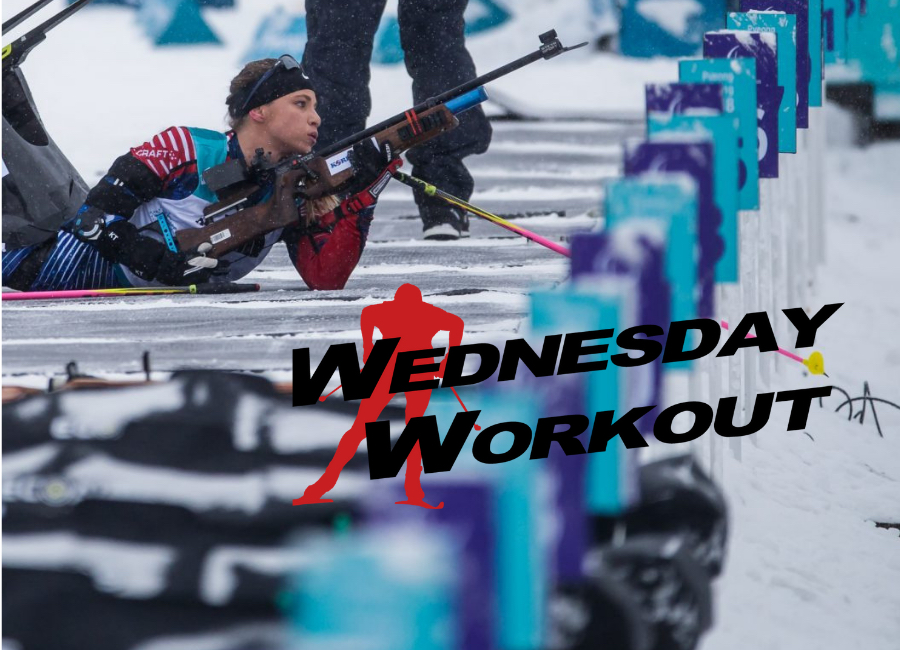
Oskana Masters focused and in the moment on the range during the 2018 Paralympics in PyeongChang, South Korea. (Photo: U.S. Paralympics/Joe Kusumoto)
For this week’s Wednesday Workout, FasterSkier reached out to Martin Benes, the newest addition to the U.S. Para-Nordic coaching staff. Benes joined U.S. Para-Nordic this August, after five years working as the nordic skiing director and head coach at Sugar Bowl Academy in Norden, California. He is still currently living in California.
Benes’s primary work is with the Para-Nordic national team: A-team members Oksana Masters, Kendall Gretsch, and Dan Cnossen, as well as B-team member, Aaron Pike. Many of those athletes compete in sports outside nordic skiing–Masters also competes in handcycling, Gretsch in para-triathlon–permitting Benes to coach remotely fairly easily through the fall.
“In the summer/fall, we’re kind of operating on a camp schedule,” Benes said during a phone conversation indicating that since late August, his primary role has been writing athlete training plans. He has also facilitated three camps for U.S. Para-Nordic national team athletes.
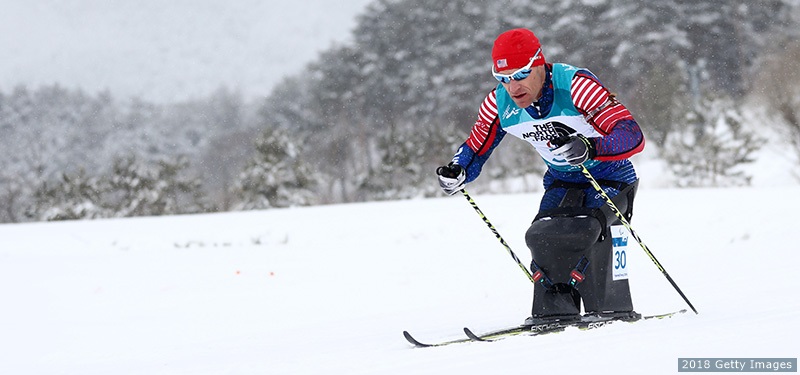
American Dan Cnossen racing to second in the men’s 15 k sitting biathlon individual at the 2018 Paralympics in PyeongChang, South Korea. (Photo: U.S. Paralympics/ Maddie Meyer-Getty Images)
This first camp was in Torsby, Sweden, where national team athletes made use of the city’s ski tunnel from late September to early October.
“Then we had a camp out in Lake Placid, [New York]” Benes said. “They used their snowmaking to make us a small loop, which was really awesome of them. Obviously, with this level of athlete, it’s nice to be able to get on snow at least once a month, especially in the fall. We had a big group of development athletes there.”
Following the Lake Placid camp in late October, the athletes gathered once again, this time in West Yellowstone, Mont., for the Rendezvous Ski Festival held Nov. 20 until Nov. 24. Before returning to California, Benes stayed in Bozeman to work with the national team athletes for a week after the festival.
“I’ll be spending chunks of time up in Bozeman and be able to work with athletes up there going into race series,” Benes said.
The International Paralympic Committee’s first series of World Cup races kicks off Wednesday, Dec. 12 in Vuokatti, Finland. (For the International Paralympic Committee’s complete calendar of cross-country and biathlon competitions, click here).
Prior to this year, Benes’s primary coaching work has been with junior ski racers (he’s coached for Far West, Auburn Ski Club and Sugar Bowl Academy) and college-age athletes (he spent two years as the assistant coach for Bates College, his alma mater). On being an able-bodied coach for Para-athletes, Benes indicated that at its core, the philosophy of coaching is the same. At present, there are no former Para-Nordic athletes coaching with the program.
“The training principles don’t really change,” Benes said. “Yes there are things to be aware of physiologically, but in terms of the core principles, it’s not that different.”
Benes said that paralympic standing athletes’ development often mirrors fairly closely, that of able-bodied athletes.
“In terms of that athlete is going to have started skiing pretty young and probably trained with their club with some modifications,” he said.
There are currently two college athletes in the Para-Nordic program’s development program, Grace Miller (University of Alaska Fairbanks) and Mia Zutter (College of St. Scholastica).
Kendall Gretsch takes aim during the women’s 6-kilometer sitting biathlon at the 2018 Paralympic Winter Games on Saturday in PyeongChang, South Korea. She won the race to become the first American woman to medal in a biathlon event at the Paralympics (or Olympics). (Photo: US Paralympics/Getty)
“For the sit skiers, the biggest difference there is tactical and a little bit technical approach has to shift a little bit,” Benes continued. “It’s obviously a little bit different, but the principles are the same. And I think that obviously I’m pretty new to this program, but they’ve done a good job of codifying a lot of what has worked.”
“So I think there’s actually kind of a system in place of, these are the things that we need to deal with when people first start sit skiing and these are kind of the things that we’re looking for in potential sit-ski athletes,” he said. “I kind of had this luxury of coming into this program that has been successful in a lot of ways and has established itself as a program that’s doing a lot of things right. I have the opportunity to build on that with a strong staff in place.”
Like any other athlete-coach relationship, the biggest role Benes has is to facilitate the athlete’s own self-sufficiency within the sport.
“With this level of athlete, you’re individualizing more than maybe you would with able-bodied athletes in terms of training plans, in terms of strength plans, he said. “But ultimately you’re…helping guide them and giving them the framework to be successful and helping them be their own best coaches.”
With a little less than four years before the next Paralympics, Benes said that for now, his focus will be “taking the opportunity to try some new things and explore some new things without forgetting the pieces that have worked and building on those.”
“That’s kind of a vague answer, somewhat on purpose,” he added. “Basically this is a really good year for us to try some new things, without letting go of what has worked.”
The following text is a workout written by Benes.
***
Here is a workout I’ve used in the past at various points in the year with different levels of athletes. It was a staple with some of the senior-level athletes I’ve worked with during the summer and fall and I’ve also found it to be an effective workout during the race season if athletes are starting to feel flat racing. It’s a great workout for older juniors and up. For younger skiers, play some games instead.
The goal is to have a steady effort threshold effort and then mix in some surges/speeds where athletes are sprinting and forcing themselves to change gears and tempo from what is already a hard effort. In that respect, it is similar to a race effort where you have to change gears and respond to accelerations, especially in mass start or sprint racing. What separates it from just an all-out race effort is that the steady effort is more controlled and therefore guarantees that the athletes are able to increase tempo and speed.
I’ve used a few different modes but running with poles/bounding, rollerskiing, and skiing all are great options.Obviously, the mode depends on the time of year a little. Ideally, you have some rolling terrain so that in addition to the surges/speeds there are also some built-in recovery sections. So, onto how to set this workout up:
Find a suitable loop for running with poles, rollerskiing, or skiing. Ideally, it is gently rolling terrain. No hills that are too steep/long but with some good variety. The length doesn’t matter too much but if it’s too short it will get boring too fast. A loop that will take the athletes 4-6 minutes at threshold is good.
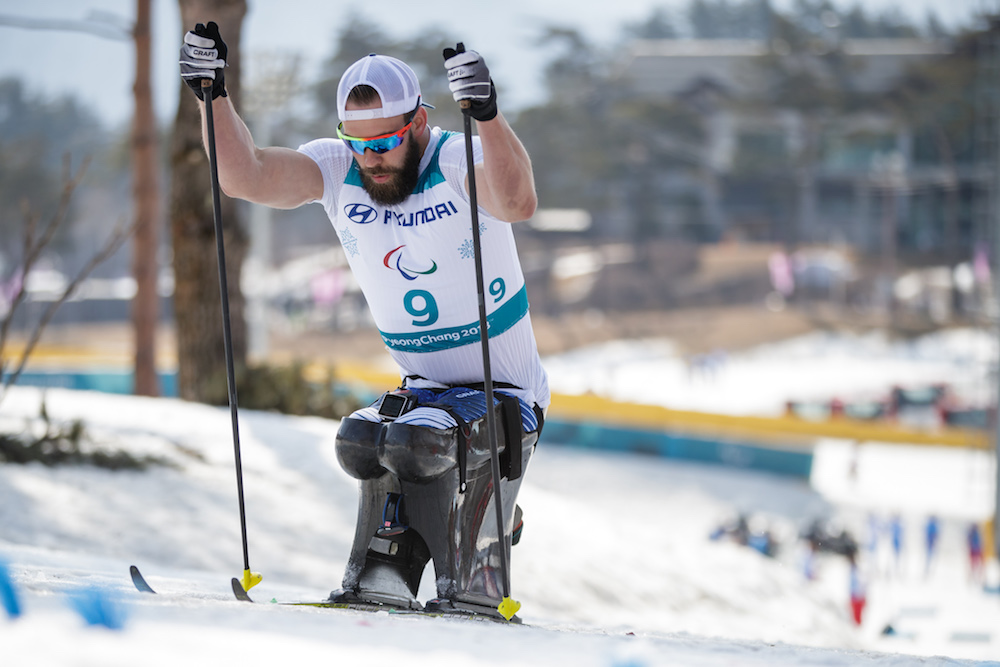
Aaron Pike (U.S. Paralympics Nordic) racing at the 2018 Winter Paralympics on a balmy day in PyeongChang, South Korea. (Photo: U.S. Paralympics/Joe Kusumoto)
On the loop, mark out (with cones, chalk, or dye) 2-4 short sections where the athletes will accelerate, do a speed, etc. You can mix up the specifics of the speeds. They could be forced technique, all-out speeds, accelerations, or any other variation. You’re looking for sections that should take approximately 10-20 seconds at speed.
You’re good to go. Depending on the athletes, you’re typically looking for 15-35 minutes of on time.
So, once it’s set up, have the athletes do a basic warm-up of 20 minutes of L1 activity, followed by 4 to 610-second speeds. Then decide how long the athletes will have for on-time. Typically, you would want to emulate a 5- to 10–kilometer race. So, in other words about 15-35 minutes of on time. Once they’re done, have them do a short cool-down and get their recovery on. Here is the step-by-step:
20-minute L1-L2 warm up.
4-6 by 10-second speeds. The focus here is quick movements.
15-35 minutes of threshold on the loop, with speeds on the marked sections. Speeds should be recognizable as a significant change in tempo/pace.
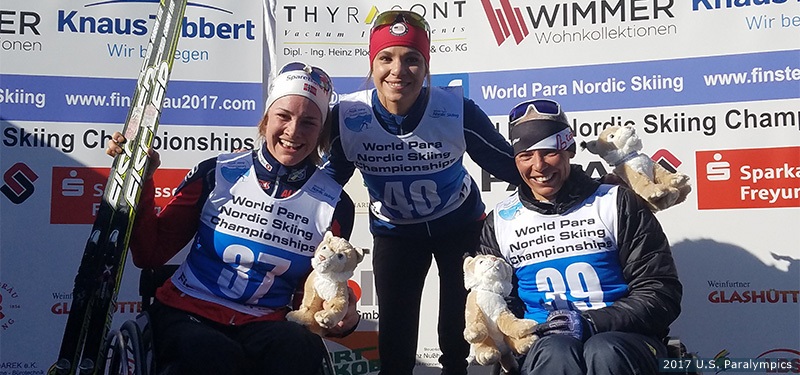
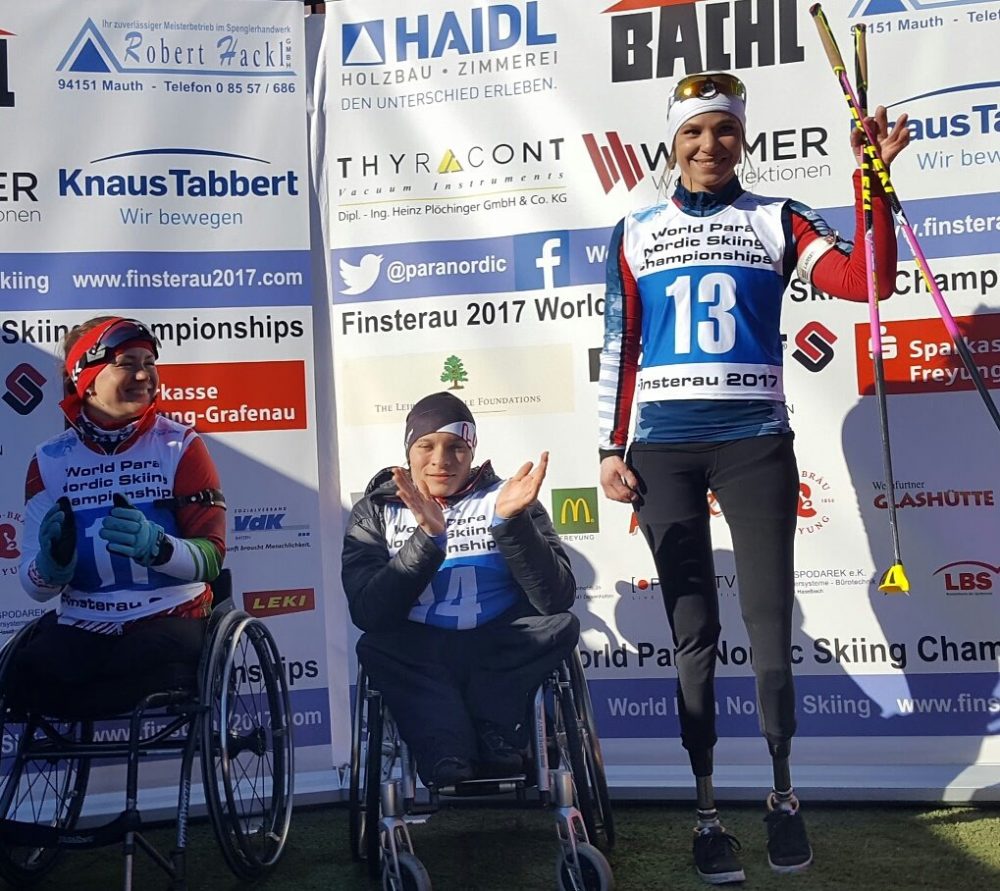
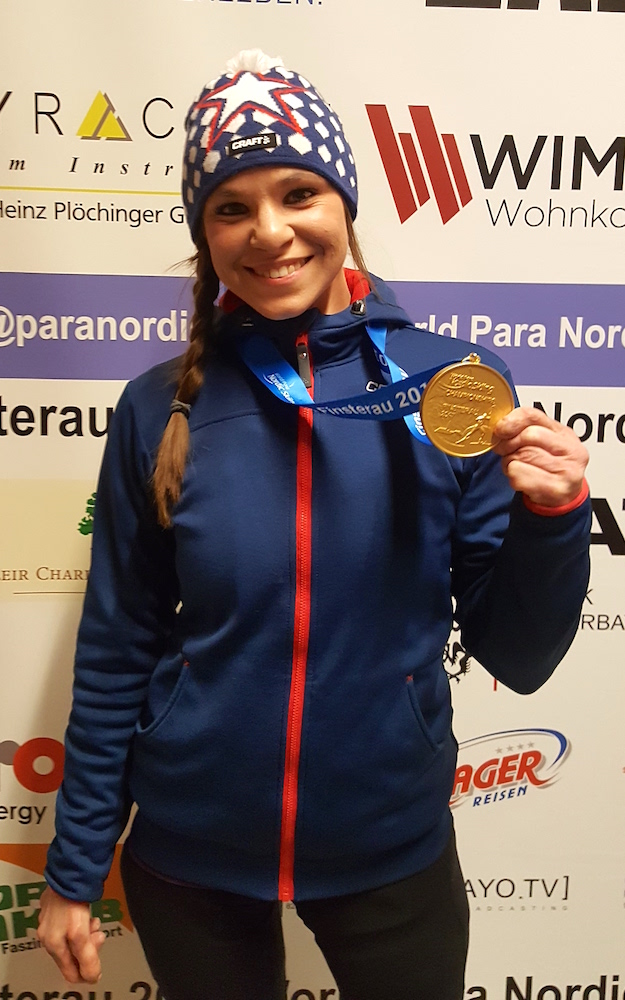
American Oksana Masters (c) after winning her second-straight cross-country race of 2017 IPC World Championships on Thursday in Finsterau, Germany. She is joined on the podium by Norway’s Birgit Skarstein (l) in second and Germany’s Andrea Eskau in third. (Photo: U.S. Paralympics)
After a rest day, Paralympic athletes returned to the nordic venue in Finsterau, Germany, for Days 3, 4, and 5 of the 2017 International Paralympic Committee (IPC) World Nordic Skiing Championships. Long-distance biathlon races took place Tuesday, cross-country relays on Wednesday and individual cross-country races on Thursday.
***
At the finish of Tuesday’s 15-kilometer individual biathlon race, Canada’s Mark Arendz could only think about one thing: his miss. But later, with his second 2017 World Championships medal, this one silver, around his neck after finishing in 39:21.9 minutes, the miss in his final stage (0+0+0+1) was no longer on his mind.
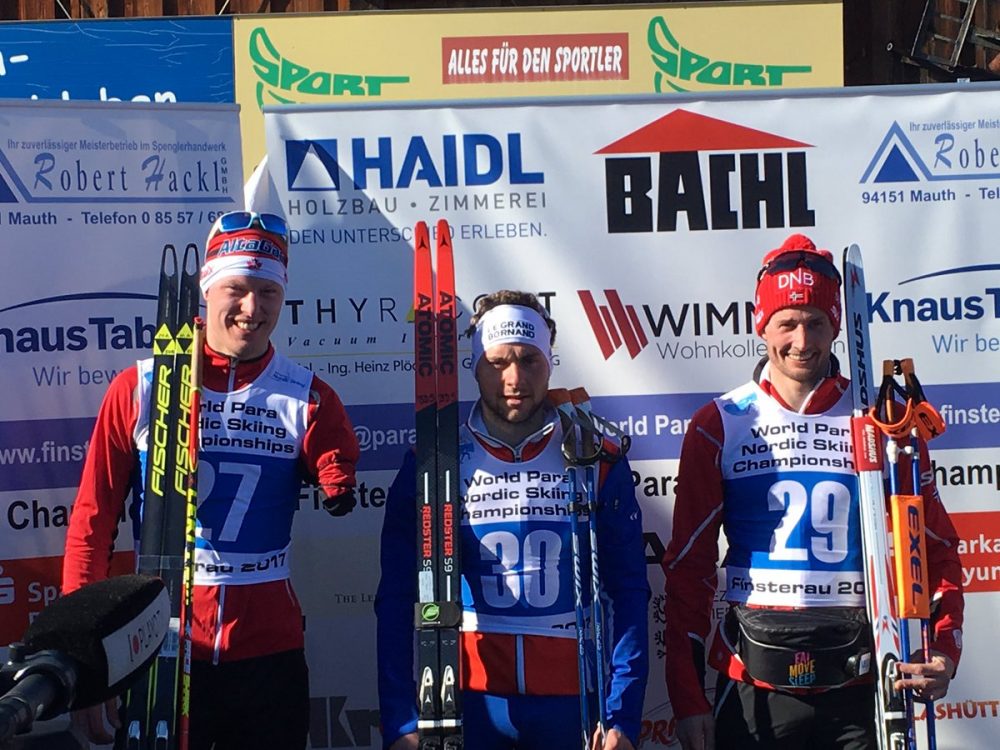
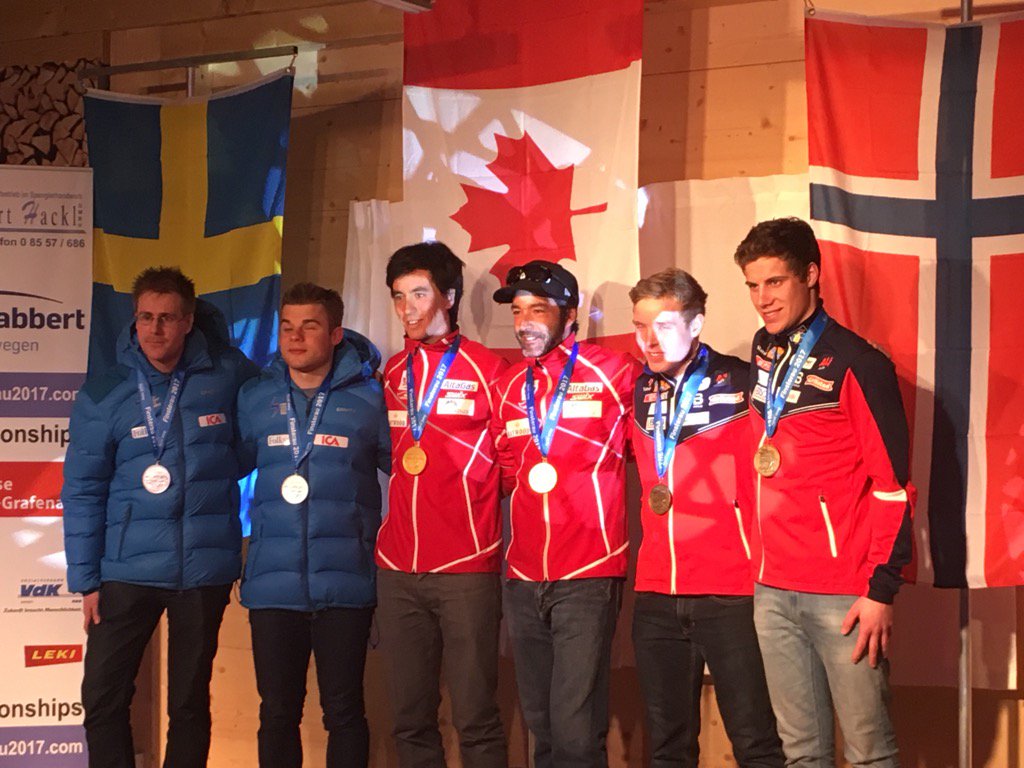
Left to right: Canada’s Mark Arendz, France’s Benjamin Daviet and Norway’s Nils-Erik Ulset on the podium for the men’s 15 k biathlon standing event held on Tuesday, Feb. 14 at the 2017 IPC World Nordic Skiing Championships in Finsterau, Germany. (Photo: Robin McKeever/Twitter)
“After crossing the finish line, all I could initially think about was the single miss (in shooting), and the fact I let the gold slip through my fingers,” Arendz said, according to a Canadian Para-Nordic Skiing press release. “But I quickly warmed up to the fact that I had won a World Championship silver medal.”
Finishing ahead of Arendz for first place was France’s Benjamin Daviet who also shot 19-for-20 and covered the course in time of 38:33.7.
“I am very happy and honoured. This is great and what I came here for,” Daviet said according to an IPC press release. “I will not celebrate because there are many races ahead. I hope to win more medals in Finsterau.”
Norwegian Nils Erik Ulset claimed the final podium spot, finishing third in a time of 40:26.7 after two penalties (1+0+1+0).
In the women’s 12.5 k standing biathlon event, Ukraine’s Liudmyla Liashenko came away with the win. She missed just one shot (1+0+0+0) and finished in a time of 39:10.0.
“I am really happy. I want to dedicate this triumph to all my family, friends and all who have supported me all along this journey,” Liashenko said according to an IPC press release.
In her first podium appearance, Japan’s Momoko Dekijima claimed second in 42:49.3 after two misses (1+1+0+0). Third place went to Ukraine’s Iryna Bui, who finished in 43:53.1 with three penalties (0+2+0+1).
Canada’s Brittany Hudak raced to fifth with a single miss (0+1+0+0), finishing in 44:14.9.
Racking up another gold medal on his home turf, Germany’s Martin Fleig took the win in the men’s 15 k sitting biathlon race in 44:39.4 with one miss (0+0+1+0).
“I did not expect this,” Fleig said according to an IPC press release. “I had a good feeling in the morning but could not imagine the race would be so perfect. It is unbelievable that now I am a two-time world champion. It is awesome.”
Earning silver behind Fleig was Taras Rad of Ukraine, who had four penalties (2+1+0+1) and finished in 48:01.3. Trygve Steinar Larsen of Norway earned bronze, finishing in 49:07.9 with three penalties (2+0+0+1).
Just missing the podium with a career-best fourth was American Aaron Pike, who finished in 51:10.2 with five penalties (1+0+1+3). Canada’s Derek Zaplotinsky placed just behind Pike in fifth for his personal best, finishing in 53:28.1 with four misses as well (0+1+2+1).
Behind them, American Andy Soule finished in seventh in 54:26.7 with nine penalties (2+2+2+3).
Right to left: American Oksana Masters, Germany’s Anja Wicker and Ukraine’s Lidziya Hrafeyeva on top of the podium for the women’s 12.5 k sitting biathlon event on Tuesday at the 2017 IPC World Nordic Skiing Championships in Finsterau, Germany. (Photo: Oksana Masters/Twitter)
Germany earned another victory at home in the women’s 12.5 k sitting biathlon event, with Anja Wicker returning to the podium, this time in first place.
“I am super happy, my biggest dream came true. I was hoping this would happen, it was a perfect day for me,” Wicker said according to an IPC press release. “Whilst I was still competing, I heard that Martin [Fleig] had already won gold and that motivated me to do the same.”
Wicker finished in 43:07.3 with one miss (0+0+1+0). Behind her in second place was Belarus’s Lidziya Hrafeyeva, who finished in 46:05.2 after three penalties (0+2+1+0).
American Oksana Masters also returned to the podium for her first biathlon medal of the week, finishing in 46:43.7 with four misses (2+2+0+0).
Earning the gold medal in the men’s 15 k visually impaired biathlon race was Vasili Shaptsiaboi of Belarus, who finished in 40:47.3 with just one miss (0+0+0+1). Ukraine took the final two podium spots, with Anatolii Kovalevskyi earning silver in 41:55.2 and one miss (0+1+0+0) and his teammate Vitaliy Lukyanenko finishing just behind him for bronze in 42:21.2, also with one penalty (1+0+0+0).
Ukraine’s Oksana Shyshkova finally found her gold on Tuesday, winning the women’s visually impaired 12.5 k biathlon event after shooting clean and finishing in a time of 38:26.6.
“After winning two silvers in Finsterau, I am happy to finally take gold,” Shyshkova said according to an IPC press release. “Now I have to focus on the next events, do my job, give my best and the results will come as a consequence.”
Silver went to Germany’s Clara Klug in a time of 43:58.2 with two missed shots (0+0+0+2), while Ukraine’s Olga Prylutska earned bronze in a time of 45:16.0 after six misses (1+4+0+1).
Wednesday, the fourth day of racing at the 2017 IPC World Nordic Skiing Championships was marked by mixed and open relays. The U.S. did not field a team, as no standing American athletes are present at this competition series. Canada entered a team in the open relay event.
***
Canada made history on Wednesday earning its first World Championships relay medal with Brian McKeever, Emily Young and Arendz.
McKeever, a visually impaired racer, started first. He tagged off to Young, a standing skier, and Arendz, also in the standing category, and back to McKeever. The quartet finished third in 24:53.4 just 57.5 seconds away from the win.
“It is pretty awesome to have such a great result today with the boys, and finally snag my first World Championship medal,” Young said, according to a team press release.
Young was one of the only women racing amidst the top teams.
“Being one of the only girls out there, it was tough to ski against the men’s field but I gave my best effort, and that was all I could do,” Young said, according to a CCC press release. “I just had to remember to ski my race, and know that I would likely fall behind a bit. I skied the fastest so far on this course. It was a very exciting race and I am very proud of the team.”
The win went to France in a time of 23:55.9, with standing skier Daviet leading the team, followed by visually impaired skier Anthony Chalencon, Daviet again and then standing skier, Thomas Clarion.
Norway took second place, 23.8 seconds behind France, with standing skier Ulset racing the first leg for the team, standing skier Hakon Olsrud taking the second leg, Ulset the third and visually impaired skier Eirik Bye anchoring the team.
In the mixed 4 x 2.5 k relay, it was Ukraine’s team comprised of visually impaired skier Iurii Utkin, who skied the first leg, followed by the three standing skiers Liashenko, Iuliia Batenkova, and Oleksandra Kononova. The Ukrainian team finished in a time of 26:56.5 for the win.
“This is a really good result, we made a huge effort to achieve this,” Ukrainian head coach Andriy Nesterenko said according to an IPC press release.
Sweden earned silver, with standing skier Helene Ripa and visually impaired skier Zebastian Modin racing for the team. The duo completed the event in a time of 27:17.5, just 21 seconds back from first place.
The final mixed relay podium spot went to Belarus, with sit skier Dzmitry Loban leading the first leg, followed by visually impaired racer Sviatlana Sakhanenka. Sit skier Valiantsina Shyts raced the third leg, and visually impaired skier Mikita Ladesau anchored the team to finish in a time of 28:12.3.
Canada’s Brian McKeever (third from r) with his guide Graham Nishikawa (third from left) after winning his second medal of 2017 IPC World Championships and 18th career World Championships gold on Feb. 16 in Finsterau, Germany. (Photo: Robin McKeever/Twitter)
Day 5
Just four days after she earned her first World Championships gold, Masters, of the U.S. Paralympics Nordic A-team, repeated the feat on Thursday, earning her second gold medal of the week.
Masters, 27, raced to first place in the women’s 12 k sitting cross-country event, finishing in 36:01.0. She outlasted Norway’s Birgit Skarstein, who finished second in 36:51.7, as well as Germany’s Andrea Eskau in third (37:00.0).
“I had some nerves going into the race today, but I used them to motivate me,” Masters said, according to a U.S. Paralympics press release. “I felt good and am really happy with how today went.”
In the men’s 15 k sitting cross-country event, Ukraine’s Maksym Yarovyi took the win, finishing in 40:32.4. Eui Hyun Sin of South Korea earned silver, finishing in 40:56.7, while Germany’s Fleig nabbed the the final podium spot in third (41:05.4).
Racing for the U.S., Soule narrowly missed the podium in fourth place, finishing in 41:36.4. Two Canada’s Collin Cameron placed seventh in 42:12.1 and Sebastien Fortier was 10th in 44:29.0.
Germany’s Carina Edlinger claimed gold in the women’s 15 k visually impaired event, ahead of Ukraine’s Shyshkova and Prylutska.Edlinger finished in a time of 55:40.1 for the win, Shyshkova in 57:11.9 and Prylutska in 1:00:01.8.
Racking up his 18th World Championships gold on Thursday was Canada’s 37-year-old McKeever, who won the men’s 20 k visually impaired race in 57:35.4.
“Graham skied really, really well today,” McKeever said of his guide, Graham Nishikawa, according to a team press release. “In fact he put me in an uncomfortable place for a large portion of the race, and I may have done the same for him in spots. There are different sections where we felt really good, and then others poorly. You are just comfortable with certain terrain, but it was really, really hot today and that just makes it tough to be relaxed when it is like that. It is a constant mental battle.”
Finishing behind McKeever in second was Sweden’s Modin in 1:00:24.6. Norway’s Bye claimed the final spot in third (1:00:58.8).
In the women’s 15 k standing cross-country race, Ukraine’s Kononova took the win, completing the course in a time of 51:56.9. Her Ukrainian teammate, Batenkovaearned silver, finishing in 53:38.1, while Liashenko rounded out the all-Ukranian podium in third (53:59.4).
Finishing just off the podium in fourth was Canada’s Young, after completing the course in 54:21.3. Behind her in fifth was her Canadian teammate Hudak, finishing in 55:53.9.
Ukraine earned another gold, this time on the men’s side, with Ihor Reptyukh taking first place in the men’s 20 k standing cross-country event. Reptyukh finished in 58:03.1, while Finland’s lkka Tuomisto placed just behind him in second (58:39.1). Third went to Yoshihiro Nitta (58:51.6).
Canada’s Arendz ended the day in fifth (59:34.4).
“The most exciting part for me is watching these young guys like Brittany and Emily killing it in classic, or watching Collin who has become a superstar over year in just his second year,” McKeever said in the press release. “I’m old has heck, but you see these development guys come in and all you can do is give them the toolbox to achieve success and show them the door, but they have to open it. These guys are and they are nailing it.”
Two days of racing remain for the 2017 IPC World Championships, with biathlon sprints on Saturday and middle-distance cross-country races on Sunday.
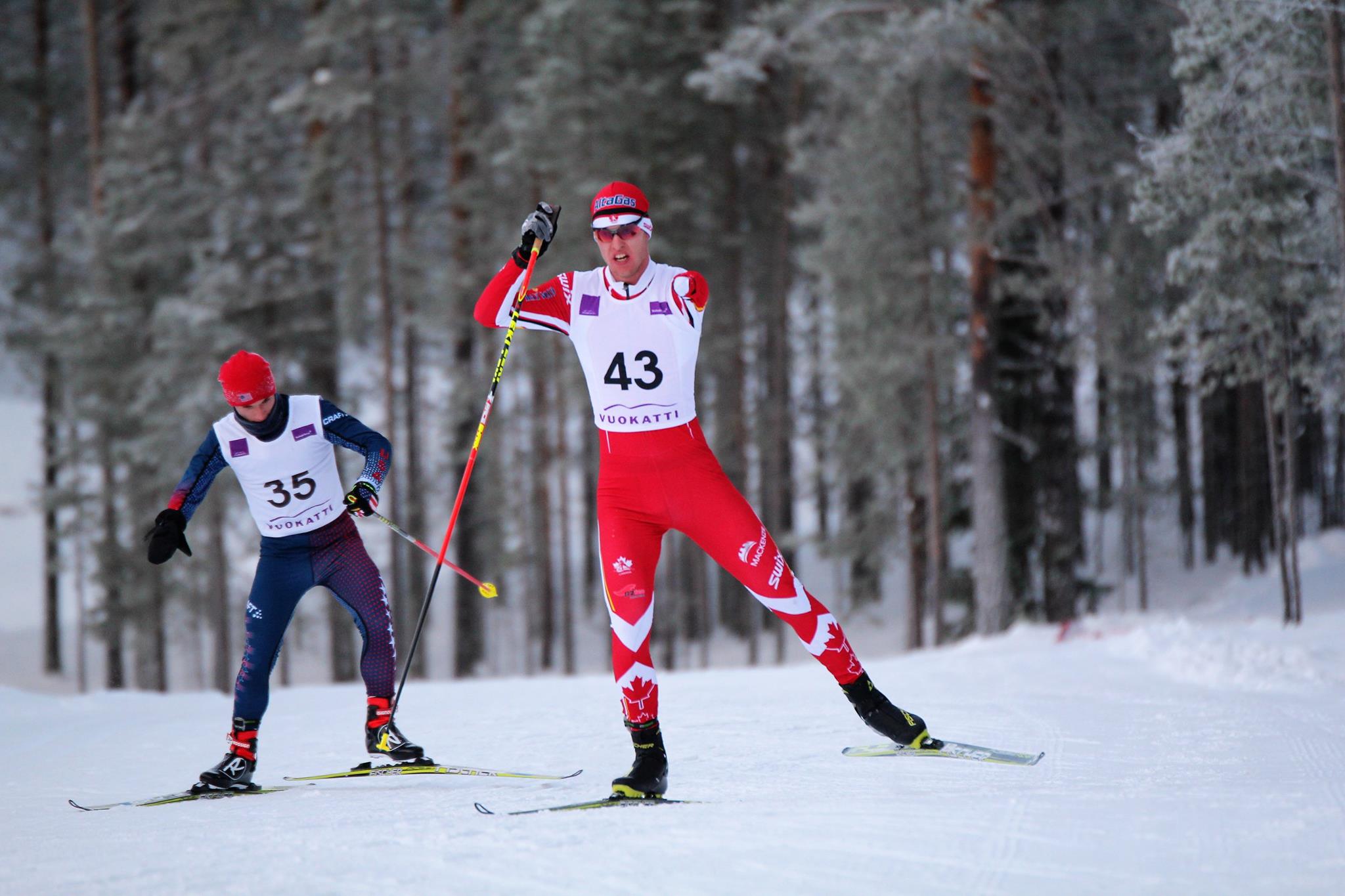
Mark Arendz (43) of the Canadian Para-Nordic Ski Team racing to silver on Dec. 12, 2016 in Vuokatti, Finland. He finished second in the men’s standing long-distance event that day, and won his second-career World Championships gold on Saturday, Feb. 11, in Finsterau, Germany. (Photo: Canadian Para-Nordic Skiing/Facebook)
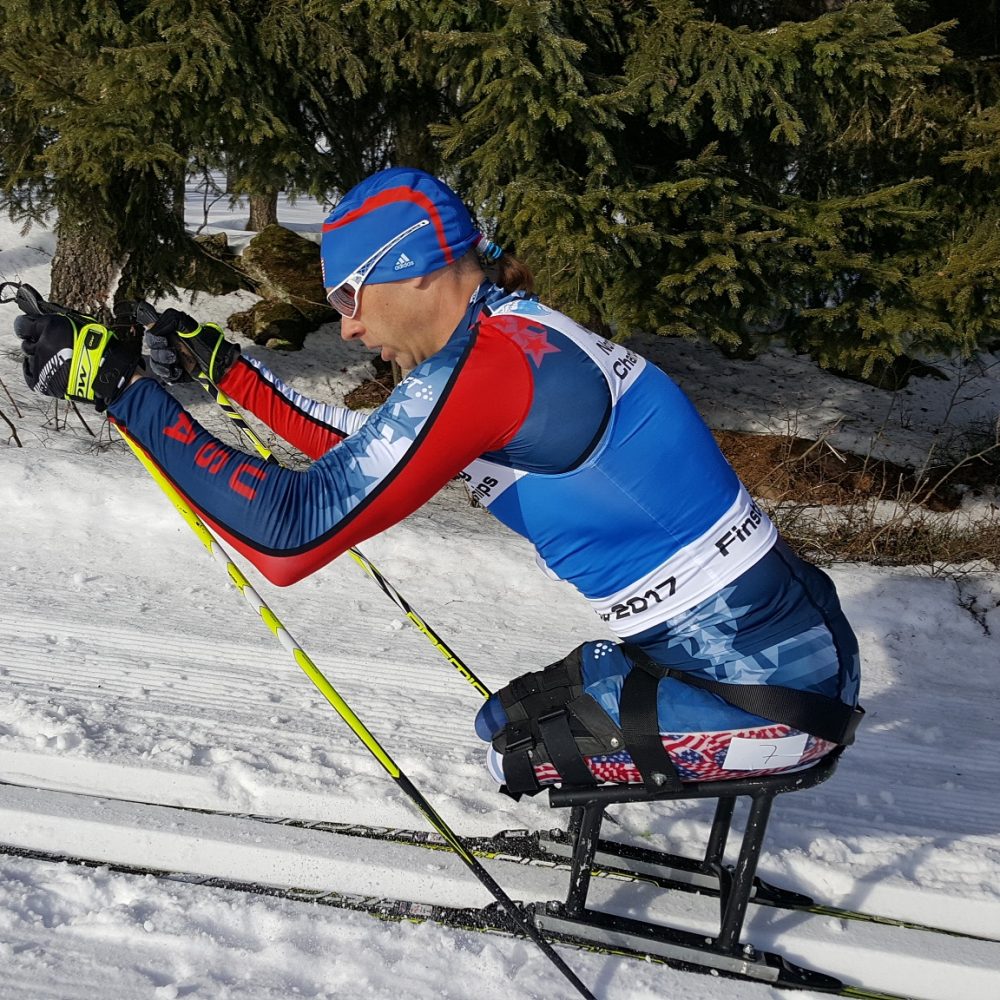
The 2017 International Paralympic Committee (IPC) World Nordic Skiing Championships kicked off Saturday, Feb. 11, in Finsterau, Germany. Day 1 included middle-distance biathlon events for both genders, with Canada’s Mark Arendz earning his second-career IPC World Championships title. On Day 2, both genders competed in a cross-country sprint, where American Oksana Masters raced to her first world title and her U.S. Paralympics Nordic teammate Andy Soule claimed silver. Complete results and race recap below.
***
There’s no better way to start a World Championships week than with a world title. After hitting all 20 targets in the men’s 12.5 k standing biathlon race, that’s just what Canada’s Mark Arendz did, taking gold on the opening day, Saturday, Feb. 11, in a time of 30:39.3 minutes.
“To start the World Championships off with a World Title is a huge boost of confidence going into the rest of the competitions here in Germany,” Arendz wrote in an email to FasterSkier. “ It is proof that the changes that the program and I have made this year are working. That the training and hard work is going in the right direction.”
The win is 26-year-old Arendz’s second World Championships title and first podium at a top-level international race (in a non-Paralympic year) in three years, according to a Canadian Para-Nordic Skiing press release. He previously took gold in a biathlon sprint and two bronze medals in 2013.
“The biggest change for me has come from my approach to shooting,” Arendz said, according to the press release. “My new (shooting) coach has really brought my shooting back to the level that it once was. I was repeating too many bad habits, so the key was to rebuild the shooting from the ground up. Today, I proved the shooting is once again back on top.
“Shooting clean at major events is key,” he added. “I controlled what I could on the range. On the course, I worked on areas where I am stronger and held a consistent pace.”
France’s Benjamin Daviet finished behind Arendz in second place in a time of 31:14.3 with two misses (0+0+1+1), while third place went to Ukraine’s Grygorii Vovchynskyi in a time of 31:22.8 after two misses (0+1+0+1).
(Recap continues below)
https://www.instagram.com/p/BQYuIbflxiv/
The women’s 10 k standing biathlon gold went to Oleksandra Kononova, who completed the course in a time of 31:41.5 after three misses (1+0+1+1).
“I am happy but there is still a lot of work to do and many races to compete in,” Kononova said according to an IPC press release.
Second place went to Liudmyla Liashenko, also of Ukraine, in a time of 33:05.7 with five missed shots (2+1+2+0). The final women’s standing podium spot was taken by Japan’s Yurika Abe in a time of 34:14.3 and one miss (1+0+0+0).
Two Canadian women competed in Saturday’s standing biathlon event, with Brittany Hudak leading the team in eighth place. Hudak finished in 36:39.2 after shooting clean. Her teammate, Emily Young finished 10th in a time of 39:28.2 with five misses (0+2+0+3).
In the men’s 12.5 k sitting biathlon race, Germany’s Martin Fleig took gold in a time of 37:31.0 with one penalty (1+0+0+0). It was his first world title and in front of a home crowd.
“I cannot believe it, it is unreal for me, I do not know what is going on,” Fleig said according to an IPC press release. “I had a good race and I only missed one shot. Having my people cheering for me gives me extra power.”
Ukraine’s Taras Rad placed second in a time of 37:52.2 with two misses (2+0+0+0) and third place went to Korea’s Eui Hyun Sin in a time of 39:37.4 after four misses (2+1+1+0).
Just missing the podium in fourth place overall was Canada’s Collin Cameron, who finished in a time of 40:02.0 after one miss (0+1+0+0). In sixth was American Andy Soule, finishing in a time of 40:10.4 with five penalties (1+2+0+2). Canada’s Derek Zaplotinsky finished ninth in a time of 43:05.8 with four misses (1+0+3+0).
Belarus’s Lidziya Hrafeyeva won the women’s 10 k sitting biathlon race, completing the course in a time of 34:46.0 with one miss (0+1+0+0).
“My first medal at a Worlds and it is gold. This is like a dream for me,” Hrafeyeva said according to an IPC press release.
Anja Wicker of Germany claimed second in a time of 36:22.1 after two misses (1+0+1+0), while Andrea Eskau, also of Germany, took third in a time of 36:48.5 with one miss (1+0+0+0). Just off the podium in fourth was American Oksana Masters, who finished in a time of 36:53.7 with five misses (1+2+1+1).
“I know I have very strong opponents such as Belarus’ Lidziya Hrafeyeva, USA’s Oksana Masters and my teammate Andrea Eskau,” Wicker said according to an IPC press release. “But I am giving my best.”
In the men’s 12.5 k visually impaired biathlon race, Ukraine swept the podium with Iurii Utkin taking the win. Utkin shot clean and completed the course in a time of 32:50.7.
“It feels great to win this title, this is very big and I did not expect to win. But hopefully now I will win more golds in the days to come,” Utkin said according to an IPC press release.
His teammate, Anatolii Kovalevsky claimed second place in a time of 33:07.4 after also shooting 100 percent. Dmytro Suiarko earned the final medal after finishing third in a time of 33:51.9 with one miss (1+0+0+0).
Ukraine also took the top two spots in the women’s visually impaired biathlon event, with Olga Prylutska winning in a time of 33:11.4 after two misses (1+0+1+0) and Ukiraine’s Oksana Shyshkova racing to second place in a time of 33:18.5 with one missed shot (0+0+1+0). Third went to Germany’s Clara Klug in a time of 36:47.9 after two missed shots (1+0+1+0).
Athletes returned to the venue on Sunday, Feb. 12, for the first day of cross-country races at 2017 IPC World Nordic Skiing Championships: the sprints.
***
Oksana Masters (U.S. Paralympics Nordic) after winning her first IPC World Championships gold in the women’s cross-country sitting sprint on Sunday, Feb. 12, in Finsterau, Germany. (Photo: John Farra/US Paralympics Nordic)
Oksana Masters is far from your average athlete. The 27-year-old member of the U.S. Paralympics Nordic Skiing A-team has competed in three Olympics in three different sports: rowing, skiing and handcycling. She earned a bronze medal at the 2012 Summer Games in London and later a silver and another bronze medal at the 2014 Winter Games in Sochi, Russia.
Five months after competing in the 2016 Summer Olympics in Rio de Janeiro, Brazil, Masters has added another medal to her growing list. This one gold.
The Kentucky native won the women’s sitting sprint on Sunday in a time of 2:59.36, besting both Germany’sEskauandBelarus’sHrafeyeva for her first world title.
“This was unreal,” Masters said, according to a U.S. Paralympics press release. “I’ve been competing in sports for so long, and this was my first world championship title. I’ve put anything and everything I had into sprinting, especially after getting so close in Sochi. I’m just so excited to bring home a world championship for Team USA for the Paralympic Nordic program.”
Masters’s gold was historic for both her and the U.S. — the last time the U.S. national anthem was played at a World Championships was six seasons ago.
“This is a huge day for Oksana and Andy [Soule] and historical for our program and we plan to keep the momentum going!” U.S. Paralympics Nordic Head Coach Eileen Carey wrote in an email.
Eskau took second in a time of 3:14.97, while Hrafeyeva claimed third in a time of 3:17.24.
In the men’s sitting sprint, another American reached the podium as Soule, U.S. Paralympics Nordic’s other A-team member, captured silver behind Ukraine’s Maksym Yarovyi in first. Yarovyi completed the sprint in a time of 2:37.77, while Soule crossed in a time of 2:47.99.
Andy Soule (U.S. Paralympics Nordic) racing to silver in the men’s cross-country sitting sprint on Sunday, Feb. 12, in Finsterau, Germany. (Photo: John Farra/US Paralympics Nordic)
“It is not just me that got me here,” Soule wrote in an email. “I have worked hard but without my teammates working with me and the continued support of my coaches and technicians none of this is possible. Our team is doing great things right now and I see a great future for us.”
While Soule explained that he was able to avoid any traffic spills in his semifinal, he narrowly avoided one in his final.
“It was a very tight race into the first turn and there was a little bit of contact,” Soule wrote. “One racer did not make it out clean and I came out tightly following two other racers in my class. When we turned up hill I took the lane they didn’t and was able to out climb them. From the top it was once again able to just hold on to a lead (for second). I was not quite able to catch Maksym Yaroviy, who gets a considerable start on me due to his classification.”
Third place went to Trygve Steinar Larsen of Norway in a time of 2:47.23. Canada’sCameron just missed the podium with a career-best fourth in 2:47.76.
“Tactically I could have done a few things a little differently in the finals, but overall this was an excellent day for me, and I’m very happy with this result for just my third ever sprint race in Europe,” said Cameron, a 28-year-old World Championships rookie and former sledge hockey player, according to a Canadian team press release. “To get this close to my first podium obviously encourages me to use everything I learned from today to make myself better and ski smarter in the future.”
American Aaron Pike also competed in Sunday’s sitting sprint, finishing in ninth overall in a time of 2:46.62 after being eliminated in the semifinals. A second Canadian competed in the sit sprint, with Sebastien Fortier finishing in 17th in a time of 3:06.33.
Ukraine’s Ihor Reptyukh won the men’s standing sprint, crossing first in a time of 2:50.53. Witold Skupien of Poland earned silver in a time of 2:52.38, while Ukraine’sVovchynskyi took bronze in a time of 2:54.84.
Moving up from her second place in Saturday’s event was Ukraine’sLiashenko, who won the women’s standing cross-country sprint in a time of 3:21.05. Her teammateKononova also earned her second medal of the week with a silver place finish in a time of 3:19.82. Rounding out the all-Ukraine podium in third was Iryna Bui, who crossed in a time of 3:36.30.
“I worked very hard, corrected the mistakes from previous races and this is consequence of that,” Liashenko said according to an IPC press release.
Canada’s Young took sixth in a time of 3:42.64.
“It was not perfect, but better than yesterday,” Young said, according to a team press release. “I came in with a fresh slate and ready for a fight. I had a race plan and knew the course well. The races got better each time and it was encouraging to hang on to some of the fastest skiers for longer than I could in the past. I am happy with where I am in the sprinting field this far in my career.”
Sweden’s Zebastian Modin claimed first in the men’s visually impaired sprint, crossing in a time of 2:46.76. Ukraine’sUtkin earned his second medal in a row, crossing second in a time of 2:54.35. France’s Thomas Clarion took the final men’s visually impaired podium spot, crossing third in a time of 2:52.85.
“One year ago, I was thinking of throwing the skis into the fire, of retiring because of so many injuries I suffered,” Modin said according to an IPC press release. “And now being here is amazing.”
The women’s visually impaired cross-country sprint went to Austria’s Carina Edlinger, who crossed in a time of 3:26.42 for the win. Second place was taken by Ukraine’sShyshkova, while third went to Belarus’s Sviatlana Sakhanenka in a time of 3:29.75.
After a rest day on Monday, athletes return to the venue for Day 3 of competition with individual (long-distance) biathlon races.
Update: On Tuesday, Arendz racked up another medal — silver — in the men’s 15 k standing individual biathlon event.
“After crossing the finish line, all I could initially think about was the single miss (in shooting), and the fact I let the gold slip through my fingers,” Arendz said, according to a press release. “But I quickly warmed up to the fact that I had won a World Championship silver medal.”
Also with her second podium in three races, Masters finished third in the 12.5 k sitting individual biathlon event. Pike notched a career-best fourth in the men’s 15 k sitting biathlon event, just ahead of Canada’s Zaplotinsky, who recorded a career-best fifth. Soule followed in seventh.
Hudak raced to fifth in the women’s standing 12.5 k biathlon race.
(Note: This article has been updated to include a statement from the International Ski Federation regarding the most recent McLaren report, as well as comments from IBU President Anders Besseberg.)
The initial McLaren bombshell came in July when the World Anti-Doping Agency (WADA) disclosed its findings about alleged systematic state-sponsored doping in Russia.
McLaren’s investigative mandate was to further disclose the extent to which Russia’s anti-doping authorities manipulated doping-control samples and how they beat international testing protocols.
Friday’s report disclosed more evidence of systematic Russian doping that McLaren concludes dates back to at least 2011 and continued after the Sochi Olympic Games.
The major findings released today include this: more than 1,000 Russian athletes in more than 30 different sports were involved in the doping coverup. McLaren called it “a coverup that operated on an unprecedented scale” in his opening remarks.
Of those 1,000 athletes, 600 (84 percent) are summer athletes whereas 95 (16 percent) are winter athletes. Those 695 names were reported to 32 international sports federations. The remaining 305 were more or less special cases that could not be disclosed for confidentiality reasons, McLaren explained.
The report states that the “coverup” and “manipulation” of the doping-control process was fine-tuned during the 2012 London Summer Olympics, 2013 Universiade Games, 2013 Moscow IAAF World Championships, and the 2014 Sochi Winter Olympics.
On page 27, the report’s authors did not mince words when it came to describing the freedom to which some Russian athletes could affect a race’s outcome during the 2014 Winter Games:
“The Winter Olympics in Sochi debuted the ultimate fail-safe mechanism in the Russian’s sample swapping progression. A protected winter Olympics competitor likely to medal did not have to worry about his or her doping activities. They could dope up to, and possibly throughout, the Games as they could count on their dirty sample being swapped at the Sochi Laboratory.”
Specific violations that occurred during the Sochi Games were sample swapping and tampering.
“Two female hockey players’ samples contained male DNA … and eight Sochi samples revealed salt content not physically possible in a healthy human,” McLaren stated, explaining that Russian specialized agents, dubbed “magicians”, used salt and “Nescafé coffee granules” to manipulate the samples.
More specifically, McLaren’s team found “physiological impossible” salt readings in two Russian athletes that were “winners of 4 Sochi Olympic gold medals” and a female silver-medal winner.
“Twelve medal winning athletes (including the above 3) from 44 examined samples had scratches and marks on the inside of the caps of their B sample bottles, indicating tampering,” the report stated. “Six winners of 21 Paralympic medals are found to have had their urine samples tampered with at Sochi.”
For Russian doping authorities, the process of preventing samples from testing positive became a nimble and evolving cat-and-mouse game. Russia’s infrastructure put in place to beat the testing protocol was able to evolve, “in response to WADA regulatory changes and surprise interventions,” the report stated.
“For every action by WADA, there was a Russian reaction,” McLaren said.
The first McLaren report detailed the intricate swapping of positive tests for clean tests during the Sochi Games. The second McLaren report alleges that the same protocol continued after the Sochi Games concluded and became a routine “monthly practice” at the Moscow Laboratory at the center of the doping coverup.
“After Sochi, the sample swapping happened approximately every month,” McLaren said. “The ‘magicians’ would be called to the Moscow laboratory to swap … about five to 20 samples … per month.”
How did they get away with tampering with supposedly tamper-proof bottles? According to McLaren, forensics experts determined that “thin strips of the metal were most likely used. They have to be flexible enough to bend and fit between the lid and the bottle, but also strong enough to pull up the metal ratchet ring.”
And who is responsible at the very top? While McLaren’s report does not name Vladimir Putin, it does include former Russian Ministry of Sport Vitaly Mutko (who has since been promoted to deputy prime minister). Mutko appointed Dr. Grigory Rodchenkov, the former director of the Russian anti-doping laboratory, for the job back in 2011 — when doping efforts were found to have begun ramping up for the 2012 London Olympics.
McLaren later explained that there was no evidence that Russian Olympic Committee members were directly involved. He also stressed that this “institutional conspiracy” dates back to at least 2011.
“It is impossible to know how far back the conspiracy goes,” he said. “… Sports fans and spectators have been deceived. It’s time that stops.”
Athletes affected by the post-Sochi sample swapping technique include elite summer and winter athletes. McLaren wrote that the report’s conclusions were established not by verbal testimony, but by testing physical evidence.
“The key findings of the first report remain unchanged,” he said. “Evidence does not depend on verbal testimony from anyone to draw a conclusion, but rather tests the physical evidence and draws a conclusion from the results.”
As of press time, neither McLaren, his report, nor WADA mentioned any athletes by name. McLaren said the evidence has been passed on to WADA, which is asking specific sport federations to handle specific athlete cases.
“It has not been put in the public domain. That will be up to sports federations who have received the information,” he said.
In a press release on Friday, WADA noted that the evidence, described by McLaren’s “Investigation Team as being ‘based on immutable facts’ will be of immediate value to the IFs [International Federations], the International Olympic Committee (IOC), the International Paralympic Committee (IPC) and other organizations — those that are responsible for the Results Management and Adjudication process related to potential anti-doping rule violations (ADRVs) under the World Anti-Doping Code (Code).
“In terms of next steps, the Investigation Team is providing WADA with an Evidentiary Summary for each athlete referred to in the Report by alpha-numeric code,” the press release continued. “Starting today, WADA will provide these Summaries to all IFs whose athletes are mentioned within the Report; as well as, to the IOC, the IPC and other relevant organizations. Once in possession of these Summaries, these organizations will be responsible for reviewing the evidence available for each case; and, for determining whether or not there are sufficient elements to pursue ADRVs or, whether further investigations are required. As is a requirement of the Code, WADA will monitor the Results Management that will be carried out by the relevant authorities.”
As McLaren explained: “It’s up to different parties, like the IOC and the federations [32 of which have reports] for them to make their decisions. They can rely on what’s in the reports and what’s on the website.”
While the IOC did not have an official statement on its website a few hours after the report was published on Friday, the International Paralympic Committee immediately responded with a press release, stating, “The full findings of the report are unprecedented and astonishing. They strike right at the heart of the integrity and ethics of sport. … We wholeheartedly agree with Professor McLaren that the best course of action is to work together to fix the broken and compromised anti-doping system in Russia.”
The IPC explained that it recently appointed a taskforce to work “closely” with the Russian Paralympic Committee (RPC) “to do just that.”
The IPC suspended the RPC in early August “due to its inability to fulfil its IPC membership obligations, in particular its obligation to comply with the World Anti-Doping Code (to which it is a signatory) and the IPC Anti-Doping Code.”
The International Ski Federation (FIS) relayed its official statement in an email to FasterSkier:
“FIS will study the details in the WADA McLaren Report in the coming days and thereafter act decisively, in accordance with the FIS policy of zero tolerance to punish anti-doping violations and the protection of clean athletes. Additionally FIS will coordinate with the IOC, as the responsible body for anti-doping at the Olympic Winter Games, and WADA, in order to address each organisation’s next steps.”
Also in the email, FIS Communications Manager Jenny Wiedeke noted, “Unfortunately, we cannot answer specific questions until we have had a chance to completely review all of the details of the report.”
The International Biathlon Union (IBU) president Anders Besseberg went on the record saying, “First of all you need proof that the Russian Biathlon Union was involved in this thing,” he told Sportschau.de. “Or was it something that went over the head of our federation member — at a state level so to speak, then it is a difficult question.
“But in my opinion that is the key question: if the Russian Biathlon Union was involved,” he continued.
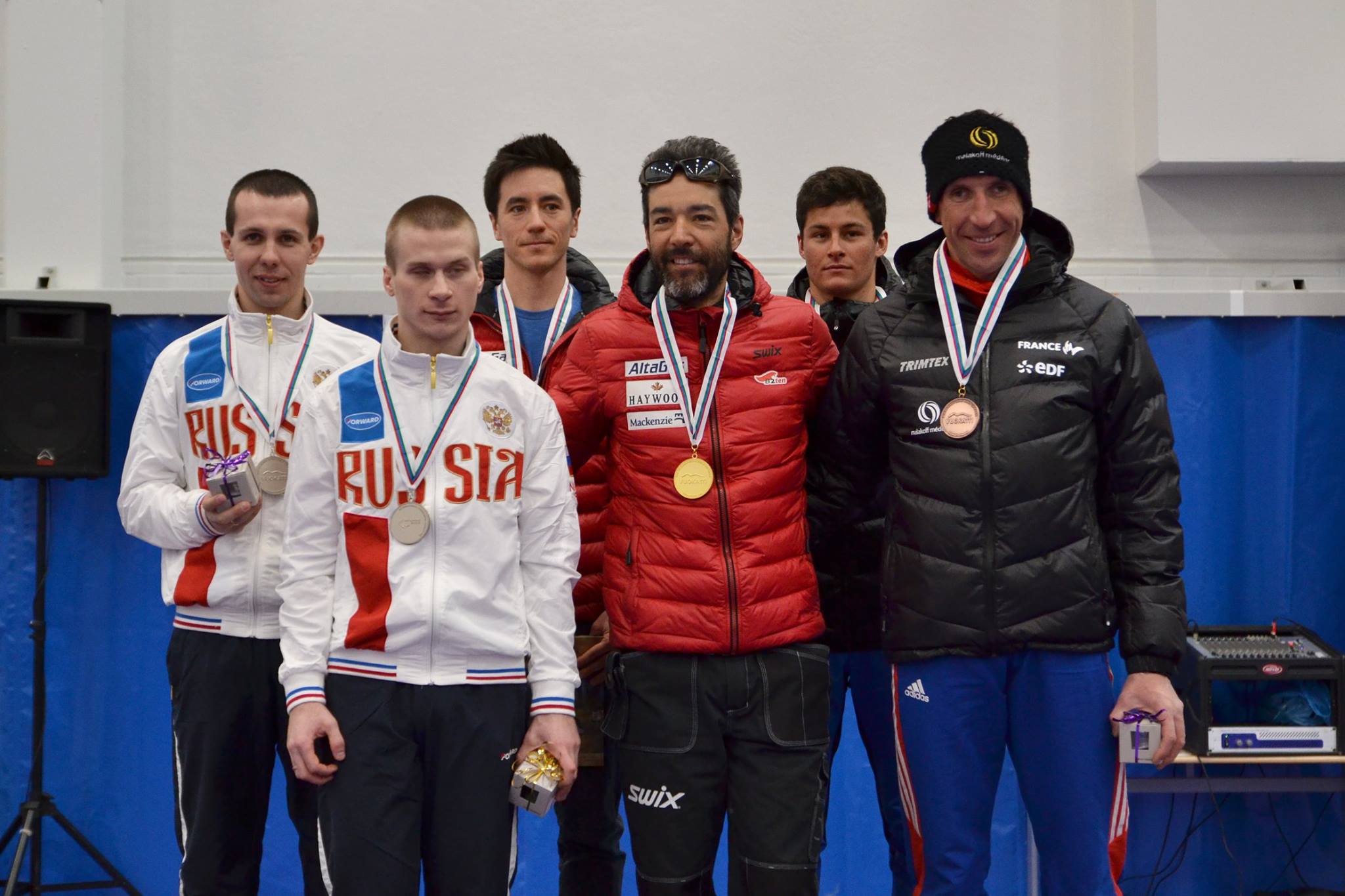
Brian McKeever (c) and his guide Graham Nishikawa with their gold medals after the men’s visually impaired 30 k at 2016 IPC World Cup Finals in Vuokatti, Finland. Russia’s Alexsander Artemov (l) placed second and France’s Thomas Clarion (r) was third. (Photo: IPC Nordic Skiing/Facebook)
As many athletes continue to prepare for the upcoming Paralympic Games taking place exactly one month from Sunday in Rio de Janeiro, Brazil, those sporting the white, blue and red flag of Russia will not. On Sunday, Aug. 7, the International Paralympic Committee (IPC) announced its decision to suspend the Russian Paralympic Committee from competition in Rio and upcoming IPC competitions.
A press conference was held Sunday morning in Rio to announce the IPC Governing Board’s unanimous ultimatum that the Russian Paralympic Committee had failed its duties as an active member to the IPC in light of recent investigations. Namely, the Russian Paralympic Committee was found at fault in their inability to comply with sanctions set forth by the IPC Anti-Doping Code and the World Anti-Doping Code. Prior to any decision from the IPC Governing Board, the Russian Paralympic Committee was permitted to provide a written and verbal claim during the conference.
The logo for the 2016 Summer Paralympic Games, which will be held Sept. 7-18 in Rio de Janeiro, Brazil.
The repercussions of the decision for the Russian Paralympic Committee include the suspension of its IPC membership rights and privileges. This means Russia is not allowed to vote at IPC member meetings nor enter athletes in IPC-sanctioned events, which includes the 2016 Summer Paralympics and IPC competitions (involving summer and winter sports) beyond that.
Much of the decision, according to IPC President Sir Philip Craven, was based on the findings of the McLaren report. Within the report, “35 disappearing positive samples from Paralympic sport in 2012 to 2015,” were included in the report’s findings.
“Since the publication of the McLaren Report on 18 July our priority has been to establish the full facts in respect of Para sport,” Craven stated in the press release.
“In particular, we have taken the necessary time to ask further questions of Professor McLaren and his investigation team, to await the results of samples undergoing further forensic examination and to invite the Russian Paralympic Committee to present its case to the IPC and enter into dialogue with the IPC Governing Board. With the full facts to hand, we were deeply saddened to find that the State-sponsored doping programme that exists within Russian sport regrettably extends to Russian Para sport as well.”
As head of the IPC, Craven maintains it is his and the governing body’s responsibility to ensure equity between all competitors. The motion to suspend Russia, he indicates, represents an attempt to create fair competition among all para-athletes.
“Tragically this situation is not about athletes cheating a system, but about a State-run system that is cheating the athletes,” Craven said. “Our decision is driven by the need to hold our members accountable for their obligations. On the basis of the evidence we have, in the current environment our member the Russian Paralympic Committee cannot comply with the IPC’s Anti-Doping Code and the World Anti-Doping Code. Those obligations are crucial to the IPC’s guarantee of fair competition for all.”
“Tragically this situation is not about athletes cheating a system, but about a State-run system that is cheating the athletes.“– IPC President Sir Philip Craven on the decision to suspend Russia from the Rio Paralympics
Also on Sunday, the World Anti-Doping Agency (WADA) announced its support of the decision.
“WADA supports the decision taken by the IPC, which we believe is in the interest of clean athletes and the clean sport movement,” a WADA statement noted. “The IPC’s decision follows the WADA Executive Committee’s 18 July recommendation to the IPC that they consider declining entries of athletes by the Russian Paralympic Committee for Rio 2016 as a result of the McLaren Report.”
Robin McKeever, head coach of the Canadian Para Nordic Ski Team, pointed that beyond the summer games in Rio, the decision will also impact the upcoming winter ski season.
“It’s a very sad day for IPC sports and in the end, the athletes pay the heaviest price overall in sport,” McKeever wrote in an email to FasterSkier. “From what I read the entire RUS IPC is banned from competition so that includes winter sports for the upcoming season. Whether or not that changes in the coming days or weeks time will tell. This obviously will have a huge effect on the size of the IPC Nordic World Cup field for this winter…True Sport must prevail and the line between what’s fair or unfair has to be drawn. I only hope we can all play on an equal playing field and move forward from this point.”
In a phone interview before the IPC decision on Russia, McKeever emphasized that the Russian doping scandal is rooted in far more than just the athletes themselves.
“The opportunities that the paralympics provide for some countries athletes are astronomical,” McKeever said last month. “Russian athletes winning a gold medal at the paralympics is 145,000 euros for athlete, guide — if there’s a guide involved — and the coach. All paid out by the state. So this is a huge, huge organization from the political side all the way down. There’s one Russian who won six medals in Sochi and that’s the difference between living life in a wheelchair — pretty much fighting day to day to have a meal — versus living life as a rock star.”
With the present decision instated, the IPC is currently working to redistribute the 267 slots that had been given to Russian athletes for Rio 2016. No action will be taken, however, until the 21-day time period that the Russian Paralympic Committee has to appeal the decision is complete. The Rio Paralympics start in 31 days on Sept. 7.
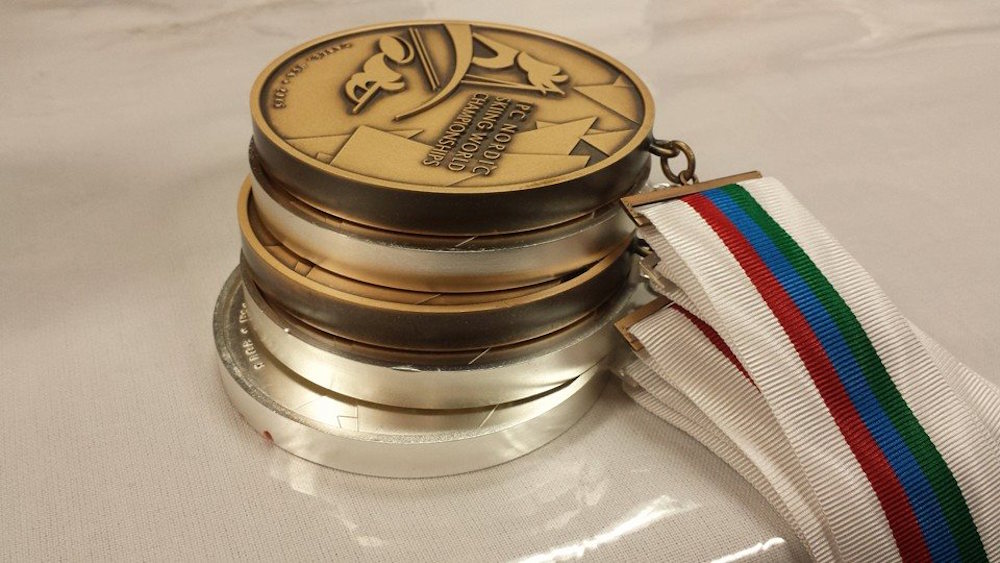
Andy Soule and his hardware from 2015 IPC World Championships: five medals with three silvers and two bronze. (Photo: James Netz)
Andy Soule took one look at the skate course at the International Paralympic Committee (IPC) World Championships — with technical downhills and a massive uphill — and thought, I could do that. The 35-year-old Army veteran previewed it the day before the final race in Cable, Wis., and found it to be “fairly difficult by our standards,” he said in a phone interview last week.
Difficult in the sense that he’s a sit skier who relies entirely on his upper body and core strength, double poling everything from flats to steep hills. The course was designed for standing athletes — with two freestyle legs in the mixed relay, but the U.S. only had one man that could skate.
“We wanted to enter a relay at World Champs, but we only had one standing athlete available to us, Omar Bermejo, who had been battling sickness during these events so running him twice on a super cold day did not seem like the best idea,” U.S. Paralympics High Performance Director John Farra explained in an email. “So we floated it by Andy and he did not hesitate to say yes! … This is the first time a sitting athlete has done the standing course in the relay, so that was fun as countries came up to me to be sure we had not made a mistake.”
It wasn’t against the rules, as Soule pointed out: “There is no rule that says you have to have a sit skier or a stand skier on either one; factors are just supposed to take care of those.” So as the second leg of the U.S. mixed relay on Feb. 1, he headed out after teammate Oksana Masters tagged him in fourth of seven teams.
Farra’s Take on the “Sit-Ski Heavy” U.S. Team:
“It’s a good thing… we have been able to attract sitting athletes from other sports and they are having success, which is getting attention from other sitting athletes,” U.S. Paralympics High Performance Director and Coach John Farra wrote in an email. “We have proven that we can be a good sport for summer sport athletes looking for cross training and a new challenge and tough competition.”On the other side we are very much interested in increasing the [numbers] of standing and visually impaired athletes who can develop into strong international racers. Those who are finding success are finding it best to join up with a USSA Club program so they can be training & racing with other standing (able bodied) skiers as much as possible.”
“Our team is very sit-ski heavy right now, and while we didn’t really go into the relay with an expectation of a high place or anything, they decided to go ahead and field me on the standup course,” Soule said from his home in Pearland, Texas. “I told my coaches I believed it was entirely doable … it’s probably not any sort of a competitive advantage for sure, but it was an interesting experience, and it went pretty well.”
Soule came through the exchange in seventh, just seven seconds behind Germany’s Tino Uhlig, a standing skier who uses one pole, in sixth. With sit-skier Tatyana McFadden and Bermejo, a single-arm amputee, racing the third and fourth legs, respectively, the Americans placed seventh, 45.4 seconds out of sixth.
From the outset, the mixed relay was the team’s weakest event of the week, one in which they did not field a team at last World Championships. However, more symbolically, it capped their historic showing in Cable, where Soule racked up five medals — unprecedented for a U.S. cross-country skier at World Championships — and competed in all seven events, including the relay.
He was glad he did it.
“It have me a really good gauge of where we are in terms of what relative speeds look like for sit skiers versus standup athletes,” Soule said. “On the largest climb of that race, I was passed by one of the best standup skiers in the world in our sport, Nils-Erik Ulset, of Norway. I think it was an interesting event for a lot of people to see exactly what is possible for a sit skier, too.”
Andy Soule navigates a turn during one of his six individual races at 2015 IPC World Championships in late January in Cable, Wis. Soule medaled in five of those events. (Photo: James Netz)
And he held his own on the descents. “I definitely didn’t lose any time on downhills,” Soule added.
“Andy left Cable as a bit of a Legend,” Farra wrote. “5 medals and climbing & descending Telemark Hill successfully!”
In his eighth year on the U.S. Paralympics Nordic team, it was not only Soule’s most successful World Championships, it was perhaps the highlight of his career after winning bronze in biathlon at the 2010 Paralympics.
“This is a pretty high highlight,” Soule said. “After the second podium, I just started feeling like that wasn’t a fluke. This isn’t just a one-time thing, I’m really up here with the top of the field. I can compete with these guys. I can come out and compete on a level with the top guys every day. It was a confidence builder as well when you have that feeling.”
“After the second podium, I just started feeling like that wasn’t a fluke … I can come out and compete on a level with the top guys every day.” — Andy Soule, who earned three silver medals and two bronze at the 2015 IPC World Championships in Cable, Wis., unprecedented for an American
That feeling translated into three silver medals in two of three biathlon events and the cross-country 10-kilometer race at the 2015 championships, and two bronze in the cross-country 15 k and 1 k sprint (where Soule charged up from fourth with 40 meters to go to take third). On Monday, the IPC named Soule its January athlete of the month across all sports.
Prior to this season, he had a Paralympic bronze from 2010 and placed fourth twice during last winter’s 2014 Paralympics in Sochi, Russia.
“I wanted to break through that last little barrier for sure,” Soule said of his tendency toward wooden medals. “Between being almost on the podium and being a solid, consistent at least podium-potential finisher … that’s kind of been the source of all the little tweaks and changes we’ve been working with over the past year.”
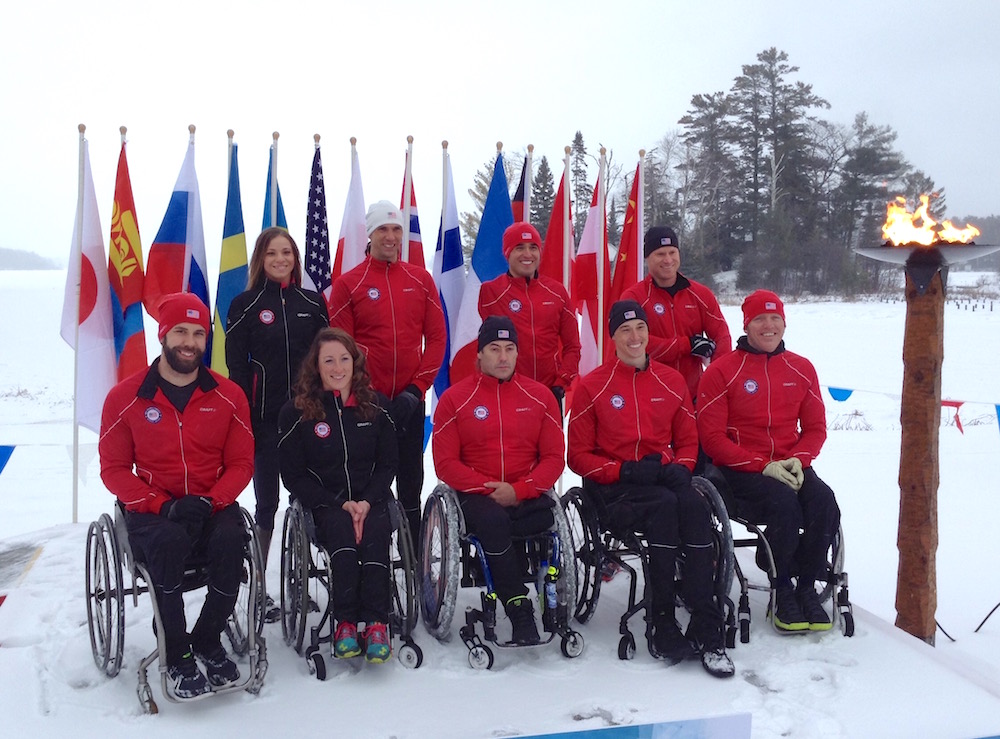
2015 U.S. Paralympics Nordic World Championships Team in Cable, Wis. (Photo: U.S. Paralympics Nordic)
Asked specifically about those changes, U.S. High Performance coach Eileen Carey explained, “To talk about what any one individual athlete has done to improve is to talk about the whole team,” she wrote in an email.
Everyone on the team is analytical and thoughtful when it comes to what they need to work on and how to achieve those changes, she added. “They have created a really cool team environment focused on improving as individuals and as a team.”
For Soule, it was about relaxing his technique at race pace.
“He has always skied well at level 2, but speed had previously introduced a lot of wasted, inefficient movements into his technique, especially on flat terrain,” Carey wrote. “His ski speed and relaxed technique have always been there, it was just a matter if translating them to a race pace.”
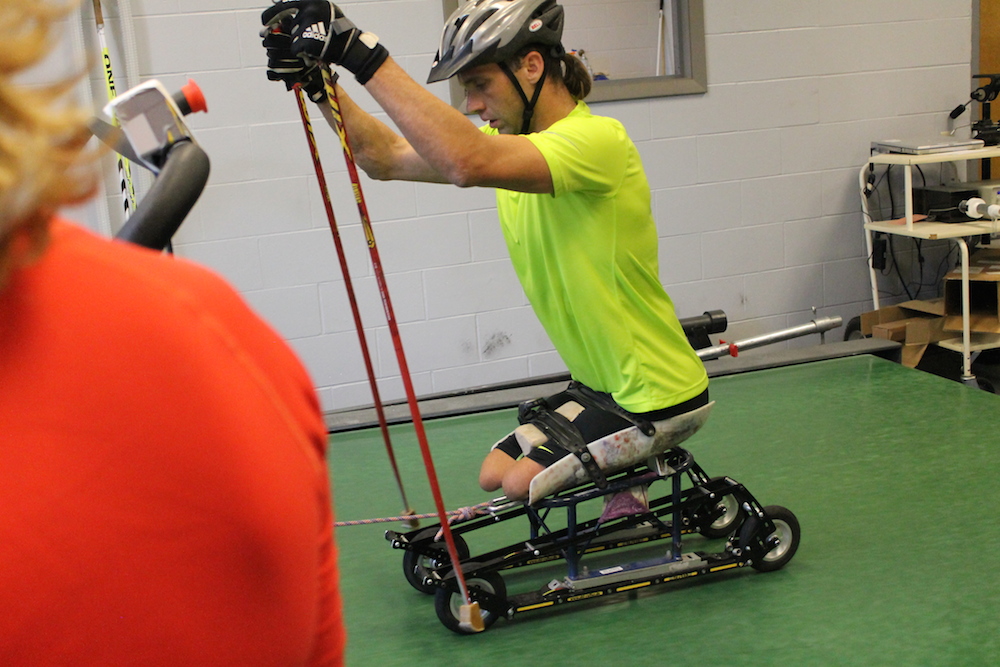
In September, they started with rollerski sessions on the treadmill with live video so Soule could see the changes he was making as he tried them out.
“Once we had the cues we knew worked for him, we brought it to snow this fall,” Carey explained. “It has been an evolution and I am sure it will continue to evolve. We did a lot of video analysis during and after the first World Cup in Finland in December and spent the pre-World Champs camp honing in on some of the patterns we saw from that. He and his teammates have driven the process and we have worked to find the process and communication style that works best with each athlete.”
Andy Soule working on technique during a treadmill session on Sept. 16 at the Olympic Training Center in Lake Placid, N.Y.
As a result, Soule came out of the World Cup opener in Vuokatti, Finland, with two fourth-place finishes in the cross-country 10 k and biathlon sprint. While they weren’t podiums, he could feel a difference.
“What I used to be doing was concentrated more on high tempo,” he said. “My emphasis on training recently has been to focus on flat sections of the course, what standup, able-bodied skiers would be considering a V2-technique section, lengthening out the pole stroke.”
He continued to work on his technique at U.S. nationals in early January and at the team’s pre-World Championships training camp after that. He also switched to shorter poles this season.
“I think everything just builds off what you’ve been working on in the past,” he explained. “You keep watching video of yourself, keep looking at races and identify what did work and then what little things we can maybe experiment with to get a little more speed.”
Soule approached the biggest races of the season in Cable hoping to see improvement first, then results.
“I wasn’t really worried going in what specific places I was aiming for — you can never really control that because you can never control how good everyone else is going to be,” he said. “But I wanted to see a personal improvement in what I would be able to accomplish as compared to how I’ve been performing in the past year.”
As for which medals meant the most to him, he said his bronze in the cross-country 15 k was something he’d remember.
Andy Soule’s stack of medals from 2015 IPC World Championships in Cable, Wis., where he earned three silver and two bronze between two biathlon and three cross-country races. (Photo: U.S. Paralympics Nordic)
“It meant a lot to get the medals in the cross-country races just because that long-distance race, the first cross-country race of the week, was actually my first-ever podium in a cross-country race,” he said. “And it also boosts my confidence going into a biathlon event. It used to be, in order to have a shot at the podium in biathlon, I had to outshoot the top competitors. They had to miss shots in order for me to have a shot at the podium. Now I have that confidence that I can ski right with them. If neither of us misses anything, between me and the top competitors, I’m still in it.”
Now third overall in the IPC World Cup standings with two major stops remaining (this weekend in Asahikawa, Japan and at World Cup Finals from March 16-22 in Surnadal, Norway), Soule said he mostly wanted to put together a “solid string of really great performances” for the rest of the season. Beyond that, he has his sights set on the 2018 Paralympics in Pyeongchang, South Korea.
“I’m right at that age and I’m right at the point in my career where I’m in the prime of real top-performance potential,” he said. “I feel really great about what I have going forward and that I’ll be able to build on it and still improve on it.”
In most every interview in Cable, Soule tossed around the word: “team.” He reiterated that he couldn’t have done it without his teammates and turned the focus toward their many successes at this year’s World Championships as well, including five Americans making the sit-ski sprint finals (three men and two women), and Masters tallying silver and bronze in the cross-country 5 k and cross-country sprint, respectively.
“It just feels really good to have great teammates,” Soule said. “You’re always cheering for each other and everyone wants to see everyone else succeed, so it makes practice more fun when we’re all there and it makes racing more exciting. A good team component is really important to what we have going right now.”
“Lots of good things were going in Cable beyond the medals,” Farra added.
Masters currently ranks first in the World Cup in cross-country. Stay tuned for her interview.