From the FasterSkier archive — posts syndicated from athletes’ and coaches’ own blogs between 2004 and 2012, kept online as published. Current coverage is at fasterskier.com.

Tag: IPC Athlete of the Month

  • FasterSkier’s Para-Nordic Skiers of the Year: Oksana Masters and Brian McKeever

    FasterSkier’s Para-Nordic Skiers of the Year: Oksana Masters and Brian McKeever

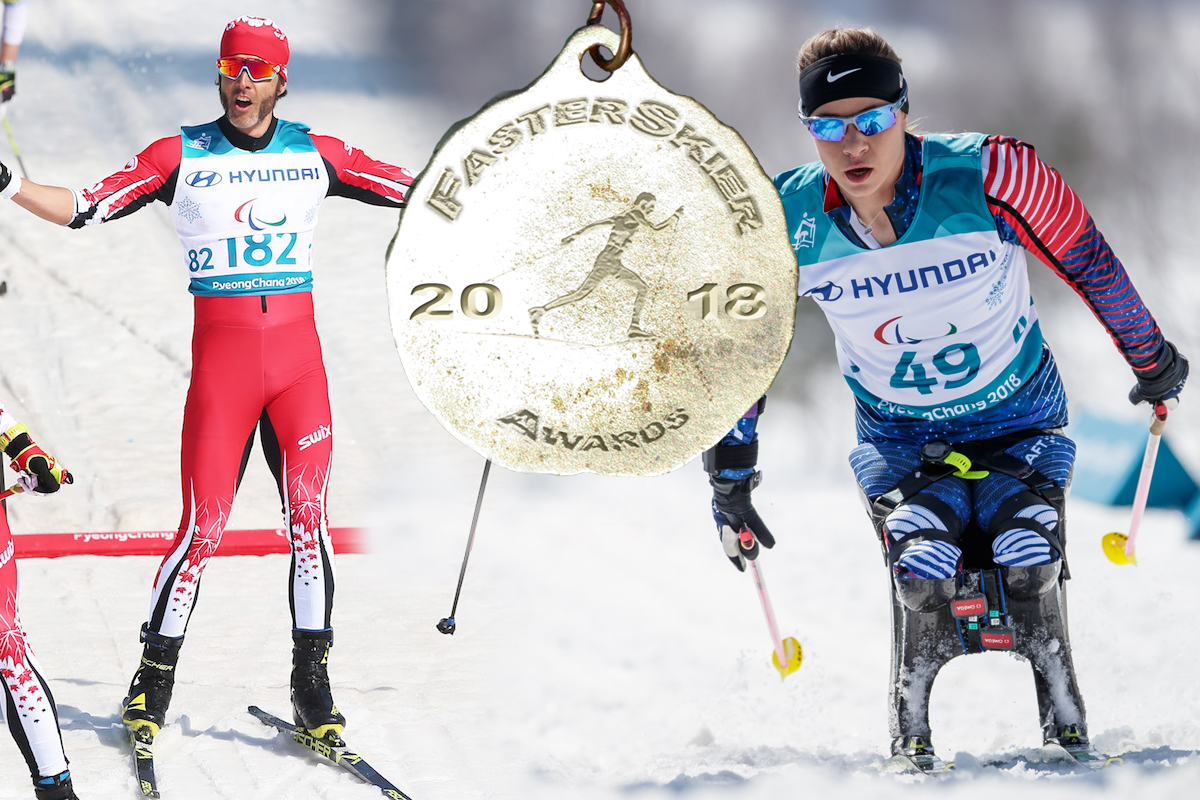
    Brian McKeever (l) and Oksana Masters (r) are FasterSkier’s 2018 Para-Nordic Skiers of the Year. (Photos: Scott Grant/Canadian Paralympic Committee & Joe Kusumoto/US Paralympics)

    With the 2017/2018 season officially in the rearview, FasterSkier is excited to unveil its annual award winners for this past winter. Votes stem from the FS staff, scattered across the U.S., Canada, and Europe, and while not scientific, they are intended to reflect a broader sense of the season in review. This set of honors goes to outstanding Para-Nordic skiers on the international circuit.

    Previous categories: Junior Skiers of the Year | Collegiate Skiers of the Year | Biathletes of the Year

    ***

    Oksana Masters, U.S. Paralympics Nordic
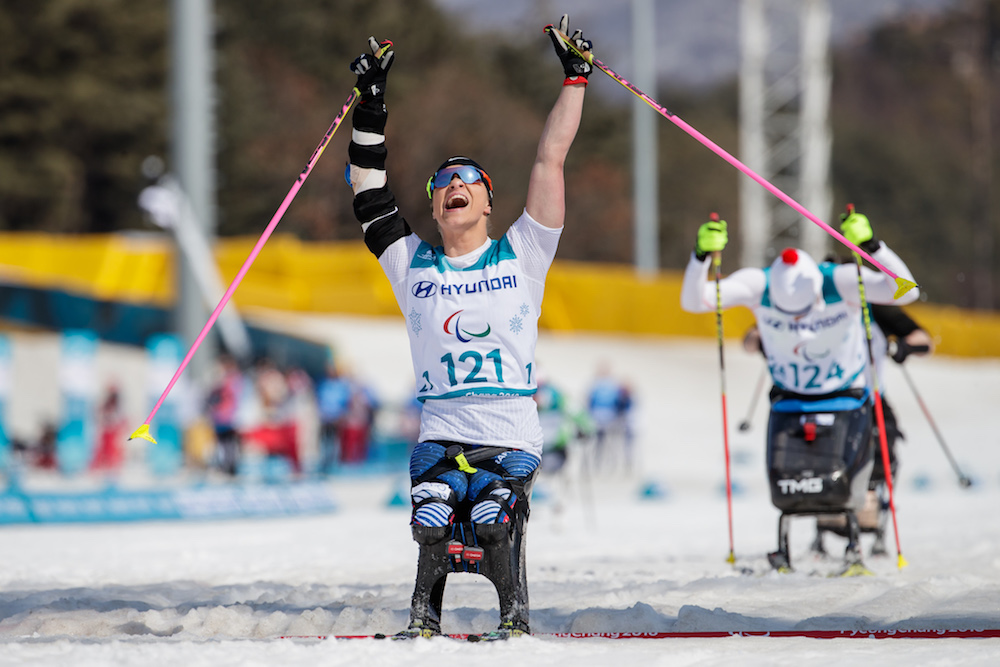
    American Oksana Masters reacting to her first gold medal in her third Paralympics, after winning the women’s 1.1 k sitting sprint in PyeongChang, South Korea. (Photo: Joe Kusumoto/U.S. Paralympics)

    Undefeated in this category for the last four years of the FasterSkier awards, Oksana Masters had her best Paralympics yet this winter and overcame a major setback to do so. Just two weeks before the 2018 Winter Paralympic Games in PyeongChang, South Korea, Masters slipped on ice, injured her elbow and had to get surgery. Then, entirely propelled by her arms as a sit skier, the 28 year old competed in all six individual races in PyeongChang and medaled in five of them (she fell in the other and pulled out of the race shortly before the finish). In total, she racked up the first two Paralympic gold medals of her career (in her third Paralympics) plus two silver medals in biathlon — her first biathlon medals — and a bronze.

    “I am absolutely truly speechless on this performance,” Masters told U.S. Paralympics after winning her second gold medal of the week in the women’s 5-kilometer sitting cross-country race (her first came in the cross-country sprint).

    “I thrive and love the athlete lifestyle of eat, sleep and train,” she continued. “To put yourself to the ultimate test on that start line and seeing all your hard work come through, and not just that, it’s a whole team effort. … It’s not a one-person show. It definitely takes a village and we have an incredible team.”

    Masters and her teammate Dan Cnossen accounted for 11 of Team USA’s 16 medals in nordic and biathlon in PyeongChang, which was more than five times the amount of medals the team brought home after Sochi in 2014.

    Overall this season in the World Para Nordic Skiing rankings, Masters ranked first in women’s sitting biathlon and tied Germany’s Andrea Eskau for first in cross-country. In the International Paralympic Committee (IPC) overall World Cup standings, Masters placed third in both cross-country and biathlon.

    Brian McKeever, Canadian Para-Nordic Skiing

    Also our award winner last year, Brian McKeever became Canada’s most decorated Winter Paralympian of all time this winter with 17 career medals, 13 of which are gold. Three of those golds came in PyeongChang, and he captured bronze there with his teammates on the final day of racing, in the open relay, when Canada placed second in the mixed relay and third in the open relay for its first Paralympic relay medals.
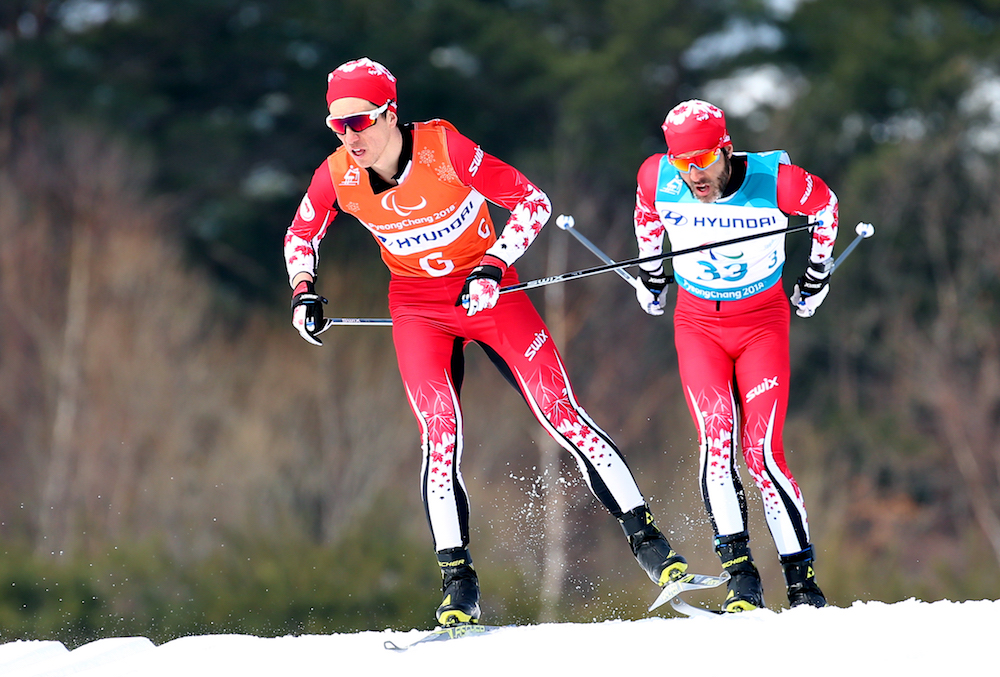
    Brian McKeever (r) follows guide Graham Nishikawa during the men’s visually impaired 20 k freestyle at the 2018 Paralympics in PyeongChang, South Korea. Along with guide Russell Kennedy, they won the race by over a minute for McKeever’s 14th Paralympic medal and 11th gold. (Photo: Scott Grant/Canadian Paralympic Committee)

    This marked the fifth Paralympics for McKeever, 38, and he was accompanied by two guides, Graham Nishikawa (whom he skied with at the 2014 Sochi Games) and Russell Kennedy (who joined the Canadian Para-Nordic Team this year). Together, they won all three visually impaired cross-country races they competed in: the 20 k freestyle, classic sprint and 10 k classic.

    In his first race of the Games, the 20 k distance race, McKeever, who was also Canada’s flag bearer for the PyeongChang Opening Ceremony, captured his 14th career medal — the most of any Canadian Winter Paralympian. In fact, he’s the most successful cross-country skier in Paralympic history, according to an IPC press release.

    “I wasn’t aware of this record, but it is pretty cool,” McKeever told Cross Country Canada after the 20 k. “I think for me more than anything is this is a testament to our entire program. We’ve had so many great skiers leading the way for me with my brother, Robin, who is now coaching us, and Colette Bourgonje. Now it is awesome for me to be a part of a new generation that has arrived in Mark [Arendz], Colin Cameron, and the young women like Emily [Young], Brittany [Hudak] and Natalie [Wilkie], who are ready to carry the torch. I’m so excited to be around all of them this week and to be there cheering them on.”

    Like the U.S., Canada tallied 16 medals between nordic and biathlon at the PyeongChang Paralympics.

    In an interview with CBC Sports during the Games, McKeever referred to his team as a “future superpower” in the sport, with every one of his World Cup teammates capturing at least one medal in PyeongChang. “It’s really exciting for me to watch and see something that I’ve been part of growing.”

    McKeever was also recently voted IPC Male Athlete of the Month for March. Masters, the IPC’s January Female Athlete of the Month, was nominated again for the Female Athlete of the Month for March. Voting closes April 16.

    Honorable Mentions: Mark Arendz (Canadian Para-Nordic) and Dan Cnossen & Kendall Gretsch (U.S. Paralympics)
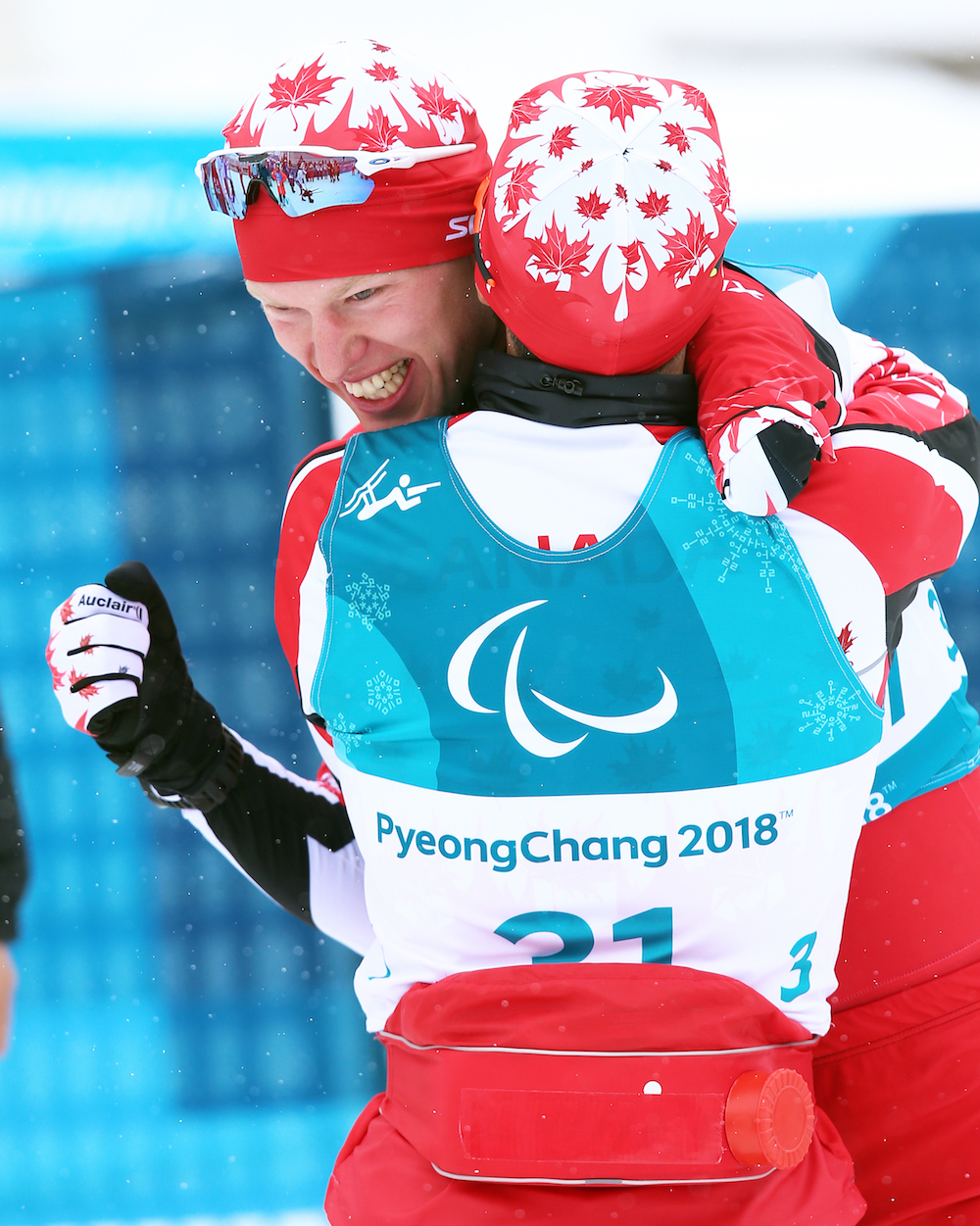
    Canada’s Mark Arendez gets a congratulatory hug after he won gold in the men’s 15 k standing individual biathlon race at the 2018 Paralympics in PyeongChang, South Korea. (Photo: Scott Grant/Canadian Paralympic Committee)

    While McKeever carried the Canadian flag at the PyeongChang Opening Ceremony, his teammate Mark Arendz was honored with waving it at the Closing Ceremony. In his third Paralympics, the 28-year-old Arendz had his best Games yet, taking a medal in all six events he competed in to make him the most successful Canadian at a single Winter Paralympics.

    Arendz captured five individual medals in the men’s standing races in PyeongChang, including his first-career gold in the 15 k biathlon, silver in the 7.5 k biathlon sprint, and bronze in the 12.5 k biathlon, as well as his first Paralympic cross-country medals: bronze in both the sprint and 10 k classic, and silver in the mixed relay. He sat out the only race he didn’t medal in: the long-distance cross-country race.

    “I came in here thinking I could get three medals, but to get six is incredible,” Arendz said on the last day of the Games, after his team placed second in the mixed relay for Canada’s first relay medal. “Today’s is a special one. I am happy we got this done, but there is no way I could do another race. I’m done.”

    We mentioned Dan Cnossen earlier, but he’s worth mentioning again. Cnossen, 37, opened his second Paralympics with his first career medal at the Games — gold in the men’s 7.5 k sitting sprint. The next day, he placed second in the 12.5 k biathlon race, and from there, he kept up his medal streak through all six  individual races. The total medal haul for the former Navy SEAL and current Harvard graduate student was one gold, four silvers, and one bronze.
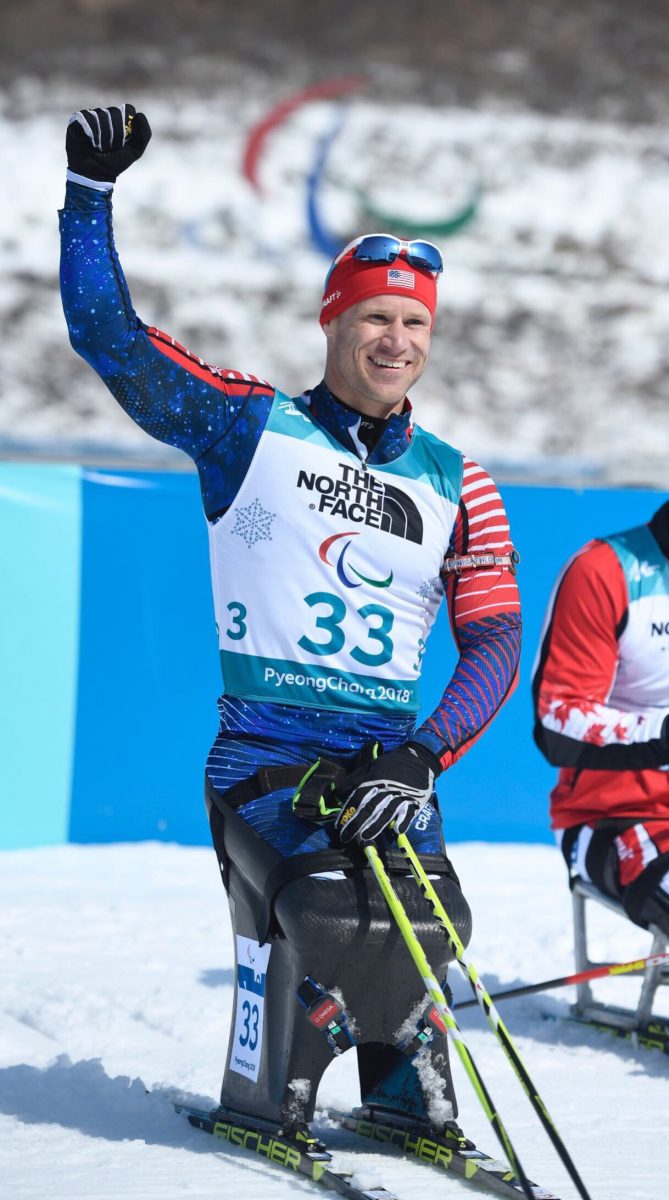
    Dan Cnossen of the U.S. celebrates his win in the men’s sitting 7.5 k biathlon sprint on opening day of competition at the 2018 Winter Paralympics in PyeongChang, South Korea. (Photo: Mark Reis/U.S. Paralympics)

    It wasn’t an easy feat. Cnossen considered pulling out of the last biathlon race — the 12.5 k — in order to compete in the final 10 k cross-country race in PyeongChang.

    “I have an excerpt that says it doesn’t matter how you feel today, it doesn’t matter what your background is or where you’re coming from, all that matters is what you can do,” Cnossen told U.S. Paralympics after finishing second in the biathlon race. “I just tried to focus on what I could do today. Not the fact that I didn’t sleep well last night, that doesn’t matter. Just go out there and perform like I know I can.”

    In all, Cnossen raced about 60 k over eight days.

    “I came into the Games just trying to take it one race at a time and give it my all — each and every race — and not think too far ahead,” Cnossen said after placing second in the 10 k cross-country race the next day for his sixth-straight medal. “Just focus on the here and now, and soak up the moment and be in the present.”

    His teammate Kendall Gretsch, a triathlete who recently took up nordic skiing and biathlon, opened her first Paralympics with gold in the women’s 6 k sitting sprint in PyeongChang. Gretsch, who turned 26 earlier this month, also won the 12 k biathlon race the next day.

    In an interview with U.S. Paralympics, she described being “unsure” of how she’d stack up in PyeongChang. Days 1 and 2 of racing pretty much settled it.

    “I knew that since our last World Cup I had improved a lot, but you never know until you race,” she said after her second-straight gold. “It’s a very humbling experience being able to hear your anthem, puts everything into perspective. Knowing that you’re here not just here for yourself but for your country, it’s amazing.”
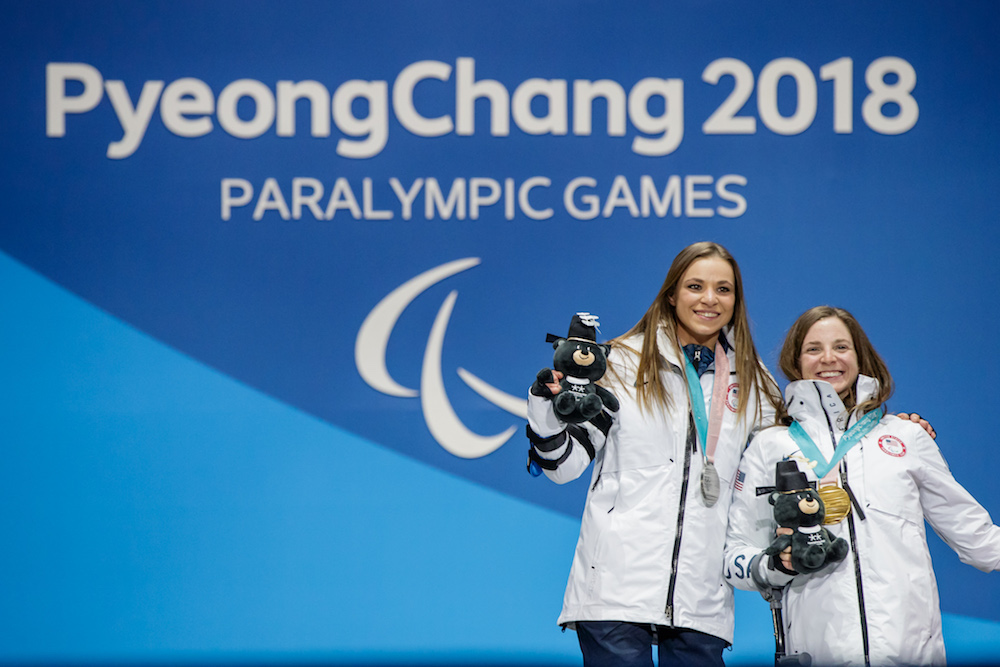
    Kendall Gretsch (r) and Oksana Masters at the 2018 Paralympics medal ceremony for the women’s sitting 6 k biathlon sprint after winning gold and silver, respectively, on the first day of competition in PyeongChang, South Korea. (Photo: Joe Kusumoto/U.S. Paralympics)
  • Fourth No More, Soule Up to Third Overall in IPC World Cup with Five Medals at World Champs

    Fourth No More, Soule Up to Third Overall in IPC World Cup with Five Medals at World Champs

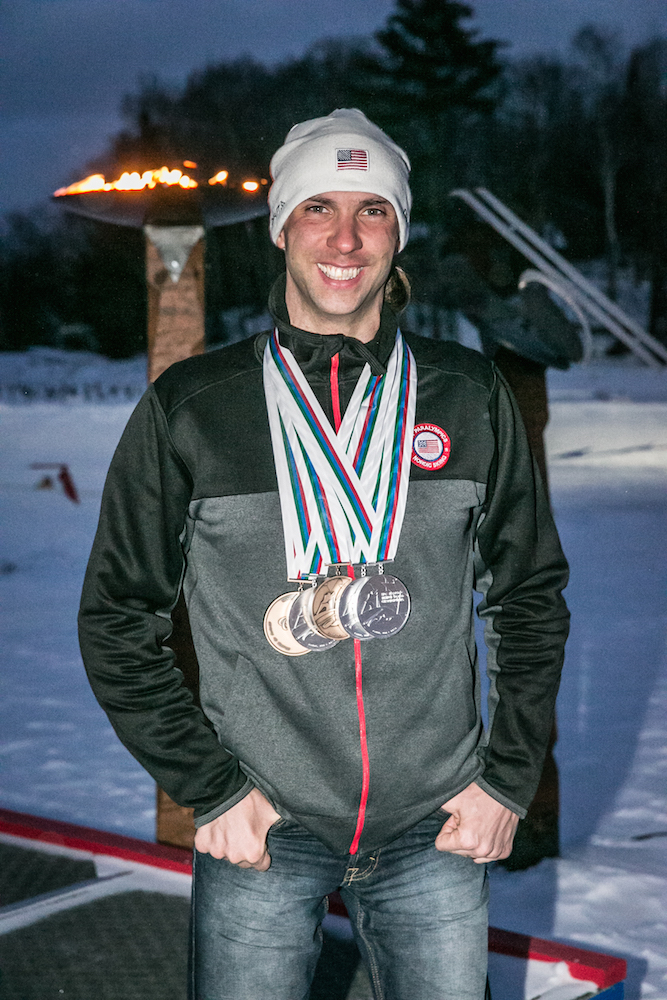
    Andy Soule and his hardware from 2015 IPC World Championships: five medals with three silvers and two bronze. (Photo: James Netz)
    Andy Soule and his hardware from 2015 IPC World Championships: five medals with three silvers and two bronze. (Photo: James Netz)

    Andy Soule took one look at the skate course at the International Paralympic Committee (IPC) World Championships — with technical downhills and a massive uphill — and thought, I could do that. The 35-year-old Army veteran previewed it the day before the final race in Cable, Wis., and found it to be “fairly difficult by our standards,” he said in a phone interview last week.

    Difficult in the sense that he’s a sit skier who relies entirely on his upper body and core strength, double poling everything from flats to steep hills. The course was designed for standing athletes — with two freestyle legs in the mixed relay, but the U.S. only had one man that could skate.

    “We wanted to enter a relay at World Champs, but we only had one standing athlete available to us, Omar Bermejo, who had been battling sickness during these events so running him twice on a super cold day did not seem like the best idea,” U.S. Paralympics High Performance Director John Farra explained in an email. “So we floated it by Andy and he did not hesitate to say yes!  … This is the first time a sitting athlete has done the standing course in the relay, so that was fun as countries came up to me to be sure we had not made a mistake.”

    It wasn’t against the rules, as Soule pointed out: “There is no rule that says you have to have a sit skier or a stand skier on either one; factors are just supposed to take care of those.” So as the second leg of the U.S. mixed relay on Feb. 1, he headed out after teammate Oksana Masters tagged him in fourth of seven teams.

    Farra’s Take on the “Sit-Ski Heavy” U.S. Team:

    “It’s a good thing… we have been able to attract sitting athletes from other sports and they are having success, which is getting attention from other sitting athletes,” U.S. Paralympics High Performance Director and Coach John Farra wrote in an email. “We have proven that we can be a good sport for summer sport athletes looking for cross training and a new challenge and tough competition.”On the other side we are very much interested in increasing the [numbers] of standing and visually impaired athletes who can develop into strong international racers.  Those who are finding success are finding it best to join up with a USSA Club program so they can be training & racing with other standing (able bodied) skiers as much as possible.”

    “Our team is very sit-ski heavy right now, and while we didn’t really go into the relay with an expectation of a high place or anything, they decided to go ahead and field me on the standup course,” Soule said from his home in Pearland, Texas. “I told my coaches I believed it was entirely doable … it’s probably not any sort of a competitive advantage for sure, but it was an interesting experience, and it went pretty well.”

    Soule came through the exchange in seventh, just seven seconds behind Germany’s Tino Uhlig, a standing skier who uses one pole, in sixth. With sit-skier Tatyana McFadden and Bermejo, a single-arm amputee, racing the third and fourth legs, respectively, the Americans placed seventh, 45.4 seconds out of sixth.

    From the outset, the mixed relay was the team’s weakest event of the week, one in which they did not field a team at last World Championships. However, more symbolically, it capped their historic showing in Cable, where Soule racked up five medals — unprecedented for a U.S. cross-country skier at World Championships — and competed in all seven events, including the relay.

    He was glad he did it.

    “It have me a really good gauge of where we are in terms of what relative speeds look like for sit skiers versus standup athletes,” Soule said. “On the largest climb of that race, I was passed by one of the best standup skiers in the world in our sport, Nils-Erik Ulset, of Norway. I think it was an interesting event for a lot of people to see exactly what is possible for a sit skier, too.”

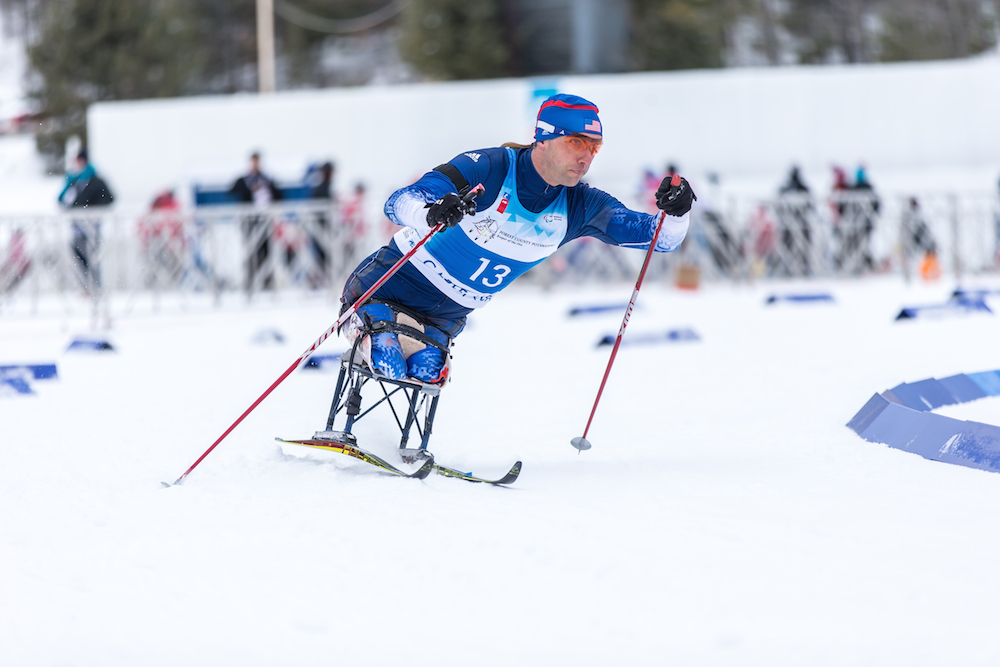
    Andy Soule navigates a turn  during one of his six individual races at 2015 IPC World Championships in late January in Cable, Wis. Soule medaled in five of those events. (Photo: James Netz)
    Andy Soule navigates a turn during one of his six individual races at 2015 IPC World Championships in late January in Cable, Wis. Soule medaled in five of those events. (Photo: James Netz)

    And he held his own on the descents. “I definitely didn’t lose any time on downhills,” Soule added.

    “Andy left Cable as a bit of a Legend,” Farra wrote. “5 medals and climbing & descending Telemark Hill successfully!”

    In his eighth year on the U.S. Paralympics Nordic team, it was not only Soule’s most successful World Championships, it was perhaps the highlight of his career after winning bronze in biathlon at the 2010 Paralympics.

    “This is a pretty high highlight,” Soule said. “After the second podium, I just started feeling like that wasn’t a fluke. This isn’t just a one-time thing, I’m really up here with the top of the field. I can compete with these guys. I can come out and compete on a level with the top guys every day. It was a confidence builder as well when you have that feeling.”

    “After the second podium, I just started feeling like that wasn’t a fluke … I can come out and compete on a level with the top guys every day.” — Andy Soule, who earned three silver medals and two bronze at the 2015 IPC World Championships in Cable, Wis., unprecedented for an American

    That feeling translated into three silver medals in two of three biathlon events and the cross-country 10-kilometer race at the 2015 championships, and two bronze in the cross-country 15 k and 1 k sprint (where Soule charged up from fourth with 40 meters to go to take third). On Monday, the IPC named Soule its January athlete of the month across all sports.

    Prior to this season, he had a Paralympic bronze from 2010 and placed fourth twice during last winter’s 2014 Paralympics in Sochi, Russia.

    “I wanted to break through that last little barrier for sure,” Soule said of his tendency toward wooden medals. “Between being almost on the podium and being a solid, consistent at least podium-potential finisher … that’s kind of been the source of all the little tweaks and changes we’ve been working with over the past year.”

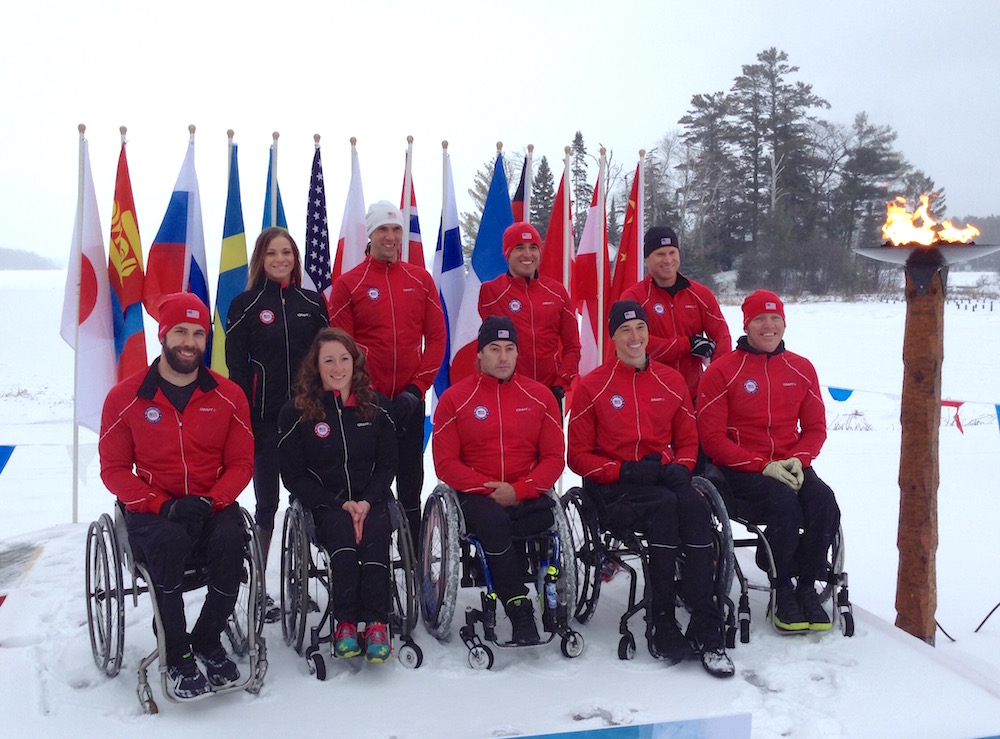
    2015 U.S. Paralympics Nordic World Championships Team in Cable, Wis. (Photo: U.S. Paralympics Nordic)
    2015 U.S. Paralympics Nordic World Championships Team in Cable, Wis. (Photo: U.S. Paralympics Nordic)

    Asked specifically about those changes, U.S. High Performance coach Eileen Carey explained, “To talk about what any one individual athlete has done to improve is to talk about the whole team,” she wrote in an email.

    Everyone on the team is analytical and thoughtful when it comes to what they need to work on and how to achieve those changes, she added. “They have created a really cool team environment focused on improving as individuals and as a team.”

    For Soule, it was about relaxing his technique at race pace.

    “He has always skied well at level 2, but speed had previously introduced a lot of wasted, inefficient movements into his technique, especially on flat terrain,” Carey wrote. “His ski speed and relaxed technique have always been there, it was just a matter if translating them to a race pace.”

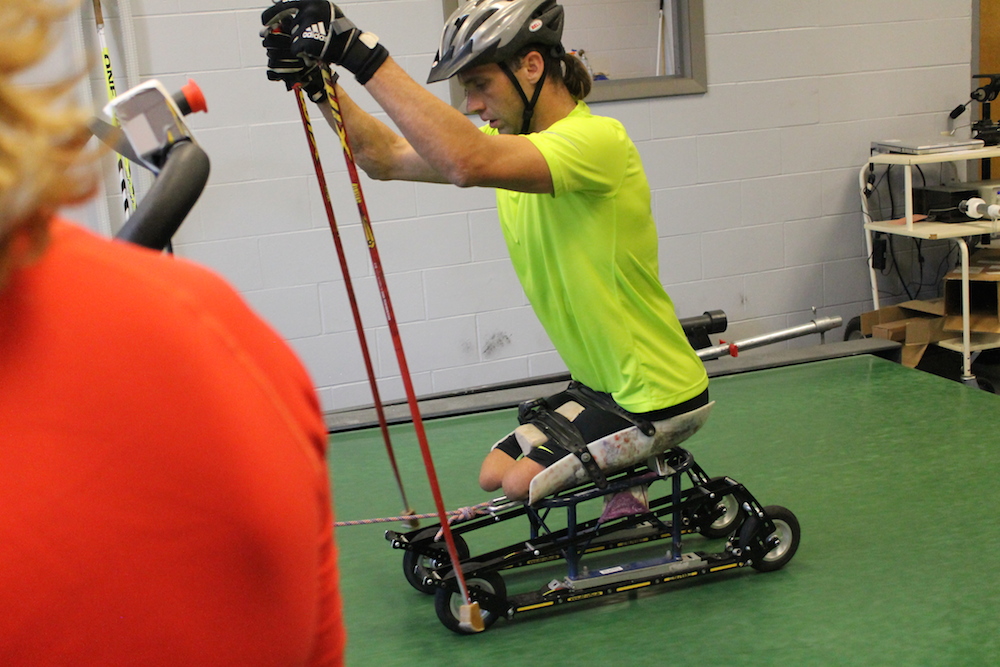
    In September, they started with rollerski sessions on the treadmill with live video so Soule could see the changes he was making as he tried them out.

    “Once we had the cues we knew worked for him, we brought it to snow this fall,” Carey explained. “It has been an evolution and I am sure it will continue to evolve. We did a lot of video analysis during and after the first World Cup in Finland in December and spent the pre-World Champs camp honing in on some of the patterns we saw from that.  He and his teammates have driven the process and we have worked to find the process and communication style that works best with each athlete.”

    Andy Soule working on technique during a treadmill session on Sept. 16 at the Olympic Training Center in Lake Placid, N.Y.
    Andy Soule working on technique during a treadmill session on Sept. 16 at the Olympic Training Center in Lake Placid, N.Y.

    As a result, Soule came out of the World Cup opener in Vuokatti, Finland, with two fourth-place finishes in the cross-country 10 k and biathlon sprint. While they weren’t podiums, he could feel a difference.

    “What I used to be doing was concentrated more on high tempo,” he said. “My emphasis on training recently has been to focus on flat sections of the course, what standup, able-bodied skiers would be considering a V2-technique section, lengthening out the pole stroke.”

    He continued to work on his technique at U.S. nationals in early January and at the team’s pre-World Championships training camp after that. He also switched to shorter poles this season.

    “I think everything just builds off what you’ve been working on in the past,” he explained. “You keep watching video of yourself, keep looking at races and identify what did work and then what little things we can maybe experiment with to get a little more speed.”

    Soule approached the biggest races of the season in Cable hoping to see improvement first, then results.

    “I wasn’t really worried going in what specific places I was aiming for — you can never really control that because you can never control how good everyone else is going to be,” he said. “But I wanted to see a personal improvement in what I would be able to accomplish as compared to how I’ve been performing in the past year.”

    As for which medals meant the most to him, he said his bronze in the cross-country 15 k was something he’d remember.

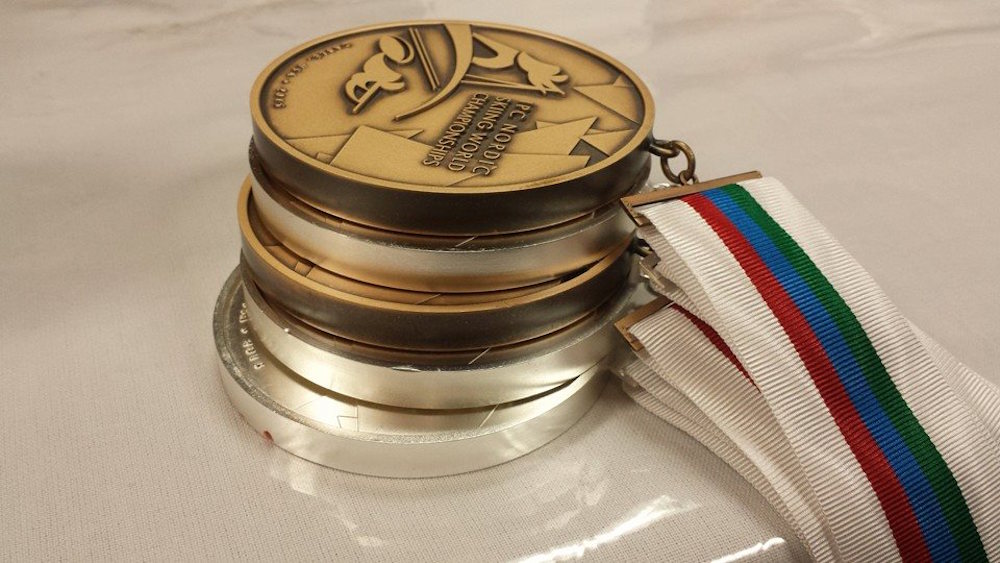
    Andy Soule's stack of medals from 2015 IPC World Championships in Cable, Wis., where he earned three silver and two bronze between three biathlon and two cross-country races. (Photo: U.S. Paralympics Nordic)
    Andy Soule’s stack of medals from 2015 IPC World Championships in Cable, Wis., where he earned three silver and two bronze between two biathlon and three cross-country races. (Photo: U.S. Paralympics Nordic)

    “It meant a lot to get the medals in the cross-country races just because that long-distance race, the first cross-country race of the week, was actually my first-ever podium in a cross-country race,” he said. “And it also boosts my confidence going into a biathlon event. It used to be, in order to have a shot at the podium in biathlon, I had to outshoot the top competitors. They had to miss shots in order for me to have a shot at the podium. Now I have that confidence that I can ski right with them. If neither of us misses anything, between me and the top competitors, I’m still in it.”

    Now third overall in the IPC World Cup standings with two major stops remaining (this weekend in Asahikawa, Japan and at World Cup Finals from March 16-22 in Surnadal, Norway), Soule said he mostly wanted to put together a “solid string of really great performances” for the rest of the season. Beyond that, he has his sights set on the 2018 Paralympics in Pyeongchang, South Korea.

    “I’m right at that age and I’m right at the point in my career where I’m in the prime of real top-performance potential,” he said. “I feel really great about what I have going forward and that I’ll be able to build on it and still improve on it.”

    In most every interview in Cable, Soule tossed around the word: “team.” He reiterated that he couldn’t have done it without his teammates and turned the focus toward their many successes at this year’s World Championships as well, including five Americans making the sit-ski sprint finals (three men and two women), and Masters tallying silver and bronze in the cross-country 5 k and cross-country sprint, respectively.

    “It just feels really good to have great teammates,” Soule said. “You’re always cheering for each other and everyone wants to see everyone else succeed, so it makes practice more fun when we’re all there and it makes racing more exciting. A good team component is really important to what we have going right now.”

    “Lots of good things were going in Cable beyond the medals,” Farra added.

    Masters currently ranks first in the World Cup in cross-country. Stay tuned for her interview.