From the FasterSkier archive — posts syndicated from athletes’ and coaches’ own blogs between 2004 and 2012, kept online as published. Current coverage is at fasterskier.com.

Tag: Irina Khazova

  • Kowalczyk, Poltoranin Take First Two Muonio Races; Americans and Canadians Jump in the Mix

    Kowalczyk, Poltoranin Take First Two Muonio Races; Americans and Canadians Jump in the Mix

    Each November, it’s tradition for some of the world’s best nordic skiers to go where the sun don’t shine – or appears very little. The fact is that Muonio, Finland, above the Arctic Circle has snow this time of year when other parts of Europe are still waiting for the skiable stuff.
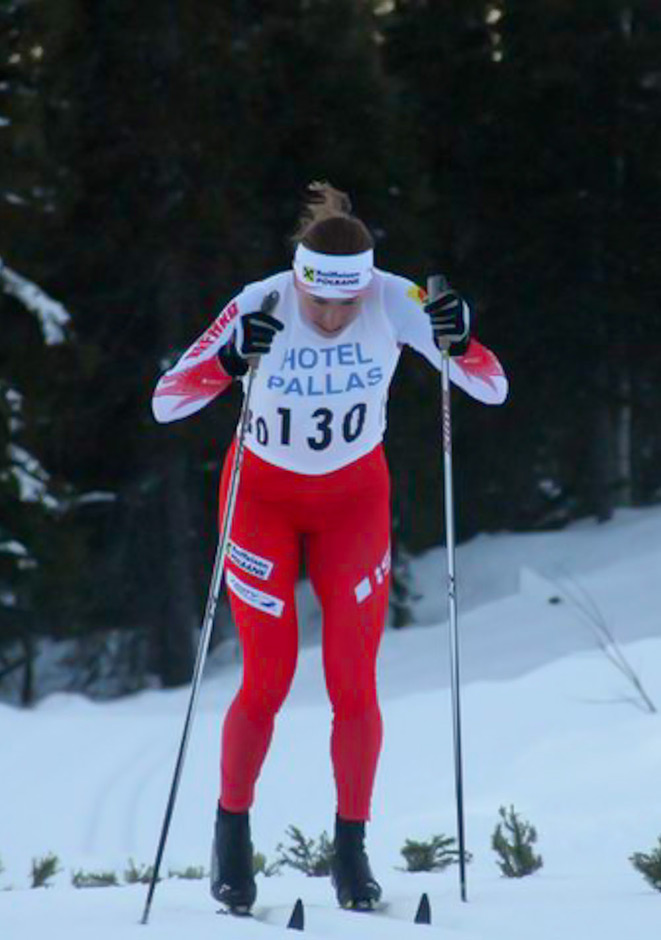
    Justyna Kowalczyk of Poland during one of last year's FIS races in Muonio, Finland. This weekend, Kowalczyk won two out of three Muonio competitions from Nov. 15-17.(Photo: Petri Ikävalko/Hevoskuuri.fi)
    Justyna Kowalczyk of Poland during one of last year’s FIS races in Muonio, Finland. This weekend, Kowalczyk won two out of three Muonio competitions from Nov. 15-17.(Photo: Petri Ikävalko/Hevoskuuri.fi)

    Starting Friday, the unofficial Finland Triple began in Muonio, with hundreds of skiers flocking to the northern region for their first International Ski Federation (FIS) races of the season.

    Poland’s cross-country celeb Justyna Kowalczyk jumpstarted her season with a sizable victory in the 1-kilometer classic sprint, topping Russian Evgenia Shapovalova by more than 7 seconds in the final, as well as Russia’s Julia Tikhonova in third and Natalia Matveeva in fourth. Finland’s Mona-Lisa Malvalehto placed fifth out of 146 female competitors.

    In the men’s 1.3 k classic sprint on Friday, Alexey Poltoranin of Kazakhstan beat Finland’s runner-up, Ari Luusua, by 3.23 seconds in the final, as well as third-place finisher Russian Anatoliy Volkov (+5.56). Ales Razym of the Czech Republic was fourth and Estonia’s Peeter Kummel placed fifth out of 255 men.

    Leading a small American contingent in Muonio, Dakota Blackhorse-von Jess (Bend Endurance Academy) placed 34th in the sprint qualifier. Welly Ramsey was the fastest from the Maine Winter Sports Center (MWSC), placing 113th, teammate Sam Tarling came in 209th, and post-grad Austin Huneck was 239th. Another MWSC post-grad, Emily Ramsey finished 128th in the women’s race.

    On Saturday, Kowalczyk and Poltoranin again topped their respective podiums – this time in the 5 and 10 k classic races. Kowalczyk defeated Russia’s Yulia Tchekaleva in second by 21.6 seconds, and Germany’s Nicole Fessel in third (+27.3). Finland’s Anne Kyllönen and Kertu Niskanen placed fourth and fifth, respectively, out of 199 women.

    Poltoranin edged Lukas Bauer of the Czech Republic by 6.8 seconds, and German Hannes Dotzler in third (+24.2). Razym finished fourth for the second-straight day, and Germany’s Tim Tscharnke placed fifth out of 331 finishers.
    Kris Freeman in Muonio last year. (Photo: Petri Ikävalko / Hevoskuuri.fi)
    Kris Freeman in Muonio last year. (Photo: Petri Ikävalko/Hevoskuuri.fi)

    Kris Freeman (MWSC) led the Americans in his first race of the season in 34th, 1 minute and 11 seconds behind Poltoranin, who won in 24:33.7. Tarling placed 109th, 2:09.8 back from the winner. Canadian Para-Nordic veterans Brian McKeever placed 160th and Erik Carleton was 242nd.

    Racing ended Sunday with the women’s 10 k and men’s 15 k individual skate. Russian Petr Sedov stole the spotlight from Finland’s Matti Heikkinen, who was leading until Sedov finished 7.8 seconds faster in 34:56.5. Two other Finns rounded out the top four with Tero Similae in third and Lari Lahtonen in fourth, and Franz Goering of Germany was fifth out of 188 men. Poltoranin did not race.

    Freeman finished 32nd, 1:15.1 after Sedov, McKeever was the top Canadian in 63rd, (+2:13), and Welly Ramsey was 116th (+3:24.7) Carleton placed 125th (+3:38), and Tarling was 126th (+3:39.5).

    Russian Irina Khazova won the women’s 10 k in 25:46.2, ahead of teammate Tchekaleva in second (+28.3), and Eva Vrabcova-Nyvltova of the Czech Republic in third (+49.5). Finland’s Gretel Niskanen placed fifth, and Russia’s Svetlana Nikolaeva was fifth out of 159 women. Kowalczyk fell to 24th, behind teammate Sylwia Jaskowiec in 21st. American Emily Ramsey placed 155th.

    ***

    Results: 

    Friday’s classic sprint: women | men

    Saturday’s 5 and 10 k classic: women | men | photos

  • Team 3: Russia

    Russia

    2009-2010 Nations Cup Ranking: 3rd (7701 pts)

    2010-2011 Nations Cup Ranking: 3rd (6199 pts)

    Men: 2nd (4422 pts)

    Women: 7th (1777 pts)

    2011/2012 World Cup Team (Best Estimate)

    Men

    Stanislav Volzhentsev

    Maxim Vylegzhanin

    Petr Sedov

    Evgeniy Belov

    Konstantin Glavatsikh

    Ilia Chernousov

    Alexey Petukhov

    Nikolay Morilov

    Dmitriy Japarov

    Nikita Kruikov

    Sergey Shiryaev

    Alexander Panzhinsky

    Sergey Novikov

    Women

    Yulia Tchekaleva

    Anastasia Dotsenko

    Natalia Korosteleva

    Julia Ivanova

    Olga Mikhailova

    Natalja Iljina

    Valentina Novikova

    Svetlana Nikolaeva

    Olga Savialova

    Elena Soboleva


    What You May Have Missed Last Season

    It was impressive just how good the Russian distance skiing men were in 2010-2011 – especially in the last kilometer of racing.

    Maxim Vylegzhanin (L) during World Championships, Oslo 2011

    Alexander Legkov, Maxim Vylegzhanin, Ilia Chernousov, and Petr Sedov were all brilliant last season at various points, and all four finished in the top 20 in the World Cup Overall standings.

    In particular, for the first few weeks of the season it looked like Legkov was going to run away with the Crystal Globe. He finished in the top 10 six times in the first three weekends of racing, including a devastating attack a long way from home in the final day of racing during the mini-tour in Kuusamo, Finland, where he left Marcus Hellner and Dario Cologna standing still.

    And Legkov wasn’t alone in impressing the crowd with his finishing skills – Vylegzhanin did what most possible consider to be impossible, beating Petter Northug to the line at the end of the 30 k skate in La Clusaz, France.

    Joining his more highly-decorated and recognized teammates in the elite group this season was Chernousov, who had his best World Cup season to date. The highlight of Chernousov’s season was his big win on home turf, where he did a fantastic job of reeling in and then dispatching Frenchman Jean-Marc Gaillaird in the 20 k pursuit in Rybinsk, Russia.

    But despite having possibly the strongest team on paper, the Russians had the most devastating relay experience at World Championships in Oslo. After taking the tag in third place, just 20 seconds out of the lead, Legkov exploded spectacularly while skiing the third leg, giving up almost two minutes to the fastest leg time, and dropping the Russians back to seventh.

    On the flip side, while the men were solid except for the World Championships blunder, the Russian women did not impress. For the size of the Russian program, and considering the fact that it’s headed by Elena Vlyabe, who is second on the all-time World Cup wins list (45, or one less than Marit Bjoergen), the Russian women were nothing to write home about.

    Yulia Tchekaleva led the team with her best year on the World Cup to date, while Anastasia Dotsenko was a surprisingly effective sprinter, but just four women scored over one hundered points. The rest were mostly enthusiastic pack filler during the World Cup weekend in Rybinsk, Russia.

    But the Russian women failed to win a World Cup outright all season – even in Rybinsk, where the odds are usually pretty good (just look at all those RUS nation tags on the results list).

    Legkov leading Lukas Bauer during the 50 k classic at the 2010 Vancouver Olympics

    Notably, the Russians had significant quantity – they had 29 men and 29 women score at least one World Cup point. While a lot of those were collected during one three-race weekend in Rybinsk, Russia, it’s still an impressive number.

    What You Need To Know for This Season

    Several strong Russian women are back on the circuit, ready to bang heads with the best in the world.

    Irina Khazova has returned from a year-long break, where she had a baby, and has already put up an impressive second place result in the FIS race last weekend in a 10 k freesytle.

    Natalia Matveeva has returned from a doping ban, and while the formerly speedy sprinter has her eyes set on the home Olympics in Sochi 2014, there is no guarantee she’ll get to go.

    And it’s a good thing the Russian women are receiving reinforcements, as according to her FIS profile, Yulia Tchekaleva, the top female point producer from last season is injured and is currently not active.

    As for the men, Yevgeny Dementiev, also fresh off a two-year doping ban will be allowed to compete for a spot on the national team. The 2006 Olympic gold and silver medalist will be competing against a deep men’s team, and is now 28 years old, but could conceivably be a factor.

    The Russians are also strength training machines, cranking out all kinds of intense weight workouts, while wearing bullet-proof vests. And the lack of snow in Scandinavian isn’t a problem, as they have been working hard on synthetic skiing options.

    Evgeniy Belov (RUS) leading Alex Harvey (CAN) during the Under-23 World Championship pursuit.

    Who You Should Watch

    Holy smokes, the list could be endless, as Elena Soboleva, Konstantin Kuleev, Sergei Ustygov, and Gleb Retivykh all had top 10 finishes at World Junior Championships in Otepaa, Estonia last winter. The Russians always seem to have a home-run prospect in the pipeline, and last season FasterSkier picked break-out star Petr Sedov, who stormed to 20th in the World Cup Overall rankings.

    However, this year FasterSkier is tipping Evgeniy Belov, which is a bit of a no-brainer.

    The strong Russian was the only athlete to stay anywhere close to Canadian Alex Harvey in the Under-23 World Championship pursuit, scored 244 of his own World Cup points in just ten individual World Cup starts, was a member of three World Cup medal-winning 4×10 k relay teams, and to top it all off, is just 21 years old.

  • Kalla Nips Kowalczyk in Canmore 10k; Compton 14th

    Kalla Nips Kowalczyk in Canmore 10k; Compton 14th

    Charlotte Kalla (SWE) on the course during the 10k freestyle in Canmore today.
    Charlotte Kalla (SWE) on the course during the 10k freestyle in Canmore today. Photo, Phil Bowen

    Canmore, Alberta – Tune-up? Small field? Sure, but it’s still the World Cup.

    In front of hundreds of fans in Canmore, Sweden’s Charlotte Kalla gave her Olympic hopes a boost by winning the women’s 10k freestyle here on a course tailored to her strengths. She finished ten seconds up on Justyna Kowalczyk of Poland today, with Russia’s Irina Khazova in third.

    Kalla excels on steep uphills and through transitions, and she said afterwards that she likes the courses here, which allow her to use her V1 technique.

    “It fits me perfect,” she said.

    She said that she went out easy, knowing that the trails would punish anyone who didn’t pace herself. Kalla was as much as eight seconds down on Kowalczyk early in the race, but reeled in the Pole with about 2.5k to go.

    While athletes and coaches have downplayed the importance of the two races here, Kalla’s victory was a reminder that the World Cup is still a big deal, even if the field was a little watered down, what with the absence of the Norwegian Olympic team. She was jubilant crossing the line, and for good reason: in addition to a healthy dose of confidence, Kalla will take a $15,000 winner’s check with her to Whistler.

    Caitlin Compton on her way to 14th place. Photo, Phil Bowen
    Caitlin Compton on her way to 14th place. Photo, Phil Bowen

    After earning a hard-fought berth on the American Olympic team, Caitlin Compton showed that she has been able to maintain her form from early January, leading the North American women in Canmore with a 14th-place finish.

    She was just twenty seconds from the top-ten, in front of a number of legitimate European World Cup skiers, and a single spot behind last year’s sprint champion, Petra Majdic (SLO).

    It was only the third career World Cup start for Compton, who has been training in Park City for the last few weeks in advance of the Olympics. She started very early in the field—14th out of 66 starters—which made it tough for her to get a sense of how fast she was racing relative to the World Cup veterans, who go out last.

    Compton was leading the race after her first lap—and the American coaches made sure she knew it—but she was only getting splits off of the thirteen girls in front of her.

    “I kind of wish I had started with some of the A-seed there—on my second lap, I think I just missed them [as they were heading out on their first],” she told FasterSkier afterwards.

    While Compton is still shooting to peak at the Olympics, she said that she had prepared specifically for the 10k here by training in Park City with U.S. Ski Team members Liz Stephen and Morgan Arritola.
    “A 10k skate here at altitude, with a super-hilly course, is kind of my thing,” she said.

    Arritola was the next U.S. finisher in 23rd, and she was trailed by her Olympic teammate Holly Brooks one spot back. They took opposite approaches to the racing: Brooks started out fast, sitting in ninth at 2k before dropping down the result sheet, whereas Arritola worked her way up from 30th place at the same spot.

    Matt Whitcomb, one of the coaches with the U.S. Ski Team, said Arritola was a little flat coming off the training block in Park City, but that ultimately, the team’s focus is on Whistler.

    Justyna Kowalczyk (POL) cresting a hill in the 10k freestyle
    Justyna Kowalczyk (POL) cresting a hill in the 10k freestyle. Photo, Phil Bowen

    And at the end of the day, that was also the case for those on the podium. While Kowalczyk said that the course here suits her much better than the “tourist track” in Whistler, she told FasterSkier that she has been training heavily at altitude at Apex Mountain in advance of the Games—with hardly any intensity.

    “This is not the Olympics,” she said—not yet.

    With reporting by Topher Sabot.

    Complete results.