Tag: Isabel Caldwell

  • Sinclair, Hamilton Go 1-2 at USATF 50 k Trail Championships

    Sinclair, Hamilton Go 1-2 at USATF 50 k Trail Championships

    David Sinclair winning in record time at the Ragged 50 K, also 2018 USATF 50 k Trail Championships, on Aug. 12 in Danbury, N.H. (Photo: Richard Bolt)It wasn’t the delusionally fast pace he was setting, nor the hazy mist of East Coast rain playing tricks on his eyes. When David Sinclair clamored past the 35-kilometer mark of the Ragged 50K trail marathon, which served as the 2018 USA Track & Field (USATF) 50 k Trail Championships two Sundays ago in Danbury, New Hampshire, there was no denying the shape that greeted him from side of the trail: a mother black bear and her cub.

    Ten kilometers earlier, Sinclair had been the company of fellow runners, running in the top 10 until the halfway point. At 25 k, he positioned himself into the lead. In another 2 k, the former Dartmouth skier was pulling away and by the time he came across the duo of bears, Sinclair was alone, minutes separating him and the rest of the field.

    Not slowing, Sinclair then did what outdoor adventurers are instructed to do should they encounter a black bear whilst traipsing about in nature. Stay calm, be big.

    “I picked up the pace a little bit and started yelling, ‘Get out of here!’ Just making my presence known,” Sinclair, 26, of Peru, Vermont, told FasterSkier on the phone. “A minute later, I come around a curve in the trail and I see the cub again. Literally in the middle of the trail. For a second, I thought the mom would come and chase me down for getting too close to her cub.”

    The mother bear, however, never reappeared. With that obstacle behind him, Sinclair ran the rest of the race alone. He crossed the finish line first in a time of 4 hours, 17 minutes and 36 seconds. That broke the previous course record set by Patrick Caron in 4:53:26 last summer.

    David Sinclair (r) leading the 2018 Ragged 50K, which doubled as the USATF 50 k Trail Championships, on Aug. 12 as John Caldwell (yellow raincoat), Isabel Caldwell (second from l) and Sophie Caldwell (l) look on in Danbury, New Hampshire. (Photo: Richard Bolt)To date, the Ragged 50K was only Sinclair’s second race at that distance. His first was the 2018 Speedgoat 50 k, which took place in Snowbird, Utah, exactly three weeks earlier.

    He described the Speedgoat, which features more than 12,000 feet of climbing over 33 miles, as “absolutely insane.” The bottom of the race’s website warns entrants (in all caps and bold font) “REMEMBER THIS IS A HARD RACE, IF YOU FEEL LIKE THIS SHOULD BE YOUR FIRST 50K, YOU ARE PROBABLY WRONG IN YOUR ASSUMPTIONS.”

    Apparently, Sinclair chose to ignore or missed the heeding. He entered and won the Speedgoat, his first 50 k ever, in a time of 5:27:13. Two rest weekends and a week later, he won the Ragged 50 k in record time.

    “Speedgoat took an hour and half longer than [the Ragged 50K] because of the altitude and insane amount of vertical,” Sinclair explained. “In comparison, the one here in New Hampshire felt a little bit easier.”

    Easy being a relative term. The Ragged 50 K features 6,300 feet of vertical over 32 miles. After “mostly dirt road or pretty smooth trail” for the first 15 k, the remainder of the race pulls competitors through what Sinclair described as “gnarly, muddy single track.”

    “That last hour of fighting your legs cramping up or when your stomach stops taking in any food and water, that part can be hard,” he said.

    Losing sense of one’s vitals never sounds easy (or fun). Still, that hasn’t deterred Sinclair. Since the beginning of the summer, he had planned to taper specifically for the Ragged 50K. In winning the race, he earned a nomination to the US Mountain Running Team, as well as an automatic entry into the 2019 Trail World Championships next June in Mirandha do Corvo, Portugal. Sinclair plans to attend.

    For winning the Ragged 50 k, Sinclair was also awarded $750 dollars from USATF and $300 for being a member of USATF New England Association.

    Finishing 21 minutes and 17 seconds behind Sinclair in second was Simi Hamilton, 31, of the U.S. Ski Team (USST) in a time of 4:38:53. Third went to David Kilgore, 26, in a time of 4:41:38.

    Simi Hamilton, of the U.S. Ski Team and Stratton Mountain School T2 Team, gives a thumbs up during the 2018 USATF 50 k Trail Championships in Danbury, New Hampshire. Hamilton went on to place second overall. (Photo: Richard Bolt)Hamilton’s time also surpassed last year’s Ragged 50K record by approximately 15 minutes. Though he usually spends his summers mountain biking as cross training, Hamilton spent much of this summer training on foot.

    “I was in France for quite big chunk of the summer [at teammate] Erik [Bjornsen]’s wedding and then our [USST training] camp. I didn’t have my bike over there, but had access to some really cool running trails, so ended up doing a ton of running while in France,” Hamilton told FasterSkier on the phone while at a USST training camp in New Zealand. “When I came back to [to the U.S.] I was really psyched with how I was feeling running, so I talked to Matt [Whitcomb] about trying to find a race to do.”

    The 50 k cropped up as one option thanks to a conversation with Sinclair, who dates Isabel Caldwell, the sister of Hamilton’s girlfriend and USST teammate, Sophie Caldwell.

    “I think 50 k was probably a little longer than what Matt had in mind,” Hamilton said with a laugh. “But I’d been doing a lot of three- to four-hour runs, so I felt like my body was at least mostly prepared for something of that duration.”

    According to Hamilton, the race did not qualify him for the 2019 Trail World Championships, though his recent performance has him more intrigued with mountain racing and running.

    “It’s definitely something that’s on my radar, possibly next year I might try to find a few more mountain running races to jump into,” Hamilton said. “Obviously it all depends on my plan with my ski career and how much longer I’ll be doing this, but it’s something that’s been on my mind.”

    Sinclair and Hamilton are not the first nordic skiers to find success at a USATF mountain ultra. Last year, Caitlin Patterson, of the Craftsbury Green Racing Project, placed fourth in the 10 k at the 2017 USATF Mountain Running Championships. Her performance also qualified her for the 2017 World Mountain Running Championships in Premana, Italy. Glenn Randall and Morgan Arritola have also posted strong results in national mountain running races.

    Left to right: USST coach Matt Whitcomb, Richard Bolt, David Sinclair, Isabel Caldwell, John Caldwell, Sophie Caldwell, and Simi Hamilton after the 2018 USATF 50 k Trail Championships in Danbury, N.H. (Photo: Richard Bolt)“It’s really great to see Nordic athletes give it a go in mountain and ultra races,” US Mountain Running manager Paul Kirsch, also chair of USATF New England Mountain, Ultra & Trail Running, wrote in an email. “The aerobic and strength training required to be a great xc skier translates so well to the trails and mountain. 

    “To have David and Simi have such great races at this year’s grueling USA 50 km Trail Champs course reinforces how much the skills cross over in longer races as well,” Kirsch continued. “They both looked as strong at the end of the race as when they started. I look forward to seeing more Nordic athletes in future years.

    Even trailside. Both Caldwell sisters, along with their grandfather John Caldwell, came out to watch and cheer for Hamilton and Sinclair in person.

    “We had a great support crew,” Hamilton said.

    Following the race, Hamilton had one week of dryland training before jetting out to New Zealand for the USST’s on-snow camp at the Snow Farm.

    Sinclair, who had been in Flagstaff, Arizona, earning his masters degree in geology until this spring, is now back in Vermont, preparing to start a teaching job at the Stratton Mountain School. He will continue to devote his spare time to running, welcoming anyone willing to join (he occasionally brings Isabel or joins the Stratton boys ski team). 

    “I don’t really track it,” Sinclair said of his running mileage per week.

    Since he became involved with the sport two years ago, he indicated he has been self-coached, learning from conversations he’s had with other trail runners. His first long distance trail running race was the 2017 Flagstaff Skyrace–a 40 k race that finishes in the Arizona Snowbowl Ski Area–which he won. In winning the 2017 Flagstaff race, he qualified for the 2018 World Long Distance Mountain Running Championships in Karpacz, Poland, which took place this past June. 

    Taking the opportunity to travel in tandem with the World Long Distance Mountain Running Championships race, Sinclair spent the month of June in Poland, Italy, Austria and Germany. Prior to racing the World Long Distance Mountain Running Championships, Sinclair first raced the Livigno Skymarathon, a 32 k event that is part of the skyrunning series.

    David Sinclair (r) running the Livigno Skymarathon this past June. He went on to place third overall. (Courtesy Photo)In the Livigno Skymarathon, which he said he used as “a warm-up race for the World Championships in Poland” he finished third. Sinclair then  traveled to Karpacz, Poland to compete in the World Long Distance Mountain Running Championships, where he placed 30th and helped the men’s U.S. team to a second place team finish.

    While most of his trail running race experience has come in the past two years, Sinclair was quick to point out that his time at Dartmouth also contributed to his quick ascent in the ranks. As a member of the men’s ski team at Dartmouth, Sinclair would run 12-18 mile over distance runs on the Appalachian Trail every weekend through the fall. 

    “The guys team would tend to run these pretty quickly and I think doing this for four years made transitioning to trail running races a lot easier,” Sinclair wrote in an email. 

    In terms of how he outlines his training weeks nowadays, Sinclair remains fairly flexible.

     “I’ll have one or two days where I’ll run a little bit harder or do some intervals or do 45 minutes at threshold in the middle of a run,” Sinclair said. “Then I’ll try to do at least one longer run which might be three to four hours on a trail or 20 miles on a little more of a dirt road.

    buy naltrexone online, buy fml online


    “It’s definitely a lot less structured than when I was focused on ski training, but for me it works better to not keep too close track of it because then I get too competitive with myself,” Sinclair added. “That’s my philosophy is keep it fun and exciting.”

    So far, the biggest learning curve for Sinclair has been getting accustomed to pacing his running for a four or five hour race. He indicated that he usually wears a heart rate monitor to ensure he stays below his threshold heart rate and puts focus on staying hydrated early on.

    “Getting enough fluid early in the race will pay off three hours later,” Sinclair said.

    “It goes by pretty quickly if you stay focused on what’s the trail doing ten feet in front of you,” he continued. “Probably a good thing to do too because it keeps your mind off of how much further you still have to go.”

    Results

    David Sinclair (r) and his girlfriend Isabel Caldwell during a run in the Italian Alps this past June. (Courtesy Photo)

  • Stepping Up to the Plate, Austin Caldwell New BSF Elite Head Coach

    Stepping Up to the Plate, Austin Caldwell New BSF Elite Head Coach

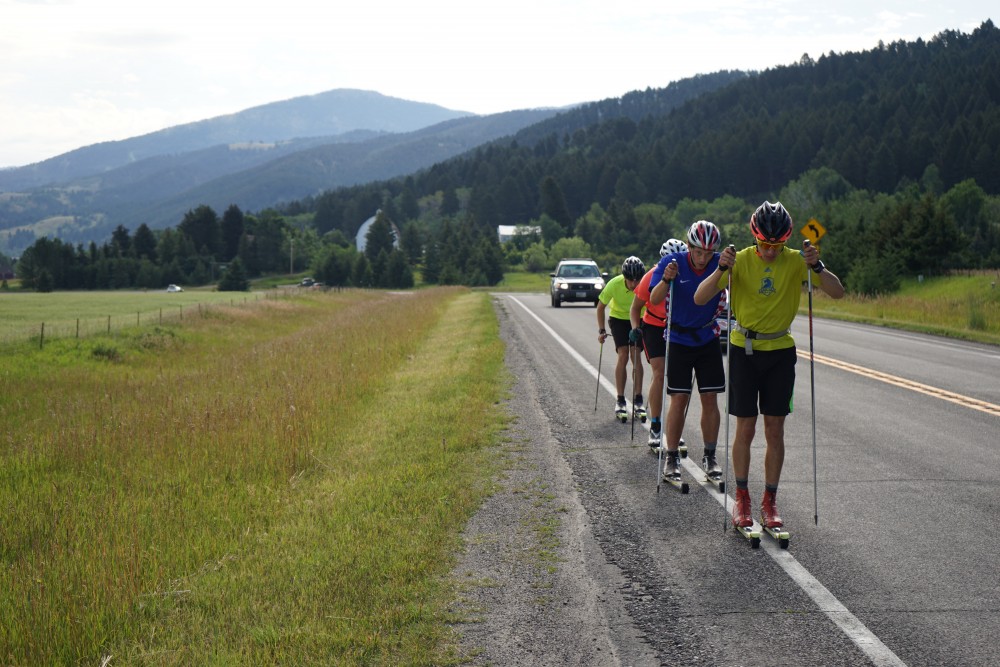
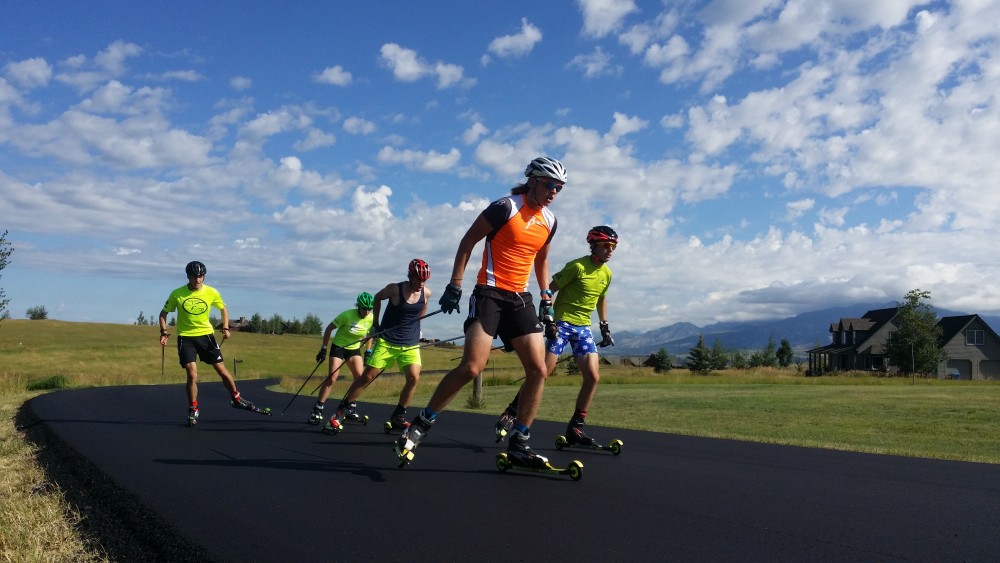
    From left to right: Silas Talbot, Jennie Bender, Paul Everett, Logan Diekmann and Max LaChance during a roller ski with BSF in Bozeman, Mont. (Courtesy Photo)
    (From left to right) BSF skiers Silas Talbot, Jennie Bender, Paul Everett, Logan Diekmann, and Max LaChance during a rollerski in Bozeman, Mont. (Photo: Austin Caldwell)

    The pale wood grain of a wax trailer’s interior walls and the sound of a power-tool firing up can only hold one’s attention for so long, especially if that someone has the coaching gene. As the grandson of John Caldwell, a former U.S. Ski Team (USST) head coach, and son of Sverre Caldwell, the Stratton Mountain School (SMS) nordic director and head coach, it may be no surprise that John — who goes by his middle name of Austin — Caldwell, also heard the call to coach.

    After spending this past winter working for Caldwell Sport as a wax technician, Austin, a 24-year-old Dartmouth grad, wanted a challenge and change. Not only in his work, to include a greater focus on interactions with athletes, but in his whereabouts as well.

    “I really enjoyed working with Zach and Amy [Caldwell] wax-teching last year,” Austin said on the phone while in Bozeman, Mont. “But part of me wanted to spread my wings a bit and try some new place outside of the east and outside of Vermont where I’ve lived all my life.”

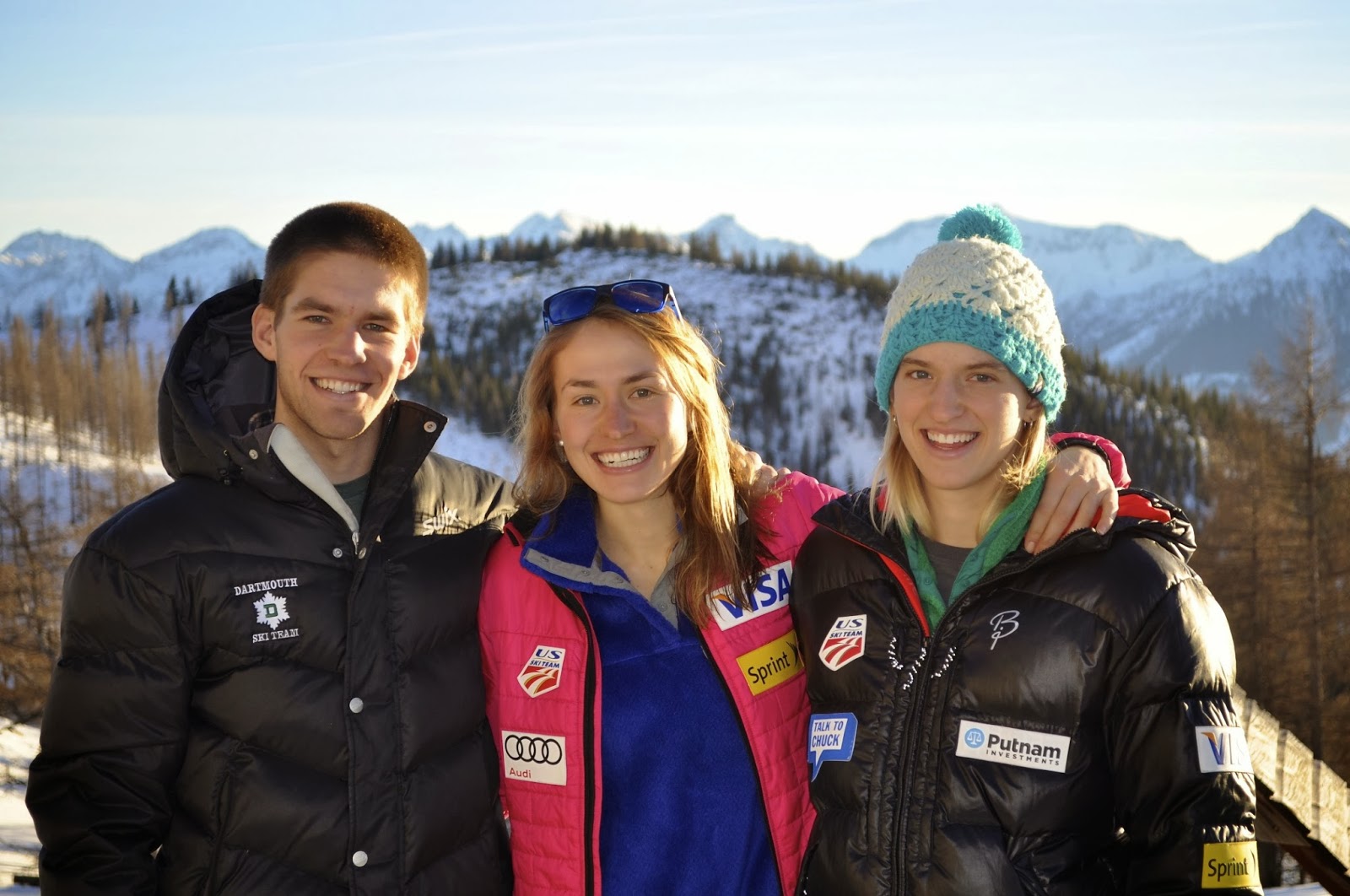
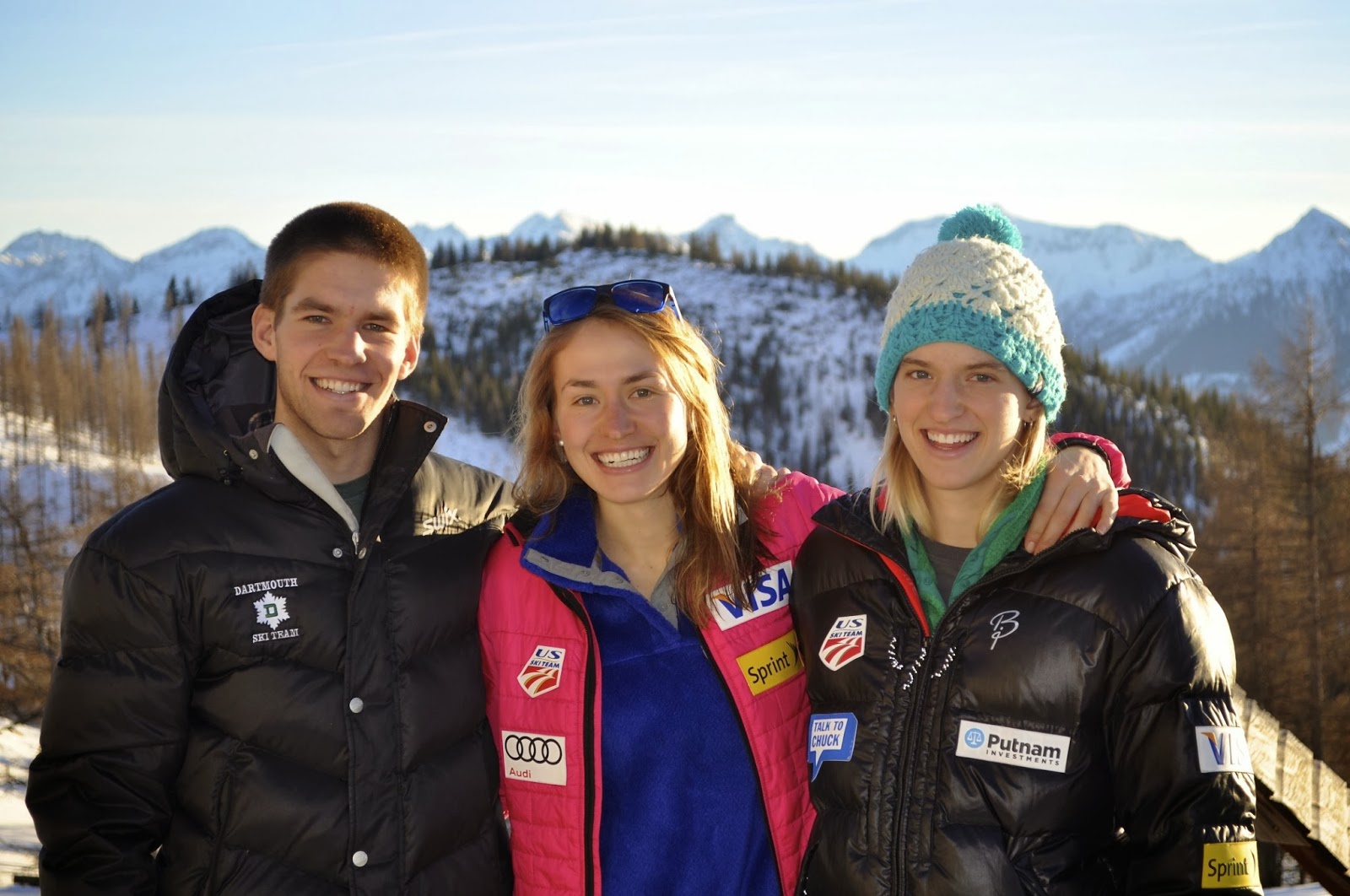
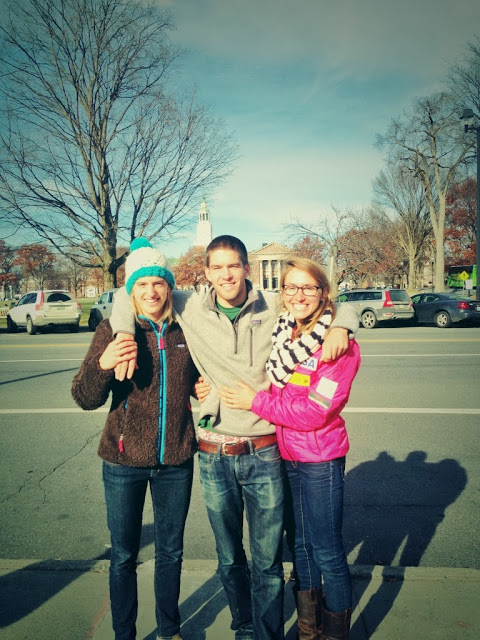
    Austin, Sophie, and Isabel Caldwell (l-r) during their Christmas visit to Europe in 2013 to see Sophie race on the World Cup circuit. (Photo: Sophie Caldwell/sophiecaldwell.blogspot.com)
    Austin, Sophie and Isabel Caldwell (l-r) during their Christmas visit to Europe in 2013 to see Sophie race on the World Cup circuit. (Photo: Sophie Caldwell/sophiecaldwell.blogspot.com)

    Growing up in Peru, Vt., alongside his two sisters Isabel and Sophie Caldwell (the latter of which is a USST member), skiing was not just what Austin spent his spare time doing. It was the family mealtime topic of choice; it was how vacations were spent with relatives — his uncle Tim Caldwell, a four-time Olympian, and cousins are all avid nordic skiers as well.

    Surrounded by skiing his entire life, Austin did not want to give it up anytime soon. When the head coaching position for the Bridger Ski Foundation (BSF) elite nordic program opened up and his cousin, Anya Caldwell-Bean, BSF’s U18/U20 junior coach, told him of the opening, he saw an opportunity to not only stay involved with skiing, but further himself and his experiences in it. 

    “I loved wax-teching last year, that was really fun, but I also enjoyed coaching in the past for junior skiers,” Austin said. “My dad is a coach and I’ve always been interested in coaching … so now I get to coach and wax tech.”

    Stepping into his new role and responsibilities as the head coach for the BSF elite team — his first coaching position of this caliber — Austin is aware of the challenges that rest ahead for himself and his athletes. Prior to this year, his work with athletes involved coaching juniors last year in Putney, Vt., and at SMS youth summer camps over the past five years. 

    “I have gained most of my understanding of coaching from my relationships with Sverre, Ruff Patterson, and Zach and Amy Caldwell,” Austin wrote in an email, referring to his father, college coach, and first cousin once removed (and his wife), respectively. “Those four have been great mentors and in the process they have taught me almost everything I know about skiing.”

    Bridger Ski Foundation (BSF) 2016/2017 Roster:
    Elite Team
    Jennie Bender
    Silas Talbot
    Nick Power
    PG/Collegiate

    Paul Everett
    Max LaChance
    Nick Matelich
    Summer Collegiate
    Noah Anderson
    Logan Diekmann

    Currently eight athletes will work with him during the summer and throughout the season. Three athletes, Jennie Bender, Silas Talbot and Nick Power comprise the elite team, and five others make up the post-graduate crew, with a few of them heading to college in the fall and being replaced with new post grads for the upcoming school year.

    “We’ll have some kids taking classes and then partway through the winter, people will be going different ways depending on how they do [during the season],” Austin explained. “So that will be, as far as managing at that point, that will be one of the bigger challenges.

    “But I think it’s something all teams face,” he added. “Just having kids at different levels and different age groups as well.”

    On a personal level, Austin admits one of his biggest adjustments so far has been learning Bozeman’s trails and rollerskiing roads, as well as not getting the team or team van lost in Montana’s mountains.

    “For me, I guess the biggest challenge that everyone has been helping me with is finding my way around Bozeman and finding new routes for rollerskiing,” Austin said. “Every week I’ve been trying kind of to add a new place to rollerski … because it’s important to switch it up.”

    “I plan on staying in the ski world for as long as I can, so far BSF and Bozeman have been great and I plan on remaining here for the coming years.” — Austin Caldwell on becoming BSF’s elite head coach

    But even if navigating Bozeman has been a bit of a learning process during the beginning stages of his coaching career, the city and a well-established elite program were two of the draws that pulled Austin to apply and eventually take the position.

    Austin Caldwell on the World Cup circuit last season. (Photo: Sophie Caldwell/sophiecaldwell.blogspot.com)
    Austin Caldwell on the World Cup circuit last season. (Photo: Sophie Caldwell/sophiecaldwell.blogspot.com)

    “Having a strong program in place and being in Bozeman were the two main factors [why I considered working with BSF],” Austin said. “I also talked with Dragan [Danevski, BSF’s head coach and program director] and with my cousin Anya and it just seemed like it would be a good fit.”

    With the goal to remain involved with skiing for as long as possible, Bozeman and BSF struck Austin as the ideal program and place to be a part of.

    “I plan on staying in the ski world for as long as I can, so far BSF and Bozeman have been great and I plan on remaining here for the coming years,” he wrote in an email.

    Danevski respectfully declined to comment on Austin’s hiring. In the last two years, the BSF elite team has weathered several coaching transitions, most recently with the departure of Bernie Nelson — the team’s coach since the fall of 2014.

    In his first season as an elite head coach and with eight athletes to oversee, his greatest ambition involves pushing his athletes to their full potential. Talbot, 23, Austin’s former classmate, co-captain and fraternity brother at Dartmouth College, and now an athlete for the BSF elite team, saw the transition to having Austin as a coach as uniquely strong.

    “For myself, it has been hugely beneficial to have Austin coaching because he knows my athletic background so well,” Talbot, originally from Anchorage, Alaska, wrote in an email. “He already knows my strengths and weaknesses (which are especially prevalent in the dryland season), and so there is no need to build up the trust and/or understanding between us from scratch. In short, having someone I know well as a coach makes the adjustment to the new program — something that for many after college is a tough step — much easier.”

    From right to left: Max LaChance, during a classic roller ski with BSF in Bozeman, Mont. (Courtesy Photo)
    Bridger Ski Foundation elite and post-graduate athletes during a classic rollerski in Bozeman, Mont. From left to right: Max LaChance, Nick Power, Logan Diekmann, and Silas Talbot. (Photo: Austin Caldwell)

    Entering her fourth year on the BSF elite team, Bender also found Austin a positive addition to BSF and the greater Bozeman area.

    “Austin waxed for me during the last few World Cups at the Canadian Tour this past March, and I was instantly impressed with his professionalism,” Bender wrote in an email. “Austin taking the head Elite/PG coach position is a great attribution to not only BSF, but to the Bozeman ski community as a whole.”

    So far, Austin too, cannot ask more of his athletes and training group. The higher level of focus and preparation he finds evident with the BSF elite and PG level athletes gives him confidence in the season and performances to come.

    “I think the key to success is having a group that motivates each other and pushes each other,” Austin said. “And I’m very excited about this training group we have going into the summer. They’re all working very hard and they’ve come together really well. It’s like they’ve been training together a lot longer than three weeks … everyone in this group is always trying to push the limits and do everything they can do to get better.”

  • Brooks Wins Second Birkie; Bonaldi Takes Men’s Race in Dramatic Finish

    Brooks Wins Second Birkie; Bonaldi Takes Men’s Race in Dramatic Finish

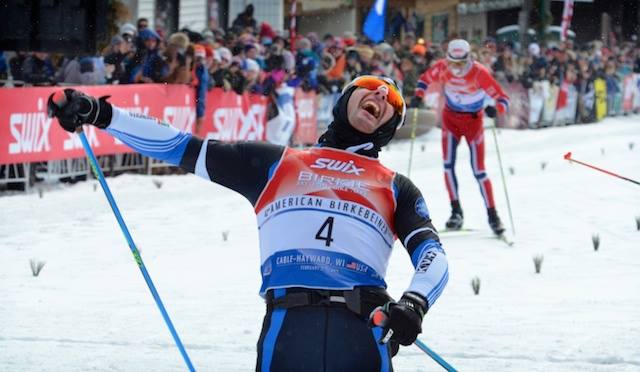
    Segio Bonaldi celebrates after winning in a sprint finish at the 2015 American Berkebeiner. It is Bonaldi's second Birkie title. (Photo: American Birkebeiner Ski Foundation)
    Italy’s Segio Bonaldi celebrates after winning in a sprint finish at the 2015 American Berkebeiner in Hayward, Wis. It was Bonaldi’s second Birkie title. (Photo: American Birkebeiner Ski Foundation)

    The 2015 American Birkebeiner in Hayward, Wis., was spared the most frigid weather gripping the Eastern U.S., as temperatures hovered around 15 degrees Fahrenheit when Saturday’s 51-kilometer freestyle elite race began. And despite three to four inches of new snow, even the sun made an appearance during the race.

    In was in these conditions that American Holly Brooks, of Alaska Pacific University in Anchorage, Alaska, won her second Birkie, claiming victory in a time of 2:34:33.

    Holly Brooks racing to her second Birkie victory on Saturday in Hayward, Wis., which she won by nearly 30 seconds to reclaim the FIS Marathon Cup overall lead. (Photo: Darlene Prois/ABSF)
    Holly Brooks racing to her second Birkie victory on Saturday in Hayward, Wis., which she won by nearly 30 seconds to reclaim the FIS Marathon Cup overall lead. (Photo: Darlene Prois/ABSF)

    However, she first had to ward off Aurelie Dabudyk of France, who stuck with Brooks until she began her final push on the flats of Lake Hayward, a few kilometers from the finish.

    Brooks came into the race second overall in the FIS Marathon Cup, but reclaimed the lead after Saturday’s win.

    The 32 year old told FasterSkier that the top four women were together for most of the race. At “B*itch Hill” – a steep climb about 40 k into the race – she said she heard a second snow machine behind her.

    “I looked over my shoulder and there was the sea of men who had caught us,” she explained. “I knew it was a now-or-never moment.”

    As the leading men passed the first four women, Brooks decided to make her move. She tagged onto the group of men and managed to break from the group.

    However, she was surprised to find Dabudyk was able to hang behind her.

    “I did not want to leave it to the finish sprint and therefore pushed as hard as I could on Lake Hayward. I did not dare to look back before the finish line to be sure not to lose any seconds,” she explained to the press. “I didn’t want to be ‘that skier’ who looked back and lost the sprint because you miss a crucial pole plant or something.”

    As usual, she said Main Street in Hayward was incredibly loud and festive.

    “It would have been fun to grab a flag and celebrate a bit but ensuring the win and reclaiming the red bib was more important!” she said. “I am really happy that I could win the Birkie again today!”

    Holly Brooks celebrates after winning her second American Berkebeiner on Saturday in Hayward, Wis. The win put her back in the lead of the overall FIS Marathon Cup. (Photo: American Birkebeiner Ski Foundation)
    Holly Brooks celebrates after winning her second American Berkebeiner on Saturday in Hayward, Wis. The win put her back in the lead of the overall FIS Marathon Cup. (Photo: American Birkebeiner Ski Foundation)

    Dabudyk went on to finish second, 28.1 seconds behind Brooks. Tatiana Mannima of Estonia was nearly two minutes back in third (+1:59.9), barely holding off German Anja Gruber, who placed fourth (+2:02.1).

    Mannima has won the last two FIS Marathon Cup races, while Gruber is coming off three podium finishes earlier this month in SuperTour races in Craftsbury, Vt.

    Dabudyk said to the press that she wanted to stay with Brooks until the finish, though down the stretch Brooks had too much power for her.

    “But I am really happy with my second place,” she added.

    Mannima said that she pushed hard from the start to see which skiers could hold onto her speed. She was able to stay in the lead group until Brooks and Dabudyk finally took off with 10 k to go.

    “At Lake Hayward, I was trying to stay behind Gruber, as it was pretty windy on the lake. I hoped to pass her before the finish line, which I did,” she explained, adding that she is happy to just be on the podium.

    American Caitlin Patterson (Craftsbury Green Racing Project) ended up fifth (+9:31), after winning the SuperTour 20 k classic mass start in Craftsbury late last month.

    Bonaldi wins second Birkie in exciting fashion 

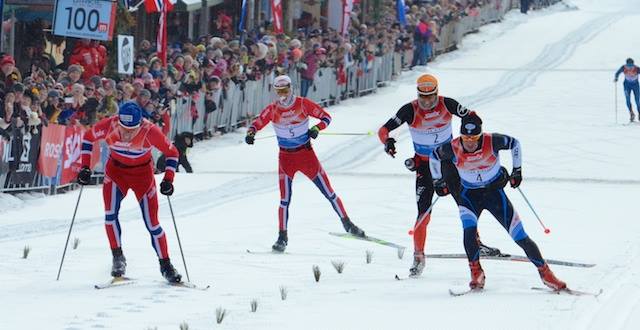
    Italy's Segio Bonaldi (r) outlasts three Frenchmen en route to his second American Birkebeiner victory on Saturday in the 42nd annual Birkie in Hayward, Wis. (Photo: Darlene Prois/ABSF)
    Italy’s Segio Bonaldi (r) outlasts three Frenchmen en route to his second American Birkebeiner victory on Saturday in the 42nd annual Birkie in Hayward, Wis. (Photo: Darlene Prois/ABSF)

    The men’s race offered a more dramatic finish, as Italian Segio Bonaldi outsprinted three Frenchmen to win by less than a second.

    Bonaldi, Birkie winner in 2013, finished in 2:12:21.1. He passed France’s Christopher Perrillat-Collomb in the final 100 meters to win by just 0.5 seconds. Benoit Chauvet and Mathias Wibault were also in the lead group, and Chauvet finished in third (+1.7) while Wibault faded to fourth (+5.0).

    Chauvet told the press that he tried to break out of the lead group of 20 at the first climb, but no one was willing to break with him. However, the racers slowly began to spread apart at about the 35 k point, and Chauvet was able to work with Perrillat-Collomb.

    “At this point all were thinking about winning the race,” he said.

    Chauvet explained that his tactics failed him, however, and that Bonaldi was smarter and stayed behind the others until the final stretch. Chauvet said he probably made his final sprint too early, as he tried to be first coming off the new bridge that drops the skiers into downtown Hayward and the final straightaway to the finish.

    “I did not feel so well until 15 k before the finish,” Bonaldi said. “My skis were also not very good so I tried to stay behind and to wait for the finish sprint. I kept energy for that.”

    The 36 year old added that he really wanted to win this year, especially after finishing third last year, but was not sure he would have a clear shot at victory until 100 meters before the finish line.

    “I am very happy!” he said.

    “I am little bit disappointed to be third as I wanted to win. I have to come back for the victory next year,” Chauvet said.

    The top American, Lex Treinen (APU), finished nearly 20 seconds after Wibault in fifth and was 24.5 seconds from the win. Last year, he placed 10th in the Birkie. American Brian Gregg (Team Gregg/Madshus) finished in eighth (+1:51.4).

    FIS Marathon Cup leader Petr Novak of the Czech Republic came through in 11th (+5:51.4).

    “I had the worst skis of my life. I lost so much on the downhills. It was a mental fight for me all the way through and right until the end!” Novak said in a statement to the press. Despite his rough day, he still retains the lead in the overall FIS Marathon Cup standings.

    American Matt Liebsch (XC United/Team Strong Heart), 2009 Birkie winner, finished 10th (+3:10.8), while 2012 Birkie winner Tad Elliott (Ski & Snowboard Club Vail Elite) took 16th (+10:29.5).

    Naryshkina, Mork take classic titles

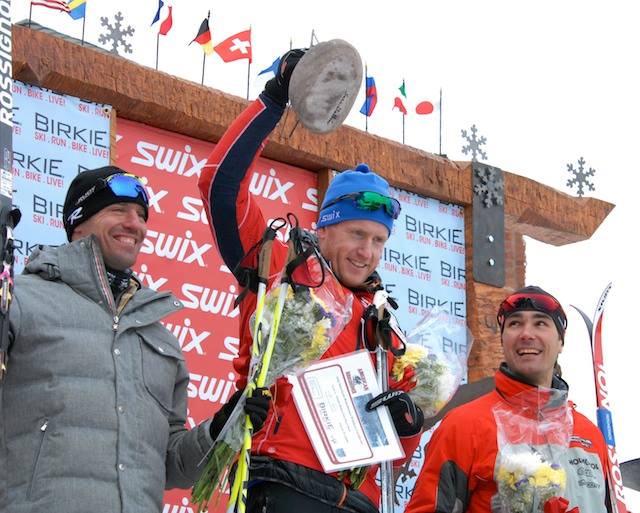
    Men's 55 k classic Birkie winner Ole Christian Mork (c) is with second-place finisher Torin Koos (l) and Thomas Seidel (r), who placed third. (Photo: ABSF)
    Men’s 55 k classic Birkie winner Ole Christian Mork (c) is with second-place finisher Torin Koos (l) and Thomas Seidel (r), who placed third. (Photo: ABSF/Facebook)

    In the 55 k classic race, Natalia Naryshkina of Russia and the CXC Team took the women’s win in 3:19:20.2, while Norway’s Ole Christian Mork won the men’s race in 2:54:22.1.

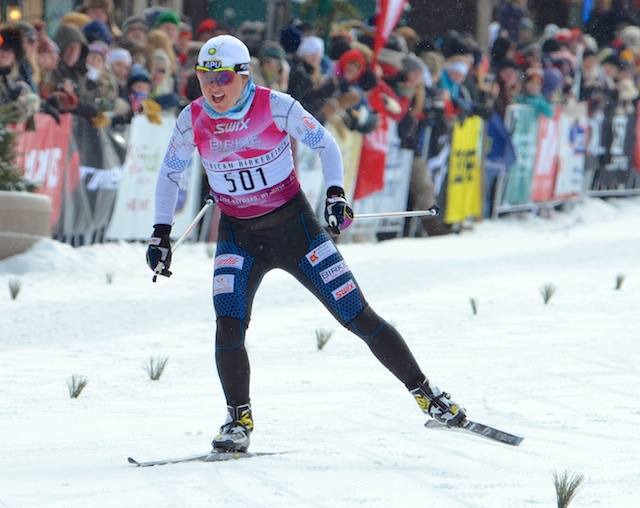
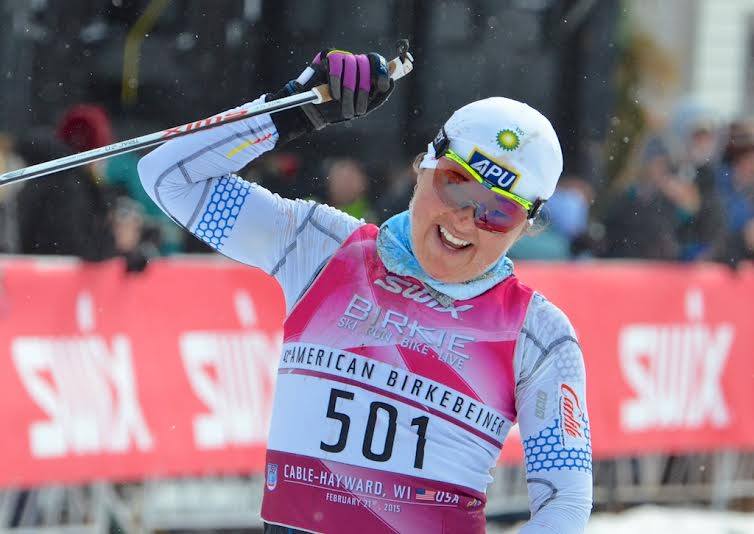
    Naryshkina beat runner-up Josie Nelson of Medicine Lake, Minn., by 3:44.9, and Kelly Sillicorn of Winona, Minn., by 3:50.9. Isabel Caldwell, younger sister of U.S. Ski Team member Sophie Caldwell, placed fourth (+6:14.8).

    Mork, of Oslo, outlasted four-time U.S. Olympian Torin Koos by 8.8 seconds and Thomas Seidel, of Salt Lake City, in third by 14.7 seconds.

    Complete results

    51 k skate results: Men | Women

    55 k classic results: Women | Men

  • Interview: Sophie Caldwell Reflects on Her Groundbreaking Season

    Interview: Sophie Caldwell Reflects on Her Groundbreaking Season

    U.S. teammate Kikkan Randall (l) and Sophie Caldwell celebrate the first U.S. women's double podium in a 2014 World Cup skate sprint in Lahti, Finland. (Photo: Fischer/Nordic Focus)
    U.S. teammate Kikkan Randall (l) and Sophie Caldwell celebrate the first U.S. women’s double podium in a 2014 World Cup skate sprint in Lahti, Finland. (Photo: Fischer/Nordic Focus)

    BOZEMAN, Mont. — When talking with the Sophie Caldwell, her humble demeanor would never reveal that she claimed the highest Olympic finish by a U.S. woman in cross country skiing at the 2014 Games. From her simple goals of increased experience and continued enjoyment of the sport, it would be hard to guess that she was part of the first U.S. women’s double podium with Kikkan Randall in the Lahti, Finland World Cup this past season.

    Both she and her sister, Isabel, are alumni of Dartmouth College and come from a family that has been a major part of the American nordic ski in recent decades. While the Caldwell name is often associated with success, they both agree that they’ve never felt pressure because of their family legacy.

    During their recent trip to Bozeman, Mont. to visit their cousin and former UNH skier Anya Caldwell Bean, FasterSkier was able to sit down with Sophie and Isabel to reflect on last year’s racing season and talk about their future plans.

    FasterSkier: This past season you obviously found a lot of success on the international circuit. Was this something you knew you could do? Were you expecting to achieve the accomplishments you did?

    Sophie Caldwell: My success and results from last season were certainly unexpected. I wasn’t expecting that at all going into the season. I had set some goals but none were super concrete. I don’t like to set results-based goals, but making the Olympics was a big goal, and I wasn’t sure if that was realistic or not. When we found out that we had qualified for the Olympics pretty early on, that took a lot of pressure off. Once that happened I was like ‘I’ve accomplished all my goals for the season. Let’s just have fun with it.’ It was a really exciting place to be and it was really fun.

    I trained well last season, but a lot of it was being excited, being in a good place mentally, and having a good team. I think that’s what I owe a lot of the results to. I definitely wasn’t expecting to have a season like that.

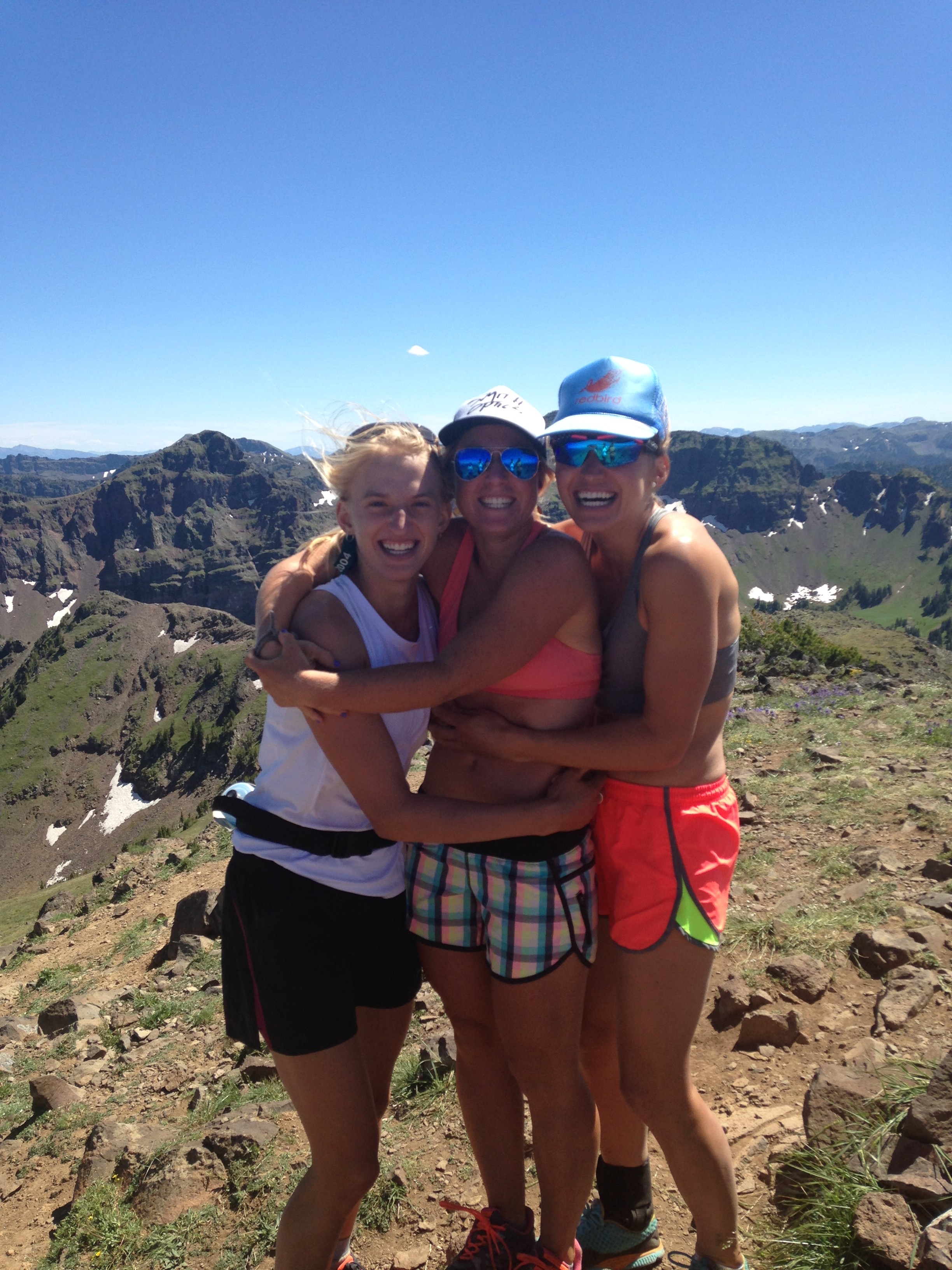
    Isabel Caldwell, Anya Caldwell Bean, and Sophie Caldwell (l-r) pose on the top of Mount Blackmore in Bozeman, Mt. during the sisters recent trip to visit Anya.
    Isabel Caldwell, Anya Caldwell Bean, and Sophie Caldwell (l-r) pose on the top of Mount Blackmore in Bozeman, Mt. during the sisters recent trip to visit Anya.

    FS: How was it adjusting to your first full season on the World Cup?

    SC: It was easier adjusting than I thought it would be. That being said, it’s never easy being home away for that long. Living out of a duffle bag and going from hotel to hotel is exciting because you get to see a lot of new paces but sometimes you miss coming back to a real home.

    FS: What was the most memorable moment of the season for you?

    SC: Everything about the Olympics, especially the sprint day. It was memorable, but it’s also all a blur. Those few weeks were pretty incredible.

    Having my family over for Christmas was pretty fun as well. That was a nice break because we had been bouncing from World Cup to World Cup each weekend so it was nice to tone things down and spend time with my family.

    Some other highlights were Davos, because that was my first top ten. That was really cool because I could see that I could compete with the big girls. That gave me a boost of confidence. Also, Lahti was obviously a highlight when I shared the podium with Kikkan.

    FS: Izzy, how was it visiting your sister during the season this year?

    Isabel Caldwell: Christmas was wonderful! We went to Asiago (Italy) and watched the sprints, then we went to Ramsau (Austria) for Christmas, and then Davos (Switzerland) for the first stage of the Tour (de Ski). It was really fun to see Sophie race and spend time with her.

    FS: How was your experience at your first Olympics? Was it overwhelming?

    SC: It was definitely a little overwhelming going to the opening ceremonies. The fact that we got on TV was pretty cool and we heard from everyone at home. Because we were in the endurance village, which was full of Nordic skiers and biathletes, it was easier because most people you saw there were with you every weekend on the World Cup. You could definitely focus on racing. It was a tough place to get to and a tough place to leave, so it was pretty easy to calm down there.

    After the sprint day I felt like I heard from just about every person I had ever met in my life. That was a little overwhelming. After the race I looked at my phone saw all the texts and emails. I was on my way to dinner and I just pulled out my phone, looked at it and turned it off. I took a deep breath and decided to take in the moment and pay attention to it after dinner.

    FS: Did you feel any pressure at the Olympics?

    SC: I didn’t feel any pressure at the Olympics because, as I said, my biggest goal was to qualify for the Olympics. Up to that point I had qualified for all the skate sprints and it was a skate sprint at the Olympics. At that point I made another goal to make the heats. After that it didn’t really matter what happened.

    Of course, at the same time, there was a little more pressure and I was more nervous than I ever had been on the start line, but I wasn’t worried about results.

    “As far as having the best finish, that was really cool, but I feel that on any given day it could have been any one of us. I’m proud, but having that below my name isn’t defining me or the team.” – Sophie Caldwell on having the best female finish of an American at the Olympics.

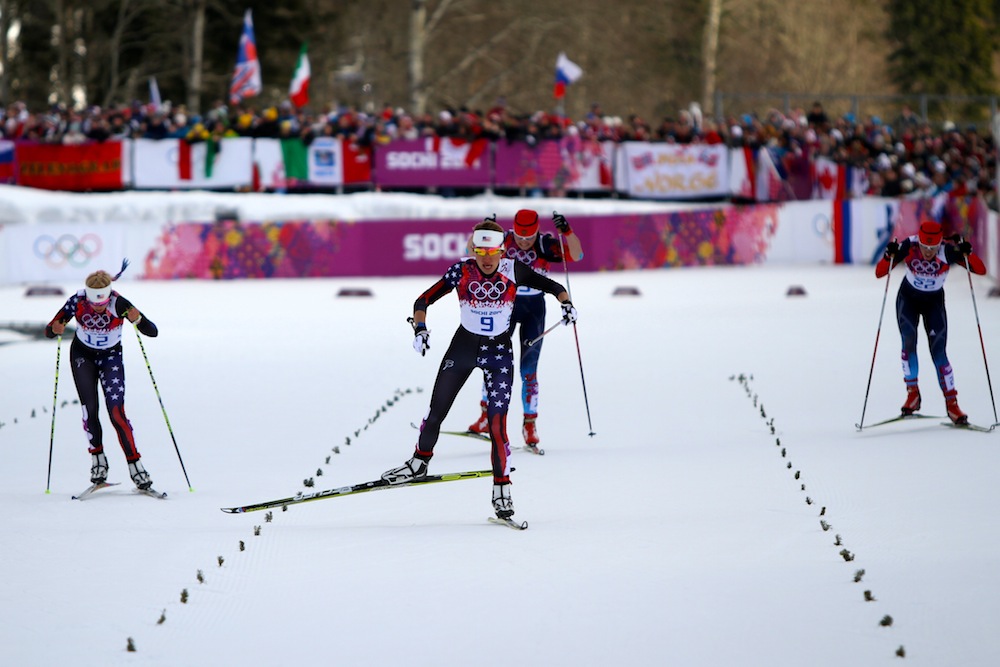
    Sophie Caldwell (bib 9) heading for the finish in her Olympic quarterfinal heat in February, where she placed second to advance automatically to the semifinals.
    Sophie Caldwell (bib 9) heading for the finish in her Olympic quarterfinal heat in February, where she placed second to advance automatically to the semifinals.

    FS: Now that you’ve had time to reflect, how does it feel to have the best finish of any American female at the Olympics? 

    SC: It is still sinking in. I was talking to Anya (Caldwell Bean) today about that and she was saying that it all happened so quickly and before the Olympics nobody thought it was that big of a deal and then you get there and it was a big deal. It was a huge deal, but I still think it’s sinking in.

    As far as having the best finish, that was really cool, but I feel that on any given day it could have been any one of us. I’m proud, but having that below my name isn’t defining me or the team.

    FS: How did Kikkan failing to advance from the quarterfinals affect your race?

    SC: It was bittersweet because we were all broken-hearted when she didn’t make it past the quarterfinals. We had to regroup and focus on the race again. That was definitely some extra motivation. On any given day Kikkan could have gotten a gold medal there and that was some motivation to do it for Kikkan and do it for the team.

    FS: Izzy, you watched the Olympics from Dartmouth? What was it like seeing your sister advance to the A-final?

    IC: Yeah it was amazing. I woke up for every single one of her races this year. For the Olympics the whole Dartmouth team was watching on campus at the big televisions. Everyone was going wild. Meanwhile there was a big group text going on with about 20 family members all screaming their heads.

    It was pretty fun because everyone on the Dartmouth team feels a special connection with Sophie, and also with Ida. There’s definitely a lot of pride coming from Dartmouth. Everyone gets pumped up when they do well, and everyone is watching every morning.

    FS: Sophie, what are your general goals for next season?

    SC: I’ll be racing in the full World Cup season again and I’d obviously like to be competing at World Championships and do well there. Right now it’s hard to tell who is going to be racing which race, I mostly just want to get more World Cup experience under my belt. Last season I felt like each weekend I was becoming more and more confident on the World Cup, but in no way am I a veteran or expert. That’s my big goal, to just keep enjoying the experience and keep learning.

    I haven’t made any large adjustments in my training plan. I have been training a little more but I had some injuries (broken elbow and twisted ankle) but those seem to be fine now.

    FS: What are you most looking forward to?

    SC: I’m just excited to be back on the road with the team, but I’m definitely still enjoying my time at home right now. It’s hard to think about heading over to Europe just yet but it was a blast being over there with such a supportive group and hopefully the team will continue to grow and we’ll get some good results. I think it’s really cool to see the relays where we have started to pop out and do well. Hopefully, as a whole, the U.S. Team will continue it’s upward trend.

    “Our dad in particular did a really good job of balancing being a dad and being a coach. Dad always came before coach, which was really helpful. I think it has just been a pressure free environment from day one. We all have different relationships with skiing but I think we all want to do it for the rest of our lives.” – Sophie Caldwell

    FS: What are you up to these days, Izzy?

    IC: I am officially done with ski racing. I think I want to become a teacher and I have a teaching internship at home for the year at the Burr and Burton Academy Mountain Campus. I’m very excited. It’s a semester program about science and sustainability.

    Austin, Sophie, and Isabel Caldwell (l-r) pose during the Caldwell's visit Europe during Christmas to see Sophie race on the World Cup circuit. (Photo: Sophie Caldwell, http://sophiecaldwell.blogspot.com/2013/12/christmas-and-tour.html)
    Austin, Sophie, and Isabel Caldwell (l-r) pose during the Caldwell’s visit Europe during Christmas to see Sophie race on the World Cup circuit. (Photo: Sophie Caldwell/sophiecaldwell.blogspot.com)

    FS: Do you see yourself continuing to be involved in the sport in any capacity in the future? 

    IC: I have always loved skiing and will continue to in the future, but I’m not that excited about racing anymore. I can live vicariously through Sophie (Laughs). I’ll probably hop in some races this year. I want to do Craftsbury Marathon for Torin (Tucker, a Dartmouth skier who passed away earlier this year) and then maybe do the Berkie if David Sinclair is doing it.

    FS: Finally, you both come from a family that is well known in the nordic ski community. How has that influenced both of you? 

    SC: It’s funny because when people ask us that question the follow-up is usually ‘that must be a lot of pressure.’ It really isn’t. I’m definitely proud to be a Caldwell but I’ve never felt any type of pressure. We grew up skiing but that was just because it was a lifestyle that my parents enjoyed. They did a really good job in raising us to learn to appreciate skiing, love it, and have a healthy relationship with it.

    Our dad in particular did a really good job of balancing being a dad and being a coach. Dad always came before coach, which was really helpful. I think it has just been a pressure free environment from day one. We all have different relationships with skiing but I think we all want to do it for the rest of our lives.

    Izzy and I were on a team together for two years at Dartmouth and three years at Stratton and we got along really well as teammates. It wasn’t a competitive thing. I was just saying to Anya this morning, that in college I said that if anyone is going to beat me I want it to be my sister. I think we are each other’s biggest fans. It was never competitive. A lot of that comes form having a healthy relationship with sports and competition from a young age.

    IC: That pretty much sums it up!

    Sophie currently skis for the Stratton Mountain School T2 Team and is a member of the USST A-Team. Follow her training, travels, and racing through her blog

  • Wednesday Workout: Recovery-Week Adventuring with Sophie Caldwell

    Wednesday Workout: Recovery-Week Adventuring with Sophie Caldwell

    Sophie Caldwell (r) and Anya Bean (l) make their way down from the summit of Sacajawea Peak in Bozeman, Mont.
    Sophie Caldwell (r) and Anya Bean (l) make their way down from the summit of Sacajawea Peak in Bozeman, Mont.

    As nordic skiers we are extremely ambitious, especially when it comes to our training plans. While there’s nothing wrong with aiming for many hours filled with intensity and distance during our volume weeks, it’s important to remember to be just as enthused with our recovery weeks.

    Recovery weeks are meant to allow our bodies to absorb the volume or intensity we’ve worked so hard for. By taking it easy we not only help our muscles soak up our hard work, but we also can allow ourselves to do things we might not be able to whilst in the middle of an intensity block.

    I was reminded of this fact when U.S. Ski Team member Sophie Caldwell came to Bozeman, Mont., after an intense two weeks in Alaska where athletes logged 25-plus-hour weeks both in Anchorage and on-snow at Eagle Glacier.

    While the 24-year-old Caldwell is gearing up for another season on the World Cup circuit, the main thing she wants to achieve during the next few weeks is recovery.

    “I think the most important thing is to rest,” she said. “We were all exhausted after that camp. It’s easy to trick yourself into thinking ‘one day off and I’m ready to go again,’ but it takes more than that.

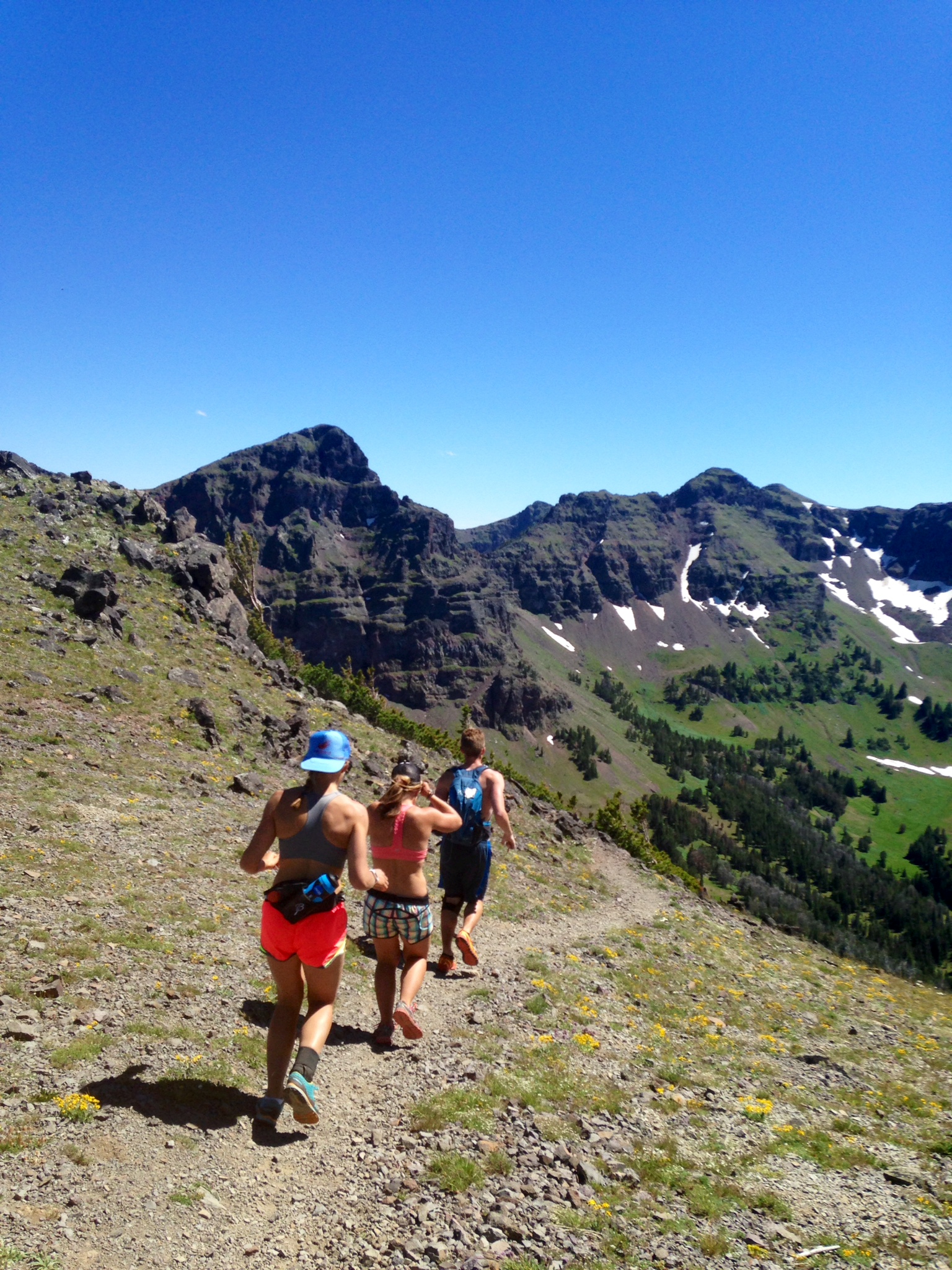
    Sophie Caldwell, Anya Bean, and Tanner Wiegand (l-r) run down the Mount Blackmore trail in Montana's Gallatin Range.
    Sophie Caldwell, Anya Bean, and Tanner Wiegand (l-r) run down the Mount Blackmore trail in Montana’s Gallatin Range.

    “I took off some time at home and let the training sink in,” she added. “These next couple weeks I have adventuring on my training plan. The idea is to get a lot of easy hours which is perfect for coming out here because we’ve been going on big hikes every day.”

    Since arriving in Bozeman, Caldwell and her sister Isabel have joined their cousin Anya Bean, myself, and group of other adventurers in climbing iconic Bozeman mountains including Mt. Blackmore, Garnet Peak, Sacajawea Peak, Hardscrabble Peak, and the Sphinx.

    While someone like myself may have to work a little harder to keep up, these hikes serve as the perfect form of active rest for the 2014 Olympian.

    It is important, however, to remind your legs what intensity feels like during a resting period. According to Caldwell, a key component of these recovery week adventures is to add a little Level-3 interval for 10 minutes into her adventures.

    “It wakes the body up and helps it remember how to go hard,” Caldwell explained. “After you do a lot of easy distance it starts to feel good but you get a little flat and forget how to push. So every once and a while you want to try something like that to remind yourself that you know how to go hard.”

    Regardless of where you are in the world, you too can find some great recovery adventures to make sure that you’re taking in some active rest. Whether it’s hiking a nearby peak, riding your favorite route or trail, or swimming in a local lake, active recovery is always accessible. Just make sure to include some Level-3 intensity every now and then to keep the legs fresh.

    A key component of these recovery-week adventures is to add a little Level-3 interval for 10 minutes. “It wakes the body up and helps it remember how to go hard.” — Sophie Caldwell, 2014 Olympian and U.S. Ski Team member

  • Wednesday Workout: Sore-Legs Central (How to Get the Lactate Out) with the Caldwell Sisters

    Wednesday Workout: Sore-Legs Central (How to Get the Lactate Out) with the Caldwell Sisters

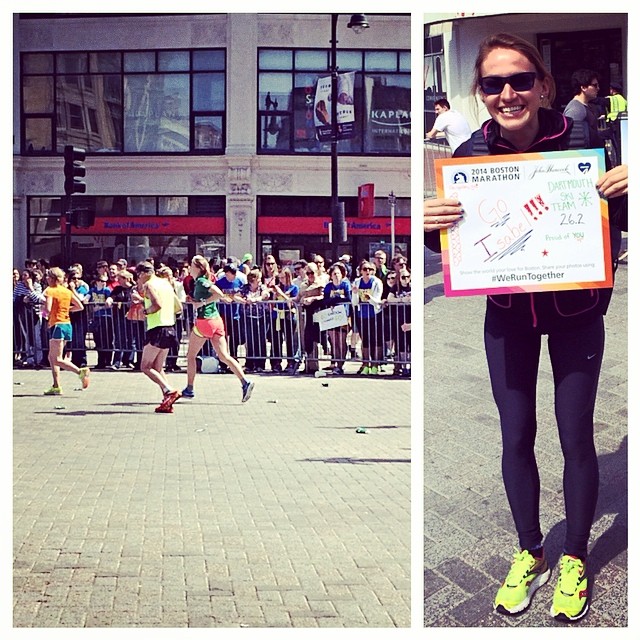
    Isabel Caldwell nears the finish of the 2014 Boston Marathon on Monday while Sophie Caldwell (r) cheers her on. (Photo: Sophie Caldwell/Twitter)
    Isabel Caldwell nears the finish of the 2014 Boston Marathon on Monday while Sophie Caldwell (r) cheers her on. (Photo: Sophie Caldwell/Instagram)

    Two days after nearly 36,000 people ran that Boston Marathon on Monday, we’re willing to bet there are more than a couple still feeling the pain of the 26.2-mile run from Hopkinton, Mass., to Boston.

    Isabel Caldwell, a former Dartmouth and Stratton skier and the younger sis of U.S. Ski Team member Sophie Caldwell, was one of them, but she didn’t feel as sore as she expected.

    “My marathon went pretty well … I hadn’t done a whole lot of running before so I wasn’t expecting too much but I finished and had fun so it was a good day,” she wrote in an email. “The race experience was pretty amazing. There were so many people. I think I ended up finishing about halfway through the second wave of runners so I was surrounded by other runners the entire time. The sides of the course were also covered in spectators. It seemed like everyone was doing it for a greater cause this year, there were Boston Strong posters everywhere and all of the spectators and runners seemed very determined to make it the best Boston ever.”

    We asked her what you do in the day (or two or three) after to relieve soreness in the legs and stiffness in other parts of the body. She wasn’t as sore as she was when she ran the Burlington Marathon in Vermont last year.

    “I think difference is that last year at Burlington it was about 40 degrees and raining so as soon as I finished I got cold and my muscles seized up and I didn’t want to walk anywhere,” she explained. “For about a week afterwards I had horribly sore legs.”

    Monday was warmer — upwards of 60 degrees by the finish — and Caldwell wrote that she had to walk a couple of miles to the subway, “which felt horrible at the time but was probably good for my recovery.”

    Tuesday, she tried to stay off her feet.

    “I have a lot of blisters, but I may try to roll out a little bit,” she wrote. “I probably won’t train for a few days and maybe just do a couple of bike rides later in the week.”

    Her sister, Sophie, cheered her on near the finish. Definitely inspired to run a marathon someday, she wrote in an email that she’ll probably wait until after she’s done skiing professionally to avoid injury.

    But the 2014 Olympian does know a lot about taking care of yourself after any race — especially endurance events.

    No. 1: Fuel Properly

    “Even though you might not have much of an appetite, eating and drinking enough would be really important,” Sophie wrote. “It’s probably also important to move a little so you don’t get too stiff and tight and then maybe an ice bath if you dare (I don’t).

    No. 2: Accept and Minimize the Burn

    “I think getting sore is inevitable, but there are definitely ways to make it less miserable! I was giving Isabel piggy back rides today, so I’m not sure she did the greatest job with recovery! In her defense, she had to sit in the car for four hours to drive back to Hanover.”

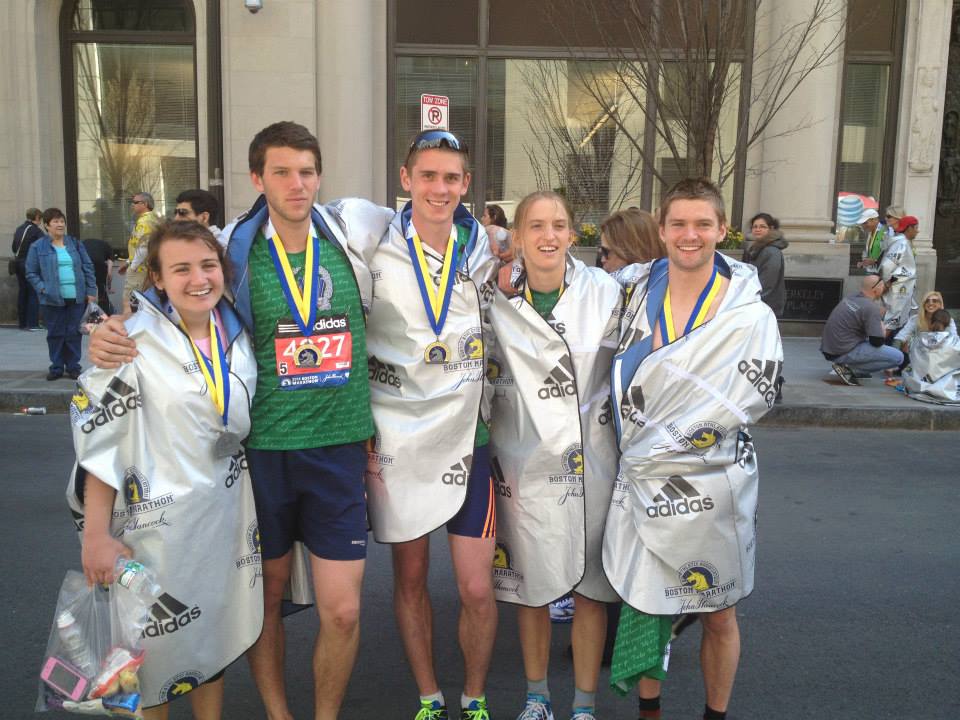
    Isabel Caldwell and others in the Dartmouth crew who ran the 2014 Boston Marathon. (From left to right: Caitie Meyer, Oscar Friedman, Erik Fagerstrom, Isabel Caldwell, David Sinclair. Not pictured: Annie Hart) (Photo: Nancy Seem)
    Isabel Caldwell and others in the Dartmouth crew who ran the 2014 Boston Marathon. (From left to right: Caitie Meyer, Oscar Friedman, Erik Fagerstrom, Isabel Caldwell, David Sinclair. Not pictured: Annie Hart) (Photo: Nancy Seem)
  • 7 Things You Didn’t Know About Sophie Caldwell

    7 Things You Didn’t Know About Sophie Caldwell

    Sophie Caldwell saying goodbye to her brother and sister before a winter of racing with the U.S. Ski Team in Europe. Did you know her siblings are twins?(Photo: sophiecaldwell.blogspot.com/http://sophiecaldwell.blogspot.com/2013/11/beito-update.html)
    Sophie Caldwell (r) says goodbye to her brother, Austin, and sister, Isabel, before spending the next four month racing with U.S. Ski Team in Europe. Did you know her siblings, two years younger, are twins? (Photo: sophiecaldwell.blogspot.com)

    Yes, we’re going there – but only because we know you’re interested! To get you excited for 2013/2014 racing season, we asked the skiers you’ll be reading most about from the U.S. and Canadian national teams to tell us seven things about themselves that most people don’t know. To top off the randomness, we also asked a couple questions related to skiing (well, sort of) and the life of a pro athlete.

    ***

    If I’m struggling in a race or a workout, a lot of the time I’ll say … “Sophie, get your butt up that hill right now.” But it’s not usually put that nicely. — Sophie Caldwell, U.S. Ski Team member

    Sophie Caldwell training in Beitostølen, Norway, before this weekend's FIS races. (http://sophiecaldwell.blogspot.com/2013/11/beito-update.html
    Sophie Caldwell training in Beitostølen, Norway, before this weekend’s FIS races. (Photo: sophiecaldwell.blogspot.com)

    Athlete: Sophie Caldwell

    Team: U.S. Ski Team (first season); Stratton Mountain School T2 Team

    Age: 23

    Hometown: Peru, Vermont

    7 Things:

    1. I love jelly beans
    2. I’m scared of cold water
    3. I went for my first ski when I was 10 months old!
    4. My sister and brother are twins
    5. I grew up with two dalmatians named Daisy and Douglas. They were around my age, so I thought I was a dog for the first couple years of my life.
    6. I was bald until I was 2!
    7. The only food I don’t like (to date) is olives.

    Bonus Round:

    • First races of the season? The FIS sprint in Beitostølen, Norway!
    • Go-to mantra or motto: If I’m struggling in a race or a workout, a lot of the time I’ll say something along the lines of, “Sophie, get your butt up that hill right now.” But it’s not usually put that nicely. I don’t really swear out loud, but sometimes self-talk swearing can go a long way!
    • What do you miss most while on the road (besides family and friends)? Double beds and knowing what everything in a grocery store is
    • Best part about being a pro athlete: Travel!
    • 3 travel essentials: Sleepy Bunny (my stuffed animal), sweatpants, liquid iron (gross)
    • Go-to travel meal or food: Eggs in the basket!
    • Song that you could listen to non-stop: “Can’t Go Home” – Good Old War
    • Song you wouldn’t mind never hearing again: “Work B****” by Britney Spears
  • Sun & Speed in the County: A Complete Recap of Junior Nationals – UPDDATED with Photos

    Sun & Speed in the County: A Complete Recap of Junior Nationals – UPDDATED with Photos

    Athletes could have been forgiven last week if they thought they were racing on the west coast in the bright sunshine that was the hallmark of last year’s Junior Olympics in Truckee, California. However, Presque Isle delivered in every aspect – trails, grooming, and, most surprisingly, with bright sun, klister conditions and tans that the 2010 Junior Olympics will be remembered for.

    The Nordic Heritage Center in Presque Isle, ME. Photo: flyingpointroad.com

    New England used their characteristically dominant performance in Monday’s classic sprint event and never looked back, claiming their second straight Alaska Cup. In what has been historically a three-team race for the podium, New England accumulated 1660 points, nearly a third of which were won in the classic sprint, to outdistance Alaska with 1275 points. Intermountain, led by strong results from their J2 boys, placed third with 980 points.

    Athletes were treated to a good luck video message at the Opening Ceremonies with inspirational words from US Ski Team athletes Andy Newell, Liz Stephen, Kikkan Randall and James Southam, as well as various World Cup athletes, fresh off the 2010 Vancouver Olympic Games.

    “Training starts now for the next go around,” says Newell in the video. “It’s four years until Sochi, so I expect to see a lot of you guys, especially some of you OJs out there, to train really hard and you can be on the team with us four years from now in Sochi, Russia.”

    Monday

    Corey Stock (Cambridge Sports Union) raced to gold on Monday in the J2 girl's sprint. Photo: flyingpointroad.com

    New England opened the week of competition by winning five of six races and an impressive 13 of 18 spots on the podium in the classic sprint. Only Cole Morgan (Bridger SF) from Intermountain was able to spoil New England’s perfect run of gold medals with his victory in the J2 boys sprint.

    Corey Stock (Cambridge Sports Union) got racing underway for the J2 girls, leading two of her New England teammates into the top three for a New England sweep of the podium. Stock won the A final going away, with Heather Mooney (Stratton Mountain School) and Maddy Pfeifer (Proctor) claiming second and third.

    Intermountain's Zach Lindhall (83) leads teammate and eventual champion Cole Morgan (85). (Photo: flyingpointroad.com

    Cole Morgan (Bridger SF) from Intermountain captured his first national title of the week in the J2 boys sprint. After battling with New England’s Jack Hegman (Mansfield Nordic) down the stretch in his semifinal, Morgan put some distance on his A-final competitors and crossed the line nearly three seconds ahead of New England silver medalist Eli Hoenig (Cambridge Sports Union). Haakon Sigurslid (Durango Nordic) from Rocky Mountain took third to round out the podium.

    “My strategy was to get out in front and lead the whole way,” said Morgan of his gold-medal performance, “because there was not enough distance to wait for opportunities to pass.  I gained a lot of time on the two humps before the final hill and carried that gap into the finish.”

    J1 Sprint Champion Isabel Caldwell (Stratton Mountain School). Photo: flyingpointroad.com

    After just missing the J2 sprint podium in Anchorage in 2008, Isabel Caldwell (Stratton Mountain School) from New England more than made up for it today, placing first her quarterfinal and semifinal en route to winning the J1 girls A final. Annie Liotta (Alaska Winter Stars) took second, just 1.4 seconds behind Caldwell, with Caldwell’s New England and high school teammate, Gage Fichter (Stratton Mountain School) claiming third place.

    “It was great to be able to ski with my teammate Gage [Fichter] in the A-final,” said Caldwell. “She’d been having a great day, qualifying 4th and easily making it through her quarters and semis… I don’t really know what was going through my head in the final stretch, but it felt really cool afterwards to realize that I’d just won JOs and my teammate was third. It was definitely a great day for us!”

    David Sinclair (GMVS) rose to the top of J1 boys A-final and led two of his New England teammates onto the podium with him. Sinclair, after qualifying first and winning each of his prior heats, stayed true to form and crossed the line first in the A-final, followed by teammates Jackson Rich (Cambridge Sports Union) in second and Hans Halvorsen (GMVS) in third. Rich and Halvorsen significantly improved upon their morning qualifying performances of 17th place and 12th place, respectively, to make it onto the podium.

    Kaitlynn Miller (Craftsbury) surprised herself with a gold-medal performance to win the OJ women’s sprint title. The Bowdoin-bound senior from Vermont skied to a 5th place finish in qualifying and impressed with strong, tactical skiing in the afternoon to win her first national title. Alaska’s Rebecca Konieczny (UAF) was second with the Midwest’s Corinne Malcolm (MSU) taking third.

    Middlebury's Chase Marston took third in the sprint for New England. Photo: flyingpointroad.com

    “Winning the sprint was a big surprise for me,” said Miller. “I was thrilled to qualify fifth and my goal going into the heats was to make the finals — something I had never done before. My strategy was to get out of the start in front so as to avoid any possible crashes in the sharp turn at the bottom of the hill. What helped make this strategy work was that I always started in the far right lane, which set me up well for the right hand turn leading into the downhill. After climbing the hill, along the flat rolling stretch and final climb to the finish, I focused on skiing relaxed while maintaining my power.”

    Dartmouth sophomore Alex Schulz helped New England close out the day with five of six gold medals by winning the OJ men’s sprint title. Schulz led an improbable 13 New England men into the top 20, including a sweep of the top four places in the A-final. Skyler Davis (Stratton Mountain School) and Chase Marston (Middlebury) skied gutsy races, despite broken poles and a puncture wound to the thigh, to take second and third, with fellow New England athlete Welly Ramsey (MWSC) just missing the podium in fourth place.

    Monday ended with New England (515 points) amassing nearly double the amount of points as their nearest competitor (Alaska, 280 points). Intermountain (169 points) edged the Midwest (161 points) to fourth on the day.

    Wednesday

    After some crashes on a downhill corner the prior day resulted in knee injuries to two athletes, the jury elected to change Wednesday’s mass start classic races to an individual start format. Athletes would still race the same distances, with J2s covering 5K, J1/OJ women racing 10K and J1/OJ men tackling a 15K.

    PNSA's Annie Porkorny (Spokane) won gold in the J1 girls classic race. Photo: flyingpointroad.com

    New England’s J2 girls nearly replicated their 1-2-3 performance from Monday with Corey Stock and Heather Mooney placing first and second in the 5K classic race. Alaska’s Marion Woods (Alaska Winter Stars), fourth in the sprint, moved up one place to finish on the podium in third place.

    J2 silver medalist Jack Hegman (Mansfield Nordic) from New England. Photo: flyingpointroad.com

    The J2 boys 5K classic race featured a host of tight finishes at the top. Intermountain’s Cole Morgan captured his second national title by the narrowest of margins, edging Jack Hegman (Mansfield Nordic), racing for New England, to second place by six tenths of a second. Midwest athlete Matthew Nichols (Knicker Nordic) placed third, only 2.5 seconds out of first place.

    “I’ve learned that you have to always push it to the limit because you never know what can happen,” said Morgan of his race. “Everyone is giving it their all and you know that you have to bring your best every day.”

    Annie Porkorny (Spokane Nordic SEF) gave the Pacific Northwest their first national title of the 2010 Junior Olympics with a 7.8 second victory in the J1 girl’s 10K classic race over the Midwest’s Annie Hart (Minneapolis Ski Club). Monday’s sprint champion Isabel Caldwell finished third for New England.

    Alaska's Scott Patterson (Alaska Winter Stars) won the J1 boy's classic title. Photo: flyingpointroad.com

    Like Porkorny, Scott Patterson (Alaska Winter Stars) captured his team’s first national title in the J1 boy’s 15K classic race. Patterson put a 12.8 second margin over sprint champion David Sinclair who took second place. Patterson’s Alaska and club teammate Silas Talbot (Alaska Winter Stars) placed third, a minute and nine seconds back.

    With a win already under her belt, the pressure was off for Kaitlynn Miller, but the New England athlete found confidence in her victory on Monday to repeat as the national champion in the OJ women’s 10K classic race. Miller’s time was just 1.7 seconds better than Intermountain’s Liza Goodwin (MSU) who took the silver medal. Alaska’s Rebecca Konieczny, second on Monday, placed third in the race.

    David Norris (Fairbanks FAST) from Alaska followed up on Patterson’s title worthy performance with a victory of his own, capturing the OJ men’s 15K classic title. Norris was just 3.3 seconds faster than New England’s Sam Tarling (Dartmouth), who took second.. Capturing the first medal of the week for the Far West team was Russell Kennedy (Auburn Ski Club) in third place.

    David Norris (Fairbanks FAST) captured gold in the OJ men's classic race. Photo: flyingpointroad.com

    “David Norris and I had a great battle,” said silver medalist Tarling of his race. “I was leading after the first lap but he had a fantastic second lap and put 15 seconds on me. On the third lap I was really able to empty the tank and I closed to within a few seconds after being down 15 seconds with 2.5km to go.  I really felt like David and I were skiing very fast and it was cool to see that after 15km and different pacing strategies, we were only separated by 3.3 seconds.”

    Norris was similarly excited about Wednesday’s classic races. “It was super fun to battle with Sam,” he remarked, “as we both have raced together a lot and both are very competetive. I was bummed that the race could not be a mass start, but it didn’t change the fact that I just wanted to race hard and have fun.”

    New England (946 points) emerged on top in the team standings for the second day in a row, though Alaska tightened the gap (584 points). Intermountain remained in third place with 385 points.

    Friday

    In the final day of individual racing, Alaska made a statement in the freestyle races by nearly overtaking New England in team scoring for the day, thanks in large part to an outstanding performance by their J1 boys squad.

    Corey Stock went three for three in individual gold medals with an 8.2 second win over Intermountain’s Sloan Storey (Sun Valley SEF) in the J2 girl’s 5K freestyle. Storey’s time was just 2.2 seconds better than her Intermountain teammate Anika Miller (Payette Lakes Ski Team) who took third place.

    J2 freestyle gold medalist Patrick Caldwell (Ford Sayre). Photo: flyingpointroad.com

    Patrick Caldwell (Ford Sayre) of New England broke Cole Morgan’s streak of first place finishes with a national title of his own. With Morgan just one bib behind him, Caldwell took off and skied away for an impressive 25 second win — made all the more impressive given that Caldwell’s winning time was just under 12 minutes for a 5K. Morgan took the silver medal edging out Intermountain teammate and bronze medalist Marc Jackson (Team Soldier Hollow) by a scant three tenths of a second.

    Rocky Mountain’s first gold medal of the week went to Michaela Frias (Steamboat Springs WSC) who captured the J1 girl’s 5K freestyle title. Frias bested Intermountain’s Katie Gill (Bridger SF) by nearly four seconds to win, with the Midwest’s Annie Hart climbing on the podium for the second time this week to take the bronze medal.

    Scott Patterson of Alaska led five teammates into the top ten with a huge win over Alaska teammate Forrest Mahlen (APU). Patterson’s margin of victory in the 10K freestyle race was almost a minute and a half over the J1 field and nearly 20 seconds better than the top OJ male in the same race. Will Wicherski (Bogus Basin NT) of Intermountain took the bronze. Alaska’s team score was also significantly boosted by top-ten finishes from Jack Novak (APU) in fifth, Silas Talbot (AWS) in eighth and Carl Smith (Alaska Nordic Racing) in ninth.

    Middlebury freshman Corinne Prevot won the OJ women's freestyle title for New England. Photo: flyingpointroad.com

    New England’s Corinne Prevot (Middlebury) won the OJ women’s 5K freestyle race, topping a speedy trio of Midwest women. Prevot captured the gold medal with just six tenths of a second to spare over Corinne Malcolm (MSU). Bronze medalist Eleanor Magnuson (Go Training) was third, with another Midwest teammate, Lynn Duijndam (Finn Sisu Skiers), just three seconds back in fourth place.

    After placing second on Wednesday, New England’s Sam Tarling turned the tables on David Norris and captured the OJ men’s 10K freestyle title, edging Norris to second place. Norris’s time was just fast enough to nip Intermountain’s Erik Fagerstrom (Sun Valley SEF) by four tenths of a second.

    Tarling’s finish was one of a remarkable eight New England athletes, representing five different EISA colleges, in the top fourteen of the OJ men’s race. Athletes from Dartmouth, Middlebury, Bates, Bowdoin, Harvard and Colby qualified for the New England Junior Olympic team, many just spots away from making their college’s NCAA squad, and despite normally competing against one another each weekend at carnivals, the group came together for an impressive performance in the OJ men’s races.

    “We all get along very well and even though we are competing against each other in the Carnival races,” said Tarling, “there is a strong camaraderie amongst us. We had great coaches and great leaders.  There is friendly competition between us of course, but at the end of the day, we are Team New England, and that is the priority.”

    Alaska came within three points of taking the win for the day in freestyle competition. New England accumulated 344 points to lead the team standings for the third straight day, with Alaska right behind in second place with 341 points. Intermountain was third with 285 points.

    Saturday

    Heather Mooney (Stratton Mountain School) scrambled for the gold medalist New England J2 girls relay team. Photo: flyingpointroad.com

    With perfect, sunny weather, the freestyle relay competition closed out the 2010 Junior Olympics. Filled with close battles, exciting lead changes and six final national titles, the relay was a spectator-friendly finale to a great week in Presque Isle.

    New England’s J2 athletes captured the boy’s and girl’s relay titles with strong scramble legs from Patrick Caldwell and Heather Mooney to set the pace. Eli Hoenig kept his team in the lead and Jack Hegman closed to win the J2 boy’s title by ten seconds over the second place Intermountain team. Rocky Mountain’s top team was five seconds back in third place.

    Maddy Pfeifer passed a slim lead over Intermountain to New England anchor Corey Stock and the CSU athlete put the finishing touches on her golden week with the fastest leg of the field to capture another gold medal for her team.

    Eli Hoenig (Cambridge Sports Union) had a great week, picking up silver in the J2 sprint and gold in the relay for New England. Photo: flyingpointroad.com

    Building on the dominance they showed in Friday’s freestyle races, Alaska’s J1 boys put the pressure on in the relay, with their top two teams taking the gold and silver medals over the third place Intermountain team, as well as an impressive fifth place performance by Alaska’s third team. Alaska’s top team of Forrest Mahlen, Jack Novak and Scott Patterson took the win, not to be outdone by their teammates on the second team (Silas Talbot, Carl Smith and Isaac Lammers) who kept it close for nearly the entire relay and won the silver medal.

    Matching the performance by their J1 counterparts, the J1 girls from Alaska used a blistering anchor leg by Annie Liotta to win gold. Mackenzie Kanady (Alaska Winter Stars) skied her team into seventh place in the scramble leg, with Hannah Boyer (Fairbanks FXC) passing several teams to move her team into second place. Liotta found a final gear and overtook the New England J1 girls team, who had to settle for silver, for the win. Rocky Mountain’s top team captured the bronze medal, with anchor leg Michaela Frias lunging at the line to take third by just one tenth of a second.

    After going 2-3-4 in Friday’s freestyle races, the Midwest OJ women looked to be the team to beat going into Saturday’s relay. Eleanor Magnuson took it out with a fast pace to give her team nearly a twenty second advantage over New England’s OJ team. Lynn Duijndam kept that lead and allowed Corinne Malcolm to anchor her team to a 40-second relay win. Alaska’s Marisa Rorabaugh skied a gutsy anchor leg to vault her team into silver medal position, knocking New England’s top team to the bronze medal.

    “After such a good showing in the skate race the day before I think there was definitely a little bit of pressure on us to try to climb to the top of the podium in the relay on Saturday,” remarked Malcolm, following her team’s win.  “Coming into the stadium was an incredible feeling!  Two of our coaches had made me a flag out of a ski pole and team jacket to ski in the finishing stretch with!  After coming up short of national titles in the classic sprint and the individual skate it felt really good to finally get to stand on the top of the podium, and even better to get to share it with two of my teammates!”

    Sam Tarling (Dartmouth) anchored New England's OJ men's relay team to gold with a thrilling final leg. Photo: flyingpointroad.com

    Maine native Sam Tarling gave his team an anchor leg to remember, overtaking Alaska’s David Norris in the final kilometer of the relay to win New England’s fourteenth and final gold medal of the week in the OJ men’s relay. New England’s Chase Marston (Middlebury) and Alaska’s Jordan Buetow (Fairbanks FXC) went head to head in the scramble leg reaching the tag zone with less than two seconds separating their teams. Neil Liotta (Alaska Winter Stars) skied an impressive second leg and was able to put some time on Gordon Vermeer (Dartmouth) and David Norris took off for the anchor leg with a five second lead over Tarling.

    “My strategy was just to try and close the gap and hope for a sprint finish,” said Tarling. “Our wax technician, Will Sweetser, informed me before the race that my skis were waxed for the stadium, so I was confident that even if they were not as fast in the woods, I would have good skis for the finish. Skiing behind David up the last big hill about 1km from the finish, with the crowd roaring, I found a little extra in my legs and I was able to pull closer. I was very tired, but I figured he might be as well, and when I passed him over the rollers I put in a huge burst and I was able to hold on for the win. I had great skis, a great team, and fantastic support from the spectators. It couldn’t have been better.”

    Putting a cap on a great week for New England’s OJ men, New England’s second, third and fourth relay teams went 3-4-5 behind Alaska to crowd the podium and push the Intermountain’s top OJ team to sixth place.

    Kaitlynn Miller (Craftsbury) picked up two gold medals in the OJ sprint and classic races. Photo: flyingpointroad.com

    “It was a very exciting week for the New England team,” said two-time OJ national champion Kaitlynn Miller following the races, “It was fun to be the host region and I am very grateful to the volunteers for all their hard work. Competing as the “home team” in Maine was awesome. I was really touched by how many people came to the Heritage Center to cheer on the racers and it was inspiring to see so many local school children bused in to watch.”

    New England Head Coach Matt Boobar is all smiles as he catches up with Cambria MacDermott (Stratton Mountain School) at the finish line after her 7th place finish in the J1 girls race. Photo: flyingpointroad.com

    J1 sprint champion Isabel Caldwell echoed Miller’s sentiments: “One of the best aspects about JOs were all the little kids who were at the races,” noted the Stratton Mountain School athlete. “The schools in Presque Isle were let out so that the students could come watch the races and there were hundreds of little kids at each race. Having JOs at Presque Isle was great and we all had an amazing time!”

    “The trails at Presque Isle were awesome!” added OJ women’s relay champion Eleanor Magnuson.  “We don’t really have such technical courses in the Midwest and I was really glad to have gotten to race on something like that.  The conditions were really good… I have never been out the East coast before, so that was a really cool experience for me.”

    The Junior Olympics swing back through the Midwest next winter with the City of Lakes Nordic Ski Foundation hosting the 2011 Junior Olympics in Minneapolis, Minnesota.

    Check back for photographs from Presque Isle.

    Complete Results

    Junior Olympics 2010 Homepage

    Junior Olympics 2011 Homepage