From the FasterSkier archive — posts syndicated from athletes’ and coaches’ own blogs between 2004 and 2012, kept online as published. Current coverage is at fasterskier.com.

Tag: Isabella Howden

  • Bjørgen, Sundby Win Big in Beito Opening 10/15 k; Hoffman 29th

    Bjørgen, Sundby Win Big in Beito Opening 10/15 k; Hoffman 29th

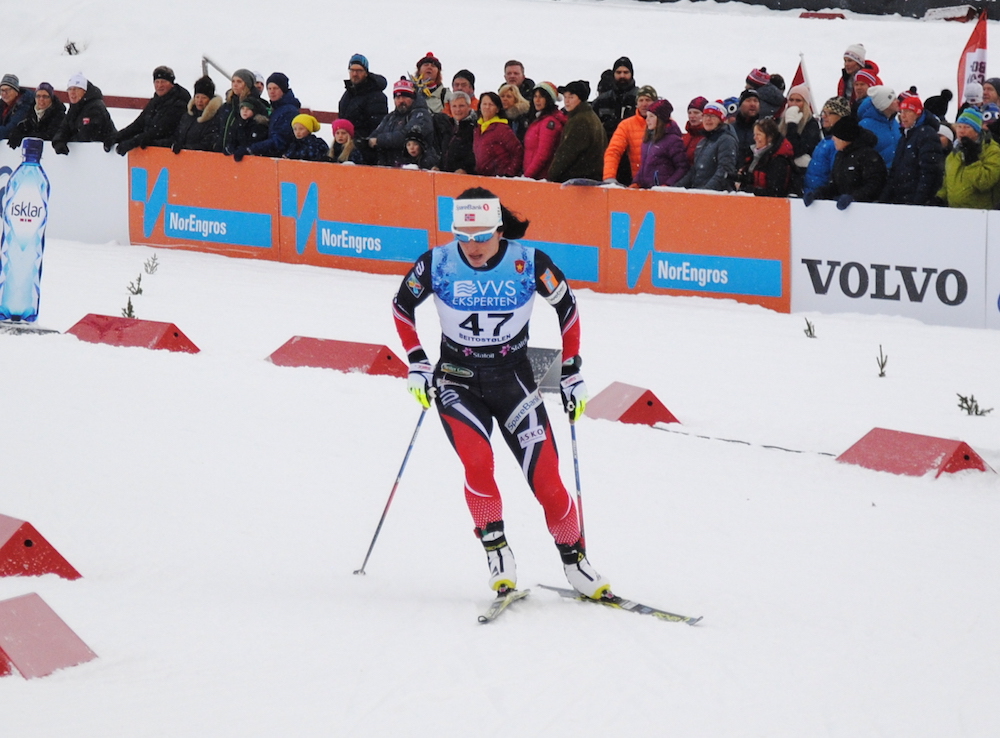
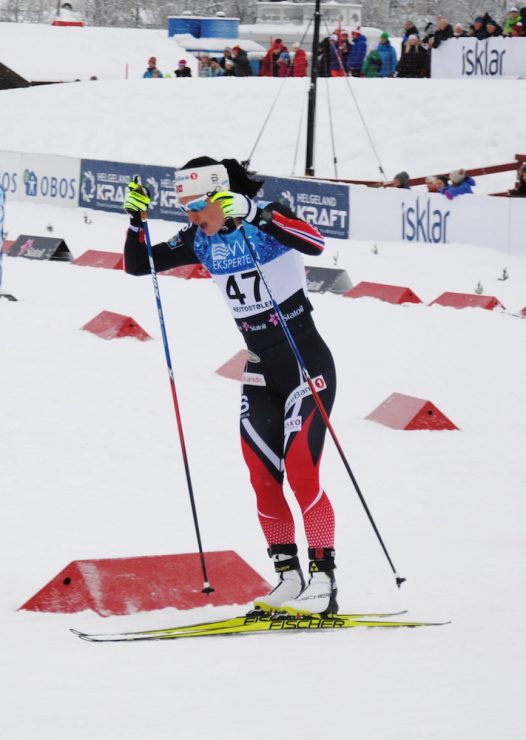
    Norway’s Marit Bjørgen racing to a 29-second win in Friday’s 10 k classic FIS race in Beitostølen, Norway. (Photo: Aleks Tangen)

    (Note: This article has been updated to include comments from Nichole Bathe.)

    BEITOSTØLEN, Norway — The question of whether Bjørgen or Weng will be the bigger name this season went in the favor of the former on Friday at Norway’s first big matchup of the season. Marit Bjørgen, now 37 and in her 20th World Cup season, won the first race of the three-day International Ski Federation (FIS) weekend in Beitostølen, starting last out of 56 women and finishing first in the 10-kilometer classic individual start, with 29.4 seconds between her and Weng in second place.

    On a morning that marked the start of the 2017/2018 season in Norway, with temperatures just below zero and a snow squall during the women’s pre-race warmup, the snow covering the course appeared loose but ample.

    Weng, the 26-year-old reigning Overall World Cup and Distance World Cup champion who started 30 seconds behind fellow Norwegian national-team member Bjørgen, told reporters after the race that she was satisfied with her performance, but could have skied better and “could have had better grip”.

    For the first 2 kilometers of the race, Bjørgen’s pace was comparable to that of another one of her teammates, Ingvild Flugstad Østberg, who started just ahead of Weng. But halfway through the race, Bjørgen was nearly 22 seconds up on Østberg and 28 seconds ahead of Weng.

    While Bjørgen continued to put seconds into her teammates in the final 5 k — blowing through the 7 k checkpoint 28 seconds faster than anyone else — Weng and Østberg battled for second. Weng clocked through 6.1 k just 2.7 seconds faster than Østberg and skied 5.1 seconds faster than her over the next 900 meters. Despite crossing the finish 11.6 seconds faster than Østberg, Weng’s time in the leader’s chair was short-lived, as Bjørgen finished 29.4 seconds faster with a winning time of 29:30.9 minutes.
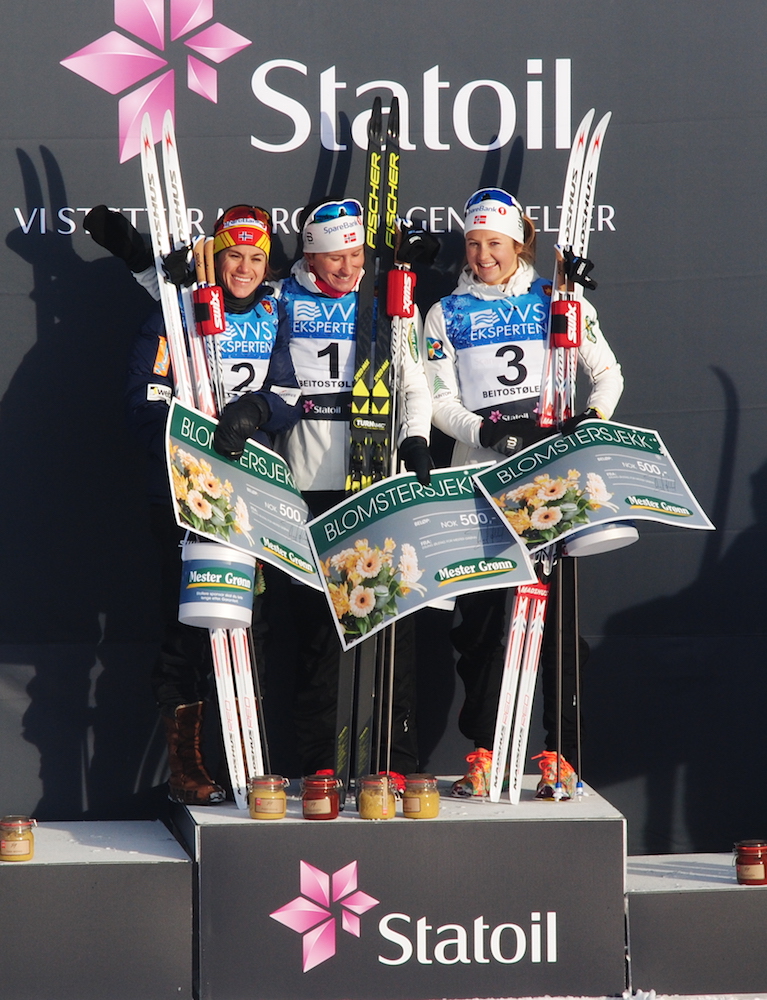
    The women’s 10 k classic all-Norwegian podium at Friday’s FIS race in Beitostølen, Norway, with Marit Bjørgen (c) in first, Heidi Weng (l) in second and Ingvild Flugstad Østberg in third. (Photo: Aleks Tangen)

    Østberg claimed third, 41 seconds back and 10 seconds ahead of another Norwegian national team member Ragnhild Haga in fourth (+51.0). Norway swept first through 13th place with Kathrine Rolsted Harsem in fifth (+1:08.1), Astrid Øyre Slind in sixth (+1:27.5) and notably, sprint specialist Maiken Caspersen Falla in ninth (+1:54.3).

    “Marit is superior,” Weng said in a post-race interview with NRK. “This is top level and I have to step it up.”

    She added, “29.4 and 41 seconds is a lot, but Marit is not invincible.”

    But even Bjørgen has to tell herself to ski relaxed for the first race of the season.

    “I tried to stay calm and ski my way up to Weng,” Bjørgen told NRK. “Considering that she held the yellow bib [as the World Cup leader] last year, I think that’s pretty good.”

    Bjørgen reflected that she could have skied the flatter parts of the course better.

    “Heidi did well there, and it was fun to ski behind here and learn from her,” she said.
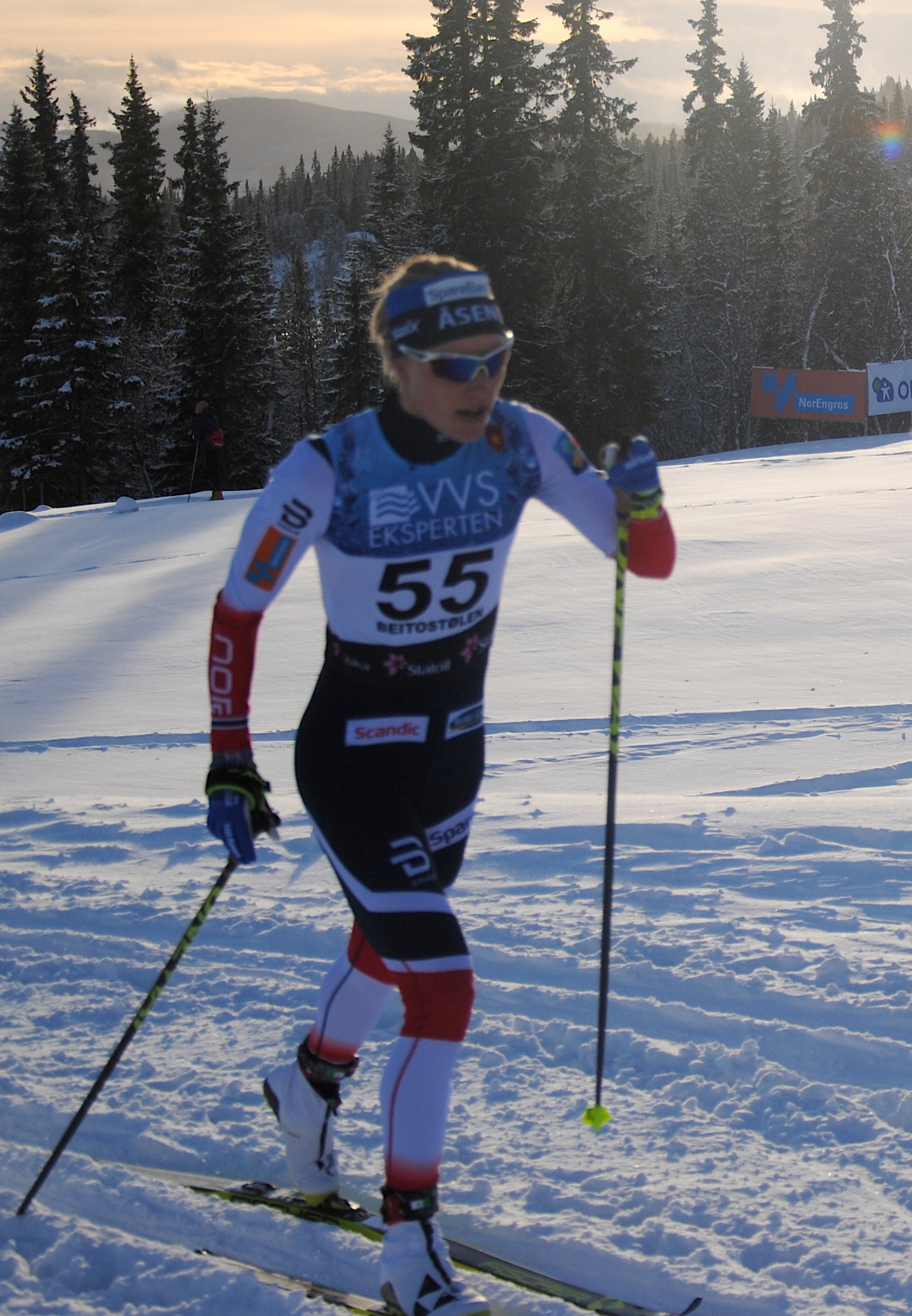
    Norwegian national-team member Ragnhild Haga racing to fourth in the women’s 10 k classic FIS race on Friday in Beitostølen, Norway. (Photo: Aleks Tangen)

    Fourth-place finisher Haga told reporters that she was pleased with her technical improvements in classic, which she has been working on for three years.

    “It was fun, and I’m glad I was able to race at such a high level,” Haga said.

    Three Americans, two of which race for Great Britain, finished 29th, 30th and 31st: Annika Taylor (+3:48.2) Nichole Bathe (+3:51.3) and Anne Hart (+3:51.4), respectively. Taylor was born in California and is a member of Great Britain’s women’s team, as is Bathe, who hails from Wisconsin and is also a member of the CXC Team. Hart, originally from Minnesota, races for the Stratton Mountain School (SMS) Elite Team in Vermont.

    Since mid-September, Bathe, a recent University of Alaska Fairbanks graduate, has been living in Lillehammer, Norway, while training with the British national team.

    “It’s been quite the transition especially from college racing but it has been such a great learning experience and makes me really exited for the season!” Bathe wrote in an email. “That was my first race of the season and I thought it went okay. I went out pretty hard which caught up to me in the end but overall I think it was a good start to the season.

    “Typically I am more of a sprinter but in general I like classic more than skate and 5k classic is my absolute favorite race,” she added. “This winter I am focusing on U23s [World Championships] and skiing fast there especially in the sprint. I will mainly be racing in Europe this year. I am racing the Kuusamo World Cups and then heading onto the OPA and Scando Cup races!”

    In an in-person interview with FasterSkier, Hart explained that she made a point to get on snow earlier this season and spent the last two weeks training in Sjusjøen, Norway. After this weekend, she’ll return to the U.S. for the first SuperTour races in West Yellowstone, Montana, Dec. 2-3.

    “I’ve been told by just about everyone that this is more competitive than a World Cup in part because these are [the Norwegians’] major qualifying races [for the World Cup], or their only ones I think,” Hart said of Beitostølen. “So I just went out hard. I had great kick on my skis so I just was really working on skiing well because last year that was an area I think I just got really frantic.”

    During training on Thursday, Hart skied one lap with Bjørgen.

    “Yesterday I actually skied with — stalked — Marit on an easy lap, and I was just trying to imitate her skiing,” Hart said. “So I was just trying to think of her out there and obviously not quite as fast, but I was really psyched with how I skied everything well. I felt a little tired on the last bit, but again, I didn’t fall apart and I’m really pleased with that.”
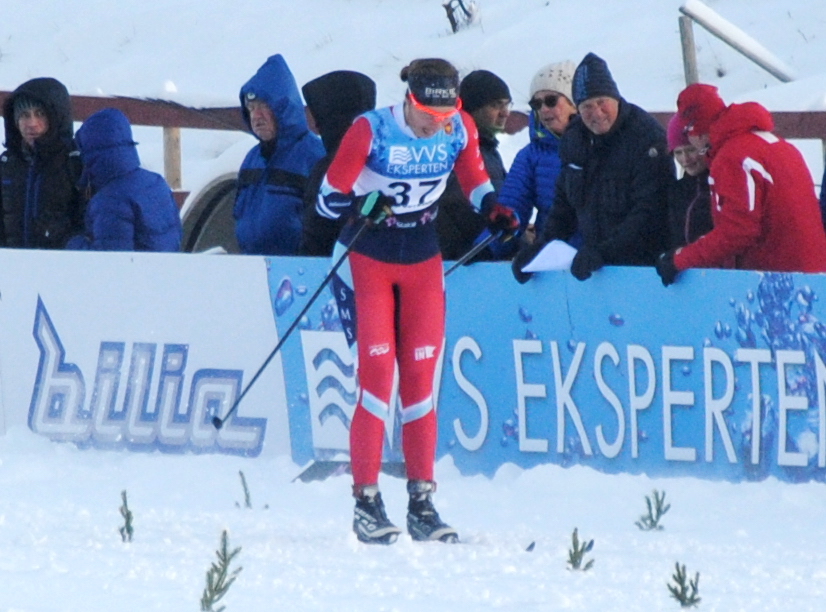
    American Anne Hart (SMS Elite Team) racing to 31st in the women’s 10 k classic FIS race on Friday in Beitostølen, Norway. (Photo: Aleks Tangen)

    For Hart, the biggest difference she noticed in this initial race of the season was the fact that she was having fun.

    “Last year I was just struggling the whole season to find that ‘fun’ gear, I guess, and today I was really enjoying the whole time and really pushing and not looking forward to the end,” she said. “Instead of thinking, ‘I have to make it another kilometer,’ it was like, ‘Oh my god, I only have a kilometer to go. I’ve gotta really give it all I’ve got.’ ”

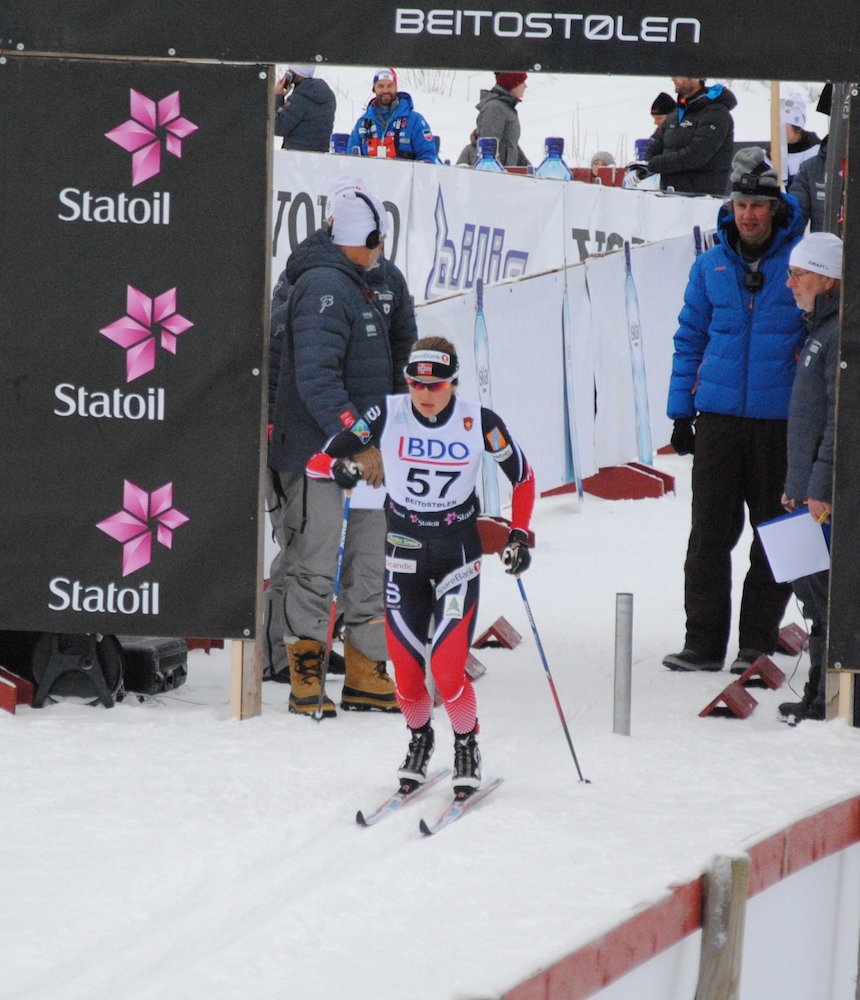
    For Canada, Isabella Howden, of the newly formed Barrie Cross Country (BXC), finished 53rd (+7:18.2). Afterward, Howden, who started 16th, recalled being passed by the five fastest women on her second lap, which she said was beneficial.

    “That was pretty cool, seeing them and getting to stay with them on the downhills and copy their technique for as long as I could see them,” she said.

    For Howden and some of her Canadian teammates, Beitostølen is familiar territory; they raced there last year. Regardless, she was in awe of the atmosphere.

    “It’s so cool … all the kids up there cheering and there’s a whole crew around the corner with all their cowbells, like 10 of them,” she said with a laugh.

    Sundby Pulls It Together
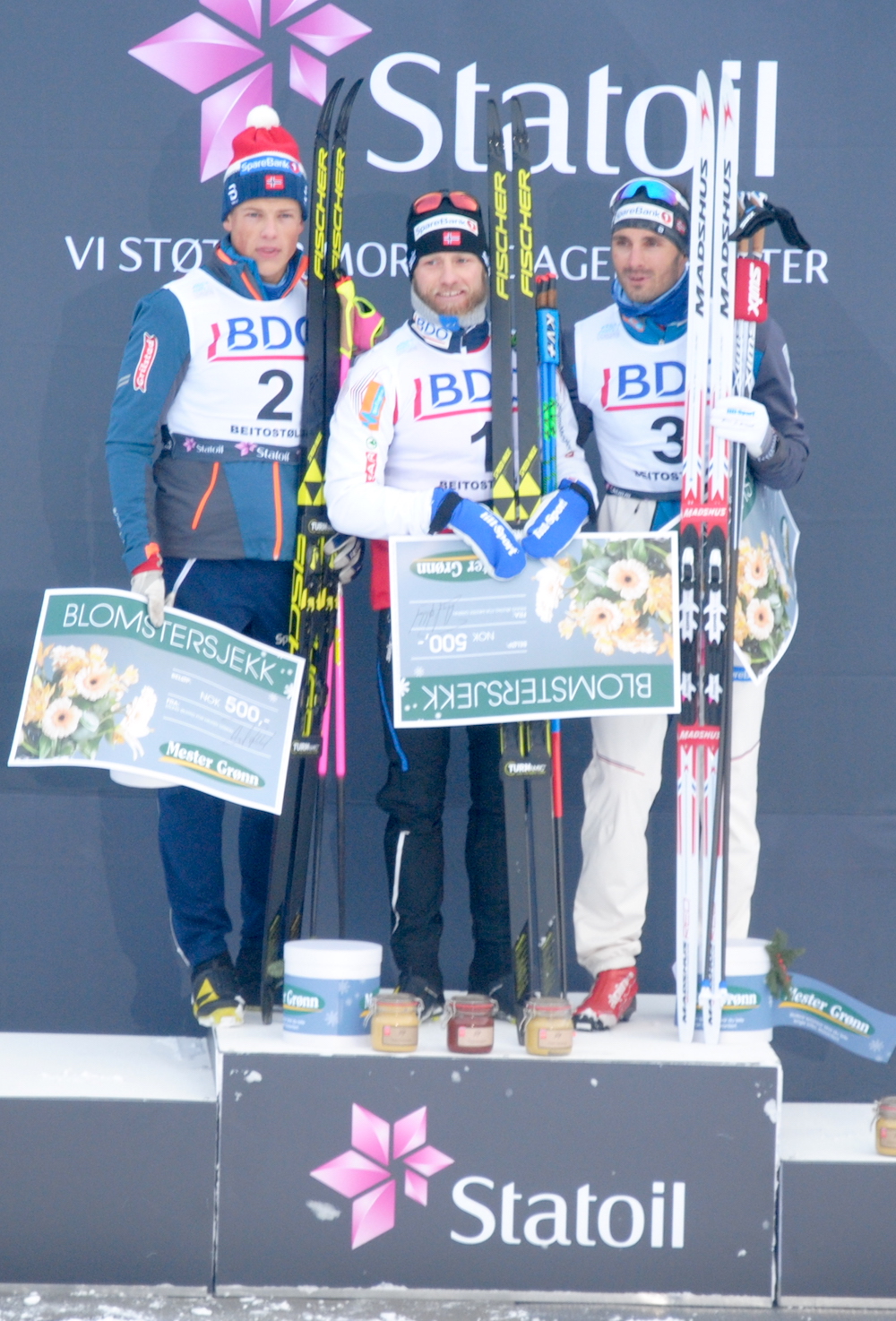
    The men’s 15 k classic all-Norwegian podium at Friday’s FIS race in Beitostølen, Norway, with Martin Johnsrud Sundby (c) in first, Johannes Høsflot Klæbo (l) in second and Hans Christer Holund in third. (Photo: Aleks Tangen)

    In the men’s 15 k classic individual start that followed, defending World Cup champion Martin Johnsrud Sundby took the win by 18.2 seconds over Norwegian teammate Johannes Høsflot Klæbo, who won last season’s Sprint World Cup at the age of 20.

    Now 21, Klæbo is recognized as more of an all-around force, and on Friday, he led the men’s race up until the 4.9 k checkpoint. Sundby started last out of 158 men and trailed Klæbo until 6 k. But from that point on, the race was Sundby’s; at 9.8 k, he was 12.3 seconds faster than Klæbo in second place.

    “I had to pull myself together,” Sundby told reporters after the race, explaining that he felt tired around 6 k. While the rest of his race required some extra effort, Sundby expressed contentment with his performance.

    “This was something positive that I will take with me going into the season,” he said. “This was the first race of the season and it could have gone both good and bad. … It was so-so, I felt goofy skiing today, but that was also the case for everyone else.”

    He attributed that awkward feeling to challenging conditions, “but that is also good practice,” he said. “I didn’t feel all that well in the first 5 k, but after that I was able to speed up and I felt that was able to control the race.”

    And he did so without going too far into the pain cave.

    “I didn’t have to dig as deep as I have done sometimes in the past,” Sundby said.

    Sundby’s winning time of 38:57.2 was 18.2 seconds faster than Klæbo in second and 37 seconds clear of Hans Christer Holund in third. The top-seven men — all Norwegian — finished within 59 seconds of first. The women were a bit more spread out, with the seventh-place woman, Silje Theodorsen (Kvaløysletta Skilag), finishing 1:36.3 behind Bjørgen.

    Holund clawed his way into the race after his 4.9 k time ranked 11th. With about 5 k to go, the Norwegian national-team member was up to fifth, and by 11.9 k, he was within reach of the podium in fourth place.

    Didrik Tønseth ended up just 1 second off the podium in fourth (+38.0), while Johan Hoel (Åsen IL/Team Veidekke Oslofjord) placed fifth (+42.2), ahead of Simen Hegstad Krüger in sixth (+44.1) and Emil Iversen in seventh (+59.0).
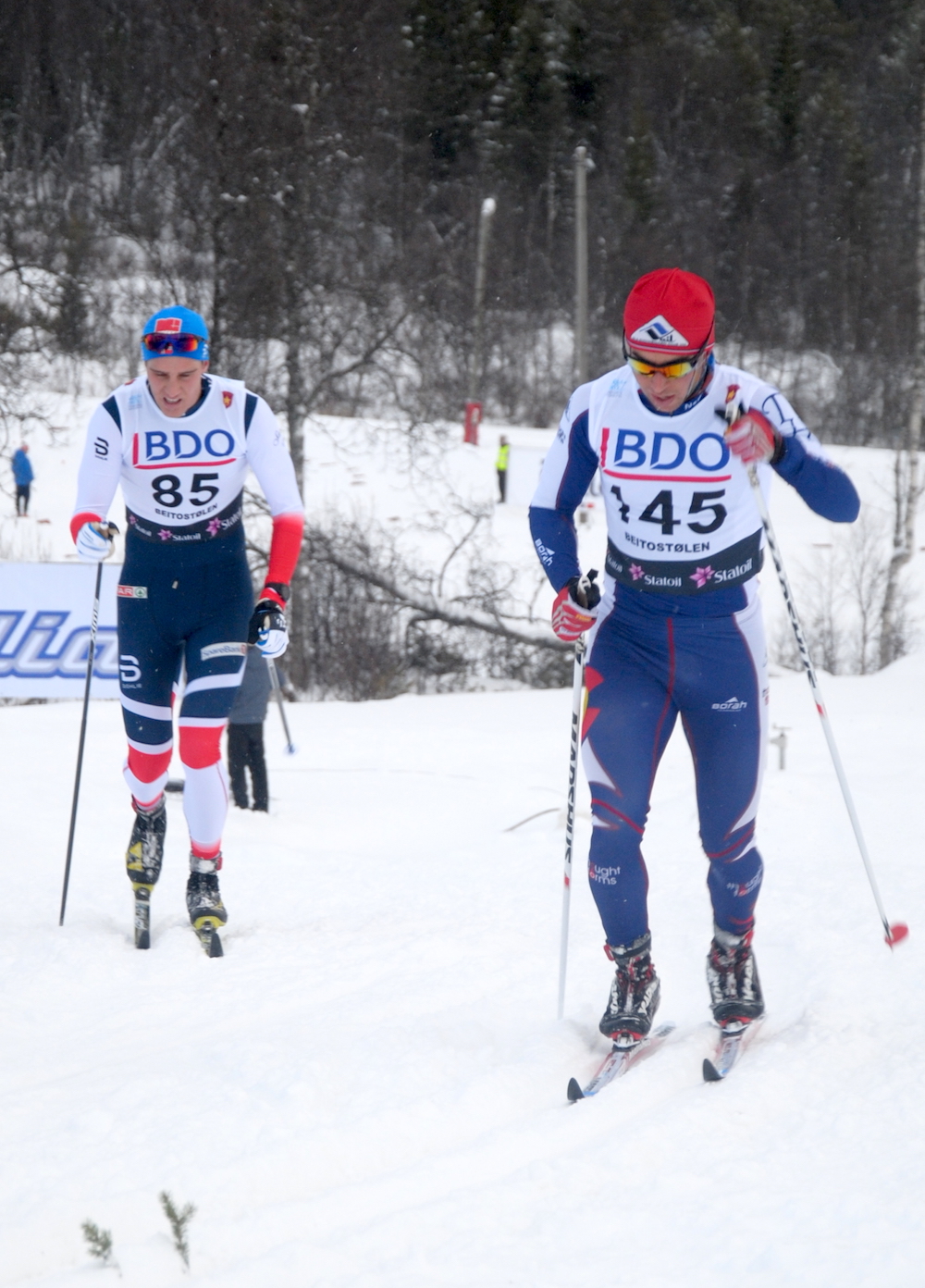
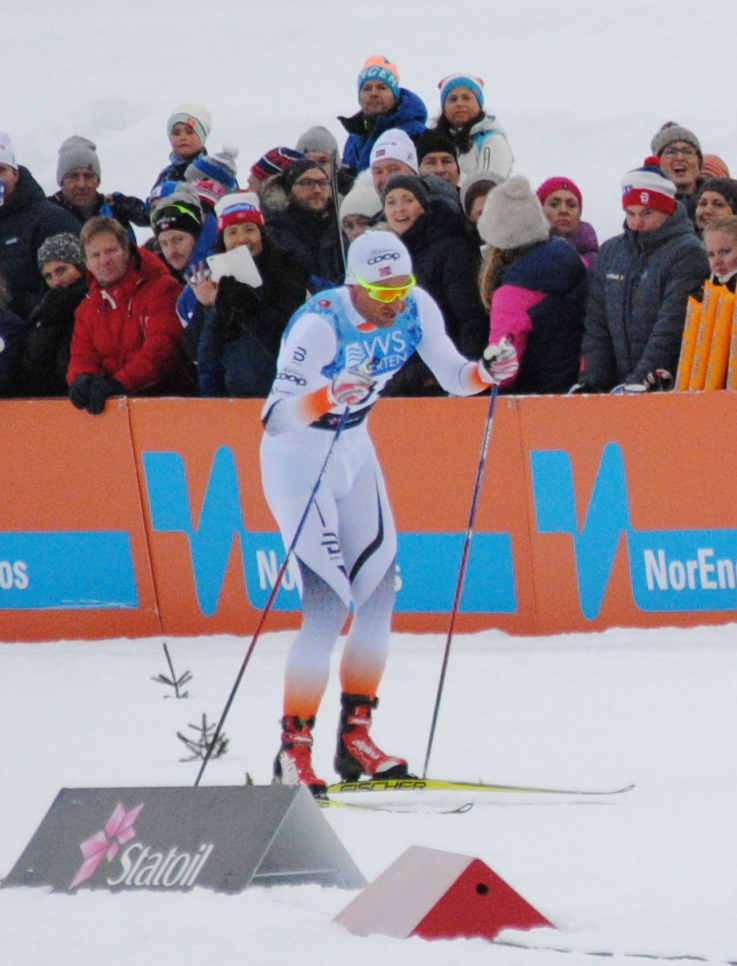
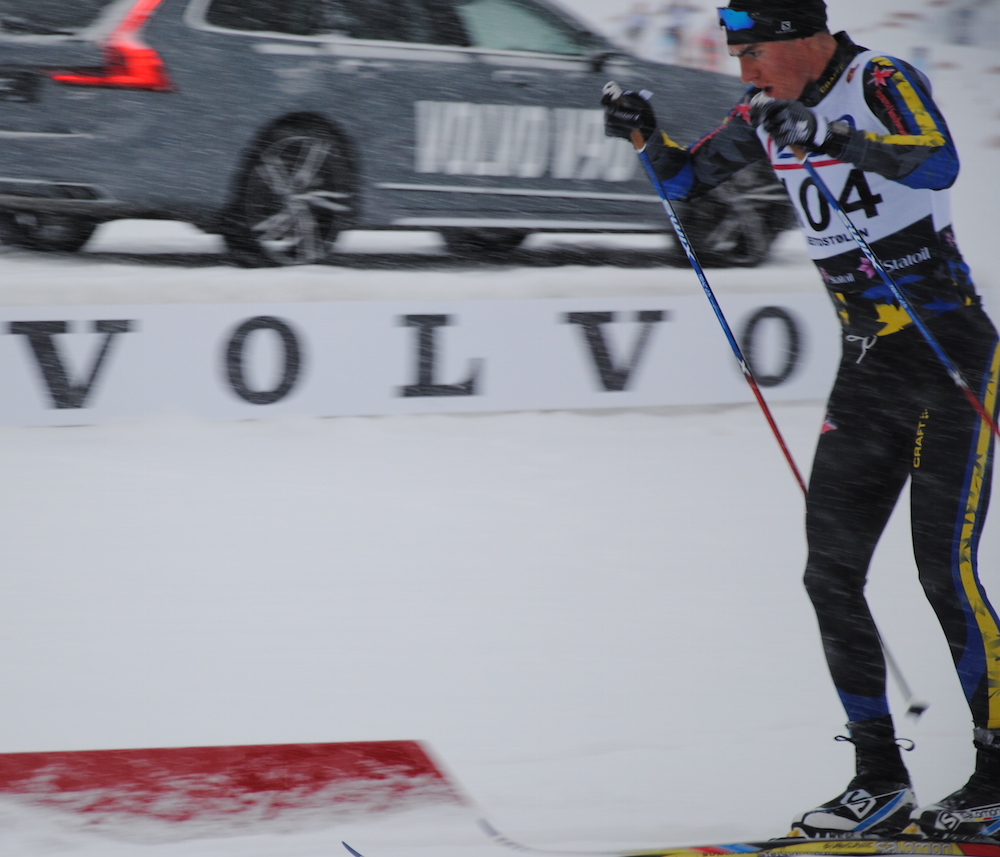
    Noah Hoffman (r) passes Norway’s Torstein Bu during the men’s 15 k classic FIS race season opener on Friday in Beitostølen, Norway. Hoffman went on to place 29th, while Bu finished 75th. (Photo: Aleks Tangen)

    The lone American in the race, Noah Hoffman placed 29th, 2:25 minutes behind Sundby. After a slow opening that put him in 47th at the 2.1 k mark, the former U.S. Ski Team member settled into a pace that put him within the top 30.

    Afterward, he told FasterSkier that his performance was a good starting point. He started the race toward the back of the field in bib 145, just ahead of several top Norwegians.

    “It was a little unfortunate that there was a big train that formed right behind me, and those guys didn’t catch me until less than a k to go,” Hoffman reflected. “I was hoping they’d get me a little sooner or not get me at all, but it was good.”

    In terms of a race plan, he explained that he tried to ski with energy and build throughout the entire 15 k, which he felt he did.

    “I got a little excited the second time up the big hill and maybe burned a little too much, but for the most part it was a good effort and I’m looking to build this for Sunday and then obviously into next weekend,” he said.

    After Sunday’s second set of distance races in Beitostølen, the 10/15 k freestyle individual starts, Hoffman will race four weekends of World Cups as an invited member of the U.S. Ski Team (USST) for Period 1. He missed the objective qualifying criteria for renomination to the USST by one place (he ranked 51st in the World Cup at the end of last season) and is thus skiing independently this year, paying his own way (and paying his own wax technicians, Zach Caldwell and recently retired USST tech Peter Johansson) so that he can race in Europe.

    “The early season is important for me this year because I don’t have guaranteed start rights for the whole winter, so I need to ski well,” Hoffman, 28, said. “And I believe I’ve done everything I can to prepare and I hope to see the results from that.”

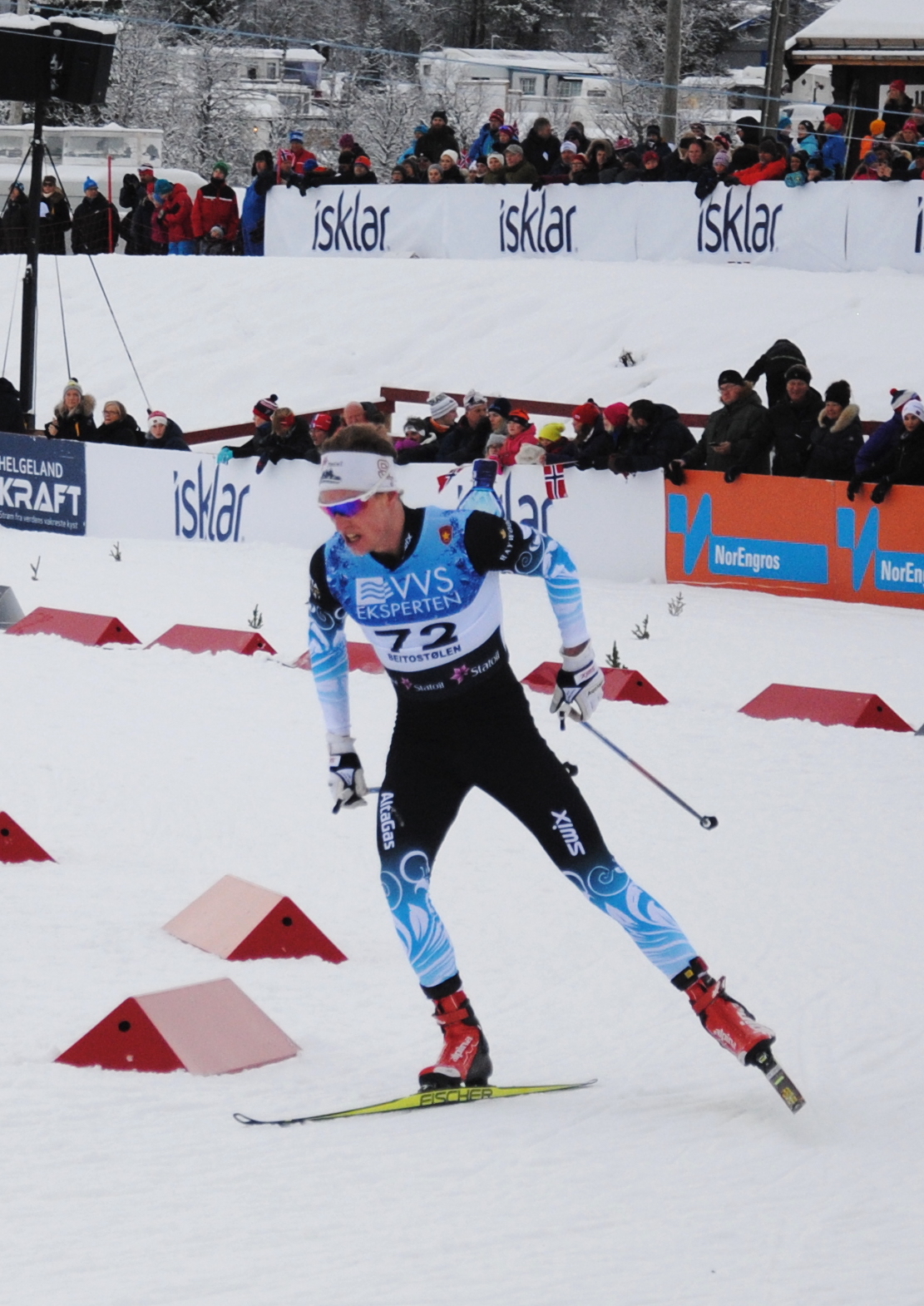
    Several Canadian juniors raced the men’s 15 k as well. Ryan Jackson led them in 97th (+5:16.8), followed by Scott Hill in 99th (+5:19.1), Joey Foster in 124th (+6:45.3), and Maks Zechel in 143rd (+8:25.5).

    “It was hard out there today,” said Foster, a 21-year-old member of BXC, noting that he was still feeling the effects of travel after arriving in Europe a week ago. “Considering how I felt, the race was pretty good. … I started with what I thought was a pretty conservative pace and I got in with a good train of people, and I skied with them for almost the whole first lap, and from there I just kind of fell off pace. … I think my leadup to the race just wasn’t as good as it could’ve been, so I wasn’t feeling as crisp as I would’ve liked.”

    The Beitostølen FIS races continue through the weekend with classic sprints on Saturday, which U.S. Ski Team member Andy Newell plans to race, and 10/15 k skate races on Sunday.
    Results: Women | Men

  • Falla Doesn’t Miss a Beat in Beito Sprint Opener

    Falla Doesn’t Miss a Beat in Beito Sprint Opener

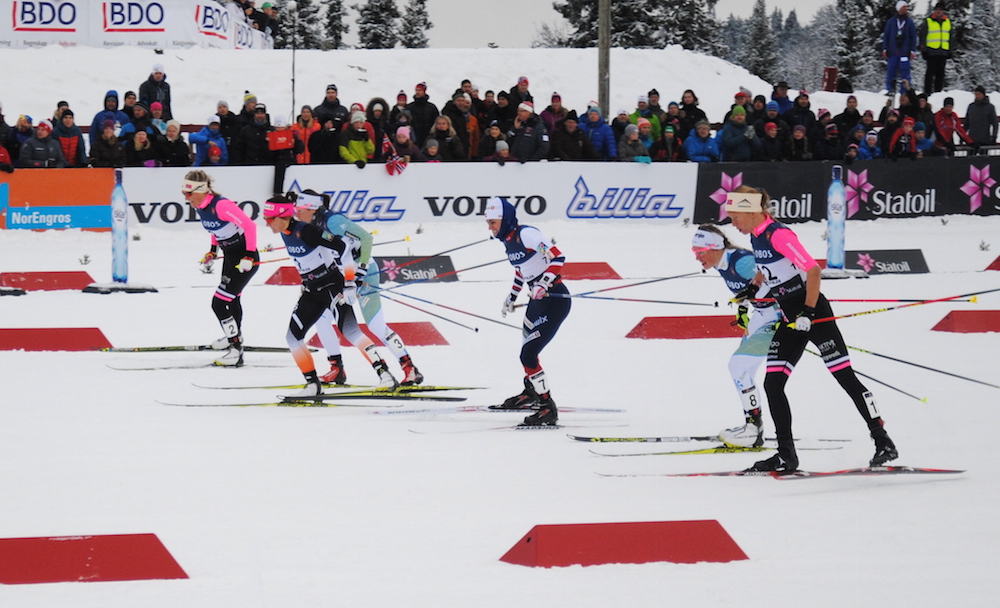
    Norway's Maiken Caspersen Falla (pink headband) leads out of the start of the women's 1.2 k freestyle sprint final on Sunday in Beitostølen, Norway. (From left to right) Norway's Mari Eide, Slovenia's Vesna Fabjan, Falla, Norway's Heidi Weng, Slovenia's Anamarija Lampic, and Norway's Silje Øyre Slind all reached the final. (Photo: Aleks Tangen)
    Norway’s Maiken Caspersen Falla (pink headband) leads out of the start of the women’s 1.2 k freestyle sprint final on Sunday in Beitostølen, Norway. (From left to right) Norway’s Mari Eide, Slovenia’s Vesna Fabjan, Falla, Norway’s Heidi Weng, Slovenia’s Anamarija Lampic, and Norway’s Silje Øyre Slind all reached the final. (Photo: Aleks Tangen)

    BEITOSTØLEN, Norway — For the reigning Sprint World Cup champion who never lost a classic sprint last season (and placed first or second in all but one World Cup skate sprint), Sunday’s 1.2-kilometer freestyle sprint was about starting where she left off.

    Norway’s Maiken Caspersen Falla did just that, qualifying first then cruising through the heats to win the women’s freestyle sprint on Sunday in Beitostølen. Part of a three-race series, it was held on the final day of Norway’s International Ski Federation (FIS) season-opening weekend — one weekend before the World Cup starts in Finland.

    Falla, 26, took control of the day early, winning the prologue in 2:47.79 minutes. Afterward, she told NRK that she was satisfied with the result and that it was fun to race the sprint prologue. She carried her momentum through her quarterfinal and semifinal, advancing in the top two in each round, before beating Slovenia’s Vesna Fabjan in the final with a time of 2:42.3. Fabjan finished 0.2 seconds later in second, and Norway’s Mari Eide outlasted Heidi Weng for the final spot on the podium in third (+1.6). Weng, one of Norway’s top women who placed second in both distance races on Friday and Saturday, placed fourth (+2.4), while Slovenia’s Anamarija Lampic finished fifth (+3.2) and Norway’s Silje Øyre Slind was sixth (+5.2) in the final.

    In an interview with FasterSkier on Saturday, Weng pointed that she didn’t qualify for the heats at last year’s sprint opener in Beitostølen. On Sunday, she qualified soundly in seventh, 4.2 seconds behind Falla.

    Falla skated every heat with good control and technique, and kept her challengers from posing any real threats. Out of the start, the six finalists darted off the line at a high pace, and Falla immediately took control. Fabjan tried to challenge her in the final stretch, but Falla proved to be stronger. Her winning time in the final was the fastest of the day.

    The prologue began at 8:30 a.m. and temperatures around -4 Celsius (25 degrees Fahrenheit). The highest-ranked athletes started first and the final standings already began to develop as the prologue came to an end. Falla, Eide and Fabjan clinched the first three qualifying places, just as they did in the final.

    “I’m satisfied with the result and I’m happy to be in a sprint race again,” Falla told NRK after the race.

    Of the 30 qualifiers, Norway’s 22-year-old Renate Bergset Tjetland was right on the edge in 30th (+18.26). Annika Taylor, who is originally from California but competes for Great Britain (while training with Norway’s Lillehammer Skiklub/Team Coop Talent), qualified in 27th, (+17.14). She started in the second heat and placed fifth, 12.1 seconds behind Weng, who won that quarterfinal.

    “I’m happy about qualifying for the quarterfinal,” Taylor told FasterSkier afterward. “I feel like I got off to a good start and I tried to find the right lines, but I wasn’t able to follow in the final climb.”

    The five quarterfinals starting at five minute intervals were won by Falla, Weng, Slovenia’s Katja Visnar, Eide and Fabjan, respectively. Slovenia’s Alenka Čebašek crossed the finish in second after Visnar, but was disqualified for an illegal lane change that impeded Norway’s Lotta Udnes Weng. Čebašek was relegated to last in the heat and 30th overall, while Lotta Weng advanced to the semifinals in second (where she went on to place fifth for 10th overall). Falla started out faster than everyone in her quarterfinal, but slowed down considerably in the final stretch, opening the door for teammate Astrid Uhrenhold Jacobsen to win the heat in 2:45.4, while Falla finished with the same time in second.

    Falla seemed just as relaxed in her semifinal, which she won by 0.9 seconds over Heidi Weng.

    “I thought it was a lot of fun and I’m really happy because I’ve never been in the final in Beito before,” Weng told journalists immediately after advancing to the final in second. “But I’m going to have to start better and work on keeping my speed up all the way when we get to the World Cup.”

    Eide won the second semifinal by 0.2 seconds over Fabjan, while Lampic and Slind qualified for the final as lucky losers from the second semifinal in third (+0.6) and fourth (+1.0), respectively.

    Canada’s Madison Fraser and Isabella Howden, both of Team Hardwood, placed 43rd (+29.12) and 45th (+43.07), respectively, in the qualifier.

    Results: Women’s qualifier | Women’s heats

  • Bjørgen Wastes No Time With Beito Comeback; Tønseth Wins Again

    Bjørgen Wastes No Time With Beito Comeback; Tønseth Wins Again

    Marit Bjørgen racing to first in the women's 10 k freestyle FIS race on Saturday in Beitostølen, Norway. It was her first FIS race since March of 2015. (Photo: Aleks Tangen)
    Norway’s Marit Bjørgen racing to first in the women’s 10 k freestyle on Saturday in Beitostølen, Norway. It was her first FIS race since March of 2015. (All photos: Aleks Tangen)

    BEITOSTØLEN, Norway — Saturday’s 10-kilometer freestyle individual start was, from the start, all about Marit Bjørgen. Her previous race was 603 days earlier on March 27, 2015 in Harstad, Norway, but that didn’t seem to affect Norway’s six-time Olympic gold medalist one bit.

    “I’ll admit that I have had my doubts,” she told Dagbladet about returning to competition. “And I’ve been tired, but I made it through it and I’ve appreciated the good times.”

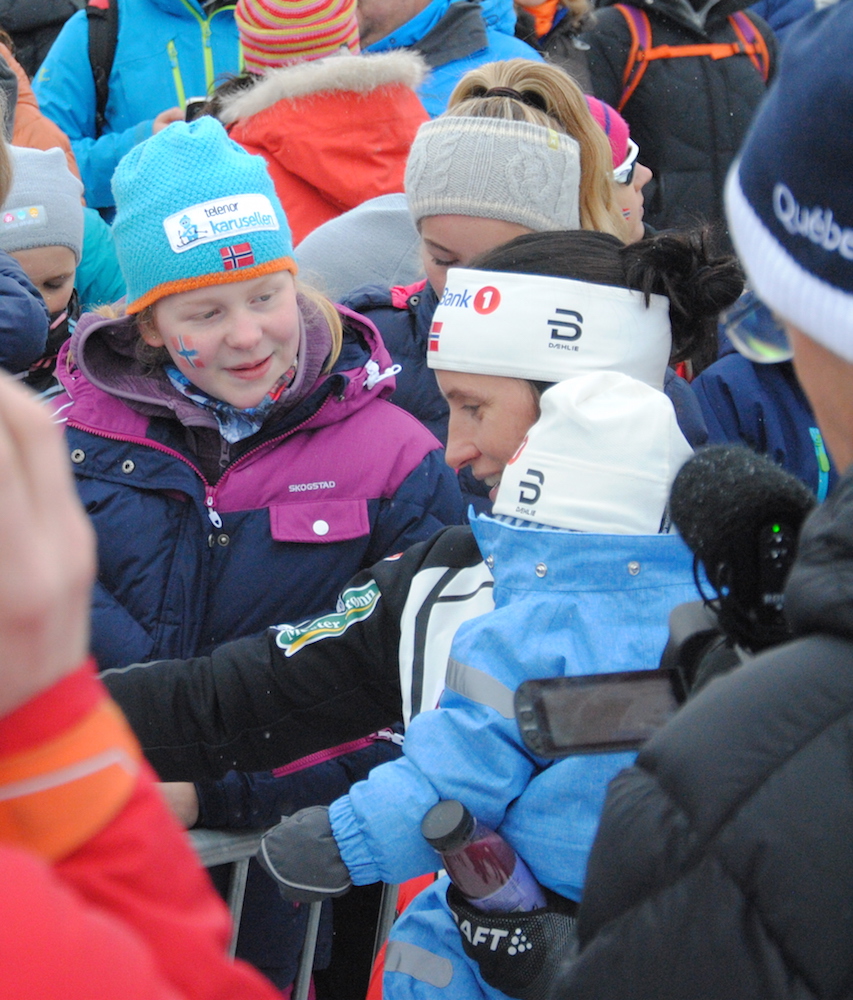
    Norway's Marit Bjørgen with her baby, Marius, and fans in Beitostølen, Norway, following Bjørgen's first race since having a child in December 2015. Saturday marked Bjørgen's first race back since March 2015. (Photo: Aleks Tangen)
    Norway’s Marit Bjørgen with her baby, Marius, and fans in Beitostølen, Norway, following Bjørgen’s first race since having a child in December 2015. Saturday marked Bjørgen’s first race back since March 2015. (Photo: Aleks Tangen)

    The 36-year-old Bjørgen led Saturday’s International Ski Federation (FIS) race at every split mark and crossed the finish line in 24:40.3 minutes.

    Fellow Norwegian national-team member Heidi Weng followed in second, 11.7 seconds behind. After  placing second to teammate Ingvild Flugstad Østberg in Friday’s 10 k classic, Weng told VG that Bjørgen, who sat out the race with a cold, was “probably sitting at home and laughing at how slow it went went. She will race fast and I think will see Marit Bjørgen as good as she has been in the past. She’s done great during the summer and fall training.”

    After her second-straight second-place finish, Weng told Dagbladet that she opened fast on Saturday, but her muscles tired as the race progressed.

    “It’s irritating, but I really had no chance toward the end, and it’s not that bad, really, because I don’t think I’ve ever had a better season opener. I’m a little surprised by that really,” she said.

    When asked by FasterSkier if she thought she could match her performances in Sunday’s skate sprint, Weng said, “I didn’t make it through from the prologue last year so I’m hoping that I can do better than that, but we’ll see.”

    The race for third place proved to be the most exciting with Østberg crossing the finish line 28.2 seconds behind Bjørgen and just 1.7 seconds in front of Norway’s Astrid Uhrenholdt Jacobsen, who finished fourth. Norway swept the top eight as Kari Øyre Slind followed 2.9 seconds later in fifth and her sister Silje Øyre Slind was sixth, another 17.5 seconds behind.

    Østberg told FasterSkier that she will not be competing in Sunday’s sprint. “If the World Cup weekend had been two weeks away then maybe, but after doing two tough races in two days and since sprints takes a lot of energy rest is probably the best,” she said.

    Nonetheless, a first and third place finish in Beitostølen is Østberg’s best start to a season yet.

    “It is without a doubt my best season opener, and I’m super happy,” she told both FasterSkier and Oppland Arbeiderblad, a regional newspaper from her hometown of Gjøvik.

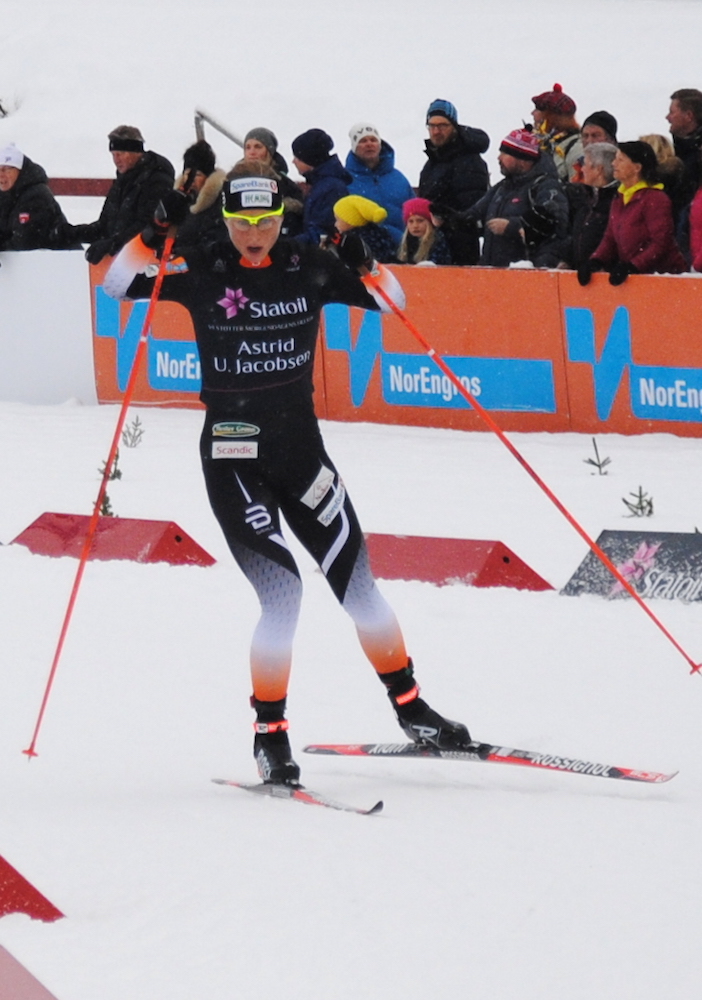
    Astrid Uhrenholdt Jacobsen (Norway) racing to fourth in the women's 10 k freestyle FIS race on Saturday in Beitostølen, Norway. (Photo: Aleks Tangen)
    Astrid Uhrenholdt Jacobsen (Norway) racing to fourth in the women’s 10 k freestyle FIS race on Saturday in Beitostølen, Norway. (Photo: Aleks Tangen)

    Jacobsen narrowly missed the podium after crossing the finish line 1.7 seconds slower than Østberg.

    “I feel like I’m not quite there yet,” Jacobsen told FasterSkier after. “I still have some work to do in order to be in top shape, but I still ski relatively fast and I feel like I have a very good base condition so I think it can be a good year.”

    Asked what it was like to have Bjørgen back, Jacobsen replied, “She wins as expected. I skied with her on my second lap and I definitely think she can ski faster. This race wasn’t Marit in her top shape.”

    When asked about Bjørgen’s ability to perform as well as she did on Saturday, considering she hasn’t raced since 2015, Jacobsen smiled and waited a moment before she answered, “That’s something only Marit can do.”

    Eighteen-year-old Norwegian Mathilde Myhrvold finished 27th (+3:49.7) of 48 finishers on Saturday. In 2014, she competed in the track and field World Junior Championships in Eugene, Oregon, and last season she won the Norwegian Cup. Saturday stood as her first race this season.

    “Slightly after finishing the first lap I started feeling a little tired and then I skied a little slower, but I improved toward the finish and I’m happy about that,” Myhrvold said. “I may have started a little too fast and maybe that’s why I was tired.”

    She figured a few races would help her return to top shape, and for the rest of the season, she’s focused on improving her conditioning for FIS Junior World Championships trials.

    One spot ahead of her on the results sheet, American Cambria McDermott, who is living and training in Norway, finished 26th (+3:33.6). Canada’s Isabella Howden and Madison Fraser, both of Team Hardwood, placed 45th (+6:19.6) and 47th (+6:59), respectively.

    (Story continues below)


    Another ‘W’ for Tønseth

    Norway’s Didrik Tønseth repeated his podium-topping performance from Friday’s 15 k classic and won Saturday’s 15 k freestyle in 33:20.9. But the biggest surprise of the men’s race was second-place finisher Simen Hegstad Krüger, who crossed the finish line in a time that was only six seconds slower than Tønseth.

    Norway's Didrik Tønseth racing to his second-straight win of the weekend in the 15 k freestyle FIS race on Saturday in Beitostølen, Norway. (All photos: Aleks Tangen)
    Norway’s Didrik Tønseth racing to his second-straight win of the weekend in the 15 k freestyle FIS race on Saturday in Beitostølen, Norway. 

    “I had nothing more to give, but this podium finish is incredibly satisfying,” the 23-year-old Krüger, who won the 15 k freestyle at U23 World Championships last season, told NRK after Saturday’s race.

    “I’m hoping for a spot on the team for the World Cup in Lillehammer, but it might be too late for that,”

    Norwegian men’s coach Tor-Arne Hetland seemed open to placing Krüger on the team for Lillehammer in two weeks.

    “We’ll be choosing the team on Monday and I think the mini tour will suit him well, so he may  receive a positive message in the coming week,” he told NRK.

    Tønseth had the advantage of starting five bibs after Krüger and told NRK that he felt like he was in good shape and that he was ready to start the season. The 2017 World Championships in Lahti, Finland, are his main focus.

    Norway swept the top five after a close fight for third, which Simen Andreas Sveen took, 32.6 seconds behind Tønseth. Anders Nøstedahl Gløersen was another 1.9 seconds back in fourth (+34.5), Mathias Rundgreen placed fifth (+36.9) and Andrew Musgrave of Great Britain finished sixth (+37.0).

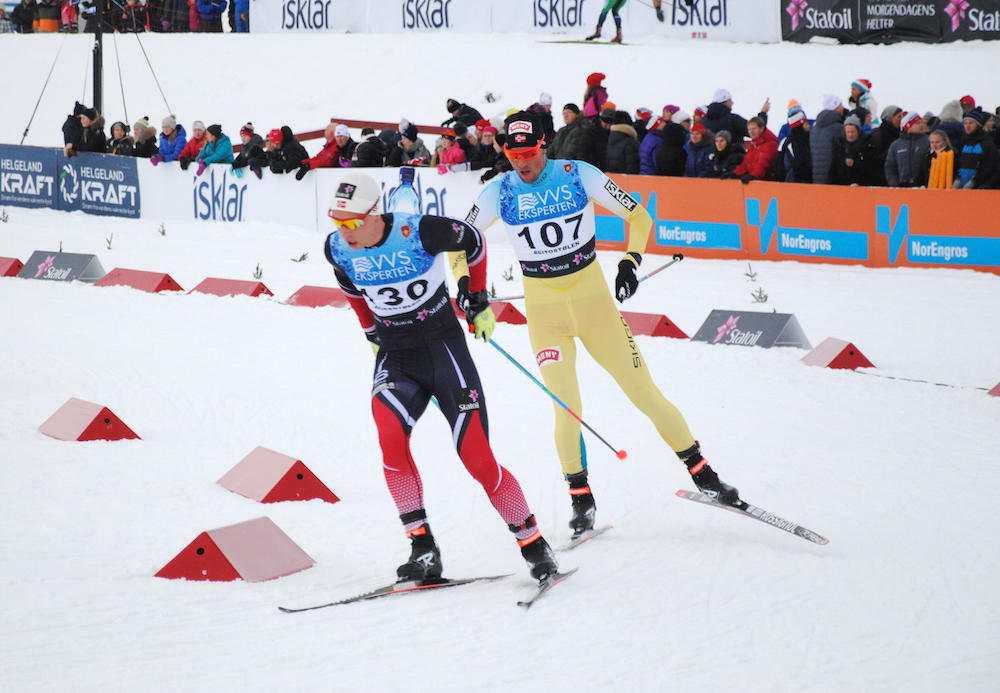
    Norway's 25-year-old Mathias Rundgreen (130) leads Chris Jespersen (107), a 33-year-old Norwegian World Cup regular, in the men's 15 k freestyle FIS race in Beitostølen, Norway. (Photo: Aleks Tangen)
    Norway’s 25-year-old Mathias Rundgreen (130) leads 33-year-old Chris Jespersen (107), also of Norway, in the men’s 15 k freestyle FIS race in Beitostølen, Norway. Rundgreen placed fifth and Jespersen finished eighth on Saturday.

    “I feel good about the race, but I felt a little limply in the beginning,” Musgrave told FasterSkier after. “Though I was able to close some of the gap toward the end, but not enough.”

    Like most World Cup skiers, Musgrave’s goal for the season is World Championship and he’ll be in both Kuusamo, Finland, and Lillehammer over the next two weekends to compete in the World Cup.

    One place behind Musgrave was Norwegian Sjur Røthe in seventh (+37.2), who told FasterSkier that he felt “heavy during the start.” In a post-race interview with NRK, Røthe said he’s focused on the World Championships 50 k. He planned to skip Sunday’s sprint to recharge for the World Cup.

    Petter Northug (Norway) approaching the finish of Saturday's 15 k freestyle FIS race in Beitostølen, Norway. (Photo: Aleks Tangen)
    Petter Northug (Norway) approaching the finish of Saturday’s 15 k freestyle FIS race in Beitostølen, Norway. (Photo: Aleks Tangen)

    Petter Northug finished Friday’s race like it was a workout, and during the start of Saturday’s race, it appeared that he was on the path to a podium, but such was not the case. Northug led the race at the 1.2 and 2.1 k marks, but for the rest of the race, he was unable to maintain the same speed as the other top finishers and ended up 15th (+1:02.6). However, Northug didn’t seem to be affected by his fading speed, telling Dagbladet, “I am where I want to be. I’ve had two good workouts now and I’m confident that the job is done. I am excited for the important races that are approaching.”

    But he did offer some explanation for what happened.

    “I opened too hard and during the second lap I felt like it would be too much to maintain the tempo,” Northug told NRK.

    Out of 123 male finishers, Jack Carlyle (NDC Thunder Bay) led several Canadian juniors in 90th (+3:48.4). His NDC teammate Scott James Hill finished 101st (+4:25.6), Joey Foster (Pierre-Harvey Training Centre) was 103rd (+4:31), and Team Hardwood skiers Ryan Jackson was 106th (+4:50.4) and Kieran Jones was 115th (+6:11.5).

    Results: Women | Men

    Jack Carlyle (NDC Thunder Bay) racing to 90th to lead the Canadian men in the 15 k freestyle FIS race in Nov. 19 in Beitostølen, Norway. (Photo: Aleks Tangen)
    Jack Carlyle (NDC Thunder Bay) racing to 90th to lead the Canadian men in the 15 k freestyle FIS race in Nov. 19 in Beitostølen, Norway.
  • With Biggest Names Out, Østberg & Tønseth Top Beito Opener

    With Biggest Names Out, Østberg & Tønseth Top Beito Opener

    Ingvild Flugstad Østberg (Norway) out of the start in her country's first FIS race of the 2016/2017 season: the 10 k classic in Beitostølen. (All photos: Aleks Tangen)
    Ingvild Flugstad Østberg (Norway) out of the start in her country’s first FIS race of the 2016/2017 season: the 10 k classic in Beitostølen on Friday. (All photos: Aleks Tangen)

    BEITOSTØLEN, Norway — Friday’s International Ski Federation (FIS) season opener in Beitostølen, with most of the Norwegian cross-country team participating, became a demonstration of strength by Norway’s Ingvild Flugstad Østberg.

    With Therese Johaug suspended for the first part of the season and Marit Bjørgen out with a cold, Østberg led the race from start to finish and completed the 10-kilometer classic individual start in 26:47.4 minutes. She progressively increased her distance over teammate Heidi Weng, who started just 30 seconds ahead of her, leading her by 6.2 seconds at 2.1 k and 13.2 seconds at the finish.

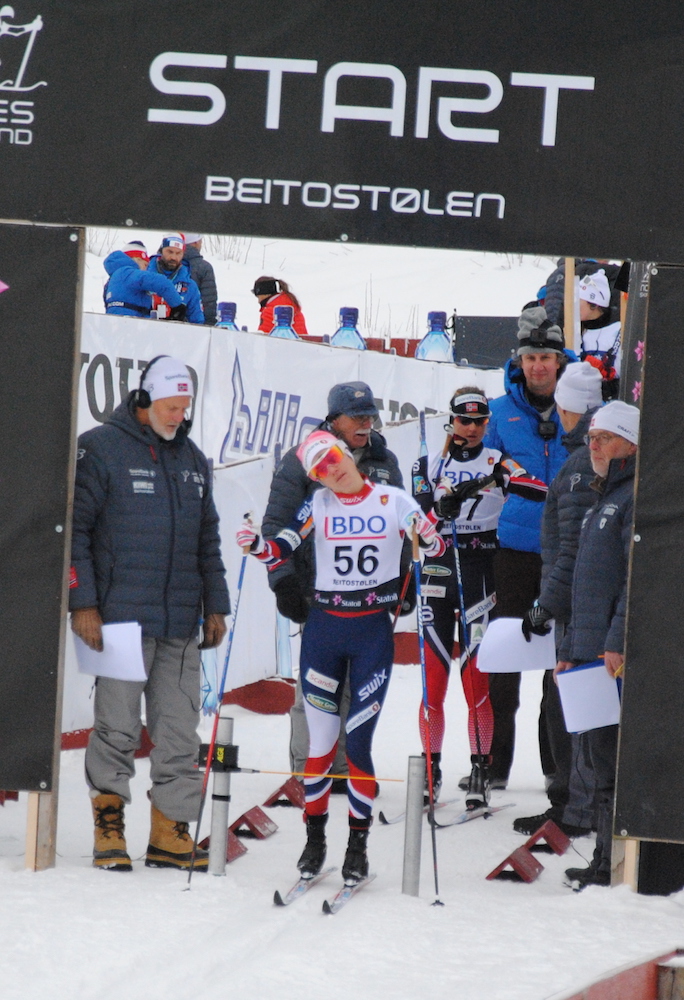
    Heidi Weng at the start with Norwegian teammate Ingvild Flugstad Østberg behind her in the FIS season-opening race in Beitostølen, Norway. (Photo: Aleks Tangen)
    Heidi Weng at the start with Norwegian teammate Ingvild Flugstad Østberg behind her in the FIS season-opening race in Beitostølen, Norway. (Photo: Aleks Tangen)

    After the race, Østberg told Aftenposten that Johaug gave her some valuable advice just a day earlier. She said they spoke Thursday and Johaug offered some tips, encouraging her to focus on technique rather than worry about her form at this point in the season. Østberg said she told her to go for it and see how things turn out.

    She took that advice to heart and came away with a victory. Østberg said it was strange not having her at the races, but she channeled her inner Johaug and focused on a strong start.

    “It tends to work for her here, then I thought that I should try, too,” Østberg said, according to a translation.

    “I’m usually a little slow in Beitostølen, but not today,” Østberg told NRK. “I had good skis and a body that played along. It was a good day. I’m very happy that I was able to ski well. Of course I got tired toward the end and consequently my technique deteriorated, but I felt that had good control over my opening so I’m happy.”

    Notably, Østberg became the first woman other than Johaug or Bjørgen to win an opening race at Beitostølen since 2003.

    “They would have probably been strong had both been here, but one cannot do anything about those who aren’t here,” she said.

    The Norwegian national-team women swept the top nine, with Astrid Uhrenholdt Jacobsen coming on strong in the final third of the race for third place, 1:06.4 behind Østberg. Throughout much of the race, her split times ranked fourth of 55 finishers, behind Østberg, Weng and Kathrine Harsem.

    Afterward, Jacobsen told Aftenposten that she thought she would finish farther back, noting the first races of the season are often the hardest.

    “Third is far above my expectation; I had not thought that I would start there,” she said, according to a translation.

    Ingvild Flugstad Østberg (Norway) out of the start in her country's first FIS race of the 2016/2017 season: the 10 k classic in Beitostølen. (All photos: Aleks Tangen)
    Ingvild Flugstad Østberg (Norway) double poling out of the start in her country’s first FIS race of the 2016/2017 season: the 10 k classic in Beitostølen on Friday.

    At just one point in the day, Østberg’s time ranked second: at 1.2 k, where Harsem was 1.5 seconds faster.

    “I’m a little surprised it worked this well,” Østberg told NRK after the race. “I’ve felt good all through the summer and fall, but during the last week I’ve felt kind of heavy, but then I suppose I just fooled myself.”

    American Cambria McDermott, a former Montana State University skier who graduated this spring, finished the race in 44th, 5:05.3 behind Østberg. After spending the summer training with Henning Skilag and representing the Norwegian club during the race, she told FasterSkier afterward that “it was really cool to see so many fast women. I felt slower by comparison, but it was really fun. It’s an awesome course.”

    McDermott, 23, is currently taking classes at Nord University in Meråker, a small town near Trondheim. When asked about the level of competition in U.S. collegiate skiing compared to Norway’s first FIS race of the season, she said, “I think NCAAs was really good preparation for these kinds of races. There are a lot of international racers at NCAAs and they bring a lot of competition to those races, but here, there are the best skiers in the world in this race, so I think it’s hard to find a race that matches that.”

    She’ll continue to race for Henning Skilag in Europe for most of the season, competing in most of the Norwegian and Scandinavian Cups before heading back to the states for U.S. nationals in early January.

    “I’m excited for tomorrow,” she said of Saturday’s 10 k freestyle in Beitostølen. “I like skating and it’s a little less complicated than classic skiing with the wax and everything.”

    Madison Fraser (Team Hardwood) racing to 50th in the women's 10 k classic FIS race on Friday in Beitostølen, Norway. (Photo: Aleks Tangen)
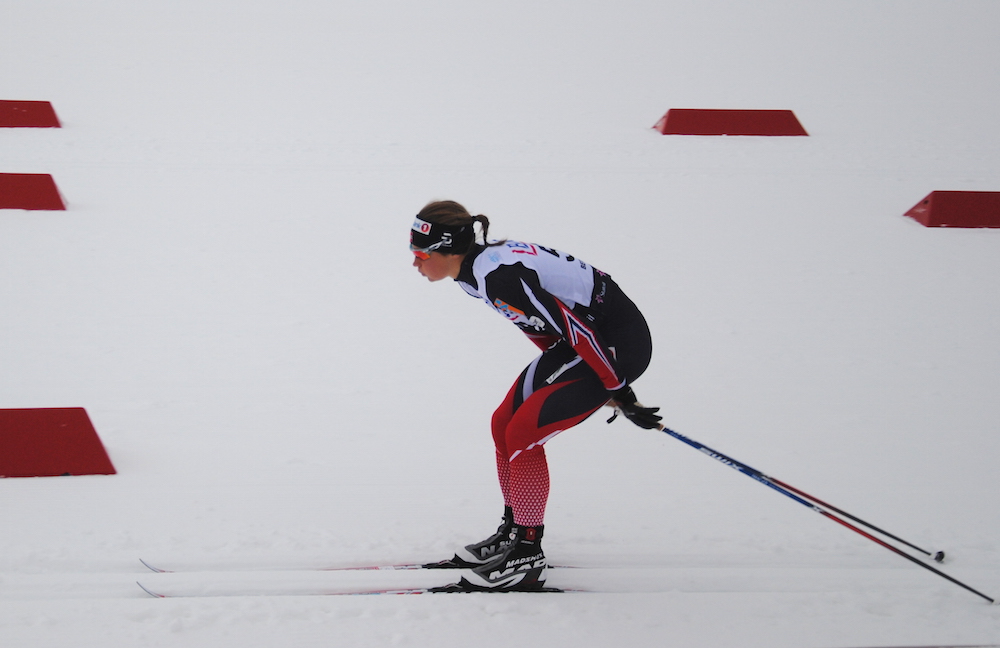
    Canada’s Madison Fraser (Team Hardwood) racing to 50th in the women’s 10 k classic FIS race on Friday in Beitostølen, Norway. (Photo: Aleks Tangen)

    Canadians Madison Fraser (50th place, +6:33.8) and Isabella Howden (55th, +8:21.6) also competed on Beito’s opening day. After the race, Fraser, of Team Hardwood, said she felt good about her effort.

    “It was the first race I’ve done at this level,” she said. “So, really cool to see my name on the same list as Weng and Østberg, but it was hard, but nice course, really flowy. It felt good to get some intensity in. This is our first race over here.”

    Reflecting on how she tackled the course, the 20-year-old, first-year senior described two big hills at the back of the course.

    “I think that gritting down that extra bit and I was able to stride up the whole thing,” Fraser said. “Some people would hop out and start stepping, which is slower and more energy, so I was happy with that and stepped all the corners, so yeah, I was happy with how I handled everything.”

    When the Cat’s Away… Tønseth Wins

    In the men’s 15 k classic, Norway’s Didrik Tønseth capitalized in the absence of his team’s leading skier, Martin Johnsrud Sundby (out with a sore throat), beating out 140 men while double poling the entire three-lap course to win in 37:31.9.

    Tønseth told NRK after that he was in “disbelief” at the conditions, with a heavy snowfall blanketing the course after the women’s race. He switched to skate skis one minute before the start, and said it worked well.

    “It’s awesome to win … it’s good to put others in their place,” he said, according to a translation.

    Starting 12 minutes earlier than Tønseth in bib 125, Norway’s Tord Asle Gjerdalen also double poled the entire course and rose from the seventh-ranked time at 4.9 k to second at the finish, 15.7 seconds back.

    “It snowed a lot, but I think it was the right decision to skate,” Gjerdalen told NRK, according to a translation.

    “When the cat’s away, the mice will play,” he added, taking a playful dig at Sundby.

    All of the eventual top-six men double poled, with Norway’s Morten Eide Pedersen finishing third (+24.5) after opening with the fastest 4.9 k split, then ranking second at 9.8 k. A fourth Norwegian, Sjur Røthe took fourth (+33.2), Great Britain’s Andrew Musgrave broke up the sweep in fifth (+40.0), and Petter Eliassen (Norway) placed sixth (+45.4).

    Meanwhile, Norwegians Pål Golberg and Petter Northug chose grip wax. While Golberg cracked the top 10 in ninth (+1:19.4), Northug ended up nearly four minutes back in 74th, approaching the finish line with a sedative pace that seemed more like a conscientious choice than a consequence of low physical conditioning.

    After the race, an NRK interviewer said to Northug, “You look very smart for someone who finished 74th.”

    Northug, looking as calm as he did during the final part of the race, answered, “You can interpret that the way you want. I believe I have good control even if it doesn’t look like it.”

    A number of Canadian juniors competed on Friday, with Jack Carlyle, of the Thunder Bay National Development Centre (NDC), leading them in 116th (+5:32.4).

    “The competition is super-fierce, which is super cool to see, but it’s not like they’re super human,” the 23-year-old Carlyle said. “It’s just that they’re very fit and fast, but it’s nothing untouchable, it’s cool to see and be a part of that.”

    “The competition is super-fierce, which is super cool to see, but it’s not like they’re super human.” — Jack Carlyle (Thunder Bay NDC), after placing 116th in Beitostølen

    His NDC teammate, Scott James Hill placed 131st (+6:25.1). Behind him, Ryan Jackson, of Team Hardwood, finished 135th (+7:06.3), Joey Foster (Pierre-Harvey Training Centre) was 139th (+8:17.5), and Kieran Jones (Team Hardwood) was 140th.

    Scott James Hill (NDC Thunder Bay) racing to 131st in the FIS season-opening 15 k classic in Beitostølen, Norway. (Photo: Aleks Tangen)
    Canada’s Scott James Hill (NDC Thunder Bay) racing to 131st in the FIS season-opening 15 k classic in Beitostølen, Norway. (Photo: Aleks Tangen)

    Like his Canadian teammates, Jackson chose kick wax and explained that too much grip probably affected his overall performance.

    “I unfortunately lost a little bit of time on each downhill, which I really couldn’t afford to do,” the 19-year-old from Midhurst, Ontario, said. “I need to be on top of my game to compete with these guys. It’s a tough competition, but when things don’t come together, you lose a couple of seconds here and there, it’s too bad.”

    Asked how he liked the course, Jackson said he loved it.

    “I really liked how balanced it is. There’s a lot of spectators around the course so you’re always seeing people,” he said. “My favorite parts were probably the climbs.”

    Foster described his race as a “real hard one”.

    “My skis weren’t running nearly as quick as I needed them to be,” he said. “I think I went with too much grip and they just started dragging a lot. People were making up big time on me in the downhills.”

    Results: Women | Men