Tag: Ivan Perrillat Boiteux

  • Caitlin Gregg on Her Record-Setting Fifth Birkie Title: ‘I’m trying to set the bar pretty high’

    Caitlin Gregg on Her Record-Setting Fifth Birkie Title: ‘I’m trying to set the bar pretty high’

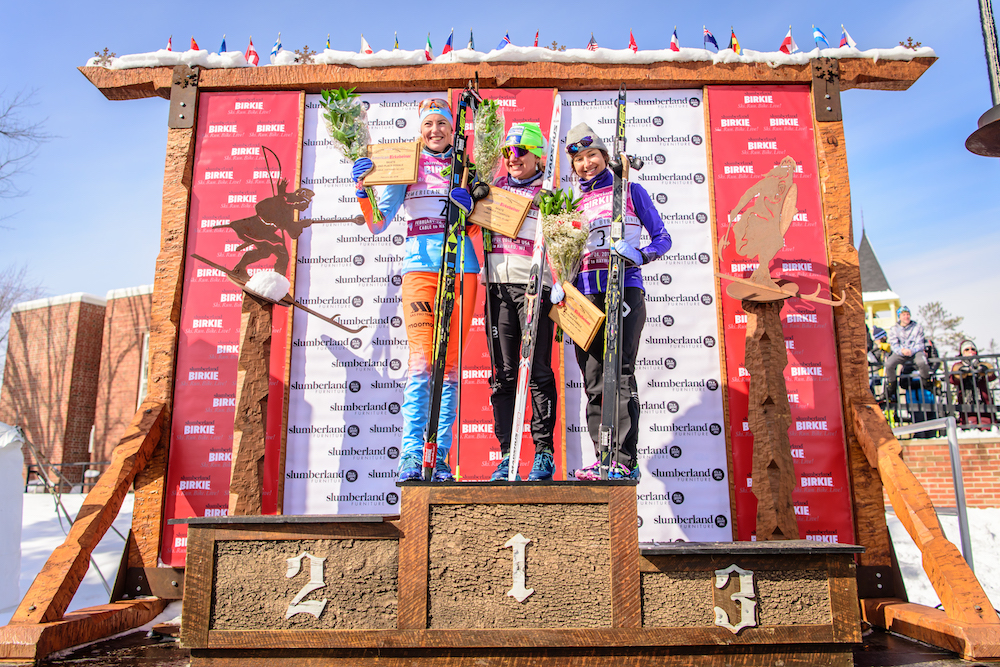
    The elite women’s skate podium at the 2018 American Birkebeiner on Saturday in Hayward, Wisconsin, with Caitlin Gregg (c) in first, Sweden’s Maria Gräfnings (l) in second and Chelsea Holmes (r) in third. (Photo: American Birkebeiner Ski Foundation 2018)

    Caitlin Gregg has raced the American Birkebeiner enough times — and won it more than anyone else — that she’s got the course down pat. Powerline, Big Bertha, High Point, Heckler’s, OO, Gravel Pit, Mosquito Brook, B*tch Hill, Hatchery, the lake, the bridge, the Main Street finish.

    But the conditions and the competition, that’s something that changes from year to year. The elite racers were among the first to start the 50-kilometer American Birkebeiner (“Birkie”) skate races on Saturday, giving them the edge in terms of firmer conditions over nearly 13,000 other racers behind them, but it was still not the fastest Birkie on record after six inches of new snow had fallen the day before.

    But away they went, jetting out of the Birkie’s new start line and embarking on the 50 k point-to-point course from Cable to Hayward, Wisconsin. The elite women’s skate race started at 8:30 a.m. followed by the elite men 20 minutes later.

    While the women remained in a large pack for the first 15 k or so, according to Gregg, they were down to six around 20 k.

    “I think this is one of the strongest fields that I’ve ever seen at the American Birkebeiner for the women,” Gregg recalled in a post-race press conference. “A lot of really fast ladies, a lot of depth, and so it was a pretty high-paced race the whole time. There were definitely five of us in that top six group taking leads and doing pulls, and we definitely worked together to kind of separate ourselves from the field behind us.”

    Three of those racers fell of the pace, which left Gregg, Sweden’s Maria Gräfnings, and Chelsea Holmes contending for the win. Gregg, 37, races for the Central Cross Country (CXC) Team, Loppet Nordic Racing and Team Gregg. Gräfnings, 32, is a former University of Utah skier, and Holmes, 31, races for Alaska Pacific University (APU).

    Just over 2 kilometers before the finish, as the three were skiing across Lake Hayward, the elite men’s race leaders caught them. Typically, the top elite women finish before the men.

    “I could hear another snowmobile, and I knew what that meant, and I kind of looked around at the women and I said, ‘Oh, the men are coming,’ ” Gregg reflected. “… When they caught us, it was actually kind of a surprise because a couple went by, and then they just kept coming.”

    The lead pack of men was still close to 30 strong at that point, just 2 k before the finish.

    “It was the weirdest thing I’ve even experienced in a race, where you just have this consistent line of guys coming and it was actually, really great,” Gregg continued. “Because the women, we raced our own race, we jumped in towards the back of that pack, but we stayed in our own pack.

    “At one point, I suggested maybe we should move over for the men,” she added. “I like these ladies; they were like, ‘NO. They can go around us. They can figure it out. We’re doing our own thing.’ So I thought that was pretty cool.”

    Gräfnings had been leading when the men caught them.

    “And then I thought ‘Now I can go with them,’ but, no, they were going really fast,” Gräfnings said at the press conference. “So, then I was leading the pack, the women’s, and I guess I was getting really tired when I was doing that…”
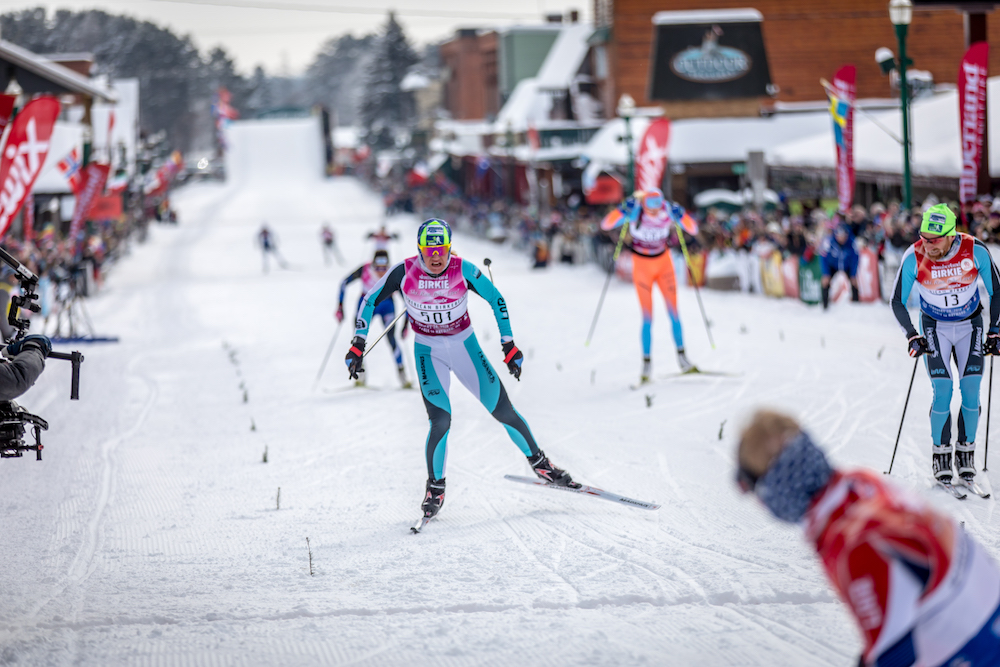
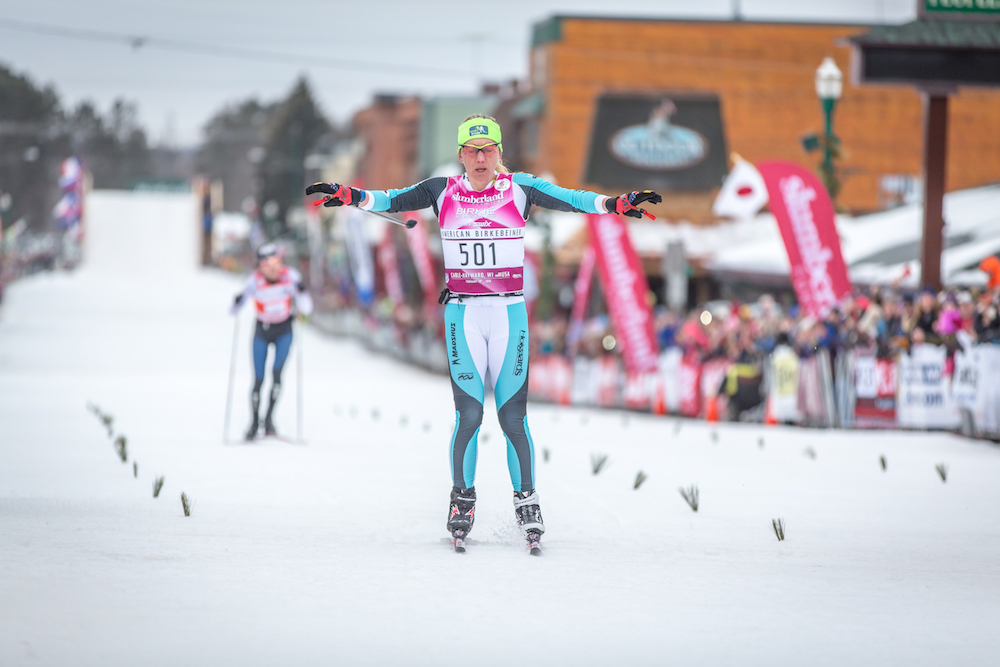
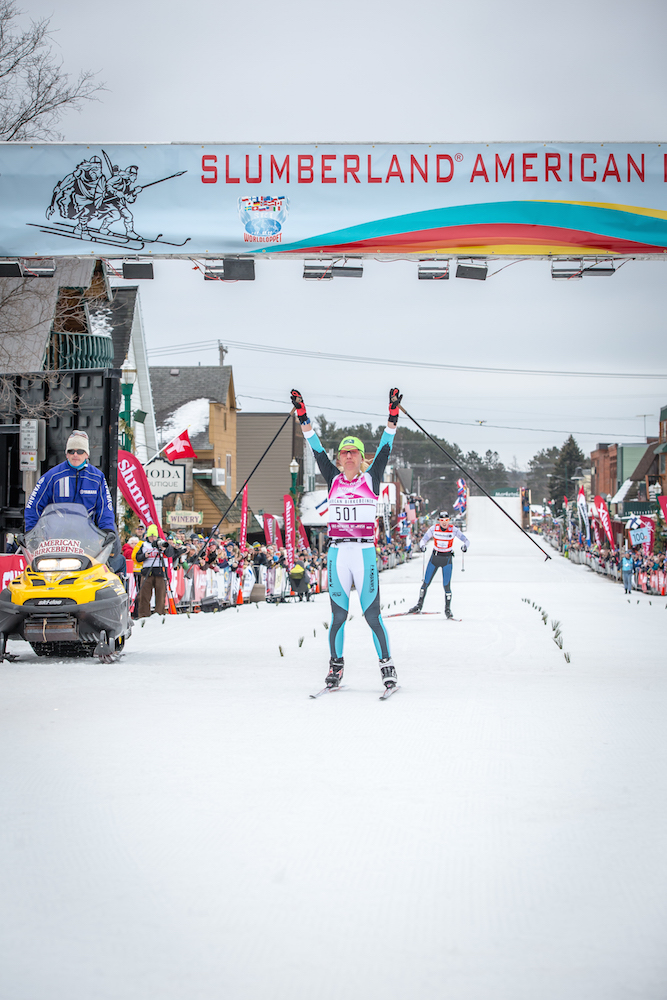
    Caitlin Gregg (501) winning her fifth American Birkebeiner on Saturday in Hayward, Wisconsin, while skiing alongside her husband Brian Gregg (13), who placed 22nd in the elite men’s skate race. (Photo: American Birkebeiner Ski Foundation 2018)

    Gregg took the lead just before the Birkie’s International Bridge and went on to hold off Gräfnings and Holmes for the win in 2:23:30.3 hours. Gräfnings finished second, 2.5 seconds back, while Holmes placed third (+3.8).

    “I was like, ‘No, I can’t give up this. I have to really try to sprint then,’ ” Gräfnings recalled. “I’m glad I could get the second place.”

    Gregg won the last American Birkebeiner contested in 2016 (last year’s race was canceled due to low snow) in 2:22:44. With Saturday’s win, she has most Birkie wins of any racer, male or female, with five victories (2011, 2013, 2014, 2016, and 2018).

    “I’m trying to set the bar pretty high for the next person to come along and break that [record], so it feels amazing to win my fifth,” said Gregg, who lives in Minneapolis, Minnesota. “The conditions were absolutely perfect today. The course was just in amazing shape and just beautiful out there, and this is definitely one of my favorite races, that’s why I keep coming back. Everything about it, between the organization and the volunteers makes this a special event for so many people, but, for myself, especially. So yeah, I was really happy year to be able to race again and feel good and really fight for the win.”

    Gräfnings said was pleased with her own race and glad to return to the U.S.

    “I was studying in the University of Utah and now I’m back in America and it’s so fun to meet a lot of friends and it’s really special for me,” she said.

    Holmes had previously raced the Birkie in 2014 and placed fifth, 3:45 minutes behind Gregg. She struggled with the cold and suffered in that race, she explained at the press conference.
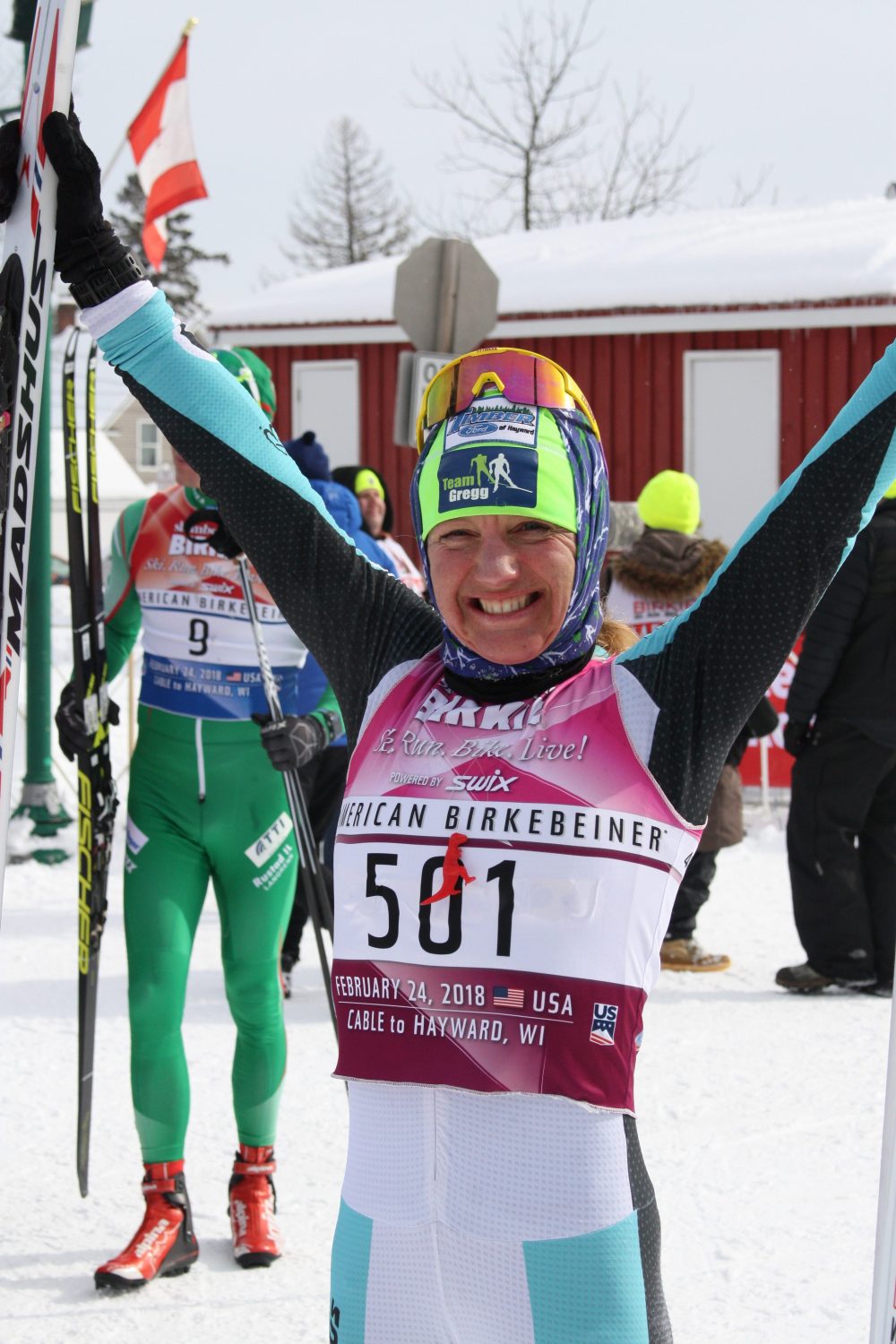
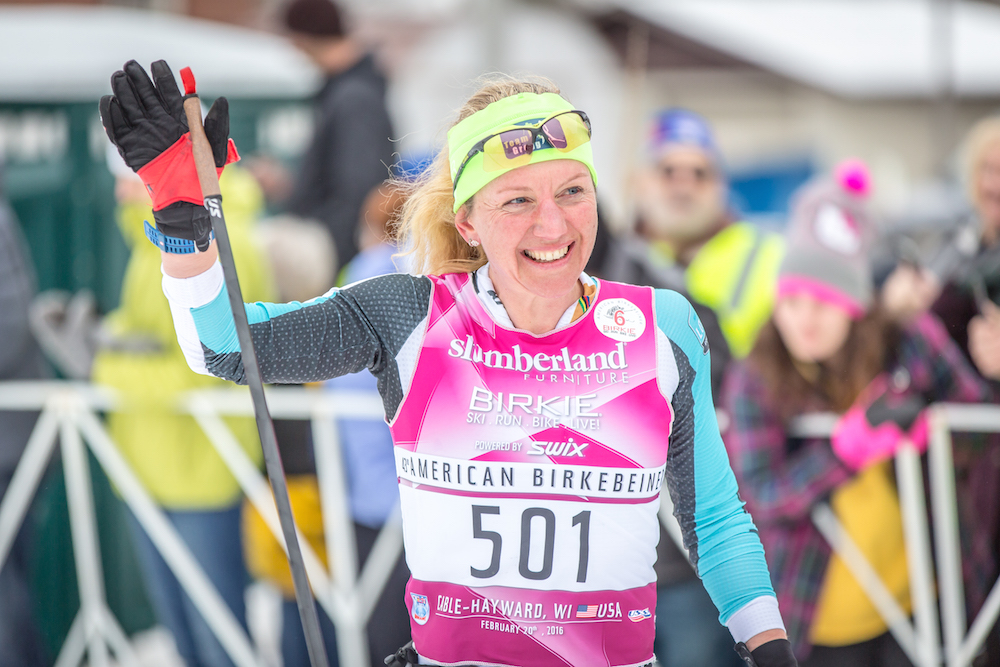
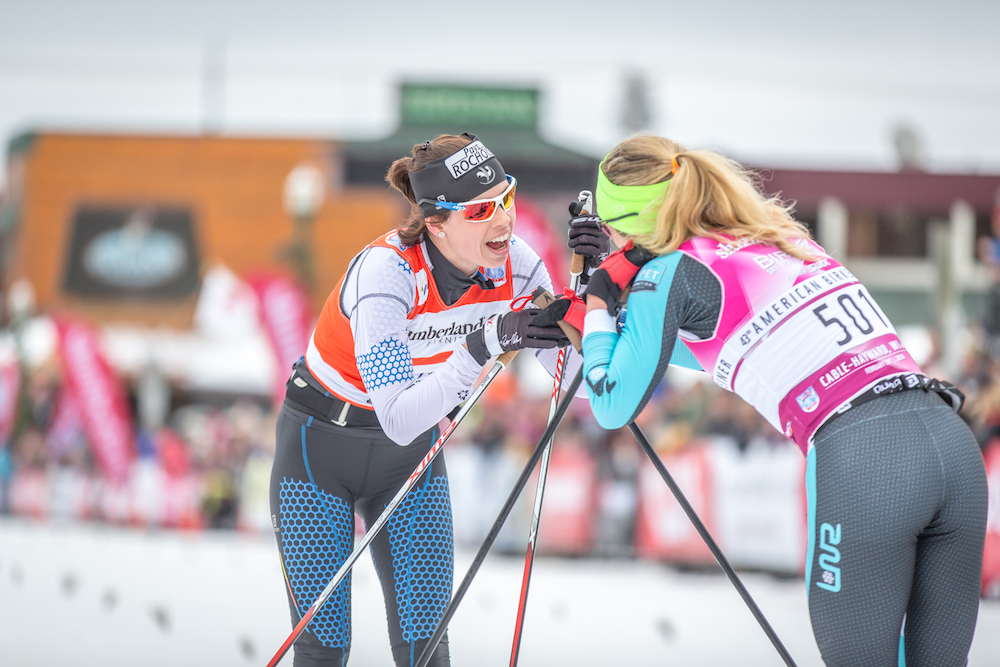
    Caitlin Gregg celebrates her fifth American Birkebeiner win on Saturday after winning the women’s 50 k skate race by 2.5 seconds over Sweden’s Maria Gräfnings in second place. (Photo: RJ Ochmann)

    “I was very worried today about surviving with enough feeds and being warm enough,” Holmes said. “In the beginning, it’s a strange feeling because it always feels a little bit slow, like a very different race pace than even a 30 k that you do at other times, and especially with less climbing, which, I miss the hills a little bit … so that’s a little bit hard for me sometimes to sit in. But I think we shared the lead fairly well.

    “It was … good for me always to remember to relax and be patient because even when you have 25 k, you’re only halfway there,” Holmes continued. “So it’s a unique experience, the 50 k, because sometimes it feels like you’re not working that much, and I felt quite good. And then when I got five meters from the finish line, my legs just, I basically walked across the line. So, clearly I was very tired, but that’s how it goes.”

    France’s Aurelie Dabudyk was the fourth woman across the line, 28.7 seconds behind Gregg, Anja Gruber of Bozeman, Montana, placed fifth (+2:44.6), and Erika Flowers of the Stratton Mountain School (SMS) T2 Team finished sixth (+3:30.1). Also in the top 10 were Liz Guiney of the Craftsbury Green Racing Project (CGRP) in seventh (+5:33.8), Hallie Grossman (CGRP) in eighth (+8:03), Hannah Bettendorf of Duluth, Minnesota, in ninth (+8:19.2), and masters skier Laura McCabe of Winthrop, Washington, in 10th (+8:20.6).

    The Birkie is the fifth of seven races on the 2018 FIS Worldloppet Cup calendar. Dabudyk now leads the overall standings by just 10 points over Gräfnings in second. In her first Worldloppet race of the year, Gregg ranks seventh.

    In the men’s overall standings, France occupies the top four with Gerard Agnellet in first, just 1 point ahead of Ivan Perrillat Boiteux in second, and 120 points clear of Loic Guigonnet in  third. Adrien Mougel ranks fourth, another 2 points behind, and Norway’s Anders Gløersen breaks up the French sweep in fifth, 3 points behind Mougel.

    Norris Makes the Move, Gløersen Takes the Win
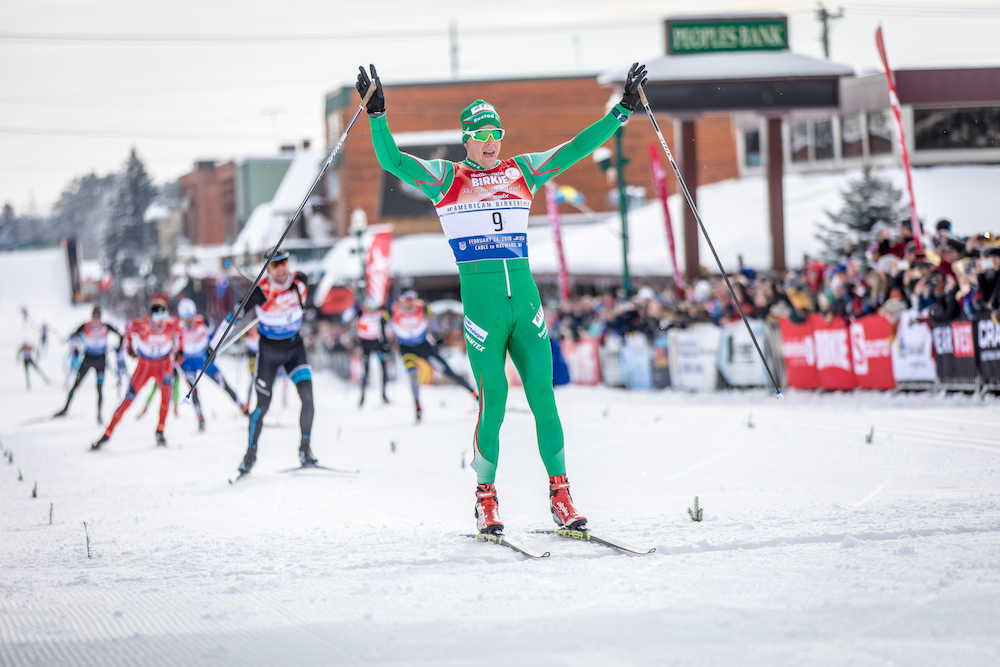
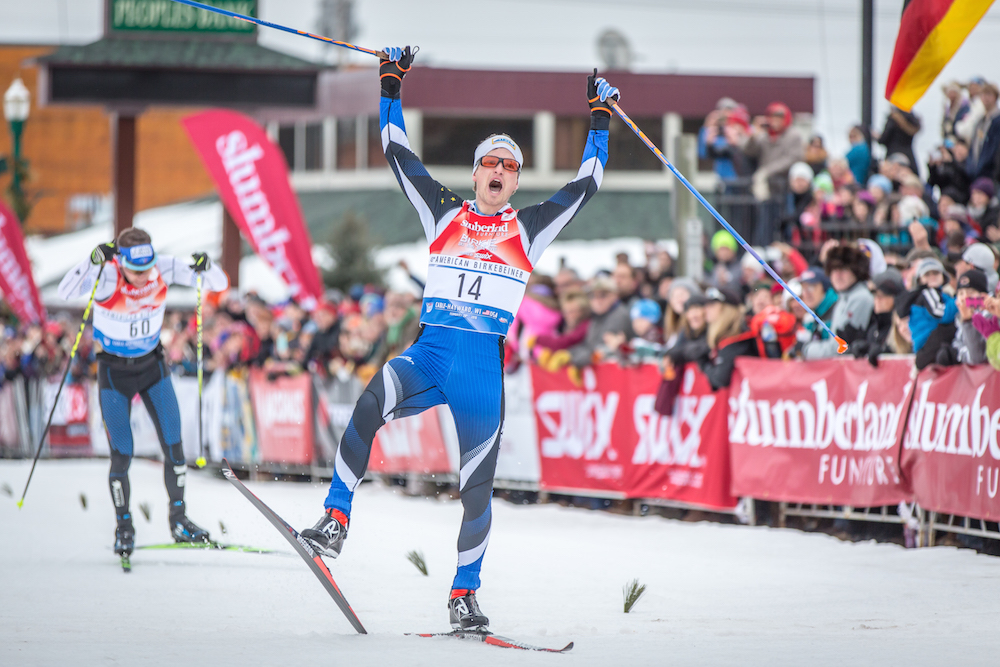
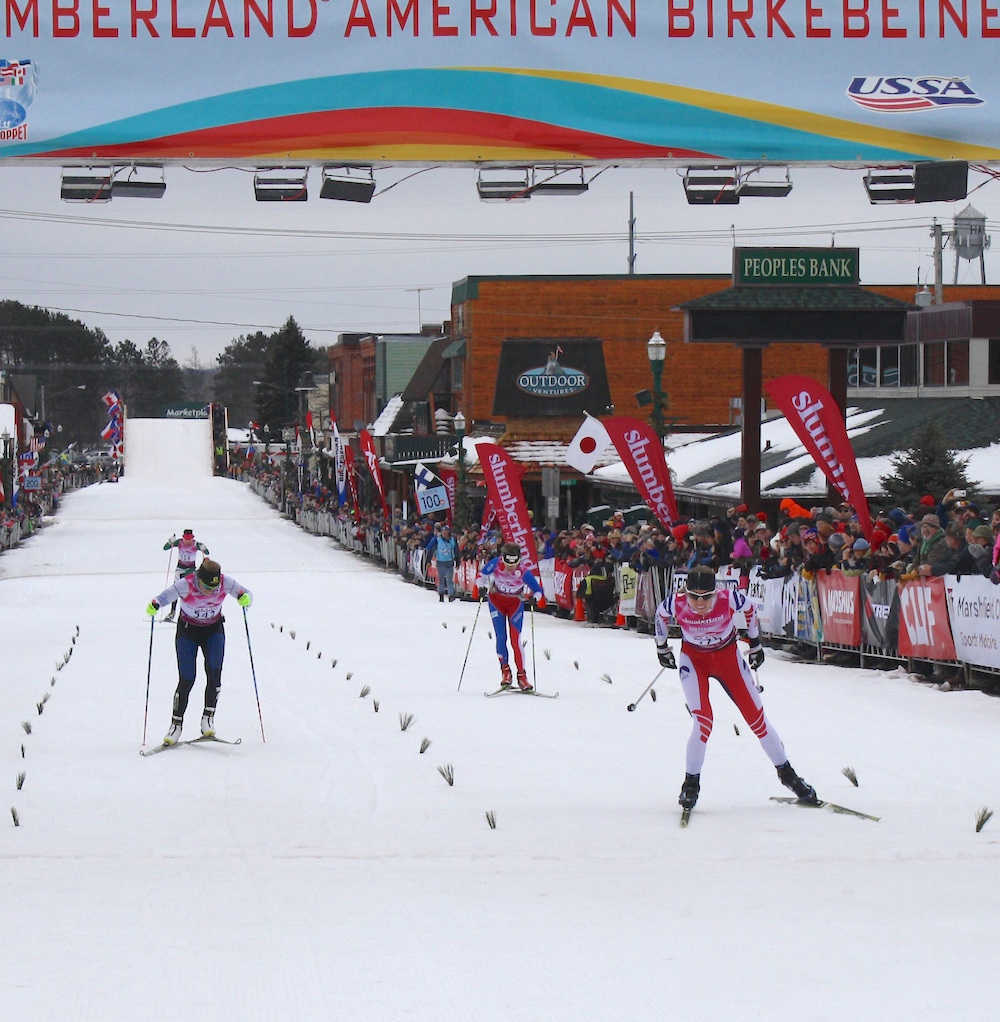
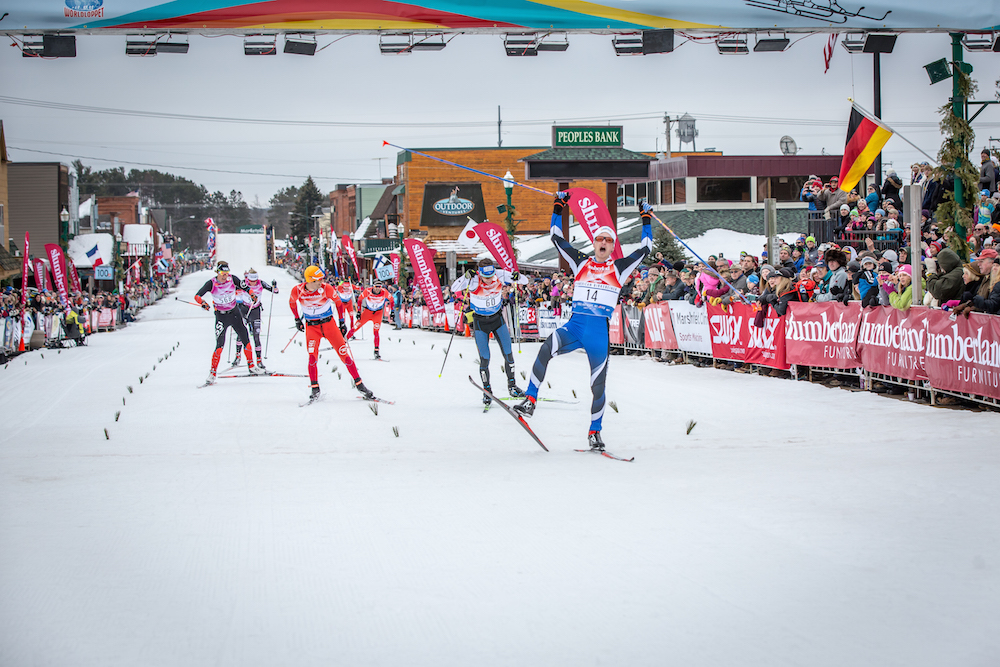
    Norway’s Anders Gløersen winning the American Birkebeiner elite men’s 50 k skate race on Saturday in Hayward, Wisconsin. (Photo: American Birkebeiner Ski Foundation 2018)

    Gløersen won the Birkie elite men’s skate race on Saturday in 2:02.29.6, just 1.9 seconds ahead of Perrillat Boiteux in second and 3.4 seconds ahead of American Kyle Bratrud (CXC Team) in third.

    After as many as 30 men stayed together up until the last 2 kilometers, the men’s pack began to string out after coming off the lake. According to Bratrud, it was David Norris who made the defining move at that point in the race. Norris had launched a similar attack two years ago, just before the bridge, to win the 2016 Birkie.

    “He started to string it out a bit and six or seven of us started to pull away from a line of about 30 of us,” Bratrud recalled at the press conference. “That’s kind of what led us to the break and ultimately to the sprint.”

    The top-10 men were within eight seconds of first, with Mougel finishing fourth (+4.4), Norris losing his lead and ending up fifth (+5.1), France’s Bastien Poirrier placing sixth (+5.5), and Agnellet following in seventh (+5.7). France had six in the top 11 with Guigonnet in eighth (+6.6) and Benoit Chauvet in 11th (+13.3). Americans Ben Lustgarten (CGRP) finished ninth (+7.0) and Jack Hegman of the Sun Valley Ski Education Foundation (SVSEF) placed 10th (+7.2).

    “It was a great race,” Gløersen, 31, said at the press conference. “Perfect conditions and nice weather. And it was a difficult to know how to do because I don’t know so many of the American skiers here, and I know the French guys … I had to watch out for them. So I just tried to stay in front of the big group to be ready if someone made an attack. It seemed like it was difficult to get away, and I was just glad when it was one kilometer left.”

    After Norris’s attack, Gløersen made a point to follow him.

    “I got the perfect position on the bridge here, just was number two and then had the perfect position going into the final 300 meters,” he said.

    Asked about passing the women late in the race, he said it didn’t affect the men’s race too much.

    “If it’s snowing, then it could make a difference because then you have the women making way, and when you pass them it’s going to be slower,” Gløersen said. “But today was quite good conditions so it was just fun to see when they catch them and to see who was in the group, but other than that, it doesn’t affect us much.”
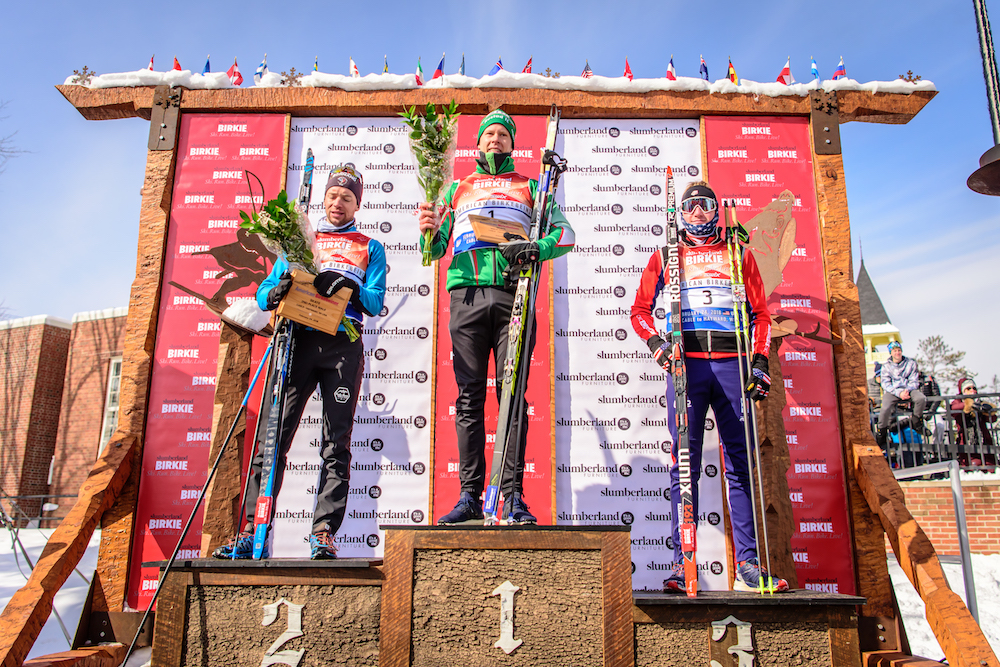
    The elite men’s skate podium at the 2018 American Birkebeiner in Hayward, Wisconsin, with Norway’s Anders Gløersen (c) in first, France’s Ivan Perrillat Boiteux (l) in second and American Kyle Bratrud (r) in third. (Photo: American Birkebeiner Ski Foundation 2018)

    While both Gløersen and Perrillat Boiteux are marathon regulars, this was the first American Birkebeiner for both of them.

    “The Birkie was a great race, well organized, and I loved it,” Perrillat Boiteux, 32, said through a translator at the press conference.

    Bratrud, 25, was born in Eden Prairie, Minnesota, and attended Northern Michigan University, yet this was his first Birkie. According to the FIS database, it was also his first marathon. Asked about skiing in such a large group for most of the 50 k race, he said it was a new experience, but it was likely because the field was so competitive.

    “There’s a ton of strong guys there and no one really wanted to pull the other person to a victory,” Bratrud said. “So it was a lot of kind of cat and mouse and looking at each other and people made moves, but with so many strong skiers, it was hard for anyone to get away.”

    In the 55 k Birkie Classic, Minnesota native Ben Saxton (SMST2) edged Cole Morgan (SVSEF) by 1.5 seconds at the finish for the win in 2:47:35.9. Mathias Rolid of Marquette, Michigan, followed in third (+6.1).

    Wisconsin native Felicia Gesior (CXC Team) won the women’s classic race by more than 10 minutes in 3:08:07.3. Brandy Stewart of Bozeman placed second (+10:54.8) and Josie Nelson of Medicine Lake, Minnesota, reached the podium in third (+11:20.9).

    $$$

    While the Birkie’s 50 k skate race is part of the FIS Worldloppet Cup and reserves most of its prize money for first- through sixth-place finishers in both the elite men’s and women’s skate races (with $7,500 dollars for each winner), the 55 k Birkie Classic awards $1,000 to its men’s and women’s winners.

    This year, there were also two $500 sprint bonuses in the Birkie skate race, which were awarded to the first male and female competitors to reach the intermediate sprint checkpoints. According to Gregg, the first “prime” was about 2 1/2 or 3 kilometers into the race, and the second came just before 20 k.

    “I was curious how aggressive the women would be to go for those [sprint] primes and they were very aggressive, very fun,” Gregg said. “I think the first prime kind of set the tone and kind of strung things out a little bit.”

    Results (top 25): Birkie skate | Birkie classic

    Full results

  • Birkie Rundown: Caitlin Gregg, Anders Gløersen Win 2018 Birkie Skate

    Birkie Rundown: Caitlin Gregg, Anders Gløersen Win 2018 Birkie Skate

    Caitlin Gregg (501) winning her fifth American Birkebeiner on Saturday in Hayward, Wisconsin, while skiing alongside her husband Brian Gregg (13), who placed 22nd in the elite men’s skate race. (Photo: ABSF/James Netz)

    2018 American Birkebeiner (Hayward, Wisconsin): 50 k freestyle

    Blog post (with start videos)

    The 44th annual American Birkebeiner took place Saturday on the world-famous course from Cable to Hayward, Wisconsin, with Minneapolis’s own Caitlin Gregg (CXC Team/Loppet Nordic Racing/Team Gregg) and Norway’s Anders Gløersen racing to victories in the elite women’s and men’s races, respectively.

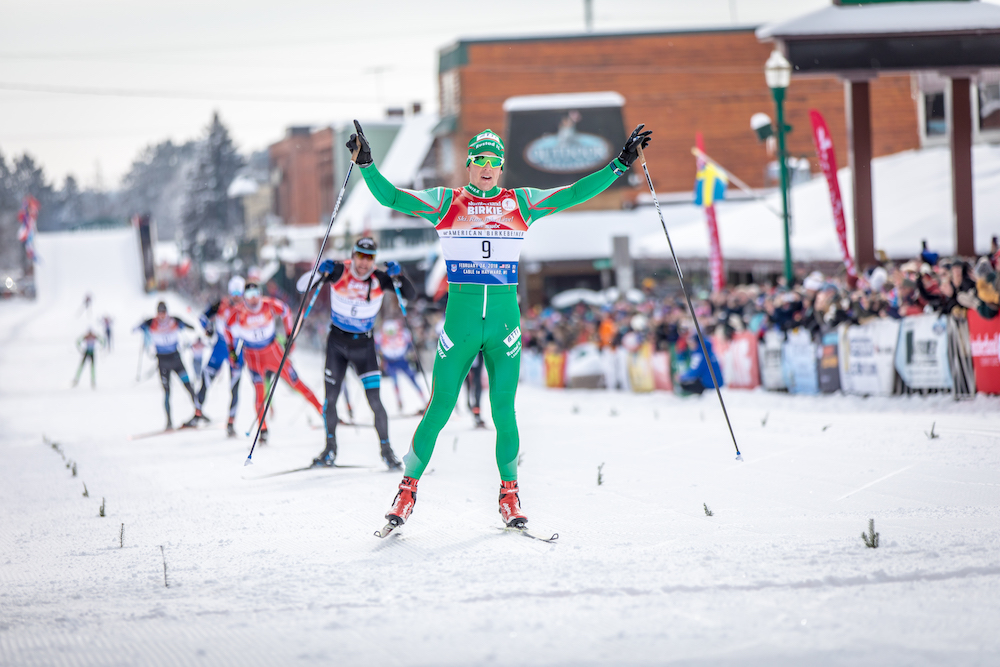
    Norway’s Anders Gløersen (9) winning the American Birkebeiner elite men’s 50 k skate race on Saturday in Hayward, Wisconsin. (Photo: ABSF/James Netz)

    Gregg finished in 2:23:30.3 hours, just 2.5 seconds ahead of Sweden’s Maria Graefnings in second and 3.8 seconds over Chelsea Holmes, of Alaska Pacific University (APU), in third.

    The Birkie win was Gregg’s fifth after taking the title in the 2011, 2013, 2014, and 2016 editions of the race as well. She won the last American Birkie contested in 2016, with a broken toe, in 2:22:44. (The race was canceled last year.)

    Gløersen was the first across the line, after passing the entire elite women’s field, with a winning time of 2:02.29.6. France’s Ivan Perrillat-Boiteux finished 1.9 seconds back in second, and Kyle Bratrud (CXC Team) was the first American in third overall (+3.4).

    The defending Birkie champion from 2016 (who won it in 2:05:35), David Norris (APU) placed fifth (+5.1).

    In the 55 k Birkie Classic, Minnesota native Ben Saxton, of the Stratton Mountain School (SMS) T2 Team, edged Cole Morgan, of the Sun Valley Ski Education Foundation (SVSEF), by 1.5 seconds at the finish for the win in 2:47:35.9. Mathias Rolid, of Marquette, Michigan, followed in third (+6.1).

    Wisconsin native Felicia Gesior (CXC Team) won the women’s race by more than 10 minutes in 3:08:07.3. Brandy Stewart, of Bozeman, Montana, placed second (+10:54.8) and Josie Nelson, of Medicine Lake, Minnesota, reached the podium in third (+11:20.9).

    Results (top 25): Birkie skate | Birkie classic
    Full results

    (Check back for more details about the elite race and photos)

  • A Tale of Two Races: Gregg and Norris Emerge as 2016 Birkie Champs

    A Tale of Two Races: Gregg and Norris Emerge as 2016 Birkie Champs

    Caitlin Gregg (Team Gregg/U.S. Ski Team) soaks up her record-setting fourth win at the 2016 American Birkebeiner in Hayward, Wis. (Photo: James Netz/American Birkebeiner Ski Foundation©2016)
    Caitlin Gregg (Team Gregg/U.S. Ski Team) soaks up her record-setting fourth win at the 2016 American Birkebeiner in Hayward, Wis. (Photo: James Netz/American Birkebeiner Ski Foundation©2016)

    Caitlin Gregg said she had a hard time falling asleep Friday night, the eve of the 43rd annual American Birkebeiner. Understandable: she was going for a record-breaking fourth win in the 52-kilometer Birkie freestyle race, but moreover, she was going to have to do it in potential rain, slush or even ice, depending on how temperatures and precipitation shook out.

    Race organizers didn’t groom the Birkie trail from Cable to Hayward, Wis., until Friday night.

    “I was so impressed with the grooming. They did an amazing job,” she said in an interview with USSA’s Tom Kelly the next day, shortly after winning her fourth Birkie title to become the winningest skier in American Birkebeiner history. “It was the perfect mix of hard-packed with just a little bit of just soft snow on top, so that gave you a little purchase where you needed it. It would maybe change a little bit and become firmer in some areas or a little softer in others, but considering what they were delivered it was phenomenal.”

    The 2016 Birkie on a gray, windy morning with temperatures in the upper 30’s was a tale of two races. It always is, with the elite women starting 20 minutes before the elite men, but on Saturday, Gregg and France’s Aurélie Dabudyk — the Worldloppet Cup leader — dropped the field around 42 k and Gregg held off Dabudyk by five seconds across the line. Just behind them, the men’s race remained tight over the slushy Lake Hayward and into the final stretches of Main Street, with David Norris of Alaska Pacific University winning by 1 second and fewer than 7 seconds separating the top five.

    It was the first time two Americans had topped the podium in the elite men’s and women’s skate races since Holly Brooks and Tad Elliott won the Birkie in 2012.

    “I did the Birkie this year for the first time because it fit my calendar really well and it is one of those American races you have to do!” Norris, a Fairbanks native, explained in a post-race email. “I knew their were a lot of experienced Euros and top Americans in the field today so I knew winning would be tough, but that was still the goal at the starting line.”

    David Norris of Alaska Pacific University celebrates his first victory in his first time at the American Birkebeiner 52 k freestyle race on Saturday in Hayward, Wis. (Photo: James Netz/American Birkebeiner Ski Foundation©2016)
    David Norris of Alaska Pacific University celebrates his first victory in his first time at the American Birkebeiner 52 k freestyle race on Saturday in Hayward, Wis. (Photo: James Netz/American Birkebeiner Ski Foundation©2016)

    Of the top seven men, Norris was the only American. He outlasted France’s Ivan Perrillat Boiteux, of team Houte-Savoie, by a second at the line, winning in 2:05:35.4, and another Frenchman Benoit Chauvet (GEL intérim Rossignol) by 1.3 seconds.

    “Winning the Birkie is like no other win,” Norris wrote. “The spectators are so supportive and the other Americans in the race were so happy for me even though their own races didn’t go as planned. Maybe the happiest moment of the day was seeing how happy my result made my friends and supporters.”

    “I was very excited to win again,” Gregg wrote in an email Saturday night. “Every Birkie Victory has been a huge part of the financial equation for Brian and I in our racing careers.”

    (Her husband and Team Gregg teammate, Brian Gregg, was the fourth American man and 13th overall, 1:01.9 minutes behind Norris. For the win, Caitlin received $7,500 dollars for winning plus $2,500 for being the top American, as did Norris, for $10,000 apiece.)

    “I am so grateful to the thousands of friends and family who were cheering me on, the endless work of the organizers and volunteers, the fantastic skis by Caldwell Sport and their wax techs and the incredible support of our Team Gregg’s sponsors,” Gregg wrote. “I said it before but this race seems to be the most important of my entire career year after year (Including the Olympics and the World Championships) because I can share the experience with so many important people in my life. Skiing with 10,000 of your friends on the same trail on the same day is pretty tough to beat!”

    ‘I had a lot more to give’

    According to Gregg, the pace of the women’s race started “very slow” by her standards, and “the foreign ladies did a lot of work out there today with 5 or 6 of us taking turns in the lead,” she wrote.

    Gregg shared the workload with the likes of Dabudyk and her Houte-Savoie teammate, Italy’s Elisa Brocard and another Italian, Antonella Confortola (Forestale), who finished second to Brooks in last year’s Birkie. New to the Birkie, Klara Moravcova of the Czech Republic and Switzerland’s Rahel Imoberdorf came into the race ranked third and fourth in the overall Worldloppet standings, behind Dabudyk and Brocard.

    Caitlin Gregg after winning her fourth Birkie, making her the winningest racer in American Birkebeiner history on Saturday in Hayward, Wis. (Photo: James Netz/American Birkebeiner Ski Foundation©2016)
    Caitlin Gregg after winning her fourth Birkie, making her the winningest racer in American Birkebeiner history on Saturday in Hayward, Wis. (Photo: James Netz/American Birkebeiner Ski Foundation©2016)

    While word spread among spectators that Gregg may have broken a pole early in the race, Gregg dispelled it.

    “The broken pole was actually a rumor,” she wrote. “I never broke a pole out there (thankfully). All of my equipment was perfect…”

    About 38 k into the skate race, at a checkpoint called Mosquito Brook, Gregg decided it was time to turn it up a notch.

    “I looked at my heart rate monitor periodically throughout the race and saw that I was sitting around 150-160 bpm which is level 2 for me. I have been doing a lot of harder training lately and knew I had a lot more to give,” she explained. “After spending the first 40K trying to ski as easy as possible (besides a few attacks) I decided to put the hammer down just after Mosquito Brook. There wasn’t a definitive plan at the start of the race because every race is different in terms of conditions and competitors but I could tell the other ladies were tiring on the uphills so I went for it on the longest one I knew.”

    When she looked back around 42 k, she could see Dabudyk was the only one who had stayed with her.

    “She pulled up behind me but I could tell she was spent,” Gregg wrote. “I hammered again and she was able to hang with me but wasn’t looking very comfortable.”

    Gregg led most of the way from Mosquito Brook to the finish — about 14 kilometers — explaining that she tried to pull over at times to led Dabudyk take some of the workload up front. But her pace wasn’t cutting it for Gregg, who recalled that it was too slow and she was concerned the chase pack would catch back up to them.

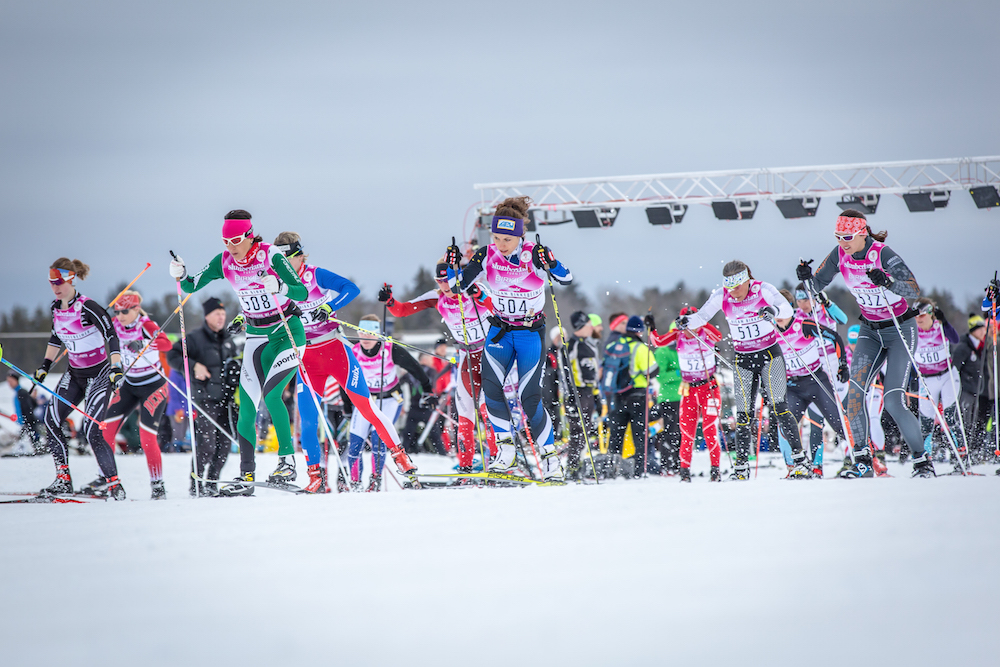
    Italy's Antonella Confortola (508) and American Rosie Frankowski (504), a Minneapolis native who trains with Alaska Pacific University in Anchorage, racing with the pack out of the start of the elite women's wave at the 2016 American Birkebeiner. Frankowski went on to place ninth. (Photo: James Netz/American Birkebeiner Ski Foundation©2016)
    Italy’s Antonella Confortola (508, in green) and American Rosie Frankowski (504, in blue), a Minneapolis native who trains with Alaska Pacific University in Anchorage, racing with the pack out of the start of the elite women’s wave at the 2016 American Birkebeiner. Confortola went on to place sixth and Frankowski finished ninth. (Photo: James Netz/American Birkebeiner Ski Foundation©2016)

    In the final kilometers of the race, across Lake Hayward, Gregg planned her finish.

    “All I was focusing on was not tripping up and falling,” she wrote. “There was a headwind so I couldn’t pull away there but I could tell I was feeling a lot fresher than Aurelie. I wanted to be first over the bridge to have a clear shot into the finish lanes and it worked.”

    Still leading Dabudyk into the final straightaway on the snow-covered Main Street, Gregg stayed ahead. Dabudyk moved to the left about halfway down the stretch to size up a move, but she didn’t have it. Gregg won in 2:22:44.5 by 5.1 seconds over Dabudyk.

    “I felt great in the final 400 meters and was able to get the gap I needed,” Gregg wrote.

    “My finish was very, very hard because Caitlin was very high speed…” Dabudyk said through a translator at the press conference. “Trying to pass at the finish, Caitlin was too fast.”

    With the silver, Dabudyk retained her lead in the FIS Worldloppet Cup.

    “For sure, the Worldloppet Cup is my big goal of the season,” Dabudyk said.

    Erika Flowers of the SMST2 Team (r) racing to third in the 2016 American Birkebeiner in Hayward, Wis., ahead of Italy's Elisa Brocard (l) and Klára Moravcová of the Czech Republic in fourth and fifth, respectively. (Photo: Worldloppet)
    Erika Flowers of the SMST2 Team (r) racing to third in the 2016 American Birkebeiner in Hayward, Wis., ahead of Italy’s Elisa Brocard (l) and Klára Moravcová of the Czech Republic in fourth and fifth, respectively. (Photo: Worldloppet)

    Nearly two minutes later, Erika Flowers of the Stratton Mountain School (SMS) T2 Team held off Brocard and Moravcova by 1.4 and 3.1 seconds, respectively, for third place, 1:51.1 behind Gregg.

    “I felt really good coming into the last 5km of the race and skiing onto the lake with Elisa, Clara and Antonella,” Flowers wrote in an email. “I knew I needed to push over the bridge and I felt confident in my finishing speed. I came over the bridge in 5th and knew I could catch at least one person but I was thrilled to ski into 3rd!”

    In her first Birkie, Flowers, of Bozeman, Mont., explained she “had no idea what to expect …especially since I had never raced against many of the European skiers in the elite field,” she wrote. “However I have been feeling stronger every week this winter and I love skate distance racing so I figured that on a good day, I had a shot at the podium.”

    The last time she did a marathon was seven years ago at the 50 k freestyle Rangeley Lakes Loppet in Maine. She explained that was more of a tour than a race, and she couldn’t remember how she did.

    “Besides that, the longest race I have ever done is the 30km at Spring Series each year. I was sick in Sun Valley and didn’t race last year but I finished 9th in the classic 30km in Anchorage two years ago,” Flowers explained.

    Caitlin Gregg (Team Gregg/U.S. Ski Team) celebrating her unprecedented fourth Birkie win on Saturday at the 2016 American Birkebeiner in Hayward, Wis. (Photo: James Netz/American Birkebeiner Ski Foundation©2016)
    Caitlin Gregg (Team Gregg/U.S. Ski Team) celebrating her unprecedented fourth Birkie win on Saturday at the 2016 American Birkebeiner in Hayward, Wis. (Photo: James Netz/American Birkebeiner Ski Foundation©2016)

    She’ll wrap up her season with OPA Cup races in Europe in a few weeks.

    “I really wanted to be racing the Canadian World Cups this year but an unfortunately timed elbow break in the fall challenged both my race shape and confidence in the early season,” she wrote. “I would have loved to be getting these kind of results a few months ago but I am proud of the work I have done since then and excited to keep on the up and up! I am also psyched to watch all of the Americans racing in Canada! I think we could see some awesome results from both World Cup veterans and newbies and can’t wait to cheer!!!”

    A U.S. Ski Team member, Gregg earned a discretionary spot at the season-ending World Cups at the Ski Tour Canada from March 1-12.

    “Both Brian and I are headed to Canada in a week to compete in the World Cups and we are very excited!” she wrote. “I will spend everyday this week working with the local Loppet Nordic Racing juniors helping them prepare for the Junior Nationals back here at Telemark. After Canada, Brian and I will go to Vermont and spend some time in the Mad River Valley (where I learned to XC Ski) visiting with the local community, skiing with local schools and Bill Koch kids and training with GMVS. Then it’s off to Craftsbury for Super Tour Finals.”

    About 10 seconds behind Flowers, Confortola placed sixth (2:00.7 minutes after Gregg). Imoberdorf was seventh (+2:55.8), Switzerland’s Nicole Donzallaz finished eighth (+2:56.8), Minneapolis native Rosie Frankowski of APU placed ninth (+3:09.5), and CXC’s Alice Flanders took 10th (+5:55.1).

    Notably, FasterSkier’s Kaitlyn Patterson, of Traverse City, Mich., placed 18th in the elite women’s field.

    ‘Nobody wanted to lead’

    For Norris, it was as simple as resolving to catch a rogue racer with about 7 k to go. Chauvet, a regular podium contender at the Birkie, had surged off the front, leaving about 20 men in the lead pack chasing behind him.

    “I decided to go for him,” Norris wrote. “When I caught him he shut down the effort immediately and I had to decide whether or not to take the reins. We ended up slowing up the pace coming into the lake and it became a pack of seven guys. I think six Frenchmen and myself.”

    There, racers met soft and slushy conditions for the first time on an otherwise fast course.

    “We had to double pole through a small ankle deep section of water, but overall the groomers made the course fast and firm for us!” Norris noted. “We slowed up coming into the lake and throughout the majority of the lake crossing. There was the typical headwind on the lake that I had heard about. It seemed nobody wanted to lead on the lake.”

    David Norris (APU) celebrates his victory at the 2016 American Birkebeiner, holding off France's Ivan Perrillat Boiteux, Benoit Chauvet and Adrien Mougel in second, third and fourth, respectively. (Photo: James Netz/American Birkebeiner Ski Foundation©2016)
    David Norris (APU) celebrates his victory at the 2016 American Birkebeiner, holding off France’s Ivan Perrillat Boiteux, Benoit Chauvet and Adrien Mougel in second, third and fourth, respectively. (Photo: James Netz/American Birkebeiner Ski Foundation©2016)

    But he wanted to be in the lead coming off of it. With experience from the elite sprints two days earlier, Norris knew the 400-meter stretch up and over the International Ski Bridge and down into Main Street to the finish was a short one — not much ground was going to be made up there.

    “I pushed it coming off the lake and tried to come off the bridge as fast as possible,” he wrote. “Main Street was the loudest thing I have ever heard and I honestly had no idea If skiers where coming up on me cause I couldn’t hear a thing. I got the dream legs sensation where the pain goes numb and I was just going max effort until I hit the line. I don’t think I celebrated until I was on the line and knew I couldn’t lose it!”

    Not only did Norris beat Perrillat Boiteux in second and Chauvet in third, he also outlasted a third Frenchman Adrien Mougel (GEL intérim Rossignol) in fourth (+4.7), Switzerland’s Candide Pralong (GEL intérim Rossignol) in fifth (+6.6), France’s Mathias Wibault in sixth (+8.7), and Italy’s 2014 Birkie champion Sergio Bonaldi (Team Salomon Italia) in seventh (+12.9).

    The second American, Kris Freeman (Team Freebird) placed eighth (+33.7). Ivan Babikov of the Canadian World Cup Team was ninth (+349), and one of the initial challengers, Tad Elliott (Ski & Snowboard Club Vail) placed 10th (+38.9).

    “Tad made the first real move with 15 or 10km to go and that was the first real push,” Norris recalled. “I think that made people second-guess themselves for the first time. During this effort I realized I was feeling strong and had skid the early portion of the course well and had saved energy for the finish.”

    “Chauvet is really experienced and a really nice guy,” Norris added of the Frenchman who changed the race for good. “He did some early work to make our pack just a leading group of maybe 20 guys.”

    Asked if the move was too early, Chauvet responded at the press conference, “I’m not sure it was too early. I think I was in very good shape in climbs, but the last 7 kilometers it’s difficult when you are alone when there is a group behind you because people try to catch you.

    “I thought I was able to win today and I’m a bit disappointed, but I’m rather happy to make the podium,” he added. “And I will try to win again last year.”

    With his second-place finish, Perrillat Boiteux moved into first in the Worldloppet Cup.

    “I’m very happy to get the red bib,” he said at the press conference through a translator (Chauvet). “The goal this season is to win the FIS Worldloppet Cup, but the race in two weeks [the Bieg Piastow] is classic and classic is not my main technique so I will try to do the best there and try to keep the red bib to the last race.”

    Asked if Norris would continue on the Worldloppet circuit after earning 100 points as the winner (putting him 10th in the overall standings) he replied, “No.” Next year? Probably not, he said with a laugh.

    Three races remain in the Worldloppet Cup series, including the Bieg Piastow in Poland, Engadin Skimarathon in Switzerland, and UgraSki marathon in Russia.

    Norris planned to end his season with the Tour of Anchorage and Spring Series in Vermont.

    “I had a slower start to the season with frustrating results at Nationals, which made qualifying for [the Ski Tour] Canada tough,” he wrote. “At the moment my plans are to return to Anchorage and attend the Tour of Anchorage ski race. The final set of races for me in four weeks will be spring series. I feel like my fitness is improving the longer the season goes so I am hoping to stay healthy and try to finish out the season with a strong result in the 15km and 50km in Vermont.”

    Classic Birkie

    In the 55 k classic Birkie, Welly Ramsey (Maine Winter Sports Center) won the men’s race in 2:48:59.9, and former Michigan Tech skier, 23-year-old Deedra Irwin of Wisconsin claimed the women’s title in 3:11:58.8. Both won the elite sprints on Thursday and went on to win the classic marathon by more than 12 minutes.

    Ramsey, 25, skied to the Birkie classic title by 12:07.2 minutes over Nick Power of CXC. Third went to Canada’s Murray Carter (+12:09.2).
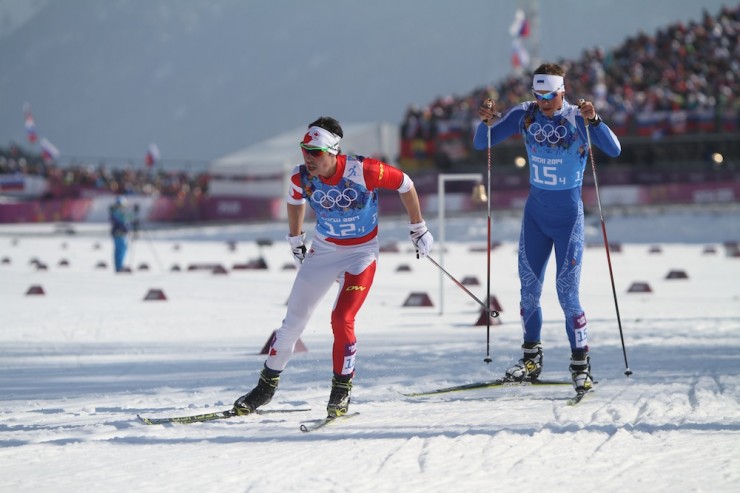
    “I just wanted to be on the front and stay out of the fray, but then I turned around and no one else was there so I had a nice 50 k ski by myself,” Ramsey told FasterSkier afterwards. “This is my first Birkie. It feels pretty good. You can call it beginner’s luck.”

    Meanwhile in the women’s race, Irwin won by 12:46.7 over Isabel Caldwell (U.S. Ski Team standout Sophie Caldwell’s younger sister) of Peru, Vt. Another 10 minutes back, Josie Nelson of Medicine Lake, Minn., placed third (+22:49.4).

    Results

    Worldloppet rankings: women | men

    — Gabby Naranja and Jeremy Blazar contributed reporting

    France’s Aurélie Dabudyk (l) and Caitlin Gregg at the finish. Gregg beat her by 5.1 seconds for the 2016 American Birkebeiner title. (Photo: James Netz/American Birkebeiner Ski Foundation©2016)
    France’s Aurélie Dabudyk (l) and Caitlin Gregg at the finish. Gregg beat her by 5.1 seconds for the 2016 American Birkebeiner title. (Photo: James Netz/American Birkebeiner Ski Foundation©2016)
  • Photo Gallery: Olympic Men’s Relay

    Photo Gallery: Olympic Men’s Relay

    FasterSkier’s coverage is made possible through the generous support of Swix.

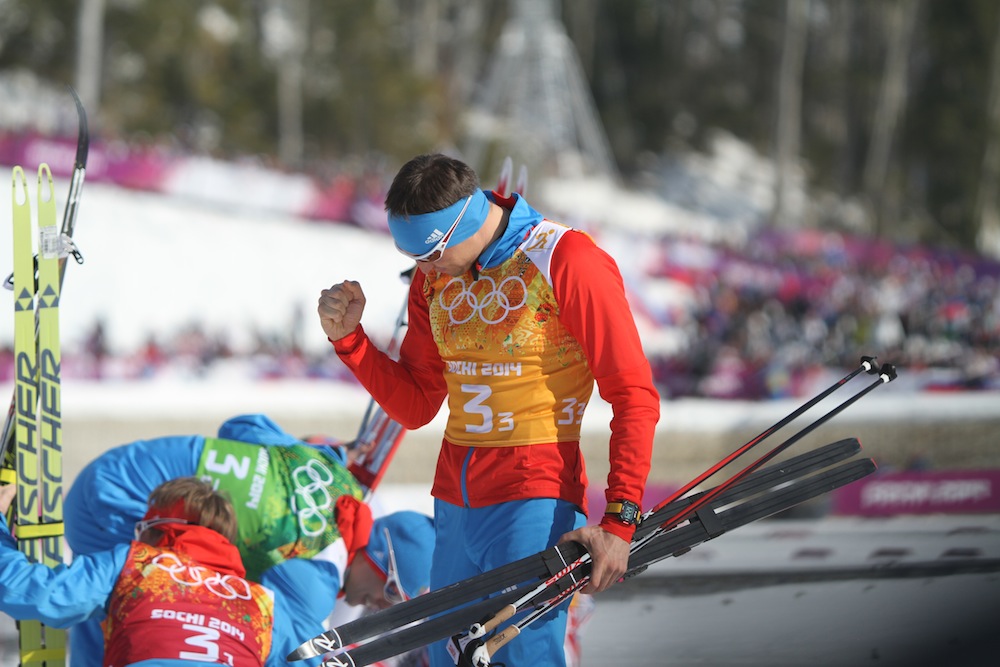
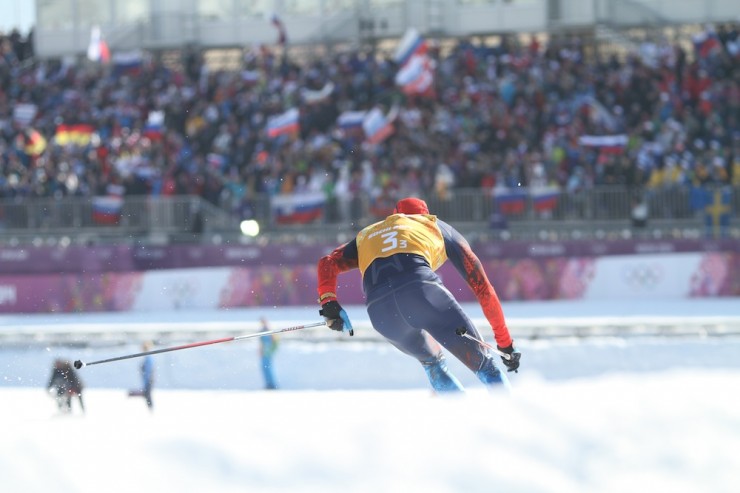
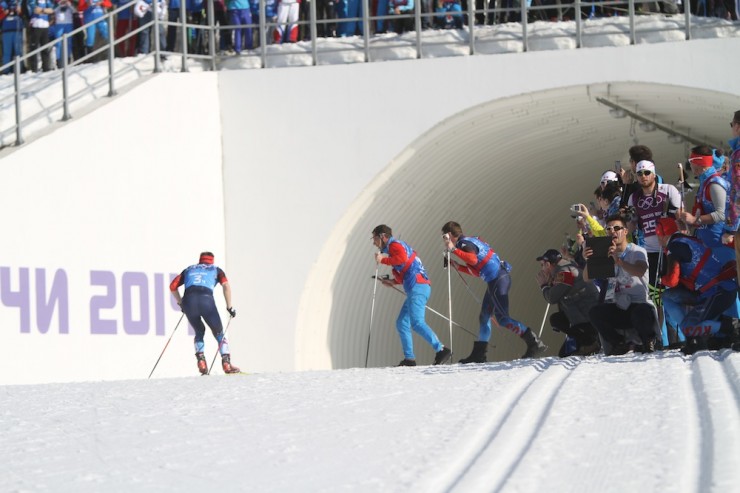
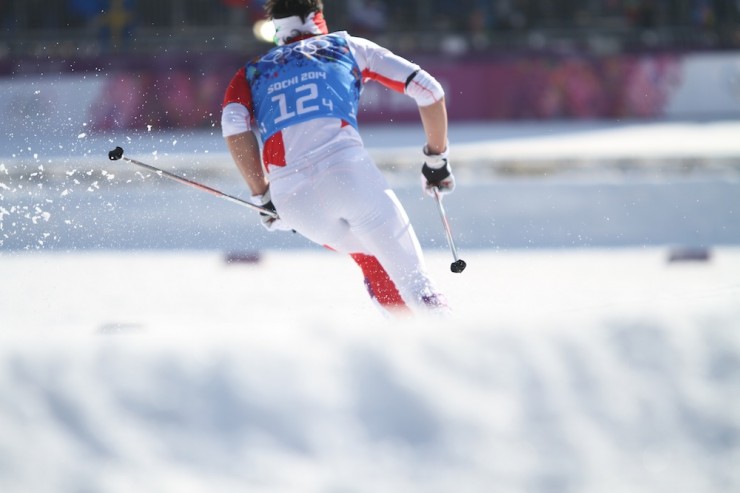
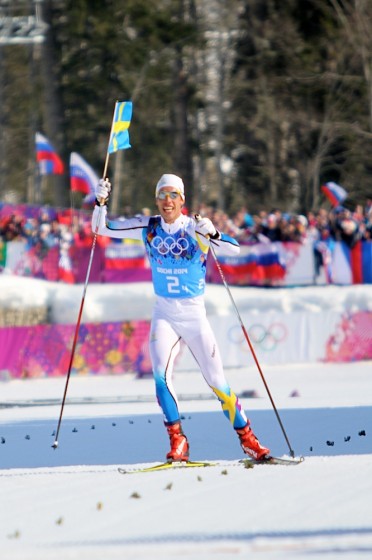
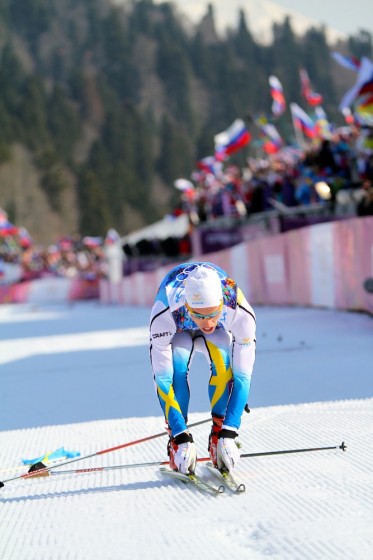
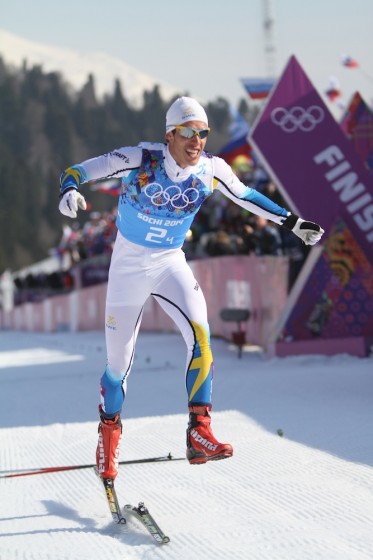
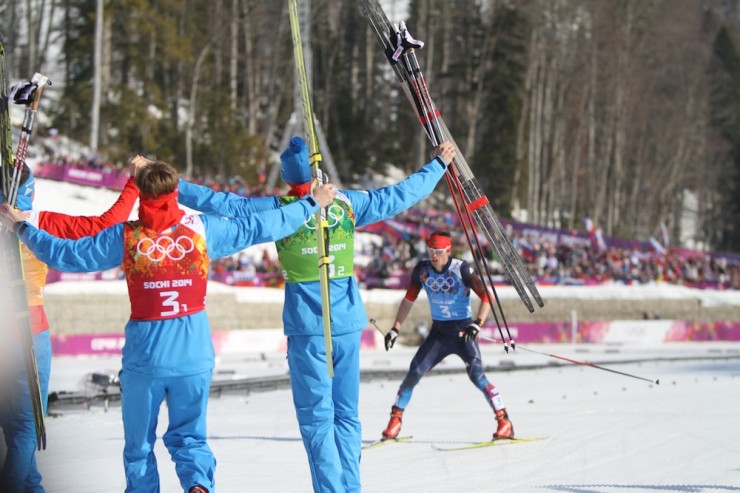
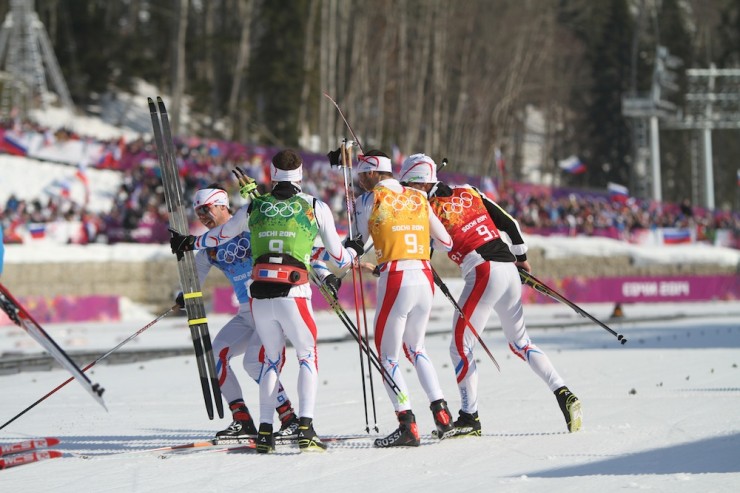
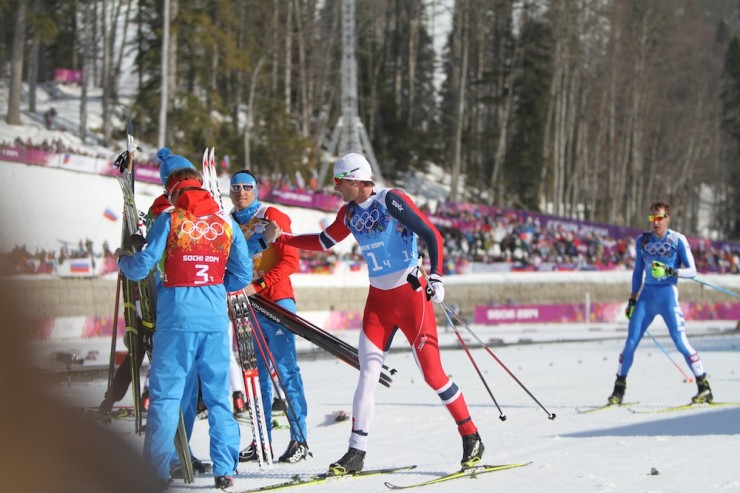
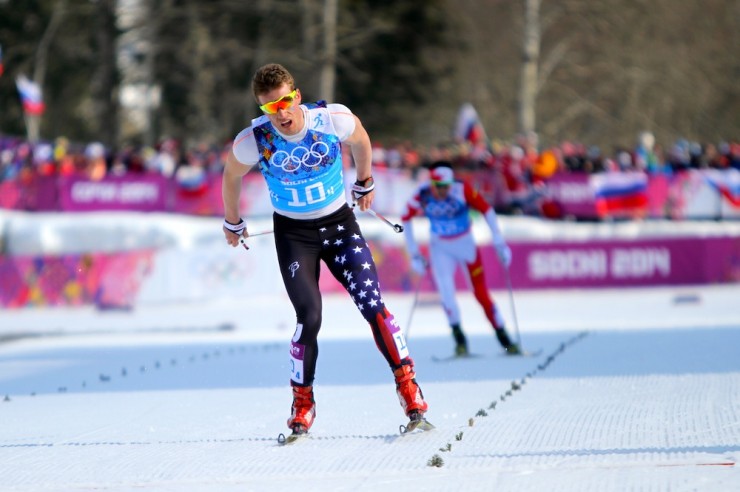
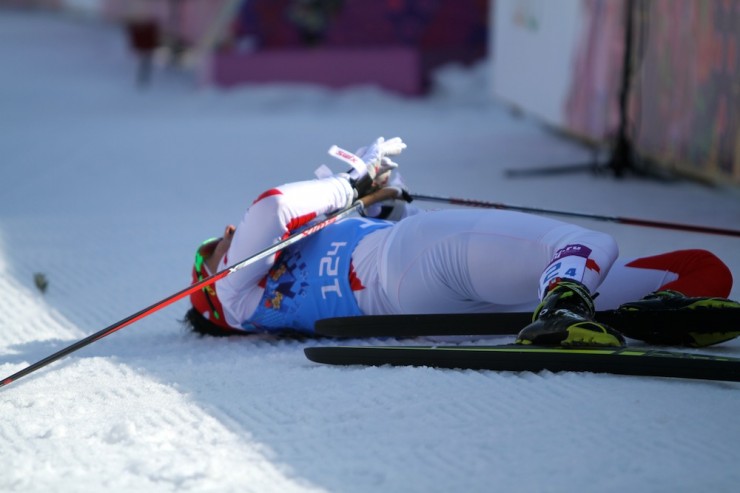
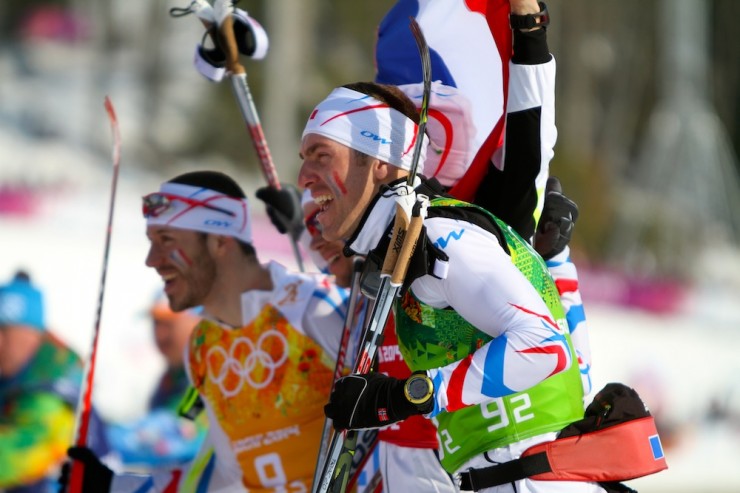
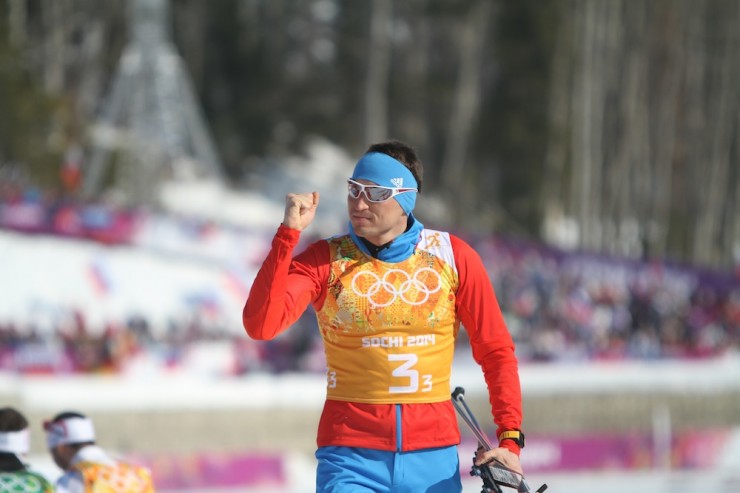
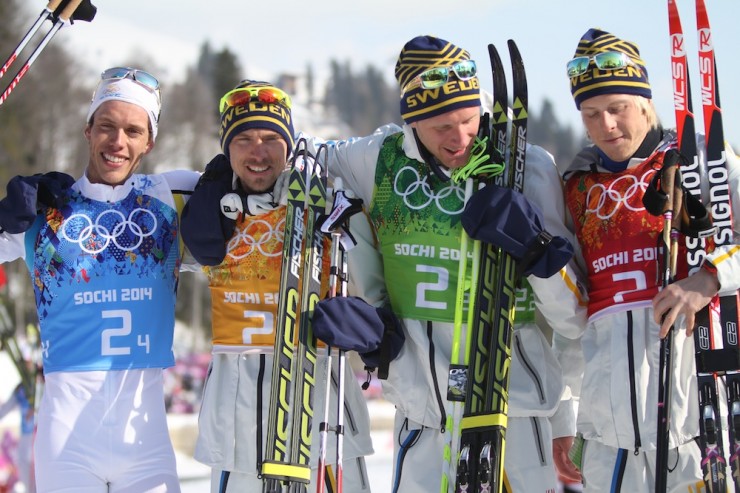
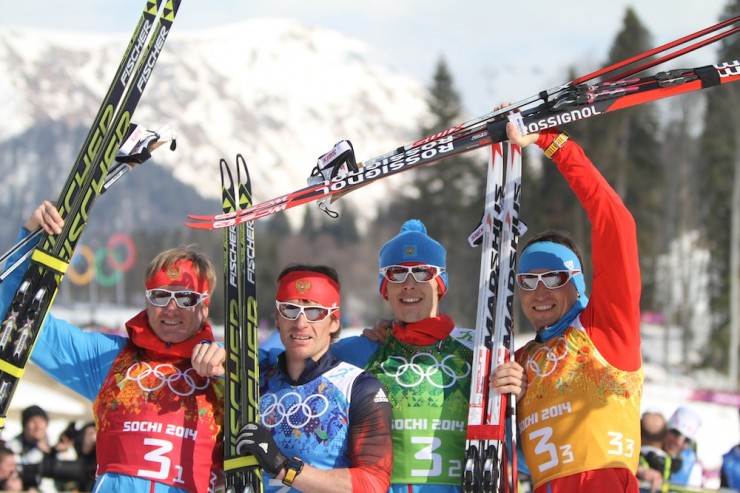
    SOCHI, Russia — Some of our favorite photos from the second half of the men’s 4 x 10-kilometer relay on Sunday at the Sochi Olympics, including Sweden’s Marcus Hellner literally jumping out of his skis and Russia’s Alexander Legkov tebowing after the finish.

  • Sweden Sweeps Sochi Olympic Relays; Russia Gets First XC Medal of 2014 Games

    Sweden Sweeps Sochi Olympic Relays; Russia Gets First XC Medal of 2014 Games


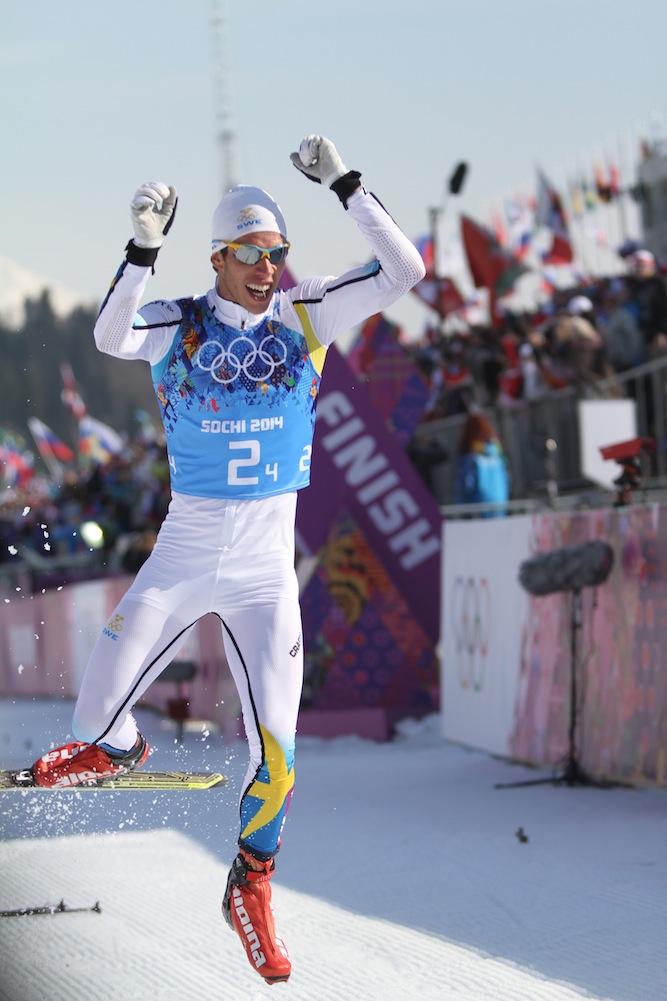
    Sweden's Marcus Hellner jumps out of his skis after anchoring his country to victory in the men's 4x10 relay at the Sochi Olympics.
    Sweden’s Marcus Hellner jumps out of his skis after anchoring his country to victory in the men’s 4×10 relay at the Sochi Olympics.

    FasterSkier’s coverage is made possible through the generous support of Rudy Project.

    SOCHI, Russia — All the buzz about the Laura Cross-Country Ski & Biathlon Center at the 2014 Olympics the last few days has been about how bad Norway’s skis have been — in both nordic and biathlon.

    On the flip side, not many asked the Swedes why they were finding success on the warm and slushy snow, that is until Sunday.

    After becoming the first country to win both the women’s and men’s Olympic relays in 42 years (the Soviet Union was the last nation to do so in 1972), the question became why are the Swedish cross-country skiers so fast.

    The oldest guy on Sweden’s 4 x 10-kilometer relay team, 34-year-old Johan Olsson replied that it was in large part thanks to their skis.

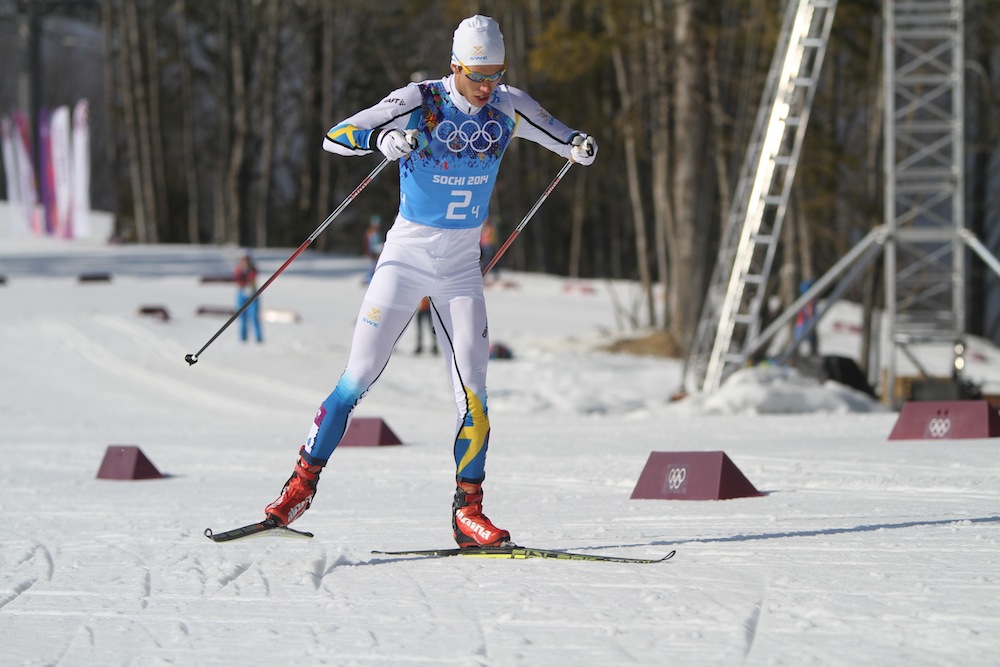
    Hellner skiing in Sunday's relay.
    Hellner skiing in Sunday’s relay.

    “I think the biggest reason is, of course, this kind of conditions here in Sochi,” the team’s third leg and three-time Olympian said in a post-race press conference. “Very, very warm conditions that make the waxing very tough that make big differences between the skis and technical teams. We have really succeeded here with the skis and that’s the part of the sport that gives us the speed that we’re standing on.”

    On Sunday, official race temperatures were listed just above 40 degrees Fahrenheit, but with intense sun shining brightly on the venue and its 3.3 k men’s course, it felt a lot warmer.

    The course had been salted and re-salted over the last few races, with warmer temperatures near 60 degrees late last week. Sunday was cooler but still a waxing nightmare for some trying to find the optimal skis for the first two classic legs.

    Sweden found it, and the rest was literally history.

    The defending men’s Olympic relay champions from 2010, Sweden repeated the feat of winning back-t0-back men’s relays like it did in 1984 and 1988. Sunday’s team skied away from Finland, Russia and France to do so, dropping Norway as well early in the race.

    Marcus Hellner anchored the win with a comfortable-enough gap to take a small plastic flag from his teammate Anders Södergren, who helped Sweden win gold in the last Olympic relay, at the top of the last climb before the finish. Hellner, who also anchored the 2010 team, waved it proudly as he skated into the stadium and finished without anyone else around him in 1:28.42.

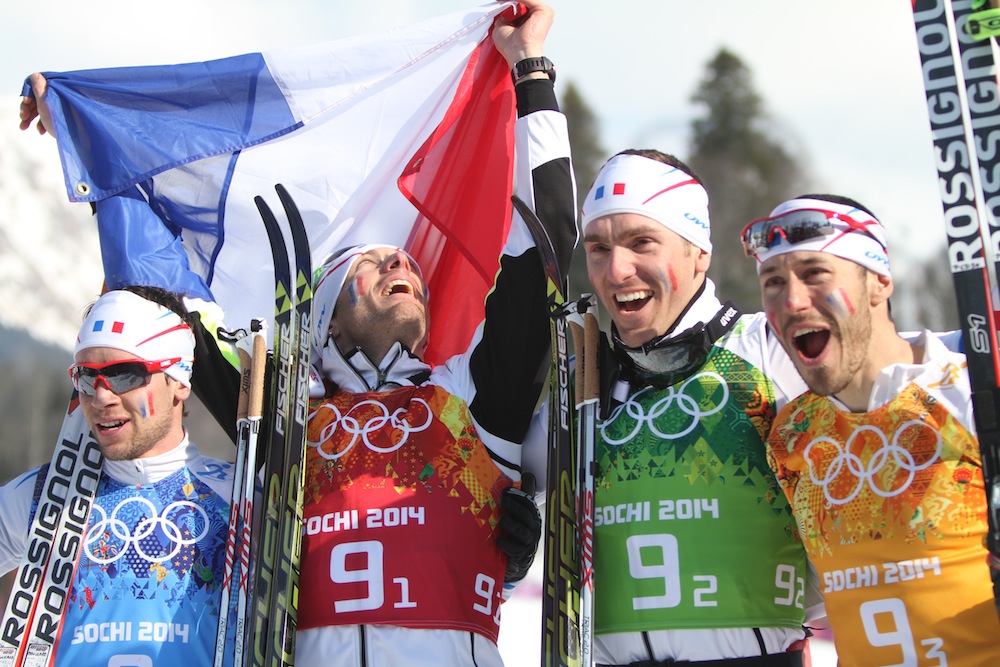
    Reaching down to eject himself from his skis, Hellner, 28, ran toward his teammates to celebrate his third Olympic gold. Maxim Vylegzhanin secured silver for Russia, 27.3 seconds later, outlasting France’s Ivan Perrillat Boiteux by 4.6 seconds to the finish.

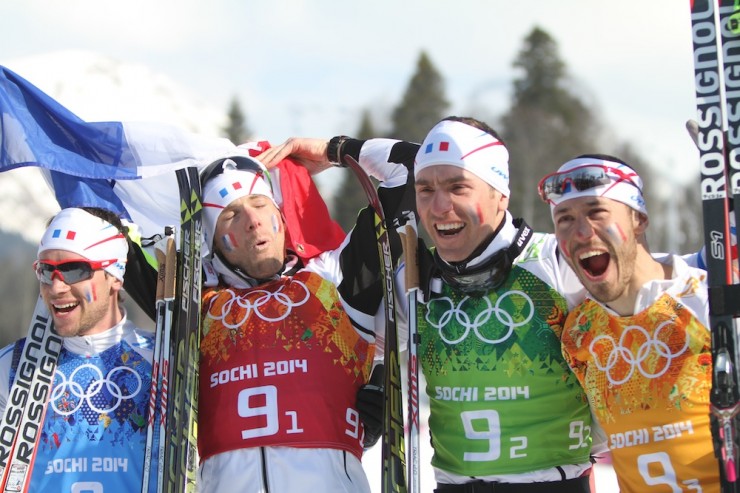
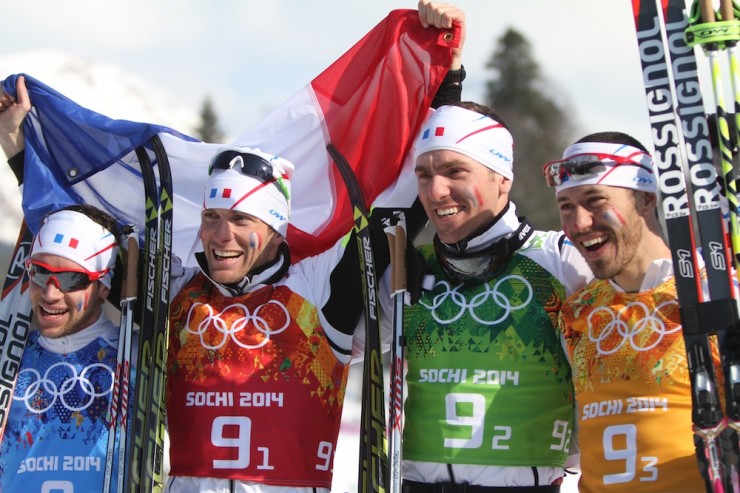
    For France, it was their nation’s 100th medal in the Olympics and their second-ever medal in cross-country (following Roddy Darragon’s silver in the 2006 Olympic sprint). For Sweden, it was another gold for three of the four original teammates from 2010,

    The french relay skiers celebrate their bronze medal in the men's relay.
    The french relay skiers celebrate their bronze medal in the men’s relay.

    including Daniel Richardsson.

    “It means a lot, especially in Sweden, the relays are really prestigious to win because it’s the team,” Olsson said. “We see also that our waxing team, they’re even more happy when the relay goes well. I think we should just focus on enjoying this moment … It’s a big thing to win on the most important day for the whole team.”

    The victory came even after the team’s newest addition, Lars Nelson, 28, fell early in the first 3.3 k lap of the race. In 12th of 16 teams halfway through the lap at 1.7 k, Nelson was up to fourth by the time he passed through the stadium.

    “Lars lost his ski, but after that, I saw him in the front of the pack and I saw that it was no problem for him,” said Richardsson, who shared the podium with Olsson two days earlier in the 15 k classic individual start. Olsson had placed second to Switzerland’s Dario Cologna, and Richardsson notched bronze.

    His teammate looked comfortable and “really strong,” he recalled.

    By the end of the first classic leg, Nelson tagged Richardsson in first, 0.3 seconds ahead of Finland’s Sami Jauhojärvi in second. Jean Marc Gaillard led off France in third, 9.6 seconds behind Nelson at the end of the first 10 k leg.

    The top three had already gapped the field by nearly 12 seconds, as Curdin Perl led the chase for Switzerland, tagging off to Jonas Baumann in fourth. Another 3.5 seconds bad, Dietmar Nöckler put Italy in contention in fifth, Eldar Rønning tagged Norway close behind in sixth and Russia’s Dmitriy Japarov came through the exchange within a second later in eighth.

    “Nelson impressed most,” Södergren told Aftonbladet, according to a translation. “It was most unexpected that he would try to [lead] in the first leg.”

    Yet Nelson not only fought his way back to the front of the 16-team pack on the second lap, but he tried to string out the group in doing so.

    “It was so impressive what he did,” Sweden’s Sara Lindborg said.

    The tactic worked as Finland’s Iivo Niskanen remained the only one capable of sticking with Richardsson on the second lap. The two tagged off together, 17.3 seconds ahead of Lukas Bauer in third.
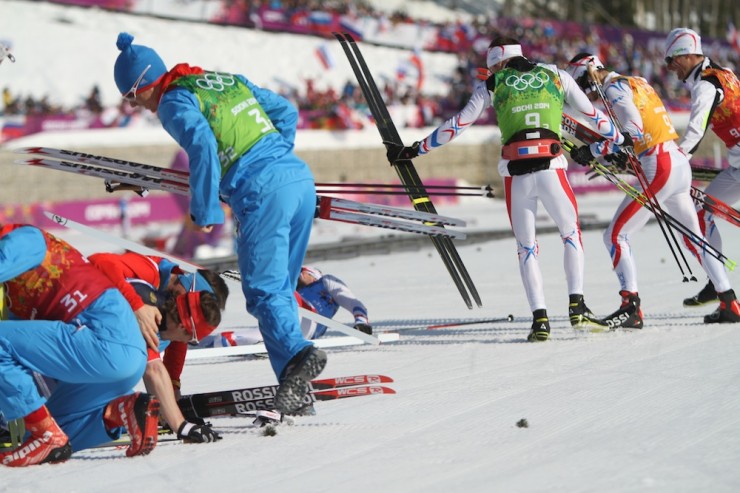
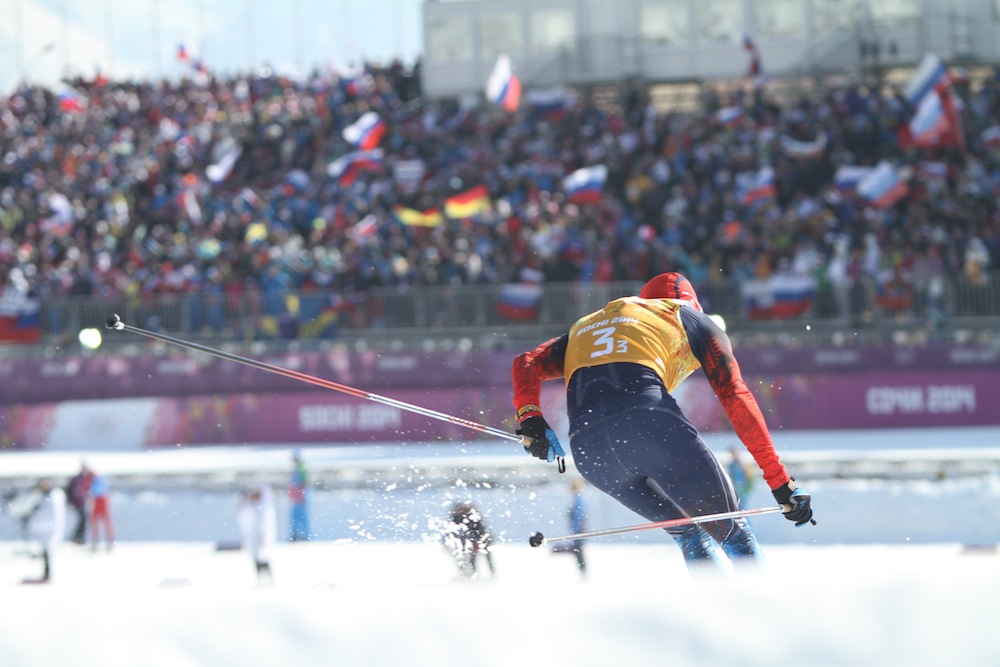
    Russia's Alexander Legkov entering the stadium on the third leg of the relay.
    Russia’s Alexander Legkov entering the stadium on the third leg of the relay.

    Bauer had a race of his own to get from seventh to third, picking off Italy’s Giorgio di Centa first, then Norway’s Chris Andre Jespersen. By his second lap, Bauer was up to fourth after passing Russia’s Alexander Bessmertnykh and leading him into the lap lanes. For the final time around the 3.3 k loop, the Czech focused on catching Maurice Manificat — the Frenchman who had stuck with the two leaders before falling 11 seconds off the pace by 8.3 k.

    “I saw him, that he’s losing and he’s very, very tired,” Bauer said. “I was maybe 10 seconds behind him. He was my motivation to overpass him for sure. When I overpassed him it was long moment because I had no energy.”

    “First I had in my mind that I’d ask him, ‘How is it going?’ Because my feeling was, this will kill him and after that I will have no problem,” he added. “But I have no chance to breath enough to ask him and after that I was focused only on last uphill.”

    Manificat finished 6.3 seconds later to send his teammate, Robin Duvillard in fourth. Bessmertnykh put Russia in fifth, another 17.7 seconds back and di Centa tagged Italy in sixth, just 0.4 seconds behind Russia.

    Meanwhile, the Norwegians had slipped to ninth, nearly 1:03 behind Sweden. Germany’s Axel Teichmann led Switzerland’s Baumann into the lap lanes in seventh and eighth, respectively, 55 seconds after Richardsson and 7 seconds ahead of Jespersen.

    From there on out, Olsson started to put the hurt on — like he’s been known to do (see: 2013 World Championships 50 k).

    Halfway through the first skate leg, the Swede skied away from Finland’s 26-year-old Lari Lehtonen over the top of the course. Seven seconds behind at 5 k, Lehtonen slipped to more than 22 seconds back at the end of the second lap — with saliva streaming out of his mouth as he ascended the last hill.

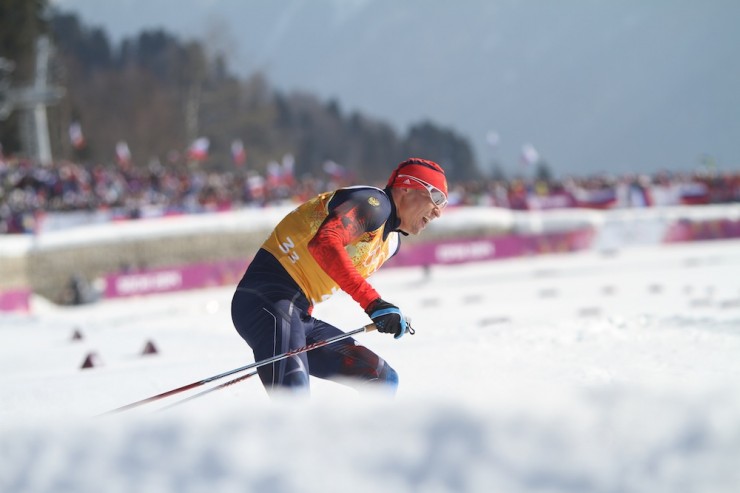
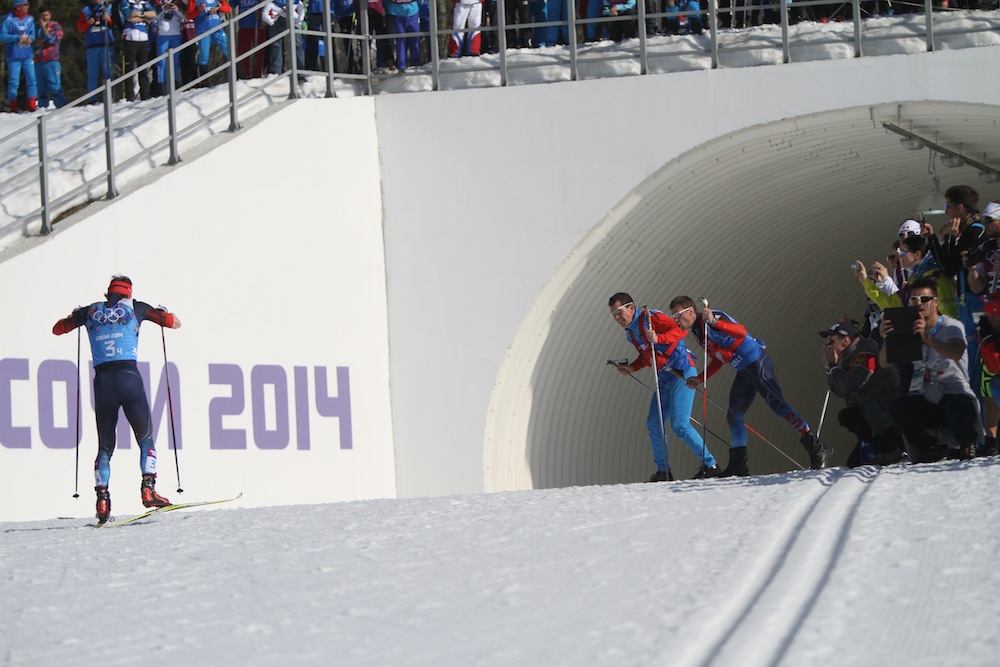
    With one lap to go in the third leg, Olsson continued to widen the gap and the Finn became a victim of a hard-charging chase pack. France’s Duvillard caught him first at the top of the climb out of the stadium, then Martin Jaks of the Czech Republic. Along with Russia’s Alexander Legkov and Norway’s Martin Johnsrud Sundby, the group skied right through him.

    Legkov continued to work his way up to second, ahead of Duvillard and Jaks, and came through the exchange 14.3 seconds after Olsson. Duvillard tagged another 4.3 seconds back in third, 23.5 seconds ahead of Italy in fourth.

    Suddenly, Russia had become a medal contender after skiing in fifth — and leading the largest chase pack — for the better part of the

    Russian team staff cheer on Maxim Vylegzhanin, the country's anchor.
    Russian team staff cheer on Maxim Vylegzhanin, the country’s anchor.

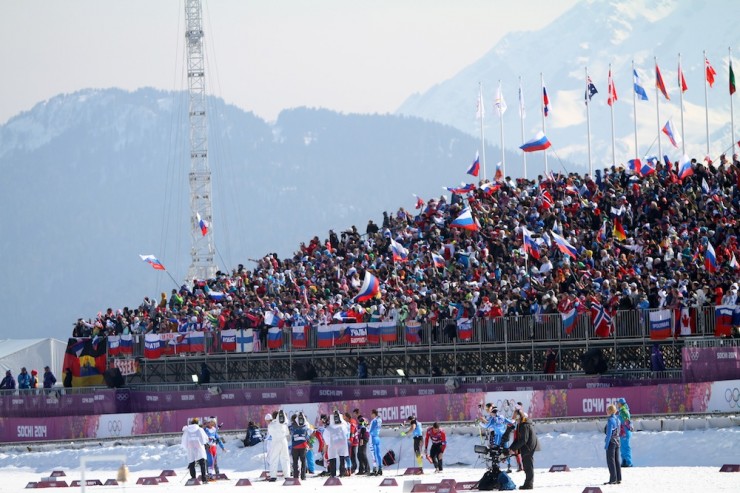
    race. Legkov clocked the fastest third leg to do so, and the Russian fans started to go wild as they lined the course with flags, noisemakers, and an amplified version of “Rus-y-ya!”

    Also Hellner set out less than 15 seconds ahead of Vylegzhanin, the tension began to build. Would he be able to hold the gap over the next three laps on an ever-softening course?

    By the end of the first loop, the answer became pretty clear. Hellner was extending his lead over not only Russia, but France as well, with Perrillat Boiteux more than 30 seconds back in third.

    Less than 2 k later, Hellner was 30 seconds ahead of Legkov and had a nearly 40-second margin with one lap to go. Meanwhile, Perrillat Boiteux struggled to hang onto bronze with Norway’s Petter Northug gaining from behind. Northug had gone from sixth to fifth with the third-fastest anchor leg.

    But France held on, finishing 31.9 seconds behind Sweden and 37.8 ahead of Norway in fourth (+1:09.7).

    Hellner skied up the last killer climb without anyone testing his grit, glancing back near the top then grabbing the flag from his teammate.

    “I was really focused during the whole leg and I tried to not think so much about the gold,” Hellner said. “I suppose it was when I saw Anders with the flag that I was absolutely sure and I could enjoy on my way down to the stadium and enjoy the teammates that I have.”

    At the finish, they all celebrated together: another gold for Sweden in one of their most successful Olympics to date.

    “I tried to make some good-looking show there at the end,” Hellner told Aftonbladet, with a laugh. “I did not fall.”

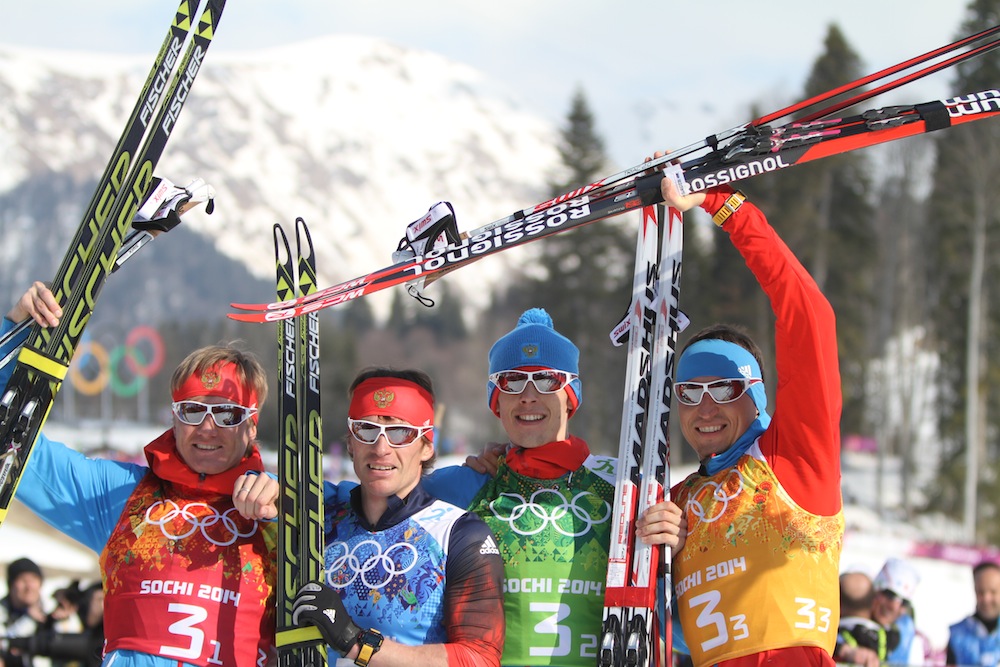
    Russia captured its first medal in eight races at its own Olympics, and President Vladimir Putin was in the stands to watch it happen. Bessmertnykh said the team wasn’t aware of his presence until after the race.

    “When I finished my lap, I looked at the [big] screen — I saw him close up on the screen,” he said through a translator. “We were not warned about it. Certainly we were really pleased the Russian president wanted to watch our competition so we are really grateful to him.”

    The Russians celebrate their silver medal.
    The Russians celebrate their silver medal.

    Legkov said the day turned out exactly as he had envisioned it — with a medal — even after breaking a pole early in his skate leg.

    “I was really anxious after that,” Legkov said through a translator. “That’s why my responsibilities grew even harder.”

    Vylegzhanin had initially tried to catch Hellner on the first lap, but once he was halfway though the second loop, he reevaluated.

    “After that it was a tactical struggle,” Vylegzhanin said through a translator. “I started fighting for second place.”

    France was all smiles after the race with its first-ever relay medal. Gaillard said it was especially meaningful after so much speculation and pressure from the media to win medals, and with most of its hopes pinned on biathlon and nordic combined.
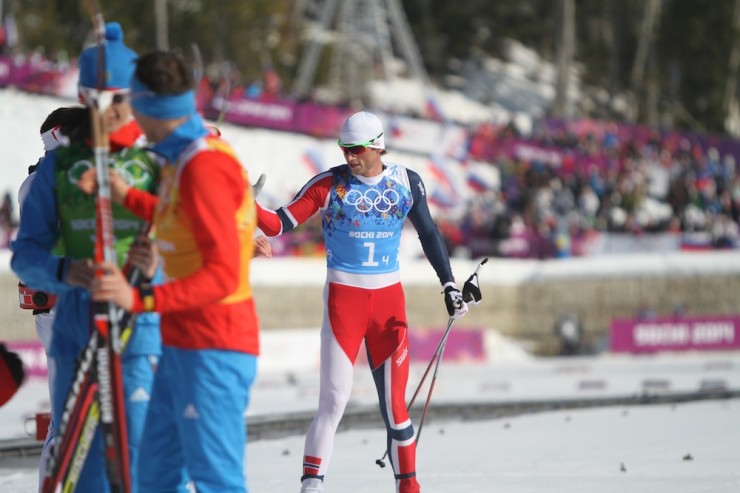
    “There wasn’t much talk about the cross-country team,” he said. “We are all friends … and for us, for the French sport, this is a great day for skiing.”

    “I’ve never cried from joy before,” Manificat tweeted on Sunday night, according to a translation. “This relay medal is the best thing our team has ever done!”

    — Nat Herz contributed reporting

    Results

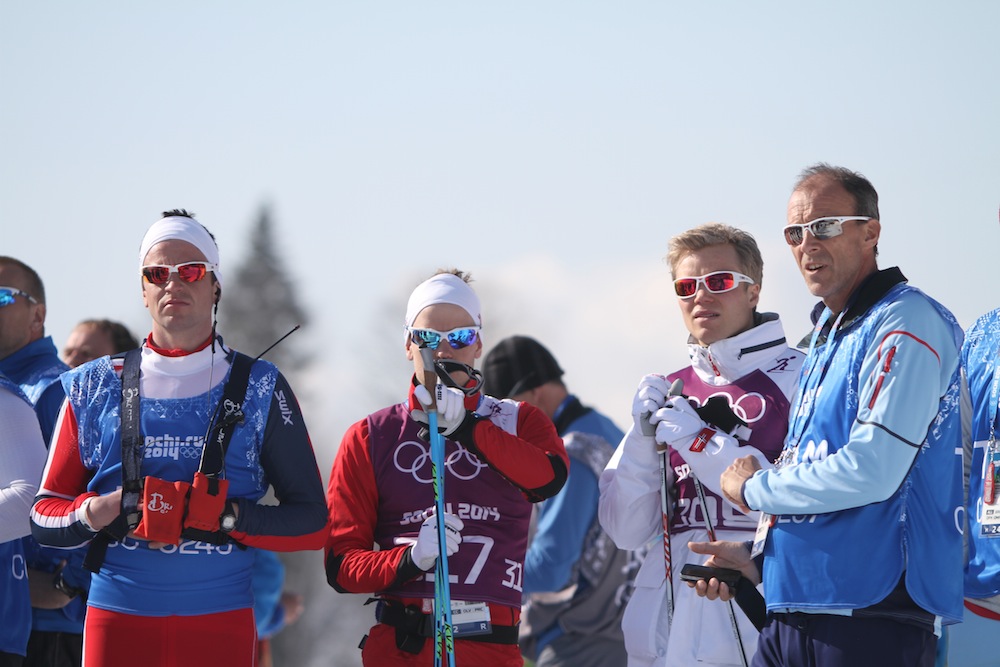
    A group of dejected Norwegians watching the men's relay.
    A group of dejected Norwegians watching the men’s relay.