Tag: Ivan Yakimushkin

  • Bolshunov collects third gold medal while Krüger rebounds to bronze post-COVID; Patterson historic 8th place for USA

    Bolshunov collects third gold medal while Krüger rebounds to bronze post-COVID; Patterson historic 8th place for USA

    This World Cup coverage is made possible through the generous support of Marty and Kathy Hall and the A Hall Mark of Excellence Award.  To learn more about A Hall Mark of Excellence Award or to learn how you can support FasterSkier’s coverage please contact info@fasterskier.com.

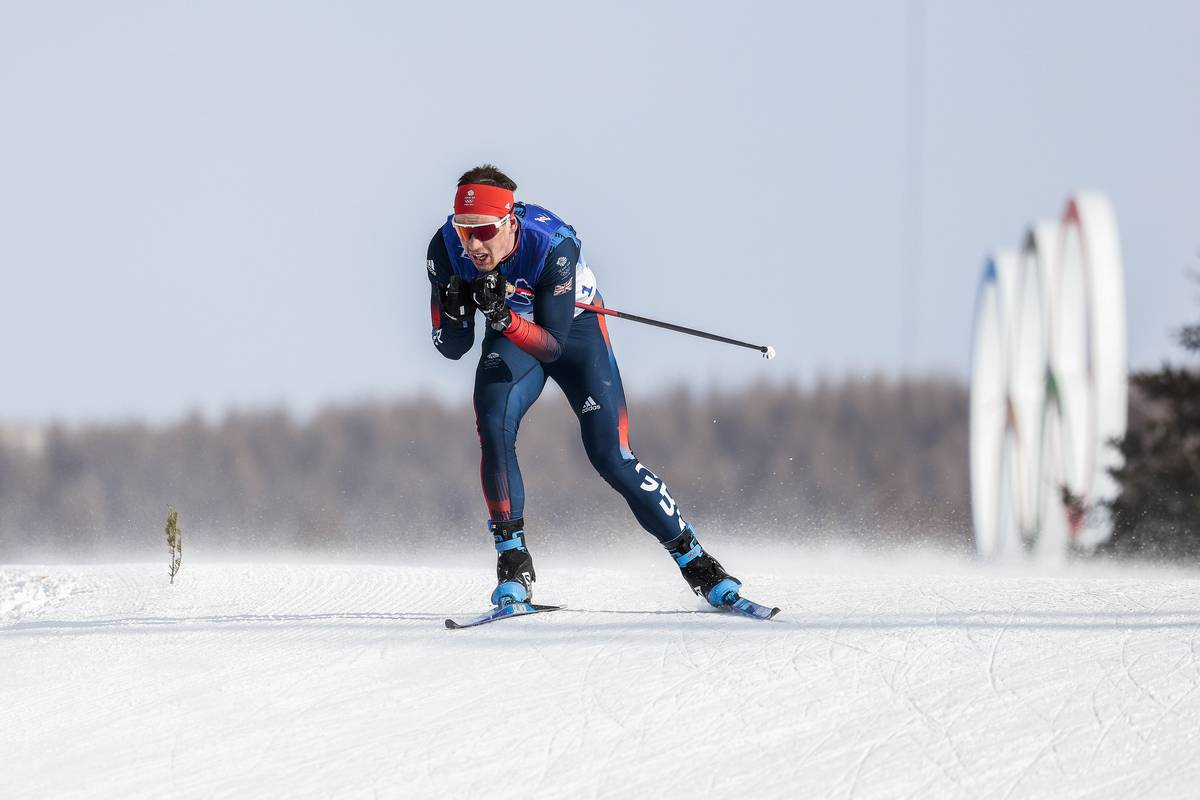
    There were a number of stories to unpack during the men’s 50-kilometer mass start free, which was changed last minute to 28 k due to extreme weather conditions in Zhangjiakou. You’ve got Alexander Bolshunov leading the charge to collect a third gold medal of the Games, continuing his streak of nine Olympic medals in nine Olympic appearances. Bolshunov was followed by his teammate Ivan Yakimushkin, with all four members of the Russian Olympic Committee (ROC) finishing in the top six, interrupted only by two Norwegians, Simen Hegstad Krüger and Sjur Røthe, the first of whom earned bronze in his first Olympic appearance following a COVID-19 detention in a hotel room in Seiser Alm, Italy. 

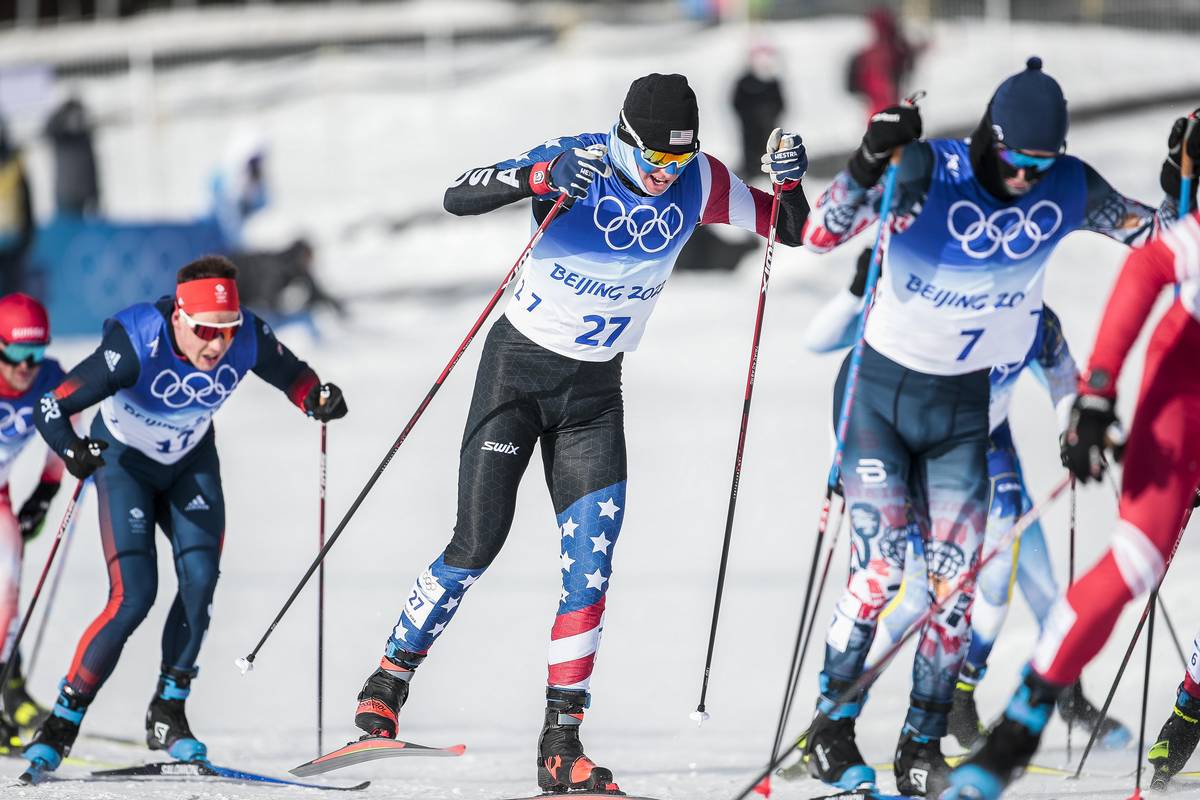
    But let’s get one key story to the front off the bat: The only American on the start list for the final men’s event of the 2022 Beijing Olympic Winter Games was Scott Patterson, and he skied to eighth place, just 26.9 seconds shy of a medal. It’s the second best result in American men’s cross country ski history, only surpassed by Bill Koch’s silver medal in 1976. That’s the best result in almost 50 years. 
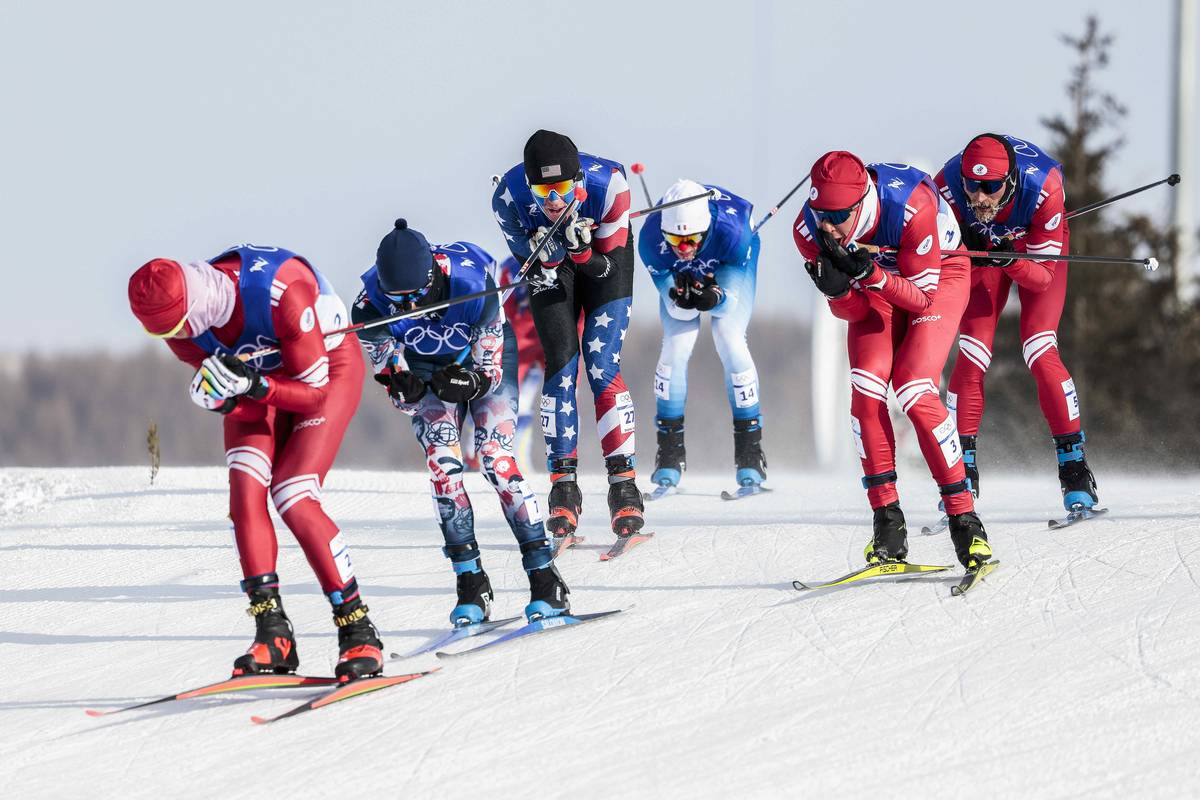
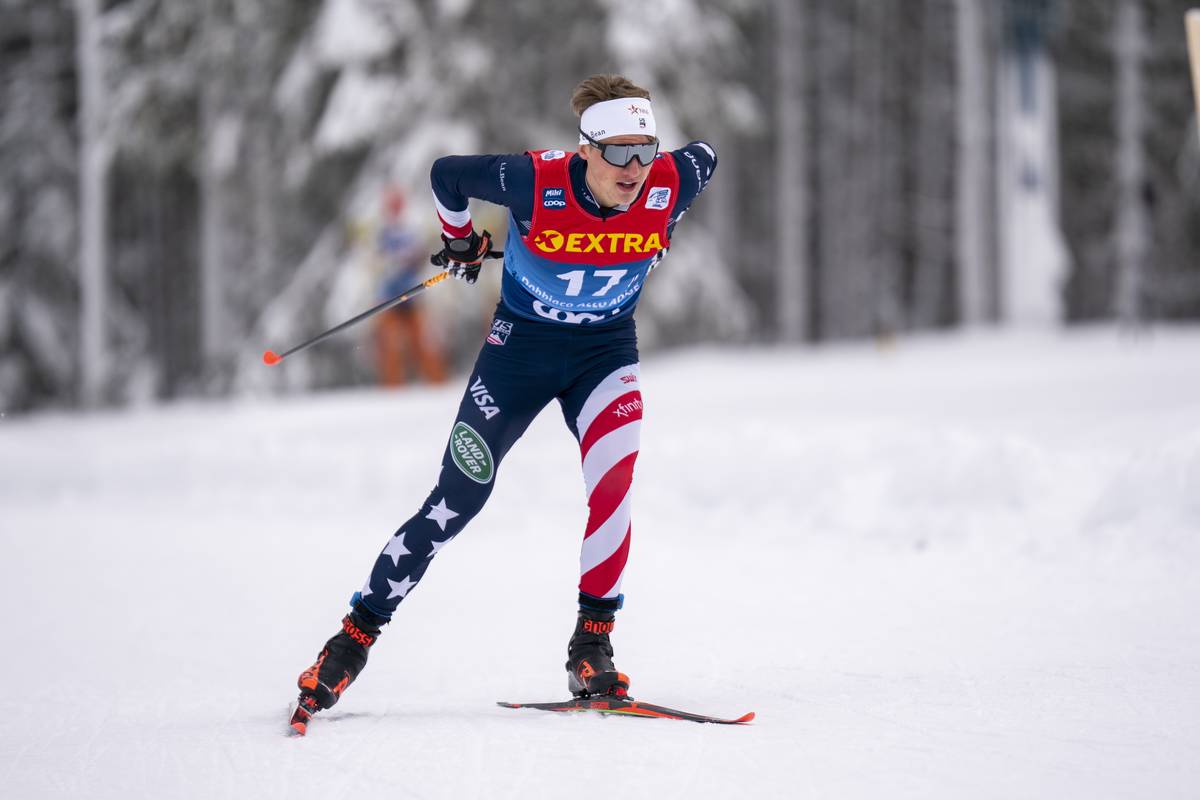
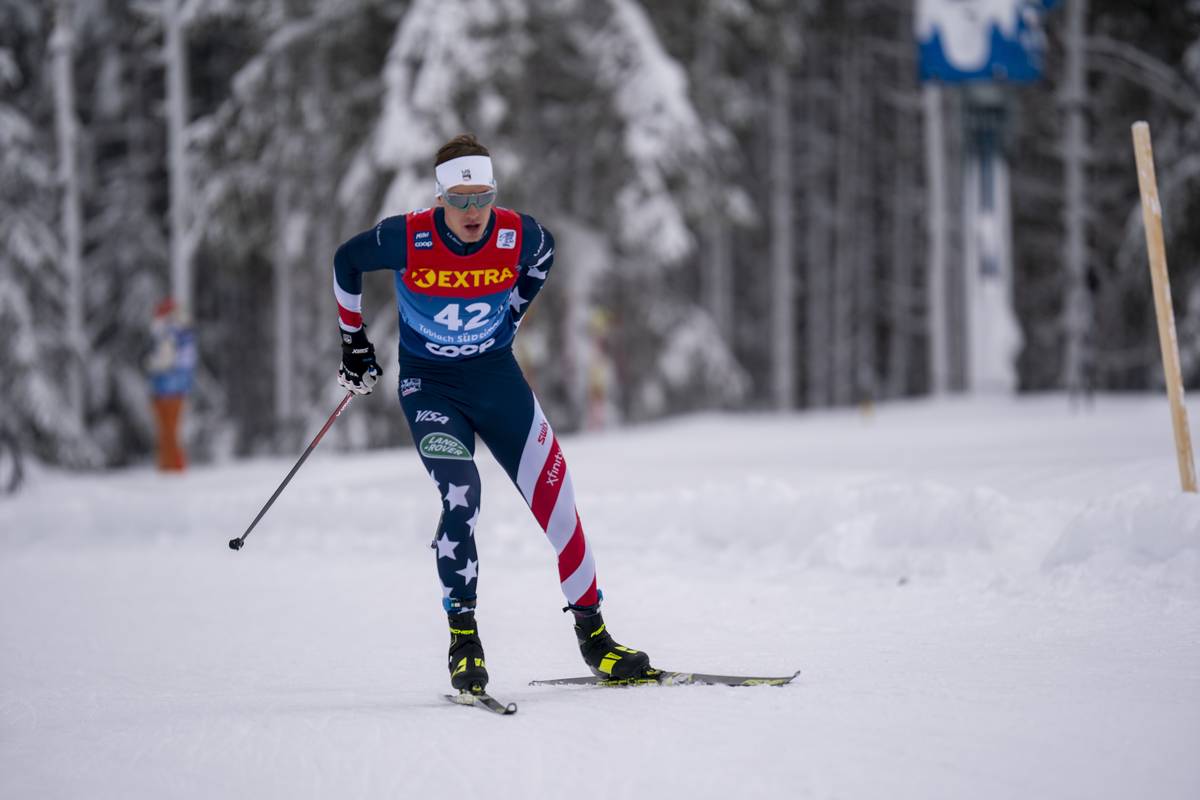
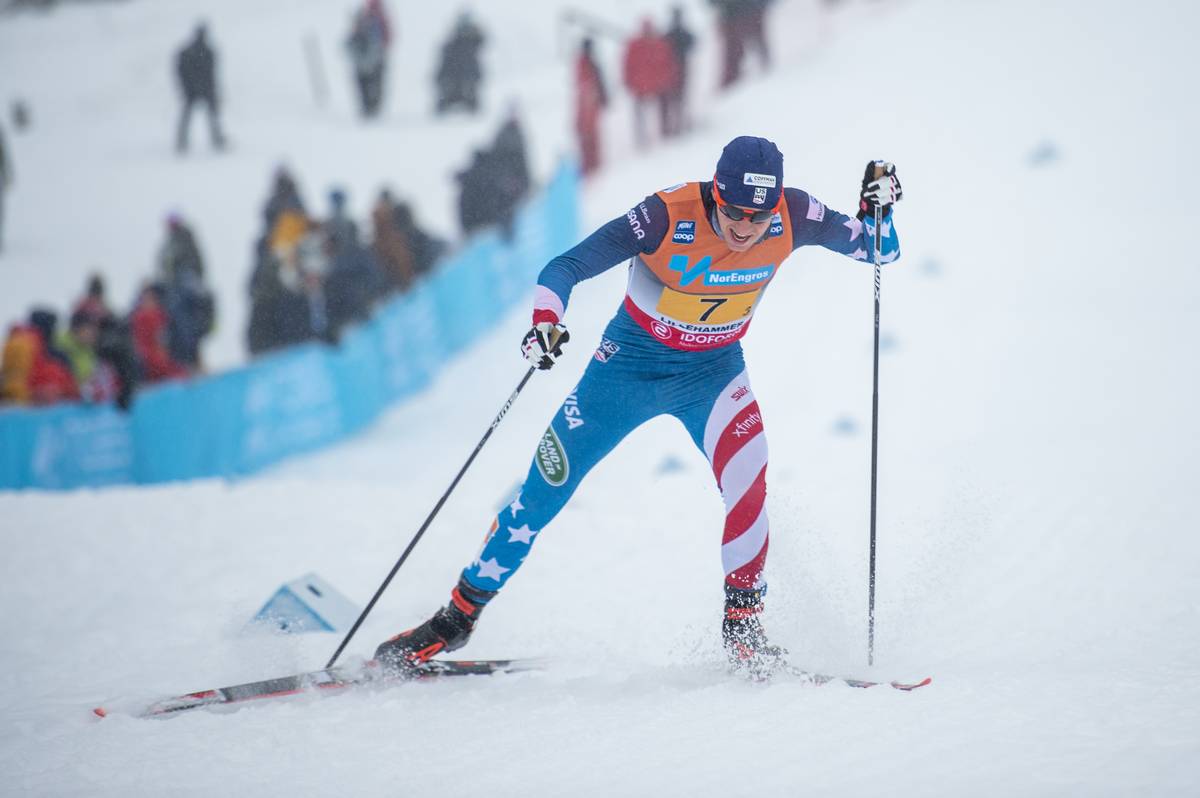
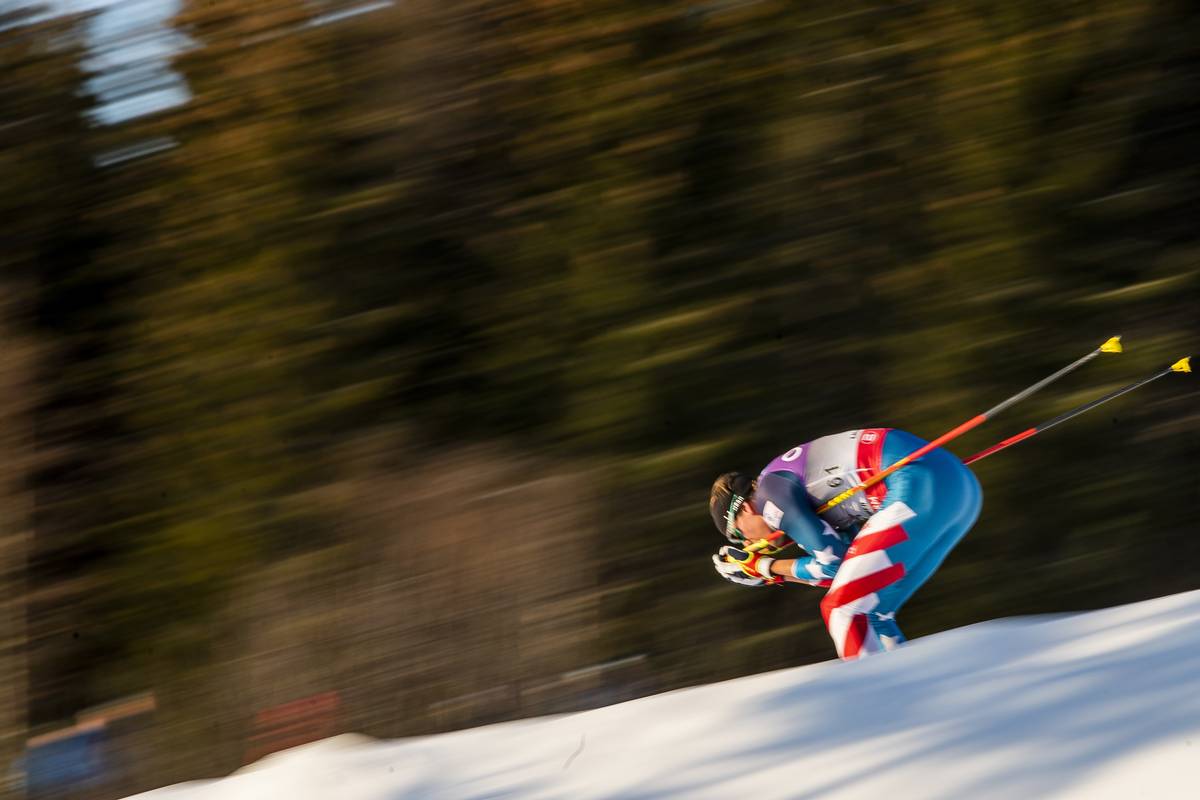
    Scott Patterson tucks into the lead group, on the tails of Alexander Bolshunov (ROC) and Sjur Røthe (NOR). (Photo: NordicFocus)

    Let’s rewind.

    The news of the change in time and distance arrived just hours before the start of the race, with the following message from the organizers: “Due to strong winds and the resulting extreme conditions on course, the distance of the originally planned 50km will be shortened to 30km. The decision was taken in regards to the athletes safety, to reduce the time of exposure of athletes in extreme conditions.”

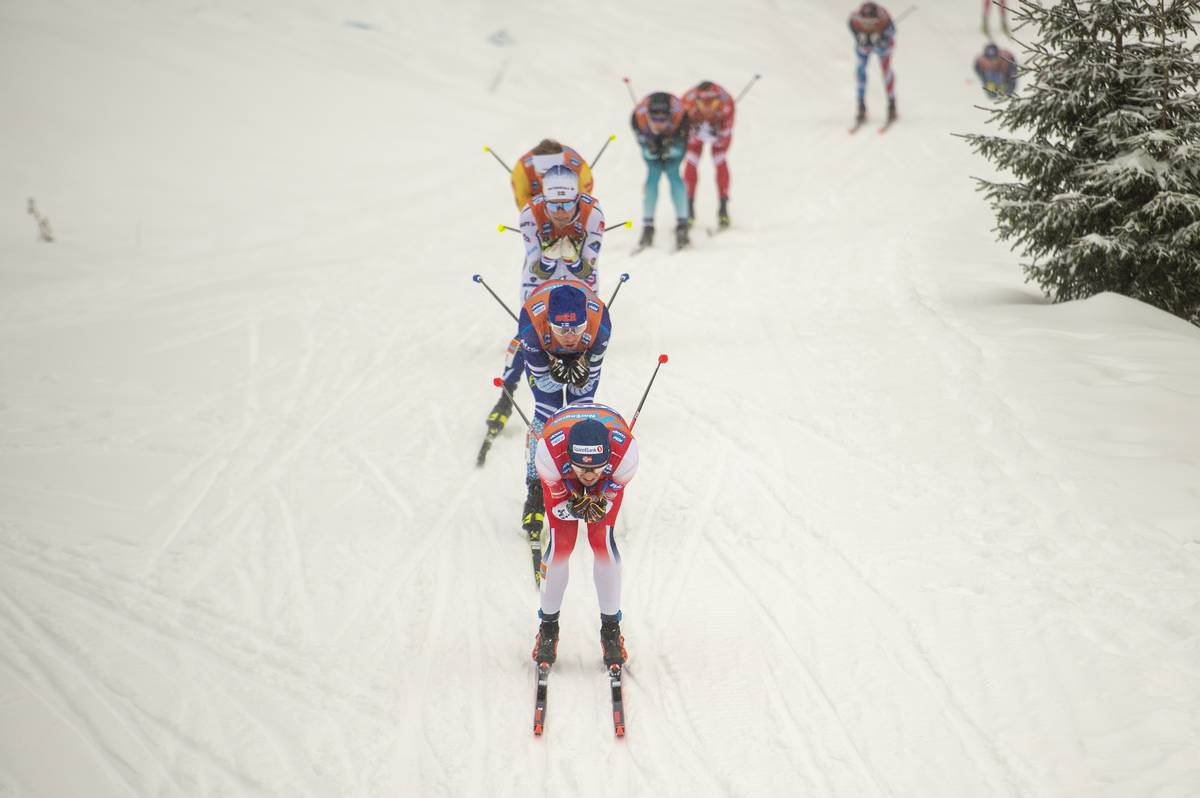
    While there were various opinions on this change, which we’ve covered separately, there’s no getting around the fact that the race distance was slashed nearly in half. Nonetheless, as the lead group moved in and out of the wind, finding shelter on the leeward side of hills and under the protection of treed sections, the four lap course skied like a long-distance event. 
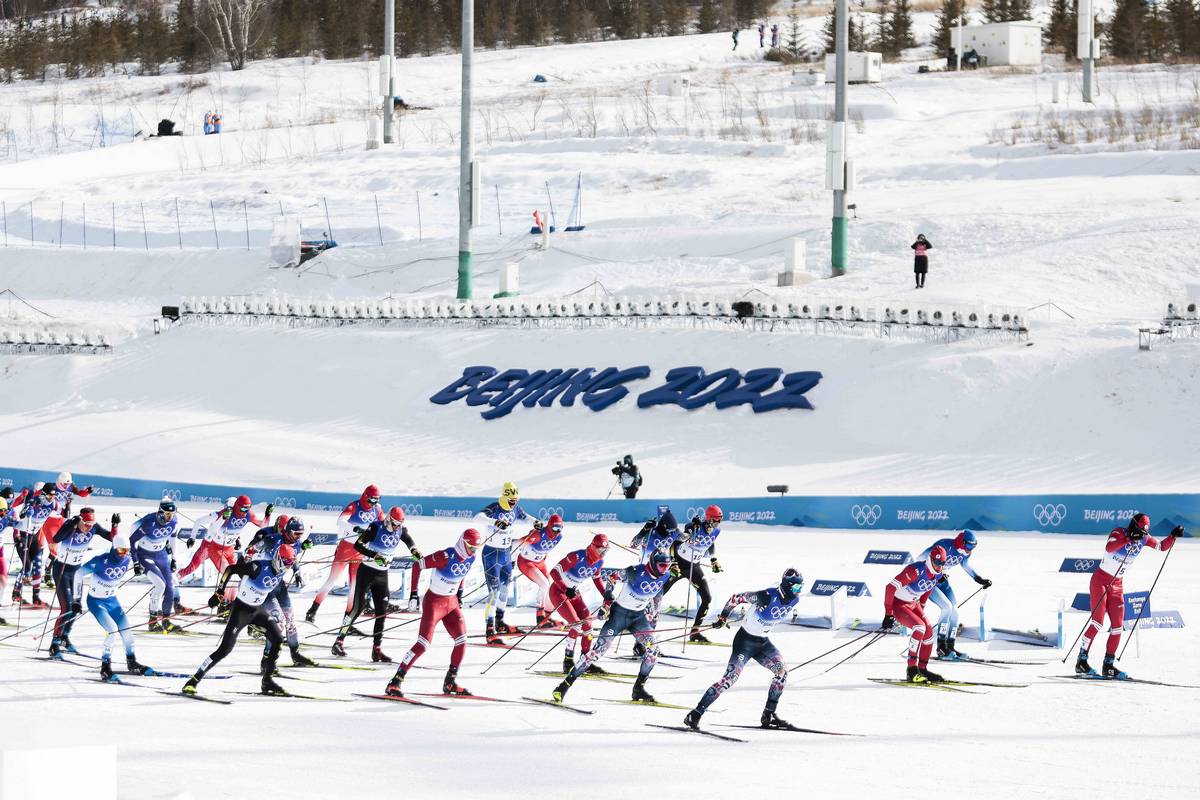
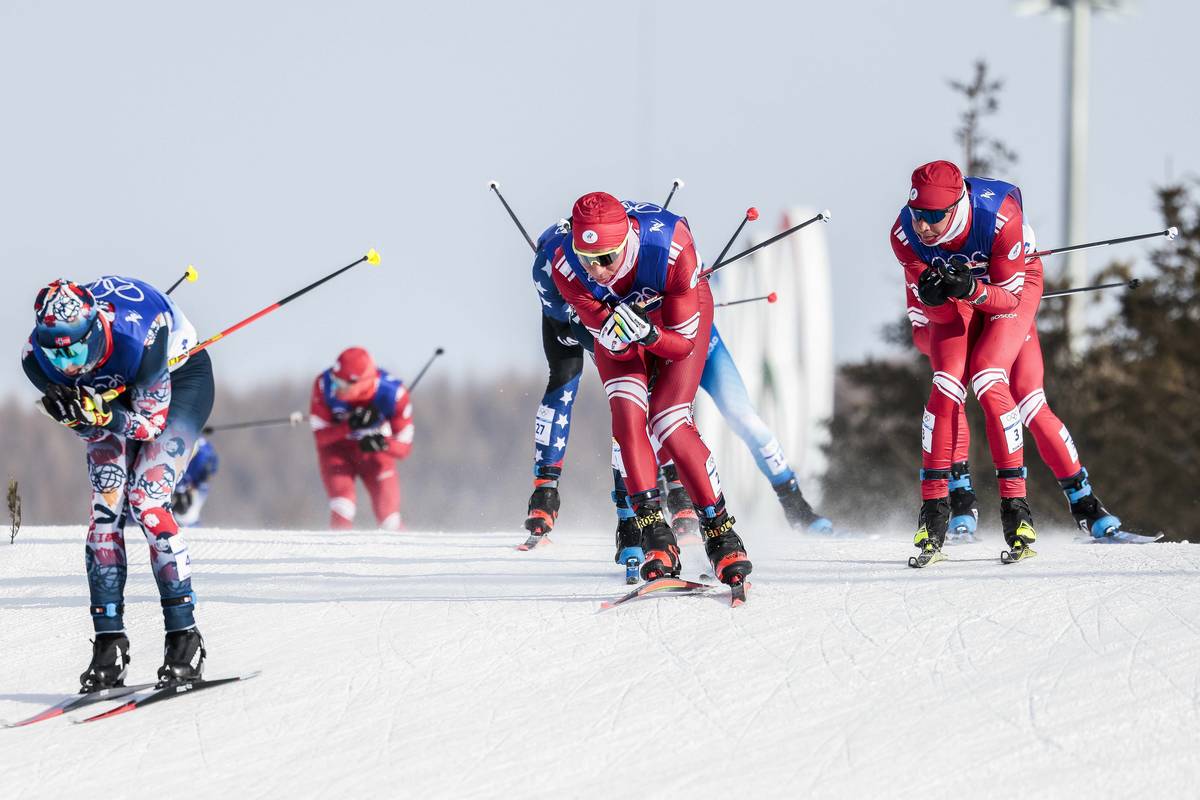
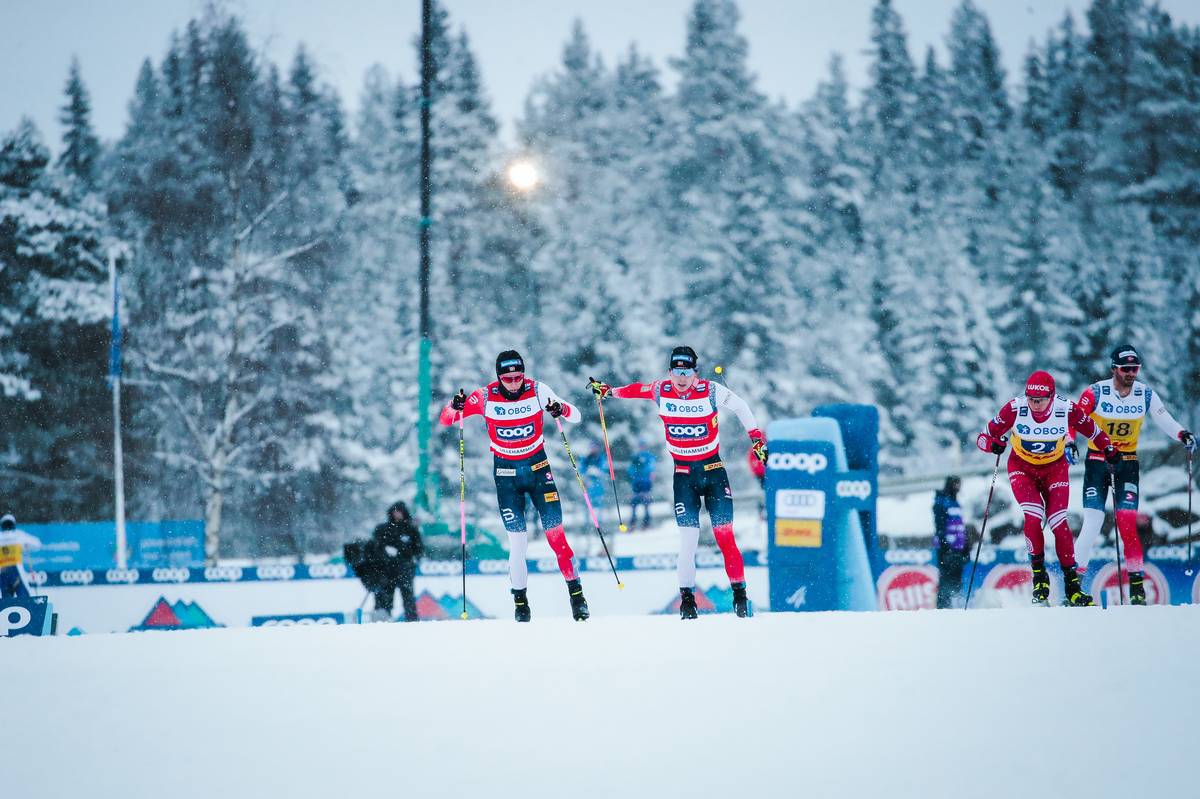
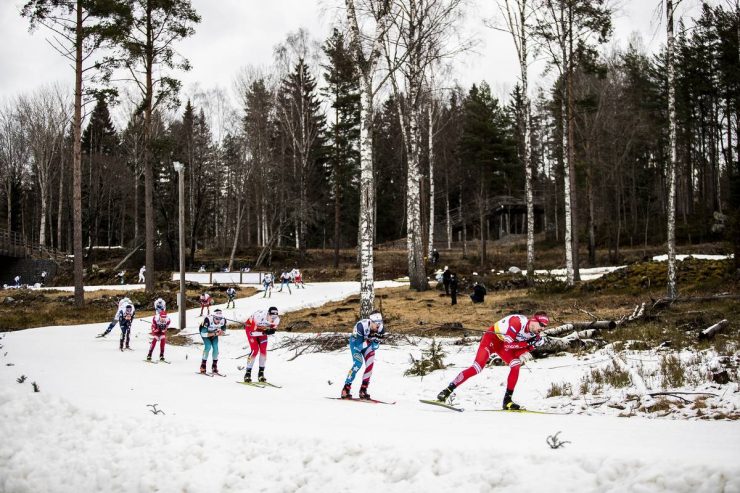
    Shortened due to extreme weather, the men’s 28 k mass start freestyle is underway in Zhangjiakou. (Photo: NordicFocus)

    At the end of the first lap, the top-30 were separated by less than five seconds, thinning to a 13-man pack by the end of the second lap, and a group of 10 by the end of the third, with an 11 second gap to the first chase group.  

    Perhaps the only truly noteworthy moment at this point in the race was the departure of Norway’s Johannes Høsflot Klæbo, who won gold in both sprint events – the individual freestyle and the classic team sprint – while also collecting a silver medal in the men’s relay and bronze in the 15 k classic. Klæbo later reported that he was struggling with a stomach illness and had spent more of the night prior to the race in the bathroom than he had been sleeping.

    “I thought I would’ve regretted it if I didn’t give it a try but now I’m standing here and it didn’t work out on the whole,” Klæbo told the media.

    He said it was “sad” pulling out of the race, but will focus on leaving the Games with his best Olympic distance results.

    “I’ll definitely bring with me what’s been positive. What makes it feel more annoying is that my shape has felt better and better and I’ve actually felt that I’ve had a good energy today too. Then the stomach started to speak up and then it got very far to make it to the finish line.”
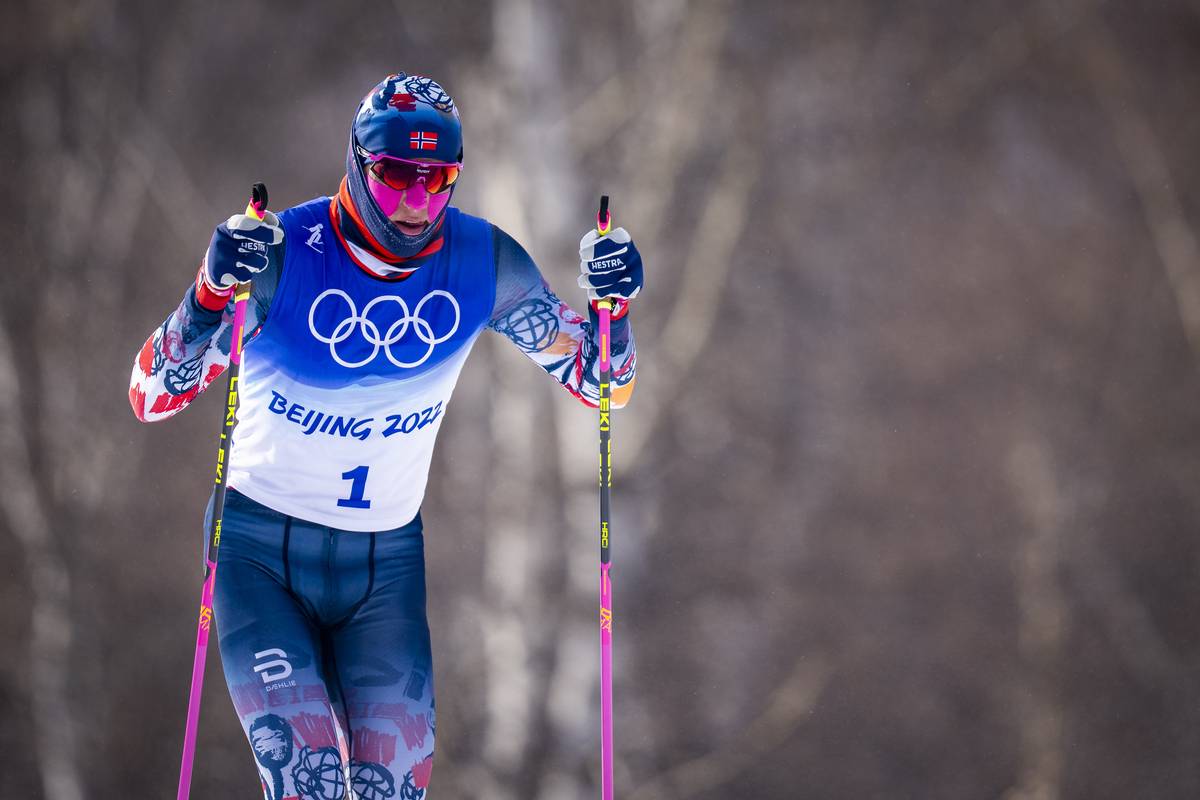
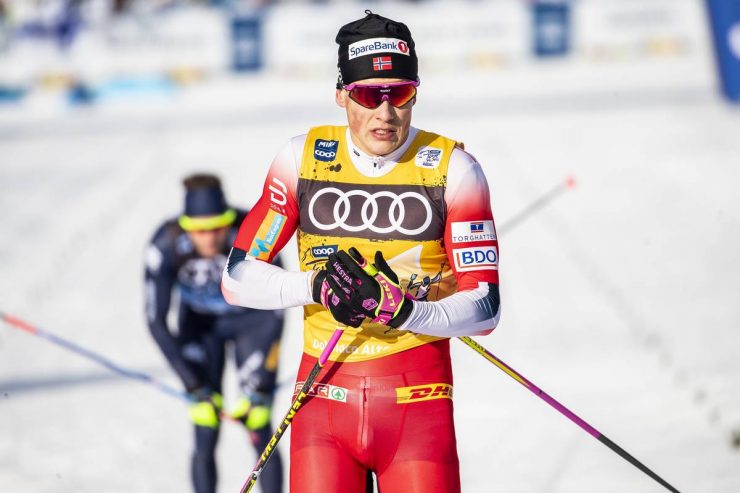
    Johannes Høsflot Klæbo (NOR) dropped out of the 28 k mass start free after his third lap. (Photo: NordicFocus)

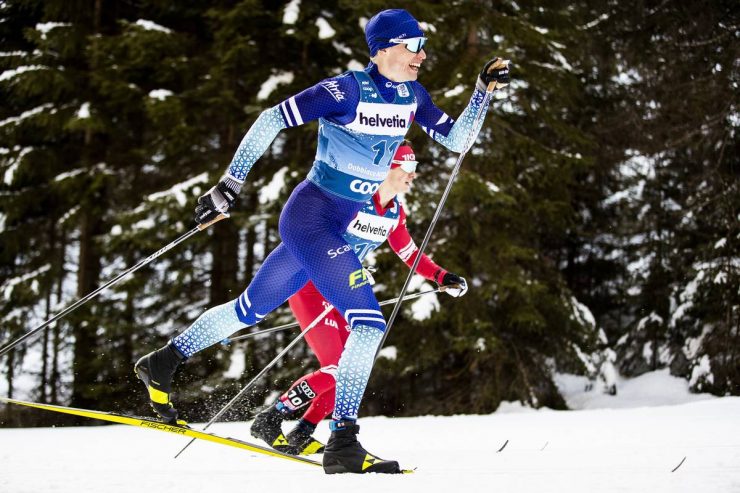
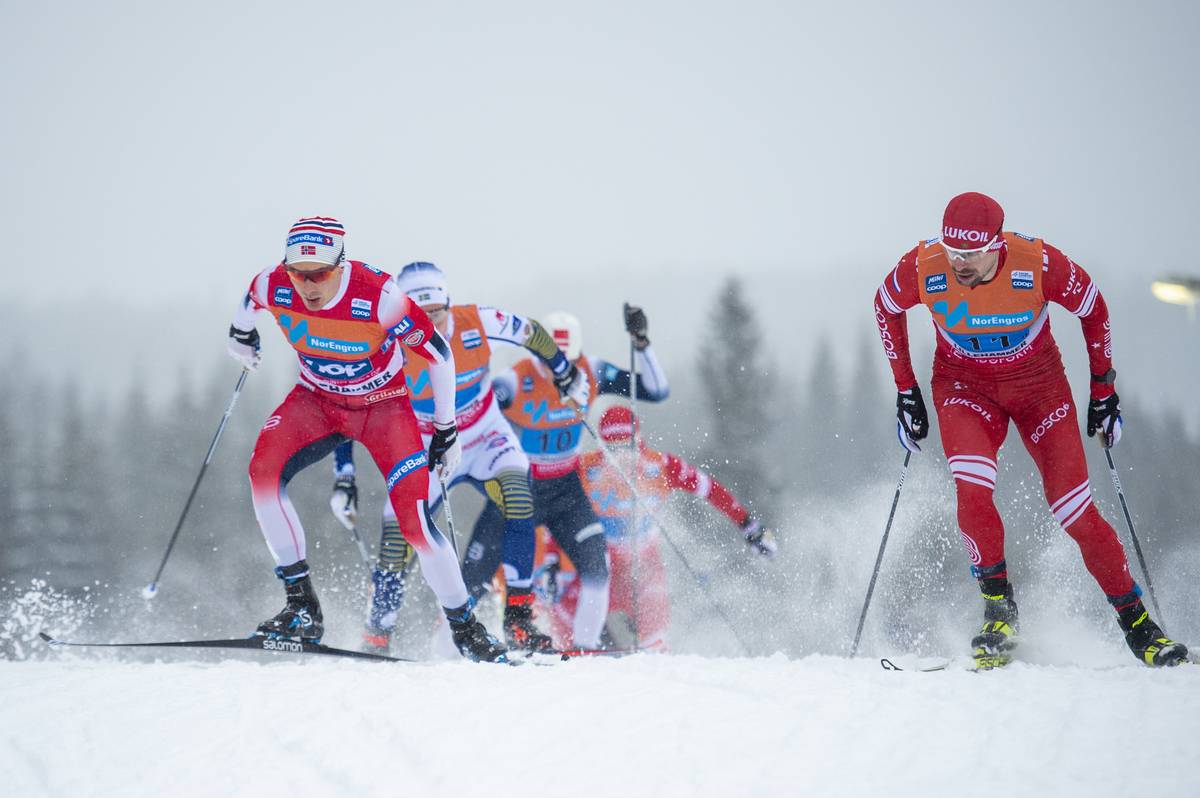
    The race for medals truly began in the final lap. With Bolshunov and Krüger each surging to thin the lead group, Sweden’s William Poromaa and France’s Maurice Magnificat began to fall off the back. Patterson was tucked into seventh, working with Clement Parisse (FRA) and Denis Spitsov (ROC) to maintain contact and respond to the accelerations of the front. 
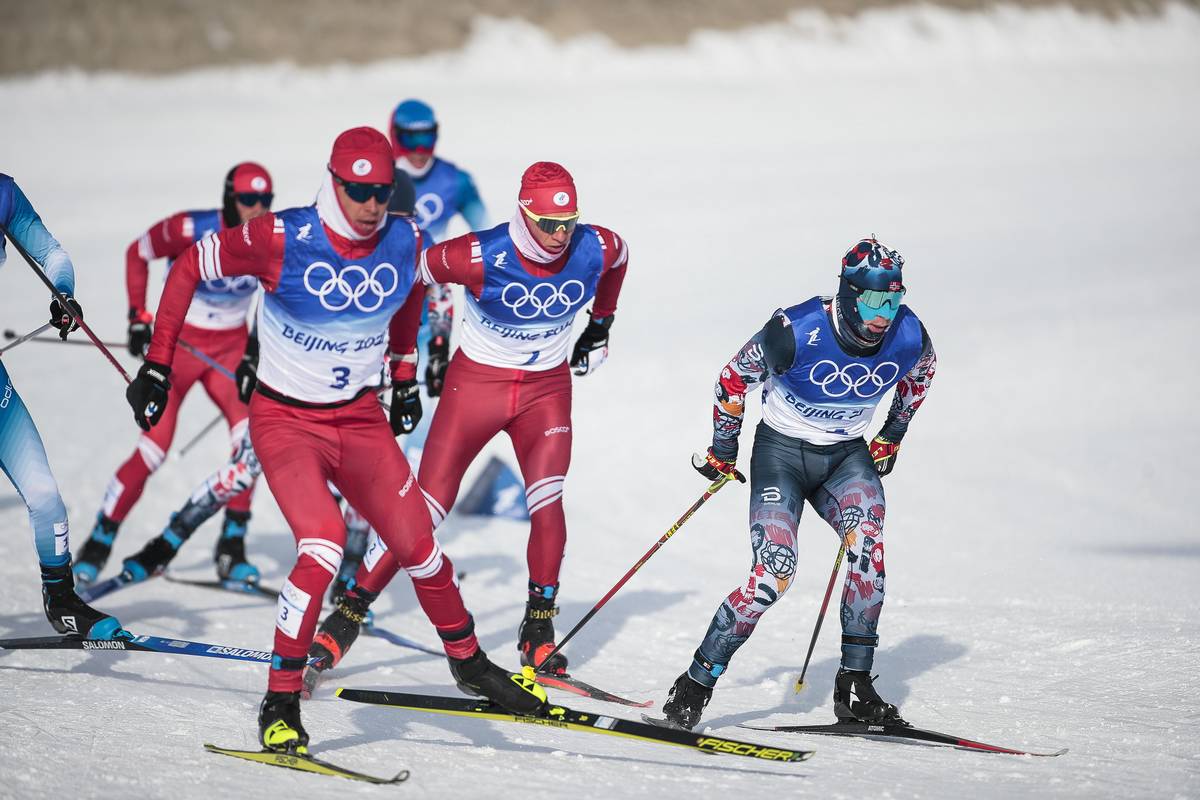
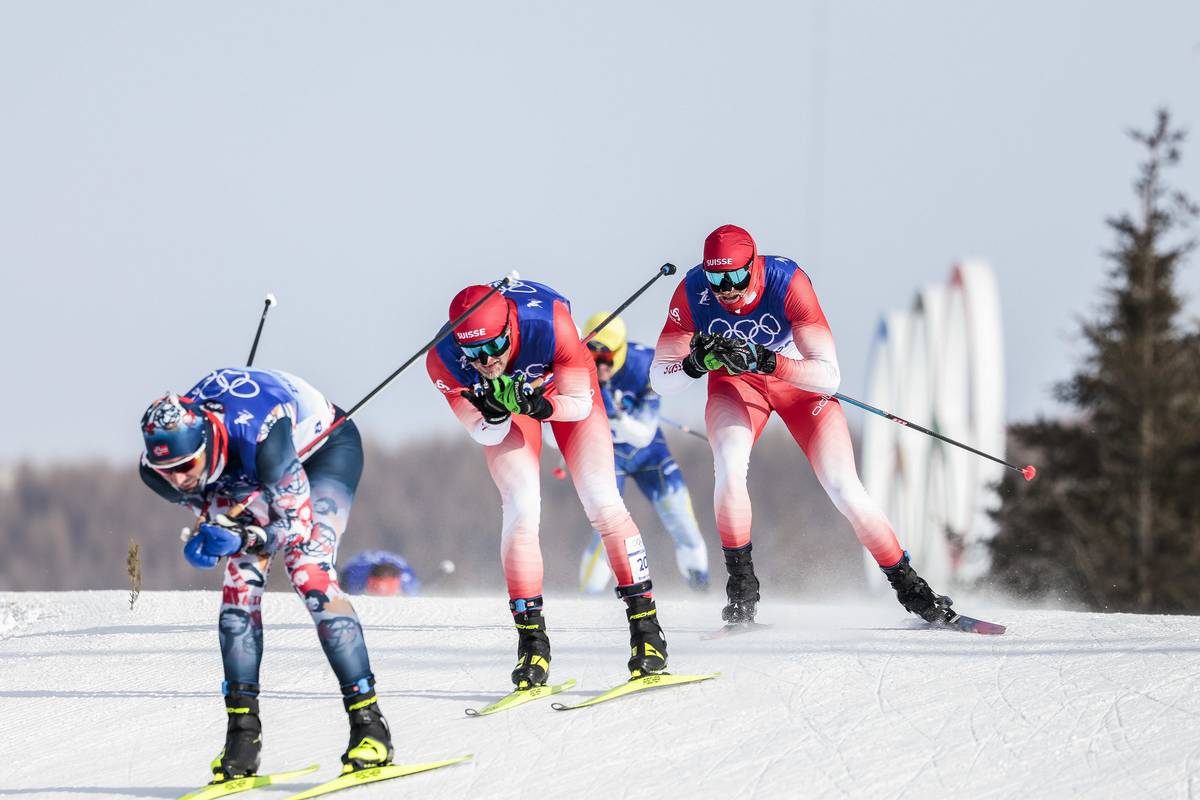
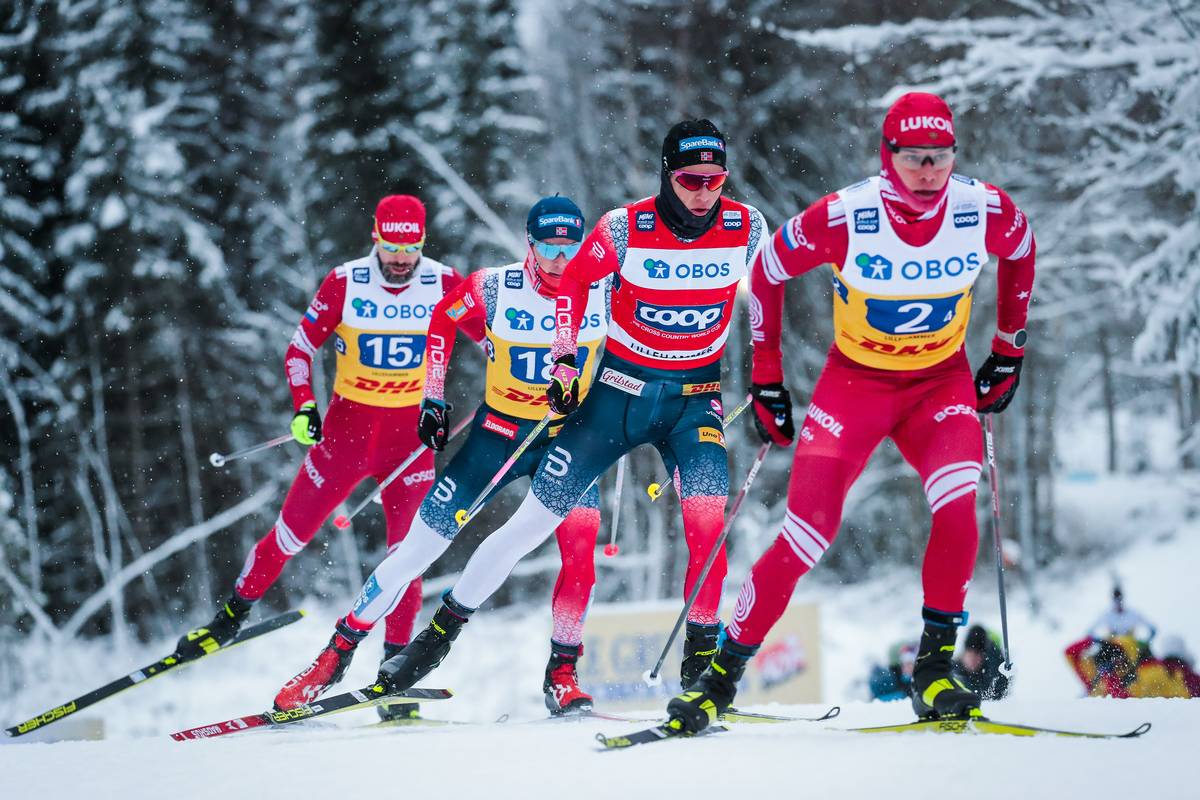
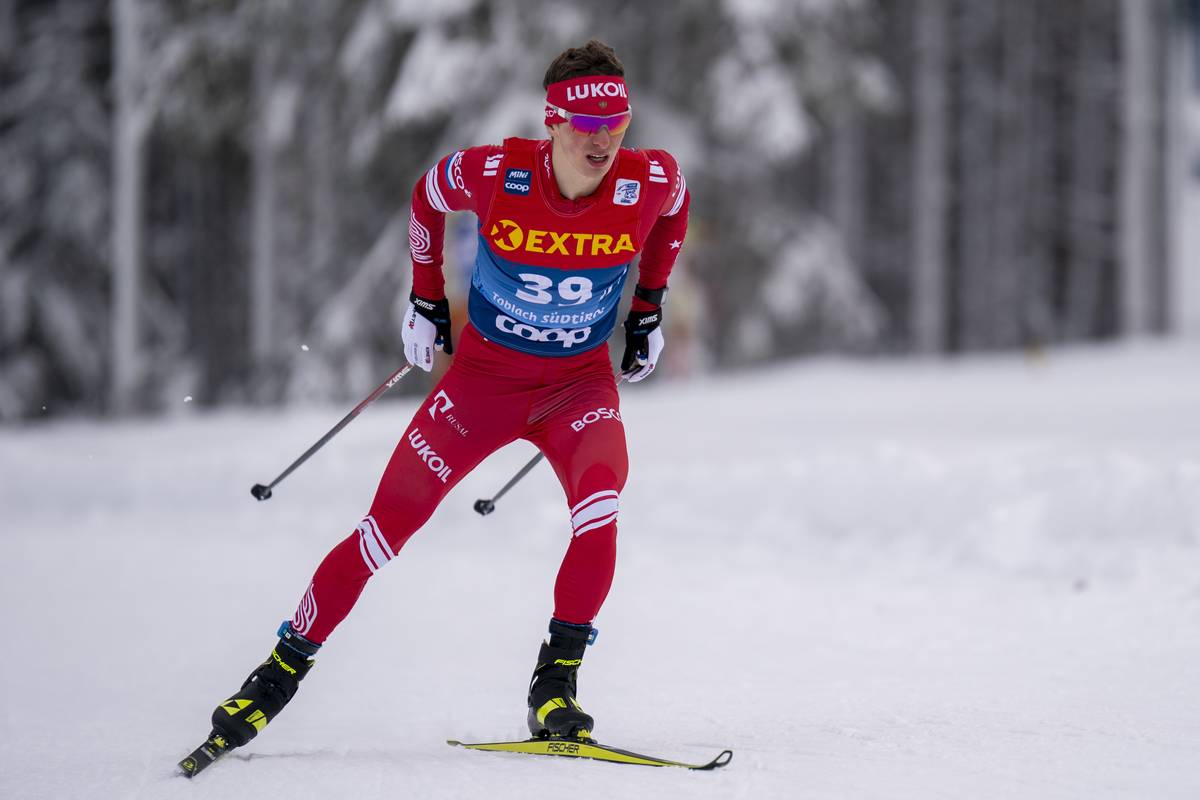
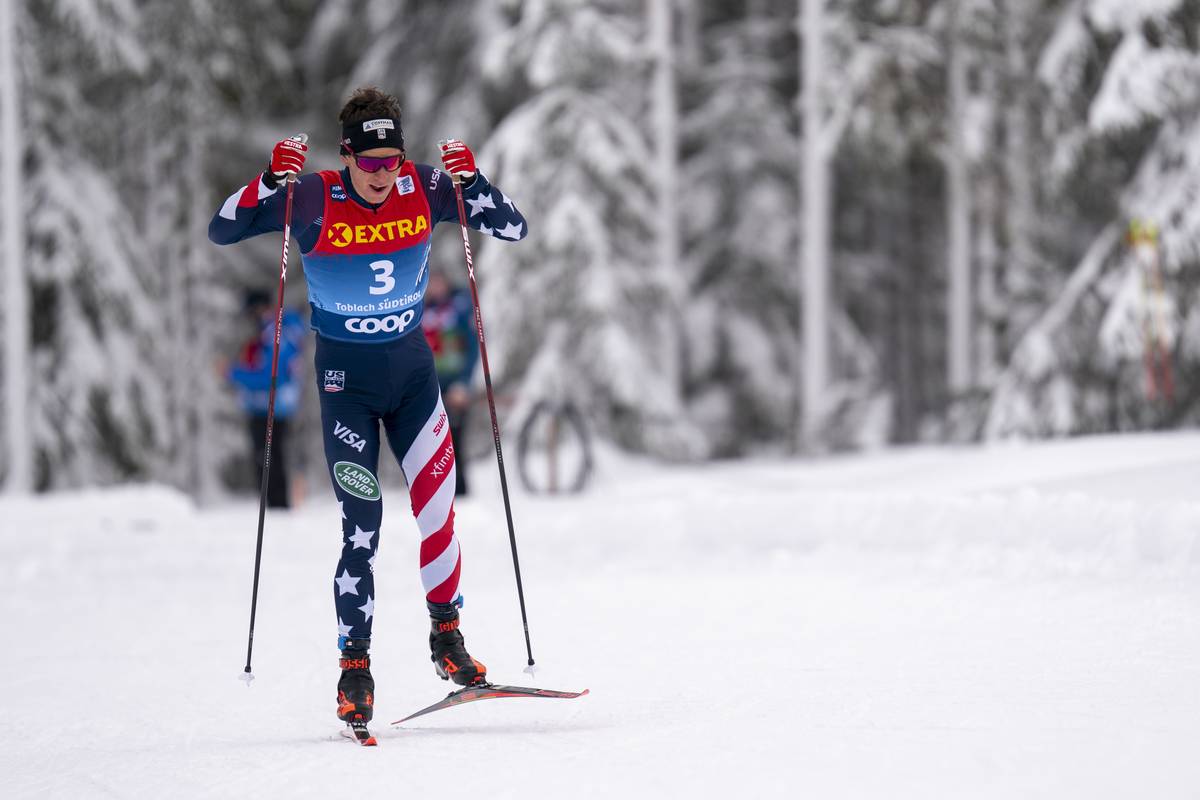
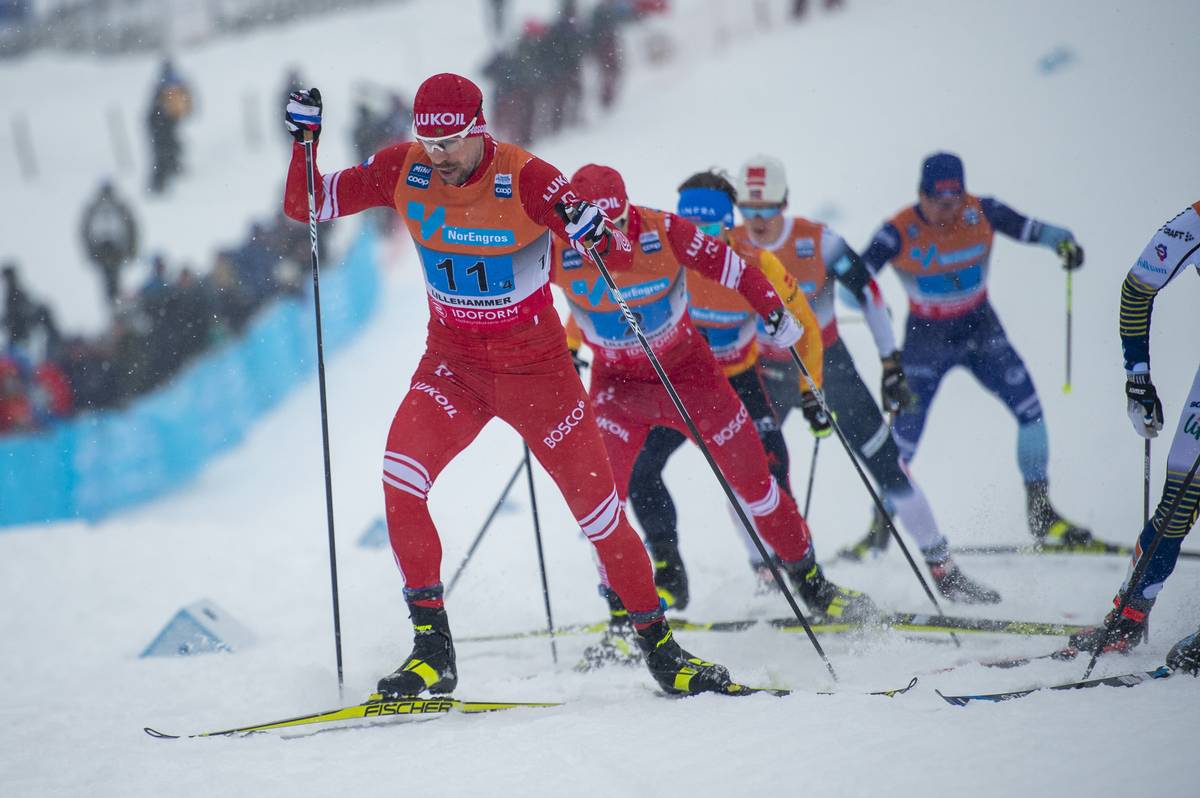
    Simen Hegstad Krüger (NOR) leads the men’s 28 k freestyle alongside the ROC’s Ivan Yakimushkin (bib 3). (Photo: NordicFocus)

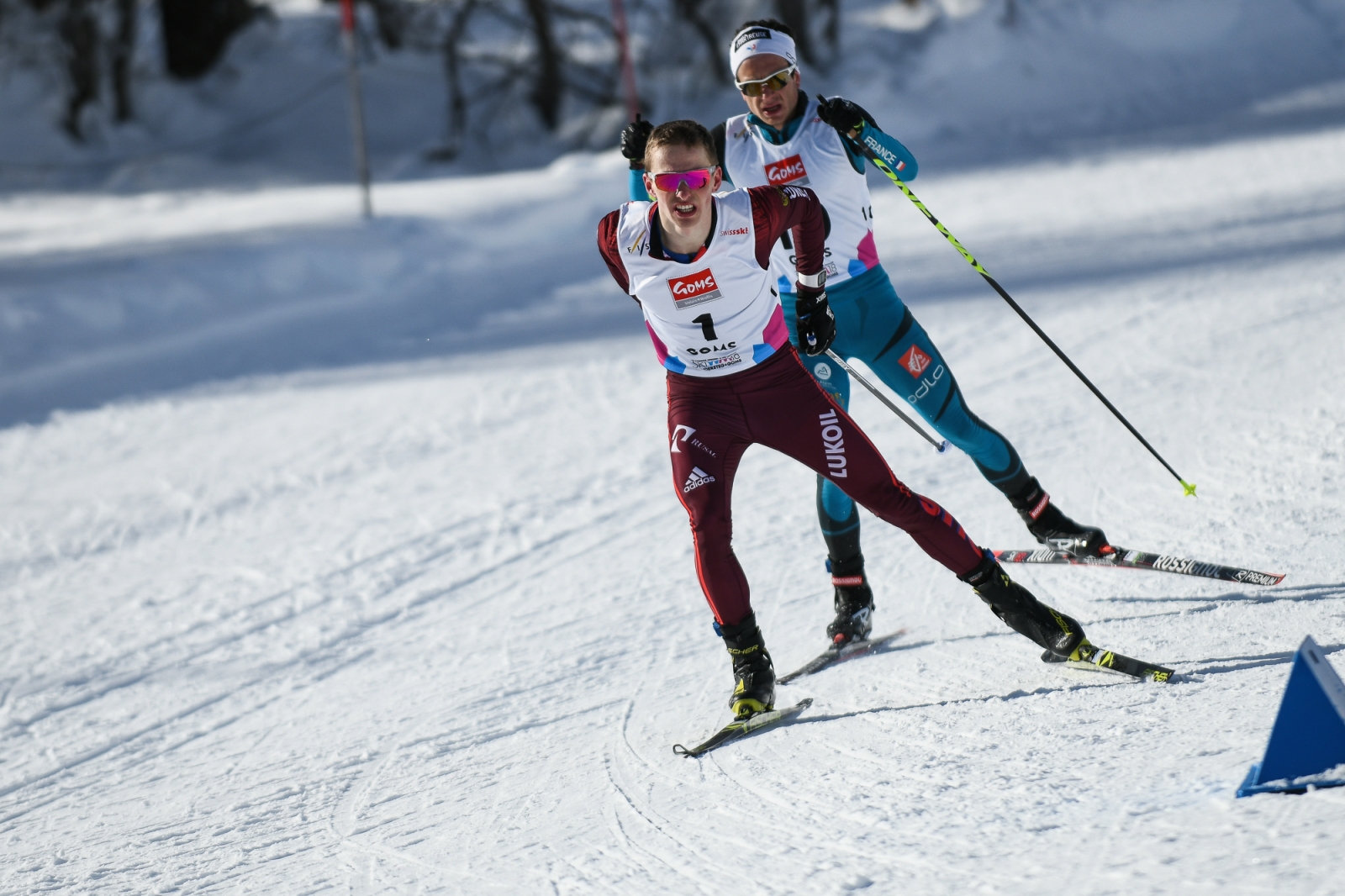
    Over the final 5 k, Bolsunov kept the pressure on, looking relaxed as he tried to create space between himself and Krüger, who had been tucked onto his tails, matching him push for push. With them was Yakimushkin, the three skating in tandem as the finish line drew nearer. 

    At 24 k, the leaders had only a few seconds on Patterson’s chase group, but when they hit the 27.2 k checkpoint, the gap had drastically expanded. Artem Maltsev (ROC) and Røthe were still just a few seconds back, but Patterson, Parisse, and Spitsov were now over 20 seconds behind, with a 20 second cushion ahead of the next chasers.
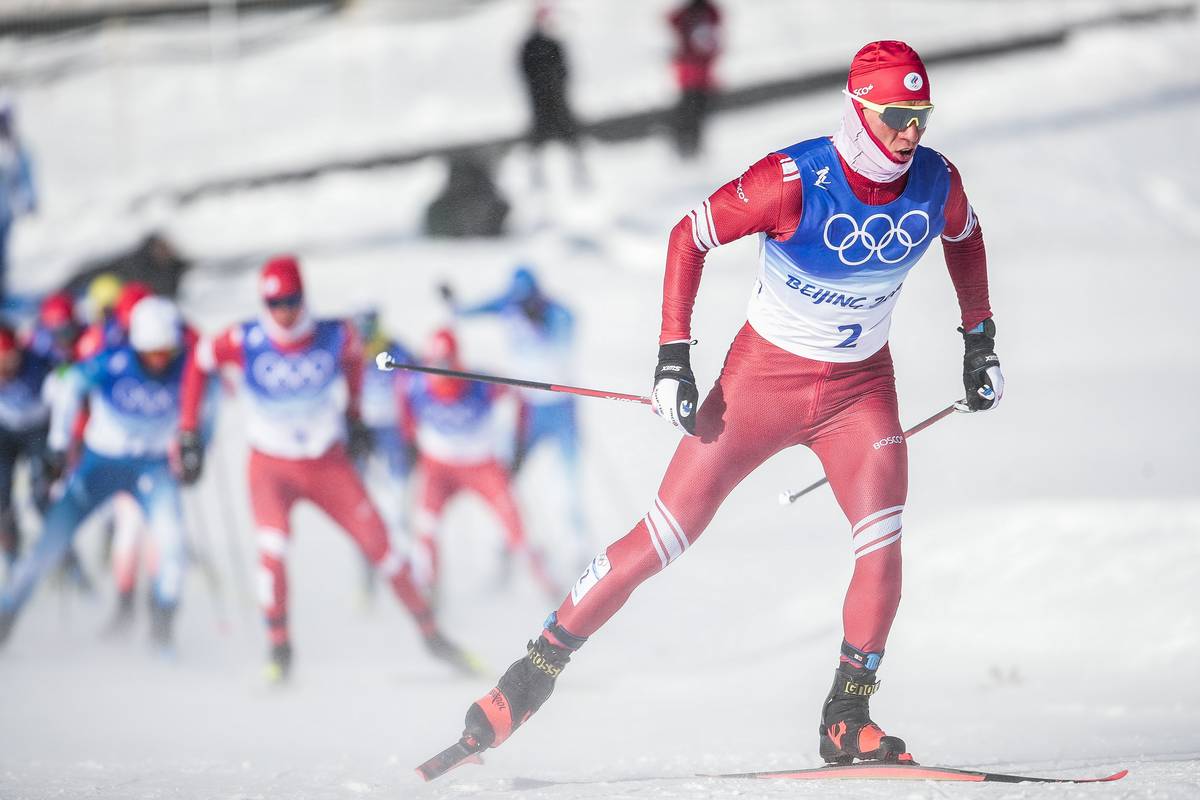
    Alexander Bolshunov (ROC) races to his third gold medal of the 2022 Olympic Winter Games during the men’s 28 k freestyle. (Photo: NordicFocus)
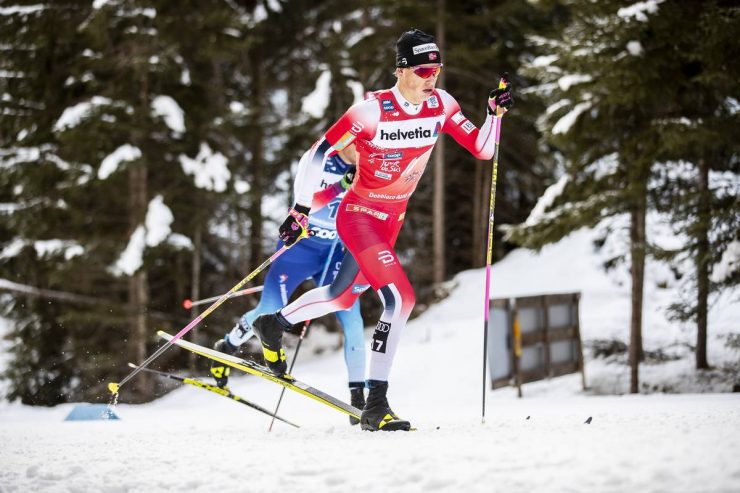
    Norway’s Simen Hegstad Krüger leads the charge during the men’s 28 k mass start freestyle. (Photo: NordicFocus)

    Up the final long climb, Krüger would not yield, holding his ground immediately behind Bolshunov. Tucked low into the downhill, the three stayed together, with Bolshunov upping the tempo and power as they accelerated out of the curves and over the gentle rises that interrupted the sweeping descent. 

    As the three hit the final rise into the stadium, Bolshunov began to break away, with Yakimushkin using Krüger’s draft to slingshot into second with 500 meters to go. 

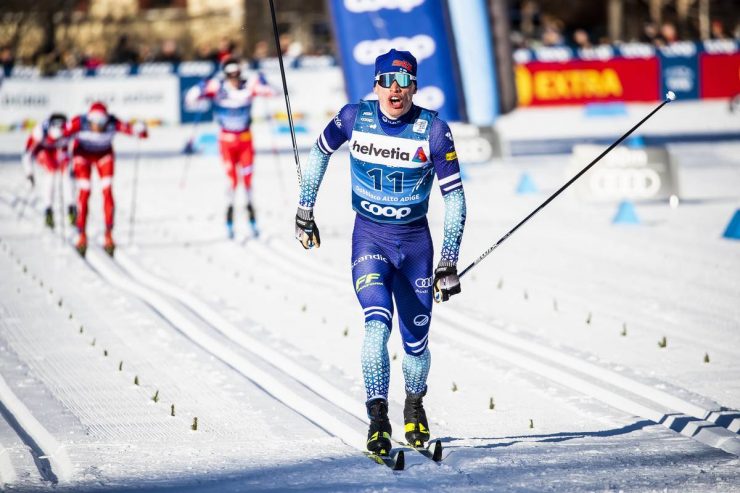
    Entering the stadium, the gold medal looked to be predetermined. With a fist pump as he made his way around the final bend into the finish lanes, Bolshunov V2ed powerfully down the home stretch, crossing the line with his hands raised in 1:11:32.7.
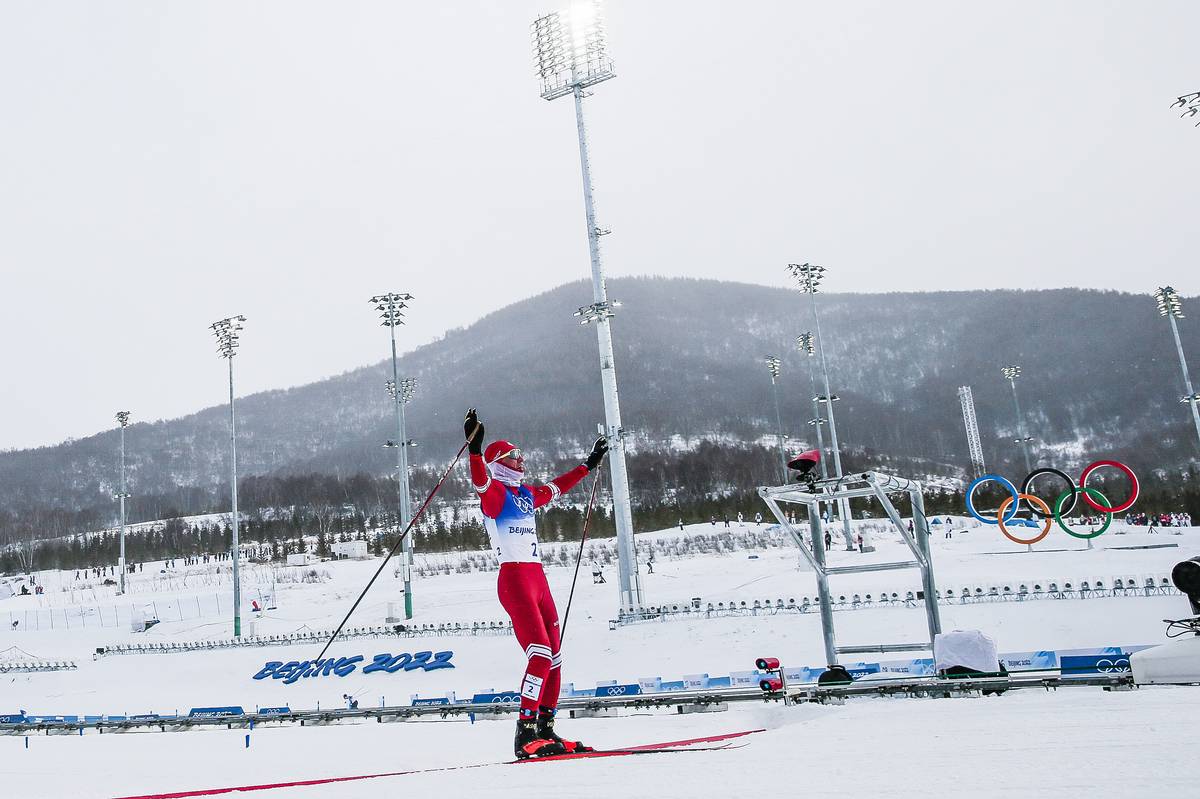
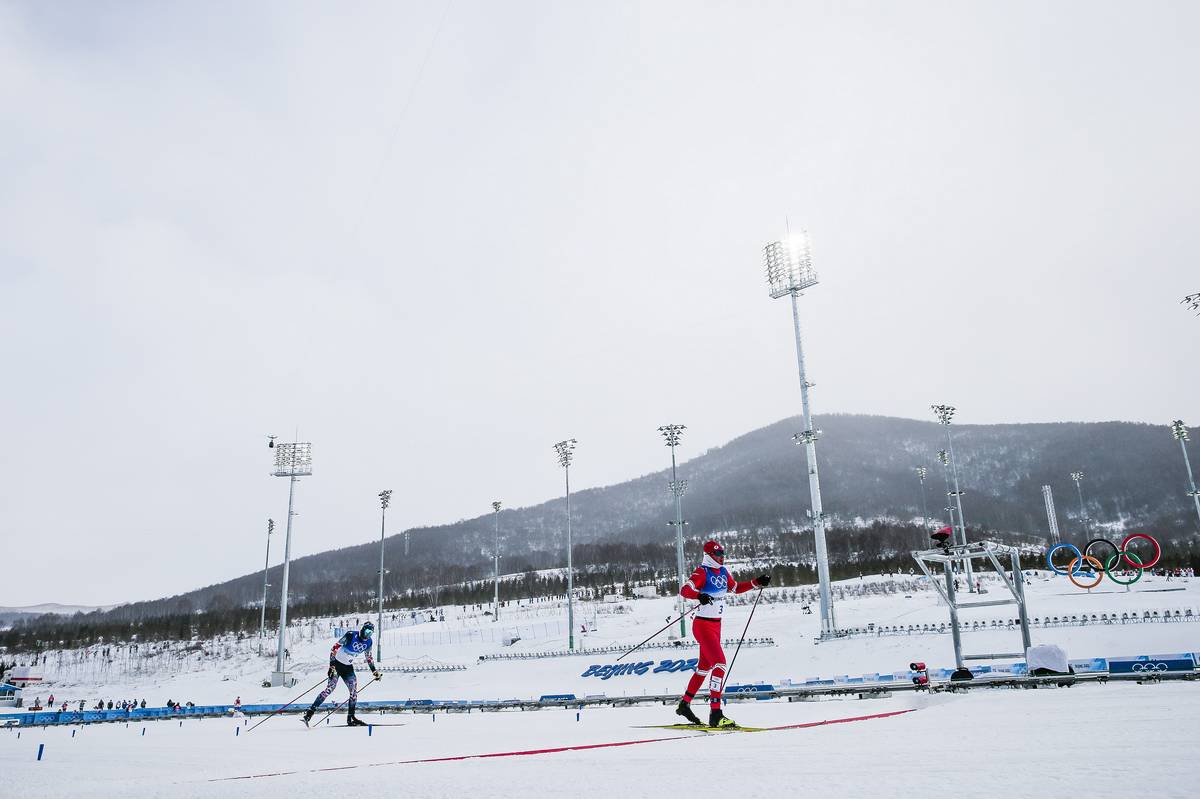
    Alexander Bolshunov (ROC) celebrates his win in the 28 k mass start freestyle. (Photo: NordicFocus)
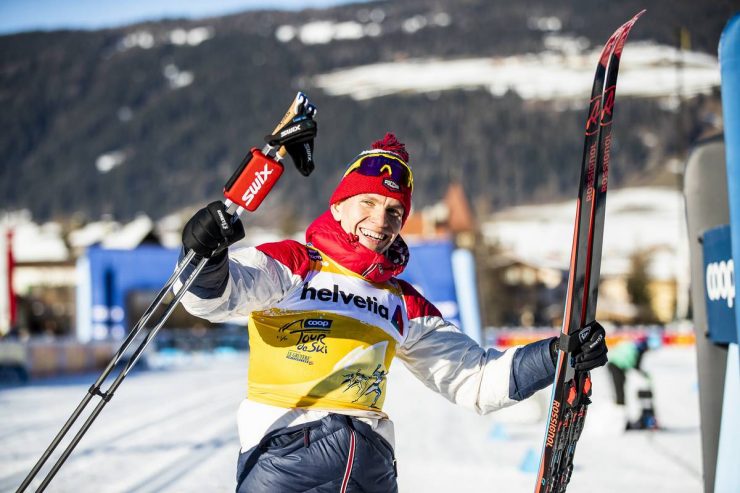
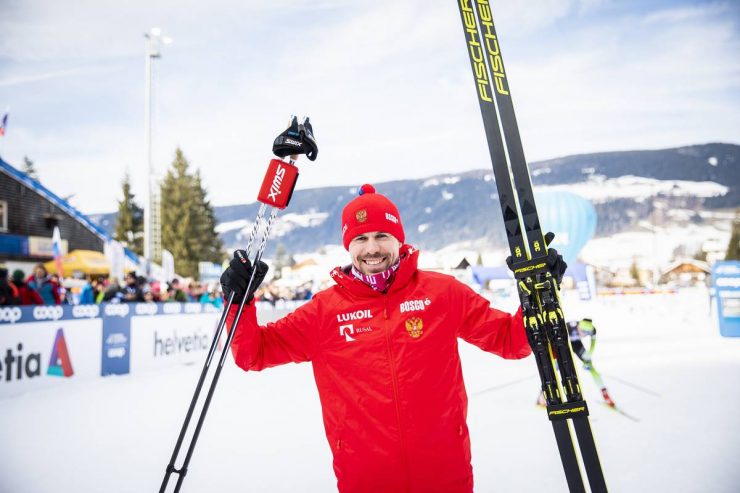
    Ivan Yakimushkin (ROC) takes silver in the men’s 28 k free, while Simen Hegstad Krüger finishes third for Norway. (Photo: NordicFocus)

    Holding his advantage through a final sprint to decide silver and bronze, Yakimushkin crossed the line second (+5.5) with Krüger taking third (+7.0) for Norway.

    Behind, Maltsev came to the line fourth (+10.7), followed by Røthe in fifth (+15.8). 

    Spitsov led the now-spread chase group to the line, taking sixth (+26.2) ahead of Parisse in seventh (+28.8) and Patterson eighth (+33.9).
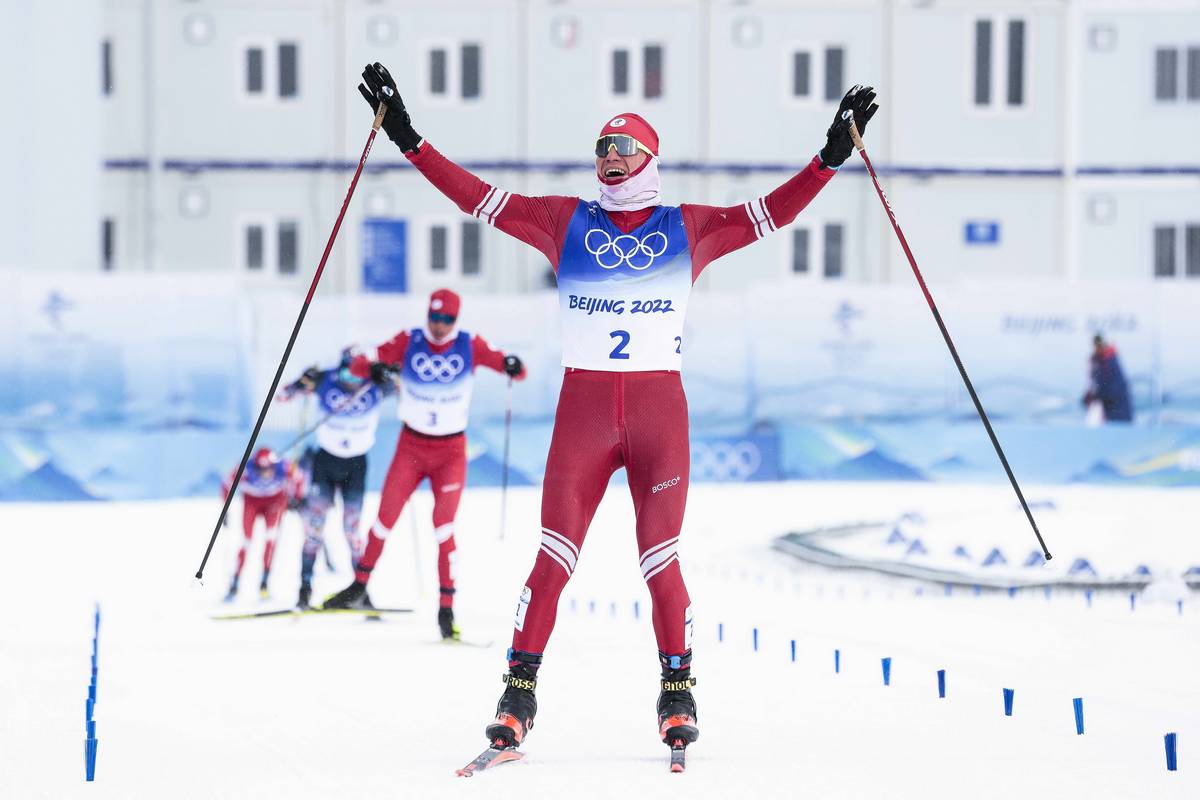
    Alexander Bolshunov (ROC) wins his third gold medal of the 2022 Games in the men’s 28 k mass start freestyle. (Photo: NordicFocus)

    Nine Olympic medals. Three gold. Four silver. Two Bronze. Five from the 2022 Olympic Winter Games.

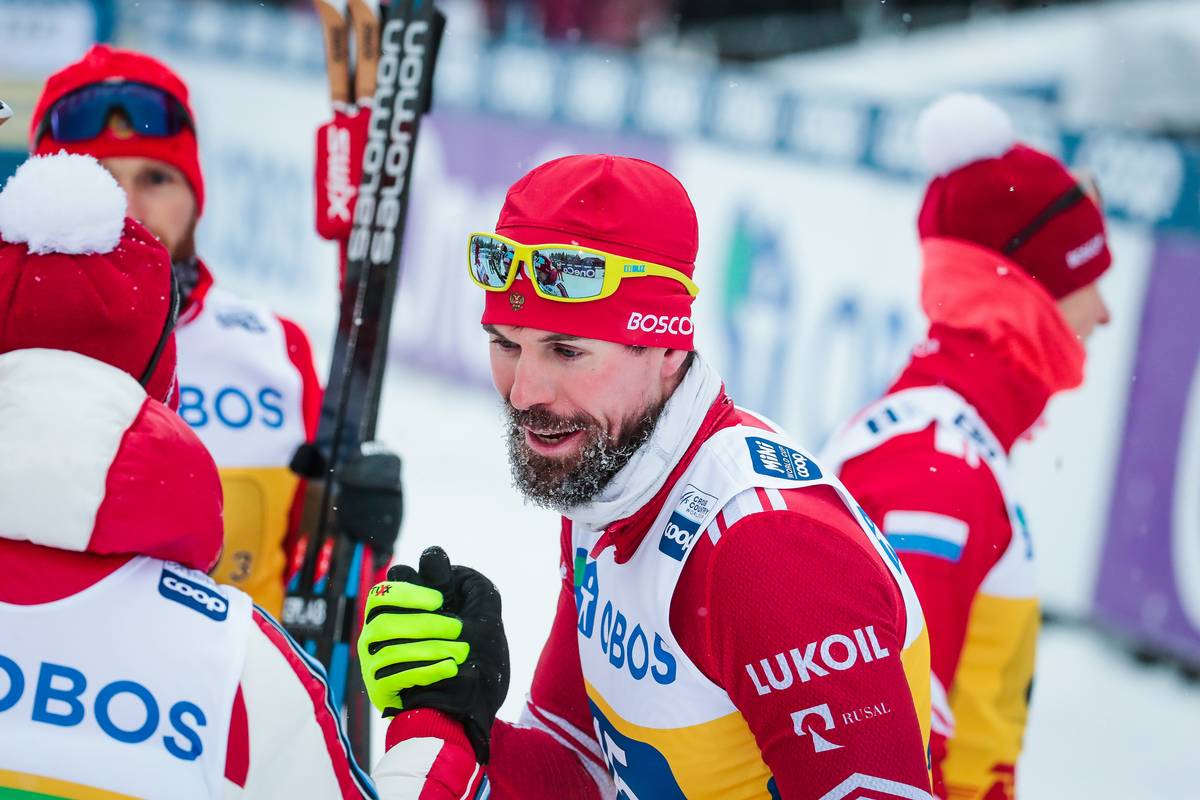
    “Five? Really?” Bolshunov counted on his fingers as he exuberantly celebrated the golden ending to his Beijing Games appearance. “Five medals, three gold, it is something unbelievable because before the season I set the goal of two gold medals and now I have three. I’m just unbelievably happy. The emotions overfill me. This is above all praise to win these medals here. It’s very cool, and in every race that I took part in.”
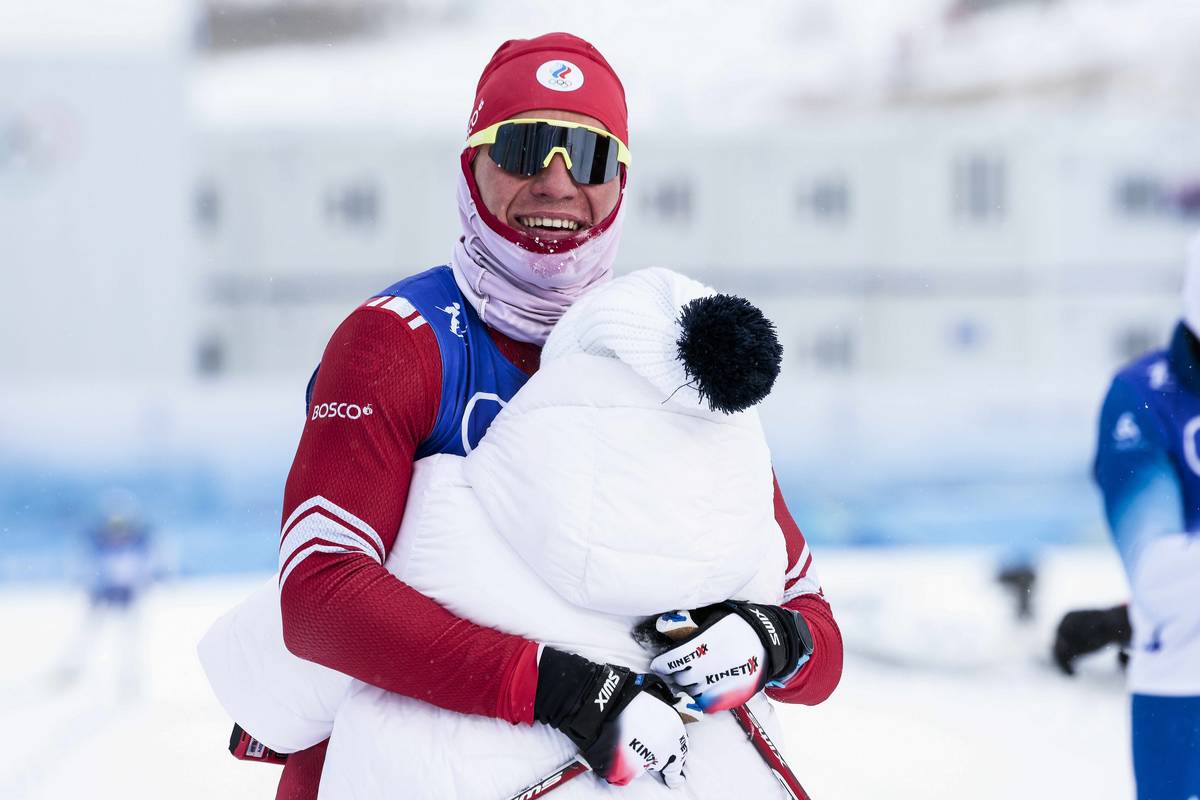
    Alexander Bolshunov (ROC) receives a cozy Olympic themed gift following his win in the men’s 28 k freestyle. (Photo: NordicFocus)

    Regardless of the color of the medal he earned, Krüger said his real victory was simply making it to Zhangjiakou and having the opportunity to race at the Games. Though his illness stayed mild and he stated that it did not impair him in today’s race, he had still spent 10 days in isolation in his hotel room, and remained in isolation while the opening event of the Games, the men’s 30 k skiathlon, was underway. Krüger was the defending Olympic champion in the event after taking gold in 2018. He went on to win a silver medal in the 15 k skate, and help Norway to gold in the men’s relay. 

    During the 2021 World Championships, Krüger earned two silver medals, first in the 30 k skiathlon and the next in the 15 k free, with a bronze in the 50 k skate. He was one of the top distance skiers on the World Cup heading into the 2022 Games, shouldering Norway’s medal hopes; the nation experienced collective heartbreak following the news of his positive COVID test in late January. 

    “To be able to go home with an Olympic medal, that’s a huge victory for me and an amazing feeling,” Krüger said after the race. “I’m really proud of what I have achieved today; from not thinking I would be able to ski one single competition to being able to get everything out here today.”
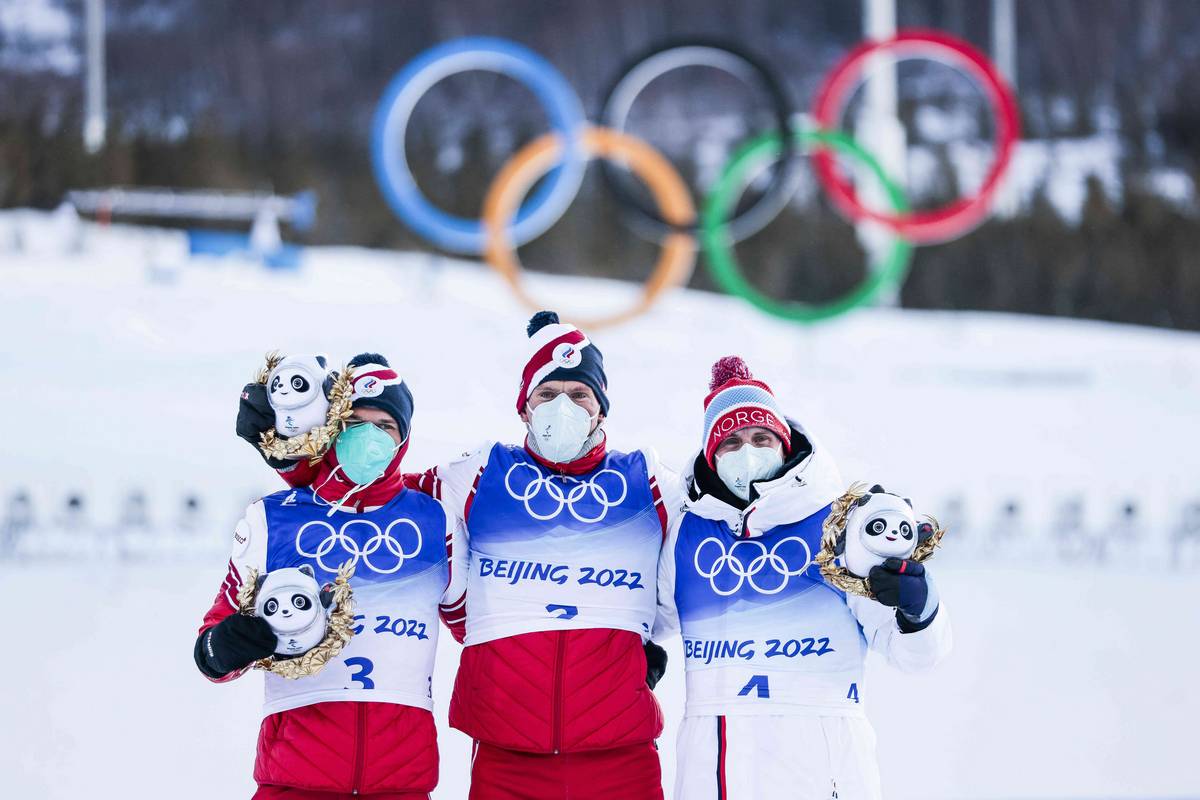
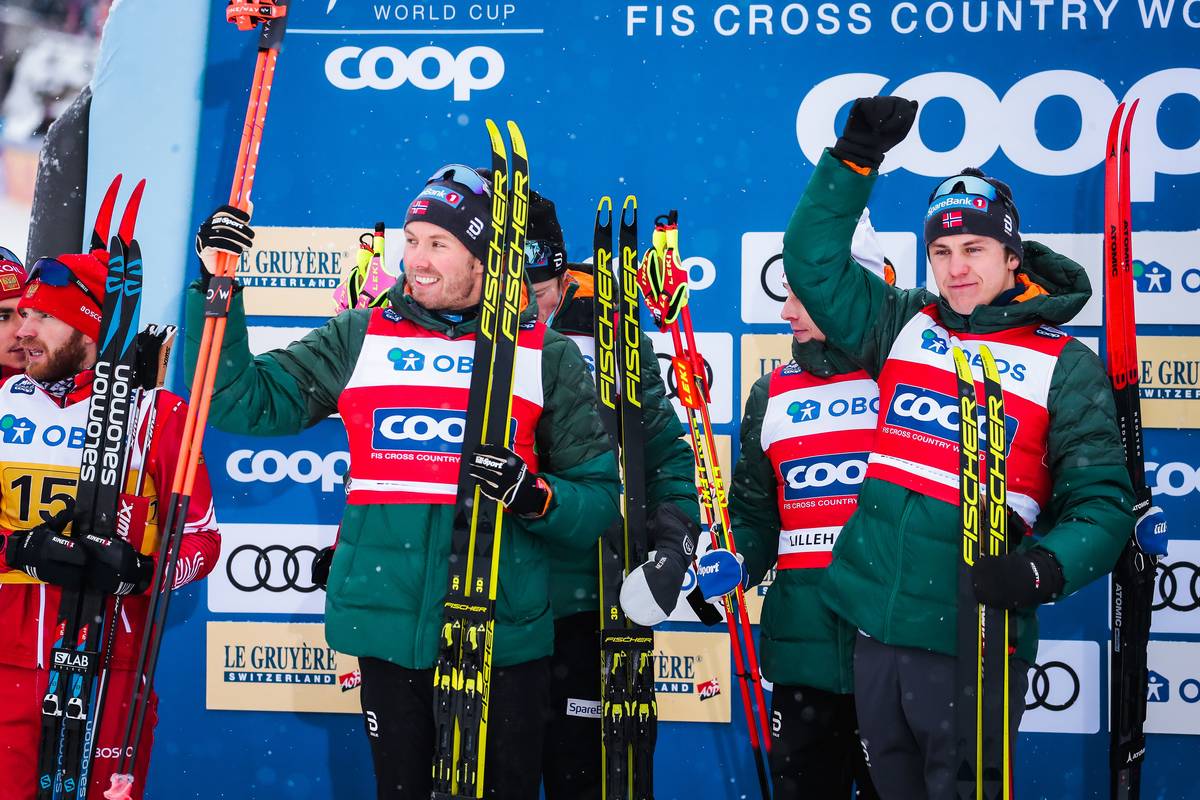
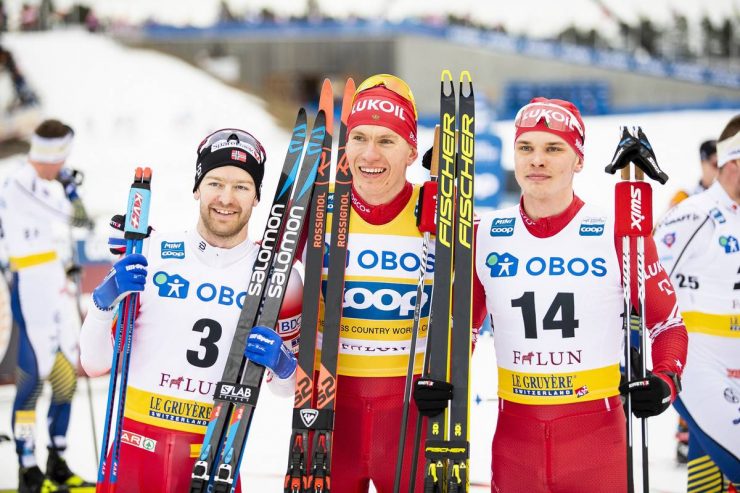
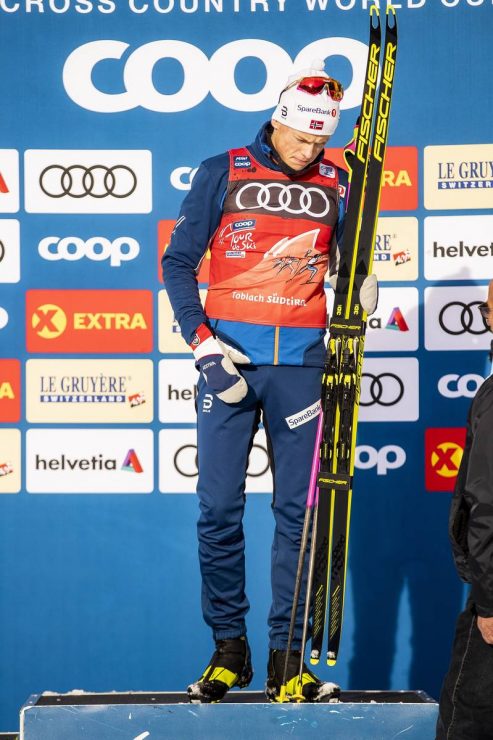
    The podium of the men’s 28 k freestyle: Alexander Bolshunov (ROC) took the win ahead of Ivan Yakimushkin (ROC) and Simen Hegstad Krüger (NOR). (Photo: NordicFocus)

    For Patterson, eighth place meant achieving the goal, though he admitted being in the hunt for positions even closer to the podium leaves him hungry for more. 

    “I’m happy,” he told FasterSkier in the mixed zone. “I came in wanting the top 10 and got it today. It’s a little tantalizing to be in eighth and 33 seconds back from the win.” 

    He continued that the “dream” of a medal crossed his mind as he found himself inside the lead group in the final lap, but he could feel the fatigue accumulating in his body and recognized that he was finding it hard to respond to the tactical moves of the eventual medal winners. “I don’t think it was exactly realistic to fully believe it was happening today,” he said frankly. 
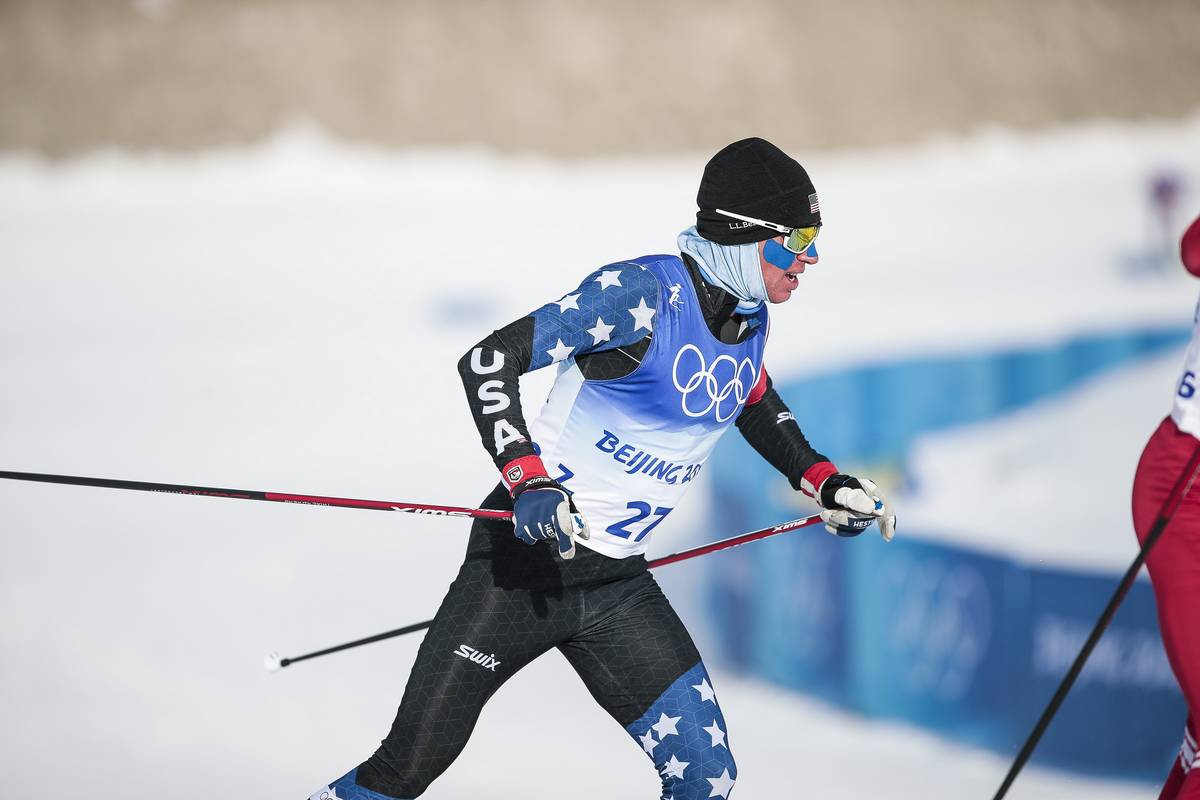
    Scott Patterson skis to an Olympic career best with 8th place in the 28 k mass start freestyle. (Photo: NordicFocus)

    Patterson’s result, while historic, should not come as a surprise to American cross country ski fans. He was 11th in the skiathlon at the opening of the Games, and has made his ability to come on form and earn season-best results during Championships well known over the last four years. 

    During the 2018 Games in PyeongChang, he put together breakout performances, skiing to 18th in the skiathlon, 21st in the 15 k skate, and 11th in the 50 k classic. He raced into the top-30 in each individual distance race of the 2019 World Championships, with a 23rd place finish in the 50 k free. Improving on these results in the 2021 World Championships in Oberstdorf, Germany, Patterson was 14th in the skiathlon, 27th in the 15 k skate, and 10th in the 50 k mass start classic

    And, he likes going long. He said he would have preferred another 20 k today – “I wanted the grinding instead of the punches” – and might have even been able to pull off a higher result had the race been longer. 

    Back in 2016, his first World Cup appearance was in the 50 k classic at the Holmenkollen, which sits above Oslo, Norway. He was 32nd on the day in perhaps the most storied and highly revered cross country ski race on the World Cup. Patterson advanced to 28th the following year, before making a leap into the top-20 to finish 16th in 2018 and 19th in 2019.
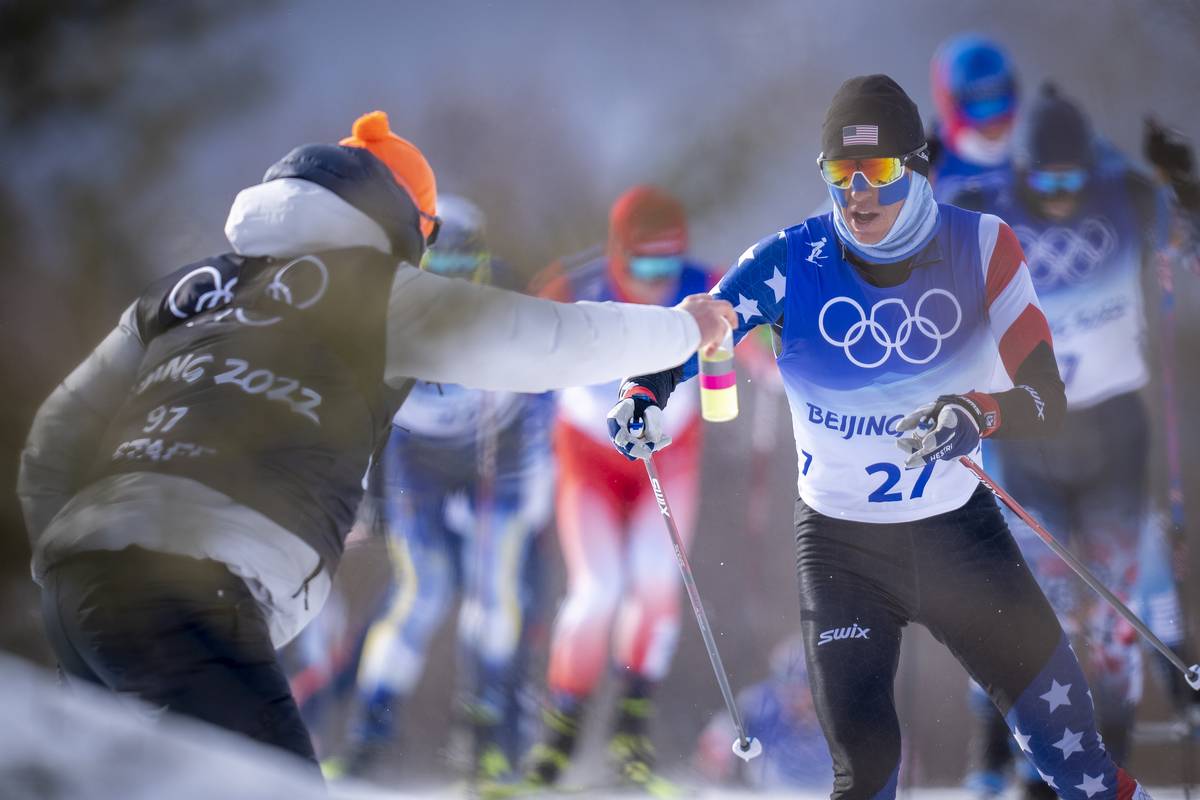
    Scott Patterson takes a feed during the men’s 28 k free in Zhangjiakou. (Photo: NordicFocus)

    From the outside, it can be hard to appreciate the dynamics of mass start racing among the best athletes in the world in the sport. Energy management, tactics, drafting, protecting equipment while the field remains dense in the first lap, which Patterson called “chaotic.”

    “You get those lead skiers fighting the wind, and a lot of the back skiers that could just draft in. And there are a few people who definitely don’t have a lot of World Cup experience making a mess out of the pack,” Patterson described.

    In his second Olympic appearance at the age of 30, with plenty of World Cup experience, Patterson skied a smart race, telling FasterSkier that he felt “strong” and “relaxed”, while looking to be “in a comfortable position and not [using] too much out of my energy.” He also reported having competitive skis that allowed him to utilize the downhills and stay in the position where he wanted to be. 

    U.S. Ski Team head coach Matt Whitcomb complemented Patterson on his race execution, telling FasterSkier emphatically that he was “so proud of him.”
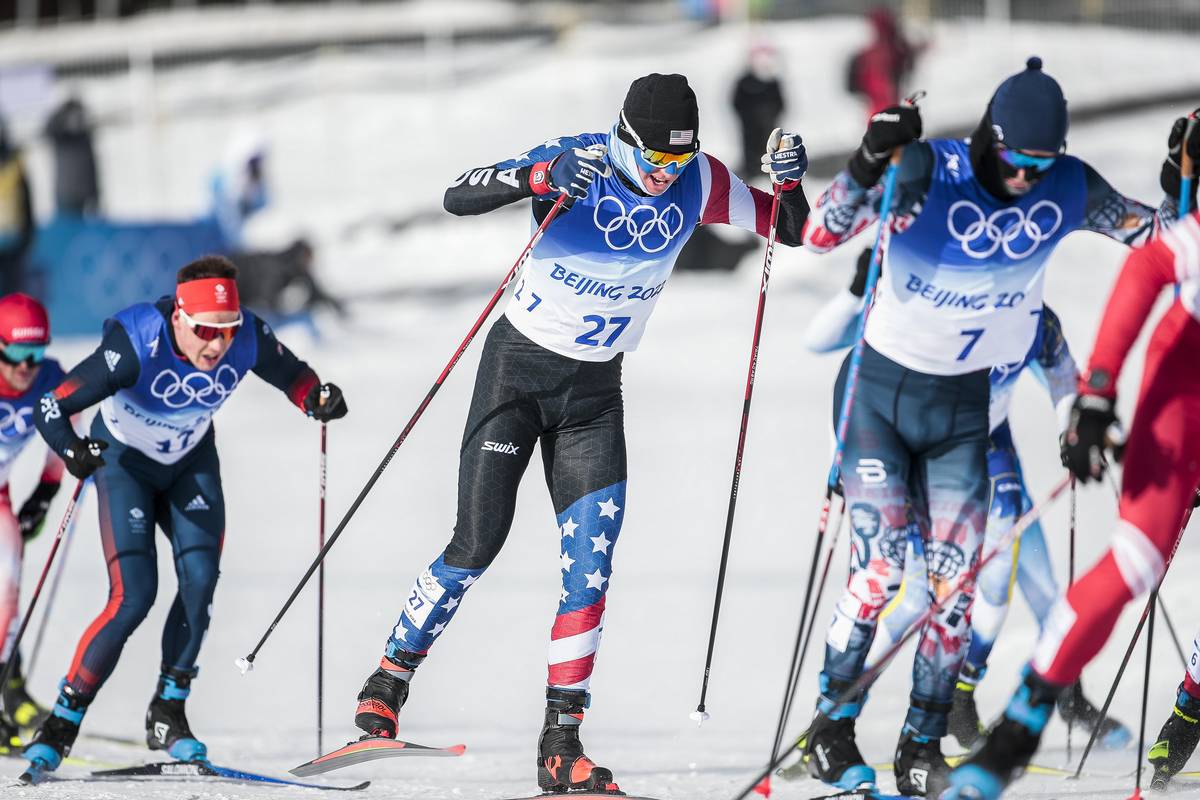
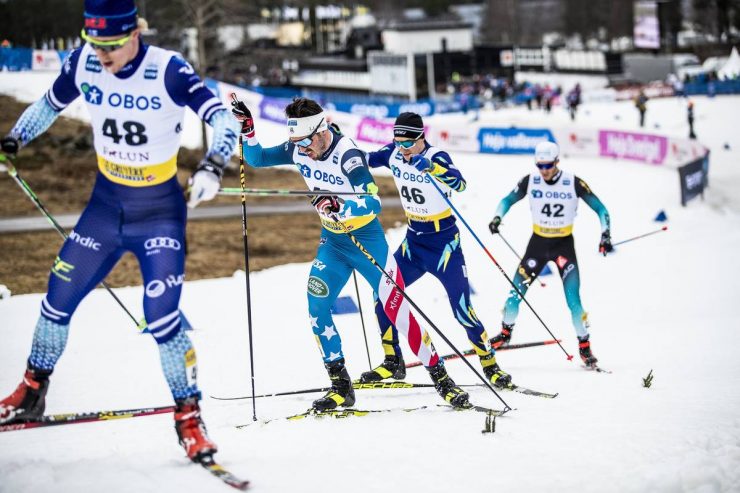
    Scott Patterson races in the lead group during the men’s 28 k mass start freestyle. (Photo: NordicFocus)

    Talking through the race from his vantage point, Whitcomb pointed out that Patterson stayed calm through the congestion in the opening lap, rather than becoming flustered and wasting energy by constantly trying to move up. He also shared how Patterson was able to “wisely” keep himself on the correct side of other racers to utilize the windbreak on unsheltered sections of the course.

    “Some incredible skiers ended up on the wrong side of the break and were toast…” Whitcomb explained. “When that happened, I heard a Finnish yelling at a German skier saying, ‘Hey, take me up to them!’ People were desperate to do work together, and so [I’m] very proud of Scott and unsurprised that he was in a tactically wise position.”

    Apart from battling the elements, maintaining an optimal position within the lead group is also a skill that requires experience and maturity.

    “If you have a pack of 15 guys, of course, it’s easy to follow in a draft in 14th and 15th,” Whitcomb said. “But what you don’t realize is that there’s quite a big accordion effect, so you’re constantly pulsating on the gas pedal. What you saw [today] was Scott moving up into between fourth and seventh, for a large part of [the race], and that ends up being a much more efficient position to ride. Draft is good, but you’re also able to just kind of stay on a steady gap.”
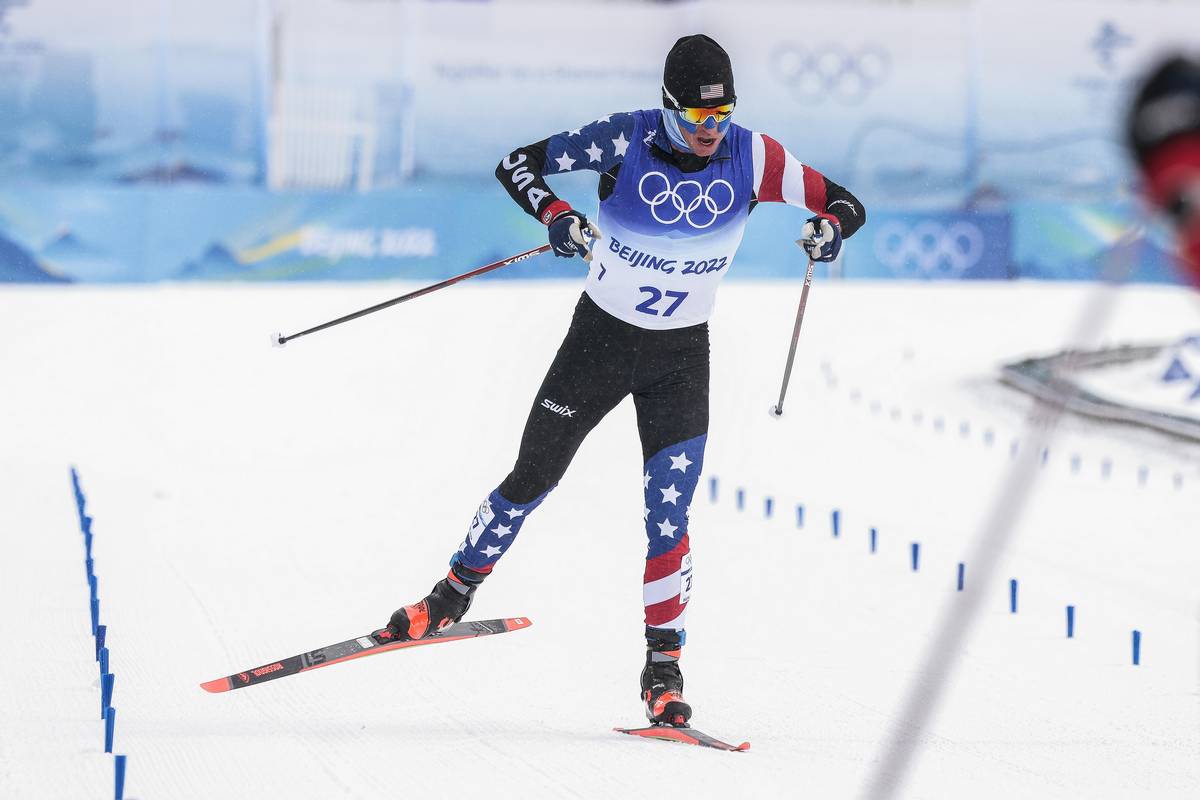
    Scott Patterson races to the line, finishing 8th in the men’s 28 k mass start freestyle. (Photo: NordicFocus)

    For Whitcomb, Patterson’s eighth place ends the Games on a high note for the American men’s program as a whole.

    “This is, this is for sure one of the goals that our men’s program wants: to start breaking through in one of the ultimate races of the Olympics,” Whitcomb shared. “To do that today, under conditions like this, is such a huge success for our program and for Scott and for his club, APU. For all the coaches over the years, Erik Flora that’s worked with him, and the [rest of the] coaches at APU. It’s such a huge success for [Patterson’s collegiate program], the University of Vermont; Alaska Winter Stars where he started skiing; and just so many people have been a part of this incredible journey. And so happy for all of them. But mostly for Scott because he earned this sucker today. It was brutal.”
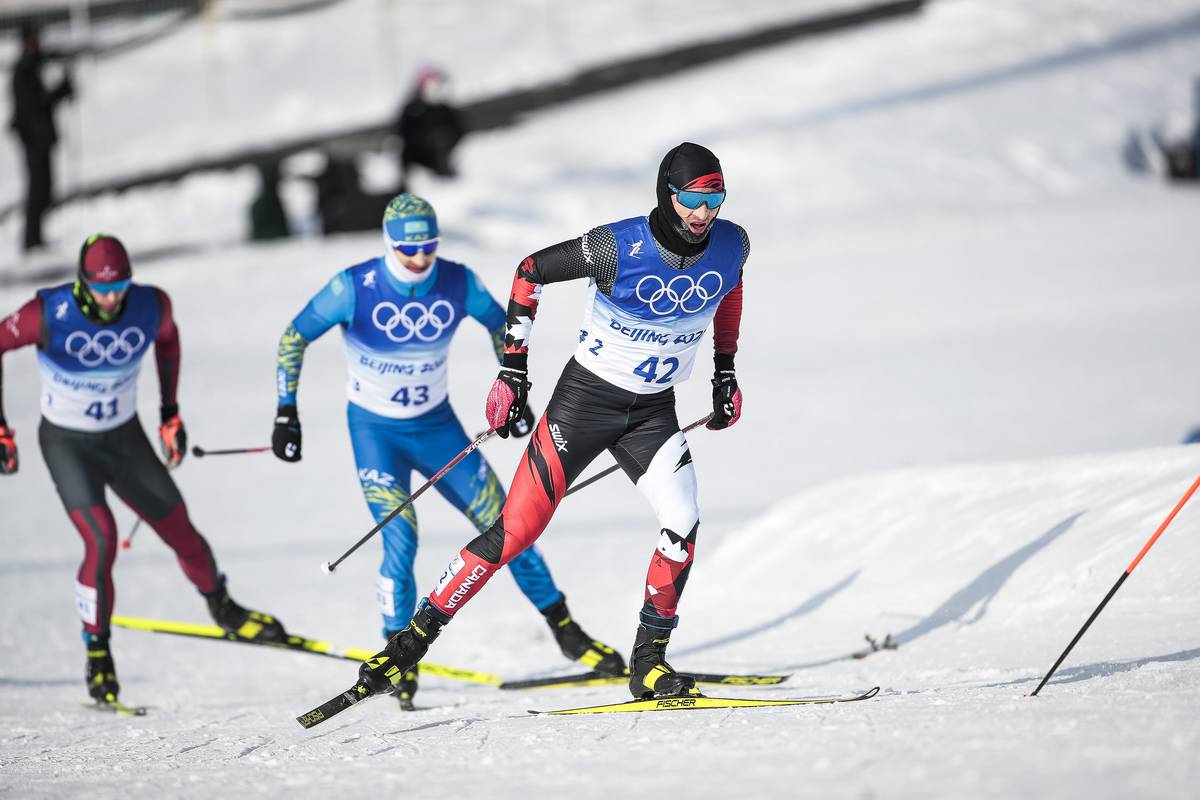
    Rémi Drolet (CAN) skis to 35th in the men’s 28 k mass start skate. (Photo: NordicFocus)

    Two Canadian’s raced the 50 k today, with Olivier Léveillé leading the Canucks at the finish in 27th (+4:21.6). 30 seconds back, Rémi Drolet crossed the line in 35th (+4:54.4). 

    Racing continues tomorrow with the women’s 30 k mass start freestyle, the final cross country event of the 2022 Beijing Olympic Winter Games. At this time, the distance of the women’s event remains unchanged, however, the start was moved up by 3.5 hours to account for the forecasted weather conditions.   

    Results

  • Organizers cut Saturday’s Olympic ski marathon in half. Now they’re facing a backlash.

    Organizers cut Saturday’s Olympic ski marathon in half. Now they’re facing a backlash.

    ZHANGJIAKOU, CHINA — The 28 kilometers that Alexander Bolshunov raced Saturday was only enough to take him just past the halfway point of the race he’d entered at the Winter Olympics.

    But Bolshunov, who competes for Russia, is still going home with the gold medal.

    That development is the result of a decision by race organizers to shorten the Olympics’ iconic 50-kilometer marathon event in the face of brutal wind and cold.

    But they’re now facing harsh criticism from some competitors, coaches and fans of the sport, who denounced the decision — made just one hour before the start — as avoidable and unnecessary.

    “It was an absolutely ridiculous decision,” Andrew Musgrave of Britain, a long-distance specialist, told reporters after finishing 12th. “If you can race 28.4 k, I don’t see why on earth you can’t race 50 k. Cross-country skiing’s meant to be the ultimate test of endurance.”

    Andrew Musgrave (GBR) races the abbreviated Olympic marathon, cut to 28-kilometers due to weather conditions in Zhangjiakou. (Photo: NordicFocus)

    The International Ski Federation (FIS), which oversees Olympic cross-country skiing, would not comment beyond their statement announcing the change, saying the officials responsible for the change were in meetings after the race. 

    “The decision was taken in regards to the athletes’ safety, to reduce the time of exposure of athletes in those conditions,” the announcement said.

    Conditions at the cross-country skiing venue in Zhangjiakou, the mountain resort area outside Beijing that’s hosting the Olympic races, were extreme Saturday.

    Strong winds shuddered windows and blew clouds of snow through the stadium and across the trails; a weather bulletin posted two hours before the race pegged temperatures at 3 F, with winds gusting at 30 mph to produce a wind chill of -21 F. Athletes ended up racing in neck warmers and layers of tape covering their cheeks to protect from frostbite.

    Cheeks protected with tape, Scott Patterson (USA) follows Sjur Røthe (NOR) during the men’s 28 k skate. (Photo: NordicFocus)

    But forecasters from the Beijing Games’ organizing committee had been predicting difficult conditions for days. The International Biathlon Union moved up its race scheduled for Saturday to Friday, citing low temperatures and strong winds in the forecast.

    Athletes in Saturday’s 50-kilometer cross-country race, which was scheduled for 2 p.m., were still girding for a tough race in the cold when organizers sent a bulletin to teams at noon. The update said all options were on the table: “cancellation, rescheduling, shorter distance” or a course change.

    The 28-kilometer distance, plus a one hour delay, were announced 45 minutes later.

    Reactions were mixed, and a number of athletes and coaches said they understood the decision.

    “It’s not ideal. But what is ideal about a day like today?” said Matt Whitcomb, the U.S. Ski Team’s head coach. 

    Organizers, he added, have athletes’ best interests in mind. “They’ve got a lot riding on their wise choices, and to be a little bit conservative because of the cold and exposure is not a bad thing,” he said.

    Scott Patterson, who placed eighth as America’s only competitor, said it felt like a “half-measure” to reduce the race’s length, adding that he would have preferred a delay to Sunday. 

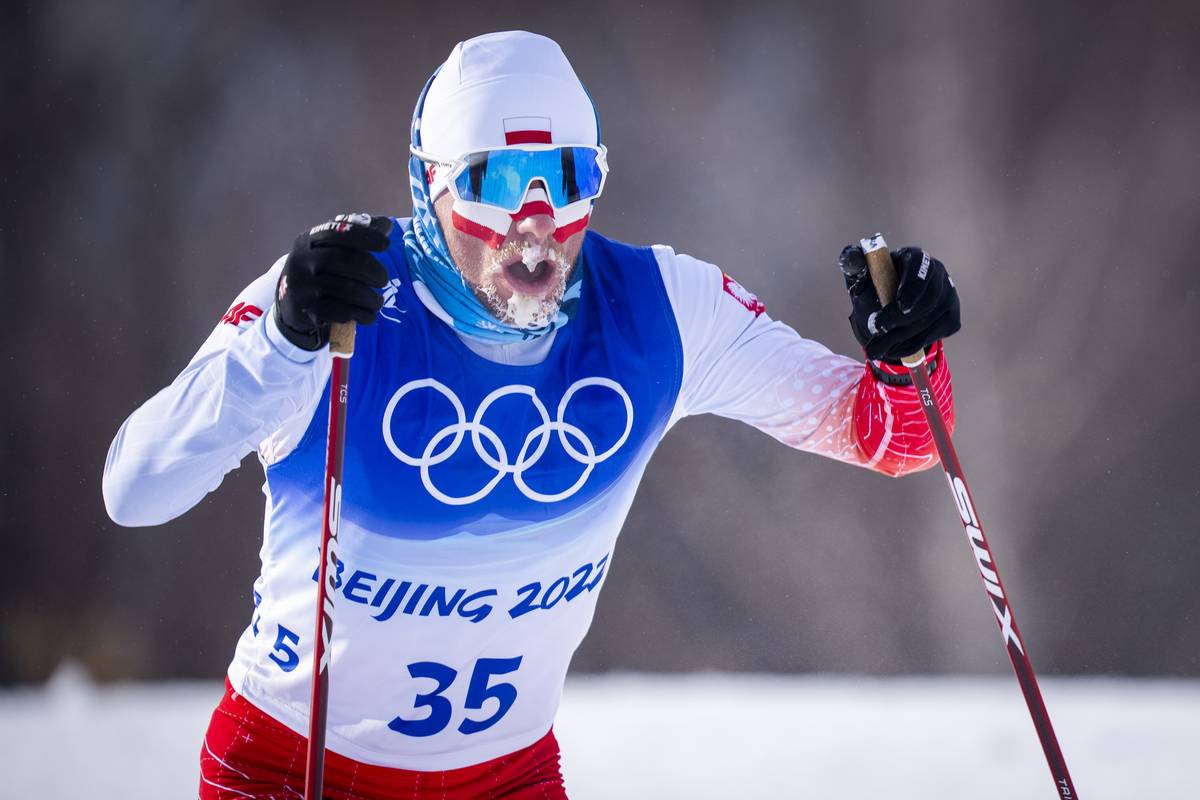
    Polish cross country skier Dominik Bury races the men’s marathon, shortened to 28 k due to extreme weather at the venue. (Photo: NordicFocus)

    But he was also skeptical that running the race at its original distance would have substantially changed the results.

    “Those top guys were strong, and they would have been strong with 20 more k,” he said in an interview. “No fault to the organizers. I think they had a tough decision and made a decent call with it.”

    Others, though, fell on a spectrum from frustrated to irate.

    “Everyone wants to run 50 kilometers. Not 30,” Markus Cramer, one of the coaches for the Russian team, told Norwegian media. “Most teams are not happy.”

    Musgrave, the British athlete, called the decision a “f@*king joke” on Twitter, and raced in a headband — not even a hat. Retired Norwegian superstar said the race should have either been postponed or canceled outright. And Petter Skinstad, a Norwegian ski racer and television commentator, said the decision destroyed years of training for athletes that specialize in longer distances.

    “Why on earth is a 30 k okay and not a 50 k, and why on earth didn’t they do as biathlon and do the race a day in advance?” he said in a message — a point echoed by Hans Christer Holund, one of Norway’s top finishers in the race.

    Norway’s Hans Christer Holund tucks into the downhill during the men’s 28 k mass start freestyle. (Photo: NordicFocus)

    Biathlon officials said discussions about moving their race earlier started several days beforehand, with the forecast released by the Beijing Olympics organizers, said Max Cobb, a member of the International Biathlon Union’s executive board and president of the U.S. Biathlon Association.

    Cobb, who stressed that he was not commenting on the ski federation’s decision Saturday, said the change in the biathlon schedule was not made lightly.

    That’s because Olympic events are carefully sequenced to minimize conflicts in television broadcasts between different sports — and because of the risk that a forecast changes and renders a schedule change unnecessary.

    “We really relied on the strong track of the meteorology team. And they’ve been nailing it,” he said.

    In the end, and perhaps because the hour-long delay gave the winds a chance to subside, competitors said they didn’t end up feeling especially cold — and could have survived another 22 kilometers of racing.

    “In retrospect, we could have raced all 50 kilometers, because the weather improved,” Bolshunov, the winner, said at a news conference after the race. “I didn’t get cold. It was only waiting for the awards ceremony that I got just a little shivery.”

    Ivan Yakimushkin, the Russian who won the silver medal in the event, said he didn’t freeze during the race, either.

    “I even broke a sweat,” he said.

    The ROC’s Alexander Bolshunov (center) and Ivan Yakimushkin (right) race to gold and silver in the men’s 28 k freestyle in Zhangjiakou. (Photo: NordicFocus)
  • Norway Takes the Relay Win at Home in a Close Match; United States I Team Races to 9th, Canada 10th

    Norway Takes the Relay Win at Home in a Close Match; United States I Team Races to 9th, Canada 10th

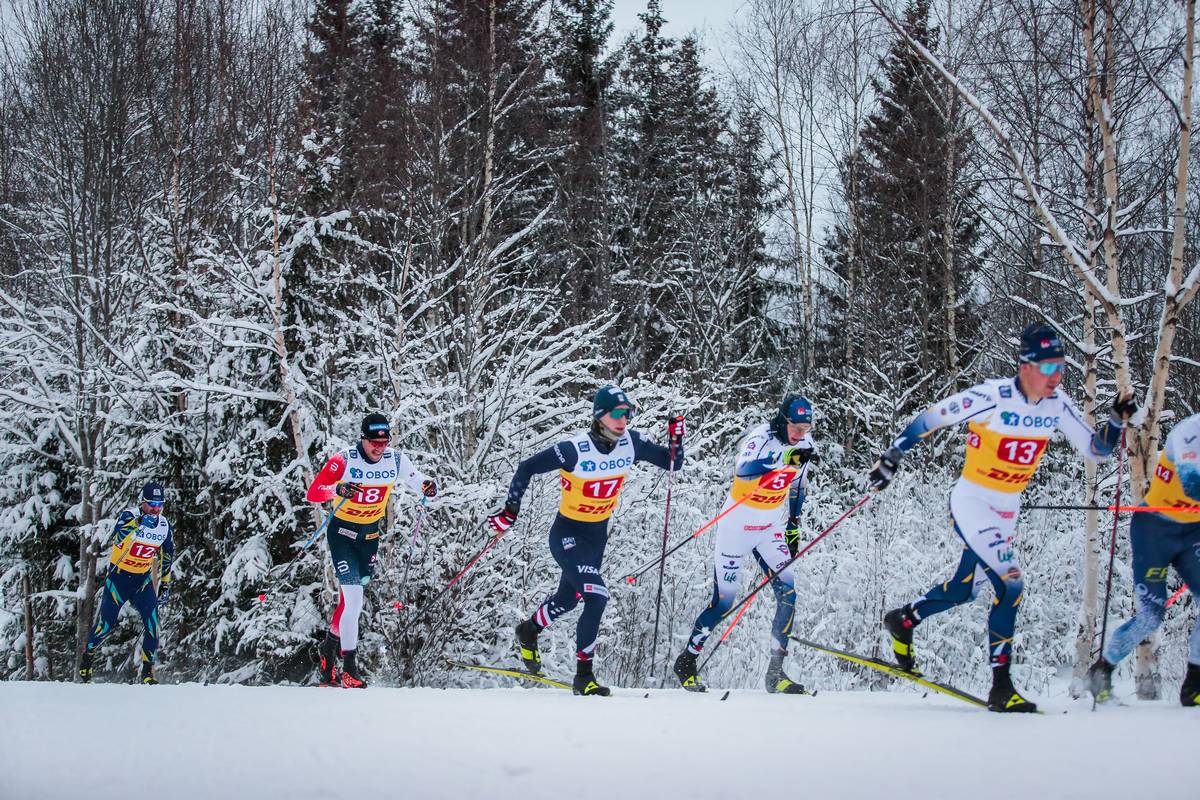
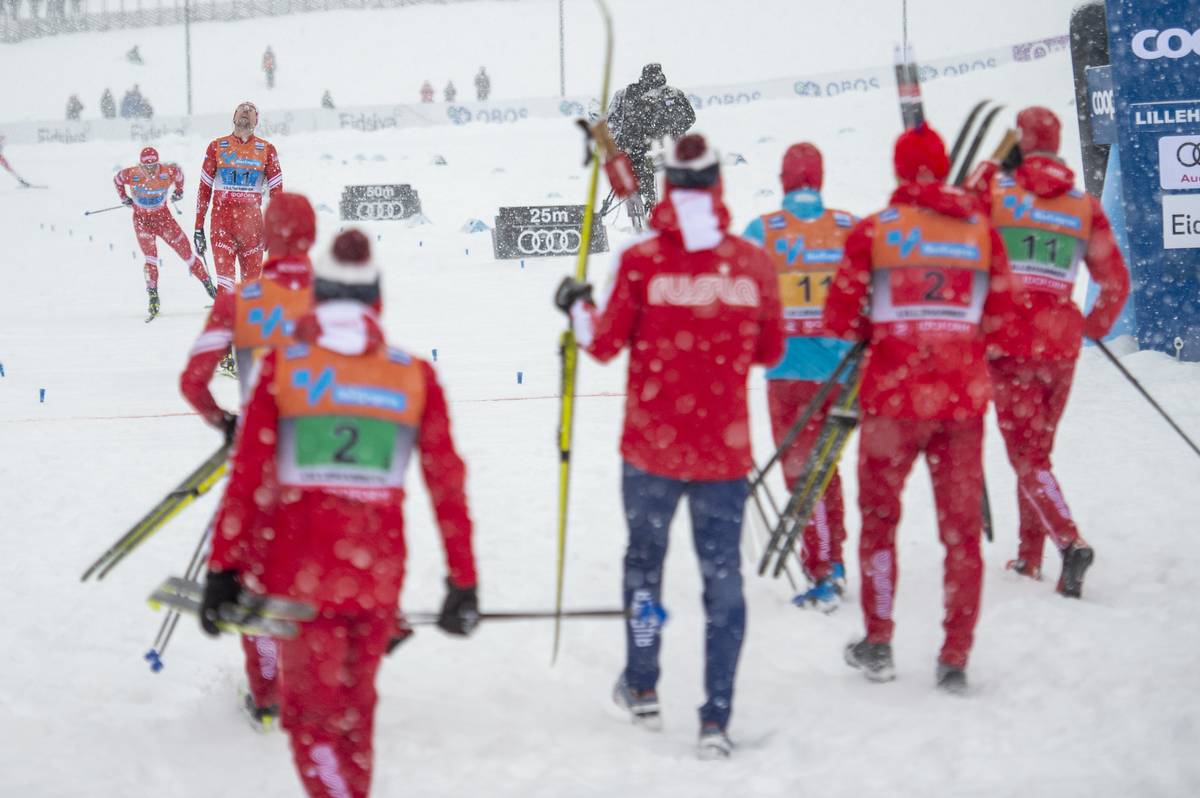
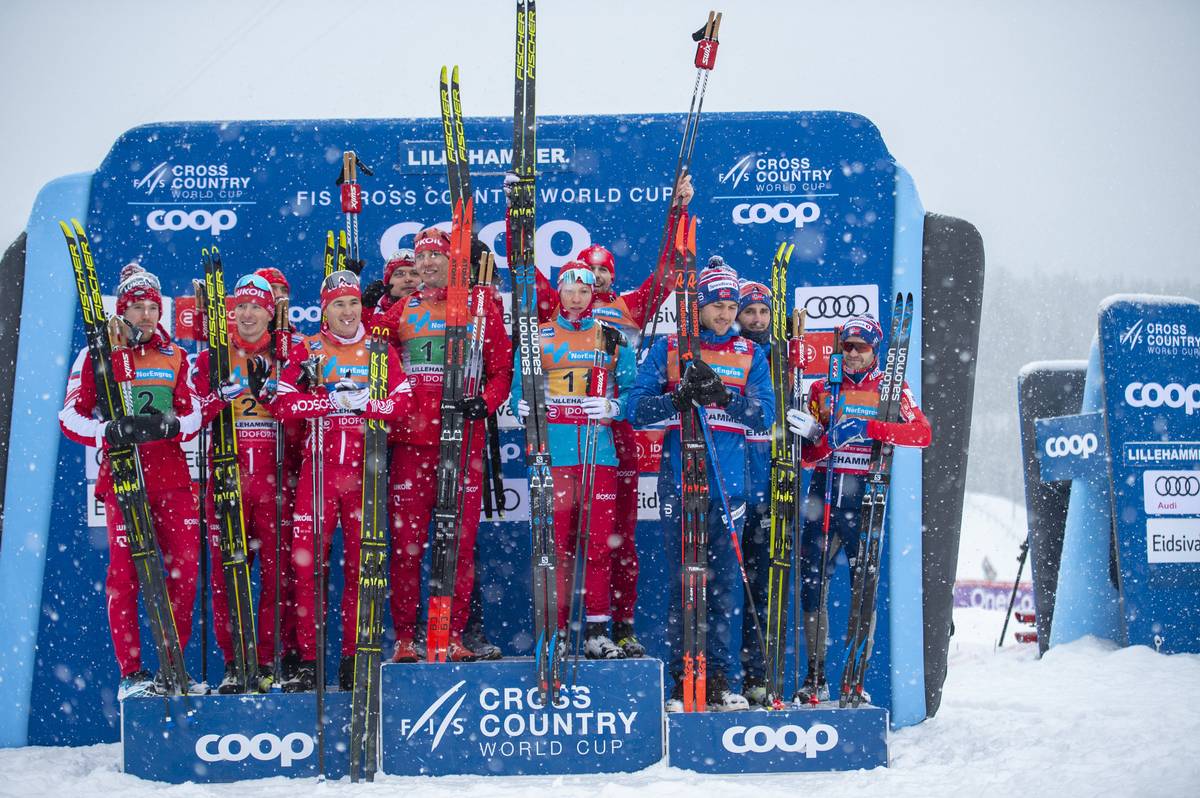
    It was Norway I, Russia II, and Norway II for the podium during the men’s 4 x 7.5k relay in Lillehammer. (Photo: NordicFocus)

    This World Cup coverage is made possible through the generous support of Marty and Kathy Hall and the A Hall Mark of Excellence Award. To learn more about A Hall Mark of Excellence Award or to learn how you can support FasterSkier’s coverage please contact info@fasterskier.com.

    Most-often the champions of the event, the Norwegian men’s program has been waiting for another crack at the 4 x 7.5-kilometer relay on home turf for the last two years. In 2019, Russia not only won the 4 x 7.5-kilometer relay in Lillehammer but the Russia II team took second as well. The World Cup in Lillehammer that was scheduled for 2020 was first postponed, then cancelled, to manage the nation’s COVID-19 cases. With the opportunity to take back their title at home in 2021, Norway was ready to throw down on the modified tracks in Lillehammer today. 

    Luke Jager leads the American men’s team during the 4 x 7.5k relay in Lillehammer. (Photo: NordicFocus)

    Hoping to be in the mix was the young American team made up of Luke Jager, Ben Ogden, Gus Schumacher, and Zanden McMullen. Each currently 21-years-old, Jager, Ogden, and Schumacher were part of the World Junior Championship back-to-back gold medal teams.  

    From the Canadian World Junior team who earned a silver medal during that relay in Oberwiesenthal, Germany, Olivier Leveille has moved onto the World Cup and raced today as a member of the Nordiq Canada relay team. Leveille would race as the third leg, following teammates Russell Kennedy and Antoine Cyr, who skied the classic legs. Graham Ritchie would ski the anchor leg for Canada. 

    A second U.S. team was also entered. This team included Hunter Wonders, David Norris, Kevin Bolger, and JC Schoonmaker, racing in that order.  

    Hunter Wonders skis the first leg for the United States II team. (Photo: NordicFocus)

    From the first leg, it was no surprise to see both teams from Russian and Norway leading the pack, separated by only 1.2 seconds. Team France (+9.7) was sitting in fourth place while  Jager (19:40.9) was able to keep the U.S. within striking distance in sixth at the first exchange (+10.2). 

    The United States II team sat in ninth (+25.8), with the Canadians close behind in 13th (+28.1).

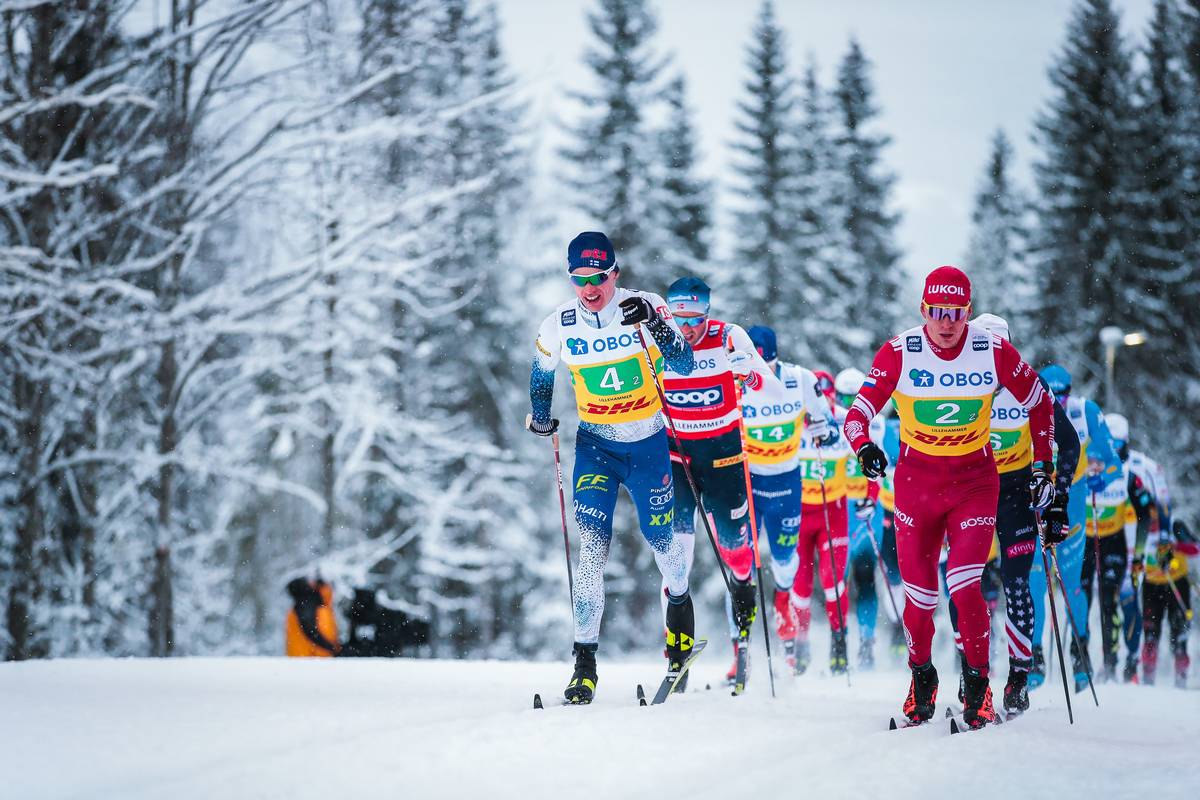
    Iivo Niskanen (FIN) and Alexander Bolshunov (RUS) lead the train during the second leg of the men’s 4.75k relay. (Photo: NordicFocus)

    During the second classic leg, the lead group compressed. Iivo Niskanen (FIN) closed a 17-second gap for Finland to take the lead at the second exchange. Niskanen won the 15k classic distance opener last weekend in Ruka. 

    Russia I (+0.4), Norway I (+11.9), Russia II (+12.4), and Norway II (+14.2) rounded out the top 5 as teams made the second tag to begin the final two skate legs of the race.

    U.S. I was sitting in 12th place (+27.9)  after a strong leg from Ogden, with Cyr passing off for Canada just ahead in 8th place (+22.5) .  

    Ben Ogden skis on the tails of leader Alexander Bolshunov during the second classic leg of the men’s relay in Lillehammer. (Photo: NordicFocus)
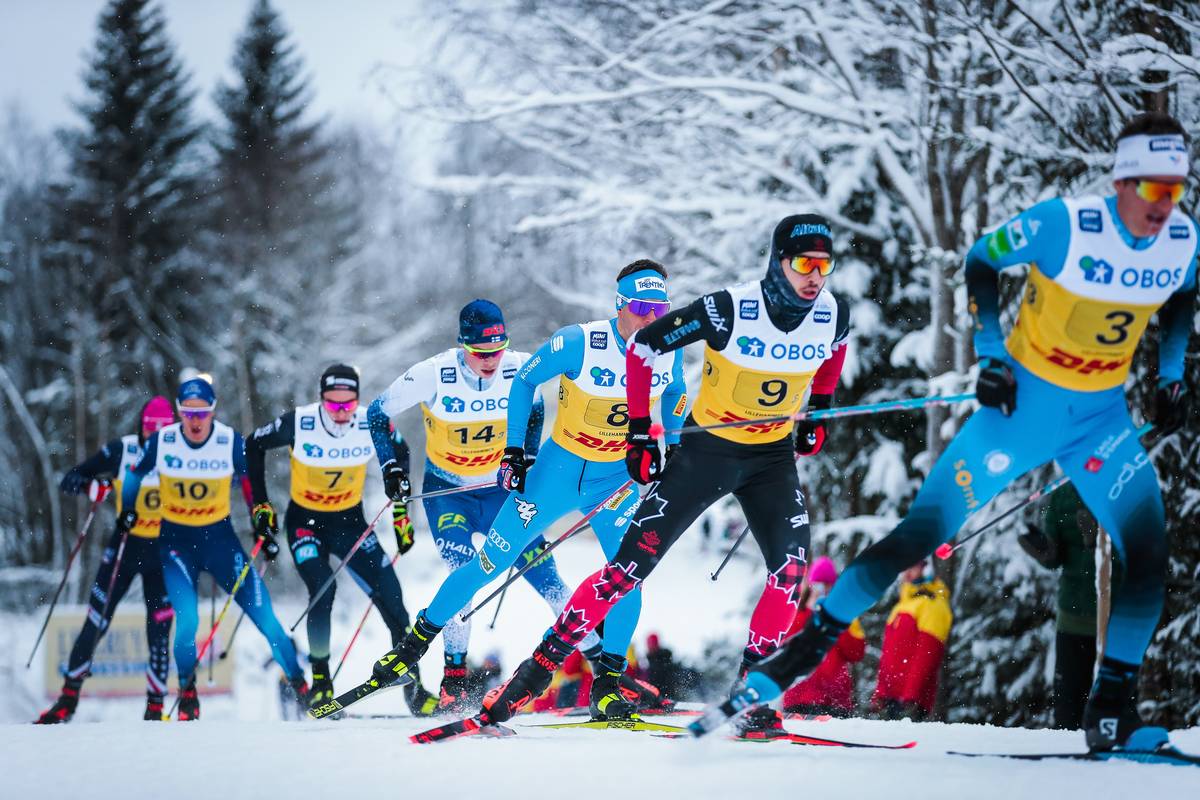
    Olivier Leveille (Bib 9) races the third leg of the men’s relay in Lillehammer. (Photo: NordicFocus(

    As teams entered the stadium after their first 7.5k skate leg, the Norwegians and Russians were back on top, separated by only 1.3 seconds.  Skiing the 6th fastest time for his leg, Schumacher was able to move up 5 spots to leave the U.S. I team in 7th (+29.0)  (18:11.9). This effort brought the Americans back into the mix at the front of the lead chase group. Canada dropped down to 11th place (+33.5) after the third leg.  

    As teams made the final exchange, Johannes Høsflot Klæbo (NOR I), Sergey Ustiugov (RUS II), Harald Østberg Amundsen (NOR II) and Ivan Yakimushkin (RUS I) took off in a group.

    The final exchange. Simen Hegstad Krüger tags Johannes Høsflot Klæbo for the final leg of the men’s 4 x 7.5k relay in Lillehammer. (Photo: NordicFocus)
    Still tight at the front: two Russian teams and two Norwegian teams push the final leg of the men’s relay in Lillehammer. (Photo: NordicFocus)

    The two Norwegian and Russian teams stayed together as a pack over their last two laps, conserving their energy for a final sprint. This lead pack of four continuously grew their gap from the chase pack, building suspense for moves that might determine the podium. 

    With 1.5k to go, the lead pack began to accelerate. Moves were made by each team, but all moves were quickly answered. It remained anyone’s game. 

    Once the lead pack hit the stadium, Klæbo looked to take control, initiating his top gears in hopes of creating separation from the pack. Bringing it down to the wire, Ustiugov followed this attack as the group turned the corner for the last 100m. 

    Down the home stretch, Johannes Høsflot Klæbo turns on the sprint gears to bring the Norway I team home. (Photo: NordicFocus)

    In the head to head sprint into the finish, Klæbo showed an edge over Ustiugov, gaining ground and throwing his ski at the line for the win. Sealing the deal on a Norwegian victory, Klæbo stopped the clock at 1:14:58.7 to reclaim the relay at home. 

    Still in the hunt, Ustiugov brought Russia II home in second (+0.2), with Norway II just behind in third (+1.2). Also edged out at the line, the Russia I team finished fourth (+1.4).  

    Johannes Høsflot Klæbo brings home a win for Norway in the men’s relay in Lillehammer. (Photo: NordicFocus)
    Keeping the final leg tight, Sergey Ustiugov anchored Russia II team who took second in the men’s relay in Lillehammer. (Photo: NordicFocus)

    Looking excited and proud, Klæbo shared his thoughts on the day with FIS after the finish.

    “It was a really tough one,” Klæbo said. “It was a nice fight and it was for sure really fun to cross the finish line first and to win as a team.”

    Emil Iversen, who had raced the second leg, praised Klæbo for his sprinting ability, adding the value his prowess added to the relay team. 

    “We know we have the best man in the finish. It was a pretty exciting sprint today. It’s nice to have him in the last leg of the relay – he is the best sprinter in the world.” 

    Winners of the relay in Lillehammer, the Norway I team included Erik Valnes, Emil Iversen, Simen Hegstad Krüger, and Johannes Høsflot Klæbo. (Photo: NordicFocus)
    Take a bow. Zanden McMullen crosses the finish after racing the anchor leg of the men’s relay in Lillehammer. (Photo: NordicFocus)

    Closing for the Americans, McMullen skied a strong anchor leg for the U.S. I, finishing 9th overall (+1:02.5). McMullen raced a steady leg to hold the American position near the front of the first chase group, hovering in sixth or seventh position throughout the leg. In the final push, McMullen was overtaken by athletes from the German and first Swedish team.

    After the race, Matt Whitcomb provided insight into selection for each of the American teams, along with insights into their performances, conditions in Lillehammer, and the overall team dynamic after the second consecutive three-day race weekend.

    At the finish, Canada was just behind the U.S. I team in 10th (+1:15.5), while the United States II team crossed the line further back in 15th (+3:20.9).

    Russell Kennedy (Bib 9) skis the anchor leg for Nordiq Canada during the men’s 4 x 7.5k relay in Lillehammer. (Photo: NordicFocus)

    After a fantastic weekend of racing in Lillehammer, teams are headed to Davos, SUI for a weekend of freestyle racing. The program includes a freestyle sprint on Saturday, followed by a 15k distance race on Sunday. 

    Final Results

  • Bolshunov and Russia Sweep, Schumacher in 14th: Stage 4 of the Tour de Ski

    Bolshunov and Russia Sweep, Schumacher in 14th: Stage 4 of the Tour de Ski

    Lights out. Alexander Bolshunov takes the Stage 4 15-kilometer individual start freestyle by eight seconds. (Photo: NordicFocus)

    This World Cup coverage is made possible through the generous support of Marty and Kathy Hall and their A Hall Mark of Excellence Award. To learn more about A Hall Mark of Excellence Award or to learn how you can support FasterSkier’s coverage please contact info@fasterskier.com.

    Stage 4 of the Tour de Ski introduced a change of scenery on Tuesday with the flanks of the Dolomites sinking from sky to valley floor in Tobalch, Italy. The day’s 15 k skate pursuit brings the Tour’s traveling circus to a new locale, however, the narrative remains the same: Russia’s Alexander Bolshunov, last season’s overall World Cup winner, has gripped the TdS lead after winning Stages 2 and 3.

    Barring the unforeseen, and citing Bolshunov’s runaway performance in Sunday’s 15k skate pursuit, which he won by a margin of 53.7 seconds over his teammate Artem Maltsev, and with four stages remaining, this TdS appears to be locked up for the twenty-four-year-old Bolshunov. If Bolshunov slam-dunks the remainder of the Tour, he’ll have won back-to-back Tours – the first male skier to do so since Swiss star Dario Cologna won in 2010/2011 and 2011/2012.

    Bolshunov began as the last of 63 starters. As such, he had the gift of knowing the fastest splits at every time check allowing him to notch the pace up, throttle down to conserve energy, or simply sustain an unmatchable combo of power and cardio endurance.

    At 5k, 10k, and the finish, Bolshunov was true to form as the leader. He won in 32:49.6 minutes to capture his third stage win of this Tour and take a 1:15 minute lead into Stage 5, a 15 k classic pursuit.

    “It was a tough race without much help. I had to just listen to splits. I am happy with the result and thanks to the service for good skis.” Bolshunov said post-race through a translator.

    Denis Spitsov (RUS) powers through the 15-kilometer individual start freestyle to take 2nd in Stage 4 of the 2021 Tour de Ski. (Photo: NordicFocus)

    As Devon Kershaw noted through a text mid-race, “It’s the Russian championship out there.”

    Officially, not exactly, but the results illustrate the dominance. Denis Spitsov second (+8.3), Ivan Yakimushkin third (+13.9), Alexey Chervotkin fourth (+19.2), Artem Maltsev fifth (+21.8), Maurice Manificat of France sixth (+22.9), Evgeniy Belov seventh (+27.6), and Andrey Melnichenko eighth (+29.2).

    In other words, seven of the top eight finishers on the day were Russian. Top-heavy and deep. The only Russian outside the top-10 was Alexander Terentev in 15th (+52.5).

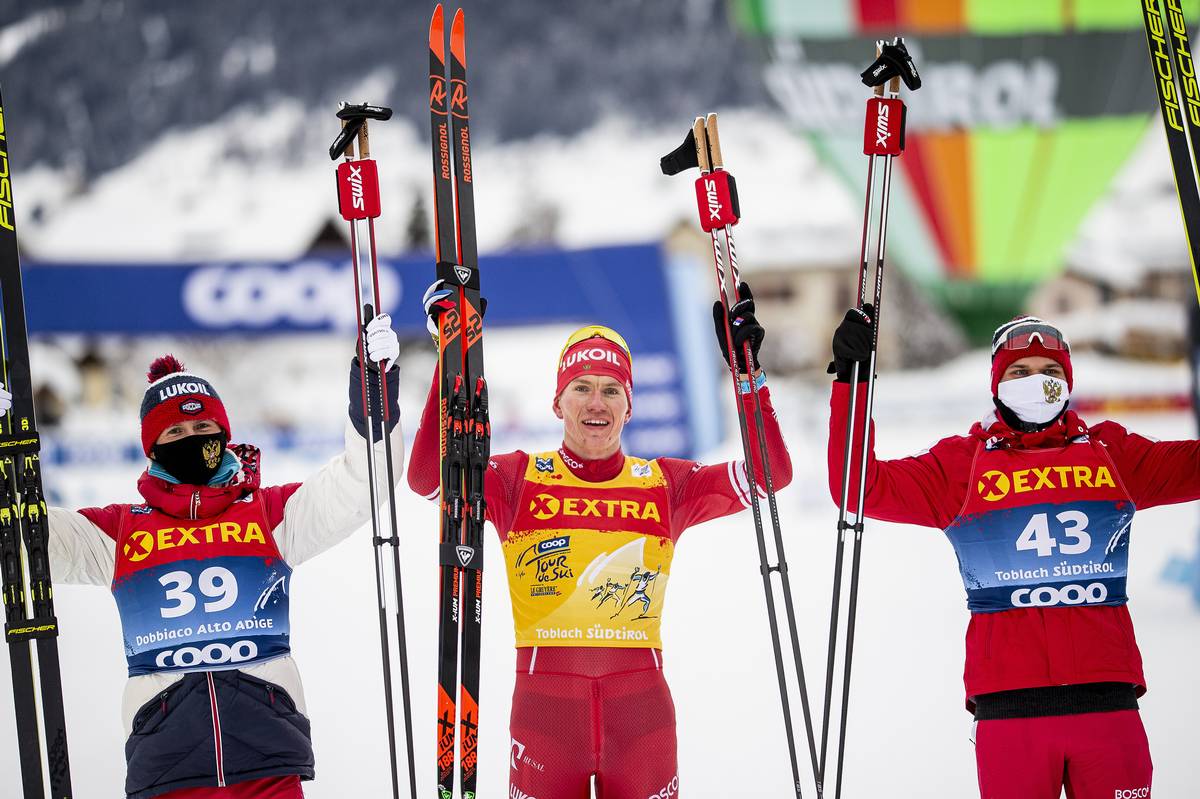
    The top three men celebrate their performance after Stage 4 of the 2021 Tour de Ski. Russians Alexander Bolshunov, Denis Spitsov (left), and Ivan Yakimushkin (right) clocked the top three fastest times, respectively. (Photo: NordicFocus)

    One spot ahead of Terentev, at 51.3 seconds back was twenty-year-old Gus Schumacher for the U.S. Starting in Bib 17, the Anchorage, Alaska based skier posted a career-best World Cup result in 14th. Before Tuesday’s race, Schumacher possessed two World Cup top-30s: a 25th in the Davos skate sprint, and the 24th best time of day in the Ruka 15 k skate pursuit. Both races were this season. According to FIS, he has contested 13 World Cup events, including today’s race.

    “In many ways, and it is a bold statement, but in many ways, it is up for consideration for the race of the day,” said U.S. Head Coach Matt Whitcomb. “When an athlete new to the World Cup gets his first t0p-15 that is a really special moment and to do it somewhat early in the Tour, when there are still 63 men starting is just super impressive.”

    Post-race comments from U.S. Head Coach Matt Whitcomb.

    Gus Schumacher skis to a World Cup career-best 14th in Stage 4 of the 2021 Tour de Ski, a 15-kilometer individual start freestyle. (Photo: NordicFocus)

    Starting in bib 17, Schumacher notched the 16th fastest split at 5k.

    “It was definitely kind of a similar approach as always that I have,” said Schumacher about his first 5 k. “I try to focus on the first five to eight minutes being easier than I think it should be. I think my best races come when I feel like I did that. But, my split was still good. So today, I think I got to that first time where I got a split, and there were only 17 people through, they said I was tied for first and I was still feeling pretty comfortable. … When you hear the good split and you also feel good after six minutes, that was when I think I was like, ‘I can do something with this.’”

    On his second go-around, at 10 k, he was positioned further back on the leaderboard at 26th, 56.1 seconds off of Bolshunov’s mark, and 13 seconds off the pace of Swiss skier Dario Cologna, who skied through in 15th (+43.0).

    Eventually, Schumacher locked onto a ride with the 39th starter, Spitsov. Although eventually placing second overall, Spitsov was eighth after 10k. According to Schumacher, the Russian caught Schumacher atop the course before a working descent.

    “I saw [Spitsov] on a 180 corner, and I knew who it was and I was pretty excited, I was like, ‘this is going to be a good ride’. He caught us, I was in a little group, and he caught us right before the downhill, and I just hopped in behind him.

    “It was kind of funny because that downhill felt really easy behind him when I am sure it was about as fast as before just working it, but I was able to not work it that hard. Going into the third lap, [Spitsov] notched it up a lot actually. That little rest was good so I could hang through the third lap.”

    Post-race comments from Gus Schumacher.

    Spitsov gained roughly 10 seconds on Bolshunov on his third lap. For his part, Schumacher gained too. At 12.1 k he was 18th overall, 17th at 13 k, and ultimately sliding across the line 14th. For the overall Tour, Schumacher is 25th (+4:55).

    Placing the race in context for his U23 cohort, which is small on the World Cup, of the seven U23 athletes Schumacher was second fastest. Terentev, the Russian in 15th, is also a U23 and anchored the Russian junior team at the 2018 and 2019 Junior World’s Relay. Both races were won by the Schumacher anchored U.S. team.

    Scott Patterson on his way to a 32nd place finish in Stage 4 of the 2021 Tour de Ski. (Photo: NordicFocus)
    Kevin Bolger on course during Stage 4 of the 2021 Tour de Ski. (Photo: NordicFocus)

    Also for the U.S., Scott Patterson was just outside the points in 32nd (+1:38.1), and Kevin Bolger placed 40th (+1:57.1). Simi Hamilton did not start. 

    Racing continues tomorrow with Stage 5 of the Tour de Ski, a 15 k classic pursuit.

    Stage 4 Results | Overall 


  • Bolshunov Skis Big and Bold, Dario Cologna Sneaks in for a Podium

    Bolshunov Skis Big and Bold, Dario Cologna Sneaks in for a Podium


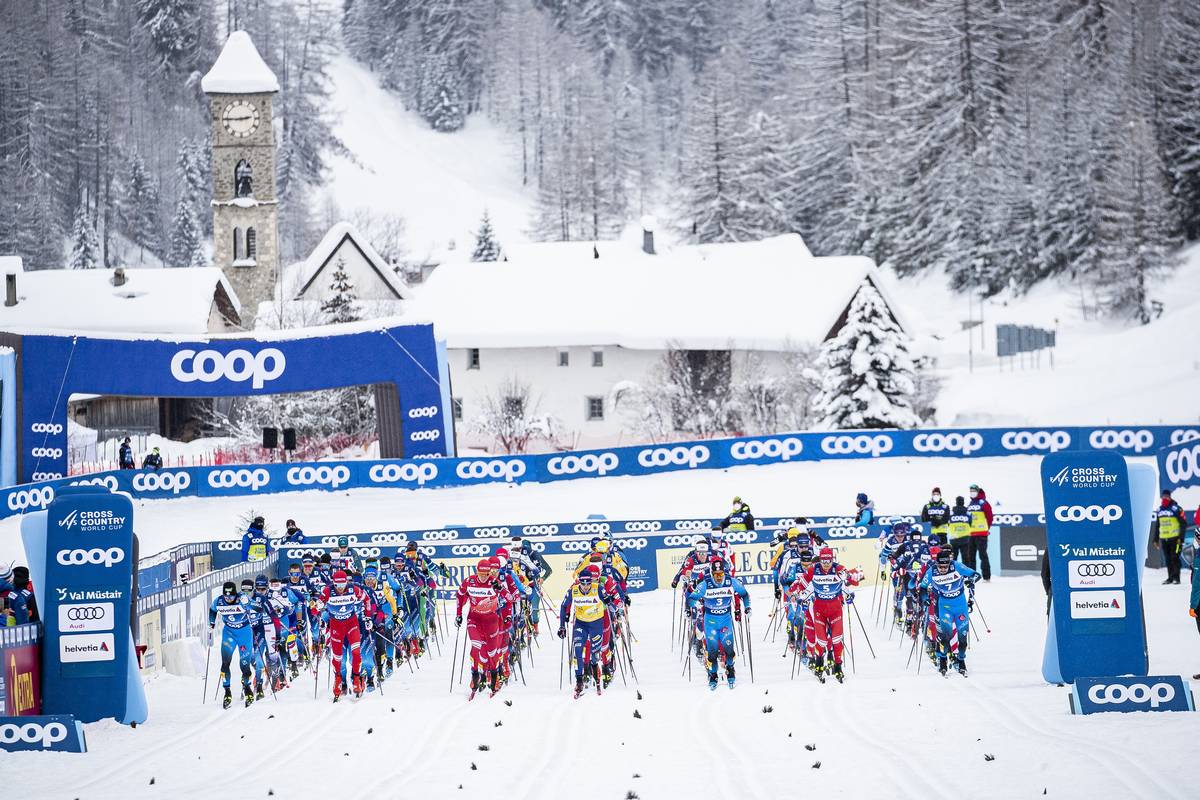
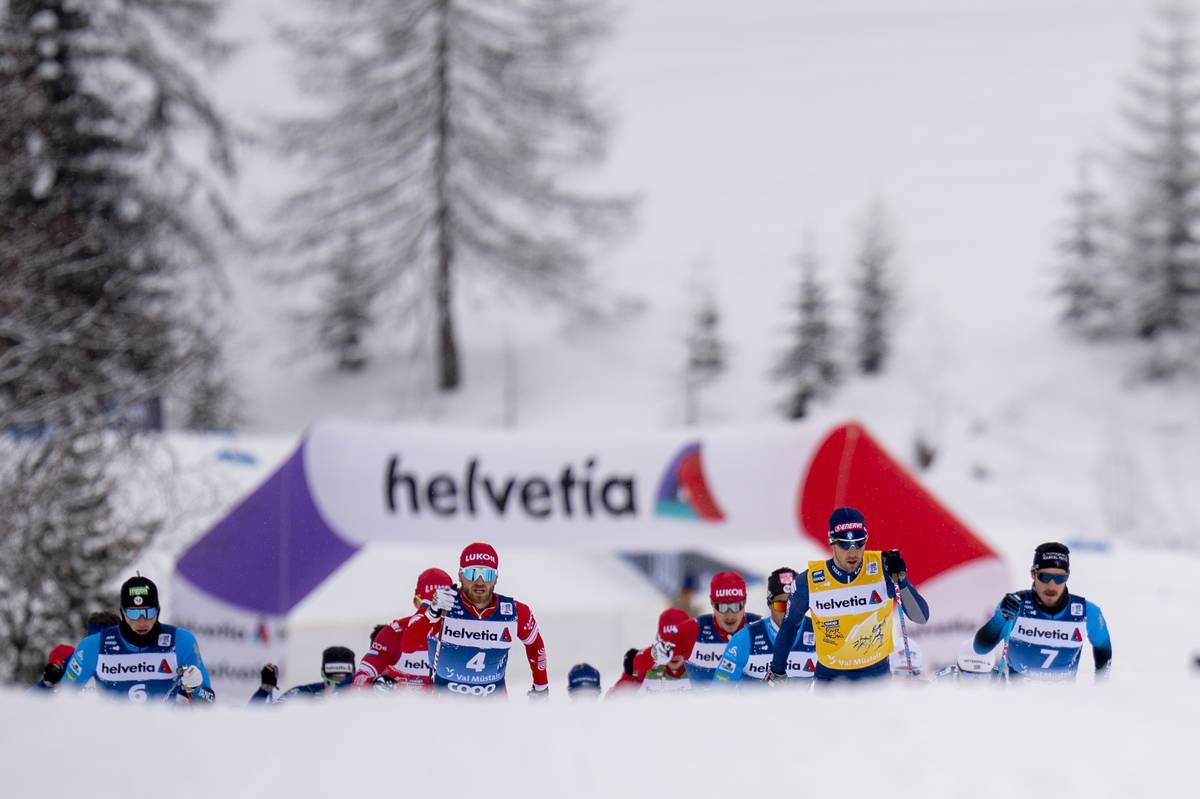
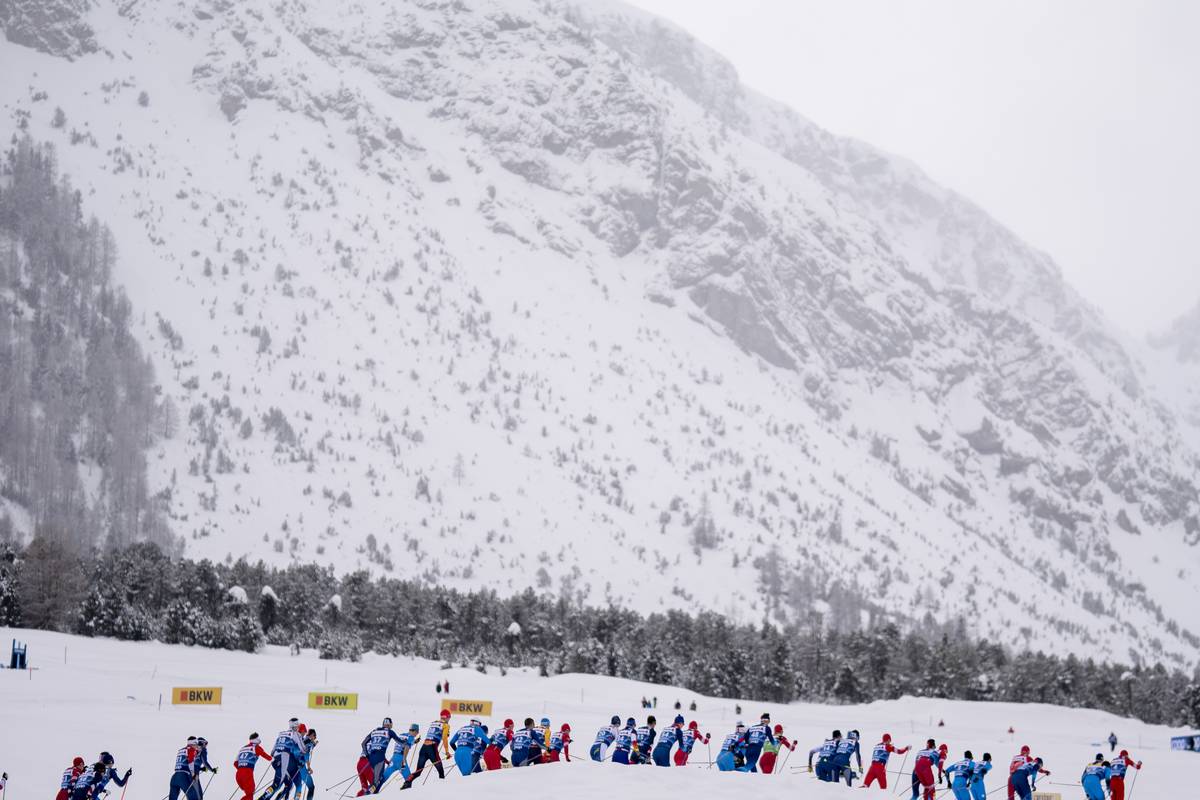
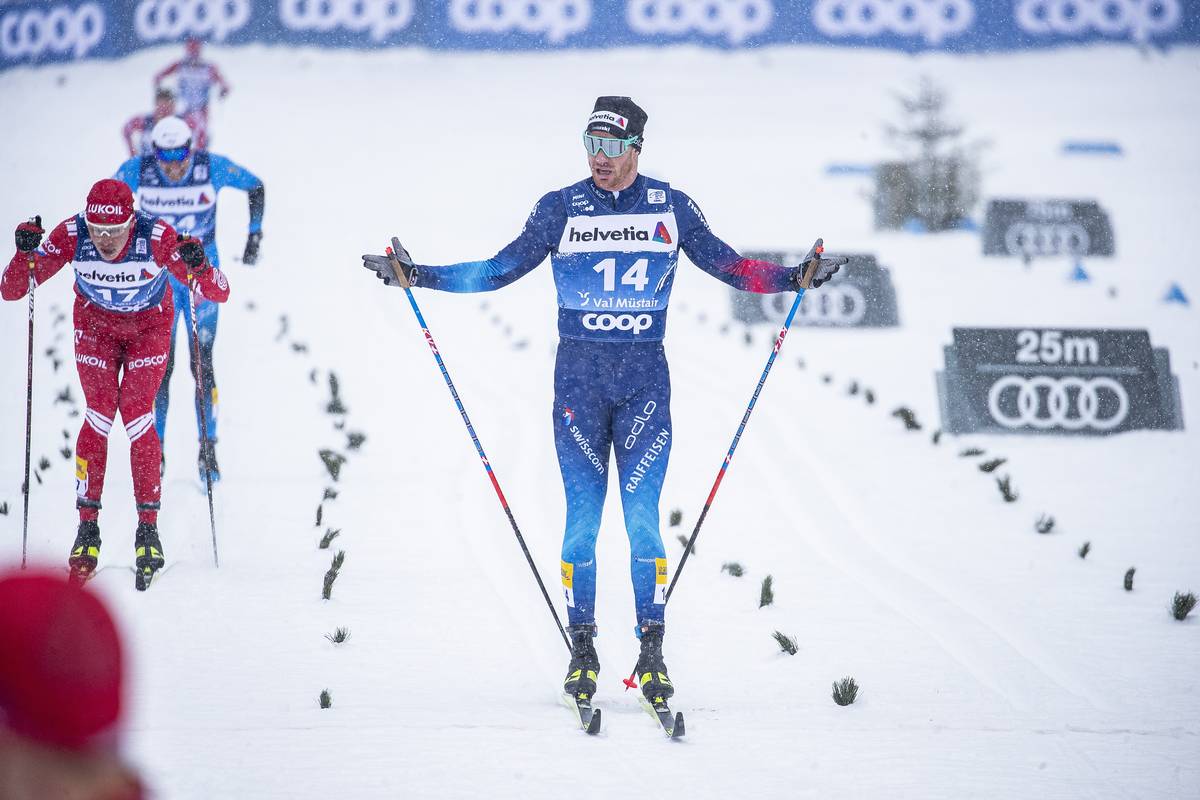
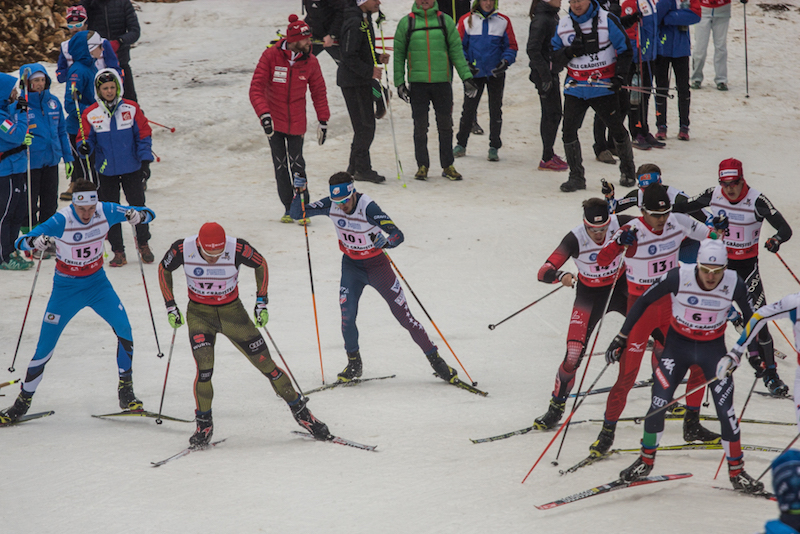
    The start of the men’s 15 k mass start classic in Val Müstair, Switzerland. (Photo: NordicFocus)

    This World Cup coverage is made possible through the generous support of Marty and Kathy Hall and their A Hall Mark of Excellence Award. To learn more about A Hall Mark of Excellence Award or to learn how you can support FasterSkier’s coverage please contact info@fasterskier.com.


    Val Müstair, Switzerland and its snowfall were again the idyllic backdrops for the Tour de Ski (TdS) where the men raced a 15-kilometer classic mass start to kick off the distance stages. After yesterday’s skate sprint in which Russia’s Alexander Bolshunov took second place, it appeared the twenty-four-year-old would iron-fist this fifteenth edition of the TdS.

    No doubt, Bolshunov came into the event as the favorite. The conversation trending towards how much time he wins the overall. As last year’s winner of the TdS, and finishing on five podiums in seven stages, this Russia has been here before.

    Immediately as the 77 starters crowding the start tracks set off, Bolshunov was the skier to watch. No matter who strode alongside him for the first 5 k or so, this was simply a game of when Bolshunov would shatter the pack and make an exclamation point statement that his trend towards generational status skier was for real.

    The TdS includes a points race, which incentivizes some skiers not contending for the overall to remain upfront to snag the prime, and perhaps collect a few more Swiss Francs at the end of the workday. With the points bonus offered at 4.5 k, Italy’s Federico Pellegrino, winner of Friday’s sprint, was right there in the front.

    Italy’s Federico Pellegrino in yellow. (Photo: NordicFocus)
    Stage 2 of the 2021 Tour de Ski. (Photo: NordicFocus)

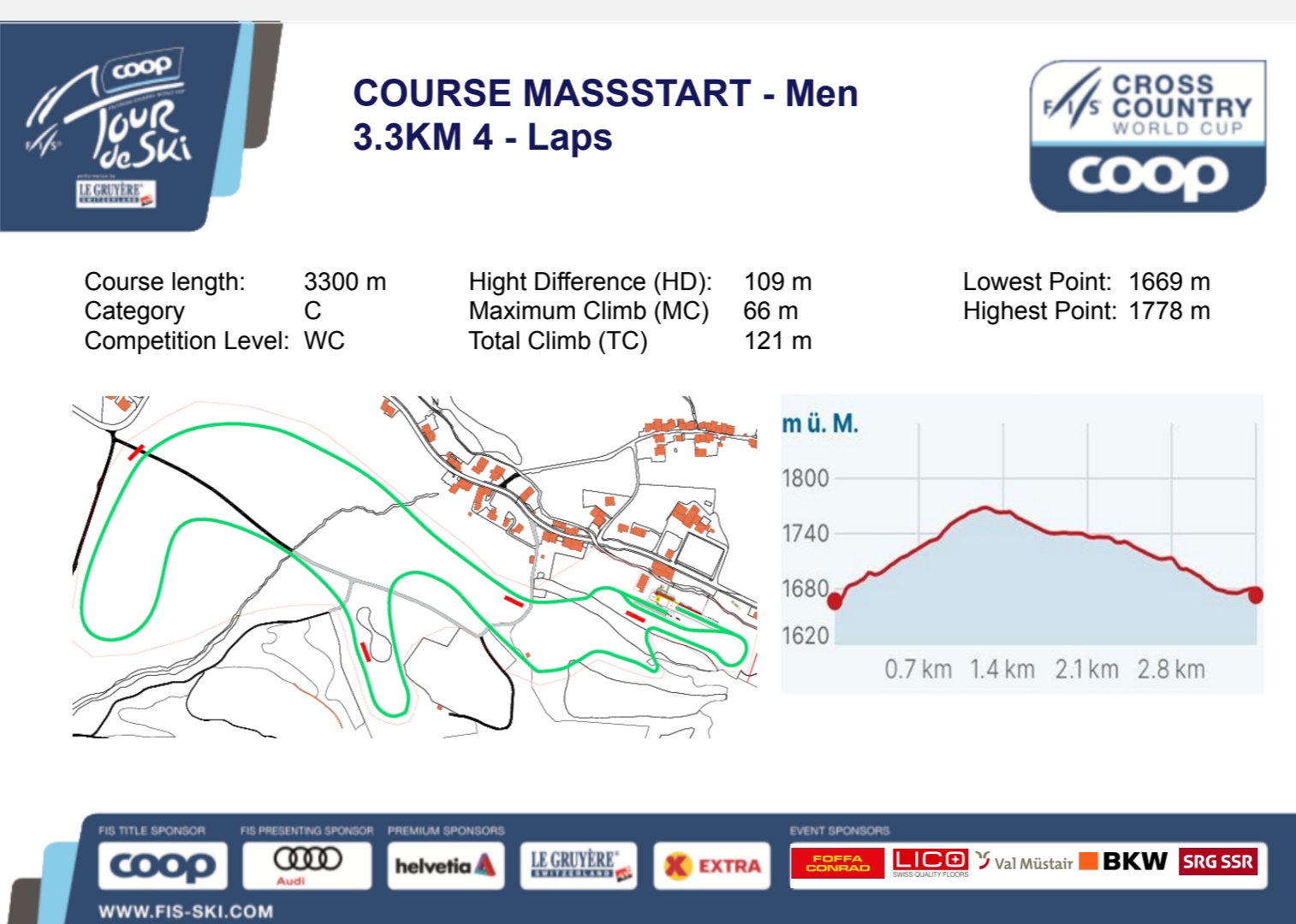
    With four laps of a 3.3 k course which featured a long climb and sinuous downhills with techy turns, this was primarily a fitness test in the end. And the Russian team collectively appears the fittest. Along with Bolshunov, his teammates including Alexey Chervotkin, Evgeny Belov, Ivan Yakimushkin, Denis Spitsov, and Illia Semikov were a wall of red Lycra upfront.

    No matter how you parse the stats or the visuals presented of the race, it certainly looked like a Russian podium sweep with the only lock Bolshunov on the top-step. At 11.4 k, Bolshunov powered ahead by 5.1 seconds ahead of hometown hero Dario Cologna with Belov, Maurice Manificat of France, Yakimushkin, Sptisov, Semikov, and Sweden’s Oskar Svensson towed through in that order. Svensson was 14.7 seconds off the pace.

    The solo Bolshunov show flew ahead. Eight-tenths of a kilometer later, he secured a 19.7-second cushion. With little action out front beyond anticipating how much time Bolshunov might gain, we’ll send it straight to the finish: Bolshunov won by 23.5 seconds.

    Alexander Bolshunov in front during stage 2 of the 2021 TdS. (Photo: NordicFocus)

    As noted, it appeared late in the race to be a probable all-Russian podium. Yet the cosmos can play tricks. The podium, in a parallel universe, maybe had a decidedly red look.

    Coming into the final downhill, made more complex by a sweeping right-hand corner which had already taken out several skiers in yesterday’s sprint and today’s mass start, Belov dove into the bend first, a hair ahead of Chervotkin. As skiers warped around, Chervotkin tried to cut inside of Belov and clipped his skis. Belov tumbled as did Chervotkin right after. As the two skiers exchanged words and began righting themselves, Yakimushkin went wide left off course and out of the turn to avoid crashing. Twenty meters later, he skied back on course.

    In the meantime, Cologna, remained on his feet, skirted around the tumbled Russians, and made good for his hometown and the army of Cologna supporters who no doubt were clanging oversize cowbells at home as the event did not allow spectators. As the Swiss gift that keeps on giving, Cologna placed second (+23.5) and Yakimushkin third (+25.3). France’s Manificat bypassed the carnage as he was many meters behind the crash, and placed fourth (+27.7).

    Cologna has won the TdS on four occasions – a record for men’s overall titles. His second place on the stage was his best result of the season. Before Saturday, his best 2020-2021 distance result was 14th place in the Davos 15 k skate. His last podium was in the 2019 15 k skate also in Davos.

    Evgeniy Belov (RUS), and Dario Cologna (SUI), (l-r). (Photo: NordicFocus)
    Dario Cologna (SUI)  taking second in stage 2 of the 2021 Tour de Ski. (Photo: NordicFocus)

    Russia locked up five of the top-10 spots, with Belov, who had crashed, missing out on a podium and placing eighth.

    Notably missing from the results was Chervotkin. He was disqualified after the race for violating rule ICR 343.9 which states, “Obstruction: deliberately impeding, blocking (by not following best line), charging or pushing any competitor with any part of the body or ski equipment.”

    Post-race comments about the men’s race from U.S. Head Coach Matt Whitcomb.

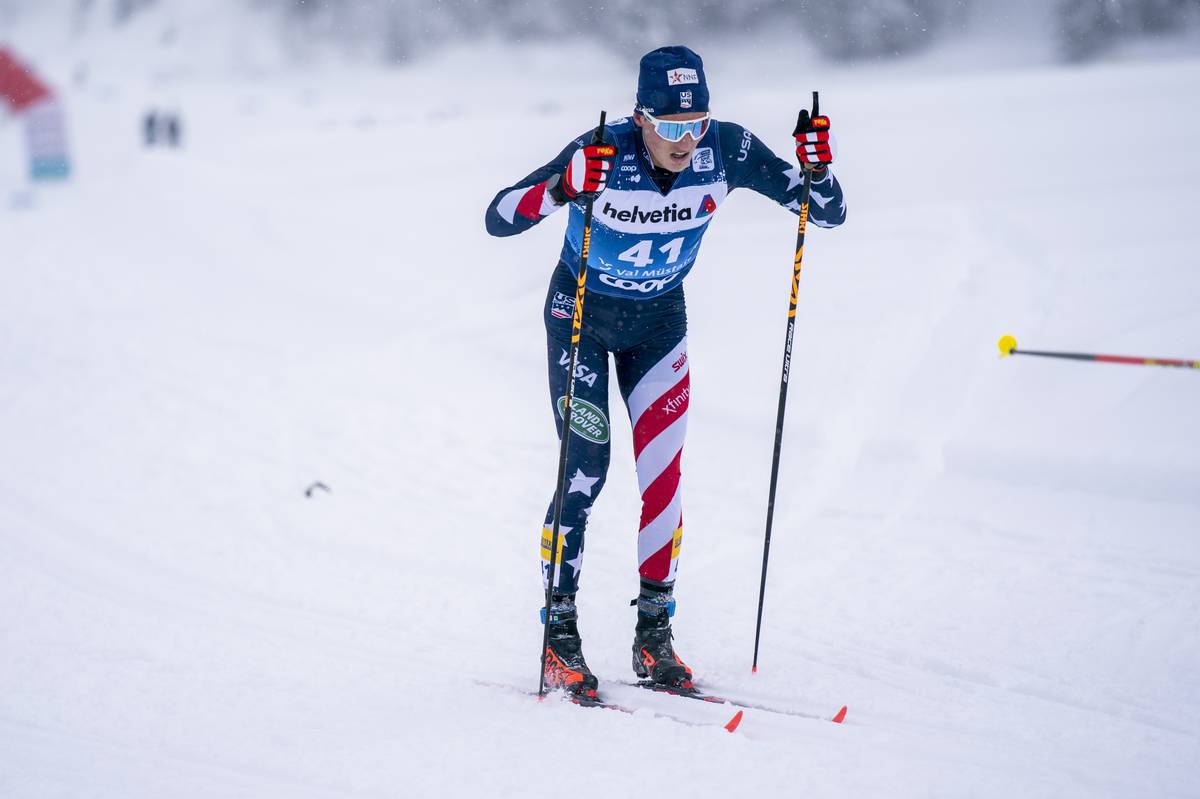
    For the U.S., Gus Schumacher was the top finisher in 36th (+1:53.8). New to full-time World Cup skiing, Schumacher has been on the road since mid-November as he begins to learn more about certain World Cup venues, the vagaries of life on the road, and the speed at which skiers like Bolshunov hammer about.

    Today, the twenty-year-old from Anchorage, Alaska was 23rd (+8.2) at the 4.5 k mark skiing in a thick soup of skiers: 30th place was 10.8 seconds back. As the race broke apart due to the surges ahead at 11 k, Schumacher fell back to 33rd amidst a group of skiers including Sweden’s Calle Halfvarsson.

    “It was fun to race a mass start again,” Schumacher emailed. “I thought it would go out fast and then cruise but it went out quite slowly, which was a little frustrating in the belly of the pack. The second lap also seemed pretty relaxed, and as the pace quickened through halfway I was feeling like I was skiing well and moving up. And then near the top of the climb, the wheels fell off and I just flooded hard. Thankfully there was a big downhill to recover, but I really lost my momentum. So not perfect pacing, but it was fun to ski closer to the front for a little while.”

    As his first Tour de Ski, the prospect of an eight-stage slog can be daunting. Decidedly, Schumacher is taking each stage one by one, each a unique opportunity to learn and grow.

    “I definitely approached the day as a singular race, just with the goal of doing as well as I could,” Schumacher wrote. “The risk that I could’ve taken would be double poling on skate skis, but I figured that would not be a good move with the idea of an 8-race tour.”
    He added that the race was a reminder to strategically pace at altitude.
    Gus Schumacher (USA) – FIS world cup cross-country, tour de ski, mass men, Val Mustair (SUI). www.nordicfocus.com. © Vianney THIBAUT/NordicFocus. Every downloaded picture is fee-liable.

    Scott Patterson was the next best American in 43rd (+2:17.6), with teammates Simi Hamilton 46th (+2:38.1), and Kevin Bolger 59th (+3:25.6), respectively.

    “Across the board, it was a disappointing day for the guys, just call it what was,” said U.S. Head Coach Matt Whitcomb after the race. “Gus probably showed the most signs of promise today, he skied within the top-20 for the parts of the race and top-25 before he was kind of running out of gas. He was pretty cached on the fourth lap. We will just make sure he continues to fuel well it is one of those places where if you go a little too hard on any one lap which is my guess as to what happened, you end up having a pretty heavy tax late in the race. It comes back to bite you and sometimes you get away with it. I am not one who likes to see people ski a conservative race I like to see people aiming for the bull’s eye and he did that and that is how to get faster.”

    Scott Patterson for the U.S. placed 43rd in stage 2. (Photo: NordicFocus)
    Simi Hamilton of the U.S. at the start of the men’s 15 k mass start classic. (Photo: NordicFocus)
    The Men’s Overall:

    Tomorrow’s stage for the men, a 15 k skate pursuit, sees Bolshunov starting first, one minute ahead of second starter Maltsev. Svensson begins third (+1:00), and Cologna fourth (+1:11).

    Stage 2 Results | Men’s TdS Overall Standings


    The men’s stage 2 podium: Dario Cologna (SUI) in second, Alexander Bolshunov (RUS) first, and Ivan Yakimushkin (RUS) third, (l-r). (Photo: NordicFocus)

  • Bolshunov Four for Four in Distance Wins; Norris Earns Season Best Result in 24th

    Bolshunov Four for Four in Distance Wins; Norris Earns Season Best Result in 24th

    Hans Christer Holund of Norway leading down the ribbon of white. A low snow year in Falun, Sweden. (Photo: NordicFocus)

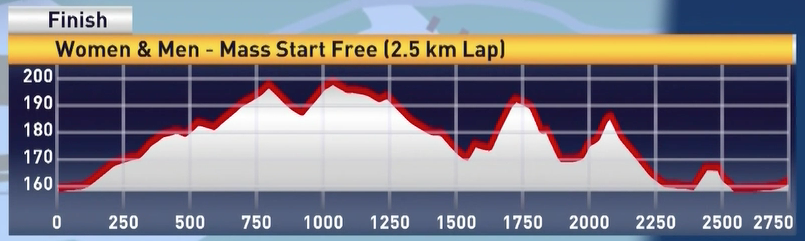
    Around and around they go. Due to lack of snow in Falun, Sweden, the men again wheeled their way around a manmade ribbon of snow, skating six icy 2.5-kilometer laps. Reduced from 30 to the 15 k distance and without the long, steep climb for which the course is usually known, how athletes would fare was yet to be determined.  

    The 2.5-kilometer track of Falun in a low snow year. (Photo: Screenshot FIS Broadcast)

    Along the way, two sets of 15 bonus points were available for the top ten skiers to sprint past the 6.7 and 11.7 checkpoints. It was at the first checkpoint that things began to spread out.

    Overall World Cup and distance points leader, Alexander Bolshunov of Russia, dropped into a tuck on the downhill, accelerating past the Norwegians Hans Christer Holund, Simen Hegstad Krüger, Finn Hågen Krogh, and Sjur Røthe who had taken turns in the lead. Behind Bolshunov in blue Lycra sat the newly minted skate contender Iivo Niskanen of Finland. Known historically as a classic specialist, Niskanen has shown marked improvements in his skate results this season, including a second place finish in the freestyle distance event in Nové Město

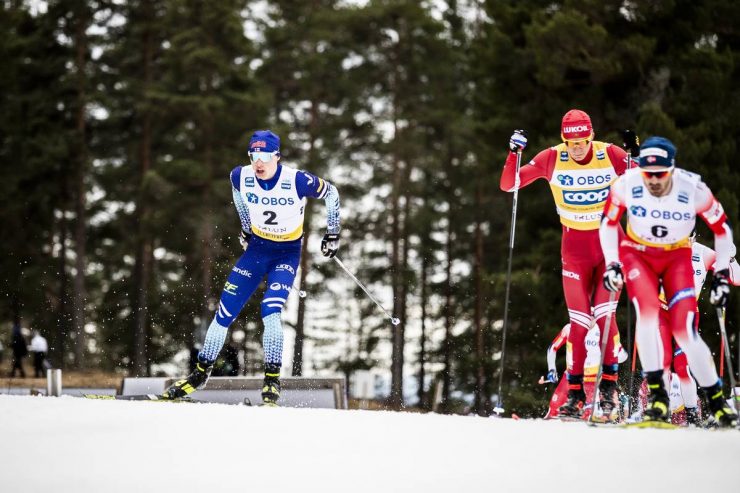
    Alexander Bolshunov (center) primes himself to charge for the sprint bonus, surging past Iivo Niskanen (bib 2) and Hans Christer Holund (bib 6). (Photo: NordicFocus)

    Like a slinky, the pack caught back up to Bolshunov, who relaxed and allowed the Norwegians to get to work again at the front. In a tuck or free skating, the group headed down the longest descent of the course, halfway through the lap. As the course bent to the left, the leader, Røthe, began to step turn, pushing off his right ski and leaning into the curve. As his ski left the ground, it pushed the tips of Bolshunov’s skis together, sending him to the snow (and almost to the grass) between a set of v boards. The Russian hopped back up, quickly regaining lost ground on the lead pack. 

    At the 10 k mark, only 8 seconds separated the top ten. But after the second bonus sprint, where Bolshunov again slingshot around the Norwegian leaders out of the downhill to grab the full 15 points, the field began to spread out.

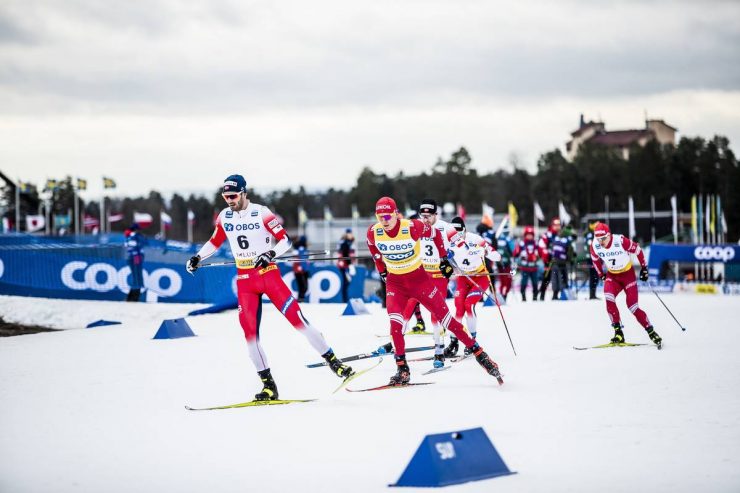
    A sea of red: the top six Norwegian and Russian athletes head into the final lap of the 15 k freestyle in Falun. (Photo: NordicFocus)


    Bolshunov pushed the front of the pack, trying to break free of Røthe, Holund, and Krüger. His Russian teammates Ivan Yakimushkin and Andrey Melnichenko maintaining contact from a few seconds behind.

    In the final lap, Bolshunov tried to break free, but Røthe matched his every move. Holund and Krüger fell off the pace and were overtaken by the chasing Russians. Rounding a downhill turn inside the final kilometer, Krüger caught a ski in the loose granular snow and was sent to the ground, no longer in the hunt for the third step of the podium. 

    Rocketing out of the downhill with less than 500 meters to go, Røthe soared past Bolshunov in a tuck to take the lead over the final roller before the stadium. 

    09.02.2020, Falun, Sweden (SWE):<br /> Sjur Roethe (NOR), Alexander Bolshunov (RUS), (l-r) - FIS world cup cross-country, 15km men, Falun (SWE). www.nordicfocus.com. © Modica/NordicFocus. Every downloaded picture is fee-liable.
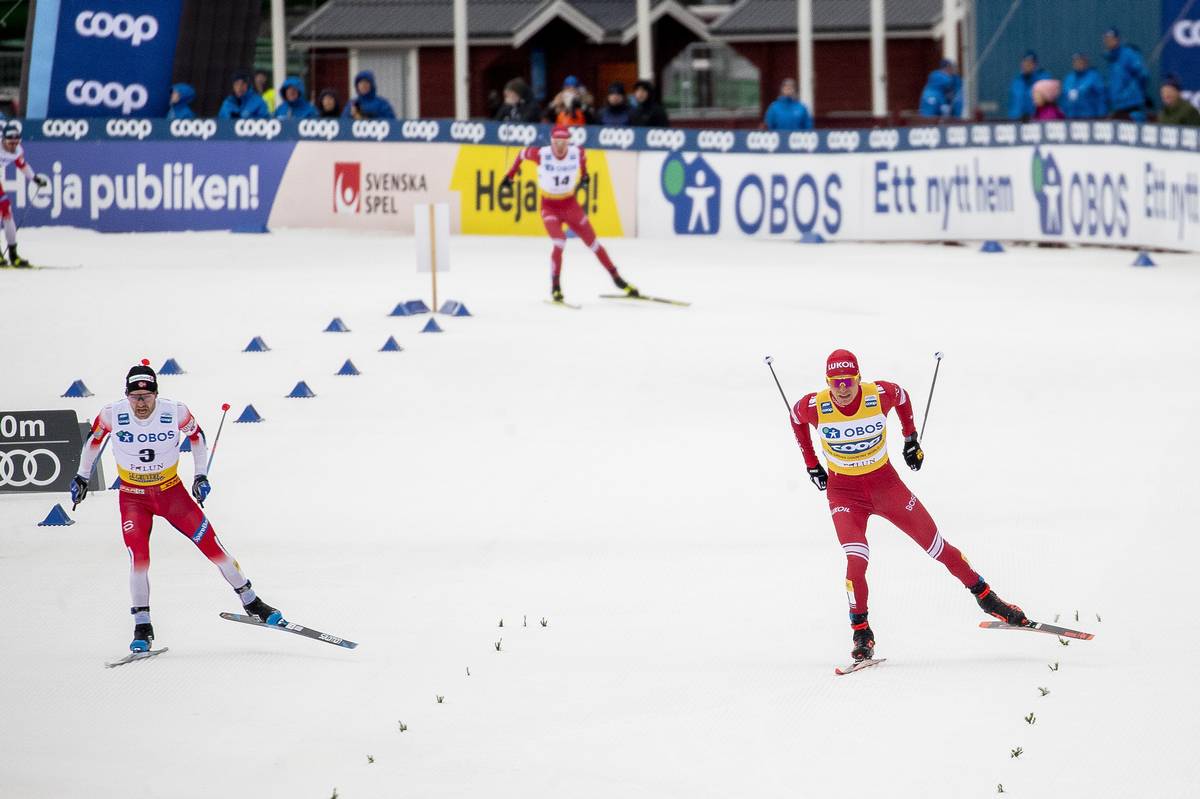
    Down to the final meters, Alexander Bolshunov (right) and Sjur Røthe sprint for home in the 15 k skate in Falun. (Photo: NordicFocus)

    It came down to the final sprint, and Røthe was outmatched. Bolshunov snuck back around, powering his skis down the track. He created enough of a gap that his victory was certain, and he threw his arms up in the air to celebrate. It was the Russian’s fourth consecutive distance win, and sixth of the season.

    Yakimushkin was next across the line for third (+9.7), followed by Melnichenko in fourth (+10.5) and Holund in fifth (+11.0). The twenty-three-year-old Yakimushkin was 2nd in the event in Toblach, Italy during Tour de Ski and also 2nd at Russian National champs in April 2019.

    With today’s result, Bolshunov looks untouchable at the top of the distance standings with 924 points. Røthe sits in second with 596. Bolshunov also leads the overall by over 400 points ahead of the injured boxer, Johannes Høsflot Klæbo.

    Alexander Bolshunov (RUS) and Sjur Røthe (NOR) exchange congratulations after an exciting finish in Falun. (Photo: NordicFocus)

    “It was a really hard race because the Norwegian team made good tactics,” Bolshunov told FIS through a translator at the finish. “They always sent someone in front to run the race, so I have to always close some gaps on them and make the most of the bonuses to take maximum points there. Then to make the harder pace on the last lap and to make a good fight with Sjur Røthe at the finish lane.” 

    The men’s distance podium in Falun. From left to right, Sjur Røthe (NOR), Alexander Bolshunov (RUS), and Ivan Yakimushkin (RUS). (Photo: NordicFocus)

    Leading the way for North America, David Norris (USST) skied to a season best result of 24th (+1:22.4). The Fairbanks native has landed in the top-30 on two other occasions this season: 28th in the skiathlon in Obserstdorf, 27th in the 15 k free in Nové Město. He also skied the 30th fastest time of day in the 15 k classiic pursuit in Nové Město and the final hill climb of the Tour de Ski

    For much of the race, Norris hovered inside the top-20, looking to match or improve upon his career best result of 16th, which was achieved in a 15 k skate in Falun last March.

    David Norris tucks in behind Sergey Ustiugov (RUS) heading down the ribbon of snow in Falun. (Photo: NordicFocus)

    In a post-race interview, shares that he did not originally plan to compete in Falun, sitting out the 30k instead to focus on the upcoming FIS Ski Tour 2020. He also reflects on his race, how mass starts affect the energy moderation strategy he has been honing, and his outlook heading into the distance-focused tour. 

    Post-race interview with David Norris

    Benjamin Lustgarten (CGRP) was next for the U.S. in 60th (+3:21.0) followed by Ian Torchia (SMST2) in 65th (+3:37.7), and Kevin Bolger (USST) in 68th (+3:59.1).

    Post-race interview with U.S. World Cup Coach Matt Whitcomb

    Ian Torchia climbs with the pack in Falun. (Photo: NordicFocus)

    Evan Palmer-Charette was the top Canadian athlete in 52nd (+2:45.8), followed by Alexis Dumas in 64th (+3:33.3), Bob Thompson 67th (+3:45.5), and Ricardo Izquierdo-Bernier 74th (+5:36.7). 

    Men’s 15 k Results | Overall World Cup Standings | Distance Standings

  • Bolshunov Steals the Show and the Overall Leader Bib in Stage 4

    The men’s podium of Stage 4 of the 2019/2020 Tour de Ski. Alexander Bolshunov (center) won the stage ahead of Sergey Ustiugov (left) and Iivo Niskanen (right). (Photo: NordicFocus)

    The hunter becomes the hunted. Looking back on previous tours, Russia’s Sergey Ustiugov has not worn the leader bib going into the pursuit stage except for the 2016/2017 tour in Oberstdorf, Germany. That year, Ustiugov won six of the seven stages, placing second in the mass start classic in Stage 6, but still raced up the final hill climb with a significant buffer for the overall victory

    This year, Ustiugov was the man to beat. After a dominant performance in yesterday’s 15-kilometer skate, the Russian began the 15 k classic in Toblach, Italy with a lead of 22.6 seconds before the next skier and 27 seconds in the overall standings. On the hunt were his teammates, Ivan Yakimushkin and Alexander Bolshunov, followed by a troop of athletes looking to earn back time on the leader. In particular, a host of Norwegians looking for redemption after the third stage. Would his gap be enough to hold his position over 15 k’s?

    Within the first 4 k, the answer was evident. Bolshunov and 4th place starter Calle Halfvarsson of Sweden closed the gap and overtook the leader. The three men skied together through 8 k, then Bolshunov began to crack open a gap. 

    Sergey Ustiugov falls short in preserving his rights to the leader bib in Stage 4 of the 2019/2020 Tour de Ski. (Photo: NordicFocus)

    Unable to match the pace, Ustiugov switched into damage control mode. Standings in the overall tour are based on the cumulative time from each stage, and the time added from today’s event is based on time of day results, meaning the elapsed time each individual spent on course. Being caught by Bolshunov meant Ustiugov had already lost 29 seconds, meaning that Bolshunov’s aggregate time now earned the 23-year-old the rights to the yellow bib.

    Ustiugov was able to keep his teammate within 20 seconds, but Bolshunov never saw his position at risk and finished with a 13 second lead. He stopped the clock at 38:14.9 for his first stage win in the Tour de Ski. Subtracting this from his deficit in the overall, Bolshunov now leads the overall rankings by 16 seconds. 

    Alexander Bolshunov celebrates his Stage 4 win during the 2019/2020 Tour de Ski. (Photo: NordicFocus)

    “It was a really, really hard race,” Bolshunov told FIS through a translator. “A big part of this was that I had to work alone. Sergey in the middle helped to keep the pace, by my own feelings started to run away and the last lap it was really hard to keep the speed.”

    When asked whether he had energy left for the final three stages in Val di Fiemme, he answered with a mischievous smile. 

    “The tour just started.”

    When Bolshunov began to pull away, Halfvarsson fell dramatically off the leaders, dropping from eight seconds back to over 50. Perhaps the Swede was paying for his effort in light of the cumulative tour fatigue that is setting in. He rebounded in the final lap to finish within 30 seconds of Bolshunov in 5th.

    Steadily working his way up through the field in his dominant technique, Iivo Niskanen had an outstanding performance. The Finn began the race in 11th place with a deficit of 1:35, half of which he recouped in the first half. Like many other athletes, Niskanen began to fade in the middle part of the race, but he switched on his afterburners in the final lap. 

    Iivo Niskanen rises up the ranks on his way to a third place finish in Stage 4 of the 2019/2020 Tour de Ski. (Photo: NordicFocus)

    With 2.5 k to go, Niskanen was 50 seconds back on Bolshunov in sixth, yet he could be seen rounding the corner into the final stretch as Ustiugov slid over the line. Niskanen took the third spot on the podium finishing 24.8 seconds back on the leader, a result that moves him into fifth place in the overall standings. 

    So far this season, Niskanen won the 15 k classic in Ruka in addition to a 10 k classic early season opener. He is also an Olympic champion in the 50 k classic and podium finisher in the 15 k classic at the 2019 World Ski Championships in Seefeld, his stride and glide prowess is clear. Heading into two additional classic stages, he now sits in 5th place in the overall standings with a 1:10 deficit. 

    Iivo Niskanen takes third during Stage 4 of the 2019/2020 Tour de Ski. (Photo: NordicFocus)

    Desperate to whittle down his 37-second deficit in the overall ranks, Johannes Høsflot Klæbo looked like a workhorse in the pursuit. No pomp, just head down, focused, determination. He knew he was not fighting for a podium position on the day, but any time he could gain on the leaders would help keep him in contention for an overall win. It is essential that he keep his overall deficit within a margin that could be surpassed with bonus seconds he intends to garner in the sprint during Stage 6. 

    Klæbo started the day 1:11 behind Ustiugov. Nearly 30 seconds of this were chipped away in the first 5 k, then he began to struggle. He began ceding places and time, leaving him in 16th at the 12.4 k mark 1:23 in the hole. He too found a new gear, closing hard in his final lap to move into 10th (+57.2). 

    Johannes Høsflot Klæbo climbs his way into 10th during the 15 k classic pursuit in the 2019/2020 Tour de Ski. (Photo: NordicFocus)

    As he gained time on Ustiugov, his deficit in the overall standings reduced to 26 seconds, though he still sits in third. Perhaps better suited for head to head competition, Klæbo is in good position heading into the next two stages. 

    Again the top American distance athlete, David Norris finished 44th (3:43), improving on his 51st place finish yesterday. His time of 39:34.9 was the 34th fastest time of day. 

    Kevin Bolger finished 61st (+5:24.9), and Logan Hanneman 71st (+7:47.2). 

    In a post-race interview, Whitcomb shares that Bolger, who is a sprint-specialist, used the TdS distance stages as an opportunity to build fitness. He will now leave the tour to prepare for the city sprints in Dresden. Whitcomb also provided insight into Norris and Hanneman’s races, and offered a possible answer to the yo-yo like time difference seen in the race.

    Post-race interview with Matt Whitcomb. 

    Racing continues Friday with a 15 k mass start classic in Val di Fiemme, Italy.

    Results | Time of Day Points ListOverall Standings After Stage 4

  • Ustiugov Regains Control as Russia Sweeps the Podium in Stage 3

    Rising to the top, Sergey Ustiugov takes the win in Stage 3 of the 2019/2020 Tour de Ski in Toblach, Italy. (Photo: NordicFocus)

    New day, new venue, almost a new decade. The 2019/2020 Tour de Ski continued in Toblach, Italy with a 15-kilometer interval start skate. In the war of attrition that is the tour, the first stages set the tone. Hopefuls for the overall win seek to establish their position near the top without expending too much energy to hold up for the long haul. 

    We saw this in the first stage, where the men’s field remained densely packed through 14 of the 15-kilometers when Sergey Ustiugov of Russia powered off the front to take the initial win. The tactic was also evident in the sit-and-kick approach of Johannes Høsflot Klæbo, who peacocked his unmatchable sprint gear in the final 100 meters of each round. 

    We are now in the meat and potatoes of the tour. Three consecutive distance races, interrupted by one travel day. There are no bonus seconds on the line in the next two stages, meaning athletes need to fight for every second solely with their own grit. 

    Sergey Ustiugov (RUS) flies to his second stage win during the 15-kilometer skate in Toblach, Italy. (Photo: NordicFocus)

    Racing midway through the seeded group in bib 44, Russia’s Sergey Ustiugov took off on Stage 3, setting the fastest time at each checkpoint to lead wire-to-wire. But his position in the leader chair was insecure until the remainder of the seeded men had their shot. 

    Wearing the highest numbered bib in the seeded group as the overall tour leader, Klæbo would have information on how he was matching up with Ustiugov at each checkpoint, informing him on whether he needed to work harder or lay off the gas. After winning a 60-second time bonus in the sprint, Klæbo had a cushion of 34 seconds over Ustiugov to work with. Victory in stage three was not imperative, but it would be important to keep the Russian within that margin. 

    In the first 5 k, it looked like this was how the story would play out. Ustiugov’s teammate Alexander Bolshunov, who trailed Klæbo by 32 seconds, nearly matched the pace setter. Klæbo trailed by six seconds, followed by three of his teammates in the next ten seconds: Hans Christer Holund, Simen Hegstad Krüger, and Pål Golberg. Each of these men is accomplished in distance racing. 

    However, things quickly began to change. Ustiugov’s splits became untouchable, and the Norwegian stronghold began to crumble. By the 10 k mark, his time was over 15 seconds ahead the next skier, and Klæbo had fallen 40 seconds behind into 15th. Ustiugov had the race locked up.

    Perhaps this is his event during the TdS. Ustiugov won the mass start 15 k skate in the first stage, and topped the podium in the event in Toblach last year

    Sergey Ustiugov (RUS) locks eyes on his second stage win during the 15-kilometer skate in Toblach, Italy. (Photo: NordicFocus)

    As the remainder of the seeded group made their way through the finish, Ustiugov remained on top by a large margin. His 23-year-old teammate Ivan Yakimushkin, who had not landed in the top 30 in either of the first two stages of the tour, worked his way into second place (+22.6). Yakimushkin was 43rd in the 15 k in Lenzerheide and qualified in 49th in the sprint, leaving him ranked 47th overall. 

    Prior to the tour, Yakimushkin was a member of the Russian relay team that won the event in Lillehammer earlier this month and posted a top-10 in the distance classic race in Ruka. 

    Bolshunov, who was also born in 1996, took third 29 seconds back. Currently the top-ranked distance skier on the World Cup, Bolshunov has raced consistently in the tour: third in the first stage, and eighth in the second. 

    The all-Russian men’s podium of the 15-kilometer freestyle event in Stage 3 of the 2019/2020 Tour de Ski in Toblach, Italy. Sergey Ustiugov (center) was the clear winner over Ivan Yakimushkin (left), and Alexander Bolshunov (right). (Photo: NordicFocus)

    In addition to sweeping the podium, Russia took three additional spots in the top 10, with Artem Maltsev, Andrey Melnichenko, and Denis Spitzov finishing 5th, 6th, and 10th, respectively. 

    Looking frustrated, Klæbo fell back to 17th (+1:11.4) by the finish, well-outside the margin he had to work with. 

    Johannes Høsflot Klæbo grimaces after a disappointing performance in the 15-kilometer freestyle event in Stage 3 of the 2019/2020 Tour de Ski in Toblach, Italy. (Photo: NordicFocus)

    He was not the only Norwegian to struggle after the 5 k mark. Goldberg fell from 8th to 60th, and Krüger from 6th down to 22nd. Holund was the only Norwegian to maintain his top-10 position throughout the race, finishing 5th. Sjur Røthe also worked his way into 8th. 

    Though he leads the point standings, Johannes Høsflot Klæbo hides the usual toothy smile after a disappointing performance in the 15-kilometer freestyle event in Stage 3 of the 2019/2020 Tour de Ski in Toblach, Italy. (Photo: NordicFocus)

    Though he still leads the point standings, Klæbo is now 37 seconds in the hole for the overall, sitting in 3rd place. He faces a pursuit-start classic tomorrow and a mass start classic on Friday. Presuming the time bonuses are still available in the mass start, he will have the opportunity to earn back time there and also in the classic sprint on Saturday.

    Ustiugov’s performance bumped him into the overall lead with Bolshunov 27 seconds behind in second place. Nothing is out of reach for these three men. Holund and Maltzev round out the top five, trailing by just over 1:20. 

    As was seen in the final climb up the Alpe Cermis last year, Ustiugov has the upper hand over the Norwegian. Klæbo will need to rebound in time to create a significant gap before the final stage if he hopes to repeat his victory. 

    For the Americans, David Norris was again the top-ranked distance skier, finishing 51st (+2:22.6). Kevin Bolger finished 60th (+3:04.0), followed by Logan Hanneman in 73rd (+3:46.0). 

    In a post-race call, Matt Whitcomb provided insight into the men’s race. He also explains his approach counseling athletes about races in which athletes may not be set up to excel.

    Post-race interview with Matt Whitcomb.

    David Norris skis to 51st, the top American finish in Stage 3 of the 2019/2020 Tour de Ski in Toblach, Italy. (Photo: NordicFocus)

    Heading into three classic races, Whitcomb explained that the techs are feeling confident in ski selection and waxing. Many K’s have been logged to ensure the American skis are ready to compete.

    Post-race interview with Matt Whitcomb regarding ski testing.

    Results | Overall Tour Standings

  • Ustiugov Closes with a Fury as Russia Goes 1-2 in Lillehammer Relay

    Ustiugov Closes with a Fury as Russia Goes 1-2 in Lillehammer Relay

    Russia soaking it in as they take 1-2 in the 4 x 7.5 k relay in Lillehammer, Norway. (Photo: NordicFocus)

    Call it what you want: national pride, national bias, flag-waving: the team relays elicit nationalistic tendencies. In Lillehammer, Norway, you might think and maybe expect it’s your birthright to see the hometeam crush. That’s been the recent norm almost without exception. 

    Here’s the quick stats to either dispel or reinforce those tendencies: Norway has won nine of the last 11 relay races on the World Cup. Russia won the other two. In fact, Russia took first and second, Norway third in the last head-to-head 4 x 7.5 k match last season in Ulricehamn, Sweden. Throwing Norwegian dominance back into the equation, Norway has won five of the last six relays on home snow.

    On paper, at least for Norway, some big names were missing from their team lineups. No No Emil Iversen. No Johannes Høsflot Klæbo. No Martin Johnsrud Sundby. That trio finished third, fourth. and fifth in Saturday’s 30k skiathlon. Add to that Didrik Tønseth who was busy representing Norway at the European Cross-Country Running Championships.

    But Norway is deep with talent. As is Russia. For those keeping score, you’ll see no Alexander Bolshunov featured on either of the Russian teams — he won the skiathlon yesterday. That all said, in a non-championship year maybe it’s a time to tinker and experiment. Here were the teams holding the most podium potential.  

    Norway I: Pål Golberg, Hans Christer Holund, Sjur Røthe, Finn Hågen Krogh

    Norway II: Niklas Dyrhaug, Mattis Stenshagen, Simen Hegstad Krüger, Vebjørn

    Turtveit

    Russia I: Andrey Larkov, Ilia Semikov, Denis Spitsov, Andrey Melnichenko

    Russia 2: Ivan Yakimushkin, Evgeniy Belov, Ilia Poroshkin, Sergey Ustiugov

    Pål Golberg (NOR) leading the pack during the scramble leg of the 4 x 7.5 k relay in Lillehammer, Norway. (NordicFocus)

    The first tag, after 7.5 k, Russia I pulled through first, with Norway I and Sweden right behind. Russia II was 10.5 seconds back, Finland 15.5, the U.S. 17.0, and Norway II dangling 19 seconds off the lead.

    As the classic legs ended at 15 k, the race was more about who was falling off out of contention, rather than a team up front making any decisive gesture for a kill shot. Finland came through first, with Russia II next (+0.4), then Norway I (+2.2), Russia II (+9.7), Norway II (+10.5), and Germany (+15.0). 

    The next closest team was Sweden, roughly twenty-nine seconds arrears in seventh place. At that point, the U.S. team of Erik Bjornsen, David Norris, Scott Patterson, and Kevin Bolger were in ninth (+1:13.7) and racing in a no-man’s-land with a sizable gap to France in eighth and Kazakhstan drifting back in 10th.

    Simen Hegstad Krüger (bib 10) during the 4 x 7.5 k relay in Lillehammer, Norway. (Photo: NordicFocus)

    The race began to look a tad spicy for Norway around the 21.2 k mark, nearly an hour into the race. Krüger for Norway II, a sometimes peerless skate skier at that, put his stamp on the affair as he powered ahead on the course’s most prominent climb. Norway I’s Røthe followed Krüger in step. And Sweden’s Jens Berman kept pace as well. The real tease was that Russia I (Spitsov) and Russia II (Poroshkin) appeared cooked as were their team’s chances for anything but third place. 

    But, it’s a four chapter race. And the fourth leg coalesced into a five team scrum by 25k. Both Russian teams, the Norwegian squads, and Germany were all in it. We should note that Ustiugov, tagged 15 seconds back at the exchange, looked impressive shutting down that gap as he reeled in the lead groups. 

    Russia’s Sergey Ustiugov (right) showing his solid form during the men’s 4 x 7.5 k relay in Lillehammer, Norway. (Photo: NordicFocus)

    The racing scene’s old friend, Ustiugov, went to the front and eventually shut down the pace. It wasn’t exactly a crawl. It was Ustiugov revealing his tactical hand: wait until punishing terrain, and throw down a punishing push. 

    But it was Melnichenko for Russia I who made that move. Ustiugov kept pace and pulled through not long after Melinchenkov separted. Ustiugov looked like vintage Ustiugov: a full-body, all-in-it, furnace of power. 

    08.12.2019, Lillehammer, Norway (NOR):<br /> Sergey Ustiugov (RUS) - FIS world cup cross-country, 4x10km men, Lillehammer (NOR). www.nordicfocus.com. © Vianney THIBAUT/NordicFocus. Every downloaded picture is fee-liable.
    Sergey Ustiugov of Russia taking control during the 4 x 7.5 k relay in Lillehammer, Norway (Photo:NordicFocus)

    And that was it. Norwegian dreams were snuffed, Russian dreams realized. 

    Russia I won in 1:26:46.8 hours. Russia II took second (+1.3), and Norway I third (+8.9). Norway II lost the toe-to-the-line finish by placing fourth (+9.0). 

    The U.S. team skied to ninth place, 3:33.3 minutes back. U.S. World Cup Coach Matt Whitcomb explained in an interview that relay racing is often a “game of contact and if contact is lost the race is often lost.” The U.S. did lose contact. It remained a relay for the U.S. bright moments and the reality of skiing solo for a few legs. (In the interview below, Whitcomb also notes the thrill of watching an emerging Chinese program finish the men’s relay in a non-championship event.)

    Matt Whitcomb post-race interview

    Closing out the day on the race course was China. They placed 11th (+12:44.6). Making note that the 2022 Olympics will be hosted by China, it will be interesting to see how this team develops. 

    08.12.2019, Lillehammer, Norway (NOR):<br /> Scott Patterson (USA) - FIS world cup cross-country, 4x10km men, Lillehammer (NOR). www.nordicfocus.com. © Vianney THIBAUT/NordicFocus. Every downloaded picture is fee-liable.
    Scott Paterson of the U.S. Ski Team during the third leg of the 4 x 7.5 k relay in Lillehammer, Norway. (Photo: NordicFocus)

    Scott Patterson post-race interview

    Kevin Bolger during the 30k skiathlon in Lillehammer, Norway. (Photo: NordicFocus)

    Kevin Bolger post-race interview

    Results

    The podium from the 4 x 7.5 k relay in Lillehammer, Norway. (Photo: NordicFocus)


  • Friday Race Rundown: World Juniors, IBU World Cup, and Super Tour (Updated 2x)

    Friday Race Rundown: World Juniors, IBU World Cup, and Super Tour (Updated 2x)

    Hailey Swirbul for the U.S., skiing to 10th overall in the U23 World Championship 15 k classic mass start in Lahti, Finland. (Photo: Doug Stephen)


    2019 U23 World Ski Championships in Lahti, Finland 15 k/30 k Classic Mass Start

    Link to Doug Stephen’s images from Lahti.

    Of the four Russian athletes starting the 15-kilometer classic mass start in Lahti, Finland three placed in the top four. Anna Zherebyateva won in 40:31.4 minutes as she was able to stretch her nine-second gap at 10 k to 23.5 seconds by the finish. Also from Russia, Lidia Durkina placed second (+23.5), Germany’s Katharina Hennig skied to third (+37.5).

    “My tactic was to make a gap in the second loop,” Zherebyateva said during the post-race press conference. “So I did exactly what I wanted. It went really well. Tracks were exactly right for me. This gold medal is an important step for my sport career.”

    Yana Kirpichenko was the third Russia in the top-five as she placed fourth (+41.6).

    The best North American finisher was U.S. skier Hailey Swirbul who raced to 10th (+1:27.8). Swirbul was positioned 29th at the 5 k time check but steadily moved up in the field as the race progressed. By 10 k she had positioned herself in the top-15.

    For the twenty-year-old Swirbul, this is her first go at U23 Worlds after participating in three Junior Worlds as an U20. Last season in Goms, Switzerland she placed second in the 5 k classic and third in the 10 k skiathlon.

    Two other U.S. skiers raced into the top-30. Julia Kern placed 16th (+1:43.4), while Alayna Sonnesyn was 23rd (+2:24.9). Hannah Halvorsen, the fourth U.S. starter, placed 54th (+6:58.6).

    Hannah Mehain was the top Canadian in 31st (+3:16.8), Sadie White placed 33rd (+3:18.6), and Natalia Hynes 51st (+3:40.9). Marie Corriveau did not start.

    Women’s Results

    Similar to the U23 women’s race, Russian skiers dictated the pacing at the front of the pack — the four Russian starters swept first through fourth place.

    Andrey Sobakarev won in 1:17:19.1 hours, Ivan Kirillov placed second (+3.5), Ivan Yakimushkin third (+4.9), and Anton Timashov fourth (+11.4).

    Canada’s Antoine Cyr was the top North American in 27th (+2:26.8), while teammate Gareth Williams toed the line a fraction behind in 28th (+2:26.9). Also for Canada, Ritchie Graham was 41st (4:44.1), and Julian Smith 45th (+5:14.3).

    Peter Holmes was the top U.S. finisher in 33rd (+3:15.7). Hunter Wonders placed 40th (+4:43.0), Braden Becker 53rd (+6:59.0), and Daniel Streinz 66th (+15:53.9).

    Men’s Results


    ***

    Johannes Thingnes Bø scored his 10th IBU World Cup win of the season today in the 10 k sprint in Antholz, Italy. (Photo: biathlon world.com screenshot)

    IBU World Cup Antholz, Italy 10 k sprint

    In the groove is in the groove. Norway’s twenty-five-year-old Johannes Thingnes Bø scored his 10th IBU World Cup win of the season today in the 10 k sprint in Antholz, Italy. Bø won the race in 23:53.9 minutes with a single penalty in standing. The Norwegian leads the IBU World Cup overall and padded his lead with his fifth sprint win this year.

    “It was quite difficult; the altitude here is quite heavy and with the new tracks, I felt dead from 5K so the last 5K was really tough,” Bø said to the IBU after the race. “I managed to have a good plan for the race. When I shoot nine targets, I was quite happy and then it was just to fight hard for the finish line. I like this year’s track; I liked last year’s too because it was not so painful.”

    Bø’s season thus far has been a study in speedy skiing. His shooting stands at 87% for accuracy (82% standing, 91% prone) with his superior skiing speed carrying him to the World Cup overall lead. In Antholz today, his course time for each of his two 5 k laps were ranked first.

    Norwegian teammate Erlend Bjøntegaard shot clean in both his shooting bouts to take second place, 17.5 seconds behind. France’s Antonin Guigonnat placed third (+20.2, 0+1).

    Scott Gow of Canada was the top North American in 20th (+1:06.6, 0+0). Teammates Jules Burnotte raced to 48th (1:55.9, 1+1), Christian Gow 61st (+2:13.4), and Aidan Millar (+3:46.7, 2+2).

    Jake Brown was the top American in 40th (1:42.4, 1+0). Sean Doherty finished in 55th (+2:06.2, 2+1), Max Durtschi  62nd (+2:13.8, 0+1), and Leif Nordgren 73rd (+2:43.1).

    Racing continues tomorrow in Antholz for both the men and women with the 12.5k  and 10 k pursuits.

    Men’s Results

    ***

    Lake Placid SuperTour 5 k/10k Skate Individual Start

    In the 5 k-freestyle individual start Jessica Yeaton (APU/Australian National Team) placed first with a winning time of 15:01.9 minutes. She was in a tight race for the top spot with U.S. Ski Team/SMS T2 athlete Sophie Caldwell who finished 3.0 seconds back. Caldwell is back home in Vermont training and preparing for the 2019 World Championships.

    Katherine Ogden (Dartmouth Ski Team) placed third in a time of 15:17.8. Kelsey Phinney (SMS T2) placed fourth in 15:37.7.

    “Today’s race went super well for me; I had awesome skis despite tricky conditions/weather leading into the race – our wax tech did a phenomenal job,” Yeaton wrote to FasterSkier. “The course here is really good for me with all the steady climbing in the first part- I just tried to push hard to the top of the course and then survive and carry my speed on the downhill, which turned out to be a good tactic.
    “Between US Nationals and now I definitely feel like I am in a good place leading into Seefeld. I struggled with some injuries in the fall and was forced to do a lot of cross-training (especially on the bike) and skip the early season races in Nov/Dec. In retrospect I think this actually was a blessing in disguise, as I ended up putting in a super hard training block and gaining a lot of fitness. Looking ahead to Seefeld, my goal is to top 30 in one of the races, with my main focus being on the skate events (30k and sprint), and the 15km skiathlon. I am really excited for the rest of the races this weekend; they are my final prep before heading over to Europe to race on World Cup and in Seefeld.”

    Women’s Results

    Kyle Bratrud (SMS T2) won the men’s 15 k skate in 25:27.1 minutes. Bratrud, who was recently selected to the 2019 U.S. World Championship Team, has been a top-performing distance skier this season on the SuperTour.

    “Today went well,” Bratrud emailed. “After Nationals, I made the tough decision of turning down World Cup starts in Otepaa and Ulricehamn in order to get some quality training in for the World Champs. Today reflected that as I felt a little tired and pretty flat from not racing since Nationals. That being said, I expect to keep feeling better each race and I should be in a great place when I fly to Europe on the 4th!”

    Bratrud recently won the NorAm/SuperTour 15 k classic in Sovereign Lake and the 15 k classic at U.S. Nationals. Bratrud placed second in West Yellowstone’s SuperTour 15 k skate, and the 30 k skate mass start at U.S. Nationals.

    Akeo Maifeld-Carucci (CGRP) placed second in a time of 26:18.9. It was Carucci’s second SuperTour podium of the season and his best career SuperTour result. In West Yellowstone, he was third in the 15 k skate behind Ben Lustgarten (CGRP) and Bratrud.

    Alexis Dumas (CNEPH) of Canada was third in 26:32.2. U.S. skier Adam Martin was fourth, 3.1 seconds behind Dumas.

    Men’s Results


  • Wednesday Race Rundown: U23 Worlds from Lahti, Finland

    Wednesday Race Rundown: U23 Worlds from Lahti, Finland

    The big screen in Lahti, Finland’s main stadium. Site of the 2019 Junior World Ski Championships. (Photo: Doug Stephen)

    Four U.S. skiers began the U23 women’s 10 k skate individual start at the 2019 U23 World Ski Championships in Lahti, Finland on Wednesday, all four finished in the top-30 after Russia’s Mariya Istomina claimed the win in 25:57.3 minutes.

    Fnland’s Evelina Pippo was second (+2.0), and Norway’s Tiril Udnes Weng third (+29.6). Istomina and Pippo are scheduled to compete at this weekend’s Ulricehamn, Sweden World Cup and have concluded their competition schedules at U23 Worlds.

    The best placed North American was U.S. athlete Julia Kern who placed 12th (+1:21.9). In Kern’s fifth trip to World Juniors and her second as a U23, Wednesday’s 12th place was a career best individual Junior/U23 World’s distance result.

    “The 5km course is pretty tough here, with some steep climbs and longer climbs,” Kern emailed about her 10 k skate experience. “It was constant work out there with little rest. I went out hard because the only way to do well at this competitive level is racing is start hot and keep that pace. I was happy to lay down a better performance than Monday and achieve my goal of a top 12 result today. I am really stoked for Lina for having such an awesome race today, it was so fun to watch her on the big screen before I started!”
    The next scheduled race for the U23 women is a 15 k classic mass start race on Jan. 25.
    “I am really excited for the 15km classic mass start on Friday, I love mass starts, especially when they are classic. I think our team has a good shot of putting down strong races!”

    Evelina Sutro in her first Worlds finished in 18th, stopping the clock 1:47.6 minutes behind Istomina’s winning time.

    “The race was fun, it was a lot warmer today than it has been the past couple race days which was nice,” Sutro emailed. “It was a tough race with a lot of short and steep hills. The course wasn’t very technical but you really had to work over the top and ski the downhills efficiently. The legs were definitely feeling it the most for me. It was super inspiring to be racing with all these fast ladies!”

    Also for the U.S., Hailey Swirbul raced to 26th (+2:90.5), Alayna Sonnesyn 27th (+2:12.6).

    Canada’s Sadie White placed 43rd (+3:15.4), Hannah Mehain 44th (+3:19.8), Natalia Hynes 49th (+3:42.8), and Marie Corriveau 54th (+4:58.9).

    U23 Women’s 10 k Skate Results

    The U23 men raced a 15 k skate on Tuesday with France’s Jules Lapierre taking the win in 34:02.8 minutes. The Czech Republic’s Michal Novak placed second (+29.0), and Ivan Yakimushkin third (+30.0).

    Canada’s Antoine Cyr was the highest placed North American in 38th (+2:56.6). Teammates Gareth Williams skied to 39th (+3:04.0), Graham Ritchie 52nd (+4:02.1), and Julian Smith 57th (+4:20.2).

    For the U.S., Hunter Wonders finished in 43rd (+3:20.8), Peter Holmes 48th (+3:43.8), and Braden Becker 53rd (+4:03.1).

    U23 Men’s 15 K Skate Results


  • Monday Race Rundown: U23 Worlds Classic Sprint (Updated)

    Monday Race Rundown: U23 Worlds Classic Sprint (Updated)

    Moa Lundgren of Sweden out lunges Norway’s Tiril Udnes Weng for the win during the U23 World championship 1.4 k classic sprint in Lahti, Finland. (Photo: Doug Stephen)

    FIS Junior World Ski Championhips U23 1.4 k/1.6 k Classic Sprint

    Link to U23 classic sprint photo album from Doug Stephen.

    Monday, the second day of racing at the 2019 Junior World Ski Championships in Lahti, Finland the U23 women raced a 1.4-kilometer classic sprint.

    Norway’s Tiril Udnes Weng set the standard in qualification. Her 3:26.52 minute time placed her in bib 1 for the heats.

    Three U.S. skiers qualified for the heats. Julia Kern qualified in 16th (+9.09), Hannah Halvorsen 24th (+11.89), and Hailey Swirbul 25th (+12.31). The fourth U.S. entrant, Evelina Sutro placed 37th overall.

    “Though it wasn’t a perfect day for the U23s, it was exciting to establish a baseline from which we can improve,” Swirbul emailed. “We were in the mix during the quarterfinals, and I think our team gave a good effort today but is left wanting more. Personally, I thought I had a good day. I felt good, had good skis, and raced to my strengths the best I could. I’m excited to see how this team and I progress over the next few years to keep moving up and up in the U23 division!”

    Halvorsen skied in the second heat where she placed fifth (+2.39) behind heat winner Moa Lundgren. Lundgren posted a 3:24.60 finishing time in the heat and ultimately placed first overall. Halvorsen ranked 23rd in the final standings.

    Swirbul and Kern were grouped in the third heat where they finished fifth and sixth respectively. France’s Delphine Claudel won the heat in 3:27.16, Swirbul was 1.31 seconds back, Kern 3.24.

    Swirbul placed 24th overall, Kern 27th.  

    “It was a really cold day out there racing at the legal limit of -4F,” Kern emailed. “It was not the day I dreamed of, but I am looking forward to more races to come this week. I caught the tip of my ski on someone’s pole cornering the first 180 and took a fall. I was able to jump back up on my feet and hammer to catch up, but that energy cost me early on that I did not have cresting the last hill. It was really fun to get to race side by side with Hailey in the heat!”

    For Canada, Sadie White finished 35th, Marie Corriveau 38th, Hannah Mehain 49th, and Natalie Hynes 55th.

    Lundgren, who was the fourth fastest qualifier, won the women’s final in 3:18.33, only 0.05 seconds ahead of Weng in second. Russia’s Aida Bayazitova took third (+3.78). Anastasia Kirillova of Belarus was fourth (+4.12), Norway’s Amalie Haakonsen fifth (+7.75), and Johanna Hagstroem sixth (+37.54).

    Women’s Qualification Results | Women’s Final Standings

    The men raced a 1.6 k classic sprint course with Norway’s Erik Valnes posting the fastest qualifying time of 3:23.80 minutes. Valnes already has two World Cup podiums both from the recent Dresden, Germany World Cup weekend. He won the team sprint along with Sindre Bjørnestad Skar. The day prior to his team sprint win, Valnes placed third in the skate sprint.

    After racing on a slightly bigger World Cup stage, Valnes showed no nerves as he clean-sweeped the heats and the final which he won in 3:21.14 minutes. Russia’s Sergey Ardashev placed second (+1.38) and Norway’s Joachim Aurland third (+2.00).

    In fourth place was Russia’s Ivan Yakimushkin (+2.59), Norway’s Sivert Wiig in fifth (+7.31), and Sweden’s Marcus Grate sixth (+15.53).

    Canada placed three athletes in the heats after Ritchie Graham qualified in 19th (+12.32), Julian  Smith 22nd (+13.39), and Antoine Cyr 24th (+13.84). Teammate Gareth Williams finished 52nd overall.

    For the U.S., Peter Holmes advanced to the heats after qualifying in 20th (+13.05). Daniel Streinz placed 41st overall, Hunter Wonders 56th, and Braden Becker 63rd.

    “It was a good day out in Lahti, sunny skies but brutally cold,” emailed Holmes. “The Junior’s performance the previous day amped me up and made me excited to race. I had a solid qualifier and was feeling very good in the quarter final. I was positioned well throughout the race, but unfortunately got tangled up with another skier in my heat on the last downhill and went down. It’s a bummer, especially at U23s, but that’s racing.”

    No North Americans advanced beyond the quarterfinals. Holmes placed sixth in the first quarterfinal to conclude his day ranked 27th in the final standings.

    Cyr was fourth in the second heat and placed 20th overall.

    Smith and Graham were fourth and sixth respectively in heat four. Smith ranked 19th overall,  Graham 26th.

    Men’s Qualification Results | Men’s Results

  • Friday Rundown: U23 Worlds Skiathlons; Eastern Canadian Champs

    Friday Rundown: U23 Worlds Skiathlons; Eastern Canadian Champs

    Russia’s Denis Spitsov celebrates his first U23 World Championships gold on Friday ahead of France’s Jules Lapierre in the men’s 30 k skiathlon in Goms, Switzerland. (Photo: JWSC2018.ch)

    (Note: This article has been updated to include comments from Americans Lauren Jortberg and Ian Torchia.)

    U23 World Championships (Goms, Switzerland): 15/30 k skiathlons

    On the final day of U23 World Championships racing in Goms, Russia stole the show in the women’s and men’s skiathlons.

    The all-Russian women’s 15 k skiathlon podium at U23 World Championships on Friday in Goms, Switzerland, with Anastasia Sedova (c) in first, Natalia Nepryaeva (l) in second and Yulia Belorukova (r) in third. (Photo: JWSC2018.ch)

    Anastasia Sedova led them in the first race of the day on Friday, the women’s 15-kilometer skiathlon, which she won in 44:03.6 minutes. Russia swept the podium and had four in the top five with Natalia Nepryaeva in second (+10.7) and Yana Kirpichenko in third (+37.2), and Yulia Belorukova in fourth (+1:58.0). Germany’s Pia Fink placed fourth (+1:33.5).

    The race was the first of the week for the 22-year-old Sedova, a World Cup regular, and it was her second individual gold medal at her second U23 World Championships (she won the 10 k classic in 2016).

    “Good preparation for the Olympic Games,” Sedova said during an in-arena interview after the race. “I am very lucky today. Good atmosphere, good weather today.”

    Kirpichenko won the 10 k classic earlier this week and Nepryaeva placed third in the freestyle sprint in Goms.

    “It’s hard to say how to describe the race, but Anastasia is a really good skier,” Nepryaeva said after. “She was really good today. So for me it was hard to support her during the race. Today she was much better than me.”

    American Lauren Jortberg (Dartmouth Ski Team) led the North Americans in 29th (+5:29.9) for her best distance result at the Junior/U23 World Championships level.

    “Early in the race I was right over 30th place, and I was trying to maintain contact with the big group ahead of me,” Jortberg, a Dartmouth sophomore from Boulder, Colorado, wrote in an email. “The pace of the classic leg was really fast. A couple of the girls in the race are heading to the Olympics in a few days so it was a really hot start!”

    She came through the transition at the race’s halfway point in 31st, about 3:47 behind the leaders.

    “I am a much better skater so I felt like I really put the hammer down on the skate leg and moved up a lot,” Jortberg wrote. “The skate course was much easier than the classic course, but I feel like I skied the massive climbs better than the girls around me. I focused on having a really high tempo over the hills and skiing the downhills technically well because there was no rest on the course.

    “I’m pleased with my performance today, and I’m excited about my results this week as a whole,” she added. “I’m definitely leaving here hungry for more because I don’t think it was my best week, but I think it was really solid. This is the most competitive field I’ve ever raced against so it feels really good to know that I’m not too far off their level!”


    Also for the U.S., Lydia Blanchet placed 38th (+7:11.1) and Nicole Schneider was 40th (+8:04.3). Julia Kern did not finish.

    Canada’s Katherine Stewart-Jones (Canadian National U25 Team/NTDC Thunder Bay) placed 31st (+5:39.0) and Maya MacIsaac-Jones was 42nd (+8:08.8), while Laura Leclair and Sophie Carrier-Laforte were lapped.

    Russia’s Denis Spitsov leads France’s Jules Lapierre during the men’s 30 k skiathlon on Friday at 2018 U23 World Championships in Goms, Switzerland. Spitsov went on to win by 2.9 seconds over Lapierre. (Photo: JWSC2018.ch)

    In the men’s 30 k, Russia’s Denis Spitsov took the win in 1:18:14.9 hours, just 2.9 seconds ahead of France’s Jules Lapierre. Norway’s Ole Jørgen Bruvoll placed third (+21.5), ahead of Russia’s Ivan Yakimushkin in fourth (+23.2), and Andorra’s Irineu Esteve Altimiras in fifth (+36.4).

    The gold was the first for Spitsov, 21, who previously placed second in the 15 k classic earlier this week. He has two individual bronze medals from last year’s U23 Worlds (in the 30 k skiathlon and 15 k freestyle).

    American Ian Torchia (U.S. Ski Team/Northern Michigan University) placed 27th on Friday (+6:05.7). Only 33 men finished, and he was the only North American that didn’t get lapped.

    “Between the 3700 feet of climbing, a 2.5km loop, and the top dogs having World Cup podiums…half the field got lapped,” Torchia wrote in an email. “Definitely added some motivation in the final 2 laps to see Spitsov and Lapierre slowly catching up.

    “I felt I skied technically better in skate and struggled on the classic leg,” Torchia explained. “Took a hard tumble halfway through the classic leg and had to take half a lap to recover from that. Found a hole in my suit close to my groin afterward which was a little unnerving!”

    At the end of the week, he noted that he felt “more fired up than coming in. Funny how being 6 minutes back can do that,” he wrote. “It was an eye-opening experience to get back on the international stage after 2 years and I will take these lessons of racing to the rest of the season in the Ishpemimg Super Tour, Steamboat NCAA’s, and Craftsbury Spring Series. Also already thinking of ideas on how to change and optimize my training to make the jump to the top level.”

    Americans Andrew Egger, Zak Ketterson and Thomas O’Harra also competed, as did Canada’s Alexis Dumas, Gareth Williams, Philippe Boucher, and Ricardo Izquierdo-Bernier.

    Results: Women | Men 

    ***

    Stratton’s Ben Saxton (l) edging Julien Locke (r) by eight-hundredths of a second for the win in the men’s 1.4 k classic sprint A-final on Friday at Eastern Canadian Championships in Gatineau, Quebec. (Photo: Becca Rorabaugh (APU) on her way to winning the women’s 1.3 k classic sprint qualifier on Friday at 2018 Eastern Canadian Championships in Gatineau, Quebec. (Photo: Rob Smith/CCC)

    NorAm Eastern Canadian Championships (Gatineau, Quebec): Classic sprints

    Eastern Canadian Championships opened in Gatineau on Friday with classic sprinting, and Americans Becca Rorabaugh and Ben Saxton ended the day with wins in the women’s and men’s A-finals, respectively.

    Becca Rorabaugh (APU) on her way to winning the women’s 1.3 k classic sprint qualifier on Friday at 2018 Eastern Canadian Championships in Gatineau, Quebec. (Photo: Rob Smith/CCC)

    For Rorabaugh, the win is her second straight after the Alaska Pacific University (APU) skier won the women’s 5-kilometer freestyle at last weekend’s SuperTour in Craftsbury, Vermont. She edged last weekend’s classic-sprint winner, Kaitlynn Miller, of the Craftsbury Green Racing Project (CGRP), by 0.41 seconds for the win in 3:23.15 minutes in Friday’s 1.3 k classic sprint final. It was an all-American podium (and all-American final) with Erika Flowers, of the Stratton Mountain School (SMS) T2 Team, just another three-hundredths of a second back in third (+0.44). Liz Guiney (CGRP) followed in fourth (+2.51), Rosie Frankowski (APU) was fifth (+3.88), and Corey Stock (Bridger Ski Foundation) placed sixth (+6.1).

    Rorabaugh had started the day by qualifying first in 3:26.95, then won both her quarterfinal and semifinal. Miller qualified third and won her quarterfinal and semifinal as well.

    In the men’s 1.4 k classic sprint, Saxton (SMST2) nipped Julien Locke (Canadian U25 Team/Black Jack) at the line by 0.08 seconds for the win in 3:04.54. Patrick Stewart-Jones (Alberta World Cup Academy) placed third (+5.53), Kris Freeman (Caldwell Sport) was fourth (+5.94), Kevin Bolger (Sun Valley Ski Education Foundation) fifth (+7.42), and Julian Smith (NTDC Thunder Bay) sixth (+11.63).

    Locke initially won the qualifier in 3:08.37, then won the first quarterfinal and first semifinal as well. Saxton qualified sixth, then advanced in second in his quarterfinal about a second behind Smith, and Saxton won the second semifinal.

    Easterns continue Saturday with 10/15 k freestyle races and conclude Sunday with 10/15 k classic pursuits.

    Results: QualifierHeats

  • Wednesday Rundown: U23 Worlds 10/15 k Classic (Updated)

    Wednesday Rundown: U23 Worlds 10/15 k Classic (Updated)

    The women’s 10 k classic podium at 2018 U23 World Championships, with Russia’s Yana Kirpichenko (c) in first and Anna Zherebyateva (l) in second, and Switzerland’s Nadine Fähndrich (r) in third. (Photo: JWSC2018.ch)

    (Note: This article has been updated to include comments from Americans Lydia Blanchet and Ian Torchia.)

    U23 World Championships (Goms, Switzerland): 10/15 k classic

    Russia put two in the top three in both the women’s and men’s races on Wednesday at U23 World Championships in Goms, and for the second-straight race, Canada’s Katherine Stewart-Jones landed in the top 30.

    In the women’s 10-kilometer classic, Russia’s Yana Kirpichenko pulled out a 13.9-second victory over fellow Russian Anna Zherebyateva, finishing with the winning time of 27:46.1 minutes. Switzerland’s Nadine Fähndrich returned to the podium for the second race in a row (after placing second in Monday’s skate sprint), finishing third, 29.6 seconds behind Kirpichenko.

    In Monday’s sprint, Kirpichenko qualified fourth and ended up fifth in the final. She is a bronze medalist in the 15 k skiathlon at last year’s U23 Worlds.

    Stewart-Jones, of the Canadian National U25 Team and National Team Development Centre (NTDC) Thunder Bay, started relatively early on Wednesday in bib 19 and ultimately placed 29th, 3:07.3 out of first. She sped up as the race progressed, from 40th at 2.4 k to 32nd at 5 k and up to 30th at 7.4 k.

    So far in all five races she’s competed in over the last two years at U23 Worlds, Stewart-Jones has finished in the top 30. Her best result is 21st in last year’s 15 k skiathlon, and at the Junior Worlds level, she had a best individual result of 14th in the 10 k skiathlon in 2015.

    American Lydia Blanchet (Dartmouth Ski Team) started fifth on Wednesday and ended up 30th (+3:10.4) after skiing in the top 30 throughout the race. Her Dartmouth teammate Lauren Jortberg followed in 34th (+3:28.9) and Nicole Schneider was 49th (+5:23.8). Julia Kern did not start.

    For Blanchet, a Dartmouth junior, this week marked her first time racing at the Junior/U23 World Championships level. So far, she has placed 32nd in the freestyle sprint and now 30th in the classic distance race.

    “This is my first time racing internationally, and I tried to go into the races with no expectations,” Blanchet explained in an email. “I was excited to get as close as I did to qualifying for the sprint, but it was definitely bittersweet—missing heats by 0.3 seconds left me regretting some of the smaller details of my race. Still, it is really exciting to know that I can compete on the world stage!”

    After the sprint, she made a goal of finishing in the top 30.

    “I really like hilly, rolling courses—especially ones with very technical downhills—and this course definitely fit that bill,” she wrote of the classic distance course. “I am really happy with my race, all things considered. I didn’t feel great while I was racing – my legs flooded pretty hard a few km’s in – but I think I did a good job of holding myself together and staying strong mentally. I know I have the ability to do even better, which is motivating and exciting. I am looking forward to get to ski head-on against the whole field in the skiathlon, and I’m excited to try and pick my way forward from my bib number. I’m also really excited to go home and race carnivals with the Dartmouth team.”

    Canada’s Laura Leclair finished 40th (+4:20.9), Sophie Carrier-Laforte was 43rd  (+4:19.2) and Maya MacIsaac-Jones 47th (+4:47.3) out of 53 finishers.

    Nicole Bathe of the Midwest-based Central Cross Country (CXC) Team, who races for Great Britain, placed 37th (+3:43.8), for her second top 40 of the week after placing 39th in the skate sprint.

    Norway’s Mattis Stenshagen racing to the win in the men’s 15 k classic at 2018 U23 World Championships in Goms, Switzerland. It was his first gold medal and podium at U23 Worlds (he earned silver two years ago in the 15 k freestyle at Junior Worlds and also gold in the relay that year). (Photo: JWSC2018.ch)

    In the men’s 15 k classic that followed, Norway’s Mattis Stenshagen edged Russia’s Denis Spitsov by 4.8 seconds for the win in 36:28.3. Also for Russia, Ivan Yakimushkin placed third, 35.2 seconds back.

    Canada’s Alexis Dumas, of the Pierre-Harvey National Training Centre (CNEPH) was the top North American in 31st, 2:51.7 out of first. He worked his way up from 40th at 5 k to 35th by 10 k, and finally just 0.2 seconds outside of 30th at the finish.

    American Ian Torchia (U.S. Ski Team D-team/Northern Michigan University) followed in 32nd (+2:55.9) and Bill Harmeyer (University of Vermont) finished 39th (+3:43.3). Also for the U.S., Thomas O’Harra placed 43rd (+4:17.3) and Zak Ketterson was 57th (+5:37.6).

    Torchia, an NMU junior, has been to two Junior Worlds in 2015 and 2016, but this marked his first U23’s.

    “The jump from juniors to U23s is quite a leap. I missed the first year of being a U23 last year due to mono so getting back into international racing was a shock to the system,” he explained in an email.

    As for his goals for the 10 k, he was hoping for a top 15 or 20, but moreover “wanted to race smart and feel good out on the course technically and physically,” Torchia wrote. “This was the hardest course I have ever raced with 600m of climbing throughout the 15k and I was excited to showcase my striding ability out there…

    “However, from the first km I was in the pain cave (even though I didn’t open that fast!) and it was a fight the entire way,” he continued. “I need to work on staying technically strong when hurting and I did not do a good job of executing that today. The eventual second place Russian started as I was looping around for my 2nd lap so I was able to see and feel what a podium performance looks like. Going to have that image in my head throughout the next year!”

    For Friday’s 30 k skiathlon, Torchia wrote that he would be “throwing all place goals out the window and focusing on skiing technically well and racing smart. Looking forward to channeling my last skiathlon in Kazakhstan which went really well [he placed 11th in the 20 k at 2015 Junior Worlds] and moving up from my starting position.”

    Canada’s Gareth Williams finished 41st (+4:00.2) on Wednesday, Philippe Boucher was 45th (+4:22.7) and Ricardo Izquierdo-Bernier 47th (+4:24.3) out of 63 finishers.

    Results: Women | Men

  • Another Top 12 for Good, Ogden Repeats in 13th and Torchia 15th as Junior Worlds Conclude (Updated)

    Another Top 12 for Good, Ogden Repeats in 13th and Torchia 15th as Junior Worlds Conclude (Updated)

    Paddy Caldwell (Dartmouth/SMS/USST) racing to 21st in the men's 15 k freestyle at U23 World Championships in Rasnov, Romania. (Photo: Logan Hanneman)
    Paddy Caldwell (Dartmouth/SMS/USST) racing to 21st in the men’s 15 k freestyle at U23 World Championships in Rasnov, Romania. (Photo: Logan Hanneman)

    (Note: This article has been updated to include comments from Jasper Good, a U.S. Nordic Combined skier, and Annika Taylor, a California native who races for Great Britain.)

    Twelfth, 13th, 15th. Those were the top results three Americans posted in Thursday’s competitions — between nordic combined and cross-country — at U23/Junior World Championships in Rasnov, Romania.

    Jasper Good (U.S. Nordic Combined) racing to 11th in the normal hill/10 k individual competition at 2016 Junior World Championships in Rasnov, Romania. (Courtesy photo)
    Jasper Good (U.S. Nordic Combined) racing to 11th in the normal hill/10 k individual competition at 2016 Junior World Championships in Rasnov, Romania. (Courtesy photo)

    Jasper Good, a 19-year-old nordic-combined skier from Steamboat Springs, Colo., raced to 12th in the normal hill/5-kilometer Gundersen, finishing 1:13.3 behind winner Thomas Portyk of the Czech Republic, after starting 1:20 back. Portyk improved from second in the jump to win by 5.1 seconds in 11:01.5 minutes. Germany’s Terence Weber placed second and Estonia’s Kristjan Ilves, the jump leader, finished third (+5.4).

    Good jumped to 14th then raced the seventh-fastest 5 k to climb to 12th. On Tuesday at junior worlds, he recorded his career best in his fourth World Championships: 11th in the normal hill/10 k.

    “I wanted to put myself in the fight for a top 10 finish and I did that both days so to some degree I am happy with that,” Good wrote in an email on Sunday after the competitions. “Although I really wanted to break the top 10 I am happy as I was able to put two consistent competitions together. Both days were what I would call an accurate portrayal of my average level. I am happy that my average had me finishing in the top 15 on both days but a little disappointed I wasn’t able to have a slightly above average day to get me into the top 10.”
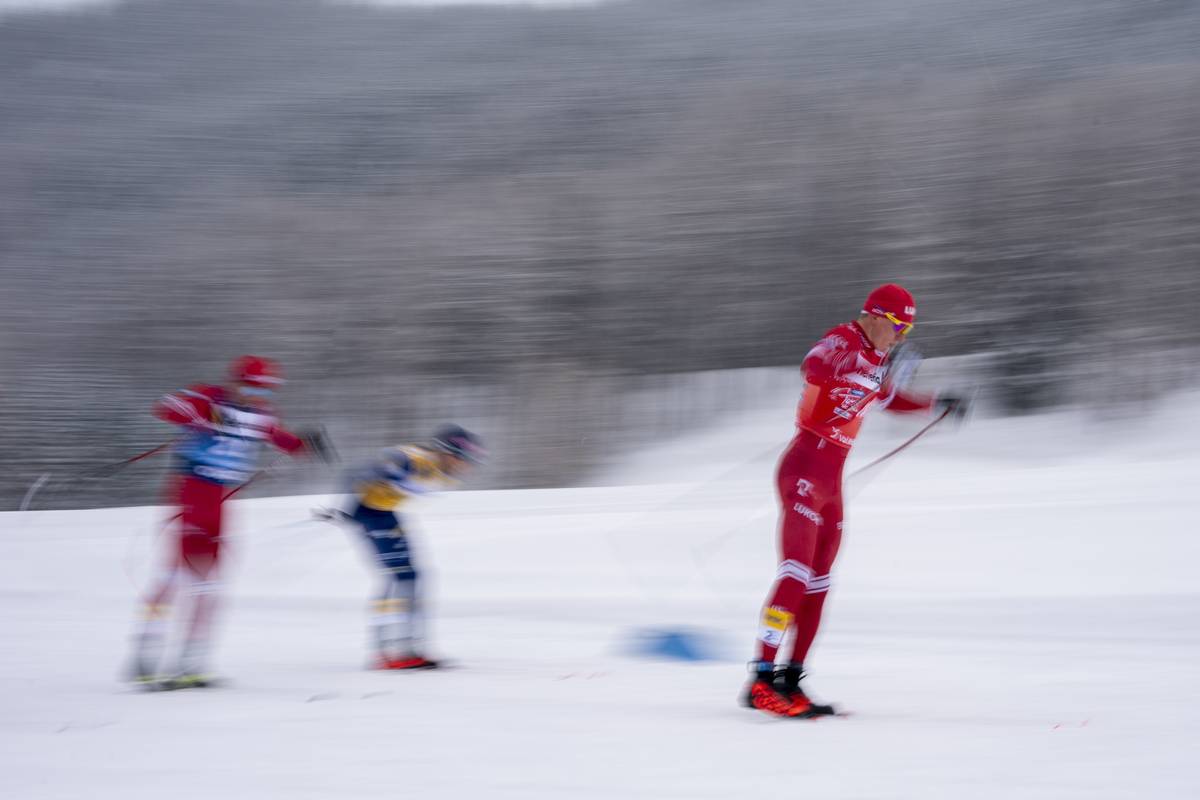
    “With all of the challenges we were faced with this week between lack of snow, wind on the jump hill, and an excessive amount of schedule changes I am happy I was still able to move past it and perform when it mattered,” he continued.

    Americans (from left to right) Ben Loomis, Stephen Schumann, coach Martin Bayer, Jared Shumate, and Jasper Good after an individual competition at 2016 Nordic Combined Junior World Championships. Not pictured: Koby Vargas. (Photo: Jasper Good)
    Americans (from left to right) Ben Loomis, Stephen Schumann, coach Martin Bayer, Jared Shumate, and Jasper Good after an individual competition at 2016 Nordic Combined Junior World Championships. Not pictured: Koby Vargas. (Photo: Jasper Good)

    In the normal hill/4 x 5 k team event on Friday, Good and fellow Americans Jared Shumate, Stephen Schumann and Ben Loomis placed sixth, about 5 1/2 minutes behind the Austrian winners. According to Good, that was his team-best result at junior worlds.

    “I think the fact that our team event rank has been improving every year I have been on the team is a huge testament to the potential coming up in US Nordic Combined!” Good wrote.

    He planned to finish the season with two more weekends of Continental Cup competitions.
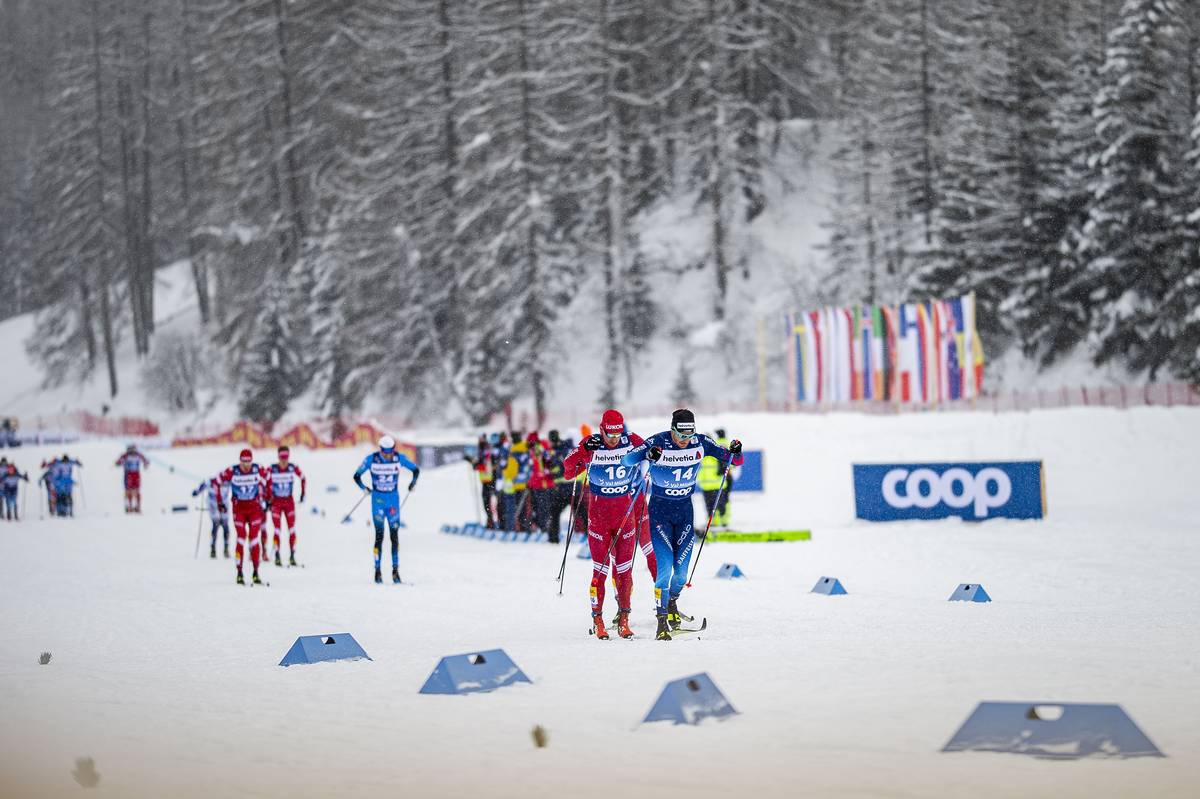
    In Thursday’s individual nordic-combined competition, three Americans followed Good with Koby Vargas in 32nd, Schumann in 38th and Shumate in 44th.

    Nordic Combined results: Thursday’s 5 k individual | Friday’s team event

    Friday also marked the last day of individual cross-country racing as well, Katharine Ogden of the Stratton Mountain School (SMS) and U.S. Ski Team (USST) finished 13th in the junior women’s 10 k freestyle individual start, two days after placing 13th in the 5 k classic. On Thursday, Ogden finished 1:11.4 behind Ebba Andersson of Sweden, the winner in 23:29.8.

    Andersson won the 10 k skate (originally scheduled as a skiathlon, but changed before the championships because of low snow) by 29 seconds, ahead of Germany’s Katharina Hennig in second and 32.2 seconds ahead of Norway’s Tiril Udnes Weng in third. The fifth starter, Andersson consistently clocked the fastest splits in the four-lap race. Ogden started sixth and posted times that ranked within the top 15 for most of the race.

    “The conditions were fast and icy with a little corn snow built up in some places,” Ogden explained in an email.

    The course had frozen overnight, giving it a much different feel than the slow slush athletes had previously raced in this week.

    “I struggle a little in faster conditions like that which is why I was focusing on really skiing bigger and getting more power as opposed to my usual fast tempo skiing,” the 18-year-old Vermont native continued. “I had high expectations going into this race and I was initially a little disappointed with how it went result wise. However, I am really psyched that I fought it out and raced as hard as I could in conditions that did not favor my strengths.”

    “Katharine Ogden had an awesome day and was consistent in her race today as well as in the results,” USST Development Coach and trip leader Bryan Fish told USSA. “She did a great job holding on to her place throughout the race.”

    Also making the top 30 in the junior women’s race, Vivian Hett of Northern Michigan University (NMU) placed 30th (+2:06.3) for her career best in two world championships.

    “My goal coming into the competition was to better my results from last year,” Hett, 19, wrote in an email. “I felt like last year didn’t do a great showing of the skier I would like to be and I feel as if I have improved that this year.”

    In Rasnov, she achieved her first top 30 after placing 36th in the classic sprint at 2015 junior worlds in Almaty, Kazakhstan.

    “My main focus today was to pace the race correctly,” Hett explained. “Being from sea level, I like to consider Romania at altitude even though it’s not very high up. We’re at about 3500ft at the race venue and I knew that if I went out too hard, I could possibly burn up. With that being said, it was my goal to ski the first lap smoothly and go from there.”

    At the race’s halfway point, her split time ranked 23rd. By 7.5 k, Hett’s time was 25th fastest and she ended up 30th.

    “The second half of the race was tough but I kept getting splits that I was in the mid 20s and that kept me firing,” she wrote. “I’m very happy with my results. It’s the best I’ve done at Junior Worlds and it makes all the summer and fall training worth it!”

    Also representing the U.S. in the junior women’s race, two other NMU skiers Nicole Schneider and Sarah Bezdicek placed 40th and 46th, respectively.

    Canada’s Hannah Mehain finished 54th, Natalie Hynes was 56th and Sadie White 59th.

    Junior women’s 10 k results

    In the 4 x 2.5 k freestyle relay on Friday, the U.S. junior women raced to eighth, 1:07.3 behind the Swedish winners, and Canada, with two athletes out sick, was unable to field a full team and did not finish.

    Julia Kern (SMS/USST) started first for the U.S., putting the team in 12th at the first exchange, 15.3 seconds behind Russia in first.

    “Julia had an awesome leg until she tangled with an Italian girl and fell,” Ogden explained in an email on Friday. “She gained back a bit of time but still tagged off in 12th place.”

    Ogden raced the fifth-fastest second leg to improve to seventh, 16.4 seconds behind Sweden in first by the second exchange.

    “I made up most of the places that I got by utilizing a quick V1 up some of the steeper pitches,” Ogden wrote.

    Hett lost one position on the third leg and tagged off in eighth, 45 seconds behind Sweden, and Bezdicek kept the team in eighth through the finish, crossing the line 30 seconds after Italy in seventh.

    “Our team was happy with our result,” Ogden explained. “It would have been awesome to have seen what would have happened if Julia hadn’t fallen but then again that’s totally just a part of the game and it happens.”

    Sweden won the final race of the championships, with Emma Ribom, Elina Rönnlund, Andersson, and Jenny Solin, in 22:30.7. Norway was just 0.6 seconds away from gold in second place, and Russia finished third, 10.2 seconds behind.

    Mehain skied the first leg for Canada, tagging Hynes in ninth, 10.6 seconds behind the leaders. Hynes then came through the second exchange in 12th before the team had to pull out of the race without two more athletes.

    Junior women’s relay results

    In the junior men’s 15 k freestyle on Thursday, Ian Torchia, another NMU Wildcat, raced to 15th for his best result of the week. In two Junior World Championships, it was his second-best individual result after placing 11th in the 20 k skiathlon last year in Almaty.

    Ian Torchia (10) racing the first leg of the junior men's 4 x 5 k relay at Junior World Championships on Friday in Rasnov, Romania. (Photo: Logan Hanneman)
    Ian Torchia (10) racing the first leg of the junior men’s 4 x 5 k relay at Junior World Championships on Friday in Rasnov, Romania. (Photo: Logan Hanneman)

    “Coming into the week I had high goals and after the disappointment of 43rd in the [10 k] classic race I threw that race in the toilet and refocused for the skate,” Torchia wrote in an email.

    “My strategy was to try and start out hard but I was missing a little pop today so I was lucky to get a ride off the eventual 6th place Russian Ivan Krillov,” he added. “I stayed on him thanks to my fast boards waxed by Justin Beckwith and the hard working tech crew. After he peeled off for his finish I gave it all I had in the last lap and held onto 15th.”

    Torchia finished 1:24.2 behind the winner, Ivan Yakimushkin of Russia, who completed the six-lap race in 31:19.1. Yakimushkin won by 12.2 seconds over Norway’s Mattis Stenshagen in second place, and Russia’s Denis Spitsov was 29.2 seconds back in third.

    “I was happy with my performance today as the icy fast power course with short steep climbs did not play to my strengths,” Torchia wrote. “I was originally disappointed with all the changes from a skiathlon to a 20k mass start to a 15k individual start but as a team we all adjusted and dealt with the ‘interesting’ conditions for all the races this week.”

    According to Fish, “Ian Torchia did an excellent job in pacing his race and moving up,” he told USSA. “He kept charging hard throughout the race and eventually was able to move all the way up to 15th place, in a very competitive field.”

    Joey Foster led Canada in 33rd, 2:22.5 behind the winner, for his best result in his debut junior worlds. Also for Canada, Philippe Boucher placed 39th, Ryan Jackson was 57th and Antoine Blais 61st.

    Racing for the U.S., Cully Brown placed 41st, Zak Ketterson was 60th and Leo Hipp 74th.

    Junior men’s 15 k results

    Norway trounced the junior men’s 4 x 5 k relay on Friday by 47.7 seconds, winning in 43:07.5 with Stenshagen, Vebjørn Hegdal, Jan Thomas Jenssen, and Johannes Høsflot Klæbo.

    Russia took silver and France earned bronze, 1:18.2 behind Norway.

    Ian Torchia (c) in bib 10 racing the opening "scramble" leg for the U.S. junior men in Friday's 4 x 5 k relay at Junior World Championships in Rasnov, Russia. (Photo: Logan Hanneman)
    Ian Torchia (c) in bib 10 racing the opening “scramble” leg for the U.S. junior men in Friday’s 4 x 5 k relay at Junior World Championships in Rasnov, Russia. The U.S. placed 11th. (Photo: Logan Hanneman)

    The U.S. placed 11th (+3:21.5) with Torchia, Brown, Henry Harmeyer, and Ketterson. Canada finished 15th (+4:29.1) with Boucher, Foster, Blais, and Jackson.

    “Scrambling for the relay tomorrow on such a narrow course is going to be hectic,” Torchia predicted on Thursday, adding he was “looking forward to mixing it up with the best.”

    He tagged the U.S. in ninth after skiing the first leg, 12 seconds behind Norway in first. Brown held that position but slipped 57.4 seconds behind the leaders (Russia) by the second exchange. Harmeyer lost two places by the final exchange, tagging in 11th and 2:21.8 out of first, and Ketterson remained in 11th through the finish.

    Canada opened with Boucher racing to 17th by the first exchange (+1:04.6), then Foster held that position and tagged Blais 2:04.5 out of first. Blais raced the 11th-fastest third leg to bring his team to 15th by the final exchange (+3:10.7) and Jackson kept them in 15th, about 30 seconds away from either 14th or 16th.

    Junior men’s relay results

    In the U23 men’s 15 k freestyle, Paddy Caldwell led the U.S. in 21st and Adam Martin placed 29th for the second-consecutive top 30’s for both Americans.
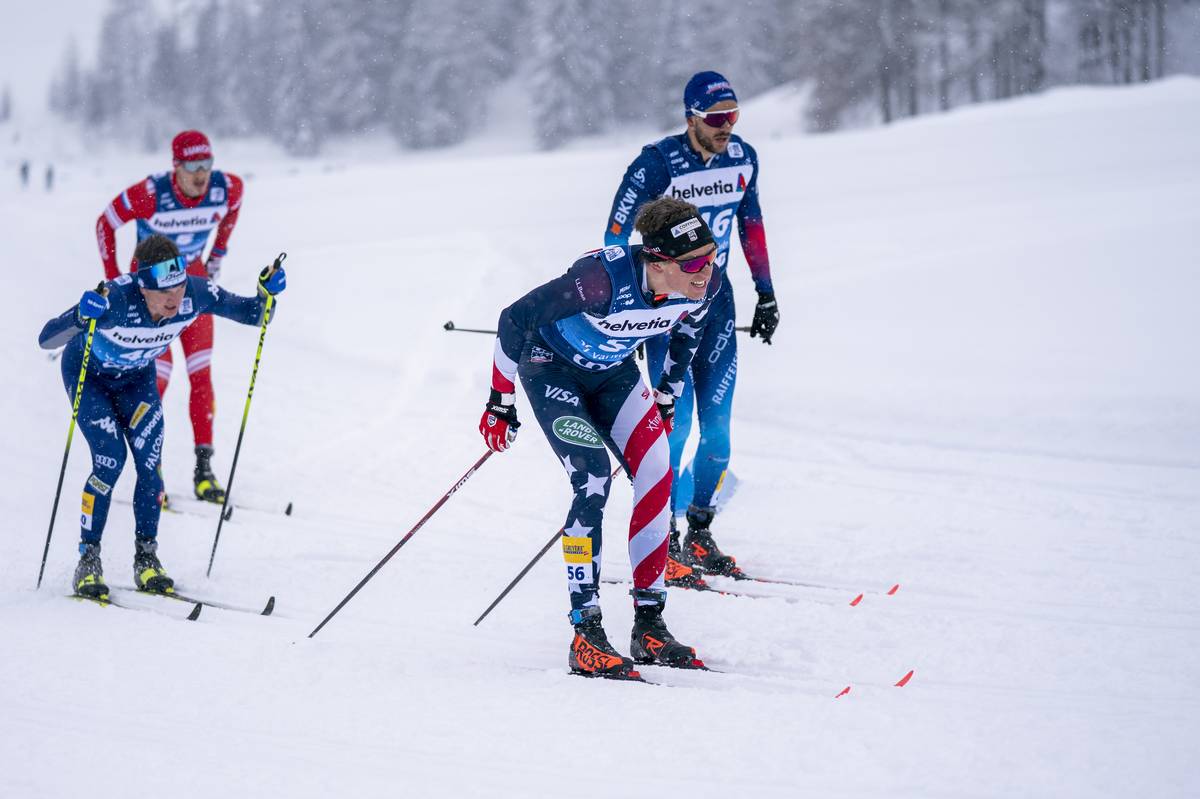
    Caldwell, of the Dartmouth and Stratton ski teams, as well as the USST D-team, finished 1:34.2 behind the winner for his best result of the week.

    Norway’s Simen Hegstad Krueger won it in 31:13.3, while France took second and third with Clement Parisse (+13.3) and Alexandre Pouye (+32.8), respectively.

    “Today’s race was my main focus for the week,” Caldwell, 22, wrote in an email. “I had awesome skis out there — big thanks to all the wax techs for getting amazing skis. I did not feel as good as I had hoped out there today, my legs felt heavy and I couldn’t keep the distance pace that I usually aim for. With that the wheels started to come off the last few laps and I fell back quite a bit. I wanted to be up in that top five/ top ten spot but didn’t have it today.”
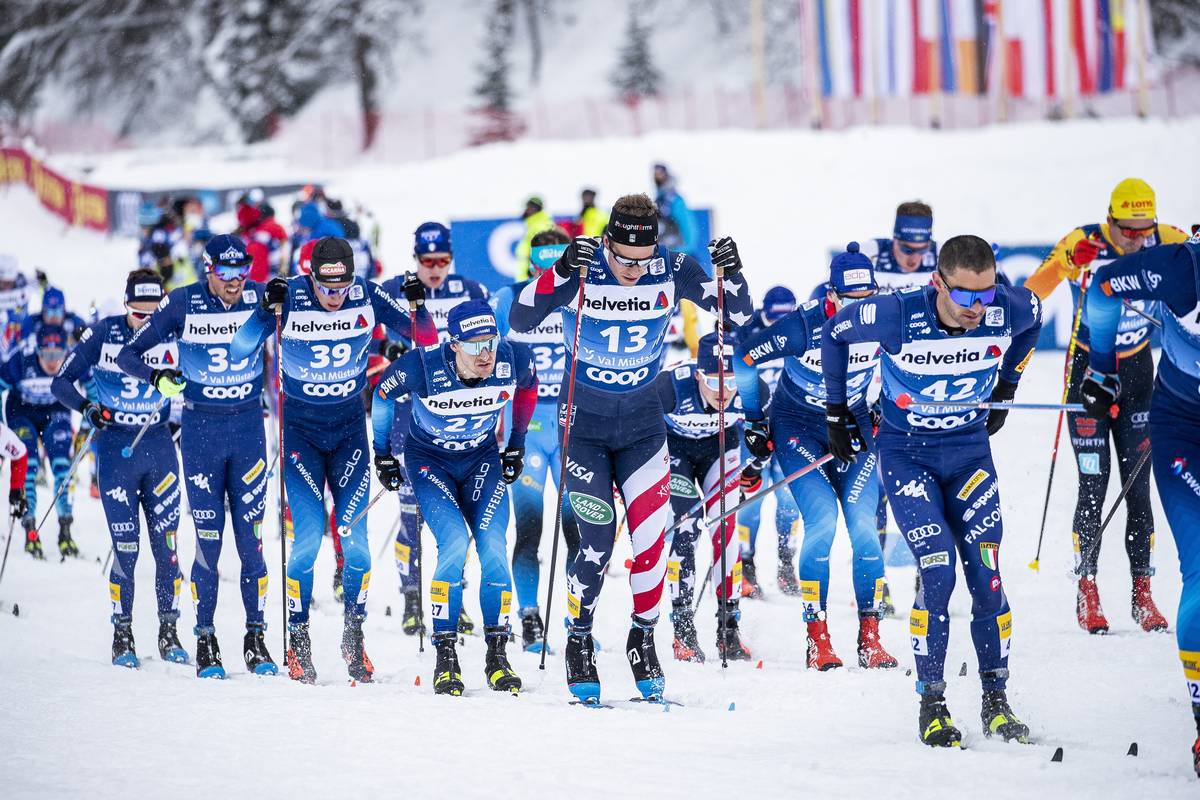
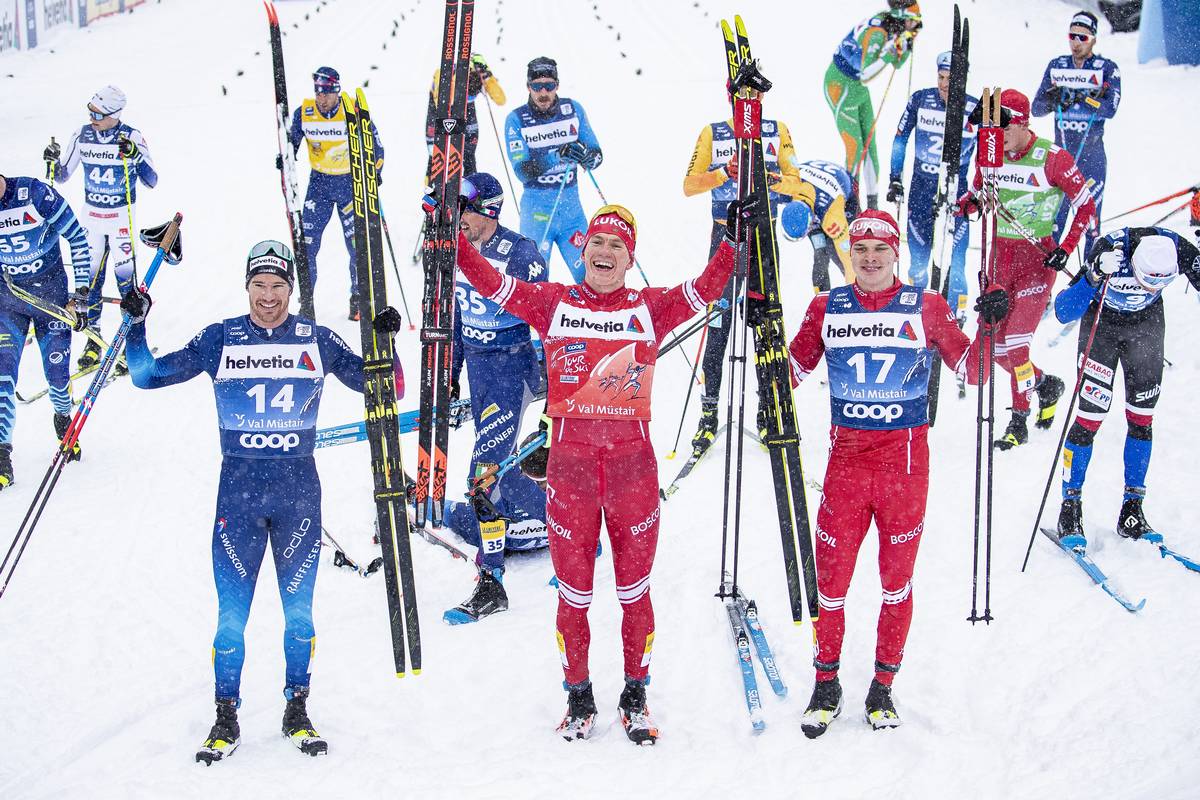
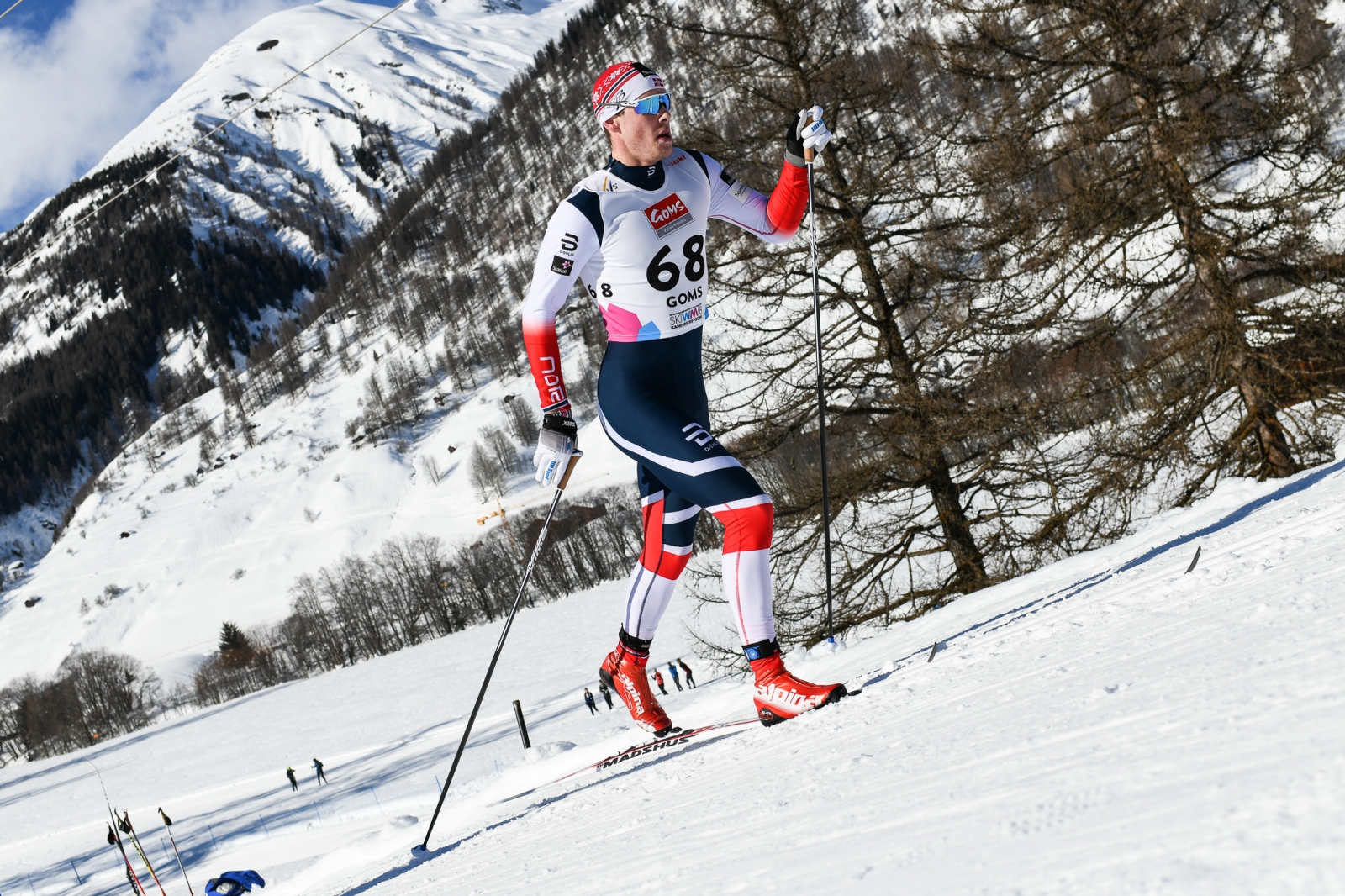
    Paddy Caldwell (Dartmouth/SMS/USST) racing to 21st in the men's 15 k freestyle at U23 World Championships in Rasnov, Romania. (Photo: Logan Hanneman)
    Paddy Caldwell (Dartmouth/SMS/USST) racing to 21st in the men’s 15 k freestyle at U23 World Championships in Rasnov, Romania. (Photo: Logan Hanneman)

    After posting the sixth-fastest split at 2.5 k, Caldwell’s time stood up as the 12th fastest at 7.5 k, and by 12.5 k, he was down to 20th.

    “He went out strong in the beginning and lost a little bit of time in the end, but he still showed a lot of promise in a very deep U23 field,” Fish told USSA.

    Caldwell’s career best at a U23 or junior world championship was 10th in the 20 k skiathlon two years ago in Val di Fiemme, Italy. That was at junior worlds; last year at U23’s in Almaty, he placed 15th in the 15 k freestyle and 20th in the 30 k skiathlon.

    Looking ahead to the rest of the season, Caldwell wrote that he’s “Not entirely sure what the rest of the season holds! But I am looking forward to spring series and whatever races I have between now and then!”

    On Friday, Matt Liebsch announced that he had earned the final men’s spot for the U.S. at the Ski Tour Canada (STC) — the season-ending World Cups from March 1-12. U.S. Ski Team Head Coach Chris Grover previously explained in an email that either Liebsch or an outstanding performer at U23’s would earn that final spot.

    American Adam Martin (18) of Northern Michigan University racing to 29th in the men's 15 k freestyle at U23 World Championships in Rasnov, Romania. (Photo: Logan Hanneman)
    American Adam Martin (second from left in bib 18) of Northern Michigan University racing to 29th in the men’s 15 k freestyle at U23 World Championships in Rasnov, Romania. (Photo: Logan Hanneman)

    For Martin, who declined the U.S. team’s offer to compete at STC (instead choosing to focus on NCAA Championships in two weeks), he left U23 World Championships “quite satisfied,” as he considered classic skiing to be his strength.

    “I started more aggressively than Tuesday,” Martin wrote on Thursday. “Fortunately, an Italian who was on his first lap caught me on my second lap, and I skied with him until the finish. This helped me dig deeper I think.”

    He finished 2:01.6 behind the winner and one-tenth of a second out of 28th.

    “Leaving the championships I’m optimistic,” Martin, 21, wrote. “I would really like to qualify again next year and race [at U23 World Championships] in Soldier Hollow.”

    In his first world championships, Canada’s Jack Carlyle cracked the top 40 in 32nd (+2:10.4). Also for Canada, Alexis Dumas placed 38th, Scott James Hill was 42nd and Angus Foster finished 72nd.

    Akeo Maifeld-Carucci of the Bridger Ski Foundation placed 39th for the U.S. and Kyle Bratrud (CXC) was 43rd.

    U23 men’s 15 k results

    American Heather Mooney racing to 42nd in the women’s 10 k freestyle at the U23 World Championships on Thursday in Rasnov, Romania. (Photo: FIS)
    American Heather Mooney racing to 42nd in the women’s 10 k freestyle at the U23 World Championships on Thursday in Rasnov, Romania. (Photo: FIS)

    In the U23 women’s 10 k freestyle, Germany’s Victoria Carl claimed gold by in 23:14.1, 18.9 seconds ahead of Slovenia’s silver medalist Lea Einfalt and 27.1 seconds ahead of Russia’s Anastasia Sedova in third.

    A California native and dual citizen of Great Britain, Annika Taylor (Sugar Bowl Academy Elite Team) achieved her first top 30 in two U23 World Championships, placing 30th, 2:06.8 behind the winner.

    Taylor, 22, has spent most of the season racing World Cups for Great Britain. She led the British team in Rasnov, with Sarah Hale finishing 40th in Thursday’s 10 k skate. Earlier in the week, Taylor finished 34th in the 10 k classic and 36th in the freestyle sprint.

    “I was really looking for a top-20 result at these championships, so I was left wanting more at the end of the week,” Taylor wrote in an email. “At the [World Cup] races in Falun, my body felt really good, most likely indicating a bit of a peak in performance, which then left me tired in the training week leading up to Romania. Although I didn’t achieve my results-based goal for the championships, I still had a few personal ‘wins’ of the week, including racing my 24th race of the 15-16 ski season, marking 4.5 months on the ski-traveling road, and seeing friends from the EISA carnival circuit!

    “After 4 years at UNH focusing only on distance racing, this year has been a ‘relearning how to sprint’ year, and I’m excited to get to race a few sprints at the Tour of Canada!” she continued. “I’m also planning on racing Supertour Finals in Craftsbury (as long as my body keeps going after racing 8 races at the T of C).”

    Canada’s Frédérique Vézina finished 35th (+2:35.6) for her best result of the week. Americans Felicia Gesior and Kelsey Phinney placed 38th and 39th, respectively, and Heather Mooney was 42nd and Kristen Bourne 44th for the U.S.

    Canada occupied 45th through 47th, with Kendra Murray, Alannah Maclean and Sophie Carrier-Laforte, respectively.

    “Overall, Romania was a positive and unique experience,” Taylor wrote. “I had so many laughs with my British teammates, shared plenty of hugs with Heather and Kelsey, played with stray dogs, visited Dracula’s castle, and even got a slight face-tan!”

    U23 women’s 10 k results

    On Saturday, most of the athletes planned to leave Romania. Ogden is headed to Ottawa, Canada, to compete in the eight-stage STC.

    “Romania was an awesome experience and I think that I will definitely remember the stunning views of the Transylvanian alps,” Ogden reflected. “And I’ll probably remember all the crazy schedule changes and the heroic effort of the organizing committee to pull off this even with barely any snow.”