From the FasterSkier archive — posts syndicated from athletes’ and coaches’ own blogs between 2004 and 2012, kept online as published. Current coverage is at fasterskier.com.

Tag: Jørgen Aukland

  • Ski Classics Opens with Doubleheader in Italy 

    Ski Classics Opens with Doubleheader in Italy 

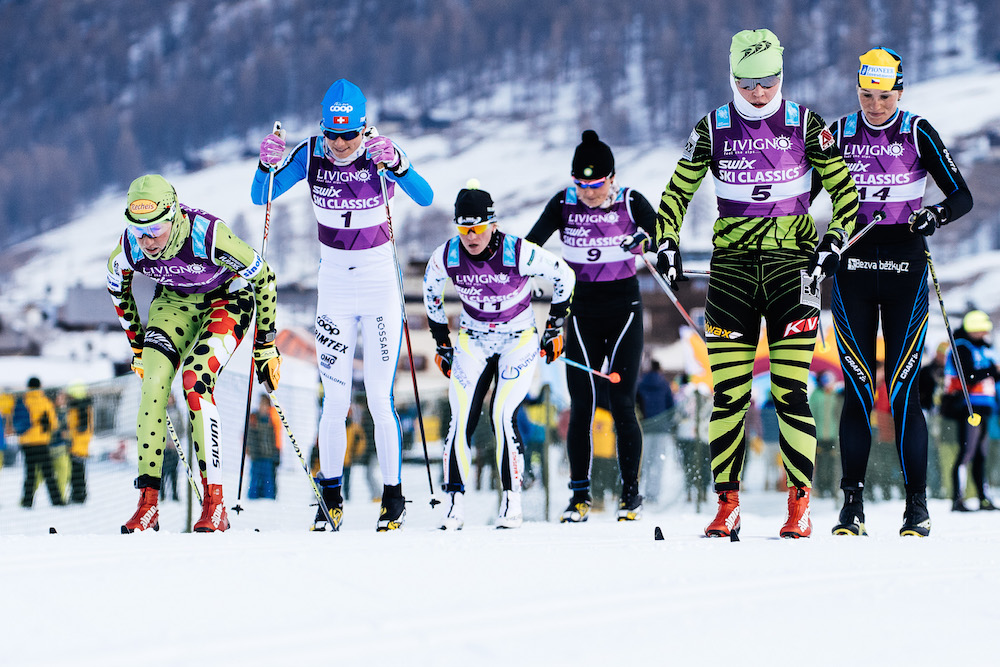
    Last year's Team Tempo Prologue in Livigno, Italy, which Team Coop won. This year, the team prologue will again open the Ski Classics series in Livigno on Saturday, followed by the shortened La Sgambeda classic race on Sunday. (Photo: Visma Ski Classics)
    Last year’s Team Tempo Prologue in Livigno, Italy, which Team Coop (in bib 1) won. This year, the team prologue will again open the Ski Classics series in Livigno on Saturday, followed by the shortened La Sgambeda classic race on Sunday. (Photo: Visma Ski Classics)

    The 2016 Ski Classics kicks off with a doubleheader in Italy on Saturday and Sunday, and the marathon regulars are chomping at the bit to get started with the long-distance race series.

    The 15-kilometer Proteam Prologue in Livigno, Italy, on Saturday opens the show for the marathon series, now called the Visma Ski Classics (with a new title sponsor in place of Swix), which has been extended to nine venues this season.
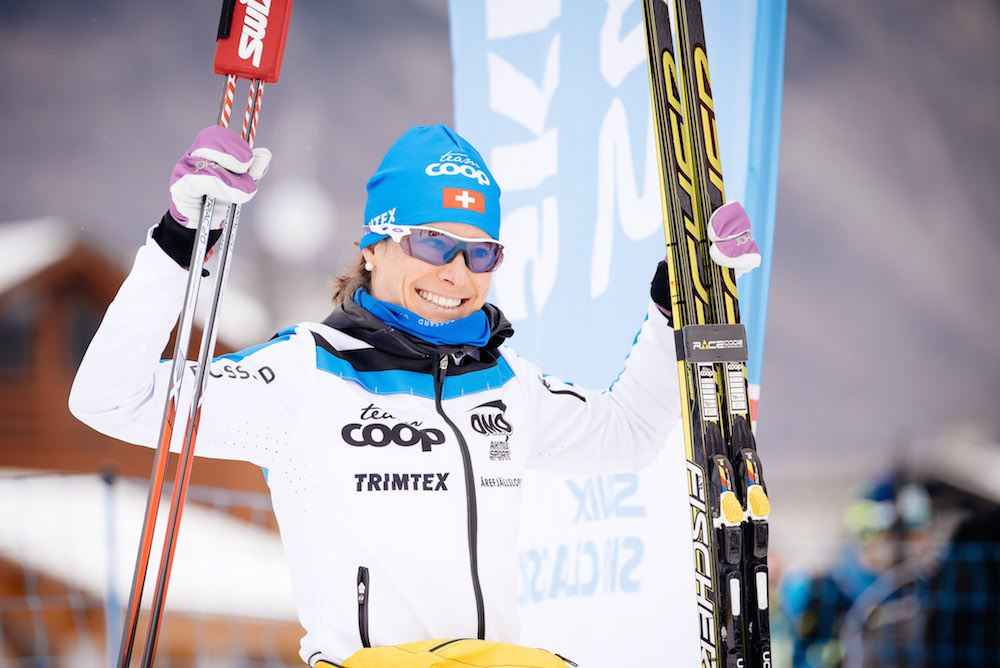
    Seraina Boner of Switzerland and Team Coop/Exspirit after winning the 2014 La Sgambeda in Italy last season. (Photo: Ski Classics)
    Seraina Boner of Team Coop (now called Team Exspirit) after winning the 2014 La Sgambeda in Italy last season. (Photo: Ski Classics)

    On the women’s side, last season’s Ski Classics champion Katerina Smutna of the Czech Republic will be on the start line for the first races this weekend, but she will face plenty of competition. Team Exspirit’s Seraina Boner of Switzerland is eager to take back the overall title, which she has earned three times (2011, 2013 and 2014), beginning with La Sgambeda.

    Poland’s World Cup star and the queen of the FIS Tour de Ski, Justyna Kowalczyk, will be doing several of the Ski Classics long-distance events this season with the Norwegian Team Santander headed by the Aukland brothers. And Britta Johansson Norgren of Sweden, who was on the podium at several of the Ski Classics events last season, is one to keep an eye on. Last season, she raced with the all women’s team Ski Pro Am, and this year she is a part of Sweden’s Lager 157 Ski Team, with teammates such as three-time Vasaloppet champion Jörgen Brink of Sweden.

    Among the men, 2015 Ski Classics overall champion Petter Eliassen of Norway makes his season debut in Italy this weekend. He will have to fend off a large and deep field of competitors such as Norway’s 43-year-old marathon veteran Anders Aukland and his Santander teammates, including younger brother Jørgen Aukland, and former World Cup skiers Tord Asle Gjerdalen of Norway and Johan Olsson of Sweden.

    Norwegian stayers such as Johan Kjölstad, Øystein Pettersen, Eldar Rønning, and John Kristian Dahl of Team United Bakeries, as well as Ski Classics veterans of Team Exspirit, including Daniel Richardsson, Anders Södergren and Jimmie Johnsson of Sweden and Norway’s Morten Eide Pedersen, will certainly do their best to make it a tough season opener from Day 1.

    Two unique competitions in Livigno

    The Prologue, in which the teams must field at least three racers to compete, was added last year, and is a team effort where the third person’s time determines the team result. The next day, on Sunday, the skiers embark on the first distance event, the now-24-kilometer classic technique La Sgambeda.
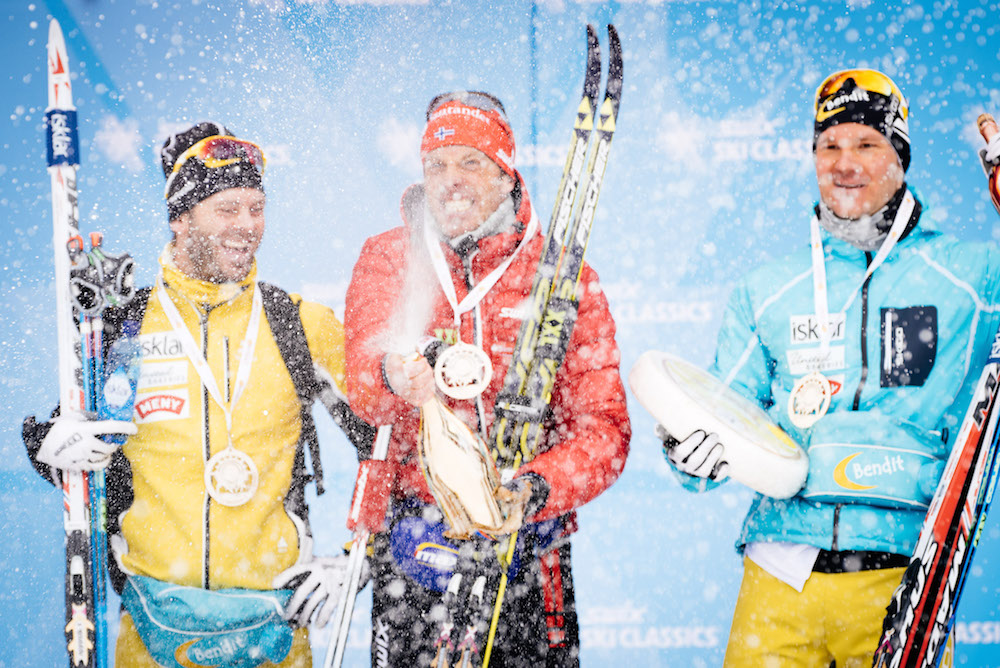
    Team Santander's Anders Aukland (c) after winning the 2014 La Sgambeda in Livigno, Italy. Johan Kjølstad  (l) and Øystein Pettersen (r) both of Team United Bakeries, placed second and third, respectively.  (Photo: Ski Classics)
    Team Santander’s Anders Aukland (c) after winning the 2014 La Sgambeda in Livigno, Italy. Johan Kjølstad (l) and Øystein Pettersen (r) both of Team United Bakeries, placed second and third, respectively. (Photo: Ski Classics)

    Team Exspirit (previously known as Team Coop) won the prologue last year and is aiming to defend the title this year.

    “We have had great preparations here in Livigno, skiing on the race course and acclimatizing to the high altitude,” team member Jimmie Johnsson said in a press release on Friday. “Of course, we’re aiming to defend our victory and we’re faster this season than ever before.”

    Team Exspirit’s Seraina Boner won La Sgambeda last year after breaking away from the field on the hard climb at the turning point of the course. This year, the course is shortened to from 35 k to 24 k due to lack of snow and is also flatter. While Boner prefers more elevation gain, she was still optimistic before the race.

    “The tougher course fits me better than the flatter one we have now,” she said. “But I will do my best, and I am really excited to finally start the long distance season together with my teammates.”

    While the Team Prologue is only open to professional teams registered with the 2016 Ski Classics, La Sgambeda on Sunday is open to amateurs and pros alike.

    Saturday’s Prologue will be held on the original course, but due to lack of snow in Livigno, the classic marathon on Sunday will be run on 6 k loops.

    “Last season, seven of the nine Ski Classics events had to change their courses due to weather issues,” Ski Classics CEO David Nilsson in a press release earlier this week. “We can just cross our fingers that the political leaders at the environmental summit in Paris this week are able to make the right decision.”

    For the 2016 season, there are 28 pro teams registered for the Ski Classics series.

    After the season opener in Italy, the Ski Classics takes a break until the Jizerská Padesatka in Liberec, Czech Republic, on January 10, 2016. The race series concludes April 2 with Årefjällsloppet in Sweden as the season finale, as it has been for years. New this year is the Toblach/Dobbiaco Cortina, a 50 k classic race in Italy on Feb. 13.

    Vasaloppet matters most

    For Madshus racer John Kristian Dahl of Norway, who won the Vasaloppet two years ago, the 90 k race from Sälen to Mora in Sweden is the main goal for the 2016 season.

    “It’s the longest and one of the oldest races in the circuit, and very special with the flats. That package makes it very unique, and difficult to win, too. In our world, it’s the championships in marathon skiing, and I’m happy that we have it every year,” Dahl said in an interview with Ski Classics earlier this fall.

    Live streaming in English

    In order for fans to follow the action live, Visma Ski Classics has launched the Live Streaming “Season Pass” available with English commentary on the app or the Tour Live Center at Visma skiclassics.com.

    2016 Ski Classics Schedule

    1. Dec. 5, 2015: Proteam Tempo Prologue, 15 k classic, Italy
    2. Dec. 6, 2015: La Sgambeda, 24 k classic, Italy
    3. Jan. 10, 2016: Jizerská Padesatka, 50 k classic, Czech Republic
    4. Jan. 23, 2016: La Diagonela, 65 k classic, Switzerland
    5. Jan. 31, 2016: Marcialonga, 70 k classic, Italy
    6. Feb. 7, 2016: König Ludwig Lauf, 50 k classic, Germany
    7. Feb. 13, 2016: Toblach/Dobbiaco Cortina, 50 k classic, Italy
    8. March 6, 2016: Vasaloppet, 90 k classic, Sweden
    9. March 19, 2016: Birkebeinerrennet, 54 k classic, Norway
    10. April 2, 2016: Årefjällsloppet, 65 k classic, Sweden

    For race recaps, follow FasterSkier’s marathon blog.
  • Duel of the Marathoners

    Duel of the Marathoners

    OSLO, NORWAY – Oslo’s local ski organization Skiforeningen and Thomas Alsgaard’s new distance initiative Team United Bakeries dish up a 10K classic suffer fest with more than 1,200 feet elevation gain. Start is Sørkedalen, Oslo, finish at Tryvann.

    Jörgen Brink Photo: Madshus AS

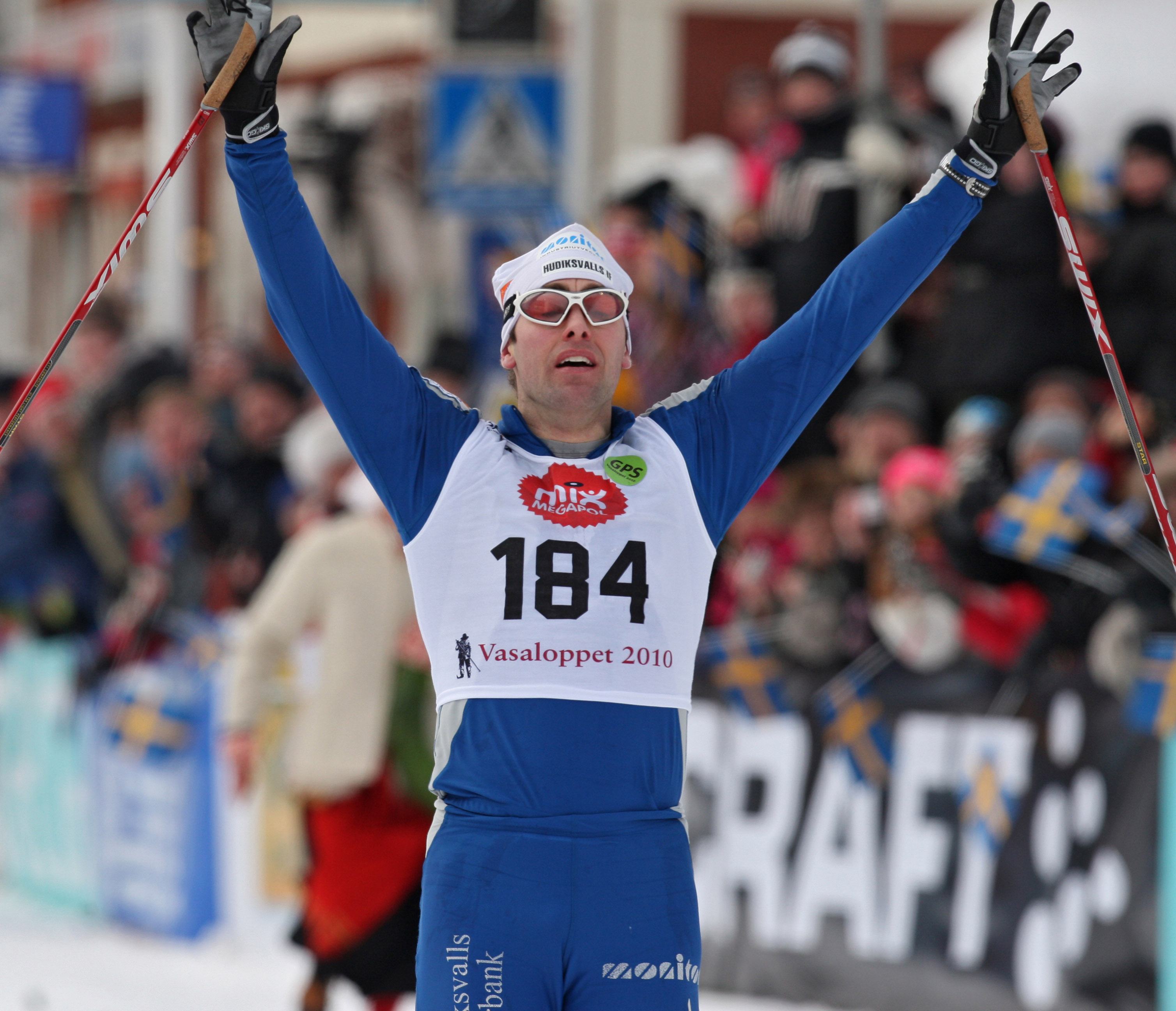
    According to the start list, both Team United Bakeries and Team Xtra Personell are well represented in the elite wave. Both current Vasaloppet champion from Team United Bakeries, Jörgen Brink (SWE), and 2008 Vasaloppet champion Jørgen Aukland (NOR) from Team Xtra Personell are registered and ready to duke it out for bragging rights. Add 2008 and 2009 Vasaloppet champion Sandra Hansson (SWE) in the women’s race to the mix for a total of three Vasaloppet champions on the start line.

    “We’re really excited to have this kind of a marathon field. We think this event has potential, and next year, we’re planning to have the finish in the new roller ski arena at Holmenkollen,” Ole Kristian Sørland of Skiforeningen says to the Norwegian web site birken.no.

    From www.skiforeningen.no and www.birkebeiner.no, compiled by Inge Scheve, FasterSkier.

  • Vasaloppet’s Full-Time Workhorse

    Vasaloppet’s Full-Time Workhorse

    Martin Rosvall. Photo: Private

    Martin Rosvall, 32, works full time as an assistant professor of physics at the University of Umeå in northern Sweden. But the constraints of a full time job, work-related travel and conferences are no barriers to stellar marathon performances, Rosvall says.

    Point in case: In March, he finished 15th overall at the Vasaloppet, the 90 K classic race that attracts more than 20,000 skiers and was Rosvall’s main goal for the season. The legendary race from Sälen to Mora became every bit as good as planned.

    “I knew that I was stronger this year, and I wanted to ski the Vasa differently than I have before,” Rosvall says.

    The wild-card Swede pulled the pack more or less from the 25K mark to the 65K mark, pulling the field and breaking the wind for World Cup skiers and Vasaloppet champions including triple Vasaloppet winner Daniel Tynell (2002, 2006, 2009), 2010 Vasaloppet champion Jörgen Brink, and triple Vasaloppet champion Oskar Svärd (2003, 2005, 2007).

    Mathias Fredriksson, Thomas Alsgaard, Stanislav Rezac and a few other ringers created a breakaway right from the gun. Rosvall caught Alsgaard at the halfway point. Aside from Rezac, Rosvall beat all of them to the finish. He also left skiers such as the brothers Thobias and Mathias Fredsriksson (SWE), 2004 Vasaloppet champion Anders Aukland, and Jerry Ahrlin in the dust.

    So how did a guy with a full-time job go about his goal of improving on his PR Vasaloppet finish from 2006, when he was 16th overall?

    A systematic approach

    This year, Rosvall had two goals for the big day.

    First, Rosvall was less concerned about the overall placement and more focused on being the first skier attacking the most important hills on the course. He practiced the climbs over and over again in the days leading up to the race, the first of which comes at Risberg, 30 kilometers into the race.

    “Usually the pack has gotten smaller by this time, and I’ve been dropped here before,” Rosvall says.

    The next critical hill is at Oxberg, 60 kilometers into the race.

    “My main strategy was to come into these hills as the first skier. Which I was,” Rosvall notes contentedly. He explains that to be the first skier into a hill in the Vasa, you have to place yourself in the front of the pack three to four kilometers prior to the beginning of the ascent.

    “On the first climb, I was first on the bottom and first at the top. On the second climb, basically the whole main group was behind me and I was ahead of Jörgen Brink. So to pass me, they would have to ski faster than me. Coming to the top of that hill, I was on Oskar Svärd’s skis. All the other skiers stayed behind me,” he says with a grin, knowing how much that would cost.

    Martin Rosvall waxing for the 2010 Vasaloppet. Nothing is left to chance. Photo: Debbie Kolp

    Confidence and strategy

    Rosvall’s second goal for the Vasa was to enter the race with confidence. Focusing less on the overall result allowed Rosvall to use his confidence to ski the course strategically.

    The only problem with not focusing on the overall result, he says, is that you can lose track of the field. That proved a problem toward the end of the race.

    “I didn’t have any exact idea of how I was doing. I didn’t use all my energy, and saved some for the last 15K, but that caused me to stay with the pack to conserve energy, and that was the pack that dropped Mathias Fredriksson. Thobias Fredriksson and I did all the work. The other four in the pack were too tired. Then at the end, I got outsprinted by two guys who had stayed behind and stayed fresh. I had led too much. I was disappointed. Not because I was 15th. But I had the skis and the day where I could have been top 10. So I was disappointed. But after the race, Daniel Tynell, Jørgen Aukland (NOR) and Oskar Svärd came up to me and thanked me for doing all the work for them,” Rosvall says, explaining that their gratitude helped put the event in perspective for him.

    “I did at least half of the work and I was always in the top three of the pack,” Rosvall says. “I finished 15th and came away with a lot of confidence that I hope to take advantage of in the Vasaloppet next year.”

    “It would be so fun to finish the Vasa with the fastest guys, and ski the stretch to the finish line with the winners. I need the skis and I need the day, but now I know I can do it.”

    Raised among the best

    However, Rosvall, a member of Lycksele IF ski club in northern Sweden, is no stranger to skiing with World Cup-caliber athletes. He grew up training and competing with former Olympian Per Elofsson, as well as World Cup racers Björn Lind and Björn Ferry.

    “I was never as good as Per Elofsson as a junior. Nobody was as good as Per. He was in a league of his own, entirely, and we were all wondering how fast we’d have to ski as seniors when we saw how fast Per raced as a junior,” Rosvall recalls, bringing up Elofsson’s first World Cup victory in Muonio (FIN) in 1998 as an example. (See the video here.)

    “You didn’t have to ski faster than Per,” Rosvall concludes.

    This is the second part of a two-part mini series on Martin Rosvall. Read part one here.

    Martin Rosvall. Photo: Private