
From the FasterSkier archive — posts syndicated from athletes’ and coaches’ own blogs between 2004 and 2012, kept online as published. Current coverage is at fasterskier.com.

Tag: jack schrupp

  • Product Review: Drink Wholesome Real Food Protein Powders

    Product Review: Drink Wholesome Real Food Protein Powders

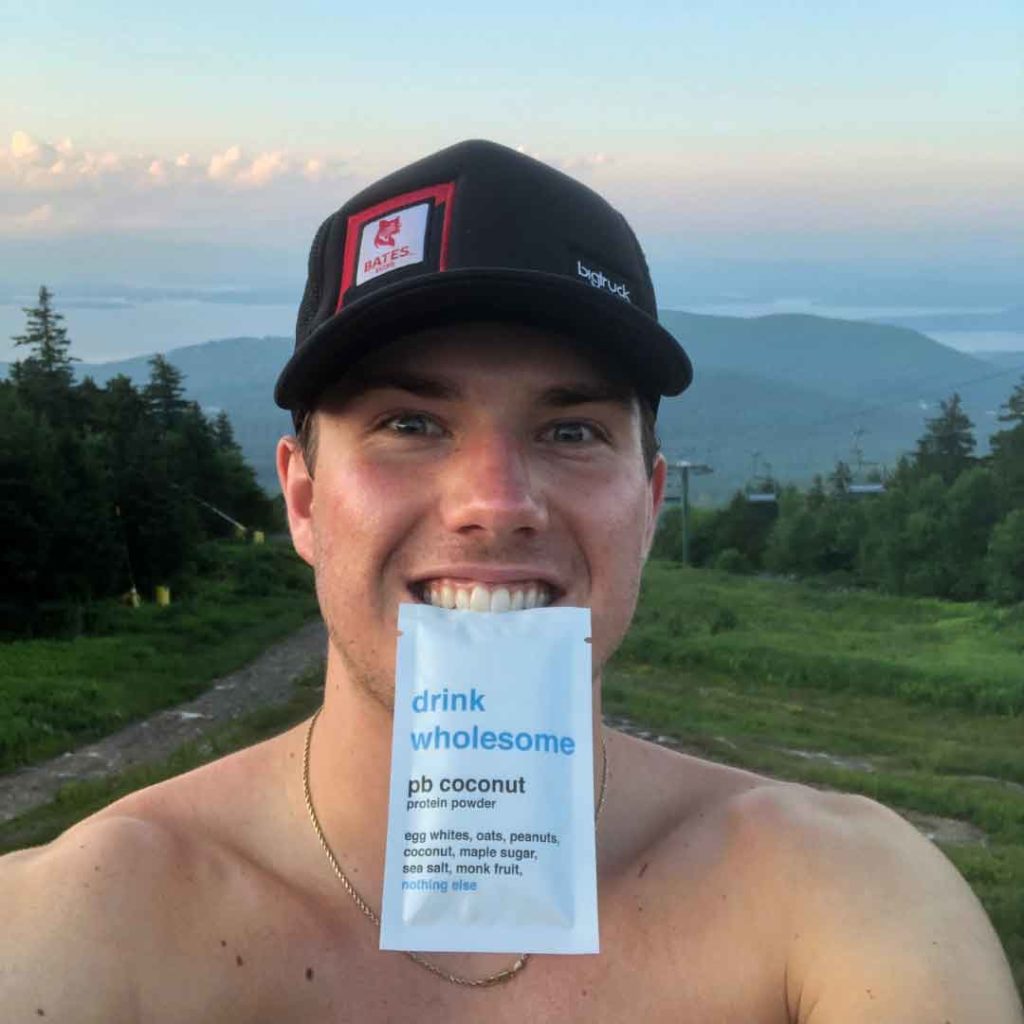
    Based in New Hampshire, Drink Wholesome has roots in the nordic ski community. Founder Jack Schrupp is a Williams Skiing alumn. (Photo: DrinkWholesome.com)

    As summer training hours trend toward a peak, many athletes are looking for ways to support their nutritional needs, matching high volume training with high volume eating. A new product that should be on your radar is Drink Wholesome protein powder, created by former Williams ski racer Jack Schrupp. This protein is basically the RXBAR of protein powders: all natural without artificial flavorings or sweeteners, packing a high nutrient protein dense punch in each scoop. 

    The nature of exercise, in particular the type of training that supports building strength and fitness for cross country skiing, is a cycle of breaking down muscle then allowing the muscle to repair itself and grow stronger. Brick by brick, we build a stronger body and more efficient aerobic and cardiovascular systems to power us down the trail. Regardless of whether you follow a rigorous training schedule, upholding an overall active lifestyle with regular exercise increases the body’s energy demands, particularly carbohydrates to replenish glycogen stores and protein to support muscle recovery. 

    According to the International Society of Sports Nutrition (ISSN), athletes require approximately double the protein intake of an inactive healthy individual to support their overall health and recovery from exercise. By the numbers, an inactive individual requires approximately 0.8 grams of protein per kilogram of body weight, whereas an athlete needs 1.4 – 2 grams per kilogram. For an athlete who weighs 160 lbs, this means consuming 100 to 145 grams of protein each day. 

    Research supports that this is true regardless of the type of exercise an athlete engages in, or whether they are recreational versus elite. The ISSN also explains that insufficient protein intake leads to impairment in the body’s ability to recover from exercise and an increase in muscle catabolism, meaning muscles continue to break down rather than repair after exercise. 

    Endurance athletes — like a road cyclist or marathoner — generally fall on the lower end of the range, while those who engage in more strength and power based sports — like weight lifting or CrossFit — occupy the upper end. Where does this leave skiers who lift heavy, throw down during intensity sessions, AND put in lots of hours of L1? Probably somewhere in the middle. 

    Spreading intake throughout the day has been found to best support muscle protein synthesis, while additionally contributing to a more favorable body composition and improved performance outcomes. This means meals and snacks should contain 20-40 grams of protein each, assuming you’re eating every three to four hours.

    For many, these demands can be met with a balanced and varied diet, but protein powders can be a convenient option to boost protein intake, especially when your stomach might not feel up to a full meal after a hard set of intervals or if you are unable or choose not to eat certain foods. 

    I tend to fall into both of those categories. During the summer, I generally maintain 50 to 60 miles per week of trail running with a day or two of rollerskiing or mountain biking, combined with the general activity of chasing around a toddler requires that I stay on top of my game while properly fueling my body. But hard training tends to throw off my body’s hunger cues – my stomach can only handle a small amount of dairy, and I choose not to eat a lot of meat. 

    Protein powder has been a nice insurance policy to support my nutritional demands and help me stay healthy. However, it can be hard to find one that I feel good about consuming as many are laden with artificial sweeteners and ingredients I’d have to Google. They also often taste chalky, overly sweet, and like artificial flavoring. 

    As such, I was excited to try Drink Wholesome protein. After a similar experience with protein powders, the designer, Schrupp, set out to create a product made only of natural ingredients that also tasted good. What resulted is a line of products that have egg white as the first ingredient, or chickpeas for the vegan protein options. They’re sweetened with monk fruit or maple sugar, taste delicious, and pack in 20 grams of protein per serving. 

    As an extra nod for the ingredient list, Registered Sports Dietician Kylee VanHorn explains in an article for Trail Runner Magazine that egg white protein has been found to be one of the most bioavailable protein sources, meaning it is easily digested and absorbed allowing it to be readily used for muscle repair. It is second to whey protein, but easier on the stomach for many. 
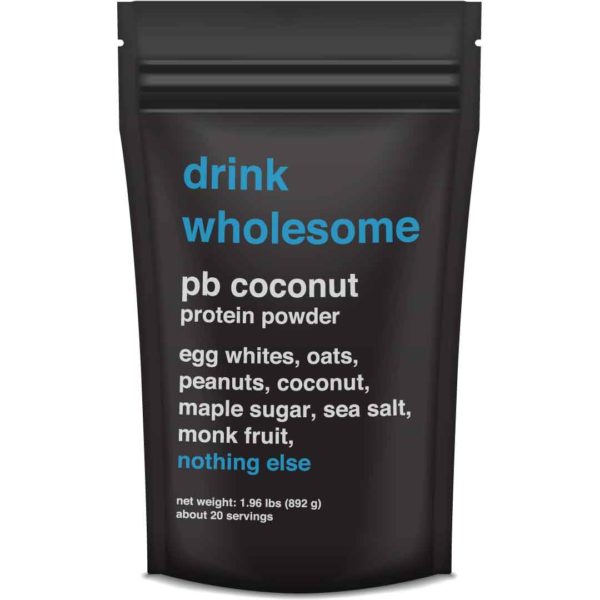
    Drink Wholesome is an all natural protein powder made from ingredients you can pronounce and find in your kitchen. (Photo: DrinkWholesome.com)

    Of the three flavors I tried — peanut butter coconut, mocha, and peanut butter chocolate (vegan) — the pb coconut takes the cake as a total slam dunk. Though perhaps a bit sweeter than the other two, it tastes on its own great blended with water and a splash of almond milk as a post-workout drink to jumpstart recovery. Note that without anti-caking or gelling agents, emulsifiers, or stabilizers, you’ll get the smoothest mixture by preparing this with a blender or in a shaker bottle. 

    Getting in the habit of mixing up a drink, tossing in some ice cubes, and keeping it in my car to drink after long runs in the mountains when I am generally dehydrated, depleted, and usually feeling a little blah from consuming lots of sports nutrition products on the go has made a big difference in how I feel later that day and the next day. 

    Most commonly, I stir a half-serving Drink Wholesome into my post run breakfast bowl of oatmeal topped with berries and nuts. Since the protein is sourced from egg white and peanuts, it doesn’t curdle when mixed into the bowl of hot oats, which I have experienced with whey products, making a thick and creamy texture packed with flavor. The vegan pb chocolate is a close second for this purpose, especially when paired with strawberries. 

    I’ve also enjoyed adding Drink Wholesome to smoothies. One of my go-to blends has become a banana, a handful of spinach, some almond milk, a scoop of mocha protein, and ice, maybe with some nuts tossed in after for texture and fats. It tastes like a coffee milkshake and provides me with plenty of energy to keep me going. 

    As a parent who generally has to share whatever they are eating with their toddler, it also feels good not to hesitate to give my little one a sip or bite since I know the ingredients are all natural, and it has the added benefit of exposing her to multiple common allergens (peanuts and eggs), as is recommended to reduce the risk of developing an allergy to those foods later on. I’ve also noticed a marked decrease in bloating without the whey protein or artificial sweeteners I had been consuming. 

    I also feel good about supporting the company’s principles: “keep it real food, keep it local, keep it green”. Drink Wholesome, which is based in New Hampshire and produced in small batches in Massachusetts, sources free range eggs and organic ingredients locally whenever possible. Not using whey protein cuts out the dairy industry, reducing their environmental footprint, and the company gives back, aiming to donate at least 10% of its profits to the preservation of green spaces in New England by 2022. Specifically, the donation goes toward purchasing undeveloped land for public use, particularly in areas where access is limited. 

    Drink Wholesome offers a vegan protein powder made from chickpeas and peanuts and sweetened with monk fruit. (Photo: DrinkWholesome.com)

    Drink Wholesome protein can be ordered on their website. Full sized bags of egg white based protein retail at $38.00 for 20 servings, or $26.60 for 14 servings of vegan protein. You can also order two free sample servings to see which flavor suits your palate. 

  • Junior Nationals: Americans Keep Norwegians from J1 Podium Sweeps

    Junior Nationals: Americans Keep Norwegians from J1 Podium Sweeps

    Norwegian twins Tiril and Lotta Weng on their way to another 1-2 finish at 2013 Junior Nationals on Saturday, this time in the J1 girls 10 k classic mass start in Fairbanks, Alaska. (Photo: bertboyer.zenfolio.com. Proceeds go to NNF)
    Norwegian twins Tiril and Lotta Weng on their way to another 1-2 finish at 2013 Junior Nationals on Saturday, this time in the J1 girls 10 k classic mass start in Fairbanks, Alaska. (Photo: bertboyer.zenfolio.com. Proceeds go to NNF)

    By Eric Troyer

    (Via jn2013fairbanks.us)

    FAIRBANKS, Alaska — Once again, the Norwegian skiers dominated the Junior 1 10 k classic mass starts in the 2013 Cross Country Junior Nationals on Saturday, but the American racers didn’t let their guests take all the podium spots.

    Keegan Swirbul (Aspen Valley SSC), the first American and third overall behind Norwegians Mattis Stenshagen and Sjur Slettom on Saturday in the J1 boys 10 k classic mass start at 2013 Junior Nationals in Fairbanks, Alaska. (Photo: bertboyer.zenfolio.com. Proceeds go to NNF)
    Keegan Swirbul (Aspen Valley SSC), the first American and third overall behind Norwegians Mattis Stenshagen and Sjur Slettom on Saturday in the J1 boys 10 k classic mass start at 2013 Junior Nationals in Fairbanks, Alaska. (Photo: bertboyer.zenfolio.com)

    Keegan Swirbul of Rocky Mountain, took third overall in the boys race, which was good for the top American spot, and he finished just one second behind Norwegian and second-place finisher Sjur Slettom.

    “I was surprised I was that close,” Swirbul said.

    Far West’s Peter Holmes, taking fourth, and New England’s Jack Schrupp, in fifth, both finished ahead of Norwegian Martin Thon to take the second and third American places.

    “It’s fun. They’re fast,” said Holmes.

    In the girls race, Marion Woods of Alaska, reeled in Lisa Kvamme of Norway, to take third place and the top place for the Americans in the women’s race.

    “I’m so glad they’re out here,” Woods said, adding that they helped increase the overall competition.

    The Norwegian skiers also include twins Tiril and Lotta Weng, who took first and second, respectively, in the girls race, and Mattis Stenshagen, who took first in the boys race. The Norwegians are racing as guests as part of an effort to give American racers a taste of what’s possible with enough work and the right training and attitude.

    Intermountain’s Lizzie Gill, who took fifth overall and the second American spot, likes the competition.

    “My dad always tells me that I should try to be skiing like Jessie Diggins,” said Gill, smiling, “but now he tells me to ski like Norwegians.”

    The Norwegians are also learning from their experience over here, especially how to race on tight, curvy racecourses.

    “In Norway there are not so many corners,” said Stenshagen. “I like it.”

    Slettom agreed.

    “I like trying something else,” he said, “not just climbing and sitting on the downhills.”

    Woods Breaks Away to Take Third, U.S. Title in Girls J1 Race 

    The Norwegians looked to put the girls J1 10-kilometer race away early. They started strong, all three pulling slightly ahead of a group of American skiers, led by Marion Woods. Kvamme fell back a bit by the third kilometer but was still ahead of a large pack of Americans, still led by Woods, as they charged through the Stadium on to their second lap. Woods was less worried by the leaders than who was behind.

    An excited Marion Woods (Alaska Winter Stars) at the finish of Saturday's J1 girls 10 k classic mass start at the 2013 Junior Nationals in Fairbanks, Alaska. Woods was the top American in third behind Norwegians Tiril and Lotta Weng. (Photo: bertboyer.zenfolio.com. Proceeds go to NNF)
    An excited Marion Woods (Alaska Winter Stars) at the finish of Saturday’s J1 girls 10 k classic mass start at the 2013 Junior Nationals in Fairbanks, Alaska. Woods was the top American in third behind Norwegians Tiril and Lotta Weng. (Photo: bertboyer.zenfolio.com)

    “Going from the bottom of Warm-up to the top of Tower, I knew that something was going to happen,” said Woods. “There was a pretty large pack of girls behind me. Having led for a couple of K I knew that they could make a breakaway at any moment.”

    During the second climb of South Tower, both Woods and Lizzie Gill were the ones to make a breakaway. They reeled in Kvamme and were ahead of her with less than three kilometers to go. Several more Americans caught Kvamme, but by the climb to Sidewinder, about 8.5 kilometers into the race, Kvamme had pulled back into fourth place.

    That’s when Tiril Weng made her move, pulling about 10 seconds ahead of her sister, Lotta, in less than a kilometer. Woods was still in third followed by Gill, but Kvamme was starting to gain on her. A pack of Americans, led by Amy Bianco, of Midwest, followed and Woods knew they were back there.

    “Going up the last hill. I never knew what was really behind me,” said Woods. “I knew that really at any moment they could come on and pass me.”

    That pack of Americans never caught Woods, but they started to gain on Gill coming up the Warm-up hill right before the finish.

    “I definitely died a little at the end, but they were right behind me and they kept me going, so, yeah, that was pretty fun,” said Gill.

    Tiril won the race in 33 minutes, 47.3 seconds, 16 seconds ahead of her sister, who finished in 34:03.7. Woods finished third at 34:26.9 and Kvamme finished fourth at 35:09.0, but it was close as Gill finished just under a second behind. Nicole Bathe, of Midwest, took sixth as the third American, just beating Bianco by less than two seconds.

    Swirbul Uses Sidewinder Move to Take American J1 Boys Title

    In the boys J1 1o k, the Norwegians also pulled ahead early, but several Americans including Cal Deline, of Rocky Mountain, Thomas O’Harra, of Alaska, and Peter Holmes, of Far West, were hot on their tail.

    Norway's Mattis Stenshagen on his way to winning the J1 boys 10 k classic mass start at 2013 Junior Nationals on Saturday. He beat teammate Sjur Slettom and Rocky Mountain's Keegan Swirbul. (Photo: bertboyer.zenfolio.com. Proceeds go to NNF)
    Norway’s Mattis Stenshagen on his way to winning the J1 boys 10 k classic mass start at 2013 Junior Nationals on Saturday. He beat teammate Sjur Slettom and Rocky Mountain’s Keegan Swirbul. (Photo: bertboyer.zenfolio.com)

    By kilometer four, O’Harra and the three Norwegians were leading a pack that included Deline, Swirbul, and Eric Backstrum, of Alaska. As they climbed out of Warm-up into the Stadium for their second lap, Norwegians Stenshagen and Slettom had pulled ahead by a few seconds. Close on their tails was Swirbul, Deline, and Norwegian Thon. O’Harra had fallen back to about ninth place.

    Stenshagen really started to put the hammer down on the second climb of South Tower. He pulled about 10 seconds ahead of Slettom, who was followed closely by Swirbul and Holmes.

    “We knew the Norwegians were going to go in the second lap and they went right where I thought,” said Swirbul, “so I was just trying to conserve as much energy on the first lap and do a 5 k time trial.”

    Holmes said the hardest part of the race was increasing the pace up the second climb of South Tower. He wasn’t sure he could hang on.

    “I was a little iffy about it, but I’m glad I did,” he said.

    With about two kilometers to go, Stenshagen had increased his lead to about 20 seconds over Slettom, who was still followed closely by Swirbul, with Far West’s Holmes a little farther back.

    “We just skied together, me and the Far West guy, and then I tried to put a move on him on Sidewinder and it worked real well,” said Swirbul.

    Not too far behind was Jack Schrupp, of New England.

    Stenshagen increased that lead to about 30 seconds with a kilometer to go, while Swirbul had reeled in Slettom, with Holmes just a few seconds behind.

    Stenshagen easily won first by 30 seconds with a time of 29 minutes, 17 seconds. The race for second was much closer, but the last sprint to the finish proved decisive as Slettom pulled away, beating Swirbul by just one second.

    “He had a way better double pole than I do, but I was thankful to be that close to him,” said Swirbul.

    Swirbul, with a time of 29:49.7, took third overall and first for the Americans. Holmes came in about eight seconds later, taking the second American spot, with Schrupp about four seconds after that, wrapping up the third American spot. Thon finished about nine seconds later, taking sixth place overall.

    Complete results

    For more photos from 2013 Junior Nationals, visit bertboyer.zenfolio.com. Proceeds go to the National Nordic Foundation (NNF).