From the FasterSkier archive — posts syndicated from athletes’ and coaches’ own blogs between 2004 and 2012, kept online as published. Current coverage is at fasterskier.com.
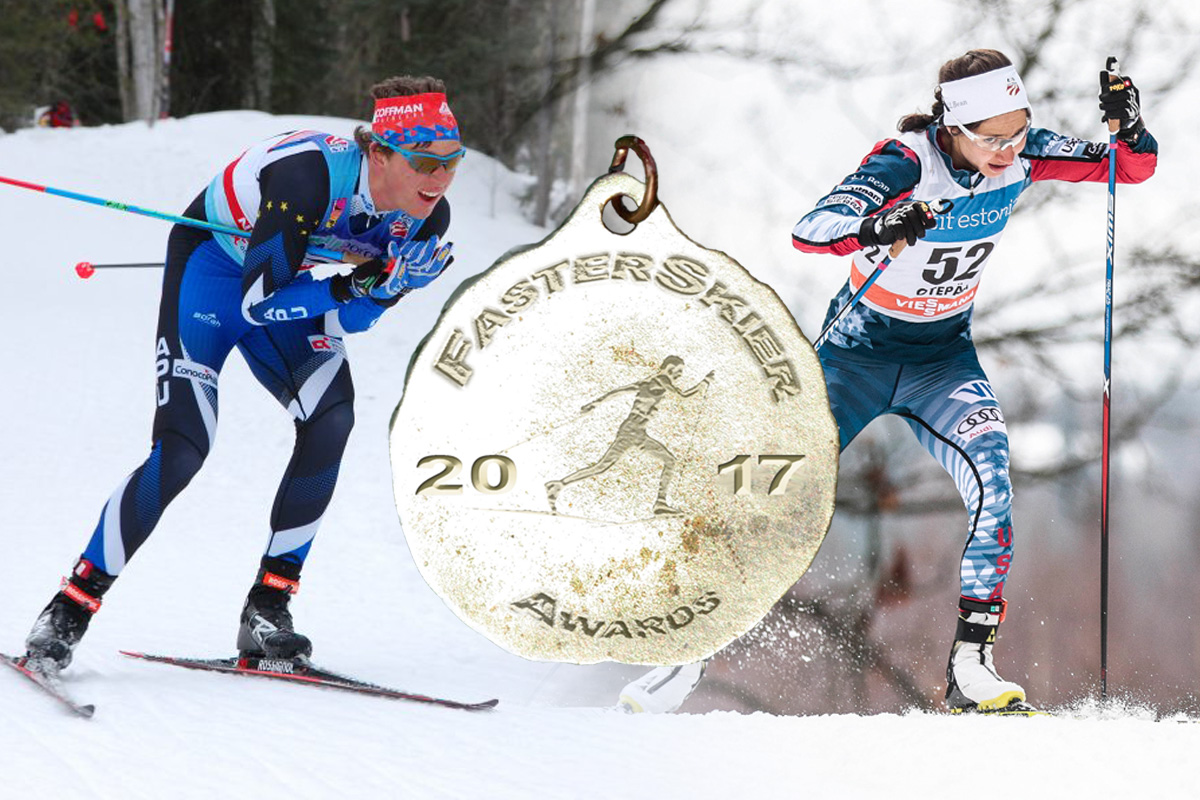
APU’s Scott Patterson (Photo: Max Kaufman) and Chelsea Holmes (Photo: Fischer/Nordic Focus) are FasterSkier’s U.S. Breakthrough Skiers of the Year.
With the 2016/2017 season officially in the rearview, FasterSkier is excited to unveil its annual award winners for this past winter. Votes stem from the FS staff, scattered across the U.S., Canada, and Europe, and while not scientific, they are intended to reflect a broader sense of the season in review. This set of honors goes to breakthrough U.S. skiers.
Domestically and internationally, the U.S. women have been on a tear. And waking up on winter weekend mornings, most fans of the sport scroll to the top of the World Cup results list looking for U.S. podiums. Breaking into that scene can be tough with both a top-loaded international women’s program and several skiers based stateside ready to make the European jump.
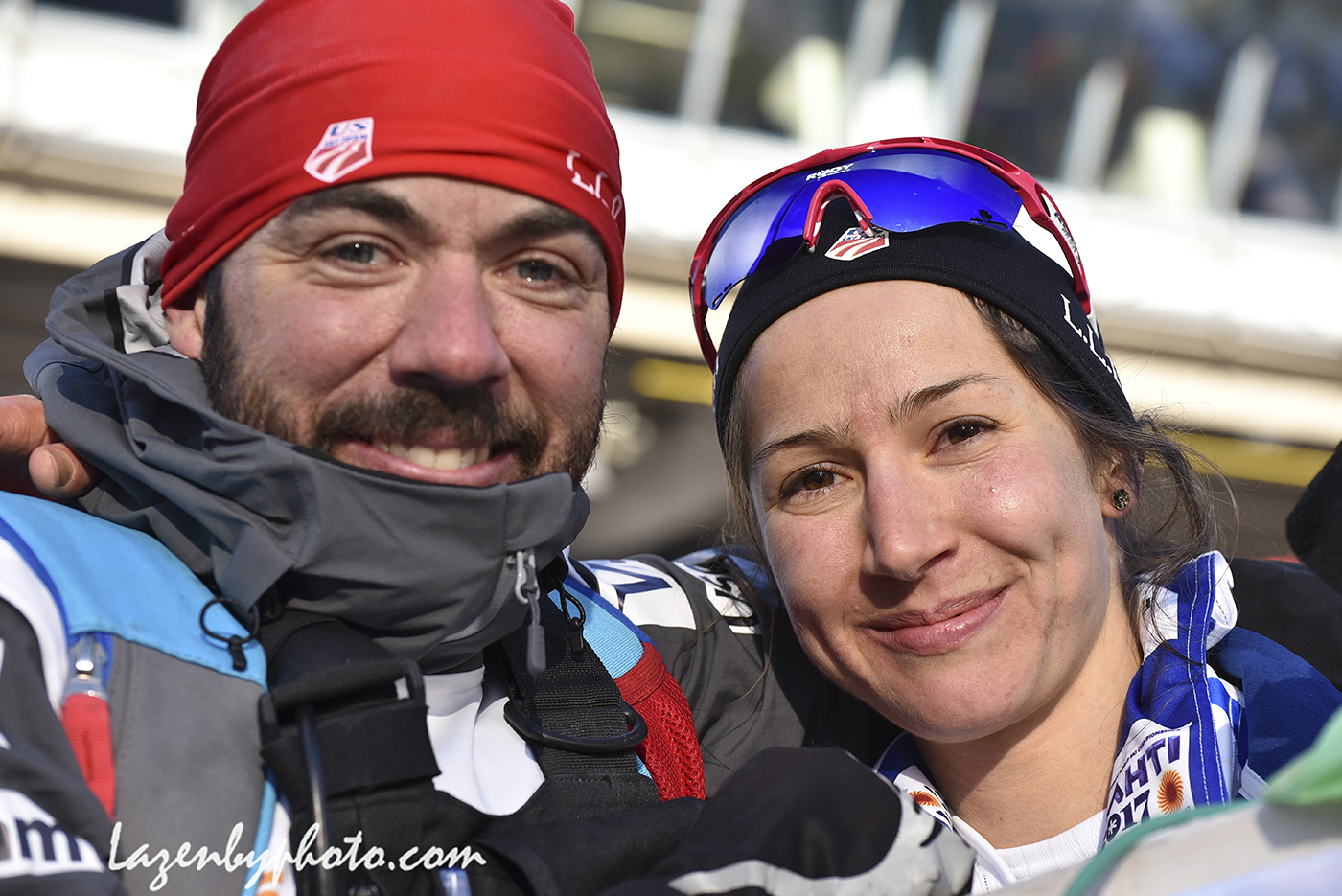
Chelsea Holmes (r) with her Alaska Pacific University (APU) coach Erik Flora after she placed a career-best 13th in the women’s 30 k freestyle mass start at 2017 World Championships in Lahti, Finland. (Photo: John Lazenby/Lazenbyphoto.com)
“Peak when it matters and ski like you mean it,” may as well have been 30-year-old Chelsea Holmes’s mantra this year. The Alaska Pacific University (APU) skier and Girdwood, Alaska, native won the overall SuperTour (granting her World Cup starts for next year’s first World Cup period), and won the U.S. nationals 20 k classic mass start in January at Soldier Hollow (SoHo) near Midway, Utah. Three days before that, Holmes initially made her championship presence felt as she placed second in the 10 k skate at nationals, finishing just 2.2 seconds behind the winner, Caitlin Gregg (Team Gregg).
En route to her 20 k classic win, Holmes pushed hard from the start and withered chasers, including U.S. Ski D-Team member Katharine Ogden, who ultimately placed second.
Along SoHo’s terraced trails, Holmes’s blue-and-white APU suit remained in front, charging. After the race, Holmes was asked if she was concerned about bonking late in the race, a possible consequence of her steamrolling pace.
“It’s a waste to think about that,” Holmes said. “If I blow up, I blow up. I have to believe that I blow up less than everyone else.”
Those are the words of an athlete peaking and knowing full well they should have the confidence to take the “I might blow up” risk. Those risks brought reward: Holmes was named to the U.S. team for 2017 World Championships in Lahti, Finland.
Actually racing in Lahti was another story. Regarding the World Championships selection criteria, U.S. Ski Team (USST) Head Coach Chris Grover explained that selection would partially be based on “who we would start in which races in Lahti, because we absolutely want to fill every start spot, and we want to be able to have an alternate there in most cases as well, and that makes for some tough choices. Who’s skiing well domestically, who’s skiing well on the World Cup; it’s occasionally challenging to figure out which athletes are faster when they have the Atlantic Ocean between them.”
Holmes did get a Lahti start. But that start wasn’t guaranteed. Jessie Diggins (USST) was slated to start, as was Gregg, both former World Championship medalists. According to Grover, the remaining spot was offered to Sadie Bjornsen (USST) and then Kikkan Randall (USST), both of whom declined.
Score one for Holmes. On a tough Lahti course, Holmes looked like a 30 k start shoe-in. She finished 13th in the World Championships 30 k freestyle mass start, 1 minute and 28 seconds behind the winner, Norway’s Marit Bjørgen. It was her first top-20 result in a World Cup level race, in her World Championships debut.
Scott Patterson, Alaska Pacific University
Like his APU teammate, Holmes, Patterson also won the overall SuperTour and will be offered U.S. starts for Period 1 of the 2017/2018 World Cup.
Patterson’s breakout season was more of a prolonged emergence than a “here I am” statement. Certainly he was for real early on, but so were a dozen other skiers. In late November, he won a season-opening 10 k classic International Ski Federation (FIS) race in West Yellowstone, Mont.
A week later, the 25 year old from Anchorage, Alaska, placed third in the SuperTour’s opening distance, a 15 k classic also in West Yellowstone. Patterson followed that up with a win in the 15 k freestyle at the Sovereign Lake NorAm in British Columbia.
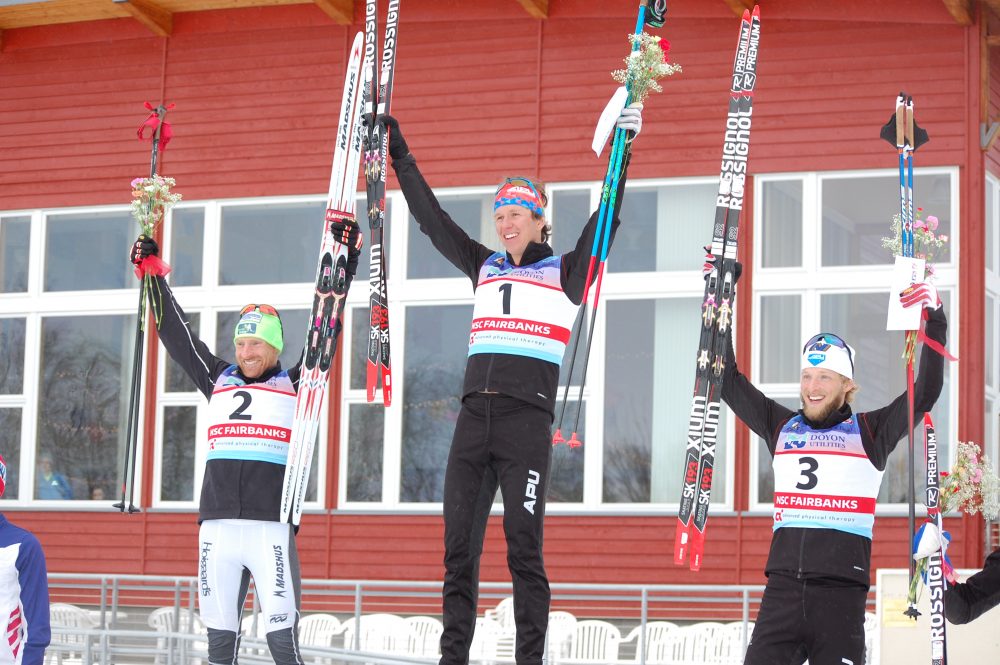
Scott Patterson (1) atop the men’s 50 k freestyle podium at 2017 U.S. Distance Nationals in Fairbanks Alaska. Patterson (APU) placed first, Brian Gregg (Team Gregg) second, and Eric Packer (APU) was third. (Photo:Max Kaufman)
That’s a pattern and the beginnings of a breakout.
Patterson entered U.S. nationals in SoHo with low energy. Although his results were solid, they did not earn him a World Champs selection. His best result was a fourth place in the 30 k classic.
The week after World Championships, Patterson once again tackled a time-zone shift and Holmenkollen’s hefty course in Oslo, Norway. He emerged as the top American, once again in the points, placing 28th in the 50 k classic mass start.
Officially, we’ll call that a breakthrough, a big one.
Patterson maintained his form for the remainder of the season, proving in the domestic distance events he’ll willingly set the tempo and position himself for more international opportunities.
At the recently concluded U.S. Distance Nationals in Fairbanks, Alaska, Patterson took the crown in the 50 k freestyle mass start. He started the season-ending SuperTour Finals series with a win in the 20k skiathlon.
APU Head Coach Erik Flora noted both Patterson and Holmes were deserving of their 2016/2017 achievements.
“It was good to see Chelsea and Scott have strong international results this season,” Flora wrote in an email. “With more World Cup experience I see both being able to climb even further up the results. It is extremely hard to travel from the US to the Scandinavian or European World Cups and produce good results in only a few weekends of racing. The results are a testament to their hard work and dedication, plus it shows the level and depth in US skiing is continuing to build. All good things for the future.”
“In the mountains somewhere, smiling at the sky. It’s actually pretty rare for me to know what I’m doing next month, let alone five years from now.”
Certainly five years is a long way out, but the Colorado-based skier should be myopic when it comes to the next few years. She’ll most likely be traveling the World Cup.
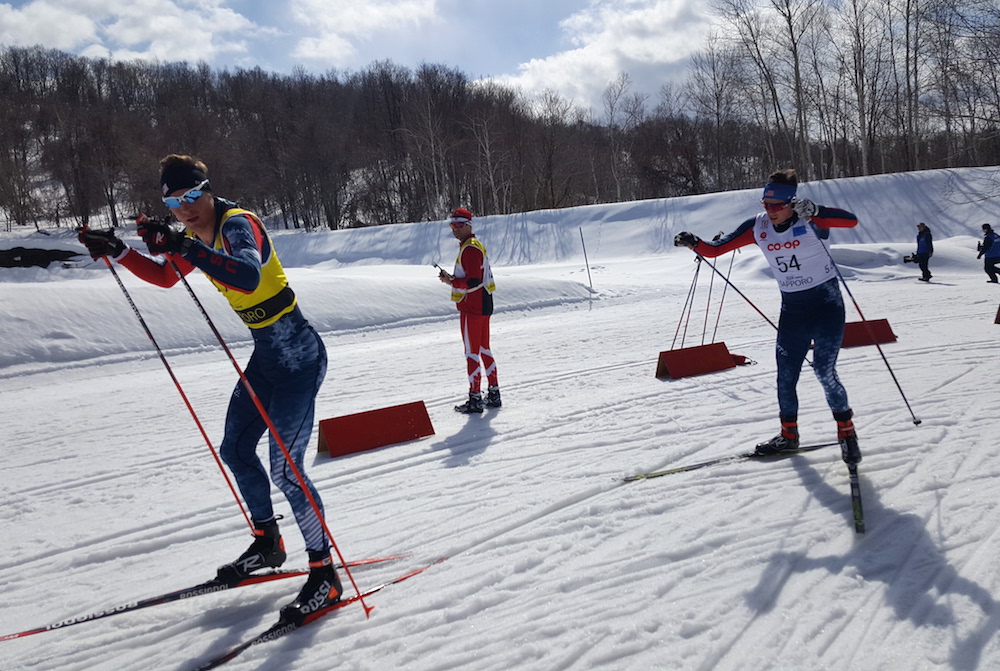
Jake Adicoff (r) and his guide Sawyer Kesselheim (l) racing at IPC World Cup Finals last month in Sapporo, Japan. (Photo: US Paralympics Nordic)
Jake Adicoff, 21, is a visually impaired skier on the U.S. Paralympics Nordic B-team. He finished the season ranked fourth in the International Paralympic Committee (IPC) Nordic Skiing World Cup standings.
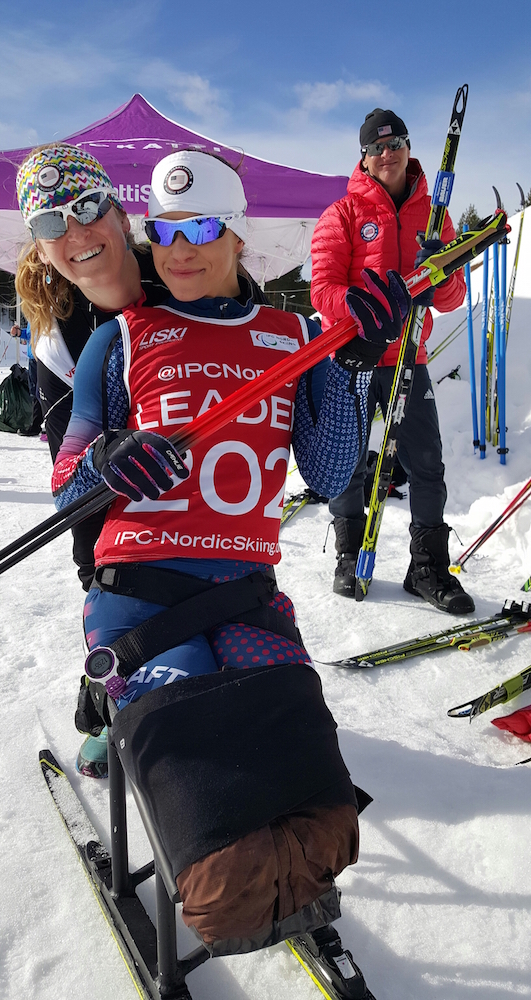
Oksana Masters (front) and U.S. Paralympics Nordic coach Eileen Carey at 2016 IPC World Cup Finals in Vuokatti, Finland, with wax tech Dave Mark (behind). Masters won the overall cross-country World Cup for the second-straight year. (Photo: U.S. Paralympics Nordic)
When an athlete finishes a World Cup season undefeated, it’s not just a win for the athlete, it’s a win for their teammates as well.
After U.S. Paralympics Nordic sit skier Oksana Masters completed the 2015/2016 International Paralympic Committee (IPC) World Cup race season as the undefeated victor in the cross-country events, from the 1-kilometer sprints to the debut of the 20 k marathon event, her success was seen as one for and from the team.
“Oksana is an amazing athlete and I have been privileged to be a [part] of her cross country skiing career since she started the sport,” her teammate Andy Soule wrote in an email.
“We have both become better skiers by learning from one another and training together,” Soule added. “She is hard-working, motivated, and a joy to be around as a teammate and as a person; and it makes me incredibly happy to see her having the level of success she had had these past couple of years.”
Last week at IPC World Cup Finals in Vuokatti, Finland, Masters raced to three wins in a row, including the cross-country sitting sprint, but she didn’t let it get to her head.
“It [was] the last sprint of the season and I didn’t want to leave anything behind!” Masters, of Louisville, Ky., told Inside the Games.
Throughout the season, nobody came close to the 26-year-old Masters in the cross-country events. According to a U.S. Paralympics press release, nearly eight seconds separated her from her closest competitor in the sprint, and more than 28 seconds separated her from the field in the middle distance 5 k.
“Oksana brought impressive consistency to her racing this season,” U.S. high-performance coach Eileen Carey wrote in an email to FasterSkier. “We had longer travel to our World Cups this season than is typical, so quality recovery was hard to come by at times. Oksana made gains this winter in making smart decisions for her recovery and health, even when it meant backing off from training. She made a few mistakes early in the winter, training through some sickness, but she learned from it and made smarter decisions for the rest of the season. Her performances in cross country races would not have been possible without that adjustment. That self-knowledge will pay off in future seasons.”
Day 1: Canada’s Arendz Fifth, Top 10’s for Weekes and Hudak
The first day of IPC World Cup Finals took place Tuesday, March 15, with a biathlon sprint.
In the women’s 6 k visually impaired biathlon sprint, Ukraine’s Oksana Shyshkova won in a time of 20:55.8 after shooting clean. Also with perfect shooting was Mikhalina Lysova of Russia who finished in second overall. Third place went to Russian skier Elena Remizova after she missed two shots (1+1).
In the women’s 6 k standing biathlon sprint, Oleksandra Kononova of Ukraine placed first in a time of 20:53.2 after two penalties (1+1). Russia’s Anna Milenina finished in second, also with two penalties (2+0). Russian teammate Ekaterina Rumyantseva rounded out the podium in third with three penalties (1+2).
Two Canadians competed in the 6 k standing biathlon sprint, including Emily Weekes and Brittany Hudak. With three misses (0+3), Weekes finished ninth, while teammate Hudak finished just behind her in 10th place with four penalties (2+2).
In the women’s 6 k sitting biathlon sprint, the top two spots went to Russia, with Irina Guliaeva coming in first in 23:31.8, after missing one shot (1+0). Her teammate Nadezhda Fedorova, came in second after shooting clean. Third place went to Germany’s Anja Wicker after she missed one shot (1+0).
Masters finished sixth in a time of 25:47.0 after missing three shots (3+0).
In the men’s 7.5 k visually impaired biathlon sprint, Russia’s Stanislav Chokhlaev emerged victorious, winning the event in a time of 20:36.9 after perfect shooting. Also shooting clean was second place finisher, and Russian teammate Nikolay Polukhin. Third place for the men’s visually impaired event went to Ukraine’s Anatolii Kovalevskyi with one miss (1+0).
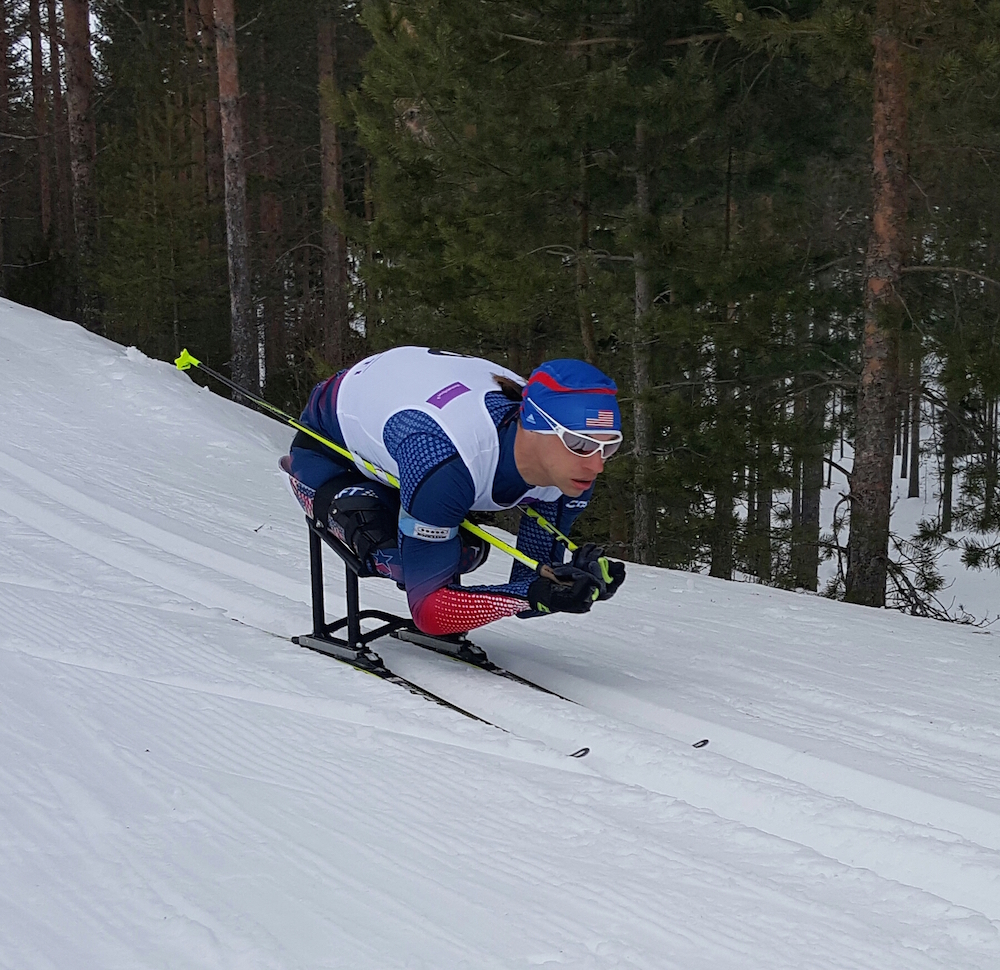
U.S. Paralympics Nordic veteran Andy Soule tucking at 2016 IPC World Cup Finals in Vuokatti, Finland. (Photo: U.S. Paralympics Nordic)
American skier Jake Adicoff also competed in the event, racing to 11th after four misses (2+2).
In the men’s 7.5 k standing biathlon sprint, Ukraine’s Ihor Reptyukh, raced to first place in a time of 18:49.5 after perfect shooting. In second place was Vladislav Lekomtsev of Russia with two misses (2+0). France’s Benjamin Daviet rounded out the top three, finishing third with one miss (0+1).
Canada’s Mark Arendz competed in the men’s standing biathlon sprint, racing to fifth place overall with two misses (1+1).
“Going into today I felt I had a lot more. The body felt ready to go, but it didn’t materialize in today’s race,” Arendz said in a Canadian Para Nordic Team press release.. “I was close on the skiing, but I’m still finding myself needing to tweak my shooting. Two misses is two too many for me right now.”
In the men’s 7.5 k sitting biathlon sprint, the top three spots all went to Russia, Grigory Murygin leading the trio in first in 25:23.6 with one miss (1+0). Ivan Golubkov and Roman Petushkov both shot clean and finished second and third, respectively.
Soule was the sole U.S. skier in the event, racing to an 11th place overall after five misses (3+2).
“[I] had a broken pole early in the sprint and I am grateful to team Russia for their display of sportsmanship in offering me one of their spare poles until a coach could get mine to me,” Soule wrote in an email.
Canada’s Derek Zaplotinsky also competed in the event, finishing in 15th overall after shooting the same as Soule.
The second day of racing, Wednesday, March 16, brought athletes out for another biathlon event.
In the women’s 12.5 k sitting biathlon, Russia’s Maria Iovleva took her first victory of the week, finishing first in a time of 53:20.6 with just one miss (0+0+1+0). She led a Russian podium sweep with Guliaeva placing second with three misses (2+0+1+0) and Svetlana Konovalova taking third with two misses (1+0+1+0).
Masters finished seventh, after skiing eight penalty loops (2+0+4+2).
In the women’s 12.5 k visually impaired biathlon, Ukraine’s Shyshkova took her second consecutive title of the week, completing the course in a time of 40:43.0 after one missed shot (1+0+0+0). Finishing in second once again behind Shyshkova was Russia’s Lysova after skiing four penalties (2+1+1+0). Third place went to Vivian Hosch of Germany, who missed three (0+3+0+0).
In the women’s 12.5 k standing biathlon, Ukraine’s Kononova continued her winning streak, taking first place in a time of 43:15.2, after missing two shots (0+0+1+1). Second place went to Russia’s Natalia Bratiuk, with one penalty (0+0+0+1). Rounding out the podium finishers for the day was Russia’s Milenina in third after missing six shots (0+1+2+3).
Weekes finished just off the podium in fourth, with two misses (0+0+0+2).
“Emily led the way for us again today, and showing steady development,” Canadian head coach Robin McKeever, said of Weekes in a team press release. “The classic sprint is a bit of a tough test for Emily, but she faired well today and skied strong.”
In the men’s 15 k visually impaired biathlon, Russia’s Polukhin bested his previous second place finish for first, winning the 15 k in a time of 43:31.3 with perfect shooting. In second place was Russian Nikita Povarov, who also shot clean. Ukrainian skier Iurii Utkin rounded out the podium in third, after two misses (1+1+0+0).
In the men’s 15 k standing biathlon, France’s Daviet raced to the win in 44:12.0 after skiing three penalties (2+0+1+0). Second place went to Ivan Kodlozerov of Russia with one miss (0+0+1+0). Russian teammate Lekomtsev finished third after missing four (0+2+1+1).
Mark Arendz (Canadian Para-Nordic Ski Team) at last year’s 2015 IPC World Cup Finals in Surnadal, Norway. This year in Finland, he placed fifth in the 2016 World Cup Finals biathlon sprint. (Photo: IPC Nordic Skiing/Facebook)
Arendz finished just off the podium in fourth after skiing three penalty loops (0+1+1+1).
In his second victory of the week, Murygin of Russia, raced to first in the men’s 15 k sitting biathlon in 54:18.1 with one penalty (0+1+0+0). Germany’s Martin Fleig finished second after missing four (2+0+2+0). The third podium spot went to Poland’s Kamil Rosiek with two penalties (2+0+0+0).
Soule finished sixth, with seven penalties (4+1+0+2).
“Both biathlon races were difficult shooting races for me. I have struggled in the range somewhat this year and will be working in the of season to return to some solid shooting fundamentals,” Soule wrote. “I am really excited for the mass start 20km marathon race [later that week] … This is a type of race that we do not get to do often and I an looking forward to the challenge.”
Canada’s Derek Zaplotinsky was the second North American to compete in the event, finishing 11th with 12 penalties (2+4+3+3).
Day 3: Masters Wins Sprint; Adicoff, Weekes and Soule All Reach Respective Finals
Thursday marked the third-consecutive day of racing with a 1 k cross-country sprint, where Masters continued her streak to finish the season with her fourth cross-country sprint win in as many races. She won the sprint in 2:12.68, besting Russia’s Iovleva in second and Germany’s Wicker in third.
The women’s 1 k visually impaired cross country sprint went to Lysova of Russia, who won in 3:31.34. Crossing after Lysova in second was her Russian teammate Remizova. Ukraine’s Shyshkova took the final podium spot in placed third overall.
Thursday brought the third-straight win for Ukraine’s Kononova, who won the women’s 1 k standing cross-country sprint in 3:28.44. Crossing behind her in second was her Ukrainian teammate Liudmyla Liashenko. Rounding out the top three was Russia’s Milenina in third.
Weekes advanced to the final where she finished fifth. Her teammate, Hudak finished ninth overall.
Three Russians dominated the men’s 1 k visually impaired cross-country sprint, with Vladimir Udaltcov taking first in 2:52.66. Chokhlaev placed second, while Oleg Ponomarev took third.
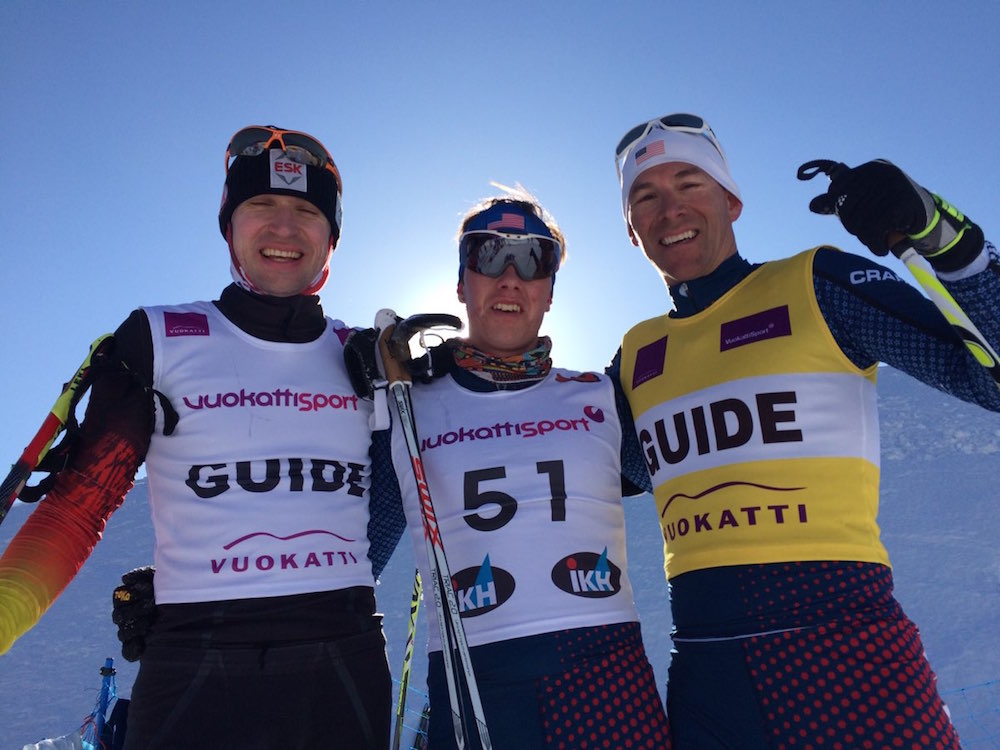
Jake Adicoff (c) and his two guides, U.S. Paralympics high-performance coach and director John Farra (r) and Germany’s Florian Grimm. (Photo: U.S. Paralympics Nordic)
Finishing just off the podium after advancing to the final was Adicoff of the U.S. in fourth.
The men’s 1 k standing cross-country sprint saw Russian Lekomtsev stand at the top of the event podium, ahead of Ukraine’s Vovchynskyi in second place. Third place went to Japan’s Yoshihiro Nitta.
Arendz missed advancing to the final by one spot, finishing seventh overall.
Competition in the men’s 1 k sitting cross-country sprint went to Ukrainian athlete Maksym Yarovyi, who crossed the final in first in a time of 1:55.47. Russia’s Golubkov and Aleksandr Davidovich finished second and third, respectively.
Soule advanced to the final, where he placed sixth overall.
Canada’s Chris Klebl advanced to the semifinal, where he placed 12th and Canadian teammate Zaplotinsky finished the day in 14th overall.
Day 4: McKeever, Masters Take Marathon Titles; Klebl Second
After a day of rest, IPC World Cup athletes returned to the Vuokatti ski trails for Saturday’s marathon events.
Masters raced to first place in the women’s 20 k sitting marathon on Saturday, March 19, completing the course in a time of 1:00:57.0.
Two Russians, Guliaeva and Fedorova finished behind Masters in second and third, respectively.
The women’s 30 k visually impaired marathon event went to Remizova of Russia, who won in 1:36:22.6. Her Russian teammate Lysova placed second. Ukraine’s Shyshkova earned her fourth-straight podium of the week, after placing third.
Ukraine’s Kononova rolled to her fourth-straight win of the week in the women’s 30 k standing cross-country marathon. She won in 1:39:09.6, while Sweden’s Helene Ripa finished second and Russia’s Rumyantseva placed third.
Hudak raced to fifth in the women’s 30 k.
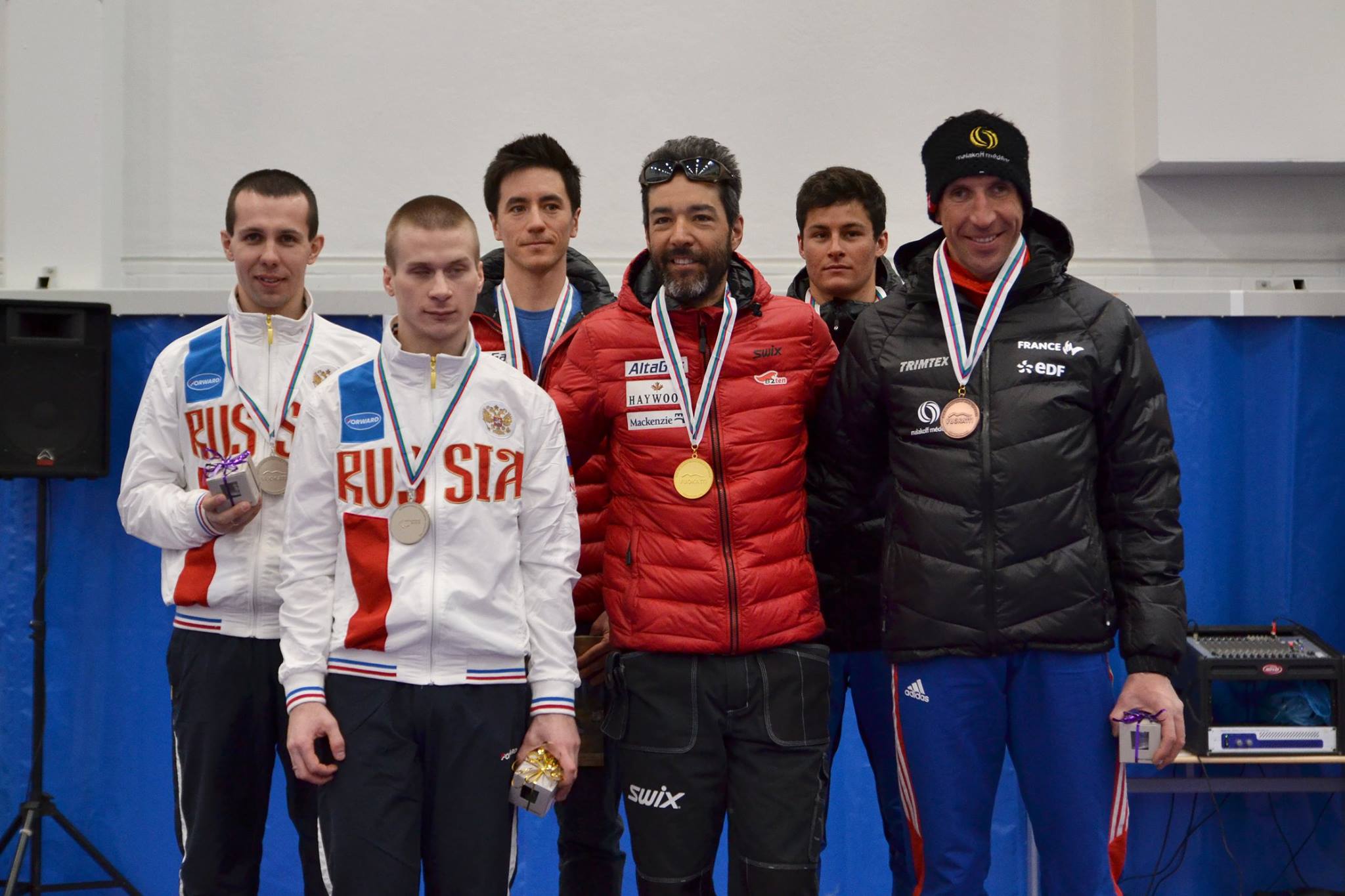
Canada’s Brian McKeever (c) and his guide Graham Nishikawa with their gold medals after the men’s visually impaired 30 k at 2016 IPC World Cup Finals Vuokatti, Finland. Russia’s Alexsander Artemov (l) placed second and France’s Thomas Clarion (r) was third. (Photo: IPC Nordic Skiing/Facebook)
Canadian team veteran Brian McKeever took the victory in the men’s 30 k visually impaired cross-country marathon, completing the course in a time of 1:20:43.0. Behind him in second was Russia’s Alexsander Artemov and France’s Thomas Clarion in third.
Adicoff was the second North American in the men’s visually impaired marathon in sixth overall.
After winning Thursday’s standing sprint, Russian Lekomtsev took his second win of the week in the men’s 30 k standing in 1:17:52.8. The next closest competitor was his Russian teammate, Rushan Minnegulov in second. Third place went to France’s Daviet.
Arendz raced to eighth place in the 30 k standing marathon.
In the men’s 20 k sitting, Klebl narrowly out on a victory, placing second behind Maksym Yarovyi of Ukraine. Yarovyi completed the 20 k course in a time of 52:31.0.
Soule was one spot off the podium in fourth, behind Korea’s Eui Hyun Sin in third.
“The 20km was an interesting race,” Soule wrote in an email. “It was formatted as a mass start, which is not how we usually race. Because of the way we adjust times for differing disabilities, it was not actually first across the line wins. While we do not actually train specifically for this distance, the fast conditions and relatively flat course made it run much like a long individual race.”
Day 5: Masters Defends Unbeaten Streak; McKeever Wins Again
Athletes geared up for the final World Cup race of the season on Sunday, March 20, with the men’s and women’s middle-distance cross-country races.
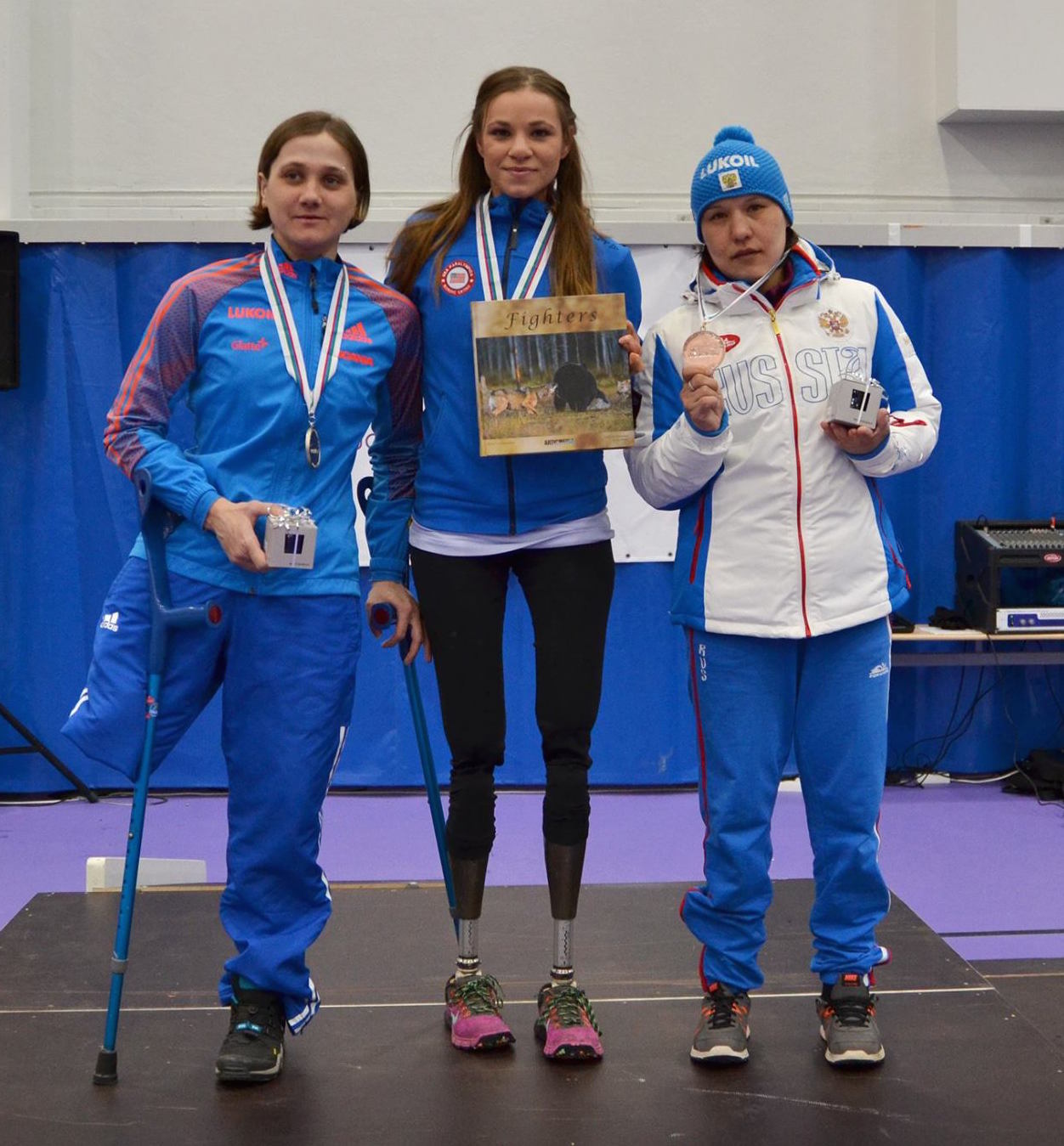
American Oksana Masters (c) on the podium with one of her three gold medals from this year’s IPC World Cup Finals in Vuokatti, Finland. (Photo: IPC Nordic Skiing/Facebook)
Masters displayed her strength with one final win, topping the women’s 5 k sitting cross-country in a time of 17:16.3, for her third win of the week.
Finishing behind Masters in second was Russia’s Fedorova and in third was Guliaeva, also of Russia.
In the women’s 7.5 k visually impaired cross-country, Lysova won in a time of 20:02.0. Second place went to her Russian teammate Remizova and Ukraine’s Olga Prylutska finished behind her in third place overall.
In the women’s 7.5 k standing cross-country, Russia’s Milenina won in 19:59.2. Ukraine’s Kononova finished in second and Russian Rumyantseva placed third.
McKeever secured his second win of the week, finishing first in the men’s 10 k visually impaired cross-country. McKeever completed the 10 k course in 22:31.1. Second place went to France’s Clarion.
“We put in a really good effort today. Nish was on fire for the first five kilometres, and that moved us into a solid position,” McKeever said of his guide, Graham Nishikawa, in a team press release. “We were able to build on that pace, and nobody was able to respond.
Adicoff once again just missed the podium in fourth overall, finishing behind Russia’s Chokhlaev in third.
France’s Daviet took his second win of the week in men’s 10 k standing cross-country. Behind Daviet in second was Russia’s Minnegulov and Ukraine’s Reptyukh finished third.
Arendz placed eighth in the 10 k standing event.
In the final men’s sitting cross-country event, Russia’s Golubkov finished first in a time of 23:47.4. Second place went to Ukraine’s Yarovyi and Korea’s Eui Hyun Sin took third.
Soule led the North Americans in that race in fifth, while Canada’s Klebl and Zaplotinsky finished behind him in 12th and 16th, respectively.
“Overall the event has been a lot of fun,” Soule wrote. “I always enjoy coming to Vuokatti, a place where we have competed on a regular basis for my entire nine-year career.”
Masters Wins World Cup Globe for Second-Straight Year
Overall, Masters won the season-long World Cup title for the second year in a row in the women’s sitting cross-country. She topped the rankings with 760 points, beating out Russia’s Maria Iovleva, who had 545 points, and Russia’s Nadezhda Fedorova, who was third with 526 points.
Andy Soule was 30 points short of the cross-country podium in fourth overall, with 390 points to Russian winner Ivan Golubkov’s 689 points in first.
Emily Weekes placed seventh in the women’s standing cross-country, McKeever was eighth in the men’s visually impaired.
Soule placed fifth overall in the biathlon World Cup men’s sitting, while Masters was sixth in the women’s category. Weekes finished the season in ninth overall in the biathlon World Cup, and Mark Arendz tied for ninth in the men’s standing biathlon.