From the FasterSkier archive — posts syndicated from athletes’ and coaches’ own blogs between 2004 and 2012, kept online as published. Current coverage is at fasterskier.com.
ZHANGJIAKOU, CHN — Imagine being 21 years old. You’re in a foreign country, 4,000 miles from your family, where you can’t really socialize.
Thousands of people are scrutinizing your job performance. Your job performance is not meeting their expectations, nor is it meeting yours. Reporters are asking for an explanation, and you don’t really have one.
Welcome to U.S. cross-country skier Gus Schumacher’s world at the Beijing Olympics.
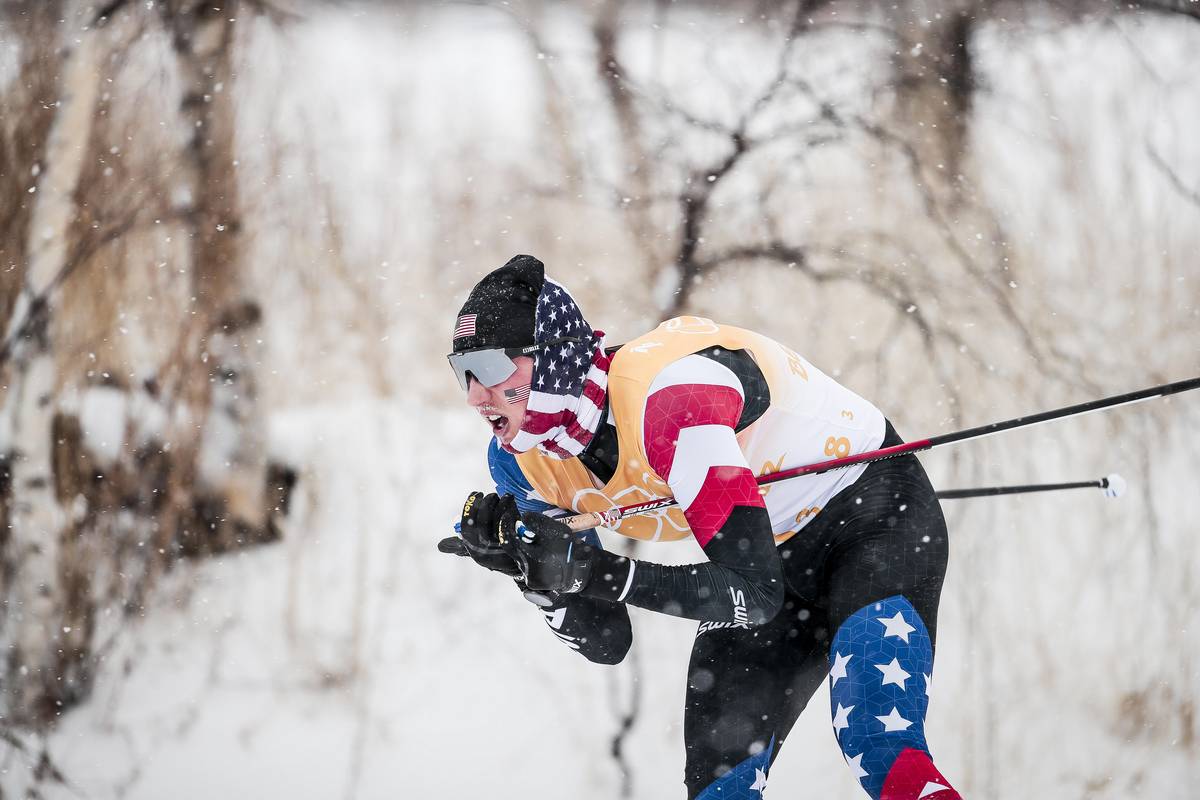
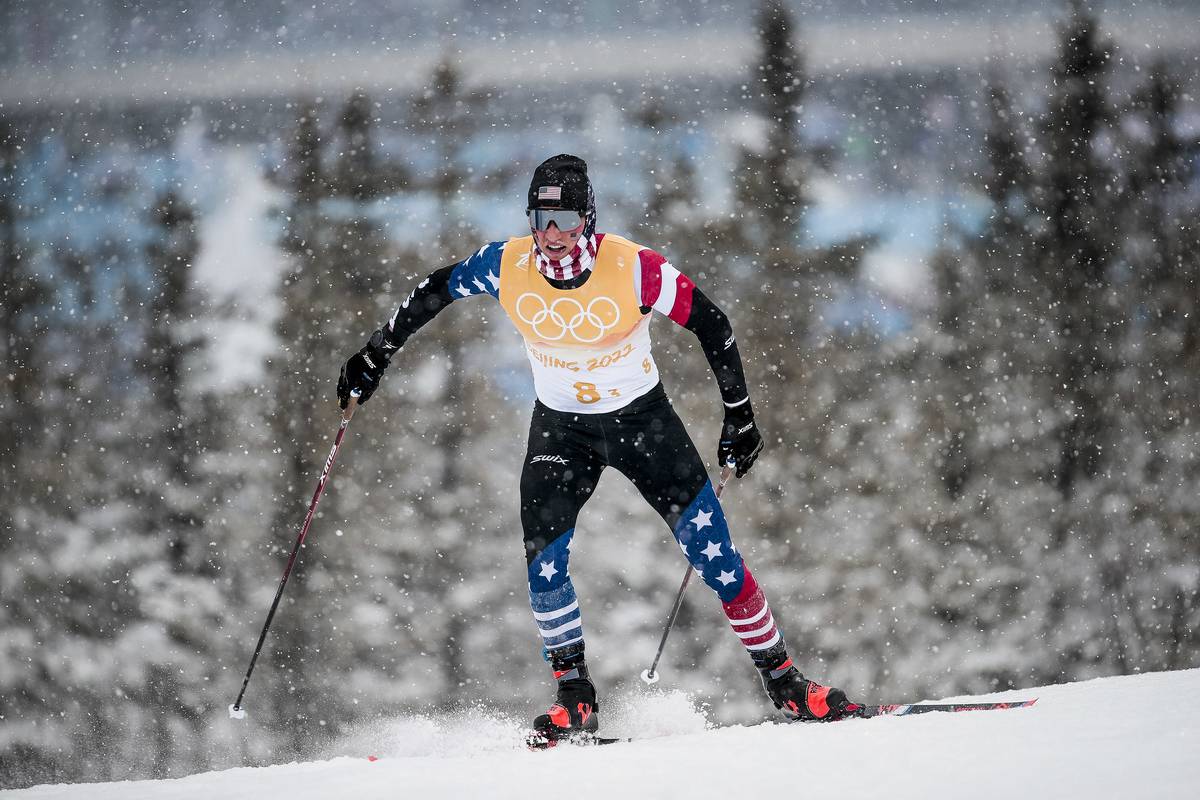
Gus Schumacher crosses the finish of the 30 k skiathlon, his first event at the 2022 Olympic Winter Games in Zhangjiakou, CHN. (Photo: NordicFocus)
Schumacher, who’s seen as America’s Next Great Hope in endurance ski racing, had a nightmare day in his first race at the Games, finishing nine minutes behind the winner in the skiathlon event. His second race was better, but not by much.
This story, however, is not just about those results. It’s about the way that Schumacher has handled himself in spite of them.
After finishing the skiathlon, Schumacher, looking drained and pale, had to pick himself up and walk through a winding maze of fences known as the mixed zone, where a gauntlet of international journalists pepper cross-country skiers with questions.
He could have ignored them and gone back to the Olympic village to shower, sulk, or stew — as some of his rivals did.
Instead, near tears, he still wanted to offer an explanation, and a message to those who were watching.
“I don’t want people to doubt me. I don’t really care that much, but that’s something that’s on my mind, because I’ve doubted people before,” said Schumacher. “I know there’s a lot of people at home that believe in me, and who have supported me to get to this point. And I know that they’re proud of me, and that means a lot.”
Athletes like Schumacher go to the Olympics looking for peak performances on the biggest stage in sports. But those lofty goals, and the intense attention that comes with the Games, makes failure that much more excruciating.
With some of the best American results at the Junior World Ski Championships, Gus Schumacher faces pressure and expectations as he works to translate that success to the senior level. (Photo: NordicFocus)
Schumacher, who grew up in and still trains in Anchorage, AK is under a lot of that pressure there, both self-inflicted and external.
Schumacher is laser focused on training. He has a specially designed rollerskiing treadmill installed at his house — and for good reason: Schumacher is brimming with medal-winning potential.
He’s the only American ever to win a race at the World Junior Championships for cross-country skiing, in 2020. He’s proven himself at the adult level on the European World Cup circuit, too, notching top-10 results last season. And the U.S. Ski Team gives him its highest level of support.
“Big expectations on the biggest stage, as one of the best distance skiers,” summarized Jan Buron, Schumacher’s Anchorage-based coach at the Alaska Winter Stars program. “He knows everyone looks to him to ski fast.”
After a solid season last year, Schumacher’s recent results headed into the Beijing Games had been up and down — but more down than up.
Toward the end of the Tour de Ski, a multi-day event that travels through Switzerland, Germany and Italy, Schumacher got sick. But then he had what Buron described as some great days of training at the U.S. Ski Team’s pre-Olympic altitude camp.
“He looked good and he felt good,” Buron said in a phone interview Sunday. “It was the best he looked in a long time.”
Gus Schumacher races the third leg of the men’s 4 x 10 k relay during the 2022 Olympics. (Photo: NordicFocus)
Midway through the Beijing Games, though, Schumacher said he’s feeling kind of weak, with low energy. And he doesn’t have a diagnosis of exactly what’s wrong, which makes the experience especially unsettling.
Buron thinks the problem may be more about the mental and emotional pressure Schumacher faced in qualifying for the Olympics this year, more than it is about problems with training or racing too much.
Schumacher said it’s also possible the effects of his illness could be lingering. But maybe he’s just tired.
“I think we are pretty grounded in the physical feelings of our sport. And when those are weird, you sort of feel like you don’t have an anchor, a little bit,” he said after his race Friday. “That’s tough, to not feel like myself, and not knowing when it’s going to come back.”
The U.S. men’s team’s lack of depth compounds what Schumacher is facing during the Games.
He’s one of just two American men who have proven capable of competing with top European athletes in distance racing this season. (The U.S. team has a strong up-and-coming crew of young sprinters.)
On deeper teams, struggling athletes might only race once or twice at the Olympics before their coaches would give alternates a shot.
But Schumacher and Scott Patterson, who may be nearing the end of his career, are the only strong distance racers on the U.S. squad in Zhangjiakou.
“When you’re not on, you get to prove that you’re not on four times. And that sucks,” said Kris Freeman, the retired cross-country skier from New Hampshire who was something of a predecessor to Schumacher. “It’s a really tough place to be. It might also be the first time in his career where he’s taking a step sideways, or a step backwards, and is going to have to regroup. And that’s a hard thing to do.”
Gus Schumacher races the 30 k skiathlon during the 2022 Beijing Olympic Winter Games. (Photo: NordicFocus)
Schumacher has taken a little extra rest at the Games, just in case, according to U.S. Ski Team Head Coach Matt Whitcomb. But he raced again Sunday in the men’s relay.
For the rest of the Olympics, Schumacher said, he’s contemplating his options. The last race of the Games, the 50-kilometer marathon, may not be the best use of his energy if it’s still possible for him to turn things around this season, he said.
Freeman, Buron, and Schumacher’s teammates all said they’re confident that Schumacher will turn things around.
“Sport can be so hard and so harsh. And it’s a roller coaster, right? The highs are high, the lows are low. But you’re not on the ride alone,” said Jessie Diggins, who won a bronze medal in the women’s freestyle sprint event here. “I think it’s a bit of a rite of passage to go through those hard times and know that you’re going to be okay.”
In the mean time, Schumacher said he’s trying to keep his mind off results by spending time with his friends at the Games and “keeping stuff normal.”
And as hard as it is to experience, it’s likely that Schumacher’s time at the Games will ultimately serve him well, according to Buron, his coach. “Athletes never learn that much from good races, because there’s less incentive to analyze them,” he said.
“I’m sure that what he’s going to learn from this is going to make him a lot more dangerous,” said Luke Jager, a Beijing Olympian who grew up with Schumacher in Anchorage. “As probably one of the leading experts in the world on the subject of Gus skiing fast, in the long term, I’m not worried about it at all.”
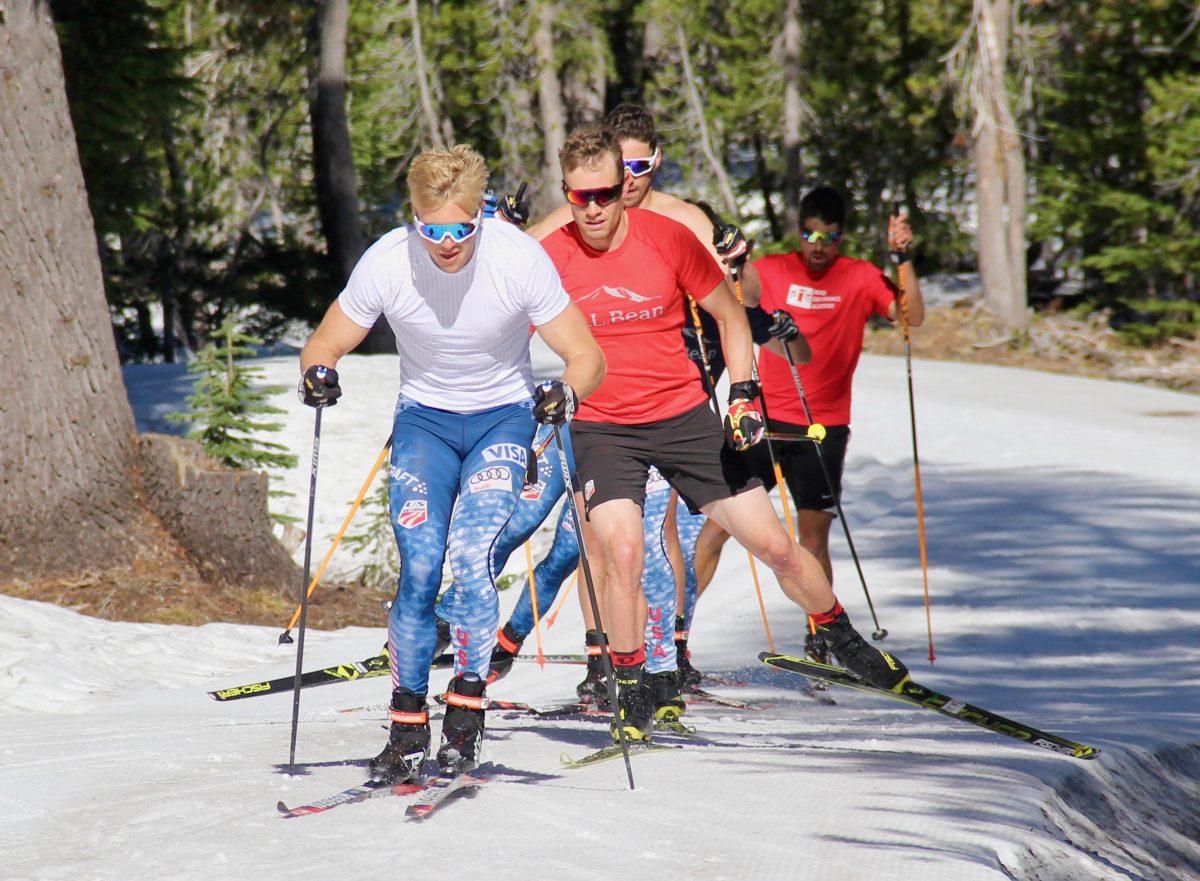
Erik Bjornsen, Simi Hamilton, Ian Torchia, Scott Patterson, and Akeo Maifeld-Carucci at the 2018 Bend on-snow camp. (Photo: Bryan Fish)
It’s late May. Athletes are a month into official training for the 2019/2020 season. Here’s some recent news of note from the domestic and international nordic ski world.
German cyclist confesses to doping following Seefeld sting
The police action in Seefeld, Austria, at the time of the 2019 World Championships that led to the arrest of several athletes and this remarkable and candid interview with Estonian skier Karel Tammjärv has led to another athlete leaving their sport. Former German pro cyclist Danilo Hondo was removed from his position as a national team coach with the Swiss Cycling Federation, after allegedly being named by German doctor Mark Schmidt as one of Schmidt’s doping clients during a custodial interrogation by Austrian police, Cycling News reported earlier this month. The article reports that Hondo paid Schmidt 30,000 Euros a year for his services. Hondo initially denied his involvement with Schmidt, but later confessed in an interview with German broadcaster ARD, Cycling News reports. He was dismissed from his coaching position soon after.
Maddie Phaneuf and mental health among endurance athletes
In a recent blog post, American biathlete Maddie Phaneuf writes candidly and publicly about her struggles with mental health after an untimely illness left her unable to race at the 2018 Winter Olympics in Pyeongchang.
“It took me nearly a year to figure out I was dealing with something much bigger and harder for me to handle on my own,” Phaneuf writes, “and that I needed to seek professional help from a therapist. Little did I know that I was experiencing Post Traumatic Stress Disorder from my experience at the Olympics. It’s hard for me to even write that because I’m afraid people will doubt it’s legitimacy. When we learn about PTSD we usually tie it with war veterans, so it’s not common for people to associate PTSD with athletes.”
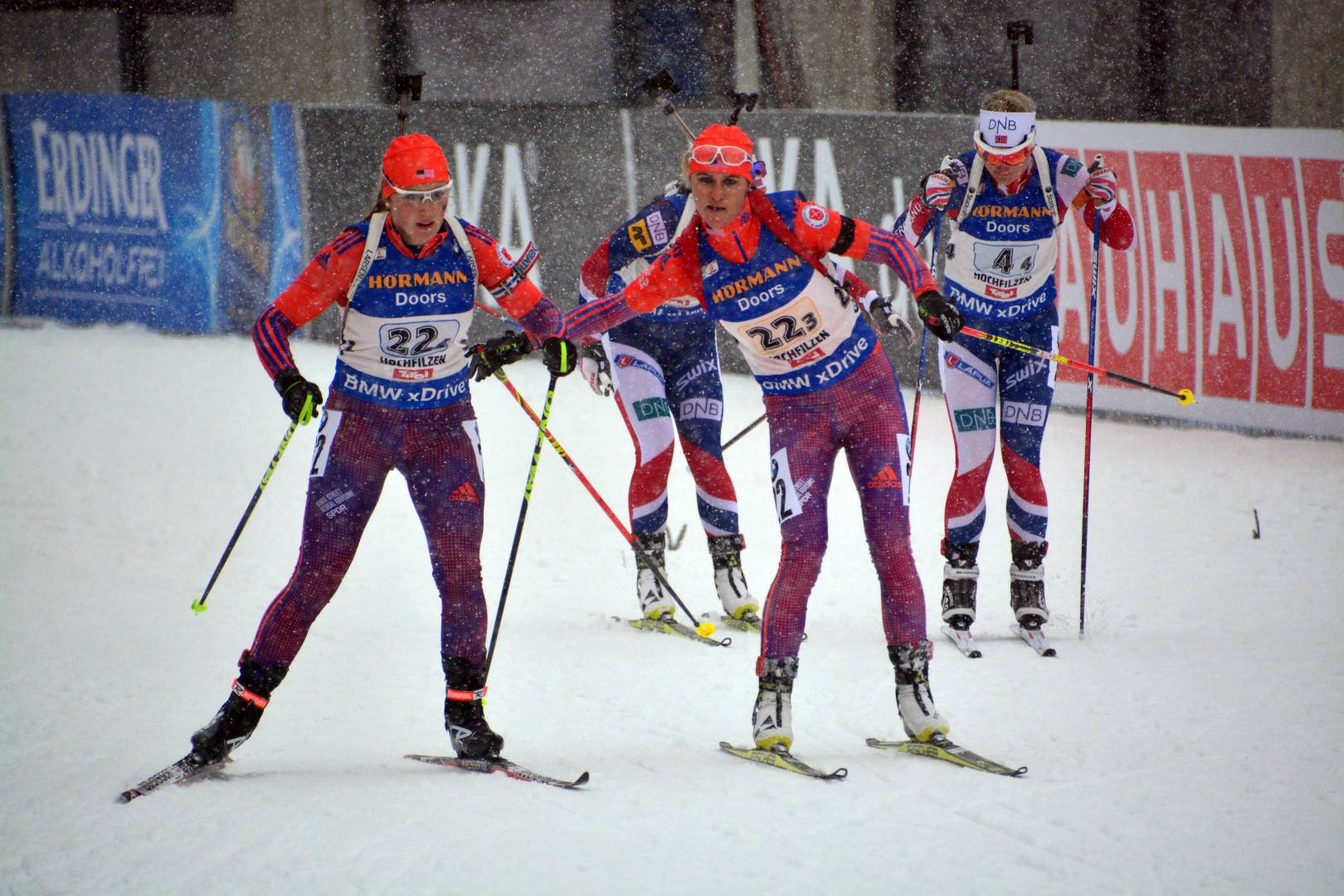
Joanne Reid (r) tagging U.S. teammate Maddie Phaneuf in 12th during the final exchange of the women’s 4 x 6 k relay on at the 2017 IBU World Championships in Hochfilzen, Austria. (Photo: Glen Crawford)
Phaneuf nonetheless sets forth many common symptoms of PTSD, and explains how her experience at the Olympics left her exhibiting nearly all of them.
Phaneuf concludes, “I hope this post helps break the stigma of mental illnesses within the athletic community, and opens peoples eyes in tackling that hardest step: asking for help.”
(Canadian skier Maks Zechel sounded similar notes in a piece for FasterSkier written in January 2018, writing, “This past April, I decided to face my mental health issues that I had always known existed, but never understood or recognized for what they were. What an awkward thing to talk about, mental health, but it shouldn’t be. Our minds have to be taken care of with the same attention that we give our bodies through training and recovery. It doesn’t matter what it is that makes you begin to acknowledge your difficulties, but it has to be done; it is grossly underestimated just how permanent unchecked mental health issues can be. I didn’t acknowledge my health issues because I cared about my health, but I did care that it was starting to affect the way I raced, and although not the most important reason, it was enough to motivate me to work on my mental ‘fitness.’” Zechel added, “Not everyone wants to talk about their mental health issues, but many need to.”)
Jessie Diggins hosts “Meet the D-Team”
All three levels of the U.S. national team – the A-Team, B-Team, and D-Team – recently convened in Bend, Oregon, for an on-snow spring camp. This gave the athletes the chance to rack up the kilometers skiing in the morning, and the miles running or mountain biking in the afternoon. It also gave Jessie Diggins the chance to work on her whimsical interview skills. In a series of Instagram video posts, Diggins checks in with the entire D-Team save Kendall Kramer. For more on Johnny Hagenbuch’s favorite kind of dinosaur, Novie McCabe’s favorite flavor of gum, Ben Ogden’s lifetime cumulative skateboards built, and other important news of the day, check out Diggins’s Instagram page. Part I is here, Part II here, and Part III here.
Kendall Kramer collects ninth and tenth state high school championships
The only D-Team skier not present in Bend was Kramer, whose junior year at Fairbanks’s West Valley High School ended during the camp. By staying home Kramer was able to add to her collection of Alaska state high school championships, when she won both the 1,600 and 3,200 at last weekend’s state track and field championships at Machetanz Field in Palmer, Alaska, the Anchorage Daily News reported. Kramer clocked 4:56.15 to take the metric mile and 10:27.18 to win the longer race, in both cases taking the win over Anchorage skier Ava Earl.
Kendall Kramer from Fairbanks, Alaska during the women’s 10 k skate pursuit at 2019 World Cup Finals. (Photo: John Lazenby/lazenby photo)
Kramer’s ten (and counting; she still has her senior year ahead of her) Alaska high school individual championships include the 2018 and 2019 Skimeister award for lowest combined time at the cross-country skiing state meet, the 2017 and 2018 state cross-country running titles, and the 1,600/3,200 double at all of the 2017, 2018, and 2019 state track and field championships. On the track, Kramer has lowered her time in the 1,600 from 5:14.80 to 4:56.15 since 2017, and from 11:04.47 down to 10:27.18 for the 3,200.
U.S. Ski & Snowboard awards
Earlier this month, U.S. Ski & Snowboardnamed its athletes and coaches of the year, with official awards presented at the U.S. Ski & Snowboard Congress in Park City on May 16. Awards for nordic and nordic combined skiers and coaches were as follows, as quoted from a USSA press release:
Athletes of the year, nordic: Junior Worlds Men’s Relay Team: “In a storybook ending to a very successful Junior World Championships, the men’s 4x10k [sic] relay team took gold – the first ever gold won by the USA at the FIS Junior World Cross Country Ski Championships. Three of the four athletes had set the stage a year earlier winning silver.” The team was Johnny Hagenbuch (Ketchum, Idaho/SVSEF), Luke Jager (Anchorage/APU), Ben Ogden (Landgrove, Vt./SMS), and Gus Schumacher (Anchorage/Alaska Winter Stars).
Athlete of the year, Ski Jumping/Nordic Combined: Tara Geraghty-Moats: “Nordic combined skier Tara Geraghty-Moats (W. Fairlee, Vt.) played a vital role in the rapidly-growing women’s nordic combined international field, winning 10 Continental Cups and taking the season title in a year where the international field more than doubled. Geraghty-Moats also took the U.S. title and landed a berth as a special ski jumper on the U.S World Championship Team. As an athlete advocate, she served an important pioneering role with women’s nordic combined which will join the World Championships in 2021.”
International coach of the year, nordic: Jan Buron, Alaska Winter Stars: “A veteran club coach, Jan Buron of the Alaska Winter Stars program has developed many top athletes. This past season his work with junior skier Gus Schumacher, whom he has coached for the athlete’s entire career, led to the USA winning gold in the men’s relay at the Junior World Championships.”
International coach of the year, ski jumping/nordic combined: Jan Druzina, Junior/Continental Cup Ski Jumping Coach: “Jan Druzina came to USA Nordic as a Junior Team and Continental Cup coach for men’s ski jumping a year ago. Since then, he has visited every club to speak with coaches and parents, working together to build a strong junior program. The result was a definitive step up this year with Andrew Urlaub and Patrick Gasienica qualifying for their first World Championships and Urlaub taking a top-30 at Junior Worlds plus three top-30 Continental Cups.”
Domestic coach of the year, nordic: Alasdair Tutt, Nordic Ski Club of Fairbanks: “Kendall Kramer, coached by Alasdair Tutt, was 4th in the 15km mass start classic in her first time at Junior World Ski Championships. Kendall will also represent USA at the 2020 Youth Olympic Games.”
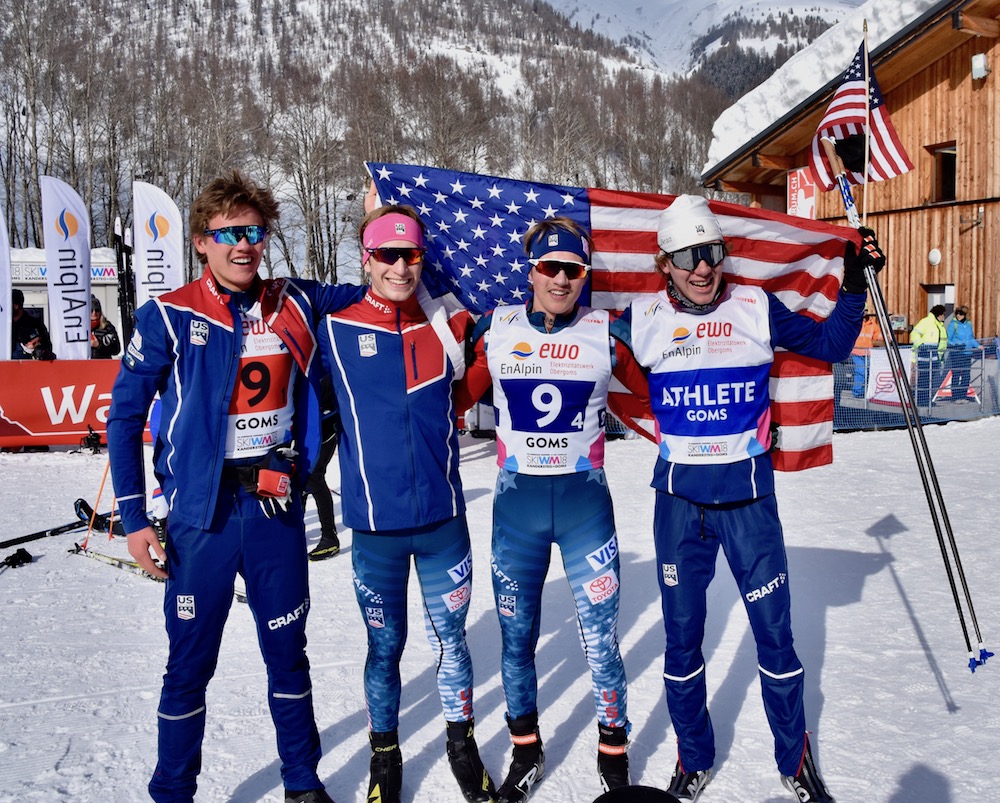
The U.S. men’s silver-medal relay last February at 2018 Junior World Championships in Goms, Switzerland, with (from left to right) Luke Jager, Hunter Wonders, Gus Schumacher, and Ben Ogden. (Photo: Julia Kern)
ANCHORAGE, Alaska — Gus Schumacher spent last winter traveling the world for ski racing, including laying down the season’s most dramatic anchor leg, non-Jessie Diggins edition, to bring the U.S. men’s relay team from fourth to a historic second at World Juniors. The then-high school senior also spent the season touring the country to plan his future in ski racing, talking with multiple NCAA coaches to discuss their programs and weigh everything from coaching philosophy to snow conditions and altitude. In the end, Schumacher chose to return back home to where it all began, Jan Buron and Alaska Winter Stars, where he prepares for what’s next from the comfort of his childhood home.
Schumacher, 18, spoke with FasterSkier in late December, shortly before leaving for U.S. Nationals in Vermont. We discussed his goals for this year’s World Juniors relay, the appeal of the familiar, and the future of American men’s skiing, among other areas.
The early years
Schumacher was born Outside, in Madison, Wisconsin, while his father was finishing a medical residency. Weeks later, he moved to Alaska for good. He had a classic Anchorage kid introduction to skiing: strap-on skis in the backyard, graduating to Anchorage Junior Nordic League a few years later.
“I started at Kincaid Junior Nordic,” Schumacher reminisced, “all the way through my first years as a Hawk, and then did Hillside Junior Nordic for my last couple years as a Hawk. I’ve still got the pictures of my first night home as a Hawk, with the new jacket, and holding up the skis. It was a pretty memorable event.”
(There are four levels in the Junior Nordic program – Polar Cub, Otter, Wolverine, and Hawk – with Hawks as the most advanced group, as marked by a distinctive jacket. Other famous quondam Hawks include Kikkan Randall, Tyler Kornfield, and pretty much anyone else who grew up skiing in Anchorage in the past 30 years.)
Schumacher didn’t dabble in too many other sports outside of skiing, but he was an avid soccer player. The family – siblings Heidi (now 12) and Rudy (now 15), and their parents, who work as an orthopedic surgeon (father Greg, who has worked with the U.S. Ski Team) and a pediatrician (mom Amy) – spent some summers in Kenai, for cabin time and fishing, and Gus and Rudy played in a soccer league there.
There was no single Saul on the road to Damascus moment when Schumacher knew he wanted to be a skier, he now recalls, so much as a more organic progression.
“It was more just, I stuck with it,” Schumacher says. “I remember, like, as a Junior Nordic skier, seeing Winter Stars skiing around, and wanting to be like that. And then seeking Kikkan have success, and wanting to be like that. Just kind of always having skiers as my main role models. It wasn’t like a big event, I’d say.”
Gus Schumacher, 13, of Alaska Winter Stars, climbs the final hill in the 2014 SuperTour Finals classic-sprint qualifier at Kincaid Park on Sunday. The youngest in the field, he placed 65th. (Photo: Bill Roth/Anchorage Daily News)
(And as for those role models, this is as good a place as any to mention Kikkan’s thoughts on a then-13-year-old Schumacher racing at Spring Series 2014: “We spent all winter on the World Cup and you almost forget what it was like when you were first getting going in skiing and how these local races were so big. We could have some future Olympians out here – kids that you want, people that you want to get fired up about cross-country skiing.”)
By the time Schumacher was nine or ten, he had joined the Alaska Winter Stars program long run by Jan Buron. He offers up another photographic memory to place the date that he joined: “It was third or fourth grade. Because I remember there was a year where we were allowed to bring props in for our school pictures, and I brought skis and wore my Winter Stars jacket that was new, and that I was pretty proud of.”
Alaska Winter Stars, then and now
Fast forward nine years, and Schumacher remains happily ensconced within the Alaska Winter Stars (AWS) family.
There has historically not been a strong post-juniors program at AWS, which has led many Winter Stars athletes to move to other programs, either in Alaska or the lower 48, soon after they finish high school. Tyler Kornfield and Scott Patterson are two recent examples of athletes who raced for AWS through high school, then did some NCAA racing, then moved to the APU Elite Team.
In contrast to these examples, Schumacher ultimately decided to stay with Buron and Alaska Winter Stars after he graduated from high school in May 2018. The decision is readily explained by the existence of an ongoing athlete–coach relationship stretching back nearly a decade and yielding multiple strong results; in addition to that World Juniors silver, Schumacher is also a two-time Alaska state high school ski champion. But it was very much a reasoned decision, following a lengthy and considered process.
“It was definitely one of the harder decisions I’ve made,” Schumacher says of the decision to forego the APU Elite Team in Anchorage, NCAA skiing anywhere in the country, or any other option to remain with his longtime coach and program.
So how did he go about it?
“My thought process was, I started with five or six [NCAA] schools,” Schumacher now reconstructs.
Gus Schumacher (Alaska Winter Stars) racing at 2018 U.S. Cross Country Championships in his hometown of Anchorage, Alaska, in January 2018. (Photo: Charlie Renfro)
“I started by emailing a bunch of coaches, and made some phone calls, and I talked with people I knew who had gone to places, and I toured a few places. And I asked some of the same questions at every place, like, ‘How’s the snow,’ ‘How’s the altitude,’ ‘What is your general philosophy on training and strength,’ ‘How’s the race schedule,’ ‘How’s the team,’ ‘How do you view growth, and growth outside of NCAA,’ and so on.”
“And it kind of came down to, who’s a coach that I know about? And I know that taking that risk [of moving to a different coach] is obviously something that works out really well for a lot of people with a new coach, but I ultimately thought I knew what was going on here, and I knew that I could keep getting better here [with Buron]. And that the snow, while it’s not the best here, it’s pretty consistent, and I can do whatever competitions I want basically and I don’t have to be distracted by a full-time classload. So that’s kind of how I came to that. But I think there’s a number of ways it could have gone, and I think a number of ways that it probably could have gone pretty well, but for now I’m happy with where I’m at. I think I made the right decision.”
So far, the decision seems to have worked out well for Schumacher. (This was perhaps more of an open question at the time of the original interview for this story, before Schumacher consistently destroyed the junior field at 2019 Senior Nationals, placing 4th, 5th, 7th, and 12th overall in four races while recording the highest junior finish in each event.)
“I think it has,” Schumacher muses.
He adds, in a self-effacing nod to his millennial status, “There’s been some times where I felt like lots of people moved on, and I didn’t move on, and sometimes that makes me feel like, I guess, the classic millennial, where I’m still at home, and what am I doing… but I just need to think about why I’m staying, and that my training’s going well, and my collaboration with my coach is going well, and I’ve still got people like Luke [Jager], and athletes who haven’t gone off to college and who are doing a similar thing as me, and kind of going for the same goals, and it’s good to have them around.”
So who is still around? Or put another way, and perhaps more bluntly, does one of the country’s top juniors even have a training group?
U20 men Luke Jager, Gus Schumacher, and Ti Donaldson at a December 2018 Besh Cup race. (photo: courtesy CCAK)
“I for sure do,” Schumacher reassures. “I spend a good amount of time alone, just based on convenience; it’s easier sometimes to just go out alone. But I train with Marion [Woods] sometimes, as the ‘Winter Stars Elite Team,’ just joking, in quotes. But I train with Luke, and Dawson [Knopp], and Tracen [Knopp], and lots of those younger APU guys I can train with, and some of those UAA [University of Alaska Anchorage] guys. Once in a while I’ll do some intervals, and we do distance sessions together a lot.”
The flip side of a training group of one may be that Schumacher has a training plan for one. His training plan is “definitely based” on Buron’s guidance, Schumacher says, “but more recently, when it’s mostly just me, and I’m not really training with a lot of other people, he’ll call me at night, and we kind of talk about what to do the next day.”
Schumacher is, like many experienced athletes and coaches, making the move toward becoming more of his own coach. “I think I’ve been doing a better job of trying to have my own input,” Schumacher reasons, “and making sure I’m not just following what he does, but really trying to get an understanding for why he’s saying what he’s saying, and then get an understanding from other coaches who say why to do stuff.”
Schumacher will think through this, then advise, for example, “’Maybe we should do a little heavier on the L4 today,’ or something like that. Sometimes he’ll say, ‘Yeah, that could be a good idea,’ and sometimes he thinks I’m wrong. We’ve started to argue a little more, as I’ve gotten older, which sometimes is probably a little annoying to him, but I think is pretty helpful, for me at least, to try to get a better understanding of training, so I’m not always asking him every day what I need to do. … Jan hasn’t been, like, ‘You need to do this.’ But it has been more like realizing, you kind of have to become a form of your own coach. With help.”
College classes and a potential future in college skiing
Schumacher may have charted a path that takes him away from college skiing for the time being, but he is nonetheless keeping open a place in his life for both college classes now and potential NCAA skiing down the road.
For the present, Schumacher is enrolled in classes at the University of Alaska Anchorage, or UAA. His current major is officially civil engineering, in part because he had to select something when he registered for his freshman semester last fall but in part because he enjoys math and science and thinks he would enjoy this field. He took three courses last semester, totaling 11 credits, and is enrolled in two this semester, “online so I can travel, but still be able to have some other goals that aren’t skiing-related.”
For the future, Schumacher’s choice of only 11 credits, and to pay tuition for them, represents a conscious decision to preserve his potential future NCAA eligibility. He graduated very near the top of his class at Service High School, and so qualified for a partial scholarship given to Alaska high school students who are in the top 10 percent of their graduating class… but you have to be a full-time student to receive the scholarship.
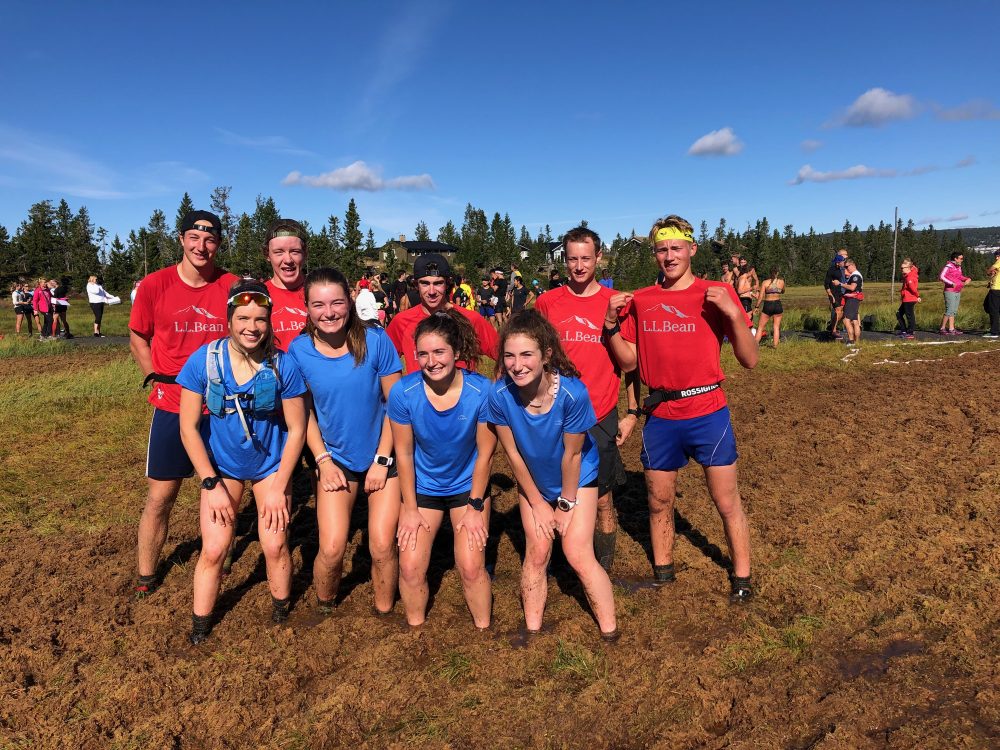
Americans during a muddy training session at the 2018 International Junior Camp in summer 2018 in Sjusjøen, Norway. (Front row, l to r) Abby Jarzin, Mae Chalmers, Sophie Shomento, Molly Gellert, and Noel Keeffe. (Back row, l to r) Ben Ogden, Wyatt Gebhardt, Ti Donaldson, Gus Schumacher. (Photo: Maria Stuber)
“And my angle on that,” Schumacher says, “was that I didn’t want to start my NCAA [eligibility] clock – if I take 12 credits, that starts the clock. And if it’s my plan to involve NCAA skiing down the road, I would like to have all of my eligibility. So whether it’s a 26-year-old Norwegian or a 26-year-old American that’s still doing it, I’d like to have that option open.” For now, he notes, “I have the opportunity to get some smaller scholarships that don’t require a full class load.”
Speaking of money, Schumacher also intends to tread very carefully over the next few years when it comes to accepting any potential prize money from SuperTour races or national championships.
“I’m definitely looking to preserve that eligibility,” Schumacher says, explaining that he will look at the NCAA rules very carefully to see what, if anything, he is allowed to accept in terms of prize money.
“I’d definitely double-check that before accepting any prize money,” Schumacher notes. “But the idea is to stay eligible, if I ever wanted to do that.”
Season goals and a return to World Juniors
So let’s go back to last year’s World Juniors men’s relay for a second, featuring a relay lineup that underscored the fact that American junior cross-country skiing is fundamentally a very small world, as well as that 3-kilometer Anchorage middle school competitions are truly a breeding ground for future champions.
Luke Jager, an Anchorage skier who had told this site that he prepared for the race by “reminiscing about beating Gus Schumacher at the season opener middle school race in 8th grade” in February 2014, skis the scramble leg, keeping the Americans in sixth as a number of teams already start to drop off the pace. Ben Ogden, a Vermont skier of whom Jager and Schumacher once wrote, “We were so impressed that @ben.0gden could beat any of us that we decided to make him an honorary Alaskan,” brings the team up to fourth by the end of leg two. Hunter Wonders, an Anchorage skier who finished 1.7 seconds behind Jager in the sixth-grade season opener middle school race in January 2012, holds that position through leg three, handing off to Schumacher 31.3 seconds out of first and 26.2 seconds off the podium.
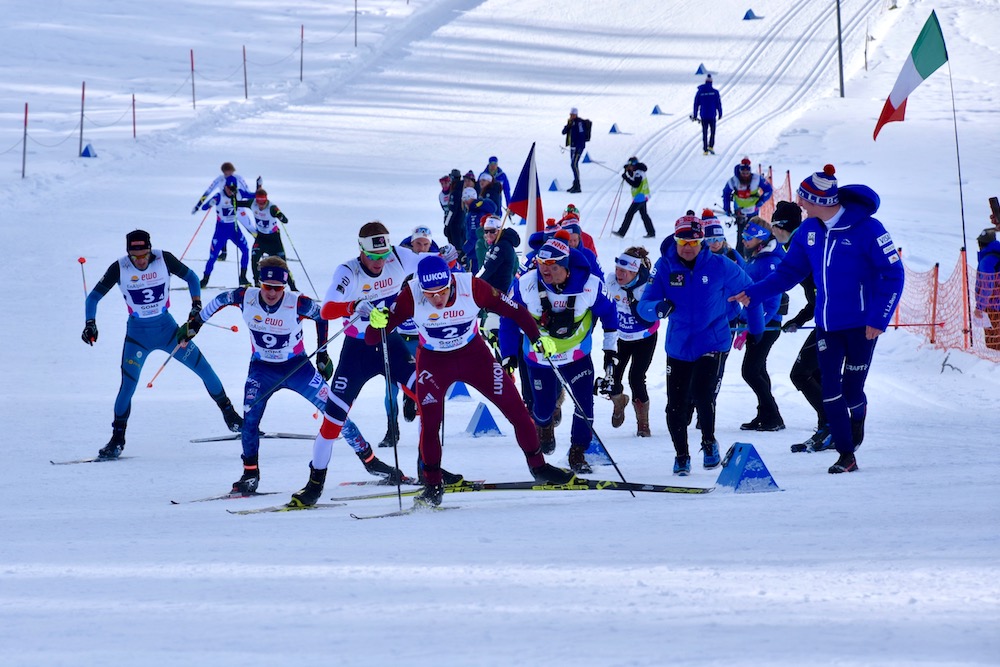
Russia’s Alexander Terentev leading Norway’s Jørgen Lippert, American Gus Schumacher (9), and France’s Pierre Tichit (3) up a climb in the final leg of the men’s 4 x 5 k relay at 2018 Junior World Championships in Goms, Switzerland. American coach Bryan Fish (NNF hat) is to Lippert’s left. (Photo: Julia Kern)
Each leg is only 5 kilometers long, but Schumacher takes off on his anchor leg like a man possessed. He catches France, moving the U.S. onto the podium. He comes around the final corner and suddenly catches sight of Russia and Norway ahead of him. Schumacher surges, Russia’s Alexander Terentev does not, and Schumacher exults across the finish line to secure a historic silver medal for America, 2.2 seconds behind Norway in first. “Second in the world with the boys,” Jager writes on Instagram. “Doesn’t get much better.”
“There was definitely a good amount of surprise there,” Schumacher candidly says of the result. “I remember pretty distinctly the night before, in the pre-race meeting, Hunter saying something about, ‘If the stars align, we could podium.’ … We definitely didn’t write ourselves off, but we also weren’t thinking we had a guaranteed spot anywhere.”
But once the race began, Schumacher recalls, “Every lap it got more and more exciting. Like, ‘Oh, cool, Luke’s hanging with the lead pack.’ And then, like, ‘Oh, lots of people got dropped from the lead pack, and Luke’s still there. Oh, the lead pack is down to five, and Ben’s still there. And then Hunter’s hanging on, and not losing time.’ It was really cool and exciting – and you could tell the excitement of everyone there, like the coaches are like, ‘you ready, Gus’; they can see what’s happening, and we can all see what’s happening. It was a pretty fun event to be a part of.”
When Schumacher spoke with FasterSkier in late December, before U.S. nationals, he said with an absolutely straight face that he just hoped to qualify for this year’s team.
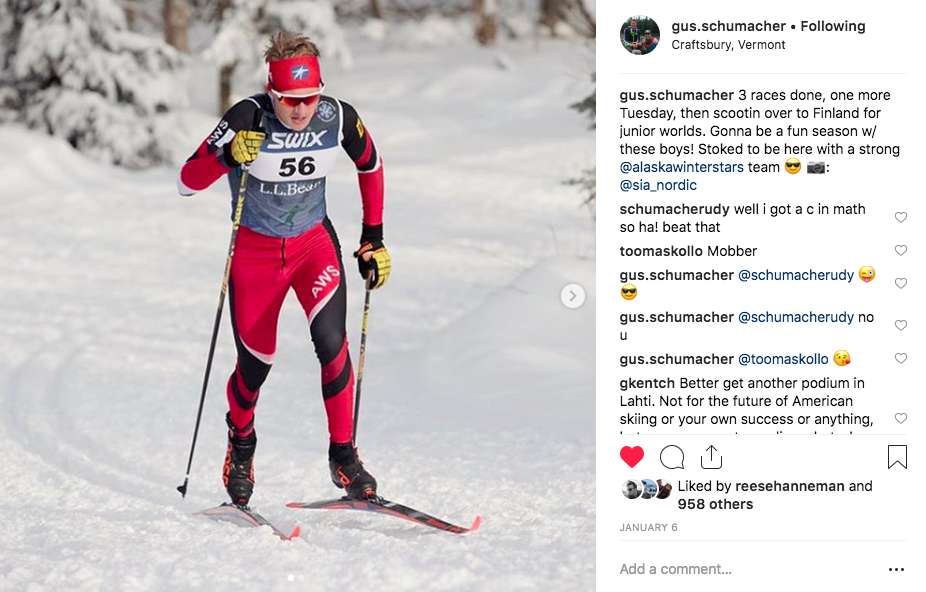
Gus Schumacher (AWS) racing at U.S. nationals in Craftsbury, Vermont, in January 2019. (photo: Instagram screenshot)
When asked about a results goal for this season, Schumacher immediately zeroes in on this event: “My biggest goal is to improve on our relay result from last year at World Juniors, and win that race. I think that would be super crazy, and super fun. I think that this, or next year too, is the year to do it; there’s such a strong group of guys that has a lot of chemistry. I think that – if we did that, I could sign off on the season from there. That would be pretty amazing.”
(It’s worth noting that the U.S. had by far the youngest relay team of the top-10 teams at last year’s World Juniors; while Norway et al. will obviously refill their ranks from within, Schumacher really could have two more cracks at this race.)
After World Juniors, which occur in Lahti, Finland, from January 20-27, Schumacher hopes to stay in Europe for some time. “There’s a possibility that I would stay, maybe in Norway with a friend, or somewhere over in Europe, and continue some high-level races, possibly with Luke, and then maybe the OPA Cup trip, and SuperTour Finals after that. All of it obviously sort of depends on how I’m doing, and how I’m feeling and stuff. But ideally I spend a good amount of time in Europe, getting some race exposure, and getting some success, and competitive races there, and just kind of keep my season going after Nationals.”
Looking to the future
Schumacher is asked what the American success in Goms last year says about the current strength of American men’s skiing.
His answer reflects an athlete who recognizes a cliché when he sees it, but who nonetheless sincerely believes in the strength of the team: “I think you don’t have to look super deep into it to notice that there’s a strong group of guys that are coming up. And it extends way past that relay team. I think it’s, maybe not cliché yet, but it’s said a lot, that, like, there’s a team behind the team. And I think one of the big things to say about the future is that there were four guys in bibs that day, but – this is going to sound pretty cliché – but there were twenty that got us there. You see other athletes, like Johnny Hagenbuch, that have the potential – I could list off ten people that could be on that relay team this year. Like, I might not even part of that. There’s so many fast boys that are really into it; I think there’s some promise there.”
Finally, a similar theme emerges when the topic turns to the future of American men’s skiing over the next generation: Be a successful team, just like the American women.
I would like, everyone would like, us to be like the girls – they’re really good.
“Obviously I don’t know” what the future holds, Schumacher says, “but a pretty strong upwards trajectory is what I would say. I think the goal obviously, sort of unspoken, but I would like to see us get to where the girls are. They have a ton of success, and to try to mimic that, and do what they’ve been doing – everyone talks about the team, and I think that for this whole generation, not just like this year’s juniors, but even the older ones as well, there’s that sense of team. I would like, everyone would like, us to be like the girls – they’re really good. I think it’s possible. It would be really cool, and I think it’s doable.”
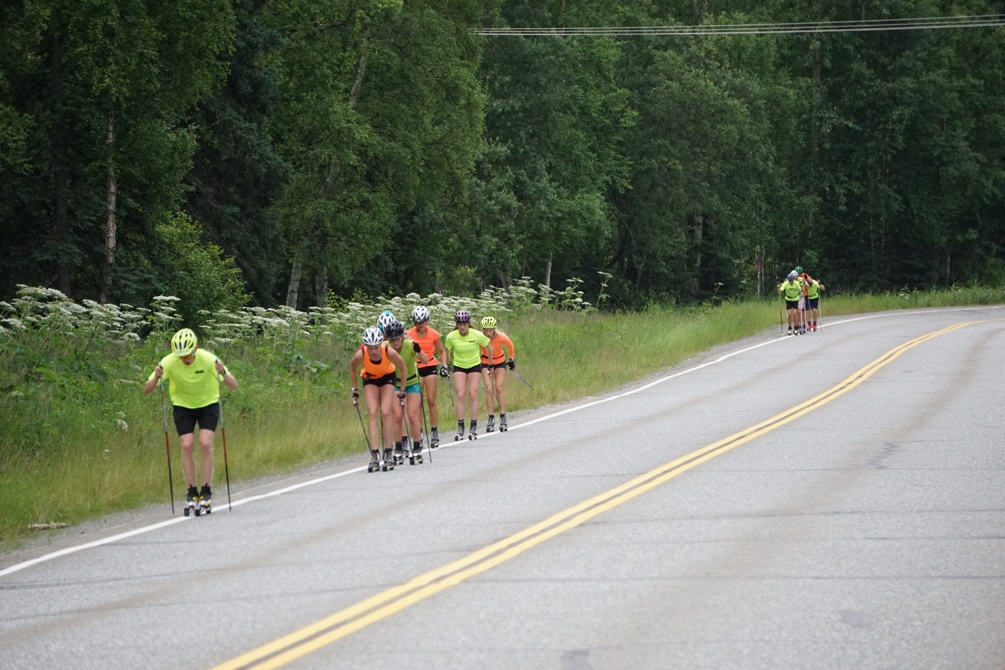
The Alaska REG participants near the start of the Hatcher Pass Road climb during their final session of the 2017 Alaska REG camp, held July 12-16 in Anchorage and Palmer. (Photo: Alasdair Tutt)
The following Regional Elite Group (REG) camp recap was submitted by NSCF-FXC Interim Head Coach Alasdair Tutt. FasterSkier encourages coaches and athletes from any regional offseason camps (dryland or on-snow, in the U.S., Canada or abroad) to submit their own recaps and photos to info@fasterskier.com. The Western and Eastern REG camps took place last month in Utah and Vermont, respectively.
***
On July 12, 16 athletes gathered at Hillside Ski Area in Anchorage for the 2017 Alaska REG camp, kicking off five days of testing and training. The first day was in Anchorage before heading north to Palmer for the remainder of the camp.
The camp was led by U.S. Ski Team Development Coach Bryan Fish who was joined over the week by Ja Dorris and Stan Carrick of Alaska Nordic Racing (ANR), Eric Strabel and Sam Sterling of Alaska Pacific University (APU), Jan Buron of Alaska Winter Stars (AWS), and Alasdair Tutt of Nordic Ski Club of Fairbanks – Fairbanks XC (NSCF-FXC).
Addison Gibson (ANR) on course during the agility time trial where she posted the fastest time of the day. (Photo: Bryan Fish)
The first test was the infamous Gasline time-trial uphill run, a regular test for the Anchorage-based teams and previous REG camps. The course saw the athletes wind up beside an alpine run before appearing out onto the road overlooking the sea. The fastest times were set by Ti Donaldson and Kendall Kramer, both of the NSCF-FXC program. That afternoon, athletes were led through a strength workout by Bryan at the Alaska Pacific University gym.
Day 2 brought the agility test at Colony Middle School in Palmer and with it some of the more exciting and competitive testing of the camp. The fastest combined times (best two of three) were set by Addison Gibson (ANR) and Donaldson.
That afternoon, our grand plans for bounding drills were mostly foundered by a huge lightning storm that came in over Hatcher Pass that had us running back to the cabin to find a river where the lawn had once been, now occupied by a moose cow and two calves.
It was game on for some head-to-head double pole sprints just below the Government Peak Recreation Area trails in Fishhook, Alaska. Athletes raced in a king’s court format both up and downhill. (Photo: Alasdair Tutt)
On the third day, we had much better luck with our weather and a double-pole time trial was on the menu as our final test of the camp. Over a 970-meter course on Mountain Trails Road, the athletes were sent to chase down their best performances leading to three athletes being separated by only one second each. The best times were again set by Kramer and Donaldson of Fairbanks. That afternoon we braved the growing afternoon traffic with a rollerski up Hatcher Pass Road with some technique work at key points along the road.
Some highlights of the remainder of the camp were: an over-distance workout on the Reed Lakes Trail, where athletes were fortunate enough to avoid several brown bears in the vicinity who were harassing hikers (or being harassed), a critical viewing of the new Spiderman movie in which we decided Spiderman exhibited a great example of how the Central Governor Theory could be applied in a superhero scenario, and a final day classic rollerski up the Hatcher Pass Road.
Four REG skiers at Upper Reed Lake in the Hatcher Pass area during an over-distance workout on the second-to-last day of the 2017 Alaska REG camp earlier this month. (Photo: Alasdair Tutt)
American Eric Packer (r) leads Canada’s Len Valjas (l) during the men’s 15 k freestyle pursuit at Stage 4 of the 2016 Ski Tour Canada in Quebec City in March. Packer placed 68th on the day. (Photo: FlyingPointRoad.com/NNF)
Eric Packer is back home. The 26-year-old Anchorage native is in his third year of training with Alaska Pacific University (APU), after heading East for college at Dartmouth and following that with a two-year stint on the Vermont-based Stratton Mountain School (SMS) T2 Team. Now he’s back in Alaska for good, training with the APU men and enjoying the benefits of this environment.
“We had a great summer of training with the whole [APU] team,” Packer said in a recent phone interview from Alaska. (Note: He’s currently in Europe on the World Cup circuit.)
“I feel really lucky to be part of this group of guys that’s really pushing the boundaries forward. Everybody’s looking really good, and I’m really excited to see what the team can do. I personally feel like I’ve made some big improvements. I’ve trained more than I ever have, and was more consistent throughout the entire summer than I ever have been before. So feeling really positive about that.”
Packer reflected that the APU training facility on Eagle Glacier outside Girdwood, Alaska, is a key part of his estival endeavors. “Getting up on the glacier is a big component of that,” Packer said. “We had three really productive camps, with about 75 hours on snow. That really helped getting back on snow. I was having a conversation, I think, with Reese [Hanneman], and it was three-quarters of the way through the ski before he realized that it’s like technically our first ski. It’s like, ‘Oh yeah, this is the first ski.’ So that was kind of cool – just like having that contact with snow throughout the summer really makes the transition super easy, and that’s nice.”
The APU men on Eagle Glacier in summer 2015. (Photo: Zuzanna Rogers)
While Packer was not logging 25 hours per week on snow for the entire summer, he did credit volume training for his steadily increasing fitness.
Rather than a quantum leap, Packer identified the incremental gains that most athletes at his level are looking for. “Just every year chipping away at uphill running times, chipping away at ski bounding times,” Packer observed. “You never really see a big jump, but it’s just, every month, trying to get two, three, five seconds faster. And I felt like this year was a good continuation of the past few years – I saw a lot of improvements, just kind of across the board generally. … I’m feeling pretty good with that, where the base fitness is.”
Packer said that he “was just able to train consistently through the whole summer, so I was really happy with that.”
But that’s not a given after last summer, in June 2015, when Packer had a scary fall in the Chugach Mountains near Anchorage that left him falling off “a small vertical drop of 10-15” feet, then “tumbl[ing] head over heels down steep rocky terrain” for another 60 feet or so. “I had no control in the fall,” Packer wrote about the incident, “which was a really scary feeling, but I remember being pretty sure I was not going to survive.”
The story has a happy ending: As Packer previously explained, “In terms of my actual injuries, I was incredibly fortunate for as bad as the fall was, I somehow managed to not break any bones, which still amazes me to this day.” Nonetheless, Packer said, “I was so banged up that I stayed home for a week with no training. Once I got the clearance from my doctor and PT to resume light activity, all I could do were easy walks.”
Going through the injury and recovery process last year “definitely did” change his outlook for this year, Packer said. “It impacted my approach to last season, and I think this summer I just felt really lucky that I was injury-free, and was able to train at full capacity all summer long and not have any setbacks like that. It was definitely one of those moments where you take a step back, and kind of reflect on everything, and reflect on how lucky you are to be a ski racer, to be able-bodied and healthy and all those sorts of things. I have a history of ankle sprains; for the first time in six years I didn’t have a serious ankle sprain. Didn’t fall off any cliffs this time.”
Packer planned to put that consistent training and improved fitness to the test in Europe; he had Period 1 World Cup start rights for 2016/2017 by virtue of being last season’s domestic SuperTour leader.
But he didn’t think it would be easy. “Racing World Cups, Period 1 in Europe, is really tough,” Packer said before he left for northern Scandinavia. “There’s no question about that. It’s probably the hardest competition that you’ll see all year in terms of depth of the field.”
(Packer’s comments seemed prescient a week later, when, in the season’s first World Cup race, Norway put two skiers on the podium it hadn’t planned on starting.)
Nonetheless, Packer was “very excited” for his first World Cup races in Europe; he had previously raced in Europe and on the World Cup last season in Canada, but this marked his first overseas World Cup. “The Ski Tour Canada was obviously amazing and really a cool racing experience,” Packer enthused, “but getting to race at classic venues, in Finland and Norway and Switzerland, that’s really the dream. So I’m looking forward to it.”
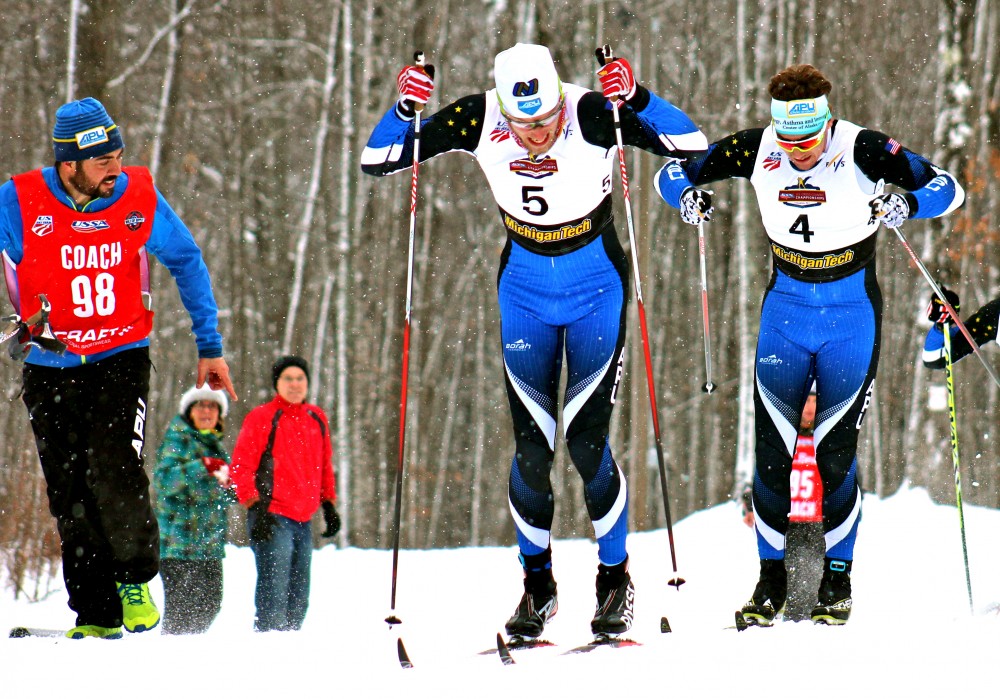
APU head coach Erik Flora (98) runs alongside his athletes Eric Packer (5) and Reese Hanneman during (4) the final of the men’s 1.5 k classic sprint at U.S. nationals in Houghton, Mich., in January 2016. (Photo: Christopher Schmidt)
Packer, who spoke with FasterSkier before leaving for Europe and racing in Ruka, said that he had two goals for his time in the opening swing of the World Cup season.
“My main goal is to take advantage of the opportunity to get, potentially, nine World Cup starts, and build as much experience as I can over the next month, and also learn the venues, and learn the cadence of World Cup racing,” he said. “And just really … have my eyes and ears open, and learn as much as possible. And learn from what I’m seeing other competitors doing – tactically, technically, that sort of thing. So that’s the first goal.”
“And the second goal,” he continued, “is to take each race as it comes. … I know that there will likely be tough days, but I’m just focused on taking each race, each day individually, and trying to give it my best shot in each one. It only takes one good day. So that’s really what I’m looking for, is to take advantage of the opportunity and give it my best on each day. Make the people back home proud.”
By the “cadence” of World Cup racing, Packer explained, he meant “building comfort and familiarity with that routine. To the point that you have a system where you can be focused on preparing for the race, and not get distracted by all of the other things surrounding the race.”
As an example, Packer cited the races at Gatineau this March: “At the World Cup venue there, they had a warmup track that was probably an 800-meter run from the wax cabin. And then the area that you actually accessed the course and accessed the start was yet a different location; that was probably like a 300- to 400-meter run. You’ve got ski boots on. And so just figuring out how to warm up, and then get on course.”
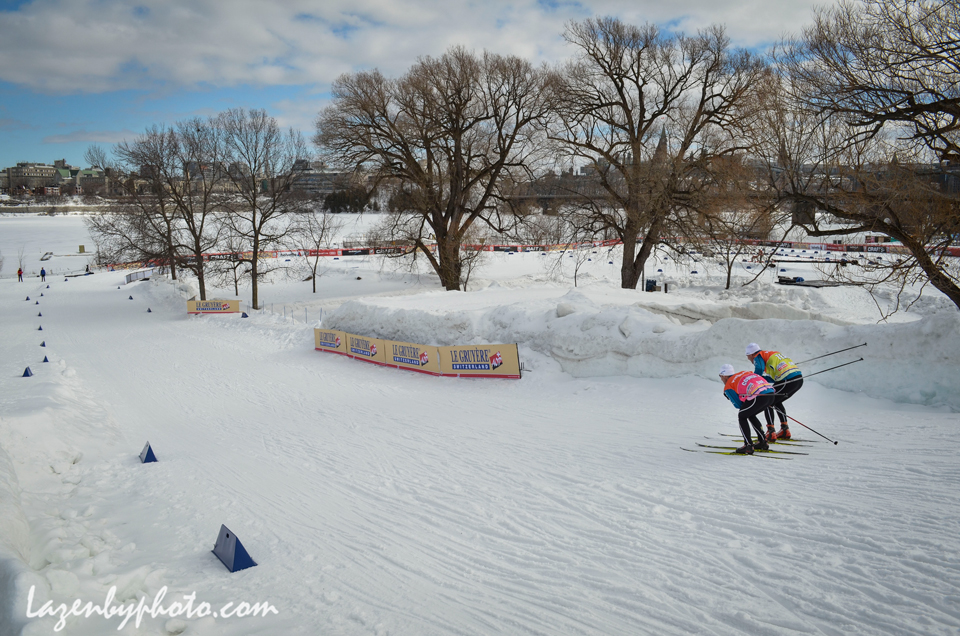
A little wax testing on Gatineau’s 1.7 k sprint course, with the start/finish area visible at the upper right. (Photo: John Lazenby/lazenbyphoto.com)
“More generally,” he said, the cadence involves “just figuring out the racing logistics, and getting used to the extra hurdles that exist at the World Cup level in the race-day routine, that’s a big goal, too. So that you get to the point where you’re focused on the racing, and you’re doing the optimum warmup and everything, and working within the constraints of that World Cup atmosphere.”
When asked about his overall goals for the season, Packer hesitated to look much past Period 1 of the World Cup, although he acknowledged that World Championships in Lahti, Finland, were on his radar. “I would definitely be excited to qualify for Lahti, and that is one of the goals for the season,” Packer said. “I would say, right now my focus is first on Period 1, and doing my best there, and then I will reevaluate once that’s over.”
Regarding possibilities for the second half of the winter, he reiterated, “It’s really hard to tell right now. There’s so many different potential paths through the winter. Definitely hoping to be racing in Europe, that’s always the goal. But if not, I would certainly like to come back and give the [American] Birkie my best shot, so there’s many different options there.”
(Packer has raced the Birkie once before, in 2014, finishing 22nd overall.)
But he was glad to look back to what he identified as the highlight of his ski career to date.
“Winning Nationals last year,” was his immediate answer. “That was just – and not actually winning, but coming into the finish with Reese and with Tyler together,” Packer said, referring to his APU teammates Hanneman and Tyler Kornfield. “And having that moment of like, ‘Wow, we have three of us here in contention, and being part of that group.’”
Packer continued: “And [APU head coach Erik] Flora was running next to us, and he was like swinging his arm around like a windmill, and just so excited. And then at the same time my childhood coach, Jan Buron from [Alaska] Winter Stars, and my college coach, Ruff Patterson, were both there at the finish. So kind of that moment of having everybody who’s been involved in my skiing from seventh grade all the way through now, and coming into the finish with my two teammates – that was a really special moment.
Eric Packer racing in the Ski Tour Canada in March 2016, with the beard in full late-winter flourish. (Photo: FlyingPointRoad.com/NNF)
“It was pretty fun. I got a big hug from Flora, then got a big hug from Jan, got a big hug from Ruff – it was a cool moment, for sure. It will definitely be a special moment for me.”
Finally, Packer looked back more recently, to what he’d had for breakfast that morning, then once more ahead, to his plans for hirsute management over the course of the winter.
“I had two pieces of toast, with avocado, and a fried egg on top of that; a cup of coffee, with just a little bit of half-and-half, no sugar; and a banana,” Packer explained, with the precision of someone whose Dartmouth degree is in mechanical engineering.
And as for the facial hair? “So last winter,” recalled Packer, who was previously recognized with Bearded Honorable Mention #1: The Lumberjack in FasterSkier’s West Yellowstone beards roundup of Nov. 2015, “I went with the ‘grow it all season’ approach. I think I’m going to take a step back from that this year, and keep it more in check. We’ll see. You never know; it has a mind of its own.”
Gus Schumacher, 13, of Alaska Winter Stars, climbs the final hill in the SuperTour Finals classic-sprint qualifier at Kincaid Park on Sunday. The youngest in the field, he placed 65th. (Photo: Bill Roth/Anchorage Daily News)
ANCHORAGE, Alaska — Gus Schumacher is used to the little-guy jokes, like when his Alaska Winter Stars (AWS) coach Jan Buronsays he weighs less than his dog — or when his Junior Nationals team makes him carry the Alaska Cup all the way to Stowe, Vt., because he’s the youngest one on the team.
But the 13-year-old from Anchorage doesn’t seem to mind because really, the joke’s on them. He can say, ‘What’s up?’ to Andy Newell and Newell will greet him back.
The son of U.S. Ski Team doctor Greg Schumacher, an orthopedic practitioner in Anchorage, Gus even raced in the same event as Newell in Sunday’s 1.4-kilometer classic sprint at SuperTour Finals. He raced the day before, too, aging up into the U16 category for AWS, but Newell didn’t do the distance event. Other Olympians, like Noah Hoffman, Erik Bjornsen and Simi Hamilton did though. And then there were several U.S. Ski Team women from Anchorage, like Kikkan Randall, Holly Brooks and Sadie Bjornsen.
“It was really fun to race SuperTours, to be racing with these guys that I totally look up to,” Schumacher said after Sunday’s race, in which he placed 65th in the sprint (he said he’s more of a distance skier). “I watch them on the World Cup and I’m just amazed at their abilities.”
And Schumacher’s actually seen them in person — he went with his family to Switzerland while his dad worked with the team.
“The fact that I’m racing them right now is incredible,” he said. “They’re people too … so It’s really cool to know who they are.”
Before SuperTour Finals, Schumacher was one of about 26 males to make Alaska’s Junior National team after qualifying in an older age group at the trials.
“I really just tried hard in the races, I knew I could somewhat match [the older racers], but I didn’t know how well I could do it,” he said. “So I did the races and I did well, well enough to make it and it was just a great experience.”
The youngest guy on the team by almost two years, he had to take the Alaska Cup as a carry-on for the duration of their flights to Junior Nationals earlier this month in Stowe. He placed 30th in the U16 men’s 5 k classic race, 38th in the classic sprint, and fifth with Alaska’s second team in the 3 x 3 k skate relay.
When he’s training (which is year-round), Schumacher tries to stick with teammates like 15-year-old Matthew Hoefler.
“He’s a pretty good match for me especially in distance kind of stuff,” he said. “And then some of the older guys … they’re just too hard to stay with sometimes. It’s not good for training if you’re with them.”
But Schumacher’s been on skis longer than most.
“I’ve been skiing since I was really young, since I could walk,” he said. “I’m one of those kids.”
His mom, Amy, is a volunteer at the Anchorage SuperTour Finals and said the family loves skiing and being outdoors. She said Gus got his racing starts with a junior nordic program in Anchorage.
“[That’s] what got him to really love it,” she said. “When you add friends and coaches, it makes skiing much more fun than being with parents.”
She said he works hard “by his own drive,” and will be making the step up from middle school next year in his first year at Service High School.
Buron said he shows a lot of promise and joked that he weighs 85 pounds — more than his dog. Schumacher said he’s 110 pounds. “I think he’s exaggerating,” Schumacher said of his coach, whom Amy described as “extremely encouraging and positive [and] … sincere.”
On July 25, Schumacher will turn 14, and next year, he’ll be racing up in high school as well. But not many high-school skiers can claim to have skied with Olympians.
“It’s a big deal,” Kikkan Randall said of up-and-comers like Schumacher. “We spent all winter on the World Cup and you almost forget what it was like when you were first getting going in skiing and how these local races were so big. We could have some future Olympians out here — kids that you want, people that you want to get fired up about cross-country skiing.”