Tag: Jana Weinberger

  • A New Push for Equal Distance Racing

    A New Push for Equal Distance Racing

    The debate to run equal race distances for men and women remains. Molly Peters, the head cross-country ski coach at Vermont’s St. Michael’s College, has led a grassroots campaign to make equal distance racing commonplace at the NCAA level and beyond. She’s the lead voice for The Ski Equal Team. The group sent a letter to the U.S. Ski & Snowboard Cross Country Sport Committee, its Equity and Inclusion Committee, and CEO Tiger Shaw asking for their support in implementing equal distance cross-country racing for their sanctioned events.

    The letter opens with a strong message: “In this time of unparalleled social change and reflection, we request that this Committee take an important step forward for equity and inclusion by creating domestic race schedules that offer equal race distances for women and men.” Letter signatories include several head NCAA coaches like Becky Woods of Bates and Tracy Cotes of Colby, as well as U.S. legend Bill Koch, and current World Cup overall winner Jessie Diggins. 
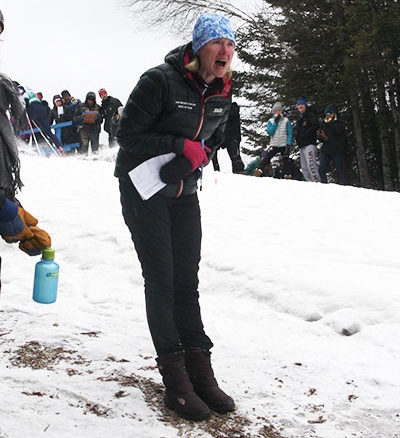
    Head Cross-Country Ski Coach at St. Michael’s. (Photo: St. Michael’s)

    In speaking with Peters, she emphasizes the desire to equalize the race experience.

    “We used to hear that we’re trying to equalize the time on course and we want people to have the same race experience – which is based around time,” said Peters. “The current model of racing, where women generally race 5 k less than men, offers completely different race experiences for men and women. When you look at the data we provide in the letter, race times get closer when you analyze the longer distances. In those longer distances, race times are much closer when men and women are doing the same distance, not women racing 5 k shorter.”

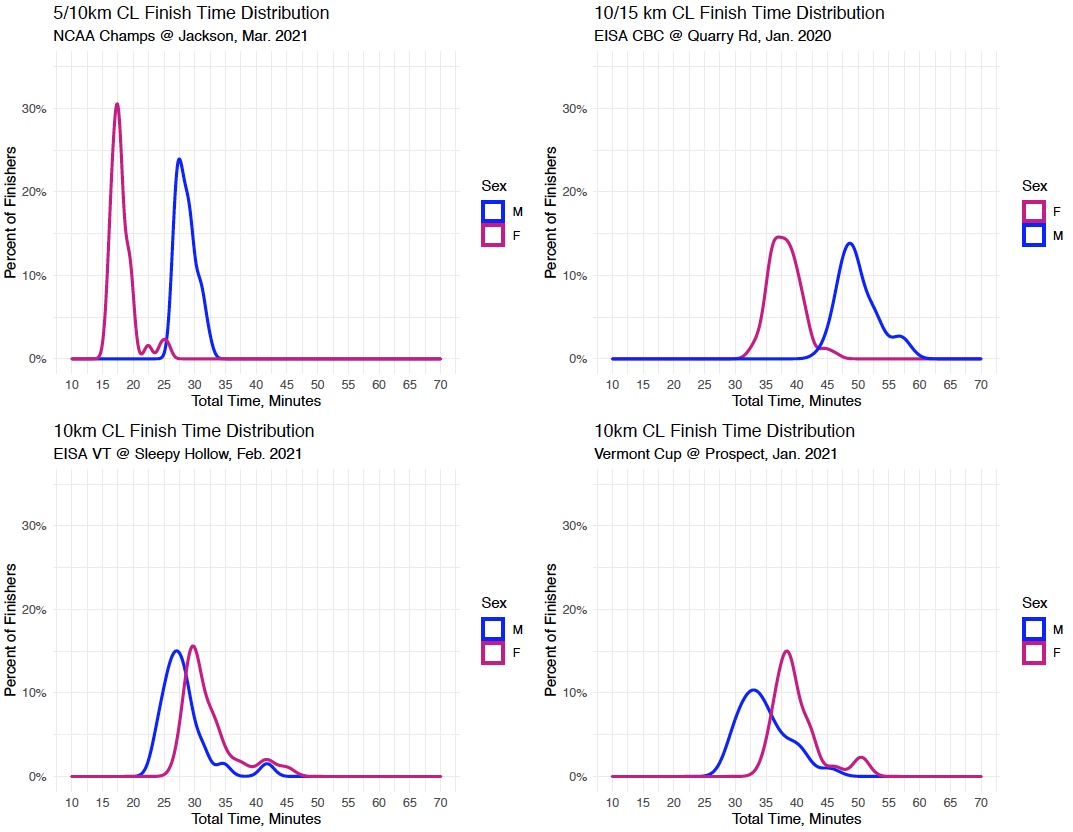
    The data provided to The Ski Equal Team by Lily Koffman, a Harvard biostatistician and former collegiate skier, tells a simple story. Of the four classic races analyzed by Koffman, finish times were more similar when men and women both raced 10 k rather than 5 k and 10 k respectively, or 10 k and 15 k, respectively. 
    The same trend holds for the skate racing data. The finish times for men and women overlapped more when both genders raced the same distance. In this case, equal distance skate races of 15 k and 13.2 k, respectively. Conversely, skate race data show little overlap in times comparing unequal race distances. What appears to hold true is that if stakeholders want roughly equal time racing for men and women, at least according to this sample, all skiers should race longer distances and of equal length.  
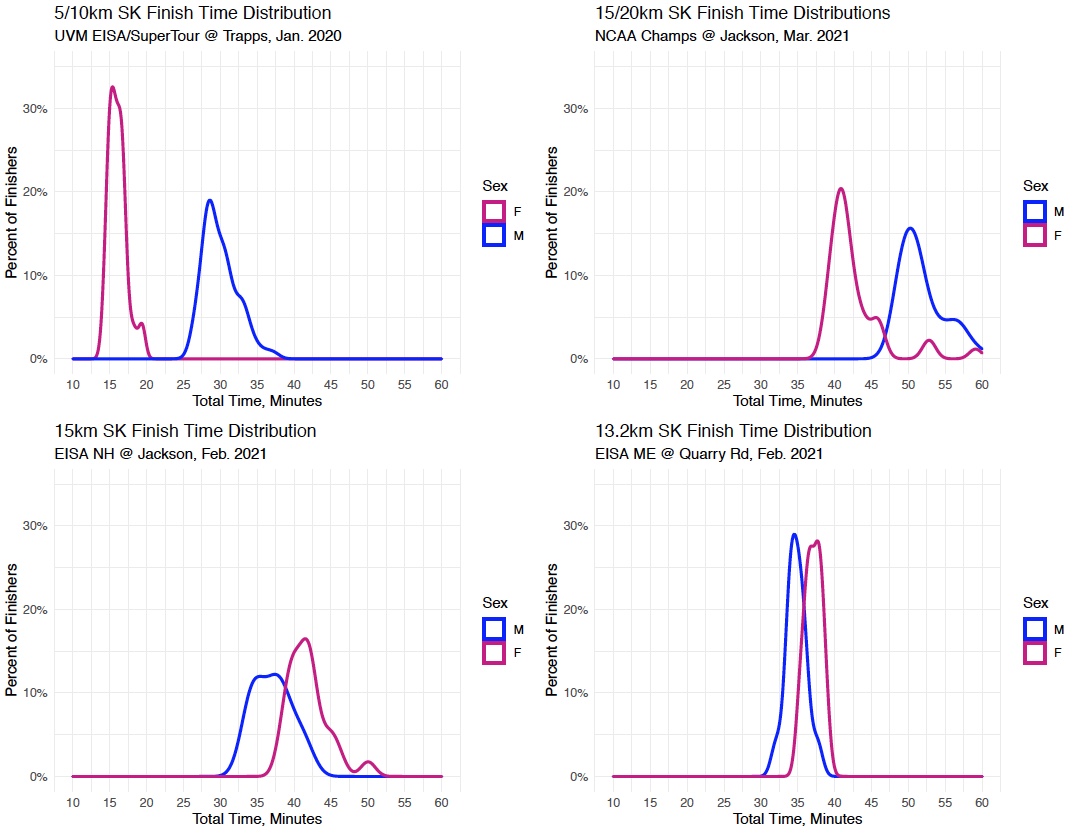
    “The difference in time on course for men and women competing in separate distance races show a significant gap and virtually no overlap of time,” asserts the Ski Equal Team letter to U.S. Ski & Snowboard. “By contrast, equal distance races show a significant overlap in finish times and consequently a similar race experience for the men’s and women’s fields. This is not an isolated example – we see similar patterns in other collegiate and junior races. There is no compelling reason to require women and men at any level to race different distances.”

    The latter also claims female athletes benefit well beyond sport when equal distances are raced.  The Ski Equal Team claims equal racing distances prepare female skiers to expect equal treatment in other aspects of life. (This is, of course, a time when female athletes are empowered to call out entities like the NCAA for unequal treatment.)

    “By providing equality of opportunity in sport, the Nordic ski community will prepare women to expect equality of opportunity in areas beyond sport, such as employment and compensation,” reads the Ski Equal Team letter.   

    The equal distance initiative has set its eyes on the NCAA ski championships too. The Ski Equal Team’s proposal to the NCAA’s Ski Committee includes several scenarios including sprints, mass starts, and individual start races — all equal distance. 

    Below are the potential formats proposed by the Ski Equal Team:

    o   Year 1 – 5k & 20k mass; Year 2 – 10k & 15k mass

    o   Year 1 – Sprint & 10k; Year 2 – 5k & 15k

    o   Year 1 – Sprint & 20k; Year 2 – 10k & 15k
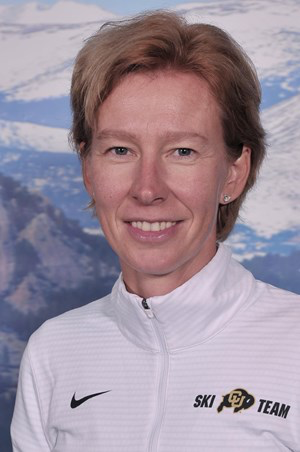
     

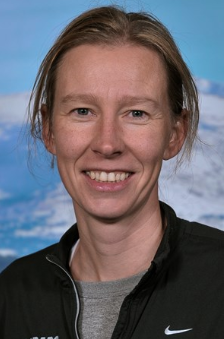
    CU Head Cross-Country Coach Jana Weinberger. (Photo: CU)

    University of Colorado Head Nordic Coach Jana Weinberger expressed she does not have strong feelings about the equal distance debate. Weinberger raced at CU as a student-athlete and has coached at the school for many years. “When I was a competitive athlete, I was happy women skied shorter distances, and it never crossed my mind that we should, or that I wanted to, ski the same distance. I was solely focused on competing against the women I raced, as opposed to racing the same distance as men. I never felt that racing a shorter distance was a sexist decision.”

    According to Weinberger, many of her female athletes are focused on performing their best at the predetermined distances, which in this case are 5 k shorter than the men’s distance. “Additionally, I had this discussion with many of the women on my team in the past, and the strong majority did not want to race the men’s distances,” Weinberger added. “For them, it was not a matter of; I can’t race that far, or, the men race farther because they are stronger, but more from the standpoint that I like racing the distances we currently have and am focused on racing women.”

    Weinberger also has the distinction of serving on the NCAA’s Ski Committee. One glaring absence from collegiate racing, well represented at seemingly all other levels of cross-country ski racing, are sprints. The CU coach said she considers adding sprints to the NCAA Championship calendar a more important short-term goal. 

    “As a member of the NCAA committee, I feel it is more important to add a sprint race to the Championship weekend than to spend our time and resources in having equal distances for men and women,” wrote Weinberger.

    A 2016 FasterSkier article featuring the different distances raced at the NCAA level for men and women reflected an antiquated notion, or myth, regarding a woman’s ability to endure. Former ski racer Annie Pokorny, quoted in that piece, said, “that conception turned into tradition, one that still thrives today in the form of shortened distances for female endurance athletes.”

    During this inflection point in history when equity and inclusion have become keystones for many evolving institutions, modifying race distances by making them equal in length, has gained traction.  

    There is talk of equal distance racing for next season. With the racing calendars at the national level to be formalized at the upcoming U.S. Ski & Snowboard Congress from May 17-21, the topic of equal distance racing is expected to be discussed. On a regional level, Justin Beckwith, the Competitive Program Director for NENSA, expects some experimentation with equal distance formats to take place next year.     
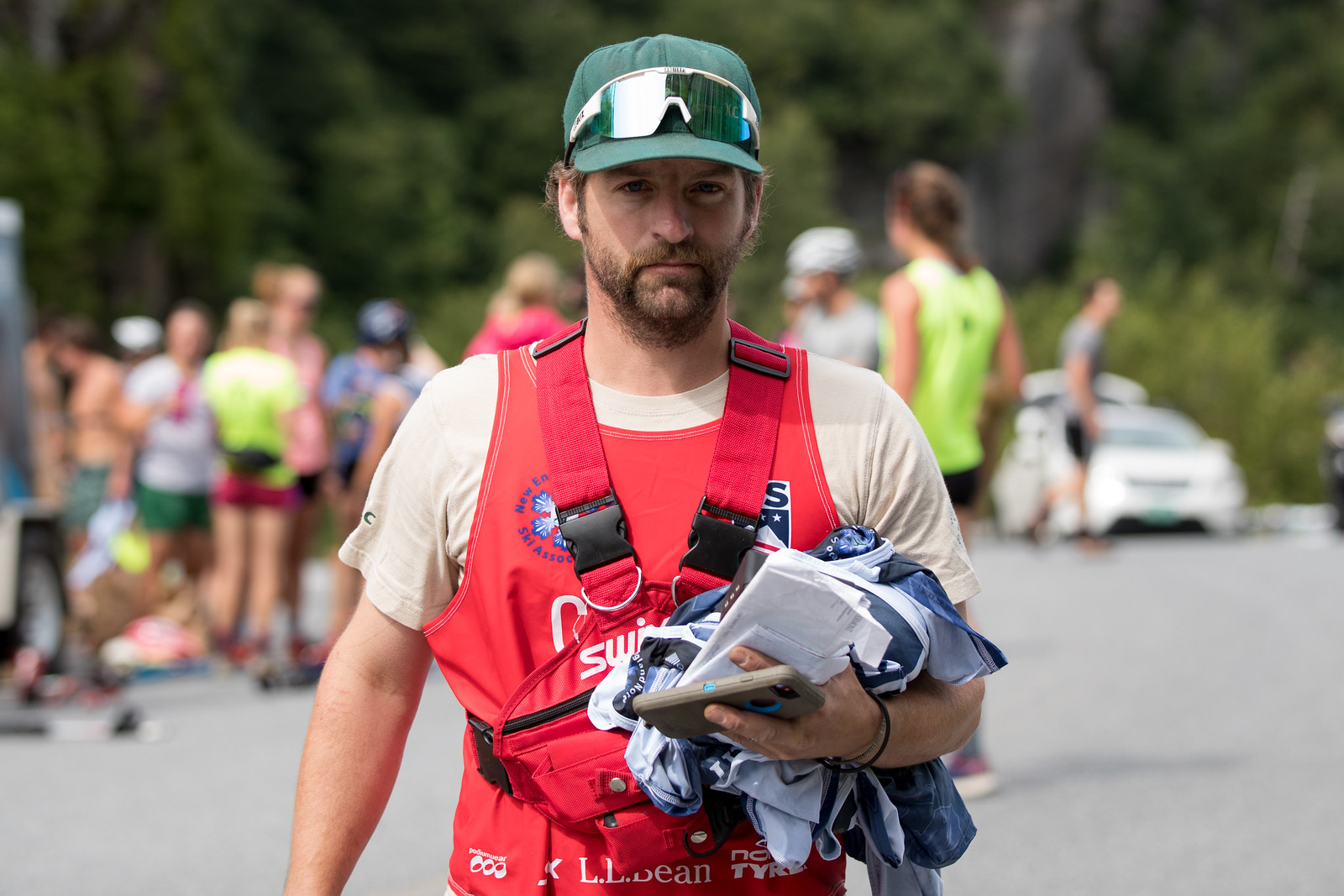
    NENSA Competitive Programs Director Justin Beckwith.

    “The underlying sentiment from most parties is that decisions of race distances should be made on the basis of development/speed development,” Beckwith emailed. “There are complicating factors in all of these discussions, like NCAA, Junior World Ski Championships and World Cup distances — those training for these specific events feel compelled to do just that.” 

    Those examples of unequal distance racing cited by Beckwith remain for the time being. It’s true, women race shorter distances than men in the distance events at Junior Worlds, U23 Worlds, Senior World Championships, Olympics, and the World Cup. That might be another debate altogether: is cross-country ski racing a means to train up the pin-prick of light at the sharp end of the pipeline, and prepare those athletes for specific distance races, like a 5 k for women and 10 k for men? Or should it function as a completely different competitive enterprise?   

    This strange ski racing season, Beckwith explained, allowed for some experimentation with organizing events where equal distance racing came into play. 

    “Through our pandemic 2021 season we had some latitude to try equal distance in a few more events than we normally would — it seemed to be well received minus some feedback from college athletes,” said Beckwith. “As we are planning for 2022 we are looking at the opportunity to shake up distances to make exciting events for competitors, venues, and spectators alike. Specifically, if Eastern SuperTours are approved for Period 3 we have a proposal that would have not just equal distances, but also unique formats.”

    Back at St. Michael’s College in Vermont, Peters knows change starts somewhere. The two most common approaches are from the top down, or at the more local level, from the bottom up. Peters’ family owns and operates Vermont’s Sleepy Hollow Nordic Center. Peters has helped develop a statement called the Sleepy Hollow Ski Equal Pledge. If you are racing at Sleepy Hollow, everyone races the same distance.

    It might make sense before you grind out training for specific distances to check out the set-in-stone race schedules, when they become available, and plan accordingly. They might just be equal. 

  • Once A Buffalo, Always a Buffalo: Jana Weinberger on Her First Season as Head Nordic Coach at CU

    Once A Buffalo, Always a Buffalo: Jana Weinberger on Her First Season as Head Nordic Coach at CU

    Jana Weinberger takes over as head nordic coach at Colorado University in Boulder, CO. (Photo: Screenshot CUBuffs.com)

    At the end of the 2017-2018 season, Bruce Cranmer stepped away from his position as the head Nordic coach at Colorado University in Boulder after 18 seasons with the team. During his tenure, the team was the top nordic team a remarkable seven times at the NCAA national championships, with four of those victories also earning the overall win with their points combined with those earned by the CU alpine team. However, throughout all of these championship wins, there was another key player by his side.  

    Jana Weinberger, then Rehemaa, first became a Buffalo in 2003 when she was recruited by Cranmer to train with their program. Hailing from a legacy of outstanding skiers in Russia and Estonia, Weinberger went on to sweep the NCAA nordic national titles in 2006, claiming the victory in both the classic and skate individual races. Weinberger was recognized as CU’s most outstanding skier that year and was presented the Dick Schoenberger Memorial Award. Her time at CU as an athlete has been a highlight of her career, and is part of the reason she chose to rejoin the program as a coach.  

    You kind of become a fan of the program and it’s who you are,” Weinberger told FasterSkier in a call. “Once you become a Buffalo, then it’s hard to quit.”

    Her success as an athlete was a testament to both her character and an upbringing that fostered high-level skiing.

    She was basically national team level in Estonia, and she has a brother who skied on the World Cup for a long long time, so she came from a great tradition,” said Cranmer in a call.

    Weinberger’s aunt, Rutt Rehemaa, was one of the most successful female skiers in Estonia, and her uncle acted as her coach before she moved to the US.

    “Estonians, in general, were always really good classic skiers, so she came with good technique, and she was fit, and a hard worker,” Cranmer added. “Coming from Eastern Europe, I think they just are a little bit tougher in some ways, so she was strong that way. She never complained or thought things were too hard or whatever… she was tough and she knew how to go hard and push herself. She always was willing to step it up, so I think she was a good mentor for other people coming along.”

    Her experience as an athlete helped her develop her coaching philosophy and to connect to the athletes she later guided when she became Cranmer’s assistant coach in 2008.

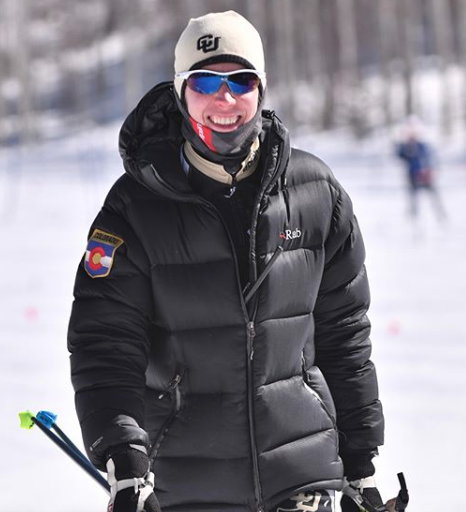
    Colorado University Head Coach Jana Weinberg smiles as she carries spare poles during a race. (Photo: Instagram screenshot @cubuffsskiing)

    A lot of what I learned was from being an athlete myself,” Weinberger explained. “Learning from my mistakes and trying to teach my athletes not to repeat the same mistakes. What I try to do with my athletes is to approach every athlete individually and see what they need and go from there. I try to make them the best that they can be.”

    Weinberger’s background in the sport meshed well with the training program Cranmer crafted at CU, which helped the two connect in both their athlete-coach and collegial relationship.

    “She came from Europe, and I had European coaches, not from Estonia but from Norway,” explained Cranmer. “Their approach is a little bit different than your standard American model, but that’s not to say that there is one model that fits all either.”

    Throughout the ten years they spent working together, coaching was a collaborative effort as they continued to fine-tune an incredibly successful program.

    “I think we worked together well and supported the team in different aspects,” said Cranmore. “Usually, you start ending up with little niches, and as we went along I started sending more things her way that I thought she could do which freed me up to do some other things, so we each kind of found our own niche a little bit and that evolved as we went along.

    “Certainly, she brought professionalism, coming from a high place race-wise from Europe to America,” he added.

    Transitioning from athlete to coach went smoothly for Weinberger. Cranmore appreciated her ability to take on new responsibilities with confidence, even in the tasks that are beyond the realm of wax bench or training plan, such as driving the team van long distances, sometimes late at night and in inclement weather – not for the faint of heart. He added that her toughness as an athlete also helped her as a coach to encourage others to step it up on tough days.

    “’It’s always cold like this!’ or ‘Sometimes the wax isn’t perfect!’ or whatever it might be,” Cranmer laughed. “So from that standpoint, I think she brought that to the team and she was open and got along well [with everyone].”

    Winning national championships with Weinberger was a highlight of Cranmer’s career and he described it as “always a special experience.” When he decided to retire, both he and alpine coach Richard Rokos, who is also the head coach of the overall CU ski program, felt that the decision to offer Weinberger his position was an easy choice.  

    “It was a pretty easy step. I knew that as long as she was interested, she would be a logical choice,” he explained. “The head coach, Richard [Rokos], who is the alpine coach, he’s been at CU for almost 30 years, so he knew Jana well also and thought that was an easy logical step. She knew everything, knew the program, she had been there for 10 years with me.”

    As Weinberger had already been contributing to the program for some time, she was able to transition smoothly into her new role without needing to alter the structure she and the athletes were accustomed to.

    “It’s been a very successful program so far, so there are not that many things that need to be changed,” she explained. “Probably more of me being a different coach than Bruce was. I definitely learned a lot from him and try to incorporate whatever I learned from my previous coaches into my own coaching.”

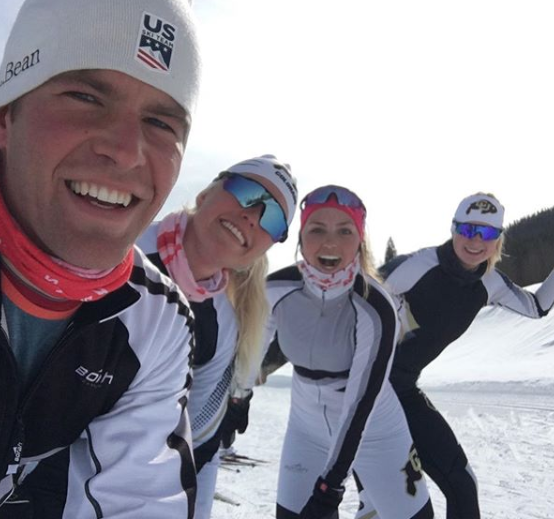
    Colorado University Assistant Coach Austin Caldwell poses with his skiers during a training session in Winter Park, CO. (Photo: Instagram screenshot @cubuffsskiing)

    Following Weinberger’s promotion, Austin Caldwell joined the Buffaloes as the assistant coach. Caldwell was team captain at Dartmouth University, then coached junior athletes at the Putney School in Vermont and post-graduate skiers at the Bridger Ski Foundation in Montana.

    The transition has been relatively seamless so far,” Caldwell wrote about Weinberger’s promotion in an email. “Bruce has an impressive legacy with the team and he set up a proven system that works for the college. Jana has great relationships with the athletes and has been at CU for many years as a skier and coach making the transition as simple as possible.”

    As Weinberger takes on new responsibilities as the team’s leader, Caldwell is finding his own niches to fill in helping to guide the team.

    “Jana and I come from different coaching backgrounds,” said Caldwell. “She has been coaching collegiate racing for many years and I have been on the Super Tour the last few years. She has a system in place that works very well and I support that and can hopefully add useful insights from my past experience.”

    The team has continued to be a powerhouse in the Pac-12 division, regularly placing athletes on the podium and in the top ten for both men and women.

    “One of the highlights [of the season] just happened in the races in New Mexico where our girls went 1 – 2 – 3 [in the 7.5k classic race] – Anne Siri [Lervik], Hedda [Bangman], and Ezra [Smith], so that was pretty cool to experience as a coach,” said Weinberger. “And overall, this season is different for me because I am the head coach and I feel more responsibility, so I’m trying to take care of the team as best to my abilities as I can. That is exciting for me.”

    Looking ahead, Weinberger aspires to lead the team to more national championships and to help other athletes achieve what she sees as the highlight of her athletic career, winning both races at the NCAA’s.

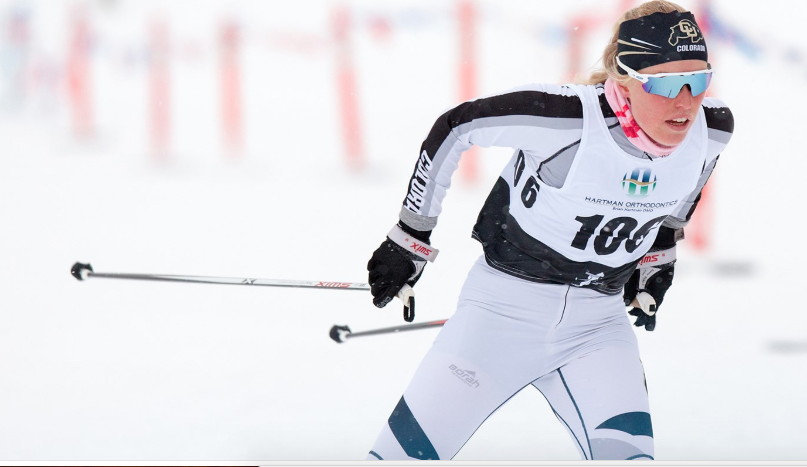
    Christina Rolandsen of the Colorado University nordic team on her way to a third place finish in the 10-kilometer freestyle race in Anchorage, AK. (Photo: Screenshot CUBuffs.com)

    “I guess I had Petra Hyncicova a couple of years ago when I was an assistant coach, she won both races, but I’m hoping in the next couple of years, one of my athletes will win both races as well.”

    She continued, “We always try to win championships, that is our goal every year. What I want to do with our nordic team is I want them to be the best collegiate nordic program in the country. So that is one of my main goals.”

    The CU Team is wrapping up their regular season racing in Anchorage, AK, and will head to Stowe, VT for the NCAA Championships at the beginning of March.