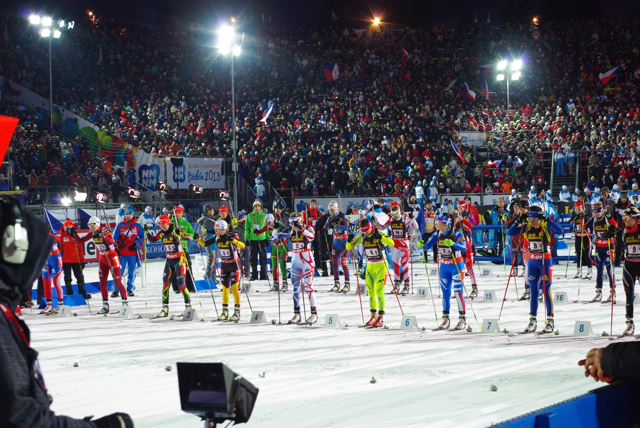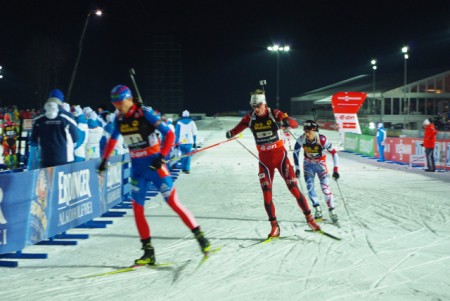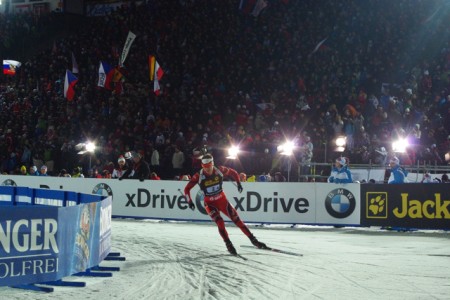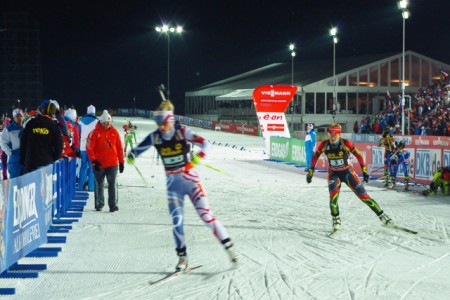
Tag: Jaroslav Soukup

  • Bye Bye Biathlon: Many Retirements After 2018 Olympic Season

    Bye Bye Biathlon: Many Retirements After 2018 Olympic Season

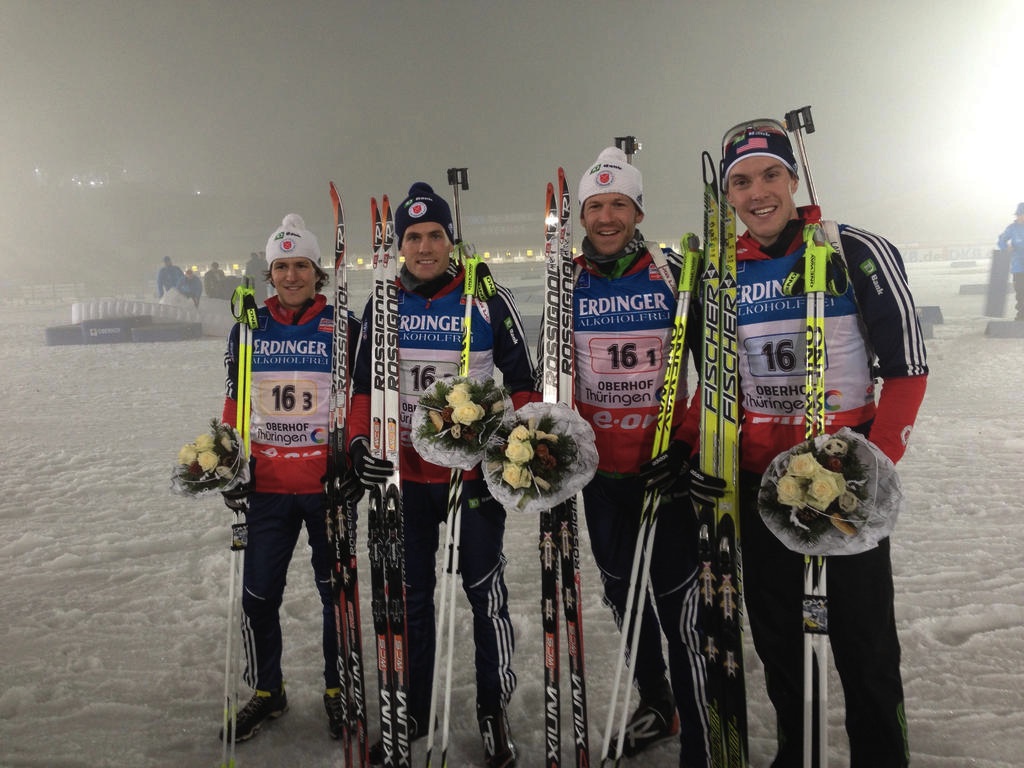
    Russell Currier, Tim Burke, Lowell Bailey, and Leif Nordgren after a fifth-place relay finish in the IBU World Cup relay in Oberhof, Germany, in 2013. Currier, Burke, and Bailey are all retiring. (Photo: USBA.)

    With the 2018 Olympics come and gone, many of biathlon’s athletes are calling it quits. Here’s a roundup of who you won’t see on the World Cup next season – and who’s still on the fence about their future.

    USA

    2017 Word Champion Lowell Bailey has long planned to retire after the 2018 season, and now that time has come. His first World Junior Championships was in 1999 and he got his first World Cup start in 2002. He raced 2003 World Championships before taking a break to go to the University of Vermont, before returning and competing in the 2006, 2010, 2014, and 2018 Olympics. His eighth-place finish in the 20 k individual at the 2014 Games are the best ever by an American biathlete. Bailey is the Executive Director of the Crosscut Mountain Sports Center in Bozeman.
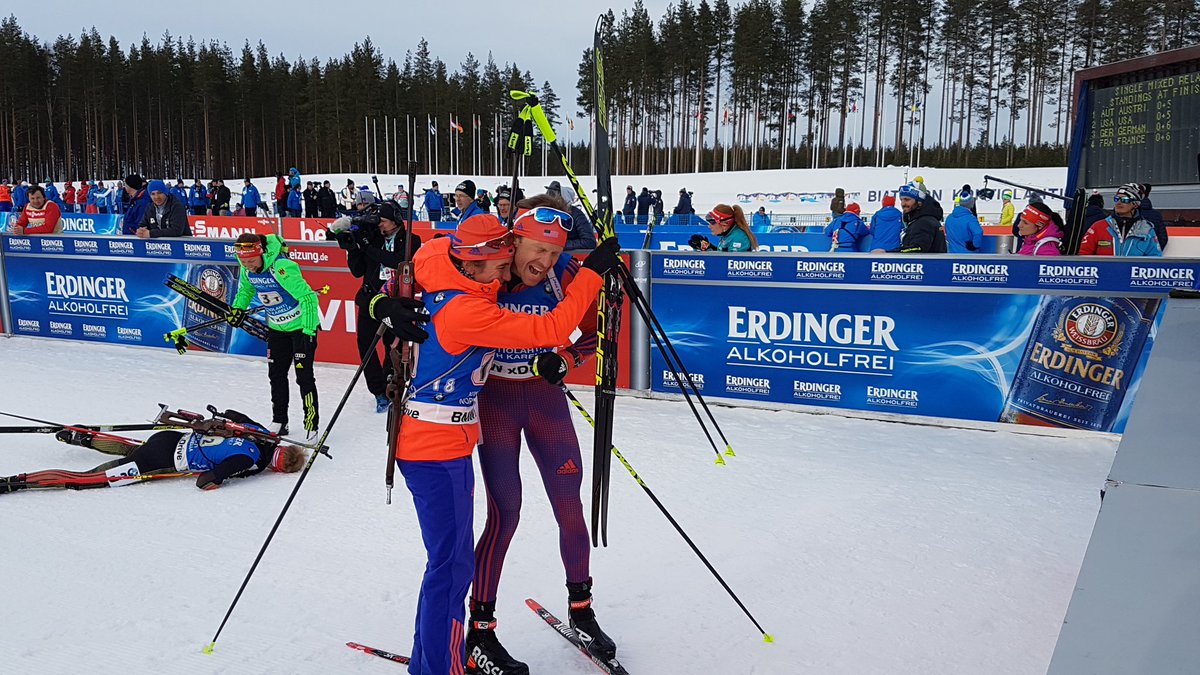
    Susan Dunklee and Lowell Bailey celebrate after finishing second in the World Cup single mixed relay in Kontiolahti, Finland, in 2017. Austria won the competition. Bailey is retiring and Dunklee is undecided as to whether she will continue racing. (Photo: IBU/Twitter)

    “I told myself this morning that I just wanted to go out on a high note,” he told FasterSkier in Oslo after leading off a U.S. relay team that finished seventh, in his last World Cup race. “I wanted to go out with a good result. And, I’m really happy to have shot clean in standing, clean from the clip in my last stage as a World Cup biathlete. That feels good. I’ll always remember that — that I went out with a clean stage.”

    Longtime teammate and 2013 World Championships silver medalist Tim Burke will also retire. Burke has six World Cup podiums to his name including that silver medal, and led the World Cup partway through the 2009-2010 season. Burke started racing internationally at 2000 Junior World Championships, and made his first senior World Championships in 2004. Like Bailey, he is a four-time Olympian.

    “It’s weird, I don’t honestly I don’t know if it’s truly hit me,” he said after the Oslo relay. “It might take weeks… I think it’s going to take a long time for all to settle in and for me to really reflect back on my career. Yeah, it’s a lot of emotion.” Burke says that his post-biathlon plans are not yet certain.
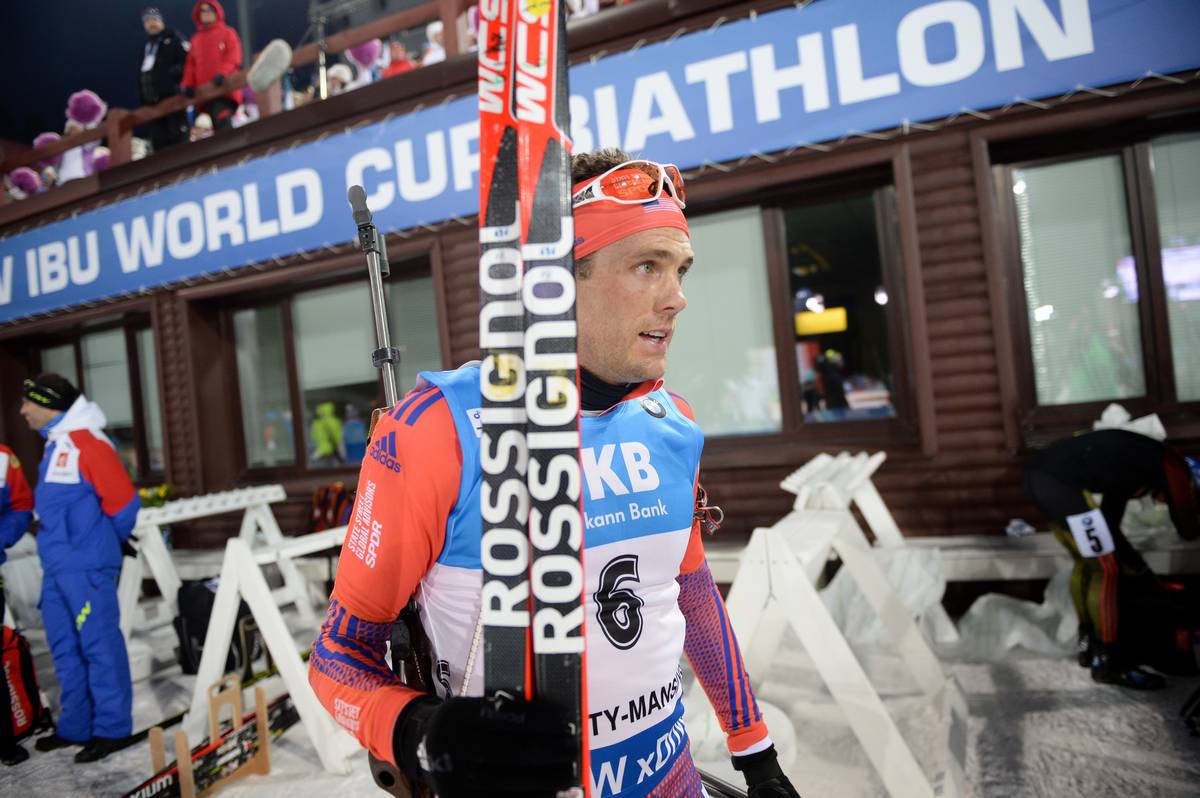
    Tim Burke after placing sixth in a World Cup pursuit in Khanty-Mansiysk, Russia, in 2016. (Photo: USBA/NordicFocus)

    Also retiring is Russell Currier, an off-and-on member of the national team and the Maine Winter Sports Center (now the Outdoor Sports Institute). Currier had two sixth-place World Cup results in 2012, and is a four-time World Championships team member. Since his World Cup debut in 2009, he has contributed to many U.S. relay efforts. He also competed at the 2014 Olympics, with a top finish of 49th, and was a member of the 2018 Olympic team though he did get any starts in PyeongChang.

    “USBA nationals will be officially be the last race of my biathlon career,” Currier wrote in an email to FasterSkier this week.

    The women’s team likely won’t see three retirements, and will thus have some more stability than the men’s crew, but there is more uncertainty regarding the women’s roster. Clare Egan wrote in an email this week that she was “Undecided!” about whether to continue racing. And in Oslo, after finishing third in the pursuit which was her last World Cup of the season, Susan Dunklee said the wasn’t sure if she would keep competing. “Ask me again in a month,” she said.

    Canada

    Julia Ransom retired in Oslo, as the 25-year-old is planning a career in dentistry and has many years of school ahead of her. “It’s just a good time for my partner and I to kind of move on,” she said after crossing the line in her final World Cup, the pursuit, hand in hand with teammate Rosanna Crawford.. “And it does feel right. It feels right.”
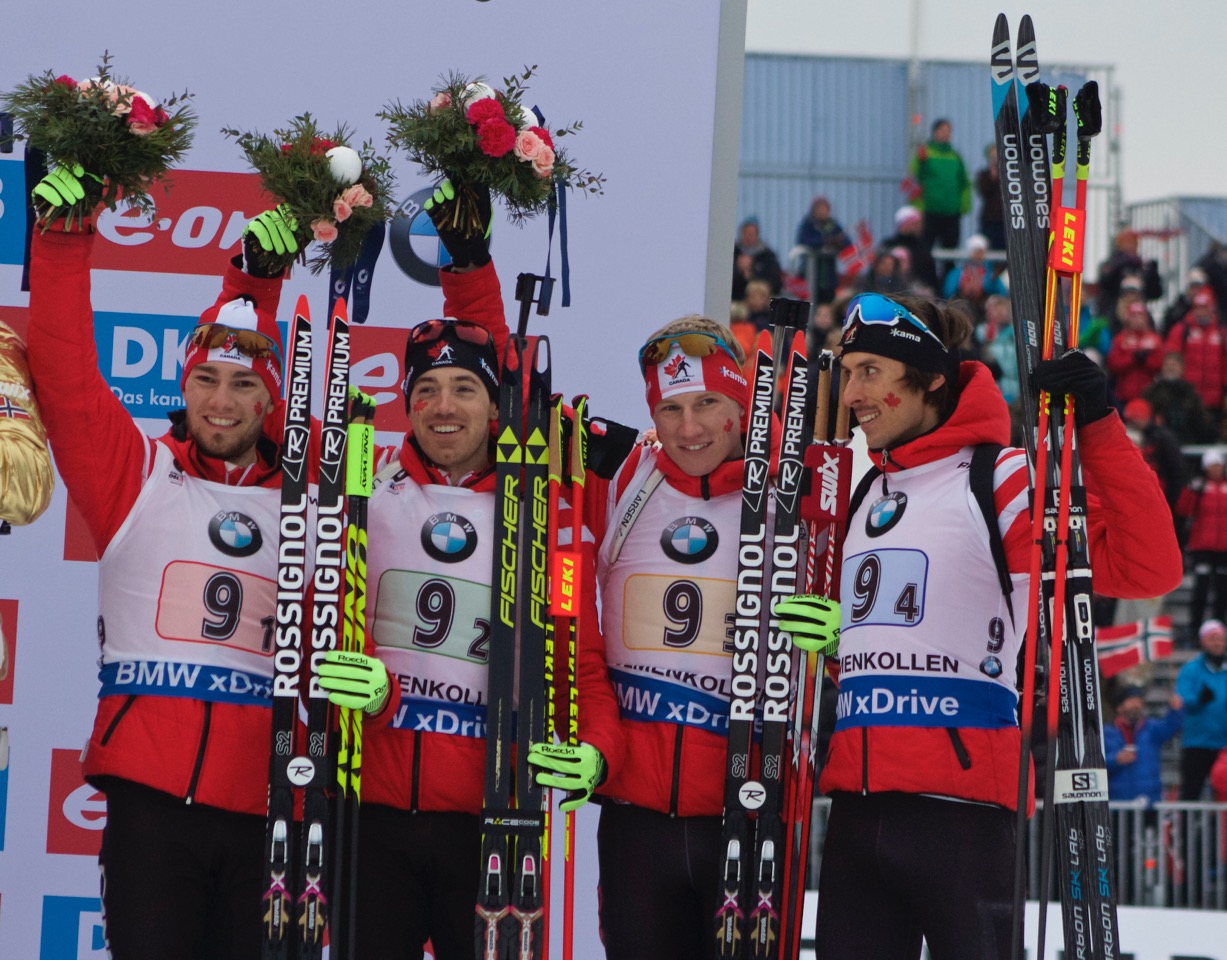
    The Canadian men’s team (l-r) Christian Gow, Nathan Smith, Scott Gow, and Brendan Green celebrate bronze in the men’s 4 x 7.5 k relay at 2016 World Championships in Oslo, Norway. Both Green and Smith are undecided on their future plans. (Photo: JoJo Baldus)

    Ransom scored two top-ten finishes at 2014 World Juniors, and made her first senior World Championships team in 2015. This season she had two top-ten World Cup finishes, and went to the Olympics in PyeongChang, where she finished 28th in the pursuit.

    She is the only one from the Canadian team who is definitely retiring, but quite a few of her teammates are on the fence and there could be huge turnover on the team depending on what they decide. That includes Rosanna Crawford and Brendan Green, even though Crawford finally bagged her first World Cup podium this season.

    “We’re not 100% sure yet,” Green said after the relay in Oslo. “Both Rosanna and I will sit on it a little bit over the spring. We will reevaluate a little bit and see what other opportunities arise. I think we both still love to race and train, and if we continue down that path I know we will still be motivated. But as of right now I’m not sure.”

    2015 World Championships silver medalist Nathan Smith – who was also, along with Green, Christian Gow, and Scott Gow, part of a bronze-medal relay at 2016 World Championships – is also unsure. He missed most of the 2016-2017 season with health issues and though he returned to the World Cup and the Olympics this year, did not perform up to his own expectations. 
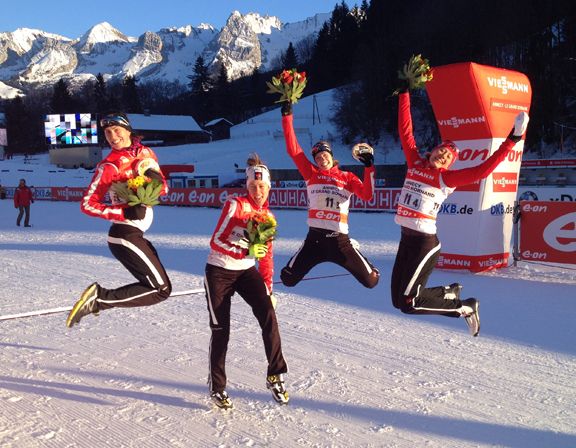
    Rosanna Crawford, Megan Imrie, Megan Tandy, and Zina Kocher celebrate a fourth-place World Cup relay finish in Annecy, France, in 2014. Crawford and Tandy may not keep racing after this season; Imrie retired in 2014 and Kocher in 2016. (Photo: Matthias Ahrens)

    I’m kind of waiting to see what happens with Biathlon Canada,” Smith wrote in an email this week. “I think some very difficult years are coming for the organization, unfortunately. That will play a big part in my, and I’m sure many other athletes’, decisions. Of course, I’m also not looking to have a continuation of the health problems over the last two seasons, which made competing at the highest level really difficult. So I will be keeping a close eye on how my body is reacting to training. If it’s still not coming around that would certainly not encourage me to continue either.”

    2010, 2014, and 2018 Olympian Megan Tandy also struggled with health issues this winter, and is likewise not sure what her future holds.

    “Originally it was my intention to retire after this season, however it was literally my worst season ever!” she wrote in an email. “I was sick more in the past 6 months than in the past two years. Anyways,  I have taken some time since the Olympics to followup about my health and to consider options for next season. I want to race a final season – one where I feel good and can put up a good fight (not necessarily results dependant, I just want to leave this sector of my life feeling like I gave it all I got), but a lot of things will need to fall into place for that to be realistic: sponsor support, coaching opportunities during the training season, and my health of course.”

    Poland
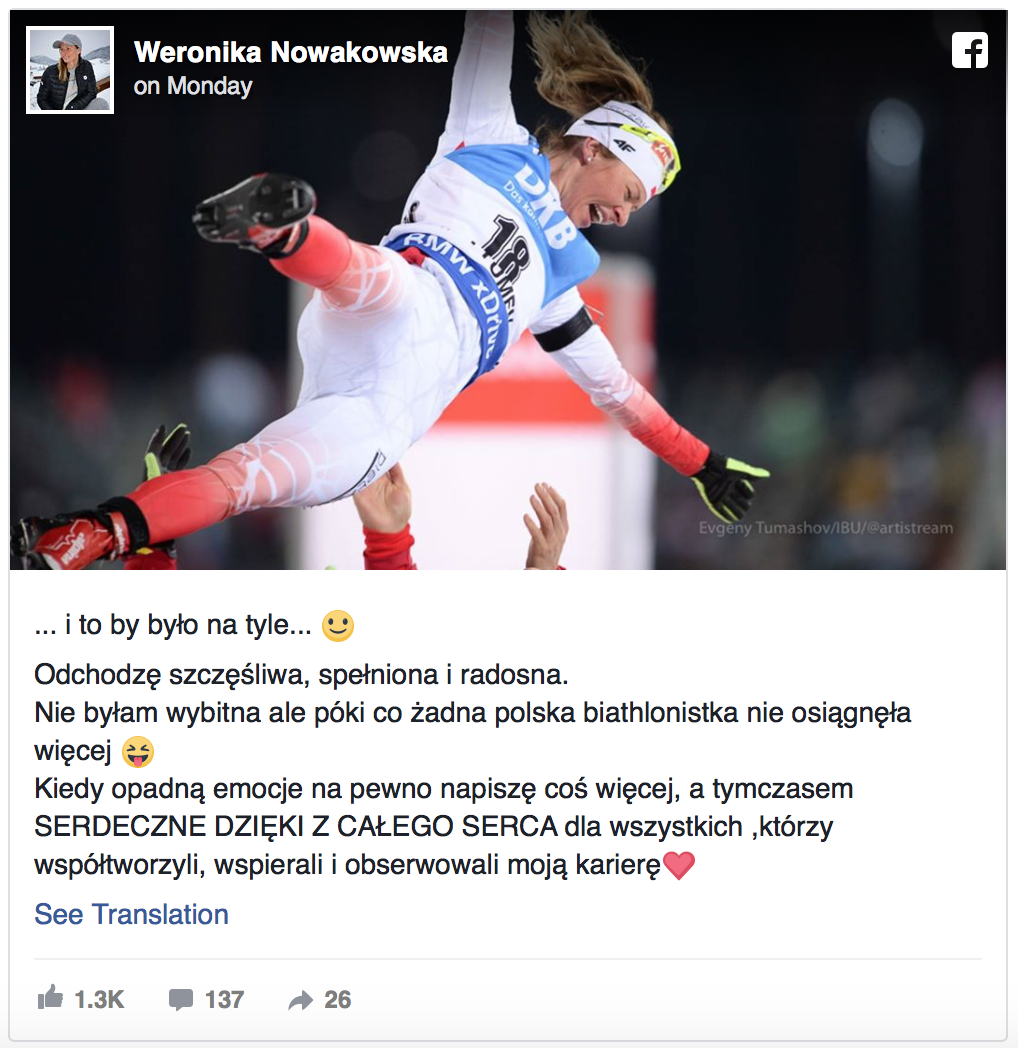
    Weronika Nowakowska is calling it a career. The 31-year-old picked up two World Cup podiums in the 2015 season before taking a break from competition to give birth to twins. She made a successful return this season and represented Poland in PyeongChang, with a top finish of 21st in the individual. She also had sixth- and fourth-place finishes on the World Cup this year and contributed to four different top-eight relay efforts, including one at the Olympics.

    “I leave happy, fulfilled and cheerful,” she wrote on her Facebook page, according to a translation. “I was not outstanding, but so far no Polish biathlete has done better”

    France

    Back in Oslo, French star Marie Dorin Habert ended her career. Dorin Habert – then simply Marie Dorin – competed in her first senior World Championships in PyeongChang in 2009, where she had a top individual finish of 18th and was part of the bronze-medal relay team. Fast forward and she had racked up a sprint bronze at the 2010 Olympics, seven World Cup wins, ten more World Championships relay medals, and four individual gold, one silver, and one bronze medal at World Championships, four of which were from the 2016 edition where she did not finish a single race without a medal.
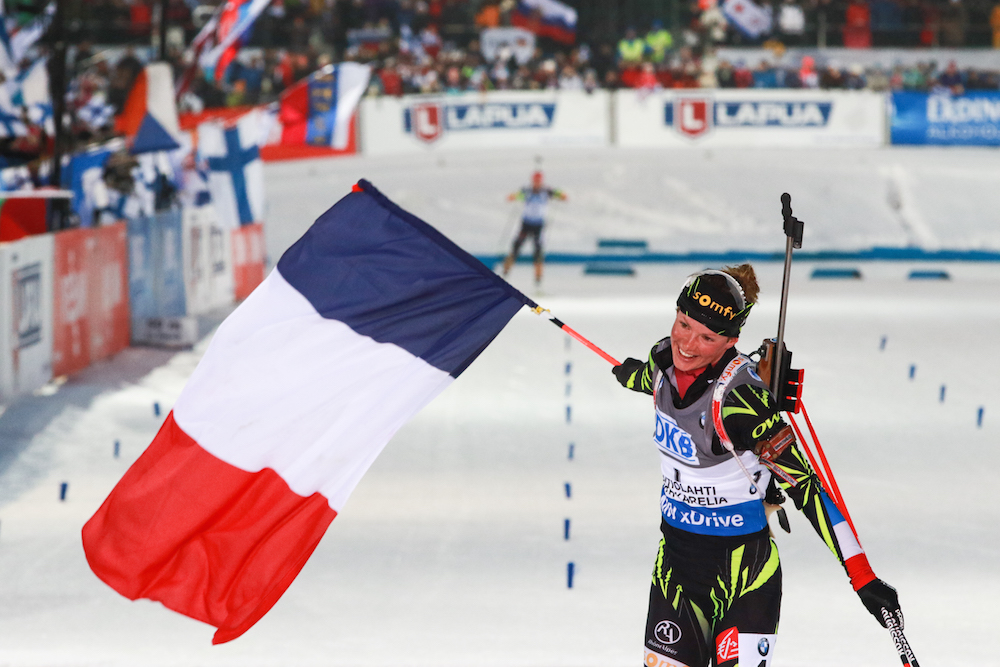
    France’s Marie Dorin Habert celebrates her second win in as many races at 2015 IBU World Championships, after taking gold in the 10 k pursuit in Kontiolahti, Finland. (Photo: Kontiolahden Urheilijat/Jarno Artika)

    She found herself back in PyeongChang for the 2018 Olympics, where, despite a frustrating season until then, she was fourth in the sprint, bronze in the women’s relay, and gold in the mixed relay.

    “It’s so nice to end this way, to share it with all of the team, and the beautiful sun, and all the French people,” Dorin Habert said after winning the women’s relay in Oslo along with her teammates. “It’s a wonderful day for me. I would like to thank a lot, well, everyone, for being there in the biathlon family. I’m really happy to have this career, and I’m really happy for everything.”

    Jean Guillaume Beatrix he told is also retiring. Beatrix was a World Junior Champion in 2009, before going on to be a five-time World Championships team member and a 2014 Olympic bronze medalist in the pursuit. He was part of three silver- and one bronze-medal winning men’s relay teams at World Championships. But this season, he did not perform well enough to make a very competitive French team for the 2018 Olympics. His retirement was “a decision precipitated by my results”, L’Equipe, according to a translation.

    Czech
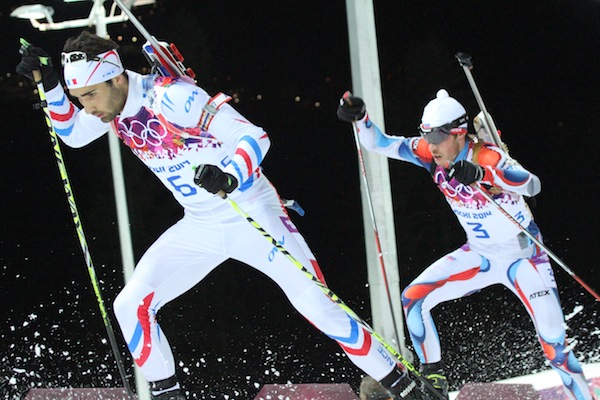
    France’s Martin Fourcade leading Jaroslav Soukup of the Czech Republic during the men’s Olympic 12.5 k pursuit at the 2014 Olympics.

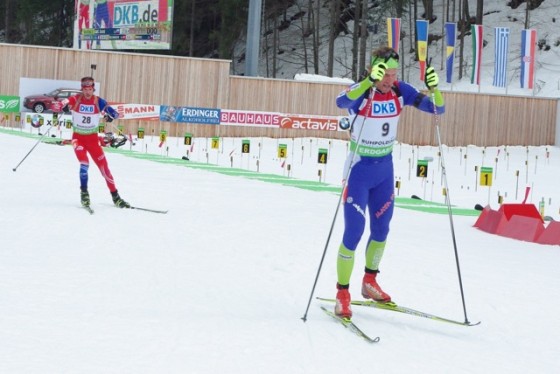
    Jaroslav Soukup, the bronze medalist in the sprint at 2012 World Championships, where he was also part of the silver-medal mixed relay team, is retiring. Later in 2012, he suffered a horrendous accident while biking, including open fractures in his arm and neck and back injuries. By 2014, he made it back and won the same medals at the Olympics that he had at World Championships two years before: bronze in the sprint and silver in the mixed relay. Soukup qualified for the 2018 Olympics but only competed in the relay, which finished seventh. He had one World Cup top-30 this season.

    Norway

    Hilde Fenne, a staple of the Norwegian women’s team, retired after the last race of the season in Tyumen, Russia. Fenne never found breakout success as an individual; she had three top-15 finishes in her career. But she was an integral part of the women’s team and contributed to numerous World Cup relay podiums, as well as the gold-medal winning women’s relay at 2013 World Championships in Nove Mesto, Czech Republic.
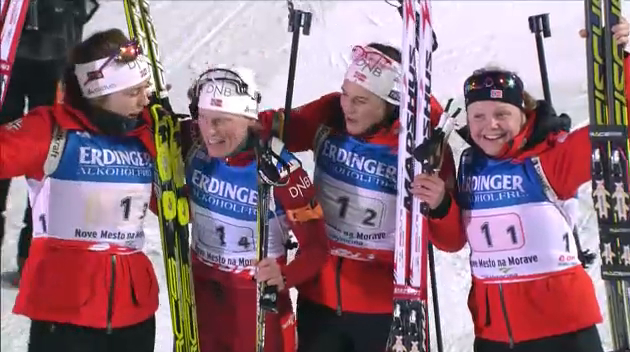
    The Norwegian women’s relay celebrates its second-ever World Championships title after winning the 4 x 6 k event in Nove Mesto, Czech Republic. From left to right: Synnøve Solemdal, Tora Berger, Ann Kristin Flatland and Hilde Fenne.

    In that final race, her teammates wrote her name on their cheeks. “She has been a very important piece for me,” teammate Synnøve Solemdal told NRK, almost in tears. “We have stayed in a lot of hotel rooms together. I’m going to miss her very much.”

    On the men’s side, there is uncertainty as to whether some veterans will stick with racing or not. One is Ole Einar Bjørndalen, who was left off Norway’s Olympic team, who for the first time since 1992 this season. And yet, the 44-year-old has not stated that he will retire, and some who know him are speculating that he may try to stick it out one more year and go out with better results than he saw this season.

    Also with no stated plans is Emil Hegle Svendsen. Bjørndalen is the winningest athlete in World Cup history; Svendsen is number four. He won the World Cup overall title in 2010, and is a four-time Olympian. He won gold in the individual in 2010 and in the mass start in 2014, after which he suffered a total collapse anchoring the Norwegian men’s relay. In the past seasons he has been off and on, and he has only won two races since then. But this season he showed flashes of brilliance, and he was third in the mass start at the 2018 Olympics as well as anchoring the silver medal men’s relay and mixed relays.
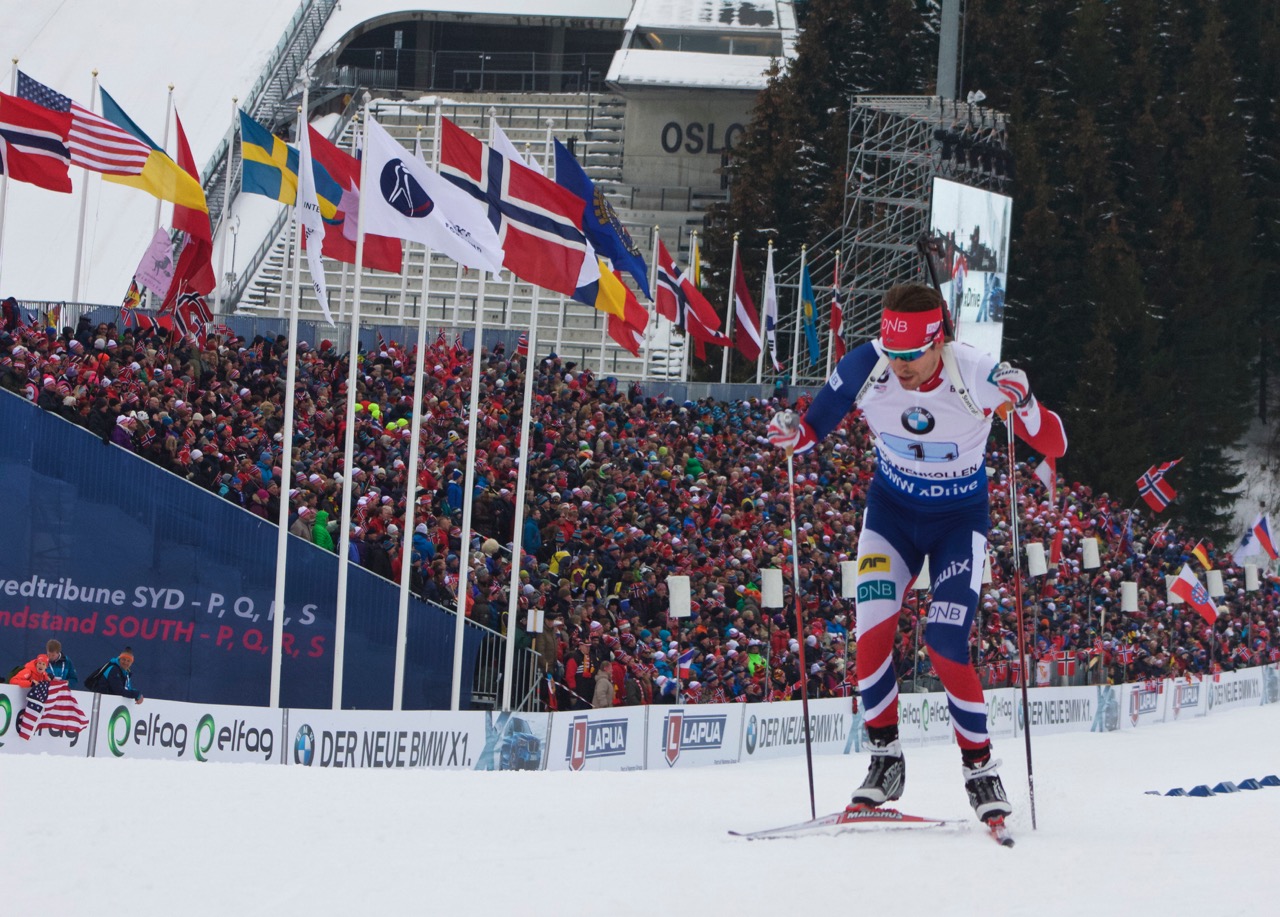
    Emil Hegle Svendsen of Norway leaves the stadium in the 2016 Holmenkollen World Cup as thousands of his countrymen cheer him on. Svendsen has not officially announced his plans for next season. (Photo: JoJo Baldus)

    “What Emil has done is absolutely fantastic,” teammate Tarjei Bø – who won the overall World Cup the year after Svendsen – told NRK two weeks ago. “He has won everything, and in addition done it several times, and he has come back again and again after being down. He has had a fantastic career and I hope he continues.”

    Finland

    She just won the overall World Cup crystal globe, but Kaisa Makarainen is not sure whether she will continue racing. In several previous years she had already discussed potentially retiring, but now she is reportedly waiting to think it over more as well as to discuss with the new team staff. U.S. Biathlon Women’s Coach Jonne Kahkonen, himself a Finn, was just announced as the new Head Coach for Finland.

    Germany

    Florian Graf, an athlete who finished as high as fourth on the World Cup in 2013 but has more recently been racing on the IBU Cup, is calling it quits at age 29.

    Several other top athletes are suspected to be considering retiring, but there hasn’t been much on the record discussion by them. Stay tuned.

  • The King Is Back: Ageless Bjoerndalen Wins Sprint, Equals Daehlie Mark

    The King Is Back: Ageless Bjoerndalen Wins Sprint, Equals Daehlie Mark

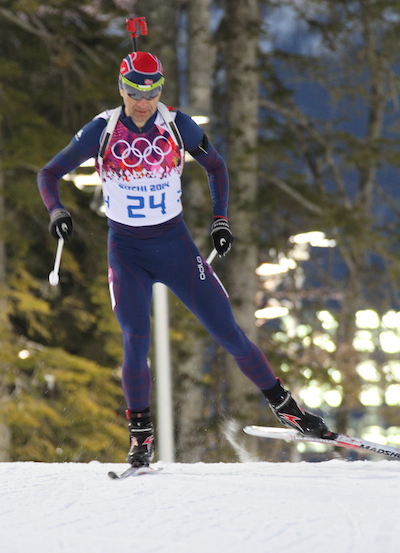
    Norwegian biathlete Ole Einar Bjoerndalen skiing to the win in Saturday's 10 k pursuit at the Sochi Olympics.
    Norwegian biathlete Ole Einar Bjoerndalen skiing to the win in Saturday’s 10 k pursuit at the Sochi Olympics.

    FasterSkier’s coverage is made possible through the generous support of Rudy Project

    SOCHI, Russia — When Norwegian biathlete Ole Einar Bjoerndalen won his first Olympic medal, Google didn’t exist.

    That was in 1998, when Bjoerndalen won gold in the sprint in Nagano, Japan.

    Sixteen years later, Bjoerndalen, now 40, won again in the same event at the 2014 games in Sochi, Russia on Saturday — earning his seventh career gold and 12th Olympic medal, besting competitors half his age over 10 kilometers of skiing and two rounds of shooting.

    Bjoerndalen’s result tied the record for the most career medals in the Winter Olympics, a mark that had been held by the Norwegian cross-country skier Bjoern Daehlie, who Bjoerndalen describes as “one of the biggest stars in Norway, and one of the biggest stars, total.”

    But there’s no doubt that Bjoerndalen belongs in that same category — and his result Saturday only solidified that standing.

    He won the race despite notching a penalty, edging out two men who ended up below him on the podium despite shooting clean — Austrian Dominik Landertinger and the Czech Republic’s Jaroslav Soukup, who trailed by 1.3 and 5.7 seconds, respectively.

    Of the 87 men in the race, Bjoerndalen was the third fastest on his skis — behind only the French star Martin Fourcade and Russia’s Anton Shipulin, each of whom also had one penalty.

    But what put Bjoerndalen atop of the podium was the combination of speed on skis with speed on the range: the Norwegian took his 10 shots in just 45 seconds. That was quicker than all but three other men, none of whom were as fast as Bjoerndalen on the course.

    “They don’t call him the king for no reason,” said Leif Nordgren, an American biathlete who finished 45th, nearly two minutes behind Bjoerndalen.

    Admiration for Bjoerndalen poured in from all sides — from teammates and competitors alike.

    “He’s been my big idol since I was 10 years old, starting with this sport,” said Norway’s Tarjei Boe.

    “He can step up to the plate and do it,” said American biathlete Lowell Bailey. “It’s pretty amazing.”

    “If there’s one guy outside of our four that I wanted to see win, it was him,” said Canadian Scott Perras, looking more than a little bit starry eyed. “Forty years old, and what an inspiration.”

    Perras recalled how the Canadians had held a pre-Olympic camp at the ski area in northern Italy where Bjoerndalen was training alone — where Perras said the Norwegian had asked workers to specially groom a meadow to prepare him for the courses in Sochi.

    “Once the normal uphill ended, they added another section,” Perras said. “You’d just see him do his loop, go back up the hill, do his loop. So it’s no wonder.”

    On Saturday, Bjoerndalen said he was worried his speed was beginning to falter in the later part of the race.

    “But in the last uphill, I had some power in my legs,” he said.

    His last Olympics, in 2010, had been moderately successful, as he earned a silver medal in the individual 20 k race, and a gold in the relay.

    In the intervening years, however, he’d struggled with illness, as well as some of the inevitable aches and pains that come with aging: he blamed a back injury in 2011 on an attempt to cut down a tree that went awry.

    (“I thought I could do it,” he said at the time. “But I got injured and lost several weeks.”)

    What kept him going?

    “Life is too short to give up,” Bjoerndalen said in a press conference after the race. “My motivation was never a problem, so I could keep on and do my training every day — and that was most important to why I am here today.”

    This season will be Bjoerndalen’s last. But before it’s over, he’ll likely have several chances to break Daehlie’s record of 12 Olympic medals.

    As of last week, he had not been promised a position on Norway’s relay team, which should win a medal barring a catastrophic collapse. But Bjoerndalen’s result Saturday should dramatically improve his chances of earning a spot, and he’ll start Monday’s pursuit in the lead.

    In the mean time, his performance in the sprint will serve as something for his competitors to aspire to, according to Perras, the Canadian.

    “Just to see him train, how focused and dedicated he was,” Perras said, referring to his time watching Bjoerndalen at the Italian ski area. “He’s just really pushing the sport, still.”

    –Alex Matthews and Chelsea Little contributed reporting.

  • Norway Wins Third Straight Mixed Relay Title, But Czech Bronze Electrifies Nove Mesto Stadium

    Norway Wins Third Straight Mixed Relay Title, But Czech Bronze Electrifies Nove Mesto Stadium

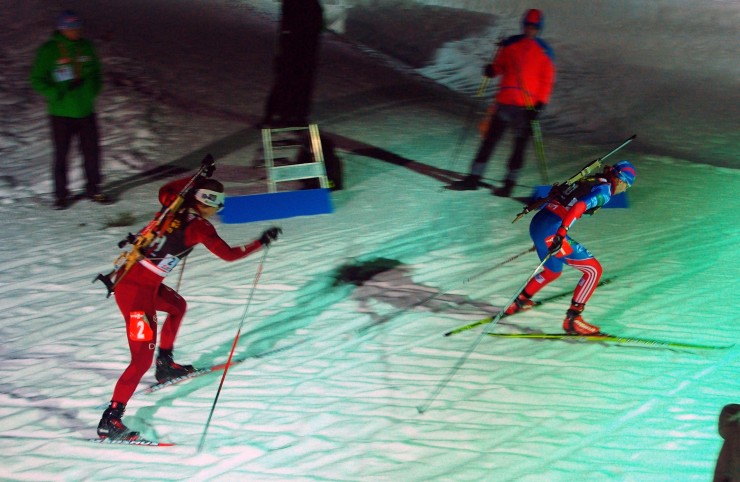
    27 teams started today's mixed relay at IBU World Championships, under the lights in Nove Mesto, Czech Republic.
    27 teams started today’s mixed relay at IBU World Championships, under the lights in Nove Mesto, Czech Republic.


    NOVÉ MĚSTO NA MORAVĚ, Czech Republic – For Norway, today’s World Championship title in the mixed relay was like a walk in the park, a simple repeat of last year’s victory.

    Except, if anything, the 2013 edition was more straightforward: there were no malfunctioning targets, no win that came despite crossing the finish line second behind Slovenia. No hiccups of any kind. Instead, Norway led nearly from start to finish, and earned a 20-second victory over the French.

    World Cup overall leader Tora Berger kicked things off with a typically flawless leg, cleaning her targets with no spare rounds and then skiing away from the competition on the final loop for a 12-second lead. Synnøve Solemdal was the only team member who put the win in jeopardy, but it was just barely: she used two spare rounds in standing and tagged off 3.7 seconds down on Olga Vilukhina of Russia.

    From there, the Norwegian men took over, starting with Tarjei Bø. He quickly caught Russia’s Anton Shipulin – Alexis Boeuf of France did too – and the lead pack cruised easily on the first lap.

    Tarjei Bø and Alexis Boeuf quickly caught Anton Shipulin; it was just the start of Russia's problems.
    Tarjei Bø and Alexis Boeuf quickly caught Anton Shipulin; it was just the start of Russia’s problems.

    Bø, the 2011 World Cup champion, had so far had a rough season that didn’t even start on time thanks to health problems over the summer, but he didn’t so much as flinch on the trails and looked to have regained his ability to dominate.

    “It was the first race this season that I feel like myself, so it was good,” Bø said after using a single spare round in the whole race. “I had some power on the uphills, and this is my strength. In January it was my weakness.”

    He handed Emil Hegle Svendsen a 12-second lead over Russia, with France a bit further back. Russian anchor Dmitry Malyshko has had a breakout season, but perhaps the pressure of anchoring at World Championships got to him, and he uncharacteristically blew it on his prone stage. After using all three spare rounds – losing valuable seconds in the meantime – he still had to ski a penalty loop.

    From that point Russia was out of the race, but their loss was a gain for France, which moved into second. Svendsen had to use a spare round in standing, at which point French anchor Martin Fourcade was on the range, but it was not enough to make much of a dent in his lead.

    In the postrace press conference, a French journalist asked Svendsen how he felt in that final stage, undoubtedly hoping to hear that the Norwegian had to focus hard to overcome his nerves as Fourcade stalked into the range, ready to pounce.

    Emil Hegle Svendsen in his element, taking the lead on the final leg.
    Emil Hegle Svendsen in his element, taking the lead on the final leg.

    But Svendsen is a big-race veteran, knows that he can respect his competitors without fearing them. No such response was going to come out of his mouth.

    “I was pretty confident,” he said. “My first five shots were quite good and I knew that I would hit the last one, so there was not so much stress… It’s always a big relief that you have the gold medal in the pocket. It was a fantastic feeling for sure.”

    Fourcade congratulated Svendsen, and said that he gave it his best, but the 30-second gap he started with was too much to close on the quick-skiing Norwegian.

    “I knew after the shooting that it would be really hard to catch him,” Fourcade said. “I tried at the beginning of the lap, but then he got a bit too much of an advantage. It was really good race – I think it is a good advertisement for biathlon and an exciting way to have the beginning of the World Championships.”

    While the win was exciting for Norway, what really electrified the sold-out 27,000-strong crowd here in Vysočina Arena was the Czech team. Every time a Czech was on the shooting range, the stadium would explode with noise for each hit and miss. Every time a Czech skier came on the video screen, the crowd would erupt again.

    The bronze medal was not exactly surprising – the team has been strong all year, with Ondřej Moravec earning two podiums and Gabriela Soukalova three, including her first win. Still, though, it was not expected to see the home team on the podium instead of the Russians or the Germans, who struggled with shooting and finished a dismal 13th.

    “The bronze medal is a pleasure for us,” Soukalova said in broken English in the press conference, visibly overcome with emotion.

    Veronika Vitkova started things off with two spare rounds in prone, and tagged off 44 seconds out of the lead. Not exactly an auspicious start when a team wants to win a medal.

    I know I made two mistakes on the first shooting, but at the end everything came together and it came out pretty well,” Vitkova said through a translator.

    Marie Dorin Habert of France leading Gabriela Soukalova of the Czech Republic.
    Marie Dorin Habert of France leading Gabriela Soukalova of the Czech Republic.

    Soukalova used a single spare before Jaroslav Soukup jumped up a few more places with one spare of his own. It was particularly good to see after the Czech racer, who earned individual bronze at last year’s World Championships, was in a horrific bike accident this summer that left him with multiple serious injuries on several parts of his body. His return for this Championships hadn’t been guaranteed, and when he said earlier this season that he hoped to be a medal contender, it seemed like a long shot.

    But aside from shooting well, Soukup had the fifth-fastest time among third-leg skiers.

    “After the accident was really hard for me,” Soukup said in the press conference. “I wasn’t thinking about biathlon. But now I feel like a normal person. I feel good and I can actually do biathlon.”

    That left things to Moravec, who capitalized on Malyshko’s shooting woes and moved into third as the Russian worked his way through spare rounds. Unlike Malyshko, Moravec was flawless on the range; he knocked down all ten targets and was especially impressive in standing, where he cleaned quickly and earned the guarantee of bronze.

    “It was such an amazing feeling,” Moravec said in the press conference of the final lap. “For us it’s like being a winner – a gold medal winner. We’re so happy. And at home in Nove Mesto, too.”

    The surprises did not stop there, as Italy placed fourth, a definite surprise; Slovenia, last year’s runners-up, were fifth and Russia limped in for sixth. The United States placed eighth and Canada 15th; stay tuned for more from those teams.

    Results

    Olga Vilukhina of Russia leading Synnøve Solemdal of Norway on the second leg.
    Olga Vilukhina of Russia leading Synnøve Solemdal of Norway on the second leg.
  • Finally, Fresh Faces on the World Championships Podium: Fak Charges Past Fourcade For First Title in 20 k Individual

    Finally, Fresh Faces on the World Championships Podium: Fak Charges Past Fourcade For First Title in 20 k Individual

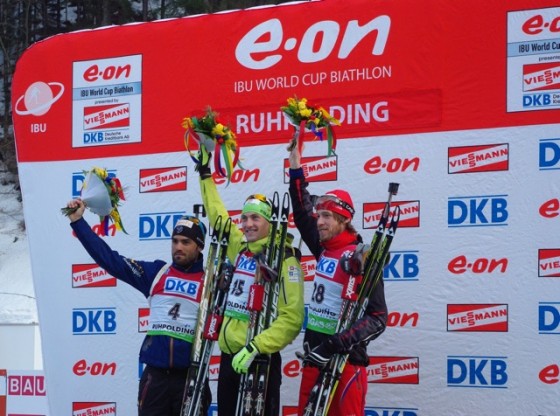
    Simon Fourcade of France, Jakov Fak of Slovenia, and Jaroslav Soukup of the Czech Republic on the podium after the men’s 20 k individual race.

    RUHPOLDING, Germany – After two straight races with Martin Fourcade emerging victorious and familiar, tradition-rich countries like Norway, Sweden, and Russia rounding out the podium, it could be easy to forget that the world of biathlon is a broad one.

    But in today’s World Championships 20 k individual race, Jakov Fak of Slovenia reminded the world that his tiny country, home to just two million people, has the talent to cut it on the world’s biggest stage – and that their silver medal in the mixed relay that opened this series was not a fluke. Fak skied to the first World Championship victory of his career by a margin of seven seconds.

    Simon Fourcade of France, Martin’s older brother, set the time to beat, starting with bib four and missing only a single shot to finish in 46:55. Accurate shooting is particularly important in this discipline, which punishes each missed shot with a minute of added time rather than a trip to the penalty loop.

    Behind Fourcade, the Slovenians were charging hard. Klemen Bauer in bib nine was clean through three stages and appeared poised to kick Fourcade out of the top spot. After missing a shot in his final stage, he ultimately finished fifth.

    World Champion Jakov Fak of Slovenia.

    Not long after, teammate Jakov Fak in bib 15 pulled into the shooting range for his final stage. Like Bauer, he had cleaned the first three bouts and was ranked first. But Fak, too, missed a shot in that last stage, leaving him 14 seconds behind Fourcade. With just a kilometer and a half to go, Fak was still down seven seconds, and a win seemed impossible.

    Fourcade, however, had faltered at the very end, and thanks to his later start, Fak knew exactly what he had to do to beat the Frenchman.

    “I had problems on the last kilometer, I lost seven seconds there,” Simon Fourcade said after the race. “My brother Martin waited for me and wanted to help me, but I said he should do his own race.”

    Perhaps he regrets that now. Martin Fourcade had started a minute behind Simon, and made up that gap on his skis. The triple World Champion, however, had his worst shooting day in recent memory, missing five shots and finishing 25th – hence the willingness to do little brotherly favor. Simon Fourcade, however, said later that he was so tired that a pull probably would have netted him only an extra second or two.

    In the end, Fak was able to attack the last kilometer and finish with a seven second lead. And despite their early bibs, the pair was able to hang onto their spots while the remaining 124 competitors finished. Bauer was bumped off the podium by Jaroslav Soukup of the Czech Republic, and Andreas Birnbacher claimed fourth for the home country.

    An exhausted Simon Fourcade approaches the finish line.

    “I think it came from good pacing from the start of the race,” Fak said of his last-loop effort. “We talked with the coaches a lot about how it was very important to pace yourself well.”

    Fak had never won a World Cup race before today, although he had two bronze medals in championship racing: one in this event at the 2009 World Championships, and one in the notoriously weather-marred sprint at the 2010 Olympics.

    Asked whether he thought that this victory would quell mumblings that those medals were just lucky, Fak said yes.

    “With this medal and the medal in the mixed relay, I have shown that I have a little bit of a talent for biathlon,” he laughed. “Now everything is going to be okay.”

    Fak has been through tough times recently, after nearly losing a finger to frostbite incurred at the Fort Kent, Maine World Cups last season.

    “I thought after the races in the U.S. that it was almost the end of my career,” Fak said. “It did not look so good. This is a very special day for me, and this medal means a lot.”

    It was a career day for Fourcade, as well, who has also never won a World Cup. He has finished fourth in this event at World Championships two separate times; in 2009 he was bumped off the podium by none other than Fak.

    “Thank you, Jakov, for bringing me just to second place this time,” he joked in the press conference. “It’s really a big feeling for me today to be on the podium. I finished two times fourth in the Championships, so when you know that it’s so close… today I really appreciate my medal.”

    Fourcade has been on a demon-slaying spree since his catastrophic collapse in the mixed relay. After finishing fifth in the sprint and sixth in the pursuit, this was the icing on the cake.

    “This medal, I give a bit of this medal to Marie Dorin [Habert] and Marie Laure Brunet, because it is because of me that they miss the medal in the mixed relay,” he said.

    Soukup, too, is a new face for the medals ceremony. He has only a single World Cup podium in his career. Like Fak, he put in a furious final loop, in his case to pass the time of Birnbacher.

    “They told me that I am eight seconds behind him, and I tried to beat him,” Soukup said. “And I did it, and it was very hard. The 20 k is a long way. I was in pain.”

    Michal Slesingr finished sixth, putting two Czechs as well as two Slovenians in the top ten. Arnd Peiffer and Emil Hegle Svendsen placed seventh and eighth, scoring a few points for the establishment, followed by a clean-shooting Sergey Novikov of Belarus and finally Fredrik Lindstrom of Sweden rounding out the top ten.

    Full results

    Klemen Bauer of Slovenia leads Jaroslav Soukup of the Czech Republic out of the range.
  • Strength and Depth From a Rising U.S. Men’s Team in World Cup Biathlon Pursuit; France’s Fourcade Dominates Again – Updated With Photos

    Strength and Depth From a Rising U.S. Men’s Team in World Cup Biathlon Pursuit; France’s Fourcade Dominates Again – Updated With Photos

    Tim Burke, healthy legs and all, en route to 9th place in the pursuit. Photo: nordicfocus.com courtesy of USBA.

    At the start of Sunday’s World Cup men’s pursuit, there was one man out in front: Carl Johan Bergman of Sweden.

    After picking up the win in Friday’s sprint in Ostersund, Swedene, Bergman had a seven-second advantage over the rest of the field. But as Friday’s victory was just the second of his career, the big question was how long the 33-year-old would be able to hang onto the lead.

    The answer, it turned out, was quite a while. After missing a single shot in the first prone stage, the wiley veteran – who has been a successful anchor on Sweden’s world champion mixed relay team, even if he hasn’t been as successful on his own – used smart strategy to stay in touch with the leaders, Martin Fourcade of France and Tarjei Bø and Emil Hegle Svendsen of Norway. It helped that the Swede had blazing fast skis.

    He also might have helped that he had a little added motivation. Bergman lives and trains in Lillehammer, Norway, and frequently sees Bø and Svendsen – who were the top two men in the World Cup rankings last year – on the trails. In Friday’s press conference he talked about how he often thinks of how he can beat them.

    For the Americans, there was one man out front, too. After placing fifth in the sprint, Lowell Bailey started the pursuit in no-mans-land, with a gap up to third and fourth and another one behind him. He spent much of the race skiing alone, but thanks to a single penalty over the course of the first three stages he maintained his position.

    Behind him Tim Burke, who had started in 12th position, was able to move up quickly. After two clean prone stages, Bailey was in fourth and Burke in sixth. Then Burke missed two shots in his first standing stage, dropping to ninth, but appeared to be skiing easily to maintain a top-ten position.

    And so, for both Bergman and the Americans, it came down to the last shooting stage – just as it does in almost any biathlon race.

    At the front of the pack, the Swede crumbled, much to the dismay of the home crowd, and missed three shots. While it might have been fatigue from skiing with the world’s best for ten kilometers, it also appeared that the wind picked up just as the front pack was entering the range. For the first time all day, the men started to miss.

    Now here's something you don't see too often….

    All, that is, except for one: Fourcade. Somehow the Frenchman managed to hit all his targets despite the wind, and became the only skier in the field to shoot a perfect twenty for twenty. As soon as he hit the final shot, Fourcade knew he had it in the bag; he turned to the crowd and waved before putting his gun on his back and hitting onto the trail with a guaranteed victory.

    As the other racers skied the penalty loop, it seemed that Bailey had an opportunity. But he couldn’t capitalize – whether it was due to wind or fatigue, Bailey missed a crushing three shots.

    “Yeah, that was a really tough end to the race,” Bailey wrote in an e-mail.

    “Up to that point I had stuck to my game plan and the race was going the way I wanted it to go. But sometimes biathlon is like that. You saw a lot of guys in the top ten struggle during the last stage today. It was a little windy and I felt a little shaky and I just didn’t have a whole lot of luck for the last three shots!”

    So while Fourcade sauntered towards the finish, losing a pole along the way, picking up a flag, and taking a bow as he crossed the line, a fight was shaping up for second – without Bailey.

    Instead, it was Norwegian veteran Emil Hegle Svendsen and Czech racer Jaroslav Soukup who were battling it out. While Svendsen is no Northug, he does have an impressive sprint, so Soukup – who like his countryman Lukas Bauer is a skinny mountain biker – knew he would have to try to break the champion early if he wanted to beat him.

    But breaking Svendsen is something that is easier said than done. It’s practically impossible. Soukup put in a surge on the course’s biggest hills, and seemed to gain a small lead. But it wasn’t large enough to create separation between the two and Svendsen caught up on the downhills. Soukup again tried to pull away coming towards the stadium, but he couldn’t drop the Norwegian.

    In the end, the pair started a sprint finish, but Soukup gave up, knowing that he would not beat Svendsen to the line. Instead, he eased up and raised his hands in celebration – while he would have preferred a second-place finish, it was still his first World Cup podium.

    “It is beautiful to be up here on the podium,” Soukup told IBU News after the race.

    Bailey in no-mans land. Photo: nordicfocus.com courtesy of USBA.

    Burke, meanwhile, had only missed one shot, bringing his total to three penalties. He was able to maintain his ninth-place position all the way to the finish for his best result of the season so far. It’s also better than he managed last season, when he was suffering from compartment syndrome.

    A surgery during the off-season made all of the difference to his skiing, Burke said.

    “My legs are feeling great and I have had no problems with my shins during the races,” he wrote in an e-mail. “The sprint race here was incredibly icy, which would have given me huge problems last year. This was a great test and now I am really looking forward to what I can do when I am in my best form. Today I had the fourth fastest course time and this is something that would not have been possible last year.

    “It feels great to be back on track.”

    The third U.S. athlete in the pursuit, Jay Hakkinen, skied up from 39th to 24th after collecting only two penalties.

    “I stuck to a basic race plan of skiing with those around me and then shoot my way forward, and that was effective,” he wrote in an e-mail.

    With Hakkinen showing that he can consistently turn in results like his 18th-place finish from Thursday’s individual race, it was one of the best days for the U.S. men in recent history.

    “I don’t remember ever having three Americans in the top 30, but I also am not surprised,” Bailey told FasterSkier. “We have all trained hard this season and I have 100 % trust in our coaches and the training plan they outlined starting in April. Overall it is a great start to the season.”

    Burke echoed that sentiment.

    “This was definitely the best team results we have ever had since I have been on the team,” he wrote.

    While the men have each individually had standout performances, they have struggled to stay consistent from season to season and from race to race. In the past decade, it has seemed that no more than one U.S. man can excel at a time.

    But that’s changing.

    “I think the biggest difference is that we now have a team with a lot of racing experience,” Burke said. “It can take a long time in biathlon to become comfortable with shooting when the race is on the line.  We now have a team where every member has solid World Cup experience.”

    While Bailey was frustrated with the end of his race today, he knew that his effort meant good things for the future – and that he had gained some of that valuable experience near the front of the race.

    “I’m still happy with a 13th place,” he said. “I was able to ski with the top guys in the world all week, and I am really encouraged by this and looking forward to next week’s competitions in Austria.”

    Hakkinen felt similarly.

    “[The result] shows that I have a good level… I am pleased I put in some strong performances,” he wrote.

    Next week’s races in Hochfilzen, Austria will include a relay, something the Americans are looking forward to given their recent results. But Hakkinen warned against getting overconfident.

    “We are simply doing the work we trained to do,” he said. “For example, that all three of us cleaned prone today is a ‘work in progress’ towards improving our overall shooting percentage. I do not think any of us are thinking about what the relay result we will be, we just want to keep skiing well and hit each individual target.

    “We still have work to do before we can call it confidence.”

    * * *

    Canadian Brendan Green started just behind Burke, in 14th position, but his race quickly went in a different direction. While he was able to ski well in the first lap, he missed a shot in his initial prone stage and then two more in the next stage, sealing his fate of dropping out of the top twenty.

    “For sure I was a little disappointed with the race, as I had a the perfect opportunity to build off my sprint result,” Green wrote in an e-mail. “I definitely had a tougher time on the range today. I used a more cautious approach in prone with the hope of maintaining my position early on so I could be more aggressive in standing, but that didn’t play out so well. I picked up too many misses early on – apparently the missed shots were just on the edge.”

    After missing two more shots in his final standing stage, Green wound up 32nd, a performance he called “mediocre.”

    But with the 18th-fastest ski time of the day, there were definite bright spots for the Canadian.

    “Overall I’m definitely pleased with the weekend,” he said. “In past years I’ve struggled with the season opener, so to match my best performance in the sprint and score points today is definitely a confidence booster.

    “I’m hoping my best shape is still to come and I’m looking forward to the rest of the season.”

    Full results

    Bailey on the range. Photo: nordicfocus.com courtesy of USBA.