From the FasterSkier archive — posts syndicated from athletes’ and coaches’ own blogs between 2004 and 2012, kept online as published. Current coverage is at fasterskier.com.
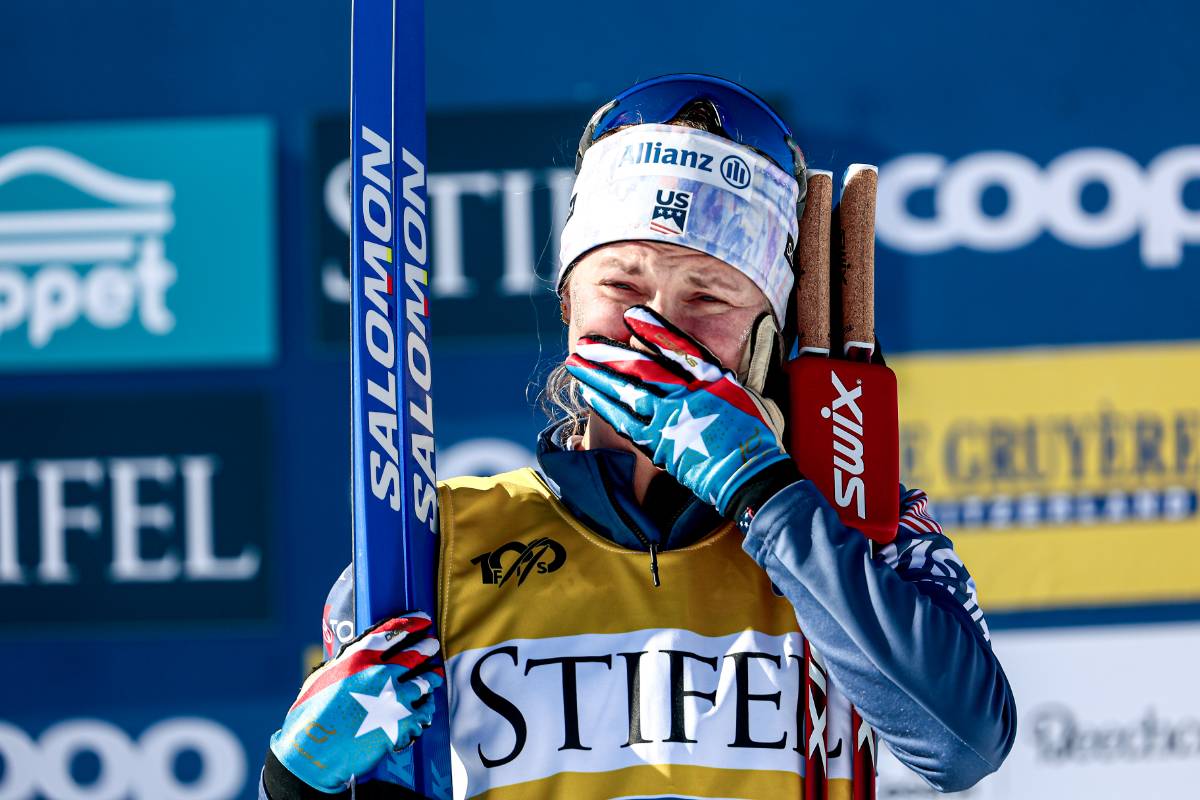
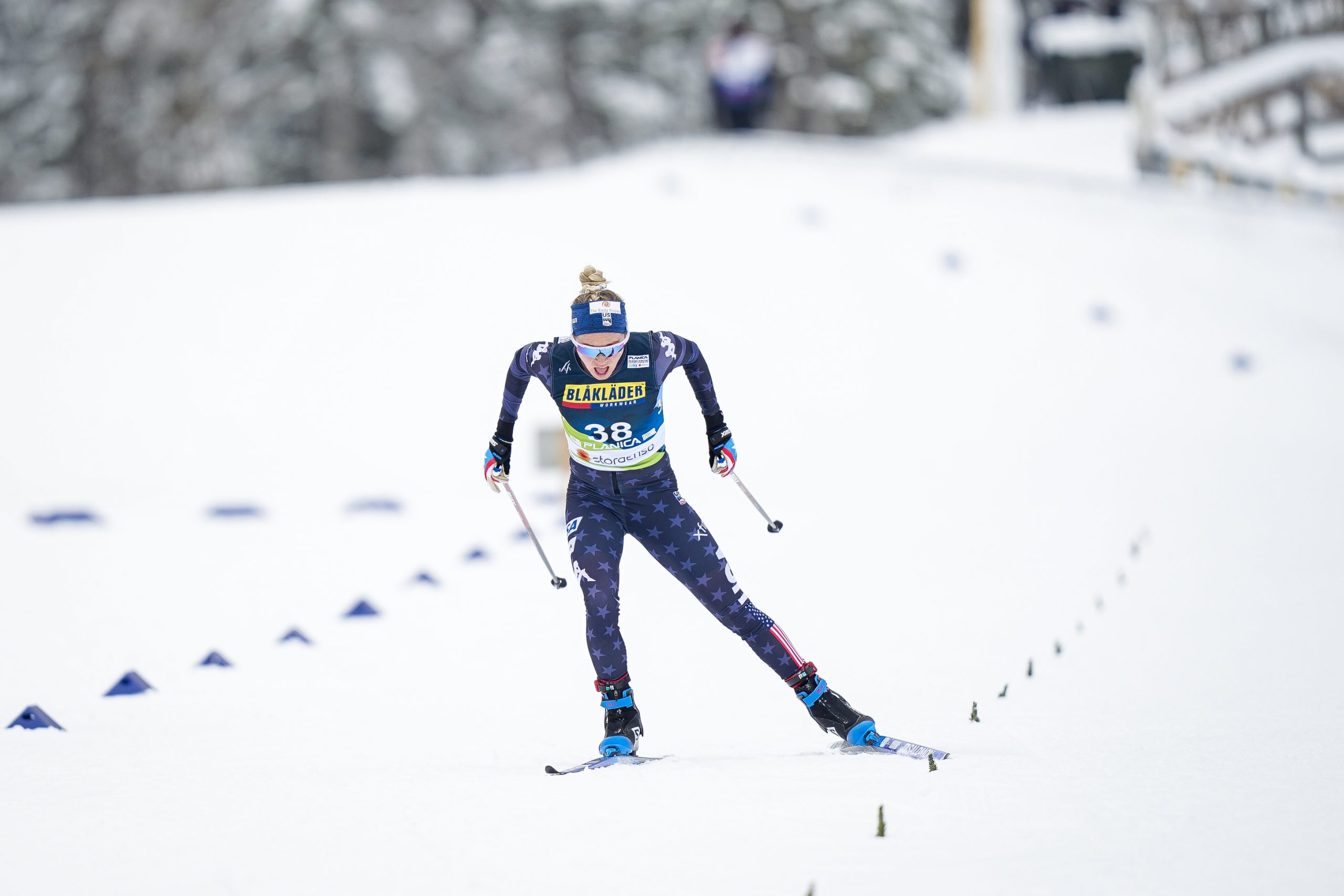
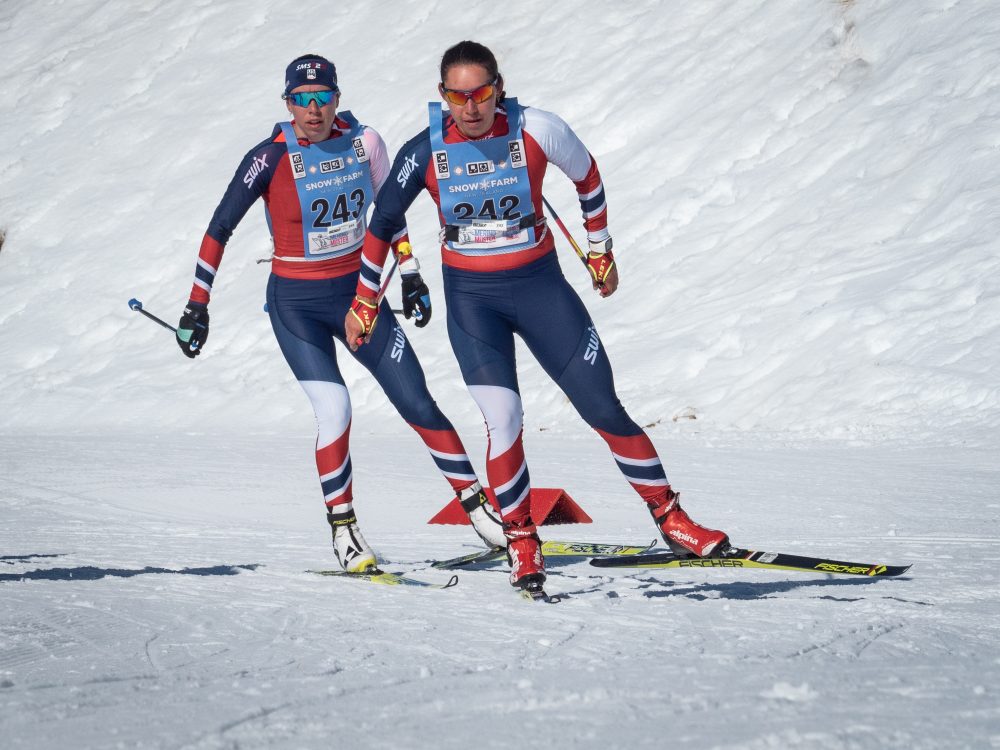
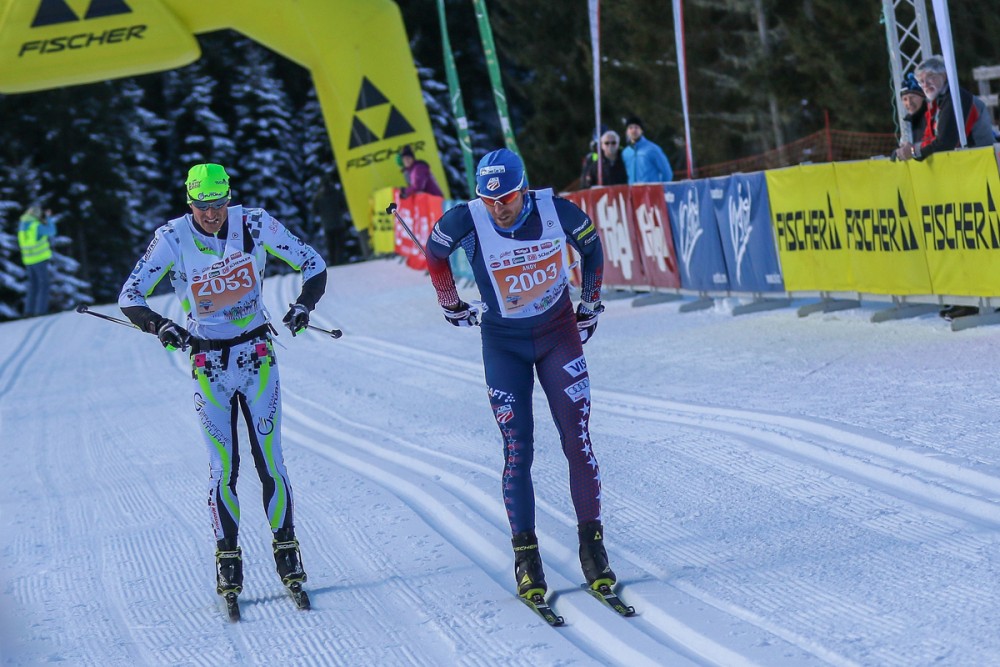
Jessie Diggins, left, racing at the Olympics in Italy on Saturday. (Davide Barbieri/NordicFocus)
Two years ago, U.S. cross-country skiing star Jessie Diggins was battling a relapse of an eating disorder — an episode that she publicly acknowledged at the time.
What she didn’t share until now, though, was how close it came to derailing a year in which she won cross-country skiing’s season title and celebrated the return of the top-level World Cup circuit to the U.S., in her home city of Minneapolis.
In the middle of that winter, Diggins was still struggling enough that she went in for a scan in Norway to assess her body composition. The results, according to her longtime coach Jason Cork, were “shocking,” with too many red flags — so many that U.S. Ski Team staff was prepared to stop her from racing.
The previously undisclosed mid-season ordeal is featured in a new documentary about Diggins, “Threshold,” which will premiere nationally at the end of the Olympics.
The film doesn’t cover the specifics of what the body scan revealed, other than that important indicators were off.
It depicts Diggins’ subsequent improvement, with support from family members who traveled to Europe to be with her during a scheduled Christmas break from racing.
But the documentary also underscores how persistently the eating disorder continued to plague Diggins after it emerged in her teens — through revealing conversations between her, her coaches and the filmmakers taped in hotel rooms as she traveled across Europe for races.
Jessie Diggins runs through a tunnel in a scene from the movie. (Brinkema Brothers Productions)
The U.S. Ski Team announced the film’s debut in a press release last week.
Diggins is a longtime advocate for destigmatizing eating disorders through public discussion, and she’s written about her fight with bulimia in her autobiography, “Brave Enough.” She said at a news conference in Italy just before the start of the Olympics that she decided making the movie would be worth the cost to her privacy.
“I’m willing to put my story on the line to help change this,” she said. “I hope that it inspires people to have really critical conversations that can end up actually saving lives. And I hope that it inspires coaches to learn more about these serious illnesses and have resources handy to help the athletes that are under their care.”
The documentary’s release on the Peacock streaming service will be the culmination of three years of work by a pair of young cross-country ski racers-turned-filmmakers, brothers Torsten and Lars Brinkema, who, like Diggins, grew up in Minnesota.
TV and movie star Patrick Dempsey, a Diggins fan and an avid skier, is an executive producer.
“Close to the edge”
Torsten and Lars Brinkema were 24 and 20 years old, respectively, when they first showed up at a U.S. Ski Team spring training camp in Oregon in 2023, Torsten said in a phone interview.
They’d come to film at the invitation of U.S. star Ben Ogden, whom Torsten had raced against on the university circuit when Ogden was competing for the University of Vermont and Torsten was at Colby College.
Unlike other videographers who had done work with the team in the past, the brothers could actually keep up on skis and knew how to stay out of the way — making for an easy camaraderie with the athletes, Torsten said.
“I think we just weren’t very intimidating,” he said. “We were just these guys that were hanging out in the sun with our cameras.”
Lars and Torsten Brinkema (Brinkema Brothers Productions)
On a ski with Diggins near the end of the camp, Torsten said, they talked through possibilities for further filming, particularly around Diggins’ upcoming home World Cup race.
“I think she also felt a level of trust pretty soon with us because we’re from Minnesota,” Torsten said. “On both sides, a light bulb kind of went off, thinking: If there’s any season to follow, it’s got to be this one.”
Thus began an odyssey that took the Brinkema brothers around the world with Diggins and the team, through a training camp in New Zealand and races in northern Scandinavia, Canada and Minneapolis.
They considered other ideas for the structure of the project, including a Netflix-style docuseries on the team; a broader focus on the whole international World Cup circuit; and a narrative strand documenting Ogden grappling with the death of his father from cancer.
In the end, though, fitting together an Ogden and Diggins narrative was too much for one movie, Torsten said.
“We ended up picking Jessie’s and really going all the way with it,” he said.
While Diggins had spoken publicly about her relapse before the start of the 2023-2024 season shown in the film, the documentary reveals how she continued to struggle not just in the summer and fall but through the winter — even as she was racking up podium finishes.
One coach, in the film, describes how Diggins had previously warned him about her ability to hide when she’s not doing well — and how he couldn’t trust what she was telling him at the time.
“She got very close to the edge,” Chris Grover, the U.S. cross-country program director, said in an interview. “It was incredibly stressful.”
In the film, another coach said the U.S. staff warned Diggins she was not going to continue to ski.
“A hard message was delivered from a lot of people that really care about her,” Grover said in the interview.
But Diggins, he said, “got the message.” She spent the holiday recovering with her family and “did what she had to do to get back to a healthy space,” Grover said.
After positive results from bloodwork and a bone scan, Diggins returned to racing after the winter break, won the Tour de Ski stage race and then went on to stand on the podium in one of the World Cup races in Minneapolis.
Jessie Diggins stands on the World Cup podium in front of her home crowd in Minneapolis. (Nordic Focus)
The filmmakers ended up with more than 15 interviews with Diggins, all of which were at least two hours — and 400 hours of footage total, Torsten said.
Dempsey, the actor, joined the project after Diggins, knowing he was a fan of hers, sent him a message on Instagram on the Brinkema brothers’ behalf. They didn’t expect a response, Torsten said, but “he got back to her two minutes later and said, ‘Send the brothers to Maine!’”
“We showed up at his house and asked him to be a producer to help us navigate the film world,” Torsten said.
To pay for the work of transforming the raw material and race footage into a fully produced documentary, the brothers raised tax-deductible contributions in partnership with a Minnesota nonprofit that supports local filmmaking. Key financial support also came from one of Diggins’ main sponsors, an eating disorder treatment clinic called the Emily Program.
Diggins had approval power over the final version of the film, which Torsten described as “part of the trust” during the filmmaking process. She watched four different versions over a period of six or so months, mainly giving small notes about things like voiceovers, Torsten said.
Beyond streaming on Peacock, he said, a theatrical release is also planned, with hopes of debuting at this year’s end-of-season World Cup races in Lake Placid, New York. There’s also hope that the movie could play in markets in Europe, where Diggins has a sizeable fan base.
“It’s been three years of our life, and we could not be more proud that our debut feature film is about this sport that we grew up doing and this person that we’ve looked up to our whole life,” Brinkema said. “We’re stoked.”
We wanted to let you hear straight from the medalist’s mouth. So we’re posting these short interviews Nat did yesterday with World Championships gold medalist Jessie Diggins and her coach Jason Cork.
We’ll be back later today with coverage from the 15-kilometer men’s race. Stay tuned, and email us at devon@fasterskier.com and nat@fasterskier.com.
Convened for the first time since the pandemic, USSS’s biennial coaches National Coaches’ Symposium brings focus to US Skiing’s progress, and highlights the ever-evolving nature of the sport.
U.S. Ski and Snowboard Development Team Coach Greta Anderson encourages athletes during the men’s 30k distance race during the 2022 U.S. Cross Country Championships in Soldier Hollow. (Photo: Tobias Albrigtsen / @untraceableg)
Last held in 2019, the US Ski and Snowboard’s National Coaches’ Symposium has traditionally provided insight into program priorities and training philosophies of those coaches working directly with the US Ski Team. With in-person conventions having been interrupted by the Covid pandemic, this season’s re-convening of the two-day Coaches’ Symposium represented a welcome return to the dialogue that has typically benefitted the Nordic skiing community. The virtual venue ostensibly helped reduce attendance costs for coaches, but also spoke to a key theme of accessibility and collaboration touched on as a strength of contemporary US skiing throughout the conference.
Friday
U.S. Ski Team head coach Matt Whitcomb (right) and Julia Kern course-side during the 4 x 5 k mixed relay amidst the 2021-2022 World Cup Finals in Falun, SWE. (Photo: NordicFocus)
Friday’s program began with an introduction from US Ski Team Sport Development Director, Bryan Fish. “There’s 138 people on the call right now,” Fish said, which reminded attendees that the audience was larger than could have fit into the Center of Excellence in Park City where previous symposiums had convened. There was much important information that presenters were to convey, and many eager listeners had gathered to hear it.
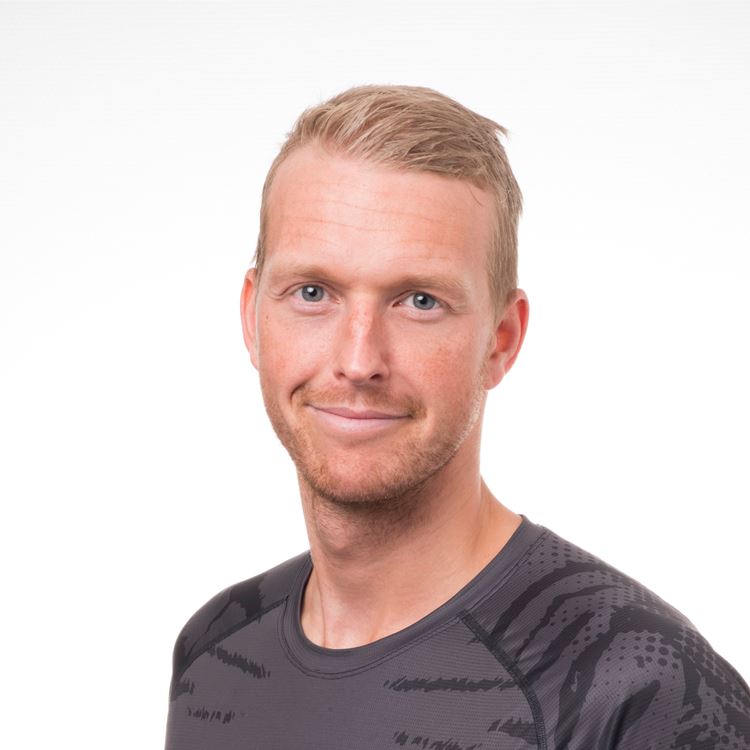
Dr. Hans Kristian Stadheim
Friday’s keynote speaker was Dr. Hans Kristian Stadheim, the current British National Team Endurance Performance Director, and a coach long-renowned for his intricate and scientific approach to endurance as it specifically applies to nordic skiing. As Matt Whitcomb commented in his introduction of Dr. Stadheim, “when you’re at the World Cup, Hans stands out as the one who’s really digging into what makes [ski training and racing] work.”
Hans Kristian Stadheim, current Director for the British National Ski Team. (Photo: Courtesy Image).
Stadheim’s presentation, “The Norwegian training method and experiences working with British team,” discussed the evidence behind current trends in nordic ski training, including the principles behind Norway’s dominance that Stadheim applied to building an elite program in Britain. He used his coaching with Simen Hegstad Krüger (NOR) as a case study for pointing out the training trajectory that the Norweigans follow for fostering a skier from junior to Olympic champion. The big takeaway from this example was that, “[The Norwegian] method is a gradual increase in training load with stress on limiting high volume at an early age.”
That point fueled a lively Q and A facilitated by Matt Whitcomb, which focused on implications for coaches working with junior and college athletes. Stadheim—along with useful addendums from Whitcomb—provided thoughts on balancing Threshold and VO2 max work, recovery metrics, and fitting individualized training into a team environment. Key recommendations included:
Intensity work for juniors should focus heavily on increasing VO2 max.
Recovery should be gauged dynamically using analytical tools and athlete perception.
Building a national program requires retention of a robust base of athletes from the junior level through to higher levels of competition.
The remainder of Friday’s program featured discussions and demonstrations by medical and training staff members of the US Ski Team. Jen Kimball and Tschana Schillier, alongside Luke Jager, demonstrated mobility and strength movements that target particular weaknesses seen in cross-country athletes. Dr. Heather Cichanowski and Dr. Tod Olin detailed the medical community’s interest in the high occurrence of respiratory issues among competitive skiers, chiefly asthma and vocal cord dysfunction. Then, Jessica LaRoche wrapped up the program with a talk on athlete wellness.
Saturday
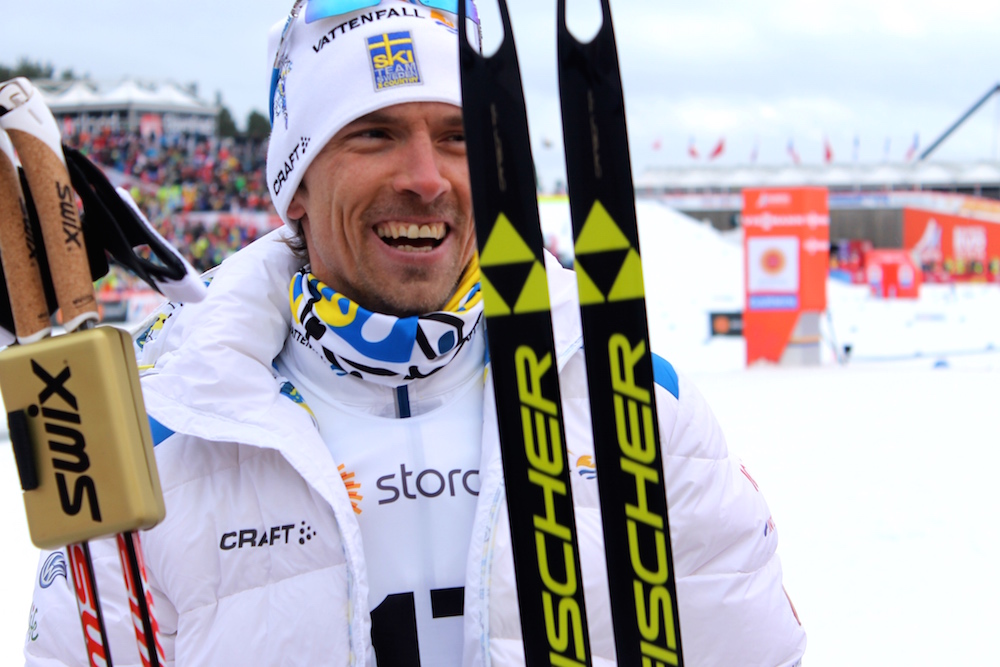
Johan Olsson smiles after winning the 15 k freestyle at the 2015 FIS Nordic World Ski Championships in Falun, Sweden. (Photo: NordicFocus).
Johan Olsson
Saturday’s presentations began with a keynote from Swedish skiing legend Johan Olsson. Since his retirement in 2015, Olsson has developed a career as a TV contributor to Swedish National Television’s (SVT) ski coverage. From a career that included fourteen Olympic and World Championship medals (2nd only to Gunde Svan in the history of Swedish skiing), Olsson shared anecdotes that illustrated breakthroughs in his approach to ski racing, with a special focus on mental preparation. Olsson’s career took place prior to the detailed focus on mental preparation and wellness in training that are common at the elite level today. His anecdotes, therefore, illustrated an innovative individual approach that soon saw parts become common in competitive skiing today.
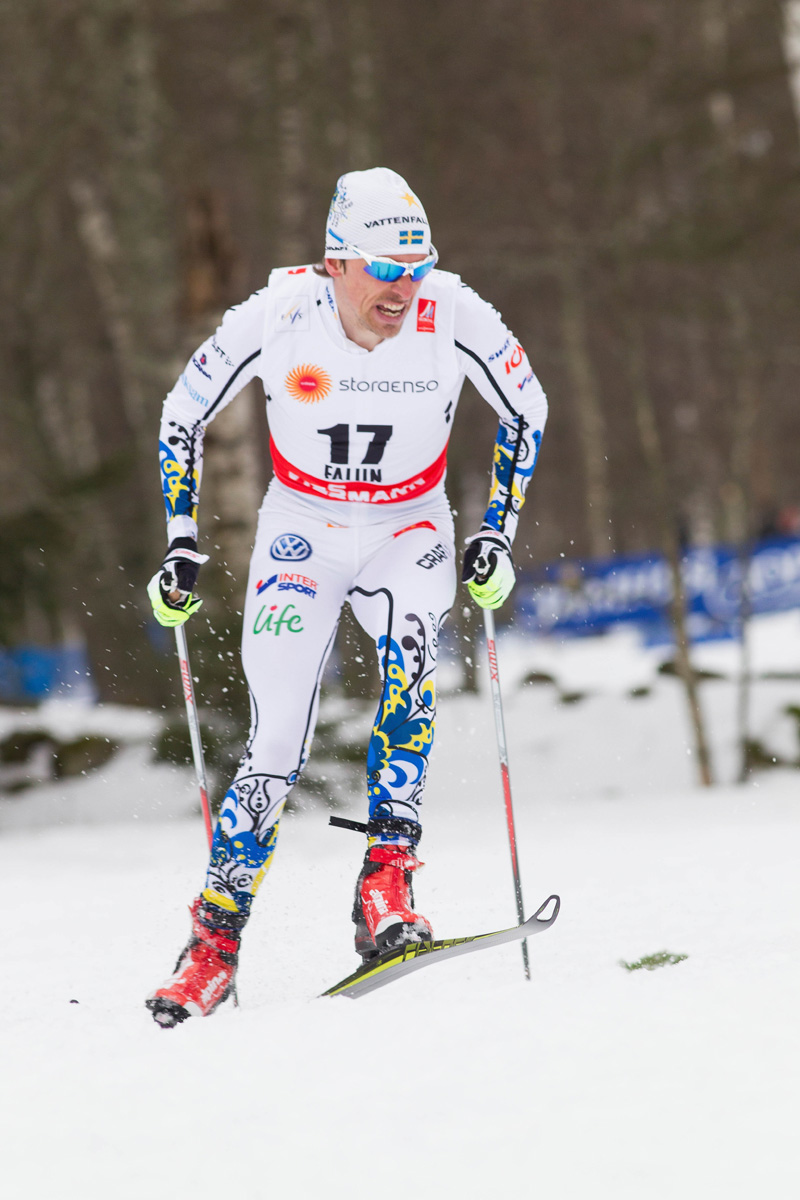
Johan Olsson during the 2015 World Championships in Falun, Sweden. Olsson won the 15 k skate in Falun. (Photo: NordicFocus)
In one anecdote, Olsson detailed how his development of a dedicated mental approach to racing grew out of his own treatment for anxiety. After a disappointing 15k Classic at 2009 World Championships, Olsson’s wife Anna (also an accomplished Swedish skier) prescribed a self-imposed grieving period for him. “You have until 6pm tonight to be sad,” she said. “But then you will come to dinner and be the same positive Johan you always are.” Olsson popped in a cassette tape of “the saddest Neil Young songs I could find” and went about devising psychological strategies not unlike those found in Sport Psychology books today. A year later—at the 2010 Vancouver Olympics—Olsson’s charge in his relay leg saw Team Sweden win Gold in the event for the first time since Calgary in 1988. It was the culmination of a persistent application of techniques he had devised while wallowing in the saddest songs of Neil Young who—in an ironic twist—was seen passing through the crowd while Olsson stood atop the Olympic podium. Full circle, indeed.
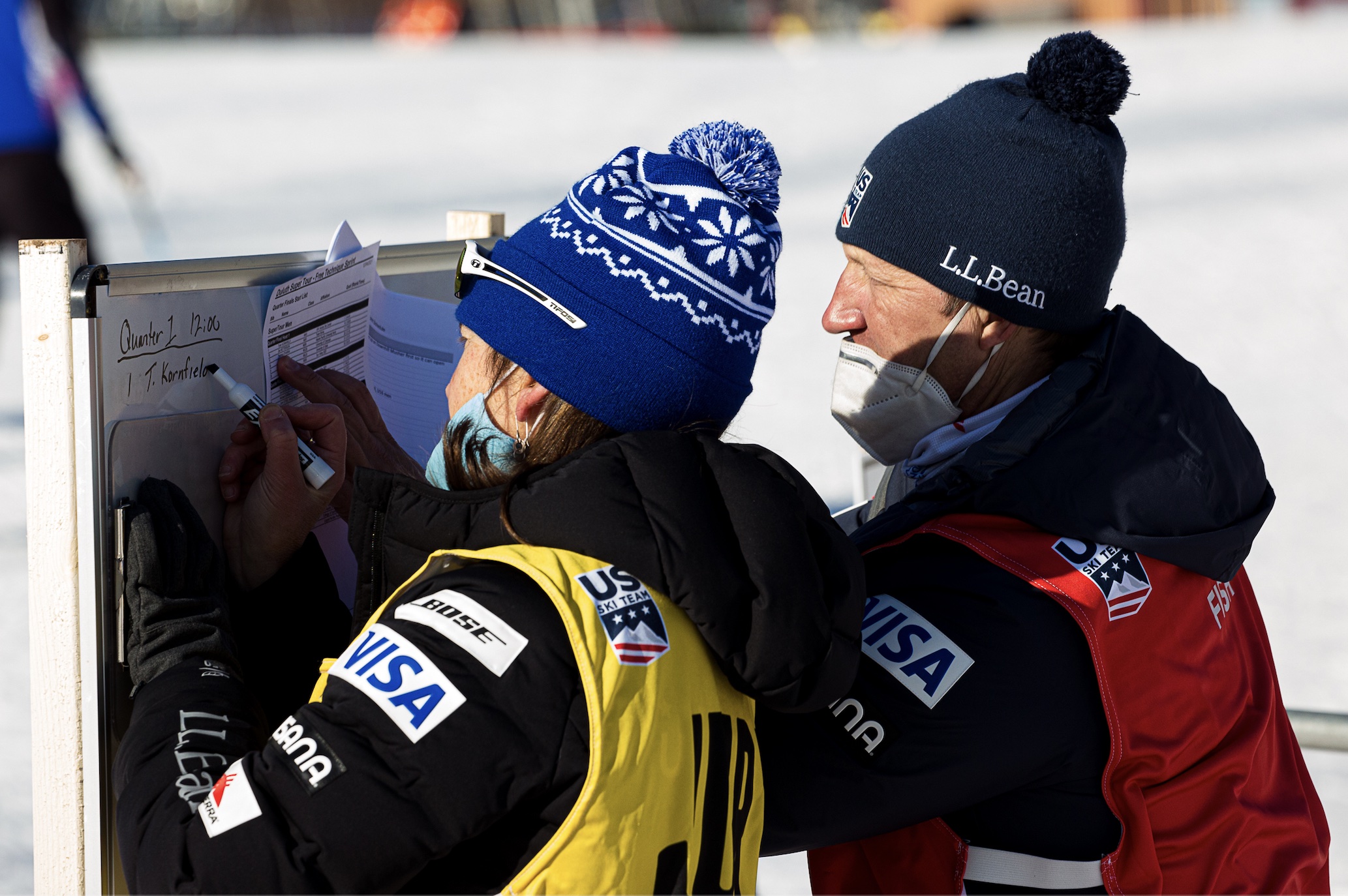
Bryan Fish
Bryan Fish described trends in training and development philosophy on which he and US Ski and Snowboard are currently focused. Fish’s presentation implicitly conveyed the strong progress US Skiing has made, as well as identifying next steps. Strong points identified include a philosophy towards “not training the most, but training really well,” an emphasis on strength training, and a spirit of collaboration among US Ski Team programs, local clubs, and regional associations.
Bryan Fish, U.S. Ski and Snowboard Sport XC Development Manager, at a SuperTour in Duluth last December. (Photo: Jordan Woods/Woods Creek Productions)
Greta Anderson
What Bryan Fish had described as US Ski Team’s “holistic approach” was a continued focus during Greta Anderson’s presentation. Anderson spoke in detail on the number of athletes being reached by international trips, national training/elite groups, and regional elite groups. She further emphasized the ways each region uniquely incorporates its ski resources into this developmental program. For example, Eastern collegiate coaches played active roles in the Eastern/Midwestern U16 camp. In the Midwest, Team Birkie pros and U14 Dream Camp both expanded the region’s Regional Elite Group camp to more skiers. Anderson reiterated that these types of partnerships with clubs and programs feeding the US’ national development pathway were likely to continue. Matt Whitcomb quickly followed with an appeal to mobilize the US skiing community through the National Nordic Foundation, which will hold its annual Drive to 25 from November 21st-25th this year.
US Ski and Snowboard Cross Country D-Team head coach Greta Anderson supports athletes during the Sun Valley SuperTour races in January. (Photo: Tobias Albrigtsen / @untraceableg)
Jason Cork
In the final presentation of the symposium, Jason Cork narrowed US skiing’s development focus from the entire system to just one athlete: Jessie Diggins. In a candid and entertaining talk that considered the ethereal mix of trust, knowledge, and competence required in the coach-athlete relationship, Cork delved into the minutiae of training numbers, and how data derived from Diggins’ training logs reveals pertinent information about peaking. He rattled off Diggins’ history-making results in a casual tone, while being much more serious about the types of workouts, training cycles, and long-term trajectories that led to World Cup Overall wins and Olympic medals. Those accomplishments would tend to suggest that American skiing is doing things right, and that this symposium was a valuable opportunity to describe the knowledge, the practice, and the craft of bringing those performances about.
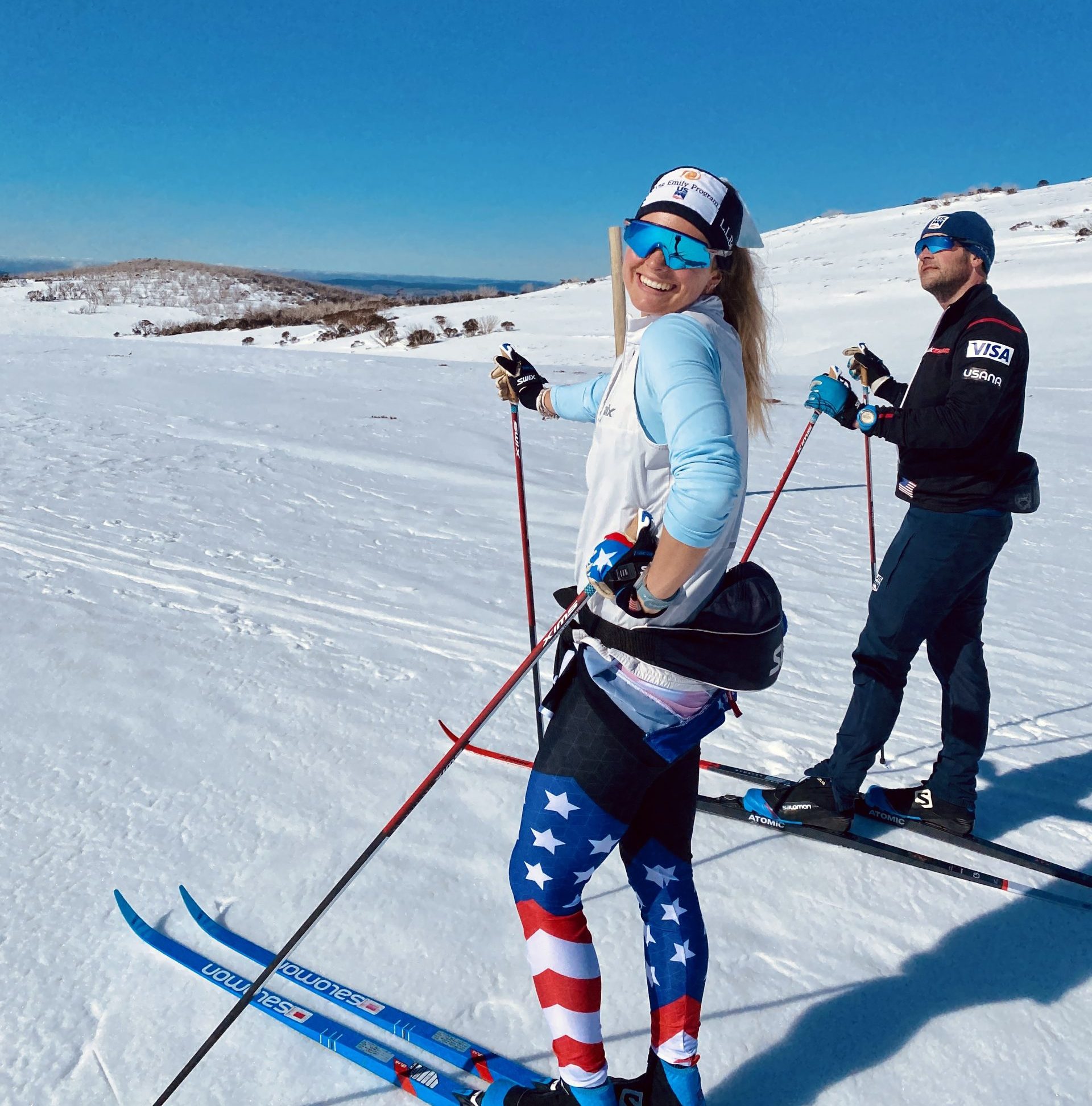
Jason Cork and Jessie Diggins out on a sunny day in Australia last August. Cork has worked with Diggins for 12 seasons, stretching back to their time on the CXC Elite Team. (Photo: Julia Kern)
“Let’s let this knowledge radiate out to our athletes,” said Bryan Fish in closing out US Ski and Snowboard’s first-ever virtual coaching symposium. It was a call-to-action that resonated on Zoom screens across America, leaving a whole community of coaches ready for the demanding season to come.
You might imagine traveling from the U.S. to Australia as being an arduous marathon of flights- and it is- but as Jessie Diggins points out, it turns out to be about the same length of journey time as the U.S. Ski Team makes annually when heading to Ruka, Finland for the first World Cup of the season. “So in my head, I was ready for it to be like this crazy long, super hard travel,” said Diggins, “And then I was like, well, actually, this isn’t any harder than what we do every single fall. So I really thought it wasn’t that bad. I mean, yes, it’s a super long flight, but overall, it’s only three flights.”
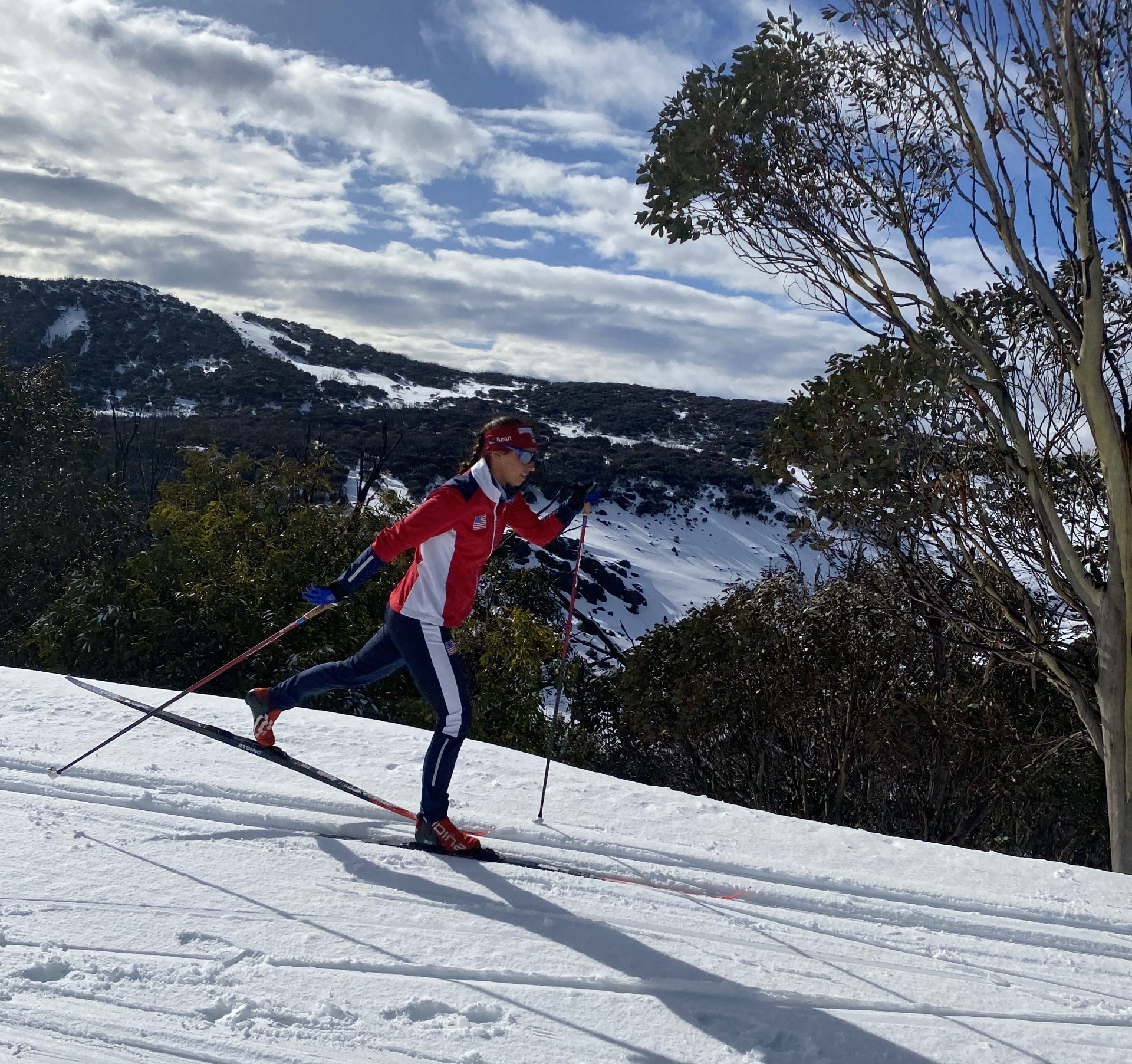
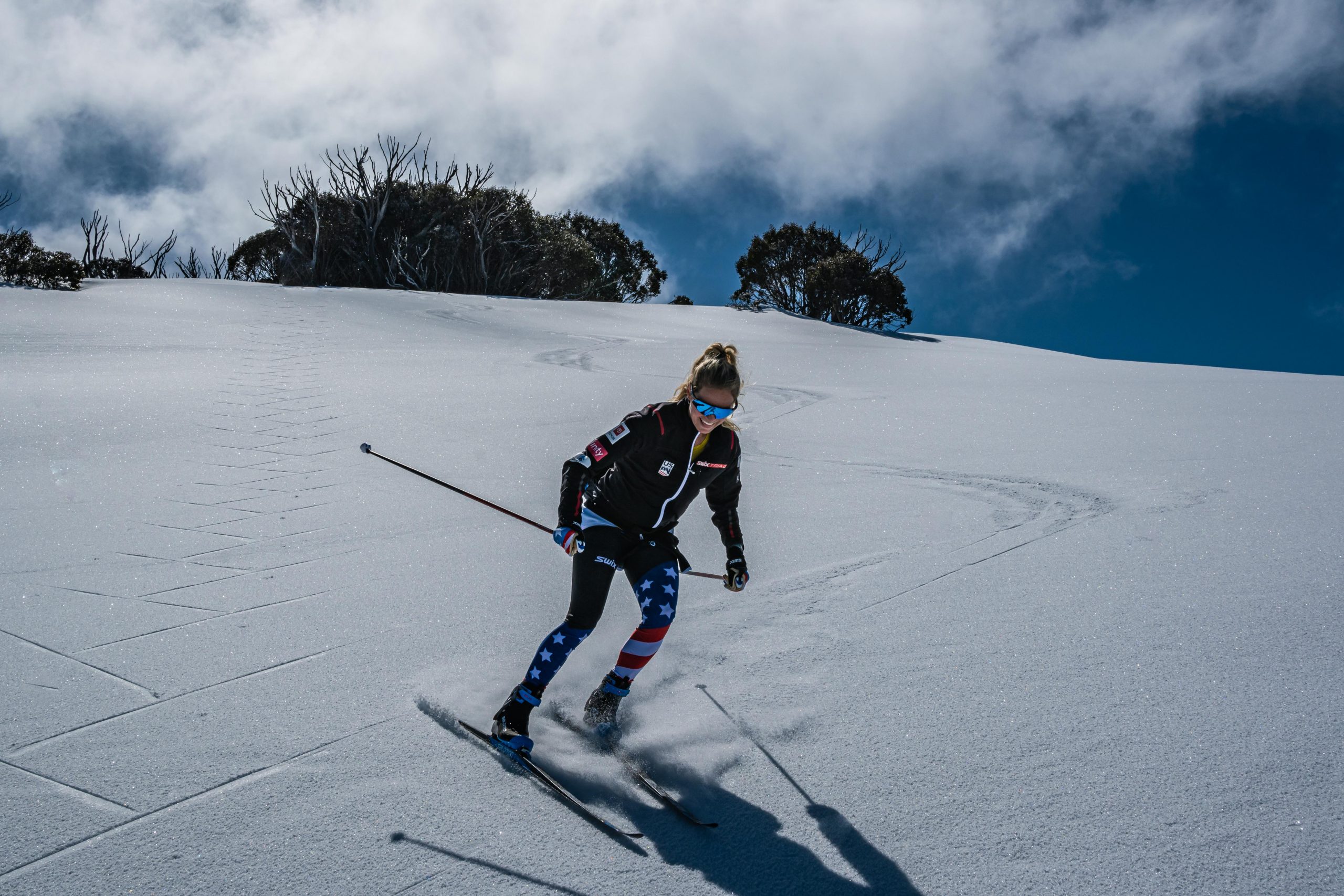
Diggins, along with teammate Julia Kern, and coach Jason Cork, made the trip “down under” for three weeks of snow skiing at the Falls Creek cross-country center. This August, the U.S. Ski Team has been operating with a bit of a divide-and-conquer strategy, as coaches Matt Whitcomb, Greta Anderson and Kristen Bourne took six athletes to Scandinavia, Kern and Diggins found skiing elsewhere. As Whitcomb explained, “We weren’t able to fit it into the budget to have a bunch of people go down to New Zealand or Australia,” thus the separate trips.
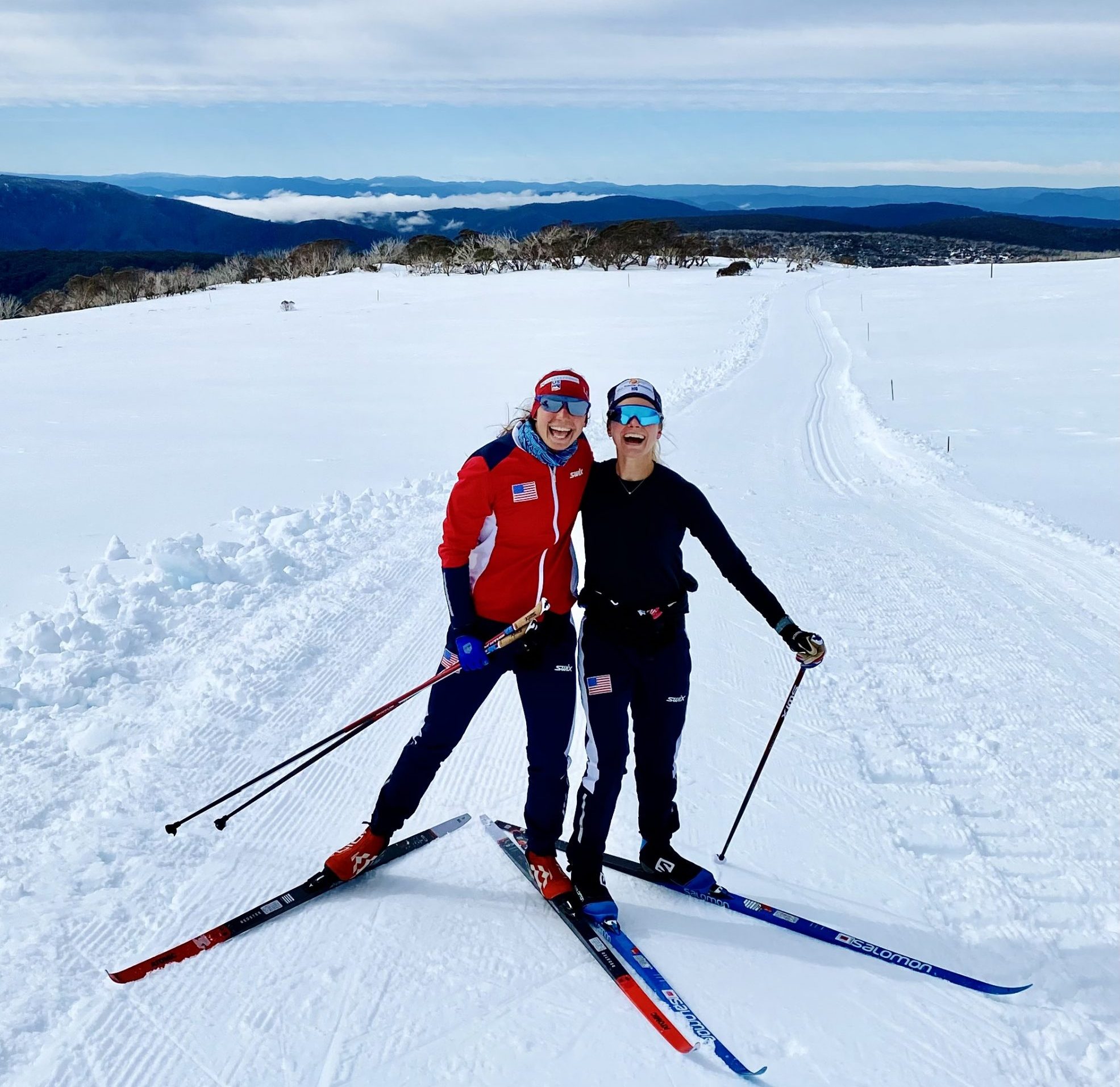
Julia Kern and Jessie Diggins at the Falls Creek trail system in Australia (photo: Julia Kern)
Historically, the U.S. Ski Team has spent time on snow at the Snow Farm, in New Zealand, staying at a lodge just feet from the ski trails. But, as Diggins explained, the lodge shut down during COVID and has yet to reopen. “[That] makes it less desirable because it was going to be a long drive up,” Diggins said, “So we thought, we’ve never tried Australia and we’ve heard Falls Creek has amazing skiing… so we thought this would be a good year to try something new and I’m really glad we did. It’s really cool because it’s hard to get the feel for a place unless you get to actually go to a camp there. So this has been really neat.”
In Australia, the crew is staying in the town of Bogong, about a 30 minute drive from the Falls Creek trails. “I want to say a huge thank you to the Australian National Team and Finn (described as the Chris Grover of Australia), between him and Cork, they found us a really nice cabin situation,” said Diggins.
Evening near Bogong, located in north east Victoria, Australia, where Kern, Diggins and Cork are staying (photo: Julia Kern)
With something like 300 turns on the road between Bogong and Falls Creek, Diggins and Kern have been using the Birkebeiner Ski Club clubhouse to hang out in, between two-a-day ski sessions. “[They’ve] been super kind and gracious letting us hang out in the clubhouse,” said Diggins, “So we have a warm place to just chill for a couple hours.”
For both Diggins and Kern, this is their first time visiting Australia and the Falls Creek trail system. “There’s a lot of corners, and I think they say about 60 k of skiing or so,” said Kern, “There’s a lot of terrain out there and in general, pretty gradual and rolling. There are some big loops- there’s like a 12 or 14 k loop that we skied this morning, then there’s some more steeper hills near the beginning. So we’ve been able to find terrain for just about everything.”
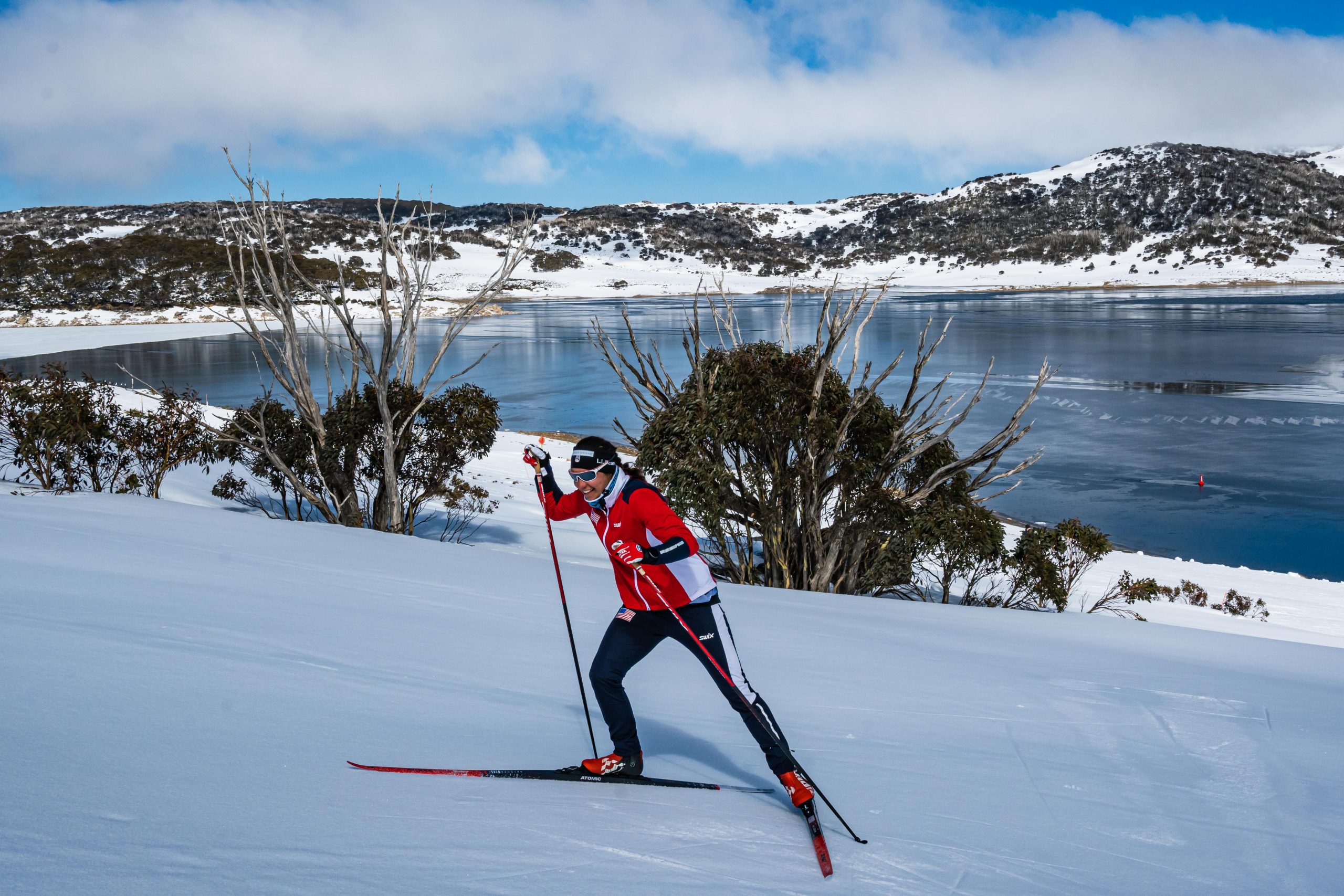
Julia Kern at Falls Creek in Australia (photo: Julia Kern)
The travlers have also experienced the full gamut of weather conditions. “We’ve had every bit of weather from sunshine to snow, to sleet, to wind gusts, and everything in between,” said Kern. “We’ve really gotten to experience about every condition to train in and do some intervals.”
Diggins added to that, saying, “I think it’s really nice because you don’t want to get used to just one condition right? Like if you’re coming down to get some time on snow, it’s really nice to be able to touch on every different kind, so I think that’s really, really valuable.”
Jessie Diggins and coach Jason Cork out on a sunny day (photo: Julia Kern)
Besides the general goal of spending time on-snow, both athletes had a specific focus for the camp. For Kern, it was an emphasis on classic skiing. “Roller skiing is great training,” she said, “But it’s not the equivalent of trying to kick a ski in a variety of conditions, and we’ve actually got a lot of zeros conditions here, so it’s been a really great time to practice skiing in zeros conditions.”
Additionally, Kern has been testing skis and getting a feel for them, having switched to Atomic this season. “So it’s been testing skis, classic skiing, and then just speed work and intervals,” she said. “Skiing is not the same as roller skiing, you can do all that but having the feel for snow and variable terrain and punchy or firm conditions, for me, I think it’s easier to commit to going all out in a speed when you know you can just fall on snow instead of pavement, so we’re working on that.”
Striding and gliding, Julia Kern works on her classic skiing (photo: Julia Kern)
Diggins chimed in, saying, “As someone who has fallen on her face roller skiing, for me, it’s really nice to be able to, like today we’re practicing sprint finish lunges, and on roller skis you really just can’t do that.”
Diggins has been prioritizing practicing the things that don’t work as well on roller skis, like start speeds, lunges and herringbone. “When you’re here for three weeks, you feel like, if I have a bad day, or I’m tired, I can afford to just be really smart and relaxed about it and still know that I’m going to get all the time I need to make these changes on snow,” she said.
The first week was spent getting used to being on snow again, then in the second week the athletes can move on to making some changes and in the third week, “[We] try to make them stick,” said Diggins.
Working on speed in lower stakes conditions, where a fall hopefully won’t result in road-rash (photo: Julia Kern)
An added bonus to the trip came in the form of the Kangaroo Hoppet Worldloppet race on August 27th. “It’s really cool to finally get to do another Worldloppet on a different continent that we otherwise don’t get to ski in very much,” said Diggins, “I also think it’s really a chance to practice fueling for long races because we don’t get an opportunity to do long races very often, and now we’re going to have a few more on the World Cup circuit.”
After a two-year COVID hiatus, Saturday’s race was the 30th edition of the Kangaroo Hoppet. Diggins took gold, ahead of Kern, and Australian skier, Casey Wright finished third. It turned out to be a double victory for the U.S., as Peter Wolter of Sun Valley topped the men’s podium. Campbell Wright (NZ) took second place and Lars Young Vik (AUS) came in third.
Following the conclusion of their three week camp, Diggins and Kern will be heading in separate directions. Kern plans to stay an extra week in the country, renting a campervan and exploring Australia. “I want to see a little bit, and traveling forces me to make sure I recover and don’t jump right into training right away,” she explained. After that trip, she will head back to Vermont for two weeks before traveling to Utah for the U.S. Ski Team Park City Camp in October.
Diggins will head straight back to Stratton for a few weeks before flying to San Francisco for the Salomon Women Trail Half-Marathon at the end of September. “And then I come back, and then I go to Las Vegas with Toyota for a show, and then I go right from there to Park City Camp,” she explained, “So it’s a lot of travel this fall, but for some cool events that I’m excited about.”
Jessie Diggins enjoying some off-trail skiing (photo: Julia Kern)
Summarizing their experience in Australia thus far, both Diggins and Kern emphasized how welcoming the community has been. “People are just friendly to a default,” said Kern.
“Everyone has been so welcoming and super kind and helpful,” said Diggins, “It’s such a nice ski community here, it seems like everyone’s really close knit and looks out for each other and there’s all these kids out skiing, and it just seems like a really cool thing they’ve got going on here.”
Simi Hamilton on the new skate skis in Oberhof, Germany. (Photo: Matt Whitcomb)
By the time you read this piece, some skiers from the U.S. Ski Team (USST) will be settling in Trondheim, Norway for a two and a half week training camp. In total, five are making the journey from the U.S. The sixth skier, Kevin Bolger, no stranger to training in the region, has been in Trondheim for nearly a month. Bolger’s experience in Trondheim goes deep. He has trained there in the off season for many years.
It’s true, the Oberhof ski tunnel does resemble a commemorative ribbon. (Photo: https://www.oberhof-skisporthalle.de)
“In terms of having a guide upon arrival, we are pretty well plugged in.” U.S. coach Matt Whitcomb said in a call.
Bolger will be the local guide for Sadie and Erik Bjornsen, Simi Hamilton, Sophie Caldwell and Andy Newell (former USST member). The skiers will be joined by U.S. head coach Chris Grove, Whitcomb, and physiotherapist Zuzana Rodgers.
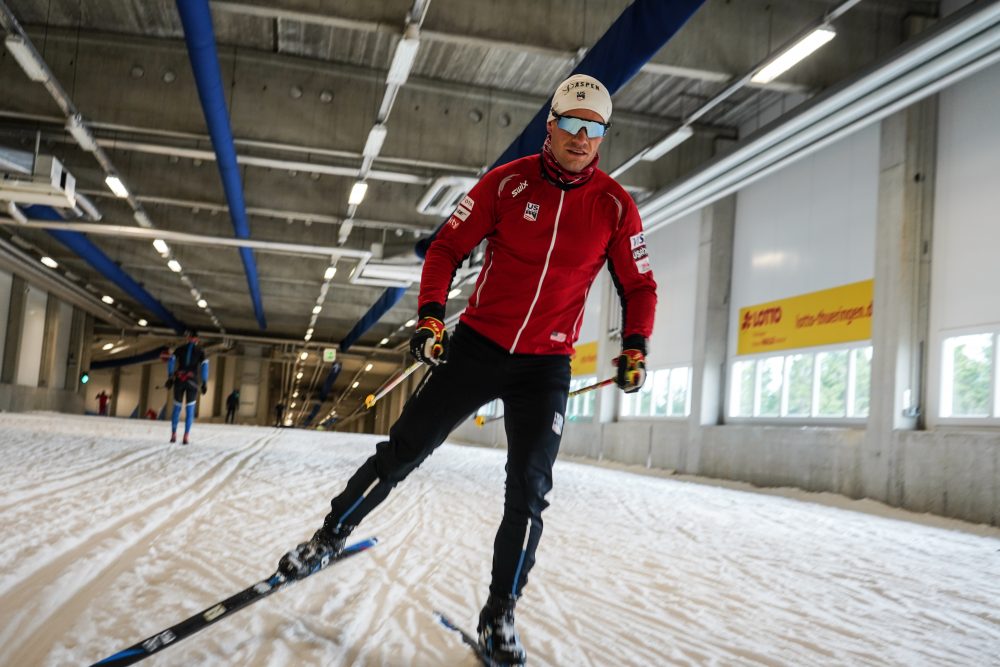
Hamilton and Whitcomb will hop a flight from Germany to Trondheim. The pair spent four days last week in the Oberhof ski tunnel. If you are imagining a simple oval where Hamilton becomes dizzy going round and round, the tunnel is a bit more complex. Whitcomb relayed that Hamilton describes the tunnel as “a loop with two out and backs, like a commemorative ribbon”.
The indoor-skiing provides Hamilton an opportunity for on-snow training and to become accustomed to his new ski fleet. After a career spent on Fischer skis, Hamilton has switched to Salomon skis and boots this season.
Simi Hamilton driving the new fleet of classic skis in the Oberhohf ski tunnel. (Photo: Matt Whitcomb)
“It was a good opportunity with Salomon this year because we have Jessie [Diggins] and Sophie [Caldwell] on them among the various brands in our truck,” Whitcomb said. “And we have an exceptional amount of service because they have few athletes on the World Cup. It was time for a change for Simi and this time around in Oberhof it is more about getting used to the product instead of actually testing the skis. We will do a little bit of testing but the main purpose is simply to get used to skiing on the new brand.”
The Oberhof ski tunnel was reserved by several elite groups twice each day for four days.
“Our goal is to not really push it too hard it is just to get in as much quality skiing as we can under the expected jet lag to go to Norway both well trained but also not buried,” said Whitcomb.
The camp in and around Trondheim will involve joint training sessions between the U.S. contingent and skiers from Italy’s National Team. Federico Pellegrino, Francesco De Fabiani, and Dietmar Nöckler are scheduled to attend. In addition to training with the Italians, the six U.S. skiers will race the Toppidrettsveka rollerski events from August 22-24.
“The number one goal is to get some race experience in the summer against some of our World Cup competitors and just get that summertime competitive vibe going that you cannot get in the U.S. without going to the best,” said Whitcomb. “That is the number one goal. And the secondary goal is to a little bit of training with some of the local Norwegians in Trondheim. Some that are showing up early for the races and also with the Italians who we have been talking with for the last four or five months about wanting to do something together
Hamilton was not alone in Oberhof. The Russians were there to join the ski tunnel fun. (Photo: Matt Whitcomb)
In years past, the U.S. team has flown to New Zealand for a major on-snow camp. This year with no World Championships and the Olympics three winters away, the coaches offered athletes the possibility of a new routine. Jessie Diggins, Julia Kern, and coach Jason Cork will return to New Zealand’s Snow Farm.
“The number one reason is just for some change,” said Whitcomb of the smaller contingent headed to New Zealand. “It wasn’t anything that we believe so firmly in that we were opposed when Julia and Jessie wanted to go, it was no big deal. It was more of a let’s bring this to the athletes and see what they want to do. As you might imagine, it is quite a big time commitment for some of us who don’t get to see a lot of summer, or one of the best parts of the summer, and it’s exchanging that for winter. You are giving up a bit there. It is something will miss as Simi and I were both just talking about because it is a reprieve from the heat of August. It is just for the purpose of changing things up a little bit and it is a non-championship year. Later on, we can perhaps assess whether or not it provides us with what we think it does.”
Julia Kern leads Katharine Ogden, her fellow Stratton Mountain School (SMS) and U.S. Ski Team development team member, during the Snow Farm’s 21 k Snow Rake at the 2018 Merino Muster in Wanaka, New Zealand. (Photo: Garrick Cameron)
Note: This article has been updated to include comments from Simi Hamilton of the U.S. Ski Team (USST) and Stratton Mountain School (SMS) T2 Team, and Kevin Bolger of the USST and Sun Valley Ski Education Foundation.
***
It’s that time of year again where several members of the U.S. Ski Team, along with top-level skiers from the Craftsbury Green Racing Project (CGRP) and Stratton Mountain School (SMS) T2 Team are training at the Snow Farm above the town of Wanaka, New Zealand.
The on-snow volume camp, which featured multiple days of racing, started Aug. 20 and continues through Sept. 10, and includes U.S. Ski Team (USST) athletes Jessie Diggins, Ida Sargent, Sophie Caldwell, Katharine Ogden, Julia Kern, Simi Hamilton, Kevin Bolger, and Paddy Caldwell, and coaches Matt Whitcomb, Jason Cork and Gus Kaeding.
According to Sophie Caldwell, conditions have been “amazing” for the duration of camp so far. “New Zealand had a great snow year and we’ve been lucky to have sunny days almost every day,” she wrote in an email to FasterSkier.
Japan’s Tomoka Satou (446) leads American Jessie Diggins (428) and others up a climb during the Merino Muster 42 k skate race on Sept. 1 at the Snow Farm in Wanaka, New Zealand. (Photo: Garrick Cameron)
Diggins called it the annual trip one of her “all-time favorite camps because the living at the Snow Farm is great, the food is outstanding, and you can step out the door right onto the 65+ km of trails!” she wrote in an email.
“I love having the chance to work on my on-snow technique for three solid weeks because that’s when I get to really see progress and make some changes in my striding,” Diggins wrote.
Apart from logging kilometers on snow and soaking up the vitamin D, the team has also spent time trail running in Wanaka.
“The highlight [of the camp] will probably be a crust cruise we go on in the next few days, but since we haven’t done that yet, some highlights so far are an awesome distance run down in Wanaka, and pretty much every day of bluebird skiing we’ve had up here!” Caldwell wrote.
The camp also coincided with the Merino Muster, a 42 k freestyle marathon that is part of the Worldloppet series, and the Winter Games NZ, which doubled as the Australia/New Zealand Cup FIS races and included three days of nordic racing this year at the Snow Farm: a 5/10 k freestyle individual start, a freestyle sprint, and a 10/15 k classic mass start..
Diggins finished a minute and 21 seconds faster than the second-place woman, Aurelie Dabudyk of France, while Hamilton edged Craftsbury skier Adam Martin by 3 seconds for the overall win.
“The day of the Merino Muster was gorgeous and sunny, with fast conditions,” Diggins wrote. “I loved getting the chance to race a long race, and starting with the men as one big field is really exciting! I hope to get to race the 42km race every year. Huge thanks to the volunteers and organizers for making it such a fun day.”
Crossing the finish line in 1:52:34 hours, Diggins placed sixth overall. Dabudyk was eighth overall and Alayna Sonnesyn (SMST2) was the third woman, 11th overall, 5:30 behind Diggins.
Meanwhile, Hamilton finished in 1:39:46, beating his time of 1:40:33 from last year’s race. Martin followed 3 seconds later, while Kyle Bratrud (SMST2) finished 24 seconds after from Hamilton in third, followed by Tomoka Satou of Japan in fourth (+45.0).
“The Merino Muster is always an awesome race,” Hamilton wrote in an email. “It actually lends itself to the type of intensity we are still mostly focused on in August/late September because the terrain and snow conditions usually make for a really good chance to get in about 1.5 hours of level 3 effort followed by a few minutes of really hard skiing in the last km before the finish. It’s a very rolling course and if you ski it in a pack with people switching leads it’s basically impossible to go much harder than level 3.”
Also on Saturday, Americans also took the top spots in the 21 k Snow Rake. Ben Saxton (SMST2) ran away with the overall win by more than 12 minutes in 47:48, while Paralympic sit skier Dan Cnossen placed second (+1:12:13) nine seconds ahead of Petr Sykora of the Czech Republic in third (+1:12:22).
Ogden was the fastest woman and second overall with a time of 50:29. Her SMS and USST teammate Kern finished 56 seconds later as the second woman, and Elizabeth Martin of the University of New Hampshire (UNH) followed in third, 7 minutes and 30 seconds behind Ogden.
With about 300 participants between three different races at the Merino Muster, Hamilton described the atmosphere as “super fun and light.”
“But the grooming always rocks and it’s just a really fun course to ski,” he added. “I think that in this day and age of social media being so huge and cross-country skiing gaining more attention in the US and world-wide, we’ll start to see more and more people showing up for the marathon. I feel like in the last few years alone their has been noticeably more attention and attendance each year. The quality of skiing is a small part of the race atmosphere here… New Zealand’s south island is one of the most beautiful parts of the world and the culture is so welcoming and comfortable.”
Many of the American skiers in New Zealand also competed in the Winter Games NZ races this week.
“The New Zealand Winter Games are also a huge opportunity to get back into racing mode and test out all the technique work we’ve been putting in so far!” Diggins wrote. “And if you know me, you know how much I adore 5km individual skate races, and we no longer get to do those on the World Cup. So I’m so grateful to the Snow Farm and race organizers for keeping such a fun and hard, fast race alive! I forgot how much it can hurt to go so hard for 5km, but it was fun to really get that lung burn back for the first time since last winter.”
Three days after her marathon win, Diggins won the 5 k skate at the Snow Farm in 15:02.6. The U.S. swept the top five with Sophie Caldwell finishing 10.5 seconds back in second place, Caitlin Patterson (CGRP) in third (+16.7), Sargent (USST/CGRP) in fourth (+1:02.6), and Kelsey Phinney (SMST2) in fifth (+1:16.6) out of eight women.
Kyle Bratrud (SMST2) gets a feed from U.S. Ski Team coach Jason Cork during the 2018 Merino Muster 42 k skate race at the Snow Farm in Wanaka, New Zealand. He finished third behind two other Americans. (Photo: Garrick Cameron)
In the men’s 10 k skate on Tuesday, Bratrud took the win in 27:48.1, 21 seconds clear of Kaichi Naruse of Japan in second, while Craftsbury’s Ben Lustgarten and Martin (CGRP) followed in fourth (+23.0) and fifth (+44.0), respectively. Eight men competed.
Wednesday featured 1.1 k skate sprints, which saw Sophie Caldwell take the win in a field of 10 women, ahead of Sargent in second and Phinney in third.
“The sprint was a short and tactical race that was awesome practice for what’s to come this winter,” Caldwell wrote. “It was really fun toeing the line with my USST and SMS training partners. On one hand, that final could have been any day of summer training, but it also could be a World Cup heat! It’s pretty cool to be pushed by so many strong training partners and friends and we were psyched to throw on a bib and put in a race effort.”
In the men’s final, Bolger landed the top spot on the podium, ahead of Saxton in second and Satou in third. Eleven men competed in the sprint.
“I really enjoy these early session races it gives us as races a chance to get in the mindset and practice real race strategy,” Bolger wrote in an email. “I wanted to go out there test myself, I approached every round like a final and attacked from the start getting out in front and leading into the finish, and was very happy to end the day on top, especially after a long camp down here with the US crew.
“… Coming down here and having a good result in the sprint is of course a huge confidence booster heading into the September/ October training months, but there is still a ton of preparation to be done,” he added.
On the final day of Winter Games NZ racing, Diggins continued her undefeated streak (after skipping the sprint), winning the 10 k classic mass start, while Patterson placed second and Sargent placed third. Saxton picked up his second win of the week, while Martin took second and Lustgarten third.
Complete results will be posted once they’re available.
“We have been incredibly lucky with weather and conditions this year,” Hamilton noted. “Usually, when you’re here at the Snow Farm for 3 weeks in the winter, you’re bound to get an extended period of really nasty weather and wind. But this year we’ve basically had sunshine and cold night time temps every single day, making for amazing skiing for pretty much 3 weeks straight. There is about 40-50 km of trails to ski when everything is groomed, so it’s essentially impossible to get bored. The highlight of our camp every year is a big crust ski up to and around Mt. Pisa. We are planning on getting out tomorrow [Friday, Sept. 7] because the crust hasn’t been great yet while we’ve been here, but conditions for tomorrow look promising. But even when we can’t get out for a huge adventure like that, it’s just one of the best and most fun places in the world to train.”
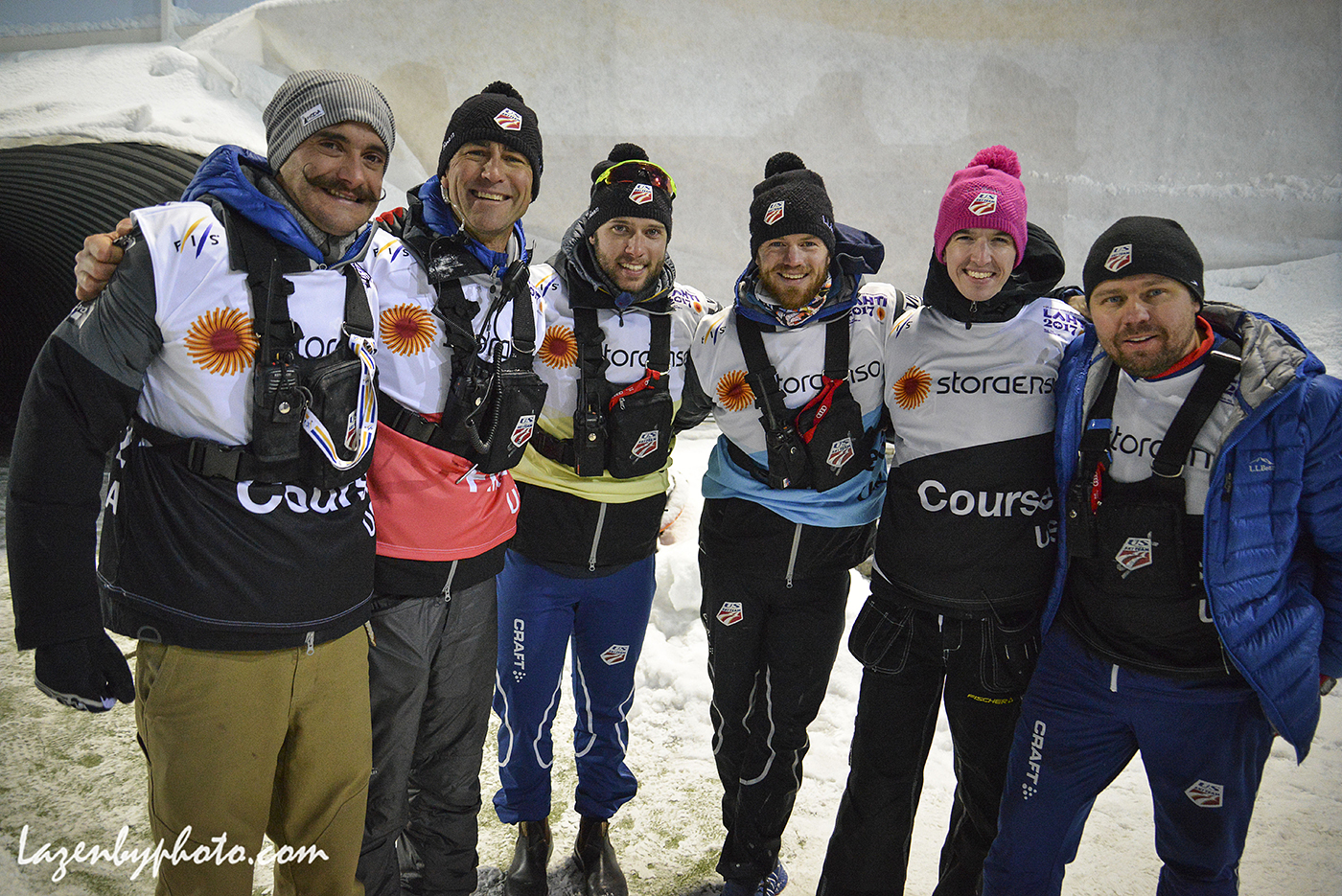
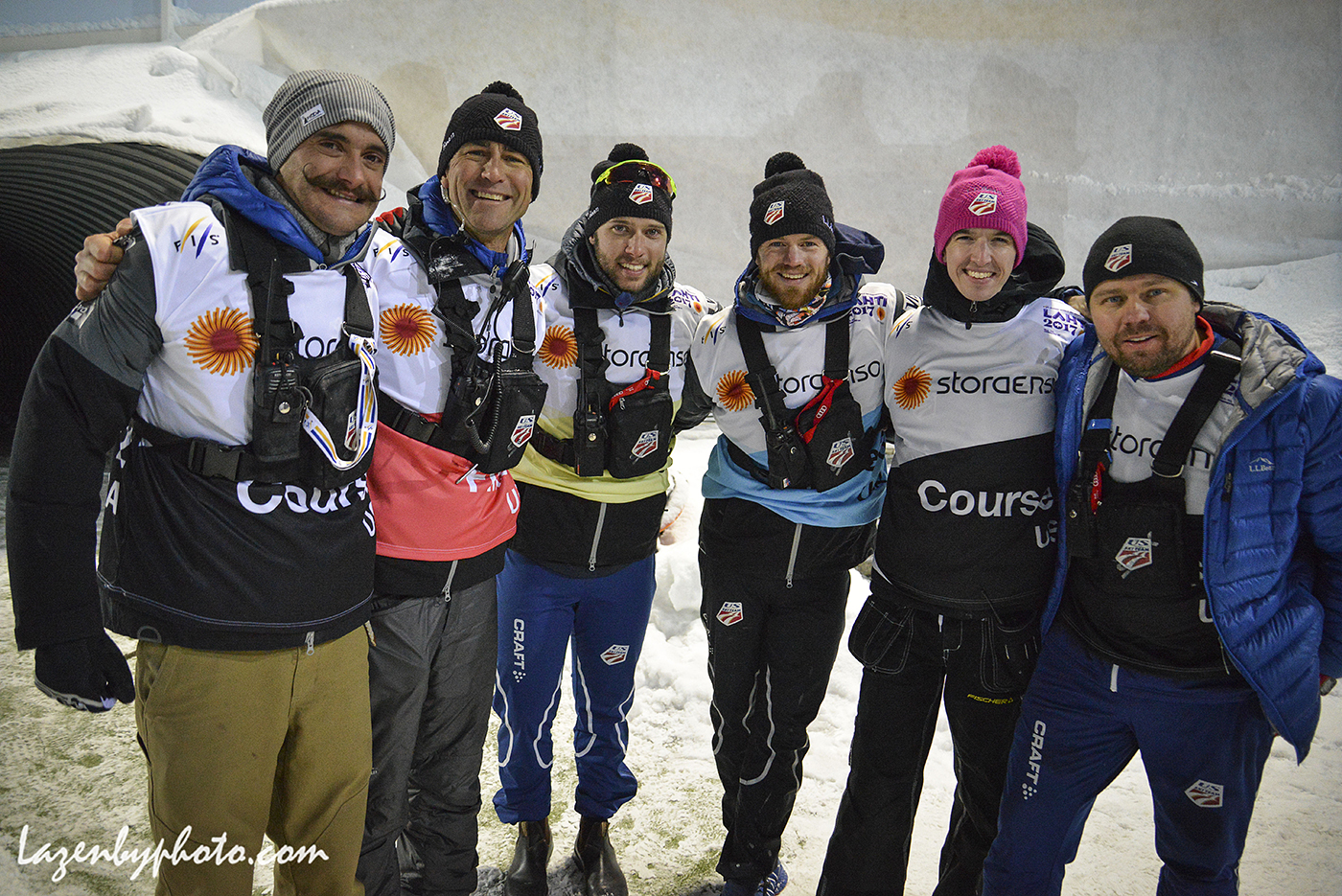
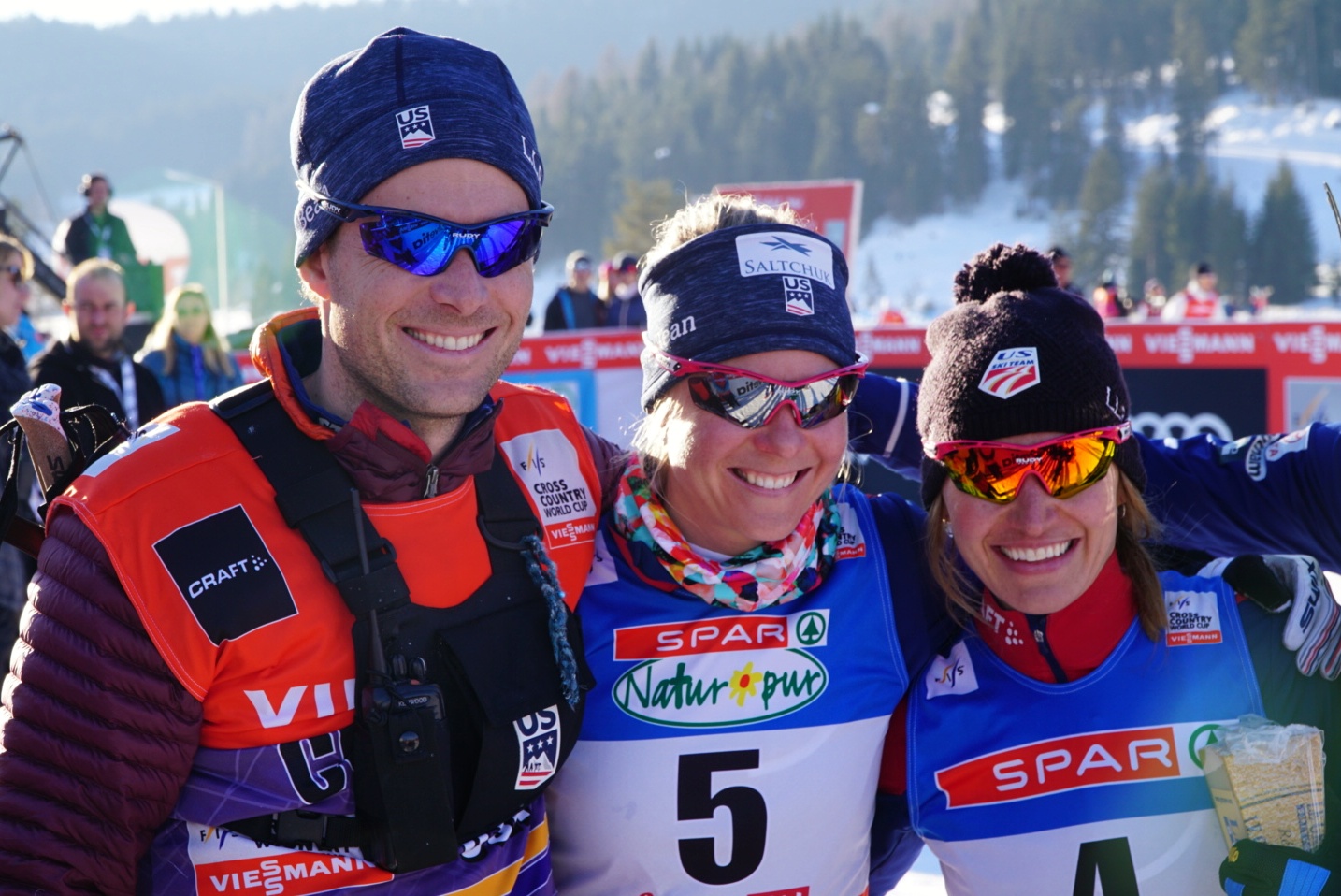
U.S. support staff after their team’s double podium in the women’s freestyle sprint at 2017 Nordic World Championships in Lahti, Finland. (From left to right) J.P. Laurin, Chris Grover, Tim Baucom, Andrew Morehouse, Patrick Moore, and Oleg Ragilo. (Photo: John Lazenby/Lazenbyphoto.com)
BEND, Oregon — Late last month, FasterSkier reached out to U.S. Ski Team (USST) Head Coach Chris Grover to discuss the team’s recent nominations.
The original range of topics was fairly narrow, the new iteration of the USST athletes and staff. Grover, however, ventured into the realm of how the USST will be modifying its criteria for team selection before the start of the 2018/2019 competition season. The criteria Grover discussed in the following Q & A, conducted over the phone on May 22, dealt with future USST nominations: not championship-team selection criteria. In other words, the rewritten criteria he discussed will have to do with the objective benchmarks an athlete must meet to be named to the USST D-team, B-team, and A-team, respectively. Beyond the objective criteria, Grover noted that coach’s discretion will remain an instrument of some future team nominations.
FasterSkier: OK, let’s jump in and discuss the U.S. Ski Team’s A-team roster.
Chris Grover: First of all, let me say one thing that we have been working on now for perhaps eight months, is trying to create new selection criteria to the U.S. Ski Team. And Gus Kaeding, who is a new staff member for us, someone that we just hired in the last few weeks, who came out of business school last year after coaching before that. He has actually been crunching the data for us. He took a bunch of statistics courses when he was in business school. So he kind of volunteered to come and start helping us try to figure out how to make a much more objective selection criteria. As you know, right now we have criteria where it is often about 50/50 in terms of athletes who make the objective criteria and athletes that are selected through discretion. And our goal is to create selection criteria for the 2019/2020 season that we put in place this summer, or at least before the ski season begins when the selection criteria would start. It is much more objective. It shows pathways not only at the very high end and not only in terms of a junior worlds medal but all along the different potential ages and potential athletes.
So that is coming together. We are still working on it. It will probably be tied to an athlete’s world rank at different ages, but our goal is to take a lot of the guesswork out of future selections. We couldn’t have put it in place this year because the selection criteria was already published as of last year and we cannot retroactively go back once the selection period is opened and apply new criteria. We can only apply it in years moving forward, but I am really excited to get to a point where the guesswork for athletes and coaches, for parents, is taken out of it. And ideally those people can look at criteria before a ski season and go, “If I do this, then I will be nominated to the U.S. Ski Team.” That said, I envision that there will always be discretionary picks that we make. There will always be people for whatever reason that come on late in the season.
Like, for example, their world ranks doesn’t mesh with what their current potential is. They have outstanding results that for whatever reason we didn’t see coming. So I envision that there will be discretionary selections going forward, but our goal is to make it so that there are many fewer discretionary selections and it is much more objective and clear-cut. I am excited to put something in place and something that we will be pushing out to the team hopefully later this summer or the very early fall at the latest.
A U.S. Ski Team selection is different than say a championship selection. It won’t go to, let’s say, a committee like our U.S. Ski and Snowboard cross-country committee. We will probably push it around to some athletes reps but it won’t go to a greater community. Because at the end of the day, this is the U.S. Ski Team and it is not necessarily the same as qualifying for World Juniors or the U23 or the World Cup or the World Championships. It is a little bit of a different deal. And the selection, basically, it needs to reflect the goals of the organization. And the goals of the organization are to win medals at the highest levels in the sport.
That didn’t answer your question. The question was something about the A-team.
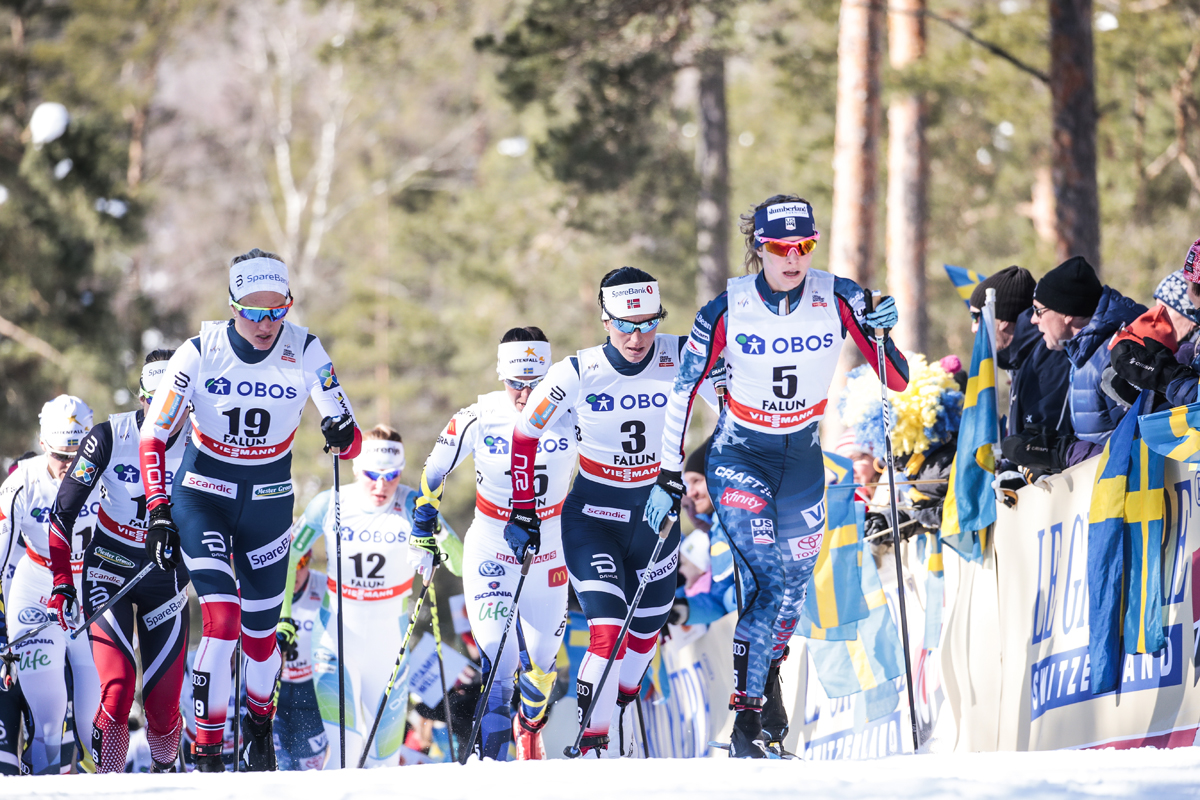
American Jessie Diggins (5) leading the pack up an early climb with Norway’s Kathrine Rolsted Harsem and Marit Bjørgen just behind during the women’s 10 k classic mass start at 2018 World Cup Finals in Falun, Sweden. (Photo: Fischer/NordicFocus)
FS: Back to the A-team. It’s quite impressive as it stands. An Olympic gold medalist in Jessie Diggins, third overall ranked World Cup women’s sprinter Sophie Caldwell, sixth-ranked overall skier Sadie Bjornsen, highly ranked sprinter Ida Sargent, and one dude, Simi Hamilton, who was 17th in the final World Cup sprint rankings.
CG: So the A-team athletes. That is objective. They make the team based on being top 30 in the world in either sprint or distance. They were all clear A-team selections based on the team nomination criteria. I am not quite sure yet if we will keep that exact standard going forward. We may. We also are really diving into this new data and seeing what we can find out. So, all those athletes qualify objectively. And then, the only other athlete that qualified objectively was Hailey Swirbul because she was an individual medalist two times over at World Junior Championships.
FS: Let’s jump to the D-team then. Some renominations. There’s Ian Torchia, Julia Kern, Hannah Halvorsen and Katharine Ogden. Then the newest members — Hailey Swirbul, Ben Ogden, and Gus Schumacher. Seven total. Is this the largest D-team you have had for awhile?
CG: For sure the largest D-team in at least in the past decade. And really, I mean, obviously, we are very excited because the results, just World Junior results alone, with this group of athletes has surpassed any group of athletes that we have ever had come through the ranks of the U.S. Ski Team.
These D-team results for many of these athletes are better than those of any of our A-teamers ever were able to accomplish at the World Junior Championships. And obviously, we have gone from 2016 at World Juniors having never had a medal at the World Junior Championships to now having five medals as a nation. So it is a super exciting step forward. We are really excited to have all these new faces as part of the team.
And this is why we have hired Gus Kaeding. He has been hired as a D-team coach specifically to help nurture and shepherd this group of athletes through the next few years of their development.
FS: Does Bryan Fish’s job change? Does the job description change as it relates to these specific athletes?
CG: Absolutely. The challenge that we had is that for Bryan, for one coach to effectively manage seven athletes at a high level is pretty daunting as it is. Bryan has so many other tasks already, including basically creating all the materials for our coaches education and then implementing the clinics and certification conferences as well as running all of our development summer camp opportunities REG, NEG, NTG … assisting at the U16 elite camp and then also trying to coordinate efforts between the NNF and what we are doing and the American Birkie Foundation, which is coming on as a supporter as well. And then winter trips and what he is doing to oversee the Super Tour, it was just too much. It was too much for one person to handle and we needed some help. And the greatest need with all these incoming younger athletes was certainly with the D-team squad.
FS: I believe this is Ian Torchia’s third year on the D-Team.
CG: That sounds right to me.
FS: Do you normally have a sort of “statute of limitations” on D-Team membership?
CG: Yeah, we really should. In Ian’s case, he had mono the year before last and then kind of was coming back this year and a little bit inconsistent with results. But I think that challenge that you just alluded to really speaks to why we need different selection criteria, why we need more objective selection criteria. Because athletes at some point should be moving. Either they are moving off the D-team or they are moving up to the B-team or moving up to the A-team. But they have to have movement after a few years. And the same goes for B-team athletes, but it is really unclear. I mean, right now, we don’t have any sort of clarity as to what those markers might be. And so that is why it is critical for us to figure a more concrete pathway for athletes so that they know the expectation. So you know, Ian, I would expect with his age he is probably going to have to be on the B-team next year if he is going to continue to be on the national team. So I am hoping with these new criteria that we create and define that pathway or at least define the expectations, I should say.
FS: So the new criteria, those expectations as they relate to the D-team, would have be to SuperTour-specific unless these athletes have start rights because they have earned them?
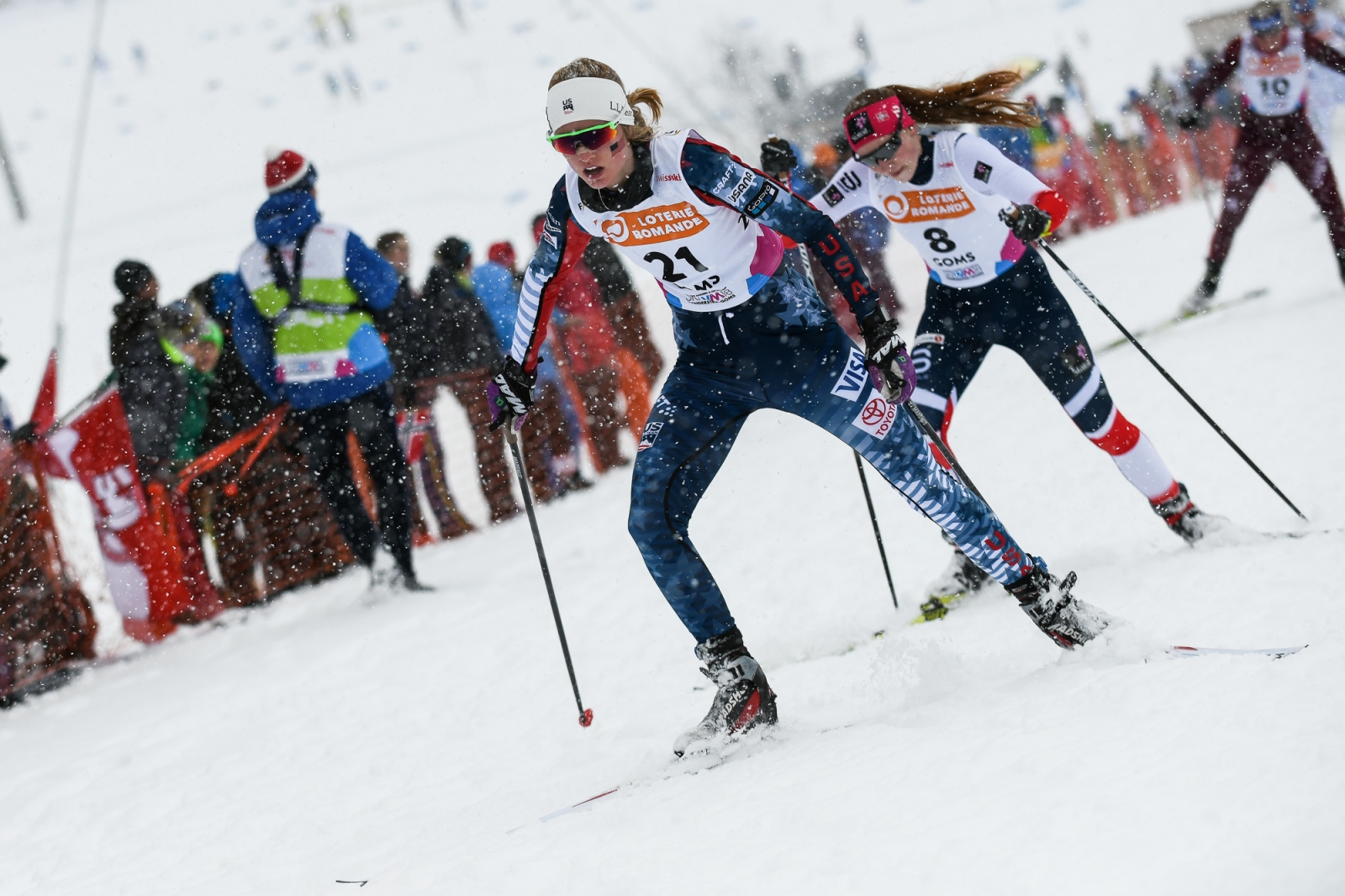
American Hailey Swirbul (University of Alaska Anchorage) leads Norway’s Lone Johansen up a climb during the second half of the women’s 10 k skiathlon at 2018 Junior World Championships in Goms, Switzerland. Swirbul placed third for her second individual podium of the championships. (Photo: JWSC2018.ch)
CG: I think that is why we are really looking at world rank for athletes. This is probably the most helpful thing as opposed to how they did on SuperTour, how they did on World Cup, how they did at the U23 World Championships, what happens at the NCAA Championships. That is the challenge for us, especially in North America being somewhat removed from where a lot of the racing is happening, a lot of the international racing obviously being in Europe. That is the challenge. World rank is going to help us identify that picture in a more meaningful way.
FS: Does that mean a reliance on FIS points?
CG: The difference is between using straight-up FIS points and world rank is that with FIS points, you can have very low FIS points but there could be one hundred people packed in there between you and zero FIS points. But with world rank, it gives us a finite amount of people that are below you or above you.
FS: So then as I am understanding the world ranking, this is then some sort of proprietary ranking that you will have?
CG: The way Gus has approached this, is that he is taking a look at every medalist at the Olympics and the World Championships in the past ten years. He has retraced the development path of those medalists. We are including not only those that have medaled in individual events but those who have medaled in team events. And then retracing kind of what their pathway is. And then perhaps we are going to give a plus-minus, a little 80th-percentile type adjustment to it, that allows for some leeway for an athlete. For example, coming from North America where maybe the pathway is slightly different than it is for European athletes. What we are basically trying to identify are the pathways for an athlete to win an Olympic medal or a World Championship medal and clarifying where you need to be. What are the markers at different ages? And that will help guide as to what the right world rank is for a given athlete to make the team.
And yes, there are always going to be a few outliers. That is why still need some discretion built in there. Once we have selection criteria in place then an athlete will be able to identify what their world ranking is and know how they fit into that selection or don’t fit into it.
FS: Anything more about the D-team that we should chat about?
CG: I don’t think any additional comments on the D-team. We are just excited to have such a talented group. There are lots of other athletes we have been looking very closely at who we anticipate as potential D-team members in the next year, but I wanted to see them basically make another small step forward before some sort of team nomination was implemented. That is where this new selection criteria is really going to help us out. Right now, it is selecting athletes via discretion and it is a judgment call on every one of these guys. That is not ideal from our perspective and it is not ideal from the athletes’ perspective.
FS: On to the B-team. Rosie Brennan was obviously not renominated. So it’s status quo with Erik Bjornsen, Paddy Caldwell, and Scott Patterson with the lone new addition of Kevin Bolger.
CG: With Rosie, we did not renominate her simply because she had been on that B-team position for awhile and hadn’t been making the step forward, hadn’t been making the objective criteria. That said, none of the guys made the objective criteria, either. But that is kind of normal of a B-team athlete, and that’s the challenge. That is where the main challenge is for us — to be able to identify those athletes especially when they are post-U23 athletes but they aren’t quite skiing consistent top-30 on World Cup — and be able to identify which athletes are still on the path to making forward progress. We named the others on discretion: Erik, Scott and Paddy because they were making forward progress on the World Cup. And then Kevin obviously had one of the best entrances to the World Cup of any U.S. athlete in history. So he really showed up and he did exactly what he needs to do to demonstrate that he absolutely has a ton of potential.
That was an easier call for us. The questions with the B-team and discretionary choices go back to why we need to create a new selection criteria.
FS: It’s within an athlete’s right to advocate for themselves. Did you get any pushback in terms of Rosie not meeting objective criteria?
CG: I’d say Rosie was very magnanimous about the decision and very professional about the decision. And for Rosie, and just like any of these athletes who kind of fall on the edge of making objective criteria, we absolutely still believe in them. They are invited to camps. We want to be able to work with them. They are going to be invited to competitions. We are going to be inviting many athletes to come and ski and fill World Cup start spots. So we want to be able to provide an opportunity for these athletes and Rosie is absolutely no exception. She is one of our best distance skiers in the country. We want to find opportunities to help her improve and make a step forward and we need to create an objective selection criteria that identifies that pathway and what the demands are better for athletes like her.
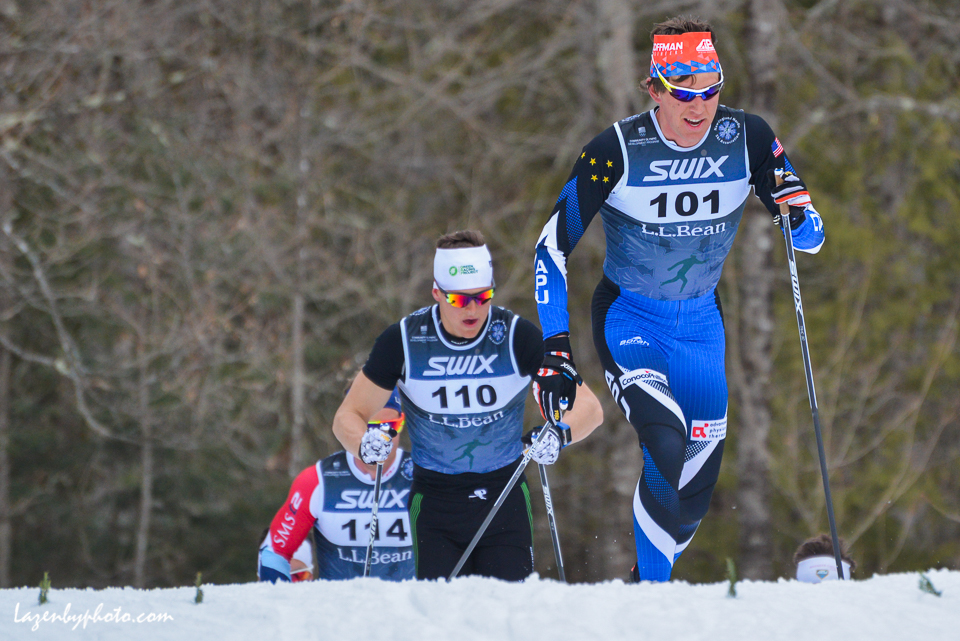
Scott Patterson (101) leads Adam Martin (110), Simi Hamilton (114) and others during the men’s 50 k classic mass start at 2018 U.S. Distance Nationals in Craftsbury, Vt. (Photo: John Lazenby/Lazenbyphoto.com)
FS: Looking at the athletes on the B-team, Scott Patterson obviously had a killer Olympics and a great Holmenkollen 50 k. Was that in the forefront of your mind with regards to his renomination to the B-team?
CG: Yeah, and he had a pretty rough start to the year. According to him, he had a pretty serious setback in the middle of the summer around an ultrarunning race that he was doing in Montana. And it really set him back and he struggled during World Cup Period 1. He seemed to come into his form during the Olympics. Scott actually skied quite well in the spring. Unfortunately, in the first distance race of the World Cup Finals, he and Erik both went down and they struggled to recover in a high-paced race in Falun. But I think Scott is definitely beginning to demonstrate what his potential was from the Olympics onward.
FS: Paddy Caldwell had some impressive time-of-day pursuit results early on in the season.
CG: He, unfortunately, got sick at one point during the Tour de Ski and he got sick during the Olympics. He definitely had some setbacks. But, overall, he skied quite well for a young athlete, the youngest of the group — being his first full year of World Cup. He would need to take a step forward this next year. Now he has a year under his belt. Now he is going to have to start scoring some points and those points are going to need to come from events that are beyond simply having a fast time of day split in a pursuit. But, that is going to be the step I am guessing in order to get whatever world rank he is going to need for this new selection criteria. That is what it is going to take.
FS: I believe Paddy is not here in Bend. That said, Paddy decided to remain in Europe and compete in and finish the Tour de Ski. Does it look like he would do the full complement of the Tour de Ski again?
CG: I am not sure. It is a real challenge around the Tour de Ski versus U.S. nationals. Because we have a selection criteria, although we have not implemented a new selection criteria, and we have not created the new selection criteria yet for the World Championships in Seefeld. But we have had a selection criteria for the last two years which has, obviously, two pathways: one being U.S. National Championships and SuperTour and the other being World Cup, including the Tour de Ski.
That makes it a real challenge. For those athletes that are on World Cup during Period 1, it makes it really hard to decide whether they should go back to U.S. nationals to qualify or whether they should go to the Tour de Ski. We are going to be encouraging probably anyone who is not really skiing well during World Cup Period 1, to go back to U.S. nationals and race at U.S. nationals and try to create a very robust selection process at U.S. nationals.
So you are right, Paddy is not here in Bend, he is doing finals at Dartmouth right now. So we have not had a chance to talk through those scenarios quite yet. One thing that for sure we are going to change about the selection criteria, and this is something to discuss with the community at the Cross Country Committee meetings in Park City, is that we are going to remove the final stage of the Tour de Ski from the championships selection period for distance athletes, and for sprinters as well. The distance period for selection will close on the day prior to the final climb. That has been a point of contention, as you know, within the community. Are we selecting the right athletes by having athletes who are racing uphill in skate? From my personal perspective, the athletes who have done well in that are the athletes that you want on a major championship team. They are aerobic engine skaters. But it is no problem from my perspective to remove that stage and hopefully remove some of the contentious feelings about that particular event.
So I don’t know exactly what [Paddy’s] plan will be yet. U.S. nationals versus a Tour de Ski. I think for a lot of these athletes, including him, we are going to see how people are skiing during Period 1 and whether it makes sense to ski the Tour de Ski or whether it makes sense to go back to U.S. nationals.
FS: Does that mean the USST will establish real concrete criteria as to whether or not someone would come back to U.S. nationals or remain on the World Cup?
CG: No. That is really challenging. If you create concrete criteria or something like that, then it probably needs to be blind to the athlete’s age and experience, but should it really be the same for an athlete who is 22 years old versus an athlete who is 34 years old? I don’t think it ever should. I think it is always important that there is some sort of coach’s discretion that is left that can contribute to making that decision because a younger athlete who might have ten or twelve years of World Cup ahead of them certainly can benefit perhaps from that experience more than an older athlete who might at the end of their career.
I think the heartache in the community comes when people think that we are looking at that decision as in prior to having qualified for the major championships instead of long-term development. And I can tell you from our staff perspective when we are making decisions like that, we are looking at two things. One: can the athlete contribute to outstanding results on World Cup? In this case, begin the Tour de Ski immediately? And second: is this athlete a U.S. athlete that we are trying to really develop for the future who would very much benefit from having this stage and experience and experience at these particular venues at this time?
CG: If he had raced the end of the Tour de Ski, had he raced those last couple of distances races, he may have made the B-team criteria. But one of his biggest goals for last season was to represent the U.S. in the team sprint in PyeongChang and to fight for a medal, so he was very focused on that. And that is why he stopped the Tour de Ski when he did, in order to get ready to race in Dresden. That was the one team sprint on the calendar last year. So he wanted to have the experience. Just from the aerobic as well as anaerobic and the tactical side of that as well. That was his real focus last year. And team sprint, for some of our key men, will continue to be one thing that we absolutely target and it probably remains one of our best chances at a medal.
FS: You are obviously still here. The assumption might have been that at the end of an Olympic cycle, a very successful cycle, that perhaps you would step down. Can you talk about your decision-making process to remain with the U.S. Ski Team?
CG: First of all. We are extremely lucky to have the staff that we have and one that has been as effective as they have been and as loyal as they have been. That goes not only for the coaching staff but also for our service team staff and also for so many of the volunteer providers that we utilize every year.
We have a handful of docs, PT’s, massage therapist — all of who we go back to year after year and ask for weeks and weeks of their time away from work, away from their paying work, away from family, and we ask them to volunteer their time and they keep coming back. We are incredibly lucky to have a staff that we have been able to retain. For Matt [Whitcomb], he came on in 2006, so I think he is going into his 13th year with the team. Jason [Cork] and Bryan [Fish] both came on the year right after 2010, I want to say 2011-2012, somewhere in that range. We have had a lot of longevity. Oleg Ragilo, who is our head technician, is back and he has been, I don’t know how many years he has been with the team, quite a few. He has been with us twice actually.
Also, Jean-Pascal Laurin, Tim Baucom, and Andrew Morehouse, all of those guys are returning. We do have one change on the service team. And that is that Marek Sander, who had been Kikkan [Randall’s] and Andy [Newell’s] tech, has decided to go back to Estonian biathlon which is where he came from when we hired him. Instead, we are hiring Eli Brown. Eli, people will know, he’s a former head coach of the University of Utah, but has been somebody that has been volunteering his time at least the last three major championships plus some World Cup racing for us as a technician.
And so we have just hired him to replace Marek as one of our technicians. So our staff is quite similar, obviously, we brought on Gus as well.
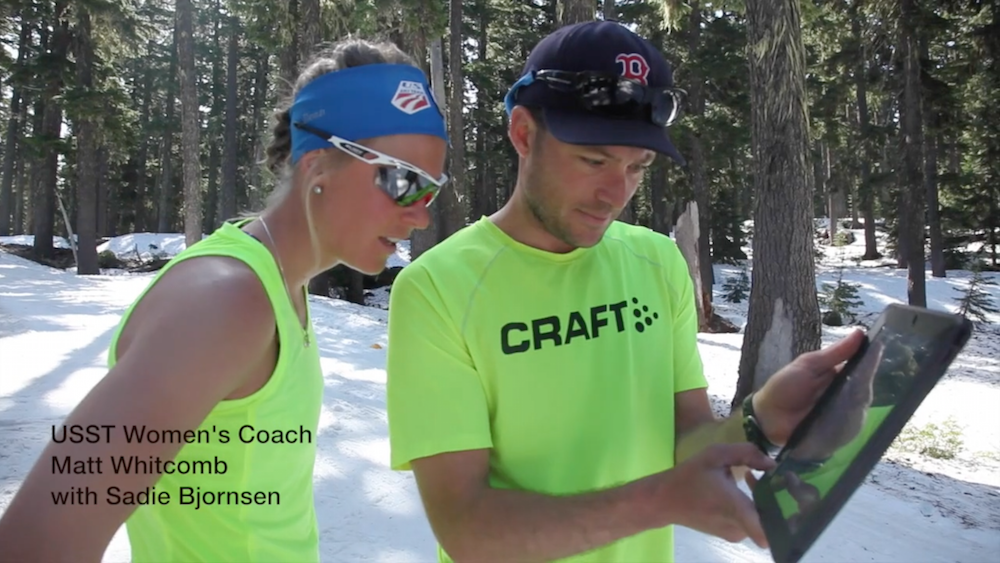
From left to right: Coach Matt Whitcomb with Sadie Bjornsen and Sophie Caldwell in Seefeld, Austria, last winter. (Photo: Garrott Kuzzy / LumiExperiences.com)
The other change that we are going to have, it’s a little bit of a job title change for Matt. Obviously, Matt has been our women’s coach. This year we have him in place to work with both men and women. So that Jason Cork, Matt and myself all basically work as a team with all of the World Cup athletes. We felt like we needed to change some of our setup in order to accommodate the needs of the team. We had some veterans that retired last year. When you have a smaller quote-unquote, “core”, at least the U.S. Ski Team on the World Cup level, we need to be more versatile in terms of helping and being able to help both men and women on a daily basis. And be more versatile with what our job requirements and our job titles are.
So we have some small changes there, but in general, we are really lucky to have everyone coming back. I think in terms of my own continued work with the national team, I will most likely continue until my family says stop and or until I don’t feel like the athletes are getting what they need out of my leadership. So, either one of those two things will be my cue to step down.
FS: For example, Jason Cork is out there testing skis with Jessie Diggins prior to races. I understand why she is a huge investment and the return on investment is important to the team, too. I understand why she might get a lot of resources. And it sounds like Matt is Simi’s coach and that has been going on for a year plus maybe. That said, as things might look from say Cork, Matt, and you redefining roles, how might that look different on the ground during race day?”
CG: It won’t look so different. Like you just alluded to, we are a smaller team. Well, I should say, we are starting to be a fairly big team. We are a smaller ski nation in terms of what our total imprint is on the World Cup and what our budget is perhaps, at least compared to our biggest competitors. Because our budget is so small compared to a Norway or a Russia, everybody, as you know, on our staff tends to do everything. And that is why job titles don’t always really make the most sense. We can give ourselves a title, but everybody ends up once in awhile cleaning some klister at the end of the day. That is just part of the nature of our program. So someone like Jason, he is spending a lot of time in the wax truck. Not only actually helping Jessie but as a key part of our service team as someone who helps Oleg with the overall organization of what we are doing on a daily basis. So someone like Jason is going to be in the wax truck quite a bit. And then also have coaching duties. Matt will be in the wax truck quite a bit less and have a lot more on the coaching duty side. I am going to have a lot of logistical work on a daily basis as well as a lot of staff management and athlete management type task, as well as some coaching duties.
But it is pretty hard to define those more specifically. They definitely change from day to day and week to week. The three of us are trying to basically cover all bases at that World Cup level.
Jessie Diggins (U.S. SKi Team) after placing fourth in the women’s 10 k classic mass start at Stage 6 of the 2018 Tour de Ski (TdS) in Val di Fiemme, Italy. She went on to finish the Tour in third overall to become the first non-European woman to finish in the top three of the TdS. (Photo: Salomon/NordicFocus)
Reflecting on her ski season, here’s the no-nonsense: Diggins simply crushed it. Lots of firsts. The Tour de Ski podium. The gold with Randall in the Olympic team sprint. Her second overall on the World Cup and third in the distance standings. More than $110,000 dollars in World Cup prize earnings alone. And all that face-time and the front-row seat as she led much of the Holmenkollen 30 k skate this year. You’ve got to love that midwestern chutzpah on the Oslo holy ground.
We reached Diggins on April 26 while she was sitting in a Boston park enjoying some spring sunshine. In this interview, we run the gamut of topics from how she’s using her new post-Olympic gold platform to her thoughts on an outstanding World Cup season.
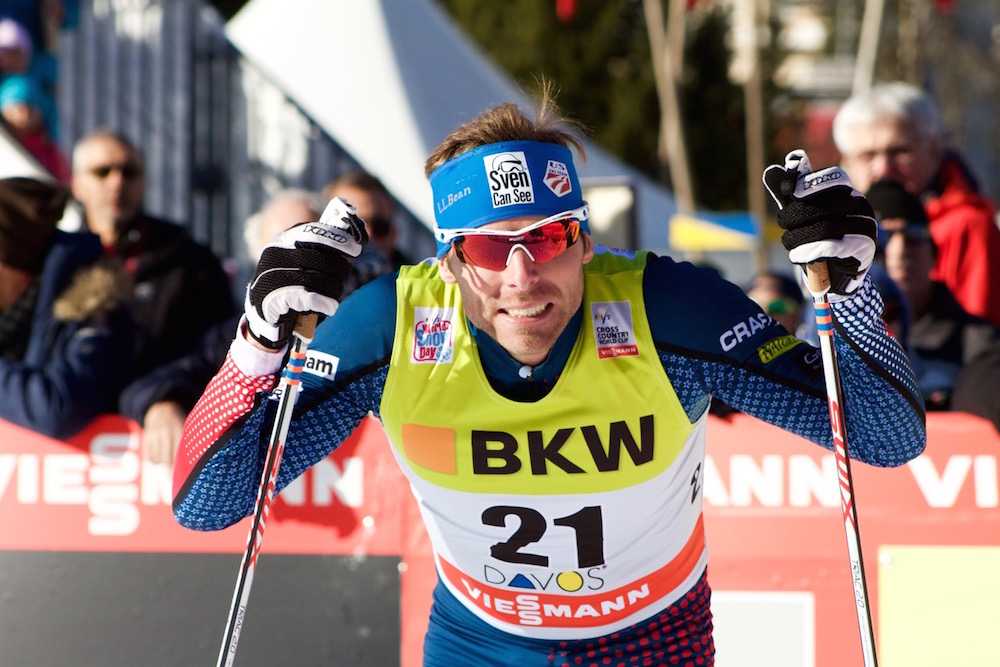
Andy Newell (c) of the U.S. Ski Team (USST) and Stratton Mountain School T2 Team after winning the men’s classic sprint at 2018 SuperTour Finals on March 24 in Craftsbury, Vt. His Stratton teammate Ben Saxton (l) placed second and Erik Bjornsen (r), of the USST and Alaska Pacific University, placed third. (Photo: John Lazenby/Lazenbyphoto.com)
When Andy Newell took to social media about a week and a half ago to announce that he was parting ways with the U.S. Ski Team (USST) after 16 years, some people might have assumed that he was leaving the sport. They would be wrong.
Newell, a 34-year-old Shaftsbury, Vermont, native and USST A-team member for the last 12 seasons, was quick to clarify that he’s not retiring from racing. After four Olympics and 16 years on the team, he’s just ready to be his own boss and set his own schedule.
“I guess in the back of my mind I always knew once the [2018] Olympics were over I would most definitely take a step back from being a full-time international ski racer and definitely take a step back from being a U.S. Ski Team national-team racer,” Newell said in a phone interview earlier this week. “Because that way, it allows me much more flexibility with my schedule even in the summer as far as training camps go and obviously a ton more flexibility in the winter as far as how much time I need to spend away from home racing World Cups.”
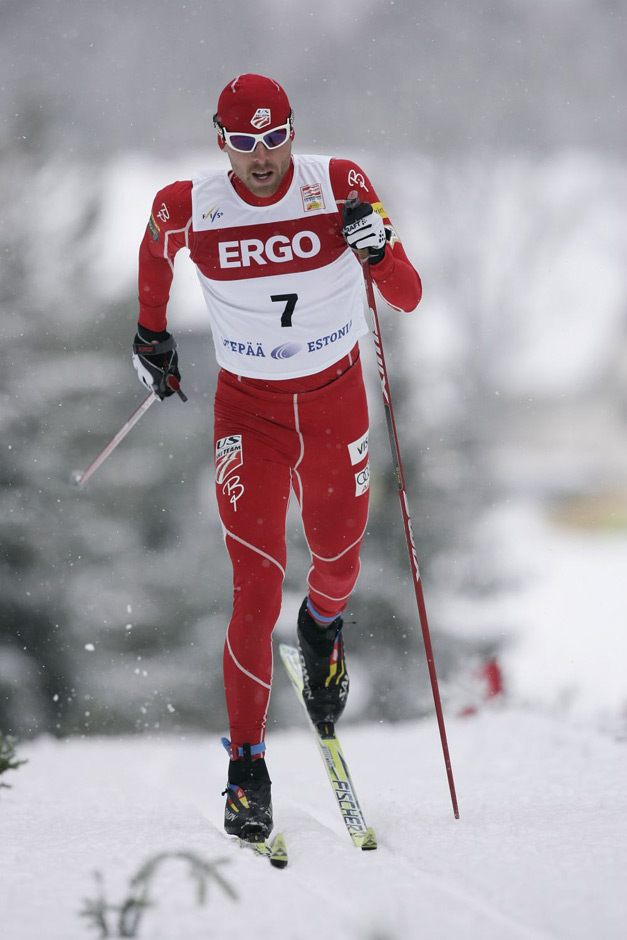
American Andy Newell racing the men’s 1.5 k freestyle-sprint qualifier at Stage 1 of the 2017/2018 Tour de Ski on Dec. 30 in Lenzerheide, Switzerland. He qualified 20th and went on to finish 19th on the day. (Photo: Fischer/Nordic Focus)
Newell spent all of last season — from Oct. 29 until mid-March — on the World Cup circuit in Europe (except for when he was at the Olympics in PyeongChang, South Korea, for the month of February). He rarely saw his wife, Erika Flowers, whom he married last June. The two arranged quick trips to see each other when they could, but as full-time ski racers on different circuits, it was a challenge.
“Five, six, seven, or ten years ago, I was making many of these decisions as an individual, and now that I’m married, I definitely have a lot more to consider than just myself when I make decisions when it comes to planning and scheduling,” Newell said.
While he was hesitant to elaborate on his plans moving forward, Newell emphasized that he’ll continue to race in the near future.
“Right now, I guess my plan would be to get back to a simpler schedule where I am still training at a high level but not focused really at all on World Cup racing,” he said. “So I might target a few races that I’ve always really wanted to do, for example some of the Ski Classics possibly over in Europe like the [Norwegian] Birkebeiner, possibly the American Birkebeiner. I think there’s so many great ski experiences that we have out there other than racing World Cups every weekend.”
And at this point, he’s not completely ruling out another run at World Championships.
“If I’m feeling like a complete champion by doing some of these different races, then you might see me trying to take a stab at something like World Championships,” Newell said. “But I’m not really putting any pressure or expectations on that, I’m more just looking to get back to a more simple training and racing routine where I can come up with my own schedule and plans and just remember what it’s like to really enjoy ski racing and doing the ski races that I want to do.”
Growing Up on the Ski Team
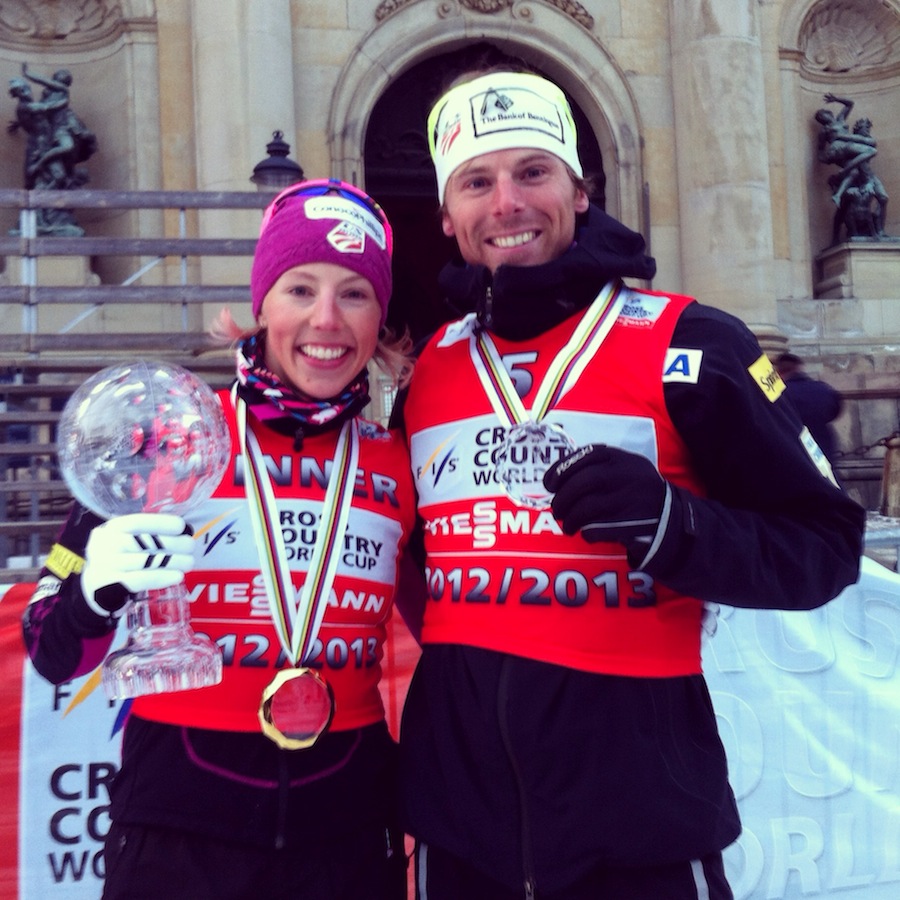
Andy Newell with some hardware after placing fourth in the season-long Sprint World Cup for the 2009/2010 season. (Photo: Kikkan Randall)
Newell first landed a spot on the U.S. Ski Team as a high-school senior at the Stratton Mountain School (SMS) in Stratton, Vermont. He was initially selected to the development team, which came with invitations to national-team training camps — like the present-day development “D” team — as well as summer housing at the USST base in Park City, Utah.
That season, in 2002/2003, Newell raced at World Championships in Val di Fiemme, Italy, and nearly qualified for the heats in the skate sprint (placing 31st). Just 19 years old at the time, he also competed at Junior World Championships in Sollefteå, Sweden, where he placed second in the qualifier and seventh overall in the freestyle sprint.
He competed in his first World Cup in 2004 and made the leap to the USST A-team in 2005. Newell then began his 12-season streak on the A-team, which entailed the team’s highest level of financial support. He reached the World Cup podium three times as an individual — first in 2006 in Changchun, China, where he placed third in a freestyle sprint. In doing so, Newell became the first American to medal in a World Cup race since Bill Koch did the same 23 years prior.
While Koch was a distance racer — like every international nordic racer of his era — Newell earned his chops as a sprinter and came onto the World Cup scene when short-distance sprint races were in full swing (the format was introduced at 1999 World Championships and 2002 Winter Olympics).
“I think back on those years, and they were so cool,” Newell said of his early days on the team. “To be, like, 20 years old and beginning to race World Cups. … I remember in ’05, I got a top 15 in a World Cup, and that was the first time that had happened for the U.S. in the last however many years, and because of things like that, every weekend something new and exciting was happening.
“I started doing better in some of the sprints and winning the qualification and getting a top 10 here, and the next year I was on the podium after that in ’06,” he continued. “And so it was a very quick trajectory to becoming one of the best sprinters in the world at that time.”
He raced at eight World Championships with his best result coming in 2007 in Sapporo, Japan, where he placed fifth in a classic sprint.
“I won the qualification in the sprint and ended up finishing fifth, but I remember being pretty disappointed,” Newell reflected. “I thought I totally could’ve been on the podium there.”
Andy Newell racing in late 2009. (Photo: Fischer/NordicFocus)
His other two World Cup podiums came when he placed second in a 2008 skate sprint in Lahti, Finland, and third in a 2010 classic sprint in Drammen, Norway. In four Olympics, Newell achieved two individual top 20s in skate sprints (16th in 2006 and 18th in 2014), and ninth in the freestyle team sprint at the 2010 Olympics in Vancouver, B.C.
In PyeongChang this past February, he raced to 37th in the classic sprint and 14th with the men’s 4 x 10-kilometer relay. Reflecting on those Olympics, Newell said he was personally disappointed with his results, but thrilled to be a part of history with his team.
“I felt like I had put in the time, time and effort and preparation to race better than I did,” he said. “But at the same time, we created such a great, tight unit and team throughout the last four years that for me, it was just so great to be there, to be there on the day that Jessie [Diggins] and Kikkan [Randall] won a gold medal. … Even though I didn’t ski my best, it was still, to me, in a lot of ways a success to be there; it’s been a successful year in that respect.”
‘A Little Bit of a Guinea Pig’
Asked how the sport, specifically sprinting, has changed over the years, he said it’s been gradual but noticeable. Moreover, his ability and willingness to adapt is what has kept him in it this long.
“If you were to look back on a World Cup sprint from 2005, the technique would look a lot different than it does now,” he said. “Many of the courses are the same, some are a little longer now than maybe what you would see back in the early 2000s for sprinting, but I think, in order to be competitive then, and also still competitive now, I’ve had to try to adapt as best as I can, and always be willing to learn new things.
Fifth in the 2012/2013 Sprint World Cup, Andy Newell (r) with women’s Sprint World Cup winner and fellow U.S. Ski Team member Kikkan Randall at 2013 World Cup Finals in Drammen, Norway. (Courtesy photo)
“I think if I would have assumed I was doing everything right or couldn’t improve, then I would have definitely been left behind I think years and years and years ago,” Newell continued. “I think people like Kikkan have done a really good job of that, and something that I’ve really tried to do, too, over the years, is always being willing to learn something new and not really have an ego about your shortcomings as an athlete.”
He explained that a consistent theme of his career was his willingness to venture into unchartered waters when it came to training.
“I’ve been a little bit of a guinea pig for the U.S. Ski Team in a lot of ways,” Newell said with a laugh. “I was probably the first athlete to go over and race an entire World Cup season. They hadn’t done that before we started scoring those kind of World Cup points in the mid-2000s, so it was like, how do we create a training plan that’s going to allow us to be successful at World Championships but also still race an entire World Cup season? So it’s been a great learning process for me and also I think the coaches over the last 20 years.”
Over the last two decades, Newell said he’s mainly worked with Chris Grover, the current U.S. Ski Team head coach, and more recently, USST Assistant Coach Jason Cork.
“Chris Grover wrote my training plans for probably the majority of my career,” Newell explained. “In the last four years or so, I started to work more with Jason Cork and also myself, I do a lot of the writing myself.
“I think I’m someone who likes to be a student of the craft of what I’m working on; I think I’ve always been like that,” he continued. “When a coach tells you to do something, you’re always kind of like, OK, but I would always want to ask why we do a certain workout the way we do and how it builds … I’ve just liked to learn about training principles over the years, and so as I’ve gotten older, I’ve gotten more involved in writing, going over training plans myself, and incorporating ideas and workouts that I want to do. And I’ve done a lot of dumb, crazy stuff over the years, too.”
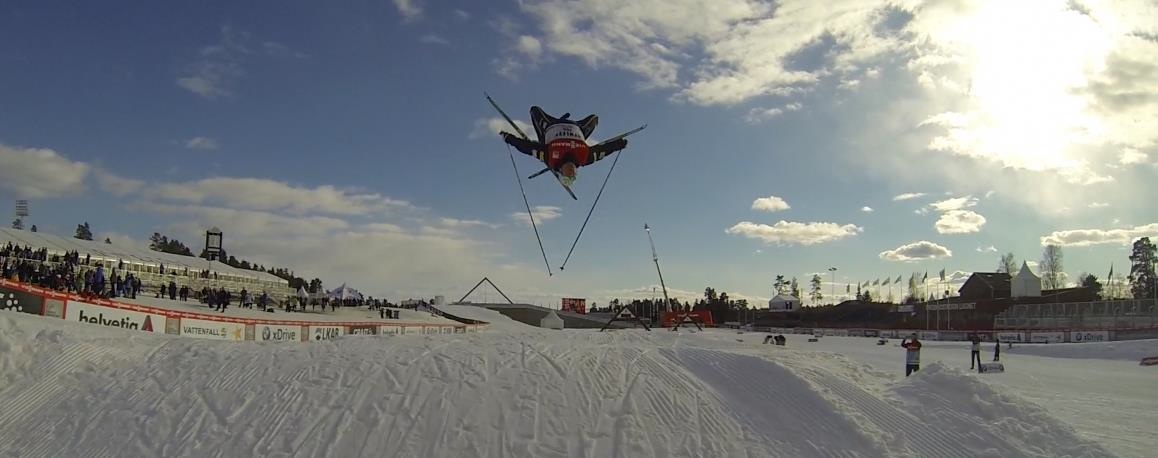
Andy Newell celebrating the end of the 2012/2013 season with some acrobatics in Falun, Sweden. (Photo: Adam Alexander Johansson, XHC)
Newell may be best remembered for his extreme stunts on ‘X Ski Films’, a filmmaking company he owned and starred in for several years, which included backflips and other airborne tricks on cross-country skis.
He’s also spent the last two decades training out of Stratton with three main coaches: Sverre Caldwell, Gus Kaeding, and most recently, Pat O’Brien, head coach of the SMS T2 Team. Newell met Flowers on that team, and while he won’t be a full-fledged member of SMS T2 this year, Newell said he’s looking to maintain a strong relationships with both Stratton and the U.S. Ski Team.
“In some ways I don’t think it feels like I’m retiring because I’ve kind of always had such a passion for pushing the level of skiing forward in this country,” he said. “And for me as an athlete, that was the best way I could do that, and I know as I transition into different roles in the skiing community, my goal [is] to continue hoping to improve the level of skiing in this country and improve the professionalism of skiing in this country and inspiring the youth skiing movement in this country — all those goals that I had as a ski racer — I will continue to have as a coach or a team leader or whatever my next role is going to be.
“I’d like to work with development as far as helping some younger kids out, so I’m going to try to look for opportunities where I can do that,” he added. “I think it’s kind of a natural transition from athlete to coach in a lot of ways, but I’m still very much going to be an athlete at least in the near future.”
Looking back on his years with the national team, he likened it to the pride one would have in a college or university they graduated from.
“I’m just really proud of my time that I’ve spent with the team and so grateful for all of the opportunities that the U.S. Ski Team has given me over the past two decades,” he said. “It’s probably the same way that people who go to universities and so forth feel about having that kind of pride for their alma mater. I never went to college so it’s like the U.S. Ski Team kind of scooped me up at 16, 17 years old. Everything that has built me up into the kind of person that I am now, that has molded me into my character, everything has more or less has come through the U.S. Ski Team.”
Andy Newell (U.S. Ski Team) after his quarterfinal at a 2015 World Cup freestyle sprint in Davos, Switzerland. (Photo: JoJo Baldus)
Is he nervous about going out on his own? Newell said it’s been a long time coming, and he’s more excited than anything.
“The spring’s always a funny time because you’re pretty exhausted from the season,” he said. “In a lot of ways, kind of the last thing you want to think about is skiing, but for me, I’ve always been one of those people that in the springtime gets super excited about all the opportunities. … By April 1, I [would be] already thinking, ‘Oh, what can I do for training next year?’ … and I start throwing around all these crazy ideas. I think that’s one of the things that’s kept me in the sport for so long, is having that excitement around training and preparation.
“I think it will be exciting in a lot of ways to try to be my own boss and do some of the training camps I want to do and partner up and train with some of the athletes that I want to train with,” he said of this spring and summer. “Not that I was ever held back by the U.S. Ski Team, but you definitely had to adhere to a certain schedule so I think it will be exciting to do some different things.”
From Sprints to Marathons?
In late January 2016, shortly before Newell spoke with FasterSkier about mulling retirement, or at least taking a step back from full-time ski racing, he double poled his way to second place in the 42-kilometer Dolomitenlauf classic marathon (part of the FIS Marathon Cup series) in Lienz, Austria. Never one to like being labeled a “sprint specialist”, Newell is looking forward to trying more marathon races like that.
American Andy Newell (r) outsprints Italy’s Mauro Brigadoi, for second place in the 2016 Dolomitenlauf 42 k classic race in Lienz, Austria. (Photo: Fischer/NordicFocus)
“I have a lot of great friends who train for the Ski Classics [marathon series] and a lot of my Norwegian buddies who I have raced World Cups with over the years have gone that route after their World Cup racing career,” he said. “It’s a cool idea because those races are super fun, there’s great prize money, there’s a lot of excitement over them, and I think it’s really impressive when you see somebody just crush 90 k’s of double poling like they do in the Vasaloppet.
“So I’m definitely inspired by those guys and I, as an athlete, really like classic skiing,” he continued. “I love traditional-style classic skiing and I like double poling, so I think maybe in the future I will try to get into a few of those races, but it’s hard to do those and not be committed 100 percent because those guys that do those, they’re training to crush double pole like nobody’s business, so it’s hard to just show up on a weekend and race one of those races.”
Andy Newell and Erika Flowers, both of the Stratton Mountain T2 Elite Team, after both won the 2014 Jim Bridger Trail Run in Bozeman, Montana.
Aside from the fitness required to double pole an entire marathon, the logistics of these races — many of which start in one town and end in another — is particularly challenging without a full-support crew or team.
“I’d really like to do the [Norwegian] Birkebeiner and I think it will take a few times to be able to consider yourself a threat to the podium in a race like that,” Newell said. “I would be foolish to think I could just jump into a Ski Classics race and crush it, but it’s definitely a goal of mine to maybe do some of those over the next years because I think they’re such legendary, badass ski races.”
In the near future, Newell and Flowers are headed out on a three-week “surf trip” to Australia and Indonesia.
After that, “it’s yet to be seen how everything will fit in,” Newell said in regards to his future plans, both living, training, racing, and otherwise. “There will be more to say later as far as what I have going on for next year as far as what my goals will be.”
The U.S. Ski Team women’s team at work during a 10-day camp in the Methow Valley. (Photo: Matt Whitcomb/U.S. Ski Team)
(Note: This article has been updated to include comments from Canadian coach Ivan Babikov on his team’s recent camp in Park City, Utah.)
Two days after Andy Newell and Erika Flowers tied the knot in Bozeman, Mont., seven members of the men’s U.S. Ski Team and eight U.S. women’s team members jumped into an intensity training block at their respective dryland camps in Park City, Utah, and the Methow Valley in northern Washington.
The 10-day camps were scheduled simultaneously from June 26-July 5 to accommodate the wedding. Newell is a longtime U.S. Ski Team (USST) member and teammates with Flowers on the Stratton Mountain School (SMS) Elite Team out of Stratton, Vt. Because several national-team members ventured to Bozeman (Flowers’s hometown) to watch them say “I do,” the USST coaches decided to reduce travel and keep their squads together out west.
“We wanted to capture the men in the Intermountain West immediately following Andy Newell’s wedding in Bozeman, and therefore reduce the overall travel load for athletes who were already coming to the West from the East or Alaska,” head coach Chris Grover explained in an email.
The men based themselves in Midway, Utah, about 1,500 feet lower in elevation than Park City and 1,000 feet lower than Deer Valley, where they typically reside for summer and fall camps. Grover explained that this was by design, “because of the shorter duration of the camp (i.e. too short to create a meaningful stay at altitude), the focus on specific intensity workouts, and the benefits of quicker recovery at lower altitude,” he wrote.
Staying closer to the Soldier Hollow training venue was also ideal for the men’s team’s “PyeongChang-specific workouts”, Grover explained, including sessions focused on the freestyle team sprint, classic sprint and 4 x 10-kilometer relay, which will be contested at the 2018 Winter Olympics in PyeongChang, South Korea.
Newell, Simi Hamilton, Erik Bjornsen, Scott Patterson, Paddy Caldwell, Ian Torchia, and Ben Saxton attended and worked with coaches Jason Cork, Pat O’Brien, Grover, and U.S. Ski & Snowboard Strength and Conditioning Coach Tschana Schiller.
“The men did a great job of bringing heightened focus and effort to these key intensity workouts and we are grateful to the staff at Soldier Hollow for preparing the track for us,” Grover wrote. “Overall, it was a very productive camp and I think sent the men into the main summer preparation period with important areas to work on, a good gauge of fitness, and a further understanding of what skills need to be developed for the WC [World Cup] season and for PyeongChang.”
(Article continues below)
The U.S. men’s cross-country team at work during a classic distance rollerski near Midway, Utah. (Photo: Pat O’Brien)
The U.S. men’s cross-country team at work during a classic distance rollerski near Midway, Utah. (Photo: Pat O’Brien)
The U.S. men’s cross-country team at work, accompanied by head coach Chris Grover on his bike, during a skate over-distance rollerski near Midway, Utah. (Photo: Pat O’Brien)
The U.S. men’s cross-country team at work during a skate over-distance rollerski near Midway, Utah. (Photo: Pat O’Brien)
The U.S. men’s cross-country team at work during a skate over-distance rollerski near Midway, Utah. (Photo: Pat O’Brien)
The U.S. men’s cross-country team at work during a skate over-distance rollerski near Midway, Utah. (Photo: Pat O’Brien)
Start of the men’s skate team sprint on July 3 at the U.S. Ski Team men’s camp at Soldier Hollow in Midway, Utah. (Photo: Pat O’Brien)
Start of the men’s skate team sprint on July 3 at the U.S. Ski Team men’s camp at Soldier Hollow in Midway, Utah. (Photo: Pat O’Brien)
Do you use a heart rate monitor for training? Has it ever given you a seemingly implausible reading? Here’s why, and whether you should worry. (Photo: Pat O’Brien)
Andy Newell (r) leads the men’s skate team sprint on July 3 at the U.S. Ski Team men’s camp at Soldier Hollow in Midway, Utah. (Photo: Pat O’Brien)
Scott Patterson starting the U.S. Ski Team’s distance time trial at Soldier Hollow in Midway, Utah. (Photo: Pat O’Brien)
Scott Patterson (l) ascends the infamous Hermod’s Hill during the U.S. Ski Team’s distance time trial at Soldier Hollow in Midway, Utah. (Photo: Pat O’Brien)
Paddy Caldwell climbing during the U.S. Ski Team’s distance time trial at Soldier Hollow in Midway, Utah. (Photo: Pat O’Brien)
Simi Hamilton during the U.S. Ski Team’s distance time trial at Soldier Hollow in Midway, Utah. (Photo: Pat O’Brien)
Newlywed Andy Newell on his U.S. Ski Team’s distance time-trial day at Soldier Hollow in Midway, Utah. (Photo: Pat O’Brien)
From left to right: Andy Newell, Ben Saxton and Simi Hamilton working on classic speeds at Soldier Hollow in Midway, Utah. (Photo: Pat O’Brien)
From left to right: Andy Newell, Ben Saxton and Simi Hamilton working on classic speeds at Soldier Hollow in Midway, Utah. (Photo: Pat O’Brien)
Simi Hamilton leads Andy Newell and Paddy Caldwell during a classic-speeds workout at Soldier Hollow in Midway, Utah. (Photo: Pat O’Brien)
Andy Newell leads Simi Hamilton during a classic-speeds workout at Soldier Hollow in Midway, Utah. (Photo: Pat O’Brien)
Paddy Caldwell leads Erik Bjornsen (c) and Ian Torchia (r) during a classic-speeds workout at Soldier Hollow in Midway, Utah. (Photo: Pat O’Brien)
Ben Saxton (r) and Erik Bjornsen (l) during a classic-speeds workout at Soldier Hollow in Midway, Utah. (Photo: Pat O’Brien)
U.S. men’s team members Erik Bjornsen (l) and Ian Torchia during a classic-speeds workout at Soldier Hollow in Midway, Utah. (Photo: Pat O’Brien)
U.S. Ski Team Men’s Assistant Coach Jason Cork checks in with Ian Torchia during a classic-speeds workout at Soldier Hollow in Midway, Utah. (Photo: Pat O’Brien)
Local juniors rollerski alongside U.S. Ski Team members during a workout at Soldier Hollow in Midway, Utah. (Photo: Pat O’Brien)
***
Meanwhile, the U.S. women tried a new camp in the Methow Valley, home of current national-team members Sadie and Erik Bjornsen. The athletes themselves dubbed it the “CAGS Camp“, which U.S. women’s coach Matt Whitcomb explained stood for “a secret and mildly inappropriate team acronym that pokes fun at girls being girls. Sophie had hats made for the camp that she handed out at the airport when everyone arrived.”
All kidding aside, the goal of the camp was to be small and intensity focused, “with eight days of training and hard intervals every other day,” Whitcomb wrote in an email. “It’s an unusual setup for our team as we usually run joint camps with the men, but both enjoyed the simplicity of having such small training groups.
“We chose the Methow in part because it is where Sadie and Erik Bjornsen grew up, but also because we could get close to sea-level to maximize our hard efforts,” he added. “Another draw was that Pete Dickenson, one of our team physical therapists, was able to provide great treatment all week. Winthrop PT & Fitness sponsored our strength sessions, which meant we didn’t have to drive very far to get strong.”
Like Grover, Whitcomb used the word “ideal” to describe the Methow as a training site, yet emphasized that the community that hosted them was “even more incredible.”
“A local couple gave us their two cabins in a location as beautiful as we’ve seen anywhere in the world,” he wrote. “The chance to meet Olympians Laura McCabe (’94, ’98) and Leslie Hall (’88, ’92, ’94) was an important experience for the team. We owe them special thanks not for just guiding us to their favorite training spots, but for helping pave the early path for elite women’s skiing.”
The women’s team, which included Sadie Bjornsen, Rosie Brennan, Sophie Caldwell, Jessie Diggins, Katharine Ogden, Kikkan Randall, Ida Sargent, and Liz Stephen, spent one afternoon working with with the Methow Valley Nordic Team, which McCabe and Hall both coach.
“We invited a handful of their top athletes to join our bounding and ski walking sessions, and were encouraged by their technique and fitness, but also their love for the sport,” Whitcomb wrote. “They are doing a good job up there. I don’t know what the future holds for us regarding camp locations, but the Methow Valley will be considered as a great option moving forward. Thanks to so many people for making it happen.”
Women’s team staff included Whitcomb, Tim Baucom and physical therapist Pete Dickenson.
(Article continues below)
The U.S. women’s team with Methow Valley Nordic Team members during the U.S. Ski Team’s recent camp in Washington state’s Methow Valley. (Photo: Matt Whitcomb)
Rosie Brennan (in yellow) takes the lead while Sadie Bjornsen (in pink helmet) coaches on the bike during a 2017 U.S. women’s team camp in the Methow Valley. (Photo: Matt Whitcomb)
The U.S. Ski Team women’s team at work during a 10-day camp in the Methow Valley. (Photo: Matt Whitcomb)
The U.S. Ski Team women line up for the team sprint final during their camp in Washington state’s Methow Valley. (Photo: Matt Whitcomb)
Liz Stephen at work during the U.S. Ski Team women’s team’s camp in the Methow Valley. (Photo: Matt Whitcomb)
Sadie Bjornsen (front) and Ida Sargent get some help hydrating from coach Tim Baucom during a run in the Methow Valley. (Photo: Matt Whitcomb)
The U.S. women’s team at their dryland camp in the Methow Valley: (from left to right) Ida Sargent, Kikkan Randall, Sophie Caldwell, Jessie Diggins, Liz Stephen, Sadie Bjornsen, and Rosie Brennan. (Photo: Matt Whitcomb)
U.S. Ski Team coach/serviceman Tim Baucom sits on the porch of one of the team’s cabins during their recent camp in the Methow Valley in northern Washington. (Photo: Matt Whitcomb)
***
Cross Country Canada also recently finished up a two-week camp in Park City (June 26-July 11) with its entire men’s World Cup team — Alex Harvey, Len Valjas, Devon Kershaw, Jess Cockney, Knute Johnsgaard, and Graeme Killick — and U25 national-team member Julien Locke. Co-World Cup coaches Ivan Babikov and Louis Bouchard accompanied the team for the duration, and Joel Jaques joined for the first week.
While Park City has become an annual staple for the Canadian team, Babikov explained that this was their first time there in the summer, as opposed to the fall.
“We love the area and training there. … It was pretty hot but we managed,” he wrote. “The main goal was a big training volume/hours at the altitude. We were planing on doing a time trial at the SoHo but it got closed for those dates so we ended up doing intensity down in Salt Lake instead.
It was a great camp for all the guys, everyone feels good and no injuries on the team.”
“We are 7 hours behind you in Pacific time (and a day ahead),” U.S. Ski Team Head Coach Chris Grover wrote in an email from South Korea on Monday. But as his email hints, tracking time and day when criss-crossing time zones and arranging a phone call can be befuddling. So another way of stating what Grover wrote is that KST, or Korea Standard Time, is 17 hours ahead of the time at this reporter’s location in Bend, Ore.
The call went down on Monday at 5 p.m. Pacific Standard Time. Just so we’re all straight, that was Tuesday, 10 a.m. KST.
With all that travel, staying rested, staying fast and staying healthy are primary concerns for athletes and coaches traveling on the usually Eurocentric World Cup.
“When you look at the U.S. team it is primarily a European-based team,” Grover said on the phone. Many U.S. athletes have been in Central Europe since mid-November. Maybe there’s a +1 hour difference from Central European Time (CET) when a race is hosted in, say, Finland. Most athletes haven’t had to deal with constant time-change jolts.
As a pre-Olympic World Cup (the 2018 Winter Games will be held in PyeongChang, South Korea), organizers wanted athletes and team support to have an easy transition upon arrival. The races — a classic sprint on Friday, skiathlon on Saturday and freestyle team sprint on Sunday — are being held in the late afternoon or evening; at times compatible with Europe’s television market.
Although the Korean times are atypical for Euro-based World Cups, they do correspond to the “physiological” times dictating when skiers are primed for racing. A 6 p.m. KST race is the equivalent of a 10 a.m. race in France.
“It actually plays well for athletes coming from Europe because they can acclimate less because they can sleep in,” Grover said of how the time-zone change shouldn’t be a dramatic shift for the U.S. team. “They can sleep in for quite a while, get up late, have a late lunch, race, and then have a late dinner and shift their whole normal schedule further back in the day. So I’d say the primary strategy we are employing, but not every athlete can do it, or do it super effectively, but we are trying basically to keep these guys on a European time zone as much as possible while they are over here.”
Yet remaining healthy while traveling and living abroad has been a puzzle for many skiers. On the flight over and while staying in hotels, Grover preaches good hygiene: wash hands and use hand sanitizer when hand washing isn’t convenient. The U.S. also asks that hosting hotels take precautions like disinfecting rooms prior to team’s arrival to help minimize germ exposure. In addition to these precautions, Grover had athletes consult face to face with a U.S. Ski Team (USST) nutritionist when the athletes were in Ulricehamn, Sweden, in mid-February. It was another aspect of monitoring athlete health.
“[The nutritionist was] making sure everybody was doing OK nutritionally, making sure they are doing OK with their body composition,” Grover said. “It is one thing to monitor those things in the U.S. when everybody is in the training mode, it is another things when you move to Europe and all of sudden you are on a different diet pretty much every week and you are competing full time. … So everybody had a good check in there. If people needed a supplement of vitamin D or iron, or what have you, or to improve part of their nutritional program, then we addressed that a couple weeks ago. That’s one way that we are trying to stay healthy.”
Another aspect of the quick-turnaround PyeongChang trip is transporting gear and making good and efficient use of the USST ski techs’ time while on the ground at the future Olympic venue.
“We brought all of our own equipment; we had nothing here,” Grover explained. “This is the first time we have been here during the winter. That was of course one of the challenges is the logistics and the expense of moving all of our necessary gear over here. And all teams are obviously in that same boat.”
The three U.S. coaches (Grover, Matt Whitcomb and Jason Cork) and four techs that made the trip to PyeongChang are there first to prepare athletes and skis for the three-race stop. But it’s also double duty in terms of Olympic prep. The USST staff will remain an extra day, the athletes depart for Europe next Monday, to further advance their venue-specific data set. Grover said this trip will remain the only USST testing trip prior to the 2018 Games.
“We have definitely taken lessons that we have learned from Vancouver [and] from Sochi,” Grover said of the team’s de-emphasis on longer term, on-site testing. “You can definitely over test a bit in a place and kind of get heading in wrong directions that are not so applicable a year later when you have a different composition on the track between, say, manmade and natural snow, for example. … So the testing that we really want to do is important, but it is more on the fundamentals of structure of grinds, of base layers, that sort of thing.”
The U.S. brought six current USST athletes to South Korea: Sophie Caldwell, Ida Sargent, Liz Stephen, Andy Newell, Simi Hamilton, and Noah Hoffman. Grover stated the remaining national-team members opted for a different schedule and did not make the trip.
Matt Gelso and Liz Guiney earned start rights as Period 1 SuperTour leaders. According to Grover, the U.S. team invited two additional athletes as well, Caitlin Patterson (Craftsbury Green Racing Project) and her brother Scott Patterson (Alaska Pacific University).
Neither of the Patterson siblings were selected for the upcoming World Championships in Lahti, Finland. Yet Grover stated he believed both deserved PyeongChang starts — specifically in the skiathlon.
“They both had been sick immediately prior to the nationals and then actually the first part of the nationals as well. Especially in Scott’s particular case,” Grover explained. “But both had been skiing well not only in the early season this year, but also in the late season last year. Caitlin was taking World Cup points distance at the end of last year and at the beginning of this year in Kuusamo as well.”
In Scott’s case, Grover mentioned he remained one of the top U.S. distance skiers behind USST members Erik Bjornsen and Hoffman.
“The next guy that was getting close to perhaps breaking through to the top 30,” Grover said. “We wanted to find an opportunity to give them a distance start and to see what they could do.”
The Canadians have also arrived in Asia. Coach Charles Castonguay, of the Pierre-Harvey National Training Centre, will be leading the team in South Korea, assisted by five Canadian team World Cup techs and Tom Holland, Cross Country Canada’s high-performance director.
Representing Canada in the women’s races will be Annika Hicks (Alberta World Cup Academy) and Sadie White (NTDC Thunder Bay).
On the men’s side, national-team members Len Valjas and Jess Cockney, Para-Nordic Ski Team member Brian McKeever, Bob Thompson (NTDC Thunder Bay), Julian Locke (Alberta World Cup Academy/National U25 Team), and Simon Lapointe (CNEPH) were slated to start Friday’s sprint in South Korea.
In an email, Castonguay explained that team selection was premised on two criteria: 1. World Cup results (such as a top 30, which Len Valjas achieved), and 2. Classic sprint results and distance results from U.S. nationals last month (excluding athletes who were selected for Junior and U23 World Championships).
“Some athletes, who were also selected for senior [World Championships] in Lahti declined PyeongChang, like Knute [Johnsgaard], to get a better preparation for Lahti,” Castonguay wrote. “So we went down the rank list to select people for Korea.”
Racing begins on Friday with the men’s and women’s classic sprints.
Early-season snow: first tracks in Chugach State Park, above Anchorage, Alaska, on Sept. 18, 2015. (Photo: Gavin Kentch)
Twenty years ago today, on Nov. 2, 1996, a ski race sanctioned by the International Ski Federation (FIS) was held in Fairbanks, Alaska, on the trails at Birch Hill. It appears to be the earliest FIS race ever held on natural snow in the Northern Hemisphere. This is a look back at that race, and at the significance it has, or does not have, for some of its participants.
Setting the stage
It was the final days before a hard-fought presidential election. Clinton was widely expected to prevail over the Republican candidate, although a strong third-party showing and voter dissatisfaction with the two major parties were complicating the electoral calculus. The Alaska Republican Party was running newspaper ads promising to “defend State’s rights.” And people were skiing in Fairbanks. Plus ça change.
There were also some differences. The front page of the Fairbanks Daily News-Miner on Nov. 3 ran an article headlined “Dole hoping for an upset” over, of course, Bill Clinton. Then on Nov. 4: “Perot plans last-minute television blitz.”
Elsewhere in the paper, movie listings included the Leonardo DiCaprio vehicle Romeo + Juliet. Agate type in the sports section recounted promising rookie Ray Allen leading the Milwaukee Bucks to a victory over the Boston Celtics. (It was the second game of Allen’s career. He would go on to play 1,298 more games after that.) And an ad for an ISP, or internet service provider, explained to potential customers the appeal of “the Internet.” You could “interact with people from around the world,” it promised, or, “Find answers and advice in newsgroups.”
In Fairbanks, meanwhile, it was winter, and it had been winter for a long time. The News-Miner reported that October had seen record-breaking cold, even for Fairbanks, with an average temperature for the month of 13.6 degrees. Through Nov. 3, it had snowed 22 inches so far that winter; given those temperatures, and the relative lack of solar radiation in Fairbanks in winter, most of it was presumably still on the ground.
The Nanook Challenge
Given this weather and snow conditions, it hardly seems newsworthy that a ski race was held. Plus several members of the U.S. Ski Team (USST) had been in town for early-season training, so the skiers were there.
The field for the 10-kilometer classic interval start – official title the “Nanook Challenge: FIS Series Race No. 1” – was small but distinguished. There were 10 women and 18 men entered. At least four current members of the U.S. Ski Team competed, along with several former USST members.
The top-five finishers in the men’s race were Ben Husaby, Marcus Nash, Patrick Weaver, Scott Loomis, and Carl Swenson, respectively, a bevy of elite skiers that would not have been out of place at a mid-1990s national championship race. (Indeed, all five men would place in the top seven in the 15 k skate race at U.S. nationals later that winter in Bend.)
The women’s podium was headed up by USST skiers Laura Wilson and Suzanne King. Third place went to Julie Southwell, described by the News-Miner as “a national team contender who trains in Fairbanks.” (Five years later, a profile of Southwell by Inge Scheve in The Bulletin of Bend, Ore., would call her “a former Colorado resident who says she sort of follows the snow.”)
Wilson’s winning time was 33:28 for 10 k. Husaby finished the same course in 27:56. Conditions were described in the News-Miner as “near-perfect,” with an 11 a.m. race temperature of “20 degrees under a pale white ceiling of clouds.” (The season’s second FIS race, a 15 k skate, was held the following weekend, in arguably less perfect conditions. The high temperature for Fairbanks on November 9, 1996, was –1°. The low was –26°.)
(Story continues below)
The Fairbanks Daily News-Miner’s 1996 story on a Nov. 2 cross-country ski race, the earliest FIS-sanctioned event ever held in the Northern Hemisphere.
The Fairbanks Daily News-Miner’s 1996 story on a Nov. 2 cross-country ski race, the earliest FIS-sanctioned event ever held in the Northern Hemisphere.
The Fairbanks Daily News-Miner’s 1996 story on a Nov. 2 cross-country ski race, the earliest FIS-sanctioned event ever held in the Northern Hemisphere.
The Fairbanks Daily News-Miner’s 1996 results from the second race on Nov. 9.
Looking back
Swenson, the fifth-place finisher in the opening 10 k classic, has fond memories of Fairbanks as an early-season training destination generally, though scant recollections of this race specifically. When asked about this race in a recent phone interview, following his workday doing indigent defense for the New Hampshire Public Defender, Swenson began by musing, “I’m just trying to place what year that would have been,” and attempting to reconstruct whether World Champs had been held that spring or the year before. “We’d always have a race real quick after we got there,” Swenson continued. “And we’d get to Fairbanks in mid-October.”
In a race of more recent vintage: Carl Swenson, competing for Steinbock Racing, made the trip from southern New Hampshire for the 2010 Boulder Mountain Tour in Sun Valley, Idaho. (Photo: Toko)
“I remember it fondly,” Swenson, now 46, says of Octobers and Novembers spent in the Golden Heart City. “Not a lot of sunlight, lots of skiing.” He adds that “everyone was so excited be on snow again; I always looked forward to it. I don’t know if everyone looked forward to it, but I always did.”
“We were always able to ski” somewhere in or near Fairbanks, Swenson notes, “but sometimes it was really thin. … There could be pretty bad skiing, but I always remember we skied.” They would – much like modern-day juniors competing in the Besh Cup series – stay at the Wedgewood Resort, and “we’d all pile up and drive to Birch Hill. When it was a bad snow year, we’d all drive up to an elementary school” that had trails (Salcha Elementary), “and it would be ridiculously cold.”
Swenson’s lack of specific memories may be attributable not only to the passage of time and multiple fall trips to Fairbanks, but also to the fact that Nov. 2 was early in the season for him in more ways than one. “I probably hadn’t done much rollerskiing” at that point, Swenson candidly admits. “I was still catching up.”
(Uniquely among top-level cross-country skiers, Swenson had “made the bold decision to pursue a professional mountain-bike career and continue to ski race internationally in the winter,” FasterSkier previously wrote. 1996 was his first summer of pro mountain biking in the “offseason.”)
When asked whether he had simply kept the rollerskis in storage through September or had at least gotten out a few times a week during the summer, Swenson at first suggests digging up an old training log from storage, then says, “it would depend on if I went to late-season mountain bike races that year. Sometimes I would be – World Championships are at the end of the season in mountain biking. In ’96, I think I would have been in Boulder. And maybe I would have started doing some rollerskiing in the summer – not much, if any.”
Swenson was clearly unconcerned about his results in a November race two months before U.S. nationals and more than three months before World Championships. He recalled that his focus for his first two weeks back on snow would have been volume, and guessed that he would have logged approximately 20 hours of skiing per week while in Fairbanks. “I’m sure everybody up there was concentrating on volume, and things like that,” Swenson notes. “There would be people chasing points, to make an early trip – but I doubt anyone was doing that up there.”
Swenson improved his position with a third-place finish in the 15 k skate a week later, suggesting that he may have been racing his way into skiing shape.
The ’90s force is strong: Ben Husaby (USST) racing at 1993 U.S. Nationals in Rumford, Maine. (Courtesy photo)
At the top of the results sheet, Husaby won both races, the 10 k classic on Nov. 2 and the 15 k skate on Nov. 9. His memory of that fateful week in Fairbanks borders on the eidetic. “That weekend actually stands out for me as one of the more memorable ones in my ski career,” Husaby recently said when cold-called about a race from the Clinton administration.
Husaby, who turns 51 next month, spoke with FasterSkier by phone from Bend, where he works as executive director of the Bend Endurance Academy. (Husaby once cracked that he enjoys being a ski coach because “I get to drive a Ford Econoline van down winding roads in inclement weather.”) Husaby clarified that in his current job he coaches only one skier, national-class athlete Dakota Blackhorse-von Jess; he assists nordic director Bernie Nelson and will go out with other athletes, but says that he is following Nelson’s lead.
Husaby still recalls how fast he skied, but poignantly acknowledges that his timing was somewhat suboptimal.
“I’ll just say, it was the fastest I’ve ever skated, for sure,” Husaby declares. “And you certainly don’t want that to happen in the first week of November, but it did. It’s bittersweet, because it’s the wrong time, but it was amazing. Those two races, they were effortless.”
Husaby speaks with evident emotion about the sensation of skiing so easily:
“So, nobody wants to be a Christmas star, and I was a November star. But, the race course [in Fairbanks] was a very challenging race course, and I blew around that course effortlessly. And that was a really, really cool feeling. I had traditionally struggled in tough skating race courses, and, you know, I walked all over everybody. And so, you know, that was exciting. And one of the things I remember is, how cold I felt being as quote-unquote ‘skinny’ as I was. I was in the low 180s. And I was colder than I had normally been.
“I also remember feeling really light and fleet and dynamic. I remember – and it’s always weird, because when we got back to the hotel – you know, those first races of the year, people are always talking about how they’re going to get better, where they made mistakes… generally everyone wants to downplay their early races. And here I was – I’m looking in retrospect in terms of how fast I really did ski. At the moment I didn’t realize that that was probably as fast as I had ever gone, but in retrospect, I realize, wow.
“There were a couple of World Championship results, there were a couple World Cup results where I was competitive, and probably moving along at the same speed – but this particular weekend, it was completely effortless.”
Husaby had been a member of the U.S. Ski Team from 1991 through 1995, but in fall 1996 was training solo. But he finished ahead of all current USST members in both races in Fairbanks.
“Particularly the skate race,” Husaby enthuses, “I mean, for me to beat everybody by over a minute – I think it was a minute and change – in a 15 k skate. I mean, I never did that. I’m not really sure why.” (Husaby correctly recalls that he beat second-place John Bauer by 1:04 in the skate race.)
Early-season snow: skiing past Summit Lake, in Hatcher Pass above Palmer, Alaska, on Sept. 23, 2016. (Photo: Gavin Kentch)
At the time, Husaby felt strongly that his performance merited selection for bigger stages: “I do remember being like, ‘God, I wish they would have selected me to go back to the World Cup.’ Because they sent Marcus [Nash]. They took Marcus, not me. And I do remember being like, ‘Dangit, I killed everybody, they should be taking me.’ But it’s always like that – you always think that you should be the one that’s named.”
But he now waxes much more philosophical about the vagaries of team selection. “I’ve had 20 years to think about it,” Husaby now analyzes, no regret or animosity in his voice. “There are a lot of arguments why I should have been chosen for it, and a lot of arguments why I shouldn’t have been chosen for it. It’s just the nature of sport.”
As he left Fairbanks in November 1996, Husaby had high hopes that these results presaged a breakthrough season for him.
“Like any athlete, you think, ‘Oh my gosh, this is the start – it’s really going to happen here.’ Particularly when you’ve had five years of mediocre racing on the World Cup, right? … In the previous five years, I had everything [in World Cup results] from low 20s to, you know, 112th place. And so all of a sudden a result like this comes along early in the season, and I’m thinking to myself, ‘Man, if this is the start of things to come, this year is going to be totally lights out.’ ”
Husaby did not receive World Cup start rights that season, and in fact never raced on the World Cup again. He spent the 1996/1997 season on the domestic Yoko Cup, an inchoate version of the national-level race series that ultimately became the SuperTour.
Despite – or maybe because of – the fact that the Fairbanks races ultimately proved to be a highwater mark of the season rather than a springboard to successful European racing, Husaby frequently uses the experience as a teaching moment for his athletes.
“As much as we really think that we have our finger on the pulse,” Husaby theorizes, “and that we can really dial in when we’re going to be fast, and really pick and choose the big events, and how it’s all going to play out – you never really know when you’re going to have your moment. You don’t know. The body and the mind are really – sometimes they’re diametrically opposed, sometimes they’re incredibly in sync, sometimes one is lined up and the other one’s not. And a huge part about athletic growth is just realizing that you never really know when you’re going to have your moment. So when you do have your moment, hopefully you get something from it, you gain something from it. For me, this was an indicator that my training, the change in training, had an effect, the weight loss had an effect, maybe the release of not being on the ski team any more had an effect.”
“I guess the moral is to pull something positive out of a good race, regardless of when it happens.”
When asked about his strongest memories from his time in Fairbanks, Husaby mentions two things. First, despite the subzero temperatures for the skate race, “I remember that that climb – I felt like Superman going up that far outer climb [on the race course]… I remember charging up it. It’s got like three rises in it.”
Early-season snow: fresh snow on top of fall colors in Chugach State Park, above Anchorage, Alaska, on Sept. 18, 2015. (Photo: Gavin Kentch)
And second, “I remember that being a very cold week. … I wasn’t a ‘do a loop many times’ kind of guy. I was always an explorer. Well, I spent most of my training time in Fairbanks actually out on the White Bear [Trail] and out on the military roads. I used to bring really crappy skis, just so I could ski on the military roads. But I recall that week being incredibly cold. And my motivation was to ski out to the end of White Bear, look at the thermometer, and then ski back in. Just to reaffirm how cold it really was. That was it. Besides that race, that was my memory of that week.”
In addition to multi-time Olympians, other notable names on the results sheet include “Jason Cork, UAF, 34:23.3,” in 12th, surrounded by several of his teammates from the University of Alaska Fairbanks ski team. Cork was born and raised in Alaska, and graduated from North Pole High School in 1995. He skied for UAF before embarking on a coaching career that ultimately brought him to his current position as Assistant Men’s Coach for the U.S. Ski Team.
Early-season history
The participants may not have realized it at the time, but they were, in the world of high-level ski racing, making history. The race remains the earliest FIS-sanctioned race ever held on natural snow in the Northern Hemisphere, according to the FIS database.
(A FIS-sanctioned race is one whose results can be used to help calculate a skier’s FIS points, “theoretically a universal ranking system for skiers around the world who have never competed against one another.” Generally speaking, a FIS race is held on a course with climbs of specific height differential and grade, as well as a total climb requirement. A FIS race is held on a relatively challenging course, and attracts a relatively high caliber of skiers.)
Here are the earliest FIS races from 1996 to present, as listed in the online FIS results database. Amidst a host of early-November dates from several venues across northern Scandinavia, November 2, in Fairbanks, Alaska, stands out as the earliest by a small margin. But Fairbanks shares one significant thing in common with the other names frequently occurring on this list: a far northern latitude. Fairbanks is at, in round numbers, 65 degrees north latitude; Olos and Muonio, 68°; Inari, 69°; Beitostølen, a downright tropical 61°. (The Arctic Circle is at 66°34′.)
Table of year’s earliest FIS race, 1996-2015. (Source: FIS database)
As FasterSkier wrote over a decade ago, Fairbanks in early winter presents a “surreal setting. … The air is still, day after day, and the temperatures hover around zero even though it is barely November.”
(The table distinguishes between natural snow races and artificial snow loops when relevant – it is truly impressive that Mora had a sprint race on a stored ribbon of snow on October 21, but it makes for an apples-to-oranges comparison to Fairbanks or Muonio. Also note that the 1996 cutoff for this table is not artificially hiding an earlier race out there. The earliest FIS race from any of 1990-1995 was held on November 6, 1993 (also in Fairbanks, also the Nanook Challenge). And by the 1990/1991 season, there are only a dozen races listed for the entire season (down from hundreds for 2015/2016), underscoring the limitations of the otherwise remarkable FIS database.)
All that said, simply skiing in Fairbanks in November is a news story on the level of “dog bites man.” September snowfall in Fairbanks is not unusual. Groomed (or at least dragged) skiing in October is expected. Throughout the 1990s, Birch Hill was a mecca for early-season training for high-level skiers from across the country. (The second FIS race of 1996, the 15 k skate a week later, boasted a top-8 of Husaby, John Bauer, Swenson, Loomis, Weaver, Todd Boonstra, Adam Verrier, and Audun Endestad. That’s a lot of good skiers. And a combined 15 Winter Olympics.)
Ken Leary is a longtime Fairbanks local who oversaw the low-key Wednesday Night Race Series ($20 for eight races!) for many years. In an email to FasterSkier, Leary wrote that “the first Nordic ski race of the season in Fairbanks is the annual Wednesday Night Halloween race held on the Wednesday nearest to Halloween.”
Leary added, “To my knowledge, Fairbanks has never had a Nordic ski race in the month of September, but it would have been possible in years 1992, 1993, 1996, and 2015 because of early snowfall.”
(In Anchorage, which like Beitostølen is situated at a balmy 61° north latitude, early high-level ski races on record include “a 15 km APU race that [then Alaska Pacific University head coach] Jim Galanes held on the Spencer Loop on October 25, 2001,” as recounted on local skier Tim Kelley’s blog. More recently, the University of Alaska Anchorage ski team held a time trial on the Spencer Loop a week ago today.)
Max Olek (University of Alaska Fairbanks), No. 22, leads eventual winner Lex Treinen (also UAF), No. 18, in a ski race held at Birch Hill in Fairbanks, Alaska, on May 8, 2013. (Photo: YouTube screenshot)
And at the other end of the season, following a winter of roughly average snowfall but then a spring of record-breaking cold, Leary once hosted a race at Birch Hill on May 8, 2013, when the 6:45 p.m. start time occurred a full four hours before sunset. (The YouTube video is worth a quick watch (and not only because a cross-country ski race leads the sports news on local CBS affiliate K13XD Channel 13). It shows racers in shorts on what can only be described as close to 100 percent snow coverage on a 50-degree day. Many skiers have raced in midwinter in far worse.)
What it all means
There is an undeniable draw to being on snow – especially when you’re not supposed to be. (Or maybe especially when others are not, and you can brag on social media that you are.) Rollerskiing is good as far as it goes, but Annie Pokorny once credibly likened it to a rebound girlfriend, writing, “Every spring, Nordic skiers must undergo a reluctant breakup with the perfect girl” and console themselves with mere rollerskiing.
As Chelsea Little previously wrote in a lyrical piece on FasterSkier, she clings to the idea that, “at any given moment, somewhere in the world, there’s great skiing. If I can’t be back home and if it’s not December through March, then a corner of my mind is occupied wondering where that snow is and whether I can get there.” For Swenson, Husaby and a handful of other elite American skiers throughout the 1990s, the answer to “where the snow is” in October and November was consistently Fairbanks, Alaska.
Simi Hamilton mid-crust cruise around the Four Pass Loop (a loop circumnavigating the Maroon Bells outside Aspen, Colo.) “The crust conditions that day maybe come in once every 10 years, so that was a pretty unreal adventure,” Hamilton said. (Photo: Linden Mallory)
At 29, U.S. Ski Team member Simi Hamilton is calm and cool. Talking over the phone, his mellowed tone echoes that of seasoned ski mountaineer or devout powder-day worshipper, both of which he is. There’s lots of stoke, it’s simply tempered and masked in humility.
That demeanor dispels this fact: in 2016, Hamilton finished his season ranked the 10th best sprinter in the world. Any added pressure coming into the 2017 season, which begins Nov. 27 in Kuusamo, Finland, because maybe he’s got a target on his back? Not so much.
“No. I never feel like I have a target on my back,” Hamilton said in an interview on Oct. 17. “I, for sure, had a great season last year that I’m really proud of. I feel like I skied consistently well, especially in the sprints starting around Christmas and moving on past that. I felt really strong all year. I never really feel the outside pressure of other seasons weighing on the season coming up.”
Last season on Dec. 19 in Toblach, Italy, Hamilton finished second in a skate sprint. Two and half months later at the Ski Tour Canada (STC), he qualified second and finished third at Stage 1 in Gatineau, Quebec. In between, Hamilton was a persistent North American sprinting presence.
Hamilton, like many other skiers, said his primary goal this season is 2017 World Championships. But performing consistently on the World Cup also remains an objective. Hailing from 8,000-foot Aspen, Colo., a lack of oxygen doesn’t correlate to a lack of expectations for the skier, best known for his skate sprinting.
“I am just really looking forward to this year,” he said. “It’s a little different in the sense that my main focus will be world champs this year, which is good for me because it is a skate sprint on a course that I enjoy and I think that I can ski really well. They’ve made some changes in Lahti to the course and their are some technical features that suit me really well and I am really looking forward to that. But at the same time, I am looking to hopefully feeling fast and fit throughout the whole season, not just for world champs. I think there will definitely be some great opportunities presenting themselves in the sprinting with some good altitude sprints in Davos and Val Müstair [Switzerland] and just some other skate sprints scattered throughout the season.”
(The Davos sprint is Dec. 11 with the Val Müstair sprint on Dec. 31 — serving as the first stage of the Tour de Ski.)
Coming off a career-best season, Hamilton remained committed to improving. This spring, he began working with U.S. women’s coach Matt Whitcomb to tweak some of his perceived deficits. Prior to working with Whitcomb, Hamilton’s primary coach was U.S. men’s coach Jason Cork.
“Matt and I have known each other for a really long time now and we have always worked really well together and have always been great friends,” Hamilton said of his new coaching arrangement. “And it is a pretty kind of natural direction for both of us to take — just working with each other and it has been great.”
According to Hamilton, he’s worked with Whitcomb at all the USST camps this offseason; Bend, Ore., New Zealand, and currently in Park City, Utah.
“I think we are pretty pumped about how it has gone so far and I’m looking forward to being able to work with him on a daily basis throughout the whole race season … and just have him there for the adventure during the race season,” Hamilton said.
Over the past few seasons, strong double poling in classic events has been a prized commodity. As skiers get stronger, they’re able to exclusively double pole some distance and sprint races. The International Ski Federation (FIS) recently implemented an 83-percent rule, where classic poles in a FIS-sanctioned classic race can be no longer than 83 percent of a skier’s height with ski boots on.
Simi Hamilton working on his double poling this past spring in Bend, Ore.. (Photo: flyingpointroad.com)
The rule shouldn’t impact Hamilton despite placing an emphasis this summer on fine tuning aspects of his double poling.
“In terms of the new percentage rule, it doesn’t really affect me too much because the longest classic poles that I skied with in the past have only been about 81 or 82 percent of my height,” Hamilton explained. “So I wasn’t really looking to go any taller with my poles, so it doesn’t really affect me too much which is nice. … I am not worried about having to really alter my technique just because of that rule. I’m just fortunate to stick with what I have been working on and stick with the poles I have had for the last few years … and keep chipping away at that.”
Technically speaking, Hamilton specified double poling up steep climbs in classic sprints as terrain in which he could improve — terrain where some skiers would opt for skate skis or waxless classic skis.
“I have been playing around with a much shorter range of motion on the climbs to keep my tempo much higher,” Hamilton said. “I think historically in the past I have been a double poler that really relies on a lot of power, and that can come back to bite you a little bit when it gets really steep or it gets really punchy in soft snow conditions. So I think just focusing on staying in a really high position with a much shorter range of motion and maintaining a really quick tempo has been a really good thing for me to work on this summer. I feel like I definitely made some gains with figuring out those mechanics and am looking forward to working on them during dryland for the next month and then throughout this race season and putting them to use during some big races.”
New school may be double poling some World Cup sprint courses, yet Hamilton’s calculations factor in his lower-body power. For 2017, he remains dedicated to understanding his classic-ski fleet and closing or making gaps using kick wax when it’s in play.
“For me, it’s actually also a conditions kind of thing, like in Drammen last year I felt like I had a decent day, and who knows if I had I had been able to go past the semis if I was double poling, but I was striding all day in Drammen and a lot of people were double poling,” Hamilton said of his if-it-ain’t-broke-don’t-fix-it premise.
“So it mostly depends on what the conditions are during that day, how the snow set up the night before, how fast it is. And honestly, if you step on a pair of your klister skis in the morning and they are rocket fast and you have great kick — for me that is still going to be a no brainer to go on a really good pair of classic skis. I feel like especially with my leg strength, I can use striding to my advantage. And if the opportunity presents itself that double poling is going to be a lot faster for me on a specific day, on a flatter course like Drammen or Stockholm, then I’ll for sure put double poling into the equation and think about it.
“I think right now it’s not so much looking at races this coming season and the year after saying, ‘Yes, I am definitely going to double pole that race,’ ” he continued. “It’s mostly just about developing a really good double pole technique in case the opportunity does arise and it makes sense to actually double pole that day.”
Simi Hamilton striding during a World Cup sprint in Drammen, Norway, last February. (Photo: Fischer/NordicFocus)
With his sights set on the World Cup, Hamilton keeps a less-than-myopic view on the future. If you follow him on Instagram or Facebook, training and adventuring often blur lines. Thus, a professional career fusing his love for the outdoors is part of his post-ski career framework.
“A lot more people are interested in getting into the backcountry right now, so I am looking at it as an opportunity as more and more people are traveling outside ski-area boundaries,” he said of his passion for pursuing an advanced degree in snow science. “It’s an opportunity to develop more technology and shared cloud-based knowledge in order to make the backcountry safer for a lot more people traveling out there. So I’m psyched about creating or helping develop ways to ensure a safer kind atmosphere for your common backcountry skier … I think it would be pretty cool to give back to the outdoor community in that way and keep pushing the development of avalanche safety and awareness.
Hamilton also mentioned he’d be excited to eventually settle in or around Aspen and the mountainous terrain he grew up in. That raises the question of how he’ll tap into his years of training. In Hamilton’s hometown part of the world, the end of winter is often celebrated by competing in the Grand Traverse Ski Race: a 40-mile backcountry race from Crested Butte to Aspen. Most often the Grand Traverse is won by human lungs racing on lightweight skimo gear. But on occasion, when the freeze-thaw cycle aligns, conditions are ripe for some to give it a go on skate gear.
“I know it would probably take more than one time doing doing it before I hit the right conditions,” Hamilton said when asked when he’d jump into the Grand Traverse race. “I am really hopeful that in the future when I do do it, whether it’s one out of ten times or one out of twenty times, that it will be the perfect conditions for skate gear. I think if it were just right, I think that you could just demolish the record with some really good crust conditions. If it were really fast crust conditions you could basically V1 and V2 maybe 80 percent of the terrain — really move a lot quicker than putting skins on. I am super psyched to jump into that race someday.”
For now it’s Hamilton’s formidable World Cup competition that understands he’s racing to win. In the future, the Aspen and Crested Butte locals may be watching Hamilton and a partner (Grand Traverse racers must compete in pairs), skate into the distance over Star Pass and Taylor Pass — heading home.
***
We asked Hamilton to give our ’17 Questions for 2017′ a go. Here are his responses:
1. Biggest change in your life in the last five or so months since the ski season ended?
Outside of training, not a whole lot has changed… my sister got married so now I have a brother in-law. I guess that’s a great change.
2. Biggest change in your training?
I’ve added a bit more easy volume this summer. Which has been awesome since some of that has come in the form of a few 6-8 hour runs and mountain bike rides. I always love getting out for some epically long adventures in the mountains… that’s my favorite kind of training.
3. Major areas of improvement you’ve seen so far?
My coach, Matt, and I have been working on some new mechanical things with my double pole. I’m seeing some improvement there which I’m excited about, especially since having a good double pole on the World Cup is becoming more and more important.
4. Whom you’ve been working closest with this offseason (coaches or training partners)?
I’ve been working closely and very positively with my coach Matt Whitcomb, and have been getting in some great training with my teammates Andy Newell, Ben Saxton and Paddy Caldwell in Vermont and on snow in Bend, OR and New Zealand.
5. Best trip in the last five months (and why)?
New Zealand was a great camp for us this year. We saw a lot of different types of conditions from soft spring skiing to firm ice to mid-winter dry powder, so it was very beneficial to be able to train during a 2.5 week window on the most common snow types we see throughout the whole race season. I’ve taken a couple great trips to the desert since I’ve been home in Colorado this Fall, so that’s been awesome.
6. Favorite cross-training?
Mountain biking and backcountry skiing.
7. Favorite non-athletic activity or pastime this summer?
Working on my bike.
8. Song that was your jam this summer?
Old Thing Back by Notorious BIG
9. All-time favorite race moment?
Getting 3rd by a few centimeters in the Sprint in Gatineau, Quebec, last spring. A lot of my family and a ton of friends were there for that race, and it was just a great day in a lot of ways.
10. First thing you pack in your bag when you leave for Europe?
A lot of clean underwear and Cold FX.
11. Venue/event you’re most excited to visit this season?
Lahti, Finland (where the 2017 World Championships will be held)
12. Who will win the men’s and women’s World Cup titles this year?
Francesco De Fabiani and Charlotte Kalla.
13. Biggest sacrifice you feel you’ve made choosing this career path?
Keeping all of my stuff in one place. Between my all of my ski stuff, climbing gear, backcountry gear, and bikes, I can never remember where everything is.
14. If you could change one thing about your sport, what would it be?
I would push for adding more city sprints to the World Cup schedule. I think it’s a great way to showcase our sport to spectators that wouldn’t otherwise be interested in our sport, and racing in a city landscape is always such a cool thing.
APU’s Eric Packer (l) and Simi Hamilton (r) of the U.S. Ski Team and Stratton Mountain School (SMS) T2 Team lead a group up a hill during a joint USST-APU training session on Saturday, July 9 in Anchorage, Alaska. (Photo: Gavin Kentch)
ANCHORAGE, Alaska — The cross-country ski world is remarkably accessible. World Cup winners train with junior skiers. Citizen racers can toe the same starting line as current World Cup skiers. And last month U.S. Ski Team member Jessie Diggins accepted an invitation to go to Norway, where she spent a week at training camp with several members of the Norwegian National Team.
Diggins blogged that she learned new vocabulary words for spongy bog running, thrilled to the presence of a team chef, and marveled at the national media interest in a June training camp. But she wrote that her most important lesson involved the teams’ similarities rather than their differences: “The biggest thing I found out right off the bat was that there really ARE no training secrets – in all the big ways, we train exactly the same as the Norwegians. Which was really awesome (and reassuring) to find out.”
In that same spirit of openness and commonality, check out what the U.S. Ski Team did in a recent workout on the roads near Anchorage’s Kincaid Park as part of their recent Alaska training camp (held in conjunction with local Alaska Pacific University, or APU). Whether you’re a junior skier aspiring to a Junior Nationals team, or a masters skier hoping to move up a wave in next year’s Birkie, chances are that you will find this workout more recognizable than you think.
Which is to say that you too can train like the U.S. Ski Team. Or, by the associative property, like the Norwegians. So take your pick – but keep in mind that, the way the Americans have been skiing as of late, Norway might not even be the sexiest role model here.
The workout that FasterSkier observed last Saturday morning, July 9, was a classic rollerski speed workout: long warmup, 12-15 x 15-second intervals with full moving recovery between each one (3 minutes), cooldown. Not particularly obscure, not esoteric, not rocket science. But here are some specific ways that the U.S. Ski Team coaches and athletes worked together, today and every day, to get the most out of each workout:
Simi Hamilton (l) of the U.S. Ski Team and SMST2 Team and APU’s Tyler Kornfield (r) lead a classic speeds workout on July 9 in Anchorage, Alaska. (Photo: Matt Whitcomb)
1. Actively work to maximize each workout. This may be the guiding principle for the U.S. Ski Team throughout the season. As U.S. Ski Team Women’s Coach Matt Whitcomb told FasterSkier in-person and informally during the workout, at this level (of World Cup racing), everyone is training approximately the same amount, and doing approximately the same things. The real challenge is to figure out how to get that slight extra percentage out of each athlete and each workout.
One way to achieve this is to work to “deliberately engineer each session,” Whitcomb told FasterSkier. For the U.S. Ski Team (USST) on this particular Saturday morning, that meant keeping the focus and priority on the 12 to 15 short speeds that were the point of the workout, and making sure that the athletes could appropriately achieve this stimulus.
“This can be a very different workout depending on the athlete,” Whitcomb told an assembled group of USST members and APU skiers after the workout had been explained and immediately before the athletes set out on their warmup. “Don’t be afraid to go fast or go slow; do what you need to,” in order to keep the workout a set of 15 distinct speeds, not a two-hour fartlek session.
For the citizen racer, this might look like… precisely this: keep the focus on the point of the workout, and do what you need to do to achieve this. Oh, and going easier in your recovery stretches to ensure a full recovery and good form in the next “on” stretch is probably never going to be remiss.
2. Figure out what variables you want to control. Rollerski speed is exceptionally variable, APU Head Coach Erik Flora was explaining to a pair of reporters before the workout began. You need to account for the terrain involved, the lead-in to each interval session, and each athlete’s acceleration or deceleration (in addition to more obvious variables of rollerski model, wheel speed, pavement temperature, and so on). “ ‘Speed’ is not constant” on rollerskis, Flora explained.
With this in mind, when the coaches set out cones to mark the beginning and ending point of each 15-second interval, not all cones were the same distance apart.
The intervals were also chosen with an eye to what the athletes wanted to be working on. For the athletes assembling in west Anchorage on a sunny Saturday morning, their minds were set on Lahti, Finland, and the 2017 World Championships roughly seven months in the future. The Lahti courses are renowned for featuring awkward transitions, including into “running uphills” (on classic skis), and hills an additional 15 to 20 seconds longer than what athletes are accustomed to. So the morning’s interval sections were heavy on awkward transitions, including around corners and from gradual terrain into steep uphills.
For the citizen racer, there’s no reason you can’t do the same. Most of us are presumably not headed to Lahti in February 2017. But most of us do have goal races with specific characteristics. For example, the Birkie is predominantly uphill for the first 13 kilometers. Junior Nationals this year will be held in Lake Placid, N.Y.., which features its own specific and notorious hills. The Western REG Camp previewed the notorious Hermod’s Hill in Soldier Hollow, where World Juniors will be held in January. Figure out what course attributes you want to mimic or what skills you want to work on, and design your workout to address those things.
Most of us are presumably not headed to Lahti in February 2017. But most of us do have goal races with specific characteristics.
3. Start with some video. Before the morning’s session, the athletes watched a three-minute video of World Cup skiers skiing well in the day’s technique. (It was not this video, but one could do worse for a compilation of high-speed doublepole classic skiing. Or just find the feed of a recent World Cup race with a prominent doublepole section, and focus in on an athlete there.)
There was one male skier and one female skier featured in the clip. For three minutes, the room went silent, while the athletes watched the video, and perhaps channeled it.
And apparently it works. There will be moments when Whitcomb is watching an athlete in a workout, he said, and something just clicks, and the athlete starts skiing better. “And I’ll ask, Were you channeling [Ola Vigen] Hattestad there?” Whitcomb said. “And they’ll say, Yes.”
Citizen skiers: also have the internet. Find a race, watch some footage that shows what you want to do, then go out and channel that.
4. Then do the workout. This morning’s workout included a 40-minute warmup on gradual terrain, segueing into the speeds only when the athletes were fully ready. Each speed occurred over an approximately 15-second stretch, which the coaches had marked out ahead of time. Much attention was given to ensuring that there was enough terrain between each speed section to ensure a full recovery… but, as assistant men’s coach Jason Cork finally noted at the end of one particularly long explanation, “We can give them elaborate instructions, but if they need a three-minute recovery, they’ll take it.”
After the final speed, a cooldown followed.
Citizen skiers: There are no secrets here. This is a workout you can do. You will presumably cover less ground in 15 seconds than an elite athlete does – but the neurological stimulus of briefly moving at high speed should be the same.
(For Anchorage-based skiers who want the full USST experience, the heart of the workout took place over the Lucy Street – Skyhills Drive – Jodphur Street – Kincaid Road loop just west of the old Sand Lake gravel pit, which cannot surprise anyone who has ever been rollerskiing in Anchorage. As of early July 2016, Dimond is still closed at Westpark, but the rest of the loop is open, and nearly all of it has gorgeous, smooth, brand-new pavement.)
5. Don’t let the workout end when the workout ends. In one obvious and literal sense, this workout came to an end a little under two hours after it began: the athletes did the warmup, 12 to 15 speeds, and a cooldown, and then it was over. Time for dry clothes, food, and recovery before getting ready for the next workout.
In another sense, as Whitcomb observed, “The workout is in fact longer than just this one hour and 45 minute process.” Coaches took video footage of the workout, from a number of points around the loop course covering all the speeds section. Following the workout, they uploaded it to a secure site, and shared the link with the athletes for their review. Whitcomb was clear that as much as the coaches and athletes work ahead of time to make sure the workout is worthwhile, work can also be done after the workout to ensure that the athlete gets everything possible out of the morning’s session.
Admittedly, this might be the hardest thing for the citizen racer to put into practice. Most of us don’t have one coach who will run a video camera during a workout, let alone three. (This particular joint USST-APU workout featured all of head coach Chris Grover, Whitcomb and Cork in attendance, as well as Flora.)
If you do have video of yourself to review, great. Barring that, at least take some time in the car or bicycle ride back from training to think about the day’s workout, and what went well or not well. Then maybe go watch some more footage. And channel Hattestad some more.
Jessie Diggins (second from right) of the USST and SMST2 Team leads a group up a hill during a joint USST-APU training session in Anchorage, Alaska, on Saturday, July 9. (All photos: Gavin Kentch)
U.S. Ski Team members Liz Stephen (l) and Kikkan Randall (also of APU) double pole up a hill during a joint USST-APU training session in Anchorage, Alaska, on Saturday, July 9.
A group of athletes round a corner during a joint USST-APU training session in Anchorage, Alaska, on Saturday, July 9.
APU’s Lex Treinen (r) and Scott Patterson (c) follow a third, completely airborne skier as they double pole up a hill during a joint USST-APU training session in Anchorage, Alaska, on Saturday, July 9.
Erik Bjornsen (USST/APU) follows Simi Hamilton (USST/SMST2) during a joint USST-APU training session in Anchorage, Alaska, on Saturday, July 9.
U.S. Ski Team Women’s Coach Matt Whitcomb (r) reviews video with Sadie Bjornsen on some climbing technique Wednesday at a training camp in Bend, Ore. (Click here for video)
BEND, Ore. — On Wednesday, the U.S. Ski Team (USST) headed out to ski with some Bend springtime essentials: klister (they were classic skiing), shorts or tights, tank top, sunglasses and SPF 30.
In Bend for an on-snow camp — the first of the 2016/2017 season — the USST is focused on high-volume training loads and an opportunity to fine-tune technique.
As the team gathered in Mt. Bachelor’s nordic lodge, USST women’s coach Matt Whitcomb cued up a video for the team to view. For three minutes it was silence as the they observed World Cup footage of master cross-country technicians — no surprise that one skier highlighted was Norway’s Martin Johnsrud Sundby. On view and dissected by Whitcomb’s keen eye was the ugly-duckling of moving up steeps while classic skiing: the herringbone.
After Whitcomb summarized what he saw as the key herringbone take-aways, the team hit the sun and snow.
The men’s team was up first, cycling up and down a steep and sustained section of track. Whitcomb explained the portion of trail they had chosen for the technique session was reflective of some tricky trail sections in Falun, Sweden, where skiers must transition quickly from striding to herringboning and back to striding.
Erik Bjornsen, fresh off a World Cup campaign where he showed improved results in the later half of the season, worked with head coach Chris Grover on the finer points of uphill efficiency. Equipped with iPads, the coaches were able to video each skier and provide real-time feedback.
During the technique drill, Ian Torchia, the newly minted USST development team member and Northern Michigan University student-athlete, benefited from mirroring USST veteran Andy Newell’s refined classic skiing. After skiing behind Newell, Torchia spoke with USST Development Coach Bryan Fish, who offered concrete suggestions to tweak his skiing.
As the men’s team skied off, the women trickled in and began their technique drills. USST A-team member Sadie Bjornsen worked closely with Whitcomb, focusing on driving her knee forward and to “bound” as she high-tempoed up the track.
Bend Camp is historically a time for skiers and coaches to review logistics for the coming year and begin the process of waking the body up. It’s also at camps like this where the coaching staff can observe skiers early in the training season and provide advice as they head back to their home clubs to work with non-USST coaches.
After wrapping up the session, FasterSkier caught up with Jessie Diggins and Newell. Diggins has turned a corner in terms of her sprint and distance skiing; she ranked eighth overall this season on the World Cup. Loving the day with the sun and snow, Diggins noted it’s good to be back in Bend.
Newell, who only months ago mulled retirement or a reduced World Cup schedule, said he was rejuvenated and glad to be skiing in May and motivated for the grind ahead.
The USST will remain in Bend for another week of on-snow training.
It’s been a busy and informative 5 days for coaches around New England, with time for some fun too.
Last Wednesday and Thursday, 18 coaches took part in the first ever L200 coach certification training to be held in the East. Bryan Fish, development coach for the USST taught this very informative course, and with any luck, and some hard work, we will have 18 new L200 certified coaches in NE, once every has passed their exams.
On Friday, the USSA played host to their semi-annual National Cross Country Coaches Symposium held at the Olympic Training Center in Lake Placid. Over 35 coaches from Alaska to Maine, and all in between, attended this 3-day conference held at the OTC. US Ski Team development coach Bryan Fish, USST woman’s coach Matt Whitcomb, USST men’s coach Jason Cork, and overall USST coach Chris Grover where all on hand to welcome the coaches, and run the weekend, as well as USSA’s new Nordic Director Robert Lazzaroni.
There was a full slate of very informative Keynote speakers, including – Anders Bystrom, the Norwegian Junior National team coach, who gave two great talks on the Current Norwegian Training for Juniors and their Development, as well as Current Norwegian Technique Training Principles.
Vern Gambetta, of Gambetta Sports Training System, gave his unique generalist approach to the Application of Coaching Excellence, as well as an informative presentation on Endurance Training Principles and the Integration of General Athleticism.
Brian Krill, the Director of Sport Education and Club Development for USSA shared his philosophy on Grass Roots/High Performance/and Long-Term-Athletic-Development Ski Club development within the USSA.
Jay Gump, a professor of anatomy and psychology, as well as cycling coach, gave a talk about Preparation for Multi-Day Events.
Troy Taylor, USSA’s new High Performance Director, also gave two presentations – the first on Learning from Medal Winning Programs Around the World and the second on Bridging the Gap – Juniors to Seniors International Success.
And last, but certainly not least, the USST coaches hosted a round table discussion with lots of time for Q&A, and gave a very informative presentation of New Projects happening within the USST and Lessons from 2015.
ORDA hosted a very fun opening dinner for everyone Friday evening at the Olympic Jump Complex, complete with the thrilling and adrenaline pumping opportunity to go tubing down the ski jump hill! See the NENSA Facebook page for photos!
ORDA will be hosting one of the Supertour and Eastern Cup race weekends in Lake Placid this coming January 30th and 31st. They are so excited to be able to showcase the Mt. Van Hovevenberg venue, so rich in Nordic history, and they look forward welcoming all our New England Nordic athletes, as well as the Supertour athletes, next January!
National Training Group (NTG) Camp started Monday in Lake Placid
National Training Group (NTG) Camp started in Lake Placid [on Monday, Sept. 14] – so thrilled to be able to join them on their morning interval workout – thanks to the USST coaches for letting me tag along! Many of our NENSA Elite Team members there – Sophie Caldwell, Jessie Diggins, Erika Flowers, Andy Newell, Simi Hamilton, Paddy Caldwell, Anne Hart, Annie Porkorny, Katharine Ogden, Julia Kern, Kamran Husain and Ben Saxton, as well as our NENSA Development Team Member Daniel Streinz, to name a few.
The group started the day off with a brief meeting at the OTC, where they are all staying this week, and to watch 5 minutes of World Cup footage for visualizaiton, and to get pumped for the skate intervals they were about to do. We loaded up in the vans and headed 20 miuntes south to a loop near Jay and Keene NY for intervals. The team started with a nice warm up skate up one road, then all met in a grassy area, where USST Senior Strength and Conditioning Coach Tschana Schiller led them all in a dynamic warm up, which lasted 5-10 minutes. Then they went off as a group to do their intervals. The USST coaches Bryan Fish, Matt Whitcomb and Jason Cork took video footage from the vans and from the side of the road, as well as providing feedback along the way. USST member Andy Newell even got the full service treatment of getting a broken pole tip changed, in less then 30 seconds, as the team van slowly trailed him. The rain that was falling during breakfast cleared, and the team got in a great morning workout. See our NENSA Facebook page for photos!
Sophie Caldwell leads a train of SMST2 skiers during the team’s 100 k rollerski fundraiser. (Photo: SMST2 Blog)
Anne Hart had many thoughts running through her mind last Saturday. At one point all she could think about was barbecue chicken, asparagus and freshly baked bread with butter.
Contrary to what you might think, Hart wasn’t participating in one of her many culinary projects. Instead, she was rollerskiing 100 kilometers.
The SMS T2 men partake in 100 k Ski-A-Thon on Sept. 20, 2014. The event serves both as a fundraiser and an over-distance workout. (Photo: SMST2 Blog)
Hart was joined by her Stratton Mountain School (SMS) T2 teammates in the third-annual 100 k Ski-A-Thon on Sept. 20. A clever mix between a fundraiser and an over-distance workout, the event is a way for the team to reap both physical and financial benefits over the course of 62.1 miles.
“We always welcome donations, but it’s easier to ask people for money if it is paired with an event,” Hart explained in an email. “We wanted something that is out of our normal training regimen, and also demonstrates our commitment to skiing. The 100 K was the perfect event for both of those goals.”
The 100 k Ski-A-Thon has proven to be one of the team’s biggest individual fundraisers of the year and especially helps non-U.S. Ski Team athletes pay for unfunded racing and travel.
“Our 100 k ski is very important to us because it allows our athletes to get to the races that they need to go to. It doesn’t cover everything, but it does make a huge dent in things and it allows them to be in a good place where they don’t have to make tough decisions,” SMST2 Head Coach Patrick O’Brien said in a phone interview.
The Ski-A-Thon wasn’t always a fundraiser. Andy Newell, who has been with SMS since his high-school days, remembers skiing 100 k with the program’s then-head coach Sverre Caldwell (now program director) when he was younger.
“Sverre liked to do things like that just to ‘show us we could’ and it was always pretty inspiring to do that as a high school kid,” Newell wrote in an email. “Nowadays 100k is still long but easily doable without any real preparation, we all do normal training the day before I still had a double session 4 hour day leading into it.”
The Inside Scoop:
According to SMS T2 coach Patrick O’Brien, a 100 k rollerski is basically an extended workout that requires extra planning and support.“Everything you’re going to get from a three-hour ski, you’re going to see that over a six-hour workout as well. The recovery time is going to be longer,” he said.O’Brien explained that it’s important to make sure that a 100 k ski doesn’t come as a shock to an athletes training plan. He said that both sufficient rollerski fitness and planned rest before and after the workout ensured that his athletes gained the most from the workout and weren’t overly exhausted or “bonk-ing.”According to Hart, nutrition before and during such a long workout is key.
“Ideally I would have eaten quite a bit more the day before, and also brought some non-power bar food. Staying fueled is definitely the hardest part of the day. According to my watch we burned just over 3,700 calories.”
She said another important factor for a successful 100 k ski is the athlete’s mindset.
“For me, and I think for a lot of us, the battle isn’t so much physical as mental. 6 hours is a long time to be doing anything, and the hardest part is wrapping your head around that,” she explained.
Other than individual preparation, O’Brien said that it is also important to choose a route that will have minimal traffic and relatively smooth pavement. He also said that this year’s Ski-A-Thon was held in September because of the cooler weather and often busy schedule of the summer.
While the 100 k workouts of Newell’s high school days were without much fanfare, the 2014 Ski-A-Thon attracted the most attention to-date. A full team SMS T2 athletes participated in the event including Newell, Hart, Ben Saxton, Simi Hamilton, Paddy Caldwell, Sophie Caldwell, Erika Flowers, Annie Hart, Annie Pokorny, and Jessie Diggins.
Hamilton, who is still suffering from the lasting effects of an August ankle injury, was able to rollerski the entire 100 k. He said that while he is still unable to run, he was happy to participate in the “great adventure.”
The athletes were joined by U.S. Ski Team men’s coach, Jason Cork, Sverre Caldwell, and a mix of parents, relatives and friends who attended the event to help with logistics and encourage the athletes as they skied over the New England pavement.
This year’s course started in Vermont but mostly traversed the back roads of New York. Unfortunately for the athletes, a strong headwind for most of the ski made progress slow. However, the men were able to finish around the five hour and 45 minute mark while the women were roughly half and hour behind.
For Hart, the most challenging part of the Ski-A-Thon was pushing through the “dark periods” where she felt the length of 100 k start to take it’s toll.
“I would be lying if the thought of sitting down on the side of the road and just waiting for a van didn’t cross my mind at least once,” she joked. “But then we would have a little break, eat some sugar and espresso and get back rolling.”
A SMS T2 skier’s watch reads 100 k, marking the end of 2014 the Ski-A-Thon. (Photo: SMST2 Blog)
Newell said that the Ski-A-Thon is not only a great opportunity to build both funds and fitness, but that it was also an important team building exercise.
“One of the coolest things about the 100 k is that it really feels like a team challenge,” he said. “We cheer each other on during the ski and will loop back to the girls.”
During the event, the team participated in what Newell called a “secret skier” gift exchange in which members would surprise a fellow teammate with a treat at some point in the day. Newell was Hart’s “secret skier” and presented her with ice-cold seltzer water at the finish.
O’Brien, who biked over half the Ski-A-Thon to break the strong winds and encourage his athletes, said that while there’s nothing “magical” about the number 100, there’s something to be said about participating in a six-hour workout.
“It is a really, really big OD (over distance workout),” he said, pointing to the fact that his athletes would need some extra rest in the coming days.
Despite the length of the Ski-A-Thon, no one from the Stratton team was overly exhausted at its conclusion. The only true challenge of the day was when the team’s van suffered a flat tire 15 minutes away from its return to Stratton.
The team made a quick tire change and returned to their small Vermont town, both tired and content. Now that the Ski-A-Thon is finished, the Stratton skiers will partake in some well-deserved rest before they enter the next block of fall training.
“We really do have the greatest team, and I am so happy I get to spend painful days and not so painful days with them,” Hart said. “But now it’s on to the next block of training.”
The SMS T2 team at the 2014 100 k Ski-A-Thon. From left to right: Annie Pokorny, Annie Hart, Jessie Diggins, Andy Newell, Erika Flowers, Ben Saxton, Paddy Caldwell, Sophie Caldwell, and Simi Hamilton. (Photo: SMST2 Blog)
Attendees of the 2014 U20 National Training Group Camp pose at Soldier Hollow (Photo: Bryan Fish)
16 of America’s best junior skiers descended on Park City, Utah, to participate in the week-long U20 National Training Group Camp August 13. In its second year, the camp serves as an opportunity for junior skiers to develop a strong, national training group at a relatively young age.
To be nominated for the National Training Group (NTG), U20 athletes must have either qualified for Junior World Championships or Youth Olympic Games, garnered a top women’s top-10 or a men’s top-15 at the U18 Nation’s Cup (formerly known as the J1 Scando Cup), or earned a podium finish in the U18 category or won the U20 category at the Junior Olympics.
Once nominated athletes must attend the U20 NTG Camp, compete in U.S. Nationals, and race internationally for at least two weeks to become part of the National Training Group.
Athletes at the U20 NTG Camp in Park City, Utah rollerski during a recent training session. (Photo: Bryan Fish)
According to Bryan Fish, the U.S. Ski Team Development Coach, earning a spot on the in the NTG serves athletes well especially when it comes to international racing, Building a strong team environment can make international traveling and racing much easier, and thus more successful, Fish said.
“They can lean on one another when in a foreign venue,” he wrote in an email.
As a requirement for the NTG, the U20 camp serves many purposes.
According to Fish, the most important aspect of the camp is the development of a group that can push themselves in both training and competition. The coaches of the camp, including U.S. Ski Team women’s coach Matt Whitcomb, men’s coach Jason Cork, and Fish, attempt to create a productive training environment where athletes can learn from one another.
While much of the training at the camp includes technique and agility exercises, the U20 athletes also have the opportunity to take advantage of the many U.S. Ski Team resources.
Participants have access to the U.S. Ski Team’s Sport Science Staff, which includes a strength coach, nutritionist and chef, and a performance psychologist.
In addition, the camp provides testing for athletes so that they can improve their training in specific areas for the rest of the summer and fall.
The tests include:
– Classic max tests on the Center of Excellence’s ski treadmills to review fitness and technique
– Hemoglobin mass tests which serve as a back-up test to our treadmill test and also provides information as to whether an athlete may be low in iron
– Functional Movement Screenings which identifies at limitations on range of motion or asymmetry in athletes
– Strength test looking at power output from both sides of the body.
According to Fish, the tests are only small part of an athlete’s training.
“Nothing substitutes a training routine that is high in quality and consistency throughout the year,” he wrote. “That being said, the athletes and their coaches receive suggestions based on the testing results as to where they may target their individual training.”
The U20 NTG Camp concludes August 20, and Fish believes the experience will provide a strong base for the athletes in attendance but also for the future of the sport in the country as well.
“One camp is not going to make or break the success of an individual athlete, however these camps have a compounding effect,” Fish said. “Every one of these athletes has been to multiple regional and national development camps already in their career. A blend of consistent local club training with occasional camps creates a motivating environment to stimulate positive growth in their performance.”
2014 U20 National Training Group Camp Participants
Athletes at the U20 NTG Camp in Park City, Utah are able to take advantage of the U.S. Ski Team’s resources from the rollerski trails of Soldier Hollow, to the resident chef and nutritionist. (Photo: Bryan Fish)
A huge group of happy campers at Fast and Female’s Champ Camp at the USSA Center of Excellence on Oct. 6 in Park City, Utah. (Photo: Tom Kelly/USSA Nordic)
In 2005, Fast and Female sprung to life as the brainchild of Chandra Crawford and the Canadian women’s cross-country ski team. The idea: get more girls skiing and help them build confidence in the process. The slogan: Empowerment through sport.
Within two years, Fast and Female events – which included days filled with skiing, yoga and “good eats,” according to the organization’s website – had become so big the nonprofit established a board of directors and continued to expand its reach through regional leaders across Canada. With the help of the U.S. women’s nordic team, movement trickled down into the states and is now a household brand among North American female skiers ages 9-19.
Andy Newell (l) shows junior boys how to ski fast and safe during the first Speed Camp on Oct. 6 at Soldier Hollow in Midway, Utah. (Photo: Jason Cork/USST)
That got the men’s U.S. Ski Team (USST), specifically Andy Newell and Simi Hamilton, thinking: how can we replicate Fast and Female’s success and provide a similar service for young males?
In an email, Newell explained the light bulb came on while training in New Zealand; they’d call it Speed Camp. His goal was to create a new type of clinic that would be exciting for junior boys and help the USST elevate the sport.
“Speed Camp is different than other traditional clinics because it’s specifically designed teach the kids how to move fast and improve their overall athleticism, which will translate over to skiing more comfortably at high speeds,” Newell wrote.
Most importantly, pushing those limits of speed was fun so the kids would likely find it more enjoyable than most practices, explained Newell, one of the world’s top-ranked sprinters.
With the help of the USST and assistant coach Jason Cork, Newell and Hamilton picked a time and place for their inaugural Speed Camp. On Sunday, the same day Fast and Female attracted some local 140 girls to Park City, Utah, the USST hosted its first Speed Camp at Soldier Hollow in nearby Midway with about 15 boys and five instructors (Newell, Hamilton, Cork, Skyler Davis, and Nick Hendrickson) participating.
USST members lead the warmup at Speed Camp on Sunday in Midway, Utah. (Photo: Jason Cork/USST)
Newell explained the camp was as “great success” thanks to local coaches that helped spread the word and allowed them to use the paved rollerski track at Soldier Hollow.
“The goal of Speed Camp is definitely to focus on quality and make sure we have one on one interaction with each young skier,” he wrote. “It was a good instructor-to-athletes ratio so that we could really focus on our goals of going fast.”
While the girls attended seminars Sunday from 1-5 p.m., exploring fitness stations, dancing or doing yoga, and making their own tutus, what exactly did the boys do? For a couple hours, World Cup skiers Newell and Hamilton led a dynamic warmup then some fun on rollerskis, with an emphasis on safety, and finished up with a Question and Answer session.
The junior boys practiced high-speed skating and learned techniques for fast cornering, sprint finishes, transition skiing, tucking, drafting, and slingshotting past others, “all types of fun racing techniques they might not be able to learn at their typical ski practice,” Newell explained.
Simi Hamilton (l) leads junior boys in a tuck at the inaugural U.S. Ski Team Speed Camp at Soldier Hollow. (Photo: Jason Cork/USST)
“Distance racing, sprinting, all types of XC skiing require athletes to push high speeds at one point or another and sometimes the best way to learn some if these techniques is from the World Cup skiers themselves,” he wrote.
In an email, Hamilton wrote they couldn’t have asked for better weather or a more enthused group.
“It’s always fun to do things like this with some of your teammates, and I felt like we all contributed a diverse array of technical knowledge,” Hamilton wrote. “I was very impressed to see how much the boys improved throughout each of the drills, and it looked like they were having a great time … especially during some of the friendly head-to-head races we had set up.”
Many might wonder when and where the next Speed Camp will be. With the World Cup season kicking off next month, there won’t be anymore this year with Newell and Hamilton, but they’re focused on continuing it.
The idea is to complement Fast and Female, Hamilton explained. “Give the boys an opportunity to do something fun and valuable!” He hopes they’ll be able to watch it evolve into a program of similar caliber.
“We really admire how that program has grown and we’ve seen firsthand how the hard work from the women on our team and other female athletes throughout North America has been able to shape the lives of young people in great communities,” Hamilton wrote. “I think we were all pretty psyched about how [Speed Camp] turned out and are super amped to continue this momentum for another Speed Camp next year and further into the future.”
Some fast, all-male fun on rollerskis at the U.S. Ski Team Speed Camp in Soldier Hollow on Sunday. (Photo: Jason Cork/USST)
Noah Hoffman led the U.S. in the Oslo, Norway, 50 k on Saturday with a 24th-place finish. It was good enough to qualify him for World Cup Finals next week, but he wasn’t entirely satisfied with the result.
The 50 k freestyle in Oslo, Norway, on Saturday was Noah Hoffman’s last chance to ski his way into World Cup Finals. The American sat one point out of the top-50 in the overall rankings prior to the start and predicted he would need to somehow pick up a handful more at Holmenkollen to move safely inside the cutoff that separates who goes to Sweden and who doesn’t. He saw two ways to accomplish this goal that were potentially at odds with each other: go for points-laden intermediate preems or aim for a really good overall result.
Despite deviating from his original plan once the race got underway, Hoffman achieved that end on Saturday and successfully punched his ticket to Stockholm and Falun next week for the first time in his career. He scored 28 points en route to a 24th place overall finish — 21 of them from sprint preems and the rest from the end result — which was good enough for 47th in the most recent World Cup rankings. He led teammates Kris Freeman, Tad Elliott and nordic combined stringer Billy Demong in the results and hit a goal that was only an outside possibility at the beginning of the season.
Mission accomplished, right? Not so fast. After toying with the idea of going mainly for intermediate points, Hoffman’s most recent race plan dictated he stay relaxed for the early kilometers in order to give himself a shot at a top-ten, which would have been a “career step” that also satisfied his World Cup Finals goal.
“The plan we decided on was very optimistic,” Hoffman said. “I was going to ski for overall place and not concern myself with preems at all until after the third lap when I’m either in the race or I’m not. I thought that a top-ten at Holmenkollen was a possibility and I thought that at top-ten at Holmenkollen was also a career step for me.”
He ended up skiing with the leaders through the third preem at 19 k, dropping briefly outside the top-30 after a ski change on the third lap and ultimately climbing back to 24th with the help of a ride from Jiri Magal (CZE), who finished just ahead of him. This was not the plan, and consequently Hoffman had mixed feelings about his overall performance on Saturday evening. While “psyched” to have four more racing opportunities on the World Cup before heading home, he was not pleased to have so readily abandoned his strategy and fallen back into his tendency to go a little too fast at the start of a long race.
“I’m embarrassed to say that my plan was to chill out early in the race and I clearly didn’t do that,” he said. “I’ve been better at it in individual starts recently, to follow a plan and start at a conservative pace, but it was another day today when I didn’t do that in a mass start.”
There were many factors at play in Oslo that probably threw curve balls at everyone’s strategy, not only Hoffman’s. Six sprint preems in one race is a lot, and with the top men on the overall rankings fighting hard for points, the pace was varied as the pack alternately vied for position and then backed off.
“It’s a fairly hard course, and with mass start racing with the bonuses in there it definitely really affects the pace,” said U.S. Ski Team men’s coach Jason Cork. “It’s not an even pace, so it’s difficult. They’re always difficult 50 k’s but when you have the pace changing all the time it makes it hard as well.”
There were also five opportunities for athletes to change skis, but with a new twist: each trip to the exchange pit cost a few extra seconds. Nobody knew how the penalty would affect the dynamic of the race, which is exactly the tension FIS was going for with the new rule, but as a result athletes had to adjust their strategies on the fly as the race developed.
Hoffman decided to go for early preems when he found himself skiing easily with the leaders in the first few kilometers.
“The only reason I went for the preem on the first point was because it was super easy for me to end up in the top five,” he said. “Once I was there I was following guys and was like, ‘Well, I’m here. Might as well stay on them.’”
He picked up eight points in the preem at 3 k and another eight on the second one at 11 k, each time skiing in fourth place. The effort to stay there eventually caught up to him — “I was suffering near the end of the third lap,” Hoffman said.
His decision to change skis after lap three put him in the minority amongst those in his group, and with the exchange penalty he dropped out of the top-30 for a few kilometers. It was a gamble Hoffman thinks paid off in the end, as it allowed him to ski with a new group at a more reasonable pace, recover slightly and eventually move back up.
“I think had I not done that and stayed with slower skis and tried to ski with the group I was with after three laps, I might have blown up and faded a long ways down,” Hoffman reasoned. “So I think that was the right call, but it was a conscious decision to change skis. I knew it would take me out but I kind of felt like I was going in that direction anyways.”
Long story short, Hoffman accomplished his end goal on Saturday (World Cup Finals) but not the process goal (at top-ten), leaving him with mixed feelings about the result.
“I mean, I really didn’t want to go home tomorrow,” he said. But, he continued, “I really want to be good at this sport and I think that in order to do that I need to be patient, and I need to be able to have the confidence to relax early on in the race. The race is 50 k long and if you want to win the race it doesn’t do you any good to be up at the front in the first three laps and not in the front in the last three laps. So I guess I’m happy to be sticking around and happy to have four more race opportunities next week — I think those are valuable as well towards advancing my career — but I’m not very happy with myself for really not having any commitment to the plan.”
Team-wise, Cork thought the race went “pretty well” for the U.S. men. After Hoffman, Freeman finished 36th in 2:11:25.8. Elliott was next for the Americans in 53rd (2:20:57.5) and Demong finished 58th at 2:24:55.6. Freeman and Elliott both finished the regular season outside the top-50 and will not compete in World Cup Finals.
“Hoff was definitely trying to get enough points to make World Cup Finals and that happened, so that was good,” Cork said. “I think Tad and Bird maybe had not exactly as much as they would have liked to have, but they weren’t terrible races.”