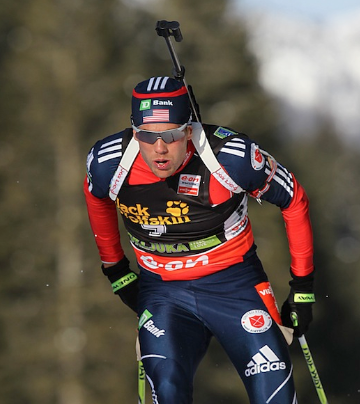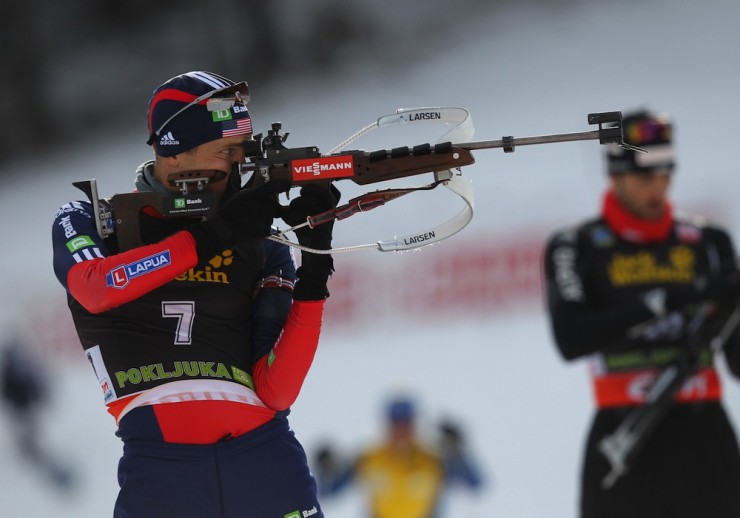
Tag: Jay Hakkinen

  • Eleven U.S. Biathletes Picked for Pre-World Cup Camp in Sweden, Key in Olympic Qualifying

    Eleven U.S. Biathletes Picked for Pre-World Cup Camp in Sweden, Key in Olympic Qualifying

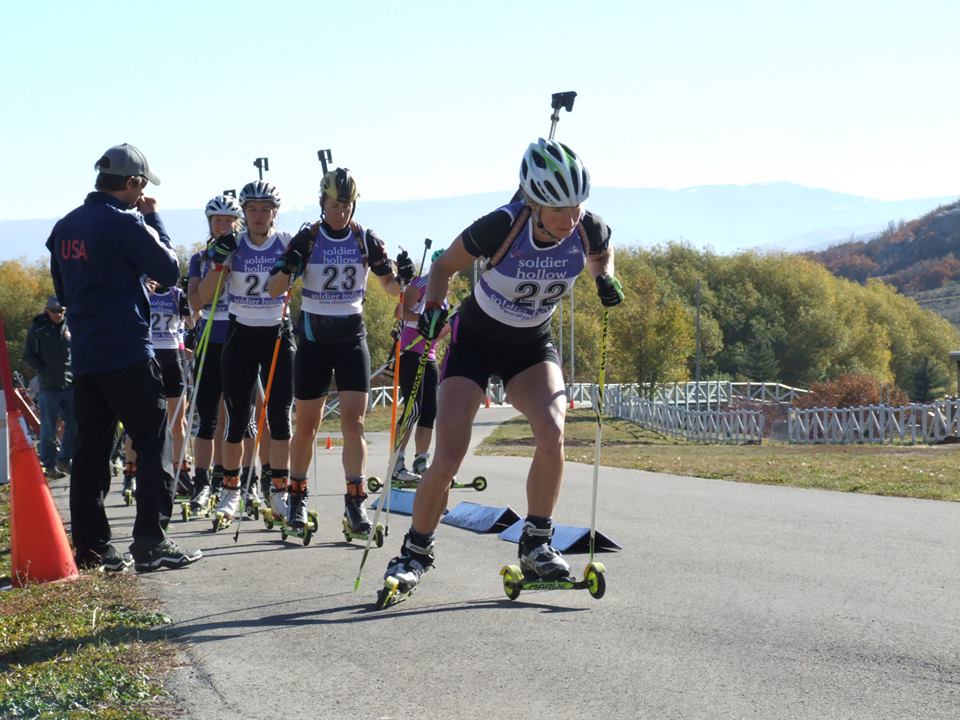
    Hannah Dreissigacker leaves the start in Tuesday's sprint at Soldier Hollow while Lanny Barnes and Sara Studebaker wait on deck. Photo: Gordon Vermeer.
    Hannah Dreissigacker leaves the start in Tuesday’s sprint at Soldier Hollow while Lanny Barnes and Sara Studebaker wait on deck. Photo: Gordon Vermeer.

    After four rollerski races’ worth of battling, eleven biathletes have been selected to attend U.S. Biathlon’s fall training camp in Östersund, Sweden, to prepare for the World Cup season. The camp is also an important step in the Olympic qualification pipeline, as early-season World Cup results are one way to snag a trip to Sochi.

    Six athletes – 2013 World Championships silver medalist Tim Burke, plus teammates Lowell Bailey, Leif Nordgen, Susan Dunklee, Annelies Cook, and Sara Studebaker – were prequalified for the Sweden camp. Hannah Dreissigacker and Jeremy Teela, both also members of the national team, were the trials winners after competing in Jericho, Vermont, this summer and then Soldier Hollow, Utah, last week.

    Lanny Barnes, an Olympian who underwent compartment syndrome surgery at the end of the 2013 season, was added as a discretionary pick. The Durango-based athlete who trains with her sister under the team name Twin Biathletes was the next-ranked woman in the trials standings.

    On the men’s side, national team veteran Jay Hakkinen earned a discretionary nod, with USBA High Performance Director Bernd Eisenbichler noting that the Alaskan was highly ranked in the trials and “actually beat Jeremy in three races.”

    Sean Doherty, the 18-year-old who won three medals including one gold at World Youth Championships last season, also got the nod as a discretionary pick. The New Hampshire native trains with Algis Shalna in Jericho, Vermont.

    How to Qualify: It’s Complicated

    These eleven athletes aren’t necessarily the ones headed to Sochi, but booking a ticket to Europe certainly gives them an advantage in a multi-step process which provides several ways to qualify.

    Importantly, the team’s top three racers – Burke, Bailey, and Dunklee – are already pre-qualified based on results from the last season of World Cup racing. They met criteria such as a top 30 ranking in the Total Score or two top-15 finishes in World Cup and World Championships racing.

    The U.S. has spots for five men and five women, although the team can only start four athletes in each competition. It’s unclear whether they will bring the full roster of five or not.

    The next way the U.S. will try to fill its team is based on the first period of World Cup racing. After the openers in  Östersund kick off on November 24, the IBU World Cup will move to Hochfilzen, Austria, and then to Annency, France. Rosters for those races will be determined by performance at the pre-race training camp, while athletes not picked for the World Cup will be sent to the second-tier IBU Cup circuit, with the opportunity to move back and forth based on current performance.

    In these early World Cups, a top-30 finish is good enough to be added to the Olympic team. Up to three men and three women can be selected to the team by the end of December, counting Burke, Bailey, and Dunklee – so one more man and two women can qualify this way. If more athletes have top-30’s, the ones with the best results will be picked. Conversely, if no athletes in a given gender reach the top-30, the athlete with the single best result will be added anyway.

    Of the athletes who will go to Sweden and haven’t pre-qaulified for Sochi, Nordgren, Cook, and Studebaker all had top-30 finishes last season.

    For the remaining spot or spots on the Sochi roster, athletes will have one last chance to fight their way onto the team in January. Importantly, it’s also possible for athletes who did not make it to the Sweden camp to step in on this part of the process: trials races held in December will select a few more racers to join the IBU Cup circuit, where they will join any non-qualified athletes from the fall World Cup and IBU Cup squads.

    In this final step, Americans will compete in Ridnaun, Italy, or Altenburg, Germany, and also potentially in time trials. The best athletes will be selected using a percent-back ranking from three of four races and time trials. USBA also allows one discretionary pick per gender for the Olympic team.

    Performance Notes: Women’s Team Looking Strong

    Eisenbichler said that he was very happy with the level of performance by his women’s team, and also that it was relatively easy to identify Dreissigacker and Barnes as the two women who should be added to the roster for Sweden. Dreissigacker won the sprint in Jericho this summer as well as the final sprint in Soldier Hollow; Barnes was second in the last Soldier Hollow sprint. Her sister Tracy had better performances in Jericho, but did not compete in Soldier Hollow.

    More importantly, Dreissigacker and Barnes turned their performances up a notch in the last competition, going 1-2 while both shooting clean. Barnes is a veteran and traditionally one of the best shooters on the circuit; Dreissigacker is a relative newcomer to the sport after coming in as a skier.

    “That was really important to see, that even with a fair amount of pressure in that last race they shot clean,” Eisenbichler said in an interview on Saturday. “This is the first time for Hannah.”

    Eisenbichler was also pleased with his pre-qualified athletes. Dunklee cleaned in a sprint win on Tuesday, where Cook was second and Studebaker third. Cook didn’t compete in the final race; she tweaked a nerve in her neck, and since she didn’t have to qualify through the races, Eisenbichler said it was “safer not to take any chances.” The problem has since been fixed and she is back to training.

    He called Studebaker’s two third-place finishes in Soldier Hollow “solid” and was gratified to see that the women’s team had improved considerably since Jericho.

    “Opposite of Jericho, the women really were shooting very well,” he told FasterSkier. “I don’t want to seem overoptimistic, but I’m really happy with where the team is right now.”

    Men Knocking at the Door

    Eisenbichler was also enthusiastic about the performances from Bailey, who has swept all four of the trials races, and from Burke and Nordgren, who were often close behind.

    “I think that once these three guys get to the World Cup, they will be able to be having some really good results right away,” he explained.

    After that, though, the committee’s job was considerably harder in making discretionary selections for the Sweden trip. Teela was the trials winner based almost entirely on a single exceptional performance where he cleaned his targets to place third in the first Soldier Hollow sprint.

    Hakkinen and Doherty were fourth and fifth in the final sprint, behind the three pre-qualified men. Hakkinen was consistent throughout the four trials races, but these strong performances late in the game and under pressure certainly helped the pair earn their discretionary nods.

    National team member Russell Currier and National Guard biathlete Wynn Roberts also had top-six finishes in Soldier Hollow; both also raced well in Jericho, where Currier was second in the sprint and Roberts seventh, but the fifth American. They found themselves just on the outside when the final rankings were tallied.

    “There were a lot of guys in the mix for that fourth spot on the trip, like five or six of them,” Eisenbichler said. “Even the ones that didn’t make it, I think will have good performances if they go to the IBU Cup in January. It’s going to be very competitive.”

    Doherty’s selection was probably the most surprising. He did not compete in Jericho due to illness, but had a stellar final sprint in Soldier Hollow.

    “Sean’s preparation this year has been great,” Eisenbichler said. “Compared to his progression in October last year, he has made huge improvements. We really thought that sending him to Sweden will be the best thing for his development as a biathlete.”

    Link to Trials reports and results:
    Soldier Hollow

    Jericho: menwomen

  • As U.S. Biathlon Hones Focus on Sochi, Small Group Named to 2014 National Team

    As U.S. Biathlon Hones Focus on Sochi, Small Group Named to 2014 National Team

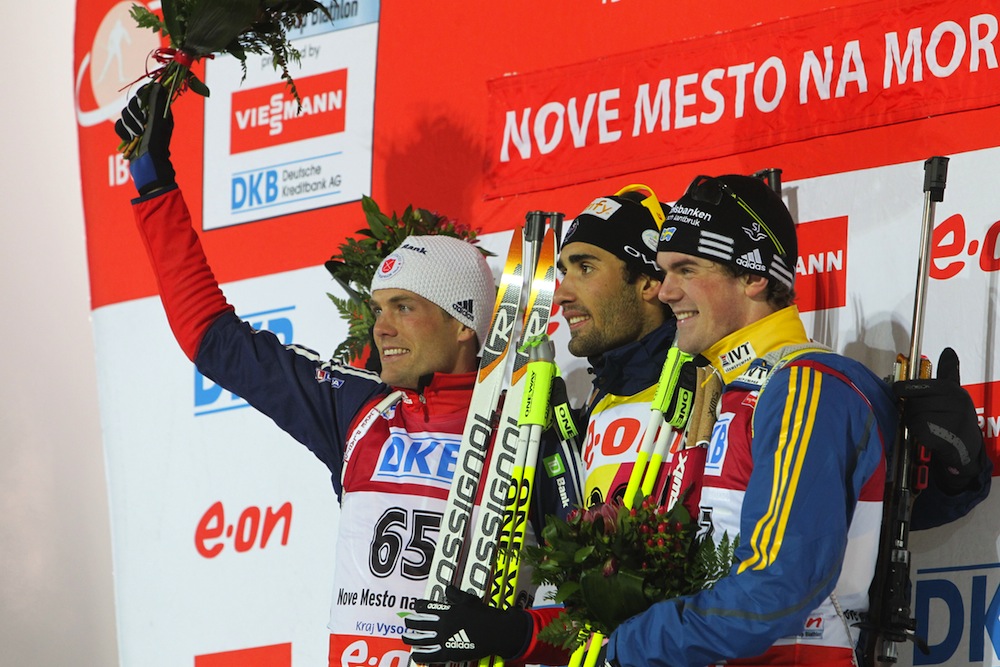
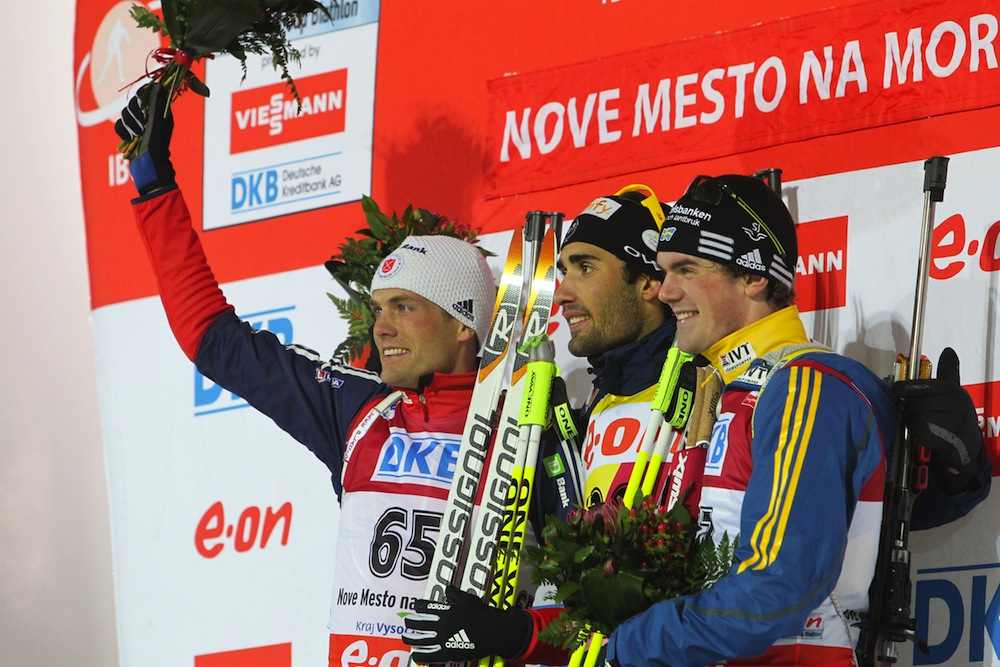
    This is a scene the U.S. hopes will play out at the Olympics: Tim Burke on the podium after earning silver in the 20 k individual at 2013 World Championships in Nove Mesto, Czech Republic. Photo: Nordic Focus/USBA.
    This is a scene the U.S. hopes will play out at the Olympics: Tim Burke on the podium after earning silver in the 20 k individual at 2013 World Championships in Nove Mesto, Czech Republic. Photo: Nordic Focus/USBA.
    The last five years have seen the size, resources, and focus of the U.S. biathlon team rise and fall, then rise and fall again. There have been shifting standards on what constitutes an “A” team performance, how much discretion is used, the size of the “B” team, and even how late into the season athletes are added to the team.

    But the 2014 season is different for one huge, glaring reason: Sochi, Russia, which will host the Olympic Games.

    And so, in an effort to be the absolute best it can be at the Games, the U.S. Biathlon Association is sinking all of its resources into a skeleton crew of elite seniors as the big event draws near.

    “That’s definitely what we’re doing, and what the [U.S.] Olympic Committee is willing to support,” USBA President Max Cobb told FasterSkier last week. “We will have a very different strategy for the 2014-15 season than we have now, that’s very clear… [but] that’s the approach we’re taking this year.”

    Four men and four women were recently nominated to the “A” team for the 2013-2014 season, and just three athletes in total to the “B” team. It’s the smallest squad that the U.S. has nominated in years.

    The group is headlined by Tim Burke, who won silver in the World Championships 20 k individual in Nove Mesto, Czech Republic, last season.

    He is joined on the “A” team by Lowell Bailey, Russell Currier, and Leif Nordgren. The four men qualified automatically for “A” status by finishing fifth in the World Cup 4 x 7.5 k relay in Oberhof, Germany, in January. A top-seven relay result is specified as one of several possible qualification criteria in the national team criteria.

    On the women’s side, Cobb said that Susan Dunklee, Annelies Cook, and Sara Studebaker all met individual qualification criteria for the “A” team, while Hannah Dreissigacker, who started her first World Cups partway through the season, was a discretionary pick.

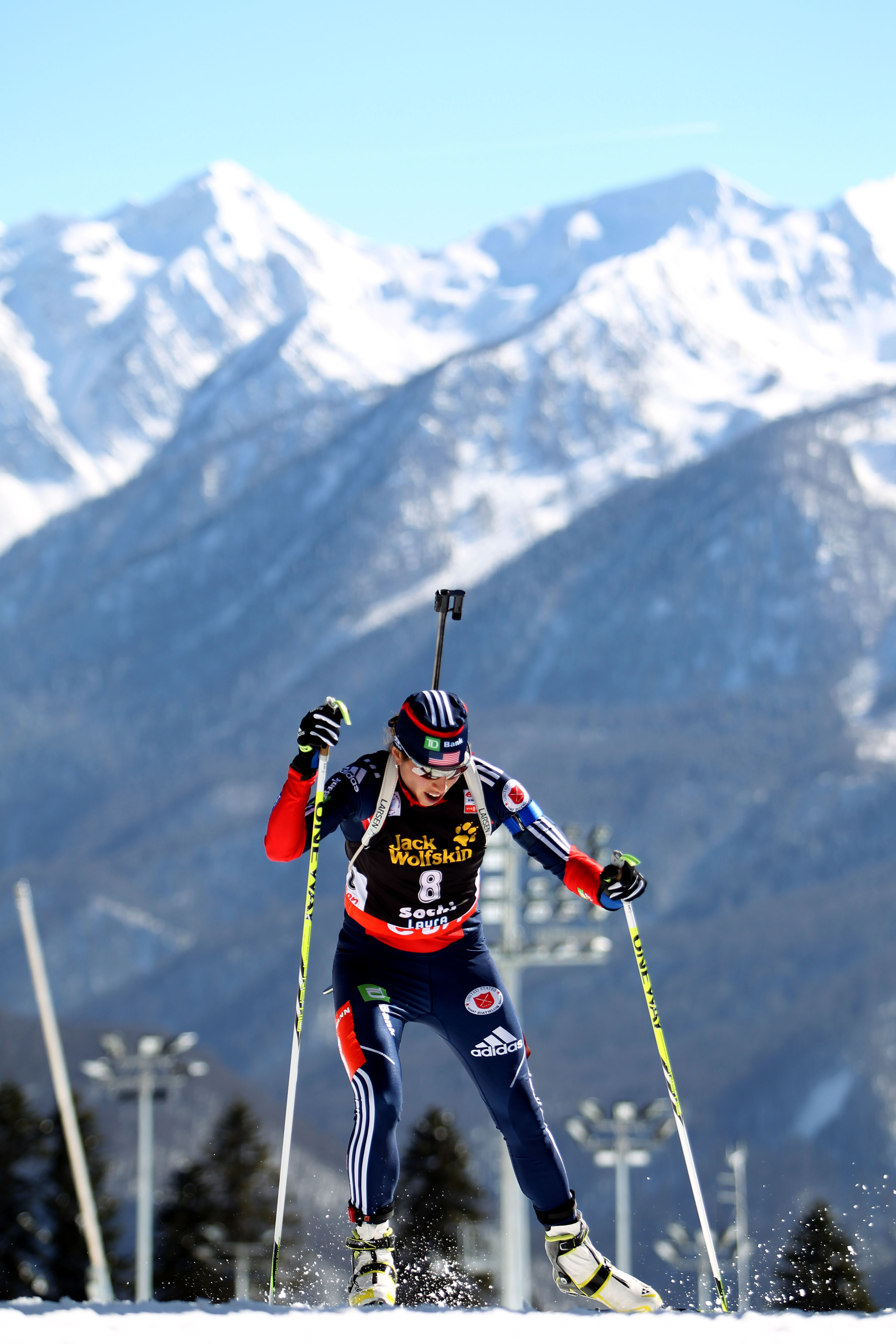
    Susan Dunklee had the best U.S. women's result of the season, placing seventh in the 15 k individual at the Sochi World Cup - where the team previewed the Olympic venue. Photo: USBA/NordicFocus.
    Susan Dunklee had the best U.S. women’s result of the season, placing seventh in the 15 k individual at the Sochi World Cup – where the team previewed the Olympic venue. Photo: USBA/NordicFocus.

    “We looked at her results and she had two top-20 finishes on the IBU Cup, and we thought she had a strong performance in the relay at World Cup 6 and at World Championships, so for the future, she has the ability to contribute,” Cobb said of Dreissigacker, who along with Dunklee is also affiliated with the Craftsbury Green Racing Project. “She had a top-60 at the World Championships and had competitive international ski times, so that was really good.”

    Dreissigacker’s inclusion is also notable as it is the first time in recent memory that four women have been named to the “A” team. Cobb hoped that having a larger training group, more comparable to the atmosphere on the men’s team, would propel the women to greater success.

    “We’re really excited about the progress of the women’s team,” he said. “I think that having those four women training together throughout the season is really going to drive things to an even higher level, and be a big step forward for the coming season.”

    All eight “A” team athletes competed at World Championships, where they collected four top-20 results and an additional eight top-40 finishes – all of which bodes well for next year’s Olympic Games. The only two athletes not to score points at World Championships were Dreissigacker, for whom it was the first trip to the sport’s second-biggest stage, and Currier, who proved his abilities last season when he collected two individual top-ten performances on the World Cup.

    B-Team Veterans

    Unusually for a national team, the “B” level is filled only with veterans – all of whom have had Olympic success in the past. While none of the three achieved particularly strong international results last season, USBA is hoping that they can be in the mix come trials and make the teams more competitive.

    For the women, Lanny Barnes is the sole “B” team nominee. After a mediocre year where she started on the World Cup and then saw some IBU Cup action, she and twin sister Tracy Colliander, herself a 2006 Olympian, underwent surgery for compartment syndrome. On their website they wrote that the injuries had been bothering them for a long time; they are already back on skis.

    “It seems like their surgery was successful and that they were pretty quickly back able to get around again, unlike Tim’s surgery, where he was off his feet for a long time,” Cobb said. “So that’s really positive, and we’re hopeful that it will be good and that their results will come back up. But the truth is that the results really weren’t strong for either one of them this season, so there was no rationale for bringing them on to the A team.”

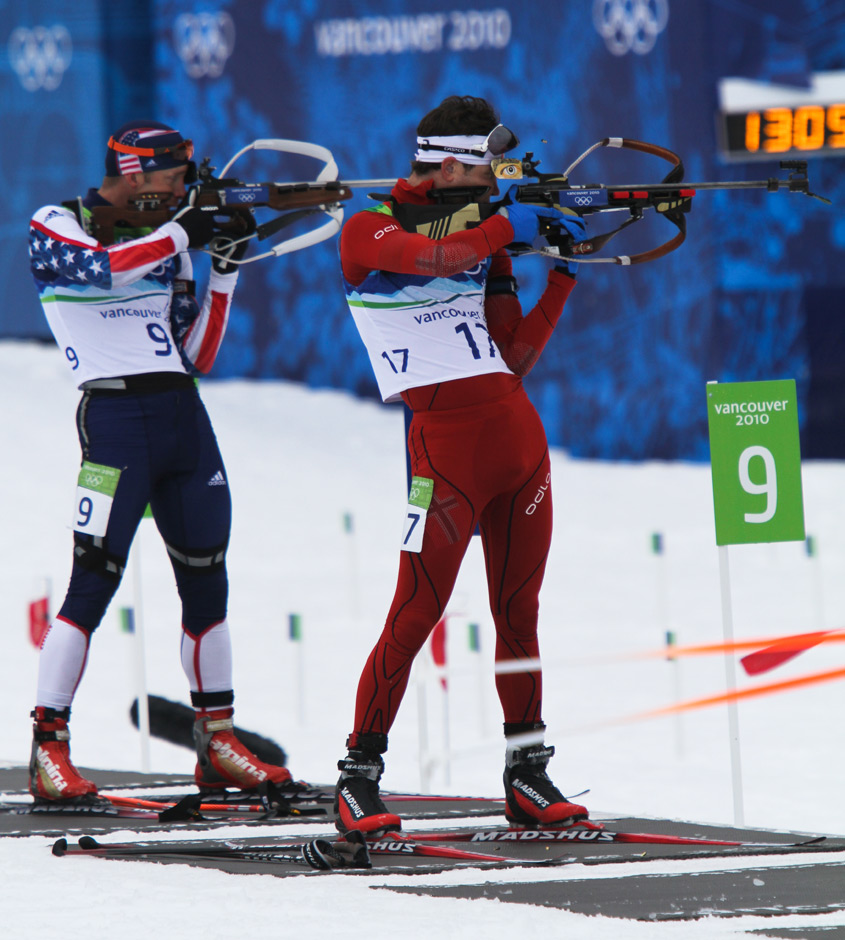
    Can he do it again? Now a dad, Jeremy Teela finished ninth in the sprint at the 2010 Olympics.
    Can he do it again? Now a dad, Jeremy Teela (left) has his work cut out for him if he’s going to repeat his ninth-place finish from the sprint at the 2010 Vancouver Olympics.

    Also on the “B” team are Jay Hakkinen and Jeremy Teela, two long-time national team veterans. Along with Lanny Barnes, Teela had the best U.S. results at the 2010 Olympics. The men hope to make one last Games this winter.

    “Having spoken to both of them, they are both very concentrated and focused,” Cobb said. “You know, Jeremy welcomed his first son into the world just before the season began, and I think that he took a necessary break from the rigors of training and preparing for international competition, and he still went on and had fairly close selection races with Jay. So he was already able to compete successfully with Jay, and for both of them the big challenge is what they can make happen for this year going into the Olympics. And I think both of them will really put everything they have into it.”

    This year, the “B” team designation has little benefit in the way of training or off-season support; while in the past it has been a group of athletes who live and train in Lake Placid, many of the veterans prefer to train out of their own home bases. In addition, more of the camps than usual will be limited to the “A” team.

    “It’s less ‘B’ team participation than we had last year,” Cobb said. “But there has always been a difference, there have always been camps where only the ‘A’ team was invited. We have the camps where we are using rollerski competitions to qualify athletes for the on-snow training camp in Sweden, and there we will have support for the ‘B’ team athletes, but other than that, this year most of the camps will be only the ‘A’ team.”

    Further Cuts to Development

    What the “B” team lacks this year is the usual crop of younger athletes who are rising through the ranks. Given the team’s funding situation, Cobb said, there just wasn’t the possibility to include development in this year’s national team. The team is so small, has no new members, and only one under the age of 25.

    “We are very cognizant of the fact that it is very hard right now to be a developing biathlete in the United States,” Cobb said. “It’s very difficult to stay in the sport. That said, we think that the strategy that we’re taking to give the leading group of athletes everything they need to be successful will be one that results in longer-term prosperity for all of us.”

    The team nominations came with an announcement that the junior national team will be named at a later date, and Cobb mentioned that USBA is particularly excited about the development trajectories of younger athletes like Casey Smith, Anna Kubek, Tara Geraghty-Moats, and newly-minted Youth World Champion Sean Doherty.

    The national team money going towards development this year will be some token amount for a junior team, the details of which are yet to be announced; it will help athletes like Sean Doherty, 2013 Youth World Champion in the pursuit and twice a silver medalist. Photo: UBSA/NordicFocus.
    The national team money going towards development this year will be some token amount for a junior team, the details of which are yet to be announced; it will help athletes like Sean Doherty, 2013 Youth World Champion in the pursuit and twice a silver medalist. Photo: UBSA/NordicFocus.

    But the athletes left in the lurch are those that are old enough to be out of the junior ranks, but who weren’t seen to have much of a shot in this Olympic cycle. Katrina Howe of the Maine Winter Sports Center, Wynn Roberts of the National Guard, Bill Bowler (who has headed north of the border to train with the Biathlon Alberta Training Center), and Mark Johnson of Mount Itasca spring to mind, as all made international tours this season or last season. In addition, Corrine Malcolm was not re-named to the national team.

    Several younger athletes, too, are just negotiating the transition out of the junior ranks. Without development funding from USBA, it’s tough to know how many might make it through the end of the next Olympic cycle, after a raft of current national team members will have presumably retired.

    Cobb, however, stressed that biathlon is not alone in this challenge.

    “We’re not the only sport in the country that’s really challenging from a financial standpoint to continue to progress in,” he explained. “Unfortunately it’s not that uncommon. I actually just spent a day and a half with [USOC Chief of Sport Performance] Alan Ashley and had some great conversations about long term strategies from the Olympic Committee that could try to change that, to bring more resources to bear on developing sports so that it’s not so challenging for good athletes working their way up through the system.”

    Future Goals

    If all goes well in Sochi, Cobb hopes that success will bring more money to the program and allow them to re-establish a better development program. And that includes, among other things, once again reaching out to the ski community in search of new biathletes – a strategy that worked well for Dartmouth College graduates Studebaker, Dunklee, and Dreissigacker.

    “Seeing the success from Susan, Sara, and Hannah, we envision being able to reach out again to collegiate athletes and be able to offer them the opportunity to be able to jump into biathlon,” Cobb said. “We recognize that we have really limited resources, and we need to focus them this year as concentrated as possible on success in Sochi, and if they are successful there, that will only help us to have a broader development program in the year after.”

    In the meantime, he hopes that the few club teams that exist in the U.S. can continue to shoulder the burden of funding developing athletes.

    “On the positive side, we still have some good clubs,” he said. “I know that Raleigh Goessling and Casey Smith will spend some more time at Maine Winter Sports Center, and Katrina Howe is there. The Craftsbury program is really offering athletes another opportunity in biathlon now, and that seems to be growing – Algis Shalna is putting a fair amount of time into that project as well now.”

    There are a few other reasons to be optimistic, too. For instance, Burke’s silver medal is an additional carrot in continuing negotiations to attract new corporate sponsors.

    “There’s no question that it’s made– we had started some of the discussion with companies before Tim’s medal, and that really helped continue those discussions,” he said. “I think that the results we have this season are good and are compelling and will help that process, and there are active proposals on the table now that are into third-round discussions.”

    Finally, skiing on the whole is seeing exponentially more success in the United States, and, Cobb hopes, that added visibility can help each of the sports that fall under the nordic umbrella.

    “It’s also coming at a time when the cross country team and nordic combined are also very successful, more successful than we’ve been,” Cobb said. “But in general, it brings the attention back to nordic sports, and that is really, really helpful, especially going into Sochi. I know NBC is going to be very focused on Kikkan [Randall] in Sochi, and I think that will be of great benefit to nordic sports generally, and to biathlon as well.”

    2013-2014 U.S. National Team:

    Men “A”:

    Lowell Bailey, Lake Placid, NY

    Tim Burke, Paul Smiths, NY

    Russell Currier, Stockholm, ME (Maine Winter Sports Center)

    Leif Nordgren, Marine, MN

    Men “B”:

    Jay Hakkinen, Kasilof, AK

    Jeremy Teela, Park City, UT

    Women “A”:

    Annelies Cook, Saranac Lake, NY (Maine Winter Sports Center)

    Hannah Dreissigacker, Morrisville, VT (Craftsbury Green Racing Project)

    Susan Dunklee, Barton,VT (Craftsbury Green Racing Project)

    Sara Studebaker, Boise, ID

    Women “B”:

    Lanny Barnes, Durango, CO (Twin Biathletes)

  • France Has Its Revenge on Norway In Ruhpolding Relay

    France Has Its Revenge on Norway In Ruhpolding Relay

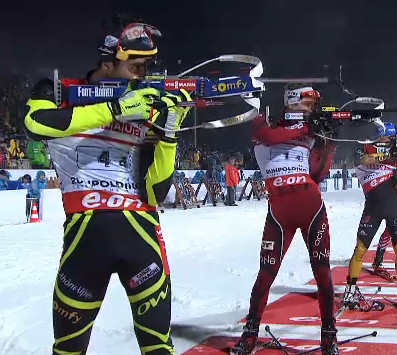
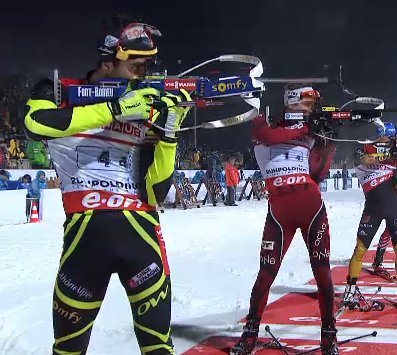
    Martin Fourcade (FRA) shot cleanly in Ruhpolding to lead France to victory in the men's 4 x 7.5 k relay.
    Martin Fourcade (FRA) shot cleanly in Ruhpolding to lead France to victory in the men’s 4 x 7.5 k relay.

    While the women got lucky with better conditions in Ruhpolding, Germany, on Wednesday, the men had new-fallen slush to contend with when it started falling during the second leg of the men’s 4 x 7.5 k relay. With each passing lap the tracks got slower and softer, but in the face of the added challenge one Martin Fourcade prevailed to anchor the French to victory.

    Norway, anchored by Emil Svendsen, battled with Austria’s Christoph Sumann for second place and emerged just barely ahead. Norway finished 9.4 seconds behind France; Austria just 0.3 seconds behind them for third.

    “I knew that Martin could win once he left the shooting range,” said Fourcade’s brother Simon, France’s scramble leg. “It was especially nice to take some revenge on the Norwegians after losing to them last year. When you have Martin as the last relayer you can always expect a successful day.”

    Lowell Bailey bringing the U.S. to 8th in the first leg. Photo: Nordic Focus/USBA.
    Lowell Bailey bringing the U.S. to 8th in the first leg. Photo: Nordic Focus/USBA.

    Up until the final 7.5 k it was an incredibly close race. Fourteen leadoff legs shot clean in the prone stage, including Simon Fourcade (FRA), Lars Birkeland (NOR), Simon Eder (AUT), Lowell Bailey (USA) and Jean Phillipe LeGuellec (CAN), and at the first exchange nine teams were practically skiing on top of each other. Fourcade tagged to Jean Guillaume Beatrix in fourth for France and Bailey finished his leg in eighth, and there were less than ten seconds between them.

    “I just tried to stay calm during the opening lap knowing that on this range approach, most of the time the entire group comes together after the big downhill and there really isn’t that big of an advantage to coming first as opposed to coming in seventh or eighth to the shooting range,” Bailey said.

    During the second leg wet snow began to fall, illuminated in the sky under the Ruhpolding lights. Germany’s Andreas Birnbacher led the train out of the stadium to push through the sloppy course, which had been modified to avoid a particularly sketchy hill. He shot clean in both prone and standing while his fellow leaders began to falter, and the field began to string out.

    “It felt a bit different between the first and last lap because of the snowing; the track became very slow. I don’t know if it was more difficult than others, but wax was not the same for every team and some teams were better in the snow and some were not,” Beatrix said, adding that the French wax techs did a good job in the changing conditions

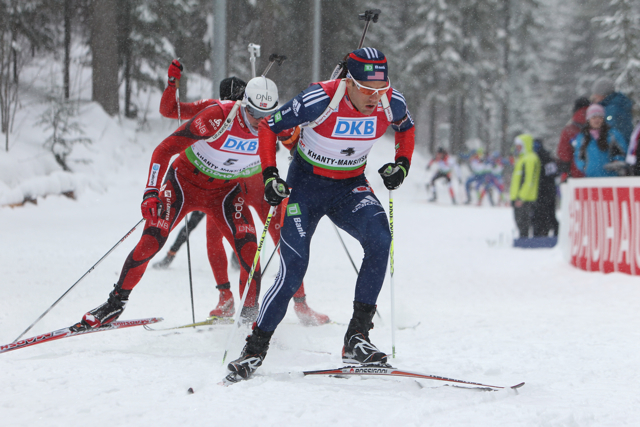
    With the second leg the Americans appeared to be on the way to a repeat or better of their Oberhof performance, where the men were fifth. Leif Nordgren skied the best he has all year, and even though he needed three spare rounds between the prone and standing stages, people all around him made comparable mistakes. When he left the range after standing he was in third, and by the time he’d finished 7.5 k and come back to tag Russell Currier, he had moved the U.S. into second.

    Leif Nordgren bringing the U.S. to second at the end of his leg.
    Leif Nordgren bringing the U.S. to second at the end of his leg. Photo: Nordic Focus/USBA.

    “I had some of the fastest skis I think I’ve ever skied on, and my shape was the best that I’ve had all year so far!” Nordgren wrote in an email.

    “I died quite a bit after [standing], I was able to hang on to the group for most of the last loop, but I lost a few seconds right at the end.”

    Even so, Nordgren posted the 10th-fastest time out of anyone all day.

    “That was a world class performance in some very difficult conditions,” US Biathlon CEO Max Cobb said in a press release.

    Despite the promising first half, the U.S. lost ground in the third leg. Currier made several mistakes each time in the range and had to ski two penalty loops after his first lap, losing time on the leaders. He seemed to struggle in the soft conditions and the U.S. dropped to 16th.

    Meanwhile, off the front of the pack, the race had diminished to three teams: Austria, Norway and Germany took turns leading and trying to drop the others. Dominik Landertinger (AUT) put on an uphill surge towards the end of his leg and created a break on the other two, giving Christoph Sumann, Austria’s anchor a bit of a cushion as he started his race.

    But with Martin Fourcade feeling almost back to his usual self the gap was not long for this world. Within one kilometer he had reeled Austria back in, and at 2 k he took over the lead as if to say, “Yeah, nice try.” Top off Fourcade’s level of fitness with perfect his shooting, serious errors from both Norway and Austria, and nobody else really had a chance. He entered the final straight with time enough to take off his poles and throw them jubilantly overhead as he glided across the finish line, arms raised.

    Fourcade, who had an accident that injured his shoulder last year, said he’s feeling closer to being back to full form.

    “[My shoulder] is getting better and better and I’m close to my top shape,” he said in the press conference later.

    “It is always great to win with your friends,” added his brother Simon.

    * * *

    Jay Hakkinen, the American anchor leg, brought the U.S. up a few more places and finished in 14th. He shot cleanly and posted the 11th-fastest leg time.

    “I think I put in a good leg today, especially with shooting,” Hakkinen said. “I have been working hard to be in control of my shooting under high pressure, so I was pleased the work paid off.”

    His team’s ultimate result, though not on par with Oberhof, didn’t give the Americans cause for too much concern. It’s only one race and there are plenty more on the calendar.

    “Both Oberhof and today and Ruhpolding showed we can compete for the podium,” Hakkinen said. “For the team I do not believe there was any difference in how we came into the race. We all gave everything we have and one mistake in the race is not going to change the overall approach to our work.”

    Tim Burke sat out the relay in order to get healthy after a bout of illness following Oberhof last weekend. Cobb said they hope Burke can start on Saturday but had not yet decided.

    The Canadians, who had a strong start with LeGuellec’s leg, faded to 15th. Scott Gow was able to bring the team back to sixth in the third stage but several errors from Nathan Smith put them back in the teens.


    Results.

  • Despite Missing ‘Top Gear,’ Burke Notches Fourth in Pokljuka Sprint

    Despite Missing ‘Top Gear,’ Burke Notches Fourth in Pokljuka Sprint

    Tim Burke (USA) shot clean to finish a season-best fourth place finish in the 10 k sprint in Pokljuka, Slovenia, on Thursday. Photo: Nordic Focus/USBA.

    Last week in Hochfilzen, Austria, the American men said they were easing into the season in order to build to what really mattered: World Championships. Lowell Bailey was tenth in the puruit and Tim Burke was 23rd — results they were satisfied with in light of their more important winter-long goals.

    Tim Burke (USA). Photo: Nordic Focus/USBA.

    On Thursday in Pokljuka, Slovenia, Burke turned in a fourth-place finish in the 10 k sprint behind winner Jakov Fak (SLO). If this is “easing” into the season, one has to wonder what full force will look like down the road. The performance is Burke’s best of the winter thus far and came at the same venue where he first put on the yellow leader’s bib in 2009.

    “I have had some of my best races here in the past and the course suits me very well so I knew today could be a good opportunity,” Burke said of his expectations prior to Thursday.

    “Of course it would have been nice to get on the podium but I really did everything that I could out there today so I am happy with that.”

    Remarkably, Burke says he still hasn’t hit peak form. Prior to leaving the line he wasn’t sure whether his energy level would be enough for an outstanding performance.

    “I have struggled a bit during the last few races with my form,” he wrote in an email. “Even today I was still missing my top gear. I skied a steady race but I just could not really pick it up on the last loop like I wanted.”

    Burke had the twelfth-fastest overall course time on Thursday, but his race was made on the range. He shot perfectly, prone and standing, and was very efficient, posting the eighth-fastest composite range time. It was no small task, as blustery wind made steady shooting difficult.

    “The difference today for me was on the shooting range,” Burke said. “The conditions were a little tricky with some gusty wind so I was very happy to go clean with fast shooting. My goal today on the shooting range was to be aggressive. Since I have not been feeling 100% on the skis, I can’t afford to give away 15 seconds in shooting time. So today I tried to push the pace a little with the shooting and it worked out.”

    U.S. Biathlon Head Coach Per Nilsson said the Pokljuka course suits Burke’s skiing strengths well, and that overall Burke executed the 10 k perfectly — “pacing of the skiing was good, and shooting just like a normal training.”

    “I am really impressed how he carried through all parameters of the race,” Nilsson added. “Everybody [on] the team is really happy and [today] will get us a boost for the rest of the week.”


    Bailey Rallies Through Toe Fracture, Finishes in the Points

    Lowell Bailey, the next American to finish behind Burke, finished 36th (+1:38.6) in spite of fracturing his toe this week. He missed two shots, both in the standing position, and skied the 50th-best overall course time.

    All things considered, Bailey was simply happy he could put on a bib. The fracture caused him a “dull pain” in his toe that he tried to minimize on Thursday by not using it to balance on the outside of his foot.

    “I’m happy that I was able to race. Period. I have to keep the thought that I was sitting in a doctor’s office two days ago and wondering if I could salvage anything out of this race series,” Bailey wrote in an email.

    Through the first stage Bailey was still within reach of the top 20, only 19 seconds off the leaders, and might have held on had he not missed two targets the second time around.

    “I was right in there today until the second stage,” he said. “I’m frustrated that I threw away a great opportunity by missing two, but given the circumstances, I’ll take a few World Cup points and head for the pursuit.”

    Bailey needed to score points on Thursday in order to have a chance at a starting spot in the first mass-start of the season on Sunday; only the top 25 men on the World Cup after Saturday’s pursuit automatically get to race. After his 36th in the sprint Bailey is ranked 29th overall, 14 points out of 25th.

    “It looks like I need a pretty good result on Saturday in order to get into the mass start. But, I’ll take the five World Cup points and prepare for Saturday!” he said.

    After Bailey, Russell Currier and Jay Hakkinen were the last two Americans in 89th and 92nd, respectively.

    Scott Perras led the Canadian squad in 34th (+1:33.0), shooting clean on lap one but missing two targets in the second stage. Scott Gow (CAN) was 50th (+1:54.9) and Jean Philippe LeGuellec (CAN) struggled in 83rd.

    Results.

  • Photo Gallery: One Training Day in Ruhpolding

    Photo Gallery: One Training Day in Ruhpolding

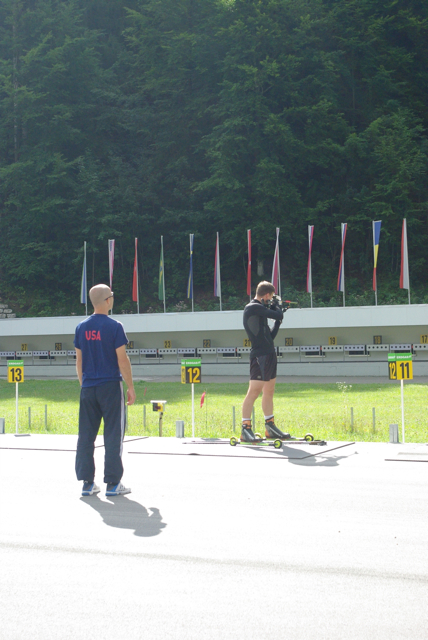
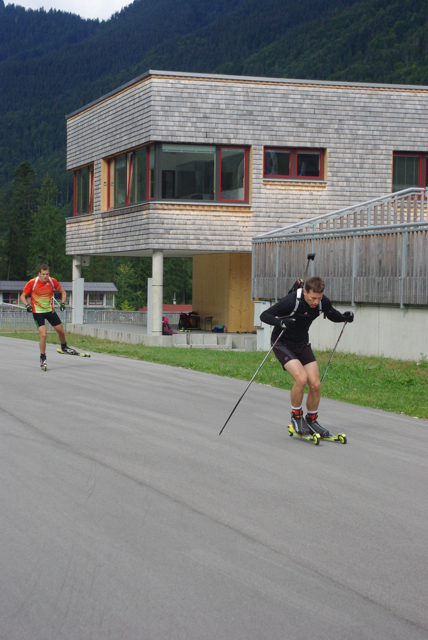
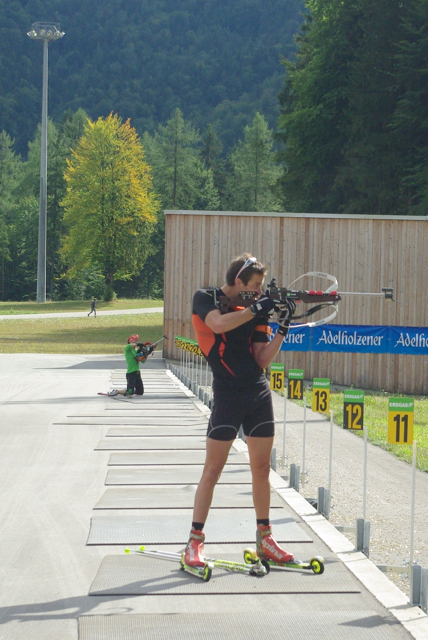
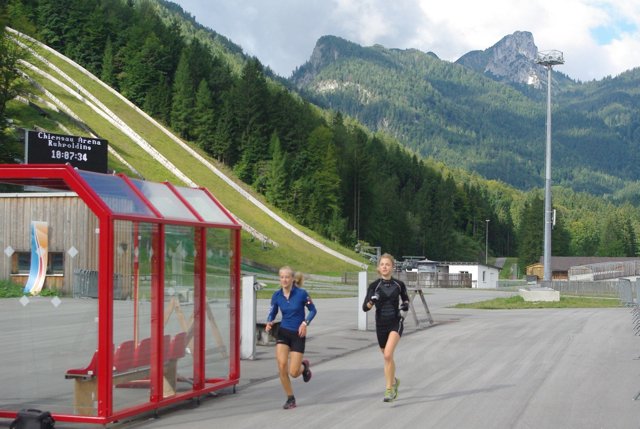
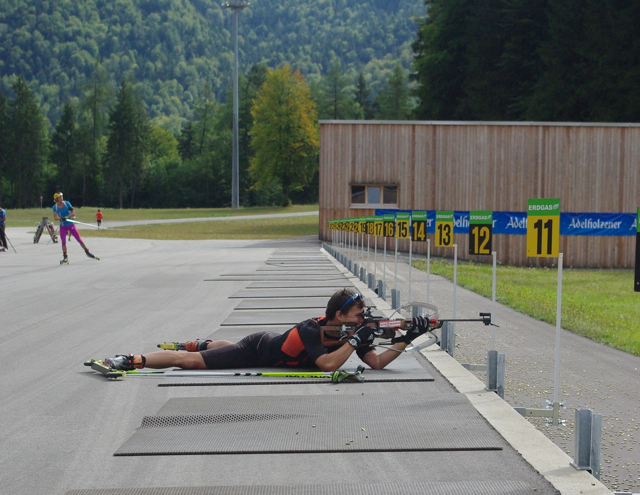
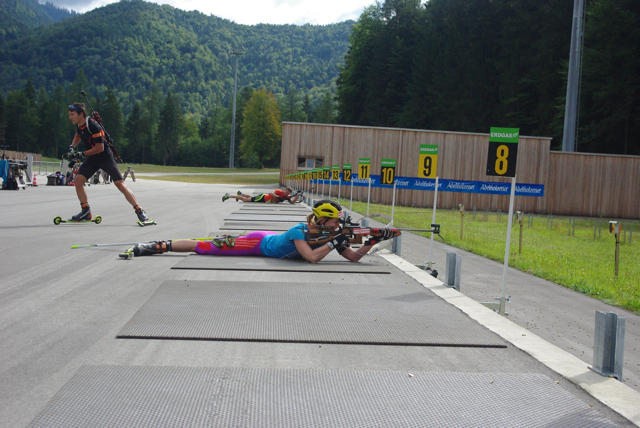
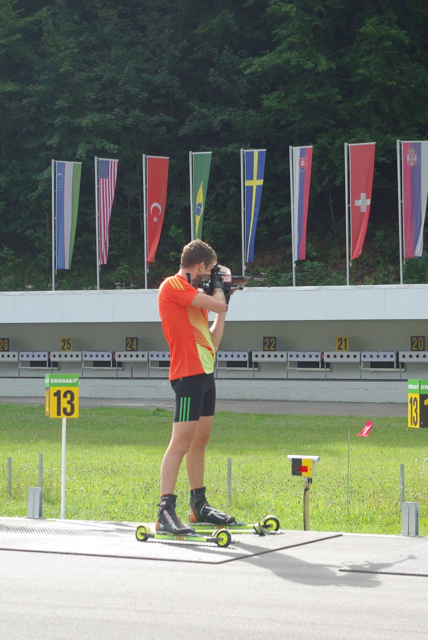
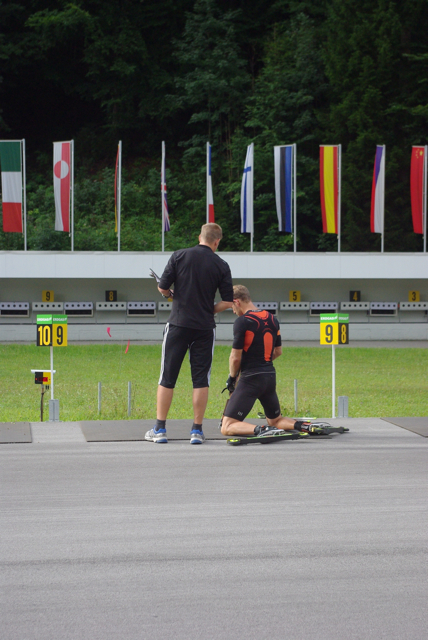
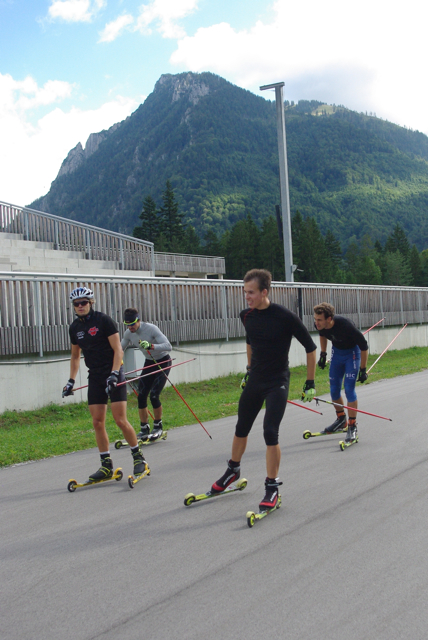
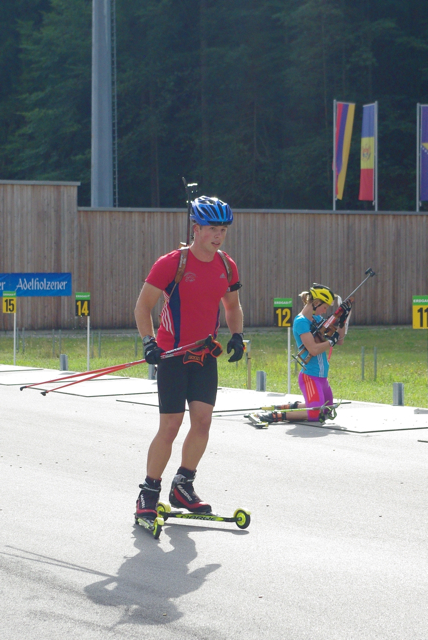
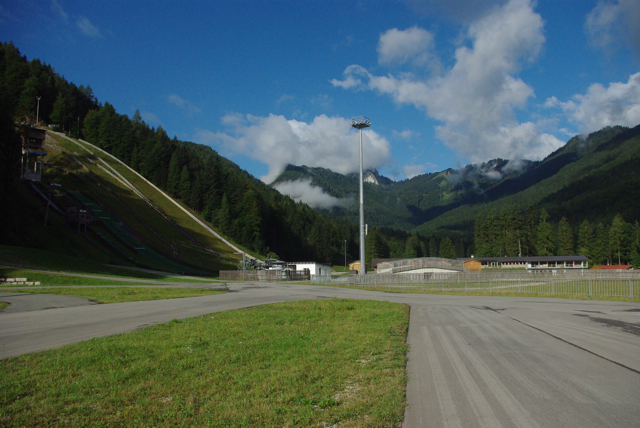
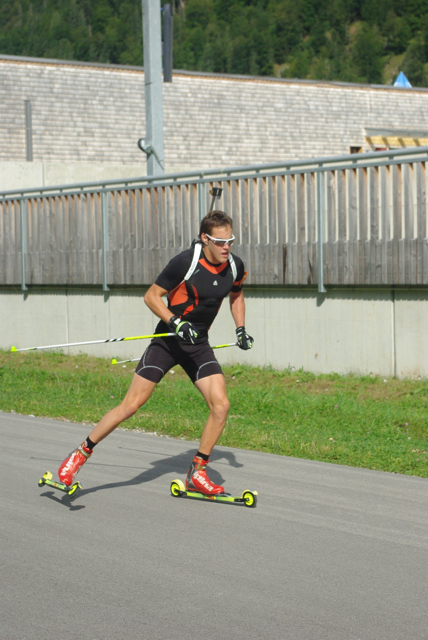
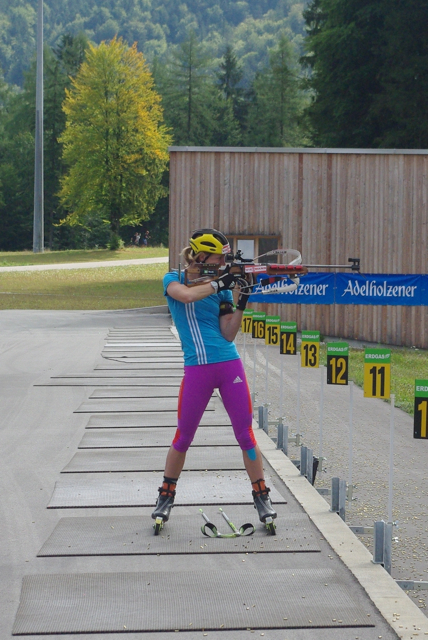
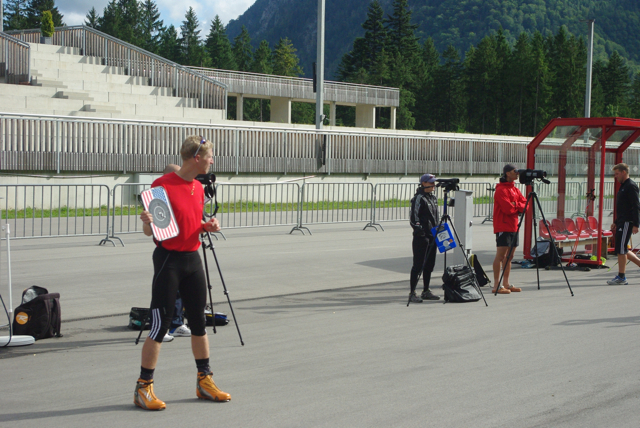
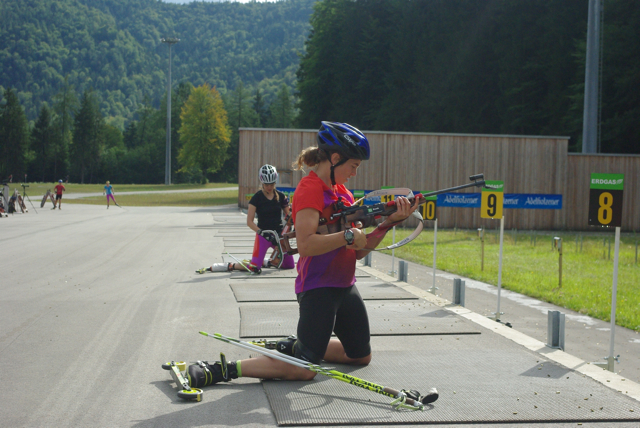
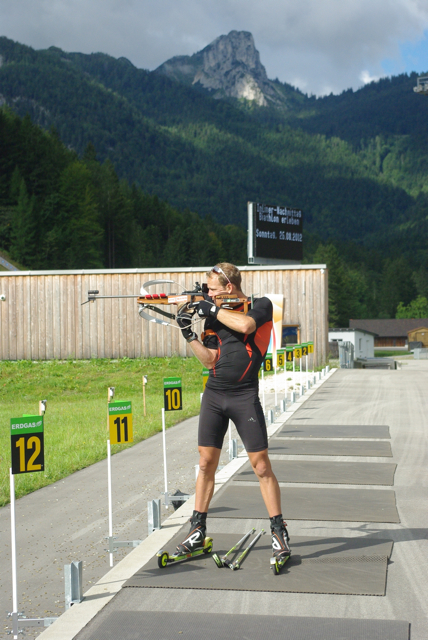
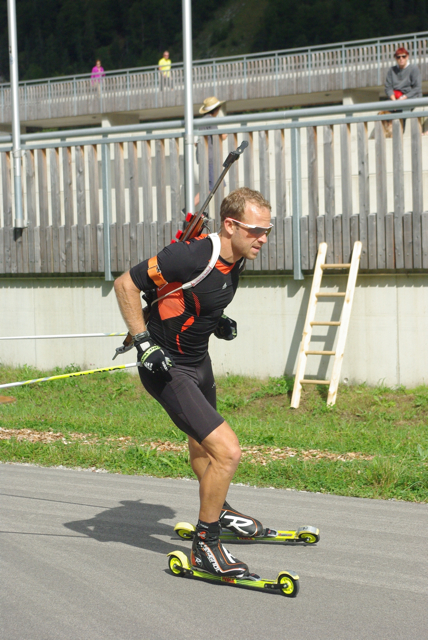
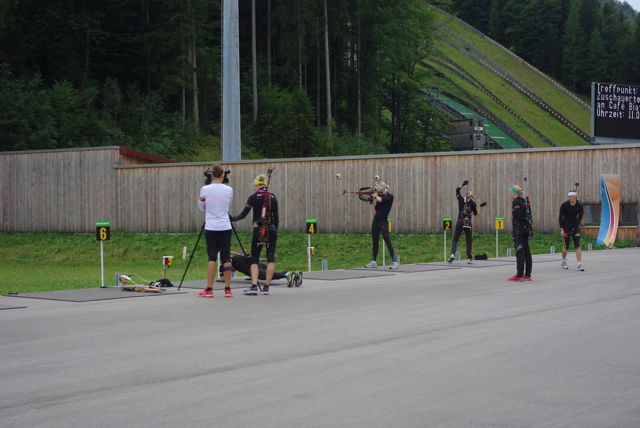
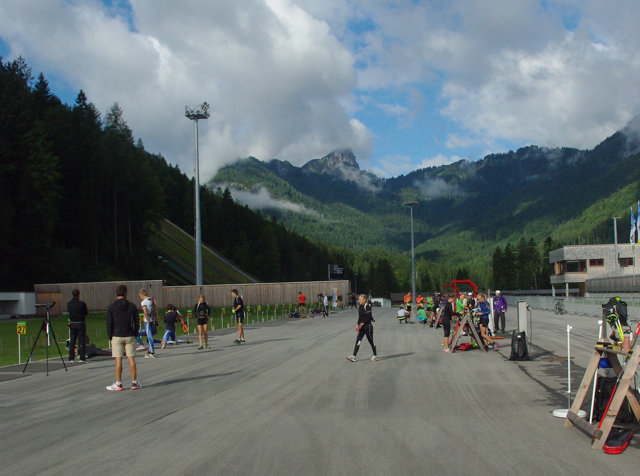
    The Chiemgau Arena, a shooting range with paved rollerski loops just outside of Ruhpolding, Germany, is a venue unlike almost anything in North America, with the exception perhaps of a few former Olympic sites. And even if Soldier Hollow has nice rollerskiing, too, Ruhpolding has a bit more: other teams, for one, but also spectators who show up even in the summer just to watch some of the world’s top biathletes train.

    Here are a few of our photos from a morning of training earlier this week, when the U.S. national team and the National Guard team joined three German groups as well as the Ukrainians to use the range for a workout.

  • Hakkinen in Germany: ‘There’s Still Things That I Want to Achieve’

    Jay Hakkinen on the range at 2012 Biathlon World Championships back in March, but here in Ruhpolding, Germany.

    RUHPOLDING, Germany – After winning a World Junior title in 1997, Jay Hakkinen has gone on to compete in four different Olympic Games and notch nine individual World Cup top-tens, including one this year.

    But despite Hakkinen’s long contribution to the U.S. team, in past years he has been more visible in Europe than in the sport in his home country. In 2008 he moved to Oberhof, Germany, when he and his girlfriend Kristin Orlameunder welcomed a daughter to the family. Since then, Hakkinen has often spent the springs in his native Alaska, but otherwise traveled to the U.S. only for a few camps each year.

    At the moment he’s back with the team in Ruhpolding, where all of the U.S. “A” team athletes are having a two-week training camp before heading to Oberhof to test skis in the ski tunnel. FasterSkier took the opportunity to catch up with Hakkinen in person and snagged an interview at the team’s hotel.

    FasterSkier: So how has your summer been going so far?

    Jay Hakkinen: I think it has been good! It’s nice to be here with the team. I’ve been training on my own, in Alaska in the spring and then in Germany in the summer until now. So it’s good to have the checkup with the team, especially heading towards the season. It’s been relaxed, but really good training.

    FS: For the summers, do you have a coach on the ground here in Germany that you work with, or are you working entirely based off the plan the U.S. team coaches give you?

    JH: I work closely with Per [Nilsson] and Armin [Auchentaller, the U.S. team coaches] for the training and the training plan. Then when I can, I recruit some help from friends to help with specific training, but a lot of the training I can do on my own because training is training.

    FS: And you’ve been doing it for a while.

    JH: Yeah, it’s not rocket science.

    FS: Do you have any training partners?

    JH: Man, now it sounds depressing! No, I actually prefer a lot of training on my own. I like my pace, my heart rates, my system. So I like coming to camps and comparing with the others and training with the others, but even then I need my time where I can do it the way I like to do it.

    With shooting, the way I like to do it is that I use the camps and checkpoints and to get the ideas, but I find that the time when you’re on your own is the time that you can really advance in certain areas. I need that time because I’ll have a weakness or a problem and I need to internalize and figure out in my head why this is happening without the pressure of, oh my god, if I miss, the coach is going to see it. With that pressure away, I solve the problem and come to the next camp even better, or I try to.

    FS: How has your plan evolved in the last couple of years?

    JH: Every year is very much an adventure. The biggest thing has been getting a good structure. It’s always about finding the way to get the best results and how to arrange everything and a support base around an individual. Each person on the team does that, even in a team environment, you still need a coach to talk to you specifically. So that has been my challenge, is getting that structure strong enough to support the top results.

    FS: Do you feel like you’ve been making positive progress on that?

    JH: The results have picked up in the last couple of years, which has shown that the structure has been better and the cooperation has been better. It’s coming along, and just in time for the Olympics, too.

    FS: Is it limiting to be outside of the regular national team structure?

    JH: No, no, it doesn’t have to be. And they do provide the same national team support for me. I get the same stuff as the other guys. The difference is the daily support, but there have been people who have really supported me with that so it hasn’t been a disadvantage.

    FS: What are the facilities like in Oberhof?

    JH: That’s one thing that’s impressive about Europe. They think of everything that an athlete needs for their training and they provide it. There’s a lot of cultural issues when you’re training in Europe, too, though. The German system can be really rigid, such as with shooting times and when you train. It actually took several years to figure out which range belongs to which organization and how to get permissions and things like that. But now I have a good system.

    FS: Was it hard when you first got over here to figure out how things worked?

    JH: I had been traveling for a long time, and I like Europe. I always have. I started my biathlon career in Norway and I’ve been traveling with the biathlon national team since I was 16, so that wasn’t an issue. The biggest issue was adapting to that rigid culture as an independent athlete going into a system that only allows clubs. It was very difficult too because I didn’t want to barge into the national team structure, but there also wasn’t quite a fit with the other clubs. Overall, it was challenging, but I’ve figured it out.

    There was also a question of figuring out which camps to do, because living over here, if I was to do all of the camps it was going to create a lot of travel. I did actually at first go between Alaska, and camps, and Europe. I was going in circles, getting exhausted without the training. So I have been trying to make it more efficient, and then I finally reached that level of efficiency.

    FS: Has it affected your understanding of the sport to be living here in Germany?

    JH: That was one of my big motivations for coming over here, was to see what we were missing as an American program and why we weren’t getting the medals and they were. That was an interesting learning process of what the difference is in our two programs.

    FS: And what is it?

    JH: [Laughs] And the answer is… Simply… [throws hands in the air] No, the basic thing is that in Europe they consider their career as their job. There’s coaches watching the shooting all year round for each training. In the U.S., it’s a college-based system, and sports in general is thought of as something you do, and then you go to college and you get a life. Europe recycles their athletes into coaches, into physiologists, so they have this whole system where you’re actually doing job training for your career until you retire, really retire, when you’re 60. That’s what I see as the big difference. And the support is a lot better too.

    USBA has made good strides with the Lake Placid program, realizing that it’s not just about having camps and then you go home. Every day there’s that support system there.

    FS: Would you recommend to someone that it would be useful to come spend a year in Europe, or five years?

    JH: What I thought was great when I spent my foreign exchange of Norway was not just the sports side of it, but the cultural side of it. I thought it was very eye-opening and I would absolutely recommend for anybody to do that. It really expands your world. It’s a little strange to go back and you see that everyone is enclosed in high school cliques and things and you think, wow, they don’t realize there’s a whole world out there. But also for the sports, you actually see that there’s not that much of a difference. They’re doing the same training, it’s just maybe on a more regular basis. There’s no secrets.

    I think we are getting there. The realization is happening. This generation for some reason gets it, where the past nordic and biathlon generations were too landlocked. Europe was too far away. They tried what they wanted in the U.S. – I don’t want to get into the old days, but we’d fly over to Europe, we’d be jetlagged, we’d race, we’d lose, we’d go back and we wouldn’t understand. Now we’re over here, we see the competition and when we go back for the summer and work on where they’re beating us. And just even talking to them. They don’t keep secrets, but if you’re not there to talk to them, you don’t learn.

    FS: What has kept you in the sport so long, and kept you motivated?

    JH: For me, it has always been that as long as the results have been there and I enjoy doing it, I’ll do it. And I still have goals I want to achieve. Especially, you get a taste that you had it, it was that close, and you go back to the workshop and try it. And it’s strange too because you can try a new concept, and it can take a whole year to try that and fail at it, and then you have to start from scratch and that’s one year lost. So these Olympic cycles go quicker than you think.

    I love the training effect. I love it that you can run 100 meters and check your time, and then train for it and your time improves. I find that just a miracle and I am fascinated by that. You can do that for anything. And in biathlon there’s a lot of little things to work on, maybe what’s the different between a split bullet and a hit, how can I move it that one millimeter over. That’s always been a good motivation for me.

    FS: The team as a whole has been doing a lot better in the last couple of years. Has that added to your motivation?

    JH: It drives me crazy, because a lot of the time they’re doing better than I am! But it’s a positive competitiveness. It’s great, and it’s what I had hoped for for many years when I was developing in the younger years, to put it horribly. We used to do relays and we had the hope that we wouldn’t be last. If we could beat one team then it was great. But now there’s another motivation, it’s not just an individual motivation, but I think the team is good enough that we can be fighting for the top of the Nations Cup points, or fighting for medals in the relay. So there’s another element that gives you more pride in what you’re doing.

    FS: What do you think made it happen?

    JH: What happened is that USBA had a very good support base, and they brought in coaches that clicked with the athletes. It was a professional organization that built around the athletes and then the USOC supported the system. And the results just started coming very quickly.

    And then it has to be credited very much to Tim [Burke] because he was the first one to have a really big breakthrough, and then that gave everyone else the confidence to say, “hey, I beat Tim in training, I can outshoot him, but he was in the yellow jersey and on the podium!” So it doesn’t seem so detached. It kind of goes back to Europe being so far away, and the winners being so far away. When you bring them close, then you start seeing that he doesn’t train so differently. There’s little details, but then maybe you can do those details and improve on them.

    FS: Has it made a more productive atmosphere at training camps to know that all of you are right at that level?

    JH: It’s very professional. Nobody is joking around – everything is very much for the results and for the season, and it’s a really good thing to be a part of. It’s the way camps should be, but it’s not even just the camps. You realize that everyone is going home and training really hard too, trying to improve, staying disciplined. It’s really nice.

  • 13 Biathletes Named to 2012-13 U.S. National Team

    Jay Hakkinen, Sara Studebaker, Annelies Cook, and Tim Burke pose after their sixth-place mixed relay result in Kontiolahti, Finland this season. All four athletes will return for 2012-2013. Photo: NordicFocus/USBA.

    The U.S. Biathlon Association has announced its 2012-13 national team, which consists of 12 returning members and a single new nomination.

    The squad is led by five Americans who achieved top-ten results on the 2012 World Cup circuit, and were rewarded with “A1” nomination: Tim Burke, Lowell Bailey, Russell Currier, Jay Hakkinen, and Susan Dunklee. In total, seven women and six men will make up next year’s national team, a slight decrease from last year’s size.

    Comings and Goings

    The vast majority of last year’s national team was renominated for 2013. The two departing members are Bill Bowler and Wynn Roberts; Bowler competed in several IBU Cup races this year, topping out with finishes of 29th and 26th in Canmore, while Roberts, a 2010 Olympian, did not see international action and began racing for the National Guard partway through the season.

    Dreissigacker in Lake Placid, 2011.

    They are replaced by Hannah Dreissigacker (Morrisville, VT), a member of the Craftsbury Green Racing Project ski team who has competed in a few biathlon races for each of the past seasons. Dreissigacker’s best ski results this year were seventh place in the skate sprint at U.S. National Championships, fifth place in the 5 k classic at Canadian Nationals, and seventh in the American Birkebeiner marathon.

    In biathlon, she finished 26th in the individual race at Open European Championships in Brezno, Slovakia, and 16th at an IBU Cup sprint in Canmore. With the national team “B” nomination, Dreissigacker will make biathlon a prime focus.

    “I’m excited about being named to the team!” she told FasterSkier. “I had some lows and some highs with biathlon this past year, but I’m excited that they chose to look at the potential showed in the high points. I’ve been wanting to do something different in terms of training and life in general, and so this is the perfect opportunity to keep training but to change things up a bit and get re-energized.”

    The Same at the Top

    None of the team’s top talent has gone anywhere, and the U.S. will likely see the same faces leading the way in the coming season.

    Burke (Paul Smiths, NY) had five top-ten finishes this season, including a tenth-place result in the sprint at World Championships in Ruhpolding, Germany, and a fourth-place finish at the final sprint in Khanty-Mansiysk, Russia. Burke, who earned the overall yellow leader’s bib for a period back in 2009-10, had surgery for compartment syndrome last spring, and this was his first season back at full capacity. He finished 20th in the World Cup Total Score.

    Bailey (Lake Placid, NY) was right alongside Burke all season, and eclipsed him in the Total Score, finishing 14th. Bailey had nine of the top twelve results of his career this year, including two fifth-place World Cup results from sprints in Kontiolahti, Finland and Östersund, Sweden. He also contributed several head-turning leadoff relay legs throughout the season.

    Lowell Bailey in the World Championships pursuit. NordicFocus/USBA.

    Burke and Bailey perhaps did the most to increase visibility for the U.S. men’s team this season, as they were near the front of mass start and pursuit races late in the game on multiple occasions and often in medal position.

    Veteran Hakkinen (Kasilof, AK) was re-selected based on a ninth-place finish in the pursuit in Hochfilzen, Austria, and a 36th-place ranking in the Total Score.

    Currier (Caribou, ME) is on the “A” team for the first time, after breaking through on the World Cup this year with a pair of surprise sixth-place finishes in sprints in Kontiolahti and Nove Mesto, Czech Repulbic.

    He is joined by Dunklee (Barton, VT), who was elevated to “A1” status after placing fifth in the individual race at World Championships, tying the best Championships result ever by a U.S. woman. At the final series in Khanty-Mansiysk, Dunklee placed tenth in the sprint and moved up to ninth in the pursuit. She finished her first-ever World Cup season ranked 34th in the Total Score.

    Several more veterans of the team were also nominated to “A” status, with Sara Studebaker (Boise, ID) receiving an “A2” nomination and Annelies Cook (Saranac Lake, NY) and Leif Nordgren (Marine on Saint Croix, MN) coming in at “A3”. All three competed at World Championships and contributed to tenth- and eleventh-place relay efforts by the men and women, respectively.

    B Team: Focusing on Developing Women

    Four women and one man will comprise next year’s “B” team on the basis of their results at IBU Cup competitions. They are led by three-time Olympian Jeremy Teela (Heber, UT), who finished 11th, 12th, and 13th in IBU Cup action, and Lanny Barnes (Durango, CO), a two-time Olympian who helped the women to their 11th-place relay finish at World Championships.

    Laura Spector (Lennox, MA) and Corrine Malcolm (Hayward, WI) also return to the team; Spector had an off-season in 2012 after leading the team for the first half of the 2011 season and becoming the first U.S. woman to qualify for a World Cup mass start in six years. Malcolm fought injuries in 2012, her first season with the national team. The final team member is Dreissigacker.

    2012-13 U.S. Biathlon Team

    A1

    Lowell Bailey (Lake Placid, NY)

    Tim Burke (Paul Smiths, NY)

    Russell Currier (Caribou, ME)

    Susan Dunklee (Barton, VT)

    Jay Hakkinen (Kasilof, AK)


    A2

    Sara Studebaker (Boise, ID)


    A3

    Annelies Cook (Saranac Lake, NY)

    Leif Nordgren (Marine on Saint Croix, MN)


    B

    Lanny Barnes (Durango, CO)

    Hannah Dreissigacker (Morrisville, VT)

    Corrine Malcolm (Hayward, WI)

    Laura Spector (Lennox, MA)

    Jeremy Teela (Heber, UT)

  • North American Men Not At Their Best in Khanty Pursuit, But Find Value Looking Towards Future

    North American Men Not At Their Best in Khanty Pursuit, But Find Value Looking Towards Future

    Tim Burke leading Emil Hegle Svendsen and Tarjei Bø of Norway early in the race. Photo: NordicFocus/USBA.

    Both the U.S. and Canada had high hopes and lots of opportunities in Khanty-Mansiysk, Russia, but for the men competing in the 12.5 k pursuit Saturday, most of those possibilities didn’t materialize.

    For the U.S., Tim Burke started with bib number four after a season-best finish in the sprint on Friday. He missed a shot in the first stage, and then one in each of the next two, and hovered around tenth position. But after missing two in the final bout, Burke slipped to 21st, more than two and a half minutes behind winner Martin Fourcade of France.

    Jay Hakkinen. Photo: NordicFocus/USBA.

    Lowell Bailey and Jay Hakkinen started with bibs 19 and 20, and didn’t have much better luck. Bailey missed three shots in the first stage and dropped to 45th. He managed to regroup, however, and cleaned the rest of the race, finishing 26th.

    Hakkinen had two penalties in each prone stage, and never recovered, ultimately falling to 40th.

    “I ended the race with a symbolic World Cup point, so I think of it as a lucky penny for the next training season,” Hakkinen told FasterSkier.

    The final U.S. starter, Russell Currier, left the gate in 37th. He started off strong, cleaning prone and moving into the top 30, and seemed to be on a good trajectory – but then missed five shots in the next three stages, and he, too, lost his spot, winding up 48th.

    “Today was not a great race,” Currier wrote in an e-mail. “My legs were tired, skis were questionable, and the excess snow changed up the style a lot.”

    There was one other issue too, an error that doesn’t show up on the result sheet.

    Currier. Photo: NordicFocus/USBA.

    “The results have me with five misses,” Currier explained. “Unfortunately I didn’t see my last target in standing go down and thought I had two penalties in the final stage and ended up doing an extra penalty loop. It was frustrating, but it wouldn’t have made much of a difference.”

    Overall, it was a bit of a deflating day for the U.S. But both Hakkinen and Currier said they were keeping their heads high.

    “Today was simply not our day, which biathlon is notorious for,” Hakkinen said. “Overall, I see great potential and as long as we keep the work-hard mentality we will get the results we want.”

    For Currier, the week has been an exercise in reasonable expectations, starting with the sprint.

    “I sure would have liked to have hit my last target standing, but the last loop was fast enough to get me into the points,” he said of that effort. “So in the end I decided I was pleased with it.”

    Overall, he wasn’t letting the somewhat frustrating results in Khanty dampen his spirits too much.

    “I didn’t make my goal of competing in the mass start and today wasn’t the best ending note, but I didn’t even need this weekend’s racing to justify this as my most successful season yet,” Currier wrote. “So, I’m still glad just to be here and to gain the extra racing experience at the World Cup level.”

    * * *

    For top Canadian Jean Philippe Le Guellec, things couldn’t have gone much more poorly: he started in eighth after an excellent sprint race yesterday, but fell all the way to 47th with seven penalties. Nothing, he said, seemed to go right.

    “If everything was on point yesterday, I guess the only thing that was on point today were my skis,” he lamented. “My ski shape was absent… it seems to be the trend for me this season every time there is a set of back to back races. Conditions today didn’t help much either. It snowed all day, a fine powedery snow that mixes in the present snow and makes for slow conditions compared to yesterday. My shooting was obviously not on par either.”

    Le Guellec racing at World Championships.

    While conditions were tricky enough that only two competitors cleaned, they weren’t too complicated either, and Le Guellec was still unsure where he had gone wrong.

    “I don’t know why [I missed], the shooting conditions were fine, and I wasn’t coming in the range like a mad dog either – I couldn’t have if I wanted too!” he told FasterSkier. “So it beats me as to what happened there. Concentration wasn’t excellent, and that’s pretty much all I can explain.”

    Luckily, despite the disappointment, Le Guellec was able to look at the big picture.

    “Bah, for sure it’s not as much fun when you have such a drastic drop,” he said. “But it’s no reason to be bitter, after all, we practice sport for a living, how much do we actually have to whine about?”

    Luckily for Canada, the day was redeemed by Scott Perras, who moved from 41st up to 33rd, and Nathan Smith, who improved from 46th to 38th.

    As Le Guellec had noted yesterday, the team seemed to have lackluster skiing at World Championships, but improved this week.

    “I think I missed the optimal prep for Ruhpolding, and World Championships sadly just ended up being good prep for here,” Perras told FasterSkier.

    Today, he shot superbly, missing only two targets out of 20, which allowed him to rise through the field.

    “This week I really just focused on the shooting, and followed a similar shooting plan to World Championships, which paid off today,” he said.

    Nathan Smith leading Scott Perras at World Championships.

    Smith matched that shooting, allowing for his own surge upwards.

    “Skiing was fairly good but not my best,” Smith wrote in an e-mail. “I’m very happy with my shooting despite losing some valuable time because of a frozen sight and double eject in the last standing bout. Missing the very last shot always hurts a bit too.”

    After a sprint in which he “started way too hard and died a painful death,” Smith used more even pacing in the pursuit and ended up happy with the result. It was especially encouraging since he came down with a cold the day of the individual race in Ruhpolding, and had been disappointed with his last race there.

    Like Currier, both Perras and Smith looked at the big picture and saw the Khanty-Mansiysk races as building blocks, rather than imperfect ends to their seasons.

    “Unfortunately none of my races have really been at the same level as Canmore,” said Smith, who won three IBU Cup competitions on home turf earlier this season. “It would’ve been nice to pop off a few more races like that, but overall I’m still satisfied with the end of my season. I’ve made my biggest performance gains ever this year.”

    Perras agreed.

    “I am not upset about the sprint, but I missed a really good opportunity and next year I hope to bring a maturity that will allow me to capitalize on these opportunities,” he said.

    Full results

  • Burke’s Fourth in Khanty-Mansiysk World Cup is Best of Season, Leads Three More North Americans Into Top Twenty

    Burke’s Fourth in Khanty-Mansiysk World Cup is Best of Season, Leads Three More North Americans Into Top Twenty

    Tim Burke at the medals ceremony in Khanty-Mansiysk. Photo: NordicFocus/USBA.

    The world’s top biathletes recently competed in six races in eleven days at World Championships in Ruhpolding, Germany, but as exhausting as that may have been, their season isn’t over yet. The racers hopped on a chartered plane and headed for Siberia – home of the Russian venue Khanty-Mansiysk – to contest three more races over the extended weekend.

    For American Tim Burke, the last World Cup series wasn’t simply something to check off a list before he could call it a season. After a top finish of tenth at World Championships, he knew he could do more.

    “I felt that I was still in good shape after World Championships and I have always liked the tracks here in Russia,” Burke told FasterSkier. “I think the course suits my strengths well with lots of gradual climbing and little recovery.”

    That turned out to be true, as Burke placed fourth in Friday’s 10 k sprint – the best finish of his season so far.

    “I am very happy with my race,” he said.

    Martin Fourcade of France won the two-stage competition, with Arnd Peiffer of Germany second, +5.3, and Fredrik Lindstrom of Sweden third, +6.7.

    Burke ultimately finished 23 seconds behind Fourcade, but started just 30 behind the Frenchman; they had bibs 37 and 38.

    Burke racing in Ruhpolding, Germany last week.

    “When I came into the shooting range after the first loop I could see that Martin was still shooting, so I knew that I had probably made up time on him during the first loop and was off to a good start,” Burke said.

    He missed one shot in prone, and said he was “frustrated, but feeling good and put the hammer down.” A quick second loop moved him from 34th up into the top ten. After cleaning his standing stage, Burke sat in sixth, but he didn’t know that much else.

    “I knew I was fighting for a top spot but I had no idea how close things were,” he explained. “We are really short staffed here this week so I did not get much info on the last loop. I only knew that I was in sixth leaving the range. But anytime you are in the top ten, you have to know that every few seconds will be a place.”

    By keeping the pace high, Burke was able to leapfrog past Switzerland’s Simon Hallenbarter and Slovenia’s Jakov Fak in the standings. And it was good that he put in a charge, because a pair of Norwegians – Emil Hegle Svendsen and Tarjei Bø – were making up ground of their own, skiing their way into the top ten and finishing within two seconds of Burke.

    Even though it meant that he didn’t get as much information on the course as some of his competitors might have, Burke was quick to note that the small service team didn’t hurt his performance at all.

    “I have to give a huge thanks to our small staff of three here,” he said. “We have one coach and two wax technicians here, and they all did an incredible job with the skis in some really tricky conditions. A lot of teams struggled with skis today despite having over twice the staff of our team – I think that says a lot for the quality of our program.”

    While there’s a gap to the podium, Saturday’s pursuit should bring plenty of opportunity for Burke, especially given the fact that he’ll be skiing with Svendsen and Bø; the trio are always among the faster skiers on the circuit, although Peiffer had the best course time on Friday.

    “Very happy with my 4th place today in Russia!” Burke tweeted after the race. “Now looking forward to the pursuit tomorrow!”

    * * *

    Le Guellec in the individual race in Ruhpolding.

    While Burke’s finish was the highlight of the day, the rest of the North American men were close behind. Jean Philippe Le Guellec placed eighth, twelve seconds behind Burke, with a single penalty. The result tied the third-best of his career.

    After feeling that his ski speed was off in Ruhpolding, Le Guellec bounced back with the 13th-fastest ski time on Friday, and was pleased with his pacing.

    “I felt pretty strong throughout the race, which is really important,” he told FasterSkier. “In the majority of races this winter I find I was struggling to keep up pace in the end.”

    As for that one missed shot, well, he was less pleased, but said he couldn’t have done much to prevent it.

    “The wind picked up and went from left to right, then right to left, then front to the back and back to front, all in the lapse of time I squeezed the trigger to release the round,” he lamented. “No wonder I missed! I have never seen such a drastic change in such short time span. The range was quite windy today and was a gamble for the field.”

    Jay Hakkinen and Lowell Bailey placed 19th and 20th for the U.S., separated by just 0.7 seconds. Bailey had two penalties and Hakkinen one.

    Hakkinen on the move in Khanty. Photo: NordicFocus/USBA.

    “Although technically it was not a sprint finish against Lowell, I am glad I kicked for the line and was able to hold him off as an added bonus,” Hakkinen said. “Competitiveness aside, it was another great team performance, and today showed we really are working up the ranks. This is really motivating as we transition to another season of training and preparation for the pre-Olympics.”

    Meanwhile, 20th is both a blessing and a curse for Bailey these days; it’s the same result he achieved in both the sprint and pursuit at World Championships, even though he had been hoping for more. Today, he was able to find a positive to take away from the result.

    “It was definitely an opportunity to do well today, but I’m happy with a 20th place considering the fact that I was 20th in the Ruhpolding sprint and had two less penalties!” he told FasterSkier. “Definitely psyched for tomorrow and looking forward to finishing the year on a high note.”

    None of the men thought that World Championships had taken too much out of them – in fact, Le Guellec said that he felt better now than he did in Ruhpolding.

    Bailey en route to another 20th. Photo: NordicFocus/USBA.

    “I wasn’t worried about being fried for the last World Cup,” he said. “If anything, I think the training I did pre-Worlds was maybe done too close to the event to start with. Which in turn gives me some pretty good ski shape to battle out here and finish off the season.”

    Not that the Championships weren’t tiring.

    “Ruhplding was definitly grueling, but more in the sense that we were racing all race formats within a shorter time,” he explained. “Racing every two days or back to back is really challenging when you have six formats to go through.”

    As for Hakkinen, he said that after the big event, Friday was “simply back to business on the World Cup” after having only one race he was particularly pleased with in Ruhpolding

    “I was pleased to be able to put in a strong result even at the end of the season,” he said. “I was able to put in a good performance in the individual there, but I am glad my World Cup season has overshadowed those races.  It is especially motivating to be fighting for the [30-man] mass start again this week, since I have been on the reserve list of every mass start this season, except World Champs. I am also in a fight for the top 30 overall World Cup ranking, so there is a lot of work to do even though there is not so much time left in the season.”

    Despite his strong result on Friday, Hakkinen actually slipped a spot in the rankings, going from 33rd to 34th. That’s because Jean Guillaume Beatrix of France, who had been one spot behind him, finished 16th, and earned a few more World Cup points.

    Russell Currier, the final American, placed 37th with two penalties, while Canadians Scott Perras and Nathan Smith followed in 41st and 46th. Like Burke, all the rest of the men are in tightly-packed groups on the results sheet, and will see their own excitement in Saturday’s pursuit.

    And even if they don’t? There’s plenty to enjoy, Le Guellec said.

    “The conditions here are the polar opposite of Ruhpolding: dry snow, hard tracks and just below zero for perfect race conditions and weather,” he explained. “Which is a real treat considering it’s Siberia and the very last set of races this season!”

    Full results

  • U.S. Men Turn in “Average” Performance in Relay, Place a Solid Tenth

    U.S. Men Turn in “Average” Performance in Relay, Place a Solid Tenth

    Lowell Bailey (r) taking a corner with Simon Schempp of Germany and Ole Einar Bjørndalen of Norway in the first leg of the men's 4 x 7.5 k relay. Photo: NordicFocus/USBA.

    RUHPOLDING, Germany – The U.S. men’s relay team had high hopes coming into Friday’s 4 x 7.5 kilometer relay.

    At last year’s World Championships in Khanty-Mansiysk, Russia, the team turned in one of the most surprising relay performances of the week, placing sixth after losing a photo finish with Italy just 38 seconds behind the victorious team from Norway. The Americans had been seeded 14th and not considered a threat in the race.

    Bailey and Schempp attack a hill together.

    This year, expectations were raised. The U.S. started the exact same team they used in the relay last year. The three veterans on the squad, Lowell Bailey, Jay Hakkinen, and Tim Burke, had all finished in the top ten in World Cup competition this season, and were having much better years than in 2011. Anchor Leif Nordgren, the team’s youngest member, had missed much of the season due to illness and finished a frustrating 81st in his lone World Championships start, but seemed to be on the upswing.

    But in the end, said Nordgren, things just didn’t come together the way they had in Khanty-Mansiysk, where shooting conditions had been challenging and the team’s errors were matched or surpassed by those of other squads.

    “It takes all four guys having decent races on the same day, and that’s hard to do in biathlon,” Nordgren said. “It wasn’t a disaster, but we know we can do better. That’s kind of the way all the relays have gone this year.”

    The U.S. placed tenth, and the general consensus from both athletes and coaches was that it was a good result – not great, and not bad. The Norwegians won again, but this time the Americans trailed them by more than three minutes.

    “It was not the best day on the range, but we were able to clean everything, so it was an average performance,” said U.S. shooting coach Armin Auchentaller, referring to the fact that the team avoided the penalty loop thanks to 14 spare rounds. “In the end it was a good tenth place, but we know we can do much more and our potential is for sure top six. But we are cautious about that, so we are kind of happy.”

    Hakkinen leaving the range.

    Lowell Bailey had led the team off with a strong scramble leg, cleaning prone easily and using a single spare round in standing. He spent much of the race skiing in packs and keeping close track of his competitors’ pacing; like many scramble legs, this relay started out with large groups of racers skiing in close quarters, even after two shooting bouts. Bailey tagged off in seventh, 13 seconds behind leader Anton Shipulin of Russia.

    “Lowell had a world class performance for sure,” Auchentaller said. “He’s our first guy, and he always does a good job.”

    The others, Auchentaller said, used “a few too many spare rounds.” That trend started with Hakkinen, who during the second leg needed all three spares in each stage to turn his targets white. He lost about a minute on the leaders and tagged off in 11th.

    When Burke took over, he was able to improve on that slightly, using only two spares in each stage. He also turned in the third-fastest ski time of all the third-leg racers, and climbed up two spots to ninth.

    While Burke was happy with his skiing, he told FasterSkier at the finish line that he was frustrated with the spare rounds. Like Auchentaller, he classified the team’s performance up to that point as fairly average, but not the great effort they had hoped for.

    Burke approaching the first hill.

    When Nordgren took over, he couldn’t produce the fireworks that had moved the U.S from eighth to sixth in Khanty-Mansiysk. But did about as well as the team could have hoped given that the individual race had been his first top-level competition since World Cup four in Oberhof in early January. Nordgren cleaned prone with no spares, then used all three in standing; he skied the 12th-fastest anchor time in a race that he said was fairly tactical.

    “On the first two loops I went fairly easy to stay with the guys who were around me, and the last loop I went as hard as I could,” he said. “I went a little too late; I should have gone with the Czech guy [Odrej Moravec, who moved from 12th to ninth] from the beginning, right out of the range, but I didn’t know where he was going to pass… but it was good.”

    Overall, Nordgren was happy with his performance.

    Nordgren setting off on the anchor leg.

    “It was a good race for me – I had maybe one too many extras in standing,” he said. “My legs were shaking like mad, and I think I was fairly lucky to get that last one down.”

    Auchentaller said that despite the three spares, Norgren had actually come “close to cleaning” the standing stage; his last shot in his original clip had split, meaning that part of the bullet hit the black part of the target, but not enough to turn it white. He then needed the spares to finish his work.

    “He had a solid anchor leg I must say, I am really proud about him,” Auchentaller said.

    While the team considered their performance merely okay, both Burke and Nordgren said that as expected, the relay had been a lot of fun, perhaps more so than the individual races.

    “It was great,” Burke said. “There were so many people out there, all around the course. It was so loud that you couldn’t even really hear what the coaches were telling you.”

    Not that it posed a problem on Saturday.

    “What are they really telling you?” Burke laughed about mass-start racing. “You just try to go as hard as you can.”

    Full results

    Race Report


    Nordgren following Odrej Moravec of the Czech Republic and Pavol Hurajt of Slovakia into the final shooting stage.
  • Hakkinen, In His First “Professional” World Champs Race in Years, Leads U.S. Men in 31st

    Hakkinen, In His First “Professional” World Champs Race in Years, Leads U.S. Men in 31st

    Hakkinen following eventual winner Jakov Fak of Slovenia. Photo: NordicFocus/USBA.

    RUHPOLDING, Germany – After Jay Hakkinen’s sprint race on Saturday, where he missed five of ten shots including four in the standing stage, the American veteran was so upset that he didn’t have any interest talking to the press.

    On Tuesday after the 20 k individual race, the willingness to chat served as a barometer for Hakkinen’s feelings about his performance.

    “We can talk today,” he joked at the finish line. “It was good enough.”

    Hakkinen missed two shots to place 31st, leading the American team.

    “It was a real World Champs race today, and I haven’t had one of those in many years,” the Alaskan said. “It wasn’t perfect, a few of those penalties are still haunting me, but I will say, it was nice to have a decent race… It was a respectable day. So I have to be happy – it’s nice to be back in business.”

    Hakkinen leaving the range.

    Hakkinen’s ski time was the 54th fastest; he said he “caught a lot of really good rides, and I was concentrating a lot throughout the race.”

    But as with so many of his best results recently, the key to success today, Hakkinen said, was hours of work on shooting with his coaches, essentially going back to square one and selecting a strategy to use for the rest of the week. It was essential to work through his anger with the sprint debacle.

    “I just started off with some frustration shooting, just throwing off shots – hit them all, ironically,” he said. “But the last few days have been really concentrated on exactly which system I’m going to use in the race.”

    It paid off today. Hakkinen started off by missing a shot in the initial prone stage, which saddled him with a one-minute penalty right off the bat. But in the first standing stage and then the second prone stage – the four shooting bouts in an individual race alternate with each other – he cleaned, and sat in 21st after three stages.

    Hakkinen missed another shot in the final stage, but said that they were close misses and he was still positive about his marksmanship, which left him itching for Friday’s relay.

    “The relay – I’m actually really excited because I’ve worked really hard on the shooting and I’m confident,” he said. “Especially with those missed shots, one extra round would have been nice, and I would have had those.”

    Burke, Bailey, and Nordgren Stymied on the Range

    Bailey skiing solo early in the race.

    In their first individual starts of the Championships, in Saturday’s sprints, Tim Burke and Lowell Bailey finished disappointed in their ski speed – but they actually placed relatively well, with Burke finishing tenth and Bailey 20th.

    From there on out, though, things haven’t improved for the two Americans. They’ve mostly gotten worse: in today’s race, arguably the format where clean shooting is the most crucial, Bailey missed four shots and Burke five. They placed 38th and 56th.

    Earlier this week, Burke had been philosophical about his frustrations. But today, that feeling gave way to something more basic.

    “It was awful,” he told FasterSkier after the race. “I’m really angry. It was just too many misses.”

    Bailey had a similar assessment of his race.

    “It hasn’t gone the way I would have liked, but today I was in it skiing – it was really nothing to do with ski speed today,” he said. “It was more that you can’t miss four.

    “I’ve had a lot of good shooting races,” he continued. “This wasn’t one of them.”

    Nevertheless, Burke said that he didn’t let the errors get to his head as the race progressed, and was still focused when he began the final bout.

    “I knew if I cleaned the last stage I would still be in for a good position, so I felt totally relaxed and calm, and I just couldn’t hit [them],” he said.

    But he was clearly frustrated – not only with the shooting, but also with his skiing, even though he called it “fine” and had the 17th-fastest ski time of the day. Burke was irked by his inability to catch a group that was skiing just ahead of him.

    Leif Nordgren (l/back) follows Bjorn Ferry of Sweden.

    “I had a great first loop because Martin [Fourcade] had just come through,” he said. “I got to ski the first loop with him, which was great, but then he was a lot faster in the shooting and I was totally solo for the last laps. It was frustrating, I could see Lowell in front of me and a big group, and I couldn’t catch up.”

    Bailey’s ski time was the 20th-fastest of the day, which he considered strong since he had come down with a slight stomach bug in the last two days.

    “I was surprised,” he said. “It was better than I expected.”

    That enabled him to have the 18th-fastest ski time, just a second slower than Burke’s. Bailey was also significantly faster on the range, and Burke couldn’t catch him despite starting just 30 seconds back.

    The final U.S. racer, Leif Nordgren, hadn’t started all week; the Americans brought five men, but each race has a quota of four. Unfortunately, receiving the start was “about the only good part” of Tuesday’s competition, according to Nordgren.

    “I had six penalties, three of them were in the last stage,” he said. “It definitely wasn’t the way I wanted it to go. “

    Part of his trouble, he guessed, came from the fact that he hasn’t actually competed in an international race in several weeks. Nordgren had an illness-prone middle of the season, and with just four starting positions on the World Cup, U.S. team staff weren’t recently willing to sub him in for any of the four athletes who have achieved top-ten results so far.

    “From not having raced, and then coming to such a big stage with so many fans is hard,” Nordgren said. “It takes a little bit to get back into that race mentality.”

    He wasn’t sure whether he or Russell Currier would be chosen for the relay, but said that “Whatever team they go with, it will be a good team.”

    The bottom line, for the three men, was perhaps best summed up by Bailey.

    “It’s biathlon,” he said. “There’s that shooting component.”

    Full results

    Race Report

    Burke skiing with Martin Fourcade of France, winner of both the sprint and pursuit races this weekend.
  • The King is Back as Bjørndalen Rises to Top in Pursuit; U.S. Men, Stymied on Range, Keep Three in Top 15 (Updated)

    The King is Back as Bjørndalen Rises to Top in Pursuit; U.S. Men, Stymied on Range, Keep Three in Top 15 (Updated)

    Tim Burke led the U.S. with an 1th-place finish. Photo: NordicFocus/USBA.

    In case there was any doubt: the King still reigns.

    Ole Einar Bjørndalen of Norway had stood on the podium just once this season, and hadn’t won a World Cup race since December 2010. But on Sunday in Kontiolahti, Finland, the legend upped his tally of victories to 93 – a number that seems impossible for another athlete to ever match.

    At 38 years old, Bjørndalen also became the oldest athlete to ever win a World Cup race. The man he beat, Martin Fourcade, seemed impressed more than anything else.

    “I am proud to be second today to the King of Biathlon,” he said in a press conference.

    The Norwegian’s landmark victory came in a 12.5 k pursuit race every bit as exciting as he had hoped for. Bjørndalen said in an interview earlier this year that nordic skiing is “terribly boring” and “can’t even compare to biathlon,” and on Sunday he was proven right; 20 men started within a minute of sprint winner Fourcade, and the top ten were all within 20 seconds. The veteran himself was never a contender for the win until the very end.

    At the start, Fourcade was shadowed by Russia’s Timofey Lapshin and Switzerland’s Benjamin Weger. Bjørndalen and U.S. biathlete Lowell Bailey were close behind.

    Of the leaders, only Fourcade and Weger cleaned the first stage, and the two spent a loop skiing together, jockeying for position through the course’s windy downhills. The pair each missed a shot in the second prone stage, opening the door for Norway’s Emil Hegle Svendsen to take a three-second lead; Fourcade quickly caught him, and spent the next loop skiing with the Norwegian.

    Fourcade and Svendsen, who have been trading the yellow World Cup leader’s bib back and forth, spent a total of five kilometers racing together, including the initial standing stage, which they both cleaned. It wasn’t until that stage that Bjørndalen appeared in podium position, 30 seconds behind the pair.

    When they reached the final shooting stage, both racers experienced uncharacteristic implosions, with the crowd gasping as Fourcade missed two shots and Svendsen three.

    “It was the last shoot before World Championships, and Emil had the red bib and I had yellow, and I think it was a lot of pressure,” Fourcade said after the race. “We were not so good on this shoot, but it was still okay for me.”

    Russell Currier cruising on course. Photo: NordicFocus/USBA.

    Suddenly, as the leaders skied lap after lap of the penalty loop, there was room for another competitor at the top. Bjørndalen skied into the range, set up, and hit his first four shots.

    But even then, the race wasn’t over. The crowd fell silent again as Bjørndalen took his rifle down from its secure mount against his shoulder and tried frantically to brush out a jammed bullet. Once he had done so, he raised his rifle once more and knocked down the final shot, but the delay had cost him. As he left the range, his lead on Fourcade – one of the most fearsome skiers on the circuit, behind perhaps only Svendsen – was just 11 seconds.

    Was he afraid?

    “Yes, for sure,” Bjørndalen said in the press conference.

    But having 92 World Cup victories under his belt has made the veteran a wily competitor.

    “I know Martin is really strong on the last loop, so I tried to go fast on the first uphill,” Bjørndalen explained. “[Then] I saw that he hadn’t caught me by the top. I was feeling really strong so I was good for the last uphill.”

    Fans have never doubted Bjørndalen’s abilities, but to see him hop-skate up the staggering hills of Kontiolahti, staying dead even with  Fourcade, who looked more and more exhausted – it was impressive.

    “It was delicious,” the veteran said of his victory.

    “I like my sport and I like training hard, and I will never give up… It was a bad season last year and a bad summer, but now I hope that I am back again.”

    The next series of competitions will be World Championships in Ruhpolding, Germany, where Bjørndalen will try to add to his collection of 35 previous medals.

    “For the World Championship I think what’s most important for me is that now I know that everything is possible,” the Norwegian concluded.

    * * *

    Lowell Bailey tumbled from the top ten late in the race. Photo: NordicFocus/USBA.

    What started out as a promising day for the U.S. team ended in disappointment, although the racers were quick to point out that their results weren’t exactly bad.

    Bailey and Russell Currier started the race in fifth and sixth positions, but both men, along with bib 13 Tim Burke, made errors in the first prone stage. Bailey was able to overcome his mistakes and spend about five kilometers skiing in the top ten, while Burke eventually moved up as high as fifth.

    The success didn’t last, however, and all four American men racked up multiple penalties on the final stage. Burke missed three shots to drop from fifth to 13th, then Jay Hakkinen missed two to fall from the top ten to 13th and Bailey matched that, but maintained his 12th-place position from the previous stage. Finally, Currier also missed two shots and dropped out of the top 20 for the first time all day.

    “I think all of us are a bit upset about the last stage, but that gives us something to chew on while we prep for the World Championships,” Hakkinen told FasterSkier after the race.

    Despite the late errors, the team was able to salvage respectable results, with Burke, Bailey and Hakkinen crossing the line in 11th, 12th, and 14th; Currier ended up 23rd.

    “It’s funny how expectations can change so fast,” Burke said of the results. “Today’s race went okay but of course we were all hoping for more after such a great day yesterday. Last year we would have been thrilled to have three guys in the top 15 but today we were definitely a little disappointed. Our coaches help us keep that in perspective but of course we are all anxious to crack the podium!”

    Burke, like Svendsen and Fourcade, was tired after a long weekend in cold conditions. And unlike those stars, he and Hakkinen had raced the mixed relay on Friday, adding to their fatigue.

    Hakkinen's perfect shooting over the first three stages wasn't enough. Photo: NordicFocus/USBA.

    “Personally, I felt really drained out there today after racing the previous two days,” Burke said. “I made it all the way up to fifth but struggled in the last stage. No excuses though, I had an opportunity to go for the podium but was not able to pull it together. The shooting conditions were definitely pretty tricky today and it looked like most athletes spent some time in the penalty loop.”

    Bailey said that perhaps starting so close to the front had affected his performance, an error he hoped to correct in the future.

    “I was pretty bummed with the shooting,” he said. “I knew I had a good chance at a top result today and I think perhaps that got in the way of actually just doing a quality race.”

    Hakkinen said that he was pleased to have made it back into the top 15 for the first time since December, although he was “was surprised it took so much work to move up two spots” from his starting position of 16th.

    “I knew the key to the race would be good controlled shooting, and I was able to execute that strategy well – except when I missed of course,” said Hakkinen, whose two errors in the final stage were the only penalties he picked up all day.

    Despite the bad taste left from those errors, Hakkinen, like Burke, was pleased with the team’s performance and inspired by the knowledge of what they could accomplish.

    “Our team really showed a new level at this World Cup, especially being able to consistently get top results, and that is very motivating looking toward the rest of the season,” he said.

    Bailey agreed.

    “I think all of us hoped for more today… I really thought that one of us would be on the podium!” he told FasterSkier. “But this is a tough sport and that is easy to forget sometimes. However, we are all happy with the team performance and we’ll use this momentum as we move towards World Championships.”

    Full results

  • Bailey, Currier Just Miss World Cup Podium with 5th & 6th Place in Kontiolahti Sprint; Entire American Team Top-20

    Bailey, Currier Just Miss World Cup Podium with 5th & 6th Place in Kontiolahti Sprint; Entire American Team Top-20

    Jay Hakkinen rounds a corner en route to 16th place. Photo: NordicFocus/USBA.

    The cold weather is the most talked-about feature of this weekend’s World Cup biathlon races in Kontiolahti, Finland, but the U.S. team is lobbying hard for that to change. After putting two racers in the top six in Saturday’s men’s sprint – they were the only team to do so – the storyline might become the red-hot Americans, not the frozen thermometers.

    “Today was obviously a great day for the team,” World Cup veteran Tim Burke told FasterSkier.

    “You’ll have to check the record books, but I believe this has got to be the best day in U.S. biathlon history,” agreed teammate Lowell Bailey.

    That’s continuing a recent trend: in Friday’s mixed relay, the team raced to sixth place, the top finish ever for the U.S. in the event. Most top athletes from other countries sat the relay out, afraid of the damage the cold air would do to their lungs.

    Americans Burke and Jay Hakkinen, however, took one for the team, so to speak, and put on bibs for the relay. Although Burke said he felt “sluggish” in his warmup on Saturday, he didn’t think that the relay had a big effect on his sprint performance. He and Hakkinen finished 13th and 16th, making them two of the top men who had competed in the relay and placing them ahead of many who had sat the event out.

    Their performances were nothing, however, compared to Bailey and Russell Currier, who hadn’t been feeling 100 % going into the relay and had instead stayed inside. Those two led the way for the U.S., placing fifth and sixth mere seconds off the podium.

    “We had great skis and the conditions were cold but fair,” said Bailey, alluding to several events earlier this season during which conditions changed partway through a race. “I was able to ski a consistent race.”

    Bailey was in second place after cleaning the initial shooting stage. He missed one shot in standing, but so did race winner Martin Fourcade; the error only knocked him down to fifth.

    Based on splits, Bailey was 15.5 seconds out of the lead when he left on his final 3.3 kilometer loop. He couldn’t close the gap, skiing the distance in the 13th-fastest time of the day. But that split had come off of Benjamin Weger of Switzerland, who also tired at the finish and ended up losing his lead to Fourcade.

    The top three finishers – Fourcade, Timofey Lapshin of Russia, and Weger – were all within 1.6 seconds of each other, and Bailey was not far behind. His effort placed him 9.8 seconds behind Fourcade, eight from the podium and three behind fourth-place Ole Einar Bjørndalen of Norway.

    “I was pretty happy with my last lap,” Bailey said. “[It] would be nice to have found ten seconds out there somewhere, but so it goes.”

    Given that he’d been slightly sick earlier in the week, the American was particularly pleased to be able to clock in a fast ski time.

    “I came down with a minor head cold when I arrived in Finland, so I have been laying low most of the week,” he said. “But thankfully, it seems like it wasn’t too much of a factor today.”

    Currier took a different path towards the top, using clean shooting to climb from 19th after the first stage to seventh after the second and, ultimately, sixth at the finish. The race was almost an exact duplicate of an earlier effort in Nove Mesto, Czech Republic, where the Maine Winter Sports Center athlete hit all his targets to place sixth, 23 seconds behind Emil Hegle Svendsen of Norway and 14 behind Fourcade, who had placed third.

    Burke in action. Photo:NordicFocus/USBA.

    In Kontiolahti, Currier didn’t know much about how his race was going while he was out on course, so he just put his head down and skied.

    “I didn’t have much info or attention on the last loop,” he wrote in an e-mail. “I only had about three splits from Jonne [Kahkonen, the U.S. women’s coach]. I had heard a top eight when I left the range and a top five before the finish and that was about it. I knew I was having a good day, but not much more than that.”

    Currier was racing against the clock, and also against a suspected bout of food poisoning from the day before, which had foiled his plans to start in the relay.

    “I felt a lot better this morning,” Currier said of his stomach bug. “I still wasn’t 100 %, but close enough and made the call to go for it.”

    Unlike his three older teammates, Currier did not race the last weekend of World Cups in Oslo, Norway. Instead, he competed at the Under-26 Open European Championships the week before, and then stayed in southern Europe to train. That meant that he missed the excitement generated by his teammates in Oslo, where Burke and Bailey had each finished in the top ten.

    Currier said that the separation didn’t bother him though, and he had no trouble catching a ride on the team’s momentum once he joined them in Finland.

    “Teammates are always going in different directions so we’re used to playing catch up every time we’re in the same place at the same time,” he explained.

    Burke likely would have joined his teammates in the top ten, were it not for a rifle malfunction during his standing stage.

    “My empty shell from prone simply would not eject before standing,” the frustrated American told FasterSkier. “After trying over and over again to get it out, I had to call for help and pry it out with a screw driver before I could start shooting.”

    He estimated that the error had cost him 20 seconds.

    “At least the times stayed very close so I will not be starting too far behind tomorrow,” he said.

    While the Americans all agreed that today’s race was one of their best ever, they reacted in different ways. Bailey seemed the most giddy, even four hours after the race.

    “It was a great day for Team USA!” he wrote in an e-mail. “Tomorrow should be a blast considering our whole team is starting up towards the front of the field!”

    Burke, who has spent a similar tenure on the national team, was just as enthusiastic but a bit more circumspect.

    “I think this really shows the quality of our national team program when we have the entire team under the top 16,” he told FasterSkier.

    Of all the men on the team, Burke is the only one who has experienced season-long success before this season. During the 2009-2010 campaign, Burke even wore the yellow bib of the overall World Cup leader for a period of time.

    Back then, however, he was much more alone at the top of the standings; the team could never put together a race where the whole group excelled. This season, things have changed, and Burke is no longer always the top dog. He said that the newfound depth helped everyone as well as making his own job easier.

    “It has been great this year to have the entire team doing so well,” he said. “It definitely takes some pressure off of me when all of our guys are capable of a top result.”

    Currier hasn’t spent as much time on the World Cup, but he still understood the implications of today’s race.

    “If what I’m hearing is correct today is in fact the best day the US men have ever had!” he said.

    “I don’t think the athletes will be doing as much celebrating as the coaches and wax techs tonight, but I think Lowell and I might have to go to the awards ceremony at some point.”

    Full results

    Bailey catches his breath after the sprint. Photo: NordicFocus/USBA.
  • Americans Collect Another Best-Ever Day, Taking Sixth in Frozen Mixed Relay in Kontiolahti

    Americans Collect Another Best-Ever Day, Taking Sixth in Frozen Mixed Relay in Kontiolahti

    Jay Hakkinen, Sara Studebaker, Annelies Cook, and Tim Burke pose after their sixth-place mixed relay resuly in Kontiolahti, Finland on Friday. Photo: NordicFocus/USBA.

    When the temperatures outside drop down to -26 Celsius like they did in Kontiolahti, Finland on Thursday morning, ski racing becomes a game of survival. Breathing in cold air while asking lungs to work their hardest isn’t anybody’s idea of a healthy decision.

    And the extreme cold is even more tricky in biathlon, where nimble fingers are required to pull triggers and bulky mittens just get in the way. In Fort Kent, Maine last winter, Slovenian World Cup star Jakov Fak sustained third-degree frostbite on his index finger, and only narrowly avoided being forced to amputate. As it was, he lost all of the skin on the finger and wasn’t able to resume training for months.

    All of these issues weighed heavily on athletes’ and coaches’ minds going into Friday’s World Cup mixed relay in Kontiolahti, where temperatures were just as cold.

    “Here in the North there is a simple rule: when it gets cold, the strong race and the sick and weak stay in the hotel,” U.S. biathlete Jay Hakkinen told FasterSkier in an e-mail.

    The world’s best biathletes might object to being called weak, but there’s no denying that they played it safe. The top three men and women in the World Cup standings all sat out the relay, which would not gain them any points in the rankings.

    Studebaker (l) and Estonia's Kadri Lehta cut through the cold. Photo: NordicFocus/USBA.

    For the U.S., selecting a relay team did turn out to be about health. Lowell Bailey and Susan Dunklee, two of the top Americans, had been sick for several days, and then Russell Currier fell ill the morning of the race, necessitating a last-minute roster change.

    In the end, who were the strong ones? Hakkinen, Sara Studebaker, Annelies Cook, and Tim Burke – and they were indeed plenty strong, racing to sixth place, the best mixed relay finish in the history of U.S. biathlon.

    The squad was roughly three and a half minutes behind the winning French team of Sophie Boilley, Anais Bescond, Jean Guillaume Beatrix, and Vincent Jay. Of those four, only Boilley was a member of France’s last mixed relay outing; like most countries, the French had benched much of their “A” team.

    The sixth-finish meant that the U.S. got to attend the podium ceremony, which was a new occurrence for Studebaker and Cook.

    “That was such a cool experience!” Cook gushed in an e-mail. “Sara and I didn’t even know what to do. Do we wear our rifles? Do we need our bibs? Does sixth even go up? It was pretty funny. Luckily we had our experienced men’s team to tell us what to do.”

    Conditions in Kontiolahti were frigid, as they had been all week; while the temperature at race time was officially -20 Celsius, the legal limit for racing, several athletes said that they believed it was actually colder. (Max Cobb, the United States Biathlon Association president who is also a TD, said that “-20 C is a firm line for IBU events, colder is a no go for the race.”)

    While the Americans were cautious, they weren’t fazed, according to Cook.

    “We all got nice and taped up with physio tape, and I think our team was totally on it and ready to go,” she wrote. “I knew from all those cold Minnesota and Lake Placid races that we would survive.”

    Studebaker kicked things off as the scramble leg, and said her race was “chaotic,” but turned out all right in the end.

    Annelies "The Biathlon Cat" Cook models temperature-appropriate attire in the stadium. Photo: Armin Auchentaller.

    “We didn’t have much time between zero and race start, only 45 minutes as opposed to the usual hrour, which made me feel a little rushed and not quite ready on the start line,” she explained. “Because of that I felt I struggled a little in the first loop, but luckily shot well and found my stride in the last two loops to keep us in contention.”

    Studebaker used a single spare round in each shooting stage, and then put on a charge on her last loop, turning in the fourth-fastest time and moving from tenth to sixth.

    Cook, the second-leg skier, struggled in prone, using three spare rounds and dropping to ninth position. Even after cleaning her standing stage, she was unable to make up ground, and said that the cold weather was partially to blame.

    “On my last lap after the big hill, I felt like I totally hit a wall and it was exactly like hitting a wall at altitude,” she said. “I think that cold air just doesn’t always provide you with all the oxygen you need.

    “I just hung on for dear life till I got to Jay to tag off.”

    Hakkinen turned in a clutch performance, moving the team back into sixth despite using three spare rounds in prone.

    “For me, it was important to catch the group just ahead of me, so it was a good feeling to pass by them standing on the mat,” he said.

    And finally, Burke took over, and put on the kind of show that he’s come to be known for. He had the fastest course time of all of the anchor legs, and kept the U.S. team in sixth place.

    “He was skiing like a maniac,” Cook said. “It was awesome.”

    The consensus on the team was that to in spite of the best-ever result, the athletes could have done even better.

    “I think we all had pretty standard days…nothing super special, just solid,” Studebaker said. “It’s pretty cool to see that we can easily be top six when things go ‘normally,’ and it definitely gives us a lot of confidence as we head towards Ruhpolding.”

    “Although we had a few small mistakes and mishaps here and there, we were still able to move forward which means our team has a good level,” Hakkinen agreed. “This is the best mixed relay performance for the us, and we were rewarded with the flower ceremony for our effort, so it was a good day.”

    The Americans aren’t sure whether they will field the same team at the upcoming World Championships in Ruhpolding or not; that decision will be made based on who seems the strongest in the last week of February.

    “It could very well be a different group of people,” Cook said. “But it is cool to know that we have a bit of depth, so that we can mix and match and good things will still happen.”

    The Canadians did not field a team as most of the athletes are at home for a training camp.

    Full results

  • Canadians Tie Best-Ever Relay Finish with 7th; Rare Synergy as Both North American Teams Top-10

    Canadians Tie Best-Ever Relay Finish with 7th; Rare Synergy as Both North American Teams Top-10

    Jay Hakkinen skis through a corridor of fans while moving the U.S. from 18th up to 12th during the second leg of the World Cup relay in Antholz-Anterselva, Italy. Photo: NordicFocus/USBA.

    At the front of the race, Sunday’s World Cup men’s relay in Antholz-Anterselva was not especially exciting.

    Although the time gaps weren’t huge, there were few lead changes: after the first handoff, France took the lead and never looked back, remaining there for the rest of the race. After that point, Germany sat in second, Austria in third, and Russia in fourth: at each exchange, despite the intervening 7.5 kilometers, the scene was the same.

    A bit further back, however, the North American teams had a more interesting time.

    Brendan Green led things off for the Canadians, and he wasn’t in top form; Biathlon Canada reported that he was “under the weather.”

    “A hard day at the office for me – racing sick is never fun,” Green tweeted after the race to explain his split.

    The top-ranked Canuck used five spare rounds – almost half of the team’s total tally – to clean his ten targets, but thanks to the special rules that allow the extra bullets during relays, he managed to avoid skiing the penalty loop. Green also chalked up the fifth-fastest course time. He tagged off in 13th, roughly a minute behind the leaders.

    From there, the Canadians shot upwards, eventually reaching seventh place, tying their best-ever World Cup finish.

    The pivotal effort came from Jean Phillipe Le Guellec, who used only a single spare round and actually made up time on the leaders during the second leg.

    “JP did his thing and put the ball in our court,” teammate Scott Perras told FasterSkier.

    It was in his court in particular: as the third-leg racer, Perras took the tag from Le Guellec and was faced with the challenge of staying inside the top ten. While his ski time was competitive, Perras was unable to excel on the shooting range, using a total of four spare rounds and skiing the team’s only penalty loop.

    “I struggled in the prone and took a penalty loop, which hurts even more now,” Perras said, imagining what the team could have achieved with better shooting.

    By the time he tagged off, the Canadians had dropped one spot to ninth. Finally, Nathan Smith took over, and took the responsibility of turning a good result into a great one.

    Smith had just been promoted to the World Cup after racing on the IBU Cup earlier this season. There, he had collected a podium finish, a rarity for North Americans; in that sense, he had the experience to ski towards the front of the race.

    And even though the World Cup is much more competitive, Smith delivered. Like Le Guellec, he used only one spare round to drop his ten targets, maintained the same gap to the leaders, and moved up two spots to seventh.

    “[The result] matches the team’s personal best,” Perras said. “Seventh is awesome. We will take the positives from this one: considering everything, it’s a great result and I would not be surprised if results like this start to become regular.”

    Hakkinen working hard to make up ground. Photo: NordicFocus/USBA.

    The U.S. team joined the Canadians in the top ten, which in itself was historic; the two countries have not had simultaneous top-ten relay finishes in at least the last five years. For the Americans, the result was both encouraging and disappointing; like the Canadians, they racked up eleven spare rounds, which is too many to be competitive at the very top of the field.

    Lowell Bailey led off for the U.S. and had an uncharacteristically error-filled standing stage, using all three spare rounds and still skiing two penalty loops. He left the team in 18th – like Canada, not where it wanted to be.

    “Today was not my day in standing,” Bailey told FasterSkier. “My leg was going great until four misses with the first five shots in standing! I ended up with two loops and more than a minute behind the leaders. It was definitely a sub-par performance from my side.”

    Luckily, Jay Hakkinen and Tim Burke each turned in strong races, moving the U.S. up to 12th and then 8th. Hakkinen missed a single shot, which he easily remedied using a spare round.

    “I was happy with my leg, especially since it was high risk shooting in order to work my way forward,” he wrote in an e-mail. “I worked very hard this week on my skiing and shooting, and it helps my confidence going into the short break to have a good race.”

    Burke didn’t do quite as well on the range, using three spare rounds in standing, but had the fourth-fastest ski time among all third-leg racers was able to catapult his way past several more teams.

    Finally, habitual anchor skier Leif Nordgren took the tag and in doing so returned to action after a two-week break from the World Cup. That hiatus could explain that he was slightly off his game; usually a sharp shooter, Nordgren used four spare rounds.

    Bailey was still pleased with the youngest team member’s performance.

    “Leif, who hadn’t had an opportunity to race here yet, put down a solid anchor leg and kept us in tenth place,” he said.

    Nordgren anchoring the U.S. Photo: NordicFocus/USBA.

    And despite the ups and downs, Hakkinen said that the team was happy with their effort.

    “The relay showed our teams strength and potential, and a few of our weaknesses,” he explained, saying that they now had plenty to work on as the World Cup adjourns for two weeks.

    For Hakkinen, he’s look for a gain – even a small one – in his ski times when competitions resume in Oslo, Noway in February.

    “ Over the next week I will be with the team altitude training,” he wrote. “Looking
    towards Oslo, my top priority is to make the mass start. I have now been on two reserve lists, and in the last mass start they took two reserves but I was the third. Therefore, I hope to step up a level in the next World Cups.”

    full results

    Lowell Bailey follows Norway's Ole Einar Bjorndalen during the first leg of the relay. Photo: NordicFocus/USBA.
  • American Men Unable to Capitalize on Sprint Success, Burke Leads with 16th in Nove Mesto Pursuit

    American Men Unable to Capitalize on Sprint Success, Burke Leads with 16th in Nove Mesto Pursuit

    Tim Burke led the U.S. team in Nove Mesto today. Photo: NordicFocus/USBA.

    With the U.S. men’s team notching their best day ever in Saturday’s sprint, hopes were high that the team could place athletes in the top ten or even the top five in today’s pursuit.

    But although the Americans were frequently close, they couldn’t pull it off. After starting with bib 6, Russell Currier missed a shot in the first prone stage which dropped him to 12th; and while Tim Burke, starting with bib 11, was able to clean both prone stages and move into the top ten, penalties in the standing stages dropped him back out of it.

    Burke finished 16th, leading the American team.

    “I was very happy with my skiing today but I just could not quite get the shooting together for the last two stages,” he wrote in an e-mail to FasterSkier. “I felt comfortable and I thought I was taking good shots but the targets just would not fall.”

    He was able to stay in the top 20 despite five penalties thanks to his skiing: Burke notched the ninth-fastest time over the 12.5 k course. He missed a block of training in the spring and early summer after getting surgery for compartment syndrome, but at this point in the season it’s not slowing him down.

    “I feel like I am getting stronger on the skis with every race now so I am really looking forward to next week,” he said. “Hopefully I can finally combine a good ski race with solid shooting.”

    Bailey was just two places and seven second behind his teammate. He had three penalties, and moved from 21st up to 18th.

    “The shooting was again extremely challenging today, especially in standing, so I was happy to end the day with only three misses,” he told FasterSkier.

    Hakkinen on the hunt. Photo: NordicFocus/USBA.

    Jay Hakkinen, too, improved several places; after cleaning both prone stages and moving from 31st to 20th at the race’s halfway point, he lost his touch in the standing stages and missed two shots in each of them. Still, he finished 27th.

    That left Currier – the one who’d had the best shot at the top five, and who even after the initial penalty had seemed set to finish in the top 20. With a single missed shot in each prone stage and two more in the initial standing stage, he sat in 17th place. He was also skiing fast – at the end of the day, he owned the 13th-fastest course time.

    “Prone was decent and ski speed was great,” Currier told FasterSkier. “The wax techs really nailed it today.”

    Currier was ultimately done in by the wind, however, which roughly doubled in speed during final shooting stage, right when athletes’ legs begin to be particularly shaky and shooting becomes the most difficult. Currier missed four shots.

    “The wind was an issue,” Currier said. “Consistent wind isn’t the best, but it’s manageable. It’s the random gusts that make it impossible to deal with. That’s more or less what I had in the last standing stage.”

    After 600 meters of penalty loops, Currier tumbled to the mid-30s. Though he had an extra half-kilometer of skiing in his legs, he still attacked the final loop and skied into 35th place. As he crossed the finish line, he made frustrated gestures at the cameras.

    A few hours later, though, he was able to see his performance in a more positive light.

    Currier in one of the prone stages. Photo: NordicFocus/USBA.

    “Even though today was not a great race, it was not too much of a bad race either when you break it down,” he said.

    Overall, his results from his first weekend of World Cup racing this season leave him enthusiastic.

    “The original goal for the season was two top 40’s,” he explained. “Technically I can cross that one off the list now. I would really like to stay in the points from here on out just to prove that Saturday’s result was not a fluke of any sorts. This week’s race series proves that everything is on good pace. If I play my cards right it could be a very good season.”

    Hopefully, the men can continue to work together. At various points in today’s race, Burke and Currier, Bailey and Currier, and Burke and Bailey were together.

    “It was fun to be around both Russell and Lowell during the race today,” Burke said. “I think this helps give the race a more relaxed feel because it seems more like practice.”

    Bailey agreed.

    “It was great to have all the guys in it to the end today,” he said. “It was almost like one of our team time trials!”

    Mixed Results for Canadians

    After starting in 32nd and 35th positions, Canadians Brendan Green and Jean-Phillipe Le Guellec saw their races take opposite trajectories.

    For Green, the pursuit went pretty much as planned. He missed only a single shot over four stages and slowly crept up to 20th place.

    “The wind definitely still made a strong presence, but I took my time in the range, made sure my standing set up was solid, and thankfully ended the day with just one penalty,” he told FasterSkier.

    While he was pleased with what he called a “pretty good day”, the usually speedy Canadian said that he hasn’t felt his best. That was illustrated by his ski time, which was the 31st-fastest today.

    “I found the racing a little tougher on the whole,” he said of the pursuit. “I felt a little flat and more tired skiing today, but thankfully my shooting kept me in the game.”

    The same could not be said of Le Guellec, who missed six shots and did not finish the race. While several athletes shot just as poorly – Currier, for example, as well as last year’s overall World Cup leader Tarjei Bø of Norway – they had the luxury of starting with higher bib numbers, so even with many penalties they were still skiing in the mix.

    After Le Guellec’s missed shots, he was well out of the top 40, and decided to drop from the race instead of completing the final loop.

    The final Canadian starter, Scott Perras, started with bib 45, missed six shots, and dropped to 47th.

    Despite the team’s up-and-down fortunes and the difficult conditions here in Nove Mesto – which is a new addition to the World Cup schedule – Green said he had enjoyed his stay.

    “When the weather cooperates I like the venue here,” he told FasterSkier. “The course is solid and the fans are awesome! All in all I’m quite happy with my week of racing.”

    Full results


  • Currier Surprises with 6th Place in Nove Mesto World Cup, Leads U.S. to Best Day Ever

    Currier Surprises with 6th Place in Nove Mesto World Cup, Leads U.S. to Best Day Ever

    A smiling Currier after finishing sixth in the 10 k sprint. Photo: NordicFocus/USBA.

    After a frustrating individual race on Thursday, in which the top finish was 44th, the U.S. men’s biathlon team was left with two choices: wallow, or rebound for a great day Saturday.

    Luckily, the men in red, white and blue aren’t prone to feeling sorry for themselves. They picked up and moved on, notching top results in today’s 10 k World Cup sprint in Nove Mesto, Czech Republic.

    They were led by a man who had seemed like an unlikely hero: Russell Currier, a former national team member who has returned to his roots the Maine Winter Sports Center and joined the team this weekend for his first World Cup action of the season.

    While the other three Americans – Lowell Bailey, Tim Burke, and Jay Hakkinen – have already notched top-ten finishes this season, Currier hadn’t even been in Europe until earlier this month. He raced domestically in the fall, then qualified through a series of trials races to move onto the IBU Cup. After success last weekend in Italy, he was bumped up onto the World Cup squad.

    And here, he has continued his ascent, posting an exciting, if surprising, result: sixth place, clean shooting and 23 seconds behind winner Emil Hegle Svendsen of Norway, and 14 off the podium.

    “I was always confident in my capabilities, but can’t say I was expecting the split I got on the last loop,” Currier told FasterSkier.

    Currier going for it in the finishing stretch. Photo: NordicFocus/USBA.

    That split showed that he was in the top ten, and caused Currier to up his game. He turned in the fastest loop yet and moved from seventh to sixth in the final 3.3 kilometers.

    His teammates also had solid finishes, with Tim Burke placing 11th, Lowell Bailey 21st, and Jay Hakkinen 31st.

    “Wow,” was the first thing U.S. head coach Per Nilsson could think of in response to FasterSkier’s questions. “[We went] from the worst result of the year two days ago to the best today!”

    U.S. Biathlon Association President Max Cobb took things a step further and compared the results not only to this season, but to others.

    “This could be our best day ever,” he wrote in an e-mail.

    But while the four-man team’s performance as a group was impressive, Currier was the one that everyone was raving about.

    “This was a fantastic day for the team and most of all for Russell Currier – this was a spectacular breakthrough,” Cobb told FasterSkier. “His years of hard work have come together this season, and today he emerged on the world stage.”

    Nilsson echoed those sentiments.

    “Russell’s performance was over all expectations!” he exclaimed. “Well deserved with all the hard work he has put in over the years. Finally he is putting the shooting together. There are seven races in a row now with 80 percent as the worst shooting.”

    Nilsson brought up the reason that everyone was so pleasantly surprised today: while it has never been in doubt that Currier is a very fast skier, in the past he has been hampered by erratic shooting. He has competed at several World Championships, with a best finish of 56th, and received his first World Cup start in 2008, but he never stayed on the circuit long. In fact, he had never finished in the top 60 in a World Cup until today, and on several occasions shot worse than 50 %.

    But as Nilsson said, those problems seem to be behind Currier now.

    Currier hit the deck, exhausted, after finishing. Photo: NordicFocus/USBA.

    “The coaches and I made a few changes after the camp in Utah back in October,” Currier said. “Since then performance has been on an upward swing. Despite not seeing any of the coaches for a few months we kept up with lots feedback through e-mails and skype about how the changes were going. We took a somewhat systematic approach to my shooting and so far it has worked.”

    Currier was one of the very last starters in the field due to his lack of current World Cup results, which is part of the reason spectators were surprised when his splits began to come through. When Currier reached the finish wearing bib 103, the rest of the top finishers were long gone – meaning that he had television and camera crews to himself, for one thing.

    The conditions in Nove Mesto today were snowy, but unlike in the women’s sprint on Friday, they were consistently so, and the wind always came from one direction. Currier said that the breeze did not affect his shooting.

    “It was windy from the moment I went for a run in the morning, and never really let up,” he said. “Everyone had to deal with the same conditions, unlike in the individual.”

    Even the snow didn’t build up enough to punish the later starters, something that would have removed Currier from contention. It did, however, turn skiing into a slog – which may have helped stronger skiers like the Americans.

    “The conditions were slow to say the least,” Currier said.

    For him, the top-ten result is validation for the work he has done since being a five-time World Junior Championships racer, and the changes he has made in his shooting.

    “I never really had a full chance to demonstrate [my abilities] because I wasn’t on any team, and was going to have to work my way back up the ladder,” said of his season so far.

    Burke was expecting his second top-ten performance of the season, but was bumped down to 11th when Currier finished. Still, he was pleased with his race, where he had two penalties and the 12th-fastest ski time.

    “I was very happy to get back on track with a solid result after many sub-par performances,” he wrote in an e-mail. “I still don’t feel like I am in my best shap,e but I hope to save that for World Championships!

    “It was great to be part of such a strong team effort today, especially after a frustrating day for everyone in the individual.”

    Bailey shot the same as Burke, but was slowed by his skiing. It’s an unusual problem for the New York native.

    “I was not as fast skiing today, and I don’t really know why,” Bailey said. “I have had good speed throughout period two, so I’m not too worried.  Ski shape is a funny thing- it can change from one day to the next. I’m looking forward to tomorrow’s pursuit.”

    Bailey reported the team was “really happy” with their results today.

    “It’s the best team result for the U.S. that I can remember, and it’s a great point to be at considering the disaster we had in the individual here,” he said. “[The pursuit] will be great having all four guys up in the top half of the field!”

    Nilsson, the coach, wasn’t sure why the team had so consistently and drastically improved in two days; he guessed that the travel over the holidays may have been dragging them down. Instead of looking back, he was excited about the future.

    “I’m Looking forward to tomorrow,” Nilsson said. “Everybody has a good start spot.”

    And Currier? He’s looking forward to the pursuit, too. He’ll be in an unfamiliar position: at the front of a World Cup race.

    “I can’t deny that the competition is a little intimidating,” he said.

    But Currier wasn’t getting caught up in things too much. Instead, he used an example of how the team achieved their success today, and said he’d follow that template.

    “Our entire staff and athletes demonstrated professionalism today, and it showed with one of our best days ever. All we did was stick to the task that we already knew how to do.

    “I obviously can’t make a promise on a result for the pursuit. What I can do is carry out with my task in the whole scheme as best as I can.”

    * * *

    The strong American results led to another unusual situation: every U.S. biathlete beat the top Canadian.

    It wasn’t that the Canucks raced poorly, either. Brendan Green and Jean-Phillipe Le Guellec each had three penalties and placed 32nd and 35th, respectively. They are around two minutes behind Svendsen, but only forty seconds – or two penalties – out of the top 20, and are set up to do well in the pursuit.

    The third Canadian starter, Scott Perras, placed 45rd and will join them in the pursuit.

    Full results

  • Snowy Trails and Packed Fields Make a Barnburner in Hochfilzen; Le Guellec, Hakkinen Top-Ten in Pursuit

    Snowy Trails and Packed Fields Make a Barnburner in Hochfilzen; Le Guellec, Hakkinen Top-Ten in Pursuit

    Andreas Birnbacher of Germany (l) and Ole Einar Bjørndalen of Norway plow through fresh powder in their sprint to the line in Hochfilzen, Austria. Photo: nordicfocus.com courtesy of Fischer USA.
    Andreas Birnbacher of Germany and Ole Einar Bjørndalen of Norway plow through fresh powder while sprinting to the line in Hochfilzen, Austria. Photo: nordicfocus.com/Fischer USA. Click any photo to enlarge for better quality.

    There were a lot of unusual things about the World Cup biathlon races in Hochfilzen, Austria on Saturday.

    First, there was the inch of snow that fell during the men’s 12.5 k pursuit. Then, there was the fact that the field was incredibly compressed thanks to some strange weather in the original sprint race.

    “The snow storm that stopped [mid-race on Thursday] had a bigger effect than I expected,” U.S. biathlete Jay Hakkinen told FasterSkier.

    What Hakkinen (and others) hadn’t considered was the effect of setting up a pursuit where all 61 starters broke the wand in the space of two minutes.

    Course workers swept constantly to clear the shooting mats of snow. Photo: nordicfocus.com courtesy of Fischer USA.

    While cross-country race organizers can put as many skiers as they want in a mass start, it’s more complicated in biathlon due to the fact that there are only 30 points on a shooting range. In mass start racing, only 30 athletes get to start; in pursuits, which are seeded off of 10 k sprint races, 60 racers get the honors with the assumption that time gaps will prevent bottlenecking at the range.

    But in today’s pursuit, with so many starters so close together, things were a bit different. The race was essentially turned into a mass start with 60 racers.

    Tactics were further complicated by the fact that fresh snow was accumulating on the trail, and nobody wanted to work outside of the single skied-in track in the middle. As a result, long, single-file lines of closely-packed skiers snaked around the winding, open course in Hochfilzen all day, and the points on the range filled continuously during the first prone stage. The penalty loop looked like a merry-go-round at full capacity.

    “It was difficult today as only a small part of the track was fast, so it was hard to pass,” Norwegian veteran Ole Einar Bjørndalen told the press.

    But despite the close quarters and the potential stress on the range, there didn’t seem to be any problems. And for many, the mass-start feel created opportunity. The eventual winner, Andreas Birnbacher of Germany, started 26th. In a normal pursuit, that would have been minutes behind the leader, and he wouldn’t have had a chance. But today?

    “With clean shooting and perfect skis, it happened,” Birnbacher said in a press conference, still in shock that he had moved through the entire field.

    Simon Fourcade (FRA) leading the field through a tunnel. Photo: nordicfocus.com courtesy of Fischer USA.

    While Tarjei Bø of Norway and Martin Fourcade of France spent the first several loops out front, both missed shots in the third shooting stage, allowing a chase group of Simon Fourcade (Martin’s brother), Simon Eder of Austria, Birnbacher, and Bjørndalen to go by while they were stuck in the penalty loop.

    Bø and Martin Fourcade soon caught up – they are two of the fastest, most aggressive skiers on the circuit – and the six men skied together, shuffling positions, for much of the fourth loop.

    When they entered the range for the final time, the crowd held its breath. It is unusual for such a large group to be together so late in the race, and as a result the pressure to knock down targets was immense. For a few, it was too much, but Birnbacher, Bjørndalen, and Simon Fourcade were able to clean and sprint out of the stadium together to battle it out on the last loop.

    It certainly wasn’t what anyone had expected from this race – Bjørndalen may be the “King of Biathlon”, but he hasn’t won a race yet this season, and started with bib 15. Birnbacher had been even further back, and Simon is the less successful of the Fourcade brothers. Spectators are used to seeing Martin at the front, but instead, Simon had led the race on and off for several kilometers.

    By the time the men, led by Birnbacher, came down the final hill into the range, so many skiers had passed through single file that the trail looked like it had classic tracks. Even inside the tracks, it was slow; trailing skiers sometimes had to reach up and push the poles of the leaders to even out their speeds.

    Birnbacher using the powder like a waterslide. Photo: nordicfocus.com courtesy of Fischer USA.

    The crowd – waving flags and drinking beer as the snow piled up on their hats and shoulders – held their breath and watched the trio slingshot into the stadium. Bjørndalen made an aggressive move to draw even with the German; even despite his 92 World Cup wins, it’s always surprising to see such quick skiing from a 37-year-old. Fourcade trailed slightly, but the two leaders flailed through the powder to the line with amazing speed.

    “Everything was coming together as we came to the finish,” Bjørndalen said later. “I tried in the last meter, but Andi was stronger.”

    Part of the veteran’s problem may have been that the deep snow impeded his lunge to the line, and he ended up tangling and falling across the finish. But regardless of whether he would have made it on perfect corduroy, those weren’t the conditions in Hochfilzen, and Birnbacher came away with a 0.2-second victory, just the second of his career.

    The racers collapsed into the inch of fresh powder, leaving snow angels behind when they finally stood up to face the cameras.

    For Birnbacher, the win was especially meaningful as he is not considered the leader of his team.

    “Simon [Schempp] or Arnd [Peiffer] could win on any day, but this was my day,” he said in the postrace press conference. “At our training camp in Muonio, all of us showed we were in good shape. I hope that I can maintain it and be in good shape for [World Championships in] Ruhpolding. It is very important, almost the only thing everyone was talking about all summer.”

    The adversaries hugged it out after dusting off the snow. Photo: nordicfocus.com courtesy of Fischer USA.

    Fourcade was similarly thrilled. He has watched his brother pick up several victories already this season, and didn’t think he’d find similar success.

    “After the sprint, I thought I would never be on the podium ever again,” Fourcade said in the press conference. “That was the best race of my life, and I was sixth. It seems like something always happens to keep me from the podium.

    “Today, I kept thinking that something would happen and I would not make it,” he continued. “I have waited two years [since my last podium] and am very happy now. I knew my shape was very good – now all I am looking forward to is being up here with my brother!”

    Just 50 seconds after the leaders’ sprint to the line, Jean-Phillipe Le Guellec of Canada crossed in eighth place. And four seconds behind him, Hakkinen claimed ninth.

    The pair had started with bibs 48 and 45, respectively, and were among the biggest movers in the field. They were also among only five men to clean all four stages of the race (Birnbacher and Bjørndalen were two of the others).

    While each had finished in the top twenty so far this year, neither had reached the kinds of results they thought they were capable of. Le Guellec finished top-ten in the 2010 Olympics, while Hakkinen had a similar finish in the 2006 Games. For the last two seasons, they had said the same things after races: it was okay, but not what they were looking for.

    Today, that changed.

    Hakkinen leading Le Guellec. Photo: nordicfocus.com courtesy of USBA.

    “Today was a race I have known I am capable of but took awhile to accomplish,” Hakkinen wrote in an e-mail. “Skis were great, skiing was strong, and cleaning in both the sprint and pursuit [is something] I am quite proud of.”

    Le Guellec, too, was relieved to get some confirmation that his previous results were not a fluke. He explained that a changed attitude had led to his improvement.

    “I’ve been getting very anxious over the last few weekends and totally over analyzing everything,” Le Guellec said in a Biathlon Canada press release. “My motto this weekend was to just focus on skiing and shooting. Mentally I didn’t want to sweat the small stuff… I did that today and it took the pressure off.

    “This gives me the confidence to know I can be there,” he concluded. “This was a great result and I’m very happy.”

    Chris Lindsay, the High Performance Director for Biathlon Canada, confirmed that Le Guellec had been hard at work to achieve this result.

    “Today was a clear indication of JP’s capacity,” he told FasterSkier. “It has taken a few races to shake out the bugs, but he has always had his sights on being back among the best in the world. JP has been carefully strengthening each weakness in his execution. This precision in training will inevitably lead to top ten results.”

    It wasn’t just practice that returned Le Guellec to the top, Lindsay said, but also the talent of a young and improving Canadian team; Brendan Green, who finished 40th today, is currently ranked 33rd in the world and Le Guellec 36th.

    “I really think he has been helped by having strength among the rest of the team,” Lindsay said. “And the rest of the team has been helped through his previous successes and his maturity as an athlete.”

    Hakkinen nearing the finish. Photo: nordicfocus.com courtesy of USBA.

    For 34-year-old Hakkinen, who had not finished in the top ten since the 2008 season, shooting clean and netting the 22nd-fastest ski time of the day were a big deal, but there was an added bonus to his finish today.

    “Now I am also ranked in the top 30 which means I have a chance to qualify for the mass start in Oberhof, which is a big motivational boost going into the Christmas break,” he said. “It feels good to be back in the top ten, so I am planning to keep improving on today’s result.”

    With Lowell Bailey, who slipped from 21st to 25th on the back of four penalties, ranked ninth in the standings, the U.S. has a lot to be happy about. And Leif Nordgren, who had struggled through this first period of racing, finally had a strong race, missing a single shot and moving up from bib 49 to finish 33rd.

    “I followed my plan and everything except for the last ski loop went well,” he wrote in an e-mail. It feels good to be back in the points! That’s where I expect myself to be in every race – I’m happy with the direction of both my skiing and my shooting, and it’s only a third of the way through the season so there is a lot of races left.”

    Full results

    Nordgren leading Emil Hegle Svendsen of Norway. Photo: nordicfocus.com courtesy of USBA.
  • With Recent Success, U.S. Biathletes Left Hoping for More After Ninth-Place Relay Finish

    With Recent Success, U.S. Biathletes Left Hoping for More After Ninth-Place Relay Finish

    Jay Hakkinen tags to Tim Burke in today's World Cup relay in Hochfilzen, Austria. Photo: USBA / nordicfocus.com.

    With three men who have placed in the top twenty so far this World Cup season and one more who was the hero of last year’s World Championships relay, the U.S. had high hopes for Sunday’s 4 x 7.5 k relay, the first of the season.

    The team chose Lowell Bailey, who has finished as high as fifth in these first two weeks of racing, as their leadoff leg.

    And in some ways, he lived up to the hopes: Bailey had the fastest course time of all the leadoff racers in Hochfilzen, Austria.

    Bailey en route to the fastest first-leg time. Photo: USBA / nordicfocus.com.

    But unfortunately, he was less steady on the range, missing one shot in prone and three in standing. With the use of spare rounds, which is allowed only in relay races, Bailey did not have to hit the penalty loop, but the time needed to load the spare rounds and finally drop the targets added up. Despite his quick skiing, he tagged off in 11th.

    “A bit of a bummer with the shooting today,” Bailey lamented in an e-mail. “I felt great on the skis but just couldn’t get the standing going!”

    Luckily, his teammates were able to bring the team back up towards the top, even despite some shooting woes of their own.

    The second leg belonged to Jay Hakkinen, who quickly cleaned his prone stage and moved the team up to eighth, less than 20 seconds out of the top five. But in standing, Hakkinen, too, needed three spare rounds to drop all the targets. Despite a hard charge to the finish, the U.S. was still in tenth when Hakkinen tagged to Tim Burke.

    Burke has had an up-and-down start to the season – he’s been in the top twenty and even the top ten, but has had even more races that didn’t go quite as planned.

    Burke on the shooting range. Photo: USBA / nordicfocus.com.

    Today, things didn’t go as planned either, but as in his ninth-place pursuit finish in Ostersund last weekend, there were glimmers of brilliance. Like Hakkinen, Burke cleaned his prone stage with no difficulty. But also like his teammates, he struggled in standing, using all three rounds and this time still leaving one target standing. Burke had to ski a penalty loop before he could head for the exchange zone.

    But Burke skied the second-fastest closing loop, and had the fourth-fastest third leg of all the teams; thanks to his hard work on the trails, the team moved up to eighth.

    And then it was time for Leif Nordgren, the skier who had so deftly anchored the U.S. to a sixth-place finish at 2011 World Championships.

    Where his teammates had struggled on the range, Nordgren capitalized, cleaning both stages with perfect ten-for-ten shooting.

    “It was nice to finally get my shit together shooting,” said Nordgren, who has had a rough start to his 2012 campaign. “I’ve made a few changes in the last couple days, not something you usually want to do during the season, but I didn’t really have much choice!”

    While Nordgren’s ski times weren’t the best – “it’s still early but [the skiing] will be getting better and better”, he said – Nordgren still put in an impressive leg, leaving the U.S. in ninth place at the end of the day, two and a half minutes behind the winning Norwegian team (Russia was second and France third).

    Nordgren racing for the finish. Photo: USBA / nordicfocus.com.

    U.S. Biathlon President and CEO Max Cobb said in a press release that the athletes found the result “frustrating”, but that there were high points in the men’s racing as well.

    In Bailey’s mind, one of those high points was the youngest team member’s performance.

    “Leif came back with a great last leg – clean shooting and good skiing,” he told FasterSkier.

    After adding up the successes and disappointments from the day’s race, the U.S. team was left wondering what might have been.

    “As far as the team goes, for sure we know we have more to give and we expect more,” Nordgren told FasterSkier. “This was an okay place to start for now.”

    Bailey had also hoped for more, but he was able to look at the ninth-place finish with the team’s history in mind and come away feeling positive.

    “I think we definitely hoped for a better result as a team but it’s nice to see that with a mediocre day, we were in the top ten,” Bailey said. “Just a few years ago, that would have been a great day for us! It’s a long season and this is the just the first relay of the year.”

    A variety of U.S. Biathlon Association staff had similar reactions, including Cobb.

    “Watching today’s men’s relay, I was struck by how much potential the team has to be top-six now and to fight for the podium if we improve a little,” Cobb told FasterSkier. “It did not come together that way for us today, but the ski speed and range times are there for these four guys.”

    Cobb pointed to the spare rounds as the major culprit in the team’s performance.

    “Today, several times, a single missed target took three extra rounds to hit,” he explained. “So instead of that one miss costing ten seconds, it cost 20. We need to be better at getting every missed shot with just one extra round and then we’ll be on the podium.

    “it is a sign of great progress from years past when we come up with a ninth place, and say, ‘There was so much potential to do better today.’”

    * * *

    Studebaker on her way to tagging off in 11th. Photo: USBA / nordicfocus.com.

    The Canadian men raced to 15th place. Leadoff racer Brendan Green had an incredible start, cleaning both stages and tagging off in sixth place, less than 15 seconds off the leaders. But over the next three legs, Jean-Phillipe Leguellec, Scott Perras, and Marc-Andre Bedard used ten spare rounds and hit the penalty loop once, and the team dropped down as low as 18th before climbing a few places to the finish.

    In the women’s 4 x 6 k relay, the Canadian team of Megan Imrie, Zina Kocher, Rosanna Crawford, and Megan Heinicke put together a strong showing, placing ninth with ten spare rounds and no penalty loops. Imrie and Kocher each used several spare rounds to start the team off, but after skiing the sixth and fifth fastest times of their legs, the team was in good position.

    “It was definitely one of our better races,” Crawford said in a Biathlon Canada press release. “We tied with our result at [2009 World Championships] in Korea and know that we still have room for improvement. Hopefully by World Championships this year we will be making top-eight or better!”

    Crawford has not had much individual success so far this season, but today she cleaned both of her stages and moved the Canadians from ninth up to eighth.

    Barnes anchoring the U.S. team. Photo: USBA / nordicfocus.com.

    With Canada only receiving three quota spots for individual racing, Heinicke had not yet competed on the World Cup this year, but she made a strong debut, using three spare rounds in prone and none in standing and keeping the team in ninth place.

    The Canadians finished 3:14 behind the winning Norwegian team.

    The American women faltered after a strong start, where Sara Studebaker used two spare rounds to tag in 11th place and then Susan Dunklee turned in the second-fastest second leg time and after using five spare rounds tagged in tenth. After four spare rounds from Laura Spector and two penalty loops by Tracy Barnes, however, the team was lapped and pulled from the race in 14th place.

  • Strength and Depth From a Rising U.S. Men’s Team in World Cup Biathlon Pursuit; France’s Fourcade Dominates Again – Updated With Photos

    Strength and Depth From a Rising U.S. Men’s Team in World Cup Biathlon Pursuit; France’s Fourcade Dominates Again – Updated With Photos

    Tim Burke, healthy legs and all, en route to 9th place in the pursuit. Photo: nordicfocus.com courtesy of USBA.

    At the start of Sunday’s World Cup men’s pursuit, there was one man out in front: Carl Johan Bergman of Sweden.

    After picking up the win in Friday’s sprint in Ostersund, Swedene, Bergman had a seven-second advantage over the rest of the field. But as Friday’s victory was just the second of his career, the big question was how long the 33-year-old would be able to hang onto the lead.

    The answer, it turned out, was quite a while. After missing a single shot in the first prone stage, the wiley veteran – who has been a successful anchor on Sweden’s world champion mixed relay team, even if he hasn’t been as successful on his own – used smart strategy to stay in touch with the leaders, Martin Fourcade of France and Tarjei Bø and Emil Hegle Svendsen of Norway. It helped that the Swede had blazing fast skis.

    He also might have helped that he had a little added motivation. Bergman lives and trains in Lillehammer, Norway, and frequently sees Bø and Svendsen – who were the top two men in the World Cup rankings last year – on the trails. In Friday’s press conference he talked about how he often thinks of how he can beat them.

    For the Americans, there was one man out front, too. After placing fifth in the sprint, Lowell Bailey started the pursuit in no-mans-land, with a gap up to third and fourth and another one behind him. He spent much of the race skiing alone, but thanks to a single penalty over the course of the first three stages he maintained his position.

    Behind him Tim Burke, who had started in 12th position, was able to move up quickly. After two clean prone stages, Bailey was in fourth and Burke in sixth. Then Burke missed two shots in his first standing stage, dropping to ninth, but appeared to be skiing easily to maintain a top-ten position.

    And so, for both Bergman and the Americans, it came down to the last shooting stage – just as it does in almost any biathlon race.

    At the front of the pack, the Swede crumbled, much to the dismay of the home crowd, and missed three shots. While it might have been fatigue from skiing with the world’s best for ten kilometers, it also appeared that the wind picked up just as the front pack was entering the range. For the first time all day, the men started to miss.

    Now here's something you don't see too often….

    All, that is, except for one: Fourcade. Somehow the Frenchman managed to hit all his targets despite the wind, and became the only skier in the field to shoot a perfect twenty for twenty. As soon as he hit the final shot, Fourcade knew he had it in the bag; he turned to the crowd and waved before putting his gun on his back and hitting onto the trail with a guaranteed victory.

    As the other racers skied the penalty loop, it seemed that Bailey had an opportunity. But he couldn’t capitalize – whether it was due to wind or fatigue, Bailey missed a crushing three shots.

    “Yeah, that was a really tough end to the race,” Bailey wrote in an e-mail.

    “Up to that point I had stuck to my game plan and the race was going the way I wanted it to go. But sometimes biathlon is like that. You saw a lot of guys in the top ten struggle during the last stage today. It was a little windy and I felt a little shaky and I just didn’t have a whole lot of luck for the last three shots!”

    So while Fourcade sauntered towards the finish, losing a pole along the way, picking up a flag, and taking a bow as he crossed the line, a fight was shaping up for second – without Bailey.

    Instead, it was Norwegian veteran Emil Hegle Svendsen and Czech racer Jaroslav Soukup who were battling it out. While Svendsen is no Northug, he does have an impressive sprint, so Soukup – who like his countryman Lukas Bauer is a skinny mountain biker – knew he would have to try to break the champion early if he wanted to beat him.

    But breaking Svendsen is something that is easier said than done. It’s practically impossible. Soukup put in a surge on the course’s biggest hills, and seemed to gain a small lead. But it wasn’t large enough to create separation between the two and Svendsen caught up on the downhills. Soukup again tried to pull away coming towards the stadium, but he couldn’t drop the Norwegian.

    In the end, the pair started a sprint finish, but Soukup gave up, knowing that he would not beat Svendsen to the line. Instead, he eased up and raised his hands in celebration – while he would have preferred a second-place finish, it was still his first World Cup podium.

    “It is beautiful to be up here on the podium,” Soukup told IBU News after the race.

    Bailey in no-mans land. Photo: nordicfocus.com courtesy of USBA.

    Burke, meanwhile, had only missed one shot, bringing his total to three penalties. He was able to maintain his ninth-place position all the way to the finish for his best result of the season so far. It’s also better than he managed last season, when he was suffering from compartment syndrome.

    A surgery during the off-season made all of the difference to his skiing, Burke said.

    “My legs are feeling great and I have had no problems with my shins during the races,” he wrote in an e-mail. “The sprint race here was incredibly icy, which would have given me huge problems last year. This was a great test and now I am really looking forward to what I can do when I am in my best form. Today I had the fourth fastest course time and this is something that would not have been possible last year.

    “It feels great to be back on track.”

    The third U.S. athlete in the pursuit, Jay Hakkinen, skied up from 39th to 24th after collecting only two penalties.

    “I stuck to a basic race plan of skiing with those around me and then shoot my way forward, and that was effective,” he wrote in an e-mail.

    With Hakkinen showing that he can consistently turn in results like his 18th-place finish from Thursday’s individual race, it was one of the best days for the U.S. men in recent history.

    “I don’t remember ever having three Americans in the top 30, but I also am not surprised,” Bailey told FasterSkier. “We have all trained hard this season and I have 100 % trust in our coaches and the training plan they outlined starting in April. Overall it is a great start to the season.”

    Burke echoed that sentiment.

    “This was definitely the best team results we have ever had since I have been on the team,” he wrote.

    While the men have each individually had standout performances, they have struggled to stay consistent from season to season and from race to race. In the past decade, it has seemed that no more than one U.S. man can excel at a time.

    But that’s changing.

    “I think the biggest difference is that we now have a team with a lot of racing experience,” Burke said. “It can take a long time in biathlon to become comfortable with shooting when the race is on the line.  We now have a team where every member has solid World Cup experience.”

    While Bailey was frustrated with the end of his race today, he knew that his effort meant good things for the future – and that he had gained some of that valuable experience near the front of the race.

    “I’m still happy with a 13th place,” he said. “I was able to ski with the top guys in the world all week, and I am really encouraged by this and looking forward to next week’s competitions in Austria.”

    Hakkinen felt similarly.

    “[The result] shows that I have a good level… I am pleased I put in some strong performances,” he wrote.

    Next week’s races in Hochfilzen, Austria will include a relay, something the Americans are looking forward to given their recent results. But Hakkinen warned against getting overconfident.

    “We are simply doing the work we trained to do,” he said. “For example, that all three of us cleaned prone today is a ‘work in progress’ towards improving our overall shooting percentage. I do not think any of us are thinking about what the relay result we will be, we just want to keep skiing well and hit each individual target.

    “We still have work to do before we can call it confidence.”

    * * *

    Canadian Brendan Green started just behind Burke, in 14th position, but his race quickly went in a different direction. While he was able to ski well in the first lap, he missed a shot in his initial prone stage and then two more in the next stage, sealing his fate of dropping out of the top twenty.

    “For sure I was a little disappointed with the race, as I had a the perfect opportunity to build off my sprint result,” Green wrote in an e-mail. “I definitely had a tougher time on the range today. I used a more cautious approach in prone with the hope of maintaining my position early on so I could be more aggressive in standing, but that didn’t play out so well. I picked up too many misses early on – apparently the missed shots were just on the edge.”

    After missing two more shots in his final standing stage, Green wound up 32nd, a performance he called “mediocre.”

    But with the 18th-fastest ski time of the day, there were definite bright spots for the Canadian.

    “Overall I’m definitely pleased with the weekend,” he said. “In past years I’ve struggled with the season opener, so to match my best performance in the sprint and score points today is definitely a confidence booster.

    “I’m hoping my best shape is still to come and I’m looking forward to the rest of the season.”

    Full results

    Bailey on the range. Photo: nordicfocus.com courtesy of USBA.