Tag: Jeff Courter

  • The Supply-Side of Skis During the Upcoming Season

    The Supply-Side of Skis During the Upcoming Season

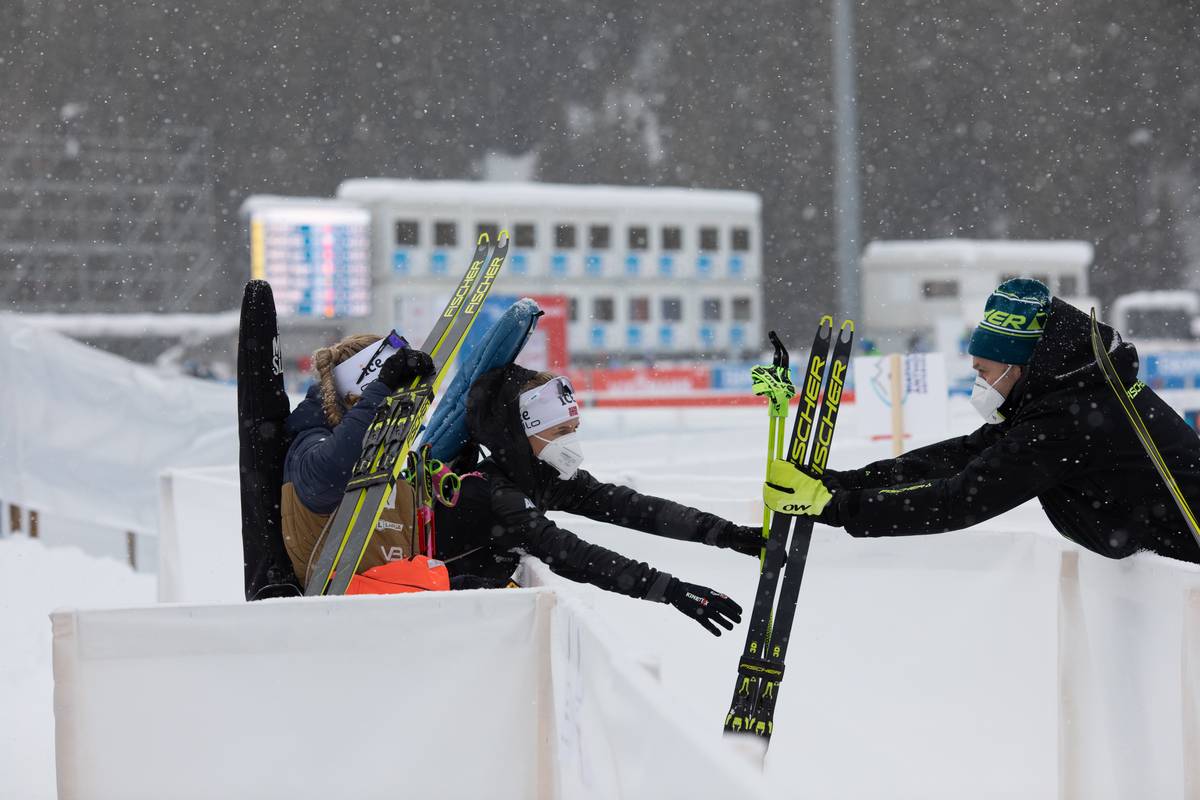
    Biathete Tiril Eckhoff (NOR) hands over the skis to Gerhard Urain, Nordic Race Director for Fischer. (Photo: NordicFocus)

    Will there be enough skis this season? That’s the question every ski shop and many consumers are asking. With demand predicted to remain high this winter, and some unique challenges faced by ski producers, ski scarcity may remain a reality.

    “I imagine if demand stays high we will see some significant shortages this season,” said Nathan Shultz, owner of Boulder Nordic Sport.

    The problem, from a supply-side, started with the pandemic. People thought that the demand would be low and the most popular would be home-based activities like online games from Casinosters. “In the beginning, everyone freaked out and thought that no one was going to buy anything,” said Schulz. “Factories had to adapt to that expectation and then everything started going gangbusters, and demand escalated at a pace we haven’t seen. So on top of supply disruptions, there was a huge demand, everything sold out, and then the fire happened.”

    In October 2020, a massive fire tore through the ski production line of Fischer’s factory in Mukachevo, Ukraine, requiring much of the production floor to be rebuilt. Most of the skis for the 20-21 season, however, had already been produced and were awaiting shipment in a separate facility.

    Fischer—the world’s largest ski manufacturer—produced around sixty percent of its skis across all disciplines at the Ukrainian site, which handled ski production for several other brands as well. In all, it has been reported that a quarter of the world’s skis came out of the Mukachevo factory.

    “Globally the loss of that factory is a big hit, and not only for Fischer but the brands that they manufacture for,” said Zach Caldwell of Caldwell Sport. Like many large ski factories, the Ukrainian factory produced cross country and alpine skis for a number of brands including Rossignol, Alpina, Scott, and Dynafit. 

    Jeff Courter, the Nordic Manager for Rossignol said the Fischer factory fire was, “shorting the worldwide ski supply because the factory made skis for a lot of different brands. When you think about finding a home for all those skis, not only for our brand, but for Fischer and anyone else they made skis for, that’s a lot of skis you have to find factories for. So that’s putting a lot of pressure on all the other ski factories as well.” (Rossignol’s high-end race skis are manufactured at their production facilities in Spain and France.)

    “Without Covid, we might have been able to absorb [the Fischer factory loss]…but with Covid—impossible. So this is why all the big brands need to shut down for business early.” Said Robert Lazzaroni, the Regional Commercial Manager of Salomon, referring to the earlier than the normal deadline for retailers to order skis.

    In a normal year, ski shops order equipment for the following season in the late spring and reorder products as demand requires. “Normally if we need something specific we call and get something,” said Schulz. “We do a lot of small juniors orders, because it’s so hard to know what juniors are going to need…we call Fischer if we need something.”

    This year, the flexibility to order small batches on the fly has dissolved. “We’ve been told, ‘don’t expect any reorder capability,’” Schulz said. According to some ski reps, many retailers are left with little ski stock heading into the 2022 season and will have to rely on their preseason order made in March to get them through the winter.

    “I believe the shops did learn the lesson last year with the crazy demand for our product,” said Lazzaroni. “And I think the shops did go a little bit heavier on the preseason versus the reorder.”

    In recent years, with the retirement of Canada’s Alex Harvey, U.S. skier Jessie Diggins has become the face of the France based ski brand. (Photo: NordicFocus)

    What was already a perfect storm of increased demand and faltering supply chains as the pandemic ensued, was only compounded by the Ukraine fire. Factories able to upscale their ski production worked at full capacity to meet the preseason order requirements.

    Courter said that the Rossignol factories had been, “really maxing out on what it can make, and not only make, but ship in a timely manner. These production ceilings we have rarely, if ever, been bumped into until now—so it’s been a learning experience.”

    Ski production has seasonal constraints as retailers need to receive products during their selling window, most of which happens between October and January. “We could keep making skis and boots all year,” said Courter, “but it’s not going to do the retailers any good if we send them a bunch of stuff in March.”

    Fischer compensated for the production loss in part by transferring some of its Ukrainian ski makers to its factory in Ried, Austria allowing production there to ramp up, with the factory running additional shifts.

    Steve Reeder, Fischer’s Nordic Sales Manager in the U.S., said that under the circumstances, Fischer was handling the demand well. ”Can we absolutely get as many as we want? No,” Reeder said, “but we’ll have more product out there this season than we did last season.”

    Fischer’s high-end products are mainly produced in Austria and were unaffected by the fire. “The two factories have been separated on the nordic side by their core technologies,” said Reeder. “Ried [Austria] has specialized in Air Core, and the Ukraine is kind of a complete tree to ski facility. Everything other than our entry-level price point is Air Core, so it’s coming out of Ried.” Reeder continued, “For the FasterSkier audience there’s actually minimal impact from the fire. We’re still making the majority of our race ski product in Ried, Austria. So the supply concerns are focused more on the touring category which has been compounded by the impact that Covid has had on outdoor recreation sales, and the fact that the increase in business we’ve seen in the States is happening globally.”
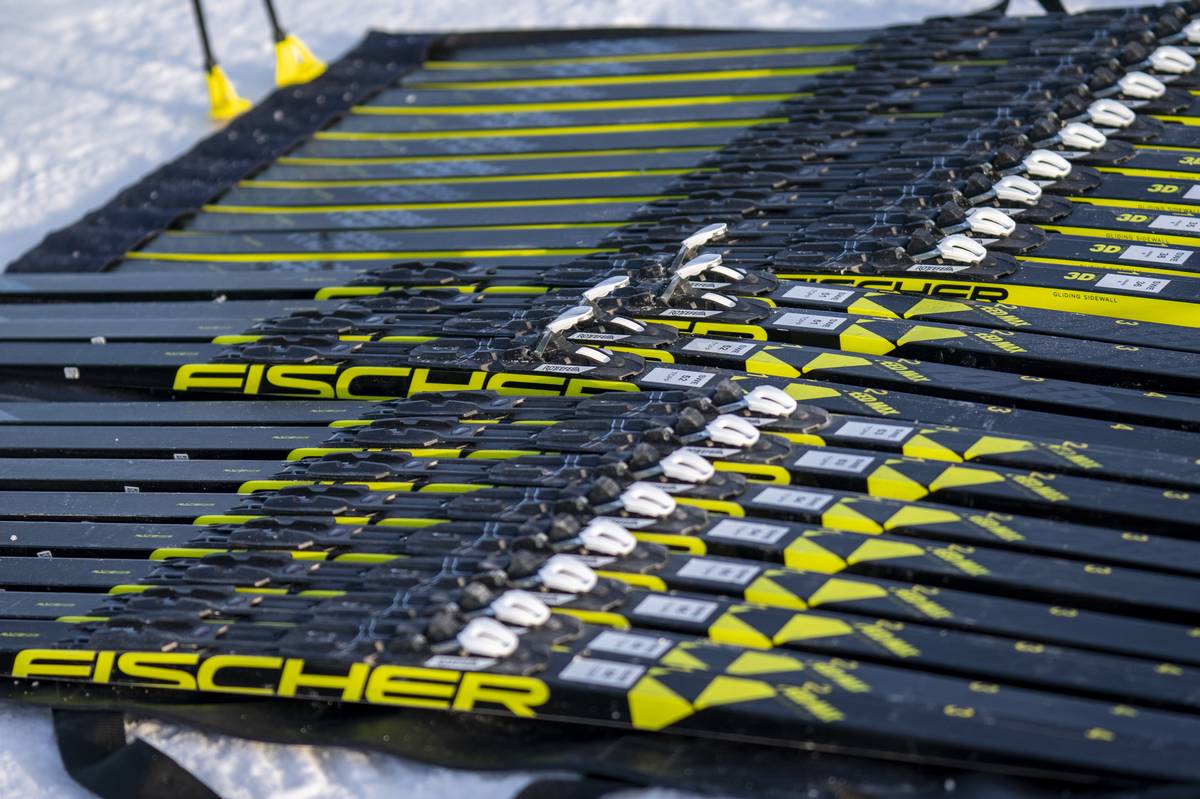
    A fleet of Fischer race bred Speedmax. According to Fischer, production of the high-end race ski will not be affected by the Ukraine factory fire. (Photo: NordicFocus)

    The supply-side strain is most acute on the recreational and backcountry ski category that sold so well last winter, according to ski reps and shops that spoke to FasterSkier. “Touring and backcountry is where, not only us, but a lot of the other brands will not have the availability, unfortunately,” Courter said.

    “Already last year the supply [for touring] was very short, and this year we are facing known shortages,” Caldwell said. “I know we’ve been promised that our preseason orders would be filled, but on reorders we’re anticipating having zero availability.”

    For high-end race skis, the situation is calmer, though demand for racing equipment has rebounded. “Even in the performance and race categories the demand is really high, which is great considering that last year was troubling to get races off the ground,” said Courter. With factories working at full tilt to produce orders, manufacturers are unable to produce an excess of high-end models. “With top-end race skis, we’re anticipating getting what we ordered,” Caldwell said, “but also anticipating some short supply as we get closer to winter.”

    Apart from skis, there are ramifications for other nordic products due to the topsy turvy global supply chain.

    “The wax folks I’ve talked to have acknowledged that material costs have gone up and their margins have gotten really lean. I wouldn’t be surprised to see costs go up at some point,” said Caldwell. “I bet some companies might introduce them already this year, but a lot of companies are stuck with what they’ve promised, so it might be something to recoup from in the future—but that’s a price thing. The absolute chemical that goes into it is pretty small, it’s not a big industry.”

    Another question Caldwell has considered is whether ski poles will be affected by global pressures. “Who knows, maybe poles will be difficult with a ton of Asian carbon manufacturing,” said Caldwell who clarified that he was, “totally speculating.” He added that, “Pretty much every pole out there is made in Asia, and that Asian supply chain…I just don’t know at what point that becomes an issue. Because of the cross over into other industries, the ski pole factories aren’t always ski pole factories, so that introduces a level of vulnerability and knock-on effect from other supply chain issues and excess orders.”

    While burgeoning demand, reduced stockpiles, and the loss of the largest ski factory have strained the industry, it is in a relatively better position than that of other outdoor sport manufacturers, notably the bike industry.

    “I think everyone recognizes that the bike supply chain is really screwed up,” said Caldwell. “With skis, it’s a limited range of raw materials and according to the companies I’ve spoken with, they’re not seeing shortages in raw materials. So in terms of assembling the products, it’s not so much a problem, the problem is on the demand side and on the capacity of factories to produce the skis. The nice thing about skis is they make a finished product in one factory.”

    The ski brands that spoke to FasterSkier were confident in their ability to deliver on their preseason orders, and to varying degrees, believe they may be able to offer reorders on high-end race skis. Shop owners, however, expressed some concern that orders would be delivered in full.
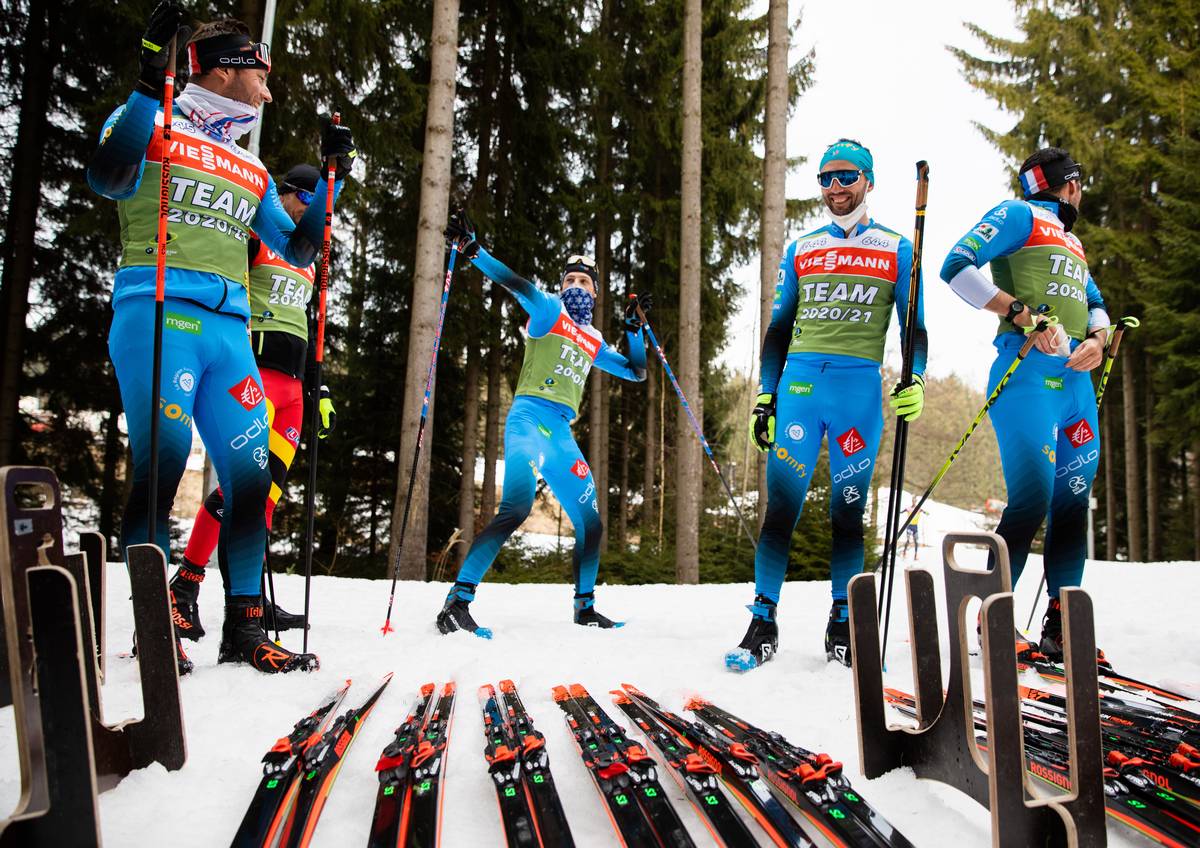
    French World Cup athletes hover over the Rossignol goods. (Photo: NordicFocus)

    In any case, possible ski shortages this upcoming winter will likely be decided by the size of retailers’ preseason orders and, most of all, snowfall. “Our sport is dependent on snow on the ground, so assuming that some of our markets like New England and the Midwest—if they get early snow, then there’ll be a point somewhere in the year that shops could get a little lean on in-stock product,” said Courter.

    Lazzaroni put it succinctly, “If, and it’s always an if, we have a decent early winter, the industry will lack product. I do believe what we saw last winter will continue into this winter and there will be a crazy high demand for nordic product,” said Lazzaroni. “The question is, has our retailer network been optimistic enough, and crazy enough with their preseason order to cover future needs from the consumer? I don’t think so, to be honest.”

    For skiers looking for new boards this winter, the message was clear: buy early. “People would be advised to get their names on orders early,” said Caldwell, “because I would be unsurprised to see some brands fall short
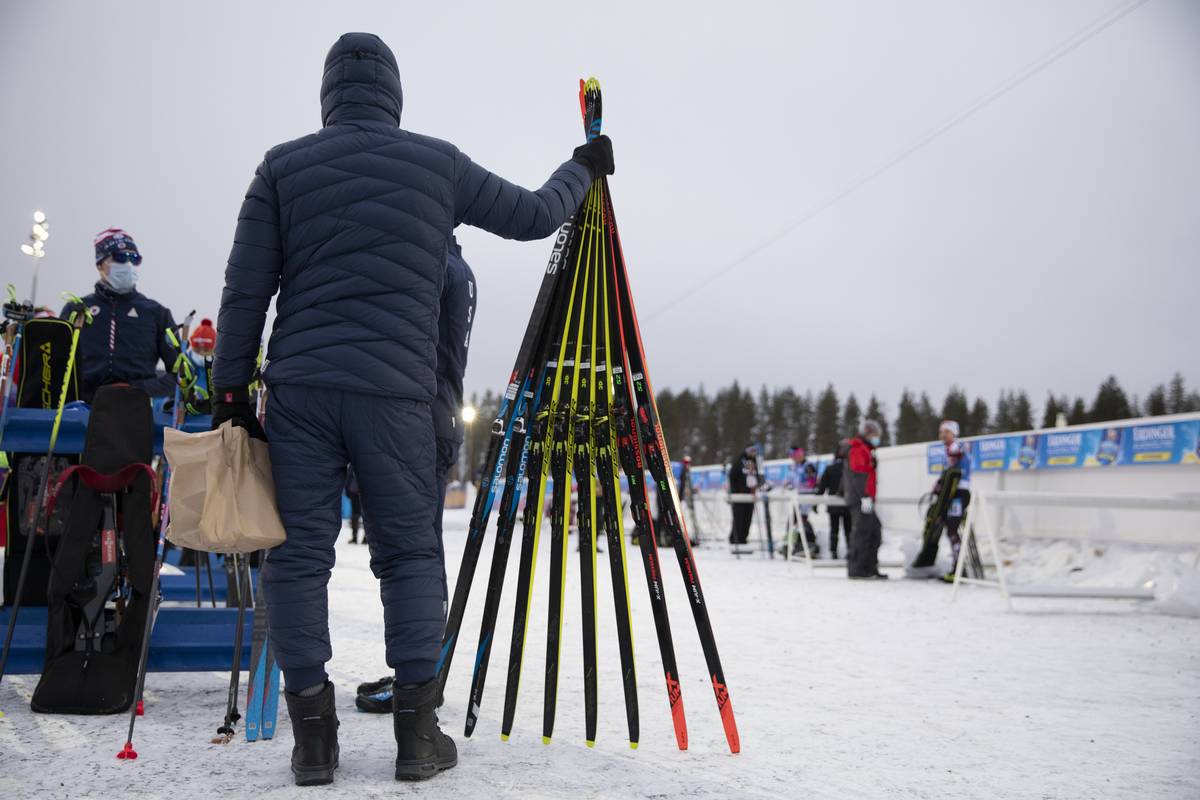
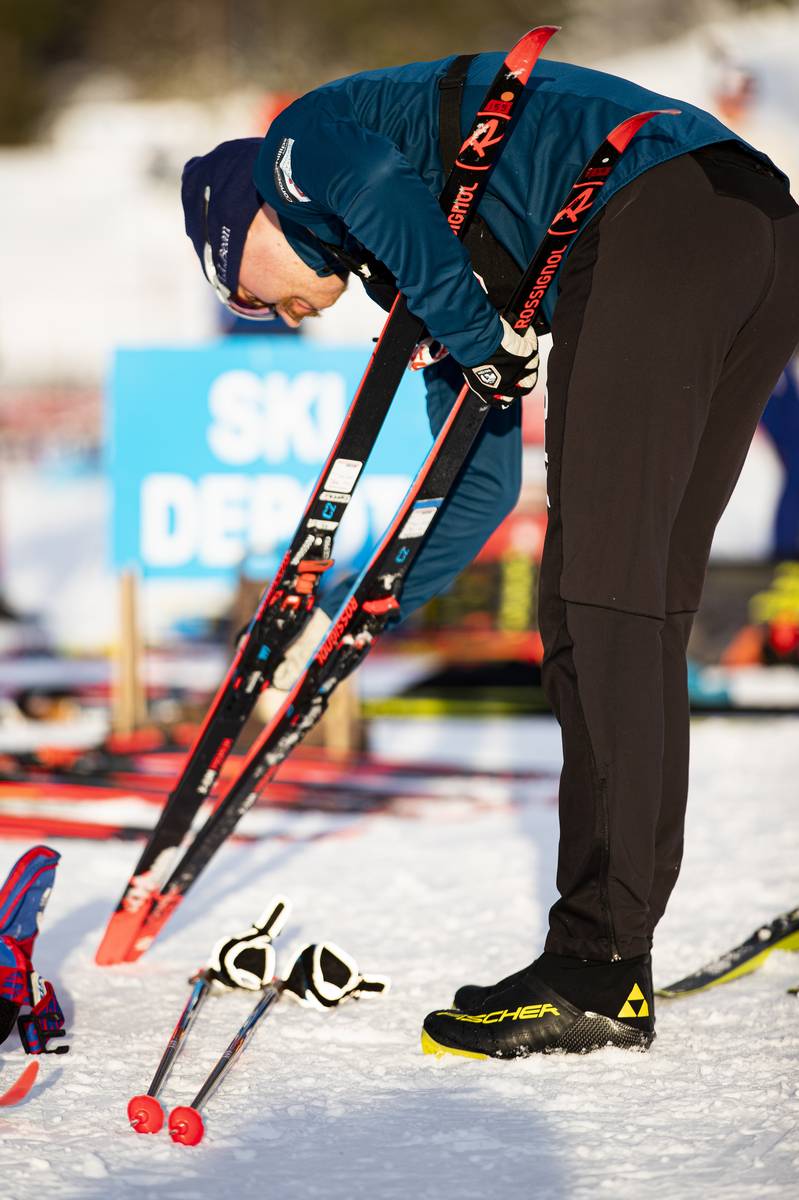
    A U.S. ski technician holds different skis in the warm up area on the IBU World Cup. in Kontiolahti, Finland. (Photo: NordicFocus)
  • A Boom for Bikes, Bullish on Cross-Country Skiing

    A Boom for Bikes, Bullish on Cross-Country Skiing

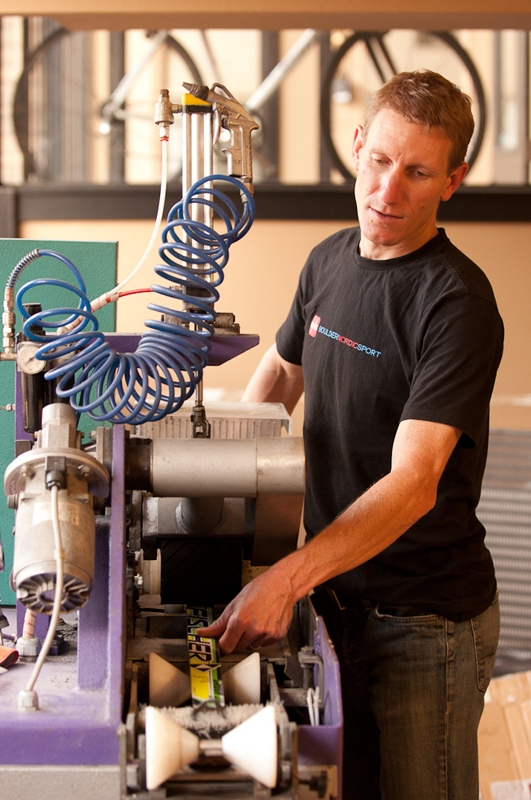
    Boulder Nordic Sport’s Nathan Schultz.

    When the country began shutting down in March, sporting good retailers initially shuddered. It appeared many if not all sectors of the economy would bottom out.

    “Everything was dicey in February and starting early March,” said Boulder Nordic Sport (BNS) founder Nathan Schultz about the onset of the Covid-19 pandemic. I was about to head off to Italy for the World Masters to wax there. Everybody in the Midwest was getting ready for the World Cup. And then everything got canceled. Things got serious really fast.”

    Early on, Schultz decided to curtail BNS operations. He advised his employees to take advantage of the Federal Government’s Paycheck Protection Program (PPP) until he and his advisors could settle on a long-term plan of action.

    For BNS and many ski purveyors, March can be a lucrative month – a time to create some financial padding before the dry season. By April, ski and winter accessory sales normally dip as the sun tracks higher in the sky. It’s a timeworn business cycle.

    “This March and April were scary,” said Schultz who noted his March revenues dipped roughly 75 percent.“And in April, people were still kind of holed up and April is not usually a big month for us. But to have it go from a little bit to nothing is pretty hard. We were definitely scared about the end on the ski side.”

    Back in 2018, Schultz merged BNS with Boulder Cycle Sport – a Boulder based specialty bike shop. Schultz’s close proximity to the bike side of the outdoor retail market was a front seat for the unexpected: a run on bikes during the pandemic’s onset.

    In March and April, Boulder Cycle Sport’s bike staff agreed to reduce their hours by 50 percent. Doomsday scenarios were not so far fetched. But as the mercury rose and Colorado’s front range greened-up, Boulder’s denizens, known for their high output energy, became stir crazy like the rest of the nation under lock down. Schultz recounted, “everybody started riding bikes because that was all they could do. It went from zero to 500 percent.” With the uptick in sales, the bike staff transitioned to full time and any interested ski employees were offered hours on the bike side of the business. The experience in Boulder was no anomaly. Bike sales blew up across the nation. Mainstream media outlets reported that wait times for new bikes could be months. From kid-bikes, cruisers, road and gravel bikes, to fat tire steeds, they all were in high demand.

    “The United States is facing a severe bicycle shortage,” was one noteworthy sentence from a May 18 article in The New York Times.

    This was true for Boulder Cycle Sport where zero to 500 meant they could sell bikes as fast as they received them. According to Schultz, May, June, and July were all “crazy good”. “It went from ‘super scary’, to ‘wow are we going to be able to survive this?’ to ‘this is amazing we are selling everything that we have.’”

    Boulder Cycle Sport does not simply cater to the high-end customer looking to drop 10 k on electronic shifting and featherweight carbon. “We definitely have everything,” added Schultz. “We want to be the neighborhood bike shop. So, we have all types of bikes.”

    That bike spectrum spans starter kids bikes, to mid-price commuters, along with a full menu of price points for customers seeking an entry-level or pro-level race bike. No matter, the low, middle, and high end of the bike market was selling out. With brisk sales coupled with factory closures, supply chain disruptions became a common topic. Some bike models remain hard to come by as are some spare parts. “It is at the point right now in the bike world where the supply has been nearly exhausted,” said Schultz.

    The exhaustion of the supply chain does not necessarily mean bike manufacturers will full-tilt-boogie ramp up production to meet demand. In an article and radio piece for Marketplace, Chris Rodgers, a supply chain analyst for S & P Market Intelligence said this: “The [bike] industry wasn’t running with lots of spare capacity to start with. What the industry doesn’t want to do is double its capacity to meet the increased demand, and then we turn round in the winter or next year when everyone’s got a bike and suddenly you’re left with a factory that’s too big and machinery or staff that aren’t being used anymore.”

    In the short-run, we may see bike shortages persist as manufacturers remain cautious and steady in what could become a massive boom-bust cycle.

    Retailers like BNS-Boulder Cycle Sport sell skis too. They know that as cycling use decreases during the winter, ski use increases. Needless to say, they have been informed by the cycling industry’s vagaries. That has shop owners like Schultz consumed with positioning themselves with just enough gear to meet a potential surge in demand for cross-country ski equipment.

    Schultz received a positive data point early on. “On the rollerski side of things, it picked way up, about twice what it normally is,” Schultz said. “And it seems like more and more people are coming to us early and they are saying we want to get into nordic skiing this year and we don’t want to miss out. They are coming in at the end of August instead of October and November when they usually show up.”

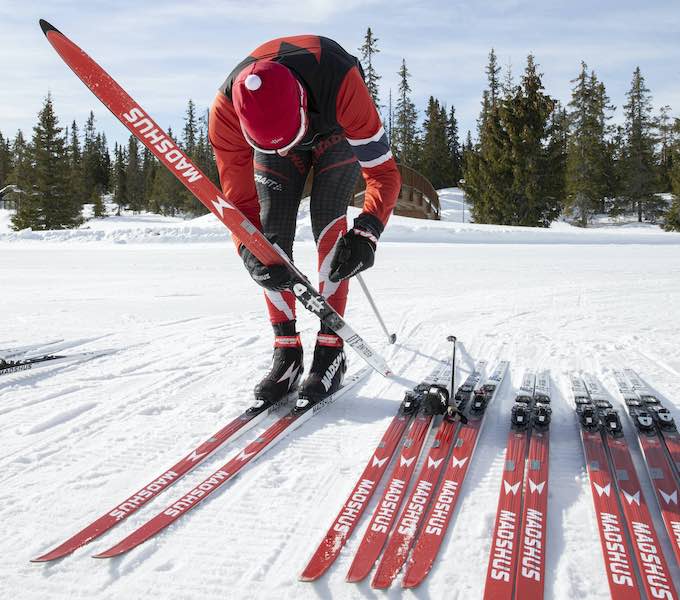
    Testing Madshus newest high end ski, the Redline 3.0 at Sjusjøen (NOR) this spring. Photo: Stefano Zatta/Madshus

    The conversations on and off the record here at FasterSkier are the same regarding a potential boom in cross-country ski sales – bullish. One reason for the optimism is alpine areas are now revealing their winter operating procedures. Nationwide they include policies like online reservations for parking and skiing, limited if any food service, and a concerted effort to remain open and profitable by enforcing social distancing the moment a skier arrives, to the moment they leave. Industry wide, these are considered some of the best-practices to ensure financial viability and skier safety.

    “People are going to be looking for other winter sports,” said Schultz. “Even if the alpine world were normal, I think the nordic world would still be blowing up because people are looking for a way to get outside and away from people. Backcountry skiing and nordic skiing are great opportunities to do that.”

    Cross-country ski shops are figuratively grabbing the bull by the horns as they expect a similar dynamic to the bike industry: an increase in gear sales. However, there’s the hope that supply chains remain fluid. In other words, well supplied.

    “The ski industry has had time to anticipate this, everybody I’ve talked to, they are bullish, they have raised production a huge amount and they are all in it,” Schultz said. “What we have been doing is we have been placing backup orders to bulk up and if we don’t sell what we think we will, we will probably modify those orders a little bit. I think all of those vendors are expecting it is going to be a big year and they are probably going to run out of product and they are trying to balance that equation — not get too bullish and have too much inventory because that kills. That is the biggest killer of retail, but we still need to have enough that we don’t run out.”


     The Supply Side


    Lillehammer, Norway World Cup, a USA Technician working on Rossignol Skis. (Photo: Nordic Focus)

    “It is going to be an interesting year, from what we are seeing from the cross-country side, which I am sure you will hear from everybody, everybody is betting on nordic,” explained Jeff Courter, Nordic Category Manager for Group Rossignol North America.

    Courter said he expects all segments of the nordic category to grow, yet the greatest increase is expected to come from entry and mid-price point models. The same trend as in the bike market.

    Pre-season orders for skis are received almost a year in advance of the following winter. Skis for 2020-2021 were likely pre-ordered in the fall of 2019. That allows suppliers like Rossignol, Fischer, and Madshus, all of which were contacted for this story, to ensure the raw materials for ski production are secured and demand is met.

    “We have multiple factories in various parts of Europe,” Courter said. “The difficult thing with us, as I am sure most of the other suppliers are coming up against this too, with all of this massive increase in demand the problem is that the timing of this is a bit off. We have to put in all of our orders almost, not quite, a year ago, last fall over the course of last winter. All of our orders were in with the factories before all of the lock downs when the quarantine happened and, of course, now, the subsequent massive increase in demand.”

    Courter said that Rossignol was able to keep production going through August, a time when much of Europe normally shuts down for holiday. “Since everyone already had six weeks off in the spring, all of our factories kept working to catch up and gain ground to be back where we should be in terms of delivery date and also just availability of product,” said Courter.

    For now, sourcing materials for skis has not been an issue for Rossignol. The same can be said for Fischer. Steve Reeder, Fischer’s National Sales Manager for Nordic Skiing in the U.S. said in many ways Fischer’s supply chain is almost totally vertically integrated. Reeder used the example of their wood core skis as evidence.

    “The wood core skis are built in our Ukrainian factory and that is literally a tree to ski factory, there is a wood mill on-site,” said Reeder. “You pull in the driveway and giant logs are being fed into a building where they are turning them into sheets for cores.”

    Fischer’s higher-end skis, those with more complicated builds like the Speedmax which offers a lighter “Air Core”, are fabricated at Fischer’s plant in Ried im Innkreis, Austria.

    Globalization has become the norm. Ski companies, which also produce boots, are well versed in navigating complex supply chains when sourcing material from outside their vertical chain. “Base material, that is probably one of the things they have to buy,” said Reeder. “I believe we have a good supply of that on hand. Most of that is Central European sourcing so there were not big concerns. We do some boots constructed in Europe, but we do a good chunk in the Far East, Indonesia, Cambodia, and those facilities got all of their componentry out the door and on the way to the factory before things shut down in Europe. So they were actually in very good shape and we have had stellar delivery on those products this year.”

    Lenzerheide, Switzerland World Cup: Sweden’s
    Ebba Andersson tests her Fischer fleet. (Photo: Nordic Focus)

    Like Rossignol, Fischer took preseason orders for this winter’s stock nearly a year ago. Reeder also expects Fischer to have mid-season reorder capabilities for most of their lines. For some product, Reeder said stock vaporized in August when under normal circumstances he would have a supply buffer well into January. Fischer is now considering options to increase its production capacity on select models.

    Norway based Madshus is known to operate a nimble factory able to produce small-batch ski runs. Bryan Cook, U.S. Sales Manager for Madshus, says they too are positioned to prevent ski scarcity.

    The autumnal equinox just passed. In the market for news skis? This is often the time to begin sniffing around as dealers swap out spring and summer gear for snow sliding options. Time will tell if ski shops experience a supply pinch like bike retailers. It appears ski manufacturers have read the tea leaves. Optimism reigns. For now, it seems that optimism will be met with a solid supply of skis as the cross-country segment looks for a boost in sales.


  • Pivot Point: Imagining Skiing During the Pandemic

    Pivot Point: Imagining Skiing During the Pandemic

    Stadium in Ruka, Finland. (Photo: Nordic Focus)

    Over two days in March, the North American World Cup races were cancelled. Amid rising health concerns, NCAA Championships also shut down after one race; Junior Nationals after two races. Canadian National Championships never got off the ground. After the abrupt end of winter, people are trying to assess how the pandemic will affect the coming winter.

    In The Atlantic, Juliette Kayyem posits that “From a public health perspective, the pandemic will not end for another 18 months.”  She speculates that it may take 18 months to develop a suitable vaccine, which must then be distributed. How will this affect ski racing as we have come to know it?

    While this metric pertains to alpine resorts, it’s stark any way you slice it: with spring break looming or in full swing, alpine lodging occupancy dropped 54% from March 2019 when alpine resorts began closing.

    “The timing of it couldn’t be better for the ski industry,” said Zach Caldwell, proprietor of Caldwell Sport. “We lost the tail end of the season. That was a big bummer. We had most of the season and it was a good one.  We in the industry have the luxury of being able to sit back, observe, and see what happens, and wait to finalize plans.”

    If one can extrapolate from one retailer’s experience, sales cratered in March after a strong start to the year. Matt Liebsch, a co-owner of Pioneer Midwest in Minnesota, concurs.  Pioneer did very well at the beginning of the year, but saw March sales fall off as social distancing set in.

    “We had really good growth in January and February,” Liebsch said. Pioneer finished March down thirty percent in revenue compared to last year. Prior to coronavirus, Liebsch said, Pioneer would sell two to six pairs of race skis each day. “We’re at zero right now. When you shelter in place, I think that means you park your money in place. The virus has thrown things off.”

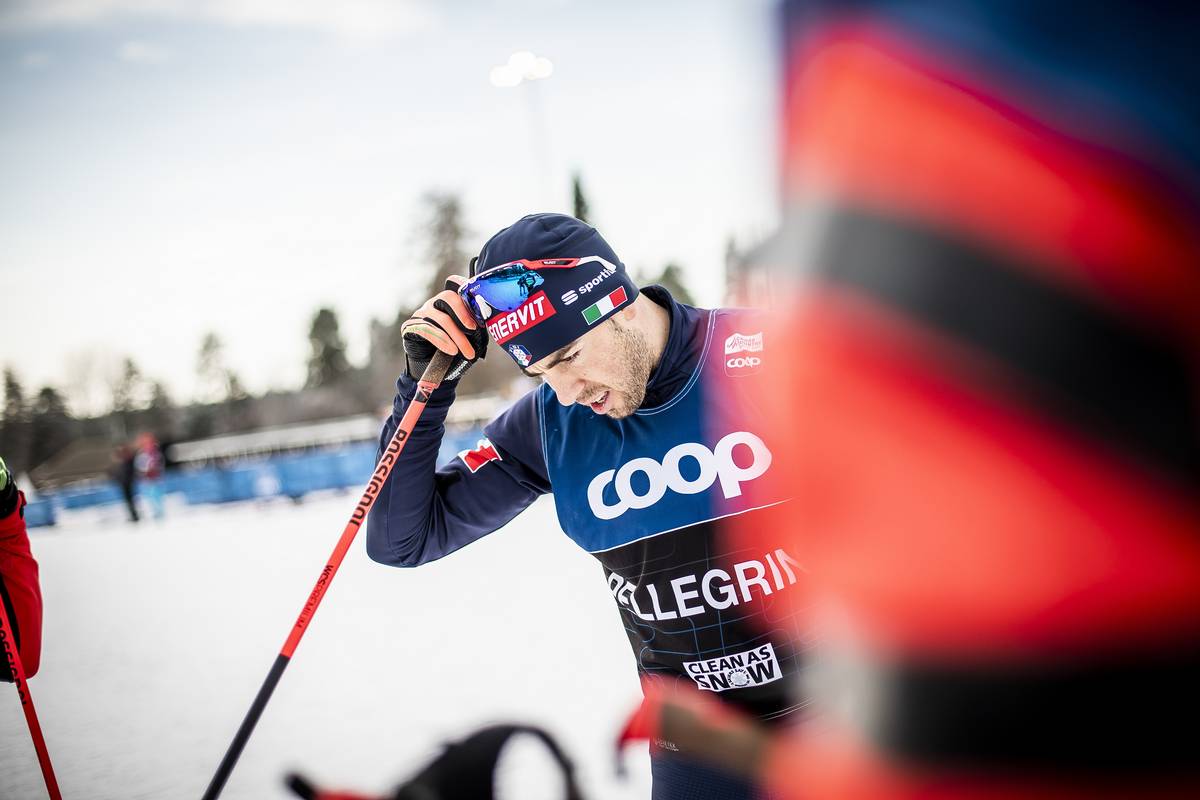
    Federico Pellegrino of Italy testing skis in Falun, Sweden. (Photo: NordicFocus)

    According to Jeff Courter, Rossignol North America’s nordic category manager, the bulk of its sales to retailers were complete by the time social distancing became the new normal.

    “For any major ski brand industry-wide, [the pandemic] hit at a time where the majority of sales had really happened already. We missed out on a lot of opportunities to capitalize on spring sales and spring break. We’re trying to help our retailers in North America to try and get through the times,” Courter said. He added that spring break sales can help retailers clear out inventory so they can prepare for the coming year.

    Typically, Liebsch makes two trips a year to Europe for custom ski picking as well as pre-ordering skis to sell off the rack. He said that bulk pre-season orders from manufacturers were generally due to vendors between late February and late March. They’re shipped to arrive in the U.S. between mid August and mid October. “That’s all in the books. It’s kind of a shot in the dark.”

    “We try to [work with] our discerning, race-oriented customers that want a wet ski or a better ski than what they have in September, October,” said Liebsch. “That clears my plate for [recreational skiers] and the start of [Minnesota’s] high school race season in November and December. I don’t get to talk about grinds, race wax, or camber construction. I’m explaining to mom and dad the difference between a classic ski and a skate ski.”

    “The majority of our orders [for the coming year] have already come in by mid-March,” Rossignol’s Courter said. “But anyone – not just us – any ski company in general, once we get a little farther into this, and kind of see how things lay out for the fall, some of the smaller retailers may have to make some adjustments to what they thought about bringing in.”

    While most retailers have ordered skis for the coming season, it’s not known how the pandemic will affect manufacturing schedules. Citing the safety of its staff and their families, Courter said that one of Rossignol’s main factories, located in Spain, had closed down for safety reasons in early April. It’s scheduled to reopen on May 4.

    Looking for ways to get back on schedule, Courter said that Rossi facilities would be running three shifts. Normally, their ski production is done by July. At present, this year they plan on making skis through August.

    “The majority of the factories that we work with have been able to stay open,” Courter said. He added that one factory had experienced a slowdown as some raw materials haven’t been delivered.

    Bryan Cook, Madshus USA sales manager, wrote in an email, “Generally, we are constantly producing skis with the majority happening between the months of December and April. This means that we are just about wrapping up all of our preseason orders for the coming season. We then look to ship the skis, via ocean, between the months of June and September, as most dealers request their product to be in store between September and November.”

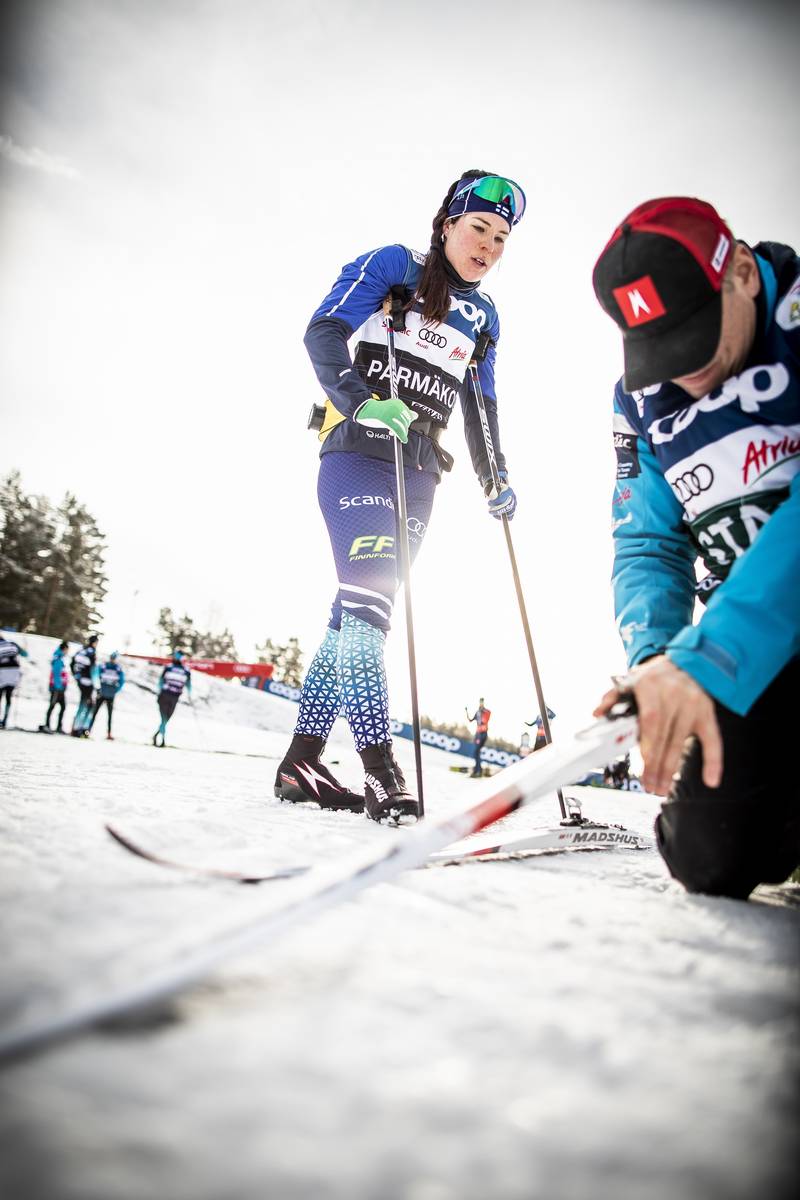
    Krista Pärmäkoski of Finland testing skis in Falun, Sweden. (Photo: Nordic Focus)

    Zach Caldwell, proprietor of Vermont’s Caldwell Sport, also travels to Europe to pick skis. Speaking on April 13, he said the Austrian companies he works with underwent a mandatory shutdown, but are opening back up. According to Caldwell, they’re ready to schedule ski picking. While the ski companies seemed optimistic, Caldwell is waiting to see what happens when social distancing is relaxed.

    “I can get to a ski factory and interact with about three people and pick the skis I need. What I do need to be able to do is travel. And that’s not something I’m willing to do right now, even if it was wide open. Once the international travel piece looks OK, there’s nothing standing between me and picking skis for people,” Caldwell said.

    For both Caldwell and Liebsch, races next winter pose a bigger question than shipping schedules. How will the possibility, even the likelihood, of continued social distancing affect racing next winter?

    “But both the competitive aspect and social aspect of competition is what drives a lot of our sport,” Caldwell said. “We’re going to lose a lot of people if we shut that off for a year. I think there are ways to prepare for a season of distancing measures, and that’s a bigger story from my perspective than what does the industry look like.”

    “The biggest issue that I have is the prospect for racing next season,” he added. He’s concerned about the feasibility of having several hundred competitors, plus coaches and family, at Eastern Cups. [The Eastern Cup races are the New England qualifying races for Junior Nationals.]

    Concerned about the impact social distancing may have on racing, Caldwell wrote to the New England Nordic Ski Association [NENSA], urging them to consider alternatives to traditional races.

    “We should be making plans to ensure that there are competitive and social outlets for racers absent the ability to run [traditional race formats],” Caldwell said. “NENSA could put together a combination between Strava and NASTAR where they put standardized courses at touring centers and drop off chip timing. Develop an app that people can subscribe to and pay an entry fee with a head tax to check out a chip and go ski a course.  Have the touring center handicap the snow speed with a ski trap and generate a score, generate a region wide points list and share it on social media.”

    “There are a lot of models that can perpetuate that, absent an Eastern Cup circuit or a Craftsbury Marathon or whatever,” he added. “We as a sport need to be thinking about this because we’ve got a lot of lead time to prepare for this. We need to be thinking about that. One thing we can’t do is Zwift. We don’t have that technology in skiing.”

    The wheels have been turning in New England when it comes to developing contingency plans. “This year is not going to look like anything we’ve ever had.” Amie Smith, Executive Director of NENSA, told FasterSkier.

    “We’re saying, ‘what can it look like? What opportunities can we give our membership? How can we keep everyone connected during this time of sheltering at home?’” Smith acknowledged Caldwell’s email to NENSA, but didn’t touch on it directly.

    Normally, NENSA conducts a regional elite group (REG) camp for juniors at Stratton Mountain School at the end of June.  That’s been postponed to the end of August. Meanwhile, NENSA is devising ways to have a virtual camp instead. They are also planning virtual coaching clinics.

    As for the coming winter, Smith asked, “Can we even gather? If crowds are limited to 50, we are going to have to totally change how we do Eastern Cups. It won’t be business as usual.”

    Insofar as recreational skiing goes, Smith posited, “Would ski centers be able to open their lodges? How could they safely collect trail fees?” (Faster Skier contacted several ski centers for this article, but none responded.)

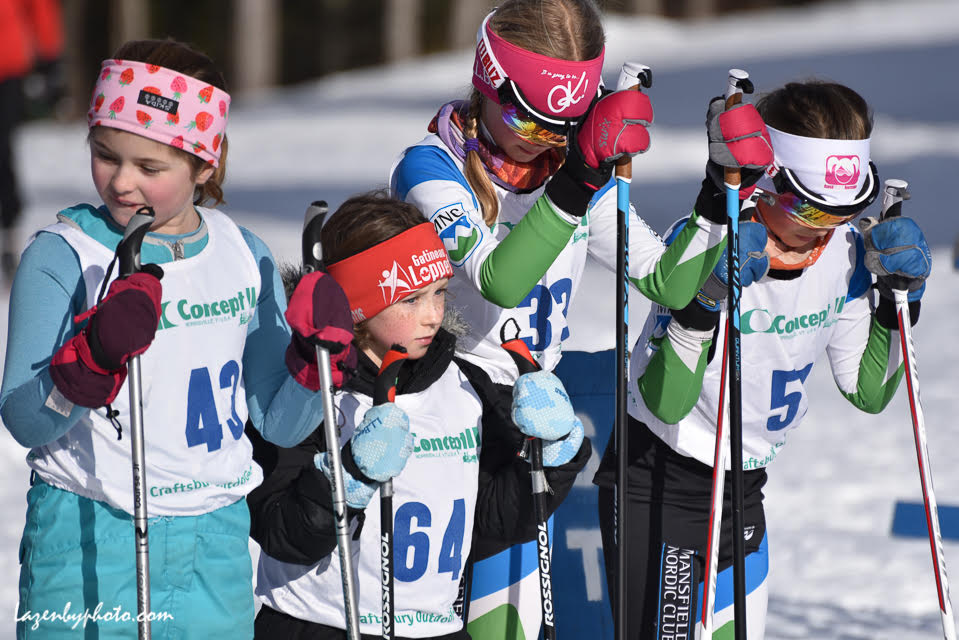
    Some of the young skiers at the NENSA Eastern Cup in Craftsbury, Vermont. Young and old are welcome at the NENSA Eastern Cups. (Photo: John Lazenby)

    “It’s not going to look like our normal race season, but hopefully we can have some great training, coaching education, race opportunities,” she said. “But we totally don’t know what that will look like. We need to have alternatives and ideas of how that would look. Will race starts be a minute apart?  Will they be two minutes?

    “Our staff is in a good place, we’re excited to see what we can put together and keep everyone engaged and feeling like there’s still a community,” Smith said. “Because I do hope we come out the other side, and that there will be a day when we don’t have to keep 6 or 9 or 15 feet apart, and that we can go back to doing our normal racing. But I don’t think that’s going to be next season.”

    For the near term, it appears that business as usual on the race front and storefront is over.

    The investment of early-season dollars and time as it relates to inventory will have to wait a bit longer to determine how the pandemic evolves and the gradual release of social distancing requirements. “I’m thinking we can still rebound and have a great winter next year, if we’ve got snow,” Liebsch said. “I’m confident that I’ll be ski picking in September,” Liebsch concluded. “If I’m not, the whole world has big issues.”