Tag: Jennifer Tomlinson

  • Q & A: Nordiq Canada and Biathlon Canada Discuss the Nordiq Sports Strategy MOU

    Q & A: Nordiq Canada and Biathlon Canada Discuss the Nordiq Sports Strategy MOU

    On Wednesday, FasterSkier reached out to two representatives from Canada potentially impacted by the announcement of the Nordiq Sports Strategy MOU. Jennifer Tomlinson, Chair, Nordiq Canada Board of Directors, spoke on behalf of Nordiq Canada, while Heather Ambery, General Manager of Biathlon Canada, spoke for Biathlon Canada. They were interviewed separately.

    In short, the four NGBs representing the nordic disciplines in Canada — Biathlon Canada, Nordic Combined Ski Canada, Nordiq Canada, and Ski Jumping Canada — have agreed to explore potential collaborations and possible unification under a single NGB umbrella. For now, they remain four discrete NGBs. A steering committee and numerous working groups have been established to guide the process and collect information. (You can find a Nordiq Sports Strategy FAQ here.)


    ****


    FasterSkier:  How can working together bring more kids into the sport? And how do you see this playing out so the two entities, biathlon, and cross-country are not necessarily competing for limited athletes but are allowing them to find what works best for them in terms of a specific sport?

    Jennifer Tomlinson: Chair, Nordiq Canada Board of Directors. (Photo: Nordiq Canada)

    Jennifer Tomlinson, Chair, Nordiq Canada Board of Directors: The whole reason for us to be even coming together to have a discussion is to actually find the answers to that type of question. We actually don’t know. That is exactly what the working groups are intending to do some research on.

    I am actually a management consultant and part of my day to day job is working on organizational transformation. And the biggest mistake that many organizations make is that they pull the trigger on making change without having done the research. 

    And we want to make sure we have done our research so we are going to go through the “Ready Aims” process, so that we understand what we are getting into so we understand what the benefits and costs will be and we can make a rational decision. Because frankly, we have the time to be able to do that given that we are doing it ourselves. 

    The answer to the first question, I honestly don’t know. I know that one of the working groups is all about figuring out what is going on and how can our members benefit and how can the sports benefit together.

    I am awaiting the answer from the working groups as they do their work on the research and the engagement on many of the topics that we have asked them to do. 


    FasterSkier: There are many models internationally for grouping the nordic sports. Some countries have four discrete NGBs. Here in the U.S. biathlon and cross-country are separate. Is there a model out there that is of interest to you? 

    Jennifer Tomlinson: There are a whole ton of different models that all work. That is what makes this so difficult to be perfectly honest. Because, I think it is Austria and Germany and Switzerland, they have that model where the four disciplines are all working together. Other countries have biathlon and nordic that work together. Other countries have everybody completely separate. 

    And the reality is that these work. All of them are different circumstances. We want to find something that is going to work for us. We anticipate that there will be some benefits to working together and we also anticipate that there are going to be things that absolutely will not work together. 

    We want to measure and do our research to identify where frankly the biggest benefits are. The models of working together can be anywhere from project-based and we agree to collaborate on a specific initiative because that makes sense, or this could be a full integration under one umbrella. 

    We actually don’t know. Again, we have seen models that do that, cover that range, and we are willing to consider the full range. 


    FasterSkier: Funding is always an issue. How do entities like biathlon and cross-country facilitate cooperation when it comes to designing a sustainable funding model? How do they cooperate or set priorities when it comes to securing funding and approaching donors?

    Jennifer Tomlinson: That is actually one of the reasons why to work together, so you have a common story. And especially for outside the government, remember, Canada has a different system than the U.S. We do have significant support from the government for national sport organizations and our athletes. 

    Those organizations have encouraged us to explore different ways of providing our services to our community. The funding part, I have no answer to that. I don’t know, I am going to say that part of what is going to be explored is how can we do our business development and our funding development better together?


    FasterSkier: Just a follow-up question. In the past, you have had large corporate funders, Alta Gas is one example. What have you learned about the funding model for cross-country and seeking non-governmental funders or investors? 

    Jennifer Tomlinson: The non-government funders have two key drivers. One is eyeballs. They want to maximize the number of people that are going to see their logo and they are looking to find sports and individuals who will help their logo be seen. 

    That is a challenge for nordic sports in North America because we just don’t have a nordic culture. 

    The other piece is some corporations are motivated by community. And that would be corporate responsibility and social responsibility. That is actually where nordic sports has a great benefit. Corporations can promote the outdoors, good health, and well being. 

    A lot of corporations are seeking opportunities to be involved with those types of activities not only from their corporate social responsibility perspective but also for their employees and their immediate community. There is interest especially with COVID that nordic activity is something that appeals to people when we need to get outside. 


    FasterSkier: For Nordiq Canada, is it possible to market the sport as healthy living and getting outside rather than using the high profile athlete? Is this a more sustainable model than relying on having that big personality or that athlete like Beckie Scott or Alex Harvey that nails the results?

    Jennifer Tomlinson: We rebranded in 2019 to make it clear that we actually had a dual focus. We want to get all Canadians on skis. That means all Canadians, that means all communities, that means urban, rural, that means new Canadians and people who want to be Canadian in the future. 

    We definitely want that to be part of our future. And getting people to embrace the sport, that is a big part of our mandate. Part of the reason for doing that is that the more people that try the sport the more people that fall in love with it. It follows that the more people who develop a passion for it, then the more people that may choose the podium. 


    FasterSkier: Medals….that is one measure of success. How does this new group think long-term, work long-term, when in fact championship medals may not be a reality for three to four Olympic cycles? Lots of World Championship medal opportunities in between there, but I think realistically, medals are hard to come by at that level so the wait might be considerable. 

    Jennifer Tomlinson: The more Canadians on skis the more Canadians on podiums. That is what we are pushing for. But we know it is a long-term strategy. And both of those statements are long-term statements. So we may not see the benefit from the medal count, actually, we definitely won’t see the benefit in the medal count immediately. However, if we have the right strategy and we are making the right investments in the right spots, we should start to see benefits across the board. So medals are only one of our performance measures. The growth of our membership base would be another performance measure that we need to track. 

    The number of people buying skis and getting out on their skis would be another piece of data we are trying to track.

    Medals, yes, they are definitely something that is important. That is definitely something that is tracked by our funding body. It is definitely a goal for us. That is why one of the areas that will be looked at in the nordic strategy is high-performance. They will ask how we can do better in high performance whether we are working together or we are working collaboratively? Or, whether we are working in our independent silos, is there a way we can do it better? So one of the key research areas will be to see if we can do it better. You never know. 

    We may get greater benefit by working together but that is where the research comes in. We need to understand exactly what that means. 


    FasterSkier: I’m making some basic assumptions here. Nordiq Canada comes to the table with the biggest piece of the pie. The biggest piece of the human capital pie if we are talking about the raw number of skiers. The largest budget. What do you see as a result of these working groups where you would say, “yeah, we are going to buy into this.” Or is it too early to ask?

    Jennifer Tomlinson: It is a great question and it is too early to ask. Until we have some good information I honestly cannot answer that question. My background tells me that there should be some operational efficiencies that can be achieved across the board. Which is why the working group has equal representation across all four disciplines. It has to be something that is beneficial to all four disciplines, otherwise, it makes no sense. 

    It is really focusing on doing the research and identifying where the benefits are. 


    FasterSkier:  What have you heard from your high-performance constituency, the athletes, are they piping in? Or maybe they are just focused on training and staying out of politics?

    Jennifer Tomlinson: They are focused on their training, and are doing a great job of it. I love seeing their social media posts etc. etc. What athletes have asked is, again, what are the benefits? They are trusting that the group does the appropriate research and the appropriate engagement at the right time to ensure that all the right perspectives are considered before any decisions are made. And with that, we are getting on with what they need, which is making themselves the best athletes and the best people they can be.


    ****


    FasterSkier: How can working together bring more kids into the sport? And how do you see this playing out so the two entities, biathlon, and cross-country are not necessarily competing for limited athletes but are allowing them to find what works best for them in terms of a specific sport?
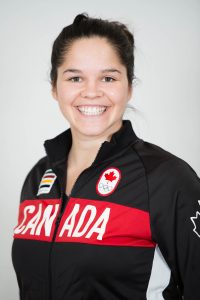
    Heather Ambery: General Manager of Biathlon Canada. (Photo: Biathlon Canada.)

    Heather Ambery General Manager of Biathlon Canada: The biggest thing here is really that this is the purpose of the steering committee. We want to really understand and answer that exact question — how can we get more Canadians into nordic sport and interested in nordic sport and how can we get more Canadians on podiums? The MOU, I think, is the first step in the alignment among the four organizations and with deliberative attention by the organizations to take a deeper look at answering that question. 

    I think, really, that is a huge part of what the steering committee is looking at and will continue searching. 

    Again I don’t want to sound like a broken record, one of our working groups is a membership working group, looking at that question, how do we increase our membership? I will speak for biathlon, our membership numbers are fairly stagnate and have hit a bit of a plateau. If there is a solution here or a positive outcome of the nordic strategy and the signing of the MOU to increase participation across the four sports then that would be fantastic. And again, exactly that, not necessarily competing for the same athletes, but exposing more Canadians to the magic of nordic sport. 

    I think that would be a great outcome so we can get more eyeballs and more keen interests in nordic sport across the country. 


    FasterSkier: Just a follow up regarding the plateau in membership. Race and equity have been a topic of conversation when thinking about reforms. What has Biathlon Canada done recently that speaks to increasing membership by expanding into communities not typically represented in the sport? 

    Heather Ambery: We had a community discussion as recently as last week about exactly that, how can we include more people in our sport and make it more accessible and make it more inclusive for anyone? Biathlon Canada did come out with a statement about diversity and inclusion in recent weeks. 

    We implemented some actionable items directly as a result of having these conversations and looking at how can we make biathlon more inclusive and have greater exposure. Having a greater number of groups involved is something that we are talking about at the staff level, and we had an open discussion with anyone who wanted to join in our community discussion last week. I think the solution is still in the development process. To your point, it is something we are looking at quite seriously. 


    FasterSkier:  Funding is always an issue. How do entities like biathlon and cross-country facilitate cooperation when it comes to designing a sustainable funding model? How do they cooperate or set priorities when it comes to securing funding and approaching donors?

    Heather Ambery: This fits really well within the revenue generation working group. That is a subset of the steering committee that will be looking exactly at this. The limited resources in nordic sports are a challenge we have identified. We are asking exactly how can we approach this differently or what are some things we have not yet considered as a group of four organizations that may help with revenue generation? 


    FasterSkier: Medals….that is one measure of success. How does this new group think long-term, work long-term, when in fact championship medals may not be a reality for three to four Olympic cycles? Lots of World Championship medal opportunities in between there, but I think realistically, medals are hard to come by at that level so the wait might be considerable. 

    Heather Ambery: We have a working group, a high-performance working group, that will be working over the next few months on again that piece. The high-performance medal is one of the measures of success along with more Canadians in nordic sport. That is a substantial piece for the working group to consider and really dive into how we work better and collaborate to bring about more success down the road exactly within a few Olympic cycles or further down the road. We are really trying to research and understand how that might work. 

    For Biathlon Canada we will still put the best team forward and we will still pursue the long term athlete development approach that we currently do. I don’t think us pursuing the MOU is necessarily going to exclude us from putting our best team together year after year to pursue Olympic medals as often as we can. That is really what our goals is, sustainable medal performance. I don’t think us taking part in the MOU is necessarily going to exclude us from also chasing biathlon international podiums year after year just as we are trying to do currently. 


    FasterSkier: What are some outcomes from the various working groups that might push you in the direction of wanting to unify under a single umbrella?

    Heather Ambery: I don’t think it would be one straw that would break the camel’s back to use that expression in a bit of a reverse way. I think there is so much information to gather. The steering committee and the working groups are gathering all of the information that needs to be considered for the big picture. I think there is a lot we want to learn from our community as well. 

    We want to know how could some degree of collaboration help a club? How could it support a division or a provincial-territorial organization? What is the impact it is going to have at the national level? There is so much information. I don’t think putting one key factor ahead of others would be appropriate at this point as we are starting down this journey of uncovering what these possibilities may be.


  • Tomlinson in the Lead as CCC’s New Board Chair

    Tomlinson in the Lead as CCC’s New Board Chair

    Jennifer Tomlinson, the new chair of CCC’s Board of Directors (Photo: Twitter)

    On June 19, Cross Country Canada (CCC) announced that 52-year-old Jennifer Tomlinson will serve a two-year term as the new chair of its Board of Directors. She replaces Jamie Coatsworth, who served the position for the last four years.

    The CCC press release opens with a statement that Tomlinson — a former racing director, volunteer coach and integral member of Nakkertok Nordic as well as former high-performance chair for Cross Country Ski Ontario — is the first women to hold the chair position within its organization. She comes with over four decades of experience in the sport, holds a degree in engineering, an MBA, and has served four years on the CCC board prior to the June announcement.

    “I’d like to see ‘the first woman chair’ as not being a big deal and something that is expected,” Tomlinson told FasterSkier on the phone earlier this month. “From my perspective, it is something that was eventually going to happen at CCC. With some of the changes that have happened over the past 10 years, there is a lot more openness in the way Cross Country Canada is operated and governed. It is much more aware of representing the ski community in Canada and ensuring that the people who are making decisions represent the diversity of the cross-country skiing community in Canada.”

    The execution and fulfilment of the long-term CCC plan will fall on the shoulders of Shane Pearsall, the current CCC CEO.

    “Over the past four years, CCC has reevaluated its governance structure,” Tomlinson explained. “The board seeks advice with CCC’s divisions to establish organizational priorities. The board’s role is to hold the CEO accountable to key priorities determined by the board, and we look to the CEO to develop a plan and execute the plan that will achieve those priorities.”

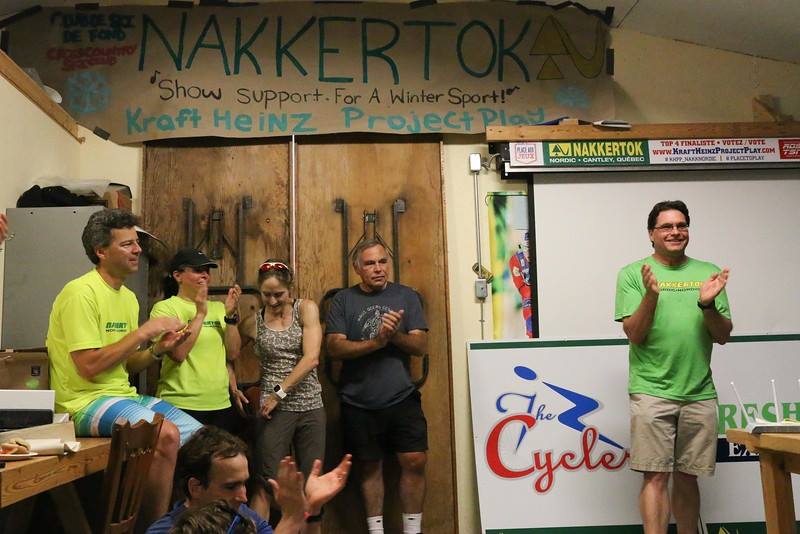
    From left to right: Steve Morris, Jennifer Tomlinson, Sheila Kealey, Toni Scheler, and Robert Hornung at the announcement event for the Kraft Heinz Project Play Grand Prize Award, which Nakkertok Nordic won in August 2016.(Photo: Doug Ranahan)

    CCC’s mandate is to serve the broad spectrum of cross-country skiers to ensure that the sport remains viable in Canada. Tomlinson explained the board’s perspective in terms of its stakeholders is a wide view.

    “We see skiing as existing from learning to ski to success on the World Cup to being active for life, and our stakeholders start when we first strap some skis on somebody’s feet to hopefully continuing to 95,” she said.

    Most notable in recent years are that funding cuts have adversely impacted both high-performance biathlon and cross-country skiing in Canada.

    The most high-profile aspect of Cross Country Canada remains it’s World Cup team. Recently, Alex Harvey with his fourth place finish in the Olympic 50 k and Len Valjas, with his seventh place in the Olympic sprint, have been the individual podium hopes for the Canadian team. This past spring, Devon Kershaw and Knute Johnsgaard (half of Canada’s men’s relay team that placed third in the 2017 Ulricehamn 4 x 7.5-kilometer relay) retired. For the women, several career high points are notable but none of the main staples on the current women’s team has had World Cup podium breakthroughs.

    Tomlinson explained the CCC board noticed the need for a sustainable development pipeline for both genders.

    “As a chair or member of the board, we don’t get into the overall operations of CCC and how they do things,” Tomlinson said of her CCC role. “That being said, one of the key priorities set for the CEO is the development and communication of the high-performance pathway and putting in place a structured program that allows CCC, the divisions and the clubs to work together to contribute to the pipeline and developmental pathways needed to create that sustainable system. The hiring of Nic Lemyre as the high-performance advisor is a key part of establishing the sustainable system.

    Lemyre, a Canadian based in Oslo, Norway, is expected to help CCC solidify and support a devo pipeline.

    A sustainable pipeline implies a steady flow of both high-performing athletes and cash. In contrast to the funding situation in the U.S., CCC receives a significant portion of its funding from government sources. That government funding has been in decline when compared to past levels of funding. Tomlinson said the board expects CCC to develop a plan to better cope with inconsistent and lower levels of government funding.

    According to Tomlinson, the board approved a measure in February to help address funding concerns for developing Canadian skiers.

    “The board approved the creation of the Nordic Canada Development Fund, modelled after the NNF in the US,” Tomlinson said. “There are some differences, particularly with respect to its governance, but the fund is established and it does have some money in it. The seed money came from capital that CCC had set aside from the better years. CCC is in the process of developing an integrated fundraising campaign for building the fund. The intent of the endowment fund will be to fund camps and racing opportunities targeted at developing cross-country skiers U18 to U23 who will benefit from more integrated camps and different levels competition.”

    Another new initiative Tomlinson touched upon was the potential of a 2026 Winter Olympics in Calgary that could foster synergies between CCC and related nordic sports.  Without mentioning details, Tomlinson explained that CCC is pursuing investigating a strategy to bolster the viability of nordic sport across the board, “to see how we can make 2026 a real milestone for nordic sport in Canada.”

    Tomlinson appeared grounded in the overall CCC mission that fosters a healthy lifestyle beyond podiums.

    buy yaz online, buy ortho tri-cyclen


    “One long-term goal for the organization is community development and alignment,” she added. “… that goal is about growing cross-country skiing in the nation, not solely about getting people on the podium. Making the sport more accessible and get more people outside to celebrate winter.”

    Another benchmark she highlighted is related to accessibility. According to Tomlinson, three years ago, only two venues in Canada had viable snowmaking capacity. She said that number now stands at five venues with the hope that other clubs can further collaborate to build the nation’s snow-making infrastructure.     

    Keeping an eye on other sports and national governing bodies (NGOs), Tomlinson said she will draw on some of her past exploration of Swim Canada, U.S. Ski & Snowboard and the French Ski Federation, amongst others, as she leads CCC’s board.

    “I don’t think there is any one model that will work for us given our particular circumstances,” she said. “But there are a lot of great ideas and great programs that have already been in place that we can learn, borrow and benefit from.  The CCC team can create a unique approach that can work for Canada and Canadian skiers.”

    She also made it clear that she and the board agreed that CCC had to improve its ability to convey its message and listen to and incorporate feedback from its divisions and clubs.

    “Communication has been a weak point for CCC,” Tomlinson stated. “We as a board agreed that that needed to be one of the four priorities for the organization to ensure that it is communicating with stakeholders across the country, ensuring that people understand what CCC is doing, and how they can help.”

    Tomlinson will continue her work as a management consultant based in Ottawa while she serves her two-year term as board chair.

  • Tomlinson Becomes CCC’s First Female Board Chair

    Tomlinson Becomes CCC’s First Female Board Chair

    (Press release)

    Ontario’s Jennifer Tomlinson Named New Chair of the Board of Directors for Cross Country Ski de fond Canada

    Tomlinson to lead Board of Directors committed to excellence, and sport development

    CANMORE, Alta.—Jennifer Tomlinson will become the first woman ever to serve as chair of the Board of Directors for Cross Country Ski de fond Canada.

    An energetic leader and strategic thinker in her professional career, who brings a lifelong passion for skiing and coaching, Tomlinson was acclaimed to the position for a two-year term during the organization’s Annual General Meeting in Canmore, Alberta, over the weekend.

    “Cross country-skiing is deeply rooted in our family, and I’m extremely proud to carry the torch in our sport’s quest towards the future building on the success in our past,” said Tomlinson. “I am excited to have the opportunity to work with a Board of experienced professionals, that is national in scope and representation, who are committed to guiding our sport.”

    An engineering major who went on to complete her MBA at Queen’s University, Tomlinson has been an Associate Partner with Avenai since 2014. She brings both experience and critical skills needed in her new role with the national sport body: vision; strategic thinking; relationship building; and strong governance experience and knowledge.

    The Ottawa resident gained experience in leading, developing and implementing business strategies that build and transform organizations with her government clients over the last three decades, serving on Boards in non-profit sport, and in her coaching roles.

    “Be it sport or business, the goal in my mind is the same – set aspirational goals and deliver excellence by building a team of professionals who are united under a vision they believe in,” said Tomlinson, who has served on Cross Country Ski de fond Canada’s Board of Directors since 2014 and takes over as chair from Jamie Coatsworth who served two, two-year terms.

    “Our sport has had tremendous success over the last 10 years and we now have an opportunity to learn from that success and build towards our future. It is an absolute honour and privilege to bring my experience to the leadership team at Cross Country Ski de fond Canada in an effort to shape a new era for our sport in Canada.”

    A skier, coach and official over the last 45 years, cross-country skiing is in Tomlinson’s blood and the sport has shaped her personality and character. As a leader, she values perseverance, respect and teamwork.

    buy ventolin online advair diskus

    “I was never one of the best athletes, or the smartest people on my teams, but my skiing coach Dave Mallory taught me that when you put in the effort and commit to yourself and your team, you never know what you might achieve,” added Tomlinson. “Not losing sight of this mindset, my goal will be to enable a culture that is focused on investing in each other, improving communications with all of our stakeholders, establish programs that are sustainable, and most importantly, ensure our athletes know they have a team of supporters behind them who are creating an environment that will lead them to success on the ski trails.”

    Having been a volunteer at the national, provincial and club level, Tomlinson has chaired several committees as a member of Cross Country Ski de fond Canada’s Board of Directors, including the Governance Committee, where she led the re-creation of the governance policy, the Education Committee, which she co-chaired, and the Human Resources Committee, responsible for the hiring and review of the organization’s chief executive officer.

    “Jennifer Tomlinson is committed to excellence at the elite level, but also understands the importance of forging relationships with the divisions and clubs from coast-to-coast-to-coast if Canada is going to continue to develop Olympic and Paralympic champions in cross-country skiing,” said Shane Pearsall, chief executive officer. “Not only does Jennifer understand our sport in the boardroom, but as a skier and coach herself, she understands what our athletes require and deserve to achieve their goals.”

    Tomlinson will lead a mix of new and familiar faces on the Board including: Angelo Cristofanilli; Sarah Daitch; Ryan Jackson (Athlete Director); Ted Kalil; Patricia MacDonell; Jeff Sim; Bruce Simms; and Jo Wolach (DCC Chair).

    CCC is the governing body of cross-country skiing in Canada, which is the nation’s optimal winter sport and recreational activity with more than one million Canadians participating annually. Its 60,000 members include athletes, coaches, officials and skiers of all ages and abilities, including those on Canada’s National Ski Teams and Para-Nordic Ski Teams. With the support of its valued corporate partners – Haywood Securities Inc., AltaGas, Mackenzie Investments, Swix and Lanctôt Sports– along with the Government of Canada, Canadian Olympic Committee, Canadian Paralympic Committee, Own the Podium and B2Ten, CCC develops Olympic, Paralympic and world champions. For more information on CCC, please visit us at www.cccski.com.

  • Nakkertok Nordic Wins $250,000 Grand Prize, Making Snowmaking a Reality

    Nakkertok Nordic Wins $250,000 Grand Prize, Making Snowmaking a Reality

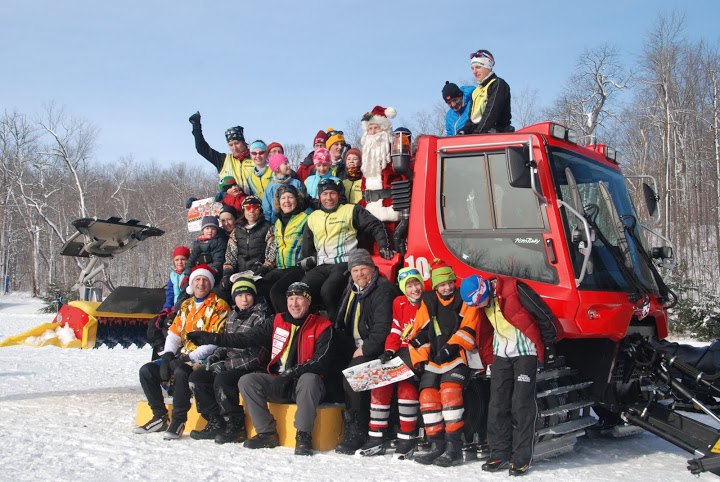
    A group of Nakkertok Nordic club members perched atop a groomer in late December 2012. (Photo: Nakkertok Nordic Facebook)
    A group of Nakkertok Nordic members perched atop a groomer in late December 2012. (Photo: Nakkertok Nordic Facebook)

    As the winners of this year’s Kraft Heinz Project Play $250,000-dollar grand prize, Nakkertok Nordic — a nearly 50-year-old cross-country ski club based in Cantley, Quebec — already knows where the money will go. Earlier this month, the club learned that it had been voted the winner over 819 other nominations across 550 Canadian cities, and plans to invest in a snowmaking system and improving the area’s 75-kilometers of trails.  

    One of four finalists, Nakkertok earned the most online votes (out of a total of 900,000) in an two-day period. Second, third and fourth place each received $20,000.

    “It was absolutely thrilling,” Jennifer Tomlinson, a longtime club volunteer and Nakkertok’s former race-program director, said of the grand-prize win to the local CTV Ottawa. “Over-the-moon excitement for everybody and a complete surprise.”

    Since the majority of Nakkertok’s support stems from community volunteers, $250,000 dollars also allows the club to focus future fundraising efforts elsewhere. Nakkertok Nordic President Robert Hornung further explained that purchasing snow machines benefits the program beyond getting a head start on snow.  

    “It will enable skiers to get on snow earlier, lengthen the ski season, and improve the quality of snow conditions throughout the season for both competitive training / racing and recreational skiing,” Hornung wrote in an email. “It will also enhance our ability to continue to host major cross country skiing events like the Eastern Canadian Cross Country Ski Championships and opens up the possibility of hosting races at our facility in December. In addition, the investment will provide new opportunities for the use of our facility on a four season basis.”

    From left to right: Steve Morris, Jennifer Tomlinson, Shanila Kealey, Toni Scheler, and Robert Hornung at the announcement event for the Kraft Heinz Project Play Grand Prize Award Nakkertok won on August 4, 2016. (Photo:  Doug Ranahan)
    From left to right: Steve Morris, Jennifer Tomlinson, Sheila Kealey, Toni Scheler, and Robert Hornung at the announcement event for the Kraft Heinz Project Play Grand Prize Award, which Nakkertok won on Aug. 4. (Photo: Doug Ranahan)

    A volunteer member to Nakkertok Nordic since she was 8 years old, Tomlinson indicated that the club could have the snowmaking system installed by the change of the seasons.

    “We had planned on doing fundraising and building towards snowmaking, but this allows us to establish it in, like, a snap,” Tomlinson said on the phone. “We can get it done this fall.”

    Tomlinson, who also volunteer coaches for Nakkertok, pointed out that much of this would not be possible without those who are a part of the community and even those outside it.

    “That this couldn’t have been done without the contribution of, quite frankly, the whole cross-country skiing community across the country,” she said. “We had support from coast to coast to coast and then even people who were traveling even outside the country were voting for us.”

    Established in the early 1970s by three families intent on creating a local ski program and trail system for the area, Nakkertok has grown over the years from a few families to over 1,400 members. The club has a Learn-to-Ski program as well as a racing program and adult development program. Much of the program’s growth is attributed to the club’s culture.

    “I think that model has worked really well for us because as we’ve grown, we’ve built our strengths through the membership and the investment people have personally, not just financially,” Sue Holloway, a volunteer coach whose mother served as the program’s first president, said on the phone.

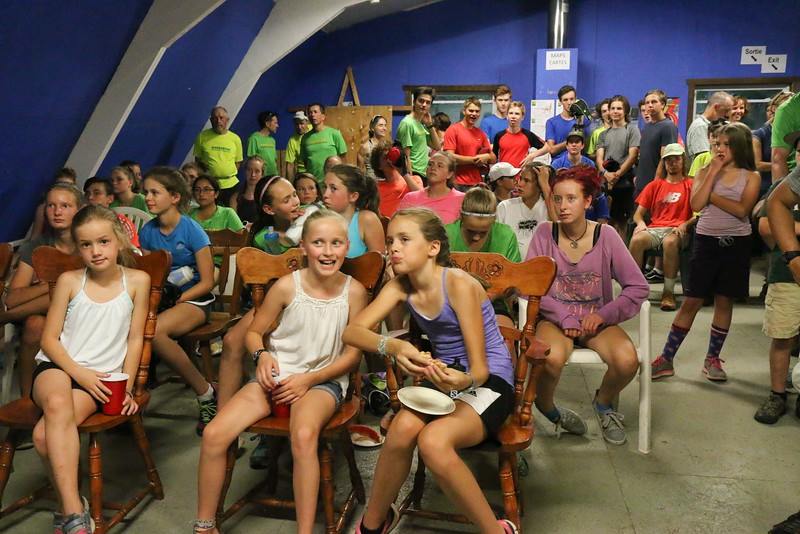
    Nakkertok Nordic members during the announcement event for the Kraft Heinz Project Play Grand Prize Award Nakkertok won on August 4, 2016. (Photo:  Doug Ranahan)
    Nakkertok Nordic skiers await the announcement of the Kraft Heinz Project Play grand-prize winner, which it won on Aug. 4. (Photo: Doug Ranahan)

    “They don’t just belong, they contribute,” she said of Nakkertok’s volunteers. “You know, ‘I made that trail or I made that cabin,’ so you really feel a sense of ownership, which makes us a strong club.”

    The culture Holloway described members of the club as having was a sentiment Tomlinson echoed.

    “There is no unique circumstance that says you can buy your way out of doing your volunteer commitment,” Tomlinson said. “The expectation is that every adult member will do two days of volunteer work and if you’re in the racing program, every adult member will do six days of volunteer work. … It breathes the give-back model too. The kids see the effort and the contributions, and we build the expectation that the kids, regardless of how old they are, are going to contribute by helping to maintain trails, whatever it may be.”

    The “give-back model” Tomlinson describes is evident in ski racers like Katherine Stewart-Jones, a former Nakkertok racer currently skiing for the national development centre in Thunder Bay, Ontario. Once a member of Nakkertok’s Jackrabbit program, Stewart-Jones, 21, now finds herself a volunteer for it.

    “I had a training camp near my house actually and I went home after and I was only there for four days, but I made sure to go to practice and help out,” Stewart-Jones said on the phone. “I even gave a talk to the younger group.”

    As winters become more mild, Stewart-Jones, a three-time Junior World Ski Championships competitor, sees the investment in snowmaking machines a smart one.

    “We’ve had a lot of trouble in the past couple of years. I went home for Christmas for, like, six days and I just remember it was Christmas Eve and I was rollerskiing,” she said. “That’ll be super cool to have [a snow-making system].”

    With $250,000 added to this year’s budget, the Nakkertok community was above all, appreciative to the support they received in order to win the overall award.

    “Votes were coming in from Norway and all over Canada, the U.S. and Europe,” Holloway said. “We’re pretty proud of that. And that again just speaks to the breadth of the community. We were really appreciative of everyone, not just in the area, but across Canada and literally across the world who jumped onboard and gave a us a hand to make it happen.”