Tag: Jericho

  • From Olympian to Coach to Mentor: Patrick Weaver, the Quiet Architect of UVM’s Ski Culture

    From Olympian to Coach to Mentor: Patrick Weaver, the Quiet Architect of UVM’s Ski Culture

    The first time you meet Patrick Weaver, you might not realize you’re talking to one of the most quietly influential coaches in American skiing. There’s no bravado, no self-promotion. Just an easy Vermont calm — a man who measures his words the same way his athletes measure their training: carefully, purposefully, with feel.

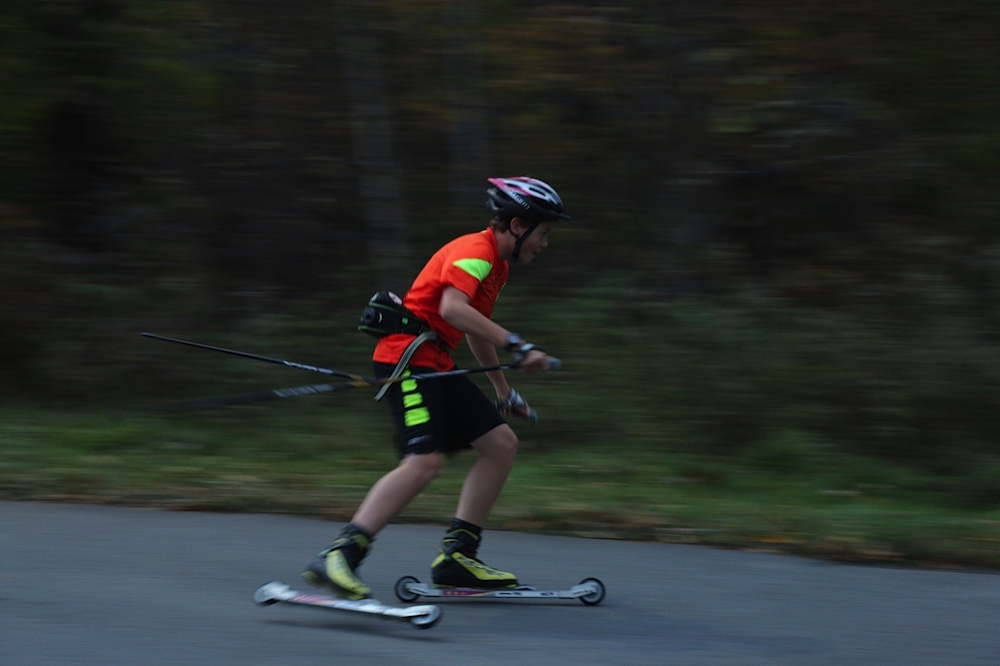
    On a fall morning, the UVM Nordic team threads through the mist at the Craftsbury Outdoor Center, the quiet hum of rollerskis against asphalt echoing in the distance. Weaver watches from the side, hands in his jacket pockets, hat pulled low. He doesn’t bark instructions. He doesn’t need to. The rhythm of his teams speaks for itself.

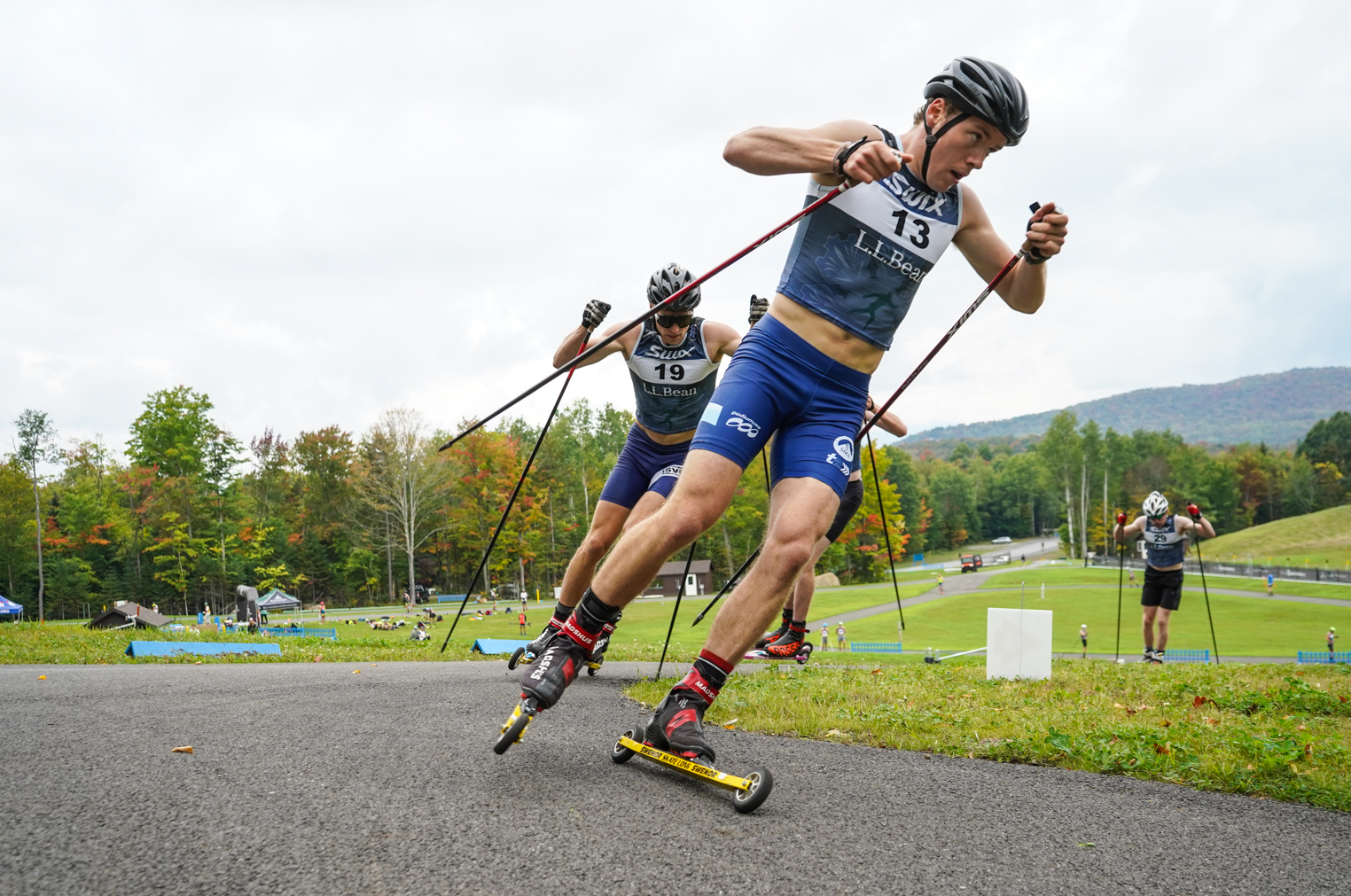
    Wilmington, Vermont’s Sophomore Luke Rizio. (Photo: Philip Belena/EISA)


    “I always say it’s not the individuals that make the team fast — it’s the team that makes the individuals fast,” he says. “Once they believe that, the motivation takes care of itself.”

    For nearly twenty years, that philosophy has shaped the University of Vermont into one of the most respected programs in NCAA skiing — not through hype or heavy recruiting, but through a culture of trust, humility, and balance.

    Lessons in Motion

    Weaver’s path to coaching wasn’t linear. It’s more like a relay through decades of ski mentors who left their fingerprints on his philosophy.

    “I never had one coach through my whole career,” he says. “There were a lot of influential people — high school, Stratton, college, the national team. I just learned to take things from each of them.”

    He spent a post-graduate year at Stratton Mountain School under Sverre Caldwell before skiing for Cory Schwartz at UNH — a relationship that would define his sense of what a team could feel like.

    “Cory was probably the most influential,” he says. “The way he ran that program — it was a family. I took that with me when I came to UVM.”

    After college, Weaver worked under a rotating cast of national and international coaches: Gordon Lange, Christer Skog, Sten Fjeldheim, Torbjørn Karlsen. Each brought a different rhythm to training. The mosaic of ideas shaped the adaptable style he’s known for today.

    “There’s not one way to coach,” Weaver says. “And because of my background, I’m not a ‘my way or the highway’ coach. I’ve seen too many ways that work.”

    Patrick Weaver racing in the 15 k Classic at the 2002 Olympics in Soldier Hollow, Utah. Weaver finished in 16th place. (Photo: UNH Ski Team)

    The Season He Cut His Hours

    In 2002, the year of his second Olympics, Weaver did something radical. He trained less.

    After years of logging 800-plus-hour seasons, he realized the grind was killing his joy. So he cut down to 600 hours — just one session a day, mornings only.

    “I was kind of burned out,” he says. “I’d dread the afternoon workouts. I loved the sport, but I wasn’t feeling good anymore. When I stopped doing the PM sessions, I felt better — I started looking forward to training again.”

    It’s a story he still tells his athletes, not as dogma but as permission. Permission to rest. Permission to find balance.

    “I’m never afraid to tell an athlete to train less,” he says. “Sometimes that’s the thing that gets them going faster.”

    That season became a turning point — not just in Weaver’s career, but in his view of what performance really means. It was the seed of a coaching style rooted not in metrics, but in intuition.
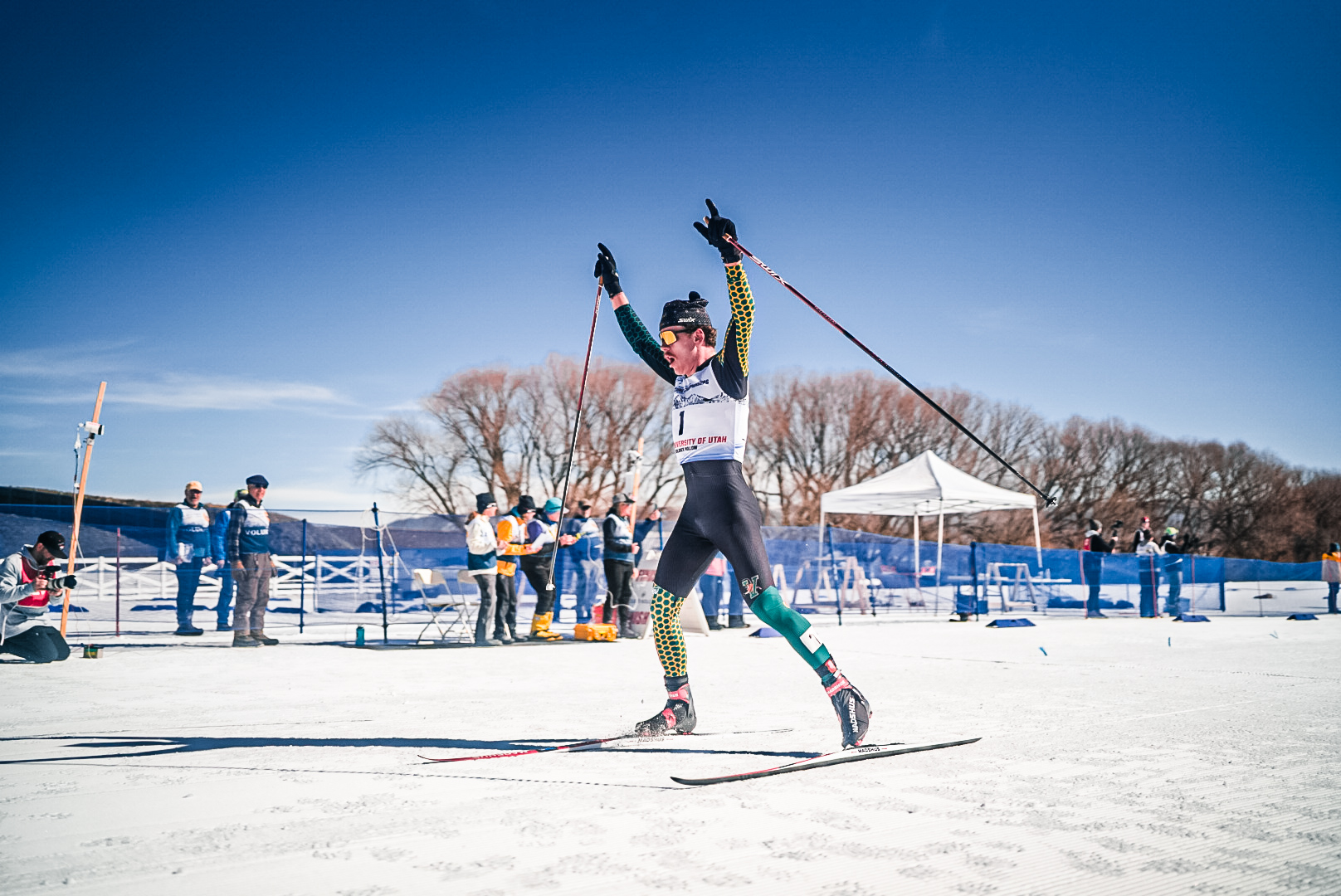
    Ben Ogden celebrates after sweeping the 2022 NCAA Championships in Midway, Utah. Ogden became 1 of only 4 skiers (alongside US Ski Team teammates Novie McCabe and Sophia Laukli) to win an NCAA Championship and represent the US at the Olympics in the same season. (Photo: Tobias Albrigtsen / @untraceableg)

    Coaching Ben Ogden — and the Art of Listening

    If Weaver’s name is not immediately known outside the NCAA world, it should be. One of his former athletes — UVM graduate Ben Ogden — is now one of the most dynamic racers on the World Cup circuit. Their partnership, built over seven years, is the epitome of Weaver’s coaching DNA: patient, collaborative, and deeply human.

    “I’m not Ben’s day-to-day coach,” he explains. “He’s got great people at Stratton and the U.S. Ski Team. But we talk — a lot. Strategy, planning, recovery, the big picture. And it’s never me saying, ‘Do this.’ We talk it through and find what makes sense logically.”

    That logic isn’t written in a spreadsheet. There are no lactate meters, no elaborate testing protocols.

    “We’re very unscientific,” Weaver says with a grin. “Ben appreciates the go-with-the-flow training plan. It’s all feel-based. If it feels good, we go with it.”

    The two share what they call the “Gus Workout” — a set of smooth, fast intervals inspired by Gus Schumacher. “It’s not about killing yourself,” Weaver says. “It’s about moving fast with good technique.”

    It’s fitting that one of America’s most promising World Cup athletes traces his development back to a coach who believes that skiing, at its best, is about rhythm and relationship more than data and drive.

    The UVM Way

    Weaver took over the Catamount program with a straightforward goal: strip away the clutter.

    “When I first got here, I just explored,” he says. “I found training venues close to campus — trails and loops that were right here. We stopped driving hours to ski. It simplified everything and gave athletes more time to recover.”

    That ethos — local, focused, efficient — defines UVM’s identity. Training isn’t glamorous, but it’s deliberate. The team atmosphere is close-knit, even familial. “There’s nothing special about UVM,” Weaver jokes, “and that’s what makes it special.”

    He points to the campus support network — trainers, nutritionists, sports psychologists, and strength coaches all under one roof — as one of the program’s hidden advantages. “It’s on par with professional teams,” he says. “The athletes can see everyone they need in one day.”

    That infrastructure helps athletes stay healthy, grounded, and balanced — which, for Weaver, is the real key to longevity.

    “We’ve had international athletes come in liking skiing, and they leave loving it,” he says. “That’s when I know we’ve done something right.”

    Junior Owen Young (Anchorage, Alaska) and Sophomore Fin Bailey (Peru, Vermont). (Photo: Phillip Belena/EISA)

    Through Change and Uncertainty

    Weaver has been around long enough to see college skiing evolve from a regional stepping stone to a legitimate World Cup pipeline. He’s also watched it collide with new realities: NIL money, early recruitment, the escalating costs of youth development.

    “When I was at UNH, I was training 500 hours a year and thought that was a lot,” he says. “Now I’ve got athletes training 700 or 800 hours — and managing school on top of it.”

    That dedication, he says, is a sign of progress — but also a warning.

    “Kids are training more and more at a younger age,” he says. “Sometimes it worries me. Are they doing it because they want to, or because they’re being told to?”

    He worries, too, about the economic side. The college landscape, reshaped by NIL and revenue sharing, could make Olympic sports harder to sustain.

    “We’re fundraising to pay athletes while big schools make $200 million a year off TV deals,” Weaver says. “It’s hard to see how that’s sustainable.”

    He laughs softly when asked what NCAA skiing looks like fifteen years from now. “I hope we’re still here,” he says. “I really do.”

    The Long Game

    If the world of college skiing is shifting underfoot, Weaver’s motivation remains rooted in something simple: people. Every year brings a new roster, a new set of personalities, a new chance to start fresh.

    “You do something long enough, it’s hard to stay motivated,” he admits. “But each fall I get new athletes, new relationships. First-year students I barely know become seniors I can’t believe are leaving. That cycle keeps it exciting.”

    He pauses, then adds, almost to himself:

    “Maybe that’s what success really is — watching them fall in love with skiing all over again.”

    UVM Sophomore Rose Horning from Leadville, Colorado. (Photo: Phillip Belena/EISA)


    Vermont’s Quiet Legacy

    Weaver doesn’t measure his legacy in NCAA titles or Olympic appearances, though UVM has had plenty of both. He measures it in the quiet mornings at Craftsbury, Jericho, or Sleepy Hollow, where athletes rediscover why they started skiing in the first place.

    He doesn’t see himself as a gatekeeper of results but as a caretaker of culture — one that prizes simplicity, joy, and belonging in a sport that often forgets how to slow down.

    In a world obsessed with metrics, Weaver’s story is a reminder: sometimes the best architectures of success are invisible — built in the space between workouts, in trust, and in the quiet confidence that skiing, at its best, should always be fun.

    “The best thing I can do,” he says, “is help people love the sport.”

    Coach Weaver chats with his first-year from St. Paul, MN, Hanna Koch. (Photo: Philip Belena/EISA)


  • Keys to the Castle and Free Fall Rollerski Races Light Up the Northeast

    Keys to the Castle and Free Fall Rollerski Races Light Up the Northeast

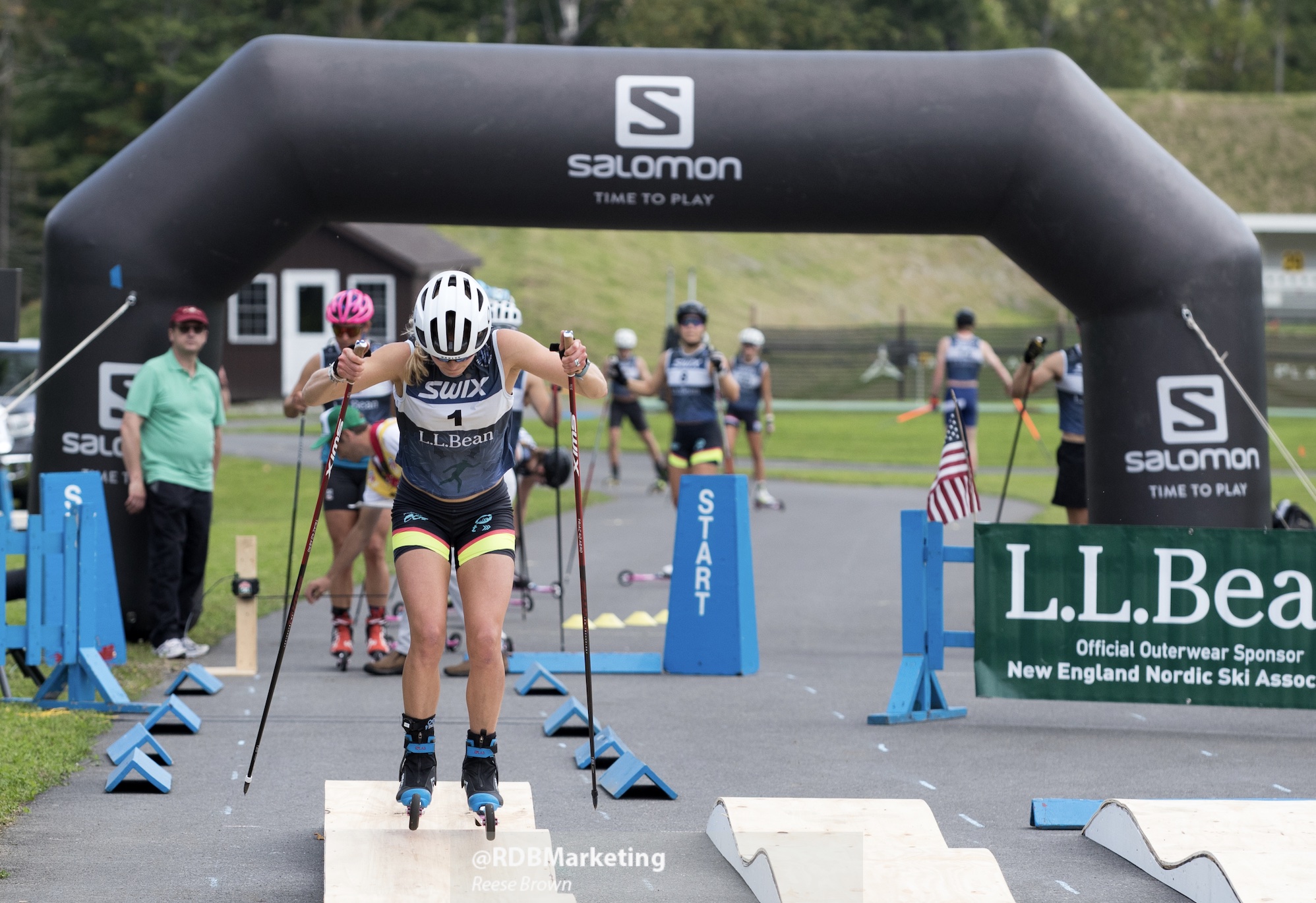
    Over the bumps, Jessie Diggins heads out for her qualifier during the Keys to the Castle rollerski race in Lake Placid, NY. (Photo: Reese Brown / RDB Marketing)

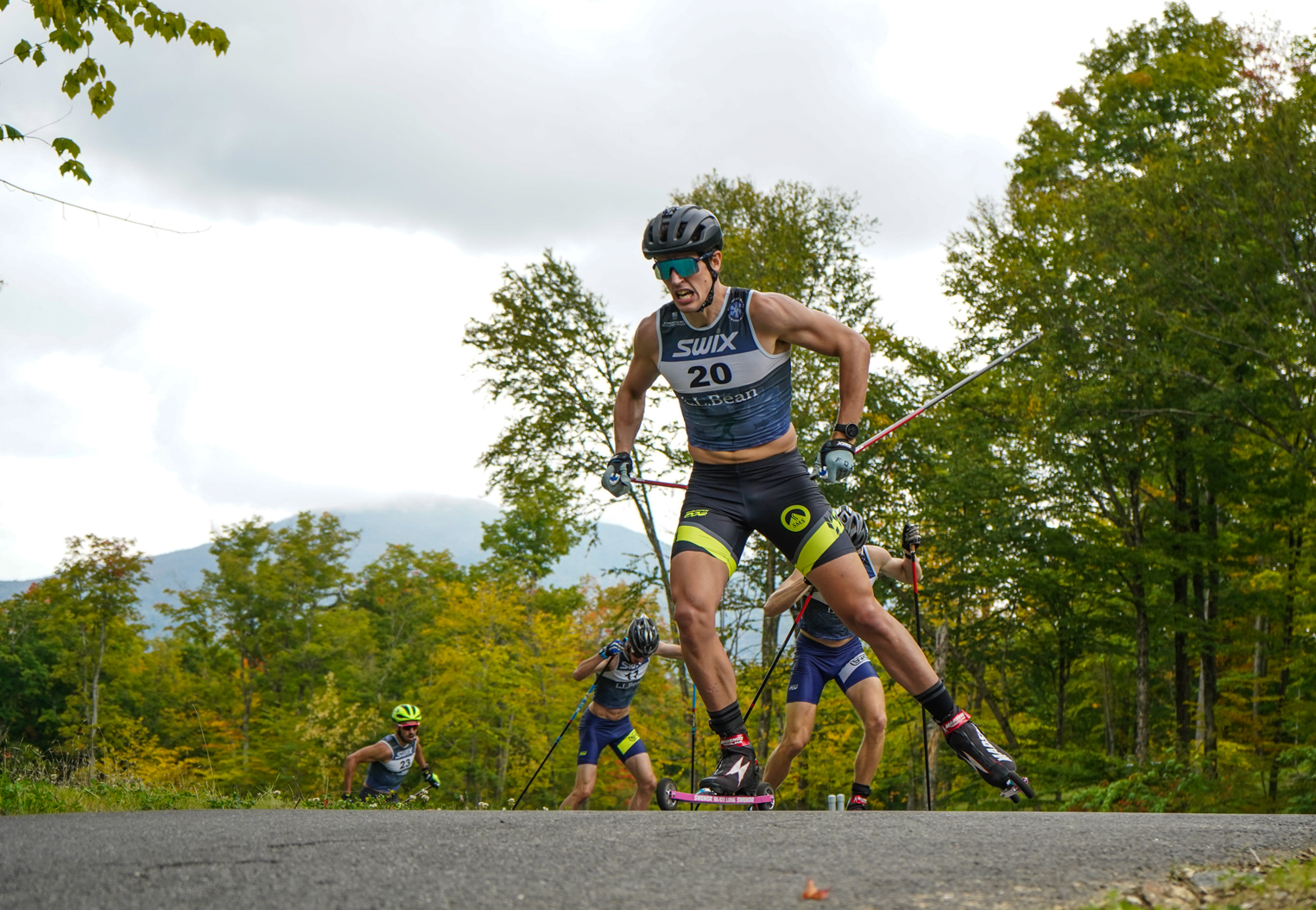
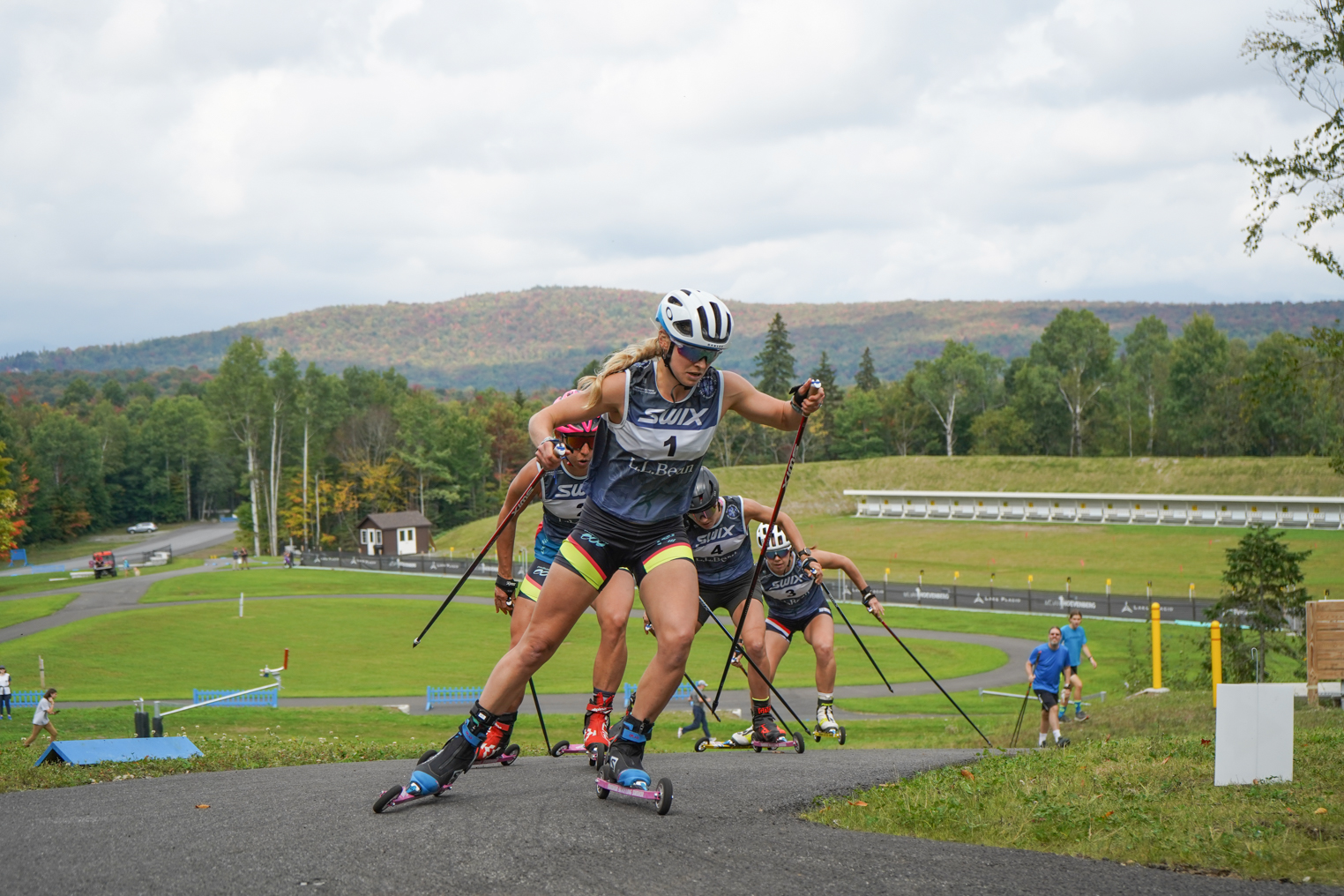
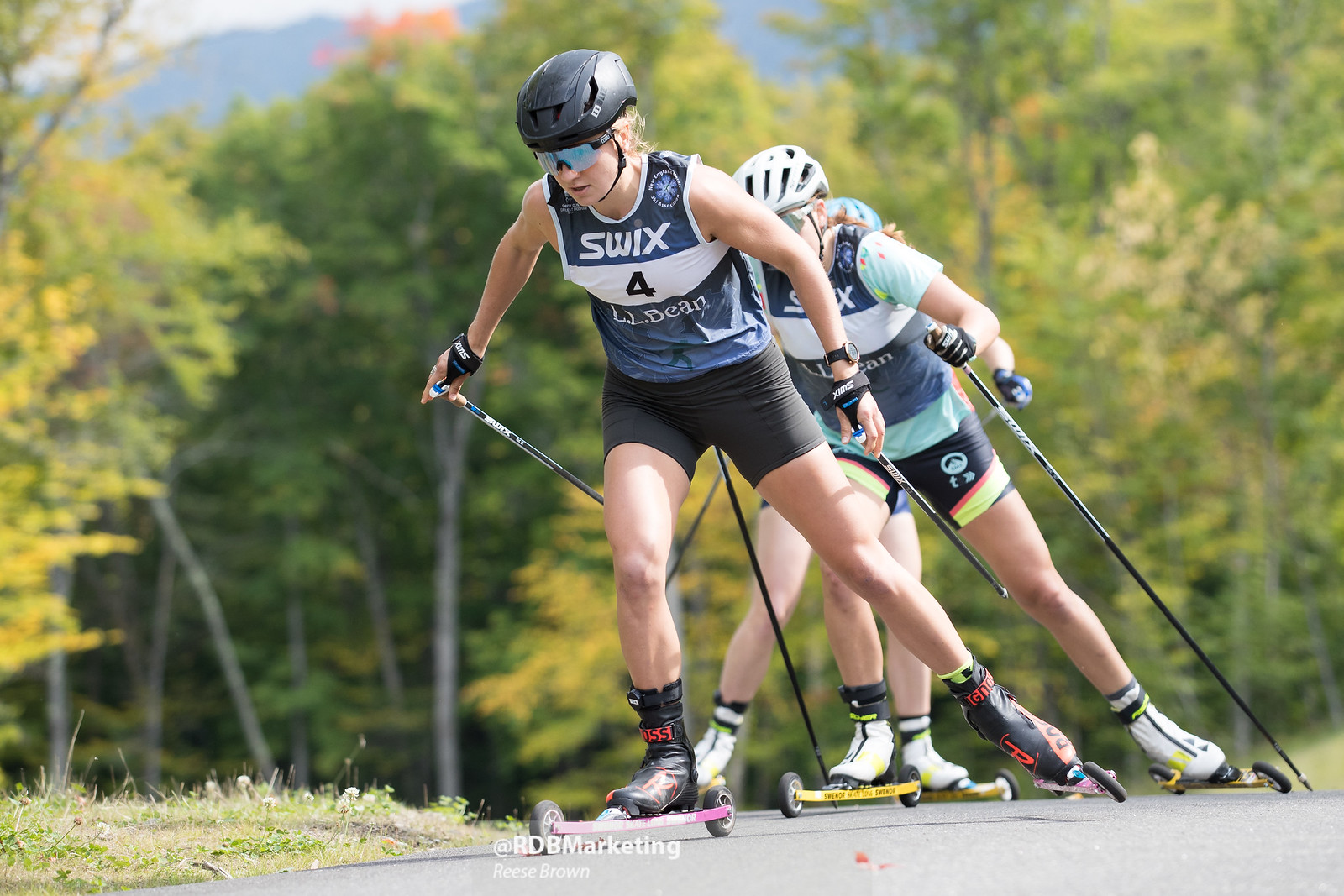
    As summer turned to fall, skiers from the Stratton Mountain School T2 team (SMS T2), the Sun Valley Gold Team (SVSEF), and the Bridger Ski Foundation Pro Team (BSF) met in Lake Placid, NY for a collaborative training camp, capped off with two stages of rollerski racing. The weekend featured a freestyle sprint event — The Keys to the Castle — on the rollerski track at Mt Van Hoevenberg, followed by a distance stage dubbed the Free Fall Rollerski Race in Jericho, VT. These events are perhaps the climax of NENSA’s summer rollerski series, which has helped feed the energy and momentum of the cross country ski community throughout the Northeast. 

    “Lake Placid and Jericho were fantastic events and the beginning of the vision becoming a reality,” NENSA competitive programs director Justin Beckwith shared in an email. “They also highlight the amazing partnerships we have with clubs, venues and sponsors. We have four more roller races this fall including Climb to the Castle this weekend, which is paired with our Eastern Coaches Symposium — back in the Empire State. The really exciting part is we hope to carry the enthusiasm from rollerski into our Popular Race calendar, which will be released in the coming month.”

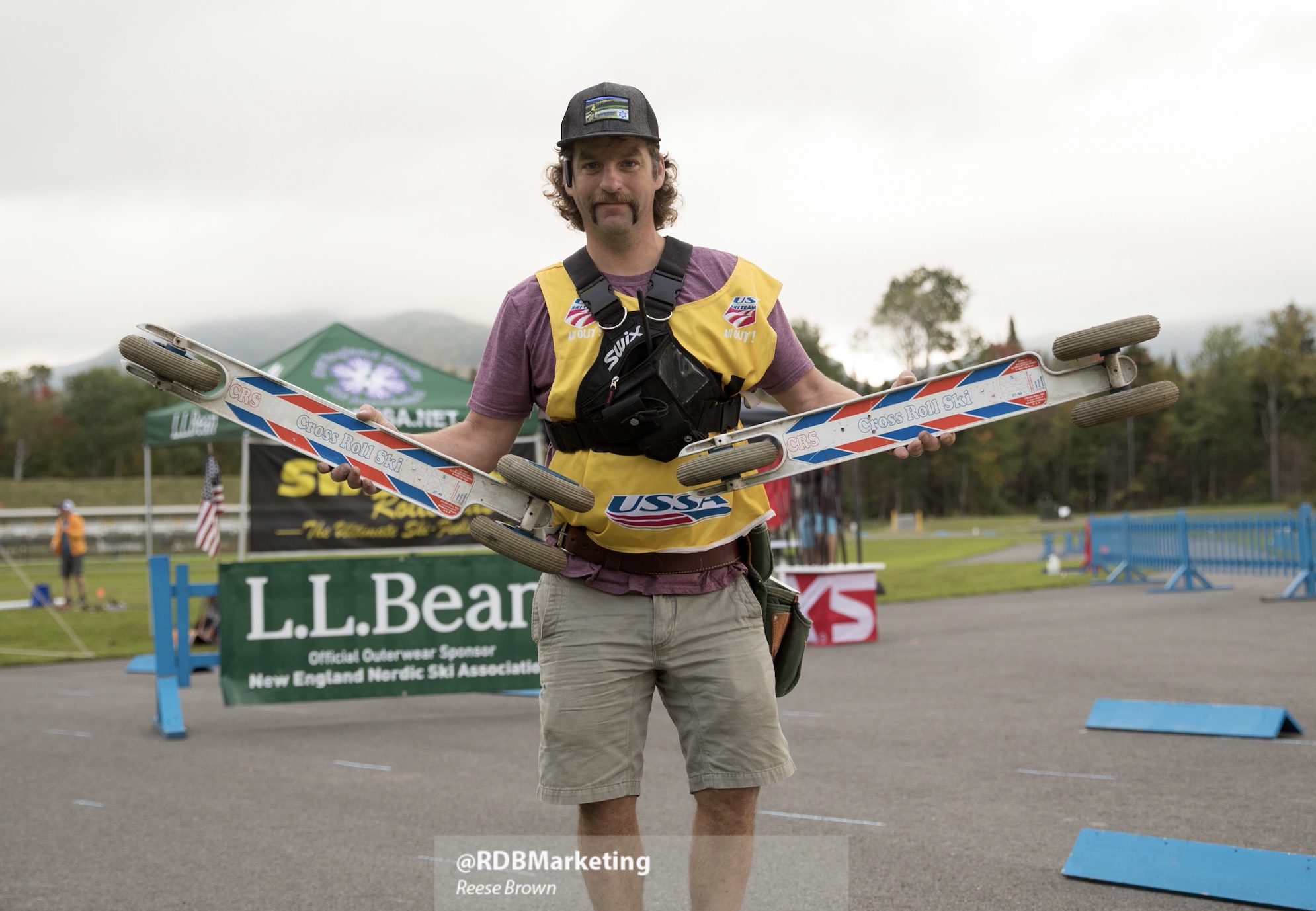
    The man behind the wheels: NENSA competitive programs director Justin Beckwith. (Photo: Reese Brown / RDB Marketing)

    After a year with minimal opportunity for cross-club collaboration, the events provided not only a solid training stimulus, but also invigorated the teams as they prepare for the upcoming season. It left U.S. Ski Team head coach Matt Whitcomb scheming about the opportunity to grow the events in the years to come. 

    “Pulling off a stage-style roller ski race weekend, with over 100 competitors on two different roller-ski tracks, reminds me of summer racing in Norway and Sweden,” wrote Whitcomb in an email. “NENSA has upped its game. Think of the potential, too; we could do four stages, using four different tracks, and all within 1-2 hrs in VT and NY. Start in Craftsbury, move on to Jericho, and then to each of Lake Placid’s tracks. Everyone camps together at each location, and it’s just a giant summer ski party.”

    The facilities at Mt Van Hoevenberg, home to the 1980 Olympics and an Olympic & Paralympic Training Center, have been undergoing extensive renovations and improvements, including the building of the new four-kilometer rollerski track which was finished this past August. (You can take a tour of the track via YouTube courtesy of Paul Schommer/Biathlon Uncharted.) 

    “If I win the lottery, I’m putting in more roller-ski tracks in the U.S.,” said Whitcomb. “It’s a game-changer to not have to worry about cars. Also, the best way to replicate the demands of a ski course is to ski on a ski course.”

    Bill Harmeyer (SMS T2) makes his way through the heats during the Keys to the Castle rollerski sprint. Harmeyer finished 4th overall on the day. (Photo: Matt Whitcomb)

    Mt Van Hoevenberg has also improved their snow making operations, allowing for 5k of groomed skiing with 3-4 days of blowing snow in cold weather. Whitcomb explained the value this provides to American cross country skiing. 

    “This was our second time utilizing New York’s investment in its facilities at Mount Van Hoevenberg. I’d be surprised if we’re not racing World Cups here in the future. A lot of work by ORDA has resulted in a world class roller-ski track and new race trails. What excites me is the chance for easterners to have early November skiing in years when the weather cooperates. Their snow-making capacity is impressive.”

    With the added twist of a rolling ramp at the start, racers skied their way through the qualifier and rounds. In the women’s field, Jessie Diggins (SMS T2/USST) won the qualifier, cruising onward to snag the top spot on the podium, followed by teammates Julia Kern (SMS T2/USST) in second and Alayna Sonnesyn (SMS T2) in third. 

    Jessie Diggins (SMS T2/USST) over the climb during the final round of the Keys to the Castle sprint. (Photo: Matt Whitcomb)

    “This is the time of year where the intensity in training starts to ramp up and it’s always awesome to have the chance to test out your race day preparation,” wrote Diggins after the race. “Things like the timing of pre-race meals to warmups and what you do in between sprint heats to stay activated but not get tired — this was a perfect chance to tune in to those little details at the race in Lake Placid!” 

    Diggins only competed in the sprint stage of the weekend, bowing out before the teams headed to Vermont.

    “I’m super grateful to the organizers and hosts as it was an amazing new roller ski track and venue, and it was very cool to have so many teams and athletes there, from junior skiers to professional teams. The track was challenging and honestly just like a world cup sprint course, in terms of length, challenge and technical aspects. It was fun to fire up the engines and see what I still need to be working on in our final prep phase before the season begins!”

    Jessie Diggins stomps the qualifier, continuing through the rounds to win the overall at the Keys to the Castle. (Photo: Reese Brown / RDB Marketing)

    On the men’s side, Ben Ogden (SMS T2) also doubled up on the qualifier-final victories. He was followed by Peter Holmes (SVSEF) in second, and Logan Diekmann (BSF) in third. 

    “This weekend’s rollerski race was like a breath of fresh air for me and I think most of the competitors,” wrote Ogden in an email. “As fun as constant training, time trials and quarantining was, ski racing is all about racing. Getting together with such a talented group and pushing each other on such a beautiful New England weekend seemed almost too good to be true. Having the BSF Pro Team, Sun Valley gold team, and SMS T2 team, all on sight made it a crazy stacked fall time trial, which was such a treat after a year of so many small group time trials. 

    “This weekend was especially cool for me because It bridged the gap between all the ski worlds, something that has certainly not happened in a long time. Many of the college skiers were there, the SMS t2 team (who I ski with in the summers) was there, even a few fellow US ski team athletes and coaches were there. It’s rare that all these groups get together so that was a lot of fun.”

    Putting on a clinic, Ben Ogden powers through the Keys to the Castle, winning both the qualifier and the overall. (Photo: Matt Whitcomb)

    While racing in Vermont was not possible for much of the ‘20/21 season, Ogden, now 21-years-old, had a solid first run of international World Cup racing. On form when the stakes were highest, he qualified in 11th in the classic sprint at the World Championships in Oberstdorf, Germany and finished 17th. He was also the third fastest qualifier in the same event at U23 World Championships in Voukatti, Finland, where he finished 11th overall. 

    Ogden provided insight into his current status with training, and how the races provided him with insight into how his body is responding. 

    “I had a big period of training ending in these races and in true fall rollerski race style I didn’t change up much of my training for the races. I just thought of them as hard workouts with a bunch of friends who I don’t ski with all too often. I was really pleased to find some good speed through the entire skate sprint day. The course was really fast and tons of fun on rollerskis, so it was awesome to ski all three heats on Saturday…

    “I’m really excited to get this winter underway. Feeling good about summer training in Stratton and the beginning of fall training at Groovy. (‘Groovy UV’ = University of Vermont, where Ogden is beginning his third year.) Lots of work to be done!! I think it’s going to be a fun year.”

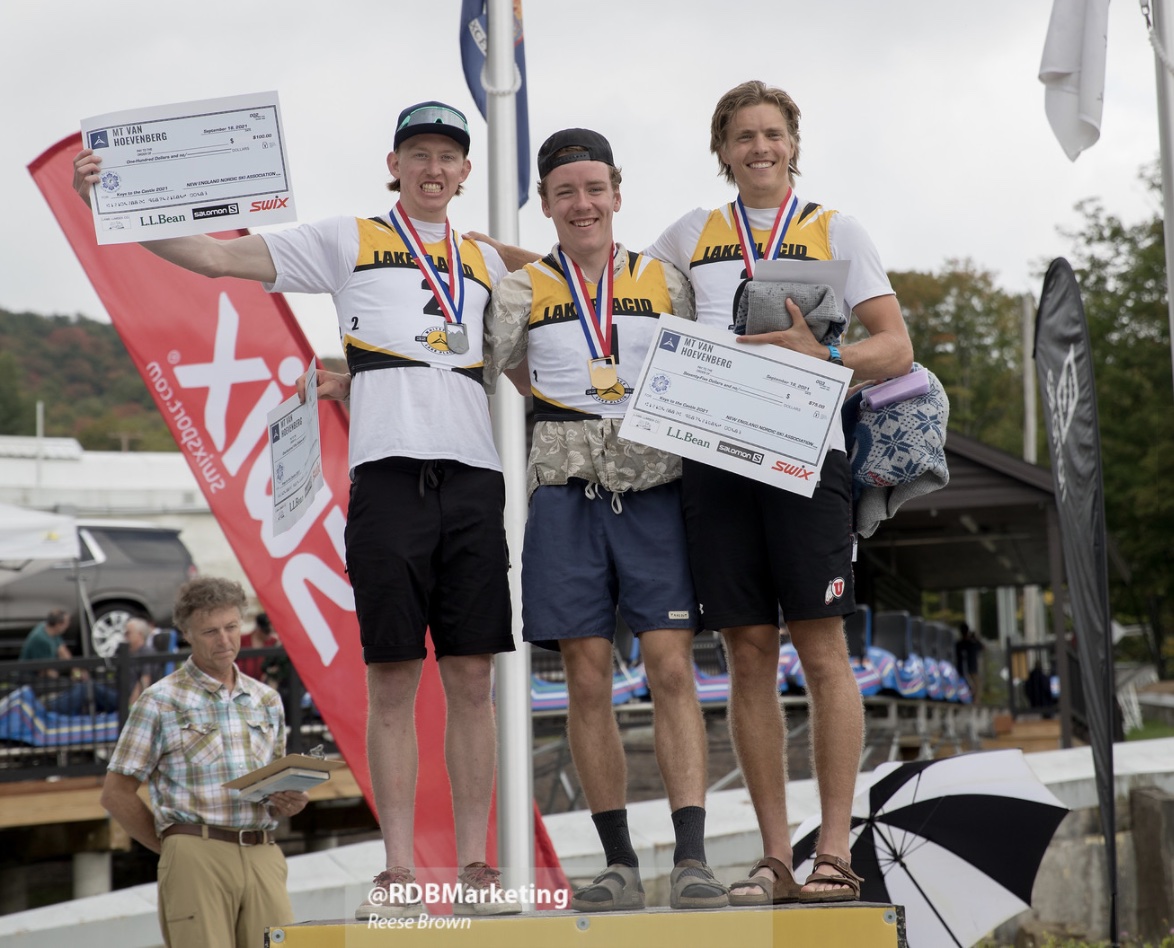
    The men’s podium of the Keys to the Castle rollerski sprint in Lake Placid. Ben Ogden (SMS T2) was the top qualifier and overall winner ahead of Peter Holmes (SVSEF) and Logan Diekmann (BSF Pro). (Photo: Reese Brown/RDB Marketing)

    Heading east to the Camp Ethan Allen Training Site, men and women in the open division raced a 15k skate while juniors completed 5k. 

    For the men, Johnny Hagenbuch (SVSEF) stopped the clock at 32:00.9 with the fastest time of the day. He was pursued by Ben Ogen in second (+1:07.3), with Ian Torchia (SMS T2) on his tails in third (+1:07.6) with a tight finish. 

    “It was an awesome way to cap off a productive training camp!” wrote Hagenbuch after his race. “Being from altitude in Sun Valley, the main goal for the camp was to capitalize on some great venues for intensity training in and around Lake Placid. We had a bunch of really good sessions on rollerskis and foot, and it was awesome to collaborate with Andy Newell’s BSF Pro Team crew on a number of those quality workouts.”

    20-year-old Hagenbuch was born and raised in Ketchum, ID. After taking a gap year following high school graduation, Hagenbuch will be attending Dartmouth College in the fall. He explained that his time spent in the east surrounding these events left him eager for what is to come in the years ahead. 

    “The new venues in Lake Placid at the Mount Van Hoevenberg were incredibly well-designed, and I really look forward to checking out the ski trails in the winter as opposed to bounding. The rollerski track is a really great resource, and NENSA did a fantastic job of hosting that event. There was a surprisingly robust field for a rollerski race in Upstate NY, and it was cool to see how much energy there is for skiing and rollerskiing in the East. I actually had never previously spent any substantive period of time in New England – winter or summer, so it was great to experience orientation at Dartmouth the week before the camp as well. My perception of the East has completely changed; it’s very different from the West, but I love it!”

    Johnny Hagenbuch powers through his qualifying round during the Keys to the Castle rollerski sprint in Lake Placid, NY. (Photo: Matt Whitcomb)

    Breaking down the combined stages that led Hagenbuch to a third place finish in the overall standings, he explained his approach to the weekend including how it fits within his overall summer training plan. 

    “The sprint went pretty well for me, especially considering that I historically and currently have not self-identified as the most talented sprinter. At this point in the season, it was a fun, low-stakes way to throw down with a great group of guys. Ben Ogden is fun to watch. The distance day in Jericho was much more my wheelhouse, as distance skate races are typically my best format. The 5km rollerski track on the National Guard base in Jericho was a treat to experience. I haven’t skied on Craftsbury’s rollerski track, but the Jericho rollerski track could easily be the best in the nation. Given that I’m still training at a relatively large volume, I wasn’t really expecting to feel particularly good or race anywhere near to my best form, but it was still a pretty good effort. 

    “One of my goals for the past couple of seasons has been to get stronger and ski more powerfully, and it was cool to see some of that effort pay off in Jericho. I felt that I was skiing much more powerfully in general, and I don’t think I lost much on the uphills – despite having gained 25 pounds in the last year. It was an encouraging result in the end, and I’m excited for the next couple of months of training before the season kicks off in earnest in West Yellowstone. I’ll be pretty consistently alternating between being at home for two weeks and away training or racing for two weeks until January, which’ll be a nice way to break it up (and will make time fly)!”

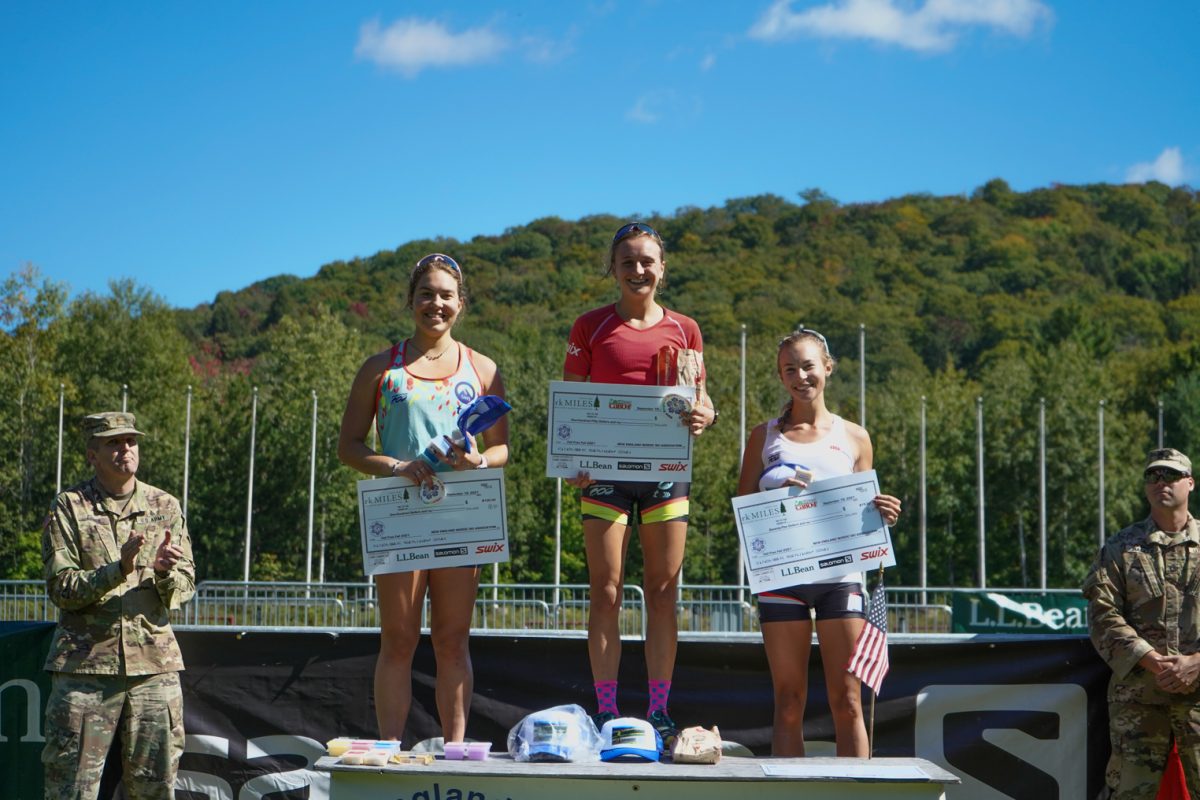
    The women’s podium of the Free Fall distance race in Jericho, VT. Alayna Sonnesyn (SMS T2) took the win ahead of teammate Lina Sutro, with Mariah Bredal (BSF Pro) in third. (Photo: Matt Whitcomb)

    On the women’s side, Alayna Sonnesyn took the win on the second day in a time of 37:55.3, sealing the overall victory for the combined events. Her SMS T2 teammate Lina Sutro rolled through in second (+49.3) with BSF Pro Team member Mariah Bredal in third (+2:33.6). 

    “In Lake Placid, it was really cool to ski on the new roller ski track,” wrote Sonnesyn in an email after the events. “I had heard stories about a pretty twisty and technical track but to finally have the opportunity to ski on a course similar to a World Cup level race was pretty sweet. Not to mention the new facilities at Mt. Van Hoevenberg are unbelievable! It was really fun to get into a sprint simulation with all of the other elite ski teams that were there and it felt almost like a SuperTour. That being said, it’s still September so although I brought a competitive spirit to the races, I still approached them as a workout. It was great to practice going super hard in the qualifier and then play around with tactics in the heats, but it was all in good fun too. With a pretty sketchy corner coming out of the last downhill, the women agreed this race wasn’t worth losing skin over. All in all, a great day!”

    Alayna Sonnesyn leads her heat during the Keys to the Castle rollerski sprint in Lake Placid, NY. (Photo: Reese Brown / RDB Marketing)

    “The following day in Jericho I was definitely feeling a little tired from the sprints the day before, but that was great practice for wintertime when we frequently race back to back,” Sonnesyn continued. “Also, during my time at UVM we skied at Jericho almost every week so it felt good to be back on a track that I knew so well and felt like home. Adding to that, it was great to see the UVM ski team and other junior/college racers attending this event. It had been a while since I had been at an event with so many New England skiers and I felt like everyone was just really happy to be there. Again, I was finding the balance in this race to approach it as a workout while still taking advantage of the opportunity to practice race warm ups, tactics, fueling, pacing, etc.”

    Sonnesyn also concluded with insight into her overall feelings at this point in the season. 

    “I’m feeling really good and lucky to have these races to test things out. I gained a lot of takeaways on little things I can work on in the next few months, but also built some confidence behind what we have already been doing all summer. I’m excited to potentially compete in a few more NENSA races this fall and get ready for snow to fall!”

    The women’s final of the Keys to the Castle rollerski sprint in Lake Placid, NY. From left to right, Lauren Jortberg (BSF Pro), Julia Kern (SMS T2/USST), Jessie Diggins (SMS T2/USST), Alayna Sonnesyn (SMS T2). (Photo: Reese Brown RDB Marketing)

    Results:

    Keys to the Castle Sprint | Free Fall Distance Race

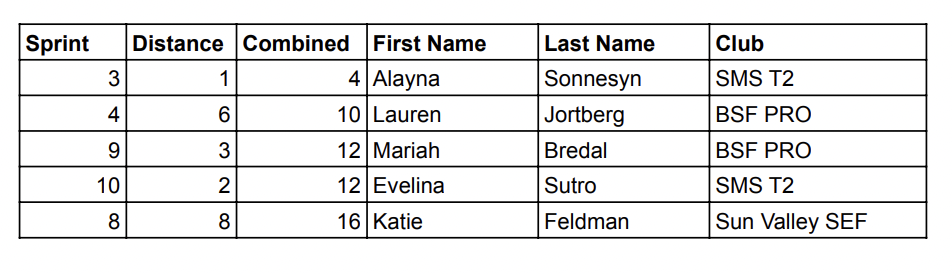
    Overall Standings for the Combined Events:

  • Patterson, Harmeyer Win ‘Largest North American Rollerski Race’, NENSA Fall Classic

    Patterson, Harmeyer Win ‘Largest North American Rollerski Race’, NENSA Fall Classic

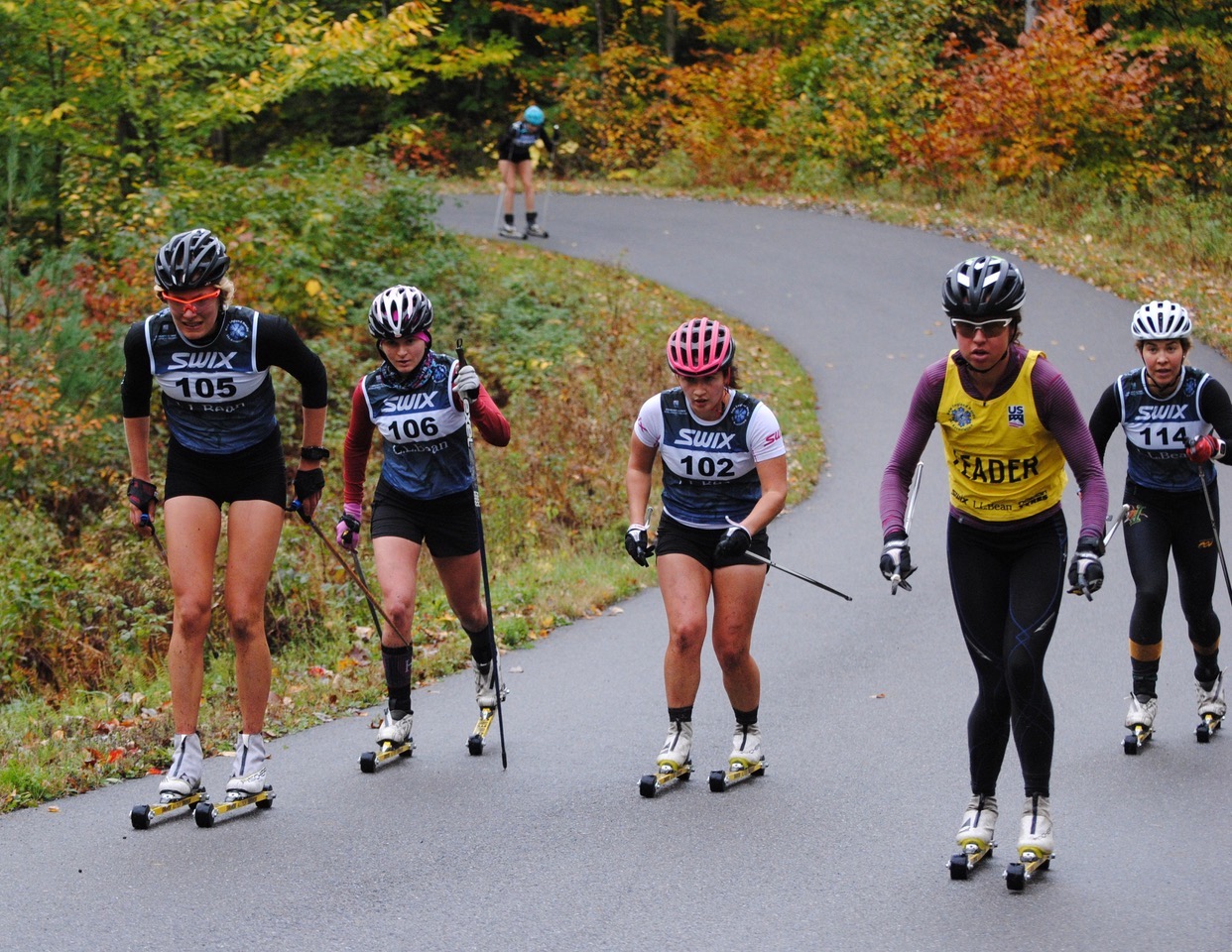
    2018 Olympian and Craftsbury Green Racing Project skier Caitlin Patterson (in the yellow bib as the NENSA Rollerski Race Series leader) en route to a win in the open women’s 10 k at the NENSA Rossignol Fall Rollerski Classic on Saturday, Oct. 13, in Jericho, Vt. (Photo: Dave and Carl Priganc)

    This past weekend, more than 170 skiers descended upon the Camp Ethan Allen Training Site at the Vermont National Guard base in Jericho, Vermont, for the New England Nordic Ski Association (NENSA) Rossignol Fall Rollerski Classic. According to NENSA Competitive Programs Director Justin Beckwith, the field size nearly doubled from last year, and he believed 172 finishers made it the largest North American rollerski race.

    The event was hosted in conjunction with the Mansfield Nordic Club on Saturday, Oct. 13, which was described as a “chilly morning replete with the first snow of the year on Mount Mansfield as a backdrop” and rain drizzling throughout the day, according to a NENSA press release.

    In the 10-kilometer open (over-18) women’s race, Caitlin Patterson of the Craftsbury Green Racing Project (CGRP), also located in northern Vermont, took the win with a time of 25:14.4 minutes, about 18 seconds ahead of her Craftsbury teammate Ida Sargent (of the U.S. Ski Team) in second. About 30 seconds back from the win, Lina Sutro of the University of Vermont (UVM) placed third.

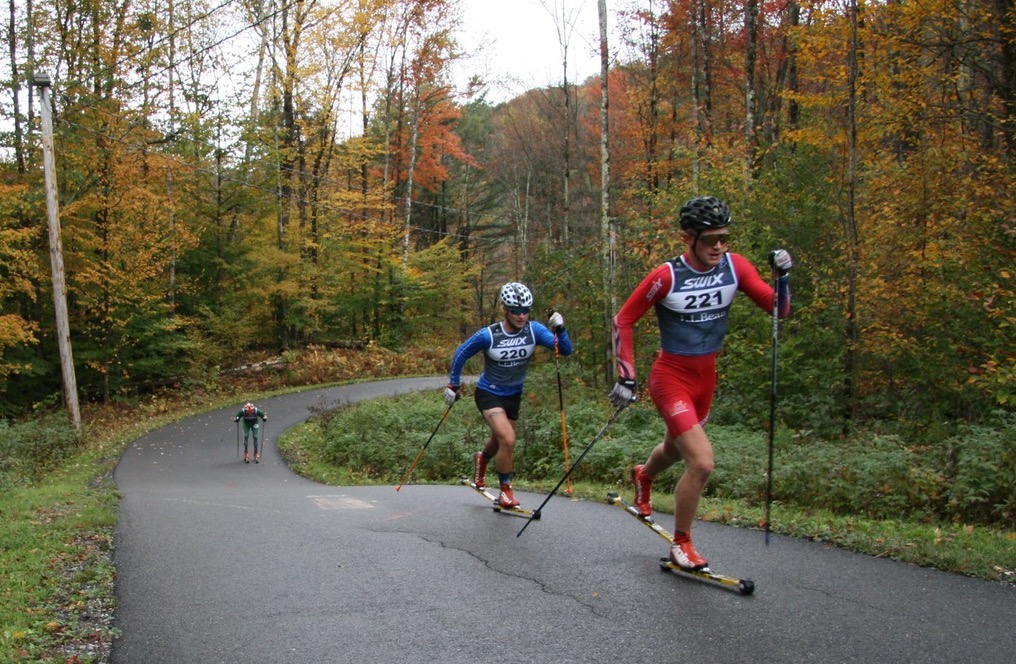
    Racers stride up a hill during the open men’s 10 k race at the NENSA Rossignol Fall Rollerski Classic on Saturday, Oct. 13, in Jericho, Vt. (Photo: Dave and Carl Priganc)

    In the open men’s 10 k race, another UVM skier and last year’s winner Bill Harmeyer won in 22:09.6, just 5.5 seconds ahead of Adam Martin (CGRP) in second. Another 12 seconds back, Kyle Bratrud, of the Stratton Mountain School (SMS) T2 Team in southern Vermont, placed third.

    Notably,  the top 30 in both the men’s and women’s senior races competed on matched Swenor Alutech Classic rollerskis. “We managed a fleet of 38 – 20 from our NENSA fleet and 18 sent out to us on loan from the Midwest fleet,” the press release stated.

    After the races, athletes were able to try out an agility ramp.

    “The whole day had a carnival-like feel with a balance of world-class competition and camaraderie,” the release noted.

    For more on this event and the highlights of the 5-kilometer U16 races, click here.

    Results

    Photos

    NENSA Rollerski Race Series standings (with two events left: Maine Agility Festival on Oct. 27 at Pineland Farms in New Gloucester, Maine, and Trapp Invitational Rollerski Race on Nov. 3 at Trapp Family Lodge in Stowe, Vt.)

    Series results

  • Dickinson Books World Cup Spot; Schommer, Dreissigacker, Reid to National Team Camp

    Dickinson Books World Cup Spot; Schommer, Dreissigacker, Reid to National Team Camp

    Kelsey Dickinson (Craftsbury Collegiate Summer Team) racing to third in the women’s sprint at US Biathlon Rollerski Championships on Aug. 12 in Jericho, Vt. Dickinson had more strong performances this past weekend to secure a spot on the World Cup in December. (Photo: John Lazenby/Lazenbyphoto.com)

    For some American biathletes, there was a lot on the line in Jericho, Vermont this past weekend.

    Saturday and Sunday were rollerski biathlon competitions that served as the third and fourth of a four-race team selection series. Six athletes – Susan Dunklee, Clare Egan, Lowell Bailey, Leif Nordgren, Sean Doherty, and Tim Burke – had already booked their places for the first period of World Cup racing thanks to results from last season.

    But between one and three places still needed to be filled on the U.S. team, and the Jericho races – the first two were held at the Vermont biathlon complex in August – would be used to select a team for a pre-season camp in Canmore, Alberta. From there, the squad would be winnowed down for the December World Cup.

    Kelsey Dickinson (College of St. Scholastica) racing to 26th in the women’s 15 k freestyle mass start at 2017 NCAA Skiing Championships on March 11 at the Jackson Ski Touring Center in Jackson, N.H. (Photo: Flyingpointroad.com)

    One College of Saint Scholastica student, Kelsey Dickinson, booked her place on the World Cup. A St. Scholastica alumnus, Paul Schommer, all but did the same – he was selected to the camp, and is highly likely to also go on to the World Cup.

    Two more women, Joanne Reid of Colorado Biathlon and Emily Dreissigacker, of the Craftsbury Green Racing Project, were selected for the camp and will have to compete for the last World Cup spot.

    Even for the pre-qualified athletes, it was a weekend of important competitions, a chance to hone stills practiced over the summer and start visualizing the international competitions that will start in just six weeks.

    “It’s an important marker – it’s not nothing,” U.S. Biathlon Association Chief of Sport Bernd Eisenbichler said in an interview this morning. “We try to really run the trials like a national-level race. The Jericho crew led by John Madigan did an awesome job to put a real race on, not just a time trial. You have a bib number on, you want to perform and you want to execute the things you’ve worked on throughout the summer.”

    The Women: Three Trials Race Winners Heading to Canmore

    With the pre-qualified duo of Dunklee and Egan excluded from ranking results, Dickinson won the trials series in best-three-of-four scoring. Even with Dunklee and Egan in the results, she was only off the podium once in the four-race series.

    Chad Salmela (far left) with 2016 NCAA qualifiers Reitler Hodgert and Kelsey Dickinson as well as assistant nordic coach Josh Tesch at 2016 NCAA Championships in Steamboat Springs, Colo. (Photo: Chad Salmela)

    “I’m really pleasantly surprised and impressed also with how she did that, with being outside the team environment,” Eisenbichler said.

    Dickinson was formerly an athlete at the Maine Winter Sport Center (now the Outdoor Sports Institute), but when that program shuttered its senior funding scheme in the spring of 2015 she felt she had no choice but to go back to school. Since then she has worked with coaches Chad Salmela and then Maria Stuber, and become an NCAA qualifier for Saint Scholastica in cross-country skiing.

    Dickinson spent this summer at the Craftsbury Outdoor Center training for biathlon, along with Dreissigacker and other development athletes.

    “I know that she worked quite a bit with the Craftsbury team, which was a smart move, but overall we have to give her a lot of compliments for really doing this development,” Eisenbichler said of the student-athlete. “I just talked very briefly with her on Sunday, to let her know that she won the trials… she told me pretty straightforward that biathlon is first, and she will make it work. So I have no doubt that she will make it work with her school.”

    Dreissigacker and Reid have shorter histories with biathlon, something that Eisenbichler highlighted. Dreissigacker ended up second on the ranking list, after winning Saturday’s 7.5 k sprint outright.

    “She hasn’t been in this sport not such a long time, and her biggest accomplishment right now is that she is so stable with the shooting part now already,” Eisenbichler said. “On the weekend, we had a pretty windy day on Sunday, and she was still able to shoot [just one penalty]. And the same thing on Saturday plus winning that race. I think that she really made the next step towards being a complete biathlete, although there is still some work to do from the physical side and on the skiing side.”

    https://www.instagram.com/p/BaSCsEllKbQ/?taken-by=emdreiss

    Dreissigacker has spent the last two seasons racing on the second-tier IBU Cup, where she scored her first top-20 finish in March.

    Then, there’s Reid, who made a fast jump to the World Cup when she started the sport. Last season, Reid hit the top-30 in the first World Cup competition of the year, and was also a World Championships team member.

    After the Jericho trials, U.S. Biathlon was only supposed to nominate up to two women: the trials winner (which turned out to be Dickinson) would receive an automatic World Cup spot, and one other athlete could be selected by discretion to go to the Canmore camp.

    But the International Competition Committee also selected Reid, who had beaten both Dickinson and Dreissigacker in one of the trials races.

    “It was an extraordinary discretionary choice,” Eisenbichler said. “She had, two times, health issues in the summer. I don’t want to get into details of that, but it was significant health issues that justify a discretionary choice in our eyes. And she was on the whole weekend the fastest skier last weekend.”

    https://www.instagram.com/p/BaSAnRPjQUg/?taken-by=jfiresteel

    So, five women are headed to Canmore, and either Reid or Dreissigacker will go on from there to the World Cup.

    “We are taking all the ladies who were able to win one of the trials races,” Eisenbichler said of the rankings system that excluded pre-qualified Dunklee and Egan. “The decision for the fourth World Cup starting spot… will be made after looking at the training in Canmore and also at the races we will do together with Biathlon Canada at the end of the camp. It’s not trials races. [The decision] is a combination of looking at the training, the performance level, and the racing at the end of the camp.”

    Athletes who didn’t make the cut, like 2017 World Championships team member Maddie Phaneuf, will have another chance to make the World Cup or Olympic team after Christmas based on a separate set of trials races.

    Dunklee qualified for the Olympic team after winning a silver medal in the World Championships mass start. At least one more woman will be picked for the Olympic team based on December World Cup results, but not more than two; that means at least one spot will be up for grabs come January.

    Men: Schommer Shines

    With four men already pre-qualified for the World Cup, there is only one quota spot up for grabs. The trials winner would be sent to Canmore and possibly one more athlete based on discretion.

    After the first two races, in August, both Schommer and National Guard Biathlon’s Travis Cooper had one “win” (excluding the pre-qualified athletes) to their name.

    Paul Schommer, of US Biathlon’s National Development Group, racing to 33rd in his first IBU World Cup race, the men’s 20 k individual in Antholz, Italy, in January 2017. (Photo: USBA/NordicFocus)

    But in the October races, Cooper didn’t continue the streak. Schommer did, placing second on Saturday just four seconds behind Bailey, and fourth on Sunday.

    “Paul is the clear winner of the trials by 5%,” Eisenbichler said. “If we look at the second place in the trial points, this is Russell Currier, and Paul beat him in every race of the four races. So Paul really made a big step forward this summer. He got himself mixed in with the World Cup athletes, the pre-qualified ones. He has a really high performance level right now and I’m really happy to see that… if everything goes normal he will also get the call for the World Cup team in December.”

    Currier was not chosen for the camp on a discretionary basis, so Schommer – who turned in a 33rd-place finish in his World Cup debut last season – is nearly a lock for the December competitions.

    He was new to biathlon after his time at Saint Scholastica, but has quickly made strides in the sport.

    “The goal of bringing this Talent ID project forward in 2014 was to have someone in contention for a relay spot, pushing the other four athletes on the men’s side, and having also a good shot at being very competitive at the Games,” Eisenbichler said. “And I’m again very pleased to see that this project worked.

    “Compliments to Paul with how he approached it,” he continued. “He has done it professionally now for just 2 ½ years. I think he learned a lot last season, being at the World Championships as a reserve athlete, doing some World Cups, and a lot of international races like European Championships and IBU Cups. He learned a lot, absorbed a lot. But he was also able also to put the work in during the spring, summer, and beginning of the fall to get to a higher level. I’m really pleased where he is right now – he will be a very strong contender for the Games.”

    As with the women, Currier and others will have another chance to qualify for World Cup and Olympic racing in January.

    World Cup Athletes On Track

    For these athletes, qualification woes are now mostly behind them. Up next is the camp in Canmore, which will start on October 23.

    Lowell Bailey (USBA) en route to second in the men’s mass start at US Biathlon Rollerski Championships on Aug. 13 in Jericho, Vt. (Photo: John Lazenby/Lazenbyphoto.com)

    “It’s most important to have snow kilometers and work on technique,” Eisenbichler said of the camp. “Per Nilsson, our technique guru, will be there for the entire camp so the focus for sure for most of the athletes is to work on technique on skis. Following up from the May work in Bend and the summer work in the Oberhof ski hall. For us it’s really important to have this frequent snow contact in summer and fall.”

    After that, athletes will have about ten days at home before heading over to the World Cup. There, a different kind of qualification may be on their minds. Dunklee and 2017 World Champion Lowell Bailey are qualified for the Olympics already, but one or two more athletes of each gender can make that team through strong performances at the December World Cup.

    And ultimately, they are looking to perform well once they get to the Olympics.

    For the athletes who didn’t have to worry about World Cup qualification last weekend, Eisenbichler said that the races were still an important marker, but also didn’t serve the same function as for those who still needed to snag their spots.

    “These races are kind of markers on the way for these pre-qualified ones, but it’s not really trials races for them,” he explained. “It’s a little bit different to come into the races with full training, compared to preparing at least a little bit for them as you have to if you need to qualify.”

    As a result, some of the World Cup regulars didn’t turn in their best days, but on the whole, that didn’t bother team staff.

    “He came out of a really good and hard block of training,” Eisenbichler said of Tim Burke, who finished fifth and seventh this weekend. “He had super time trials the week before in Lake Placid, so we feel very confident that he is on the right track. This week he was very tired from training, and then racing is not that easy on a high level. For sure he wanted and expected to be on a higher level, especially on the shooting part. But I’m not worried about him.”

    Likewise, Leif Nordgren placed 13th on Saturday with six penalties, but turned things around on Sunday to finish third overall.

    https://www.instagram.com/p/BaR6J7XjCtb/?taken-by=leifcnordgren

    “It was a really bad race on Saturday,” Eisenbichler said. “He really had to put his head down on Sunday. Even if you are pre-qualified, you have a responsibility to be competitive at these races. That’s clear. So he did that on Sunday, and that was good to see, it was really important for us.”

    Bailey won both races over the weekend and shot perfectly on both days. Dunklee didn’t race, as she was getting over a cold. Doherty placed third on Saturday and second on Sunday, and Eisenbichler was pleased with that.

    “Sean showed some really big improvement on the skiing, which was expected after he went through the mono stuff last year,” he said. “So that’s back on track. Still the prone shooting for Sean needs work and improvement for the World Cup. It’s not good enough right now.”

    And Egan won Sunday’s race.

    “We are pretty pleased with what we saw throughout the summer,” Eisenbichler said of her training. “With skiing especially, technique-wise she is getting on a higher level. She didn’t have a super race on Saturday, but had a better day on Sunday. And it’s still for her getting the momentum for a good complex biathlon performance. And that’s pretty normal for mid-October. I think she’s on the right way.”

    Trials race results: Aug. 12 | Aug. 13 | Oct. 14 | Oct. 15

  • US Biathlon Rollerski Championships Photos

    US Biathlon Rollerski Championships Photos

    Photos from the two-day US Biathlon Association (USBA) Rollerski Championships held last weekend, Aug. 12-13, at the Ethan Allen Firing Range in Jericho, Vt.

    Photographer John Lazenby’s full collection can be found here.

    Read more

  • 20-for-20 with Chloe Levins

    20-for-20 with Chloe Levins

    Chloe Levins (Ethan Allen Biathlon Club) racing at 2016 U.S. biathlon championships last March in Fort Kent, Maine. (Photo: Pete Freeman Photography)

    In another 20-something-question, fill-in-the-blanks series, we checked in with the world-class U.S. and Canadian biathletes that will be competing at 2017 International Biathlon Union (IBU) Youth & Junior World Championships Feb. 22-28 in Osrblie (also known as Brezno-Osrblie), Slovakia.

    Here’s 18-year-old Chloe Levins, of the Ethan Allen Biathlon Club, who will be representing the U.S. at her third Youth Worlds. On Wednesday, Levins finished 14th in the youth women’s 10-kilometer individual for her best non-relay result at Youth Worlds.

    ***

    “My full name is Chloe, but you can call me Chlo. I was born in Elmira, N.Y., raised in Rutland, Vt., and one thing you should know about my hometown is that the Lincoln Memorial was made from marble that comes from a quarry near my house.

    I started cross-country skiing when I was 2 and started biathlon when I was 13, thanks to Algis Shalna, Max Cobb, and my mother. I currently train at Mountain Top and Jericho with Ethan Allen Biathlon Club.

    If I’m not skiing, you might find me shooting. If I had to pick a favorite book, it would be ‘Born to Run‘.

    One of the things I’m most excited about for Youth/Junior World Championships in Brenzo-Osrblie is the opportunity to compete.

    This will be my third Youth/Junior World Championships, and this year, I’m competing as a youth. One race I’m especially targeting there is the next one.

    The best advice anyone ever gave me about skiing or racing was to smile.

    One of the best race memories I have is from the Youth Olympic Games in Lillehammer, Norway.

    If I could meet one World Cup skier, it would be Tarjei Bø.

    If I don’t end up being a professional skier, I’ll try to be a professional golfer (she’s on the Middlebury golf team).

    I’m missing too many days of school to be here, and my professors are probably thinking, ‘Good thing we have the technology to make this work.’

    You can follow me on Instagram @chlolevins.”

    American Chloe Levins competing at 2016 IBU Youth/Junior World Championships in Cheile Gradistei, Romania (Photo: NordicFocus)
  • Cervenka Sweeps Youth/Junior Biathlon Trials; 15 Named to U.S. Team

    Cervenka Sweeps Youth/Junior Biathlon Trials; 15 Named to U.S. Team

    "The youth men's sprint podium on Dec. 28 in Jericho was (l to r) Jake Pearson, Vasek Cervenka and Eli Nielsen. Cervenka topped every race at Youth and Junior Biathlon Trials. (Photo: USBA)
    The youth men’s sprint podium on Dec. 28 in Jericho was (l to r) Jake Pearson, Vasek Cervenka and Eli Nielsen. Cervenka topped every race at Youth and Junior Biathlon Trials. (Photo: USBA)

    The United States Biathlon Association (USBA) held three days of youth and junior biathlon trials racing in Jericho, Vermont, January 28-30. At the end of the series, USBA named this year’s team to Youth and Junior World Championships.

    The competitions are slated for February. But the location is pending. The Championships were scheduled to be held in Ostrov, Russia, but the event was stripped from Russia due to allegations of state-sponsored doping and manipulation of anti-doping samples at other competitions previously held in the country.

    Vasek Cervenka of Mount Itasca was the most successful athlete of the week. Cervenka, a youth competitor (under 19), nevertheless topped all men — including the junior racers (under 21). Cameron Christiansen of Nisswa NW finished 20 seconds back, besting the junior men’s field.

    Cervenka then extended his lead in the next day’s pursuit. Cody Johnson of the Outdoor Sports Institute passed Christiansen to finish 31.1 seconds behind Johnson and take the junior win.

    On day three it was back to sprint racing with Cervenka taking another vicotry, this time a 10.9-second win over Travis Cooper of National Guard Biathlon.

    In the opening women’s sprint, Amanda Kautzer of Loppet Nordic Racing took the win. Like Cervenka, Kautzer is a youth but also topped the junior field. Hannah Streinz of the Outdoor Sports Institute placed second (+42.2) and the top junior.

    But in the pursuit fellow youth Chloe Levins of Mountain Top Nordic raced to the front with only two penalties, besting Lexie Madigan of the Auburn Ski Club – who also had just two penalties – by 1:35.4. Nina Armstrong of Harvard College, the top junior, finished +4:54.2 with 11 penalties.

    Then in the last day’s sprint, Madigan topped Levins by 15.5 seconds, with Armstrong again the top junior, +1:24.9.

    USBA also named the athletes for the IBU Junior Cup (January 26-29 in Pokljuka, Slovenia) and the IBU Junior European Championships (February 1-5 in Nove Mesto Na Morave, Czech Republic). The women’s team will be Ellingson, Levins, and Kautzer, and Cervenka, Christiansen, Cooper, and Johnson will comprise the men’s team.

    Youth and Junior World Championships team nominations

    (from USBA press release)

    Youth Women
    Chloe Levins (Rutland, Vt./Mountain Top Nordic Ski Club)
    Amanda Kautzer (Plymouth, Minn./Loppet Nordic Racing/Michigan)
    Lexie Madigan* (Truckee, Calif./Auburn Ski Club)
    Grace Gilliland (Eagle River, Alaska/Alaska Biathlon)
    Helen Wilson** (Eagle River, Alaska/Anchorage Biathlon Club)
    *Lexie Madigan is below the age described in the IBU Rules and is awaiting confirmation for her participation.
    **Helen Wilson is named as First Alternate to the team in the event that any member is not able to participate.

    Youth Men
    Vasek Cervenka (Grand Rapids, Minn./Mt. Itasca)
    Jake Pearson (Casper, Wyo./Casper Mountain Biathlon Club)
    Alex Kilby (Anchorage, Alaska/Alaska Winter Stars)
    Eli Nielsen (Stehekin, Wash./Methow Valley Biathlon)

    Junior Women
    Siena Ellingson (Minnetonka, Minn./Loppet Nordic Racing)
    Hannah Streinz (Hersey, Maine/Outdoor Sports Institute)
    Nina Armstrong (Lake Placid, N.Y./Harvard College)

    Junior Men
    Cameron Christiansen (Pequot Lake, Minn./NNW)
    Travis Cooper (Kenai, Alaska/National Guard Biathlon)
    Cody Johnson (Fort Kent, Maine/Outdoor Sports Institute)
    Peter Carroll (Truckee, Calif./Auburn Ski Club Biathlon Team)

    Trials Results

    December 28December 29December 30

  • 17 Questions for 2017: Paul Schommer

    17 Questions for 2017: Paul Schommer

    Paul Schommer shooting in Jericho, Vermont, at rollerski trials this fall. (Courtesy photo)
    Paul Schommer, of US Biathlon’s National Development Group, shooting in Jericho, Vt., at rollerski trials this fall. (Courtesy photo)
    Welcome to “17 Questions for 2017″, where we are catching up with American and Canadian national-team members before the beginning of the winter season. 

    ***

    After graduating from the College of St. Scholastica in 2015, Paul Schommer was identified as a potential biathlon talent by the US Biathlon Association. He has been going full bore in his new sport ever since and was recently invited to the national team’s pre-World Cup camp in Canmore, Alberta. Part of US Biathlon’s senior national development group, the 24-year-old Schommer was on the short list for a World Cup starting spot which he ultimately lost out on to Russell Currier, but proved that he’s getting close to the top level of American biathlon just a short time after switching sports.

    1. Biggest change in your life in the last five or so months since the ski season ended?

    I would have to say the biggest change in my life has been moving out to Lake Placid full time. Training in Hayward was great, but coming out to Lake Placid and having all the resources here has been an amazing opportunity. The staff here really makes it possible for us to concentrate on becoming a better athlete by taking care of simple daily tasks. For example, I step out the door and roller ski to the range, which is already set up by all the coaches, and do my workout. When I return back my room has been cleaned by a housekeeping staff member and I head to the cafeteria where food is hot and ready. To me, that’s just amazing and it’s because of all the awesome people here at the OTC that make it happen. It’s also incredible to have world class coaching day in and day out. It really makes a huge difference and am stoked to be able to be here training with the team.

    2. Biggest change in your training?

    Paul Schommer (left) after the Climb to the Castle rollerski race in September, where he placed third. (Courtesy photo)
    Paul Schommer (left) after the Climb to the Castle rollerski race in September, where he placed third, in Wilmington, N.Y. (Courtesy photo)

    I would say sheer volume and intensity has increased in the past year. My coach at St. Scholastica Chad Salmela and I have been working on increasing my aerobic efficiency ever since I got to Duluth, and I am now starting to reap the benefits of that training. My ability to come back day after day and train at a higher level has allowed me to increase my quality training. In conjunction with this, I have not been working a part-time job like in years past. Due to my financial situation in the past, I have always had to work a part-time job to support myself. However, this year I decided if I was going to do biathlon, I would have to do it right. Money is always tight but thankfully God has put a lot of people in my life that have helped out a ton. The increase in training is definitely a result of the work done with Chad while at St. Scholastica, but being able to recover properly between workouts also makes a huge difference.

    3. Major areas of improvement you’ve seen so far?

    I touched briefly on my physiological improvement in the previous question, but biathlon is two sports in one. As my ski performance has continued to improve, so has my shooting performance from day to day. The first year of biathlon is an up and down roller coaster, have good days only to be followed by terrible days. The key is to find consistency, which is coming around more and more. As I have become more and more comfortable on the range, I am able to hit more targets consistently. A lot of this has come from lots of dry fire in the past year and shooting more rounds this summer than last year.

    4. Whom you’ve been working closest with this offseason (coaches or training partners)?

    Schommer competing at rollerski trials in Jericho, Vermont, this fall. (Courtesy photo)
    Schommer competing at rollerski trials in Jericho, Vt., this fall. (Courtesy photo)

    While I was in Hayward this summer, I was all by myself. It was awesome to have that time to myself, work through things on my own and not have to rely on anyone else. However, being able to come to Lake Placid for camps made a huge difference and always helped keep me stay motivated. When in Lake Placid, I worked with Jean Paquet most the time, the head Development Coach at USBA. Working with Jean has been great and I’ve always jived well with him. For a training partner, Jake Brown and I do most of our workouts together. We have a really healthy competitive relationship with each other which allows us to push each other in workouts but still have fun. We are great friends and having him in Lake Placid makes things enjoyable both during and after training.

    5. Best trip in the last five months (and why)?

    Most my traveling is for training purposes, and I don’t have much expendable income for travel beyond that. So when I do have a few days off, I tend to use it to see those I love, whether that be heading home to see family or meeting up with friends. It’s hard to pick on specific trip that means more than another as each one holds its own special meaning. I mean, The Bjorn Bakken Ski Championships of America are a huge deal, the biggest deal, and I had a blast, but also moving my younger brother into college this fall was also awesome, but in a totally different way. So simply put, I’ve had a lot of awesome trips in the past five months and I can’t really say one was better than the other. And what made them all awesome wasn’t because of where I went, but because of the people that were there.

    6. Favorite cross-training?

    Schommer competing at U.S. National Championships in Maine in March. (Courtesy photo)
    Schommer competing at U.S. National Championships in Maine in March. (Courtesy photo)

    Normally I would say mountain biking but this summer I did a lot of paddling in a surfski and really grew to love it. There are so many lakes in the Hayward area and I had a blast going and exploring these on days where it was too hot to double pole, or just wanted a break from the usual training grind. I had a few evenings where I was the only one on the lake with the sunset reflecting of the glassy water and all seemed right in the world.

    7. Favorite non-athletic activity or pastime this summer?

    Probably the exact opposite of that, just sitting around doing nothing. Where I live this summer I didn’t have internet or phone service so I spent a lot of time just sitting around reading and praying, and it was awesome. When I would be in Lake Placid and have internet, I would start to miss the disconnected life I had back in the woods of northern Wisconsin. I loved just hanging out on the porch in the evening just chilling. It was so peaceful and relaxing. It makes me sound old and boring but I loved it.

    8. Song that was your jam this summer?

    King of My Heart by Steffany Gretzinger. There were a lot of times I was out skiing or doing a workout and this song would just be playing in my head and would just bring a smile to my face.

    9. All-time favorite race moment?

    Paul Schommer (l) and Jake Brown doing high-five partner burpees during a strength workout at the U.S. Biathlon development camp in Jericho, Vermont. (Photo: Katrina Howe)
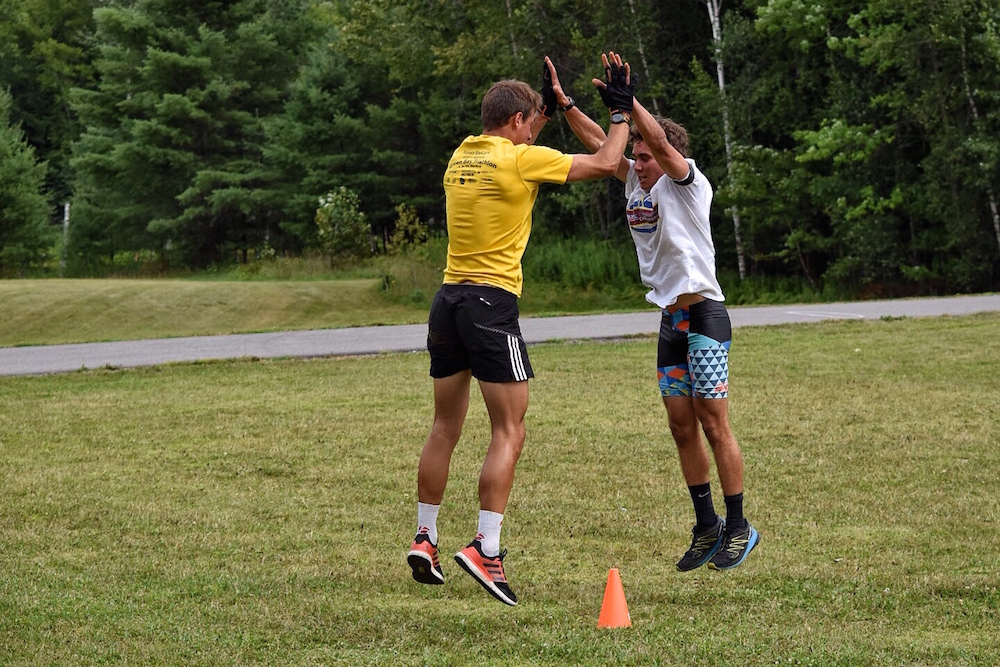
    Paul Schommer (l) and Jake Brown doing high-five partner burpees during a strength workout at the U.S. Biathlon development camp in Jericho, Vt. Find their workout here. (Photo: Katrina Howe)

    I would have to say the Minneapolis SuperTour at Wirth in 2010. I was a senior in High School and it was my first year ski racing competitively. I was having a bit of a rough season and was having trouble putting together a good race. Before the race my older brother Philip told me, “Paul, if you’re flowing keep it going, if you’re pressin’, you’re messin’.” I took his advice and for the first kilometer or two just tried to flow. As the race continued, I just kept passing people so just kept it flowing. At the finished I was the fastest J1 of the day, which even took me by surprise as my best finish prior to that had been 12th. The best part was at this time absolutely no one knew who I was as I just started competing. When I was looking at results a kid next to me turned to his friend and asked, “Who the heck is Paul Schommer?”

    10. First thing you pack in your bag when you leave for Europe?

    Positive attitude.

    11. Venue/event you’re most excited to visit this season?

    Anywhere I get to race and haven’t been to already. I love going to new places and meeting new people so I hope I have the opportunity to go to new places and meet new people this season. When the season concludes, I always look forward to heading back to the Ski Haus for the Bjorn Bakken Ski Championships of America, the greatest backyard ski race on the planet. They always have a great course to really test the skills.

    12. Who will win the men’s and women’s World Cup titles this year?

    On the women’s side I’d have to go with Marie Dorin Habert. On the men’s side, I think it’s going to be a tight race between Martin Fourcade and Johannes Thingnes Boe.

    13. Biggest sacrifice you feel you’ve made choosing this career path?

    I don’t really feel like I have sacrificed much. Right now, I am thankful to have this opportunity and don’t have any regrets.

    14. If you could change one thing about your sport, what would it be?

    Have people know what it actually is. Haha, this is a blessing and a curse at the same time. Not many people in the US know what biathlon and right off the bat guess it is biking and running. However, this also gives me an opportunity to introduce people to the sport and in turn help grow it. Biathlon is a very spectator friendly sport, which is evident by the fact that it is the most watched winter sport in central Europe. Talking with some people of USBA it sounds like they are going to be doing a few things in the coming year to help bring biathlon to Americans which is pretty exciting.

    15. What did you have for breakfast this morning?

    I’m on this new diet so I had an orange peel, half a banana, and a peanut. I’m only kidding, I had oatmeal.

    16. In 5 years, I’ll be ____?

    Thinking about the Birkie.

    17. In 50 years, I’ll be ____?

    Training for the Birkie.

  • 2016 USBA Rollerski Nationals Photo Gallery

    2016 USBA Rollerski Nationals Photo Gallery

    A select group of top U.S. biathletes and more than 60 juniors made the trek to the military base in Jericho, Vt., for the 2016 US Biathlon National Rollerski Championships and North American Rollerski Biathlon Championships last weekend, weathering hot and humid temperatures over two days of racing.

    US Biathlon Chief of Sport Bernd Eisenbichler wrote in an email that he was pleased with the turnout at the Ethan Allen Firing Range, especially among the younger athletes. On Sunday, 15 men raced the elite mass start, and 10 women raced the women’s mass start. The rest of the field competed in pursuits, separated into various age categories for ages 14 and up.

    While US Biathlon veteran A-team members Susan Dunklee, Tim Burke and Lowell Bailey notched wins, Eisenbichler noted a number of observations about their performances.

    “Tim and Lowell showed a high level … and showed that they are overall well ahead of everybody else,” he wrote. “Shooting was challenging for them as well as for everybody else through the weather conditions, as when you stopped the whole body felt like [it was going] to explode…but both had also some very good stages!”

    He added that Dunklee was skiing at a high level, but struggled on the range a bit in the sprint (with four penalties) because of the weather and a few adjustments she was working on.

    “The mass start was better in that regard,” Eisenbichler wrote.

    In terms of developing male skiers, he pointed out Jake Brown, a former Northern Michigan University skier who started biathlon this past June, and Paul Schommer, who picked up the sport two summers ago. In the mass start, Brown placed third and Schommer was fourth.

    “They worked hard to get where they are right now,” Eisenbichler wrote. “Still a lot to work on, but on the right way.”

    Max Durtschi and Alex Howe were sick leading up to the races, which affected their results, he added. Absent from Jericho were national-team members Leif Nordgren and Sean Doherty, who are in Europe for a seven-week camp. They’re currently in Östersund, Sweden, and will meet up with the rest of the team in Ruhpolding, Germany, on Aug. 22 for a three-week camp in Ruhpolding and Oberhof, Germany.

    On the women’s side, Eisenbichler highlighted Clare Egan (second in the mass start and third in the sprint) and Joanne Reid (second in the sprint and third in the mass start).

    “Joanne had very good shooting in the Sprint and both days [skiing] was solid and showed that she made very good progress in [biathlon],” he said of Reid, who’s entering her second year of biathlon. “With good focused work and more daily based coaching in the fall (she had to spend some periods back in Colorado for some studies in the spring), [she] will be on the right path for the start of the season.”

    Several cross-country skiers came out as well, including Hallie Grossman, Liz Guiney and Kaitlynn Miller. “We hope that a few of them will pursue [biathlon] intensively in the future,” Eisenbichler said.

  • Wednesday Workout: USBA Camp Strength Stations (and Shooting)

    Wednesday Workout: USBA Camp Strength Stations (and Shooting)

    Last week, more than 100 athletes from the U.S., Canada and Sweden came out for the US Biathlon Association’s (USBA) annual development camp in Jericho, Vt. It was one of US Biathlon’s largest and best-attended camps yet, according to national-team assistant coach Erik Lewish.

    “The camp is a great experience for biathletes from all over North America to get together for a week of training and educational sessions that culminate with the North American Summer Biathlon Championships at the end of the week on Saturday and Sunday,” Lewish wrote in an email.

    Those championships took place last weekend on Aug. 13-14.

    In the week leading up to the races, the U.S. Anti-Doping Agency (USADA) visited the camp to present on True Sport “and what to expect when one makes it to a high enough level that they are in the registered testing pool,” Lewish explained. “Our Head Development coach Jean Paquet took the athletes on a course scan of the roller loop and talked about ski technique and how to really ‘attack’ a course. Andrea Burke (formerly Henkel) gave a great motivational/inspirational presentation about her time as an athlete. Overall it is a great chance for the athletes to learn about the sport and hone their individual skills before competing in the continental championships.”

    The Monday before the championships, camp participants did an eight-station strength workout that involved some partnering up.

    Lewish explained that the workout was jointly created by himself, Paquet and Kari Korpela, the biathlon coach for the Sollefteå Skidgymnasium in Sweden.

    “The whole workout took about 1.5 hours from warm up to cool down,” Lewish wrote. “This was the second session of the day, after a long, easy roller ski in the morning.”

    The Workout: Biathlon Strength Stations (and Shooting)

    Warmup: 15-20 minutes of running

    First 20-Minute Set:

    – 40 seconds of each station/exercise followed by 1 single shot on the range, then 40 seconds of the next station/exercise

    Second Set:

    – Reload rifle magazine and do some longer bouts: 4 minutes of 40 seconds on/20 off at a station, then move onto the next exercise. After 4 minutes, take 5 shots on the range and return to next station. Repeat for a total of four shooting bouts (shooting order: prone, prone, standing, standing).

    The Stations:

    1. TRX leg crunches: Start in a pushup position with your feet in the straps of a TRX Suspension Trainer.  Lift your hips and pull your knees into your chest.

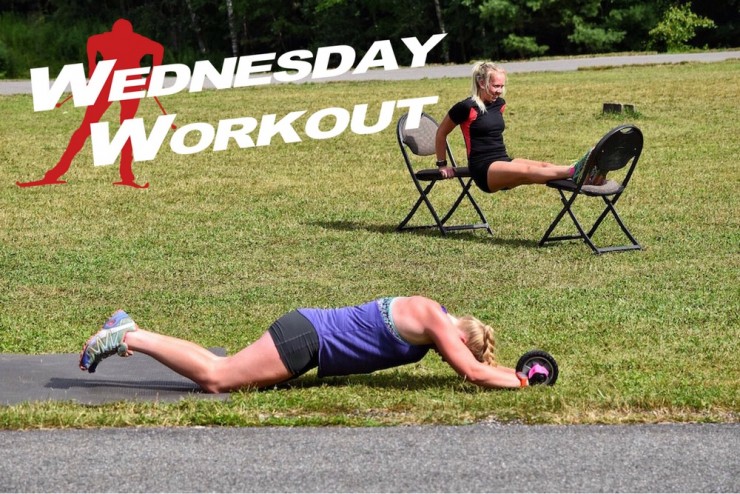
    2. Ab Roller: Start on your knees and roll out as far as you can while bracing your core, pause at the farthest point and then return to the starting position.

    3. V-Sits: Start lying down flat with your hands above your head. Bring your legs and torso up together and touch your toes at the top.

    4. Partner Burpees: Standard burpee done in sync with a partner. High five at the top of the jump for added fun!

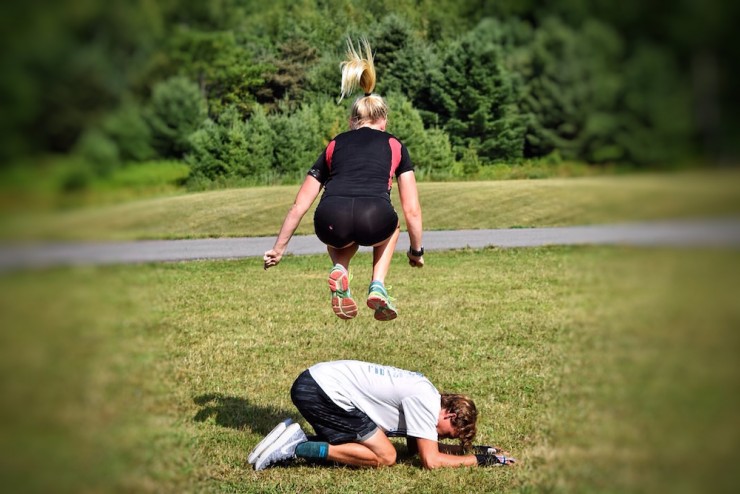
    5. Under-Overs: One person jumps over and crawls under the other person.

    6. Human Rock Climbing: One person starts on the back of the other and tries to climb 360 degrees around the other person without touching the ground.

    7. Tricep Dips: Sit on a chair, holding the edge with both hands, knuckles pointing forward.  Straighten your arms to raise your body and extend legs straight out with heels on the ground (or on another ch. Bend at your elbows to lower your entire body while keeping your legs straight. Hold at the bottom for a moment without touching ground.

    8. Single-Leg Plyo-Jumps:  Jumps done side-side to mimic skate skiing with a small hop in between before transferring to the other side.

    Cool down: 15-20 min. run


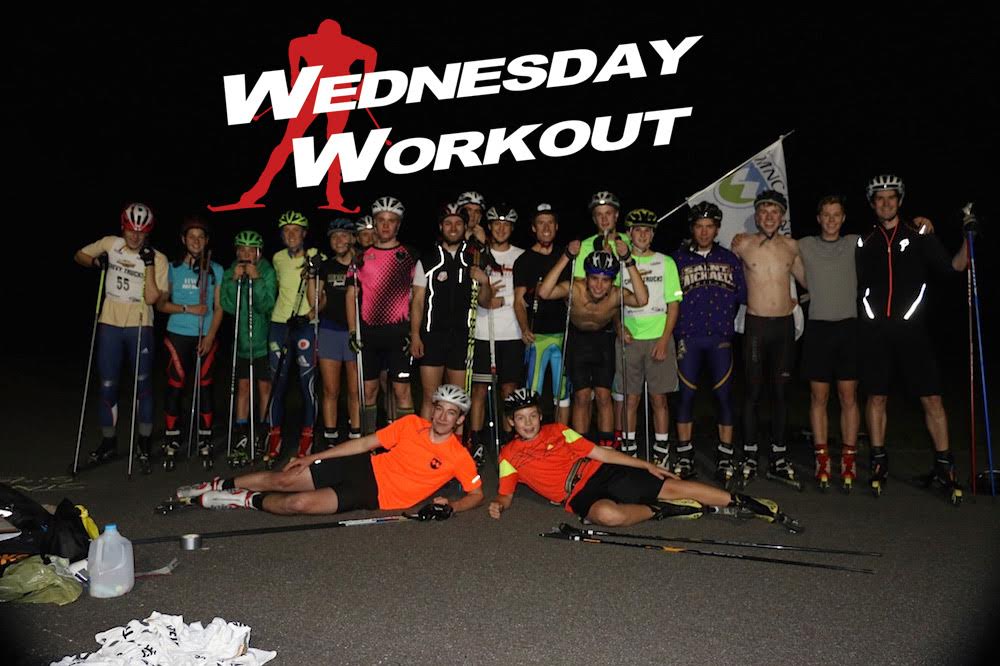
  • Wednesday Workout: Training in the Dark with Mansfield Nordic

    Wednesday Workout: Training in the Dark with Mansfield Nordic

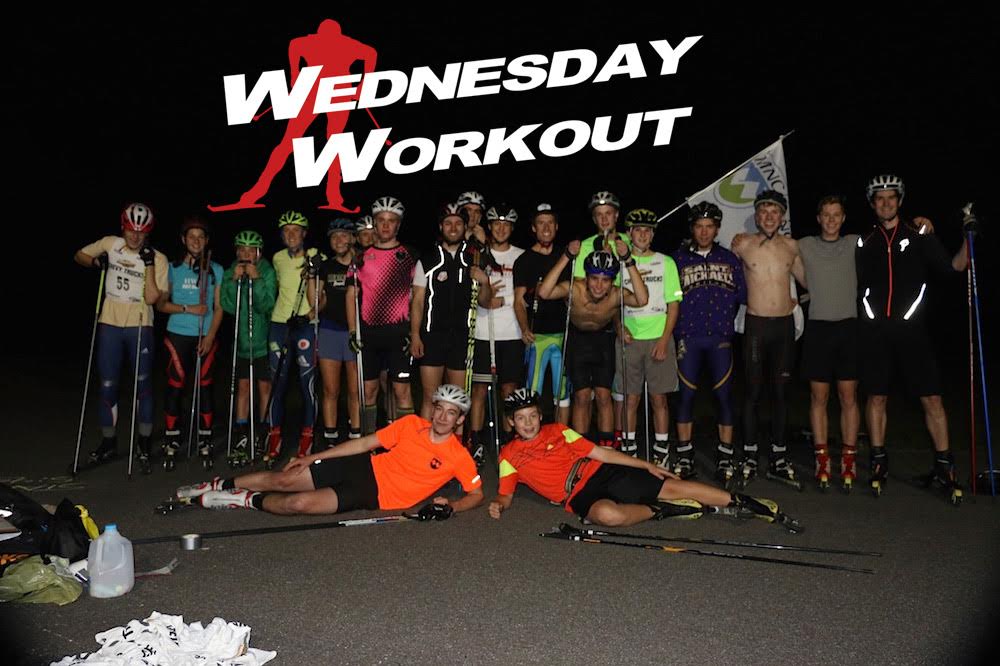
    Group photo with GMVS, SMC and UVM club skiers after their Monday night skate sprint. (Photo: Gary Solow)
    Group photo with Mansfield Nordic, GMVS, St. Michael’s College, and UVM club skiers after their evening skate sprint in Jericho, Vt. (Photo: Gary Solow)

    On Nov. 1, the clocks turned against a skier’s favor, especially if you are used to training after an already-lengthy day at school. For many, this time of year brings about tough battles with motivation. The desire to even get out the door is often more difficult to swallow when the sun goes down, and cold weather combined with a lack of snow can add even more aggravation.

    Bill Koch League skier Aidan Burt previews the sprint course in fading light at the Jericho range in Vermont. (Photo: Gary Solow)
    Bill Koch League skier Aidan Burt previews the sprint course in fading light at the Jericho range in Vermont. (Photo: Gary Solow)

    Mansfield Nordic is incredibly fortunate to train at one of only a few paved, car-free rollerski loops in the country at Camp Ethan Allen in Jericho. “The Range”, as it’s known colloquially, also features lights along all 5.5 kilometers of trail, making it ideal for training in this tough shoulder season.

    Although The Range is an amazing place to train, we don’t spend every workout on rollerskis. Recently we found a creative way to make our own lighted trail system in the woods with the help of some battery-powered infrastructure.

    In this article I’ll share two workouts we’ve done this fall that were enhanced by the darkness rather than limited by it: A rollerski sprint time trial and bounding intervals in the woods.

    Event 1: Skate Rollerski Sprint TT

    After a late-summer timetrial with the Green Mountain Valley School (GMVS) in East Warren, coaches Garrott, Katrina and I began talking about the next time we could get the group together. The GMVS crew would not be able to get to the Range until 5 p.m. on weekdays, Garrott noted, when darkness would be coming up fast. Instead of changing plans, we decided to turn this into the plan!

    A few weeks and a bit of outreach later, a hearty crew was up at The Range on a Tuesday night for some sprinting action. The competitors included athletes from Mansfield Nordic, GMVS, St. Michael’s College, and the University of Vermont (UVM) Club team.

    The Workout

    A qualifier was held in grainy, fading light, and by the time the heats began the lights along the trail were the only glow in the area as racers sped around a hilly 1 k lap. Organized in a modified “King’s Court” style, everyone got to race multiple heats against similar competition. With some diligent recording, every racer was tracked for every lap so that times could be compared. Pizza delivered after the final round was key, as the event wrapped up around 7 p.m.  

    Event 2: Bounding by Headlamp

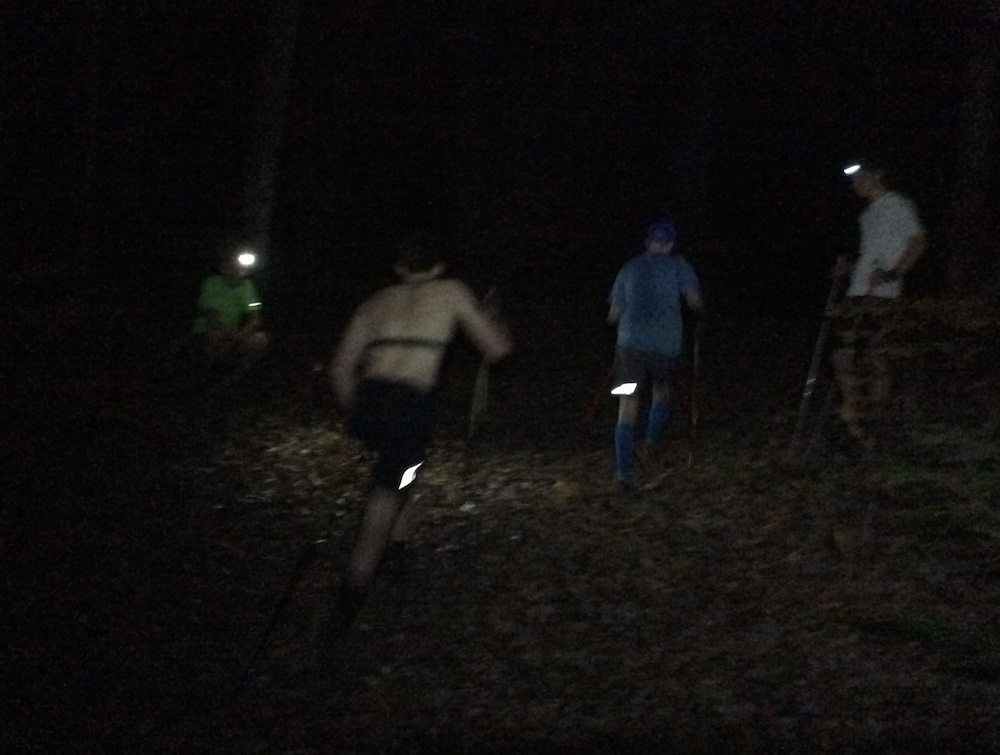
    Although rollerski tracks with lights are not common, many racers are probably more familiar with training by headlamp, especially masters racers who are looking to train before and after long work days. We were able to do some bounding intervals at a popular training location, the Jericho Research Forest, with headlamps and more to light the way.

    The location for this was key to enabling safe, effective training in the woods at night. This stretch of forest has a few great features that made the night workout possible:

    • Hills of varying length and grade (of course)
    • Snowmobile trails, which are wide and well-cleared of obstacles that could trip you up
    • A relatively short 1-2 k loop to avoid getting lost and help track athletes

    The Workout

    MNC skiers alternated jogging and bounding on portions of a 6-8 minute loop that included steep uphills, rolling terrain and flats. By doing the workout on a set course over and over, athletes became familiar with the terrain in the fading evening light. This made it easier to navigate the loop when the complete darkness arrived shortly thereafter.

    The loop made a figure-8 style, and in the middle, a branch was posted into the ground with a LED light dangling off — the center hub and meeting spot, as well as the beginning and end of every interval. This made it easier to know where and when to find athletes … and to know where the water belts were.     

    Headlamps were donned to allow better visibility, and also give a pretty cool motivational boost. Is the competition outside training in the dark right now as well, or are they home watching “The Walking Dead”? Concluding the workout with some extra hard bounding with a partner, under the light of teammates’ headlamps lining a short section of the trail, made for a great finale.

    The dark and cold days of autumn will always bring a tough challenge to skiers, especially before the snow has fallen. It doesn’t have to mean a lack of motivation or variety, though. If you can get creative with your workouts, you may even find a way to dig deeper and end up with a more memorable session than you planned.

    Bounding at night. (Photo: Adam Terko)
    Bounding at night. (Photo: Adam Terko)
  • Cook, Egan and Doherty Bound for Utah, Possibly World Cup

    Cook, Egan and Doherty Bound for Utah, Possibly World Cup

    Annelies Cook (USBA A-team) en route to the first of back-to-back sprint victories last weekend in Jericho, Vt. As a result of her performances at the USBA trials, Cook was one of two women selected to the team's upcoming training camp in Utah. (Photo: Erika Bailey)
    Annelies Cook (USBA A-team) en route to the first of back-to-back sprint victories last weekend in Jericho, Vt. As a result of her performances at the USBA trials, Cook was one of two women selected to the team’s upcoming training camp in Utah. (Photo: Erika Bailey)

    Note: This article has been corrected to reflect the fact that Annelies Cook was sick in the opening sprint of the 2015 USBA trials and did not start.

    Annelies Cook wasn’t feeling the heat the first time around in Jericho, Vt., at the first set of US Biathlon Association (USBA) trials in August. She was sick and didn’t compete in the opening sprint, but came back to place third in the mass start the next day.

    “I was coming off a small cold [during] the first trials and also didn’t feel great with the heat that we had at the time,” the USBA A-team member explained in an email on Monday.

    Last weekend was different. Again in Jericho, Cook, 31, won back-to-back sprints at the second set of trials, which determine who goes to the USBA Utah training camp near Park City from Oct. 18-Nov. 1, and from there, who is selected for the early season International Biathlon Union (IBU) World Cups 1, 2 & 3.

    “These trials races were a lot more positive feeling,” she wrote after winning last Saturday’s sprint by 12.5 seconds over teammate Clare Egan and Sunday’s sprint by 1:26.8 over Maddie Phaneuf of the USBA X-team. Cook hit 70 percent of her targets on Saturday and 80 percent on Sunday.

    “The shooting isn’t good enough for a World Cup standard,” Cook wrote. “You really have to hit a minimum of 80% to do even okay now. It’s just so competitive.”

    According to women’s coach Jonne Kähkönen, conditions made for a fair playing field, with light winds and crisp, clear fall weather.

    “The level of shooting was average, both for the qualified athletes and the non-qualified,” he wrote in an email.

    The 2015 USBA men's trials winner Sean Doherty (A-team) placed second in both sprints last weekend in Jericho, Vt. (Photo: Erika Bailey)
    The 2015 USBA men’s trials winner Sean Doherty (A-team) placed second in both sprints last weekend in Jericho, Vt. (Photo: Erika Bailey)

    Leif Nordgren, of the USBA A-team, who prequalified for the World Cup with a top 20 on the international circuit last season, won the men’s sprint with 70-percent shooting, finishing 16.3 seconds ahead of 20-year-old teammate Sean Doherty. One of several men in the mix for the lone remaining World Cup spot available on the men’s side, Doherty also missed three targets on Saturday, but finished 5 seconds ahead of team veteran Lowell Bailey, who had two misses. (Bailey is also prequalified for the World Cup.)

    “As always, some showed better shape of the day than the others, e.g. Sean and Clare (the first sprint on Saturday),” Kähkönen explained. “Overall, I can see that the tough block of training has taken its toll and the performance is not yet at the level we want to see at the World Cups, but I am also confident that through a good periodization and working on the shooting execution especially during this next block of training we will get to where we want to be.”

    Based on last weekend’s results and the previous August trials, the USBA coaches invited Cook (the women’s overall trials winner), Egan (the second woman) and Doherty (men’s trials winner) to join them in Utah. The team has two World Cup openings for the women and one for the men.

    “My biggest focus for these trials was to keep on doing the work that we have been doing,” Cook explained. “The pressure I feel is mostly internal, wanting to prove to myself that I am more fit than the previous year and better able to handle the shooting pressure.”

    She has focused on more intensity this year — hard intensity — balanced with distance training to avoid peaking in September, Cook wrote.

    “I think that I was slow to start on the World Cup last year and that is really hard to catch up. It’s hard to get fast while you are trying to race too,” she wrote. “So our approach is to get there a little bit sooner this year.”

    She felt some fatigue on Saturday and “had to fight really hard to ski fast,” she explained.

    Cook finished just ahead of Egan, who missed two targets to place second on Saturday, and Phaneuf placed third, 37.2 seconds back with two penalties as well. The two prequalified World-Cup women on the A-team, Susan Dunklee was fourth and Hannah Dreissigacker finished fifth. Mikaela Paluszek of the Maine Winter Sports Center (MWSC) was sixth, Emily Dreissigacker (Craftsbury) seventh, Chloe Levins (National Development Group) eighth, and Lisa Ratschiller (LRB) ninth to round out the senior women’s field.

    “I saw these races as an opportunity to compete well under pressure,” Egan, 27, wrote in an email. “On skis, a good performance comes from extraordinary effort, but on the shooting range a good performance comes from repeating your normal process in a totally average manner. Switching between those mindsets is one of the great challenges in biathlon, and being under pressure adds to that challenge.”

    On Sunday, Cook explained she felt notably better and ended up winning by nearly 1 1/2 minutes. Phaneuf missed three to place second, Egan was third with four misses, Hannah Dreissigacker placed fourth, Emily Dreissigacker fifth, Ratschiller sixth, Paluszek seventh, and Jordyn Leighton (Chelsea) eighth. Levins and Dunklee did not start.

    “Shooting … seems to always be tricky in Jericho,” Cook wrote. “I think it probably has a lot to do with the approach because it is just this long gradual uphill that is hard to bring your [heart rate] to a good place that feels in control for shooting. I didn’t do a good job on the first day for sure, but that gave me something work on the second day. I am working on being mindful in the shooting range.”

    Clare Egan (USBA A-team) prepares to shoot during the second set of USBA  trials in Jericho this past weekend. (Photo: Erika Bailey)
    Clare Egan (USBA A-team) prepares to shoot during the second set of USBA trials in Jericho this past weekend. (Photo: Erika Bailey)

    Egan was satisfied with Saturday after meeting her goal of 80-percent shooting, but not so much with Sunday after two prone and two standing misses.

    “Over the course of the weekend, only two people shot 90% and nobody shot clean (men or women), which is definitely below average for this field of competitors,” she wrote. “It could be because of the pressure scenario, but I also think that the Jericho range has its own set of difficulties including the uphill approach and wind.”

    In the Saturday’s men’s race, Russell Currier (MWSC) placed fourth, Wynn Roberts (National Guard) was fifth, Max Durtschi (X-team) sixth, Jakob Ellingson (Loppet Nordic Racing/Mt. Itasca Biathlon) seventh, Craftsbury’s Alexander Howe and Casey Smith eighth and ninth, respectively, and Brendan Cyr (MWSC) 10th.

    On Sunday, Bailey won the second sprint by 15.3 seconds with a single penalty. Doherty was second again, this time with two misses, and Nordgren was third with two misses as well.

    Ellingson placed fourth, Durtschi was fifth, Currier sixth, Roberts seventh, Smith eighth, Patrick Johnson (X-team) ninth, and Howe 10th.

    According to USBA Chief of Sport Bernd Eisenbichler, who also observed the athletes in Jericho, the A-team controlled the field during the trials, but non-national team standouts Ellingson and Currier made a case for themselves. Currier placed second in the trials and Ellingson was third, and both earned an invite to the team’s November camp in Lake Placid, N.Y. The didn’t make the Utah cut “as the distance to [the] A-team is still too big,” Eisenbichler wrote.

    “[We are] very happy with Max Durtschi’s improvement and development in a short time doing Biathlon — he is on the right track,” he added.

    Kähkönen noted Cook’s overall consistency last weekend “and the fact that she did nothing spectacular,” as good indicators for her potential this season.

    “Clare had a good sprint on Saturday especially, [we’re] happy to see the progression and the clean prone stage in a race which has been a bit of a challenge this summer,” he added. “Maddie also has taken a good step towards the senior women, which I’m happy to see as we definitely need to have all of these women in top of their game during the winter — also to have competition on who gets to race the relay.”

    In Utah, the focus will be high-quality biathlon training and an emphasis on race execution, especially from a mental standpoint.

    “The camp in Utah is a tough one and if the performance of an athlete is not at the level where they can handle the altitude it can be a push back in their performance,” Kähkönen explained. “So looking at the bigger picture and seeing the progression over a longer period of time [throughout the trials period], this is the way to go.

    “For the athletes that did not make the cut at this time, we are offering a camp and coaching support here in Lake Placid with [development coach] Jean [Paquet], so all of the potential athletes are getting a good block of training leading up to the start of the season and we have our coaching staff eyes on them,” he added.

    “We still have 7 weeks ’til the World Cup starts and I am very confident, that this is on the right track,” Eisenbichler added.

    ***

    Photos (courtesy of Erika Bailey)

    Results:

    Saturday: women’s sprint | men’s sprint

    Sunday: women’s sprint | men’s sprint 

  • US Biathletes Race for Final World Cup Spots in Jericho

    US Biathletes Race for Final World Cup Spots in Jericho

    The men's mass start at the 2015 North American Rollerski Cup and US Biathlon National Rollerski Championships in mid-August in Jericho, Vt. (Photo: Paul Bierman)
    American Leif Nordgren (3) and Canadian Nathan Smith (2) are among the leaders of the men’s mass start at the 2015 North American Rollerski Cup and US Biathlon National Rollerski Championships in mid-August in Jericho, Vt. Smith ended up winning, ahead of Jakob Ellingson in second, Sean Doherty in third, and Nordgren in fourth. (Photo: Paul Bierman)

    For the second time in two months, several top U.S. biathletes are headed to Jericho, Vt., for back-to-back rollerski races this weekend — except instead of August weather, they could see frost, and instead of a mass start and a sprint, they’ll compete in sprints both Saturday and Sunday.

    The races mark the second set of trials for US Biathlon, which holds them annually in August and October to determine the final spots for its early season World Cup team.

    “We have 4 start spots for women and 4 for men the entire season,” Bernd Eisenbichler, US Biathlon Association (USBA) chief of sport, wrote in an email. “And we [are] always looking to keep one spot open before the season, so that is an open chance for anyone to qualify through trials.”

    This year, they have one opening on the men’s side and two for the women. USBA A-team men Tim Burke, Lowell Bailey and Leif Nordgren prequalified for the International Biathlon Union (IBU) World Cups 1, 2 and 3 with top-20 results on the circuit last season, as did A-team women Susan Dunklee and Hannah Dreissigacker.

    USBA A-team rookie Clare Egan competing at the 2015 North American Rollerski Cup and US Biathlon National Rollerski Championships in mid-August in Jericho, Vt. (Photo: Paul Bierman)
    USBA A-team rookie Clare Egan competing at the 2015 North American Rollerski Cup and US Biathlon National Rollerski Championships in mid-August in Jericho, Vt. (Photo: Paul Bierman)

    Annelies Cook, Clare Egan and Sean Doherty made the USBA’s A-team standard this year, but without a World Cup top 20 last season, they have to prove themselves at trials and in training camps.

    “The naming to the A Team gives you the right to train in [Lake Placid] and be part of the camps,” Eisenbichler explained. It doesn’t automatically qualify an athlete for World Cups.

    After this weekend’s races, the USBA staff will decide whom to invite to its Utah training camp, in addition to its five prequalified World Cup skiers, Oct. 18 through Nov. 1. After that camp, they will name the final spots for World Cups 1-3.

    Heading into the weekend, Cook, Egan and Maddie Phaneuf had the best chances for the two women’s positions based on their results at the August trials, according to Eisenbichler. Doherty, Jakob Ellingson, Russell Currier, and Casey Smith are all vying for the lone men’s spot.

    As for what the national-team coaches are looking for, Eisenbichler stressed progression over a long period of time rather than “peaking” for a single race. This extended trial format gives a sense of progression over a longer block of time, and can be a good indicator of what to expect for the winter, he added.

    Rollerski competitions make for “fair and consistent conditions,” he wrote, and eliminate the angst of searching for snow just before the start of the season.

    The format also allows for more time for coaching input “to guide the athletes on the right track,” Eisenbichler explained, and another month of preseason training after trials.

    In August, more than 80 biathletes from North America and Sweden participated in the first set of races, the North American Rollerski Cup and US Biathlon National Rollerski Championships. Burke won the men’s sprint, Canadian Nathan Smith topped the men’s mass start, and Dunklee won both women’s races.

    This weekend’s races at the Ethan Allen Firing Range are open to participants outside of the USBA as well, and results will be posted at http://www.eabiathlon.org/results.html. Racers will likely compete in temperatures ranging from the low 40s to 50-degrees Fahrenheit.

  • Essex High School Hiring Head Nordic Coach

    Essex High School Hiring Head Nordic Coach

    Essex High School Nordic Team
    Essex High School in Essex Junction, VT is seeking a Head Nordic Ski Coach for the upcoming season.Last season we had over 30 student-athletes compete.  Our Nordic skiers are some of the finest student-athletes in our school with an enrollment topping 1,400 students.

    We have both on-site terrain as well as the ability to train at Sleepy Hollow as well as the Jericho training center.

    Individuals interested in applying should visit SchoolSpring or email athletic director Jeff Goodrich at jgoodrich@ccsuvt.org.

  • Pros of Tomorrow Presented by Fischer: Jake Ellingson

    Pros of Tomorrow Presented by Fischer: Jake Ellingson

    Jake Ellingson of Mount Itasca Biathlon shot a flawless race in the mass start of the North American Rollerski Cup in Jericho, Vermont, to place second overall and the top American. (Photo: Paul Bierman)
    Jake Ellingson of Mount Itasca Biathlon shot a flawless race in the mass start of the North American Rollerski Cup in Jericho, Vermont, to place second overall and the top American. (Photo: Paul Bierman)

    Editor’s Note: This ‘Pros of Tomorrow’ series, brought to you by the generous support of Fischer Sports, aims to highlight some of the most notable up-and-coming athletes around the world, which may or may not be Fischer-sponsored skiers. Have an idea for a top-notch skier you’re itching to read more about? Email info@fasterskier.com with the subject line: Pros of Tomorrow. Ideas for intriguing juniors or collegiate skiers, or lesser-known athletes are welcome as well — subject line: From the Pack.

    Jakob Ellingson has made some changes this year. The 20-year-old biathlete from Minneapolis finished high school, switched to training full time, revamped his approach to shooting, and attended training camps in Lake Placid with the national team.

    “I’m actually feeling really good at this point,” he said of a year where he’s increasing his training volume.

    Seems like it. Ellingson turned heads last weekend in Jericho, Vermont, with a pair of strong finishes in the North American Rollerski Cup races.

    Missing three shots in the sprint, he placed seventh; in the mass start the next day, he placed second behind World Championships silver medalist Nathan Smith. He two penalties over 20 shots represented the best shooting of any of the 80 or so athletes competing, male or female, in any age category.

    Ellingson (center) on the U.S. podium in Jericho, flanked by 2014 Olympians Sean Doherty (left) and Leif Nordgren. (Photo: Jake Ellingson)
    Ellingson (center) on the U.S. podium in Jericho, flanked by 2014 Olympians Sean Doherty (left) and Leif Nordgren. (Photo: Jake Ellingson)

    Landing as the top American in his first year competing as a senior surprised even Ellingson.

    The last time he had talked to FasterSkier, it was after a frustrating sprint race at 2015 World Junior Championships, where he missed five shots and placed 65th, just outside the cutoff for the pursuit.

    So the changes have certainly made a difference.

    “Really, I shouldn’t have been surprised because all I did was that I didn’t rush it and just did what I had been practicing,” Ellingson said in a phone interview last week.

    Part of the result came down to a specific race-day plan. The range approach in Jericho can be tricky, with a long but gradual uphill leading into the shooting range.

    “Sometimes I think people go faster than they should because they don’t realize that it is, yeah, a pretty challenging approach,” Ellingson said. “Coming up that hill, Vlad [Cervenka, Ellingson’s coach] was telling me to just calm down and do what I had been training. To not worry about those other guys.”

    But lots of athletes go into races with a plan. Having the ability and presence of mind to follow that plan – particularly in the psychologically tough sport of biathlon – shows a level of maturity.

    “I was very impressed by his performance,” United States Biathlon Association Chief of Sport Bernd Eisenbichler said after the competitions.

    Ellingson said that having trained with the national team athletes in the spring gave him confidence.

    “I know that most of those guys will shoot faster than me,” he said. “But I know that when they shoot fast, especially early in the year like this, they can make mistakes. So it’s okay if I take my time and make sure I hit them.”

    He also was grateful to end up skiing behind Sean Doherty, a World Junior Champion who has been on several international racing trips with Ellingson as a youth and a junior. A 2014 Olympian and now a World Cup racer, Doherty has experience that Ellingson doesn’t.

    But he was a known quantity.

    “Skiing behind Sean was nice,” Ellingson said. “He was trying to do the same thing, to control the range approach. And he’s obviously faster than I am and a stronger skier, but I’m getting closer.”

    One of Ellingson's photos from a training trip to Colorado. (Photo: Jake Ellingson)
    One of Ellingson’s photos from a training trip to Colorado. (Photo: Jake Ellingson/flickr)

    Ellingson has been training primarily with Cervenka in Grand Rapids, Minnesota. The longtime coach has offered his current star athlete a place in his house to live, and Ellingson only returns to the Twin Cities on rest weeks.

    An avid and talented photographer, Ellingson doesn’t feel the need to cram any other pursuits into his schedule, so focusing on biathlon made sense.

    “I don’t know what I’d study,” he laughed of the decision to defer college.

    Despite training full time, he says his life is not getting dull.

    “With Vlad we do a lot of different stuff,” he said of the shift to full-time training. “Not just too much skiing or too much running, we do a lot of biking and a little bit of swimming. We really spread it out and make it fun. It doesn’t seem too much like a job. Just going out and having fun training.”

    As the oldest of Cervenka’s athletes, Ellingson knows that although he may be happy with his coach and enjoy helping out with the high school team, he needs a new challenge to continue his upward trajectory.

    A group of Minnesota athletes who train with Vlad Cervenka on bagged the Grays and Torreys peaks in Colorao. Ellingson is at right and his sister Siena on the left. (Photo: Jake Ellingson)
    A group of Minnesota athletes who train with Vlad Cervenka on bagged the Grays and Torreys peaks in Colorao. Ellingson is at right and his sister Siena on the left. (Photo: Jake Ellingson)

    “My goal is to get on the X Team or the Development Team so that I can be working with these guys more often,” he said of USBA’s two development programs. “I think that’s the next thing for me, is to spend more time training and racing with the top guys in the U.S.”

    That’s very possible. Along with Russell Currier of the Maine Winter Sports Center, Ellingson has been invited to a testing week with the U.S. team in Lake Placid in September. (Casey Smith of the Craftsbury Green Racing Project was also invited, but will be training in Ramsau, Austria, with his team.)

    There, it’s possible that either could get named to the American “B” team, which didn’t have any nominations this spring, or that Ellingson could be added to the X team.

    “We are really pleased to see this,” Eisenbichler said of the level of all three of those athletes. “These guys showed now that they are ready to perform against the others… After that we see if we have a naming for the B team or what happens. But I think they see that if you perform, then you get a reward.”

    And thanks to his strong finishes in Jericho, Ellingson is very much in the running for a pre-season camp in Utah (rescheduled from Canmore, where not enough snow is saved to guarantee skiing in late October). From there it’s possible, with more good performances, to move to a pre-World Cup camp in Sjusjøen, Norway.

    The decision to focus on biathlon seems to be working out so far.

    “I figure, school will still be there when I’m done,” Ellingson said. “And with biathlon it’s hard to really focus on it when you’re going to school because colleges in the U.S. don’t support it. It’s going well right now, so I don’t see any reason to stop.”

    Want a blast from the past? Read some of our previous Pros of Tomorrow profiles:

    Frédérique Vézina (2014)

    Lukas Ebner (2014)

    Miles Havlick (2014; fourth overall in 2015 SuperTour)

    Olivia Bouffard-Nesbitt (2014; 2015 senior World Championships team member)

    Nichole Bathe (2014)

    Anja Gruber (2014; fourth place in 2015 Birkie)

    Ben Lustgarten (2014)

    Heidi Widmer (2013; 2014 Olympian)

    Cendrine Browne (2013; 2015 senior national champion)

    Leif Nordgren (2010; 2014 Olympian and longtime senior national team member)

    Lenny Valjas (2010; 2014 Olympian and longtime senior national team member)

    Brittany Webster (2010; 2014 Olympian)

    Ida Sargent (2010; 2014 Olympian, 2015 World Cup top-5 finish, senior national team member)

    Andrew Musgrave (2010; 2014 Olympian and longtime senior national team member)

  • Burke, Smith, and Dunklee Take Wins at Jericho Biathlon Races (with Photo Gallery)

    Burke, Smith, and Dunklee Take Wins at Jericho Biathlon Races (with Photo Gallery)

    Tim Burke of the U.S. National Team on his way to a 4.5-second win over Canada's Nathan Smith in the sprint in Jericho, Vermont, on Saturday. (Photo: Paul Bierman)
    Tim Burke of the U.S. National Team on his way to a 4.5-second win over Canada’s Nathan Smith in the sprint in Jericho, Vermont, on Saturday. (Photo: Paul Bierman)

    More than 80 biathletes from across North America and even Sweden converged on Jericho, Vermont, this weekend for the annual rollerski biathlon championships race series.

    Tim Burke (USA) won the sprint and Nathan Smith (Canada) the mass start, for men, while Susan Dunklee (USA) swept the women’s races. The American “A” team as well as Smith had just returned from training camps in Europe.

    “I think it was a very good weekend,” U.S. Biathlon Association Chief of Sport Bernd Eisenbichler said. “I was especially happy that Nathan Smith decided pretty last minute that he would come too. The other Canadians had been confirmed for a while. So it was a very competitive field at the senior level, and it was pretty high numbers overall.”

    That meant nine Canadian clubs, 16 American clubs, juniors from the Solleftea Ski Gymnasium in Sweden, and a few without affiliation were all competing together, from a girls and boys age group for 14- to 16-year-olds, to a masters age group for 35+.

    With high temperatures, the weather presented an extra challenge to athletes. But they had the incentive of competing on the Ethan Allen Firing Range, which was just repaved in July and has had new Kurvinen automatic targets since last year.

    Susan Dunklee racing to a win in the mass start. (Photo: Paul Bierman)
    Susan Dunklee racing to a win in the mass start. (Photo: Paul Bierman)

    That makes it a perfect place for competition, and more biathletes are using the venue this year than they have recently.

    “We have communication and partnership with the army, so they will allow us to be there as much as we want from the national team side,” Eisenbichler said. “We will go four times this year. The range is also very challenging, so it’s good for training.”

    On Saturday, three-time Olympian Burke mastered that challenge by eking out a 4.5-second win over World Championships silver medalist Smith, despite having one more penalty than the Canadian.

    Burke’s U.S. national team teammate Leif Nordgren placed third, 16.5 seconds back, and Casey Smith of the Craftsbury Green Racing Project, recently recovered from breaking his back in a training accident this winter, placed fourth with perfect shooting.

    On the women’s side, Dunklee cruised to a big win in the sprint, despite having two penalties. Canada’s Emma Lunder followed in second with one penalty, a minute and two seconds back, with American Hannah Dreissigacker five seconds behind her.

    On Sunday, the seniors competed in mass starts, where Smith took a decisive 22-second win with four penalties.

    The breakout of the day belonged to 20-year-old Jakob Ellingson of Loppet Nordic Racing and Mount Itasca Biathlon, who had just two missed shots over the four-stage race to finish second.

    “He worked really really hard these last months,” Eisenbichler said. “You can see that. I was very impressed by his performance, especially yesterday but also on Saturday he had a good race.”

    Nathan Smith of the Canadian national team leading the men onto the newly paved range in the mass start. (Photo: Paul Bierman)
    Nathan Smith of the Canadian national team leading the men onto the newly paved range in the mass start. (Photo: Paul Bierman)

    U.S. national team members Sean Doherty and Nordgren placed third and fourth, with Scott Gow in fifth as the second Canadian.

    Dunklee again ran away with the women’s race, this time winning by a minute and a half over Lunder. The two had five and six penalties, respectively. U.S. “A” teamer Annelies Cook placed third with eight penalties.

    In the other age classes, Arvid Aronsson (Solleftea Ski Gymnasium) swept the junior men’s races, Bjorn Westervelt (Craftsbury Nordic) swept the boys’ races, Joseph Iwan (Saratoga Biathlon) swept the masters men’s races, and Emma Stertz (Mount Itasca) swept the girls’ races.

    For junior men, Matthew Forshey of HURT won the sprint but Cody Johnson of the Maine Winter Sports Center prevailed in the pursuit.

    For junior women, Siena Ellingson of Ginger Biathlon won the sprint but sat out the pursuit, where Charlotte Hamel of ACBQ (Quebec) took the win.

    For youth women, Amanda Kautzer of Loppet Nordic Racing and Minnesota Biathlon won the sprint, but was caught by Chloe Levins of Mountain Top Nordic in the pursuit.

    “For us it’s really important to keep the national team together with the younger athletes to make a good festival character for this weekend,” Eisenbichler said. “Plus with the Canadians coming and some junior Swedish athletes were there, it was an overall good competitive character.”

    Results: Saturday / Sunday


  • U.S. Biathlon Selects World Cup Team (with Sunday’s Sprint Videos)

    U.S. Biathlon Selects World Cup Team (with Sunday’s Sprint Videos)

    Annelies Cook during the 7.5 k sprint at the 2014 North American Rollerski Championships, also the first set of USBA World Cup trials, on Aug. 16 at the Ethan Allen Firing Range in Jericho, Vt.
    Annelies Cook (USBA A-team) during the women’s 7.5 k sprint at the 2014 North American Rollerski Championships, also the first set of USBA World Cup trials, on Aug. 16 at the Ethan Allen Firing Range in Jericho, Vt.

    Note: This article has been updated to include comments from Russell Currier, who was named to U.S. Biathlon’s World Cup squad on Tuesday.

    JERICHO, Vt. — Annelies Cook had an inkling she was in a good position for what would likely be the final women’s spot on U.S. Biathlon’s World Cup team to start this season, but she didn’t want to just qualify, she wanted to prove something to herself.

    Her two teammates on the women’s A-team, Susan Dunklee and Hannah Dreissigacker, had already prequalified for the early season World Cups (World Cups No. 1, 2 and 3 in late November through December) based on results last season.

    Cook had to be the best of the American women in at least three of four rollerski trials held at the Ethan Allen Firing Range in Jericho, Vt. The hitch was, she had to do so one weekend in August and another in October.

    The U.S. Biathlon Association (USBA) World Cup trials wrapped up Sunday, Oct. 26, with a sprint. Saturday was a sprint as well, as was the first race of the trials on Aug. 16.

    Videos from Sunday’s races: Men’s sprint | Women’s sprint

    Why so many sprints? Because in biathlon, unlike cross-country skiing, everyone should be a good sprinter; it’s the only way to progress through a World Cup weekend by qualifying for the following pursuit.

    Cook placed fourth in the opening sprint of the trials, cleaning prone but missing three standing. In the mass start the next day, she won despite five penalties.

    “Having that one win was really nice because it gave me a good cushion,” Cook, 30, said on Sunday. “But these races, in some ways, they aren’t about if you win — you qualify first. It’s like, can you be a professional biathlete and do your job well? So I felt like even though I had good races the first time, kind of, I wasn’t really satisfied with my performance. … I was happy about the points, but I want to do a better job.

    “My goal is not to be the best of the Americans on any given day, it’s to actually do a good job,” she continued. “[Then] I can be like, ‘OK, if I did that on the World Cup, it might be a good day.”

    Once again, Cook is on her way to the World Cup. She clinched her spot by winning Saturday’s sprint with one miss and placing third on Sunday (with three misses) behind Dunklee and X-team member Clare Egan, respectively.

    “This weekend, for me, was this interesting mix of trying to put together a really professional day that I could feel good about,” Cook added. “I’ve been feeling pretty fit and shooting and training has been going well, but I feel like still there’s like a piece missing in the racing sometimes. Every time I do a race and I get frustrated, it’s like, gosh, I just need to practice more. I just need to practice that race feeling and get the confidence that I know I’m hitting my targets in training. I gotta be able to do it in a race, but sometimes to build that confidence you need it to happen.”

    All things considered, Cook said her mission was generally accomplished.

    After winning Saturday, she drove 2 1/2 hours east to Paul Smiths, N.Y., for teammate Tim Burke’s wedding. Burke, like Lowell Bailey and Leif Nordgren, had already prequalified for the World Cup and instead of racing, took part in the wedding weekend instead. Burke, 32, married Andrea Henkel on Saturday night.

    “I really wanted to go to Tim’s wedding and have a good feeling, like, I did my job today and I can relax a little bit and what happens tomorrow, happens tomorrow, and go enjoy myself and enjoy the special moment,” Cook said. “So that added even more pressure and I’m really pleased that I felt like I pulled it off. Today [Sunday] I didn’t really pull off a super-professional race. I had three misses and was a little bit unfocused for sure, but I gave it my all, and I was happy for that.”
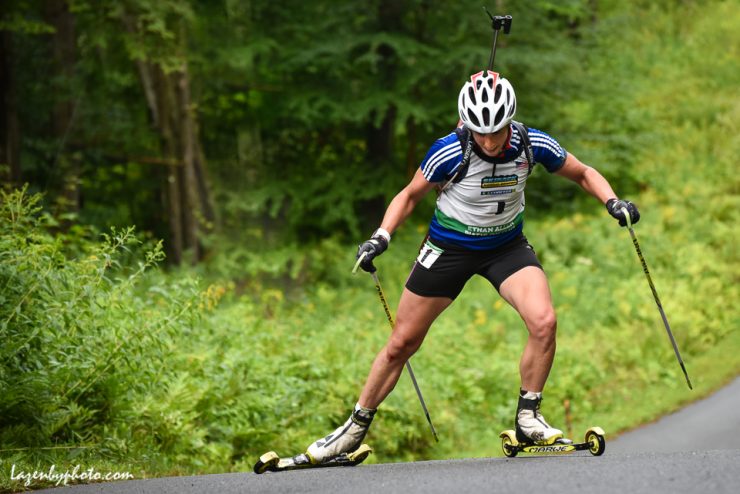
    Clare Egan racing to first in the the 2014 North American Rollerski Championships junior pursuit at the Ethan Allen Firing Range in Jericho, Vt. (Photo: Gordon Vermeer/Flickr) https://www.flickr.com/photos/126844827@N08/sets/72157646342384384/page2/
    Clare Egan racing to first in the junior pursuit at 2014 North American Rollerski Championships in early August at the Ethan Allen Firing Range in Jericho, Vt. (Photo: Gordon Vermeer/Flickr)

    Egan, 26, turned heads with three podiums at trials, all in the sprints, including second place on Sunday, third on Saturday, and third in the first sprint on Aug. 16.

    But she didn’t feel pressure.

    “I really see this whole trials process as not something where I have something to lose, but where I can have something to gain if I perform well,” Egan said Sunday. “I performed well today so that’s good.”
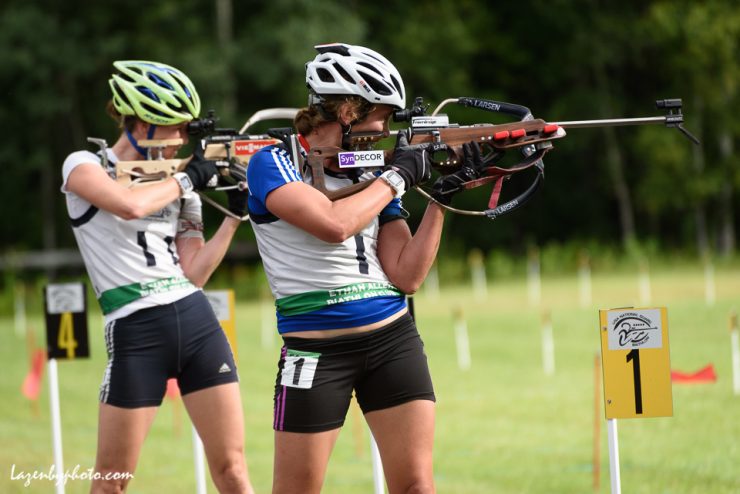
    Earlier this month at the team’s recent training camp in Park City, Utah, she learned that — since U.S. Biathlon wasn’t going to bring a team to the IBU Cups until January — she couldn’t qualify for the World Cup even if she won trials. She had never raced an IBU Cup, the tier below World Cup, before.

    According to USBA Chief of Sport Bernd Eisenbichler, Egan would’ve had to race the IBU Cup in Beitosteolen to gain World Cup start rights. Discretion could have been used to select a fourth woman to fill out the Americans’ World Cup quota.

    “[She has made] very good and fast development and progress … and I am very happy to see that, but we want to go the right development pass with her,” Eisenbichler wrote in an email on Tuesday. “As she never raced internationally so far, the WC participation would have been one step too far to fast in our opinion, but we are sure, we see her soon there.”

    Without possible World Cup starts on the line, Egan knew her fall schedule in advance. She would train in Lake Placid before leaving with the rest of the X-team and development group to race NorAms in Canmore, Alberta. Then she’d race at December IBU Cup trials in Mt. Itasca, Minnesota.

    “I wasn’t feeling like I have to get this certain percentage back or win in order to qualify for this trip,” Egan explained. “My goal was still to win the race, like I said, I saw it as an opportunity to show my stuff, not to necessarily lose something. … I’m very happy with how I did this weekend and in the trials process overall.”

    Sean Doherty racing to second in the men's 10 k sprint at the North American Rollerski Championships, also the first set of USBA World Cup trials, on Aug. 16 in Jericho, Vt.
    Sean Doherty (USBA X-team) racing to second in the men’s 10 k sprint at the North American Rollerski Championships, also the first set of USBA World Cup trials, on Aug. 16 in Jericho, Vt.

    On the men’s side, Burke, Bailey and Nordgren prequalified — and none of them raced last Saturday or Sunday. Meanwhile, Sean Doherty (X-team) won both sprints, beating runner-up Russell Currier (B-team) by 55 seconds on Saturday, and topping Wynn Roberts in second and Currier in third on Sunday.

    “The trials situation with the last day, there was a little more on the line, but it just really came together,” Doherty, 19, said. “A lot of training this summer and it’s just really fun to show it in a race with a bib on.”

    Heading into Sunday, it was a close one between Doherty and Currier for the final men’s World Cup spot. (Bailey had won the first two trials races: Doherty placed second in the sprint, Currier was second in the mass start.) In the final sprint on Sunday, Doherty ended up with perfect shooting, while Currier missed four prone and one standing.

    Regardless, Doherty said he didn’t worry about anyone but himself.

    “You have to just stick with yourself and your own work … [Russell] almost missed his start this morning — you have to take care of your own plan and execute that,” he said.

    At the start, Currier scrambled to strap on his poles as he skated off the line.

    “I think that’s the second time in my race history that I’ve almost missed the start,” Currier explained in an email. “It didn’t effect the focus too much because I didn’t actually miss my start. It was just very close.”

    Doherty earned the World Cup start, but on Tuesday, USBA announced in a press release that he declined.

    “Sean Doherty was the winner of the trials and is therefore nominated for the December World Cup team and therefore also to at least the January IBU Cup team,” the release began. “Sean has submitted a petition to decline his nomination to the December World Cup team and focus on additional training and competition opportunities in North America to ensure the best possible preparation for the Junior World Championships. That petition was accepted by the ICC and Sean’s nomination to the January IBU Cup team remains valid.

    Russell Currier racing to fourth in the men's 10 k sprint on Aug. 16 in Jericho, Vt.
    Russell Currier racing to fourth in the men’s 10 k sprint on Aug. 16 in Jericho, Vt.

    “Russell Currier finished second in the trials and was named to the December World Cup team by discretion,” it continued.

    “Sean’s decision is in full agreement after discussing with me and his coaches,” Eisenbichler wrote in an email.

    Doherty said Sunday that he was looking forward to the possibility of getting more World Cup experience early this winter.

    “The last couple World Cup starts I’ve had have been very short notice so it’s fun to know a little further out and begin to prepare and just have that goal already to work towards now,” he said.

    At the same time, he said he had couldn’t give a concrete answer where he expected to start his season: in Europe or in Canmore.

    From Nov. 16-27, the World Cup team will train and do some tuneup races in Sjusjøen, Norway, before heading to Östersund, Sweden, for the first World Cup starting Nov. 30.

    Following Sunday’s race, Currier didn’t think there was much of a chance he’d make that trip. “I did my best to stay positive, but a full blow trimester team naming didn’t seem like a realistic possibility,” he wrote.

    “These races are always difficult for me as it’s still training season,” he continued. “The difference between August and October compared to January is a lot. Being on snow, fitness, and fine tuning for shooting is much better at that point in the year.”
    At the same time, now that he’s on the team, he felt optimistic.
    “The progress made this year is there. It would have been nice to demonstrate this better last weekend, but I’m glad to have a second chance in Sweden now,” Currier wrote. ‘Going to WCs in Europe vs trials in MN is night and day in terms of atmosphere. I was back home in the woods hunting when I got the email on phone letting me know I was in.”

    December 2014 World Cup Teams

    (USBA press release)

    Women

    • Susan Dunklee, Barton, VT
    • Hannah Dreissigacker, Morrisville, VT
    • Annelies Cook, Saranac Lake, NY

    Men

    • Lowell Bailey, Lake Placid, NY
    • Tim Burke, Saranac Lake, NY
    • Leif Nordgren, Marine, MN
    • Russell Currier, Stockholm, ME

    Videos from Sunday’s races: Men’s sprint | Women’s sprint


    Results:

    Aug. 16 women’s sprint | men’s sprint

    Aug. 17 women’s mass start | men’s mass start

    Oct. 25 women’s sprint | men’s sprint

  • From Learning to Shoot to Making the Team, Egan Reflects on Her Biathlon Rise

    From Learning to Shoot to Making the Team, Egan Reflects on Her Biathlon Rise

    2014 North American Rollerski Championships 7.5 k sprint at Ethan Allen Firing Range in Jericho, Vt.
    Clare Egan (r) and Canada’s Emma Lunder (l) in the range in the 2014 North American Rollerski Championships 7.5 k sprint at Ethan Allen Firing Range in Jericho, Vt. Egan went on to place third for her career-best biathlon result.

    JERICHO, Vt. — Clare Egan knows a thing or two about the fast track. In college at Wellesley outside of Boston, the high-school standout started a nordic team and qualified for 2010 NCAA Skiing Championships. The next winter, she made NCAAs agin as a graduate student at the University of New Hampshire, and in the spring of 2011, was named to the Craftsbury Green Racing Project as a promising cross-country skier.

    Three years later, Egan, 26, has reached the national-team development ranks in a slightly different sport: biathlon.

    “I didn’t switch to biathlon because I was bad at skiing — I switched to biathlon because I was good at skiing and because I like money, European men and the smell of a smoking gun,” she said with a laugh after placing third at the North American Biathlon Rollerski Championships in mid-August in Jericho, Vt.

    Clare Egan, of the U.S. Biathlon Development team and Craftsbury Green Racing Project, early on in the 7.5 k sprint at the 2014 North American Rollerski Championships at Ethan Allen Firing Range in Jericho, Vt.
    Clare Egan, of the U.S. Biathlon Development team and Craftsbury Green Racing Project, early on in the 7.5 k sprint at the 2014 North American Rollerski Championships at Ethan Allen Firing Range in Jericho, Vt.

    The same time last year, Egan sat out the North American summer championships in Jericho because of a concussion. She had picked up her new sport that spring.

    “It was a real drag last year; I fell leading up to these races and I got a concussion, and this year to commemorate the one year anniversary of my concussion, I fell in the exact same manner and scraped my chin and hip on the same day, August fifth,” she explained.

    But this year, she didn’t get a head injury. Instead, she bandaged herself up and came out for the junior championships Aug. 9-10 and won both races: the sprint and the pursuit. Racing as a senior, she wasn’t eligible for a medal, nor were three other women who took second through fourth behind her (Tara Geraghty-Moats, Elizabeth Izzo and Hanne Guthrie, respectively).

    But for Egan, it was the tuneup she needed to get the results she wanted the following weekend.

    On Aug. 16, Egan shared the podium with her Craftsbury teammate Susan Dunklee, the winner and U.S. Biathlon (USBA) A-teamer, and Canadian national-team biathlete Rosanna Crawford in second. Like Dunklee, Crawford and one other competitor, Katrina Howe, she missed just twice for the best shooting of the day.

    “I’m really excited about how things went; it’s probably my best race ever for biathlon so far,” Egan said. “I shot 80 percent, which is definitely my best shooting … I’m really glad I came and did [the junior competition the weekend before] and sort of got some things out my system, some bad shooting out of my system, so I felt much more confident going in…”

    While it was a little strange to have two weekends of races in the heart of summer, the latter of which counted toward International Biathlon Union (IBU) World Cup starts this winter, Egan said she was ready to go for the senior races on Aug. 16-17 and would follow them with a high-volume training block to balance the intensity.

    “It’s nice to start with something fresh where you learn something literally every day.” — Clare Egan, Craftsbury Green Racing Project (GRP) skier and U.S. Biathlon development-group member in her second season as a biathlete

    One of U.S. Biathlon’s newest additions as part of its National Development Group this season, Egan splits her time between training in Craftsbury and with the national team in Lake Placid, N.Y. Between USBA’s new development coach Jean Paquet and USBA women’s coach Jonne Kähkönen, the national team supplies her training plan, but she works with personal coach Algis Shalna whenever she can.

    “I’m doing a lot more solo training in Craftsbury, which is less fun, but I try to adjust my schedule when I can to train with the rest of the GRP,” she explained. “I have been going back and forth to Lake Placid and that’s been an amazing experience because I’m training with all these people that are at a really, really high level. When I’m there I notice that I learn a lot and improve a lot and I try to take those things back to Craftsbury and keep working on them until my next camp.”

    Clare Egan racing to first in the the 2014 North American Rollerski Championships junior pursuit at the Ethan Allen Firing Range in Jericho, Vt. (Photo: Gordon Vermeer/Flickr) https://www.flickr.com/photos/126844827@N08/sets/72157646342384384/page2/
    Clare Egan racing to first in the the 2014 North American Rollerski Championships junior pursuit at the Ethan Allen Firing Range in Jericho, Vt. (Photo: Gordon Vermeer/Flickr)

    First drawn to the sport by her Craftsbury teammates, Dunklee and Hannah Dreissigacker, leading U.S. biathletes who competed at the Sochi Olympics, Egan said training with them and seeing their national and international success kept her committed. And the learning curve was steep.

    “You’re starting at square one, and that’s actually really motivating because if you’ve been cross-country skiing for ten years and you work for a month to make one tiny improvement, it’s nice to start with something fresh where you learn something literally every day,” she said. “I was working with Algis Shalna, and he is so excellent so I think I have the best coaching and that’s why I improved a lot.”

    Now in her fourth year of full-time training, between nordic skiing and biathlon, she’s finally getting used to it.

    “I’m actually feeling good now with the training,” she said. “My skiing’s just going to keep getting better, I’m really excited about that, and with the shooting I have to just put in the time. I’m impatient. I want to hit all my targets all the time, but I’m not there yet. It’s a lot of dry firing at night and just working on the range every day or most days and listening to my good coaches, trusting them.”

  • What a Little Success Can Do: Lunder Boosted by World Cup Debut in Push for 2015

    What a Little Success Can Do: Lunder Boosted by World Cup Debut in Push for 2015

    Emma Lunder competing in the World Cup pursuit in Pokljuka, Slovenia, in March. Photo: NordicFocus.com
    Emma Lunder competing in the World Cup pursuit in Pokljuka, Slovenia, in March. Photo: NordicFocus.com

    When Emma Lunder made her World Cup debut last season, she met with immediate success.

    Taking advantage of a roster spot left open by Megan Imrie, who retired immediately after a successful Sochi Olympic appearance, the Canadian biathlete accrued a single penalty in her debut World Cup sprint race in Pokljuka, Slovenia, and placed 30th – scoring points on her very first try.

    “I think one of the major factors in making a jump in results was believing in myself,” she wrote in an e-mail to FasterSkier last week. “Even though it was my first World Cup, I made sure to focus on the process rather than the outcome, and treat it like any other race I’d ever done. I think in the past I haven’t had as much confidence in racing, especially after bad races, where I’d really dwell on them, rather than taking lessons from them and moving on.”
    National "B" team women
    Canadian national “B” team women (l-r) Sarah Beaudry, Emma Lunder, Audrey Vaillancourt, and Julia Ransom on a run in Jericho, Vermont, this summer. Photo: Emma Lunder.

    Now Lunder is looking forward again. The 23-year-old was a many-time World Junior Championships competitor, but her World Cup result netted her a senior national team nomination for the first time. That has afforded her a few more opportunities in the off-season than she is used to having.

    “My World Cup results last year qualified me for a development card, so that has made a world of a difference,” she explained, referring to the Canadian “carding” system of athlete assistance. “Having some financial stress lifted is such a relief. Even though it doesn’t cover a whole year of training, it’s enough that I was able to cut back at work (Starbucks) to just two days a week, and it’s meant I need a lot less financial support from my parents.”

    A couple of sponsor partnerships are also in the works, she added.

    Besides being named to Biathlon Canada’s “B” team, Lunder has signed on with the Biathlon Alberta Training Center, a Canmore-based team headed by former national team coach Richard Boruta.

    That has given her solid training partners in Julia Ransom and Sarah Beaudry, younger women who each have a World Junior Championships individual medal to their name.

    Emma Lunder (r) and Sarah Beaudry after completing the 172k IronMan bike loop around Penticton, British Columbia. Photo: Emma Lunder.
    Emma Lunder (r) and Sarah Beaudry after completing the 172k IronMan bike loop around Penticton, British Columbia. Photo: Emma Lunder.

    “To have a close group of female teammates has definitely been one of the main differences [this year], just for the fact that on so many workouts you’re able to push each other, and help each other ski faster then you would on your own,” Lunder wrote.

    It’s also fun: one of the highlights of her summer was a team camp in Penticton, British Columbia.

    “Our longest [bike] ride was the IronMan Loop, which ended up being 172km, and to be honest when we started I wasn’t sure if I’d complete the whole thing!” she explained. “But I did, with Sarah Beaudry by my side the entire 6 hours, and getting off the bike at the end was probably the best feeling in the world. We also did some rollerski intensity up Apex Mountain that week, rollerskied past thousands of vineyards, and went zip-lining!”

    The national team nomination allows her to occasionally jump in with the older, more experienced women, like Rosanna Crawford and Zina Kocher (Canada’s other remaining Olympic veteran, Megan Heinicke, lives in Germany in the off-season). Lunder hopes that this experience will help her be even better-prepared when she returns to the World Cup.

    “It’s definitely super beneficial for the younger team members to have some training with the Canadian veterans, as they have so much to teach us,” she wrote. “In Jericho [Vermont] I tagged along behind Rosanna for all of the intensity sessions which was really constructive for me.”

    Lunder says that her goals for the upcoming season are more process-based: to ski faster and shoot cleaner, as “comedic” as it seems. The annual summer biathlon competitions in Jericho provided a clue of what’s to come: she placed ninth, the fourth Canadian, in the sprint, and sixth, the third Canadian, in the mass start.

    “I didn’t race quite as well as I’d liked, but there were lessons I took out of both days,” she wrote. “It was such a good feeling to be racing again, and it got me pumped for the winter. I’m definitely looking for more World Cup action this season – there’s still quite a bit of time between now and then, so for now I’m trusting in the process, and looking forward for the first flakes to fall.”

    And with the lure of another World Cup appearance on the horizon, Lunder is finding herself even more motivated than before: “Anytime I’m doing a really brutal workout, I just think to myself, if you can get through this, you’re one step closer to racing in Pokljuka again!”

    Emma Lunder competing at the 2014 North American Rollerski Championships 7.5 k sprint at Ethan Allen Firing Range in Jericho, Vt.
    Emma Lunder competing at the 2014 North American Rollerski Championships 7.5 k sprint at Ethan Allen Firing Range in Jericho, Vt.
  • Back from Blink, U.S. Biathletes Talk About Reentry (Video)

    Back from Blink, U.S. Biathletes Talk About Reentry (Video)

    JERICHO, Vt. — No matter how you slice it, last weekend’s race efforts at the North American Biathlon Rollerski Championships were hard. For Lowell Bailey, Tim Burke and Susan Dunklee — three U.S. Biathlon national-team members who competed for the first time at the Blink rollerski festival in Norway earlier this month — the Jericho races signaled a sort of wham-bam-you’re-back reentry phase.

    Back home on the East Coast, the biathletes and their teammates have embarked on a three-month leadup to the 2014/2015 World Cup season. After training in the snow tunnel in Torsby, Sweden, they flew back to the U.S. a week before the rollerski championships at the Ethan Allen Firing Range in northern Vermont.

    Before heading back to Jericho in late October for the second set of World Cup trials, they’ll train at their base in Lake Placid, N.Y., and head west for a training camp in Park City, Utah.

    We caught up with the winners of last Saturday’s sprints — Bailey and Dunklee — as well as Burke, who cleaned the sprint (but was disqualified for mistakenly skiing the different-length loops out of order). On Sunday, Bailey won the mass start, Dunklee placed third, and Burke was fourth.

    (See video with Bailey and Burke)

    “We just had a really good camp over in Europe — it was really productive, got to work on technique a lot in the tunnel — and then this week was pretty easy off and feeling pretty recovered now,” Dunklee said after the sprint.

    She spent the previous week in nearby Craftsbury, Vt., where she trains with the Craftsbury Green Racing Project, flagging out mountain-bike trails.

    Susan Dunklee leaving the range at the 2014 North American Rollerski Championships 7.5 k sprint at Ethan Allen Firing Range in Jericho, Vt.
    Susan Dunklee leaving the range at the 2014 North American Rollerski Championships 7.5 k sprint at Ethan Allen Firing Range in Jericho, Vt.

    “I felt a lot better than I expected to, physically,” she said of her first race back. “Technique felt really strong and good and I was able to implement some of the stuff we’ve been working on in the snow tunnel. … Usually here it’s really hot; normally it’s like 90 degrees and it’s really hard to shoot and ski in those conditions. Usually the whole team struggles, but today was good for us. Better percentages overall on average.”

    Dunklee described the Ethan Allen rollerski loop as one of the best that her team goes to.

    “It’s got really nice hills and transitions and it skis like a normal skiers’ course does,” she said. “It’s really good practice.”

    Two weeks earlier, she was racing in front of some 50,000 spectators at Blink.

    “Blink was cool because it’s a very similar field to what we see in the winter in the world cups, a lot of those same big names,” she said. “They have like a two-or-three-million-dollar budget for that event. It was fantastic.”

    At the same time, it was more relaxed than the in-season World Cup.