From the FasterSkier archive — posts syndicated from athletes’ and coaches’ own blogs between 2004 and 2012, kept online as published. Current coverage is at fasterskier.com.
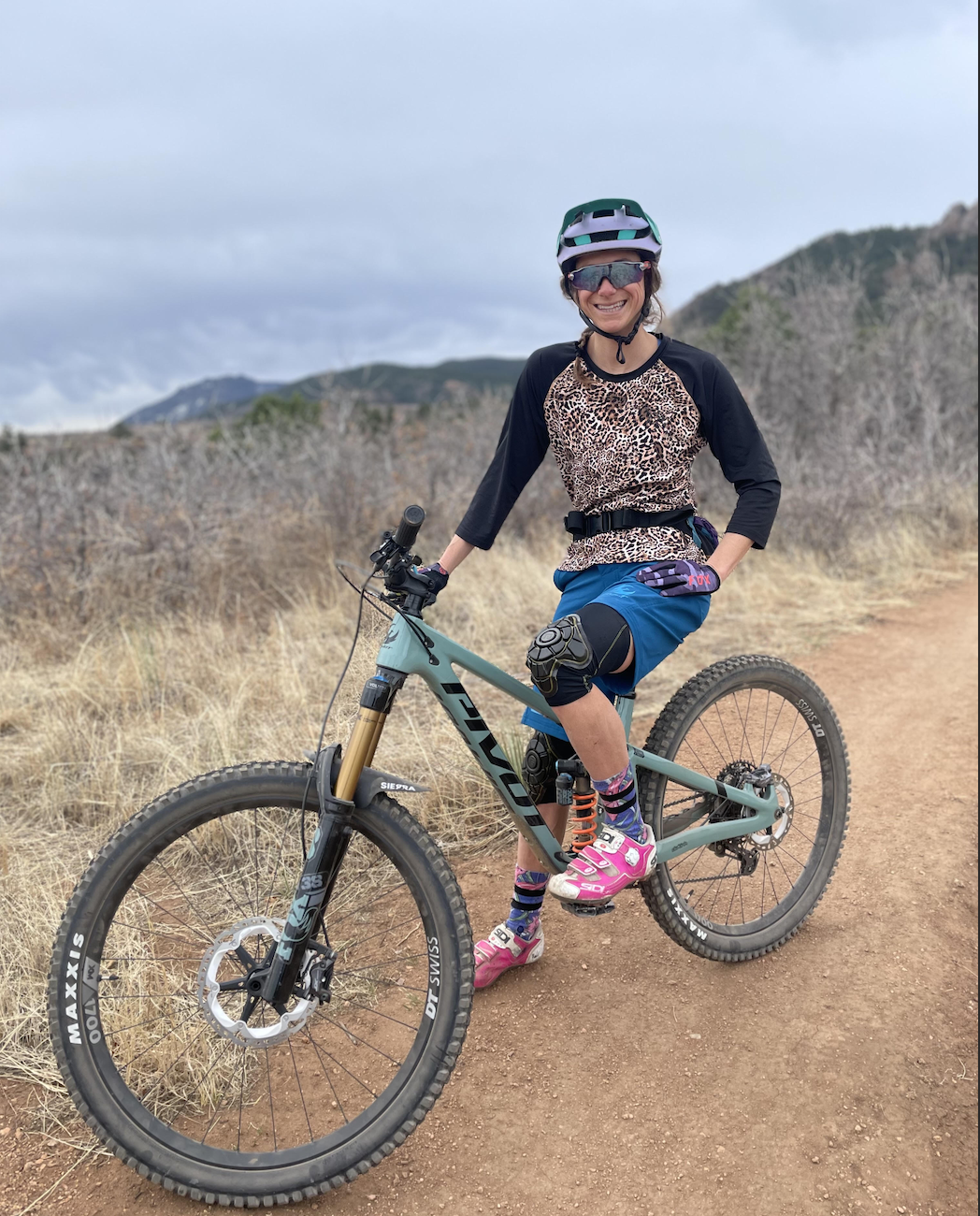
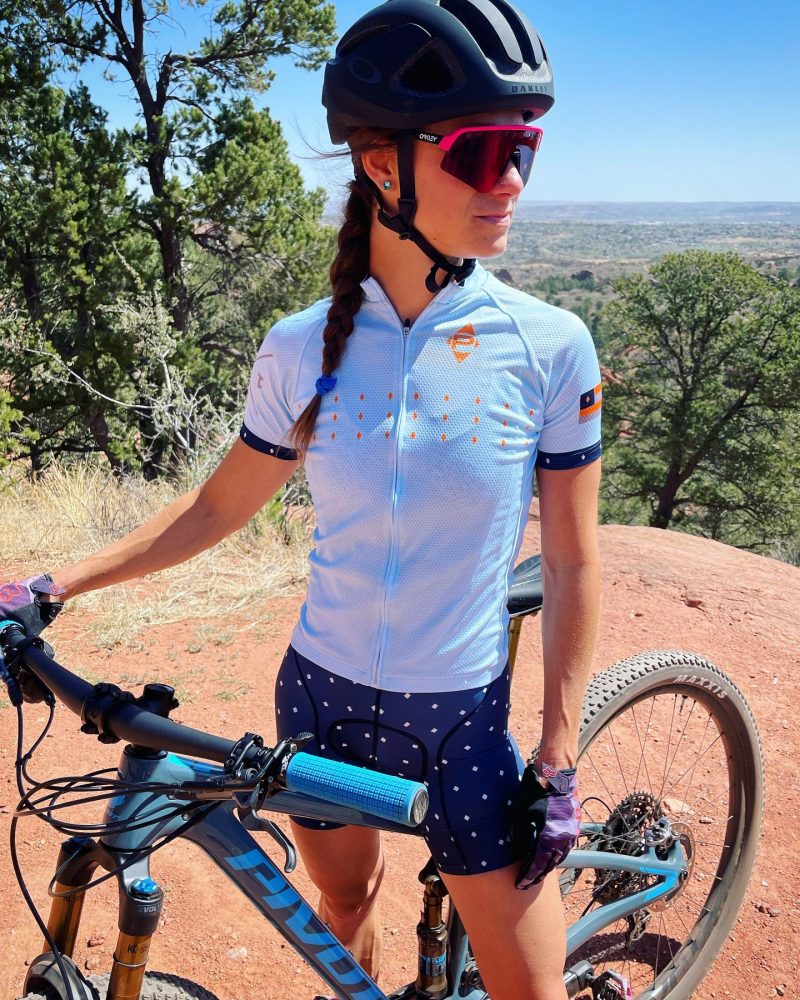
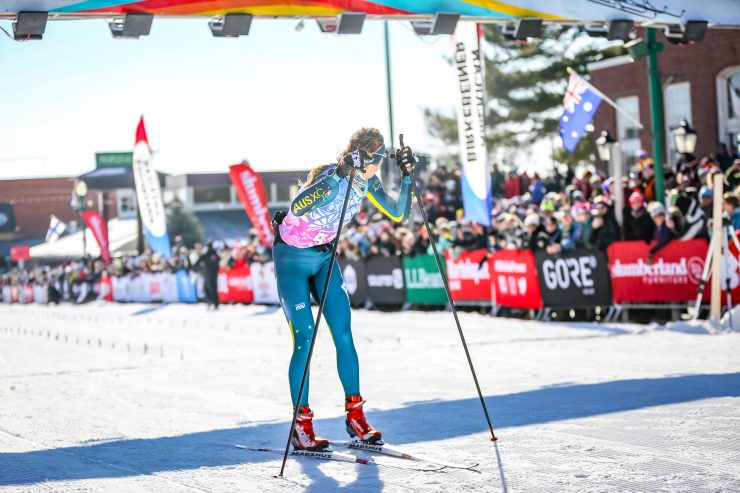
2x Olympian and soon to be DPT Jessica Yeaton shares insights into incorporating mountain biking into your cross-country ski training. (Courtesy photo)
Cross-country skiers are notorious for training high volumes during the off season in order to be in peak racing form in the winter. There is a common mantra used by coaches to help motivate athletes to train hard even though the racing season is months away: “skiers are made in the summer”. From my experience working with different coaches, the large bulk of the summer’s volume is intended to be on roller skis or foot (either running or bounding with poles). While this may work for some, many athletes struggle with injuries when training 800-900 hours/year – myself included – making it hard to consistently rely heavily on these high impact training modalities.
A constant battle with an overuse injury one summer forced me to think outside the box; I began using the mountain bike to train. In the back of my mind, I doubted the effectiveness of this as it translates to skiing. I had heard coaches saying since I was in high school that cycling hours needed to be counted as 50% when logged due to the lack of specificity to our sport. However, I had no choice – it was either train on the bike or don’t train much at all.
Three years later, I now perform 60-70% of my summer training on a mountain bike. This is no longer because I have to, however; I now choose to use it as my primary mode of volume and a large amount of my intensity due to the immense gains in fitness and muscle activation, along with technical and terrain aspects that I have found translate well to cross-country skiing.
Jessica Yeaton enjoys a fall mountain bike ride in Sedona, AZ. (Courtesy photo)
It’s a no-brainer that mountain biking heavily engages lower extremity musculature, placing a high demand on our quadriceps, hamstrings, glutes, and calves. However, mountain biking also employs shoulder, chest, and arm muscles due to the control required in technical sections, downhills, and even steep uphills. Thus, the muscles used while mountain biking closely mimic those during cross-country skiing – particularly skating, which has a higher demand on our glutes than classic skiing. Additionally, the terrain in a network of mountain bike trails is often tough, causing fluctuations in heart rate similar to those experienced while skiing. There are long climbs followed by flowy descents with sharp corners and short, punchy uphills thrown into the mix. High workloads followed by challenging downhills on which to recover – doesn’t that sound like ski racing? I find that a 90 minute bike race feels very similar to a 30k skate race in effort.
The downhills also offer a technical challenge that heightens reaction times. I often ride into more difficult features multiple times to get the line right before committing – something that has changed the way I now approach tough downhill corners before a ski race. An added bonus is the smile that I can’t wipe off my face after a flowy descent or when I’m able to conquer a new feature!
Dropping! Jessica Yeaton gets after it on a technical ride in Colorado this spring. (Courtesy photo)
Lastly, the fact that it is low impact makes it a great addition to a summer training plan that is full of running and rollerskiing. If you struggle with injuries or are looking to increase volume without added stress on your joints, jumping on the mountain bike for a few workouts a week is a great way to accomplish that.
So, with all of those factors in mind – what is the best way to approach your workout on a mountain bike?
The aerobic demand and muscular fatigue is often higher while mountain biking than during other activities where it is easier to keep my heart rate consistently lower. Because of this, I tend to pick a few workouts a week where I am ok doing a higher distance pace (L2 into L3) to hop on the bike. I choose terrain that mimics ski racing, and do not stress about keeping my heart rate low. I often pair my rides on a day with double pole intervals or strength sessions. If I am trying to keep it easy or have hard skate rollerski intervals planned the next day, I opt for easier trails or a light run so I can keep my heart rate low.
Want to test it out for yourself? Here are two of my favorite workouts on the bike.
Due to the aerobic challenge mountain biking presents, it’s an awesome place to do threshold workouts. If you live in a place where you can find a sustained climb or an up-track, you can use this to do L3 efforts (for example, 2 x 20 or 3 x 15 minutes up an up-track), then use the downhill for active recovery. This stimulates downhills in racing and forces you to focus on coordination while flooding with lactate.
2x Olympian and soon to be DPT Jessica Yeaton shares insights into incorporating mountain biking into your cross-country ski training. (Courtesy photo)
Another great workout on the bike is 30-30’s, or where you go hard for 30 seconds, then recover for 30 seconds while continuing to ride easy. This workout focuses on power and strength, and I find that it translates really well to sprinting, and teaches the body to recover and get used to back-to-back punchy hill efforts, so you’re able to regain power descending off a roller before hammering up the next climb in a race. I recommend doing 3 x 10 minutes or 2 x 15 minutes of 30-30s. Just make sure you are able to keep your legs spinning during the recovery – you shouldn’t need to get off your bike to rest in between! The goal is to put in a hard effort, but maintain a reasonable pace in between.
I am a big believer in making training as fun as possible while still putting in the hard work. Mountain biking is something to look forward to that makes me excited to get out and train. Ultimately, this helps me train harder and stay motivated, so I am a huge advocate for learning how to integrate it appropriately – which for me means creating a smart training plan that will help me reach my goals in the winter. If you also crave time on the bike, I hope this advice can give you the confidence to structure it into your dry-land training as well.
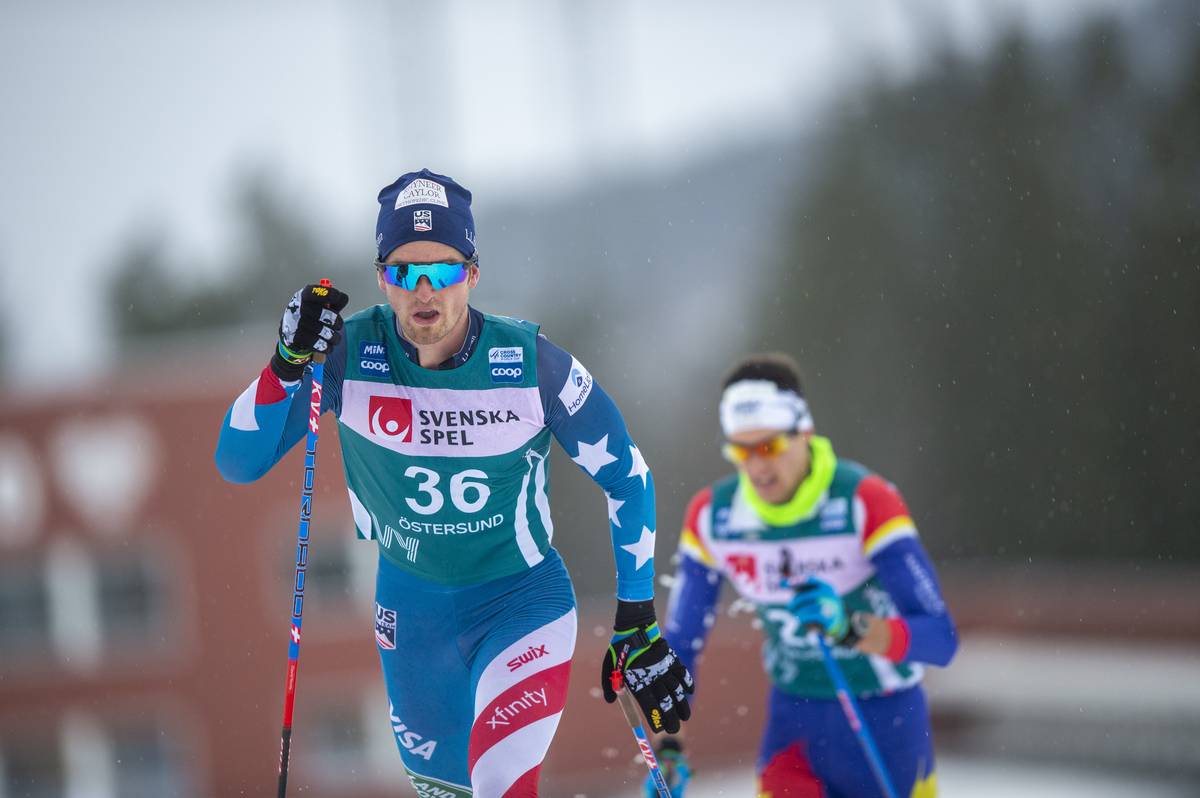
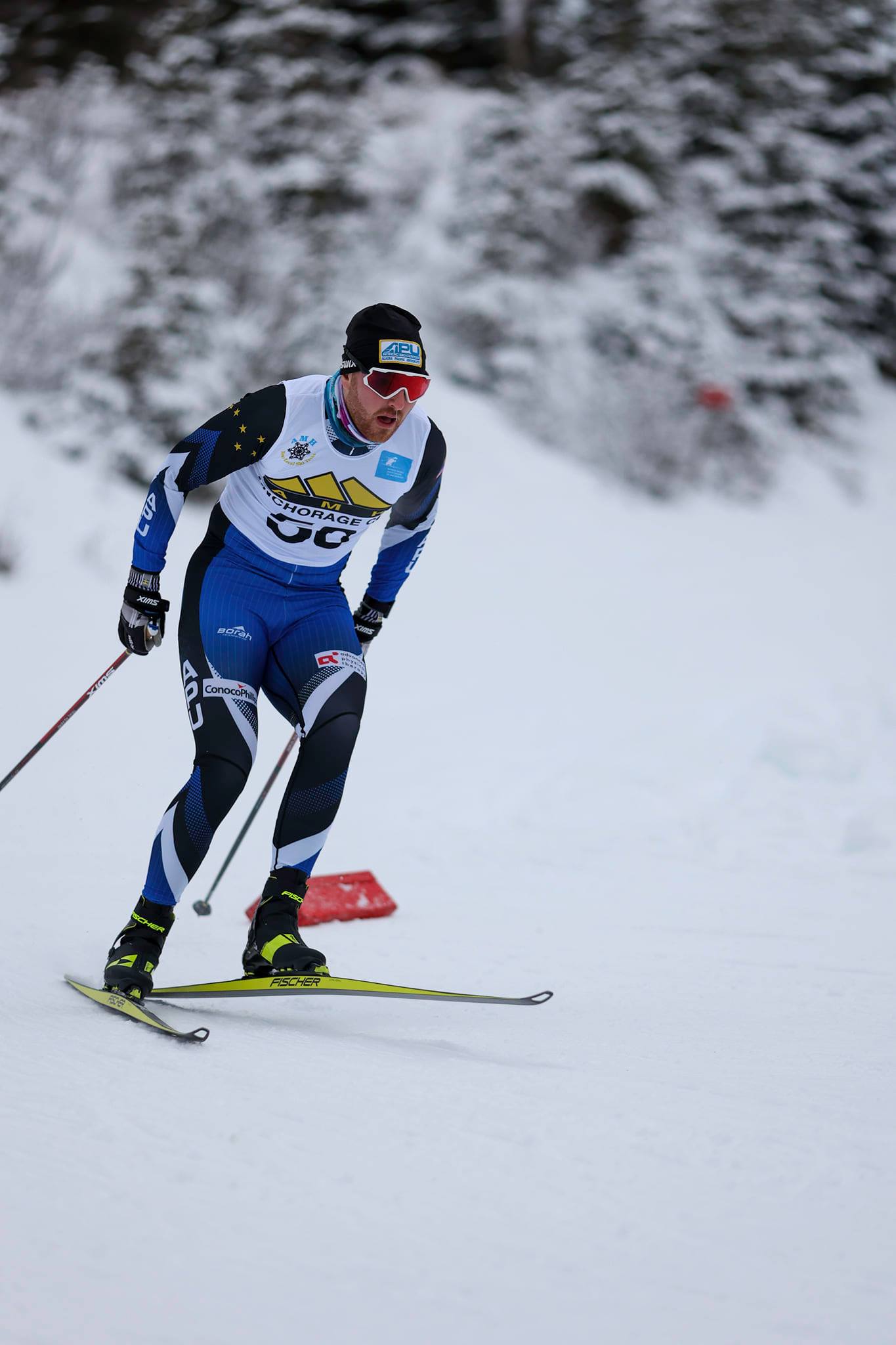
David Norris skis to 34th in 15 k classic pursuit in Östersund, Sweden in February, 2020. (Photo: NordicFocus)
It’s hard not to root for David Norris.
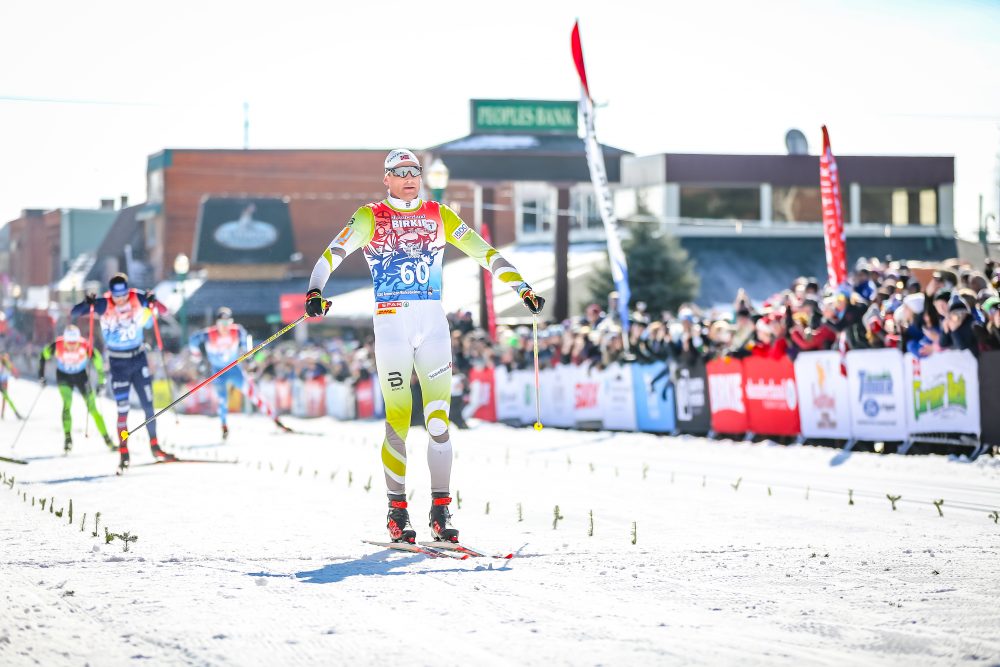
Often affectionately described by Devon Kershaw as a “grinder”, the humble 31-year-old Fairbanks, AK native has been an eternal underdog, despite consistently performing among the best American distance racers of his generation on the World Cup. Highlighting his career, Norris has finished in the top-20 three times during his appearances in the 2019 and 2021 World Championships. His best result arrived in last year’s Championships in Oberstdorf, Germany, where he placed 16th in the 50 k classic and 17th in the 30 k skiathlon.
Although Norris has been routinely been offered World Cup starts over the last five seasons, he has consistently hovered in the liminal space just behind the cutoff when it comes to selection to the U.S. Ski Team, whose age based-criteria becomes tougher to achieve over time. Given his birth year of 1990, Norris needs to be ranked in the top-40 in the world according to his FIS points from the previous season to be named as a B-Team athlete. In 2020, the margin by which he came up short was incomprehensibly small; a mere 0.88 FIS points, equivalent to eleven seconds in a single race during the season, left Norris ranked 43rd in the distance standings in March of that year.
Without financial support from the US Ski Team, Norris forged on, relying solely on his personal sponsors.
Read more on age-based criteria here, or take a deep dive into FIS points and Norris’ circumstances here.
Then, as the 2020/21 World Cup season loomed the following November, Norris contracted COVID-19. At the time, there was little information available on how elite athletes should return to training and competition following a coronavirus infection and what the risks of an expedited return might be. While more is available currently, the message has not changed: use caution and take it slow.
Consequently, Norris sat out Period 1 and the Tour de Ski, making his World Cup return in late January 2021, finishing 32nd in his first race back – a 30 k skiathlon in Lahti, Finland, roughly one month shy of the Oberstdorf World Championships. Despite two top-20 finishes in Oberstdorf, where he was also the second American, behind only his APU teammate Scott Patterson, Norris was again left off the US Ski Team in the spring of 2021. The decision inspired one of his competitors, Craftbury’s Ben Lustgarten, to pen an OpEd to campaign for Norris’s ex post facto discretionary nomination to the team.
David Norris fist bumps a competitor after finishing 17th in the 30 k skiathlon during the 2021 World Championships in Obsertdorf, Germany. (Photo: NordicFocus)
Heading into the 2021/22 season, Norris had a goal of making the Olympic Team, but he knew that, once again, the odds were not likely to be in his favor. The US had just five guaranteed quota spots for Beijing, with a likely sixth on the table.
If you’ve found your way to this story, you likely know how Norris fared.
After a solid summer of training, Norris started upon his usual trajectory of sub-optimal early season races, which generally progress to peak race results in February and early March. In November, Norris was 37th in the 15 k freestyle pursuit in Ruka, Finland, skiing the 27th-fastest time of day, but he never cracked the top-30 to score World Cup points in Period 1. Heading back to the States to race in the U.S. Cross Country Ski Championships in Soldier Hollow in January, his results began to trend upward. Though he’s always excelled in distance, he took 7th in the freestyle sprint, after qualifying second. Then, two days later, he was second in the 30 k mass start skate, 11 seconds behind winner Scott Patterson.
Twelve days later, in the final race weekend before the Olympic qualification period ended on January 16th, Norris won a 15 k individual start classic at the Lake Creek Nordic Center in Ketchum, ID.
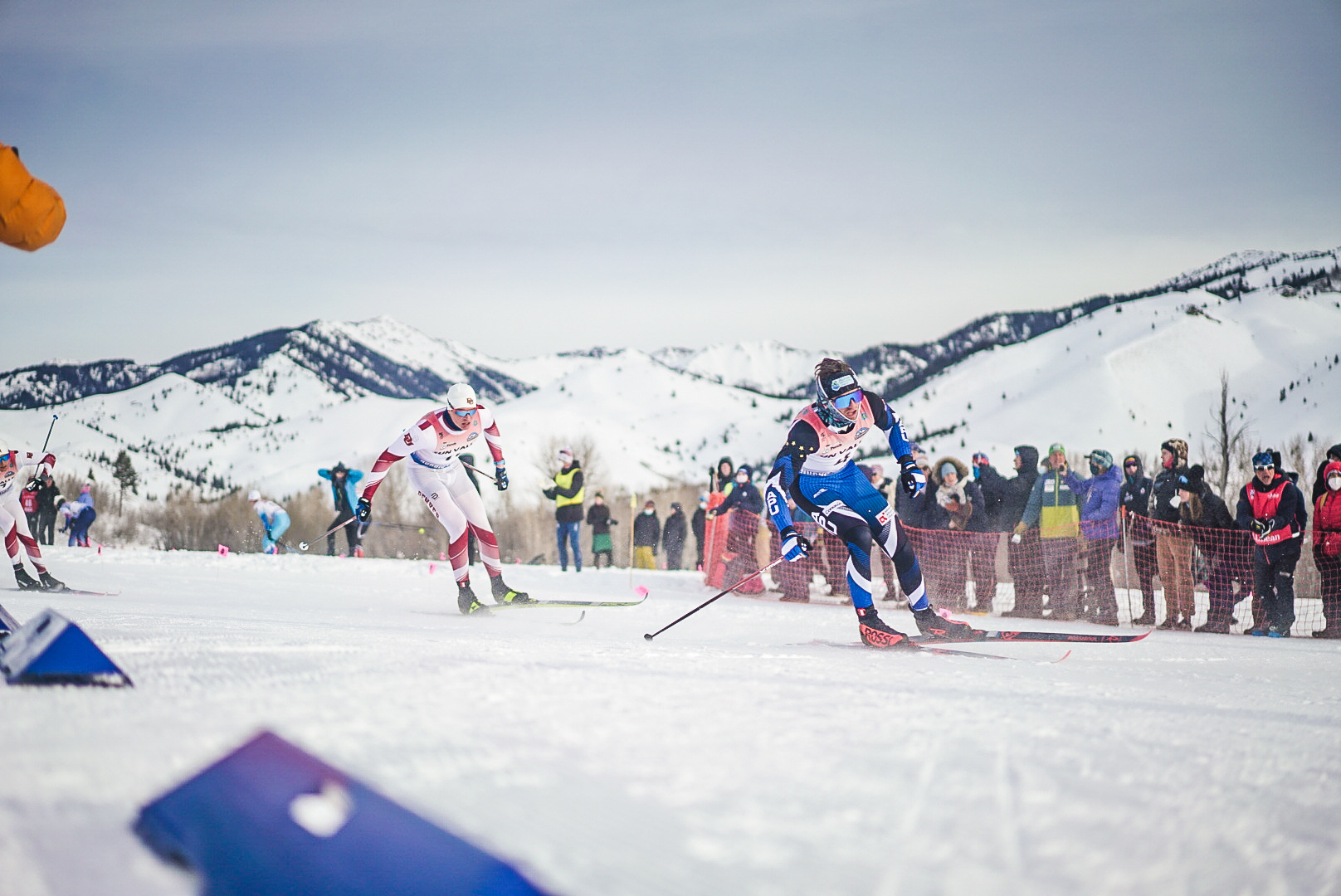
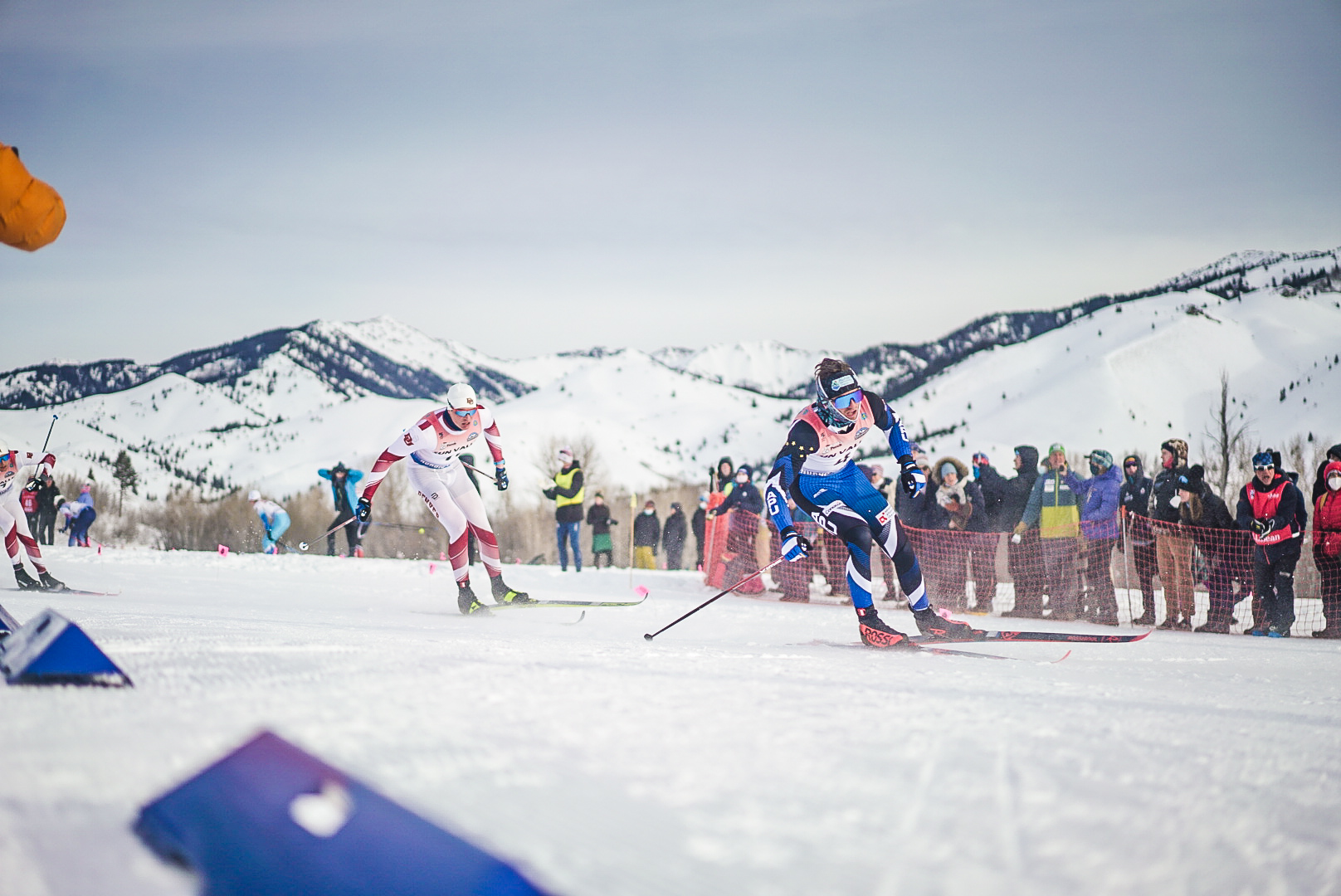
David Norris leads the way through a corner on his way to a win in the SuperTour 15k mass start classic in Sun Valley. (Photo: Tobias Albrigtsen / @untraceableg)
This background is not intended to imply Norris should have made the 2022 Olympic Team. Rather, the intent is to highlight his candidacy to frame an interview on Friday, February 25th, the day before the 2022 American Birkie, in which Norris discussed the experience of falling short of his Olympic goal, how he “made the best of it”, and what his next steps are as he begins to shift his focus away from the World Cup.
Returning to the team announcement, Norris explained that although he was disappointed, not being selected was not a surprise given the selection process that had been outlined. He shared that “there was no dialogue at all” with US Ski Team coaches leading into the announcement, but that it also had never felt “closed”, either.
Following his second place finish in the 30 k skate in SoHo, Norris had written to FasterSkier “Every season I ski much stronger in February and March, so I’m sure good form is on the horizon, but that doesn’t help me achieve my goals when I need to be skiing well right now. All I can do now is focus on the 15 k classic coming up and then rest and prepare for the next races.”
As he acknowledged, an emphasis was placed on strong early-season results, which he did not post, and he had not expected that his historic championship results would be factored into decision making. That said, as a distance skier, looking at a Games which would be held at altitude on challenging courses that would “basically reward people who are very fit”, it was difficult to recognize he’d never have the opportunity to put his strengths on display.
“It was tough,” Norris said simply. “Seeing that the criteria kind of rewarded 15 k races, when two out of four individual races [at the Olympics] were 30 and 50 k for the men. And yeah, I was aware of it all, but it kind of sunk in just during the Olympics and watching.”
Of the six men who met the outlined objective criteria and were named to the Olympic team, four were primarily sprinters: JC Schoonmaker, Kevin Bolger, Ben Ogden, and Luke Jager. However, each started in either the 15 k classic or the 4 x 10 k relay, in addition to the two distance racers, Patterson and Gus Schumacher.
“But I still cheered my heart out for the guys who made it,” Norris added emphatically. “I don’t hold anything against the guys who are nominated. All congratulations to them — no personal difference against those guys. Everyone who went is a good friend, and I’m stoked for them.”
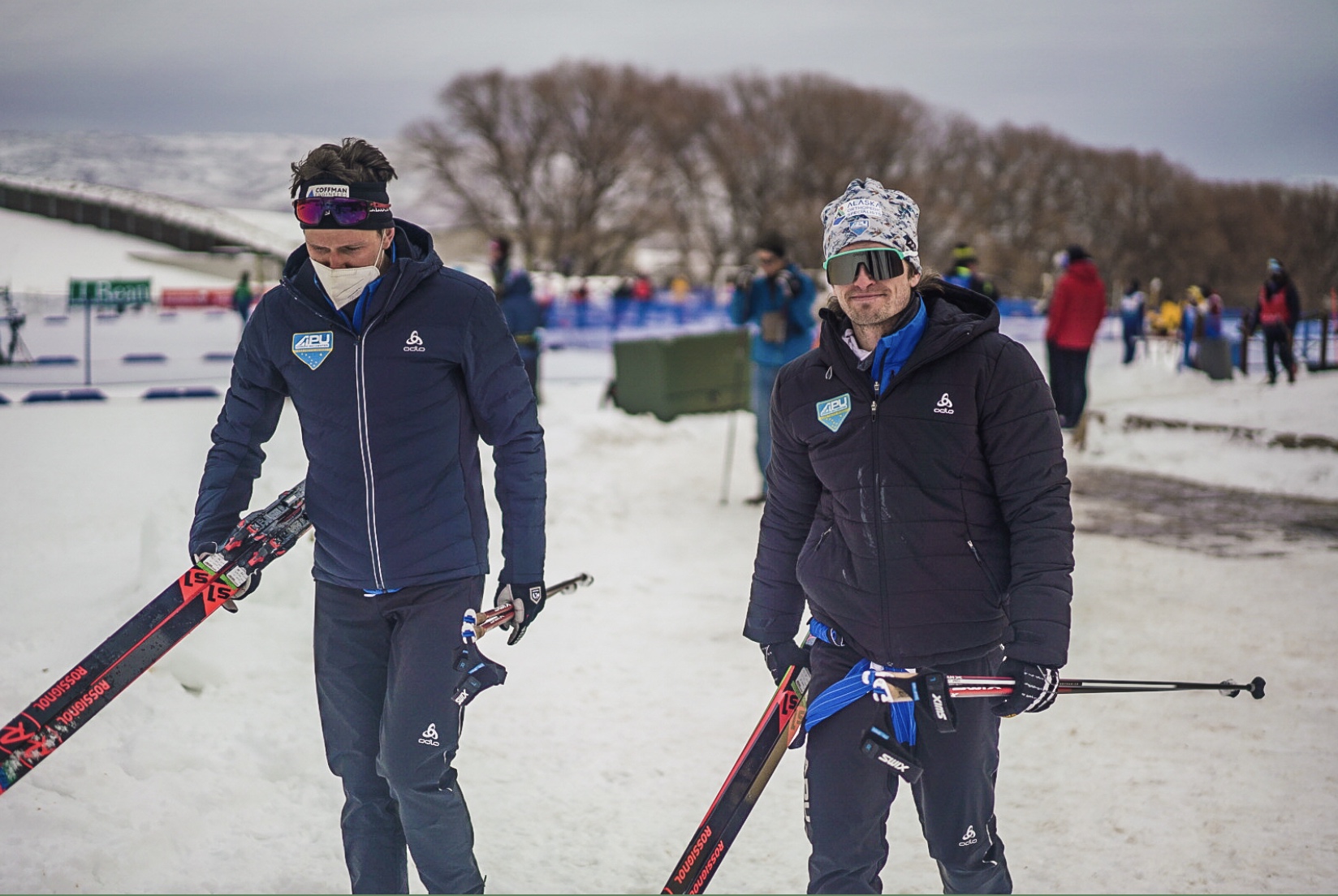
APU teammates Scott Patterson (left) and David Norris (right) head to the start of the men’s 30k mass start freestyle at the 2022 U.S. Cross Country Championships in Soldier Hollow, UT. (Photo: Tobias Albrigtsen / @untraceableg)
When weather shortened the men’s 50 k skate to a 30 k, Norris watched his APU teammate Patterson race to 8th place, an historic result for the American men, second only to Bill Koch who earned an Olympic silver medal and a 6th-place finish in Innsbruck, AUT in 1976. As mentioned previously, roughly six weeks prior, Norris had finished 11 seconds behind Patterson in a 30 k mass start skate at a similar elevation in SoHo. Though four start spots were available for each nation in the Olympic 30 k, Patterson was the only American in the race that day.
Never one to say “woe is me”, Norris chose not speak directly to the experience of watching that race. Instead, he recognized that he was not the only strong and fit American distance skier who did not make it to Zhangjiakou.
“There were such limited spots for the men’s quota that, no matter what happened, good skiers were gonna get left behind. But yeah, just given that three out of four individual races are distance, and the relay’s distance, it was kind of a bummer to see them not give any priority or emphasis to distance where we could have accumulated probably the best results. I think the 30 k (skate) at Nationals and 15 k (classic) at Lake Creek in Sun Valley, kind of showed where the fitness stacked up in the U.S. field. And I think mass starts are one of those places where you can’t really hide your form — you see how fit people are. And yeah, Scott and I are really similar and we train together, and I think it just kind of came down to –
I trained for chasing a goal of a top 10 at the Olympics, and it was far harder to make the team than to actually probably reach that goal… But it’s just limited spots and tough how it came down.”
David Norris wins the 15 k mass start classic in Sun Valley, ahead of his APU teammates, Hunter Wonders and Scott Patterson. (Photo: Tobias Albrigtsen / @untraceableg)
Norris is not the first person to be left off an Olympic team who was perhaps qualified and deserving of a spot. Every four years, FasterSkier reports on those just behind the cutoff, which often sparks impassioned responses from fans supporting athletes on both sides of the bubble.
For Norris, this means outreach and support from a number of athletes who had been in the same situation and could share perspective from a place further removed from the moment.
“People have been super encouraging. One of the guys who made it based on the criteria but wasn’t taken four years ago reached out and said, ‘Use this as your secret weapon — you chase goals and come up short. And that’s kind of the way it works out more often than not, and you learn a lot from from that.’ Based on some of the encouragement from people in similar spots, it was really reassuring to hear their words and realize that the last four years or the last eight years pursuing a goal, it wasn’t a waste just based on a single selection.
And maybe there’s been moments where I have to kind of lie to myself that that’s the case, but I genuinely believe it. I don’t regret going for the Olympics, and then coming up short on my goal, it’s all been a positive experience for me.”
In the post-Olympic 50 turned 28 k episode of the Devon Kershaw Show, guest Kris Freeman, who spent years at the top of American men’s distance skiing, was critical of the American program’s lack of support of men’s distance skiing. Freeman pointed out that Patterson was the “only guy of his generation that got any U.S. Ski Team support.” He then added, “in the last six years, it’s been like, ‘Well, we got [Gus] Schumacher and Luke [Jager], let’s just wait till they come up.’”
Though perhaps in a less outspoken and direct manner, Norris affirmed Freeman’s sentiments, acknowledging the challenge many of this country’s top distance racers have faced in funding the career longevity often required to reach peak potential as an endurance athlete.
“I couldn’t do it without my personal supporters because there’s nothing coming from the national team. And there is definitely that sense of, like, Scott’s in the system. They’re hanging on to him, and he’s producing awesome results. But then, yeah, I think Freeman’s words are pretty accurate, I guess.”
Norris pointed to the U.S. Ski & Snowboard mission as a root of the challenge. The header on the cross country team page states: “We’re built around one common goal—provide the right resources for athletes who are inspired to be the Best in the World.” Though he was seen as one of the best in the US, his trajectory was arguably not one that was likely to produce Olympic or World Championships medals, a focal point of U.S. Ski Team selection criteria.
The introduction to these criteria reads: “The U.S. Ski Team will select only the most qualified athletes with the greatest possibilities for winning medals in future World Championship and Olympic Winter Games competitions. Selection criteria will stress performance in the Olympic Winter Games, World Cup and the U23/World Junior Championships in the 2021-22 season. Selection criteria will also stress progress toward individual performance markers, set forth by the U.S. Ski Team coaches, which point toward international success.”
David Norris cracks the top-20 with a 17th place finish in the 2021 World Championship 15k/15k skiathlon in Oberstdorf, Germany. (Photo: NordicFocus)
The statement perhaps clarifies the philosophy that has kept Norris from meeting objective criteria for the team. Though he has been an asset to the distance program, and was likely to post some of the top American distance results during the Games, his potential to earn future medals was lower than a younger budding athlete with strong World Juniors results, like Schumacher or Jager. While this could be sensible from a long-term investment perspective, it may also push some of the top distance athletes out of the sport at young ages, typically thought to be prior to when one reaches his or her physical peak for endurance racing.
One might look at Rosie Brennan who at 33 years old, and after having been left off the U.S. Ski Team on two separate occasions, is coming off a second season as a regular podium threat, with a growing list of top-10 results and a string of performances in Zhangjiakou that, though just shy of a medal, were collectively among the all-time top-three Olympic performances by an American cross country skier. Without Diggins’ results in PyeongChang and Beijing, they’d be the best.
Or, on the other side of the coin, Kyle Bratrud had won four National Championship titles between 2015 and 2020, and placed 31st at the 2019 World Championships, popping a World Cup top-30 a weekend later, but he retired at 26, in part because US Ski Team support seemed unlikely and the costs associated with starving for the World Cup didn’t check out in the cost-benefit analysis.
Read and listen to more on Bratrud’s take on development pathways, support and age-based criteria, and retirement here.
“It’s kind of brutal, over the last four years, to have had the best [American distance] result [in the 50 k at] World Champs in Seefeld, and two top-20s at World Champs last year. Half the men’s team was discretioned [onto the US Ski Team] last year, and to not get any support through those years…”
Norris started and stopped a few times, carefully weighing how much he wanted to say to the small tightly-knit ski community, before laughing that he was beginning to ramble. He then continued, “I think the Olympics kind of showed that… I feel like people are wondering what happened with some of the results, but I think you could have predicted that by looking at their course profile and the altitude and how people performed in similar settings. And it seems like it’s really good to invest in the young guys but also to give support to the older guys and have us produce good results helps pave the way as well. And it seems like that aspect is getting severely neglected. And if Scott were to quit next year, then there’s a huge gap to fill.”
David Norris on course during a 2022 SuperTour race weekend in Sun Valley, ID. (Photo: Tobias Albrigtsen / @untraceableg)
After competing in the SuperTour races in Sun Valley with his APU teammates, Norris found himself in limbo. He recognized he was highly unlikely to be named to the Olympic team, but had not received information or been contacted by US Ski Team coaches to confirm that this was the case.
“Before the nominations were announced, we [essentially] knew the team [that was] going based on COVID protocols.”
APU teammates Patterson and Brennan both raced in Sun Valley, along with Scott’s older sister Caitlin Patterson, who trains and races with the Craftsbury Green Racing Project and was also named to the Olympic team. Brennan returned to her childhood home in Park City, while the Pattersons headed to Bozeman, MT to create a lockdown bubble with their parents.
Seeing the writing seemingly on the wall, Norris also headed to Bozeman, where his partner Jess Yeaton’s parents currently reside. Both Norris and Yeaton graduated from Montana State University in Bozeman, and he calls the area his “favorite training grounds.” With ideal conditions and nice weather, Norris cleared his head while logging hours on trail.
“Since I didn’t have the Olympics to focus on or peak for, I just took advantage of the good skiing there and was skiing like four to five hours a day, just enjoying being in the sun and, kind of, having the like stress and the weight off my shoulders of the Olympics. It was kind of cool, because I think I skied so much, I just realized that I ski because I love it not because of one single goal or because I’m trying to prove anything to anyone or, you know, make one person proud. It was good, just to ski and enjoy it.”
Norris looked at the calendar and saw that he could hop into both the Boulder Mountain Tour in Sun Valley and a 30 k classic at Crosscut in Bozeman. And though he thought he might have “overcooked” himself logging all those hours in Bozeman, Norris won both races.
“The past few weeks skiing with friends assures me that I love skiing and all the people involved in it… and that’s why I do it,” Norris wrote in a post-race Instagram post.
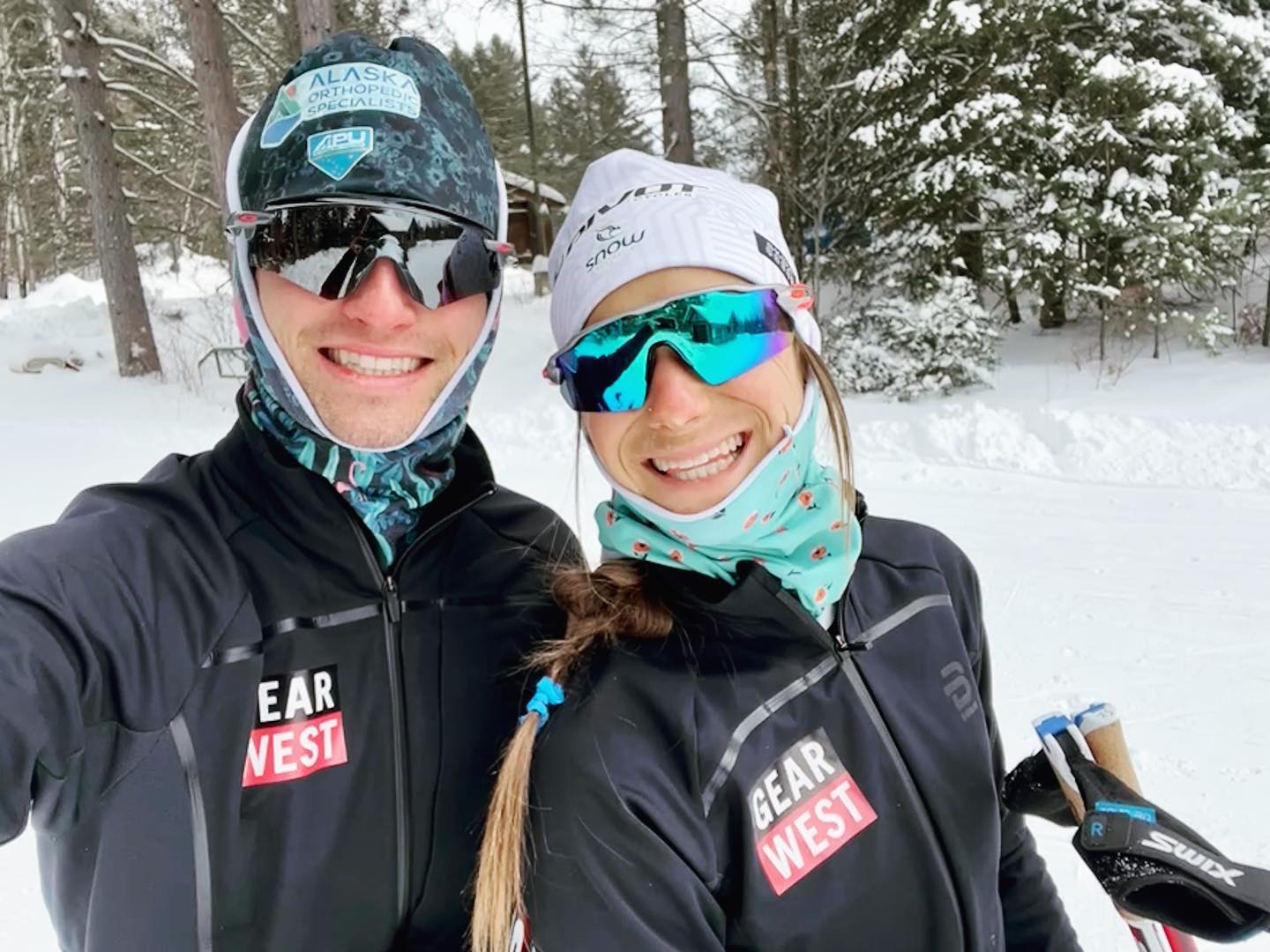
David Norris and his partner Jessica Yeaton prepare for the American Birkie after Yeaton returned from competing for Australia at the 2022 Beijing Olympic Winter Games. (Photo: Instagram @grandmasternorris)
“I think he’s having a really good time, actually,” Norris’ partner Yeaton told FasterSkier in an interview in Zhangjiakou during the Games. “Going around and racing all these races, and he’s just been reconnecting with people. I truly do think he is enjoying it… I think it’s definitely been a big bummer for him, but he’s also — he’s the best at making a good situation out of anything. He’s just not a negative person by nature. He’s out there racing all these races, having fun… there’s definitely something good that’s come out of the spring for him, for sure.”
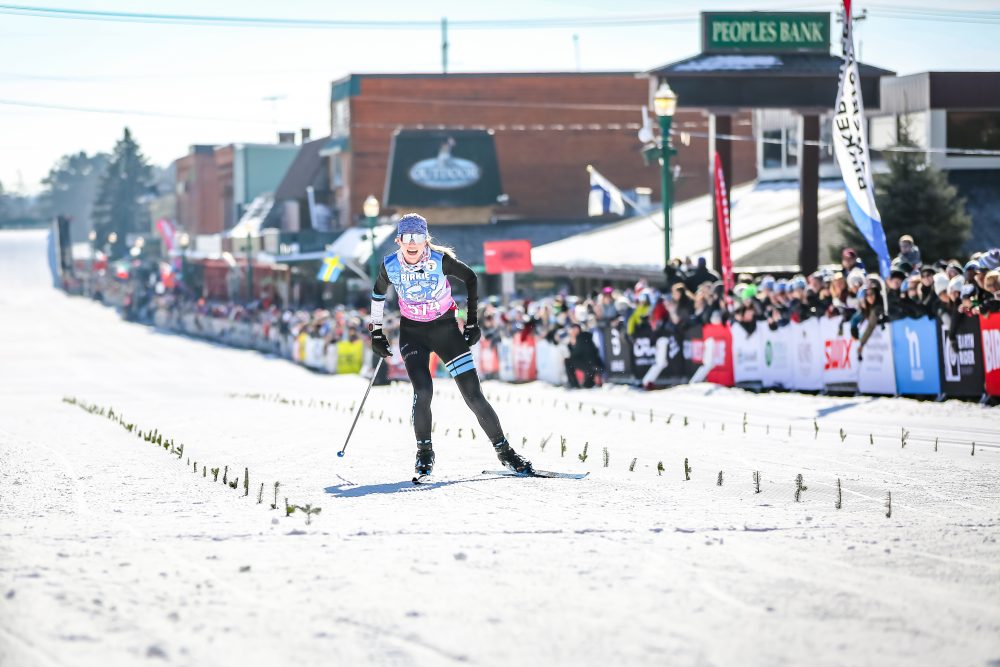
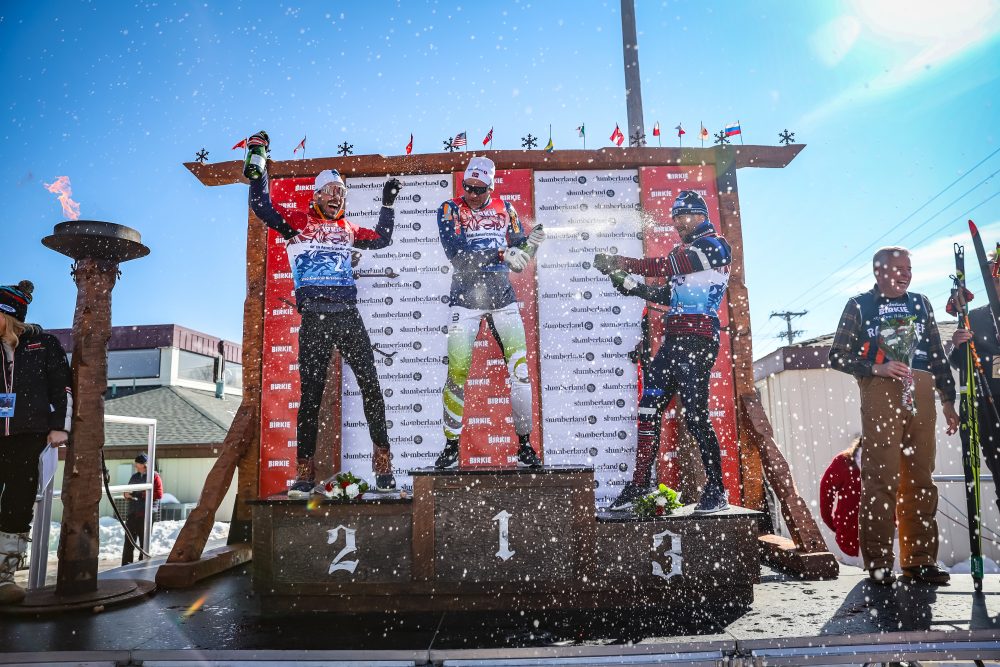
As the time of the call was within 24 hours of the Birkie start, it was yet to be seen that Norris, the 2016 Birkie champion, would this year take second in a thrilling showdown on Main Street in Hayward, WI, losing to Gérard Agnellet of France in a boot slide at the finish. Norris had scaled back on the self-indulgent distance skis in Bozeman, foreshadowing what would come with the following explanation.
“After the [Boulder Mountain Tour], I kind of shut it down and kind of found enjoyment in being a little lazier. And I think that should give me some fresher legs for the Birkie, I hope.”
David Norris and his partner Jessica Yeaton, both APU athletes, won the 2022 Tour of Anchorage. (Photo: Instagram @jjyeaton)
His next steps remain in flux.
“Since there’s not really a spot for a 20th to 10th place skier — like, [US Ski & Snowboard] doesn’t want that on their team, it seems — I’m kind of not that incentivized at all to spend time on World Cup and keep fronting a bill from the U.S. Ski Team.”
With this shift in focus, Norris remains open-minded, explaining that his ski racing plans next winter somewhat hinge upon where Yeaton finds a physical therapy job once she finishes her clinical rotations to complete a doctoral program through University of New Mexico. The two will be stationed in Colorado and Utah through the fall, which may set Norris up for opportunities to compete in trail running races that have not previously fit into his ski preparation plan.
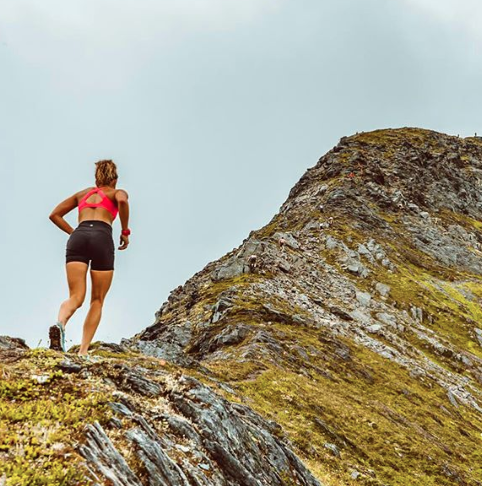
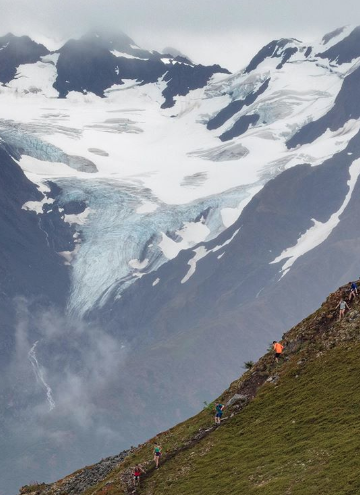
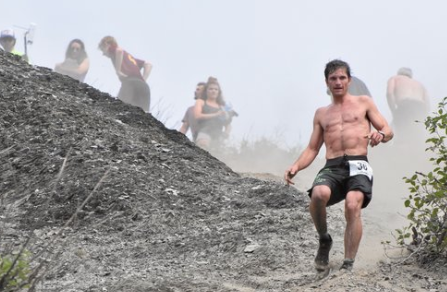
Norris has a track record of strong finishes in Alaska mountain running races. Amidst three wins, he holds the course record at the infamous Fourth of July Mt. Marathon race in Seward, beating a time posted by the seemingly superhuman alpinist phenom Kílian Jornet of Spain, and has won the Cirque Series race at the Alyeska ski resort along with a smattering of other regional trail running events.
“I’ve never wanted to spend money on running because I’ve always just put any money I’ve earned and sponsorship dollars towards skiing. And you know, there’s plenty of races in Alaska, so I didn’t need to travel, but now I’ll be at altitude in Colorado and Utah. There’s so many races to jump into.”
Should they end up spending next winter in a location that allows for quality ski training, Norris anticipates that he’ll continue to race, but the focus will be different.
“I think our lifestyles are such that we would be training a ton, just because that’s what we enjoy doing. And then I would 100% keep jumping into races. But my goals are definitely changing… So probably do less [international racing] and just enjoy ski racing and do it more locally.”
David Norris on his way to winning the 2022 Boulder Mountain Tour in Sun Valley, ID. (Photo: Nils Ribi Photography / Boulder Mountain Tour)
David Norris and Scott Patterson complete a set of pre-race classic intervals to optimize their performance in the next day’s races. (Photo: Tom Horrocks)
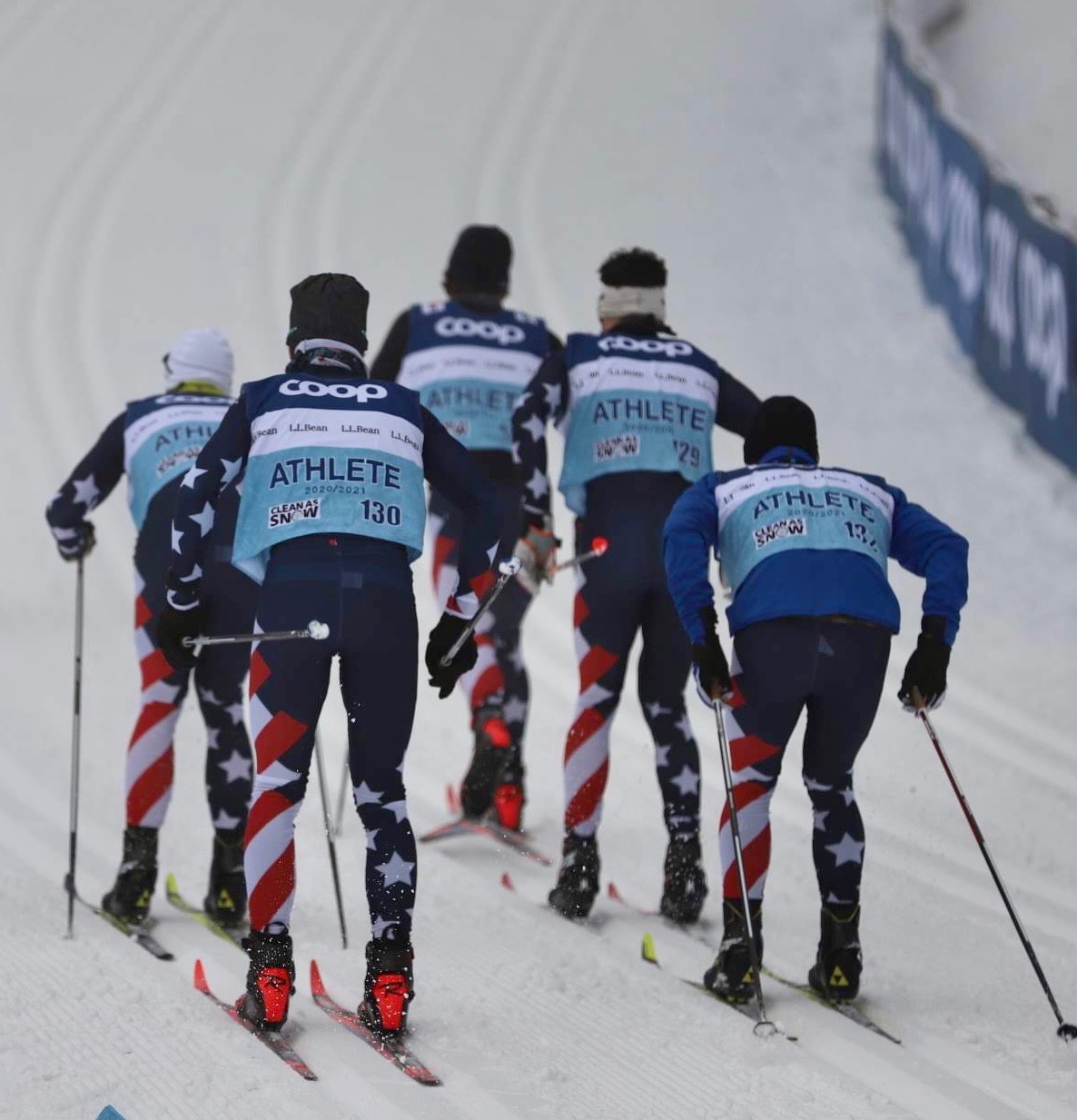
All the athletes are all stripped down to their race suits and zooming around the course with laser focus. They are breathing hard; in fact, some of them seem to be skiing at max effort. If it weren’t for the lack of announcements, race bibs, and cheering from the crowd (pre-COVID, of course) you might actually think it’s race day – but it’s not. It’s actually the day before the race, and many of the athletes are performing their race-prep workout.
For most cross-country skiers, a race-prep workout entails skiing fairly hard, often involving a similar pace to that of the race the following day. This may seem counter-intuitive, as you might think that energy conservation is key to peak performance. I distinctly remember being a middle-school cross-country runner and taking the day before the race entirely off; my race-prep “workout” would then consist of 20 minutes of walking to ensure that my legs didn’t get “too tired”. Sadly, this leisurely myth was debunked, and I have learned over the years that race-prep the day prior is actually a great time to put in some harder efforts to optimize performance.
Here are a few of the reasons why it’s a great idea to push yourself out of your comfort zone the day before, and a few suggestionsfor improving your race-prep workout before your next race.
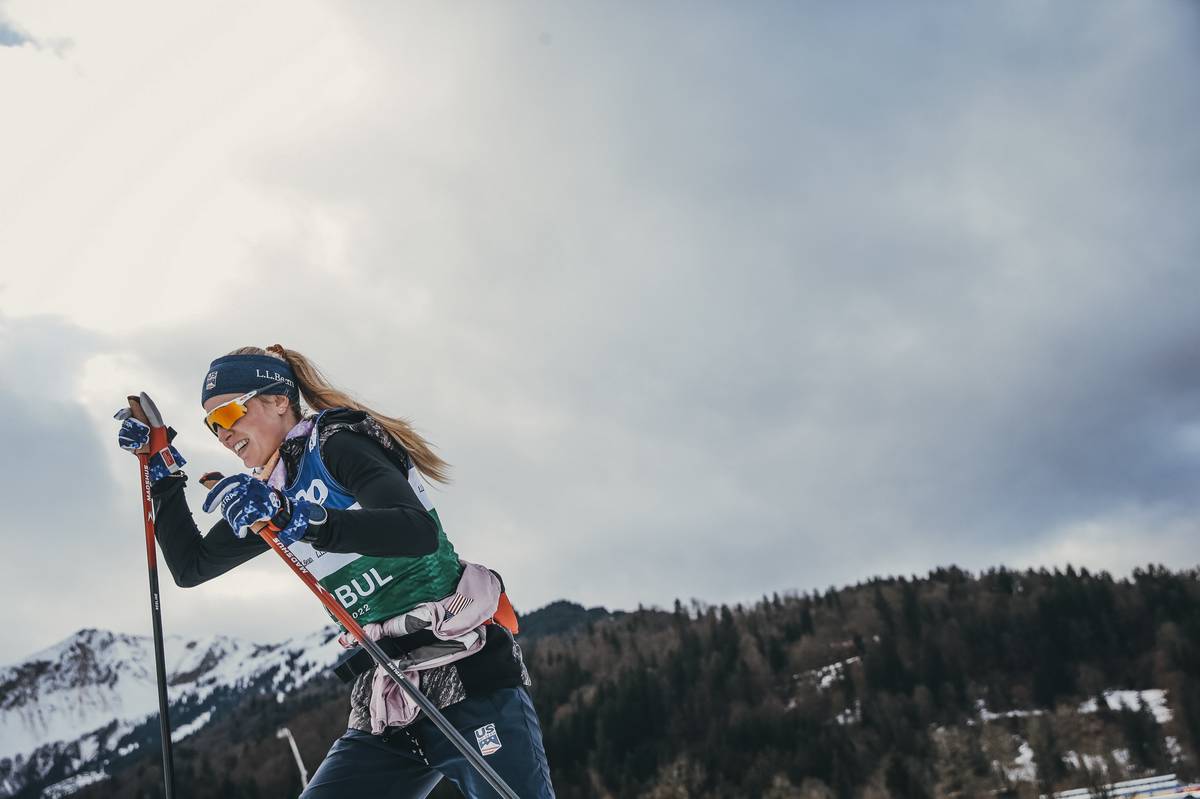
Hailey Swirbul completes a pre-race training session in Davos, SUI in December, 2021. (Photo: NordicFocus)
While rest is important, taking a day off can often make your legs feel heavy or sluggish the next day. This is one of the main reasons why it is important to get out and ski the day prior to a race, even if minimally. Many athletes opt to take two days prior to the race completely off instead.
One of the biggest goals of a race-prep workout is to help switch your legs on and avoid any lethargic feelings on race day. It is not uncommon for athletes to report feeling “terrible” and having heavy legs during a race-prep workout. Rather than serving as a bad omen for the race the next day, it actually can be a positive sign that both feelings and performance will improve on race day. That being said, the length of the race helps determine the intensity of the workout the day prior. The shorter and more intense the race is the next day, the harder the pre-race workout will be, and vice versa.
U.S. Ski Team member and soon to be two-time-Olympian, Rosie Brennan, offered her advice for a race prep-workout and how it differs depending on the type of race. Rosie excels at both sprint and distance racing; last season she won both the sprint and distance world cup races in Davos, Switzerland. Additionally, while many other world cup athletes specialize in sprint or distance events, Rosie’s race calendar consists of a mix, which has given her plenty of practice perfecting her race-prep.
“For sprint days, I do one lap of the course L3, take a break, and then one lap L4. After that I will run through a few speeds on key sections of the course.”
Before distance races, Brennan states that her preparation is a little more variable. “If I’ve been racing a fair amount, I will generally do one 10 min interval that is mostly level 3 and kicks up into level 4 the last few minutes. If I haven’t raced in a while or feel like I need to rev the engine a little more, then I will do something like 3×4 minutes progressive, starting in level 3 and moving into level 4 for the last interval.”
Race prep is also used to feel the rhythm of the course and practice corners, transitions, downhills, or other key spots on course at race speed. That is the beauty of skiing so quickly during these workouts – you can really get a feel for the way the course will ski the following day. Brennan says that race prep helps her to get a feel of how the course and snow might ski at race speed. “This allows me to better develop a race plan or do some visualization of how I want to ski on race day”, she states.
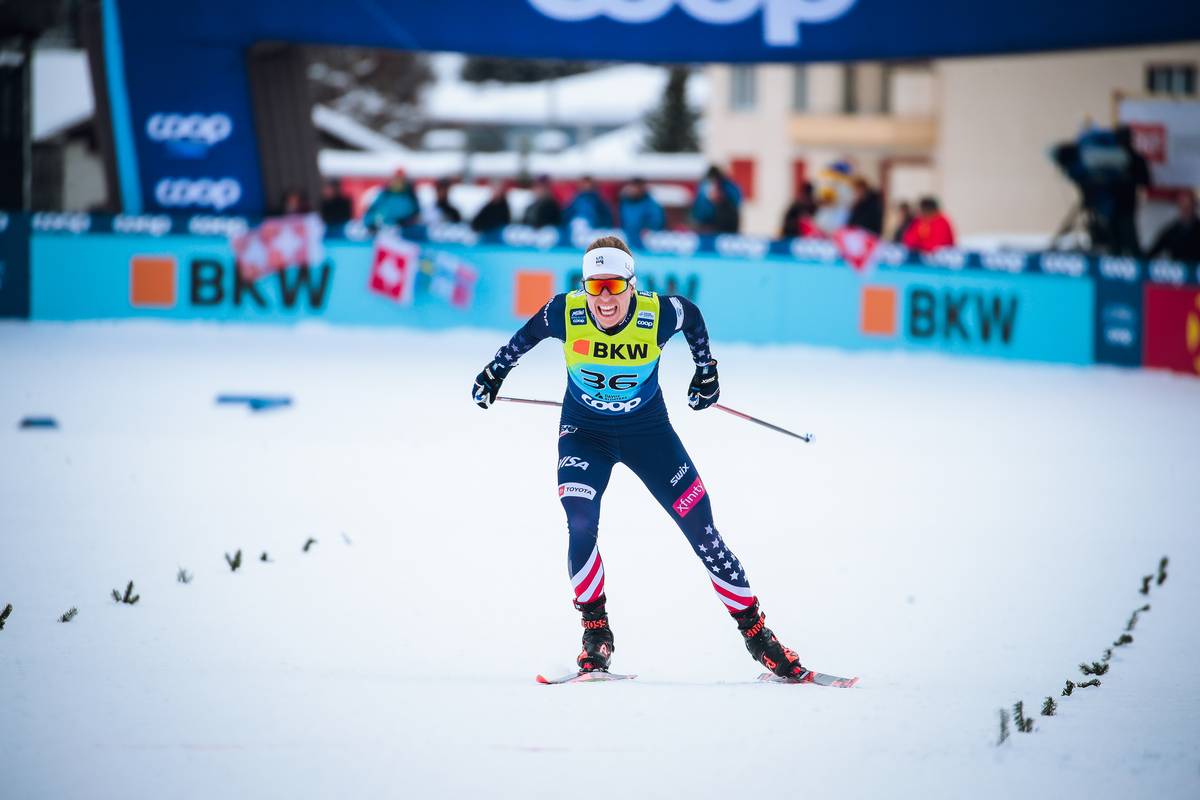
Rosie Brennan powers through the final stretch to finish 4th in Davos in December, 2021. (Photo: NordicFocus)
Although race-prep is often performed at a zone 3-4 pace, or just below/touching into anaerobic threshold, the total work time rarely exceeds 10-12 minutes. For elite cross-country skiers, a typical interval set is generally between 25-60 minutes of work time depending on the target heart rate zone. By keeping the total time of race-prep significantly lower than a standard interval set, it ensures that the overall fatigue is minimized while still allowing for adequate practice of critical spots on the race course.
Another goal of the workout the day before pertains to fueling. Muscle glycogen, or the major source of carbohydrate for energy during exercise, is pertinent to optimal performance. The greater muscle glycogen stores are, the longer the time to exhaustion, and the faster you can ski. Hard race-prep intervals serve as a stimulus for the resynthesis of muscle glycogen. Following this workout, muscle glycogen is rapidly replenished due to increased insulin sensitivity and cell membrane permeability to glucose. (1)
That being said, it is critical to adequately fuel post-workout to ensure that this happens. So, while the race-prep workout might be slightly taxing in the short term, it ultimately assists our bodies in jump-starting the fueling process and ensuring that our muscles are ready to perform an even higher-intensity workout (race) the next day.
A group of American men complete their pre-race workout. (Photo: Tom Horrocks)
Ultimately, race-prep helps prepare our bodies both physically and mentally for a race effort the following day. When performed correctly, the stimulus of intervals the day prior to a race can prime our muscles and spark our metabolism for peak performance. While your legs may not seem super fresh during the session, trust that race-prep helps pave the way for better feelings on race day.
Sources: 1. Ivy JL. Muscle Glycogen Synthesis Before and After Exercise. Sports Med. 1991;11(1):6-19. doi:10.2165/00007256-199111010-00002
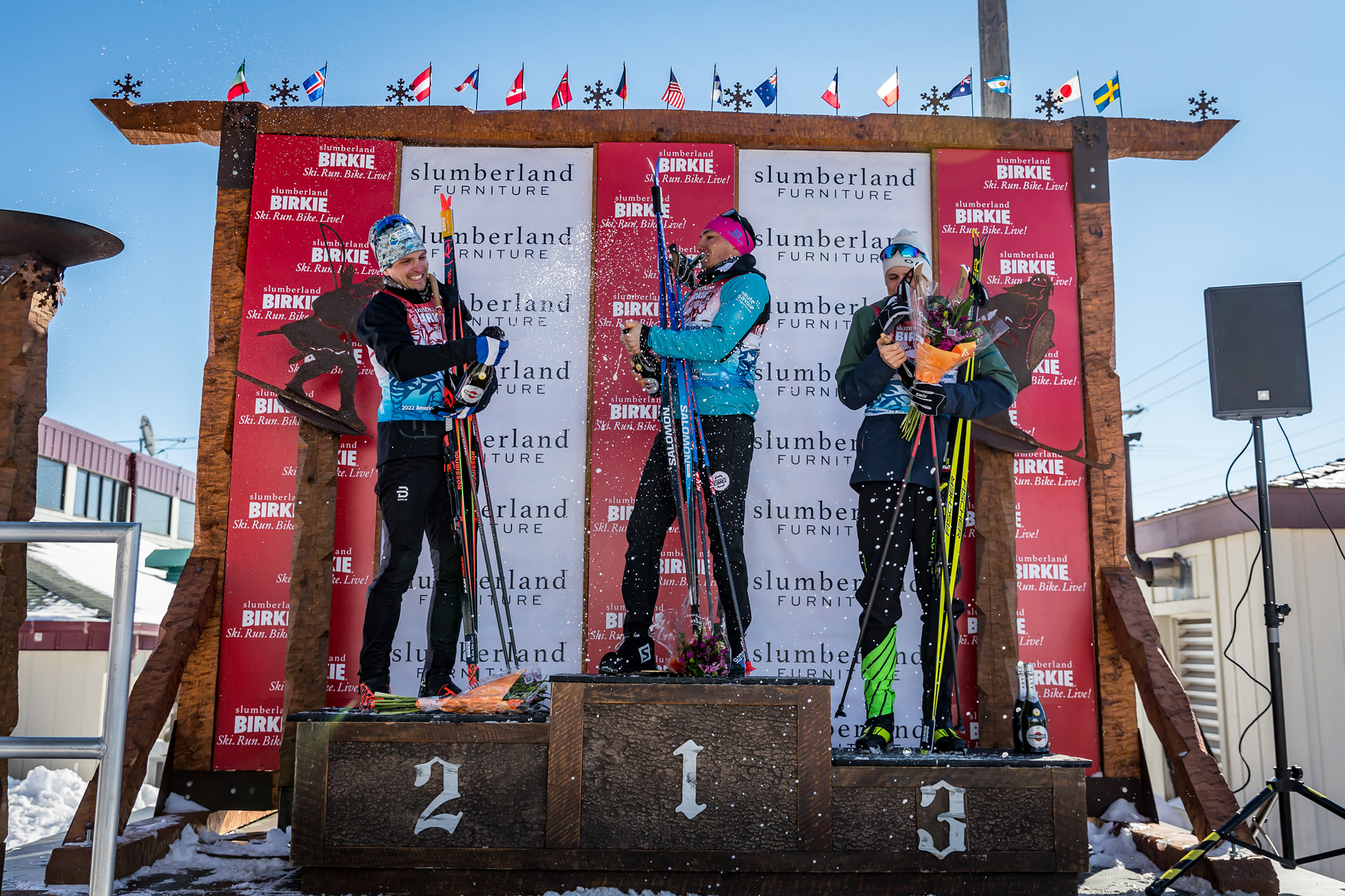
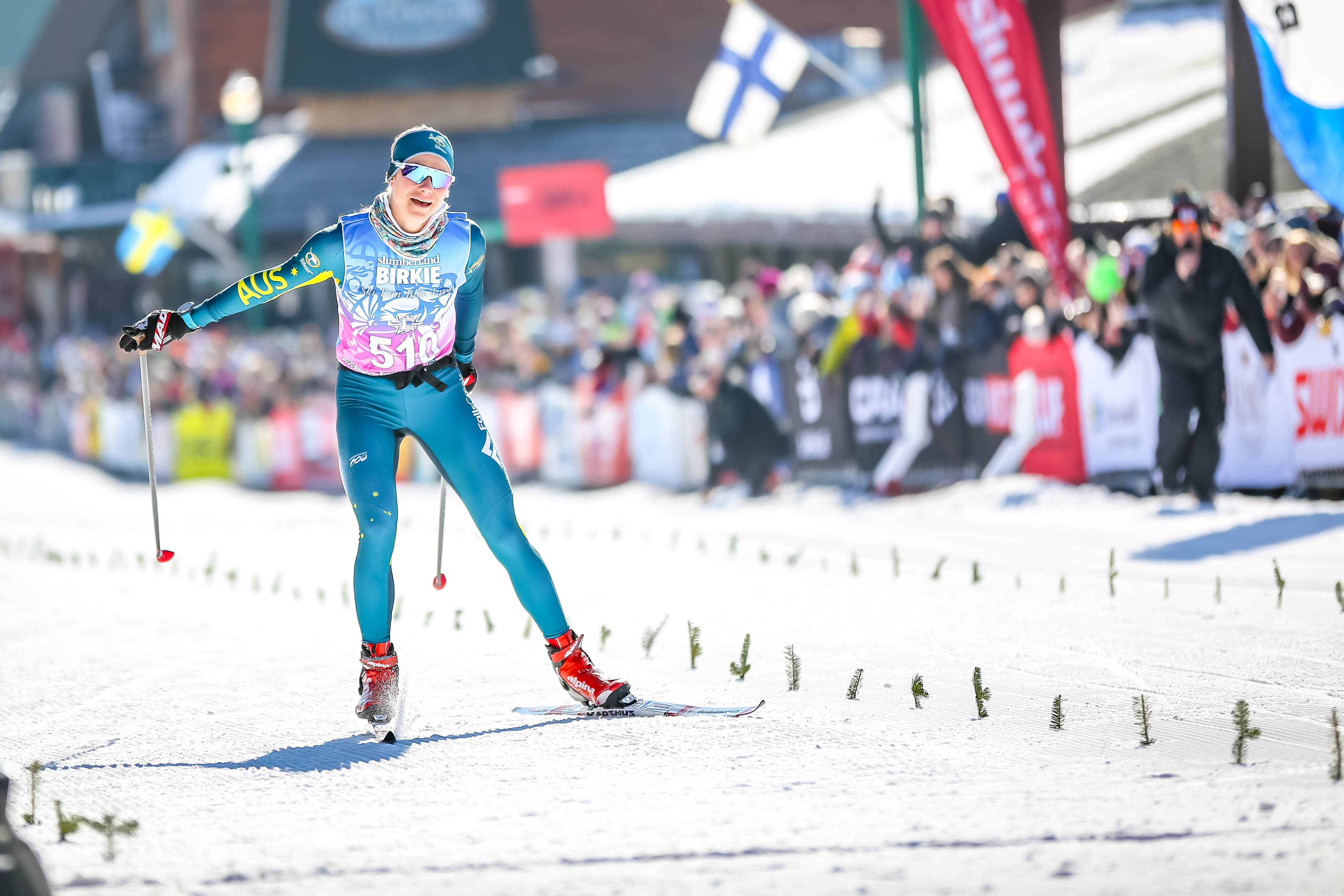
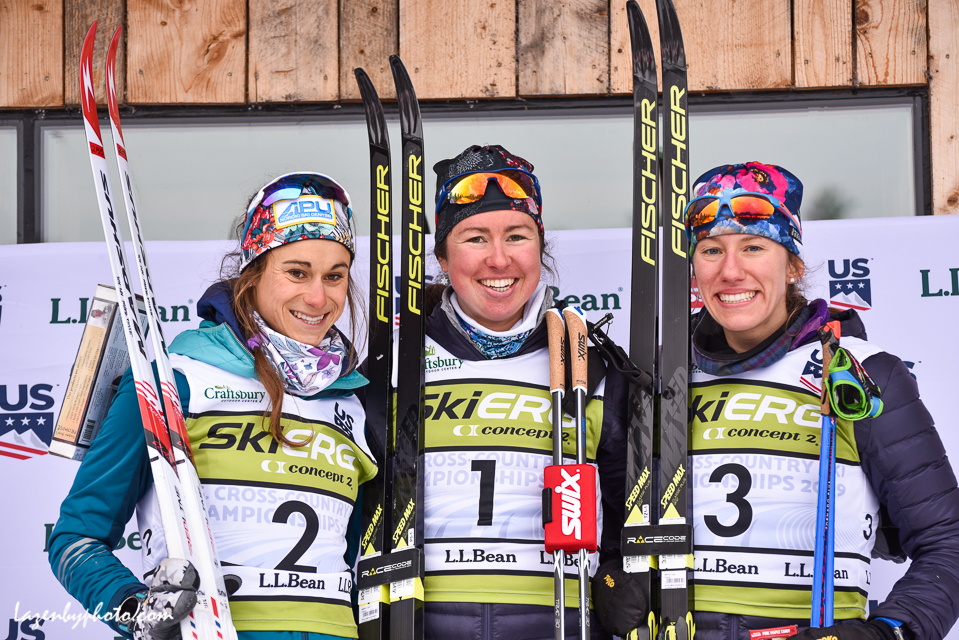
The women’s 20 k skate podium at the 2019 U.S. Cross-Country Nationals at Craftsbury, VT. From left to right, Jessica Yeaton (APU/Australian National Team) in third, Caitlin Patterson (CGRP) first, and Rosie Frankowski (APU) second. (Photo: John Lazenby)
In the fall of 2018, on the heels of a season that included representing Australia at the PyeongChang Olympics, Jessica Yeaton applied to physical therapy programs. What she did not expect as she focused her lens on a new goal is that the 2018-2019 season would include some of the top results of her career, which reinforced the vision that she was not quite ready to fully hang up her skis.
During that season, Yeaton secured her first podiums at U.S. Nationals with a second place finish in the 10-kilometer classic behind Caitlin Patterson, followed a few days later by a 3rd place finish in the 20k freestyle, which was also won by Patterson. (Yeaton’s APU teammate Rosie Frankowski took second.) Later in the season, she earned her first SuperTour win in a 5k skate, and achieved a career best finish at the FIS World Ski Championships in Seefeld, AUT with a 22nd place finish in the 15k skiathlon.
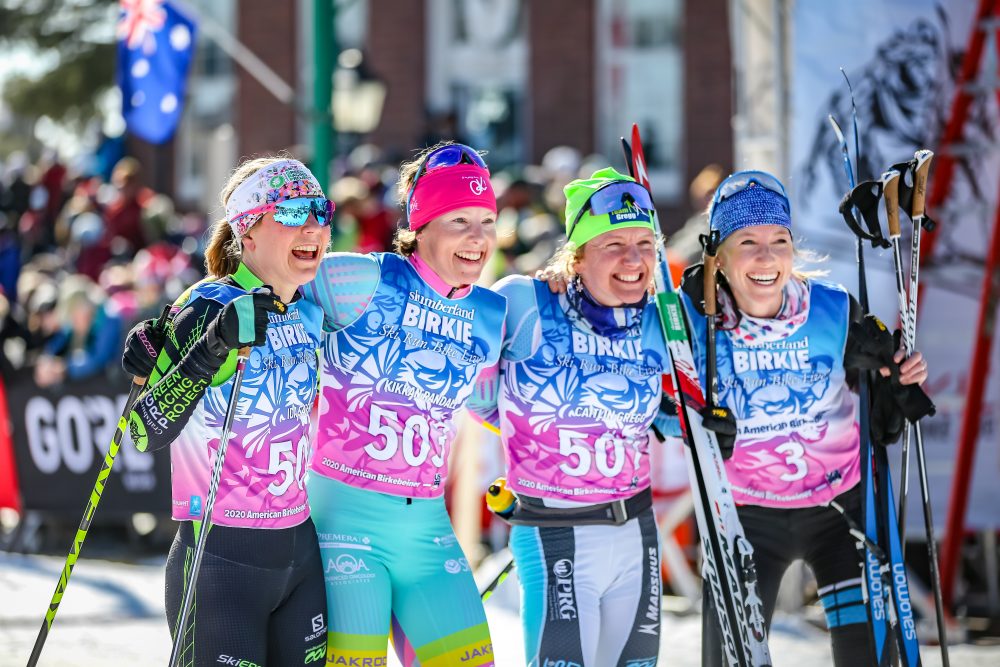
Despite the upward trajectory of her skiing, Yeaton enrolled full time in the physical therapy program at the University of New Mexico in Albuquerque. Six months later, she won the 2020 American Birkie as a relative dark horse considering infrequent racing and significantly less time on snow than her previous training cycles. Yeaton explained in her post-race interview that she was only able to get on snow a few times a week in her Birkie build up, and that she had been listening to recordings of the lectures and her own notes while driving or training to ensure her training was not cutting into the study hours she needed to log.
Then the pandemic hit, making traveling to races more complex — increasing her risk of exposure not only threatened her own health, but the health of the patients she saw during clinical rotations. The university imposed its own set of quarantine rules, and as parts of New Mexico were severely impacted by COVID outbreaks, Yeaton was primarily restricted to the Albuquerque area. Out of state racing was out of the question.
Between the Birkie in February 2020 and the beginning of the 2021-22 season, she competed in only one FIS race in December 2020 — a 10k skate at Kincaid Park in Anchorage, which happened to coincide with an extended winter break from school. Yeaton took third in this event behind Sadie Maubet Bjornsen and Rosie Frankowski.
Flashforward to fall 2021, Yeaton is on a leave of absence from PT school, delaying her completion of the program by roughly five months, to chase down a spot on the Australian Team in Beijing. She’ll still walk with her cohort in the spring, but is putting off her final three clinical rotations to put on a bib and some skinny skis.
FasterSkier connected with Yeaton on a call in early November shortly after she had returned to Anchorage and plugged back in with her APU Teammates. At the time, Yeaton was making the trek from Anchorage to Hatcher Pass almost daily to take advantage of early-season snow in preparation for the upcoming season.
While Albuquerque may not immediately incite mental imagery of pristine corduroy and crisp classic tracks, Yeaton explained the area has been an excellent place for her to train. The city’s elevation is roughly a mile high, but thanks to a geological anomaly, the nearby Sandia Nordic Center sits atop the “rim of a massive uplifted fault block” at an elevation of over 10,600 feet. While this makes breathing all the more difficult, Yeaton applauded the local ski community’s dedication to keeping these trails well-maintained and was grateful to have access to the venue during her time at UNM.
A silver lining of the pandemic for Yeaton was online classes, which allowed her to make the 45-minute drive from town to the trails four to five times a week, nearly doubling her time on snow the previous season.
“I was able to train super well,” Yeaton explained. “And in the back of my head, I was always focused on this [upcoming] season. I had asked for the time off last winter, so I knew I was going to be taking the leave of absence and could focus on qualifying for the Olympics this year. So I think having that goal just made me better able to not worry about last season, but just stay focused on building base fitness and putting in quality training. Just focusing on the Olympic goal.”
Jessica Yeaton puts in high-altitude training at the Sandia Nordic Center above Albuquerque, NM. (Courtesy photo)
As previously mentioned, Yeaton’s success in the season before she began full-time school included many of her career highlights. She explained that knowing her potential helped her stay hungry, even when she was busy with schoolwork and watching races from afar.
“In the back of my head, I’m like, ‘Man, I want to have a shot at that 30k skate at the Olympics.’ And there are other goals that I still have. So that has made it hard for me to just sit back and be like, ‘Oh, I’m okay not doing the ski season,’ because I do really want to race and I want to see how fast I can ski this year. So that’s played a really big role. I think without some of those results that last season, and without the Birkie, maybe I wouldn’t be so motivated, but it’s been pretty easy to stay motivated to train just because of some of those results.”
Yeaton said that it was easy to stay motivated to take a break from school to rollerski, and she enjoyed getting more into mountain biking on the plentiful trails in the area. She also enjoyed the contrast of the high desert climate compared to what she had grown accustomed to in Anchorage.
“I don’t even check the weather anymore,” she laughed. “I worry about thunderstorms in the afternoon, but you’re never like ‘Oh man. It’s raining out, I don’t really want to go do this workout.’ It’s always a beautiful day, so you’re just like, ‘Of course I want to get out there and train today.’”
Yeaton also enjoyed getting to know the small but very supportive local ski community surrounding Sandia Nordic.
“There’s so many people in Albuquerque that are stoked on cross country skiing, and it was really cool getting to know some of them. They’ve been really welcoming and supportive of me as a skier. I did the virtual Birkie last year [with some other local skiers], and there were people out cheering and one guy brought a bunch of food for us and set up a feed station and things like that. I’ve met a few people that will train for the Birkie [or other marathon races], so I’ve had people to ski with up there… It’s been cool just to see that there is this great community in New Mexico, and it’s sort of hidden.”
Jessica Yeaton skis the “Virkie” — the 2021 virtual Birkie — at the Sandia Nordic Center. (Photo: Instagram @jjyeaton)
Though the training has been good, it can be hard without races to keep a finger on the pulse with fitness relative to your competition. Yeaton had hoped to enter some mountain bike races this summer, but this was prevented by a significant setback in April. While on a mountain biking and camping trip in the Utah desert with her partner, David Norris, Yeaton slipped while navigating her way down an embankment to a creek in crocs. She fractured her pelvis and had to significantly modify her usual training.
“It took a really long time to get back to full training and I didn’t want to rush or risk anything.”
Instead of races, Yeaton tracked her progress using times on Strava segments.
“Which was a little dangerous at first, because if you’re not meeting those segments, you can just be really hard on yourself. But I would use that, really just to see how I’m measuring up against myself.”
She explained that there were only a couple of options for rollerski venues, and she would typically do intervals at the same location. This made it easy to directly compare her results from similar sets of intervals.
Despite full time schooling toward a doctorate in physical therapy, Jessica Yeaton has maintained her training base in hopes of qualifying for the Beijing Olympics. (Courtesy Photo)
Yeaton also found it encouraging and invigorating to rejoin her APU teammates upon her return to Alaska, as she knows these women have been working hard and are in excellent shape.
“I think one thing people on teams forget is that it’s so valuable — even if the point isn’t to measure yourself against each other, you do have that feedback from teammates. I’ve really valued just being here and doing intervals [with the team].”
On one hand, she recognizes that, compared to doing level four on her own, she can tap into a different gear when chasing another skier down. Even if it meant “getting [her] butt totally kicked”, Yeaton recognized her teammates would help elevate her fitness and sharpness before the season began. On the other hand, having respect for the talent and strength of her teammates, she also gained confidence from being able to complete these workouts alongside them.
“All these girls are so fast. And I’m like, ‘Man, if I can keep up with these girls, then that’s a good sign.’”
At the moment, Australia’s quota for the Beijing Olympics is limited to three men and two women. To earn a spot, Yeaton will need to perform well in early-season races that fall during the qualification period, roughly the month of December.
In terms of outlook, Yeaton expressed that she believes she has “a decent shot”; however, she recognizes that a lot can change during the 18 months she has been away from racing.
“I’m hoping it goes well, but I’m definitely nervous, just not having really raced last season.”
She explained that she trusts the quality of the training she has been putting in, but even pros experience self-doubt.
In preparation for the season ahead, she headed to Davos, SUI in late November to begin training with the Australian national team. World Cup support was not available to the team until the third race weekend in Davos, beginning December 11th, but she will be able to use results from nearby Alpen Cup races toward qualification instead.
Yeaton kicked off her season last weekend in Goms, SUI and also plans to race in St. Ulrich am Pillersee, AUT December 18-19th. After that, she will head back to the World Cup to start in the Tour de Ski.
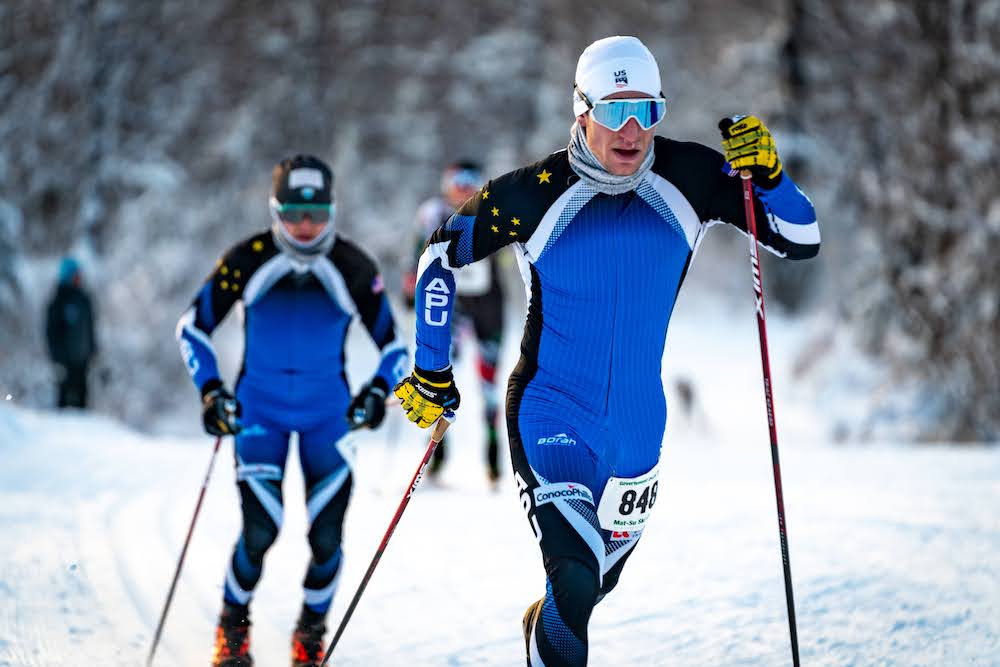
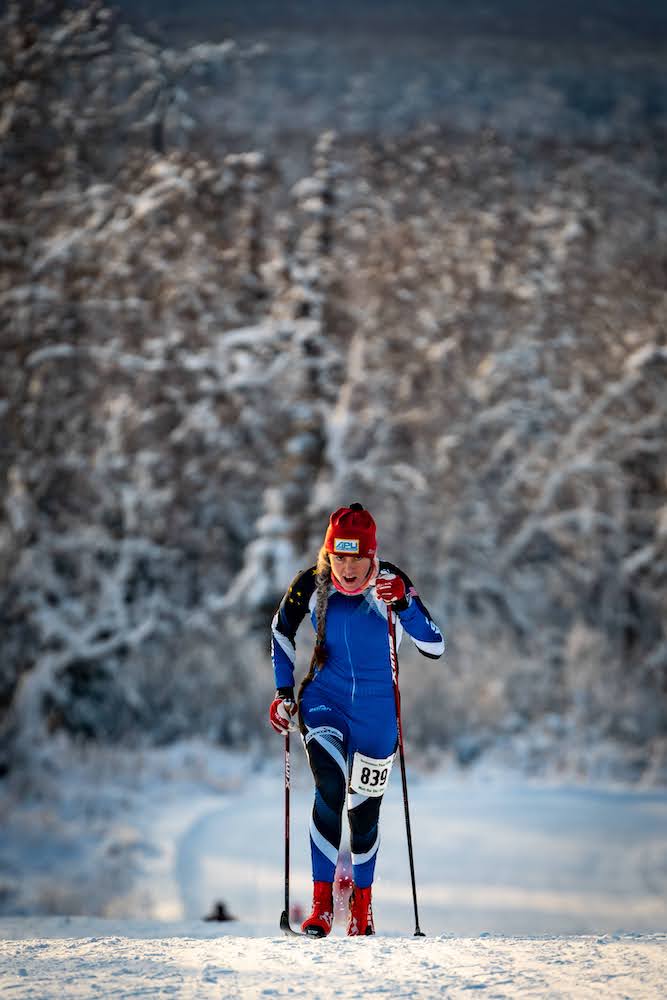
Rosie Frankowski, left, and Hailey Swirbul race at Government Peak Recreation Area, Palmer, Alaska, Nov. 14, 2021, in the season-opening Race to the Outhouse #1. (photo: Eric Strabel for APUNSC)
GOVERNMENT PEAK RECREATION AREA, above Palmer, Alaska — High-end nordic ski racing was last seen in this country in mid-April, when a bevy of national-team members who call Alaska home competed in a pair of FIS races in mid-winter conditions, followed by a more vernal 2,000’ hill climb the following weekend. Less than seven months later, as Alaska kicks off another season of ski racing, little has changed: the country’s deepest domestic fields, single-digit temps, and fierce competition. The 2021/2022 American race season is officially underway.
The Mat-Su Ski Club has hosted the season-opening Race to the Outhouse #1 somewhere in the Matanuska–Susitna Valley, above Palmer, Alaska, for the past 13 years now. Typical locations are Archangel Road and Independence Mine. The race course at Archangel ends with a 240-meter climb; the race course at Independence Mine starts with a 145-meter climb over the first 1.8 kilometers. Both feature an eponymous state parks outhouse near the finish line. Neither is exactly FIS-legal.
This year, poor road conditions on the upper mountain caused by recent heavy snowfall necessitated a last-minute change to Government Peak Recreation Area, or GPRA, elev. 1,000′.
When the snow cleared and the new venue was announced on Friday morning, this year’s race was somehow even harder. The Government Peak 5k FIS course has 38.2 meters of gain per kilometer, on par with the Lahti World Cup course (38.5) that has hosted multiple World Championships. It has a height difference of 81m, more than Ruka or Lillehammer or Lahti or Falun or Oberstdorf or frankly most venues. After Sadie Maubet Bjornsen skied here for the first time, in October 2020, she called these “the most legit ski trails I have ever skied in the US,” and pronounced the venue World Cup-ready.
Hunter Wonders races at Government Peak Recreation Area, Palmer, Alaska, Nov. 14, 2021, in the season-opening Race to the Outhouse #1. (photo: Eric Strabel for APUNSC)
Overnight temperatures on Friday of nearly zero, rising to only 7° F in time for Saturday’s race, did not make the snow on an already difficult course ski any faster.
Rosie Brennan (USST/APU) was unfazed by the slow snow, covering two laps in 32:18.4 to take a commanding win in the women’s 10-kilometer mass start classic race. She was followed by Hailey Swirbul (USST/APU, +2:44.6), who was 0.7 seconds ahead of Rosie Frankowski (APU). Fourth place was another Olympian, Australian–American dual national Jessica Yeaton (Australia National Team/APU).
“I was looking for an opportunity to practice racing and shake some cobwebs off on the snow,” Brennan wrote to FasterSkier on Saturday. “It was absolutely incredible what Mat-Su Ski Club pulled off for us today. From one surprise storm they were able to set classic tracks on a 5k homologated loop. I honestly can’t think of a better way to get a good test race in than that. I am very grateful for the community support and effort to help get us ready to race before leaving. I am really happy with my effort and was able to find some race feelings and some good movements on snow. I am feeling on track and ready to hit the road.”
Swirbul sounded similar sentiments, writing, “I was hoping to get a good workout in and practice pacing. I don’t think time trials have to be great to have a good effect and shake some of the cobwebs out. Good to go hard with some great teammates!”
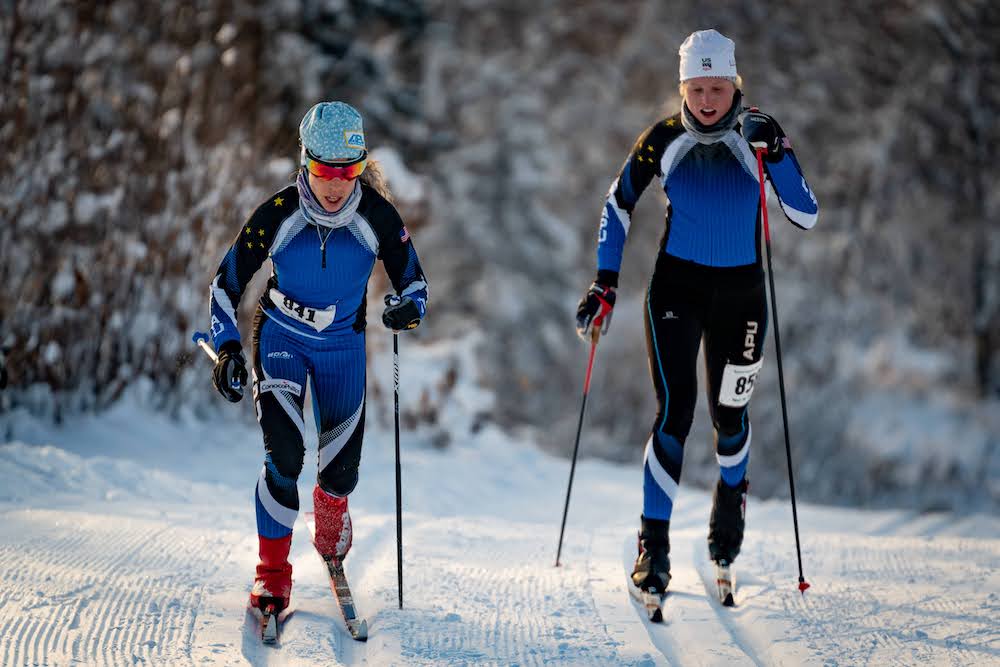
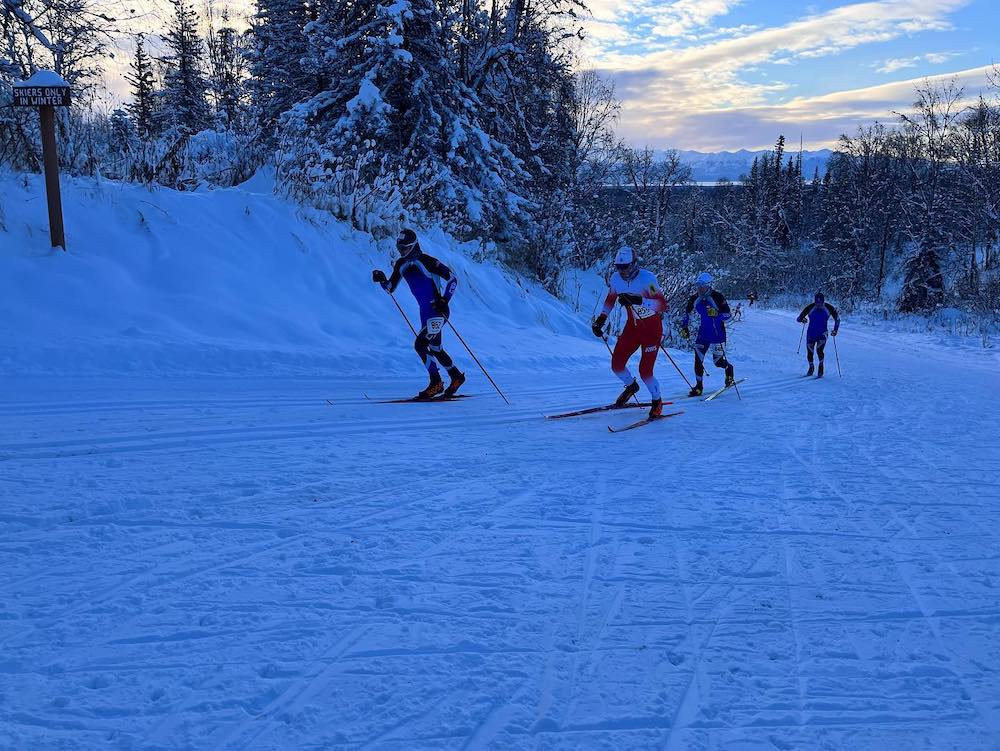
From left, David Norris, Gus Schumacher (red AWS suit), Hunter Wonders, and Tyler Kornfield charge up the first hill out of the stadium at Government Peak Recreation Area, Palmer, Alaska, Nov. 14, 2021, in the season-opening Race to the Outhouse #1. (photo: courtesy APUNSC)
For the men, Gus Schumacher (USST/Alaska Winter Stars) took the win in the 10 k classic, crossing the line in 29:29.2 in the mass start race. He was closely followed by Hunter Wonders (USST/APU) and David Norris (APU), 0.8 and 2.4 seconds back, respectively.
Schumacher had much the same reaction as Swirbul, writing to FasterSkier, “Today was mostly just to shake off some cobwebs and get a sense for where my race fitness is at. It went really well; I felt good and it was fun to end up ballpark where I want to be. It gives me some confidence just to have a solid race under my belt before travel.”
The World Cup athletes were concentrated in the 10 k classic. In the men’s 5k skate, Oskar Flora led a strong junior field to take the win in 15:50.4, followed by Liam Chisholm (+36.0) and Kyle Fischer (+54.7). In the women’s 5k classic, it was Meredith Schwartz first in 18:59.6, Alison Arians (Schwartz’s mother) 43.6 seconds back, and Tuva Granøien in third, 1:25.8 back.
In the men’s 10k skate, JC Schoonmaker (USST/UAA) led a small field to the finish in 29:35.1. He was followed by local juniors Skyler Amy and Cole Flowers in second and third several minutes later.
Anna Engel (45:26.7) appears to have been the only woman who did the 10k skate.
* * *
The races were a robust test of athletes’ fitness on a challenging course. They were also somewhat of an epistemological puzzle: Is it really an early-season race if you’ve been on snow for nearly two months already? Snow came to the Chugach foothills above Anchorage, ca. 2,000 feet, on September 24. By the time that early-season storm was melting out, race-skis skiing was online at Independence Mine – this photo was taken on October 10:
An Anchorage- or Palmer-based athlete in a position to drive could have logged seven full weeks on snow by the time race day dawned. APU head coach Erik Flora had 30 hours on snow by Halloween. Climate change is undeniably present in southcentral Alaska, but its effects in this La Niña winter have so far been kind to skiers.
Making the question of “what type of race is this, anyway” even more complicated was the depth of the fields. Alaska’s World Cup skiers are off to Europe soon, but not yet, and turned out in force for Saturday’s race – four out of five athletes on the U.S. Ski Team A-Team raced, and a total of six athletes who will be starting on the World Cup this fall were in the field (potentially seven depending on what happens with alternates).
Becca Rorabaugh races at Government Peak Recreation Area, Palmer, Alaska, Nov. 14, 2021, in the season-opening Race to the Outhouse #1. (photo: Eric Strabel for APUNSC)
FasterSkier unofficially calculates the race penalty for the men’s race as 23.7, and as 30.3 for the women, if these had been sanctioned as FIS races. U.S. Nationals, in Soldier Hollow in January, will likely have a higher number, reflecting the fact that the country’s fastest athletes are typically racing in Europe in January. Two out of three women on Saturday’s podium have World Cup podiums to their name; the third was 21st in the Olympics. For the men, Schumacher, Wonders, and Norris would not be surprising picks for the 2022 Winter Olympics American men’s relay team. Was this a free, low-key fun run involving a line in the parking lot to sign a waiver and pick up safety pins for your bib, or was it an unofficial U.S. Nationals? It’s complicated.
Racing continues in Alaska next weekend with the start of the town race series at Fairbanks’ Birch Hill ski area, then over Thanksgiving with races at Government Peak (the first annual Turkey Trax race) and Birch Hill (the 57th annual Turkey Day Relays). Domestic FIS racing gets underway in West Yellowstone the same weekend. The Midwest racing calendar at SkinnySki.com is currently unavailable, but the Duluth SuperTour races on December 4-5 are a notable early-season event. In New England, the NENSA calendar begins with the Quarry Road Opener on December 5. Wherever you are and whatever your local racing scene looks like, think snow.
(N.b., the results are slightly idiosyncratic, reflecting a free, low-key event in which athletes could choose between doing a 5k and a 10k up to the moment of the finish lane vs. lap cutoff. This manifests as all racers for both distances being listed together in a single results sheet, which is then further sorted by wave and gender. My sense of what’s what is: In the 10 a.m. men’s wave, places 9–11 did the 10k; in the 10 a.m. women’s wave, all athletes did 5k; in the 10:02 a.m. men’s wave, first place did the 5k and everyone else did 10k; in the 10:02 a.m. women’s wave, places 1–4 did 5k and the rest did 10k; in the 10:04 a.m. wave, places 23 and 24 for the men, and 9th place for the women, did 10k; everyone in the 10:06/10:08/10:10 a.m. waves did 5k, except that 8th place in the 10:06 a.m. classic did 10k.)
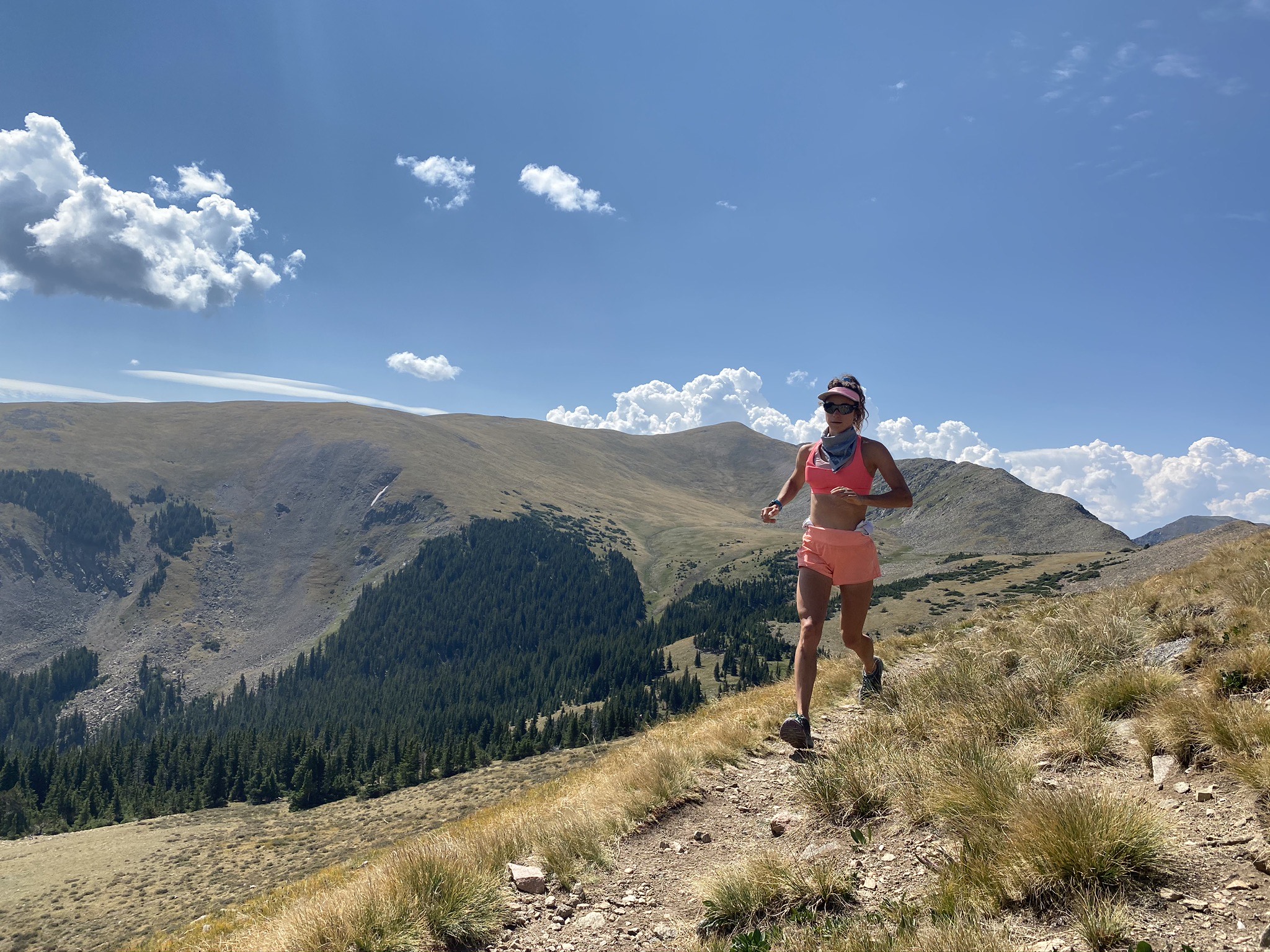
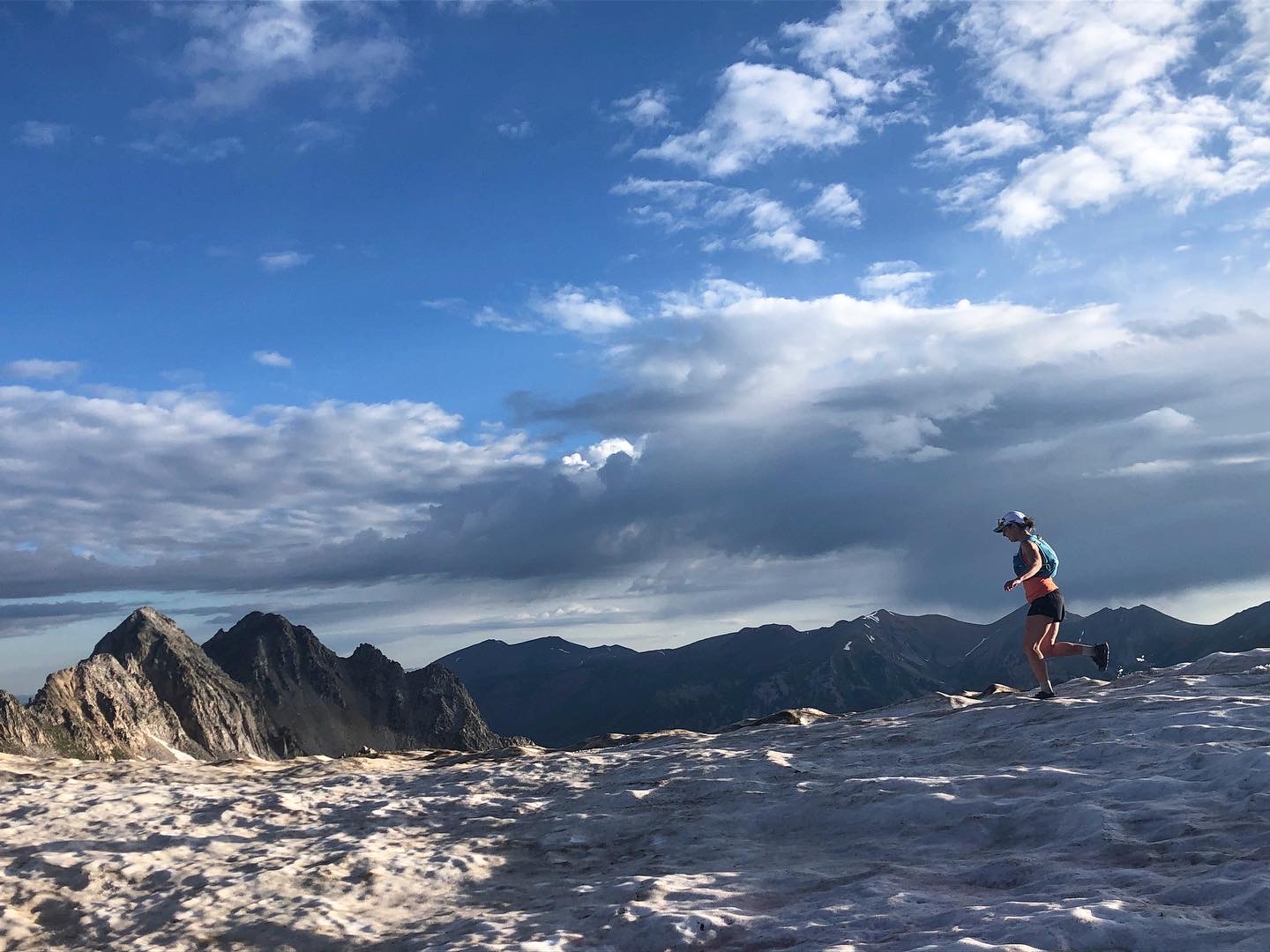
The author crosses a snow field on a long run near her home in Colorado last summer.
Last year at this time, I was primarily gym-ridden. After roughly five months on snow, my fitness was high but my tolerance for the impact and specific demands of running were low. Throwing better judgement to the wind, I gave in to the allure of warm days, rapidly drying trails, and beloved road loops around town, and paid the price.
Despite running between zero and ten miles total between December and the end of February, I took off for my first run of the season: 4.5 miles. That first week totalled 20 miles in four runs. Much lower than summer totals, but far greater than the sum of the months prior.
Two weeks later, I did a 90 minute trail run with roughly 1,200 feet of climbing and descending. What started as the sensation that a tendon on the lateral side of my right knee was snagging with each leg swing quickly turned into a sharp stabbing pain. I hobbled my way home and by that afternoon, I couldn’t walk downstairs without sidestepping or even make it down the gentle slope of my front yard. Sound familiar?
This experience is not uncommon. When snow conditions deteriorate in the spring but weather is perhaps not yet conducive to cycling or rollerskiing, our options for aerobic exercise that provides the same satisfaction as the kilometers we logged all winter are limited. The best available early season option is often running, so we lace up our cobwebbed sneakers, and fight the temptation to jump back in too quickly.
While some may tolerate a rapid transition, there are a myriad of running related injuries that could easily crop up. Last year at this time, FasterSkier featured recommendations from Dr. Ross McKinnon, DPT, to address the topic of a healthy transition to running. His advice included a slow increase in running volume, working on running mechanics, beginning with soft surfaces, and making sure your shoes are up to the task.
To add on, we reached out to DPT candidate, Olympian, and former APU Teammate Jess Yeaton for additional information to support a healthy return to running.
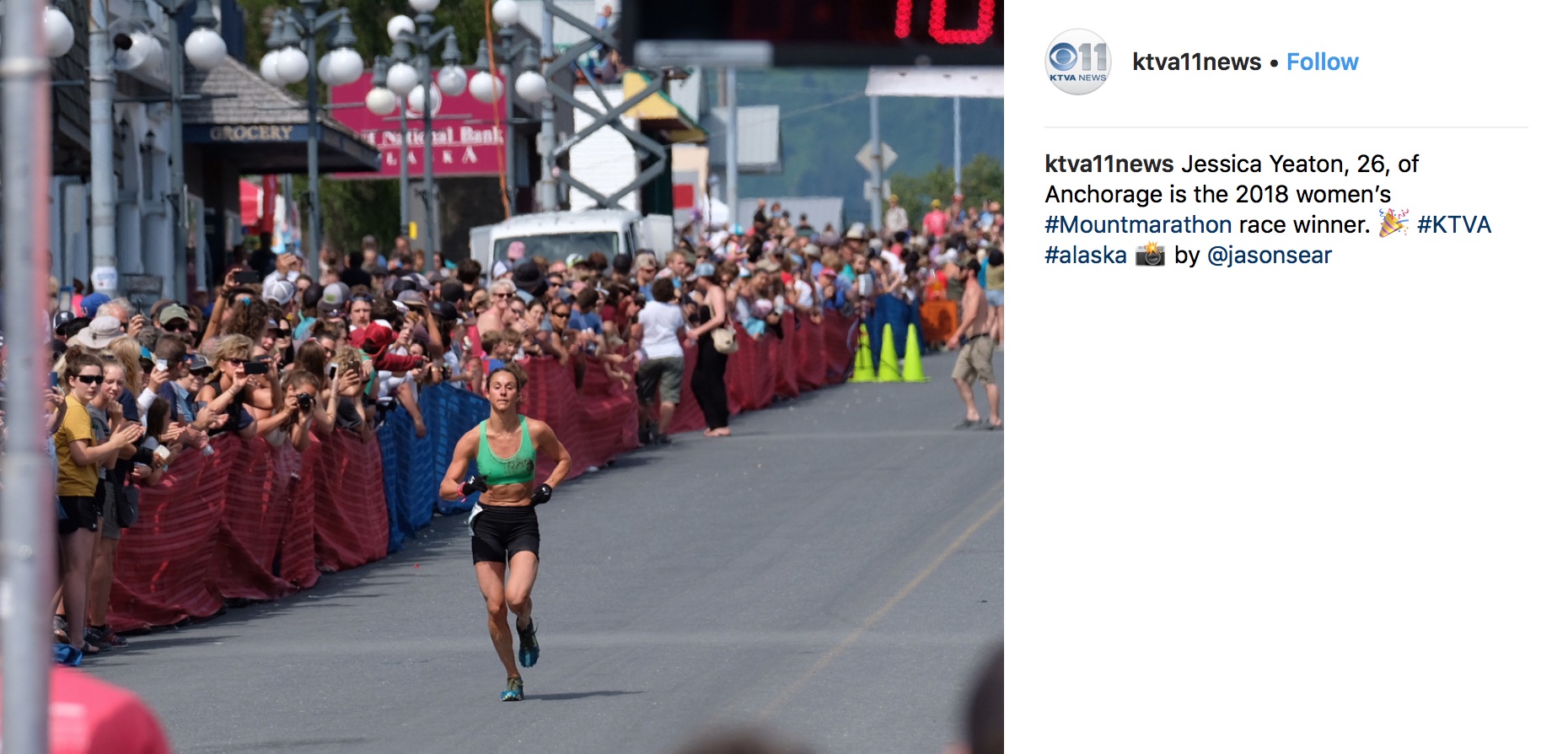
Jess Yeaton heads for home to win the 2018 Mt Marathon race in Seward, AK. (Photo: Anchorage Daily News/Lauren Holmes)
Seconding Dr. McKinnon’s first recommendation, Yeaton began with the importance of committing to a gradual return.
“I think the absolute biggest thing is taking a slow progression back and not increasing your weekly mileage too much, as well as adding in exercises that target strengthening glute med.”
The gluteus medius muscle, or glute med, is a fan shaped muscle on the outside of the hip which connects the iliac crest to the top of the femur. The glute med plays a vital role in single leg stability, in particular, in maintaining level positioning of the hips and proper alignment of the leg during each stride. After all, running is essentially a repetitive high-impact single leg motion, so stability at the hips and through the core are key.
By strengthening the glute med, runners can reduce “hip drop” and prevent the knee from caving inward with each stride. These phenomena reduce the body’s natural mechanisms for absorbing the impacts of running. They put abnormal strain on various ligaments, tendons, and joints down the chain, leading to IT Band Syndrome, knee and low back pain, and more.
The gluteus medius, or glute med, provides stability at the hip, a source of injury risk for runners. (Photo: Human Anatomy and Physiology Lab, LumenLearning.com)
“Examples of [exercises to strengthen the glute med] would be things like donkey kicks, fire hydrants, bridging up with both legs and then holding with one leg,” Yeaton explained. “I actually had to do a community project working with a running group here in Albuquerque for school and made a video with some of these exercises, which is available on YouTube.”
In the video, Yeaton demonstrates forward and lateral walks with an exercise band looped above the knees. Maintaining tension in the band activates and strengthens the glute med, promoting better stability in single leg movements, such as running — or skiing!
Yeaton also contributed to an article on single-leg stability geared toward better balance on skis this fall, which can be found here.
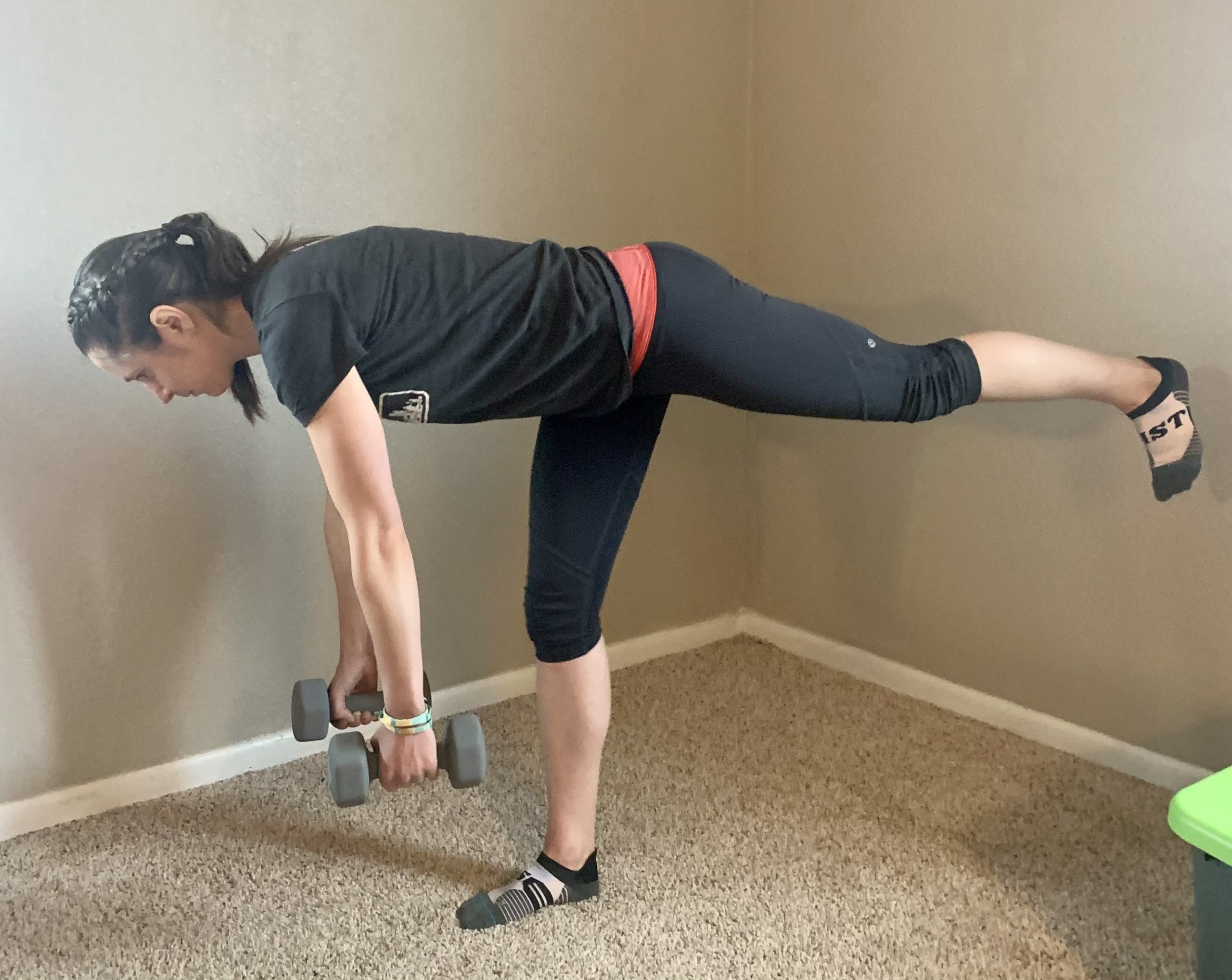
In the gym, you could try single leg deadlifts with a kettlebell or free weight to build stability. To execute this move correctly, it is important to keep the hips level to the floor and avoid the tendency to rotate away from the standing leg. While keeping a flat back, focus on hinging from the hip and staying within the range of motion that your hamstring flexibility allows rather than reaching the weight toward the floor, which often leads to rounding at the low back. In addition to challenging your single leg balance, you should feel this in the glute and hamstring of the standing leg.
Aim for a flat back with hips squared forward, and keep the toes of the lifted leg pointed toward the ground.
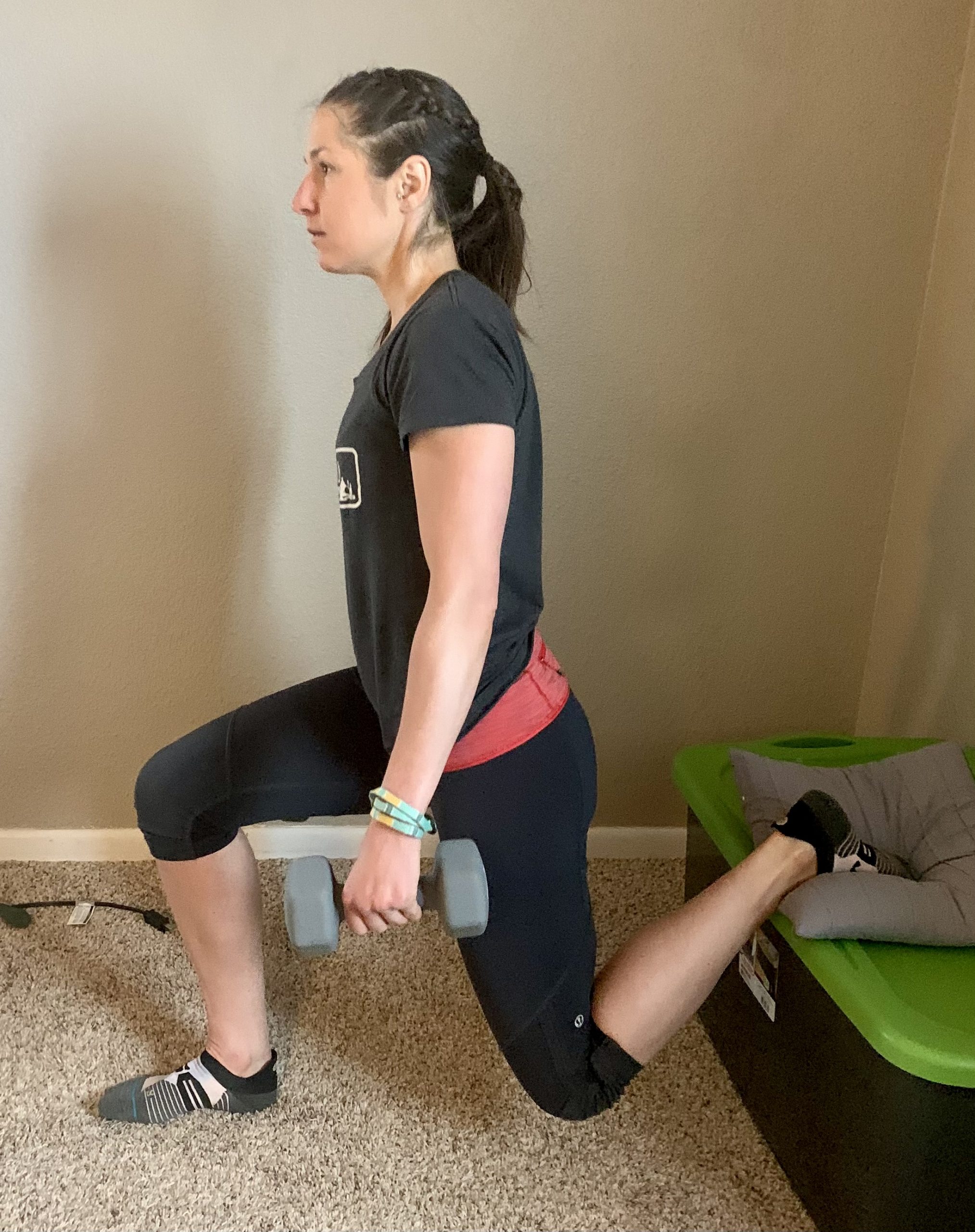
Another option for enhanced glute med strength is to try a split squat with the rear leg elevated, also known as a Bulgarian split squat. With one foot resting on a box, stair, or bench, complete a single leg squat, creating a 90-degree bend in the knee of the standing leg. The knee of the elevated leg should drop straight down toward the ground, while the other knee stays stacked over the ankle and in line with the foot.
Be sure to keep your chest up and core tight to reduce wobbling and work the correct muscles.
By pushing your heel into the ground as you come out of the squat, you can keep the action in your glute muscle, rather than letting the quadriceps muscles on the front of the upper leg take over. Again, the positioning of the hips is important; here they should stay squared forward throughout the movement.
Yeaton also noted that she commonly sees skiers develop calf and achilles related injuries from jumping back into running too quickly and recommended variations of calf raises and heel drops to combat these issues.
“Another one you could add is doing calf raises with a ball between your ankles, which puts you in a supinated position (meaning the foot is rotated slightly inward), which helps target tibialis posterior. I’ve noticed this muscle is a BIG problem for a lot of skiers.”
Keeping pressure on the ball as you rise onto your toes and slowly lower cues and strengthens the tibialis posterior.
The tibialis posterior lies underneath the gastrocnemius, more commonly known as the calf muscle. Running the full length of the lower leg, the tibialis posterior begins behind the knee and connects to the arch of the foot. It helps to flex the foot and reduce pronation, where the arch collapses and the ankle tracks inward. This is commonly seen in runners.
To perform the exercise, hold a soft ball, such as a tennis ball, between the heels of your feet. Slowly rise onto your toes while maintaining the positioning of the ball, hold briefly at the top, then return slowly to standing.
“For achilles strength, you can do heel drop exercises on the stairs. Push up into a calf raise on both feet, then lower down slowly on one foot. The eccentric, or the slow, controlled lowering part is what’s important.”
Use both feet to rise onto your toes, then slowly lower with just one foot to target the achilles.
Returning to the concept of a gradual increase in running volume, Yeaton recommends actually calculating how quickly you are ramping up. Yeaton recommends the 10% rule — meaning volume should increase by no more than 10% per week. She referenced a 2014 study titled “Excessive progression in weekly running distance and risk of running-related injuries: an association which varies according to type of injury”, which followed roughly 900 runners for one year, tracking mileage increase and injuries. The research showed that athletes who increase by 30% or more were at a higher risk for injury, whereas those who increased by 10% or less were the least likely to incur a running-related injury.
“I think this is crazy when skiers put a number to it, because that really isn’t much of an increase… from what I’ve seen, what most athletes consider taking it slow and easing back in is really a pretty significant progression.”
Obviously, there are caveats — if you start with one three mile run, you’ll probably be okay running more than 3.3 miles total the next week. If you ran 12 miles over four runs last week, you probably shouldn’t run 13 in one go the following week. However, paying attention to frequency, distance, and intensity of your runs as you progress can play a vital role in keeping your body happy.
Anecdotally, running 5-7 miles once per week through this winter has made a big difference in my ability to progress this spring.
So there you have it. Work on hip stability and core strength (bonus: this will help your skiing too!), incorporate calf raises and heel drops, and keep an objective eye on your progression. Have fun and stay healthy!
The video presents several dynamic stretches as you begin to develop your own routine using slower, coordinated movements to move the joint through the desired motion.
Striving for flexibility is ingrained from a young age. The sit-and-reach test was a key component of the presidential fitness test which was administered to elementary-aged school children until recently. Middle and high school athletes often go through a routine of static stretches before starting practice. Acro-yoga masters now fill our Instagram feeds, making us feel inadequate about our ability to touch both palms on the floor (and also to put both legs behind our heads).
Stretching has long been promoted as the ultimate tool to help soothe sore muscles, aid recovery, and prevent injury. However, recent studies on the benefits of stretching have been controversial. Research that specifically targets static stretching, or holding a muscle at its end-range for 30-60 seconds (the type commonly used at high school running practice), has shown that it impairs the muscle’s elastic energy potential. This results in decreased strength and power.
A common, yet newer school of thought, is that static holds are detrimental to overall performance when performed before physical activity. Furthermore, the belief that stretching decreases muscular soreness and aids in recovery post-exercise has been debunked. Evidence has shown that no amount of stretching can assist in alleviating the pain in our quads after that first long run of the summer. 1
While static stretching has been shown to improve muscular flexibility, the actual benefits of this increased range of motion are up for debate. Much research has failed to link increased flexibility to a decreased risk of injury, concluding that overall, there is little to no benefit to static stretching for athletes. 1
Why then are we still stretching… and should we be?
There may exist a more indirect link between mobility and risk of injury for Nordic skiers than research gives credit, as decreased range of motion at a certain joint may lead to compensatory patterns and muscular imbalances that lead to overuse injuries. Also, there is evidence that a different type of stretching, dynamic stretching, can be beneficial to athletic performance when performed as part of a warm-up. 2,3
Dynamic stretching involves stretching to a movement’s end range through repetitive, active movements without holding at end range. Muscles must actively contract, increasing blood flow to the muscle and thus temperature. This serves to decrease viscous resistance in the muscle, thereby increasing extensibility and tolerance to tensile forces. 2,5 In contrast to static stretching, dynamic stretching has been shown to facilitate increases in power, agility, jump height, and sprint performance when performed before exercise. 2,4
The rationale behind dynamic stretching is to provide an active stretch into the motions a particular activity requires, making it much more functionally oriented than static stretching. In the case of skate skiing, this might entail a stretch of the adductor muscles while performing a side lunge, for example. Research has shown that neural pathways are strengthened as task-specific movement patterns are practiced, which increases muscular coordination and improves performance. 2
How do you incorporate dynamic stretching into your pre-ski routine? This kind of stretching can be done at home, in the ski hut, or in the parking lot, but it is important to perform within about 15-20 minutes of starting your workout. You want to avoid bouncing, uncontrolled movements (also known as ballistic stretching).
It’s best to use slower, coordinated movements to move the joint through the desired motion (see 2- minute example movie for pre-ski inspiration).
Each movement can be performed about 8-15 times. Many of the motions are easy to perform while walking, which is great news, as research has shown that pairing these stretches with dynamic activity helps improve proprioception, or our awareness of body position, and balance. Walking can be thought of as a “mini-plyometric” and serves to activate muscle spindles, or stretch receptors. This activation during a combination of dynamic stretching and walking leads to the increased energy potential of a muscle.
Do we need to be stretching for hours each night trying to hit the splits? According to the current research, probably not.
Joint hypermobility has been shown to lead to instability that can cause further problems down the road- like dislocation, arthritis, and labral tears.6,7 Specific strengthening and postural control exercises may play a more significant role in injury prevention, but that’s another article in itself. However, we desire mobility that meets the requirements of the task we wish to perform, which is where dynamic stretching comes into play. By helping to improve the functional range of motion, muscle activation, and proprioception prior to activity, dynamic stretching can indirectly lead to a decreased risk of overuse injury while enhancing athletic performance. This isn’t to say you need to bag your nightly static stretching routine entirely, as anecdotal evidence from many athletes suggests it does make them feel better. There is inconclusive evidence to support why that may be the case from a physiological standpoint. However, it is a highly debated topic into which sports research will continue to delve.
Baxter C, Naughton LRM, Sparks A, Norton L, Bentley D. Impact of stretching on the performance and injury risk of long-distance runners. Research in Sports Medicine. 2017;25(1):78-90. doi:10.1080/15438627.2016.1258640
Opplert J, Babault N. Acute Effects of Dynamic Stretching on Muscle Flexibility and Performance: An Analysis of the Current Literature. Sports Med. 2018;48(2):299-325. doi:10.1007/s40279-017-0797-9
Vazini Taher A, Parnow A. Level of functional capacities following soccer-specific warm-up methods among elite collegiate soccer players. J Sports Med Phys Fitness. 2017;57(5):537-542. doi:10.23736/S0022-4707.16.06236-8
Kallerud H, Gleeson N. Effects of Stretching on Performances Involving Stretch-Shortening Cycles. Sports Med. 2013;43(8):733-750. doi:10.1007/s40279-013-0053-x
Freitas SR, Mendes B, Sant GL, Andrade RJ, Nordez A, Milanovic Z. Can chronic stretching change the muscle-tendon mechanical properties? A review. Scandinavian Journal of Medicine & Science in Sports. 2018;28(3):794-806. doi:https://doi.org/10.1111/sms.12957
Philippon MJ, Briggs KK, Fagrelius T, Patterson D. Labral Refixation: Current Techniques and Indications. HSS J. 2012;8(3):240-244. doi:10.1007/s11420-012-9290-z
Wolf JM, Cameron KL, Owens BD. Impact of joint laxity and hypermobility on the musculoskeletal system. Journal of the American Academy of Orthopaedic Surgeons. 2011;19(8):463-472.
Sadie Maubet Bjornsen races at Kincaid Park earlier this month. (photo: Eric Packer)
This article has been updated with additional information about the history of the Kincaid Hairpin FIS course, and with a link to an article compiling national club time trial results.
ANCHORAGE — Sunday, the second day of FIS races in Anchorage, saw, at some level, more of the same: fresh snow (though much less than the day before), soft and slow conditions, and Sadie Maubet Bjornsen at the top of the results sheet. There were some changes on the men’s side, however, as Hunter Wonders finally reached the top step of the podium this season, after coming in second in last weekend’s citizens race and third in Saturday’s sprint qualifier.
Women’s race
Sadie Maubet Bjornsen did seven 10 k skate races on the World Cup last year. (Okay, eight if you count the Tour de Ski final climb up Val di Fiemme, which is in fact also a 10 k, but that has a 418m max climb, and so has been discarded as an outlier for this point about comparing times across more typical courses.) The fastest took her 23:41, albeit on a 9.4-k course. The slowest took her 29:33, on what was actually a 10.8-k course given the precise combination of laps used.
Two laps of the hardest 5 k FIS course at Kincaid is actually closer to 10.4 k… but nonetheless, Sunday marked Maubet Bjornsen’s slowest 10 k in years, non-Tour de Ski final climb division, as she finished in 30:58.45. And she won by over a minute. It was slow going out there. (If you go back far enough: When Maubet Bjornsen, at the time 20 years old and named Sadie Bjornsen, raced this course at 2010 Senior Nationals, she was even slower, finishing 19th in 31:36.9, nearly 3 minutes back of Kikkan Randall.)
If you’ve done a senior-level distance race at Kincaid in the past decade (exception: distance races at 2018 Senior Nationals), you’ve likely raced on the Hairpin FIS course. As UAF skier Kendall Kramer said in a pre-race Instagram story about the course profile, “I don’t really understand it, but it’s like all up and no down, so that’s good.”
From left, Sadie Maubet Bjornsen, Rosie Frankowski, and Zanden McMullen race at Kincaid Park earlier this month, not actually on the FIS course. (photo: Lex Treinen)
As she wrote to FasterSkier on Sunday, “These last few weeks as I have gotten to train twice a day, mostly in the dark (December in AK), I find myself falling in love again with the sport I get to do. Generally I’m traveling all the time, trying to recover on these super challenging courses, which largely amounts to waddling around on the walls. I forgot what it feels like to ski through the woods, and ski smooth and fast, and just be in the little dream state alone in the dark. I feel like I couldn’t be luckier right now!”
Maubet Bjornsen added, “I’m so thankful for all the years of hard work I put in, and learning the circuit, because it gives me the confidence and belief to design my own plan this year. This weekend was a fun reminder that this plan was designed with a lot of thought and purpose. I’m thankful I have my teams and coaches behind me on it!”
To hear Maubet Bjornsen’s teammate tell it, this psychological comfort is accompanied by a strong physical base: “I will say that the world better watch out when Sadie gets to the World Cup,” Rosie Frankowski wrote to FasterSkier. “Yes, she might be racing small races here in Alaska, but that girl is not in local race shape. She would still be a dominant force in a strong international field so I can’t wait to see her back on the circuit when the time comes.”
Frankowski isn’t skiing that badly herself, picking up her second second-place finish behind Maubet Bjornsen in as many days (third of the season if you count last weekend’s 10 k skate). Sunday, she started second and finished second, 1:14 behind Maubet Bjornsen.
Frankowski noted that it is difficult for her to divine what her current shape is “when you aren’t racing head to head against that many people. I had some good time trials before our World Cup crew left,” she wrote, “and I have had some good races since then I think. I definitely feel that I made gains this summer in my weaknesses like coordination and speed, but, again, it is hard to tell how I would do against a World Cup field.”
Regarding her racing outlook for the rest of the winter, Frankowski observed, with equanimity, “As for myself, I might have lost the opportunity to race in Europe this year by turning down Period 1 [starts after the Lillehammer races were cancelled] so I am just going to keep focusing on what I can control, which is racing locally and enjoying the good winter we have had so far.”
The women’s 20 k skate podium at the 2019 U.S. Cross-Country Nationals at Craftsbury, VT. From left to right, Jessica Yeaton (APU/Australian National Team) in third, Caitlin Patterson (CGRP) first, and Rosie Frankowski (APU) second. (Photo: John Lazenby)
Third place went to Jessica Yeaton, an Australian national who grew up largely in Anchorage and previously trained full-time with APU. Yeaton now attends school in Albuquerque, where she is in the University of New Mexico’s three-year physical therapy doctoral program, and spends far less time on snow than she used to. That said, she took time out from her studies this spring to win the American Birkebeiner in a 48-hour trip crammed in between exams, so her snow fitness remains decent.
The rest of the top ten was: Becca Rorabaugh in fourth, 2:05 back; Anna Darnell in fifth, 2:16 back; Kendall Kramer in sixth, 3:07 back; Garviey Tobin in seventh, 3:23 back; Mariel Pulles in eighth, 4:00 back; Aubrey LeClair in ninth, 5:09 back; and Marit Flora in tenth, 5:18 back. Kramer and Pulles ski for UAF; the rest of the top ten skis for APU.
The top three U18 girls were Marit Flora (APU), Meredith Schwartz (Alaska Winter Stars, or AWS), and Katey Houser (ANR).
The top three U16 girls, who skied a single lap of the 5 k course, were Sammy Legate (AWS), Amae Kam-Magruder (AWS), and Kiley Dennis (Alaska Nordic Racing, or ANR).
Men’s race
While Maubet Bjornsen destroyed the women’s field all weekend, the men saw a new name at the top of the results sheet, as APU skier Hunter Wonders took the win in 27:06.98. Wonders is currently on the USST D-Team by virtue of his top-10 finish in the 15 k classic at this year’s U23 Championships (he was eighth), which is the sort of result that would have made headline news on this site five or ten years ago, before Gus Schumacher and Hailey Swirbul et al. began destroying worlds. Wonders was second in this race at Kincaid last year (behind Schumacher), and took his first national championship in Houghton last January, in the classic sprint. Sunday’s victory appears to have been the first of his career in a senior-level FIS race (he finished behind a Canadian at nationals).
In this file photo, Hunter Wonders races at Kincaid Park earlier this month. (photo: Eric Packer)
“I’m super stoked” about the win, Wonders wrote to FasterSkier. “It’s a really competitive field that we have in Alaska right now, which is fun and keeps things interesting. It’s a good confidence booster going into the rest of the season to really see that training has paid off over the last year. I’m hoping that it puts me in a good position to make the U23 World Junior team, as well as maybe get some discretionary starts on the World Cup.”
Last weekend’s winner in the 10 k skate, Zanden McMullen, was on the podium again on Sunday, this time in second, 8.66 seconds back of Wonders. Forrest Mahlen was third, 56.30 seconds back. All three men on the podium ski for APU.
The weekend marked “the first FIS races for me since the Birkie last year,” Mahlen wrote to FasterSkier. (For details on some of the intervening FIS races that didn’t happen, see this fine piece on Alaska Public Media from mid-March by FasterSkier alumnus Nat Herz, poignant headline, “This Anchorage skier flew 3,000 miles to his first World Cup race. Now he has to quarantine.”)
“It was a strange combination of remembering how to ski race, and learning how to do it safely with all of the new Covid protocols,” Mahlen continued. “The NSAA [Nordic Skiing Association of Anchorage] put together a very impressive event and I have no doubt we will have a lot more racing opportunities in Anchorage this season.”
Forrest Mahlen races at Kincaid Park earlier this month. (photo: Eric Packer)
So speaking of this season, what’s next for Mahlen? “With the uncertainty of racing at all this year my plan has been to take advantage of the amazing skiing Anchorage has had for the past nine weeks,” Mahlen wrote. “Instead of traveling and racing the Supertour I’ve been able to ski right from my front door on the APU campus onto groomed trails. With no national level racing I plan to spend the winter training far more than I usually would, and taking advantage of any local races that happen. With that in mind I was pleased with my result in the 10k today, especially with such an impressively deep men’s field for a local race.”
Mahlen noted, in reference to the national championships that would typically follow two weeks after this race weekend, “The [December] Besh Cups are usually a strong predictor of US Nationals podiums, and I don’t think that has changed this year.”
The rest of the top ten was: Thomas O’Harra (APU) in fourth, 57.30 back and just a second off the podium; Kai Meyers (APU) in fifth, 57.99 back; Sam Hendry (University of Utah) in sixth, 1:21 back; Michael Earnhart (APU) in seventh, 1:22 back; Luke Jager (APU) in eighth, 1:36 back; Magnus Norøy (UAA) in ninth, 2:11 back; and Sigurd Rønning (UAA) in tenth, 2:19 back.
The top three U18 boys were Porter Blei (ANR), Aaron Power (AWS), and Mark Eggener (AWS).
The top three U16 boys, who skied a single lap of the 5 k course, were Cole Flowers, Elias Soule, and Skyler Amy, all of Alaska Winter Stars.
Memes, as humor often does, use comedy to express a difficult truth: This is a large country; head-to-head racing across different regions during a pandemic is ill-advised and logistically problematic (not to mention currently barred in some states); some athletes are potentially uncomfortable with the elevated role given to discretion when it comes time to select athletes for international championships.
In a mid-November email to USSS members, U.S. Ski Team Cross Country Program Director Chris Grover acknowledged the stress that race cancellations create “for athletes, coaches, parents and clubs, as they try to qualify skiers for international trips like the Oberstdorf Nordic World Championships, the World Cup, and the Vuokatti WJC/U23s.” Grover wrote, “We would like the community to know that the U.S. Ski & Snowboard coaching staff, and the various discretionary selection committees involved in selection of athletes to these trips, will now consider any type of race result that is submitted, including smaller non-sanctioned local races, and even a well-run time trial. Of course, the more professionally run the event, the easier it is to interpret the results and to weigh those results; so if official races can be run, that is ideal. But in these challenging circumstances, we want everyone to know that we will evaluate any results that you send to us for consideration. We will also continue to consider top international results from the 2019-20 season, as described in the discretionary selection criteria.”
A survey of informal time trial results this season is outside the scope of this article. (Also, it was done already, and better, on SkinnySki.) As for official races, the two Kincaid races are the first FIS races held on the continent this season, and, given their place on the calendar and the strength of their field, may be unofficially viewed as 2020/2021 U.S. Nationals West. They are the first USSS/NRL (national ranking list) competitions with results up in the MyUSSA results database. (It appears that ski races were also held this weekend for the Quarry Road Maine Cup with a few dozen athletes, though official results are not up yet, just live timing.) Races remain proscribed in Vermont, as in Minnesota. SkinnySki.com has compiled a virtual hot lap competition leaderboard for the best times on three snowmaking loops in the Minnesota area.
Racing is currently scheduled to continue in Anchorage in January with the next two races in a five-race citizens race series.
Covid reporting disclaimer: The weekend’s races occurred under the provisions of the Municipality of Anchorage’s Emergency Order No. 16 and Attachment E, which together set forth the rules governing outdoor sports competition. This includes an exception from the city’s 10-person gathering limit for outdoor sports, but bars spectators if there are more than 10 people at the venue, counting both athletes and volunteers.
This reporter watched portions of Saturday’s sprint qualifiers from home via the Kincaid stadium webcam. When he drove to Kincaid on Sunday, he found more than 10 people in the Kincaid Stadium between athletes, coaches, and volunteers (and, it must be said, a handful of spectators), and so he did not add to the total. He parked elsewhere and went skiing on other trails in a large park, then covered the races via email and Instagram direct message without needing to come close enough to anyone to stick a microphone in their face. He thanks all the athletes interviewed for their time in writing.
At the end of the 2018 season after being on the wrong side of the cusp of making the Olympic team, Erika Flowers made a transition in her ski career. She left her Stratton Mountain School T2 training group and returned home to Bozeman, MT where she began a role as the Associate Director at Profitable Ideas Exchange. However, Flowers did not hang up her skis — it was not retirement, just a transition and a new work-life-training balance to navigate.
And she has done so swimmingly. It has been one of her career best seasons, including a sprint and distance podium performance and racing in the final of three additional sprints. Flowers currently sits in second in the overall SuperTour standings, less than 30 points behind leader Kaitlin Miller (CGRP).
Most recently, Flowers was the top American and third overall at the Birkie 50-kilometer skate with a time of 2:15:00 (+1:39.4). After Jessica Yeaton charged off the front at OO (roughly 20 k in), Flowers worked with a chase pack that included Riitta-Liisa Roponen and Kaitlynn Miller.
Additionally, in the Minneapolis SuperTour events the week before the Birkie, Flowers popped the fastest qualifying time in the freestyle sprint and ended the day second overall, and was just off the podium in 4th in the 5 k classic.
In this conversation, Flowers shares further insight into how she fits her training, which she plans with her husband Andy Newell, into her work schedule and discusses what she has learned through this transition. She explains that the saying “happy skiers are fast skiers” has given her a sense of freedom to do things a different way that she was accustomed to.
“There’s so many things that the athletes who are racing full time do to perform at that level and I think that you have to do those things to some degree. But I’m someone who always did things by the book and if someone told me to do eight intervals of this type, I would always do eight and maybe nine. That made me very fit, but I think it also maybe sacrificed some of the flexibility that’s also required to be a good athlete, and maybe at times, I was not as happy doing it that way as I could have been.”
Flowers also discusses her goals for the remainder of the ski season, which include racing in the Minneapolis World Cup sprint and the World Cup finals in Canmore.
We also discuss her summer plans to continue challenging herself in mountain running races, including her the 50 k at Run the Rut in Big Sky, MT. She also shares that she has recently received a nomination to the North Face trail running team and is currently looking through additional race options with them. Thanks for listening.
Interview with Erika Flowers following the 2020 American Birkie.
When we reviewed this year’s results for the elite women’s field at the American Birkebeiner, we did a double take. Jessica Yeaton sets a new course record and beats Riitta-Liissa Roponen of Finland, a favorite for the win, by over 40 seconds.
The surprise was not because Yeaton’s name didn’t belong there; the 28-year-old Perth, Australia native who has skied for APU has a list of SuperTour podiums and a wealth of international racing experience that includes the 2018 Olympics. Last year, she was 22nd in the 7.5/7.5 k skiathlon at the World Championships in Seefeld, Austria and finished 30th in Holmenkollen 30 k classic.
Along the way, she has also demonstrated her prowess in mountain running, winning the 2018 Mount Marathon race in Seward, AK and the Alyeska Cirque Series race.
This year, however, Yeaton was a relative unknown as she began full time Physical Therapy school at the University of New Mexico in Albuquerque this fall. As such, her race schedule has been squeezed into the school calendar, keeping her out of the SuperTour and racing significantly less than previous years.
In fact, Yeaton’s trip to the Birkie was a prime example of this. After taking an exam in the anatomy lab last Friday, she hopped on a plane and flew to Minneapolis, arriving in Hayward the evening before the race. She flew back the day after, heading into a week full of five additional exams.
Yeaton’s other domestic race experience this season was a 5 k skate in West Yellowstone during her Thanksgiving break, where she took second. She also spent a few weeks in Europe during her winter break training and racing in Austria, followed by finishing 38th overall in the Tour de Ski.
During the interview, Yeaton shares how she has adapted her training to accommodate the demands of her schooling and the lessons she has learned through the process.
Of course, we also talk about how the race unfolded and whether she caught the fever in her first year at the Birkie. Thanks for listening.
Post-race interview with full time student and Birkie champ Jess Yeaton
Several course records were shattered on Saturday in a largely faster-than-ever 46th annual American Birkebeiner, with temperatures steadily rising from the 20s at the start into the 30s by the finish of the point to point race from Cable to Hayward, Wisconsin.
Eight men broke the two-hour mark in the Birkie’s 50-kilometer skate race, half of which are American, and an Australian national team member who trains in the U.S. broke the women’s race record by nearly three minutes.
Niklas Dyrhaug, a 32-year-old Norwegian Olympian and former World Cup regular, reached the finish line first on Hayward’s snow-covered Main Street in 1:59:01.7 hours. While he missed the course record of 1:56:58.6 set by Italy’s Fabio Santus in 2010 by just over two minutes, Dyrhaug earned his spot in the Birkie books on Saturday. He held off second-place finisher Ian Torchia, a Minnesota native who trains with the Stratton Mountain School (SMS) T2 Team, by 1.6 seconds and France’s Robin Duvillard, another Olympian and multiple-time World Championships racer, in third by 1.9 seconds.
Wisconsin’s own Adam Martin, who trains with the Craftsbury Green Racing Project, narrowly missed the podium in fourth (+2.7), while Norway’s Anders Gløersen was just behind in fifth (+3.0) and U.S. Ski Team/Alaska Pacific University (APU) member Erik Bjornsen next in sixth (+3.6).
Another Craftsbury racer, Akeo Maifeld-Carucci followed in seventh (+8.0), then France’s Benoit Chauvet in eighth (+12.0). Sam Wood of Idaho placed ninth, 1:42.5 minutes behind the winner with a cumulative time of 2:00:44.2, just ahead of Kyle Bratrud of Minnesota and the SMST2 team in 10th (+1:47.6).
Dyrhaug, who has two World Championship gold medals in the men’s 4 x 10-kilometer relays (in 2015 and 2017), was a Birkie rookie but hardly a surprise winner. In World Cup 50 k classic mass starts in Oslo, Norway, he placed second in 2016 and fifth in 2017. On Wednesday of this week, he placed second in the SuperTour 1.6 k classic-sprint qualifier in Hayward — part of the Birkie Week festivities — finishing 1.07 seconds off the winning time of U.S. Ski Team member Gus Schumacher.
Meanwhile, Jessica Yeaton, who races for Australia and APU, set a new women’s Birkie 50 k skate course record in 2:13.20.6. The 28-year-old Olympian broke Caitlin Gregg’s record of 2:16:07 and placed 67th overall in Saturday’s 50 k skate. Finland’s 41-year-old Riitta-Liisa Roponen, a five-time Olympian who notably placed sixth in the 10 k skate at last year’s World Championships, was the second woman on Saturday, 41.7 seconds behind Yeaton. Former pro racer Erika Flowers, of Montana, placed third, 1:39.4 minutes out of first.
Saturday’s 55 k classic race saw record-setting times from both the winning man and woman, with Peter Holmes of the Sun Valley Ski Education Foundation (SVSEF) defending his 2019 title with a time of 2:26:46, nearly 2 minutes faster than Juergen Uhl’s winning 54 k classic time of 2:28:39.4 in 2010. Holmes won Saturday’s race by nearly 12 minutes, with two Wisconsin skiers — Chris Pappathopoulos (+11:52.4) and Evan Wetzel (+11:54.3) — following in second and third place, respectively.
Wisconsin native Nichole Bathe, who trains in Norway and skis for the British national team, became the new women’s 55 k classic champion in a blistering 2:49:47.0. She beat out Jennie Bender’s 2011 Birkie classic record of 2:50:53 and finished more than five minutes ahead of Colorado runner-up Anja Gruber (+5:33.3) on Saturday. Wisconsin’s Delaney Fitzpatrick finished in just over 3 hours for third place, about 11 minutes behind Bathe.
Before we begin, if you have not heard of the Mount Marathon Race, which takes place annually on the Fourth of July in Seward, AK, watch this video. If you’re short on time, fast forward to the six minute mark to witness racers scale the direct route up the mountain which towers over the town, about 3,000 vertical feet in less than two miles. They then cascade down a harrowing descent, a semi-controlled fall down loose rock, snow, and rocky ledges before a final pavement sprint to the finish.
Mount Marathon is not the only race of its kind. Runners compete around the globe in technical mountain races of varying distances in the Sky Runner Series, and in the US, hundreds of racers “push peaks” up and down Western ski resorts in the Cirque Series. This is only a small subset of the hundreds of events that send runners through grueling terrain up and down peaks and along ridges.
In the list of past Mount Marathon champions, there are several familiar faces, including Kikkan Randall, Holly Brooks, David Norris, Scott Patterson, and Jessica Yeaton. This begs the question, why do some of the best skiers in the country put their bodies at risk racing through potentially high consequence terrain? Is it worth the potential setback from a bad fall that sidelines you from training?
David Norris stood atop the podium of the 2019 Cirque Series Alyeska race. Norris also won the race in 2017 and took third in 2018. (Photo: Instagram @cirqueseries / Keith Fearnow)
To answer these questions and get a deeper look into mountain running, specifically the Mount Marathon Race and the Cirque Series Alyeska race, FasterSkier spoke with Jessica Yeaton (APU/Australia XC Ski Team) and David Norris (APU) who have racked up a slew of wins in these races.
Norris is a two time Mount Marathon winner and course record holder. In 2016 he bested the time of world renowned mountain athlete Killian Jornet. Norris chose to sit out this year’s event due to the smoke-induced poor air quality. Norris also won the Cirque Series Alyeska race in 2017 and 2019 and took third in between.
In 2018, Yeaton won the Cirque Series race and both members of the duo won Mount Marathon — this is a perfect record for Yeaton as she has only entered each race once. (Fellow APU athlete Rosie Frankowski was the female Cirque Series Alyeska winner in 2019.) A nagging hamstring injury has kept Yeaton from incorporating doing much running into her training over the last year, keeping her out of competition.
At the time of the conversation, the couple was wrapping up a road trip from their home base in Anchorage through Western Canada and south through Montana, Wyoming, and Colorado before reaching their final destination of Albuquerque, NM where Yeaton begins Physical Therapy school this fall. She will continue to train and compete in skiing but acknowledges that her race schedule will look different this season as she will be navigating around the academic calendar.
Jessica Yeaton leads the women’s field up a ridge during the 2018 Cirque Series Alyeska race. (Photo: Instagram @jjyeaton)
Apart from dealing with a lingering cold through June, Norris is feeling fit and putting together a solid summer of training. He shared that he is “looking forward to November.”
As both Norris and Yeaton are primarily focused on ski racing, they take a slightly different approach to these races than athletes targeting mountain running. Rather than training specifically for Mount Marathon or Cirque Series, they use the efforts to compliment their high volume of training.
“The race itself is really good training for ski racing and the downhills are the only risky part,” said Norris in a call. “The uphill and cross country side of mountain racing is super good for our training. Usually, we don’t taper for the races, we just add it into the week’s schedule, so instead of hammering out intervals on Friday, we’ll adjust the workout to a speed session then do the race Saturday as our intensity for the second half of the week.”
While this strategy might not be attainable for the average racer, Norris and Yeaton explained that they capitalize on their fitness and power to excel on the uphill, cushioning their lead so they can ease up and stay in control on the downhill, which they believe minimizes the risk of sustaining an injury. This allows them to reap the benefits of a race effort without the danger of halting their otherwise steady progress in skiing.
“I think we’ve been kind of fortunate that in a lot of these uphill races that include technical downhills, if you have enough of a lead [on the uphill], you can stay within your comfort zone [on the downhill], and I don’t think the risk is absurdly high,” explained Norris. “What’s always made me nervous about Mount Marathon is if I were to get to the top in second or neck-in-neck with someone, then I don’t know if I would hold back. With my competitive nature, I think I would hammer the downhill and try to win, and that’s when I think it becomes more risky and that’s when you’d have to decide if that was the right thing for cross country skiing and the training.”
Look closely to see athletes ascend a steep ridge on the shoulder of the Alyeska Ski Resort during the Cirque Series race. (Photo: Instagram @cirqueseries)
As they would with any summer race, both athletes discuss their race strategy and their decision to enter with their coach, Erik Flora. Both agreed that he is on board with them racing but might not advise all of his athletes to do so.
“In my position, being injured, definitely I could enter races and do them and just continue to go down that path, and [Flora] would definitely advise against that,” Yeaton stated. “But if you’re in a place where you’re not battling injuries and you’ve been running and practicing downhills a lot, which is where I was two years ago leading into Mount Marathon, then he was totally supportive of that. A lot of it is knowing your boundaries and knowing what you’re capable of.
“It’s something that is on a case by case basis,” she continued. “Because some athletes are constantly battling injuries and are less skilled at technical running, he’d maybe advise against entering these races, but I think a lot of us can handle that.”
For the skier interested in trying a mountain race, Norris explains that not much alteration to typical summer training is necessary as the fitness will already be there. However, as with mastering any skill, practice and time moving through the type of terrain encountered during the race is valuable.
“For the uphill, all the rollerskiing and the hill bounding and plyometrics are awesome training for running uphill, so I think most skiers have good leg strength and aerobic capacity to climb hills fast,” Norris explained. “Then, it seems like for the descending, my downhilling has improved a bunch just since moving to Anchorage, because growing up in Fairbanks it’s more trail running and just dodging roots. In the afternoons, I do a lot of two hour runs that are just roaming around in the mountains. Once you get above treeline, you don’t really need trails, so you’re just scrambling around on ridges. I think my footwork and my agility has improved by just training out there a bunch. Not necessarily doing drills out there, but just the time and running trails in that terrain.”
Descending is not the only aspect of mountain running that requires practice. As the ascent often requires using hands and arms to scramble and navigate around steep rooty and rocky ledges, this too requires technique and practice to develop efficiency.
“For me, it was just practicing the uphill enough and being in good enough shape and knowing that I could be in front on the uphill,” Yeaton shared. “Then knowing that I could get down the downhill fast enough without putting myself in a risky place. So trying to make up all my time on the uphill, because that’s such good training for skiing — and that’s our strength is fitness. If you can get in a place where you’re already putting time on people on the uphill, then you don’t have to necessarily put yourself at risk, which I think is a really good tactic when you’re ski training.”
For the novice athlete interested in trying one of these races, Norris recommends developing enough stamina to feel strong throughout the event and also moderating effort to prevent the mental haze that can result from overextending one’s physical capacity.
“At any level, if you’re a first-timer going into it, just being fit enough that when you get to the top, your legs aren’t wobbly or shaking under you, because I think that’s where the risk would really increase is if you’re totally fried and you’re just trying to make it back to the bottom. I think with skiers, you start running down the hill for five or ten seconds and you’re already starting to recover. Your legs are strong and you’re able to maneuver downhill safely. But if you’re totally new to the sport and you got to the top of the hill and you’re cramping and crumbling, then your risk of just getting down is so much higher because your legs are so tired.
“Good advice for first-timers is to stay within yourself so that you have the energy and strength to maintain coordination for the downhill,” he said simply.
David Norris (APU) takes on the steep and technical descent during the Mount Marathon Race. (Photo: Screenshot norrisnordic.com)
Even though gravity is in the athlete’s favor during the descent, the difficulty should not be underestimated. Running downhill forces the legs, particularly the quadriceps, to work eccentrically, meaning the muscles are lengthening while under stress from the force of each footfall. Essentially, the tension in the muscles is preventing the legs from collapsing, versus the pulling forces from the glutes and hamstrings which power a runner forward or upward.
Ever had to walk down the stairs backward after a hard downhill run or hike? This type of work causes muscles to fatigue quickly or potentially to fail if they are not properly trained and is correlated with increased muscle soreness after the activity.
For any athlete looking to try a mountain race, it is important to spend some time running downhill beforehand to condition the legs to sustain this toll.
“Just in training, we jog around really easy then you start going down the hill and you realize your legs are getting super fatigued and tired on the descent. It’s deceptively hard to just run downhill,” Norris emphasized.
While no races are on their calendars at this point, both are eager to jump into more mountain races in the years to come. The couple agreed that they would like to find ways to race outside of Alaska; this has been tricky for Norris as his travel budget is focused on the winter race season, but as Yeaton will be based out of Albuquerque for the next two years — “closer” to the other Cirque Series races — both hope it might be possible in the near future.
Today, in Seward, Alaska, home of the Mt. Marathon race, temperatures were in the mid-60s. However, the indices that mattered was the air quality index (AQI). According to an Anchorage Daily News article, the AQI in downtown Seward was 172 on Thursday morning. As a result, the junior race was officially canceled. An AQI of 172 falls within the unhealthy range,
Despite the junior race cancellation, the youngsters went rogue and ran an unofficial race. Seventeen-year-old Sebastian Sweda Mittelstadt won the unsanctioned boy’s race and Noelle Spencer the girl’s race. The juniors run a shortened course.
FasterSkier normally covers the Mt. Marathon race due to the elite cross-country runners in the field. Holly Brooks, Jessica Yeaton, Scott Patterson, and David Norris are all past winners. Norris won in 2018 and 2019, Yeaton won the women’s race last year.
With less than stellar regional air quality due to wildfires, Yeaton, Patterson, and Norris chose not to race.
Hannah Lafleur won the women’s overall in 53:24 minutes. Former APU and U.S. Ski Team member — and mom to twins — Holly Brooks placed 10th in the women’s race.
APU’s Jessica Yeaton skiing to second overall during a 2018 SuperTour 5 k skate in Craftsbury, Vermont. (Photo: John Lazenby)
May 1. Start of a new training cycle for some.
In this Wednesday Workout, we checked in with Jessica Yeaton. Yeaton resides in Anchorage, Alaska where she trains with APU and has represented Australia on the World Cup, World Championships, and the Olympics.
She earned two U.S. National Championship podiums in Craftsbury, Vermont last season. She placed second in the 10-kilometer classic and third in the 20 k mass start freestyle. A sixth place in the National Championship skate sprint rounded out her week in the Northeast Kingdom. At the Seefeld, Austria World Championships she skied to 31st in the 30 k mass start skate. Those were a few of her race highlights. The results, however, came after a summer and fall training season fraught with an overuse injury. (We’ll get to that in a minute.)
Yeaton’s training experience last year saw her rely less on what many would consider the staples of ski specific training: bounding, roller skiing, and running (after addressing her overuse injury). Yeaton learned to be flexible in her training regimen. So we wanted to know how she plans to reflect on her past season’s training.
“I will look at in a more general sense than in a number sense,” Yeaton said in a call on April 30. “I will go back and look through my log, and note it looks like I was doing a lot of running here and I look at the comments and see how I was feeling. I will not get too analytical about it. But, it was such a bad overuse injury, it impacted my training enough that I think I can get value out of going back and looking and trying to analyze the numbers a little better.”
“I think it is important to look into how much of every activity you are doing,” Yeaton said. “I think one thing for me last year if I had broken down and looked specifically at that period say between May and August, my running was so high. I probably was doing way too much relatively in terms of what you might expect a typical runner to do progression wise compared to the rest of my training.”
(Jessica Yeaton on her way to winning the 2018 Mt. Marathon race. (Photo: KTVA 11 News/Instagram)
Yeaton’s results did not suffer as she incorporated more biking and non-traditional training into her routine. This season, she said she will place restrictions on her running as the injury still nags.
“Coming into U.S. National I was not expecting my results at all,” said Yeaton. “But also, it taught me just so much: that a lot of our sport is reliant on fitness. I did know going into the season that I had done less, especially in the fall. I had done less ski specific training that I wanted. I wasn’t, for a while, I wasn’t able to roller ski. I was literally just biking, doing workouts like on the treadmill at the gym, or just stuff that I did not want to be doing. Not doing any bounding intervals and things like that. And it just stressed me out because I was like ‘I am not training for skiing right now’. Maybe I am in good shape, but it is not as ski specific like I wanted. That is what I learned. That maybe if you keep your fitness really high, maybe you don’t need to be specific all the time. I think you need to be to a certain degree, but I was also able to have a really good season without doing exactly what I would have probably done had I been one hundred percent healthy and uninjured.”
The women’s podium from the 10 k classic at Cross-Country Nationals in Craftsbury, Vt. (l-r), Jessica Yeaton in third, Caitlin Patterson first, and Kaitlynn Miller third. (Photo: John Lazenby)
Below is less of a workout Yeaton prescribes, and more of the holistic approach she took to training as she navigated an injury yet still maintained her ski specific goals for the winter. Maybe before you head out and log the hours it is time to review what worked and didn’t last season and ponder how to change it up.
Although this past season has been standout in terms of results for me, it has also been the most difficult with regards to injury. I developed an overuse injury in my hamstring in August last year after a summer full of tons of mountain running training/racing, which plagued me throughout the entire fall and winter. Because of this injury, I went from running every single day to not at all; I was also unable to skate or stride on roller skis for a good chunk of time. I was pretty desperate to maintain my fitness without hurting myself further, and the best way I found to do this was on my mountain bike. I discovered that the natural flow of mountain bike trails mimics nordic skiing super well; I could do quality intervals by powering over punchy climbs, pushing through the flats, and carrying my speed over technical downhills. I also found that standing up out of the saddle as much as possible worked muscles that translate really well to skating. I honestly think that my training on the bike last fall really improved my fitness, leg strength, and even my agility on skis this winter. Looking back on my training, I wish I had made this realization years sooner. As someone who struggles a lot with injury while trying to train big hours, I now know that I need to do as much cross-training and variety as possible. In retrospect, I actually think my injury was a blessing in disguise, as some of the “alternate” training I did while injured was the highest quality. I think as skiers we are often afraid to go outside the norm (i.e. roller skiing, running, bounding intervals), but I truly believe there are other ways to train well for skiing. Going into this summer, I plan to switch things up a lot more not only so I decrease my risk of injury, but also because I think cross-training provides a different, high-quality stimulus. I definitely plan to do more mountain bike intervals throughout the summer, and I also won’t be afraid to trade running for swimming or the rowing machine to give my legs a break. Not only do I think this will help me ski faster next year, but I also am excited about the ability to do more activities throughout the summer- without fear that it’s not “quality” training!
US Ski & Snowboard SuperTour Finals Presque Isles, Maine 30k/50k Mass Start Freestyle
Tuesday marked the last day of SuperTour Finals and with it, the women raced a 30-kilometer mass start freestyle. Sadie Bjornsen (APU/USST) won in 1:21:29.4. Bjornsen was the pacesetter for much of the day. By the 10 k checkpoint, the potential podium challengers had been winnowed down to Bjornsen, Rosie Brennan (APU), Julia Kern (SMS T2/USST), Jessica Yeaton (APU), Katherine Stewart-Jones (NTDC Thunder Bay), Sophie Caldwell (SMS T2/USST), and Caitlin Patterson (CGRP). Rosie Frankowski (APU), who had been skiing with the front group, dropped off the pace to come through nearly 12 seconds back.
Bjornsen and Brennan turned the effort up, further breaking apart the select pack. At 25 k, The two APU skiers had gapped Kern by 13.2 seconds and Yeaton, now in fourth, by 20.9 seconds.
Bjornsen’s win came 33.9 seconds ahead of Brennan in second place. Kern placed third in a time of 1:22:42.2 to round out the podium.
Of note, Bjornsen’s final 5k split marked her fastest of the race. Her 5 k splits from start to finish are as follows: 13:20.4, 13:43.7, 13:54.1, 13:41.2, 13:42.6, and 13:07.1.
According to the International Ski Federation (FIS) Bjornsen earned her fifth non-sprint national title with her 30 k win. At SuperTour finals, the 30 and 50 k are considered national championship events. She won her first national championship in 2011 in Rumford, Maine’s 10 k classic. Bjornsen’s last distance national championship win came in 2014 when she won the 30 k mass start classic in Anchorage, Alaska. She also swept all three individual races this wee at SuperTour finals.
It became a two skier race in the men’s 50 k mass start skate with 10 k remaining. David Norris (APU) and Erik Bjornsen (USST/APU) pulled through the 40 k mark with a 32.7 second lead on Simi Hamilton (USST/SMS T2) in third. At this point, Scott Patterson (USST/APU) came through in fourth, 49.6 seconds behind, and full-time biathlete Jake Brown (CGRP) in fifth (+1:07.3). 1xbet Casa de apuestas
Bjornsen and Norris went unchallenged to the finish with Bjornsen making the winning move to put 9.5 seconds on Norris by the finish. Bjornsen won in 2:13:23.5, with Norris in second, and Hamilton third in a time of 2:14:45.7.
According to FIS, this was Erik Bjornsen’s fifth national championship in a distance event. In 2013 he won a 15 k skate, 2014 a 15 k classic, and the 50 k classic mass start in 2016 and 2018 respectively.
Norway’s Therese Johaug with the Holmenkollen 30 k classic win and no challengers in site. (Photo: ARD screenshot)
FIS World Cup Oslo, Norway Holmenkollen 30 k Classic
Beautiful sunshine. Norwegian crowds. And fine views of Oslo fjord from atop the Holmenkollen venue for the women’s 30-kilometer mass start classic. All things typical on a good weather March day in Oslo.
Norway’s Therese Johuag took this fine day and turned the screws on the 47 starters on Sunday to once again ski away from the field. By the second points bonus at 8k, Johaug was already 23.6 seconds up on the field. She won the race in 1:18:54.5 hours. According to the International Ski Federation (FIS), this was Johaug’s third 30 k win at Holmenkollen and her second classical victory. She won the 30 k skate in 2013. Her first Oslo 30 k classic win came in 2016.
Russia’s Natalia Nepryaeva placed second 1:45.9 minutes back. Ebba Andersson of Sweden skied to third (+149.9).
Rosie Brennan (APU) was the top U.S. skier in 33rd (+ 7:57.0). Rosie Frankowski (APU) placed 34th (+9:40.2), and Kaitlynn Miller (CGRP) 42nd (+13:43.7).
Jessica Yeaton (APU/Australian National Team) raced to 30th (+7:29.4).
IBU World Championships Östersund, Sweden 10 k/12.5k Pursuit
On Saturday’s 10 k pursuit at the IBU World Champs in Östersund, Sweden the German women took first and third. Denise Herrmann won in 31:45.9 minutes with two penalties in her third shooting stage. Tiril Eckhoff of Norwayplaced second, 31.4 seconds back while also skiing two penalties in her third shooting stage. Germany’s Laura Dahlmeier was a close third (0+0+1+0, +31.6).
Clare Egan of the U.S. was 12th (2+0+0+3, +2:44.3), Susan Dunklee raced to 24th (2+0+0+1, +3:27.6), and Joanne Reid 32nd (3+2+1+0, +4:24.2).
For Canada, Sarah Beaudry finished 42nd (2+1+1+0, +5:23.5), while Rosanna Crawford, Emma Lunder, and Megan Bankes were lapped.
In Östersund on Sunday, the men raced the 12.5 k pursuit. Ukraine’s Dmytro Pidruchnyi, who placed fourth in yesterday’s sprint, came away with the win in 31:54.1. Remarkably, it was Pidruchnyi’s first race win either on the IBU World Cup or at the championship level. The 27 year old missed two targets for the day.
Johannes Thingnes Bø of Norway, the biathlete who has dominated the men’s side this season, placed second (+8.3). Bø’s ski speed was such that he took silver despite missing five targets he won the Silver medal. Taking third (+17.7) was France’s Quentin Fillon Maillet. He missed three targets in earning bronze.
For the U.S., Sean Doherty raced to 20th (+1:54.3) while missing two targets. Leif Nordgren placed 44th (0+0+3+1, +4:02.7), and Jake Brown 53rd (1+1+4+1, +6:00.8).
Canada’s Scott Gow began in bib 50, and skied up to finish 43rd (2+0+0+2, +3:51.4).
Of the four Russian athletes starting the 15-kilometer classic mass start in Lahti, Finland three placed in the top four. Anna Zherebyateva won in 40:31.4 minutes as she was able to stretch her nine-second gap at 10 k to 23.5 seconds by the finish. Also from Russia, Lidia Durkina placed second (+23.5), Germany’s Katharina Hennig skied to third (+37.5).
“My tactic was to make a gap in the second loop,” Zherebyateva said during the post-race press conference. “So I did exactly what I wanted. It went really well. Tracks were exactly right for me. This gold medal is an important step for my sport career.”
Yana Kirpichenko was the third Russia in the top-five as she placed fourth (+41.6).
The best North American finisher was U.S. skier Hailey Swirbul who raced to 10th (+1:27.8). Swirbul was positioned 29th at the 5 k time check but steadily moved up in the field as the race progressed. By 10 k she had positioned herself in the top-15.
For the twenty-year-old Swirbul, this is her first go at U23 Worlds after participating in three Junior Worlds as an U20. Last season in Goms, Switzerland she placed second in the 5 k classic and third in the 10 k skiathlon.
Two other U.S. skiers raced into the top-30. Julia Kern placed 16th (+1:43.4), while Alayna Sonnesyn was 23rd (+2:24.9). Hannah Halvorsen, the fourth U.S. starter, placed 54th (+6:58.6).
Hannah Mehain was the top Canadian in 31st (+3:16.8), Sadie White placed 33rd (+3:18.6), and Natalia Hynes 51st (+3:40.9). Marie Corriveau did not start.
Similar to the U23 women’s race, Russian skiers dictated the pacing at the front of the pack — the four Russian starters swept first through fourth place.
Andrey Sobakarev won in 1:17:19.1 hours, Ivan Kirillov placed second (+3.5), Ivan Yakimushkin third (+4.9), and Anton Timashov fourth (+11.4).
Canada’s Antoine Cyr was the top North American in 27th (+2:26.8), while teammate Gareth Williams toed the line a fraction behind in 28th (+2:26.9). Also for Canada, Ritchie Graham was 41st (4:44.1), and Julian Smith 45th (+5:14.3).
Peter Holmes was the top U.S. finisher in 33rd (+3:15.7). Hunter Wonders placed 40th (+4:43.0), Braden Becker 53rd (+6:59.0), and Daniel Streinz 66th (+15:53.9).
Johannes Thingnes Bø scored his 10th IBU World Cup win of the season today in the 10 k sprint in Antholz, Italy. (Photo: biathlon world.com screenshot)
IBU World Cup Antholz, Italy 10 k sprint
In the groove is in the groove. Norway’s twenty-five-year-old Johannes Thingnes Bø scored his 10th IBU World Cup win of the season today in the 10 k sprint in Antholz, Italy. Bø won the race in 23:53.9 minutes with a single penalty in standing. The Norwegian leads the IBU World Cup overall and padded his lead with his fifth sprint win this year.
“It was quite difficult; the altitude here is quite heavy and with the new tracks, I felt dead from 5K so the last 5K was really tough,” Bø said to the IBU after the race. “I managed to have a good plan for the race. When I shoot nine targets, I was quite happy and then it was just to fight hard for the finish line. I like this year’s track; I liked last year’s too because it was not so painful.”
Bø’s season thus far has been a study in speedy skiing. His shooting stands at 87% for accuracy (82% standing, 91% prone) with his superior skiing speed carrying him to the World Cup overall lead. In Antholz today, his course time for each of his two 5 k laps were ranked first.
Norwegian teammate Erlend Bjøntegaard shot clean in both his shooting bouts to take second place, 17.5 seconds behind. France’s Antonin Guigonnat placed third (+20.2, 0+1).
Scott Gow of Canada was the top North American in 20th (+1:06.6, 0+0). Teammates Jules Burnotte raced to 48th (1:55.9, 1+1), Christian Gow 61st (+2:13.4), and Aidan Millar (+3:46.7, 2+2).
Jake Brown was the top American in 40th (1:42.4, 1+0). Sean Doherty finished in 55th (+2:06.2, 2+1), Max Durtschi 62nd (+2:13.8, 0+1), and Leif Nordgren 73rd (+2:43.1).
Racing continues tomorrow in Antholz for both the men and women with the 12.5k and 10 k pursuits.
Lake Placid SuperTour 5 k/10k Skate Individual Start
In the 5 k-freestyle individual start Jessica Yeaton (APU/Australian National Team) placed first with a winning time of 15:01.9 minutes. She was in a tight race for the top spot with U.S. Ski Team/SMS T2 athlete Sophie Caldwell who finished 3.0 seconds back. Caldwell is back home in Vermont training and preparing for the 2019 World Championships.
Katherine Ogden (Dartmouth Ski Team) placed third in a time of 15:17.8. Kelsey Phinney (SMS T2) placed fourth in 15:37.7.
“Today’s race went super well for me; I had awesome skis despite tricky conditions/weather leading into the race – our wax tech did a phenomenal job,” Yeaton wrote to FasterSkier. “The course here is really good for me with all the steady climbing in the first part- I just tried to push hard to the top of the course and then survive and carry my speed on the downhill, which turned out to be a good tactic.
“Between US Nationals and now I definitely feel like I am in a good place leading into Seefeld. I struggled with some injuries in the fall and was forced to do a lot of cross-training (especially on the bike) and skip the early season races in Nov/Dec. In retrospect I think this actually was a blessing in disguise, as I ended up putting in a super hard training block and gaining a lot of fitness. Looking ahead to Seefeld, my goal is to top 30 in one of the races, with my main focus being on the skate events (30k and sprint), and the 15km skiathlon. I am really excited for the rest of the races this weekend; they are my final prep before heading over to Europe to race on World Cup and in Seefeld.”
Kyle Bratrud (SMS T2) won the men’s 15 k skate in 25:27.1 minutes. Bratrud, who was recently selected to the 2019 U.S. World Championship Team, has been a top-performing distance skier this season on the SuperTour.
“Today went well,” Bratrud emailed. “After Nationals, I made the tough decision of turning down World Cup starts in Otepaa and Ulricehamn in order to get some quality training in for the World Champs. Today reflected that as I felt a little tired and pretty flat from not racing since Nationals. That being said, I expect to keep feeling better each race and I should be in a great place when I fly to Europe on the 4th!”
Bratrud recently won the NorAm/SuperTour 15 k classic in Sovereign Lake and the 15 k classic at U.S. Nationals. Bratrud placed second in West Yellowstone’s SuperTour 15 k skate, and the 30 k skate mass start at U.S. Nationals.
Akeo Maifeld-Carucci (CGRP) placed second in a time of 26:18.9. It was Carucci’s second SuperTour podium of the season and his best career SuperTour result. In West Yellowstone, he was third in the 15 k skate behind Ben Lustgarten (CGRP) and Bratrud.
Alexis Dumas (CNEPH) of Canada was third in 26:32.2. U.S. skier Adam Martin was fourth, 3.1 seconds behind Dumas.
The women’s podium from the 2019 U.S. Cross-Country Nationals skate sprint. From left to right, Hannah Halvorsen (APU/USST D-Team) in second, Julia Kern (USST D-Team/SMS T2) first, and Kelsey Phinney (SMS T2) third. (Photo: John Lazenby).
Julia Kern’s young season has been rife with success. Two SuperTour sprint wins, and a second place in this Craftsbury nationals in the classic sprint are among the twenty-one-year-old Kern’s peaks since 2018/2019 elite level domestic racing began in West Yellowstone days after Thanksgiving.
As much as her season so far has been without pitfalls, her pathway to the women’s 1.5-kilometer finals was, for Kern, a test of her patience and will. As the second fastest qualifier, Kern was a marked skier.
In the fourth quarterfinal, she placed second behind Canada’s Katherine Stewart-Jones.
In the second semi, Kern placed third, advancing to the finals as the first lucky loser. Kelsey Phinney (SMS T2) placed first, while Maya MacIsaac-Jones was second.
“I learned that a lot happens the second half of a race,” Kern told FasterSkier in Craftsbury about how her strategy evolved while she advanced. “I was in sixth, dropped at the top of the hill [in the final] and then I just got my mind back into it. And put it all out and I realized I had the finishing speed. I just need to be able to hang on and then get into that zone of just going for it in the finish. I think there is a lot in the last quarter of the race to be had.”
The final was stacked with day’s four fastest qualifiers, which included Hannah Halvorsen (APU/USST D-Team) the fastest qualifier, Kern, Phinney who qualified third, and Caitlin Patterson (CGRP) the fourth fastest qualifier.
Kern won the final in 3:16.73 minutes, 0.21 seconds ahead of Halvorsen in second. Phinney placed third for the final podium spot. Patterson finished fourth overall, MacIsaac-Jones fifth, and Jessica Yeaton (APU/Australia National Team) sixth.
“The final was really hard,” said Kern. “I think everyone was really tired from a fast and hard week of racing. Things really spread out on the uphill and then it was just kind of a fight for what you have left. And on the last hill I just got into a zone and just put my head down and hammered.”
Julia Kern (bib 102) takes the win in the women’s skate sprint final at the 2019 U.S. Nationals. Hannah Halvorsen (right) was a close second. (Photo: John Lazenby)
Like in Thursday’s classic sprint when the two were in a photo finish, Kern and Halvorsen were side by side coming into the line during the final.
“I think I had been smiling a little bit because it is so fun to go head to head,” said Kern. “I was almost laughing in my head and was like ‘oh, is this going to come down to another lunge?’ that would be pretty funny. I think we are going to make each other faster. Competition is the best to make you better and it makes it really fun to see us both on top of our game and duking it out head to head at the finish.”
It was Kern’s first U.S national championship. She secured her first career U.S. nationals podium in the classic sprint last Thursday, in which she placed second to the winner Ida Sargent (CGRP/USST). Halvorsen, in that race, place third also for her first career podium at nationals.
“I have been learning a lot from Julia actually in quite a few of these races,” Halvorsen said when asked about her thoughts on the day. “I had a good quarters and semis and I was able to take control and feel confident. And in the final I tried to take the lead and tried to win it but Julia came in from behind and she was stronger. She definitely pushes me and she took it today.”
For Phinney, the day brought her first career podium at a nationals.
“In the quarterfinal I was hoping to just rest as much as possible,” Phinney said about the start of her heats. “I was in the fifth quarter and then the second semi, so I had the disadvantage of less rest throughout the day. I had fallen in the classic sprint so it was a little dicey in the quarter and I took the lead at the climb just to stay safe. I think the biggest thing I learned was just that I was skiing with good energy and was felt really good in the second half of the course so that gave me a lot of confidence going into the final. But I think anything could have worked as long as you skied safe. It was a long enough course so that there were some opportunities to either do really well or blow up.”
In the final, Patterson made the initial move to break the group and gain an advantage.
“So it was a little exciting,” Phinney said of Patterson’s move. “I worked really hard to get back up to her on the big climb. And then I maybe burned myself a little bit and wasn’t able to hold the finishing pace of Hannah and Julia when they came around. It is my first national podium. So I am happy with that. But I would have loved to fight for that win.”
U.S. Cross-Country Ski Nationals at Craftsbury, Vermont 1.5 k Freestyle Sprint
In the men’s 1.5-kilometer freestyle sprint on Tuesday, the final day of racing at U.S. nationals, Ben Saxton (SMS T2) won the final in a time of 2:58.51 minutes.
Saxton was fifth in qualification behind fastest qualifier on the day Logan Hanneman (APU). Hanneman went on to place second in the final, crossing the finish line .32 seconds after Saxton. Noel Keeffe (University of Utah), the day’s second fastest qualifier, placed third.
Rounding out places fourth through sixth in the men’s final were Daniel Streinz (NMU), then Gus Schumacher (AWS), and Zak Ketterson (NMU) respectively.
For the women’s 1.5 k skate sprint, Julia Kern won the final in a time of 3:16.73 minutes after sending the second fastest time in qualification. The women’s fastest qualifier, Hannah Halvorsen (APU/USST D-Team) placed second in the final .21 seconds after Kern.
Kelsey Phinney (SMS T2) placed third in the final (+2.01). Caitlin Patterson (CGRP) was forth, Canada’s Maya MacIsaac-Jones (CNST) fifth, and Jessica Yeaton (APU/Australian National Team) sixth.
The women’s 20 k skate podium at the 2019 U.S. Cross-Country Nationals at Craftsbury, VT. From left to right, Jessica Yeaton (APU/Australian National Team) in third, Caitlin Patterson (CGRP) first, and Rosie Frankowski (APU) second. (Photo: John Lazenby)
Another distance race at U.S. Cross-Country Nationals in Craftsbury, Vermont and another win for Caitlin Patterson of the Craftsbury Green Racing Project.
Count them up: eight U.S. national championships for the twenty eight year old. And in as many days at her home course, Patterson has further solidified both her legacy and the fact she is the distance racer to watch and match as the start gun fires.
On Thursday of last week, Patterson opened U.S. nationals with a win in the 10 k classic. Today, in a time of 59.23.1 minutes, ticking off k after k, Patterson won the women’s 20 k skate mass start.
“For the first [5 k] lap Rosie Frankowski and I traded off the lead a little bit,” Patterson told FasterSkier in Craftsbury. “She was leading the climbs and I was leading the downhills, but I could already feel it stretching on the downs. On the second lap when I pulled away on Kirby’s downhill heading towards like about 3 k into the loop, then the climbing was fairly good too, I just decided to keep charging and pull away. I skied a lot of the race by myself.”
By 10 k, Patterson had eeked out a lead over Frankowski (APU), coming through the mid-race time check in 29:34.1. Frankowski came through 14.5 seconds later.
Caitlin Patterson during the 2019 20 k skate at U.S, nationals in Craftsbury, VT. (Photo: John Lazenby)
“I was getting some splits that it was stretching, but Frankie is definitely a really strong climber so I didn’t want to let up,” Patterson said. “I needed to keep myself moving on those uphills. I was moving along well and pushing the pace but also feeling like I was fairly confident that I was going to be able to hold it.”
“It was hard from the gun honestly, the plan I kind of had was to just go as hard as I could and make it so it wasn’t a giant group because I don’t like skiing in a giant group,” Frankowski told FasterSkier. “I knew that breaking Caitlin would be really difficult to do and the only place I could probably do it was on steep uphills.”
For the first 10 k, from Frankowski’s perspective, she attempted to execute her plan of attacking on the hills. Patterson could not be broken.
“I tried to take some uphills and punch them,” Frankowski explained. “It didn’t really work. So the last 10 k I was on the solo train just like dying.”
Catching glimpses of Patterson from time to time up ahead, Frankowski knew she wasn’t bleeding massive time to the eventual winner. Conversely, she understood skiers like Jessica Yeaton, an APU training mate, were seeking to link up from the back.
“I could hear them getting cheered for,” Frankowski recalled. “And then on the last 5k my leg cramped up on the big uphill and I was like ‘oh my god’ I just have to try and finish. It was hard to motivate. I was trying my best, it was a hard head game for 10 k.”
Frankowski was never caught, and her “head game” ended with a second place and a finishing time of 1:00:03 hours.
Yeaton, who skied the later part of her race with Hailey Swirbul (APU) and Evelina Sutro (UVM), was able to distance herself and take third overall, 6.7 seconds behind Frankowski.
“It was really hard work out there, the first lap I went out hard and then died a little,” Yeaton said. “So I’m really happy I was able to hang on and pull up third place in the end because there was a lot of fighting for position in the middle of the race.”
Yeaton also placed second overall in Thursday’s 10 k classic. She is an Australian national, as a result, Swirbul, the day’s fourth place skier, took third on the American podium.
“It was really fun, my first 20 k but I have done a lot of 15s,” Swirbul said. “It was familiar territory in that way. But it was really a lot of highs and lows. The pace went out hot and stayed hot I think the whole time, for me at least. But it was really cool to be able to ski with teammates like Jess.”
Caitlin Paterson (CGRP), post-2O k skate, post-U.S, national championship win. (Photo: John Lazenby)
Sutro was fifth overall, Erika Flowers (Salomon) sixth, Alayna Sonnesyn (SMS T2) seventh, Canada’s Cendrine Brown (PHTC) eighth, Katharine Ogden (Dartmouth) ninth, and Kaitlynn Miller (CGRP) tenth.
Racing continues at U.S. nationals with a skate sprint on Tuesday.