
Tag: JetStream

  • Best Overall Way to Apply JetStream

    Toko logo

    The Best Overall Way to Apply JetStream

    Different application methods run differently in different types of snow. For example, generally cold applications such as rotocorking or hand corking are fastest in colder powder snow and hot applications such as applying with a hot iron are best in wet and transformed snow.

    We tested the same wax using many different application methods in a wide variety of conditions throughout a winter and found that the following application method was fastest or 2nd fastest in all conditions. We also tested durability and dirt resistance and this was as good as any other application method. So, this is our “default” recommended application method for applying JetStream. We recommend you get familiar with it and use it for best results.

    You will need Base Tex (Fiberlene), a good quality waxing iron (T14 or T18), a Nylon Polishing Brush, and a Thermo Cork.


    The “really cold” part of the Winter is just arriving

    In case cold hands an area of concern for you, consider the Toko Racing Overmitts. You WILL NOT get cold hands with these overmitts. If you get really cold hands, wear them over your Thermo Plus gloves or if you are a really hard case, Arctic Gloves, and be warm. (Most can wear in super cold conditions over Classic gloves and be very warm). They are a bit cumbersome to get in and out of (they go over the pole strap, so you have less material getting constricted under the strap), but once you are in, you will have warm hands.
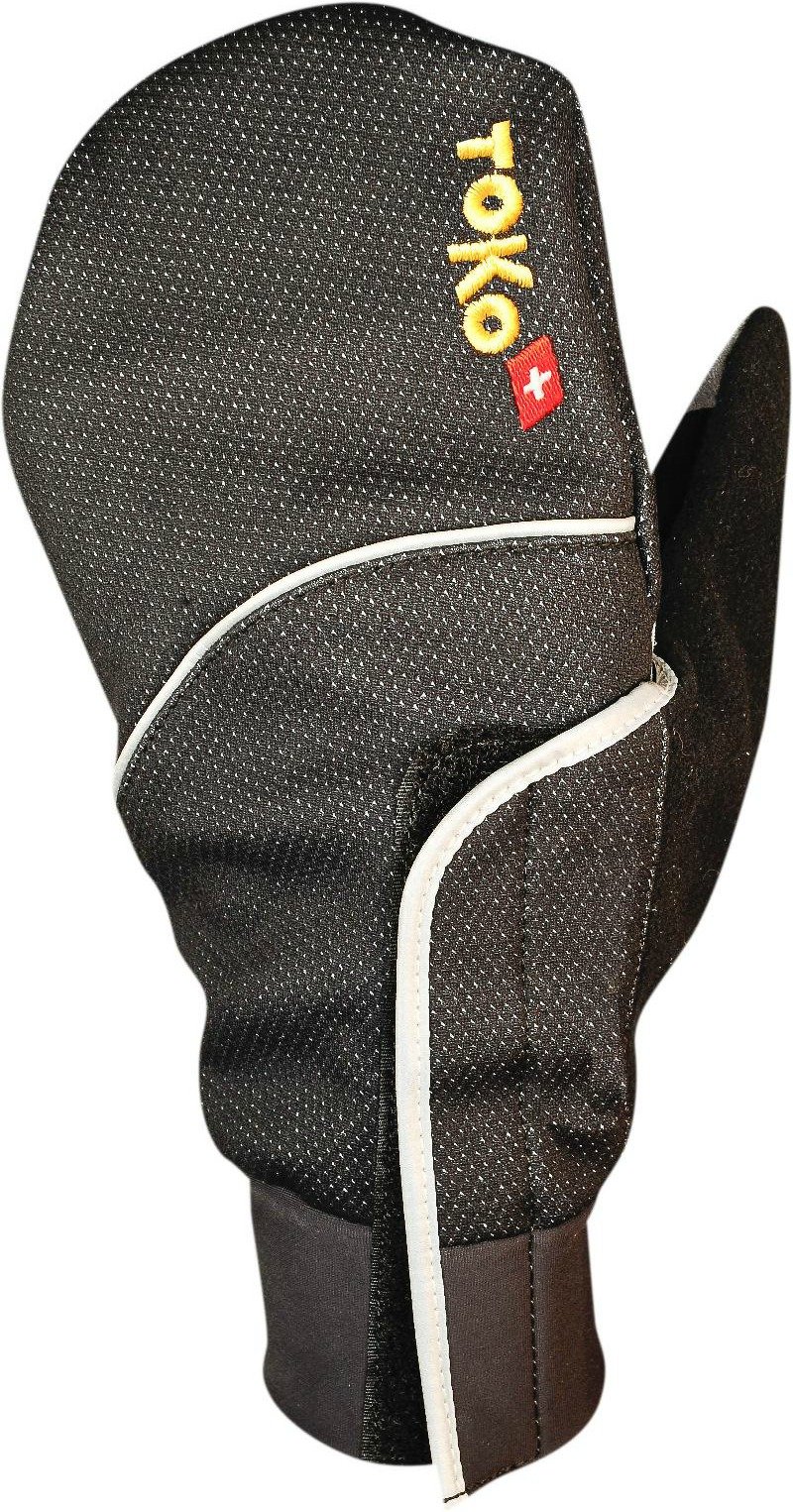
    Toko Racing Overmitt

    (Click for rest of e-blast)

  • Toko: How To Apply JetStream

    There are a few different methods for applying Toko JetStream, here is an overview.

    Rotocorking JetStream

     Ironing JetStream

    Additionally there are many who prefer to hand cork JetStream.  If I am going to hand cork JetStream, it would be in new falling snow and over a rotocork job.  I find that the little JetStream residue on the ski base is super fast in new falling (or newly fallen) snow.  To hand cork JetStream, rub the bloc on the base, cork it either with the plasto cork or a natural cork. Cork it well such that you generate friction enough to get it on to the base.  Then gently brush it into the base with a Nylon Polishing brush and polish it well such that you can not see any JetStream on the base with your naked eyes except that the base is shiny due to having a thin uniform coat of JetStream on it.  Of course this is a very effective technique for touching up skis between sprint heats.

    Surviving a Low-Snow Winter by Justin Freeman

    With poor snow conditions in most of the country, and with weather so warm and unpredictable it has almost undone the work of 13 snow guns at Rumford, it seems an article on what to do when the snow doesn’t fall is appropriate. There are a number of things that skiers at any level can do in a winter like this one:

    1. Take a deep breath. Remember that skiing is often-maybe even usually-better in April than in December. The snow will probably arrive eventually, and you may even forget the frustrations of the early season.
    2. Figure out your priorities. For some people, skiing is their primary sport, but maybe this winter is a good one to try cyclo-cross, or some winter running races, or to go to the pool and get ready for triathlon season. And there is nothing wrong with hedging your bets. Training like a triathlon in January will leave you in solid ski shape when the snow suddenly falls in February.
    3. Balance skiing and training. If you are like most ski racers, you ski both to do well in races and because it is fun. As you try to get on snow, make sure you are thinking about the balance you want to strike between skiing for fun and skiing to win.
    4. Don’t obsess with snow. This has two meanings. Don’t check the 10-day forecast five times a day. It won’t help. And think before you drive two hours to ski around an 800-meter loop of man-made snow with 200 other die-hard racers. It won’t be that fun or productive.
    5. Look closely at your training plan. Skiers need to work on endurance, lactate threshold, VO2 max, general and specific strength, balance, and technique. Think about how to train each of these aspects given the resources you have.
    6. Be flexible. If it is sunny and the roads are clear, go for a rollerski-maybe include some speeds. If the roads are slick, go for a long trail run. If it is really nasty outside, go for a swim and then do some circuit training. If it snows two inches and your local golf course doesn’t mind, go there and sneak in a ski in the morning before it melts again.
    7. Break the monotony of short ski loops. If you do have a one kilometer loop to ski on, do a couple laps of easy skiing, then a couple laps with no poles, then a couple double-poling, then a couple single-sticking, then a couple easy again. It slows you down, helps you train, and makes the time pass quicker.
    8. Don’t overdo it. If there is snow a couple hours away, it is tempting to drive there Saturday morning, put in 4 hours Saturday afternoon and 4 more Sunday morning, and then drive home. But this is a recipe to make you sick, not fit.
    9. Get your equipment ready. Make sure your skis are waxed, kick zones prepped, pole straps adjusted, bindings functioning, etc. There is nothing worse than finally getting on snow and realizing that you need to cope with some sort of equipment failure.
    10. Take another deep breath. It will snow again, you will ski your favorite trail, and it will be fun. But it might still be awhile.


    Watch World Cup Ski Races on YouTube

    You can watch races whenever you want. Visit WorldCupSkiVideos YouTube channel here.


    Toko is now on Google+. Click the logo to follow.

    Introducing TokoVideos.com.  Learn about how to work on skis and boards at any level on your own terms.  Check it out!

  • Toko: US Nationals Skate Sprint Race Report

    Toko: US Nationals Skate Sprint Race Report

    Torin on his way to US National Title #2 this week. Photo: Toko.

    US Nationals Skate Sprint Race Report

    Waxing was interesting today and showed why I am happy to be a Toko man.  I was expecting a lot of styrofoam-like manmade snow mixed in with the bit of old snow that remained.  Somehow the snow changed and today skied more like “normal” snow.  The wax recommendation would have rocked for sure in what we were expecting so I was relieved to see that the HF Blue/XCold mix was the fastest baselayer choice for the day.  JetStream Blue was also the leading top coat.  It has to be appreciated that you can midjudge the conditions a little and still absolutely nail the wax.

    This was a course for those who can generate a lot of speed with their legs on high speed sections, glide well, and have good finishing speed.  Jessie Diggins was tripped up in the A final, hit the top of the final downhill in 5th place well separated from 4th, and then hammered over the top, got in a low tuck, worked the small bumps and dips, let her skis run (flat), and shot into 3rd on the dip next to the 200 meters to go sign and then opened it up to take a clear win.  How impressive was that!  She’s on her way shortly to World Junior Championships representing the stars and bars.

    This was the first year since Torin was a kid that he hasn’t been affiliated with the National team despite some strong international results including a podium in an individual World Cup race.  You have to have a lot of respect and admiration for how he circled the wagons and got his house in order, found some excellent support (Methow Olympic Development), worked his tail off, continued to develop his game (he is racing smarter now), and came out hungry.  The result was 2 more National Championships and solid standing as one of the US’ top two sprinters.  Bravo Torin!

    Click here for the rest of the photos and report from today’s Skate Sprint.

    Field Report from CXC from US Nationals

    Tad Elliot won the distance skate race on a mix of HF Blue and XCold powder with a top coat of JetStream Blue.  The XCold addition really made a difference in the madmade snow.

    Jason Cork, CXC Elite Team Head Coach