Tag: Jim Carrabre

  • Sweden’s Dahlin Elected IBU President as Reforms Rolled Out

    Sweden’s Dahlin Elected IBU President as Reforms Rolled Out

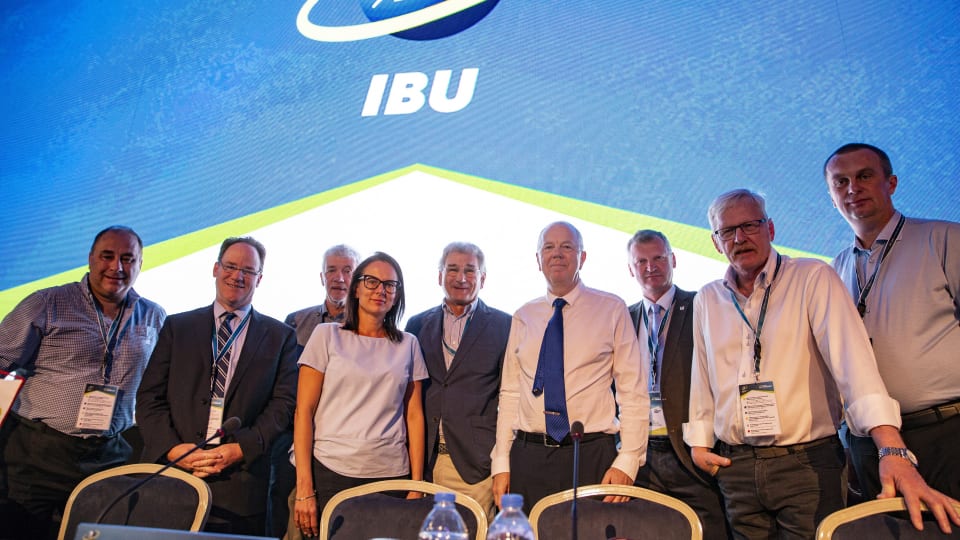
    Nine of the 11 members of the newly elected International Biathlon Union (IBU) Executive Board, including St. Paul, Minnesota-based Canadian doctor Jim Carrabre (far left), US Biathlon President and CEO Max Cobb (second from l), and newly elected president Olle Dahlin of Sweden (fourth from r). (Photo: IBU/Biathlonworld.com)

    The past year certainly has not been an easy one for the International Biathlon Union (IBU), the governing body in the sport of biathlon for the past 25 years.

    The sports federation had to take the unusual measure of suspending the Russian Biathlon Union, historically one of the core countries for biathlon, to a provisional member status.

    The International Olympic Committee (IOC) banned several prominent athletesincluding biathletes, from that nation from participating in the 2018 Olympic Winter Games in PyeongChang, even though they were still allowed to compete in IBU World Cups before and after.

    International athletes boycotted eventsin Russia citing the continued non-compliance with anti-doping regulations.

    And to make matters worse, the IBU became embroiled in its own leadership scandal with longtime President Anders Besseberg and Secretary General Nicole Resch having to step down amid allegations of corruption.

    Last weekend, the IBU and its member nations had a chance to set a course for the future at its 13th biennial “regular Congress”, this time  held in Poreč, Croatia. The congress brings all the member countries together once every two years to elect an executive board and vote on rules for both competitions themselves and how the federation should operate.

    The question was: more of the same, or a new direction?

    As the first order of business, the IBU had to find a successor for Besseberg to lead it into the next seasons. Only two candidates were on the ballot: Olle Dahlin of Sweden, and Baiba Broka of Latvia. In the end Dahlin was the clear winner,receiving 39 votes of the delegates to 12 for Broka. He will serve a term of four years.

    “Thank you very much for the confidence you showed in me. I am very honored. I will do my utmost together with you to develop the future of biathlon,” the new IBU President Dahlin said in remarks shown in a highlight video of the Congess. “I will be the president of all athletes and all nations,” he vouched, according to an IBU press release.

    As one important voice for these athletes, US Biathlon’s Clare Egan, a 2018 Olympian and since March 2018 the new chairwoman of the IBU’s Athlete’s Committee, welcomed the choice of Dahlin.

    The Congress sent a clear message by electing Dahlin 39:12 and voting in this particular roster of Executive Board members,” Egan wrote in an email to FasterSkier.

    US Biathlon Association President and CEO Max Cobb reiterated that message, writing “I am extremely happy Olle Dahlin was elected and I support his vision for the future for IBU.

    Controversy Avoided?

    Dahlin had already been a member of the IBU Executive Board, and while that gave him prior experience and he was not charged by external authorities in the investigation of the scandal surrounding Besseberg and Resch, his name might not exactly scream “fresh start”.

    Broka, meanwhile, is a lawyer and politician from Latvia who serves as President of the Latvian Biathlon Federation and on the Executive Committee of the Latvian Olympic Committee.

    wellbutrin buy online, buy voltaren online

    At the moment, there is a need for change,” Broka had told SportaCentrs.com about her candidacy when the nomination was announced, according to a loose translation. I have been working in the Legal Committee of the IBU for four years, I have seen a lot of problems between Sochi and PyeongChang. I have seen a lot of things to do, many of my suggestions to change in the statutes have already been taken into account, the situation with doping scandals, in terms of good governance of the organization. To a great deal, the IBU has so far not paid attention and now it is apparent that it is missing. My legal experience would be useful.

    But while Broka advertised a fresh start, she came with some baggage of her own. Summing them up, German television network ARD  released a scathing story on the state of the IBU in general and Broka in particular, citing an expert on Latvian politics at the University of Hamburg and local media reports who had unearthed a litany of questionable anecdotes from the candidate’s past: allegations of involvement in ominous real estate deals in the capital of Latvia; a personal credit from an Arab investor wanted by Interpol (which cost her a job as secretary of justice of her country after six months in office); leadership in a far-right nationalist party; and at the same time good relationships with a party that supports Russian interests, such as Latvia leaving NATO.

    This led some in the biathlon community to fear that she might promote the Russian federation to full membership status again even though four more biathletes from that country were just had doping cases formally opened against them.

    According to ARD, Broka roundly denied all of these allegations as fabrications by political opponents and not relevant for her involvement in sports governance, citing a section from the IOC’s charter that forbids political discrimination.

    But while it is hard to say how much this story influenced the voting representatives of the member federations at the IBU Congress, elevating her to the presidency hardly would have been a good look for a sports organization keen to “clean house” and win back trust in the international sports community.

    Vice Presidents New and Old

    Besides the position of President, all other Executive Board positions were also up for election.

    The incumbent First Vice President, Viktor Maigourov, was a former Olympic bronze medalist for Russia. The Russian Biathlon Union’s provisional membership meant that he could not run to have that position again, but he circumvented this issue by instead showing up on the ballot as a representative nominated by the Biathlon Federation of Belarus.

    But in the week leading up to the Congress Maigurov reconsidered and ultimately withdrew his name from consideration.

    Instead, the President of the Czech Biathlon Union Jiří Hamza to be elected as the new First Vice President, beating out German Ski Federation President Franz Steinle with 30-20 votes.

    Hamza was outspoken when the Czech team was among the first to announce that it would boycott any World Cup events held in Russia due to the ongoing doping and corruption scandals.

    Dr. Klaus Leistner of Austria was re-elected as Vice President Finances, seemingly unaffected by investigations against the former leadership administration.

    Besseberg and Resch were alleged to have taken personal payments from Russian interests and not have pursued all positive doping samples. They also are alleged to have potentially been involved in collusion for the awarding of various TV sports broadcasting rights. Both deny having accepted any personal payments and so far do not seem to have been officially charged by authorities.

    Regardless, the IBU’s finance minister did not seem to take a hit among the voters for his former bosses’ potential financial misdeed.

    As one of the first orders of business, Leistner will also have to deal with the International Olympic Committee (IOC) freezing the payout of funds from the PyeongChang Olympics until certain ‘good governance’ reforms including an external audit of the IBU’s anti-doping policies have been implemented, according to a press release from June.

    During the Congress the IBU presented the findings from that audit, but it remains to be seen if all concerns of the IOC have been relieved with the decisions of this Congress and the change in leadership.

    antabuse buy online, buy betnovate

    “I feel confident that the IBU has addressed all the requirements the IOC requested and have no doubt that the funds will be released,” Cobb commented on that issue.

    North America Well Represented on the Executive Board

    US Biathlon’s Cobb was re-elected to the Executive Board, receiving the most votes of any candidate with 43.

    According to Cobb, Bernd Eisenbichler, USBA Chief of Sport, was also in attendance as the voting delegate for the U.S.

    “I am very satisfied with the composition of the newly-elected IBU Executive Board,” Egan wrote in her email. “I have a high degree of confidence that this team can lead the IBU into a new era we can all be proud of. It was great to see that USBA’s CEO, Max Cobb, who has been a consistent and vocal advocate for athletes and for clean sport, was re-elected with the most votes of any board member.”

    Canadian Dr. James Carrabre, who has made a name for himself as Chairman of the IBU Medical Committee and as a vocal anti-doping warrior, will also be on the Executive Board after he received 21 votes from the delegates.

    Congress clearly came here to make a clear statement in the favour of clean sport,” Carrabre said, according to an IBU press release.

    I am very happy that Jim Carrabre was reelected,” Cobb commented on the election of his colleague in an email. “Jim has been a true champion of clean sport and as a result IBU is leading the charge on prosecution of doping cases based the information that the World Anti-Doping Agency collected.”

    The other new members will be Tore Boygard (Norway, 37 votes), Dagmar Gerasimuk (Poland, 35 votes), Dr. Franz Steinle (Germany, 34 votes) and Ivor Lehotan (Slovakia, 22 votes).

    And the Congress took another decision to involve the athletes more directly into the direction the sport is taking, by adding a representative to the Executive Board with full voting rights. As the current chair of the Athlete’s Committee elected by her peers in March 2018, this role fell to Egan.

    The biggest victory for athletes was the approval of the Athletes’ Committee proposal for a full, voting position on the Executive Board,” she wrote. “I am taking on that role. Already yesterday I video-called into our first meeting. Athletes have never been represented within the IBU’s leadership so this is a major step forward.

    Olle demonstrated his leadership style as he led the newly elected board in our first meeting following our last congress session,” Cobb wrote, providing some insight into the proceedings of that newly elected board. “Perhaps as important as all the progress we made at the congress, he proved his commitment to a collaborative style where every member of the board was encouraged to share their thoughts on setting our policy agenda going forward. It was the most collaborative and empowering moment I have participated in during my two years on the IBU [Executive Board]. Through my years of leading work in sport, I have learned that the best decisions come when a diverse group share their thoughts in an open and respectful forum. Olle has set exactly that tone at our first meeting.”

    As part of the new transparency the IBU also decided to admit accredited media members to Congresses. Until now, that had not been possible under the IBU’s Constitution, unlike at IOC General Assemblies.

    Russian Biathlon Union Remains Suspended

    Addressing another big issue on the agenda, the Congress voted against a petition by the Russian Biathlon Union for reinstatement to full membership status at this point in time, as it announced in a terse press release with only three sentences.

     I think the Congress showed good judgement in denying the Russian Biathlon Union’s (RBU) request for reinstatement of full membership,” athlete representative Egan commented on the decision. “The RBU was relegated to provisional membership’ in December 2017 due to their doping scandal. Russia remains noncompliant with the World Anti-Doping Code, the IBU just last week announced that four more Russian athletes have been notified of anti-doping rule violations, and two former IBU leaders are currently under criminal investigation for taking bribes in order to support RBU interests. It would send the wrong message if the IBU were to welcome the RBU back under these circumstances. Under provisional status, Russian athletes are not punishedthey can continue to compete normallybut the federation can’t bid on events, vote in elections, or nominate candidates. I think it’s fair. That being said, the new Executive Board needs to work with the RBU to agree on a path for reform and reinstatement.

    Furthermore, the IBU adopted a motion that no country that is not considered compliant with the code of the World Anti-Doping Association (WADA) at both the time a bidding/voting process takes place or later when the event is scheduled will be eligible to host IBU-sanctioned competitions.

    Presumably this was a reaction to last season’s controversy when the 2018 World Cup final was hosted by Tyumen as well as the last two stages of the IBU Cup in Khanty-Mansiysk and Uvat, all Russia, while both the RBU and the Russian anti-doping agency were officially suspended by the IBU respectively WADA. The IBU leadership at the time argued that when the events had been awarded and the contract with the organizing committees signed Russia had still been considered in compliance.

    That conflict had triggered a boycott of the World Cup final by several countries and a few individual athletes such as Sweden’s rising star Sebastian Samuelsson.

    Future World Championships

    On the last day of the Congress, decisions about awarding the venues for future IBU World Championships were made. The list of candidates was very short, but all had extensive experience hosting World Cups and prior World Championships.

    For 2021 Pokljuka, Slovenia,was the only candidate and was approved by the Congress delegates uncontested with 49 to 1 votes.

    Then after delegations from both venues had presented their event concepts Oberhof, Germany, beat out Nove Mesto na Morave, Czech Republic,to host the 2023 World Championships with 28to 21 votes.

    Thus the calendar for upcoming IBU World Championships looks like this:

    2019: Östersund, Sweden

    2020: Antholz, Italy

    2021: Pokljuka, Slovenia

    2022: No IBU World Championships due to Olympic Winter Games in Beijing, China

    2023: Oberhof, Germany

    Cobb stated he expects the Czechs to bid again for the 2024 iteration of the IBU World Championships and “run a great campaign.”

    Olympic Quota for Biathlon Reduced

    In July the IBU announced that to its disappointment it had been informed of an IOC decision with the intention to reduce the biathlon quota by 20 athletes for the 2022 Olympic Winter Games in Beijing (and presumably going forward).

    The topic was on the schedule for the IBU Congress, with IOC Sports Director Kit McConnell and IOC Head of Winter Sports Irina Gladkikh attending a special joint workshop to explain the reasoning behind the decision, according to a press release.

    But no concrete decision was published, with the IBU representatives stating that more work remains to be done in the appropriate committees later this year. Thus it remains to be seen which type of countries will be most affected by this change and what – if any – effects it could have on future Olympic teams for US Biathlon and Biathlon Canada.

    Technical Committee Members and Decisions: More Participants in Mass Starts

    Instead of the previously very selective field of only 30 athletes allowed to start in the women’s (12.5km) and men’s (15km) mass start discipline, the IBU Congress adopted a proposal from the Technical Committee to double that number to 60.

    The new format will be tested on the second-tier IBU Cup circuit this year; it requires some changes since most venues only have 30 lanes of targets. The IBU posted a video explaining how the expanded field would move through the shooting range under the proposed change.

    The number of World Cup wild cards available has been raised to eight, and restricted to a maximum of two per national federation.

    Ten members were voted to the Technical Committee that makes decisions about the nitty gritty details of biathlon competitions, among them e.g. active coaches such as Germany’s Gerald Hoenig and past World Cup athletes such as Olga Nazarova of Belarus.

    For the U.S., Max Saenger was up for re-election to the Technical Committee, and according to Cobb he “only narrowly missed being elected”. Saenger reportedly received 25 votes tied with Tommi-Pekka Riihivuori of Finland, while Tomas Bernatof Poland was the last one making the cut with 27, according to a press release by Italian sports journalist Alex Tabarelli.

    Recently retired biathlete Daniel Böhm of Germany also joins the committee as the 11th member, as nominated by the Athlete’s Committee without requiring the approval from the Congress.

    According to Egan, Böhm was in attendance at the Congress to keep the athletes informed as well, while she had “really wanted to go” but ultimately decided to follow the decisions from afar to “prioritize my own training”, partly because she would not have had a vote to influence the outcome of decisions anyway. “I have no doubt that it would have been a good learning experience but when it comes down to it, Athletes’ Committee members do not vote”, Egan wrote.

    That now changes after the decisions at this Congress, with the athletes having a voice and vote on the Executive Board.

    Egan’s fellow Athlete’s Committee members Martin Fourcade (France), Erik Lesser (Germany) and Aita Gasparin (Switzerland) had made the same decision and skipped attending the event in person.

    “I would hope that such [negative] headlines will no longer be produced,” Lesser had outlined his expectations in an interview with German network ZDF a week before the IBU Congress. “That [the IBU] works transparent, that one investigates what happened in the past, that athletes know what is happening, that the member federations know what’s going on, and also that – cash is king – the sponsors know where the international federation is heading. And I believe that the IBU noticed that the world is currently looking at the IBU pretty negatively. […] I believe a change of thought is happening, and I hope at the IBU Congress in Croatia that will be executed now.”

    Next Steps

    The Congress concluded with a gala dinner celebrating the 25 years since the IBU had been founded. The sport is much older even in its competitive form, but previously it had shared an organization  with Modern Pentathlon.

    During that ceremony recently retired stars Darya Domracheva of Belarus, her husband Ole Einar Bjørndalen of Norway, and Esa Hapaala of Finland (the event manager of the Kontiolahti World Cup) were awarded a special IBU “medal of honor”. Domracheva also hosted the event.

    After a brief look at the past, the federation is now looking to the future.

    “We will conduct a total review of our constitution and policies aimed at implementing robust standards for good governance and transparency to be put in place at least by 2020,” Cobb wrote about the outlook for the next years. “We are already getting to work on a first ever long term strategic plan for IBU aimed at developing and empowering our national federations and event organizers […] and making our sport as attractive as possible. The goals are to grow our sport and to increase our sport’s visibility and value to drive further support of our national federations, large and small alike. It is a long term proposition but I believe it will be a very important step in the future of our sport.”

    He also explained that the IBU is exploring the creation of a coaching academy, and in particular wants to “encourage the development of female coaches and national federation leaders” beginning in 2019.

    “The adoption of a Code of Ethics and the decision to revise the entire IBU Constitution before the 2020 Congress were also really important,” Egan concluded in her email. “There were many, many decisions taken at the Congress, but in my opinion the composition of the leadership team is by far the most important. With good leadership, we can do great things. I’ll do my best to be a good representative for all biathletes!”

    “We had a great start but the real work begins now,” Cobb summed up the Congress. “Real progress will take time and we will all be judged on what we accomplish for the sport.” 

  • What’s Happening as Russia’s Sochi Scandal Winds Down: An Editorial

    What’s Happening as Russia’s Sochi Scandal Winds Down: An Editorial

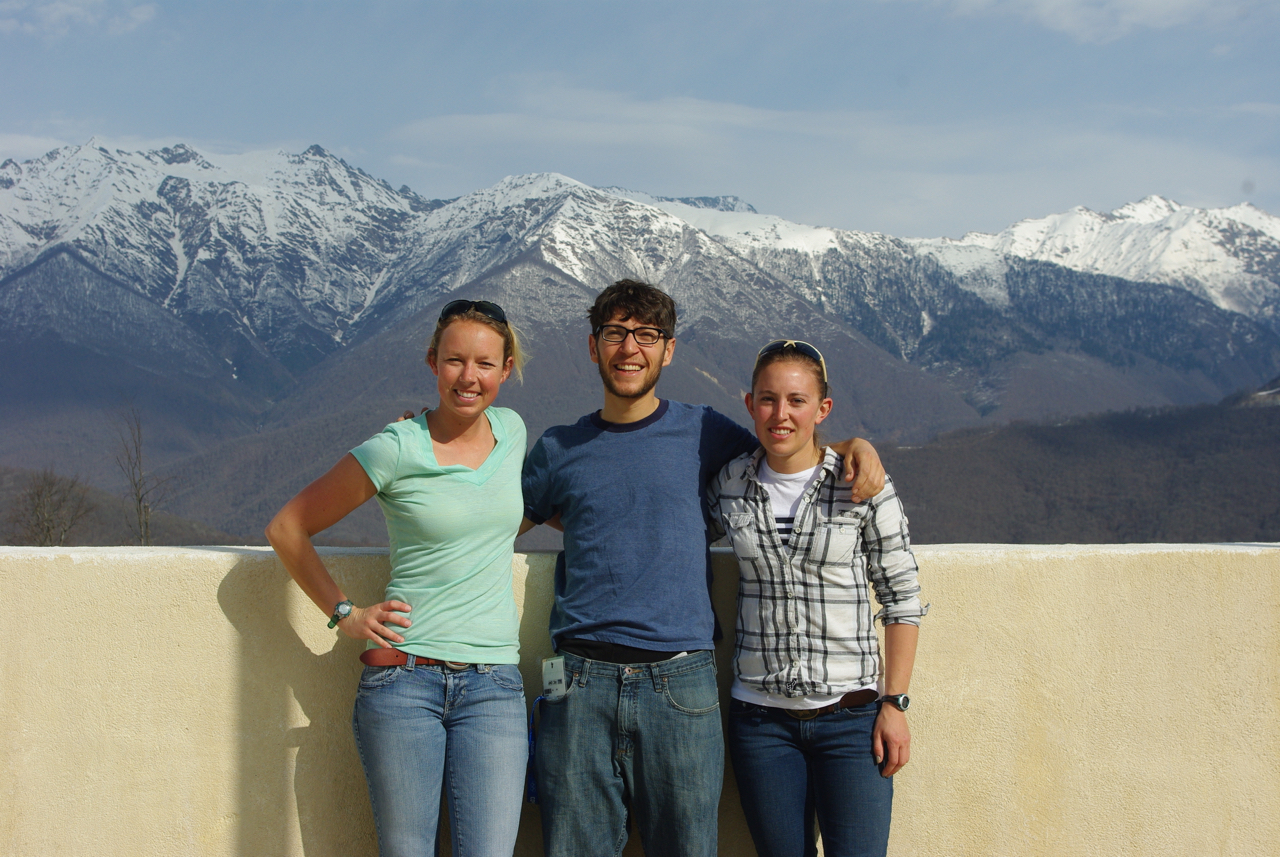
    FasterSkier’s Alex Kochon, Nat Herz, and the author (Chelsea Little) at the 2014 Olympics in Sochi, Russia. Little did we know what was going on behind the scenes of those Games. Looking back at our coverage of the 2014 Olympics, I’m very proud of the work we did. But I’m not too proud to say that while we thought we had a realistic understanding of international sports governance, we were still naive to its incredible inertia.

    FasterSkier would like to thank Fischer Sport USAMadshus USAConcept2Boulder Nordic Sport and Swix Sport US for their generous support, which made this coverage possible.


    The following is an editorial written by FasterSkier’s Editor-at-Large Chelsea Little, who has been covering doping in sport, specifically cross-country and biathlon, for the better part of the last decade. The opinions expressed are her own and do not necessarily reflect those of other FasterSkier staff.

    ***

    Last week, the Court of Arbitration for Sport (CAS) cleared 28 Russian athletes of doping charges. Many people seemed shocked by this development.

    The athletes had been disqualified from the 2014 Games by an International Olympic Committee (IOC) Commission. This was after more than 18 months of buildup in which the world learnt of systematic manipulation of the anti-doping process by the Russian state security apparatus at those Olympics.

    I was both shocked, and not shocked. When all these athletes had been disqualified by the IOC and handed lifetime bans from Olympic competition, I knew in my heart of hearts that it would be undone (I’ll explain why below). But I hadn’t, somehow, put any thought into how exactly that would come to pass. So on one level, I was surprised, even if on another level I wasn’t.

    When the news broke, I had written a profanity-laced all-caps message on our company Slack channel. On Twitter, I wrote, “I am so tired. That means that they have won.” That’s about all I could muster.

    “I’m sure you are extremely disappointed by the CAS ruling,” one member of my extended family wrote in an email, knowing how many nights and weekends I had spent covering this story, how many hours and days of my personal life I had erased to chase it, because doing so does not pay the bills if you work for a cross-country ski website in America.

    And I was disappointed.

    I had thought that those nights and weekends would help make a better sporting world, help bring cheating to light, help hold the powers that be in sport accountable and call on them to do a little better.

    But it felt like all that work had accomplished nothing, not changed a single thing to make nordic sports more fair.

    I can only imagine how the athletes felt. The ones who found out that they would not be receiving medals after all, medals that they felt had been stolen from them by cheaters, medals that they had been slated to finally receive but now would never see.

    I can only imagine.

    More than anything, I was disappointed because I didn’t understand. I’m an analyst. No analysis I could do would explain to me just what had happened because CAS did not release a reasoned argument for their decision, which, as USADA General Cousel Bill Bock pointed out, is ludicrous. So at the moment we don’t know why these athletes were cleared; we only have speculation and hearsay.

    But I had read previous CAS decisions, including the one partially upholding cross-country skier Alexander Legkov’s provisional suspension by the International Ski Federation.

    In that decision, an arbitration panel wrote that they trusted the statements of whistleblower Grigory Rodchenkov and investigator Richard McLaren.

    That testimony that is widely speculated to have been found untrustworthy by the arbitration panel which more recently cleared the athletes.

    There is a difference between provisional suspensions and rule violations, and maybe that’s the root cause (or maybe it’s not; one day we will find out).

    But if two different arbitration panels can come to two completely different conclusions about whether evidence is trustworthy, then what is the point of a “high court” of arbitration? That’s disappointing.

    On the other hand, maybe the new panel did believe that the whistleblower testimony was true, but that witness statements alone are not enough to prove a doping violation. We’ll set aside for a moment all the forensic evidence [see footnote 1].

    If that’s the case, it’s even more disappointing. It means that all of the rhetoric over the last few years about putting more resources into investigations will not actually result in cleaner sport, unless there is a positive test or the presence of drugs or medical equipment (see: Austrian skier Wurm, Russian skier Pankratov).

    It would mean that the World Anti-Doping Agency’s new “secure digital platform” for whistleblowing — and statements by athletes and doctors and team staff — are all useless to anti-doping unless they are followed by physical evidence of prohibited substances or methods.

    But we don’t know the panel’s reasoning. This is all just speculation.

    I was tired and disappointed because my job as a journalist is to take complicated things, and make them make sense to our readers.

    Here, there was nothing to work with. There was nothing to explain.

    Or was there?

    Here’s my analysis.

    Armchair commentators have said that someone at CAS must have been paid off. Olympic observers have noted that while Russia appealed the choice or arbitrators by the IOC, the IOC apparently did not appeal Russia’s choice. So maybe the panel really was biased. That’s one storyline.

    A second suggested storyline is that the IOC set up the cases to fail, so that it would look like they tried to do something heroic, but in the end nothing would change.

    To some extent, that is absolutely the case. Lifetime bans for doping have been attempted by the IOC before. Every time, they have been overturned. There was a zero percent chance it would work this time, either.

    Did the IOC go further than that in “set up to fail”? Both storylines may be true. Neither may be true. But each of these storylines is far too myopic in their attempts to explain what happened with this CAS decision.

    The reason that, in my heart of hearts, I knew that things would turn out just fine for most of these seemingly disqualified athletes, is that far more than CAS is broken [2].

    Broken would imply that at some point the system worked. When was that, again?

    This scandal has been going on for years. And in both it and other, non-Russia-related doping scandals, organizations have dragged their feet at every turn. There is no political will to keep sport clean. Ensuring clean sport would be hard. Nobody wants to do hard work. Universally, these organizations just want to run sporting events and for fans to be happy.

    “We need to stop pretending sport is clean,” International Ski Federation (FIS) President Gian Franco Kasper [3] famously told New York Times reporter Rebecca Ruiz. “It’s a noble principle, but in practice? It’s entertainment. It’s drama.”

    People were mad when Kasper said this, but it was an especially revealing comment. Maybe it is a testament to our optimism that we quickly moved on, focusing on how we would try to “solve” the problem of doping.

    There have been individuals and groups who have worked passionately to uncover the truth, and done an admirable job. Beckie Scott at WADA [4] is one who comes to mind. But their work is always prevented from reaching its logical conclusion.

    Let’s first look at the IOC, which has deservedly gotten a bad rap for dragging its investigations out for as long as seems humanly possible.

    The IOC has certainly not put the resources or good-faith effort into looking under every stone, or doing so quickly. That’s how we got the first Sochi disqualifications – like Legkov’s – being announced in November of 2017. Most of the criticism leveled at the organization on this front is absolutely justified.

    In all the time between May 2016, when the Sochi scandal was first broken by the New York Times, and November 2017, the IOC did very little. The decision banning Legkov relied mostly on the same evidence that had been in the McLaren Report.

    The IOC Commission asked new experts to revisit the issues of scratches on sample bottles and salt content of urine samples. Basically, they repeated a lot of work which had already been done, expanding it to a larger number of samples but taking longer to do so by insisting on using different experts, who nonetheless came to the same conclusions.

    For Legkov, all of this resulted in the same evidence that had been in the McLaren Report: that Legkov’s sample bottle from after the 50 k, which he had won, showed signs of being tampered with.

    Sure, the IOC Commission got testimony from Rodchenkov. But that only at the last minute, perhaps because they were publicly shamed when it was revealed that they hadn’t contacted him.

    It’s fair to criticize the IOC for its anemic investigation, but this is not just an IOC problem, just like the disqualifications being overturned is not really a CAS problem.

    Look further. Since the McLaren Report, few other governing bodies have been doing better.

    78 anti-doping samples belonging to biathletes are referred to in the McLaren Report. The International Biathlon Union (IBU) has not suspended any of the 38 athletes, that we are aware of, other than those who were suspended by the IOC. In fact, they have explicitly said that they would not investigate 22 of those 38.

    “We like to play coy, like the cat wagging its tail when the mouse runs in front,” IBU Vice President for Medical Issues Jim Carrabre told me back at the 2014 Olympics, in an interview that led to the IBU’s media chief calling me into his office at the press center and dressing me down for talking about things that he would rather journalists didn’t ask his organization’s board members.

    “It goes by once or twice, and then the third time it gets bitten,” Carrabre said at the time.

    He was referring to blood profiles, a topic that has recently gained prominence.

    For years I have been told by various people that the IBU has cases in the works, that soon I will hear about them, that they know some people are doping and are about to catch them.

    I don’t doubt that Carrabre is a true believer in the anti-doping fight. He gets pretty fired up about things, as does fellow Executive Board member Max Cobb.

    But the cases that I heard rumors of, even promises of, have never materialized.

    The Athlete Biological Passport (ABP) was supposed to revolutionize anti-doping and indicate if athletes had been blood doping even when no illicit substance was detected. That sure would have been handy due to the drugs’ short detection windows and athletes’ and doctors’ strategies of “microdosing.”

    But there have been no doping bans on the basis of ABP in skiing or biathlon [5]. I don’t think that even the most optimistic of fans really believes that this is because there is no blood doping going on.

    What does that mean? That ABP doesn’t work, that it wouldn’t hold up in arbitration? Or that something else is going on?

    It would be hard to look at IBU President Anders Besseberg’s behavior in the last two years – for instance, the IBU’s continued insistence that it’s totally fine to hold events in Russia, or his demeanor and statements during meetings with athletes – and conclude anything other than that he is sympathetic to Russia and would even more generally like to simply pretend that there was no scandal in his sport.

    Having a few true anti-doping crusaders on a governing board does not clean sport make. I don’t want to put words into their mouths, but probably, it just makes these crusaders even more frustrated.

    “When the McLaren Report first came out, I thought that doping was the greatest threat to our sport,” U.S. biathlete Susan Dunklee told FasterSkier in January 2017. “However after watching the last few weeks play out, I believe that the IBU’s reluctance to meaningfully act to prevent doping is the greatest threat to our sport.”

    Then there is FIS. As I’ve repeatedly pointed out, there were 46 skiers implicated in the McLaren report. Not all of them, obviously, were at the 2014 Olympics or Paralympics, yet as far as anyone can tell, FIS has done nothing to investigate the other cases, some of which include alleged anti-doping rule violations.

    A FIS whistleblower just leaked a bunch of old blood profile data to an international team of journalists.

    (Which, by the way, how can I get in on that? Hi? I’m over here! I know a lot about doping in skiing and I also how to do statistics!)

    The data is interesting, but nothing can really be done with it, as it is old and from the days before ABP was a policy. Without the journalists or their experts explaining how they decided what an “abnormal or highly abnormal” blood profile is, it’s impossible to judge what percentage of the athletes they identify as potentially having doped actually were likely dopers.

    But perhaps this indicates that someone within FIS is frustrated with how things are going. If you cared about skiing being clean, cared about doing your job well, and listened to Kasper say things like “sanctioning entire countries is purely political and I do not agree with this,” you might be frustrated too.

    And here’s the last thing. In this whole scandal we are talking about one country. That’s Russia, and it has led to a lot of ideological discussion.

    But it’s not really about Russia.

    Yes, the IOC and the IBU and FIS want to keep Russia happy, because their sports are popular in Russia, the Russian athletes are talented and popular even outside the country, because Russia is great at hosting events, and because Russian fans travel all over to watch competitions. That’s part of it.

    And yes, some commentators have complained that athletes are being punished just because they are Russian. They have complained that this is a U.S.-led effort reviving Cold War hostilities. That we are Russophobes. That we are hypocrites because American sports stars dope too, and/or that lots of countries dope but we just haven’t found out about it.

    But again, that’s being far too myopic about things, and believing that this scandal is only a thing unto itself, not part of the bigger problem.

    If this scandal had taken place with Norway, Sweden, Germany, the United States, or any other country at the center – the outcome or the (lack of) speed of its resolution probably wouldn’t have been much different [6].

    I – yes, I’m among those journalists accused of being hypocritical and anti-Russian, I’ve even been compared to Nazis, gee that was fun – I would chase this scandal just as hard if it had arisen in any of these other countries.

    In fact, I would have investigated it with even more fervor if these were American or Canadian skiers and biathletes we were talking about. And presumably most of the evidence would have been in English, so I could investigate more effectively, without translating things I was looking for into Russian, searching the internet or evidence documents, and then translating the Russian back into English, in a crappy game of “telephone”.

    I think that the North American athletes I routinely interview are aware that if I found out they were cheating, I would have no remorse and they would have nowhere to hide.

    Just as I’m not a hypocrite, these sports organizations aren’t, either – well, they are, but not in this way, not when it comes to nationality. The claims that various decisions just come from Russian money and bribes are missing the point.

    Whether coming from Russia or elsewere, these organizations don’t want a big scandal. They don’t want to rewrite their results sheets. The athletes who missed out on medals they probably should have taken home? These organizations don’t really care about athletes.

    They are just an unfortunate bit of collateral damage, but oh well.

    Time will march on. A new race will be held. It will be an exciting race! We will all be caught up in it.

    Maybe Pellegrino will upset Klæbo.

    Maybe an American will finally win a medal.

    Maybe Fourcade will mess up his first stage, but then climb back to gold anyway.

    Maybe Makarainen will mess up all her shooting stages, and we will all watch rapt to see whether she can pass 15 people on the final loop. Maybe she can.

    Maybe Harvey will finally truly become the Prince of Quebec, crowned with an Olympic medal.

    Maybe the breakaway will succeed.

    Or maybe the favorite will win, but we will be enthralled until the final moment, watching to see whether they will pull it off.

    Soon, we will forget about those athletes whom we were wondering about, the ones who maybe probably should have a medal stashed in their safe deposit box somewhere and a whole lot more sponsor money than they have now.

    Those athletes will slip farther and farther to the back of our minds. In the forefront will be the day’s competition – so amazing! – and the big happy family that is sport.

    Actual clean sport is not, and never was, these organizations’ goal.

    *****

    Footnotes:

    [1] On the topic of skiers who were cleared by CAS: Maxim Vylegzhanin’s sample from Sochi also had scratches on it and had an incorrectly reported specific gravity; the two other members of the men’s relay team also had marks on their sample bottles, and one had a sample whose specific gravity was too high to be believable; two sprinters had marks on their sample bottles and for one, there as also a foreign fiber inside the bottle. Julia Ivanova, whose ban was not overturned by CAS, had an impossibly high salt value in her urine sample.

    [2] I actually think CAS does work. CAS handles far more than doping cases – they handle contract disputes, team selection, trades, anything you can think of that would need arbitration. And as far as I know, they do a good job. This is the first CAS decision that has left me truly baffled.

    [3] Term limits, man. We really, really need term limits.

    [4] I’m not going to talk in much detail in this piece about WADA, which alternatingly does the right thing and the wrong thing, and often does the wrong thing for a very long time first. But at least in the last year or so, WADA is no worse than any other group, and indeed maybe a bit better.

    [5] Blood profiles have certainly led to targeted testing, which caught athletes before the 2014 Olympics. But nobody bothered to try an ABP case, that we know of. Nor, seemingly, did the biathletes that the McLaren Report alleges were doping – Olga Vilukhina and Yana Romanova – fail their ABP’s. Either ABP is not being used, or it is not being successful and the details of the cases are never made public.

    [6] If the perpetrator of this scandal hadn’t been Russia, I think the main difference might have been the reaction within that different country. I don’t think the Norwegian public would react the same way the Russian public has. Each place has its own culture around sport and what it means, and government also plays various different roles in supporting and controlling sport. But the reaction from the international organizations? Things would probably be much the same.

  • Cobb Elected IBU Vice President for Sport, First American on Executive Board

    Cobb Elected IBU Vice President for Sport, First American on Executive Board

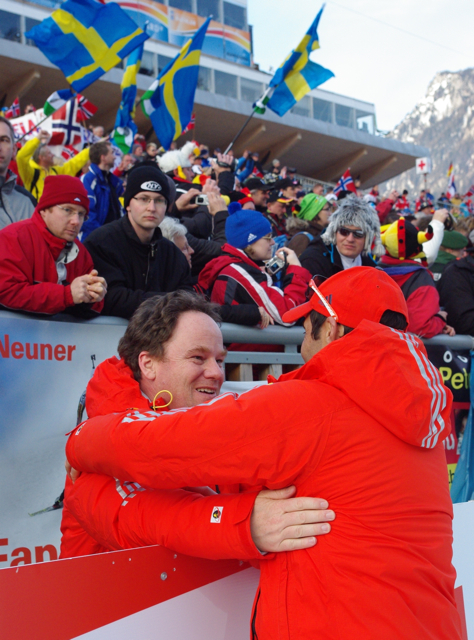
    Max Cobb, President and CEO of the U.S. Biathlon Association, receives a hug from a fellow official after U.S. athlete Susan Dunklee placed fifth in the 2012 World Championships. Cobb is now a member of the International Biathlon Union's Executive Board.
    Max Cobb, President and CEO of the U.S. Biathlon Association, receives a hug from a fellow official after U.S. athlete Susan Dunklee placed fifth in the 2012 World Championships. Juggling duties, Cobb was also the Technical Delegate for those Championships. He was recently elected to  the International Biathlon Union’s Executive Board.

    On Friday, U.S. Biathlon Association President and CEO Max Cobb was voted in as the Vice President for Sport of the International Biathlon Union (IBU), the first American to be elected to the Executive Board since the governing body came into being in 1993.

    Cobb, a 1987 graduate of Dartmouth College, also studied Olympic Sport Leadership at the Kellogg School of Management. He has worked with U.S. Biathlon since 1991, as well as serving as Chief of Competition at the 2002 Olympics in Salt Lake City, Utah. Since 2010 he has been the head of the IBU’s Technical Committee, including serving as the technical delegate at the 2014 Olympics in Sochi, Russia.

    As head of the Technical Committee, he pushed through comprehensive reforms on qualifying for World Cup, IBU Cup, and championship events.

    “I think people definitely respected me for the work that I’ve been doing over the last twenty years and knew about my work at the Technical Committee,” Cobb said in an interview from the IBU Congress, which was held in Chisinau, Moldova. “Basically being a part of this international family ever since hosting the Olympics in Salt Lake in 2002, I think there were a lot of people saying that is was just the right and natural thing that I should be elected with the experience that I have.”

    Throughout the campaign process, which started in June, Cobb has been discussing his ideas and positions with people from all around the biathlon world. Each country which is a full member of the IBU has one vote in the election.

    “I really enjoy talking with people about sport and through this campaign,” he said. “I had a chance to talk to a lot of different representatives from different countries, and I really enjoyed hearing about their challenges and seeing what we can do to try to make things better. That’s not just small developing countries, it’s also advanced countries like Germany and Norway where they have so many strong athletes it’s hard for them to decide which seeding group to put them in.”

    Cobb has also been a vocal proponent of anti-doping efforts and has criticized the handling of the recent Russian doping scandal by the International Olympic Committee and the World Anti-Doping Agency. He said that he wasn’t yet sure whether his advocacy helped or hurt him in the election, which he won over Baiba Broka of Latvia and Dagmara Gemasimuk of Poland, or how it would affect his work going forward.

    Here’s what Cobb had to say about his election and the goals he has for his two-year term. The interview has been edited and condensed.

    FasterSkier: Were you nervous before the Congress, or were you pretty confident you would be elected?

    Max Cobb: I was definitely a little nervous as I made my speech. Both [the other candidates] were women actually, and there’s only 2 women on the Executive Board at the moment, the Secretary General and the Vice President of Special Issues, so there’s a lot of interest in having more women serving on the board so this was a priority just to have more gender equity.

    [Gemasimuk] is the president of the Polish federation. She had been the Secretary General and an athlete herself, and I have a ton of respect for her. She got her PhD studying biathlon athlete development. She’s great and I hope she has a big future in biathlon if she wants to keep working. But in the end she had 15 votes and I had 29. It wasn’t that close but I had no idea whether I would be elected or not.

    FS: There has never been an American on the Executive Board. Was that an issue?

    MC: Now there are two North Americans on the executive board with Dr. Jim Carrabre [a Canadian who serves as Vice President for Medical Issues, and lives in Minnesota], so that was, nobody said to me that was a concern but maybe in the back of some people’s minds it was.

    FS: Why would that be concerning?

    MC: Biathlon is so highly developed in Europe and not highly developed on any other continent, so I think having people who are non-European on the board– it’s a little bit controversial for some people, but I think in the end there are a lot of non-European nations who think it’s OK. And a lot of non-European nations who know me and know how I work and how independent I am. Fair and independent, I think, is something that people definitely appreciate even within the European group.

    FS: Will you continue being a liaison within the Technical Committee and what else is on the docket?

    MC: Yeah, I think that’s what’s really exciting for me. I can continue working with all my friends on the Technical Committee and represent their perspective and decisions with the Executive Board. As biathlon develops even further, the marriage of the technical aspects of the sport with further development, whether it’s competition format or quota systems or it’s scheduling around broadcast times, all of those details become more and more important as we further refine the sport.

    That rough development has already happened, and further development that we make is going to be relatively detailed-oriented to progress. I think I’m in a really good position with my experience.

    FS: One of the benefits of having a small federation is working closely with your athletes, even as CEO. Does that help you think about some of these issues?

    MC: Yeah, absolutely. I think the wonderful thing about the position I have with U.S. Biathlon is that I’m so close to our team and our developing athletes. I have time and opportunity to be with them and speak to them and hear their thoughts and ideas and take that into account as I’m thinking about sport development in the United States and now really thinking about sport development on the global scale as well. It’s a big help to have that close connection with the athletes and the trainers.

    FS: The points system and qualifying changes — will that continue to be tweaked going forward?

    MC: This World Championships was the first time we had it in place and really this was the first full season of having it operating. We’re really pleased with the way everything worked out. At the end of the quad in 2018 we’ll see whether we think it needs some tweaking but I think it’s really fine-tuning rather than wholesale change at this point. I’m really, really proud that the IOC accepted our proposal exactly as we presented it and that included more accreditations for biathletes in order to have a balance of men and women. So now we have 115 men and 115 women so we achieved gender equity.

    Through this Congress now I don’t think there will be much of a change. We have on the proposal to increase the points required to remain in the IBU Cup to 250, and I think that will go through. That opens more opportunity to remain on the IBU Cup, but besides that I don’t think we’ll see any changes at this Congress.

    FS: Did you think that implementation gave people confidence that you could get things done?

    MC: I think so, because at the last Congress I had to present the whole system. We had lots of meetings even before the season with the teams that were most affected. I think they realized that what I said was what ended up happening, being on the ground.

    Of course for some of them they recognized the need for their athletes to improve in order to be able to the next level. But I think they understand that the system is fair and it’s open and anytime they have a strong athlete, that athlete can progress to the next level and compete all the way to the Olympic Games. I think I was able to present that at the last Congress, and now after the first season of that being fully implemented, people were seeing that it worked they way we’d hoped. I think that gave them a lot of trust and confidence in me to be able to gain the support.

  • FIS, IBU Respond to Latest Documentary; Did WADA System Enable Doping Test Evasion?

    FIS, IBU Respond to Latest Documentary; Did WADA System Enable Doping Test Evasion?

    Gold and Silver for Russia
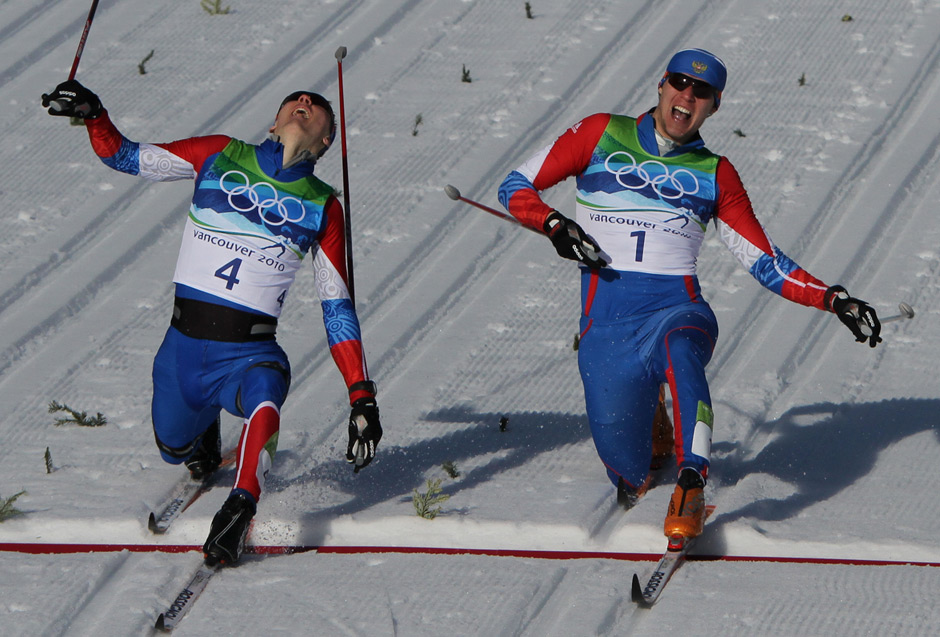
    Russia’s Nikita Kriukov (l) and Alexander Panzhinskiy placed first and second in the men’s sprint at the 2010 Olympics in Vancouver, B.C. Russian Minister of Sport Vitaly Mutko recently told Russian media that the entire cross-country ski team was doping at those Olympics: “Of course, I knew all about this, they were all doing the doping,” he said. There are several ways in which the team allegedly avoided positive doping tests.

    A new documentary titled “Doping – Top Secret: Showdown for Russia” aired on Germany’s ARD news channel on Wednesday.

    Allegations in the documentary opened a new possibility for how Russian sports officials avoided positive tests by doped athletes: did they use the Anti-Doping Administration and Management System, ADAMS, to learn when their athletes would be tested and warn staff who might be able to help athletes avoid positive tests?

    “The ADAMS doping control database provided to [Anti-Doping Organizations] is an essential tool for managing both an in- and out-of-competition doping control program,” the World Anti-Doping Agency (WADA) explains on its website. “Coordination of doping control programs in the ADAMS system helps to avoid duplication of testing efforts and harmonizes communications between testing authorities, sample collection agencies as well as WADA accredited laboratories.”

    But it may have been used for something else.

    Government Interference

    The 35-minute piece put together by journalist Hajo Seppelt primarily focused on what Russia should have to do in order to send athletes to the upcoming 2016 Summer Olympics in Rio de Janeiro, Brazil.

    After widespread indignation over the last year about rampant doping in Russia, Seppelt questioned whether Russia was making a good-faith effort to change. Collusion had been revealed in several of his previous documentaries, as well as by pieces in The New York Times, Sunday Mail, 60 Minutes, and by the World Anti-Doping Agency Independent Commission.

    This time, Seppelt revealed more than ever about the involvement of the Ministry of Sport and specific government officials in covering up doping so that Russian athletes could compete – with great success – on the international stage.

    Buried in the documentary was an allegation that for two winter sports, the Ministry of Sport had worked to warn coaches and athletes before visits from doping control officers.

    The allegations involved Minister of Sport Vitaly Mutko and his anti-doping advisor Natalia Zhelanova, and came from a document signed by Grigoriy Rodchenkov, the former head of the Moscow anti-doping laboratory who has since fled to the U.S. and cooperated with The New York Times.

    “Zhelanova deliberately evaded and undermined Test Distribution Plans of [International Ski Federation] and [International Biathlon Union]. Usually, RUSADA was informed two or three days before their [doping control officers] should collect samples from the Russian national team. [Name redacted] immediately notified Zhelanova, then the latter notified Head coaches, and the national team had change location, just escaped.”

    Zhelanova was a member of the WADA Finance and Administration Committee from 2010 until 2015.

    The documentary notes that not everyone approved of this policy. RUSADA Executive Director Nikita Kamaev apparently registered his concern, telling Zhelanova that “RUSADA was losing credits” in terms of respect and credibility.

    Kamaev died unexpectedly in February at age 52. He had resigned after the first WADA Independent Commission report.

    ADAMS Violations

    The ADAMS system is used by anti-doping agencies for a variety of purposes. One of the main uses is for athletes to report where they are living, training, or staying, a so-called “whereabouts” report.

    If a doping control officer comes for a visit and the athlete cannot be located where they said they would be, it is considered a whereabouts violation. Three such violations over the course of 12 months can lead to a suspension from competition.

    According to WADA numbers, 21 athletes from different countries had third-strike violations in 2014.

    But another use of ADAMS is for the multiple authorities which test athletes to report and coordinate their efforts. For instance, an athlete is subject to testing by both their international federation and their national anti-doping organization.

    “Where reasonably feasible, testing shall be coordinated through ADAMS or another system approved by WADA, in order to maximize the effectiveness of the combined testing effort and to avoid unnecessary repetitive testing,” the 2015 World Anti-Doping Code states.

    This use of the system actually addressed complaints by athletes that they were tested to often and too disruptively, according to International Biathlon Union (IBU) Vice President for Medical Issues Jim Carrabre.

    “Each nation has access to that data for their national athletes in the IBU test pool so that we minimize the probability of having two separate test authorities test an athlete on the same day,” he wrote in an email. “We each could still choose to do this if we wished but the benefits would be minimal. This was earlier a major complaint by athletes from many countries, and this access in ADAMS improved this complaint immensely.”

    FIS Anti-Doping Administrator Sarah Fussek explained the use of the ADAMS system slightly differently.

    “If you do register an exact mission in ADAMS beforehand, another organisation can only see this planned testing if the testing organisation has set explicit access in ADAMS for this purpose for each individual organisation,” she wrote in an email on Saturday. “At FIS this is currently not the case for any [national anti-doping agency] and vice versa.”

    FIS does register tests in ADAMS once they have been completed.

    Carrabre has been a huge proponent of targeted testing, which snagged two Russian biathletes in the leadup to the 2014 Olympics.

    But he confirmed that all of the tests ordered by the IBU were not only carried out by RUSADA, historically, but were also entered into ADAMS where RUSADA could access them.

    “RUSADA could therefore notify internally any one if they had intentions of cheating the system,” he wrote. “This could have occurred but they would have had to check the system regularly if they wanted to know IBU test plans on Russian athletes when they were tested outside Russia. I presume that this was not done or otherwise we would have not caught the ones that we did.”

    That’s why even aggressive testing by international federations could have been circumvented by individuals or agencies in Russia: whereabouts violation in reverse.

    And, if this was the mechanism used by Zhelanova to warn teams before testing occurred, it could potentially have jeopardized testing by any international federation using ADAMS to pre-register its tests with the national anti-doping organization, as was encouraged by WADA.

    Aggressive Testing, For Good or For Naught

    Some federations have had concerns about Russian anti-doping efforts for years.

    The International Ski Federation (FIS) caught a number of Russian cross-country skiers doping in the mid- to late-2000s, and in June 2010 sanctioned the Russian Ski Association. After fining the federation $185,000, FIS declined to press further sanctions and in November 2010 wrote in a press release that the federation had taken “positive steps” in anti-doping.

    At the same time, FIS was avoiding relying on RUSADA to carry out testing missions to a large extent, instead relying on companies which train doping control officers and do the sample collection themselves.

    “There was quite a lot of testing missions which were coordinated with [the Russian Anti-Doping Agency, RUSADA], but most were carried out by the FIS-appointed doping control agency with their own personnel and equipment,” FIS Secretary General Sarah Lewis explained to FasterSkier in May. “Most samples were transported to a different laboratory, in Lausanne or Cologne or somewhere else. We weren’t in the position that they could be manipulated in the Moscow laboratory.”

    In an email on Thursday, FIS Anti-Doping Administrator Sarah Fussek said that the organization also did not usually notify RUSADA if and when tests were going to take place.

    “With the exception of a handful missions, testing in Russia was carried out by a private sample collection provider,” she wrote. “We did have a couple of joint missions some years. Otherwise FIS testing did not give notice to RUSADA when conducting missions within Russia.”

    As such, Fussek was confident that the FIS testing program was adequate to ensure that Russian athletes were mostly not cheating.

    “Keeping in mind that you can never guarantee that every athlete is clean, we strongly believe that our programme covered testing in the country well and that we did all possible efforts to achieve a regular at home testing on Russian athletes (who most time of the year travelling on the World Cup circuit, plus training camps outside Russia and are tested there regularly as well),” she wrote.

    The IBU was also watching Russia closely. The biathlon governing body fined the Russian Biathlon Union in 2015 after multiple athletes had positive tests.

    “In the years three years prior to Sochi, the new administration in [the Russian Biathlon Union], Mr Mikhail Prokorov and Mr Sergei Krushenko, were verbally and financially committed to antidoping,” Carrabre wrote. “I had personal meetings with them and they went from one of the countries with the least number of internal antidoping tests to the country with the most number of internal tests in IBU. This effort was appreciated by myself and IBU and was, in my opinion, a large step in the right direction. I even publicly commended the RBU for this action. As I also said publicly, the number of tests does not always equal quality tests so the IBU would not decrease its efforts despite the testing of the RBU.”

    The increased number of tests did catch some regional-level athletes, but no Russian Biathlon Union testing ever led to the suspension of a national-team athlete.

    IBU testing, however, did, in particular when they tested outside of Russia. As Fussek had noted, athletes spend almost the entire winter, as well as periods of the offseason, training and competing in Europe, offering ample time to take many anti-doping samples.

    “No national or international level athletes were ever found with their testing,” Carrabre said of the Russian Biathlon Union. “It was therefore surprising that the IBU would catch several of their athletes in the year prior to Sochi with testing performed outside of Russia while their athletes were at international training camps.”

    Superficial Admissions of Guilt

    The Ministry of Sport denied that they had interfered with RUSADA business in any way – or that such interference would even be possible.

    “How can I exert influence there?” Mutko asked, rhetorically, in the new ARD documentary. “What influence can we exercise on the personnel of the anti-doping organizations?”

    Just two days before the documentary aired, Zhelanova had done a question-and-answer session on Twitter, where she stressed that Russia was changing. The full exchanges from June 6 can be found on her twitter feed.

    “The state has taken a lead in doing everything to demonstrate we are reforming and have nothing to hide,” she tweeted to Associated Press reporter Rob Harris.

    In discussing the past doping problems, she put the blame squarely on athletes.

    “We think guilty athletes should be punished individually,” she tweeted to University of Colorado professor Roger Pielke Jr.

    And Zhelanova seemed to admit that even today, it is difficult for doping control officers to do their jobs. U.K. Anti-Doping, which took over testing in Russia after RUSADA was stripped of its authority, reported in May that 40 percent of the tests it was supposed to carry out were impossible because they couldn’t locate the athlete.

    Evading a sample or refusing to give a sample are both considered Anti-Doping Rule Violations, the same as a positive test or three missed whereabouts.

    The current procedure for testing seemed to still be under negotiation. U.K. Anti-Doping had reported that Russia requested 30-day notice before testing of any athletes in military areas, which is clearly not standard operating procedure in the world of anti-doping.

    “We agreed a procedure with WADA to help doping inspectors to carry out their important jobs,” Zhelanova tweeted in response to Rachel Axon of USA Today.

    But what is there to discuss? In 2006, the Russian Federation ratified the International Convention Against Doping in Sport, under the purview of the United Nations Educational, Scientific, and Cultural Organization (UNESCO).

    Article 12 states,

    “States Parties shall, where appropriate:

    (a) encourage and facilitate the implementation by sports organizations and anti-doping organizations within their jurisdiction of doping controls in a manner consistent with the Code, including no-advance notice, out-of-competition and in-competition testing…”

    The 2015 World Anti-Doping Code further states that “Each government will take all actions and measures necessary to comply with the UNESCO Convention.

    After the documentary aired on Wednesday, Zhelanova was less than thrilled.

    “I was very upset and disappointed by the allegations made against me in the recent ‪@ARDde documentary,” she stated in a series of tweets. “These claims are untrue and are made by 1 disgraced person who disagreed with me on the importance of fair & clean sport. I really believe in the fight against doping and dopers and am doing everything I can to create change and restore trust. Reforms are under way but our system won’t be perfect immediately – cultural change takes time.”

  • New Study Shows Chugging Water Before Doping Test Alters Biological Passport Markers

    New Study Shows Chugging Water Before Doping Test Alters Biological Passport Markers

    A way to beat a Biological Passport test, or something which will get you tripped up in the long run? (Photo: www.freestockphotos.biz)
    Guzzling water: a way to beat an Athlete Biological Passport test or something which will get you tripped up in the long run? (Photo: www.freestockphotos.biz)

    Anti-doping administrators have worried for years that athletes were dodging tests by chugging water.

    Some call it “void-drink-wait.” If doping control knocks on the door, an athlete could urinate, then drink a half liter (or more) of water, and then wait to provide a sample until that water diluted a drug. Some cyclists caught doping have admitted to this strategy.

    It was so widespread that it’s described as a method for beating tests on forums about performance-enhancing drugs, and that doping officials at events such as the Pan-American Games are instructed to note on a supplementary form if an athlete appears to be drinking a particularly large quantity of water.

    “It is another way to try and dilute the blood other than infusion,” Dr. Jim Carrabre, the International Biathlon Union’s Vice President for Medical Issues, told FasterSkier.

    A new study investigates how such behavior could impact not only doping tests themselves, but also blood parameters which are used as part of the Athlete Biological Passport (ABP).

    That program repeatedly tests athletes’ blood to establish baseline values for a number of blood markers like hemoglobin, red blood cells, and mean corpuscular volume. Although these markers change through time with the effects of training or elevation, for instance, bigger abnormalities compared to the baselines might indicate blood doping.

    There have been relatively few suspensions to date based on the ABP alone.

    Carrabre estimated that drinking a large volume of water could impact ABP markers in small ways, but that it would be hard to drink enough water to make a difference.

    The study was headed by Dr. Jakob Mørkeberg of the mass spectroscopy unit at Copenhagen’s Rigshospitalet (and also a consultant to Anti-Doping Denmark) and written by University of Copenhagen research assistant Jacob Bejder.

    They used 20 recreational athletes as test subjects, and dosed them with an “aggressive” regimen of recombinant erythropoietin (EPO) for three weeks. Afterwards they had a ten-day “washout” period before being microdosed with a different form of the drug.

    The morning after the microdose, the athletes were woken up and a blood sample was taken. Then half had a “normal” drink of water, while the others chugged a liter, deemed “hyperhydration”. Blood samples were taken again at 20, 40, 60, and 80 minutes afterwards.

    A few days later, the microdose procedure was repeated, with athletes who had initially had a normal treatment now drinking the one liter of water, and vice versa. This controlled for athlete-to-athlete variation.

    The researchers then compared ABP markers from that early-morning blood sample through time after the 20, 40, 60, and 80 minutes.

    “There are individual thresholds for the athlete that needs to be exceeded,” Mørkeberg wrote in an email of the ABP parameters. “These are based on the likelyhood of only 1 in 100 clean athlete would exceed these. If exceeded the profile is evaluated by experts. The parameters are normally looked at together and support each other. Nevertheless, each of them alone can be used to sanction an athlete if is atypical.”

    Reporting in The Scandinavian Journal of Medicine and Science in Sports, they found that after about 40 minutes, both hemoglobin concentration and off-scores were affected by the hyperhydration treatment.

    “The important thing is not to let the athlete ingest massive amounts of water before sample collection, at least not if the period from drinking to sample collection exceeds 30 min,” Mørkeberg wrote.

    But to back up, what is an off-score? It’s one of the ABP markers, which is calculated from two others.

    “It is an algorithm where the hemoglobin concentration (hb) and the relative amount of young red blood cells (reticulocytes) are combined,” Mørkeberg explained. “High hb together with a low number of reticulocytes gives a high off-score. Low reticulocytes is a result of low production of red cells. This is seen when your body has many red blood cells and hence hemoglobin. Your body senses this and reduces its own production.”

    After blood doping, reticulocyte production is often extremely low because the body already has plenty of healthy red blood cells.

    If the phrase “off-score” sounds familiar, it might be because of British marathoner Paula Radcliffe, whose data was among those leaked in the International Association of Athletics Federation scandal and was deemed “suspicious.”

    From that data alone, it can be hard to tell if someone is doping, as Dr. Ross Tucker explained in an excellent blog post on Science of Sport about the Radcliffe saga.

    Indeed, even in the athletes who had only “normal” water intake, the ABP data was not always sensitive enough to detect changes or trigger that threshold for a given athlete (two blood samples had been taken before the study began to establish baselines).

    Using hemoglobin concentration and off-score, only 45 percent of the “normal” samples would have triggered an ABP positive, and 18% of the hyperhydration samples.

    Including another parameter, the Abnormal Blood Profile Score, would have improved that to 67% and 45 percent. But that score, which combines several markers, is not yet approved for ABP use.

    The lack of detection – which contributes to the small number of ABP cases actually pursued by administrators– could be because many things affect blood.

    For instance, training or racing, elevation, or heat exposure can shift plasma volume by as much as 10 percent, while drinking the liter of water shifted it by only 5 percent. That makes determining whether parameters which are based on the concentration of something in the blood, such as hemoglobin, tricky to interpret.

    In the Radcliffe case, the marathoner said that her off-scores were high because she had raced in nearly 90-degree heat in Portugal and was dehydrated. The explanation is not completely implausible based on the known effects of dehydration on plasma volume, and is useful when thinking about the effects of hyperhydration – if the sample had been taken a few hours later and Radcliffe had begun rehydrating, her off-score would have gone down and been deemed less suspicious.

    Thus it is clear tat manipulating plasma volume can reduce the abnormality of blood passport markers. In fact, the researchers tried to test whether albumin, a blood plasma protein, could be used to detect big changes in plasma volume. But in this study, that was not the case, meaning that hyperhydration remains impossible to detect without directly observing the act – and thus it remains hard to tell whether changes in blood markers are due to natural variation, or more sinister masking strategies.

    “It would really mean a lot if such a marker could be developed,” Mørkeberg wrote. “Only time will show if anyone will be successful.”

    The upside, however? If an athlete sometimes uses this “void-drink-wait” strategy, but not always, their ABP could become increasingly volatile over time, which could tip off anti-doping testers.

    “It would be almost impossible in my mind to alter the off-score in a consistent and predictable way by drinking fluids,” Carrabre told FasterSkier. “You have to remember that it is the variations in the passport module numbers that lead to suspension, so even diluting a normal person’s blood could potentially lead to a positive passport. Remember that manipulation of blood equals positive passport. The cause for the manipulation is irrelevant.”

  • Abramova Waives B-Sample; Second Athlete Tests Positive as IBU Mulls Sochi Testing

    Abramova Waives B-Sample; Second Athlete Tests Positive as IBU Mulls Sochi Testing

    Olga Abramova after winning gold in the pursuit competition at Summer Biathlon World Championships in Romania in August 2015. She had also won the sprint. (Photo:  IBU/Evgeny Tumashov)
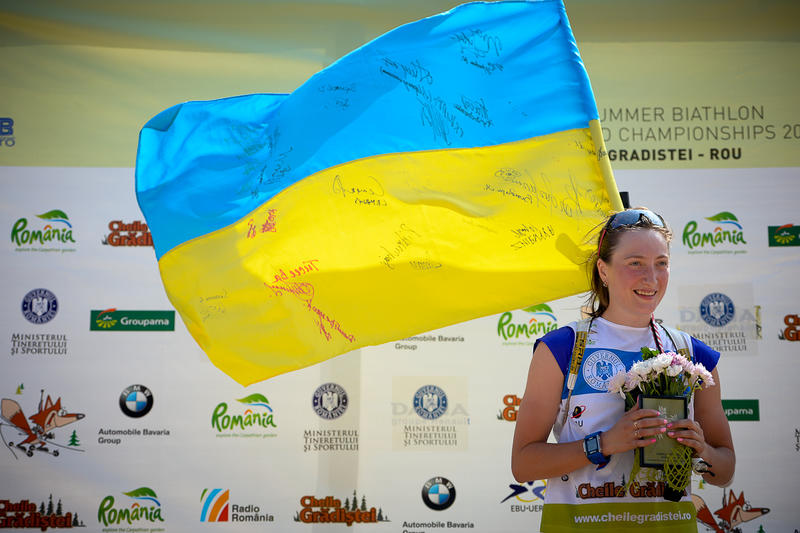
    Olga Abramova after winning gold in the pursuit competition at Summer Biathlon World Championships in Romania in August 2015. She had also won the sprint. (Photo: IBU/Evgeny Tumashov)

    Olga Abramova, a Ukrainian World Cup biathlete whose “A” sample from a January competition tested positive for the banned hormone mildronate, has waived her right to have the “B” sample examined.

    That means that her case will proceed immediately to an International Biathlon Union (IBU) Anti-Doping Hearing Panel, which will decide whether and how to discipline the athlete.

    Mildronate was added to the World Anti-Doping Agency’s Prohibited List effective January 1st, and Abramova’s sample was collected just ten days later. Originally designed as a growth-promoting hormone for livestock, mildronate is widely acknowledged to be performance-enhancing and is even advertised as such.

    In a Ukrainian Biathlon Federation press release earlier this month, it was stated that Abramova was prescribed a medication containing the drug in November.

    In the press release announcing the advancement of the Abramova case, the IBU also revealed that a second athlete had tested positive for the same substance at an IBU Cup competition in January. As the IBU Cup is a second-tier circuit, it is assumed that this means it is not a star athlete, but the IBU has not revealed the athlete’s name.

    “The idea is to protect the right of the athlete until they either declare that they are indeed positive, or a B sample confirms this,” IBU Vice President for Medical Issues Dr. Jim Carrabre wrote in an email to FasterSkier. “Once this occurs then we truly have a positive finding. If we announce the athlete’s personal information before this and they deny the medication and the B sample does not confirm that we have a case, then we have a personal privacy violation.”

    The press secretary for the German federation said that the case did not pertain to a German athlete. Russian Biathlon Union President Alexander Kravtsov told the Russian press the same thing: that the IBU had not contacted his federation about a positive test.

    Meanwhile, Carrabre told Norwegian broadcaster NRK that he wanted to re-examine anti-doping samples from the 2014 Olympic Games in Sochi, Russia, given ongoing investigations into doping in the country and a WADA investigation which alleged Russian state security interference in the Sochi laboratory. The Russian Anti-Doping Agency, RUSADA, is currently not in compliance with WADA and testing has been outsourced to the United Kingdom.

    “My point to NRK was that I would like to overview the tests that were done, the results of those tests, and integrate this as a total picture of things going on around the time of Sochi,” Carrabre explained in an email. “We would be remiss not to do this especially in light of the [WADA] Independent Commission’s findings and recommendations. As you know, there are many issues with Sochi including test sample destruction.”

    The comments have set of a firestorm in response, with IBU President Anders Besseberg saying first that he had not heard anything of the plan, and then told NRK that he did not believe such an investigation would reveal any undetected doping.

    “I must say that I’ll be very surprised if one laboratory managed to cheat,” Besseberg said.

    Carrabre reportedly met with WADA officials to exchange information, however several in the biathlon community are questioning whether the IBU has any jurisdiction to do such an analysis since the International Olympic Committee (IOC) is responsible for testing at all Olympic Games.

    Russia is also pushing back on the allegations.

    “The International Olympic Committee has previously made a statement that they have no doubts about the transparency of the Olympic Games in Sochi in terms of doping,” Natalia Zhelanova, Advisor to the Russian Minister of Sports, told R-Sport News, according to a translation. “At the Games for anti-doping it should not be RUSADA and our laboratory- doping control was by the IOC.. This occurs at any Olympic games and only the IOC may decide to conduct further analysis of doping tests.”

    The former Russian Biathlon Union director Sergey Kuschenko further asserted that his athletes had been clean.

    “These charges are baseless,” he told R-Sport. “As for the Russian national team, at the time of the Olympic Games, we were confident that our athletes have no such problems.”

  • FIS and IBU Defend Anti-Doping Practices, but Urge Further Investigation and Sochi Re-Testing

    FIS and IBU Defend Anti-Doping Practices, but Urge Further Investigation and Sochi Re-Testing

    When asked by FasterSkier at Monday’s Geneva press conference whether the worst fears of those in the nordic sports community – namely that Russia has had an organized doping program off and on for many years – were true, World Anti-Doping Agency Independent Commission Chair Richard Pound hedged.

    “Certainly the two sports you mentioned are known to have had a lot of doping problems, and probably not just Russia,” he said.

    Dr. Jim Carrabre, the Vice President for Medical Issues at the International Biathlon Union, says that whether biathlon has a doping problem depends on how you define problem - but that no way is it the IAAF. (IBU file photo)
    Dr. Jim Carrabre, the Vice President for Medical Issues at the International Biathlon Union, says that whether biathlon has a doping problem depends on how you define problem – but that no way is it the IAAF. (IBU file photo)

    (You can read the background on that press conference, and its implications for winter sports, here. The topic was largely centered on Russian track and field.)

    To ask those in the cross-country ski and biathlon communities, that statement is both true and false. Both the International Ski Federation (FIS) and the International Biathlon Union (IBU) touted the successes they have had in fighting doping from Russia and beyond, but also welcomed more information, investigation, and re-testing of old samples.

    They also weighed in on the serious finding that the Russian state security apparatus, FSB, was present in the anti-doping laboratory at the 2014 Olympics. That finding has the potential to undermine the results from the Games, although the panel did not find direct evidence that agents had manipulated samples.

    Unfairly Maligned?

    “I have to say I’m a little disappointed that in the context of this investigation, [Pound] would name FIS and biathlon as having severe doping problems,” said Dr. Jim Carrabre, a Minneapolis-based family doctor who is the IBU’s Vice President for Medical Issues.

    “Is there evidence of that in what he uncovered, that we were implicit in this problem?” he asked. “If there wasn’t, then he shouldn’t have even mentioned it. On this stage and this scale of deception and criminal acts, I don’t think it’s appropriate to include us in the same sentence. I think we deserve more respect than that.”

    Apparently speaking off the cuff, Pound did make comments that neglected specific aspects of his anti-doping program.

    For instance, take this one.

    “The only organization I know that actually keeps samples for a long-term basis is the [International Olympic Committee],” Pound said in response to a member of the press. “Most other testing agencies, if it’s not a positive test, a sample is kept for a number of months and then routinely destroyed.”

    The IBU actually did have such a program, anticipating the update to the WADA Code which went into effect on January 1, 2015.

    Carrabre and his team kept samples that had suspicious profiles, but which weren’t positive, from the two years leading up to this change. Then they re-tested them with the new methods.

    Sarah Lewis, the Secretary General of the International Ski Federation, would welcome re-testing samples from the 2014 Olympics in Sochi, Russia. (FIS file photo)
    Sarah Lewis, the Secretary General of the International Ski Federation, would welcome re-testing samples from the 2014 Olympics in Sochi, Russia. (FIS file photo)

    That effort led to several new positives. Some were from athletes who had already been banned from other samples, but it also led to the bans of Sergui Sednev of Ukraine and Alexander Loginov of Russia, a former Junior World Champion who competed at the 2014 Olympics.

    The IBU also suspended three athletes in the leadup to the 2014 Olympics, including two Russians: Irina Starykh, who was the team’s top female athlete at the time, and Katerina Iourieva.

    “I don’t know if there were any other federations which suspended athletes just prior to Sochi,” Carrabre said. “I think that we were the only ones that did that.”

    So does that mean that biathlon has a serious doping problem?

    “It’s a glass half full or half empty kind of thing: do you have a problem because you catch them?” he asked. “Or do you have a problem because you’re not catching anyone?”

    Likewise, FIS Secretary General Sarah Lewis touted her organization’s dealings with Russian doping in an email to FasterSkier.

    “In 2010 FIS sanctioned the Russian Ski Association following an investigation due to the high number of Russian doping cases,” she wrote. “A series of measures were implemented by FIS and the Russian Ski Association through enforcement of a compliant anti-doping programme. The Association was required to provide a detailed report on their activities and actions it had undertaken to address the doping problems in a meaningful way. These included a significant number of changes such as changing cross-country ski team and other officials.”

    Alexandr Loginov, en route to winning the 2013 World Junior Championship sprint, was allowed to compete at the Sochi Olympics; but a re-test of a sample taken pre-Sochi was found positive, meaning he never should have been there. However, his doping was sophisticated enough that the sample was merely marked as suspicious using pre-2015 methods. (Photo: Mario Danzl/Obertilliach 2013.)
    Alexandr Loginov, en route to winning the 2013 World Junior Championship sprint, was allowed to compete at the Sochi Olympics; but a re-test of a sample taken pre-Sochi was found positive, meaning he never should have been there. However, his doping was sophisticated enough that the sample was merely marked as suspicious using pre-2015 methods. (Photo: Mario Danzl/Obertilliach 2013.)

    One of the notable things in the WADA Independent Commission report is that track and field’s governing body, the IAAF, did not sanction Russia (they are now considering doing so). That is a radical difference to how FIS handled their own situation.

    … But Help Wanted

    Both federations however made it clear that if the type of behavior found in the track and field investigation was widespread across all sports within Russia, their carefully-designed anti-doping programs would lose some key components.

    “Where biathlon and nordic skiing have troubled histories in terms of doping in Russia, I want to believe that we caught the athletes who were doing it,” said Max Cobb, the President and CEO of the U.S. Biathlon Association and the chair of the IBU’s Technical Committee.

    “I really want to believe that,” he continued. “But I think you can’t look at a case like this and say, we don’t need to investigate further in our sport. I think this is a watershed moment in sport. All of us who are working in sport need to seize the moment to dig deeper into this and respect the work that WADA has done to expose this ,and see where else the evidence leads. Does it lead to more cases in our sport? I hope not, but it’s on us to find out.”

    That said, FIS and the IBU had policies in place to minimize the amount of damage corruption at RUSADA could have caused.

    “The samples of the Russian cross-country skiing athletes are collected by the FIS-appointed agency directly,” Lewis wrote, explaining that the disgraced RUSADA agency did not have responsibility. “Consequently we can be sure there was no-notice for the testing missions, no pre-screening of samples that have been shipped out of the country, and we are not specifically aware of manipulation of whereabouts reporting (but can also not exclude for cases where FIS has not planned a testing mission).”

    “A number of samples are sent to the Moscow lab (mainly those for purposes of the ABP due to the limited possible transport time for arrival at the laboratory according to WADA Guidelines) but a large amount are taken to a different WADA-accredited lab outside of Russia,” Lewis continued. “There were challenges to be able to ship the samples out of the country in the past, but we have always succeeded to do so. Samples in Russia are not only being collected in the Moscow region, but also from other areas in Russia where the athletes are living and training, which is certainly time- and cost-intensive, but FIS has allocated a significant amount of its anti-doping budget for this testing strategy since many years.”

    Furthermore, while the narrative of the WADA report is that athletes were doped and protected in Russia so that they would never test positive outside the country, Carrabre pointed out that all of the Russian doping cases he has seen have been detected based on samples taken outside of Russia.

    “There’s obviously still doping outside of the country, because we caught them!” he said of the biathlon program.

    And yet – he has had trouble catching athletes inside Russia, suggesting that there may very well be deception and collusion going on inside the country.

    “RUSADA has reported some positive EPO tests on very low-level athletes who competed at national championships, maybe to make a smoke screen for the other ones they may be hiding,” he said.

    Both FIS and the IBU use an Athlete Biological Passport program, and Carrabre was particularly anxious to know whether hidden or manipulated tests taken by RUSADA belonged to biathletes for this reason.

    “But I would hope that in the WADA database if they have reports on positive tests by athletes that we are not aware of, that they would share that with us,” he said. “Because that would be useful information for us.”

    For instance, the Report stated that “significant percentages of [Doping Control Forms] in Russia are either not entered into ADAMS or are significantly delayed,” referencing WADA’s global database tool which stores and manages anti-doping test information. In particular, one whistleblower said gave the number of her sample to an official who hid it at the RUSADA laboratory, and this positive test was never entered into ADAMS.

    The Independent Commission noted that in many cases, even when information was entered in ADAMS, there was a significant delay first.

    WADA had not directly contacted him or the IBU, Carrabre said.

    About Sochi

    While much of the report focused on track and field athletes, one finding did shine a light on winter sports. The Independent Commission revealed that the FSB had infiltrated the anti-doping lab in Sochi.

    From the report:

    ‘Specifically, Moscow laboratory personnel have reported, under confidentiality, regarding the continued presence of the Russian security (FSB), “[L]ast time in Sochi, we had some guys pretending to be engineers in the lab but actually they were from the federal security service, let’s call it the new KGB; FSB.” ‘

    This is similar to the atmosphere in the Moscow anti-doping laboratory:

    “One laboratory staff member provided information to IC investigators about the suspected bugging or wiretapping of telephones, while another staff member reported that office spaces within the Moscow laboratory were monitored (bugged) by the FSB in order to be informed of the laboratory’s reported statements demonstrate the perceptions of laboratory officials, who believe they are under constant state surveillance.”

    Everyone involved seemed puzzled by the allegations of FSB presence in Sochi.

    “My first reaction is that what Dick Pound said sounds pretty good to me: I can’t imagine what the state’s interest in urine samples was,” said Cobb.

    Cobb was the IBU’s Technical Delegate overseeing the Sochi competitions, meaning that he was intimately involved with the Games but that anti-doping was far outside his direct responsibility.

    “It’s disturbing to have any outside influence present in something as sensitive as anti-doping at the Olympic Games,” he said.

    “It totally surprises me,” Carrabre said. “Really, frankly, I’m a little shocked to hear that… they would have to have had been granted access through IOC to do so. WADA had an Independent Observers group there who were aware of all the people in the laboratory. So it would be interesting to hear from them.”

    The findings clearly had both the IBU and FIS rattled. Both sports did have positive tests at the Games: German biathlete Evi Sachenbacher-Stehle tested positive for a banned stimulant, and Austrian cross-country skier Johannes Dürr was found to be using the blood-doping drug recombinant erythropoietin at home in Austria in between long-distance races.

    But were there actually more positive tests, which never saw the light of day?

    “I would think that if there was mishandling of results before Sochi, then there would be no reason to think it wouldn’t continue during the Games,” Carrabre said.

    “In regard to samples from Sochi 2014, these are in custody of the IOC,” Lewis wrote. “FIS would certainly support the IOC if it decides to re-test any of these – as has been the case in the past – at any other WADA accredited laboratory.”

    Bottom line

    The findings in the WADA Independent Commission report definitely have implications for skiing and biathlon. It’s even possible that the findings will lead to further action which may eventually lead to changes in the results sheets.

    But a separate aspect of the track and field investigation, and what made it so horrific and allowed the behavior to continue for so long, was collusion by the IAAF, in the person of President Lamine Diack. Diack is under investigation in France for taking bribes to hide doping.

    “I’m disappointed too because the people I know in IAAF are good doctors,” Carrabre said. “They are working hard to keep this sport clean. I think the image there, now, is that everybody is trying to manipulate sport. But the people who are working hard to keep that sport clean have also been deceived.”

    And likewise, although there may be dopers – Russian or otherwise – in their sports, FIS and the IBU do not want to be categorized alongside the IAAF and its criminal president.

    “We can’t keep people from doping,” Carrabre said. “Just like if you have a store you can’t stop people from shoplifting. But you can catch them. I think we’ve done a reasonably good job of doing that.”

  • ‘Gender Verification’ Based on Testosterone Shelved by Court of Arbitration for Sport

    The Court of Arbitration for Sport (CAS) has overturned a guideline used by the International Association of Athletics Federations (IAAF) to define female competitors based on naturally-occurring testosterone levels. The decision has implications for other sports as well, with skiing relying on related IOC rules to define gender.

    The case was brought by Indian sprinter Dutee Chand, who has hyperandrogenism, a syndrome where the body produces excess testosterone. This led her to test over the 10 nanomole per liter limit set by the IAAF for female athletes. That value falls on the low end of the range typical for men.

    Chand successfully argued that because her high testosterone levels were naturally-occurring, not the result of doping, they were just the same as any other athletic gift someone might be born with: long legs, genetics that make it easier to add muscle, or a tendency towards aerobic fitness, for instance.

    CAS agreed, saying that the IAAF must provide additional evidence that high testosterone levels provide a substantial advantage to women. If this is not the case, then testosterone should not be used as a guide to defining biological sex, because it would lead to the needless and harmful exclusion of some women who are, in fact, female.

    In the meantime, Chand is cleared to compete.

    “I have a right to run and compete,” Chand said in a statement released by her legal team. “But that right was taken away from me. I was humiliated for something that I can’t be blamed for. I am glad that no other female athlete will have to face what I have faced, thanks to this verdict.”

    Implications for Nordic Sports

    The decision has other implications as well, as the International Olympic Committee (IOC) uses similar guidelines to determine sex. For both the London 2012 and Sochi 2014 Olympics, the IOC mandated that panels be created to investigate “suspected cases of hyperandrogenism” with a potential end result of women being excluded if they had high testosterone levels.

    Thus, athletes in other sports were also subject to so-called “gender verification” since 2011. And many other federations, even those without explicit policies about defining sex for competition, use the IOC guidelines.

    The CAS verdict does not explicitly address other federations’ guidelines which use the same logic. However, it is doubtful that the IOC or other groups would continue using their rules stipulating testosterone as a definition of gender given that any athlete could appeal an exclusion with Chand’s precedent and win at that CAS level.

    The International Biathlon Union (IBU) does not appear to have any published guidelines for how to define the sex of an athlete.

    “We do not have a gender identity policy,” IBU Vice President for Medical Issues Dr. Jim Carrabre wrote in an email to FasterSkier. “We do not check or verify gender as a general pre-competition requirement. This idea is antiquated  in terms of sport and doping.”

    The International Ski Federation (FIS) reserves the right to do gender verification. The current International Competition rules read, “If any question or protest arises as to the gender of the competitor, FIS shall assume responsibility for taking the necessary steps to determine the gender of the competitor.”

    FIS used to have explicit procedures for gender verification, but Secretary General Sarah Lewis told FasterSkier in an email that the practice had been discontinued.

    “The rules of the Olympic Movement were adopted by FIS and it was necessary to undertake a gender verification test at FIS World Championships and the Olympic Winter Games (I did so myself as an athlete),” she wrote. “I am not certain whether these were withdrawn first for the Games or for the FIS World Championships, but in any case since many years, I believe 2000, it has no longer been necessary to undergo gender verification.”

    (Lewis was traveling en route to Kuala Lumpur, Malaysia, and did not have access to documents which would have confirmed exact dates.)

    Still, FIS has the possibility to do gender verification tests and this responsibility is also listed in documents explaining hosting for events like World Junior Championships.

    “Should it be necessary to arrange a gender verification – which has never been required since the change of rules – then the Olympic Movement rules would be applicable,” Lewis wrote. “If these have been suspended by CAS, then of course FIS respects this decision.”

    The necessity is defined in FIS rules as as “If any question or protest arises as to the gender of the competitor”.

    FIS has one high-profile gender verification case in its history, that of Austrian skier Erik Schinegger. As Erika, Schinegger was a World Champion alpine skier in 1966; gender testing before the 1968 Olympics revealed that Schinegger was intersex. He later fully transitioned to being a man and, in 1988, returned the medal he had won.

    Is Hypoandrogenism an Advantage?

    Finding the necessary evidence may be a difficult task for the IAAF. Although it is widely assumed that testosterone increases female athletic performance, it has actually rarely been researched and never definitively proven.

    This may be in part because research on female athletes lags far behind the amount of research completed on male athletes, across all disciplines of sports science.

    A 2012 paper authored by a team of international researchers from Stanford, Barnard, and Kings College London argued that the androgen/testosterone-based rules were scientifically unsound and also did not lead to improved fairness for female athletes. (You can read that critique here.)

    Another paper, published in the Journal of Clinical Endocrinology and Metabolism just this year (and available here), agrees, stating that “Even if it can be shown that high levels of natural T predictably determine better athletic performance (which the research to date does not support), we do not accept that it would necessarily violate the ideals of sport… We must point out that for many years now, natural advantage among male athletes has not been policed and reduced in sports, but on the contrary has been admired and celebrated.”

    More importantly, however, those authors raised ethical concerns about alerting unsuspecting athletes that they may have either an endrocrinological disorder , such as hypoandrogenism, or a genetic condition which made them intersex. Chromosome testing is another method used in gender verification, with syndromes such as XXY chromosomal composition falling in no-mans-land.

    “The discovery and diagnosis of a [developmental sex disorder] will likely come as a severe shock, and the potential for harm is not a trivial matter,” the JCEM authors wrote. “It was this well-recognized harm that led the IAAF in 1991 and the IOC in 1999 to abandon their mandatory testing practices.”

    While in Schinegger’s case, the discovery that he could be male led to a long and happy life as a man, this is definitely not always the case.

    “If it wasn’t for my family, I don’t think I could have survived,” Caster Semenya, a South African runner whose gender was questioned before she was eventually reinstated to compete as a woman, recently told the BBC. “It was upsetting, you feel humiliated. You cannot control what people think.”

    Female athletes who have been stripped of results because of hyperandrogenism have indeed taken drastic measures. One Indian runner tried to commit suicide, twice, after losing her athletic career.

    In one of the most heartbreaking stories, some athletes were told to try to lower their testosterone levels either by surgery or by taking drugs. Four very young female athletes found to have hypoandrogenism through the pre-London 2012 testing appear to have consented to surgeries that they were told would lower their testosterone levels to an extent that they would be able to compete, but the surgeries ended up being plastic surgery on genitals or breasts, and did not have the desired affect because this was not the source of testosterone.

    While the IAAF denies that this ever happened, it was reported in the International Business Times and in the medical journal article linked to above. All four women were rumored to be from rural areas of developing countries where the concepts of gender as not only a sociological but also a biological spectrum, which have only just begun to permeate the West, have not yet reached.

  • Tikhonov Brings Color to Politically Tense Race for IBU Presidency

    Tikhonov Brings Color to Politically Tense Race for IBU Presidency

    Alexander Tikhonov in Khanty-Mansiysk, Russia, in 2007. Photo: vow via creative commons.
    Alexander Tikhonov in Khanty-Mansiysk, Russia, in 2007. Photo: vow via creative commons.

    A third candidate has joined the race for the International Biathlon Union (IBU) Presidency, to be voted on at the IBU Congress in December: Alexander Tikhonov, a legendary Soviet biathlete.

    Tikhonov won relay gold in four straight Olympic Games, as well as racking up five individual World Championship titles between 1969 and 1977. His overall 11 gold medals at World Championship events put him a three-way tie for the most successful biathlete of all time, on par with Frank Luck of Germany and Emil Hegle Svendsen of Norway, but behind “King of Biathlon” Ole Einar Bjørndalen of Norway.

    The former athlete has remained active in the biathlon world, holding the title of IBU Vice President for a time as well as helming the Russian federation in the mid-2000’s. Among other things, he has been the main driving force behind the Summer Biathlon World Championships.

    The race is already heating up, with incumbent Anders Besseberg of Norway defending his policies. Besseberg has led the IBU ever since the position was established in 1993.

    He has faced criticism from Dr. Jim Carrabre, a Canadian who lives in Minneapolis (USA) and is the IBU’s Vice President of Medical Issues. A longtime anti-doping advocate, Carrabre has claimed that the IBU lacks transparency under the leadership of Besseberg and Secretary General Nicole Resch. Carrabre announced his own run for the presidency in late June.

    At the same time, Carrabre sent a scathing open letter to Besseberg deploring his decision to halt blood-passport testing at future Olympic Games, a call which was made without consulting the IBU’s own Medical Committee.

    Besseberg appeared to be using his political wiles to the best advantage when he delayed responding to Carrabre’s letter until nearly a month later, timing his own response so that it was directly after the announcement of several long-awaited doping bans. In the response, which also took the format of an open letter, Besseberg defended his own work on anti-doping and touted his seat on the World Anti-Doping Agency Board.

    But the race is getting even juicier with the addition of Tikhonov, who has rarely held back from voicing his opinions and has a colorful past.

    In 2007, Tikhonov was convicted for conspiring to kill the governor of the Kemerovo Oblast, a region in Siberia. The incident had happened in 2000, when Tikhonov had allegedly connected some businessmen who wanted the governor dead, with his younger brother Victor, who helped them find hit men. Because Tikhonov was living in Austria at the time, he didn’t face trial for another seven years.

    And though he was sentenced to three years in prison, he was immediately amnestied and never served any time.

    His continuing involvement in the biathlon world has been looked down upon by many. In a 2010 New York Times article, both Carrabre and Besseberg lamented that Tikhonov’s involvement meant that people could legitimately say the sport was run by criminals.

    In that article, Besseberg called it a “tricky and difficult” situation.

    In an e-mail to FasterSkier this weekend, Carrabre was considerably more neutral.

    “Not surprised to see him come back,” he wrote. “He has been the big supporter and influence for the summer biathlon world championships.”

    Others are less charitable.

    “I take a dim view of the situation if he is elected,” Tore B

    Tikhonov had been particularly outspoken this year, commenting repeatedly on the Russian team’s successes and failures, as well as their doping scandal involving Irina Starykh and Ekaterina Iourieva. It was Tikhonov who alleged that two well-known “doping doctors” had been spotted at the World Cup in Hochfilzen, Austria, where Starykh was particularly successful.

    In announcing his bid for the Presidency, Tikhonov has come out again in criticism of how the Russian team handles doping issues: he says they simply facilitate it.

    “The worst thing is that none of our coaches or managers have ever paid for it, a bad situation that should be changed,” he told the Russian press, according to a translation. “You have to make a new law against doping. Look at Germany: half an hour after Sachenbacher-Stehle’s positive test, the police went and searched her parents’ house. We instead act like nobody cares.”

    As for whether the Starykh scandal will affect his bid for the Presidency, Tikhonov claimed that the blame should be placed on Mikhail Prokhorov, the New Jersey Nets owner and outgoing head of the Russian Federation. There were no doping problems during his own tenure as the federation’s head, Tikhonov said.

    But that’s not exactly true: there were two cases. Olga Pyleva won silver in the 15 km individual at the 2006 Olympics, but was subsequently disqualified for failing a drug test (the substance in question was the stimulant carphedon). Natalia Burdiga was later caught using the same stimulant.

    And the Russian team was widely suspected of more broad doping offenses. Suspicions were to some extent confirmed when three more high-profile athletes (Ekaterina Iourieva, who recently tested positive for EPO a second time; Albina Akhatova; and Dmitry Yaroshenko) failed drug tests shortly after Tikhonov’s term ended – but Tikhonov claimed that they were innocent.

    Nevertheless, he is running as another “hard on doping” candidate, along with several other priorities. According to the Russian website Championat, he wants to revive the Summer World Cup, which has languished since his departure from the Vice Presidency, and make more fast-paced race formats on the winter World Cup.

    Tikhonov has in many ways made few friends for himself in the previous years. For instance, he recently claimed that German coach Wolfgang Pichler, hired in part to lend some anti-doping legitimacy to the Russian team but also because of his great success coaching the Swedes, had ruined the squad.

    As such, few believe that he can win the election. Commentator Evginiy Slyosarenko wrote on Sportbox.ru that “there is no one (except perhaps Alexander Tikhonov), who believes in the success of the presidential campaign. Because the best biathlete of the 20th century after all the years of benefitting the biathlon world managed to alienate all of its key figures… the former director of the RRF Sergey Kushchenko, is another influential person in biathlon, and it is easier to imagine that the delegates vote for him than for Tikhonov.”

    In fact, Tikhonov’s appearance on the ballot list is the result of some complex politics. Russia initially nominated him for President and Victor Maygurev for First Vice President. Allegedly, IBU Secretary General Resch sent the federation a letter stating that each country could only nominate one individual for one of the offices. Nobody could find evidence of such a rule existing, and Resch never produced it, but Russia complied. NRK reports that Tikhonov’s bid was instead supported by the Georgian federation.

    Tikhonov himself said that he doesn’t believe he has any chance of winning – and that “it’s always tough when running against Besseberg,” perhaps a veiled implication that Carrabre may not fare so well, either.

    For his part, Besseberg told NRK that he hadn’t decided to run for re-election until the day before nominations were due.

    “For me it was important that the directors and the key biathlon presidents wanted me to continue,” he said. “I wouldn’t consider the other candidates.”

  • IBU President Besseberg Explains Olympic Blood Screening Decision, But Reveals Lack of Communication with Medical Director

    IBU President Besseberg Explains Olympic Blood Screening Decision, But Reveals Lack of Communication with Medical Director

    IBU logoAfter the International Biathlon Union (IBU) Executive Board published a sparsely-worded change to its Olympic blood screening procedures in the minutes of its last meeting, many in the biathlon world have been perplexed about why the organization would stop doing blood screening at the Games.

    It also led the IBU’s Vice President for Medical Issues, Dr. Jim Carrabre, to send out a letter explaining that he was not present at the meeting (due to a family health emergency), was not consulted about the decision, and was not told about it until he received the Executive Board minutes along with the rest of the IBU members. The Medical Committee is responsible for overseeing antidoping efforts.

    Reached by phone on Thursday evening, IBU President Anders Besseberg defended the decision, explaining that there are two reasons for the change, which will see the IOC taking over all blood screening. He also claimed that Carrabre had never tried to contact him about the issue before sending out his letter to the members, although e-mail archives show otherwise.

    Rationale for the Change

    The first reason that the IBU will no longer do its own Blood screening at the Olympics, Besseberg explained, is that in Sochi the IBU’s testing equipment was not functioning at the beginning of the Games, due perhaps to being jostled in transport. Instead, the organization had to use the World Anti-Doping Agency (WADA) lab. This was also the case four years earlier, in Vancouver.

    “In Sochi we had to use the WADA laboratory because our machine was not functioning for the second time in four Olympic Games,” said Besseberg, who is a member of the WADA board. “We cannot go on like this. We must react and take action so that it can be effective… The alternative is that for 2018 we have to send the machines by plane and we risk not being able to do what we can.”

    The IBU board decided that the best way to do this would be to hand all testing over to the IOC at Olympic Games, but “that we will help them with our experience and intelligence.”

    Carrabre confirmed that the equipment had not been functioning at the beginning of the Games, but said that he didn’t believe that halting the IBU’s own testing was the right solution.

    Besides the equipment problems, Besseberg said that another, larger factor was at play. The second reason to change the protocol was a request from the IOC to “harmonize” the procedures and testing standards between the different international winter sports federations which do their own blood screening. This includes The International Ski Federation (FIS) and the International Skating Union.

    “It could even be a situation where an athlete could start in one discipline and not in another one,” Besseberg said. “It is important that this is harmonized. I have been tasked by the two other federations to bring this to the IOC. And the IOC also supports this. This is the wish of everybody who is involved in either blood testing or blood screening.”

    For instance, FIS still employs “no-start” rules based on hemoglobin cutoff values, while the IBU does not do this at Olympic Games.

    Lack of Communication

    What the situation shows more than anything else is a troubling lack of communication between Besseberg, the IBU’s highest-ranking member, and Carrabre, who is responsible for its medical and antidoping efforts.

    The two men are running against one another for the presidency of the IBU, to be voted on at the federation’s congress in September. Internal accord or even discussion of antidoping protocols may be a casualty of this competition.

    For instance, Carrabre wrote in his June 17th letter (which you can see here) to the member federations that he was never consulted about the issue and that Besseberg had not responded to his requests to explain the decision and where the proposal came from.

    Besseberg, on the other hand, claims that Carrabre misunderstood the situation when he sent out the letter, and that furthermore he never tried to contact the president.

    “He should get educated and explain it, instead of sending out this letter,” Besseberg said.“He was not at the meeting and it’s a complete misunderstanding from his side. He has absolutely not been communicating with me after the board meeting or even after the minutes were sent out. I am very surprised and disappointed that he has been sending this letter along… there is absolutely no telephone call, no e-mails, nothing has been going between us. I am very disappointed because he has created a lot of misunderstandings.”

    Besseberg even said that someone could “look at his phone” to see that this was true.

    However, Carrabre showed FasterSkier an e-mail which was addressed to both Besseberg and IBU Secretary General Nicole Resch dated June 12, in which he asked “who initiated the idea to discuss the Olympic blood testing at this meeting and why? What led to this proposal and decision?”

    Screen Shot 2014-06-27 at 3.32.46 PM

    The next day, Resch replied to the e-mail saying she was forwarding the message on to Besseberg.

    This followed earlier e-mails to Resch asking why the issue was not brought up at a Medical Committee meeting a few weeks earlier, where both Besseberg and Resch were present, before being presented to the Executive Board. Resch asked him to address questions to Besseberg.

    The IBU President evidently did not respond to Carrabre’s questions.

    But on Thursday he told FasterSkier that he did not consider the decision about blood screening to be a “medical issue”.

    “He is not the one responsible for this,” Besseberg said of Carrabre. “It is the Executive Board which is responsible for biathlon issues.”

    The Vice President for Medical Issues is a position elected by IBU Congress and which has a seat on the Executive Board.

    Furthermore, although Resch did not answer Carrabre’s questions about who proposed the change of protocol or why, an internal Executive Board memo obtained by FasterSkier shows that the proposal was included, in great detail, in Resch’s report to the Executive Board at the meeting. Carrabre claims that this document was never sent to him.

    For his part, however, Carrabre did not include Besseberg in the recipient list for his letter.

    “I personally have not had it in my hands, but so many have called me like you and told me what it says,” Besseberg said. “I’m very surprised. I haven’t seen it myself. But I asked someone and they will copy me on this e-mail sometime in the next few days.”

    Yet the letter was sent to over 100 other recipients (federations and individuals), and it seems hard to believe that in the nearly ten days since its initial release none of these people would have passed it along to Besseberg had he asked to see it.

    Regardless of whether the decision turns out to be the correct one, when pressed Besseberg admitted that it should be better explained. Members of both the U.S. Biathlon Association and Biathlon Canada had told FasterSkier that they were perplexed and worried when they saw the Executive Board minutes, and did not understand the decision since it came with no justification.

    “This I can understand,” Besseberg said when asked why the change was never explained clearly to members. “Usually we publish new protocols without explanations, but I see clearly that it’s necessary to have more here.”

  • Carrabre Launches Bid for IBU Presidency

    Carrabre Launches Bid for IBU Presidency

    Dr. Jim Carrabre. IBU file photo.
    Dr. Jim Carrabre. IBU file photo.

    Dr. Jim Carrabre, a former Canadian biathlete who is the International Biathlon Union’s Vice President for Medical Issues, is launching a bid for the federation’s presidency. He is running against Anders Besseberg, a Norwegian who has been President since 1993.

    Transparency and good governance are two main themes of Carrabre’s platform, he said in an interview earlier this week from Saint Paul, Minnesota, where he is a partner at a medical clinic.

    “We need to bring biathlon into the modern world from a management point of view, and structurally and with transparency and everything else,” Carrabre said.

    Carrabre is being supported by Biathlon Canada. National federations must officially nominate any members who run for IBU positions, but according to Biathlon Canada Executive Director Joanne Thomson, her organization’s support for Carrabre’s bid is more than a mere formality.

    Carrabre has been a longtime member of Biathlon Canada, beginning as one of its founders and continuing to be “involved in the federation in a number of levels, mostly from the athlete development and coaching side,” Thomson said.

    “His interest is, and always has been, in ensuring fairness in the sport,” she explained. “From his position as VP for Medical Issues, he has been a big proponent of antidoping as a fundamental basis for our sport. That says the type of person that he is – one who wants to make sure that there is integrity, fairness, and inclusion to all the federations. I’m not saying that there’s not, currently, but that’s something he would want to continue to do.”

    One major issue for Carrabre is how the federation is handling doping cases. A longtime antidoping advocate who has also held positions at the World Anti-Doping Agency (WADA) and the International Olympic Committee (IOC), including overseeing testing in nordic sports for the Salt Lake City Organizing Committee at the 2002 Olympics, Carrabre has become increasingly frustrated at the IBU’s approach.

    Two recent examples are an Executive Board decision to discontinue blood testing at the Olympic Games, for which he says he was not consulted; and the slow pace at which sanctions against Russian biathletes Irina Starykh and Ekaterina Iourieva are proceeding. Carrabre claims that others within the federation have been withholding information from him.

    “Information is not getting disseminated, things are taking way longer than they should, and I don’t know why,” Carrabre said. “I keep asking for the results back, and I’m being told that the hearing panel is still looking at it. But it’s a straightforward case. A and B samples are confirmed. It should be a slam dunk. The only thing I can think of is that they’re trying to delay a decision on the punishment for Russia for political reasons.”

    While antidoping work has been a hallmark of his career, however, it is not the only issue that Carrabre cares about in the world of biathlon. A former Canadian national team member himself, he would like to oversee the further development of the sport globally.

    “I’d like to try to make our weaker nations stronger, and even to make our stronger nations stronger,” Carrabre said. “There’s ways we can do this. You look at the FIFA World Cup right now, look at how soccer has expanded. The U.S. team is doing so well when it wasn’t much of a sport here for many years. It’s a so-called weaker nation, and now they’re almost winning their pool. We should see that from a lot of nations in biathlon.”

    Thomson believed that this might be a topic of interest to many potential voters at the IBU’s Congress this fall (it is scheduled for Kiev, Ukraine, in September, but the location may change).

    “The IBU has done well at expanding it beyond Europe, into Asia and North America,” she explained. “And supporting development into South America… and has done a ton of great work with television and have great relationships with their TV partners. But there’s still work to do for us in North America to get more exposure through TV and increase the culture of the sport, and there are probably other areas of the world that are in the same situation.”

    Regardless of the current state of an organization, good or bad, Thompson believes that competition for leadership roles can bring creativity and stimulate discussion of important issues.

    Carrabre noted a “complacency” from traditionally strong biathlon nations, and urged that a change of perspective and creative thinking would allow less-traditional teams to succeed – which in turn should push the big teams to get even stronger.

    “I was a biathlete before I was a doctor,” Carrabre said. “[People] only know me from my antidoping work, but I’m a founding member of Biathlon Canada. I had one of the first two small-bore rifles that came to Canada, I got one and took it to Western Canada to help develop biathlon. I’ve been involved as an athlete, as a coach, and as an official. I developed the athlete development model in Canada for biathlon. I developed the coaching model. I’m a national-level coach in biathlon. So, you know, I have a lot of understand of the sport from many different areas.”

    Carrabre guessed that there would be several main arguments against his run for president. First of all, he has never been a secretary general, a traditional grooming-ground for higher positions. His experience in Biathlon Canada and on the Executive Board ought to be considered, he suggested.

    “I know more about the sport than most secretary generals,” he said. “I’ve been in the sport for 30 years.”

    Secondly, he was unsure whether Europeans would support a North American presidency, in part because the IBU office is in Salzburg, Austria. In this day and age, however, Carrabre asserted that this should be a non-issue.

    “We could move the office to North America,” he said. “No, I’m joking. But look at videoconferencing – I can be on a videoconference in 30 seconds. I can do that daily. You don’t need to be somewhere. And if I have to be there, I can be there within 12 hours. I’m busy, I’m a doctor, but I’m working 3-4 days a week because I’m a senior partner in my group, so I have a lot of flexibility. I can travel when I want to.”

    Finally, Carrabre said that he would like to see a different atmosphere on the Executive Board, and that he would work to create this.

    “At the Executive Board level, a lot of members have World Cups which depend on IBU, and they’re basically threatened that if they don’t toe the line they’re going to lose that,” he explained. “People have so much self-interest in the way that they vote that it’s not in the best interest of biathlon. Maybe it would be good to try to have a board that’s a little less dependent on the IBU, that has no conflict of interest. That’s not good for the sport.”

  • Biathlon’s Aggressive Testing Led to Starykh Suspension — But Is It Enough?

    Biathlon’s Aggressive Testing Led to Starykh Suspension — But Is It Enough?

    Irina Starykh (far right) celebrates with the Russian team after their IBU World Cup biathlon relay victory in Ruhpolding, Germany, in January. Photo: Fischer / Nordic Focus.
    Irina Starykh (far right) celebrates with the Russian team after their IBU World Cup biathlon relay victory in Ruhpolding, Germany, in January. Photo: Fischer / Nordic Focus.

    FasterSkier’s coverage is made possible through the generous support of Swix.

    SOCHI, Russia – In the leadup to the Olympics, three biathletes produced biological “A” samples which tested positive for a banned substance.

    While only one of the three, Irina Starykh of Russia, was set to compete at the Games – she now will not, as the International Biathlon Union (IBU) handed her a provisional suspension – the tests themselves as well as the ensuing revelations about the Russian team have raised uncomfortable questions about just how clean endurance sports are right now.

    Cross-country skiing and biathlon had perhaps been lulled into a false sense of security. There had been no publicized doping bans since 2011, when Estonian cross-country skier Andrus Veerpalu tested positive for human growth hormone (HGH) and Ukrainian biathlete Oksana Khvostenko tested positive for ephedrine.

    Athlete after athlete said publicly that they believed the sport was clean, or close to it.

    “Our system is working and I trust in that system,” U.S. biathlete Susan Dunklee said after placing 14th in the sprint race at the Olympics. “I trust that they are doing the best that they can.”

    There has been no further official communication from the IBU regarding Starykh, whose “B” sample has allegedly been opened; it is unclear whether testing has been completed yet. One of the other athletes under investigation, Karolis Zlatkauskas of Lithuania, has admitted that he used recombinant erythropoietin (EPO), a common blood-doping drug, and waived his right to have his “B” sample analyzed.

    But among the questions that have been raised: are biathletes really doping more than their cross-country counterparts, none of whom tested positive for banned substances in the leadup to the Games?

    “Biathlon is a unique sport,” said IBU Vice President of Medical Issues Dr. Jim Carrabre. “It’s hard to tell, because it’s not just skiing speed, but we look at things like needle marks. We get information from others that is given to us. We use all of this as background information to decide who should be doing what, and when.”

    The World Anti-Doping Agency (WADA) has not released its 2013 data, but in 2012, there were 1,377 in-competition and 1,132 out-of competition tests in the sport. And a whole lot has changed since 2012.

    “We’ve almost doubled our anti-doping budget in the last year leading up to the Olympics, because of the concern of what would happen,” Carrabre said.

    Some athletes have reported being tested a dozen times between Christmas and the Olympics, including in at least one case on back-to-back days. That may be because national federations, as well as the IBU, are both testing athletes.

    “It depends on how often a national federation tests them, and which national federation tests them,” Carrabre said. “Not just the number of tests, number doesn’t mean quality. It also depends on performance.”

    As is true in any sport, that doesn’t mean that every athlete in biathlon is clean. There are always drugs for which no test has yet been developed, and teams with large budgets and sophisticated programs can figure out ways to administer drugs at small enough doses that they will not be detected. If the test can’t detect a drug, then having more tests can never solve the doping problem.

    But Carrabre believes that the IBU is doing a good job – at the very least, no worse of a job than other endurance sports, like cross-country skiing. He points to the recent positive tests from Starykh, fellow Russian Ekaterina Iourieva, and Zlatkauskas as evidence that the testing efforts have not been for naught.

    Passport to Positive

    A key centerpiece of the IBU testing program is the blood passport program. These programs, which are supported and encouraged by WADA and used in several sports, measure parameters of an athlete’s blood which may be affected by the use of prohibited substances.

    Typically, the parameters include things like red blood cell count, hemoglobin, hematocrit, and reticulocytes (immature red blood cells). Training and other aspects of daily life affect these measures, but in predictable ways. The passport approach allows anti-doping scientists to set thresholds based on an athlete’s own physiology, rather than cutoff values based on population-level data.

    “We know the profile,” Carrabre said. “A blood profile is like a wave, and it falls in a very characteristic pattern. If there are ripples in that wave, then we know something is up. We don’t necessarily know what, but we’ll start investigating. Either the ripples go away or we catch somebody.”

    It takes a number of blood samples from an athlete to begin to understand their body biology, so the IBU tries to test early and often. One part of that is that for the last ten years, they have begun testing athletes at World Junior Championships so that they have good baseline data for subsequent years of testing.

    The other aspect is to make the process frequent, quick, and minimally invasive.

    “We have a really simple screening program,” Carrabre explained. “We only take a little bit of blood. Before each race we’ll take 10 or 20 athletes or something, it takes a minute to do the test. Although it doesn’t qualify as a passport test, we use a blood passport machine so we know our numbers are really accurate. We use that to qualify who we should be testing more and targeting more.”

    As a result, the federation has a pretty good idea of who might be doping. Then, it’s just a matter of catching them.

    “We didn’t tell anybody what we were doing,” Carrabre said. “We like to play coy, like the cat wagging its tail when the mouse runs in front. It goes by once or twice, and then the third time it gets bitten.”

    Bad History, Positive Future?

    Biathlon has been rocked by doping scandals in the past. Notably, in 2009, three Russian athletes – Albina Akhatova, Dmitry Yaroshenko, and Iourieva, who is now a repeat offender – tested positive for EPO. Finland’s Kaisa Varis, formerly a cross-country skier who had served a doping ban in that sport, had tested positive for EPO one year earlier. All were high-profile, winning athletes.

    That was about the same time that cross-country skiing was also embroiled in doping scandals, with Natalia Matveeva, Yulia Tchepalova, and Nina Rysina of Russia all testing positive for EPO in 2009 and Kornelia Kubinska of Poland and Alina Sidko of Russia in 2010. That year, there was also a bizarre scandal where Niklola Pankratov, another Russian skier, was caught with blood transfusion equipment while crossing a border.

    One challenge of pursuing EPO violations is that the drug, which is a synthetic version of naturally-occurring hormone which promotes red-blood cell production, comes in many forms. These forms have subtle structural differences, for example in the carbohydrate side chains of the protein complexes. Although some methods can differentiate forms of recombinant and natural EPO, they are not currently usable in “field” tests such as in anti-doping efforts.

    That means that it’s often not possible to tell what specific form of EPO is being used. Current methods focus on distinguishing recombinant from natural EPO within an athlete’s body. Another problem is that injected EPO clears from the body very quickly.

    “Our last experience was a bad one,” Carrabre said of late-2000’s biathlon. “It took us three years to find the drug. It was a new drug, and it was biathlon that figured this out.”

    Modern methods, however, are beginning to be able to detect very small amounts of rhEPO. Research published in 2013 and 2014 suggests that “microdosing,” the practice of using very small doses that were previously undetectable, will carry a much larger risk in the future.

    The bad history in endurance sports is why the IBU is pushing the passport program so aggressively. They believe that it enables them to target the most likely dopers – those who would have gotten away with it in previous years.

    “Even if their blood is negative, if their passport shows a difference, and change or a ripple, from what we’ve seen before, we say, why is that so?” Carrabre explained. “What is going on that would cause that?”

    Case Study: Kaisa Varis

    When Carrabre says that he can tell if someone is doping, he’s often right. One example is Varis, who was on the Finnish cross-country team which was caught in a major scandal at 2001 World Championships for using the blood plasma expander hydroxyethyl starch. Varis herself was not banned then, but she picked up a two-year suspension in 2003 for EPO.

    When she returned from the ban, she became a biathlete.

    “I sat down with her and tried to talk to her about the culture here,” said Carrabre, who had worked with the IBU since 1998 but took over as chair of the Medical Committee in 2002. “She kind of looked at me funny. The expressions tell you a lot. You develop an intuition as a doctor dealing with patients, and it’s kind of the same with athletes. You can kind of tell if somebody’s telling the truth or not. She said, oh, I’m not involved with that anymore.”

    Carrabre was unconvinced. Varis started her first biathlon World Cup race in 2007, placing 70th. The next season she finished seventh in one of the first races in the fall, then earned her first win in January.

    Carrabre tested her, in part because of the results and in part because her blood profile “didn’t look so good.” The “A” sample was positive for EPO.

    “She must have thought we were stupid,” Carrabre said.

    There were just two weeks until World Championships, but at the time WADA had no provisional ban, the kind that is currently applied to Starykh until her “B” sample is tested. As such, Varis could keep competing until the “B” sample came back positive. She also had a right to be present, and/or have her own expert present, when the “B” sample was opened. That expert, she told Carrabre, would be busy for a little while. Conveniently, that made analysis before World Championships impossible.

    “Finally I said, too bad,” Carrabre explained. “The longer you wait your risking degrading that sample. That has happened before. I didn’t want to take that chance. Can you imagine the disaster? Someone who has a positive test races World Championships, medals, and then you pull all that away? What an embarrassment to the sport, but also what a loss to all the athletes who should have been on the podium. That would just be a tragedy.”

    The “B” sample came back positive, but Varis appealed to the Court of Arbitration for Sport, since the IBU tested her sample without her expert present. She won the case – rules are rules – but WADA has since instituted the provisional suspension rule for cases just like these.

    “We got mud on our face, we lost the battle, but we won the war,” Carrabre said. “Sometimes you have to do that in the fight against doping.”

    Fine Line

    The message that Carrabre hopes to send to athletes is that if they dope, they will get caught and their medals will get stripped.

    “If I do see somebody, I can tell you, they will know that we’re looking at them,” Carrabre said. “We will either catch them or they will go away.”

    Another example: the statute of limitations on doping offenses is eight years, and Carrabre said that he plans to open up the entire vault of old samples as soon as new anti-doping tests come out, and retroactively void results for athletes who fail.

    In terms of the present, it’s all well and good to be actively searching for cheating athletes – Arne Ljungqvist, the head of the IOC Medical Committee and a WADA board member, is called “the doping hunter” – but there’s a fine line between finding dopers, and inconveniencing innocent athletes.

    With the aggressive testing regimen, some would argue that the IBU might be crossing that line. But as Canadian biathlete Megan Imrie recently told FasterSkier, it’s fine to be tested at 11:30 p.m. at the Olympics as long as the system is working.

    Carrabre says that the IBU pushes as far as it is allowed by WADA rules, and no further.

    “When you disqualify an athlete, you have to be really fair to that athlete,” he said. “I would rather have an athlete race being doped, then have them not start and be clean. I know what goes into their training, and you really have to understand. You have to be patient. If you think there’s something going on, it’s our responsibility to catch them. You can’t presume they are guilty before they are tested. That just is not fair.”

    Because of this, for instance, he frowns on no-start rules like that employed by FIS, which revoked racing priveleges if skiers’ hemoglobin tests higher than 16.5 g/dl for women or 18.5 g/dl for men. That might end up penalizing athletes who have not doped, but simply spent time at altitude – or might just have unique physiology. Using the passport concept, Carrabre believes, is better because it does not rely on an absolute cutoff which ignores these factors.

    “I think we do a good job,” Carrabre said. “Do we catch everybody? I don’t know … It is hard and probably unfair to comment on FIS as I am not part of their antidoping group. However we do things differently in IBU. I have to say that I find it unusual that biathlon would be the only federation to find positives in the year before the Olympics. I just think that that’s strange.”

    He hopes that the aggressive testing will catch the athletes that need to be caught, without disqualifying those that have done nothing wrong. And the Starykh case is an illustration of why he says the system is working.

    Starykh was a top junior racer who then did not see much international competition for a few years. Of course, that’s understandable – Russia is a big country with an incredibly deep biathlon field. Making the cut for IBU Cup and World Cup rosters is tough.

    Starykh resurfaced last season and won the sprint at Open European Championships. This season, she made her first World Cup podium, and was a favorite to medal at the Olympics. Maybe not a gold medal, but a medal.

    “Someone could possibly be good, disappear, show up at the Olympic Games, and medal,” Carrabre said. “That would be a catastrophe.”

    In the case of Starykh, catastrophe averted.