Tag: Jincai Shang

  • Jouve takes back-to-back classic sprint wins, earning France the 2022 World Cup sprint globe; Ritchie leads for North America with Top-20

    Jouve takes back-to-back classic sprint wins, earning France the 2022 World Cup sprint globe; Ritchie leads for North America with Top-20

    This World Cup coverage is made possible through the generous support of Marty and Kathy Hall and the A Hall Mark of Excellence Award.  To learn more about A Hall Mark of Excellence Award or to learn how you can support FasterSkier’s coverage please contact info@fasterskier.com.

    It’s the last hurrah, folks! The World Cup Finals kicked off in Falun, Sweden today with a classic sprint. While the season has been a wild ride for many reasons – spills and thrills in the Tour de Ski, COVID-cancellations, Olympic Games, geopolitical nightmares – Falun evidenced that spring is on it’s way and it’s time for the World Cup crews to head home take a break, and begin anew.

    Contrasting the dim light and long shadows of far-north Ruka, Finland at the opposite bookend of the season, the sprints in Falun were raced under bright sun, with temperatures well-above freezing, bare ground and green grass emerging from beside ski tracks.  
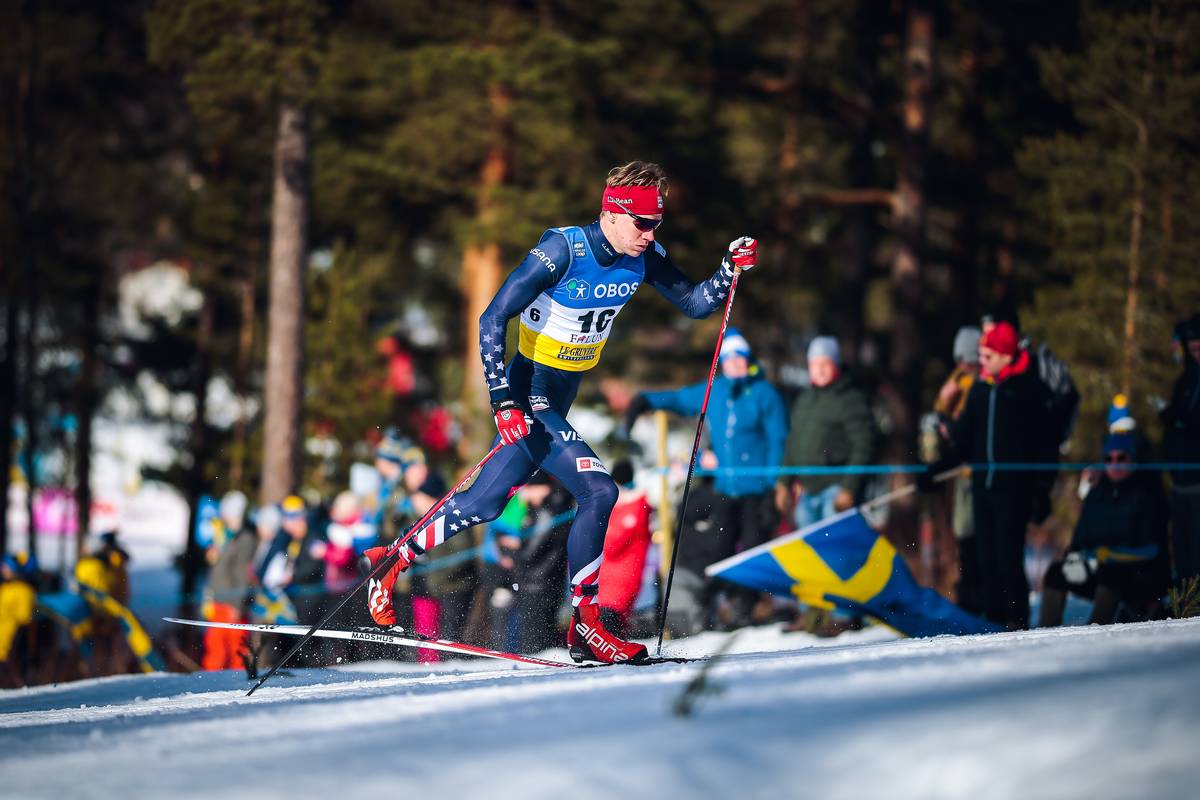
    Zak Ketterson leads the U.S. in 39th during the classic sprint qualification round in Falun, SWE. (Photo: NordicFocus)

    The American men, particularly in sprint, headed into the Falun weekend at a significant disadvantage. Kevin Bolger announced on Instagram Thursday that he had tested positive for COVID, while Ben Ogden, JC Schoonmaker, and Luke Jager – the remainder of the four sprint men who competed during the 2022 Olympics in Zhangjiakou – are currently competing at the NCAA championships in Soldier Hollow, UT. The sprint field as a whole has been weakened; Russian athletes were banned from competition on March 1st, while Norway’s top-six sprinters, including sprint and overall World Cup leader Johannes Høsflot Klæbo, each tested positive for COVID following the World Cup race weekend in Lahti, Finland. With no Russian’s and the top-Norwegians out, the men’s field had been cracked wide open.  
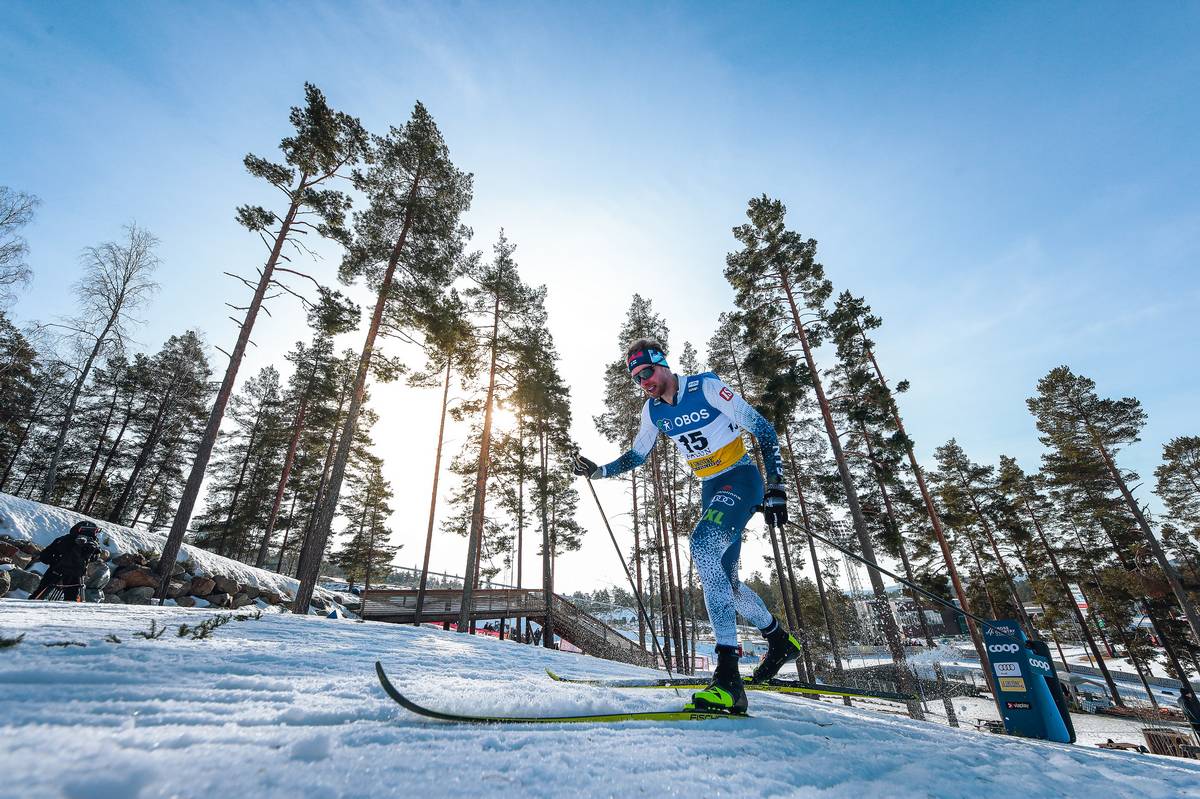
    Finland’s Joni Mæki posts the fastest time in the classic sprint qualifier in Falun, SWE. (Photo: NordicFocus)

    Finland’s Joni Mæki took the top spot in qualification, setting the mark at 2:51.58. Sivert Wiig of Norway took second in the qualifier (+0.69), with Sweden’s Calle Halfvarsson in third (+1.41). Three nations represented in the top-three.

    Though new-to-FasterSkier names made the top-30, the early heats featured little surprise. Building momentum from a podium day in Drammen last week, France sent three of its top men to the semifinals: Lucas Chanavat and Richard Jouve, who had been third and first, respectively in Drammen, plus Jules Chappaz. Long-time sprint force Federico Pellegrino of Italy also moved through with an automatic spot, joining the day’s top-three qualifiers in the next round.

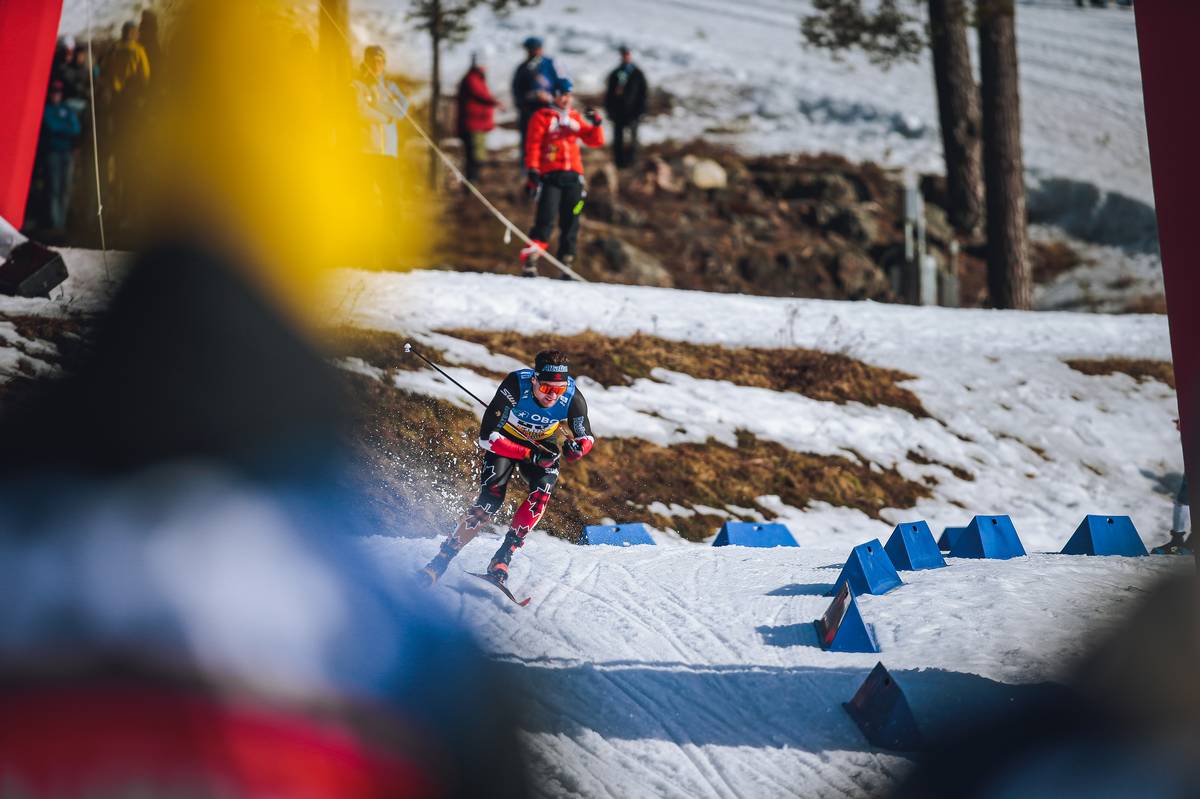
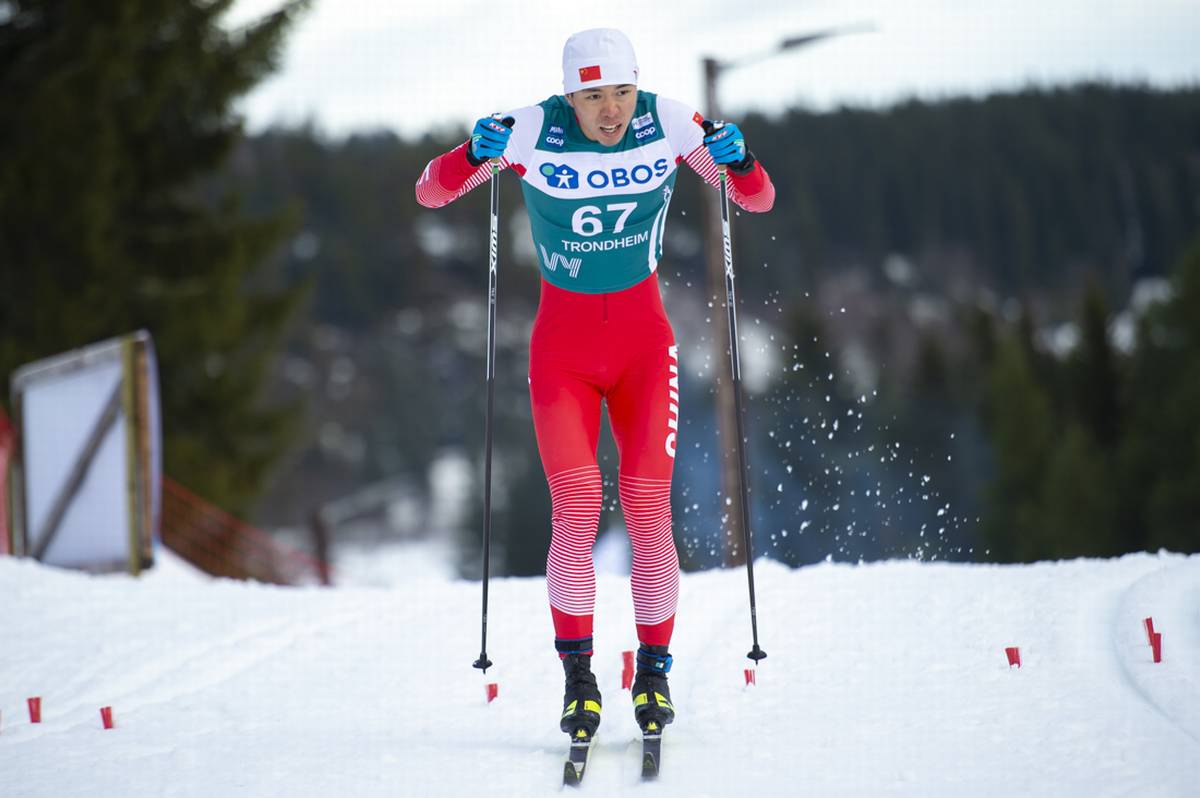
    What did shake up the quarters was some trouble for the two Chinese athletes in the field. Shang Jincai, who had qualified in 25th, had a false start in heat three. Jincai looked as though he had been trying to keep himself so primed for forward momentum at the start beep, that he lost his balance, kicking a foot forward to catch himself well-before the beep and thus triggering the start. After a discussion with a jury member, while Pellegrino shook his head and raised his hands nearby, looking impatient, Jincai received a yellow card and was disqualified. 
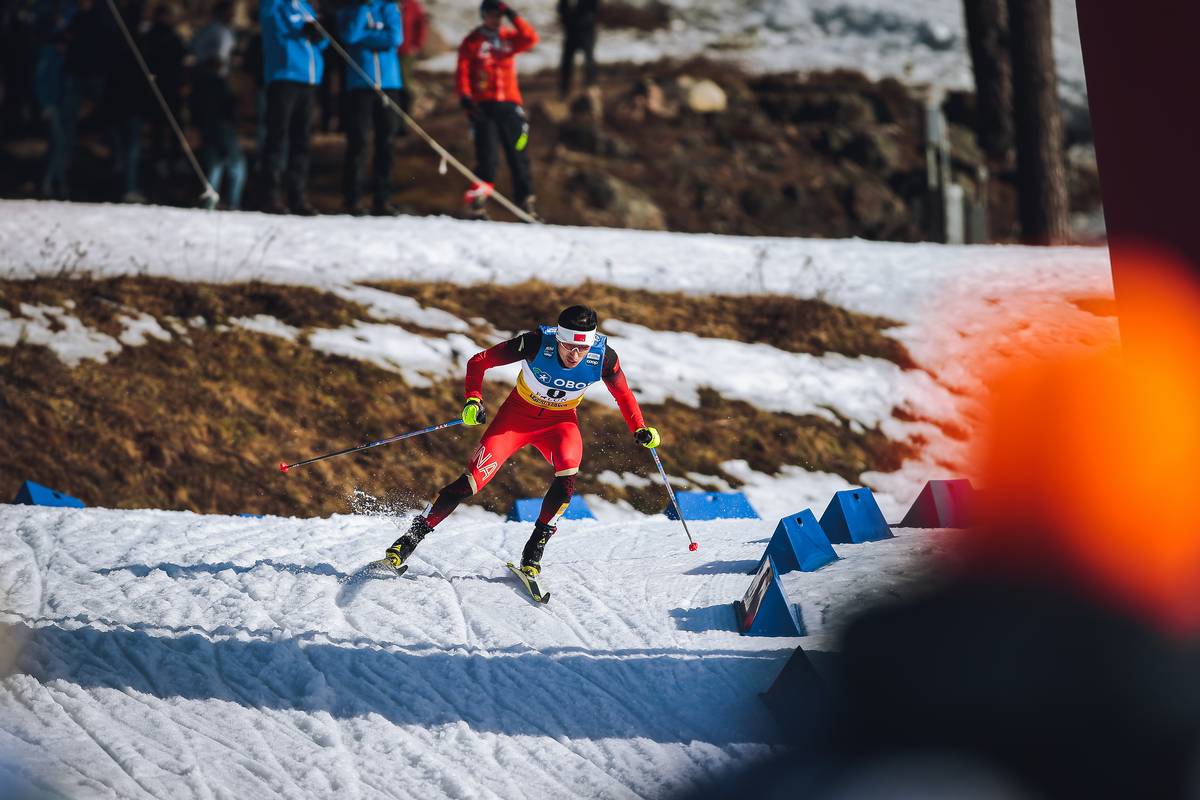
    After stumbling on a climb and losing ground, Wang Qiang (CNH) races to 18th in the classic sprint quarterfinal in Falun, SWE. (Photo: NordicFocus)

    In the next heat, Wang Qiang, who qualified in 9th and took second in Drammen, fell when hopping out of the track to run uphill, roughly two minutes into the heat. Qiang had been in the lead, though the pack remained tight. After a few missteps, he was back to his feet, chasing as real estate ran out, while Lars Agnar Hjelmeset (NOR) and Calle Halfvarsson (SWE) took the reins at the front to go 1-2 in the heat. Qiang raced his way back to fourth, just over a second back, but it was not enough for a lucky loser spot.  

    Richard Jouve (FRA) takes control through the rounds in Falun. (Photo: NordicFocus)

    In the semis, France’s Jouve took control of the fast first heat, beginning a surge just under-two minutes in as the men ran up the steep climb and banked left to head back toward the stadium. Around the last corner, Jouve still held the lead with Mæki (FIN) just off his shoulder. Jouve pulled ahead in the double pole sprint through the lanes, while Mæki, Wiig (NOR), and Chanavat (FRA) raced each other and the clock down the final meters. At the line, it was Norway-France-Finland, spread by 0.38 seconds, fifth and sixth less than a second behind also. Each of the top-four finishers advanced into the final round.

    The second heat was significantly less smooth, though times did not reflect the chaos and were only marginally slower than the first. As the course broke down, it looked to be continually harder to keep klister free and stay upright. Heading into the final downhill in strong position to take the heat, France’s Jules Chappaz looked as if his klister snagged some loose granules of snow; as he pushed off the outside ski to stay in the curve, the ski looked unable to slide and he crashed into the abrasive corn. 

    The remaining athletes in the head narrowly dodged Chappaz, allowing Hjelmeset and Pellegrino to take the lead and eventually win the heat. Sweden’s Halfvarsson also went down earlier in the heat, looking to have similarly iced up while running up the first climb, leaving him off the back after the subsequent downhill.
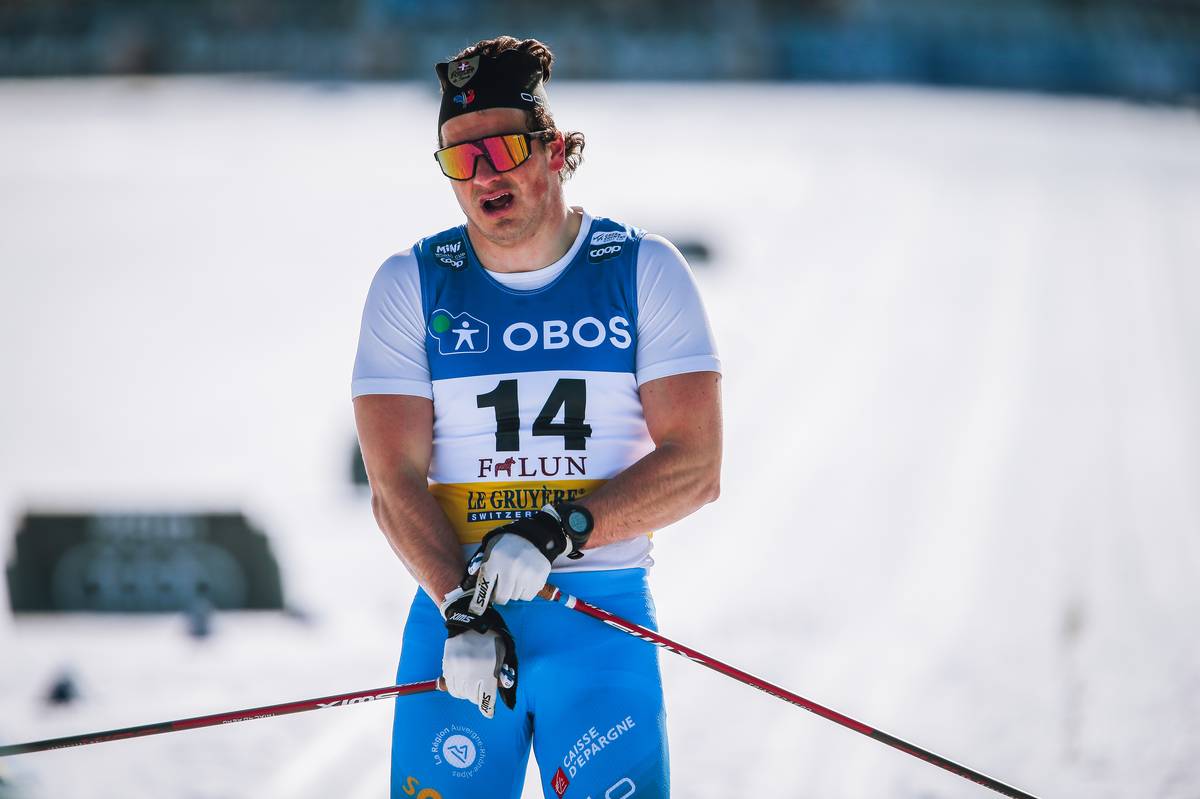
    After leading into the final downhill, a dejected Jules Chappaz (FRA) recovers from a crash to finish his semifinal. (Photo: NordicFocus)

    Once again, Jouve took control of the final early, with Pellegrino marking. Mæki stayed wide on the first climb looking for better snow, but came over the top and into the curve behind the top three. Jouve, still calling the shots, led into the downhill, but he could not create any significant gaps there; Wiig, Pellegrino, Chanavat and Mæki quickly accordioned onto the backs of his ski tails.

    Looking confident and composed despite being unable to break away, Jouve remained at the front heading into the final curve. Once in the lanes, Jouve began to pull ahead a final time, creating a gap of several meters to Mæki and Chanavat, who were evenly matched in the double pole sprint. 
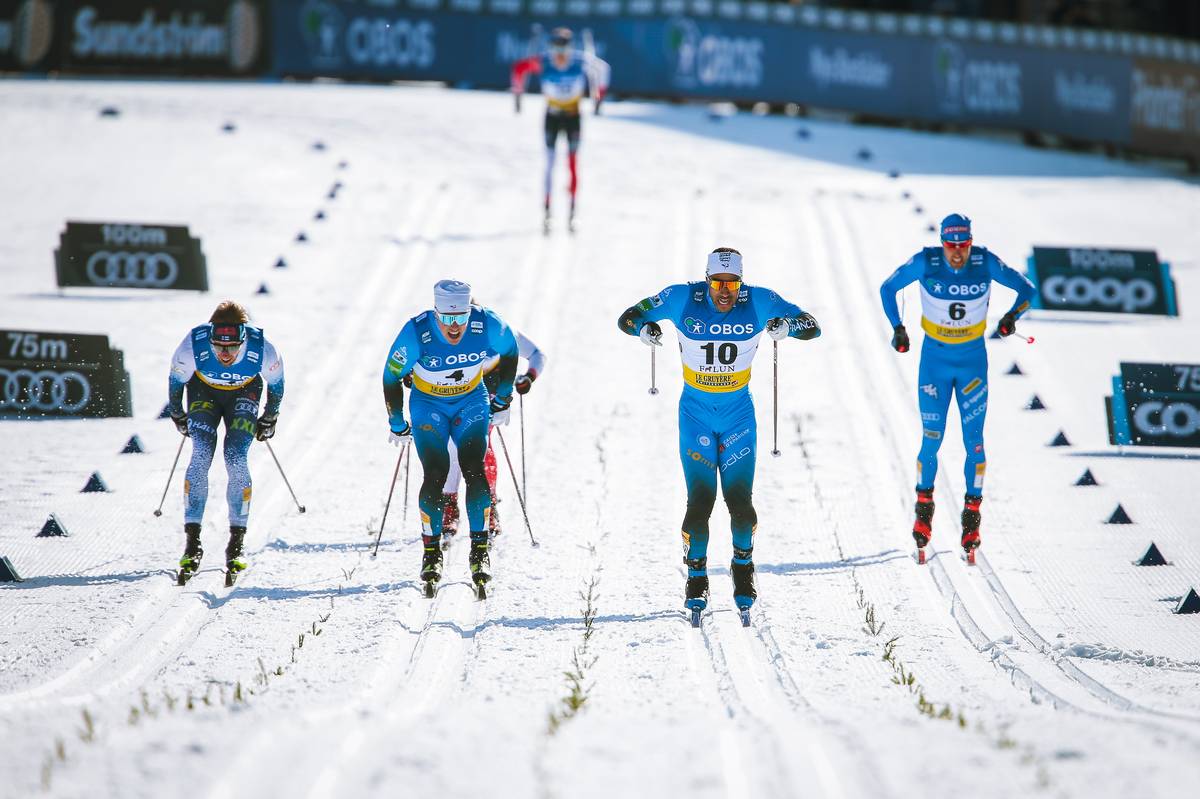
    Richard Jouve (bib 10) leads the men’s classic sprint final to the finish in Falun, while four athletes vie for the remaining two podium positions. (Photo: NordicFocus)

    Emptying his lungs with a triumphant cry, Jouve coasted over the line for the win in 3:03.62, while Mæki and Chanavat threw their boots forward in a photo finish for the second and third podium spots roughly half a second behind. From the slow-mo, it was Mæki with the better lunge, nipping Chanavat by 0.03.

    Just behind Wiig crossed fourth (+1.41), with Pellegrino fifth (+2.06), followed by a gap to Hjelmeset in sixth (+13.18).
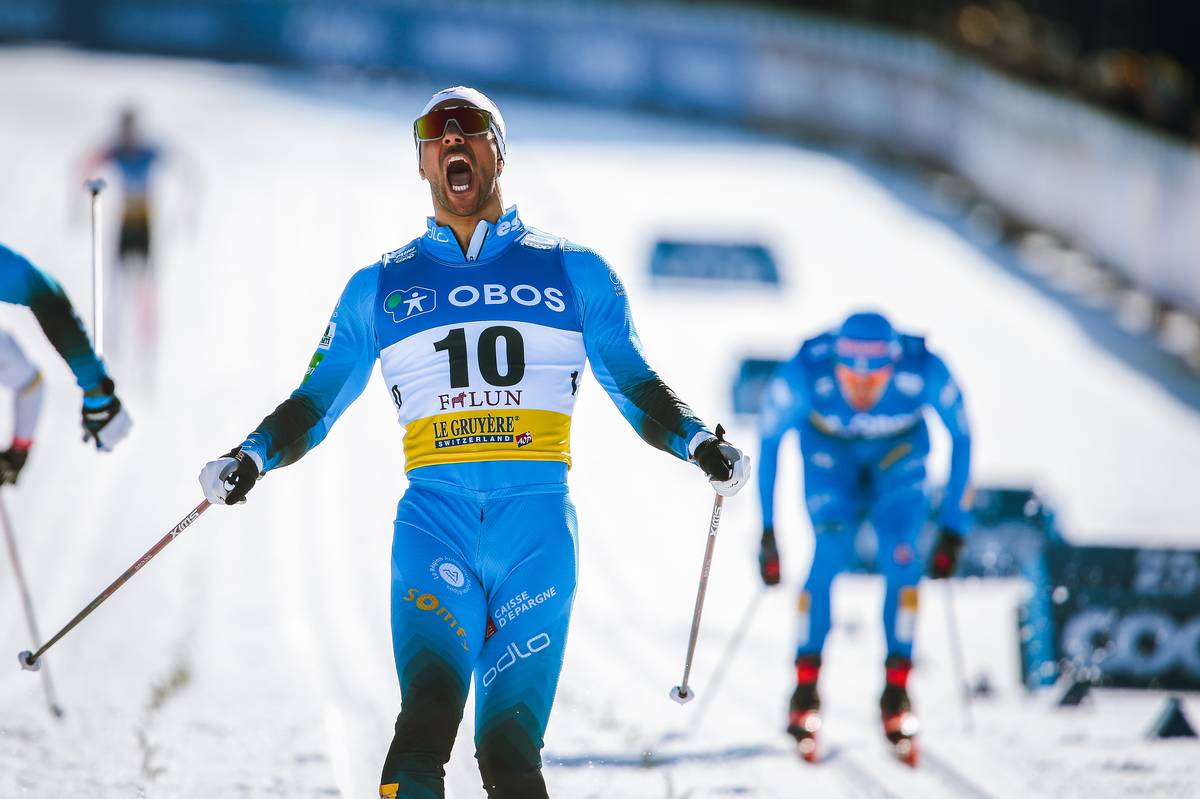
    Richard Jouve (FRA) lets out a victory cry as he takes the classic sprint win in Falun. (Photo: NordicFocus)
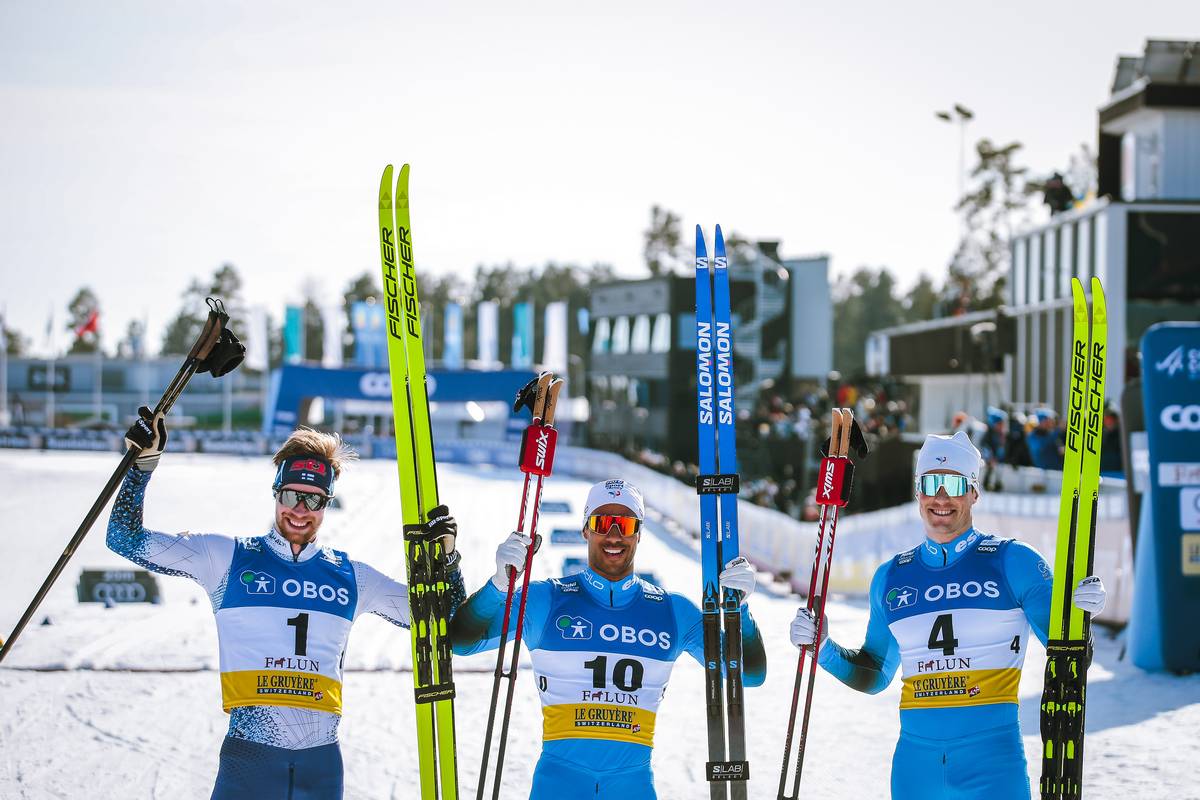
    The men’s classic sprint podium in Falun, Sweden: Richard Jouve (FRA) took the win ahead of Joni Mæki (FIN) and Lucas Chanavat (FRA). (Photo: NordicFocus)

    “I’m very proud,” Jouve told FIS after the race. “Off myself, my team. It’s amazing.” 

    With the win today, Jouve also took the lead in the sprint World Cup standings, advancing by just six points ahead of Johannes Høsflot Klæbo (NOR). The season saw Jouve land on four World Cup podiums, finish seventh in the freestyle sprint during the Olympics, and then earn his career first World Cup win in Drammen’s classic sprint last Thursday.

    “It’s amazing,” said an emotional Jouve, seemingly in happy disbelief. “The season was very great for me, to win at the end of the season is already a dream, but to grab [the globe], it’s big. Fantastic.”
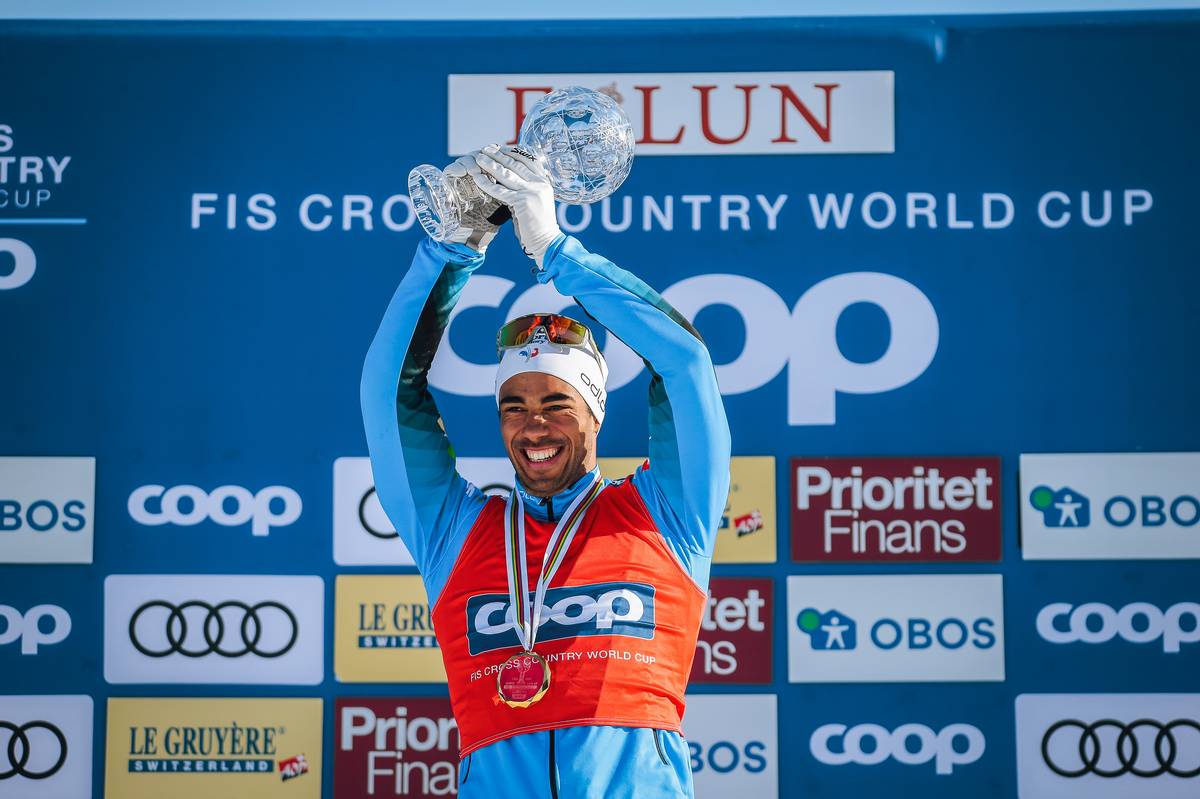
    With a win in the final sprint stage, Richard Jouve becomes the 2022 World Cup sprint champion, hoisting his crystal globe. (Photo: NordicFocus)
    French teammates Richard Jouve (left) and Lucas Chanavat (right) end their season in first and third, respectively, in the World Cup sprint standings. (Photo: NordicFocus)

    A quick review of the final standings: With 568 points, Jouve is the 2022 sprint World Cup champion, with Klæbo second (-6) and Chanavat third (-107). Italy’s Pellegrino was fourth (-238), with Norway’s Håvard Solås Taugbøl fifth (-244). 

    The US had three starters for today’s final sprint stage. Zak Ketterson led the way for the American team in 39th (+9.92), followed by Logan Hanneman in 47th (+10.79), and Peter Holmes 54th (+13.38). 

    Listen to post-race interview with U.S. Ski Team Head Coach Matt Whitcomb here.
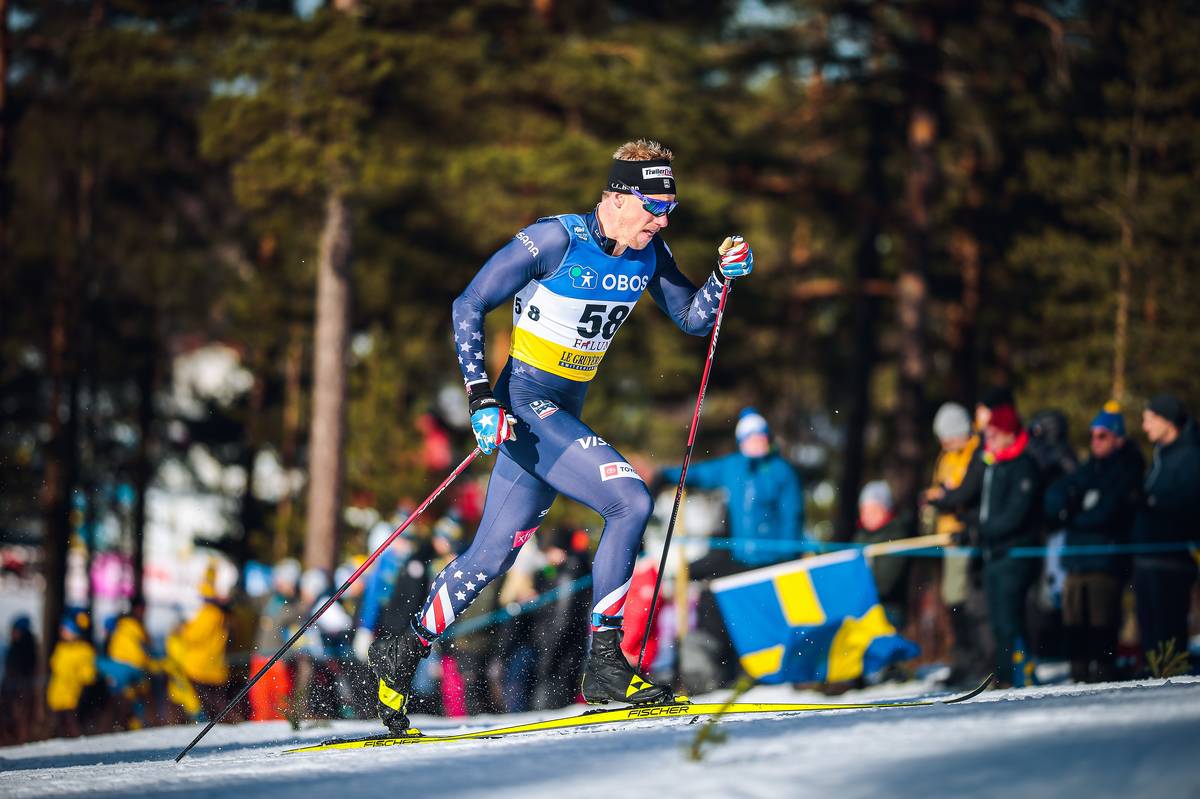
    Logan Hanneman skis to 46th in qualification in Falun. (Photo: NordicFocus)
    Graham Ritchie leads the way for North America, finishing 20th in Falun’s individual classic sprint. (Photo: NordicFocus)

    Racing for Canada, Graham Ritchie was the sole North American to break into the heats after qualifying in 28th (+8.11). Racing in the third quarterfinal heat, Ritchie crossed fourth, roughly three seconds behind Chanavat and Pellegrino, the heat winners. The effort landed him in 20th overall once final rounds were decided. 

    Missing the top-30 by just 0.27 seconds, Antoine Cyr was next for Canada in 31st (+8.76), with Xavier McKeever next in 44th (+10.54), followed by Rémi Drolet in 57th (+14.59). 
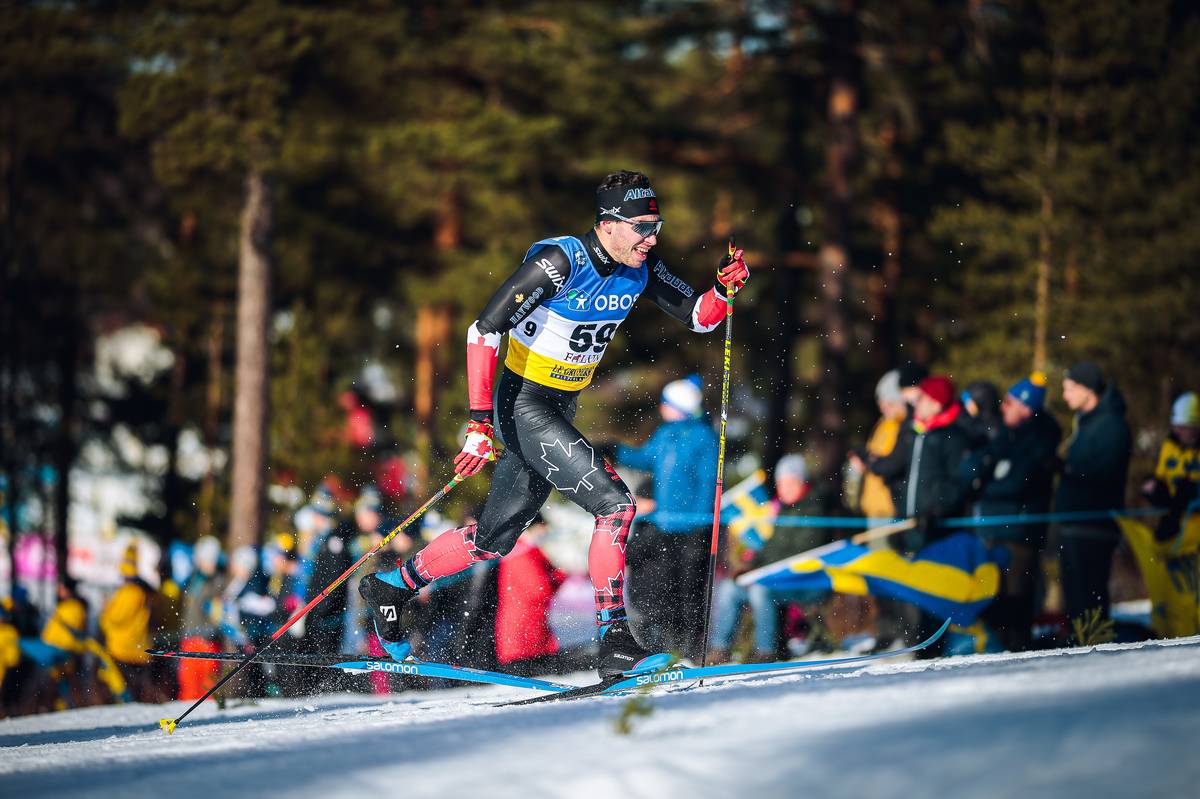
    Antoine Cyr just misses the mark in qualification, finishing 31st. (Photo: NordicFocus)

    Racing in Falun continues tomorrow with a 15 k individual start skate.

    Results:

    Qualification | Final | World Cup Sprint Standings


  • The Chinese Ski Team’s Path to Beijing (Part 1)

    The Chinese Ski Team’s Path to Beijing (Part 1)

    China’s Degen Chen races the men’s 30-kilometer skiathlon which opened the 2022 Beijing Olympic Winter Games. (Photo: NordicFocus)

    Salmon for Skiing

    Over the last four years China has undertaken perhaps the grandest experiment in cross country skiing history: can hundreds of athletes cherry picked from other sports and given seemingly unlimited resources be turned into Olympic medalists in nordic events? 

    Chinese athletes have never medaled in any of the nordic disciplines, and their teams head into the Olympics as the darkest of dark horses. Success, in the form of medals, is key to their aims of climbing up the medal table and becoming the protagonists of their own winter Games. 

    The Chinese nordic programs have aimed to rapidly become competitive with the best in the world. The urgency of the task was made clear at the 2018 PyeongChang Olympics where China finished fourteenth in the medal count, capturing a single gold medal, and just nine in total. 

    Despite this history, not everyone is dismissive of their chances. 

    “I said four years ago that I predict these guys will medal in Beijing,” said US biathlete Clare Egan in a call, “because I know that medals are important to China and that they basically will put any resources possible into making things happen like that. So nothing would surprise me.”

    Even so, Egan conceded that, “It’s going to be hard for them, because they aren’t fast enough.”

    The project of building a culture of skiing in China began in 2015 when Beijing was awarded the 2022 Winter Games. The government spurred into action: it would make 120 million of its citizens into recreational skiers by building 800 new ski areas, among them the world’s largest indoor center in Harbin that cost $4.5 billion.

    Cross country skiing also benefited from the investment rush, with an 1.3 k indoor ski tunnel built in Beishan, a joint Finnish-China project that cost $148 million. Another cross country ski tunnel is planned to be placed inside an unused coal mine shaft on the outskirts of Beijing. Liu Bo, a former ski coach, told Reuters in 2018 that he was investing $318 million in the project. 

    Bo explained in the interview that the goal for Chinese skiing, aimed at the Olympics, was clear: “China spends big money setting up the stage, and the performers are all foreigners,” said Bo. “President Xi will not allow this to happen. We have to be the leading actor in 2022.”

    Xin Li (CHN) races a freestyle sprint qualifier in Konnerud, NOR in March, 2020. (Photo: NordicFocus)

    While the ski resort boom was mainly aimed at creating a ski culture in China, taking on a starring role in Beijing meant that expertise would be needed from abroad. For guidance, officials looked to the top of the medal table: Norway.

    Initially, it was impossible for China to work with Norway. When the Olympics were awarded to Beijing in 2015 the two countries were still embroiled in a diplomatic crisis that had severed official contact between the nations and frozen trade negotiations. The rupture occurred in 2010 when the Nobel Peace Prize was awarded in Oslo to Li Xiaobo, a Chinese human rights activist who was then imprisoned in China. At the Nobel ceremony, Xiaobo was evocatively symbolized by an empty chair on the stage. 

    In response, China all but severed diplomatic ties with Norway, despite the government’s lack of control over the Nobel committee. Two months later China halted the importation of fresh Norwegian salmon – a significant industry – over what was generally regarded as a politically motivated concern over a fish-borne virus. 

    The ban, as well as other restrictions, are believed to have cost Norway between $780 million to $1.3 billion between 2010 and 2017. At the time of the contentious Nobel ceremony, Norway had enjoyed a virtual monopoly over the Chinese salmon market, and the country’s fisheries had to watch as Chinese demand for salmon increased by thirty percent, while their share plummeted by two thirds. 

    Years of cautious steps by the Norwegian government followed, including its first ever refusal to meet with the Dalai Lama during his 2014 visit to Norway. Norway’s socialist left party leader Audun Lysbakken criticized this move in The Guardian, saying, “We can’t be dictated to by China in the sense of exchanging human rights for salmon.”

    That fall, Oslo – the favorite for the 2022 Games – dropped out, paving the way for Beijing to win the bid the following summer. With the Games in hand, the calculus changed, and the rift with Norway became an awkward obstacle to their objectives. 

    A subtle indication of rapprochement came in an unusual way: Gerhard Heiberg, a Norwegian businessman headed the IOC’s Marketing Commission, and was offered a meeting on a 2016 trip to Beijing with the Chinese Minister of Sport, Gou Zhongwen. 

    The minister marveled at Norway’s success in skiing, Heiberg recounted to NRK, “He said that those at the top in China had agreed that they would like an agreement with Norway on a sports collaboration. And from the Chinese side, there was a desire to use Norwegian leaders, coaches, universities and so on who worked with winter sports.”

    Heiberg recognized the moment. “I saw that here we have a fantastic opportunity to approach China.” Not wanting to waste the favorable winds, Heiberg left the meeting and “went straight to [Ambassador] Svein Sæther. And he lit positively on all the plugs.”

    With some quiet maneuvering, relations thawed, and Norway and China signed a bilateral agreement to resume diplomatic relations in December 2016. The agreement conceded that Norway would not challenge China on its “core interests and major concerns”​​ — a diplomatic term for avoiding involvement in sensitive issues, including human rights. 

    Dinigeer Yilamujiang (CHN) races a 10 k freestyle in Falun, Sweden in January, 2021. (Photo: NordicFocus)

    That winter the Norwegian Ski Association was asked to help look for coaches to work in China and offered salaries of 1.1 million kroner (equivalent to $120,000) per year. China also wanted to send its athletes to Norway, but to do so, it would need to put to rest their feud. 

    In April 2017, Norwegian Prime Minister Erna Solberg visited Beijing, officially ending the freeze. Solberg reestablished the relationship in part by signing an agreement with China to support their sporting endeavors, particularly in nordic sports, through to the Beijing Olympics. The agreement would provide China with Norwegian ski coaches, training opportunities, as well as sporting development and snow making expertise. In return, Norway received the opportunity to optimize “Norwegian preparations for the Olympics.”

    This deft piece of ski diplomacy helped to seal a seafood trade agreement with China the following month that planned to see Norway export $1.4 billion worth of salmon alone to China by 2025. The long awaited reentry to the Chinese market had arrived, and if there were any lingering questions about human rights, Per Sandberg, Norway’s Minister of Fisheries wasn’t having it. He told Aftenposten that “Norway addresses human rights in very many contexts… this time it’s fish.”

    Ski diplomacy started with Stolberg’s agreement with China, and was reaffirmed the following year when King Harald visited China, signifying the complete normalization of relations while taking in a rollerskiing race at Beijing’s Olympic Park. 

    Despite the apparent connection between the sporting pact and the trade deals, the Norwegian Prime Minister denied the two items were related. In any case, the agreement caught the Norwegian Sports Confederation by surprise. Oddvar Jenssen, the former VP of the organization, said in an interview with Aftenposten that the decision “…came terribly fast, and a lot was in place before we knew anything. When the agreement came up, we had no choice.

    Misgivings aside, for Norwegian ski coaches, wax techs, and sport scientists, the Chinese agreement would turn into a major employment opportunity, with around 40 coaches and techs working for Chinese training groups, and around 60 more occasionally hired for short stints. No longer were the job opportunities going to be contingent on moving to China, the athletes would now be coming to Norway.  


    Arrival in Norway

    The sporting agreement between Norway and China took on new force after China’s dismal performance in the 2018 Olympics. Afterward, the Chinese Ministry of Sport went looking for coaching help abroad. Many nations vied for contracts, but Norway was the first stop for Gou Zhongwen.

    In May of 2018, Zhongwen met with Johannes Klæbo on his tour of Trøndelag – the region that has won more Olympic medals than any other – and solidified the agreement to bring athletes to Norway. 

    In July, ten of China’s core World Cup athletes arrived in Trondheim, Norway to begin training for the World Cup with former Montana State University skier Bernhard Rønning. 

    It was the prelude to an influx of more than 200 young Chinese athletes to Norway in the late summer and fall of 2018. 

    In addition to the Trondheim group, another was set up in Meråker, under the leadership of former Canadian National Team Coach Tor-Arne Hetland. In Lillehammer a group was led by Kristen Størmer Steira (wife of FasterSkier podcaster Devon Kershaw) and finally one in Trysil led by the mother/daughter combo of Anita Moen and Karoline Moen Guidon

    Anita Moen’s experience illustrates the slapdash nature of the project. In mid July of 2018 she was on vacationing on a beach when her phone rang. It was an offer to coach Chinese skiers until the 2022 Games. 

    “It was only two weeks until they were to arrive,” Moen told NRK… I did not quite know who was coming, but I was told they had never skied before, never seen snow.”

    Jincai Shang (CHN) races a classic sprint qualifier in Trondheim, NOR during Ski Tour 2020. (Photo: NordicFocus)

    While China mobilized to send loads of athletes to Norway, their plans didn’t stop there. After Minister Zhongwen left Norway, he flew with his entourage directly to Finland. Waiting for him at the airport was Veiko Hallonen, the CEO of the Vuokatti Sports College. 

    Vuokatti offered excellent training opportunities: a long winter, a ski tunnel, knowledgeable coaches, and sophisticated technology that impressed the officials. Perhaps Zhongwen was also mindful of the warmer diplomatic climes in Finland. Ni Huizong, the Director of the Winter Sports Administrative Center told Yle, “Relations between Finland and China have a long and warm history.”

    Chinese athletes had been training in Vuokatti since 2016, but the agreement established a permanent Chinese presence at the Vuokatti center and increased the total number of athletes that would stay in Finland. 

    The head cross country coach in Vuokatti at that time was Glenn Lindholm, who met with the Chinese delegation and was asked directly whether four years were enough to turn novices into Olympic champions. Lindholm’s response was neither yes nor no. 

    Lindholm must have understood the unlikely prospect of delivering medals by the next Olympics. Still, the project may have seemed crazy enough to work. Vuokatti was about to get more than 130 hand picked Chinese athletes, an almost unlimited pot of money to work with, and just under four years to produce a medalist. 

    It was audacious, and too bold to resist. As Lindholm and others would learn, realism, a pandemic, and decisions made in the halls of power of Beijing would frustrate their plans. 

    To be continued in Part 2.