From the FasterSkier archive — posts syndicated from athletes’ and coaches’ own blogs between 2004 and 2012, kept online as published. Current coverage is at fasterskier.com.

Tag: Jitka Landova

  • Czech Women Receive News of Olympic Medal, Then Online Abuse and Threats

    Czech Women Receive News of Olympic Medal, Then Online Abuse and Threats

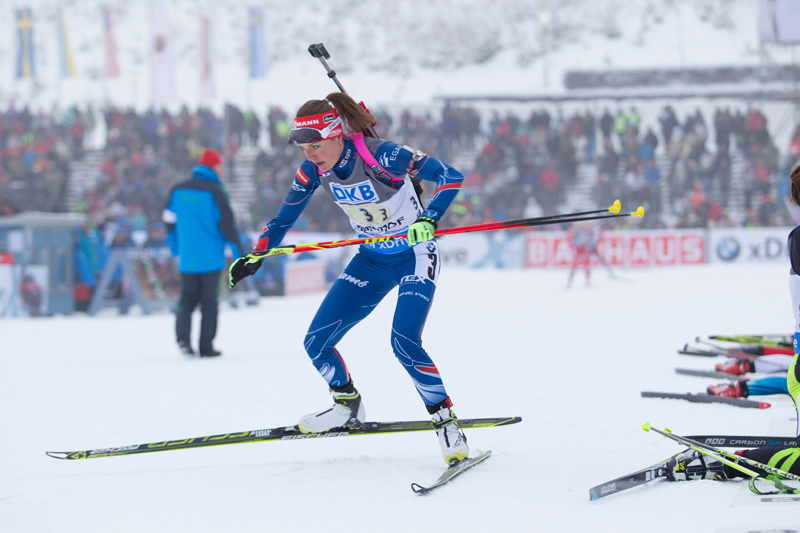
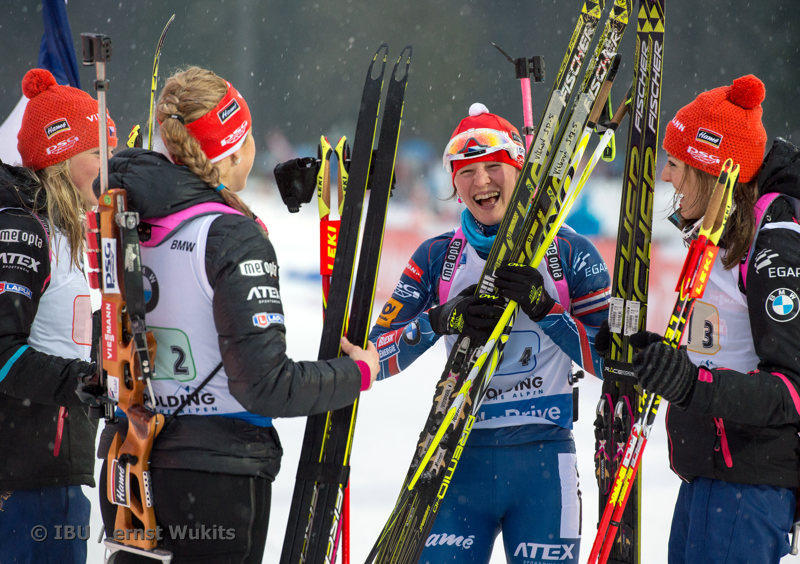
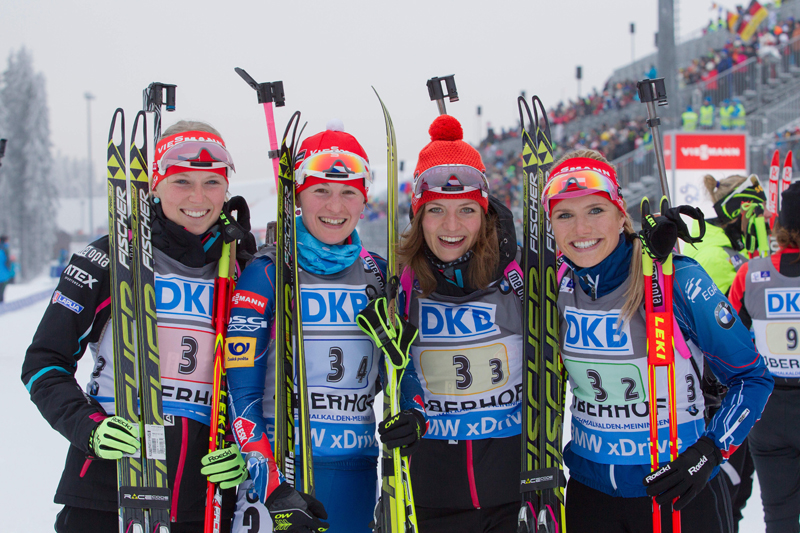
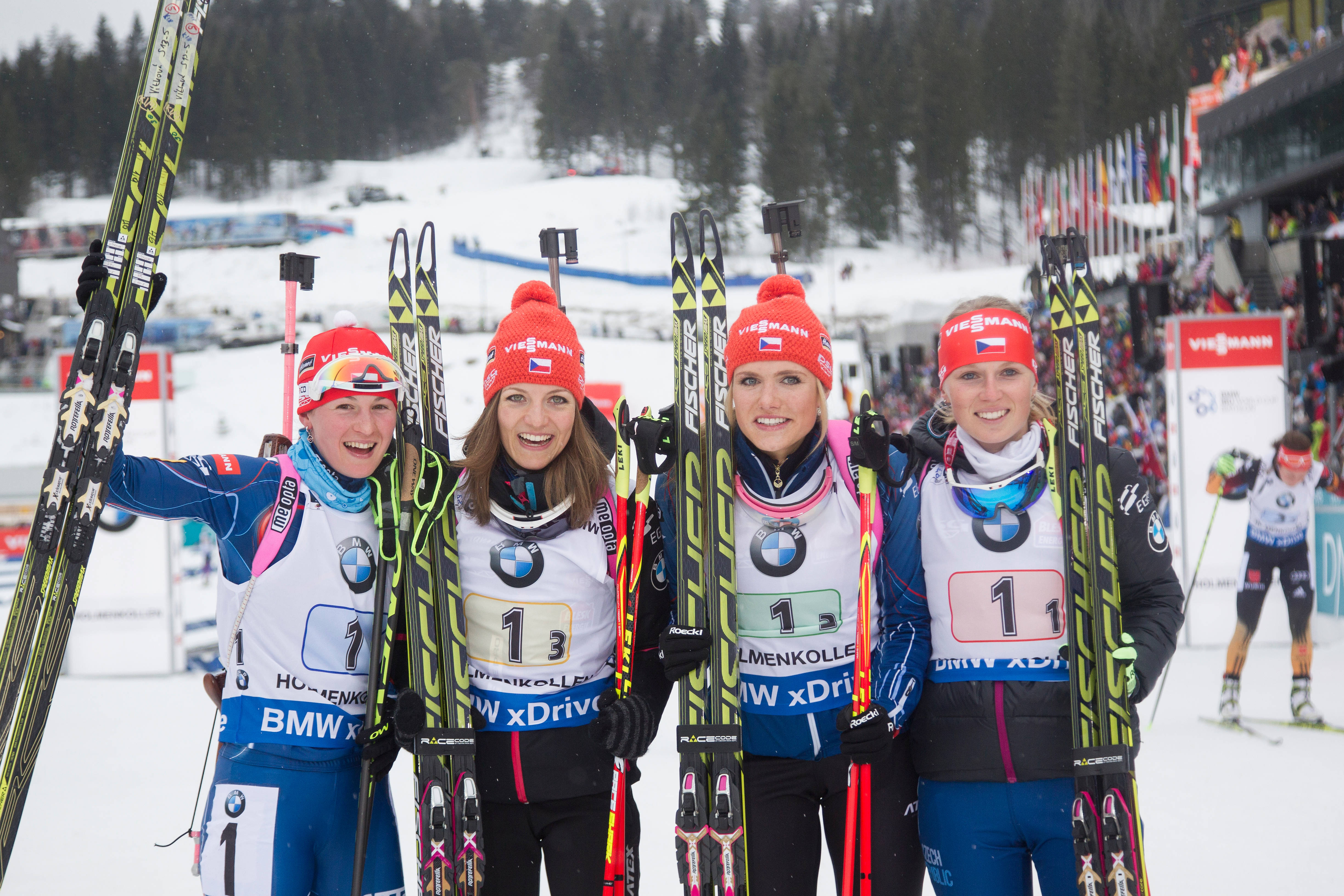
    Biathletes Veronika Vítková, Jitka Landová, Gabriela Koukalová, and Eva Puskarčíková after a 2015 relay in Oslo, Norway. The Czech women learned that they would receive an Olympic bronze medal after the Russian team has been disqualified for doping. (Photo: Fischer/NordicFocus)

    (Editor’s note: This article contains explicit language.)

    On Monday, the International Olympic Committee posted decisions disqualifying Russian biathletes Olga Vilukhina and Yana Romanova from the 2014 Olympics.

    The Impact on the U.S. Women

    The U.S. women finished seventh in the Sochi relay, and some athletes spoke out about how much it would have meant to be sixth not three years later, but the day they competed.

    “It only took us 4 years, but now our historic 7th place is actually 6th…tying the best ever Olympic relay result for US Biathlon – men or women!” team member Sara Studebaker wrote on Facebook. “It’s unfortunate it took 4 years for this to happen. Because we were 7th instead of 6th, some teammates missed out on being pre-qualified for events and getting monetary support… Doping affects all athletes at some level. There is no excuse.”

    Teammate Annelies Cook posted on Instagram.

    “The ripple effect from athletes doping feels even more personal now,” she wrote. “It’s wild to think about what would have been different for us with a 6th place relay at the Olympics instead of 7th. Thanks Russia for the flower ceremony at the Olympics that we didn’t get to have, A-team status and funding for 2015, and pre-qualification for the World Cup.”

    Canada finished eighth in the relay and will now move up to seventh.

    Vilukhina earned a silver medal in the 7.5-kilometer sprint; that means that Vita Semerenko of Ukraine will be upgraded from bronze to silver, and Karin Oberhofer of Italy will earn bronze, the first individual Olympic medal of her career.

    Then there is the relay, where both Vilukhina and Romanova represented Russia. They took silver with teammates Olga Zaitseva and Ekaterina Shumilova. The Norwegian team will now move from bronze to silver, and the Czech team will now earn bronze.

    The Czech women, who had known for a long time that this might be a possibility because the names of four Russian biathletes were puzzlingly not redacted from an evidence document in the McLaren report, reacted.

    Gabriela Koukalová posted on her Facebook page about how frustrated she was with the scandal. A translated version reads,

    “I know that you all know… I mean about our Olympic medal from Sochi for the women’s relay, which we are going to receive with almost four years of delay. On one side it’s great that justice was achieved, but on the other side I am truly sorry for Eva Puskarčíková and mostly for my lifelong friend Jitka Landová, who had to end her biathlon career due to medical reasons. She spent almost her entire career with hard work and without any memories of success. I am not sure about you, but I want to turn doping into a crime and not allow Russian Federation to start at the Winter Olympics, like it already happened at the Summer Games! I also would like to stress one more goal, and that is more important than victories. Their names are HONESTY AND FAIRNESS, not only in sport but overall in the life! Too bad that they [Russians] hadn’t figured that one yet! And now I would like to move on from this topic…”

    Meanwhile, Landová isn’t sure that a medal would have changed the trajectory of her career, saying that she doesn’t look back. But she does wish she’d had the medal earlier, she said in a Czech radio interview.

    “Last night I received a message from Eva Puskarčíková that we really had the Sochi medal,” Landová said, according to a translation. “I looked at it first with disbelief, because as long as I have no tangible evidence, I just don’t believe it. From the very beginning, we knew the Russians were not clean.”

    “I do not know whether to be glad or cry,” Puskarčíková told the same radio broadcaster.

    The pushback against the women on social media has been swift and severe.

    The number of comments below Koukalová’s Facebook post calling her stupid and a disgrace are too many to count, as are those telling her to stick to sport and “worry about your performance,” a comment that sometimes had a foreboding connotation. Other comments call her a “b*tch” or a “f*cking b*tch.” Still others compare her to Nazis or fascists.

    Then there are the threats.

    “Russia will be wait you on World Cup in Tyumen 2017… you want to get negative before the Olympic Games? ok, you will get it!,” wrote one poster, following this with an emoji of a punching fist.

    “you have found enemies in the face of 300 million people… be careful,” one commenter wrote.

    “Can be you sure that your test-tube Ok or someone scratch it and you will be deprived of all medals,” another threatened.

    Instagram was, if anything, worse – even though that’s not the platform where the athletes had made any of their comments.

    On the account “jitka_official_landova”, which it is not clear is actually maintained by Landová, received hate on nearly all of the posts, even though the last post was only from 2015 and the account has no recent activity. Under a picture of Landová posted in February, 2015, one comment reads, “prostitutky,” which translates from to “prostitutes”.

    There are several Instagram pages attributed to Koukalová, some of which are clearly fan pages and two which are verified by Instagram (calling into question the efficacy of the verification system, but that’s another story.) It’s unclear if either of the two verified accounts are operated by Koukalová; there is no link to Instagram from her website.

    But regardless of whether comments left there are actually reaching her, a lot are being posted regardless. Many are filled with emojis of livestock like pigs and sheep, and feces. The pigs and excrement were often accompanied by a lipstick emoji; Koukalová has a contract to appear in makeup ads.

    On a page seeming to really belong to Koukalová, she was repeatedly called “scum.”

    “you’re a lying b*tch!” one commenter wrote in English. “You are fascist,” wrote another. “You are one disgraceful sh*tty slut,” another commenter added.

    Then there were those written in Russian, which translated to, if anything, worse comments:

    “Go in a hole and don’t come back”

    “prostitute”

    “burn in hell”

    “F*ck you, f*cking b*tch, no one will remember you and the medal”

    “You b*tch”

    “you don’t take medals, you only take it in the mouth”

    “piece of sh*t”

    “The end”

    After one Russian fan writes a supportive message, another replies, “burn at the stake with her, sheep.”

    Comments also riddled posts on an account which appeared to be maintained by fans.

    “Such animals must be hung!” one comment translated from Russian read. Some others:

    “Better not come to Tyumen!”

    “Whore”

    “Her brains are only enough to paint her face”

    “Wash it, it’s a man”

    “Lose weight, you’re so fat”

    Many mention the phrase “life is a boomerang”. “Remember everything comes back, it’s the rule of life and your joy for getting not yours medal will turn into tears soon,” one comment written in English says.

    Koukalová is not competing in the opening World Cup weekend in Östersund, Sweden, as she is still recovering from a calf injury. Many comments stated that they hoped she would never return to competition, or if she did, that she would lose every race. See this link for a good example. Take a look.

    In the 15 k individual today, the first individual race of the World Cup season, Puskarčíková finished seventh with perfect 20-for-20 shooting; Vítková finished 12th with two penalties.

  • Czech Women Assert Relay Dominance, Take Third Win of Season; Canada Eighth in Oslo

    Czech Women Assert Relay Dominance, Take Third Win of Season; Canada Eighth in Oslo

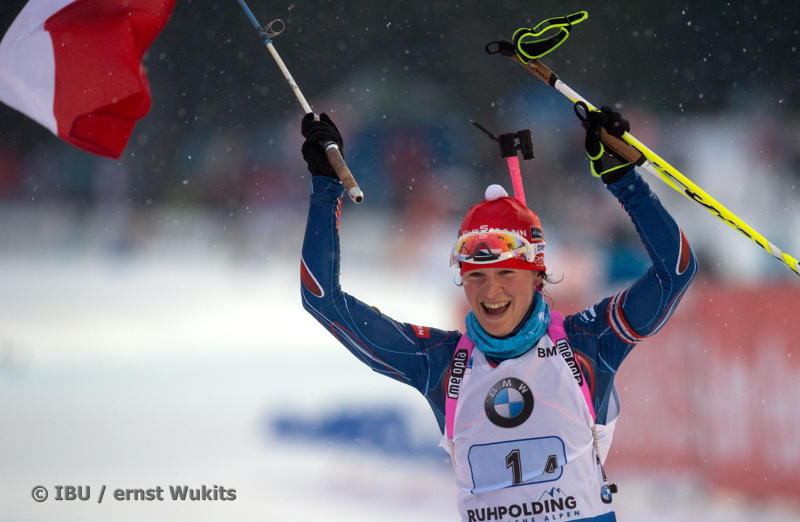
    Veronika Vitkova anchoring the Czech Republic to a women's relay win in Ruhpolding, Germany, earlier this year; on Sunday she did it again in Oslo, Norway, to give her team three wins in four competitions so far this season. (Photo: IBU/Ernst Wukits)
    Veronika Vitkova anchoring the Czech Republic to a women’s relay win in Ruhpolding, Germany, earlier this year; on Sunday she did it again in Oslo, Norway, to give her team three wins in four competitions so far this season. (Photo: IBU/Ernst Wukits)

    In the last competition before World Championships begins in Kontiolahti, Finland, in March, the Czech women’s biathlon team reminded the world that they’re the ones to beat.

    Sure, Kaisa Makarainen of Finland and Darya Domracheva of Belarus are battling it out for the overall World Cup title, trading individual wins back and forth. And sure, a young but strong German team is making their mark.

    But when it comes to relays, the Czech ladies reign like queens. In picking up a 28-second win in the 4 x 6 k competition in Oslo, Norway, on Sunday, they made it three wins in four relays so far this season. That fourth race? They finished second.

    While the team has been strong in past, with Gabriela Soukalova and Veronika Vitkova winning and hitting the podium, they hadn’t won a relay until this season. Now, they can’t stop.

    When asked how they pulled off the win, the Czechs emphasized that it was teamwork. And they joked with each other, too – and about themselves.

    “I am the heaviest [skier] at the front, so I always have good skis on the downhills,” Soukalova told the IBU’s Jerry Kokesh. “It’s very fast.”

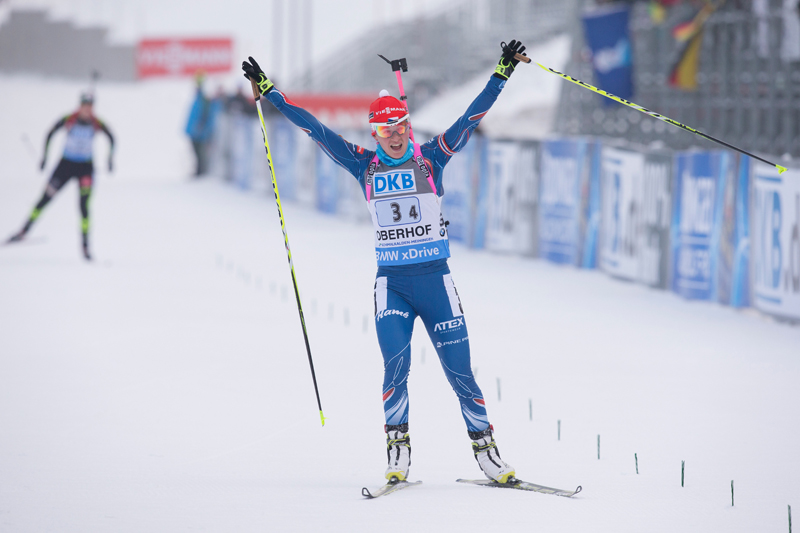
    Soukalova competing in the relay in Oberhof, Germany, earlier this season. (Photo: Fischer/NordicFocus)
    Soukalova competing in the relay in Oberhof, Germany, earlier this season. (Photo: Fischer/NordicFocus)

    So far the team has won in every way you can count – it often comes down to an important leg by Vitkova, who is one of the fastest skiers on the World Cup this season.

    Anchoring the team today, Vitkova came into the range for prone just ahead of Laura Dahlmeier of Germany. She used two spares – but Dahlmeier used one and stayed behind her, then used two more in standing and dropped to fourth. Instead of Germany it was Italy who moved from third up to second place by the finish, 28.3 seconds behind Vitkova’s winning time.

    “Maybe Veronika on her first shooting, she made it funny too because we were afraid what would be next,” leadoff skier Eva Puskarcikova said. “But fortunately it went finally okay.”

    Puskarcikova has had her standout moments, too. Her relay legs put her on the map before her individual results came through; she has six top-20’s to her name, but has not broken into the top ten. In the team’s win in Ruhpolding, Germany, earlier this season, Puskarcikova led after the first leg.

    Sarah Beaudry anchoring the Canadian women's relay to eighth place in Oslo, Norway, on Sunday. (Photo: Biathlon Canada/NordicFocus.com)
    Sarah Beaudry anchoring the Canadian women’s relay to eighth place in Oslo, Norway, on Sunday. (Photo: Biathlon Canada/NordicFocus.com)

    Today it was third-leg racer Jitka Landova, another younger member of the team, who brought the Czechs from third after Puskarcikova’s efforts and second after Soukalova’s up into first place.

    “On the track it was the hardest for me,” Landova said. “Yesterday it was better for me. But on the shooting range I felt so much better.

    Landova shot perfectly, not even using a spare round, and opened up an 18-second lead on Germany. Vitkova held onto that lead and the Czechs were dominant once again.

    “It’s in hard training and a good sports group,” Puskarcikova said in the press conference of her team’s success.

    “We had just a small team, and we didn’t have experience so much a couple of years ago,” Soukalova said in the press conference. “Now we are bigger, we are stronger, and we have a lot of experience. We didn’t have a special training for that, it comes with experience.”

    France finished third, +45.9, and Germany fourth, +1:02.3.

    Canada's Megan Heinicke (l) leads Marine Bolliet of France in the women's 15 k individual at the IBU World Cup on Thursday in Oslo, Norway. Heinicke cleaned to place 12th, one of four top-15's this season. (Photo: IBU/Christian Manzoni)
    Canada’s Megan Heinicke (l) leads Marine Bolliet of France in the women’s 15 k individual at the IBU World Cup on Thursday in Oslo, Norway. Heinicke cleaned to place 12th, one of four top-15’s this season. (Photo: IBU/Christian Manzoni)

    The Canadian women sat in 11th place after Megan Heinicke’s leadoff leg, roughly a minute behind Dorothea Wierer of Italy, who was leading. Heinicke, who finished 12th in the individual competition on Thursday, used two spare rounds in prone and then cleaned her standing stage.

    Rosanna Crawford took over and moved the team up to fifth, cutting almost 15 seconds off the time from the leaders. She used a total of two spare rounds and skied the second-fastest ski time of her leg.

    After sitting out a few competitions with a bad head cold, Crawford feels like she’s back on track. She also finished 13th in the sprint competition on Saturday.

    “I finally feel like I can push hard in a race and demand more from my body,” she wrote in an e-mail. “That cold I had took a lot more out of me than I thought and it’s nice to have this confidence boost going into World Champs. Our skis were really great today, so that made our job easier! I like the 2km course here, not too many hills and some good rolling flats. The snow was also pretty fast today, not breaking down as much as in the previous races.”

    Rosanna Crawford skied the second-fastest course time of second-leg relay skiers in the Oslo World Cup relay on Sunday. (Photo: Biathlon Canada/NordicFocus.com)
    Rosanna Crawford skied the second-fastest course time of second-leg relay skiers in the Oslo World Cup relay on Sunday. (Photo: Biathlon Canada/NordicFocus.com)

    Audrey Vaillancourt used three spares and the team fell to tenth place before Sarah Beaudry took over for the anchor leg. Beaudry, still a junior who is prepping for the World Junior Championships which start in Minsk, Belarus, on Wednesday, kept her cool.

    A single spare in prone moved her up to ninth, and clean standing up to eighth. She held that position all the way to the finish line, eking out a 2-second “win” over a charging Nadzeya Pisarova of Belarus.

    It was the best finish for the women’s team so far this season, despite having a younger squad than usual. This is Vaillancourt’s first season as a World Cup regular, and Beaudry’s first season appearing on the circuit at all.

    At other points this year the relay squad has included Julia Ransom, who is just out of the junior ranks and will likely compete at World Championships (although the team is not finalized). Emma Lunder has also been on relay teams.

    “Top 8 is great result for our young little team!” wrote Crawford, who has for the past several years competed on relay teams with fellow veterans Megan Imrie, who retired after the 2014 Olympics, and Zina Kocher, who has moved off the World Cup circuit for the time being.

    “We have some really strong shooters right now which is key in relays,” Crawford explained. “I think 8 spares is the high end of spares we will be using in future relays. It’s great to have the enthusiasm from the younger girls, it’s really infectious. Beaudry really impressed me today with her first and last loops! Being able to hold onto that the group she was tagged with and then out sprint Belarus for 8th was great to watch! Can’t wait to see how her races at World Juniors will go.”

    The U.S. women were in 18th place before they were lapped and pulled from the race.

    Results

  • Czech Women Win Rainy Ruhpolding Relay; Canada Slips from 2nd to 11th

    Czech Women Win Rainy Ruhpolding Relay; Canada Slips from 2nd to 11th

    The Czech Republic women's 4 x 6 k team celebrates its second-straight relay win on Thursday at the IBU World Cup in Ruhpolding, Germany. (Photo: IBU/Ernst Wukits)
    The Czech Republic women’s 4 x 6 k team celebrates its second-straight relay win on Thursday at the IBU World Cup in Ruhpolding, Germany. (Photo: IBU/Ernst Wukits)

    All it took the Canadian women to have one of the greatest starts of their relay careers was a pep talk from a two-time Norwegian Olympic gold medalist, Halvard Hanevold, who notched 40 IBU World Cup podiums in his career.

    According to Megan Heinicke, the team’s first skier in Wednesday’s 4 x 6-kilometer relay at the IBU World Cup in Ruhpolding, Germany, the Canadians had a team meeting with Hanevold on Tuesday night. She said it was “fantastic” and helped them going into the relay with “a really supportive team attitude,” she wrote in an email.

    Whatever it was, it worked — and especially well for Heinicke — who shot out of the mass start with the leaders and put herself in fourth heading into the first shooting stage within two seconds of the Czech Republic, Finland and Norway, respectively.

    Germany's Franziska Preuss (r) and Eva Puskarcikova of the Czech Republic (l) lead Canada's Megan Heinicke (c) and Belarus's Nadezhda Skardino during the first leg of the IBU World Cup women's 4 x 6 k relay on Thursday in Ruhpolding, Germany.
    Germany’s Franziska Preuss (r) and Eva Puskarcikova of the Czech Republic (l) lead Canada’s Megan Heinicke (c) and Belarus’s Nadezhda Skardino (behind Preuss and Heincke) during the first leg of the IBU World Cup women’s 4 x 6 k relay on Thursday in Ruhpolding, Germany.

    There, Heinicke shot fast and flawlessly to find herself in second coming out of the range, 1.3 seconds behind Eva Puskarcikova of the Czech Republic and just 0.1 seconds ahead of Germany’s Franziska Preuss in third.

    “I was thinking ‘holy cow I’m up here again!’ ” Heinicke recalled. “I was excited and motivated. I also tried to think tactically and stay in our little group of 3 and not let myself do too much work.”

    The Czech Republic, with Puskarcikova, Gabriela Soukalova, Jitka Landova, and Veronika Vitkova, was coming off a relay victory a week earlier in Oberhof, Germany. The German women had placed 10th in that race, but with a new lineup of Franziska Preuss, Franziska Hildebrand, Vanessa Hinz, and Laura Dahlmeier, respectively, they knew they could be in contention.

    “We changed the team [with Hildebrand and Dahlmeier in place of Luise Kummer and Karolin Horchler],” Hildebrand told the IBU after the race. “That is all, but we were confident that we could be on the podium…”

    So were the Canadians, but they were among the teams flying lowest on the radar after being lapped in the Oberhof relay.

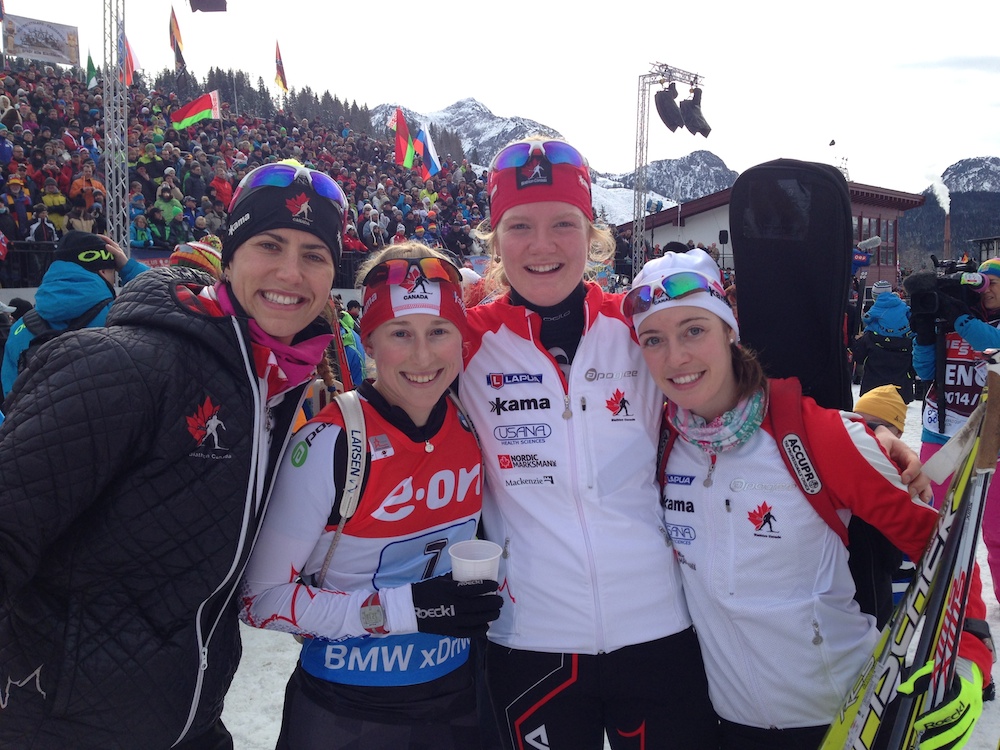
    The Canadian women's relay team after placing 11th on Saturday: (from left to right) Rosanna Crawford, Audrey Vaillancourt, Sarah Beaudry, and Megan Heinicke. (Photo: Rosanna Crawford)
    The Canadian women’s relay team after placing 11th earlier this season in Hochfilzen, Austria. (From left to right) Rosanna Crawford, Audrey Vaillancourt, Sarah Beaudry, and Megan Heinicke. (Photo: Rosanna Crawford)

    Yet Heinicke, and the rest of her teammates — Julia Ransom, Audrey Vaillancourt and Zina Kocher — knew they had the potential. Hanevold reminded them of that. With Rosanna Crawford out with a cold, Heinicke explained they tried new relay combination, which was an important step before IBU World Championships in March.

    Coming into the second shooting within a second of Preuss and Puskarcikova, Heinicke used one spare to leave the range in second, 17.6 seconds behind Puskarcikova, who cleaned.

    “It was hard to shoot clean with the snow falling, but it was easier than in Oberhof,” Puskarcikova told the IBU. “I am not exactly sure how I shot 10 for the second week in a row.”

    A rainstorm began before zero, 1 1/2 hours before the race on Thursday, and didn’t let up, coating competitors and spectators in a wet, slushy mixture between rain and snow. That made both skiing and shooting tough, but Heinicke didn’t notice.

    “I was so focused on the race in the moment that the conditions didn’t effect me too much,” she wrote. “I think the pressure and excitement of being near the front of the race helps me have a sharper focus in a weird ‘heightened senses’ kind of way.”

    Heinicke focused on her technique and held her position through the exchange, tagging Ransom in second, 25.2 seconds behind the Czechs and 2.5 seconds ahead of Poland in third.

    “Sprinting is really not my strength and I was really giving my all so I was just mentally coaching myself along!” Heinicke wrote.

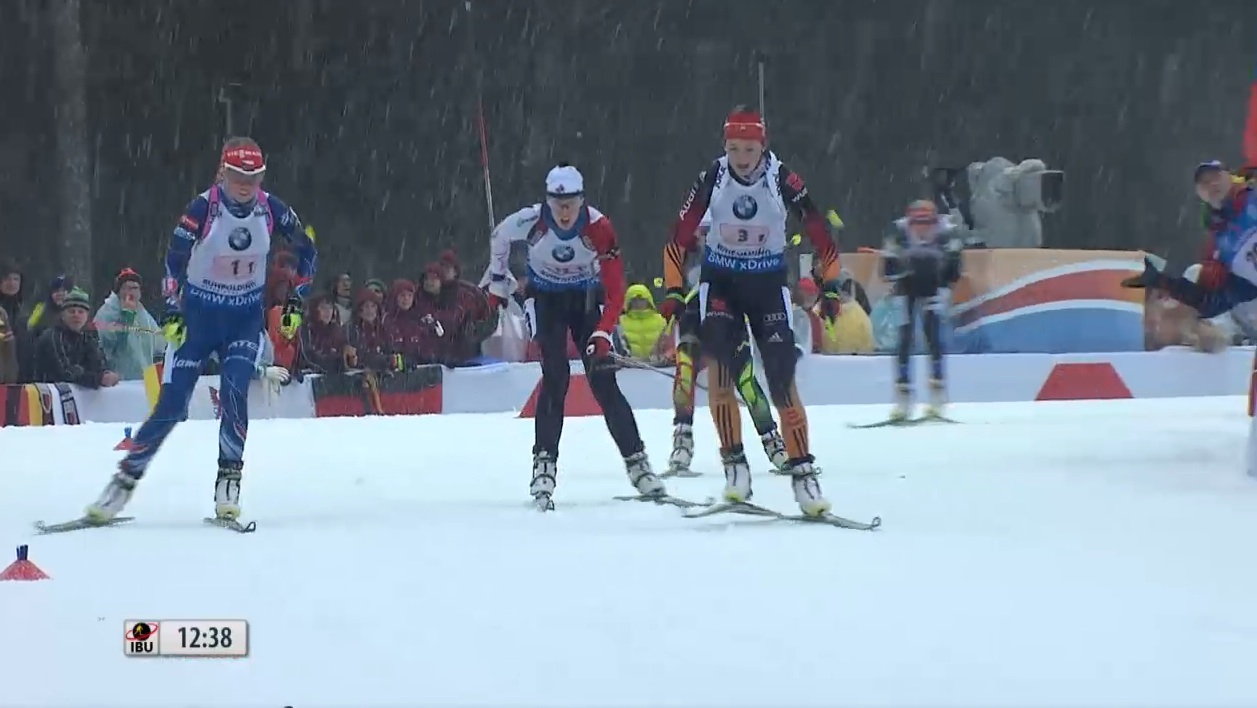
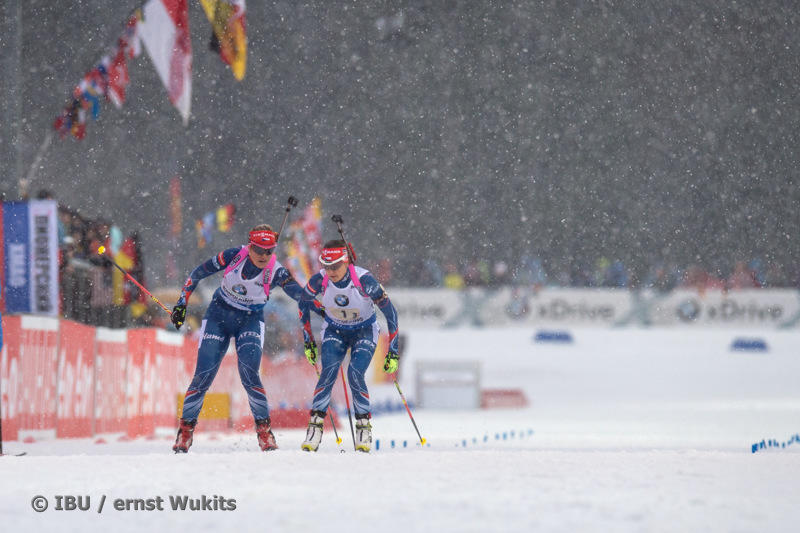
    Gabriela Soukalova (l) tagging Czech teammate Jitka Landova in first in the women's 4 x 6 k relay at the Ruhpolding IBU World Cup  on Thursday in Germany. (Photo: IBU/Ernst Wukits)
    Gabriela Soukalova (l) tagging Czech teammate Jitka Landova in first in the women’s 4 x 6 k relay at the Ruhpolding IBU World Cup on Thursday in Germany. (Photo: IBU/Ernst Wukits)

    Meanwhile, Ransom, in her first World Cup season at age 21, tried to control her excitement.

    “Megan has tagged off to me in excellent positions twice now!” Ransom wrote in an email. “All I could think was that opportunity was there ready to be seized.”

    She maintained second through the first shooting, which she cleaned, and up until her standing stage, where she entered the range 59 seconds behind Soukalova in first and 10 seconds behind Hildebrand in second.

    “I would be lying if I said the conditions were easy, but I secretly love it when it’s miserable out there,” Ransom wrote. “Canadians are tough! And if you can be tougher than the others, a little bit of rain, sleet, wind, or cold will feel like nothing.”

    In that second stage, she missed three but avoided penalty loops with three spares.

    “I think my standing shooting was affected by my excitement. I know I can hit targets, but when I am not 100% ‘there’, that’s when things can get squirrelly!” she wrote. “I buckled down for the spares and got out as quick as I could. When there were three spares for three targets, I remember thinking, ‘I’m going to give my parents a heart attack.’ They watch the live stream back in Canada.”

    Meanwhile, Soukalova and Hildebrand used two spares, and Belarus’s second leg, Iryna Kryuko, cleaned her second-straight stage to move into third behind the Czech Republic and Germany, respectively.

    By now, Soukalova had built up a minute lead over Hildebrand, and Kryuko was 1:13 back, followed by Ukraine’s Natalya Burdyga in fourth (+1:18) and Norway’s Fanny Welle-Strand Horn in fifth (+1:22). Ransom left the range just another second behind in sixth, and tagged Vaillancourt in the same position, 1:53.1 behind the Czechs.

    “Being the youngest on the team, I sometimes feel an internal pressure to prove myself and I believe I did today,” Ransom wrote.

    Vaillancourt explained in an email that she was excited to start in a pack.

    “I thought it was possible for us to finish in the top 6 if Zina and I both had a great race,” Vaillancourt wrote.

    With Landova, the Czechs began to extend their lead on Germany. Entering their first prone, Landova was up to 1:15 ahead of Hinz. Ukraine’s Olga Abramova was 1:41 back, just 0.6 seconds ahead of Norway’s Elise Ringen and 2.4 seconds ahead of Nadzeya Pisareva of Belarus. Vaillancourt followed in sixth, 2:13 behind Landova.

    In her first stage, Landova missed two shots and had to use a third spare to avoid her team’s first penalty loop of the day. She delivered and left the range still well ahead of Hinz, who cleaned to cut the deficit to 29.7 seconds.

    Abramova cleaned as well to hold onto third, 52 seconds behind Landova. Pisareva and Ringen used one spare each and left in fourth and fifth, 1:02 and 1:05 back. Vaillancourt used one spare as well to stay in sixth, another 33 seconds behind.

    One the next lap, Poland’s Weronika Nowakowska-Ziemniak passed Vaillancourt early on, and Canada slipped one spot to seventh.

    Vaillancourt cleaned her standing stage and left the range still in seventh, but lost one more place by the final exchange.

    “I was mostly losing time on the uphills,” she recalled. “I have been very sick in the past two weeks and hardly have been able to train, so I knew this was going to be a tough one on the skis. I am glad the ice is broken though.”

    Landova held steady up front, missing her second-standing shot and using a spare, but leaving the range 29 seconds ahead of Hinz, who also used one spare to stay in second. Belarus jumped to third, 1:12 behind, with clean shooting from Pisareva, and Norway was another 6 seconds back in fourth despite Ringen using two more spares.

    Abramova used three spares to fall to fifth for Ukraine, and Russia improved to sixth with 10-for-10 shooting from Ekaterina Shumilova.

    By the last exchange, the Czech Republic had a 30-second cushion to Germany in second, and was a whopping 1:14 ahead of Belarus in third. Norway and Ukraine skied together in fourth and fifth, more than a minute and a half back, Poland moved into sixth (+2:10), and Russia tagged off in seventh (+2:12.5).

    U.S. second-leg skier Hannah Dreissigacker after her prone shooting stage, where she used three spares and went on to keep her team in 10th in the women's relay in Ruhpolding, Germany. (Photo: USBA/NordicFocus)
    U.S. second-leg skier Hannah Dreissigacker after her prone shooting stage, where she used three spares and went on to keep her team in 10th in the women’s relay in Ruhpolding, Germany. (Photo: USBA/NordicFocus)

    Canada was 2:37.1 back in eighth with one 6-kilometer leg to go, and the U.S. women, in their first relay of the season, started the last leg in 16th (+5:28.4).

    Ninth heading into prone, Kocher used three spares and had to ski Canada’s first penalty loop to drop to 12th, 4:18 behind Vitkova, who used one spare to keep the Czechs in control.

    Germany’s Dalhmeier and Domracheva of Belarus both cleaned after her, but were well out of sight by the time they left the range in second and third, one minute and 1:24 later, respectively.

    “Shooting was basically catastrophic considering it wasn’t like last week in Oberhof,” Kocher wrote of Thursday. “Prone, I evaluated the wind flags wrong. Wind really picked up when I got into prone. I made a correction before I started shooting. But it was not enough for the change in direction. I corrected more once I was on spares and hit 3 shots with the 3 spares but then it was too late, I already had 4 misses.”

    She skied up to 11th with the fourth-fastest course time on her second lap, but missed four again for another penalty loop, which put Canada 5:36 behind and still in 11th. Kocher posted the second-fastest last loop of the anchor legs to finish 5:33.8 behind the winner — Vitkova of the Czech Republic.

    Vitkova had used a single spare on each stage to stay more than a minute ahead in first. Belarus moved to second with Domracheva skiing the fastest anchor leg and using a single spare throughout her two stages.

    While Vitkova had enough time to take her poles off and grab a Czech flag from a spectator before casually skiing across the line, Domracheva entered the stadium uncontested as well and looked back before celebrating second, 1:13.3 behind the Czechs, who won in 1:23:57.7.

    Veronika Vitkova anchoring the Czech Republic to its second-straight women's relay win on Thursday the IBU World Cup in Ruhpolding, Germany. (Photo: IBU/Ernst Wukits)
    Veronika Vitkova anchoring the Czech Republic to its second-straight women’s relay win on Thursday the IBU World Cup in Ruhpolding, Germany. (Photo: IBU/Ernst Wukits)

    “It was easier for me today because the other girls gave me such a big lead,” Vitkova told the IBU.

    Germany hung on to the podium in third, 1:39.3 back from the winners, and a minute ahead of Norway (anchored by Tiril Eckhoff, who cleaned her first stage and used three spares on the second) in fourth.

    Ukraine placed fifth (+2:49.7) with a clean final stage and one early spare from Valj Semerenko.  France was sixth (+3:55.3) with 17 total spares, Poland placed seventh (+4:14.4) with two penalties and 10 spares, Russia was eighth (+4:36.5) with two penalties and 13 spares, Italy ninth (+4:44.6) with two penalties and 13 spares as well, and Austria took 10th (+4:51.2) with two penalties and eight spares.

    Canada crossed the line 42.6 seconds later with two penalties and 11 total spares.

    “Can’t say I feel great about my performance today. I skied strong but that doesn’t make up for the 2 laps,” Kocher wrote. “It’s great to see that there are younger athletes coming up showing such strong performances. It’s always motivating for the entire team.”

    While Heinicke explained the race could have been better, she added that it also could have been worse. “We gave it our all,” she wrote.

    “Our relay shows so much potential and I know that our day to shine will come,” Ransom wrote.

    “It think we showed that if everyone has a good day, we can definitely be one of the top nations!” Vaillancourt added.

    U.S. Women in 16th Before Being Lapped

    The Americans stayed in the race until the final leg, when Maddy Phaneuf in her World Cup debut completed two stages and was lapped before coming into the finish. She had one penalty and three spares in prone, and used one spare in standing to bring the team’s grand total to three penalties and 19 spares.

    The team’s opening skier, Susan Dunklee used two spares in each of her shooting stages to go from 15th to 12th, and finally up to 10th (+1:03.5) with the fourth-fastest, first-leg course time.

    And she started in the back.

    “I had the last row of the starting lanes all to myself,” Dunklee explained in an email. “I followed Mari [Laukkanen] from Finland (also seeded near the back) because she is a strong skier who knows how to maneuver in a crowd. That whole first loop was about being patient in the pack, moving when spaces opened up, but not wasting energy.  The weather worked to my advantage today because I am a strong V1 skier and the entire course felt like one long uphill because of the resistance.”

    Dunklee explained that the heavy rain caught the racers off guard.

    “I think everyone assumed the crappy weather was behind us after Oberhof,” she wrote. “The snow behaved like sandpaper and we had to V2 many of the downhills. I used every change of dry clothes that I brought and still struggled to stay warm.  It was especially difficult to keep enough feeling in our hands to shoot.”

    U.S. third leg Annelies Cook during the women's relay on Thursday in Ruhpolding, Germany. (Photo: USBA/NordicFocus)
    U.S. third leg Annelies Cook during the women’s relay on Thursday in Ruhpolding, Germany. (Photo: USBA/NordicFocus)

    Dunklee came through the exchange in 10th, and Dreissigacker held the position throughout the second leg, despite using three spares in both her prone and standing stages. She tagged Annelies Cook in 10th, 2:31.7 behind the leaders.

    Cook dropped to 16th after her first shooting, with two penalties and three spares. She used two spares on the second stage and tagged Phaneuf in 16th (+5:28.4).

    According to Dunklee, the team always aims for a top result each time they toe the line, but they were also simply excited to have enough women to field a relay for the first time this year.

    “Maddie has never been on the World Cup before, but what an epic way to start!” she wrote. “She got the full experience with thousands of crazy fans and unpredictable weather.  She is very young with lots of racing ahead of her, and I think she did a great job today taking it all in and staying level headed.”

    Results

  • Czech Republic Rock Steady to Win Women’s Relay as IBU World Cup Resumes

    Czech Republic Rock Steady to Win Women’s Relay as IBU World Cup Resumes

    The Czech Republic posted the most consistent performances of the day and clinched the women's relay win with anchor Veronika Vitkova (second from l) at Wednesday's IBU World Cup in Obehof, Germany. From left to right: Eva Puskarcikova, Vitkova, Jitka Landova, and Gabriela Soukalova. (Photo: Fischer/NordicFocus)
    The Czech Republic posted the most consistent performances of the day and clinched the women’s relay win with anchor Veronika Vitkova (second from l) at Wednesday’s IBU World Cup in Obehof, Germany. From left to right: Eva Puskarcikova, Vitkova, Jitka Landova, and Gabriela Soukalova. (Photo: Fischer/NordicFocus)

    The women’s International Biathlon Union (IBU) World Cup resumed in Oberhof, Germany, on Wednesday with the women’s 4 x 6-kilometer relay. Twenty centimeters of fresh snow made for difficult skiing on a foggy, warmer day than in training on Tuesday, and on top of that, Oberhof is known as a notoriously hard shooting venue. The large-climb profile of Oberhof and a long, flat section leading into the range contrasts that of several other World Cup stops.

    The leading positions changed several times throughout the race, with early leaders Russia and Finland falling out of contention with two many penalty loops apiece.

    The eventual winners, the Czech Republic, with Eva Puskarcikova, Gabriela Soukalova, Jitka Landova, and Veronika Vitkova, used seven spares to claim the victory, one less than runner-up France (with Marine Bolliet, Marie Dorin Habert, Justine Braisaz, and Anais Bescond), which used eight. The Czech team was consistent throughout the day with none of its athletes skiing significantly quicker or slower than the others, which put them on pace for the win in 1:16:56, 8.6 seconds ahead of France.

    Veronika Vitkova clinches the nearly-nine-second win for the Czech Republic on Wednesday in the women's 4 x 6 k relay at the IBU World Cup in Oberhof, Germany. (Photo: Fischer/NordicFocus)
    Veronika Vitkova clinches the nearly-nine-second win for the Czech Republic on Wednesday in the women’s 4 x 6 k relay at the IBU World Cup in Oberhof, Germany. (Photo: Fischer/NordicFocus)

    Sixth after the first leg with Puskarcikova, who used just one spare, Soukalova skied the team to third with a single spare as well, Landova brought them one step closer in second with two spares, and Vitkova used three spares to seal the win.

    “The final shooting was quite hard as I was nervous; but I really wanted to win,” Vitkova told the IBU.

    “I was not sure about my shape for the first race after Christmas,” Soukalova said. “Early in the race, I had a lot of energy but on the last loop, I was so tired; I just wanted to see the finish line.”

    During the third leg, it seemed Ukraine, the Olympic relay champions, had a strong hold on the first position with Olga Abramova maintaining their lead until the final exchange. The Czech Republic followed came through the exchange in second, 8.3 seconds back, followed by France, 11.9 behind Ukraine.

    Vitkova led into the first prone stage and cleaned with six shots, but France’s anchor Anais Bescond cleaned quickly as well to chase her out of the stadium. Ukraine’s Iryna Varvynets used one spare to leave the range in third, followed by Norway’s Tiril Eckhoff, who also used one spare and headed out on her second lap in fourth, 34 seconds after Vitkova.

    In the final standing, both Vitkova and Bescond used two spare rounds to leave the range together Eckhoff suffered a penalty lap, while Varvynets missed just one to chase the leaders from 37 seconds behind in third. However, she slowed on her last lap and was overtaken by three women — Darya Domracheva of Belarus, Eckhoff, and Italy’s Karin Oberhofer respectively — to finish sixth for Ukraine.

    At the front of the race, Vitkova pulled away from Bescond with about 2 k remaining to the finish, and secured the win by nearly nine seconds. Domracheva brought Belarus from 10th to third, passing Varvynets in the final 500 meters.

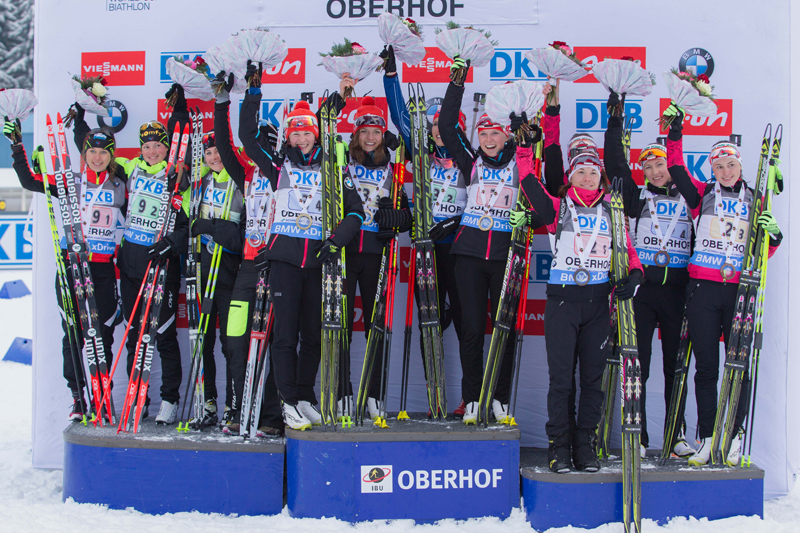
    The IBU World Cup women's relay podium on Wednesday in Oberhof, Germany: with France in second (l), the Czech Republic in first (c), and Belarus in third. (Photo: Fischer/NordicFocus)
    The IBU World Cup women’s relay podium on Wednesday in Oberhof, Germany: with France in second (l), the Czech Republic in first (c), and Belarus in third. (Photo: Fischer/NordicFocus)

    France welcomed back Marie Dorin Habert to her first World Cup race since giving birth to her first child this summer.

    “I have only had two national races before this; I did not expect my form to be so good,” she said in a press conference following relay.

    France’s second skier, Habert used a single spare to bring her team back within less than a second of the leading Ukrainian team, which had perfect shooting from its first two skiers, Anastasiya Merkushyna and Valj Semerenko.

    Darya Domracheva had the biggest individual leg of the day, lifting Belarus to the podium after Nadzeya Pisareva’s penalty on the third leg put the team in 10th. Domracheva used two spares and skied the fastest course time on the last leg to close 38 seconds and place third overall, 1:06.8 behind the winners.

    Norway saved their strongest woman for last. With her team in fifth, Eckhoff took over with an aggressive start to her race. Coming into the standing shooting, Eckhoff was within range of the leaders, but fighting the wind, she used her three spares and still incurred a penalty loop. Eckhoff skied a strong final lap, passing Italy and Ukraine, but was unable to hold onto Domracheva. Norway took fourth, 1:12.7 behind the Czech Republic.

    Italy led early in the first leg with Dorothea Wierer, who shot clean, but dropped to seventh with second-leg Lisa Vittozzi and remained in seventh, and finally fifth. After catching Varvynets coming into the stadium, Oberhofer could not hold off Eckhoff and dropped to fifth, 1 second behind Norway and 1:13.7 after the winners. Ukraine was another 5.3 seconds back in sixth.

    Canada, the lone North American women’s relay, put themselves in the mix in early on with Megan Heinicke, who had perfect shooting and the ninth-fastest course time of the first leg. She tagged teammate Julia Ransom in fifth, 8.8 seconds behind the leaders.

    Ransom skied with a quick tempo in the warm-and-slushy conditions, and held onto the leaders for her first lap. Ransom needed just one spare in standing to hit her 10 targets and complete her leg, tagging Emma Lunder in 10th.

    “Megan rocked the first lap!” Ransom wrote in an email. “Shooting felt solid out there and the first ski lap was filled with adrenaline and excitement. Flying out [to Oberhof] only a few days ago, I still felt the effects of jet lag and died a little on the other two laps. However I am confident that the body will be back in form for the sprint.”

    Nearly 1:50 behind the leaders, Lunder was troubled by a change in wind since her pre-race zero and skied two penalty laps after prone. She used three more spares in standing, for a total of six, and tagged Zina Kocher in 16th, nearly five minutes back.

    In an email, Lunder explained these mistakes only motivated her to perform better in Friday’s sprint.

    “I like the course, I feel strong, and with a bit of extra focus on the range in training tomorrow, I’m certain I can perform to my potential,” she wrote, adding that the slushy conditions and the difficult climbs suit her strengths.

    The team’s veteran, Kocher, used six spares (three in each stage) before being lapped on the final loop and taken out of the race.

    “I had to focus on doing my job and make the best of it,” she explained in an email.

    Three of the Canadian women flew into Oberhof on Monday night, and Kocher explained that jet lag after the holidays could have been a factor in their performance.

    “Today’s relay was just a blip in the scheme of things,” Ransom wrote. “It’s incredibly hard to get four people to be ‘on’ all at the same time and it just didn’t happen for us. But now that the cobwebs are out, I believe that all of us ladies will have some great performances coming up.”

    The men’s 4 x 7.5 k relay takes place in Oberhof on Thursday at 14:15 CET.

    Results