From the FasterSkier archive — posts syndicated from athletes’ and coaches’ own blogs between 2004 and 2012, kept online as published. Current coverage is at fasterskier.com.

Tag: Joey Caterinichio

  • Racing in the Time of Covid, Part I: The Nature of the Problem

    Racing in the Time of Covid, Part I: The Nature of the Problem

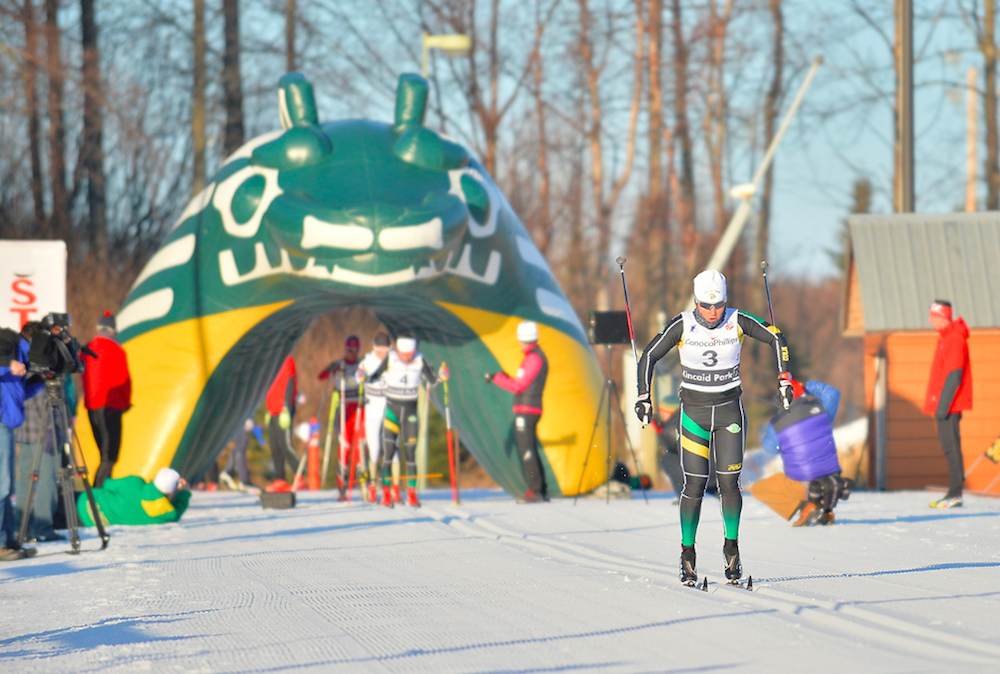
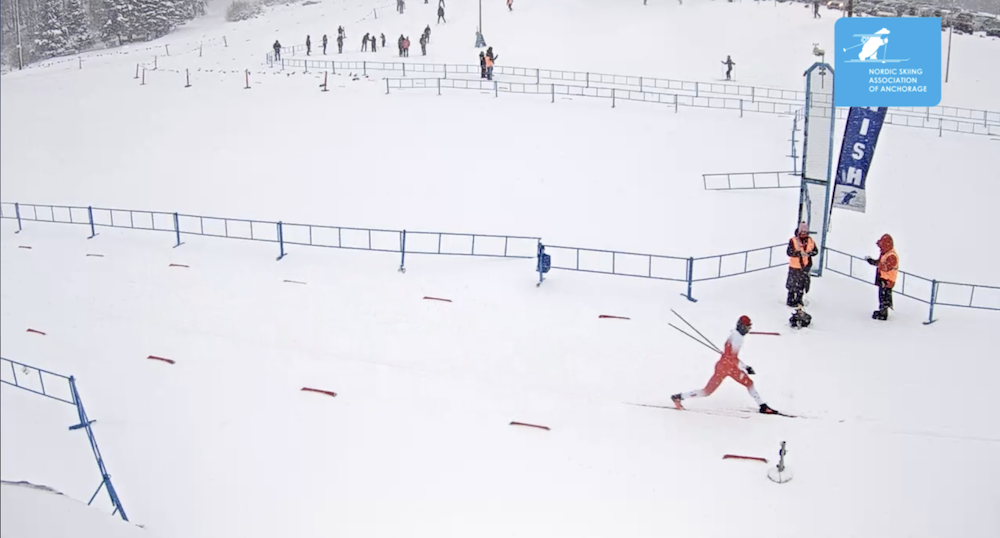
    An athlete finishes the sprint qualifier-only event in a largely empty Kincaid stadium in Anchorage in a December 2020 FIS race. (Photo: NSAA webcam screenshot)

    The winter of Covid continues. Most of the FIS races scheduled for this country this year did not happen. A few did. No one in Canada has done a single official high-level race this winter. No one in Vermont has, either. Some athletes from Canada and Vermont did not race and were chosen for international travel teams. Some athletes in Alaska raced a ton and were not. It’s been a tumultuous winter for everyone, for many reasons, skiing or otherwise.

    After several months of hosting, or not hosting, ski races in this country, a few themes have emerged. In this article, part one in a two-part series, FasterSkier surveys some of the lessons learned and considerations informing race directors’ decisions about whether to hold a race, and if so with what safety measures in place. In part two, FasterSkier considers the case of the American Birkebeiner, which even in this year’s scaled-down format is once more poised to be the most popular ski race in the country, and to draw athletes from across a wide swath of the Midwest to rural Wisconsin.

    This article begins with an attempt to quantify where the health risks in nordic skiing lie, then examines first regional racing in Alaska and then in portions of the Lower 48.

    Methods of transmission

    You’re doubtless familiar with the epidemiological basics by now: SARS-CoV-2, the novel coronavirus that causes the disease known as Covid-19, is largely spread through exposure to respiratory droplets carrying infectious virus, less so through touching fomites left on surfaces. Unventilated indoor spaces are, to paint in broad epidemiological strokes here, “bad”; outdoor spaces are “good.” From an outdoor recreation perspective, the message has been heeded; the rise in usage numbers for outdoor endurance sports over the past year has been well-documented, and you’ve very likely encountered crowded parking lots at your favorite trailhead in all seasons.

    Early in the pandemic, the statement, “there have been no documented cases of outdoor transmission” was often repeated like an article of faith. This is, no longer, literally true. In Alaska alone, for example, the Alaska Department of Health and Social Services last summer documented cases of outdoor transmission among attendees of backyard barbecues and spectators at youth sporting events, perhaps where parents were relatively close to each other for extended periods.

    As one scientist’s work in this area was summarized by FiveThirtyEight blog, “The situations he found where clusters were associated with outdoor transmission tended to be times when people were, as [the scientist] put it, ‘invited or required to break natural social distance.’ These event-specific behaviors might help explain why he found clusters associated with farmers’ markets, where people crowd around the stalls, but not with people just hanging out in the park.” Or, as another article summarizing the same research was headlined, “Catching coronavirus outside is rare but not impossible.” “Only about 10% of transmission events are linked to outdoor activities,” one lecturer in infectious diseases and medical virology recently told The Guardian.

    So what does this mean for skiing? This reporter is no epidemiologist, but anecdata from the Anchorage cross-country ski community over the past several months suggest that the risk is relatively low. One unofficial case study comes from the Alaska Pacific University Elite Team, where Rosie Frankowski publicly announced in January that she had suffered from a mild case of Covid, and David Norris had it in November.
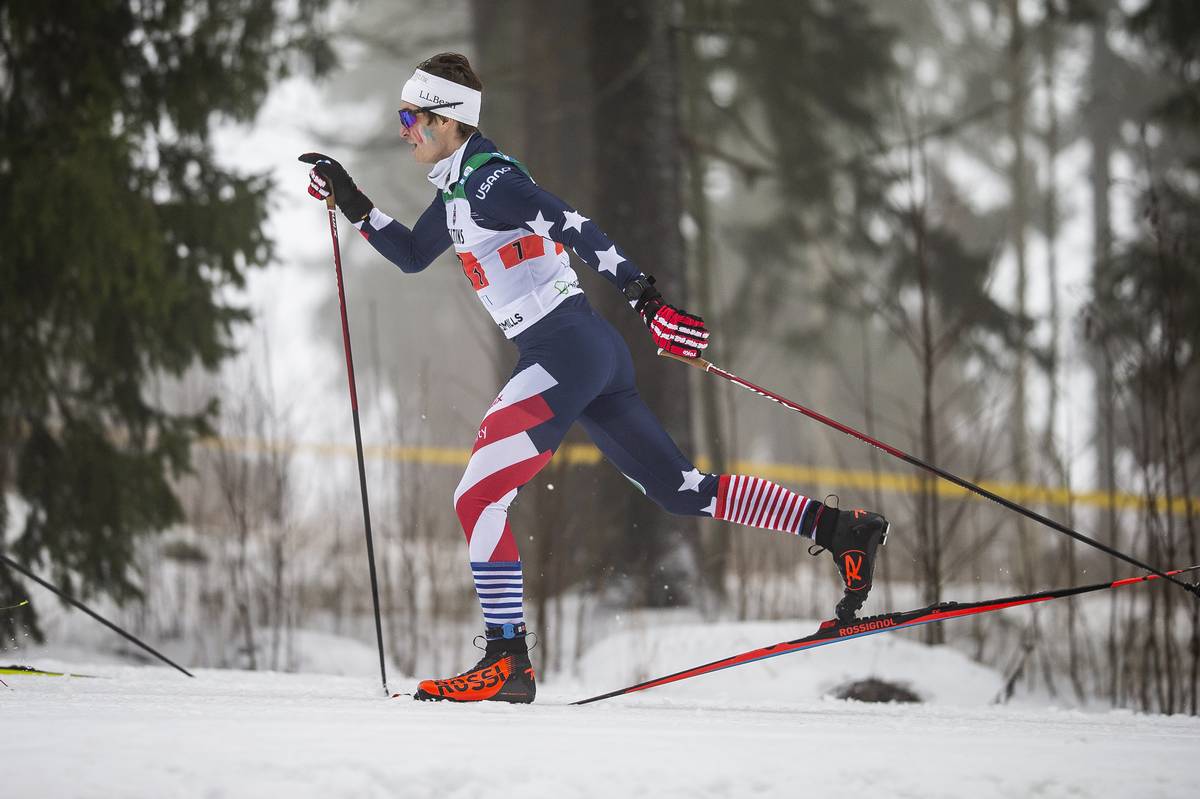
    David Norris racing the scramble leg for the U.S. in a World Cup relay this January. (Photo: NordicFocus)

    APU Head Coach Erik Flora told the Anchorage Daily News in January that all APU athletes who had caught the virus, four in total since the pandemic began, “were exposed somewhere other than training and there has been no internal spread among APU’s 30-member group.” (Most athletes on the APU Elite Team train together daily, most frequently men with men and women with women.)

    In the specific case of Frankowski, meanwhile, Flora told the paper, “I skied with Rosie for a half-hour before she (tested positive). We did the proper spacing and when we weren’t skiing and all that good stuff, and I was negative. It made me really think how effective and important it is – the spacing and the mask-wearing.”

    The experience of Anchorage School District (ASD) high school nordic teams suggests a similar conclusion. Although no ASD high school student has physically attended class since March 2020, many high school sports have proceeded with caution and new mitigation standards, including cross-country skiing. High school skiing in Anchorage is a big deal; the most popular teams can have over 100 athletes.

    The ASD Nordic Ski Mitigation Plan states that athletes must maintain at least six feet of space at all times, and that “Face Coverings must be worn by Athletes.” (A separate provision in the same document states that “masks and face coverings during high intensity outdoor organized sports activities are encouraged, but not required, if athletes generally can maintain ten (10) feet physical distancing at all times,” tracking the language of the relevant municipal emergency order.)

    Based on this reporter’s firsthand observations from local ski trails on weekday afternoons, there is a wide range of interpretations of this rule among Anchorage high school ski coaches and their teams. Some teams pass by with every single athlete wearing a mask, over both their nose and mouth. Some teams exhibit roughly half the athletes wearing a mask, with varying degrees of coverage of an athlete’s nose. Some teams present not a single athlete wearing a mask, with three athletes classic skiing side by side, or five or ten immediately behind one another in the tracks. As Rosie Brennan captioned a photo on her blog showing her racing in the middle of a train of skiers, “I hope no one has Covid…”

    In late January, the Anchorage Daily News wrote that, although the district had “dealt with a number of team quarantines during the fall sports season” (at one point last fall at least five volleyball teams at three different schools were in quarantine), “none have occurred this winter.”
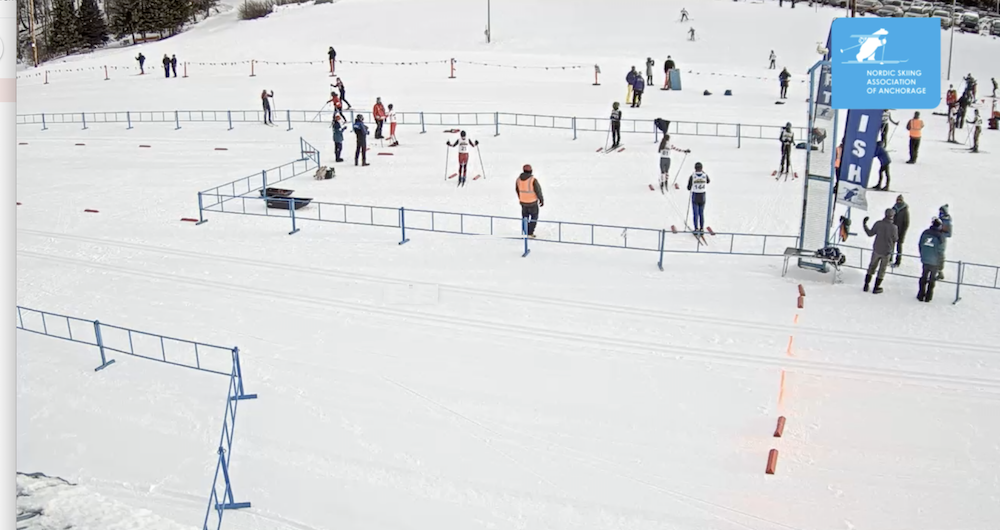
    Skiers move through the “Z” starting formation lineup in this Anchorage citizens race in January 2021. (photo: NSAA webcam screenshot)

    “We’ve not had any (team) quarantine situations thus far for skiing, basketball or cheer,” a district spokesperson told the paper. “We’ve had some isolated cases where an individual had to quarantine.” (Two weeks later, unmasked basketball practices would lead at least three large high schools to close in the nearby Matanuska-Susitna Borough School District, roughly an hour’s drive from Anchorage.)

    FasterSkier has learned that some skiers on Anchorage High School ski teams tested positive for Covid-19. While it is unknown what mask-wearing practices were in place on the Anchorage ski teams that did experience cases – ASD representatives declined to identify to FasterSkier the teams involved or their safety procedures, citing student privacy concerns – the apparent lack of widespread intra-team transmission among nordic teams is anecdata that there is a relatively low risk associated with outdoor exercise.

    (One person with direct knowledge of Anchorage high school skiing told FasterSkier something somewhat different, observing that they were personally aware of transmission occurring within ski teams, but noting that it occurred between students who carpooled together to practice. This would mean that the ASD administrator’s point about no within-team transmission is incorrect, but that points about the relative safety of outdoor exercise remain largely accurate.)

    Other sports have suggested similar conclusions.

    In football, for example, Sports Illustrated reported an NFL representative stating in early November, “We have seen zero evidence of transmission player-to-player on the field, either during games or practices, which I think is an important and powerful statement. And it also confirms what other sports leagues have found around the world. We regularly communicate with World Rugby, Australian rules football, European soccer leagues. To date, no one has documented a case of player-to-player transmission in a field sporting environment.”

    (You may wish to take NFL pronouncements regarding player safety with a grain of salt, given the now undisputed evidence that the league ignored known risks regarding concussions and chronic traumatic encephalopathy for decades, and has exhibited a statistically improbable reporting distribution of positive Covid tests that as of late November had seen only two players placed on the reserve/Covid-19 list on a day his own team played, as against 171 players placed on the Covid list on non-game days.

    “Somehow,” Kelsey McKinney wrote for Defector, summarizing this data, “every week, players are taking COVID-19 tests on Saturday and not being placed on the list (be it for positive tests or close contact) on Sunday. By Monday, they need to be on the list. Someone with a conspiratorial mind might take that as evidence that the league is pulling some number of strings to make sure that the Saturday tests are being administered in some way so as to ensure their results won’t endanger the next day’s games.”

    The other sports leagues cited above have less of a checkered past in this regard.)

    NFL representatives suggested to Sports Illustrated that more high-risk contacts occurred from “meeting, eating, and greeting” – that is, team meetings; eating together; and “when I say greeting, what I mean by that is social activity outside the building, people hanging out together doing things.” The last of these, extracurricular social activity, seems to be the greatest issue in the recreational ski context. Traveling for races raises the possibility of the second, as athletes have to eat somewhere. As for the first, local race organizers have consistently moved to Zoom for pre-race meetings this season, while the World Cup has featured memorable images of outdoor team meetings in single-digit temperatures.

    Ski racing in Anchorage: Mostly local fields

    A pair of December races in Anchorage, the first FIS races held on the continent this winter, were largely responsive to these concerns. There were a suite of mitigation measures that are by this point likely familiar to most racers: interval-start format; masks required up to the starting line and immediately upon crossing the finish line; paper bibs distributed by club coaches; no indoor facilities; leave the venue right after the race; spectators officially barred; etc.

    The fidelity to the application of these measures was mixed. But rules were in place, and athletes likely had relatively little contact on course over a pair of interval-start races, at least while officially competing. (This reporter glimpsed multiple athletes from different teams skiing unmasked cooldowns together on trails away from the stadium. He also saw some spectators in the stadium, which violated both club policies and an official city emergency order in place at the time.)

    So if the races themselves were presumptively fairly safe, was hosting them okay? Particularly when they had some of the best points profiles of any domestic races this season, and were held in a hotbed of American skiing? (At least nine athletes who were named to a 2021 World Juniors team competed in these races, and the results were used to help justify the discretion-based selection of at least five athletes to this year’s World Cup squad. Every Alaskan athlete who was named to an international team this year competed in these races, save for Gus Schumacher, who was already racing in Europe. Regarding these considerations, Caterinichio wrote to FasterSkier, “When you have an NRL race it isn’t only for points in fact points don’t mean much this year and there are no qualifications which has allowed a family to not have to come.”)

    Opinions differ. Criticism about hosting the races focused on the fact of the races themselves, for the off-course behavior it could enable or incentivize, rather than any specific deficiency in safety measures on the part of Nordic Skiing Association of Anchorage, or NSAA.

    As one local coach, granted anonymity to candidly discuss sensitive local issues within a small ski community, wrote to FasterSkier in late December, “I disagree with hosting any form of race right now in Alaska, including town series races. I do not doubt the efforts or the effectiveness of race day mitigation plans which are data driven and based on those designed by healthcare professionals. The issue is people’s ability to adhere to those plans, and what they do outside the race venue. Skiing is a social sport and carpooling to the venue, waxing as a team, or even congratulating your teammates on their performance poses a very serious health risk to racers and their families. Lastly, incentivizing travel of any kind at this point in time is absolutely unacceptable.”
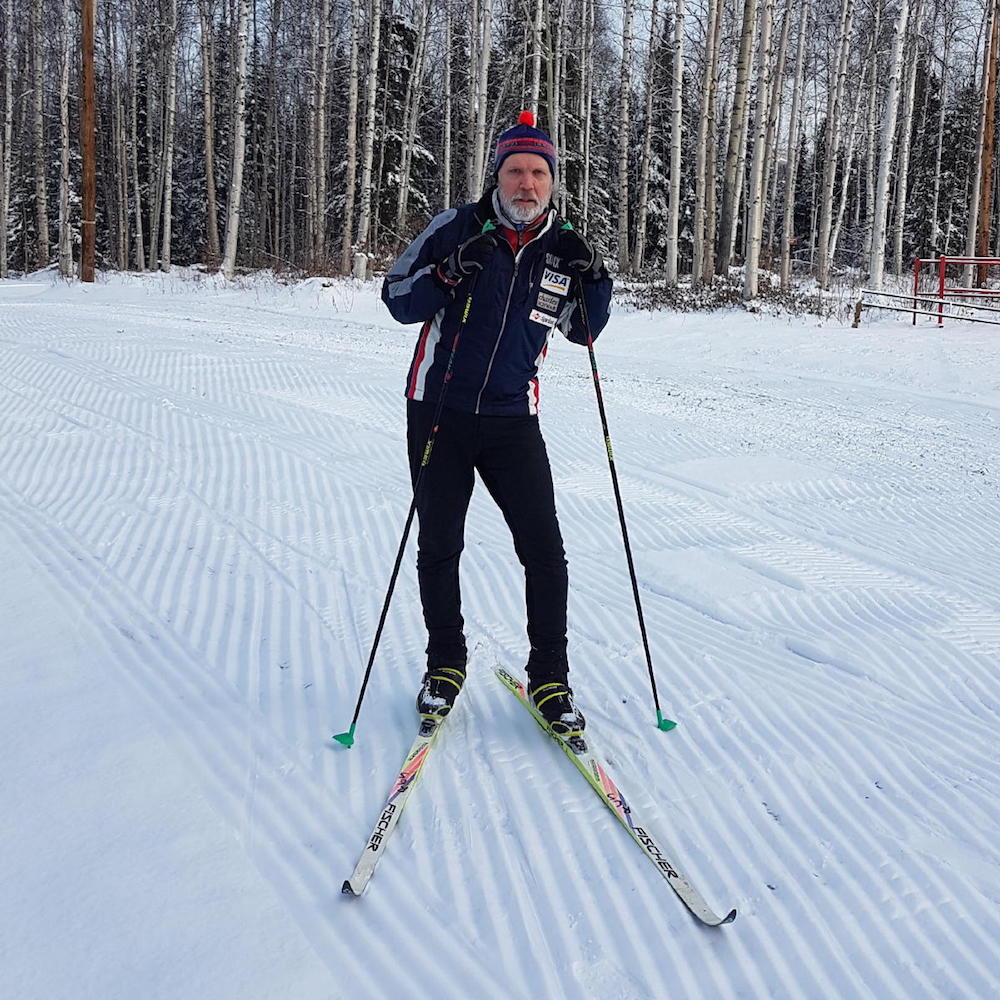
    John Estle at Birch Hill Ski Area in Fairbanks, Alaska, on Oct. 19, 2017. (photo: courtesy John Estle)

    Or as John Estle, the longtime doyen of Fairbanks skiing, wrote to FasterSkier, “Between our first and second meetings [of the Nordic Ski Club of Fairbanks advisory committee, which includes three local physicians], a patient from Bethel was sent to Fairbanks Memorial Hospital (FMH), due to a lack of ICU beds for COVID-19 patients in Anchorage.  That fact, in addition to a still-climbing daily rate of confirmed cases were decisive factors in the Advisory Committee’s recommendation, and the NSCF BOD’s decision, not to host the first FIS races of the 2020-21 season on November 21-22 as scheduled.

    “The decision was motivated by the knowledge that were NSCF to host a FIS race, it would likely draw skiers from other parts of the state. It is clear that travel contributes to the spread of the coronavirus – the people who travel to a community outside their own not only expose themselves to many more people than would be the case if they stayed home, but potentially could unknowingly (approximately 40% of coronavirus infections are asymptomatic) increase exposure to coronavirus among residents of the host community. In addition to the concern regarding travel, not holding the races would eliminate the possibility of members of our race crew being exposed to the virus.”

    Estle continued, “I believe that it is possible for clubs to provide opportunities for competition during this pandemic which limit exposure of competitors, volunteers and officials in meaningful and effective ways. I believe the spectrum of formats where this can occur is fairly broad, but I believe a key component of safe competitions is that they be LOCAL in nature. I do not believe it is wise to organize an event which creates an incentive for people to travel from one geographic area to a fairly distant geographic area, thus increasing exposure both among the visitors and the hosts.”

    He also noted, “One issue that I have not even mentioned is the risk to both the short-term and long-term health of young athletes. Although research is ongoing in this area, it is clear that young athletes who contract COVID-19, even those who have had only mild cases, can suffer long-term respiratory and cardiac issues post-COVID. I don’t advocate that young athletes abandon exercise and sit at home. However, it seems to me that concern for the health of young athletes would dictate that competitive opportunities make sense when they are offered within a structure which does nothing to INCREASE the exposure of the participants.”
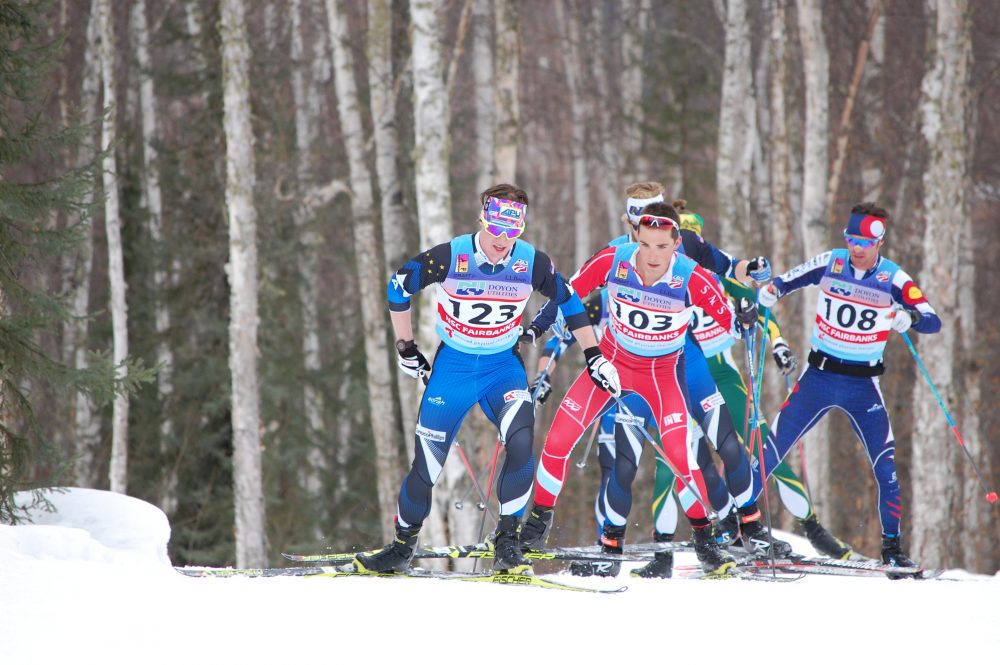
    Fairbanks racing in simpler times: left to right, Thomas O’Harra (APU), Paddy Caldwell (SMS), Eric Packer (APU) and Tad Elliott (SSCV) during the men’s 50-kilometer freestyle mass start in 2017 U.S. Distance Nationals in Fairbanks, Alaska. (Photo: Max Kaufman)

    When Estle, and the NSCF board, decided to cancel the November FIS races, the average daily rate of Covid cases in Fairbanks over 14 days was 40 cases per 100,000. When the decision was announced on December 8 that the Anchorage races were going ahead, albeit with statewide participation discouraged, the rate in Anchorage was 90 per 100,000.

    (Both rates are substantially lower now, 12.4 cases per 100,000 for Fairbanks and 14.5 per 100,000 for Anchorage as of February 16. This is, however, all quite relative; when Norway announced the cancellation of all remaining World Cup races in the country earlier this month, its rate was roughly 5 cases per 100,000, although Norway was also concerned with the emergence of new variants in addition to absolute case numbers.)

    When asked about a difference between the two cities that could justify holding a race amidst the higher case numbers present in Anchorage, Caterinichio wrote, “A difference from Fairbanks vs Anchorage, could be that we have been running multiple events since June in Anchorage and we have had a mask mandate where other cities do not to include at our outdoor events. The experience of having multiple mitigated events and having the races removed from state-wide to local emphasis. The majority of the athletes live in Anchorage so travel to Anchorage is minimal where Fairbanks, more people would be traveling.”

    The Anchorage case rate of 90 cases per 100,000 in early December came at a time of significantly reduced local hospital capacity. There were between two and four ICU beds available in Anchorage, out of 73 total, throughout the week leading up to the races, for a city of 300,000, potentially also for any rural area that would hope to medevac patients to Anchorage. A mobile morgue was parked outside of Anchorage’s Providence hospital, the largest hospital in the state.

    The rate of 90 cases per 100,000 was over three times greater than the threshold of 25 cases per 100,000, defined by U.S. Ski & Snowboard as “high community spread,” which triggers a USSS recommendation that a race organizer should “speak with your local health authority regarding ICU bed utilization and ventilator availability in the location’s level 1 medical center catchment” and that decision-making be guided by “whether or not pre-competition COVID-19 testing and asymptotic [sic] COVID-19 screening during the competition are being conducted.”

    The Anchorage races featured a series of self-assessment questions generally designed to screen for asymptomatic cases. It did not conduct formal Covid testing, as occurs on the World Cup. As noted, ICU bed availability was at two to four beds out of 73 for the entire city. In Southern California the same day, a drop of ICU beds to below 2% capacity led health officials to turn to “increasingly desperate measures to prevent the state’s coronavirus surge from killing more patients,” the Los Angeles Times reported. Anchorage was within one additional ICU bed occupancy of reaching this level.

    When asked about any conversations with local health care authorities per the USSS recommendations, Caterinichio initially wrote, “I would hope that no person would be putting on an event in their city without permission from the local authorities. I also served on the USSS committee as the mitigation efforts and suggestions were being rolled out so I am aware of the suggestions.”

    In a follow-up conversation, Caterinichio stated that she had worked with the Alaska Department of Health and Human Services, and had worked directly with Municipality of Anchorage representatives. She cited her professional experience running a medical business that is accredited by Medicare – she owns a home health care and hospital distribution company of medical and orthopedic products – as giving her experience in implementing a standard operating procedure to ensure health and safety. “We have procedures on how to clean equipment, whether it’s infectious disease, how to treat patients, so we never stopped our business,” Caterinichio told FasterSkier.

    Caterinichio discussed the sporting events that she had been involved in hosting for several months now at the time of the December races, including swim meets and cross-country running. She said, of these events, “When you follow your mitigation plan, and you follow the CDC guidelines and your state guidelines, you realize that you can do it safely. It’s never a percentage of zero, but your goal is zero. If for any reason somebody did get it, the goal is not to have a spread. And I did, I will say there was, in some of my events one or two people that would end up positive weeks later, but there would be no spread.”

    Caterinichio expressed her belief that there had been very little travel within the state of Alaska for these races. In advance of the race weekend, she wrote to FasterSkier that there were four entrants coming down from Fairbanks for the races. However, at the time of that estimate, race registration had not closed.  

    FasterSkier’s review of the results sheet from Sunday’s distance skate event suggests that finishers included eight athletes from University of Alaska Fairbanks and two additional athletes from Fairbanks, plus two athletes from Colony High School, one from Palmer, one from Soldotna, one from Kenai, and one who listed a local club but who had flown up from Outside shortly before the race. Some of these athletes were listed on the results sheet with team affiliations that could potentially be interpreted as concealing a location outside of Anchorage, such as listing an Anchorage-based club despite attending school in Fairbanks or simply leaving team affiliation blank.

    Ski racing Outside: Regional fields drawn from several states

    As the comparison between Anchorage and Fairbanks illustrates, even relatively nearby regions of this sprawling country can have divergent case numbers, public health regulations, and/or hospital capacity, by virtue of being in different jurisdictions at the state/county/city level.

    The 2021 Alaska high school state nordic skiing championships, to be held later this week, are an instructive case study: They may not be held in Anchorage without requiring pre-competition Covid testing for all participants. They were ultimately instead moved to Government Peak Recreation Area, or GPRA, about an hour’s drive away in Palmer. Government Peak is a world-class venue, and the Mat-Su Ski Club has careful and conscientious volunteers – but the GPRA stadium, parking lots, and associated infrastructure are simply far smaller than those at Anchorage’s Kincaid Park, leaving less space for everyone at a venue that will draw hundreds of people over three days. As Caterinichio told the Anchorage Daily News earlier this month, addressing municipal organized sports requirements then in place, “We do want to host the state meet at Kincaid. It’s one of the safest venues and our crew is probably the most tenured as far as putting on a mitigated meet. Unfortunately, this particular event would have to move for it to happen.”
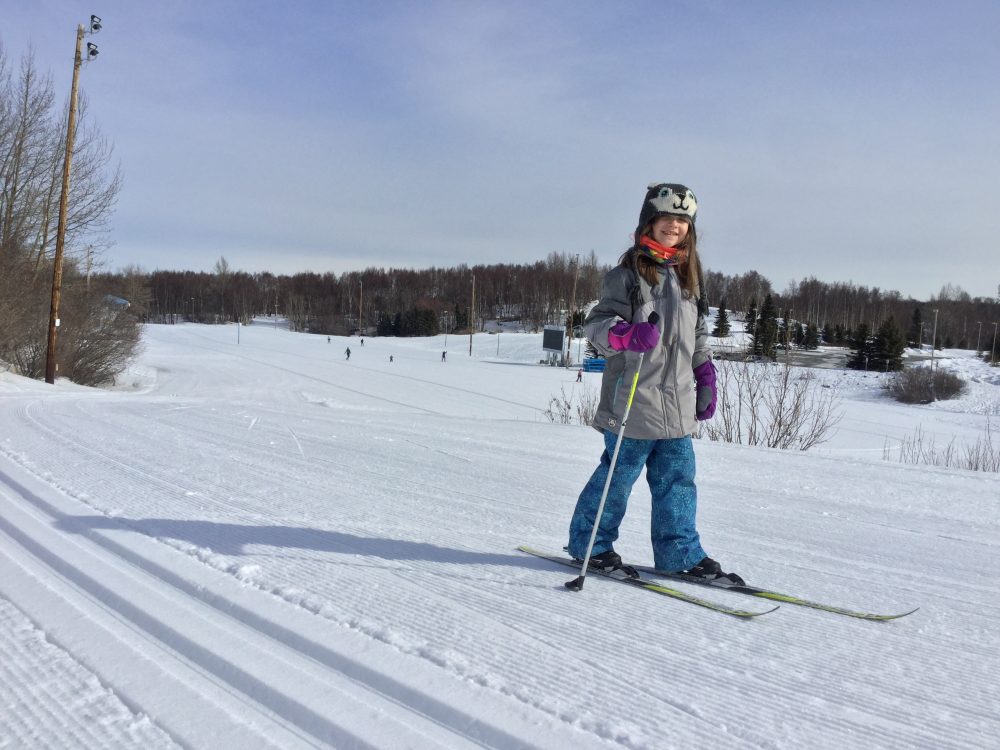
    Bridget Kentch, age 7, skis at Kincaid Park in Anchorage, Alaska, on April 8, 2020, while staying far away from everyone else save her immediate family. (photo: Gavin Kentch)
    Basically, everything in this picture is the Kincaid stadium, seen here in this view from April 2020 with the author’s daughter in the foreground. (photo: Gavin Kentch)

    Some people involved with high school skiing have raised to FasterSkier the specter of teams potentially carpooling from Anchorage out to the Valley, roughly an hour’s drive away. Indeed, the official state meet information form from the Mat-Su Ski Club states, “There will be no indoor facilities for teams. … If all athletes [from a school] are brought up to the venue via bus, athletes will need to use the bus as their warming area.” Moreover, travelling itself has some potential risk, as witness the athlete or athletes who contracted Covid while en route from this country to Finland for 2021 World Juniors, or Estle’s comments on this subject to FasterSkier.

    (The Mat-Su Valley has consistently had laxer regulations than the adjoining Municipality of Anchorage, and for nearly a year now has hosted events that were barred in Anchorage. This past weekend saw a statewide indoor hockey tournament in the same jurisdiction, despite the documented health risks of such an activity. Multiple statewide high school basketball tournaments are following suit in Valley gyms. The current case rate in the Mat-Su Borough, 36.4 cases per 100,000, is 2.5 times that of Anchorage, and nearly 3 times that of Fairbanks. It is, by a substantial margin, the highest case rate of any region of the state on the road system.)

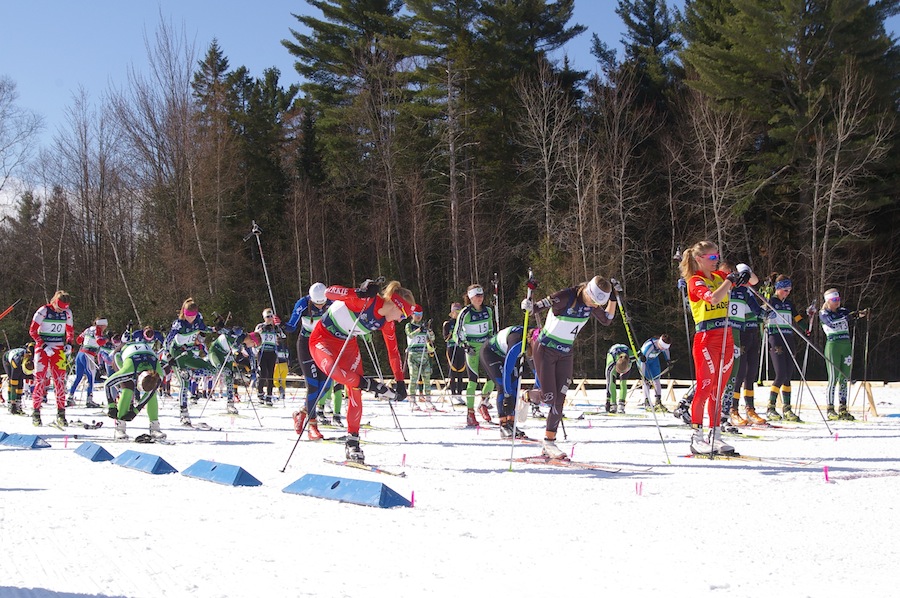
    The Lower 48 has also exhibited the patchwork effect of different regulations in different jurisdictions. In the Midwest, for example, hundreds of athletes from around the region raced in Houghton, Michigan, in early January, including many from Minnesota – at a time when gathering for group exercise was barred in Minnesota, and high school ski teams could not hold even outdoor practices. Regardless of which state’s policy was “right,” they were clearly quite different.
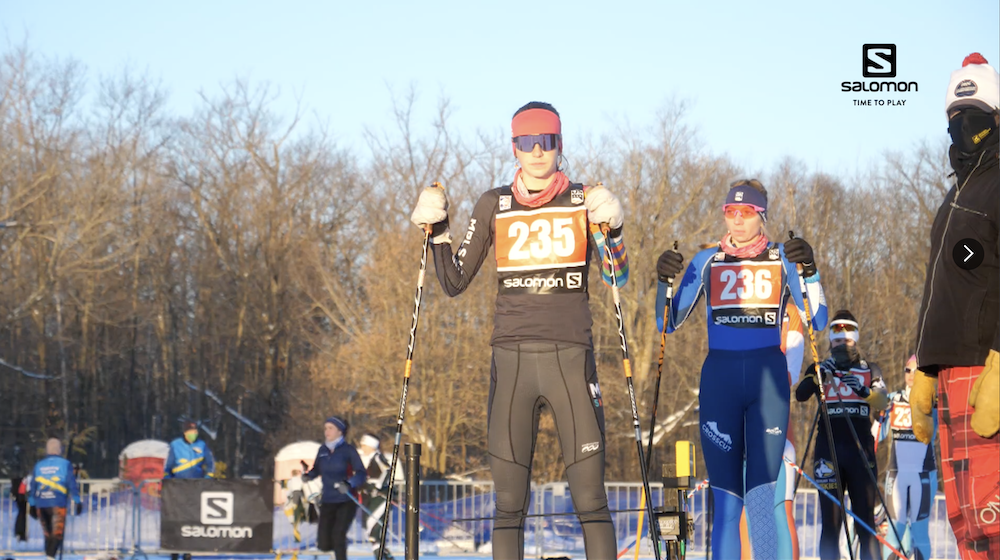
    Athletes line up for an interval-start race in Houghton in January 2021. (photo: Livestream screenshot)

    Underscoring the incentives involved with competitive races and team naming opportunities for aspiring young skiers, which even in this year could lead skiers to seek out high-level racing opportunities, not a single athlete racing in Houghton in early January qualified for World Juniors. The sole Midwestern athlete among the 30 skiers named to this year’s World Juniors/U23 teams “made the drive to Utah to take advantage of an opportunity to race” that weekend, SkinnySki wrote. She told SkinnySki, “the conditions were absolutely beautiful and I was happy with how well organized and Covid-safe the race was.”

    Perhaps also relevant, her 8th-place finish in Soho was good for USSA points of, in round numbers, 100, with a race penalty for the winner of 54. Eighth place in Houghton was a 121-point USSA result, with a race penalty of 63. Lower numbers are better, i.e., the Utah race had a more competitive field. The math may become particularly persuasive when presenting oneself as a domestic skier seeking discretionary start rights for European racing.

    (Caitlin Gregg, who won both Houghton races, was later given a World Cup start on the basis of “dominating competition in the Midwest and with her points profile from last season,” the Loppet Foundation wrote, though the Nové Město races were subsequently cancelled.)

    Later in the month, hundreds of athletes raced at Soldier Hollow in mid-January. The event was still called a “Super JNQ” – critics alleged that it was potentially rather a “superspreader JNQ” – even though there are no Junior National teams to qualify for this year. Athletes travelled broadly from throughout the American West for these races, with clubs based in Utah, Idaho, Montana, Colorado, Oregon, Wyoming, Washington, and California, plus Ontario, Canada, among others, represented in the results. (Athletes from multiple RMISA schools also competed, so add Alaska to the list.)
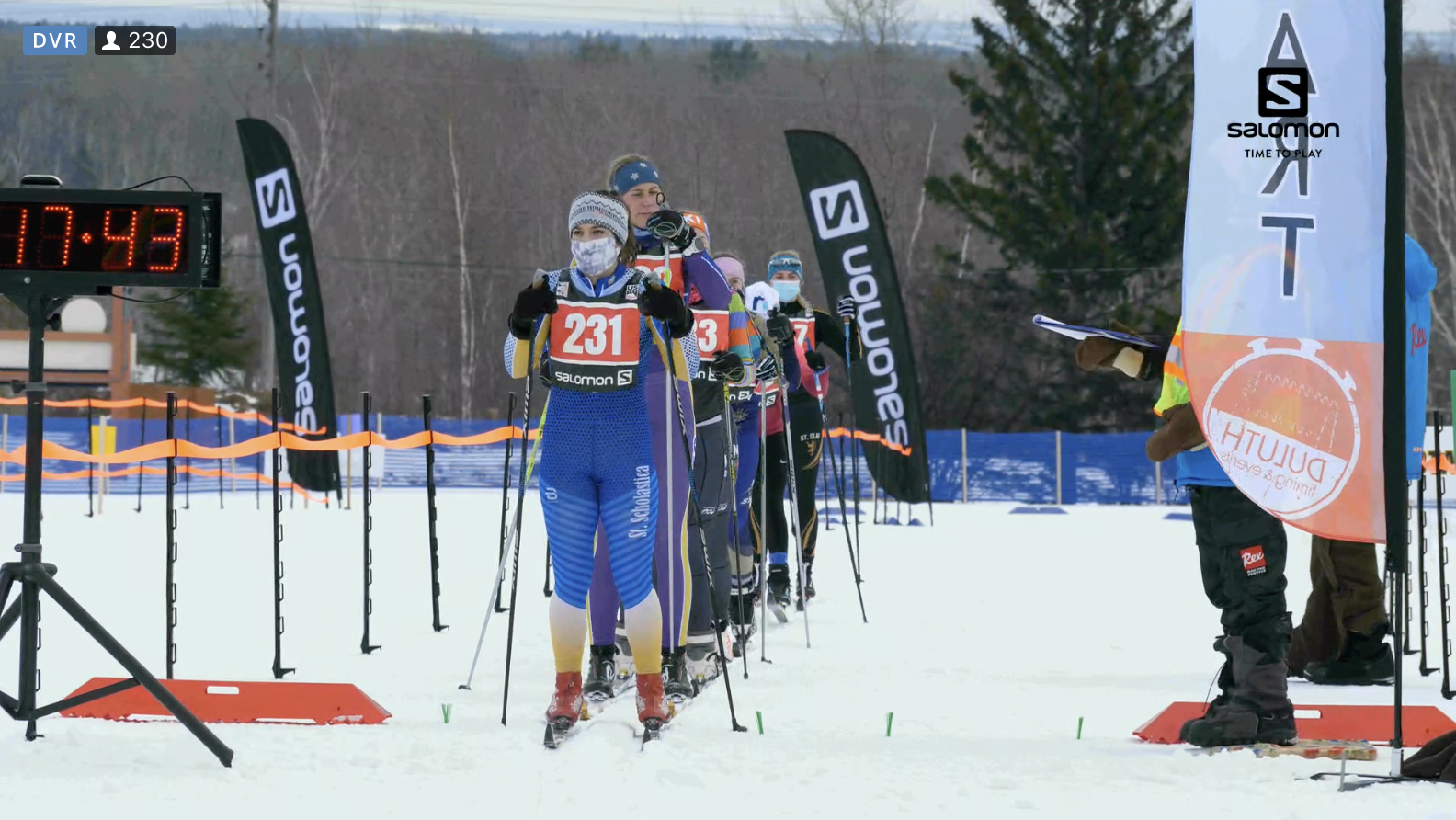
    Athletes line up for an interval-start race in Duluth in January 2021. (Photo: Livestream screenshot)

    And the following weekend, Minnesota, just a few weeks removed from a full-on bar on group outdoor exercise, was holding mass start racing at the Skinnyski Santa Solstice Race outside of Minneapolis.

    Meanwhile, the high school racing season continued in Anchorage with a steady stream of interval-start races, a decision mirrored in all Anchorage citizen’s races. The racing season in the Midwest proceeded in fits and starts, as different states cycled through different regulations, sometimes with interval-start races and sometimes with wave starts. In Vermont, athletes spent weeks doing unofficial time trials. For not the first time in this pandemic, different states’ restrictions led to different case numbers and different levels of permitted activity.

    So, what about the Birkie?

    Part two of this article series, coming soon, will examine the American Birkebeiner, and some of the considerations that have gone into the decision to go ahead with this year’s race, albeit in a significantly modified form. FasterSkier will set forth its interview with the race’s executive director, Ben Popp, in advance of the country’s largest ski race(s), currently scheduled to occur over five days starting on this Wednesday.

  • Kikkan Randall Joins NNF Board

    Kikkan Randall with her Olympic gold (Photo: NNF)

    (Press release)

    August 14, 2018 — The National Nordic Foundation, known as NNF, is pleased to announce the addition of Kikkan Randall to the Board of Directors. Kikkan, a 2018 U.S. Nordic Skiing Olympic gold medalist, joins Billy Demong, U.S. Nordic Combined Olympic gold medalist, and the NNF Board to lead the development of the next generation of U.S. nordic athletes and future gold medalists.

    “I can’t think of a better person to add to our Board,” said NNF President, Joey Caterinichio. “Kikkan is the epitome of community success in our nation. Kikkan developed from her community to the top of the world with support from the NNF along the way and gives back so much.”

    “I am thrilled to be joining the NNF Board,” said Kikkan Randall, “NNF’s support early in my career was crucial for getting access to international experience.  Now I look forward to sharing my experience with the NNF Board to support our upcoming nordic champions!”

    About the NNF

    The mission of the National Nordic Foundation is to support athletic excellence in developing nordic skiing at all levels in the United States. The NNF has funded over one million dollars to U.S. nordic skiing development initiatives through our Pillar Projects. More details on our programs can be found on our website: www.nnf.ski. Through the outstanding fundraising efforts of individual donors, clubs and among skiing communities, the NNF bridges financial barriers to increases access and development that otherwise wouldn’t exist for our top U.S. athletes. NNF funding directly supports athletes and training programs across the entire nation, clubs and divisions. Board Members include: Joey Caterinichio, Craig Ward, Billy Demong, Jenny Barba, Reid Lutter, Gunther Kern, Yuriy Guzev and Kikkan Randall.

  • Anchorage to Host 2018 L.L.Bean U.S. Cross Country Championships Jan. 3-8

    (Photo: Charlie Renfro)

    America’s top skiers hit Kincaid Park January 3-8

    ANCHORAGE, AK (Courtesy of U.S. Ski & Snowboard) – Top cross-country skiers from across America will compete for national titles, FIS Junior World Championship spots and potential Olympic berths at the 2018 L.L. Bean U.S. Cross Country Championships January 3-8. All events will take place at Kincaid Park. U.S. Ski & Snowboard will also carry a live stream of the events on its Facebook page (www.facebook.com/usskiandsnowboard/).

    Alaska is a hotbed for cross-country skiing and past U.S. Championships in Anchorage have attracted large fields. The Alaskan city most recently hosted the event in 2010. The U.S. Championships are being organized by the Nordic Skiing Association of Anchorage.

    The week’s competitions feature two freestyle and two classic events for both men and women. The top American in each race will be crowned national champion. Results from the freestyle races and the classic distance events will be used to determine the teams for the 2018 FIS Junior & U23 World Ski Championships in Goms, Switzerland January 28-February 3.

    “The U.S. Championships is a stop for our top domestic skiers seeking not just U.S. titles but spots on international teams,” said U.S. Ski & Snowboard Nordic Domestic Program Director Robert Lazzaroni. “Anchorage is an excellent venue as the event will capture the great enthusiasm we have for cross country skiing in Alaska.”

    “Anchorage has an amazing infrastructure for cross country skiing,” said organizing committee chair Joey Caterinichio. “Events such as the U.S. Cross Country Championships help keep the circle of cross country skiing alive and give our youth an atmosphere to thrive in at all levels of skiing and to witness the pinnacle of U.S. racing.”

    All races in Anchorage are also part of the 2017-18 SuperTour and points will count towards the overall SuperTour titles, Olympic Winter Games selection and international World Cup starts. The long distance and team championships will take place March 23-28 in Craftsbury, Vermont.

    While primary selection for the 2018 Olympic Cross Country Team will come from World Cup races, some final spots will be determined from results in Anchorage. The Olympic team nominations will be announced the week of January 23.

    More information on the 2018 L.L. Bean U.S. Cross Country Championships can be found at www.usskiandsnowboard.org and www.usnationals2018.com. For updates, also visit the event’s Facebook page at www.facebook.com/xcusnats2018/ .


    2018 L.L.Bean U.S. Cross Country Championships

    All races at Kincaid Park; schedule subject to change


    10 a.m.-2 p.m. Wednesday, January 3

    Men’s 15k freestyle

    Women’s 10k freestyle


    10 a.m.-4 p.m. Friday, January 5

    Men’s and women’s freestyle sprints


    10 a.m.-3 p.m. Sunday, January 7

    Men’s 30k classic mass start

    Women’s 20k classic mass start

    Junior men’s 10k classic mass start

    Junior women’s 5k classic mass start


    10 a.m.-4 p.m. Monday, January 8

    Men’s and women’s classic sprints


    Find a full schedule at www.anchoragenordicski.com/wp- content/uploads/2017/11/2018- US-Nationals-Event-Schedule- Coast.pdf.

  • For Alaska NCAA Skiing, ‘It’s time to move quickly’, Locals and Alumni React

    For Alaska NCAA Skiing, ‘It’s time to move quickly’, Locals and Alumni React

    Manon Locatelli of the University of Alaska Anchorage double poles out of the start of the 2015 Seawolf Invite at Kincaid Park in Anchorage, Alaska. (Photo: Sam Wasson Photography / http://portfolio.samwassonphotography.com/about)
    Manon Locatelli of the University of Alaska Anchorage double poles out of the start of the 2015 Seawolf Invite at Kincaid Park in Anchorage, Alaska. (Photo: Sam Wasson Photography)

    An outcome first broached as a possibility this spring became an all-too-concrete reality Thursday afternoon, when plummeting oil prices and a yawning state budget deficit led to the announcement that University of Alaska President Jim Johnsen was targeting nordic skiing for elimination, at both the University of Alaska Anchorage (UAA) and the University of Alaska Fairbanks (UAF), in a waiver request submitted to the NCAA. On Friday, the ski community and affected skiers continued to react.

    Financial background, or, how did we get here?

    As FasterSkier previously reported, the State of Alaska is dependent upon funds from a single source, oil revenue, to an extent unparalleled in any other state. Falling oil prices over the last two years have led to widespread budget deficits, layoffs and reductions of both state and private-sector employees (particularly in the oil and gas industry), and political recriminations over the failure to pass a balanced budget.

    When FasterSkier first reported on this story in May 2016, the price of oil was approximately $48 a barrel. At the close of trading on Thursday, oil was at $49.89 a barrel. At these prices, the State of Alaska faces a revenue shortfall equal to approximately two-thirds of its budget. Oil has not been over $100 a barrel in over two years.

    Alaska residents have not paid a state income tax since 1980. Although some communities have instituted local sales taxes, there is no statewide sales tax.

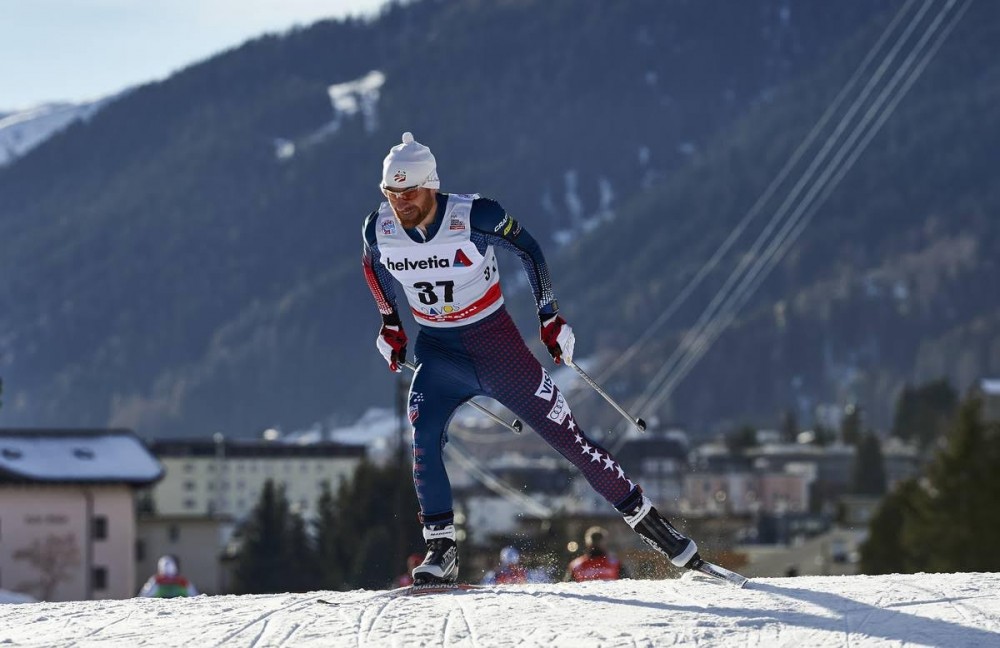
    Brian Gregg (Team Gregg/Madshus) on his way to 65th in the Davos World Cup 30 k freestyle on Saturday in Switzerland. (Photo: Madshus/NordicFocus)
    Brian Gregg (Team Gregg/Madshus) racing the Davos World Cup 30 k freestyle in Switzerland. (Photo: Madshus/NordicFocus)

    Alumni react

    Brian Gregg, currently one half of Team Gregg, came to UAA to ski in 2005. He later became a three-time SuperTour distance champion and a 2014 Olympian. When he was first asked, in May, if he would like to answer some questions about what UAA skiing had meant to him, Gregg promptly responded with a 600-word email titled, “UAA Ski Team, a vital part in my pathway to the Olympics.”

    Gregg took some time out from preparing for this winter’s first on-snow time trial at Frozen Thunder in Canmore, Alberta, to share some updated thoughts earlier on Friday. Gregg wrote to FasterSkier, “This is very disappointing news to me personally and to the entire skiing community. NCAA Skiing is a major asset in the development of cross-country skiers for our country. The future for skiing as an NCAA sport does not look good. I have seen the programs cut at Western State, University of Nevada Reno, Whitman College, Saint John’s University, College of St. Benedict, Gustavus Adolphus, [Macalaster], and now UAA and possibly UAF. The question now is who is next?”

    Gregg continued, with an eye to the future, “I also start to think about whether or not NCAA has a rule on the number of member school which must have programs in order for there to be an NCAA Championship. Currently the Central Division has only 5 Men’s programs and 6 women’s programs, several which don’t even have a Coach who is paid full time. I encourage everyone to be preemptive in showing the incredible value of our existing skiing programs to the administration, student body and community.”

    Sadie Bjornsen currently skis for Alaska Pacific University (APU) and is a member of the U.S. Ski Team (USST). But in 2009, she was a freshman for the UAA Seawolves and finished in the top five in five out of eight races and placed third overall in the classic race at NCAA Skiing Championships.

    “My year as a Seawolf was one of the most important ‘steps’ of my life,” Bjornsen wrote to FasterSkier on Friday. “I would have never been drawn to AK fresh out of high school, and discovered this incredible state. I see skiing as a big family with many functioning parts. By eliminating one integral part of the ski community, we are cutting off a strong piece of the family!”

    Even though Bjornsen moved down the street to APU after one year, she is quick to underscore the important role of the NCAA-affiliated UAA program for American cross-country skiing.

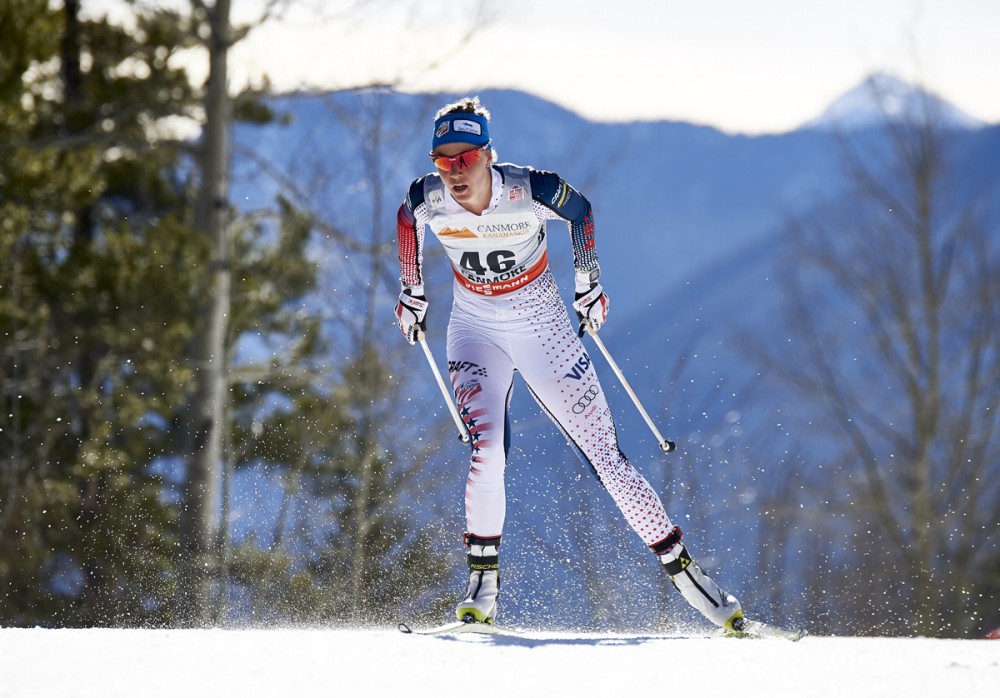
    U.S. ski team member, Sadie Bjornsen racing to a 17th overall in the women's10 k freestyle at Stage 7 of the Ski Tour Canada in Canmore, Alberta. (Photo: Fischer/NordicFocus)
    U.S. ski team member, Sadie Bjornsen racing to a 17th overall in the women’s10 k freestyle at Stage 7 of the Ski Tour Canada in Canmore, Alberta. (Photo: Fischer/NordicFocus)

    “I have always considered Alaska to be the best training for a cross country skier in the US,” Bjornsen wrote. “We have the perfect environment for training, including early snow in the fall, and late snow in the spring. I now race professionally, and am a student at Alaska Pacific University while racing World Cup. I see APU as providing the very best opportunity in the world for myself, but, I know this level is not designed for everyone. It is important to have options, and varied levels so that skiers can choose where they want to go, and have a path to where they are looking to reach. I would never give back that year of racing NCAA at UAA, a year that taught me so many lessons! It saddens me to know that won’t be available for everyone anymore!”

    Joey Caterinichio is a local. She attended West Anchorage High School, where in the 1980s she raced on the same ski team as future four-time Olympian Nina Kemppel and current U.S. Ski Team head coach Chris Grover. (Caterinichio herself would later travel to Sochi as nordic program manager for the USST.)

    After graduating from West High, Caterinichio originally pursued college skiing at St. Lawrence University in upstate New York. But after two years away, the lure of home brought her back to Anchorage, where she skied another two years for UAA.

    Caterinichio, now 46, still lives in Anchorage, where she runs a medical supply company and, with her husband, raises three children. She also runs local community ski training group Alaska Nordic Racing. Caterinichio has attended 20 Junior Nationals.

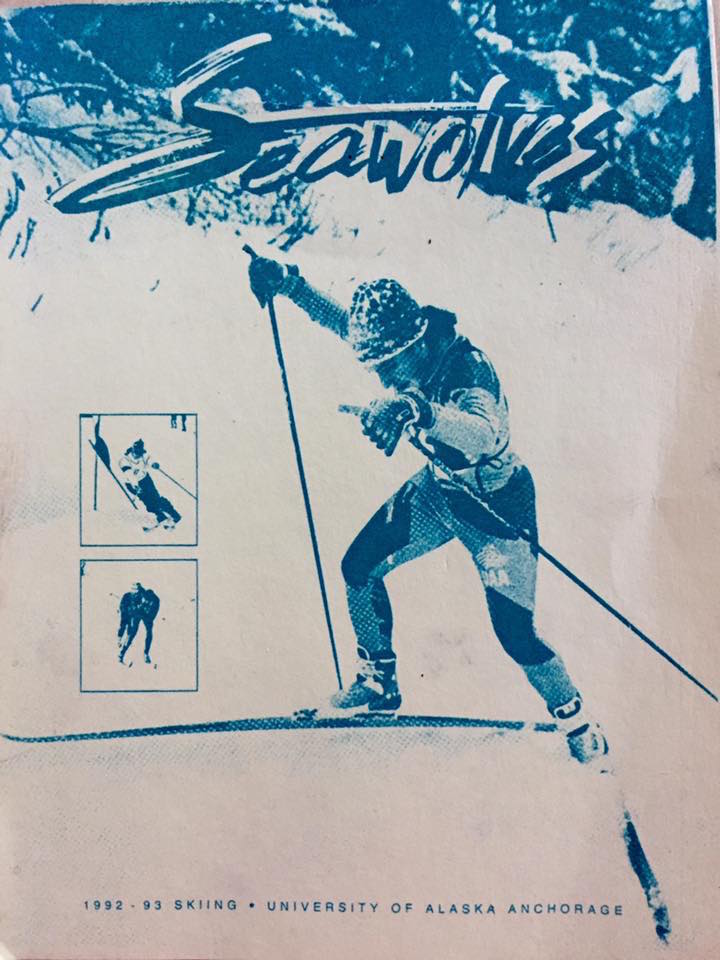
    Joey Caterinichio skiing for the University of Alaska Anchorage (UAA) Seawolves, as shown in the 1992-1993 Seawolves media guide. (Photo: courtesy Joey Caterinichio)
    Joey Caterinichio skiing for UAA, as shown in the 1992-1993 Seawolves media guide. (Courtesy photo)

    Caterinichio took to Facebook soon after the news hit Thursday afternoon. (Caterinichio gave FasterSkier permission to share her thoughts.) Posting a historic photo, showing her skiing in a suit she had designed herself, she wrote, “This is me featured on the cover of the Seawolves magazine representing skiing in 92-93. This same picture was featured in the Great Alaska Shootout booklets [a basketball tournament] which loses tons of money every year, yet we are not cutting basketball. The money UAA is saving by cutting these programs is pennies compared to the good they do for the community and the positive role models that move up here or stay here for college because of the sport. These same folks stay and give back to Alaska.”

    Reflecting on her personal history, Caterinichio continued, “Not only did I return from St. Lawrence to ski my last 2 years for UAA, I graduated with 2 degrees in science and I taught in the UAA Biology Department. With roots in this community, I stayed in Alaska. I own my own business, Employ others and In addition I have contributed thousands of hours to the sport of cross country skiing at the local level, national level and international level. There are others who chose this same path and who contribute hugely to this community. It’s not just about the sport. It’s about recruiting high quality community members to Alaska who stay and give back. Chasing these types of folks out of our state, cutting these sports in a time where the community is dying for positivity and crime is at its all time high! It’s time to think beyond the dollar. My give back alone for 25 years is an example of what could be lost. And on top of it this is ALASKA! We are a winter sport community. Come on UAA. As an alumni think global, think community!”

    In a follow-up phone conversation, Caterinichio noted, “I’m not going to stop with Facebook now … It’s time to move quickly – I don’t know if anything’s fixable right now, but it’s time to try.”

    Caterinichio clarified that while her goal was “to save skiing, of course,” she was also aiming “not to disrespect any of the other sports” at UAA. “I believe that all sports are important … and produce highly functional individuals for our community,” Caterinichio said.

    Other skiers react

    Holly Brooks is a two-time Olympian, recently retired from racing with the USST and APU. Brooks long ago put down roots in Anchorage, buying a house and recently opening a counseling, consulting and coaching practice.

    Brooks gave FasterSkier permission to share what she had posted on her personal Facebook page after hearing the news: “It seems a bit ironic that while … our presence (as a country) and success internationally is growing, options in the US for skiers to support and chase their dreams are shrinking. While the NCAA doesn’t represent everyone’s path it’s an undeniable and important part of the ski community at large. The loss [of] NCAA skiing in Alaska is a huge hit to the greater nordic ski family nationwide.”

    Holly Brooks (APU), following the Anchorage Tour at Kincaid Park on March 6, 2016. (Photo: Rob Whitney)
    Holly Brooks (APU), following the Anchorage Tour at Kincaid Park last March. (Photo: Rob Whitney)

    Brooks explained that she was hoping to channel her emotions over this recent news into something more positive: “Am I frustrated? Absolutely? Am I mad? You’d better believe it…. But I’ve decided that the best thing to do today is to channel my anger into something positive and that is to pitch in and support developing US skiers via the ‘Drive for 25.’ The National Nordic Foundation (NNF) … is an organization whose sole purpose is to help fund developing skiers. When I was invited to extend my stay on the World Cup to the tune of $140/day (for many months) the NNF pitched in to help. The Drive for 25 is the main fundraiser for NNF and the idea is ‘what if every ski fan in the United States donated $25 dollars – or more?’ By participating, D25 donors show that skiing matters and they are part of Team USA!”

    As of earlier this week, 62 donations for NNF’s Drive for 25 program had come from Alaska, trailing only Minnesota (69) and Utah (64).

    Kikkan Randall is a four-time Olympian, and a current member of APU and the USST. She did not ski for UAA, but as a lifelong Anchorage resident and prominent supporter of skiing and youth athletics, she feels strongly about the role of local college skiing in supporting the community.

    “I just think we’re going to miss out on some really big contributions to the community, our ski teams are all out there working with kids and helping to take care of trails,” Randall told a local television station. “I think the community is really going to take a hit.”

    How final is this?

    The finality of this decision arguably remained an open question as the dust settled on Thursday and Friday. Despite a statement in the Alaska Dispatch News (ADN), repeated in FasterSkier, that skiing at both UAA and UAF had been “targeted for elimination in a waiver request submitted to the NCAA,” there was hope in Fairbanks that the waiver request would not be approved, and so skiing would be saved at least at UAF.

    As UAF head nordic coach Nick Crawford wrote to FasterSkier late Thursday, “For UAF specifically, I don’t think skiing will be cut as I don’t think the NCAA will grant the waiver to the ‘10 sport minimum requirement.’ One of the NCAA’s core values is to provide sporting opportunities from athletes of many different sports and the 10 sport rule is in effect to protect small sports like skiing. It’s a slippery slope to allow Alaska to cut ‘less well known’ sports like skiing and indoor track to continue to fund their more popular sports,  If the NCAA grants this waiver, it sets a precedent to eliminate non-revenue generating sports across the country with fewer and fewer sports offerings and that is not a direction I think the NCAA wants to go in.”

    The 10-sport rule is contained in section 20.10.3(a)-(b) of the NCAA Division II Bylaws, which provides that “A member of Division II shall sponsor in Division II a minimum of” either five sports for each of men and women, or four sports for men and six for women.

    Crawford told the Fairbanks Daily News-Miner on Thursday, “I guess I’d say I’m confident that we’ll be here still. It seems like the 10-sport minimum is designed so that small sports like ours aren’t overridden by larger sports.”

    University of Alaska Fairbanks nordic skiers rollerskiing on campus last fall. (Photo: UAF)
    University of Alaska Fairbanks nordic skiers rollerskiing on campus last fall. (Photo: UAF)

    Current UAF skier Conner Truskowski expressed similar sentiments to his coach on Facebook, writing, “To clarify, as a student athlete at UAF, skiing has not yet been cut! The universities are submitting waiver to the NCAA to allow for an exception to the 10 sport rule. While things do look very dark for UAA skiing, the waiver will most likely not pass as the NCAA doesn’t really allow exceptions to the rules. Even if the waivers do pass, these programs won’t be cut until next year.”

    Truskowski continued, “This is a very dark time for collegiate skiing here in Alaska, but not all hope is lost. We are doing everything we can as athletes to fight for our program, and we can use all the help from the nationwide, and worldwide community we can get. Please help us all support Alaska skiing. Make it know[n] to the NCAA that there is strong opposition to this waiver, it will help us out immensely.”

    Three-hundred miles to the south, UAA officials seemed to express a greater sense of finality. As UAA Athletic Director Keith Hackett wrote in an official statement, “at the conclusion of the 2016-17 academic year, UAA Seawolf Athletics will be discontinuing our sponsorship of Men’s and Women’s Skiing and Men’s/Women’s Indoor Track and Field.”

    Hackett continued, “Should the NCAA Waiver request not be approved, we will take time to carefully consider which program would be reinstated.”

    This presumably means only one program would be reinstated, as opposed to multiple programs. This is because the NCAA waiver would take UAA from 13 teams down to nine. If the waiver were denied, UAA would need to field only the minimum of 10 teams to comply with section 20.10.3(a)-(b) of the NCAA Division II bylaws.

    Next steps and opportunities for advocacy

    As the ADN reported, “If the NCAA grants a waiver to the university, the Board of Regents would still have to approve the elimination of sports teams. If a decision by the NCAA is made in time, the regents will take up the issue at their next board meeting on Nov. 10-11 in Fairbanks.”

    The ADN continued, “No public comment will be allowed during that meeting. Instead, public testimony must be made by telephone on Monday from 4-6 p.m. The number to call is 1-866-726-0757.”

    Toby Schwoerer, a five-time All-American in skiing at UAA (plus a sixth time in cross-country running), wrote to FasterSkier that he “would like to see some coordinated effort to write emails to the 11 Board members” of the Board of Regents, linking to contact information for the individual members of the Board.

    The budget figures involved

    As Crawford, UAF’s head coach, wrote, “One consideration is that skiing is not one of the most expensive collegiate sports in our state. If the state truly wants to save money through sport reductions they would choose to eliminate one of the more expensive sports.”

    Crawford’s math seems to be correct. The data suggest that hockey is by far the single most expensive sport, and that skiing is somewhere in the lower middle in terms of overall team cost.

    The ADN, citing figures from UAA, has broken down the UAA sports teams’ total budget of $4.33 million for the 2017 fiscal year that began on July 1, 2016.

    University of Alaska Anchorage Seawolves logo (Photo: GoSeawolves.com)
    University of Alaska Anchorage Seawolves logo (Photo: GoSeawolves.com)

    Over 31 percent of that $4.33 million total, or $1.35 million, goes to one team, the men’s hockey team. (UAA has only a men’s hockey program.)

    The hockey team has had one winning season since 1993/1994.

    From 1985 through 2016, UAA skiing finished in the top 10 at NCAA Championships 31 times in 32 years.

    The next most costly programs are men’s and women’s basketball, at approximately $450,000 each. Both programs have enjoyed ample success; the women’s team reached the Division II national championship game in April 2016, losing to national champion Lubbock Christian.

    Men’s and women’s skiing are in the middle of the pack financially, at a cost of $280,000 for each of the men’s and women’s teams, or $560,000 total. The ski program costs somewhat less at UAF, $400,000 total, because UAF has only a nordic team and not an alpine team as well, and so has fewer athletes.

    The UAA athletics program as a whole finished eighth overall, out of approximately 300 teams with D-II athletics programs nationwide, in the 2015/2016 Directors’ Cup, a season-long competition across all Division II sports programs that awards points for a school’s performance in up to 14 sports. It was the highest overall finish in UAA history. Over one-tenth of the Seawolves’ points for their Directors’ Cup ranking, 63 out of 570.5, came from skiing.

    “We have developed an elite Division II program here,” Hackett told the ADN on Thursday. “This inhibits us in so many ways now. You reduce our teams and our budget, and it really impacts our ability to compete at the national level.”

    History repeats itself?

    Several of the major figures involved unfortunately have relevant experience in this vein.

    Hackett most recently held a comparable position at the University of Nevada, Reno. The Nevada ski team was defunded and discontinued under his tenure. The assistant nordic coach until shortly before the program was cut was UAA’s current head nordic coach Andrew Kastning.

    Kastning and his now wife, Calisa (Schouweiler) Kastning, moved to Whitman College, where Calisa was hired to coach the men’s and women’s nordic teams at the start of the 2007/2008 season. Fewer than two years later, the Whitman ski program was cut.

    Kastning previously told a local radio program that they had thought they would be safe moving to a ski program in Alaska.

    Recapping a lifespan

    Skiing began at UAA in 1977, near the end of the pipeline boom, and one year following the establishment of the Alaska Permanent Fund. The population of Anchorage would grow from 48,000 to 174,000 during the 1970s, reflecting the pipeline boom. The original 15 kilometers of trails at local ski area Kincaid Park had been laid out a few years earlier. The Italian skier Giorgio Di Centa, who won two gold medals at the 2006 Olympics, was 5 years old.

    March 1991    Bjorn Lasserud of Minneapolis at World Masters Championships at Kincaid Park in Anchorage.   Lasserud, winner of more National and World Masters championships than most people can count, is equally noted for his coaching and inspiration to countless others, to start and stay in Nordic skiing. Photo: Peter Hale
    March 1991: Bjorn Lasserud of Minneapolis at World Masters Championships at Kincaid Park in Anchorage. Lasserud won multiple national and World Masters championships. (Photo: Peter Hale)

    If, as appears likely, NCAA-affiliated skiing at UAA comes to an end following the 2016/2017 season, it will be an even 40 years old. It will have survived the first great Alaskan oil recession, of the mid-1980s, but not the second. The Alaska Permanent Fund will have become a political football.

    During the lifespan of UAA skiing, Kincaid hosted at least seven U.S. National Championships, five National Masters Championships, one Masters World Cup, and one World Cup weekend. (The World Cup was in March 1983. Gunde Svan won; Americans Tim Caldwell and Bill Koch placed second and third.) The 15 k of trails at Kincaid increased three- to four-fold, depending upon what you measure. Di Centa competed in his first FIS race in 1992, and his most recent, though probably not his last, in March 2016. The population of Anchorage is now approximately 300,000.

    UAA nordic skiers recorded six individual NCAA championships (plus another three for alpine skiers) in the program’s first 39 years. The program as a whole (both nordic and alpine combined) had, through last season, a highest finish at NCAA Championships of fourth, in 2009. From 1985 through 2016, UAA finished in the top ten at NCAA Championships 31 times in 32 years.

    Notable skiers who recorded All-American performances at UAA include, in chronological order, Dan Fleener, Urban Enkvist, Erik Flora, Frode Lillefjell, Lars Flora, Toby Schwoerer, Eric Strabel, Mandy Kaempf, Nicole DeYong, Brian Gregg, Andy Liebner, Sadie Bjornsen, Lex Treinen, and Erik Bjornsen. Gregg and both Bjornsen siblings would later ski on the 2014 U.S. Olympic Team.

    * This article has been edited to reflect the fact that Andrew Kastning was the assistant head coach at the University of Nevada, Reno, when the ski program was cut, not the head coach.

  • 2015/2016 U.S. SuperTour Schedule Finalized

    2015/2016 U.S. SuperTour Schedule Finalized

    The U.S. Ski and Snowboard Association (USSA) released the final version of its SuperTour (ST) calendar for the upcoming winter of 2015/2016, with a new stop in Sun Valley, Idaho, in early December as well as a mid-season East Coast visit to Lake Placid, N.Y., and Stowe, Vt.

    ussa supertour logoIn early January, U.S. Cross Country Championships will be held for the second-straight year in Houghton, Mich., (per Houghton’s two-year bid), and in late March, SuperTour Finals and U.S. Distance Nationals are coming to Craftsbury, Vt.

    Joey Caterinichio, the outgoing USSA nordic manager who is working with new nordic director Robert Lazzaroni on 2015/2016 logistics and scheduling, explained in an email that the SuperTour is split into three periods to match the International Ski Federation (FIS) calendar and award World Cup starts accordingly.

    “This year we have rotated from Bozeman [Montana] to Sun Valley but will look at a continued rotation between the sites to give sites a break and include new ones,” Caterinichio wrote of the Period I hosts.

    Venues are chosen each year amongst coaches at the USSA Spring Congress, she explained.

    “With weather and needing snow, you can see why we start West and move East,” she continued. “There are no other sites that can really host Period I.  West or Alaska are in the rotation, US Nationals is usually Period II and then move across to Central and East for Period III.”

    Regions submit their picks for host venues, and over the last year, Caterinichio worked with the New England Nordic Ski Association (NENSA) to secure Mount Van Hoevenberg in Lake Placid and Trapp Family Lodge in Stowe. Those races, Jan. 29-31 and Feb. 5-6, respectively, coincide with larger events, such as a Junior Nationals qualifier, college race and Eastern Series, she explained.

    “Hosting just a SuperTour is tough as the numbers are not there,” she added. “By working with the regions to place a SuperTour in an existing series, we increase the field.  It also allows great head-to-head competition with juniors, college-aged athletes and our top seniors therefore increasing competition for all. Moving the ST around helps stimulate top-level racing within the US and helps the areas.”

    Period II and III SuperTours are shared on a two-year basis, and this marks the second year for the domestic series in the East (it was previously in the Midwest, or Central, for two years).

    “The goal will be to move back to Central then back to East,” Caterinichio wrote.

    At the same time, scheduling remains open to all sites across the regions in case a venue is unable to host a given event. Additionally, USSA tries to schedule SuperTours in the same area on back-to-back weekends to cut down on travel and expenses.

    Bottom line: West is the perennial host for Period I and could potentially rotate with Alaska.  The coaches and regions help decide any large changes, and in the near future, there is no intention of changing West Yellowstone, according to Caterinichio.

    West is the perennial host for Period I and could potentially rotate with Alaska, although, “there is no intention of changing West Yellowstone,” according to Caterinichio. U.S. nationals kick off Period II, the American Birkebeiner 52-kilometer marathon is a stand-alone event in late February that remains unchanged annually, and the East and Central rotate as Period III hosts.

    Schedule below. Click here for the PDF.

    2015-2016 SuperTour Schedule


  • Caterinichio to Leave Post as USSA Nordic Manager

    Caterinichio to Leave Post as USSA Nordic Manager

    USSA Nordic Manager Joey Caterinichio (l) speaks to USSA Vice President of Communications Tom Kelly about the 2014 USSA Congress. (Photo: USSANetwork/Youtube)
    USSA Nordic Manager Joey Caterinichio (l) speaks to USSA Vice President of Communications Tom Kelly about the 2014 USSA Congress. (Photo: USSANetwork/Youtube)

    Joey Caterinichio, a longtime figure in the cross-country skiing community, announced last month that she plans to step down as nordic manager at the United States Ski and Snowboard Association (USSA).

    Beginning the position in 2012 after John Farra left to join the U.S. Olympic Committee as high-performance director of the Paralympic Nordic Program, Caterinichio has served as the manager of one of the largest branches of the organization for roughly three years.

    Caterinichio’s journey to USSA began long before her time as an administrator. A native of Anchorage, Alaska, she raced throughout high school, college and beyond. She then became a coach and founder of the Alaska Nordic Racing in Anchorage. Over her years of training young athletes, she attended 18 junior nationals as a team leader or head coach for the Alaska region. Caterinichio also began working with Kikkan Randall when the three-time World Cup sprint champion was a U14 and on multiple Team Alaska trips.

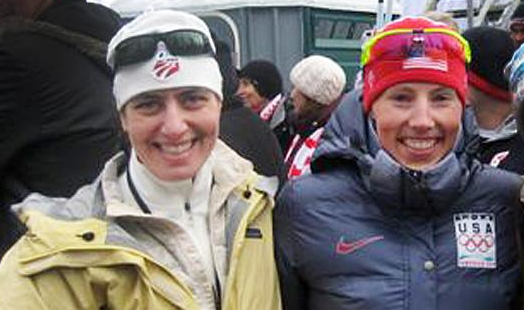
    Joey Caterinichio poses at the 2010 Olympic Winter Games with Kikkan Randall, a former junior athlete of Caterinichio. The USSA Nordic Manager announced that she plans to leave her position when a replacement can be found. (Photo: USSA)
    Joey Caterinichio (l) at the 2010 Olympic Winter Games with Kikkan Randall, one of her former junior athletes. The USSA nordic manager announced that she plans to leave her position when a replacement can be found. (Photo: USSA)

    Caterinichio was also the chief organizer for U.S. nationals when they were held in Anchorage in 2009 and 2010.

    When Caterinichio took over the managerial role in 2012, she oversaw several projects regarding reorganization of USSA’s nordic branch — from updating websites and contacts to easing scheduling procedures. During her time as manager, Caterinichio went to two World Championships and the 2014 Olympics, where she served as an organizer and general support.

    During her time on the international circuit, she observed what it took to be the best in the world and brought what she learned to her work with domestic skiing. According to Caterinichio, the link between the U.S. Ski Team (USST) athletes racing in Europe and the athletes competing on home soil is crucial in maintaining a healthy ski racing community.

    “It’s super important that our domestic athletes have some sort of tangible reach to the international athletes,” she said in a phone interview. “Between criteria, our SuperTour, sending athletes to the World Cup, and making domestic skiers part of World Championship teams, I feel that it was one of the best parts of the jobs. “

    Over the years in the position, Caterinichio said that her main focus has been to lay the groundwork for clubs around the country to develop strong athletes.

    “There’s been a lot of work by the clubs that’s forwarded skiing in the United States over the years,” Caterinichio said. “I came from the field, so with the trust of my colleagues I came into USSA trying to help make USSA have a better light in what it can offer folks. That was my goal.”

    Caterinichio pointed to the new membership policy recently announced by USSA as a project that aims to make USSA and skiing in the United States more accessible.

    “It’s going to make cross-country bigger,” she said pointing to decreased membership fees. “Right now there’s roughly a thousand members in cross-country. Now we’ve lowered the prices so much that our goal is 10,000 members.

    “The task was to increase membership within USSA and do it in conjunction with working with everyone instead of alienating them,” she added. “A national governing body is important for any athlete to belong to. It happens in swimming, it happens in hockey.”

    Caterinichio said that one of the main reasons for her departure was USSA’s need for someone based in Park City. While she has performed her work from Alaska for the past three years, the new membership program will require someone on-site. According to her, her replacement may require a team rather than an individual.

    In a USSA press release, Executive Vice President of Athletics Luke Bodensteiner explained that the  position for nordic domestic program director will be based at USSA’s Center of Excellence in Park City. The association is seeking applicants “with a deep background in cross country ski racing and with strong marketing and administrative skills. It’s anticipated that the position will start in Park City by mid to late summer,” the release stated.

    “This is a substantially different job than Joey has undertaken, incorporating many of her responsibilities, but additionally focusing on club education/development, growth of participation in USSA and its programs, and expanded external relations,” Bodensteiner wrote in an email to FasterSkier. “The team manager-related activities that were a large part of Joey’s job are not included in this position, and will be handled separately.”
    As of mid-July, the position was closed while USSA evaluated candidates. “But pending the outcome of
    that we’d be happy to continue to evaluate additional applicants if we don’t fill the job in this round,” Bodensteiner wrote.

    Caterinichio plans to stay in her current position until there is a sufficient replacement. Once her role has been filled, she will stay with USSA in a volunteer capacity.

    “I’d love to continue to work with USSA and consult,” she said, adding that she’ll also continue working with the National Nordic Foundation (NNF) and possibly work in a business venture unrelated to skiing.

    “Caterinichio has worked to increase the quality level of USSA cross country events and played a strategic role in managing the membership task force the past year,” the USSA press release stated. “She will remain on during the transition and will continue to be engaged with the USSA as she has for over two decades.”

  • In Their Eyes: A Norwegian Junior Team’s International Exchange with Sugar Bowl

    In Their Eyes: A Norwegian Junior Team’s International Exchange with Sugar Bowl

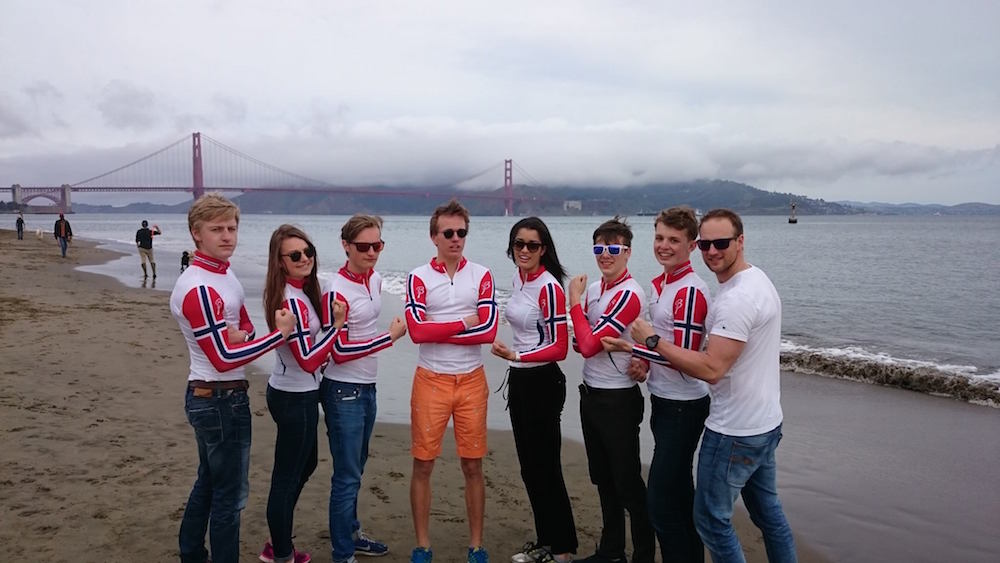
    A team photo of the Heming IL junior contingent that competed at 2015 Junior Nationals in Truckee, Calif.., taken in front of Golden Gate Bridge in San Francisco. (Courtesy photo)
    A team photo of the Heming IL junior contingent that competed at 2015 Junior Nationals in Truckee, Calif.., taken in front of Golden Gate Bridge in San Francisco. (Photo: Björn Ilsemann)

    Note: The following was submitted by Björn Ilsemann, a coach with the Norwegian College of Elite Sports and Heming IL. If you have a team camp or training recap that you’d like to share, please email info@fasterskier.com. 

    ***

    Earlier this year, U.S. junior nordic skiers from Sugar Bowl Academy competed in the Norwegian Cup and Sprint Junior Nationals, and then welcomed a team from the Oslo ski club of Heming IL to U.S. Junior Nationals in Truckee/Tahoe, Calif.

    It was at the U16 camp last summer when Sugar Bowl Academy coach Martin Benes and Björn Ilsemann from the Norwegian College of Elite Sports and the ski club of Heming decided to do an exchange to race both countries’ junior nationals (JNs). Martin had a lot of experience travelling and racing, both as a skier and as a coach. Björn had done similar exchanges before, leading a group to JNs in Fairbanks in 2013 and hosting several groups of US skiers for Norwegian JNs.

    The plan was easy: The participating  skiers from Sugar Bowl would live with families and train with Heming skiers for a week, and then race a Norwegian Cup weekend and the Junior Sprint Nationals. The Norwegians from Heming would then come over to Truckee and race USJNs.

    During the earlier winter months, the dream became a plan, and in the first week of February, five excited skiers and two coaches embarked a plane heading to Oslo. After being picked up at the airport, the group of skiers from Sugar Bowl and coach Caitlin Bernstein were quickly becoming familiar with how Norwegian skiers in Oslo live and train. Hundreds of kilometers of lit tracks, a five minute subway ride to freshly-groomed tracks and hot chocolate at cabins far out in the backcountry became daily business.

    After an easy Monday recovering from the inevitable jetlag, Björn took the group on three-hour-plus ski in the backcountry on Tuesday morning, followed by a strength and coordination training with his group of skiers at the Norwegian College of Elite Sports. After a quick shower, we headed to town for pizza and the arrival of the last two members of the group who came in from the J1 trip in Sweden, Hannah Halvorsen and coach Martin Benes.

    On Wednesday, the gang did an easy morning ski in the World Cup tracks at Holmenkollen, and met with the junior skiers from Heming for a short-but-hard sprint training session in the evening. Thursday was easy again, the U.S. kids watched a race of the Biathlon World Cup at Holmenkollen and did a rest ski before the Norwegian Cup races on Friday.

    The venue of the Norwegian Cup was pretty close to Oslo — about an hour by car. While the skiers and coaches were shuttled early that morning, you could feel the excitement build up in everybody. But still, no one had expected such a circus of countless wax trailers, big tents and wax cabins, and the intimidating number of close to 1,000 participating junior skiers.

    No one had expected such a circus of countless wax trailers, big tents and wax cabins, and the intimidating number of close to 1,000 participating junior skiers.

    The tracks were really hard and the competition was even harder, but the athletes from Sugar Bowl put up a good fight! To be fair, jetlag and maybe a little nervousness can be blamed a little bit, and the skiers finished in the second halves of their fields. A well-organized race and a lot of help from the wax techs from Heming made the day a good experience anyway.

    Hannah Halvorsen (Sugar Bowl Academy) winning the final at Norwegian Junior Sprint Nationals at Nes Skianlegg in Norway. (Photo: Björn Ilsemann)
    Hannah Halvorsen (Sugar Bowl Academy) winning the freestyle-sprint final at Norwegian Junior Sprint Nationals at Nes Skianlegg in Norway. (Photo: Björn Ilsemann)

    On Saturday, the Norwegian Junior Sprint Nationals went underway. With good skis again from the Heming techs, the Sugar Bowl athletes did an amazing job racing and were close to advancing from the prologue.

    Halvorsen, who didn’t race on Friday, didn’t seem very nervous or intimidated by the strong field and managed to win the prologue by two seconds! She didn’t stop there, dominating her quarterfinal and semifinal as well. In the end she stormed into the finish and crashed over the line to win the Norwegian Junior Sprint Nationals!

    On Sunday we raced a classic distance, again as part of the Norwegian Cup. The gang was still excited and had a great day at the venue, which was crowned by a sixth-place finish by Hannah!

    Everyone among the U.S. and the Norwegian skiers who participated in this first part of the project agreed that the trip was a great success. The athletes from Sugar Bowl Academy really got a taste of how it is to live a World Cup-athlete’s routine, and I’m sure they want more of that!

    Almost exactly a month later, the Norwegian skiers and coaches packed their bags and set out on the 20-hour journey to USJNs. With a van crammed full of skis and a joyful gang of seven skiers we drove on highways five-times bigger than at home, but managed to arrive safely but late at night at Truckee.

    With a van crammed full of skis and a joyful gang of seven skiers we drove on highways five-times bigger than at home.

    After having slept way too little, as we felt, we skied our first time on West Coast-snow on Tuesday. The plan was to acclimate to altitude (at home we ski at sea level) and the heat (it was over 25 degrees Celsius warmer than in Norway), and to ski easy with some tiny intervals. That worked nicely, and we felt very welcome by absolutely everybody.
    We considered the first distance race of the JNs on Wednesday as “too dangerous to race hard” in terms of altitude, and decided to ski in a Level 2-3 pace and just do what feels right. All of the skiers felt good, and we had great skis thanks to the help of the Far West test team and our “local,” Martin Benes.

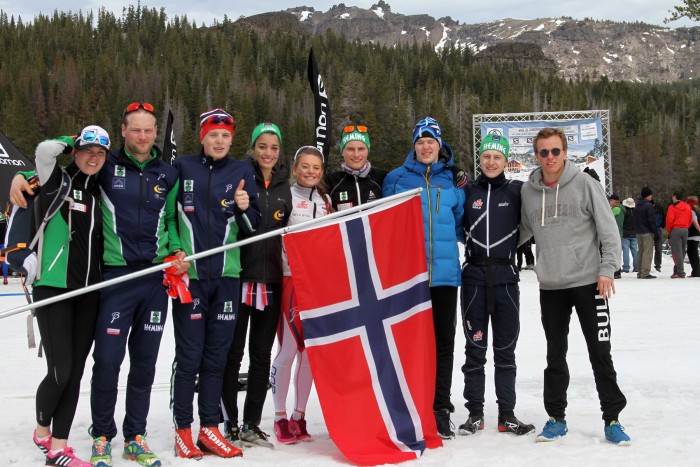
    A Norwegian team photo from 2015 U.S. Junior Nationals in Truckee, Calif., taken after the relay. (Photo: Petter Anderssen)
    A Norwegian team photo from 2015 U.S. Junior Nationals in Truckee, Calif., taken after the relay. (Photo: Petter Anderssen)

    Thursday was easy again, with intervals a little harder than Level 3 and close to a 5 k race pace. The Norwegian athletes used the evening to shop and discover the local food, while the coaches did a presentation on how Norwegian skiers progress from junior to senior skiing, followed by an interesting discussion. The evening ended with a big feast of Mexican food and fun at one of the parents’ houses.

    Friday was the day of the mass start race. The Norwegians had good skis and skied in the front part of the field for the two first loops. Then the altitude and heat took its toll, and one of the Norwegian skiers had to quit and even seek medical attention. The others plowed on, and finished on first and seventh in the U18 field. For the U18 girls, our sole competitor that day Ellinor Høgberg put up a good fight against the U.S. girls, and finished seventh in a really strong field.

    On Saturday, relay day arrived. We gave our best and raced hard, but the U.S. skiers were too strong and we finished sixth for both the U18 boys and the U20 girls.

    Maybe that was because my skiers were already looking forward to the banquet? The evening came, and everybody enjoyed the food and the talks with fellow skiers and new friends.

    The trip home went well, and after some days with jetlag we were back on our skis and racing again. Every single one of my skiers, including us coaches, will remember the trip as an experience for life.

    Every single one of my skiers, including us coaches, will remember the trip as an experience for life. 

    We have to thank Martin Benes and Caitlin Bernstein from Sugar Bowl, as well as all the parents and skiers who participated and helped with this project. Special thanks go to Bryan Fish from USSA and James Southam from NNF, for all your help and support! We also have to thank Joey Caterinichio from USSA for making things work and the discussion, the organizing committee at JNs for letting us participate, and August Teague from Far West for invaluable help and advice in the wax cabin.

    In the end, we want to give a big thank you to U.S. skiing for having us over, for skiing with us and for showing us how much joy and pleasure skiing gives you. Thanks also to Sugar Bowl for coming to Norway, and especially to Hannah for kicking [butt] while you were over here!

    The Norwegian junior team at 2015 U.S. Junior Nationals in downtown Truckee, Calif. (Photo: Ellinor Høgberg)
    The Norwegian junior team at 2015 U.S. Junior Nationals in downtown Truckee, Calif. (Photo: Ellinor Høgberg)
  • For Some Countries, World University Games Offers Bragging Rights; For University of Wyoming, It’s the Trip of a Lifetime

    For Some Countries, World University Games Offers Bragging Rights; For University of Wyoming, It’s the Trip of a Lifetime

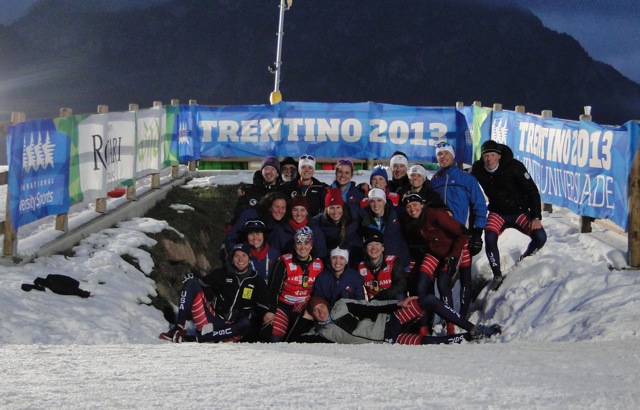
    The University of Wyoming ski team at World University Games in Trentino, Italy, in December 2013. Photo: UW Ski Team.
    The University of Wyoming ski team at World University Games in Trentino, Italy, in December 2013. Photo: UW Ski Team.

    The University of Wyoming has a unique ski team. Competing in the U.S. Collegiate Ski Association (USCSA) but also as an affiliate member of the Rocky Mountain Intercollegiate Ski Association (RMISA), the Western division of NCAA skiing, the team bridges a lot of ground.

    Their roster boasts skiers who competed at Junior Nationals in high school. It also includes athletes who had never skied before college. The squad is run not only as a sports team, but as a college course with an integrated curriculum for which athletes receive grades and credits. When it comes time for team selection, most spots are based on speed but a few are based on “Steamboat Points”, named after the university mascot and consisting of GPA, volunteer work, and practice attendance, among others.

    Oh, and one more thing: the team will be representing the United States at the World University Games in January, its third such trip. This year the competitions will be held in Slovakia in late January. Olympians and World Cup athletes will likely be in attendance; past podium finishers include Justyna Kowalczyk, Nikolay Chebotko, Maxim Vylegzhanin, Yulia Tchekaleva, Bettina Gruber, and Baptiste Gros.

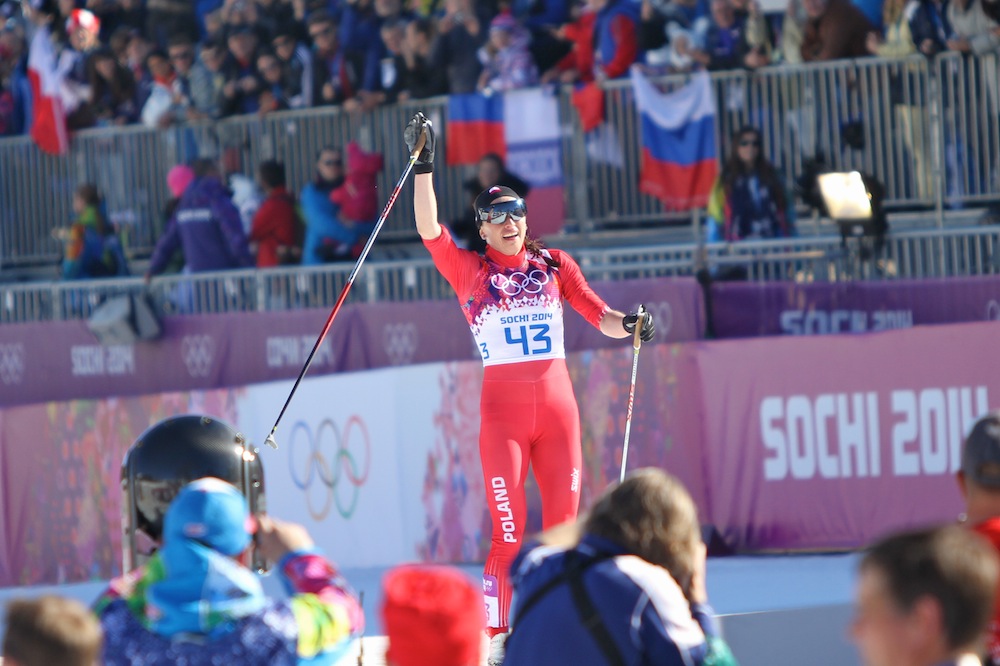
    Poland's Justyna Kowalczyk used a sweep of World University Games races as preparation before becoming one of the most sucessful skiers of the 2000's - for example here after winning gold in the 10 k classic individual start at the 2014 Olympics in Sochi, Russia.
    Poland’s Justyna Kowalczyk used a sweep of World University Games races in 2007 as preparation before becoming one of the most sucessful skiers of the last decade – for example here after winning gold in the 10 k classic individual start at the 2014 Olympics in Sochi, Russia.

    “Every year we don’t expect to be asked to do it again,” said Christi Boggs, one of the team’s co-coaches. “We assume that at some point some forces will come together and we won’t be asked. And that’s fine – we’ll do it when we have the opportunity, and when we don’t, we’ll do something else.”

    UW has won four men’s national titles since 2006 and six women’s titles since 2003. Boggs believes that their success at USCSA nationals is what prompted the United States International University Sports Federation (US-IUSF) to offer them the spot. (The United States Olympic Committee used to manage World University Games trips and selection, but abruptly cut all funding for it just before the 2009 Games).

    But when they reach the world stage, things go to a whole different level.

    “It’s a very interesting field because last year we literally had people who made Olympic teams racing,” Boggs said. “The Russians use this as a ‘B’ team competition, so they send their B team, which is freaking fast. They’re not really students, they just get someone to sign a form… Interestingly enough, the level of competition is actually not as high as the western RMISA competition. The FIS points are really similar.”

    Boggs isn’t quite honest about that. Last year the top Western NCAA skiers went to the Universiade, and while some did well, they didn’t win. Instead the results sheet was scattered with names like Michaeil Semenov of Belarus, whose 17th-place finish in the 50 k at the Olympics was one spot ahead of Petter Northug – and beating all of the North American entrants. Or Oeyre Silje Slind, who later that season finished fifth in the 30 k at Norwegian national championships – beating Heidi Weng in a sprint finish.

    UW athletes rarely break the top 50 and are minutes behind the winners.

    “You see some of them go to these games and get pummelled,” Boggs admitted. “Some of them, they’re not doing very well. But it inspires them to be better. Or it makes them think, if I get better, I could actually do this too. We’ve seen an incredible amount of that.”

    They do improve. Few racers do the trip twice, but William Via, for instance, received FIS points over 100 points lower at the 2013 games in Trentino than he had at the 2011 games in Erzurum, Turkey.

    Times and numbers don’t tell the full story of UW at the games.

    “Racing is one of the greatest joys in my life and to be racing internationally has been a dream of mine for years now,” team member Sam Wiswell wrote on the team blog last season. “[Here] I am, competing against some of the best in the world.”

    “The chances that I have been given overwhelm me,” wrote teammate Elise Sulser, who finished 49th in the 5 k and later won an individual title at USCSA National Championships. “I can only hope I can have the courage to take full advantage of the impacts, and end up completely spent in a gasping heap on the finish line knowing that the job was done fully well. Being content in knowing that I have nothing left to give is the best feeling in the world. Collisions, impacts, chances: make the most of the moments you’re given.”

    As Boggs pointed out, the difference between RMISA and the University Games is the depth of the field: aside from Russia, there are many countries who do send actual students. Against those teams, UW can compete, and the experience is very rewarding.

    The start of one of the World University Games races in Trentino. Photo: UW Ski Team.
    The start of one of the World University Games races in Trentino. Photo: UW Ski Team.

    Australia sends its national team, for example – and according to Boggs, some of her skiers can hang with them.

    “We compete clearly not at the World Cup level because we’re just not there,” she said. “But we compete with the other teams who are full-time students.”

    Sierra Jech, a USCSA national champion who aspires to continue skiing after college, said that the experience helps her, and others, do better in their races back in the U.S.

    “Once of the kids of that team is someone who started skiing in college,” she said. “I know he was extremely nervous… It’s more helpful in the NCAA races that we go to. The ones where just hanging on is hard. I’m more excited for them now than stressed out and nervous.”

    Boggs and her co-coach Rachel Watson say that they can watch their athletes grow before their very eyes at the Games.

    “It’s entirely life-shaping,” Watson said. “Increased poise, an ability to handle stressful situations, maturity, and definitely changes in the way they approach what would be a more stressful race at home – it no longer seems so stressful. It changes perspective.”

    Who Makes the Decisions?

    According to Boggs, the trip costs about $3500 per person. Part of that is airfare, and part goes to BTI – a trip company contracted by the US-IUSF to arrange everything for the teams going to the Games.

    And therein lies the rub for other college athletes who might like to attend: who can organize a trip where the money is due more than six months ahead of time?

    Most countries have some sort of selection criteria and send their fastest skiers who are registered students. The event is on par with the competition level of World Junior Championships or U23 World Championships (even more so in biathlon, where an actual senior World Championships medalist hit the podium; few North Americans compete because biathlon is not a college sport).

    Two-time NCAA champion Rune Oedegaard (CU, middle) finished 8th in the 10 k skate and 5th in the 30 k classic representing Norway at the 2013 Universiade; the American skiers he competes against in college races can't attend the championships.
    Two-time NCAA champion Rune Oedegaard (CU, middle) finished 8th in the 10 k skate and 5th in the 30 k classic representing Norway at the 2013 Universiade; the American skiers he competes against in college races can’t attend the championships.

    A number of European skiers who race at U.S. colleges always attend, as do the fastest students from Scandinavia, France, and Germany; Canadian skiers have sometimes spent time at a National Training Center or competed at age-level World Championships events before. But for American skiers of a similar caliber, the phrase “World University Games” probably isn’t even on the radar.

    It wasn’t always so, and some college coaches are interested in sending athletes. Last year, most of the Denver University team attended, with Europeans representing their own countries and one American athlete traveling with UW. And coaches have tried to pull something together.

    But the initial fee required by BTI presents a challenge. Athletes are likely not chosen months in advance, and there’s no organizing body to pay ahead of time and manage cash flow from competitors who commit come winter.

    “[Michigan Tech coach] Joe Haggenmiller led a few of us into looking hard at access to the World University Games,” Dartmouth College women’s coach Cami Thompson wrote in an e-mail. “We met a few times and talked to the U.S. Ski and Snowboard Association (USSA) and the National Nordic Foundation (NNF) about helping with the trip.  The issue is that the travel company… wanted $10K up front in early summer. As a loosely-knit group of college programs, we don’t have access to that money and while NNF was willing to work with us to try and figure it out – in the end it was time sensitive and just didn’t happen.”

    Contacted over e-mail, USSA Nordic Program Manager Joey Caterinichio said that her organization would be happy to have higher-caliber U.S. athletes go, but that USSA had no say in the decision-making process. She couldn’t remember the name of the US-IUSF or BTI.

    “It’s simple,” she wrote. “It’s not a USSA managed event. He who can pay the deposit by a certain date wins. There is no criteria.”

    Caterinichio explained that she had been involved in trying to draft selection criteria for a team made up of top NCAA skiers, but like Thompson, said that the deal just fell through.

    However, Thompson suggested that USSA was less than 100% supportive of a World University Games trip.

    “USSA is reluctant to support it if it means some top athletes choosing that over U23 Champs,” she wrote.

    Regardless of the many reasons that a top-level team doesn’t attend the Games, it means the U.S. is missing a valuable development opportunity. For a country that frequently laments a lack of international experience for its skiers, and the long time it might take some athletes to get used to racing in Europe, that seems like a loss.

    “I would certainly support any athletes who were interested in going, if it made sense from an athletic/financial standpoint,” Thompson wrote.

    Lifelong Experience

    Nobody at UW says that paying the fees to BTI is easy. The team receives some money from the university because the trip is run as a class and can thus receive funding as a study-abroad type trip. The rest of it comes from hours and hours of fundraising and volunteer work.

    But they can do it, so, as Caterinichio says, they get to go.

    And that might be perfect. Fierce competition is not the only focus of the University Games. The university federation (FISU) which organizes summer and winter Universiades has this as its philosophy:

    “The FISU (International University Sports Federation) was formed within university institutions in order to promote sports values and encourage sports practice in harmony with and complementary to the university spirit. Promoting sports values means encouraging friendship, fraternity, fair-play, perseverance, integrity, cooperation and application amongst students, who one day will have responsibilities and even key positions in politics, the economy, culture and industry. As allies or competitors, perhaps even as antagonists, these men and women will have learned how to collaborate and deal with every eventuality, whilst respecting the ethical code enshrined in these values. Promoting sports values and sports practice also implies giving a new dimension to the university spirit in study, research, and discipline, through the strong affirmation of the full humanist development of the individual and of society at large. This development is not just intellectual, but also moral and physical.”

    In that sense, the UW team is a genius fit for the event. For instance, the co-coaches’ decision to make the trip into a class fulfills many of those goals.

    Excerpt from the UW Ski Team’s Course Descriptions for 2014 Universiade
    Purpose/need/justification of project:
    In January 2015, the Nordic Ski Team at the University of Wyoming will attend the World University Games (WUG) in !trbské Pleso, Slovakia. The host country had only one year to prepare for this large-scale competition including accommodations, food, and transportation for over 1800 athletes, delegation members, and spectators.[1] Large sporting events like WUG have major impacts including: changes to the local economy, carbon emissions, increased waste generation, and personal impacts on community members. [2] These impacts all sum to create a “footprint” at both the local and global levels. This project as a whole aims to provide an analysis on each of these individual impacts and to examine our team’s footprint at WUG by taking environmental, societal, and economic perspectives.

    “We also have a class because we feel like it makes the experience a lot richer, and makes them consider things a lot more if they are not just ski racing, but they’re also involved in some curriculum,” Boggs said.

    She was careful to say that much of the actual work involved in the class is done before or after the trip itself, because the skiers do focus on racing when they are at the event.

    But some activities, like blogging and journaling, actually help them focus their energies.

    “Last year we had a class as well, and we just had a blog and focused on journaling during the event,” Jech said. “That really spurred us to want to do more. It was definitely beneficial.”

    And the trip provides a very unique experience, one that Watson and Boggs say is so important that they’ve decided to keep doing international trips even after the point if/when they are no longer asked to do the World University Games.

    “We’re taken people to the Games that have never been on planes, or have never been out of Wyoming, or have certainly never been to Europe, ever,” Boggs said. “That kind of experience is huge for young people.”

    Ultimately, Boggs and Watson hope that many of their athletes will stay involved in sport. They have seen results: when they travel to races inside and outside of Wyoming, they see many alumni either racing or coaching.

    The trip to World University Games helps with that.

    “It definitely made me realize that it’s possible to keep skiing and keep improving, even if it’s – college seems like the end for a lot of skiers,” Jech concluded. “This is definitely an event that inspires me to keep skiing. And I know that inspires other people to keep pushing, and to become coaches.”

  • USSA Coaches’ Symposium Registration Info

    national xc coaches education symposium

     2013 National XC Coaches’ Education Symposium 

    September, 27-29 2013

    • Begins: 1:00 PM, September 27
    • Ends: Noon, September 29

    Location: Center of Excellence, Park City, UT

    Keynote Speakers:

    • Guri K. Hetland
    • Alberto Salazar
    • Jack Roach

    Biographies


    Cost: $300.00. Please register early and secure your space.

    Deadline for payment: September 10, 2013

    • USSA Coaches License Required
    • Limit of 60 coaches
    • Preference given to Level 100 certified coaches

    Lodging: Park City Marriott

    • Call for reservations: (800) 234-9003
    • Ask for special USSA rate:  $89.00 plus tax night for two queen beds


    All registered coaches will receive a US Ski Team Back Pack 

  • Part of the Team, Part III: Female Coaches’ Impact on Teenage Skiers

    Part of the Team, Part III: Female Coaches’ Impact on Teenage Skiers

    Scottie Eliassen giving a pre-race pep talk to one of her athletes. (Photo: Midge Eliassen)
    Scottie Eliassen (l), coach of the Ford Sayre Nordic Club in Hanover, N.H., gives a pre-race pep talk to one of her athletes. (Photo: Midge Eliassen)

    Editor’s note: This is the third installment in a four-part series on female nordic coaches in the U.S. In Part I, two-time Olympic U.S. skier Nancy Fiddler introduced herself, Part II took a look at several influential female collegiate coaches, and Part III delves into female coaching in the junior pipeline. Part IV will explore women leading grassroots efforts across the country.

    ***

    America! Land of the free, home of many sports! As a parent, I know all about the athletic choices kids have; my daughter cross-country and alpine skied, played soccer, did ballet, Irish danced, and rode horses for many years. Life is crazy busy for most American kids and the parents who shuttle them around.

    I am going to go out on a limb here and say that most of the successful cross-country skiers in the U.S. come from a multi-sport background. I went through high school playing varsity field hockey and lacrosse and was a diver on the swim team. I never trained during the summer for any of my sports, working instead at a summer camp teaching swimming and canoeing.

    I went to college and played hockey and lacrosse, but graduated with a Bachelor’s degree and a passion for skiing. How did I end up learning to ski and race in college? At the time, there was no pool at Bates, and the nordic team was recruiting, so I gave it a try. Yes, I gained a high degree of athleticism doing other sports, and this helped me in my skiing, but this is not the U.S. Ski and Snowboard Association’s recommended pipeline!

    The scenario is different today. Yes, kids are still involved in multiple sports at a young age, but collegiate and elite skiers ultimately picked nordic at some point out of a vast menu of fun athletic endeavors. Focusing on one sport means giving another sport a lesser role or dropping it entirely. These decisions can be agonizing.
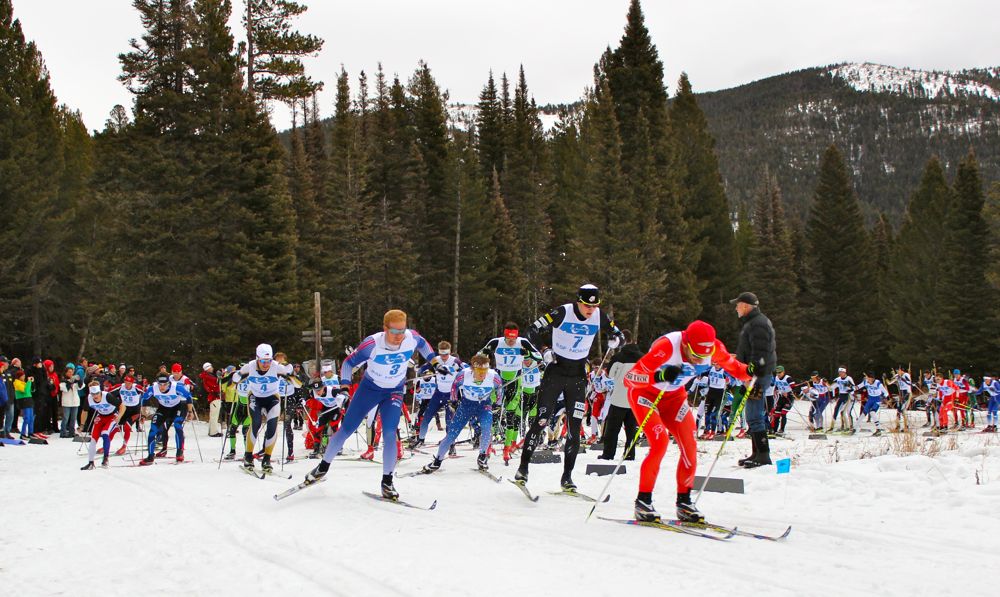
    Successful nordic skiers typically begin to focus on skiing around age 15 or 16. By then, ski training requires a significant amount of time and energy for teenagers. The sport becomes year-round and is increasingly specific. Many good cross-country skiers also excel at other sports, but end up skiing because it is fun and their friends do it. They choose to do ridiculously hard workouts in all kinds of weather because they love the sport and the culture attached to it.

    Part III of this series takes a look at female coaches who work with U18 and U16 athletes, the kids who are in the process of choosing cross-country skiing over other sports. These coaches are involved with juniors at a critical point in their development. Much happens during this time: technique refinement, conditioning, coordination during growth spurts, more frequent racing, equipment acquisition and maintenance, and more. Skiing takes on a new level of commitment for these kids.

    It becomes part of a coach’s job to lead kids to skiing and help them love it and choose to pursue it. Ten female club level coaches weighed in via an email survey about their coaching careers. These dedicated women are part of the team who make skiing attractive, fun, and rewarding for junior skiers around the country.

    Female Coaches: Roots of Community and Family

    Go to the Olympics or to a World Cup race and take a look at the athlete-support system. Every team has a swarm of coaches and service staff to meet the athletes’ every need. With few exceptions, coaching at the international level in cross-country skiing is a male-dominated field.

    Are female coaches coaching closer to home by choice?

    “I see myself right where I am: working in a community-based program to share the sport and prepare athletes to take it to any level they choose – whether it be local, regional, national, or international,” wrote Scottie Eliasson, who coaches the Ford Sayre Nordic Club in Hanover, N.H.

    Community-based programs, whether they are clubs or school teams, are the backbone of nordic skiing in the US. Eliasson has committed 21 years to coaching at Ford Sayre, a program with more than 100 athletes and 30 coaches.

    Club programs are attractive to female coaches on many levels. For starters, it’s a foot in the door of coaching. Ashley McQueen, who skied as a junior in the Sun Valley Ski Education Foundation, explained that her coaches and nordic skiing in general “had a huge impact on how I grew up. I really wanted to have an influence like that. Rick [Kapala] offered me a coaching job as a way for me to get in my training and to make some money over the summers, and I really enjoyed it. When he called to offer me a position on the staff, I jumped at the opportunity.”

    Methow Valley biathlon coach Betsy Devin Smith giving some guidance at practice. (Photo: Kristen Smith/Methow Valley Photography)
    Methow Valley biathlon coach Betsy Devin Smith giving some guidance at practice. (Photo: Kristen Smith/Methow Valley Photography)

    Lots of coaches who double as moms don’t want to travel outside the U.S. while their kids are young.

    The Methow Valley Nordic Team in Winthrop, Wash., has a stronghold of female coaches. Leslie Hall, Laura McCabe and Betsy Smith have been holding down the fort in the Methow Valley for nearly two decades. All three women are moms with children who are or have been involved in the program. Being able to coach in the program her own two kids are in is important to Hall, who sees her job as Mom as top priority.

    A three-time Olympian who competed in as many Junior World Championships and five World Championships, Hall explained she never had any goals to coach at the international level.

    “I will coach locally on some level until my kids are out of high school, so probably another 7 years or so,” she wrote of her coaching plan. “I hope to coach at Junior Nationals and to do my best to inspire lots of kids to commit to skiing.”

    Susan “Poppet” Boswell has been coaching skiing for 19 years and found her dream job at Stratton Mountain School [SMS] in Vermont. After two years of working with the U16 skiers, she now holds a position as a Winter Term Coach working with U14 athletes. She likes this arrangement, as it allows her more time at home with her family. Boswell’s 14-year-old son will start his first year at SMS this fall.

    Many female coaches have careers outside of skiing. Club programs offer flexibility and the opportunity to work with kids in the outdoors, which appeals to some women who work “regular jobs.”

    Smith juggles a career as a veterinarian and sheep rancher with her biathlon coaching. Eliasson works full time at the medical school at Dartmouth.

    Margaret Maher, who heads the New York Ski Educational Foundation nordic program in Lake Placid, N.Y., works per-diem at Adirondack Medical Center as an exercise specialist and is also in nursing school. Alison Deines-Sehnert, who recently stepped down from her position as nordic director of the Jackson Hole Ski Club, worked as a bookkeeper, a caretaker, and office coordinator for a heli-ski operation. Boswell owns a company that does computer mapping.

    U.S. Ski and Snowboard Association [USSA] Nordic Program Director Joey Caterinichio has come through the entire system of nordic skiing in the US. As an athlete, she made five trips to Junior Nationals and races at three NCAA Championships. She started coaching high-school skiers and went on to form Alaska Nordic Racing in Anchorage with her husband. She coached there and through 17 Junior Nationals until moving to her present position with USSA last year. Caterinichio has three children under 10, and all the years she was coaching, she also worked in medical sales.

    Although female coaches may not be front and center on the international stage, they are in the wings, behind the curtains and working for the team in school and club programs around the country.

    Eliasson sees it like this: “I feel that I am directly making a difference locally and regionally. Indirectly, I see our club as an integral part of the strengthening club network that is helping make a difference nationally and in the US’s international results.”

    Boswell feels she is part of the big picture of skiing in the U.S. “I’m a small person, and I work with small kids, but I have a high level of experience and education that I bring to my skiers, who in turn bring it to the table and raise the bar for everyone,” she wrote.

    Club Programs: The Infrastructure of U.S. Skiing and a Good Place to Grow Up

    “Sports keep kids out of trouble, pushes them to be disciplined and healthy while tackling dreams that they only have a short time to achieve. Everybody should do sports. I don’t care which one. Skiing of course is my favorite but kids need to be involved and active.” — Caterinichio

    Joey Caterinichio, shown here at the 2010 Olympic Winter Games with Kikkan Randall, has been named nordic program manager for the USSA. Photo: USSA.
    Before taking on the position of USSA nordic program manager, Joey Caterinichio (l) poses for a photo with U.S. Ski Team veteran Kikkan Randall at the 2010 Olympics in Vancouver, B.C. (Photo: USSA)

    Nordic clubs are growing around the country and are staffed by legions of full and part-time male and female coaches. Most clubs offer ski programs for juniors from 7 years and up and often engage entire families.

    Coaches who work with the U16 and U18 age groups are spending quality time with athletes in the process of growing up. Coaches become role models and mentors for the teenagers they work with and thus, very important figures in their lives. Strong relationships are created on the ski trails and in the wax rooms.

    “I love the relationships with the athletes,” McQueen wrote. “I get to work with such great individuals and watch them grow from little 13/14 year old kids into strong and confident adults.”

    Deines-Sehnert enjoys working with kids and helping them achieve “not results, but their inner goals,” she wrote. “Watching kids stand up straighter because they are proud of their accomplishments – that’s what I love.”

    The role of a club coach is a fine balance of taskmaster and nurturer. Cross-country ski racing is one of the toughest sports out there. How do coaches keep kids from quitting when the pain is too much to bear, the results too disappointing, or their will to do the same drill one more time is gone?

    After five years on the SVSEF Gold Team, Nicole De Yong has been coaching Sun Valley juniors for a year. She has quickly figured out that having a good rapport with the athletes is essential to gaining their trust. “Playing, joking, having fun from a friendship standpoint is as important as having the ability to get down to business when necessary,” she said.

    Ski racing boils down to complete commitment and the ability to take risks. None of this is possible without trust; trust in your preparation, trust in your equipment, and trust in the coaches who lead you. Skiing at the highest level requires these elements and belief in oneself and their coaching system. Fostering this confidence is part of a coach’s job and far exceeds the teaching of technique and the waxing of skis.

    Skiers entering the U20 bracket are often leaving home for the first time to either go to college or to pursue their skiing goals in a new setting. This is the time when nordic athletes make the decision to continue in the sport or to follow a new life path. The time spent training and racing during their high school years has prepared them for anything.

    According to Eliasson, the foundation of success in sports or anything in life boil down to “resilience, adaptability, independence, responsibility, and the capacity to prioritize competing demands,” she wrote. “Many of our athletes continue on to college ski teams, and feedback from the athletes and from their college coaches indicates that they are well-prepared for the demands placed on student-athletes. We hear from parents and athletes many years later that experiences in Ford Sayre have a lasting positive impact.”

    Sharing the Dream

    “My job is a lot more than just coaching, as I deal with all the bureaucratic stuff and organizing everything. My favorite part is the one on one interaction with the skiers and helping them to find the excitement and passion of committing to a great sport.” — Leslie Hall, Methow Valley nordic program director

    The qualifications required to coach skiing might include the USSA Level 100 certification, waxing knowledge, basic physiology, and an understanding of skate and classic techniques. These identifiable skills are important, but the essential qualification is not easily measured and not always readily apparent. Every good ski coach has it. Passion does not come from a clinic or a book on ski training.

    Many nordic coaches are deeply connected to the sport by means of personal experience. That does not mean that anyone who has ski raced is automatically a great coach; technical and waxing expertise can be acquired through education and practice, but the ability to channel passion and to communicate it to others is a gift.

    Head of the NYSEF nordic program, Margaret Maher on course at the 2012 Junior Nationals at Soldier Hollow in Midway, Utah. (Courtesy photo)
    Head of the NYSEF nordic program, Margaret Maher on course at the 2012 Junior Nationals at Soldier Hollow in Midway, Utah. (Courtesy photo)

    Everyone gets involved with ski coaching in different ways. Maher grew up cross-country skiing and coaching is her way of sharing her love of the sport.

    “Since high school, I knew at some point I would want to coach,” she wrote. “My dad, mom, and grandmother were all PE/health teachers: I guess athletic teaching is in my blood. I certainly wasn’t ready to leave the sport after college … but I was not ready to be a full-time ski racer. Coaching was the next natural step.”

    An eight-time Vermont state champion and two-time Junior Nationals winner, Maher turned her experiences she as a junior and in college (she made two USSA J1 Scando Cup Teams and raced four years in college) into a successful coaching career.

    Maher started skiing with the Mountain Top Bill Koch Club in Chittenden, Vt.,, which she called “family oriented.” She feels fortunate to have been coached by Mike Gallagher at Rutland High School and also credited her college coach at the University of New Hampshire, Cory Schwartz.

    An assistant coach at Sun Valley, McQueen uses her personal experience to reach out to juniors in the program she grew up with. “I was shy as a kid, and I think that going through the process of overcoming my shyness and insecurities helps me se how fear and insecurity affects some of the athletes I work with,” she wrote.

    Another accomplished junior and world-class nordic athlete, Hall also cites her mentors as contributing to her passion for skiing and coaching. “I have been influenced my whole life by so many great coaches,” she explained. “Of course, Torbjorn Karlsen probably had the biggest role, and also Martha Rockwell. Laura McCabe encouraged me to be involved and I have drawn from [sister] Cami’s experiences at Dartmouth.”

    Some coaches have stumbled into their passion for coaching. Such is the case with Caterinichio, who was returning from college and skiing on her own when she got “the call.” She volunteered at Chugiak High School, where her younger brother Gus and sister Nina were on the team.

    “When all the coaches quit the program I was left with a team of 50 athletes. I took over the team and never stopped coaching,” she explained. Caterinichio ran with her opportunity, literally all the way to the USSA Nordic Program Director job. On the way, she doubled the size of the high school program, which eventually became Alaska Nordic Racing.

    Not all respected coaches come straight out of long ski careers beginning with the Bill Koch league or have ever raced on the World Cup circuit. A diverse background can lend itself well to coaching – case in point, Janice Sibilia, competitive programs director for New England Nordic Ski Association. Sibilia has a competitive background in several sports. She was an equestrian and national-level cyclist and didn’t get into skiing until she began cross training for cycling.

    An injury brought Sibilia to ski coaching. “During my downtime from racing a local high school asked me to help out,” she explained. “It was a big group of over 50 high school skiers and a lot of fun. I learned a lot (being an athlete is very different than coaching!) and was grateful for the opportunity. It really sparked my interest in coaching and since then I have worked really hard to improve my coaching skills and knowledge.”

    Sibilia became a student of nordic skiing by going to every clinic she could find. She shadowed other coaches at camps and training sessions and cites the USSA L100 certification as an important building block in her education. Besides drawing on her background as a cyclist, Sibilia has learned invaluable lessons about communication from a favorite equestrian clinician. She says, “I think you can learn things in places you least expect it.”

    Ford Sayre coach Scottie Eliassen debriefing with her athletes post-race. (Photo: Midge Eliassen)
    Ford Sayre coach Scottie Eliassen debriefing with her athletes post-race. (Photo: Midge Eliassen)

    Eliasson got started in her coaching career by volunteering to help with the local Bill Koch League (BKL) program “to share the sport with others.” Eliasson was a BKL participant herself, and continued racing through college. Like Sibilia, Eliasson has drawn from other sports, such as rowing, to develop her coaching style.

    “My experiences coxing girls in high school and men in college helped shape who I am as a coach today,” Eliasson wrote. “My high school crew coaches remain some of my most important coaching mentors.”

    The biathlon head coach at Methow Valley, Smith started as an alpine skier and racer, then jumped into nordic coaching.

    “When our son was 9 years old we wanted to keep him [cross-country] skiing so we started a biathlon program to complement our local nordic team and I have been coaching that now for 11 years,” she explained. “I hope to be a great junior coach. I hope to develop a biathlon program here that is a model for other Nordic programs in the US on how to incorporate biathlon into their xc teams.”

    It’s All About Balance

    “I wish there was at least one female coach on the US [Ski] Team because I think it would actually help all the coaches. Women bring a whole different set of strengths and perspectives to the table and I think that would help both the coaches and the athletes. I guess I’d say women are not on par (with men), but I think they are getting there. It will take time.” — Boswell

    Stratton Mountain School coach Poppet Boswell with her son Russell, who won 2012 Silver Fox Trot in Hanover, N.H., at age 12. (Courtesy photo)
    Stratton Mountain School coach Poppet Boswell with her son Russell, who won 2012 Silver Fox Trot in Hanover, N.H., at age 12. (Courtesy photo)

    Co-ed coaching can be especially challenging, as boys and girls bring different personalities, quirks, and styles to any ski program. Each gender has its own special needs and methods during a group workout, before a race, and just messing around after practice. Coaches see this and work to take care of everyone and to create team balance.

    In coaching, men and women generate different kinds of energy as well. “Gosh, the two male coaches I work with would be bored out of their skulls if it was just the two of them working together as guys,” Boswell wrote. “Life is so much more fun with a mix of sexes bringing different ideas and styles to the table.”

    She pointed out that balance on the coaching staff is necessary to effectively deal with both genders. For example, a female coach can be helpful when a specific “girly” question or situation comes up. Often, girls feel more comfortable confiding in a female mentor.

    There are times when male coaches can’t do what females can. For instance, a 200-pound male coach may not be the best kick-wax tester for a 100-pound female athlete. According to Hall, “it is important to have strong female role models for those young ladies out there. Also for wax testing, we often find that we can pick a kick wax more accurately for the girls than the male coaches can.”

    “It’s important for all athletes (girls and boys) to see men and women in all manner of coaching roles, and to have same- and opposite-sex role models,” wrote Eliasson.

    Times are changing!

    All the female coaches who participated in this discussion are in agreement that women are slowly making headway into the world of ski coaching.

    “In my first decade of coaching, there were certainly times/places in which I felt less valued/respected than the male coaches with similar experience – and there were JN trips on which I was the only female coach,” Eliasson wrote. “In my second decade of coaching, as more and more women have entered the regional and national coaching ranks, I haven’t felt discrimination from other coaches.”

    While women are not dropping their jobs as mothers or professionals in other fields to coach on the World Cup circuit, they are very present at the club level. They’re in the trenches, working with the adolescent skiers who might become the next generation of Olympic champions. They are working with the athletes who could become the next generation of coaches.

    Deines-Sehnert is a great example of female coaches making a difference. Male and female coaches are singing the same song, it just sounds better with the different voices and reaches more ears.

    “I am a cog in the wheel,” she wrote. “I think the most important thing that each of us can do is make our programs the best that they can, raising the bar locally will only help us grow nationally.”

    As Caterinichio sums it up, “It is extremely important to have female coaches. I look around and am excited to see more and more female faces.”

    “I am not sure we will ever have the same numbers as men,” she added. “It is hard to juggle career, motherhood, and coaching, but it is important that we try. (We must support) women in coaching roles, officiating roles, leadership roles.”

  • SuperTour Calendar Redesigned at USSA Congress

    SuperTour Calendar Redesigned at USSA Congress

    The men's SuperTour field leaves the starting line in Bozeman, Mont., December 2012.
    The men’s SuperTour field leaves the starting line in Bozeman, Mont., December 2012.

    The annual U.S. Ski & Snowboard Association Congress concluded in Park City, Utah, last weekend, bringing a few changes to the American race calendar and rulebook for the 2013-2014 season. USSA Nordic Manager Joey Caterinichio called the outcomes from the meetings the result of a productive three days — “one of our better congresses” — with country-wide participation from coaches of all competitive levels.

    “I had a lot of compliments from coaches,” Caterinichio said. “They said there’s been times they wanted to be gone after the second day, but they felt it was so productive that every single one of them stayed the whole meeting. It was just a really productive meeting, which is hard to do sometimes.”

    One of the coaches in attendance was Brian Tate, director of the Steamboat Springs Winter Sports Club in Steamboat Springs, Colo. Tate sits on the Junior National Oversight Committee and he agreed that it was a constructive Congress.

    “As a club director I make the effort to attend the USSA Congress to hear the plans and strategy our sport’s governing body and national team have in store for the next year and beyond,” Tate said.

    “As a club coach, I do not have a ton of contact with the U.S. Ski Team coaching staff, so the Congress is an opportunity to hear the state of affairs, so to speak. They do a good job highlighting the past season and shed light onto the coming season.”


    Revamped National Race Calendar

    The biggest item on the agenda last week was the SuperTour calendar, which has been reworked to make more sense “athletically and developmentally.” The schedule now breaks down into two-week racing blocks that alternate with breaks to allow athletes to go home and recover or race regionally.

    The geographic distribution of races is also designed to be more even amongst regions, so that athletes within each have equal opportunity to compete against higher caliber skiers. The calendar is arranged two years out to allow coaches more time to prepare their travel schedules.

    “We spent a long time going over the philosophy of what we want the calendar to look like in the future,” Caterinichio said. “The whole nation had input on this calendar. It seems small, but it’s huge.”

    Before this year, Caterinichio says the SuperTour was designed from the venue backwards; the shape of the calendar depended on who wanted to host a race at a given time. Now that coaches have agreed on a basic schedule that makes sense for them and there are more race organizers willing to host events around the country, the process has been allowed to reverse; Caterinichio approached venues to fill in specific dates on the SuperTour and build a domestic race calendar that makes sense for the athletes competing in it.

    “For athletes and professional teams using the SuperTour schedule as our domestic racing series to get to the World Cup to continue racing, the current calendar does not make sense, athletically, to go with timing rest and getting our top athletes together in one spot,” Caterinichio said. “So we needed to build in some breaks.”

    The rest periods were designed to both allow top athletes a travel break and to strengthen regional races by giving local junior skiers the chance to face tougher competition against the top athletes that will not be able to return home.

    “Now we’ve got a good plan for the national calendar down to the regional calendars,” Caterinichio said. “Top skiers can race regionally and I think it will help everybody. It will help college and junior racers and not only keep their regions strong but also…strengthen the nation as a whole.”

    Practically speaking, this means that several mainstays of the SuperTour had to either change their dates to fit the new design or be left off completely. The Madison, Wisc., sprints now fall a week later, for example, while Aspen, Colo., and the Tour de Twin Cities are no longer part of the tour.

    2013-2014 Calendar Draft:

    November 29-Dec. 1 West Yellowstone, Mont.

    December 7-8 Bozeman, Mont.

    January 4-10 U.S. Nationals, Soldier Hollow, Utah

    January 17-19 Regional

    January 26 Regional

    February 1-2 Regional

    February 8-9 Madison, Wisc.

    February 15-16 Battle Creek, St. Paul, Minn.

    February 22 American Birkebiener, Hayward, Wisc.

    March 23-29 SuperTour Finals, TBA (Leading bid from Anchorage, Alaska. Sun Valley and some Eastern sites as “backup”)


    2014-2015 Calendar Draft:

    November 29-Dec. 1 West

    December 7-8 West

    January 3-9 U.S. Nationals, TBA (Leading bid from Houghton, Mich.)

    January 17-19 Regional

    January 25-26 Regional

    February 1-2 East (Leading bid from Craftsbury, Vt.)

    February 8-9 East

    February 15-16 Madison, Wisc. (SuperTour prize money, no points)

    February 23 American Birkebeiner

    March 23-29 SuperTour Finals, TBA (Bid from Anchorage, AK, if not the 2014 host)

    SuperTour Finals to Include Club Relay, Two National Championships

    One of the recurring discussions at the USSA Congress every year is the timing of U.S. Nationals, and whether it makes sense to have a championship in January when the nation’s best athletes are racing in Europe. Last week the Congress decided to keep January nationals as is, but added a second championship race to SuperTour Finals in the spring, when World Cup athletes are back in the U.S.

    As a result, the season-ending race series will not be a mini-tour next year, though Caterinichio says the format change can be revisited again in 2014. That means not more hill climb, and the series will be split into two SuperTour Finals races, a sprint and an interval start, and two national championships.

    To complement the final the 30/50 k Championship on the final two days of the series, a club relay will be the second championship race on the schedule. It will include two classic legs and two freestyle legs, and to keep the relay competitive between clubs, the relay will be mixed — two men and two women. It has been proposed that only clubs teams be eligible for the championship, but that unofficial mixed teams will be welcome to race.


    New Junior Age Group Nomenclature

    In the junior skiing category, the most significant change came in the age-class nomenclature. The “J” age groups have been eliminated in favor of a “U” system, which is more common across junior sports. OJs are now U20s, J1s are U18s, J2s are U16s, and so on.

    The Junior National Championships will take place in 2014 at Trapps Family Lodge in Stowe, Vt., and the schedule of races is under review. JNs tried out a new competition schedule this year in Fairbanks but there is a proposal to return to the original event order, beginning with the interval start and ending with the relay.


  • The Nationals Dilemma

    The Nationals Dilemma

    The women's 10 k freestyle podium at U.S. Nationals this January. Would it have looked differently if World Cup athletes like Kikkan Randall and Liz Stephen were in attendance? Should nationals be moved to the spring to find out?
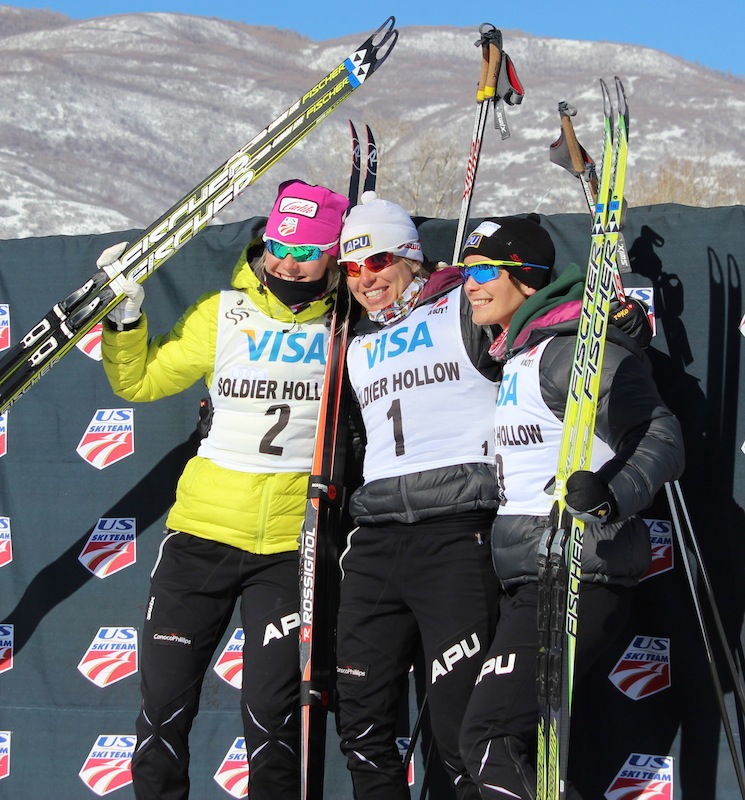
    The women’s 10 k freestyle podium at U.S. Nationals this January. Would it have looked differently if World Cup athletes like Kikkan Randall and Liz Stephen were in attendance?
    In an interview with a Norwegian television channel last week, Petter Northug, Jr. admitted to faking illness in 2011 to get out of racing at Norwegian Nationals (NM) prior to the Oslo World Championships. Norwegian national team members are contractually obligated to make an appearance at NM every year, and Northug dropped a bomb on the Norwegian sports pages by saying he skipped it and fabricated an excuse to do so. For the record, he went on to win three World Championship gold medals for Norway in front of a gigantic home crowd at Holmenkollen.

    Petter Northug celebrating a win at the 2011 World Championships in the 30 k pursuit.
    Petter Northug celebrating a win at the 2011 World Championships in the 30 k pursuit.

    “I felt pushed ahead of World Championships in Oslo,” Northug said. “I wanted to go to NM; I wanted to take the championship gold. Then it hit me that I had gone to the Tour de Ski, [too]. I thought, ‘Be [tired] and get [sick] now, and you’re home exercising by yourself. Stay away from people when you say that you are sick to the media, and then you start working on what is important, what you will experience once in a lifetime.’”

    The revelation that golden-boy Northug lied to get out of showing up at one of the biggest events in Norway sparked vigorous debate throughout the country last week. At the heart of the discussion was a question of whether Norwegian Nationals should be positioned to suit Norway’s World Cup team.

    John Northug, Petter’s father and manager, suggested NM be moved to another time of year, to avoid conflicts for athletes who have big races like Worlds or the Olympics to focus on. NM might be better split into two parts in mid-winter and the spring, he said, so that World Cup athletes can still compete for a national title when they’re no longer concerned with major international championships.

    Norwegian Ski Federation (NSF) cross-country committee director Torbjørn Skogstad responded on Saturday with the statement that the organization will not reschedule NM in 2014, an Olympic year. He cited impracticality in moving the national event for only a few national team athletes.

    “The National Championship is in many ways an institution and an important meeting place for the entire ski Norway,” Skogstad said on the NSF website. “National Championship this year may not account for all national team [skiers], but is definitely the highlight for the rest of the senior athletes… We should be very careful not to upset the status of the National Championship today.”

    The Federation’s relationship with NRK, the national TV station that has broadcasting rights to NM, dictates a certain order of events: first Nationals, then World Championships or the Olympics.

    “Any relocation of the National Championship or changing the program of events requires political treatment,” the NSF press release explained.

    The debate should sound familiar to Americans. Though the U.S. doesn’t have to consider TV rights when it schedules nationals, a more complex logistical dilemma has arisen in recent years: how to time the championship so that national team athletes can compete, but also give officials a single major in-season event from which to pick junior, U23, world championship and Olympic teams.

    Kikkan Randall, Andy Newell & Co. haven’t raced at U.S. Nationals in years — as the U.S. Ski Team has become more competitive internationally, more of its athletes have chosen to remain in Europe for most of the season, either for the Tour de Ski or in-season training. Is U.S. Nationals still a true championship without them? And if it’s not, does that warrant a change?

    The cross-country committee at the U.S. Ski Association (USSA) is currently considering the question. Coaches from around the nation discussed the issue at the annual congress last spring and formed a sub-committee to present possible solutions this May. USSA Nordic Manager Joey Caterinichio says that, depending on what this group finds, the governing body is open to the possibility of moving nationals to the spring.

    “We’re not in Europe,” Caterinichio said a few days after nationals concluded in Soldier Hollow in January. “This year, it worked out pretty well to get our fastest skiers where they’re supposed to be, head to head, and still have a super quality event. We’ll definitely continue to look, moving forward, if that’s the best for the U.S.”

    Currently, the U.S. technically splits its championship races between the winter and spring. U.S. Nationals are every January, with two sprints and two shorter distance races, and then 30/50 k Nationals take place in April as part of SuperTour Finals. Likewise, Canada hosts its championships after the World Cup season ends, before SuperTour Finals, and holds separate trials in January to pick athletes for its international teams. Typically, U.S. and Canadian national teams have participated in their spring championships after returning from Europe, keeping event visibility high and race organizers happy.

    Some still don’t think the system is perfect. In the U.S., the January event still calls itself a national championship even though these days, the best American skiers are in Europe. Titles are on the line, and SuperTour points and prize money is doubled. But at the end of the week, those titles aren’t always in the hands of the country’s best skiers, leaving room for dispute when it comes time to name world championship teams.

    The complexity of the scheduling problem is still relatively new. As Americans have improved their standing on the World Cup in recent years, greater numbers of World Cup team members have decided to skip Nationals and remain Europe to compete in the Tour de Ski—an event that itself is only seven years old. Simi Hamilton and Ida Sargent, who were not on the 2013 Tour roster, still skipped Nationals in order to fly back to Europe directly after the holidays, readjust to the time zone and train for the races that are important to them.

    After five months on the World Cup circuit, Liz Stephen (l), Kikkan Randall and Holly Brooks (r) duke it out behind Jessie Diggins (not shown) on one of 20 laps in the 30 k freestyle mass start at U.S. Distance Nationals on Friday in Craftsbury, Vt.
    After five months on the World Cup circuit, Liz Stephen (l), Kikkan Randall and Holly Brooks (r) duked it out in the 30 k freestyle at U.S. Distance Nationals in Craftsbury, Vt. Right now, it’s the only national title they compete for.

    By most accounts, that’s a good position to be in. Randall, for example, last competed at Nationals in 2010. Now that she’s among the best skiers in the world, she has bigger things on her plate than affirming her position as top dog in the U.S.

    On the surface, the primary purpose of a national championship is to award meaningful national titles. If that were truly the only point of the event, the problem would have an easy fix: push the whole thing to the spring, in place of SuperTour Finals. It’s the simplest way to allow the U.S. Ski Team’s athletes to compete for titles, if they want to. Junior/U23 World Championship teams would be named from a January Trials, which is what Canada — a country with the same logistical challenges as the U.S. — already does.

    But this solution ignores the full spectrum of what U.S. Nationals accomplishes. It may not even solve the problem of naming a true national champion. After months of travel and racing a full World Cup schedule, athletes say they are completely spent. Contrary to what Northug and his father would like to see in Norway, the last thing Americans want to do when they get back is compete for national titles for a week straight against a rabid domestic field.

    “It is unfortunate that we can’t be at nationals, but at the same time, the way the schedule is these days, I don’t really know when we could fit it in,” Randall said in an interview during the Tour de Ski, just before U.S. Nationals began at Soldier Hollow. “By the time we get to the end of the season, when you’re done putting everything into the World Cup and those final races, it’s hard for us to think about going hard at a full nationals schedule.”

    Newell, whose last U.S. Nationals appearance was in 2007, agrees with Randall — his career objectives have surpassed domestic achievement. At SuperTour Finals last April, Newell decided to sit out the competition when he got sick on the flight back to the U.S. after his last World Cup race.

    Andy Newell (USST/SMS), skiing to his qualifying win.
    Andy Newell (USST/SMS T2), sprinting at SuperTour Finals in 2011.

    “We just don’t have the luxury of living on the same continent we race on most of the time,” he said. “And I think it’s because of this that U.S. Nationals has a different feel to it. From a national team skier’s perspective, and at least from my perspective, I don’t think we care about national titles or anything just because that’s the way the ski culture has been in the U.S. for my whole career. It has always been about proving ourselves on the World Cup and not racing in the U.S., because geographically you can’t do both.”

    Though his personal priorities don’t involve racking up national championships, Newell realizes that his own presence at the event would boost its visibility and help the development of skiing in the U.S.

    “I think it could do great things for our sport in the U.S. if we could manage to make Nationals bigger,” he said. “Attract all the big names in U.S. skiing and it will bring in more media, bigger exposure in the U.S., and hopefully grow the sport some more. So it’s frustrating that it can’t be that way.”

    The opportunity for developing athletes to race against athletes like Newell or Randall is potentially another reason to move nationals. When junior athletes went to Soldier Hollow this January, they were exposed to a higher level of skiing. Add the country’s very best into the mix and young skiers could see firsthand what world-class speed and technique looks like.

    “I think it would be great to move senior nationals to the end of the season into the time slot where we know have the Super Tour finals,” said Rob Bradlee, head coach of the Cambridge Sports Union in eastern Massachusetts. His program has produced athletes like Corey Stock, who raced at the Quebec World Cup this season as a college freshman, and he believes the value of a national championship partly comes from the development opportunity it presents young skiers.

    With nationals in the spring, Bradlee says, “All national team members could attend and ambitious young skiers would get the chance to compete with them and see what it takes to be on the World Cup… All I’m really saying is to change the names and descriptions of the two events. I don’t think the group of racers attending would be much different. It would just mean that Kikkan could be National Champion along with being World Champion.”

    If nationals moved to the spring, there would still need to be a quality trials event in January to name Junior/U23 Worlds, J1 Scando, and (in theory) Olympic and World Championships teams. This presents another trade-off; some worry that in non-championship season that come around every three years, field depth and quality would suffer at the revamped January races. Strip U.S. Nationals of its name and associated prizes and there’s no guarantee that the top senior athletes would show up without the need to qualify for an international championship.

    “If the January trials are part of the SuperTour, folks would still go for sure. But it’d be like the Midwest or the Eastern sections of the SuperTour,” says Dakota Blackhorse-von Jess, who won a sprint national title last month. “Those that can make it will, but it won’t be the same, unless they offer double points still. If I had to fly to Fairbanks, for example, and there wasn’t any special incentive, I might not. Certainly, there isn’t enough money in prizes to cover it.”

    Bradlee had a simple suggestion to maintain incentive for seniors: keep the points and the money.

    “I’d say that the first week of January should [name] the World Juniors team and Nations Cup team qualifiers and [be] a Super Tour,” he said. “That would make the event essentially exactly as it is now since all the best skiers not on the World Cup would be there to get SuperTour and USSA points.”

    Titles awarded from a spring nationals might still be problematic, however. As Newell mentioned, competing for a championship after World Cup Finals would be a challenge. It would be nice to point to results from such a race and say it actually named the best skiers in the country, but Blackhorse-von Jess, for one, doesn’t know if this is possible, given the disconnect between World Cup results and domestic American results.

    “Races here don’t play out like they do on the World Cup,” he said. “This is relevant because… let’s say Newell comes and races and gets beat. Say he gets second or third. That doesn’t make the guy on top of the podium a ‘better’ skier or even show indication of how they’re going to perform on the World Cup. I’m a great example — I didn’t race the heats very well in Bozeman. In fact, I sucked. I qualified okay…and didn’t even earn a start right. But when Torin [Koos] got sick and I got a chance, I showed up and raced and beat all the domestic racers.”

    A spring nationals might have participation problems, too, which would further damage the credibility of results. Once college athletes put the NCAA Championships behind them and juniors wrap up their season at Junior Nationals, how many of them would show up for the senior-level event?

    The nationals scheduling issue is undoubtedly a complicated one. The U.S. will always have to weigh conflicting viewpoints from the national team, from domestic seniors and from juniors as long as most of the international circuit takes place across the pond and Americans continue to be competitive on it. At USSA, the collection of feedback on the national calendar is an ongoing process.

    “It’s definitely been thought about,” Caterinichio said. “So I think now that we’ve got some data we could look at moving it or we could look at keeping it.”

  • USSA Spring Congress: A Preview

    USSA Spring Congress: A Preview

    Getting ready. Here in Craftsbury for the 30 k; this week in Park City for the coming season.

    The 2012 edition of the U.S. Ski and Snowboard Association (USSA) spring congress starts this Wednesday in Park City, Utah. Coaches, officials and various constituents from around the country will gather to discuss rules, formats, junior development and the coming race calendar (among many other things).

    Last May, notable developments to come out of these meetings included format changes for certain events on the SuperTour and at Junior Nationals. The decision to legalize mid-50 k ski changes ended up not factoring into distance nationals in Craftsbury (possibly because of the 33-lap thing and a general lack of enough surface area for an exchange zone), and the new sprint relay proposed for JNs will have to wait for its trial run — though the 3 x 3 k at Soldier Hollow was still the most exciting day of racing of the entire week this March.

    To get you ready for the four-day series of meetings, listed below are a few topics on the cross-country agendas according to the new Nordic Program Manager Joey Caterinichio. Some discussions may produce differences between last season and the next, while others are more about getting everyone in attendance on the same page.

    • A season recap of the U.S. Ski Team’s (USST) past season and discussion of its plans for 2013. Head coach Chris Grover said on Tuesday that the team nominations will be announced in the next few days.
    • The drafted 2012-2013 domestic race calendar. The current version suggests the possibility of a full sprint in West Yellowstone, which would eliminate one of the long-debated qualifiers. The calendar also works around the two December World Cups in Canada, lists Soldier Hollow as the host of 2013 US Nationals, and a “TBD” for the whereabouts of Spring Series.
    • A new suggested format for 2013 Junior Nationals in Fairbanks, Alaska: a Monday-Tuesday-Thursday-Saturday schedule (as opposed to Monday-Wednesday-Friday-Saturday), with the relay as the second race of the week instead of the very last.
    • A working group report on homologation by the officials’ subcommittee.
    • A review of the major championship hosts from the past season: Rumford, Maine; Soldier Hollow, Utah; Craftsbury, Vermont.
    • Preliminary information regarding several major international championships coming up this season: World Championships in Val di Fiemme, Italy is the big one, and World Junior/U23 Championships is place in late January in Liberec, Czech Republic.

    Stay tuned for the outcomes of the congress following its conclusion on Saturday.

  • Adjustment to Nordic Program Leadership Reflects Shift in Focus at USSA

    Adjustment to Nordic Program Leadership Reflects Shift in Focus at USSA

    The U.S. Ski and Snowboard Association’s (USSA) new nordic program head, Joey Caterinichio, will fill a slightly different role at the governing body than that of her predecessor, John Farra — that much was immediately clear with the original announcement that the job title had been changed from Program Director to Program Manager.

    The context of the new hire (namely, the position’s vacancy for an entire season and the nordic program’s recent budget problems) next led to more questions about the reasoning behind the shift in staff hierarchy, which all ultimately boil down to: What does this actually mean?

    The difference between the directorship and the managerial position replacing it mainly involves USSA’s working relationship to the U.S. Ski Team (USST), according to Executive Vice President of Athletics, Luke Bodensteiner.

    Previously, the director’s responsibilities involved both developing the domestic program and driving USST growth by working closely with USST coaches. Caterinichio’s role will now be more focused on the domestic side of things.

    USST cross-country head coach Chris Grover at World Championships, 2011.

    Consequently, cross-country head coach Chris Grover and Nordic Combined head coach Dave Jarrett are officially in charge of leading their teams’ international campaigns, both athletically and administratively. Caterinichio will help plan logistics for major international competitions like World Juniors/U23s, World Championships and the Olympics, and provide support to USST staff as needed.

    Though the manager’s official responsibilities are more domestically focused than in the past, Bodensteiner says that in practice, staff roles will be much the same as they have been.

    “Functionally, not much is changing,” said Bodensteiner. “[The head coaches] were providing leadership on the international side for many years now.”

    This was especially true for the past season, when no one sat in the leadership role following Farra’s departure in July and coaches absorbed some of the administrative duties to compensate.

    The decision to reduce the new program manager’s responsibilities was not motivated by finances, said Bodensteiner — rather, “it’s about the focus and structure of the program.”

    In Grover’s view from the USST side of things, replacing a program director with a manager is an appropriate change. He believes the needs of USSA and the USST have changed since Farra was brought on in 2008, when coaches were four years less experienced than they are now.

    “If we’d had a younger staff, we might have needed someone to provide [USST] leadership; to drive what the program is trying to achieve,” said Grover.

    Farra (r) and Jarrett (l) watch Billy Demong's gold medal performance at the 2010 Olympics in Vancouver.

    But this is not currently the case for the USST coaching staff, he explained. “When you have someone like Dave Jarrett, who was the coach at the last Olympics and went out and won four medals, you don’t really need someone to tell him how to be successful.”

    Grover, for his part, just oversaw one of the most successful cross-country World Cup seasons in USST history.

    Jarrett was in agreement that the manager position better fits the USST’s needs based on its collective coaching experience, though acknowledged he feels the absence of a director’s administrative help in the spring.

    “This is the tenth time I’ve done spring planning, and it’s the first time I’ve done it all by myself,” he said.

    A coach’s springtime tasks are generally more administrative than athletic, but Jarrett is waiting to judge the idea of a diminished USSA presence in-season.

    “The biggest thing John did in-season was logistics for big events, and last year with no World Championships or Olympics it was a little easier to manage without him, so we’ll see how it goes,” said Jarrett. “First we have to run the athletic side of our team and not focus all our energy on the administrative side.”

    At this point, Caterinichio’s job description does include logistics support for major international events.

    Increased Focus on the Domestic System

    In place of USST involvement, Caterinichio will be focused on developing the country-wide domestic ski program. Bodensteiner, USST coaches, and Caterinichio believe this to be the area most in need of USSA’s attention.

    “The number one focus will be on domestic racing, and bringing that system to a higher level. We’ve seen what everyone else has seen — it’s drifted backwards in the last couple of years,” said Bodensteiner.

    How to bring the domestic race system to a higher level will be up to Caterinichio.

    “As with any new position, there’s a learning curve to get up to speed and form your own philosophy, and start to connect the dots on that philosophy with the stakeholders of the community,” said Bodensteiner, who was himself Farra’s predecessor at the helm of the nordic program.

    “I think there’s always challenges in that job — we’ve got to continue to evolve the sport. Part of the challenge comes from the growth of the sport, the clubs, and new people involved in the process. It’s a challenging job, no doubt about it.”


  • Caterinichio Steps Into New Leadership Position at USSA (UPDATED)

    Caterinichio Steps Into New Leadership Position at USSA (UPDATED)

    Joey Caterinichio, shown here at the 2010 Olympic Winter Games with Kikkan Randall, has been named nordic program manager for the USSA. Photo: USSA.

    After operating without a Director for an entire season, there is a new leader at the helm of the U.S. Ski and Snowboard Association’s (USSA) nordic operations. On Thursday the governing body revealed Joey Caterinichio as its Nordic Program Manager.

    As the founder and head coach at Alaska Nordic Racing in Anchorage, Caterinichio has built up a wide breadth of experience in the sport. She was a chief organizer for U.S. Nationals when they were held in Anchorage in 2009 and 2010, and she has been involved in leadership positions on USSA committees for the past eight years.

    “I’ll still be involved in the [Alaska] community one way or another, but I think new things are exciting,” said Caterinichio. “Moving into the national development system will be… a nice change.”

    Her prior posts have given her substantial administrative background, but have also presented her the opportunity to develop relationships with coaches and stakeholders in the sport across the country — something Caterinichio believes will be an advantage as she begins in her new role at USSA.

    She has already begun work on the upcoming season’s competition calendar and started preparing for the spring USSA meetings. After that, Caterinichio is responsible for making sure the entity that is U.S. skiing runs smoothly while continuing to grow and develop. This includes overseeing domestic competition, steering junior development projects, coordinating sport committees, and managing international championship logistics.

    Beyond the title change, there is a difference between Caterinichio’s new role and the Nordic Directorship that was most recently occupied by John Farra. The Nordic Program Manager’s involvement with U.S. Ski Team (USST) operations has been scaled back, representing a shift in USSA’s focus.

    “I think with where we’re at now… it’s good for us to refocus our manpower into the base,” said Luke Bodensteiner, USSA’s Executive Vice President of Athletics. “We’re doing that across all our sports right now, to create more activity at the grassroots and club level.”

    After Farra left USSA for the U.S. Olympic Committee in July, no one was immediately hired to take his place. In the absence of a director or manager for the whole 2011-2012 season, administrative duties have been shared over the past months between Bodensteiner and the head nordic coaches: Chris Grover for cross country and Dave Jarrett with Nordic Combined. Some of those responsibilities will now carry over for the coaches since the administrative position has been adjusted.

    “[Grover and Jarrett] are going to continue to do what they were doing even when we had a director,” explained Bodensteiner. “Functionally, not much is changing — they’ve been providing leadership on the international side for many years now.”

    “We wanted to take the opportunity to push the emphasis onto the domestic system and deepen our activity in the pipeline.”

    As a result, Caterinichio’s job is somewhat of a hybrid of Farra’s and that of Toni Adams, who acted as administrative nordic support and left USSA at the end of March. Bodensteiner said he does not plan to hire someone to replace Adams specifically.

  • New Group Seeks to Expand Women’s Participation

    Chandra Crawford celebrating her gold medal at the 2006 Olympic Winter Games in Torino, one of the many strong performances by North American women in the past decade.

    Between Kikkan Randall, Sara Renner, Chandra Crawford, and Beckie Scott, there has been no shortage of successful female athletes in North American over the past decade. Step off the trails and into the wax room, and you’ll find even more involved in the sport as coaches for collegiate and club programs.

    But during the May meetings of the U.S. Ski and Snowboard Association in Park City, Utah, an accomplished group of female coaches gathered not to celebrate, but to figure out how to get even more women involved in the sport.

    “The barriers don’t exist like they used to, obviously—there’s been a lot of progress in this country over the last 30 or 40 years,” said Eileen Carey, a coach and vice president at the Maine Winter Sports Center, who convened the meeting. “What we have to do now is take a more nuanced look at it…what do we have to do to take it to the next step?”

    Carey said that the conversations at Park City were preliminary, and honed in on some of the gender differences that persist in cross-country skiing. For example, Carey said that she has noticed fewer female athletes moving on from collegiate to post-graduate ski careers, as well as into careers as coaches.

    The question for the six women at the meeting—Carey, New England Nordic Ski Association’s Janice Sibilia, Alaska Nordic Racing’s Joey Caterinichio, Bates College’s Becky Woods, University of Utah’s Abi Holt, and Jackson Hole’s Ali Deines—was how they could close those gaps, and they came up with a few ideas.

    One, Carey said, was an award for the strongest initiative encouraging female participation in cross-country skiing. Other suggestions included holding a women’s camp during the summer, or hosting a panel discussion at a major event that would include successful female athletes, coaches, and event organizers.

    While it’s important to make sure that avenues exist for women to continue participating in the sport after college—whether as a coach, an athlete, or in some other capacity—Carey said that it’s just as critical to make sure that they are aware of the opportunities that are already open to them.

    “A lot of it is just getting the word out there,” she said.

    The discussions begun in Utah will continue on an e-mail list that Carey is overseeing; she said that the group hopes to push forward with the creation of an award. She plans to bring the women together for another meeting at the U.S. National Championships in Rumford, Maine, next January.

    For more information, or to be added to Carey’s e-mail list, contact her at eileen[at]mainewsc.org, or at (207) 227-4114. To download the minutes from the meeting, click here.