From the FasterSkier archive — posts syndicated from athletes’ and coaches’ own blogs between 2004 and 2012, kept online as published. Current coverage is at fasterskier.com.

Tag: Johannes Duerr

  • Former U23 Champion Wurm Under Investigation for Blood Doping by Austrian Police

    Former U23 Champion Wurm Under Investigation for Blood Doping by Austrian Police

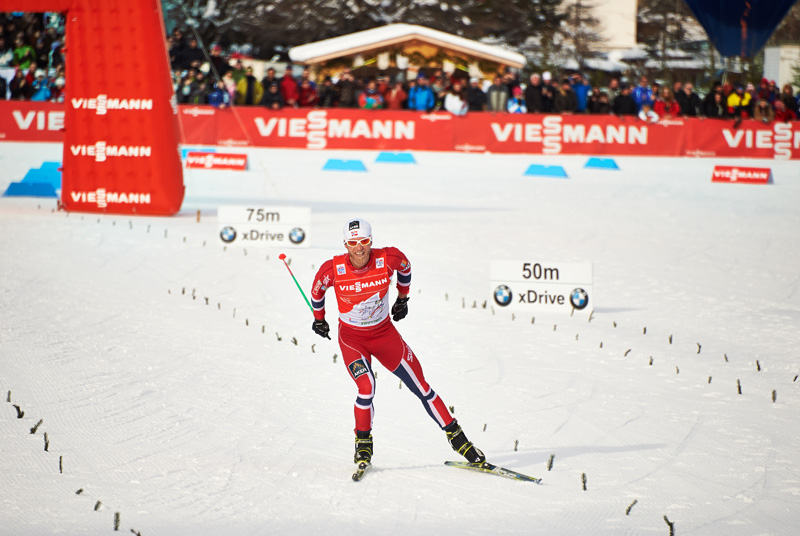
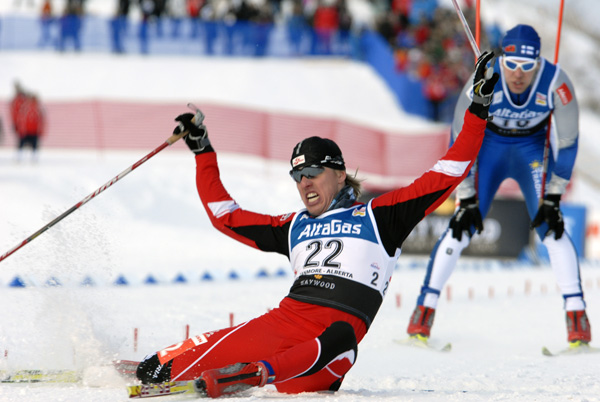
    Harald Wurm of Austria finished 15th in the skate sprint World Cup in Canmore in 2008 (pictured here), and eighth in the same event in 2012. (Photo: Patrick Sinnott)
    Harald Wurm of Austria finished 15th in the skate sprint World Cup in Canmore in 2008 (pictured here), and eighth in the same event in 2012. (Photo: Patrick Sinnott)

    Austrian cross-country skier Harald Wurm is the target of a criminal investigation about doping, according to Austrian news sources.

    Wurm, a 31-year-old who was the U23 World Champion in the sprint back in 2006, represented Austria in the 2006 and 2014 Olympics. He has four individual World Cup top-10’s to his name, most recently in the pre-Olympic World Cup in Sochi in 2013.

    Wurm has not commented on the situation. As of Monday the Austrian Ski Federation (ÖSV) had been aware of the scandal, but not officially informed by authorities. It appears that the investigation is headed by police, not the national anti-doping agency (NADA).

    “NADA has been informed about the case and is in close cooperation with the investigating authorities,” spokesman David Müller told the media, according to Der Standard, a prominent independent newspaper based in Vienna.

    In Austria, distributing performance-enhancing drugs is an illegal activity subject to anti-fraud laws. That’s why the police seem to be leading the investigation in this case.

    Prosecutors have not publicly commented on the case. The fact that an investigation is ongoing was leaked by an anonymous letter to the Tiroler Tageszeitung newspaper.
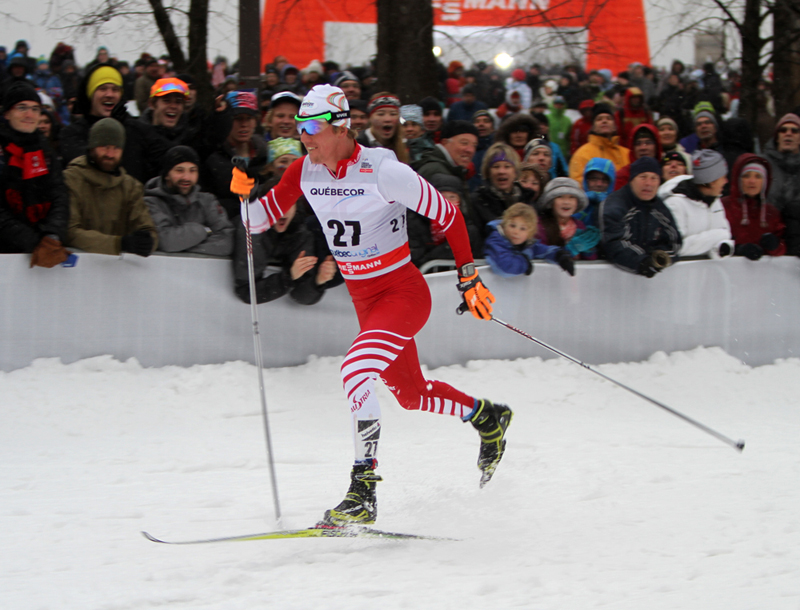
    A crash in the quarterfinals of the sprint in Quebec City in 2012 ripped Wurm's binding off his ski. He finished the lap regardless, earning him claps from the crown.
    A crash in the quarterfinals of the World Cup sprint in Quebec City in 2012 ripped Wurm’s binding off his ski. He finished the lap regardless, earning him cheers from the crowd.

    ÖSV Sport Director Hans Pum told Oberösterreichische Nachrichten that there had been searches of Wurm’s house, and that Wurm had taken a lawyer.

    “It is in our interest that everything is cleared up,” he said. “If it turns out that is there been something, then it is the same as in the past, and we will crack down.”

    For his part, Markus Gandler, the director for cross-country skiing of the ÖSV, told Oberösterreichische Nachrichten that he was “waiting for results”.

    Oberösterreichische Nachrichten reported that a hemoglobin meter had been found, but wrote that this was not evidence of doping. If more materials are found, however, Wurm may be in trouble. The World Anti-Doping Agency code prohibits possession of blood transfusions or any other method to increase the oxygen carrying capacity of blood.

    International Ski Federation (FIS) rules, meanwhile, clearly prohibit possession of any “prohibited method”, according to its 2015 anti-doping code.

    Furthermore, FIS can implement no-start prohibitions if athletes’ blood tests show unusual profiles, according to repeated data collected as part of the Athlete Biological Passport program. Thus the implication of finding a hemoglobin meter is that an athlete may be checking to see whether their hemoglobin levels rise to a level that would suggest doping, or trying to make sure that doesn’t happen.

    Nevertheless, no further reports have emerged showing that Wurm posesses other banned materials, nor has he apparently had a positive doping test. ÖSV officials have said that Wurm is insisting that he can easily clear the allegations.

    Ugly History

    Austrian skiing had been beginning to emerge from the shadow of a huge doping scandal at the 2006 Olympics. There – where Wurm competed – materials for blood transfusions were also found in a raid on athletes’ living quarters; Wurm’s teammates Johannes Eder, Martin Tauber, Juergen Pinter, and Roland Diethart were banned for life by the International Olympic Committee (IOC).

    “If you consider that there were syringes and blood bags lying on the bedside tables in the apartment and blood-soaked handkerchiefs . . . that the haemoglobin metre had been used 59 times in 10 days and you have huge differences between the levels being measured, and that these differences arose just before and just after tests in competitions, you can draw your own conclusions. Multiple athletes were infusing blood from multiple sources.”

    -Thomas Bach, then the chairman of the IOC Disciplinary Committee and now the IOC President, speaking to media at the time.

    Devices for measuring hemoglobin levels were part of those materials. It’s worth noting that the Austrian skiers were tested at the 2006 Olympics, but never found positive for any prohibited substance. Instead, they had been using blood transfusions to increase how much oxygen their blood could carry. And they had been using the hemoglobin meters to make sure that their levels did not exceed those stipulated in FIS’s no-start rules.

    Thus, the fact that Wurm possessed the same type of tool to measure hemoglobin brings up unpleasant memories for Austrian skiing.

    Though nearly 10 years have passed since Torino, doping has not completely receded after the four skiers, plus two biathletes and 14 officials, received bans.
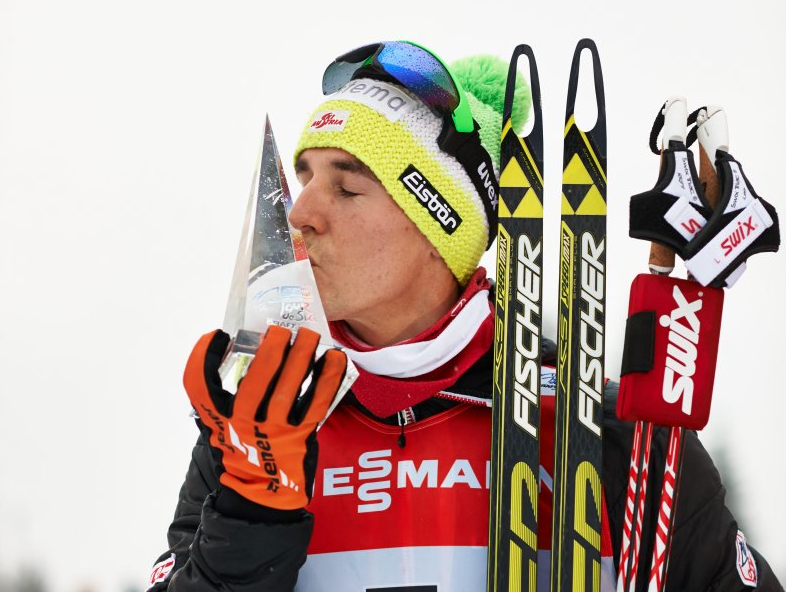
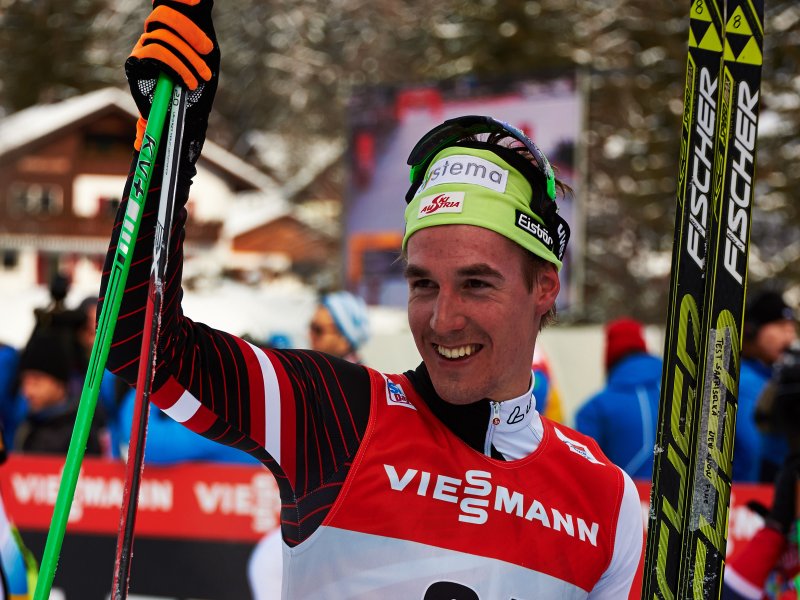
    Johannes Dürr finished the 2014 Tour de Ski in third place, and placed eighth in the Olympic 30 k before being caught using EPO. (Photo: Fischer/Nordic Focus)
    Johannes Dürr finished the 2014 Tour de Ski in third place, and placed eighth in the Olympic 30 k before being caught using EPO. (Photo: Fischer/Nordic Focus)

    At the 2014 Olympics, again one of Wurm’s teammates was caught: Johannes Dürr, who admitted to using recombinant erythropoetin (EPO), a blood-doping drug, for months before the Games and said he had passed 14 blood tests.

    Dürr said that he had obtained EPO himself. And in July, Austrian prosecutors dropped their case against Dürr, concluding that he had not distributed EPO to other athletes. While his ban from sport remains, he thus avoided criminal charges.

    The latest scandal could have big consequences: after the Dürr case, the head of the ÖSV, Peter Schröcksnadel, threatened several times to eliminate the entire cross-country ski program, since it does not seem capable of keeping itself clean.

    Gandler has also thought about retiring. If Wurm is found guilty of doping, even without help from coaches, team doctors, or others within the national team or federation, it would be tough for Gandler to maintain credibility as the head of the program.

    Finally, Wurm was sponsored by Seefeld 2017, the Austrian venue hosting FIS World Championships in two years time. Austrian snow sports is certainly hoping that any association with a doping athlete will not tarnish their event.

    At the moment the Austrian Ski Federation has not suspended Wurm, even provisionally, because evidence of doping has not yet been confirmed and they wish to allow him due process.

    However, cross-country head coach Gerald Heigl said that Wurm has dropped preparations for the season with the national team, and will attempt to “clear up” the situation in the next few days.

    Gandler, Heigl, and biathlon coach Alfred Eder (who has coached the national team before moving to Belarus for the 2014-2015 season, but has returned to Austria to coach his son, Olympic relay medalist Simon Eder) were all among the 14 officials banned by the Austrian Olympic committee after Torino. But they were reinstated in 2009.

    Dürr, too, looks like he is hoping for redemption: Oberösterreichische Nachrichten reports that according to rumors, he is thinking about legally challenging his lifetime ban and/or competing without the support of the national federation.

  • Q&A on FIS Anti-Doping Policy: Testing Pools, Half-Lives, and Passports

    Less than a week ago, Johannes Dürr of Austria was kicked out of the Olympics for doping. He later admitted that he had been taking recombinant erythropoietin (EPO), a blood-doping drug, since June, and had passed 14 anti-doping tests before finally being caught in Austria during a mid-Olympic training camp.

    The explanation has raised a lot of questions about how an athlete could get away with doping for so long. We read the International Ski Federation (FIS) Anti-Doping Rules (which you can download as a PDF here) to see what the federation had been doing, or at least said that they would be doing, in the months when Dürr was getting away with cheating.

    Q: Was Dürr just not getting tested? Is that how he got away with doping for so long?

    A: No, Dürr said that he had been tested 14 times in the leadup to the Olympic Games.

    Q: So did he know when the tests were coming?

    A: In some cases, yes. For instance, if you hit the podium, you’re going to get tested. FIS rules state that after each top-level competition, the top four athletes are drug tested as well as one additional athlete. This is referred to as in-competition testing. Dürr was thus tested at the Tour de Ski, where he finished third overall.

    There is also out-of-competition testing by FIS. This season’s FIS Registered Testing Pool consisted of 334 athletes across the six FIS disciplines. The pool consists of athletes in the top 30 of the World Cup rankings – Dürr was not in it at the beginning of the season, but then skied his way into it. Athletes must provide a 60-minute period of time each day where they will be in a specific place and can be tested, and list it in their “whereabouts” information. They can also be tested at any other time and three missed tests means an automatic positive.

    On the cross country athletes in the Registered Testing Pool, FIS conducted 139 urine tests, 103 EPO tests, 5 blood tests, and 135 biological passport tests (more on those later) from May to November of 2013.

    Dürr was also almost certainly in his country’s national testing pool, which may have been where some of the 14 tests came from.

    Finally, during the Olympics, the International Olympic Committee oversaw testing. Although it is all deemed in-competition testing, the IOC may test any athlete registered at the Olympics at any time during the period of the Games, and in any place – not just in Sochi. The IOC employs both random and targeted testing.

    Q: If he was tested 14 times, why did none of those tests detect EPO?

    A: The half-life of EPO is quite short – five hours for the natural hormone, and varying lengths of time for the recombinant forms. This means that the drug itself flushes out of the body fairly quickly, especially if an athlete is drinking a lot of fluids. Basically, if the testers don’t shot up on the right day, they probably won’t detect EPO use.

    As described in the (excellent) cycling exposés Wheelmen and The Secret Race, dopers assumed, usually correctly, that if they took their EPO at night and got tested in the morning, they would be safe. Doping testers allow the athletes a night of sleep, so they don’t show up in the middle of the night – although Canadian biathlete Megan Imrie did describe being in anti-doping at the Olympics at 11:30 p.m. one night.

    Dürr said in an interview that the people who sold him the EPO also gave him a doping schedule, which might have helped avoid the tests.

    Q: That is terrible!

    A: That’s not a question! Yes, you’re right. There is a new test out there, called a “dipstick test”, which will be able to detect much smaller amounts of EPO which stay in the body for a longer time. As far as we know, it has been described in medical journals but not yet implemented, although anti-doping bodies sometimes keep their new tests under wraps so that doping athletes don’t know what’s coming.

    There have been hints at innovation in the pipeline, including a new implementation of the test for human growth hormone that should be in use by the end of the winter.

    Q: So if you can’t detect the drug – why not have this biological passport thing? What is it, anyway?

    A: FIS does actually have a biological passport program. As described in the FIS anti-doping rules, longitudinal monitoring (that means long-term) is conducted on the following markers in an athlete’s blood, which are affected by blood doping among other factors:

    HCT: Hematocrit

    HGB: Haemoglobin

    FIS Procedural Rules and Guidelines page 63 Edition 2013

    RBC: Red blood cells count

    RET%: The percentage of reticulocyte

    RET#: Reticulocytes count

    MCV: Mean corpuscular volume

    MCH: Mean corpuscular haemoglobin

    MCHC: Mean corpuscular haemoglobin concentration

    The numbers are analyzed based on an athlete’s own past physiology, and any abnormal developments are flagged. Once an expert reviews the data, the athlete can even be prohibited from starting a competition. However, there has yet to be a FIS doping case based on the biological passport alone. Athletes have been barred from starting due to high hemoglobin levels, but a ban has never been pursued. FIS states that the passport data can be use to further target testing of suspicious athletes.

    There is also the possibility of “full field” biological passport testing at major international events.

  • Dürr Had Used EPO Since June, Passed 14 Anti-Doping Tests; IOC Decision Still Pending

    Dürr Had Used EPO Since June, Passed 14 Anti-Doping Tests; IOC Decision Still Pending

    Johannes Duerr (second from right) during the Tour de Ski's 35 k pursuit from Cortina to Toblach, Italy, in December. Duerr has since been kicked out of the Olympics for doping.
    One of these men is a doper: Johannes Dürr (second from right) during the Tour de Ski’s 35 k pursuit from Cortina to Toblach, Italy, in December. The Austrian has since been kicked out of the Olympics for using EPO. Photo: Fischer/NordicFocus.

    On Sunday morning, a new start list was released for the Olympic men’s 50 k. It was exactly the same as the list that had been published the night before, with one glaring exception: a name had been removed and a line added at the bottom of the document.

    “removed DUERR Johannes (AUT) from Start List as implementation of IOC decision from 22 FEB 2014,” the officials had written in small font.

    The Austrian Olympic Committee issued a press release stating that Dürr (names are Anglicized by results systems) had tested positive for the blood-doping drug recombinant erythropoietin (EPO) and had been banned from the Olympics, effective immediately.

    In the press release, the head of Austria’s Olympic team, Karl Stoss, expressed shock.

    On his way out of Sochi, Dürr was caught by the press in the airport, and apologized while telling the Associated Press that it was the “worst thing I’ve done in my life.”

    In the last few days, more details have emerged about the case, although the International Olympic Committee is still yet to release its report.

    As initially reported, Dürr had flown back to Austria after the Olympic 30 k skiathlon, where he placed eighth, to train for the 50 k, which wouldn’t happen for almost two weeks. It was there in Obertilliach that the test was administered on February 16.

    The news was delivered to the Austrian Olympic Committee on February 21, at which point Dürr had returned to Sochi. According to the Tiroler Tagezeitung newspaper, Dürr  was called into a meeting. He faced the sports director of the Austrian Ski Federation, Hans Pum; the head doctor of the Austrian Olympic Committee, Wolfgang Schobersgerger; and an official from the cross-country division, Markus Gandler.

    “At first he did not confess,” Gandler told the newspaper. “For a quarter of an hour he denied it.”

    Gandler later lamented to the Austrian Kurier newspaper that he had believed completely that Dürr was clean; with tears in his eyes, he said, “I would have adopted him.”

    But Dürr eventually admitted using EPO, which allowed Stoss to say in his press release the next morning that the athlete had done so and would be dealt with accordingly.

    Dürr’s website once contained a section about clean sport, decrying the scandal at the 2006 Torino Olympics which enveloped Austrian endurance sports. His entire website has now been deleted.

    Since returning home, Dürr has made more statements in interviews and the press. After admitting to the Austrian Olympic Committee that he had used EPO mid-Olympics, the skier went one step farther to Der Spiegel, a German weekly. He said he began using EPO in June 2013. Since then, Dürr has had his best results ever, finishing the Tour de Ski in third place and having the fastest pursuit times in both the 9 k and 35 k pursuits.

    He told Der Spiegel that he had passed 14 doping tests so far that season, even when he took a double dose. He explained that he began taking half doses around the Olympics because he knew testing would be ramped up.

    “I’m stupid, but not that stupid,” he said.

    Dürr, who has a wife and a young child, said that even though he knew it was wrong, he felt that he could not make a living ski racing except if he took extraordinary measures.

    “I had a good season behind me, but I also knew that with my current income, I could never bring a good life to my family,” he told Der Spiegel. “I have always known that it is the wrong thing… [now] I have no plan. Economically I am facing ruin.”

    Dürr, who is 26 years old, re-stated in another interview that his family situation was what drove him to try EPO.

    “I was overwhelmed with my life at that time,” he told the Frankfurter Allgemeine newspaper. “My little boy was just screaming and not sleeping at all.”

    Still, doping did not make him feel better. He told the paper that every time he took the drug, he felt “like a junkie.” He has repeatedly said that he is glad the saga is over, and that he deeply regrets all the people who he has disappointed.

    “That was the worst,” he said on a “Sports Week” television program. “Leaving the public hoodwinked was difficult, but to lie to your wife, parents, brothers and sisters, that was the worst.”

    It’s still unclear exactly how Dürr administered his program. He told the Austrian Olympic Committee that his coaches and teammates were not involved, which came as a relief after the systematic doping scandal of 2006.

    “The athlete himself confessed that he is the only one who did that and he takes all the responsibility on himself,” Stoss had said on the first day of the scandal.

    But others are questioning if it is really possible that team officials had no idea that Dürr was doping. He has said told the far-right Austrian newspaper Krone that he “knew the wrong people.” But are the “wrong people” Austrian?

    Dürr later claimed to the Kurier newspaper that he had obtained both the drugs and the doping schedule from someone in a former Yugoslavian republic.

    The news is having a huge effect on Austrian sports. Peter Schröcksnadel, president of the Austrian Ski Federation, is considering whether to cut cross country skiing out of the federation and make it stand on its own, since the athletes are sullying the name of Austrian snow sports, according to the Neue Zürcher Zeitung.

    Dürr is at risk of having violated not only the athlete code of conduct, but also more substantial laws, such as the ones prohibiting sports fraud. The Federal Criminal Police will reportedly investigate the case once the sports federations have finished.

  • Ultimate Comeback Kid, Cologna Captures Olympic Gold in Skiathlon Opener

    Ultimate Comeback Kid, Cologna Captures Olympic Gold in Skiathlon Opener

    Switzerland's Dario Cologna looks over at Sweden's Marcus Hellner (not shown) before capturing his second Olympic gold in his first race of the 2014 Olympics -- the 30 k skiathlon -- on Sunday in Sochi, Russia. Hellner placed second while Norway's Martin Johnsrud Sundby (l) and Russia's Maxim Vylegzhanin (7) sprinted for third. Sundby won it but received a written warning for obstruction.
    Switzerland’s Dario Cologna looks over at Sweden’s Marcus Hellner (not shown) before capturing his second Olympic gold in his first race of the 2014 Olympics — the 30 k skiathlon — on Sunday in Sochi, Russia. Hellner placed second while Norway’s Martin Johnsrud Sundby (l) and Russia’s Maxim Vylegzhanin (7) sprinted for third. Sundby won it but received a written warning for obstruction.

    FasterSkier’s coverage is made possible through the generous support of Rudy Project. 

    SOCHI, Russia — In the wrong place at the wrong time three months ago when he slipped on ice while running with his coach, Guri Hetland, Switzerland’s Dario Cologna made sure he was in position to do something stellar on Sunday.

    The possibility of whether Cologna, who tore three ligaments in his ankle in mid-November, could win his second Olympic gold at these Winter Games was never a question. He had already proven himself in his first World Cup race this season a week ago, where he nearly won the 15-kilometer classic individual start in Toblach, Italy — finishing second behind Russia’s Alexander Legkov by 2.9 seconds.

    Cologna, 27, had done a total of five races this winter before that. On Sunday in the 30 k skiathlon, the first men’s race of the 2014 Olympics, Cologna had to tape his foot — and he was visibly limping at the venue — off his skis.

    “The foot isn’t still 100 percent, but when I’m racing and with the tape it’s okay,” Cologna said in a post-race press conference. “Maybe when I’m sprinting, I still feel a little bit. … I’m in very good shape besides my foot.”

    On the course, he was right in the mix throughout the seven-lap race, with four 3.75-k classic loops and three 5-k skate loops. Closer to the front of the pack for the first 7.5 k with guys like Norway’s Martin Johnsrud Sundby, Sweden’s defending Olympic skiathlon champion Marcus Hellner, Kazakstan’s Alexey Poltoranin, and Germany’s Hannes Dotzler, Cologna generally hung in the middle of the lead group, which started to break up by the transition.

    Changing to his skate skis, Cologna came through the halfway point in 13th, 5.7 seconds after Sundby up front. Sundby took charge for most of the race, setting the pace and taking turns leading with Poltoranin, Dotzler, Hellner, Sweden’s Daniel Richardsson, and Austria’s Johannes Duerr. Another Swiss skier, Curdin Perl led early in the first lap, falling off the pace by about 30 seconds by the 15 k changeover.

    With the fourth-fastest transition time, Richardsson was first out of the pits, and toward the end of the first skate loop, the top 12 had slowed with Hellner up front, followed by France’s Jean Marc Gaillard and Sweden’s Lars Nelson.

    The lead group more or less stayed the same for the second-to-last lap, with Duerr leading into the last major climb before the stadium. With less than 5 k remaining, Richardsson went first down the screaming-fast descent before the long grind back up, followed by Duerr, Russia’s Maxim Vylegzhanin, Hellner, and Russia’s Alexander Legkov, respectively.

    Minutes later, Sundby led them back toward the stadium and Hellner and Cologna got in position behind him. Heading into a slight rise before the final grueling climb, Cologna accelerated to second, ahead of Hellner, and Vylegzhanin led the chase to catch the lead three.

    Making his way to first before the last leg-burner, Cologna put about eight meters into Hellner up the hill as Hellner chased him over the top. Sundby, Richardsson, and Vylegzhanin followed respectively down the curving descent toward the finishing straight — but by the time Cologna got there, the race was essentially his.

    Cologna slightly glanced over his shoulder before crossing the line, just enough to see that he had secured gold in 1:08:15.4, four-tenths of a second ahead of Hellner in second.

    Meanwhile, Sundby on the right and Vylegzhanin several meters to his left battled for third, with Sundby fading over into Vylegzhanin’s space just before the line. A second behind Hellner, Sundby edged Vylegzhanin by 0.1 seconds, causing some commotion and a jury meeting to determine whether Sundby obstructed him at the finish. He was given a written warning and kept his bronze.

    The 2014 Olympic men's skiathlon champion, Dario Cologna of Switzerland absorbs the fruits of his efforts and three months of recovering from an ankle injury that kept him from competing for the first half of the season.
    The 2014 Olympic men’s skiathlon champion, Dario Cologna of Switzerland absorbs the fruits of his efforts and three months of recovering from an ankle injury that kept him from competing for the first half of the season.

    After collapsing at the finish, Cologna rolled onto his back and sprawled out to catch his breath, then absorb the reality of what he had just done. In his first Olympic skiathlon at his second Olympics, he had won his second Olympic gold in the middle of a season he nearly had to write off to injury.

    He never did — and that’s why he won.

    “I did a lot to be ready here; it was not an easy season,” Cologna said in a post-race press conference. “I was very well prepared before the season, maybe the best shape ever. It was hard after this injury to lie in my bed and start training in the water and cycling and this boring stuff, but I did everything to be ready today and it was a very big day and very emotional for me to come back and win a gold medal. It’s my biggest thing I have won so far.”

    Cologna cried at the finish, bringing his hands to his face while on the ground, then standing up with arms spread wide to embrace the moment and Olympic crowd. His coach cried, too.

    “I did my utmost, I did my best,” Cologna said. “My coach told me to be prepared and of course the last several weeks were not as simple. It was not as easy to practice and train. I wasn’t sure if I would be able to start this race. I was really struggling, therefore I do believe I am just overfilled with emotions right now.”

    Beyond tired at the finish, he said he struggled to stay on his feet, but focused on pressing forward. It would’ve been difficult for anyone to pass him at that point, and Cologna knew that; it was part of his strategy and final attack.

    “I did everything so that nobody would overtake me at the finish line,” he said.

    Hellner, who gave Sweden its second-straight silver of the Games after Charlotte Kalla placed second in the women’s skiathlon on Saturday, told Aftonbladet that he was also primed to attack on the last lap — he just wasn’t sure where.

    “I waited until the last hill and did what I could there,” Hellner said, according to a translation. “But Dario was stronger and I was completely out of the legs at the top. … When I got to the last corner, I realized that I could do the medal, it was cruelly beautiful, it’s amazing.”

    Perl, who placed 27th, 2:07 behind Cologna, said he was sure his teammate would medal in Sunday’s race.

    “In yesterday’s interval, he was crazy,” Perl said.

    Cologna’s gold medal was a gold for Switzerland, and his impact on the team far-reaching.

    “I think that what Dario has done, he pushed cross-country so much in Switzerland,” Perl said. “It’s a bit easier to find good sponsors, and it’s also now big in the media. It’s getting cooler and cooler to be a cross-country skier in Switzerland.”

    At the press conference, Sundby said he was most concerned about obstructing Vylegzhanin.

    “I was so tired the last hundred meters, I didn’t even see the corridors; I had really big problems staying on my skis,” he said. “I would never ever do anything to obstruct any other skiers. I lost my balance the last 10 meters and as a result I probably changed lanes. I saw the pictures. I don’t think I obstructed or touched the skis of Maxim so hopefully he doesn’t feel like I destroyed his finish. For sure, from me it was not the purpose.”

    Sundby, who was slightly in front of Vylegzhanin when he started to falter, got to keep his bronze.

    “He did not feel that he was obstructed and he didn’t notice when he came to the finish line,” Sundby said. “I would feel really bad if he thought I was obstructing him from the bronze medal. I am sad that this happened. I’m really upset about it, and I never hoped for this kind of event.”

    After Vylegzhanin in fourth, another Russian Ilia Chernousov placed fifth, 13.6 seconds behind Cologna. Gaillard was sixth (+14.4), Richardsson seventh (+16.3), Duerr eighth (+16.6), France’s Maurice Manificat ninth (+18.2) and the 28-year-old Nelson 10th (+22.3) in his first Olympics.

    — Chelsea Little contributed reporting

    Results


  • Sundby Wins Tour de Ski, Hailed As Best Skier In The World

    Sundby Wins Tour de Ski, Hailed As Best Skier In The World

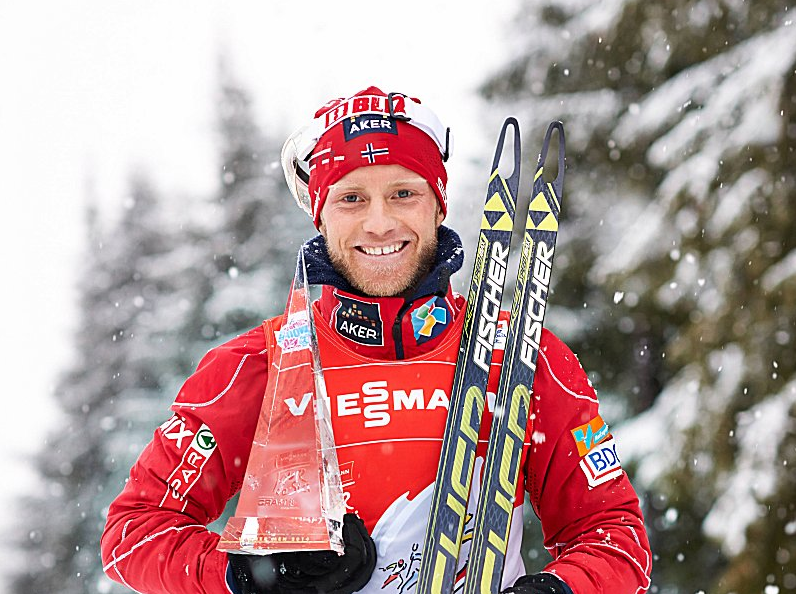
    Martin Johnsrud Sundby, Winner of the Tour de Ski.  Photo: Fischer/Nordic Focus
    Martin Johnsrud Sundby, Winner of the Tour de Ski. Photo: Fischer/Nordic Focus

    Martin Johnsrud Sundby led the final stage of the Tour de Ski and never looked back as he skied to his, and Norway’s, first victory in the event’s history.  Sundby, who has skied in every Tour de Ski, called his feat a “dream come true” and, overcome, said, “I have a great feeling, deep into the soul.” Chris Jespersen of Norway, skiing in his first Tour de Ski, captured second place. Of his effort on the big climb, he said, “towards the end I thought, ‘Now I die.’”

    Facing falling snow that grew heavier as the race progressed, Sundby began his day with a 49 second advantage over his teammate Petter Northug.  Starting in third, Jespersen left 38 seconds after Northug. With Alex Harvey of Canada missing from the fourth position, Austria’s Johannes Dürr was the next in line to start, leaving the gates just over two minutes after Sundby.

    The course looped once widely around the stadium before exiting for the approach to the base of the Alpe Cermis. An interval timing station at 1.8k showed that Sundby was skiing fast, exiting the stadium for the second time in 4:11.  Northug, chasing, passed the marker in 5:01, having lost a second on Sundby already.

    Leaving the stadium, the course followed a gradually descending trail for over three and half kilometers to the base of the climb. At the 4 k marker, midway between the stadium and the start of the climb, splits indicated that Sundby had increased his lead on Northug to 55 seconds. As Northug passed the timing check, he took off his glasses and threw them off the trail.

    Jespersen was the next to cross the 4 k marker, 1:09 behind Sundby, gaining ground now on Northug who was only ahead of him by 14 seconds. Next through was Dürr, leading Sweden’s Calle Halfvarsson and Russia’s Ilia Chernousov, 2:11 behind Sundby.

    As the trail began to steepen at the base of the Alpe Cermis, Jespersen caught Northug, and just before the time check at 6.2 k, Jespersen passed him. They were now 58 seconds behind Sundby.

    Dürr led the second chasing pack through at 2:23, having lost 22 seconds to Sundby on the approach. Behind him were Chernousov, Halfvarsson, Alexander Legkov of Russia, and Sjur Røthe of Norway.

    Alexander Legkov racing in the 2012 Tour de Ski.
    Alexander Legkov

    Less than a kilometer later, at 7.1 k, Sundby increased his lead to second place with Jespersen now 1:01 behind him and Northug trailing by a second.

    Behind Northug by 1:13 came Dürr who was pulling Chernousov with him. A five second gap separated Chernousov from Legkov, whose heart rate had already reached 182 beats per minute, with 1.9 k of climbing left in the race. Røthe stuck with Legkov, but Halfvarsson, the tall Swedish sprinter, was beginning to fall off the pace, now five seconds behind Røthe.

    After 7.1k, the course steepened. The challenging climb and subsequent curves were reminiscent of a giant slalom course being skied backwards. Sundby skied through this smoothly.  Jespersen, too, seemed to still be skiing within his limits, but behind him Northug looked tired; his form looked haggard as he bore all his weight down on his poles. Jespersen was pulling away from Northug who could muster no response.

    The 8.1 k split told the story clearly: Jespersen was now 21 seconds ahead of Northug who looked to be in no condition to catch back up. Jespersen had also pulled back a couple of seconds on Sundby, but with only 900 meters of race remaining, it looked like it would Sundby’s day.

    northug thumbNorthug found himself facing a new threat, however, in Dürr, who was now 36 seconds away from catching him, and he mut have known the Austrian was approaching. Dürr had now dropped Røthe by 21 seconds, and Chernousov, who had been skiing with Dürr a kilometer earlier had blown up. The Russian was now 43 seconds behind Dürr and had been passed by Røthe and Legkov.

    After the 8.1 k marker, the trail steepened again, this time to its most severe grade, a 28 percent slope. Sundby V1’d up the slope with an apparent ease that was belied by the tortured expression on his face. It was an impressive performance up a slope that has seen former Tour leaders like Dario Cologna of Switzerland reduced to single sticking up its formidable pitch.

    Northug, on the other hand, didn’t look particularly graceful up the precipitous climb. Dürr who could see him, and his place on the podium, tantalizingly ahead skied after him hungrily, and on the top of the steep pitch, caught him.

    At 8.5 k, 400 meters after the last timing interval, a grimacing Sundby led, comfortably ahead of second place Jespersen by 53 seconds. Dürr was 1:31 after Sundby, with Northug struggling to stay with him. Behind Northug by 36 seconds was Røthe, who had dropped the hard-charging Legkov on the last pitch by 28 seconds.

    With 500 meters remaining, Sundby skied ahead, looking pained but not slowing in any apparent way. Jespersen, too, seemed steady in his skiing. The battle for third was also short-lived. Northug, skiing frantically behind Dürr as the course cut back and forth up the summit of Alpe Cermis, soon lost his form and appeared to have given up as Dürr skied away from him, less than half a kilometer from the finish line.

    Petter Northug finishes.  Photo: Fischer/Nordic Focus
    Petter Northug finishes. Photo: Fischer/Nordic Focus

    When Sundby reached the finish line, with his family watching from the sidelines, he did not slow down to celebrate or grab a Norwegian flag. Instead he powered through the finish, a long spindle of saliva hanging involuntarily from his mouth. He had no effort left for a celebratory arm raise, but could only muster the strength to push up his falling glasses.

    Jespersen, approaching the finish line, turned over an amazing finishing tempo, jump skating through the finish to second place in the Tour de Ski, and with the second fastest climb of the day.

    Dürr, too, came through the finish line as quickly as he could, setting the fastest time of the day and taking third place in the Tour de Ski. He raised his hands and yelled happily as he collapsed on the snow.

    Northug, finishing fourth, was caught by Sundby after he crossed the finish line. Sundby looked to have some words of consolation for him.

    Røthe was next across the line in 5th. He also recorded the third fastest time of the day.   He was followed by Legkov, Norway’s Tord Asle Gjerdalen, Chernousov, Halfvarsson, and Didrik Toenseth of Norway.

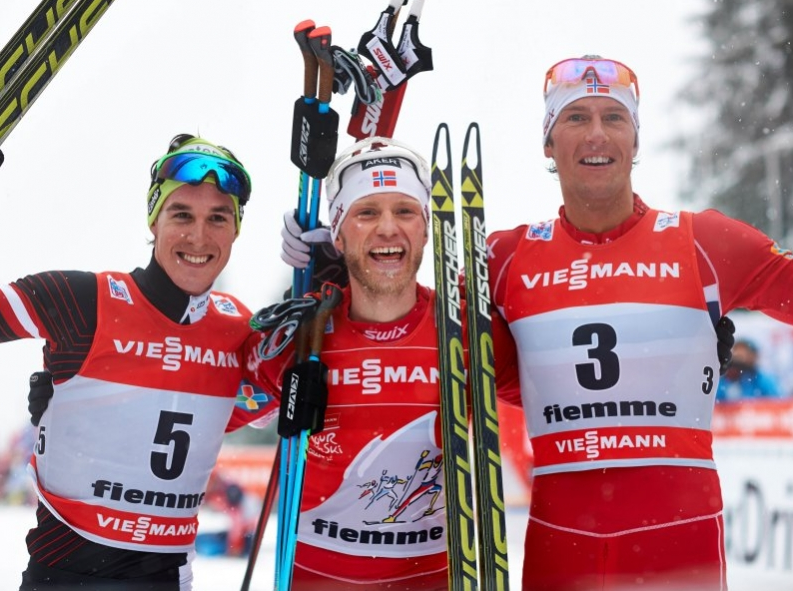
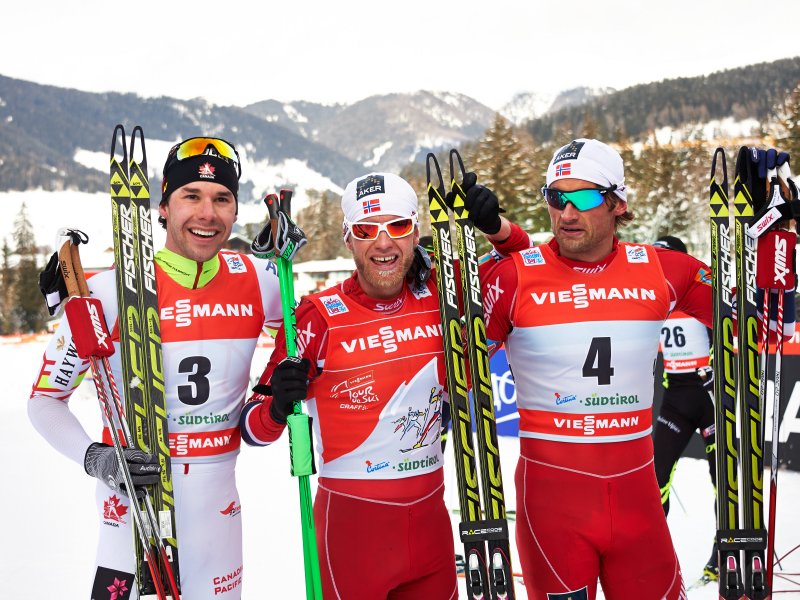
    Podium of the Tour de Ski.  Photo: Fischer/Nordic Focus
    Podium of the Tour de Ski. Photo: Fischer/Nordic Focus

    In all it was a very good day for Norway, with six men finishing in the top ten of the Tour de Ski, and narrowly missing out on a double podium sweep, with the Norwegian women taking the top three spots in their race.

    Ivan Babikov of Canada, the last Canadian man in the Tour and a formidable climber, had another impressive day on the Alpe Cermis, having the fourth fastest day and skiing his way up from 21st to 16th, despite breaking a pole. In 2009 Babikov posted the fastest time up Alpe Cermis and was second in this same race last year.

    “I have no idea why I’m good at this stage,” said Babikov following last year’s climb. “Where I grew up there were no hills. Everyone feels the pain at some point on the hill. Maybe I am able to cope with the pain a little better than others. People always ask me why I’m good at it and I don’t know. I just love climbing and I just go with it.”

    Noah Hoffman of the US, also the lone American left in the Tour, skied his way from 31st to 25th overall. Hoffman said of his race, “I felt like I started hard, but the guys who started behind me caught me at the finish of the sprint loop. I struggled a little bit in the gradual downhill, the soft conditions are really challenging for me.” On the climb he went to work, moving from 30th to 25th. He stayed strong at the end, passing three skiers in the last kilometer.Hoffman is eager to return to the final climb in 2015, “I feel like I’m a better climber than I’ve shown on my two efforts on Alpe Cermis,” he said, “so I’m looking forward to another opportunity next year, and I really feel that I can have a top 5 or win the climb. I think climbing on skate skis is real strength of mine.”

    Hoffman
    Hoffman

    Sundby is a true veteran of the Tour de Ski, having skied in all eight editions of the race. His performance in this year’s Tour was worthy of a champion—he made it to the final of every sprint competition, and as a result skied the maximum distance possible in the Tour, and was a threat for the podium in all but one race.

    He told FIS after the race, “This a dream come true for me. It has been a long way to here. This is my 8th Tour de Ski.  It is an amazing moment for me. I did not have the best day today. I had to take it easy and go medium pace not to be totally tired soon. It was tough going first in the snow; it was quite slow.  Olympics is the main goal for the season. It will be interesting now to see how my body responds after the Tour de Ski.”

    For Sundby, his victory is a crowning achievement in a ski career that has developed slowly and steadily over the years. Norwegian newspaper Dagbladet called for Sundby’s name to be added to the pantheon of Norwegian sporting heroes for his achievement as a complete skier. “I have a great feeling, deep into the soul.” said Sundby to NRK after the race, “There is an awful lot of hard work behind this victory. There are a lot of emotions inside now.” An emotional Sundby told the Norwegian broadcaster, “Don’t ask many questions, I’ll start to cry.”

    Sundby’s success has been the result of many small adjustments: more rest, less weight training, changing the way he records his training log, and refining his technique over the summer at Holmenkollen.  Last but not least he has improved his diet, telling Dagbladet that, “It took a long time, but now I have discovered that Coke and potato chips are not the right thing to eat after exercise…It is very good, but it does not provide any energy in the long term.”

    Sundby was initially annoyed with the change of the Tour format due to the poor snow available in Oberhof, Germany.  He voiced his grievances to Dagbladet before the start of the prologue, calling it a “parody of cross country skiing” and grumbling about a lack of a venue change and the Tour being solely designed for television. After the prologue however, it occurred to Sunday that the training he had done made the new Tour format optimal for his abilities and he set about doing what he could to win it.

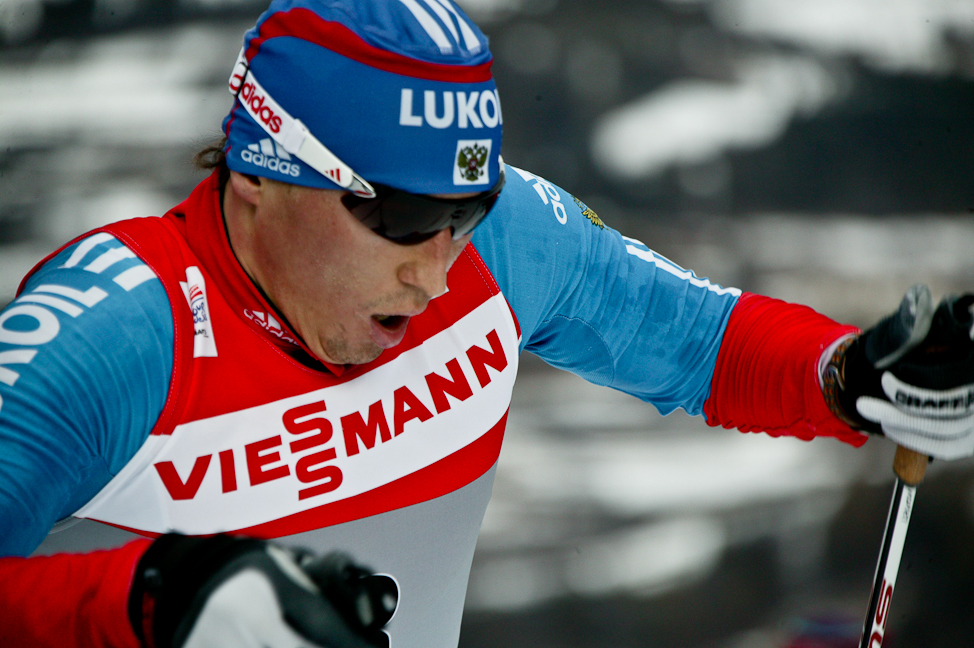
    Johannes Dürr.  Photo: Fischer/Nordic Focus
    Johannes Dürr. Photo: Fischer/Nordic Focus

    Jespersen for his part was an unknown factor heading into the Tour, his first ever. When asked by Dagbladet if he ever thought before the start of the event that he would finish second, he replied, “I really thought I was going to win, so…I ‘d at least hope so. But the tour was settled with the long race [Friday’s 35 k pursuit] with Martin in front.  He is a worthy winner.”

    His remarks to the Norwegian press didn’t quite match his comments to FIS, saying, “I had a great race today.  I am very satisfied with second place. I tried to open very hard, when I passed Petter I tried to keep the pace high. I hope the shape will continue and I can perform well in Sochi. This season I had planned to do long distance competition so I am little bit surprised about the result.” To Dagbladet he said of the race, “It was great fun to go today.  I was fit and had good skiing.  But towards the end I thought, ‘Now I die.’ Luckily I got more power as I approached the top.”

    Dürr confessed his excitement at taking third in the Tour. “It is awesome to be on the podium of the Tour de Ski,” he told FIS. “I can hardly realize it; it came too fast. After yesterday I had some hope for a podium. I knew I would need a perfect day and skis. I had great equipment today—not only today but during the whole Tour.  I just gave it all and went totally full speed on the uphill.”

    Johannes Dürr, with fans.  Photo: Fischer/Nordic Focus
    Johannes Dürr, with fans. Photo: Fischer/Nordic Focus

    To the Austrian newspaper Der Standard, Dürr said, “I have only looked forward. As Northug briefly focused on me, I started to doubt it. But then [once across the finish line] everything that is in me, is brought out,” said a happy Dürr.

    Northug, despite losing two places to finish outside the podium, did not express bitterness about his race. “I thought it would be uglier,” he told NRK. “I did not lose too much, and I got help from Chris [Jespersen]. Had I been alone, I’d have lost a minute.” He added further, “I got help from Chris and Dürr. When I went into the ground, I thought there were many that would pass me…I thought Legkov and several others were coming behind me and would walk past.” Northug said he was pleased to have finished at all in the top ten.

    The 27 year old conceded to NRK that his goal of winning the Tour de Ski, one of his great dreams, is fading, saying, “I should have been four minutes into the ground” and, “I think I’m too fat to win the Tour de Ski.”

    Results 


  • Harvey Back on the Podium in Tour Pursuit

    Harvey Back on the Podium in Tour Pursuit

    Alex Harvey (CAN) takes a pull at the front of the chase pack during the 35 k pursuit.  Photo: Fischer / Nordic Focus.
    Alex Harvey (CAN) takes a pull at the front of the chase pack during the 35 k pursuit. Photo: Fischer / Nordic Focus.

    Canadian Alex Harvey skied back onto the Tour de Ski podium, finishing third in the 35 k freestyle pursuit, his third podium of the seven stage event.

    In a post-race phone call, Harvey said he woke up feeling good, always a positive sign in a stage race.
    “I was pretty  happy to feel that my legs were pretty light in the warmup,” he said.
    Starting in bib 3, Harvey maintained position, skiing with the main pack. The group was unable to close on eventual winner Martin Johnsrud Sundby of Norway, and numbered seven for the final sprint.
    Harvey lost out only to Peter Northug (NOR) in the chase pack, edging Swede Calle Halfvarsson and defending Tour champion Alexander Legkov of Russia.
    The course winds gradually up for the first 12 kilometers, and Harvey said the pace was not overly taxing.
    Last year Legkov attacked hard on that same section of the course, but Harvey said the Russian was “not as much of a beast” this time around.
    With no one pushing, Harvey even took a turn at the front, unusual he explained because “I feel like in climbing that I’m not as strong as these guys, but the pace was just that slow.”
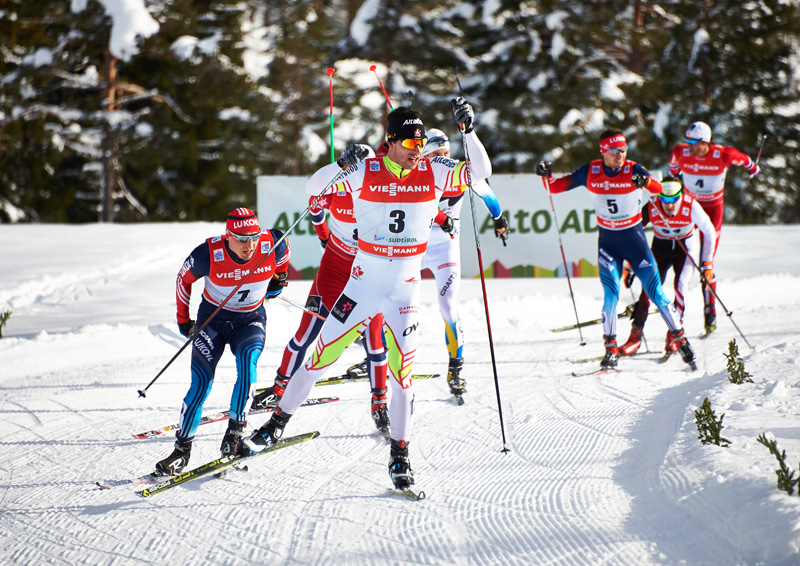
    Alex Harvey (CAN), Alexander Legkov (RUS), Johannes Duerr (AUT), Chris Jespersen (SWE), (l-r) share the load behind Martin Johnsrud Sundby (NOR).  Photo: Fischer / Nordic Focus.
    Alex Harvey (CAN), Alexander Legkov (RUS), Johannes Duerr (AUT), Chris Jespersen (SWE), (l-r) share the load behind Martin Johnsrud Sundby (NOR). Photo: Fischer / Nordic Focus.

    Harvey was especially pleased as he has not skied well in this stage the past several years. He entered the day aiming to stay with the chase pack over the crest of the climb and into the gradual descent.

    “The goal was to stay in the top group and fight for the podium at the end,” Harvey said. “Looking at my last two years, I was starting with the similar group but then getting popped two-thirds of the way and ending in a group fighting for sixth or seventh place.”
    Harvey described the finish as “a bit messy” despite featuring only seven skiers.
    With the likes of Legkov and Austrian Johannes Duerr, who posted the fastest time of the day, there were several non-sprinters gunning for the podium.
    Harvey described those two as specifically being “all over the place” at the end.
    “He [Duerr] was kind of switching from left to right lane with 500 meters to go … I was just following Petter … but I just smashed his pole.  I got a bit out of position, but I was able to generate some speed out of the final corner.”
    He got by Halfvarsson and one other skier whom he couldn’t identify in the final 200 meters, leaving only Northug.
    “Petter had his usual finish and I just couldn’t quite match that, but I was happy,” Harvey said.
    “We are happy with where the guys are at and to have Alex on the podium again,” Canadian Head Coach Justin Wadsworth said in a Cross-Country Canada press release. I think he did a great job conserving energy for the final weekend, whereas Sundby worked pretty hard on his own today so it will be interesting to see what he has tomorrow.”
    Harvey will race Saturday’s individual 10 k classic, but at this point he is not planning on tackling the Final Climb up the Alpe Cermis. Suffering from a chronic leg issue that is exacerbated by extended steep climbing, Harvey has struggled mightily on the ascent up the alpine slope.
    — Katie Bono contributed reporting
  • Sundby Skis Alone to 35k Tour Victory

    Sundby Skis Alone to 35k Tour Victory


    Cortina to Toblach podium (l - r) - Alex Harvey (CAN) 3rd, Martin Johsnrud Sundby (NOR) 1st, Petter Northug (NOR) 2nd. Photo: Fischer/NordicFocus
    Cortina to Toblach podium (l – r) – Alex Harvey (CAN) 3rd, Martin Johsnrud Sundby (NOR) 1st, Petter Northug (NOR) 2nd. Photo: Fischer/NordicFocus

    Norwegian Martin Johnsrud Sundby took off like a rocket on Friday and never looked back. The 29-year-old Norwegian had a 32 second head start in the 5th stage of the Tour de Ski, a 35 k freestyle pursuit race, and he took full advantage of it.

    Taking place on a tough point-to-point course starting in Cortina, Italy and finishing in Toblach, Italy, the course strongly favored pack racing. The course consisted of one long uphill to the halfway point followed by one long downhill to the stadium area and 3 k of gradual rolling terrain to finish off the day.

    The long gradual downhill section raced considerably faster in a pack, but Sundby decided to race his own race and ended up with a lead big enough to secure the win, 58 seconds ahead of the field. He was aided by the relatively slow pace of the men in the chase pack, all of whom seemed unwilling to lead and unbothered by the large distance between them and the Norwegian. Petter Northug (NOR) bested the rest of the chase pack for second place (+58.2) in a sprint finish, with Alex Harvey coming in third.

    After starting the race, Sundby quickly extended his lead to over a minute ahead of the pack. Skiing alone and controlled, he had a good idea of where the rest of the pack stood. He said he had plenty of splits from his coaches letting him know how big his gap was, but that the effort definitely took a toll on him. He told FIS News,

    “I went with a pace I thought I could hold for the whole way. For sure I was trying very hard and now I am extremely tired.

    “Now it’s [time] to recover for tomorrow.”

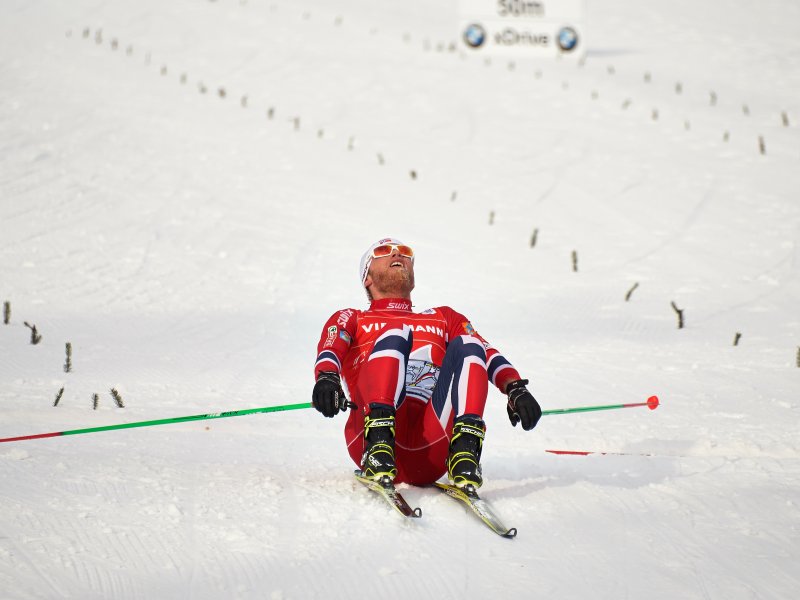
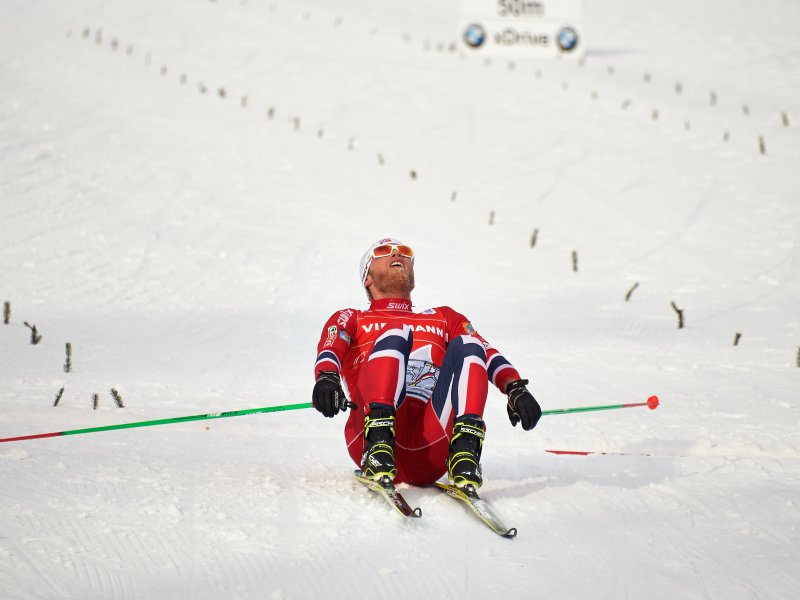
    Sundby collapses after crossing the line. Photo: Fischer/NordicFocus
    Sundby collapses after crossing the line. Photo: Fischer/NordicFocus

    Sundby’s win was his first stage victory of the Tour, and his third podium.

    Behind him, the race was most notable for the controlled pacing of the chase pack and the dramatic jump up the overall rankings for a few skiers.

    Johannes Duerr of Austria, was one of these. Starting in bib 34, 2:12 back, he quickly moved up the field to gain the chase pack midway up the uphill portion of the course. He maintained his position with the lead pack and, in fact, led much of the way due to the other skiers’ reticence to ski at the front.

    Moving through the finishing stretch, Duerr and Harvey briefly tangled. Duerr broke a pole, but still ended up sixth overall, with the fastest time on the day. This race could put him into contention for a podium finish, as Harvey is planning on leaving the Tour after Saturday’s 10 k classic race.

    Northug showed his famous finishing strength, surging to the front of the chase pack coming into the stadium to move up to second place overall in the Tour. Before today, he was sitting in fourth place, but is now in good position coming into the final races of the seven day set.

    It remains to be seen, however, if anyone will be able to touch Sundby’s 1:15 lead on the rest of the field.

    Duerr celebrates his strong race. Photo: Fischer/NordicFocus
    Duerr celebrates his strong race. Photo: Fischer/NordicFocus

    Calle Halfvarsson of Sweden fell back from second place to fourth in the overall rankings, while Russian Alexander Legkov moved up from seventh place to within striking distance of the overall podium in fifth place. Both sit six seconds back from the podium.

    Along with Duerr, Noah Hoffman (USA) also had a dramatic day. Starting in bib 69, 3:27 back, he surged to gain a large pack right before the crest of the course and skied to the second fastest time of the day, ending up in 27th overall (+3:07).

    Tomorrow’s race is a 10 k classic individual start race for the men and could shake the results up a bit. With predicted temperatures around freezing, and a large storm blowing in, waxing will be tricky.

    Results:

    35 k pursuit race

    Overall standings

    Martin Johnsrud Sundby (NOR) starts the 35 k pursuit.  Photo: Fischer / Nordic Focus.
    Martin Johnsrud Sundby (NOR) starts the 35 k pursuit. Photo: Fischer / Nordic Focus.
  • Manificat Trumps History, Norwegians in Davos 30 k Skate

    Manificat Trumps History, Norwegians in Davos 30 k Skate

    France's Maurice Manificat racing to a 3.3-second win over Chris Andre Jespersen of Norway in the World Cup 30 k freestyle individual start in Davos, Switzerland.
    France’s Maurice Manificat racing to a 3.3-second win over Chris Andre Jespersen of Norway (not shown) in Saturday’s World Cup 30 k freestyle individual start in Davos, Switzerland. It was Manificat’s third individual win and eighth World Cup podium, besting his second-place performance in the 30 k two years ago in Davos.

    Maurice Manificat was having one heck of a flashback on Saturday in Davos, Switzerland. Two years older and that much more experienced, the 27-year-old Frenchman could sense that he was in the hunt for another World Cup career best in the 30-kilometer freestyle individual start – the same race and place he placed second in almost exactly two years ago.

    In December 2011, Manificat essentially fell apart in the last quarter of the race, losing to Norwegian Petter Northug by 51.4 seconds. He didn’t forget that during his four times around the Davos course on Saturday, being mindful and consciously restraining to make sure he had something left at the end.

    Chris Andre Jespersen of Norway leads Switzerland Roman Furger during the men's 30 k skate on Saturday in Davos, Switzerland. Jespersen went on to place second for his first World Cup podium and Furger placed 57th.
    Chris Andre Jespersen of Norway leads Switzerland Roman Furger during the men’s 30 k skate on Saturday in Davos, Switzerland. Jespersen went on to place second for his first World Cup podium and Furger placed 57th.

    Starting 66th of 70, Norway’s Chris Andre Jespersen chased down Manificat’s top time, heading out 2 ½ minutes after him. With just over 5 k remaining, it looked like Jespersen could steal the victory from under him as he clocked the fastest time through the 24.5 k checkpoint. Two kilometers later, Manificat had the edge by 2.3 seconds and his closing kick turned out to make the difference as Manificat won by 3.3 seconds.

    His time of 1:05:10.8 was 2:33 minutes faster than Northug’s in 2011 and stood as Manificat’s third individual win and eighth World Cup podium. Norway’s second man, Martin Johnsrud Sundby placed third, 14.9 seconds behind Manificat, and Northug finished 37th, 2:51.2 minutes back.

    “It was a tough race,” Manificat told reporters. “I was thinking of two years ago when I did not push hard enough towards the end and lost the victory in the last lap.”

    “It feels great to win today,” he added.

    Afterward, Canadian Alex Harvey (who did not race) tweeted at Manificat in French: “Moving to Davos?”

    “I’ll need a few more wins 🙂 ,” Manificat responded.

    Overall World Cup leader Martin Johnsrud Sundby, of Norway, racing to third in Saturday's 30 k skate at the World Cup in Davos, Switzerland.
    Overall World Cup leader Martin Johnsrud Sundby, of Norway, racing to third in Saturday’s 30 k skate at the World Cup in Davos, Switzerland.

    Careful not to open too hard, Manificat had the fourth-fastest time through 4 k, trailing Russian Alexander Legkov and Austrian Johannes Duerr, respectively, at the time. Then, Sundby as the final starter jumped out to the fastest 4 k time.

    By the halfway mark, Manificat had taken the lead, about 10 seconds ahead of Simen Andreas Sveen – a 25-year-old Norwegian gunning for an Olympic bid. Sundby surpassed Manificat’s 15 k time by 13 seconds, but the Manificat up ahead wasn’t too concerned.

    Saving for the last 7 ½ kilometers, Manificat was still warming up, doing his best to accelerate over the courses flat sections. The tactic worked as Sundby dropped to third by 24.5 k and Jespersen emerged as a contender for his first World Cup podium – which was almost a win.

    “I was surprised when I heard I was fighting for victory,” the 30-year-old Jespersen told reporters. He had focused on skiing his own race and holding a steady pace.

    “It’s my first podium in my career; three seconds behind the winner is like a victory for me,” he added. (Later, he told NRK “it sucks” to lose by that margin, “but right now, I don’t care!”)

    Meanwhile, Sundby, 29, held onto the overall World Cup lead by 91 points over Manificat. Knowing it would be a tough race from the get-go, he was pleased to share the podium with his teammate, who now leads the distance World Cup standings by six points over Manificat.

    “Chris is good enough to go the Olympic Games in Sochi,” Sunbdy told NRK, according to a translation. “We are very good pals, have been there a long time and has trained a lot together. There is nothing that pleases me more than to stand on the podium with him even if he beats me.”

    While Jespersen differed questions about whether that result put him on Norway’s Olympic team (he also placed eighth in the Kuusamo mini tour to start the season and eighth in the Lillehammer 15 k classic last weekend), he told NRK, “It’s big.”

    Two other Norwegians, Sveen broke through in fifth (+22.1) to help Norway take three of the top five, and Petter Eliasson placed eighth.

    Italy’s Roland Clara placed fourth (+20.8), France’s Robin Duvillard finished sixth (+39.2), Duerr took seventh for Austria, and Legkov and Finland’s Matti Heikkinen tied for ninth.

    Results