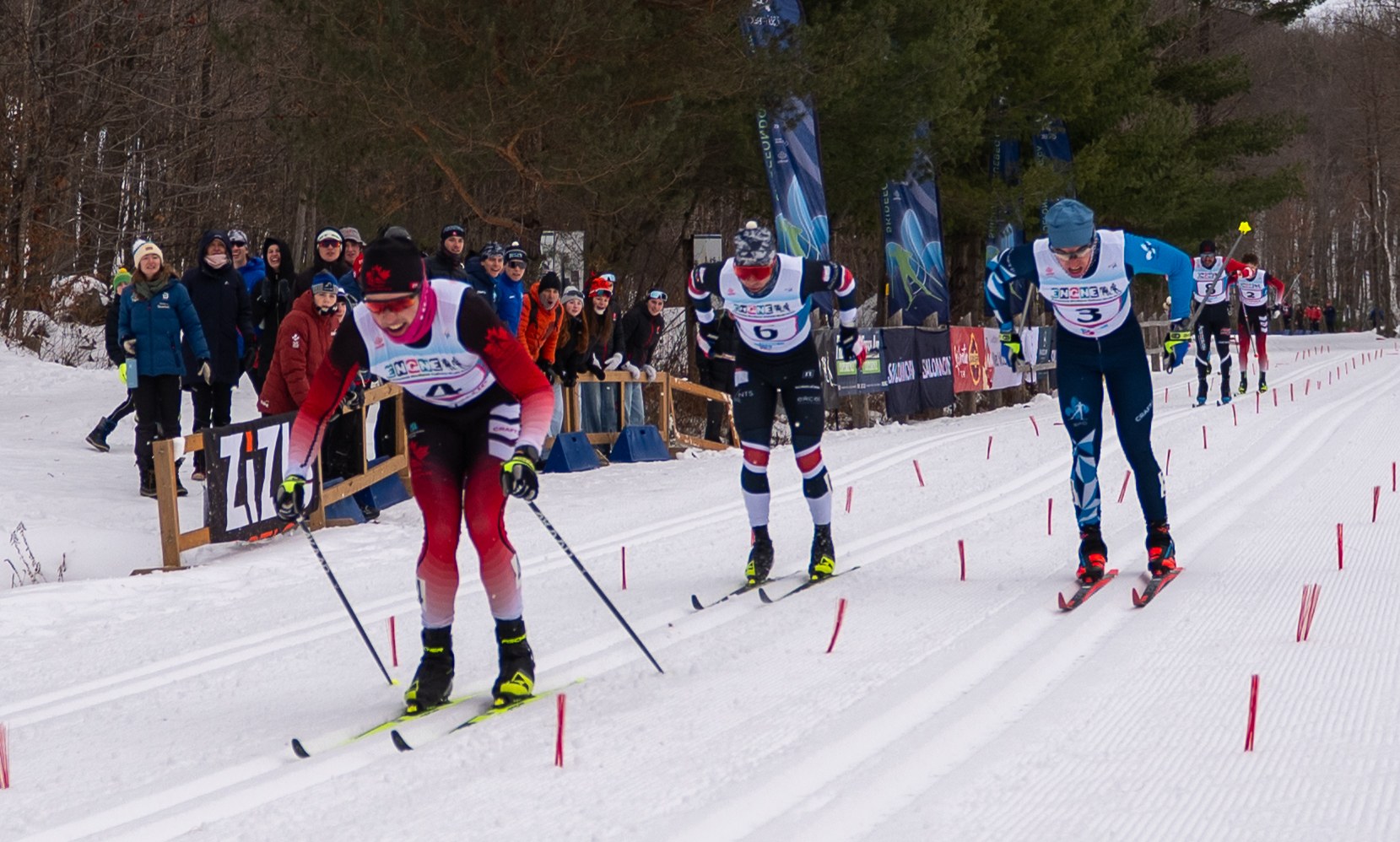
A classic sprint for the line at the Candy Cane Cup in December 2025. (Photo: Rob Smith)
The series, taking place in Gatineau, Quebec (near Ottawa), kicks off with the Canadian World Junior and U23 Championship trials, Dec. 18-21, and concludes with the Eastern Canadian Championships, Feb. 5-7. These FIS races, organized by Évènements Nordiques Gatineau Nordic Events (ENGNE), take place at Nakkertok Ski Club with the support of Ville de Gatineau and Tourisme Outaouais, longtime sponsors of the events and of skiing in the region.
Nakkertok is known for its excellent grooming and for race trails supported by an extensive snowmaking system, and for a very experienced organizing committee (nakkertok.ca).
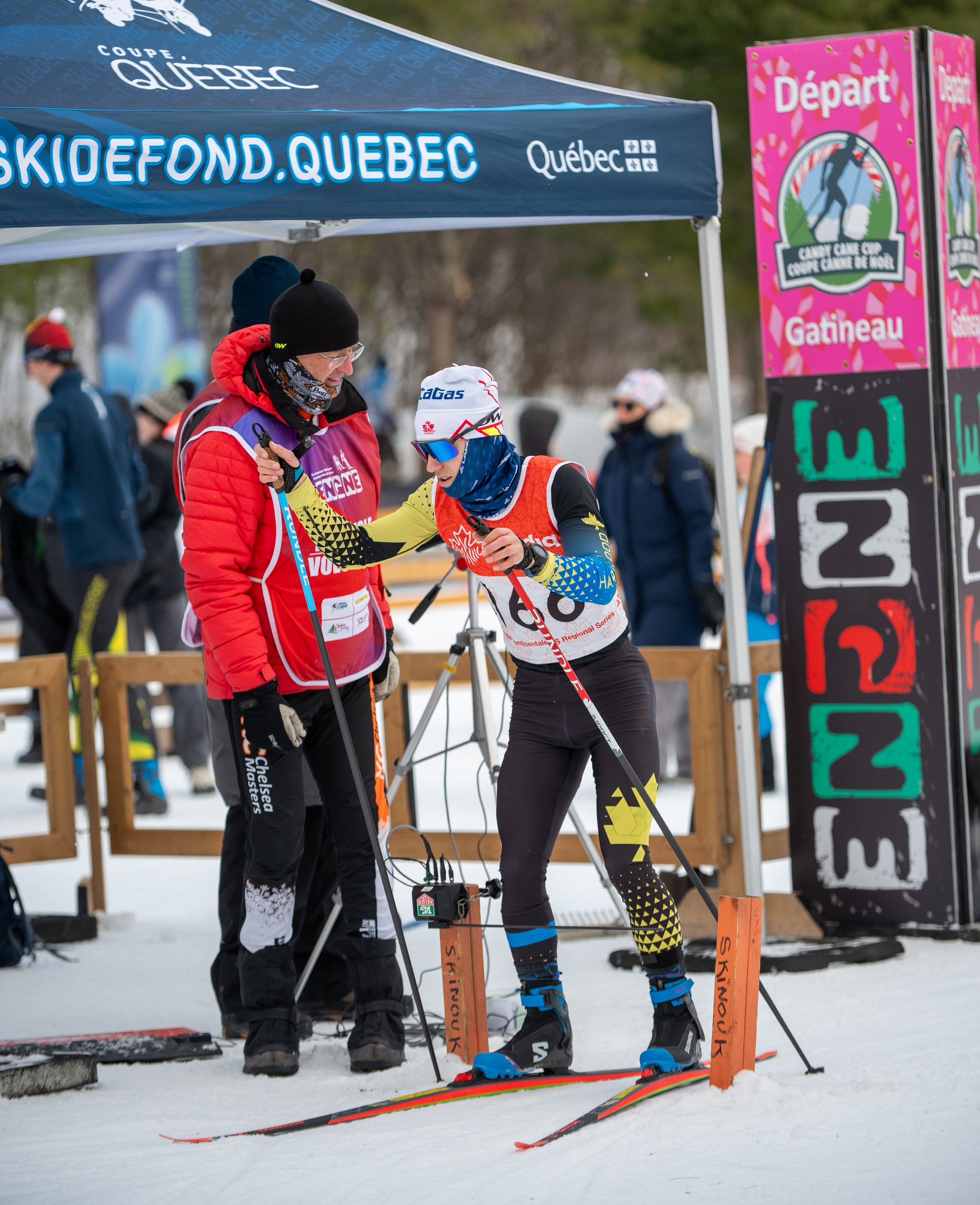
A racer leaves the start gate at the Candy Cane Cup in Gatineau, December 2025. (Photo: Rob Smith)
The Candy Cane Cup
The December races, also known as the Candy Cane Cup, will feature Canada’s best Junior and U23 athletes as they battle for positions on the Canadian team at the FIS Championships in Otepää, Estonia. The Candy Cane Cup is also the second Nordiq Canada NorAm event of the 2026-2027 season, identifying senior athletes for the Period 3 FIS World Cups. Winners in the Open class will claim $500 per race, with the overall winner receiving an additional $1,000 as a Hall Mark of Excellence (HME) Award. Junior race winners will receive $200 per race and $500 overall. Additional prize money will be awarded for other placings and categories, including ParaNordic events, with racers selected for the Canadian teams receiving an additional cash bonus.
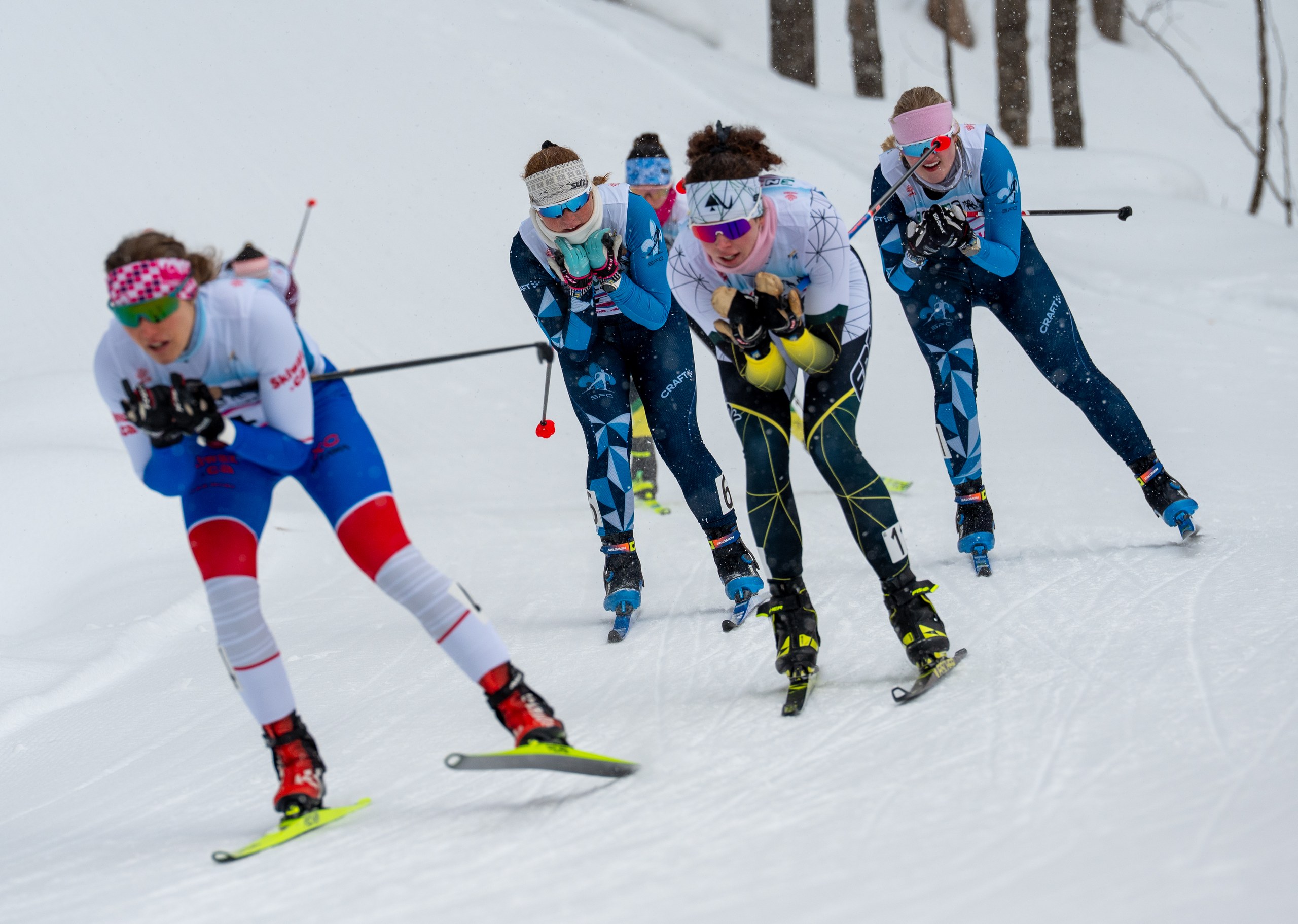
A chase group tucks through falling snow at the 2026 Eastern Canadian Championships. (Photo: Rob Smith)
The Eastern Canadian Championships
February’s Eastern Canadian Championships start the Friday following the NorAm and SuperTour races in Lake Placid, 2.5 hours “up the road,” and have a similar prize structure. Athletes who participate in both events will be eligible for the additional $2,700 in HME prize money for overall performances.
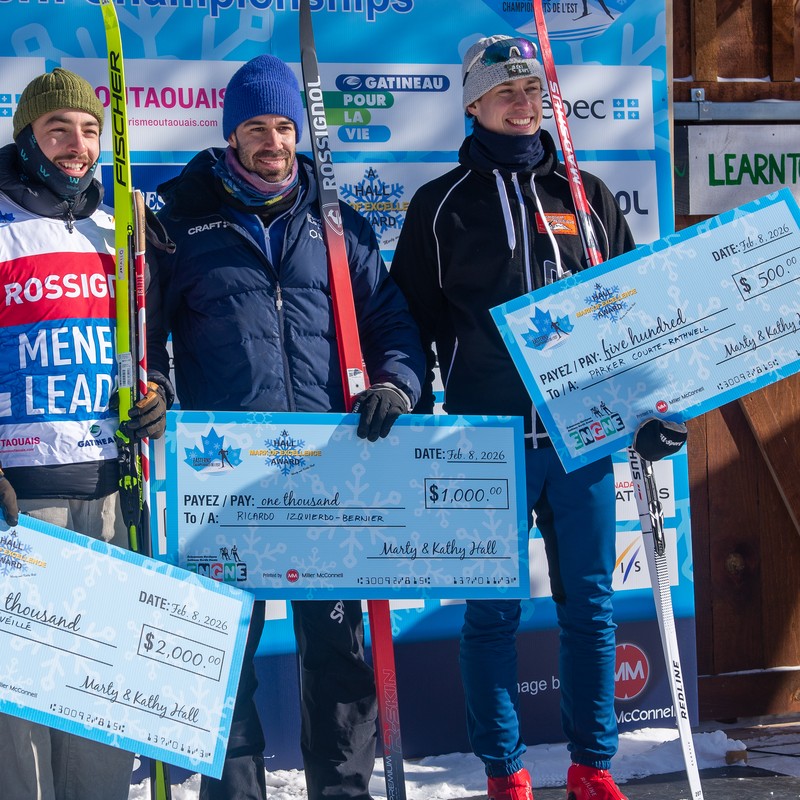
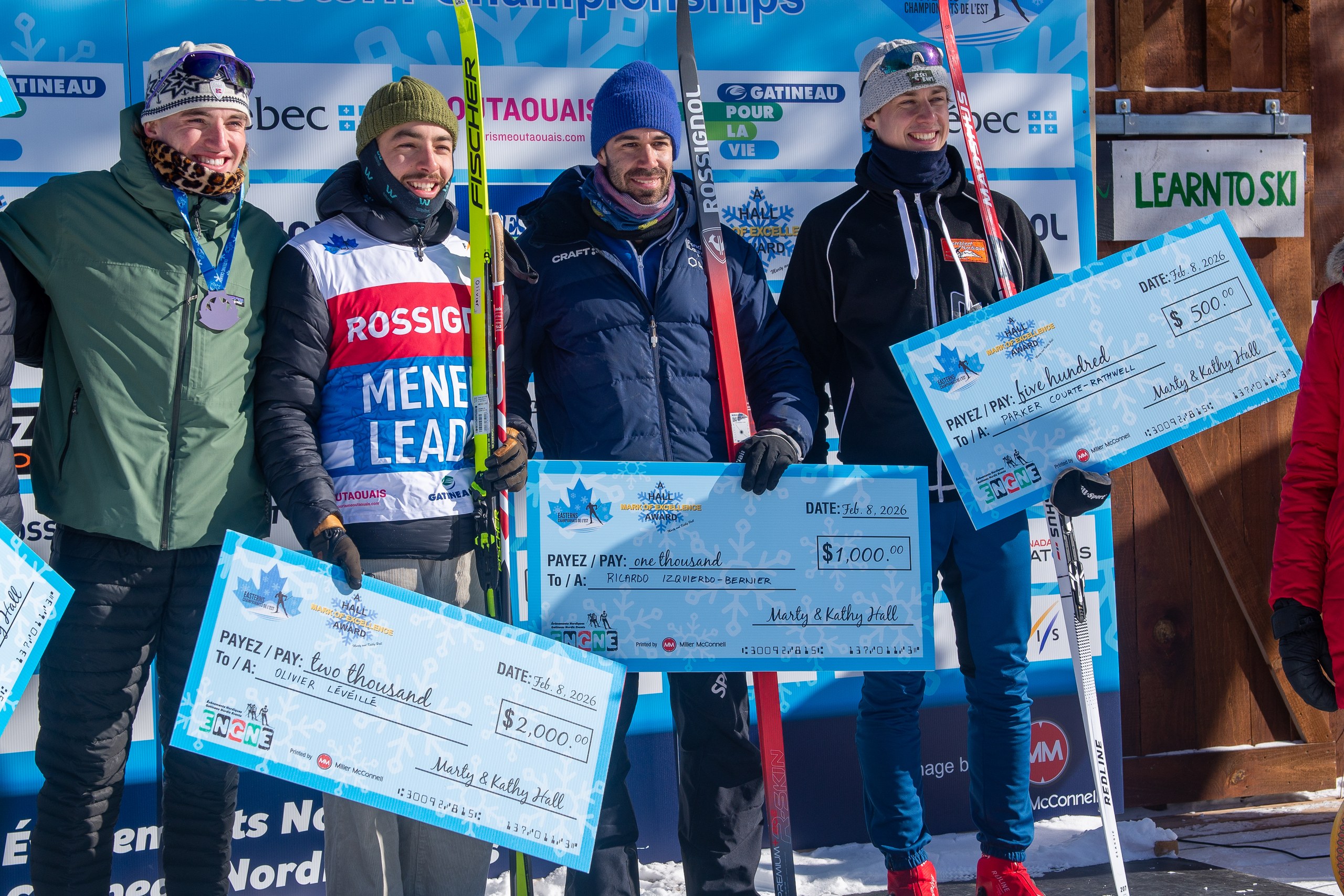
Hall Mark of Excellence checks for $2,000, $1,000 and $500 presented at the 2026 Eastern Canadian Championships, made out to Olivier Léveillé, Ricardo Izquierdo-Bernier and Parker Courte-Rathwell, respectively. (Photo: Rob Smith)
The Hall Mark of Excellence Award
The Hall Mark of Excellence Award program, founded by Marty and Kathy Hall, has provided over $70,000 of prize money at ENGNE events over the last six years, providing much needed financial support to athletes. As Kathy Hall described, “The intent of our program is to inspire and reward skiers, ultimately to enable them to continue to develop their potential and pursue their success at whatever level of skiing they choose.”
For the 2026-27 season events the HME is contributing $18,000, with an additional $17,000 provided by ENGNE and $8,600 by Nordiq Canada for the NorAm event.
“Nordiq Canada is pleased to contribute financially toward the December NorAm at Nakkertok and to work alongside ENGNE and the local organizing team to deliver a strong competition opportunity for Canada’s athletes,” said Beckie Scott, CEO of Nordiq Canada. “Investing in our domestic competition calendar is an important part of creating a high-quality pathway for athletes to develop, compete and prepare for international racing. We’re grateful to ENGNE and its partners for continuing to raise the standard of racing in the Ottawa-Gatineau region and for their commitment to supporting Canadian athletes.”
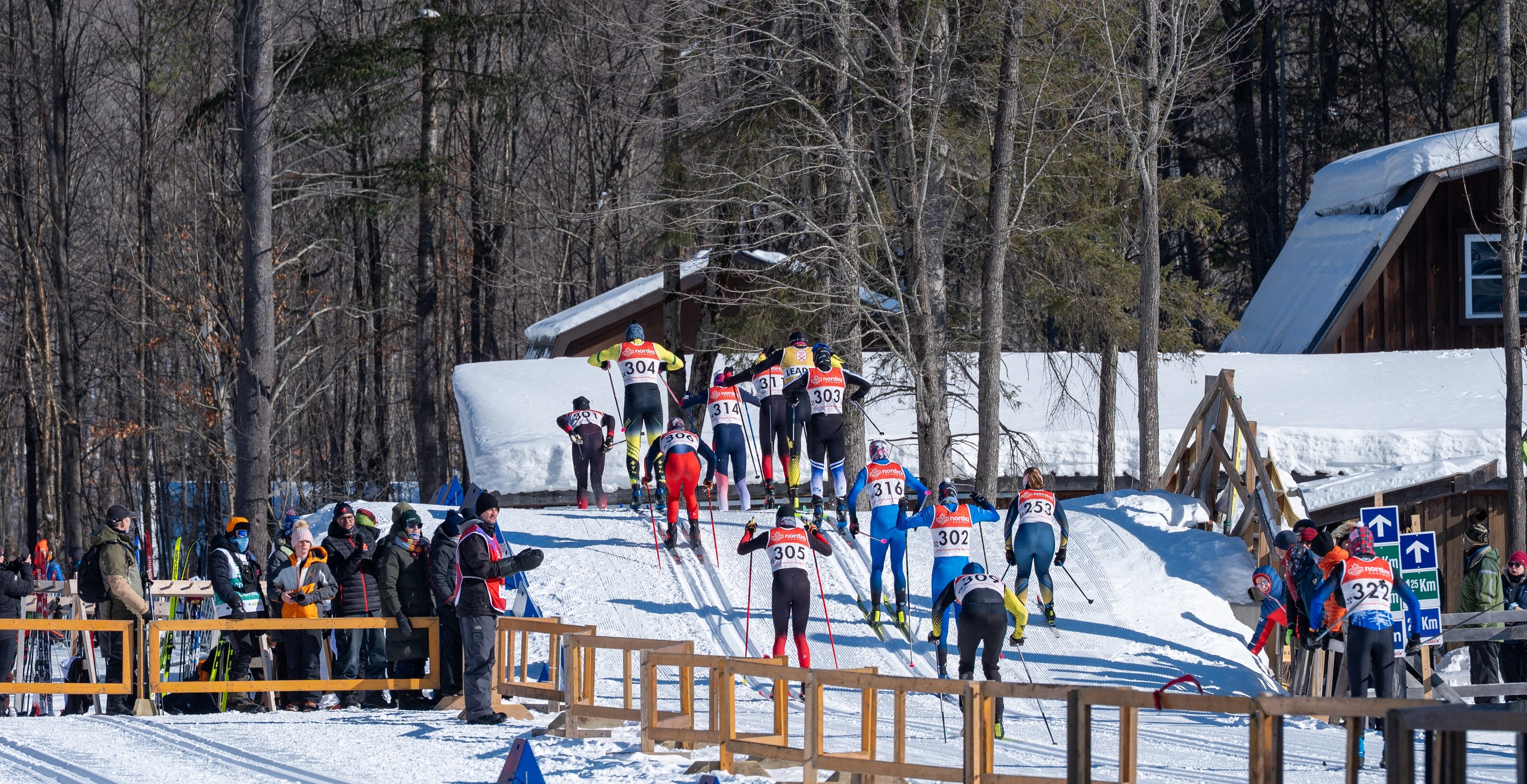
The field double-poles over a small climb early in the 2026 Eastern Canadian Championships. (Photo: Rob Smith)
A Record Year at Nakkertok
ENGNE has been organizing races in the Ottawa/Gatineau area since being formed to run the 2016 World Cup event as part of Ski Tour Canada. “A larger prize purse was important to us this season: it helps ease the financial load for athletes heading to World Championships,” said John Halvorsen, ENGNE President. “With the support of Nordiq Canada and Kathy Hall, we’ve set a record year for prize money at Nakkertok Nordic Ski Club, cementing its place as eastern Canada’s hub for world-class ski racing.”
As well as the Nakkertok trails, the Ottawa/Gatineau area has over 200 kilometres of ski trails, including Gatineau Park, home of the Gatineau Loppet, and an extensive urban trail system. It is a great area in which to train, explore and relax. We look forward to welcoming you to our winter ski home.
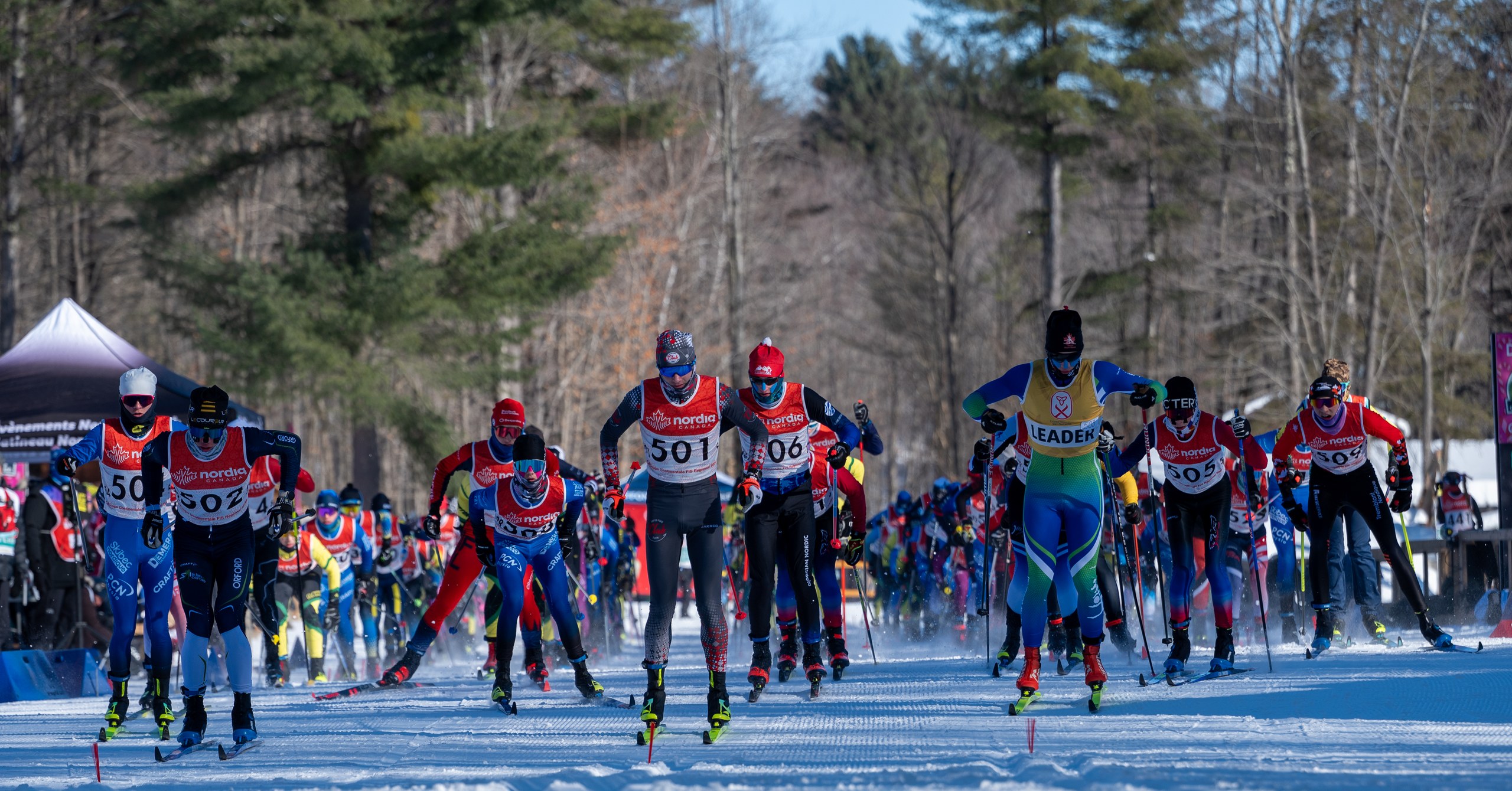
The mass start rolls out at the 2026 Eastern Canadian Championships. (Photo: Rob Smith)
Publishing press releases is a service we offer to the ski community, so please note these articles are not written by FasterSkier and therefore do not necessarily represent our thoughts and standards.
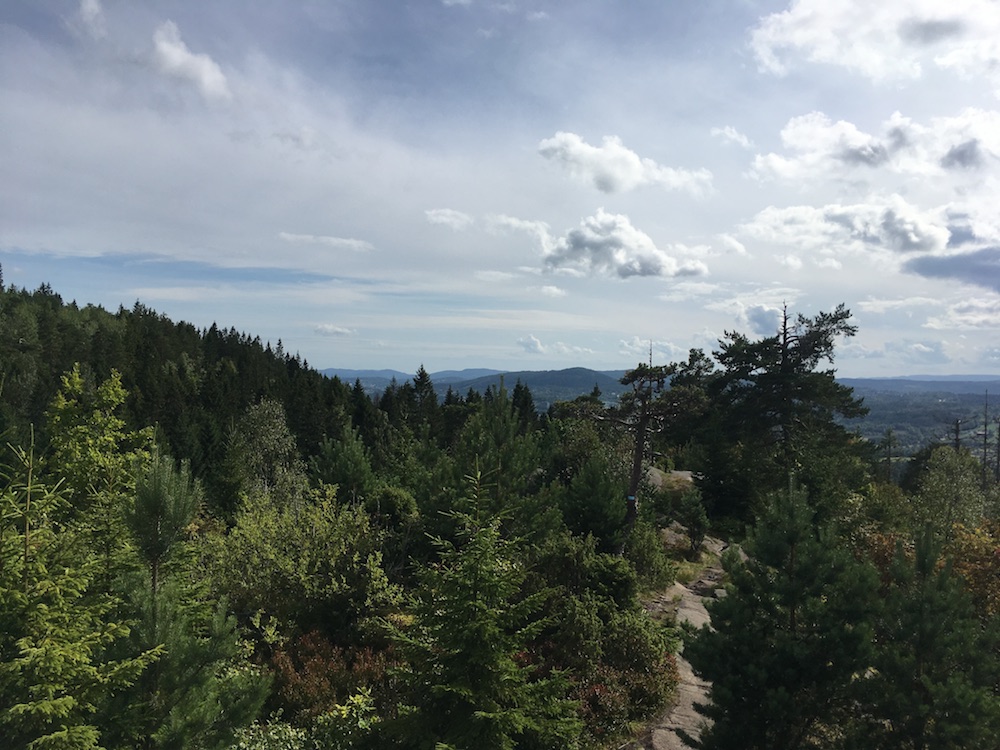
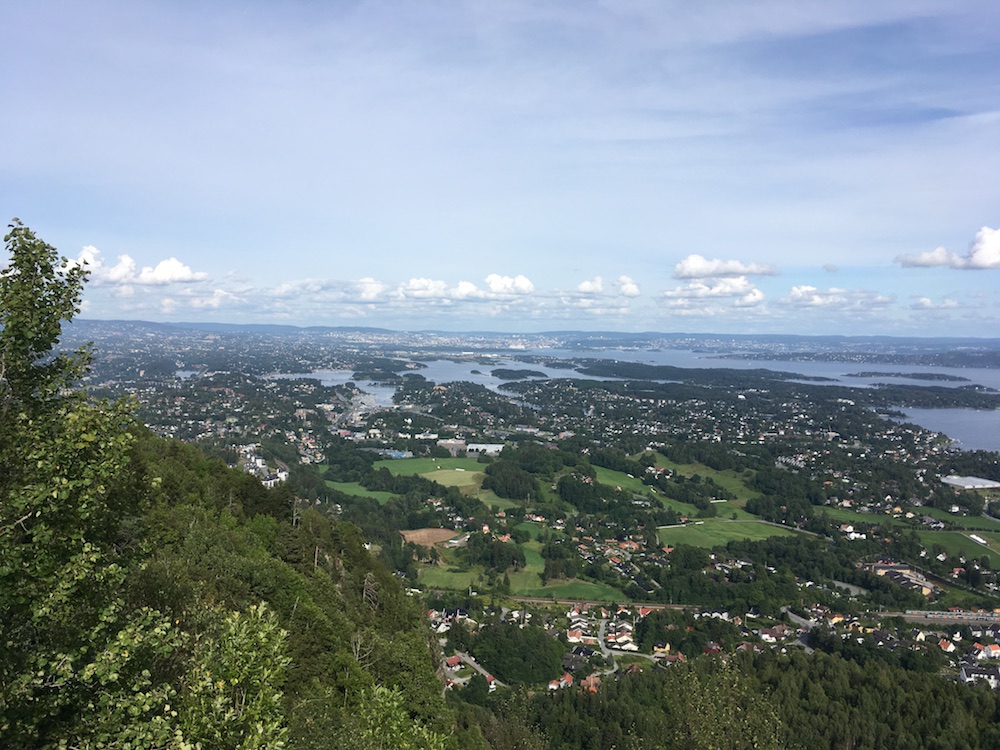
The views from the running trails around Asker, Norway. (All photos: Maks Zechel)
Editor’s Note: The following is the second post of a series proposed by Maks Zechel, a 19-year-old Canadian cross-country skier embarking on his first season training abroad. He recently made the big move to Norway, where he’ll be training and racing with Team Asker for the next nine months. Through these updates, Maks hopes to share his personal “observations, stories, and lessons learned” to help close the gap between North American and Scandinavian nordic skiing. Read Post #1.
***
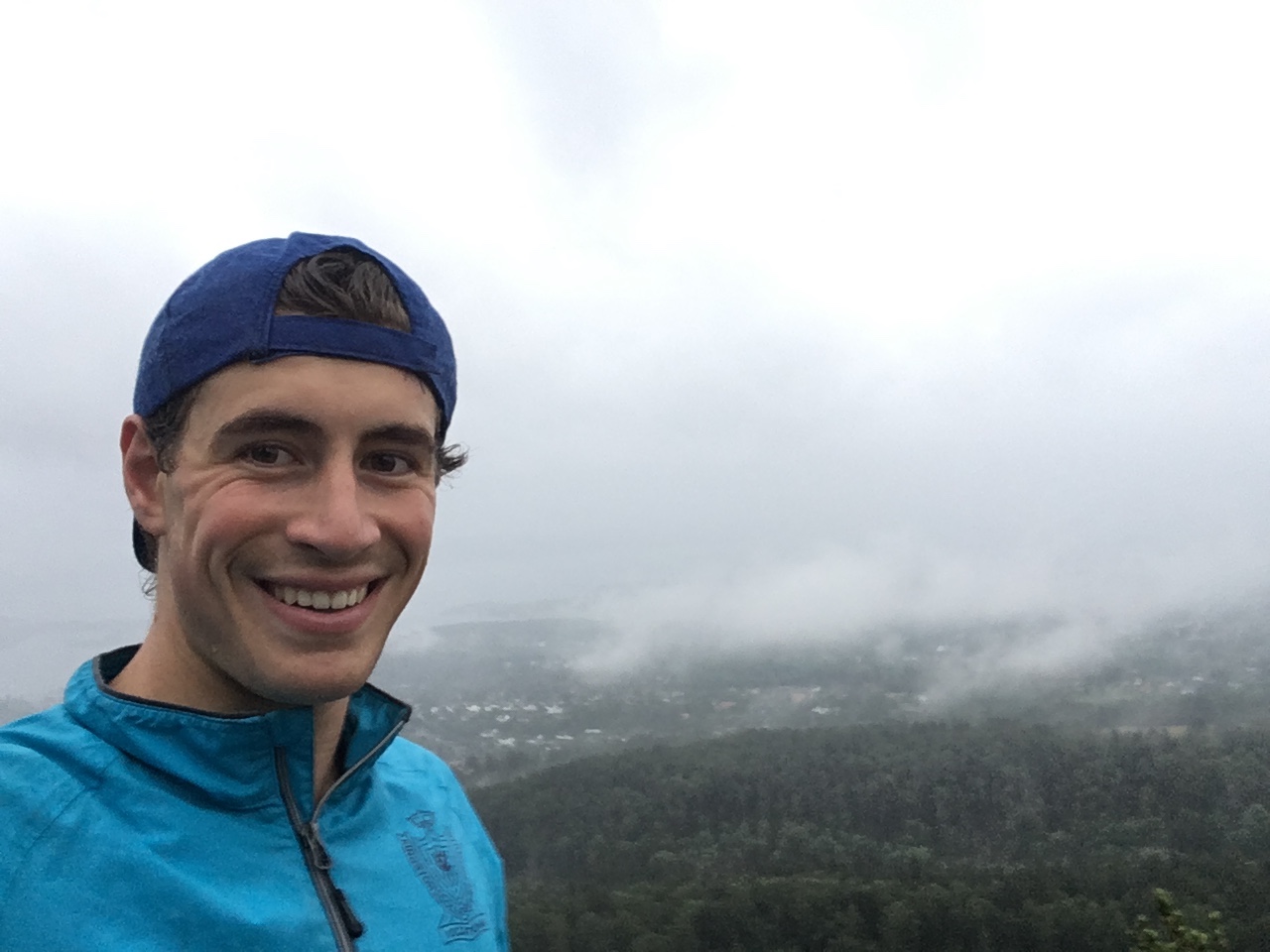
Maks Zechel during his early days exploring Asker, Norway, his hometown until next spring. (Courtesy photo)
Ideas: they pop into my head, always big, and they seem so simple at the time, but as soon as I take the first step, the path ahead becomes overwhelming. Many people know this right from the start, but I am continually learning exactly what it takes to bring wild dreams into existence. This year I found out that moving to a new country is not the smooth transition that I had pictured. I knew there would be challenges, but I did not expect to regularly feel that it was impossible for every piece to fall into place. Moving to Norway to train and ski race for a year may sound like a nice holiday, but it took many steps for me to get here. These included securing a visa, finding affordable accommodation, joining the ski team most likely to help me succeed, and navigating the ever-unpredictable world of language barriers and cultural differences.
Visas can take one to three months to process and you usually need a good reason to be living in your destination (e.g. you have a job or are studying in that country). Canadians, like myself, can stay in Norway for up to 90 days without a visa. For longer stays, there is a special option for young Canadian adults that allows you to go to Norway for an “extended holiday” of sorts. I am lucky enough to have Swiss grandparents and to have lived in Switzerland for two and a half years, so before I came to Norway I went through the process of obtaining my Swiss passport (which was stereotypically efficient). As a Swiss citizen I am entitled to live and work in Norway as long as I register at a police station within three months of arriving and prove that I can support myself, have health insurance, etc. Figuring out visas can be intimidating when you get started, but there are many options and it helps to call or book yourself an appointment at a Norwegian embassy.
Another difficult task is trying to find accommodations in a country where you do not know anyone. I looked for places primarily on www.finn.no and wrote several emails to potential landlords in both Norwegian (roughly translated) and English. I rarely received replies and had difficulties playing phone tag with various landlords. I recommend starting your housing search six months before you plan on arriving, as long-term renting options disappear quickly. In the end, I found a basement that an older couple was renting because my mum has a friend, who has a Norwegian friend, who has a colleague, who became one of my landlords. Lesson learned: use your connections, no matter how distant.
Looking towards Oslo/Inner Oslofjord from “Skaugumsåsen”.
Through connections at Nakkertok, I am fortunate to know John Halvorsen, a Norwegian citizen and former elite athlete — he represented Norway in the 10,000-meter at the 1992 Barcelona Olympics. John put me in touch with a few people in Norway who could explain how the Norwegian skiing world works and recommend clubs where I would have the most success.
Naturally, my initial wish was to live in Lillehammer — host of the 1994 Winter Olympics (before I was born). Lillehammer is surrounded by endless rollerskiing, including multiple rollerskiing tracks; has a ski season beginning in October; is just 20 kilometers from Sjusjøen, legendary for its beautiful and endless ski trails; and home of the Lillehammer Skiklubb, the biggest club in Norway. It sounds ideal, but Lillehammer is different from most Norwegian towns and cities, where there are many small clubs instead of one big one. Lillehammer Skiklubb has had a lot of success and so it is difficult to join their team.
I think that it is better to be an important member of a small team than an overlooked member of a large team. From talking to other Canadians, I have found that often the biggest deterrent they face in moving to Norway, or in the trip being successful, is that they are worried about being lonely. I knew that my best chance of success in Norway would be to form good connections with as many people as I could, which would help me get rides to training, allow me to have a better relationship with my coach, and help me make friends.
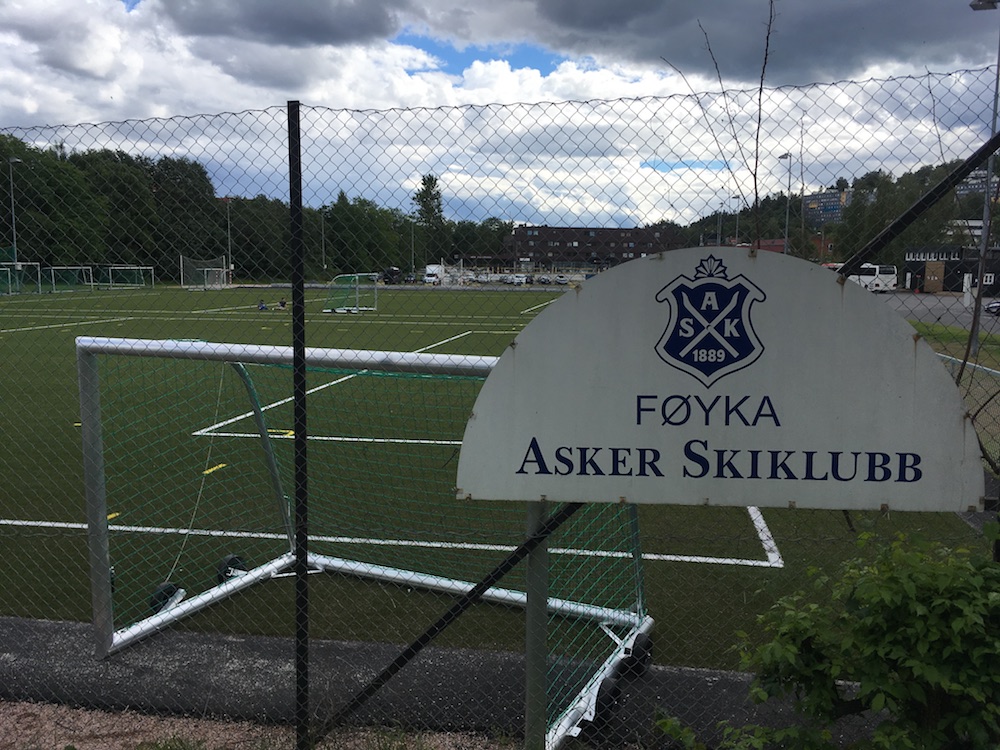
Asker Skiklubb soccer fields
Team Asker was recommended to me by John and a few other contacts in Norway. The club has about 25 athletes in its junior/senior program (large compared to most Norwegian clubs), including Harald Amundsen, a bronze medalist in the skiathlon and a member of Norway’s gold-medal winning relay team at the 2017 Junior World Championships at Soldier Hollow in Utah. From what I’ve seen in Germany and Norway, many European ski teams are based out of sports clubs. Asker Skiklubb has many different teams, from handball and bandy to track and field and ski jumping. This has its advantages, as Asker’s cross-country ski team has access to the club’s full-sized rubber track, multiple soccer fields, and a small rollerski track. Just 20 k southwest and 25 k northeast from Asker are the world-class rollerski tracks of Drammen and Holmenkollen, where Team Asker regularly does workouts. Through a parent of an athlete on the team, we also have access to a rollerski treadmill. There are many other strong programs near Oslo, including BSK Ski Elite (Bækkelagets Skiklubb’s junior/senior program) and Team Konnerud (known in Norway for its strong women’s team and hosting the Drammen World Cup).
Asker Skiklubb has a…camping trailer??
My flight arrived in Oslo on Aug. 1 and I have been living in my new home for two weeks now. Asker is a beautiful, although admittedly rainy town set against a hilly forest with endless running trails. Most of the area looks out over a portion of the Inner Oslofjord, an extension of the North Sea. The town is modern and bike friendly with paths everywhere, but it doesn’t fail to retain its traditionally European “at your own risk” character. In some places, Asker has bike paths the size of roads, and in others, there are roads that surely only a bike could navigate. Last week I was convinced I was biking along a “bikes and pedestrians only” path, raised and separated from the main road that it followed, only to meet a car pulling onto the path from its driveway. As I learn about Asker and Norwegian culture, I look forward to more surprises in the coming weeks … so long as those surprises don’t contain headlights.
Norwegian Phrase of the Week:
Cashier: Trenger du poser?
(Translation: Do you need bags?)
Me: Ughh, Mastercard, takk.
(Translation: Ughh, Mastercard, thanks.)
Cashier:Vil du kvitteringen?
(Translation: Would you like your receipt?)
Me:Ingen poser, takk!
(Translation: No bags, thanks!)
Cashier:…
(Translation: …)
Quick Tips for Moving Abroad:
Make sure that your passport doesn’t expire until six months after your last day in your destination.
Confirm that your health insurance covers you abroad. Furthermore, in Ontario, you have to get a temporary health card if you will be away for more than 7 months.
Consider setting up a bank account once you arrive at your destination (foreign e-transfer fees are huge and ATM fees add up quickly when withdrawing cash regularly).
Buy plug adapters and confirm that your devices/appliances work with the voltage ratings of your destination.
About Maks: Maks Zechel is a competitive cross-country skier who secretly wants to become a professional mile runner. He loves hiking and going on canoe trips with his family, as well as peanut butter cups in ice cream. Johan Olsson is his favourite skier and he hopes to race the Cortina-Toblach stage of the Tour de Ski one day. He enjoys writing about his experiences. Follow him on Instagram @makszechel.