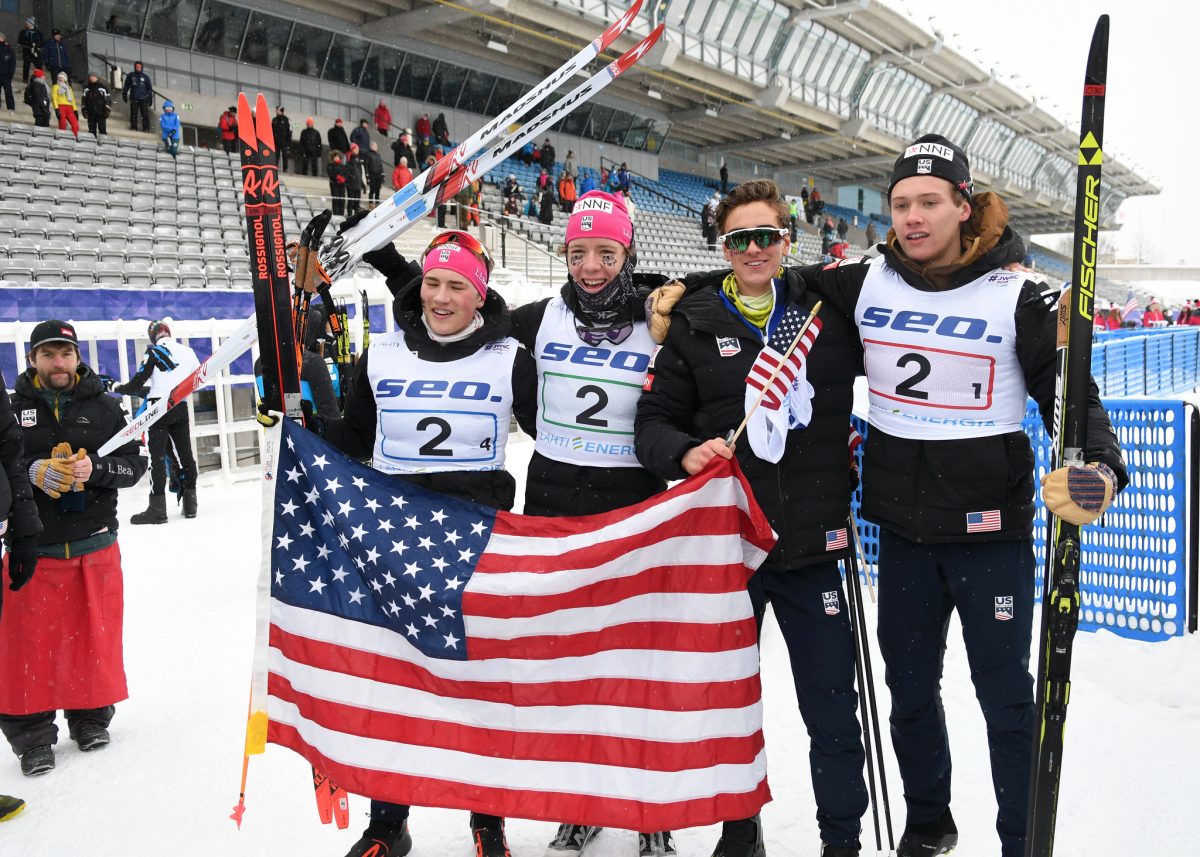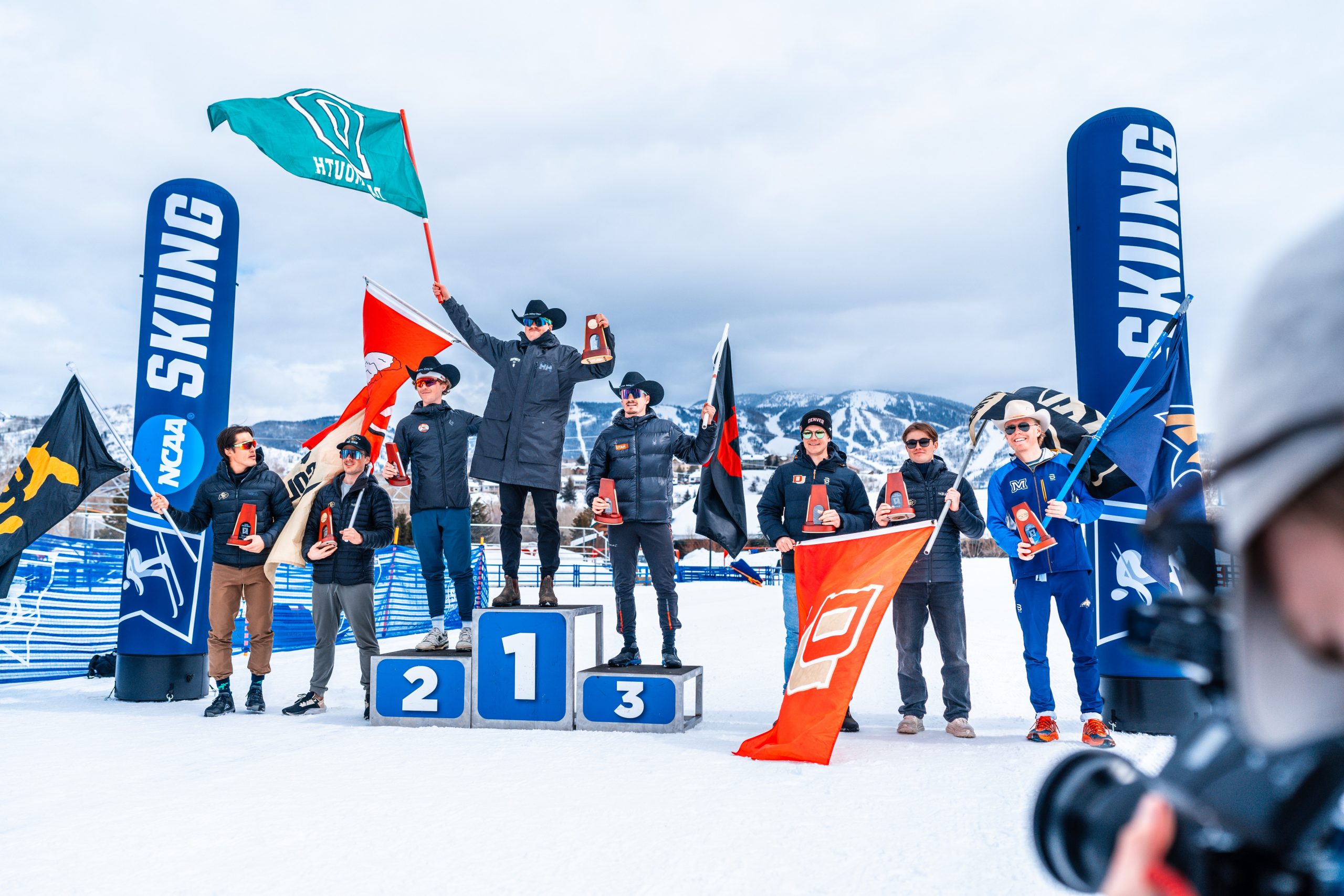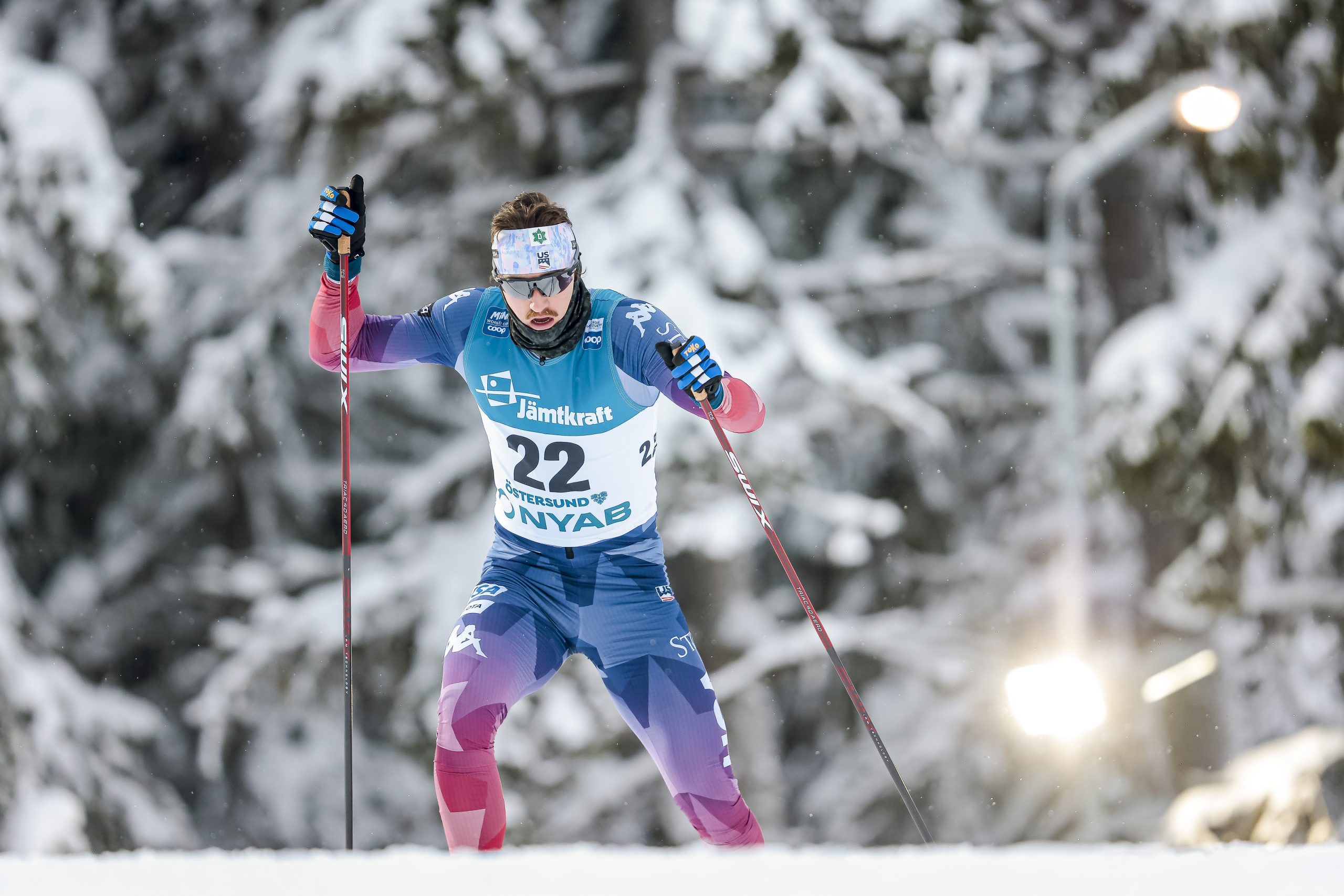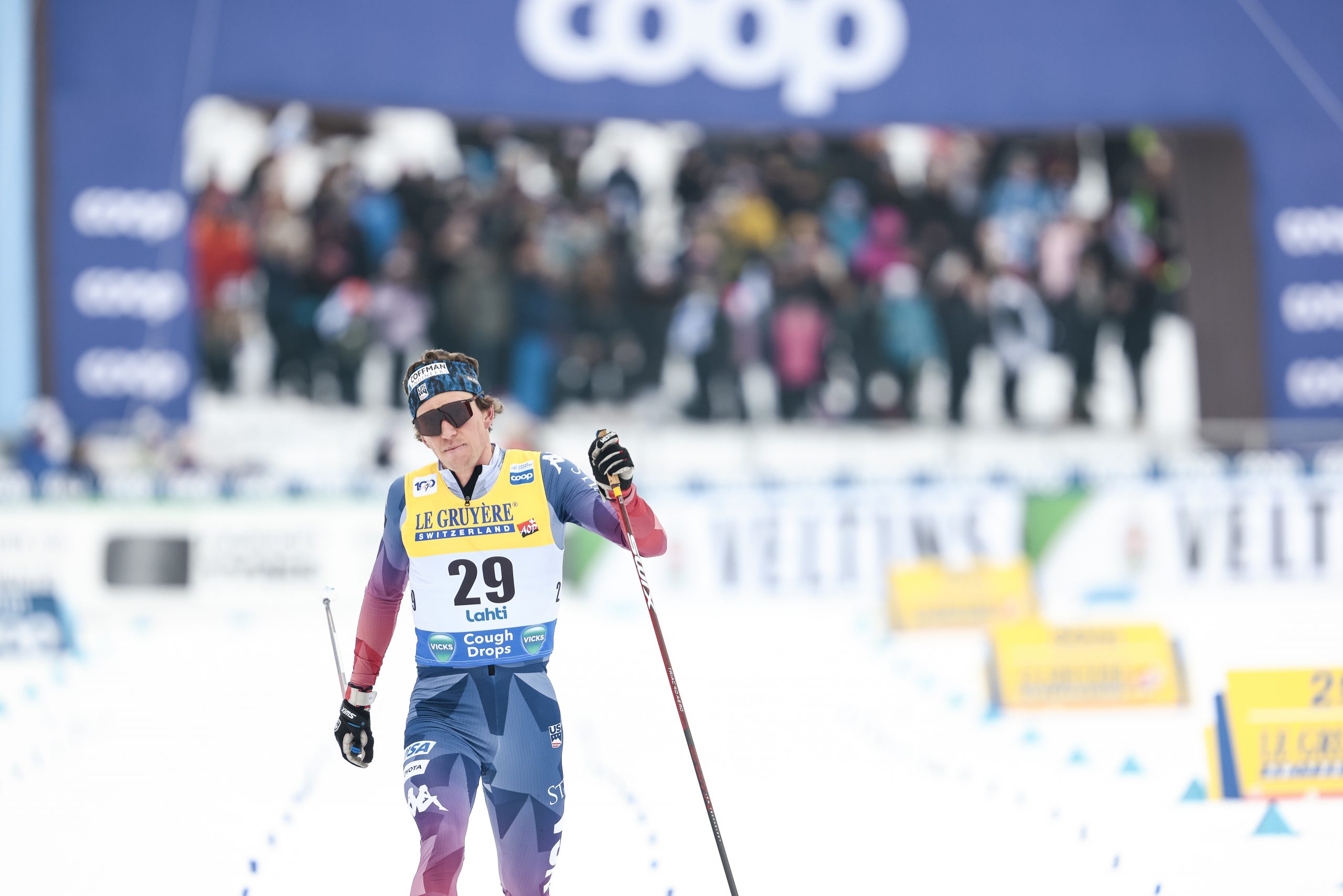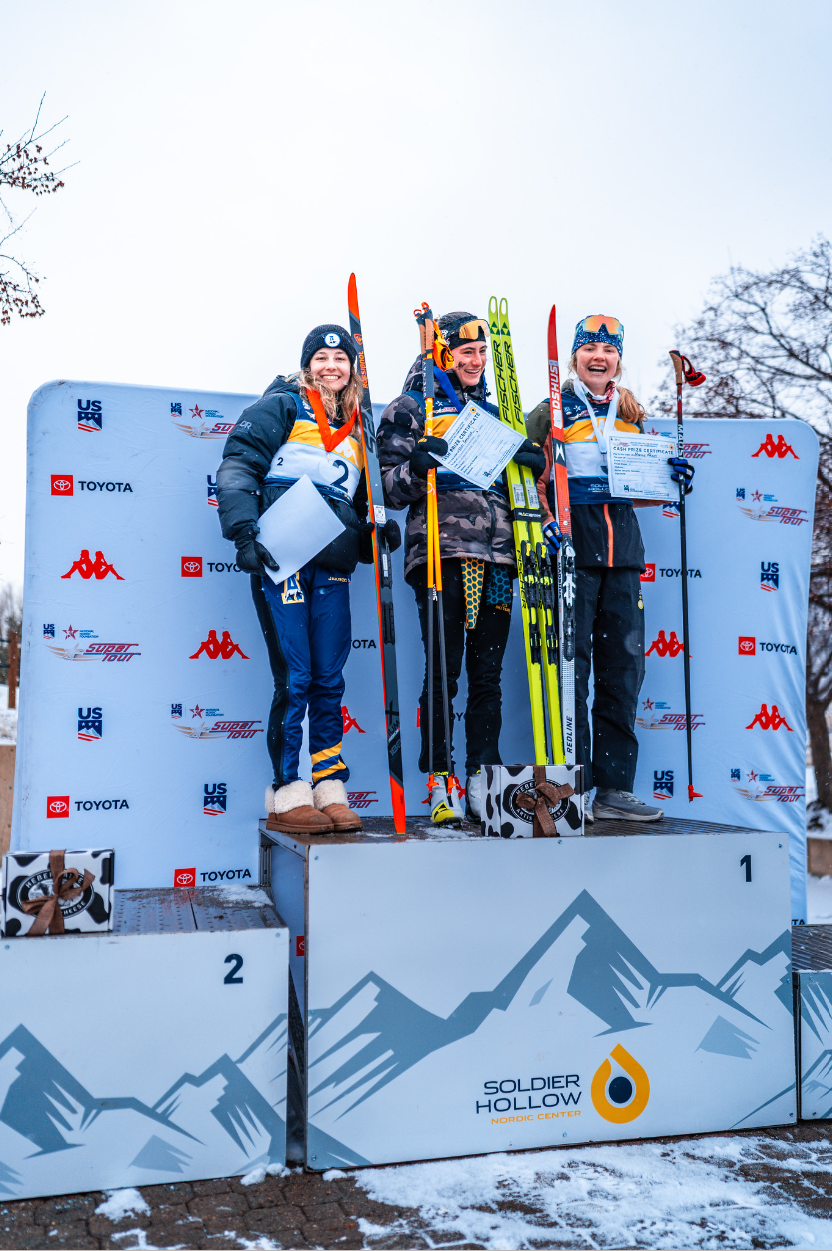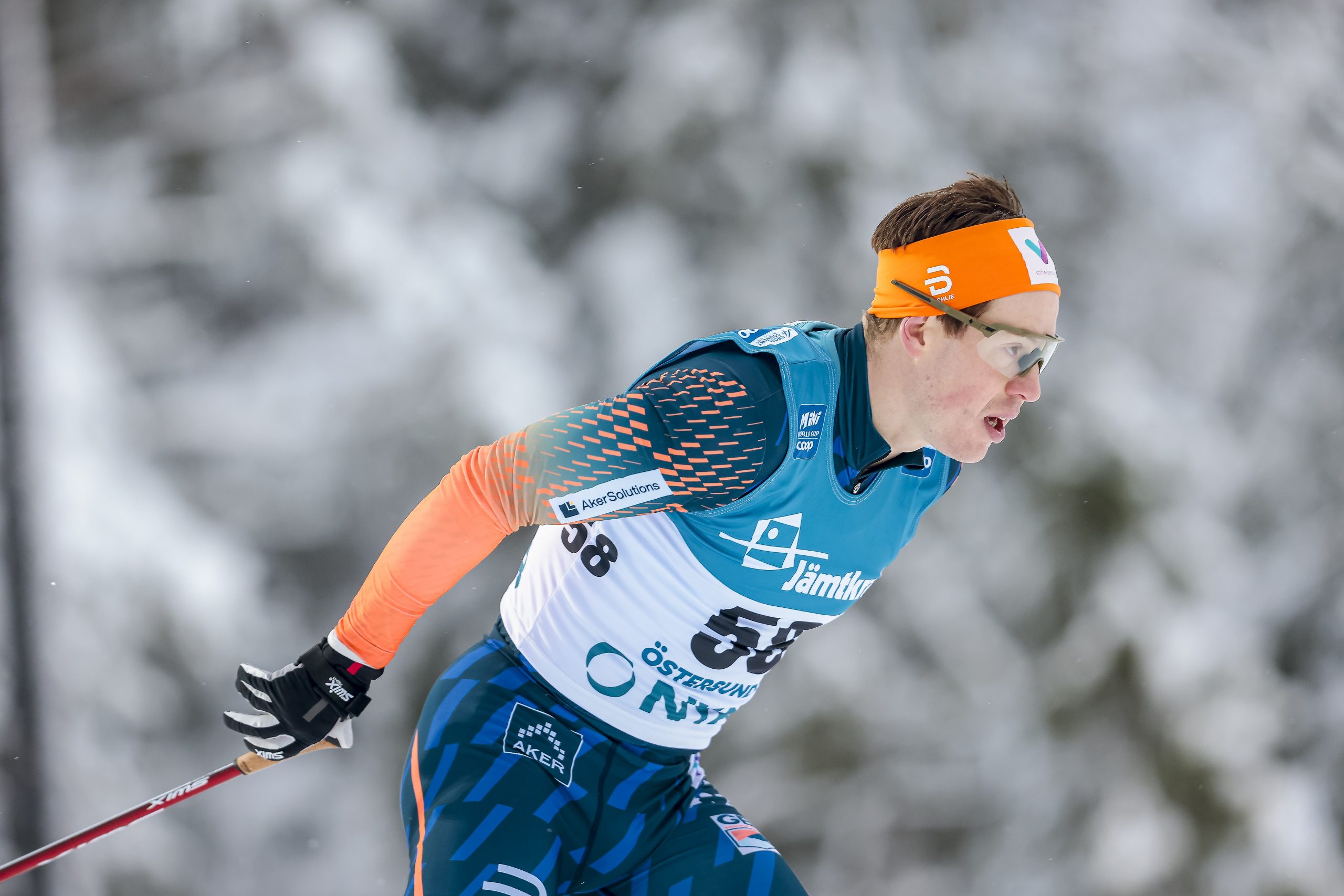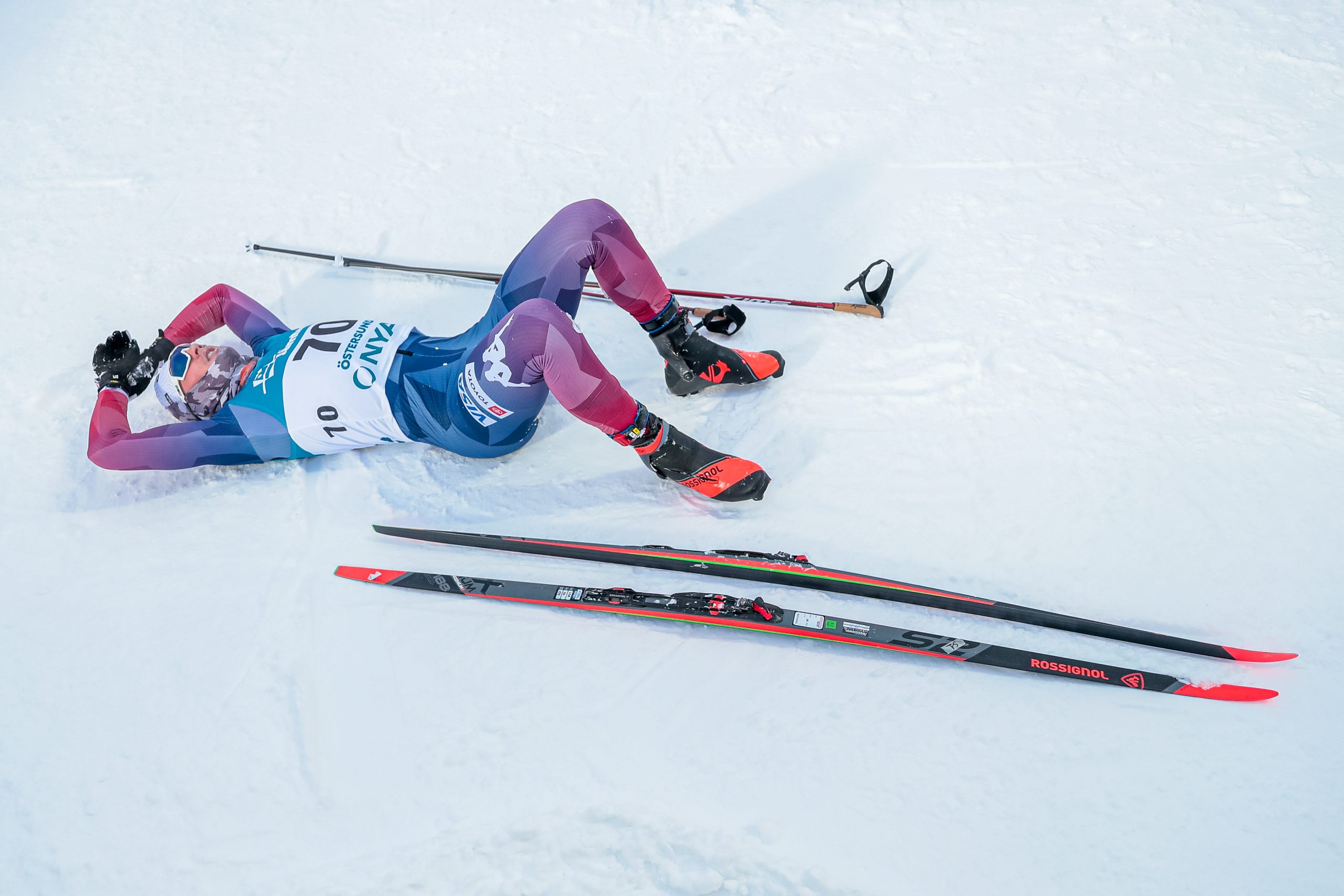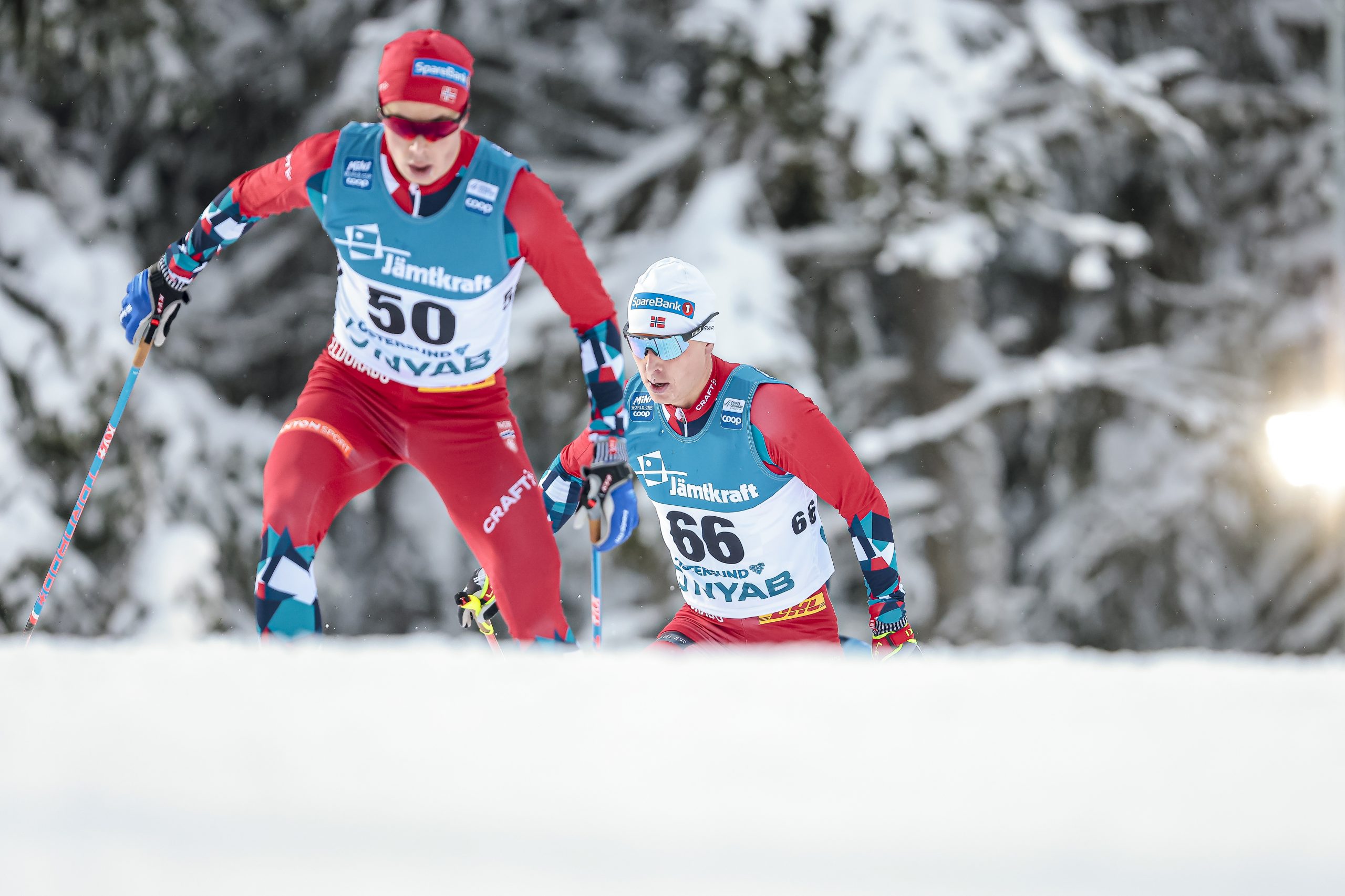
Tag: John Steel Hagenbuch

  • Nyenget Takes Oberhof 10 k Classic as Americans Build Momentum

    Nyenget Takes Oberhof 10 k Classic as Americans Build Momentum

    This coverage is made possible through the generous support of Marty and Kathy Hall and A Hall Mark of Excellence Award. To learn more about A Hall Mark of Excellence Award, or to learn how you can support FasterSkier’s coverage, please contact info@fasterskier.com.

    Martin Loewstroem Nyenget (NOR) came back to World Cup racing, posting the fastest time in the 10 k Interval Start Classic in Oberhof (GER). (Photo: Authamayou/NordicFocus)

    On Sunday morning in Oberhof, the snow had the kind of sheen that tells the truth before the clock ever does. It glittered under a clean winter sun, polished by a freeze–thaw cycle that left the tracks fast, brittle, and unforgiving. At 823 meters, tucked into the Thuringian Forest, the course looked generous from a distance—wide lanes, long sightlines—but it was the sort of generosity that disappears the moment a skier commits to a mistake. The margins here were not loud. They were sharp.

    This was the men’s 10-kilometer Classic Interval Start, a format that does not tolerate theater. There would be no pack to hide in, no draft to borrow, no tactical stalemates to blame. Every thirty seconds, a skier pushed out of the start gate alone, carrying only his pacing plan, his skis, his poles, and whatever composure he had managed to preserve through an Olympic build that has been compressing time for months. Period Three had begun. The calendar was no longer abstract.

    Classic skiing in these conditions demands restraint masquerading as confidence. The climbs are short but decisive; the downhills are technical enough that speed becomes a negotiation rather than a gift. Grip must be trusted without being tested. Push too hard too early, and the skis slide away beneath you; hesitate, and seconds vanish into the ice. It is possible—common, even—to ski very hard here and still ski poorly.

    Iivo Niskanen (FIN) was formerly the king of the 15 k Classic and showed he is one of the best in the 10 k Classic in Oberhof (GER). (Photo: Authamayou/NordicFocus)

    The interval start turns this dynamic inward. The course does not change for you, but your relationship to it does. You pass athletes who started ahead of you and are passed by those who did not. You hear split times shouted from the side of the trail—sometimes accurate, sometimes not—and you decide whether to believe them. In Oberhof, where artificial snow breaks down as the sun rises and the grooves lose their bite, the course becomes a moving target. Early starters gamble on freshness; later starters trade glide for information. No one gets everything.

    Absent from the start list were some of the sport’s most reliable reference points. Norway’s biggest names were racing at home, their national championships pulling them away from this quiet, consequential weekend, or focused on a pre-Olympic training block. Their absence opened space on the results sheet, but not relief. If anything, it sharpened the test. Without familiar benchmarks, the race would be defined less by expectation than by execution.

    The 10 k classic has become a strange distance in modern cross-country skiing—short enough to reward urgency, long enough to punish impatience. It asks skiers to operate just below the edge of recklessness and to stay there for more than twenty minutes. In Oberhof, that edge was particularly thin. The tracks shone. The corners demanded respect. The kind of mistake that costs half a second in softer snow could cost five places here.

    Erik Valnes (NOR) on his way to third and another statement to the Norwegian Olympic selection committee in Oberhof (GER). (Photo: Authamayou/NordicFocus)

    For the Americans, this was the last weekend considered in Olympic team deliberations, a fact everyone knew and no one needed to say out loud. The weight of it showed up not in desperation but in discipline. There were no grand gestures in the start lane. What mattered was whether an athlete could trust the work he had done and let the race unfold on its own terms.

    One by one, skiers disappeared into the forest, double-poling through the opening flats before settling into the rhythm that classic skiing requires when it is done well: patient climbs, clean transitions, downhill speed carried without panic. The clock ticked. The sun climbed. The track began to change.

    By the time the later starters reached the first split, the course had already started to tell its story. Early leaders came back. Conservative openings paid dividends. The race did not break open so much as it clarified itself, revealing who could manage the terrain without forcing it—and who could not.

    In an interval start, there is a particular moment when the race stops being about possibility and becomes about reckoning. It arrives quietly. A skier hears that he is catching someone he should not be catching. Another learns that the pace he thought was safe is not. In Oberhof, that moment came late and all at once, when the day’s best classic skier finally aligned patience with power and turned control into separation.

    By the finish, the gaps would look clean and decisive. They always do. But the truth of this race lived earlier, in the choices made on icy corners and rolling climbs, in the decision to ski smooth instead of merely hard. Oberhof did not demand brilliance. It demanded honesty.

    Martin Loewstroem Nyenget (NOR) on his way to the win. (Photo: Reichert/NordicFocus)

    A Course That Reveals Its Verdict Slowly

    The first skiers through the opening kilometers set times that looked sharp but provisional, the kind that exist only until the course and the day reveal themselves. The early splits came quickly, then stalled. The ice underneath the tracks was still holding, but the sun was beginning to soften the surface just enough to punish excess force. The race was already sorting itself by feel rather than bravado.

    Martin Loewstroem Nyenget (NOR) navigates the sugary snow in Oberhof (GER). (Photo: Authamayou/NordicFocus)

    Nyenget’s Patience Turns Into Separation

    When Martin Løwstrøm Nyenget finally entered the picture, it was without urgency. His opening lap was measured, almost quiet, the sort of start that invites doubt if one is inclined to look for it. But Nyenget had not come to Oberhof to prove speed in the first five kilometers. He had come to test something else.

    “I hadn’t planned to open very hard,” Nyenget said afterward in an interview aired on the FIS World Cup broadcast. “I’ve been training really hard for the last four weeks, so I didn’t quite have the speed on the first lap. But as soon as I heard that I was catching people, I started to feel really strong, and I knew I had something extra for the day.”

    The catching began gradually, then decisively. Where others tightened under the strain of the second lap, Nyenget loosened. His skiing did not change in form, only in intent. The double pole grew heavier, the transitions cleaner. On a course that demanded constant negotiation, he removed the argument.

    By the final kilometers, the race had become unmistakable. Nyenget was no longer racing the field so much as confirming what the course had already suggested. He crossed the line alone, the margins behind him clear and earned, his victory built not on dominance but on patience applied at exactly the right moment.

    “It’s fantastic to be back,” Nyenget said. “The longer I keep going in my career, the more fun I have racing. The training part isn’t always that fun anymore, so it’s great to be here in Oberhof with good conditions and really enjoy racing again.”


    An American Throughline: Skiing Well, Not Just Hard

    Behind him, the podium filled with familiar names and familiar styles — Iivo Niskanen (FIN +13.8) in second and Erik Valanes (NOR +14.5) in third — skiers who understand how to survive a day like this without surrendering it. The gaps were tight, the order decisive. It was the kind of race that leaves little room for argument afterward.

    For the American men, the story unfolded less in places gained than in choices validated.

    Zanden Mcmullen (USA) making one final statement to the US Olympic Team selection committee in Oberhof (GER). (Photo: Authamayou/NordicFocus)

    McMullen Finds His Shape Again

    Zanden McMullen arrived in Oberhof carrying momentum that had begun to take shape weeks earlier at U.S. Nationals. There, his skiing had looked settled again — confident without being rigid, aggressive without being rushed. In Oberhof, that trend continued.

    “I feel like I’ve started to find myself again, which is really reassuring,” McMullen said. “I think I was fully capable of skiing like this earlier in the season, but I needed a little more racing and confidence under my belt. This weekend feels like the tip of the iceberg.”

    His approach to the race was deliberate. Rather than forcing the issue early, McMullen allowed the course to come to him, focusing on terrain management rather than constant pressure.

    “My goal today was just to ski well through the terrain of the entire course,” he said. “Earlier this season, when I felt like I needed to force a good result, I wasn’t skiing well — I was skiing very hard, but not well. Today I focused on skiing smooth and fast rather than just hard, and I think that really paid off.”

    There were moments of vulnerability — a slight lapse near the end of the first lap — but McMullen recognized it in time to convert restraint into opportunity.

    “I was able to use that extra energy to ski hard and fast through the second half of the race,” he said.

    McMullen finished 18th, a result that read plainly on paper but carried deeper meaning inside an Olympic season defined by accumulation rather than singular peaks.

    “I know I’ve done what I can,” he said. “I’m happy to be back where I left off last year before I got sick. Now I can shift my focus to preparation. Olympic qualification is just the first step. I have very big goals for the Games themselves.”

    Hunter Wonders (USA) continued his 10 k Classic form he showed at US Nationals in Oberhof (GER). (Photo: Authamayou/NordicFocus)

    Hunter Wonders and the Familiar Language of Classic Distance

    For Hunter Wonders, Oberhof reinforced something that has been quietly consistent in his career: when the race is a classic distance interval start, the task tends to make sense. There is clarity in pacing, in grip management, in the slow accumulation of pressure rather than the sudden chaos of a sprint.

    Wonders skied into the points again, backing up his showing from U.S. Nationals with another disciplined performance on snow that rewarded trust over impulse. In conditions where early aggression often came undone later, his race held together. The opening kilometers were controlled, the middle steady, the final lap about preservation rather than rescue.

    That continuity mattered. In a field where seconds dissolved quickly into places, Wonders avoided the kind of oscillations that define fragile races. He neither chased the early benchmarks nor retreated from them. Instead, he stayed within a rhythm that allowed the course to do less damage than it did to many around him.

    On a day when classic specialists quietly rose, Wonders looked like one — not flashy, not forced, but coherent from start to finish.

    Luke Jager (USA) celebrated his birthday weekend in Oberhof (GER) with a top 30 in the 10 k Classic. (Photo: Authamayou/NordicFocus)

    Luke Jager and the Discipline of Attention

    A few minutes later, Luke Jager crossed the line inside the top 30, finishing a race that mirrored his own quiet trajectory. Though the calendar had marked it as his birthday weekend, the day itself passed without ceremony.

    “My main goal was just to be fully immersed in the experience,” Jager said. “To focus on doing my best and skiing each section of the course as well as I could.”

    On a course where margins evaporated quickly, that focus mattered.

    “The margins were definitely thin, but they always seem to be on the World Cup these days,” he said. “It doesn’t really help to stress about that, so I try to keep my attention on what’s right in front of me, so that when I cross the finish line I can say I found as many of those little margins as I could.”

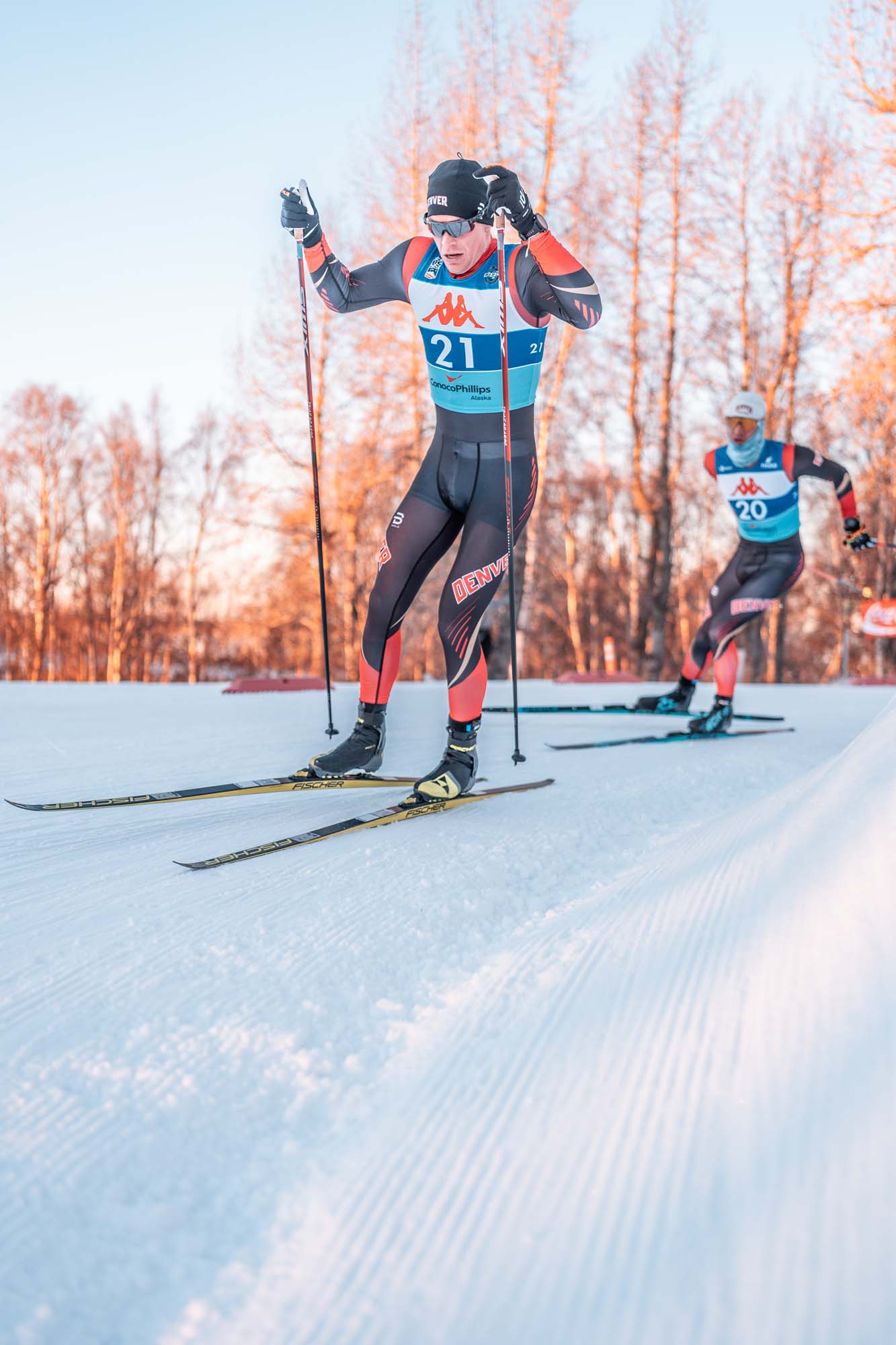
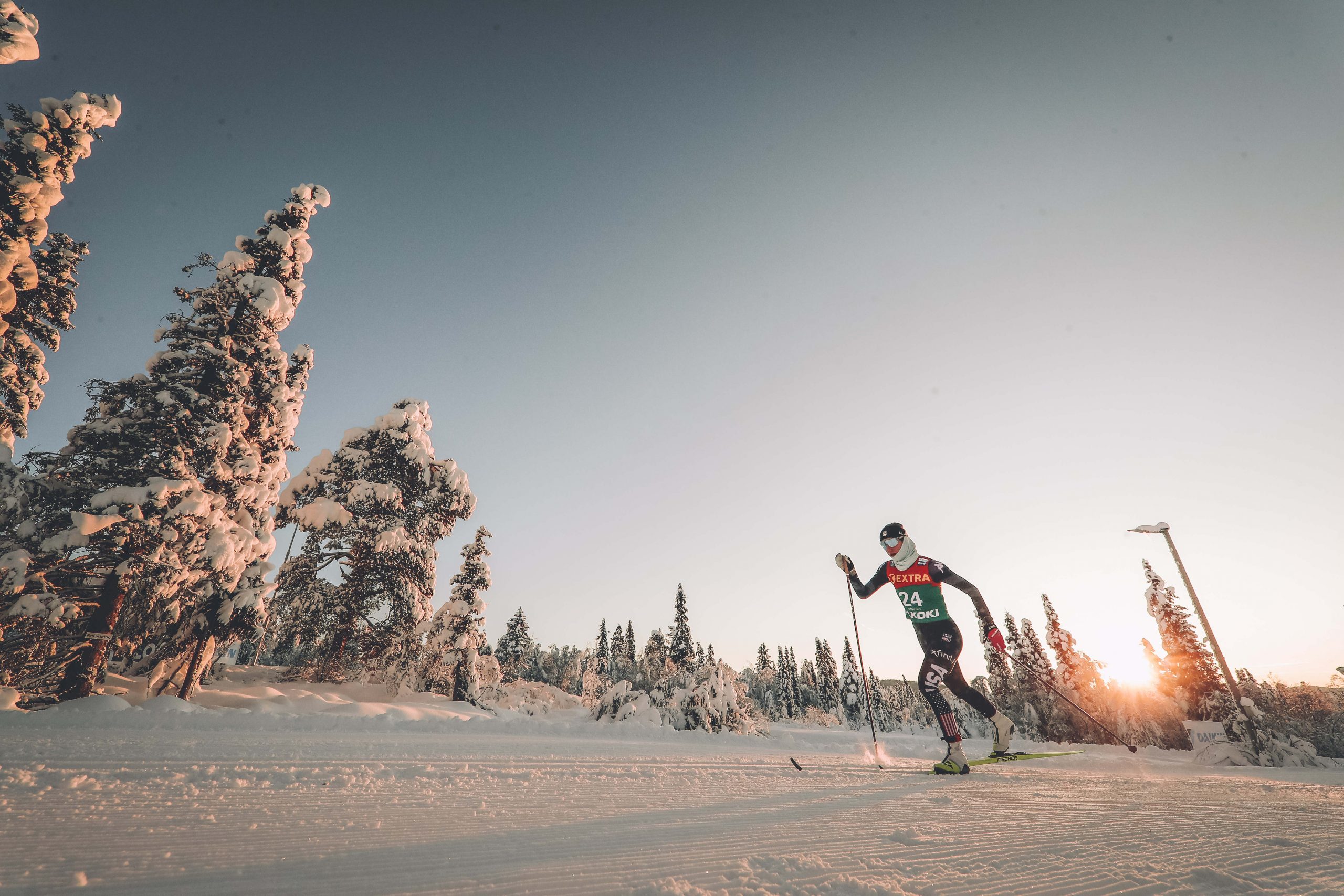
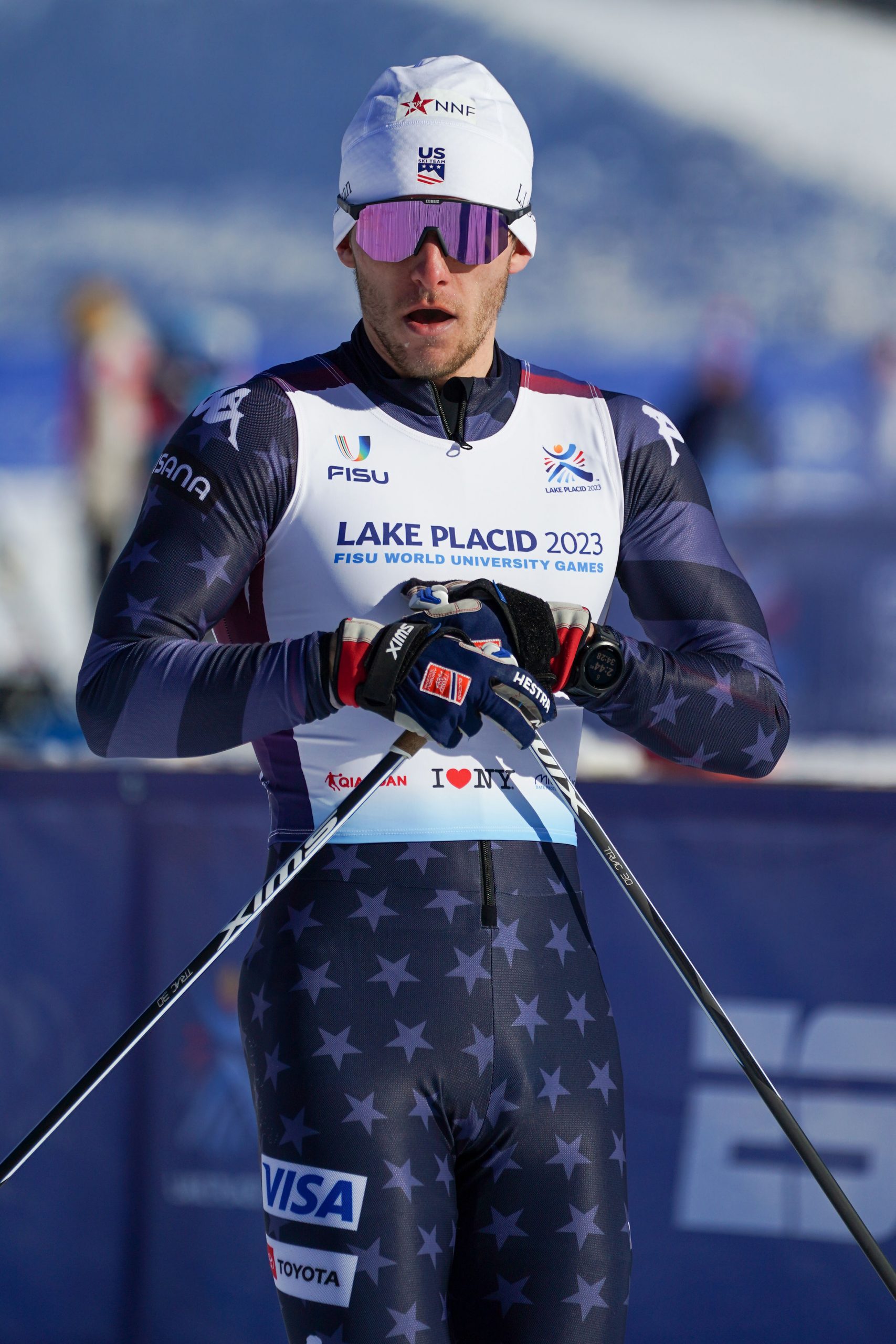
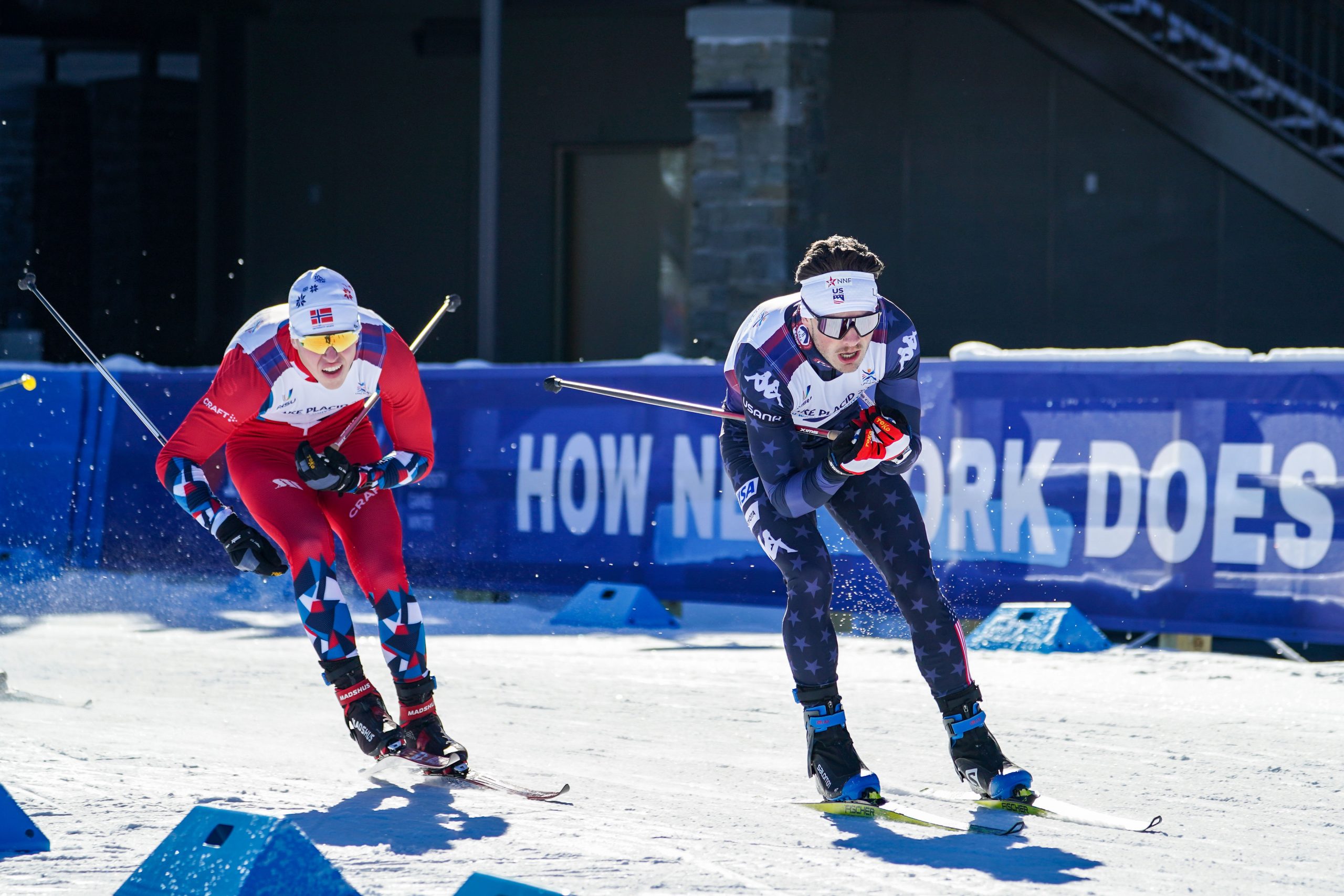
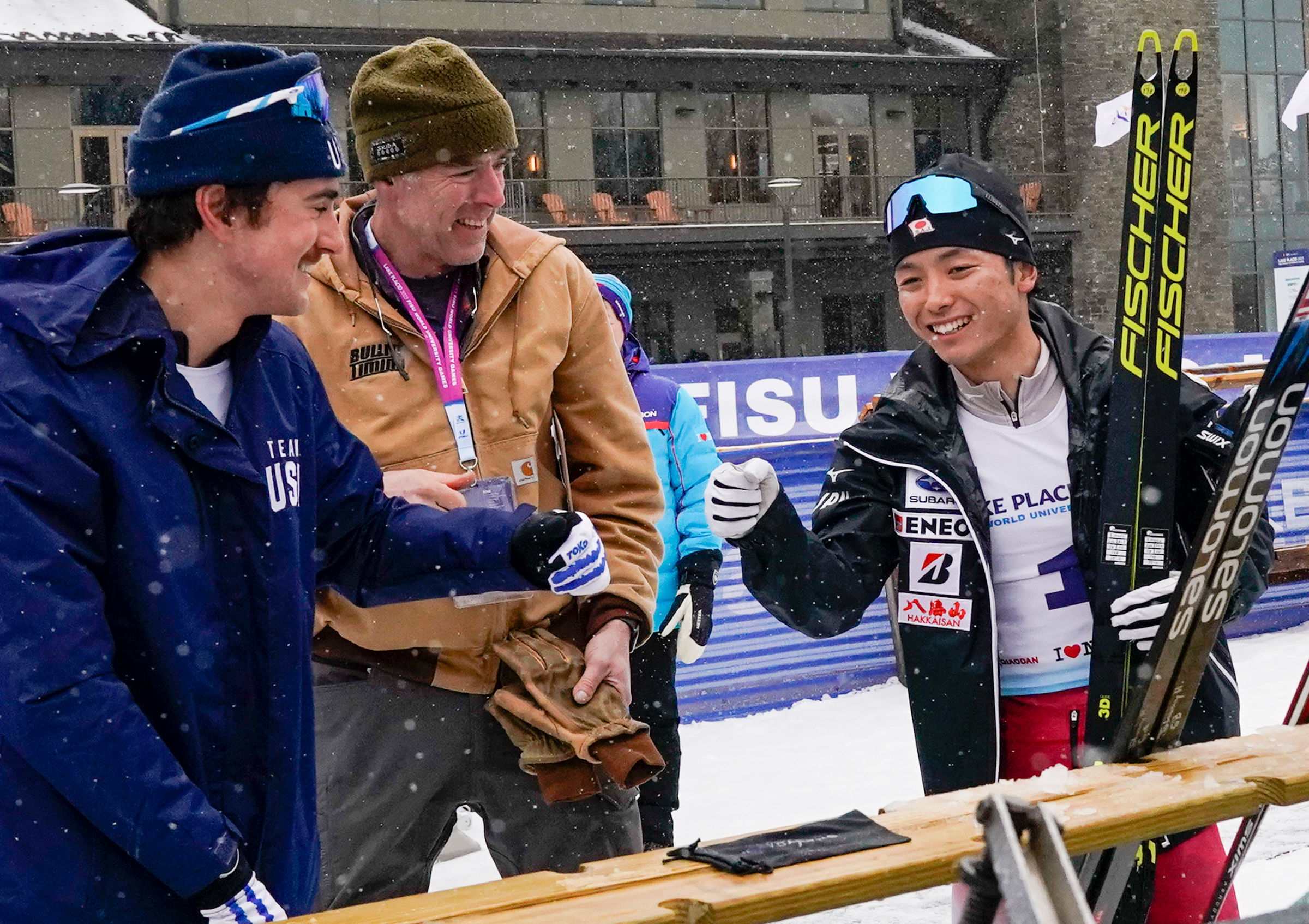
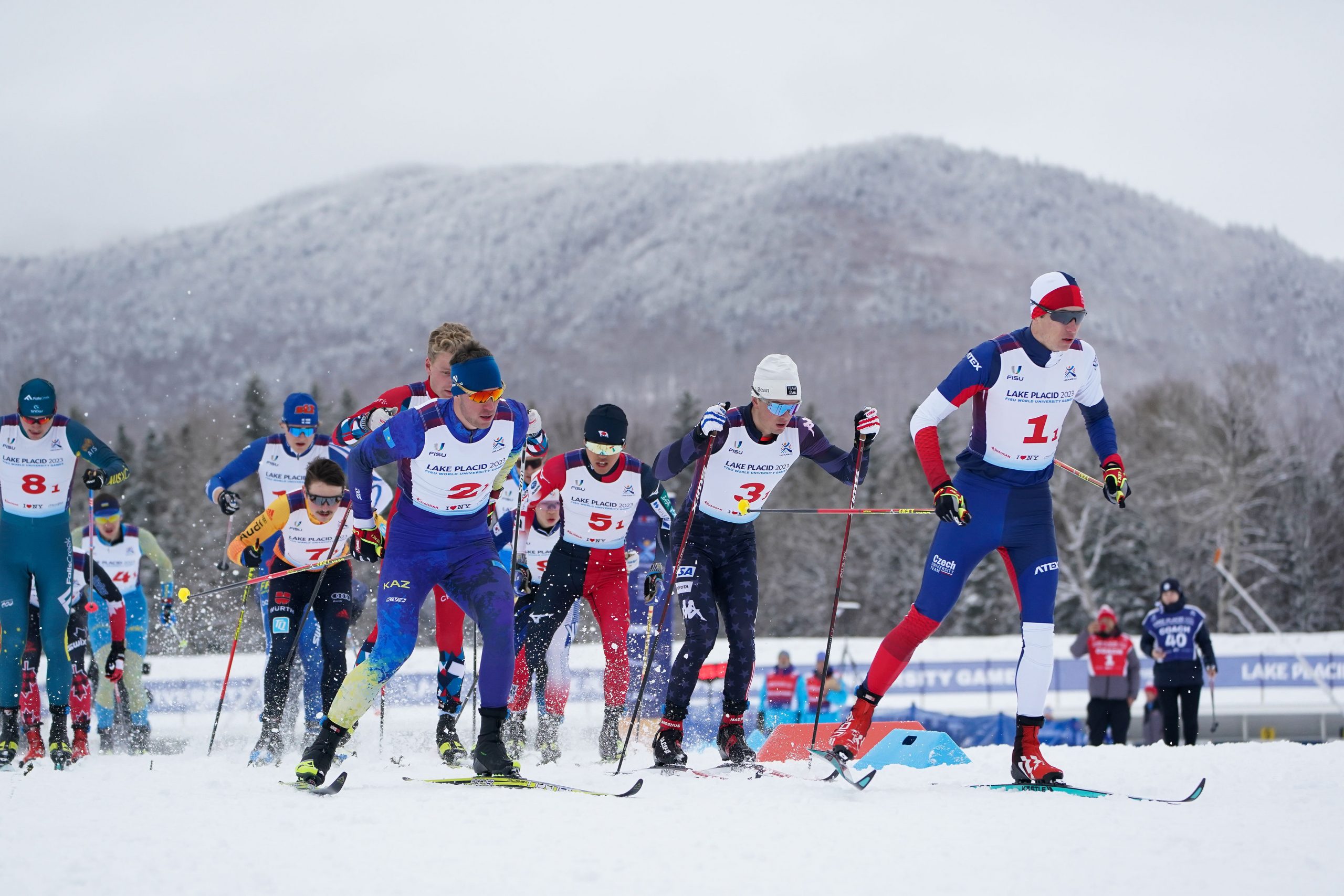
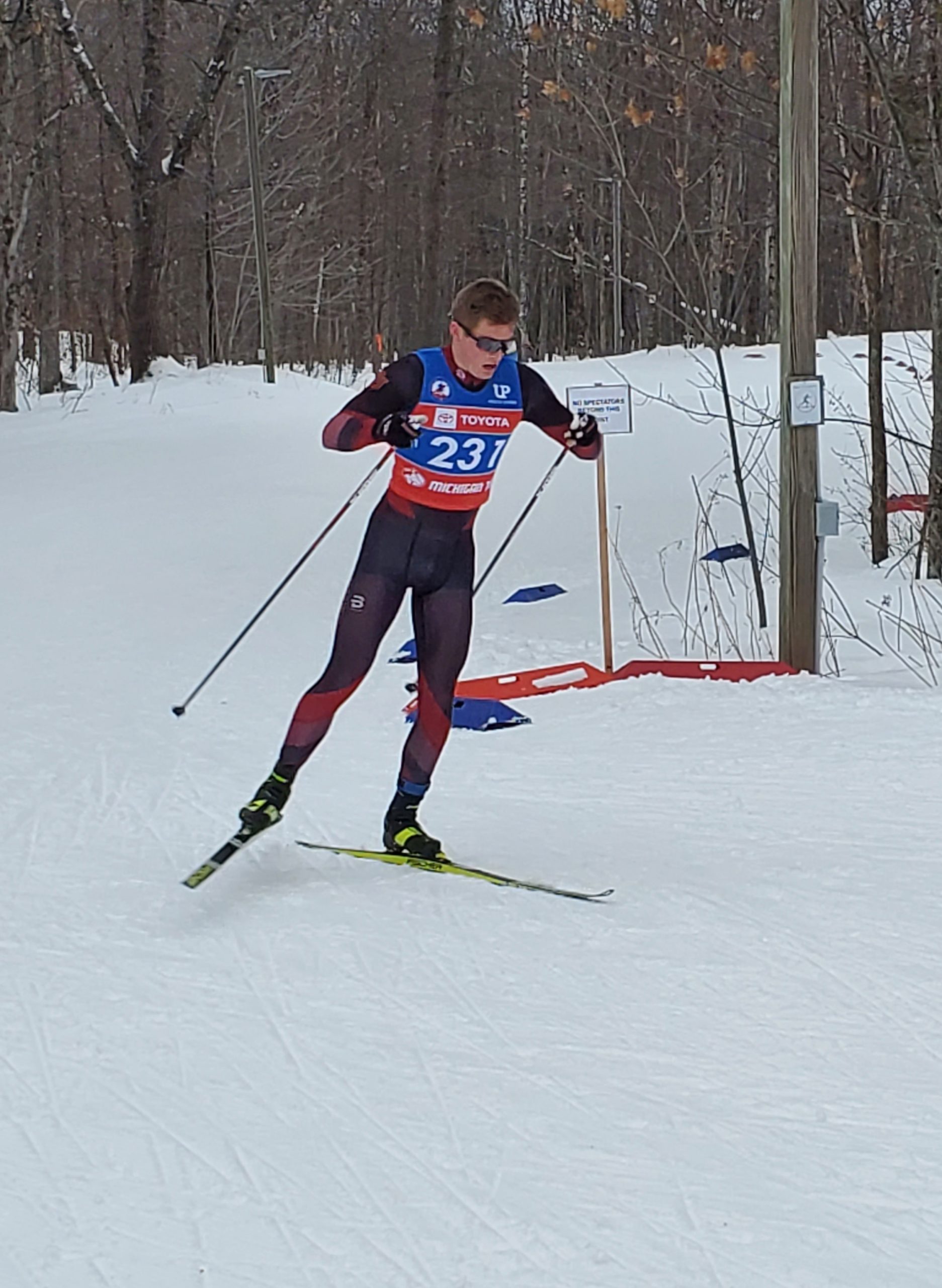
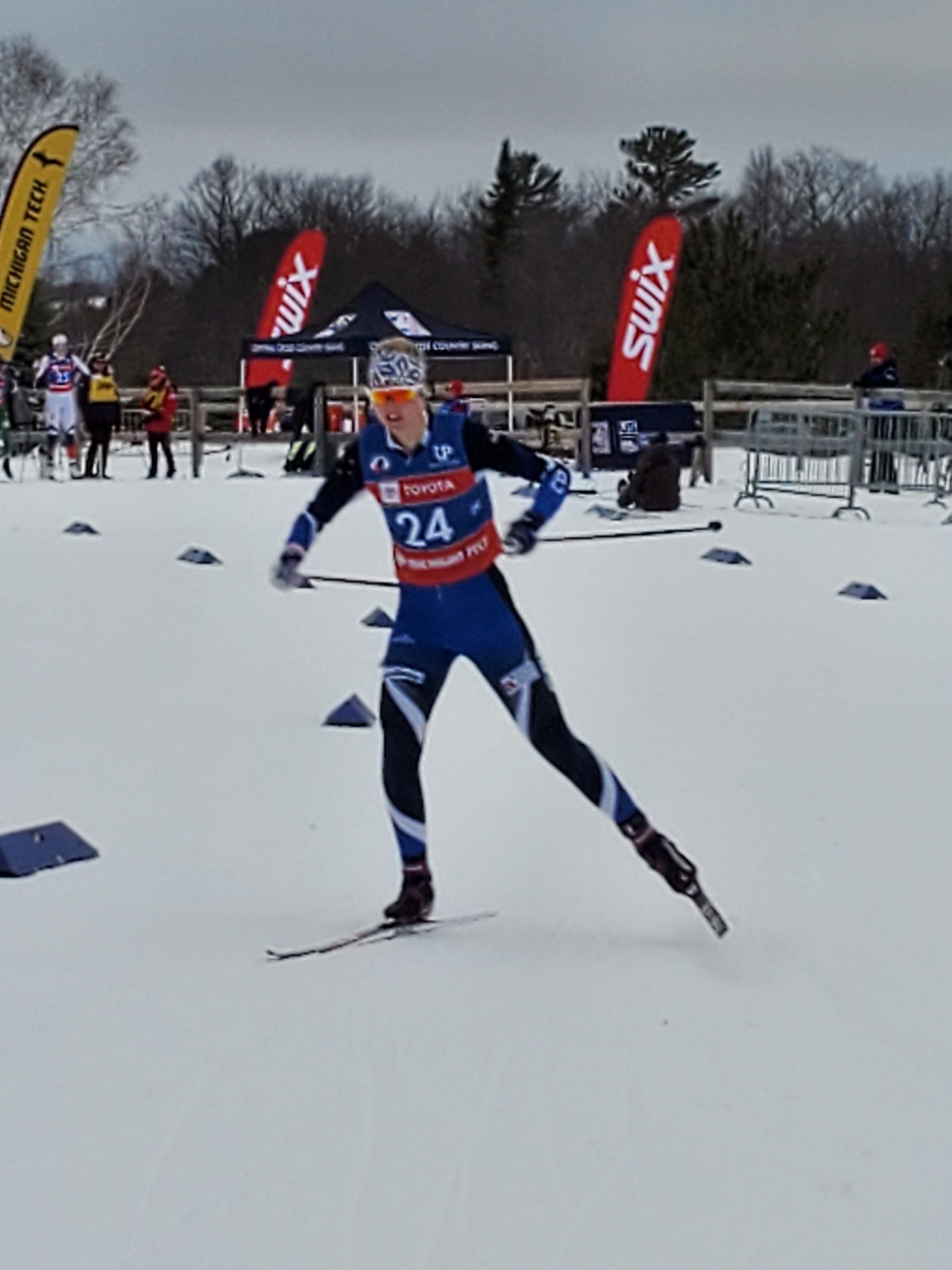
    John Steel Hagenbuch (USA) striding his way to 52nd place. (Photo: Authamayou/NordicFocus)

    John Steel Hagenbuch and the Cost of Precision

    For John Steel Hagenbuch, Oberhof was less forgiving, finishing in 52nd place. Fast, icy tracks compress the margin for error until technique, pacing, and decision-making overlap completely. There is no room to separate them. When one slips, the others tend to follow.

    Hagenbuch’s race never unraveled dramatically, but it never fully unlocked either. The speed was there in moments; the continuity was harder to hold. In an interval start, that can be enough to drift backward without a single obvious mistake to point to afterward.

    Classic skiing on firm conditions is often less about what goes wrong than about what never quite arrives. A corner taken cautiously becomes a gap. A climb approached defensively compounds over kilometers. Oberhof exposed those small hesitations with clarity.

    Still, there were pieces to build from. Hagenbuch moved efficiently through the terrain, and his ski handling held under pressure. What the race demanded next — and what it withheld — was the seamless connection between intention and execution that defines skiing at this level.

    Zachary Jayne (USA) raced his first World Cup races of his career in Oberhof (GER). (Photo: Authamayou/NordicFocus)

    A ‘Welcome to the League’ Weekend

    For Zach Jayne, the weekend carried a different weight. After a breakthrough performance at U.S. Nationals, Oberhof marked his first exposure to the full scale of World Cup racing — the cameras, the movement, the relentless compression of time and attention.

    “After a good week at Nationals, I’m honestly pretty disappointed with my first few World Cup starts,” Jayne said. “I’m grateful to be here racing against some of the best in the world, but I really wanted to do something with my starts.”

    What surprised him most was not the pace but the environment.

    “There’s just a lot more going on — cameras, people, spectators,” he said. “For me, that translates into more stress, and I’m still learning how to manage that.”

    Still, Jayne was clear-eyed about the lesson.

    “I definitely had my ‘welcome to the league’ moment this weekend,” he said. “Now I have something bigger and better to shoot for.”

    Antoine Cyr (CAN) on his way to a top 30 finish in Oberhof (GER). (Photo: Authamayou/NordicFocus)

    The Canadians: Cyr Steady, Ritchie Searching

    Canada arrived in Oberhof with different objectives but shared terrain.

    Antoine Cyr delivered another composed World Cup performance, finishing inside the top 30 on a course that rewarded calm decision-making. His skiing carried the marks of experience: stable pacing, clean transitions, and an understanding of when to let speed come rather than chase it.

    In fast conditions, Cyr avoided the trap of overreaching. His race did not hinge on a single sector or surge but on the absence of mistakes — a strategy that proved effective as the track continued to glaze and soften through the day.

    For Graham Ritchie, the race served a different function. Returning to World Cup competition after a disrupted season, Oberhof was less about result than recalibration. The course asked questions he is still working back toward answering: how much risk to take, how much speed to trust, how long it takes to feel at home again in this environment.

    Ritchie skied through to the finish without drama, but the gaps reflected the difference between re-entry and fluency. On a day when the margins punished uncertainty, Oberhof made clear how narrow the corridor back to comfort can be.

    What Oberhof Demanded

    By the time the final starters finished, the course had softened just enough to underline its earlier warnings. The results sheet settled into place. Some athletes left Oberhof with confirmation, others with questions, all with fewer places left to hide.

    “It feels like everything is important right now — every part of the preparation,” Nyenget said. “Today, the goal was just to focus on the task. But of course, it’s a step closer to the bigger goal.”

    In Oberhof, the task had been clear all along: ski well, ski honestly, and let the rest follow.


    Men’s 10 k Classic Interval Start RESULTS

    Men’s FIS World Cup OVERALL DISTANCE STANDINGS


    Love Stories Like This? Help Keep Them Coming.

    Feature stories like this one take time, access, and care to produce. If you value thoughtful storytelling and independent ski journalism, please consider becoming a Voluntary Subscriber. Your support directly fuels the work we do to cover the people, places, and moments that make our sport special.

    Join the FasterSkier community!


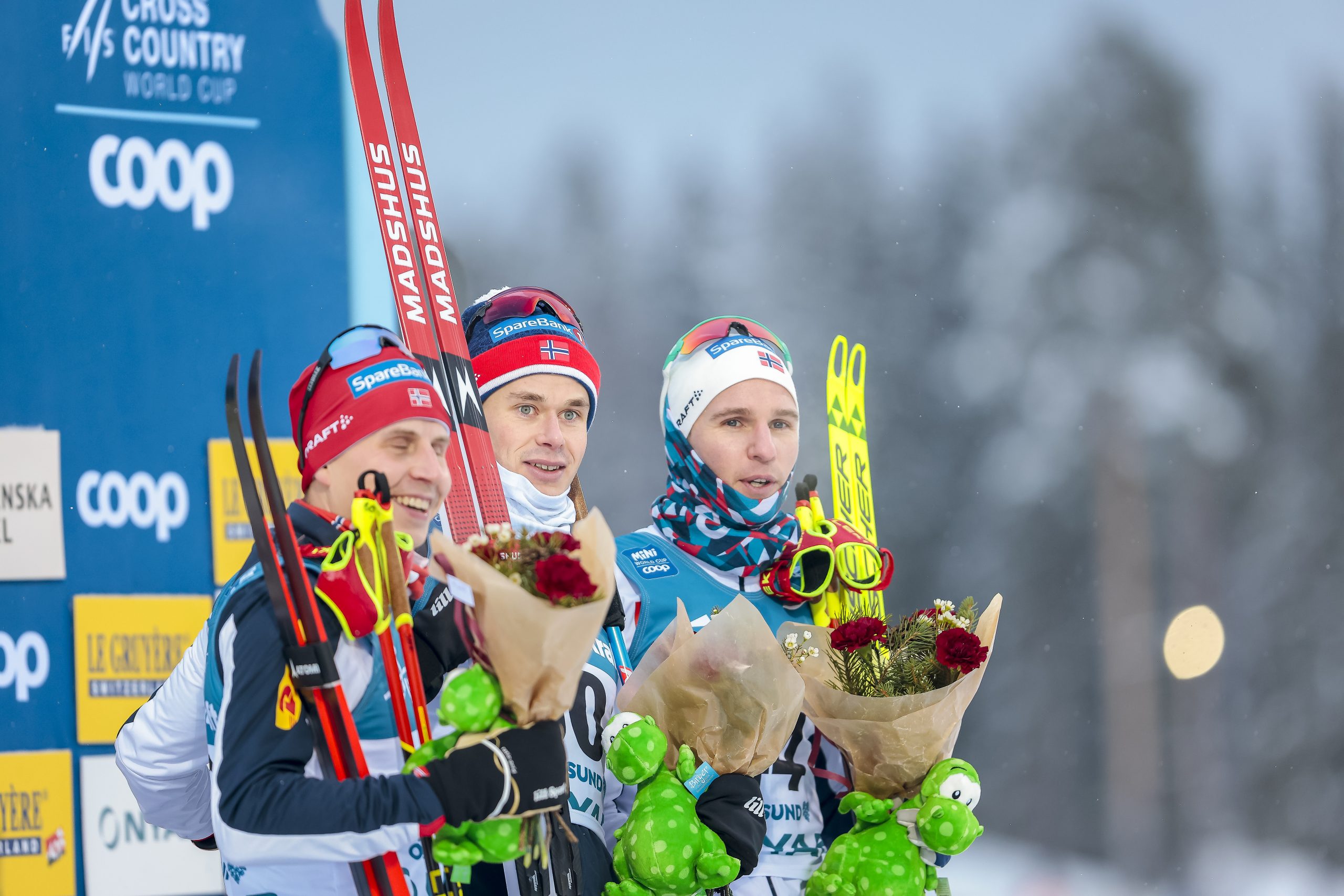
    Iivo Niskanen (FIN), Martin Loewstroem Nyenget (NOR), and Erik Valnes (NOR), (l-r) share the 10 k Classic Interval Start in Oberhof (GER). (Photo: Authamayou/NordicFocus)
  • A Narrow Door, Held Open: The Men’s 20 k Freestyle at U.S. Nationals

    A Narrow Door, Held Open: The Men’s 20 k Freestyle at U.S. Nationals

    This article was made possible through the generous support of our voluntary subscribers. If you value coverage like this, please support FasterSkier with a voluntary subscription.

    The start of the US National Cross-Country Ski Championship Men’s 20 k Freestyle Mass Start. (Photo: Nancie Battaglia)

    There are moments in endurance sport when the noise falls away—not because the stakes are small, but because they are too large to announce themselves loudly. The men who gathered on the start line at Mount Van Hoevenberg on Thursday afternoon understood that kind of quiet. The banners said US National Championships. The calendar said 20 k Freestyle Mass Start. The course—four laps of five kilometers, stitched together by long climbs and fast descents—said this will be honest. But the silence said Olympics!

    For much of the week in Lake Placid, honesty had come quickly. The 10 k classic individual start exposed margins. The sprint laid bare specialization. By the time the men lined up for the 20 k Freestyle Mass Start, the argument had narrowed. There were medals to be won, yes, but more importantly, there were questions still unresolved about who might fit through the narrowing door of Olympic selection.

    For Zanden McMullen, the stakes were explicit. “Today’s race was a ‘one shot, one opportunity’ type of race for me,” he said later. He knew that anything short of a win would leave his Olympic case incomplete. That knowledge sat heavily over the first kilometers—not as panic, but as pressure carefully managed.

    What followed was not a race that fractured early or declared itself with theatrics. Instead, it unfolded as a study in restraint.

    A large, shifting group stayed at the front early on in the race. (Photo: Nancie Battaglia)

    A Race That Refused to Break

    From the opening lap, the field behaved in a way that confounded expectations. In contrast to the women’s race earlier in the day, no decisive break formed. Attacks surfaced briefly—on climbs, into transitions—but were quickly absorbed by the physics of the course. Downhills regrouped the field. Drafting mattered. The snow was fast, the air cold enough to preserve glide, and separation proved expensive.

    John Steel Hagenbuch allowed himself to drift deep into the pack early—sometimes close to twentieth—an approach that looked counterintuitive given both his fitness and his history on the course. It was neither indecision nor passivity. “I was just staying relaxed and letting people work out some energy that I knew wasn’t going to result in any meaningful gain,” he explained. “Racing in the U.S. is very different than racing on the World Cup, and being able to relax at the start of a mass start race is perhaps the best example of that.”

    Zanden McMullen (APU) and his APU teammates Hunter Wonders (#208) and Luke Jager (#204). (Photo: Nancie Battaglia)

    The early splits reflected this tension. Leaders rotated through the front, but gaps rarely exceeded a handful of seconds. By the midpoint of the race, the field had thinned not through violence but through attrition—skiers falling off the back as the pace remained relentlessly honest.

    McMullen, meanwhile, adhered to a plan that demanded patience. “My race strategy was to conserve as much energy as possible,” he said. “Every time a move was made, I made sure to match it calmly but decisively.” By the second lap, he sensed the race’s texture changing. The pack stretched. Breathing deepened. The small inefficiencies of earlier surges began to show.

    Zach Jayne, consistently present near the front group, felt that tension acutely. “Holding position is always difficult,” he said. “So being aware while racing is important.” In a race defined by proximity rather than separation, awareness became a skill as valuable as strength.

    Olivier Leveille (CNEPH), John Steel Hagenbuch (Dartmouth), Zanden McMullen (APU), Jakob Elias Moch (CU), and Brian Bushey (Craftsbury) (l -r). (Photo: Nancie Battaglia)

    Decisions Not Taken

    If the race hinged on a single moment, it may have been defined instead by two moments when nothing happened.

    Hagenbuch identified them clearly. The first came at the start of the third lap, at the base of the long climb—a place where he has both won and lost races before. “Looking back at it now,” he said, “the one that makes me wonder the most is the decision to not attack on the third lap.” His reasoning was sound. The conditions were fast. The field regrouped quickly on descents. “In order to get away, you would have to be very fit and have the best skis in the race,” he said. Unsure that any gap would hold, he chose restraint.

    Mons Melbye (UU) leads Zanden McMullen (APU) and John Steel Hagenbuch (Dartmouth), and Jakob Elias Moch (CU) (r – l) down the final downhill into the stadium. (Photo: Nancie Battaglia)

    The second moment arrived on the final sprint climb before the descent into the stadium. Again, Hagenbuch assessed the cost-benefit. He believed he could crest first—but likely only to be swallowed by the draft. “As such, I decided to follow Zanden over the top,” he said. “I think this was the correct thing to do tactically.”

    That calculus—when to go, when to wait—defined the race for several athletes. McMullen made the same choice from the opposite perspective. “There was no need to do anything rash,” he said. “Just go out and race hard and smart.”

    The result was a front group of four that arrived at the final kilometer together, legs full but not shattered, tension compressed into seconds.

    Zanden McMullen (APU) and John Steel Hagenbuch (Dartmouth) follow Jakob Elias Moch (CU) near the end of the race. (Photo: Nancie Battaglia)

    The Finish

    As the leaders dropped off the final descent and into the stadium, the race became what everyone suspected it would be: a matter of position, timing, and nerve.

    McMullen entered the final stretch calm by design. “During the final lap, I knew it would come down to the final meters,” he said, “and I just made sure to relax as much as I could.”

    Hagenbuch, attempting to execute his finishing move, found the narrow margins of mass-start racing unforgiving. “Getting around Jakob was the crux move of the finishing maneuver I was trying to execute,” he said. “And there just wasn’t enough room for me to come around.” Pushed slightly wide through the final sweeping corner, he lost the speed he needed. “That’s racing,” he added. “It didn’t pan out, but it doesn’t always.”

    McMullen surged cleanly to the line, stopping the clock at 47:37.0. The University of Utah’s Mons Melby was 7-tenths of a second behind, with Hagenbuch a second from the win for third. Behind them, the rest of the field streamed in—gaps small, order consequential.

    Zanden McMullen (APU), John Steel Hagenbuch (Dartmouth), and Jakob Elias Moch (CU) — with Mons Melbye (UU) off camera — come down the finish stretch. (Photo: Nancie Battaglia)

    What the Race Revealed

    On paper, the result was simple: a national champion crowned. In context, it was anything but.

    For McMullen, the victory represented survival as much as success. “The Olympic selection has definitely been looming over my head all week,” he admitted. The stress was real. So was the clarity. He did what he could do.

    For Hagenbuch, the outcome carried both frustration and resolve. “I still have faith that there is a path for me to the Olympics,” he said, while acknowledging that the decision now sits elsewhere. He stood by his choice to skip the Tour de Ski, citing health and long-term belief. It was not a plea, but a statement of readiness.

    Zach Jayne, who again placed himself among the front contenders, viewed the week through a longer lens. “If you look at my results a year ago or two, I was barely a name in the competitive field,” he said. Improvement, for him, is cumulative. “Overall development is just as important to me as any given race.”

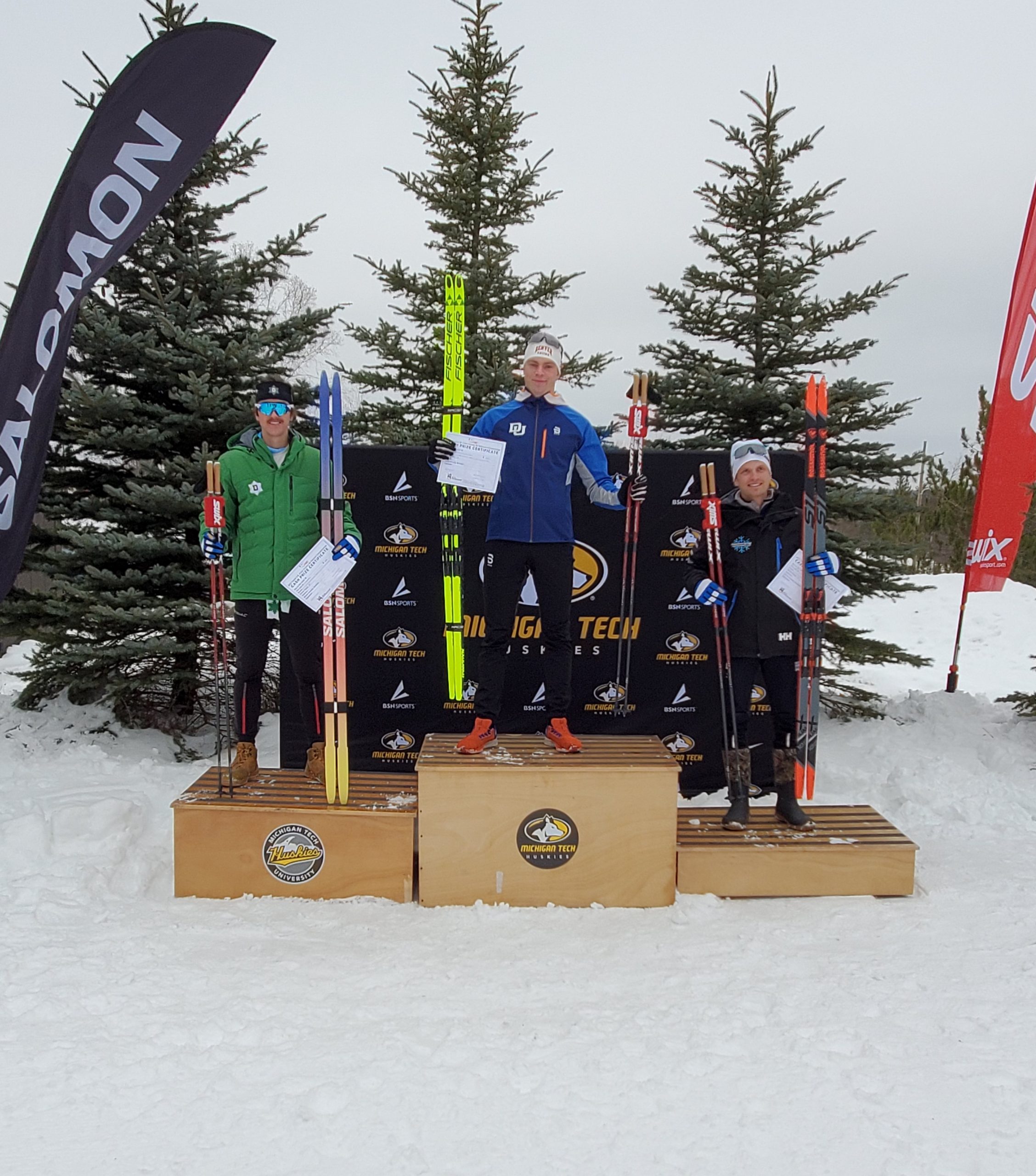
    The national podium for the US National Cross-Country Ski Championship Men’s 20 k Freestyle Mass Start with Zanden McMullen (APU) first, John Steel Hagenbuch (Dartmouth) second, and Zach Jayne (UU) third. (Photo: Nancie Battaglia)

    A Door, Not Yet Closed

    National championships often promise clarity. This one offered something subtler: differentiation without finality. The men’s 20 k freestyle did not decide everything, but it sharpened the picture. It showed who could manage pressure, who could read a race, who could wait—and who could finish.

    In an Olympic winter, those qualities matter as much as any single result.

    As the stadium emptied and the snow settled back into quiet, the door to Milan–Cortina did not swing wide. But for one, and hopefully two skiers, it remained open, narrow, demanding, and earned.


    RESULTS:

    US Nationals Men’s 20 k Freestyle Mass Start

    Love stories like this? Help keep them coming.

    Feature stories like this one take time, access, and care to produce. If you value thoughtful storytelling and independent ski journalism, please consider becoming a Voluntary Subscriber. Your support directly fuels the work we do to cover the people, places, and moments that make our sport special.

    Join the FasterSkier community!
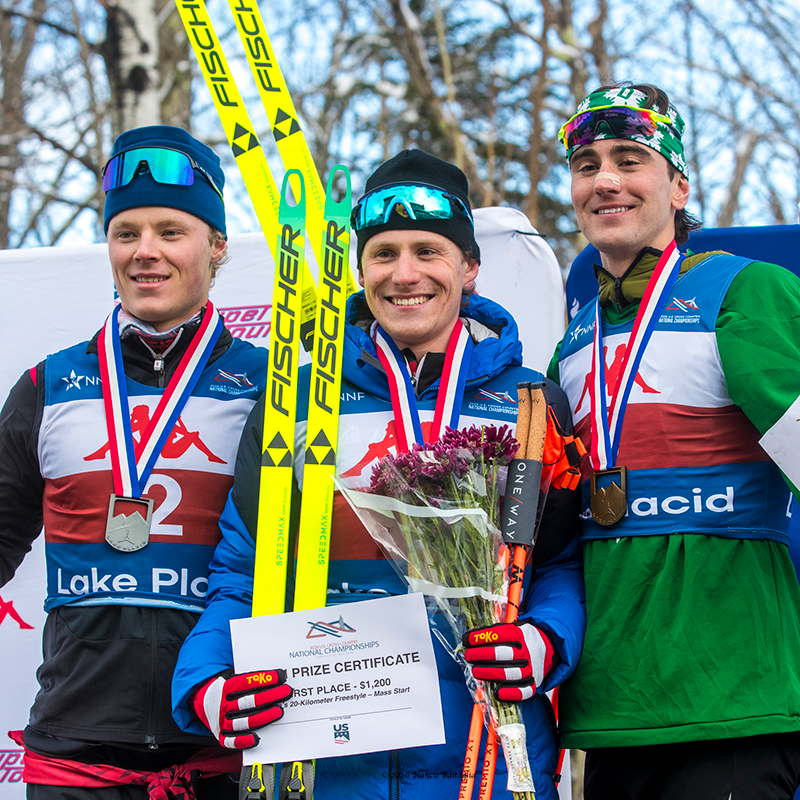
     

    The feed zone is always full of chaos and excitement during a mass start. (Photo: Nancie Battaglia)
  • Where the Margins Speak: U.S. Nationals Opens with Questions, Not Answers

    Where the Margins Speak: U.S. Nationals Opens with Questions, Not Answers

    This article was made possible through the generous support of our voluntary subscribers.  If you value coverage like this, please support FasterSkier with a voluntary subscription.  

    The US National Championships got started yesterday with the 10 k Classic Individual Start in Lake Placid, NY.  Hunter Wonders (#369 – APU) took top honors in the men’s race.  (Photo: Nancie Battaglia)

    On a January afternoon in Lake Placid, Mt. Van Hoevenberg did what it has always done best: it asked skiers to be honest.

    The 10-kilometer classic individual start is not a format that rewards theater. It doesn’t care how good you looked in warm-up, how confident you sounded the night before, or how convincing your season-long narrative might be. It rewards pacing that’s brave but not reckless, technique that doesn’t unravel under strain, and the ability to keep making good decisions when your legs are trying to renegotiate the terms of the day.

    This year, the U.S. National Cross-Country Ski Championships opened with that race—two laps on the 5-kilometer loop—and the timing was no accident. In an Olympic winter, Nationals is never just Nationals. It’s an argument. It’s a week where results don’t merely “count,” they accumulate, and the accumulation becomes the story that follows athletes into selection meetings, petitions, and—if all goes right—onto a plane headed for Italy.

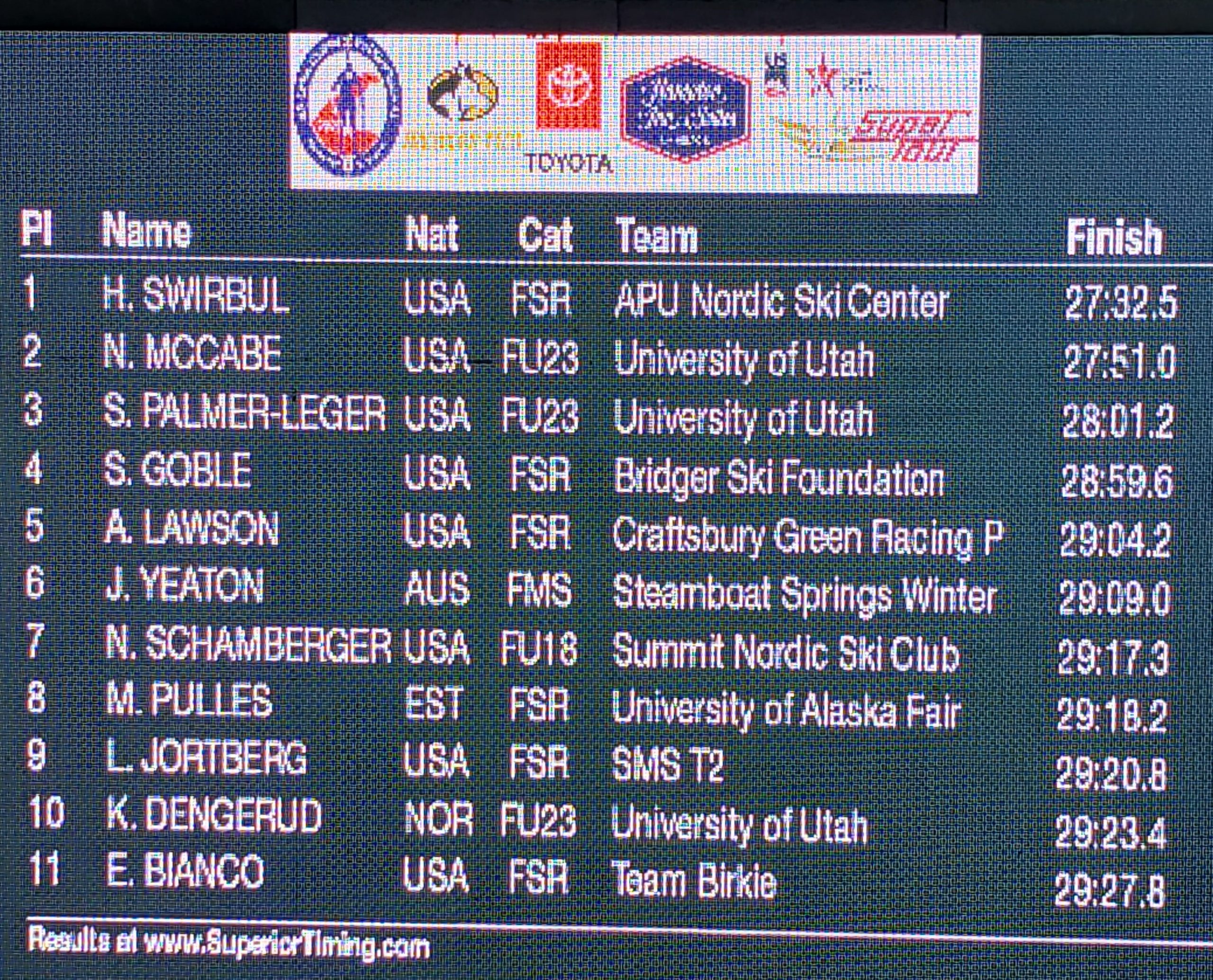
    Men’s 10 k Classic Individual Start Results

    Women’s 10 k Classic Individual Start Results

    Will Koch (SVSEF) on his way to 8th place on the day. (Photo: Nancie Battaglia)

    The Course: Where You Can’t Afford to “Blow Up”

    The Van Hoevenberg course is famous for being “fair,” but fairness in skiing is rarely gentle. The climbs arrive in layered sequences—sections where you can press, sections where you can survive, sections where you can lose seconds simply by being a fraction late to a gear change. There are places to win time, and places where you simply try not to hemorrhage it.

    Hunter Wonders described the central problem precisely after the finish:

    “It has some big hills. And I really think that in this course you can’t afford to blow up. If you blow up, you’re just going to bleed so much time.”

    That idea—bleeding time—was the hidden refrain of the day. Not because athletes were exploding spectacularly, but because this loop punishes any lapse in restraint. It is a course that rewards a mind that stays intact.

    Corbin Carpenter (UAA) on his way to 10th place in the 10 k Classic at US Nationals. (Photo: Nancie Battaglia)

    Men’s Race: Seconds as a Selection Language

    At the front of the men’s race, the margins compressed into something almost absurd: a national title decided in a space so small it could be measured in one imperfect corner, one extra step of herringbone, one pole that slips just slightly at the wrong moment.

    Hunter Wonders won the men’s 10 k Classic National Championship. Behind him, the podium fight came down to an almost unnerving closeness. The story wasn’t simply that the race was fast; it was that it was tight—tight enough to turn pacing into the defining skill.

    Wonders’ post-race reflection didn’t sound like someone who had “controlled” the race so much as someone who had managed it correctly, which is often the same thing in interval start racing:

    “Yeah. So going through it never really felt like it was my day. I knew it was going to be a competitive one, and I knew that it would just come to good skis, good feelings in the body, good pacing, and I’m just really happy that I was able to pull it off.”

    He returned to pacing again, emphasizing that his strategy wasn’t about heroics, but about avoiding the one mistake that the Van Hoevenberg loop will magnify:

    “I think pacing was the biggest challenge for me today… So I was trying to take it out hot to where I could be competitive but not blow myself up.”

    What made Wonders’ win especially convincing was how he described staying committed to his plan and then finishing with intent when the splits told him the race was available:

    “I never really changed my race plan mid-race. But I did get some good splits, especially near the end, so I just tried to finish as hard as I could.”

    And then, because it’s 2026 and everyone knows what this week represents, he said the part that matters most:

    “And then, of course, U.S. Nationals does carry some heavy weight in an Olympic year. And I’ve been thinking about this race since the races in Anchorage ended, so I’m just really happy to have it behind me.”

    He wasn’t pretending the pressure isn’t real:

    “I definitely felt the pressure, and I’m going to continue to feel the pressure throughout the rest of this Nationals. But I think I have good momentum going, and I have good confidence. I know that I’m in shape, and everything else just kind of hopefully falls into place over the next week.”

    The finish-line truth of the men’s race is that it created a kind of selection tension that will hang over the rest of the week: the top contenders weren’t separated by a narrative gap. They were separated by seconds.

    Luke Jager, who finished second, captured what that tightness means on this course and in this moment:

    “Yeah, crazy how close the times were! The course is cool because there are so many different gears in the climb that people can all have different focus spots and still end up so close together at the finish line. It is really cool, fair racing like that.”

    That line—different focus spots, same finish—explains why the top of the results can look like a near-tie without being random. You can ski this course well in different ways. But you still have to ski it well.

    Jager also spoke directly to the Olympic subtext without overplaying it:

    “I’m not naive enough to say that the Olympics aren’t on all of our minds, but I’m also really having fun just trying to do my best and working to solve the puzzle of how to perform on any given day. Italy would be sweet, but I’m super thankful for this opportunity to even be feeling that pressure at all. It’s been fun to have such a big challenge.”

    And then the warning embedded in the closeness:

    “The close times just show me that you can’t take anything for granted, and each race could be someone else’s day. Fun to have to try and be as dialed and prepared as you can every day when the stakes are high.”

    In other words, this wasn’t a day that “settled” anything. It made the next races more consequential.

    Men — Top 10 (10 km Classic Individual Start)

    1. Hunter Wonders — APU — 25:28.8
    2. Luke Jager — APU — 25:30.2
    3. Olivier Leveille — Orford – CNEPH — 25:30.8
    4. Zachary Jayne — University of Utah — 25:31.2
    5. John Steel Hagenbuch — DAR — 25:35.6
    6. Zanden McMullen — APU — 25:36.4
    7. Mons Melbye — University of Utah — 25:55.3
    8. Will Koch — SVSEF — 25:58.1
    9. Brian Bushey — Craftsbury — 26:00.1
    10. Corbin Carpenter — UAA — 26:01.3

    Men’s 10 k Classic Individual Start: Complete Results

    Hailey Swirbul (APU) on her way to a national title in the 10 k Classic at US Nationals in Lake Placid. (Photo: Nancie Battaglia)

    Women’s Race: Swirbul’s Return, and a Course That Doesn’t Flatter Anyone

    If the men’s race was defined by a razor-thin margin, the women’s race had a different feel: not less intense, but shaped by a performance at the front that felt like a statement. And the words that followed from the winner did not sound like someone who had stumbled into a good day; they sounded like someone who had been building toward a day like this for a long time.

    Hailey Swirbul framed her win as the visible outcome of a longer experiment:

    “Winning this race felt like finally getting to watch the outcome of a long experiment unfold! I’ve wanted to approach this season from a place of curiosity to see if I can get fitness and strength back after a 2.5-year hiatus. It has felt so rewarding to get stronger and remember how it feels to race and go hard again.”

    She described the way racing itself can re-teach an athlete what “hard” feels like:

    “Each race or hard interval session reminds me what it feels like a little bit more.”

    And then she said what almost everyone in the finish area seemed to be thinking, whether they admitted it or not:

    “This course is legit. I didn’t hear the words ‘I felt good out there!’ come out of a single person’s mouth! It was a battle of self against hill.”

    That sentence carries the whole day inside it: not a battle against other people, exactly, but against the course’s capacity to strip away pretense.

    Hailey Swirbul (APU) charges up one of the many climbs on that Lake Placid course behind Virginia Cobb (#120 – DAR) and Marit Flora (#76 – UAA). (Photo: Nancie Battaglia)

    Swirbul’s race plan—at least as she described it—was deeply personal in its logic. Not a copy of someone else’s pacing, not a response to what she imagined others were doing, but an attempt to ski in a way that matched her strengths:

    “I tried to ski true to myself. I wanted to use momentum and my own body weight the most effectively I could to get around that course as fast as I could- regardless of how the pacing looked for others.”

    And because it’s an Olympic year, she made the subtext explicit:

    “I have my eyes on an Olympic Team spot, and I’m going to continue to fight for it until the team is officially named. I’m not thinking beyond this week of racing here at Nationals. One step at a time, staying present…”

    Then the line that reminds you why athletes keep doing this:

    “…and enjoying getting to live this life and see so many people from old racing days— it’s a good life.”

    Women — Top 5 (10 km Classic Individual Start)

    1. Hailey Swirbul — APU — 28:42.5
    2. Erica Lavén — University of Utah — 29:14.4
    3. Tilde Bångman — University of Colorado — 29:23.9
    4. Novie McCabe — APU — 29:26.1
    5. Samantha Smith — SVSEF — 29:47.3
    6. Ava Thurston — DAR — 29:48.8
    7. Rosie Fordham — UAF — 29:56.7
    8. Kendall Kramer — APU — 30:02.7
    9. Renae Anderson — APU — 30:14.2
    10. Alayna Sonnesyn — Team Birkie — 30:16.0

    Women’s 10 k Classic Individual Start: Complete Results


    McCabe: Process as a Way Through Uncertainty

    Novie McCabe’s post-race comments carried a tone that felt especially relevant to this week: gratitude, yes—but also a clear-eyed description of how fragile a season can feel, and how an athlete can build stability by focusing on what can be controlled.

    “It meant a lot to be starting today for sure! I think that being a bit unsure of whether I’d be starting these races made me feel pretty grateful for the opportunity to go out there and give it my best today.”

    She described the emotional mix honestly:

    “There were, of course, lots of doubts and some nerves going in as well, but I really tried to just enjoy the skiing and made that my main goal going into it.”

    And she emphasized that conditions and course feel matter—not as excuses, but as context:

    “The conditions were insanely nice today, which helped, and this course is one of my favorites!”

    On pacing, McCabe described a strategy rooted in self-knowledge:

    “Honestly, I kinda just went out as hard as I could within reason, and tried to relax and hold onto it. I know the splits don’t really make it look that way, haha, but I am not the fastest starter, so it is usually best for me to go out at what feels like a pretty hard pace.”

    Then she explained the architecture of her day: not results goals, but process goals. She made a point that’s easy to dismiss until you remember what an Olympic week does to people:

    “Being focused on process goals going into a race really helps me develop a framework for success.”

    She listed those goals with specificity—how she wanted to feel, what she wanted to focus on, what she wanted her mind to do when discomfort arrived:

    “…going out hard but comfortable and trying to hold it, skiing well (not skiing hard), be the focus of the day, keeping up the positive self-talk, and finding the good and noticing what is going well throughout the race.”

    And on Olympic pressure, she offered a perspective that will sound familiar to anyone who has ever had a season disrupted by health or inconsistency:

    “I think it has honestly helped me out in terms of handling self-imposed Olympic qualification pressure to not have had the best lead up and be pretty unsure of what I would be doing as far as racing goes this year…”

    She described her focus as narrower—day by day—because it has to be:

    “…it has taken some of my focus off of results… It has just kind of led to an approach where I take it day by day, and don’t really think much further into the future than that.”

    That isn’t resignation. It’s an operating system. And it’s one that often works, especially on a course where you can lose time in the exact moment you start racing the future instead of the hill in front of you.

    Rosie Fordham (UAF) leaving it all on the course on her way to 7th place overall. (Photo: Nancie Battaglia)

    Samantha Smith: A Double Life and a Very Real Result

    Samantha Smith’s presence near the top of the women’s results came with a storyline that’s unusual even in American ski racing: balancing elite cross-country skiing with Division I soccer at Stanford, and arriving at the heart of ski season off a long NCAA tournament run.

    She spoke about the short transition plainly:

    “Yes, that’s correct, that our soccer team’s long run into the NCAA tournament has made for a much shorter transition to the season. I’ve only been on snow for a few weeks, so I know my ski fitness is improving every day.”

    She described the emotional carryover of playing for a national title—how it can become fuel rather than a distraction:

    “Playing in the National Championship was an amazing experience—we were so close to winning it all. It was a tough way to end such a great season. I’m taking that fire from our final game and pouring it into my skiing.”

    And she framed her path as something she’s embracing, not defending:

    “I know my path is different from others, but I’m doing what I love, and I think there’s a lot to be said for staying true to that. I’m trying to take everything step by step, live in the moment, and focus on what I can control!”

    On the scrutiny that comes with missing ski events earlier in the season, she emphasized the lessons she’s drawn from doing two sports seriously:

    “…for me, I feel like there’s actually a lot I can pull from the two sports and use it to my advantage.”

    She described last year as a “trial year” and explained how she’s adjusted:

    “I needed that test phase to figure out what works and what doesn’t work. I made some adjustments this year in training, switching things up a bit, and I feel like that’s helped me a lot going into this season.”

    She credited Braden Becker for helping with training and coaching through the fall:

    “I owe a huge thank you to Braden Becker, a retired skier, who’s now a grad student at Stanford. He helped me a lot with training this fall, and it honestly made a world of difference…”

    And then she returned to the mental challenge of this week—high stakes, lots of uncontrollables—and the philosophy that keeps an athlete from spiraling:

    “…I’m just trying to focus on what I can control—my attitude and effort.”

    Finally, she addressed the question of what a distance result might “say” about her:

    “I was happy with today’s result… I think today’s race was a good indication of my trajectory for the rest of the week and the rest of the season.”

    And she framed versatility—distance and sprint—as part of the argument she wants to make this winter:

    “…hopefully showcase some of my versatility in different distances and disciplines, which I think can be important for big competitions like the Olympics.”

    Alayna Sonnesyn (Team Birkie) on her way to 10th place overall. (Photo: Nancie Battaglia)

    Why This Week Matters So Much

    For the men, the arithmetic of Olympic selection is already partly written—and partly unresolved. At present, the United States is allotted seven men’s quota spots for the Olympic team, with the possibility that an eighth could roll down following this weekend’s World Cup races in Oberhof, Germany. That uncertainty is where much of the tension at U.S. Nationals resides.

    It is also where most of the speculation comes from—so take it for what it is, informed but unofficial. The six American men who recently raced the Tour de Ski appear, by any reasonable reading of the criteria, to be on solid ground. Each currently ranks in the top 45 on the FIS World Cup sprint and distance overall lists, the threshold set by the US Ski Team that meets the objective requirements for Olympic selection.

    Within that group of six, there is also ample sprint depth to cover the four available starts in the individual classic sprint and to form a competitive two-man sprint relay. As a result, Tuesday’s Freestyle Sprint at Nationals is likely to carry less weight for those athletes racing in Lake Placid with dreams of making the Olympic roster. Instead, the races most likely to function as closing arguments—particularly if an additional quota spot materializes—were Sunday’s 10 k Classic and Thursday’s 20 k Freestyle Mass Start. For at least one man, and potentially two, those performances may determine whether this week in Lake Placid becomes a footnote or a turning point.

    On the women’s side, the picture is far less settled—and far more fluid. The United States has eight Olympic quota spots available, but only a portion of them is considered secure. Jessie Diggins—if it were ever in doubt—has already satisfied the objective criteria by finishing in the top eight in World Cup races that are part of the Olympic schedule. Julia Kern and Rosie Brennan also appear well-positioned, based on their respective rankings on the sprint and distance overall lists.

    That still leaves as many as five remaining spots to be determined, drawing from a complicated blend of results across Period One on the World Cup, the SuperTour events in Alaska, and, critically, U.S. Nationals this week in Lake Placid. For those athletes, Nationals is not simply a domestic championship. It is an audition, a data point, and—in some cases—the clearest remaining path onto the Olympic team.

    John Steel Hagenbuch (DAR) on his way to 5th place overall on the day. (Photo: Phillip Belena/EISA)

    Grover: “There’s Going to be Space”… and then the Paperwork

    US Cross-Country Ski Team Director Chris Grover offered perhaps the clearest explanation for why the opening races at Nationals feel unusually charged—not because they deliver final answers, but because they create space. Space in which athletes can move themselves from the margins of the conversation toward its center.

    The story, as Grover framed it, is not simply who wins. It is what a result permits: what doors it opens, what arguments it strengthens, and how it positions an athlete within the broader, inevitably imperfect machinery of Olympic selection.

    As Grover put it in an interview with FasterSkier, U.S. Nationals does exactly that—it creates room:

    “…it’s going to be a great story because there’s space. There’s going to be space on both the men’s squad and the women’s squad, by the looks of it, for athletes to qualify from Nationals, to have great U.S. Nationals and come over, especially on the women’s side…”

    That space, however, is not filled automatically. In an Olympic year, it is accompanied by paperwork, petitions, and deliberation—an acknowledgment that performance, while central, is rarely the entire story.

    Grover outlined the petition process that follows Nationals, a step that often receives less public attention but carries significant weight:

    “…all athletes who want to be considered for discretionary selection… We’ll put in an application. Or a petition rather, where they will kind of write out what their case is, why they should be considered…”

    Those petitions, Grover explained, are then evaluated by a selection committee—six people tasked with translating results, trends, and context into final decisions:

    “…we have the six-person selection committee that will pick the team. So as a committee, we’ll read everybody’s application, and then we, as a committee, will decide whether we want to elevate somebody using Coach’s discretion to be selected.”

    Even the arithmetic of quota spots, Grover noted, is subject to forces beyond any one athlete’s control. On the men’s side, the possibility of an additional spot remains unresolved:

    “…it’s after Oberhof… qualification for nations also closes on January 18… and at that point a spot [might be] available…”

    Which is to say: timing matters. So does patience.

    Taken together, Grover’s explanation underscores a truth that every athlete racing this week understands intuitively. Lake Placid does not merely crown national champions. It produces evidence—sometimes decisive, sometimes ambiguous—for a selection process that will soon harden from theory into reality. And once it does, the margins that feel abstract today will become permanent.

    Ava Thurston (#45 – DAR) on her way to 6th place overall on the day. (Photo: Phillip Belena/EISA)

    What Sunday Actually Did

    The first day of Nationals did not select the Olympic team. It did something subtler and, in some ways, more powerful: it established the tone of the week.

    On the men’s side, it proved that the domestic field is not going to give anyone breathing room. Wonders’ win was decisive in the only way that matters in interval start racing: he was fastest when everyone had to ski alone. But the closeness behind him reinforced Jager’s point—each race could be someone else’s day. In a week like this, that’s not a platitude. It’s a forecast.

    On the women’s side, Swirbul’s victory felt like a day where preparation and belief finally aligned. But even she framed the week properly: one step at a time, staying present, not thinking beyond Lake Placid. McCabe and Smith offered two different versions of the same survival skill: build a framework, focus on process, control what you can, and let results become the output rather than the obsession.

    If there was a single emotional throughline, it was this: the athletes weren’t pretending the Olympics weren’t there. They were trying, in different ways, to keep that fact from hijacking the work.


    A Conclusion in the Shape of an Interval Start

    There’s a particular quiet that follows an interval start classic race—not silence, exactly, but the hush of athletes doing their internal accounting. A national championship can feel like a celebration. In an Olympic year, it can also feel like a deposit: something placed into the larger selection ledger, something that will matter later, in rooms the athletes won’t be in, in conversations they can’t control.

    What makes Lake Placid different—what makes Mt. Van Hoevenberg feel so permanent—is that it refuses to dramatize any of this. It simply asks the same thing of everyone: ski two laps honestly, manage the climbs, keep your head when your legs get loud, and finish without bargaining.

    Wonders said he felt the pressure—and expects to keep feeling it. Jager said the closeness means nothing can be taken for granted. Swirbul described a long experiment that finally yielded its outcome. McCabe described building success from process, not prediction. Smith described a life lived between two sports, and a focus narrowed to attitude and effort.

    Taken together, those aren’t just post-race quotes. They’re the first chapter of the week.

    And in an Olympic winter, first chapters matter—because the next race arrives quickly, and the story keeps writing itself, one start at a time.


    Love stories like this? Help keep them coming.

    Feature stories like this one take time, access, and care to produce. If you value thoughtful storytelling and independent ski journalism, please consider becoming a Voluntary Subscriber. Your support directly fuels the work we do to cover the people, places, and moments that make our sport special.

    Join the FasterSkier community!


    Brian Bushey (#345 – Craftsbury) on his way to 9th place overall. (Photo: Nancie Battaglia)
  • In Davos, the Second Lap Always Tells the Truth

    In Davos, the Second Lap Always Tells the Truth

    This coverage is made possible through the generous support of Marty and Kathy Hall and A Hall Mark of Excellence Award. To learn more about A Hall Mark of Excellence Award, or to learn how you can support FasterSkier’s coverage, please contact info@fasterskier.com.

    Davos doesn’t reward urgency.

    It tolerates it, sometimes — lets it flirt with the clock through the opening kilometers — but it never forgets. Like a mysterious, wispy cloud, the altitude sits quietly above the stadium, thinning the air just enough that the consequences arrive late, not immediately. The first lap can feel generous. The second is where Davos asks what you’ve really brought with you.

    On Sunday, in the men’s 10-kilometer freestyle interval start at the World Cup in Davos, Switzerland, that truth arrived right on schedule. Athletes who attacked early were gradually called back. Athletes who waited found themselves moving forward without ever appearing to accelerate. And one skier — patient, smooth, and increasingly inevitable — turned the second lap into a private demonstration.

    Einar Hedegart of Norway won in 22:40.7, earning his second straight World Cup victory, this one built not on surprise but on control. Behind him came Harald Østberg Amundsen (NOR) at +11.7 seconds, Mattis Stenshagen (NOR) at +18.8, Johannes Høsflot Klæbo (NOR) fourth (+24.1), and Martin Løwstrøm Nyenget (NOR) fifth (+30.6). Andrew Musgrave (GBR) led the non-Norwegians in sixth (+31.1).

    Five Norwegians in the top five — but only one skied the race the way Davos prefers.

    Mattis Stenshagen (NOR) comes to the 10 k Interval Start Freestyle finish in Davos (SUI). (Photo: Modica/NordicFocus)
    The Temptation of the First Lap

    Interval starts strip racing down to decisions. No drafting. No cover. No negotiation. In Davos, those decisions begin almost immediately because the course invites speed from the start. The opening kilometers flow. The snow was hard and fast after an overnight freeze. Skis hummed. Breathing felt manageable.

    Several athletes took the invitation.

    Early time checks were brisk, and for a moment the race appeared to be tilting toward the skiers willing to press from the gun. Harald Østberg Amundsen, the reigning overall World Cup champion, was among them — assertive, controlled, but unmistakably on the front foot. At the first major checkpoint, Amundsen held a small advantage over Hedegart, exactly the kind of margin that feels reassuring on paper.

    Others followed similar scripts. Strong starters carved seconds in the opening loop, skiing as if Davos were simply another mid-altitude venue rather than one of the circuit’s quiet physiological traps. It all looked reasonable — until the course turned upward again.


    Why Davos Punishes Impatience

    At roughly 1,560 meters above sea level, Davos sits just high enough to distort pacing instincts. Red-lining a climb here doesn’t always feel catastrophic in the moment. The cost arrives later, when recovery never quite comes, and the second lap begins to feel longer than the first.

    That dynamic defined the race.

    Athletes who went hard early found themselves defending, not attacking, once the second lap began. Speed leaked away on the longer climbs. Transitions dulled. The ability to change gears — so critical in freestyle skating — started to fade.

    Hedegart, meanwhile, was doing something else entirely.

    Einar Hedegart (NOR) with Vili Crv (SLO) trailing during the 10 k Interval Start Freestyle in Davos (SUI). (Photo: Vanzetta/NordicFocus)
    Hedegart’s Patience — and the Moment it Mattered

    Hedegart did not lead early.

    That point matters.

    He allowed seconds to slip away in the first lap, skiing smoothly but without urgency, keeping his effort under control on the steepest sections. At altitude, that restraint isn’t passive — it’s strategic. Backing off even a few percent on the climbs can preserve a system that stays responsive later.

    When the race entered the second lap, the difference became apparent.

    Hedegart didn’t surge so much as continue. While others plateaued, he maintained tempo. While early leaders fought to hold speed, he quietly increased his advantage, taking time not through dramatic accelerations but through the absence of slowdown.

    By the 7.4-kilometer mark, the race had clarified. The seconds Hedegart had conceded early were gone — and then some. His advantage over Amundsen had grown decisively. The course was no longer offering second chances.

    The finish confirmed what the splits already suggested: Hedegart’s second lap was the fastest in the field, and it wasn’t close.

    Harald Amundsen (NOR) on his way to second place in Davos (SUI). (Photo: Vanzetta/NordicFocus)
    Amundsen, Stenshagen, and the Norwegian Sorting Hat

    Behind Hedegart, the Norwegian internal race unfolded in layers.

    Amundsen’s early aggression kept him close, but the cost was unavoidable. He remained solid — this was not a collapse — yet the final kilometers belonged to Hedegart. What had been a narrow early lead turned into an 11.7-second deficit at the line.

    Mattis Stenshagen, by contrast, skied one of the day’s most even races. Never flashy, never panicked, he moved steadily forward as others drifted back, finishing third and reinforcing his reputation as one of Norway’s most reliable distance technicians.

    Johannes Høsflot Klæbo offered another useful case study. After a frustrating sprint the day before, Klæbo looked sharper and more composed, staying in contention through the middle of the race. But Davos demands distance-specific economy, not just efficiency, and he lost ground late, finishing fourth — competitive, but never truly threatening Hedegart.

    Martin Løwstrøm Nyenget, wearing the red distance bib, rounded out the Norwegian sweep of the top five, steady as ever but unable to match the winning pace in the final lap.

    Five Norwegians, five slightly different races — and one clear template emerging at the top.

    Andrew Musgrave (GBR) was the fastest non-Norwegian skier in Davos (SUI). (Photo: Vanzetta/NordicFocus)
    The International Picture: Holding On vs. Moving Up

    Outside Norway, the same altitude logic applied.

    Andrew Musgrave (GBR) skied a disciplined race, managing his effort well enough to stay competitive throughout. He was rewarded with sixth place — not by attacking late, but by avoiding the fade that claimed others. In Davos, survival is often the first victory.

    France’s Mathis Desloges and Hugo Lapalus hovered near the top ten, their early speed gradually neutralized by the second lap. Italy’s Federico Pellegrino, so dangerous in sprint formats, found the sustained demands of the 10 km Interval Start less forgiving, finishing outside the top 30.

    The pattern repeated down the results list: strong early checkpoints followed by diminishing returns. Davos was collecting its debts.

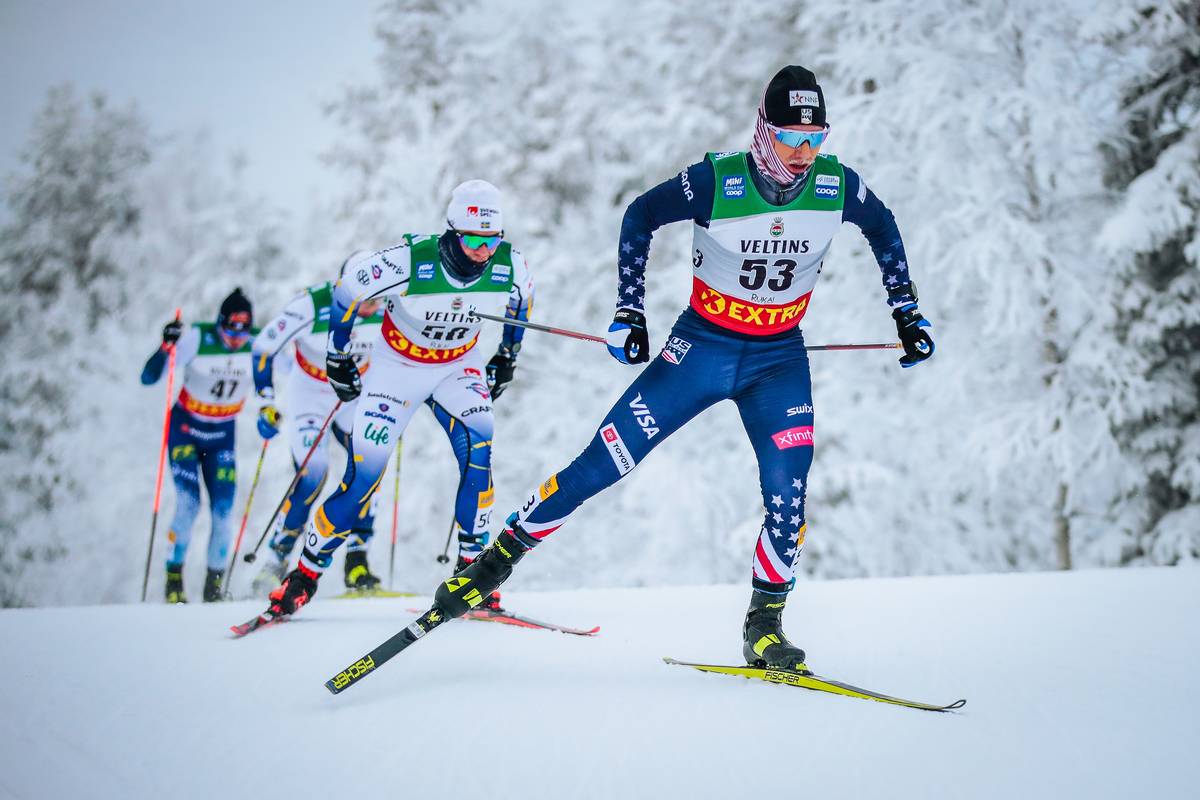
    On his way to 30th place, John Steel Hagenbuch (USA) follows teammate Ben Ogden (USA). (Photo: Vanzetta/NordicFocus)
    The American View: Learning in Familiar Air

    For the U.S. team, John Steel Hagenbuch finished 30th, the top American on the day — a result that only hints at how complicated his Davos race really was.

    Hagenbuch has never considered himself particularly sensitive to altitude, a fact that quietly shaped both his expectations and his pacing plan.

    “I’m maybe not the best authority to say how altitude feels, as I usually don’t feel affected by it much,” Hagenbuch said. “I typically start slow and then pick up speed through races, and this pacing strategy is typically rewarded at altitude.”

    That approach aligned neatly with what Davos demanded. And while Hagenbuch is quick to downplay any physiological advantage from growing up and training in Sun Valley, Idaho, he did note a different kind of familiarity.

    “I think being from altitude can help with racing at altitude, but it’s certainly not a decisively significant factor — I was still plenty far behind the sea-level Norwegians today,” he said, with a laugh. “Speaking of familiarity, however, I remarked at how much Davos reminded me of home — the trails and the surrounding mountains strongly resemble Galena.”

    The race itself marked his best feeling of the opening World Cup block — even if the result came under less-than-ideal circumstances.

    “This Davos Skate 10 km was the best I’ve felt so far in Period 1,” Hagenbuch said. “But it unfortunately came only a day after I crashed hard on the infamously icy slalom downhill coming down from Flüelapass and subluxed my right shoulder for about the tenth time.”

    By race morning, the pain hadn’t gone away.

    “Even with a few thousand milligrams of acetaminophen down the hatch, every single pole stroke hurt,” he said. “So while it was nice to finally — barely — be top 30, I can’t help but think that without the injury and the stress associated with it, I could have done better. Alas, that’s life, and that’s skiing. I am not the only one to have had some bad luck in important races.”

    Zooming out, Hagenbuch remains confident in his trajectory, even if the opening block didn’t fully reflect it.

    “I feel confident in what I can achieve this winter — even if I didn’t necessarily show it during Period 1,” he said. “With this being an Olympic year, the competition was even higher than normal. For example, Per-Erik Bjornestad, one of our Norwegian wax techs, said that the Trondheim 10 km skate was the highest level of skiing he had ever witnessed.”

    Looking ahead, Hagenbuch’s plans are clear — and pragmatic.

    “Pretty much regardless of how today’s race went, I was going to go home to Sun Valley for Christmas,” he said. “I don’t think it makes sense for me to do the Tour de Ski, given how my health has been this fall and the start of the winter. I’m excited to go home and to compete at U.S. Nationals in Lake Placid.”

    Einar Hedegart (NOR) celebrates with a fist pump to the camera in Davos (SUI). (Photo: Modica/NordicFocus)
    Why this Race Matters More than it Looks

    It’s easy to treat Davos as an outlier — scenic, elevated, a little unique. The athletes don’t.

    The men’s 10 km Freestyle Interval Start is an Olympic format. It’s a race without shelter, without drafting, and without excuses. Davos amplifies all of that. Pacing errors are magnified. Aerobic limits are exposed. The second lap becomes a referendum.

    Hedegart passed that referendum emphatically.

    This was not a perfect-day fluke. It was not a tactical accident. It was the same pattern, repeated under different conditions, at a different altitude, against the deepest field in the sport. Ski patiently. Protect the climbs. Let others make the race hard early — then make it impossible late.

    Einar Hedegart (NOR) remained on the snow for several minutes after crossing the finish line in Davos (SUI). (Photo: Modica/NordicFocus)
    A Quiet Finish, a Louder Message

    There was no spectacle at the finish line. No disbelief. No chaos. Hedegart crossed, collapsed, and recovered — another man undone by thin air, but this time by his own effort.

    Two races. Two wins. Two second laps that separated him from everyone else.

    Davos didn’t raise its voice. It didn’t have to.

    It simply told the truth — the same one it always tells — and this time, Einar Hedegart listened better than anyone else.


    Men’s 10 k Individual Start Freestyle RESULTS


    Harald Amundsen (NOR), Einar Hedegart (NOR), and Mattis Stenshagen (NOR), (l-r) take the 10 k Freestyle podium in Davos (SUI). (Photo: Modica/NordicFocus)

    Love Stories Like This? Help Keep Them Coming.

    Feature stories like this one take time, access, and care to produce. If you value thoughtful storytelling and independent ski journalism, please consider becoming a Voluntary Subscriber. Your support directly fuels the work we do to cover the people, places, and moments that make our sport special.

    Join the FasterSkier community!


    Andrew Musgrave (GBR) gives the race winner Einar Hedegart (NOR) a sleigh ride after the pair had excellent days in the 10 k Freestyle in Davos (SUI). (Photo: Vanzetta/NordicFocus)


  • The Hilltop Lesson: How Second Place at the NCAA Championship Became Hagenbuch’s Guiding Philosophy

    The Hilltop Lesson: How Second Place at the NCAA Championship Became Hagenbuch’s Guiding Philosophy

    On a bright March afternoon at Dartmouth’s Oak Hill, with a soft and slow course under his skis and a band he himself had organized blasting in the stadium above, John Steel Hagenbuch approached the final climb where he learned something that would shape the early years of his career far more than any podium ever could.

    He had come into the NCAA Championships with the weight of a thousand private dreams — a home championship crescendo and an entire community behind him. Then, with Utah’s Joe Davies charging to the finish line waving the Utes flag and Peter Graves’ voice echoing through the trees, Hagenbuch realized he was not going to win.

    “I got dropped, and it just wasn’t gonna happen,” he says. “I told myself, you’ve got until the top of this hill to be upset about it.”

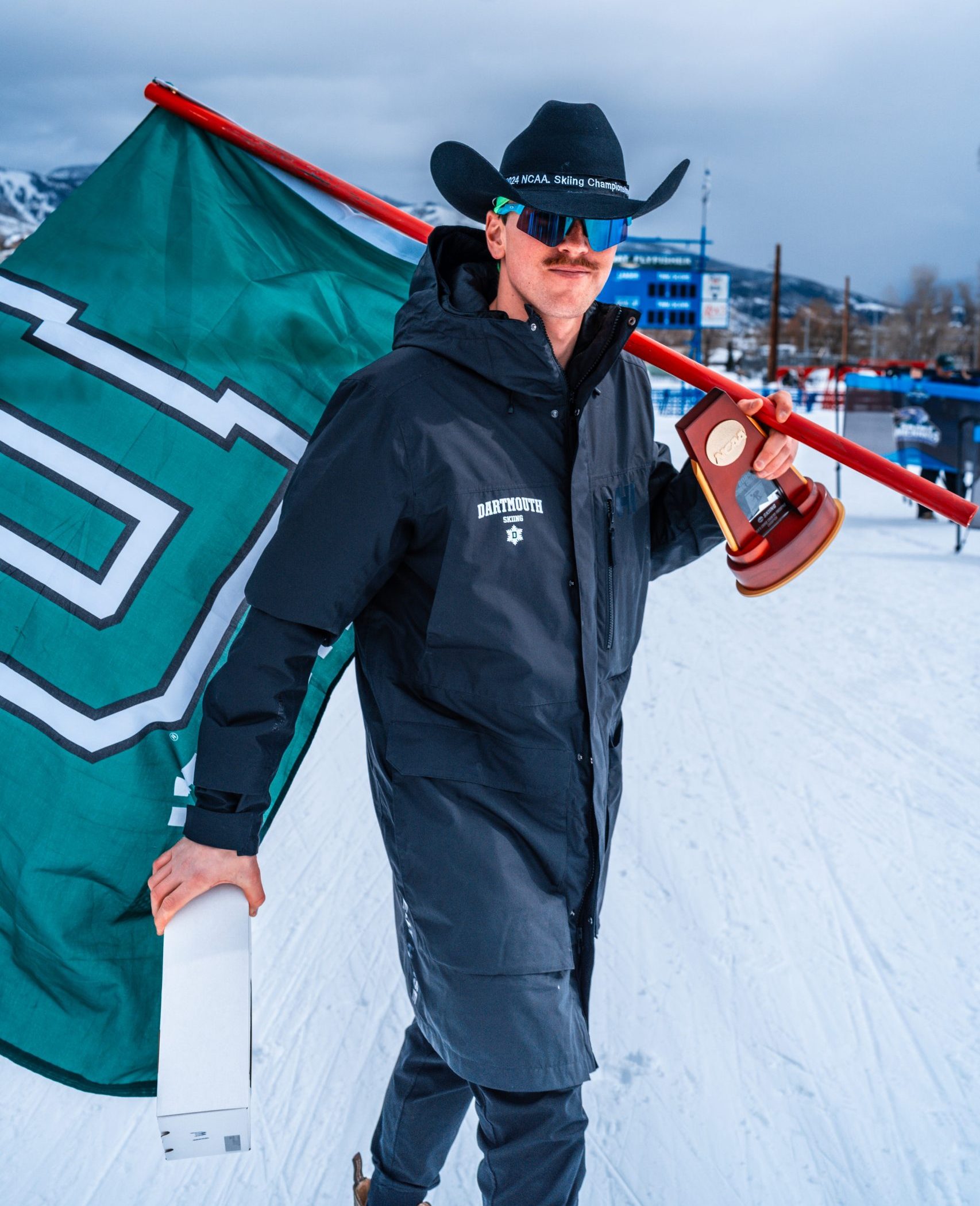
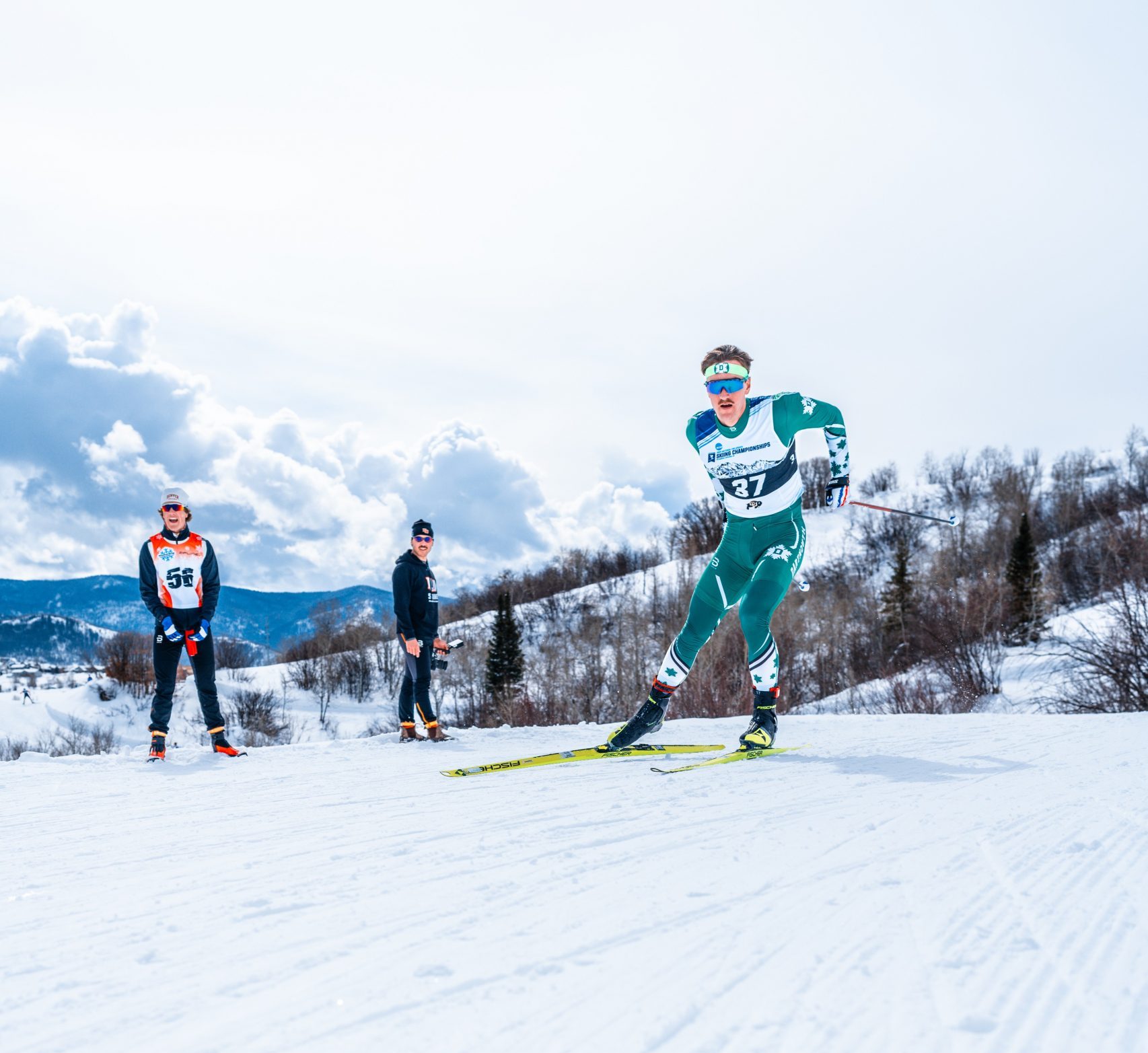
    John Steel Hagenbuch was all smiles after crossing the 20k Freestyle finish in second place at the 2025 NCAA Championship where he represented Dartmouth College on their home course at Oak Hill. (Photo: Courtesy Photo)

    What happened next wasn’t the reaction of an athlete who had just been beaten in the race he’d been thinking about, talking about, training for, and dreaming about for three years. It was something quieter. Something older. Something that didn’t look like the scripted champion he’d imagined — but ended up becoming the cornerstone of the athlete he is now.

    “I stopped poling,” he says. “And I just kind of skated through the stadium… smiling, waving, like the Penguins of Madagascar — smile and wave.”

    He remembers the sunshine, the thousands of people lining the stadium, the Stripers — Dartmouth’s biggest student band, coaxed back from post-graduation life because he wanted the place to feel alive — and the thrum of friends, professors, fraternity brothers, and family in the crowd.

    “Did I win the ski race? No. But it actually didn’t matter,” he says. “I was just so grateful… all the amazing things in my life that had led me to that point.”

    Every day since, he thinks about that race. “But not for the reasons you’d expect.”

    John Steel Hagenbuch (USA) racing the World Cup opener in Ruka (FIN) in 2023. (Photo: Modica/NordicFocus)

    Muonio, Finland: The Final Quiet Before the Season Begins

    Eight months later, Hagenbuch is sitting in a small room in Muonio, Finland, speaking over a fickle internet connection. Outside, winter is closing in; inside, the early-season nervous energy is beginning to hum.

    “It’s been a good way to start the season,” he says of the classic sprint and 10k skate he raced the previous weekend. “Hopefully more to come.”

    He will likely stay on the World Cup through the Tour de Ski. His primary goal, stated simply and without ornament, is clear: “Primary goal is to go to the Olympics. Everything else is secondary.”

    He’s 24, still at Dartmouth — technically a senior, though he took this fall off to focus on training. When winter term begins on January 7, he’ll be back in class, shifting between World Cups and essays, navigating the dual life of a college student and a professional skier the way only NCAA athletes truly understand.

    But he is not rushed. Not impatient. Not gripping the rail of his career with white knuckles.

    He learned something on that hill at Oak Hill, something that has become his ballast. “It reminds me why I do this, he says. “And why this sport is so special.”

    Before he was an NCAA champion, skiing on the World Cup, and a trying to qualify for the Olympics, John Steel Hagenbuch was just a kid who loved skiing around on the trails of Sun Valley, ID. (Photo: Courtesy Photo)

    The Long View: Three Olympics and a Full-Moon Ski

    Hagenbuch surprises you with the distance of his vision.

    When asked about the future, he doesn’t talk only about Milano-Cortina in 2026. He talks about three Olympics — a decade of life sketched out in calm, confident lines.

    “I would love to go to the next three Olympics, he says. “Milano-Cortina, then the French Alps, and then retire at the Salt Lake City 2034 Games.”

    Soldier Hollow, where he has raced “probably 50 times, would be the perfect ending. But it’s not the race he imagines most clearly. Not the ceremony. Not the result.

    It’s the lead-up.

    “What will be the crown jewel of my ski career, he says, “is having the 2034 Olympic pre-camp in Sun Valley. At my house. With all the fellows.”

    He can picture it already: the team skiing at Prairie Creek under a full moon, crispy tracks at 15 degrees after a sunny day, the quiet of the Sawtooths pressing close.

    “That’s what I’m gonna remember when I’m 75, he says. “That Prairie Creek ski.”

    In this way, Hagenbuch does not think like most 24-year-old athletes. He thinks like someone who has already lost something, already gained something, and has made peace with what remains.

    A Training Philosophy Built on Feel (and a Fearless Lack of Overthinking)

    In an era where professional endurance athletes run lactate strips daily and analyze heart-rate drift with the devotion of day traders, Hagenbuch stands apart.

    “Do you do lactate testing? I ask him.

    “Maybe like once a year.”

    He trains primarily by feel—not just how his body feels, but what he feels like doing: long backcountry days, ridge runs, mountain biking, skiing deep into the mountains around Sun Valley. There is structure, but only when he believes it should exist.

    “Not taking it too seriously, he says, “and kind of just going by what I would like to do and what I think is going to be fun.”

    June and July? “Absolutely not analytical. Fall? Yes, that’s when he “locks in a bit.”

    And if it ever stops being fun, he says, “I will not stick around.”

    He has seen athletes grind themselves into dust out of fear of what’s next. “I respect the grit, he says, “but… I’m incredibly grateful to have had experiences and opportunities in my life that that’s not the case for me.”

    He isn’t clinging to skiing. He’s choosing it — every day — until it no longer feels right.

    That clarity is rare. Maybe even elite.

    Being cheered up a climb in Soldier Hollow by one of his SVSEF coaches, Rick Kapala, John Steel Hagenbuch proves athletes like him aren’t built by themselves or through the guidance of one coach, they are lifted by a community. (Photo: Tryg Solberg/Courtesy Photo)

    The Consortium: Osgood, Whitcomb, Kapala, and Holmes

    Though he trains by feel, he is not without guidance. His coaching structure is more like a board of advisors — four voices, each offering a different vantage point.

    “I talk with Brayton at Dartmouth, and Matt on the U.S. team, and Rick — my high school coach — and Peter Holmes on the Gold Team, he says. “I get input from all of those guys.”

    When deciding to come to Muonio early, he called all four. Not for permission — for perspective.

    “When I’m at Dartmouth, I do Brayton’s plan, he says. “But if I feel like I need to do something different, he’s totally cool with that.”

    And contrary to what a young elite athlete might hope to hear, most of what they tell him is not “do more.

    Oftentimes, he says, “it’s settled down.”

    Dartmouth College’s John Steel Hagenbuch skied to a 15-second victory on his home trails in the 7.5 k Classic at the NCAA Championship. (Photo: Tobias Albrigtsen)

    The Place That Built Him

    If you want to understand why Hagenbuch thinks the way he does — why gratitude flows so naturally through him, and why he measures life through moments rather than medals — you have to understand Dartmouth.

    “NCAA skiing is a really special thing, he says. “People are going to roll their eyes… but there aren’t a lot of places that have the components Dartmouth has.”

    The social component is not a distraction — it’s a pillar. “Last year, every single guy on the team was in a fraternity, he says. “Different fraternities.”

    He explains the structure: students join Greek life in their sophomore year, after they’ve already found their people, their communities, their balance.

    “Everything acts as a complement, he says. “And providing that much balance… makes everything greater than the sum of its parts.”

    The feeling at NCAAs captured this perfectly. “Anyone who was there, he says, “left thinking two things: college skiing is [so] sick and Dartmouth is [so] sick.”

    He means it.

    And he knows it won’t come again — not in this form.

    Luke Allen, one of his closest friends, once asked an older alumnus if life ever gets as good as Dartmouth skiing. The man looked him straight in the eye and said, “No.

    There was lots of great energy at Oak Hill for the final day of the 2025 NCAA Championship. (Photo: Tobias Albrigtsen)

    The Beauty of Losing

    Here is the strange and elegant truth of Hagenbuch’s current career: his most important athletic memory is a loss.

    He doesn’t hide from that. He doesn’t twist it into “motivation or pretend it fuels some internal fire for revenge.

    Instead, he carries it like a compass.

    “I think about that race every single day, he says. “But not because I lost… It reminds me to be grateful for these amazing people, places, and things in my life.”

    He printed 150 photos at CVS the night before leaving Hanover in August — family, friends, the Haig Glacier, Sun Valley, Dartmouth — and plastered them across his fridge at home.

    “Think how many times a day you walk by your fridge, he says. “All my friends are right there.

    It’s his daily reminder of what matters.

    The Thursday classic race at NCAAs, the unexpected great day, the team’s move from fifth to first — these have become larger in his memory than the race he thought he wanted most.

    “What was the special day at NCAAs? he says. “It was Thursday. I wasn’t even thinking about Thursday. I didn’t care how that one went.”

    And yet: “I had probably my best classic race ever… it was such a culmination of a lot of hard work and belief.”

    This is the philosophy he now lives by: you learn more from your losses, and sometimes the thing you didn’t expect becomes the thing you carry forever.

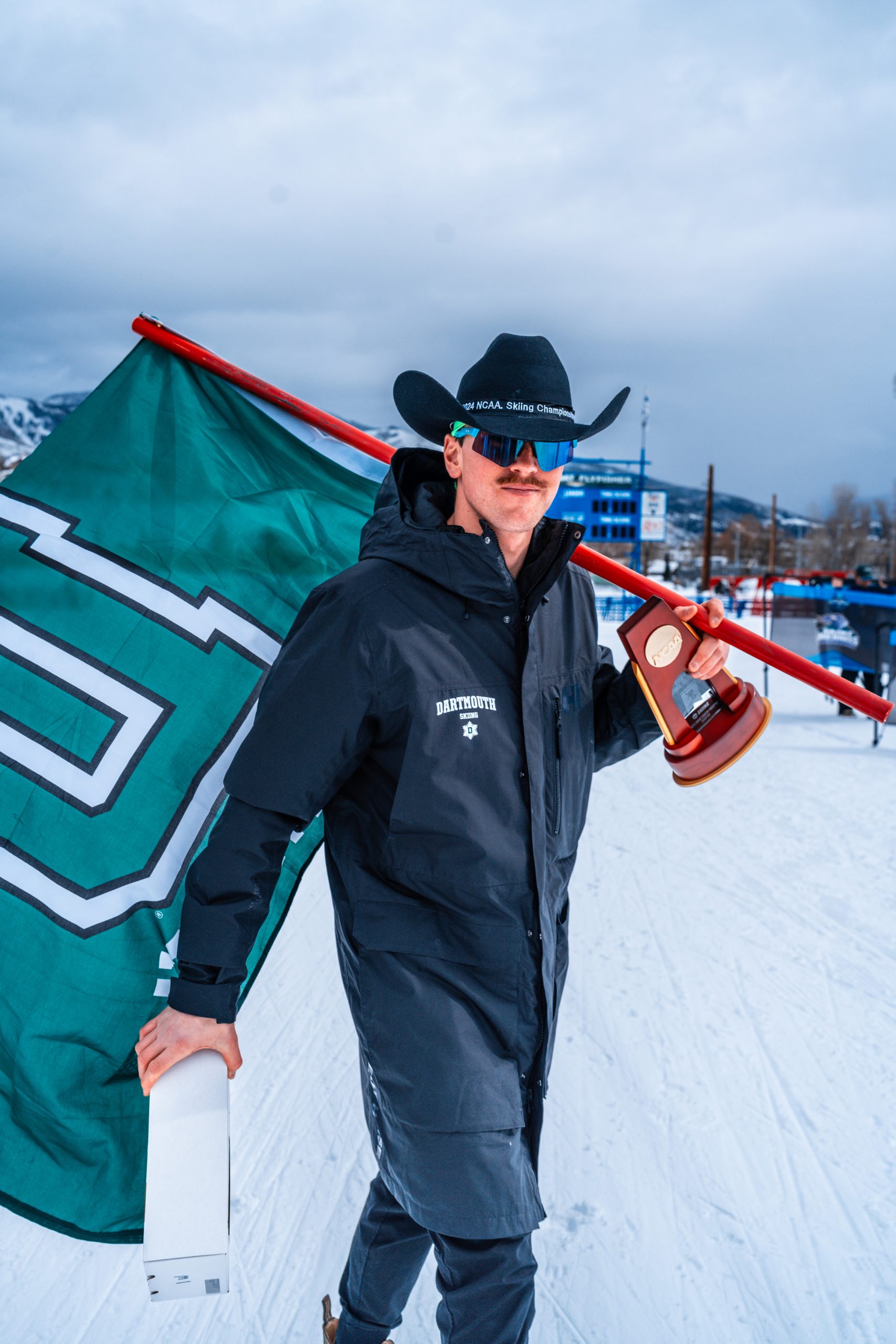
    John Steel Hagenbuch, who won the 7.5k Classic, celebrates with his teammates after the three raced Dartmouth into the NCAA Championship lead. (Photo: Courtesy Photo)

    The Advice Only Someone Who Has Lived It Can Give

    At the Haig Glacier last summer — years after his last high school camp there — Hagenbuch offered a piece of advice that caught the younger kids off guard.

    They were expecting training insight. Intensity zones. Technique tweaks.

    Instead, he told them the thing he wishes someone had told him at 15:

    “Be a kid more.”

    Growing up in Sun Valley, he had an idyllic childhood — but he wishes he’d stayed on the high school soccer team after freshman year. Wishes he’d allowed himself to do more of what felt right, not what looked right.

    “Don’t try to do what you think you should do, he says. “Do what you feel you should do.”

    And if your friends are doing something slightly reckless, something that wouldn’t make the parental brochure?

    “Maybe… F-it, do it, he says, laughing. “You’ll figure it out for yourself.”

    Because that, too, is how you learn.

    John Steel Hagenbuch (USA) racing the individual sprint at the Minneapolis World Cup. (Photo: Modica/NordicFocus)

    A Career Just Beginning, with the Wisdom of One Already Lived

    Hagenbuch is young — young enough to dream of three Olympic Games, young enough to talk about walking onto the Dartmouth lightweight rowing team or running the 5k or 10k for the track team “as a fun challenge in his final spring on campus.

    But he is also old in the ways that matter. Not jaded — never that. But precise in what deserves his attention, and ruthless in discarding what doesn’t.

    He knows what a good race feels like: “When you finish and think, damn, I could have gone a little harder.”

    He knows what a good life feels like: something filled with people and place, community and joy, full-moon skis and carnival tailgates and the band you recruited yourself playing you through the stadium after a loss.

    And he knows — already — that the real currency of this sport isn’t medals, nor money, nor even wins.

    “If you wanted to have glory or make money in sports, he says, “we’re all doing the wrong sport.”

    So what is it about?

    “It’s about the things I’ve talked about, he says. “It’s the parking lot tailgates. The little antics in the van. The dumb jokes with your boys. The feeling of being part of something bigger.”

    And that’s why the NCAA hilltop moment carries him into this World Cup season — a season he hopes travels through Italy, under Olympic lights, wearing the colors he’s dreamed about.

    Because that hill taught him the thing every great athlete eventually learns:

    Sometimes the race you don’t win becomes the story you never stop telling.

    Sometimes the best version of your career begins the moment you stop being upset… and start taking in the view.


    Love Stories Like This? Help Keep Them Coming.

    Feature interviews like this one take time, access, and care to produce. If you value thoughtful storytelling and independent ski journalism, please consider becoming a Voluntary Subscriber. Your support directly fuels the work we do to cover the people, places, and moments that make our sport special.

    Join the FasterSkier community!


  • Season Finale: Diggins and Hagenbuch Crowned National Champions in 40 k Classic

    Season Finale: Diggins and Hagenbuch Crowned National Champions in 40 k Classic

    This article was made possible through the generous support of our voluntary subscribers.  If you would like to see more articles like this one, please support FasterSkier with a voluntary subscription.

    USA’s Jessie Diggins (seen here competing in Falun Sweden earlier this season) concluded her long season with a victory in the 40 k Classic Mass Start at Mt. Van Hoevenberg. (Photo: Authamayou/NordicFocus)

    The World Cup season ended a week ago in Lahti, Finland where Jessie Diggins raced to a courageous ninth place in securing (by the narrowest of margins) the Distance World Cup Crystal Globe (to go along with her Overall Crystal Globe secured a week prior). Lahti’s 50 k Classic Mass Start definitely felt like the end of a long season, but for Diggins—and for men’s Lahti 50 k eighth place finisher, Gus Schumacher—it certainly was not. More racing remained as the stars of Team USA headed back to Lake Placid to race alongside their countrymen in SWIX SuperTour and Spring Nationals events.

    Spring racing can be brutal: everyone’s gunning to knock off the top stars, many of whom are running on fumes at the end of a seemingly endless season of travel and competition. But racing at home is one of the responsibilities that many of those stars continue to take seriously. It can be an arduous responsibility—even the stars of Team Norway went home to participate in spring championships where World Cup Champions, Johannes Hoesflot Klaebo and Simen Hegstad Krueger, found themselves fourth and sixth, respectively, in their National Championship 10 k. One thing appears obvious: cross-country ski racing is always hard, no matter who you race against.

    And so skiers found themselves at one last starting line in Lake Placid: one last ski marathon, one last high-speed tour of the countryside, one last opportunity to race cross country toward glory.

    2025 NCAA Champion, John Steel Hagenbuch (Dartmouth) demonstrated his Classic skiing prowess once again in winning the 40 k Mass Start at Mt. Van Hoevenberg. (Photo: Tobias Albrigtsen)
    Men’s 40 k Classic Mass Start

    By the 10 kilometer mark, the Men’s 40 k had become a three-man affair featuring the Classic skiing prowess of Remi Drolet (SMS T2), John Steel Hagenbuch (Dartmouth), and Schumacher (APU). That trio created a rapidly expanding gap of 15 seconds over a group of chasers that included Brian Bushey (UU), Reid Goble (BSF), Michael Earnhart (APU), and Finn Sweet (UVM). A little more than a kilometer later, that gap would expand to 25 seconds, then to 52 seconds by 15 kilometers. The race was going up the trail, and the leaders showed no inclination to wait around for anyone else.

    Lots can happen during long races, and it’s not impossible to make up places or to get across gaps that had been created earlier. But it’s a supremely difficult to accomplish any such late-race jumps when skiing alone. Nonetheless, Xavier McKeever (CAN) succeeded in bridging the gap to the chase group, joining up with them by 18.75 kilometers. Still, by the 20 kilometer mark, the chasers trailed 1:27 behind Schumacher, Drolet, and Hagenbuch.

    Gus Schumacher (APU) led much of the Men’s 40 k Classic, only to find himself outmaneuvered by a cagey John Steel Hagenbuch (Dartmouth). (Photo: Modica/NordicFocus)

    Race splits suggested that Schumacher did most of the leading in the front group, matched consistently by Drolet, and followed by Hagenbuch. With 15 kilometers to race, the dilemma in the lead group belonged to Drolet—he was the least explosive sprinter, statistically not as likely to win in a sprint as were his breakaway companions. If Drolet hoped to win this season-ending marathon, he’d need to make a move soon. Perhaps Drolet made just such a move out on the course—one that Schumacher and Hagenbuch countered. Or Perhaps Schumacher had turned up the pace to prevent any such strategies from happening. Regardless, it was Schumacher and Hagenbuch who created a gap, detaching Drolet by 27.5 kilometers, though by 31.25 kilometers, Drolet clawed his way back to the leaders where Schumacher continued pushing the pace. But it was a final surge from Hagenbuch that would nip Schumacher at the line by less than a second. The win belonged to the Dartmouth skier while Drolet faded to third.

    Men’s National Championship 40 k Classic RESULTS

    Jessie Diggins (USA) has raced a long and fruitful season in 2024-2025. In front of her fans one last time in the National Championship Classic 40 k, she was not to be denied. (Photo: Authamayou/NordicFocus)
    Women’s 40 k Classic Mass Start

    Teammates Jessie Diggins (SMS T2) and Julia Kern (SMS T2) have spent so much time together over the years. From travel and training to start lines and podiums, these two long-time friends have skied thousands of kilometers together. Why not 40 more?

    By five kilometers, the Women’s 40 k Classic had formed itself into a race among a lead group of five: Diggins (SMS T2), Julia Kern (SMS T2), Erica Laven (UU), Selma Nevin (UU), and Margie Freed (Craftsbury). But, soon after, Diggins and Kern began to pull away, at which point the remaining field began splitting into groups of twos and threes. The pace had gotten too hot at the front; the race reached an early point where few skiers were likely to enjoy the prospect of skiing the remaining 30+ kilometers alone. Strategically, it seemed smartest to group up, to conserve energy, to at least ski with company for the distance that remained. Even so, Laven continued to ski on alone, suspended in the unenviable no-man’s-land between second place and fourth place. Laven wasn’t likely to catch Diggins and Kern, but it also appeared that she wasn’t willing to slow her pace just for the chance to have some company. Laven skied on alone, her position on the podium nearly 30 lonely kilometers away.

    Julia Kern (SMS T2) has often proven herself to be a skilled distance racer. In Lake Placid, she skied shoulder to shoulder with her friend, teammate, and rival, Jessie Diggins (SMS T2). (Photo: Thibaut/NordicFocus)

    By the halfway point, Diggins and Kern enjoyed a two minute advantage over Laven, with the rest of the field another minute+ behind and strung out all across the 518 area code. Racing 40 kilometers is a daunting challenge, and many of these skiers had never raced so far before. Surviving and thriving across so great a distance are skills that must be learned with experience. Today was delivering that sort of experience for many.

    Teammates in training, rivals in racing, friends at the finish line. Jessie Diggins (SMS T2) and Julia Kern (SMS T2) share a moment after the Team Relay at the 2025 World Championships in Trondheim, Norway. (Photo: Modica/NordicFocus)

    In the end, Diggins and Kern would deliver the first- and second-fastest splits at nearly every check point of the final 15 kilometers. It would’ve been great to hear their conversation on the race course: did they reminisce about seasons past and races remembered? Or were they making plans for training dates and racing duels in the future? Ultimately, they sorted things out over the final kilometers of this 40 k Mass Start, with Diggins turning on the jets at around 37 kilometers to solo in for a 14 second win in this latest round of their friendly rivalry. Laven would complete her solo mission to claim a hard-earned third.

    For Diggins and Kern, there will be many more kilometers still to ski together, but that will be after another spring, after another autumn, when cross country ski racing returns next season.

    Women’s National Championship 40 k Classic RESULTS

    Until next year. (Photo: Modica/NordicFocus)


  • Anderson and Hagenbuch Seize SuperTour 10 k

    Anderson and Hagenbuch Seize SuperTour 10 k

    This article was made possible through the generous support of our voluntary subscribers.  If you would like to see more articles like this one, please support FasterSkier with a voluntary subscription.

    Team Birkie’s  Lucinda Anderson (seen here competing in the 2025 World Cup 20 k in Engadin, Switzerland) skied strongly from start to finish to dominate the 10 k Freestyle on Day 1 of the SWIX SuperTour Finals.  (Photo:  Authamayou/NordicFocus)

    Lake Placid’s opening event of the SWIX Supertour Finals—the 10 k Freestyle Individual Start—was dominated by skiers with racing experience from this season’s FIS World Cup. The very biggest stars were yet to toe the starting line, but contenders like Lucinda Anderson (Birkie/US Biathlon) and John Steel Hagenbuch (Dartmouth) skied brilliantly to take the wins on Day 1.

    Hagenbuch and Erica Laven (UU) maintain their holds on overall SuperTour leads at the conclusion of the first day’s racing in Lake Placid.

    Super Tour POINTS/STANDINGS

    Women’s 10 k Freestyle

    Anderson, Lilliane Gagnon (CAN), Mariel Merlii Pulles (Birkie), Nina Schamberger (UU), and Kate Oldham (MSU) opened quickly, though it was Anderson who stormed to a 22 second advantage over Gagnon at the five kilometer mark, followed by Oldham at 29 seconds. Later starter, Laven, inserted herself into the contest, posting a midway time between Anderson and Gagnon. In the end, Anderson would hang on to her advantage ahead of Laven in second, and Gagnon third.

    SWIX Supertour Women’s 10 k Freestyle RESULTS

    John Steel Hagenbuch (Dartmouth), en route to his first NCAA Championship in 2024. He would dominate the 10 k Freestyle in Lake Placid on Day 1 of the SWIX SuperTour. (Photo: Tobias Albrigsten / Untraceable Global)
    Men’s 10 k Freestyle

    Joe Davies (CAN) and Sasha Masson (CAN) came through the first check point in a virtual tie with SuperTour leader, John Steel Hagenbuch (Dartmouth). Then Hagenbuch began to pour it on, significantly gapping his rivals by the 2.5 kilometer checkpoint, and establishing a 12 second lead over Masson by the halfway point. Hagenbuch was on a tear, and his lead would extend to nearly 30 seconds at 6.25 kilometers as Masson began to fade. Hagenbuch would flash to the finish line 37 seconds ahead of Davies and a late-charging Graham Houtsma (BSF).

    SWIX Supertour Men’s 10 k Freestyle RESULTS

    SWIX SuperTour events continue on Friday with a Freestyle Sprint. For a complete schedule of SuperTour events, go to FasterSkier. Follow all SuperTour events via live timing on Bullitt Timing.

    Mt. Van Hoevenberg ski trails, Lake Placid, NY, site of the SWIX SuperTour Finals March 26-30, 2025. (Photo: Olympic Regional Development Authority)
  • The University of Utah Claims the 2025 NCAA Championship

    The University of Utah Claims the 2025 NCAA Championship

    This article was made possible through the generous support of our voluntary subscribers.  If you would like to see more articles like this one, please support FasterSkier with a voluntary subscription.  

    The sun came out on Saturday at Dartmouth’s Oak Hill Ski Center in Hanover, New Hampshire. The best collegiate skiers in the country gathered in Hanover, New Hampshire, for a week of racing at the NCAA Championships. The final races of the week were the nordic distance races, 20km freestyle for both the men and women. University of Utah’s Joe Davies skied away with the national title on Saturday, much like how his team gapped the competition.

    Though Utah’s nordic and alpine teams combined points ultimately created an unclosable gap, the championships started off close. In the first nordic races, the 7.5km men’s and women’s classic race, it was the host school Dartmouth who had the top racers.

    Dartmouth College’s John Steel Hagenbuch skied to a 15 second victory on his home trails in the 7.5 k Classic at the NCAA Championship on Thursday. (Photo: Tobias Albrigtsen)

    In the men’s 7.5km classic race, Dartmouth’s John Steel Hagenbuch won by 16 seconds over UVM’s Finn Sweet. It was his second NCAA title, having won the 7.5km skate competition in 2024. Steel Hagenbuch’s teammates Luke Allen and Cooper Camp finished 4th and 9th, respectively. They combined for 93 points, besting Utah by nine points. Rounding out the podium was Utah’s Joe Davies, who just days before the competition was in Trondheim, Norway, racing in the World Championships skiathlon. Competing under the Great Britain flag, he finished 24th, 1:31.8 behind Johannes Klaebo.

    Utah earned their first individual win of the 2025 NCAA championships when Erica Laven won the 7.5km women’s classic race. Annie McCulgan of UVM finished second and Dartmouth placed three in the top eight. Jasmine Drolet, Ava Thurston and Nina Seeman finished third, fourth and eighth, respectively. The Dartmouth women tallied 88 points for a slim two-point edge over Utah.

    Utah’s Erica Laven took home the women’s 7.5 k Classic individual title by 11 seconds on Thursday. (Photo: Tobias Albrigtsen)

    As the competitions continued at the Dartmouth Skiway, Utah’s men’s and women’s alpine teams both scored the most points in the Giant Slalom. They opened up a sizable lead that would be incredibly difficult for the trailing Dartmouth and University of Colordao to close.

    After Davies took control of the men’s 20km freestyle on Sunday, that lead became impossible to catch.

    Utah’s Joe Davies took command of the Men’s 20 k Freestyle, skiing to a 1:10 victory and leading Utah to the NCAA Championship. (Photo: Tobias Albrigtsen)

    Oak Hill has undergone major renovations in the past few years, and the newly homologated races loops were on full display during the championships. The configuration is such that fans can see racers in multiple spots, so as the laps ticked away during the 20km, fans watched as Davies pulled farther and farther away from Steel Hagenbuch, ultimately winning by over a minute. It’s his second NCAA title. His first was in 2023 at the 10km skate in Lake Placid, when he was a sophomore racing for UAF. That year, Steel Hagenbuch finished second.

    Having Davies and Steel Hagenbuch leave the championship with one win each is fitting. They’ve dominated their respective sides of the country and met at NCAA’s to jockey for podium positions over the last couple of years – all while benefitting from the relatively new mentality that allows collegiate skiers to compete in both college races and on the World Cup, instead of having to choose between domestic and international competition.

    For Steel Hagenbuch, it’s extra sweet to have gotten a win at home. Though he grew up in Idaho, he comes from a family of Dartmouth athletes and has added greatly to that legacy.

    After the men finished, the competition was still close for who would finish runner-up in the team competition: Dartmouth had a 14-point lead over Colorado.

    Erica Laven (UU – left) and Kendall Kramer (UAF – right) distanced themselves from the rest of the field during the NCAA Championship Women’s 20 k Freestyle. (Photo: Tobias Albrigtsen)

    It didn’t take long for Kendall Kramer of UAF and Erica Laven of Utah to create a gap over Colorado’s Tilde Baangman and Denver’s Lea Wenaas. Behind them was a dense chase pack. But once Kramer decided to go, she was gone. She skied in total control, her crisp tempo unchanging over Oak Hill’s rigorous climbs. She finished 35 seconds ahead of Laven, taking a bow as she came across the line. This has been an impressive year for Kramer in the 20km: In February, she won the 20km at U.S. Nationals in Anchorage.

    Eventually, Kendall Kramer (UAF – right) decided it was time to make a move on Erica Laven (UU – left), skiing to a 35-second victory for the individual Women’s 20 k Freestyle NCAA Championship. (Photo: Tobias Albrigtsen)

    After all had finished, the points were tallied. Colorado, who won the NCAA team title in 2024, had two women in the top 10 in the 20km to Dartmouth’s one. They scored 20 more points than Dartmouth in the women’s race to overtake them and finish in second for the week-long team competition.

    The NCAA Championships are dominated by the Western schools – Utah has now won six of the last seven championships. So to see Dartmouth finish runner-up on their home turf, in a star senior’s year, on that sugary, spring East coast snow, would’ve felt like a fitting end to this story. But even though it’s not the result they wanted, it takes nothing away from what was accomplished at Oak Hill, and the successful championships they hosted there.

    “The transformation of Oak Hill is a game-changer for us,” Dartmouth head coach Cami Thopmson told FasterSkier via email. To have good training on reliable snow less than 2 miles from campus makes a huge difference. We knew how the course would ski, where it would be particularly challenging, what line to take, and what places would be best to make a move on the field. Our athletes used that knowledge to their advantage.”
    There was lots of great energy at Oak Hill for the final day of the 2025 NCAA Championship. (Photo: Tobias Albrigtsen)
    “We are really proud of the team, it is tough to manage the expectations and all the extra energy that goes into racing at home, especially with final exams looming.  The seniors have had this week to look forward to since they showed up on campus four years ago. I think it far exceeded their expectations,” Thompson told FasterSkier via email.
    “We had a very solid finish in the end, but it is hard to go from leading at one point to 3rd with only a 5-point gap. That is sport though and we know that every one of our athletes raced their hearts out.”

    Complete NCAA Championship Results


  • He’s 24 years old and just won two U.S. championship races. Here’s why he could retire at the end of the season.

    He’s 24 years old and just won two U.S. championship races. Here’s why he could retire at the end of the season.

    Norway’s Andreas Kirkeng, racing for the University of Denver, skied away from the men’s pack at U.S. Nationals on Sunday. (Nathaniel Herz/FasterSkier)

    ANCHORAGE — The winner of two of three U.S. National Championships races in Alaska this week is just 24 years old, and poised for what could be a long career in cross-country skiing.

    But instead, Andreas Kirkeng is considering retirement.

    The explanation is simple: The star University of Denver athlete is not American. He’s Norwegian.

    And in Norway, aspiring to be a top cross-country skier is like trying to become an astronaut: Many, many try, and nearly all of them fail, because the field is so deep and talented.

    “I genuinely believe he could be one of the best World Cup skiers in the world. It’s a bummer that it’s just so hard to be Norwegian — any other country on Earth and they’d greenlight you for the Olympics for the next 10 years,” said Luke Jager, one of the Americans edged out by Kirkeng at nationals this week. “I’ve been telling everyone in the world: Everybody who knows that guy needs to tell him to not quit skiing next year.”

    Kirkeng won his second race at U.S. Nationals on Sunday in dominating fashion, dropping the top Americans in the field on the last of four five-kilometer laps in the classical technique.

    Because Kirkeng was ineligible for the U.S. championship, Dartmouth College’s John Steel Hagenbuch claimed the title by finishing second, narrowly edging Jager, who skis for Alaska Pacific University. Will Koch, skiing for the University of Colorado, was third.

    John Steel Hagenbuch points to the Dartmouth College snowflake on his arm to celebrate winning a national title at Anchorage’s Kincaid Park on Sunday. He finished behind Kirkeng but ahead of all the other Americans in the race, with Luke Jager just behind him. (Nathaniel Herz)

    But Kirkeng has been the undisputed star of the week at Anchorage’s Kincaid Park, where he also won Saturday’s classical technique sprint race by beating Jager on the homestretch.

    In Thursday’s 10-kilometer skate-technique distance race, he finished second, less than a second behind Hagenbuch.

    After Sunday’s event, Kirkeng conceded that he hasn’t made up his mind about his future — and noted that his girlfriend told him the day before that it would be “sad” if he retired.

    But, he added: “I’ve been ski racing for 13, 14 years. At some point you have to do something else.”

    Observers offered mixed opinions about the significance of Kirkeng’s results in Anchorage, with U.S. Olympian Scott Patterson saying that they might not have translated into a top-30 finish on the World Cup, the top international circuit.

    But Jostein Vinjerui, who coaches an elite professional team based in Norway, Aker Daehlie, said he thinks Kirkeng’s results show some promise.

    “It would be very sad if he gives up now,” Vinjerui said in a phone interview Sunday. “He should at least test one year in Norway, what he can do there. Because the U.S. level now is pretty good.”

    Kirkeng grew up in Lier, a community not far from Oslo and just a few miles from Drammen — the city that long hosted an iconic World Cup sprint race every year, with loads of snow trucked in and smoothed over its streets.

    Athletes race at the Drammen World Cup sprint in 2018. (Fischer/Nordic Focus)

    “When I was in elementary school, I would walk straight out of class to Drammen to watch,” Kirkeng said.

    There were numerous areas with snowmaking to cross-country ski near his home, and Kirkeng’s family also had a cabin in the mountains.

    He joined a club program in elementary school and made junior national and regional ski teams. But Kirkeng lost some of his motivation after a tough first year as an adult competitor, when a high-intensity block training program “sort of killed” him, he said.

    It was time for Kirkeng to try something new and different, he said, and he decided to follow his brother to the University of Denver. Kirkeng is now a senior studying finance on a full scholarship — and has broadened his horizons.

    “It’s actually crazy — I’m telling all my friends in Norway it’s the best thing you can do,” he said. “You get everything covered, you have chances to train, and you get an education and ski at the highest level.”

    The dilemma confronting him at the end of the season is stark.

    To make a career of ski racing back in his home country, he’d have to fight his way into the elite Norwegian men’s field — the strongest in the world.

    Organizers cap the number of skiers from each country who can start each race on the World Cup. But even so, Norway’s male athletes regularly take five of the top six places in distance events — beating the best competitors from all other nations, including the U.S.

    Dozens of other Norwegians toil in relative obscurity on the country’s domestic race circuit, fighting to earn a single chance to prove themselves on the World Cup. Kirkeng has never gotten a World Cup start, even as some of the U.S. athletes he’s beaten have been racing on the circuit for years.

    Kirkeng his win in Saturday’s sprint race at Kincaid Park, where he narrowly beat Luke Jager. (Nathaniel Herz/FasterSkier)

    Just last week, the Norwegian team had an athlete drop out before the start of one of the season’s marquee World Cup events, the Tour de Ski. The first alternate declined his spot because he got sick, and the second alternate, Haavard Moseby, finished on the podium in one of the stages.

    “For Andreas, it’s almost impossible, as a Norwegian,” said Florian Knopf, a German athlete who races with Kirkeng in Denver. “He’s super strong. But the Norwegians have 10 other guys like that, even better.”

    Knopf is in a similar position in his home country, where, if he returns to full-time ski racing, he’ll be on the bubble to qualify for international events.

    “You have to be brutally honest with yourself, and also ask yourself what you want in life. Being 25 years old and still being able to ski among the best is making me really happy,” Knopf said. But, he added: “I know many Germans who are Olympians who are not happy.”

    Knopf and Kirkeng will also leave Denver with college degrees — meaning that continuing as ski racers would require them to forsake other professional opportunities. Both have applied for jobs on Wall Street.

    “The only struggle is his brain is almost as good as his ski talent,” said Selma Anderson, Kirkeng’s girlfriend and a teammate at Denver.

    Kirkeng said he’s been contemplating his options to continue ski racing. There’s a marathon circuit in Europe; he could also try to work part-time and ski part-time. But he’s not sure he wants to ski race if he can’t fully dedicate himself to training.

    Kirkeng skied in the men’s lead pack for most of Sunday’s race at U.S. Nationals before breaking away for the win. (Nathaniel Herz/FasterSkier)

    “It would be really cool to give it a shot and see where it brings me,” Kirkeng said. “And I’m definitely open to it. But at the same time, I feel I’ve been doing it for so many years now.”

    Jager, the American skier, is still making his pitch. He said he thinks that Kirkeng’s intellect and education serve as a fallback that can allow the Norwegian to keep ski racing for longer without risking his future.

    “I know he’s got the whole finance thing going on. But for me, that’s all the more reason to postpone that as long as possible,” Jager said. “He can go be the Wolf of Wall Street when he’s in his 30s.”

    Full results from Sunday.

  • One familiar face and one new one notch wins as U.S. Nationals opens in Alaska

    One familiar face and one new one notch wins as U.S. Nationals opens in Alaska

    Erling Bjoernstad, a Norwegian freshman racing for University of Alaska Anchorage, climbs a hill toward the stadium at U.S. Nationals Thursday. (Nathaniel Herz/FasterSkier)

    ANCHORAGE — Kate Oldham wasn’t expecting to win Thursday’s opening race of the U.S. National Championships.

    It was her first competition of the season, after focusing on training in December, and she’d never placed better seventh at previous national championships.

    Her coach at Montana State University, Adam St. Pierre, had other ideas about the 22-year-old senior — though he was keeping them to himself.

    “I have been predicting Kate as a dark horse national champion for a couple of weeks now,” St. Pierre said. “But not talking about it with her, because she races best when expectations are low.”

    Kate Oldham racing at the U.S. National Championships in Anchorage on Thursday, January 2, 2025. (Nathaniel Herz/FasterSkier)

    Oldham, St. Pierre said, is a superb glider on her skis, with a “killer instinct” — which apparently served her well Thursday on the rolling, blazing fast, 10-kilometer course at Anchorage’s Kincaid Park.

    Oldham won her first-ever national championship, edging local favorite Kendall Kramer of University of Alaska Fairbanks to win the individual-start, time trial-style skate event by 11 seconds.

    University of Utah’s Erica Laven was third, 28 seconds behind.

    “I did not wake up thinking that was going to happen today,” Oldham said afterward, as she fended off bear hugs from teammates and rivals. “It’s surprising. But it’s also awesome, and makes me cry happy tears.”

    Erica Laven on her way to third place. (Photo: Tobias Albrigtsen / @untraceableg)

    If Oldham’s win fell somewhere between a surprise and a shock, John Steel Hagenbuch’s victory in the men’s race was hardly unexpected — though that event was much tighter.

    Hagenbuch, a 23-year-old senior at Dartmouth College, already has several national titles to his name, along with solid results last season on the international World Cup circuit.

    Hagenbuch held off Andreas Kirkeng, a Norwegian racing for the University of Denver, by a fraction of a second. Walker Hall, who races for the University of Utah, was third, 15 seconds behind.

    Thursday’s races were the first of three national championship events at Kincaid Park, with two more to follow over the weekend — plus a non-championship race next week.

    While temperatures in Anchorage have dipped recently, to single digits Thursday morning, a rainy, low-snow December required extra work from organizers to pull the races off. Kramer, in fact, was part of a battalion of volunteers, including numerous racers, who spent some of last weekend shoveling clean snow onto dirty patches along the course.

    Kramer said she planned a long ski workout that day and kept her watch going while she pitched in on a little shoveling.

    “It was kind of like playing in the snow,” she said. “I don’t want to take too much credit, because I wasn’t out there for the whole four hours people were doing it. But I am very grateful, and I was inspired by all of the people who were there.”

    Kramer, 22, was in the hunt for the win Thursday, with coaches telling her at one point during the race that she was in the lead.

    Kendall Kramer crests a hill in Thursday’s race. (Nathaniel Herz/FasterSkier)

    But Oldham had the fastest times for each of her two five-kilometer laps, according to official splits. Laven was just one-tenth of a second behind her at the halfway point, though she faded on her second lap.

    Oldham grew up in Colorado and spent her holiday break from school training at home, taking advantage of “incredible skiing” in Aspen instead of entering season-opening races, she said.

    That plan is geared toward not peaking too soon, so she can notch her best results at the collegiate national championships toward the end of the season, in March. That plan made Thursday’s win even more of a “pleasant surprise,” Oldham said.

    “I didn’t really sharpen for it,” she said. “It’s an intimidating way to start the season, because you kind of have no idea (what level) you are coming in. But it’s also really nice to go home and enjoy the holiday and just focus on training.”

    Hagenbuch’s approach to the season has been sharply different: He began racing more than a month ago, on the World Cup circuit.

    But after a breakout season last year — one in which he won a bronze medal at the World Under-23 Championships and also recorded a top-15 finish in a World Cup race — this year’s efforts have been uneven.

    Hagenbuch started the season at World Cups in Finland and Norway, but failed to crack the top 30. Then, he returned to the U.S. and notched four straight podiums on the domestic circuit.

    One challenge he faced in Europe, Hagenbuch said Thursday, was that he was having a breathing problem that appears to be a condition called exercise-induced laryngeal obstruction — where, he said, his larynx and vocal cords “seize up and close” during races.

    John Steel Hagenbuch works his way up Elliott’s climb at the U.S. National Championships in Anchorage on Thursday, January 2, 2025. (Nathaniel Herz/FasterSkier)

    The first time it happened, in Finland, was “definitely pretty scary — I couldn’t breath really at all, and I couldn’t speak for 15 minutes after the race. Couldn’t say a word.”

    “It’s kind of multifaceted in what causes it, but I’ve been working through it and trying to figure it out and keep all those muscles relaxed, because it isn’t something you can really address by taking medication,” he said. “It’s something that has to do with controlling your muscles and reducing your stress.”

    Hagenbuch said he had a little bit of breathing trouble Thursday, but managed to keep it under control.

    He had the fastest first lap of the five-kilometer course, giving him a slight edge over Kirkeng.

    But on the second lap, the Norwegian started creeping back.

    A 24-year-old senior studying finance at the University of Denver, it’s unlikely Kirkeng would be in contention for a national championship in his home nation, the global cradle of cross-country skiing.

    But in the U.S., it’s hardly unusual for European athletes to dethrone their American competitors at marquee races: In fact, Kirkeng won the 10-kilometer distance race at the U.S. National Championships in each of the past two years.

    John Steel Hagenbuch on his way to winning the national title. (Photo: Tobias Albrigtsen / @untraceableg)

    As Hagenbuch neared the finish line, coaches along the course were giving him split times that showed Kirkeng closing the gap — even though Hagenbuch had started the race conservatively.

    “I underestimated how hard it was going to get,” Hagenbuch said. “I thought I was going to lose it — I was hearing the splits go from eight seconds up on Andreas, to six seconds to three seconds to even.”

    Kirkeng skied his last lap four-and-a-half seconds faster than Hagenbuch. But in the end, that wasn’t quite enough: Hagenbuch’s first lap was five-and-a-half seconds faster than Kirkeng’s, and he held on to win by eight-tenths of a second.

    “The margins were not on my side today. But that’s how racing is,” Kirkeng said afterward. “And it’s been the other way around a couple of times.”

    Andreas Kirkeng on his way to second place on the day. (Photo: Tobias Albrigtsen / @untraceableg)

    Kirkeng is likely in the twilight of his career — he said he expects to retire after this season and, hopefully, find a finance job on Wall Street or in Boston. If not, he’ll probably return to Norway and enjoy more time with his family.

    Hagenbuch’s career, meanwhile, is still taking off.

    He said he’s looking forward to the rest of the races in Anchorage, which he expects to follow with more competitions in the U.S. — domestic SuperTour events and the college circuit, culminating in the NCAA championships.

    Going back to the international World Cup circuit, he added, probably doesn’t make sense this year, especially after he missed substantial stretches of school while he traveled to races last season.

    But even if this year’s European campaign didn’t pan out, Hagenbuch said, he’s not disheartened.

    “I know I’m in good shape, and I had a good season of training — the hay is in the barn, if you will,” Hagenbuch said. “It’s just going to take some time for that to show itself.”

    Complete Results: 2025 US Senior Nationals

    U.S. Nationals continues Saturday at Kincaid Park with a classic sprint. Stay tuned for more coverage.

    The Women’s Podium (Photo: Tobias Albrigtsen / @untraceableg)
  • Juggling the Four S’s: An Interview with John Steel Hagenbuch

    Juggling the Four S’s: An Interview with John Steel Hagenbuch

    The 2023-2024 season was undeniably strong for Dartmouth College’s John Steel Hagenbuch (’25, U.S. B-Team).

    In December, his was the fastest leg time in the Men’s 4×7.5 k Relay in Gällivare. One week later, he secured his first top-15 finish on the World Cup circuit, taking 13th place in the Östersund 10 k Freestyle. In February, he surprised himself with a bronze medal in the U23 World Championship Sprint in Planica.

    Domestically, the wins came hard and fast. Hagenbuch rang in the New Year with a victory in the 20 k Freestyle at USSS Nationals in Soldier Hollow, UT, before proceeding to win every race he started in the Eastern Intercollegiate Ski Association—going six for six across the Vermont, Colby, and Middlebury Carnivals. Then, it was on to the NCAA Ski Championships, where he won the 7.5 k Freestyle, before finishing the season at the top of the 40 k Freestyle podium at Duluth, MN’s blizzard-battered Spring Nationals.

    Hagenbuch outsprints Jake Brown (Craftsbury Nordic) to end the 2023-2024 season with a win at Duluth’s “Spring Nationals” 40 k Skate. (Photo: Ben Theyerl / FasterSkier)

    However, in a chapter of American skiing which has left commentators (understandably) salivating over career-defining performances, and quick to use the attendant, maximalist terminology, Hagenbuch resists any such characterization of his performances. “I genuinely don’t think [last season] was a breakout by any means,” he told this hyperbole-bandying writer. “Every year up to now has just been improvement in key areas, and just an evolution in my skiing […] I think it was just part of the processes, and just another step in my development.”

    Steady development might not make for much of a pre-season story—but Hagenbuch’s approach towards training, racing, and the winter ahead certainly does. Indeed, the measured, circumspect, and profoundly grateful attitude with which he characterized last season evidently saturates his workouts, his performance goals, and his abiding love for the undergraduate experience. FasterSkier spoke with John Steel Hagenbuch to get the details on Dartmouth, “Shrimp Week,” and what’s next for the USCSCA’s Men’s Nordic National Skier of the Year.

    Batting 0.750 on “the Four S’s”

    In his third year of skiing for Big Green, Hagenbuch describes his life as a balancing act in several dimensions.

    At the macro-level, there’s the challenge of pursuing three distinct strains of activity: academic commitments, NCAA racing, and skiing internationally. When it comes to college skiing and World Cup skiing, Hagenbuch admits “there’s not many people who do both,” but credits Ben Ogden (University of Vermont, ’22) as a “blueprint” for successfully competing in both worlds. “It’s awesome that the attitude has fundamentally changed from 20 years ago—it’s no longer ‘either or,’” Hagenbuch says.

    Hagenbuch, 2024 NCAA Champion in the 7.5 k Freestyle at Steamboat Springs, Colorado. (Photo: Tobias Albrigsten / Untraceable Global)

    In his estimation, the space to compete at both the highest levels of domestic and international racing, while soaking up the undergraduate experience, is “going to sustain skiers’ careers for longer. Going to college is really fun, and for the time that I’m here, it provides a lot of balance in keeping things lighthearted and low-stress.” If Hagenbuch has a tough day, or even tough season (in a Q&A with The Dartmouth, he said of his 2021-2022 World Cup run: “Frankly, it sucked”), he has “other things to turn towards, and to look towards, to make [him] happy. Dartmouth is an amazing place; there’s so many amazing people with such diverse interests […] I’m so glad I took the opportunity to come here and live the life I’m living.”

    With a rigorous battery of social events and campus traditions, however, comes a more micro-level balancing act. “I say I’m juggling Four S’s: Skiing, School, Sleep, and Socializing. On any given day, I can only choose to do three. It’s a sacrifice” (most often, it seems, of sleep), “but it’s one that I very willingly make to take advantage of a great education and a robust college experience while I’m the same age as my peer group, and still a ‘real kid.’”

    Progress and Perspective

    When it comes to training, juggling the Four S’s means making room for spontaneity—and a summer program that rejects restrictive regimen in favor of vibrance and variety. Indeed, Hagenbuch’s approach to the off-season seems to invert the perennial challenge of ‘Making training fun’ in favor of ‘Making fun training.’

    When I ask him to describe his summer block in three words, Hagenbuch takes an uncharacteristic pause before settling on “Go with flow.” Over the last two years, he says he has been “the least stressed out about skiing since my freshman year of high school. A lot of that came down to having really great stuff going on in my life socially and academically, and actively choosing to think about those more.”

    This isn’t to say that Hagenbuch was “prioritizing skiing less. It was just that I think [skiing] was taking less energy from me, and I was getting only positive things from it, as opposed to worrying about it. I think that enabled me to roll with the punches better, and not to stress.” Rather than fretting over a missed workout or a busy week, he recognized that he “can’t do everything all the time,” and would simply strive to maximize his focus and intensity during “moments when I felt good and had time to train, maybe even a little bit more than people would recommend […] When I zoom out, I realize that I hope to still be skiing a full ten years from now, and I’m not that worried about it. I’ve got a lot of time to make the progress that I need to, and get the notches on my belt that I need to.”

    Hagenbuch’s extensive spring and summer highlight reel illustrates this perspective on a sustainable, “go-with-the-flow” off-season. Favorite spring workouts included skipping class to backcountry ski Tuckerman Ravine on a bluebird May day, and the “Occathon”—a marathon consisting of 18 laps around Occom Pond, “adjacent to the Dartmouth campus, with all these nice homes around it, and which adjoins Frat Row.” Hagenbuch began the run with a handful of teammates and fraternity brothers, but “40 to 50 other random people joined in throughout,” with football players, students, professors, and stray joggers pulled in by the energy of the event.

    Scenes from Dartmouth’s “Inaugural Occathon.” (Photo: John Steel Hagenbuch / Strava)

    High summer at home in Sun Valley, Idaho brought more long days of backcountry skiing, including a “sketchy” July descent of McGowan Peak, as well as teaching classmates how to mountain bike, point-to-point 50 k trail runs in the Sawtooth Mountains, and a week of river-rafting. Although the lattermost trip may have come at a “time when most other people were probably putting their noses to the grindstone, I thought that it was something that would be a net positive in terms of relaxing for a bit, resetting the body and mind, and having some fun with my friends.”

    When he returned to Hanover in late July, Hagenbuch adopted a more structured cycle—while still making time to soak up the energy of summer on campus (Dartmouth, with a quarter system, has classes year-round). He completed coursework, moved back into his fraternity, and was “training a lot, and hard, and getting in the sessions I needed to. Would I have done things a little bit differently? Would I have recovered a little bit better, or been X-percent better in a certain session? Had I gotten a little bit more sleep, probably, but I don’t really care.”

    Backcountry skiing at Tuckerman Ravine. (Photo: John Steel Hagenbuch / Strava)

    What Is Shrimp Week?

    The first week of September stood in stark contrast to Hagenbuch’s otherwise-adaptable summer. Hagenbuch reportedly logged over 852 kilometers across 45 hours of running, rollerskiing and biking between September 2nd and September 8th—a sojourn he cryptically christened “Shrimp Week.”

    When I asked for the logic behind both the Brobdingnagian volume block and the name, Hagenbuch admitted: “If you talk to most of the coaches I’ve ever had, and many of the people I train with, there are some things I do that there isn’t much logic behind. I was already planning on doing a volume week. I was still here in Hanover, but my buddies that had been here for sophomore summer had just left, and no-one on the ski team was here yet, so I was training all by myself. I was feeling good, feeling really fit […] and that was the barometer I went by every day—just thinking about how I was feeling when I was waking up, and fueling really well, sleeping well, and just training a bunch and seeing how that went.”

    In essence: “I was curious how much I could do while still feeling good.”

    Shrimp Week, Day One outtakes. (Photo: John Steel Hagenbuch / Strava)

    And, that name? “Well, Forrest Gump is one of my favorite movies. And there are some individuals that were doing some training and calling their volume weeks ‘Shark Week,’ which I thought was funny. So, I was kind of making fun of that.” Blood in the water!

    Passing the Three Gates

    When asked about the coming winter, Hagenbuch seems contentedly confident: confident that his body is “in a good spot and responding well” to autumn intensity; confident that he’ll continue to balance his Four S’s while hitting “key sessions”; and confident in the steady arc of progress he has thus far maintained.

    In the 2023-2024 World Cup season, Hagenbuch aimed to have just one race in which he passed through the “three gates” to a strong performance—“good skis, good body, and good execution.” Between the Gällivare Relay and the Östersund 10 k, he had two (his Planica Sprint arguably constituted a third); this year, he’s simply looking to add to that total.

    “Once again, all I’m really hoping for is to have a couple of races where I’m really happy that those three gates were fulfilled. And I think the results will come if that happens,” especially if he can improve his consistency in both disciplines. “I’m definitely not saying, ‘Oh, I need to get a top-ten.’ But a top-ten would be nice.”

    Hagenbuch and teammates after the 4×7.5 k Relay in Gällivare, Sweden, December 3rd 2024. Hagenbuch recorded the fastest leg time of the day. (Photo: John Steel Hagenbuch / Strava)

    In addition to racing Period I, Hagenbuch plans to stay in Switzerland through Christmas and complete the Tour de Ski, where he hopes that the Alpine climbs and altitude, and potentially even Alpe Cermis, will play to his Sun Valley strengths.

    While he is “not immune” to the nervousness that the approaching World Cup brings to many athletes, Hagenbuch cites the dynamic of the US Men’s Team as creating a relay-like atmosphere in which he can excel.

    “When I think back on my best races, a lot of them have been relay legs, and I think that’s not a coincidence. You take a lot of internal and external pressure and stress out of racing” when “skiing for your teammates and not just for yourself.” The American Men “all like each other, and we’re all close friends. They’re all really, really great guys that I like to spend time with, I like to train with, and I like to race with. And I think we push each other in a really positive way that’s mutually beneficial […] I don’t mind if any of those guys beat me. I’m not racing against them. I’m racing against me. I’d love to see them do as well, if not better than, myself, because I know that if they’re capable of doing that, if they’re putting out those results, then that’s emblematic of the atmosphere and capacity of the whole team, including myself.”

    The camaraderie continues for (from left) Gus Schumacher, Ben Ogden, Johnny Hagenbuch, and Luke Jager, pictured here as the U20 4 x 5 k World Champions in Lahti, Finland, 2019. The American Men are “no longer really the underdogs” they were in 2019, Hagenbuch says. (Photo: Doug Stephen)

    The Hound of Hanover

    On American soil, however, Hagenbuch is looking to the 2025 NCAA Championships with vicious clarity.

    The event will be on home turf in Hanover, with a 20 k Mass-Start Freestyle and a 7.5 k Individual-Start Classic. In the Classic race, he’s hoping to “improve on [his] runner-up finish from 2023” (read: win).

    As for the Freestyle: “I’m going to be frothing-at-the-mouth rabid before the start of that race. It will certainly be, up to that point, the most important race of my career.”

    Indeed, the man who will be defending his Championship title this March appears unrecognizable from the serendipitous spirit who “go-with-the-flow’ed” his way through the training sessions described above.

    “I bring a kind of manic energy” to races, Hagenbuch says. Think Redbulls, really loud music (“I’ve blown out a couple van speakers in my day. ‘Rental Car Companies Hate Him for this One Simple Trick,’ for sure,” he admits), and more rabid dog analogies. “But that all gets tuned out and sharpened, like focusing a camera, when the gun goes off. And I love the catharsis at the end of the race, too, especially if it goes well.” Madness turns to the Campbell’s Monomyth: “You have a bit of ‘The Hero’s Journey’—the build-up,” the struggle of exertion and emotion, “and then, crashing down.”

    Attending March’s NCAA Championships will come at the expense of a possible World Championship appearance. “I’m making the conscious decision that, should I qualify for the World Championships in Trondheim, which are at the same time as NCAAs, I won’t be going. Maybe that’s unwise. But Matt Whitcomb skied for Middlebury, and Chris Grover skied for Dartmouth, so they kind of understand. And this is a step in my career where I don’t think that I’m missing out on anything, by any means. This is a mutually beneficial thing: I get to ski for Dartmouth. I get to experience all that it is to be a Dartmouth student outside of the ski team. It’s an incredible privilege that I don’t want to pass up.”

    With Hagenbuch hoping to be “in the best shape of [his] life March 6th-8th,” and the “NCAA Championships at home lining up with us having one of our strongest teams that we’ve maybe ever had across all disciplines—Nordic, Alpine, Men and Women,” he thinks that, “knock on wood, we could pull off something really special.”

    Hagenbuch on the podium of the Men’s 7.5 k Skate at the 2024 NCAA Ski Championships. (Photo: Tobias Albrigsten / Untraceable Global)

    “Even if the stars don’t align for us, it’s going to be an amazing event.” The Big Green athletes and administrators are already working to build excitement about the races, and there is a long tradition of Winter Carnivals constituting the campus’s most energetic weekends. Hagenbuch anticipates Oak Hill ski complex will be transformed into a drum-pounding, sound-drowning amalgamation of Minneapolis, Holmenkollen, and Animal House, rowdily attended by Dartmouth’s most avid fans and most accomplished day-drinkers. Skiers Luke Allan, Jack Lang, Asa Chalmers, Cooper Camp, and Hagenbuch himself are “all in different fraternities,” each of which will send their own squad of course-crowders. “There will be hundreds of Dartmouth men” bringing encouragement (and liquid courage) to the trails, in addition to thousands of “parents, students, spectators, kids from other schools, all out there getting fired up and really loud for races.”

    “Dartmouth is a bizarre place, out in the middle of nowhere. It’s a melting pot of a lot of different people. And, in a world that seems to have progressed a lot in many ways—technologically, socially—Dartmouth has largely remained the same, ‘Lest the old traditions fail.’” Whether relaxed or rabid, Hagenbuch feels especially privileged to live, train, and compete in this unique environment; one in which he savors the thrill of racing, the rigor of academic study, and the spontaneity that so ruddily colors undergraduate days.

    And, despite holding a broad, even patient, view of his unfolding athletic career, he has clearly fixed March 8th, 2025 as his Polaris; a lodestar rising steadily above the near horizon, flickering with the white heat of anticipation and ambition.

    “I don’t think a lot of the Western skiers, or even the other Eastern skiers, have any idea what it’s going to be like.”

    FasterSkier thanks John Steel Hagenbuch for his time, and Leann Bentley for facilitating this interview. Some comments have been edited for length and clarity.

  • Hagenbuch and McCabe Win Snowy Spring Nationals 40 k

    Hagenbuch and McCabe Win Snowy Spring Nationals 40 k


    John Steel Hagenbuch started off his season with a World Cup career first top 15 in result Ostersund. Tuesday, he finished it off in style with a win in the 40 k skate mass start in Duluth. (Photo: Nordic Focus)

    Out like a Lion: the old adage seems to apply to March in Duluth, Minntesota. At the end of March—during the only true snowstorm that season has delivered to Duluth—the last race of the 2024 SuperTour season and Spring Nationals was set to be a ten lap, 40 kilometer mass start skate race. It was a big race, marking a big end to a big season for a pair of America’s best young skiers.

    In the Men’s race, John Steel Hagenbuch skied to an emphatic end on a season that reads like a dream. Back in the frosty days of early December, the Dartmouth Ski Team junior went to the World Cup held in Ostersund, Sweden and skied to his first career top 15. From there, he became US National Champion,  World U23 Championship medalist, and an NCAA champion too. In the closing moments of Tuesday’s 40 k skate, he marked a move made by Craftsbury Ski Club’s Jake Brown, came out of the final downhill at Spirit Mountain, and came across one final line with another National Championship to his name.

    On the Women’s side of the field, the one to watch as of late has been Alaska Pacific University’s Novie McCabe. She’s established herself as a consistent presence in the World Cup’s top 30, a trajectory that’s charted towards the front of the field with each passing week. A U23 World Championship highlighted by a fourth place in the 20 k skate mass start in February translated to form that led to an 11th place in the final 20 k skate race on the World Cup in Falun this season. Then, in Duluth, she has been nothing short of amazing. A win in the 10 k classic Thursday, a win in the classic sprint, a runners-up podium finish with teammate Renae Anderson on Sunday, and a long-range, solo victory through the wind and snow that left her two minutes ahead of second-place finisher Sydney Palmer-Leger.

    Men’s 40 k Skate Mass Start

    Ahead of Sunday’s Team Sprint at Spring Nationals, a round of wet snow started to fall onto the race course at Spirit Mountain, and by the 9am start of Tuesday’s 40 k skate, it hadn’t stopped. It only added to the challenge of a four kilometer loop that traversed the base of Spirit Mountain, featuring two distinct climbs over the course of ten laps.

    The set-up of the course had a clear-cut impact on how the Men’s field approached it. Through each lap, the opportunity opened up for an attack on the climb that wound its way out of the stadium for nearly a kilometer. A distinct group of leading skiers emerged including University of Utah’s Joe Davies, US Biathlete and Craftsbury Ski Club skier Jake Brown, Canadian Antoine Cyr, APU’s Scott Patterson, and John Steel Hagenbuch.

    The quintet remained in tight contact through the last half of the race, with Davies and Patterson picking up the pace through the later laps. Notably, Cyr and Hagenbuch rarely went to the front of the group to lead, alluding to both skiers’ dynamism as sprinters. With a winding downhill running into a clear-cut sprint finish, both seemed determined to make sure the group remained together into the final kilometers of the race. 

    At the base of the climb, Davies ticked up the pace, before Brown blew it wide open. The Minnesota native got a clear break from the group, but found one skier who was with him as they crested the first of two climbs on course: Hagenbuch.

    Scott Patterson earlier this year on the World Cup. The longtime APU skier rounded out a World Cup farewell season with a third place at Spring Nationals in Duluth Tuesday. (Photo: NordicFocus)

    Another break saw Patterson and Cyr behind the Brown/Hagenbuch group. Suddenly, a four-way race for three podium spots was on. Brown led through the second climb on course, and into the long, winding downhill that led back to the stadium. Hagenbuch waited until the base of the hill, and then put in his own move, gaining a second gap over Brown that would remain to the finish-line. Hagenbuch crossed in first with Brown in second. Behind the two leaders, Cyr opened a sprint at the base of the Spirit Mountain stadium crossing in third overall, with Patterson fourth. The race for the podium left everyone happy, however, as Cyr’s result did not factor into the US Nationals standings. Patterson’s place behind Cyr still netted him a third place; a great send off for the Alaskan veteran following his recently announced retirement from World Cup skiing.

    Novie McCabe started off consistent in the cold this season, and has finished it with three wins in four races at Spring Nationals in Duluth. (Photo: NordicFocus)
    Women’s 40 k Skate Mass Start

    McCabe sensed the same course dynamics as the Men’s field had earlier in the day at Spirit Mountain: lots of laps, and lots of hills to attack. She picked the sixth time up the first climb to pull away from a front pack of three containing the University of Utah’s Sydney Palmer-Leger and Sun Valley’s Mariah Bredal, came through the next split five seconds ahead, and then proceeded to grow the gap to over two minutes in the last 15 kilometers of racing to take first place.

    Sydney Palmer-Leger gained her own advantage over Bredal in following McCabe’s move, and kept a firm grip on second place. Bredal rounded out the podium in third place, with her own gap over Alayna Sonneysn (SMS T2) in fourth, and Ava Thurston (Dartmouth Ski Team) in fifth.

    US Spring Nationals 40 k RESULTS

  • NCAA—Hagenbuch Finally a Champion, Palmer-Leger Continues Utah’s Dominance

    NCAA—Hagenbuch Finally a Champion, Palmer-Leger Continues Utah’s Dominance

    John Steel Hagenbuch (Dartmouth) en route to his first NCAA Championship in Thursday’s 7.5 k skate race. (Photo: Tobias Albrigtsen/@untraceableg)

    When the sun shines happily and snowstorms spread a fresh coat of white on trails and trees, it’s pretty hard to beat Steamboat’s Howelsen Hill as a ski race venue. That’s exactly what greeted the country’s best collegiate skiers for Day 1 of nordic competition at the 2024 NCAA Ski Championships as racers lined up for a 7.5 k individual start skate race.

    Pitch-perfect Colorado spring conditions softened the corners—literally and figuratively—on an otherwise stark, challenging, three lap, 2.5 k course that climbed out of the Howelsen Hill rodeo grounds, turned corners, kept on going, and finally relented for a fast downhill to the finish. Located way up at 7,000 feet of elevation, the course—and the challenges of the mid-distance race distance—combined to present a true test for collegiate skiing’s young, versatile talent. The climbs would task the aerobic capacities, but the ability to recruit fast twitch fibers was one that would play a role in determining who could cover the 7.5 k the fastest. It was a utility-players race, and would make for an interesting spectacle for the spectators.

    “All-American:” 7.5 k skate winner John Steel Hagenbuch (Dartmouth) looked right at home at the Steamboat Springs rodeo grounds after the Men’s podium ceremony Thursday. (Photo: Tobias Albrigtsen/@untraceableg)
    Men’s 7.5 k Skate Individual Start

    At last year’s NCAA Championships in Lake Placid, Dartmouth’s John Steel Hagenbuch finished second in the 10 k skate behind then-University of Alaska-Fairbanks (now-University of Utah) skier Joe Davies. Hagenbuch came into Steamboat knowing he just needed to take one more step. The metaphor became something more literal when Thursday’s startlist was posted; Hagenbuch started one bib behind Davies, bibs 37 and 36, respectively.

    Through three 2.5 k laps, Davies and Hagenbuch would remain tied to each other. Davies went through the first 2.5 k checkpoint in first place, splitting less than a second with a group of early start leaders Florian Knopf (University of Denver), and Will Koch (University of Colorado). One start place behind though, Hagenbuch was able to emerge from that pack. He came through the 2.5 k checkpoint seven seconds ahead of the leading group containing Davies and another pre-race favorite, the University of Denver’s Andreas Kirkeng. Hagenbuch’s lead was one of the only distinguishable features from the first lap of racing. The second place through eleventh place skiers were all within ten seconds through one lap, which only served to impart that the 7.5 k race would make for a race in which seconds split would be places gained or lost.

    Through the second lap, some clarity began to emerge. The lead times had started to splay, with Knopf and Koch continuing to top the early starters through the five kilometer mark. Davies would again set the high bar at the checkpoint, taking nine seconds on Knopf to go into the lead, momentarily. Again though, Hagenbuch followed in short order. His time check showed that he had kept his lead steady over Davies at around eight seconds. Behind Hagenbuch, the last starter in the field, UU’s Tom Mancini had started to pick up time, as well. He moved from eighth place at 2.5 k into the fifth spot, 22 seconds off Hagenbuch.

    The men’s podium at the first day of the 2024 NCAA Ski Championships in Steamboat Springs, Colorado. John Steel Hagenbuch took the win for Dartmouth, with UU teammates Joe Davies and Tom Mancini in second and third, respectively. (Photo: Tobias Albrigtsen/@untraceableg)

    Hagenbuch’s season has been defined by milestones on a national, and international scale. When he has made moves towards a first National Championship, or a World U23 Championship podium, it has come cleanly, and decisively, in the final moments of a race. So, with a lead at five kilometers, the look ahead to the finish raised questions more in line with  “Will he be able to put more time on the field?” than “Will he win?” Davies would fall into a similar category, crossing the line in first place, with a twenty second gap over Koch who would finish fourth on the day. As Davies crossed the line, Hagenbuch was coming off the downhill leading to the Steamboat Springs stadium, and would answer the questions raised at the 5 k checkpoint with an affirmative, “Yes!” He gained a couple more seconds over Davies and the field, to total eleven, en route to winning the race. UU’s Mancini, meanwhile, surged, to move ahead of Koch and finish third place, giving UU a dual podium in second and third place.

    For Hagenbuch, the win will round out a milestone-filled season with a particularly meaningful one. After three years on the college circuit, Hagenbuch (a junior) is now an NCAA Champion, and has opened up the door to complete a rare NCAA sweep for an American male skier (the last skier to do so was Ben Ogden for the University of Vermont in 2022). “He’s been skiing at a really high level all winter,” said Dartmouth Men’s Head Cross Country Coach, Brayton Osgood, of Hagenbuch’s race. “And he’s done a tremendous job all season of balancing international competition, EISA Carnival racing, and his academic commitments. He skied confidently and strong today, I’m so impressed with his approach and racing today.” Osgood added that Hagenbuch’s race helped set a tone for the entirety of the Big Green on Thursday: “As a full team, this was the best day we’ve had at NCAA Championships in my time at Dartmouth – all six of our skiers in the top-20, three All-Americans, and two podiums including a National Champion. We are really proud of this team.”

    Sydney Palmer-Leger (University of Utah) on her way to her third NCAA Championship in Thursday’s 7.5 k skate race in Steamboat Springs, Colorado. Palmer-Leger’s win extended a UU win streak that extends back to her first NCAA win, in 2021. (Photo: Tobias Albrigtsen/@untraceableg)
    Women’s 7.5 k Skate Individual Start

    The University of Utah (UU) Women’s team is in the middle of a streak—three straight years of NCAA individual championships. That streak has been made possible by a trio of skiers, Sophia Laukli, Novie McCabe, and Sydney Palmer-Leger. The youngest of the trio, Palmer-Leger had started the impressive run for the UU team by sweeping NCAA Championships as a Freshman in 2021 at Jackson, New Hampshire. Since those victories, she has worked steadily, skied with consistency, and been a factor in nearly every race she has started. She hadn’t, however, skied back to the top step of the NCAA podium.

    Fast-forward to 2024, when factors in Steamboat Springs hinted at Palmer-Leger having a good chance to cap her collegiate career with another NCAA title. The Utah native knows how to ski well at altitude, and 7.5 kilometer distance seemed to provide a mid-distance sweet spot. Through the first checkpoint, she was in first place, with a gap of six seconds over early starting pace-setter Astrid Stav (UAA). Palmer-Leger, though, started with bib 32, at the front-end of the field’s main “A-seed” contenders. Bib 35, Montana State’s Tilda Baangman, came through the first checkpoint with a lead of eight seconds on Palmer-Leger, and Haley Brewster (UVM), World U23 silver medalist in the 20 k skate, started with Bib 40, the last skier on course. When Brewster came through the 2.5 k mark two seconds behind Palmer-Leger, it seemed to create a separation of three skiers as the top contenders. Palmer-Leger was there; as a consequence, UU was again, too.

    Through the second lap, Palmer-Leger again set the bar for the race’s top-seeded skiers, further distancing herself from early-starting Stav, who was now 20 seconds behind the UU skier. Baangman would be the next main contender through the checkpoint, but when she reached the stadium on her second lap it was with a split behind Palmer-Leger. Baangman had lost an eight second advantage and now stood nine seconds down from Palme-Leger in second place. Haley Brewster would follow five seconds off of Baangman in third place, which solidified the standing of Palmer-Leger ahead of the rest of the pack. Baangman and Brewster’s splits, too, drew attention further down the pack, where a number of skiers had been able to push the Howelsen hills to surge towards the front of the pack. The most noticeable among these was Dartmouth skier, Jasmine Drolet, who pushed from a 13th place split at 2.5 k to sixth place at the 5 k.

    When Palmer-Leger reached the finish-line, she was well above the field. She had stuck to her race plan, according to UU Head Coach Miles Havlick, “Her race plan was to go out hard and try to hold it which is exactly what she did.” The gap over a surging Rosie Fordham (UAF) stood at forty-three seconds. Baangman finished twenty-four seconds behind Palmer-Leger, with Drolet following close behind. The Dartmouth skier had started with bib 38 to Baangman’s 35, which spelled out that she had continued her middle-race surge to put in a phenomenal final lap. Drolet finished two seconds ahead of Baangman to take second place, and with just two starters behind her on course, nearly guaranteed herself a podium finish. The only factor behind her was a big one, however, as Brewster looked to push for the finish-line wearing bib 40. Brewster crossed the line with a one second advantage over Drolet—21 seconds behind Palmer-Leger—to take second place.

    The podium then was determined: Palmer-Leger (UU) first, Haley Brewster (UVM) second, Jasmine Drolet (HAR) third.

    The women’s podium at the first day of the 2024 NCAA Ski Championships in Steamboat Springs, Colorado. Sydney Palmer-Leger won, with Haley Brewster (University of Vermont) second, and Jasmine Drolet (Dartmouth) third. (Photo: Tobias Albrigtsen/@untraceableg)

    Three years on from Jackson, New Hampshire, Palmer-Leger is an NCAA Champion again, and opens up her own historic possibility going into Saturday’s race. University of Utah Head Coach Miles Havlick said post-race on Palmer-Leger’s day: “Sidney skied an incredible race today. Her race plan was to go out hard and try to hold it which is exactly what she did. There were several of her competitors who blew up or started too conservatively, and I think she executed perfectly.” With three NCAA wins already behind her, Palmer-Leger has an opportunity to join a list of just three women skiers to have four NCAA Championships with Saturday’s race. She already has matched the total from her former teammate, McCabe, who swept NCAAs last year, making Palmer-Leger among the most accomplished NCAA skiers ever. A win on Saturday would leave Palmer-Leger alone in that regard, as the only American skier to sweep NCAAs twice. 

    Women’s NCAA Championships, 7.5 k Skate RESULTS 

  • For U.S. Skiing, Minneapolis is a High-Water Mark

    For U.S. Skiing, Minneapolis is a High-Water Mark

    This coverage is made possible through the generous support of Marty and Kathy Hall and A Hall Mark of Excellence Award. To learn more about A Hall Mark of Excellence Award, or to learn how you can support FasterSkier’s coverage, please contact info@fasterskier.com.

    Jessie Diggins has led the way for U.S. skiing in recent years. But the team’s success is now blossoming to include many other athletes. (Federico Modica/Nordic Focus)

    MINNEAPOLIS — The last time cross-country ski racing’s most elite race circuit, the World Cup, traveled to the United States from Europe, Jessie Diggins was nine years old.

    At the time, in 2001, the fastest American woman on skis was Nina Kemppel, an Alaskan nearing the end of her career.

    It’s hard to imagine the obstacles that athletes of Kemppel’s generation had to face.

    Kemppel trained for most of her career without the support of teammates or a local club. On the World Cup, the U.S. team might have had a one- or two-man paid ski tuning staff, and sometimes, Kemppel had to wax her own skis herself.

    “It was daunting,” Kemppel said by phone Friday. “But amazingly impactful, I think, in shaping my career.”

    The World Cup returns to the U.S. this weekend, with a pair of races in Minneapolis. And the events mark an appropriate occasion to step back and reflect on just how far American cross-country skiing has come since the last time the circuit was here.

    Let’s be honest: The sport is still on the fringes. The average resident of Manhattan or even Michigan would say, “Jessie Who?” if you asked them about the three-time Olympic medalist. But there’s almost no comparison between the U.S. Ski Team of 2001 and the squad that’s gathered to compete in the races here.

    Today’s athletes travel across Europe supported by a paid crew of ski technicians who drive a converted semi trailer to work out of each race weekend.

    An array of regional club teams provide groups of racers with structured training and coaching during the spring, summer and fall.

    A nonprofit organization, the National Nordic Foundation, raises hundreds of thousands of dollars to subsidize expenses that elite racers rack up traveling to training camps and competitions.

    And the Americans currently rank third in the International Ski Federation’s “Nations Cup”—a measure of a country’s success over the course of the season to date—behind Norway and Sweden and just ahead of Finland.

    “I think when I came back to work for the U.S. Ski Team in 2006, we were 15th in the Nations Cup,” Chris Grover, U.S. cross-country program director, said recently. (The ski federation’s statistical database doesn’t reach that far back.)

    Chris Grover


    “Consistency, and actually, investment—that’s really what it comes down to,” Grover added. “Gradually expanding the program, letting it be more comprehensive. The club coaches keep getting better, the clubs keep getting stronger.”

    While the past few years’ Olympic medals from Diggins and Kikkan Randall have thrilled fans, perhaps the most exciting thing happening in the U.S. program today is its depth.

    In the past, the Americans have had a few athletes at a time capable of mixing it up on the World Cup, or challenging for the podium. But now, there are multiple athletes of each gender who are contending for top 20s.

    On the women’s side, veterans Diggins, 32, and Rosie Brennan, 35, have become regulars on the podium. Sophia Laukli, who’s just 23, won her first World Cup earlier this year, in a race up the Alpe Cermis in Italy, and she again challenged the sport’s fastest women at a race in Canada last week. Julia Kern, 26, has landed on the podium in previous years and regularly vies for the top 10 in sprinting, her strongest discipline.

    On the men’s side, 24-year-old Ben Ogden was the International Ski Federation’s top-scoring young athlete last year, and had his first-ever top-three World Cup finish in December. That was weeks after another huge talent, 23-year-old JC Schoonmaker, also finished on the podium for the first time, in Sweden. Gus Schumacher, 23 and a former world junior champion, has had his own breakout season, including a fourth-place finish last month.

    The list goes on. And even younger athletes than those have been scoring huge results at the junior level. No fewer than three Americans—Sammy Smith, 18, Haley Brewster, 20, and John Steel Hagenbuch, 22—notched medal-winning performances this month at the world under-23 and junior world championships in Slovenia.

    John Steel Hagenbuch after winning a bronze medal at the under-23 world championships in Slovenia this month. (Greta Anderson)

    “We just have so much more depth, in the women’s side and on the men’s side,” said Andy Newell, the retired U.S. sprinter who’s coaching in Minneapolis this week. “It’s a testament to the ski culture in the U.S.”

    There’s still plenty of work to do. Some of the lower-ranking American athletes who competed on the World Cup in Canada last weekend had to shell out their own money, or resorted to crowdfunding, to cover some of their expenses. Innumerable children are still shut out from participating in the sport because of the steep price of equipment and limited capacity of coaching programs.

    Nonetheless, this weekend’s races—expected to draw some 30,000 fans, with a strong likelihood of a Diggins podium—will be a new high water mark for the sport in America, and a reminder of the enormous progress it’s made in the past two decades.

    “It’s everything, right?” Brennan said at a news conference at the Minneapolis race venue, referring to financial support, professionalism, and teamwork.

    “I find myself telling some of these kids quite often what it was like back in the day. It’s truly insane, what’s happened,” Brennan said. “It’s really important to take a second and think about that. It’s something I try to do periodically, just to gain some perspective. And it allows me to have so much gratitude for all the work that everyone has put in—team staff, and support, and the community—to make something like this happen. And to make us be a team that actually has a chance of winning these races this weekend.”

  • Individual Efforts and Collective Strengths—US Nationals 20 k

    Individual Efforts and Collective Strengths—US Nationals 20 k

    Kendall Kramer (University of Alaska-Fairbanks) leads the Women’s pack during Friday’s 20 k Skate Mass Start at US Nationals. (Photo: Tobias Albrigsten/@UntraceableG)

    We all work better when we work together—that would seem to be the credo being employed by American skiers these days. At the conclusion of US Nationals at Utah’s Soldier Hollow, American skiing has rarely looked better, whether internationally or domestically. 

    The warm temps and blue skies of early week at the US Cross Country Ski National Championships gave way to, of all things, snow. Morning light came up on Soldier Hollow; snow drifted in rather than stormed, but flakes falling from the sky rather than blasting from trailside snow guns was a good late-week reminder for the ski community: despite all this season’s continental snow troubles (Alaskan excepted!), this is indeed a winter sport.

    On that new snow—over six laps of a hill-heavy, rarely flat, 3.3 k course—skiers tackled the 20 k Skate Mass Start. A recurrent observation heard by coaches, ski administrators, and athletes was “You can’t quite believe how big this event has gotten.” Momentum was another word heard frequently throughout the week, as some of the biggest fields to ever race at US Nationals combined with daily reports of that day’s Tour de Ski, where American skiers enjoyed a banner day. Until Friday, though, the evidence was merely in the number of skiers on the start sheets, and the number of clubs from a greater number of places milling around Soldier Hollow’s makeshift race village. Seeing fields of 100 skiers wind up Soldier Hollow was a whole different type of confirmation of that momentum. Crowded fields of the fittest athletes in the country brought their own journeys in the sport, their numbered affiliations, and their collective abilities to ski together. The ground rumbled, shouts from the sidelines roared, and the field—at least in early stages of the races—seemed to become a singular thing. US skiing, moving together in concert, became something sublime that could be readily seen and felt.

    Haley Brewster made a decisive move late in Friday’s 20 k race to claim her first career national championship. (Photo: Tobias Albrigsten/@UntraceableG)
    Women’s 20 k Skate Mass Start

    Of course, it was a ski race. After that roaring start up the hollow’s steady incline, the Women’s 20 k Mass Start field started to jockey for where and when to make a decisive move towards the National Championship.

    When the race started at 10am, natural snow was falling, but hadn’t yet accumulated enough on the glazed deck of artificial snow. The course displayed one defining principle that dictated how the mass start would be raced: for every long climb on the Soldier Hollow course there was an equal or greater downhill that followed. If a skier was going to make a tactical move on an uphill, they had to be sure they could hold off their rivals on the subsequent downhill. For nearly six laps, a nine-skier lead pack waited for that move.

    For much of the race, University of Alaska-Fairbanks’ Kendall Kramer was the leading presence at the front of the pack, hinting at the importance of pushing the transition between uphill and downhill in the fast snow by pushing over and well into each downhill. She was joined mid-race by Craftsbury Ski Club’s Margie Freed who—between apparent good skis and smart drafting—was able to join Kramer in the lowlands of the course and at times, push to form minor separation ahead of the field. 

    The lead pack in Friday’s 20 k Skate winds into Soldier Hollow stadium. (Photo: Tobias Albrigsten/@UntraceableG)

    As Kramer and Freed headed into the final lap, they were joined by University of Vermont’s (UVM) Haley Brewster. Brewster and Kramer rounded the top with Freed in tow. In the final climb, Brewster made her decisive up-tick in pace, gaining separation over Kramer in an attempt to ward off a sprint finish after the final downhill. Likewise, Kramer gained separation over Freed, and Freed likewise from the rest of the field. The final stretch featured momentary celebrations, as each crossed with space between: Brewster in first, Kramer second, and Freed in third.

    The win gave Brewster—a UVM Junior and former Ski and Snowboard Club Vail skier— her first national championship. The result also marked Kramer’s second national podium, after she finished third American in the skate sprint last year in Houghton, Michigan. It was also the first US Nationals podium for Freed. The Minnesota native is in the midst of her first season competing in Biathlon, having just completed her first stint on the IBU World Cup, making the 20 k skate result an auspicious one.

    John Steel Hagenbuch (Dartmouth Ski Team) leads the Men’s pack during Friday’s 20 k Skate. Hagenbuch would make a decisive move to win his second career national championship. (Photo: Tobias Albrigsten/@UntraceableG)
    Men’s 20 k Skate Mass Start

    By the time the Men’s field started at 12:15pm, the fresh flakes of the morning had accumulated significantly on top of the course’s artificial snow. In the Women’s morning races, the course (and the new snow) had been worked in. In the Men’s race, a new layer of natural snow now clashed with the fast-running, transformed artificial snow underneath. Reports of skis “catching” when they hit a particularly heavy patch of natural snow were heard throughout the finishing pen after the race, which reiterated premonitions many observers had of how the Men’s field would race the course.

    With ski speeds diminished on downhills, there was a little more to be gained by an earlier attack in the Men’s race than in the Women’s race. For the right skier—with the right strategy—a race that was likely to become a mass start slog could be broken apart by an aggressive attack.

    That skier turned out to be Dartmouth’s John Steel Hagenbuch. Hagenbuch waited near the front of the fifteen-skier lead pack until the start of the fourth lap. Then, he accelerated over the top of the fifth lap’s initial climb and pressed on, alone, through the last five kilometers of the race. Hagenbuch’s move was followed by other skiers testing their own long-range attacks as University of Utah’s (UU) Frenchman, Tom Mancini, and UU teammate and British-Canadian skier, Joe Davies, were able to make subsequent breaks in the field. Hagenbuch’s final gap was a commanding 40 seconds on second place Mancini. Davies rounded out the podium in third place, 54 seconds off the lead. The pair of Peter Wolter (Sun Valley), and Elijah Weenig (University of Denver) came next in fourth and fifth to round out the American podium.

    The win was the second national championship for Hagenbuch after his victory in the 10 k Individual Start Skate at US Nationals last year. Mancini scored his first podium at US Nationals with his runner-up finish. Davies finished a strong week in which he also podiumed in Tuesday’s 10 k classic. Davies will represent Great Britain at Junior World Ski Championships later this month in Planica, Slovenia.

    The University of Alaska-Fairbanks team out to cheer the Men’s race in Soldier Hollow, Utah Friday. (Photo: Tobias Albrigsten/@UntraceableG)
    US Nationals Bids Farewell to Soldier Hollow

    US Nationals concluded with Friday’s races. As they did, the snow started to gather again in the sky over Utah heralding the start of this ski season in earnest. Some Nationals competitors now know where they’ll be racing later this season: qualifying for trips, securing spots on national teams for World Junior/U23 Ski Championships, or possibly earning starts on the World Cup. For US Skiing, in general, the conclusion of Nationals revealed another world of possibilities as many in Soldier Hollow this week dared to dream bigger. The United States ski community now goes out into the world as one, demonstrating the credo that’s transformed the sport during this generation: we all work better when we work together.

    Full US Nationals 20 k skate mass start RESULTS

    The Women’s podium in Friday’s 20 k Mass Start, Haley Brewster (UVM) first, Kendall Kramer (UAF) second, and  Margie Freed (Craftsbury Ski Club) third.

    Tobias Albrigsten contributed photos to this coverage of US Nationals. A full gallery from Friday’s Skate Race is available on his website here, and you can follow him on Instagram @UntraceableG. 

  • Amundsen Captures World Cup Lead, Hagenbuch 13th in Oestersund 10 k

    Amundsen Captures World Cup Lead, Hagenbuch 13th in Oestersund 10 k

    This coverage is made possible through the generous support of Marty and Kathy Hall and A Hall Mark of Excellence Award. To learn more about A Hall Mark of Excellence Award, or to learn how you can support FasterSkier’s coverage, please contact info@fasterskier.com.

    John Steel Hagenbuch (USA) skied to a career-best 13th in Oestersund’s World Cup 10 k Freestyle Individual Start, leading  an American team that placed three finishers in the top 30. (Photo: Modica/NordicFocus)

    Week after week, the final standings of World Cup distance races are a list of Norwegian names, and the bibs of World Cup leaders continue to pass from Norwegian to Norwegian. Oestersund Sweden’s World Cup 10 k Freestyle Individual Start race was no exception as Harald Oestberg Amundsen captured his second win of the season, and took over both the World Cup Overall and Distance bibs.

    Sunday’s race saw large gaps in split times, and numerous instances in which athletes with different start times managed to pair up on Oestersund’s three lap course. At day’s end, it was Amundsen (NOR) who emerged victorious, followed by Simen Hegstad Krueger (NOR) and Didrik Toenseth (NOR). Norway’s stable of World Cup thoroughbreds continues to dominate World Cup racing, but the names at the top of the leaderboard are likely to change on any given week. In Oestersund, Norway took the top five places, and placed all seven Norwegian starters in the top nine.

    Andrew Musgrave (GBR) delivered a sixth place finish in the 10 k Freestlye in Oestersund, breaking up the list of Norwegian names at the top of the standings. (Photo: Modica/NordicFocus)

    Andrew Musgrave’s (GBR) sixth place finish interrupted the Norwegian grouping near the top of the standings. Johannes Hoesflot Klaebo (NOR)—World Cup Sprint leader, and winner of Saturday’s Classic Sprint—finished just behind Musgrave in seventh, followed by Friedrich Moch (GER) in eighth.

    The FIS World Cup leader’s bib never seems securely affixed to any one set of shoulders, either: Paal Golberg (NOR) entered Oestersund wearing both the Overall and Distance Leader’s bibs, only to surrender both to Amundsen after Sunday’s race. Golberg would finish the day in ninth.

    Americans delivered quality results with three athletes in the top 30. Johnny Hagenbuch came through the finish line as the leader of all earlier finishers, his finishing time of  24.42.7 allowing him to sit briefly in the leader’s chair. After a field-leading relay last week in Gaelivare, Hagenbuch appeared poised for a break-out performance. With an early start number—and having few opportunities to hear the split times of his rivals—Hagenbuch was out there on his own. Amazing, then, that he managed to drive forward to a career-best finish in 13th.

    “Last week’s relay was a great day for me personally,” said Hagenbuch. “But it was even better for the whole team. I was really excited to feel my shape come into form when I was racing with my friends. Today, I was hoping to carry that same energy into the race. I’m really pleased with how I executed the pacing today, and it’s incredibly gratifying to have a great result in addition! I don’t think I’m doing anything differently or better than before; I think it has taken me a while to find my race gear this season. Hopefully it’s here to stay!”
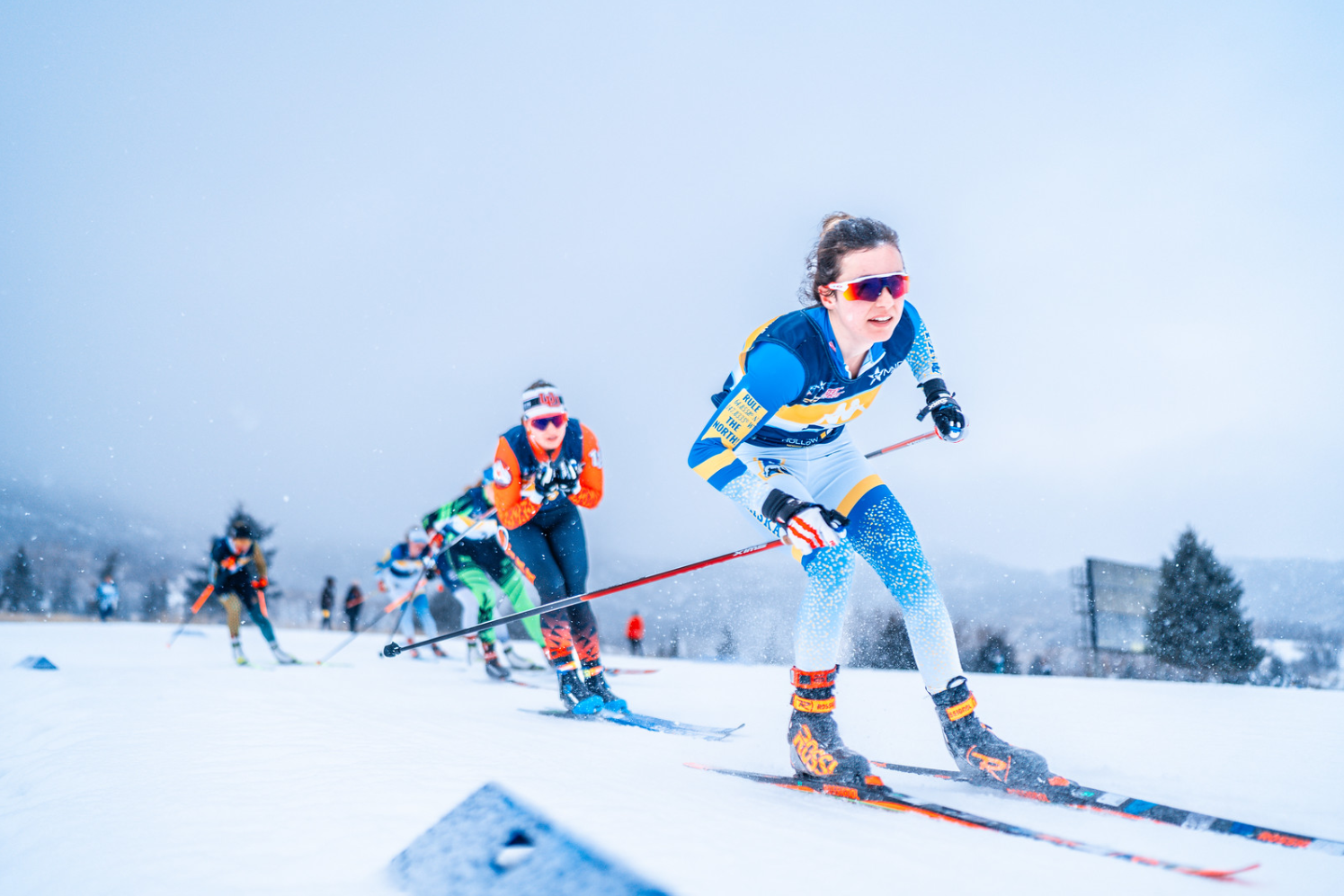
    U.S. coach Matt Whitcomb was not surprised by Hagenbuch’s performance. “This is Johnny’s best event, so I actually don’t think it surprised us too much, it more just impressed us, said Whitcomb. He continued that, “we saw in his relay performance last week that he had … the fastest time on the skate leg … we saw a really great performance last week, so we expected a good race today, and got it for sure.”

    Gus Schumacher (USA) shows the effects of his 21st place finish in the FIS World Cup 10 k Freestyle in Oestersund, Sweden. (Photo:  Proserpio/NordicFocus)

    Gus Schumacher (USA) and Zanden McMullen (USA) also delivered good results in 21st and 27th, respectively. Other American finishers included Ben Ogden 46th, Scott Patterson 48th, Luke Jager 58th, Will Koch 72nd.

    “I stepped training back a little bit this summer and I think it allowed my body to come around and absorb training more consistently and completely,” said Schumacher. “That seems like it’s translated to more stable energy and health, and the consistent results have made it easier to be confident skiing like myself out there. It’s good to feel like myself, but I know I’m super quick to push it and get tense and lose patience, so I’m just gonna roll with it and take each race as an opportunity to execute well and trust that those top 10s and bigger results are just going to happen.”

    “I have to give a lot of credit to my teammates every day,” said McMullen. “If a race isn’t going the way I wanted, I can always think back to racing hard for THEM. It’s almost the same feeling as being on a relay and being relied on—it just gives you that little extra fight. I’m happy about a top 30, but with the margins so close and not having a hard finish I know I can easily move up a lot of places. I’m really excited to race the skiathlon in Trondheim and I have my eyes set for a top 20!!”

    Antoine Cyr (CAN) continued to deliver results in the top 30, finishing the day 24th. Other Canadian finishers included Xavier McKeever 68th, and Leo Grandbois 75th. Olivier Leveille did not start the day’s event.

    Harald Oestberg Amundsen (NOR) paired up on course with later starter, Simen Hegstad Krueger NOR). Amundsen powered to the win, with Krueger finishing second. (Photo:  Modica/NordicFocus)
    10 K Freestyle

    Oestersund’s 10 k course—raced over three laps—created chances for skiers to pair up, or even group up. Obviously, such pairings—and the advantageous drafting those pairings create—can offer a boost to those lucky enough to find a faster skier to follow, or a partnering skier with whom to match pace. Norwegians seemed to benefit most, with Iver Tildheim Andersson pairing up with Toenseth, and Kruger pairing with Amundsen.

    Amundsen posted a finishing time of 23.36.2, pushing his Norwegian teammates down in the standings. Still on course, Krueger continued to post leading times, but his lead over Amundsen was fading. At 6.6 k, Krueger’s lead had dropped to inside five seconds. Krueger continued to cede time to Amundsen, dropping six seconds behind at 9.4 k. At the finish, Krueger moved ahead of Toenseth, but his time could not supplant Amundsen. The win also earned Amundsen the yellow World Cup leader’s bib AND the World Cup distance leader’s bib, supplanting former leader in both categories, Paal Golberg, who raced sluggishly, perhaps showing the effects of his participation in Saturday’s sprint.

    Men’s 10 k Freestyle RESULTS

    The podium in Oestersund, Sweden after the FIS 10 k Freestyle Individual Start. Hegstad Krueger (NOR), Harald Oestberg Amundsen (NOR), Didrik Toenseth (NOR), (l-r). (Photo: Modica/NordicFocus)
  • World University Games: Young Americans Shine as Lake Placid Returns to International Stage

    World University Games: Young Americans Shine as Lake Placid Returns to International Stage

    Opening Ceremony of the 31st World University Games, Lake Placid, New York. (Photo: FISU Games)

    Do you believe in miracles? Lake Placid is where they’ve happened before: speedskater Eric Heiden’s single-winter games medal record, Wassberg’s Olympic Gold by one hundredth over Mieto, and no less than the Miracle on Ice.” If miracles were going to happen again, this was likely to be the place. 

    With the State of New York having spent $500 million (through the Olympic Regional Development Authority) to dramatically overhaul facilities originally constructed for the Olympic Winter Games of 1980, Lake Placid was dolled up and ready to host the 31st World University Games, the first time these competitions had been held in North America since 1972. And so, not even the light drizzle outside on opening night could dampen the prospect of a week that promised competition, fellowship, and a glimpse at athletes likely to shape the future of winter sports.

    Lake Placid, NY—Biathlete Van Ledger waves the American flag as he leads Team USA into the Opening Ceremony of the 2023 FISU World University Games (Photo: Nancie Battaglia/FISU Games)

    The World University Games highlight collegiate athletes, and the gathering of American cross country athletes underscored just how central the collegiate circuit is to athlete development in the United States. With several members of Team USA using the World University Games as a pitstop on the way to their first World Cup starts—and plenty of the international athletes in the field representing American university teams—signs pointed towards the American collegiate circuit acting as a robust and competitive field for athlete development in the United States, and beyond.

    By the close of cross country competitions in Lake Placid, Team USA had won five medals (three individual, two team) in events as diverse as the Mixed Team Sprint and the 30 Kilometer Skate Mass Start. The young Americans built a case for the the ever-deepening pool of US Skiing, and the dynamic athletes who are contained in that community.

    Erin Bianco (1) of the USA during the Cross Country women’s sprint free during the World University Games on January 15, 2023 in Lake Placid, New York. (Photo by Porter Binks/FISU Games)

    Team USA at the 2023 World University Games in Lake Placid, New York:

    Men

      • Gregory Burt (University of Vermont)
      • Garrett Butts (Alaska Pacific University)
      • John Steel Hagenbuch (Dartmouth College), Gold and Bronze Medalist
      • Will Koch (University of Colorado)
      • Alexander Maurer (University of Colorado)
      • Finn Sweet (University of Vermont), Silver Medalist
      • Adam Witkowski (Michigan Tech.)
      • Cameron Wolfe (Dartmouth College)
    Women

      • Lucinda Anderson (University of New Hampshire)
      • Renae Anderson (Bowdoin College), Silver Medalist
      • Erin Bianco (Colby College), Bronze Medalist
      • Kendall Kramer (University of Alaska-Fairbanks), Silver Medalist
      • Annie McColgan (University of Vermont)
      • Sophia Mazzoni (Montana State University)
      • Anabel Needham (Michigan Tech.)
      • Nina Seemann (Dartmouth College)
    Mixed Team Sprint—Classic
    Skiers, including Team USA’s Renae Anderson (Bowdoin College), brave rough snow conditions during the Classic Team Sprint at the World University Games. (Photo: FISU Games)

    First on the program was the Mixed Team Sprint: two partners each completing three legs of a 1.35 km course. The event followed a semifinal/final format somewhat similar to individual sprints, with the top two teams from each semifinal automatically advancing, but with a total of six, time-based, lucky loser spots filling out the final field of 10 teams.

    The United States entered two teams: University of Colorado’s Will Koch and University of Alaska-Fairbanks’ Kendall Kramer forming USA I came fourth in a tightly contested second semifinal, from which only Italy I and Finland II advanced. Team II was comprised of University of Vermont’s Finn Sweet and Bowdoin College’s Renae Anderson who advanced to the final as lucky losers. 

    As Sweet-Anderson made their way to the starting line of the sprint final, it began to snow . . . hard. With temperatures hovering near freezing, a snow squall blew in to cover Lake Placid’s warm, granular, man-made snow. That suited the two New England Carnival circuit veterans who made up USA II, with Sweet saying in post-race comments that he and Anderson were “confident [choosing] zeroes, which were definitely the right call.” 

    Renae Anderson (USA) during finals of the Mixed Team Sprint Classic at the 2023 FISU World University Games on January 13, 2023 in Lake Placid, New York. The USA team placed 2nd behind the winning team from Japan. (Photo: Porter Binks/FISU Games)

    Despite being part of the Olympic program since Torino 2006, Team Sprint formats are still a rare event. Sweet echoed that novelty for himself and Anderson: “[The format] was different for sure,” he said. “[In the semi-final] I took it pretty conservatively and looked at it more like a distance race, whereas Renae said she skied it more like a sprint and ended up bonking a bit at the end. Going into the Final I think we were both on the same page with how to pace it which helped out a lot.”

    The Final was a tightly contested affair raced on glazed-over tracks: man-made, re-frozen ice covered by new snow. After an initial push from University of Denver student Andreas Kirkeng (skiing as part of the Norway I team alongside University of Utah’s Karianne Olvisk Denegrud) the pack tended towards parity. Eventually, the Japanese tandem of Ryo Hirose and Rin Sobue—both from Tokyo’s Waseda University ski team—pulled away for the win. Into the final exchange, Kirkeng and Sweet had created a clear race for second and third, and Renae Anderson closed with an impressive push that brought USA II to Team USA’s first medal of the week—a silver for the Bowdoin College-University of Vermont duo.

    The podium of the Mixed Team Sprint Classic at the 2023 FISU World University Games. L to R: Finn Sweet and Renae Anderson (USA) 2nd place; Ryo Hirose and Rin Sobue (JPN) 1st place; Andreas Kirkeng and Karianne Olsvik Dengerud, (NOR) 3rd place. (Photo: Porter Binks/FISU Games)

    Sweet said that he was “super happy with the result. I wasn’t sure what the level of competition would be [in Lake Placid] but after a few days of racing were behind me, I grew more and more proud of what Renae and I accomplished.” Sweet also said that the “Games were a great way to mix up the EISA [Carnival] circuit, especially in a year where the American U23 Team was going to be so strong and a bit out of reach.”

    Individual Skate Sprint

    The athletes quickly pivoted from Team Sprint to Individual Sprint, a discipline that has highlighted US Skiing’s depth from the World Cup team on down. American performances at the World University Games would prove no different. When qualifying had concluded, Erin Bianco (Colby College) was at the top of the field. In the men’s race, Adam Witkowski (Michigan Tech) and Will Koch (University of Colorado) ranked second and third behind Spain’s Jaume Pueyo. In a further show of American strength, every one of Team USA’s skiers had finished in a position to qualify for heats.

    Erin Bianco (USA) races the Women’s Freestyle Sprint during the World University Games in Lake Placid, New York. (Photo: Porter Binks/FISU Games)

    In post-race comments on winning the qualifier, Bianco said, “I was extremely excited to qualify first. I have been loving the amount of sprint races there are on the pro circuit and would consider it one of my strengths so to start World University Games by crossing the line in first place might be one of the highlights of my ski career!”

    Bianco also provided a comprehensive overview of the course that the Americans would race in the heats: “The sprint course was twisty and hilly,” she said. “The course begins with a quick little up and a sweeping downhill into a significant climb. It then turns left down a more straight downhill into a gradual flat section, quick gradual down into the long uphill. This hill is a steady grind that ends with a steep downhill back under the bridge into the stadium. The final kicker is a tight right hand turn into the finishing stretch. I had never raced here before and was a bit intimidated on the warm up but sprinting happens so quickly that you don’t have time to think about how hard it is!”

    In the Women’s heats, Bianco made quick work of advancing to the Final where she matched up against a Finnish contingent of Tiia Olkkonen, Siiri Kaijansinkko, and Niemela, along with American university students Mariel Merlii Pulles, skiing for Estonia and University of Alaska-Fairbanks, and Anna-Maria Dietze, skiing for Germany and University of Colorado.

    “[In the Final] I did not want to be in the lead for the first part of the course as the moves were made on the big uphill,” Bianco said. “My skis were extremely fast, so I sat behind for the first half k and then started to push the pace on the uphill. I crested the hill in third which was where I wanted to be so I could catch a draft on the downhill. This plan worked until I hit some ice or slush or maybe just even lost my balance on the final swooping corner into the finish and lost my balance. Luckily I stayed on my feet but this gave [Anna-Maria Dietze] just enough time to edge me out of the podium.” Ahead of the sprint for third with Bianco and Dietze, Mariel Merlii Pulles was able to hold off Finn Tiia Olkkonen to take the gold medal. “Although I was a bit sad to walk away without a medal, I am very proud of how I skied all day” said Bianco on her 4th place finish for Team USA.

    In the men’s quarterfinal, New York state native Adam Witkowski found himself doing some unexpected sightseeing of his old stomping grounds. “There was a large crash in my quarterfinal that led to me having to take avoiding action and ski off the trail and through one of the coach zones.” Witkowski stayed calm; in an impressive show of resiliency, he was able to ski himself into a semifinal. On the day’s fast-moving snow, crashes were more the norm than the exception. In the semifinal, Witkowski found himself again swerving to avoid a crash into the first set of downhills. This time, he tumbled in such a way that individual resiliency could do little to overcome.

    Having qualified second, Adam Witkowski (USA) found himself hampered by unfortunate crashes that ultimately took him out of contention in the Sprint Free event at the 2023 FISU World University Games. (Photo: Bond Demetri Photos/FISU Games)

    Will Koch managed to stay head of the fray in that semifinal. “It was strange to go so ‘quick’ again . . . compared to the other sprints I’ve done this year, this one felt most like a true ‘sprint’ since it was low altitude and had restful downhills.” Koch felt confident that he could push the entirety of the race, “I wasn’t concerned about leading into the final downhill since Perry Thomas, Team USA’s main wax tech, had made the skis so fast.” Koch eased into the Final alongside Northern Michigan University and Norwegian skier Kristoffer Karsrud.

    Will Koch (University of Colorado) leading Kristoffer Karsrud (Norway, Northern Michigan University) down the last hill of the Freestyle Sprint event at the 2023 FISU World University Games. Karsrud would ultimately place 5th, with Koch placing 6th. (Photo: Bond Demetri Photos/FISU Games)

    Koch and Karsrud joined a Finals field filled out by Finland’s Verneri Poikonen, Spain’s Jaume Pueyo, German Marius Bauer, and Frenchmen and University of Utah skier Tom Mancini. Koch had been through blistering paces in both his quarterfinal and semi-final, and in the Final, he said, it took a toll, “I was very tired from the heats and did not have the energy to ski as fast as the prior heats.” Koch still held strong in a tight pack, and finished 6th, as Poikonen took gold, Pueyo took silver, and Utah Ute Tom Mancini took the bronze. “At the end of the day, there were some very talented sprinters I was up against in the final who would have been hard to beat even with more rest” said Koch on his finish.

    Pursuit: Men’s 10 km Pursuit and Women’s 5 km Pursuit
    Bronze medalist John Steel Hagenbuch (7) of the USA, left, with gold medalist Ryo Hiose after the Cross Country mens pursuit free at the World University Games on January 17, 2023 in Lake Placid, New York. (Photo: Porter Binks/FISU Games)

    From the opening sprint weekend, the World University Games turned to a two day pursuit on Wednesday and Thursday of last week. The event entailed a classic individual start Wednesday, followed by a pursuit start on Thursday.

    Top performers in the first stage individual start classic race were University of Alaska-Fairbanks’ (UAF) Kendall Kramer, who finished 12th place on the day, and a sixth place for University of Vermont’s Finn Sweet. Dartmouth College’s John Steel Hagenbuch, meanwhile, was just .02 seconds off Sweet in seventh place, with both 37 seconds back going into day two. Finland’s Hilla Niemela finished first in the women’s race, with UAF and Estonia’s Mariel Merlii Pulles in second place. Japan’s Ryo Hirose won the men’s race ahead of University of Colorado and Norway’s Magnus Boee.

    From seventh place the next day, John Steel Hagenbuch would work and wind his way through the field. The Sun Valley native had a race rivaled by only winner Ryo Hirose, who held his gap from day one for gold, as he pushed through the dense pack that formed the top 10, passed, and passed, until he was right up to Andreas Kirkeng. Kirkeng, who had finished third on day one, eventually used the energy savings earned from day one to open a gap on Hagenbuch for second place, but Hagenbuch had made his case for bronze crystal clear. He stepped onto a podium, and earned Team USA’s second medal of Games, and first in an individual event.

    In the women’s race, Kendall Kramer pushed to move up a place on day two, and ended the pursuit race in 11th place. Mariel Merlii Pulles fought to join Hilla Niemela at the front of the a race from 18 seconds back, but Niemela was able to leverage her advantage to take gold for Finland in the pursuit. Pulles earned her second medal of the Games, a silver, while Maria Eugenia Boccardi finished third for Italy.

    Team Relay: Men’s 4 x 7.5 km and Women’s 3 x 5 km
    Krystof Zatloukal of Czech Republic leads the pack to start the Men’s 4 x 7.5km Relay at the 2023 FISU World University Games on January 20, 2023 in Lake Placid, New York. (Photo: Isaiah Vazquez/FISU Games)

    Friday moved to a classic Olympic event, the Team relay. The Men would race a 4 x 7.5 km race alternating classic and skate legs, while the women would do a 3 x 5 km in the same format. Team USA for the Women’s relay included lead leg Sophia Mazzoni (Montana State), Anabel Needham (Michigan Tech), and anchor Kendall Kramer (UAF). Team USA for the Men’s relay included lead leg Garrett Butts (APU), Finn Sweet (UVM), Gregory Burt (UVM), and anchor Alexander Maurer (University of Colorado).

    The Women’s race saw Finland and Norway establish a lead early and hold it until the very end. A Final sprint from pursuit champion Hilla Niemela saw Finland clip Norway for gold, Kazakhstan held onto the Nordic duo’s push until the very end to take a bronze medal. Team USA finished in 10th place.

    France was the dominant force in the Men’s race, holding a lead nearly unencumbered from the first exchange on out. It was University of Utah’s Tom Mancini who anchored the gold medal performance, as Norway and Japan finished 2nd and 3rd. Team USA finished fifth place.

    Mixed Nordic Team Event: Nordic Combined/Jumping/Cross-Country: Erin Bianco
    Erin Bianco, of the USA, bursts from the transition zone at the skiing portion of the Mixed Team Nordic at the 2023 FISU World University Games in Lake Placid, NY. (Photo: Logan Swney)

    In keeping with the theme of innovative events at the World University Games, the Relay portion of the week also included a Nordic Combined/Jumping/Cross-Country cross-over event. The event was, at its core, a Nordic Combined race, a jumping portion followed by a pursuit start 2×2.5 km cross-country skate race. At the World University Games though, National team’s competed in trios of one pure jumping athlete, one nordic combined athlete, and one pure cross-country athlete. The jumper and nordic combined athlete combined for the jump portion. The nordic combined athlete and the cross-country athlete then combined for a pursuit start team relay in which both skiers did a 2.5 k leg. A format that may sound like the work of a mad nordic scientist, but one that provided loads of excitement for Team USA.

    The cross-country athletes for Team USA included Erin Bianco (Colby College) for USA I, and Cameron Wolfe (Dartmouth College) for USA II. Erin Bianco combined with Jumper Cara Larson and Nordic Combined athlete Niklas Malcinski for USA I, Cameron Wolfe combined with Jumper Logan Gundry and Nordic Combined athlete Tess Arnone on USA II (Gundry is also a Nordic Combined athlete, but just jumped in this competition).

    After the jumping competition, USA I was in 3rd place going into the cross-country portion. Behind strong legs from both Malcinski and Bianco, they held their position, and in the old-school, new-wave or Nordic Combined competitions, the USA took home a bronze medal. Japan, long a powerhouse in the ski jumping world, took gold, with fellow jump-strong nation Poland taking silver.

    Team USA crosses the line for a bronze during the Mixed Team Nordic Combined Sprint at the 2023 FISU World University Games on January 19, 2023 in Lake Placid, New York. (Photo by Hailey Trejo/FISU Games)
    Skate Mass Start: Men’s 30 km and Women’s 15km
    John Steel Hagenbuch on the finishing straight during his Gold Medal performance in the 30km Mass Start World University Games in Lake Placid, NY. (Photo: Logan Swney)

    As it entered the second Sunday of competition, the World University Games program wound down by turning the intensity up. As in the Olympics, the Universiade would finish on a—note the quotes— “marathon.” The Men’s race would be 30 kilometers: 10 kilometers longer than the longest race on the NCAA circuit. The Women’s race, however, would be 15 kilometers, which matches the longest distance on the NCAA circuit. While both still definitely distance races, there was already a kind of archaic overtone as the races arrived in the new age of equal distance racing.

    On a difficult, winding, hilly five kilometer loop, the Men’s field didn’t contain anyone who wanted to take chances too early. Among the lead pack that formed in the early part of the race were two Americans, John Steel Hagenbuch (Dartmouth College) and Garrett Butts (Alaska Pacific University). Both showed the poise and patience indicative of confidence in a large mass start field. Hagenbuch, fresh off his pursuit push to bronze on Thursday, was set to ski with anyone. While Gunnison, Colorado native Garrett Butts had come into the Games fresh off of a career-best SuperTour 3rd place in the Seeley Hills Classic 30 k two weeks prior. His mother, Two-time Olympian and American Birkebeiner Champion Ingrid Butts, was set up in the stadium as Butts and Hagenbuch swung through the low-spot between the testing hills on the Lake Placid course.

    As the final lap began, the lead pack had taken full shape. Hagenbuch and Butts were in, alongside Japanese skier Ryo Hirose, France’s Simon Chappaz, Italy’s Compagnoni, and Norway and University of Colorado’s Magnus Boee. Hagenbuch then went to work, grinding out an upturn in the pace that stretched, but did not break, the pack. Boee stayed on him, Compagnoni and Chappaz came too.

    By the final kilometer though, it was all but clear who the strongest skier on the day was. The margins would be tight, but John Steel Hagenbuch came into the storied Lake Placid stadium and claimed a gold medal for Team USA. Boee followed to earn a silver, and Compagnoni finished in third for the bronze. Garrett Butts crossed the line in sixth place, the last member of the lead pack to hold on.

    John Steel Hagenbuch of the USA leads the pack up the climb and into the depths of Mt Vanhoevenberg during the 30km Mass Start World University Games in Lake Placid, NY. (Photo: Logan Swney)

    The Women’s 15 kilometer would also see a pair of Americans establish themselves in the lead pack early. Kendall Kramer (University of Alaska – Fairbanks) and Erin Bianco (Colby College) skied their way to the front of the race as the lead pack coalesced into four skiers strong. The Americans were joined by Kramer’s UAF teammate Estonian Mariel Merlii Pulles, and Kazakhstani Xeniya Shalygina.

    University of Alaska -Fairbanks Teammates Mariel Merlii Pulles of Estonia, and Kendall Kramer of the USA sprint to the finish of the Women’s 15 k Skate Mass Start at the FISU World University Games in Lake Placid, NY. (Photo: Logan Swney)

    The UAF Nanooks, Kramer and Pulles, soon made the World University Games a kind of team time trial, pulling away from Bianco and Shalygina on the final turn around the 5 k course. When they pulled into the stadium at Mt. Van Hoevenberg, they were dead even. For the crowd waiting in the stadium – and it was a crowd – it would be either the perfect introduction to cross country skiing, or the perfect conclusion to a week of racing. They sprinted for the line, and Pulles, the champion on the week, ended up pulling out a gold medal by .4 seconds over Kramer, who claimed a silver medal and a first individual medal for Team USA’s Women. Erin Bianco held strong through the final five kilometers, and finished fourth place behind Xeniya Shalygina.

    Kendall Kramer (6) of the USA, left, and her teammate at the University of Alaska-Fairbanks Mariel Merlii Pulles (13) of Estonia embrace at the finish line of the women’s Cross Country 15 k mass start at the World University Games on January 19, 2023 in Lake Placid, New York. Pulles won gold and Kramer took silver. (Photo: Porter Binks/FISU Games)
    From World University to World Cup, and more, for Team USA
    John Steel Hagenbuch came away from the World University Games in Lake Placid with a Gold and Silver Medal for Team USA. (Photo: Hailey Trejo/FISU Games)

    For Adam Witkowski, the Men’s sprint he qualified for in third place came with some well-deserved extra nerves. “With [the World University Games] being my first international race of my career I had quite a few nerves at the beginning of the [sprint] day.” His first international race was followed quickly by his second: a World Cup sprint the following weekend in Livigno, Italy. Witkowski wasn’t alone in the making the jump from Lake Placid to Livigno, either. Will Koch rushed on from his start in the Lake Placid 10 km Classic to “catch a redeye flight from Montreal to Italy for my first World Cup Starts!” The duo both made starts, with Koch highlighting making the Team Sprint Final in Italy alongside teammate Kevin Bolger.

    For other members of Team USA, this World University Games in Lake Placid offered a perfect coda for their time spent on the collegiate circuit. Erin Bianco, who graduated in 2022, this was a “big highlight to represent the US for the first time, and Colby College one last time.” 


    Closing Ceremonies of the 31st World University Games took place in the arena where the sporting world’s most famous question and answer, “Do you believe in miracles? . . . Yes!” was immortalized. For every fan who remembers those words echoing from our television sets in 1980, there is a constant reminder of miracles that occur in Lake Placid. Team USA saw four medals in cross country skiing at these World University Games. Hard work and collective belief are indeed acts of will, bu—for a national ski program aspiring to become the best in the world—there’s a hint of something mystical at play, too. So we leave with the familiar refrain: “Do you believe in miracles?” . . . Yes.

    Full Results from the World University Games in Lake Placid, New York

  • Swirbul Sizzles, Kirkeng Dominates U.S. National Championships 10 k Individual

    Swirbul Sizzles, Kirkeng Dominates U.S. National Championships 10 k Individual

    HOUGHTON, MICHIGAN:  Welcome to FasterSkier’s on-location coverage of the United States National Cross- Country Ski Championships from Houghton, Michigan.

    This week, Houghton hosts the U.S. National Cross-Country Championships on the Michigan Technological University’s trail system. The U.S. Nationals mean many things to different competitors. For some, it’s their initiation into the world of high-end competitive ski racing; for others it’s their chance to burnish their credentials; and for still others it’s a combination of competition and enjoyment of skiing.

    Today’s competition was the 10-kilometer individual start freestyle race. The women’s race was first, starting at 9:30, followed by the men’s start at 12:30.

    Top ten results, Women’s U.S. nationals (Photo: FasterSkier)

    The weather in Michigan’s Upper Peninsula has been extremely atypical for this time of year with temperatures hitting almost 40 degrees and only dropping to freezing in the evening. Fortunately, a deep snowpack provided good conditions.  With temperatures hovering around freezing with moist snow, it would have been disastrous for a classic race, but today, the conditions were fast and forgiving, close to ideal for a skate race.

    U.S. Nationals, Men’s results. (Photo: Fasterskier)
    The Results

    The women’s competition was won by US National Team member, Hailey Swirbul (Alaska Pacific University Nordic). She was followed in second by National Team member Novie McCabe (University of Utah), with Sydney Palmer-Leger (University of Utah) in third.

    The men’s first-place finisher was Andreas Kirkeng from Norway (University of Denver). In second place was John Steel Hagenbuch, (Dartmouth College), and in third place was David Norris (Steamboat Springs Winter Sports).

    Men’s podium U.S. Nationals (l-r John Steel Hagenbuch, Andreas Kirkeng, David Norris. (Photo: Fasterskier)
    The Race

    The men’s race was dominated by the Norwegian, Kirkeng, a college sophomore who won by over 30 seconds. It was a performance made all the more impressive by the fact that as Kirkeng told Fasterskier, he had returned from Europe only five days prior to the race, having travelled home for the holidays. Kirkeng lives 30 minutes from Oslo, and had spent the holidays in the mountains.

    It was the first time on these trails for the Norwegian who professed a liking for the course. Kirkeng told Fasterskier that, “The course is really broken into two parts, long straight ups and downs where you really just have to find the flow, and the second half is short kickers with a lot of transitions, you really have to be on top of everything and work hard for it.”

    He also told Fasterskier that he had tried out some strategies yesterday with race prep intervals, but that, “There’s no real resting point, so you have to ski smart and save energy where you can.  Save some on the uphills and really pursue the turns.”

    The moist snow didn’t faze the Colorado student since it’s very similar to what he has at home in Norway. For the young Norwegian, the podium is a foundation for his young career.

    Andreas Kirkeng charging onto lap two as he heads toward victory. (Photo : Fasterskier)

    Second place finisher Steel Hagnenbuch, a Dartmouth freshman, told FasterSkier that he was familiar with the course having skied it as a junior in 2020. “It skis almost like an altitude course in that there’s a lot of sustained working sections,” he said. “I thought it was really important to be strong and composed in the working section, that’s probably four minutes of big V-2 work.”

    US Ski Team veteran David Norris—who was pulling double duty as both a racer and a coach for S.S.W.S.—told Faster skier that he was, “Grateful to the club letting him coach and race simultaneously.” Norris’s strategy was, “To settle in on the climbs and work all the gradual rolling stuff.” Norris’ experience was able to bring some perspective to the fact that fluoro waxes were not allowed in this race. It was Norris’s first time at a National Championship level race without fluoro waxes. “With a two lap course, it’s really interesting,” he said. “You can see where you glided to on the first lap compared to the second lap. With the new waxes, it seemed like they slowed down after 5 k, but it was quick snow.”

    David Norris on his way to a podium in Houghton.  (Photo: FasterSkier)

    Norris expressed a theme repeated by skiers through the day: “Racing U.S. Nationals is the absolute best. It’s awesome, 50% of the faces here are familiar and friends . . . I like being here with all of my friends.”

    The theme of fun mixed with competition was repeated by women’s champion, Swirbul.

    “I’m so happy to be here.  It’s not that the pressure or expectations go away, but there’s so many positive things about the ski community as a whole here … getting to see kids of all ages racing and seeing parents cheering.  That environment makes me fall in love with skiing again.”                                         Hailey Swirbul

    Swirbul agreed with Steel Hagnenbuch that the course feels like skiing at altitude.  She said, “It’s super sustained most of the way, it reminds me of altitude racing actually. You have to continuously grind the whole way.” She continued that, “This is my fourth or fifth time in Houghton; it’s always fun to come here and push your limits with the best skiers in the country.”

    Hailey Swirbul starting her journey on the way to first place. (Photo: FasterSkier)

    Fourth place skier Sarah Goble (Bridger Ski Foundation) attended MTU.  She told Fasterskier the home field advantage definitely helped. “I skied here almost every day for three years. It’s really cool to be back in Michigan.”

    APU coach Galen Johnston reiterated how the U.S. Nationals mean different things to different racers. “For some it’s a chance to come and establish the work that’s been done over the course of the year,” he said. “For some it’s a first time here, just coming and seeing what it’s all about.” He continued that for the first timers it’s “A chance for them to get full service from the ski perspective, and a chance to race with the best in the world. It’s a learning experience, so they can see what the next level looks like.”

    The carnage that awaits finishers at Houghton (Photo: FasterSkier)

    All racers and coaches Fasterskier spoke with had high praise for the venue, the quality of organization and conditions. Racing in Houghton continues on Wednesday with Men’s and Women’s Classic Sprints. Tune in to FasterSkier for livestreaming and race coverage.

    Men’s and Women’s 10 k Freestyle, Full Results


  • (Press Release) 2022 Junior, U23 World Championships Cross Country Teams Announced

    (Press Release) 2022 Junior, U23 World Championships Cross Country Teams Announced

    By U.S. Ski & Snowboard
    January 25, 2022

    U.S. Ski & Snowboard has announced 24 athletes to represent the United States at the FIS Junior & U23 World Cross Country Championships Feb. 22-27 in Lygna, Norway.

    “Following a year filled with constant changes, I am so pleased to see a team fielded with such depth among our roster,” said U.S. Ski & Snowboard Head Cross Country Development Coach Greta Anderson. “We have several spots on this team that were declined because of athletes who are headed to the Olympic Games next week. This progress speaks volumes about our upcoming athletes’ ability not only to adapt but to thrive in uncertain environments and seize opportunities when they present themselves. We are taking this team to Norway, the ‘homeland’ of skiing, and cannot wait to see what they can do at the Championship.”

    The following athletes have been selected to represent the United States at the upcoming FIS U23 and Junior World Nordic Championships.

    Zanden McMullen races a skate pursuit in Ruka, Finland in November, 2021. (Photo: NordicFocus)
    U23 World Championship Team

    Women

    • Abigail Jarzin (University of Utah/Salt Lake City, Utah)
    • Lucinda Anderson (University of New Hampshire/Golden Valley, Minnesota)
    • Anabel Needham (Michigan Tech University/Houghton, Michigan)
    • Rena Schwartz (Dartmouth Ski Team/Middlesex, Vermont)
    • Novie McCabe (University of Utah/Winthrop, Wash.) **
    • Sophia Laukli (University of Utah/Yarmouth, Maine) **

    Men

    • Zanden McMullen (Montana State University/Anchorage, Alaska)
    • John Steel Hagenbuch (Sun Valley Ski Education Foundation/Ketchum, Idaho)
    • Noel Keeffe (University of Utah/Steamboat Springs, Colorado)
    • JC Schoonmaker (University of Alaska Anchorage/Tahoe City, Calif.)**
    • Benjamin Ogden (University of Vermont/Landgrove, Vermont)**
    • Gus Schumacher (Alaska Winter Stars/Anchorage, Alaska)**
    • Luke Jager (University of Utah/Anchorage, Alaska)**
    Sydney Palmer-Leger races a sprint qualifier in Davos in December, 2021. (Photo: NordicFocus)
    Junior World Championship Team

    Women

    • Sydney Palmer-Leger (University of Utah/Park City, Utah)
    • Kate Oldham (Aspen Valley Ski Club/Carbondale, Colorado)
    • Nina Seemann (Dartmouth Ski Team/Craftsbury, Vermont)
    • Nina Schamberger (Summit Nordic Ski Club/Leadville, Colorado)
    • Samantha Smith (Sun Valley Ski Education Foundation/Sun Valley, Idaho)
    • Annie McColgan (University of Vermont/Bend, Oregon)

    Men

    • Finn Sweet (University of Vermont/Waterbury, Vermont)
    • Will Koch (University of Colorado/Peru, Vermont)
    • Michael Earnhart (APU Nordic Ski Center/Eagle River, Alaska)
    • Brian Bushey (University of Utah/Waitsfield, Vermont)
    • Walker Hall (University of Utah/Winthrop, Wash.)
    • Alexander Maurer (University of Colorado/Anchorage, Alaska)

    ** – Denotes a ‘Decline’ of their respective spot on the team roster due to scheduling conflicts between the Olympic Winter Games & NCAA Regional Championships