From the FasterSkier archive — posts syndicated from athletes’ and coaches’ own blogs between 2004 and 2012, kept online as published. Current coverage is at fasterskier.com.

Tag: Jon Schafer

  • USA Nordic Transitions as Jarrett and Schafer Step Down

    USA Nordic Transitions as Jarrett and Schafer Step Down

    U.S. Nordic Combined’s 2011/2012 team members (from left to right) Billy Demong, Bryan Fletcher and Taylor Fletcher with head coach Dave Jarrett at Soldier Hollow in Midway, Utah. (Photo: USSA)

    Listed at the bottom of a U.S. Ski & Snowboard Association (USSA) press release announcing U.S. Nordic Combined Head Coach Dave Jarrett’s retirement are his coaching highlights. It’s a long list defined by two things: Olympic and World Championship medals and longevity. Jarrett will forever be linked with the iconic names of U.S. nordic combined, including Billy Demong, Johnny Spillane and Todd Lodwick. His coaching legacy rewinds back to the 2002/2003 World Cup season.

    Before that, as a nordic-combined athlete, Jarrett was a member of the U.S. Ski Team from 1992-1996 and is a two-time Olympian. He’s a lifer. And for lifers, separation from what they have always known remains difficult.

    “I have been doing it a long time both as an athlete and and a coach,” Jarrett, 46, told FasterSkier on the phone. “It is now of those things where all of sudden it hits you, like, you are tired. You’re not able to go give everything and do everything. And certainly, it’s hard to justify a lot of time on the road. Missing family things, but also on the athletic side you are not able to give to the athletes everything that you need to give.”

    Until 2014, USSA managed the U.S. Nordic Combined Team. The team is now run by USA Nordic, yet Jarrett’s position has remained under USSA’s umbrella — they continued to pay his salary. With the 2014 split, Jarrett’s responsibilities grew as he took on both coaching duties as well as some of the logistics of running a team.
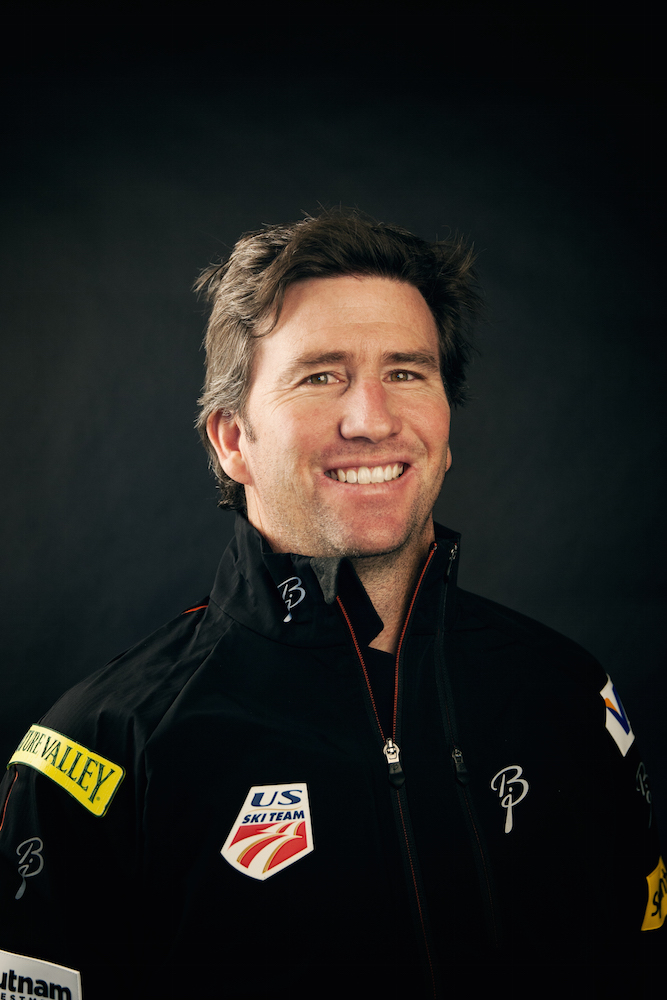
    Dave Jarrett, head coach of U.S. Nordic Combined, during the 2013/2014 season. (Photo: USSA)

    “Honestly, it’s amazing he lasted as long as he did,” U.S. Nordic Combined A-team member Bryan Fletcher said on the phone from his home in Park City, Utah. “He’s definitely a trooper, for sure. It was pretty intense because he was still employed by USSA and still had bosses there, but he also had bosses on USAN and had obligations on both sides of the coin. That combined with continuing his education research for coaching stuff, it adds up quick. And then doing all the travel logistics for not only World Cup but for World Cup and B-team and then having to be there in person, it was insane.”

    Taylor Fletcher, another longtime U.S. Nordic Combined athlete and Bryan’s younger brother, also noted the stress on Jarrett.

    “He had definitely been challenged … he had to go from a full-time coach to a full-time coach and a team manager,” Taylor explained on the phone. “He was in charge of doing a lot of the fundraising, and all the aspects to keep our sport alive in the U.S. And that really took a toll on him and that was definitely difficult on all of us. But also, I think it put way more weight on his shoulders than he really needed.”

    Diminishing funds correlates to increased non-coaching responsibilities for coaches, less on-snow time and more connecting the non-competitive dots for athletes. Jarrett weathered that type of job description metamorphosis. Ski coaching at the elite international level is an all-encompassing life, and he lived it for 15 years.

    “For me and my wife, we got married while I was still an athlete and so this is a lifestyle, the only lifestyle we have ever really ever known,” Jarrett said. “Both of my children were born in 2002 and 2004. Again this is a lifestyle that’s all they have ever known.”

    Demong, USA Nordic’s executive director for the last year, has spent nearly his entire international-skiing career under Jarrett’s wing. The two became teammates back during the 1996/1997 season when Demong bumped up to national-team status.

    “DJ had a good understanding of physiology, so he and I bonded over that in the beginning,” Demong said. “Especially given the fact at the time we had a really good team culture developing but we didn’t have the physiological expertise in our training programs and that sort frustrated both us. So we sort of found a commonality there right out of the gate.”

    After completing his competitive career, Jarrett went on to earn a degree in exercise physiology and kinesiology from the University of Colorado. He was able to bring his education into play as he joined the coaching ranks.
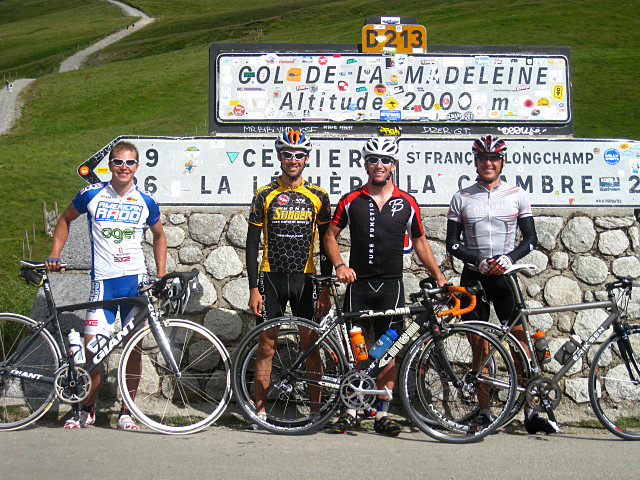
    The U.S. Nordic Combined team takes a break at the top of the Col de la Madeleine during a 2009 training camp in nearby Courchevel, France. From left to right: Bill Demong, Johnny Spillane, coach Dave Jarrett, and Todd Lodwick (Photo: USSA)

    “When he came back to coaching it was really a breath of fresh air,” Demong said about Jarrett’s academic and nordic-sports knowledge. “We had built this great culture and were all working really hard, but we still didn’t have the plan training-wise that I felt we needed.

    “Going back to my high-school running days, we peaked when we wanted to peak for states and federations, and when we were doing our nordic training I felt like we were sort of doing what other nordic-combined skiers did, which was get up, ski, or get up, go jump, have lunch, go ski, go home,” he continued. “And DJ brought a ton of new ideas and concepts that he had learned in school as well as from networking with other sports. DJ really helped pioneer a lot of things on the physiological side and take our team from good culture, talented hard working athletes, to champions.”

    Jarrett plans to open a strength and agility center in Heber, Utah, where he lives with his wife and children, the youngest of which will be entering eighth grade; his oldest will be a freshman in high school. As with any change, he said he looked forward to what the opportunity might bring and remaining close to his family. Yet looking back, Jarrett said he’d miss the small daily aspects of the sporting life.

    “It’s the everyday victory I’ll miss,” Jarrett said. “I’m psyched to see the work that the athletes are putting in. The work that the coaching staff are putting in to see those everyday victories — those personal best, in testing, first time getting Continental Cup points, or first time getting World Cup points, or a World Cup podium. You can say the hardware is why you do it for sure, but I will miss is the everyday camaraderie and training.”

    U.S. NoCo Moving Forward

    Demong said the program remains stable heading into an Olympic season; Jarrett had been discussing a transition for the past several seasons.

    “It had been something that has been on my radar for awhile and DJ certainly communicated early enough for me to to start planning, and quite honestly, we do have a good safety net,” he said.

    U.S. Nordic Combined Assistant Coach Martin Bayer will step into the role of head coach. Bayer hails from the Czech Republic and began coaching domestically in the U.S. in 2000. He is currently based in Planica, Slovenia.

    Demong said Bayer is entering this position with the institutional knowledge to make the coaching change seamless.

    “Martin has worked his way up through the club system to the development team coach,” he said. “He has basically coached everybody onto the national team with the exception of Bryan, who is just a little bit older. So he has already a great relationship with all the athletes that are on the team. He knows all the athletes in the pipeline. …  He knows the environment and he is familiar with how we operate, and there is a level of trust both from my end and with the athletes.”

    Nick Huber will remain the program’s head ski-jumping coach. On the cross-country side of the sport, former U.S. national-team biathlete Jeremy Teela is advising the team. “He has agreed to come in and help us with domestic cross-country coaching and plan writing,” Demong said.

    Jon Schafer, who had been U.S. Nordic Combined’s high-performance director for the last year, has also stepped down.

    “Jon is a great and a good friend and very very exceptional high-level strategic thinker,” Demong said. “I think our organization is not at the point right now where we can take advantage of his talents and capacities fully, and quite honestly, we just need more boots on the ground. At this point, we are not going to fill that position. He has, however, written us a very detailed plan that we will be using as a road map going forward. It is a living document. For us, it is like everything from recruitment to medals and everything in between as it relates to coaches, education, and national-training centers.”

    A business executive, Schafer brought management experience to USA Nordic, and on the sporting side, he was previously an elite-level rower and coach.

    “My decision to step down was a very difficult one and one that I most certainly did not take lightly,” Shafer wrote in an email. “I loved working with the athletes and even after my departure, I am still very concerned about their success. It can be very difficult working in an environment of highly constrained resources, in particular with almost no support from USSA.

    “Every position or idea simply cannot be funded and every shot has to be a kill,” he continued. “People are going to disagree about the best ways to spend highly limited funds and the tighter the budget, the harder it is to balance all of the different agendas. The organization has a lot of operational needs and the executive director and a few members of the board felt it was more important to have staff selling t-shirts, writing newsletters, marketing copy and other very ‘boots on the ground’ tasks, than a High Performance Director setting strategy and working with coaches and athletes at a higher level. I disagreed with this approach and since they couldn’t afford both, I tendered my resignation. I think this move is good for everyone, as the overall organizational dynamic proved to be a bit too bruising and tumultuous for an honest, easy-going, soft-spoken Midwest boy like me. I want to be very clear here too — my departure was a smooth and respectful one on both sides and I wish them nothing but the best.”

    Always the jokester, Schafer (FasterSkier’s gear-review guru) added, “One big upside of this change for me too, is I now anticipate having much more time to write about how long you can wear your underwear without washing it. And perhaps teaching my Great Dane to finally respond to his name.”

    The U.S. Nordic Combined team will meet in early May for an all-team camp, which will include all staff and any athlete with a chance of qualifying for the Olympics.

    “It’s really going to be focused on learning more about ourselves, learning more about each other, learning how to communicate better and be tougher,” Demong said of the camp.

  • Nordic Nation: 17 Questions with Fast Big Dog

    Nordic Nation: 17 Questions with Fast Big Dog

    In this episode we put the elusive Fast Big Dog, known in the business world as Jon Schafer, in front of the mic for his answers to the 17 Questions for 2017. It brings a conclusion to the FasterSkier interview series run last fall before the start of the 2016/2017 cross-country, nordic combined and biathlon race seasons.

    Schafer is knee deep in the nordic scene as high performance director for USA Nordic Sport, a supporter of many aspiring skiers, and a huge Evel Knievel devotee — note Schafer’s race suit.

    (To subscribe to the Nordic Nation podcast channel, download the iTunes app. If you have iTunes, subscribe to Nordic Nation here.)

    Have a podcast idea? Please email nordicnation@fasterskier.com.

    FBD in action. But really, this photo needs no caption. (Photo: Fast Big Dog/Instagram)

    (Is this for real?)

  • Nordic Nation: Sometimes It Is a Fantasy – Hoffman’s Fantasy XC League

    Nordic Nation: Sometimes It Is a Fantasy – Hoffman’s Fantasy XC League

    USE: Nordic Nation FasterSkier Podcast LogoYes, it’s that time of year and depending on who you are, it means two things: the World Cup is about to start and Noah Hoffman’s Fantasy Cross Country is live. In this episode, as with most things, Nordic Nation goes deep. We scour our digital rolodex for insider information. With the first weekend of racing soon upon us, we looked for the beta on who to pick for a fantasy team and who to leave on the proverbial sidelines.

    We speak with the Hoff and the Oz of his Fantasy League, Adam Mahar. And we track down a winning player from last year who resides in Sweden. We also connect with FasterSkier’s resident gear tester savant, Jon Schafer — he’s a man of many names too, think Fast Big Dog and/or FBD. And finally about thirty minutes into the episode, we strike gold with two players from the Midwest; Kristor and Dean are their names. Seriously, we dug deep to find these guys. With their insights, we might just be onto breaking the European dominance in Hoffman’s Fantasy League. Last year 11 of the 13 prizes went to players on the other side of the Atlantic. 

    Click the play arrow below to listen. (To subscribe to the Nordic Nation podcast channel, download the iTunes app. If you have iTunes, subscribe to Nordic Nation here.)

    Have a podcast idea? Please email nordicnation@fasterskier.com.

  • The Allure of Eagle Glacier: What Happens 5,700 Feet Up in Alaska (with Video)

    The Allure of Eagle Glacier: What Happens 5,700 Feet Up in Alaska (with Video)

    On June 28, Jon Schafer, known in U.S. nordic circles as Fast Big Dog (FBD), stepped foot on Eagle Glacier, 5,700 feet above Girdwood, Alaska, where he spent about a week training on snow with a masters camp, led by Alaska Pacific University Head Coach Erik Flora. It was FBD’s first journey to the glacier and in the following account, he explains its significance. Interviews were conducted in person and on the phone. 

    ***

    By Jon “Fast Big Dog” Schafer

    In just a few weeks, overweight and overpaid NFL players will assemble for training camps, subjecting themselves to the rigors of almost 60 total minutes of daily exercise.

    Each spring, Major League Baseball prepares its aging demographic of viewers for the tediousness of watching baseball with an even more tedious primer known as spring training.

    Elite rowers have long escaped ice-jammed winter rivers for a few weeks of cranking out miles in the Florida sun, and the list goes on and on.

    The offseason training camp has been a staple for top-level athletes in many sports for decades, providing a distraction-free environment for individuals to focus on sport-specific training, make technical improvements and provide the mind a much-needed break from the grind of offseason training.

    Nordic skiing is no exception. Nordic skiers have historically been very creative in their attempts to get on snow in the summer. European-based skiers have a few different options of glaciers and more recently, even ski tunnels. But what about North American athletes? What options are available to them? Is it necessary to make the pilgrimage to the tradition-laden glaciers of Europe or are there alternatives here in the U.S.?

    The answer is hiding in plain sight. One of America’s premier Olympic development centers, the Alaska Pacific University Nordic Ski Center (APUNSC), has been taking skiers up onto Eagle Glacier in Alaska for over two decades. What began as three very hardy skiers living in a tent on the glacier has grown into one of the world’s top nordic ski training facilities at the Thomas Training Center.

    This transformation wasn’t easy though. Alaska can be a cold, harsh environment and the development of the elite facility that exists today only happened thanks to thousands of hours of dedication spread over more than 20 years by driven, committed people with a vision. In many ways, Eagle Glacier is much more an outstanding training center; it is also an excellent metaphor for the ascension of U.S. skiing as a whole. Both journeys have been tumultuous at times, with great success only coming after countless hours of hard work, commitment and teamwork.

    Probably not coincidentally, one of the most frequent visitors to Eagle Glacier is also one of America’s most successful skiers: current U.S. Ski Team (USST) member, four-time Olympian, three-time overall Sprint World Cup winner, and team sprint world champion Kikkan Randall.

    “I went there for the first time in 2000,” Randall explained. “I was young, eager and ready for anything. The cabin and the overall facilities weren’t as nice as they are now, for sure. You had to be tough, but that’s not a bad thing. Skiing is a tough sport and the sooner you learn how to be tough, the better off your are.”

    With these humble roots, a solid foundation was laid for growth and success. As a whole crop of young talent began to mature on the World Cup circuit, so did Eagle Glacier. “So many people worked hard to make that place what it is today,” Randall continued. “I don’t know if I’ll ever be able to express all of my gratitude to the people who first got it started, Jim Galanes and then Erik Flora in particular, whose efforts in the last ten years have been nothing short of extraordinary.

    “We’ve kind of all grown up together,” she added. “As the level on the World Cup has risen, we’ve responded to this challenge by all pushing ourselves harder. Not only do the coaches and staff have Eagle more dialed, but so do the athletes. It used to be that you’d see people up at night watching movies, but not anymore. Now it’s just skiing, eating and sleeping. The whole operation is very professional in all aspects.”

    Olympic gold medalist and nordic-combined world champion Billy Demong agreed. ”In the late ’90s and early 2000s, we were all working super hard, but we hadn’t quite broken through,” he said. “I was on Eagle Glacier in 2002 because as a team we were committed to be the best. Johnny [Spillane] won the World Championships the next year in nordic combined and that was really the start of our run.

    “It wasn’t just nordic combined either,” Demong continued. “Kris Freeman had a fourth place at worlds that same year, Kikkan and Andy [Newell] began going really fast and Timmy Burke and Lowell Bailey started to have a big impact on the Biathlon World Cup in the next few years. It certainly wasn’t any one thing that took us all to the next level, rather the additive effect of lots of little things. Looking back, it’s amazing how far nordic skiing has come in the U.S. in a relatively short period of time. Hopefully the USSA [U.S. Ski and Snowboard Association] will continue to fund everyone so that we can all continue this remarkable trajectory.”

    As Eagle starting getting more traffic from elite skiers, its mystique also continued to grow. For four-time Olympian Andy Newell, his first visit was the same year as Demong’s and his recollections were somewhat similar to both Demong and Randall.

    “I went there for the first time in 2002 and I remember it was pretty spartan, but it was my first training camp with the U.S. Ski Team, so I still thought it was awesome,” Newell said via a Skype interview from the USST training camp in New Zealand. “I was just this punk kid, so I was so stoked that I was at a training camp with all of my idols that nothing else mattered,” recalled Newell. “I still remember what it felt like to hear I was rooming with Kris and Justin Freeman and Rob Whitney — I really looked up to those guys, so to be able to train and live with them was an incredible feeling.”

    If that had been the end of the story, the trip may have not been all that memorable, but what followed is just one of many examples of the aura of Eagle.

    “We got the rooming list and I was assigned to stay with Kris, Justin and Rob, which I thought was awesome,” Newell recalled. “Inexplicably, just before bed, Kris and Justin moved out to one of the other rooms. I thought this was odd, as the other bunk rooms were pretty crowded, but I didn’t care. I soon found out why though, as in the middle of the night, Rob woke up screaming that we were all going to die and that we had to get off the glacier immediately. I was terrified. Here it is my first night at U.S. Ski Team camp and one of the veterans, a guy I looked up to, is telling me that we were all about to die. I didn’t know to do, but I was thoroughly panicked. It turned out that Rob was widely known as a sleep talker. To make matters worse, he wouldn’t just mumble random stuff, he would address you by name and seemed very coherent. We laugh about it now, but it was scary as hell at the time. That’s the type of stuff that happens up on Eagle.”

    Demong agreed. “Any time you get a bunch of skiers together living in a confined environment, it’s always going to be interesting. I was there early on and we had a really good group, but the coaches were just getting crushed working on the groomer. Rumor had it that a new PistenBully [PB] was being flown up to us and we were all so stoked as we knew this was going to have a huge impact. It did, but not in the way we imagined.”

    While Demong wasn’t on site the day the groomer arrived, he recalled the story about its delivery. Just as the helicopter was coming into sight, the pilot got hit with a nasty down-draft and had to jettison the PistenBully from over 100 meters in the air to avoid crashing the helicopter. The PB came crashing toward the earth and smashed off the ice. Everyone was OK, but thinking back, Demong pondered, ” ‘I wonder if stuff like this happens in Norway?’ I still look back very fondly at those times, too, as in many ways those struggles, those battles and all of the crazy stuff was the best part of the whole adventure.”

    Two-time Olympian and APU skier Holly Brooks echoed these sentiments. “Yeah, Eagle could be rough in the early years, but the job that everyone has done, in particular Erik and his team in the last few years, is nothing short of amazing,” she said. “Everyone has steadily improved every aspect of the training center to allow skiers to focus exclusively on skiing. It is now a truly world-class facility. We’ve had several top European World Cup skiers like [Norway’s] Astrid Jacobsen and [Finland’s Aino] Kaisa Saarinen come over and they agree that this is one of the best summer training environments anywhere in the world.”

    The environment, while harsh at times, is proving to be more and more applicable to the conditions seen in racing season, something that coaches and athletes alike now recognize to be a huge strength. “Not every day on Eagle is bright, sunny, extra-blue conditions, so getting comfortable training in those bad conditions is key,” Brooks explained. “So many championship races end up being held in poor weather, so Eagle Glacier is huge in helping us prepared for that environment, both mentally and physically. In fact, we even have a running joke that when it is really lousy out, it is a ‘championship day.’ It’s funny, but it’s also very, very true. Many of the last championship races have been in bad weather [Holmenkollen, Val di Fiemme, Sochi] and a lot of our success at these venues is due to our training on Eagle.”

    Randall concurred, “With climate change, we are seeing conditions on more and more of the World Cups that are very similar to what we see on Eagle, so being able to train for this is very important. It is very interesting, we talk a lot about ‘championship days’ on Eagle, but I’ve come to learn that this means a lot more than just being comfortable in bad weather — it’s really more about being tough no matter what is thrown at you and no place teaches you that lesson better than Eagle Glacier.”

    In contrast to Randall and Brooks, Newell, a Vermont-based skier with the Stratton Mountain School T2 Team, didn’t witness the slow, steady progression of the training center firsthand, as he didn’t have the opportunity to return to Eagle until last year, but he echoed all of the same thoughts.

    “I was blown away when I finally got a chance to return,” he noted. “I went up there last summer and the changes were incredible. Flora absolutely has that place dialed. It is very structured now and it runs very, very smoothly. As the overall level on the World Cup continues to rise, summer training camps have become even more important. To be competitive at the very top level, you simply must get on snow at least once a summer. Our competition is getting on snow even more often, so we really need to capitalize on our time and Eagle Glacier is a perfect place to do that.”

    Newell went on to bring his experiences on Eagle full circle by summarizing the history and growth of the training center and the parallels with the success of the U.S. team. “One of the very special aspects of Eagle is the history. I was there at the very start of my career and I was able to learn a lot from the veterans, so it’s very exciting and rewarding to be able to return and help pay that forward to the up-and-coming group of skiers,” he said. “One of the walls is painted with the names of everyone who has trained and suffered on the glacier and it is a true badge of honor to have your name on that wall. I am very proud of what this represents and I am hopeful that younger skiers will see those names and be just as inspired today as I was in 2002. In many ways, Eagle Glacier represents the past, present and future of U.S. skiing.”

    Some of the newer members of the USST immediately picked up on that vibe on their first visit. “I went up to Eagle for the first time two years ago and I was immediately awestruck,” remarked Olympian and 2015 World Championships bronze medalist Caitlin Gregg.”I had heard lots of horror stories from the old days, but as soon as I arrived I knew the place was special. You see the names of all of these great skiers on the wall and suddenly it hits you, I am a part of this.

    “The Eagle Glacier experience goes way beyond just being on snow in the summer though,” she continued. “I left the place a few years ago so fired up about training that it really set the stage for me for the last two years, which have been the best years of my career. That’s the type of impact Eagle Glacier can have on a skier.”

    World Championships U23 silver medalist Noah Hoffman also tapped into the energy immediately, “I went for the first time two years ago and I didn’t know what to expect. I had previously skied on Dachstein and Stelvio glaciers and in both of these two places cross-country skiing is such an after-thought, it was incredibly exciting and refreshing to be on Eagle where it is so dialed in for elite cross-country training.”

    Like all attendees, Hoffman knew right away he was part of something special. “Everything about the place is amazing. The weather is crazy but Flora and his team do such a great job of grooming you feel like you’re on a World Cup course for every workout. The scenery is intense too: it feels so epic and so remote, yet you’ve never more than a few k’s from the lodge at any point on the loops. It is definitely a place unlike any other and I can’t wait to go back.”

    Even frequent visitors such as Randall and Brooks can still feel this magic and energy every time they walk through the door. “I’m always surprised at how much fun I have up there,” noted Randall. “Yes, it’s a lot of work, but the groups up there seem to have such good energy. We’ve grilled burgers in full snowsuits in crazy blizzards and loved every minute of it. Probably one of my favorite things is dishes — I LOVE doing the dishes with my teammates — we have so much fun that it makes the whole experience very special. I am certain that the emotional bond that we all develop on Eagle has gone a long way toward our successes on the World Cup.”

    “We’ve grilled burgers in full snowsuits in crazy blizzards and loved every minute of it.” — Kikkan Randall, Alaska Pacific University and U.S. Ski Team member, on training at home in Alaska on Eagle Glacier

    “Without a doubt, Eagle Glacier is magical,” exclaimed Brooks. “It is vast, wild and beautiful, yet it can kick the crap out of you. I skied so much up there that I’ve gotten home and not been able to remember how I got off the glacier. I’ve even had a few very intense camps in which I skied so hard and with so much focus, that I’ve come back to the cabin so drained that I once walked in, I started crying. And I’m not a crier. That’s just what happens to you up on Eagle.”

    ***

    Who is Fast Big Dog? “FBD is a cultural anomaly: part man, part myth. He spent the better part of a month hitchhiking from Costa Rica to Alaska, carrying his skis the entire time, with only his quick wit and love of tequila to keep him going. … He skis, he rides, he writes and he paddles.” — FBD

  • Jon ‘Fast Big Dog’ Schafer

    Jon ‘Fast Big Dog’ Schafer

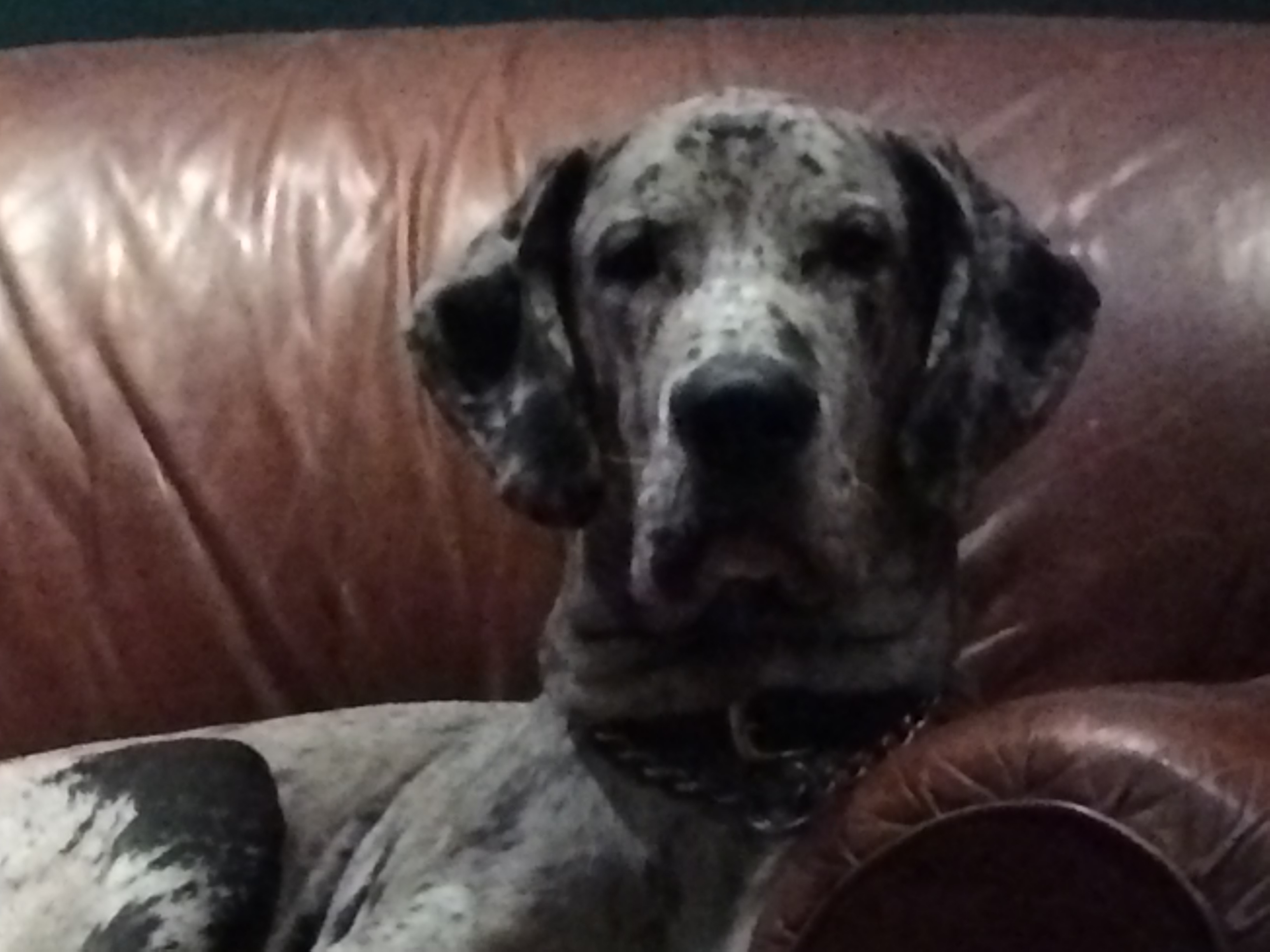
    Fast Big Dog's dog,.

    Fast Big Dog is a paradoxically gregarious yet reclusive, self-absorbed mystic and world traveler. In addition to his calling to right the wrongs in the ski fashion and gear world, he also brings his style, wit and devilish charm to the Steamboat Springs Winter Sports Club as the Nordic High Performance Director and Worldwide Director of Morale and Awesomeness. Savor his articles while you can, as his Great Dane puppy may burn down his house at any moment, possibly making this his last transmission.